Reg Charity No. 210504 (England and Wales); SC038516 (Scotland); 1382 (Isle of Man)
BHS is a membership organisation. Join today at bhs.org.uk 02476 840500
Views expressed by contributors are not necessarily those of BHS. Readers are advised to make appropriate enquiries and seek advice before spending any money or incurring any expense, or entering into a binding commitment in relation to an advertisement or featured product. BHS shall not be liable for any loss or damage incurred or suffered as a result of his or her accepting or offering to accept an invitation contained within any advertisement or featured product in British Horse magazine. British Horse is a registered trademark of British Horse Society. By submitting any picture to British Horse Society it is assumed that permission is granted for BHS to use this image in British Horse or any other BHS publicity material.
Lead rein
Dear BHS member
,
Welcome to the summer edition of British Horse Summer is one of the best times of the year to enjoy life with horses. Longer days, more time in the saddle and plenty of opportunities to get out and about with our horses.
On page 22, we highlight our riding school championships, a fantastic showcase of the talent, dedication and opportunities created by BHS Approved Centres. These events highlight the importance of accessible riding and the role our riding schools play in bringing people into our community. Getting out and exploring the countryside is another highlight of the season. This summer, we’re bringing together our community with ‘moments that matter’, which includes all the activities that you can get involved in with us. From fundraising challenges, to visiting us at your favourite shows, there is something for everyone to get involved with.
Our Ride Out UK feature on page 34 is another opportunity to get involved and explore some of the most beautiful riding routes across the country, from coastal paths to peaceful woodland trails. We’ve also created a summer bucket list for riders and horse lovers alike – ideas to help make the most of the longer days and warmer weather. Horse welfare remains at the heart of everything we do at BHS. In this issue, our Horse Care and Welfare team shares helpful advice for the summer months, including rider suitability and fitness, deworming, emergency care and supporting good equine gut health.
Our trustees play a vital role in guiding the direction of BHS, making sure we continue
to champion equestrian access, education, safety and welfare across the UK. Find out more about our Trustees on page 39.
I hope you enjoy this summer edition of British Horse. Follow us on our social media platforms and check out the website for the latest updates and campaigns. I love hearing from members directly, so please feel free to get in touch via email at ceo@bhs.org.uk
Wishing you a wonderful summer with your horse.
James Hick Chief Executive Officer
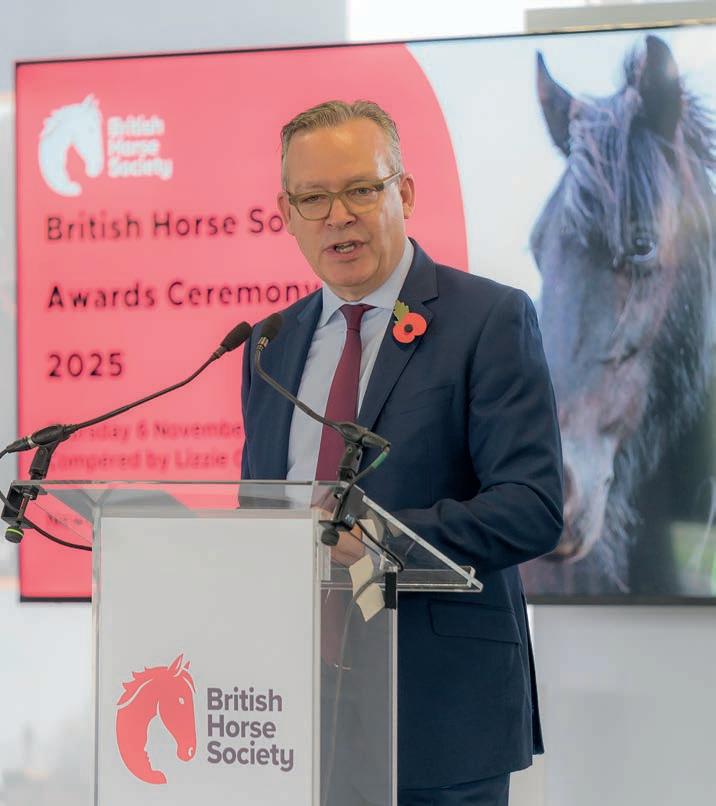
James at this year’s Riding School Championships
BHS NEWS
Route re-opening
After
many years of repairs,
Ramsden Road
has been re-opened for horse riders and carriage drivers
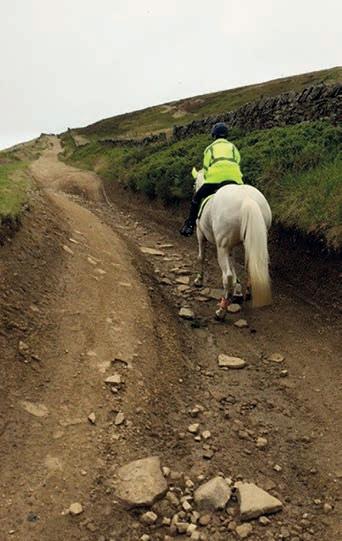
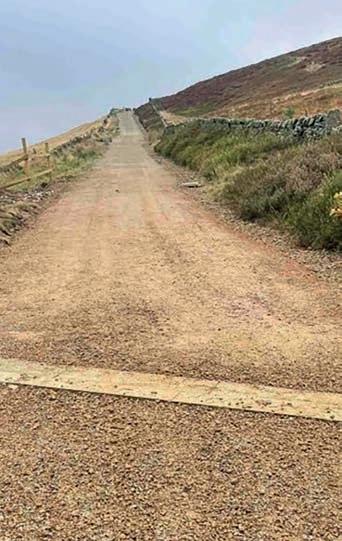
Back in 2012, a group of horse riders from Kirklees Bridleways Group organised a ride through the Holme Valley, Holmfirth. The route led to a byway open to all traffic (BOAT) known as Ramsden Road. It was difficult to ride on due to deep channels from heavy rainfall, boulders and a sharp uneven surface. Disappointed, the riders turned round and were forced to find another way. Afterwards, a group was formed with walkers, cyclists, motorcyclists, wheelchair users, horse riders and 4x4 drivers, with
the aim of repairing the BOAT and making it usable for all. Plans were made, ancient drains were located and some small-scale repairs were undertaken. Despite the group’s best efforts, the route was unusable for horse riders and carriage drivers for many years. Working collaboratively with Peak & Northern Footpath Society, Kirklees Bridleways Group and supported by BHS Access Field Officer, Mark Corrigan, court action was taken in March 2024. The action to compel Kirklees Council to repair the route was successful, and we’re delighted to see that the route is now repaired and was opened in January 2026!
IN BRIEF
Friendship and fundraising
Poppy, with help from her friend Tabby, both 11, set up a lemonade stall near their home. With homemade lemonade, handmade signs and plenty of enthusiasm, they raised £100 to support BHS.
Looking to the future
A Changing Lives Through Horses participant from Knowle Hill, Derbyshire won a National award at Engaging in their Future, with the award ceremony in Manchester.
The returning champions
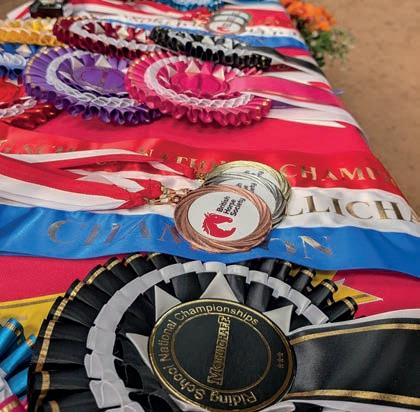
Congratulations to Four Winds Equestrian Centre, who took home the champion award at the Mollichaff Riding School Championships. To find out more, head over to page 22
Homemade Lemonade
NEW RESOURCES FOR YOUR YARD
Our Horse Care and Welfare team provides advice and support to horse owners and carers. Using the latest evidence-based science, working with our expert partners and using best practice, our resources are here to help keep you updated. As we learn more, guidance can change and we have a variety of ways to help keep you informed. This includes our Horse Care and Welfare hub on the website, providing advice on a wide range of topics such as behaviour, health and diseases, seasonal
care, buying and loaning, passports and much more. Visit bhs.org.uk to discover more.
We also have resources that can be shared with your yard, such as our recently updated A4 posters showing the subtle signs of laminitis and easy steps you can take to help prevent the spread of disease. Our helpline is here to help with any questions, or to request your free posters, contact 02476 840517 or email welfare@bhs.org.uk
Great news for riders in Hermitage, West Berkshire
Shared-use signs including the horse symbol have now been installed on sections of public footpath and other paths in Hermitage village, as part of the West Berkshire Active Travel programme. This is a big win for equestrians and a brilliant step forward for inclusive access.
We heard from the local BHS Access and Bridleways Officer: “Once again, we’ve had to explain that horse riders need safe off-road access, as do cyclists and walkers. Whatever the turning point, the result is a real success. Horse riders can now ride away from the main road through the village using this route and minor lanes, improving rider safety and the safety of other road users.
“I’m hopeful that this sets a new precedent and that the Council Active Travel Officer will now give consideration to equestrian access on future routes in rural and semi-urban areas.
“Even better, I’ve now been invited to join a Charitable Incorporated Organisation to help extend the route further which is another great
sign that horses are being recognised and included. And, of course, we’re already included on the main stretch of the Eling Way, the beautiful railway path, which connects Hermitage with Hampstead Norreys, thanks to the landowners Eling Estates and Hermitage Parish Council.”
A small stretch of path, but a big step forward, allowing horse riders to continue to hack out safely in the area.
Celebrating a decade of success
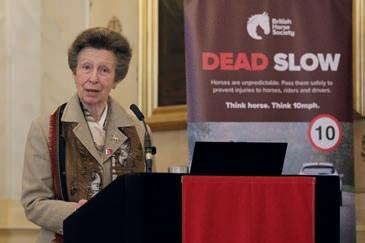
This year marks the 10th anniversary of Dead Slow, our safety campaign dedicated to helping drivers pass horses safely, now a nationally recognised initiative. The milestone event was proudly headlined by HRH The Princess Royal, alongside contributions from Deputy Speaker of the House Caroline Noakes, Chief Constable Jo Shiner and others. They celebrated a decade of progress, highlighting the importance of improving safety for horses and riders on our roads. Our road safety work continues year-round, and you can still get involved by recording incidents online or on the Horse i app and displaying your Dead Slow car stickers to continue spreading the message. Subtlesignsoflaminitis
Horse riders need safe off-road access
Dead Slow anniversary headlined by HRH The Princess Royal
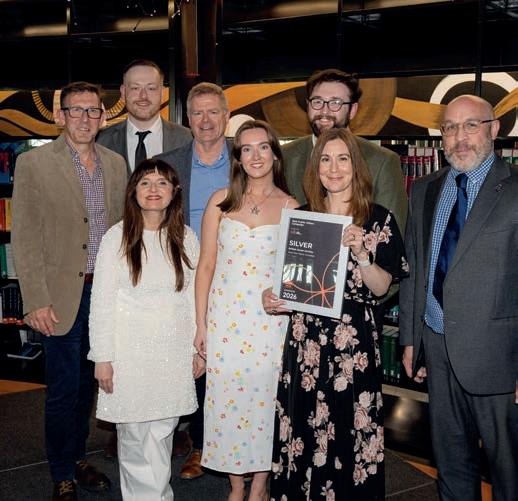
Win at the CIPR Midlands Awards
On Thursday 23 April, we attended the Chartered Institute of Public Relations Midlands Awards in Birmingham. Our Dead Slow safety campaign was nominated for Best Public Affairs Campaign, and we were also nominated for In-House Team of the Year.
We’re happy to share that we took home the Silver award for our Dead Slow campaign and Gold for In-House Team of the Year.
We’re thrilled to have been included in this event and recognised for all our hard work on making sure the roads are safe for horses and riders as we continue to educate all road users.
It’s a great achievement for the team, and it’s fantastic to see our charitable work being recognised.
An illustrated journey
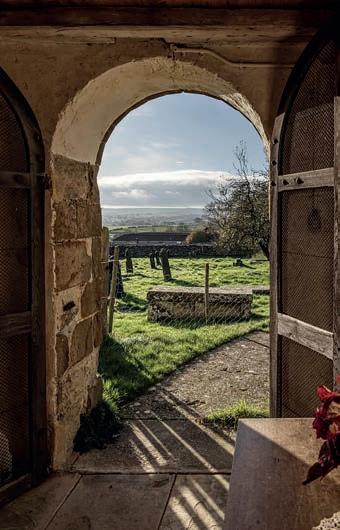
The end of last year saw the launch of the Saint Aelred’s Pilgrim Trails (SAPT), which is acessible to walkers, cyclists and horse riders. It was featured on BBC’s The One Show on 31 May 2026.
The project was developed by the SAPT’s partners — the Ryedale Bridleways Group. Months of careful planning, mapping, repairing and riding the 50-mile route led to the publication of the horse riders’ guidebook, which was supported by our Ride Out Fund. It’s a beautifully illustrated journey through the heather moors, valleys and villages of the North York Moors, linking nine historic churches and the magnificent ruins of Rievaulx Abbey.
The guidebook is available for purchase on the SAPT website. It includes maps, safety guidance from BHS, parking advice and much more. Whether you complete it in one go
or over a short period, the route is a wonderful place for horses and riders to share in adventure. The cost is £5 to buy in person, or you can choose to have it shipped to any UK mainland address for an extra charge. Learn more at saintaelredspilgrimtrail.com
Our new summer stock
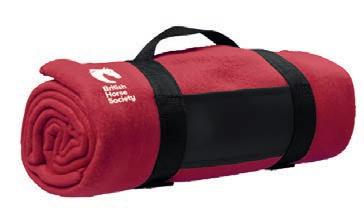
If you’re heading out and about this summer, you might notice some brand new items for sale on our BHS stands. As well as our usual collection of books, we have BHS branded ponchos – perfect for the British weather – and picnic blankets to make the most of sunny days. We also have a selection of items from Emily Cole on hand, featuring some of her wonderful illustrations.
So, if you’re going to any of the big shows this year, make sure you come say hi and see what we have on offer. You can find more about which shows we’ll be at on page 24.
BHS branded picnic blanket
Winning the Silver award for our Dead Slow campaign
A beautiful view from the trail
Claire Muscutt and King Buster
Ocollaboration Community and
ver the past few issues of British Horse, I’ve shared the thinking behind our three-year strategy and the development of our new look and feel. At its heart is a simple ambition: to welcome more people into the world we love and to help them experience the ‘moments that matter’.
Everything we do starts with you — our BHS community. From dedicated volunteers and passionate coaches to our network of Approved Centres and thousands of horse lovers from all walks of life, you are what makes British Horse Society what it is.
BHS means different things to different people, but together we create something far greater than the sum of our parts. All my colleagues and I are committed to championing positive action, strengthening collaboration and increasing participation for the benefit of all. That means challenging misconceptions and using this moment as an opportunity to come together and support one another.
Because the reality is, there are challenges ahead.
The number of riding schools continues to decline. There aren’t enough trained coaches, limiting the ability of centres to meet growing demand from new riders — demand that could otherwise support and grow these businesses. And we must be honest: running a riding school is tough. Many are small businesses facing significant financial pressures, alongside the physical demands of long days, early mornings and the unpredictability that comes with working with horses.
At the same time, wider societal challenges are also shaping our landscape. We’ve all seen reports about young people excluded from mainstream education. Yet our Changing Lives Through Horses programme — now in its ninth year — has already helped more than 5,100 individuals find alternative, meaningful educational pathways. We have countless examples of participants going on to fulfilling careers, having once felt they had no options.
We’re also navigating evolving expectations around the role of horses in society, and the need to maintain trust and understanding — our social licence to operate.
In this context, BHS has never been more important.
We’re a diverse and far-reaching community, and our role is to support all
Why unity is key to protecting our community
of it — whether that’s businesses, coaches, young people, volunteers, happy hackers — in the most effective and relevant ways possible. We are uniquely positioned as the organisation that connects and strengthens the equestrian world.
And there is so much to be proud of. Our Horse Care and Welfare work, Coaching for All and our Approved Centres. Everyone Welcome is helping us make real progress in increasing diversity within our community. And our Dead Slow campaign shows the power of coming together to create change.
This summer, we invite you to be part of our ‘moments that matter’.
Whether that’s fundraising through Ride Out UK or Rideathon, volunteering your time, supporting others or simply enjoying time with horses — there are so many ways to get involved. You’ll find a selection of events on page 24.
If you’re attending any of these shows, BHS will be there — and I’d love for you to come and say hello. And if not, please do get in touch at ceo@bhs.org.uk. Your thoughts and ideas are invaluable as we continue to grow and strengthen our community.
There is much to do. But by working together, we give ourselves the very best chance of success.
A gateway to the natural world
Horses have always been a big influence for author, Nicola Chester. She explores how they offer connection and a sense of belonging in her stories
Showtheyoffe inher st ffer g
author, er connection Chester. She and a sense of
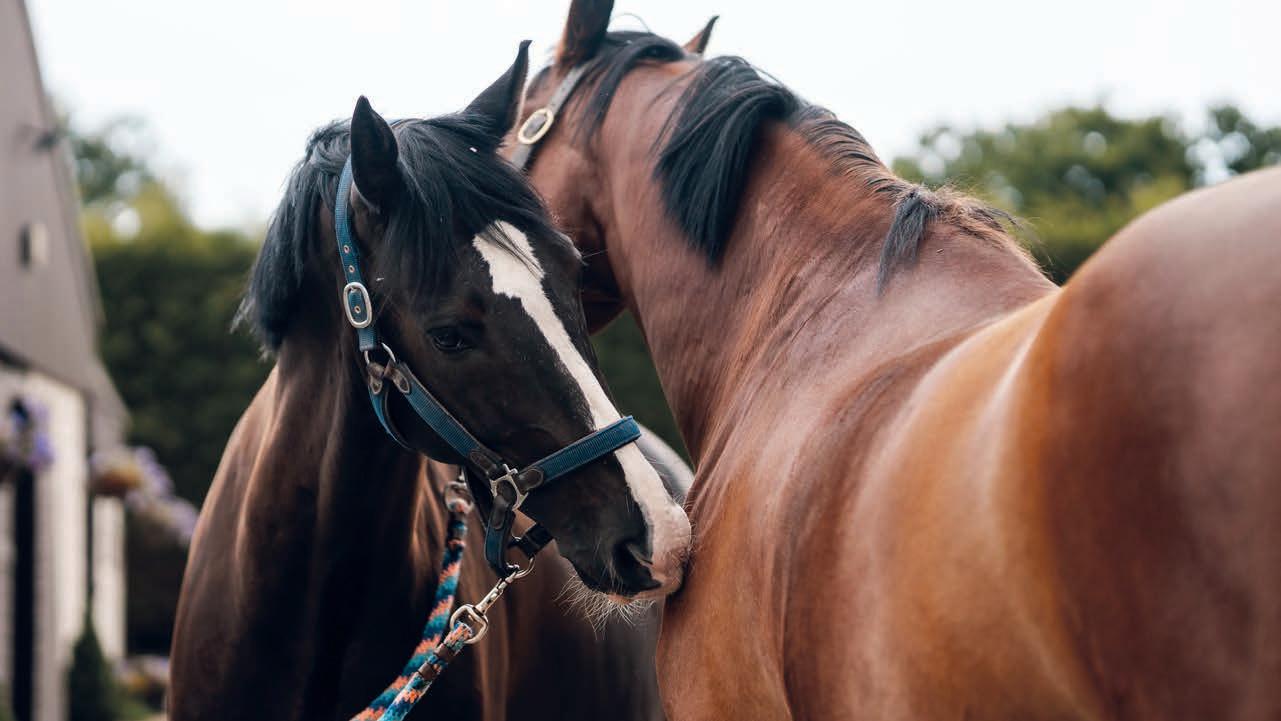
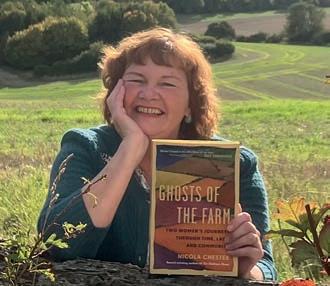
ome people grow up around horses; they’re part of everyday life. Others encounter them from a distance — over a fence on a walk, passing a field by car or in the pages of a book. Nicola Chester, writer and author of Ghosts of the Farm , belongs to the latter. Her family wasn’t horsey, and yet, from an early age, something about horses stuck with her.
“I think those earliest over-the-fence encounters [of horses] on walks with [my] Mum left an impression of a big, beautiful animal that wanted to freely interact with me. It felt like magic, a blessing and an honour. I’ve been spellbound ever since.”
A
world imagined
Without seeing horses every day, imagination took over. Television and books filled the gap, creating a world where horses were at the heart of it.
horses still represent, really. An invitation to share the natural world with a sense of freedom, camaraderie and courage.”
“My imagination filled in and grew the time between those encounters, through television series in the 1970s and 80s that featured horses, such as Black Beauty, Flambards and Follyfoot. But the fever really took hold of me through pony books, almost always featuring courageous girls of slender means, that found a way to have horses in their lives.”
Those stories, she suggests, were more than just an escape. For Nicola, they showed her what might be possible.
“It felt like a gateway to so much adventure and companionship, and that’s proven to be true! I think that’s what
A way into the natural world
For Nicola, horses aren’t just animals, they’re a way of experiencing the world more fully. Horses draw people into the outdoors, encouraging you to slow down, pay attention and really notice what’s around you.
“Being around horses involves and exposes us to the natural world; it includes us as part of it, not apart from it. We tune into our senses more, developing horse instincts (or truly, tune into our own) and learn to see and sense so much more of the natural work and its rhythms as we go through the seasons and weather, with them.”
They also make you notice how
It felt like magic, a blessing and an honour
About Nicola
Nicola Chester is the awardwinning author of Ghosts of the Farm (Chelsea Green, 2025, which is full of horses through time), On Gallows Down, Place, Protest and Belonging (Chelsea Green, 2021).
As one of the early female pioneers of nature writing, she’s written a column for the RSPB Magazine since 2004 after winning BBC Wildlife Magazine’s Nature Writer of the Year Award. She’s a Guardian Country Diarist and writes for BBC CountryfileMagazine as well as other online and print publications. She wrote for the RSPB’s Junior and Youth Magazines for many years, inspiring many of today’s young wildlife campaigners.
A former school librarian, she’s a judge for the inaugural 2025 Climate Fiction Prize, launched
at the Hay Festival. Nicola has also been a guest speaker and taught sessions for undergraduate, post-graduate and MA Creative Writing students at various universities.
A passionate campaigner and activist for nature, Nicola and her family are tenants in an estate worker’s cottage at the heart of the North Wessex Downs in the UK. You can learn more about Nicola and her work at nicolachester.com
Images: BHS
everything links, from the state of the grass and hay to wildlife and habitats, to everyday choices like which rug to use, and even the wider impact of a changing climate. In many ways, horses help you see more, without ever saying a word.
Echoes across time
Nicola’s new book, Ghosts of the Farm, tells the story of Miss White, a woman who lived in the author’s village 80 years ago, who dreamed of becoming a farmer during the Second World War. This story mirrors Nicola’s own experiences as, she too, dreamed of becoming a farmer but found that working with horses was the only path open to her.
In the book: “We have much to ‘say’ to each other, and horses are key to that. There’s an incident where I’m looking for a horseshoe (lost after a canter across some stubble), and I find one belonging to her carthorses, Dolly or Sylvie, from decades earlier. When I relay the story to our farrier, we end up talking about the changing condition of grass and hooves, weather, the ecosystem and climate change. All through a lost horseshoe.”
For Nicola, it’s moments like this that show just how much horses connect us to the world around us.
“I love how a horse is said to have five hearts; four of them being each frog in contact with the ground, taking the Earth’s pulse and powering up from it. Horses open up the world to us, if we’re prepared to listen and
A horse is said to have five hearts; four of them being each frog in contact with the ground
engage, and accept our full responsibilities in that relationship and what emanates from it.”
Translating the bond into writing
Over time, we build on the bond we share with horses through trust, understanding and shared experiences. But it can also happen unexpectedly.
“It’s profound, really. It’s something instinctual and spiritual sometimes, but also deeply physical and sensory, when it happens.” This bond is what drives Nicola’s writing. Her inspiration and life experiences with horses find their way into her stories.
“I love writing about horses, and I think that’s when I do some of my best writing — it feels like trying to describe an alchemy onto the page.”
Horses aren’t just in the background of Nicola’s work, they’re central to every story. As she puts it: “[Horses] keep you
on your toes, now and through history — the sacrifices they’ve made over hundreds of years can never be fully realised.
“There’s so much to explore and try to capture. It’s a relationship of great depth and richness.”
It’s that depth of horses, their relationships with humans, history and unpredictability, that keeps drawing Nicola back to them, both in life and on the page.
“I want to invite people in, not exclude anyone, and for them to feel some of the awe or fascination and the possibilities of experiences, relationships or connections with animals and the wider natural world. There are so many presumptions around horses and people, such as class, privilege and wealth, and I think it puts some people off straight away, if they don’t think horses are for them. So, I try to be aware of that, to show the wonder and work, the relationships, history, bond and spirit — and make connections that are relatable, that give them access and provoke curiosity.”
That’s where her writing really matters. It’s a way of opening the door a little wider — inviting people in, sharing experiences and helping readers feel that the world of horses isn’t closed off to them, but something they can step into too.
Sharing the love of horses
“Horses have been such a gateway for me, yet we’ve never owned one; we managed by helping out, sharing a loan, working for rides and then working with them. I’d love to see much more equity of access to the experiences I’ve had.”
Nicola’s story raises a bigger question: who has access to horses, and who feels left out? She believes real change means more opportunities and a shift in how people think about horses.
“As a collective, there’s a lot we can do to shift and change the perceptions of who horses are ‘for’. It starts with celebrating those different stories and sharing where we can, opening up conversations and establishments to different cohorts of people, and enabling that. It’ll make for a richer, happier and more empathetic world for us all, as well as our horses, if we share what we know is so good for us.
“To hand over the lead rope of love, freedom and opportunity, so others can walk beside those warm sloping shoulders through those gateways, should be our intention. We’ve a long way to go. But it’s not impossible.”
Themaking of a groom
“
Adam Short reveals to Emily Bevan about the life of a groom, his time at Stepney Bank Stables and the horses he holds dear to his heart I
don’t know exactly what it is, but there’s something that draws me to horses,” says Adam Short, groom to five-star event rider and Olympic gold medallist Tom McEwen.
“Maybe it’s because of what they can do, like jumping around Badminton, or maybe it’s because you can’t communicate with them in words, you have to build trust and understanding. There’s this strong bond and intuition which keeps pulling me back to them.”
Image: Tilly Berendt
There’s something that draws me
to horses
Adam’s love of horses shines through, and it’s part of what makes him one of the best at what he does. It’s his job to make sure that each one of Tom’s horses can perform to the best of their ability, and for that reason, he calls himself an ‘athlete manager’.
“The horse is the athlete, and I manage everything around them. The most important part is knowing each horse individually — what’s normal, what they like, what they don’t like and what makes them tick,” explains Adam.
“At home, Tom plans the horses’ work, and I organise logistics — who rides which horse, who stays at the yard, who hacks, etc. I also coordinate with farriers, vets and physios, and manage supplies like feed and bedding.
“When I’m away at an event, my job is to do everything possible to help the horses perform at their best — keeping them happy, relaxed and prepared, both physically and mentally. A horse can be physically perfect, but if they’re not happy, they won’t perform.”
Starting in the saddle
Adam describes himself as being organised, passionate and relaxed. He says he has a systematic brain and good people skills.
The latter, he believes, he developed at Stepney Bank Stables, a BHS Approved Centre in Newcastle, where he learnt to ride and a place he’s now a patron of.
“I wanted a dog for Christmas, but my parents bought me riding lessons instead,” explains Adam, who comes from a non-horsey family.
“I think they thought I would do it a bit and then that would be the end, but that was far from it. I was three when I started at Stepney, and I used to go once a week for my riding lesson. From the age of 10, I started going more and volunteering.
“By the age of 12, I was a full-blown volunteer. I used to spend my evenings, weekends, school holidays and any time I could there. From there, one of the instructors said, ‘Why don’t you come and ride my horse?’ So, I’d go when I could get my parents to drive me, and I would ride there. That’s where I started to really learn to ride.
“I met people from many different backgrounds at Stepney. It was a charity for underprivileged children, but you’d also meet people from very wealthy families. Being around such a mix helped me develop people skills, and I use those skills every day.”
When Adam was old enough to drive, he started to ride for other people, charging £10 a time and kept that going around his university studies. He completed the first year of a biochemistry degree at Newcastle University before deciding his heart wasn’t in it.
“I really didn’t enjoy it. I was waking up in the morning, turning my alarm off and going back to sleep, which isn’t me at all. I realised I needed to change things,” says the 27-year-old.
Changing things up
“I started applying for equestrian jobs online and saw an opportunity at William Fox-Pitt’s. It was an incredible job, and by some crazy miracle I got it.”
Adam relocated 350 miles to Dorset to work as a groom for the former Badminton and Burghley champion.
Tom McEwen’s stables
“I went with a positive attitude and was totally honest, saying I knew a bit, but I needed educating and I was willing to learn,” says Adam.
“I didn’t know how to plait or anything about feeding, care or post-cross country routines. Everything I know now, I learned from Jackie Potts [William’s head girl]. She was amazing and so helpful.
“After three months, I was promoted to second head under Jackie. After a year, I got my truck licence and started driving. Jackie mainly looked after Kazuma [Tomoto, a Japanese event rider who was based with William] while I worked with William, with support from the rest of the team.”
After four years with William, Adam decided it was time for a change and moved to Gloucestershire to work briefly for Zara Phillips before he landed his current role with Tom.
“My favourite part of the job is seeing progression — watching horses develop from the lower levels to top
My favourite part of the job is seeing progression — watching horses develop
competitions. Travelling the world is also incredible,” says Adam, who reveals the event he enjoys the most is Kentucky.
“The hardest bit is dealing with injuries, but being part of the rehabilitation programme and seeing the horses return to competition can be some of the best moments.”
Special four-legged friends
When asked to name some of his favourite horses, Adam lists three from Tom’s yard.
“JL Dublin’s our top horse and is one of
the easiest I’ve worked with. He’s easygoing but cheeky — he’ll pull rugs off doors or take his headcollar off when excited.
“Brookfield Quality, who we call ‘Nervous Norris’ is the opposite. He’s spooked by everything but is very sweet and affectionate.
“CHF Cooliser is small and not built for eventing, but she has an incredible heart. She’s competed at top events and has done very well. I relate to her because she relies on determination and passion.”
Adam also mentioned Oratorio II, a five-star horse who was ridden by William, who he describes as a “special horse who gave me the reassurance that I was on the right career path”.
“In my first year at William’s, Jackie had gone with Kazu to the World Equestrian Games. I took ‘Rio’ to Blenheim for the CCI4*L, which was my first big solo event without Jackie and he came second,” says Adam.
“I’m not an emotional person, but I remember him jumping the last showjump and having a moment where I thought, ‘This is what I love doing.’ That was a big moment for me.”
Going for gold
Another big moment for Adam was the Paris 2024 Olympic Games, where Great Britain won team gold.
“The medal ceremony was probably the most surreal moment I’ll ever have in my life, and I don’t think anything will match it,” says Adam.
“The noise in the medal ceremony was the craziest thing I’ve ever experienced. I imagine it’s like when Beyoncé goes on stage and thousands of people are screaming. That’s how it felt. I’ve got goosebumps just thinking about it.
“My family aren’t horsey, so they don’t fully understand what I do, but they see the places I go and the people I meet. Living and working around people like Zara and Princess Anne amazes them.
“It’s similar with my school friends — they don’t fully get it, but when they see me on TV at an Olympic medal ceremony, they understand.
“Every event and every day, I want to make the most of the opportunities I have. I chose this lifestyle because I love it, so I want to enjoy it and make it fun for everyone around me.”
JL Dublin
Sun’s out, smiles out!
Words: LAUREN BILTON
14 BHS Approved Centres came together for a day of competition at our annual Riding School Championships
or over two decades, our Riding School Championships have brought together passionate riders from around the UK. We were thrilled to welcome this year’s talented competitors to Pickering Grange Equestrian Centre on Wednesday 8 April for a fun-packed event. It was a beautiful, sunny day, with smiles all round!
Joining in on the celebration
This fantastic event gives any horse lover who doesn’t own their own horse a chance to get involved, compete and enjoy a day dedicated to celebrating all the wonderful riding school horses and ponies. This year, we welcomed
14 BHS Approved Centres to participate in the various classes, with 60 horses and ponies and 124 riders competing. Taking part in this event is a huge achievement, so well done to all for showcasing your incredible talents!
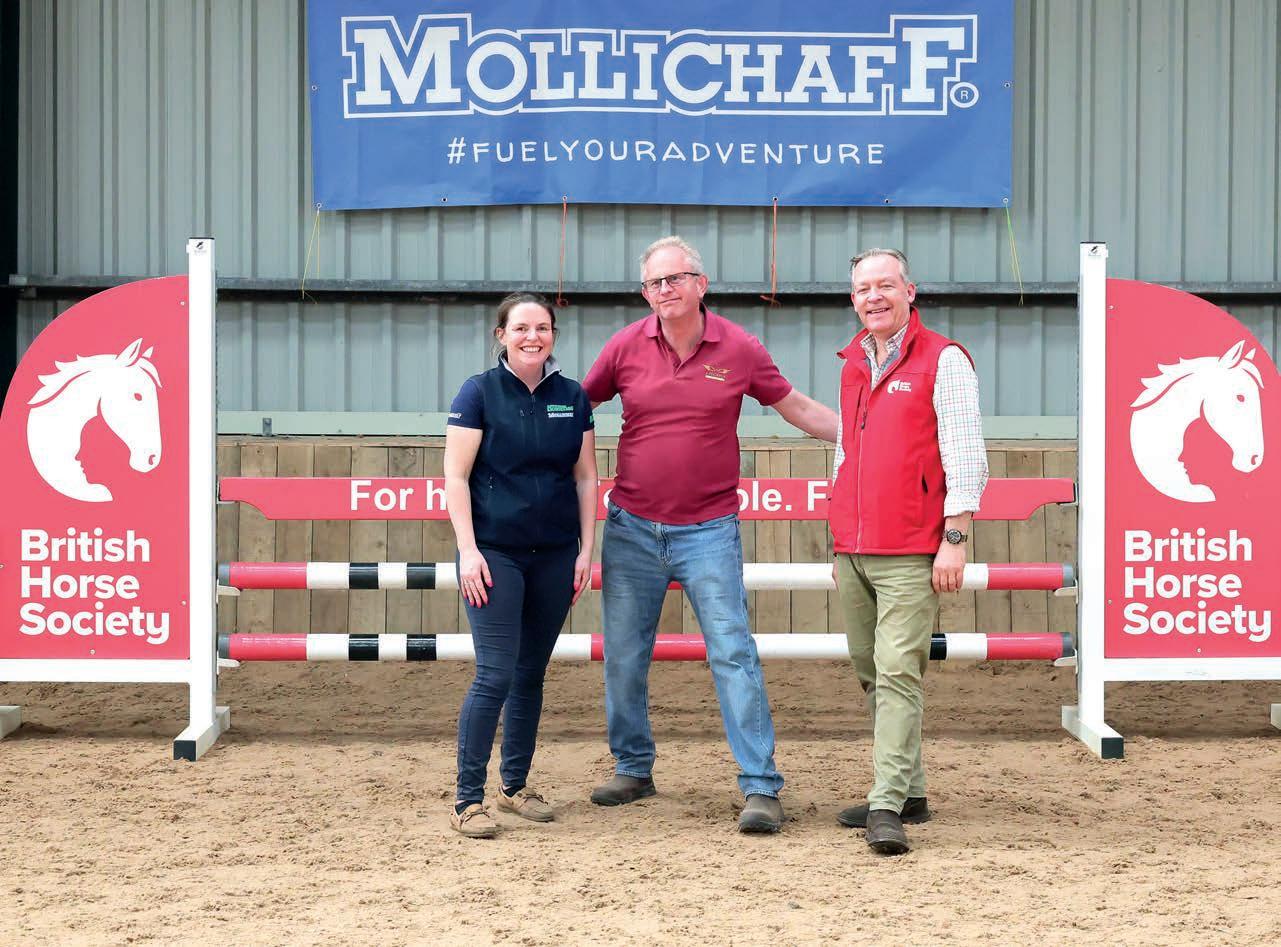
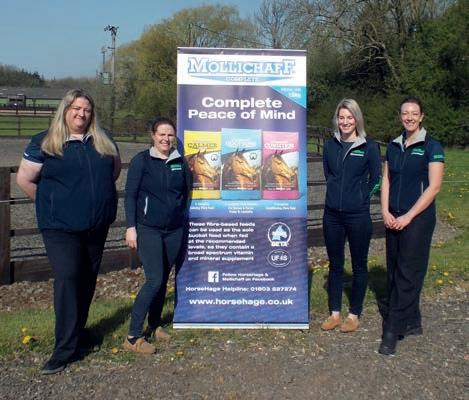
A huge thank you to our event sponsors, Mollichaff and Bunaken Oasis Resort, for their support in sponsoring our inhand classes. Their contribution made all the difference to our championship. Elaine Wallace, commissioner of Bunaken Oasis Resort, explained why they supported the championships. “As a 59-year-old who’s been riding for 52 years, I’ve seen the many benefits of developing relationships between horses and people, both young and old, for both horses and humans. It’s our pleasure to sponsor these championships, where all
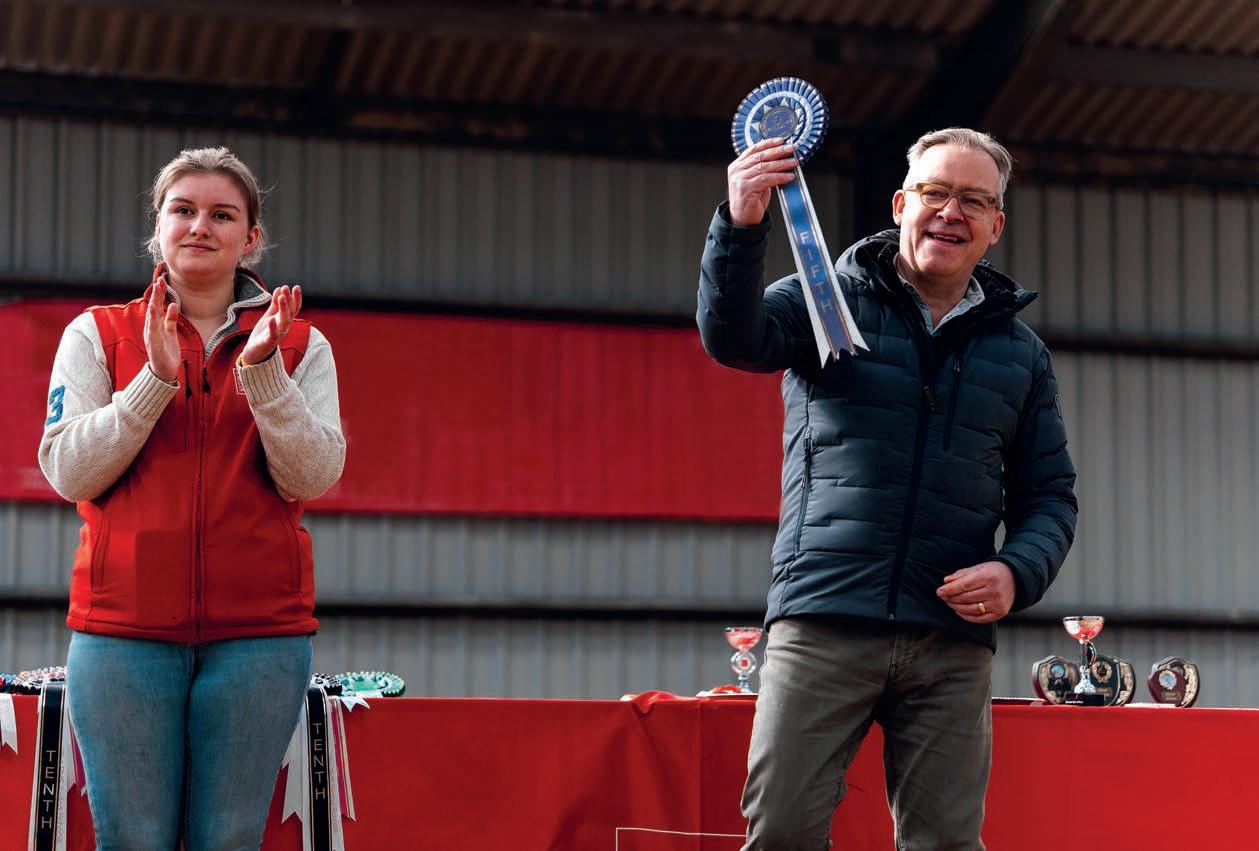
Sarah Turnbull (left), Andrew Stennett (middle) with James Hick (right)
riders and their horses or ponies can have fun and achieve.”
Mollichaff, part of HorseHage, kindly gave feed buckets full of goodies to each centre, and their team
offered feed advice on the day, along with a chance to weigh each horse on their weighbridge. They also handed out prizes to each winner at the award ceremony.
HorseHage said: “Mollichaff is proud to support riding schools and grassroots competition, as they play a vital role in building confidence, encouraging participation and inspiring the next generation of horse owners and riders.”
Spotlight on Second Chance
Andrew Stennett, BHS Generalist Trustee for Approved Centres, is a qualified coach with a strong interest in equine intervention and alternative education. He was at our Mollichaff Riding School National Championships with Grove House Stables LLP and I-Pegasus CIC, a leading equestrian centre based between Doncaster and Radford. Andrew was joined by Paisley, who’s been rehomed through our Second Chance project, which gives neglected horses and ponies a bright future at one of our BHS Approved Centres.
“Our two Second Chance ponies that are competing here today came to us as yearlings. We’ve put in the work, and we’re starting to get the results now. They’ve become popular, regular members of the riding centre and Paisley is a distinct character.
“I think the Second Chance ponies have a distinct personality. Paisley may be a small pony, but they both think they’re about
16.3hh. This isn’t just BHS’s Riding School Championships for them, this is the Olympics, this is Formula 1, and they’re having a great time.”
Andrew shared just how meaningful the championships are to so many people: “It’s a great, inclusive opportunity. This is why our industry is so great, because it makes us come together. In a very fractious world, we all need to come together a little bit more, [and be] a little bit kinder.”
Competition and community
The Mollichaff Riding School National Championships wasn’t just about the competition; it was a celebration of the horsehuman bond, bringing communities together.
We spoke to riders from Lychgate Farm Equestrian, who shared the impact that horses have on them. “The best thing about riding for me,” one participant said, “is how grounded it makes me feel. Horses have this ability to calm you and make everything else feel like it doesn’t exist, it’s a very fun sport.”
This is why our industry is so great, because it makes us come together
Springing to the top
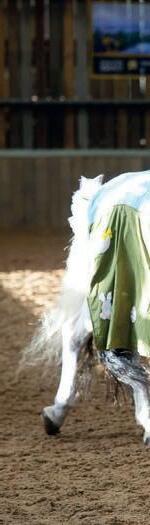
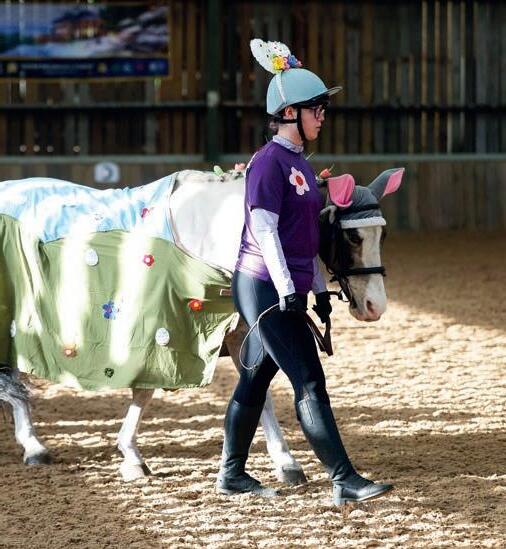
Alice Easterbrook, a student at Four Winds Equestrian Centre, won the top award in the in-hand fancy dress class, along with Billy (the pony). She told us a little bit about her experience and the fun she had with fancy dress.
“We did a spring theme for our fancy dress with Billy, and it was fun. He did so well. The theme was an idea between me and my coach, Kirsty. It took quite a while to put together because I had to cut out and sew the individual felt pieces.”
Alice went on to say: “I wasn’t expecting to win, so it was quite nice. Horses have changed my life, and I love being around them.”
Another rider at the championships shared how supportive her horse-riding community has been. “You make loads of new friends. We’re a big family, it’s a community, so it’s very rewarding, especially for the horses. Everyone at Lychgate, like Laura, Jane, the instructors, they’re so knowledgeable and each lesson you can adapt and learn more.”
‘Leaf-ing’ nerves behind
Sometimes it’s worth facing your nerves head on, and your bond with your horse and community can make it that little bit easier. We chatted with a student at New Leaf Triangle, Eliza Clayton, who competed in the introduction to canter equitation on Jack, a very curious pony!
“I was quite nervous, but when I got here, I was completely calm. I never thought I’d make it this far, so a huge thanks to the help of so many wonderful trainers and people supporting me. The best thing about my riding school is the instructors; they’re just incredible.
“The horses here are just remarkable, and they’re truly amazing to be around. If there’s one place I could be, it’d be on top of a horse. It feels so right to be riding, it’s where I can be happy and confident.”
A round of applause
It was amazing to see all the hard work and dedication from everyone involved, giving both horses and riders the chance to grow their partnership, teamwork and confidence. Well done to all who took part, it’s a wonderful achievement and everyone was incredible!
A huge congratulations to Four Winds Equestrian Centre, who took home the champion award for the second year running.
To find your local BHS Approved Centre, visit bhs.org.uk/findaplacetoride
Alice and Billy
An eventful
summer
Get out and about with BHS this summer!
We’d love you to come, say hello, and find out more about our work and campaigns. Visit bhs.org.uk/outandabout to find the full list of our events this year, and keep an eye on our monthly e-news for upcoming event discounts!
Royal Highland Show 18–21 June
Royal Highland Show offers the best of food, farming and rural life in Scotland. Featuring showjumping, pony club games, private driving and more, there’s never a dull moment! We’ll be there too, sharing our passion for horses with all of you.
Join us at our stand (overlooking the surfaced equine arena) to find out more about our safety, access, welfare and education work in Scotland, including Operation Lose the Blinkers, sharing space and Horse Health Days.
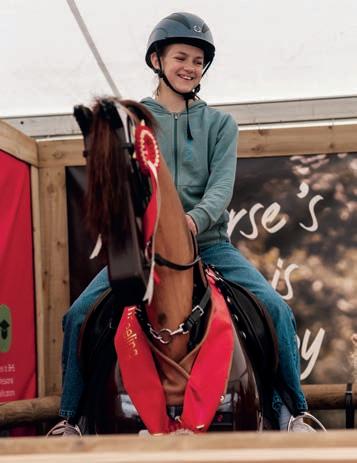
Whether you’re an expert rider or someone who’s never sat on a horse before, come to our stand and have a go on the mechanical horse. Remember to pop by early in the day to book your slot, as it’s always very popular. Come and celebrate the special place that horses have in Scottish culture.
Royal Welsh Show 20–23 July
h Show 20–23 July
The Royal Welsh Show is a key event, with four days of livestock and equine competitions, and entries travelling from far and wide to compete. This year, we’re sponsoring the BHS Ride Safe Trekking Class. There’s also a Project Edward campaign and ride happening over four days in the run up to the show, ending with a ride into the showground on the Tuesday and taking part in the President’s Parade around 4pm. We’ll also be hosting our annual You’re a Gem volunteer awards on Wednesday 22 July.
how is a ays of livestock titions, ng ect Edward over n up to the show, into the d rade 4pm. ng our annual nteer July
Winner, Team Germany in The Agria Nations Cup of Great Britain
The Agria Royal International Horse Show 22–26 July
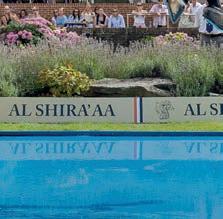
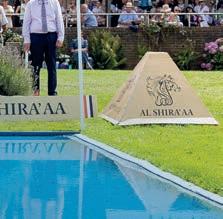
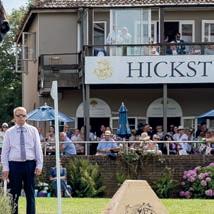
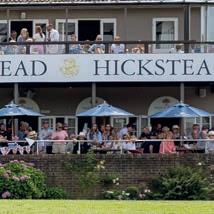
The Agria Royal International Horse Show takes place at Hickstead in West Sussex from 22–26 July, and BHS members are entitled to two free general admission tickets to any day of the show (a parking charge applies). All under 15s gain free admission throughout the show, making it an excellent family day out this summer.
There’s much to look forward to at the show, including seeing some of the best horses and riders in the world compete in Friday’s Agria Nations Cup of Great Britain and Sunday’s Al Shira’aa King George V Gold Cup. There’s also the Ashby Underwriting Eventers’ Challenge on Thursday, plus Saturday’s JCL Insurance Brokers Queen Elizabeth II Cup.
Hickstead’s July fixture is regarded as the peak of the summer showing season, with hundreds of championship showing classes taking place across six days.
Other highlights include ‘Style Saturday’, where the best-dressed guests can win prizes, plus the Village Green area with its variety of shops and street food stalls and much more.
Head to www.hickstead.co.uk for more
Scone Palace International Horse Trials 27–30 August
As this year’s charity partner, BHS Scotland will be joining Scone Palace International Horse Trials to celebrate our 60th anniversary year.
As Scotland’s only international horse trials, hosting classes from CCI4*-S to the Scottish Grassroots Championships at BE100 and BE90, as well as a multitude of showing classes, British Showjumping competitions, Pony Club Mounted Games and arena eventing, this is the perfect event for equestrian sport enthusiasts.
Come and support Scottish riders by watching the BHS Scotland Riding Club Style Jumping Championships in the Murray arena on Saturday (including a services section), and the BHS Scotland Working Hunter Championships on Thursday.
Agria Blenheim Palace International Horse Trials 17–20 September
We’re proud to share in the excitement of this year’s event as their grassroots partner. Come and say hello on the day, and find out what we have on. Members can take advantage of free entry on Thursday and Friday, as well as 20% off tickets over the weekend. Enter your membership number when booking via the box office. There are limited discounted tickets available, so get yours now!
information.
As charity partner, we’ll be running lots of activities across the four days, such as our Continuing Professional Development events, so come and find us for a chat at our stand near the main arena to find out what’s going on. The mechanical horse will be on our stand this year, so make sure you pop by early in the day to book your slot as they go quick!
The Agria Royal International Horse Show
22–26 JULY 2026 FREE ENTRY FOR TWO
This coupon entitles any ONE BHS member to TWO general admission tickets on any ONE day. Please present the QR code to the staff at the gate for scanning. (Please note: the QR code will only work for event staff — it will not take you to book your free tickets.) £15 per car will be charged for parking. Name
Upgrade offer from £15.00
Highweald Ringside Terrace with an alfresco bar and coffee shop, offering the best views of the action. (Book in advance online at hickstead.co.uk, limited availability.) This voucher must be surrendered at the main public entrances, not valid at the Stablefield entrance. No photocopies accepted. You may be asked for proof of BHS membership.
BHS membership number
Hobby horsing at Blenheim Palace, 2025
Scone Palace International
From everyday moments of connection, friendship and joy, we know the special feeling horses and people share
With longer days, lighter nights and more time to spend with the horses you love, summer is our chance to enjoy the moments that matter most.
Because moments mean more together
Horses have a unique way of bringing people together. Creating moments and memories that last a lifetime. They might be between just you and your favourite horse. Or they might be with your teammates, hacking buddies or yard best friends. While no two journeys are the same, the feelings we share are our common ground. Contentment. Achievement. Trust. Happiness. Togetherness. Whatever the feeling is for you, we’re here to help everyone find it.
Riders at our Riding School Championships
Get involved
This summer, we’re inviting our community to come together and celebrate those shared moments. The moments that matter. The moments that make it all worth it.
From riding and caring, to volunteering or cheering from the sidelines, we recognise that the best days are the ones we share together. We’re here to help you get out and about and enjoy your time with horses.
Check out what’s going on in your local area – From clinics and camps, fun rides to social events, demonstrations and have a go sessions, there’s something for everyone. Visit bhs.org.uk/local-events nd one near you, and meet like-minded horse lovers just like you.
Come and say hi – We’re out and about at events up and down the country, and as a BHS member you have access to free or discounted tickets. We’d love to see you there - bhs.org.uk/outandabout.
Go exploring – Why not plan a hack to the pub with friends or finally explore that bridleway you’ve been meaning to ride? Let this be your reason to get out and enjoy the sun.
and have a g
bhs.org.u to find o lik lovers ju
Sign up to Rideathon – Protect the places you love to ride by taking on the Rideathon challenge. You’ll help protect the offroad routes that give you and your horse freedom and time out together. Check out page 34 for inspiration on off-road routes.
So, no matter if you’re a first-timer, proper pro or somewhere in between, these moments are for everyone. And we’re here to help you find them – today, tomorrow, together.
We’d love to hear from you!
We know these moments matter, so we want to share them! Join us on social and share your moments using #ForTheFeeling. Not on social? Don’t worry, drop us an email at editor@bhs.org.uk and be in with a chance of featuring in our next issue.
Nominations are now open for our annual BHS Awards. Do you know someone who deserves an award for the work they do for horses?
Recognising the remarkable
Our annual BHS Awards recognise and reward inspiring individuals in the equestrian community. It’s an opportunity for us to appreciate and acknowledge people who are making a positive contribution to the industry. We’re passionate about celebrating the impact that individuals, organisations and groups can make.
You can nominate someone you feel really deserves to receive an award. Here are some of the 2026 award categories you can submit a nomination for:
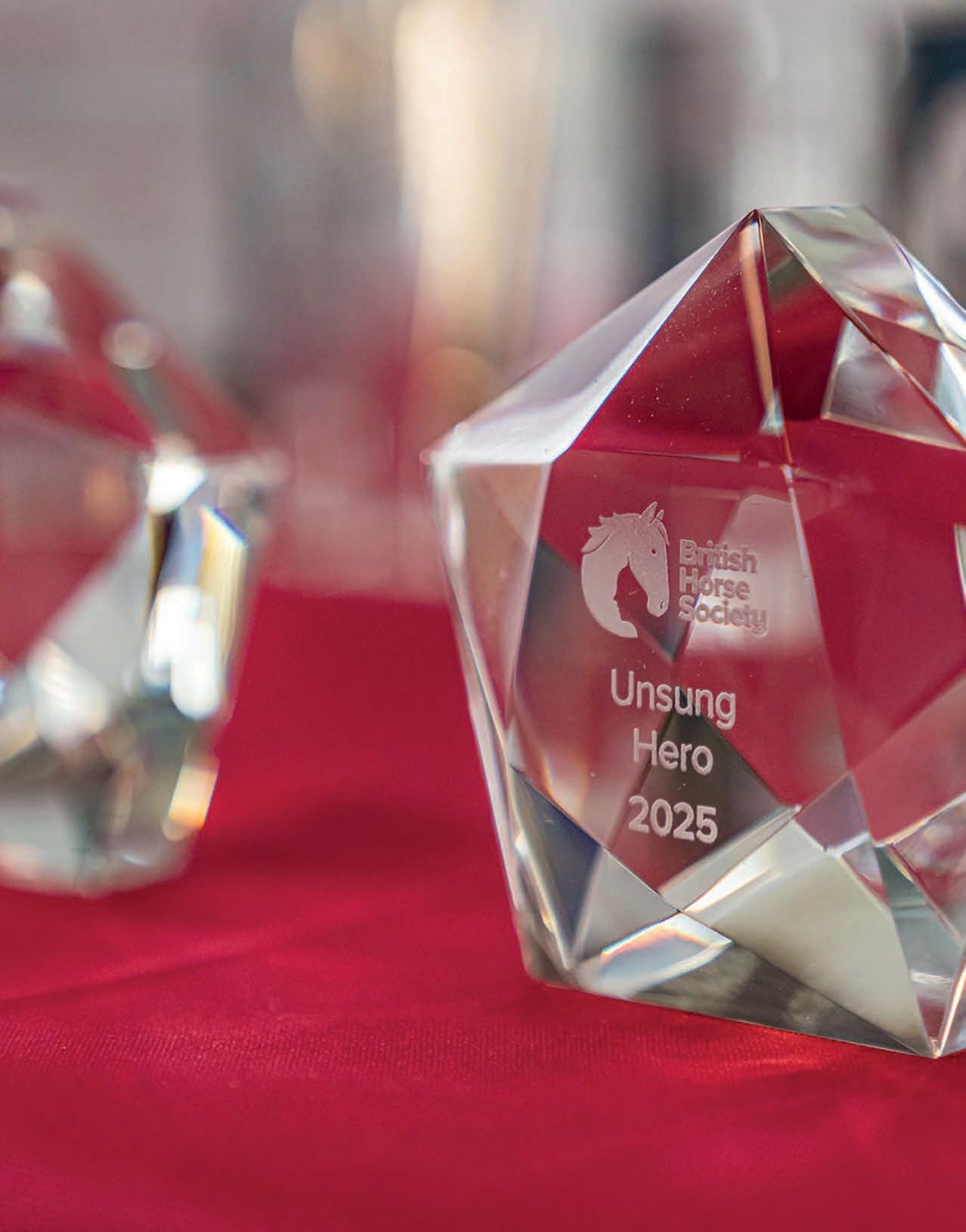
Unsung Hero Award
Equine Personality of the Year Award Volunteer of the Year Award
The Linda Tarrant Award for Services to Equestrianism and Volunteering Young BHS Volunteer of the Year Young Persons’ Award
Pamela Almond Changing Lives Through Horses Achieve Award
Access Award (individual/ team and organisation)
Safety Award (individual/group and the Tarquin Award)
Welfare Award (individual/team and organisation/professional)
Education (Centre Accredited Professional Coach and Freelance Accredited Professional Coach)
Approved Centre Award
Changing Lives Through Horses Coach Award
Changing Lives Through Horses
Approved Centre Award.
Olivia Swinbourne took home the Young Volunteer of the Year award last year — an award that recognises those aged 16–25 who commit their time, effort and a significant contribution through volunteering with BHS.
She shared: “[I was] absolutely shocked to be honest, I wasn’t expecting it at all… It’s absolutely amazing, and it’s just really nice to see the culmination of the two years of my work.”
Olivia has been a Horse Care and Welfare Adviser for over two years, handling welfare concerns with professionalism and compassion. She actively supports Horse Health Days, including weighing over 70 horses at the BRC championships, and contributes to education and healthcare clinics.
“It was something that I started because I wanted to help horses generally, but it’s just blossomed over the last two years, going out to different events.
“I just feel so comfortable with horses in a way that I’ve never really felt with any other animal or people. It’s amazing to see the brain and behaviour behind them and all the love that they have to give.”
Bradley Pearce took home the Accredited Professional Coach Award — Approved Centre. He makes learning to ride a rewarding and enjoyable experience, adapting to the needs of his students while encouraging progress for all, regardless of the barriers.
He said: “I was absolutely gobsmacked. Truly and honestly gobsmacked. To get the recognition really means something to me.
Volunteer with us
Fancy joining our team of inspiring volunteers? You can help your local area and improve the lives of horses and those who love them. Whether it’s helping at a one-off event, joining us for two days a week or giving up two hours of your time — your support will make a huge difference.
They always say if you enjoy your job, you never work a day in your life, and I really do love what I do. To get this recognition honestly means the world to me.”
Caroline Bradley took home our Volunteer of the Year award last year and has devoted over 15 years to volunteering at BHS. Championing bridleway protection and expansion, Caroline’s efforts have created safer, scenic and sustainable riding routes while protecting vital rural heritage.
After winning the award, she shared: “I felt honoured, and it raises the profile of the work we do for access, so I was pleased, I’m grateful.
“It spurs me on because you’re slogging away doing this research. You know you’re doing it for other people and future generations, but to be recognised is always great. It gives you a boost.”
Our awards ceremony will be held at Newbury Racecourse on Thursday 5 November 2026. The ceremony coincides with our Charity Race Day, so keep an eye out for when the tickets go on sale for both special events. If you know someone who does amazing work for our equestrian community, make sure to nominate them before Friday 31 July. View the full list of award categories and nominate a hero today at bhs.org.uk/awards
We currently have a community of over 1,000 volunteers who take positive, local action, championing our work in education, riding and horse care and welfare. Learn more about our available roles or apply to volunteer at bhs.org.uk/volunteer
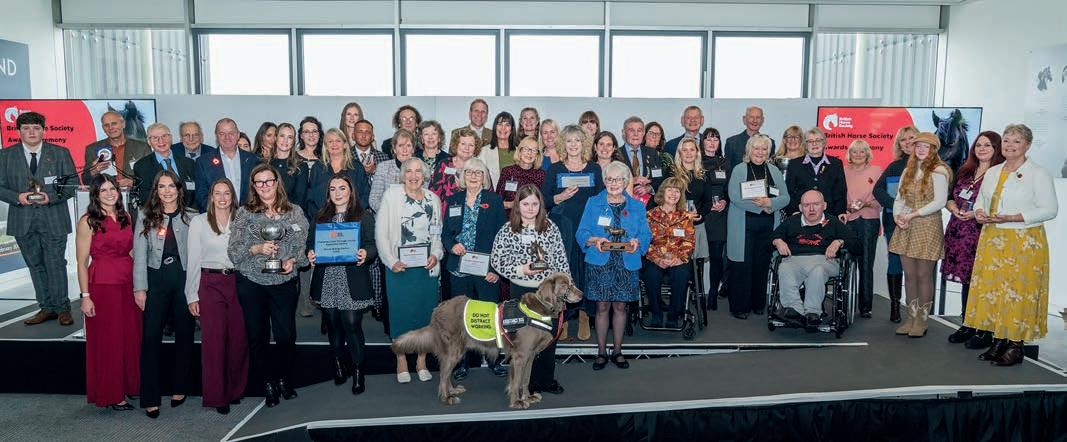
Our 2025 award winners at Newbury
here a imag b ge
o f each su summeer belo l w w, exxceept one... Caan yoou u
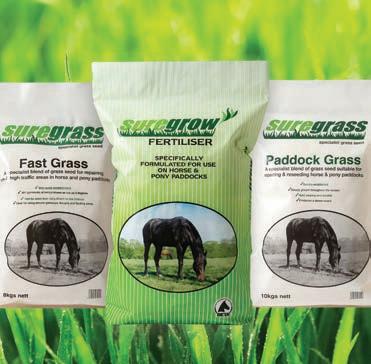
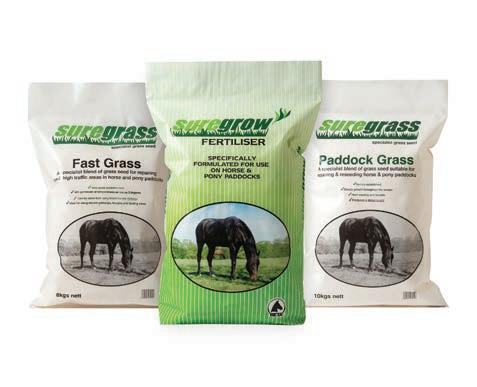
There are two of each summer essential products in the image below, except one... Can you spot which it is?
the products correctly and identify which one doesn’t belong Email your answer to marketing@countryandstable.com 3.Enter by 31st August 2026
A legacy that lives on
A second chance for a pony. A turning point for a young person. See how supporters are helping protect horses and change lives for generations to come
For many of us, horses shape who we become.
They teach patience.
They build confidence.
They offer quiet companionship when we need it most.
For some horses, though, the story is less certain.
Bongo was once a pony who needed a second chance. Today, he’s part of something much bigger. He came to his new home through our Second Chance rehoming programme, which gives horses and ponies a fresh start after difficult beginnings, carefully matching them with homes where they can recover and thrive.
Now, alongside other rehomed ponies, Bongo supports young people on our Changing Lives Through Horses programme. These are children who may be disengaged from education,
Bongo enjoying life in his new home
struggling with confidence or facing challenging circumstances. With horses as their teachers, they learn trust, communication and resilience. They find belonging. They find purpose. As Bongo learns to trust again, so do they.
Recently, Changing Lives Through Horses reached a powerful milestone — more than 5,000 young people supported.
One young participant shared: “School wasn’t the best place for me. I was struggling and I wasn’t happy there. But horses make me feel calm and happy. At Changing Lives Through Horses, I feel more relaxed. It’s a safer place — I feel like I belong.”
The connection is simple but profound. Horses offer honest, non-judgemental partnership. They require consistency and care and in return, they build confidence and trust. For many of these young people, it’s a turning point. Moments like these sit at the heart of our work. And they’re made possible by the generosity of our supporters — including those who choose to leave a gift in their will.
Supporting horses before crisis hits
Bongo is just one of the many ponies who show the power of second chances. However, a great deal of our work focuses on prevention and improving welfare through advice, support and education.
Every day, our Horse Care and Welfare helpline offers advice and guidance to owners, professionals and members of the public. Often, a timely conversation prevents a situation from getting worse.
Our Healthcare and Education clinics help those in underserved communities by providing castrations, dental care, hoof care and farriery, health checks, microchipping and passporting at a subsidised cost. These practical interventions protect horses’ health and prevent suffering.
We also help owners with weight management by heading to yards up and down the country with our weighbridges. This makes a lasting difference by making sure owners understand their horse’s condition and can manage weight safely.
Alongside our preventative work, our Horse Care and Welfare Field Officers and volunteer Welfare Advisers work across the country, responding to concerns early and working with owners. Where there’s a more serious concern, we collaborate with trusted partners to help achieve a resolution.
This steady, often unseen work protects
thousands of horses every year. Our aim is to stop horses from ever getting to the point of needing to be rescued. And it depends on charitable income.
Why gifts in wills matter
For some supporters, leaving a gift in their will is a way of saying thank you — and making sure that horses continue to have a place in our society. We couldn’t do this work without them.
Lucy, one of our legacy supporters, put it simply: “I wanted to give something back to something that has meant so much to me throughout my life — and to pass on the joy I’ve had to the next generation.”
The challenges facing horses are changing. Economic pressures, rising costs and social change all affect how horses, like Bongo, are kept and cared for. Our role is to adapt, to prevent suffering where we can, to step in when we must and to champion a future where horses are valued and protected. Legacies help us do that quietly and consistently. They help make sure that the bond between people and horses continues for generations to come.
Would you like to explore leaving a gift in your will? You can download our free guide, find out about our free will writing options or have a confidential conversation with our team. A legacy isn’t about the end of a story; it’s about making sure it carries on.
To find out more, head to bhs.org.uk/gifts-inwills or scan the QR code.
The impact of your support
Last year:
1,045 new welfare concerns were supported by our officers across the UK, involving 4,190 horses
10,052 calls to our Horse Care and Welfare helpline 176 owners and 197 at-risk horses were helped at eight Healthcare and Education clinics
63 horses and ponies were rehomed through our Second Chance programme 1,709 young people supported through Changing Lives Through Horses.
Gifts in wills help make this work possible.
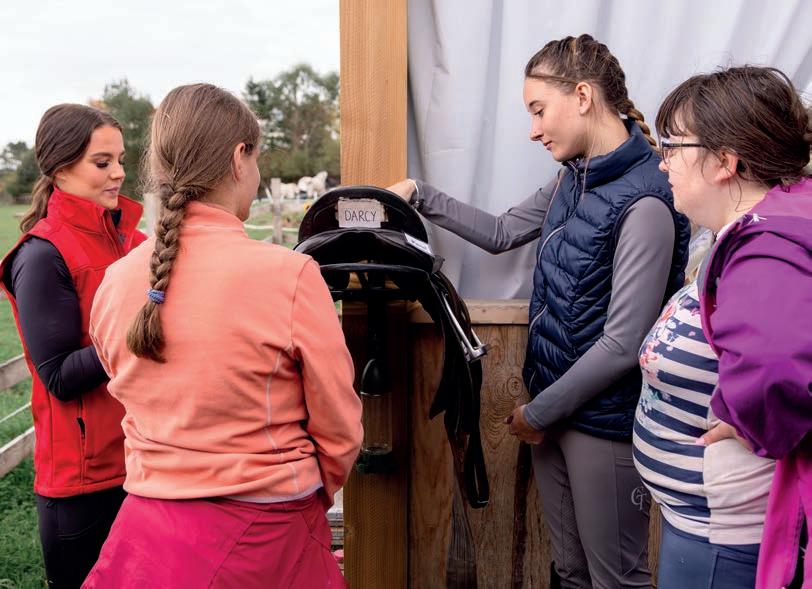
Learning about saddle care and maintenance
not waistlines! tastebuds How to indulge
A mismatch between natural evolution and modern management means many horses may benefit from low calorie fibre
Is constant grazing the way to a horse’s heart?
If you’ve ever watched your horse graze quietly in a field, you’ll know just how naturally they seek fibre. If they had their way they’d be constantly munching – not just grass but lots of other fibrous plants too. We can’t really blame them for being such keen eaters – it’s the way their digestive system has evolved. Fibre is the backbone of their diet. Yes, constant grazing may be the way to their heart but it’s invariably not healthy for their waistline in today’s environment!
So what’s the problem?
The environment in which we keep our horses today, and the way we manage them often doesn’t match their evolutionary needs and this can present a problem! In the wild, they would spend around 16 to 18 hours each day grazing while travelling long distances to find food. However, modern horse management often doesn’t reflect these natural behaviours. Smaller paddocks, stabling, access to rich pasture or abundant preserved forage, coupled with limited exercise, can lead to our horses consuming more calories than they burn. The surplus is stored as fat, leading to weight gain. Over time, this can significantly impact their health and welfare, increasing the risk of certain clinical conditions, especially laminitis.
What’s the solution?
There isn’t a magic solution to keeping horses slim and healthy, but the answer is simple; combine a high fibre, low sugar diet with appropriate exercise and restricted access to richer pasture.
The right fibre will not only help manage weight but will support digestive, gastric, and mental health too. Low calorie fibre allows
horses to eat safely and for longer, in a way that matches their natural instincts, while helping owners manage calorie intake.
Keeping it tasty
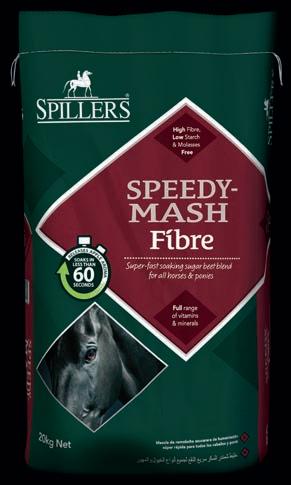
Low calorie doesn’t have to mean low on the taste scale! With the SPILLERS™ range of low calorie, low starch and low sugar fibres you can safely indulge your horses’ tastebuds without growing their waistlines.
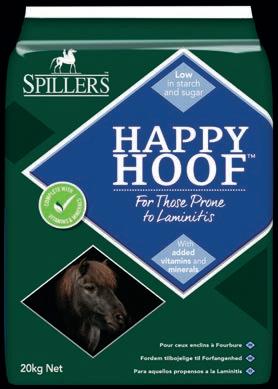
SPILLERS™ HAPPY HOOF™ is a low calorie fibre blend with added vitamins and minerals suitable for those prone to laminitis
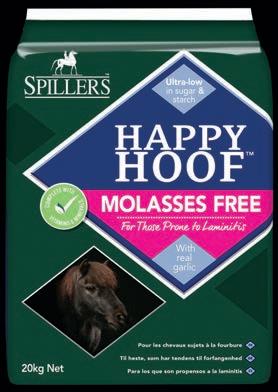
SPILLERS™ HAPPY HOOF™ Molasses
Free is a low calorie fibre blend with added vitamins and minerals suitable for those prone to laminitis, especially for those concerned about molasses
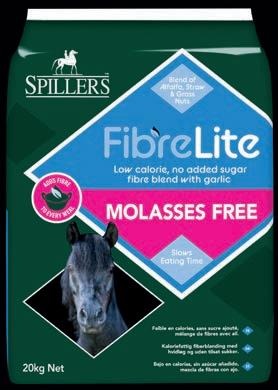
SPILLERS™ Fibre Lite Molasses
Free is a low calorie, soft fibre blend with tasty garlic and no added sugar.
Why SPILLERS™?
As a leading equine nutrition brand with 65+ years of trusted nutrition and veterinary expertise we are your natural Partners in Care. The longevity of our products is testament to their quality. For expert advice and resources on equine nutrition and for personalised nutrition support visit www.spillers-feeds.com or call the SPILLERS™ Care-Line on +44 (0)1908 226626
SPILLERS™ Slimmers' Club
Join more than 15,000 people in our SPILLERS™ Slimmers' Club on Facebook for practical support and camaraderie - support for your horse’s weight loss journey.
Ready, set, hack
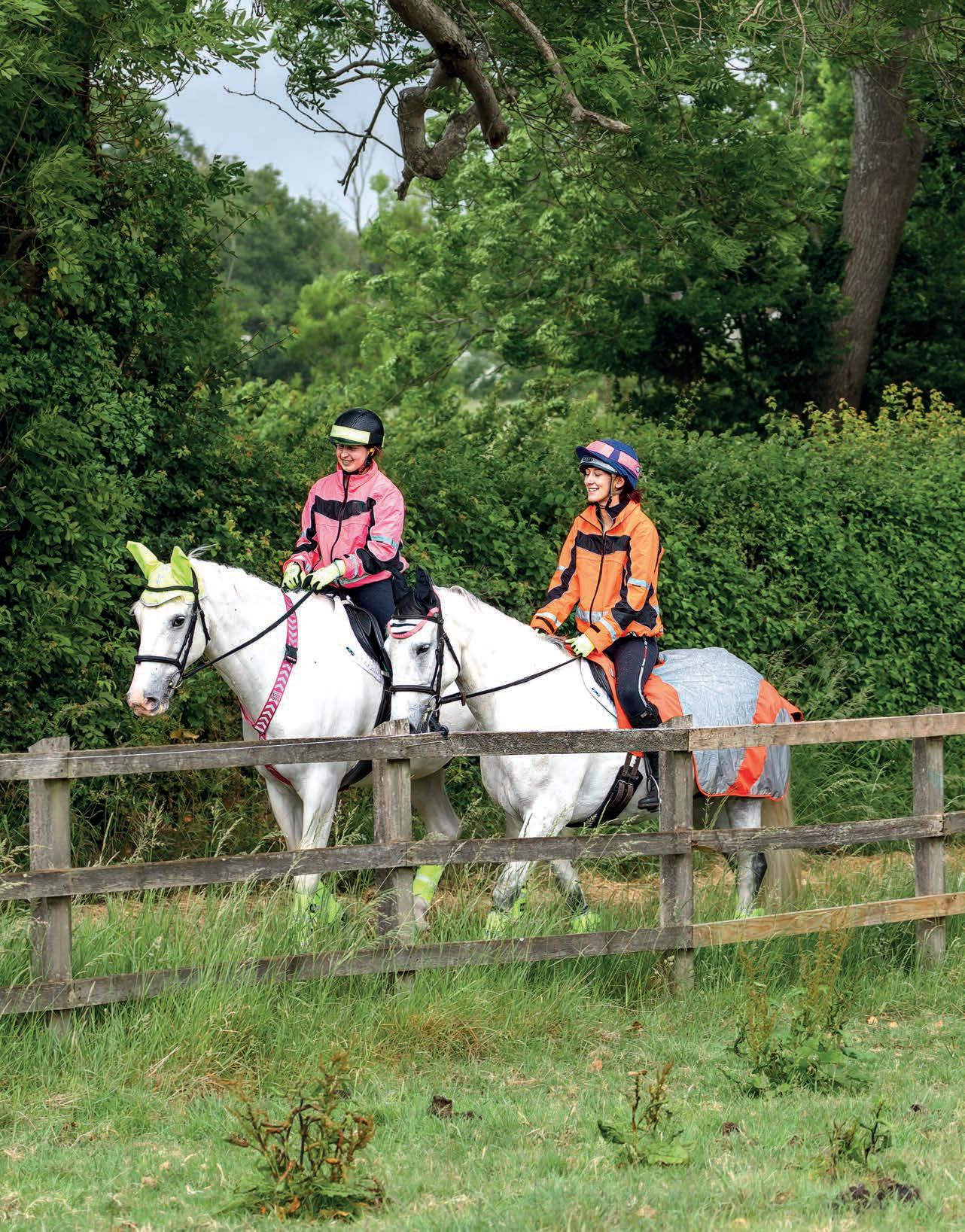
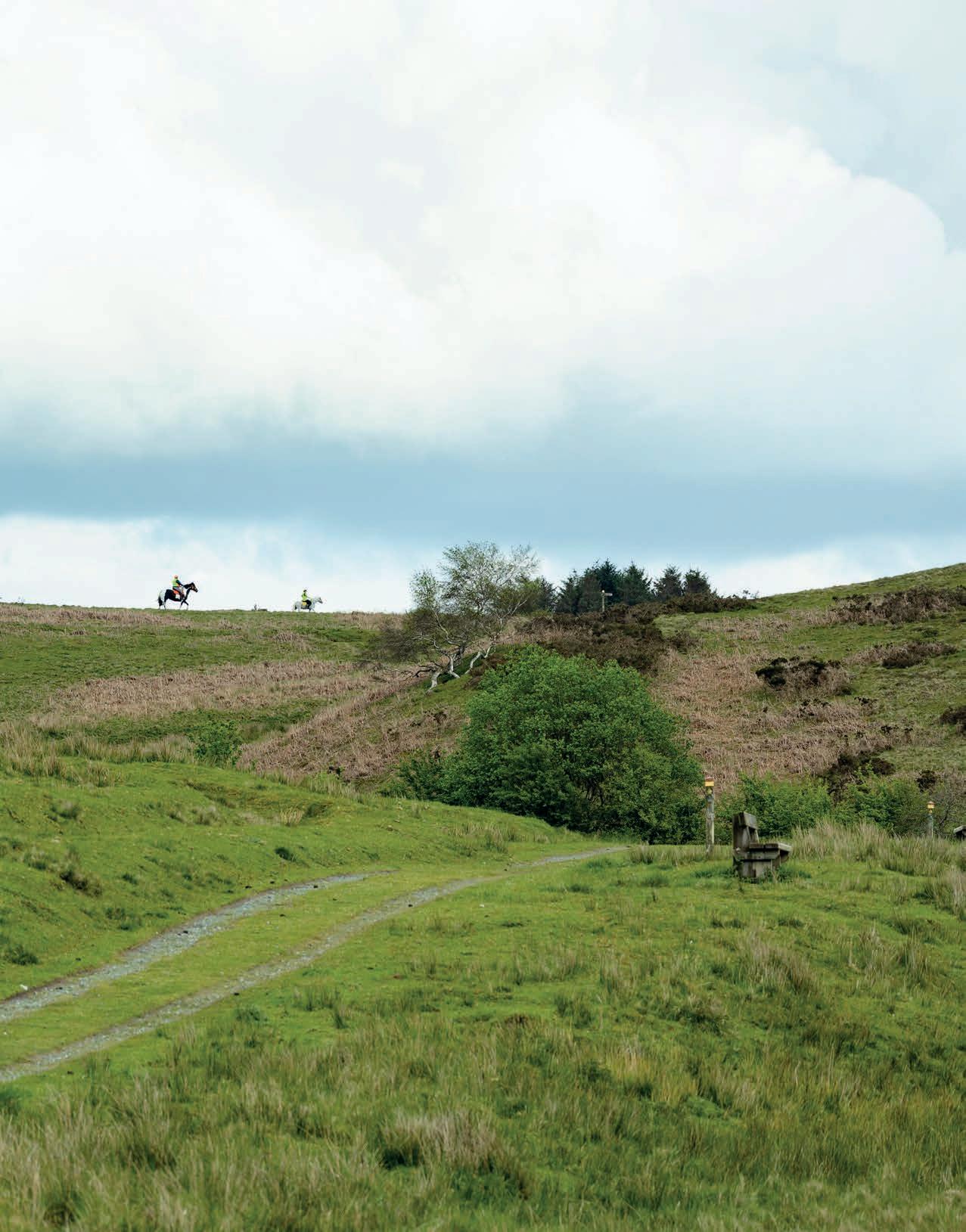
Discover top routes around the UK for you to enjoy this summer with your four-legged friend
As we head into the warmer months, we’re starting to spend more time outside doing what we love most… hacking!
The UK has plenty of incredible off-road routes for you to enjoy. We’ve pulled together some of the very best for you to get inspiration as you head out into nature, surround yourself with wildlife and breathe in the fresh air.
Before you set off on your hack, it’s important to know where you can go and what your rights and responsibilities are in your area. Scan the QR code to learn more.
It’s time to saddle up and get exploring...
Birches Valley – England
Enjoy scenic views of open water and woodlands on this route, located within Cannock Chase Forest. Starting from the top end of the car park, this route follows a multi-user trail past Go Ape and out to Fairoak Pools. Along the way, you’ll follow a mix of bridleways and forestry tracks before looping back to the pools, which are home to an abundance of wildlife. Keep an eye out for swans, ducks and grey squirrels!
Lower Foxdale loop – Isle of Man
This 9.2km loop leads you round the Archallagan (also known as the Forest of a Thousand Trails) — a 371-acre recreational forest located near the village of Foxdale. During the ride, you’ll experience the diverse landscape of the forest and its wildlife, including rabbits, hares, songbirds, wood pigeons and moorland nesting birds. The forest has multi-user routes, so be mindful of other visitors sharing the trails.
Dingestow route – Wales
Take in the wonderful Monmouthshire countryside on this 9km route. With views of the Brecon Beacons and the Black Mountains, you’ll be sure to see some breathtaking scenery.
Tollymore Forest Park
– Northern Ireland
Covering an area of almost 630 hectares, Tollymore Forest Park is based at the foot
It’s time to saddle up and get exploring…
of the Mourne Mountains. This park boasts panoramic views of the sea at Newcastle and its surrounding mountains. Open to the public all year round, this is a great place for you to go on a peaceful hack this summer.
Cross Borders Drove Road – Scotland
Looking for a challenge? This route begins near Harperrig Reservoir and stretches for just under 85km, finishing in the town of Hawick. Typically taking around 3–5 days, you’ll be following in the footsteps of the drovers from hundreds of years ago. From the rolling hills to the woodland of the Tweed Valley — there’s something for everyone and lots of varied landscapes to see. All the facilities along the route, including bridges and gates, have been designed to cater to horse riders. You’ll even find horse and rider accommodation along the way.
Froglands Lane –Isle of Wight
If you’re after a more relaxed ride, this one-hour circular route just outside of Newport is the perfect hack for you to enjoy on a warm summer’s day. At just over 5km, you’ll be riding past luscious green fields and ending next to Carisbrooke Castle.
Mailbox moments
Whether you decide to follow one of these routes or have a favourite of your own, we’d love to see you out and about and in the saddle this summer.
Rideathon
Go the distance for the moments that matter. This July, take on our Rideathon challenge and help protect the off-road routes that give you and your horse freedom and time out together. Find out more about how to get involved by heading to bhs.org.uk/rideathon.
Email your photos to editor@bhs.org.uk for a chance to be featured on our Mailbox page next issue.
• UltraShield® Insecticide that works.
• Kills and repels biting and nuisance flies, mosquitoes, ticks, and gnats.
• Can be used as a premise spray around horses and dogs.
• UltraShield® Fly Mask protection.
bespoke test based worm control programme for your horse from £9.99 pcm.
Do you enjoy any other sports?
At school and university, I loved hockey and netball; however, since working with horses full-time, I can’t find time for them anymore. I did really enjoy playing a team sport; it was quite different to riding.
First memory of horses?
Riding my friend’s pony, Barney, who went on to be my first pony. I used to go to her house for lessons with her mum. I was painfully allergic to horses when I was little, so would come away with red puffy eyes, but I was always desperate to go back.
Q& A Quick-fire
Are there any other riding styles or disciplines that you’d like to try?
I’d love to try western; it would be so fun to go to a ranch in Canada and live out my cowgirl dream.
Your secret to success?
Hard work! If you really want something, you can make it happen.
If you weren’t in this career, what would you be doing?
I would hope something still in the horsey world, but my degree is in Human Geography, so maybe a role in sustainable housing!
What’s the value of showcasing your ups and downs in eventing?
I hope that it highlights that it’s a bumpy
Lauren Bilton catches up with YouTuber Meg Elphick for a quick-fire Q&A
Horseback team, and they’re the most magical places on earth. Nothing compares to seeing wild animals from the back of a horse.
What motivates you?
Creating my dream life of having my horses at home.
What have been your recent horserelated highlights?
I’ve been doing lots of training with some special people ahead of Badminton recently which has been really fun. I’m also producing a lovely young horse called Kiki, working with youngsters always brings me so much joy.
What’s your dream holiday destination?
New Zealand.
sport and gives my viewers hope that the lows also come with the highs.
ewers o your to e
Where’s been your favourite place to ride outside the UK, and why?
South Africa and Botswana. We were lucky enough to go out with the Horizon
What inspired you to showcase your horsey journey on social media?
What show journe
How supportive people have always been, right from the start. I’ve had such a lovely community, and they’ve inspired me to keep sharing.
How sup been, rig such a lo inspire
Wh
Who would you most like to meet?
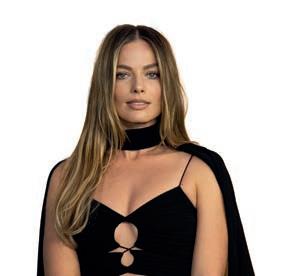
Margot Robbie, she seems like a laugh.
Ma a l
Shaping our future
Welcoming the candidates who are helping to shape the future of our Society
In the spring issue of British Horse , we asked you for nominations to fill vacancies for three Trustee positions:
Specialist Trustee for Business (IT, Digital and Projects)
Specialist Trustee for Volunteering and Communities
Specialist Trustee for Safety
We were delighted to receive nominations for all roles and subsequently all nominees were interviewed under the Selection
Policy by the BHS Nomination Committee. Following these interviews, and in accordance with the Society’s Articles of Association, two Trustees will be elected unopposed at the Election Board Meeting in July: Vicki Hillier as Specialist Trustee for Business (IT, Digital and Projects), and Sally McCarthy as Specialist Trustee for Volunteering and Communities. The Specialist Trustee for Safety role will become available for election again in 2027.
Images: BHS
Meet the successful candidates
Vicki Hillier –Specialist Trustee for Business (IT, Digital and Projects) (elected unopposed)
Horses have been a huge part of Vicki’s life for almost 40 years, and she spends most days with her horse, JoJo.
Over the last 20 years, Vicki has worked in project and programme management in large private and public sector organisations. Throughout her career, she’s delivered and led several major improvement and change programmes to maximise the benefits of technology to improve employee and customer experience.
Vicki’s passionate about using her professional experience and love of horses to help expand the Society’s reach and help connect more people with horses.
Vicki’s experience will be invaluable as we deliver our Strategic Plan for 2025-2027. In particular, her knowledge of change programmes and in the implementation of new technologies will help us see key projects through to completion.
Sally McCarthy –Specialist Trustee for Volunteering and Communities (elected unopposed)
Sally’s been part of BHS for many years, and it’s played a big role in shaping her personal and professional journey. As APC and proprietor, she values the opportunity to give back through volunteering, supporting a charity that has an impact on both horses and people.
Having previously served as a BHS Trustee, Sally brings valuable experience and a strong understanding of the organisation. She enjoys connecting with members and volunteers, recognising the vital role they play in creating a supportive and vibrant community.
Sally’s passionate about the sense of community that volunteering can bring, and believes everyone should have the chance to experience it. While she recognises there are challenges ahead for the equestrian world, she’s passionate about the opportunities too, and is excited to help the Society’s valuable work.
NAF PROFEET
Farrier Solution
PROFEET Farrier Solution is a no-waste, drip-free gel application with a natural brush ideal for daily use. Rich in emollients and fatty acids, it nourishes hoof horn, helps guard against premature cracking and drying, and supports hooves through changing seasonal conditions.
500ml - £17.99
NAF Electro Range
When horses sweat, they lose vital salts including sodium, potassium, calcium and magnesium. NAF Electro Lytes offers convenient daily electrolyte support, while concentrated Electro Salts is ideal after hard work or hot weather, helping support hydration, recovery and performance needs.
Electro Lytes 1L - £12.99
Electro Salts 1kg - £19.99
NAF Everyday Shampoo
NAF Five Star GastriAid
For total gut health from foregut to hindgut, GastriAid supports the digestive system every step of the way. Featuring Five Star BioG, a combination of prebiotics, live yeast probiotic and postbiotics, GastriAid helps nourish the hindgut and support everyday digestive wellbeing. 1.8kg £41.99
Everyday Shampoo offers great everyday value for regular grooming and frequent washing. Its gentle, easy-rinse formula lifts dirt, sweat and grime from the coat, mane and tail, with eucalyptus and spearmint for a fresh finish that leaves coats clean and refreshed. 5L £25.99
All you need from NAF
NAF Five Star Superflex Original
Summer often means longer days, harder ground and more time in the saddle, making every day joint support even more important. Superflex Original helps support daily joint health and flexibility for life, with glucosamine, chondroitin, hyaluronic acid and antioxidants to help maintain healthy joints. 400g Powder £27.99
NAF OFF Range
NAF OFF helps horses stay blissfully unbothered throughout the summer season. Choose from award-winning DEET Power Performance, Extra Effect or Citronella sprays, with gels, washes and refills also available to suit every horse and yard routine. 750ml Spray Range: From £14.99 to £20.99
A ‘Sue-perb’ achievement
Lauren Bilton talks with Sue Lynch about the feeling of winning her award and the work that led up to it
Sue Lynch, a qualified BHS Stage 3 coach, teaches our Changing Lives Through Horses (CLTH) programme at Nuneaton and North Warwickshire Equestrian Centre (NNWEC). The programme uses the power of horses to build life skills, trust and hope for the future of young people.
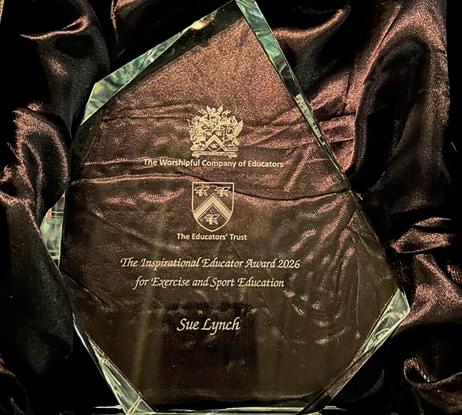
In celebration of her inspiring work helping young people strive towards a brighter future, Sue was awarded the Inspirational Educators National award with the Worshipful Company of Educators and the Educators Trust. It was a fantastic evening and many sectors across education were recognised, with BHS being the only equestrian organisation represented.
Sue said: “I was honoured to be nominated, and extremely proud to have won it. I feel that I’ve won not only in recognition of the work that the team at NNWEC and I do, but for all CLTH coaches.
“The awards evening provided me an opportunity to discuss the programme with educators from many different fields and share with them how transformative working with horses is for our young learners.”
Celebrating every achievement
Sue began teaching the CLTH programme after the COVID pandemic, giving children and young people the life skills and education they deserve.
“Every day is varied, and every learner is different,” she says. “Finding ways to provide learning opportunities that’ll work for every individual is both challenging
and interesting. Helping children and young people achieve their goals is very rewarding, particularly as this is often the first time they’ve felt that they’re accomplishing something.
“Many are lacking in confidence and worried about ‘getting it wrong’, so it’s wonderful to see their confidence grow. I think it’s important to recognise and acknowledge every achievement.”
A life changed
I feel that I’ve won not only in recognition of the work that the team at NNWEC and I do, but for all CLTH coaches
Through kindness, patience and understanding, Sue is continuing to transform lives, helping young people find calm, confidence and purpose when they need it most.
One parent had this to say about their experience with Sue: “The wonderful Sue Lynch ‘got’ [my daughter] immediately and always encouraged her to be her best self without any pressure. Not only did her riding skills start to improve, but so did her wellbeing.”
To find out more about our Changing Lives Through Horses programme, head to bhs.org.uk/changinglives
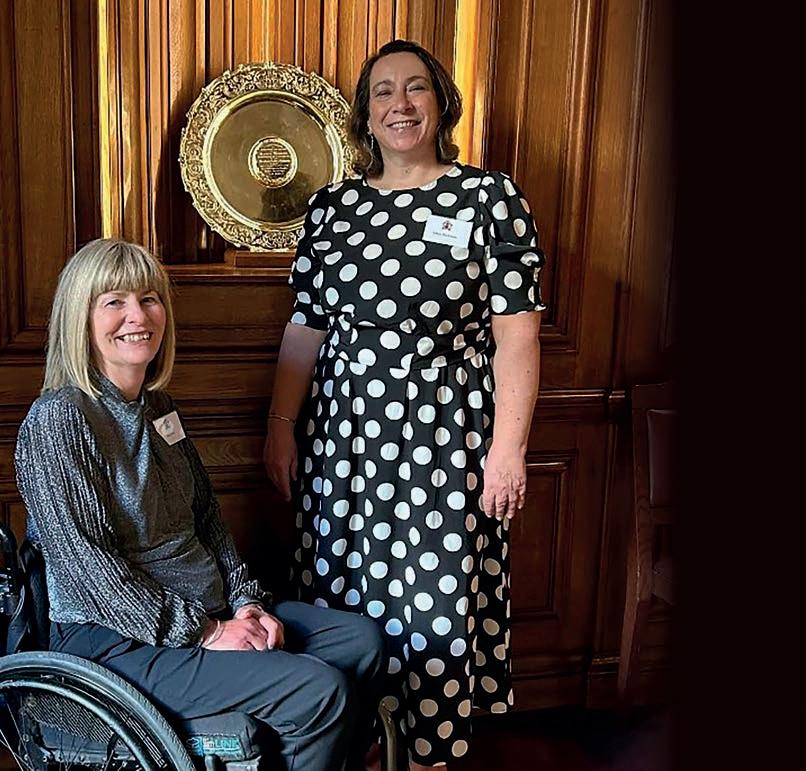
Sue Lynch with Head of CLTH
Alison Blackmore
Fun in
Make the most out of the warmer weather with these horsey activities
Words: LYDIA BOURNE
As you saw on page 26, we’re all about celebrating the moments that matter this summer. From spending time with friends to trying something new, there’s plenty of fun for you to be having — no matter your budget.
We’re rounding up some of the best ways you can spend your summer as a horse lover. Whether it’s a horsey holiday to the beach, a simple evening hack with your friends or heading to an event and volunteering, let’s make it a summer to remember!
It’s beach sea-son
Heading to the beach is a perfect way to inject some excitement into your summer hacks. Trotting along the sandy stretches, breathing in the salty air and feeling the sun on your skin is a great experience for you and your four-legged friend. It’s important to be aware of a few things before you enjoy the coastal views:
Am I allowed to ride on this beach?
You can find out on the local authority website or search online: “Can I ride on…” and the beach name. What are the tide times? Check the beach’s website or the display boards at the beach. Avoid the beach at high tide and be aware of areas that may be cut off by an incoming tide. Where can I park? Keep note of any height restriction barriers that may affect your trailer or horsebox. Are there any restrictions? Riding on the beach might be limited to certain days, times or areas, and there may be bylaws in place.
Where can I ride? There may be boundaries marked on a map or flags set out on the beach for where you can and can’t ride.
Horsey holidays
Planning a holiday this summer? Bring your horse with you! If you’ve ever fancied hacking along the coast, heading to the mountains or going on a long ride through a national park, then this is the perfect option for you. Equine B&Bs are a great way for you to experience new places with your horse that you’d never normally get the chance to go to. There are plenty for you to discover all around the UK, with lots of different options and amenities. Make sure to have a think about what would suit you and your horse best. Is there easy access to riding routes? What’s your budget? Is there ample turnout space?
Summer camps
Taking part in a summer camp is a perfect way to enjoy the warm sunshine and explore somewhere new with your horse. There are camps available for riders of all levels, which include social activities, hacking and coaching.
Mailbox moments
Going on a beach ride, heading to a camp or planning a hack with your friends in the evening sun? We’d love to see what you get up to this summer. Email your photos to editor@bhs.org.uk for a chance to be featured on our Mailbox page next issue.
the sun
Camps can be a one-day event or spread across several days. It’s a perfect opportunity to have fun, learn new things and meet like-minded people.
You’ll also find some camps that specialise in certain things, such as focusing on improving your confidence, jumping or dressage.
Go to bhs.org.uk/events to find a camp in your local area.
Spend time with friends
Whether it’s going out for a hack or having a quiet moment together at the yard, spending time with our friends in the sun is something to celebrate now that the hard winter months are over. Why not practice a dressage test together or set up jumping exercises?
If you’re looking to save a few pennies, sharing lessons with your friends can be a great way to cut costs.
Keep it local
Fancy staying close to home? Yards are always planning fun social activities, especially in the warmer months. Picnics, BBQs and themed days are just a few events that could be taking place right on your doorstep.
Go to bhs.org.uk/findaplacetoride to find your local riding school.
Volunteer your time
There are lots of horsey events taking place this summer for you to get involved in. Whether it’s for a whole weekend or just a few hours, volunteering is a great way to meet new people and spend some time outdoors. Here at BHS, we have plenty of volunteering opportunities for you to throw yourself into. Find out more by heading to bhs.org.uk/volunteer
Happy hacking
Make the most of the lighter evenings by heading out on a hack. Grab your friends, saddle up and watch the sun go down. Riding later in the day can be beneficial for both you and your horse to avoid the height of the heat on those extra hot days. Why not take a pit stop on your hack and head to the pub? There are plenty of pubs that are horse-friendly and are happy for you to tie your horse up while you stop for a refreshing drink.
Claire & Stan
finish lineCrossing the
Lydia Bourne chats to Wetherby 2025 winner, Paula Dewsbury, about her race day experience
Our Charity Race
Days are a chance for riders to experience an exhilarating mile-long race on the flat. Paula Dewsbury was the first to cross the finish line with Spirit Gennie at Wetherby last year. She knows all too well about the incredibly challenging but rewarding experience of taking part.
“At just four years old, I shared a pony with my sister and three other children — hardly the glamorous beginning you might expect. But somewhere between those early rides and muddy boots, a lifelong passion was born.”
At 16, Paula decided to chase her childhood dream of becoming a jockey: “I secured a place at the Northern Racing School in Doncaster. But in a plot twist worthy of any good story, I turned it down and headed into teaching instead.”
When the opportunity to take part in a race for BHS came up, it was a no-brainer for Paula. “I knew it was time to dust off that childhood dream and go for it.”
The lead up
The race day journey begins with a gruelling fitness test. “[It was] hours of training, determination and more than a little sweat. Passing it felt like the first major victory.” By day, Paula is a primary school teacher. Balancing training alongside her day job was no mean feat. “I rode whenever I could: school holidays, weekends, whenever time allowed.”
Our jockeys need to raise £3,500 for BHS. Paula chose to support our Changing Lives Through Horses programme, and fundraising money for disadvantaged young people became a huge motivation for her.
“From psychic evenings and discos to raffles and even a village fun run, I threw myself into it all. Surprisingly, I loved every minute and hitting my fundraising target felt just as rewarding as any ride.”
The big day
Taking part in the race is so much more than just crossing the finish line. “Meeting my fellow riders who’ve since become great friends was one of the highlights. The camaraderie was incredible; we
were all in it together, sharing nerves, excitement and plenty of laughs.
“And then came the moment I’ll never forget: stepping onto the track, riding Spirit Gennie, with family and friends cheering from the sidelines. It was surreal, emotional and utterly unforgettable.”
Support our fundraisers
Our race days help us raise vital funds to support the future of horses. You can donate and support this year’s jockeys by heading to bhs.org.uk/jockeys
Flexyour
Whether you ride for fun or competitively, having good physical fitness can help your partnership with your horse
fitness
Words: LAUREN BILTON
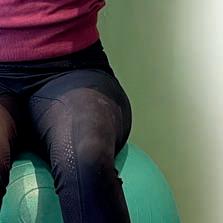
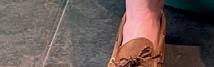
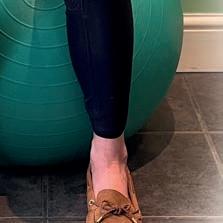
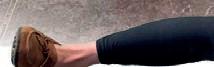
Being an equestrian means being a partnership, whether you’re new to the saddle or a seasoned pro, it can be easy to focus on your horse’s fitness and forget about your own. Exercising outside of riding can help you progress faster as a rider by improving your position and building your stamina.
As with any sport, riding takes a lot of practice to develop and hone your skills. It’s not only about your horse’s fitness but also yours as a rider, both in and out of the saddle. Not everyone needs the same level of fitness; it depends on your riding level and the activities you take part in. If you’re someone who enjoys hacking out, you won’t necessarily have the same requirements as a rider who competes regularly.
Bit of a stretch
Before you get started, prepare your muscles for physical activity. First, make sure to warm up your muscles through a short cardio session, like a brisk walk.
Then, you can start doing a few stretches to get the blood flowing. By doing regular stretching routines, you can improve your flexibility on the ground, which in turn will improve your flexibility on your horse.
Walk your horse for the last 10 minutes of their cooldown
Feeling the flow
Cardiovascular fitness relates to your heart and the way it performs during exercise. Cardio exercise is anything that increases your heart rate, for example, walking, running, swimming or cycling. Horse riding requires a lot of energy and stamina. Your heart rate increases, and you can become out of breath very quickly, depending on the activity you’re doing.
Being an equestrian means being a partnership
Muscle tightness can also lead to restriction and sometimes pain in other areas of the body as they compensate for the restricted movement. For example, tight hip flexors can lead to lower back pain.
Balancing your partnership
Getting tired easily in the saddle can affect your balance and posture, causing your horse to work harder to compensate. This can increase the risk of injury for both you and your horse, as extra strain is placed on their back.
By improving your fitness, you’ll find it much easier to keep your posture, balance and communicate clearly with your horse.
Building your fitness will help you to ride for longer without getting out of breath. You’ll have more energy, and you won’t interrupt the flow of your session by stopping to catch your breath.
Getting to the core
Core strength is very important for all riders, regardless of your level of experience or discipline.
Through a stronger core, you’ll find it easier to maintain your posture and stability, making you feel more secure and
Challenge Awards
confident when you ride. Good posture in the saddle allows you to use your aids more effectively to communicate with your horse.
As you progress as a rider and move up through the levels, your core becomes even more important as you learn more advanced movements such as sitting trot, lateral work, light seat or jumping. These will require you to have a lot of body awareness.
Teamwork makes the dream work
It’s just as crucial to focus on your own fitness as it is your horse’s. Don’t forget you as a rider.
You don’t have to go to the gym; you can set yourself small targets, such as walking your horse for the last 10 minutes of their cooldown. It’s important to set goals that feel achievable to you. Yoga and Pilates can also be a good alternative, as both focus on building core strength and flexibility. EquiPilates is aimed at horse riders and targets the specific muscles and biomechanics used for riding.
Always pick a fitness routine that’s right for you. By buddying up with a friend, you’re more likely to achieve your goals and you’ll have more fun!
Find out how to enhance your activity and fitness, nutrition and hydration so you’re ready to sit in the saddle in the best way for you, and for your horse. Our series of Challenge Awards will help you gain this knowledge to help improve your riding. They’re open to anyone who would like to improve their horse knowledge or skills. Find out more at bhs.org.uk/riding-fit
Exercise corner
Clare Howard, a Chartered Physiotherapist who specialises in horse riders and carriage drivers, talks through some simple exercises you can do at home.
“There are lots of exercises that are relevant and useful for horse riders. These are two of my favourites.
“Please be careful when you start a new exercise. If you have any underlying illnesses or injuries, it’s best to check with your GP or physical therapist. These exercises shouldn’t cause you any pain; if they do, then you should stop.”
Exercise one — engaging your muscles
“Start by sitting on a stool, chair or gym ball. Place your arms across your chest and slowly twist around from one side to the other, going as far as you comfortably can. Repeat three times in each direction. Repeat this pattern slowly with your arms at shoulder height, and then with your arms at eye height.
“Gym balls are useful for horse rider exercise as they encourage the postural and balance muscles to engage while we’re sat on the ball, in a similar manner to horse riding.”
Exercise two — finding your balance
“When you’re comfortable sitting on a gym ball and lying on your tummy over the ball, try this excellent exercise — side lying.
“Lie on your side over the gym ball, in as close a straight line to ear, shoulder, hip, heel, as you can — no collapsing in the middle. When you’ve found your balance, slowly lift your top leg approx. 20cm/8 inches until it’s in line with your trunk. Then lower your leg and repeat 10 times on each side. You might find this exercise considerably easier on one side than the other.
“This exercise is one of my favourites because it asks our brain and body to do different activities with different areas of our body, like when we ride. Your upper body is draped in a relaxed position over the top of the ball. Your lower leg and trunk are supporting your body in a static position, while your upper leg is actively moving.”
It’s important to set goals that feel achievable to you
Breakdown rescue
A day in the life of an Equine Rescue Services horse transporter
The UK’s leading provider of horsebox and trailer breakdown, rescue and recovery relies upon its UK-wide network of independent horse transporters which is always at the ready to attend any roadside incident from which horses need to be recovered and taken safely to the owner’s chosen destination. To find out more about this vital element of our service we asked Nicola Walker from Open Strides Transport in Dorset to explain what this job entails.
Emergencies can arise at any time of the day or night and range from breakdown on the motorway or getting a horse to the vets as quickly as possible to last minute runs to a competition. So, the box must always be ready to respond.
Preparation begins long before the ignition turns. The lorry is washed down after every single job. In the world of equine transport, biosecurity is nonnegotiable, and the vehicle is washed using a strong disinfectant to prevent any risk of cross-contamination between horses.
It's also important to make sure that the lorry is always kitted for safety and comfort: well-stocked first aid kits, full hay nets, spare travel boots and rugs. The box
itself is fully DEFRA approved, fitted with air conditioning for optimum airflow, solid stallion partitions, and a large emergency rear door. Every detail has been considered because preparation is everything when you are responsible for the safe transportation of someone else’s precious horses.
Few things are more stressful than being stranded roadside with horses on board, and this is where experience truly counts.
“When a recovery job is assigned through Equine Rescue Services, I know I can rely on a highly professional communication process. The job begins with a direct phone call offering the opportunity to accept the recovery, ensuring immediate and clear contact. Shortly afterwards, all essential details are sent via text, including the customer’s name, contact number, collection location, destination and any specific travelling requirements for the horse involved. This organised approach enables thorough preparation before setting off.
Throughout the journey, Equine Rescue Services maintains regular communication with me, providing updates and support until the job is successfully completed. This creates a reassuring and efficient experience for me as their transporter and the Equine Rescue Services member who has broken down.”
For Nicola, transport is about far more than simply moving horses from A to B. She knows that stepping onto a lorry can be a big moment, sometimes exciting, sometimes unsettling, and she takes the time to make sure each horse feels relaxed and secure. When a vehicle needs to be recovered the welfare and safety of the horses is the primary concern for everyone at the scene. On a busy motorway or main road, it may be necessary for the Police or Road Safety
Officers to arrange for a road closure. Horses can then be transferred from one vehicle to another without being spooked by passing traffic, and it is safer for other road users.
Equine Rescue Services’ members always have the complete peace of mind that should they ever break down their vehicle will be repaired or recovered, and their horses will be taken away from the incident and on to the destination of their choice.
Why risk travelling without breakdown cover
Trailer membership starts from only £59 per year. Call the equine rescue membership team on 01300 348 997, or visit www.equinerescue.co.uk
Welfare of your horse is the priority
StormX Original Competition Ready Combi Fly Rug
The StormX Original Competition Ready Combi Fly Rug offers lightweight, breathable protection against flies, dust and UV rays during warmer months. Featuring an integrated neck cover, tail flap and soft anti-rub lining for comfort, plus secure fastenings for a customised fit, finished in the stylish Competition Ready print with matching fly masks available. £58.99 hy-equestrian.com
Baileys Aqua-Aide
CoolDown – Refresh After Exercise
Absorbine® CoolDown is a natural herbal body wash that refreshes sweaty coats after exercise. Ideal after training, competition or warm weather rides, the no-rinse formula gently cleanses without residue, leaving coats clean, comfortable and lightly scented with soothing herbal extracts.
Summer essentials
Renowned for its palatability, Aqua-Aide electrolyte supplement should be given whenever a horse sweats, in water or very wet sloppy feed. Its optimum levels of sodium, potassium and chloride, plus magnesium and calcium, mimic those lost in sweat, and support rehydration and recovery from exertion. 2kg around £15.50 baileyshorsefeeds.co.uk
946ml - makes over 120 litres of wash £30.59 absorbine.co.uk
UltraShield Green – Natural Summer Spray
From fly protection to coat care and hydration support –keep your horse comfortable, healthy and performing at its best throughout the warmer months
Baileys Performance Balancer
Ideal for all working good-doers, not just those who are competing, Performance Balancer provides essential nutrition to support muscle build and function, wellbeing and recovery, without unwanted energy or calories. Fed by the mug-full, a 20kg bag lasts a 500kg horse, 40 days. 20kg around £38.00 baileyshorsefeeds.co.uk
warm
aro
lemong this
UltraShield® Green is a natural body spray for horses with fresh, herbal scent to comfort and soothe horses during the warmer summer months. Combining seven aromatic oils including thyme, cedarwood, lemongrass and citronella, this gentle water-based formula includes conditioning ingredients to help maintain a healthy, glossy coat.
946ml £27.27 absorbine.co.uk
HyHEALTH STOP THAT ITCH Ultimate Pack
Complete 3-step horse itch management system designed to soothe, protect and comfort skin irritated by flies and midges. Includes shampoo, rapid relief lotion and protective barrier cream to reduce rubbing, calm discomfort and support healthy skin. £49.99
hy-equestrian.com
Words: LOIS UNITT
Rethinking worm control
Worm control is evolving, and for good reason. Understanding resistance and adopting a more targeted approach can help keep your horse safe
Around 25 years ago, the issue of resistance was first recognised, and testing was introduced to check if horses needed to be given a dewormer (anthelmintic). Previously, the advice was to deworm horses every three to four months and yard routines were built around this. The idea of not worming every quarter seemed unsafe and even irresponsible. Today, we understand far more, and as a result, our approach has changed too. One of the biggest welfare risks to our horses’ wellbeing isn’t the worms themselves, but dewormer resistance. The message is clear: acting now is key to keeping these dewormers effective and your horses protected.
The uncomfortable truth
The routine use of dewormers has accelerated resistance in worm populations. Every time a horse is treated for worms, the weakest are killed, while those that are least affected by the drug survive and therefore have a level of resistance. These worms go on to breed, and the resistance is passed on to the next generation. Over time, more worms survive the treatments and resistance to dewormers develops further until the drugs are no longer effective.
To put it simply, using dewormers unnecessarily brings us closer to the worm population becoming untreatable. Once resistance develops, it’s nearly impossible to reverse.
Resistance has been identified to each of the five chemicals used in dewormers, and with no new treatments on the horizon, it’s more important than ever to preserve what we currently have.
So, what’s the impact of this?
It’s easy to think of this as a distant and theoretical issue, but the consequences are very real and happening now.
If worm populations become resistant to multiple chemicals, we’ll see:
Horses suffering from untreatable worm burdens
Increased cases of colic, weight loss and gastric discomfort
Inability to graze certain pastures safely
Risk of resistance spreading around yards as horses move Horse deaths from unmanageable worm burdens.
Risk-based approach to worm control
Most horses carry a small number of worms without concern, and in some cases, this may even help support their immunity. When it comes to worms, the goal isn’t to kill every single one; trying to do so will only accelerate resistance.
sure they’ve been effective will help slow the progress of resistance. This way, we can make sure that the key medicines are protected and continue to work for many years to come.
There’s good news!
Worming advice can sometimes feel overwhelming, and it may seem that the goal posts are always moving but remember you’re not alone in this. Dewormers are classed as POM VPS drugs, meaning they’re prescription-only medicines.
they’ll be the person that you buy dewormers from, or who gives you a prescription for you to buy them online. They should ask questions about your horse before advising you, if not, you’d be best to seek advice from a different SQP or your vet. Working closely with your vet or SQP is the best way to risk assess your horses and manage their worm burdens. They’ll be able to advise you on ways to:
Reduce your horse’s worm risk
Which tests to use, when and for which horses
How to reduce worm burdens without chemicals
Once resistance develops, it’s nearly impossible to reverse
Which horses to treat, with which drugs and when
After treatment, check for signs of resistance developing.
The overlooked heroes
To protect your horse and reduce your need to use dewormers, there are plenty of steps you can take, including:
Poo picking your fields at least twice weekly – this removes the eggs from the pasture, therefore breaking the worms’ lifecycle
Rotating fields and resting regularly to avoid overgrazing
Cross-grazing with sheep and cattle — they remove eggs from the fields and won’t be affected
Risk assessing new arrivals and testing for resistance
Avoid overstocking pastures
Effective pasture management and keeping records.
A major part of assessing your horse’s worm risks is regular testing. There are several different worms that cause concerns. Each have slightly different lifecycles, and therefore several tests can be used to look for signs of large burdens.
Faecal Worm Eggs Counts (FWEC)
As research continues, the latest guidance advises a risk assessment for each individual horse, and looking at different factors associated with yards to help keep your horse healthy. Assessing and reducing the risks where possible, treating where necessary and retesting after a dewormer is given to make
VPS refers to the three groups of professionals who are ‘prescribers’: vets, pharmacists and Suitably Qualified Persons (SQPs), also known as Animal Medicines Advisors. These professionals are qualified and are required to complete continuing professional development annually to make sure they’re up to date with the latest advice. If you’re unsure who your prescriber is,
FWECs are simple tests that involve sending a sample of poo away to be viewed under a microscope to count the number of eggs present. This number is given as eggs per gram (epg) of faeces and is a good representation of the number of adult females in your horse. These tests are usually recommended three or four times per year, over the spring, summer and autumn, and
Collecting a faecal worm egg count sample
mainly detect roundworms such as large and small redworm and ascarids.
If treatment is advised following an FWEC, it’s important to carry out an FWEC reduction test 10-14 days later. This checks whether the number of eggs has been reduced sufficiently. If the number of eggs hasn’t dropped as expected, it may indicate resistance, and your prescriber will work with you to address this.
Small redworm are one of the biggest threats to horses, with high levels of resistance reported. These worms have an unusual development where the larvae can burrow (also known as encysting) into the horse’s gut wall and can remain in this stage for long periods of time. There are several key points to be aware of:
1
Encysted small redworm can gather in huge numbers in the gut wall, where they may cause irritation and prevent nutrients passing through. Horses with high worm burdens often suffer weight loss and fail to thrive.
2
Encysted redworm are larvae, and don’t produce eggs. Therefore, they’re not represented in an FWEC.
3
In spring, the encysted small redworm can emerge en masse. This can cause a great deal of inflammation in the gut, which is very painful to the horse. Severe cases of the mass emergence is a life-threatening condition called cyathostominosis.
A blood test is available to detect antibodies against redworm, including the encysted larvae. However, it’s only suitable for horses with a low worm risk, as those with a medium or high risk will likely have redworm present, which will produce a positive result. Again, your prescriber will be able to advise you if the blood test is suitable.
Testing for tapeworm
Tapeworms behave differently, as they shed their eggs intermittently in the droppings. Therefore, if you take a sample for an FWEC, it may not include any tapeworm eggs, but that doesn’t mean there aren’t any present. There is a simple saliva test (which can be done at home) or your vet can take a blood sample to look specifically for tapeworm. These tests should be performed twice a year, ideally in the spring and autumn. Like the redworm blood test, these look for antibodies (the horse’s natural defence against the worms).
The environmental aspect
Dewormers don’t just affect the worms inside your horse; they can also impact the environment. Once passed in droppings, these chemicals can kill insects, including dung beetles, which play an important role in breaking down manure and maintaining soil health.
When administering a dewormer, take care to do so in a clear space, where any spills can be immediately cleared up. After treatment, removing droppings regularly can help prevent the chemicals from leaching into the soil and water courses. It’s also important to note that dewormer medication can be fatal to dogs, so carefully dispose of the packaging and don’t allow dogs to eat muck of a recently dewormed horse.
The future is in our hands
Dewormer resistance isn’t just an individual problem; it’s a shared one. There’s a mindset shift taking place, and we need to encourage this shift across the whole industry. It’s a move away from the elimination towards one of stewardship, a balanced system with low levels of worms and the effectiveness of drugs preserved. If you have any questions, our Horse Care and Welfare team are here to help. Visit bhs.org.uk/worming to learn more, or contact us on 02476 840517 or via email welfare@bhs.org.uk
In case of emergency
Emergencies are never easy, but thinking ahead and understanding your options can help you support your horse during the toughest of times
Finding your horse badly injured or not well is an event we all dread. If this has happened to you, that moment of realisation can be incredibly daunting and distressing.
Something’s
wrong… what should I do?
It’s easier said than done, but staying calm and getting help quickly is critical. If your horse’s condition is serious, time really is of the essence, especially if you’re unsure how long your horse has been unwell or injured. When in pain, horses can behave out of character and become unpredictable to
handle. If you need to hold your horse, try to keep them in a safe area and, where possible, make sure you’re wearing a hat and gloves. Anyone who doesn’t need to be there should politely be asked to leave, so when your vet arrives, they can focus solely on your horse. If you’re away from the usual place your vet normally visits your horse, using what3words will give an exact location, including any other instructions to prevent time lost trying to find you.
Stay prepared for the unexpected
Being able to focus, understand the options provided by your vet and potentially make some very difficult decisions in
Words: EMMELINE HANNELLY
a stressful situation is far from easy. Understandably, thinking about what could happen in an emergency probably isn’t at the top of our to-do lists.
However, in critical situations where time is of the essence, such as when a referral to a veterinary hospital may be needed, being prepared in advance could make a huge difference to your horse.
Taking the time to research and complete an emergency care plan for your horse will help you consider your options and have the necessary information on hand to help with making a difficult decision. To support you, we’ve partnered with the University of Nottingham to create a plan that can be tailored to your horse. Visit bhs.org.uk/ecp to download for free.
If you’re loaning a horse, it’s important to have a clear loan agreement in place. This should cover all eventualities, including who’s responsible for emergency decisionmaking and paying the bills. In partnership, work with the horse owner to complete an emergency care plan that you both agree on.
There are times when you’ll be absent from your horse, such as being on holiday or working away from home. It’s important to nominate an authorised person to act on your behalf in an emergency if you’re ever uncontactable. Sharing and discussing your emergency care plan and what you’d like to happen to your horse with your yard manager or authorised person and vet practice is essential. If you have a yard manager, ideally, they should be the authorised person.
Once you’ve completed your plan, we recommend that you:
Review and update your emergency care plan annually
Review your plan if there’s a change to your horse’s health or your personal circumstances that would impact the decisions you’d originally made
Make sure your emergency care plan is readily available.
Factors to consider in an emergency
We all want the very best for our horses. As part of your emergency care plan, being honest about what you can afford, the facilities available to sufficiently care for your horse and their future prognosis will need to be considered. In many cases, your vet will be able to
Being prepared in advance could make a huge difference to your horse
treat your horse at your yard. However, sometimes your horse will require referral to a veterinary hospital for further tests, intensive medical treatment or surgery. You’ll need to consider if hospitalisation or surgery could be a potential option if recommended by your vet, or whether you feel euthanasia would be a kinder alternative over intensive treatment or surgical aftercare.
While we’d prefer not to think about emergencies resulting in euthanasia, it’s an important factor to consider. Making decisions ahead can ease the process and, in your absence, make sure your wishes are considered in an emergency, alongside veterinary advice. Recording your preferred method of euthanasia and what you’d like to happen afterwards on your emergency care plan can help during an upsetting time.
During an emergency, your vet will likely advise you or your nominated authorised person on your horse’s chance of survival and prognosis, their quality of life post recovery and if they’re suitable for referral. As part of your planning, it’s important to think about practicalities too: your transport options, the location of your nearest veterinary hospital, how your horse may cope with box-rest and the potential costs.
Covering the costs
With the rising cost of living, finances and veterinary costs are an important consideration for many owners. Different treatments and referrals can vary considerably from hundreds to thousands of pounds. For example, the average cost of medical treatment for colic in a hospital in 2023 was £2,265, with a range of £683–£13,762. The average cost of colic surgery was £8,690 with a range of £4,764–£20,3431
These figures don’t include additional costs before and after referral to the hospital. Veterinary insurance can give you peace of mind, but it’s important to check all the details of your policy, including the maximum payout amount and what is and isn’t covered. For example, stabling, emergency transport, additional costs of complications or specialised farriery. Be clear on any conditions or diseases that may be excluded for your horse and how this may impact your decision. Importantly,
Applying a stable bandage
Putting on bandage padding
be prepared that some treatments or surgical procedures may exceed the maximum amount covered by your policy, which means you’ll have to pay the outstanding amount.
What would be an emergency?
You know your horse better than anyone, and even the most subtle signs can indicate a serious problem, so it’s important to take notice of these. Always contact your vet if you’re concerned.
Some conditions require urgent veterinary attention. These include Equine Grass Sickness, colic, Atypical Myopathy, sudden lameness, your horse is trapped or unable to stand, signs of trauma or fracture, choke that isn’t resolving and heat stress.
Laminitis is a painful condition, and it’s important your horse receives pain relief and a veterinary assessment as soon as possible. In the event of a suspected contagious disease outbreak, such as strangles or equine influenza, always contact your vet for advice and to help prevent any further spread.
In the case of an injury, accident or dog bite, seek veterinary attention if the wound is deep, or over high-risk areas such as joints, eyes or genitalia. If there’s significant bleeding, apply steady pressure while waiting for your vet.
If your horse has stood on an object, such as a nail that’s gone through the
sole of their hoof, veterinary assistance is urgently needed due to the risk of internal damage and infection. With any injury, it’s important that your horse is protected against tetanus. If their vaccinations are not up to date, contact your vet as tetanus can be fatal.
Caring for your horse after an emergency
Following your vet’s advice is important for the aftercare treatment and care needed for a successful recovery. Depending on the injury or illness, this may result in a sudden
change of management for your horse, such as needing to be kept on box-rest or restricted turnout. Alongside physical care, your horse’s mental wellbeing is just as important. With your vet’s guidance, consider ways of providing suitable enrichment opportunities. Where possible, make sure your horse has company, such as friends taking it in turns to be stabled next to them, or opportunities for mutual grooming, which will have a positive effect. Monitor your horse closely, and understand what positive improvement looks like or what should be a cause for concern, such as a wound becoming infected. Work closely with your yard manager, fellow owners and other professionals who are involved with your horse’s care. Check and update your emergency care plan to add any required changes. Make sure you have the equipment and supplies you need, such as bandages and medications, and that these are used as directed. Some horses may feel unsettled during treatment, so always prioritise your safety. Wear a hat and get support where needed. If you’re unable to complete any aftercare, it’s important to contact your vet. Time will need to be spent to work with your horse to re-build their trust and confidence when being handled in the affected area.
We’re here to help
Visit our Horse Care and Welfare webpages, where we have lots of information on different health conditions for you to find out more about the signs and what actions are best to take while you’re waiting for your vet. Our Friends at the End support scheme offers free help and advice to anyone before, during and after the loss of their horse or pony. Contact our support team on 02476 840517 or email friendsattheend@bhs.org.uk
1 Mair, T., et al., (2024). Cost of referral treatment for colic in the United Kingdom— What has changed in the last 5 years? Equine Veterinary Journal. 56(S59), pp.19-20.
Make
horse regularly
Poulticing your horse’s hoof
Allison Lowther explores the digestive system and ways you can keep your horse’s gut healthy
Trust your gut T
he horse’s digestive system is both unique and delicate. Through evolution, it’s adapted to process a near-constant intake of fibrous forage. However, modern management practices often place this system under pressure.
A complex and sensitive digestive system
Chewing mixes feed with saliva (an important buffer against stomach acid). Food then travels down the oesophagus into a relatively small stomach, with a capacity of around 8–12 litres. From there, digestion progresses through two key regions:
Foregut (stomach and small intestine): where enzymatic digestion breaks down proteins, fats and soluble carbohydrates Hindgut (caecum, large and small intestines): a vast fermentation chamber housing billions of microbes that digest fibre.
“This hindgut fermentation is critical,” says Lisa Elliott, MSc from Equine Nutrition Solutions. “Microorganisms break down structural carbohydrates,
producing volatile fatty acids that provide a major energy source. However, these microbial populations are highly sensitive. Sudden dietary changes or inappropriate feeding can disrupt this balance, leading to serious health issues.”
Horses continuously produce stomach acid — even when they aren’t eating. Without regular forage intake to stimulate saliva production and buffer this acid, the risk of gastric ulcers increases significantly.
The horse’s daily nutrient needs
The way the horse’s digestive system has evolved, they have a daily need for fibre and plenty of it, ideally supplied on an ad-lib basis.
“Fibre not only supplies energy but also helps promote a healthy digestive tract and hindgut microbiome,” says Lisa. “The health of the microbiome is key to overall equine health.”
Fibre also helps promote a healthy digestive tract and hindgut microbiome, but is just one of the key nutrients needed in your horse’s daily diet. Abrupt changes to the type of fibre is the biggest concern to the microbiome and gut health, not concentrates (which is commonly assumed).
Water is vital for health and performance. Intake can be boosted by using a salt lick or an appropriate electrolyte, and making sure your horse always has access to clean, fresh water.
Carbohydrates provide a form of energy for work, condition and performance, and come in two forms — structural (fibre) and non-structural (sugar and starch). Good quality forage provides both types, making it an excellent source of energy to support everyday work and condition.
“High levels of starch from cereal-based feeds can overwhelm the small intestine,” stresses Lisa. “When excess starch reaches the hindgut, it can disrupt microbial populations, which may lead to acidosis and colic risk.”
Fats and oils also provide a source of energy and can be useful for harder working horses who need extra energy. Fats provide essential omega 3 and 6 fatty acids that occur naturally in fresh grass and are essential for the absorption of fat-soluble vitamins. They have excellent benefits, including supporting immunity, healthy joints, skin, coat and hooves.
The horse’s gut thrives on consistency
Protein supports tissue repair, muscle development and overall health. It’s made up of chains of amino acids. There are 21 essential amino acids, and 10 of these need to be provided in the diet.
“Certain amino acids must always be present to build protein or synthesis is limited. These are known as ‘limiting’ amino acids and they’re lysine, threonine and methionine,” says Lisa.
It’s important that dietary protein contains good levels of lysine but also adequate levels of threonine and methionine for correct protein synthesis. Quality over quantity is important when it comes to protein.
Vitamins and minerals are micronutrients and essential for everyday health. They’re needed in smaller amounts than macronutrients (carbohydrates and protein).
“Vitamins and minerals perform hundreds of beneficial roles throughout your horse’s body,” explains Lisa. “From strengthening
bone, contracting muscles, balancing fluids and keeping the heart pumping, to energy metabolism, growth and immunity.”
Make sure your horse is receiving the correct levels through their diet to match their daily work and physiological needs.
Supporting the digestive system
The horse’s gut thrives on consistency, so routine is key: Prioritise forage
Providing ad lib forage supports natural behaviour and gut function. Where calorie control is necessary, you can try soaking hay, using slow feeders or small-holed haynets.
Feed little and often
Feeding smaller, more frequent meals helps optimise digestion and reduces the risk of undigested feed passing into the hindgut.
Introduce changes gradually
Sudden dietary changes are a major risk factor for digestive upset. Microbial populations in the hindgut require time (often weeks) to adapt to new feeds. Changes to feed should ideally be made gradually over 10–14 days.
Maintain routine
Changes in turnout, stabling or workload can affect gut health. Seasonal transitions can increase the risk of digestive disturbances due to changes in diet and management.
Monitor body condition
Regular weight and fat scoring (also known as body condition scoring) allows adjustments to feeding before problems arise. Both underfeeding and overfeeding can negatively impact digestive health.
Common digestive challenges
Despite careful management, digestive disorders remain one of the leading health concerns in horses. Many are directly linked to feeding practices.
Colic is a broad term for abdominal pain and can be life-threatening. Causes include impaction, gas accumulation and gut displacement. The horse’s complex large intestine, with its twists and turns, makes it particularly susceptible to blockages. Risk factors include:
Sudden dietary changes
Low fibre intake
Inadequate hydration
Reduced movement (e.g. increased stabling).
Gastric ulcers
Horses continuously produce stomach acid, so periods without forage can leave the stomach lining unprotected. Modern management, such as meal feeding and limited grazing, has made gastric ulcers increasingly common. Gastric buffering by feeding forage before exercise to create a fibre mat can reduce the risk of ulcers.
Hindgut acidosis
Excess starch reaching the hindgut is rapidly fermented, producing lactic acid. This lowers pH, damages the gut lining and disrupts microbial populations. Consequences can include diarrhoea, colic and even laminitis.
Laminitis
Although often associated with metabolic issues, laminitis can also be linked to hindgut disturbances, particularly following dietary imbalances or rapid changes in feed.
Top tips for maintaining gut health
Horses have evolved to graze continuously on fibrous forage, not to consume large, infrequent meals. Stick to the following to reduce the risk of digestive disorders and support long-term health:
1 Constant or near-constant access to forage
2 Adjusting calorie content where needed (e.g. soaking hay or strip grazing)
3 Gradual dietary changes (especially with fibre)
4 Consistent management routines
5 Feed a balanced diet
6 Close monitoring of body condition.
“The equine digestive system is a finely balanced ecosystem that’s reliant on consistent management and appropriate nutrition,” says Lisa. Understanding gut health is more important than ever. Prioritising consistent fibre, maintaining routine and recognising early signs of digestive disturbance will not only improve performance but, more importantly, safeguard equine welfare.
Scan the QR code to learn more about equine gut health.
equine
influenza Spotlight on
Understanding the signs and symptoms of equine influenza will help to reduce the risk of this viral respiratory disease from spreading
How does it spread?
Equine influenza (also referred to as equine flu) is an airborne virus. When an infected horse coughs, they release droplets into the air, and the virus can spread over long distances. The incubation period (time between becoming infected and the beginning of symptoms) is between one and five days. There’s been a rise in outbreaks since April, so it’s important to be extra careful and maintain good hygiene standards at your yard. Being aware of the symptoms can help minimise the risk. If you suspect your horse has the flu, isolate them and contact your vet.
The disease can also spread through direct contact between your horses or indirectly, for example, by handlers, equipment, feed buckets, sharing horse transportation and in stables that haven’t been cleaned and disinfected between horses. Outbreaks can spread quickly between horses, particularly if they’re unvaccinated.
Signs to look out for
Equine flu is a highly contagious disease. It’s important to be aware of the symptoms so you can act quickly to help reduce the risk of it spreading.
An increased temperature above 38.5C (101.3F) for one–five days (this can happen before any visible signs are shown by your horse)
A frequent dry, harsh cough
A clear, watery nasal discharge that may become thick and yellow or green in colour
Loss of appetite
Your horse is lethargic
Swollen and painful glands under and around their jaw ‘Gags’ when eating.
Providing care
After contacting your vet, they’ll likely visit your horse to take a swab and possibly a blood test. Like us, there isn’t a direct treatment for the flu; the best thing you can do is provide care and make sure they have plenty of rest. Take care to
Vaccinate and keep them up to date Increase in normal temperature could indicate a
After visiting other yards,where possible,disinfect boots, change outer clothing andwashhands
Clean and disinfect equipment and transport after events
If your horse is unwell, isolate and call your vet
How you can help prevent the spread of equine disease
keep the dust levels low, so your horse’s respiratory system isn’t further affected. It can take up to several weeks for your horse to fully recover. If they aren’t properly cared for, there’s a risk of future complications, so get your vet’s advice before you return your horse to work to make sure they’re recovered and ready.
Prevention and vaccination
Maintaining good health and hygiene management practices on your yard, with the correct disease prevention measures in place, can also help to prevent the spread of equine flu and other diseases.
In addition, vaccination remains an important way to minimise the risk of flu. The vaccination programme starts with a series of injections over the first year, which are then followed by boosters to help maintain cover.
When the vet arrives to vaccinate your
horse, make sure their passport is available so the injection can be recorded. If you’re worried that your horse might not be well, for example, they’re lethargic or not eating as usual, speak to your vet ahead of vaccination and they can advise you.
If your vaccinated horse becomes ill with the flu, they won’t be as severely affected and will suffer for less time compared to an unvaccinated horse. Your vet can advise on the most current vaccine available.
When more horses are vaccinated, the spread of the disease is reduced. By vaccinating your horse, you’re not only protecting them but you’re helping to reduce the risk of spread to others, which increases the UK’s herd immunity.
For more information on ways to manage equine influenza and stop the spread of the disease, head to bhs.org.uk/equine-influenza
horse isn’t well
Don’t share water sources away from the yard
Unwell horses may not show signs immediately
Masterclass
Olympic event rider Tom McEwen works with Meg Elphick and her two mares to build straightness, improve rideability and develop confidence
Words: STEPHANIE BATEMAN
Photography: JON STROUD
with Tom McEwen n
Tom McEwen BHSI is one of Britain’s leading event riders and a key member of the British team on the international stage. Renowned for his consistency, equestrianism and cool-headed performances under pressure, Tom has enjoyed success at the very highest level of the sport.
Most recently, he was part of the gold medal-winning team at the 2025 Blenheim Palace European Championships and the 2024 Paris
Olympic Games, both with JL Dublin, adding to an already outstanding championship record.
Tom and Toledo De Kerser were central to the gold medal-winning eventing team at the 2020 Tokyo Olympic Games, where they also secured individual silver, showing their ability to deliver on the biggest stage.
Having represented Team GB at Pony, Junior, Young Rider and Senior levels, Tom has achieved medalwinning performances throughout his
career. His accolades include team gold at the 2018 World Equestrian Games in Tryon, victory at Pau 5* in 2019 and second place at Luhmühlen 5* the same year.
Based in Gloucestershire, Tom produces horses from young prospects through to five-star level, with a strong emphasis on correct training, rideability and long-term development. He is widely respected for his sympathetic approach and ability to bring out the best in each
Meet the horses and rider
Meg Elphick is a content creator and grassroots event rider, balancing her passion for horses with a growing online audience. In this session, she brings two very different mares to work with Tom McEwen.
WINNIE
A seven-year-old homebred mare out of Meg’s mare Jammie. A talented mare at the start of her career, Winnie’s still developing her strength, balance and understanding. She shows plenty of scope, but like many young horses, can be keen and is still learning how to organise herself.
JAMMIE
A more experienced mare, 12-year-old Jammie has already qualified for the BE100 LeMieux Grassroots Championships at Badminton. She’s established and genuine, but still benefits from exercises that refine accuracy, balance and responsiveness.
horse, making him a sought-after coach and a top-level competitor.
In this masterclass, Tom works with grassroots rider Meg Elphick and her two mares, Winnie and Jammie, focusing on building the foundations needed for a successful eventing season. Through a series of progressive exercises, Tom develops straightness, rhythm and balance using poles, skinnies and gridwork.
Starting with Winnie, the session focuses on improving strength
and coordination in a young horse through transitions and simple lines, before progressing to more technical accuracy exercises with Jammie over skinnies. The session finishes with gridwork designed to refine technique and build power. Throughout, Tom emphasises the importance of keeping things simple, riding with accuracy and allowing exercises to do the work, reinforcing the key principles that underpin success across all phases of eventing.
Straightness, transitions and grid development
Meg begins the session on Winnie, allowing Tom to assess her way of going.
The focus is on establishing a solid foundation before building towards more technical exercises later in the session.
Tom sets up a simple exercise using the poles on the floor, designed to be ridden in both trot and canter. The distances are measured for standard canter strides, but kept slightly shorter to encourage compact, balanced steps. They start in trot. Tom asks Meg to keep everything simple and accurate,
riding down the centre of each pole.
“Think about your line — aim for the middle of the pole to the middle of the other pole,” he explains. “Keep it really straightforward to begin with.”
Straightness is the priority, but it quickly becomes clear that Winnie’s natural enthusiasm can make her slightly wobbly through the line. Tom encourages Meg to keep her eyes up to stay balanced in the saddle and maintain a supportive inside leg when turning to prevent her from falling in through the corners.
To add another layer, Tom introduces transitions between the poles. Meg’s asked to ride trot–walk–trot, focusing on keeping the transitions smooth and progressive rather than abrupt. “A flowing transition is
what we want,” says Tom. “Try to rise into the walk so it stays soft and forward.”
This exercise highlights areas for improvement, particularly in maintaining straightness through the transition itself. By adding accuracy challenges, like riding over specific sections of the pole, such as the outside blue section, Tom keeps the exercise engaging while helping precision. They then move into canter. Winnie finds this more challenging, particularly on straight lines, where her balance is still developing. Tom adapts the exercise by suggesting Meg use a circle to help her maintain rhythm and bend before approaching the poles.
From here, the complexity builds to canter into trot between the poles, then adding alternating transitions within the line and moving to trot into canter.
Each variation encourages Winnie to stay attentive and responsive while improving her strength and coordination.
Meg notes that Winnie can be stiff through her body, and Tom uses these exercises to help unlock that suppleness.
The session then progresses to gridwork. Starting small, Tom introduces a bounce exercise with guide poles to support straightness. The first element is the bounce, followed by two uprights with poles placed in between and after the final element.
Winnie initially over-jumps when coming down the grid the first time, arriving too strongly and getting a little close to the second element of the bounce. However, she quickly learns from the experience and adjusts on the next attempt.
“She needs to learn to keep herself
Aims of exercise
Improve straightness and rhythm through poles and transitions
Develop balance and strength in a young horse
Build confidence through progressive gridwork
Top tips
Keep exercises simple and progressive
Use transitions to improve balance and straightness
together,” Tom explains. “That’s why we keep it small — confidence and relaxation build the scope.”
To finish, the grid is developed further, ending with an oxer.
The focus remains on maintaining a relaxed, balanced canter into the exercise.
“Straightness and rhythm are everything,” says Tom. “These little exercises build strength without your horse even realising it.”
By the end of the session, Winnie is working more consistently, beginning to understand how to organise her body and use her energy more effectively.
EXERCISE TWO
Accuracy and rideability over skinnies
For the second phase, Meg switches to her more experienced mare, Jammie. The exercise focuses on accuracy and rider control using a line of three skinnies set along the centre line. They begin by warming up over the fences individually, approaching from different directions. This allows both horse and rider to become familiar with the questions being asked.
Tom emphasises the importance of keeping the exercise inviting. The skinnies are built with ground lines and supported by guide rails to help the horse stay straight and confident.
“Always make it clear for them,” he says. “Especially with careful horses — give them something to read.”
Once Jammie is comfortable, the exercise develops into an S-shaped line, linking the fences together. This introduces a greater level of technicality, requiring Meg to think ahead and guide her horse accurately between each element.
Aims of exercise
Improve rider accuracy and use of lines
Develop suppleness and responsiveness in the horse
Build confidence over technical cross-country-style fences
Top tips
Look early and clearly – your eyes and body position control the line
Focus on balance and preparation
“This is as much about you as it is about your horse,” Tom explains. “Your eyes dictate where you want Jammie to go next and encourage her to land on the correct lead.”
To reinforce this, Tom calls out directions as Meg lands, forcing her to react quickly and look early towards the next fence. The exercise becomes a test of focus, balance and communication.
Jammie responds well but occasionally lands on the incorrect lead. Rather than making a big issue of it, Tom encourages a more relaxed approach.
“The more you force it, the more she’ll resist,” he says. “Just prepare earlier and let it happen.”
Meg is reminded to look sooner and allow her body to guide her horse naturally, rather than making sudden, exaggerated movements.
“When you snap into a new direction through your body, your horse has to compensate, which usually throws their balance out even more,” Tom adds. “Keep it smooth and subtle.”
As they continue, the lines become more fluid. Meg gains confidence in trusting her eye, while Jammie becomes more responsive to the direction of her body.
The exercise is particularly effective for sharper horses, as it reduces long approaches to fences and encourages them to focus earlier on the task ahead.
“Straightness and rhythm,” Tom reiterates. “If you have those, the rest follows.”
By the end, Meg is linking the fences confidently, with a clearer understanding of how her position and focus influence the outcome.
EXERCISE THREE
Gridwork for technique and power
To finish the session, Meg continues with Jammie over a more advanced grid designed to refine technique and build power. The grid begins with a small cavaletti, followed by an oxer, then two uprights with ground poles to regulate stride and maintain rhythm. Guide poles on the approach help to create a straight, balanced entry off the corner. From the outset, Tom is focused on consistency.
“Don’t change how you ride into it,” he says. “Let the exercise do the work.”
Meg approaches in a steady, balanced canter, keeping her body tall and her eyes up. The structure of the grid encourages Jammie to stay straight and organised, while the poles help control the stride pattern.
Tom observes that Jammie tends to open up slightly over the fence, jumping a little flat. To address this, he keeps a landing pole in place to encourage her to bring her highest point back over the fence.
“She needs to learn to adjust where her highest point is over the fence,” he explains.
By maintaining a consistent approach and allowing the grid to influence the jump, Jammie begins to improve her shape and technique.
Tom then raises the final element slightly, adding a new level of challenge. Importantly, he instructs Meg not to change her riding.
“It should feel the same,” he says. “You don’t want her rushing or changing her rhythm.”
This is a key lesson — building height and scope shouldn’t come at the expense of balance and relaxation.
Meg keeps her position neutral and her upper body still, allowing Jammie to jump through the grid confidently.
The result is a more controlled, powerful effort without tension.
“I mostly jump small at home,” Meg explains, “but it’s good to occasionally jump a few bigger elements.”
Tom agrees, emphasising the importance of testing the system without overdoing it.
“It’s about confirming your basics,” he says. “If the foundations are right, you can add height without changing anything.”
By the end of the exercise, Jammie is jumping more consistently, showing improved technique and confidence.
Aims of exercise
Improve technique and shape over fences
Develop power and adjustability within the canter
Reinforce straightness and rider position
Top tips
Let the grid do the work – avoid interfering too much as a rider
Use poles and structure to improve technique and control
Pony
power
Alice Bannister-Bell BHSI, discusses the joys of having a pony in your life
Ithink it’s safe to say many equestrians became hooked by falling in love with a special pony in their younger years. They stole our hearts and were a constant provider of entertainment, whether it was escaping from their paddock or rolling with you on board. I’m sure you can recall the name of that pony.
The one good thing about being 5ft 2 and a lightweight rider is that it means ponies will always be part of my life. But why are they so special, and do they get the credit they deserve?
Strutting their stuff
For me, some of the greatest enjoyment comes from training young ponies, educating them at home before seeing them go off and strut their stuff at competitions.
Over the years, I’ve produced and sold home-bred ponies who’ve found great competition homes, and they do me proud, some as far away as Sweden or Hong Kong. These ponies all started their education at home, where I taught them the basics of flatwork, so they learnt to take you forward. An active, forwardthinking pony is very important for higher-level training later in their career.
Heavier, native ponies such as Highlands,
Fells and Dales can sometimes be labelled as backwards or lazy. However, I find that if you make the work fun and interesting, these ponies can really move and are incredibly active. Welshies and show ponies can be labelled sharp, but again, if you stimulate their brains, they’re incredibly capable and trainable.
An active, forwardthinking pony is very important for higher-level training later in their career
Rider suitability
When choosing your riding pony, it’s important to consider your pony/rider size and weight compatibility.
The BHS Fellows and Instructors Association supports professional development for senior BHS coaches and offers outstanding training to all. We focus on new veterinary and scientific advances, and thought leadership, including advanced rider and coach psychology. Visit fandiassociation.org.uk
Never underestimate your pony
When looking for a dressage prospect, never rule out a pony and don’t put a ceiling to your training aspirations. Even if you don’t want to compete, teaching these ponies higher-level movements such as flying changes and half pass can be fun for them and fulfilling for both you and your coach. When it comes to jumping, ponies punch far above their weight in comparison to horses. If you ever want to see the best of the best, go and watch the Pony Showjumper Final at HOYS, where they jump 1.30m — some are warmblood ponies, but it’s not uncommon to see that many of the finalists are Connemaras or Welsh Sec Ds. Adults might not get to enjoy the fun of mounted games or the thrill of pony racing, but how much joy does it bring to parents to see their children having the love of ponies to start them off on that same path? Whether it’s riding, owning or being the person who has to repair the electric fencing, why wouldn’t you have a pony in your life?
Head over to bhs.org.uk/rider-size to learn more, or an APC will be able to support you.
Keep cool in the heat with this refreshing mango sorbet recipe. With just three simple ingredients, you can create an extra-tasty dessert to enjoy in the sunshine.
INGREDIENTS
3 large, ripe mangoes
200g caster sugar 1 lime (squeezed)
METHOD
1. Peel the mangoes, cut into chunks and put them in a blender.
2. Add the sugar, lime juice and 200ml water. Blend until the mango is smooth and the sugar has dissolved. Pour the mixture into a container and put it in the freezer for a few hours.
3. Scrape your sorbet back into the blender. Blend until you have a slushy mixture, then pour it back into your container and freeze for another hour or so.
4. Repeat step 3 and freeze until solid.
Little pick me ups
RETAIL
Bee kind!
There are over 250 kinds of solitary bees that make up 90 percent of bee species in the UK. Get stuck in and test your DIY skills by having a go at making your very own bee hotel. This will create a safe place for female solitary bees to build nests and lay their eggs. Place your finished hotel in a sunny spot, and watch the bees buzz around your garden. Buy for £25 at shop.wwf.org.uk/ products/beevivediy-bee-hotel-kit
female solitar and their finished ho
A round up of seasonal highlights for people who love the outdoors lifestyle
WILDLIFE
Wild and free
Wildflower meadows flourish in the summer. Not only are they full of vibrant colours, but there’s also a whole community of insects thriving within them. These meadows can contain up to 40 species in one square metre and are one of Britain’s most diverse habitats. From elegant butterflies, crawling beetles to the buzzing of bumblebees, there’s always lots to see. If there’s water nearby, you might also find dragonflies and damselflies. Get yourself down to a local meadow while the sun is shining and see what joys of nature you can spot.
ACTIVITY
Have a ball
Create your own mini wildflower meadow and brighten up a dull patch of grass by making these seed balls to scatter throughout your garden. It’s the perfect way to add a splash of colour!
1. Mix 10 parts soil to 1 part flour
2. Slowly add water and mix until it becomes a sticky texture
3. Roll the mixture into firm balls
4. Fill a tray with wildflower seeds and roll your mud balls around until covered with seeds
5. Leave the balls in the sun to dry, and then they’re ready to throw into your garden.
Mailbox
Letters, messages, polls from your BHS
Quality over quantity
Horses, like humans, are living longer. There are advances in technology, medicine and our ability to provide better outcomes for injuries that once would’ve ended a horse’s life. I enjoyed reading the article by Alex Robarts BHSI and wholeheartedly agree with her philosophy of quality over quantity when working older. I have a twenty-yearold horse, and I work him for 20–25 minutes, five days a week. It’s made him look 10 years younger! We compete at British Dressage once a month — we used to go and do two tests, but now we only do one test each time and stay more local. He loves his days out, and last year we competed at both regional and national championships.
Mandy Hayward
The power of Dead Slow
I was moved and interested to read your article about the Dead Slow campaign. It’s a campaign I’ve been passionate about, and I’ve shared the messaging and some of the particularly powerful imagery used in the past. It’s upsetting, but making those stark visual statements alongside the very clear message of ‘Dead Slow’ is, in my opinion, the most effective way to get attention from drivers. Please give us more posts on social media (Facebook and Instagram) so that every BHS member and follower can amplify the message across their networks and beyond.
Karen McManus
INSTAGRAM @britishhorse
EMAIL editor@bhs.org.uk
FACEBOOK TheBritishHorseSociety
Fighting for the future
Wow! Flipping through the news pages is always a brilliant reminder as to just how much BHS does for not only horses, but us as equestrians. From building a new mounting block to rejuvenating UK’s bridleways, the work you do is inspiring and appreciated. I love going out for long hacks with my horse. Reading that we could lose so many off-road routes was devastating. I’ll be keeping an eye out for ways to get involved and protect our incredible off-road routes. Please keep fighting for the future and the horse community will be there right beside you!
James Bellwell
FRAGRANCE COLLECTION
EquiAmore is the FIRST in the world to create a luxury fragrance collection exclusively for horses. The Equine Eau de Parfum is free from all nasties, cruelty free and vegan, safe for direct application to your horse’s coat. Their range also features a magic odour eliminator for use on rugs and textiles, a gamechanger for equestrians! www.equiamore.com
PREMIUM SUPPLEMENTS LOW PRICES!!
FLEX HA (high spec!) 1kg only £45.99
FLEX PLUS (with devils claw) £51.99 365 COMPLETE (the ultimate feed balancer) £28.99
SUBSTITUTE 1 litre only
WARRIOR 1kg 45 day supply
£18.99
£33.99
WARRIOR CREAM 200g £5.50
(unique high spec formulation) 1kg
(hooves) 2kg
MSM 500g (cheap!)
LINSEED OIL 5 litres
PREMIERflex HA
Why Choose Premier Flex HA?
Not all equine joint supplements are the same, in fact they differ enormously in the levels of the active ingredients contained in them. A top quality joint supplement should contain not only a good level of Glucosamine which is a relatively cheap ingredient but also high levels of Chondroitin, HA and MSM. Premier Flex HA is possibly the highest spec equine joint supplement today!
“Ok firstly I’m not one to write reviews, but here goes. I sound crazy, but this supplement has me crying with happiness. I can’t even begin to explain how this product has not only changed my horses comfort level but also my mind set. My happy, cheeky and very beautiful cob is back to himself ...Thanks you to whoever developed this product, you will never truly know how much of an impact you have made ?? I hope this works for your horse as well as it has for mine.” Happy Cob Owner, Lancashire
365 COMPLETE
365 Complete is a superb high spec balancer that goes far beyond normal vitamin and mineral products. 365 Complete includes every vitamin and mineral a horse needs and these minerals unlike many products are provided in chelated form which makes them far more absorbable. 365 Complete also includes pre and pro-biotics (gut health), MSM (joints, skin, breathing etc) and biotin (feet). 365 Complete helps keep horses in peak condition, the spec on 365 Complete is unsurpassed and yet it is still much cheaper than well known balancers. “I am not one usually to write about products, but as a HUGE sceptic before I tried it, I just had to drop you a line about 365 Complete. I cannot believe the difference in my 5yo in the short time I have been feeding him 365 Complete, his coat is gleaming, he's so relaxed and content and he is bristling with good health!!” Annie Holbeche
Holiday cover
Are you planning a holiday? Make sure you have the right cover in place with Howden
Summer isn’t far away, and many of us will be looking forward to a well-earned break. For horse owners, that also means making sure your horse continues to receive the same level of care while you’re away.
Having the right cover
It’s also worth taking a moment to check your insurance arrangements. Having the right cover in place can give you peace of mind for you, your horse and anyone helping to look after them.
As a BHS Gold member, you benefit from third party liability cover for your horse on a 24/7 basis. This means that if your horse causes injury to someone or damage to their property, and you’re held legally liable, your policy will respond (subject to the terms and conditions). This could include covering legal defence costs or paying damages, depending on the circumstances.
In most situations, a claim against you would rely on proving negligence.
However, under a piece of legislation called The Animals Act, there are situations where you could be held liable even if you haven’t done anything wrong. It’s important to have the right cover at all times — including when you’re on holiday.
Planning a holiday
If someone is looking after your horse while you’re away, your BHS liability insurance will also extend to cover them. This applies when a friend or family member is helping on a non-professional basis. If they don’t have their own liability cover, they’ll be protected under the groom’s extension of the policy.
It’s important to note that this extension doesn’t include riding. If someone will be exercising your horse in your absence, they should have their own insurance in place.
If you’re planning a riding holiday yourself, your BHS liability policy covers anywhere in the world, up to a maximum of 30 days per year, excluding the United States of America, Canada, Belarus, Ukraine and Russia. While this offers valuable protection, it doesn’t replace travel insurance, which is essential for risks such as medical treatment, cancellations or getting home following an accident. Your membership also includes a basic level of personal accident cover worldwide, providing up to £5,000 in the event of death or permanent disablement following an equestrian accident abroad.
If you’d like to review your BHS Gold insurance benefits, clarify your cover or explore additional protection, contact the Howden team.
Want to learn more?
Scan the QR code to access our online enquiry form or visit howdengroup.com/britishhorse-society to explore our online insurance centre.
Official Insurance Partner of British Horse Society
From leisure riders to riding school proprietors, Howden Sport & Entertainment provides specialist cover and support for BHS and its members.
Together, we’re committed to helping you
For all enquiries, please scan hort form and a member of our Equine team will get in touch.
Horses for courses
Higher Education
Our world-leading BHS qualifications are the ideal way to spring-board your career, offering a structured platform to learn practical skills.
BHS Approved Centre Colleges can help you to progress your ambitions within the equestrian industry.
BHS APPROVED CENTRE
Myerscough College & University Centre is one of the biggest equine providers in the North West and offers a choice of degrees in Equine Science and Management, as well as further education courses for school leavers. Graduates have presented their research at international conferences and secured excellent employment opportunities. There’s a range of accommodation options, exceptional facilities and regular Course Advice Mornings.
Hartpury University, named Specialist University of the Year 2026 by The Times and The Sunday Times Good University Guide, is a leading provider of equine education. Degrees span topics including equine science, business, performance and welfare, supported by outstanding facilities, research opportunities and strong
industry links. A busy calendar of equestrian events enhances learning. Hartpury College also offers equine diplomas, creating clear progression routes into university study and successful equine careers.
hartpury.ac.uk 01452 702100
BHS APPROVED CENTRE
Kick-start your equine career with DCG, offering full time equine courses for school leavers at Level 2 and 3, as well as higher education degree programmes in partnership with the University of Derby. We have extensive facilities including indoor and outdoor riding arenas and stabling for over 40 horses. You’ll study a range of equine topics required to work within
the industry, and have the opportunity to gain additional BHS qualifications. Whether you’re just starting out, looking to progress your career, gain further qualifications, skills or knowledge, get in touch with us to find out more.
At Duchy College you will be inspired by the extensive equine facilities available to you, and the range of practical equipment and state-of-the-art technology. Our HE courses are designed to give you expansive skills and knowledge to succeed in the equine world. As well as our own dedicated lecturers, you will learn from regular visits from industry
professionals. Broaden your horizons at Duchy College; find out more on our website.
duchy.ac.uk
Further Education
East Durham College’s £2.5m equine centre is located at the stunning Houghall campus on the edge of Durham city centre. It’s home to a 40m x 40m indoor arena, 60m x 40m menage, 28-block stabling, solarium and a brand-new event simulator mechanical horse. We offer full-time equine courses from Level 1 to Level 3, Equine Groom/Senior
BHS APPROVED CENTRE
Moulton College’s equine courses are designed for passionate students aiming to excel in equine care, riding, therapy and management. Benefit from world-class facilities including a 60m x 40m indoor riding arena, equine hydrotherapy centre and stabling for up to 36 horses. Courses are guided
BHS APPROVED CENTRE enquiries@moulton.ac.uk www.moulton.ac.uk
Groom Apprenticeships and BHS Level 1-2 every 10 weeks. Some livery options are also available.
www.EDC.ac.uk
BHS APPROVED CENTRE
Bicton College offers exceptional equine learning options. We provide dedicated equestrian facilities, which include indoor and outdoor schools and working yards. We work closely with Bicton Arena, which will add value to your studies as you will access opportunities to work with high profile industry links and job opportunities. Here, you
by expert lecturers with courses from Level 1 through to Level 3 with on-campus accommodation available. Join us to gain practical and theoretical knowledge to thrive in the equine industry. 01604 491131
BHS APPROVED CENTRE
Duchy College offers extensive equine facilities for you to learn in, including three arenas, horse-walker, horse solarium and dressage simulator. Our team of dedicated professionals are here to share their vast equine experience and knowledge with you, preparing you for a career in the equestrian industry. Highquality theory and practical sessions, hands-on care and
management of the working horses, involvement with competitions and events all contribute to your education and experience.
duchy.ac.uk
Festina Lente Enterprises Quality and Qualifications Ireland (QQI) Level 6 programmes provide specialist training in Therapeutic Riding and Equine Assisted Learning. Designed to combine academic rigor with practical experience, these courses equip learners with the skills to support diverse participants through structured, equinebased interventions. Graduates are prepared to deliver inclusive, evidenceinformed programmes that promote physical, emotional and social wellbeing across a range of community and clinical settings.
will have the opportunity to practise your skills and gain real life work experience to prepare you fully for your future career or course of study.
bicton.ac.uk
BHS APPROVED CENTRE
Do you have a passion for horses? Come study courses in rural Kent, just half an hour to London and one hr to the Eurotunnel. A BHS approved centre offering BHS exams and Further Education Levels 1-3. With outstanding facilities including two indoor arenas, an outdoor arena, stabling for up to 65 horses, gait analysis
hadlow.ac.uk
01732 850551 trainingadmin@festinalente.ie
equipment, Racewood and Dressage simulators. Onsite accommodation available.
Further Education/ Other Qualifications
Haddon Training are a leading provider of equine qualifications. Working closely with organisations including British Eventing, British Showjumping, the BHA and BHS, we make sure our learners develop their knowledge and skills effectively. We’re proud to offer qualifications to support businesses, including grooming, transportation
and customer service, all of which are supported by our Trainer Coaches who have demonstrable experience in the industry. We’re also home to the Apprenticeship in Equestrian Sporting Excellence (AESE).
If you dream of working with horses, our practical college courses are the ideal way to begin your journey into the equine industry. You’ll enjoy extensive access to our facilities at our specialist equine campus, including therapy barns and indoor arenas, and learn alongside industry experts. Our wide selection of college courses range from Level 3 Advanced Technical diplomas and apprenticeships through to BHS short courses. Love it? Learn it.
Standout facilities at Easton College! Develop the skills needed for a dynamic career in the equine sector learning in our BHS approved riding and livery centre with Highly Commended status. Experience our indoor arena with viewing gallery, all-weather floodlit outdoor arena, internal and
E A S TON
external stabling, solarium, Racewood riding simulator, cross country course and more! We also host dressage and jumping competitions throughout the year making Easton the perfect choice for your training.
easton.ac.uk/equine-studies
Stanley Brae Riding School at Crookgate Stables, Burnopfield NE16 6NS is a huge part of Stanley Brae Equestrian Ltd, a family run business of Kellie and her daughters Emily and Annie Davidson. The riding school offers tuition from BHS and PC Accredited Coaches and is an approved centre for BHS
exam pathway, Pony Parties, Changing Lives Through Horses Alternative Provision, Tiny Team Therapy HEIR approved, Joker the horse simulator sessions, Pony Club Centre.
Careersinracing, run by the British Horseracing Authority (BHA), promotes careers, jobs and training in the horse racing industry. Horse racing is the second largest spectator sport in Britain and is the largest sporting employer. There are a number of different opportunities available with a wide range of training courses from Apprenticeships to a degree. Find out more about this fascinating and diverse industry on our website.
careersinracing.com
We’re a small specialised riding centre passionate about our beautiful Suffolk Punch, Shire and Clydesdale ‘heavy horses’. We teach Equitation as applicable to heavy horse breeds, riding outside an arena on managed Experiences with instructors, emphasising welfare, care and influences on the horses (for all experience
levels) within the Lake District National Park. Courses developing include Outdoor Riding First Aid, Overcoming Fear outside the Arena, Management of the Heavy Horse. cumbrianheavyhorses.com
BHS APPROVED CENTRE
BHS APPROVED CENTRE
BHS APPROVED CENTRE
BHS APPROVED CENTRE
CUMBRIAN H E AVY HORSES THELAKE DISTRICT
Hooves up for testing their knowledge on dog safety?
It’s important to know what to do if you come across a dog while out riding. Learn more about how to stay safe around dogs by heading to bhs.org.uk/dogs
Tack room test Competition
WIN A PAIR OF EQUISAFETY CABALLUS SAFETY STIRRUPS
1 If you come across a dog while out riding, what’s the best action to take?
A Start speeding up to get past as quickly as possible
B Get close to the dog to show that your horse is friendly
C Slow to a walk and be prepared to stop to allow them to pass
D Take off your hi vis and wave it in the air to warn the dog owner
2 What should you do if you experience a dog attack?
A Try to get the dog owner’s contact details in case the incident needs to be followed up on
Visit bhs.org.uk/tackroomtest before midnight on Friday 10 July 2026 to be in with a chance of winning a pair of Equisafety Caballus Safety Stirrups!
chance of a p
The winner will be drawn at random on Monday 13 July 2026 from all correct answers received. The winner will be notified by Tuesday 14 July 2026.
The winner will be d from all correct ans 20
For full terms and conditions, visit bhs.org.uk/win. We’ll print the correct answer in the next issue.
For fu We’ b in a wh f igh
B Log the incident via our Horse i app
C Report the incident to the police and ask them to refer it to the Dog Legislation Officer
D All of the above!
3
Socialisation is most effective when a dog is young. At what age will their ‘fright, flight, fight’ response be dominant?
From around 1–2 weeks
From around 7–12 weeks
From around 16–18 weeks
From around 50–52 weeks
Scan the QR code to submit your answers before midnight on Friday 10 July 2026
Sca sub befo Frid
Passport answers from last issue: 1d, 2b, 3c. Congratulations to winner Ruth!