

The Grandview Herald

Over 200 Years of Women’s Military Service

Women have been serving in the U.S. military in various capacities for over 200 years. However, it wasn’t until 2013 that women were lawfully allowed to serve in direct ground combat roles. This change came about when the U.S. Department of Defense lifted the ban on women serving in combat positions, opening up all military jobs to female service members. This was a significant milestone in the ongoing effort to integrate and diversify the armed forces, allowing women to serve in any military role, including infantry, armor, and special operations.
The first verified female combat casualty in U.S. military history was Major Marie Therese Rossi-Cayton. She was an Army helicopter pilot who served during the Persian Gulf War in 1991. Major Rossi-Cayton was killed when the CH-47 Chinook helicopter she was piloting crashed in Saudi Arabia.
The assignments for women in the military have changed significantly over the years. Historically, women were often confined to support roles
such as nursing, clerical work, and logistics. However, evolving policies and societal attitudes have opened doors to a much wider range of roles.
The Army holds the most female members among the U.S. military branches. Here’s a breakdown of the percentage of female members in each branch: Army: Approximately 18.8% Navy: Around 20% Air Force: About 23% Marine Corps: The smallest share, with only 9% women Space Force: Comparable to the Air Force, around 21% (The U.S. Space Force (USSF) is the newest branch of the U.S. Armed Forces, established in 2019) The highest-ranking female leader in today’s U.S. military is General Jacqueline Van Ovost of the U.S. Air Force. She currently serves as the commander of the U.S. Transportation Command (USTRANSCOM). General Van Ovost is the only active-duty woman to hold the rank of four-star general, making her the highest-ranking
woman in the military. Jacqueline Van Ovost is the first active-duty woman to hold the rank of four-star general in the U.S. Air Force.
Some key assignment changes are notable expanded roles; women now serve in nearly all military positions, including combat roles, special operations, and leadership positions; more women are achieving seniority and leadership roles across various branches of the military and there has been a significant cultural shift towards gender equality, with efforts to eliminate bias, sexual harassment, and sexual assault in the military. The military is updating its personnel model to better support dualprofessional couples and those who want to have families. These changes reflect a broader trend towards gender equality and the recognition of the valuable contributions women make to the armed forces.
Here are some little-known facts about women in the military:
Revolutionary War: Women have been serving in the U.S. military since the Revolutionary War, often
accompanying their husbands and performing roles such as laundresses, cooks, and nurses.
First Female Military Pension: Margaret Corbin became the first woman to receive a military pension in 1779 for her service during the Revolutionary War.
WWII Women Airforce Service Pilots (WASP): During WWII, hundreds of women participated in the WASP program, flying military aircraft for non-combat missions.
First Female Combatant Ship Commander: In 1998, Cmdr.
Maureen A. Farren became the first woman to lead a combatant ship, the USS Mount Vernon.
Navy Nurse Corps: Established in 1908 by President Theodore Roosevelt, the Navy Nurse Corps was one of the first formalized roles for women in the military.
Medal of Honor Recipient: Dr. Mary E. Walker was awarded the Medal of Honor for her service as a contract surgeon during the Civil War.
Women’s Armed Services Integration Act: Passed in 1948, this act allowed women to serve as full members of the military, although they still wore uniforms designed for men.
Female Marines Training: Prior to 1949, female Marine recruits received their training at pre-existing female Navy training schools or at the Marine Corps Women Reserve School at Camp LeJeune, North Carolina.
Women in the Coast Guard: In 1918, twins Genevieve and Lucille Baker became two of the first women to serve in the Coast Guard.
These facts highlight the long and often underappreciated history of women’s contributions to the military.


The U.S. Space Force (USSF) is the newest branch of the U.S. Armed Forces, established on December 20, 2019. It is responsible for organizing, training, and equipping space-focused

37 Common Military Terms
A sailor who is still working toward a higher rank. Usually, decorations are added to your sleeve once you receive higher ranks.
Marine terms
1. Blues
The blue uniform members of the Marines and Air Force will often wear while on duty.
2. Ink stick A pen.
3. Moonbeam A flashlight.
4. Swoop
When Marines take a trip off base for a weekend or two.
Military attack terms
1. Base of fire
Joe.
4. Snake eater
A soldier who is a United States Army Special Forces member.
Navy terms
1. Anymouse A box sailors will use to anonymously drop in any comments or complaints they may have while aboard the ship.
2. Galley
The kitchen aboard a ship.
3. Officer of the deck
The officer designated to operate the ship.
4. Shellback A sailor aboard a Navy ship who has successfully crossed the equator. 5. Slick sleeve
This occurs when many units are firing at an opposing unit attacking them. The base of fire will act as a supporting or covering fire while soldiers are firing their own weapons.
2. Big voice
This is an announcement heard over the loudspeaker. It will often make a range of announcements, such as alerting soldiers of incoming attacks, the schedule of upcoming explosions and when and where to take cover as an attack strikes.
3. COP
This stands for a combat outpost and is a smaller base with approximately 50 to 150 soldiers living in it. It’s usually in an area considered hostile or dangerous. Many soldiers are often hard at work patrolling the COP to guard it and to keep intruders away.
4. Cover
An item or surface that can protect soldiers from enemy attacks and shots fired.
5. Hardened site
A defensive structure often used to hide underneath. Soldiers will often build them under sturdy areas such as concrete or strong rock. They’re often used to hide from various attacks like explosives, guns or any other types of weaponry or attack.
6. IDF
This means indirect fire. It’s used by soldiers often when an enemy has taken action and fired at them.
7. IED (Improvised Explosive Device)
These are weapons that will randomly explode. They are often less expensive bombs that can resemble various sizes or shapes. Some are the size of a soda can while others are as large as an automobile. They can explode by pressing a button or by activating its pressure sensors.
8. Kinetic
Often used to describe when a certain place or area is violent.
9. MEDEVAC
This term is also referred to as ‘medivac’. This happens when a person is wounded and needs to be rescued by a vehicle or aircraft.
10. Squirter
This often describes an enemy running away from a recent attack.
11. Zone of action
This is a smaller space that sits
within a larger area. It’s usually given specific boundaries. It’s often assigned to soldiers as a designated area for attack, to take cover or any other type of military action.
General military terms
1. About face
An action happening during a drill directing soldiers to face the opposite direction.
2. AWOL
This acronym stands for Absent Without Official Leave. This refers to people who abandon their duty or post without authorization or alerting anyone.
3. Bird
A common term used to describe a helicopter.
4. Black on
This phrase is used when the crew is running low on a resource. For example, when more water is needed, someone can say, “black on water”.
5. Cadence
The rhythmic step soldiers will all follow along to while marching.
6. DFAC
The cafeteria that many soldiers will dine in. It can also be called the “chow hall”.
7. Dustoff
A medical helicopter on its way to rescue someone who’s injured.
8. Embed
When a journalist is reporting on the action happening at the location, they may be directed to stay with the military members.
For their protection, they may be assigned military security to keep them safe and be provided with any basic needs like food or shelter.
9. Fast mover
A fighter jet or jet fighter.
This term recognizes the quick movement of a common fighter jet.
10. Field strip
Also known as ‘field stripping’, this is the action of taking weapons apart while in the field. Soldiers will field strip when a weapon needs to be
lubricated, cleaned or repaired.
This term describes sneakers many members of the Army, Navy and Marines will wear. They assume these sneakers make them move quicker.
12. Inside or outside the wire
Used between military members to communicate if they’re currently on or off the base.
13. Private news network
This is what soldiers call the gossip, rumors or information they share.

11. Gofasters


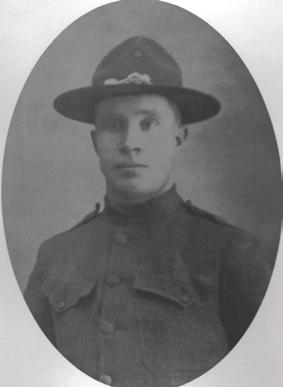


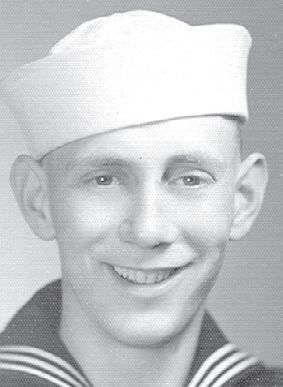




WORLD WAR II


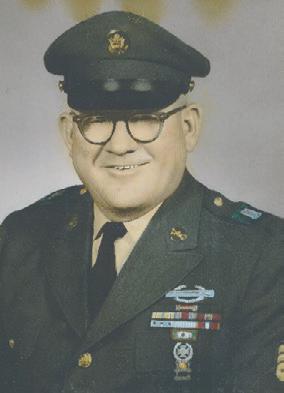


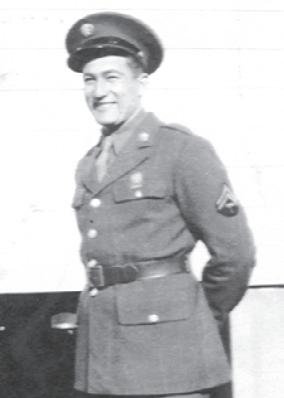














KOREAN WAR • 1950 - 1953


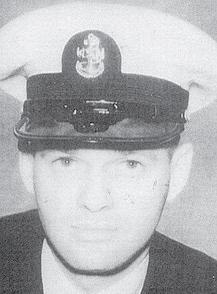


VIETNAM WAR • 1955 -










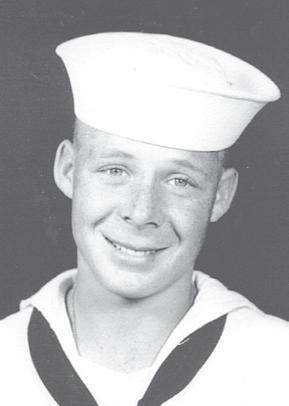


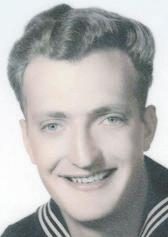


VETERANS By LAST NAmE











Korilynn
Rian
VETERANS By LAST NAmE


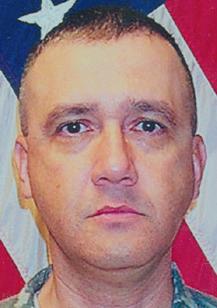


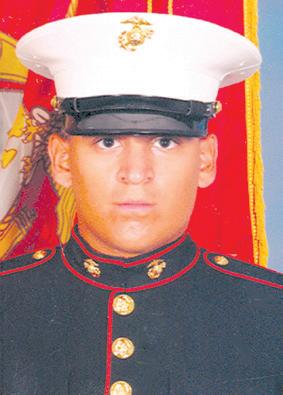


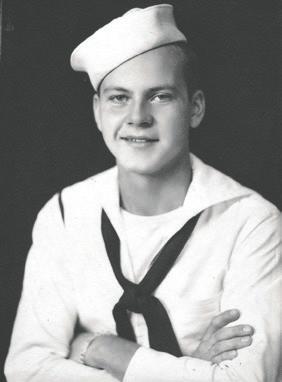


VETERANS By LAST NAmE


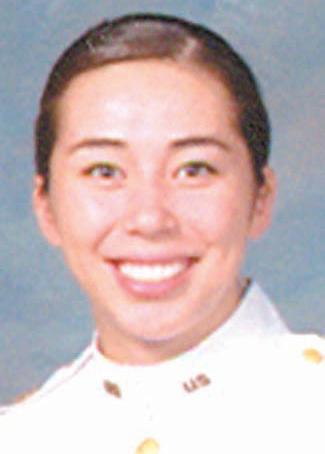


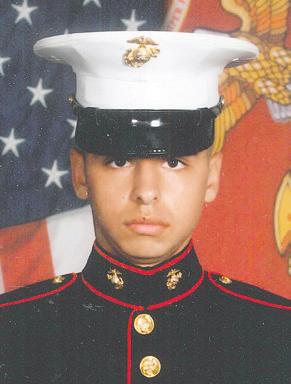


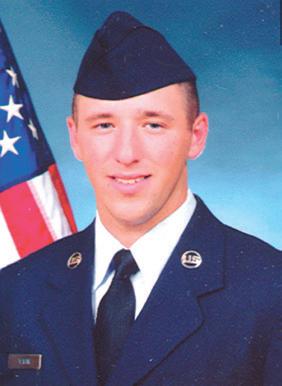


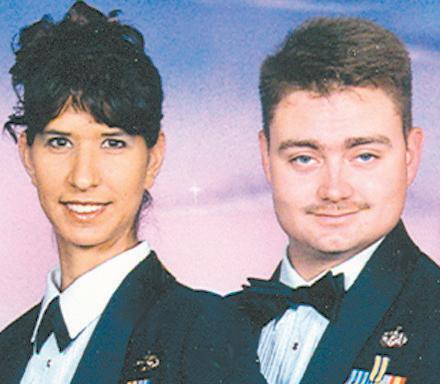


• Combat or “working” uniforms are more informal and easier to move in. They are most often made up of a tunic – a heavyduty jacket – pants, t-shirt, a cover (hat) and boots. Combat uniforms are patterned in green or tan camouflage. Service members do wear this type of uniform in combat, but it is also common for them to wear it while performing day-today duties in non-combat settings. Insignia – symbols identifying a service member’s rank – are present, but subdued, on combat uniforms.
• Service uniforms are “everyday” uniforms. Green, white, blue or khaki, these uniforms include a button-up shirt, slacks or skirt, dress shoes and cover. Service uniforms are similar to business dress – intended for office environments and for service members interacting with the public. Insignia are prominently displayed on service uniforms. Service members may also wear “awards” or “decorations” above their right breast pocket. These small, color-coded stripes are awarded for specific duties, missions and accomplishments.
Service
different types of uniforms?
As a beginner, it helps to know that each uniform serves a specific purpose and falls into one of three general categories: the combat uniform, the service uniform or the dress uniform.
• Dress uniforms are more formal and can be elaborate. These uniforms include a formal jacket or jumper, slacks or skirt, a cover and dress shoes. Dress or “mess” uniforms may be white, blue, green or black. In some branches, there are different types of dress depending on the formality of the event. Insignia are prominently displayed on dress uniforms, as are awards, decorations and medals.
MILITARY UNIFORMS BY BRANCH
Though the uniforms for each branch of military service are all different, to an untrained eye it can be tricky to identify which branch a


Happy Veterans Day!
The Grandview Good Guys Wish to Thank all the Men & Women Who Have and are Serving in Our Military
Astria Health
Boboth Vision Clinic
Brown’s Les Schwab Tire Christensen Inc.
DK Bain Real Estate, Inc.
The Grandview Herald
Grandview Lumber
Horace Mann Insurance
Lineage Logistics - Grandview,


Prosser & Pasco
Lower Valley Machine Shop
Marchant Home Furnishings
Pierre Ford of Prosser
Prosser Memorial Health Rainwater, Inc.
RDO Equipment Company
Smith Funeral Home Sorensen Farms
Speck Chrysler, Dodge,
Jeep & Ram
Spin Cycle Laundromat
Grandview
Stegeman Electric Valley Spray
Wal-Mart DC 7021
Welch’s
Yakima County Commisioner
LaDon Linde


