
Srinivas School of Architecture


UndergraduateSchool
Research Paper
Is
January 2022
COLLEGE NAME: Srinivas School of Architecture
SUBMISSION: Research paper
TITLE: Is Architecture a dying profession in India?
NUMBER OF WORDS
(Excluding footnotes and references): 2239 words
STUDENTNAME: Rebecca Noronha
DECLARATION:
“Icertifythatthecontentsofthisdocumentareentirelymyownworkandthatanyquotationorparaphrase from the published or unpublished work of others is duly acknowledged.”
Signature:
Date: 21/01/2022
ABSTRACT
The profession of Architecture is a creative field with vast scope and knowledge. Architecture has always been developing throughout history. Many argue that architecture in India has been faced with various problems which is leading to its steady decline. However, many are of the opinion that the opportunity inarchitectureishigh. Thispaperaimstothrowlightonboththe aspects and evaluate the possibilities in the profession.
IS ARCHITECTURE A DYING PROFESSION IN INDIA?
1.Introduction
Architectureistheartofplanning,designingand constructionofbuildingwhichnotonlyfocusses on functionality but also aesthetics to provide better living experience for humans. The vast definition of architecture would include designing of community spaces, landscape, urban scenarios etc. An architect is a trained professional who aids in the process right from planning to implementation. Although India is a developing country where infrastructure and hence architecture is at its peak, one could question why the profession is still steadily declining or further yet, dying in India.
Theaimofthestudyistounderstandthereasons why or if architecture is dying in India.
The paper will mainly bring forth the problems faced by architects and students in the field and the possible scope of the profession in India
2.HistoryofarchitectureinIndia

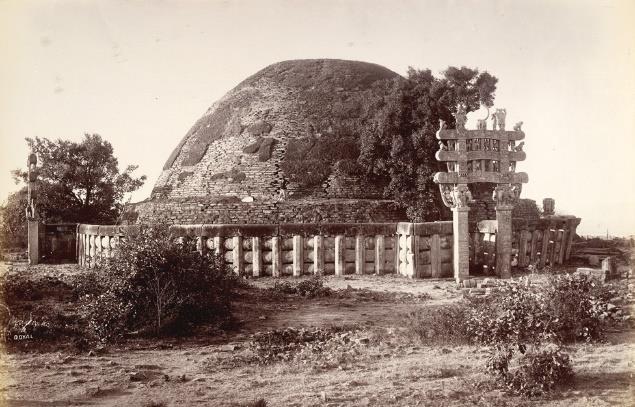
Architecture in India began 5000 years ago and till now, is believed to be the country’s greatest glory. The people, circumstances, and social, cultural, and political situations from various locationsandperiodsinIndianhistoryhavebeen diverse; which in turn brought about a wide variety of architecture in India.
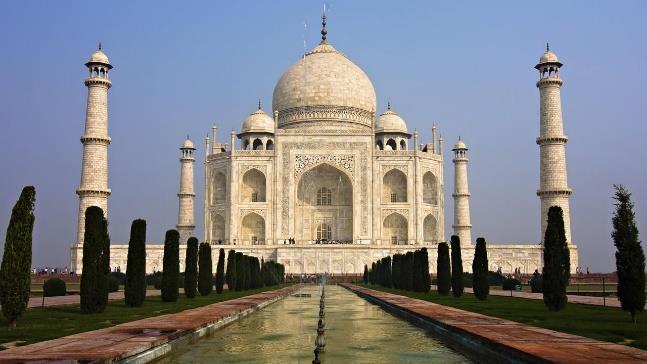
Every piece of architecture regardless of its form and features have contributed to shape architecture of India As important as Indian architecture is, so are the maestros who have ideated and constructed it.
The earliest form of architecture in India can be traced back to the Harappan civilization which was around 3300 BC. The extensive town planning techniques adopted by Harappan architects and planners only went to show that they were way ahead of their time, so much so
that they have been used in recent Urban planning.
FromtheearlyIndianarchitectsconstructingthe Buddhist Sanchi stupas under Ashoka in the 3rd century BCE, the rock cut temples in the South of India to the Indo Islamic architecture of the 16th century by Ustad Ahmad Lahori the growth of architecture and its styles have been varied. However, the rule of the British Colonial power in India changed architecture drastically by bringing in British architects to design monumental institutions and streets, alien to the architectural styles of India.
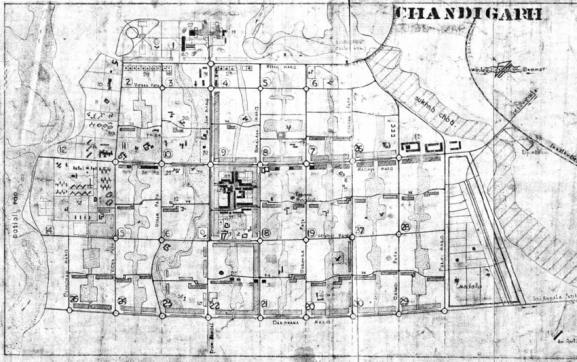
Fig. 1 Sanchi Stupa as seen 18th century before renovation (Source:The British Library, 1882) Fig. 2 Taj Mahal built in 16th Century AD designed Ustad Ahmed Lahouri (Source: NatGeo, 2019) Fig. 3 British streets and institutions ( example: Ballard Estate) (Source: Townscript, 2019)At the time of Independence India had around 300 architects and only one institute of architecture, the Institute of Architects in Bombay. Post-independence brought along the new president Jawaharlal Nehru who believed that modern architecture would contribute to a new nationbeing build. A 5-year plan was made thereof focussing on large scale state development. The state and its subsidiary organizations thus became patrons to architects in India. The first architect commenced by Nehru was Le Corbusier to plan the state of Chandigarh and other institutional buildings in thestate.CharlesCorreaB.VDoshi,LouisKhan etc. contributed to a large extend to the modernity and development of architecture in India.
The Architectural education system in India isI very much responsible for the declining career for Architects. If the system is not compatible with the real world in the construction it is obvious that students who graduate will not really have a career to sustain them.
More theoretical approach
Although the architectural profession is one of practicality, the 5-year Bachelors program in India mainly focuses on learning the processes in construction and understanding planning.
Student teacher ratio is rarely maintained
In order to aid in proper learning, the Council of architecture (COA) came up with a few guidelines. One of it recommends that the student teacher ratio of 8:1 should be maintained. This however is not followed numerous colleges and leads to inadequate attention to students
Syllabus is not in par with recent construction trends
The modern construction techniques make constructionofbuildingsfaster,economical,and enduring. The syllabus focuses on traditional construction methods and fails in upgrading students to the recent market trends and the
(Source: ResearchGate,1951)
3.Problems faced by the Architectural fraternity and its contribution to the Decline in Architectureasacareerchoice
Development in India brought along a large number of architects. From the 19th to 21st century a whopping 97% increase in the number of architects graduating. Still as a country that is largely developing, we produce only 20% of the total requirement of architects. Is it possible that this contributes to the decline in the profession? Shouldn’t it rather be seen as an opportunity for the architecture to succeed as a career?
3.1 Inadequacy of the education system
No check on Education systems by Council of Architecture (COA)
The council of architecture (COA) puts forth a certain norms and guidelines in order for educational institutes to produce good architects withknowledgecapabletosustainthem.But the question that arises is if they are amended in all institutes or are the institutes just putting on a façade at the time of COA inspections that are rarely held.
3.2 Low initial salaries and unpaid internships
Although the skill sets of anarchitect is vast and the knowledge acquired grazes through a large field from art, history, economics to costing, construction detailing and even Urban planning the salaries of most architects are petty comparedtothelongandtediousworkinghours. While most would expect hefty salaries studies
Chandigarh Urban plansuggest that the salary of an architect just beginning a career can be as low as 8,000 per month or around 1,17,000 per annum.
Internships, which are a mandatory part of the curriculum are sometimes unpaid or barely living up to the cost of life. This leaves most students discouraged about their talents in the field and the need to pursue the same.
3.3 Increase in cost of construction in India
The sudden steep rise in the most commonly used building materials like steel, cement and brick has caused a rise in overall cost in the construction sector. The annual inflation rate in India for 2021 was at 4.85% as per Global Economy (IMF) as against a 6.67% in the year 2019. In such circumstances the additional cost to hire an architect is simply not feasible.
3.4 No requirement of degree to practice architecture
The supreme court ruling passed on 17th March 2020 states that one now no longer requires to have a degree to practice architecture or its cognate activities according to section 37 of Architects Act by the council of architecture. However, the designation of the word ‘Architect’ is prohibited. The question that now arises is, is it worth spending 5 years and high fees on getting a degree that only gives a designation? It is probably the freedom given to laymen to design and build that is interfering in the profession being at its peak in a developing country like India?
4.Thefraternitystillhashope.
There is no doubt that the problems faced in the field are many fold, this however is not the end to the profession. Architecture is not a dying profession. With over half the world’s population living in urban areas there is more demand for architects now than ever before.
4.1 Rapid infrastructure development in India
The rapid pace of urbanization in India over the past few decades has increased the demand for infrastructure development. This breakneck progress has also revealed the need for skilled workers in the infrastructure sector in large numbers. Due to this scenario, the thriving Indian architecture industry offers immense opportunities for students who want to pursue a career in architecture.
Every planned developmental advance that we find around us is the work of an architect. The buildings and landscapes that we enjoy every day,houses,officebuildings,institutions,public parks, theatres, factories, sports stadiums, shopping centres, even services that facilitate our daily life like bridges, public transport networksarealldesignedbyarchitectsdesigned.
With the rapid development of available technologies and their integration into the profession,futureopportunitiesandperspectives for architects look very promising.
4.2 Broad spectrum of knowledge and large scope
The 5-year Bachelors program grazes upon various aspects of architecture such as history, services, structures, software and project analysis. Apart from this, soft skills like good communication and negotiation, teamwork, leadership, responsibility and work ethic are developed during the entire course period.
Although architecture mainly focuses on designing and building, scope for varied allied servicesarepossible.Urbanplanning,landscape architecture, Interior design, sustainable architecture, project management, building research, product design, adaptive reuse, archaeology, data analysis, and journalism is just a faction of the numerous possibilities
4.3 Scope to be an entrepreneur
Unlike other professional fields which generally have a monotonous 9 to 5 work schedule,
architecture has opportunity to self-employ. Entrepreneurship is very common when it comes to architecture. Being one’s, own boss comes with flexible schedules, work-life balance and better financial status than most other professions.
4.4 Financial benefits with experience
Although the initial salaries of architects are low, the increment rate is high. With experience and time an architect can earn anywhere between A mid-career architect with 4-9 years of experience earns an average total of ₹347,800, while a seasoned architect with 10-20 years of experience earns an average of ₹5,49,500.Architectswithmorethan20yearsof experience earn an average of ₹738,900.
4.5 Architecture for all
Just as society consists of different strata of people so does architecture. The services that architecture provides should aid to all, the rich, middle class and the poor. Most buildings that we are awed by are generally modern buildings, villas, skyscrapers or administrative buildings. This is why most people are of the opinion that architects address only rich clients. Even architecture of low-income housing is generally not always spoken about and hence not recognized by many and a result is perceived as something only the rich are capable of having
5.Conclusion
Besides the many negatives of the profession seen in recent times, especially in India, there is nodoubt thatthescopeforarchitecturetobloom as a career is present
As long as passion meets the profession architecture is something one can see as a profession with endless possibilities. Creativity is one of the foremost requirements to achieve successinthefieldandifpresentthesatisfaction is immense. However, as time has progressed, the role of architects has evolved into pure pragmatism and has somehow limited creativity and design to the scope of work dictated by the client.
The need for houses or built spaces will never stop and the job prospects would increase and
the profession dying is simply not an option in sucha scenario.Theextentof the professionhas almost no end, from designing products to designing skyscrapers, the possibilities are endless.
But as a country, there are many development agendas ahead to pave the way for a large architectural space in the near future. The development of smart cities, affordablehousing, better infrastructure facilities, urban development and transformation, slum regenerationandprojectslike housingfor all are some of the agendas that are at the forefront and represent a huge field for future architects.
Apart from these laws that just give a designation for all the hard work and effort put into the field can be reconsidered and changed. This would draw a lot more talent to the profession.
6.References
Websites:
WHAT IS ARCHITECTURE? The question “what is architecture?” is… | by All About Architecture | Medium
Architects of India :20 Most Influential architects in the history of India - (rethinkingthefuture.com)
The development of Modernist architecture in India - Indian Architecture (northernarchitecture.us)
Bachelor of Architecture Everything You Need to Know - MITSOA (mituniversity.edu.in)
showfile.php (coa.gov.in)
archipreneur.com
Architect Salary in India: Average Salary in Indian Architecture Studios - (rethinkingthefuture.com)
The Rising Scope of Architecture in India (shiksha.com)
https://www.rethinkingthefuture.com/architectu ral-community/a6120-safia-qureshi-cupclubentrepreneurship-and-architecture/
Minimum Standards of Architectural Education Guidelines for PG Programme, 2006
Articles and Blogs: https://timesofindia.indiatimes.com
Architecture "a dying profession in India" | Voices of Youth
9 Reasons to Become an Architect | Arch Daily https://indianexpress.com/article/education/sco pe-of-architecture-in-india-know-what-to-doafter-barch-5653115/
Is Architecture Dying - Stoor.pro | Blog
https://www.reddit.com/r/architecture/comment s/6ih76m/is_the_profession_dying/
www.forbes.com/sites/justinshubow/2015/01/0 6/architecture-continues-to-implode-moreinsiders-admit-the-profession-isfailing/?sh=690195dd4378
https://medium.com/swlh/the-truth-aboutbeing-an-architect-b5c15e4b8ffd