


The 2026 Mid-Year RSIR Market Barometer® reveals a Puget Sound housing market approaching an important inflection point. The Composite Market Sentiment Index improved to 3.12 out of 5.0, reflecting a trajectory that is becoming increasingly optimistic while remaining highly segmented by price point, property type, geography, and consumer motivation. Every property journey is unique, and every transaction responds differently to changing market forces. Yet amid this complexity, the collective perspectives of fourteen RSIR market leaders reveal several common themes that are expected to shape the second half of 2026.

Every
market creates opportunity.
Understanding
the market is where that opportunity begins.
This is no longer simply a cautious market. It is becoming a more active market.
The Puget Sound housing market resembles a barbell because significant economic forces are adding weight at both ends simultaneously. On one side are headwinds: elevated mortgage rates, affordability constraints, evolving tax policy, geopolitical uncertainty, and increasingly analytical buyers who are unwilling to overpay. On the other are equally powerful tailwinds: AI-driven wealth creation, record equity markets, venture capital investment, expanding housing inventory, and one of the largest generational wealth transfers in history. Rather than canceling one another out, these competing forces are broadening the bid-ask spread, accelerating price discovery, and creating greater market liquidity through increased buyer and seller engagement.
The barbell also describes where activity is occurring.
At the entry level, necessity continues to drive demand as buyers navigate affordability challenges, mortgage rates, and the ongoing rent-versus-buy decision. At the luxury end of the market, unprecedented wealth creation is supporting purchasing power through AI, executive compensation, equity appreciation, business liquidity events, and family wealth transfers. Meanwhile, the traditional move-up market remains more restrained as financing costs and affordability pressures encourage consumers to wait for greater certainty before making their next move.
If the first half of 2026 represented a beehive being stirred, the second half is expected to witness the swarm in motion. More buyers and sellers are entering the market, attracted by expanding inventory, improving price discovery, and a growing willingness to act. What began as uncertainty is evolving into increased market participation, greater liquidity, and steadily rising transaction volume.
Every catalyst—whether legislative, financial, technological, demographic, or geopolitical—is setting buyers and sellers into motion. Washington's evolving tax policies are prompting some affluent households to accelerate dispositions, domicile decisions, and estate planning strategies. Expanded inventory is giving buyers greater choice and negotiating leverage. Investors are redeploying gains from record equity markets into hard assets while families reposition wealth through gifting strategies, trusts, and business succession planning. At the same time, Seattle and Bellevue continue attracting AI companies whose expansion is fueling one of the nation's fastest-growing technology employment ecosystems while revitalizing commercial office demand. As explored in RSIR's companion research, From Sneezes to Signals, San Francisco's remarkable AI-led office renaissance may once again foreshadow Seattle's next growth cycle, reinforcing a long-standing relationship between these innovation economies.
Every catalyst creates movement. Every movement creates negotiations. Every negotiation creates transactions. And together those transactions create something even more important than price appreciation: Liquidity.
The defining characteristic of the second half of 2026 is therefore unlikely to be whether the market favors buyers or sellers. Rather, it will be the continued expansion of market participation as opposing forces bring more inventory, more informed buyers, greater price discovery, and steadily increasing transaction volume.
The market is not slowing—it is recalibrating. In an environment where expectations are widening before they converge, the role of an RSIR Global Real Estate Advisor has never been more valuable: interpreting competing market signals, establishing credible market value, and helping buyers and sellers confidently meet the market.

"The harbinger of the Seattle/Bellevue metro area may be the renaissance of what's taking shape in San Francisco, which is booming again given AI and venture capital investments. It's a message that cities can turn around quickly."
Know














Neutral to Positive —
Just above neutral, reflecting a panel split between cautious bears concerned about tax policy and pricing pressure, and bulls energized by AI-driven wealth and long-term structural tailwinds.
Collective confidence improves inventory and luxury buyer choice — more transactions expected as seller participation expands meaningfully.
Interpretation
Neutral —
Respondents see stabilization in city-center activity but not yet a decisive shift in office utilization or urban residential demand.
Neutral —
More respondents expect deterioration than improvement as pricing pressure and tax uncertainty weigh on near-term buyer conviction.
Increasingly viewed as one of the most important long term demand drivers supporting luxury housing as capital flows build momentum.
Confidence
Slightly Bearish —
Buyers maintain negotiating leverage; the super-prime cohort faces headwinds with ballot measures and the looming January 1, 2027 tax date.
Slightly Bearish —
Pricing pressure remains, though expectations are improving as inventory shows quality offerings some new construction is below replacement cost.
Slightly Bearish —
Affluent households reprogramming domiciles to tax-friendly states while awaiting a repeal attempt in the November General Election.
M
Increased luxury inventory trends remain the strongest point of consensus among brokers. Unlike previous market cycles where rising inventory signaled weakening demand, today's environment reflects healthy normalization. Inventory creates discovery. Discovery creates confidence. Confidence creates transactions. Consumers finally have meaningful choice without sacrificing quality.

Christina Ann Roberts
"Luxury clients need an elevated marketing plan with exciting features and move-in ready interior and exterior. Both indoor and outdoor are so important to attract selective buyers if you expect top dollar."
A significant catalyst in this survey comes from improving optimism surrounding AI. Respondents increasingly believe Puget Sound is uniquely positioned to benefit from AI investment, venture capital, executive compensation growth and new business formation. Rather than simply replacing jobs, AI is expected to create entirely new categories of wealth. That wealth ultimately finds its way into luxury real estate. Remarkable growth stemming from AI and venture capital in San Francisco provides tea leaves for what s possible in the Seattle/Bellevue metro area.
The largest intergenerational transfer of wealth in American history continues unfolding. More importantly, brokers increasingly believe that most of those assets will remain invested locally. Business succession. Family gifting. Trust planning. Legacy real estate. This remains one of the most under appreciated structural tailwinds supporting Puget Sound real estate. This region is among the most economically productive and wealthiest per capita in North America.
Pricing remains the market's greatest challenge. Luxury buyers are active, but they simply insist upon value. Exceptional homes continue commanding premiums as the present move-in ready efficiencies. Commodity luxury continues undergoing price discovery. Today's buyers reward scarcity, design excellence and turnkey condition. Everything else competes. Aspirational pricing strategies are being tested with high-profile corrections and significant days on market, however accurately priced luxury is rewarded with increased demand. Many prime submarkets above $5 million witnessing impressive absorption 300-600% in June 2026 above prior year trending as would-be buyers enjoy more selection and improved negotiation leverage.
Inventory has shifted leverage toward buyers. However, the market is no longer becoming increasingly oversupplied. Late Spring 2026 demonstrated impressive absorption improvement with greater consumer confidence and a booming stock market priming the wealth effect. Respondents suggest supply is approaching healthier equilibrium where buyers have options without overwhelming sellers. This represents normalization rather than deterioration.

Robyn Kimura Hsu & Rachel Schindler
Washington's evolving tax environment remains respondents' greatest macroeconomic concern. It s not just the WA Millionaire s Tax but sustained weight of the WA Capital Gains Tax and WA Estate Tax (among the highest in the nation). Yet even here the narrative continues evolving. Rather than triggering wholesale capital flight, affluent households appear increasingly strategic. Some relocate. Others restructure domicile. Many simply accelerate estate planning. Ironically, those decisions create additional listings while increasing opportunities for motivated buyers.
The latest survey demonstrates that every apparent headwind continues creating an equal and opposite opportunity.
Washington tax policy
Rising inventory
Higher rates
AI disruption
Longer market times
Pricing corrections
Selective buyers
Estate planning
Accelerated inventory
Improved buyer confidence
Reduced competition
Extraordinary wealth creation
Better negotiation leverage
Greater affordability
Higher quality listings
Increased transaction velocity
Headwinds represent near-term market challenges; tailwinds reflect structural opportunities for prepared buyers and sellers.

Marianne Francis
"I can feel a market shift in favor of the buyer stemming from the rapid increase of listings. A Seller's success will depend a lot on strategic pricing. Buyers are more sophisticated and are not willing to overpay."

"I expect luxury inventory to increase significantly over the next six months. Concerns surrounding Washington's tax policies, coupled with substantial accumulated equity, are motivating more affluent homeowners to evaluate selling."

"The strongest luxury properties continue to behave like scarce assets, not commodities. The AI economy is creating a new generation of affluent buyers, but those buyers are becoming increasingly selective, rewarding homes that truly stand apart."
Six-Month Tailwinds
✓ Artificial Intelligence continues accelerating executive wealth.
✓ Strong equity markets continue supporting luxury demand.
■ Washington tax uncertainty remains a drag on affluent consumer confidence.
■ Mortgage affordability continues affecting middle-market buyers.

"The luxury market is increasingly bifurcated: truly exceptional homes with irreplaceable attributes continue to command strong pricing, while properties lacking scarcity, design distinction, or turnkey condition face a much more discerning buyer pool."
✓
✓
✓ Inventory expansion improves transaction velocity.
Mortgage rates increasingly become accepted by buyers.
Urban Seattle and Bellevue continue attracting investment.
■ Luxury sellers must compete on value rather than scarcity.
■ Buyers remain increasingly analytical.
■ Marketing strategy and presentation have become more important than ever.

"Affluent buyers are here, educated in the market, and selective. They have the capital and the patience to hold their standards. The sellers who are winning are the ones who embrace the mindfulness of a buyer while positioning."
✓ The Great Wealth Transfer accelerates capital deployment.
✓ Market normalization improves pricing transparency.
Six-month forward outlook based on RSIR broker panel consensus · June 2026
■ Price discovery is replacing price appreciation (bid-ask spread widens).
■ Inflation rate remains elevated stalling Fed cuts to Bank Rate.

"After years of rising prices, the luxury market is beginning to show clear signs of normalization: market times are lengthening and inventory is increasing. Offerings will have to compete on sharper, more strategic pricing rather than on scarcity alone."
The Puget Sound housing market is neither retreating into a downturn nor accelerating toward another speculative boom. Instead, it is evolving into a more sophisticated marketplace where informed buyers and sellers are adapting to changing economic realities with greater discipline, strategy, and confidence. Pricing precision, compelling presentation, and skilled negotiation have become the defining characteristics of success, making the guidance of an RSIR Global Real Estate Advisor more valuable than ever.
The 3.12 Composite Market Index suggests that optimism is gradually gaining ground—not because uncertainty has disappeared, but because consumers, brokers, and investors have learned to navigate it. The defining story of the second half of 2026 will not be rapidly rising or falling home prices. It will be increasing liquidity.
The barbell remains firmly in place. O ne end is supported by unprecedented wealth creation, innovation, and investment. The other is tempered by affordability challenges, financing costs, and public policy. B etween these opposing forces lies a market finding equilibrium through negotiation, transparency, and increasing transaction activity.

Krissy Ayad
"Historically, uxury real estate responds to equity market appreciation, IPO and liquidity events, executive compensation growth, and rising confidence among affluent households. All four are currently present.

Tom & Rebecca
"As the #1 listing due in K ing County based on units sold, we remain optimistic about the Seattle and Bellevue housing markets. With the continued growth of A companies and highpaying jobs, housing demand in uxury and new construction will remain strong.




"Affluent buyers and sellers should focus less on interest rates and more on how rising wealth in the region is supporting demand. This combination is shifting leverage toward a more selective, value-driven uxury buyer.
If the first half of 2026 was defined by kicking the beehive, the second half is expected to reveal where the bees choose to land. As buyers and sellers increasingly find common ground on value, today's buzz is expected to become tomorrow's transactions, creating a market that is more dynamic, more liquid, and better balanced than it has been in years.
Whether you are considering buying, selling, investing, or simply evaluating your options, there has rarely been a more important time to understand the forces shaping the market—or a more valuable time to have trusted guidance. Connect with an RSIR Global Real Estate Advisor to discuss your unique property journey and explore the opportunities emerging across the Puget Sound region.


Lori DeVore
For decades, a familiar saying described the relationship between the Bay Area and the Pacific Northwest: "When San Francisco sneezes, Seattle catches a cold."
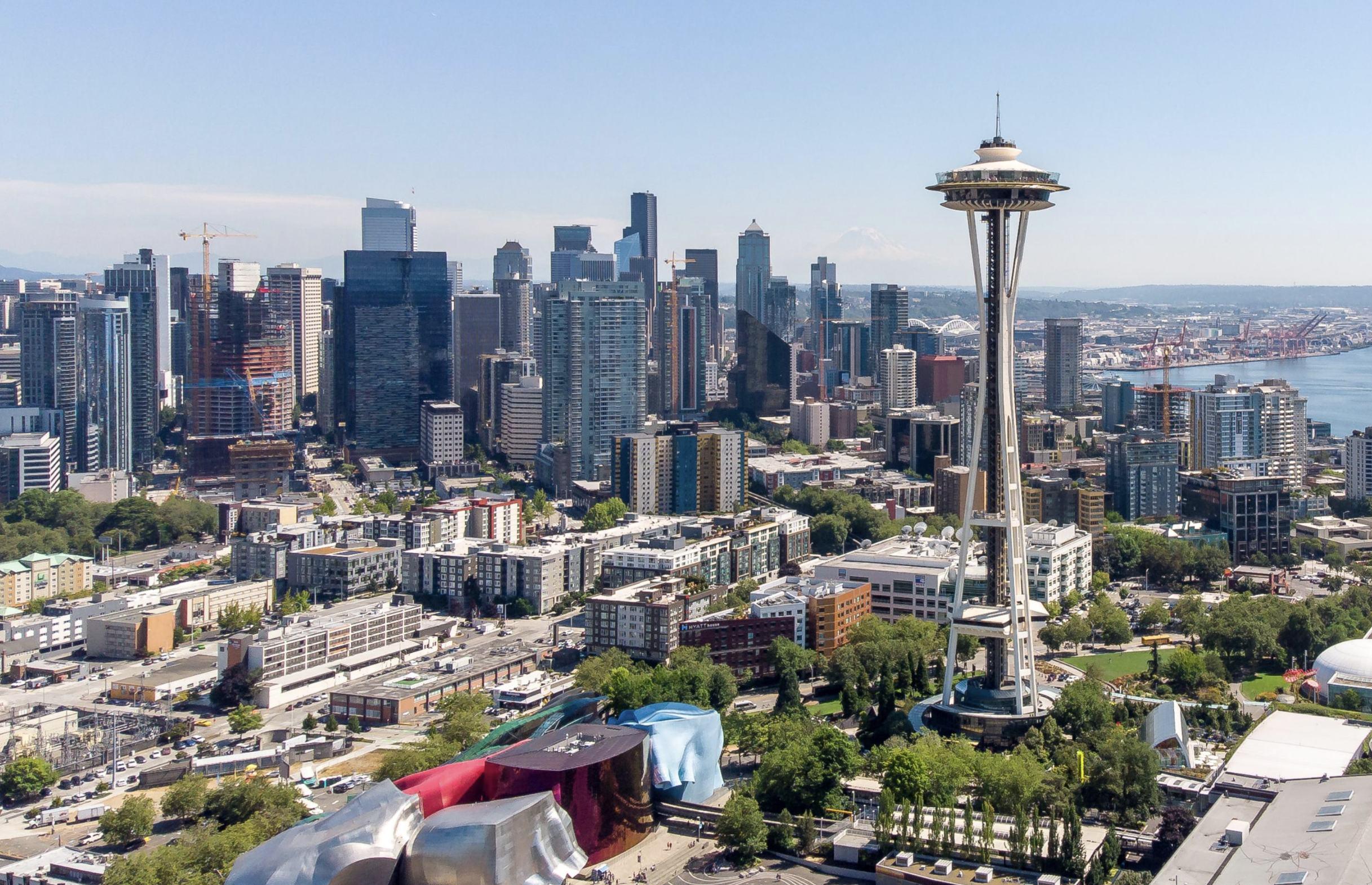
Today, that relationship may be changing. Instead of signaling recession, San Francisco may once again be signaling expansion— this time powered by artificial intelligence and an economic reboot.
The resurgence of AI companies leasing millions of square feet of office space throughout San Francisco has become one of the strongest indicators that the next technology cycle is already underway. During 2025 alone, rapidly expanding companies leased approximately 10.2 million square feet of office space in San Francisco—the strongest year since 2019. AI companies represented roughly 25% of all office leasing activity and more than 80% of newly leased space, led by major commitments from companies including OpenAI, Anthropic, Nvidia and a growing ecosystem of AI startups. Analysts now project that AI-related office demand could reach 15–16 million square feet by 2030. For perspective, that’s more than half of the total overhang of available office space in Seattle and Bellevue CBD today and suggests a trajectory for commercial recovery.
The implications extend well beyond commercial real estate. History suggests that office demand often precedes housing demand. Every major office lease ultimately represents thousands of employees, executives, entrepreneurs, investors, suppliers and service providers who need places to live, collaborate and build businesses. Their blossoming stock market valuations also drive a wealth effect in the region.

Commercial real estate has historically served as one of the earliest indicators of economic expansion. Companies typically commit to office space before hiring accelerates. Hiring precedes household formation. Household formation fuels housing demand. Housing demand ultimately supports residential values. This sequence may already be unfolding.
Following several years of elevated office vacancy after the pandemic, AI companies have begun reversing that trend by absorbing premium office space in innovation districts. OpenAI, Anthropic, Snowflake and Databricks are already leasing hundreds of thousands of square feet in both downtown Seattle and Bellevue. Industry analysts at JLL expect 2026 could become another exceptionally strong year for office absorption as AI companies continue expanding and additional large leases are completed.
According to JLL, 72% of AI office leases of 10,000 square feet or more signed locally since 2022 have been executed by companies headquartered outside the Puget Sound.
The RSIR Mid-Year Market Barometer reflects this growing optimism.
Respondents assigned the AI E conomy one of the survey s strongest scores (3.5 0 out of 5.0) , recogni z ing that while artificial intelligence may continue disrupting portions of the labor market, it is simultaneously creating unprecedented wealth, executive compensation, venture capital investment and entrepreneurial activity. That duality is one of the defining characteristics of today s Barbell Market.
The result is a market influenced by two opposing forces :
If San Francisco's AI renaissance proves to be a leading indicator rather than an isolated phenomenon, Seattle and Bellevue could be entering the early stages of another multi-year innovation cycle. In fact, the overhang of commercial office space in Puget Sound is a runway cleared for takeoff – sharp lease rates are making it more attractive to expand a footprint.
That would likely influence not only office occupancy but also in-city condominium demand, urban apartment absorption, luxury housing, mixed-use development, hospitality and retail investment throughout the region.
For residential real estate, today's office leases may become tomorrow's home purchases. In that respect, the Puget Sound housing market may not simply be reacting to the AI economy. It may be preparing for its next chapter.