


A community initiative that unites educators, community partners, and families to improve children’s reading from birth through elementary school.
Convener • Catalyst • Advocate • Advisor
A community initiative that unites educators, community partners, and families to improve children’s reading from birth through elementary school.
Convener • Catalyst • Advocate • Advisor
,
A decade ago, Read Charlotte was founded by a community determined to create change for its children by improving early literacy. Since 2015, we have navigated a decade of immense change, evolving our tactics in response to local needs and emerging research. Yet, through every pivot, we have remained steadfast—guided by a clear strategy and a shared sense of purpose.
As a capacity-building intermediary, we don’t run programs; our partners do. We empower their work by bridging the “research-to-resource gap,” transforming complex academic insights into practical tools. This journey began in 2016, when we translated the evidence-based practice of “dialogic reading” into Active Reading. Today, through our partnership with the Charlotte Mecklenburg Library and others, more than 12,000 adults have been trained in the “ABCs of Active Reading,” with the model now gaining traction across North Carolina and the United States.
Our commitment to scaling proven solutions has only deepened. In recent years, we have launched specialized resources for evidence-based practices like synthetic phonics (Queen City Readers) and repeated shared reading (VIP Read-Aloud Model). Whether we are vetting and piloting advanced tools like Amira, simplifying research through our Literacy Listens podcast, or providing professional learning and resources through our Listening Comprehension Resource Center, our goal remains the same: make the best literacy research accessible and actionable
This year’s report is a celebration of the collaborations that bring this work to life. We move forward with a sense of rational optimism, fueled by historic progress within CharlotteMecklenburg Schools (CMS). This past year, CMS achieved record-breaking state test scores—a milestone that honors the relentless hard work of educators, students, and families.
We are proud to stand within this ecosystem of educators, nonprofits, businesses, houses of faith, and families. Together, we are proving that meaningful, systemic change is not just a goal—it is within our reach.
With gratitude,

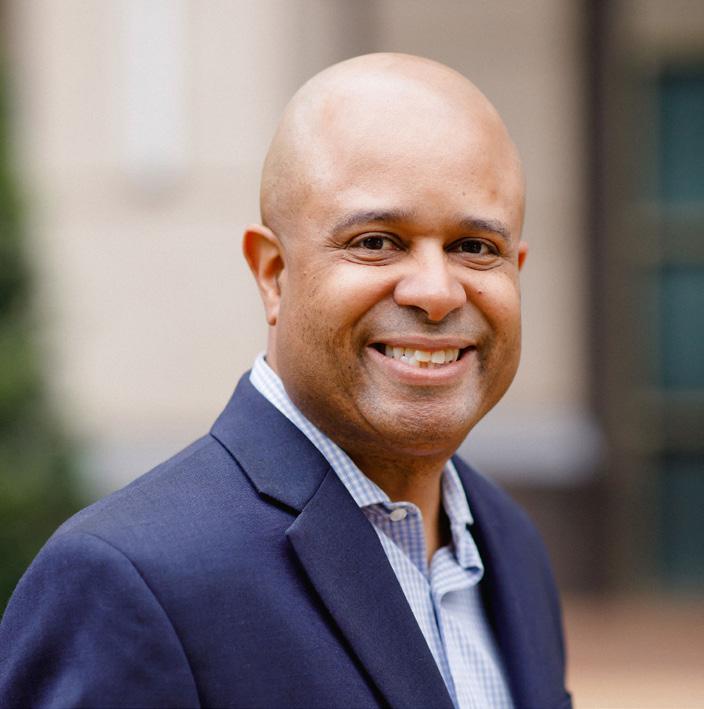
Munro Richardson
A Read Charlotte-commissioned study by researchers at UNC Chapel Hill examined the relationship between early literacy and a range of later social outcomes. Researchers used a national dataset to find that early literacy provides protective factors across a range of social outcomes in the teens and early twenties. Improving early literacy – even controlling for individual and family differences – increases outcomes for college application, college graduation, household income, and employment. In short, getting children to reading proficiency in elementary school is a “super strategy” for increasing economic and social mobility and their chances for a happy and healthy life. This study was underwritten by a grant from The Duke Endowment.

Compared to their peers who struggle with reading, students who have strong reading ability in grades 3 and 4:
Are 39% more likely to attend college. Are 50% more likely to earn an Associate’s degree.
Are almost twice as likely to earn a Bachelor’s degree. Are 20% less likely to report substance abuse in their early- to mid-twenties. Are 25% less likely to report being depressed.
Have almost a third higher household income in their early- to midtwenties.

We think the difference in above average and below average reading ability in these data loosely translates to the difference between College and Career Ready and Not Proficient on state reading tests.
Data are from the National Longitudinal Survey of Youth 1979. It includes data from 11,545 children born between 1970 and 2006 to women in the original NLSY79 sample. Data were collected through surveys conducted every two years from 1996 to 2016. Literacy was measured before kindergarten and in late elementary (third and fourth grade) and outcomes were measured in teens and twenties. The analysis controlled for differences in individual and family background, including sex, race, birth order, family income, books in the home, etc.

From Read Charlotte’s very beginning, our team has operated from the belief that Mecklenburg County is a special place. An organization like Read Charlotte couldn’t have been created just anywhere. Our community saw a need, came up with a solution, and then worked together to make it happen.
We still see that spirit of collaboration in our work every day. There are countless people working tirelessly to improve early literacy in Mecklenburg County, and they are working together, across many programs and
organizations. Our community’s ability to come together around an important cause is inspiring, and one of the many reasons we believe that change is within our reach.
We were inspired and energized throughout 2025, by the work happening both within and outside of our organization. This is a community that is deeply committed to creating change. While there is still much work to be done, we believe our community will continue to meet challenges with partnership, dedication, and hard work.
Charlotte-Mecklenburg Schools had a historic year in terms of student growth and school performance in the 2024-25 school year. It was one of the top performing school districts in North Carolina – a significant milestone for the district and all of Mecklenburg County.
The past year brought major advances in artificial intelligence, or AI, and with that came broader opportunities for use in many areas, including early literacy. AI plays a key role in two Read Charlotte initiatives: Amira, an AI-powered tutoring program for reading, and Literacy Listens, a listening comprehension-focused podcast series generated with the help of AI. In both cases, this powerful technology is helping to build capacity, whether that’s in individualized support for students, or progress toward closing the research-to-resource gap around listening comprehension.

Organizations across the county helped circulate a new resource with reading tips for families, with more than 33,400 copies distributed in 2025. Read Charlotte developed the brochure as part of our Read Together campaign. It includes tips for what families can do while reading together to make their reading experience even more powerful. A variety of partners helped make this resource widely available to families, including the Charlotte Mecklenburg Library, Charlotte-Mecklenburg Schools, MECK Pre-K, and Promising Pages, among many others.
Summer 2025 marked the YMCA of Greater Charlotte’s eighth year using the Summer Literacy Infusion program model, which adds one hour of literacy a day to summer camp programs to combat summer learning loss. Read Charlotte and the YMCA worked together to bring the model to Mecklenburg County. The YMCA now uses SLI at its own summer camps at Y branches and supports SLI adoption at other community organizations. Since 2017, more than 10,000 campers have been served by SLI. In the most recent summer with data available, 97% of campers maintained or improved their reading skills.
Active Reading training and tips reached thousands of people in our community in 2025, thanks to the Charlotte Mecklenburg Library. The Library and Read Charlotte partnered to develop Active Reading training in 2017, to encourage the practice of talking with children during shared reading. Since then, the Library has trained more than 12,100 adults in the practice, through workshops provided to schools and child development centers. Active Reading strategies are also incorporated into Storytimes, with more than 111,300 parents and children benefitting from these tips since 2021.
A major focus area of Read Charlotte’s work is building strong school-community partnerships. To do this, we work collaboratively with schools and community partners to align targeted efforts across classroom, community, and home, in ways that can be replicated and scaled across the community. In 2025, we deepened existing partnerships and began new ones. We continue to learn from this important work, and look forward to broadening it in the future.
The 2025-26 school year marks the fourth year of our partnership with Pineville Elementary School. Our work together has expanded over those years, and helped the Read Charlotte team better understand how we can best support schools in our community.
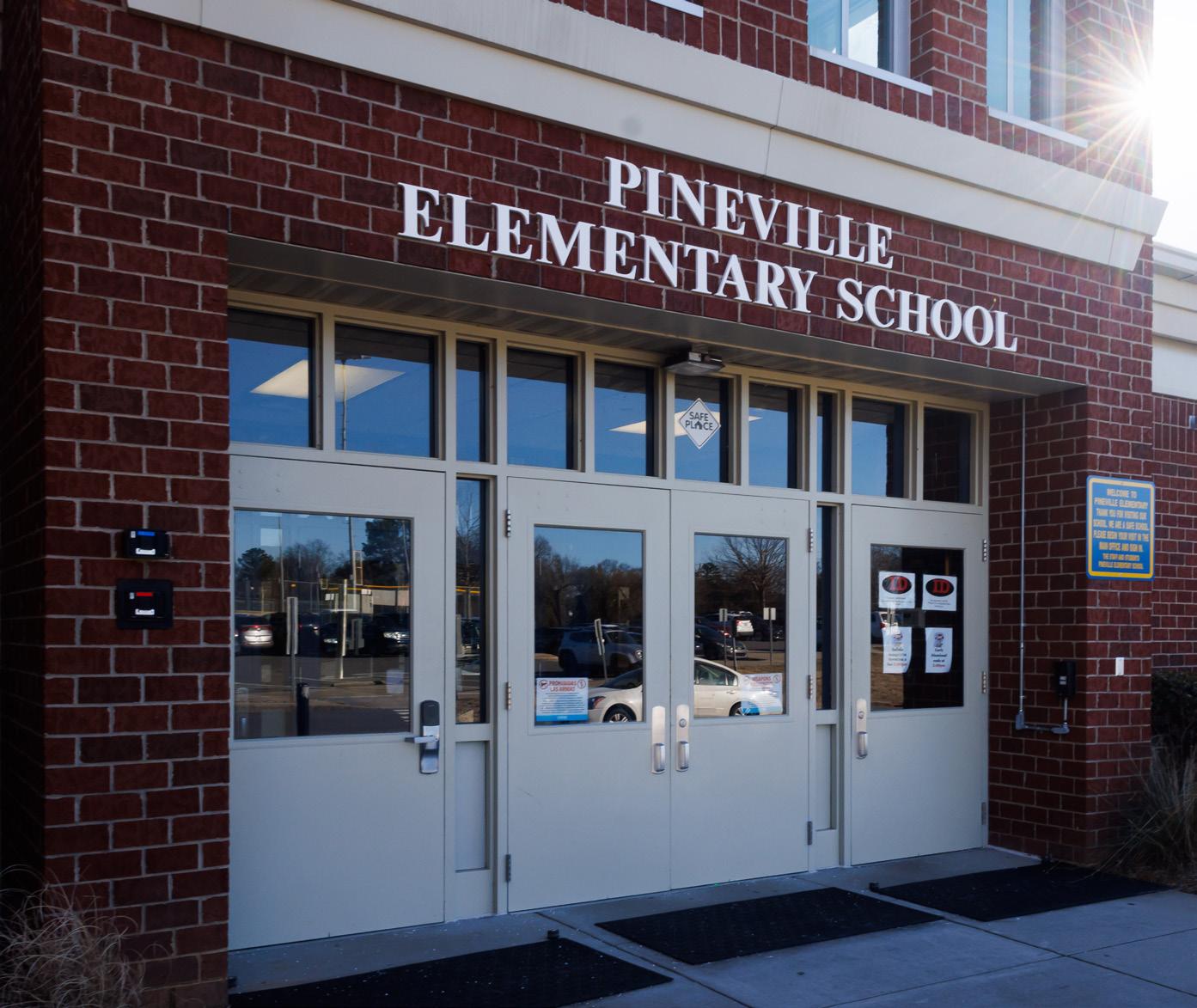

The partnership began in the 2022-23 school year. Pineville piloted Queen City Readers (QCR), a turnkey tutoring program Read Charlotte developed based on an evidence-based approach called synthetic phonics that we found in the What Works Clearinghouse by the U.S. Department of Education. QCR is designed to make it easy for volunteers to help children quickly strengthen K-1 word reading skills. Since then, we’ve worked together to pilot additional individualized student supports at the school, including Amira and the VIP ReadAloud Model. Amira, an AI-powered digital reading tutor that listens to students read and then provides personalized support, is being used with all Pineville students for the second school year in a row. The VIP Read-Aloud Model, a Read Charlotte-developed framework that uses shared reading to build children’s listening comprehension skills, is in its first year of use at
the school by volunteers.
We’ve also worked with Principal Bobby French and his team to provide educator-focused supports. The Listening Comprehension Resource Center (LCRC), a comprehensive website that helps educators understand and build children’s listening comprehension skills, and Literacy Listens, a companion podcast series, are major components of that work.
The Read Charlotte team also facilitated the Listening Comprehension Think Tank, a short series of collaborative learning sessions created in response to teacher interest. The sessions leveraged curated materials from the LCRC and episodes of the podcast to support educator learning.
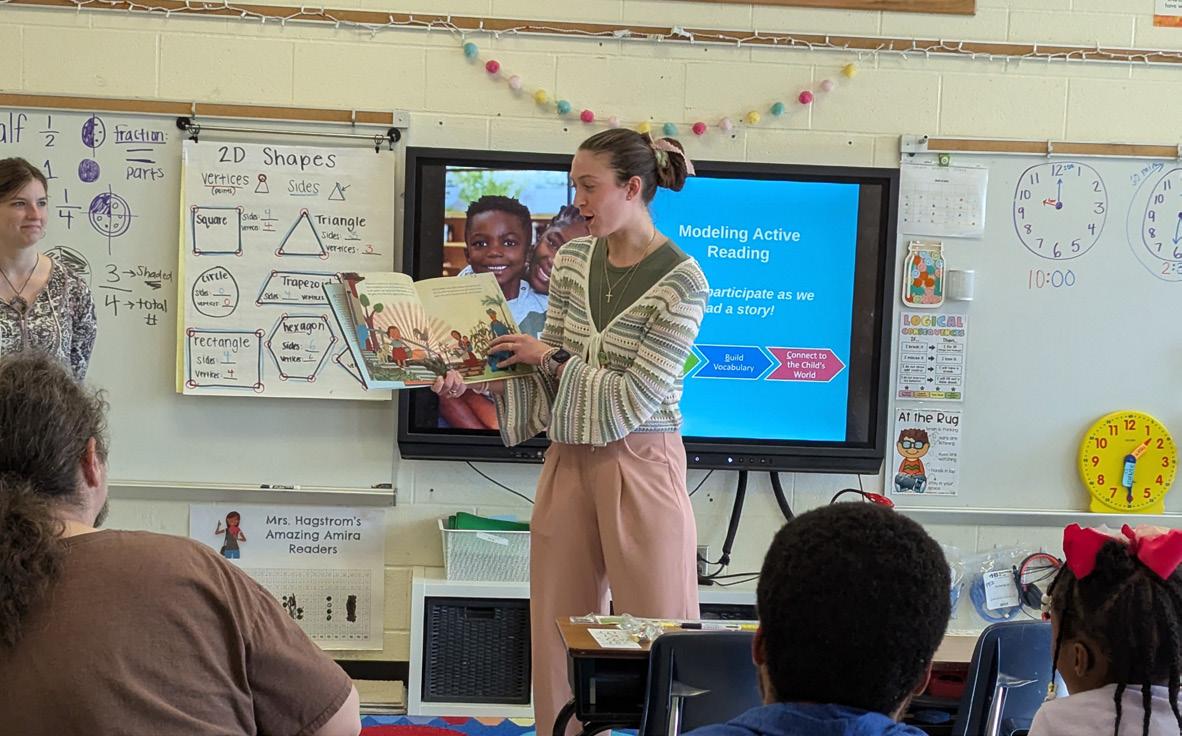
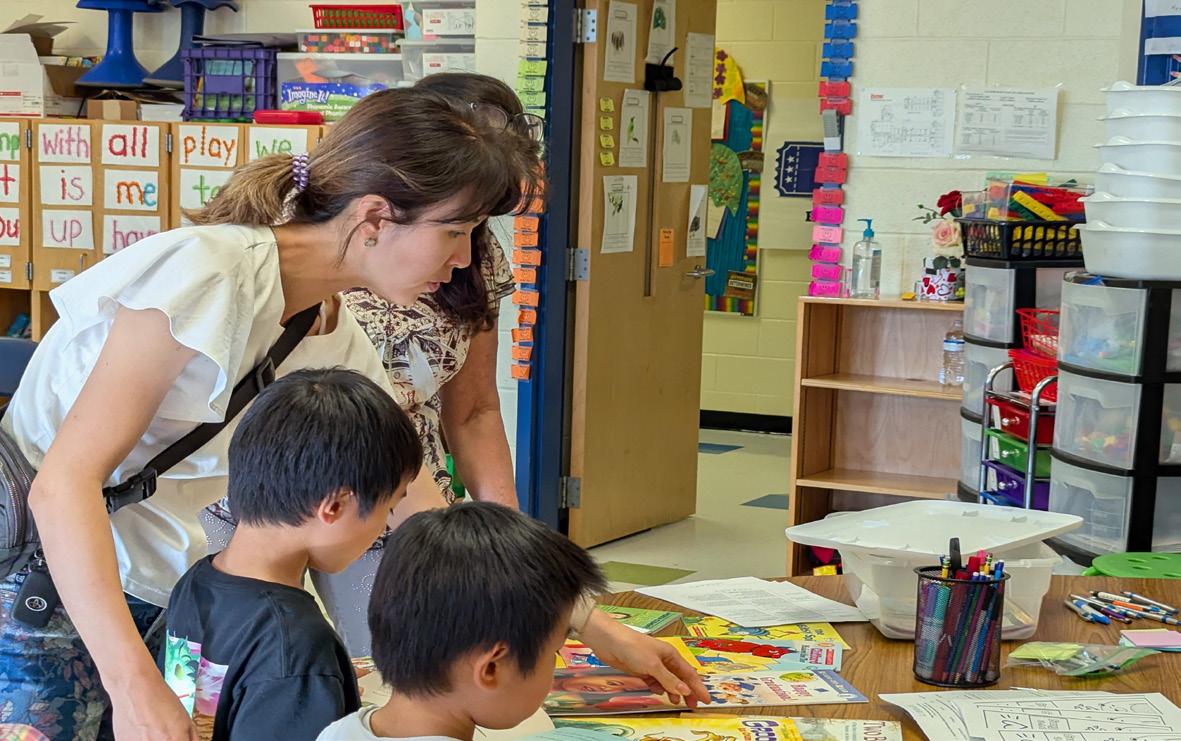
Family supports are another pillar of our partnership with Pineville. We’ve collaborated with the Charlotte Mecklenburg Library and Mebane Early Literacy Center to provide programming and resources for the school’s Family Literacy Nights. The events highlight the importance of families reading together at home, and have included things like read alouds, book swaps, and bookmarks with helpful reading tips for families.
We’ve learned and accomplished so much already in this partnership, and we continue to be so grateful to have such a strong partner in this work.
Learn more about our partnership with Pineville! Scan here to watch our year-end video:

School Connect is a core piece of our work in developing school-community partnerships. It’s a model from an Arizona-based nonprofit that helps foster partnerships that meet schools’ unique needs. To do this, it offers a range of resources and tools, from training and coaching for school leaders and community partners, to structured frameworks for community volunteer involvement.
Read Charlotte held a School Connect information session in spring 2025 with community groups experienced in partnering with schools, and received overwhelmingly positive feedback on the model. We then worked with Charlotte-Mecklenburg Schools to develop plans to pilot the model in eight elementary schools in the 2025-26 school year.
Read Charlotte also made a $31,000 grant to School Connect to provide support to CMS and Read Charlotte during the initial year.
Two schools for the pilot (Pineville and Sterling) were recruited by Read Charlotte, and the other six (Devonshire, Hornets Nest, J.H. Gunn, Reid Park Academy, Thomasboro Academy, and Nations Ford) by CMS.
The partnership between School Connect and CMS continues to move forward, with coaching calls, CAFE meetings (School Connect’s Community and Family Engagement Round Table program), and Love Our Schools Day events (also organized initiatives from School Connect).
Our Read Together initiative was a cornerstone of our work in 2025, raising awareness about the importance and impact of families reading together. The practice is a simple yet powerful way to build children’s literacy skills.
We’ve reached thousands of local families with this message, through both a multichannel marketing campaign and our community partners’ direct work with families. More than 164,700 people have visited ReadTogetherCLT.org, which has practical, easy-to-try tips for families on making reading together part of their routines.
The campaign also features stories from real Charlotte families, sharing how they fit reading into their busy schedules, and what they find meaningful about the practice. Their stories highlight an important point: There’s no one way to read together. It can be done in a variety of ways; anywhere, at any time. But done regularly, it can be a powerful practice in a child’s life, helping to build important skills and encourage a love of learning.
Our routine is now, my son reads one side, I read the other, so we alternate pages. And I talk with him about his flow, how he reads, how he stops at punctuation. And he’s hearing my flow, and how I pause when there’s certain exclamation points, or get excited. He just caught on. Now, it’s almost like overnight how his flow improved.
– Troy Amaker

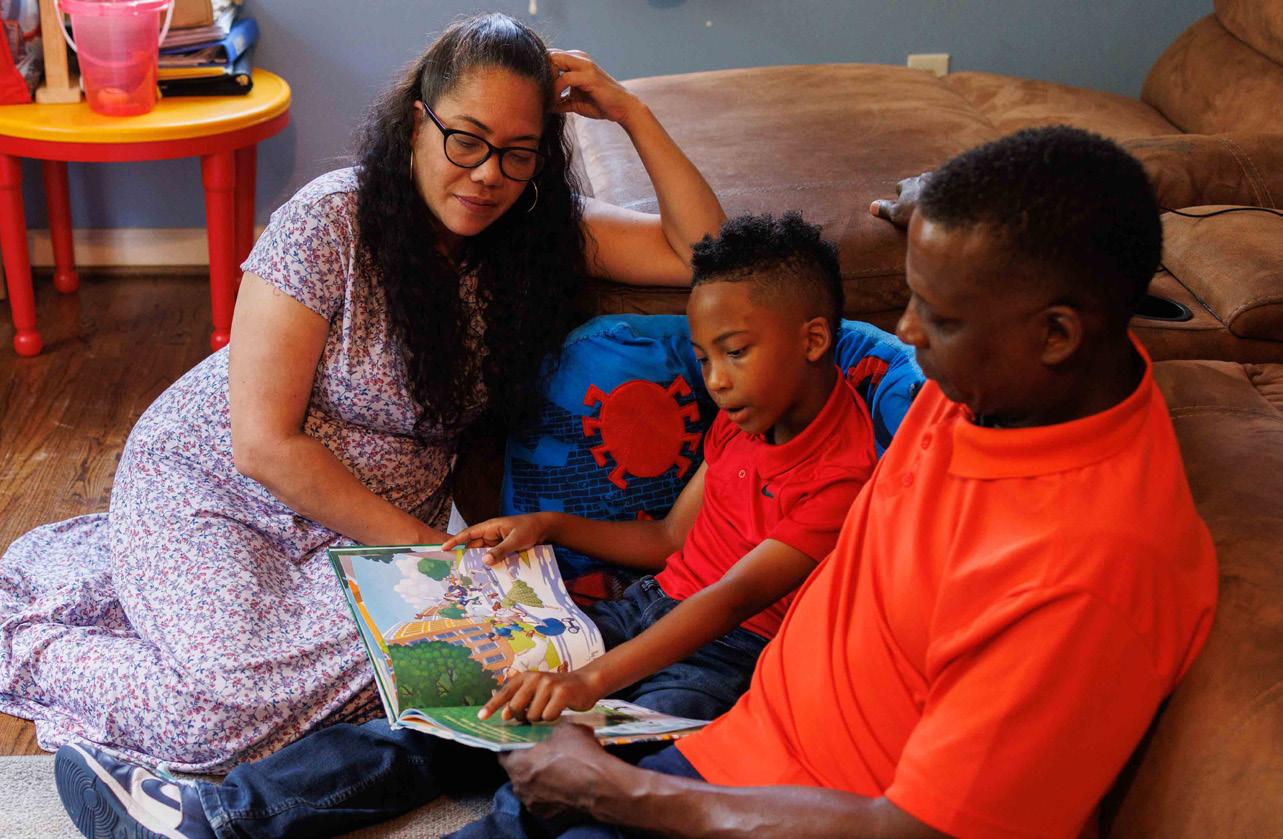
Reading together looks different every day. It may be right after school, it may be at bedtime, it may be during bath time. For us, routine is just making sure that you’re getting some type of reading in every day.
– Taurus Jamison
Watch our video featuring the Jamison family’s Read Together story!

Our Read Together marketing campaign is one of our most successful campaigns to date, generating high engagement across platforms. The Read Together message continues to resonate with local families, with July 2025 marking our best month yet for website visitors since the campaign launched in 2023.
UNIQUE WEBSITE VISITORS
SOCIAL MEDIA IMPRESSIONS
164,779 25,446,490
BILLBOARD IMPRESSIONS
SOCIAL MEDIA POST ACTIONS
2,529,797
VIDEO VIEWS
374,439,120 2,470,431
The Read Together initiative is a collaborative effort. We hold quarterly meetings with community partners to foster county-wide collaboration around this important practice.


This year was one of growth for our VIP ReadAloud Model, with 12 community organizations using it in just its second year.
Read Charlotte developed the evidenceinformed repeated shared reading framework in 2024 to help community organizations use the power of read alouds to build children’s comprehension skills. It involves three readings of the same book, with each reading focused on a specific listening comprehension skill: vocabulary in the first read, inference in the second read, and perspective taking in the third read. The reader uses pre-planned cards to guide students through each read.
The model works best with high-quality picture books, where students are exposed to rigorous vocabulary, are able to make inferences, and engage with complex plots and dynamic characters. During development, the Read Charlotte team worked with the Charlotte
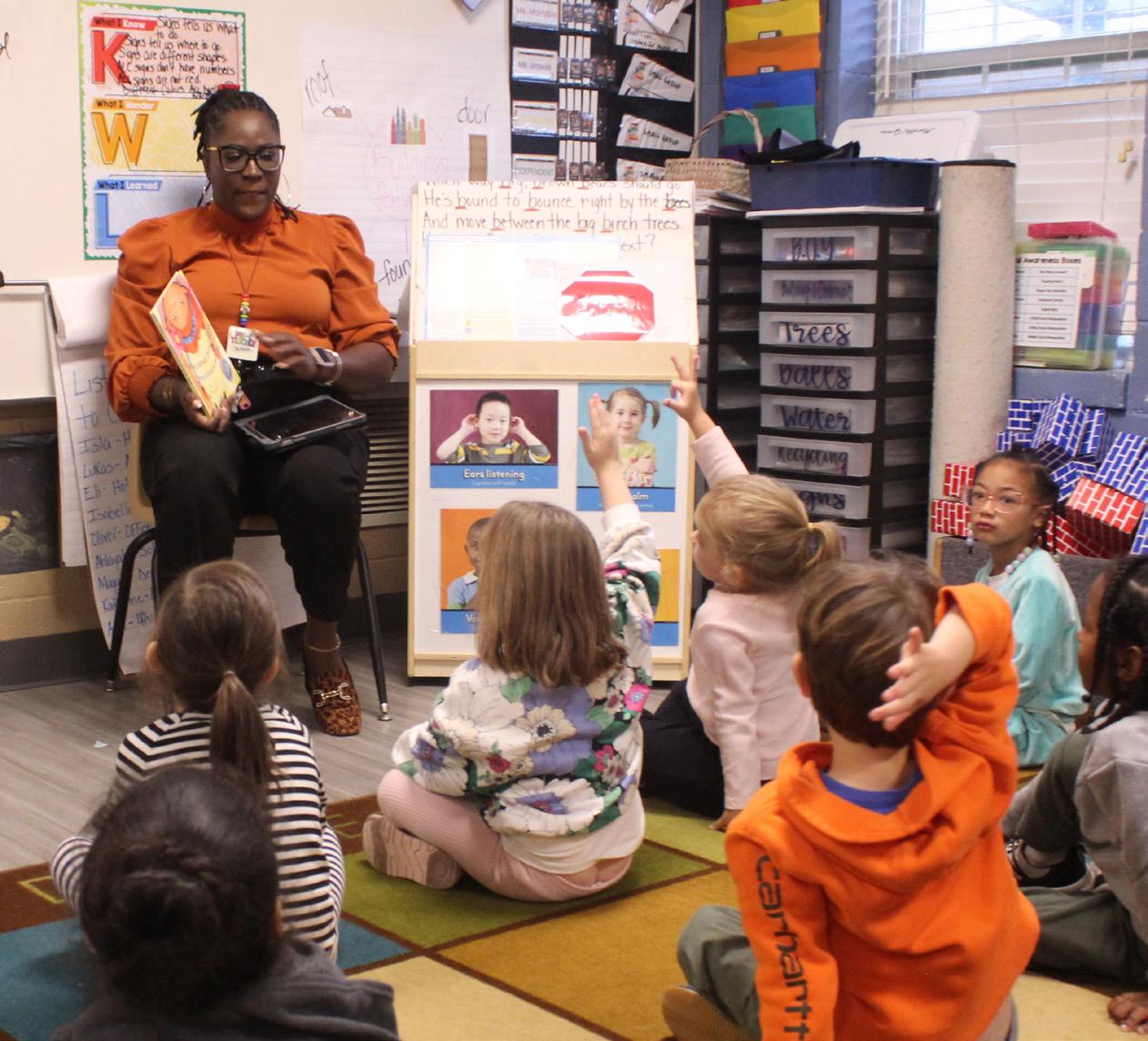
Mecklenburg Library and MECK Pre-K to identify book titles that would work well with the model, and then created kits consisting of up to 15 of the preselected books and laminated materials that pair with each book.
After successful pilots in the 2024-25 school year and summer 2025, we worked with additional community partners to expand the model’s use to 12 groups. It’s now being used in a range of settings, from pre-k classrooms to afterschool programs. We’re excited about how quickly use of this model has spread, and hope to see it used even more widely in our community to support children’s listening comprehension skills in 2026.
More than
2,500 students have been served by the VIP ReadAloud Model
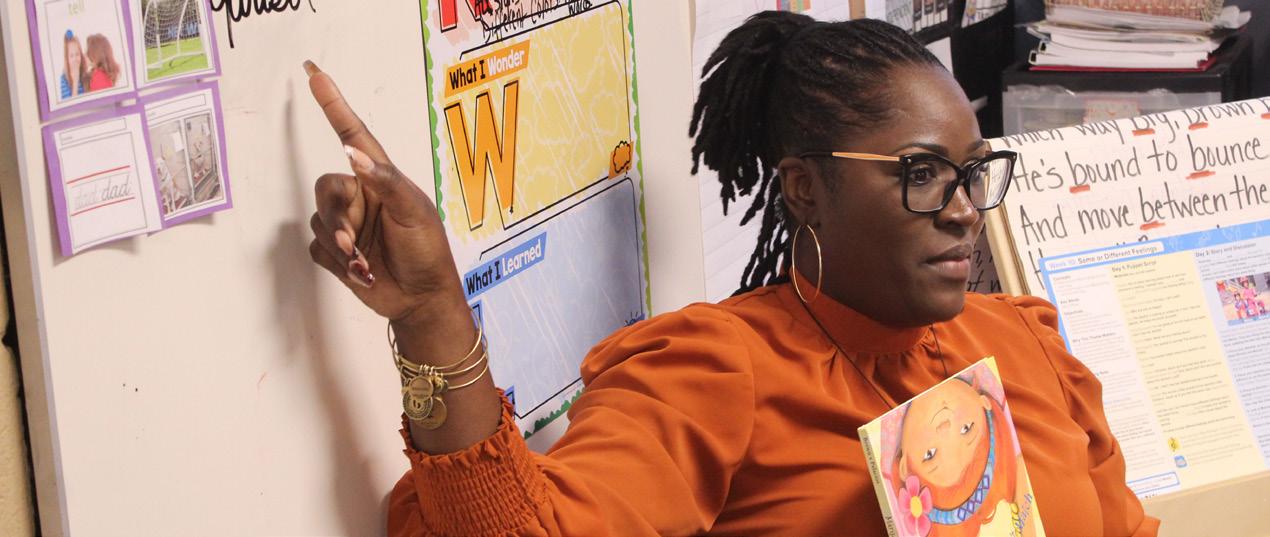
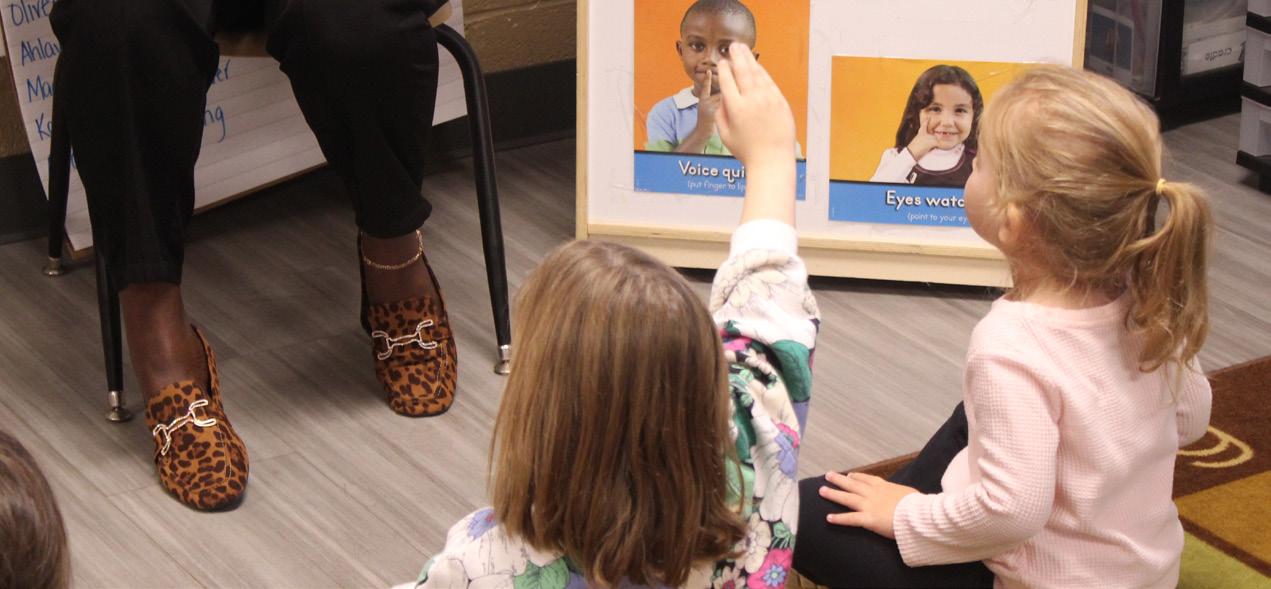
The YMCA piloted the VIP Read-Aloud Model in its 2025 summer Y Readers program, and then collected feedback from teachers on the model. Here’s some of what they had to say!
This is my favorite reading comprehension technique. Students are very engaged.
I love how the VIP Read-Alouds introduce new vocabulary in a kid-friendly way before and during the story. The words are explained in simple language, and there are great visuals and real-life connections that help my students really get the meaning. It gives all my learners a boost in understanding and confidence before we even dive into the book!
The structure of the VIP Read-Aloud is wonderful. The students demonstrated a deeper understanding of the content and were able to retain more information.
The VIP Read-Aloud was probably my favorite part of teaching this summer.

We created two sets of materials in the VIP Read-Aloud Model’s initial development: a set for pre-k and a set for kindergarten through second grade. We’re now working on creating a set geared toward third through fifth grade, after hearing that need from our partners. We hope this will allow the model to serve even more students in Mecklenburg County.
Artificial intelligence, or AI, was everywhere in 2025, and Read Charlotte’s work was no exception. Major advances in the field of AI have created wider opportunities for use in many areas, including early literacy. Two key Read Charlotte initiatives involve AI: Amira, an AI-powered tutoring program for reading, and Literacy Listens, a listening comprehension-focused podcast series generated with the help of AI. These projects show just a few possible uses of this powerful technology, and we look forward to seeing how else it can be leveraged to support improving early literacy in our community.
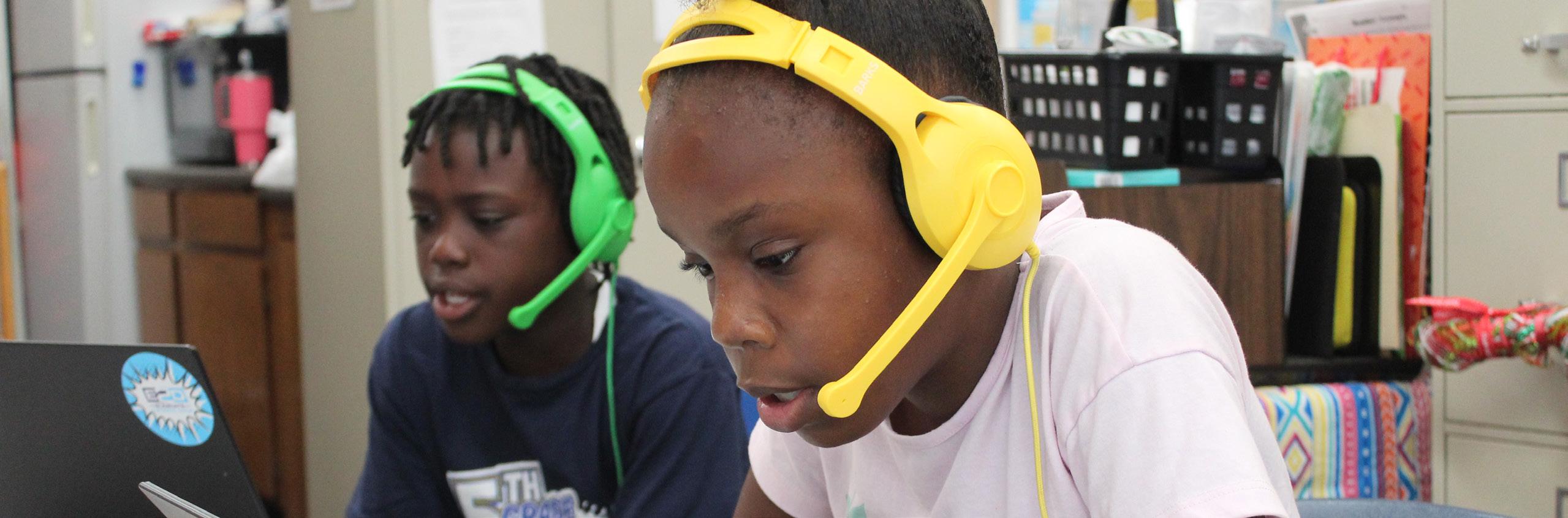

Amira is a digital tutoring program for reading. It uses AI to listen to children read and then delivers individualized micro-interventions to support word-reading skills, reading fluency, listening comprehension, and vocabulary.
There is compelling research behind Amira, with multiple studies showing efficacy on par with in-person tutoring.
After an initial review of Amira in 2024, Read Charlotte worked with Black Child Development
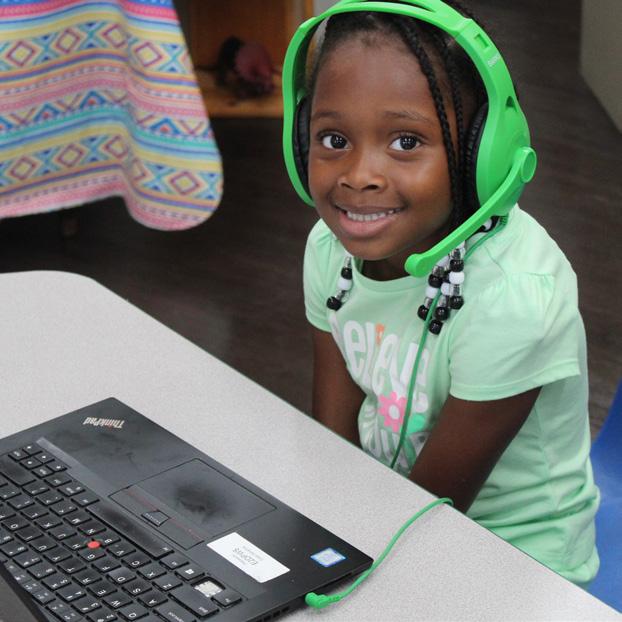
Carolinas to pilot it during their summer programming, and received promising feedback. We then expanded the pilot to three partners during the 2024-25 school year: Black Child Development Carolinas, Pineville Elementary, and YWCA of Central Carolinas. With support from CD Spangler Foundation, the Charles Bowman Literacy Support Fund, and PwC, we provided grants for Amira licenses for nearly 1,000 students across the three piloting organizations.
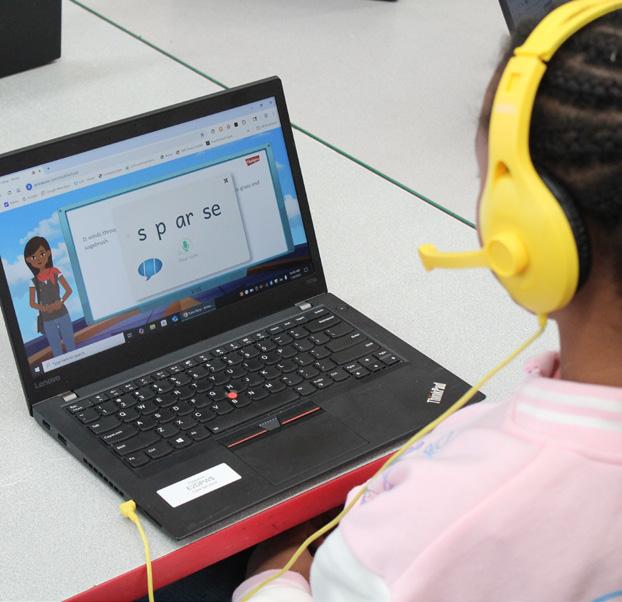
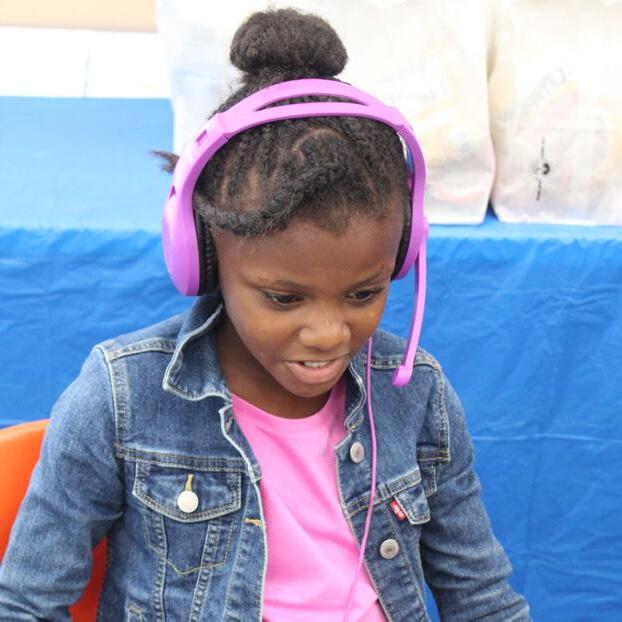
More than 2,400 students have been served by Amira
These partners shared encouraging learnings from the pilot, including that Amira freed up some of teachers’ time, allowing them to focus on small group instruction while students using Amira for independent practice were receiving oneon-one reading support. Our partners also shared seeing the positive impact of students’ progress in their demeanor and attitudes toward reading.
In the 2025-26 school year, we expanded the pilot further, to more than 2,400 students across seven partners: Black Child Development Carolinas, MECK Pre-K, Pineville Elementary, Starmount Academy, Sterling Elementary, YMCA of Greater Charlotte, and YWCA of Central Carolinas.
In fall 2025, Read Charlotte launched Literacy Listens, a professional learning podcast series focused on listening comprehension. We used an AI-powered platform called Wondercraft to turn research and other written text, curated by Read Charlotte, into a series of 13 podcast episodes.
Listening comprehension has been a major focus of Read Charlotte’s work in recent years, as it’s a critical yet often overlooked literacy skill. It’s one of the strongest early predictors of reading comprehension.
We’ve worked to translate the latest research around listening comprehension into resources for our community. We started with the Listening Comprehension Resource Center (LCRC), a first-of-its-kind website featuring curated listening comprehension research and resources for educators. We then realized an AI-powered tool like Wondercraft could help us bring that information to educators in a new way, without needing a studio or a production team.
We created Literacy Listens as a way for educators to learn on the go; during a
We are continuing to learn from the expanded pilot. So far, we’ve seen that this technology-based program can provide scalable individualized reading support at an affordable cost. Amira can fit into existing program schedules, requiring 30 minutes per week as either two 15-minute sessions or three 10-minute sessions. It also supports bilingual tutoring for Spanish speakers.
A rising second-grader advanced two reading levels using Amira over six weeks. She now volunteers to read aloud during morning circle.
–
commute, a planning period, or whenever they have a few spare minutes. The podcast can serve as a standalone resource, or as a companion to self-paced learning modules on the LCRC.
We’re excited about sharing important information about listening comprehension in a new format, driven by new technology. There is a clear gap between what research tells us about listening comprehension and the resources available for educators to learn about and teach it. Our goal is to help close that gap, and we think Literacy Listens is a significant step toward that goal.
Scan here to listen to the podcast, or find it on Apple, Spotify, and YouTube!
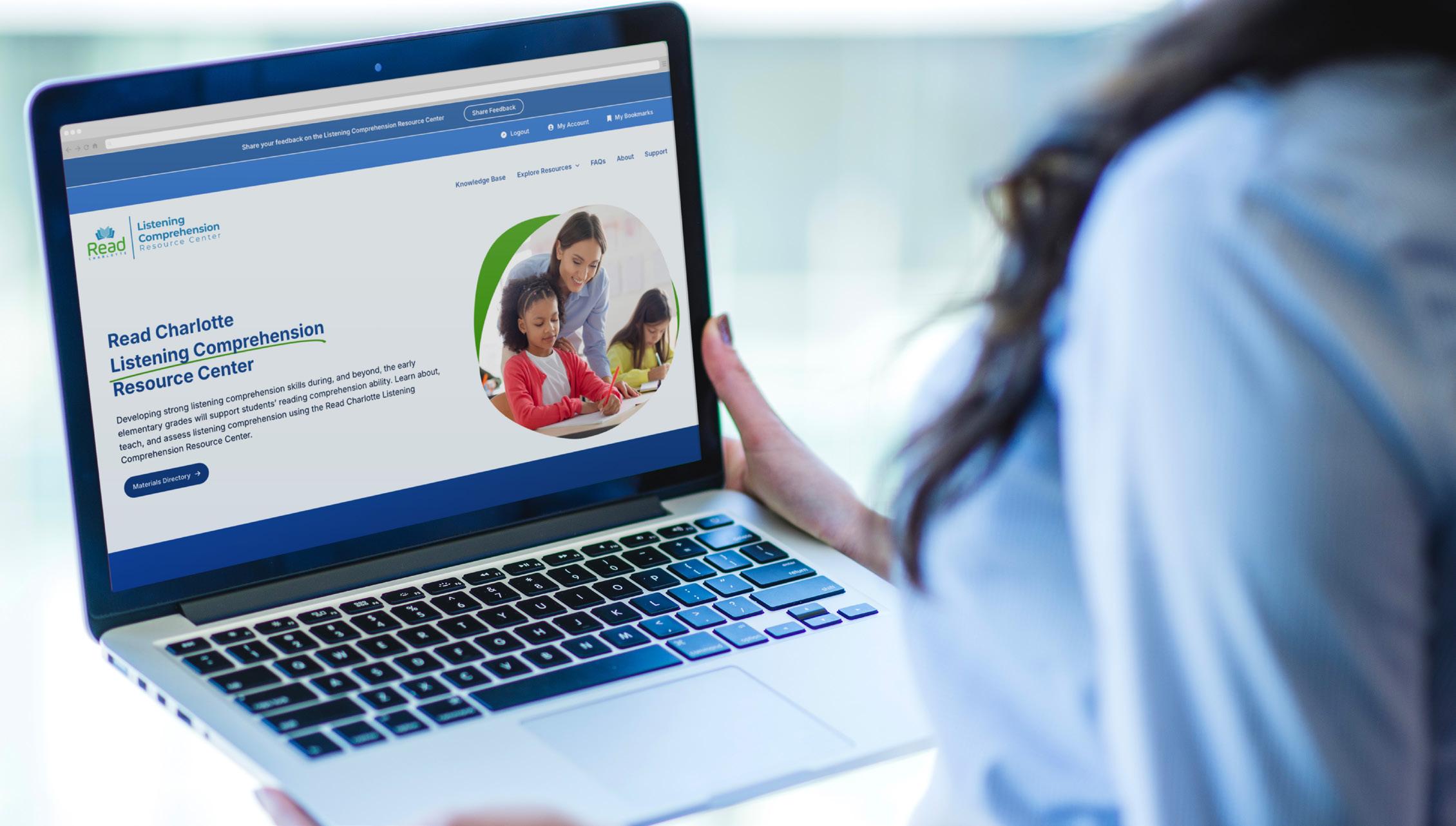
The Listening Comprehension Resource Center, or LCRC, was created to fill a gap: the lack of a comprehensive resource for educators that helps them understand and build children’s listening comprehension skills. As Read Charlotte’s work around listening comprehension deepened in recent years, this gap became apparent to us, and sparked the idea that eventually became the LCRC.
The LCRC is a website (listeningcomprehension.org) comprised of two sections: a Knowledge Base, which provides research and other background information to support educators’ professional learning, and a Materials Directory, which provides more than 200 classroom materials curated by Read Charlotte, including assessments, interventions, practices, instructional strategies, and activities.
We did a round of beta testing of the site in the 2024-25 school year, and received feedback from several organizations. That feedback helped direct modifications to the site in 2025,
including the addition of nine professional learning modules to the Knowledge Base section. The modules support guided learning around listening comprehension, which was a request we heard from educators during the beta test. The modules also align with our Literacy Listens podcast, which was created as another way to share information around listening comprehension in an accessible way.
We also made updates to the Materials Directory in 2025, adding materials that we’ve identified since the site’s initial development.
We think this resource will be valuable to educators, both as a place to learn about listening comprehension and to access practical tools for teaching and assessing these important skills.
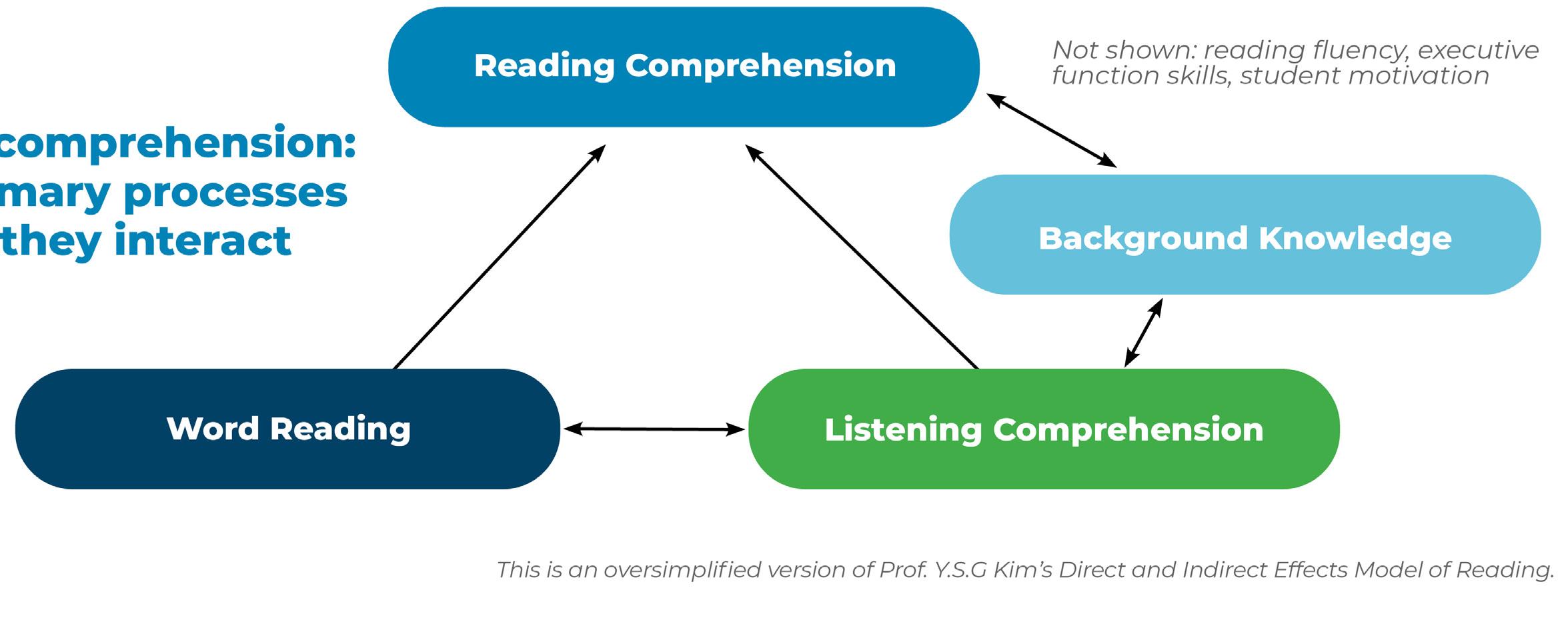
There have been major advances in reading science in recent years. High-quality empirical studies have revealed more about how different parts of reading interact with each other and contribute to reading comprehension. Listening comprehension, or comprehension of oral text, is one area that we know much more about today.
The Reading for Understanding Initiative was a 10-year, $120 million effort focused on improving reading comprehension from Pre-K through twelfth grade. One of its key findings was the critical importance of listening comprehension to reading comprehension.
Children simultaneously develop word reading and listening comprehension skills. While word reading skills are the biggest predictor of reading comprehension in kindergarten
and first grade, as early as second grade, listening comprehension becomes the greatest predictor of reading comprehension as children learn to recognize words automatically. Both skill areas need to be developed concurrently in order for children to have strong reading comprehension skills by the end of third grade and beyond.
There is a research-to-resource gap around the importance of listening comprehension, though: Support for educators hasn’t fully caught up with the science. There are many resources to support instruction in word reading skills, but many fewer for listening comprehension. The LCRC helps meet that need, translating the latest research into a resource for educators so they can put this important knowledge into practice.



Read Charlotte works to create sustainable change that can be maintained by our community after 2030, when our organization will sunset. A significant focus of our work is introducing solutions that can be woven into the fabric of our local systems, outliving any single organization and contributing to systems change.
Queen City Readers, a word reading tutoring program developed by Read Charlotte and based on an evidence-based approach called synthetic phonics, is reflective of that focus. It’s designed to be turnkey, can be used within a wide variety of settings, and requires minimal training and no prior experience for volunteers. A group of college students, with the support of their community, was able to use the curriculum to create a literacy tutoring program, independent of Read Charlotte. It’s a wonderful example of community capacity-building, and one we’re excited to share.
A new literacy tutoring program is up and running in Davidson, thanks to a group of college students and the support of their community.
The program, Davidson Reads, is the result of a true collaborative effort, with coordination and commitment from across the community: Davidson College students act as program coordinators and tutors, Davidson K-8 administrators connect students in need of tutoring with the program, Read Charlotte provides the curriculum and materials, and Temple Kol Tikvah donates space for the twiceweekly tutoring sessions. Because of all that, the program incurs no operational costs, and is free for local families.
Two Davidson College students, Steve Mirabello and Nina Worley, worked with their professor, Dr. Rebeca Fernandez (who is also a member of Read Charlotte’s advisory board), to develop the program. They saw a need for tutoring services in the area, and knew many community-
minded peers at Davidson would want to help.
“We wanted to make volunteering more accessible on campus, and also build stronger connections between the college and the wider Davidson community,” Worley said.
They thought Queen City Readers (QCR) would be a good fit for the program they envisioned. Mirabello was familiar with QCR’s approach and potential uses, as he completed an internship with Read Charlotte in the summer of 2023, during the final phase of the curriculum’s development. QCR appealed to them because it was evidence-based, designed to be turnkey, and required minimal training and no prior experience for volunteers.
“We’re really grateful that we were able to get a group of Davidson students, with all their time commitments and busy lives, to come out twice a week,” Mirabello said. “And I think part of that speaks to the flexibility of the program, having just one hour a day as the ask, because you just need to walk there and start the lesson.
I’ve done tutoring in the past where you need to make a new lesson in advance every time before you work with the student, and one of the great advantages of Queen City Readers is, it’s all made for you. You know exactly what you’re going to be doing when you get there.”
The simplicity appeals to volunteers, the students said, and is part of why several in their program continued tutoring during the 2024-25 school year, after participating in the program’s pilot the prior year.
In planning for the 2024-25 school year, Mirabello and Professor Fernandez connected with administrators at nearby Davidson K-8 about collaborating to identify kindergarten and first-grade students who would benefit from participating in Davidson Reads. The principal and assistant principal were instrumental in that process, Mirabello and Worley said, and helped establish an improved and more formalized version of the program.
“We could not be more grateful to the Davidson K-8 team for identifying the highest-need students for Davidson Reads, connecting us with parents, drafting consent forms, and working with teachers to ensure Davidson Reads participants are all ready to go when we arrive,” Worley said.
The donated space at Temple Kol Tikvah, where Worley is a Hebrew School teacher, has
also been a key piece in keeping the program running smoothly. Because it’s so close to Davidson K-8, the program coordinators can meet students at their school and walk them over to the temple for tutoring sessions, then return with any students staying for after-school care.
Davidson Reads supported 13 kindergarten and first-grade students that school year, and saw promising results in the growth of their literacy skills.
“As we were grading the end-of-the-semester assessments and saw the improvement from the kids, we all honestly got a little emotional just because of how much progress was made,” said Chloe Killinger, a Davidson College student on the Davidson Reads team. “And when I saw that impact, it just filled me with so much happiness and made me really excited to see the program progress in the future.”
Killinger, Mirabello, and Worley hope to see the program continue in future years at Davidson. The support of the Davidson College community, particularly Professor Fernandez, Professor Chris Marsicano, and the Educational Studies Department, has been and will be a big part of the program’s success, they said.
There’s more to this story! Read the full blog here:
Jevelyn Bonner-Reed
The Belk Foundation
David Crane Crane Family Foundation
Fannie Flono
Community Volunteer
Lindsay Joyner Truist
Dave McDonald Albemarle Foundation
PNC BANK (Chair)
Justin Steinschriber
The Leon Levine Foundation
Stick Williams
Community Volunteer
Malcolm Butler University of North Carolina – Charlotte
Rebeca Fernandez
Davidson College
Crystal Hill
Charlotte-Mecklenburg Schools
John Martin Young Black Leadership Alliance
Anna Nelson CD Spangler Foundation
Meka Sales
The Duke Endowment
Jennifer Ward Bank of America
Laura Yates Clark Foundation For The Carolinas

Albemarle Corporation Bank of America
The Belk Foundation
(cumulative since 2015)
$1M and over
The Duke Endowment Foundation For The Carolinas
The Leon Levine Foundation
Mecklenburg County
PNC Bank PwC
C.D. Spangler Foundation
Crane Family Foundation
Duke Energy
John S. & James L. Knight Foundation
Ann Dunlap Hendrix Fund
Hal and Holly Levinson Family Fund
$500,000 to $999,999
Skeebo Foundation Truist Bank Vanguard Wells Fargo
$100,000 to $499,999
Hopestar Foundation
James Family Foundation Morton Family Fund
Stephen L. Cornwell Foundation The Tepper Foundation Z. Smith Reynolds Foundation
Alpha & Omega Foundation
Aaron Jeter
Adam Claugus
Alexis Gordon
Allen Tate Company, Inc.
Allison Tack
Alyssa Franklin
Amanda Beacham
Amanda R. Webb
American Endowment Foundation
$50,000 - $99,999
Elevation Church Springsteen Foundation
Under $50,000
Amy Strecker
Andrea Barkely
Andrew Pickering
Anne Marie Dubois
Annette Korbin
Anonymous
Ashley Hardy
Atrium Health
Barnhill Family Foundation
Barry A. Teague
Benjamin Wilhelm
BlackArch Partners LP
Brian A. Bragg
Brian T. Elliott
Brighthouse Financial
Brittany L. Schussler
Carol C. Hallquist
Carolina Panthers Charities
Caroline Starnes
Carolyn Kuruvilla
continued
Carrie Reinhardt
Charles Butt Foundation
Charles and Mary Bowman
Charlotte Ballet
Charlotte Chamber of Commerce
Charlotte Hornets
Katherine O. Bagby
Kathleen W. Shaw
Kathylee B. Thompson
Kellie McKinney
Kevin Kendrick
Kevin Salazar
St. Nektarios Endowment
StudeoCo
Summit Seltzer Company LLC
Suzanne V. Spain
Tamara Holt
Terri Rehkop Foundation, Inc.
Children’s Medical
Endowment Fund
Christina Flansburg
Kissel Family Foundation
Kristina Denta
Laura Burkart
Lee Ann Steadman
The George K. Baum
Family Foundation
The Hobbs Foundation
The Katherine & Thomas M. Belk
Christine Nicodemus Foundation, Inc.
Claire K. and John A. Tate
Coaching For Literacy
Community Eye Care
Cynthia G. Tice
Danville Regional Foundation
Davidson College
Dawn M. DeRose
Deborah D. Steele
Dottie Martin Children’s Endowment Fund
Ellen Rosenfeld
Elizabeth Neil
Emily Rassam
Erica Brown
Evans Family Charitable Fund
Ferris Morrison
First Presbyterian Church Charlotte
Glenda Kilgore
Global Endowment Management
Gwen M. Poth
Henry W. Sale
Hoff Faithful Giving Fund
Hoffman Lewis
Holly Eskridge
Howard G. Solender
Hugh L. and Jane S. McColl
Impact Endowment Fund
Jacqueline Parker
James H. Nichols
James Klein
Jane E. Pounds
Jenkins B. Trotter
Jill Korbin
Jim H. Thompson
John F. Cassady
Joseph A. Connor
Lisa Barnaby
Margaret C. Sockwell
McFarland Construction
Mecklenburg Optimist Club #42325
Melanie June
Melba W. Daniels
MetaMetrics Inc.
Michael Daley
Michael and Margaret Greska
Nancy Harris
Nicole Papadopulos
North Inlet Advisors, LLC
Out of Print
Page & George Bradham
Family Foundation
Parsec Financial
Peter Bowman
Planters Punch Garden Club
Queen’s Grant Community School
PTI & Students
Ramdas Narayanan
Rhett Mabry
Richard L. and Saundra H. Magee
Richard T. Williams
Ronald L. Fisher
Russell Zabel
Ruth Beardsley
Sally C. Saussy
Selwyn Avenue
Presbyterian Church
Shelves Bookstore
Spindle Bar, LLC
Stephen Screen
Steve and Lorre Potash
Family Foundation
Theresia Moser
The Stanley Family Charitable Fund
Thomas E. & Rosemary I. Rogers Endowment Fund
Timothy Kay
Trinisha Dean
UNCC Chapter of Phi Kappa Phi
Virginia T. Shaw
Virginia W. Tarleton
WBTV
WestEnd Advisors
Weston M. and Margaret W. Andress
Whitney & Mitchell Feld
Family Fund
Whitney D. Arnall
William A. McEachern
William D. Funderburg
WP Pizza Bar - Charlotte
Yanliang Dong
Zimmer Biomet Foundation