Join the Companions
... and help us to keep publishing Oremus free of charge
Although we earn income from the advertising which we carry, Oremus relies on donations from readers to cover its production costs.
The Companions of Oremus was established to recognise those who give generously to support us. Open exclusively to individuals, Companions’ names are published in the magazine each month (see page 11). All members are invited to one or more social events during the year and Mass is offered for their intentions from time to time.
If you would like to support us by joining the Companions, please write to Oremus, Cathedral Clergy House, 42 Francis Street, London SW1P 1QW or email oremuscomps@rcdow.org.uk with your contact details, including postcode. Members are asked to give a minimum of £100 annually. Please mention how you would like your name to appear in our membership list and if you are eligible to Gift Aid your donation. Postal subscriptions to Oremus may be purchased by completing and sending to the office the coupon printed in the magazine. Subscriptions to receive Oremus either by email (free) or as hard copy by post (p & p payable) can also be entered by visiting https://westminstercathedral.org.uk/the-cathedral-community/about-oremus/ and completing the form there.
Thank you for your support.
Oremus
Cathedral Clergy House
42 Francis Street
London SW1P 1QW
T 020 7798 9055

E oremus@westminstercathedral.org.uk
W www.westminstercathedral.org.uk
Oremus, the magazine of Westminster Cathedral, reflects the life of the Cathedral and the lives of those who make it a place of faith in central London. If you think that you would like to contribute an article or an item of news, please contact the Editor.
Patron
The Archbishop of Westminster
Chairman
Fr Sławomir Witon´
Editor
Lorcán Keller
Oremus Team
Tony Banks – Distribution Zoë Goodway – Finance
Anne Marie Micallef – Marketing Paul Moynihan – Proofreading Manel Silva – Subscriptions
Design and Art Direction
Julian Game
Registered Charity Number 233699 ISSN 1366-7203
Opinions expressed by contributors do not necessarily represent the views of the Editor or the Oremus Team. Neither are they the official views of Westminster Cathedral. The Editor reserves the right to edit all contributions. Publication of advertisements does not imply any form of recommendation or endorsement. Unless otherwise stated, photographs are published under a creative commons or similar licence. Every effort is made to credit all images. No part of this publication may be reproduced without permission.

The eagle-eyed amongst you will notice the name ‘Pier Giorgio’
Inside Oremus
Homily: Ordinations to the Diaconate by Bishop Paul McAleenan
Statement on Magnifica humanitas by Archbishop Richard Moth 11
Cathedral History in Pictures: The Funeral Mass for Cardinal Bernard Griffin, 1956 19 Features:
Fulton Sheen in London by Fr Gerard Skinner
Being human in an age of AI by Dr Pia Matthews
Magnifica humanitas, a Review by Fr Hugh Mackenzie
64 Years of Faithful Ministry by Jacquie Scott
Ealing Abbey Lay Plainchant Choir by Patrick Martin
London to Antioch: 2,900 miles by bicycle by Eileen Murray
© Mazur/cbcew.org.uk
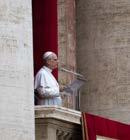
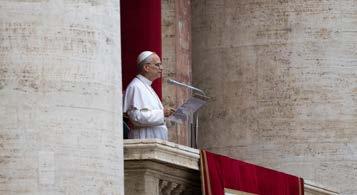
appears on the two signs on either side of the red umbrella. This joyful scene followed the canonisation of Ss Carlo Acutis and Pier Giorgio Frassati in September 2025, having been postponed from the Easter Octave due to the death of Pope Francis. Here, Pope Leo XIV greets the throngs of young people gathered on St Peter’s Square in celebration.
Oremus
Lorcán writes
Each summer the Catholic Church in Ireland looks west as pilgrims flock to Croagh Patrick for Reek Sunday (late July), to St Patrick’s Purgatory in Lough Derg and, for those of us who are not hardy enough for mortification of the flesh, to Knock Shrine for the annual Novena, culminating on the anniversary of the apparition, 21 August 1879. Like many former Maynooth seminarians, I spent two summers working as a sacristan in Knock Shrine for the pilgrimage season, leading the public devotions, cleaning chapels, and preparing for thousands of liturgies, large and small. Each day during the Novena, two basilica Masses are celebrated with guest speakers and an evening candlelight procession. However, as I write this editorial in the suffocating humidity of London in June, all I seem to remember of the beautiful Masses and processions was the opportunity to get some fresh air, emerging from the hot, crowded upper sacristy wearing my heavy woollen soutane (cassock).
This July marks the 50th anniversary of the concrete Basilica of Our Lady, Queen of Ireland, with special events being held to mark the occasion. Built in 1976 with stone from each of the 32 counties, the church was raised to the status of a minor basilica by Pope St John Paul II for the centenary in 1979, before his visit that September. The Rector Fr Richard Gibbons has since done much to beautify the basilica, including new seating, a new sanctuary, and an enormous mosaic of the apparition (14 x 14 metres), designed by the illustrator P J Lynch and unveiled in February 2016. Thankfully, it also sounds like Fr Gibbons has improved the sacristy.
Looking ahead, Archbishop Richard Moth, fresh from receiving his pallium in Rome, will celebrate the 5.30pm Mass for the Dedication of the Cathedral (1910) with the Metropolitan Chapter and the College of Chaplains on Wednesday 1 July. That night, at 9pm, the first of many Luminiscence performances will be held in Westminster Cathedral, narrated by Hugh Bonneville. This will continue for four nights a week, Wednesday to Saturday, for the next six months or so. On Friday 3 July, Westminster Cathedral Choir School will break for the summer holidays with another impressive exit list. Indeed, 10 boys have been accepted to Eton College where they, along with Prince George, will begin their studies in September. The choristers, however, will continue until Sunday 5 July, and the Lay Clerks until Sunday 19 July, with choral services resuming on Sunday 6 September. Finally, one thing to note in August is the solemnity of the Assumption of the Blessed Virgin Mary, which has been moved from Saturday 15 to Sunday 16 August, as per the 1984 Bishops’ Conference decision regarding the celebration of feast days on Mondays and Saturdays. Wishing you all a lovely summer.
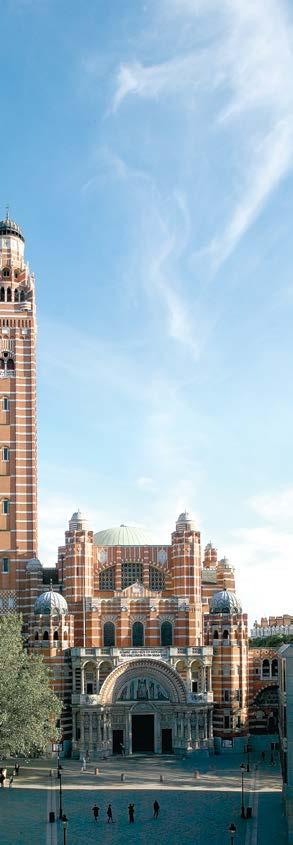
Westminster Cathedral
Cathedral Clergy House
42 Francis Street
London SW1P 1QW
Telephone 020 7798 9055
Email chreception@rcdow.org.uk www.westminstercathedral.org.uk
Cathedral Chaplains
Fr Sławomir Witoń, Dean
Fr Patrick van der Vorst, Precentor
Fr Michael Guthrie
Fr Vincent Mbu’i SVD
Fr Paul Zhao SVD
Fr Hugh MacKenzie
Rev Paul Christian (Cathedral Deacon)
Fr Clement Abobo, Fr Javier Ruiz-Ortiz (priests in residence)
Also in residence
Franciscan Sisters of Our Lady of Victories: Sr Jesuina, Sr Angelina and Sr Mariana
Music Department
Simon Johnson, Master of Music
Peter Stevens Obl. OSB, Assistant Master of Music
Alexander Robson, Organ Scholar
Cathedral Manager
Peter McNulty
Parish Safeguarding Representative
Trevor Koschalka
westcathsg2@safeguardrcdow.org.uk
Cathedral Finance Manager
George Kulasingham
Cathedral Fundraising Manager
Laura Dudhee
Chapel of Ease
Sacred Heart Church
Horseferry Road SW1P 2EF
Ordinations to the Diaconate
Bishop Paul McAleenan
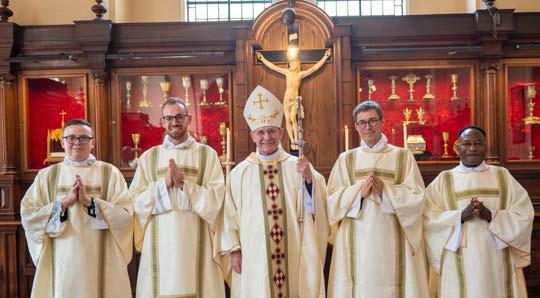
On Saturday 13 June, the memorial of the Immaculate Heart of Mary, Bishop Paul ordained four men to the diaconate: Jonathan Burden (Brentwood), Paolo Gambardella (Westminster), Eric Lobsinger (Portsmouth), and Tom Mawanga (Westminster). Jonathan, Paolo and Eric will continue in formation for the priesthood and Tom will serve as a deacon in a permanent capacity.
Jonathan, Paolo, Eric, Tom, you have been preparing for this day for some time. Countless times you will have heard and read that a deacon is a Minister of the Word, a Minister of the Altar, and a Minister of Charity; the important word being ‘minister’.
As we know much of what we require today can be supplied through automation. Whether you need a train ticket or a cup of coffee, you enter coins or tap your card and what is needed is dispensed. Recently, Pope Leo has written an encyclical named ‘Magnificent Humanity’ (Magnifica humanitas), in which he states that what we are can never be replaced. God, of course, loves humanity – he himself became a member of it. God needs humanity, and chooses individuals from among humanity that his love can be communicated. And those whom he chooses never merely dispense like a machine.
To minister means to attend to. As deacons you are entrusted with the task of attending to God’s Word which, as the letter to the Hebrews says, is alive and active. The Word of God makes things happen. To be a true Minister of the Word means that you must love it, that it may speak into concrete situations. You are
to proclaim the Word that tells us of God’s love for us, as revealed through Jesus Christ. It is a Word that brings hope. You will minister at the altar. Here you will most certainly not be a dispenser. Christ’s love for humanity was not displayed remotely, from a distance, but through his life among us; his Death and Resurrection. In serving at the altar you will be close to the Sacrament which brings Christ, his Body and Blood into our midst and administer it to his people.
And the deacon is a Minister of Charity. We attend to charity in many different ways, outside the walls of the church, conscious of all the circumstances which lead to impoverishment and our obligation to relieve need and support those who have little of the world’s goods; all that undermines ‘magnificent humanity’. As we have just heard in the reading, the Church had just begun when a dispute arose. The dispute was about discrimination. The Hellenists complained that their widows were being neglected in the daily distribution. The Order of Deacons, as we heard, was established to ensure that everyone in need received equally, that none should be in need, and to serve justice.
St Paul once said we are to have the mind of Christ. In our encounters, whatever task we are to undertake as deacons, we are to have the generous mindset of the Good Shepherd, which includes everyone. He gives the image of the one flock. The Good News we bring is for everyone, we preach it to all, bringing people together, uniting them and directing them towards Christ who saved us all. So, we speak of the deacon as one who serves. He doesn’t dispense, he doesn’t provide. He serves, he gives of himself. In this way he witnesses to the love of God in such a way that hope and inspiration is born in the hearts of God’s people. As such, the word ‘de-serve’ is absent from the vocabulary of ministers of the Church; ‘what do I deserve in return?’ St Ignatius of Loyola had a prayer that opens with the words, ‘Teach us Good Lord to serve you as you deserve’. It is always the Lord who deserves.
So, my brothers, today you have been called, not to receive an award that will elevate you beyond the people of God but to ordain you that you may be with them to serve them in the Lord’s name and after his example. Your service, however, will bring you its own rewards because people in parishes love their deacons and their priests; they recognise the love of God which reaches them through the generous ministry of those who serve them. Your ministry reminds them of the Good Shepherd who laid down his life for his sheep. To serve and not to seek or expect some reward demands a heart that has been moulded and formed by Christ. As Jesus said, the disciple is not greater than his master but the disciple will always be like his master.
Among the promises which Jonathan, Paolo, Eric and Tom will take shortly is the promise to pray. Each day they are to pray that Christ will be the anchor of their souls, that the commitment they make today will remain fresh and steadfast and in faith they will bring all humanity, believers and nonbelievers alike, into the presence of God through prayer.
I wish to thank all of you who have had any part in preparing these brothers of ours for the diaconal ministry; their formators in the seminary, their advisers, directors and teachers. In a particular way I wish to thank the families of Jonathan, Paolo, Eric and Tom, for your support and the affirmation you have provided. I thank the parents who first taught them to pray to the Lord who has called them. I thank Tom’s wife, Wivine Ntumba, and their four sons; and I thank Eric’s wife Alice and their three children. Your support is invaluable and greatly appreciated. Before we proceed to Ordination I say to Jonathan, Paolo, Eric and Tom the Church is grateful to you for permitting the Word of God to take root in you and flourish.
In the Church there are many deacons whose memories we cherish: St Stephen and his companions in our first reading, St Lawrence of Rome, St Vincent of Saragossa, St Ephrem the Syrian; deacons whose generosity is still remembered and celebrated. My brothers, may you too in your ministry leave many memories of God’s activity through your service of his revealed Word, at the altar and of charity.
GRAND ORGAN FESTIVAL 2026
Fulton Sheen in London
Fr Gerard Skinner
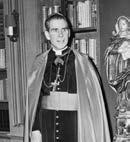
The soon to be beatified Venerable Fulton Sheen was yet to achieve fame as a radio and television evangelist when he spent some months ministering in the Diocese of Westminster from 1925 to the early 1930s. In later years, he reckoned that he had probably spent six months of his life in London as, in his own words, the ‘unofficial curate at St Patrick’s, Soho’. At the height of his powers he was acclaimed as ‘the Great Communicator’ by the famed Baptist evangelist Billy Graham and ‘a prophet of the times’ by the Venerable Pope Pius XII, such was his talent for speaking of faith, hope and love in Jesus Christ in an immensely engaging way.
Fulton Sheen was born on 8 May 1895 in El Paso, Illinois, and baptised in El Paso’s St Mary’s Church. In 1913 he was enrolled in St Viator College (also in Illinois), a Catholic liberal arts college, where he excelled in debating and consistently achieved the highest marks for his academic work. Sheen had desired to become a priest from an early age and so after college he entered St Paul Seminary in St Paul, Minnesota being ordained a priest for the Diocese of Peoria on 20 September 1919.
Two years later he began studies for a PhD at the University of Louvain in Belgium, receiving his degree in 1923 with distinction. Post-doctoral research followed that led to the award of a yet higher qualification and the publication of his first book in 1925, entitled, God and Intelligence in Modern Philosophy: A Critical Study in the Light of the Philosophy of Saint Thomas Aquinas. The introduction was written by G K Chesterton, an author for whom Fr Sheen had a lifelong admiration.
This was the time that Fr Sheen began periods of work in the Diocese of Westminster; his quarter of a century of teaching began when he was invited to teach theology at St Edmund’s College, Ware, the diocesan seminary situated in Hertfordshire. Being asked to teach theology for a semester to the fourth-year seminarians came as a surprise to Fr Sheen as he was qualified as a philosopher not a theologian. Despite hours of preparing his lectures Sheen reflected in his autobiography Treasure in Clay that he might not have been the best teacher at this time. He recalled how, five years after teaching at St Edmund’s, he met a priest who had been one of his students there who inquired what Fr Sheen was doing. He told him that he was teaching at the Catholic University in Washington only to hear the former student reflect, ‘I hope that you are a better teacher now than you were then.’ Clearly he was, and one with humility to retell this story against himself.
That Fr Sheen continued his teaching career in America was not a foregone conclusion as Cardinal Bourne (Archbishop of Westminster 1903-35) had invited him and a colleague at St Edmund’s, Fr (later Mgr) Ronald Knox, to go to Oxford to start
some courses in Catholic philosophy and theology. Whilst Fr Sheen discerned that America was where he belonged, over the following years he was to spend some weeks of his summers in London, residing and ministering at St Patrick’s, Soho. There he preached a series of sermons in the evenings, and at Westminster Cathedral in the mornings. In later life, Fulton Sheen recalled how, in the Rectory at Soho, he had a bedroom near the parish room which, at that time, was a Sodality Chapel, dedicated to the English Martyrs. He delighted in the fact that the Blessed Sacrament was next door to his bedroom and would often go to the chapel to pray. In addition to his preaching and pastoral work in Soho, Fr Sheen also had forays to Cambridge where, on three occasions, he participated in Catholic Summer Conferences, giving lectures and celebrating Mass. Soho parish’s history relates:
‘One story of Archbishop Sheen’s time here was the famous occasion of when a somewhat inebriated woman called at the parish house. She was known as a lady with many boyfriends and was also well used to the stage which was ever plentiful in Soho. Father Sheen took her into the Church, spoke to her of the Cross and Passion of Christ and heard her Confession. It was an extraordinary day in which, as a result of conversation, kindness and conversion, this woman soon entered an enclosed convent of nuns and spent the rest of her life there.’
From the late 1920s onwards Fr Sheen was broadcasting on radio, becoming a regular guest speaker for the Catholic Hour radio programme from 1930-52, a Sunday night broadcast that, at its peak, was listened to by over four million people. From the radio he moved to television in 1952 launching a new programme called Life is Worth Living, a series discussing morality and Catholicism that ran until 1957 being watched by, according to conservative estimates, ten million viewers each week and winning an Emmy Award. On top of all his media work Fulton Sheen also published 66 books as well as numerous pamphlets and articles.
Before the TV series began, Fr Sheen had been consecrated as an Auxiliary Bishop of the Archdiocese of New York in 1951. He returned to Westminster Cathedral to preach at the Good Friday Stations of the Cross in 1953. He spoke for almost an hour to a full Cathedral, though The Tablet correspondent, standing near the Blessed Sacrament Chapel, bewailed the poor loudspeaker system in the Cathedral as he could hardly hear a word. The following year, during a flying visit to London on his way to Rome, Bishop Sheen was welcomed back rapturously to St Patrick’s, Soho, during a surprise visit. The church was full to overflowing for Rosary and Benediction with Bishop Sheen preaching on Our Lady, taking as his themes the Annunciation, the Marriage Feast at Cana, and Our Lady at the foot of the Cross.
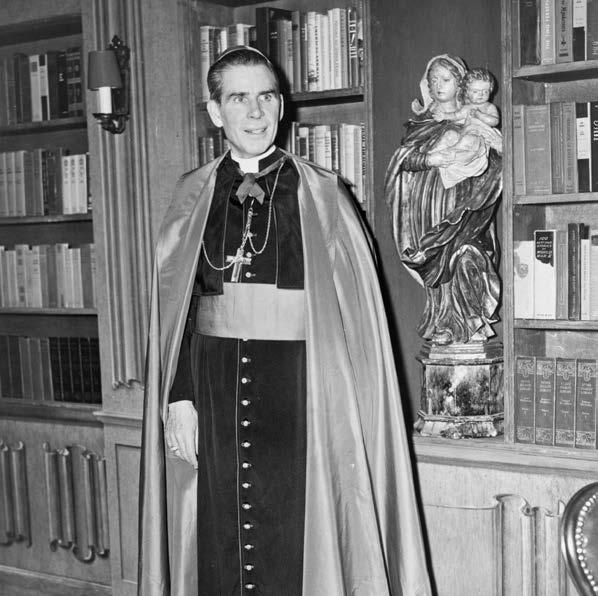
In 1966 Pope St Paul VI appointed Bishop Sheen as Bishop of Rochester, New York, a post he held until his retirement in 1969 at the age of 74. On his retirement he was elevated to the rank of Archbishop as a personal mark of favour being given the titular See of Newport, visiting Newport in Wales in the early 1970s.
Archbishop Fulton Sheen died on 9 December 1979 having met Pope St John Paul II just two months earlier. The pontiff embraced the frail archbishop, warmly saying to him, ‘You have written and spoken well of the Lord Jesus Christ. You are a loyal son of the Church!’ Buried initially in St Patrick’s Cathedral, New York, Archbishop Sheen’s mortal remains were moved to the Cathedral of St Mary of the Immaculate Conception, Peoria, in 2019.
Speaking of Archbishop Fulton Sheen, who will be beatified in St Louis on 24 September, Pope Leo XIV recently declared that the archbishop ‘was a light of faith, hope, and love that shone through the radio and television media for decades.’ The pope then reflected, ‘I myself am a witness of his evangelisation when I was growing up. His broadcasts touched millions with the hope of the Gospel and his initiatives and efforts resulted in enormous spiritual and material aid to the Churches in areas of first evangelisation.’
© Library of Congress Prints and Photographs Division Washington, D.C.
Bishop Fulton J. Sheen on the set of Life is Worth Living.
Being human in an age of AI
Dr Pia Matthews
Most of the discussion about emerging technologies such as artificial intelligence (AI) and large language models focus on the advantages or disadvantages of technology. Questions about safety, data protection, ownership of material, misinformation and bias, the impact on the job market, are all problems to be solved, perhaps even by more technology. The Church recognises that these questions are important.
However, in Church teaching, challenges related to emerging technologies are not simply technological. Rather these challenges are anthropological because they relate specifically to what it means to flourish as human persons, to human creativity and freedom, and in the context of unprecedented technological change, what is authentic human progress. These challenges are closely tied to safeguarding human dignity and they ask us to think deeply about human beings and what it is to be truly human.
Theologically we know that our very humanity is significant. Not only are human beings made in the image of God, but also in his Incarnation Jesus assumed our human nature and took that nature back to God through his Resurrection and Ascension. Each one of us is unique and unrepeatable with our own human story and called to eternal life with God. No one can be reduced merely to cognitive functioning. Nobody can be replicated or replaced or digitally created or deemed redundant, and nothing can replace the care that we have for each other. God loves human beings. He loves each of us for our own sakes and by name. Each one of us is precious in his eyes. Post-human technologies that seek to go beyond our human nature forget that God loves each one of us in our human fragility and our human limitations. Our yearning for transcendence is found in becoming more truly human, not in fleeing from our humanity. Our fragility and limitations open us up to caring relationships, to compassion and empathy. Above all, our fragility is a real sign of our dignity, and it opens us up to God and the workings of grace.
Reflecting on God as Trinity reminds us that we have full human dignity as individuals and that we are also called to true relationships with the world, others and with God. Our relationships with other human beings cannot be reduced to virtual realities: our relationships are always person to person. Moreover, the danger with some technologies is that they persuade us that we can grasp all there is to know through amassing more and more data. This leads to the temptation of forgetting to reflect on deeper and higher questions, and of closing down our openness to the mystery of our existence.
Authentic human progress is related to our call to exercise dominion, good stewardship over the world. Dominion is frequently equated with power, but irresponsible power leads to poverty in relationships and disregard for others, especially the vulnerable. Dominion as a creative aspect of our human dignity and part of God’s plan for us means that our scientific and technological activities are signs of God’s grace when our activities are in harmony with the
genuine good of all humanity. Dominion also involves freedom. Many people recognise the dangers of digital slavery, especially for young people. However, authentic freedom is not a licence to do whatever we like. Authentic freedom ensures that we make free and deliberate choices directed towards the common good and to make such choices we also need grace.
The Church has always been concerned with anthropology and human dignity because the Church’s mission is to bring people to Christ. The Church’s social teaching, with its emphasis on human dignity, subsidiarity, solidarity, care of the marginalised, and the common good, reflects this concern. Insights from the Church’s social teaching offer an anthropological context on emerging technologies that take account of the dignity of the human person, centred on Christ, true God and true man, reminding us that technologies have their place at the service of human beings and in pursuit of the common good where no one is left behind.
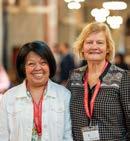
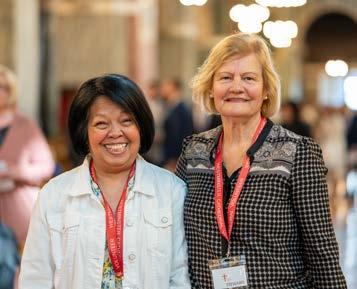
Humans in the Cathedral: Marietta and Dionne
Magnifica humanitas
Archbishop Richard Moth
On 25 May 2026, Pope Leo published his first encyclical Magnifica humanitas: On safeguarding the human person in the time of artificial intelligence, appealing for the safeguarding of humanity, promotion of truth, dignity of work, social justice, and peace.
I welcome today’s publication of Pope Leo’s first encyclical: Magnifica humanitas, on preserving the human person in the age of artificial intelligence (AI).
One of the first interventions of Pope Leo since he was elected Pope was to draw attention to the profound challenges AI will bring to humanity. It is worth noting that Pope Leo signed the encyclical on 15 May, the 135th anniversary of the publication of Pope Leo XIII’s encyclical Rerum novarum. This encyclical considered the social and economic effects of the industrial revolution and is considered the foundation of Catholic social teaching, promoting workers’ rights and emphasising the rights and duties of both workers and owners. The Church’s social teaching in the years since Rerum novarum contains a great deal to help us in our seeking of the common good.
At every age, humanity lives with changes and the development of AI calls us to think about the opportunities and challenges it brings. We must respond to these, placing the centrality of humanity above all else, most especially the
Companions
of Oremus
We are very grateful for the support of the following:
Leticia Dominguez Abada
Lagrimas Ambatali
Zenaida Basbas
Leonila V Bernabe
Keith Best
Dr Stuart Blackie
Anne Veronica Bond
Lolita Botanes
Richard Bremer
Hajnalka Burai
Lorenzo Cabrelli
Mrs Erlinda Chin
R & L Collyer-Hamlin
Daniel Crowley
Benedicta Jamogha Dako
Angelita Caronan Duran
Emmanuel Ekeweloem
Sir Edward Elgar in memoriam
Cora Emflorgo
Angelita Emperador
Ms Georgina Enang
Fr Joseph Farrell K.H.S.
Revd James Francis Friedenthal
Fred Gardiner
William Gardner-Hunter
Juanita Grecalda
Connie Gibbes
Zoe & Nick Goodway
Rosalinda Grimaldo
Agnes Haein Kim
solidarity that is needed if we are to seek peace amongst peoples. We are made in the image of God and must never forget that we have a responsibility to one another, especially the most vulnerable. Pope Leo reminds us that ‘more powerful does not necessarily mean better.’ The technologies that have been created through human skill should be used at the service of truly human ends. Technology must not be used to embed unjust economic systems and abuses of power, but must always be at the service of human development.
I commend the encyclical to all Catholics and people of good will as an important contribution to integral human development during a time of considerable change. It demands study and we look forward to further reflections in this area. Recognising the importance of maintaining and promoting the human in the face of the technological leap brought on by AI, the Bishops’ Conference of England and Wales has set up a working group to study Pope Leo’s Encyclical looking at the issues generated by AI, always putting the human at the centre.
Mrs Valerie Hamblen in memoriam
Amanda Hill
Jithro and Ira Nadine Hangad
Bernadette Hau
Mervyn and Barbara Hogg
Mrs Cliona Howell
Alice M Jones & Jacob F Jones
Poppy K
Rosanne Kay
Mary Thérèse Kelly
John Langan
Raymund Livesey
Alan Lloyd in memoriam
Clare and John Lusby
Tony McGee
Linda McHugh
Christiana Thérèse Macarthy-Woods
Ms Ludivina Mangmang
James Maple
Paul Marsden
Mary Maxwell
Dr Denis Moloney
Dr George Morris
Abundia Toledo Munar
Euphrasie Mundele Kilolo
Chris Stewart Munro
Mrs Brigid Murphy
Kate Nealon
Cordelia Onodu
Nigel Parker
Fr John Pascoe
Cris Ragonton
Alan Rainer
Ann-Marie Rivers
Clementina Rokosu
Precy Salvador
John Scanlan
Veronica Scrope
Sonja Soper in memoriam
Tessa and Ben Strickland
Yollie Sumayod
Julia Sutherland
Eileen Terry
Robin Michael Tinsley in memoriam
Lucila Torrefiel
Dr Timothy I Young in memoriam
Teresa in memoriam
Christiana Tetteh-Wayoe and Peter Zurenkas and of our anonymous Companions
If you would like to become a Companion of Oremus, see page 2
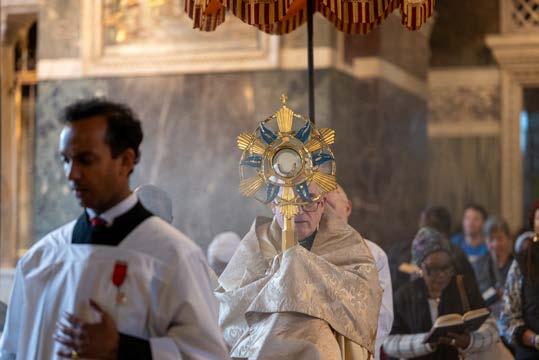
Guild of the Blessed Sacrament
On the Monday following Corpus Christi, the Guild of the Blessed Sacrament held their annual Blessed Sacrament Procession, complete with ceremonial mace. The Guild was founded shortly after Westminster Cathedral was built and their enormous mace was crafted in silver and enamel by Harold Stabler in 1911. The Guild meets on Monday evenings and new members are always welcome.
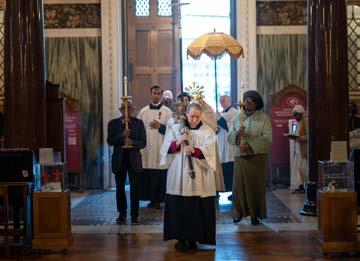
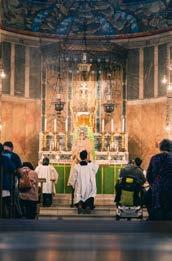
Cardinal Simoni
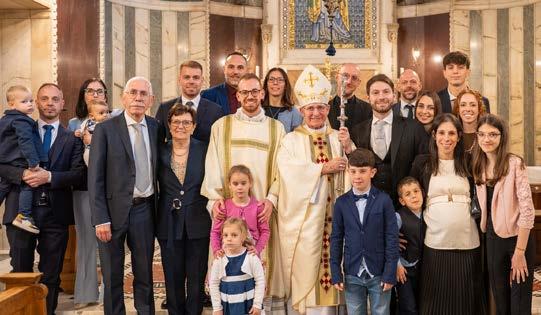
On Friday 12 June, we were delighted to welcome Cardinal Ernest Simoni for a Mass with the Albanian community in this country. Aged 97, the amazing Cardinal survived torture, a death sentence, and three decades of forced labour in mines and sewage tunnels under the Albanian communist dictatorship, for the crime of celebrating Mass in 1963. In 2016 Pope Francis elevated the 88-year-old priest to the cardinalate in recognition of his heroic faith and witness.
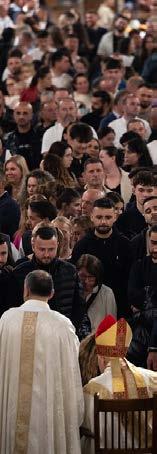
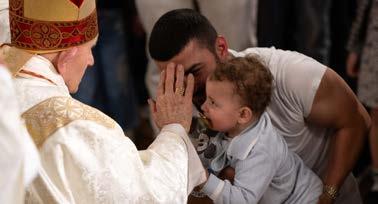
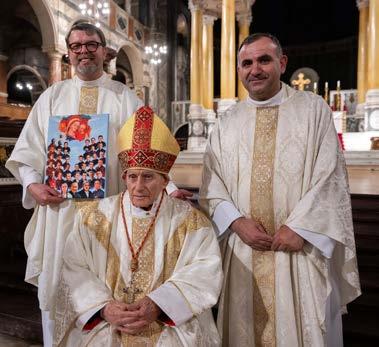
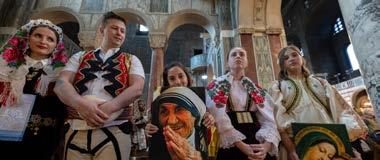
Photos © Mazur/CBCEW.org.uk
Heading
Sweet Sacrament Divine!
Name
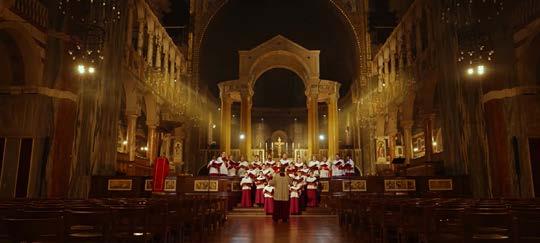
In the days before Corpus Christi, the Choir of Westminster Cathedral released a video performance of Francis Stanfield’s beloved hymn Sweet Sacrament Divine, arranged by Peter Stevens, the Assistant Master of Music. Fr Francis Stanfield (1835-1914) was Parish Priest of Corpus Christi, Maiden Lane, the Diocesan Shrine of the Blessed Sacrament. The video can be viewed at youtube.com/@WestminsterCathedralChoir.
Holywell Pilgrimage
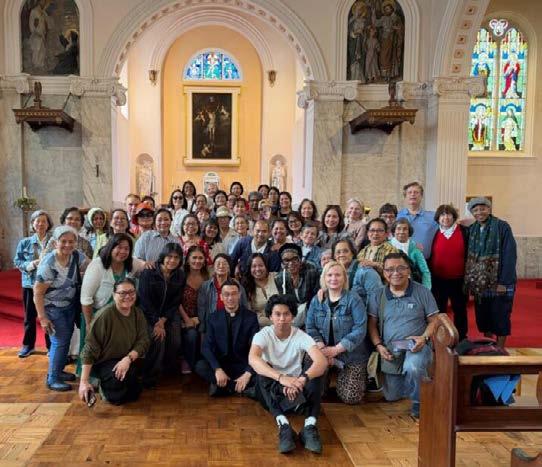
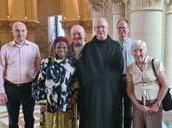
Pictured here in the local Catholic church, the Catholic Grandparents’ Association made a 10-hour return journey to St Winefride’s Well, in Holywell, Flintshire, led by their new chaplain Fr Paul. Holywell has had an unbroken pattern of pilgrimage since the 7th century.
Diaconate Ordinations
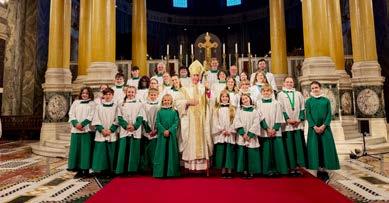
On Saturday 13 June, the memorial of the Immaculate Heart of Mary, four deacons (three transitional and one permanent) were ordained at the hands of Bishop Paul McAleenan for the Dioceses of Westminster, Brentwood Portsmouth. Ad multos annos! Sadly, there are no Priestly Ordinations for the Diocese of Westminster this year. Please do join us on Friday afternoons to pray for vocations in the Blessed Sacrament Chapel.
Arundel Cathedral Choir
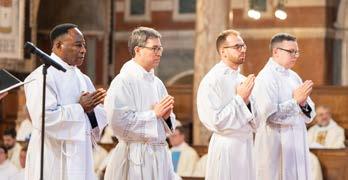
At the Vigil Mass for Trinity Sunday, Archbishop Richard Moth was reunited with the Choir and Dean (Fr Stephen Dingley) of Arundel Cathedral, led by Elizabeth Stratford. The music included works by Harold Darke, John Ireland, James MacMillan and Richard Lloyd.
Oremus
Magnifica humanitas, a Review
Fr Hugh Mackenzie
In Rerum novarum (‘new things’ or ‘new realities’), Pope Leo XIII confronted the rapid changes brought about by the Industrial Revolution and developed Catholic moral principles concerning social injustices and the dominant ideological responses to them (capitalism and socialism). In Magnifica humanitas Pope Leo XIV attempts to deal with further challenges to human dignity and social justice brought about by the digital and computer revolution. ‘Crucial questions impose themselves on our conscience and can no longer be avoided: Where are we going? Toward what goal do we wish to orient ourselves?’ (§6).
Do we choose to build a Tower of Babel, ‘a project conceived without reference to God, supported by a uniformity that eliminated diversity and that chose homogenisation over communion’? Or do we follow the 5th century BC re-building of Jerusalem ‘through the shared responsibility of all: […] rebuilding relationships before rebuilding with stones […] recognising that our strength comes from the Lord’ (§7-16, cf. 129, 184)?
Pope Leo argues that western culture seems to be choosing the former, having ‘abandoned the search for the solid foundations sustaining our decisions and our laws’ (§56). He argues powerfully throughout for the latter, Jerusalem, option: ‘True progress always stems from a heart open to others, an intelligence willing to listen and a will that seeks what unites rather than what separates’ (§15). We are ‘created for relationship’ (§50), ‘the richness of our encounters with others; […] “our real personal history is built with the heart”’ (§120, 132 quoting Pope Francis’ Dilexit nos).
In That Hideous Strength by C.S. Lewis, the final book of his deeply philosophical and theological science fiction trilogy, the technocratic overlords develop a disembodied human brain that learns to speak. Its utterances become their guiding wisdom, but it eventually descends into destructive and manic
incoherence. Pope Leo highlights the risks of artificial intelligence (AI) becoming a brain without a soul. He affirms ‘the grandeur of humanity […] which no machine can ever replace’ (§15).
‘The Church reminds us, with a firm yet humble voice, that true fulfilment […] is found where freedom and responsibility are intertwined with mutual care and true solidarity, and where progress is measured by the dignity of each person and the good of all peoples’ (§12).
Human persons ‘can fully discover their true selves only in sincere selfgiving’ (§48 quoting Vatican II).
‘Moderation and limits; […] and a sense of transcendence and the common good’ are essential (§147). AI does not have such freedom:
‘Nothing in the world of AI is immaterial […]. Every seemingly immediate and flawless response is the result of a long chain of mediation, involving vast networks of natural resources, energy infrastructure and, above all, people’ (§173).
On the other hand, humans have a ‘superiority over material things [… with] rights and duties’ (§51, referencing Vatican II). ‘We must lay aside an individualistic and technical view of humanity, as if reality were mere matter’ (§237). Here, the Pope wisely avoids
the red herring debate over whether AI might have a basic subjective or instinctual awareness.
We should not let AI be a guiding voice without either divine wisdom or the spiritual side of humanity. We should ‘ensure that it will always be human intelligence, with its conscience and freedom, that guides technical innovations’ (§97), ‘not rejecting technology, but preventing it from dominating humanity’ (§110). Widespread reliance on AI as a source not only of information, data synthesis and powerful pattern recognition is one thing. But as a source of personal and social guidance, even of psychological and spiritual counsel, a friend to the lonely and a solace for the broken in an increasingly secularised world, is really a modern form of idolatry. This is fraught with profound ‘dangers’ (a word used 13 times in the Encyclical) for individuals and for society, some of which have already become tragically evident.
AI is a potentially useful tool, but if we let it become our master, then we are abdicating our very humanity. The current risk is that this tool is being rapidly developed by people with purely monetary motives. AI in many of its current forms is designed not as a truth engine, let alone a true moral guide, but to maximize engagement in order to generate data for commercial
manipulation. It is also being used by various states and political powers for social and ideological manipulation, spreading deliberate misinformation (§102, 141, 191). Both of these are clearly against the common good. What is the corrective vision and who is to implement it and reign in rogue actors?
The Holy Father is also concerned that as the global economy is transformed by AI, it is putting countless people out of work (§151-164). The idea of ‘work’ in Catholic anthropology and social ethics goes beyond just economic necessity and earning one’s daily crust. Work is about human creativity, self-development, collaboration and belonging to the shared endeavour. It is about being actors and contributors to the common good, not just passive and dependent receivers of welfare or patronage. This is an essential part of human dignity.
The Pope also discusses the tragic ‘normalisation of war’, which has happened despite the UN being set up to avoid that. He defends the ‘right to self-defence, in the strictest sense’ but
argues that with new types of national and international entities and development of such powerful weapons that avoidance of ‘disastrous consequences for civilian populations’ is almost impossible. ‘Humanity possesses far more effective and capable tools for promoting human life and resolving conflicts, such as dialogue, diplomacy and forgiveness’ (§192).
The fate of migrants is close to the Pope’s heart. They should usually be offered ‘genuine pathways to integration’ (§81). A possible lacuna in the letter concerns its silence on the important historical role of cultures formed under the influence of Christianity. These concerns are also shared by those of different faiths and none, so we can make common cause with people who want to discuss how we control the AI revolution. However, as Catholics we are not simply ‘humanists’ in the modern ‘liberal’ sense. The language and ideas of the ‘magnificence’ or glory of humanity, of human rights and indeed of a rules-based word order, all derive from our fundamental identity in Christ.
We are created in his image, chosen in him before the creation of the world, restored to our original dignity through his redeeming sacrifice, called and invited to share in his divine life with the Father and the Holy Spirit. These are the foundations of any authentic humanism.
The questions arising from AI are confronting the whole human community with a fundamental choice concerning what foundations we build our de facto worldwide community upon.
Will future civilisation be built on authentic humanism with God’s revelation in Christ as its cornerstone and guiding light? ‘Only in Christ does “the mystery of humanity truly become clear” because his humanity is completely free, open to others’ (§49, quoting Vatican II). Or will it be on a sophisticated but still purely materialist and mechanist concept of human nature which will make the majority of people effectively slaves of our own created automata and of the super-rich ‘big brother’ oligarchs who program and control them?
Events Galore
Andrew Hollingsworth
This summer, we will prepare for the launch of our new appeal, to fund a major upgrade to the Cathedral sound system. As this project will require the support of both the congregation and members of the Friends, the appeal will be launched after the summer holidays, beginning on Saturday 19 September 2026. Further details will be announced in due course.
Friends’ Events
Quiz
Our grateful thanks go to Fr Patrick for hosting our recent quiz evening. A total of 41 participants took part, making it another successful and enjoyable event. Attendance at our quizzes is now consistently between 40 and 60 people, although Cathedral Hall has capacity for many more. Everyone who attends enjoys a friendly and entertaining evening, so if you have not yet joined us, we would be delighted to welcome you. Better still, why not encourage a group of friends to enter as a team? There is one final quiz before the summer break:
Thursday 9 July 2026, 6.30pm
Quizmaster: Fr Mike Guthrie
Tickets, £20 including a fish and chip supper, are available on the Cathedral website, under ‘News and Events’.
Trip to Farnborough
On Saturday 20 June, the Friends enjoyed our first trip outside London since the pandemic, visiting the Farnborough Air Sciences Trust (FAST) in the morning and St Michael’s Abbey, Farnborough, in the afternoon. We travelled using the

Westminster Cathedral SVP minibus, for which we are extremely grateful. At FAST, everyone had the opportunity to try at least one of the three flight simulators and put their skills as prospective pilots to the test. Several members enthusiastically tried all three simulators.
Our visit to St Michael’s Abbey was equally fascinating. We are especially grateful to Br Ælred Hawker for providing such an informative and engaging guided tour. The crypt beneath the abbey church contains the tombs of Emperor Napoleon III, Empress Eugénie, and their son LouisNapoléon, the Prince Imperial, making it a place of considerable historical significance.
Looking Ahead
We have been busy planning an exciting programme of events for September to December 2026. While we have secured several distinguished guest speakers, some dates are still being finalised. Two events, however, can already be confirmed.
Dinner to Welcome Archbishop Richard Moth
On Monday 5 October, we will host a dinner at Brooks’ Club, St James’ Street, London SW1A 1LN, to welcome Archbishop Richard Moth as President of the Friends. A small pre-dinner reception with the Archbishop will be available for those sponsoring the event. Further details will follow. If you would like to reserve a place, please email friends@rcdow.org.uk, and do keep the date free in your diary.
Carols by Candlelight
On Monday 7 December, we will once again host our popular Carols by Candlelight in the Lady Chapel. We will gather in Cathedral Hall from 6.30 pm for refreshments and piano music before the service. A reception will follow in Cathedral Hall after the carols. Further details will appear in the September edition of Oremus.
Guest Speakers
We are delighted to have secured three distinguished speaker events for the autumn. A N Wilson, an acclaimed author, biographer, novelist and newspaper columnist, well known for his works of history and literary criticism. Sir Simon Jenkins, an author, journalist and former editor of both the Evening Standard and The Times. He now writes regularly for The Guardian. Baroness Gillian Shephard and Lord (Robin) Butler of Brockwell, will also return for another evening ‘in conversation’.
Once dates have been agreed with our speakers, we will also welcome back the Orion Orchestra, accompanied by a renowned soloist, for a performance featuring a Mozart viola quintet. In addition, we plan to hold three further quiz evenings before the end of the year.
Future Visits and Outings
Following the success of our Farnborough visit, we hope to organise further outings and visits during the autumn. Full details of all Friends events will be published on the website, included in the Cathedral newsletter, and circulated by email. If you would like to be added to our mailing list, please contact us at friends@rcdow.org.uk.

Further Information
For more information about any event, or if you are unable to book online, please contact: friends@ rcdow.org.uk
Do also get in touch if you have an idea for a future event or would like to organise one for the Friends.
Join the Friends
To join the Friends of Westminster Cathedral, please visit tinyurl.com/ CathedralFriendsMembership.
CATHEDRAL HISTORY A PICTORIAL RECORD
The Funeral Mass for Cardinal Bernard Griffin, Archbishop of Westminster (1944-56), 28 August 1956
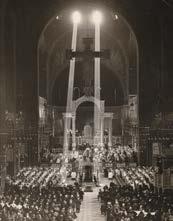
The death of Cardinal Bernard Griffin on his feast day (20 August) whilst on holiday in Cornwall was not entirely unexpected, as he had been in poor health for much of the previous seven years. As a precaution, Archbishop Edward Myers, the Provost and senior Auxiliary Bishop of Westminster was appointed as Coadjutor in 1951. However, in view of Myers’ age (76), he was not granted the right of succession. Thus, when Cardinal Griffin died, the role of Vicar Capitular (now Diocesan Administrator) was undertaken by another Auxiliary, Bishop George Craven.
The Cathedral Master of Ceremonies, Mgr Frederick Row, kept a detailed account of the events concerning the funeral, from the announcement of Cardinal Griffin’s death to his interment in the Crypt. This is currently held in the Cathedral archives. The Cardinal’s executors had originally proposed burial in St Paul’s Chapel, but the Metropolitan Chapter decided otherwise, with a view to future burials.
The day after the Cardinal’s body arrived back at Archbishop’s House, the coffin was transferred to Cathedral Hall for the Lying-in-State. There, the Chancellor
of the Diocese (Mgr Edward Dunderdale) placed the Latin Rogito, a detailed account of the Cardinal’s life, in a tube and lay it by his feet. The coffin was then sealed followed by the Lying-in-State, which lasted for two days until Vespers of the Dead was sung around the body. The coffin was then taken by hearse to the West Door of the Cathedral where it was received by Bishop Craven, the Metropolitan Chapter, and the College of Chaplains, reciting the De profundis, and the Choir who sang the Miserere and Subvenite. The Dirge, Matins and Lauds were then sung by the clergy. At the end of each of the three Nocturns of Matins, and at the conclusion of Lauds, absolutions took place during which the clergy held lighted candles.
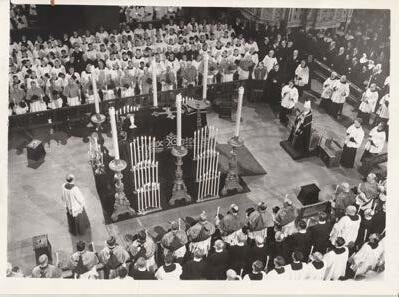
The funeral Mass was celebrated by Archbishop John Henry King of Portsmouth, the senior Suffragan Bishop, in the presence of Cardinal Lienart of Lille and Cardinal McGuigan of Toronto in purple cappa magnas. To accommodate the cardinals, a platform was built out from the steps of the throne, with a chair on either side and a purple curtain draped
At the conclusion of Mass, the panegyric was given by Archbishop Francis Grimshaw of Birmingham; an appropriate choice as Cardinal Griffin had been a priest and auxiliary of that diocese. The five Absolutions over the catafalque were presided over by Cardinal Lienart, as senior Cardinal, along with four other prelates, whose stools can be seen at the four corners of the catafalque. In the foreground is Mgr Row, supervising the removal of the cardinal’s biretta by the white gloved hand of the Gentiluomo, Anthony Bartlett. The galero (red hat) was given to his Private Secretary, Mgr Derek Worlock, seen standing at an angle facing the catafalque, to carry in procession to the Crypt for burial. This now hangs above the Cardinal’s grave. In the Crypt, the Choir sang from St Edmund’s Chapel for the burial after which the Rogito was read by the Chancellor. Bishop Craven, with his assistants along with cross bearer and acolytes returned to the Sacristy for the prayer for all the faithful departed. The others present, including the two
Paul Tobin
64 Years of Faithful Ministry
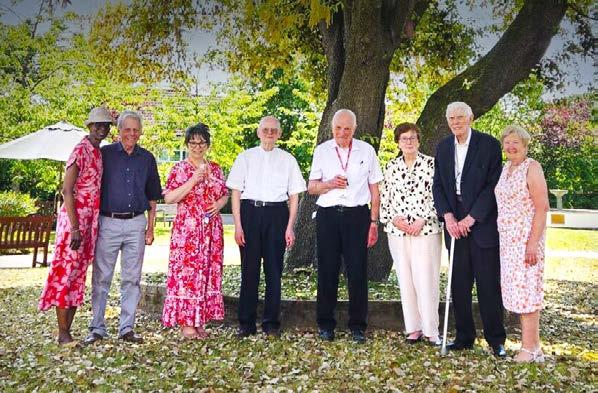
On Pentecost Sunday, Bishop Jim Curry visited St Vincent’s Nursing Home in Eastcote for a celebration of the 64th Anniversary of the Ordination of Fr Brian Reynolds. The event gave a heartfelt thanks for the devoted ministry of Fr Brian, whose 64 years as a diocesan priest have been marked by faithful service, both in active parish ministry and in retirement.
Fr Brian was ordained at Westminster Cathedral on 24 May 1962 by Cardinal William Godfrey. He began his priestly ministry at St Alban’s, North Finchley, where he served four years, before moving to Our Lady of Mount Carmel and St George in Enfield, where he spent the next decade as a curate. In 1976, Fr Brian was appointed Parish Priest of St Joseph’s, Bedwell, in Stevenage, and in 1981 joined with three neighbouring parishes to form the Stevenage Team Ministry Parish. In 1990, he moved to St Augustine’s, and finally was appointed to St Thomas More, Wheathampstead in 2002, serving there for ten fruitful years until his retirement in 2012. That same year, he celebrated the Golden Jubilee of his Ordination in the pre-Reformation village church of St Helen’s, in the presence of two Catholic bishops and an Anglican bishop, a fitting tribute to his deep and enduring commitment to ecumenism.
Fr Brian has also been a key figure at St Albans Cathedral, the Shrine of Britain’s first saint and the oldest site of continuous Christian worship in Britain. The Cathedral is uniquely enriched by its ecumenical partnerships, hosting services for different Christian denominations, each led by its ecumenical chaplains. This reflects its vision of welcoming all as Christ, rooted in the Rule of St Benedict on which the Abbey was founded and beautifully echoed in the witness of St Alban himself, who
welcomed a Christian priest into his home. Here, Fr Brian has celebrated Holy Mass in the Lady Chapel for 22 years, a ministry that has become both a cherished and prayerful sign of unity.
Fr Brian retired to Hemel Hempstead in 2012 where he helped in local parishes until 2022. In 2023, he took up the role of Chaplain at St Vincent’s Nursing Home in Pinner. St Vincent’s was officially opened by Cardinal Cormac Murphy O’Connor on 7 July 2006. It offers a modern, purpose-built home where residents are supported to live with as much independence as possible in a warm, welcoming, and caring environment, shaped by the values of St Vincent de Paul: compassion, respect, empathy, dignity, and advocacy. In Fr Brian’s words, ‘St Vincent’s cares for the most vulnerable members of the Body of Christ today.’ There, in St Vincent’s, he continues to exercise his priestly ministry through the daily celebration of Mass, hearing Confessions, and offering pastoral care to residents who are sick or approaching the end of life. He is held in great affection within the home and is a treasured presence in its loving care for those most in need.
Alongside these many gifts, Fr Brian is also known for his strong devotion to St Joseph, whose faithful care for the Holy Family has long been an inspiration to him, and for his lifelong loyalty to Brentford Football Club, having first attended matches with his father in 1947 and remaining a faithful season ticket holder ever since.
Elizabeth Horsbrough, Chris Horsbrough (Chairman St Vincent’s Nursing Home, Pinner), Fr John Deehan (former Chairman), Fr Brian Reynolds, Bernie Curtis, George Curtis, Jacquie Scott (former Chairman).
Jacquie Scott, Former Chairman of St Vincent’s Nursing Home
Ealing Abbey Lay Plainchant Choir
Patrick Martin
Westminster Cathedral is noted for its very fine Choir with its repertoire of Gregorian chant, the beautiful ancient music of the Western Church. Many of those who are entranced by its richness and deep spirituality may wonder at the skill of the choristers and assume that singing Gregorian chant is only for those with highly talented musical aptitudes. But that is not the case!
Ealing Abbey, the home of a Benedictine community and large parish in West London, itself has a fine professional choir that assists the monks in singing at the major liturgies. But it also has a smaller ensemble, the Ealing Abbey Lay Plainchant Choir (EALPC), enabling those with a love of plainchant to learn and develop the skill. It caters for a wide range of abilities and experience, from absolute beginners with no musical training, to experienced singers of chant.
The plainchant choir is led by a member of the Ealing Abbey Benedictine community, Fr Peter Burns OSB, who has a long experience of singing Gregorian chant. Fr Peter sees his role as Director as an important facet of Benedictine spirituality. His approach to teaching is for members to learn by practising and singing, fully mindful of the sacred texts they encompass, rather than dwelling on the more technical aspects of chant. Members learn in a friendly and encouraging environment, under the patronage of Our Lady.
The EALPC sings the full range of chants at a monthly Vigil Mass (Novus Ordo) at Ealing Abbey, and meets weekly for rehearsals. Some members also sing at regular Masses in a local care home, for people suffering from dementia. After each monthly Mass, we repair to the Ealing Abbey Benet Bar for refreshment and social banter.
We have been singing as a choir for about 18 years, and even managed to keep going during Covid, by means of Zoom sessions. In addition to singing at monthly Masses, we offer periodical training opportunities, with past visits to Quarr and St Cecilia’s Abbeys on the Isle of Wight, the Shrine of Our Lady of Consolation at West Grinstead, and Farnborough Abbey. In the early days, we were very privileged to have benefited from the wonderful guidance and keen interest of the late Colin Mawby who had been the Master of Music at Westminster Cathedral from 1961 to 1975.
We always welcome new members and anyone interested is welcome to give us a try at one of our weekly rehearsals. We are a 15-minute walk or short bus ride from Ealing Broadway Station (Elizabeth, Central and District lines). Further information can be found on the website: www.ealpc.org.
London to Antioch: 2,900 miles by bicycle
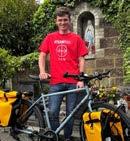
Andrew is raising funds for the 10th anniversary of #RedWednesday for Aid to the Church in Need, supporting Christians who are persecuted because of their faith. Every penny donated will be doubled by ACN benefactors.
On the feast of the Assumption, 15 August, Andrew Foote will begin an extraordinary pilgrimage of faith, setting out after Mass at Westminster Cathedral to cycle 2,900 miles along the ancient pilgrimage route of the Via Francigena through Europe to Antioch. Andrew will then travel to Amman and walk to the Holy Sepulchre in Jerusalem.
We will be following Andrew’s pilgrimage and sharing a full feature in the autumn editions of Oremus magazine. Please support Andrew’s Cycle for Hope and scan the QR code, or visit tinyurl.com/Cycle4Hope , to donate today.


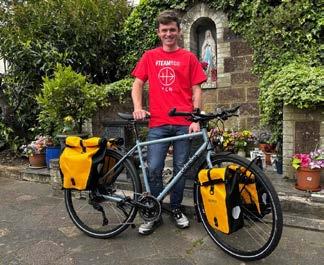
Eileen Murray, ACN Community Fundraiser
2026 Benefactors’ Masses
On the first Sunday of each month, a Mass is celebrated for the benefactors of Westminster Cathedral, living and dead. Sunday 5 July 2026, 8am, Sunday 2 August 2026, 7pm, Sunday 6 September 2026, 5.30pm, Sunday 4 October 2026, 12 noon, Sunday 1 November 2026, 10am, Sunday 6 December 2026, 8am
2026
The Month of July
The Holy Father’s Prayer Intention
For respect for human life
Let us pray for the respect and protection of human life in all its stages, recognising it as a gift from God.
Wednesday 1 July
DEDICATION OF THE CATHEDRAL (1910)
1.15pm Lunchtime Concert
5pm Solemn Second Vespers, sung by the Metropolitan Chapter and College of Chaplains
5.30pm Solemn Mass, concelebrated by the Metropolitan Chapter and College of Chaplains (Archbishop Moth; Full Choir) Palestrina – Missa Papæ Marcelli Malcolm – Terribilis est locus iste Organ: Vierne – Carillon de Westminster 9pm Luminiscence Grand Opening (ticketed)
Thursday 2 July
Feria
9pm Luminiscence (ticketed)
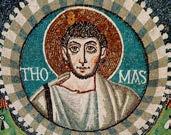
Friday 3 July
St THOMAS, Apostle
Friday abstinence
2.30pm WCCS End of Term Mass
5.30pm Celebration of Service Mass attended by Diocesan Education Service (Archbishop Moth) 9pm Luminiscence (ticketed)
Saturday 4 July
Blessed Virgin Mary on Saturday (St Elizabeth of Portugal)
3pm Caritas Volunteer Fair
6pm Visiting Choir sings at Mass 9pm Luminiscence (ticketed)
For more information, contact Laura Dudhee, at 020 7798 9058 or email cathedralgiving@rcdow.org.uk
The Cathedral is open from 7.30am and closes in time for 7pm.
Monday to Friday: Morning Prayer 7.35am, Mass 8am, Mass (Latin, unless there is a Funeral) 10.30am, Confessions 11.30-12.30pm, Mass 12.30pm *, Exposition of the Blessed Sacrament 1.15-4.30pm, Benediction 4.30pm, Confessions 4.30-5.30pm, Sung Vespers 5pm (Latin, Choir, except Tuesday, English, Cantor), Solemn Mass 5.30pm (Choir, Tuesday: Boys’ voices, Wednesday: Men’s voices)
Saturday: Mass 8am, Morning Prayer 10am, Mass 10.30am (Latin, Choir,) Confessions 11.30-12.30pm, Mass 12.30pm *, Confessions 5-6pm, Sung Vespers 5.30pm (English, Cantor), Sung Mass 6pm.
Sunday: Mass 8am, Sung Morning Prayer 9.30am, Sung Mass 10am, Confessions 10.30-12.30pm; Solemn Mass (Choir) 12noon *, Solemn Vespers (Choir) and Benediction 4pm, Confessions 5-6.45pm, Sung Mass 5.30pm, Mass 7pm.
For full opening and closure times of the Cathedral and for confession and service times please consult the Cathedral diary on the website.
* Live streamed via the Cathedral website
Sunday 5 July Ps Week 2
14th SUNDAY IN ORDINARY TIME
8am Mass offered for Cathedral Benefactors, living and dead
12 noon Solemn Mass (Full Choir) Rheinberger – Cantus missæ
Byrd – Laudibus in sanctis
Organ: Vierne – Final (Symphonie VI)
4pm Solemn Vespers and Benediction (Full Choir)
Reid – Magnificat secundi toni
Dupré – Laudate Dominum
Organ: Guillou – Saga VI 4.30pm Mass for the Deaf Community (Cathedral Hall)
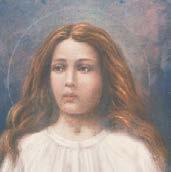
Monday 6 July
Feria
(St Maria Goretti, Virgin & Martyr)
Tuesday 7 July Feria
Wednesday 8 July
Feria
1.15pm Lunchtime Concert 9pm Luminiscence (ticketed)
Thursday 9 July
Feria
(St Augustine Zhao Rong and his Companions, Martyrs) 9pm Luminiscence (ticketed)
Friday 10 July Friday abstinence Feria
11am Salvatorian College Mass
1.15pm Adoration of the Blessed Sacrament for Vocations to the Priesthood (Blessed Sacrament Chapel) 9pm Luminiscence (ticketed)
Saturday 11 July
St BENEDICT, Abbot, Patron of Europe 6pm Westminster Cathedral Junior Voices sings at Mass 9pm Luminiscence (ticketed)
Sunday 12 July Ps Week 3 15th SUNDAY IN ORDINARY TIME
Sea Sunday 12 noon Solemn Mass (Men’s voices) Palestrina – Missa Ut re mi fa sol la Victoria – Laudate Dominum Organ: Demessieux – Te Deum 4pm Solemn Vespers and Benediction (Men’s voices) de Monte – Magnificat sexti toni Cavalli – Salve Regina Organ: Duruflé – Prélude et Fugue sur le nom d’Alain
Monday 13 July
Feria (St Henry)
Tuesday 14 July Feria
(St Camillus de Lellis, Priest)
Wednesday 15 July
St Bonaventure, Bishop & Doctor
1.15pm Lunchtime Concert 9pm Luminiscence (ticketed)
Thursday 16 July
Our Lady of Mount Carmel 9pm Luminiscence (ticketed)
Friday 17 July Friday abstinence Feria
1.15pm Adoration of the Blessed Sacrament for Vocations to the Priesthood (Blessed Sacrament Chapel) 9pm Luminiscence (ticketed)
Saturday 18 July
Blessed Virgin Mary on Saturday 9pm Luminiscence (ticketed)
Sunday 19 July Ps Week 4
16th SUNDAY IN ORDINARY TIME
12 noon Solemn Mass (Men’s voices)
Palestrina – Missa Nasce la gioia mia
Victoria – Laudate Dominum
Organ: Tournemire – Improvisation sur le Te Deum
4pm Solemn Vespers and Benediction (Men’s voices)
Suriano – Magnificat primi toni Lassus – Omnia tempus habent Organ: Reubke – Fugue (Sonata on the 94th Psalm)
Monday 20 July
Feria
(St Apollinaris, Bishop & Martyr)
Tuesday 21 July Feria
(St Lawrence of Brindisi, Priest & Doctor)
Wednesday 22 July
St MARY MAGDALENE
8.45pm Luminiscence (ticketed)
Thursday 23 July
St BRIDGET OF SWEDEN, Religious, Patroness of Europe
8.45pm Luminiscence (ticketed)
Friday 24 July Friday abstinence Feria
(St Sharbel Makhlūf, Priest)
1.15pm Adoration of the Blessed Sacrament for Vocations to the Priesthood (Blessed Sacrament Chapel)
8.45pm Luminiscence (ticketed)
Saturday 25 July
St JAMES, Apostle
8.45pm Luminiscence (ticketed)
Sunday 26 July Ps Week 1
17th SUNDAY IN ORDINARY TIME
12 noon Solemn Mass
4pm Solemn Vespers (English) and Benediction
Monday 27 July Feria
Tuesday 28 July Feria
Wednesday 29 July
Ss Martha, Mary and Lazarus 8.45pm Luminiscence (ticketed)
Thursday 30 July Feria
(St Peter Chrysologus, Bishop & Doctor)
8.45pm Luminiscence (ticketed)
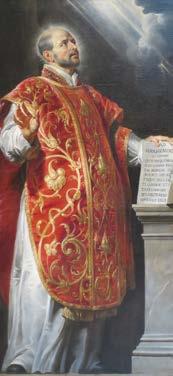
Friday 31 July Friday abstinence
St Ignatius of Loyola, Priest
1.15pm Adoration of the Blessed Sacrament for Vocations to the Priesthood (Blessed Sacrament Chapel)
8.30pm Luminiscence (ticketed)
The Month of August
The Holy Father’s Prayer Intention
For evangelisation in the city
Let us pray that in large cities often marked by anonymity and loneliness we find new ways to proclaim the Gospel, discovering creative paths to build community.
Saturday 1 August
St Alphonsus Liguori, Bishop & Doctor 8.30pm Luminiscence (ticketed)
Sunday 2 August Ps Week 2
18th SUNDAY IN ORDINARY TIME
12 noon Solemn Mass
4pm Solemn Vespers (English) and Benediction
4.30pm Mass for the Deaf Community (Cathedral Hall)
7pm Mass offered for Cathedral Benefactors, living and dead
Monday 3 August Feria
Tuesday 4 August
St John Vianney, Priest
Wednesday 5 August Feria
(Dedication of the Basilica of St Mary Major) 8.30pm Luminiscence (ticketed)
Thursday 6 August
THE TRANSFIGURATION OF THE LORD
8.30pm Luminiscence (ticketed)
Friday 7 August Friday abstinence
Feria
(St Sixtus, Pope, and Companions, Martyrs; St Cajetan, Priest)
© Ain wirk, Public Domain,
1.15pm Adoration of the Blessed Sacrament for Vocations to the Priesthood (Blessed Sacrament Chapel) 8.30pm Luminiscence (ticketed)
Saturday 8 August
St Dominic, Priest 6pm Westminster Cathedral Junior Voices sings at Mass 8.30pm Luminiscence (ticketed)
Sunday 9 August Ps Week 3 19th SUNDAY IN ORDINARY TIME 12 noon Solemn Mass 4pm Solemn Vespers (English) and Benediction
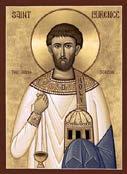
Monday 10 August
St LAWRENCE, Deacon & Martyr
Tuesday 11 August
St Clare, Virgin
Wednesday 12 August Feria
(St Jane Frances de Chantal, Religious)
8.15pm Luminiscence (ticketed)
Thursday 13 August Feria
(Ss Pontian, Pope, and Hippolytus, Priest, Martyrs)
8.15pm Luminiscence (ticketed)
Friday 14 August Friday abstinence
St Maximilian Kolbe, Priest & Martyr
1.15pm Adoration of the Blessed Sacrament for Vocations to the Priesthood (Blessed Sacrament Chapel)
8pm Luminiscence (ticketed)
Saturday 15 August
Blessed Virgin Mary on Saturday 8pm Luminiscence (ticketed)
Sunday 16 August Ps Week 4
THE ASSUMPTION OF THE BLESSED VIRGIN MARY
12 noon Solemn Mass (Archbishop Moth) 4pm Solemn Vespers (English) and Benediction
Monday 17 August Feria
Tuesday 18 August Feria
Wednesday 19 August Feria (St John Eudes)
8pm Luminiscence (ticketed)
Thursday 20 August
St Bernard, Abbot & Doctor 8pm Luminiscence (ticketed)
Friday 21 August Friday abstinence
St Pius X, Pope 1.15pm Adoration of the Blessed Sacrament for Vocations to the Priesthood (Blessed Sacrament Chapel) 8pm Luminiscence (ticketed)
Saturday 22 August
The Queenship of Mary 6pm Visiting Choir sings at Mass 8pm Luminiscence (ticketed)
Sunday 23 August Ps Week 1
21st SUNDAY IN ORDINARY TIME
12 noon Solemn Mass 4pm Solemn Vespers (English) and Benediction
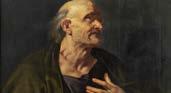
Monday 24 August
St BARTHOLOMEW, Apostle
Tuesday 25 August Feria
(St Louis; St Joseph Calasanz, Priest)
Wednesday 26 August Feria
(Blessed Dominic of the Mother of God, Priest)
7.45pm Luminiscence (ticketed)
Thursday 27 August
St Monica 7.45pm Luminiscence (ticketed)
Friday 28 August Friday abstinence
St Augustine, Bishop & Doctor 1.15pm Adoration of the Blessed Sacrament for Vocations to the Priesthood (Blessed Sacrament Chapel)
7.45pm Luminiscence (ticketed)
Saturday 29 August
The Passion of St John the Baptist 8pm Luminiscence (ticketed)
Sunday 30 August Ps Week 2 22nd SUNDAY IN ORDINARY TIME
12 noon Solemn Mass 4pm Solemn Vespers (English) and Benediction
Monday 31 August (Bank Holiday) Feria
(St Aidan, Bishop, and the Saints of Lindisfarne)
Key to the Diary: Saints’ days and holy days written in BOLD CAPITAL LETTERS denote Sundays and Solemnities, CAPITAL LETTERS denote Feasts, and those not in capitals denote Memorials, whether optional or otherwise. Memorials in brackets are not celebrated liturgically.
What Happens and When
Catholic Evidence Guild Clergy House Room 2, Tuesdays 7pm
Catholic Grandparents’ Association Hinsley Room, Second Sundays 12-3.30pm
Charismatic Prayer Group Cathedral Hall, Fridays 6.30-9pm
Divine Mercy Prayer Group St Patrick’s Chapel, Sundays 1.30-2.30pm
Filipino Club Cathedral Hall, Second Sunday 1-5pm
Guild of the Blessed Sacrament Blessed Sacrament Chapel, Mondays 6.15pm
Guild of St Anthony Lady Chapel, Tuesdays 6.15pm
Interfaith Group Hinsley Room, Third Wednesdays 1.30 -3pm
Legion of Mary Hinsley Room, Monday 1.30-3.30pm
Oblates of Westminster Cathedral Hinsley Room, Fourth Sundays 2.30-4pm
Padre Pio Prayer Group Sacred Heart Church, First Thursdays 1.30-3.30pm
Rosary Group Lady Chapel, Saturdays 11.15-12.00noon
Walsingham Prayer Group St George’s Chapel, First Tuesdays 2.30-4pm
Yoruba Association Hinsley Room, Third Sundays 1.30-3pm
In retrospect: from the Cathedral Chronicle
Westminster Cathedral Chronicle, June 1956 Chronicle
Blessed John Southworth
The Solemn Triduum in honour of Blessed John Southworth, leading up to the date which commemorates his martyrdom, was kept with three evening Masses at which the Right Rev Dom Oswald Eaves O.S.B., Abbot of Fort Augustus, preached. It was a great pleasure to welcome this distinguished collateral descendant of Blessed John for these celebrations. The Shrine itself was festooned with flowers and many people thronged to honour him. The Administrator is constantly receiving notices of favours brought by his intercession and all these should one day help towards his canonisation.
The Catholic V.C.s
On the Feast of the Dedication of the Cathedral Solemn High Mass was sung in the presence of His Eminence The Cardinal by Mgr Bernard Navin, Vicar General of the Army. Archbishop Mathew, the Ordinary of the Forces, was also present in Choir together with Bishop Craven. More than thirty V.C.s were present at this Mass and a Reception was held for them in the Cathedral Hall afterwards.
The Walsingham Pilgrimage
The annual pilgrimage of the Cathedral Parish to Walsingham left with four coaches on Saturday, 14 July. Despite the rainy weather en route and en retour the spiritual exercises at Walsingham, culminating in Evening Mass, were carried out in fine weather. There was a visit to the Priory grounds, the site of the ancient Shrine; a procession of Our Lady from the Friday Market Place to the Slipper Chapel; and then the Mass said by the Administrator at which Fr Hulme of Walsingham preached.
The Guild of the Blessed Sacrament
The Guild of the Blessed Sacrament held its annual General Meeting on the evening of 17 July. Since the institution of the Evening Mass the third Sunday Processions of the Blessed Sacrament have been much better attended than heretofore, and the one on the third Sunday of July, at which the first communicants of the Parish assisted, was particularly striking. It was very much hoped that more and more of our young people will join the Guild of the Blessed Sacrament and make the Holy Hour on Thursday nights as well as participating in the third Sunday processions.
Westminster Cathedral Choir School
On Saturday 21 July, the Choir School held its Speech Day and His Lordship Bishop Craven, Auxiliary of Westminster, gave away the prizes. An excellent concert of Music and Recitation was given by the boys under the direction of the Master of Music, Mr George Malcolm, and Sister Gabriel, of the Order of the Holy Cross. Bishop Craven paid great tribute to the Headmaster and his staff for having obtained Government recognition in the course of the year. The Headmaster himself, in his report, said that through the munificence of an anonymous donor the old Song School had been re-equipped as a gymnasium and many other improvements made in the School. It was full to capacity, and more than capacity, and there was a long waiting list.
Westminster Cathedral Chronicle, June 1926 Flowers and Feast Days (excerpt)
F. M. Verrall
From very early days, flowers and ‘swytt herbes’ have been used for ‘garnishing’ or decorating the church. Country folk would bring flowers to the village church; monasteries and some parishes had a special sacristan’s garden in which flowers were grown for the altar; but on great feasts, especially in towns, the supply of flowers ran short; and no wonder, when ‘quire’ and chancel screen, when taper, statue and processional cross, and the clerics walking in procession, were crowned with flowers.
As might be expected, certain flowers were associated with special holydays; Christmas saw the church garnished with holly and ivy—Thame churchwardens paid in 1467, ‘to chyldryn to gather yvy, 1½d.’, while a London church, St Maryat-Hill, ‘paid for holme (holly) and yvy agens Christmas, 1d. in 1427.’ Later on, rosemary and bay-laurel were very favourite Christmas ‘greens’. […]
Violets, a funeral flower, were used in mediaeval times on Good Friday in the Creeping to the Cross; while palm (flowering willow) and box were required for the Palm Sunday procession. Then, after the procession round the churchyard, cut flowers and cakes were flung to the people from the tower when the Gloria Laus was being sung in the porch. ‘Palme, cut flowers and cakes for Palm Sunday, 4d.’ is recorded in the 15th century accounts of St Mary Woolnoth and other London parishes.
Yew, the ancient emblem of immortality, was the Easter decoration and so hard do old customs die, that yew was the recognised Easter ‘trimming’ in several western counties until the middle of the 19th century.
Hawthorn and marsh marigolds went up on church and house door on May Day; while on Midsummer Day, or St John’s Day, several London churches record the items—‘byrrche and lylies on Midsummer’; another year it is ‘fennel and erbes’. And these plants, with St John’s Wort, flax, vervain, and orpine, were the old magic herbs re-dedicated to Christian use. Garlands of them were placed in church and ‘over every man’s door’, while lamps burnt all night in the streets.
The other holydays had their quota—‘for bows and flowers at Witsontyde, 5d. in 1495’. ‘Upone the Ascension, for Swytt erbes and garlondes, 4d.’
Red roses were the flowers for Corpus Christi; on this day they were lavished on statue, candles, and crucifix, even the screen was hung with them, and a dozen garlands were often bought at a time. The same flowers, too, were used on many saints’ days; though St Mary-at-Hill had ‘rose garlondes and woodrofe for Seynt Barnabas Day’; St Andrew Hubbard had ‘garlondes of rossys and woodruffe for the quire’, and St Margaret Patten ‘had one doss. garlondes (gilliflowers) for Saint Margaret’s Day’.
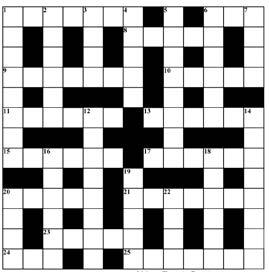
Clues Across
1 The upper room where the Last Supper was held (7)
6 & 23 Across: City in California named after St Didacus (3,5)
8 ‘----- Sol-fa’, Doh-re-mi method of teaching singing (5)
9 Organ mechanism to produce rapid wavering effect in the pitch of a note (7)
10 Saint and Pope, successor to St Peter (5)
11 Soup ingredient for time approaching Easter? (6)
13 Item to hide something from view or display film (6)
15 Early Saint and King of Northumbria (6)
17 ‘Here ------ the lesson’, phrase used by such as 5 Down at conclusion of a Bible reading (6)
20 Reflect sorrowfully on someone who has departed this life (5)
21 Town (now Konya in Turkey) where St Paul and St Barnabas preached (7)
23 See 6 Across
24 A reply in the affirmative (3)
25 Muscular organ related to food consumption (7)
Clues Down
1 St Margaret of --------, Patroness of the Disabled and Unwanted, recently canonised (8)
2 Lion encountered by Hercules in his 12 Labours (6)
3 Et Verbum ---- factum est ‘And the Word was made flesh’ (4)
4 Identifying set of values or practices (5)
5 Member of the Church of England (8)
6 Wall candle-holder, lit in the Cathedral for the Feast of the Dedication (6)
7 Religious people providing a chorus for Strauss (4)
12 One who lives in territory surrounded by water (8)
14 Book describing the rebuilding of Jerusalem (8)
16 The Five ------ of Christ; his suffering related to Dedication of the Cathedral (6)
18 Variations from Elgar something of a puzzle (6)
19 Area of northern Spain monks made famous for Gregorian chant (5)
20 ---- of Clopas, one of the women by the Cross on Calvary (6)
22 Booklet listing Offices and Feasts for each day of the liturgical year (4)
ANSWERS
The Gilded Fish Janet Wilkes Inspired by Matthew 17:27
I may never see again a Fish so gilded, as if with some Metallic paint, and with fins so Finely combed and with such scales so Fantastically arranged, that The pond he swam in did not seem To be quite good enough for him.
I watched this gilded fish as he Surfaced, open-mouthed for air, and Though he had no shekel to give Me, nor any coin to pay my Tax, he showed me his gullet, like A long pink chute, soft and void and, Dared me to put my hand inside.
And as I reached down to touch this Piece of liquid gold, like a tease, He caught my eye and, as quick As lightning, flicked his tail and flipped Backwards into the water, and I wondered what it might have been He had been trying to tell me.
But I felt disrupted. It was As if he’d changed his mind about What he was going to say and, Although not anxious to know his Business, I prayed “when next you pass This way, meet me here and I will Listen to what you tell me.” For
I longed to know what he wanted And remembered this beautiful Fish and later went back to The pond. But fish can recall their Old depths in the ocean and all I saw were some water lilies Pink and shimmering in the sun.
Then, as clouds changed and the sun moved Round, I thought I saw him lurking Beneath the water’s surface and I realized that this moment Of re-encounter was meant to Be his prayer for me and I was Glad I had returned to the pond.
To submit a poem whether by yourself or another for consideration, please contact the Editor – details on page 3.
© Alan Frost
Growing in Virtue
Mason, Year 6
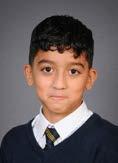
At Pentecost, the disciples of Jesus received the Holy Spirit. Before this monumental moment, the apostles had been feeling scared and uncertain. However, once they were filled with the Holy Spirit, their lives were transformed. They were filled with wisdom, courage and joy. Because of this, they were no longer afraid to share the Good News of Jesus throughout the world. Pentecost reminds us that the gift of the Holy Spirit is not only for the disciples; it is a way of strengthening our relationship with Jesus and the Church. It shows us that Jesus is with us today, helping us to grow closer to God and to be the people he calls us to be.
Virtues are good habits that help us to make the right choices consistently. Virtues are important because they empower believers to live out their faith, navigate moral complexities and grow in the likeness of Christ. In my daily life, I try to live out all the virtues as they strengthen my faith.
The Fruits of the Holy Spirit are the visible signs that the Holy Spirit is working within us. They help us to grow closer to God and show his love to others. They are empowering virtues and qualities that the Holy Spirit cultivates in believers. If we were to use a tree as an analogy, the roots would be the virtues, and the fruits would be what others are able to see; if our virtue was hope, the fruits would be joy and peace. If our virtue was temperance, the fruits would be self-control and gentleness.
The fruits that grow from the virtue of charity are love and kindness, which can be shown in the simplest ways. Hope can lead to joy and peace because it helps us trust in God’s promises even when times are tough. Without hope, there is no sense of belief. Fortitude helps us to be patient by nourishing our will to endure difficulties and persevere, which helps us remain calm and steady. Temperance helps us develop self-control by prompting moderation, balance and deliberation.
Mother Teresa once said, ‘Peace begins with a smile.’ By doing this, we are showing peace, love and kindness, all of which are Fruits of the Holy Spirit. Self-control is the fruit
that I find most challenging to show as it can be easy to fall into temptation. Temperance teaches us self-control and gentleness, helping us think carefully before we speak or act.
There are many opportunities to show the virtues during school hours. When we are being taught something difficult, we can practise patience. We can also show kindness when welcoming a new pupil. When we are outside of school, we can show justice by treating others the same way we would like to be treated and show charity by caring for those in need. Through these small but significant actions, we are showcasing the true meaning of the Fruits of the Holy Spirit.
As we continue the Church’s journey after Pentecost, let us challenge ourselves to practise the virtues by planting our own tree so that the Fruits of the Holy Spirit can begin to grow in our hearts and help us to follow in the path of Jesus.