ENERGY AT THE HEART OF RCSI

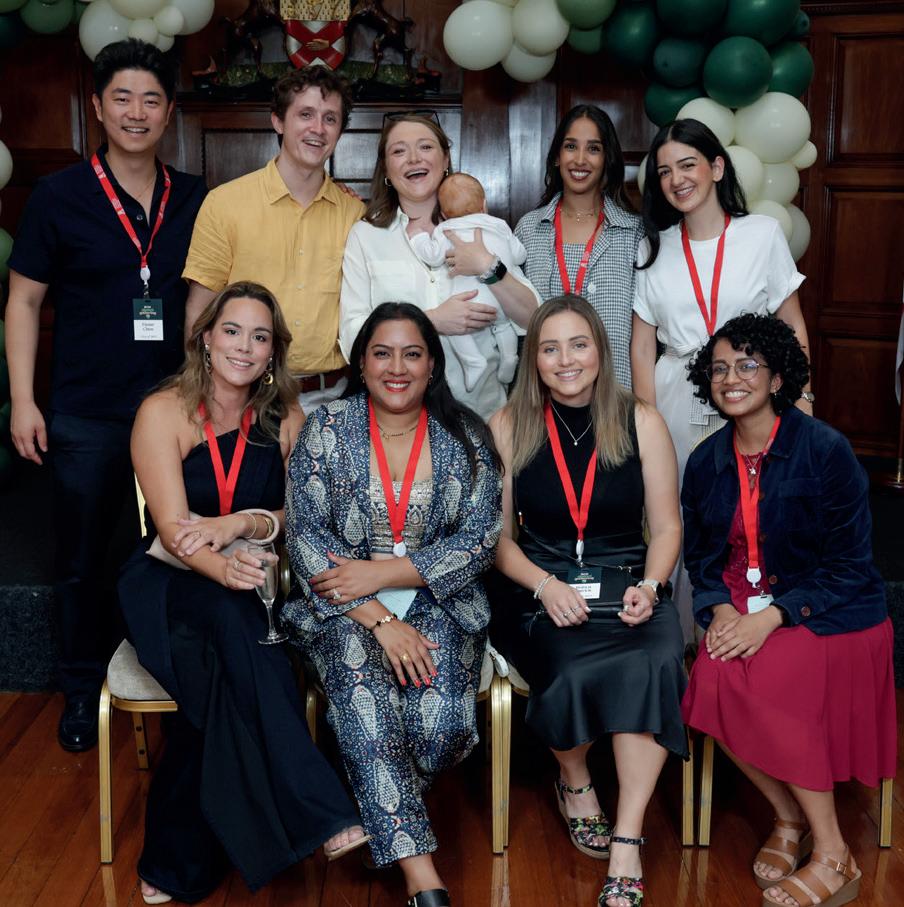
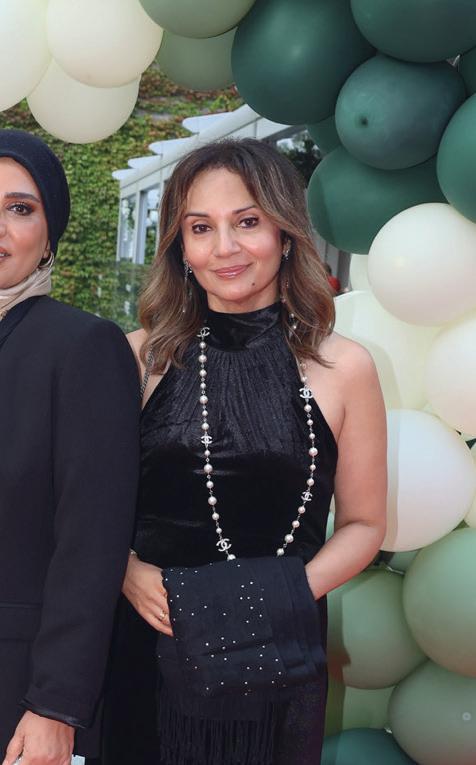







12-14 August 2027
SAVE THE DATE
Registration will open online in early 2027. Celebrating the classes of 1957, 1962, 1967, 1972, 1977, 1982, 1987, 1992, 1997, 2002, 2007, 2012, 2017 & 2022

12-14 August 2027
SAVE THE DATE
Registration will open online in early 2027. Celebrating the classes of 1957, 1962, 1967, 1972, 1977, 1982, 1987, 1992, 1997, 2002, 2007, 2012, 2017 & 2022
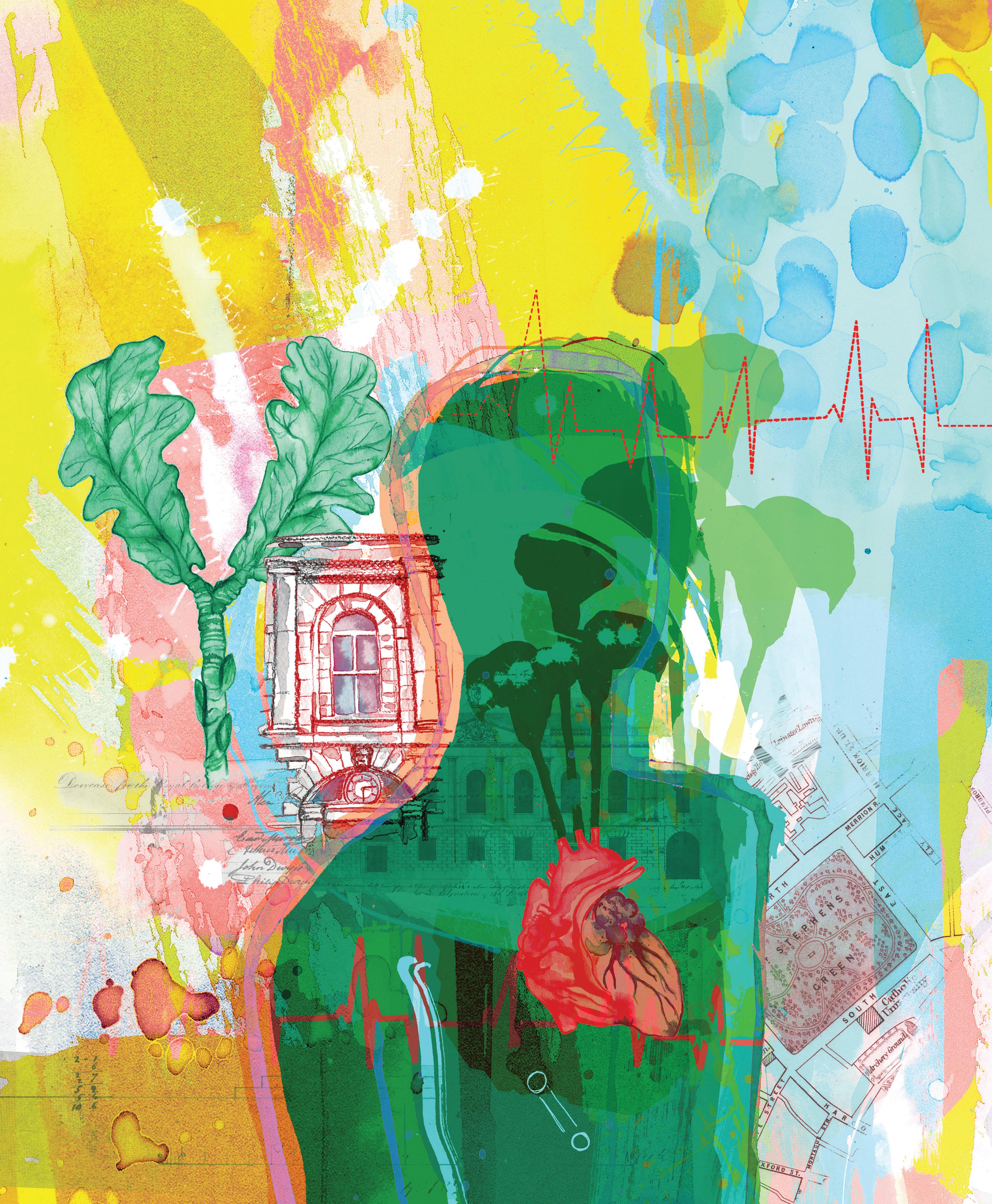
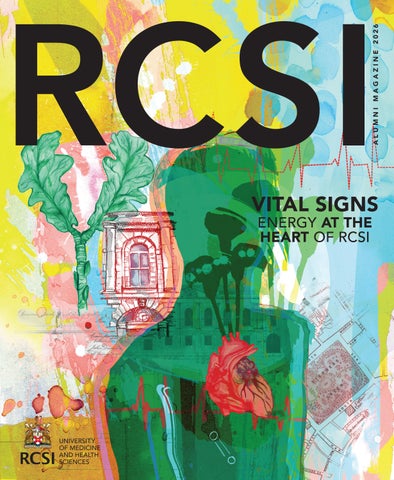
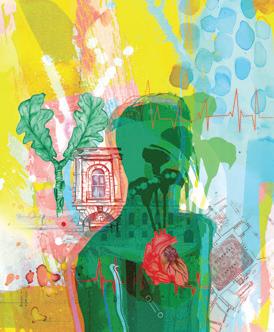
ith a global alumni community of healthcare professionals, RCSI understands the importance of regular health checks. In pursuit of a clean bill of health for RCSI, the 2026 RCSI Alumni Magazine reports on the University’s vital signs, the theme of this edition and the inspiration for the cover illustration by artist Eva Kelly, whose dynamic, layered composition captures the connection between medicine, innovation and humanity. Combining anatomical elements with brush strokes, vibrant colour and references to 123 St Stephen’s Green, we felt Eva’s work beautifully captured the vital signs of the body and the emotional and human qualities that define care and connection.
spearheading clinical malaria research and developing an innovative new housing model to help prevent the spread of the disease.

Burgeoning student numbers, enthusiastic graduates, and a flourishing new campus coupled with a deep-rooted commitment to safeguarding our history – these signs suggest RCSI is in peak condition.
A Winning Formulation (page 4 ), provides insights into the growth and expansion of RCSI’s School of Pharmacy and Biomolecular Sciences, which now offers undergraduate and postgraduate programmes in Pharmacy as well as in Advanced Therapeutic Technologies (ATT) and in Technologies and Analytics in Precision Medicine (TAPM). The school has evolved in step with changes in pharmacy practice, healthcare policy and expanding roles within the pharmaceutical workforce as attested to by several alumni contributors.
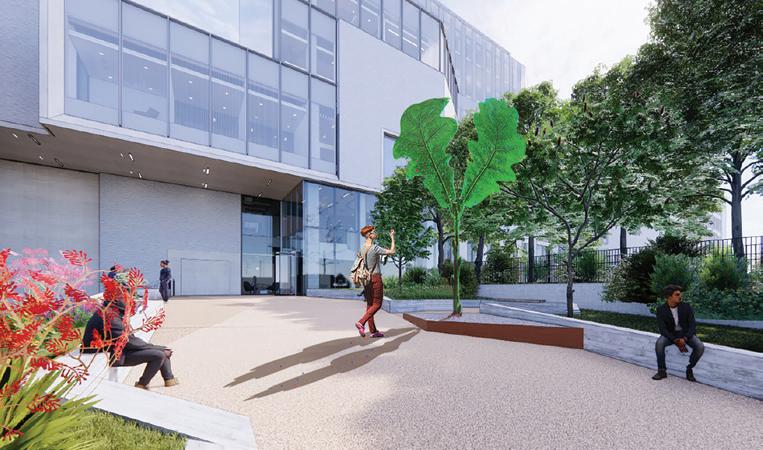
Regular readers of the magazine and our Alumni eNewsletters will be aware of the incredible campus development that has occurred in recent years, particularly the opening of the new building at 118 St Stephen’s Green. In Breathing Space (page 16), we talk to artist Rachel Joynt about her sculpture that will be installed in the courtyard garden at 118 St Stephen’s Green. The piece, Beatha – meaning ‘life’ in Irish – is a striking four-metre tall bronze oak sapling, which brings energy and light into the courtyard. With its two leaves representing the lungs, it also reflects RCSI’s relationship to St Stephen’s Green, the great green lungs of the city.
History forms an important part of any ‘health check’ and so, in Raising the Roof (page 46) we share details of Project Timeless – an ambitious undertaking to fully restore and renovate the historic building at 123 St Stephen’s Green. Historical research, relocation of artwork, philanthropic alumni and a team of master craftspeople are all part of securing and conserving the future of this nationally significant building for centuries to come.

Meanwhile, the feature on postdoctoral research, The Brightest Minds (page 10) celebrates the global reputation and international impact of RCSI’s top-tier postdoctoral research.
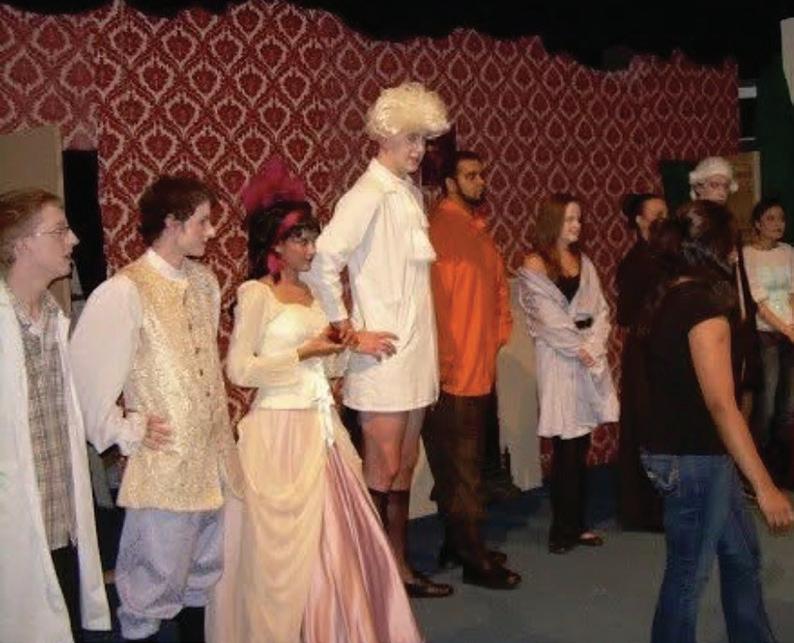
A key indicator of any university’s performance is the experiences it provides and the role it plays in the lives of its graduates – whether professionally or personally. In Doctors in the House (page 24), we share reflections on six decades of drama within RCSI. A disappearing trophy, impromptu performances on Ireland’s Eye and creative solutions to set dressing – biscuit tins as stage lights – readers will appreciate the memories described by our graduates while also recognising the benefits of broadening one’s horizons beyond academia
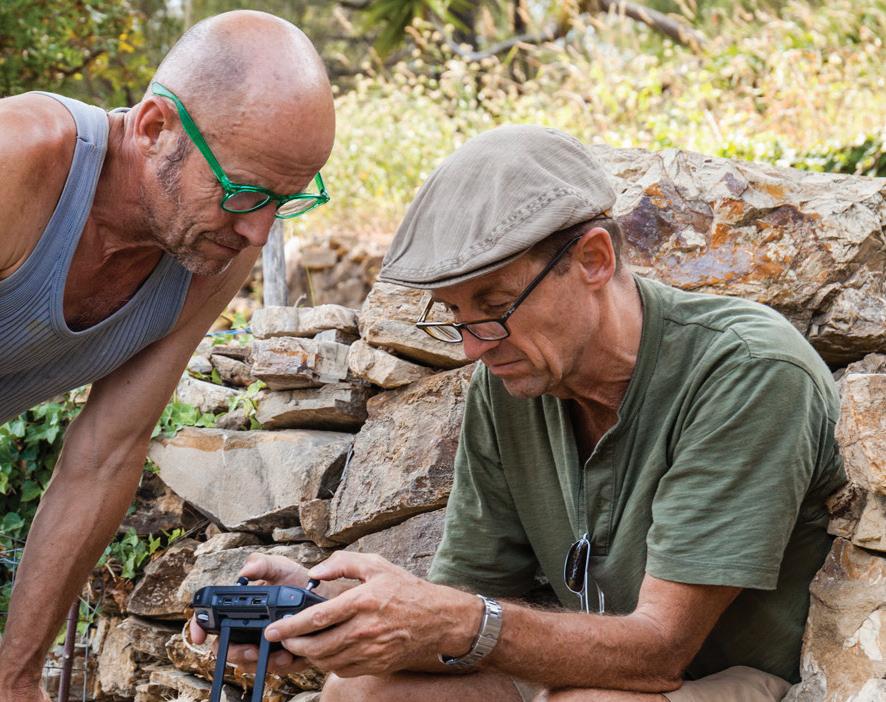
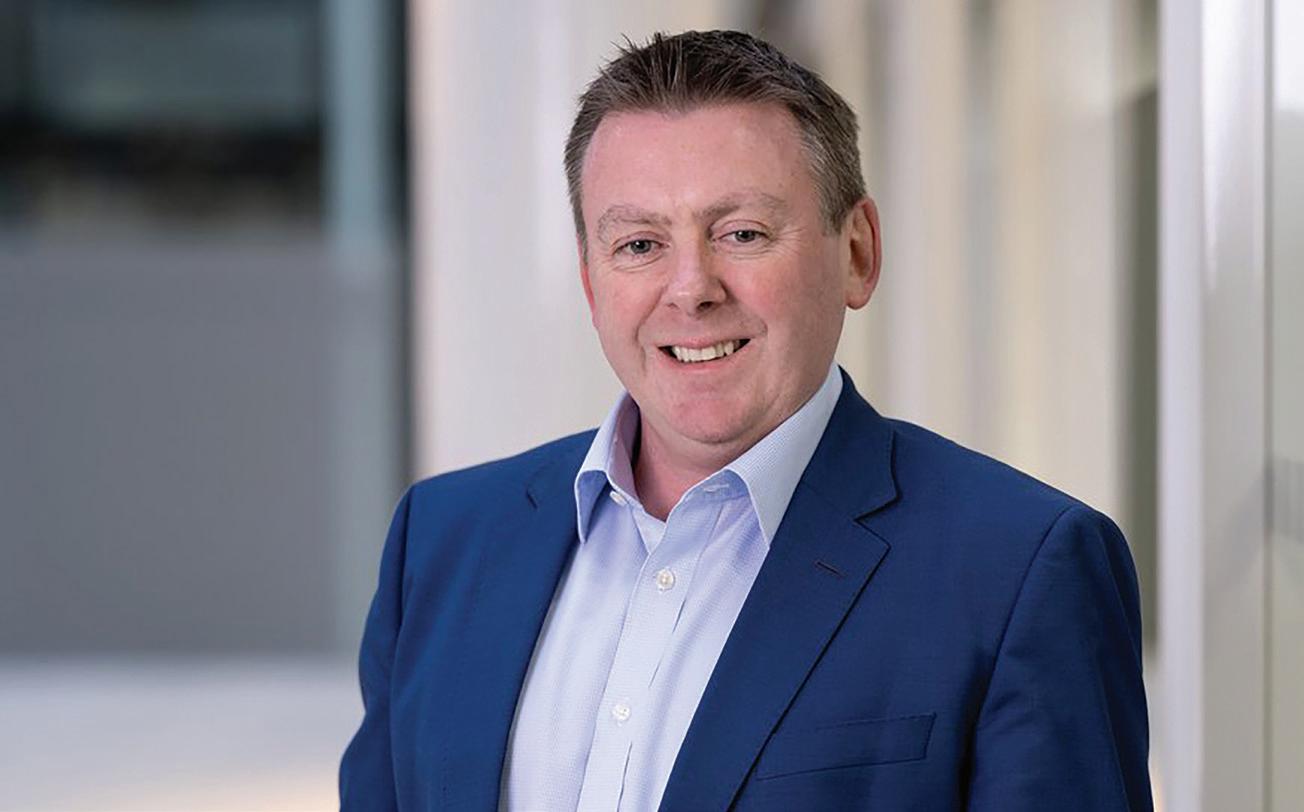
In reference to broadening horizons, in A Life’s Work (page 42), Professor Lorenz Von Seidlein (Medicine, Class of 1988), recounts how a clinical elective in Kenya during his time as an RCSI student inspired a lifelong commitment to treating infectious diseases that has led him to work across five continents,
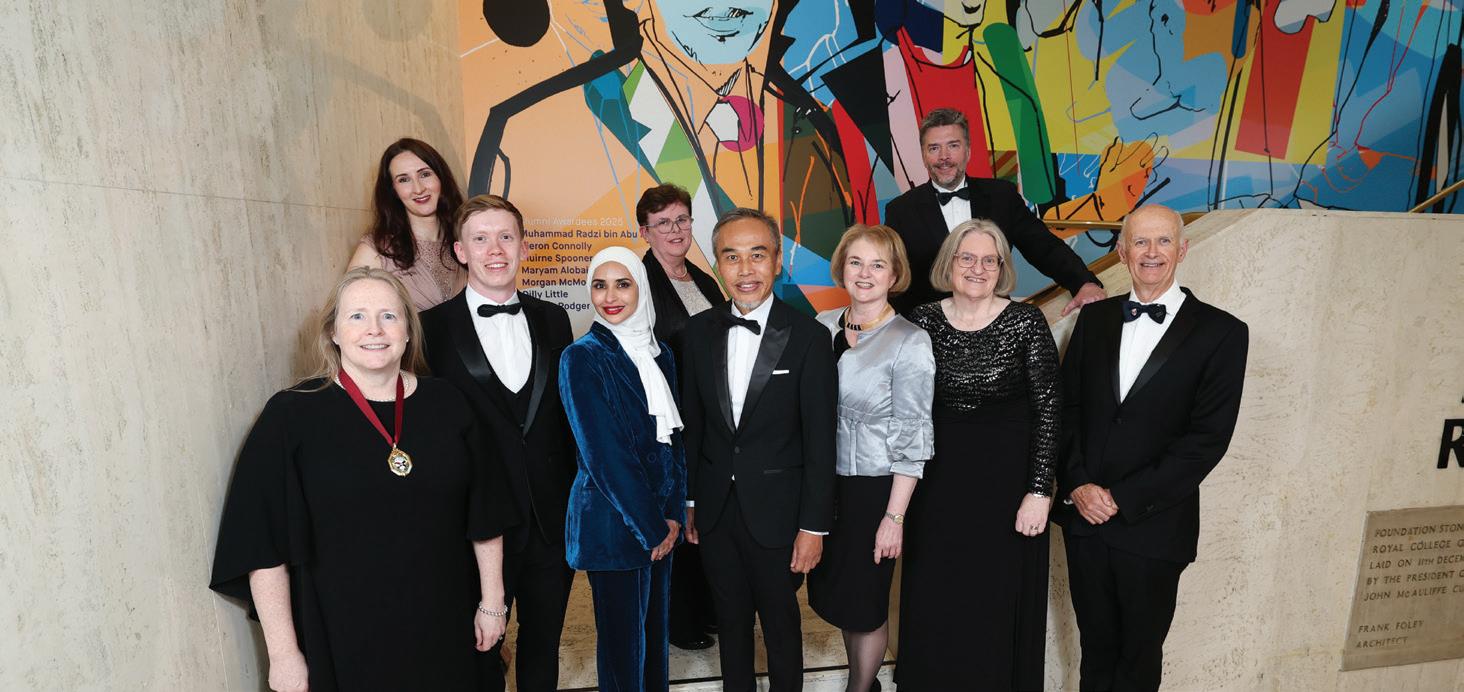
The strength of RCSI’s vital signs is certainly reflected in the constancy of connection with alumni in Ireland and internationally. In the last 12 months, we have had the pleasure of meeting more than 2,000 graduates in person at events ranging from the Alumni Gathering and the Lunchtime Talk Series to social mixers in the UK, Australia, Canada, US, Qatar, Saudi Arabia and Malaysia. Additionally, we have been honoured to hear your stories and celebrate your achievements, including those of our Alumni Awardees (see Alumni Events, page 50). We remain very grateful to you for your philanthropic support – we are thankful that so many of you have engaged with our recent room and seat-naming initiatives as well as your ongoing commitment to supporting scholarships and clinical electives, which enrich the lives and experiences of our students.
We very much hope that this issue of RCSI Alumni Magazine captures the health, vitality and vibrancy of RCSI, at the heart of which lies our people –students, staff, and you – our alumni.
AÍNE GIBBONS DIRECTOR OF DEVELOPMENT AND ALUMNI RELATIONS

Shared
10 The Brightest Minds
RCSI’s reputation for research continues to go from strength to strength
16 Breathing Space
A new sculpture commission at RCSI symbolises humankind, health and renewal
20 Game On
How Professor Moira O’Brien champions RCSI’s sporting stars
24 Doctors in the House
Encore! Bravo to RCSI’s Drama Society
28 Doing the Rounds
News, appointments, and campus updates at RCSI
33 Opening Minds
Humanarium – now open to all
34 Caught on Campus
Snapshots of student life in Dublin and Bahrain
38 Research Studies
Multidisciplinary research highlights at RCSI
42 A Life’s Work
The curious career of vaccine specialist Professor Lorenz Von Seidlein (Medicine, Class of 1988)
RCSI ALUMNI MAGAZINE is published annually by RCSI University of Medicine and Health Sciences. Issues are available online at rcsi.ie/alumni. Your comments, ideas, updates and letters are welcome.
Contact Ailbhe Mac Eoin, Lead Editor, at RCSI, 123 St Stephen’s Green, Dublin 2; telephone: +353 (0) 1 402 2235; email: ailbhemaceoin@rcsi.com. RCSI ALUMNI MAGAZINE IS DISTRIBUTED annually to alumni on our database. To ensure you receive a copy, please PROVIDE YOUR CURRENT CONTACT DETAILS at rcsi.com/portal. RCSI ALUMNI MAGAZINE is produced by Gloss Publications Ltd, The Irish Times Building, 24-28 Tara Street, Dublin 2. Copyright Gloss Publications. RCSI Editorial Board: Aíne Gibbons, Jane Butler, Paula Curtin, Ailbhe Mac Eoin and Caoimhe Ní Néill.
45 Greening the OT
The drive to reduce surgery’s carbon footprint
46 Raising the Roof
Conserving history at 123 St Stephen’s Green
50 Event Galleries
Alumni Awards, Alumni Gathering and occasions at RCSI
RCSI was founded by Royal Charter in 1784 as the national training and professional body for surgery. In 1978, RCSI became a recognised College of the National University of Ireland and in 2010, RCSI was granted by the State, the power to award its own degrees. In 2019, RCSI was granted University status and became RCSI University of Medicine and Health Sciences.

























































































































































The joining of the School of Pharmacy and the Department of Molecular and Cellular Therapeutics has been a resounding success, resulting in powerful research outcomes, a dynamic student experience and a role in shaping healthcare policy
RCSI ’s School of Pharmacy has undergone a huge transformation since welcoming its first intake of 40 students in 2002 under the leadership of Professor John Kelly. What began as a small school with one programme has grown into a large multidisciplinary academic environment with a strong national and international profile. The School had an intake of 238 students in 2025.
In 2019, as part of an internal merger, the school became the School of Pharmacy and Biomolecular Sciences (PBS), reflecting both its expanding educational offering and its growing research ambition. Today, PBS offers a range of undergraduate and postgraduate programmes, including a Master of Pharmacy (MPharm), a BSc in Pharmacy (BScPharm), BSc in Advanced Therapeutic Technologies (BScATT), and MSc in Technologies and Analytics in Precision Medicine (MScTAPM)
Led by Professor Helena Kelly, Professor in Drug Delivery, appointed Head of School in 2024, the school plays an increasingly influential role in shaping pharmacy practice, healthcare policy, and the future pharmaceutical workforce, both nationally and internationally.
Recent programme development within PBS has been strongly supported by RCSI’s success under the Government’s Human Capital Initiative (HCI), designed to future-proof the Irish workforce. Through HCI funding, the school secured close to €8 million to address emerging skills gaps across the pharmaceutical and healthcare ecosystem. This investment directly enabled the development of the MScTAPM programme (launched in 2021) and the BScATT degree (launched in 2022), both of which respond to rapidly evolving industry needs in areas such as data analytics, AI, genomics, advanced therapeutics and digital health.
PBS’s international footprint has also expanded significantly. In 2024, the school established its first overseas campus through a strategic partnership with Soochow University in Jiangsu Province, China. This collaboration led to the creation of the International College of Pharmaceutical Innovation (ICPI), under the RCSI leadership of Vice Dean, Professor Brian Kirby. ICPI now delivers both the BScPharm and BScATT programmes, positioning RCSI as a global leader in pharmacy and pharmaceutical sciences education.
While education remains central to the school’s mission, a significant focus on research underpins the philosophy of the school, with its staff and students participating in research across the translational spectrum from drug discovery and delivery, through to population health and healthcare education research.
“PBS is a deeply research-active environment,” explains Professor Kelly.
“Academic staff lead research programmes across a broad range of areas including pharmacy practice, healthcare education, genomics, immunology, infection, drug delivery and biomolecular sciences. PBS faculty currently supervise over 100 MSc and PhD students, many of whom are working on highly specialised research projects in collaboration with hospital partners, industry, and international institutions. This strong research culture directly informs teaching across all programmes, ensuring that students are educated
in an evidence-based, research-informed environment and are exposed to innovation from the earliest stages of their training.”
The diverse programmes housed within the school are united by a common emphasis on professionalism, communication skills, collaboration, and teamwork.
Dr Ben Ryan, Deputy Head of School (Education) and Senior Lecturer in Pharmacology – and himself an alumnus of the school (PBS, Class of 2009) – emphasises ths holistic approach: “One of the things we are very focused on is ensuring our students not only receive an excellent educational experience, but also graduate with the wider skillset needed for success. It’s about producing scientists and pharmacists who are effective communicators, who demonstrate professionalism, and who can work confidently in teams.”
These “power skills” or transversal competencies are deliberately embedded across all PBS programmes, preparing students for the reality that modern healthcare delivery and pharmaceutical innovation are inherently collaborative.
These skills are critical for pharmacy graduates, as the pharmacy profession undergoes a period of unprecedented change. In Ireland, the imminent introduction of pharmacy prescribing, alongside new specialist and advanced practice frameworks for hospital pharmacists, is transforming the scope of practice for the profession.
The expansion of pharmacy-delivered services has already been evident in recent years. The introduction of pharmacist-led vaccination services in 2016 expanded significantly during the COVID-19 pandemic and was followed by the launch of the Emergency Hormonal Contraception Scheme and the Common Conditions Scheme.
Professor Kelly believes these developments represent a major opportunity for patients and for the wider healthcare system: “The role of the pharmacist is expanding all the time. This improves access to timely care for patients and provides meaningful support to the broader healthcare ecosystem. This wider scope also makes the role more interesting.”
PBS has played a key role in shaping these changes. Professor Judith Strawbridge was a member of the national Expert Task Force on Pharmacy Prescribing, contributing directly to the recommendations underpinning new legislation. The school, under the direction of Dr John Hayden, has also supported the Irish Institute of Pharmacy in developing education and training for the Common Conditions Scheme, widely viewed as the first step toward pharmacist prescribing. “Helping to shape the profession of the future and advocating for pharmacists is an important role for the University,” says Professor Kelly.
Against this changing professional environment, RCSI’ s MPharm curriculum is uniquely positioned. The programme is a five-year, integrated, patient-centred degree, with an annual intake of approximately 130 students, designed to prepare graduates for contemporary pharmacy practice across all sectors. The curriculum is spiralled and horizontally integrated, linking drug design, formulation and manufacturing with pharmacology, therapeutics and patient care throughout all years of the programme. Students encounter clinical and professional concepts early and revisit them at increasing levels of complexity as they progress.
The school is currently in the final stages of implementing a revised MPharm curriculum, with an enhanced emphasis on e vidence-based medicine, clinical pharmacy and practice, case-based learning, simulation, public and patient involvement
All undergraduate pharmacy students already complete the Prescribing Safety Assessment, reflecting the direction of travel toward expanded clinical and prescribing roles. Professor Kelly highlights the importance of preparing students for real-world practice: “Ensuring a holistic view of treatment that includes the patient perspective is essential. Equally important is giving students opportunities to practise both knowledge and skills in a safe environment so they are truly ready for professional practice.”
The school’s new teaching labs, part-funded by a €1.2 million grant from the Higher Education Authority, have increased the school’s laboratory teaching capacity by 60%, and now provides a world-class learning environment for up to 140 students. The upgrade includes the launch of the Kiran Pathak PatientCentred Care Laboratory, an innovative 88-student space designed to simulate real-world clinical interactions and nurture both technical and interpersonal skills among students. The investment also sees the enhanced integration of pharmacy technicians and practicing pharmacists into the teaching team, ensuring students gain practical, real-world insights from day one.
Experiential learning is also a defining feature of the MPharm programme. Students are exposed to pharmacy practice from first year onwards. In fourth year, students complete a four-month block placement in a pharmacy setting of their choice. Fifth-year MPharm students then undertake an eight-month patient-facing placement in either community or hospital pharmacy.
Approximately 65-70% of students currently complete their final placement in community pharmacy, with smaller numbers in hospital settings. While interest in hospital pharmacy remains very high, the number of HSE-funded hospital training places is limited.
As Professor Kelly notes, this is a national workforce planning issue: “All Heads of Pharmacy Schools are actively engaged with the sector and with Government to try and address this.”
Accommodation shortages also limit students’ ability to relocate for placements. Nevertheless, employment prospects for pharmacy graduates
remain strong across community, hospital, industry and emerging roles.
The BSc in Advanced Therapeutic Technologies is the first science degree delivered at RCSI, with the initial cohort of students graduating this year. Launched in 2022, the programme is on target to grow to a class size of 70 students, with entry via the Central Admissions Office (CAO) to support the evolution of the Irish life sciences sector, recognising the growing importance of AI, digital technologies, precision medicine and power skills. “Advanced Therapeutic Technologies is about creating the next generation of scientific innovators who will transform healthcare,” explains Dr Ryan. “It equips students with the skills to be effective in the pharma ecosystem, with a career-ready curriculum co-designed by an external advisory board from industry, with learning outcomes geared towards the skills that graduates five years from now will need to have.”
The programme integrates core scientific foundations with future-focused content such as AI, digital health, biopharmaceutical manufacturing, project management, enterprise, leadership and innovation. Industry engagement is central, with strategic partnerships including contributions from the Project Management Institute and laboratory training delivered by the National Institute for Bioprocessing Research and Training (NIBRT), Ireland’s national biopharmaceutical training centre. Graduates of the BScATT programme are ideally positioned for early-stage research and development, data analytics and innovation roles within the pharmaceutical sector.
The MTAPM is designed for science graduates seeking specialised expertise in genomics, computational biology and digital health, and was the recipient of the 2025 Pharma Education and Training Award. Dr Sudipto Das, Vice Dean for AI and Digital Health, RCSI, and MSc Programme Director explains: “We are moving away from a ‘one-size-fits-all’ approach to medicine toward precision medicine. That requires a deep understanding of data, genomics and connected healthcare.”
The programme has four core pillars: genetics and genomics, computational biology and data analytics, connected and digital health, and AI and machine learning Students complete a research project, often focused on AI or machine learning applications in hospital, industry or academic settings. Graduates now work in organisations such as Pfizer, Grifols and EY.
Increasingly, AI and digital health are also embedded across PBS programmes, including pharmacy, with the 2026 MPharm intake to be the first to experience a fully embedded, spiral approach to AI and digital health education across the degree. “AI is already being used in hospitals to guide clinical decisionmaking,” says Professor Kelly. “Our students need to understand how to use it ethically and safely – and also its limitations.”
Despite its growth in size, scope and international reach, PBS remains defined by its strong community spirit. For Dr Ryan, this continuity matters deeply: “It’s the same open, inclusive, welcoming, vibrant, future-focused school it always was. The student-centred focus remains. It’s all about enabling our diverse local and international students to have a great experience.”
For alumni, PBS today represents both continuity and change: a school rooted in professional excellence, now leading innovation in pharmacy, therapeutics, AI and precision medicine – while remaining committed to the values that have defined it since its earliest days. As Professor Kelly notes, ‘So much has changed since many of our alumni were students here, but the core of the school remains the same. It’s still about collaboration, doing meaningful work, and preparing graduates who care deeply about their profession. Being part of that story – past, present and future – is something of which I’m incredibly proud.”

MSC IN TECHNOLOGIES AND ANALYTICS IN PRECISION MEDICINE, 2025
Coming from a biomedical science background, I was interested in how data and technology are shaping modern medicine. The MScTAPM programme offered exposure to bioinformatics, biostatistics and the clinical applications of precision medicine. I was drawn to the opportunity to develop computational skills that could be applied to real biomedical research and healthcare challenges.
I am currently working as a Graduate Statistical Programmer at Grifols in Dublin. In my role, I work within clinical research programming, helping to prepare and validate datasets used in clinical trials. This involves developing datasets for analysis and performing quality control checks to ensure the data used for regulatory submissions is accurate and reliable.
I see myself continuing to work in clinical research and biostatistics, contributing to the analysis of clinical trial data and supporting the development of new therapies. My studies at RCSI provided a strong foundation in bioinformatics, biostatistics and computational analysis, which are all highly relevant to this field.
MARYAM ALOBAIDLY
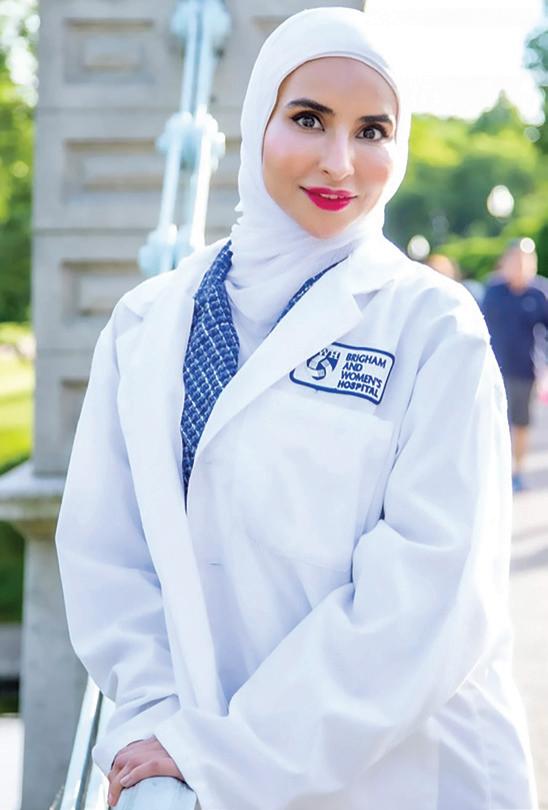
BSC PHARMACY, 2011; MSC MOLECULAR AND CELLULAR THERAPEUTICS, 2014 At RCSI, we were exposed early to patient-centred pharmacy practice and community-based clinical services such as methadone programmes, emergency contraception provision, and chronic disease management. The concept of pharmacists as integral members of the patient care team demonstrated how we can actively influence therapeutic decisions, improve patient outcomes, and contribute meaningfully to the healthcare system. After RCSI, I continued my postgraduate training in the US. I completed residency training with further specialisation in solid organ transplantation, pursued fellowship training and obtained board certification.
I am an Assistant Professor in the College of Pharmacy at Kuwait University where I teach advanced pharmacy practice and pharmacotherapy courses and serve as a clinical preceptor for PharmD students during their hospital rotations, particularly in haematology and oncology settings. Beyond teaching, I am involved in professional development initiatives for clinical pharmacists within the Ministry of Health. My work focuses on clinical education, training future pharmacists, and strengthening the role of clinical pharmacy within Kuwait’s healthcare system.
LIZ O’HAGAN
BSC PHARMACY, 2010; MPHARM, 2011
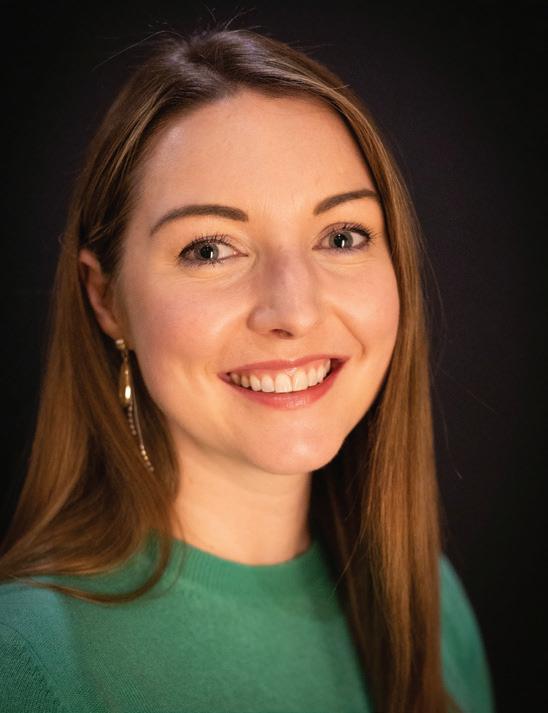
I have been working in community pharmacy for the past 15 years. Following the COVID-19 pandemic, I noticed a significant rise in prescriptions being dispensed for conditions such as type 2 diabetes, anxiety, and depression. I became increasingly concerned about the amount of medication people were taking without addressing lifestyle factors that might be contributing to these diagnoses. I was motivated to learn more so that I could better support patients and strengthen my counselling skills. In 2021, I enrolled in an online course in Integrative and Lifestyle Health through the University of Arizona. Building on that interest, I completed the European Lifestyle Medicine Certificate in 2025.
Since 2023, I have been working with Meaghers Pharmacy as a pharmacist and lifestyle medicine expert. I developed a programme called Pharmacy 360, creating a series of educational lifestyle health leaflets covering key pillars of health including sleep, nutrition, movement, stress, and social connection. These leaflets, available in Meaghers Pharmacy locations across Dublin, are used to complement medication counselling.
RCSI played an important role in shaping both my professional skills and personal confidence. The relatively small class sizes created a supportive learning environment and helped build strong communication skills and accountability. When I was at RCSI, modules such as positive health science were not yet part of the curriculum, but I am delighted to see them being offered now. With the growing burden of chronic illness, education around lifestyle medicine and preventative health is becoming increasingly important. Many conditions can be better managed – and in some cases prevented – through improved lifestyle interventions alongside conventional medical treatment, so it is fantastic to see RCSI integrating this perspective into pharmacy education.
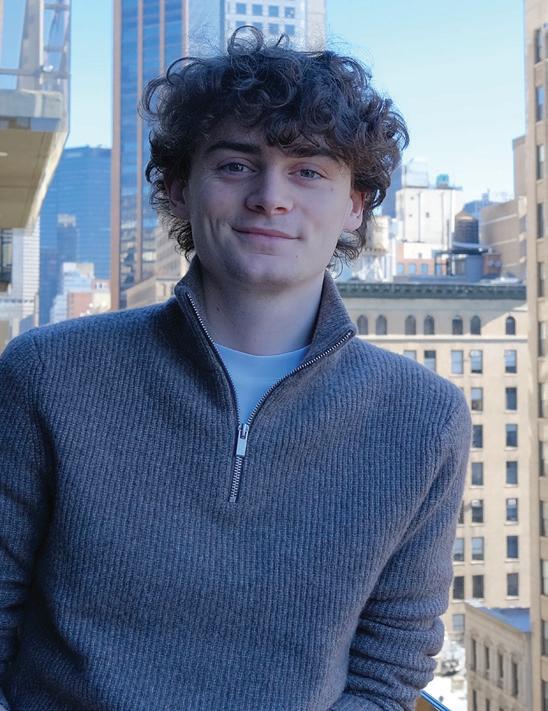
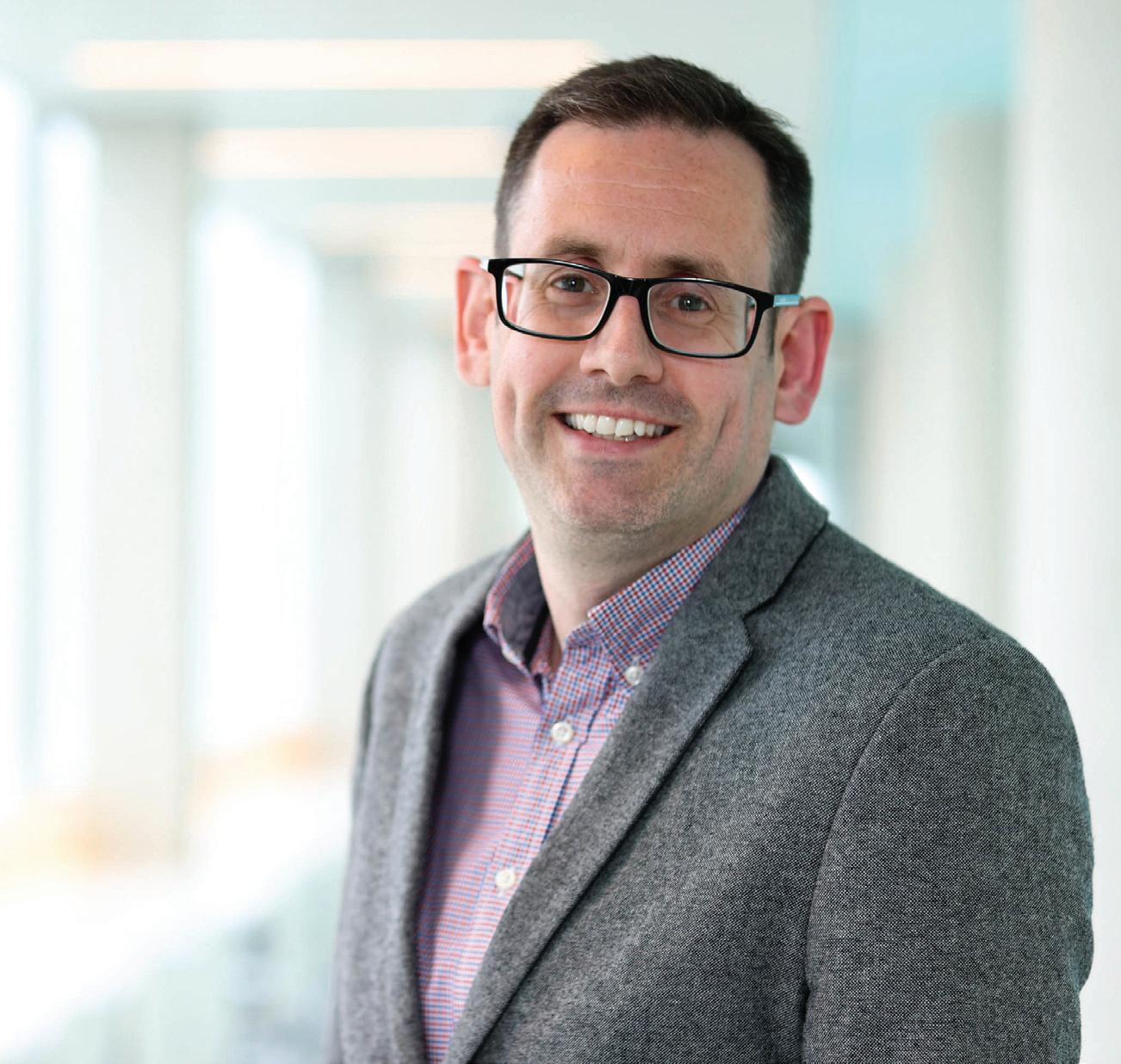
After an undergraduate degree in biomedical science, I looked for a course that would offer both an advancement of my scientific background but also drive the technological side. RCSI’s MScTAPM covers a broad range of topics in great detail. The faculty are all experts in their field which ensures every lecture is engaging and interesting. Guest lecturers from industry showed us how what we were learning was being applied in healthcare systems.
I work in digital health consulting with pharma and MedTech companies, assisting in the development of regulated digital health solutions. I have had the privilege of working across a range of interesting projects, covering various chronic illnesses and diseases. Parts of the MSc programme are directly applicable to my current career, and the knowledge I gained across so many areas within my studies at RCSI has been very valuable.
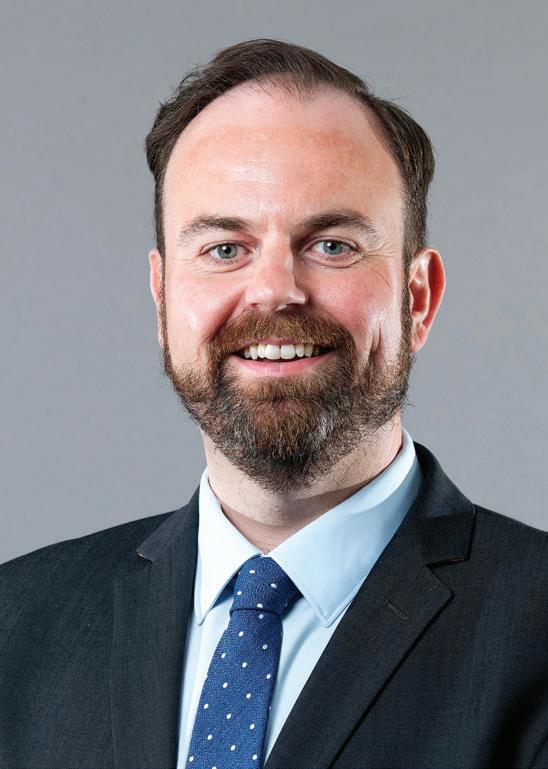
BSC PHARMACY, 2006
I was part of the first intake of students to study pharmacy in RCSI in the new School of Pharmacy. We felt part of something progressive and cutting edge. The teaching was focused on real-world application and clinical practice.
I started my career at Boots in Dublin, in various roles. I followed this with a role at the Allcare Pharmacy group, and completed a master’s in health informatics at Trinity College Dublin. My next move was to a pharma-tech company called Pharmapod, which provides software to support recording and learning from medication and patient safety incidents.
In 2020, I took up a role at the Pharmaceutical Society of Ireland (PSI), the pharmacy regulator for Ireland, as Head of Registration and Education. We are responsible for ensuring the PSI delivers on matters relating to recognition of qualifications, registration of pharmacists and pharmacies, accreditation of pharmacy degree programmes, and overseeing the continuing professional development system for pharmacists. Being immersed in a healthcare-focused university environment boosted my confidence in interacting with other healthcare professionals post-qualification. RCSI gave me a keen appreciation for the importance of keeping patients at the centre of what we do, no matter what role we’re in.
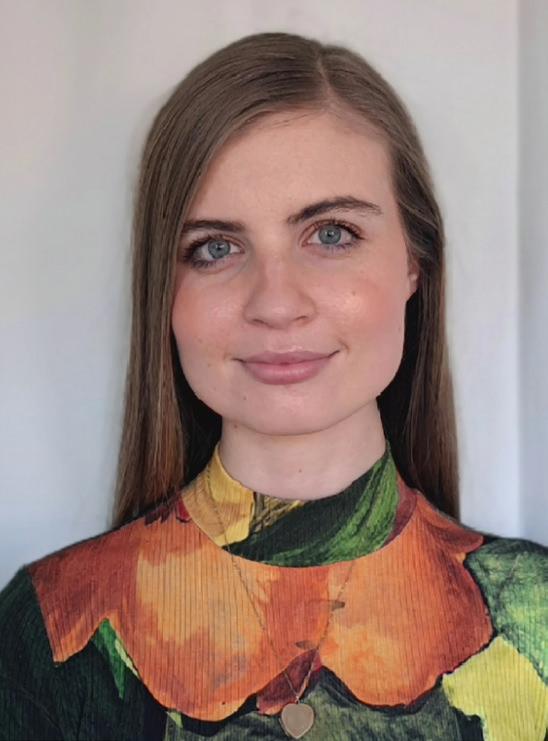
BSC PHARMACY, 2016; MPHARM 2017
My 12-month, placement-based internship was split equally between the School of Pharmacy and Biomolecular Sciences in RCSI, and Beaumont Hospital, Dublin.
At RCSI, I was involved in running a multidisciplinary study day for pharmacists and physiotherapists. This introduced me to multidisciplinary team working which is an integral part of work as a hospital pharmacist.
During my placement at Beaumont Hospital, I gained practical experience in all areas of the Pharmacy Department and was fortunate to spend time with highly experienced clinical pharmacists, which reaffirmed my passion for clinical pharmacy and ward-based care of patients.
For the past eight years, I have been working at Beaumont Hospital, and since 2023, in Renal Transplant. My role entails providing a specialist clinical pharmacy service as part of Ireland’s National Kidney Transplant Centre. As a Transplant Specialist Pharmacist, I review all medications prescribed for my patients on a daily basis, ensuring the safety and appropriateness of each in terms of dose, frequency, route and duration. I ensure all co-prescribed medications are appropriate as part of the current or evolving clinical picture, and in the context of medicines reconciliation which I perform at the point of admission for each newly admitted patient.
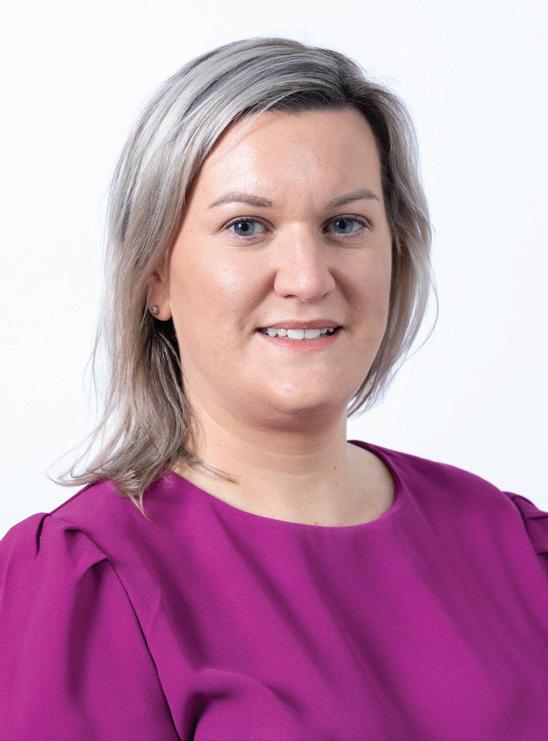
LINDA FITZHARRIS
BSC PHARMACY, 2009; MPHARM, 2010
My class were the first cohort of MPharm graduates in 2010. Following my registration, I spent a number of years in community pharmacy at Boots in various roles, as Support Pharmacist, Pharmacist Manager, and Regional Pharmacy and Healthcare Trainer.
I took up a role as a Senior Pharmacist with the Health Service Executive (HSE) Primary Care Reimbursement Service (PCRS) 10 years ago. I progressed to Chief II Pharmacist, then Chief I Pharmacist, before becoming Head of the Corporate Pharmaceutical Unit and Pharmacy Function within the HSE PCRS. The service supports the delivery of a wide range of primary care services to the general public through over 7,000 primary care contractors (i.e. doctors, dentists, pharmacists, optometrists, etc.) across a range of community health schemes. I lead the Corporate Pharmaceutical Unit which is the interface between the HSE and the pharmaceutical industry in relation to medicine pricing and reimbursement applications and the operation of the national pricing framework agreements. As Head of Pharmacy Function, I am responsible for the administration of the various Community Drug Schemes and arrangements in addition to the maintenance of the Reimbursement List. I support the ongoing work and development in enabling the HSE eHealth agenda and digital solutions from a PCRS perspective.
I didn’t expect my career pathway would lead me to where I am today but pharmacy has developed and there are career opportunities available to pharmacists now that didn’t exist when I was studying in RCSI.
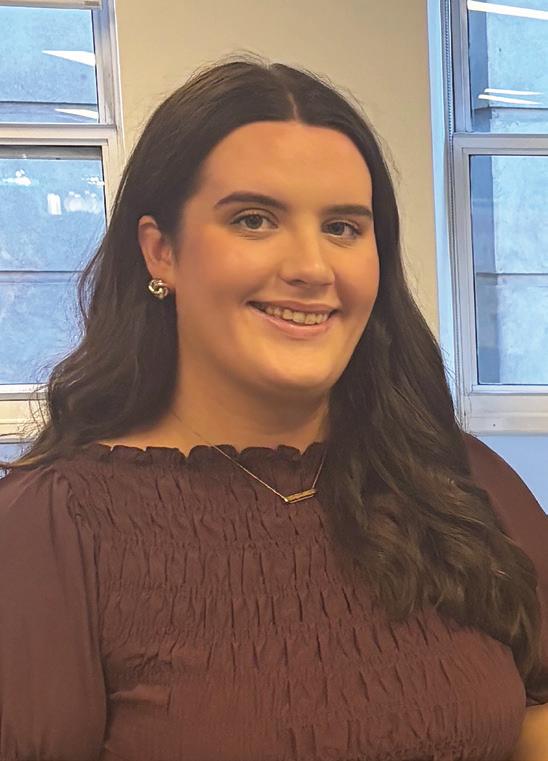
AIBHE
BSCATT, CLASS OF 2026
I chose the BScATT because it was futurefocused and more specific than a basic science degree. The course has equipped me with a skillset that most new graduates don’t have, having studied subjects such as regulatory affairs and project management. It has given us an opportunity to develop our creative sides and engage with abstract ideas and problems for which a solution does not already exist. We had excellent guest speakers from industry, which I found very motivating, and the opportunity to go on placements and site visits kept things interesting. I found the academic side of things quite challenging but it is a great cohort of students and I have made a wonderful group of friends; it has been an excellent experience.
The course equips you to work well in a team. During my third-year placement I had the opportunity to work cross-functionally between two teams in BMS. Following on from that I would like to work in a quality assurance disposition role in the pharmaceutical industry in the future.
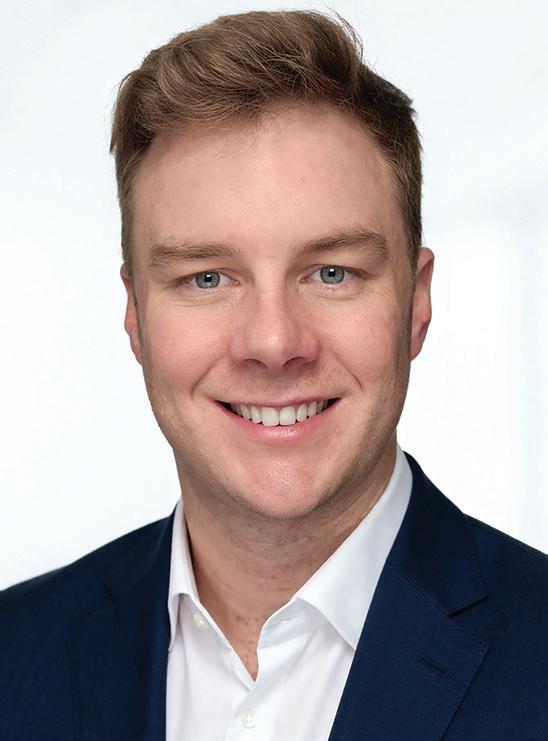
BSC PHARMACY, 2013; MPHARM, 2014
I loved being part of the RCSI community and found it a uniquely collaborative environment. Everyone shared the same passion for healthcare, which made for a stimulating and motivating place to learn. The curriculum was progressive, keeping pace with the latest innovations in medicine and drug discovery.
I work as a Clinical Regulatory Scientist at Eli Lilly and Company. In practice, that means I act as the interface between Lilly and regulatory agencies like the US Food and Drug Administration (FDA), working to bring new medicines to market and keeping agencies informed with updated efficacy and safety data throughout a medicine’s lifecycle. It’s a role that sits at the intersection of science, medicine, and patient impact.
The pharmacy degree gave me an end-to-end understanding of drug development – from manufacturing and quality assurance to clinical trials and the evaluation of efficacy and safety data. That breadth of knowledge has been invaluable in regulatory affairs, where you need to be able to engage credibly across all of those domains.
Perhaps more importantly, RCSI instilled in me the core principle that underpins everything a pharmacist does: keeping the patient at the centre of every decision.
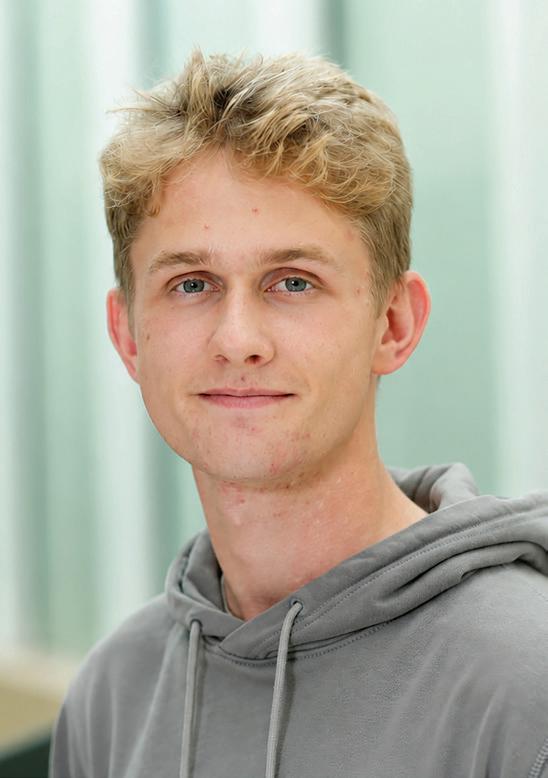
BSCATT, CLASS OF 2026
I was drawn to the BScATT because I felt the curriculum was designed around the future needs of the pharmaceutical industry and the opportunity to do an industry placement was appealing to me. Advanced Therapeutic Technologies is a very tightly knit course, and we have all bonded well. It’s been challenging, but very rewarding. Group work and problem solving are a strong focus of the course.
I felt very well prepared for placement and it was a good opportunity to put into practice what I’d learned. On placement in the biology research and development team at Nuritas, a biotech company, I was in a lab all day, I didn’t have PhD students supervising me, so I had to learn to work independently. I had two phenomenal mentors on placement who really helped me, and having a strong foundation in every area, from data science to lab work, equipped me to do well.
The degree opens doors and offers students an opportunity to go into many different areas depending on the modules they find the most interesting, whether that’s bioinformatics or connected health or something else.
After graduation, I will be starting a graduate programme in manufacturing with Amgen. It’s a two-year programme consisting of three eight-month rotations across different manufacturing areas. ■
When Dr Stephen Bohan (Medicine, Class of 1972) reflects on his years at RCSI, the memories are vivid and the gratitude unmistakable. “We felt at home from day one,” he recalls of his arrival in Dublin in the late 1960s.
“I went to medical school to avoid being drafted into the Vietnam War,” he says with characteristic candour. “It turned out to be one of the best decisions I ever made.” It was, in his words, a happenstance decision, but one that would shape the rest of his life bringing him to RCSI, what he now calls “the defining foundation” of his life and career.
Over the next six years, Dr Bohan would build not only the strong foundation for his future medical career, but a deep bond with a diverse, international group of classmates, from Scotland to South Africa, Norway to Gibraltar. “The collegiality was extraordinary,” he says. “There was harmony from the very start, and it lasted the entire six years. No one ever got angry with anyone else. It was just that kind of place.”
After graduating, Dr Bohan embarked on a career that would take him from the US Navy to the emergency rooms of Harvard Medical School hospitals. He trained in both internal and emergency medicine, earning over the years Fellowships of the American College of Physicians, American College of Emergency Medicine and the Royal College of Emergency Physicians.
After 20 years in the US Navy, he found his home at Brigham and Women’s Hospital in Boston and became Associate Professor at Harvard Medical School. In 2020, Harvard established the J. Stephen Bohan Professorship in Emergency Medicine, what he calls the crowning achievement of his career. What stuck with him throughout, he says, were the values instilled at RCSI: clinical discipline, human compassion, and an unwavering commitment to the patient.
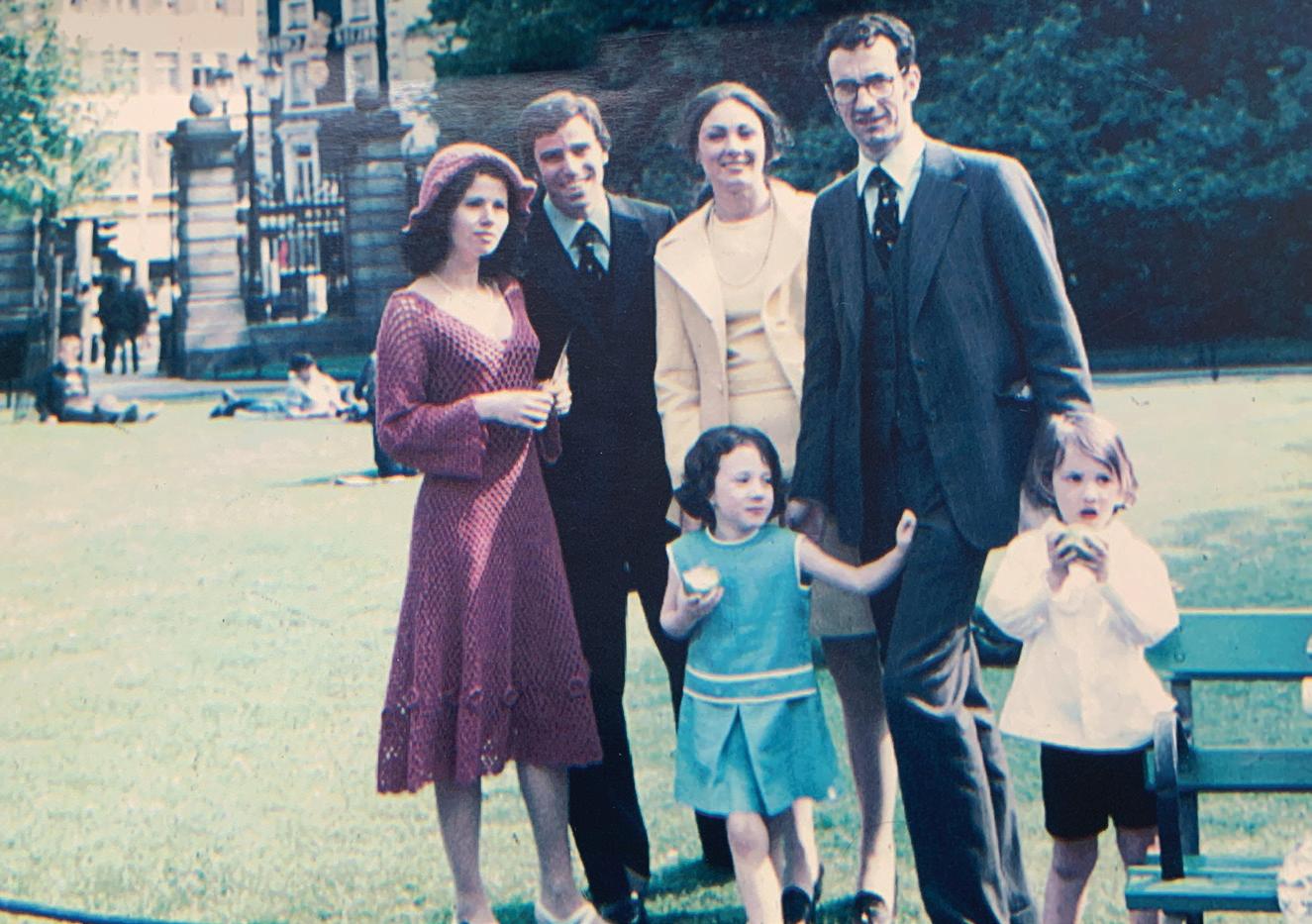
“RCSI instilled in me the values I’ve carried through my life.”
healthcare leaders on a global scale. “Who wouldn’t want to promote that?” he says. “The students come from all over the world, and they go on to lead. If your mission is to improve global health, this is one of the best ways to do it.”
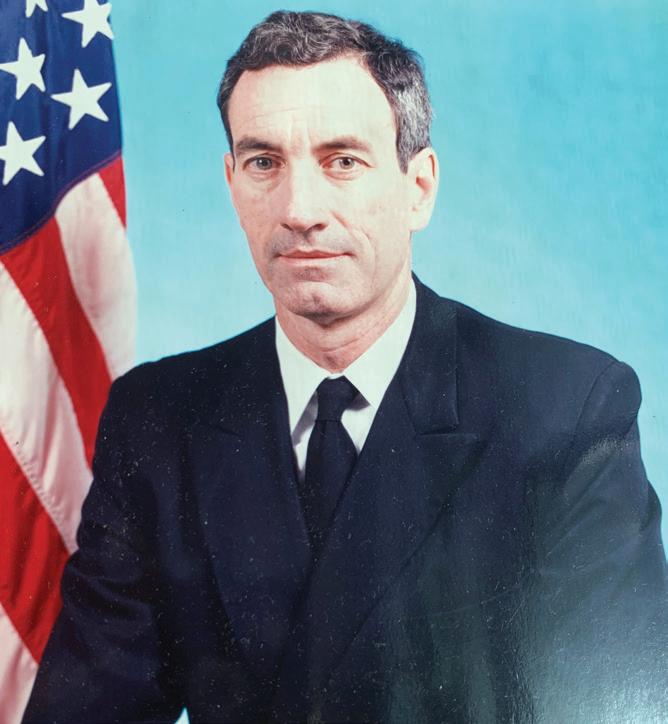
Now retired, Dr Bohan continues to champion RCSI A committed supporter, he has chosen to leave a legacy gift to RCSI, a decision grounded in gratitude and a belief in the University’s mission to shape
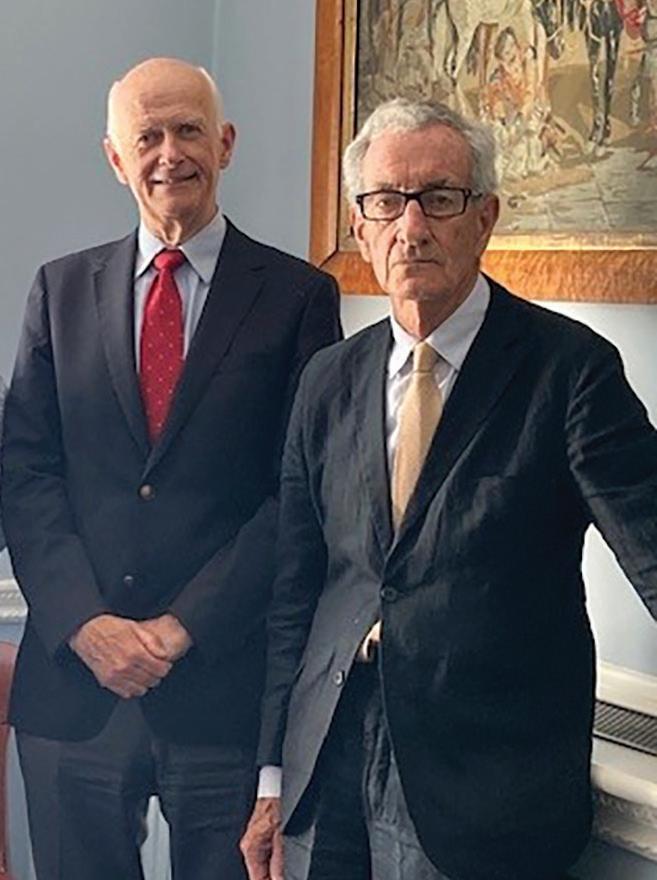
In recent years, Dr Bohan has watched the growth of RCSI’s international influence with pride. “What RCSI has achieved in recent years is almost unbelievable. It has gone from being a marginal but wonderful place to a world-class institution, while keeping its heart.” For Dr Bohan, giving back is simply the natural conclusion of a life shaped by RCSI. “It’s about values,” he says. “And RCSI instilled in me the kind of values I’ve carried through my life. My legacy gift is a thank you, for the education, the experience, the friendships, and the foundation it gave me to make a difference in the world.”
As RCSI looks to the future, it is the enduring support of alumni like Dr Bohan that will ensure its continued impact. And in his words, the path forward is clear: “Stay on track. Don’t get distracted by trends. Keep doing what matters and keep doing it well. And never forget it is all about the patient.”
If you would like further information on legacy giving please call Aíne Gibbons, Director of Development on +353 (1) 402 5189, or email ainegibbons@rcsi.ie.
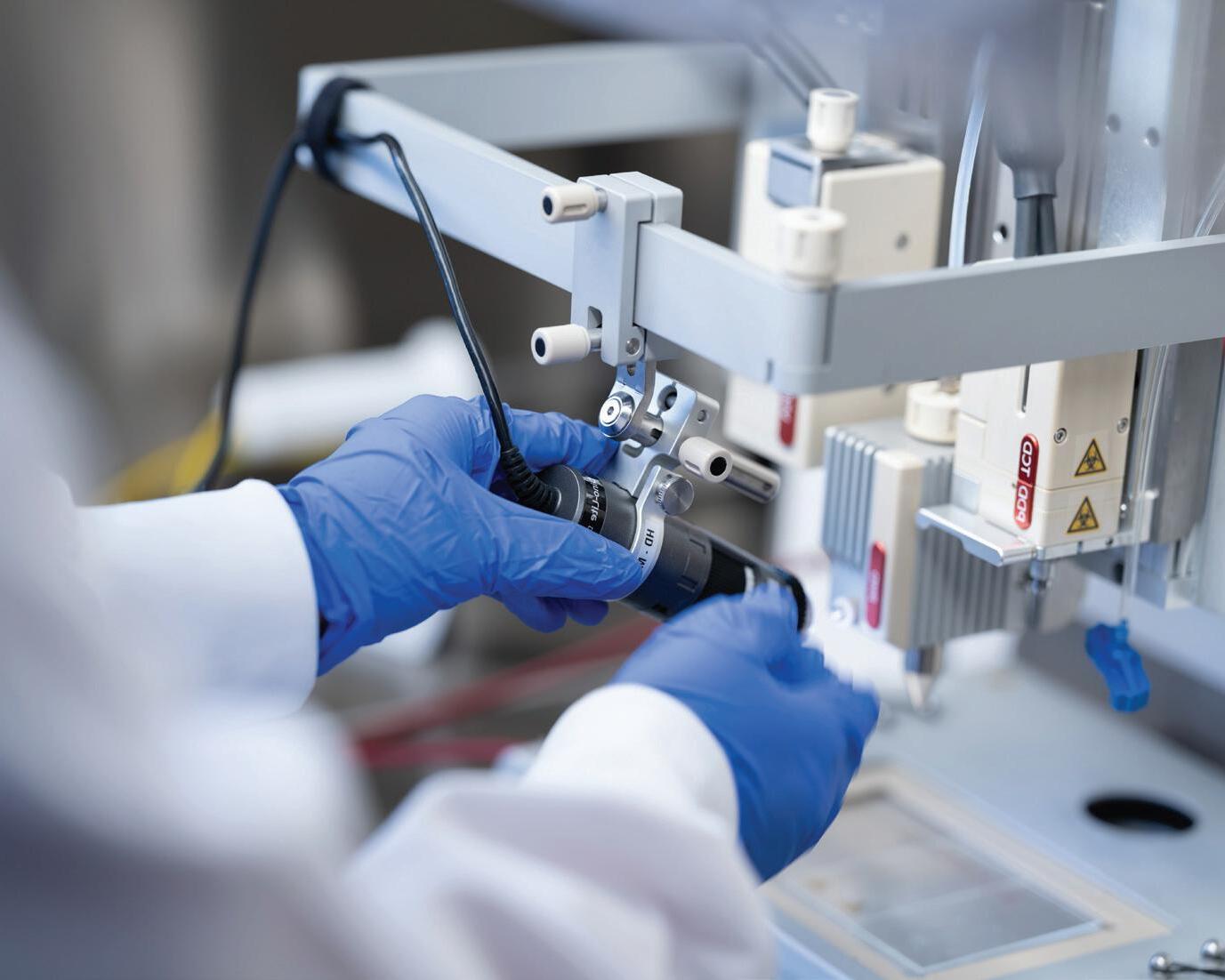
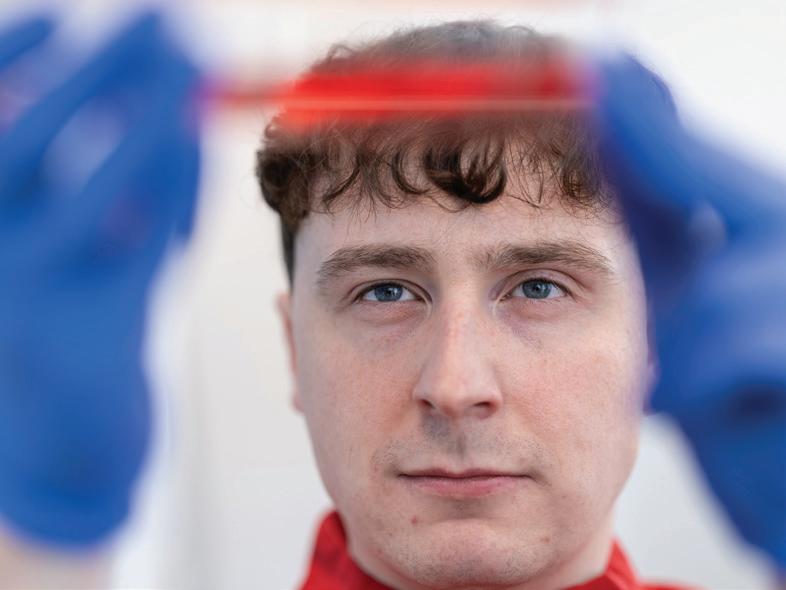
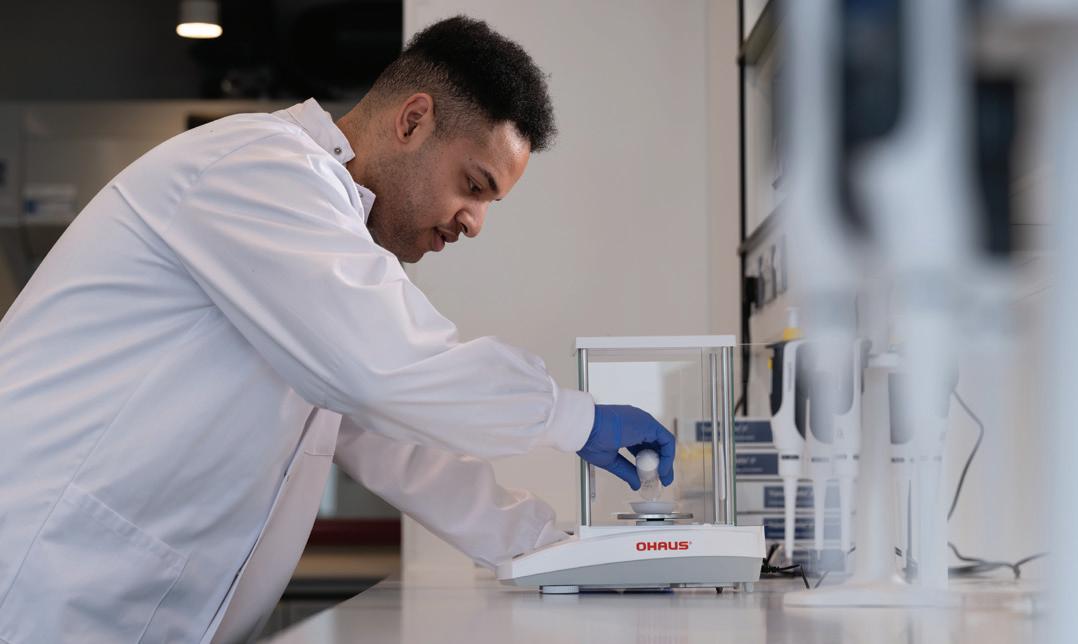
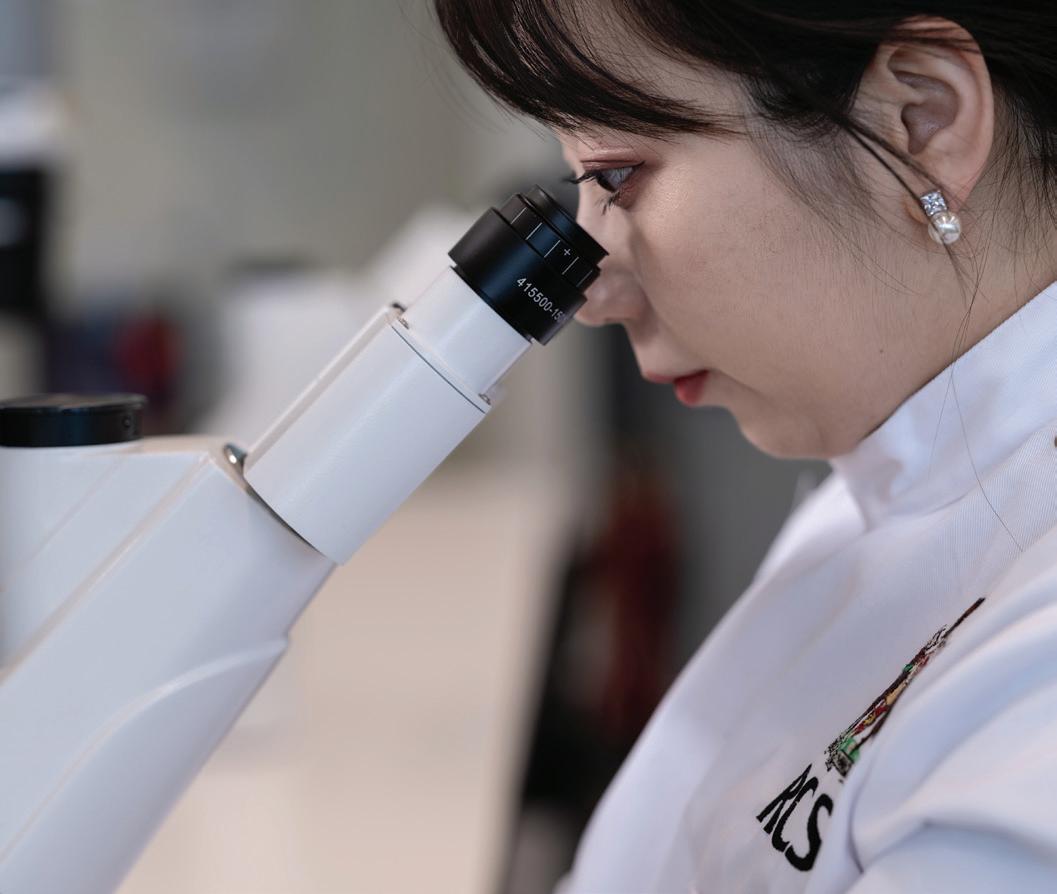
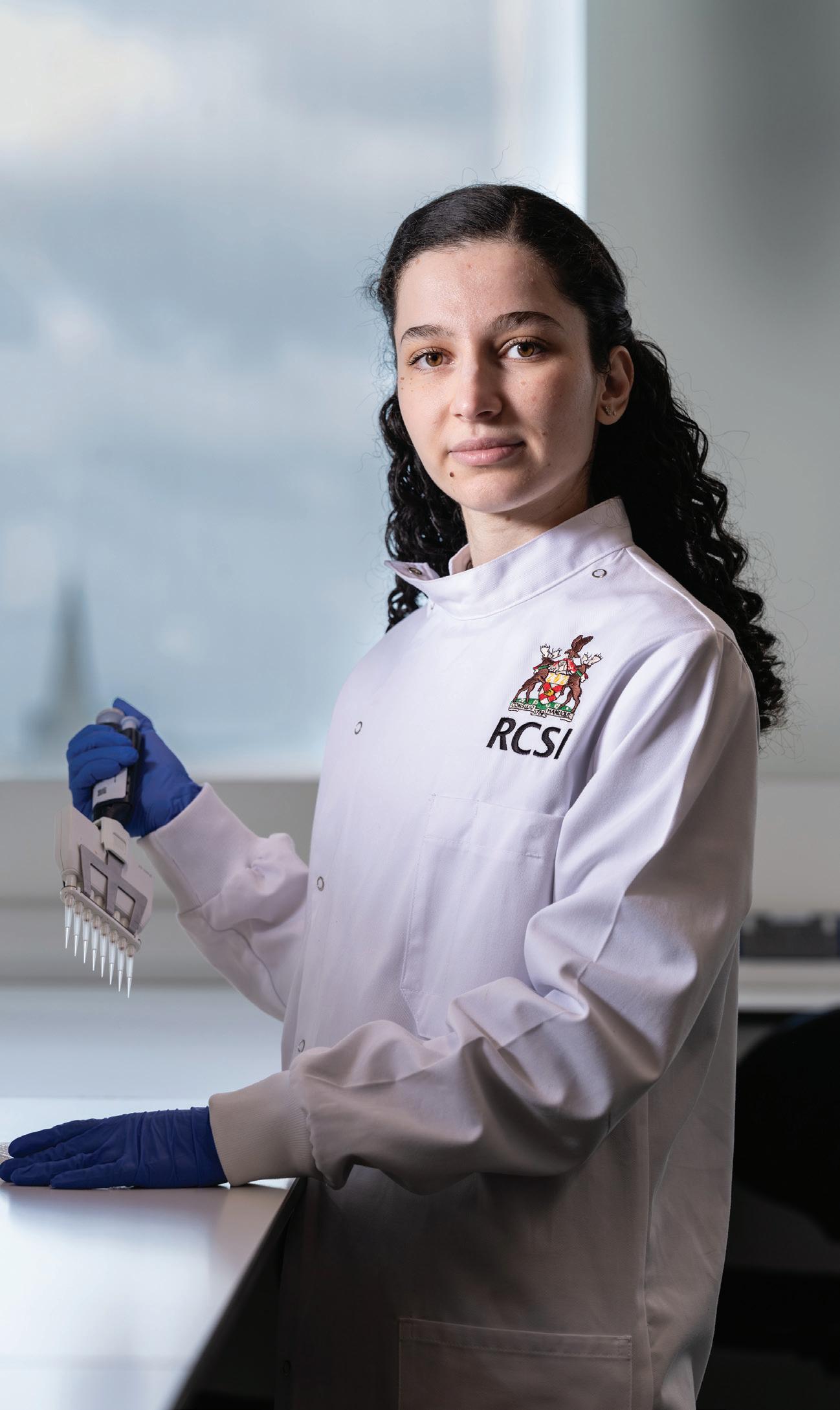
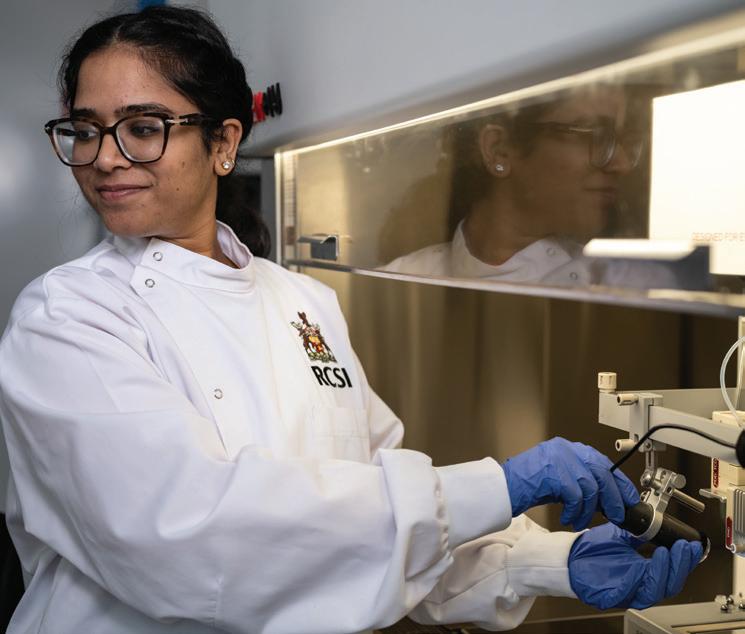
RCSI’s top-tier global reputation for health sciences research is fuelled by a patient-centred culture and international collaborations
RCSI has been a haven for innovation since its founding in 1784, but in the last 30 years the University has developed an international reputation for high-level research.
Professor Fergal O’Brien, Deputy Vice Chancellor for Research and Innovation, Professor of Bioengineering and Regenerative Medicine and Head of the Tissue Engineering Research Group in RCSI, credits Professor Kevin O’Malley with creating an environment which initially enabled the University’s research programme to thrive.
“When he was Chief Executive and Registrar, Kevin O’Malley recognised the importance of an enhanced focus on research for RCSI if it was going to become a world-renowned university,” explains Professor O’Brien. “This coincided with funding for research starting to become available in Ireland through the Health Research Board and other agencies.
“Kevin was interested in research personally, but he also made some key hires, such as Professor Des Fitzgerald, who set up the Institute for Biopharmaceutical Sciences in the 1990s. That began a culture of research in RCSI, attracting high-level active researchers to the faculty.”
Building on the foundations laid by Professor O’Malley, RCSI was well positioned to avail of the funding opportunities presented by the Higher Education Authority’s (HEA) Programme for Research in Third Level Institutions, developed by the government in the late 1990s, and the establishment of Science Foundation Ireland (SFI) in 2000. “Those initiatives began to transform Irish universities into research powerhouses,” says Professor O’Brien.
RCSI now has approximately 200 principal investigators (PIs), researchers with active grants. Many are clinicians and allied healthcare professionals who are not salaried by RCSI but work in RCSI’s teaching hospitals, driving research at the bedside, carrying out clinical trials, and defining clinical studies. Working for and supported by those PIs are many PhD students and postdoctoral researchers, senior scientists who have completed a PhD and are appointed to contract positions to conduct research in the University.
On completion of their contract, some postdoctoral researchers will move into industry or other areas, while others will gain positions in academia.
“Unlike other OECD countries,” says Professor O’Brien, “we wouldn’t have
had many postdocs in university labs until the early 2000s. We had few PhD students, and following graduation they typically left and either went abroad or to another university lab in Ireland if they wanted to be trained as a postdoc. Now the University is full of postdocs, working alongside the PhD students carrying out research under the direction of PIs and professors.”
Professor O’Brien notes that research drives performance and rankings, and that RCSI is now ranked consistently in the top 300 universities in the world.
RCSI’s research is focused on seven specific areas: Biomaterials, Medical Devices and Pharmaceutical Sciences; Cancer; Cardiovascular Disease; Neurology and Psychiatric Disorders; Surgical Science and Practice; Population Health; and Respiratory and Critical Care Medicine. “These are the areas where we are most internationally competitive,” explains Professor O’Brien, “and where we prioritise our resources.”
One of RCSI’s flagship research clusters is the Tissue Engineering Research Group (TERG) led by Professor O’Brien himself. Established in 2003, TERG is associated with Research Ireland’s AMBER (Advanced Materials and BioEngineering Research) Centre, a partnership between universities and industry to help bring science out of university labs for the benefit of patients and society.
TERG’s principal investigators have won many international awards, including nine European Research Council (ERC) grants, the most competitive and prestigious funding awards in Europe.
“TERG’s focus is on advanced biomaterials for tissue repair, incorporating drug delivery and gene therapeutics, cell therapy, and next-generation medical devices,” says Professor O’Brien. “It has led to the formation of a number of spin-out companies, some of which are still under development and some of which have already been spun out. One example is Pumpinheart Ltd., led by Dr Aamir Hameed (SPGS, Class of 2017), Senior Lecturer in the Department of Anatomy and Regenerative Medicine.”
Another flagship RCSI research programme is FutureNeuro, which has received funding from Research Ireland as a Centre, but has also been awarded many other European grants. Led by Professor David Henshall, FutureNeuro is clinically-focused and works to change the patient journey for people impacted by neurological and neuropsychiatric conditions. “As with all our research programmes, both TERG and FutureNeuro put a major focus on patient and


public involvement in research,” explains Professor O’Brien. “A good example of that is a partnership between TERG, AMBER and the IRFU Charitable Trust where injured rugby players are contributing to research on spinal cord injury. In FutureNeuro, parents and children with epilepsy and their carers are contributing to some of the research programmes.
“Patient and public involvement in our research programmes is a big focus of the institution. RCSI is now hosting the Health Research Board Ignite Consortium, the national consortium for patient and public involvement.”
Synergies and collaborations with international universities are an important element of RCSI’s research programme. Professor O’Brien highlights strong links with centres of excellence such as the Harvard MIT ecosystem, the Mayo Clinic and joint PhD programmes with Soochow University, Qatar University and the University of Pittsburgh.
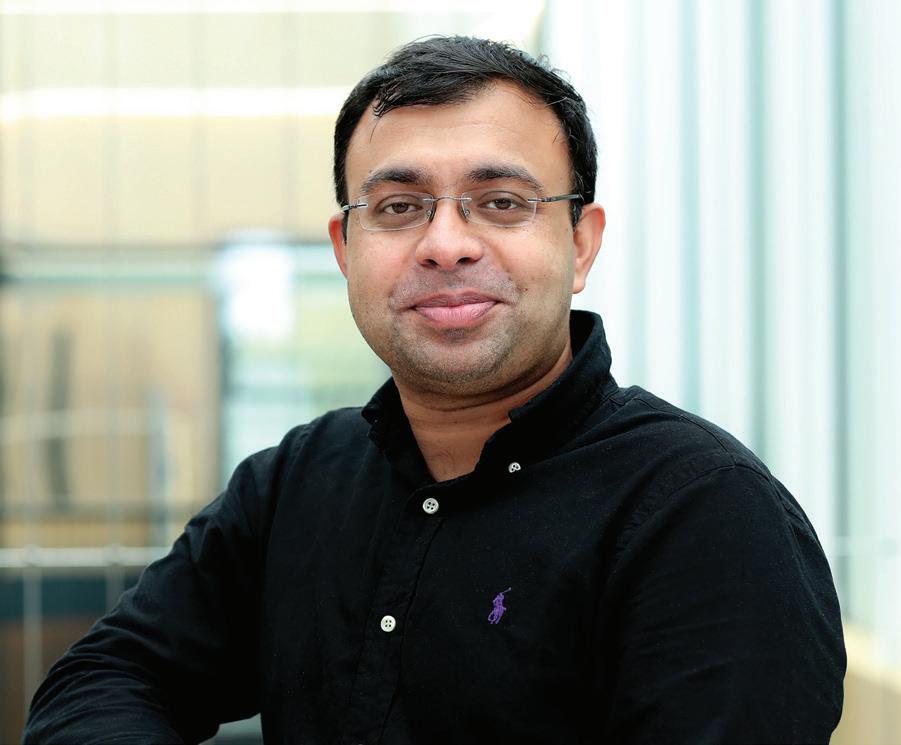
to the faculty, and is developing implants for neuroscience applications.”
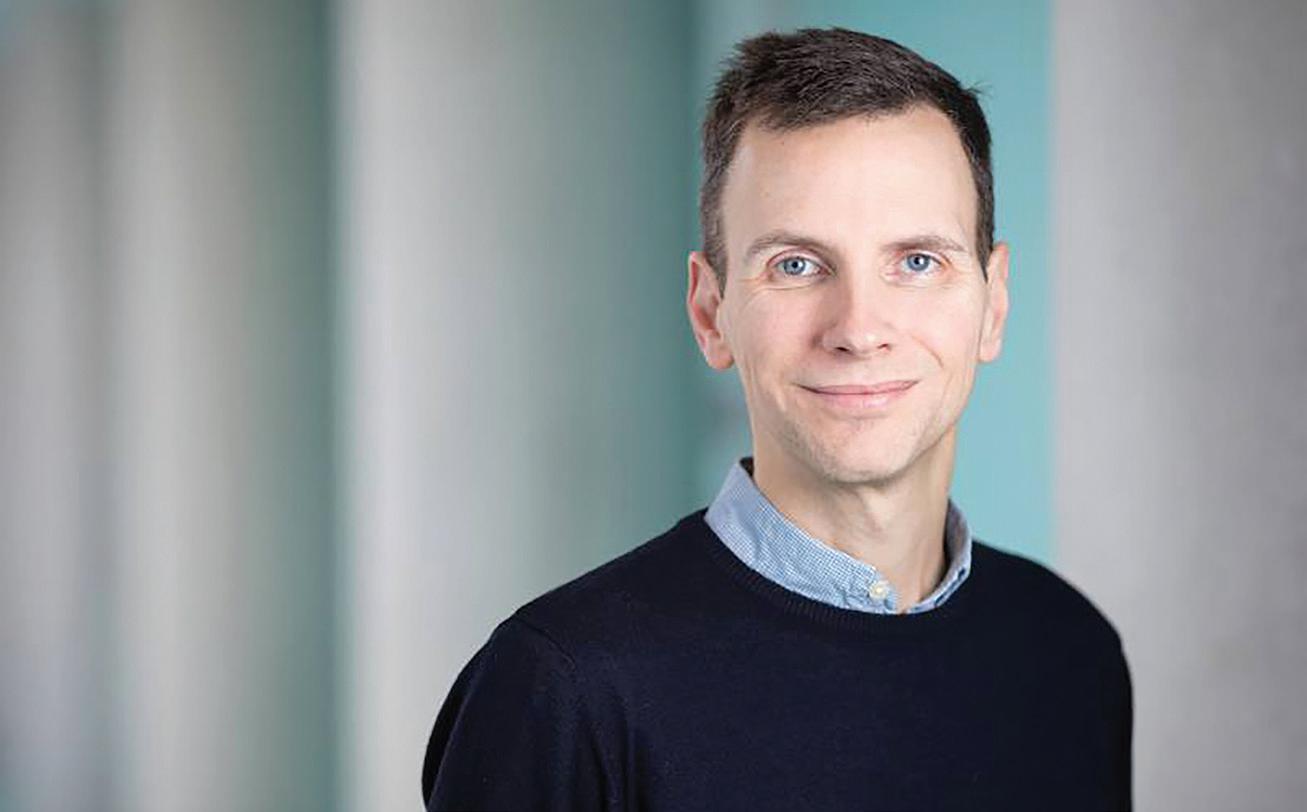
Another current RCSI postdoctoral researcher is Dr Cian O’Connor, a PhD graduate from TERG who carried out a Fulbright Scholarship in Harvard. He is developing biomimetic immunomodulatory viscoelastic biomaterials as therapeutics and tools to better understand neural cell physiology and mechanobiology. His interests lie in studying the neurophysiology of how neurons and astrocytes interact with their environment and advancements associated with therapeutics involving stem cell culture, the development of immunomodulatory scaffold implants and gene delivery strategies for application in spinal cord injury, peripheral nerve repair and the innervation of peripheral tissues.
“If we want to do first-rate research,” explains O’Brien, “we need to work with world-class scientists in other institutions.”
“If we want to do first-rate research,” explains O’Brien, “we need to work with world-class scientists in other institutions. All our top research clusters are partnering with the best universities internationally.”
Given that securing research funding is more challenging than ever, Professor O’Brien notes that it is crucial to support scientists in writing high quality grant applications. Many of these scientists will have developed links with labs in other institutions during their training. Professor O’Brien cites the spinal cord project that TERG is collaborating on with the Mayo Clinic.
“The Mayo Clinic has pre-clinical models available where we can test some of the devices we’re developing. It’s better for us to collaborate with the people who are already experts rather than having to establish the models ourselves. And that’s inevitably good for Irish science because it means that if we send our postdocs over to Harvard or to the Mayo Clinic, when they come back, they bring new skills and will have developed their own networks and have an understanding of what best in class looks like internationally.
“Dr Ian Woods is a good example because his work crosses over between TERG and FutureNeuro; he came to TERG as a postdoc developing electroactive materials. He went over to Dr Jason Burdick’s Biomaterials and Biofabrication Laboratory in Colorado, and he is now back in Ireland, having been appointed
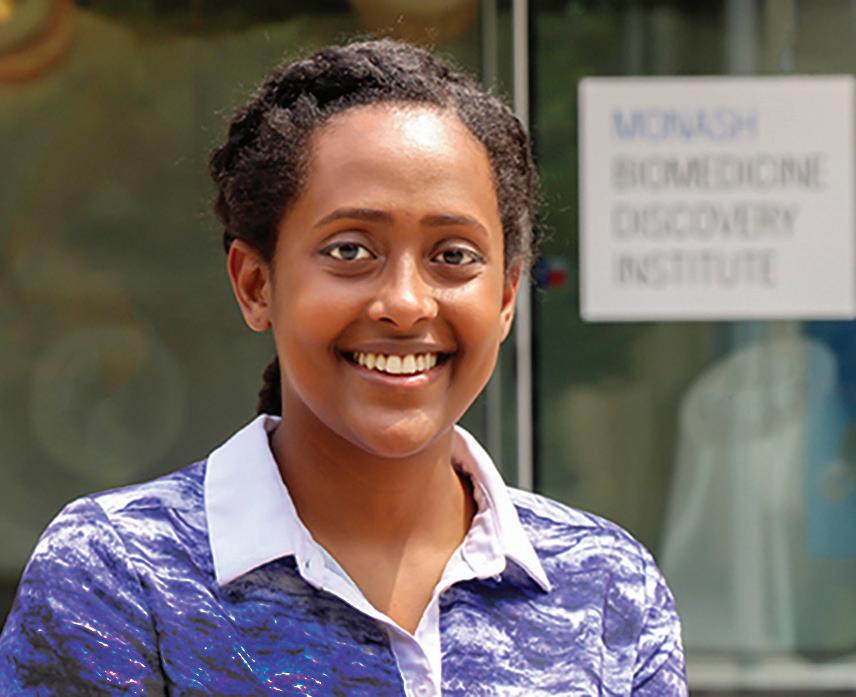
Dr Hyab Mehari Abraha, who holds a PhD in Anatomy, has been employed as a Postdoctoral Research Fellow at RCSI since late 2021. Initially contracted for a fixed term of two years, she now holds a dual appointment, dividing her time equally between her postdoctoral research and her role as a Junior Lecturer in the Department of Anatomy and Regenerative Medicine.
Dr Mehari Abraha is a biomechanist whose research focuses on heart valve mechanics, with particular emphasis on the mitral valve. Her work examines how mitral valve geometry varies across individuals and how those structural differences influence tissue stress, function, and the design of future valve therapies. Her recent conference presentations have highlighted her use of statistical shape modelling, contrast-enhanced imaging, and computational analysis to build anatomically realistic models of the human mitral valve for simulation, device development, and personalised medicine.
“As a European university, RCSI is almost unique in its sole focus on the health sciences and is now prolific in general medical research,” says Dr Mehari Abraha. “I really enjoy the possibilities for intellectual collaboration it offers.”
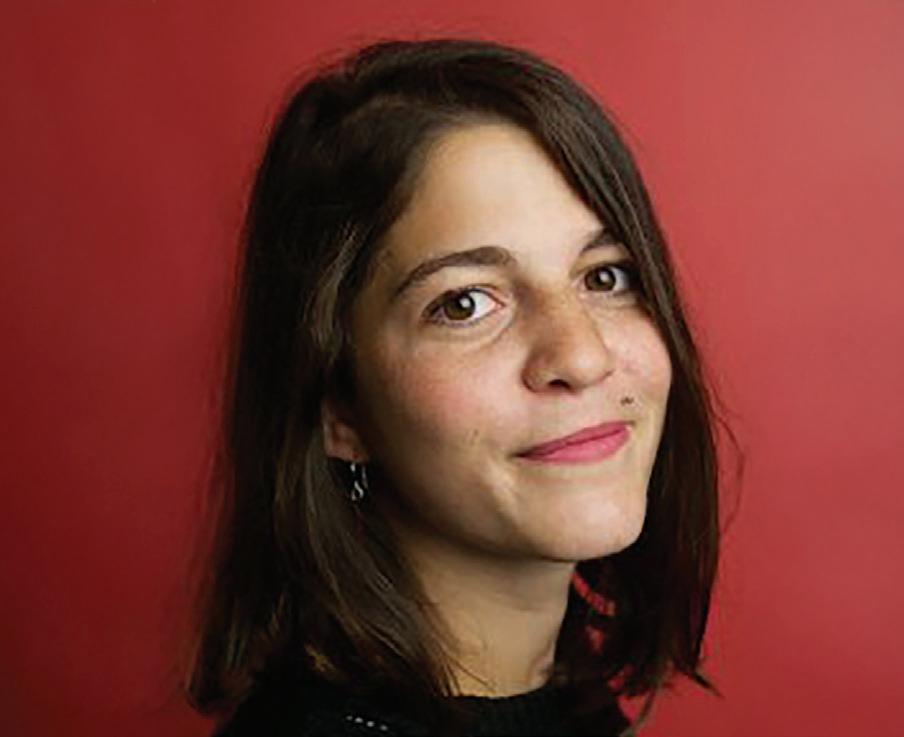
Dr Ellie Karampini, PhD, is currently in her seventh year as a postdoctoral researcher at RCSI, in the group led by Professor James O’Donnell, Consultant Haematologist, Head of the National Coagulation Centre at St James’ Hospital and Director of the Irish Centre for Vascular Biology. “My research focuses on von Willebrand factor, a protein essential for blood clotting, and how it is produced and delivered in the body. Von Willebrand disease (VWD), the most
common inherited bleeding disorder, affects up to 1% of people but often goes undiagnosed. Many, especially women, may not realise they have VWD because symptoms can be mild, such as easy bruising or heavy menstrual bleeding, or only appear during major medical events. By understanding how this protein is made, transported, and interacts with other molecules, we hope to improve diagnosis and treatment and uncover the microscopic processes that have a significant impact on people’s health.”
As she nears the end of her contract, Dr Karampini hopes to establish her own independent research line and is currently applying for the Research Ireland Pathway Programme, a very competitive award designed to bridge the gap between postdoctoral research and independent faculty status. If successful, it would fund her work and that of a PhD student for the next four years. “Within our group and extended group there is good teamwork and a sense of collaboration. I have been allowed to grow. The only difficulty is the instability that comes with working on contract year to year.”
RCSI’s Vice Dean for AI and Digital, Connected Health, Dr Sudipto Das (SPGS, Class of 2012) first came to RCSI as a postdoctoral researcher. During his time at the University, Dr Das has accrued more than €3 million in funding from national and international funding agencies including Research Ireland, the Health Research Board, Enterprise Ireland and the European Crohn’s and Colitis Foundation, allowing him to establish the Epigenetics in Gastrointestinal Research Group. The research group primarily focuses on identifying the role of epigenetic modification as novel biomarkers and therapeutic targets in GI diseases.
“RCSI provided a highly collegiate, motivational and supportive environment to me as a postdoctoral researcher,” he says. “In addition to being mentored by experts in cancer biology, I received significant support and encouragement from the Office of Research and Innovation, enabling me to develop independent grant funding proposals. The interdisciplinary collaborations within RCSI together with critical feedback from senior colleagues, ultimately enabled these proposals to be successful, which played a pivotal role in allowing me to establish my own research group.”
Professor O’Brien takes pride in the fact that RCSI is now home to first-rate research carried out by exceptional people. “The biggest evolution in RCSI over the past 15 to 20 years,” he says, “is the way we’ve been able to recruit and retain top-class people. Our Strategic Academic Recruitment (StAR) Programme, established in 2012, has allowed us to diversify our investigator and faculty base. Many of those faculty who were recruited as lecturers have moved up the ranks to become professors themselves, and have been key to recruiting excellent PhD students and postdocs. Supporting the people we recruit through their careers enables them to develop the leadership skills to recruit the next generation.
“From my perspective as Head of TERG and Deputy Vice Chancellor for Research and Innovation at RCSI, the thing that gives me the most pride is the quality of the people who we have been able to train, retain, and see starting to become the leaders of the future. That gives us confidence in the future of RCSI; great people and the next generation coming through. And we have a diverse faculty base, which is broadening all the time. Often when we think of diversity, we think in terms of gender, but our focus on EDI has helped foster broader aspects of diversity with a multicultural and international research and faculty community too.”
Researchers making a difference to human health
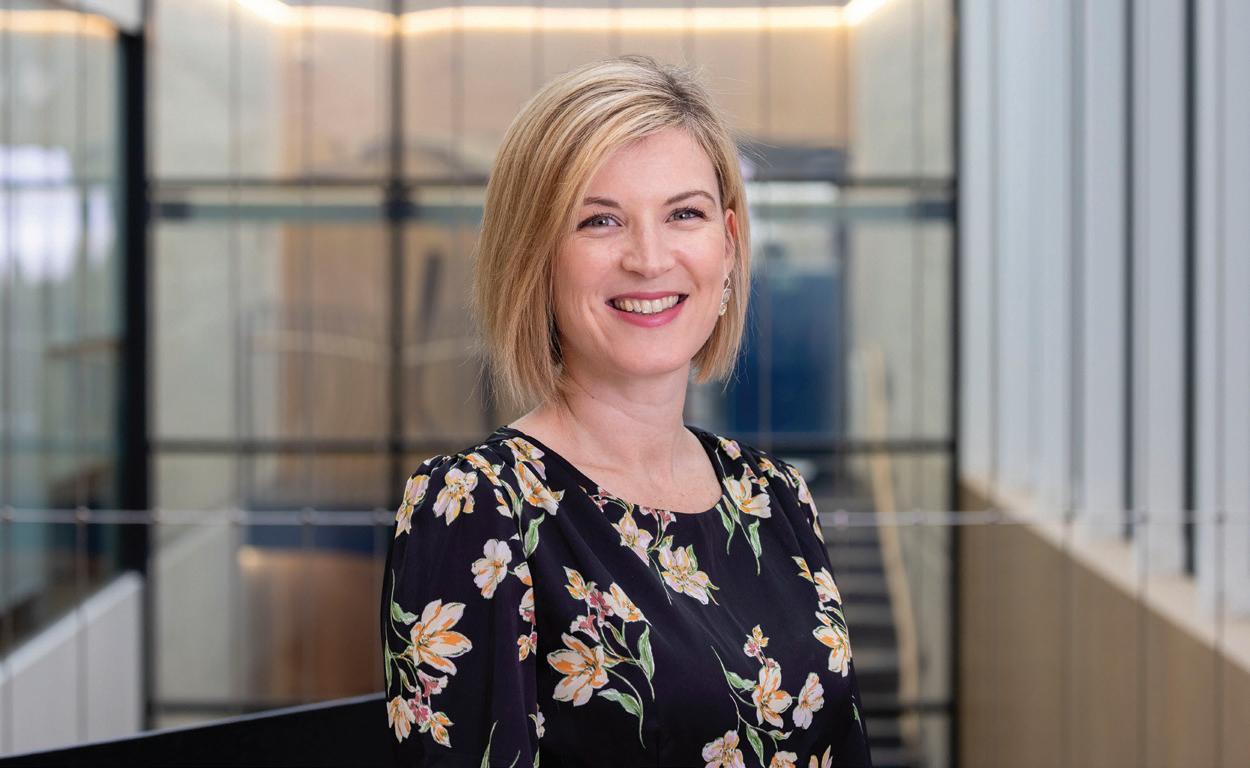
Dr Ciara Murphy is a PhD graduate of RCSI and Senior Lecturer in the Department of Anatomy and Regenerative Medicine and a Principal Investigator in TERG at RCSI. Her research programme focuses on the design of advanced biomaterial-based therapeutics for targeted tissue regeneration in complex and metabolically compromised healing environments. Dr Murphy has secured over €5 million in competitive research funding to date, including a €2 million ERC Consolidator Award. Her research excellence has been recognised through multiple prestigious awards.
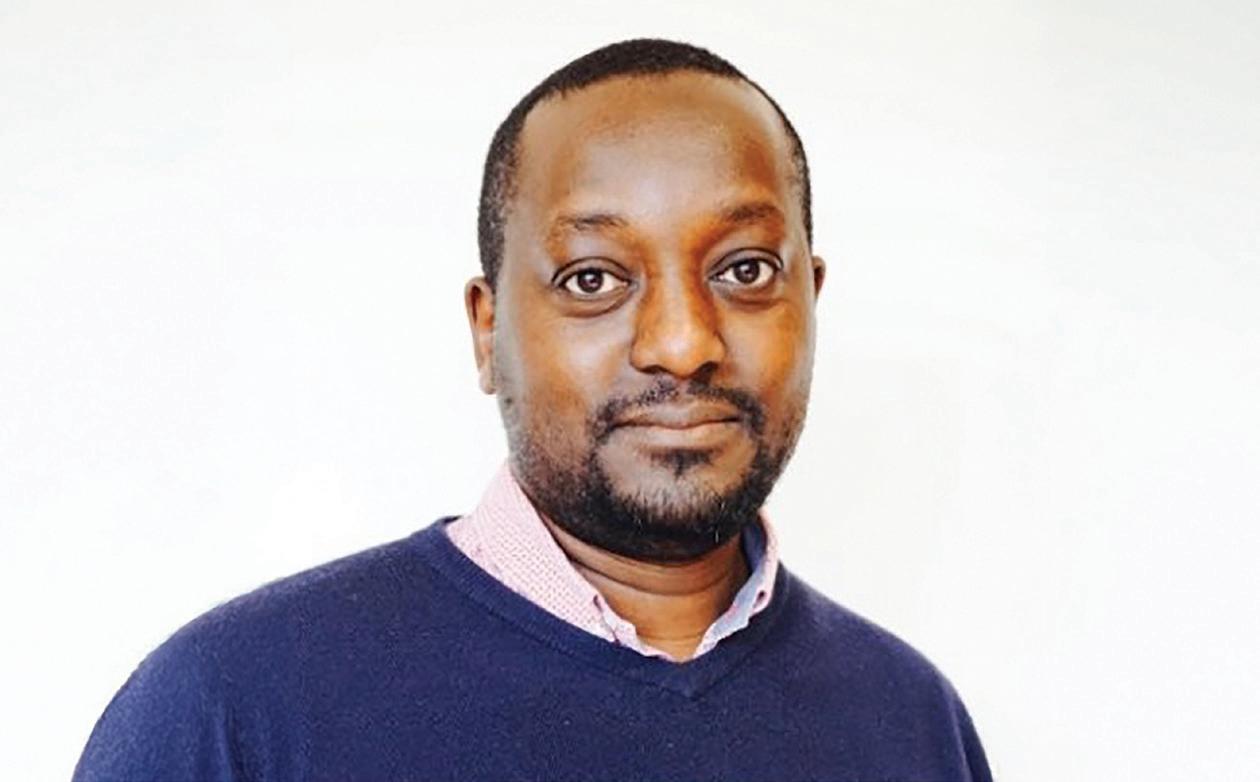
A PhD graduate from RCSI, Dr Amos Matsiko is an editor at Science Robotics where his expertise is deployed for content related to micro/nanorobotics, medical robotics, robotic surgery, prostheses, and exoskeleton suits, as well as AI, autonomous vehicles, biohybrid robots, exoskeletons, humanoids, medical robots and prosthetics. After a master’s in engineering at the University of Sheffield, Dr Matsiko did a PhD in Bioengineering at RCSI, after which he undertook postdoctoral research.
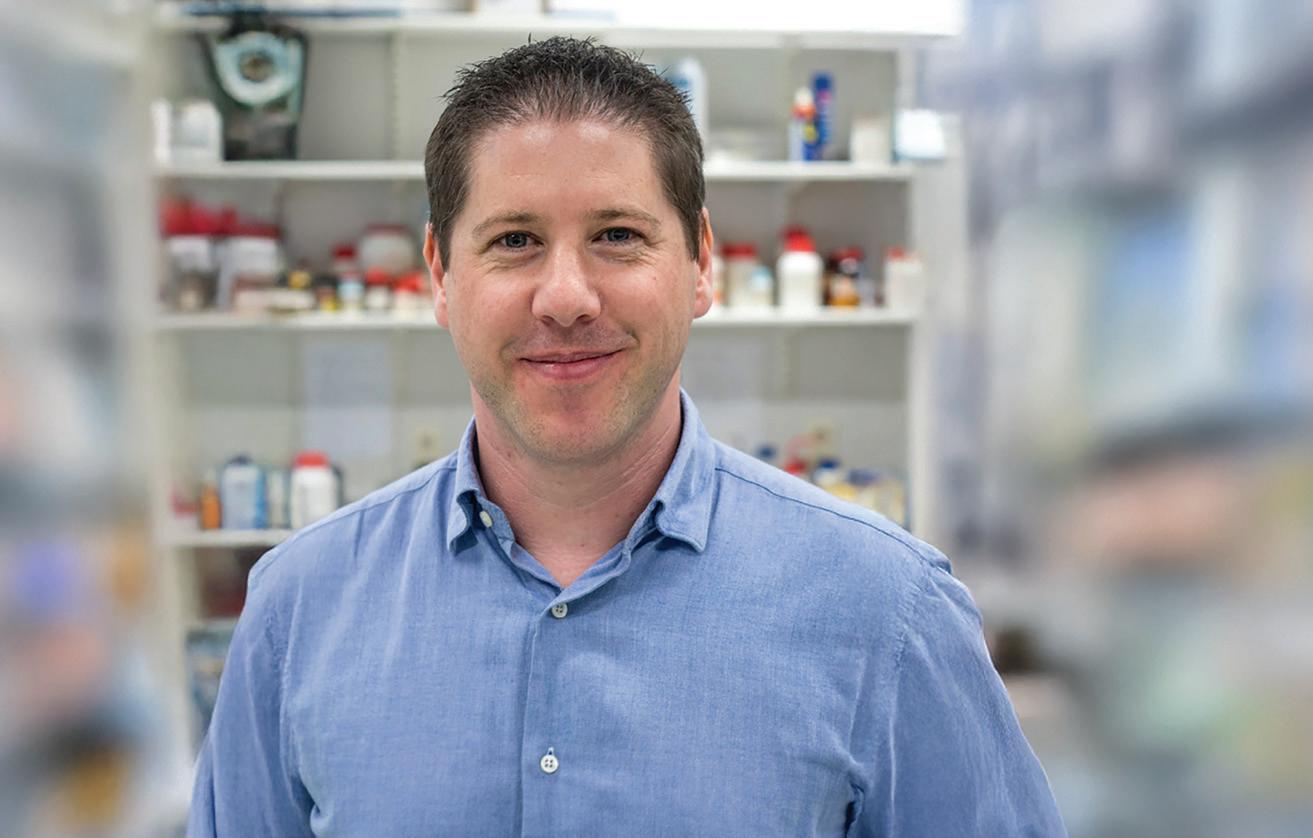
Professor Eric Farrell was previously a postdoctoral researcher in TERG and is now a professor in Rotterdam. The bone tissue engineering research laboratory he heads performs basic and translational research with the main aim of investigating how to modulate new bone formation and the various cellular interactions that occur during this process. The research focuses on the process of endochondral ossification as a promising avenue for the generation of clinically relevant quantities of bone tissue to repair large bone defects.
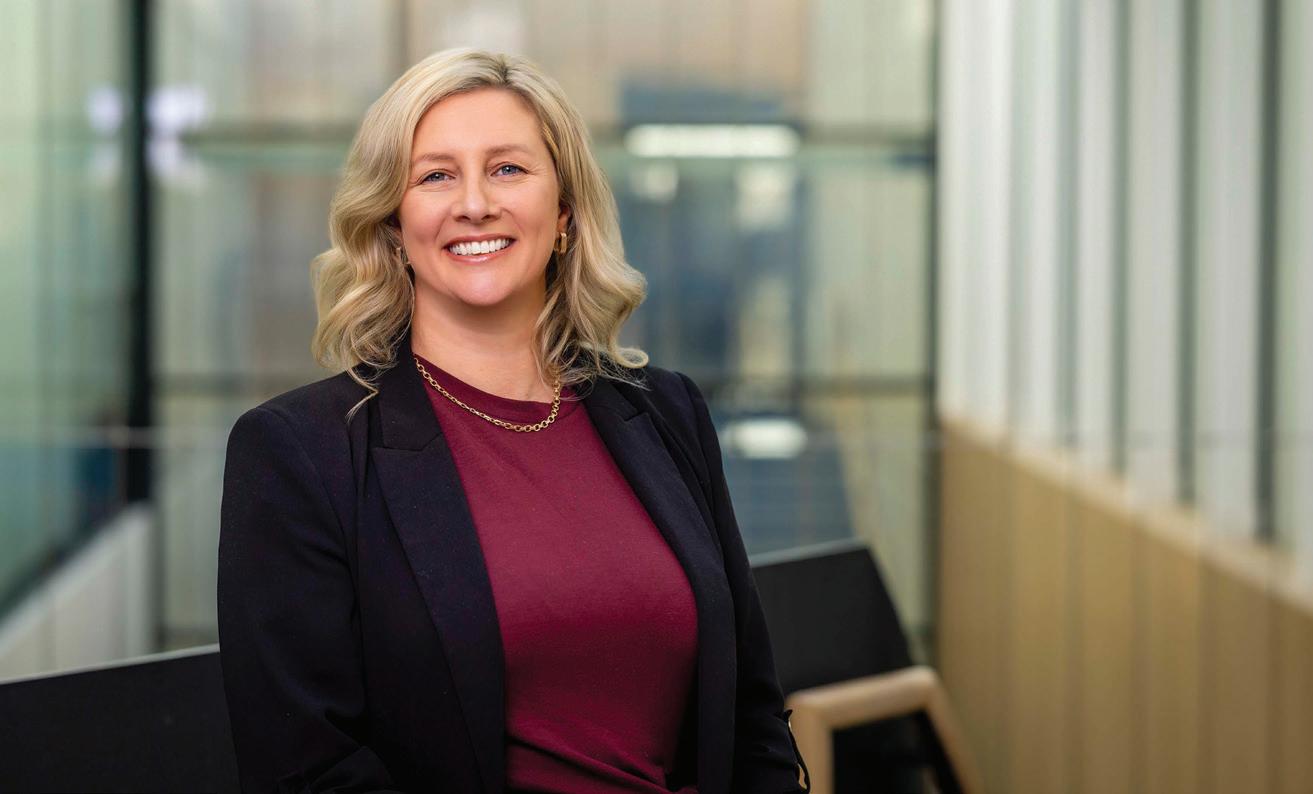
Dr Caroline Curtin is Senior Lecturer in Anatomy and Principal Investigator in TERG at RCSI where her research focuses on development of gene-activated scaffold systems for tissue engineering with a particular focus on bone and cartilage, and utilising scaffolds as 3D tumour models for development of novel cancer treatments. Dr Curtin was recruited as a postdoctoral researcher to TERG at RCSI in 2010, assessing smart scaffolds for bone tissue regeneration under the supervision of Professor Fergal O’Brien.
Dr Curtin obtained her BSc in Biomedical Science from the National University of Ireland, Galway (NUIG) in 2004 followed by a PhD in 2010 from the Regenerative Medicine Institute at NUIG.
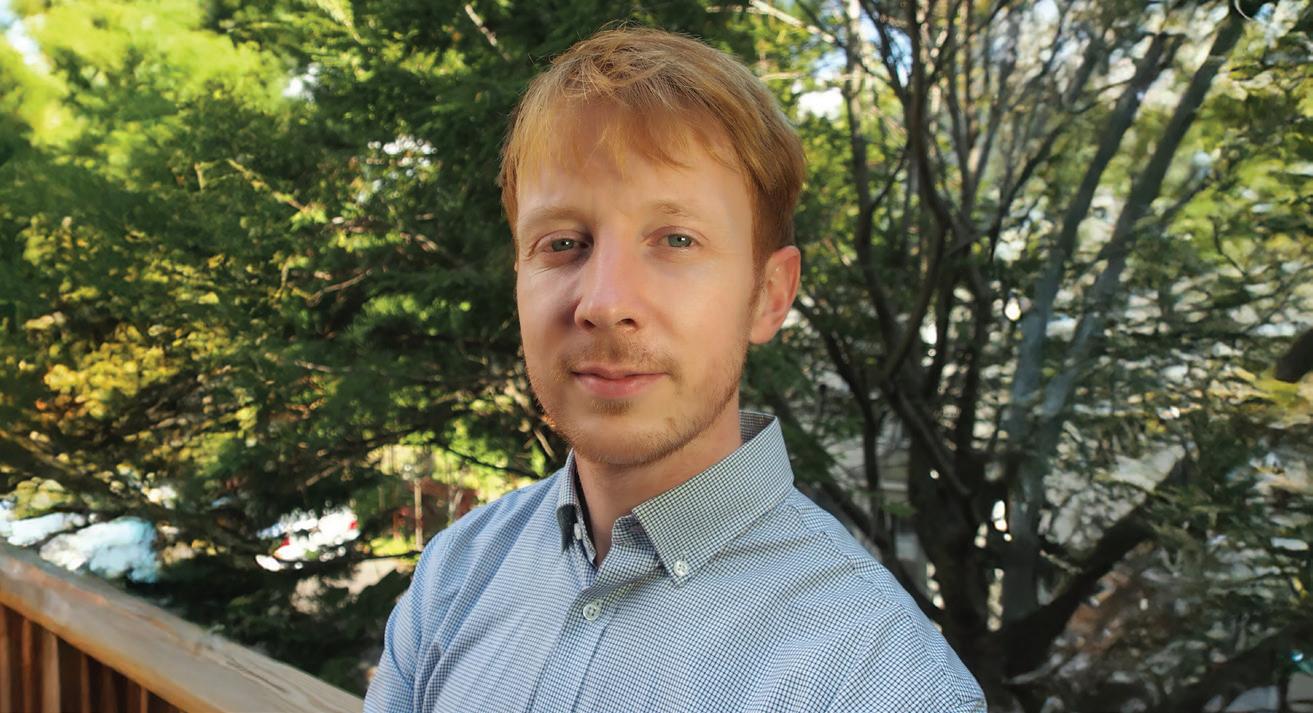
Dr Will Whyte is a PhD graduate from TERG and is now a Boston-based consultant with expertise in building new technologies that impact patient care. He provides strategic and operational support to early-stage life science companies, including market opportunity assessments, competitive landscape analysis, and preparation of investor materials.
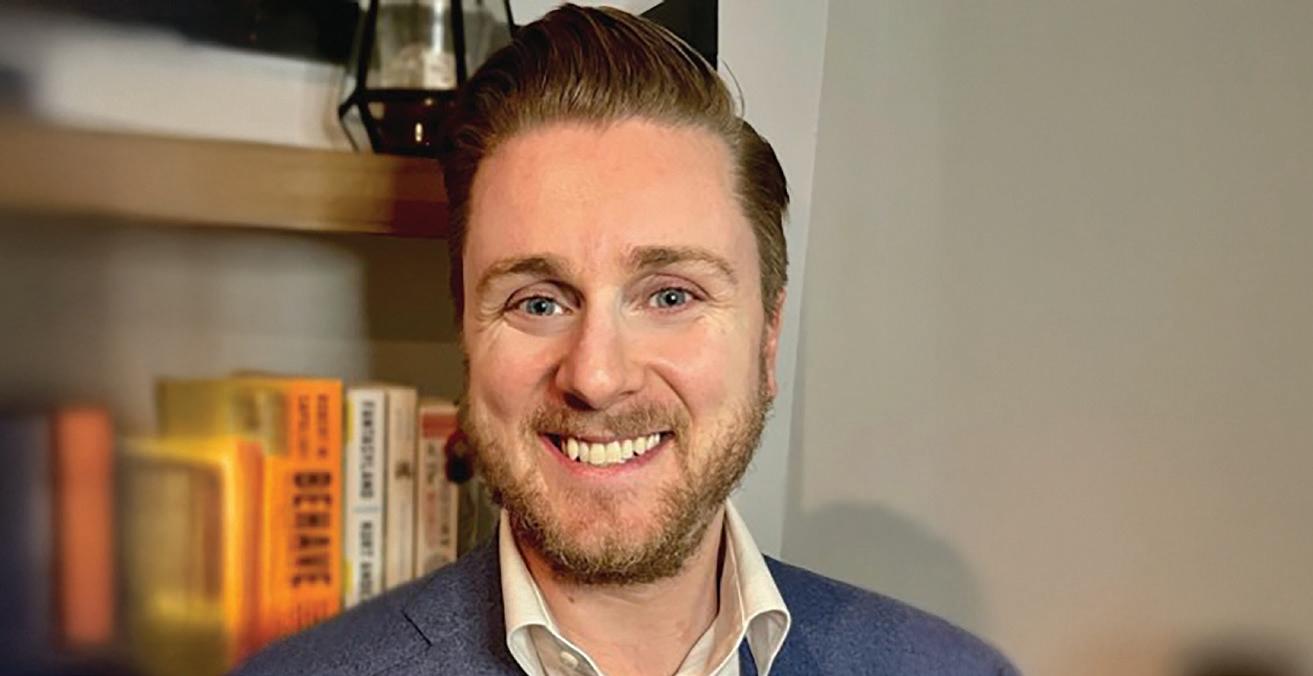
Dr Chris Whelan is a neuroscientist and scientific strategist working at the intersection of proteomics, precision medicine, and population health. His focus is on translating complex multi-omics signals into clinically actionable tools for early disease detection and therapeutic development. Whelan’s career spans pharma research and development, consortia leadership, and translational research.
As founding chair of the UK Biobank Pharma Proteomics Project (UKBPPP), a 14-member pharmaceutical consortium, Whelan led one of the largest plasma proteomics studies to date. This work has enabled the discovery of resilience markers for neurodegenerative disease, biological subtypes of disorders such as depression, scalable disease prediction models, and dozens of novel drug targets.
Dr Whelan now leads Ignition Scientific, an advisory firm that helps biotechs, nonprofits, and academic teams translate large-scale multi-omics studies into diagnostics and therapeutics. He remains active in academic research through an adjunct role at RCSI and is building several long-term platforms in the precision medicine space.
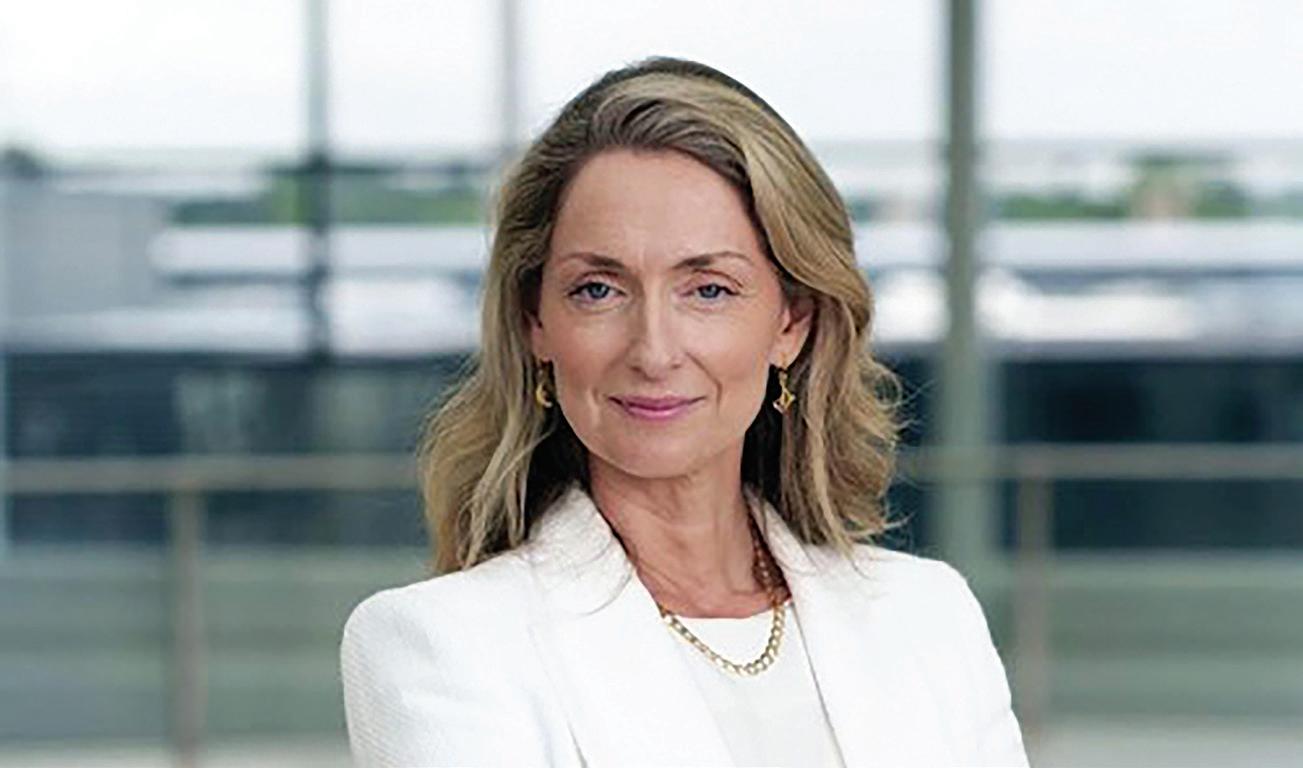
Professor Patricia Maguire was at RCSI in the early days of postdoctoral research from 2002 to 2004; her research examined proteomics, the dynamic proteins that drive cellular processes. Now Professor of Biochemistry at University College Dublin (UCD) and Director of the UCD Institute for Discovery, she leads high-impact, cross-disciplinary initiatives translating breakthrough science into real-world healthcare solutions. She is a Funded Investigator in the INSIGHT Research Ireland Centre for Data Analytics.
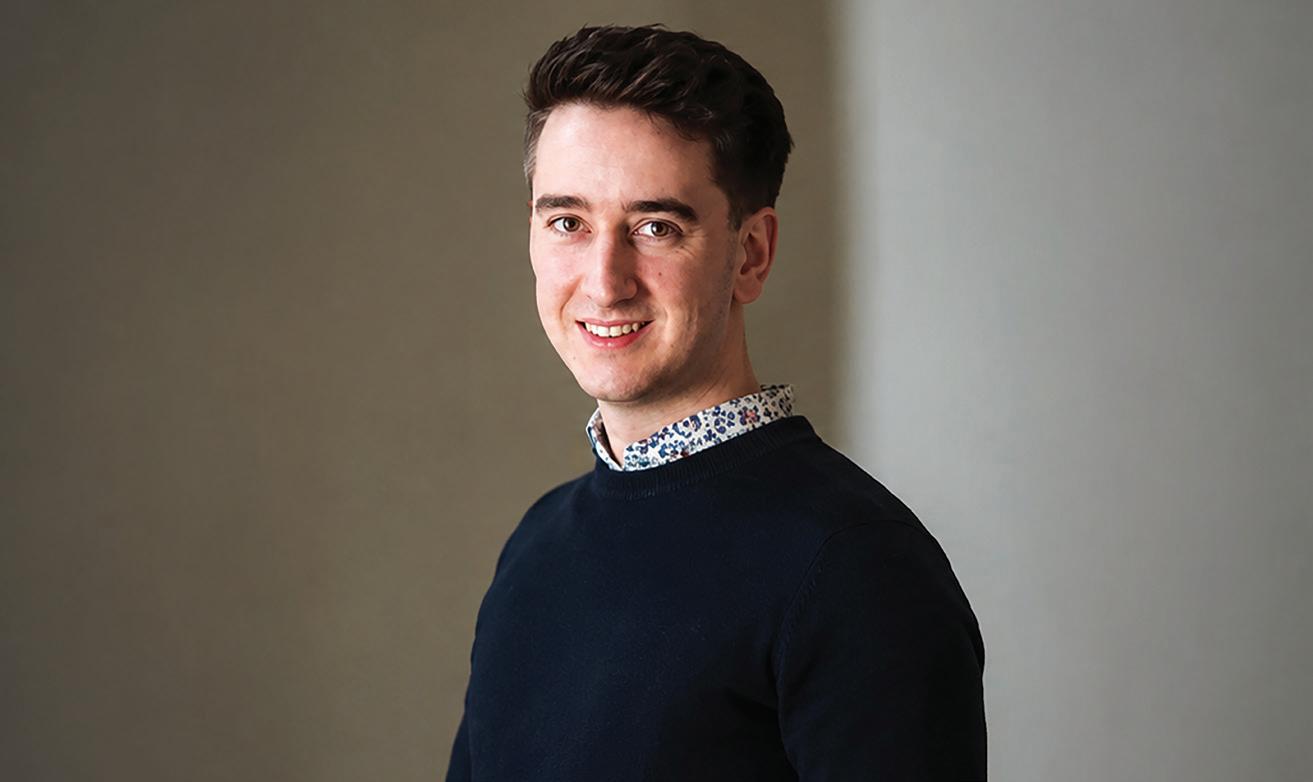
Dr Donagh O’Shea is a pharmacist and PhD graduate in regenerative medicine from TERG and has experience spanning academic research and pharmaceutical research and development. He currently works as a Quality Compliance Pharmacist in a pharma and medical device distribution environment, with primary responsibility for GDP and MDR compliance. His early career was research focused – a lab-based PhD was followed by postdoctoral research in regenerative medicine, with multiple first author and coauthor publications in high-impact scientific and medical journals. He subsequently transitioned into industry, working as a Pharmaceutical Project Manager with Lilly Research Labs, where he supported early and late-phase drug development programmes (small molecules and siRNA), gaining strong exposure to cross-functional drug development.
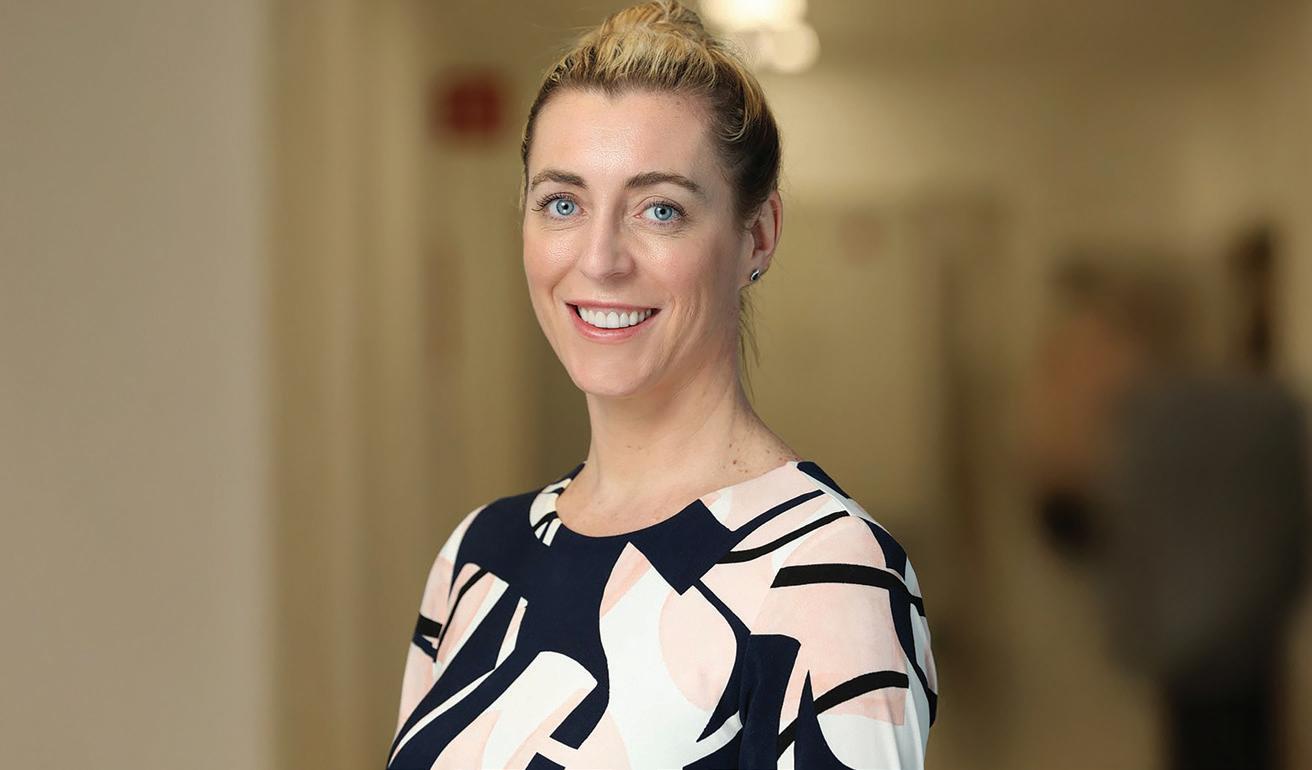
Dr Dearbhaile Collins, a 2024 RCSI Research and Innovation Alumni Awardee, is a Consultant Oncologist and Clinical Director for Cancer at Cork University Hospital and University College Cork (UCC). She pursues translational research in tumour resistance to immunotherapy and targeted therapies in order to identify new ways to treat cancer. She is chair of the Irish Molecular Tumour Board and co-chair of Gynaecological Cancer Trials, Cancer Trials Ireland. President of the Irish Society of Gynaecological Oncology (ISGO), she has a subspecialty interest in gynaecological and thoracic malignancies.
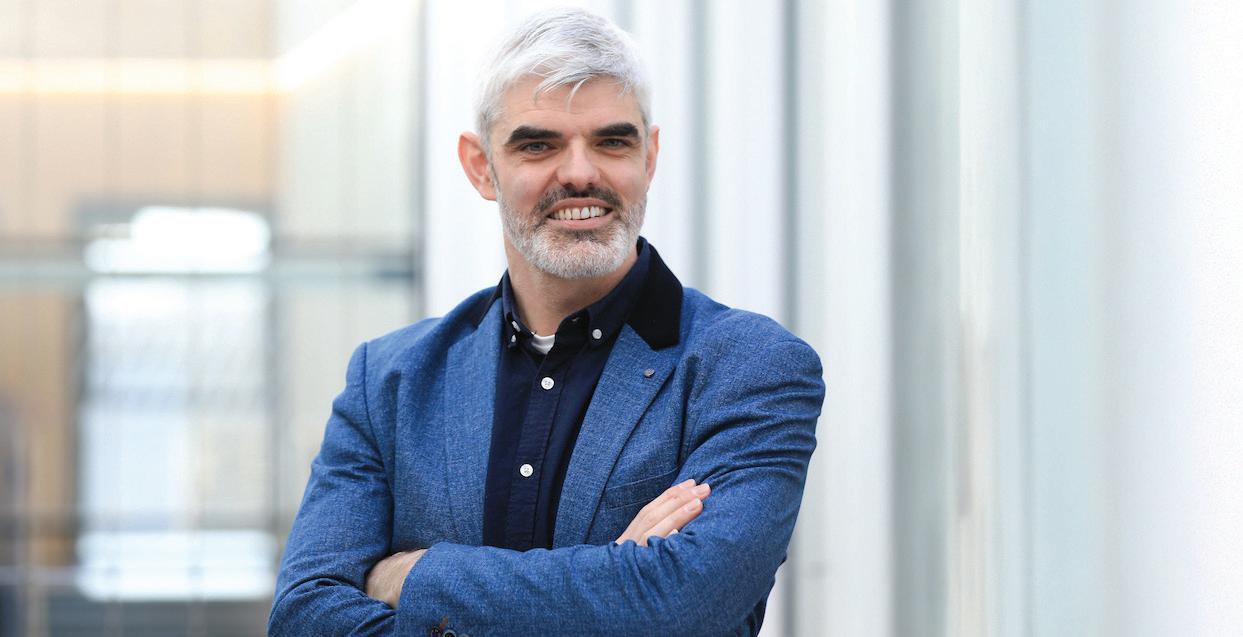
Professor Oran Kennedy received his undergraduate degree in mechanical engineering from Trinity College Dublin (TCD) in 2001. Following a brief period working in industrial research in the UK, he returned to complete his PhD training on a joint graduate programme between TCD and RCSI. He was awarded a Fulbright Scholarship to work with Professor Mitchell Schaffler in the Department of Biomedical Engineering at the City College of New York. He was then recruited as a faculty member in the research division of the Department of Orthopaedic Surgery at New York University Medical Center (NYUMC). More recently he relocated his laboratory back at RCSI, where it forms part of the TERG cluster. He was awarded a Marie Skłodowska-Curie Fellowship to facilitate this move. His group is closely aligned with the Trinity Center for Bioengineering (TCBE) and the Advanced Materials and Bioengineering Research (AMBER) Centre in TCD. ■
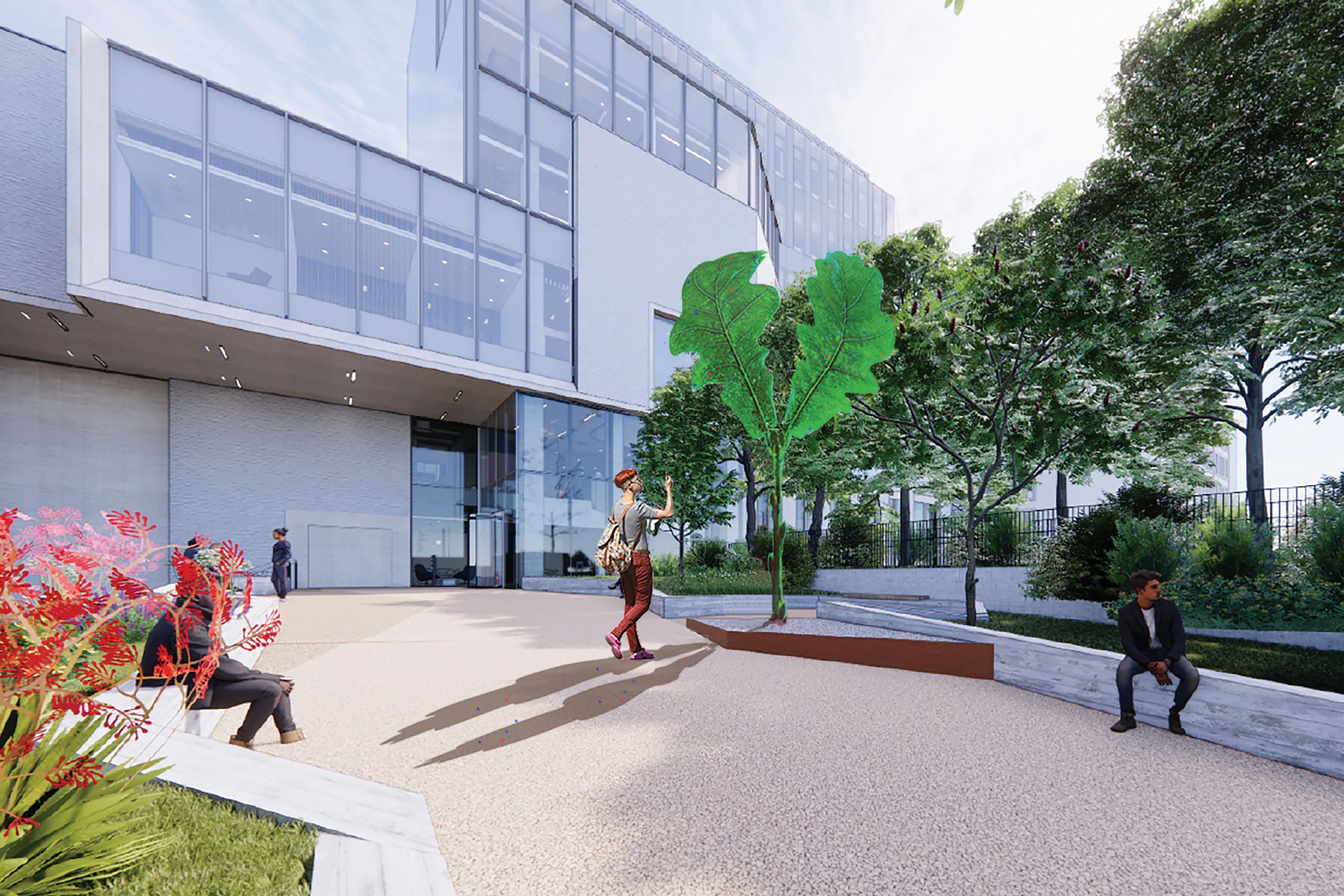
A new sculpture, commissioned by RCSI for the courtyard garden of its new building at 118 St Stephen’s Green, has deep roots in Dublin’s history – and healthcare. Antonia Hart met the artist, Rachel Joynt RHA
The staff at a café in Sandycove tell me I ought to have reserved a table. And they have already run out of scones. It is a mildly awkward start to an interview with someone I’ve never met before, but sculptor and artist Rachel Joynt makes it easy for me. She says she is comfortable with a little chaos. We order a mid-morning breakfast of coffee and cake, sitting at a shared table next to the door opening onto the seafront, where almost 30 years ago now, her sculpture Mothership was installed. It’s a landmark on this stretch of coastline, a giant sea urchin cast ashore, scattering silvery drops of seawater.
“I grew up around here, and I used to roller skate endlessly along that path. So it’s special to me to have a piece in this area. Mothership was the first piece I did that came out of the ground, I had worked on flat sculpture before. Though the droplets on the ground perhaps mean it keeps that sense of the two-dimensional.”
Much of her work, including her newest piece destined for the courtyard garden at 118 St Stephen’s Green, is site-specific. Her earliest public realm commission was in Dublin’s Millennium Year, 1988, when she was still studying at the National College of Art and Design (NCAD) People’s Island consists of human and bird footprints embedded in the paving stones on a pedestrian island at O’Connell Bridge. Reconfigured in 2017 to fit in with Luas works, it’s a sculpture designed to be walked on. “People don’t have to stand back and look at it,” she said at the time “It’s something that they just come across.” And they do: thousands of people cross People’s Island every day, their footfall endlessly polishing it. It’s the same with Freeflow, a series of underlit blue and green glass cobbles inset with fish in silver and copper, stretching down the Liffey’s north quays towards the 3Arena for almost a kilometre. In Sandycove, there is always a captivated child climbing into or out of Mothership, or someone passing a hand over a change in its texture. Joynt welcomes these physical interactions with her work.
“When I make a piece for a particular location, I hope it will feel like it belongs there.ˮ
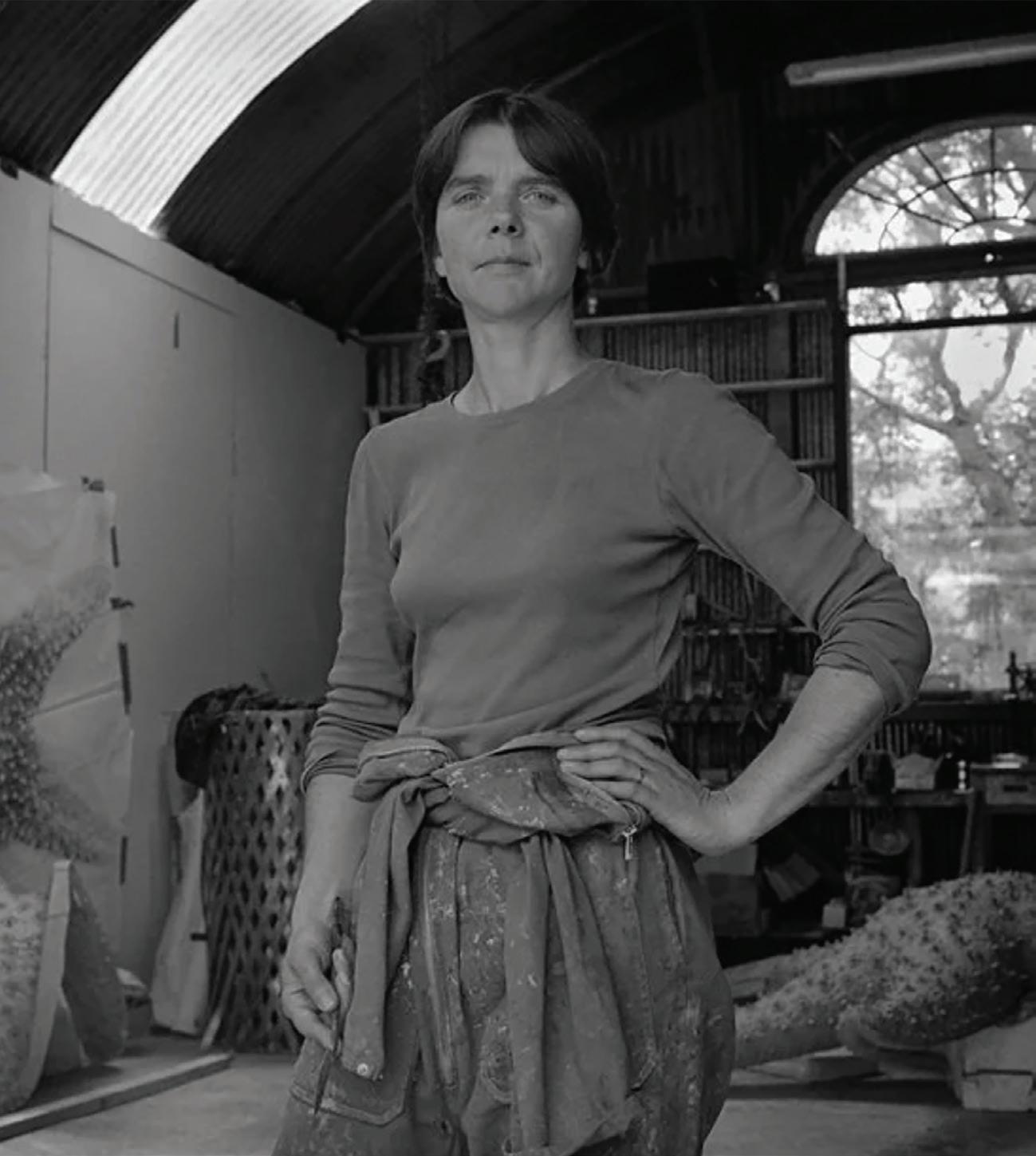
“When I make a piece for a particular location, I hope that it will feel like it belongs there, that connection really matters. But maybe I might throw in a little bit of make-believe, some playfulness, and there’s room for people’s interpretation. I remember when I was installing Mothership years ago a woman stopped and asked me, ‘is that real?’ I loved that ... And I love people going up and touching the piece.”
Mothership was commissioned under the Per Cent for Art Scheme which
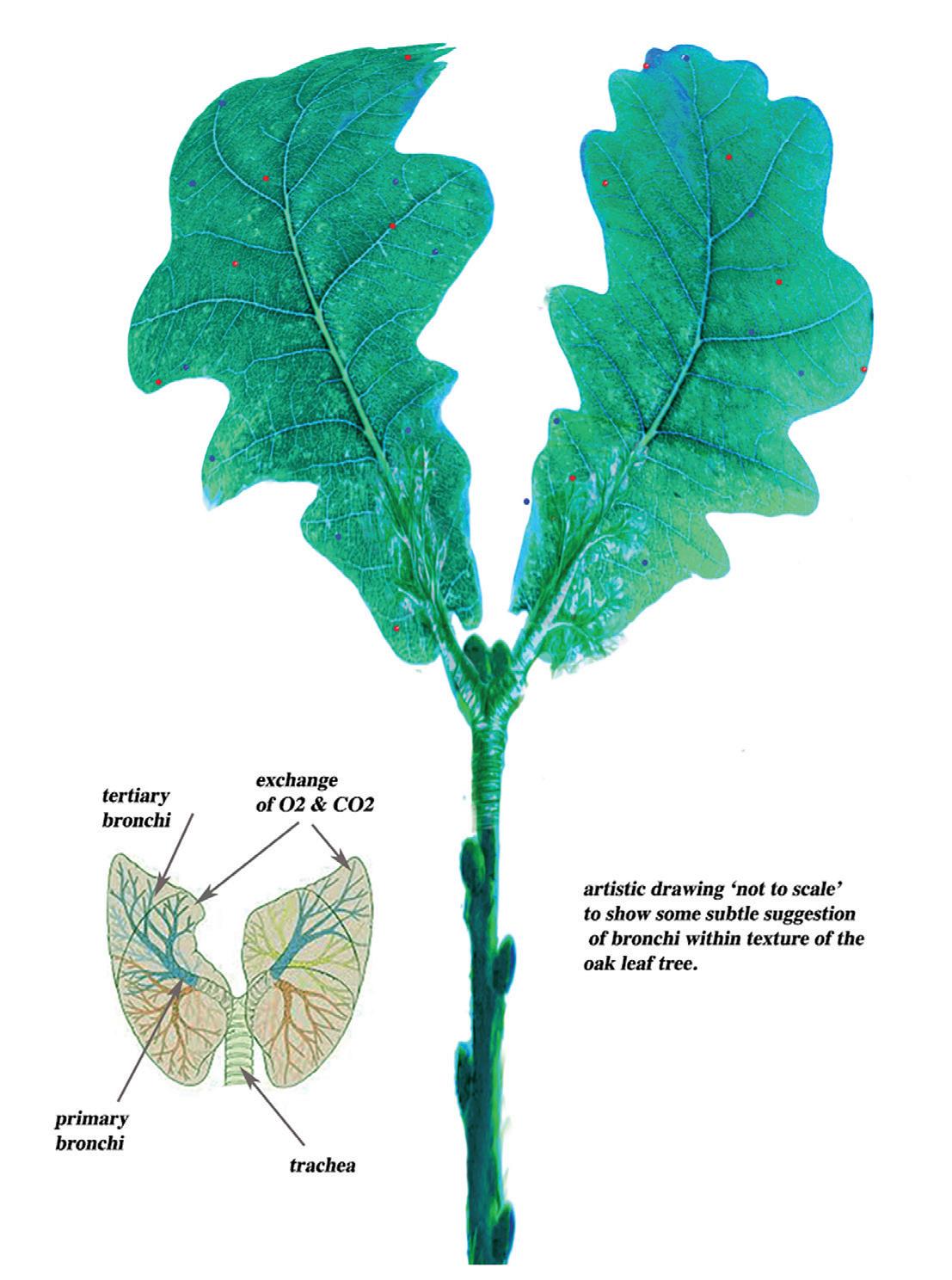
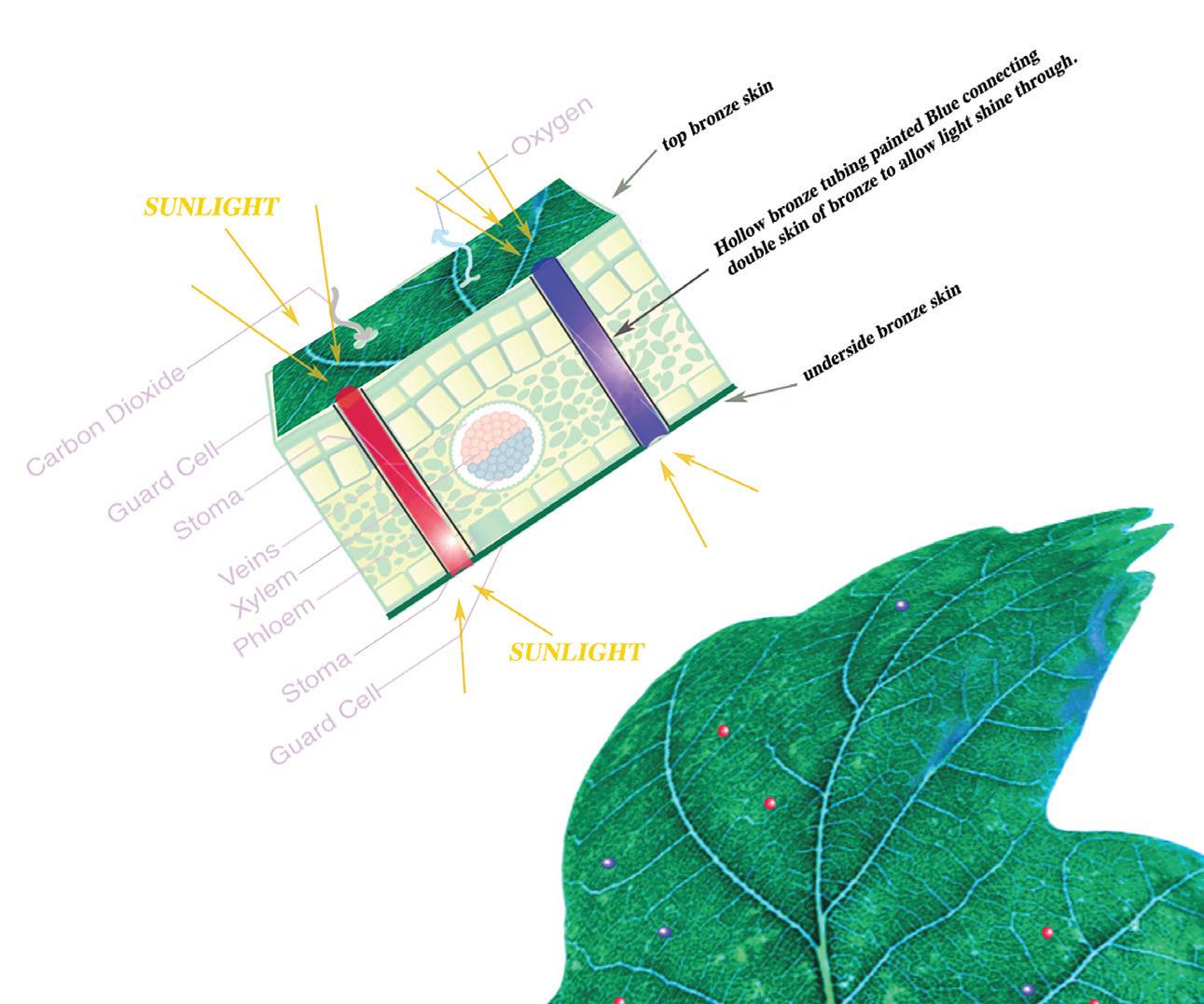
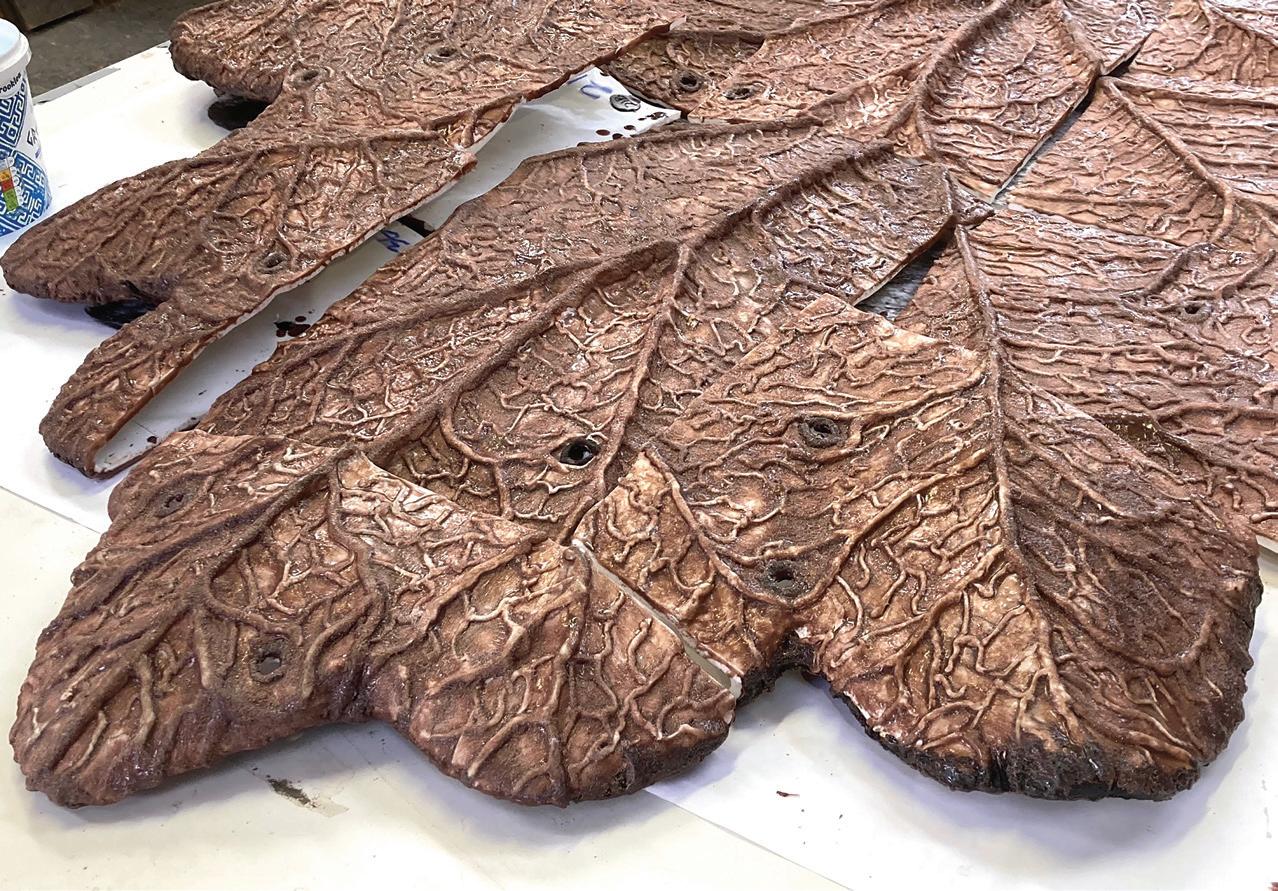
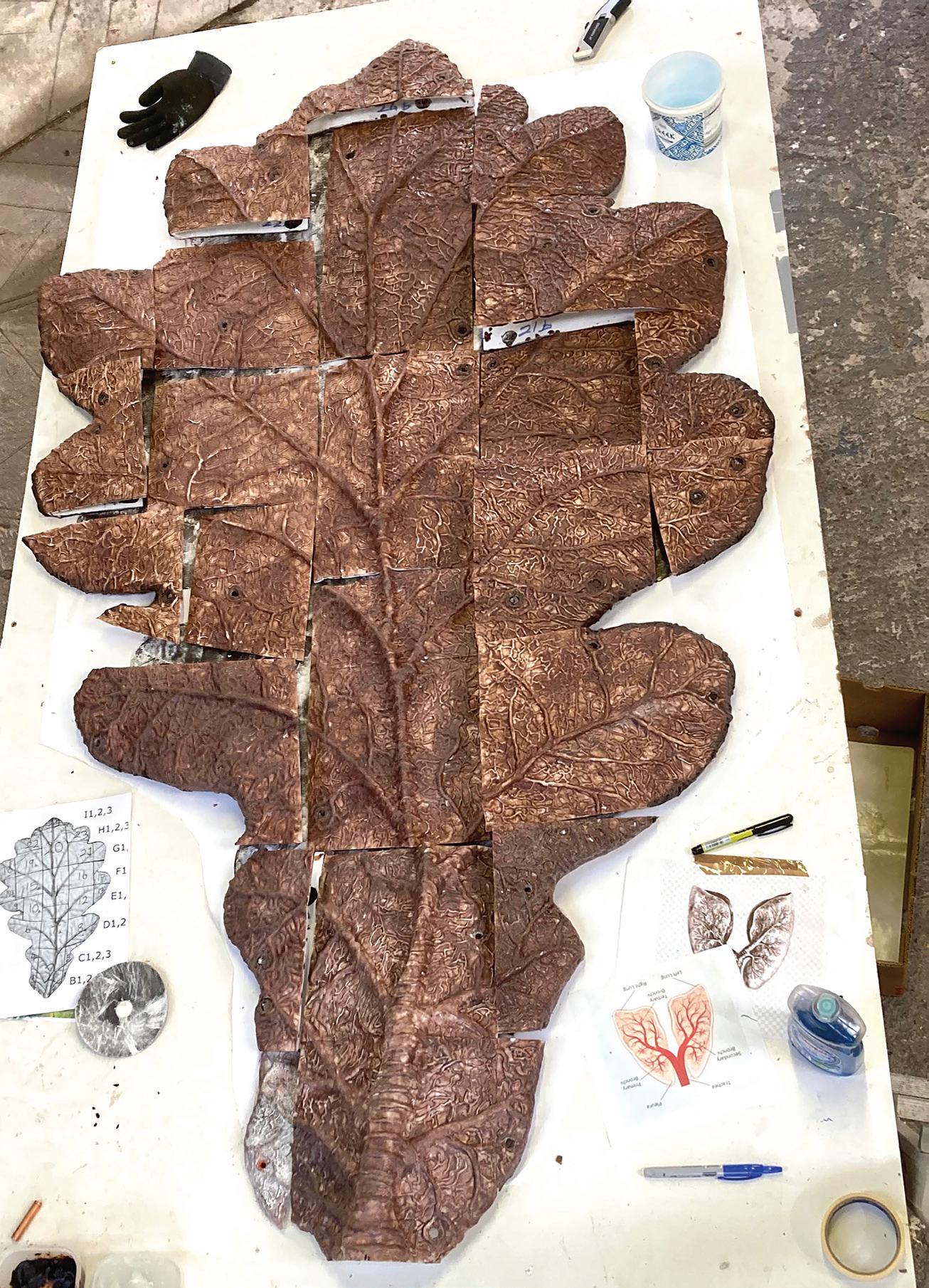
ABOVE Rachel Joynt's sketches for the new sculpture reference the structure of the leaf – and the lungs: “A leaf inspires carbon dioxide and expires oxygen. We inhale oxygen and we exhale carbon dioxide. It’s this beautiful loop of exchange."
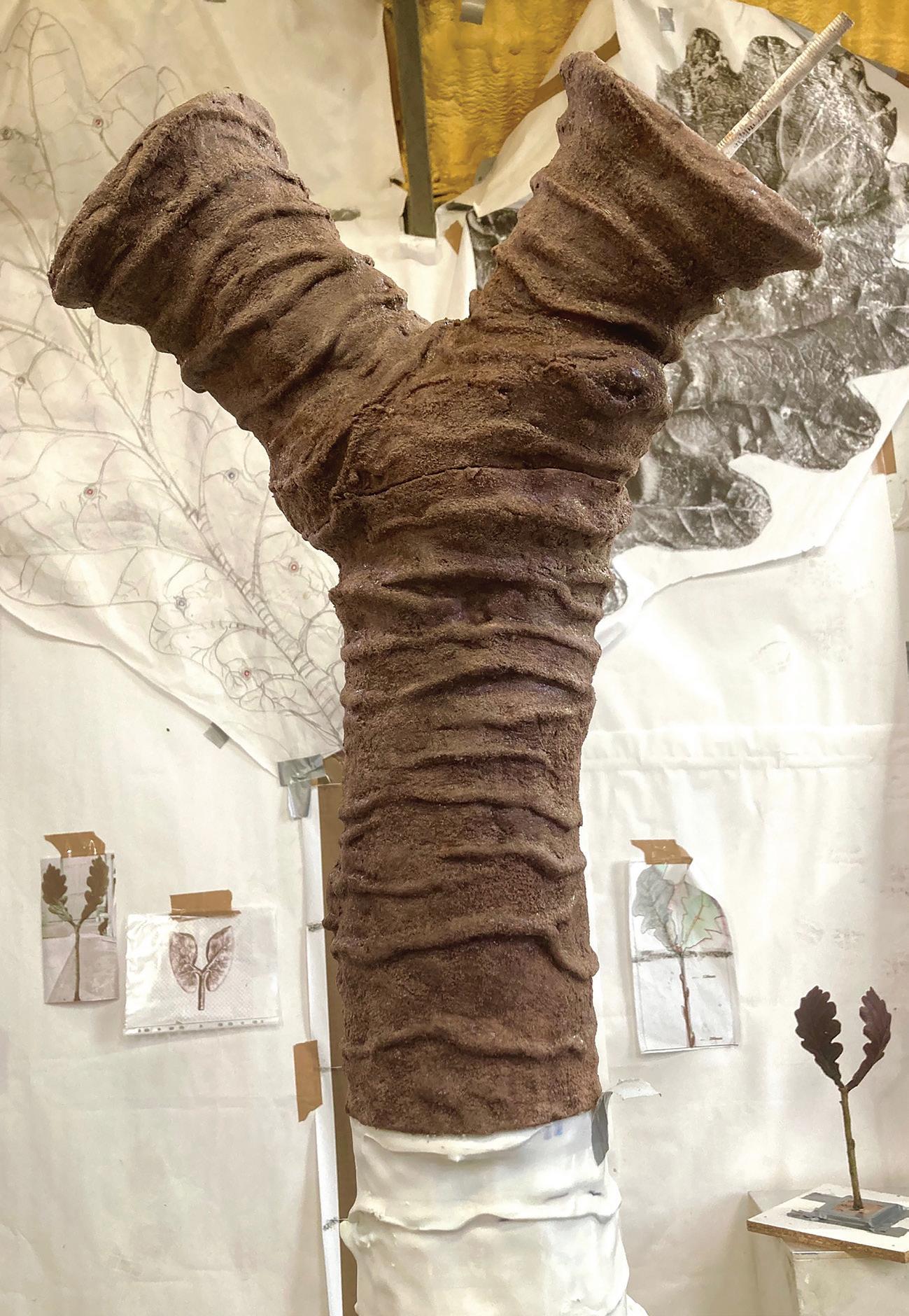
ABOVE RIGHT AND OPPOSITE The bronze oak sapling and leaf, a work in progress, at CAST Foundry in the Liberties in Dublin. Eventually, patination will produce a bright green colour.
enables one per cent of the cost of any public infrastructure or building work to be allocated to the commission of artwork.
“It was a sewage project, a big pipe going in underground to provide cleaner water. And, ok, who wants to connect with sewage? But we all want to connect with a cleaner environment. What interested me was this pipe, with a two-metre diameter. And so Mothership has that same diameter. And the sea urchin shell is a bit like a filter, with these tiny holes. So sometimes with a site, there’s a quirky or invisible connection.”
The brief for the new sculpture for RCSI was commissioned by RCSI’s Art Committee, with the assistance of Business to Arts, and focused on the idea of connecting St Stephen’s Green with the new student space. Coming to a new site-specific commission, Joynt explains, you must soak yourself in the location. “And you might have a spark of an idea, and you dig deeper into it. You find the key connection, and the threads that convince you it’s the right approach. That came up a lot in this brief, the idea of connections. I’m hoping that there is a simplicity to it but also a longevity to it.”
The expectation of rigour in the thought process driving any piece was instilled in Joynt as a student in the late 1980s. “When I got to NCAD I was
a doer. But I was taught to slow right down, to question what I was doing. At times I found that intimidating, it was hard to know where to start. But it was invaluable.” She namechecks the tutors who were important to her: Michael O’Sullivan, who as an exercise gave his students the brief for the Millennium project, which Joynt ended up winning. The late Aileen MacKeogh and Leo Higgins were both influential, as was printmaker James O’Nolan, who encouraged her to redirect from textiles to fine art.
Joynt outlines her approach to the RCSI piece, how she mulled over the brief and the location, and the connection between the college at the heart of the city and St Stephen’s Green, the lung of the city. The Green was, famously, gifted to the people of Dublin for this very purpose by Arthur Edward Guinness, Lord Ardilaun. Joynt was compelled by this image, which she came across in the poem “Them Ducks Died for Ireland” by Paula Meehan. “The Green / is a great lung, exhaling like breath on the pane / the seasons’ turn, sunset and moonset / the ebb and flow / of stars.”
The outdoor space where Joynt’s work is to be situated is intended as a private space for hard-working healthcare students to take a breath. “So here is this breathing space, in the college, in the heart of the city, and it’s beside this green lung. These were the seeds of the idea of what I would do. Something contemplative, focused on breath, and bringing in the medical. I wanted to bring in the idea of the environment as well, a healthy environment creating a healthy body. I delve a little into history too. Charles Cameron who was the City Medical Officer and a professor in the College. He instigated the idea of clean water to reduce cholera. Clean water, clean air. So the key to the idea for this piece is breath.”
"Something contemplative, focused on breath, and bringing in the medical."
Joynt has titled the piece Beatha, which translates as “life” in Irish, and explores with it the relationship between the life and respiration of plants and the life and respiration of humans.
“A leaf inspires carbon dioxide and expires oxygen. We inhale oxygen and we exhale carbon dioxide. It’s this beautiful loop of exchange. The Green has lots of oak trees. The oak is our national tree. If you look at the leaf of an oak sapling, it’s lobed, it has two leaves and it made me think of a pair of lungs. So, I am making a tree, a make-believe tree. It’s like an upside-down pair of lungs, but it’s also a giant oak sapling, almost four metres high. It’s going to look like two giant leaves, but it’s also going to look fleshy.”
She points to the parallels as sketched in medical diagrams: The bronchial tree, the branching airways, the veining on a leaf, and its tiny stomata or pores, which enable transpiration.
“It’s like the merging of the human breathing device and the plant breathing device. It’s almost like looking through a microscope. The leaves on this piece will have little holes where pinholes of light can come through, where the exchange of gases happens. And I’m going to bring a little bit of subtle colour into those holes, blue and red, because they are used in diagrams of respiration to represent oxygen or carbon dioxide.”
A four-metre-high bronze sculpture supported on a stem requires engineering
expertise. Joynt has worked for many years with Nicholas O’Dwyer, and they in turn collaborate with the engineers engaged by the architects of 118 St Stephen’s Green, Henry J. Lyons. There’s always a team involved in the realisation of a piece of this size and complexity.
“There are new technologies available now, so you can work with scanning and 3D printing, so I work with a Wicklow company called Team Human. And I work closely with the CAST Foundry in the Liberties. It’s complex, but they are so highly skilled. They cast it in its constituent parts and then it’s all pieced together and welded, and the patination is done in the foundry too.”
That patination will produce a bright green colour, suggestive of chlorophyll. Green, Joynt says, is a good durable colour choice for bronze. Its home is a gravelled area, and Joynt wants a natural feel. “As if you’re zooming in on a new growth, a leaf that’s popped out of the pavement.”
The final stage is playing with lighting. “I like the idea of having some night -time activity, I’m thinking about maybe a kind of slow pulse, like breathing, very subtly going from a red hue to blue.”
The whole making process has taken about nine months. Will finalising the lighting design be the very last step? “Well, yes. And then – I suppose that’s when I walk away.” ■ www.racheljoynt.com
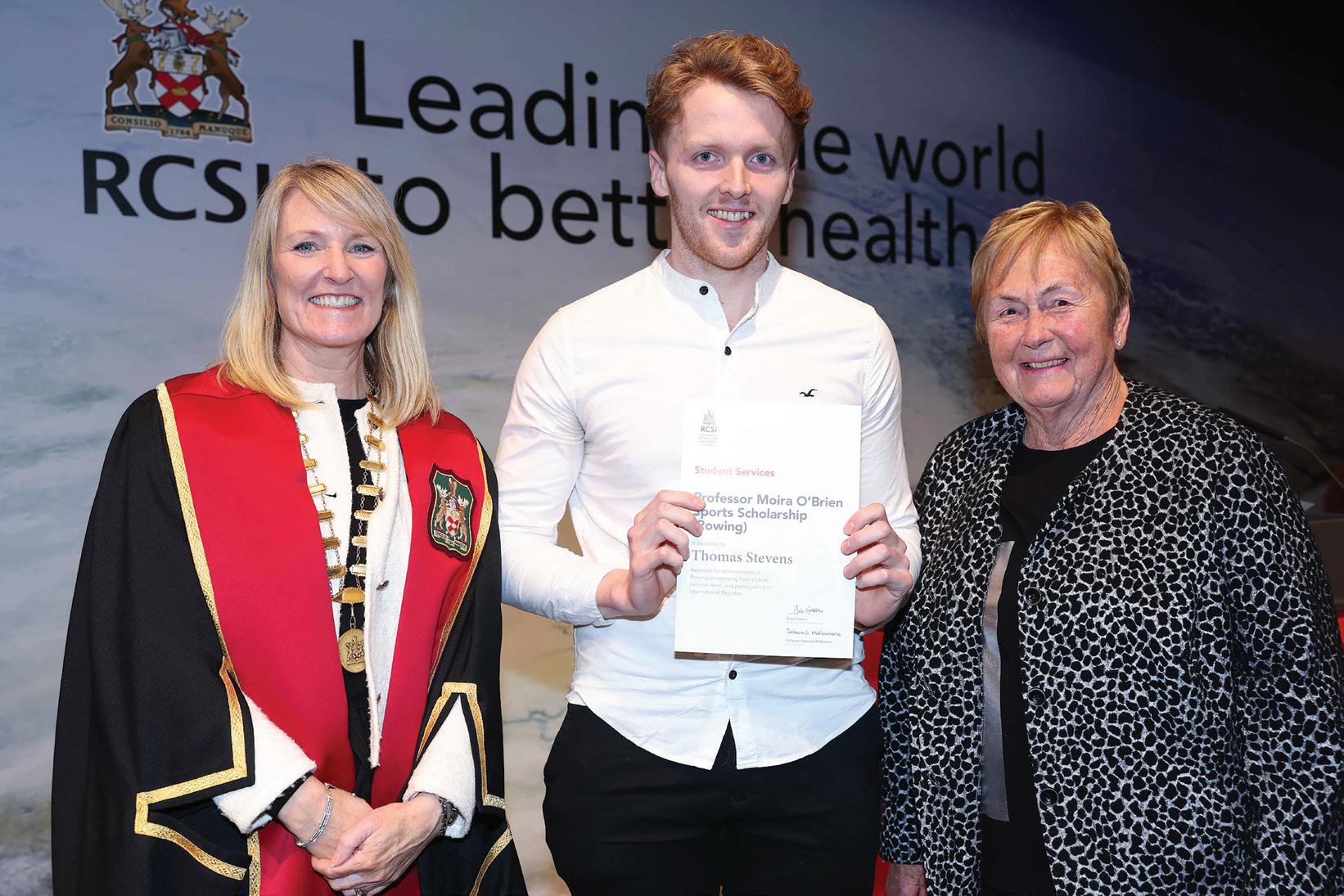
Prof. Tracy Robson, Deputy Vice Chancellor for Academic Affairs, Thomas Stevens, 2024 Sports Scholar and Prof. Moira O’Brien.
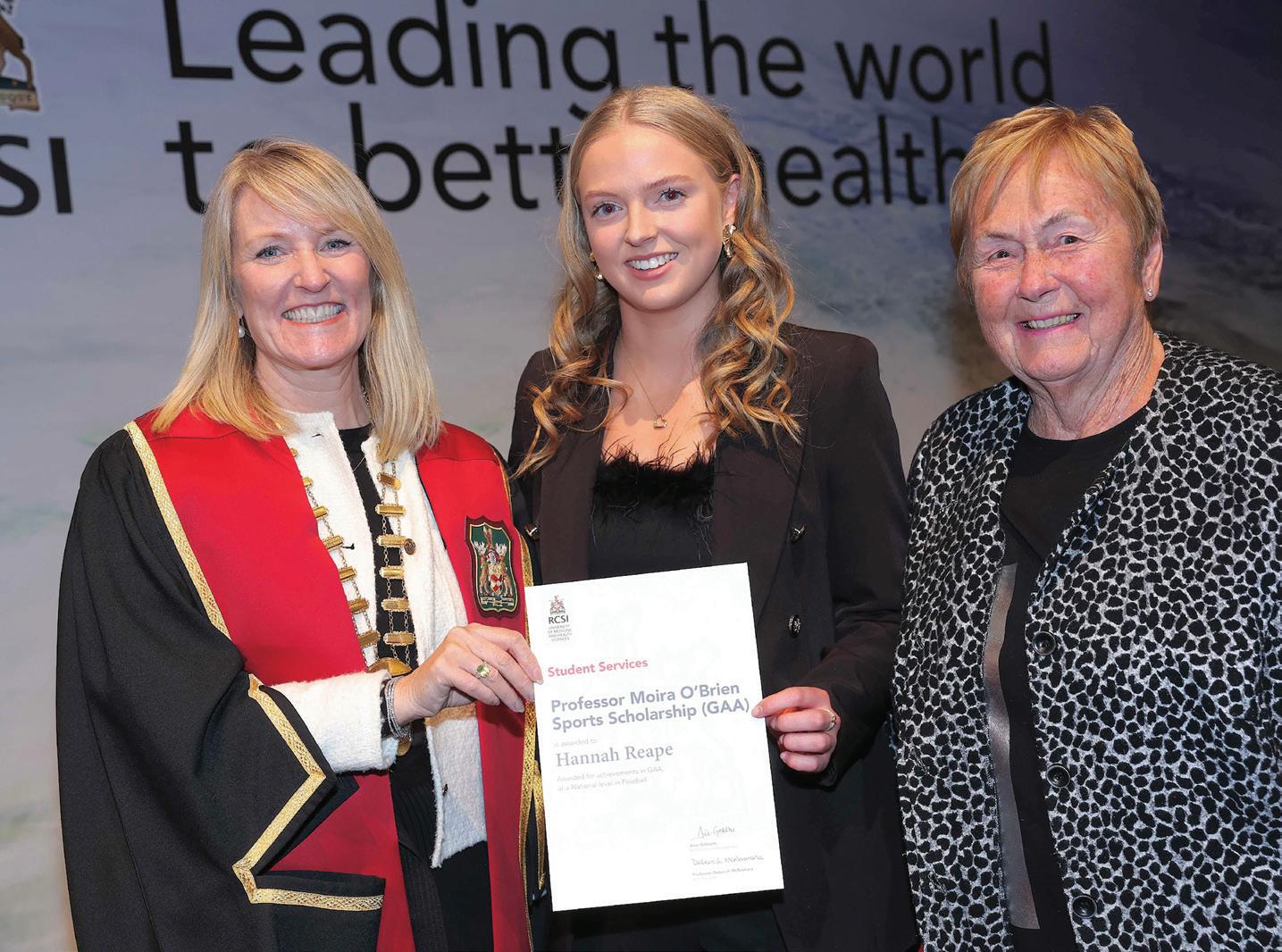
Established by alumni, the Moira O’Brien Sports Scholarship Programme at RCSI is designed to support elite student-athletes. We look at the deserving recipients
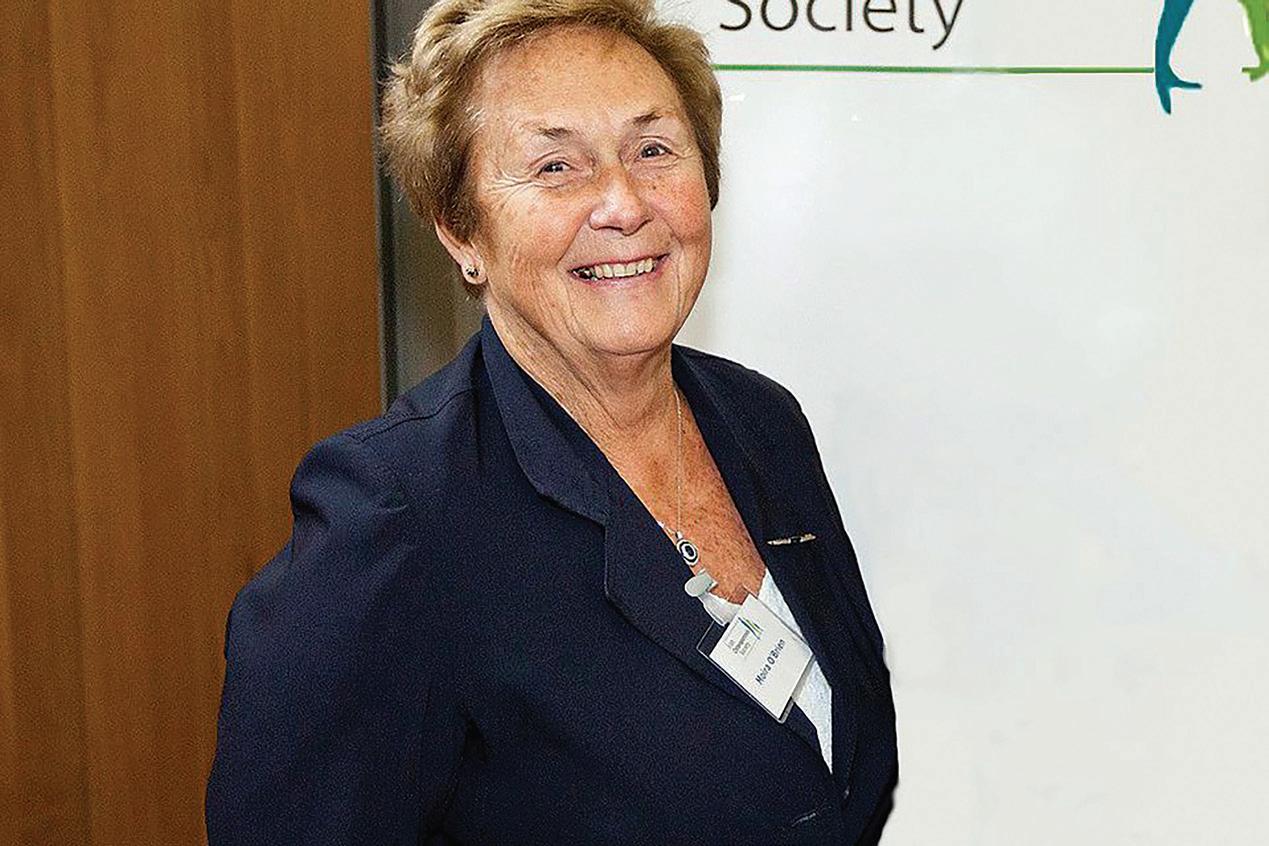
Established in 2018, the Moira O’Brien Sports Scholarship Programme, supported by alumni Dr William ‘Ike’ Blakemore (Medicine, Class of 1979) and Dr James Dooner (Medicine, Class of 1991) celebrates exceptional sporting achievement, and is awarded to two full-time undergraduate RCSI students annually. Each scholarship has a value of €5,000 and is designed to enable ambitious students to continue to develop their sporting skills and compete at the highest level, while pursuing their studies in healthcare. Recipients report that the scholarships have helped them to balance the demands of elite sport with full-time study, facilitating both their personal and professional development as well-rounded, high-performing student-athletes. e scholarships are named in honour of the well-known and much-loved Professor Moira O’Brien (Medicine, Class of 1956) who this year celebrates her platinum jubilee. As a student at RCSI, Professor O’Brien excelled academically and represented RCSI in hockey and swimming. Highlights of her long and distinguished career include serving as Irish Olympic Chief Medical O cer
from 1979-1989, working as the Irish team doctor for the Irish Olympic teams at the Summer Olympics in Moscow (1980), Los Angeles (1984) and Seoul (1988) and being appointed Professor of Anatomy at Trinity College in 1984, the rst female appointee to Trinity’s medical faculty.
at same year, Professor O’Brien set up a Human Performance Laboratory at Trinity to monitor the tness, performance, and progress of elite athletes.
In 1990, she established a Masters in Sports Medicine, the rst in Ireland and the UK, and her research brought to light problems with bone health, which prompted her to set up the Irish Osteoporosis Society in 1996.
In 2003, Professor O’Brien was a founder Fellow of the Faculty of Sports and Exercise Medicine of RCSI and RCPI, and she was presented with RCSI’s annual Distinguished Graduate Award in 2020. She continues to work as a consultant in the A dea clinic in Dundrum, Dublin, and to promote awareness of osteoporosis.
Since the inception of the scholarships in 2018, they have been awarded to recipients representing a wide range of sports, from rugby and hockey to chess, rowing and Gaelic games.
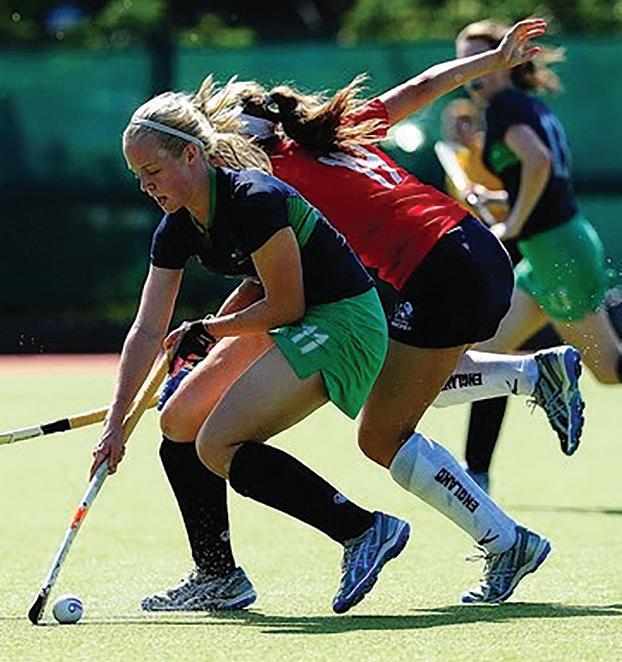
Emily Beatty (Medicine, Class of 2022) has represented Ireland at hockey since the age of 15. As a minor she played in the Leinster Cup, Youth Olympic Games and the European Championships, and captained the Leinster minor team. As a forward, she was a member of of the Ireland team that played in the 2018 Women’s Hockey World Cup Final, earning a silver medal. She has also played at club level with Dublin-based Pembroke Wanderers and KHC Dragons in Belgium
During her time as a student-athlete, Beatty used her scholarship award to cover the payment of the annual player levy, transport and physiotherapy costs. e funding enabled her to take time away from part-time hockey coaching and focus solely on her studies and international hockey career.
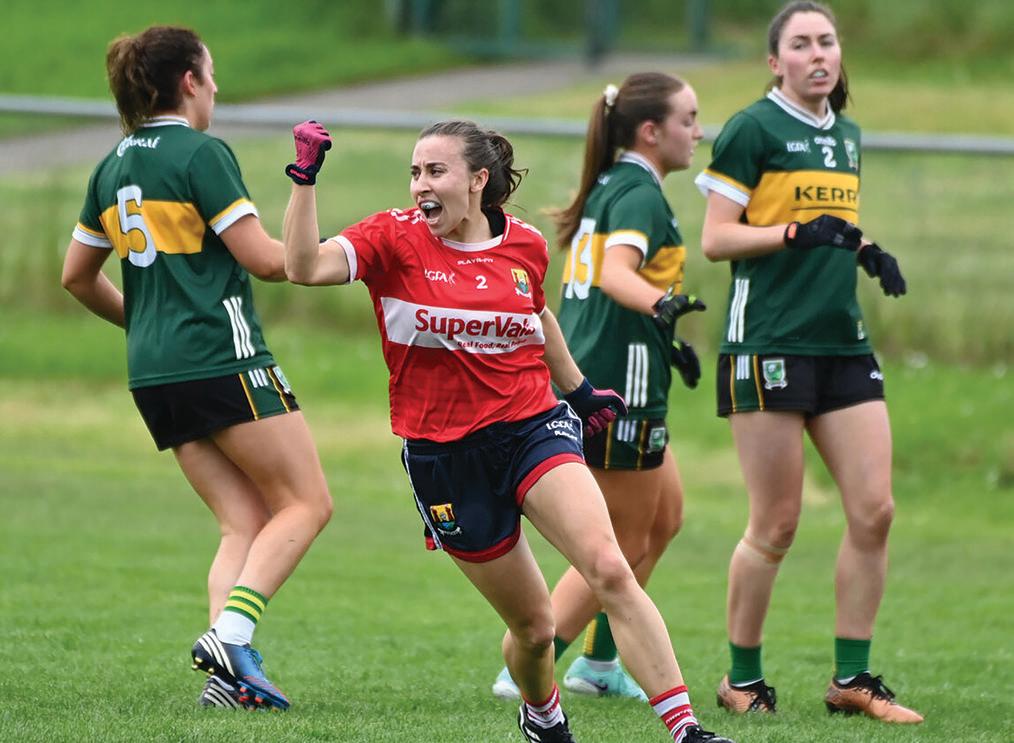
Melissa Duggan (Pharmacy, Class of 2020) has played ladies Gaelic football for the Cork Ladies Senior Football Team since 2017 and was on the team that made it to the All-Ireland SemiFinal that year. She also played for her hometown club, Doheny’s of Dunmanway, and RCSI. Over the course of her playing career Duggan has captained the Munster team, to many successes, and was part of the team that won the Lidl NFL Division 1 title in 2019.
Duggan’s twin focus was on completing her degree and ourishing within the Cork Senior squad. As the LGFA did not cover travel expenses, Duggan was able to use her scholarship award to relieve the nancial pressures of travelling to Cork several times each week for training and matches, and to cover her living expenses while on an unpaid placement as part of her course.

Angus Lloyd (Medicine, Class of 2020), played on Blackrock College’s Senior Cup Team and went on to play for Trinity, helping his team to victory in the annual Colours match against UCD in his nal year. He also played for Trinity in the inaugural World Universities Cup. Professionally, Lloyd played for both Ulster and Munster Rugby, and during a short-term hiatus played a pivotal role in securing the 2017 Dublin Hospitals Cup for Beaumont Hospital.
In 2019 Lloyd joined Connacht Rugby on a short-term contract, requiring him to commute to Galway four times each week for training and matches, while at the same time completing the nal year of his medical degree. He used his scholarship award to cover his travel costs.
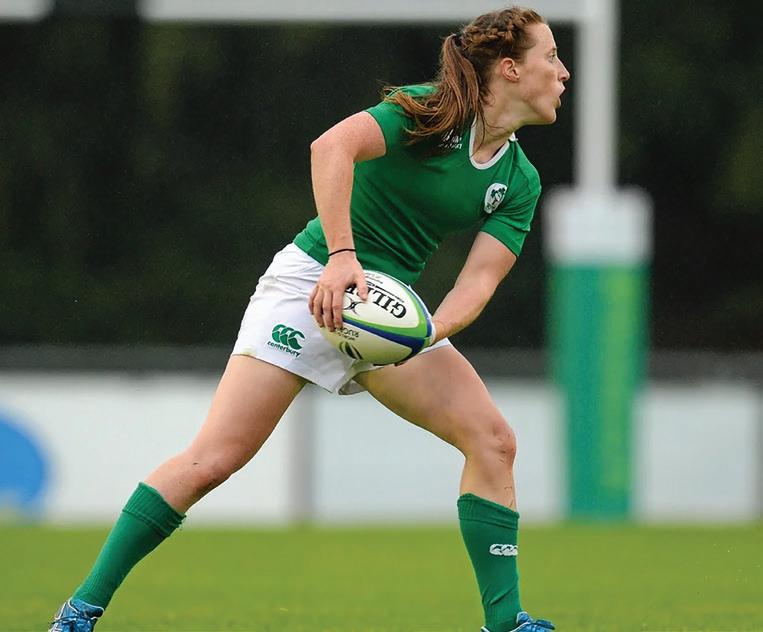
Clare Keohane (Medicine, Class of 2020) grew up playing underage rugby at home in Youghal, Co Cork and went on to play ladies Gaelic football for Inch Rovers and the Cork Ladies Senior Football team. While studying physiotherapy at University of Limerick she played rugby with UL Bohemians and Munster in regional Sevens competitions before being called up to the Irish Women’s Sevens, and participating in tournaments around the world. She combined her studies at RCSI with playing for the Irish Six Nations squad, achieving numerous caps for both Sevens and XVs, retiring from professional rugby in 2020. Receiving the scholarship meant that Keohane could concentrate fully on both her nal exams and national team training.
Aoife Hanrahan (Pharmacy, Class of 2024) is an international freestyle kayaker who has represented Ireland in many international events, winning Ireland’s

The scholarships help students pursue both sporting and academic excellence...



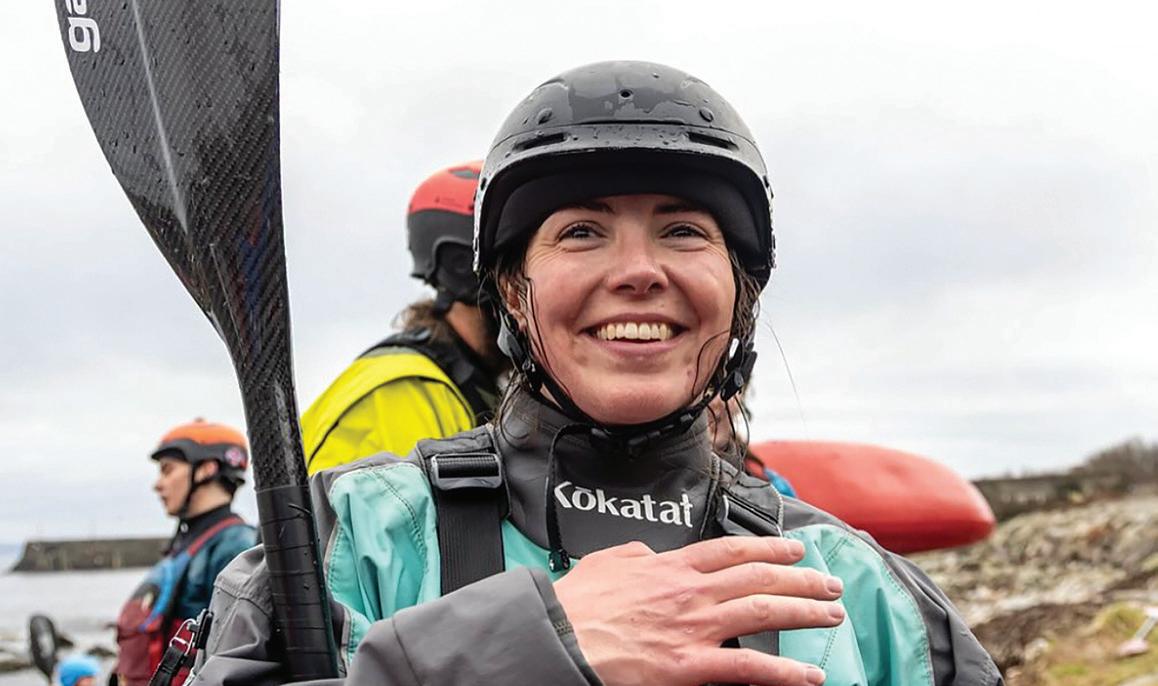




rst international women’s freestyle kayaking medal. She is a European Bronze medallist, Euro Cup Gold medallist, and placed 6th at the World Cup and 4th at the European Championships 2024. She has won the Irish National Freestyle Championship on multiple occasions. Hanrahan is part of Canoeing Ireland’s initiative ‘Bridge the Gap’, which aims to increase the number of females participating in paddlesports and taking on leadership roles. She used her scholarship award to cover the costs of her coach, gym, physiotherapy and equipment, including custom-made paddles and a carbon-freestyle kayak.
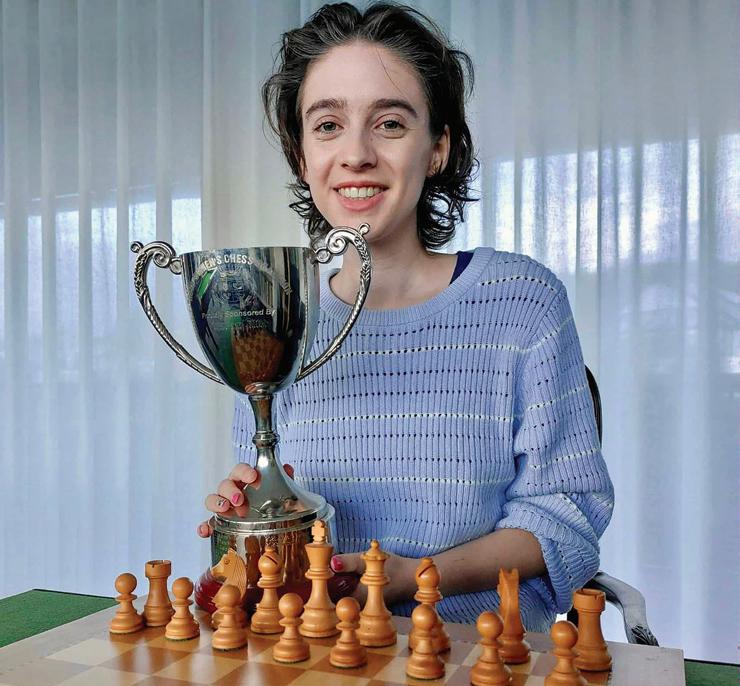
Alice O’Gorman (Medicine, Class of 2023) is a champion chess player, ranked 4th in women in Ireland at the time of her scholarship award. While studying in RCSI she came 2nd in the Leinster U19s and won the St Andrew’s Classic Championship section. She has been a part of the European Women’s Chess Commission since 2018 and a regular member of the Irish National Team, participating in Chess Olympiads since 2012. O’Gorman used her scholarship award for one-on-one coaching, competition entry fees, and training seminars with the European Chess Union. During the year she participated in the online Chess Intervarsities and represented Ireland in the online Chess Olympiad.
Conor Kearns (Medicine, Class of 2025) is a rugby player who has experience playing in the US for the San Diego Legion, the USA U20s and the USA Select XV, representing them at the Americas Paci c Championship. In Ireland, he has played for Clontarf Rugby Club and was part of the team that won the AllIreland League Final in 2022. He has also volunteered as a coach with Vision Sports Ireland and was involved with the IRFU’s rst visually impaired rugby team in Ireland. Kearns used the funds from the Moira O’Brien Scholarship for
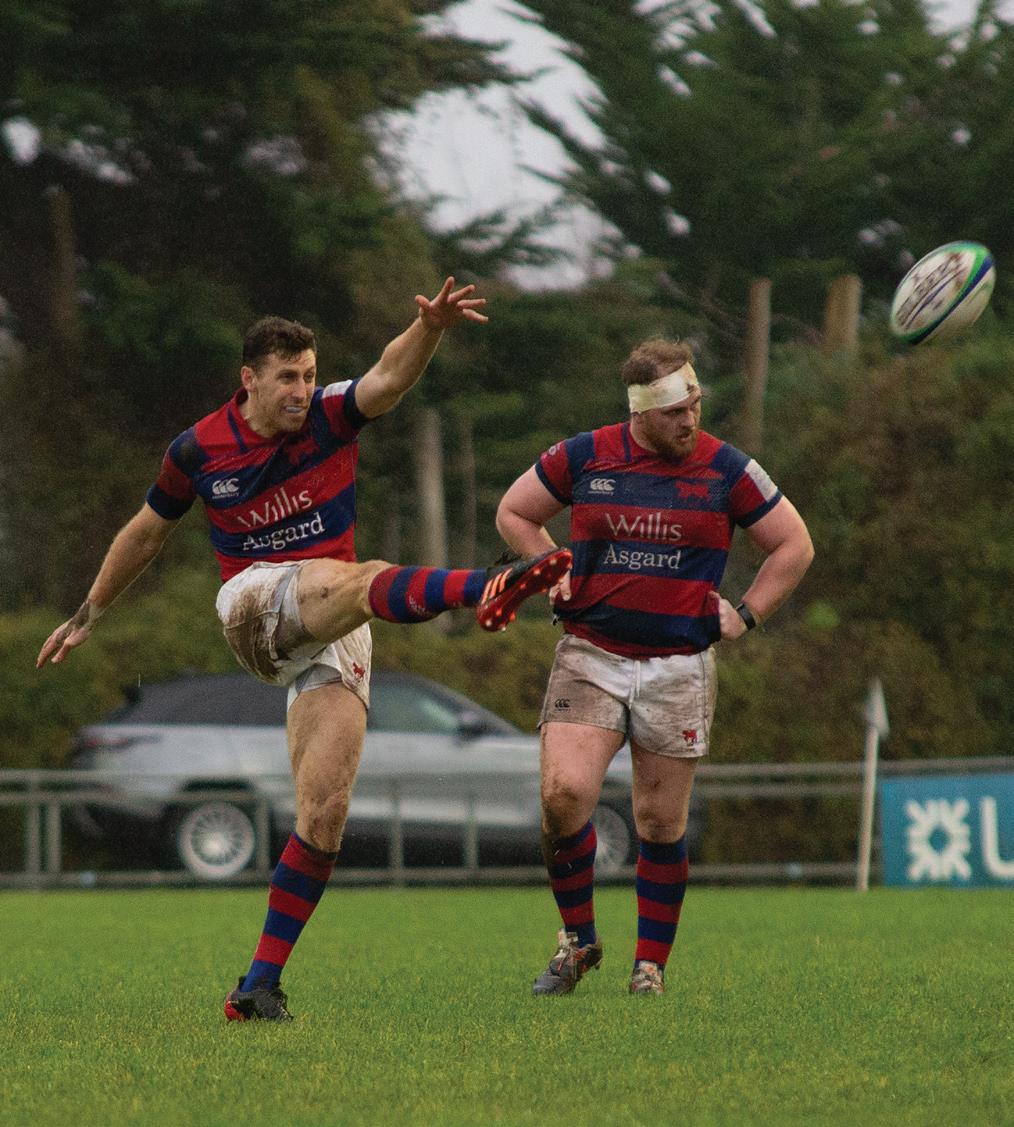



regular physiotherapy and to cover costs of attending training and university, as well as international travel for selection purposes.
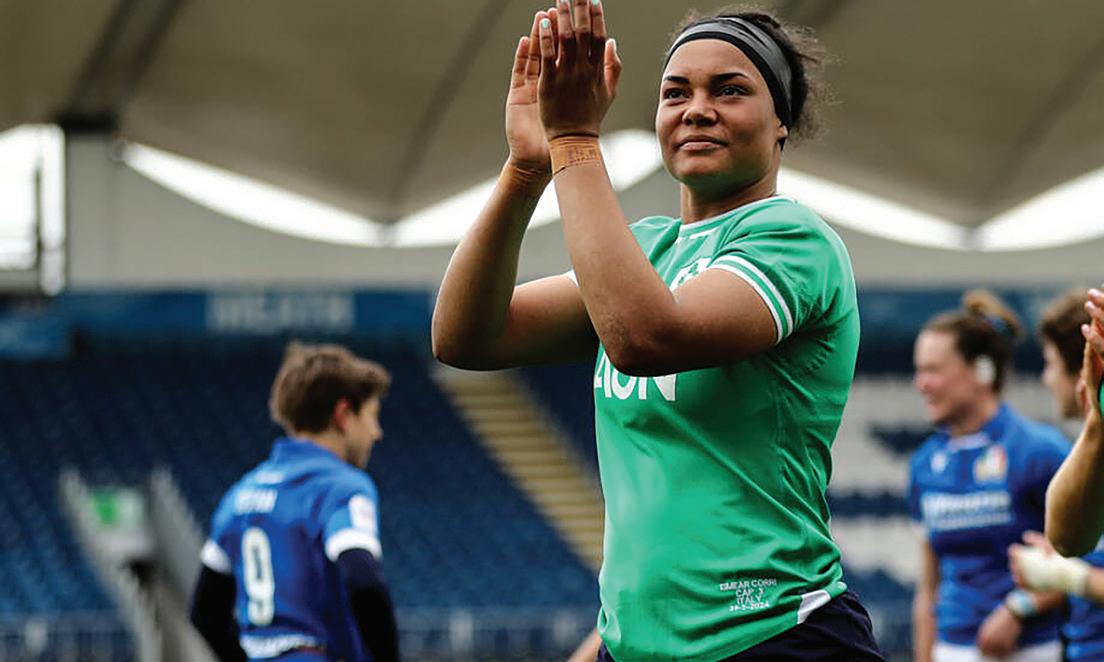
Eimear Corri (Medicine, Class of 2024) played rugby for Blackrock College RFC and Leinster Rugby, making eight appearances and scoring three tries for the province, and helping her team to victory in the 2023 and 2024 Interprovincial titles. She was capped ten times for Ireland and played in the Women’s Rugby World Cup in England in 2025 before retiring later that year in order to focus on her career in medicine. Corri used her scholarship award to pay her club subscription fees, to purchase equipment and cover the costs of travel, physiotherapy, sports psychology and nutrition advice.
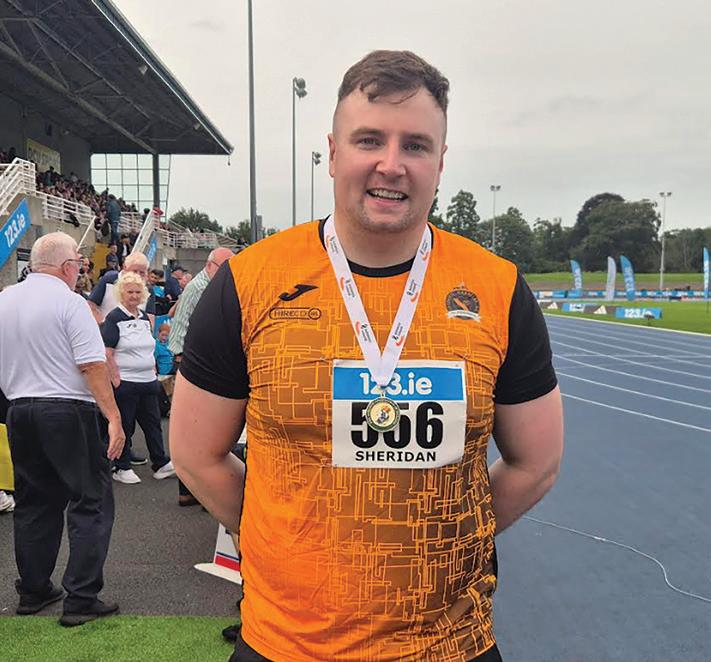
Eoin Sheridan (Physiotherapy, Class of 2023) is a discus thrower and shotputter who has represented Ireland at international events on many occasions, including at the European Team Championships in Slovenia and the European rowing Cup in Portugal. Sheridan was the Irish National Discus row Champion in 2022, 2023 and 2025, and represented Ireland at European Junior and U23 level and competed in the World Youth Olympics.
Sheridan used his scholarship award to attend elite training camps, including one in Portugal and others provided by Athletics Ireland. He was also able to cover the costs of nutrition advice, physiotherapy and strength and conditioning coaching.
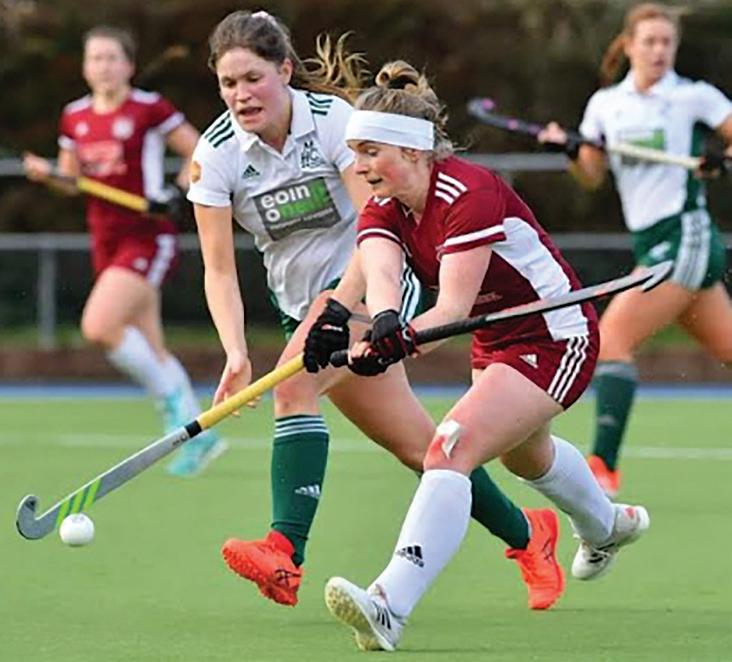
Kim Baker (Physiotherapy, Class of 2024) is a club hockey player with Muckross Hockey Club and a member of Ireland’s tag rugby women’s team. When she received the scholarship Baker was on placement in Cork and was able to train with a local team and travel back to Dublin for matches, using the funds to cover travel and nutrition costs. Baker’s club made it through to the
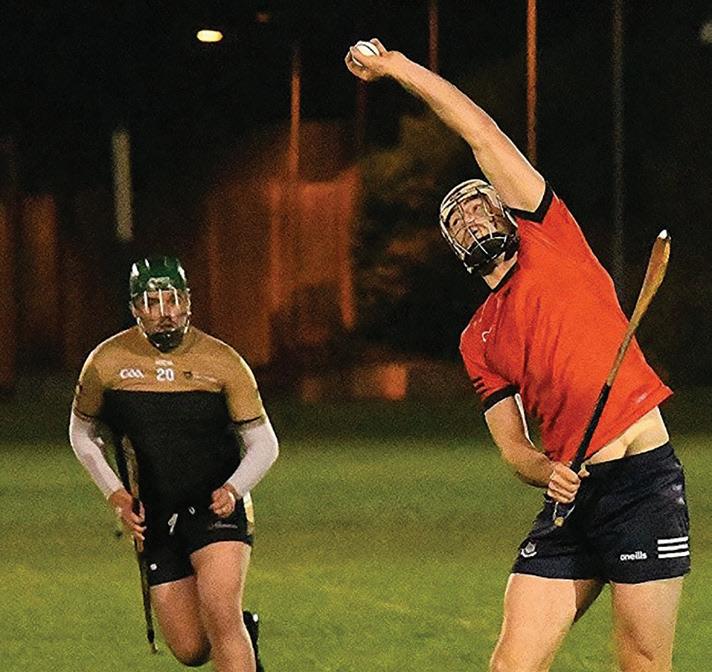



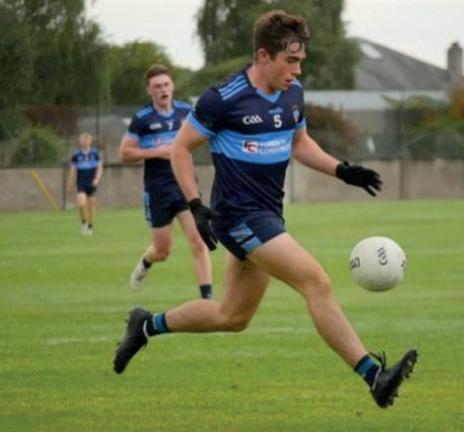
of Ballyboden St Enda’s GAA Club and was part of the team which won the Dublin and Leinster Senior Football Club Championships in 2019. In 2022, he was selected to train with the Dublin Senior Football panel, and in 2025 he helped his club to their third Leinster Senior Football Championship title, with Dunleavy scoring in the second half. Dunleavy plays senior hurling for Dublin and was made captain of Ballyboden St Enda’s Senior Hurling team at the age of 22, making him the youngest senior captain in the history of the club. Patrick used the scholarship award to enable him to cut down on part-time work in order to focus on training and academic study.








quarter- nal stages of the Irish Senior Cup, and her team were runners-up in the National Indoor Hockey Finals in 2020. As captain, Baker led the team to third place in the same competition in 2022. Baker also played tag rugby for Ireland, Leinster and the Dublin Wolves Mixed Open team. During her studies she found time to play for both RCSI Hockey Club and RCSI Tag Rugby Club.
Lisa McCarthy (Medicine, Class of 2024) was active in Irish hockey from a young age and was selected to represent Ireland for the Youth Olympic Games in Singapore in 2010. A dual citizen of Ireland and the USA, she played college hockey for Northwestern University in Chicago and was named to USA Field Hockey’s U21 squad. Back in Dublin, McCarthy captained Railway Union Women’s 1st Hockey Team in 2025, securing back-to-back victories in the EY Champions Trophy. She also represented Ireland at international level in the prestigious Euro Hockey League.
Patrick Dunleavy is currently a medicine student at RCSI. He is a member
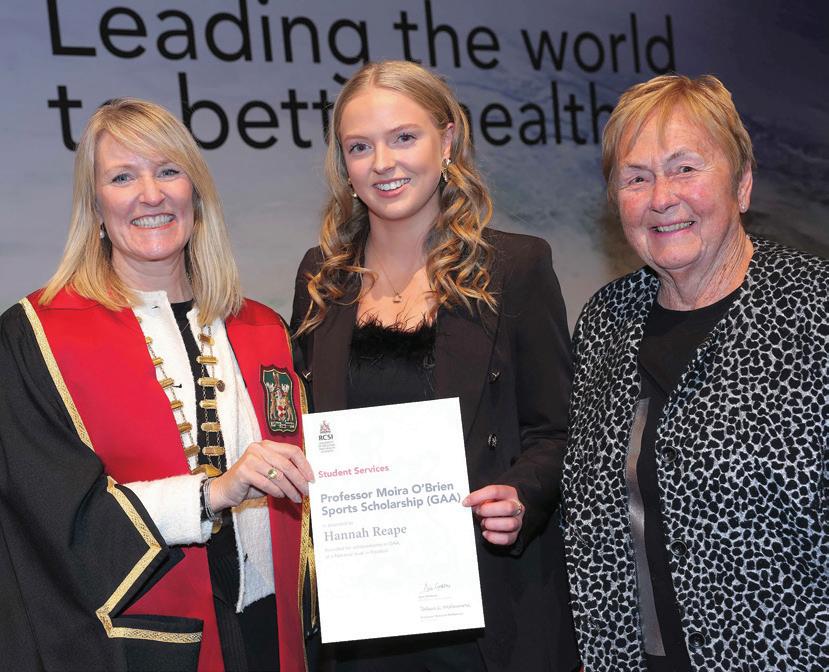
Hannah Reape is a current physiotherapy student at RCSI. Reape plays football for Knockmore and Mayo LGFA and took part in her county’s challenge against Galway in the 2026 Connacht LGFA Senior Football Championship nal. Reape is one of the facilitators of the new LGFA initiative ‘Spreag Í’, which aims to enhance enjoyment of ladies Gaelic football in the U14 and U16 age groups, by increasing self-e cacy, teamwork, understanding of the role of sport in a healthy lifestyle and fostering continued participation. Reape used the scholarship funds to cover the costs of travel, equipment and physiotherapy, and to maintain a high-performance lifestyle with a focus on proper nutrition and recovery.
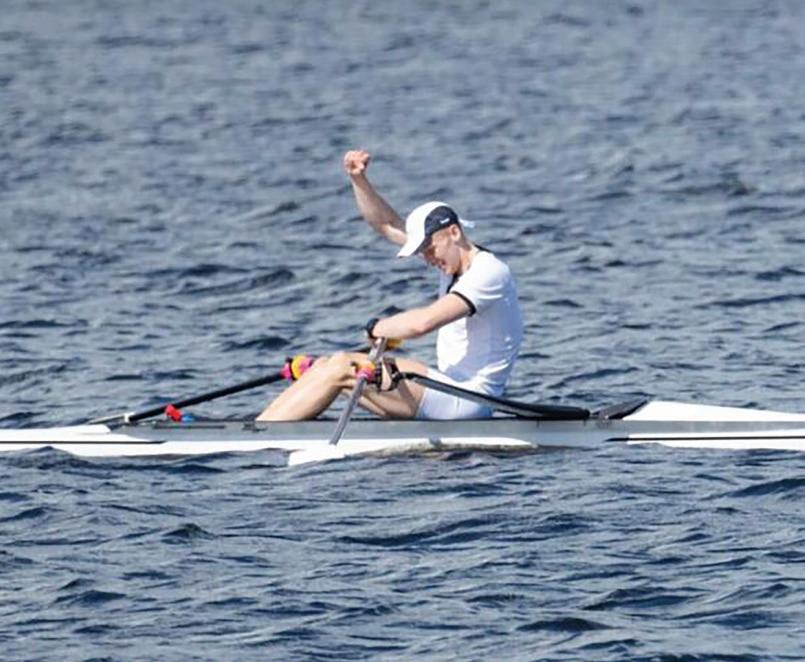
omas Stevens is studying physiotherapy at RCSI and is a prominent Irish rower, who won the Dublin Sculling Ladder time trial in 2022 and 2024. He represented Ireland in the men’s coxless fours at the Home Internationals in London, where he won a gold medal in 2022. He has won four Irish national championships, and four university championships. He has won medals at the Ghent International Regatta, the London Metropolitan Regatta, and the Head of the River Race where he led his crew to become the fastest overseas team and secured the best nish for an Irish crew in 20 years. e scholarship award alleviated nancial pressure, enabled Stevens to invest in a health monitor device to monitor his performance, and helped him to gain balance and excel in both his sport and academic studies.
Seán Kirwan is currently studying medicine at RCSI and is a member of St Jude’s GAA Football team. Kirwan started playing with the club at the age of four and has progressed steadily through the levels to captain the U21 team. He was selected for the Dublin Minor Football panel in 2021 and the Dublin U20 team in 2024. Just last year, Kirwan was selected for the Dublin Senior Football panel, the youngest player in the squad, and made his debut against Kildare.
Kieran Morris is a current medicine student at RCSI and keen golfer. Having played from a young age, Morris progressed from a handicap of 10 at the age of 16 to scratch at 18. He represented Wexford Gold Club in Junior Cup and Jimmy Bruen Shield competitions, and earned a golf scholarship at Jones College, Mississippi. In the US, Kieran achieved multiple top- ve and top-ten nishes and quali ed for the National Tournament. Since his return to Ireland, he has played in high-level Irish events such as the West of Ireland Amateur Open Championship, Munster Strokeplay, and Irish Amateur, while also playing with RCSI Golf Club at Portmarnock. He has represented RCSI with distinction in national and university-level competition. ■

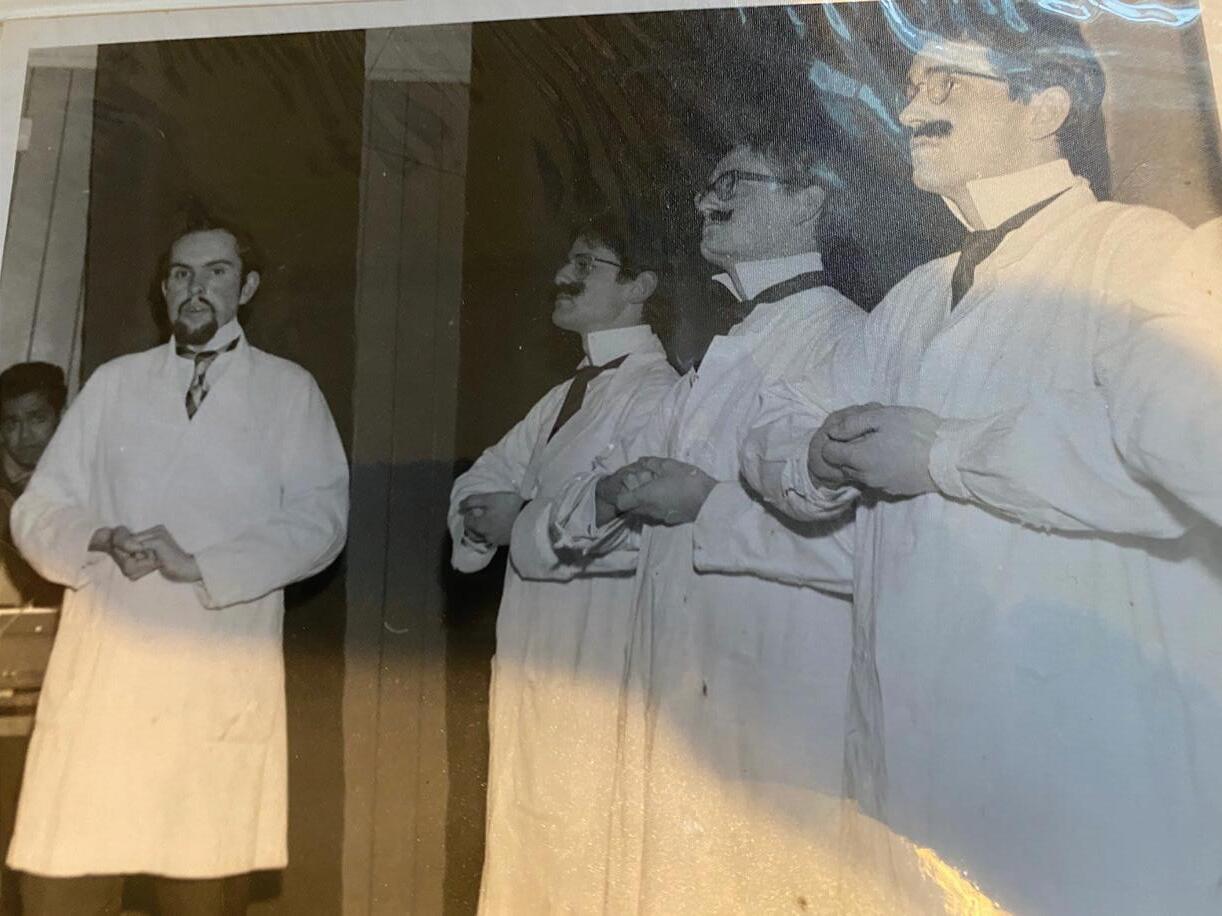
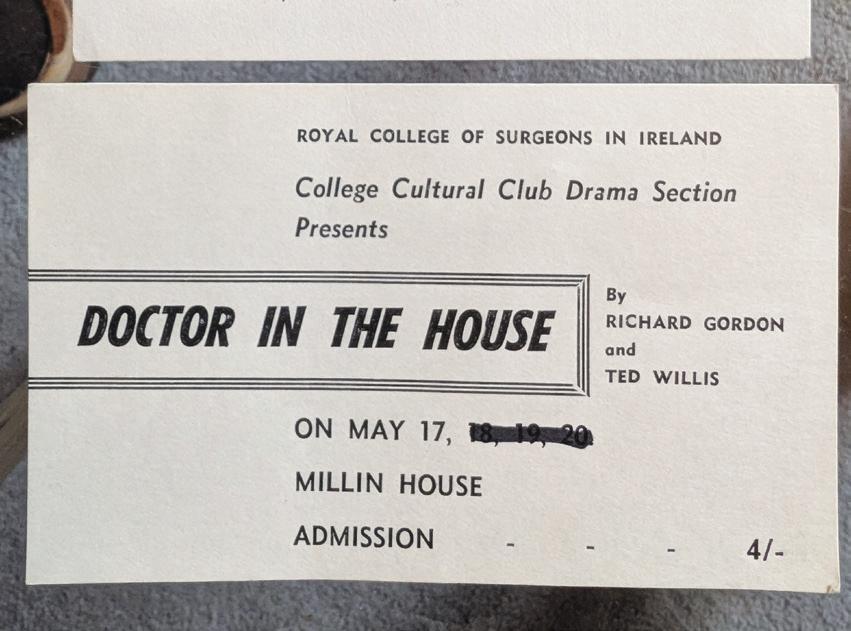

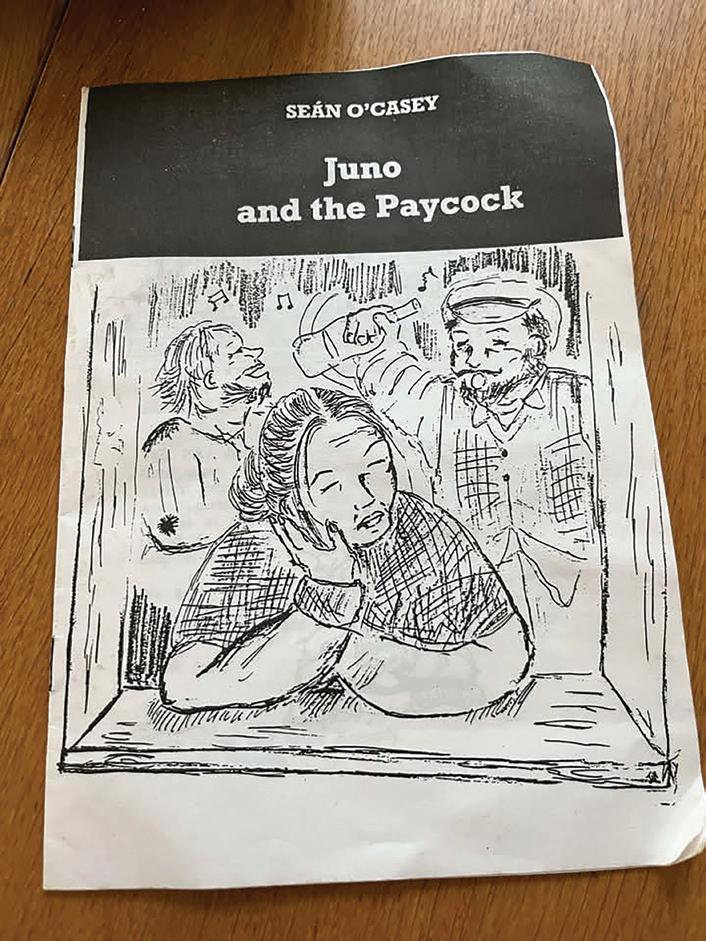
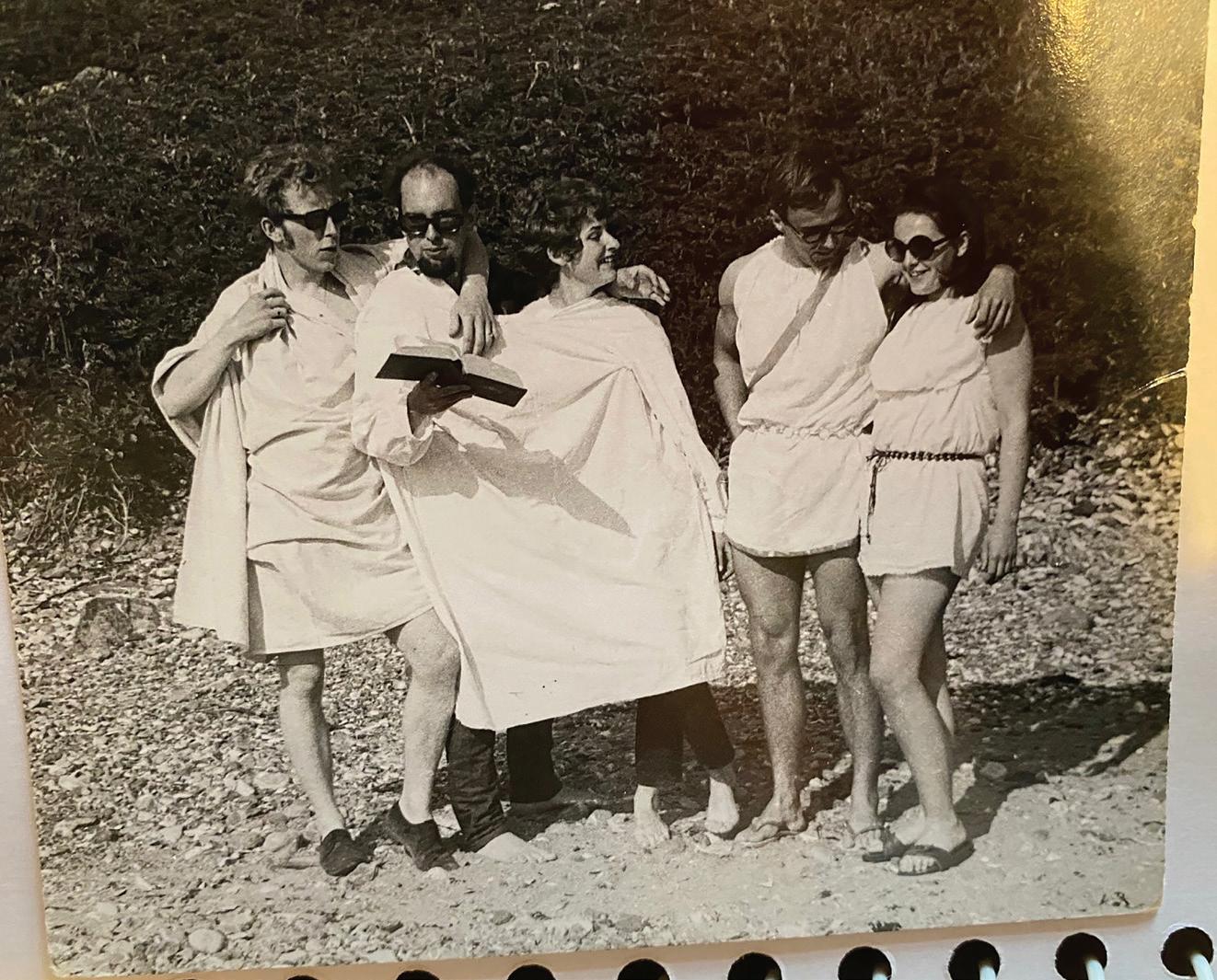

The playhouse, that is. RCSI has a rich tradition in the dramatic arts, as Antonia Hart found out
In 1964, Dr Julian Davey (Medicine, Class of 1970) came to Dublin for the first time, and the next day started his studies at RCSI. He got into the spirit of things in short order. He and his roommates were thrown out of their Sandymount digs: “Kicked out for rowdiness”. That rowdiness, he highlights, was absolutely nothing to do with him. It was all the others’ fault.
Davey’s college experience was: “Not entirely academic – if you see what I mean. We just thoroughly enjoyed our time together. In 1964, medical schools were changing from the Doctor in the House experience, becoming more scholastic. We were the last medical students fully immersed in art, plays, music and loads of other things at the same time.”
Davey (later a GP and a Church of England minister) certainly made the most of his Surgeons years, centred around drama with the College Cultural Club, known as “C Cubed”. Perhaps Doctor in the House stands out as a cultural reference for him because his production of it made the newspapers with an excellent review, singling out Davey’s own performance as Sir Lancelot Spratt (“vigorously natural”). Other cast members were Dr Hedy Fry (Medicine, Class of 1968), currently Canada’s longest-serving female MP; her best friend, the late
Professor Sarah Rogers (Medicine, Class of 1968), later a dermatologist and one of the State’s first female consultants; and Dr John Doherty (Medicine, Class of 1971), who shared in the 2005 Nobel Peace Prize as Medical Director of the International Atomic Energy Agency (IAEA), who remarked that “Jules Davey was Oscar material”. Another player, Dr Paddy Cadigan (Medicine, Class of 1972), later a cardiologist and Registrar of the Royal College of Physicians, is the longest-ever holder of the Emile Stone Memorial Cup. This record-holding was unauthorised. In 1968, Cadigan, flushed with triumph at winning best actor for his role as Simon Sparrow, brought the cup home, and only dug it out of his mother’s house 50 years later. Fortunately he has received an official pardon, but must complete community service by finding out who Emile Stone was.
In the 1960s, productions were staged in Millin House, but these days they happen in the O’Flanagan Lecture Theatre. “Harry O’Flanagan was the registrar in our time,” Davey explains. “He turned the college around, made it into an international college. Saved it, probably. That’s a nice link.”
Professor Paul Ridgway (Medicine, Class of 1996), now Consultant Surgeon at Tallaght Hospital, and Associate Professor at Trinity College Dublin, remembers the O’Flanagan Theatre from the 1990s. He is proof that 1990s students were just as ready to fling themselves into co-curriculars as their predecessors.
“Everybody had medicine in common, that bound everyone together. Well, that and The Swan pub down the road. They were the two key features.” Ridgway was an international cricketer, so student summertimes were cricket-focused, but over the winter he immersed himself in DramSoc. “We do like a bit of drama, us medics. And it wasn’t just for the luvvies, it was very inclusive. If you held your hand up we’d find a role for you.”
“Everybody had medicine in common, that bound everyone together. Well, that and The Swan pub down the road."
Those roles might be in set design, prop sourcing, production, lighting, photography, sound or music, not to mention postering, advertising, box office, and the all-important directing. The director’s energy is always hugely important: Dr Ursula Galway (Medicine, Class of 2000) remembers Troy Gatcliffe’s “tremendous, charismatic, infective energy that brought all of us together” during a production of Pippin. Paul Ridgway directed Death of a Salesman, after an early U-turn. “When I was in pre-med, Ciaran Brady (now a plastic surgeon) and Gordon Smyth (now a urologist), put on Rosencrantz and Guildenstern are Dead. I acted in that but, based on my evident lack of acting ability, quickly decided to try directing. I like control – that was a good early insight.”
The play won an award at the Irish Student Drama Festival. “I’d love to say it was for best director. It wasn’t. It was for the music. Ranbir Singh Kaulsay, an immunologist now, wrote this fantastic score for keyboards and synthesiser. I’m not sure Arthur Miller would have approved but it did win that award.”
That year the Festival was held in Stranmillis. There, late one night, intoxicated perhaps by the thrill of a road trip and a good production, certain male members of DramSoc’s cast and crew were inspired to stretch their legs for a few laps of
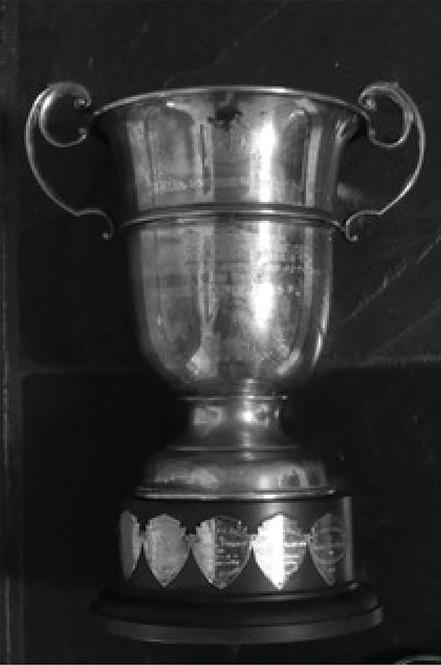
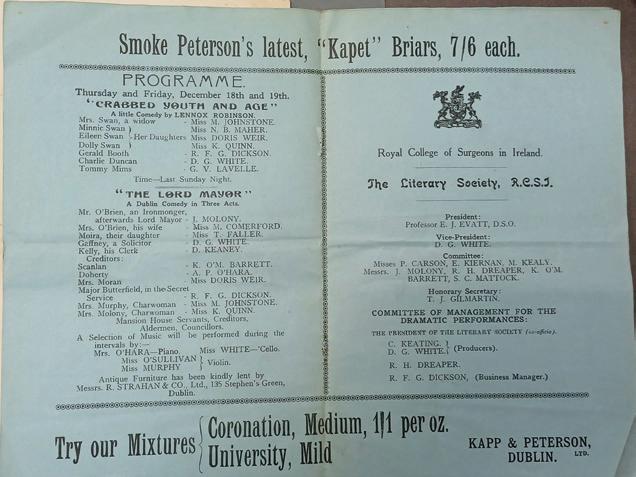
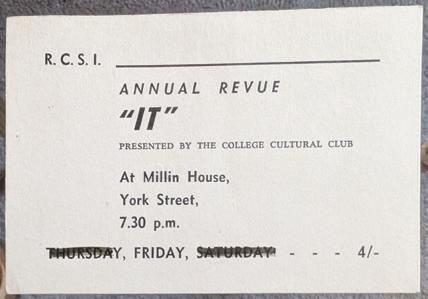

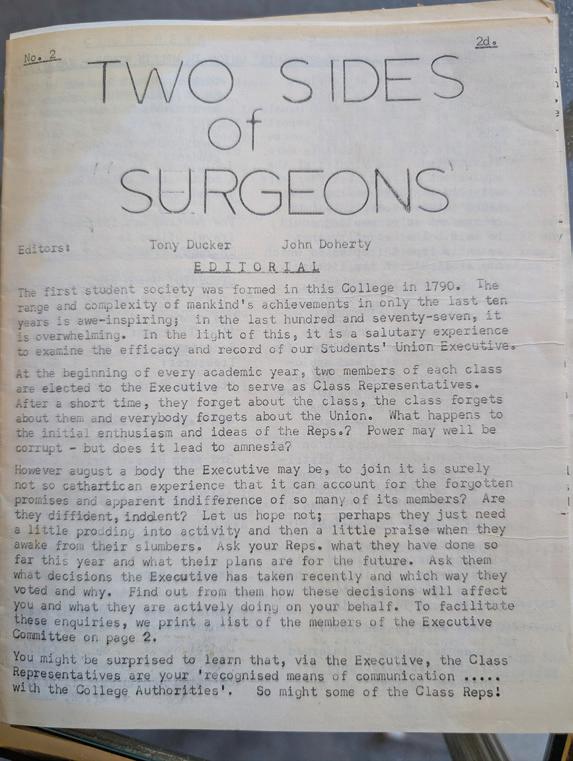

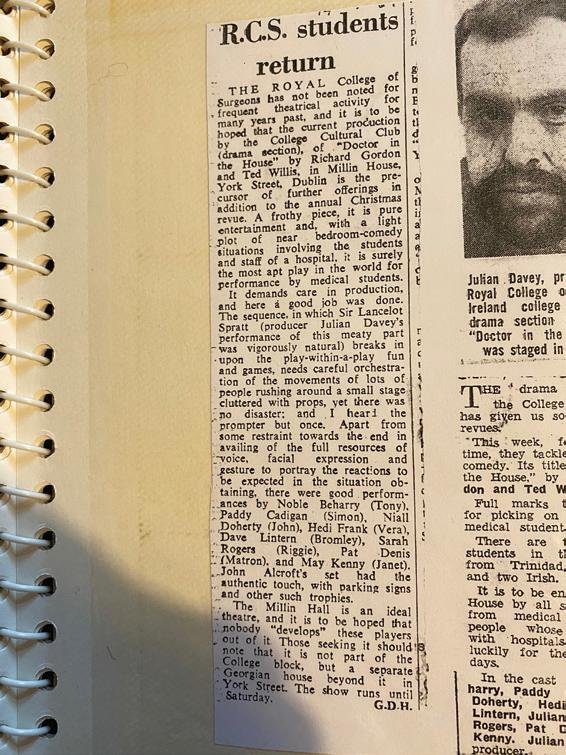
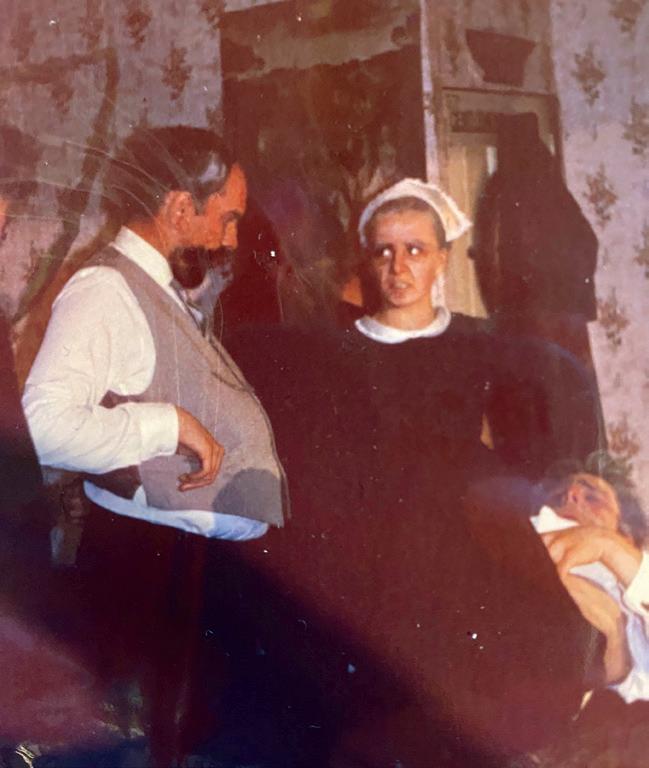

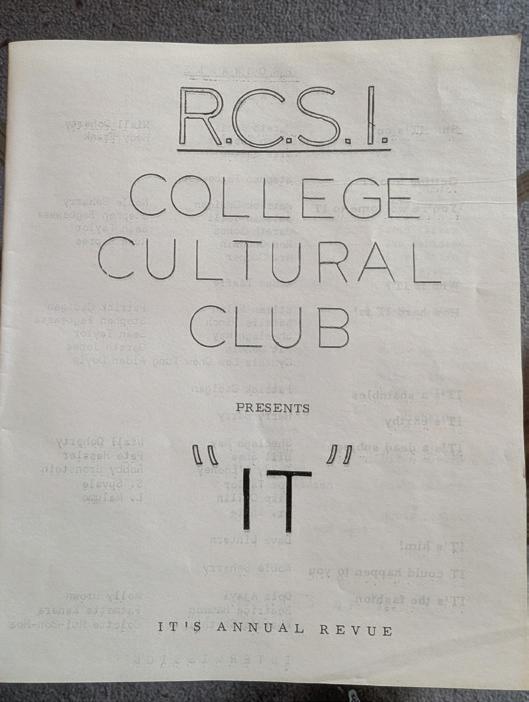
the hockey pitch. They flung off their clothes, the better to enjoy the evening air on their bare legs. Some of their peers recognised opportunity knocking and pinched the clothes from the sidelines. While still hunting for them, Ridgway and friends were appalled to bump into the festival adjudicators. “But look, the next night we won the prize.”
DramSoc wasn’t all awards seasons and midnight exercise. Its members were careful to maintain a work-life balance. “When we needed to hydrate we always went to The Swan – a bit more spit and sawdust back then.” Spit and sawdust were no dampeners to romance, which Ridgway remembers blossoming over the course of many productions and wrap parties. “I met my wife when she was doing the make-up for a play I was directing. And we were not alone in finding romance.”
Late nights come at a price. Memories of suffering through competitions are still vivid for Dr Alice Pastides (Medicine, Class of 2006). “We rocked up hungover to hear terrible criticisms. But we had such fun.” DramSoc members indulged their many vices on stage too. One of Pastides’s acting highlights was Lady Markby in An Ideal Husband. “I loved that role. I got to smoke on stage and everything.”
Dr David Kealy (Medicine, Class of 2008) played Pastides’ husband once, the pair of them hamming it up no end. Kealy takes a moment to reflect on his acting career. “Leading man, romantic leads … not really. I played an old grouch in one play, and a dodgy doctor in another (no comment!)” He remembers a now eminent professor, cast to perfection. “They played a drunken disgrace in one play. It involved them lying motionless at the front of the stage for an hour. A role they were born to play.” We all have our talents.
“Creative outlets really matter for students’ mental health. With drama, they get that moment to just let go...”
That’s DramSoc: There’s a spot for you even if your speciality is lying in a heap on it. Dr John Corristine (Medicine, Class of 1970) found his niche in lighting, and one year he converted Jacobs’ biscuit tins into stage lights. Another lighting director, Dr Matthew MacPartlin (Medicine, Class of 1998), added visual effects like swirling fog or a flash of lightning. “There was a lot of creativity in it, balancing long hours of committing facts to memory and trotting them out at exam time. Core knowledge is essential, but creativity and being able to pick out not just what you can add to a scene, but what the scene needs to make it really pop.”
There is plenty of support as you figure out where you might land. Billy Cahill helps students learn on the job. He arrived in the college in 1996 to work with the maintenance team. Music-mad, trained as an electrician, experienced in lighting, he has always been generous in sharing his skills with the students in both the Musical Society and DramSoc. “I started by building sets, I remember building a collapsing bed for The Odd Couple once. Whatever I’m doing I’m also teaching the students, whether that’s wallpapering sets or building a revolving shower. Which we also did.”
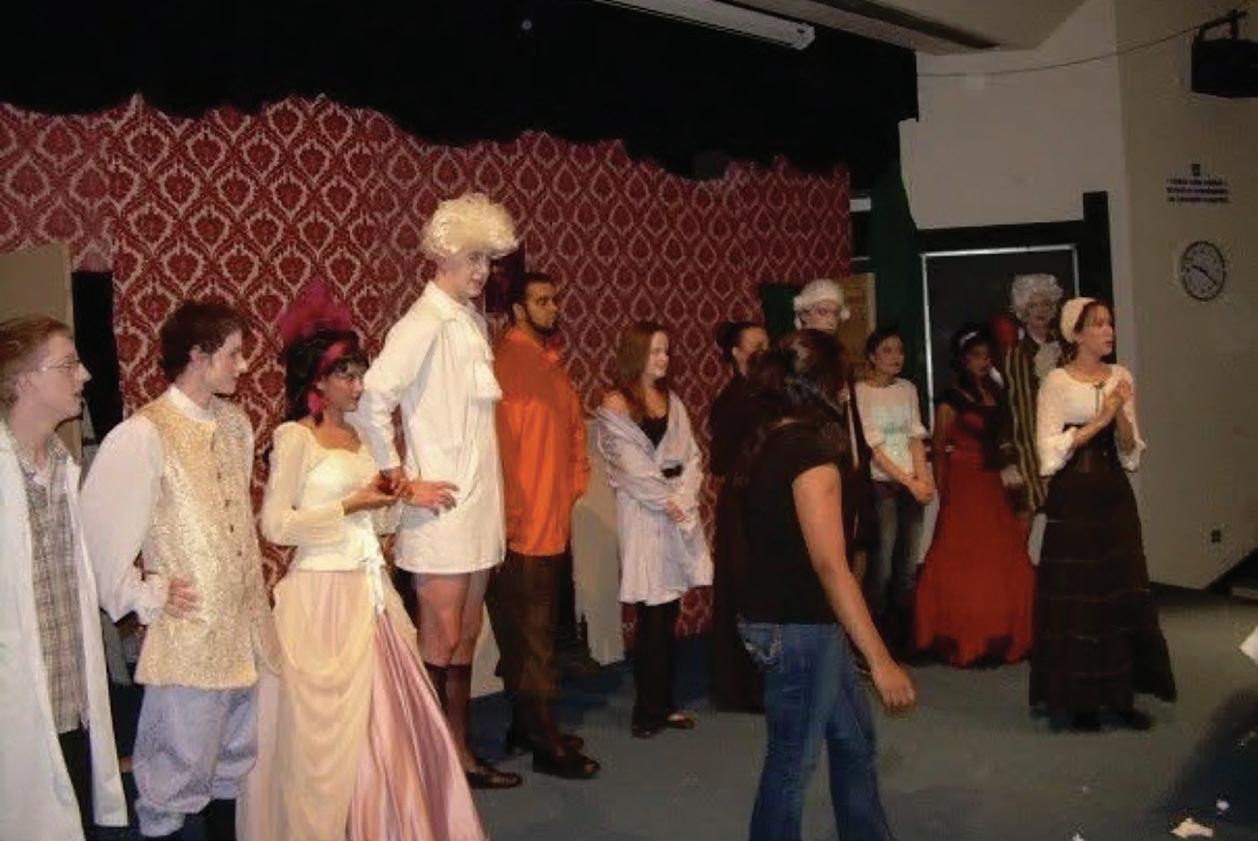
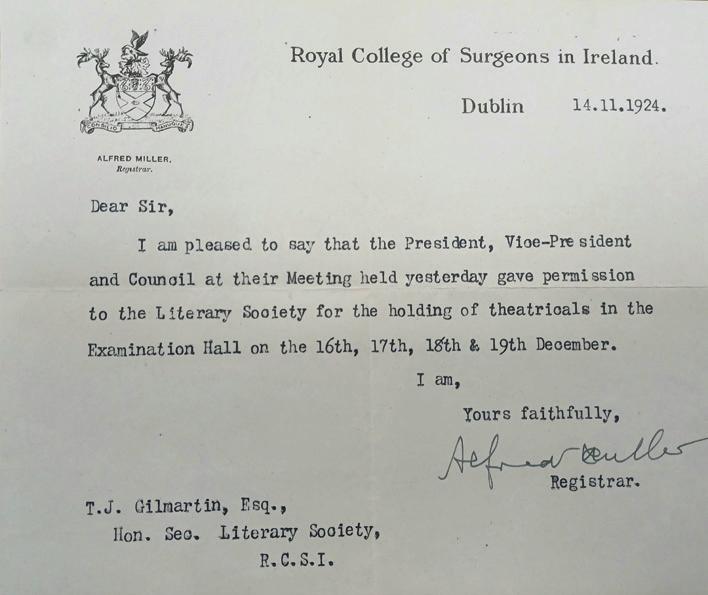
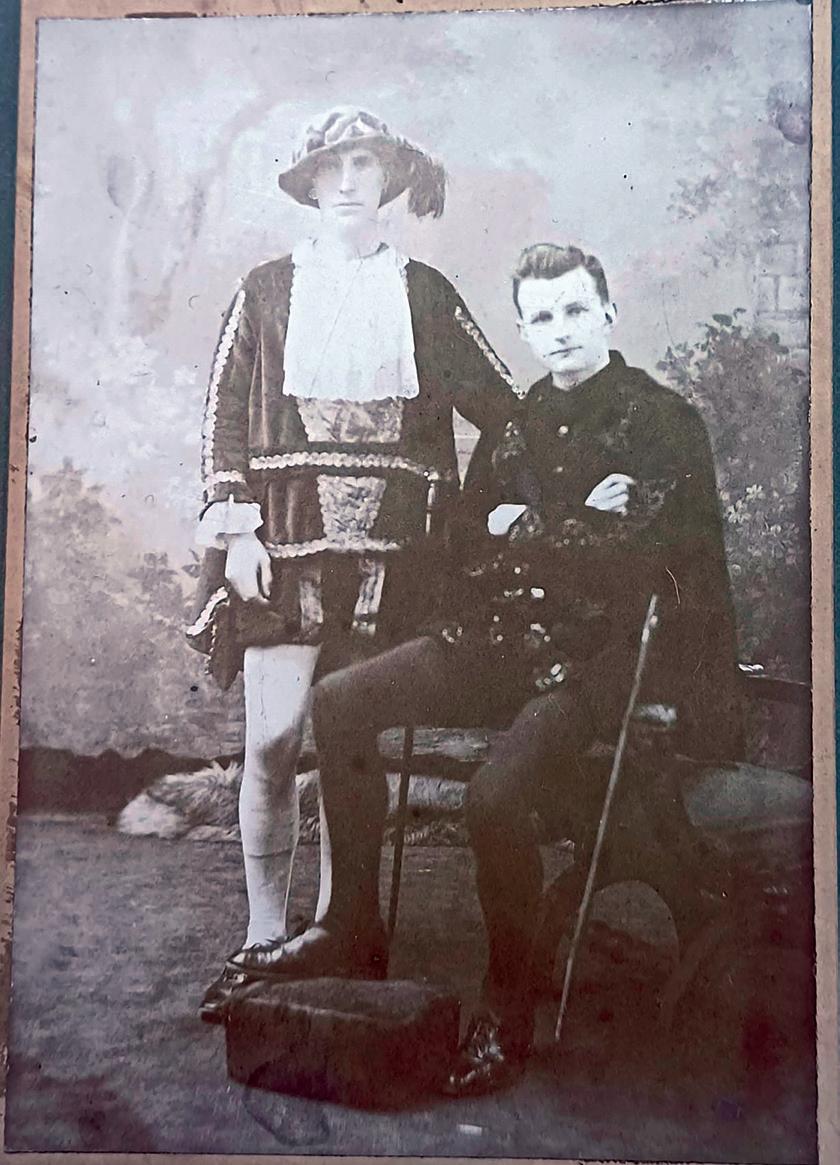
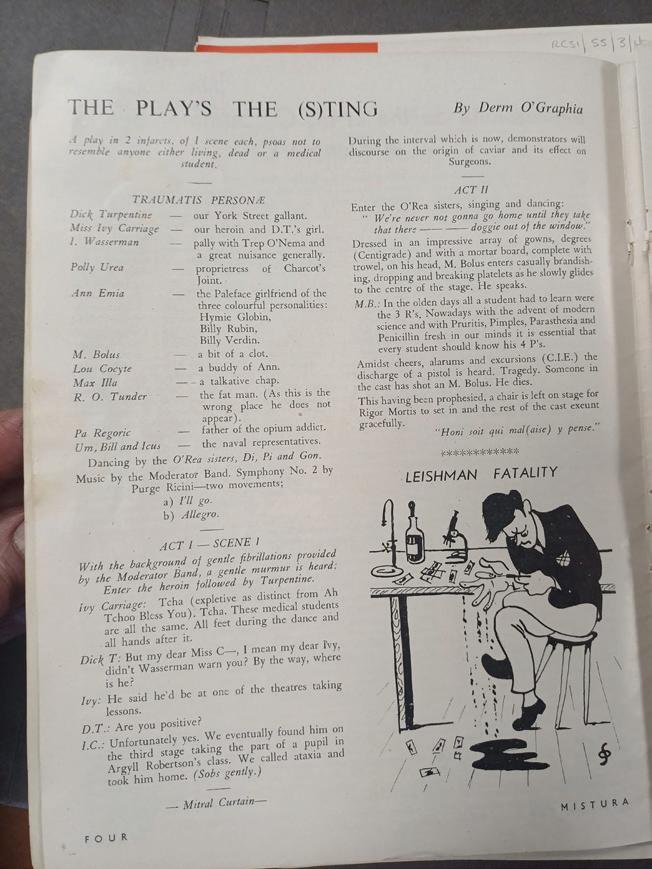
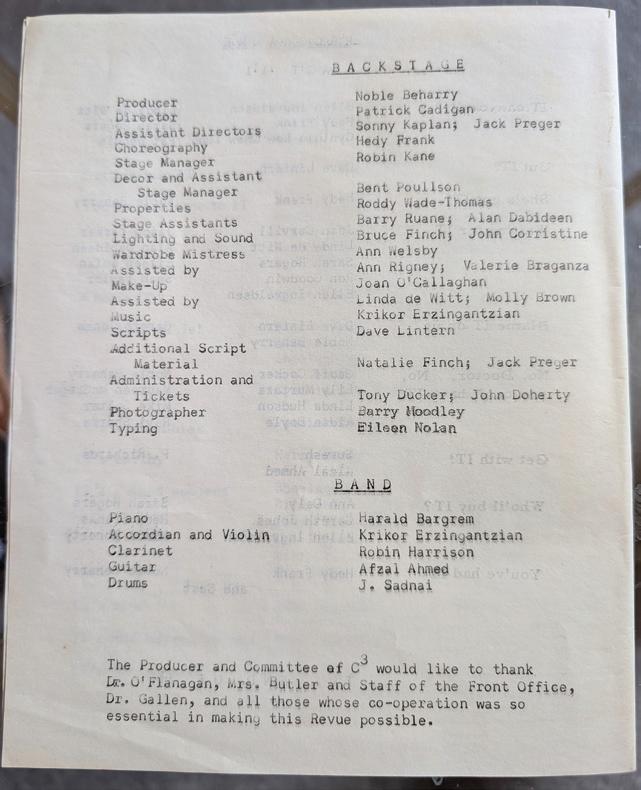


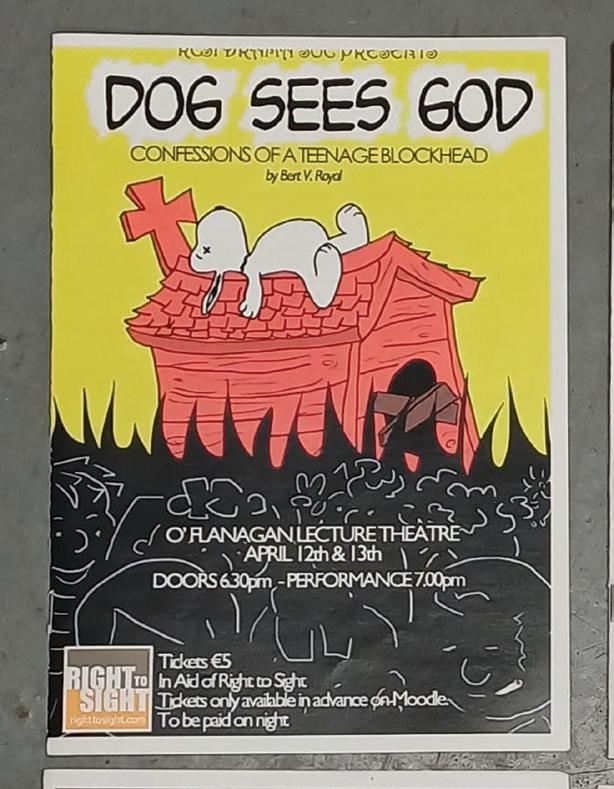
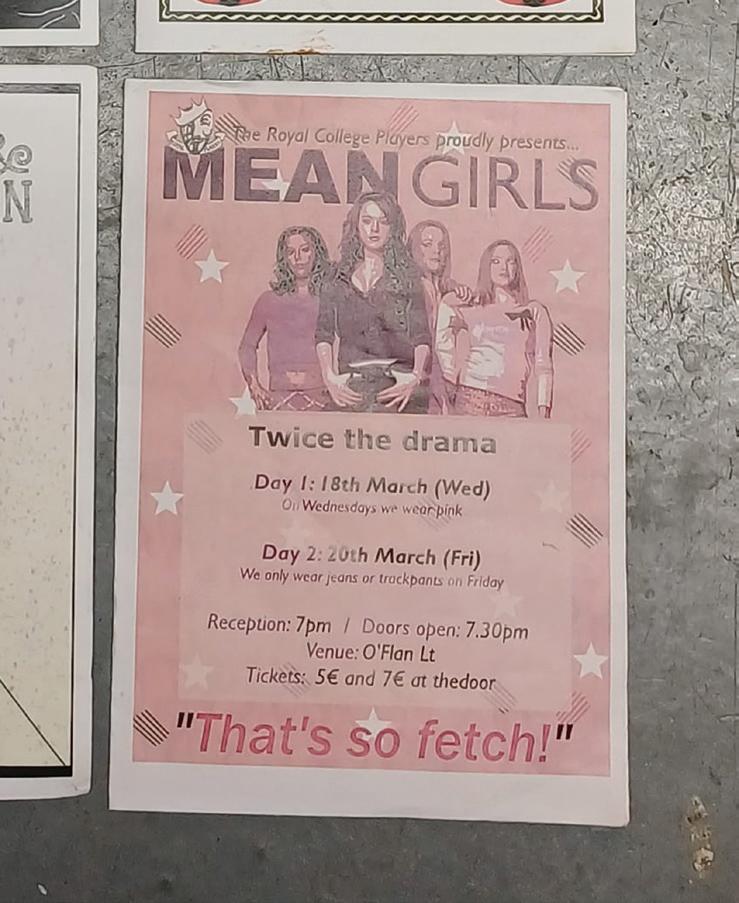
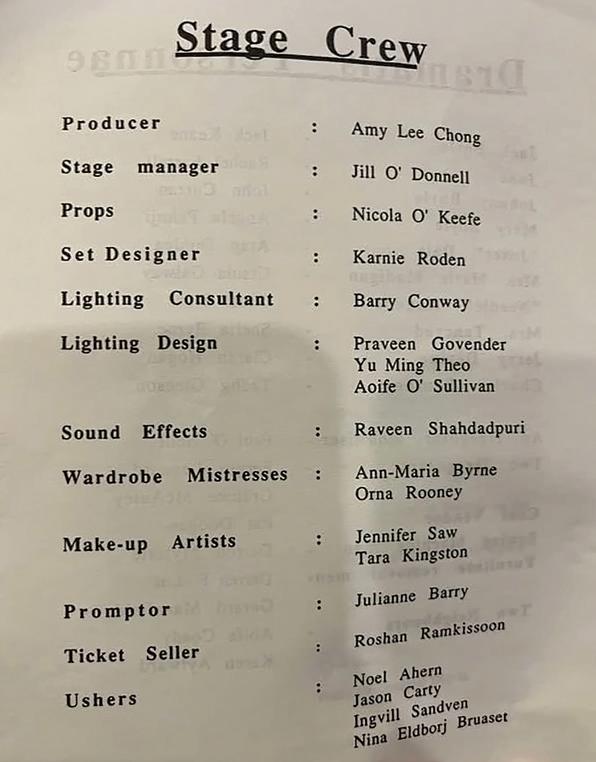
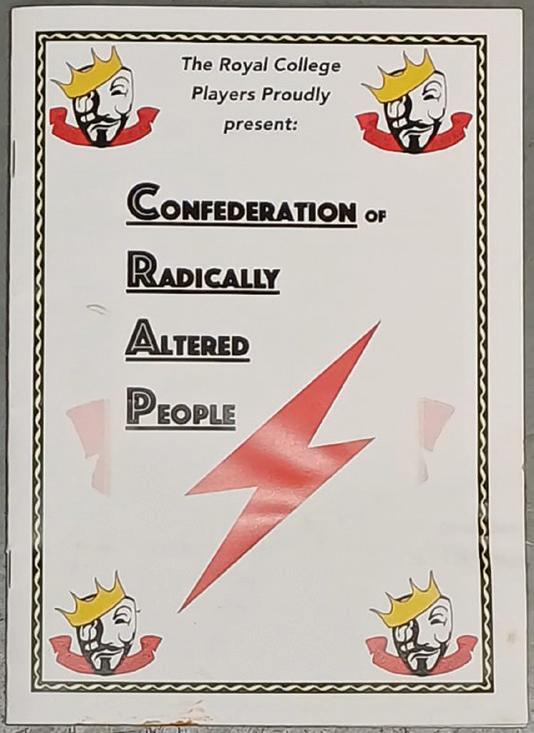

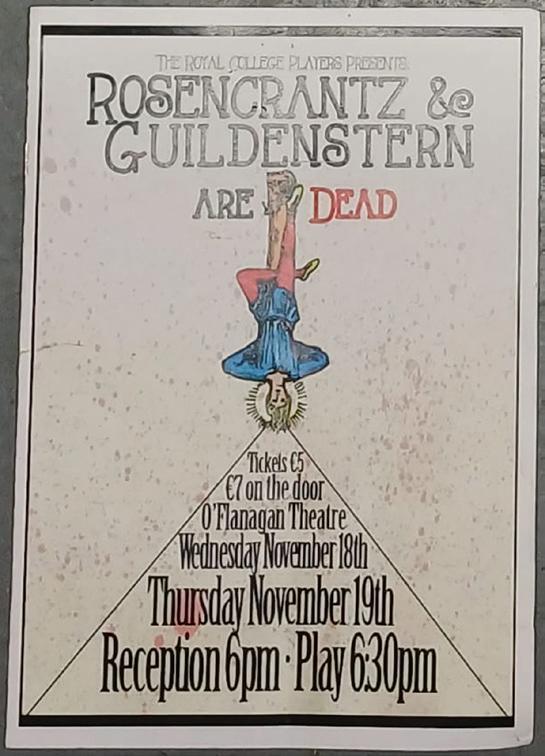
1. One of DramSoc’s rehearsals in the noughties.
Clearly neither the 1960s nor the 1990s were eras when students had to be encouraged to broaden their horizons beyond academics. How different today’s picture is. Pressure for exam success has seeped down even into the junior cycle and equivalents, the COVID-19 generation hasn’t quite shaken off its social isolation, and we are all living through tiny touchscreens while communication and social skills are being suffocated. Ridgway’s perspective on student life is now that of a Trinity professor, and he sees students generally less involved in co-curriculars, less likely to meet up on a Friday night, less comfortable socially, less able to make and keep connections, less able to deal with the unexpected. Everyone approaches life differently, of course, but having a broad involvement in cultural societies or sporting clubs helps with these human factors. This learning is formalised now too.
According to Professor Ridgway; “We teach human factors, non-technical skills, as part of the curriculum now. It’s not a response to COVID-19 or anything, these are things you used to learn on the job. Now we teach them ahead of time. There’s significant data showing that communication errors can lead to significant medical errors. We teach behavioural science, so they can understand the science and frameworks behind all these things.”
Emily O’Brien, Operations Manager in Student Services at RCSI, says involvement in co-curriculars is vital as students face ever-tougher academic challenges. “Creative outlets really matter for students’ mental health. And it’s great to see them leave with a deepening of their cultural education, too.” She describes medical students’ lives as highly structured, with little to no room for error. “Medical training now is more holistic, but still they are learning all the time, within very strict parameters. With drama, they get that moment to just let go, to find a creative release.”
Billy Cahill observes how quickly the students develop. “They come here from 72 countries. You might have someone from Dubai or Bahrain for whom English is not their first language, or someone whose voice has a naturally low volume.” He says sometimes students can be afraid even to audition. “You have to get over that fear of being laughed at, but in reality sometimes that’s exactly what you need. I remember Who Shot Sherlock? – that was a really funny production. And it’s always the same: They get stuck in. They meet people. They settle. They relax. Because it brings them to a different place. That’s why they need it. Why we all need it.”
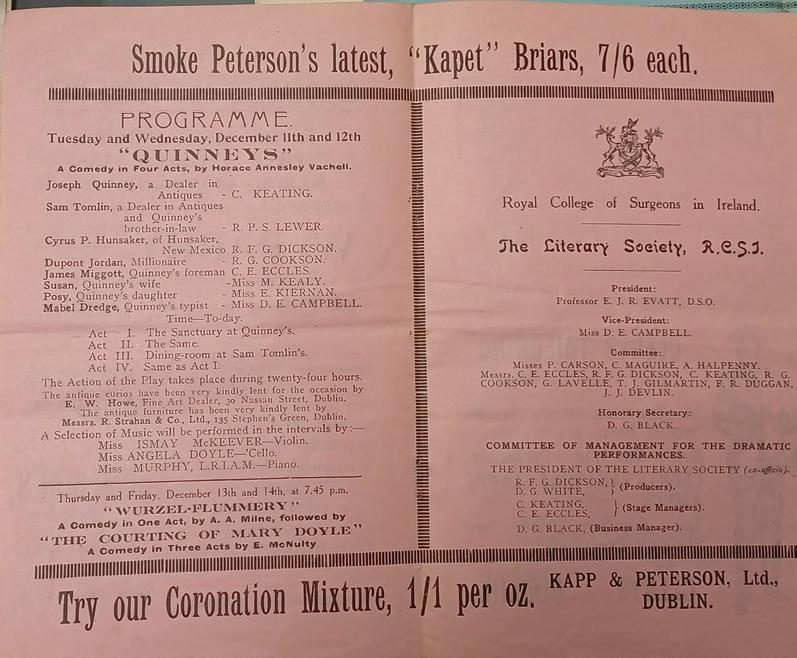
2. A note granting permission for "theatricals "to be held in RCSI's Examination Hall. 3. A script for The Play's The (S)ting, a medical-themed production. Note the "Traumatis Personae", including Billy Rubin and Billy Verdin, Polly Urea etc. 4. RCSI's dramatic endeavours date back at least to the 1830s.
8
5. Jack Preger directed this play, with choreography by Hedy Fry. 6.-9. Posters and programmes for various productions.
Everyone acknowledges that joint endeavours generate generous payback. “You also have that cultural piece,” O’Brien adds, “everyone brings their own cultural flair and references. If you’re doing Romeo and Juliet, say, you might end up with a very different production from a familiar British or Irish interpretation. You get to see it through a different cultural lens.” She says that a benefit of drama is its universal nature, invaluable in this international setting. “Drama, performance, art, and music are globally recognised. It’s crucial to find these common interests.”
Fun matters. Dr Julian Davey tells a final anecdote from 60 years ago. He and a posse of enthusiastic fellow actors went to Ireland’s Eye to do an outdoor reading of Julius Caesar in its entirety. “Every time Caesar’s train was mentioned – you know, enter Caesar and his train – there was a tremendous amount of choo-chooing. So I think that sums it up, really. Several crates of beer and some very finely developed humour. It was just the best fun.” It looks it. ■
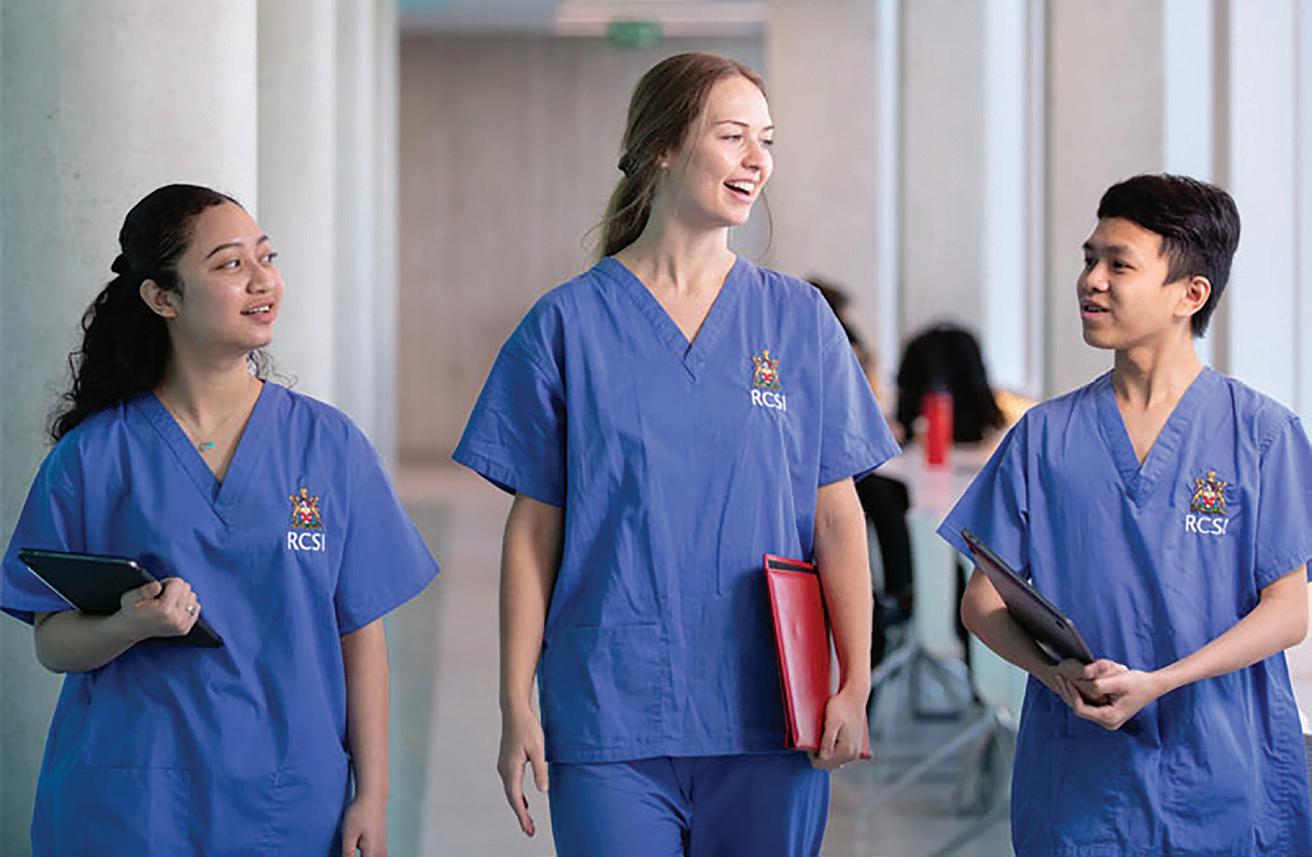
RCSI has for the third time ranked number one in the world for United Nations Sustainable Development Goal (SDG) 3 ‘Good Health and Well-being’ in the Times Higher Education (THE) University Impact Rankings 2025. THE University Impact Rankings recognise universities around the world for their social and economic impact based on the
Professor Garry Duffy has been appointed RCSI’s 30th Professor of Anatomy and Head of Department of Anatomy and Regenerative Medicine. Professor Duffy succeeds Professor Clive Lee who has retired as Professor of Anatomy.
Professor Duffy joins RCSI from the University of Galway where he was Professor of Anatomy and Regenerative Therapies, bringing with him a unique combination of institutional knowledge and a fresh leadership perspective to this new role.
An award-winning educator and researcher, Professor Duffy has led numerous innovations in anatomy teaching over the past 16 years and has secured over €65 million in research funding. As coordinator of three major EU-funded projects (AMCARE, DRIVE and DELIVER), co-founder of two campus companies and an experienced leader in technology transfer to major medical device companies, he has a strong track record of translating scientific discovery into clinical and commercial outcomes.
“By combining our traditional strengths in clinical anatomy with emerging fields such as tissue engineering, MedTech and soft robotics, we will position RCSI as a global leader in understanding not just how the body is structured, but how it can be rebuilt and regenerated for the benefit of patients,” said Professor Duffy.
UN’s 17 SDGs. 1,788 universities participated in the SDG 3 ranking, an almost threefold increase since RCSI first achieved the number one position in 2020.
RCSI’s significant contribution to health-focused research is a key factor in the University’s number one ranking with its score in the research pillar of SDG 3 increasing from 84.5 in 2024 to 85.6 in 2025. Key initiatives over the past year included the launch of a free continuous professional development (CPD) course to empower health professionals to apply the principles of sustainable healthcare in their own practice. Through the free MyHealth RCSI series, RCSI academics, in partnership with patient advocates, empowered people with science-backed insights on topics including coping strategies for life with cancer and the dangers of cannabis use on young minds.
Implementation of RCSI’s Climate Action Roadmap, which commits the University to a number of sustainability targets on the journey to net carbon zero by 2050, has continued. Local community initiatives included the FEABHAS project, a study undertaken in partnership with Sláintecare Healthy Communities that outlined recommendations to reduce inequalities in healthcare among communities in Dublin city.
The Uisce Cliste project, a novel drinking water intervention, improved access to free drinking water and enhanced vital hydration knowledge among Dublin communities.
In March, Taoiseach Micheál Martin and Minister for Further and Higher Education, Research, Innovation and Science James Lawless TD officially opened 118 St Stephen’s Green, RCSI’s new education, research and public engagement facility, marking an important new chapter in the University’s more than two‑century presence on St Stephen’s Green.
Providing a new front door to the RCSI campus, the ¤ 95 million building is connected to RCSI’s award‑winning academic facility at 26 York Street by an interlinking bridge, creating additional, flexible space for the approximately 3,000 students and staff who use the campus each day for study, work and extracurricular activity. It provides modern, flexible small‑group learning spaces and collaborative teaching environments, along with a technology‑enabled learning infrastructure that supports the delivery of postgraduate healthcare education to professionals around the world, advanced research laboratories and write‑up areas.
At street level, Humanarium, Ireland’s first exhibition space dedicated exclusively to health and wellbeing, hosts free exhibitions and events designed to enhance public health literacy and empower people to protect their own health.
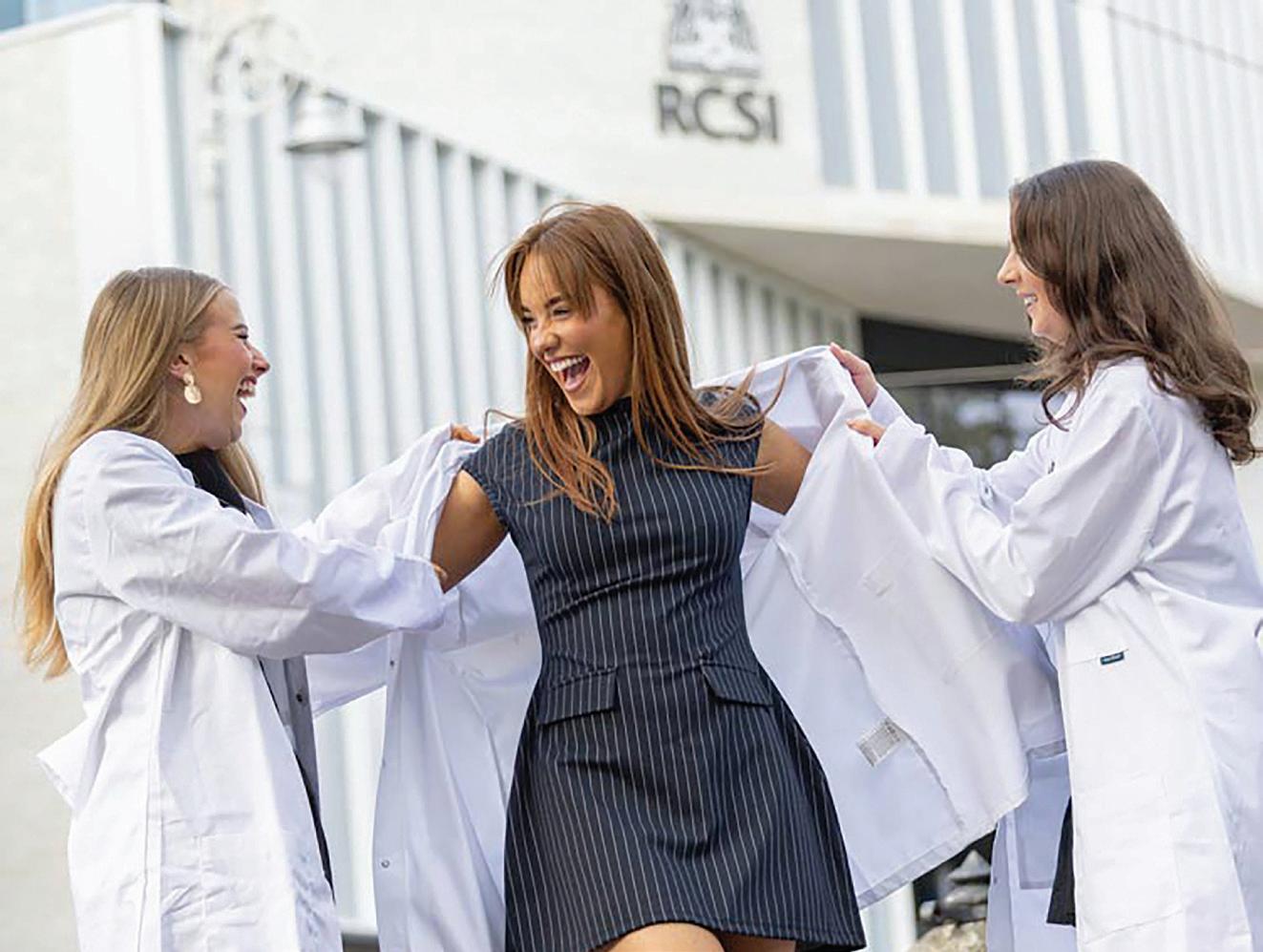
RCSI’s €12 million, purpose-built Dental Education Centre in Sandyford was officially opened in July 2025, marking a milestone in the expansion of dental education in Ireland. The new Dental Education Centre supports RCSI’s innovative Bachelor of Dental Surgery (BDS) degree programme, equipping students with the skills, confidence, and community-based experience to deliver high-quality, patient-centred dental care.
Under the leadership of Professor Albert Leung, Head of RCSI’s School of Dentistry, the Sandyford centre will accommodate first- and second-year students and faculty. The Centre includes 55 dental manikin simulators for
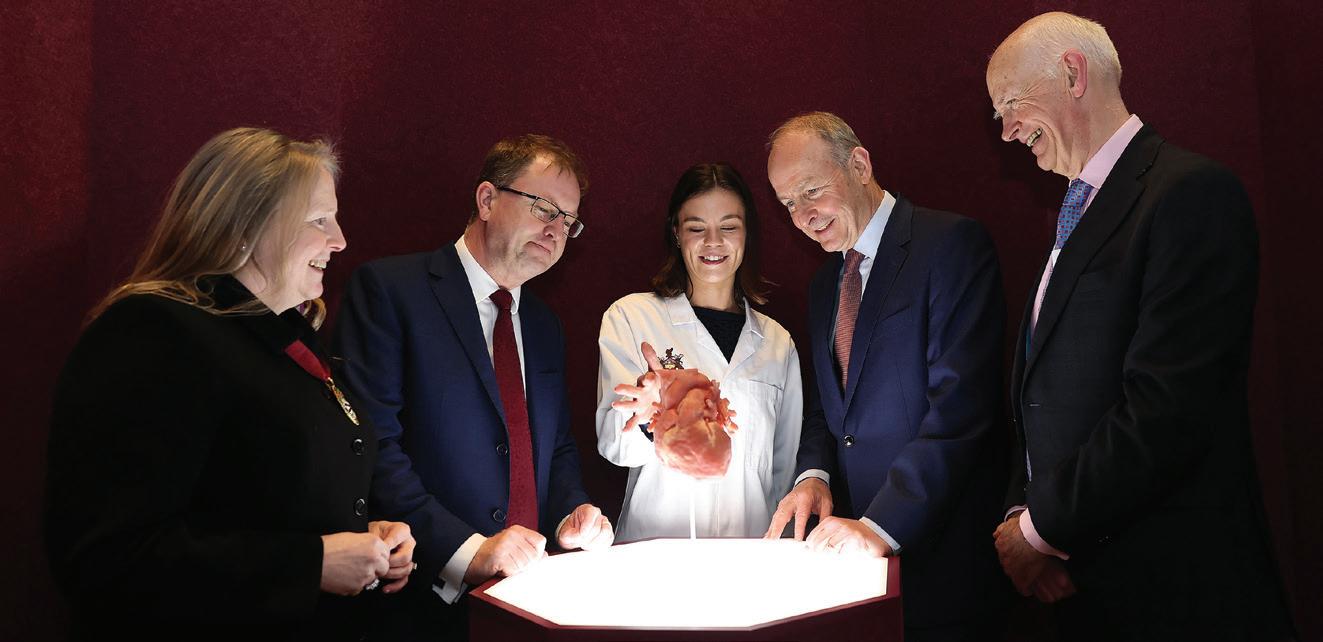
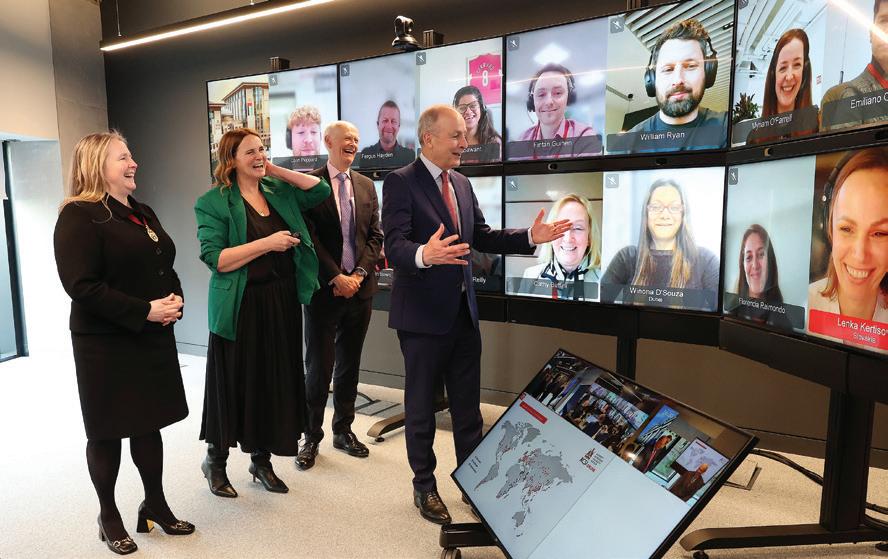
early clinical skills training, a dental laboratory, and a 12-chair community clinic where students will treat patients under supervision. Immersive, handson learning is supported by interdisciplinary collaboration and evidencebased teaching.
In October 2025, dentistry students joined the traditional White Coat Ceremonies at RCSI for the first time alongside students of medicine, physiotherapy, pharmacy, physician associate studies and advanced therapeutic technologies. The White Coat Ceremony marks the beginning of students’ academic journeys, underscoring the importance of professionalism across all health science disciplines.
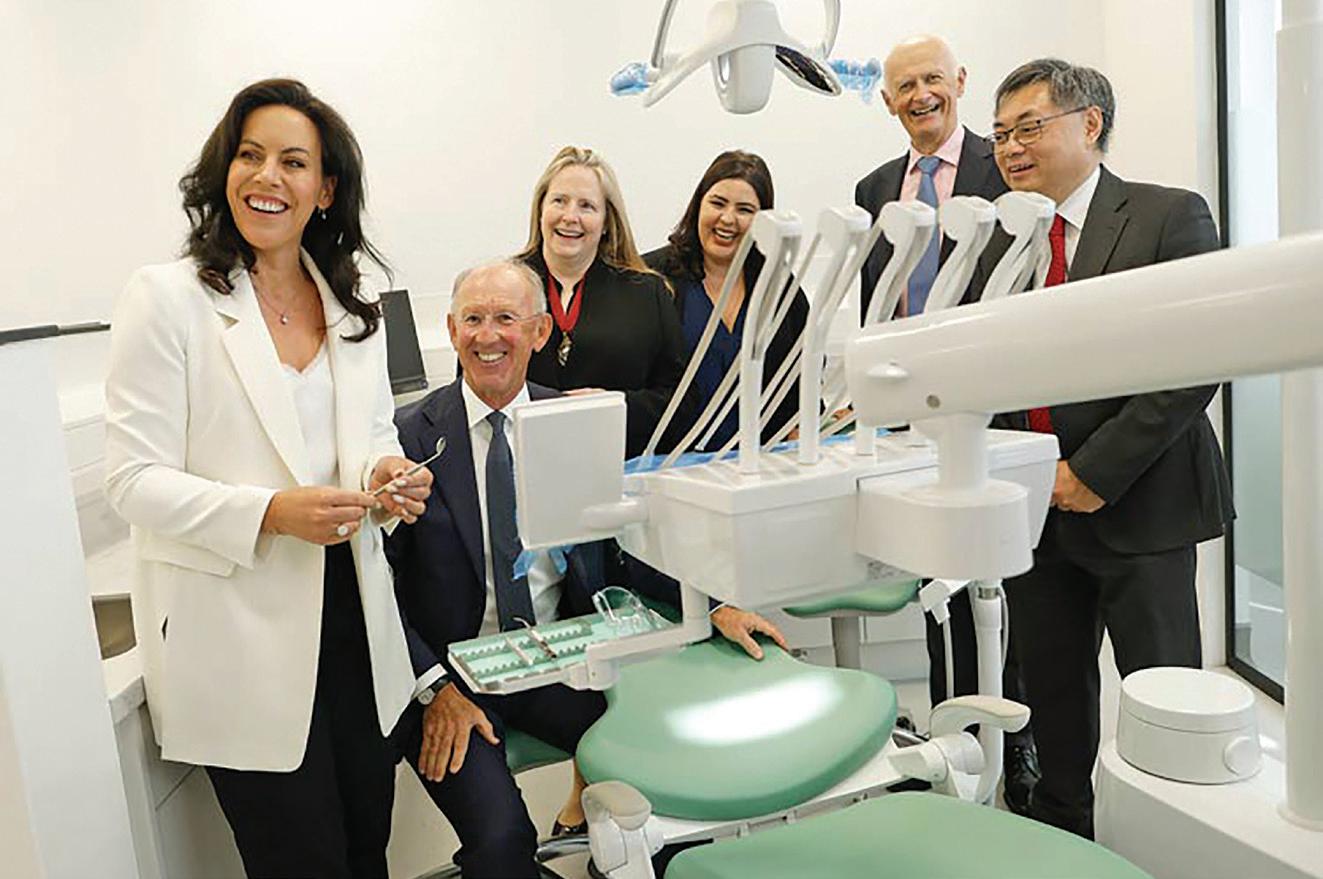
In September 2025, RCSI launched the 2025/26 programme for the very successful MyHealth RCSI initiative, which offers an exciting mix of free public events, stories and science for everyday health, led by experts bringing breakthroughs to life. Presidio, a global digital services and technology solutions provider, is the new partner of the MyHealth RCSI programme which includes live events and on-demand content. Some of the topics covered in the new series include the role of family carers, asthma treatment research and brain health. For details of MyHealth events, see www.rcsi.com/myhealth.
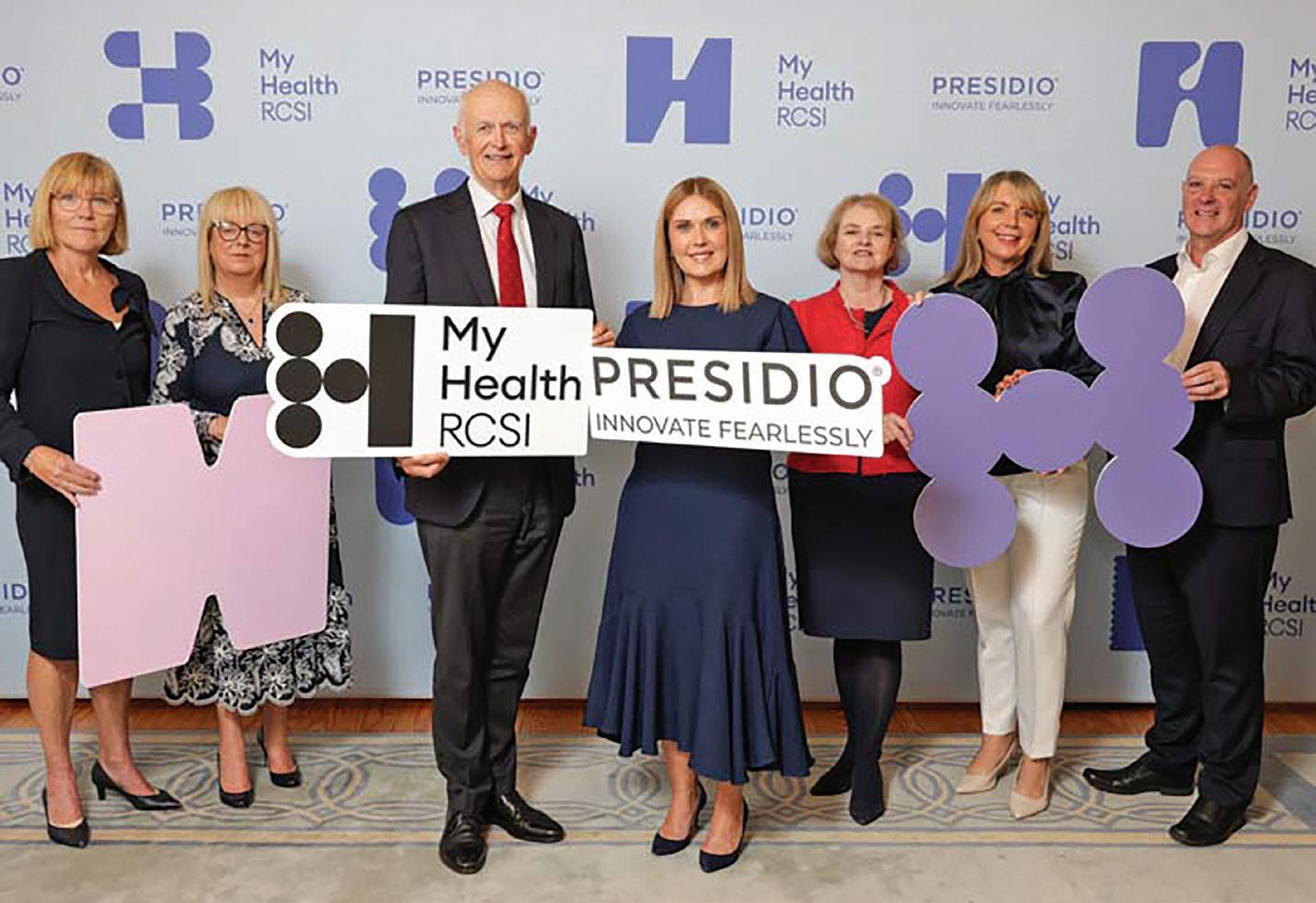
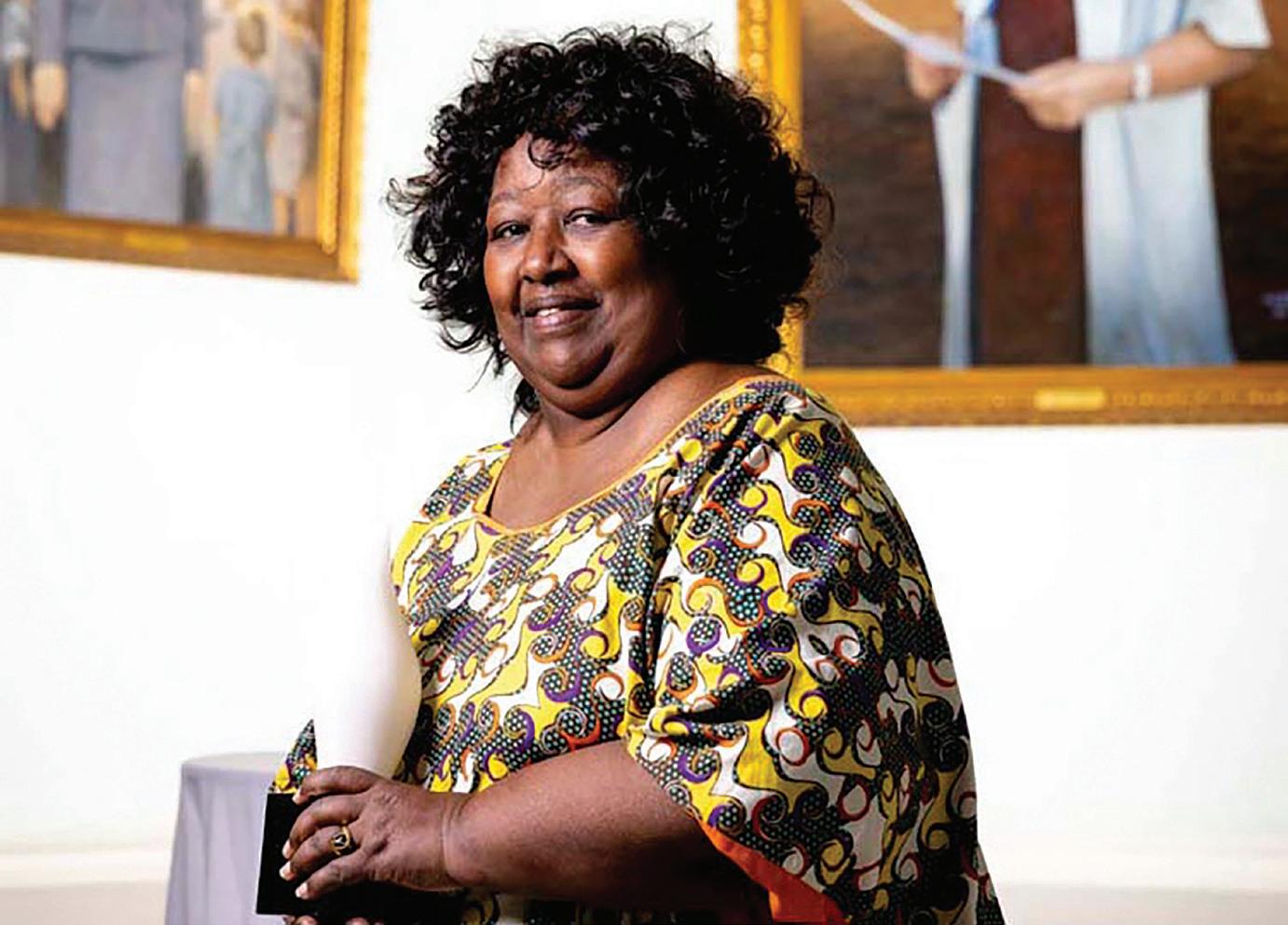
RCSI has presented the Cameron Award for Population Health to Rwandan paediatrician Professor Agnes Binagwaho, co-founder and former Vice Chancellor of the University of Global Health Equity (UGHE) in Rwanda. Recognising leaders who have made outstanding contributions to public health and health equity, the award commemorates the legacy of Sir Charles A. Cameron, a former President of RCSI whose pioneering work in 19th-century Dublin transformed public health.
The career of Professor Binagwaho has been devoted to advancing equitable access to healthcare and strengthening health systems in low and middleincome countries. She co-founded UGHE in 2015 as an initiative of Partners In Health, aiming to transform how health professionals are trained to deliver high-quality, equitable care worldwide.
RCSI Medical University of Bahrain welcomed a delegation from the World Health Organization (WHO) to its campus to explore opportunities for collaboration in health education and development.
Assad Hafeez, Acting WHO Representative in Bahrain, met with Professor Sameer Otoom, President of RCSI Medical University of Bahrain, Dr Naeema AlQasser, and members of the University management and student representatives. Mr Fadi Ghosn, Head of Recognition, Careers and Alumni, highlighted the University’s community engagement initiatives and its partnership with Operation Childlife, a humanitarian programme led by Professor Martin Corbally, Head of the Department of Surgery. Dr Hafeez congratulated RCSI Bahrain “for their outstanding commitment to improving health outcomes”.
Professor Binagwaho returned home to Rwanda in 1996 following the 1994 genocide against the Tutsi and played a pivotal role in rebuilding the country’s health system. She served in senior government positions until 2016, including Executive Secretary of the National AIDS Control Commission, Permanent Secretary of the Ministry of Health and Minister of Health for five years. She has co-chaired the Millennium Development Goal Task Force on HIV/AIDS and Access to Essential Medicines, and holds academic appointments at UGHE, Harvard Medical School and Dartmouth’s Geisel School of Medicine. She serves on the boards of the Rockefeller Foundation, the African Europe Foundation, the Cummings Foundation and the African Union Commission for Infectious Diseases Response. She received the 2022 L’Oréal-UNESCO Award for Women in Science.
At the award ceremony, Professor Binagwaho observed: “In Rwanda and across sub-Saharan Africa, the most successful health programmes share a common foundation: genuine community buy-in. Demystifying health sciences within our communities is an essential part of that process. Alongside development partners, universities have a vital role to play in driving this approach.”
Professor Cathal Kelly, Vice Chancellor of RCSI said: “Professor Agnes Binagwaho exemplifies the values of equity, compassion and global collaboration that we celebrate through the Cameron Award for Population Health. Her leadership in rebuilding and reimagining Rwanda’s health system, and her commitment to educating the next generation of healthcare professionals, serve as an inspiration to all of us working to advance population health worldwide.”
Collaboration Programme Manager Lucia
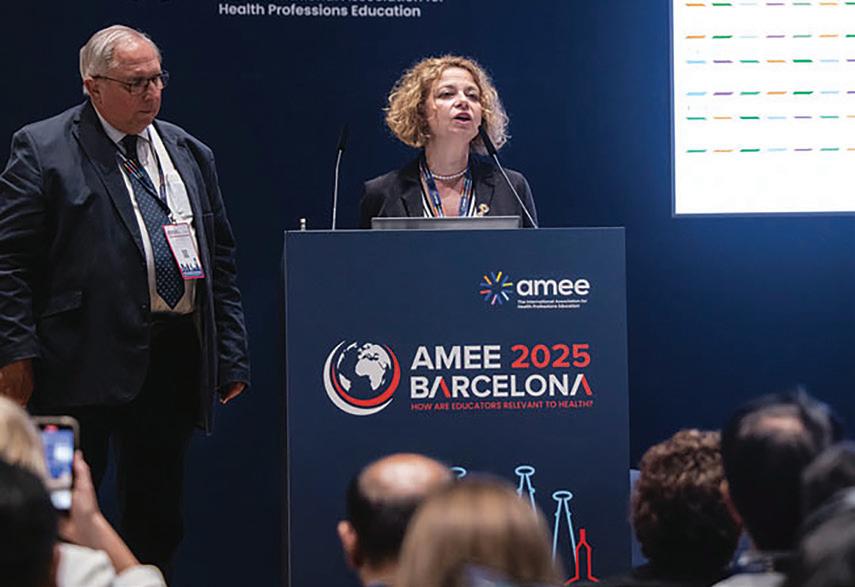
The longstanding collaboration between RCSI and the College of Surgeons of East, Central and Southern Africa (COSECSA) has been recognised by the 2025 ASPIRE-to-Excellence Award for International Collaboration in Health Professions Education. Since 2007, RCSI has worked with COSECSA to improve the standards of surgical care in East, Central and Southern Africa. COSECSA has grown to become the largest single contributor to the surgical workforce in sub-Saharan Africa.
The SURGhub project, a joint initiative by the Global Surgery Foundation and UNITAR, supported by RCSI, and in association with the J&J Foundation, has been awarded the prestigious QS Reimagine Education Award 2025 for Best E-Learning Project, recognising its pioneering use of digital innovation to expand access to high-quality surgical education worldwide. SURGhub delivers timely, relevant and effective training directly to healthcare providers who need it most. The free-to-access platform provides frontline healthcare workers, particularly those in low and middle-income countries, with high-quality, context-appropriate training across surgery, anaesthesia, obstetrics and gynaecology, perioperative nursing and essential non-clinical skills. Since its launch, SURGhub has attracted more than 35,000 learners from more than 200 countries.
Dr Ines Perić, Education Project Manager and Eric O’Flynn, Programme Director for Education, Training and Advocacy, RCSI Institute of Global Surgery, who accepted the award on behalf of SURGhub.
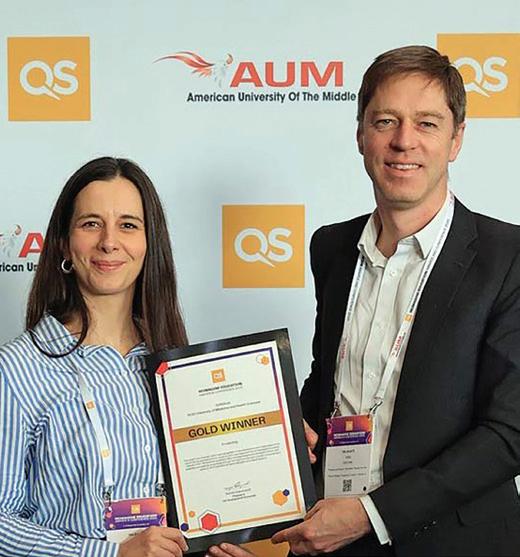
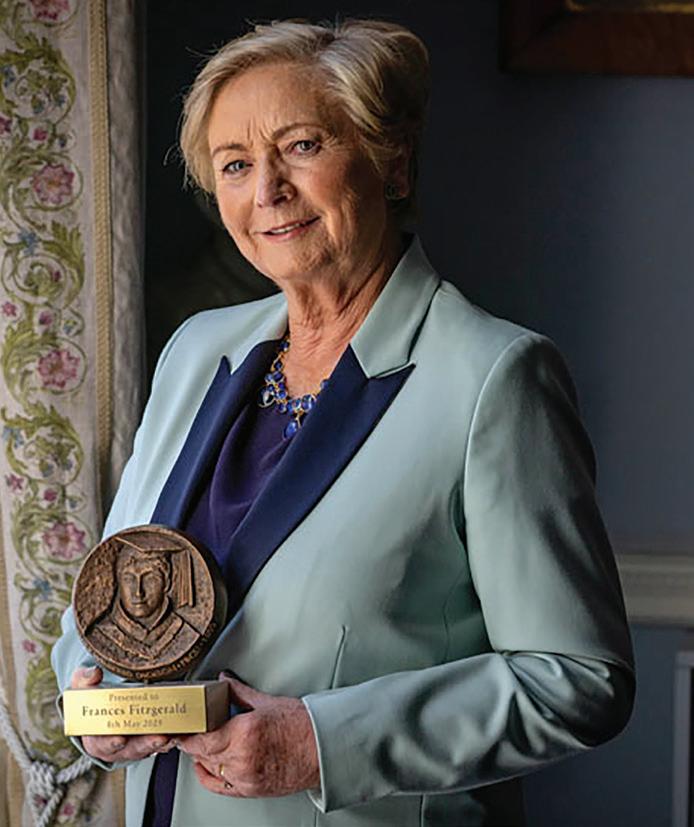
RCSI has awarded the prestigious Emily Winifred Dickson Award to Frances Fitzgerald, former Tánaiste, Minister, TD and MEP, for her outstanding contributions to women’s issues and her exemplary contribution as a trailblazer and change maker in Irish and European politics and civic society.
Established in honour of Emily Winifred Dickson, the first female Fellow of RCSI, the award celebrates women who have made significant impacts in their respective fields. Ms Fitzgerald’s career is distinguished by her commitment to gender equality and social justice. As an MEP, she advocated for women’s rights on a European stage, addressing issues such as equal pay and combating gender-based violence.
At the ceremony, Professor Cathal Kelly, Vice Chancellor of RCSI, said: “Frances Fitzgerald embodies the trailblazing spirit of Dr Emily Winifred Dickson. Her dedication to advancing women’s rights and her leadership in both national and international arenas serve as an inspiration to us all.”
“Dr Dickson’s pioneering spirit encourages us to continue striving for equal opportunities for women in all fields, particularly in STEM and leadership roles,” responded Ms Fitzgerald. “Her life reminds us that achievement has many facets, and takes turns that demand resilience. We are reminded that gender equality requires the active participation of all of us across the whole of life’s challenges, and that engaging men as convinced allies is essential if we want to change restrictive gender norms, dismantle barriers, and achieve a more inclusive society.”
Ms Fitzgerald was presented with a specially commissioned piece by the late renowned sculptor Imogen Stuart RHA.
Ireland’s first Postgraduate Diploma in Neurology Nursing at RCSI represents a major step forward in specialist nursing education and neurology care in Ireland. Neurology nurses play a central role in delivering high-quality, person-centred care for people living with neurological conditions, including multiple sclerosis, Parkinson’s disease and epilepsy. Responding to growing service demand, the new postgraduate diploma addresses a long-standing gap in specialist education, ensuring practice is informed by contemporary research and supported through accessible, advanced training.
Developed through close collaboration between academic, clinical and patient advocacy partners, the programme reflects a shared commitment to building
a skilled and sustainable neurology nursing workforce. Key partners include RCSI School of Nursing and Midwifery, the HSE National Clinical Programme for Neurology, the Neurological Alliance of Ireland, the Irish Neurology Nurses Forum, the HSE Office of the Nursing and Midwifery Services Director, and the FutureNeuro Research Ireland Centre for Translational Brain Science.
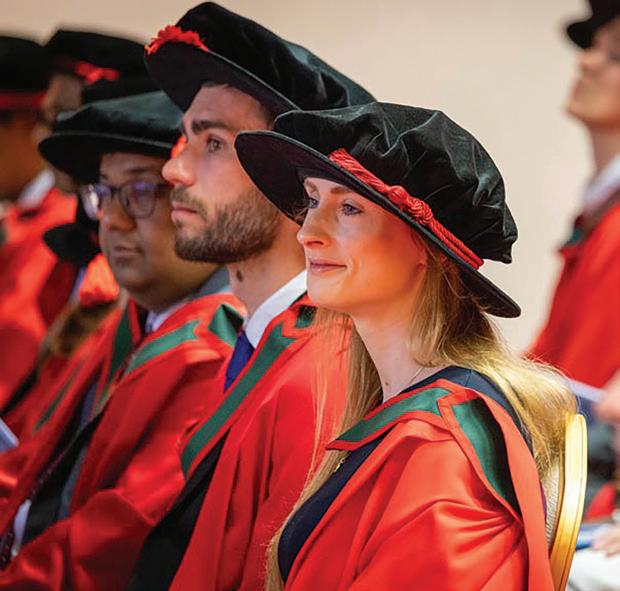

In June 2025, RCSI’s School of Medicine graduates were conferred across the Honours Degrees of Bachelor of Medicine, Bachelor of Surgery, Bachelor of Obstetrics (MB, BCh, BAO) and LRCP and SI. RCSI’s Medicine conferring celebrates the largest number of medical graduates in Ireland annually and last year was no exception with 344 medical students graduating from the Class of 2025.
At RCSI’s 2025 winter conferrings, 1,780 health sciences graduates and two honorary doctorates were conferred across five ceremonies. The first conferring ceremonies took place in November 2025 with 127 candidates conferred with healthcare professional degrees including BSc Degrees in Pharmacy and Physiotherapy as well as Honours Degrees of Bachelor of Medicine, Bachelor of Surgery and Bachelor of Obstetrics. A further 117 students were conferred with Postgraduate Academic Awards Degrees, including the Postgraduate Diploma in Health Professions Education, Master of Science (MSc), Master of Surgery (MCh), Degree of Doctor of Medicine (MD), and Doctor of Philosophy (PhD).
The ceremonies continued with three conferrings at the Convention Centre Dublin with 360 candidates conferred with Professional and Postgraduate Certificates and Diplomas in areas such as Clinical Leadership, Positive Health, Loss and Bereavement and Human Factors in Patient Safety. Candidates were also awarded Degrees of Master of Surgery (MCh), Master of Pharmacy (MPharm) and Master of Science (MSc) in Technologies and Analytics in Precision Medicine and Positive Health Coaching.
The Degree of Master of Science ceremony celebrated 409 graduates, with the MSc awarded in areas such as Healthcare Ethics and Law, Healthcare Management, Advanced Clinical Practice and Nursing and Midwifery programmes. The celebrations concluded with 768 graduates from the School of Nursing and Midwifery being awarded with Professional Certificates and Postgraduate Diplomas.
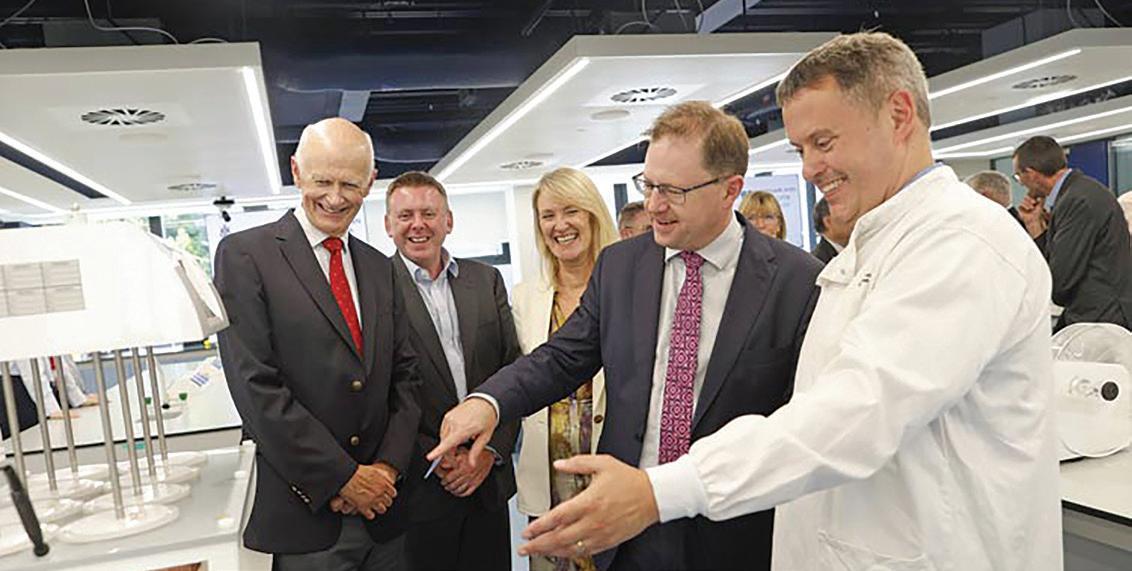
Textile artist Ally Nolan is the recipient of the 2025 RCSI Art Award for her piece The Men/ Na Fir. The RCSI Art Award, in association with the RHA and The Irish Times, recognises the link between art, medicine and wellbeing. As part of the award, Nolan will receive the RCSI Silver Medal as well as €5,000 to progress her practice, and a commission to the value of €10,000 to create a new work for the RCSI Art Collection.
The Carlow artist’s pieces celebrate the tradition of textile labour and are centred around storytelling, heritage and community. Ally works closely with the Borris Lacemakers to help preserve the tradition of lace making in her local community. During the COVID-19 pandemic, she participated in the ‘Borris Lace by Post’ initiative, an outreach art project that involved sending monthly lace-making kits to older people, enabling them to stay connected and creative throughout the lockdown.
Professor Cathal Kelly, RCSI Vice Chancellor, offered his congratulations to Ally Nolan, saying, “Ally’s ‘Borris Lace by Post’ programme is a wonderful example of how art can benefit human health. Her unique artistic style, rooted in history and tradition, offers a distinctive lens through which she can explore the connection between the arts, health and wellbeing.”
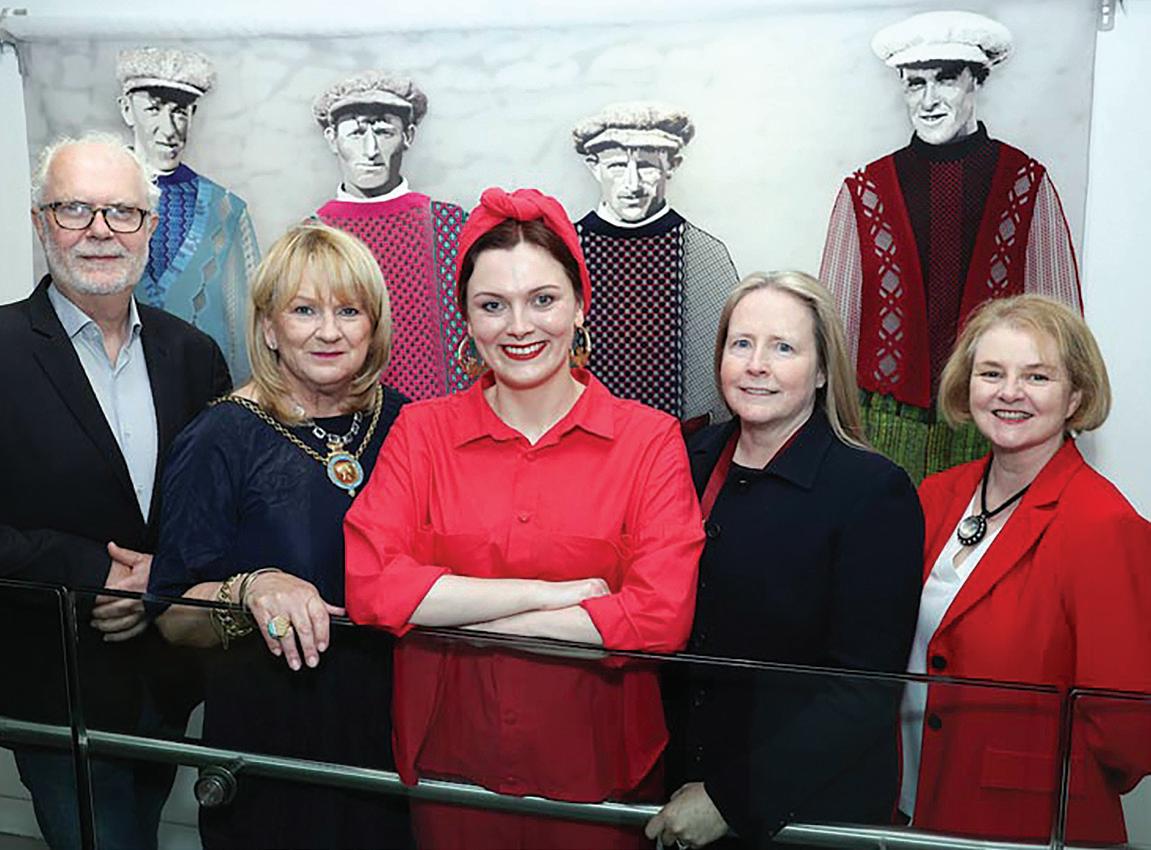
RCSI School of Pharmacy and Biomolecular Sciences opened its new teaching labs in July 2025, marking a major milestone in health sciences education in Ireland.
This strategic investment, including a €1.2 million grant from the Higher Education Authority, has increased the school’s laboratory teaching capacity by 60%, providing a world-class learning environment for 140 students, up from 89. The upgrade also includes the launch of the Kiran Pathak Patient-Centred Care Laboratory, an innovative 88-student space designed to simulate real-world clinical interactions and nurture both technical and interpersonal skills among students.
The new facilities support the expansion of the school’s undergraduate degree and masters programmes, which will increase the pool of graduates who will go on to work in clinical patient-facing healthcare settings and the Irish biopharmaceutical industry, making a significant contribution to health and wellbeing nationally. See page 4 for more. ■
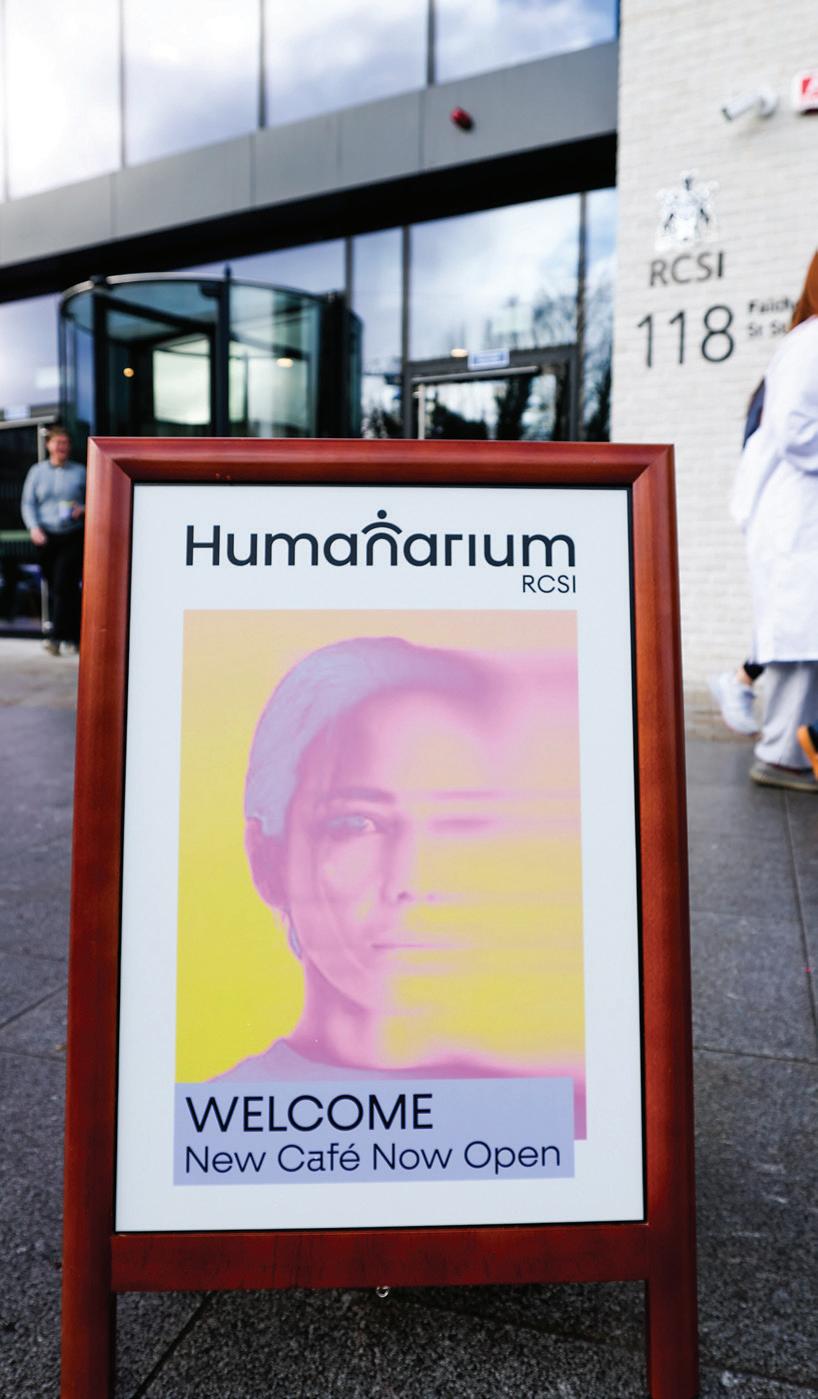
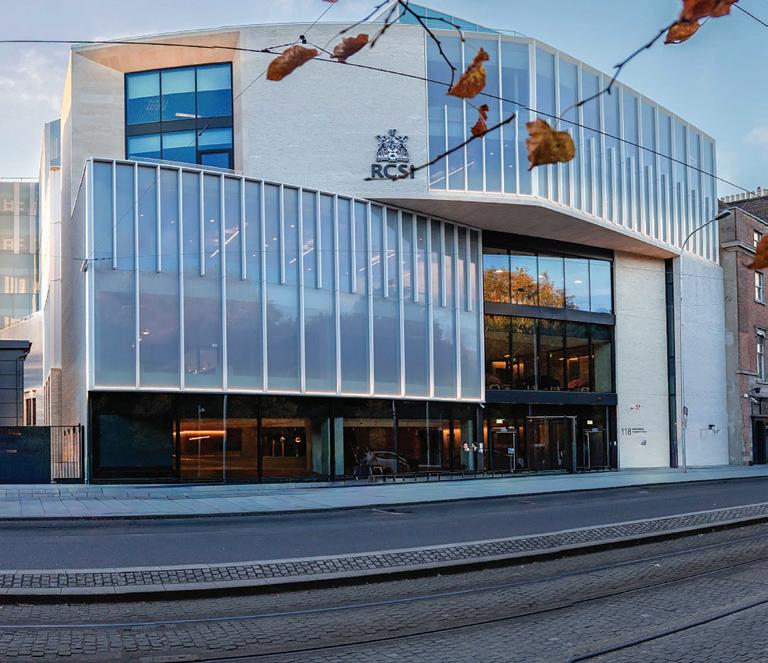
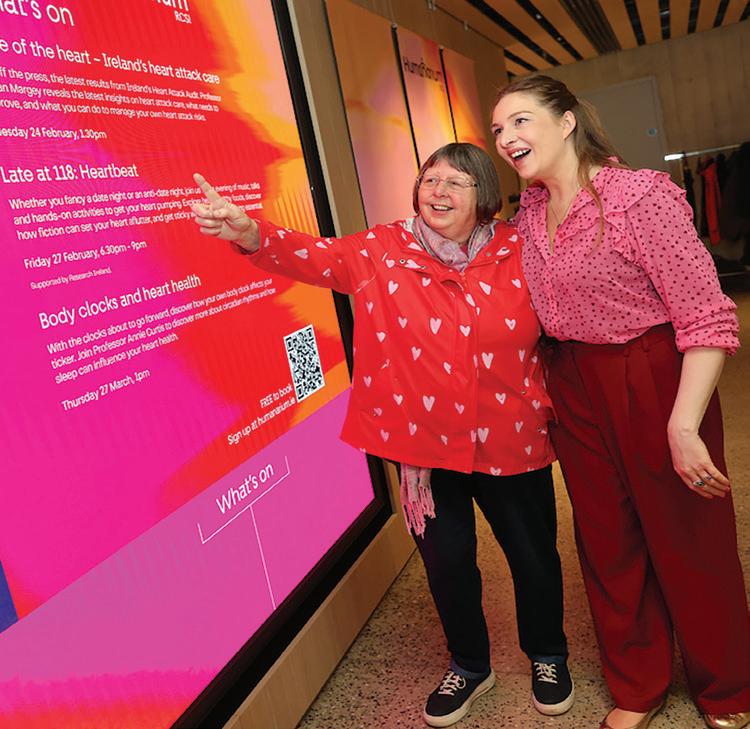
With a rolling programme of exhibitions and events, Humanarium is open to all and free to visit
Humanarium is a new public exhibition space and café located in the entrance foyer of 118 St Stephen’s Green, the latest development on the RCSI campus at the heart of Dublin, and the first new building on the Green in over 200 years. An invented word, Humanarium is designed to provoke a curious response from the public, already familiar with planetariums and aquariums – and encourage them across the threshold to explore the science of themselves. A small space packed with big ideas, it is designed to encourage passersby to drop in for a coffee and join in conversations about how to live longer, healthier and happier lives.
The space hosts a rolling programme of free exhibitions and events exploring health sciences and medical research and is another element contributing to
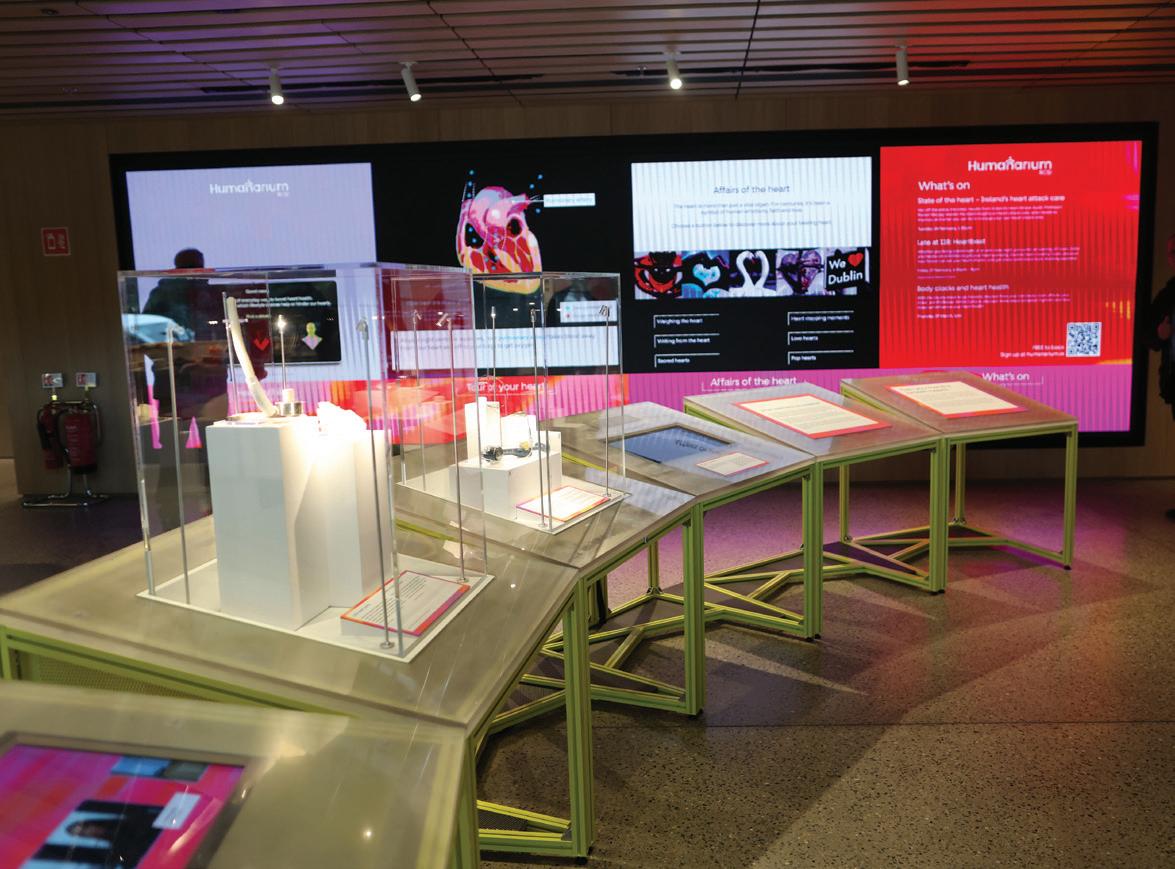
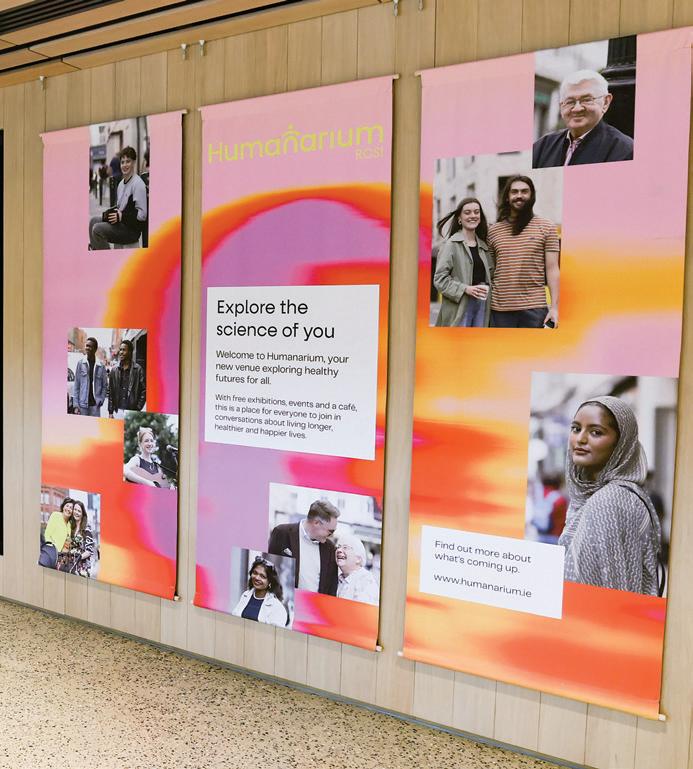
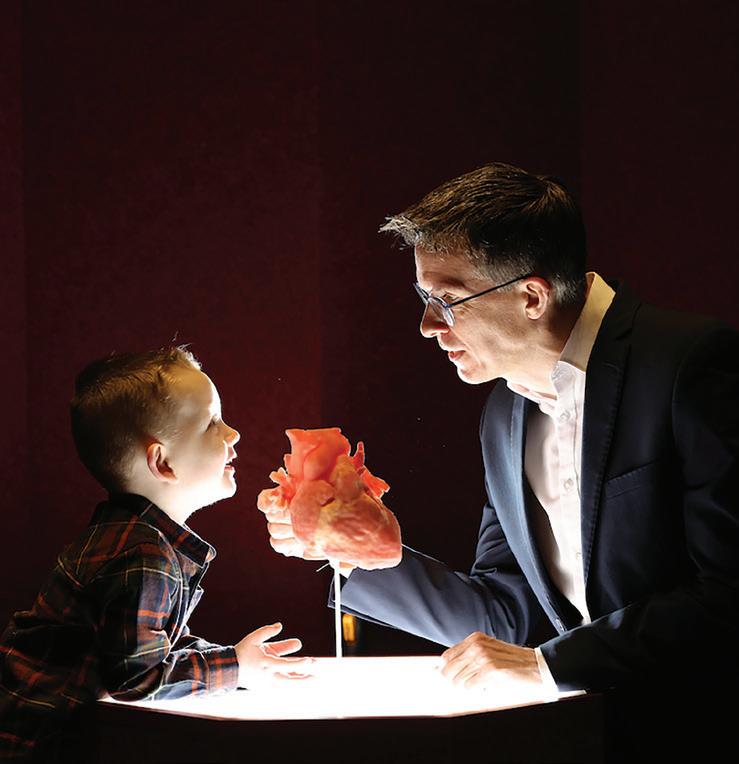
the University’s commitment to promote health and wellbeing for all. The inaugural exhibition, ‘Heart: more than a beat’, weaves evidence-based practice and cutting-edge research with human stories from patients, clinicians and researchers alike. Through interactive exhibits, artefacts and personal storytelling, visitors can discover what makes their heart tick, how to keep it strong and the remarkable ways that science and medicine can help it to heal. The exhibition includes a 3D model of a real patient’s heart, that of James Sloan, who was just one year old when he received life-changing heart surgery from Mr Jonathan McGuinness (Medicine, Class of 2000). James and Mr McGuinness are pictured above at the launch of Humanarium in February 2026.
Designed as a welcoming and informal space, and sited at the heart of a building where RCSI students and staff are coming and going to and from the teaching and research spaces above and below, it is hoped that Humanarium will give the public a glimpse into a world they may not have seen before and show the human face of RCSI. According to Gallery Director, Dr Alison Boyle: “We’re looking forward to welcoming everyone to Humanarium to become part of a dynamic hub for dialogue on health and wellbeing, and to working with RCSI researchers, patient advocates and our visitors in facilitating engaging and accessible discussions around health and wellbeing.” ■ Humanarium is open Monday to Friday, from 7.30am to 5pm, and on Saturdays from 10am to 3pm. For information on exhibitions and events visit www.humanarium.ie.
RESEARCH SUMMER SCHOOL
Year 2 Medicine student Andre Ramkaran deep in concentration in the York House Labs, during Research Summer School.
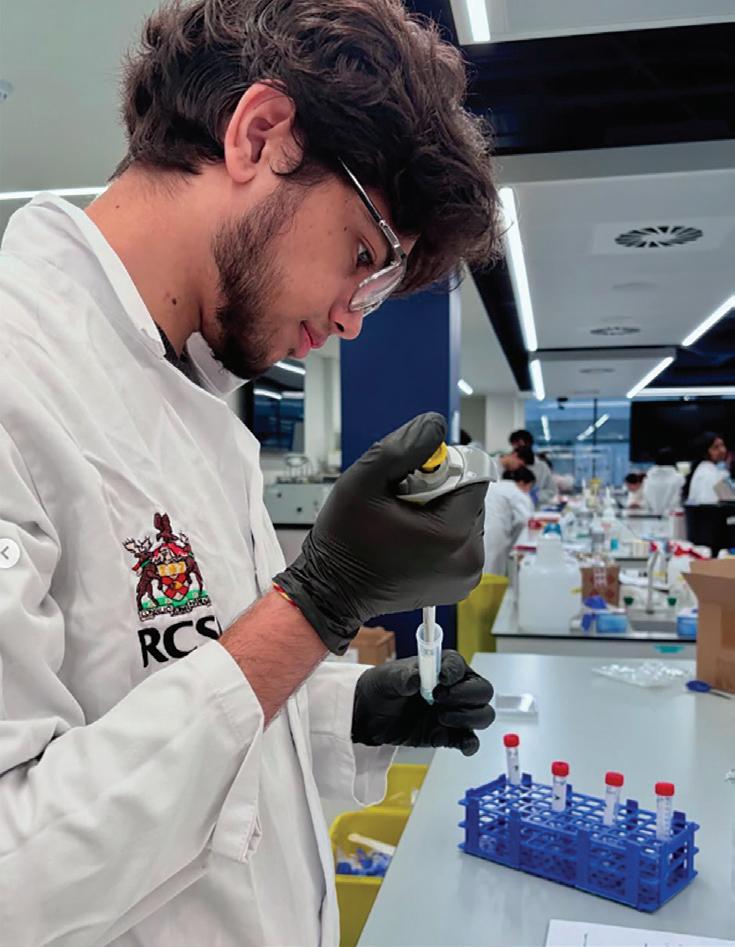
SOCIAL HIGHLIGHT
More than 600 students attended RCSI’s College Ball in April 2026, organised by the Student’s Union at Dublin’s Royal Convention Centre.
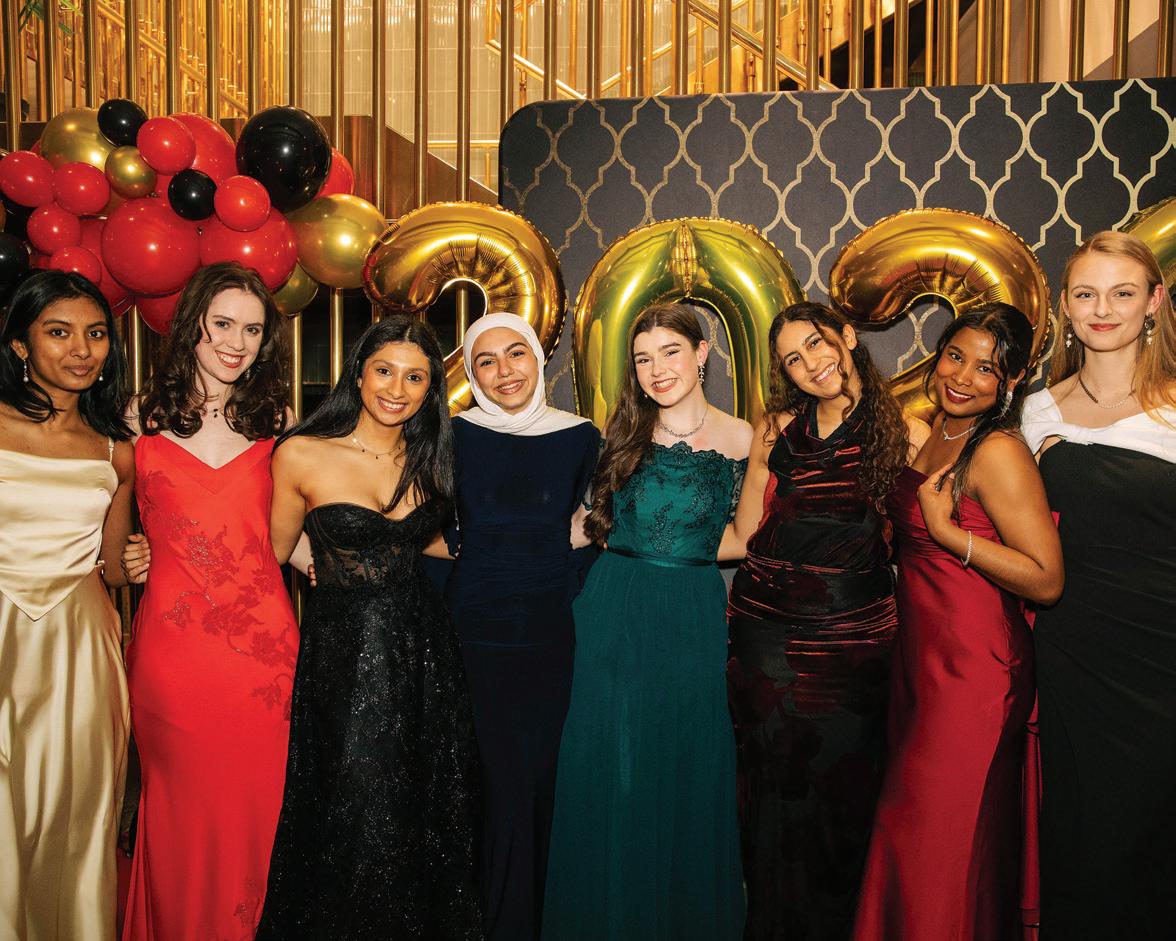
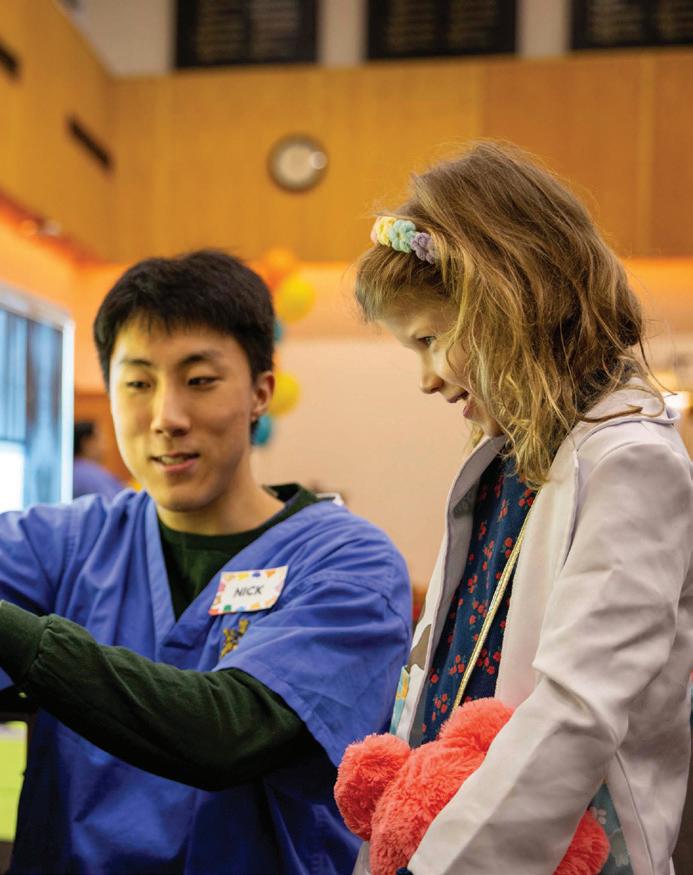
TEDDY BEAR HOSPITAL
RCSI’s Paediatric Society welcomed more than 600 children, their families and their teddies to the 12th Annual Teddy Bear Hospital.
ELLEN MOOREHOUSE PRIZE
Professor Fidelma Fitzpatrick, Head of the Department of Clinical Microbiology, congratulates Xue Zhi Hong, winner of the Ellen Moorehouse Prize.
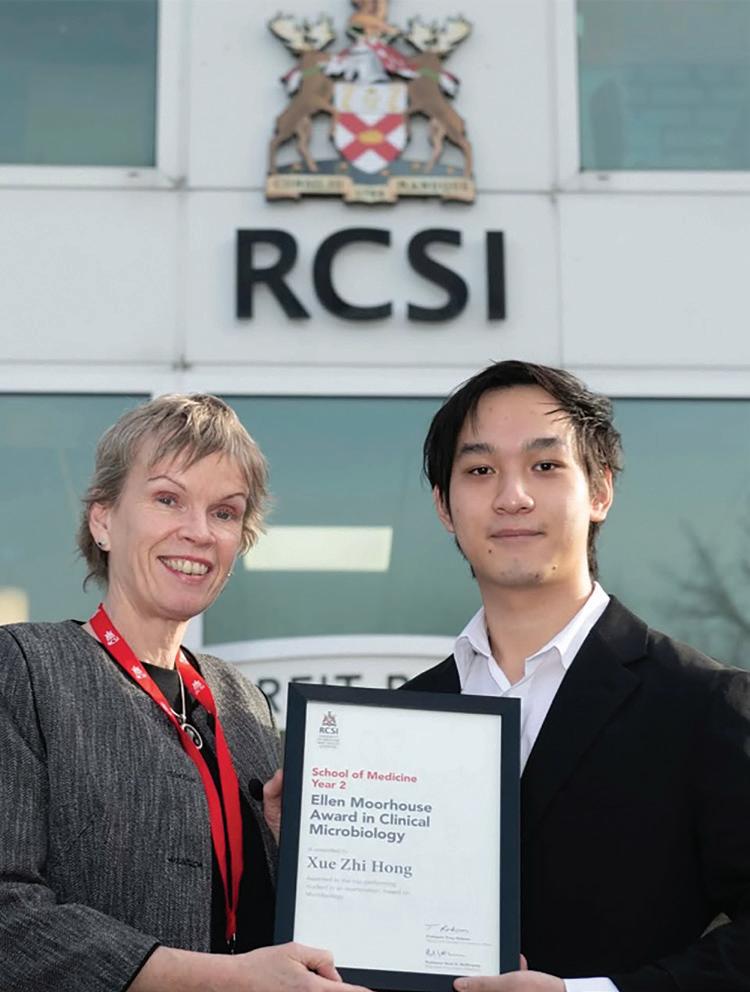
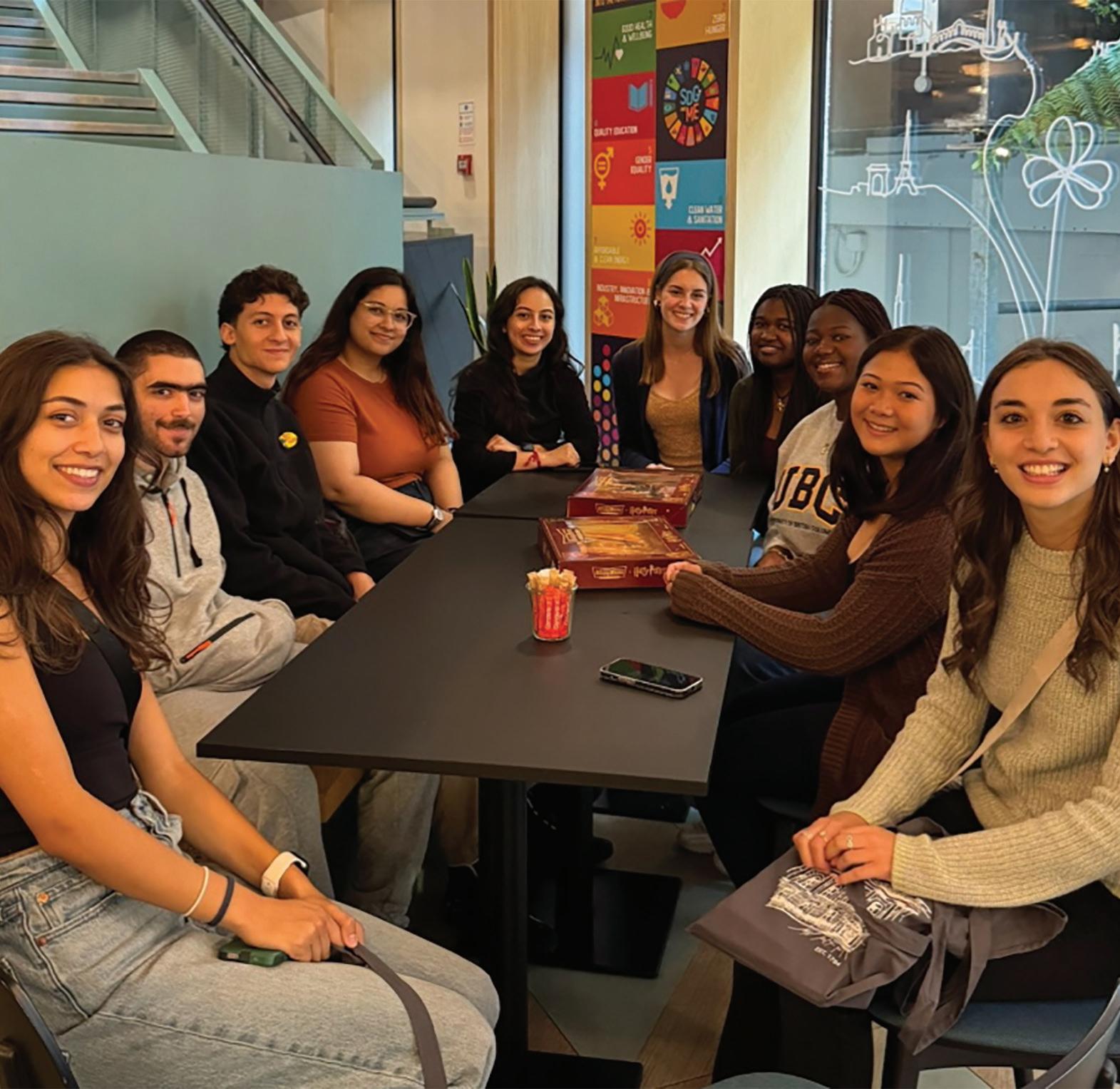
STUDENT EXCHANGE PROGRAMME
RCSI Medical University of Bahrain students Anisa, Mohammed, Omar, Farah, Aditi and Deena are introduced to their Dublin buddies before joining Med 2.
NURSING UNIFORM CEREMONY
More than 145 nursing students took part in this symbolic event at RCSI Medical University of Bahrain, marking their transition to clinical training.
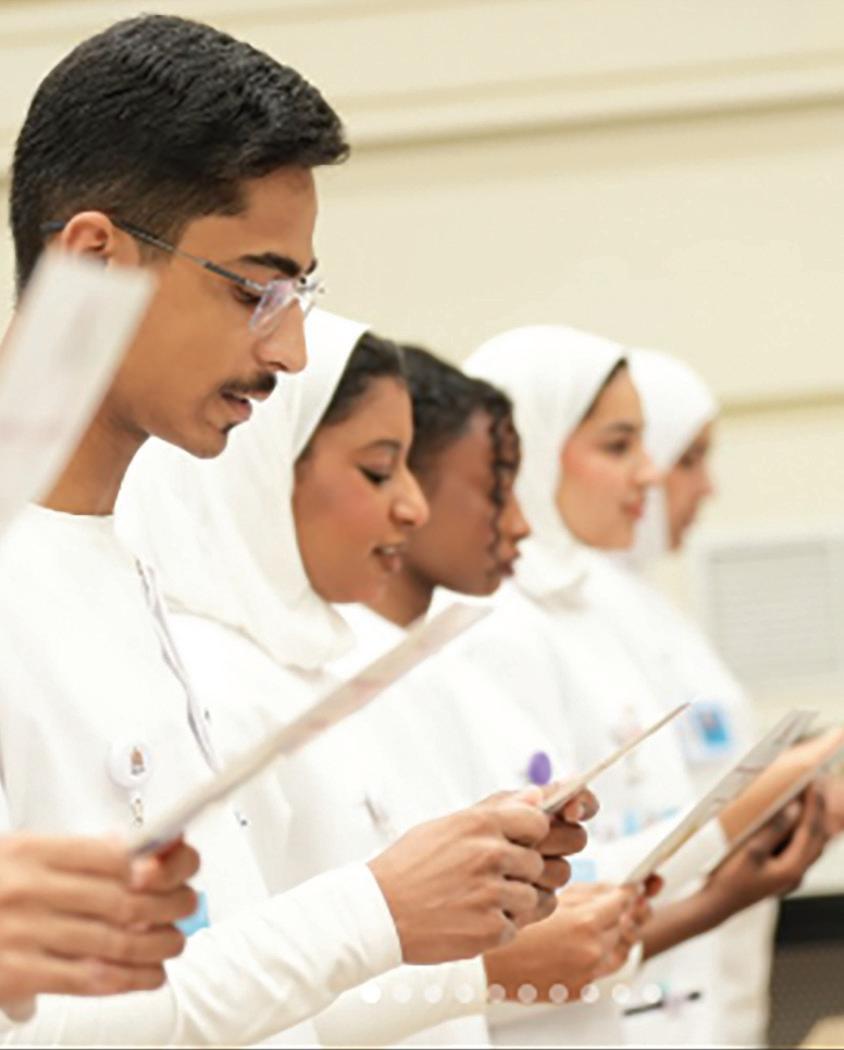
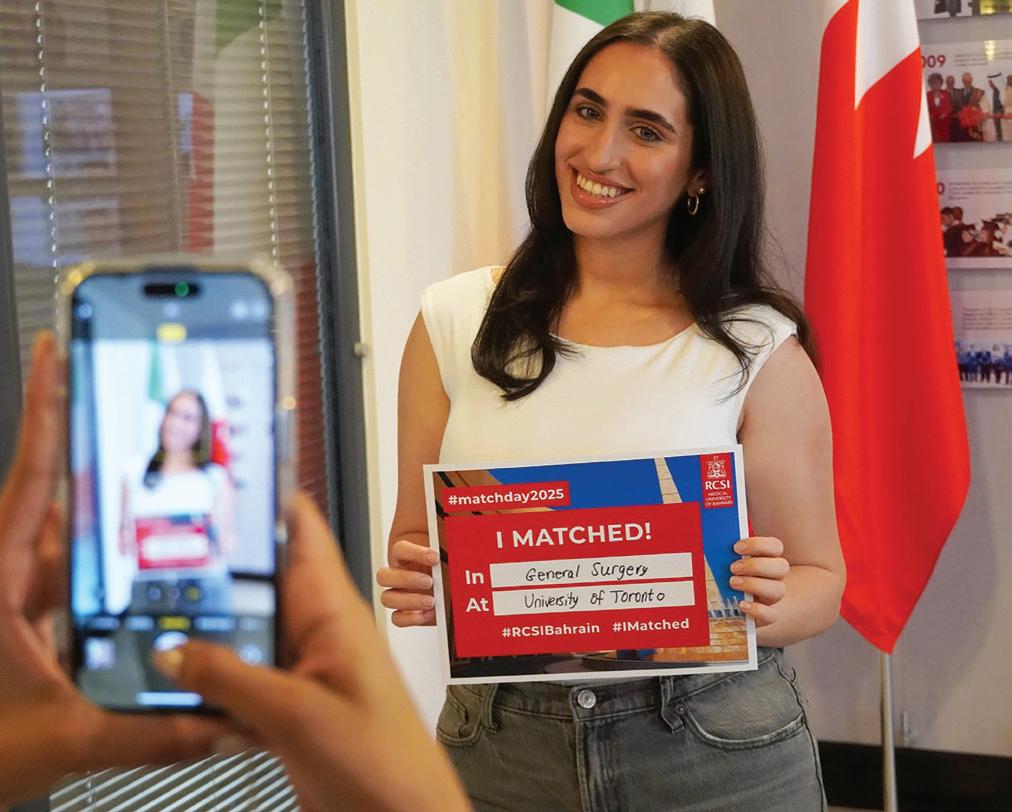
Celebrations on both the Dublin and Bahrain campuses for students who secured residency positions in the United States and Canada.
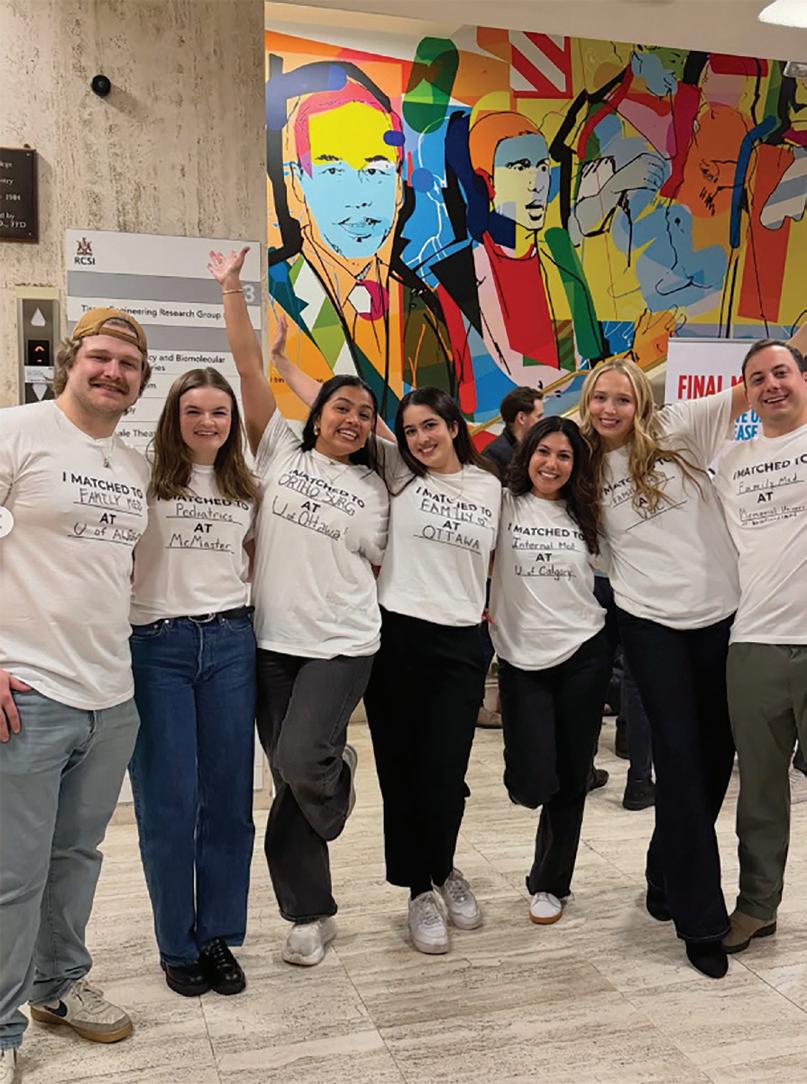
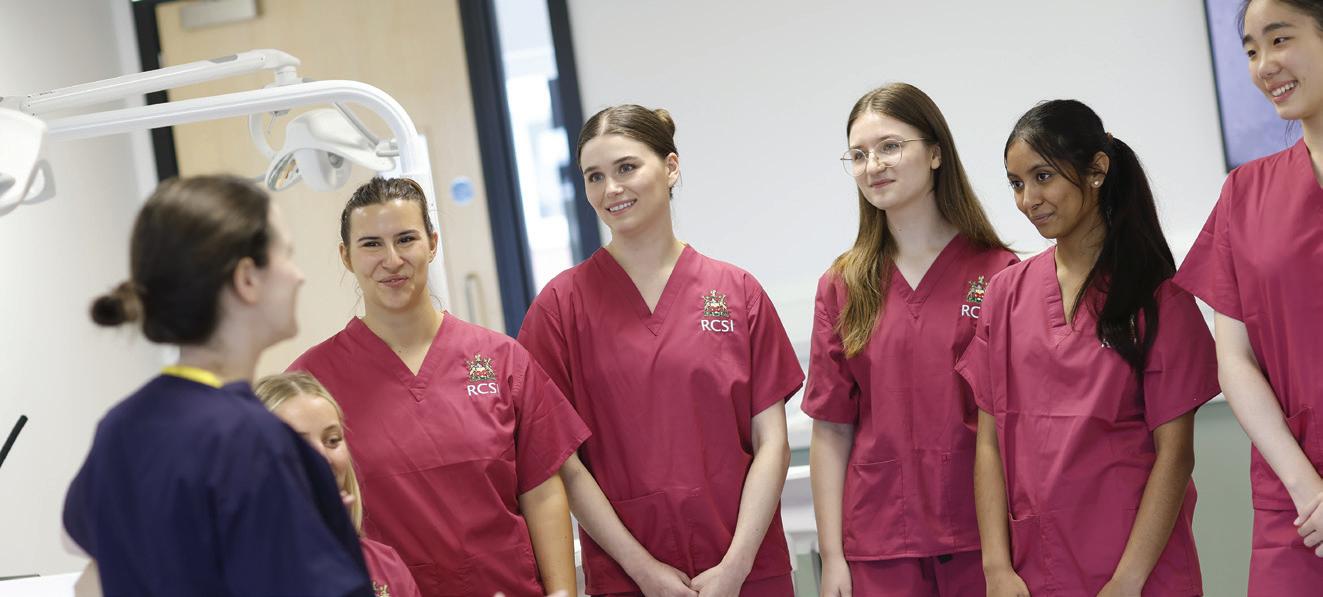
FIRST DAY AT THE SCHOOL OF DENTISTRY
Students of the inaugural Bachelor in Dental Surgery (BDS) degree at RCSI, pictured with Senior Lecturer Dr Niamh Coffey.
HEALTH AND SUSTAINABILITY WEEK AT RCSI MEDICAL UNIVERSITY OF BAHRAIN
Students take part in an annual beach clean-up at Al Sayah, just one of many community initiatives to promote environmental stewardship in line with UN Sustainable Development Goals.
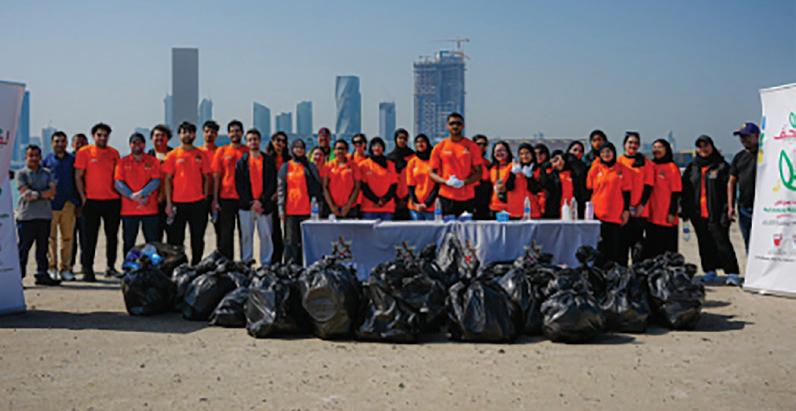
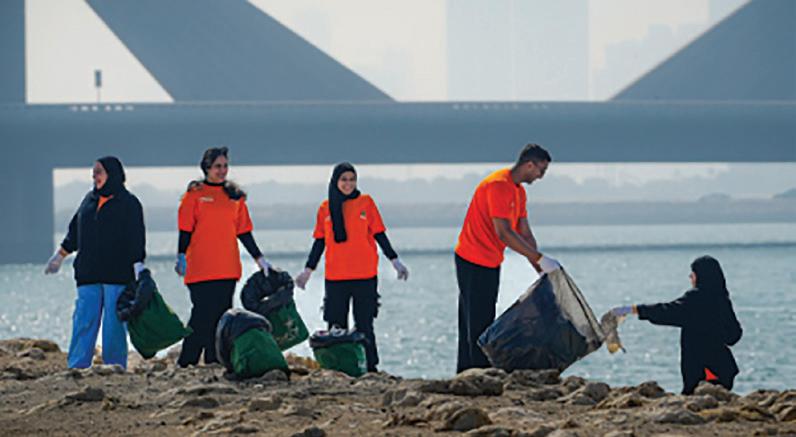
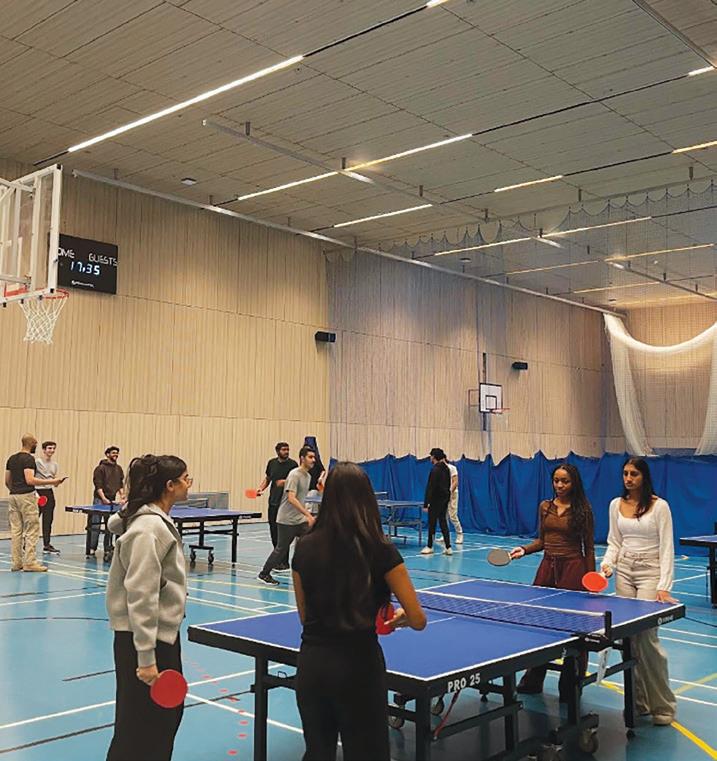
Members of RCSI Table Tennis Club take part in their inaugural ‘Doubles Day’, in association with the Caribbean and African Society.
RCSI POLO CLUB
Members of RCSI Polo Club make the most of a sunny day at their polo coaching session in Co Wicklow.
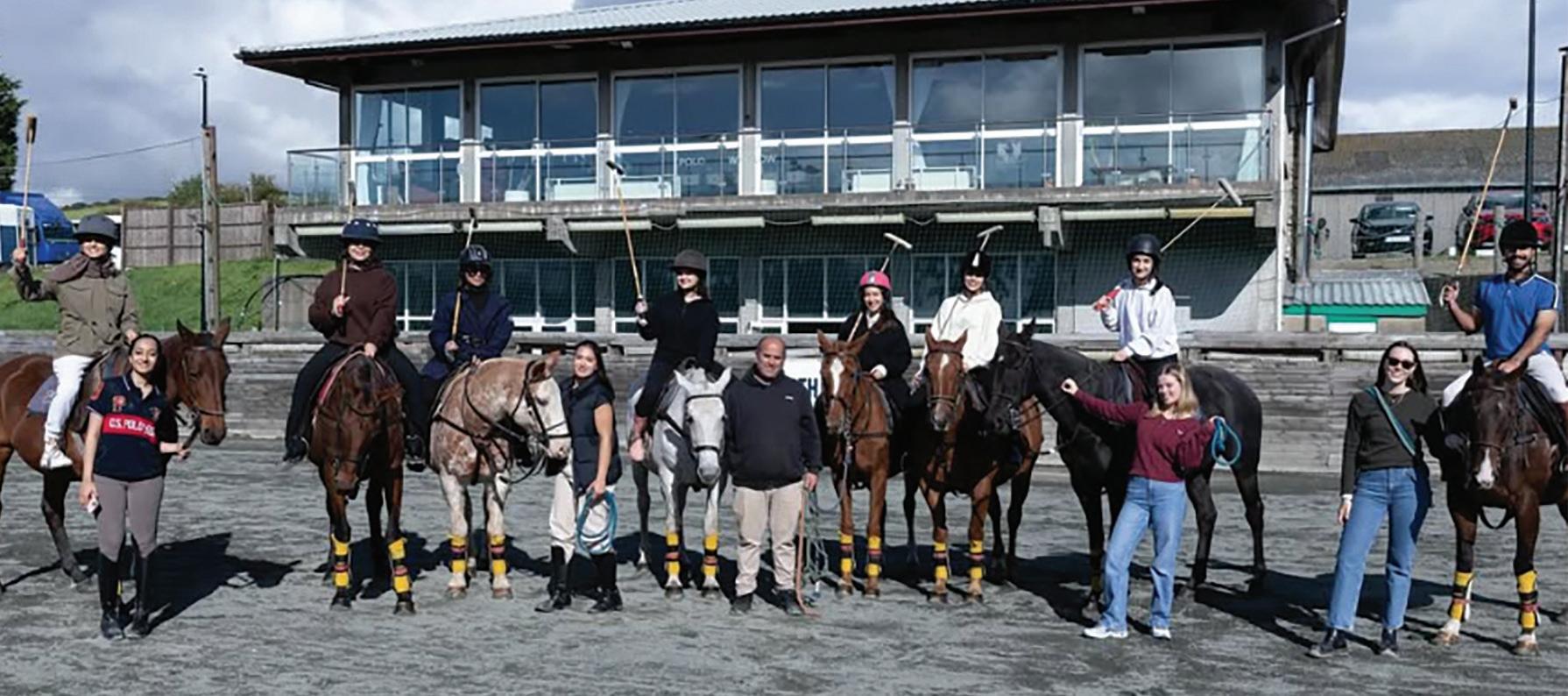
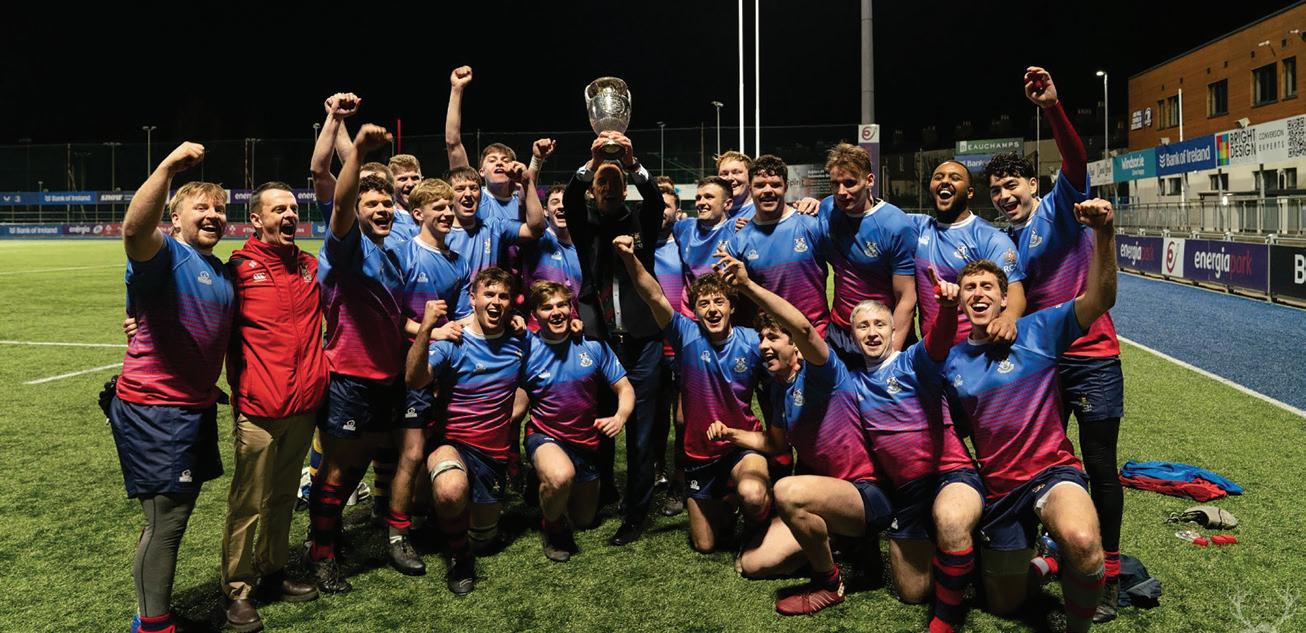
RCSI Beaumont celebrate their victory against UCD-Mater in the Dublin Rugby Hospitals Cup for the first time since 2017.
In 2025, nine RCSI students took part in the prestigious Boston Marathon, an RCSI tradition that goes back to 1999, thanks to the generous support of the late Dr John V. Coyle (Medicine, Class of 1962).
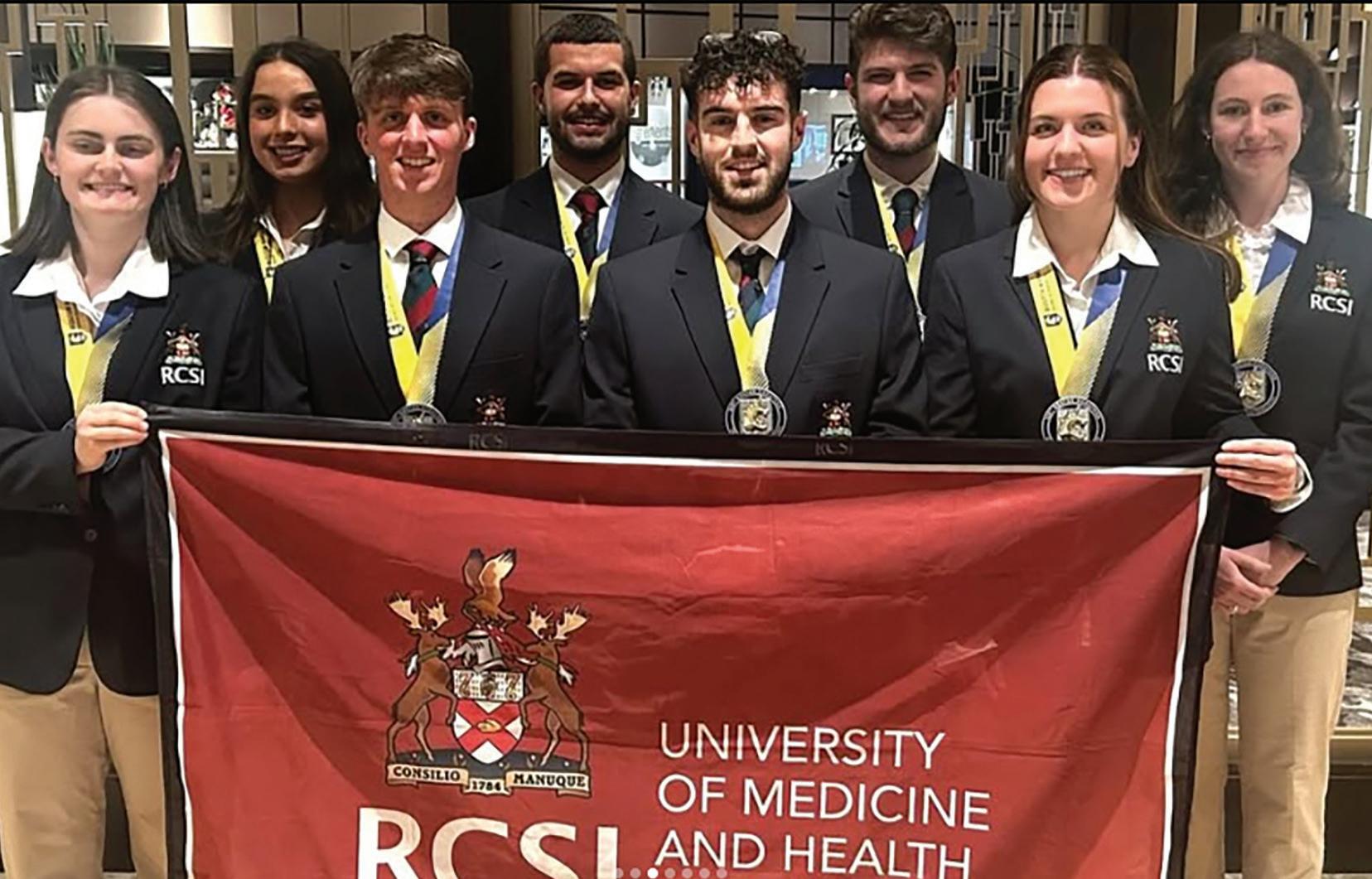
Members of Medicine
Class of 2025 celebrate the end of their final exam at Beaumont Hospital, while their RUMC counterparts mark the occasion alongside Professor Arnold Hill, Dean of Medical Programmes, on the Malaysia campus!
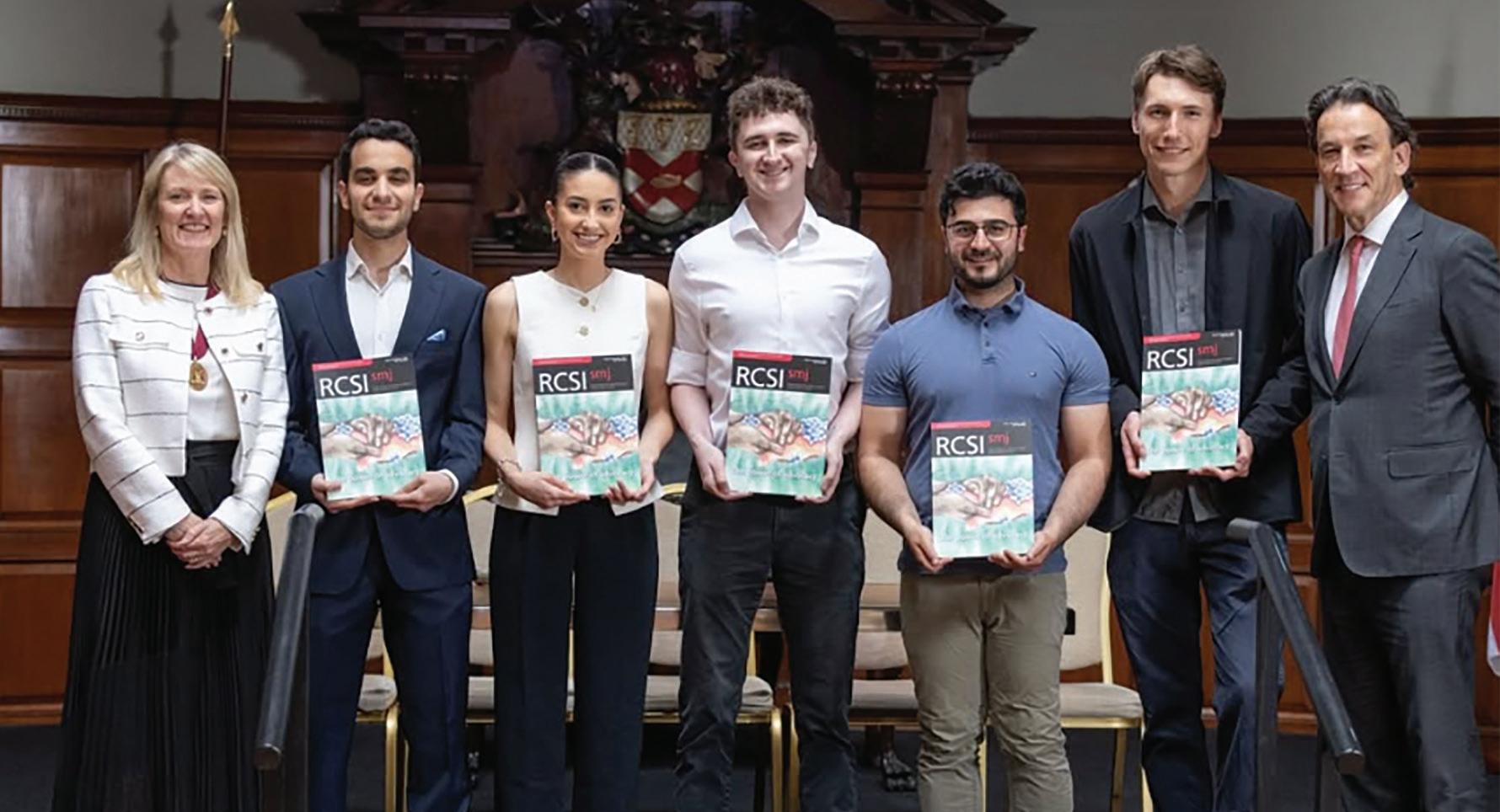
Professor Tracy Robson, Deputy Vice Chancellor for Academic Affairs and Professor Arnold Hill, Dean of Medical Programmes, attend the launch of the 18th edition of the RCSIsmj alongside members of the publication’s Executive Committee – Jawad Alkassmy, Victoria Srbely, Stephen Clare, Kurdo Araz and Mitchell Neuert.
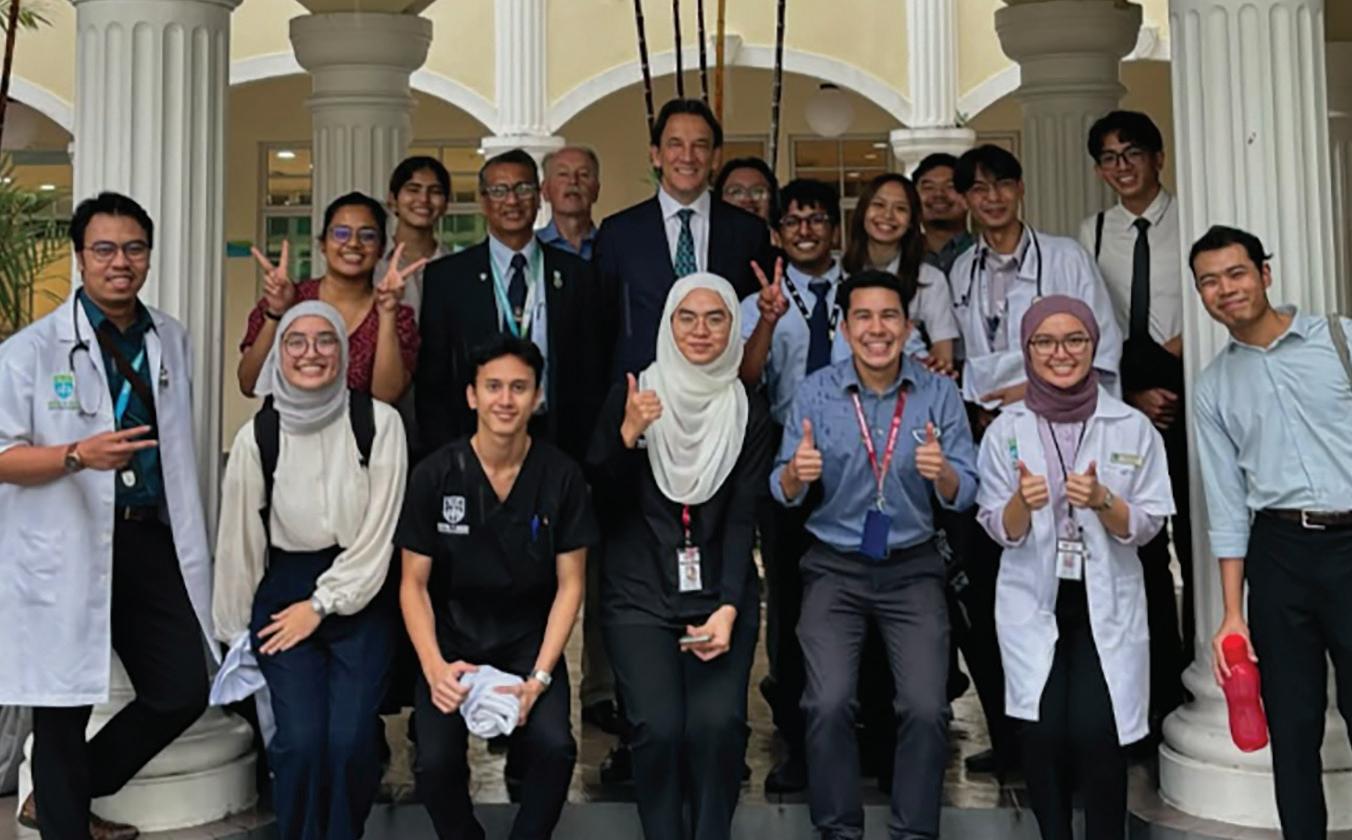
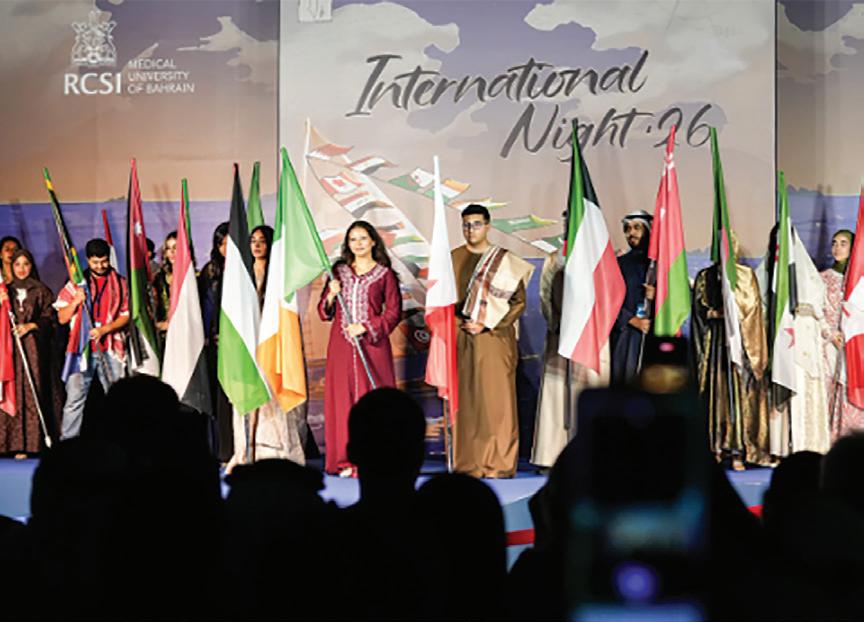
A display of flags demonstrates the diversity of cultures celebrated through traditional food, costumes and performances on campus in Bahrain.
In Dublin, students celebrated the festival of lights with dancing, games, performances and delicious food, organised by PIBS (Pakistan, India, Bangladesh and Sri Lanka) Society.
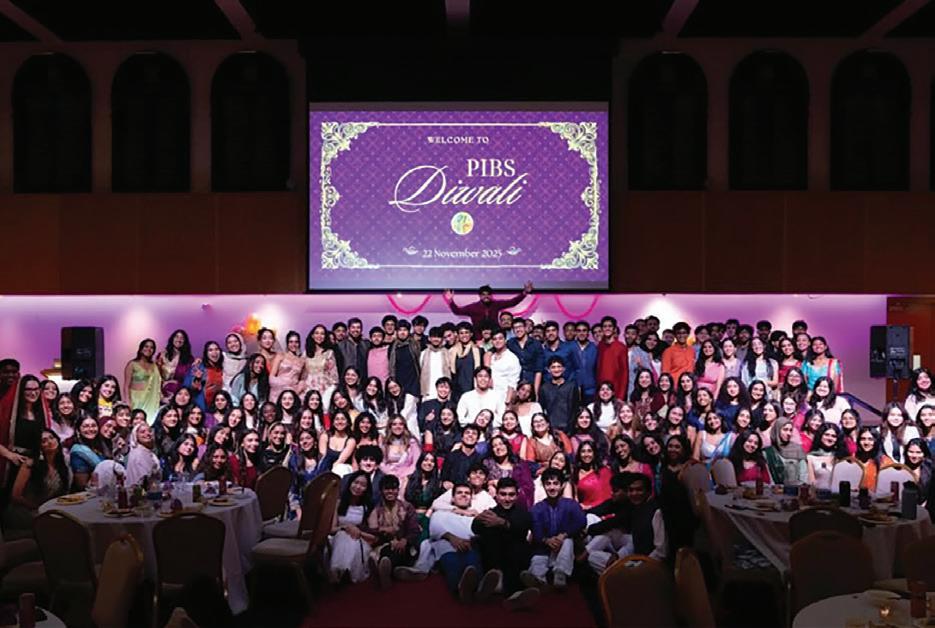
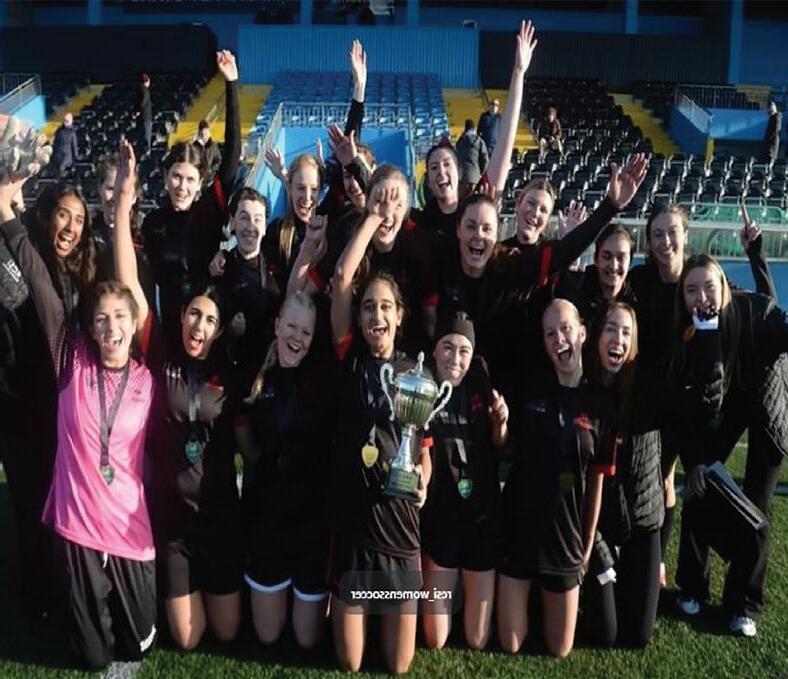
RCSI Women’s Soccer scored a 4-0 victory in the Colleges and Universities Football League Division 2 Final. ■

On 1 May 1892, we began protecting professionals like you.
Since then, we’ve grown to become the largest member-owned medical indemnity organisation, protecting people on the frontline of healthcare across the globe.
As a mutual society, we invest our members’ subscriptions responsibly to grow our secure member fund.
This gives us the strength to protect you for as long as you need us, while supporting our communities, our planet, and all our futures.
From a blood disorder breakthrough to treatment for hormone-positive breast cancer and spinal cord repair, 10 RCSI research projects are leading the world to better health
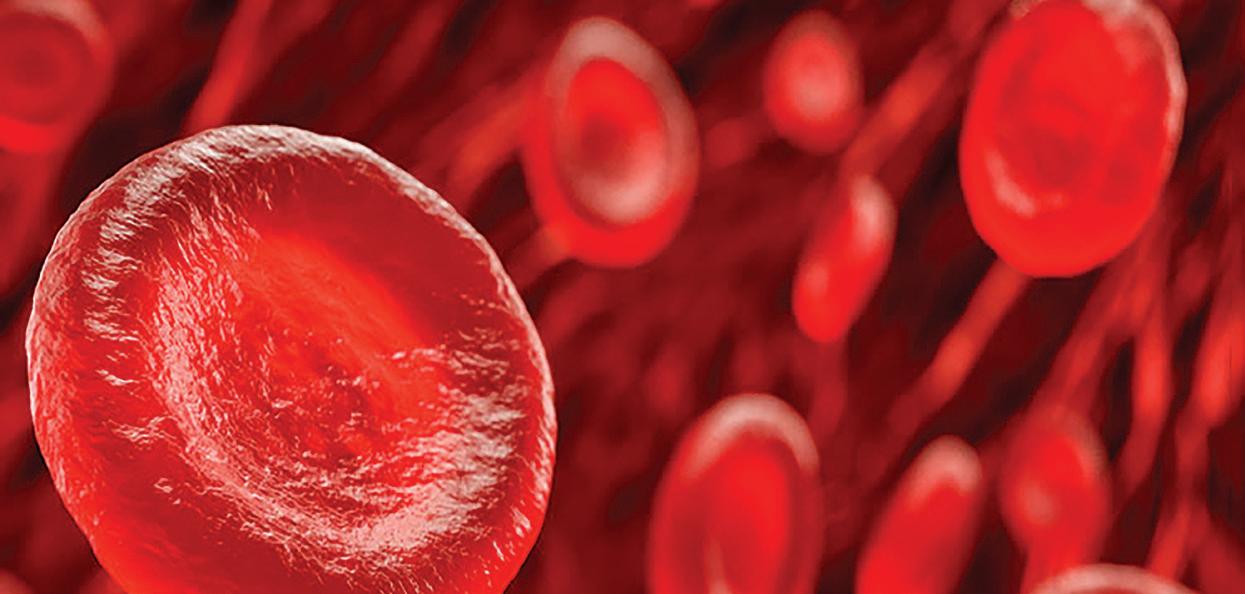
New research by RCSI has identified a previously unrecognised subgroup of patients with von Willebrand disease, the most common inherited bleeding disorder. These findings, published in the prestigious journal Blood, challenge current diagnostic practices and highlight a need to adapt clinical guidelines to ensure patient safety.
Von Willebrand disease is caused by a deficiency or dysfunction of von Willebrand factor (VWF), a protein that helps form blood clots. Patients are usually diagnosed based on reduced levels of VWF or severe functional defects of VWF in the blood.
However, this study demonstrated how a subset of patients had normal quantities of VWF in the blood but still exhibited bleeding symptoms due to mild functional defects in the protein.
Official recognition of this subgroup within international guidelines and hospitals, as recommended by the researchers, would enable better management of bleeding symptoms and efforts to prevent bleeding during high-risk situations, such as during surgical procedures and childbirth.
“This discovery adds to the growing understanding that von Willebrand disease encompasses a spectrum of defects of VWF,” said Dr Ferdows Atiq, Senior Research Fellow, RCSI School of Pharmacy and Biomolecular Sciences and lead author of the study. “Since we have found that the mild functional defects in VWF were not explained by genetic changes, future research is required to investigate the biological mechanisms of this phenomenon.”
The study, which examined over 400 patients from Irish and Dutch cohorts, was carried out by RCSI in collaboration with the National Coagulation Centre in St James’s Hospital, Dublin and Erasmus University Medical Centre, Rotterdam, The Netherlands.
A research team at RCSI has developed a 3D printed implant to deliver electrical stimulation to injured areas of the spinal cord, offering a potential new route to repair nerve damage. Details of the 3D printed implant and how it performs in lab experiments were published in the journal Advanced Science
In Ireland, more than 2,300 individuals and families are living with spinal cord injury, but no treatment currently exists to effectively repair the damage. However, therapeutic electrical stimulation at the injury site has shown potential in encouraging nerve cells (neurons) to regrow.
Researchers at RCSI’s Tissue Engineering Research Group (TERG) and the Research Ireland AMBER (Advanced Materials and BioEngineering Research) Centre used ultra-thin nanomaterials from Professor Valeria Nicolosi’s laboratory in the School of Chemistry and AMBER Centre at Trinity College Dublin, which are normally used for applications like battery design, and integrated them into a soft gel-like structure using 3D printing techniques. The resulting implant mimics the structure of the human spinal cord and features a fine mesh of tiny fibres that can conduct electricity to our cells. When tested in the lab, the implant was shown to effectively deliver electrical signals to neurons and stem cells, enhancing their ability to grow.
“These 3D-printed materials allow us to tune the delivery of electrical stimulation to control regrowth and may enable a new generation of medical devices for traumatic spinal cord injuries,” said Dr Ian Woods, Research Fellow at TERG and first author of the study. “Beyond spinal repair, this technology also has potential for applications in cardiac, orthopaedic and neurological treatments where electrical signalling can drive healing.”
Researchers teamed up with the Irish Rugby Football Union (IRFU) Charitable Trust in order to understand the lived experiences of individuals with spinal cord injuries and their treatment priorities.
The study was supported by the IRFU Charitable Trust, AMBER, and an Irish Research Council Government of Ireland Postdoctoral Fellowship.
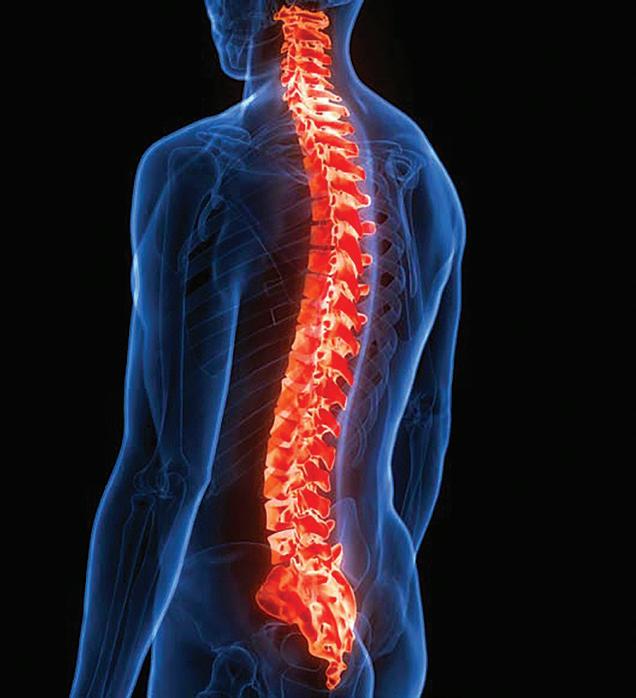
Dr Ciara Murphy, Senior Lecturer in RCSI’s Department of Anatomy and Regenerative Medicine, the Research Ireland AMBER (Advanced Materials and BioEngineering Research) Centre and RCSI Tissue Engineering Research Group (TERG), has been named a partner on a prestigious €6.5 million Horizon Europe grant.
As part of the international HYDROHEAL consortium, Dr Murphy will advance the development of injectable hydrogels made from natural, renewable sources. These hydrogels are designed not only to support bone healing – particularly in the spine and jaw – but also to deliver therapeutics precisely when and where they are needed, activated by external signals.
Fractures caused by injury, infection, osteoporosis or cancer remain a major global health challenge, and current treatments such as bone grafts and bone cement have limitations in effectiveness and safety.
HYDROHEAL’s bioengineered hydrogels will incorporate features to support healing, fight bacterial infection, and enable real-time treatment monitoring. They will also be enhanced through machine learning and digital design tools, helping ensure sustainable, cost-effective production at clinical scale.
Dr Caroline Curtin, Senior Lecturer in RCSI’s Department of Anatomy and Regenerative Medicine and Principal Investigator in TERG and AMBER, has been awarded a highly competitive European Research Council (ERC) Consolidator Grant of €2.3 million to lead the five-year PANACEA project. This prestigious award supports outstanding mid-career researchers to pursue ambitious, frontier research.
Primary bone cancers are aggressive cancers that usually develop during childhood and adolescence. These malignant tumours can be treated with a mixed approach of surgery and chemotherapy; however, to date no effective targeted therapies have been developed and survival rates have not improved.
The five-year PANACEA project will combine treatment of the cancer and promotion of bone repair using a graphene oxide-based biomaterial scaffold. This therapy could revolutionise bone cancer treatment.
A study from RCSI, led by Professor Mary Cannon, Professor of Psychiatric Epidemiology and Youth Mental Health at RCSI, and published in the Irish Journal of Psychological Medicine, found that high social media use, body dissatisfaction, and sexting are strongly associated with poor mental health and self-harm among Irish adolescents.
Survey data from more than 4,000 teenagers collected after the COVID-19 pandemic revealed that girls reported poorer mental health than boys. Body dissatisfaction was reported by 61% of girls compared to 31% of boys and was strongly linked to self-harm and lower emotional wellbeing.
Sexting behaviours were also associated with poorer mental health and increased risk of self-harm in both boys and girls: 16% reported having sent a sexually explicit image; 20% reported having one shared without their consent.
“Our study highlights how these aspects of modern teenage life may be contributing to declining mental health among young people, particularly teenage girls,” said Professor Cannon.
The study was conducted by a research team at RCSI’s Department of Psychiatry and the FutureNeuro Research Ireland Centre for Translational Brain Science, including RCSI student Delia Cotter and Dr Niamh Dooley, in collaboration with Trinity College Dublin and King’s College London. It was supported by the Health Research Board, an RCSI Summer Studentship, the DOROTHY grant funded by the EU’s Horizon 2020 programme under the Marie Skłodowska-Curie Actions, and by Research Ireland.
A second study led by researchers in RCSI and King’s College London, highlights that trans and gender-diverse young people and early school leavers are particularly vulnerable to mental distress. Surveys from more

than 20,000 adolescents across six counties in Ireland were used to estimate national trends in poor mental health, repetitive self-harm and suicide attempts between 2018 and 2023.
One in five reported poor mental health at the time of the survey, one in eight reported self-harming five times or more in their lifetime and one in 12 reported having attempted suicide in their lifetime. The proportion of adolescents reporting self-harm increased significantly by more than 3% between 2018 and 2022. Rates were significantly higher among females, trans and gender-diverse adolescents, and early school leavers.
“Our study shows the need for stronger mental health supports at the prevention and clinical levels” says Dr Niamh Dooley, DOROTHY Research Fellow at RCSI Department of Psychiatry and at King’s College London. The findings were published in Social Psychiatry and Psychiatric Epidemiology
RCSI has joined as a partner institution in the recently launched ARC Hub for Therapeutics and ARC Hub for HealthTech – two national research initiatives dedicated to fasttracking biomedical innovation into next generation therapies. Both are part of Research Ireland’s flagship Accelerating Research to Commercialisation (ARC) Programme, cofunded by the Government of Ireland and European Union to drive regional development. The Programme is designed to support the development of entrepreneurial scientists and engineers with the skills to realise opportunities to create start-up companies from research, transforming novel ideas into patient-focused healthcare solutions with global market potential.
The ARC Hub for Therapeutics is hosted by Trinity College Dublin, with RCSI and University College Dublin as partner institutions. Building on an initial portfolio of 22 active research projects in some of the most critical areas of modern biomedical science, the ARC Hub brings together leading academics and scientists with industry partners, investors and the wider innovation ecosystem.
The ARC Hub for HealthTech is hosted by University of Galway, in partnership with RCSI and Atlantic Technological University (ATU). Twenty-three projects are currently underway having been selected for their strong potential to improve patient outcomes, including advanced sensory detection devices to prevent falls in the elderly and intelligent devices to help control blood pressure.
A study from RCSI, led by Dr Daniela Ottaviani, Dr Damir Varešlija and Professor Leonie Young, conducted through the pioneering Precision Oncology Research Initiative for Metastatic Breast Cancer (PRISM) research programme, and published in the Journal of the National Cancer Institute, has identified a potential new way to slow the growth and spread of advanced hormone-positive breast cancer. The research is the first to show that a gene regulator known as CDK12 directly teams up with a hormone receptor and a key co-factor protein to drive cancer progression in difficult-to-treat breast cancers. The findings point to CDK12 as a promising new target for future therapies designed to stop breast cancer from spreading and becoming resistant to treatment.
This study is among the first to be published from the PRISM programme, a four-year initiative led by the Beaumont RCSI Cancer Centre to study the mechanisms that drive breast cancer’s spread. The programme is funded by Breast Cancer Ireland, the Research Ireland Strategic Partnership Programme, and Carrick Therapeutics, whose collaboration is central to translating PRISM’s scientific discoveries into future clinical applications.
The researchers focused on breast cancers that are hormone receptor-positive, the most common subtype of the disease. By studying tumour samples from patients as well as laboratory models of advanced disease, the team discovered the gene regulator CDK12 plays a critical role in driving aggressive growth in these cancers. When CDK12 was blocked using a new drug developed by Carrick Therapeutics, and now being investigated through the PRISM-Carrick collaboration, cancer cells were less able to grow and spread. “We’ve shown that CDK12 acts like a control switch, turning on genes that help breast cancer grow and spread,” said Dr Damir Varešlija, joint senior author. “This discovery highlights a completely new pathway that we could potentially target to slow the progression of advanced ER+ breast cancer,” said Professor Leonie Young, RCSI Department of Surgery and joint senior author of the study.
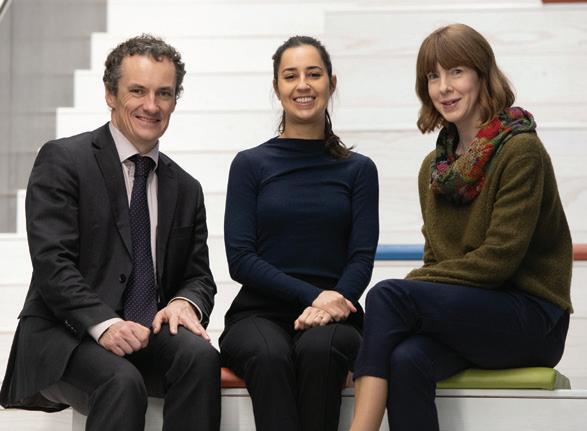



A new study led by Professor Seamus Looby, Honorary Associate Professor at RCSI and Consultant Neuroradiologist at Beaumont Hospital, has revealed that young people in Ireland are increasingly being diagnosed with spinal cord damage from recreational use of nitrous oxide, commonly known as laughing gas or whippets. The findings, published in the American Journal of Neuroradiology highlight the neurological risks posed by drug, often perceived by users as harmless.
The research was carried out in Beaumont Hospital by a dedicated team of Dr Richard Bruen, Radiology Registrar and Dr Sophie Sabherwal, Neurology Registrar, with input from Dr Lisa Costelloe, Consultant Neurologist, and showed that that cases of spinal cord damage caused by nitrous oxide have spiked significantly since the COVID-19 pandemic. No such cases were recorded at Beaumont Hospital between 2012 and 2020; however, 14 cases were diagnosed between 2021 and the end of 2024 with the median age of patients being just 20 years old. This clinical evidence supports warnings raised by youth workers and community organisations in recent years.
Nitrous oxide misuse has become increasingly common among children and young adults in recent years, driven in part by its low cost and easy availability online for legitimate medical and commercial purposes. But the drug can interfere with the body’s ability to process vitamin B12, leading to subacute combined degeneration of the spinal cord. Symptoms include numbness in the hands or feet and difficulty with balance and coordination. Although most patients in the study improved after treatment, none made a full recovery, with all experiencing some degree of lasting neurological damage.
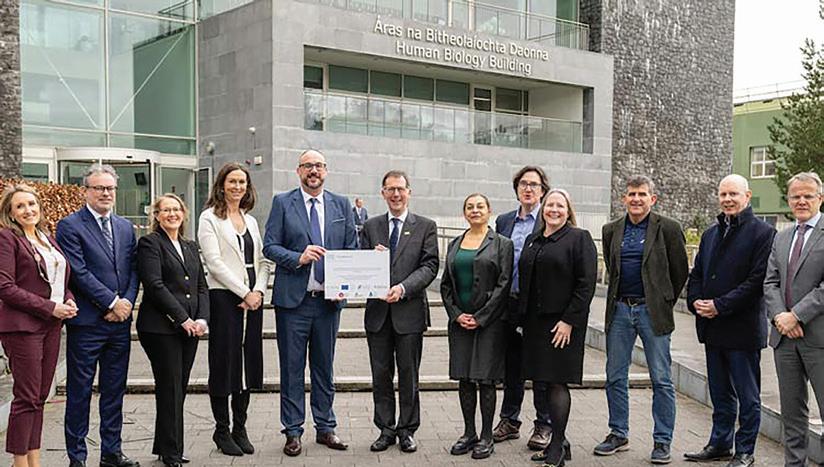
“Teenagers, many of whom may not use other substances, are inhaling laughing gas canisters as they consider it a bit of harmless fun,” said Professor Looby. “But what we’re seeing tells a different story. The rise in cases of spinal cord damage is alarming.”
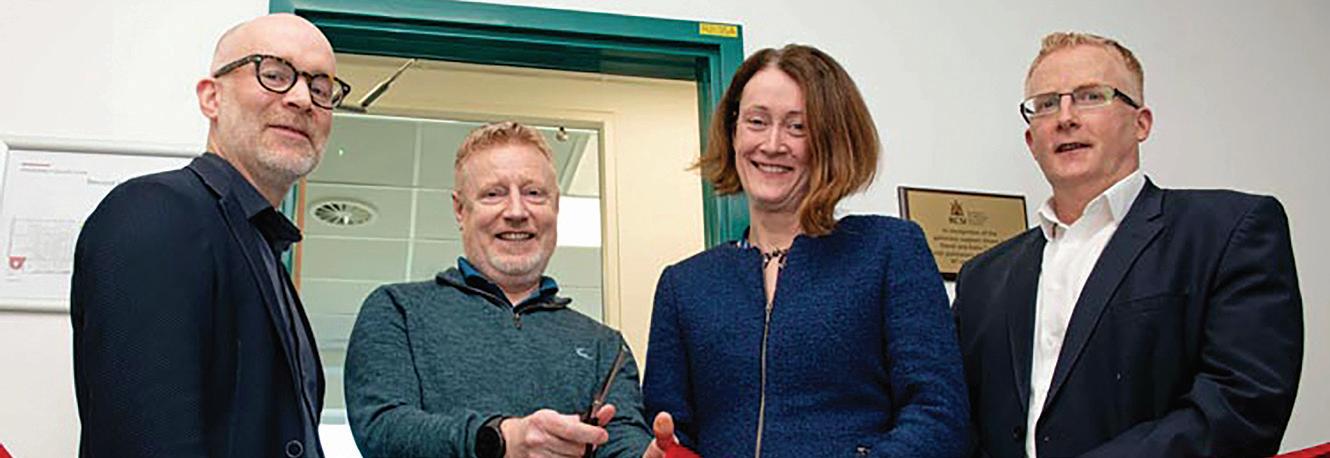

Ireland’s first dedicated patient stem cell research facility has been launched by RCSI at the Smurfit Education and Research Centre at Beaumont Hospital. The RCSI Patient Stem Cell Discovery Core is a laboratory designed to accelerate innovation in stem cell science and improve how treatments are tailored to individual patients. Its integration within both the hospital’s clinical services and RCSI’s research environment allows for a seamless connection between patient care and laboratory science. Patient samples can be transferred quickly from bedside to lab, enabling researchers to test therapies on patient-specific cells and deliver clinically relevant insights more efficiently.
Initially focusing on lung diseases such as pulmonary fibrosis, the facility will expand its work to other conditions over time. By enabling advanced stem cell research and personalised drug testing, it aims to improve how clinicians predict treatment responses and tailor interventions. This ‘benchto-bedside’ approach creates a closed loop whereby discoveries in the lab can rapidly influence patient care, ultimately leading to better outcomes.
The Centre will also support gene editing and foster collaboration with industry and academic partners. Its work is expected to drive innovation in disease modelling and accelerate the development of new, targeted treatments.
The RCSI Patient Stem Cell Discovery Core is co-funded by RCSI and supported by patient advocates. Future work in the facility will be supported by funding from Research Ireland, the Health Research Board, and the European Research Council, ensuring continued innovation and impact in precision medicine.
Prescribing of pain medications in Ireland has risen significantly over the past decade, with usage rates now outpacing those in England. New research from RCSI, published in the British Journal of Clinical Pharmacology, highlights differences in how pain is treated in primary care in Ireland, raising questions about prescribing practices and the availability of non-drug interventions to address pain.
Researchers examined national prescribing data between 2014 and 2022, focusing on patients in Ireland covered by the General Medical Services (GMS) Scheme – people with a medical card, representing about one third of the population – and on data from all general practices in England. In Ireland, the use of opioids increased by approximately 25% over the study period, while prescriptions for paracetamol rose by 50%. Codeine and stronger opioids like tapentadol and oxycodone increased by even higher percentages. By contrast, England experienced declining use across most classes of pain medications during the same timeframe. “These results


In Ireland, bowel cancer is the second and third most common cancer diagnosed in men and women respectively, with around 2,500 new cases and over 1,000 people dying from the disease each year. Screening can detect cancer at the earliest possible stage, or at a pre-cancerous stage, thereby improving outcomes and preventing death.
The HSE’s BowelScreen programme offers a free two-yearly bowel cancer screening test for everyone between 57 to 71 years of age but uptake in the programme has remained suboptimal at only 44%. The BowelScreen approach requires first-time invitees to request a home screening kit on receipt of their invitation to take part in the programme, which can be considered a barrier to participation.
A study, led by Dr Nicholas Clarke at RCSI’s School of Population Health, tested two interventions to encourage more people to take part: rather than waiting for people to request a kit, the study sent kits automatically to those who had not responded to the initial invitation letter. This intervention alone resulted in a 6% increase in participation rates bringing overall uptake to 54% (over the BowelScreen programmes internal uptake target of 50%). Additionally, the study introduced a more personal reminder letter co-written by the study’s Patient and Public Involvement (PPI) panel. Findings indicated that this intervention had the most impact on women from lower socioeconomic areas when sent alongside the screening test kit.
“This research highlights simple yet effective changes that can significantly increase participation in bowel cancer screening,” said Dr Clarke, senior author of the study. “By making the process easier and addressing concerns upfront, we can save more lives.”
suggest a growing reliance on prescribing pharmacological treatments for pain in Ireland for the GMS patients we analysed,” said Dr Molly Mattsson, first author of the study and Postdoctoral Fellow at RCSI’s School of Pharmacy and Biomolecular Sciences.
The analysis also revealed that prescribing levels in Ireland were two times higher for opioids, four times higher for anti-inflammatories, and nearly five times higher for paracetamol. Some of this disparity can be attributed to the differing populations studied – the Irish data reflects a group where older adults are overrepresented. In England, access to pain clinics and nonpharmacological interventions through the NHS may help reduce reliance on medication. In Ireland, such services are less widely available to medical card holders, which may be contributing to higher medication use. “We must address issues like orthopaedic surgery waiting times and ensure Irish patients have access to safe, evidence-based alternatives to medications,” said Professor Frank Moriarty, senior author of the study and Associate Professor at RCSI’s School of Pharmacy and Biomolecular Sciences. ■
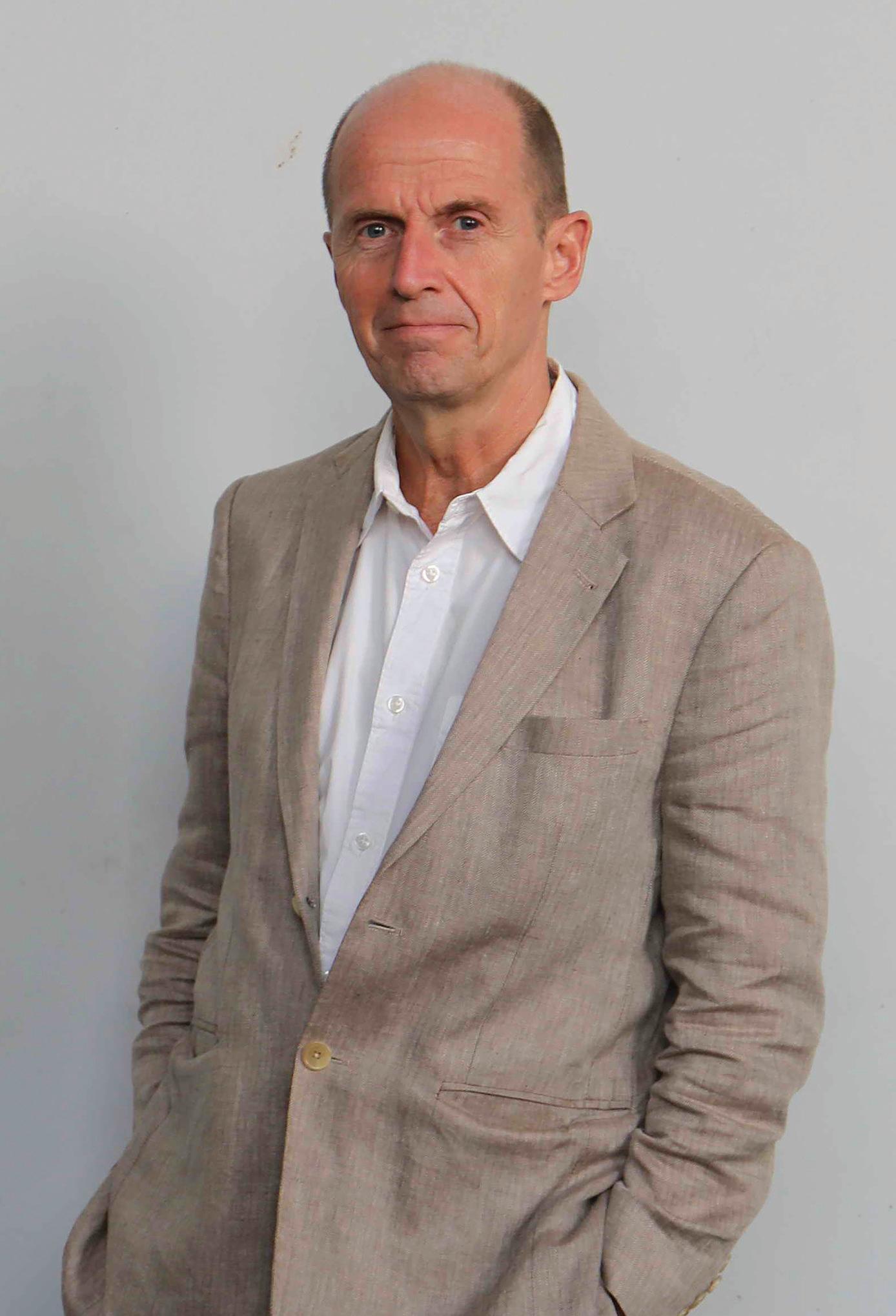
Vaccine specialist Professor Lorenz Von Seidlein (Medicine, Class of 1988) has had a fascinating career and life on five continents
In 2024, RCSI alumnus Professor Lorenz Von Seidlein was awarded the Donald Mackay Medal by the Royal Society of Tropical Medicine and Hygiene, for his extraordinary achievements in clinical malaria research. His work led directly to the global use of artesunate for severe malaria, and the licensing of the first human malaria vaccine. It provided evidence for the use of mass drug administration in malaria elimination efforts, and investigated how child health outcomes can be improved through housing improvements.
Lorenz trained in paediatrics in Miami and in infectious diseases in Los Angeles. In 1995, he moved to The Gambia to work on the first antimalarial ACT trials (artemether-lumefantrine and sulfadoxine-pyrimethamine-artesunate) in Africa. Lorenz acquired experience in vaccinology at the International Vaccine Institute in Seoul, Korea where he coordinated enteric vaccine-related field studies in Indonesia, Vietnam, Thailand, India, Pakistan and Mozambique. In 2006, Lorenz moved to Tanzania to coordinate a set of trials to evaluate the malaria vaccine RTS,S/AS01.
Since 2014, Lorenz has lived in Bangkok where he works at the Mahidol Oxford Tropical Medicine Research Unit (MORU) on malaria elimination including mass administrations of antimalarial drugs in Myanmar, Vietnam, Cambodia and Laos. With colleagues in Bangladesh, Lorenz is currently preparing a mass vaccination with R21/MM and drug administration campaign (MVDA) to interrupt malaria transmission. Over the last decade, Lorenz has collaborated with colleagues from Denmark, the UK, Thailand and Tanzania on the evaluation of health benefits of novel house designs in Tanzania. He tells us about his career:
“I chose medical school in Ireland over Germany on the advice of a mentor who pointed out that the lingua franca of medical sciences is English, not German. I spent six life-changing years in Ireland. The culture of 1980s Dublin was very different to what it is today. I drove my tiny white Fiat 500 from Munich to Dublin and made the mistake of lending the car to two fellow students. They parked the car in a less than savoury neighbourhood a few minutes away from the college where it was promptly firebombed. Despite such temporary setbacks, getting out of Munich was good for me. In Ireland I met lots of people who ultimately transformed my life.
In 1984, at the age of 25, I undertook my first international elective. I wanted to see Kenya because I had not been in Africa before. At the time, half of the population of Kenya was under 18, and the hospitals were full of children with infectious diseases, of which malaria was king. Severe malaria needs to be diagnosed quickly and treated correctly otherwise the patient is dead. A child on the cusp of dying, with just a couple of hours left, can be out of hospital a couple of days later. I realised I could be useful in places like Kenya, particularly with some training in paediatrics and infectious diseases. After that, I completed a three-year paediatrics residency at Jackson Memorial Hospital in Miami, got my board certification, and then completed a Fellowship in Paediatric Infectious Diseases at the University of California Los Angeles Medical Center.
After completing my training, I started calling people to see if anyone could help me find a job in Africa. I was put in touch with Brian Greenwood of MRC Laboratories in The Gambia in West Africa who was at the time setting up a trial of a new antimalarial drug artemether-lumefantrine, an artemisinin combination therapy sponsored by what was then Ciba-Geigy (now Novartis).
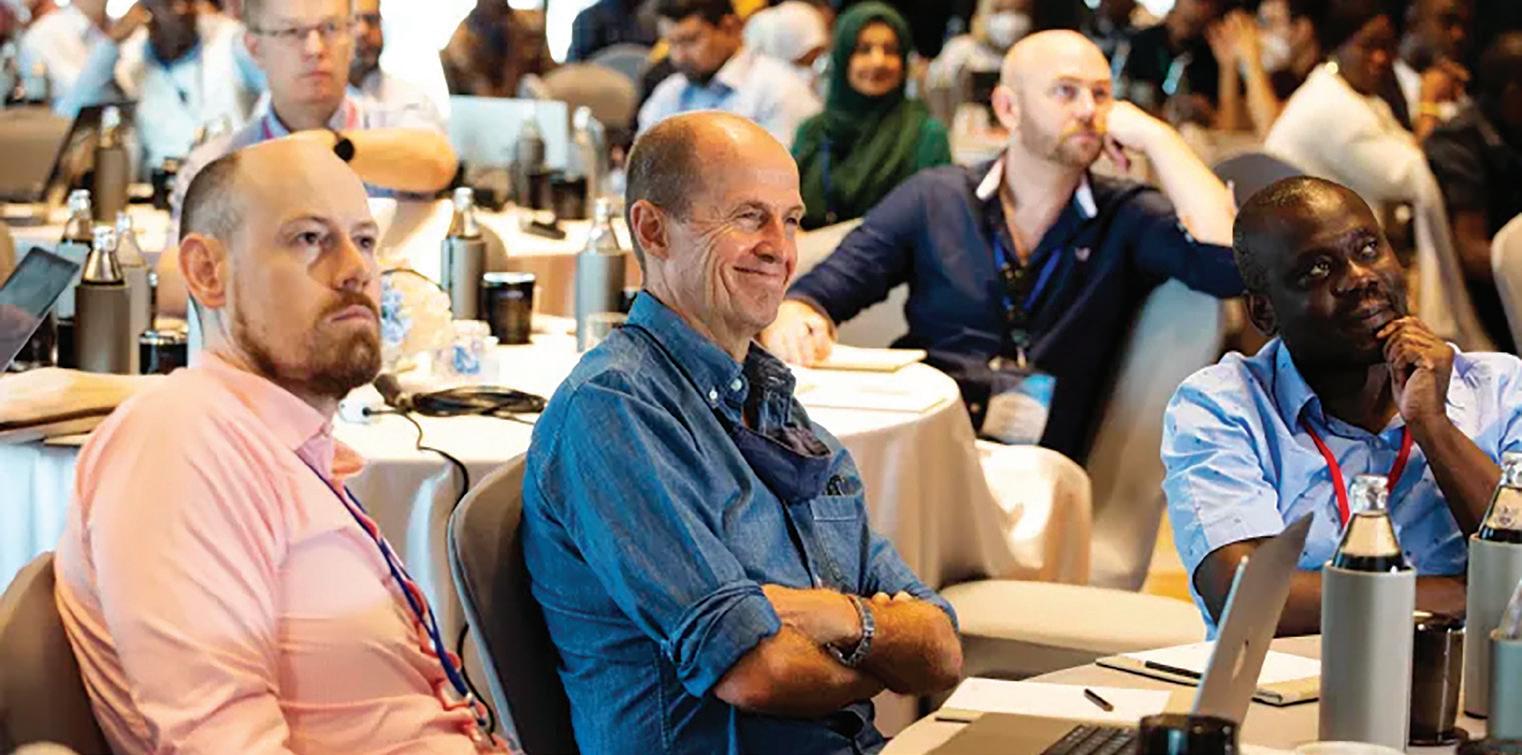
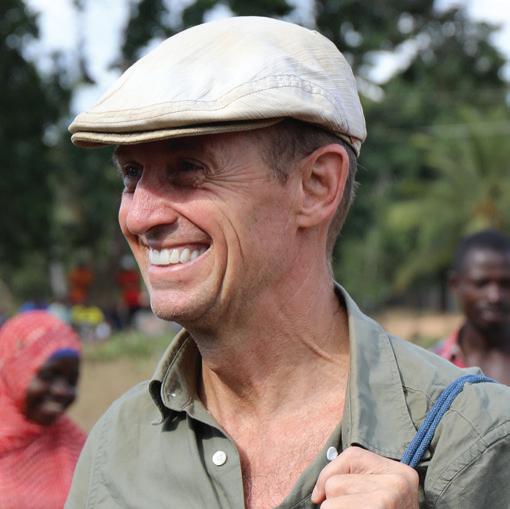
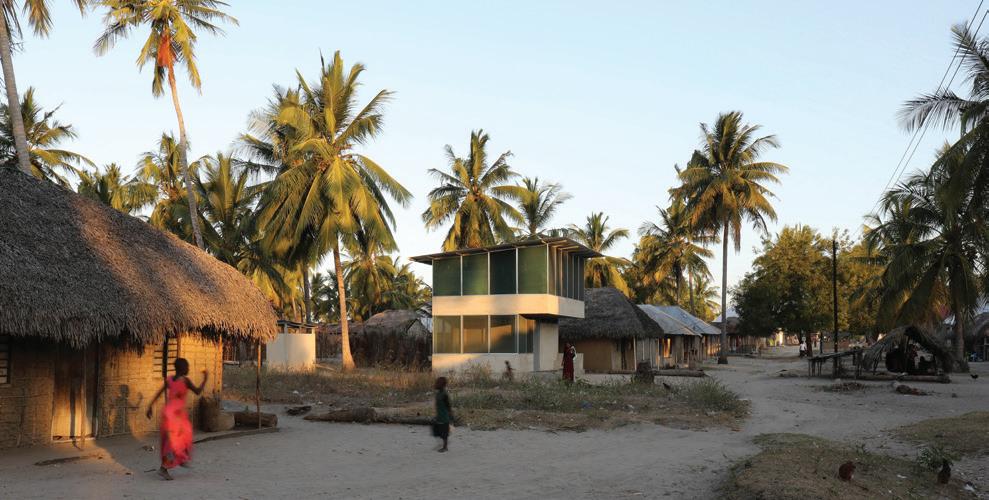
They needed somebody with my qualifications to coordinate the trial. I flew to The Gambia for a week. Brian wanted to see whether he thought I would fit in and I wanted to see whether I thought I would fit in too. We came to an agreement almost immediately and that was it. I stayed for two years, then completed an MSc in the London School of Hygiene and Tropical Medicine, in the knowledge that I would go back I stayed for another two years in The Gambia for more antimalarial trials. The drug that we were working on, artemether-lumefantrine, is to this day the first-line treatment for malaria. Looking back, I was extremely lucky to end up in a situation where I got paid to work on something really interesting and meaningful. Often you work on clinical trials which ultimately don’t result in much, but artemether-lumefantrine was a drug that made a difference. Over the last 30 years, hundreds of millions of doses of this antimalarial drug have been used and, together with insecticide-treated bed nets and other interventions, have reduced malaria cases in sub-Saharan Africa.
Next, I wanted to work on a malaria vaccine because I thought prevention is better than treatment. There was a new vaccine, RTS,S/AS01 (Mosquirix™) in early development but in the MRC laboratories in The Gambia, there were plenty of well-qualified African graduates to run the trial and they would have all taken priority over me, for reasons I fully understood and agreed with.
Lorenz Von Seidlein was awarded the Donald Mackay Medal in 2024 for his achievements in clinical malaria research. BELOW Lorenz Von Seidlein in Tanzania; a Star Home in Tanzania where a total of 110 homes were built across 55 villages. The two‑storey house features a covered porch and shade netting that reduces mosquito entry while keeping interiors cool and ventilated. In the field in Tanzania with a colleague.
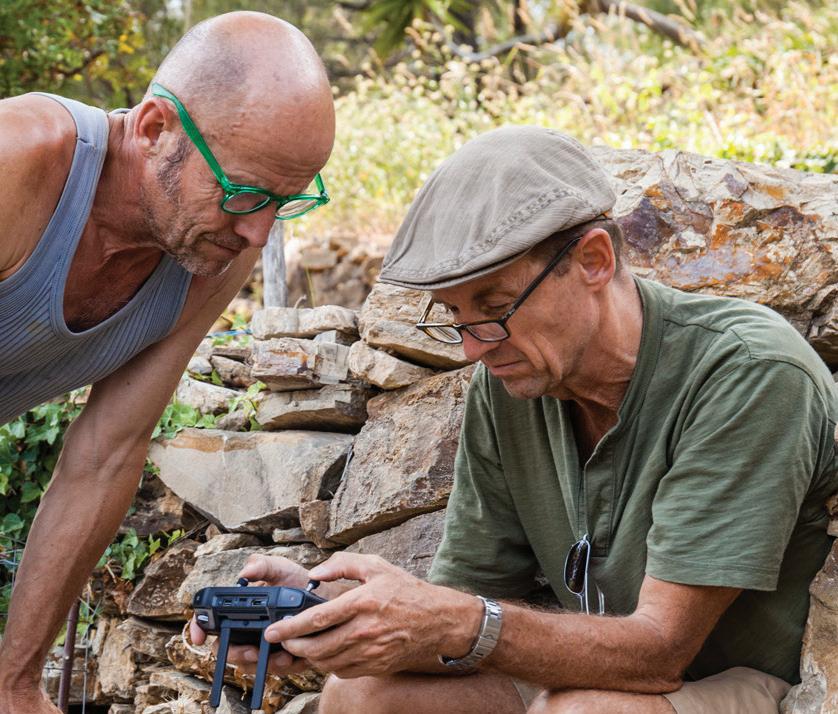
six years I was based in Seoul I spent most of my time travelling and working in Mozambique, India, Bangladesh and Vietnam. We did a demonstration project with an oral cholera vaccine that had been developed for travellers. We trialled this oral cholera vaccine as a public health measure in Mozambique, working with the Ministry of Health in Maputo. It was a case control study rather than a randomised clinical trial, but the results were quite good showing some 60% protection. Our work on cholera in Vietnam, India and Mozambique led to the creation of a World Health Organization (WHO) oral cholera vaccine stockpile for use in outbreaks. Oral cholera vaccines cost less than a dollar a dose, so they are not a great money maker for the pharmaceutical industry. There is still not enough supply to meet demand. The demand versus supply mismatch has never been properly addressed.
“I was extremely lucky to end up in a situation where I got paid to work on something really interesting and meaningful.”
Around the same time in 2000, I got a job offer from the new International Vaccine Institute (IVI) that was being set up in Seoul, Korea. There were lots of ideas for new vaccines, which we wanted to develop and test. During the
After six years in Korea, I returned to Africa in 2006 to set up a trial to assess the malaria vaccine RTS,S/AS01 in Tanzania. The vaccine was owned by GlaxoSmithKline, and the trial was paid for by the Gates Foundation. We partnered with KEMRI/Kilifi, an international global health research unit in Kenya to conduct a relatively big Phase II study over two years. We set up the infrastructure required for good clinical practice (GCP) and ultimately published the results in the New England Journal of Medicine At that point, I stepped back as principal investigator, and my Tanzanian colleagues led the Phase III study. RTS,S/AS01 was only licensed in 2023. Although Phase II finished in 2010, it took another 13 years for it to be registered and licensed, thanks to the politics of international health.
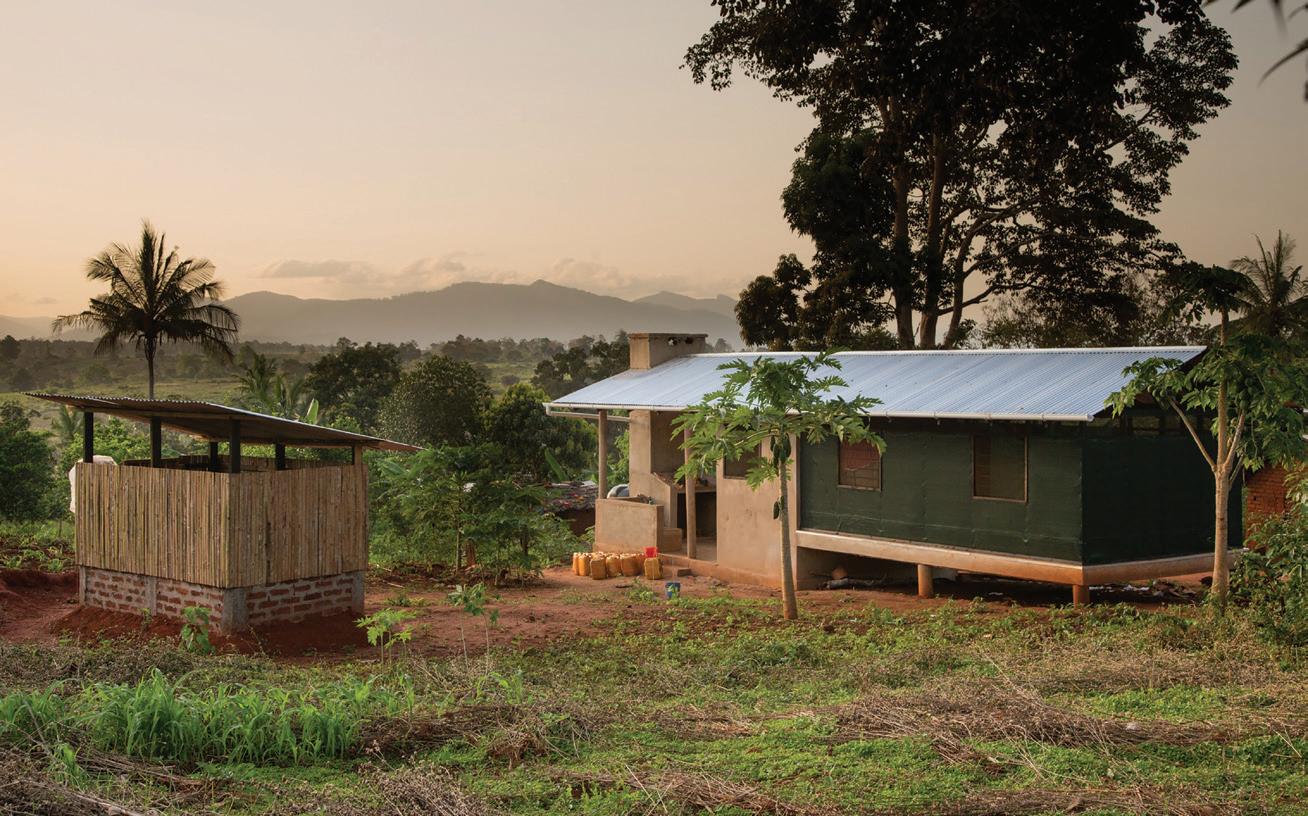
We had a daughter in 2006, and by 2010 we wanted to move from rural Tanzania to somewhere with a little bit more security. I took up a post in Darwin, Australia, and worked in a research unit there for four years on vivax malaria elimination. While employed by IVI, I had been collaborating with the MORU, Thailand on a novel treatment for severe malaria – injectable artesunate. In 2014, I got an offer to move to Bangkok, where we have been based since 2014. My first project was the coordination of mass drug administrations in Vietnam, Cambodia, Laos and Myanmar with the aim to eliminate malaria. We found that these mass drug administrations drive malaria transmission close to zero in the villages we target but do not interrupt transmission permanently. We never manage to cover the entire population of the village and people visiting the village from elsewhere re-import malaria. The next step was to combine mass drug administrations with mass vaccinations. First, we bring malaria transmission down to very low levels and then we protect villagers against reinfection. We started such a trial in the Chittagong Hill Tracts of Bangladesh in 2025 and will get the read-out at the end of 2026. In parallel with our drug and vaccine related malaria work, I have been involved for the last 20 years in research work looking at how housing in Africa contributes to the spread of malaria and other childhood diseases.
When we were working in a rural area of Tanzania in 2006, the study sponsors wanted the trial to comply with the highest standards. We secured roughly $600,000 from the Gates Foundation to build a laboratory. The Danish architect Jakob Knutsen designed the laboratory building. During that period, we spent a lot of time sitting together in the evenings drinking beer and talking. Because we had both worked in Asia, we discussed the differences in the type of rural houses people live in in Asia and Africa. In Asia, people in rural areas live in elevated buildings with good ventilation, but in Africa they live in mud huts and when they have more money, they build the same style of low house in concrete and brick, always with poor ventilation. Thermal comfort increases if there’s a little bit of draught, and we could not understand why houses in Africa were not better ventilated.
By 2009, we had secured enough funding for a small study and we employed two young Danish architects, Konstantin and Rasmus, to travel through Africa and Asia to test our hypothesis that there are very few double-storey buildings in rural hot-humid Africa while most Asians in similar climate zones live in double-storey buildings. Our investigators took measurements to explore indoor air flow, temperature, humidity and the differences between Asia and Africa. Back in Copenhagen, Jakob and his colleagues used three-dimensional
modelling and fluid dynamics to design a building that is comfortable even in hot, humid climates, effectively taking these Asian principles and transferring them to Africa. We secured funding for a small pilot study in the Tanga Region, the same area where we have conducted the malaria vaccine trial and built six study houses and three modified reference houses. We could show that the mosquito abundance in our houses was a small fraction of what it was outside and the indoor climate was a lot more comfortable than in traditional homes. We were also able to show that with more comfortable houses residents would be able to use bed nets. The rate limiting factor in the use of bed nets is the thermal discomfort of sleeping under a net in hot, humid nights. Bed nets cut off airflow which can be the only source of comfort. Most importantly we found that the residents as well as their neighbours liked these novel-design homes.
The most convincing evidence that a health intervention works comes from randomised controlled trials. If we want to convince people that better housing leads to better health, we have to deliver high-grade evidence that our hypothesis is correct. In 2018, we secured funding to construct houses in the south of Tanzania, where there was less successful malaria control than in the north. We hired Hannah and Otis, two young British architects who had worked and studied in Denmark. Over the next two and a half years they constructed 110 identical novel-design houses in 60 villages. We aimed to construct two new houses and enrol four control houses in each village. Each new house had a kitchen and a storage area downstairs, a latrine outside, and two bedrooms upstairs, one for the adults and one for the children.
Initially there were some suspicions regarding our motivation, and we had to engage with the communities through a range of activities including football and radio soap operas to convince them that the new houses were built in their interest. We followed the children living in the new houses and in the control houses for the next three years, to see if any positive health benefit was accruing to them from the new houses.
Each of these houses costs nearly $9,000, while a mosquito net costs only $5, so we had to show a broad impact in terms of public health. We did the analysis last year and found a highly significant 44% reduction in malaria, a 30% reduction in diarrhoea, and an 18% reduction in respiratory tract infections. Perhaps most important for the people in the villages was the observation that the children in the new houses were growing taller, with fewer children in the new houses stunted. It is a well-documented fact that children who grow taller have a substantially higher income over their lifetime.
The funding environment for our work is currently quite difficult. We never received a lot of money from USAID or the US National Institutes of Health, but since they have been defunded by the Trump Administration, former NIH grant recipients, which are a large proportion of people working in our field, are submitting proposals to our traditional funders. The competition has become a lot stiffer since 2025. I am now 67 years old, and I will be retiring in two years. I see my role now in helping colleagues to get funding. I still try to encourage young people to develop an interest in this area of public health, but without creating unrealistic expectations.
The impact of our work can be profound. I had the good luck to work with talented people in places I never dreamed of visiting and could work on interventions that have saved lives at scale – from antimalarial treatments to vaccines and now innovations in housing. That sense of contributing to something and seeing tangible improvements in people’s lives, made it worthwhile. Despite the difficulties, I would make the same choices again. I hope others are as fortunate when entering this field. ■
Operating theatres are among the most energy-intensive spaces in healthcare. At RCSI’s Charter Meeting 2026, Professor Camilla Carroll presented on the development of a new national accreditation scheme that will help surgical teams lead the way towards a climate-smart health service
The operating theatre (OT) has long been regarded as the ‘beating heart’ of a hospital – but it is also one of its most carbonintensive spaces. Though the OT typically accounts for a small fraction of a hospital’s physical footprint, it generates around 30 per cent of a facility’s total waste and up to two-thirds of its regulated medical waste. Energy consumption in the OT can run to six times that of any other department, per square metre – and much of that energy is used overnight, when theatres stand empty. Single-use instruments, waste, anaesthetic gases, sharps disposal and the relentless pace of perioperative activity combine to make the OT a significant carbon hotspot. For a country that has made a legally binding commitment under EU law to achieve carbon neutrality by 2050, the surgical environment is an area that can no longer be overlooked.
At RCSI’s Charter Meeting 2026, Professor Camilla Carroll (Medicine, Class of 1985), RCSI Council Ambassador for Sustainability, presented an update on the development and pilot of a Green Theatre Accreditation Scheme (GTAS) with the aim of providing a structured, evidence-based framework designed to embed environmental stewardship into the delivery of surgical care.
The GTAS is under development, supported by the HSE, and the initiative aims to create a national network of environmentally responsible surgical services. Its goal is ambitious but clear: to lead Ireland’s transition to climatesmart healthcare, contributing to both a healthier planet and a more resilient health system.
Professor Carroll framed the initiative within the wider context of the Global Syndemic – the interconnected crises of obesity, under-nutrition and climate change that represent, she argued, the defining health challenge of the 21st century. Addressing this syndemic requires healthcare systems to think differently: to prioritise surgical disease prevention, empower patients, embrace lean service delivery, and pursue low-carbon treatment alternatives wherever possible.
While currently in pilot phase, it is anticipated that for OT teams
signing up to become a GTAS Theatre, the accreditation journey will involve assessing and improving performance across five domains: estates and facilities, waste management, volatile gases, reusable and reprocessed devices, and clinical practice.
The practical measures identified within the pilot are both meaningful and achievable. They include switching off heating, ventilation and air conditioning systems outside of working hours; embedding waste segregation protocols; decommissioning nitrous oxide manifolds and removing desflurane – a potent greenhouse gas – from use. Theatres are also encouraged to introduce environmentally friendly fluid-warming devices, adopt lean surgical tray systems, and shift perioperative paracetamol administration from intravenous to oral wherever clinically appropriate.
The traditional surgical aqueous hand scrub is also being reviewed: the ‘rub don’t scrub’ principle – replacing soap and water scrubbing with alcohol-based handrubs in appropriate settings – is one of several small but cumulative changes that, taken together, can meaningfully reduce a theatre’s environmental impact.
Sustainable surgery is not simply a matter of swapping one product for another. Professor Carroll emphasised that lasting change requires a shift in culture – and offered two complementary frameworks to help teams achieve it.
The first is ‘Normalisation Process Theory’, which examines how new ways of thinking and working become embedded as standard practice in healthcare settings. Applied to sustainability, it helps teams understand how green behaviours can be normalised rather than treated as exceptional. The second is the Green ‘Non-Technical Skills for Surgeons’ (NOTSS) Framework, which positions environmental stewardship as a marker of a high-performing surgical team – placing sustainability alongside safety, communication and leadership as a core professional competency.
The Systems Engineering Initiative for Patient Safety (SEIPS) model offers a further lens, providing a sociotechnical framework for integrating ergonomics into OT design. The result is what Professor Carroll describes as a “lean and green” approach – one that reduces waste and environmental harm without compromising the quality or safety of patient care. ■
With GTAS currently in development, the message from RCSI is clear: the journey to a greener operating theatre is both a clinical and a collective responsibility. For Irish surgical teams willing to lead, the tools, the framework and the support are being developed. The question now is: who will be first to act? For more information on GTAS, contact RCSI Department of Surgical Affairs – surgicalaffairs@rcsi.ie.
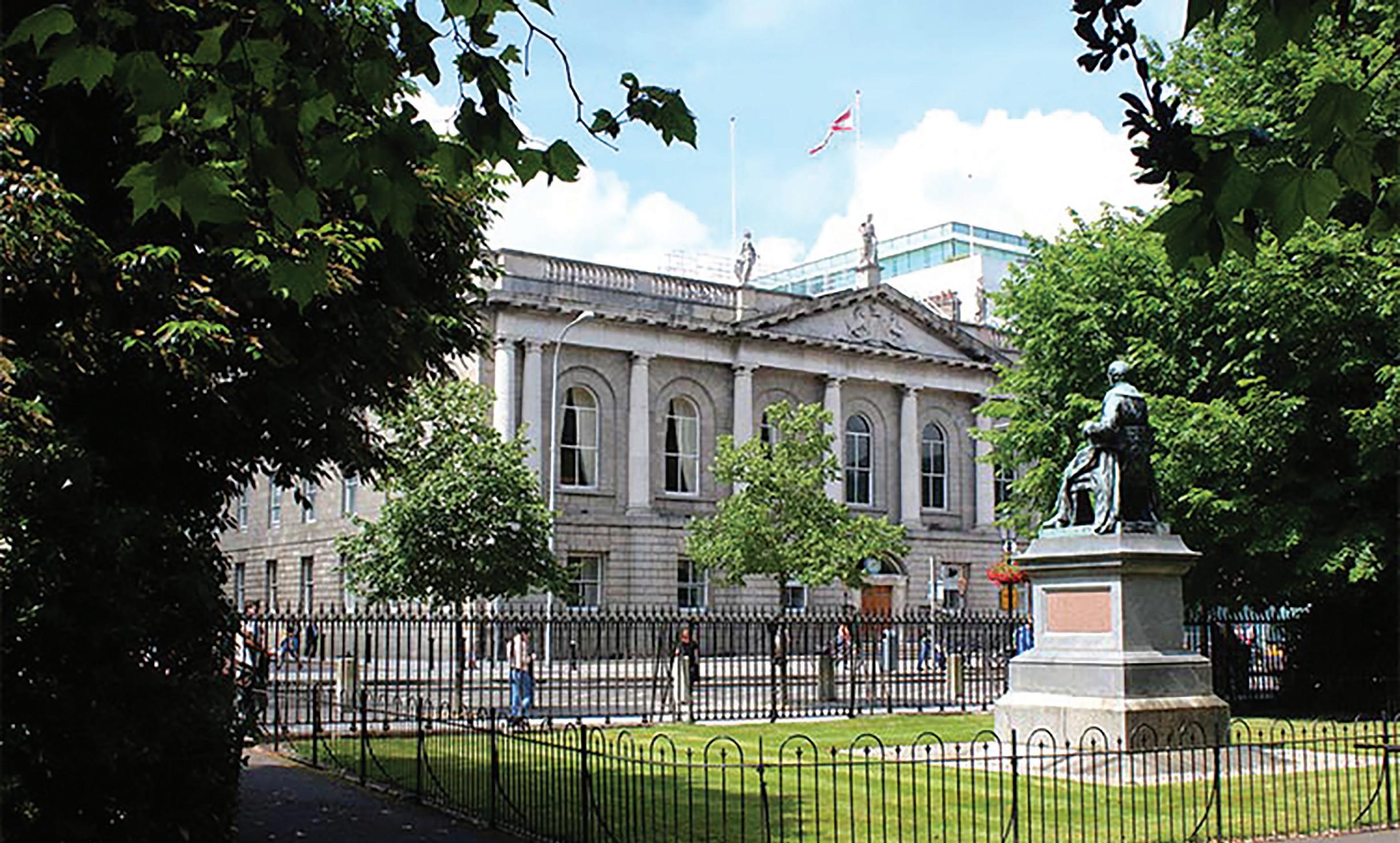
A major conservation initiative to conserve and restore the historic home of RCSI in Dublin is underway, reports Gemma Tipton
For more than 200 years, number 123 St Stephen’s Green has been a seat of learning at the heart of Dublin city. For generations, countless surgeons, doctors and dentists have passed through its front doors, joined more recently by pharmacists, physiotherapists, nurses and researchers. It is the historic home of RCSI and, since 1810, has provided a place for all to gather, learn and develop their knowledge and skills. Number 123 has been profoundly shaped by major historical transformations and modern structural evolutions. The most significant historical event to impact the building was when it was occupied by rebels during the 1916 Easter Rising. The façade still bears visible bullet scars from the heavy machine gun fire directed from the nearby Shelbourne Hotel. Inside, a bullet mark remains on the door of the 19th-century Board Room.
During the conflict, the building functioned as a makeshift hospital where surgeons treated insurgents, soldiers, and civilians equally.
Over the years, the building has undergone various expansions and improvements to accommodate the growing needs of RCSI. But, as the 250year milestone approaches, it is evident that urgent intervention is needed. As Ronan Baxter, Director of Estates at RCSI, says, “When we traced the history of number 123, we saw that there hadn’t been any significant intervention in the building since the 1970s. And that, while being well-intentioned, previous repairs didn’t use the right materials and probably weren’t targeting the right areas. Project Timeless is a two-year €10 million restoration and preservation initiative scheduled to run from June 2026 to August 2028, aimed at preserving the heritage of the 1810 structure while modernising its internal systems to ensure long-term sustainability.”
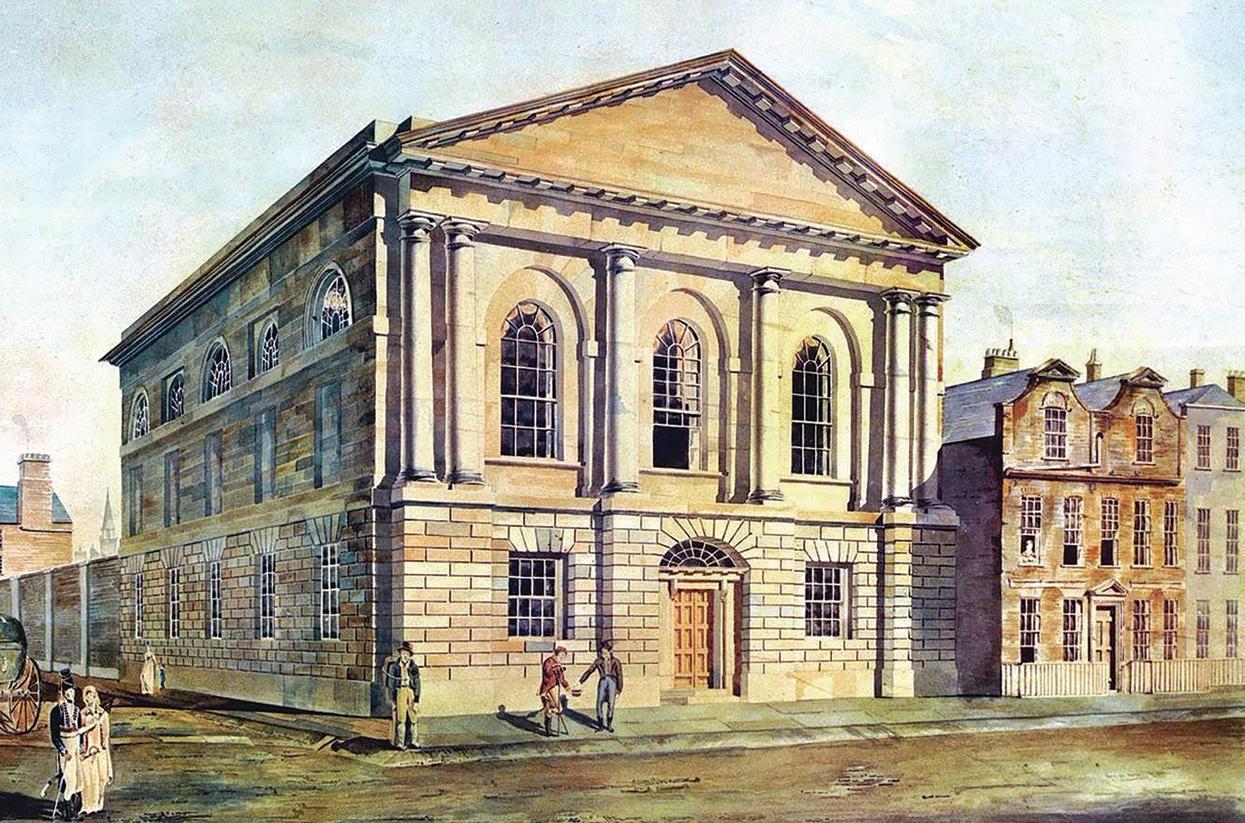
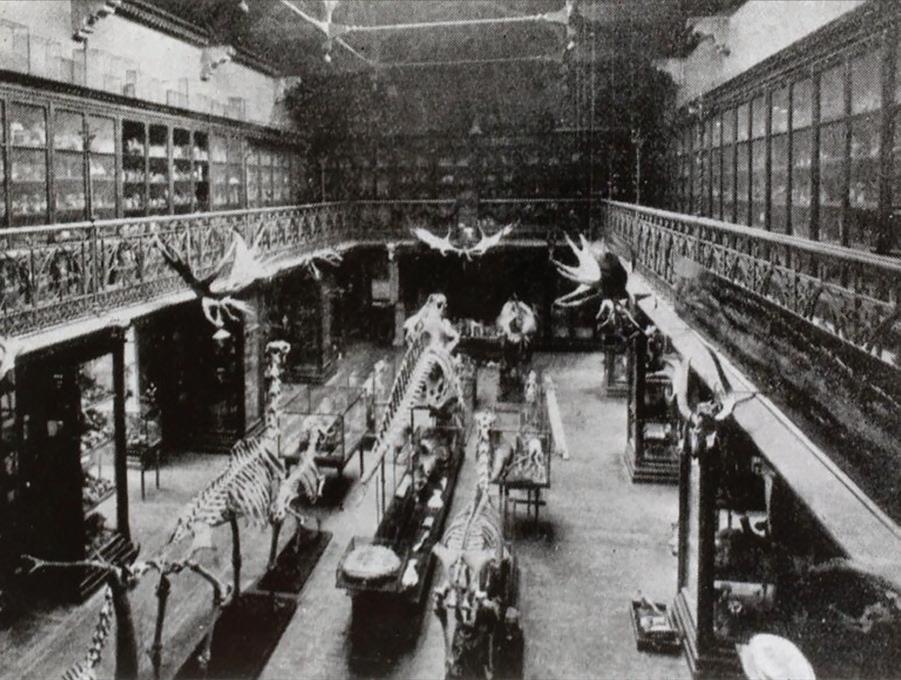
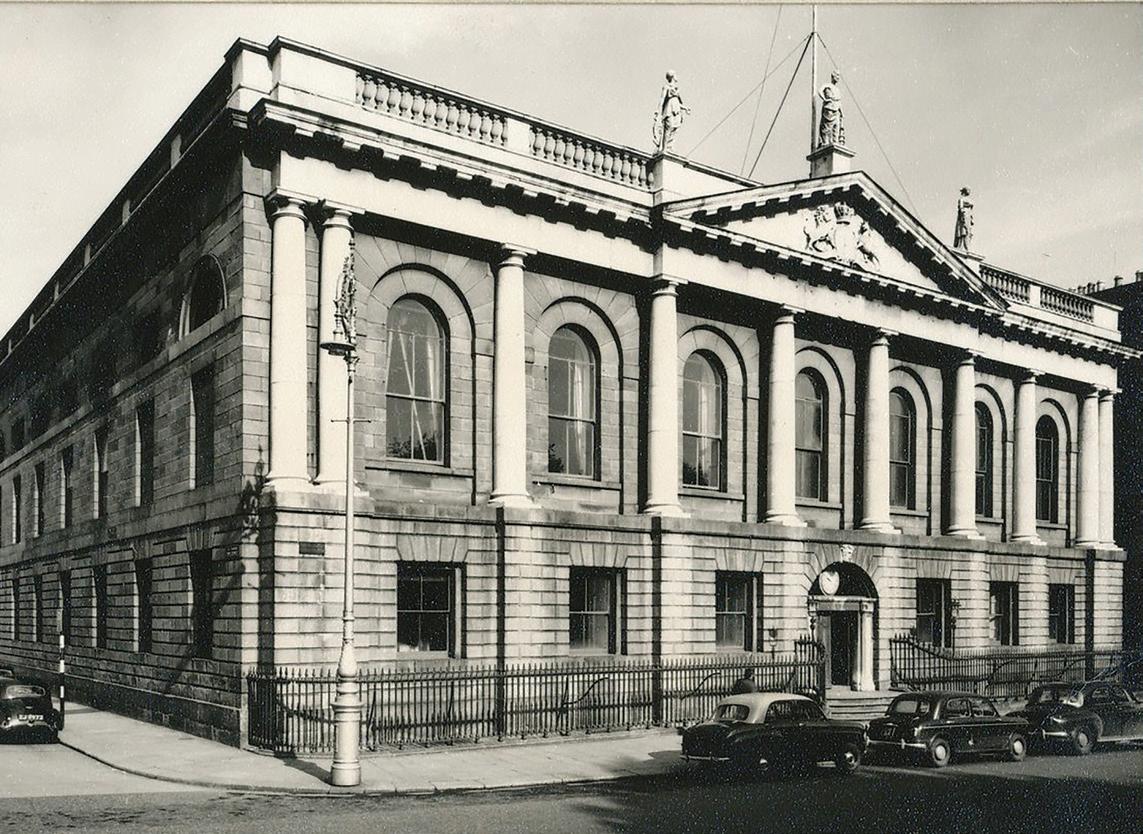
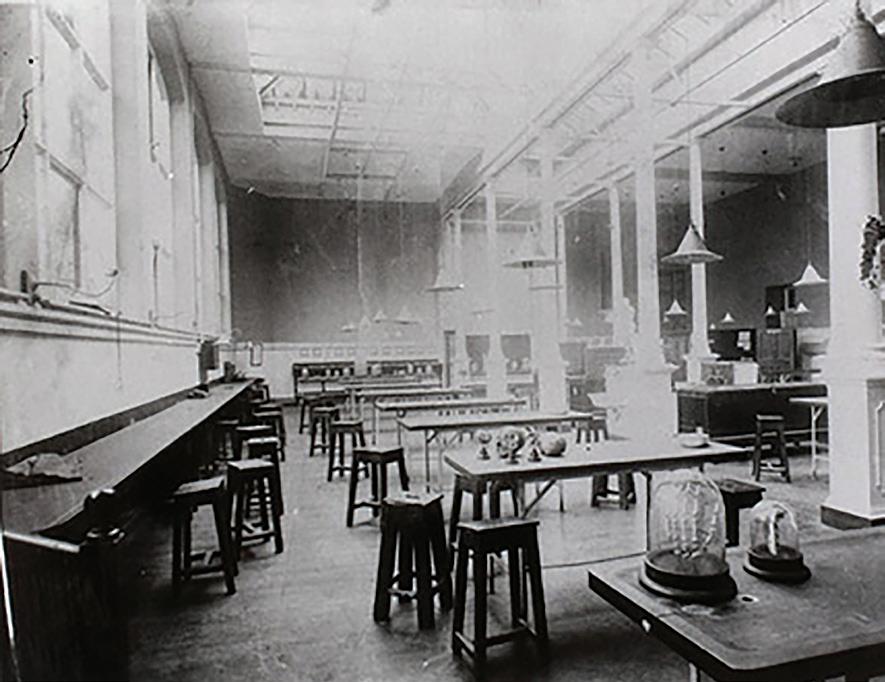
Time has brought medical advances that were unimaginable in those early days, but its passage has been less kind to the building. Water ingress and weathering have made their mark on the roof, resulting in loose slates and damage to timbers and stonework. Though it was built using the most progressive building systems of its time, two centuries of intensive use and ageing have taken their toll.
The project is remarkable in scope, and will be led by conservation architect Alistair Lindsay, who has considerable knowledge and experience of the building. His team has made painstaking progress – ahead of its restoration, the stones of the entire front façade have been mapped and numbered. Scaffolding has been designed to protect and lift the roof, so that structural timbers, ironwork, slates, and drainage can be secured and updated where appropriate. Historical research has revealed the original glazing patterns for the windows which will be reinstated, and the iconic circular lanterns in College Hall, often referred to as the “eyes” of the building, will be replaced.
The works will extend to some elements of the building which will be very familiar to alumni. The three statues of Athena, Asclepius and Hygeia, carved by John Smyth in the 1820s and sited above the triangular pediment of the building will be repaired and retouched to bring back some of their lost detail, alongside the coat of arms. Inside the building, sculptures, draperies and furniture will be removed for safety while the works take place. Even the college clock will move temporarily from its home in the fanlight above the front doors of 123 for a timely overhaul.
Project Timeless will preserve the history and character of RCSI’s beloved
1.
2.
4-5.
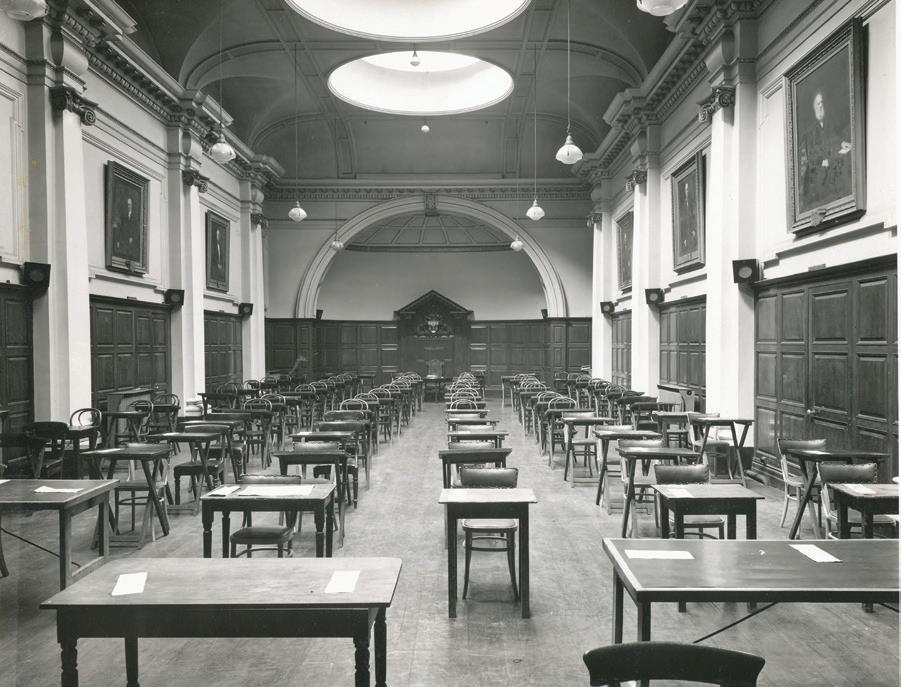
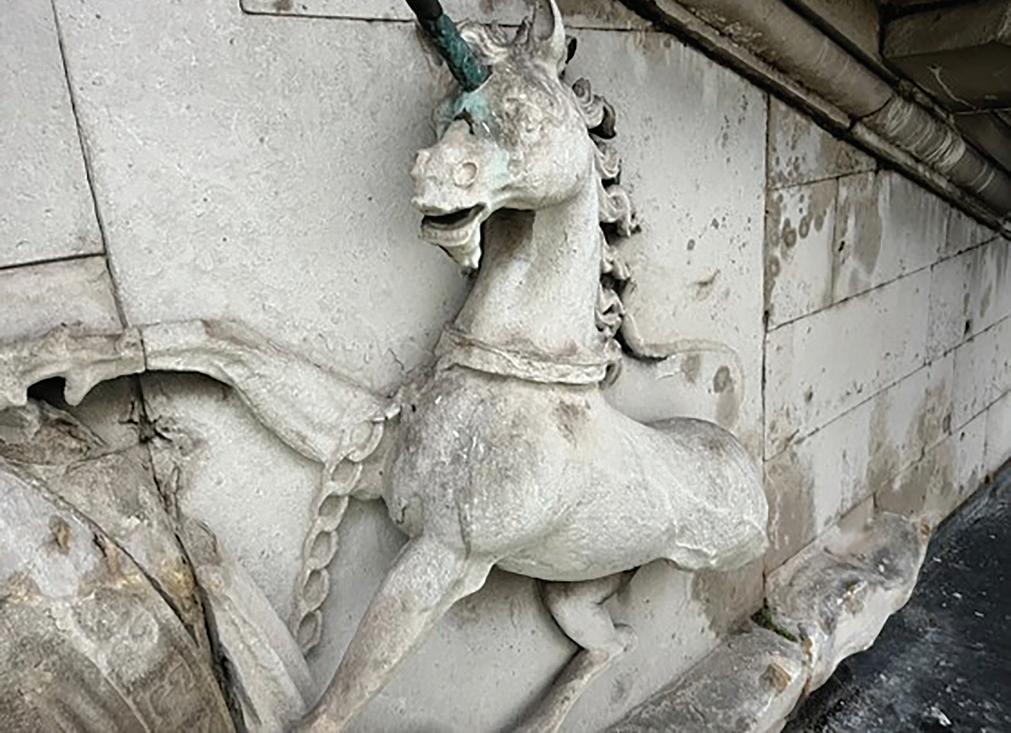
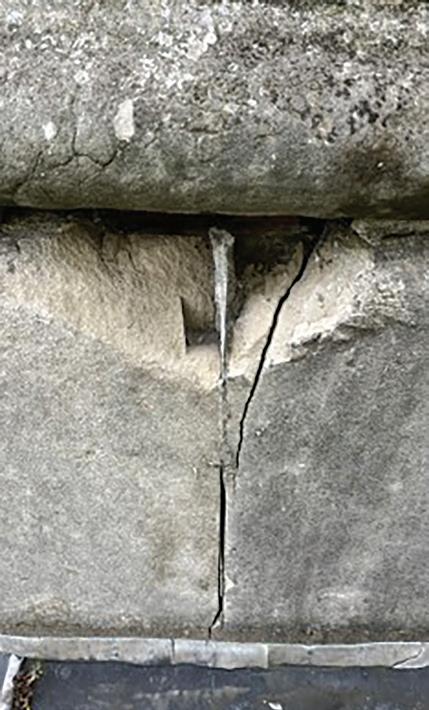
Project Timeless will address age-related decay and deterioration of the building’s fabric, and will include restoration of stone, statuary and the building’s roof and lanterns.
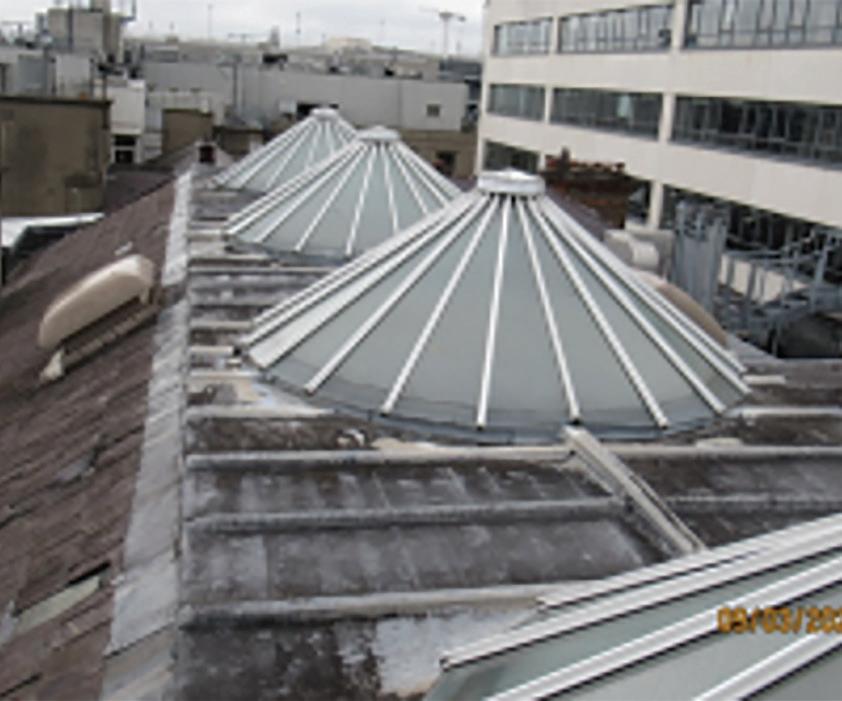
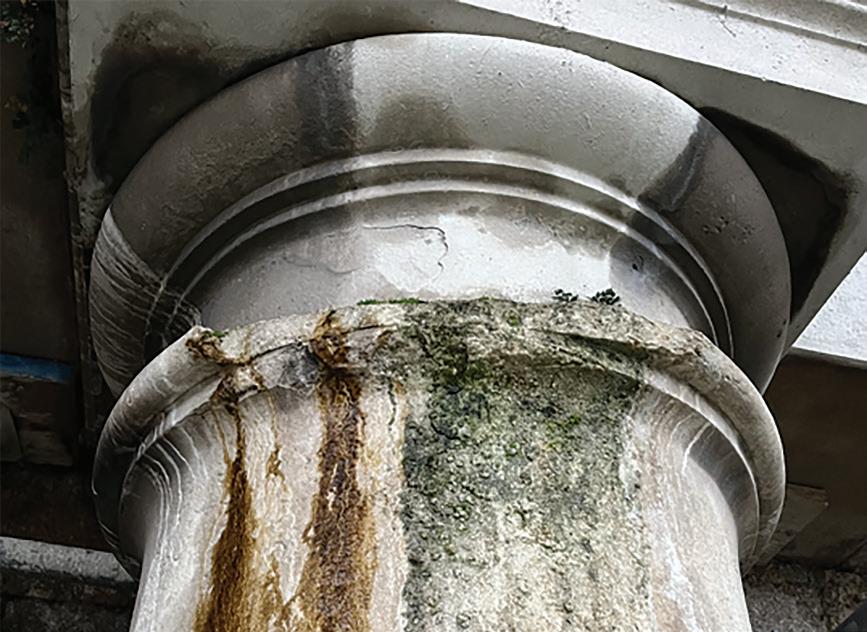
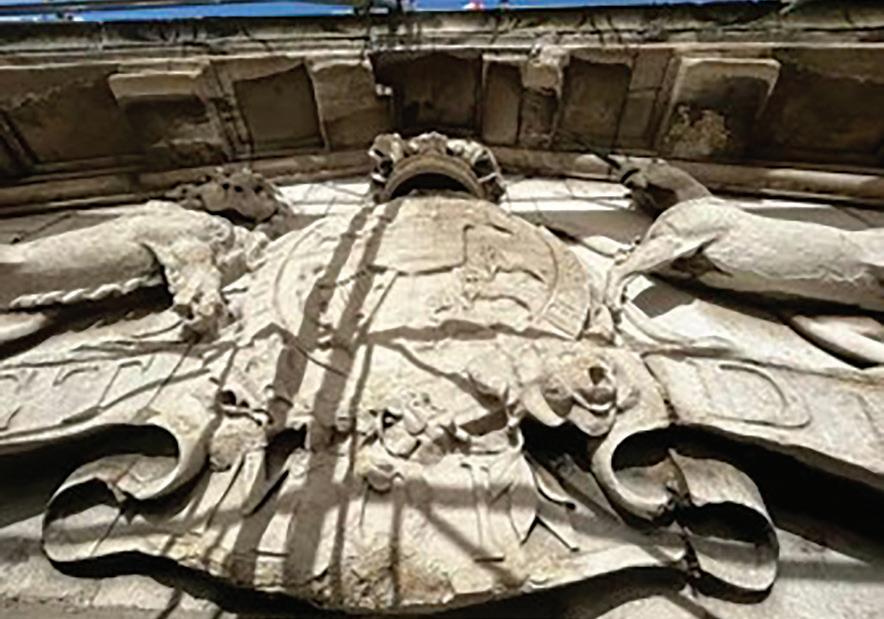
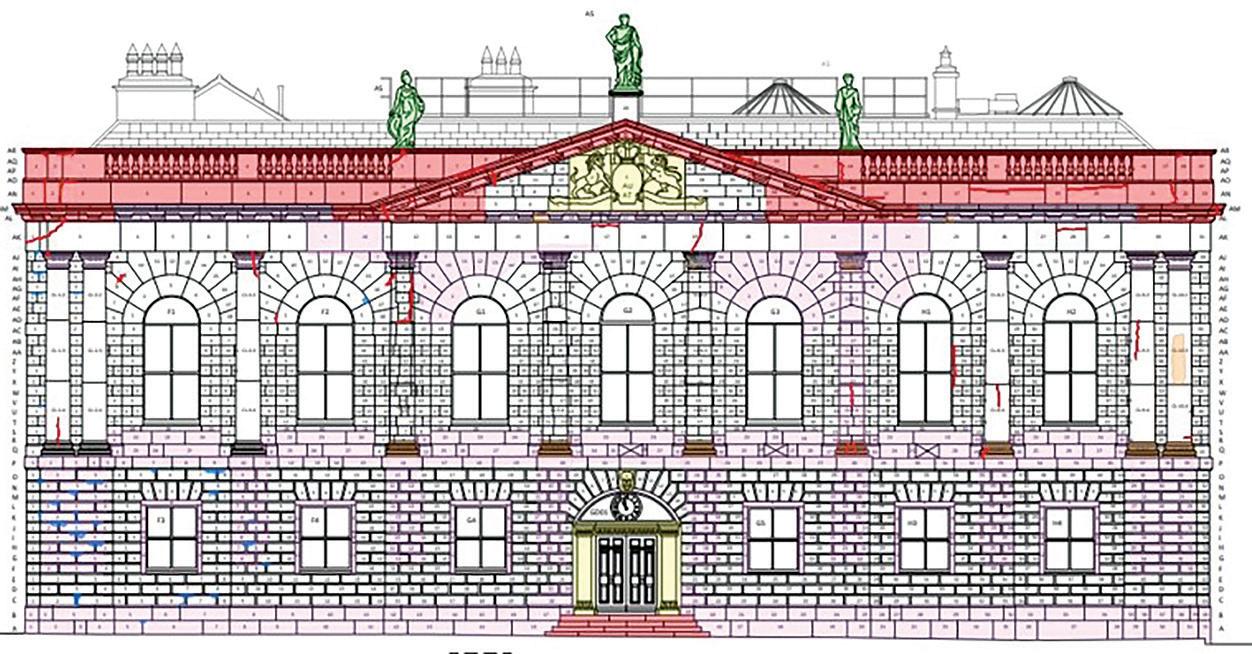
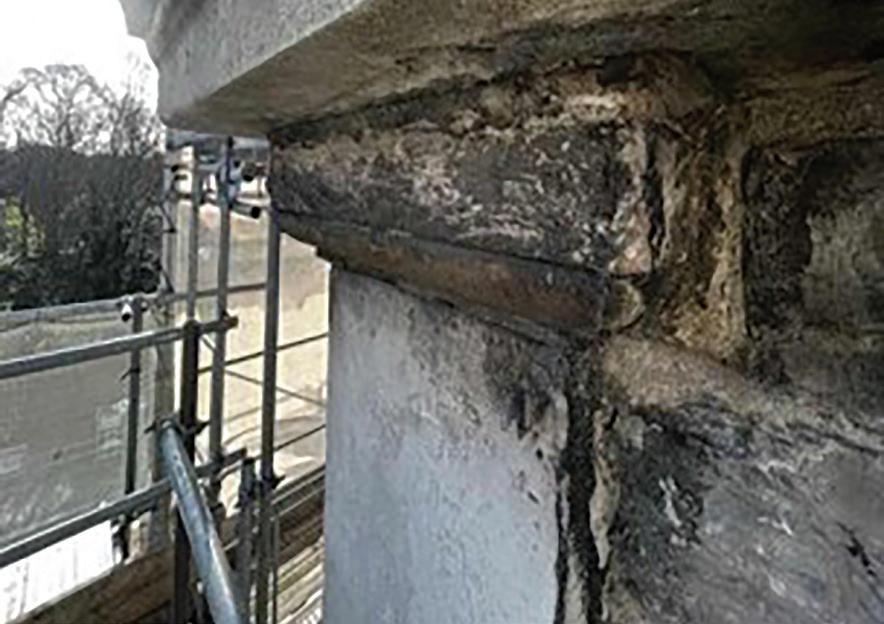
building and at the same time bring it up to 21st-century building and sustainability standards. The project is designed to align with RCSI’s Climate Action Roadmap, which focuses on fabric upgrades and the installation of energy-efficient systems like heat pump technology and solar panels to reach net-zero carbon goals by 2050. “Every square inch has been surveyed,” says Baxter. “The team knows the building and is very invested in it. The façade is the finale. And with all its history,” he notes, “it is the most important part.”
It is quite a history, evolving from the Dublin Guild of Barber-Surgeons, established in the 16th century. RCSI secured its Royal Charter from King George III in 1784. Just over a quarter of a century later, on St Patrick’s Day in 1806, the foundation stone for what all RCSI students now call simply “123” was laid by John Russell, 6th Duke of Bedford. The building would take four years to complete, although it would be added to over the centuries as RCSI expanded. It was to be the beginning of a great tradition, not only of learning and discovery, but of inclusivity as, unlike many comparable institutions in Ireland at the time, RCSI did not discriminate on religious or sectarian grounds. Women were admitted in 1885, and in 2010, Professor Eilis McGovern became the first female President of RCSI, and the first female President of any Royal College.
Project Timeless will mark the legacies of students, doctors and professors who have contributed to medicine, healing and teaching in Ireland and around the world.
The original architect of 123 St Stephen’s Green, Edward Parke, was also
Expert craftspeople will carefully repair damage to the features. The stones on the façade have been mapped and numbered.
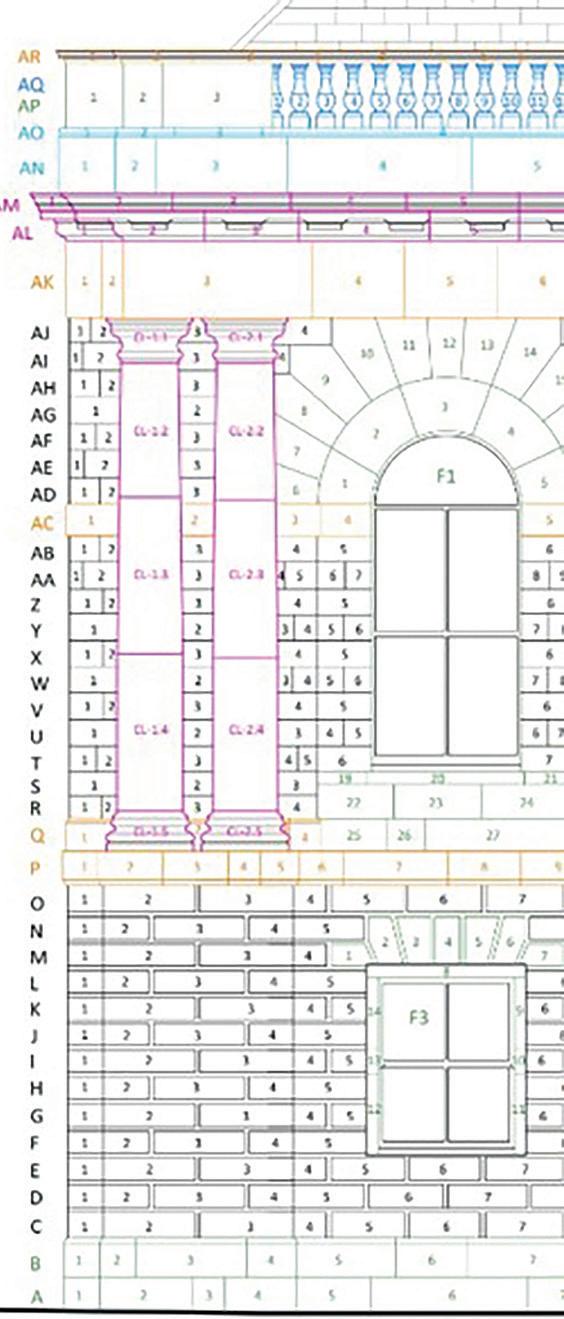
responsible for elegant neo-classical buildings located on Hawkins Street and Dame Street, both sadly long gone. In contrast, his commission for RCSI has truly endured – the original Anatomy Room, vivid in the memories of so many graduates, was constructed in 1812 and remains in use in the same location today. Such was the demand for places at RCSI that architect William Murray was commissioned to enlarge the building, extending the front by four bays between 1825-1827, completing the façade that has become so recognisable to generations of RCSI graduates. Further extensions would follow a century later.
When Ireland’s Taoiseach, Micheál Martin TD officially opened the new RCSI building at 118 St Stephen’s Green earlier this year, he noted how the University’s contribution is “visible in every hospital, clinic and community across the country.” He might have added that the same is true around the world, as alumni are numbered across every continent of the globe.
Over the past two centuries number 123 has watched over the establishment of neighbouring institutions such as the Shelbourne Hotel, the Unitarian Church, and the headquarters of the Catholic University of Ireland at Newman House (the precursor to University College Dublin). Alongside historical legends, number 123 brought forth many luminaries of medicine too: Former RCSI student, Professor and President, Abraham Colles (1773–1843) lives on in surgical nomenclature to this day. Francis Rynd (1801–1861), a Fellow of RCSI, changed the history
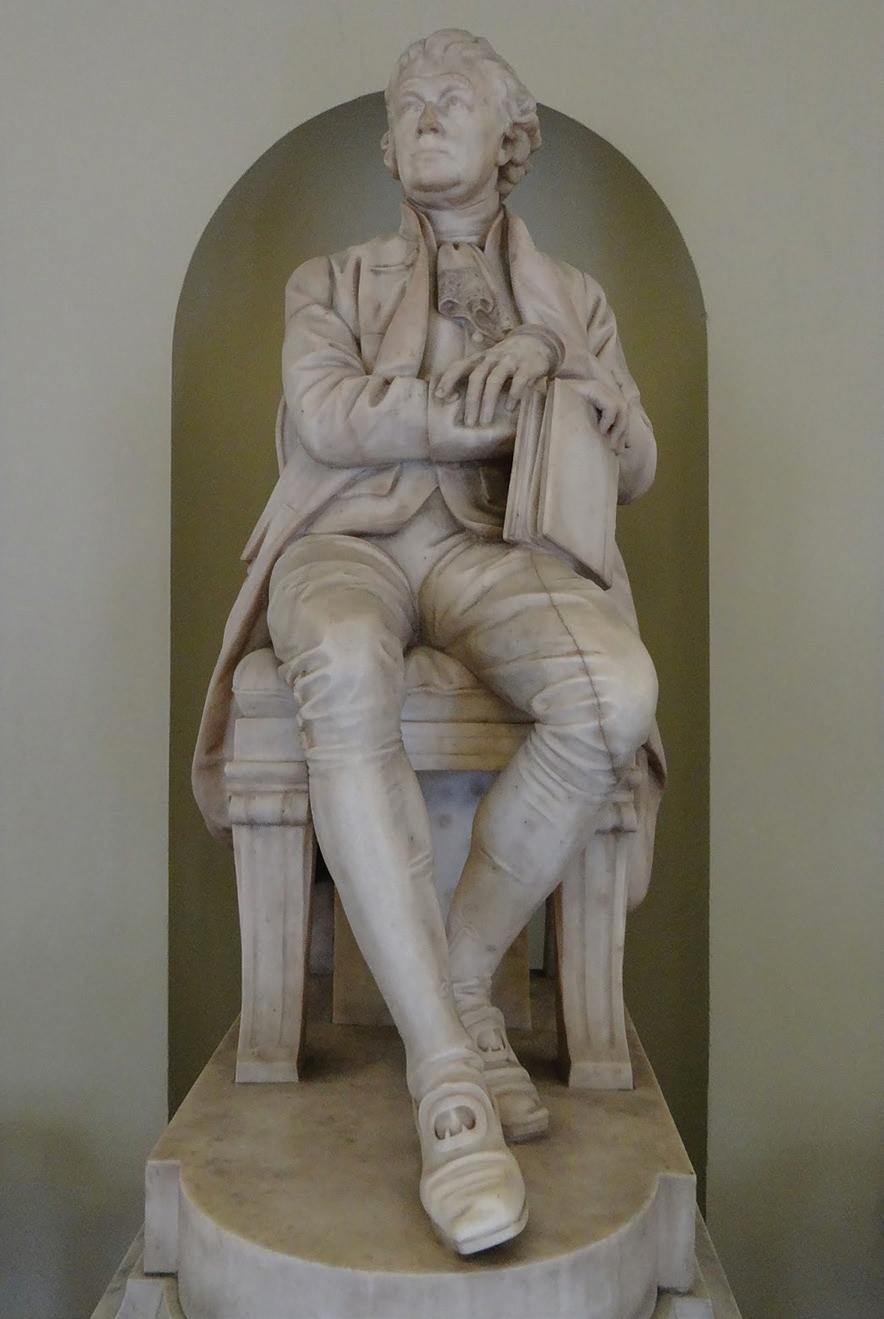
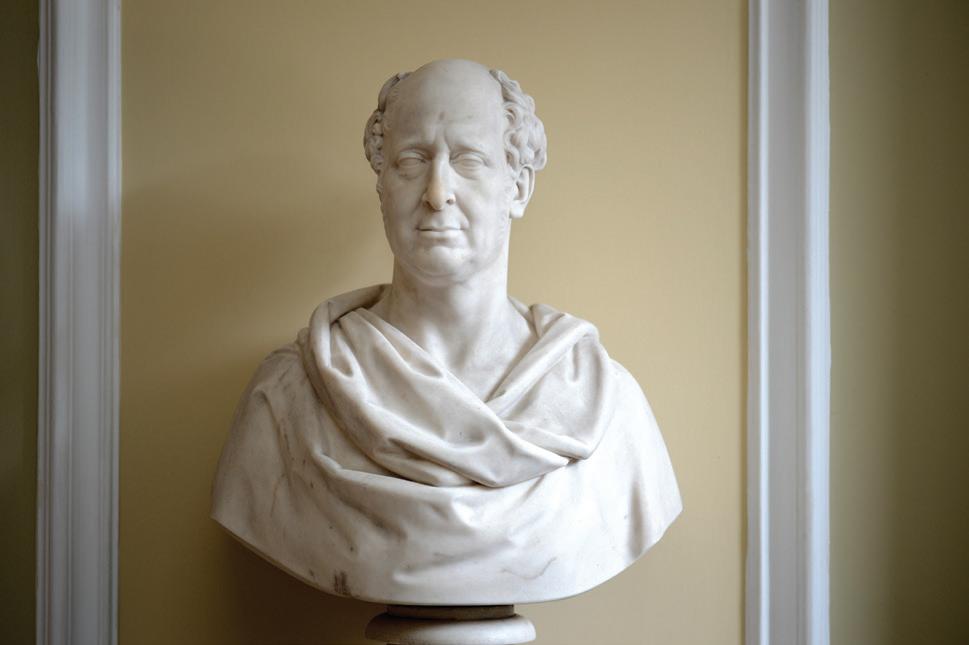
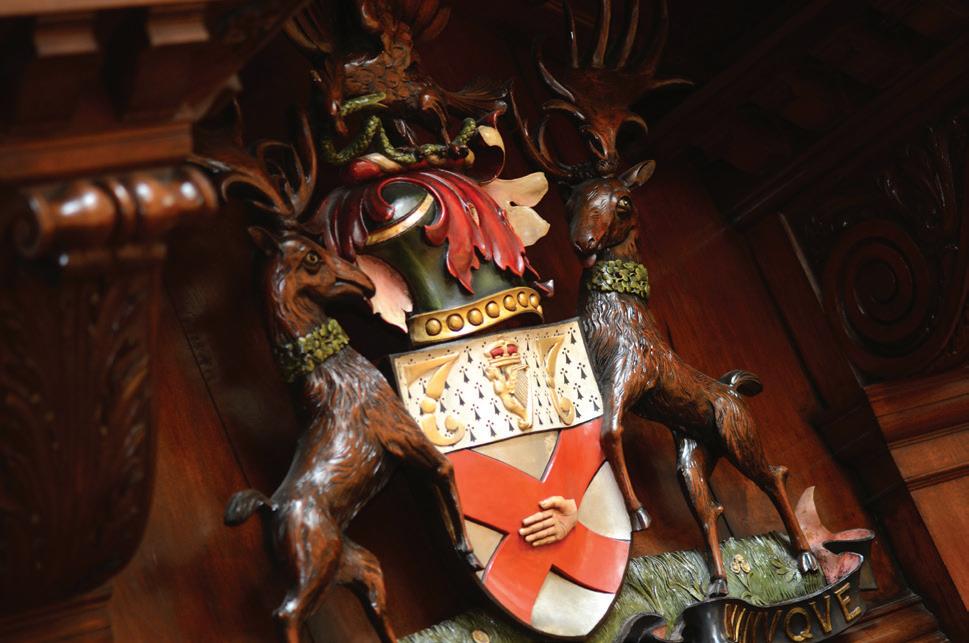
of medical care with his invention of the hypodermic needle in 1830. Sir Charles A. Cameron (1830–1921), RCSI Fellow, Professor, President and historian was a tireless campaigner for better hygiene, health and welfare for the city of Dublin and its people, and his efforts helped to reduce the death rates in Dublin by more than a quarter in the first decade of the 20th century.
“Former students, sometimes second or third generation, tell us about their love for the building, and the impact RCSI has had on them throughout their lives and careers,” says Aíne Gibbons, Director of Development and Alumni Relations. Alumni are enthusiastic about being part of the Project Timeless conservation story of number 123. “By helping us support the restoration of this magnificent part of our heritage, it is a way for alumni to place their stamp on the college’s original building, and on its future legacy.”
As former students will know and fondly remember, number 123 combines the formal and illustrious with the practical, even a little industrial. The grand entrance hall, sweeping stone staircase, sculptures and statues, Anatomy
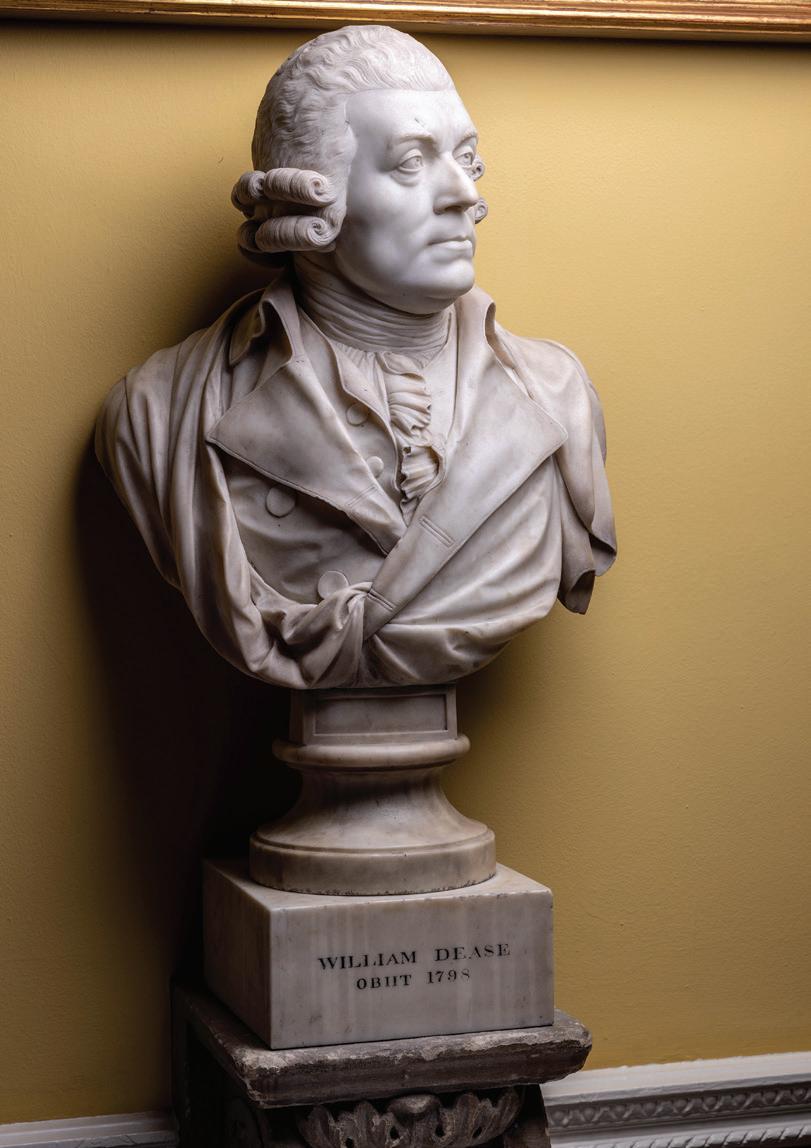
One of Project Timeless's early milestones was the compilation of an inventory of art and valuable items for cleaning and restoration before their removal to safekeeping.
Room and the examination halls are a reminder, should one be ever needed, of the seriousness of purpose, and the proud traditions of RCSI.
Project Timeless reflects the University’s ethos by building on tradition with innovation. New techniques are being used to inform the restoration, coupled with an understanding of the value and significance of the materials of the past. And while many of the marks of time will be reversed, care is being taken to preserve some of those historic symbols of the building’s significance: the 1916 bullet holes will remain in place. When Project Timeless concludes in 2028, students past and present will be able to see their alma mater’s history made new.
In restoring and preserving one of Dublin’s most historic and valued buildings, Project Timeless will also mark the legacies of the thousands of students, doctors and professors who have contributed to medicine, healing and teaching in Ireland and around the world. While it was the vision of that first group of surgeons, two and a half centuries ago, that created the institution, it has been the dedication of each generation of RCSI alumni since then who have made it what it is today. Here’s to the next 250 years. ■
“The RCSI Conservators Campaign is the centrepiece of our philanthropic fundraising effort, RCSI_Tomorrow, enabling us to invest in the protection and preservation of our magnificent, historic home, and to safeguard its legacy for generations to come. We invite alumni to play a pivotal role in supporting the ongoing conservation of 123 St Stephen’s Green. If you would like to learn more about becoming a Conservator and helping to secure the future of this iconic building, we would be delighted to hear from you.”
AÍNE GIBBONS, DIRECTOR OF DEVELOPMENT AND ALUMNI RELATIONS | TELEPHONE: +353 (1) 402 5189; EMAIL: AINEGIBBONS@RCSI.IE.
ALUMNI CONNECTING AND INSPIRING
In August 2025, a new wall mural, Making an Impact, by artist Maser was unveiled on campus to honour seven recipients of the 2025 Alumni Awards as inspirational role models. The artwork is the second such mural to be created for this purpose, following Joe Caslin’s piece in 2024. Widely known for his vibrant and inspiring murals in urban spaces, Maser, in response to a commissioning brief issued by RCSI’s Art Committee in spring 2025, took the biographies and interviews with the awardees as the starting point for his creative process. He used colour, movement and form to weave portraits of the seven Alumni Awardees into a visual stream. In his words: “The mural seeks to visualise how individual lives, over time, flow together to shape global health, knowledge and community.”
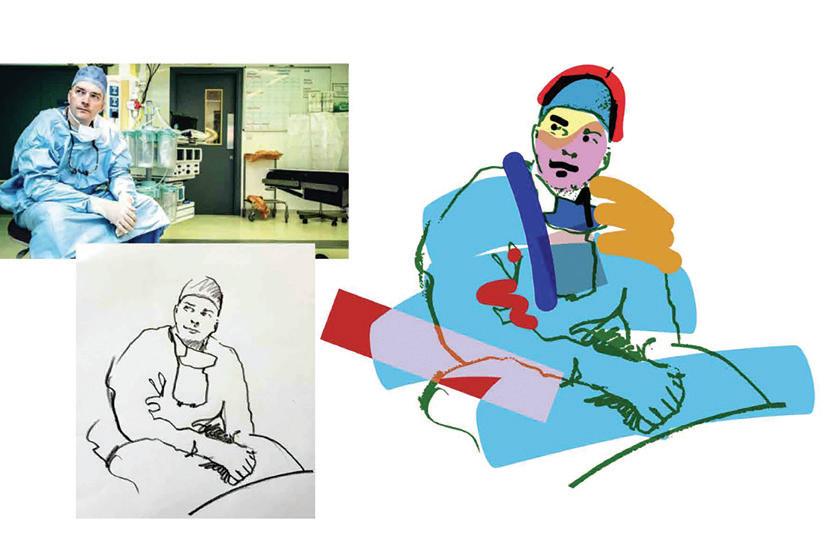
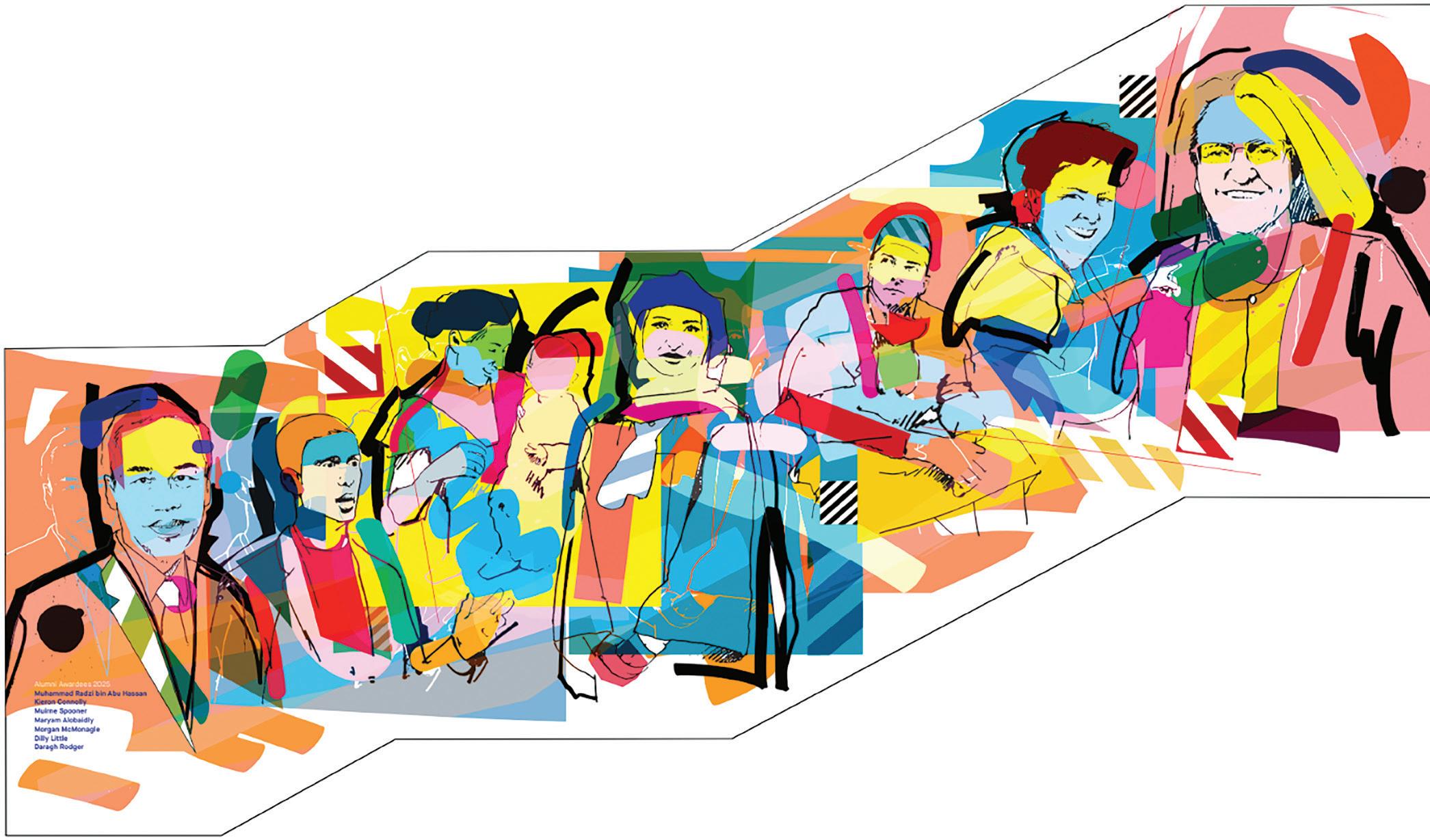
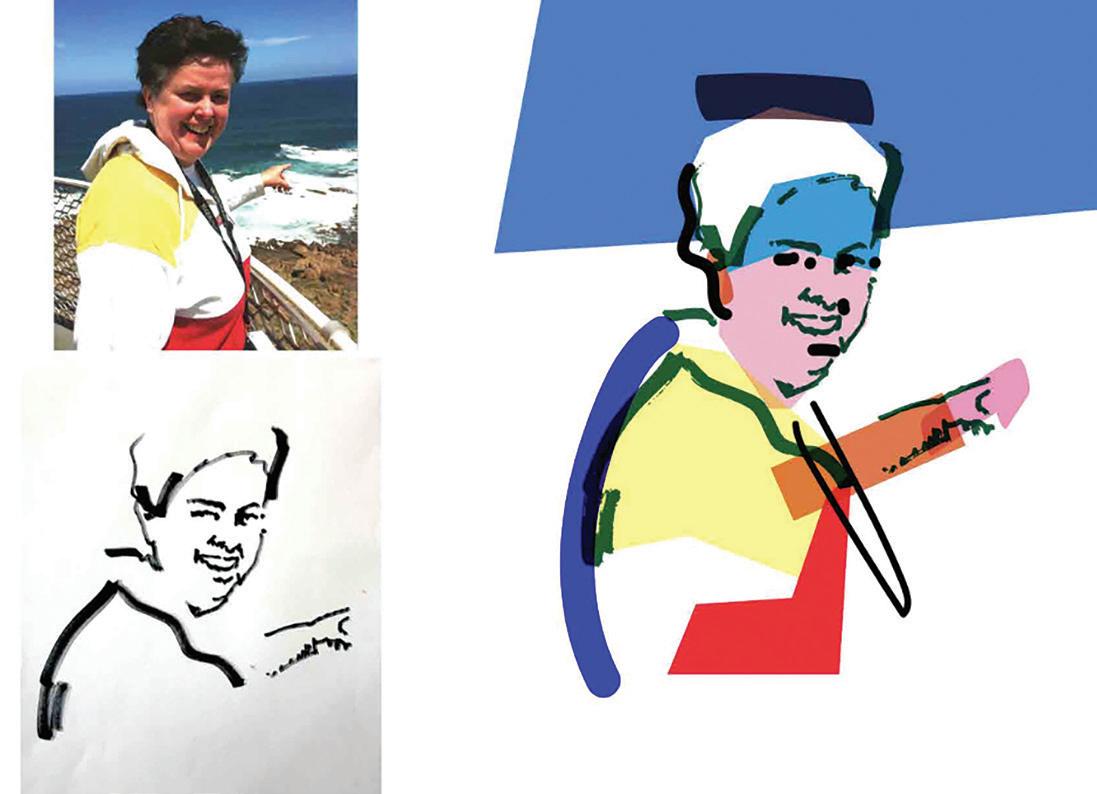
ABOVE AND LEFT Maser’s concept drawings for the artwork. BELOW The completed mural in RCSI.
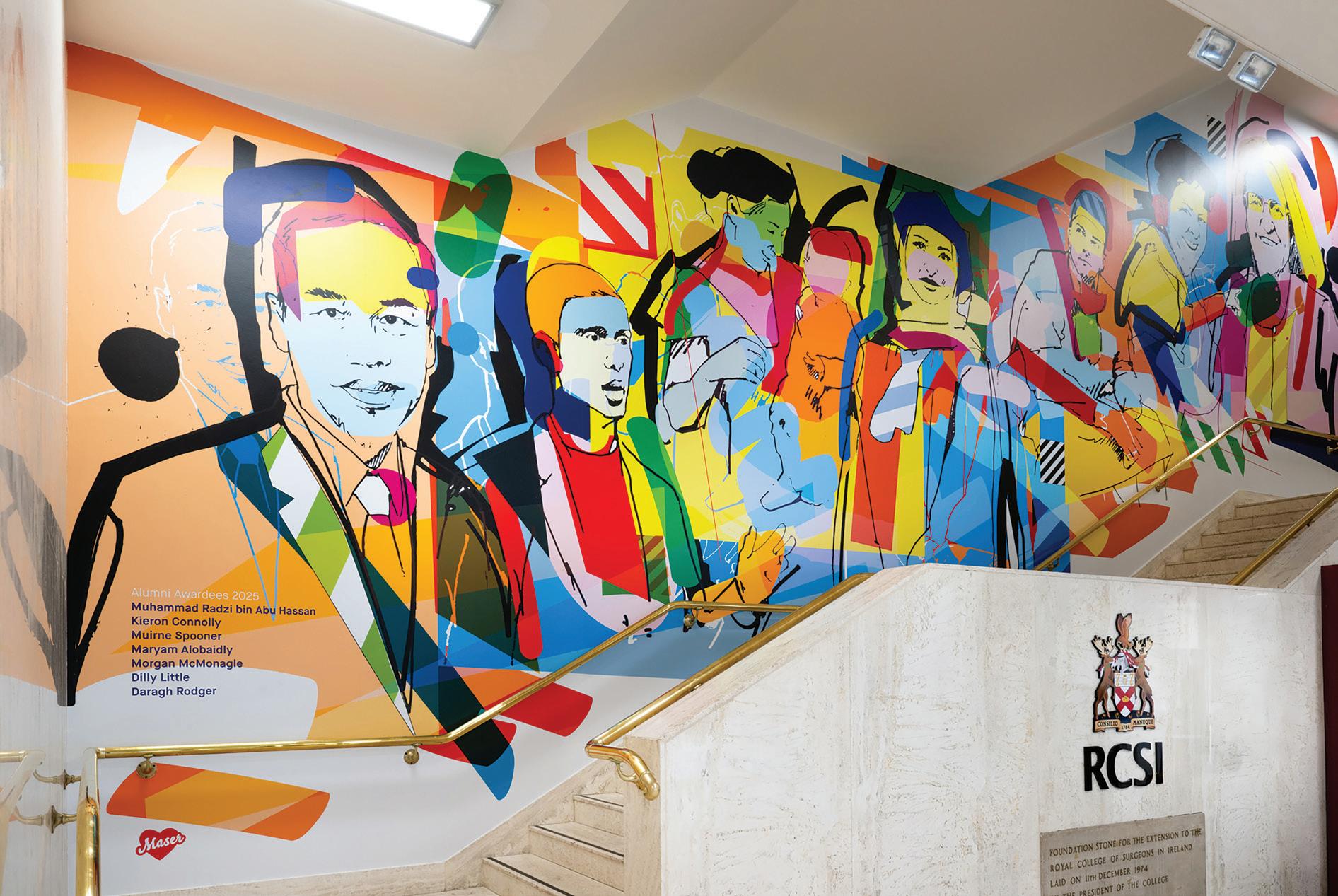
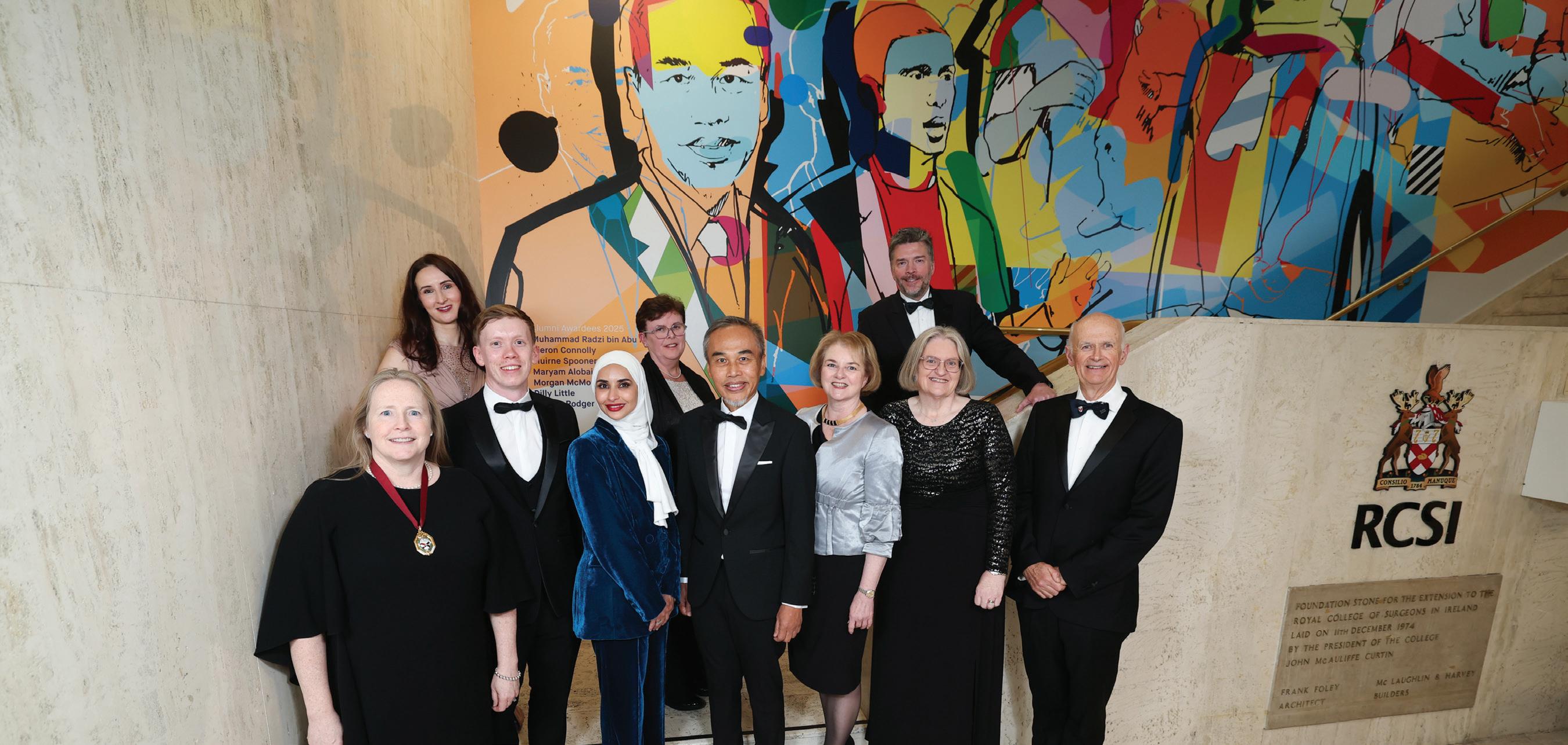


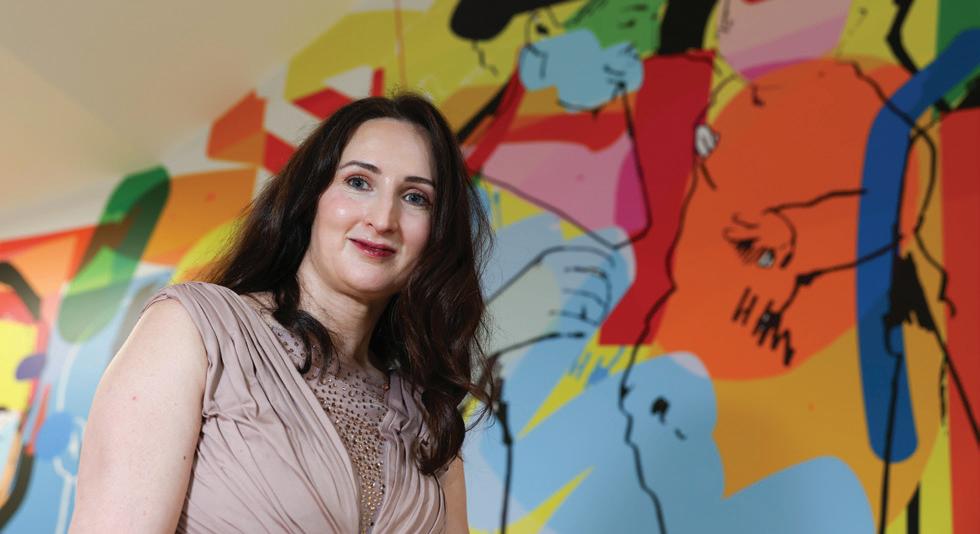

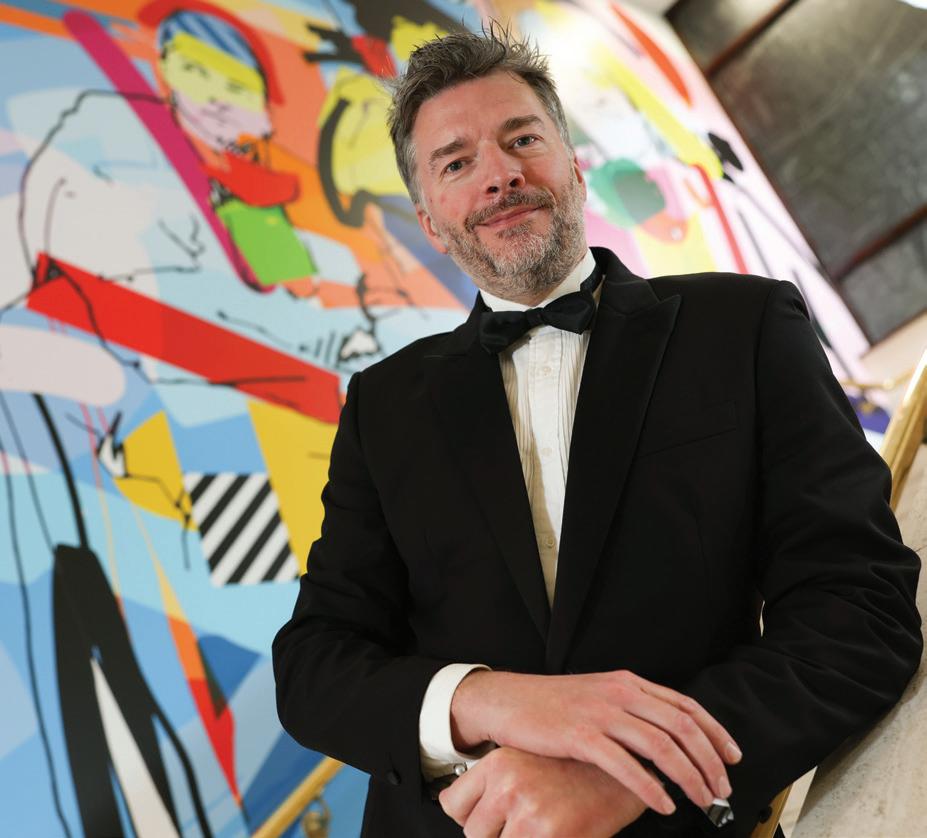
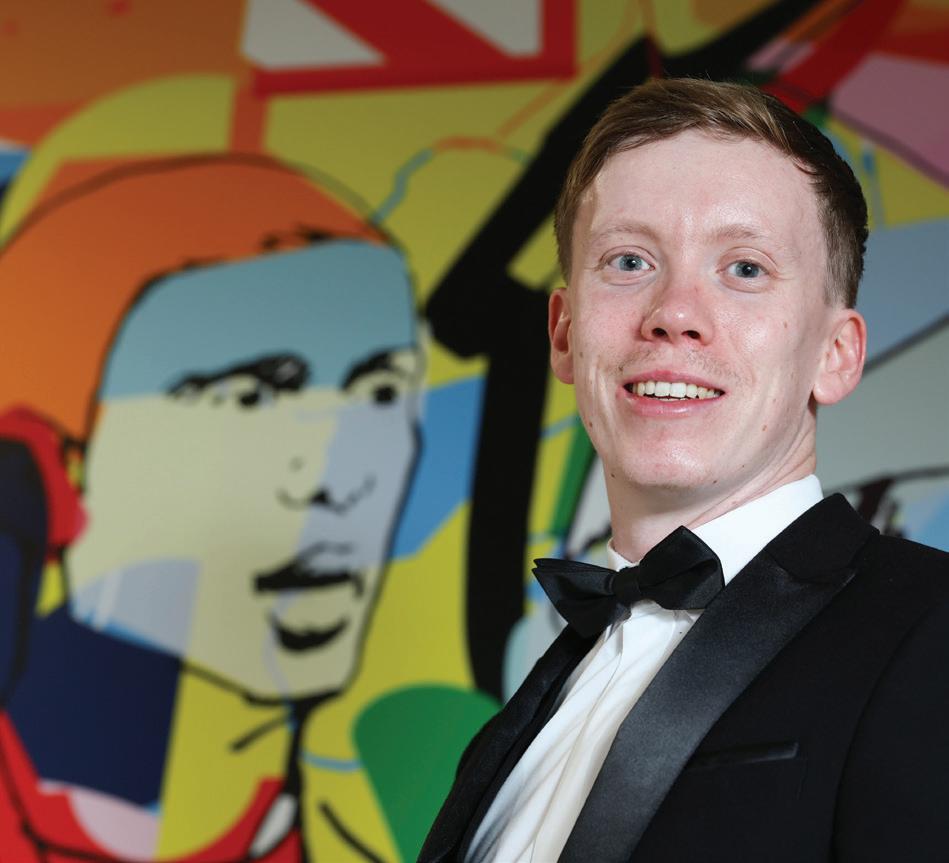
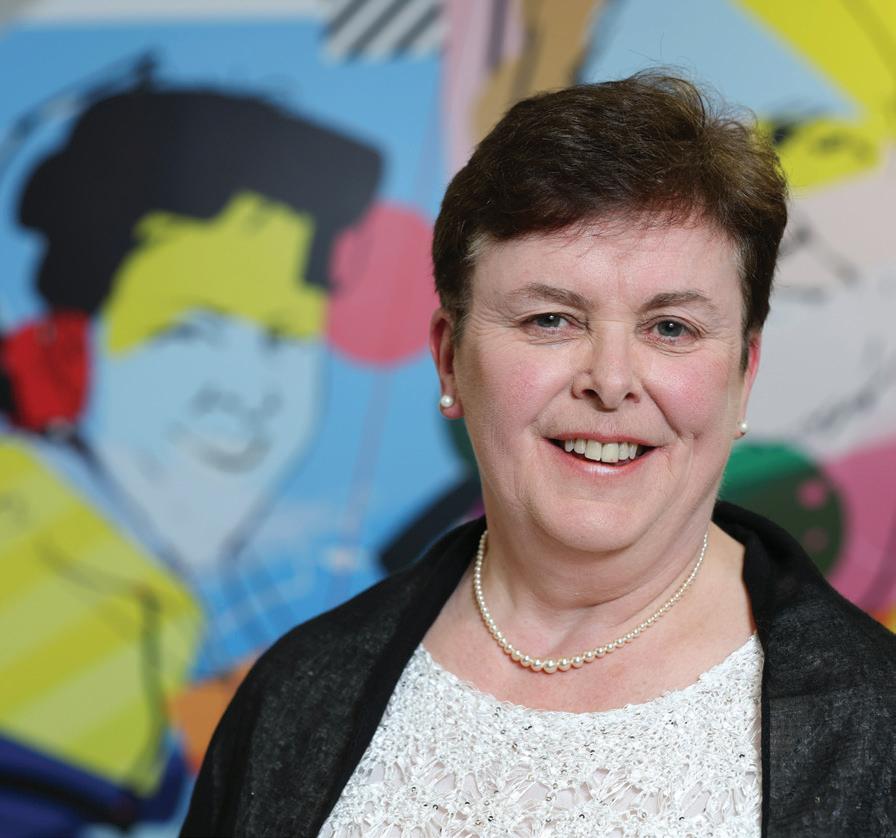
In August 2025, RCSI’s Dublin campus came alive as it welcomed back alumni and guests from all over the world for the 2025 Alumni Gathering. Across three days, attendees enjoyed a programme that included a welcome reception, campus tours and talks, class dinners, a scientific meeting and a gala dinner for all reunion years, not to mention plenty of opportunities to catch up with friends old and new!







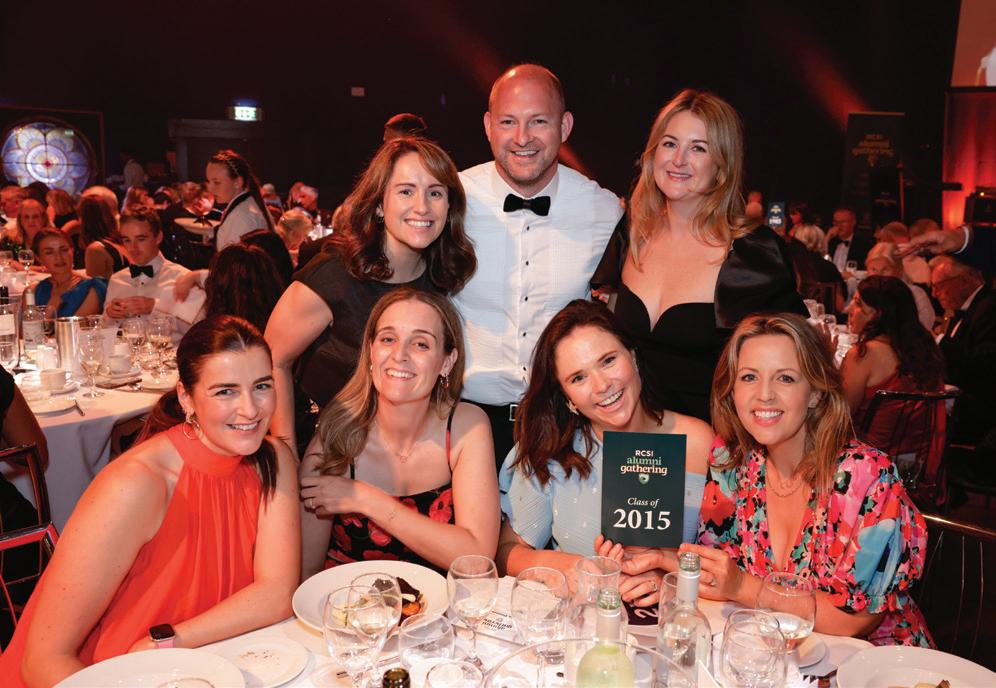


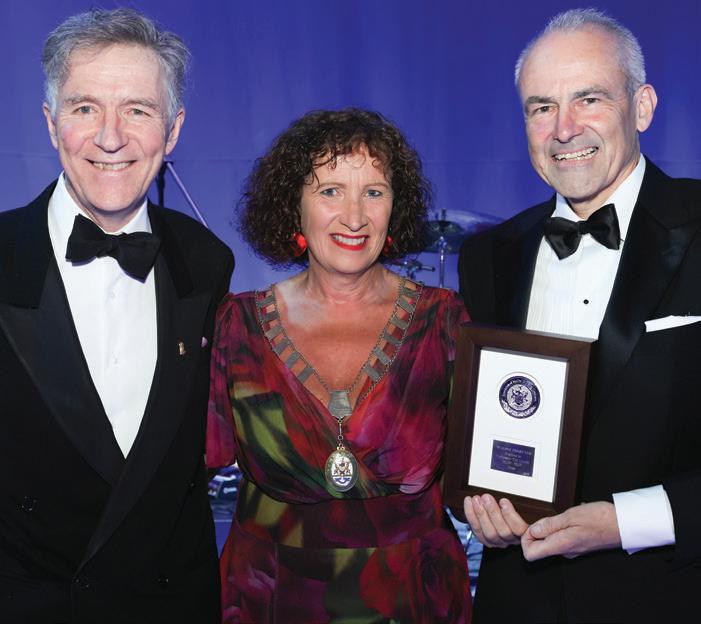


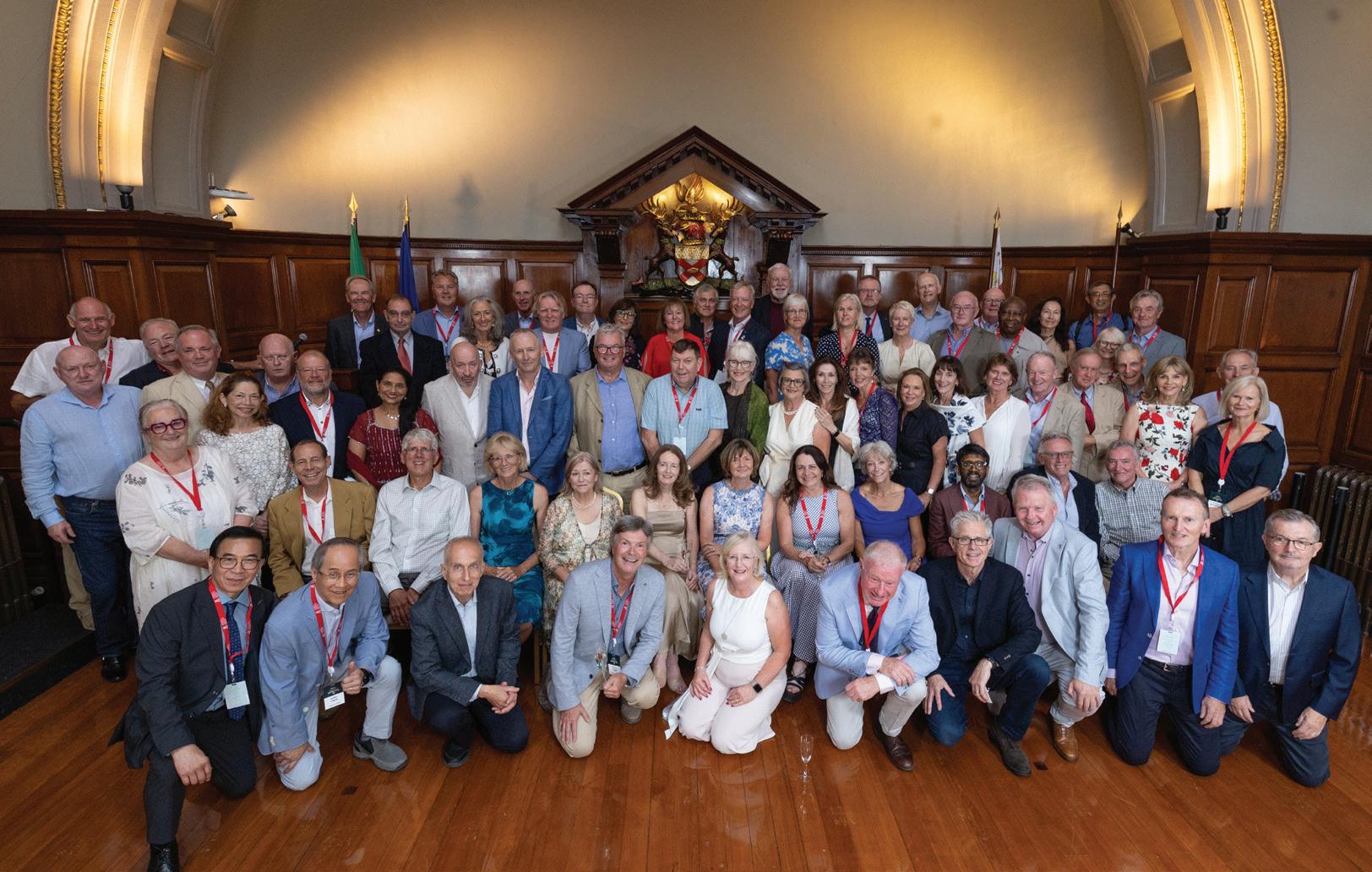
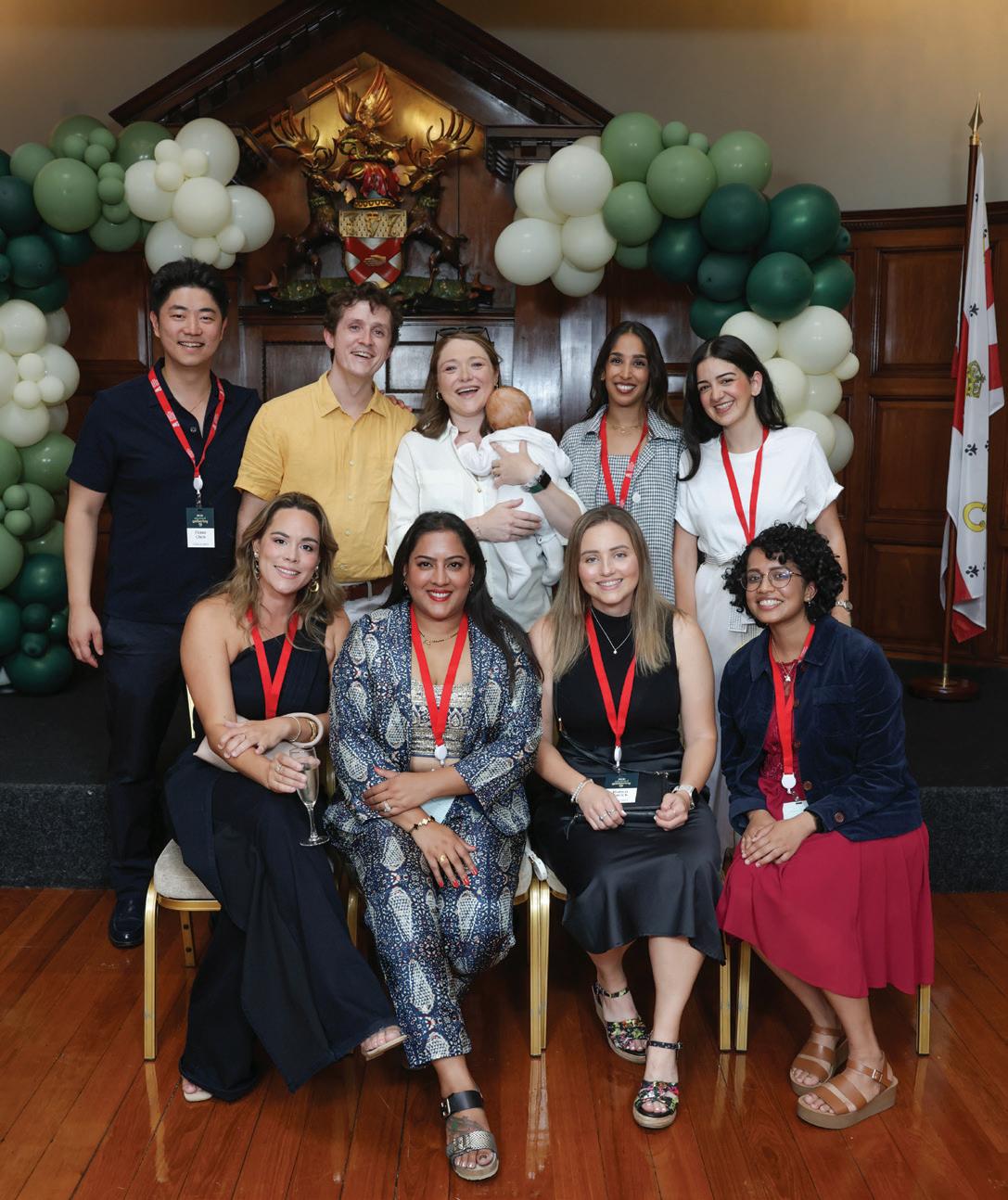

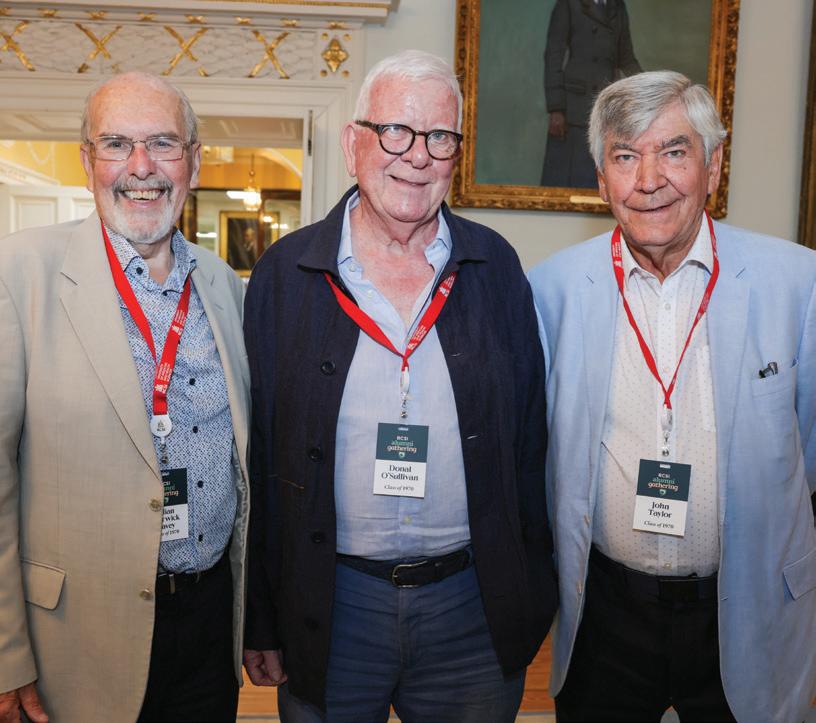
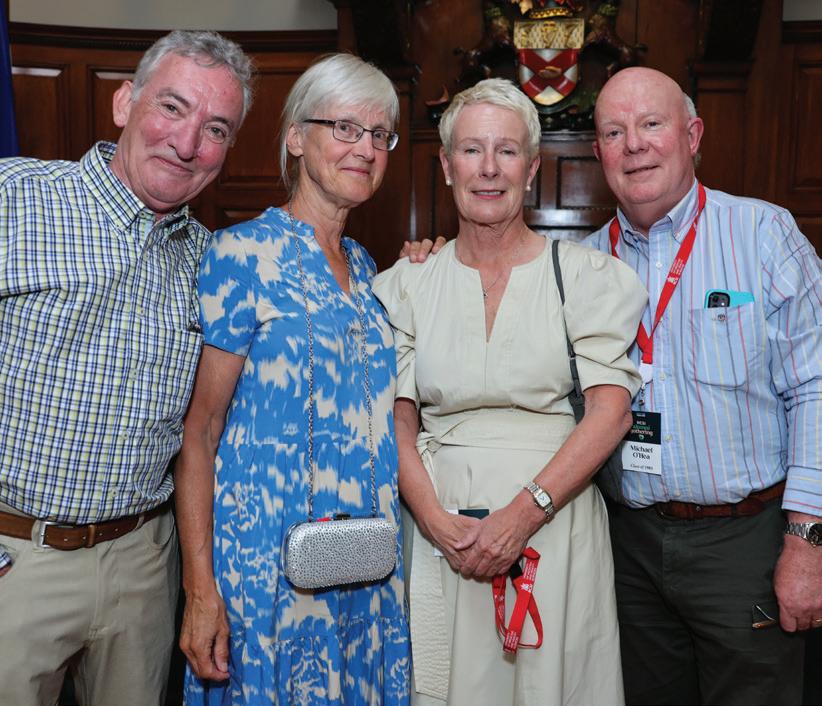
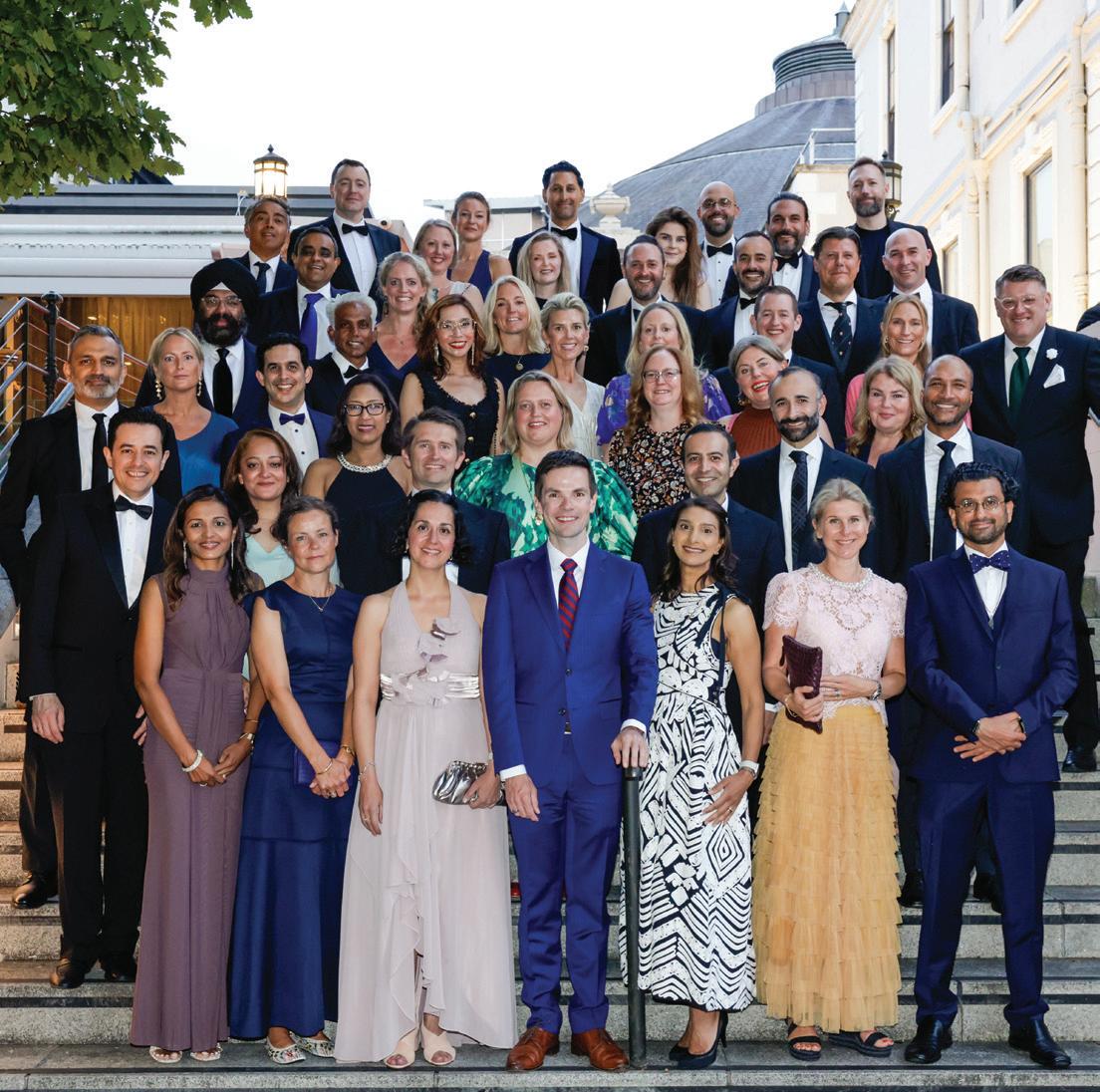
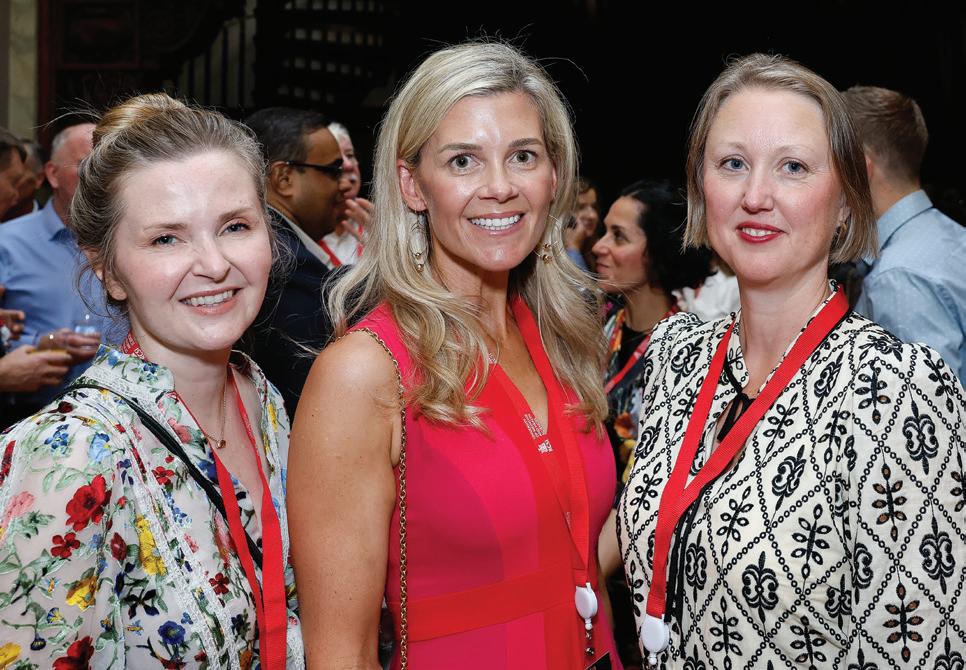

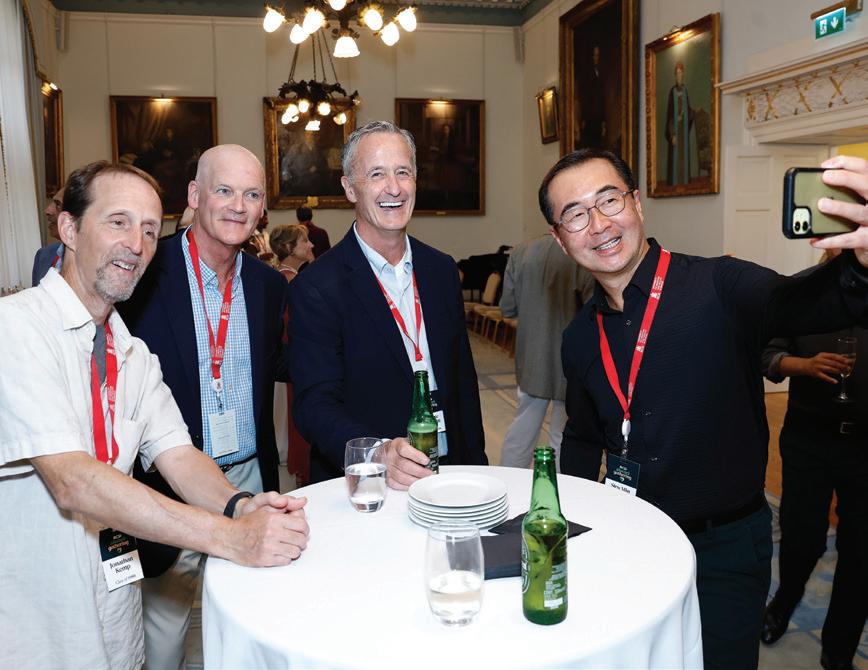
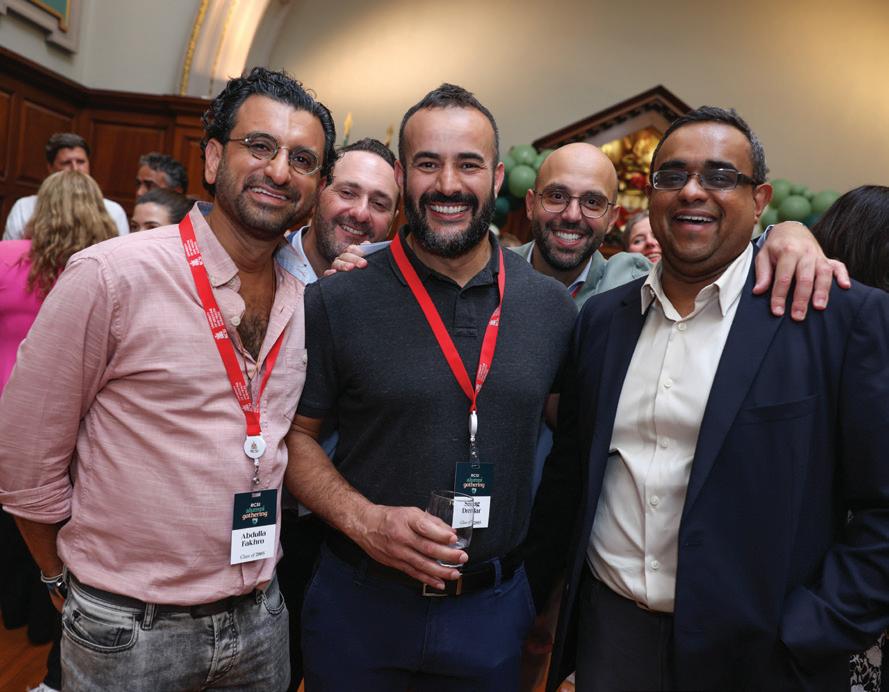
In October 2025, RCSI acknowledged the seven recipients of the 2025 Alumni Awards at a special ceremony in the College Hall, attended by RCSI faculty, staff and representatives from FRS Recruitment, sponsors of the RCSI Alumni Awards. Awardees were presented with a unique print of their portrait by artist Maser, who also created the spectacular mural that celebrates each of the awardees as inspirational role models.
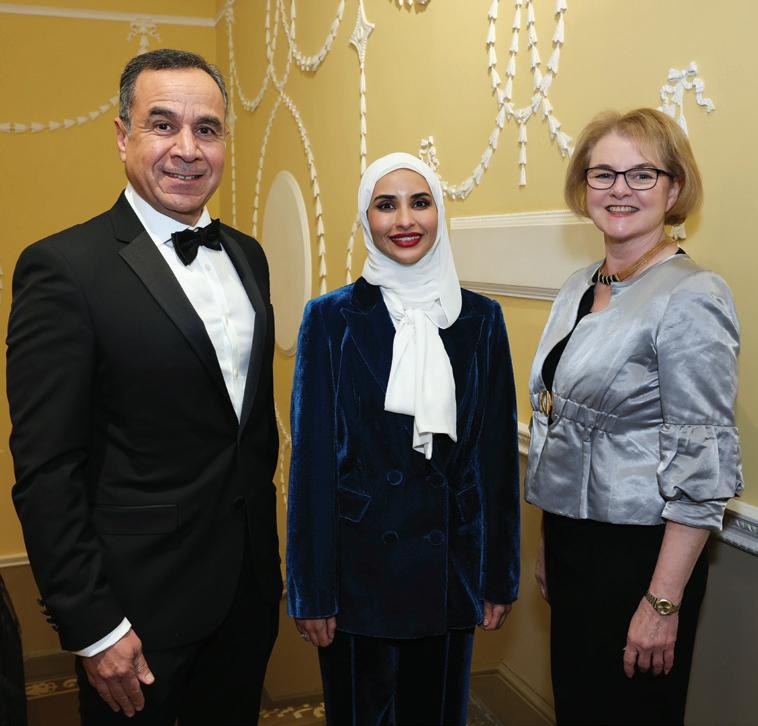
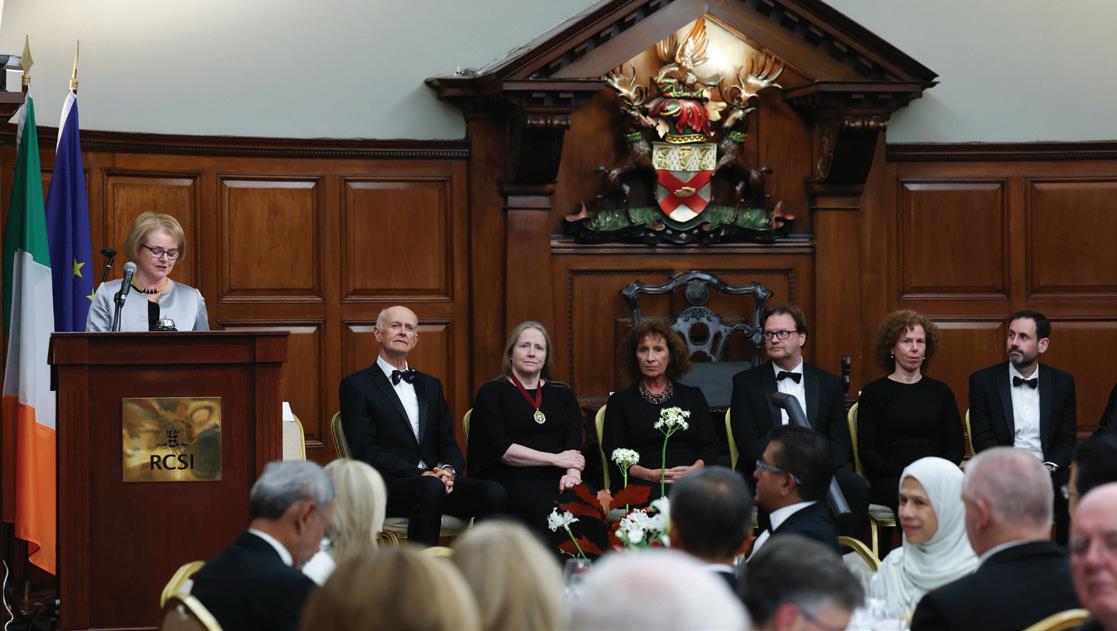
Friends, classmates and colleagues gathered in RCSI’s College Hall and Board Room to enjoy a festive evening in November 2025 at the Annual Dinner of the Association of Medical and Dental Graduates.
Around the world with RCSI alumni – over the past 12 months graduates have come together to enjoy social gatherings in Toronto, Chicago and London.
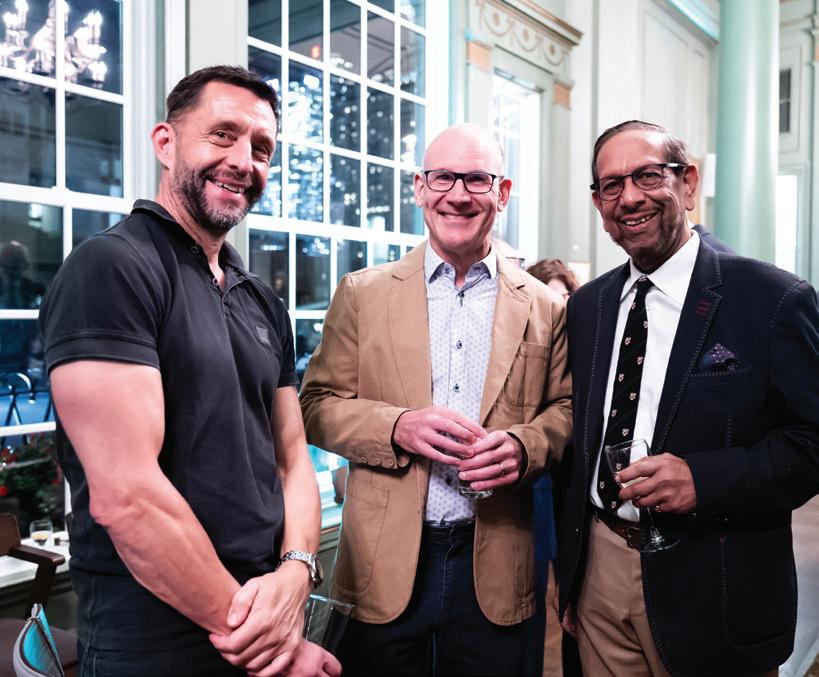
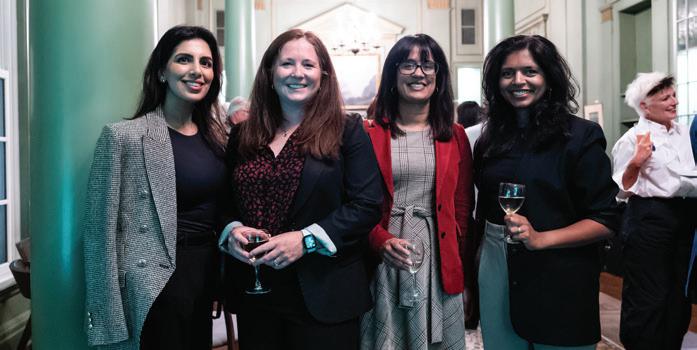
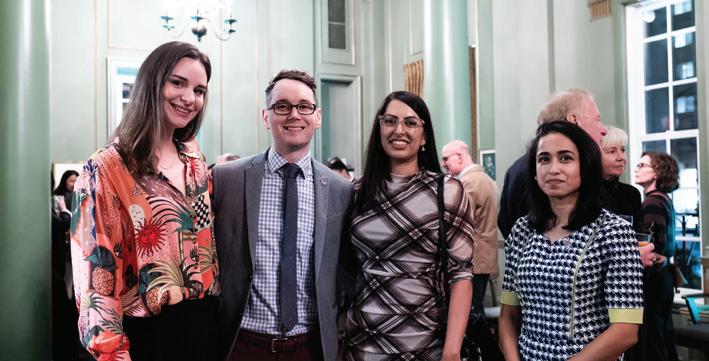
ANNOUNCEMENT OF 2025 INTERN AWARD
In May 2025, Dr Sharefa Alansari (Medicine, Class of 2024) was presented with the 2025 Intern Award by Professor Alfred Nicholson, Vice President for Academic Affairs and Head of School of Medicine, Professor Naji Alamuddin, Associate Professor in Medicine and Deputy Head of School of Medicine, and Dr Nichola McLarnon, Head of Quality and Academic Development at RCSI Medical University of Bahrain.
TORONTO ALUMNI DINNER
In May 2025, RCSI Medical University of Bahrain hosted a memorable Alumni Dinner in Toronto, bringing graduates together for an evening of connection and celebration. The event coincided with a visit of the RCSI Medical University of Bahrain Recruitment team, who were assisted in their outreach efforts to prospective students by Dr Katharine Walters (Medicine, Class of 2020), Resident at Queen’s University and Dr Fasila Johri (Medicine, Class of 2019), Radiation Oncology Resident at University of Toronto.
PARIS ALUMNI RECEPTION
In November 2025, RCSI Medical University of Bahrain was honoured to host its European Alumni Reunion in Paris at the residence of His Excellency Mr Essam Abdulaziz Al-Jassim, Ambassador of the Kingdom of Bahrain to France. The occasion served as an opportunity to celebrate the milestone anniversaries of the Classes of 2010 and 2015 and was attended by His Excellency alongside senior representatives from RCSI Medical University of Bahrain including Mr Stephen Harrison-Mirfield, Managing Director and Mr Fadi Ghosn, Head of Recognition, Careers and Alumni.
KUWAIT ALUMNI RECEPTION
In January 2026, RCSI Medical University of Bahrain convened an Alumni Reception for alumni and senior officials from key national bodies in Kuwait City, home to one of the University’s largest alumni communities, with 153 Kuwaiti alumni who currently work and live in the State of Kuwait.
CLASS OF 2010 RETURN TO CAMPUS
In February 2026, the Class of 2010 returned to the RCSI Medical University of Bahrain campus for a special reunion visit, where they toured the state-of-the-art New Academic Building.
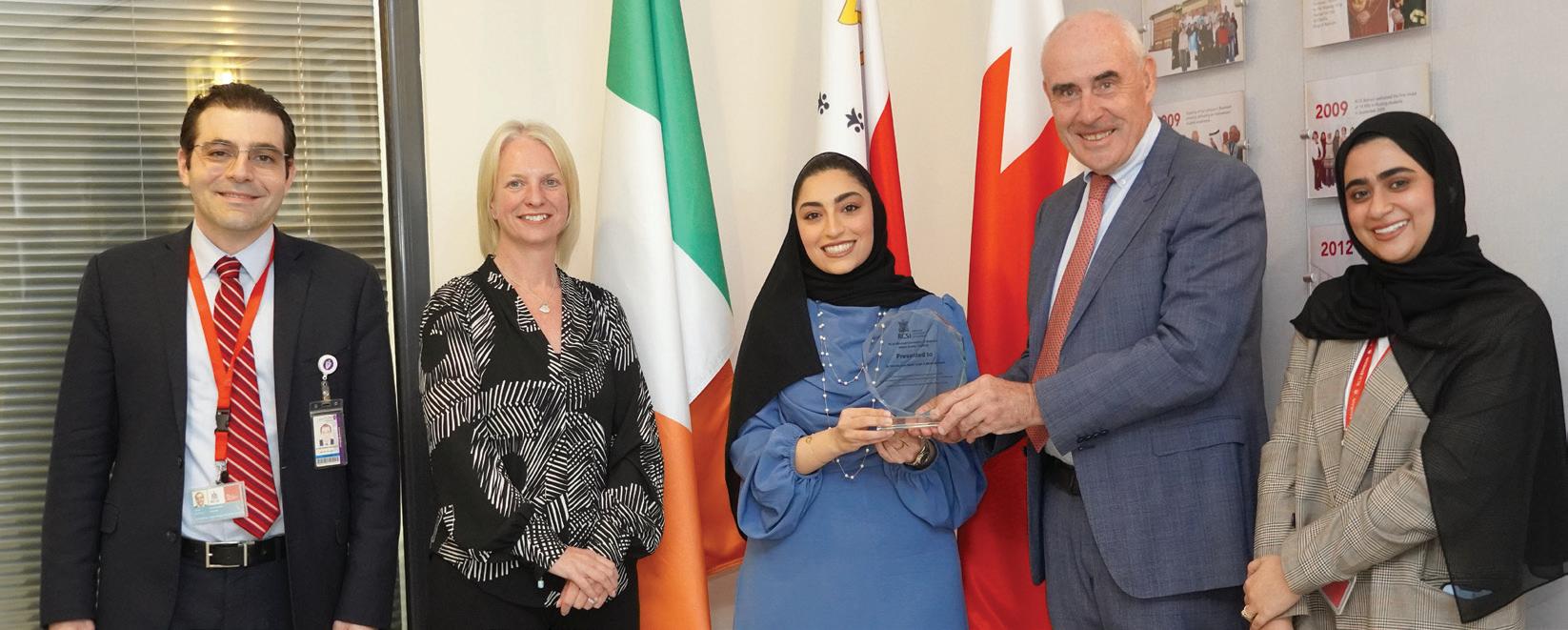

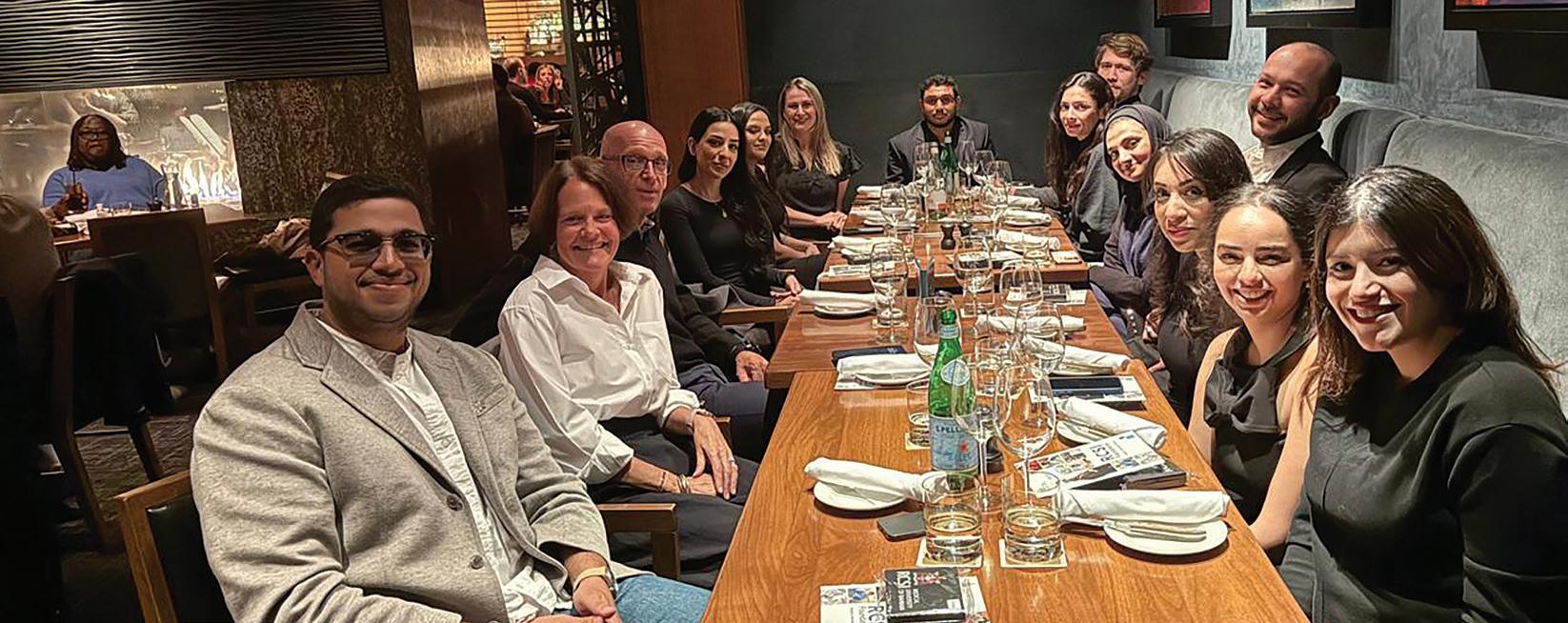

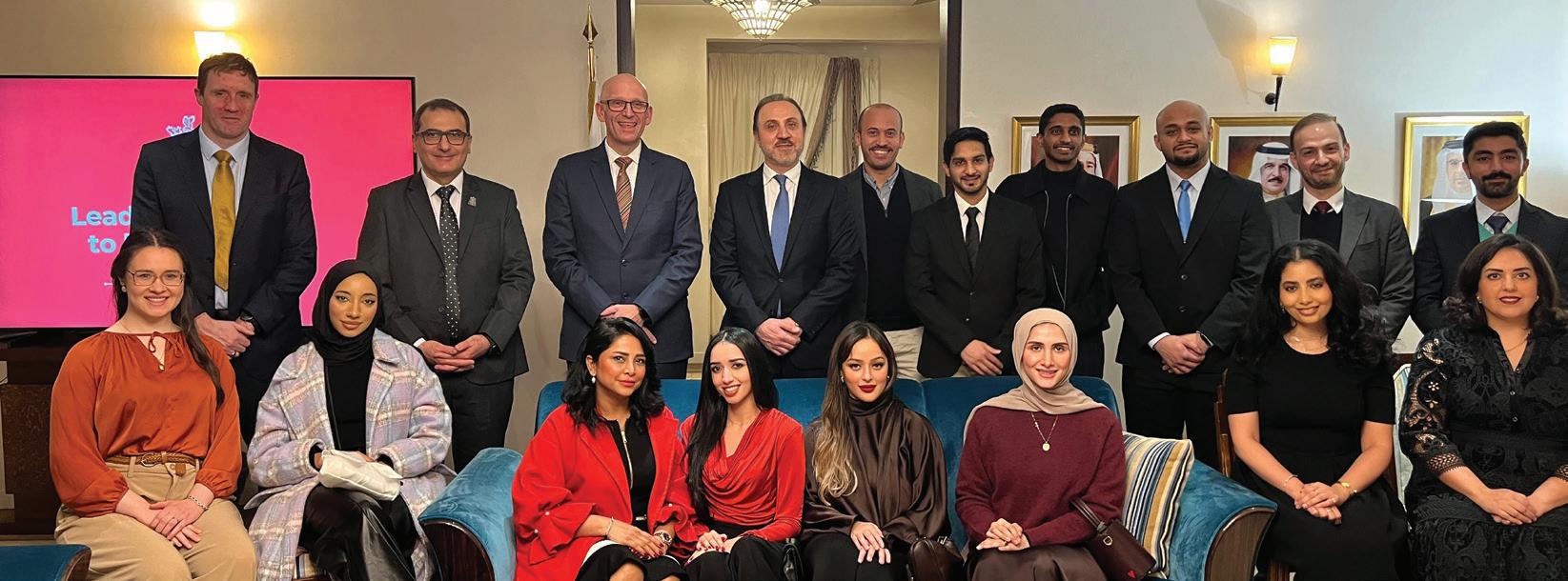

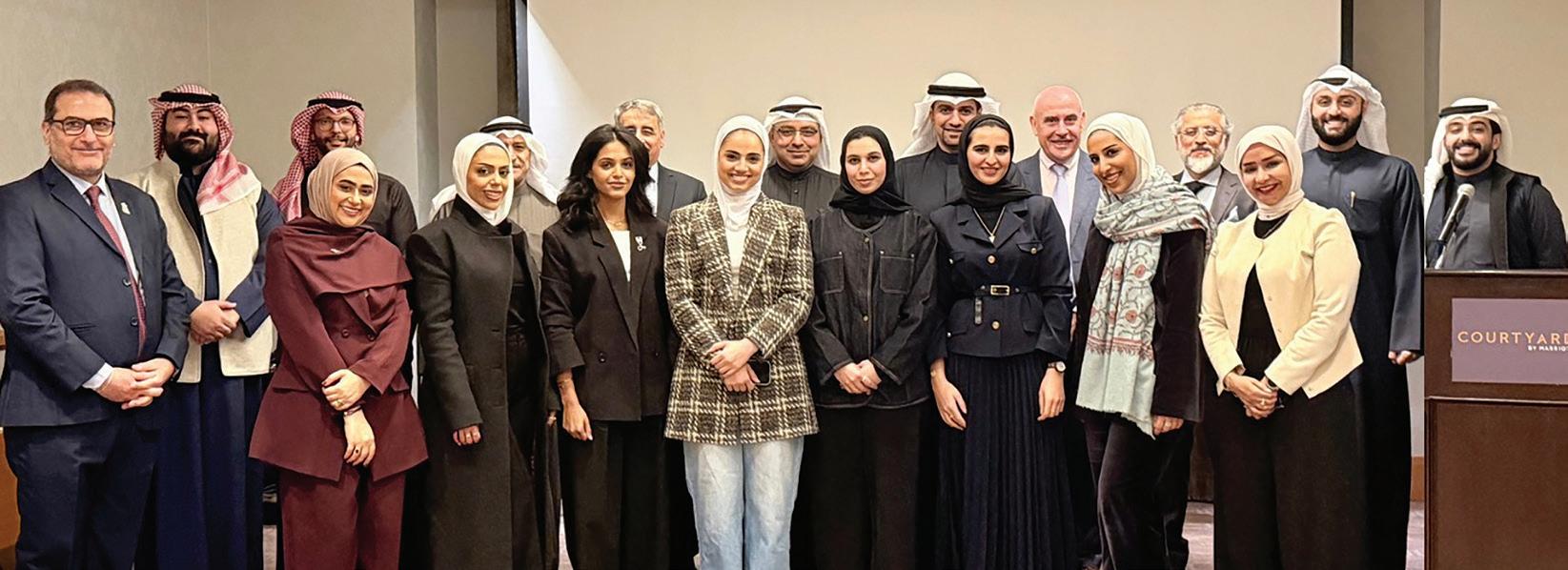

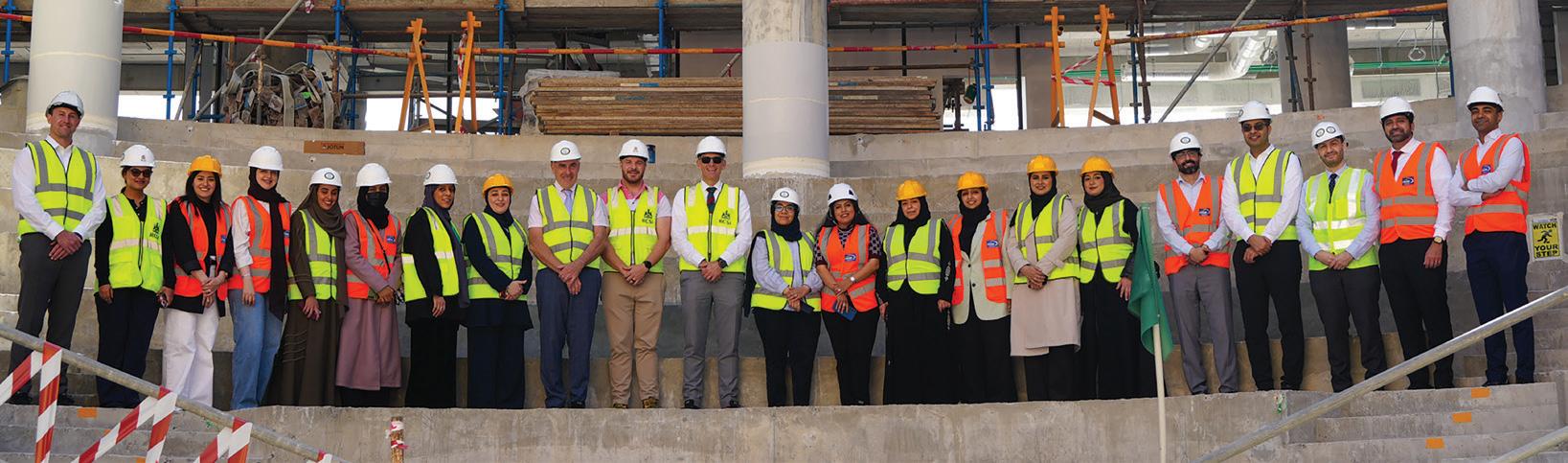















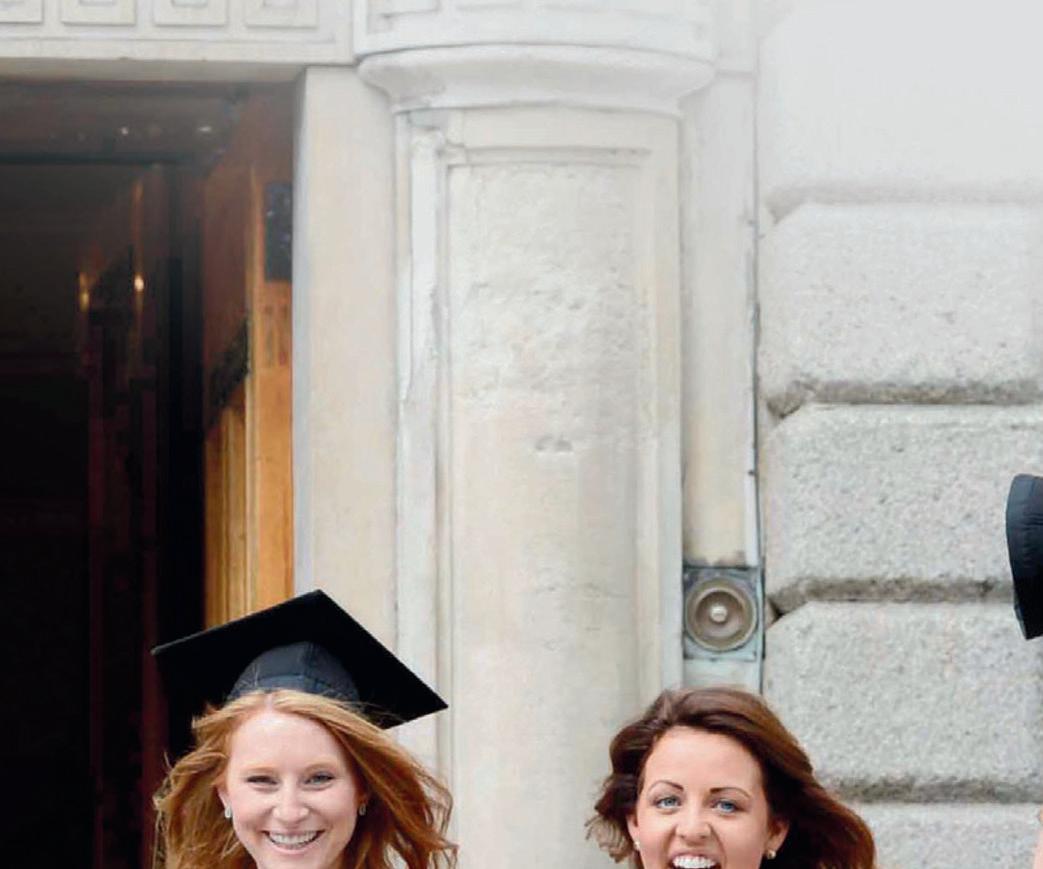
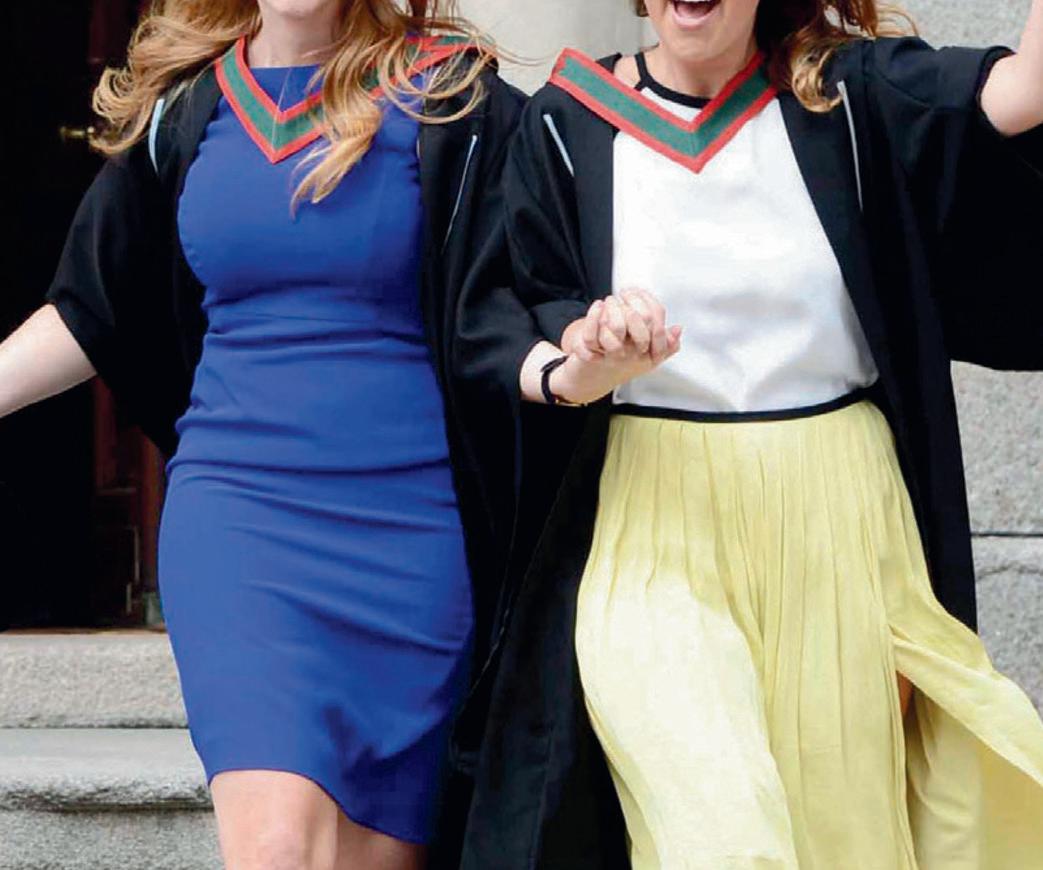

















RCSI alumni donated €545,630 to support student programmes
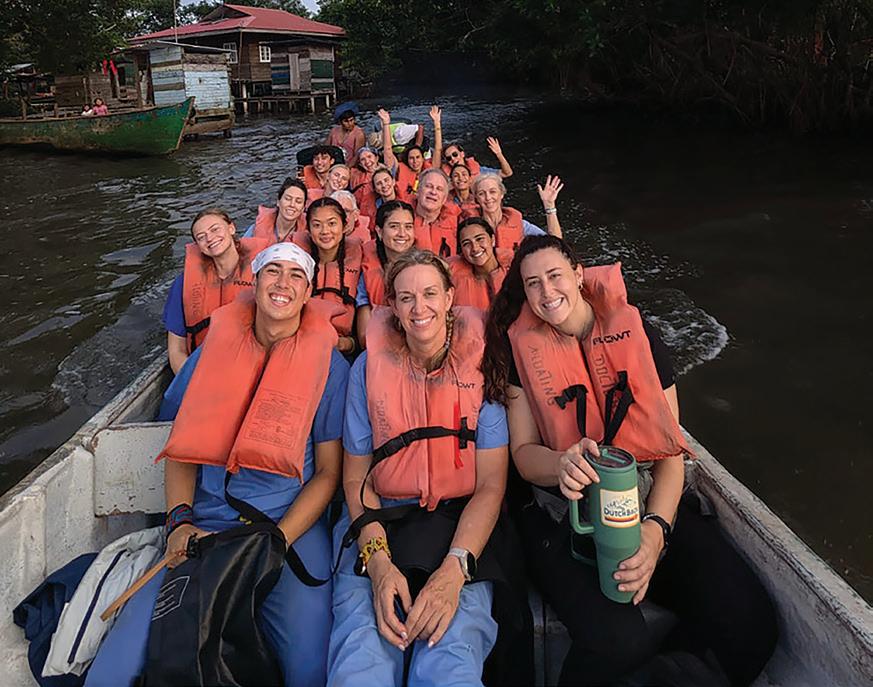
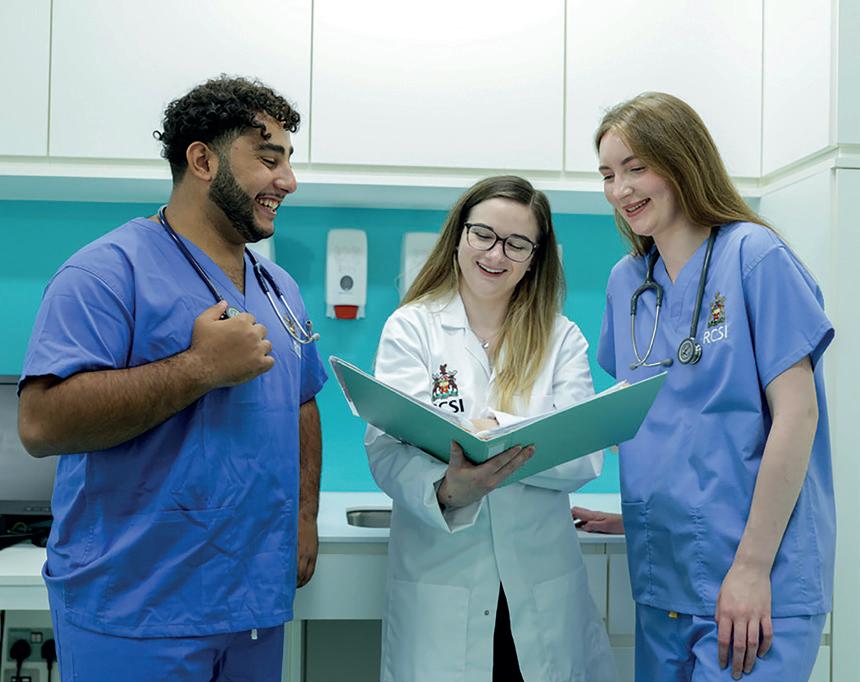
16

NEW SCHOLARSHIPS
made RCSI accessible to talented students, enabling them to study to become healthcare professionals in a range of disciplines.
36 13 04


students received CLINICAL ELECTIVE GRANTS enabling them to undertake placements worldwide in countries such as Canada, Mauritius, Panama, South Africa, USA and Vietnam.

students received grants for an 8-week immersive RESEARCH SUMMER SCHOOL placement, gaining hands-on experience in lab techniques and patient-focused research.

alumni joined the 1784 Society and chose to LEAVE A GIFT TO RCSI IN THEIR WILL, ensuring that future students receive the support they need to thrive.
59 students are receiving scholarship support this year thanks to alumni.
More than 237 alumni volunteered as student mentors, reunion ambassadors, student placement providers and content creators for eNews, giving over 403 hours of their time. Thank you!
If you would like to support RCSI students, you can do so by: