17 minute read
Appendix 1 McAdam Address PNG Scientific Society 1952.4

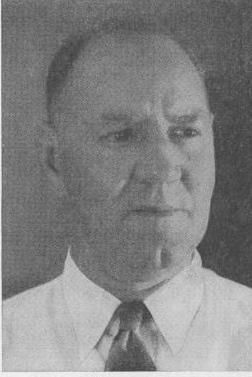
from PNGAF MAG ISSUE # 9B-5B4M3 12 Aug 2022 Eminent TPNG Forester Jim McAdam MM First Director Forests
by rbmccarthy
Appendix 1 Paper by J B McAdam in the PNG Scientific Society’s Annual Report 1952. 29
“Forestry in New Guinea” (The following extracts are taken from the paper)
Advertisement
The forests have been making an important contribution to the economy of the native people. From the forests, they have obtained food and the fuel to cook it, clothing and shelter, weapons, and transport. A very wide range of fruits and nuts and leaves feature in the everyday diet of the native people and over large areas – sago – the stored starch in the trunk of a large palm, known locally as Sac sac forms the staple diet. The forests have provided harbourage for birds and animals, which have contributed both to the protein content of the diet of the hunter and to his exterior decoration. You have seen the Marys staggering home in the evening under vast bundles of firewood, even in Port Moresby. Further afield, you will see houses completely built form the produce of the nearby forests; small round timbers form the framework, larger members the posts and corners, the whole lashed with vines, split rattan, or the stripped bark of saplings; with the roof of sago or nipa palm leaves and the walls of a similar material or plaited bamboo, and very likely with a floor of split palm. You may even find that the salt used with food is produced by burning the bark of certain trees. It is likely that a few pieces of black palm will be hardening and drying in the smoke of the fireplace, the basis of a new bow, the tip of a new arrow, or perhaps the shaft of a spear. Among the coastal peoples, you will see well-fashioned canoes, double or without-riggers completely made from wood, bound together with fibres from the forest and caulked with fruit of a jungle tree. On the rivers, a dugout canoe from a single log may be the means of transport. On the seashore or in the forest you may find nets used for fishing or pig catching. These will be made from the best fibres of trees. If you go fishing with a native companion, you will probably find that he will use the fruit of a tree or a piece of vine in a sheltered pool to bring the fish stupefied to the surface or haul up from just below the surface a bamboo fish trap of excellent workmanship which may have been anchored to a large boulder by many chains of rattan rope. The pas pas or arm ornaments of the natives may be obtained from the fibre bundles of a climbing fern. The sporran type of clothing worn by the Central Highlands natives is woven by the womenfolk first rubbing the best fibres of a highland tree into twine. The rain cape which may drape that silent man of the forest, the Kuku Kuku, may be taken from the inside bark of a fig tree or one of its relatives. A similar species produces the tapa cloths which the coastal natives’ colour to adorn themselves or their houses. The fruits of the Betel nut palm or one of its bush relatives is the stimulant which eases many a native through his troubles. It may be made more palatable by the leaf or stem of the piper vine. It is not unusual to find a jaded carrier beating his wilting legs with a branch of a stinging tree, or a similar cure applied to a headache.
29 PNG Scientific Society Presidential Address 1952 “Forestry in New Guinea” J B McAdam.
Thus, at all stages, the forest has played an important part in the life of most of the New Guinea natives. Most of his demands were for the smaller products of the forests, and apart from a few trees for a “big house,” or a log for a canoe, his demands did not make much impact on the mature forests. Clearing land for gardening made the biggest impact, and even here, the secondary bush quickly recovered the ground which was laboriously cleared and in time returned it to the jungle. With the arrival of the white man, it was found there was a scattering of valuable trees which were attractive to buyers elsewhere, and some attempt was made to float out easily accessible logs of species such as cedar. However, owing to one difficulty or another, the results of these attempts were inconsiderable. About 1908, the authorities in Papua invited a forest inspector from Queensland, Mr Burnett, to report on the timber position. He reported some difficulty in penetrating into the country, but he produced a report of an optimistic nature and a list of about 120 species, mostly indicated by their native names. Not much seems to have been done from then till Lane-Poole visited the Territory in 1923. He penetrated deeply into Papua at many points and when he completed his Papuan inspections, he was invited by the Administrator of New Guinea to conduct a similar survey of that Territory. His report was a valuable document as he made extensive and exceptionally good botanical and wood collections, which reached several hundred in number. These collections were referred to Mr C T White, the Queensland Government Botanist who, from that time until his death recently, maintained a close interest in the forest botany of the Territories. Mr Lane-Poole’s report was not so optimistic about the timber prospects for at that time Australia was well supplied with timbers of the kind available in New Guinea and so did not offer a good market prospect. He also found access within the Territory a difficult and costly matter. He did, however, recommend in 1925 the establishment of a small Forest service with a view to further examining the forests, encouraging the development of a local industry, and making a commencement with plantation work. I quote from his report on Papua: “At present the timber requirements of Papua are negligible; the native requires no sawn wood, using as he does round poles and split timber for his houses. The white population it is true, uses a little timber, but one small mill could supply all the present needs of public and private buildings and works. For some time to come, therefore, the Forest Policy of Papua will feel no great and insistent call from a people wanting cheap wood.” He considered that the development of minor products, such as barks, gums etc- might yield better export prospects and recommended that more work be carried out on that aspect. However, he was impressed by the fragmentary hoop pine stands of the mountains and recommended that they be used for reforestation. When it is remembered that plantations of this species were in the incredibly early trial stages in Queensland at that time, it makes remarkably interesting reading in the light of recent developments. There were various attempts to establish sawmilling operations in Papua. The most tenacious of these was the Port Romilly venture and that, with Kwato Mission sawmill and the Labe Labe sawmill, which was established mainly to produce cases for shipping desiccated coconut form Milne Bay, formed the whole of the milling operations when the Japanese entered the War in 1942. Those three mills, later controlled by ANGAU, but manned with their peacetime personnel, produced a very credible supply of timber during the early days of the struggle. In New Guinea, there was a sudden interest in log export in 1937, which caused the Administration to revise its legislation and consider the establishment of a forest service. In that territory, there was a mill at Waterfall Bay and mission mills also at Finschhafen,
Alexishafen and Marienberg. Mills had also started at Bulolo and Wau, having been flown in from the coast. Sawn and milled timber, however, was still being imported from Australia and the Philippines to Rabaul when McAdam arrived in New Guinea in 1938 to initiate the new Forest Service. From its inception shortly afterwards until 1942, the one mill established in Rabaul led a precarious existence. However, under the stimulus of a depressed copra market and an active interest by American buyer sin the New Guinea walnut, many planters in New Britain and New Ireland commenced harvesting logs. In 1940/41, exports in logs and flitches of this species reached about seven and a half million super feet. THE WAR PERIOD The outbreak of the Japanese War in January 1942 ended all civilian activities in the Territories of Papua and New Guinea. 1943 Sawmilling remained quiescent for about a year but as the Australian forces commenced to build up and were joined by the Allied Forces, a great demand for sawn timber developed. Owing to the shortages of supply and difficulties with shipping, it was decided to produce as much as possible of these requirements in the Islands themselves. In 1943, ANGAU reorganised the three pre-war mills and established a fourth at Waigani near Milne Bay. Many engineering units established small operations. The Americans brought in sawmilling units. The Australian Government recalled the three Forestry Companies from England and threw them into the fight for timber in New Guinea early in 1944. The New Zealand Air force also had sawmilling units attached. At the end of the war, as far as can be ascertained, some 80 odd million super feet of sawn timber had been produced by these units and in addition, the forests had yielded thousands of pieces of round timbers for escarpments, corduroy, bridge timbers, telephone poles, fire wood and the many other needs of a vast army. It was roughly estimated that this effort had saved two million pounds worth of Australian timber and over three quarters of a million pounds worth of shipping space. Figures, of course, would be very much higher at present day prices. Early in 1944, the Australian Army decided to form under the Engineers, a unit to record the many sawmilling operations and make surveys of the forest resources, using all the advantages of operational mapping, air photos and transport facilities then available. The CRE - NG Forests; was thus formed with two Forest Survey Companies. I was placed in command of the CRE-NG Forests and given authority to recruit as many personnel experienced in forestry as I could lay my hands on. Two officers of the pre-war service Mr Cavanagh and Mr Vickery were recruited. The Air Force, the Navy, Malaria Units, Engineers, the Infantry, and the Artillery all contributed, with result that we had a concentration of foresters representing every state in Australia. The unit had come together about mid-1944 and for the next three months at Lae was put through an intensive training in recognition of New Guinea species and handling New Guinea conditions. Senior officers of the unit closely followed the establishment of each new base to report on immediate timber supplies for operational purposes. During this time, a plan was draw up for the survey of the timber resources of a s much of the Territories as possible. This survey was launched about the end of 1944 and continued till the war ended, and the units were disbanded about October 1945. One of the functions of the CRE-NG Forests written in instructions at the formation was “the maintenance of forestry records in a manner suitable for handing over to a Civilian Forest service at the appropriate time.” Consequently, when the unit was disbanded, Mr Vickery, who is now the Forest Ranger at
Bulolo, was left in charge of the records, which he handed over to Mr Cavanaugh, when he returned to the Islands in his civilian capacity.
The next part of the paper describes the vegetation types of TPNG – these will not be elaborated on for this project. Pages 5-14 of the paper.
• Savannah woodland • Grassland • Swamps o Mangrove ▪ Before the War bark was exported for its tannin- for leather production but produced a red leather and for preserving fishing nets
o Nipa ▪ Used for thatching o Sac sac ▪ Production of sago
o Grass and pit pit o Swampy Rainforests ▪ E.g., terminalia forests of Bougainville for timber production • Lowland Forest o Littoral ▪ Beach calophyllum for ship building o Rain forest ▪ Potentially available accessible millable timber for PNG. Special mention of three sub types • Kamarere forests New Britain • Erima forests • Dipterocarp forest
• Mid mountain forest o Includes the Araucaria forests of Bulolo Wau and the oak forests for timber production • Mossy forest • Alpine • Secondary bush
ARMY FOREST RESORCE SURVEY
We found with some training it was not difficult to pick out from air photos the vegetative types described above. While the unit was in training at Lae, research was carried out into the uses that could be made of air photos in assessing tropical forests. An area was marked out in the Oomsis forests near Lae and the RAAF made special photos of the area. Every tree on an area of 30 acres was mapped and the air photos correlated tree for tree. Compared with the data which could be gathered from air photos of temperate forests, the amount of quantitative data we could obtain from photos of the overly complex mixed forests of the tropics was disappointing. Nevertheless, the photos proved a boon for qualitative interpretation and saved a considerable amount of work in the field by eliminating areas which need not be further investigated and allowing us to concentrate detailed work on those areas with the greatest productive potential. If they had nothing else the air photos had enabled the production of the 1 mile to 1-inch Army series of maps which now covered the northern coastline of New Guinea, Manus, New Britain, and Bougainville. We used these
sheets as our basic maps and from the air photos transferred the vegetative data to these sheets, which were then forwarded to the field units as survey instructions for checking in the field. The sheets were arranged in a priority system based on operational requirements. By the time the unit was disbanded, the air phot interpretation for all the published 1 mile to 1inch series (some 260 odd in number) had been completed but only 59 of the field reports had been finalised. The units, during the resource survey, gave valuable intelligence data on topography, tracks, anchorages etc. On the areas of easier topography and better forest cover, they laid down actual sample plots and obtained an estimate of the actual timber over a measured acreage. They collected botanical and wood samples of new species. By the end of the war, the units had collected over 1,500 sheets. The botanists had worked through 620 of them and had listed 295 separate species. These collections formed the basis of the herbarium at Lae. Which is now being expanded by the forest botanist and ultimately, we hope will lead to the production of a flora for the Territory. We were greatly assisted in our botanical work by the late Mr C T White, the Queensland Government Botanist, who came to the Territory and ran a botanical school for the units during the training period. Copies of the wood samples were sent to the Division of Forest Products of the CSIRO in Melbourne, where Dr. Dadswell accompanied Mr White and lectured to the school on Wood Technology. The early work of the Division of Forest Products quickly resulted in the development of a card sorting key for the identification of the more common species and the Division later developed similar keys for the Forces as they moved onto Borneo and Malaya. POST WAR POSITION Since the War, and owing partly to devastation by war, and partly due to the expanded services needed to cope with development of the community, there has been a greatly increased demand for sawn timber in the Territory. This has led to the gradual building up of the local sawmilling industry. For this year, the sawn output will reach about 10 million super feet of timber requiring some 20 million super feet of logs. At this figure and under present circumstances, we appear to have overtaken the demand. Since the War, there has been an embargo on the export of sawn timber, but this has been eased. For some time, we have been sending out six and a half inch square bulks of hoop and klinkii pine to provide battery separator veneer which is in critical supply in Australia. Last year, our exports of this highly selected material exceeded 400,000 super feet. Now general lines can be exported provided the millers keep a sufficient stock in their yards to ensure local supplies. Since the War, logs have been exported annually but these exports remain constant between one and one and a half million super feet. Recently a tender has been accepted for the purchase of some 70 million super feet of timber on the Trans Busu at about 7-8 million super feet per year. It is expected that this will boost the log export considerably in about twelve months. Within the last few months, exports of private logs from agricultural leases in the Lae area has commenced because of active clearing for the establishment of cocoa crops. It seems, therefore, that this year’s figures will show a slight improvement. As ownership is clarified, it is the aim of the Administration to make further areas available and to steadily build up this industry. Very shortly, a modern plywood manufacturing industry will be established for processing the pines of the Bulolo Valley. It is expected that within three years the output will reach 30 million square feet of plywood on a 3/16-inch basis. Already a start has been made on reforestation with the same species. (Hoop and Klinkii). Last year, 45 acres were planted. This year, 100 acres are being planted and, in the nursery, there is stock for 300 acres of
plantation next year. It is expected that the future plantings will eb about 600 to 700 acres per year. At the end of the rotation (50 years), it is calculated that the annual cut will exceed 60 million super feet of logs as against the rationed cut of 10 million super feet from the virgin stands. There will be a great volume of early thinnings from the plantations in about ten years and this may well lead to the establishment of the first pulp factory in the Territory. At Kerevat, the Department has commenced silvicultural research work on the coastal stands. Kamarere, teak and balsa are being established on about 100 acres this year. The original kamarere plot of about 10 acres established four years ago (1948) is now over 60 feet high and ready for its first thinning. Some of these thinnings will be going to the Division of Forest Products for testing for pulping and other purposes. The teak, which is established from seed obtained from areas planted by the Germans at Namatanai forty years ago is showing promising growth and may provide the answer to a durable timber for local construction. Now, samples of our mangroves, the Araucarias and the mixed coastal species are being collected and forwarded to the Division of Forest Products for pulping tests. Our problem in New Guinea is to find a market for many of our lower grade species; a second problem which may rise if large areas are to be developed agriculturally would be to find a market for the vast quantities of timber which would otherwise be destroyed. Pulping may be the answer. Modern technology may open great possibilities to the New Guinea forests. In time, no doubt, New Guinea, with her abundant water, power and her warm climate so adapted to the growing of trees, will follow the path opened by the seven million Swedes. However, many years must elapse before we can commence on such a path. A people must be trained in the first principles of industrial processes, vast capital must be expended in developing the power resources and opening up access to the natural resources; the basic data must be consolidated; a large percentage of the territory must be set aside for permanent forestry purposes, and the people taught to appreciate the benefits that may result from the proper management of those assets, so that they will protect and guard them. We are only just taking the first faltering footsteps along the road to acknowledge of the forests, and the forest problems and possibilities of the Territories. It needs the interest and support of people such as yourselves if we are to make much progress along the road.
