Why Social Work Is a Powerful Foundation for School Leadership with Ray Garcia-Morales
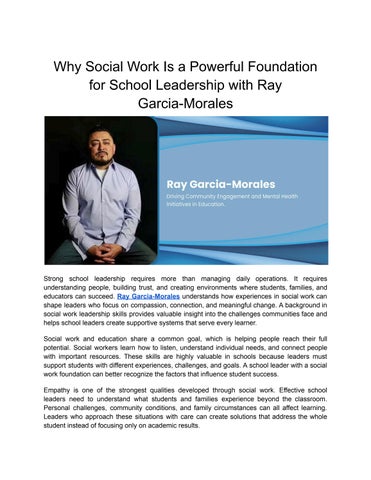
Strong school leadership requires more than managing daily operations. It requires understanding people, building trust, and creating environments where students, families, and educators can succeed. Ray Garcia-Morales understands how experiences in social work can shape leaders who focus on compassion, connection, and meaningful change. A background in social work leadership skills provides valuable insight into the challenges communities face and helps school leaders create supportive systems that serve every learner. Social work and education share a common goal, which is helping people reach their full potential. Social workers learn how to listen, understand individual needs, and connect people with important resources. These skills are highly valuable in schools because leaders must support students with different experiences, challenges, and goals. A school leader with a social work foundation can better recognize the factors that influence student success. Empathy is one of the strongest qualities developed through social work. Effective school leaders need to understand what students and families experience beyond the classroom. Personal challenges, community conditions, and family circumstances can all affect learning. Leaders who approach these situations with care can create solutions that address the whole student instead of focusing only on academic results.
Social work also teaches the importance of collaboration. School leaders must work with teachers, families, community organizations, and other professionals to support student growth. By building strong partnerships, leaders can create networks of support that benefit the entire school community. Collaboration allows schools to respond more effectively to complex needs and create a stronger sense of belonging. Another important connection between social work and school leadership is advocacy. Social workers often help individuals access opportunities and overcome barriers. School leaders with this experience can advocate for fair policies, equal resources, and supportive programs that help all students succeed. They understand that every student deserves access to a quality education and a safe learning environment. Communication is also a key skill that connects social work with effective leadership. Leaders must communicate clearly with different groups while respecting diverse viewpoints. Social work training encourages active listening and thoughtful conversations, which can help resolve conflicts and strengthen relationships. These skills allow school leaders to create trust and encourage teamwork. Schools today face many challenges, including changing student needs, social pressures, and community concerns. Leaders who understand human behavior and social systems are better prepared to respond with awareness and flexibility. A social work background helps leaders look beyond immediate problems and consider long-term solutions that support students and communities. The connection between social work and education shows that leadership is not only about making decisions. It is about understanding people and creating opportunities for growth. Leaders who combine educational knowledge with social awareness can build schools where students feel respected, supported, and encouraged to succeed. The future of student centered school leadership depends on leaders who value empathy, advocacy, and community connection. Social work provides a strong foundation for guiding schools because it teaches the importance of care, cooperation, and human relationships. When leaders use these principles, they can create positive school environments where every student has the chance to thrive.