
Common Mistakes Beginners Make in Aari Work
Introduction
Aari work is a beautiful and traditional embroidery technique widely loved for its elegant patterns, intricate beadwork, and detailed craftsmanship. Many beginners start learning Aari embroidery with excitement, but small mistakes during the learning stage can affect the final design and overall quality of work. Understanding these common mistakes can help beginners improve their embroidery skills faster and create neat, professional-looking designs. Whether you are practicing Aari work as a hobby or planning to start a small embroidery business, learning the correct techniques is very important.
Most Common Mistakes Beginners Do Choosing the Wrong Fabric
One of the most common mistakes beginners make in Aari work is selecting unsuitable fabric. Thin or overly stretchy materials can make embroidery difficult and may damage the design during stitching. Beginners should start with medium-thickness fabrics like cotton, silk cotton, or semi-silk materials that provide better grip and support for embroidery work.
Using good-quality fabric helps maintain stitch consistency and improves the final appearance of the design.
Using Poor Quality Aari Materials
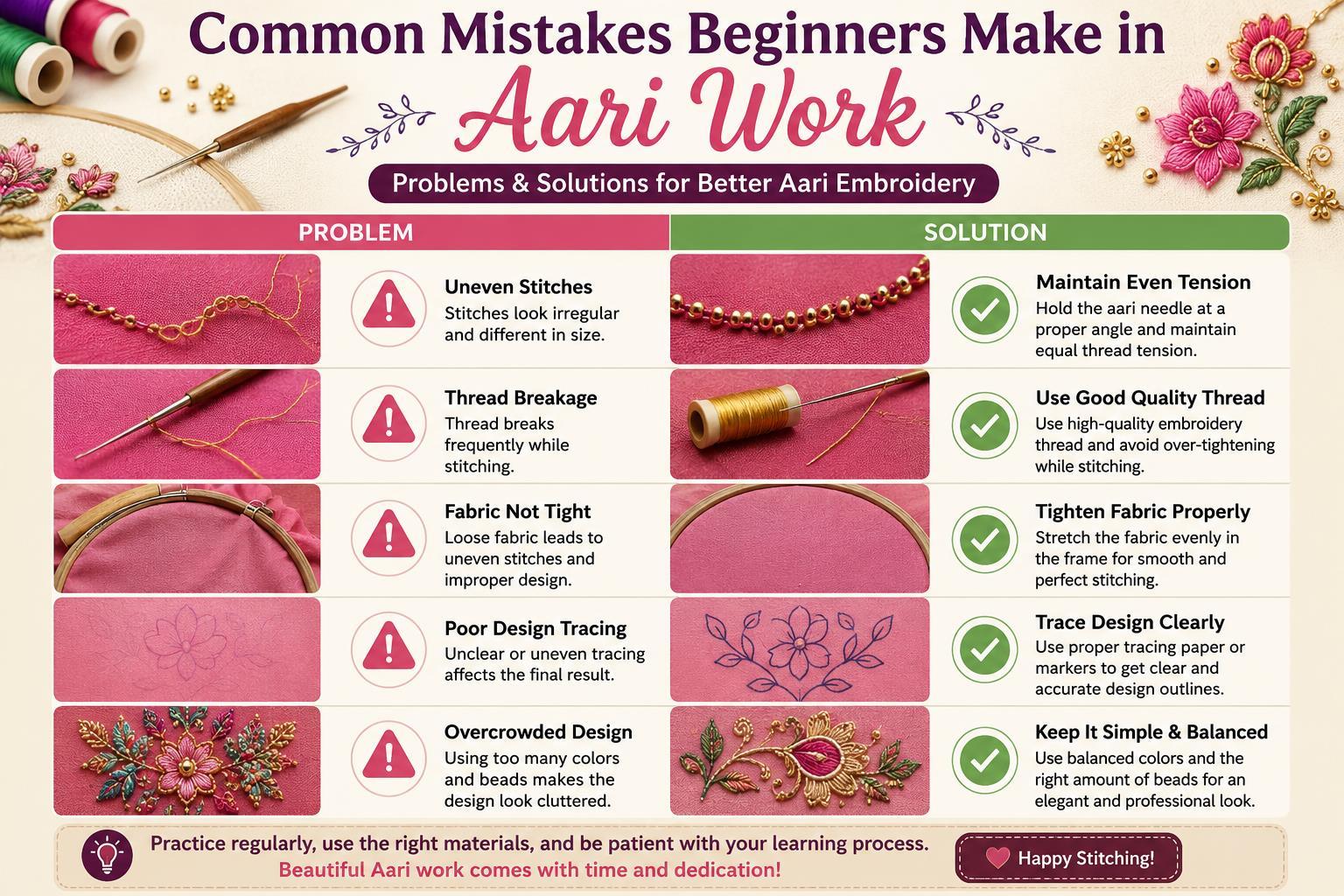
The quality of embroidery materials plays a major role in Aari work. Many beginners purchase low-quality needles, threads, beads, or stones to save money, but this often leads to thread breakage, uneven stitching, and poor finishing. Investing in reliable Aari needles, strong embroidery threads, and quality decorative materials helps achieve cleaner and more attractive designs.
Professional-looking embroidery always starts with quality tools and materials.
Incorrect Frame Tightening
Properly tightening the embroidery frame is essential in Aari work. Beginners often keep the fabric either too loose or too tight on the frame. Loose fabric
creates uneven stitches, while excessive tightening may damage delicate fabrics. The fabric should be stretched evenly to allow smooth needle movement and accurate stitching.
Maintaining proper fabric tension improves both comfort and stitching quality.
Lack of Practice with Basic Stitches
Many beginners try complicated designs immediately without mastering basic Aari stitches first. Simple chain stitches, loops, bead fixing, and line work should be practiced regularly before moving to advanced bridal or designer patterns.
Building a strong foundation with basic techniques helps improve speed, accuracy, and confidence in embroidery work.
Poor Design Tracing
Another common issue is inaccurate design tracing. Uneven or unclear tracing can make the embroidery design look untidy and unbalanced. Beginners should carefully trace patterns using proper carbon sheets, fabric markers, or tracing papers to maintain neat and symmetrical embroidery.
Clean tracing ensures better stitch placement and overall design clarity.