LUXURY OUTLOOK
Introduction
Australia’s luxury property market has never been more geographically diverse, and that diversity is the defining story of this third edition of the Ray White Luxury Outlook.
For much of the past two decades, Australia’s premium market was a tale of two cities, where Sydney set the benchmark and Melbourne followed. The rest of the country existed at the margins of that conversation, but what our data now shows is that the conversation has changed. Perth is in its third consecutive year of double-digit luxury price growth. Queensland’s coastal markets have outpaced Sydney in both percentage growth and, in the case of units, absolute price. Brisbane and Perth now sit within $100,000 of Melbourne’s luxury threshold, a gap that was once measured in the hundreds of thousands. The luxury market is no longer concentrated; it is spreading and deepening in markets that would have been afterthoughts a decade ago.
This is not a cyclical story either. It reflects a genuine shift in where Australia’s most affluent choose to live, and what they are choosing to buy. The buyers at the top end of our market today built their wealth in industries that barely existed 20 years ago, which means they are less likely to follow established patterns of luxury. In many cases, they are writing new ones.

In this edition, our Economist Atom Go Tian examines the thresholds and suburb-level data that define luxury across the country. Our Chief Economist Nerida Conisbee maps how regional luxury precincts have performed over the decade, separating structural repricing from pandemic-era noise. Our Head of Research Vanessa Rader explores the global branded residence phenomenon now arriving on Australian shores, the wellness and technology features reshaping what a luxury home actually delivers, and what the luxury vehicle market tells us about the values of high-net-worth buyers.
As Australia’s leading real estate group, with an unrivalled presence in the luxury segment across every state and territory, Ray White is uniquely positioned to track where this market is moving and why. Our network of over 13,000 members gives us a ground-level view of buyer demand, pricing behaviour, and sentiment that no data source alone can replicate.
We trust this report will serve as a valuable resource for vendors, buyers, developers, and industry professionals seeking to understand the evolving dynamics of Australia’s luxury property market in 2026.
DAN WHITE MANAGING DIRECTOR, RAY WHITE GROUP
Executive summary
Australia’s luxury property market is moving in more directions at once than at any point in the past decade, and the shift runs deeper than price.
At the surface, the price story is already significant. The national luxury house threshold sits at $2.75 million, 80 per cent above where it was a decade ago, but the more important movement is geographic. Perth has more than doubled its luxury threshold and is still accelerating, with its top suburbs recording growth of 17 to 19 per cent in the past year. Meanwhile, the Sunshine Coast and Gold Coast luxury unit thresholds have already surpassed Sydney’s. The premium market is no longer just a Sydney and Melbourne story.
Go deeper, and the changes are more structural. The buyers at the top of the market today are predominantly selfmade, including founders, technology entrepreneurs, and private equity operators who built their wealth in industries that barely existed twenty years ago. They are buying in coastal and regional markets as much as harbour side ones, drawn by time and autonomy as much as prestige. That demand has driven a decade of divergent regional performance: temperate coastal markets have surged and held their gains, rural lifestyle markets strengthened on migration and retained it, alpine markets rose sharply and corrected accordingly.
Deeper still, the homes themselves are changing in ways that reflect who is buying them. Wellness technology (air quality systems, circadian lighting, continuous health monitoring) has moved from optional feature to baseline expectation, commanding premiums of 15 to 30 per cent over conventional luxury stock. Branded residences, a global category with over 800 schemes worldwide, are arriving in Australia for the same reason: buyers who have spent years staying in Six Senses and 1 Hotels want the same experience at home.
Even the luxury vehicle market tells a version of this story. Electric vehicles exceeded 100,000 sales in Australia for the first time in 2025, led by buyers applying the same values to their driveways as their front doors: performance, technology, and a brand that reflects how they see themselves.
The luxury market in 2026 is broader, faster-moving, and less predictable than the edition before it. The pages that follow make the case for why.

NERIDA CONISBEE RAY WHITE GROUP CHIEF ECONOMIST
What is LUXURY?
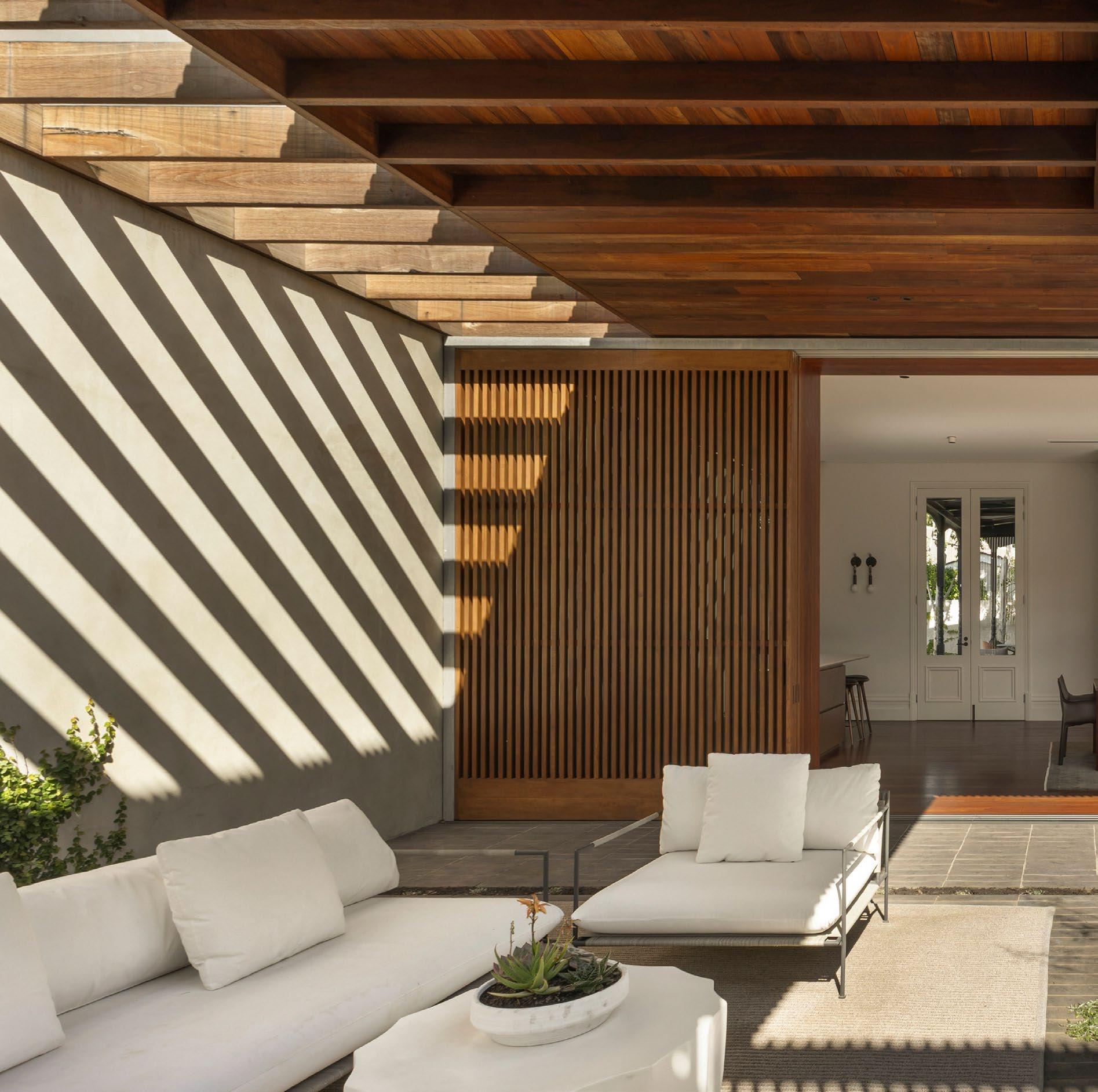
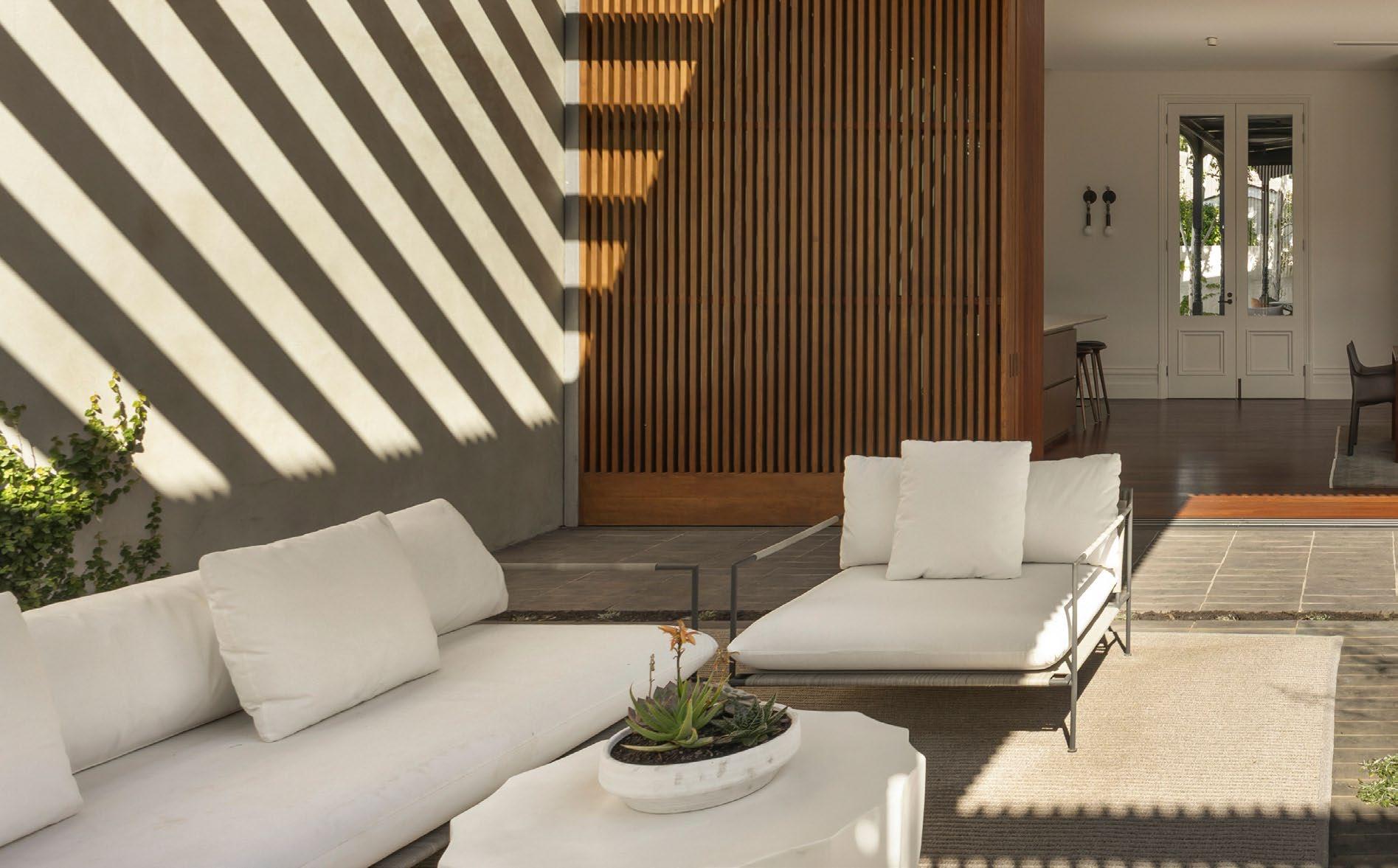
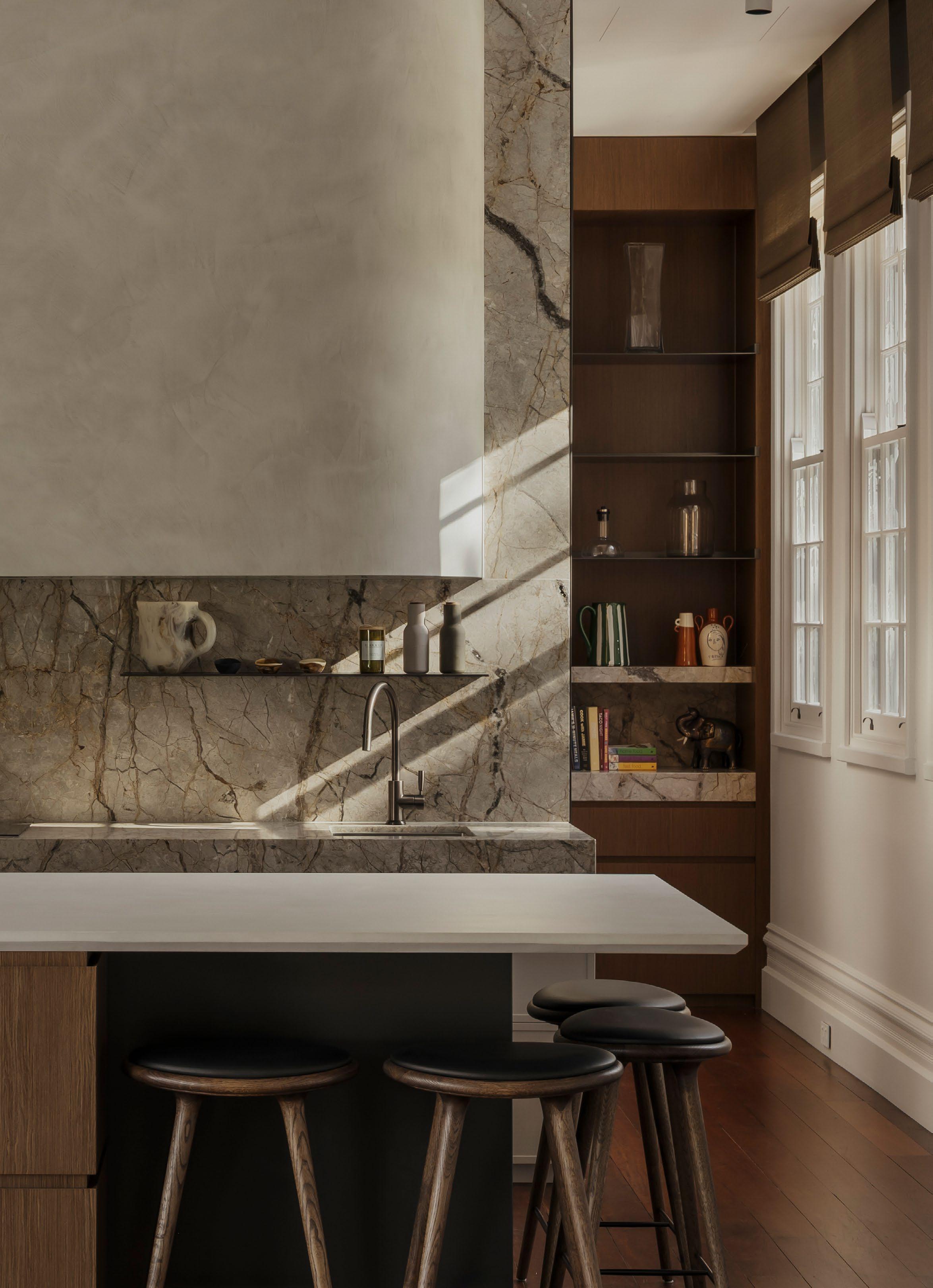
Ask 10 people what makes a home luxurious and you will get 10 different answers. For some, it’s the material: the stone bench, the spotted gum floor, or the ceiling height that signals nothing was compromised. For others, it’s location in its most absolute sense: the view that can’t be built out, the street that doesn’t need an introduction, the proximity to water. For a growing number of Australians, luxury has become less about status and more about how a place allows you to live.
We measure luxury through the 95th percentile of property prices, which is the point at which only five per cent of homes in a given market trade higher. The national luxury house threshold now sits at $2.75 million, which is 80 per cent higher than it was a decade ago. We start with this as a definition for simplicity, but what luxury is not, despite how it is often discussed, is simply expensive. Expense is a threshold, whereas luxury is what sits on the other side of it.
The clearest sign that luxury has shifted is where people are choosing to buy it.
The Queensland coastal markets did not become Australia’s fastest-growing luxury markets because they suddenly acquired better architecture or more prestigious postcodes. What the data captures is partly a price story and partly a values story. When a buyer leaves a $45 million Bellevue Hill house for a $26 million Noosa property, they are not trading down. They are making a statement about what luxury means to them, and increasingly, it means time, ease, and the particular quality of life that comes from a home that fits how you actually want to live.
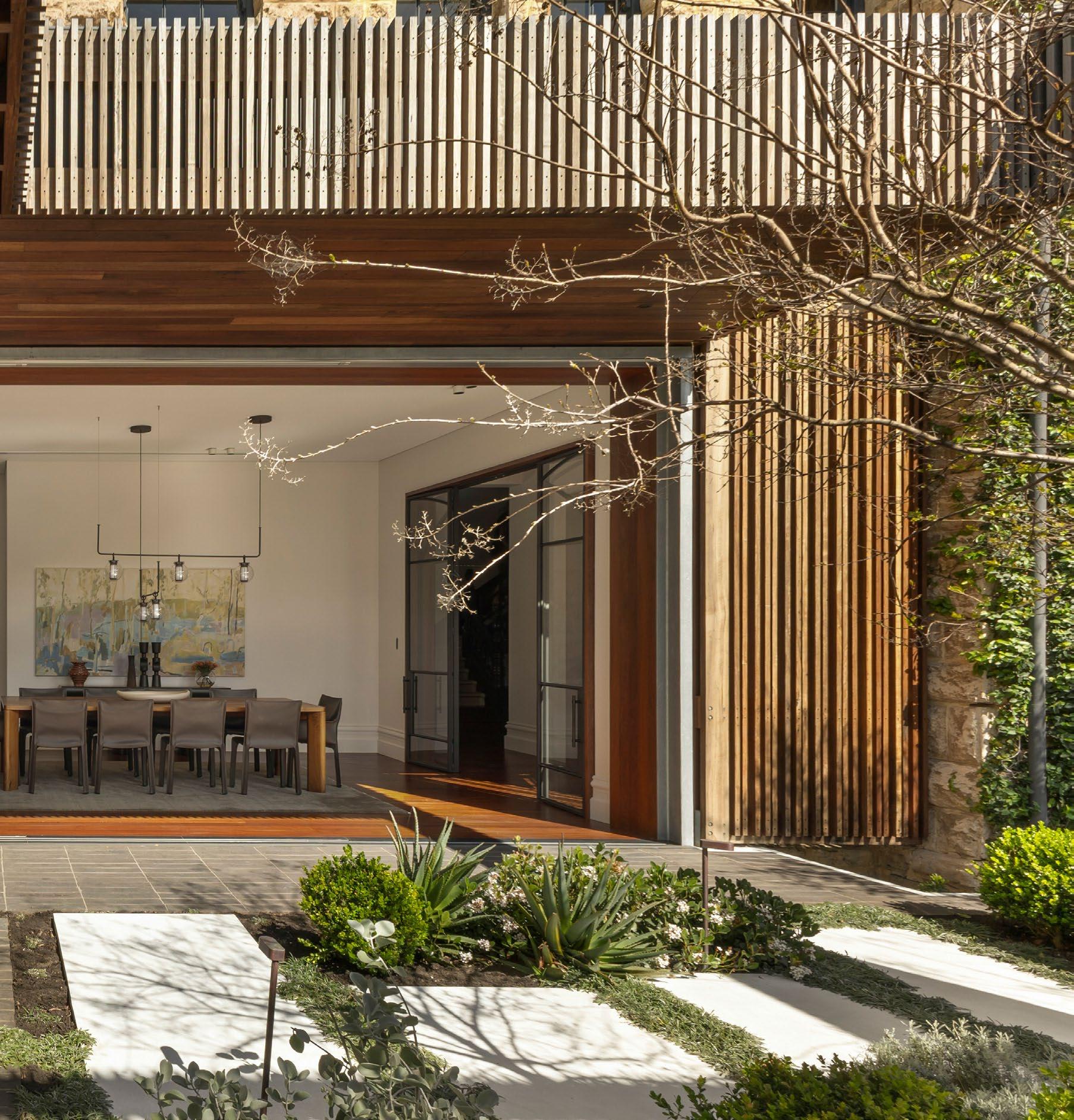
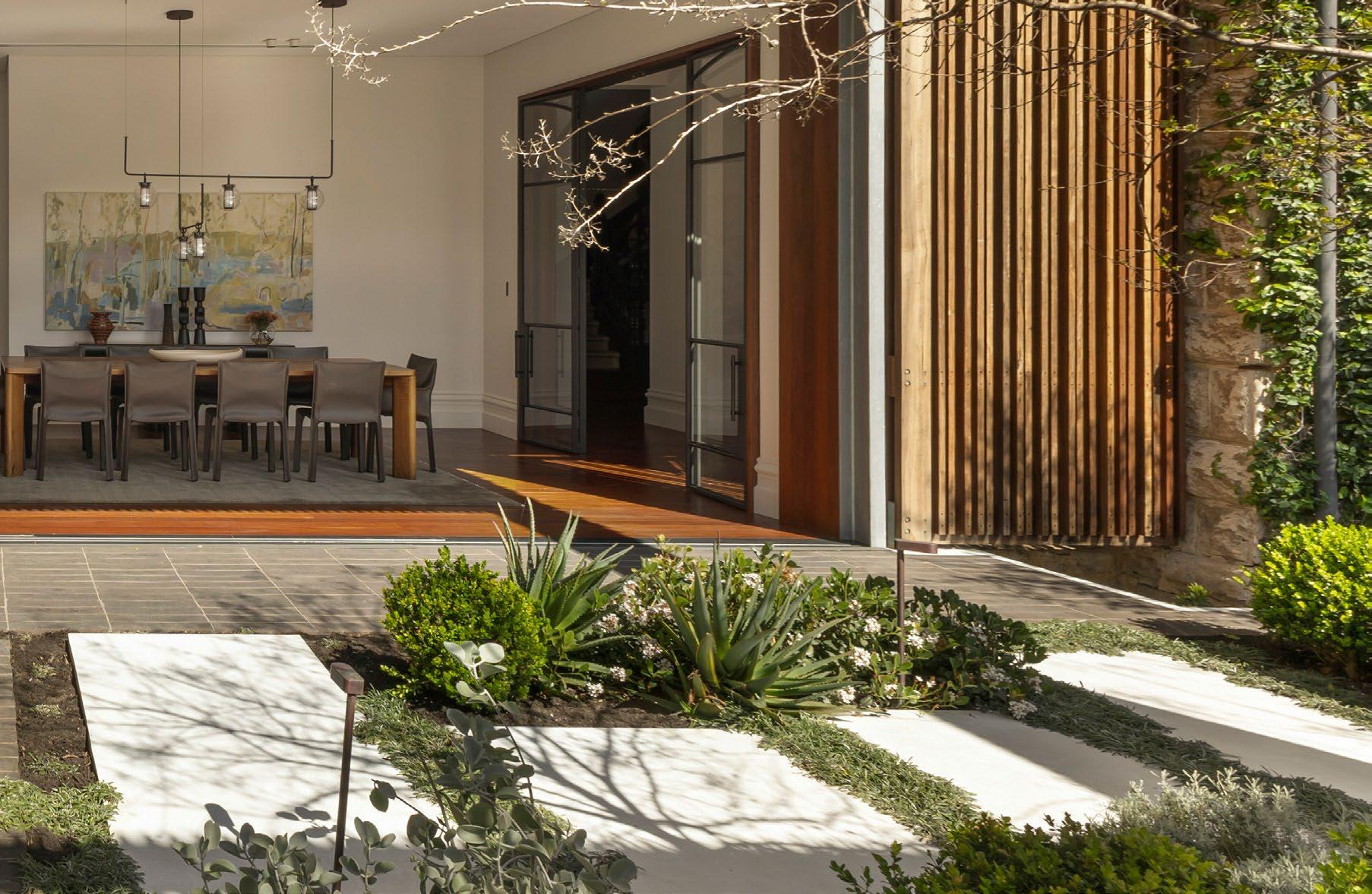
Sydney remains the country’s most expensive luxury market, with the top five per cent of houses trading above $4.79 million, reflecting the enduring pull of harbour-adjacent land and a concentration of high-net-worth buyers no other city can match. The heritage streetscape, the school catchment with a century of social capital behind it — these still command a premium that no amount of lifestyle recalibration has eroded. But what Sydney no longer holds is a monopoly on price growth. Over the past decade, the Gold Coast grew its luxury price by 151 per cent, the Sunshine Coast by 159 per cent, and Brisbane by 133 per cent.
Melbourne, by contrast, grew just 42 per cent over the same period, from $1.82 million to $2.58 million. The consequence is a near-total collapse of Melbourne’s historical premium over its northern rivals. In 2016, Melbourne’s luxury threshold was roughly 70 per cent above Brisbane’s and 46 per cent above Perth’s. Today, Brisbane sits at $2.49 million, Perth at $2.48 million, and Melbourne at $2.58 million — three cities separated by less than $100,000.
Adelaide has also closed ground rapidly, reaching $2.08 million after 123 per cent growth, now matching Canberra at the same level. Even Perth, long considered a cyclical and volatile market, has more than doubled its luxury threshold and now sits within striking distance of Melbourne for the first time.
But what Sydney no longer holds is a monopoly on price growth.
LUXURY
HOUSE PRICE GROWTH BY MAJOR CITY
House prices in the 95th percentile as of February 2026 v 2016
%
Southeast Queensland was the fastest growing luxury market of the last decade.
10Y GROWTH PERFORMANCE (2016-2026)
1. Sunshine Coast QLD CITY GROWTH
$1.13M
2. Gold Coast QLD
3. Brisbane QLD
4. Adelaide SA 6.Hobart TAS
5. Perth WA 7. Canberra ACT National average
8. Sydney NSW
9. Melbourne VIC
10. Darwin NT
The unit market tells a parallel story. Queensland’s coastal cities again dominate the decade’s growth table. The Sunshine Coast luxury unit threshold has grown 130 per cent to $2.27 million. The Gold Coast is close behind at 125 per cent, reaching $2.13 million. Both now sit above Sydney’s $2.23 million luxury unit threshold, a reversal that would have seemed improbable a decade ago, when Sydney led the field at $1.51 million and both Queensland markets were below $1 million.
Melbourne sits at the other end of the table. Its luxury unit threshold of $1.43 million grew just 28 per cent over ten years, the second-lowest of any major market. Brisbane’s luxury units, at $1.51 million, now exceed Melbourne’s, the same dynamic playing out in apartments as in houses.
Darwin is the outlier. Its luxury unit price is virtually unchanged over ten years: $803,000 in 2016, $810,000 in 2026. A one per cent decade-long return is less a market than a holding pattern.
The
Sunshine Coast now sits above Sydney’s $2.23 million luxury unit threshold, a reversal that would have seemed improbable a decade ago.
The cities that have grown fastest share a common thread: demand shifted before supply could respond. Buyers from interstate and overseas arrived with capital and a clear idea of what they were looking for: not just a property, but a pace of life. Lifestyle became a legitimate substitute for proximity to a CBD, and the premium that once attached almost exclusively to established city addresses began to migrate toward coastlines, open space, and the particular freedom that comes from living somewhere you actually chose.
The Queensland coastal markets are the clearest expression of that shift, but Adelaide and Perth tell a version of the same story.
Melbourne’s underperformance is not a collapse. Its luxury thresholds have still grown. But in a decade when almost every other major market doubled its luxury house price, growing 42 per cent is a different kind of result. It is also, perhaps, the most instructive one. It is a reminder that luxury markets respond to sentiment as much as supply, and that cities, like the homes within them, go through periods of reassessment before they find their next chapter. 1. Sunshine Coast
LUXURY UNIT PRICE GROWTH BY MAJOR CITY
Unit prices in the 95th percentile as of February 2026 v 2016
GROWTH 10Y PERFORMANCE (2016 - 2026) Sunshine Coast is now the most expensive luxury market, overtaking Sydney and Melbourne. $2.27M
Where is GROWTH HEADED?

ATOM GO TIAN
RAY WHITE GROUP ECONOMIST
Luxury is anything but generic. At its most specific, it’s a single lot on a single street in a single suburb; a location so particular that no two are alike.
We’ve defined luxury at the national level. Now we go as local as the data allows. The ABS brings us to SA2 level, and what it reveals is a market running at several different speeds with each city telling a distinctly different story about where it is in the cycle.
Perth is in its third consecutive year of double-digit growth in the luxury space,
PERTH WESTERN AUSTRALIA
1. City Beach
2. Claremont
3. Mosman Park - Peppermint Grove
PERTH
NO SIGN OF SLOWING
City Beach has always been one of Perth’s most coveted addresses with its ocean views and quiet streets. Now it has the momentum to compete on a national level: 18 per cent growth in 12 months, backed by a strong state economy, sustained population inflows, and a prestige market where stock has simply not kept pace with demand.
This is not an isolated spike either. Claremont is up 17 per cent to $2.78 million, while Mosman Park–Peppermint Grove grew 16.9 per cent to $3.03 million. Perth is in its third consecutive year of
double-digit growth in the luxury space, a run long enough that it no longer needs explaining as a post-pandemic effect or a commodity boom by-product. It’s simply where Perth luxury is now.
The practical consequence is that the gap between Perth and Sydney luxury prices, which was once vast, is narrowing. Buyers who assumed Perth represented value relative to the eastern seaboard are still competing for it.
QUEENSLAND
QUEENSLAND
FOLLOWING THE SAME PATH, ONE YEAR BEHIND
Newstead–Bowen Hills is one of Brisbane’s most transformed precincts, a former industrial corridor that has become a riverside address for buyers who want proximity to the CBD without surrendering neighbourhood character. It grew 11.2 per cent over the past year to a $2.88 million median. Ascot, where wide streets and heritage homes sit alongside Brisbane’s racing establishment, reached $2.97 million on 10.9 per cent growth. Hamilton, perched on the river with long views and large blocks, posted 10.8 per cent to $2.76 million.
On the Gold Coast, the growth is spread across suburbs with distinct identities: Surfers Paradise South, Mermaid Beach–Broadbeach and Main Beach — coastal, resort-adjacent, and quietly residential in turn — all recorded growth between 8.6 and 9.7 per cent. Main Beach now sits at $3.86 million.
The pattern mirrors what Perth was doing twelve months ago: a broad-based acceleration across multiple suburbs rather than isolated pockets of activity. If that parallel holds, Queensland luxury is entering its most intensive growth phase.
The pattern in Queensland mirrors what Perth was doing twelve months ago: a broad-based acceleration across multiple suburbs rather than isolated pockets of activity.
1. Newstead – Bowen Hills
2. Ascot
3. Hamilton BRISBANE
SYDNEY
STEADY AT THE TOP
Sydney’s luxury market is growing, but at a measured pace relative to its northern and western counterparts. Dover Heights, Double Bay–Darling Point and Bondi–Tamarama–Bronte all recorded growth of between 5.2 and 5.5 per cent, with medians ranging from $5.11 million to $5.99 million. These are still meaningful gains on an absolute dollar basis as a 5.5 per cent move on a $5.72 million median adds more than $300,000 in value, but the percentage growth figures tell a story of stability rather than momentum.
Sydney’s luxury market is not weakening. It’s consolidating at a price level that still commands a significant premium over every other major city, and last year’s prediction that prestige buyers might rediscover Sydney’s relative value appears to be playing out, if gradually.
These
are still meaningful gains on an absolute dollar basis as a 5.5 per cent move on a $5.72 million median adds more than $300,000 in value, but the percentage growth figures tell a story of stability rather than momentum.
1. Dover Heights
2. Double Bay – Darling Point
3. Bondi – Tamarama – Bronte
SYDNEY NEW SOUTH WALES
CANBERRA
A SINGLE DATA POINT, A CLEAR SIGNAL
Only one Canberra suburb met the $2.75 million threshold used in this analysis: Forrest, with a median of $4.24 million and year-on-year growth of 4.5 per cent. That scarcity reflects Canberra’s luxury market more accurately than any percentage figure — there’s simply very little supply at this price point, and what exists is moving steadily upward.
MELBOURNE
A RECOVERY, BUT A MODEST ONE
Melbourne’s luxury market has moved out of the mild contraction recorded last year. Surrey Hills (West)–Canterbury grew 3.6 per cent to a $2.92 million median, Balwyn increased by 3.2 per cent to $3 million, and Kew South went up 2.8 per cent to $3.12 million. Positive growth across the board is a genuine improvement, and the city’s long period of underperformance relative to its fundamentals as Australia’s second-largest city may be reaching its floor.
The pace, however, remains the slowest of any major market. Melbourne’s top luxury suburb grew at less than one-fifth the rate of Perth’s. For vendors who have watched other markets run hard, patience is still the requirement.
1. Forrest CANBERRA
1. Surrey Hills (West) – Canterbury
2. Balwyn
3. Kew - South MELBOURNE
Who is BUYING?
ATOM GO TIAN
RAY WHITE GROUP ECONOMIST
Behind every price record is a person. Australia’s ultra-luxury property market tells two stories simultaneously: where the country’s wealthiest choose to live, and how they made the money to get there. Across the top transactions of the past year, both stories point in the same direction: a new generation of self-made entrepreneurs who are reshaping the buyer profile at the top of the market.
Australia’s ultra-luxury market does not readily disclose itself. Among the buyers whose backgrounds could be established across the year’s top transactions, a pattern holds clearly enough to report: the corporate executive and the inheritor, once the defining archetypes of this market, have given way to a generation of selfmade founders. Finance and private equity operators, technology entrepreneurs, and fashion and e-commerce business owners feature consistently across the identifiable portion of the top end. Whether that composition extends uniformly to the transactions that leave no public trace is unknowable, but the pattern is consistent enough, and the individual profiles confirmed enough, to treat the shift as real.
WHERE THEY ARE BUYING
Sydney’s Eastern Suburbs remain the dominant destination, as they have for years. The harbour-facing enclaves of Vaucluse, Bellevue Hill, and Rose Bay continue to account for the largest share of top-end transactions, offering a combination of water views, established prestige, and proximity to the city that no other Australian address replicates at scale. Mosman has emerged as a notable alternative within Sydney, delivering comparable amenity at a meaningful discount to the traditional Eastern Suburbs corridor.
Beyond Sydney, the Byron Bay region continues its ascent into genuine ultraluxury territory. Coastal and hinterland properties in the Northern Rivers are now transacting at prices that reflect a structural rerating of the area, driven by buyers who built businesses remotely or sold them outright and are no longer anchored to a CBD.
The buyers at the top of the market today built their fortunes here, in industries that barely existed twenty years ago.
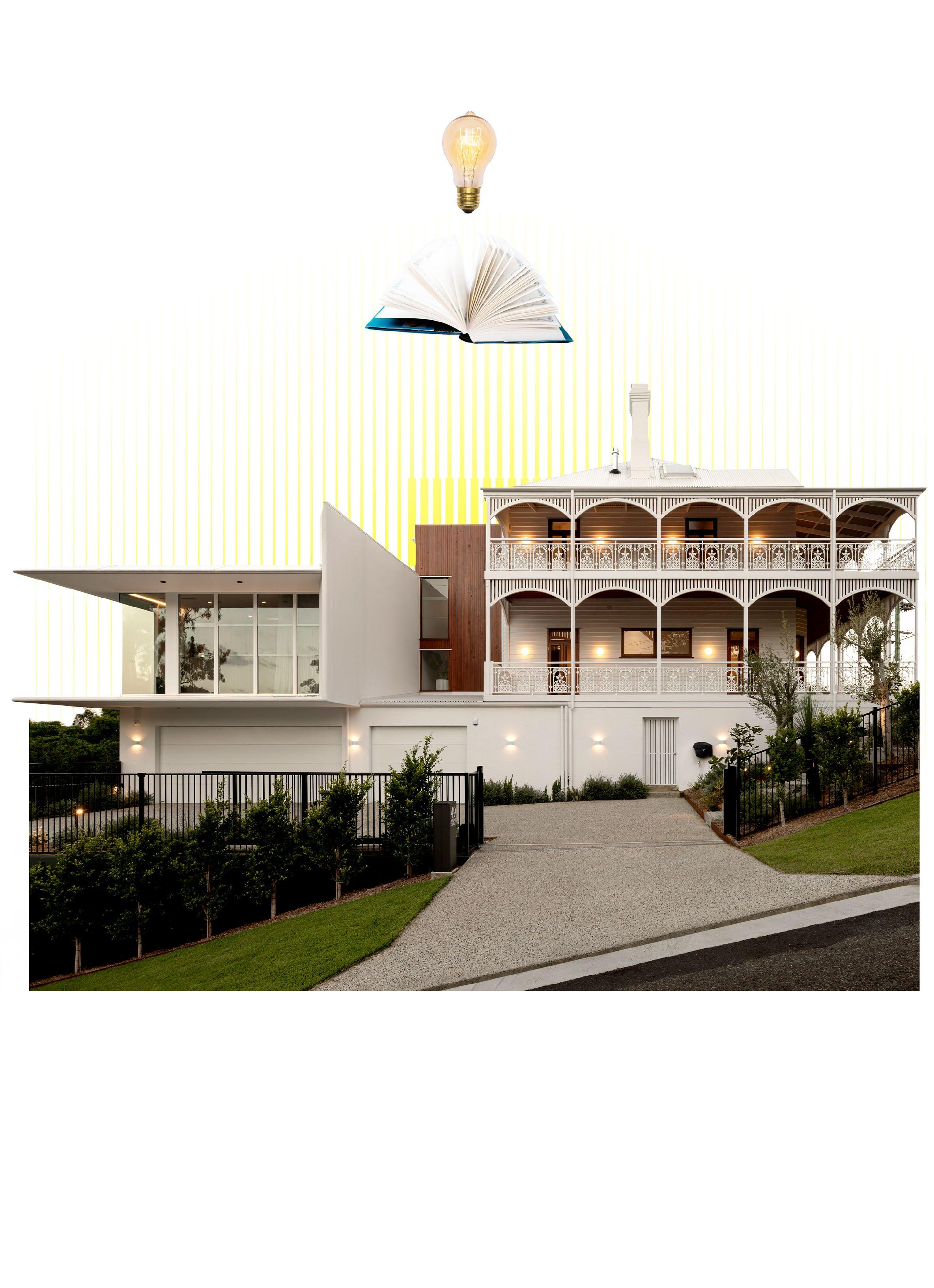
A DOMESTIC MARKET AT THE TOP
The buyer profile across this year’s top transactions is predominantly domestic. In prior years, buyers linked to Singapore and China have featured at the very top of the market, reflecting Australia’s appeal as a safe-haven destination for globally mobile wealth. The shift is worth monitoring, though it may partly reflect the inherent limitations of publicly available records at this transaction level.
What is clear is that Australia’s ultra-luxury market is being driven, first and foremost, by domestic wealth creation. The buyers at the top of the market today built their fortunes here, in industries that barely existed twenty years ago, and they are now acquiring some of the country’s most significant residential properties as a result.
Who is YOUR NEIGHBOUR?
ATOM GO TIAN
RAY
WHITE GROUP ECONOMIST
Buy into Australia’s most expensive suburbs and you’re not just acquiring a property - you’re joining a community with a distinct character. Census data reveals that luxury neighbourhoods follow consistent patterns: they skew international, they work differently, and they raise families differently. The higher the price band, the more pronounced each trait becomes.
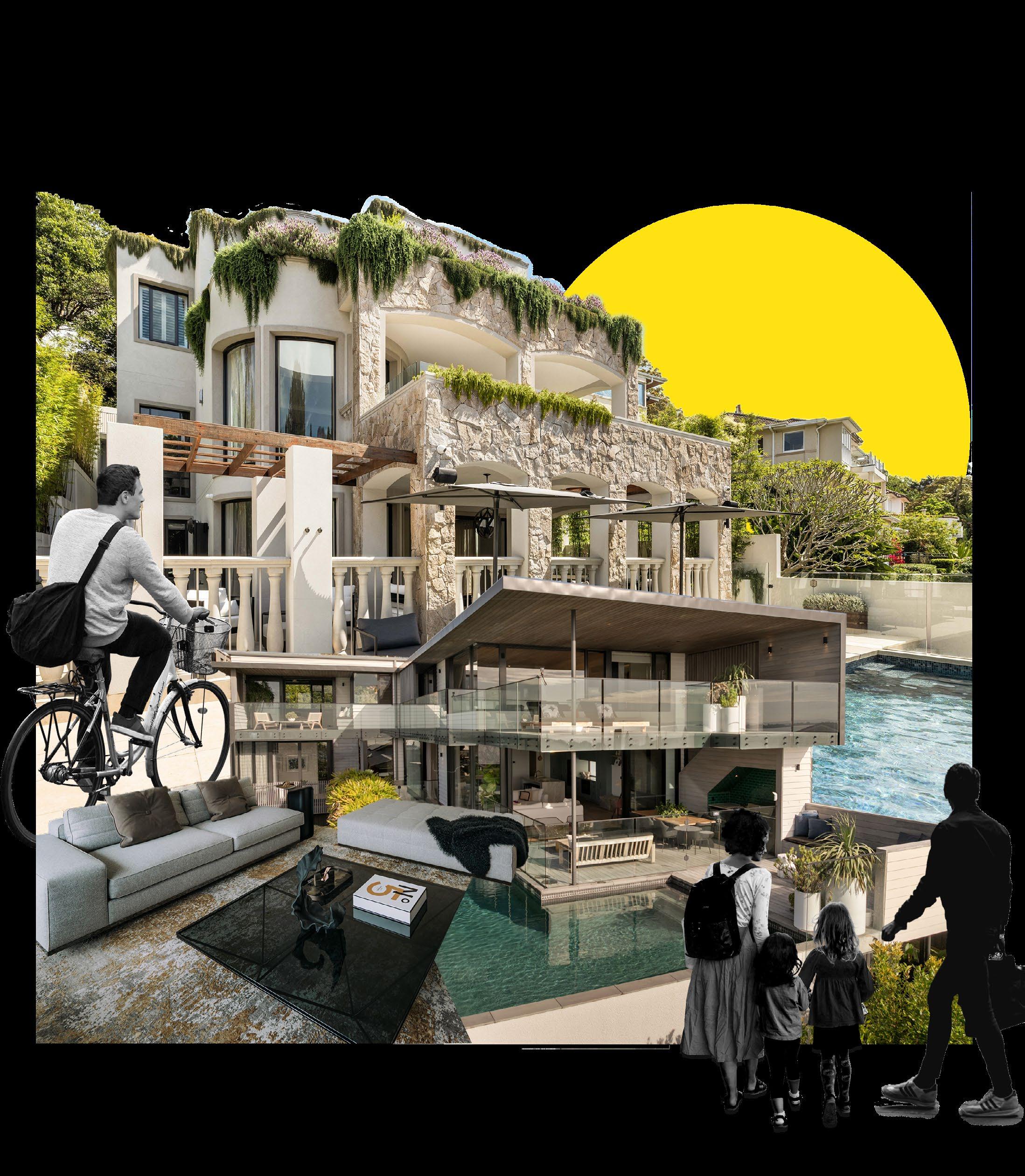
38.3%
of residents in $2.5M+ suburbs were born overseas
Nearly double the rate seen in suburbs priced under $750K, where just 17.5% of residents are overseas-born.
SHARE OF POPULATION BY COUNTRY OF BIRTH AND SUBURB MEDIAN HOUSE PRICE Under 750k $750K-$1.25M
Source: Neoval, ABS 2021 Census
THE NEIGHBOURHOOD GETS MORE INTERNATIONAL AS THE PRICE RISES
In suburbs where the median house price sits below $750,000, roughly three in four residents were born in Australia. Cross into the over $2.5 million tier and that share falls to 61.7 per cent, but the composition of the remaining 38.8 per cent tells a more specific story.
The internationalisation of luxury suburbs is not evenly distributed across birthplace regions. North-East Asia - covering China, Japan, Hong Kong and Korea - shows the most dramatic gradient of any group.
In sub-$750,000 suburbs, residents born in North-East Asia represent less than one per cent of the population. In the over $2.5 million band, that share rises to 8.11 per cent, more than a tenfold increase.
North-West Europe, covering the UK, Germany and the Netherlands, grows from 4.5 per cent to 8.3 per cent across the same range.
Not every international group follows this pattern. Southern and Central Asiapredominantly India and Sri Lanka - actually peaks in the $1.25 million to $2.5 million band at 5.2 per cent before easing to 2.9 per cent at the top tier. South-East Asia similarly plateaus and retreats. The luxury suburb, at its most expensive, is defined less by general international diversity and more by a specific concentration of North-East Asian and Northern Europeanborn residents alongside a still-dominant Australian-born majority.
In sub-$750,000 suburbs, residents born in North-East Asia represent less than one per cent of the population. In the over $2.5 million band, that share rises to 8.11 per cent, more than a tenfold increase.
IN LUXURY SUBURBS, THE COMMUTE IS OPTIONAL
57.5%
WFH overtakes vehicle commuting entirely at the top end a complete reversal from the 20.6% seen in sub-$750K areas. of workers in $2.5M+ suburbs work from home
SHARE OF POPULATION BY METHOD OF TRAVEL AND SUBURB MEDIAN HOUSE PRICE

Source: Neoval, ABS 2021 Census

THE COMMUTE DISAPPEARS
The starkest finding in the census data is not about where residents come from, but where they go and how they get there.
In suburbs below $750,000, nearly three in four residents drive a vehicle to work (72.8 per cent). In the over $2.5 million band, that share has more than halved to 57.5 per cent. In its place, 57.5 per cent of residents in the most expensive suburbs either work from home or do not go to work, up from just 20.6 per cent in the cheapest tier.
The category combines working from home with not working at all, and the census does not allow a clean split between the two. Both explanations are plausible in a luxury context. Some residents are self-employed entrepreneurs running businesses from home, where the majority of top-end purchasers were founders and business owners rather than corporate employees. Others will have reached a stage of financial independence where traditional employment no longer applies.
Public and active transport grows modestly from 6.6 per cent to 9.9 per cent at the top end, which is a minor but consistent rise that likely reflects the inner-city location of many expensive suburbs, where walking and cycling to nearby amenities replaces the car rather than the commute.
FAMILIES ARE SMALLER, NOT ABSENT
A common assumption about luxury suburbs is that they are quieter, emptier places that serve as the domain of older empty-nesters or childless professional couples. The data partially supports this, but with important nuance.
Households with three or more dependent children decline steadily as price rises, from 16.6 per cent in the sub-$750,000 band to 12.3 per cent at over $2.5 million. Large families are less common in expensive suburbs. However, households with one or two dependent children actually become more prevalent at higher price points, rising from 60.9 per cent to 67.5 per cent. Luxury suburbs favour a specific family structure: one to two children, not more.
LUXURY SUBURBS FAVOUR SMALLER FAMILIES
67.5%
Large families (3+ children) shrink from 16.6% in affordable suburbs to just 12.3% at the top end of the market. of families in $2.5M+ suburbs have 1–2 dependent children
SHARE OF POPULATION BY NUMBER OF CHILDREN AND SUBURB MEDIAN HOUSE PRICE
Source: Neoval, ABS 2021 Census
The share of households with no dependent children also eases slightly at the top end, from 22.5 per cent to 20.2 per cent, which runs against the intuition that luxury suburbs are disproportionately populated by couples who have finished raising children.
Taken together, the picture is of a community that is family-oriented but intentionally compact. The suburban lifestyle on offer, likely with access to private schooling, open space, and professional services, attracts families, but the economic and lifestyle pressures that produce larger families in lower price bands are absent or actively avoided.
Regional LUXURY

NERIDA CONISBEE RAY WHITE GROUP CHIEF ECONOMIST
Australia’s regional luxury housing markets have not moved in unison over the past decade. But the differences are not simply geographic. They are structural.
We classified luxury regional markets into precincts and then analysed SA2-level house price data to examine how different types of high-end regional markets have performed over the past 10 years. Rather than relying on median prices, we focused on the top 25th percentile of house sales within each SA2 and because regional SA2s have lower transaction volumes, the top quartile provides a more stable signal than the 95th percentile. We then averaged those top-quartile price series across SA2s within each precinct to produce a representative time series for each category.
In total, we examined 50 regional SA2s grouped into seven distinct luxury precincts. These precincts are geographically diverse, spanning multiple states and regions, but share common demand drivers.
Source: Neoval,
TEMPERATE COASTAL PRESTIGE
Established high-end coastal enclaves with deep owner-occupier demand. This includes Byron Bay in New South Wales, Portsea and Lorne–Anglesea in Victoria, and Noosa Heads in Queensland. These are markets with constrained supply and long-standing prestige credentials.
RURAL LIFESTYLE PRESTIGE
COASTAL COMMUTER PRESTIGE
Premium coastal markets within commuting range of capital cities, including Mount Martha, Mornington, Barwon Heads and Torquay in Victoria, and Kiama in New South Wales. These markets are strongly influenced by metropolitan wealth cycles and hybrid work flexibility.
TROPICAL RESORT LUXURY
Tourism-oriented prestige markets such as Port Douglas, Palm Cove, Hamilton Island in Queensland and Broome in Western Australia. These are more exposed to discretionary demand and visitor flows.
Estate-style “tree-change” markets including Bowral–Mittagong and Moss Vale in New South Wales, Daylesford and Macedon in Victoria and Tamborine Mountain in Queensland. These locations saw elevated migration during the pandemic period.
WINE REGION PRESTIGE
Vineyard-backed markets such as Tanunda and McLaren Vale in South Australia, Healesville–Yarra Glen in Victoria and Pokolbin in New South Wales. These combine lifestyle appeal with agricultural land value.

Snowfield markets including Thredbo–Perisher and Jindabyne in New South Wales, Falls Creek and Mount Buller in Victoria are highly seasonal with low transaction volumes.
BROADACRE AGRICULTURAL PRESTIGE
Tourism-oriented prestige markets such as Port Douglas, Palm Cove, Hamilton Island in Queensland and Broome in Western Australia. These are more exposed to discretionary demand and visitor flows.
ALPINE LUXURY
THE COASTAL SURGEAND RESILIENCE
The most striking trend in the data is the outperformance of temperate coastal prestige markets.
From 2020 through 2022, these markets accelerated sharply. Importantly, after a modest correction during the 2022–23 rate cycle, they moved to new highs. By 2026, top-quartile pricing in temperate coastal markets sits around $1.1 million, the highest of all precincts.
Coastal commuter prestige markets followed closely, reaching around $1.0 million. Their trajectory reflects wealth spillover from capital cities and the impact of remote and hybrid work.
The key point is not just the surge, but the durability. These markets retained most of their gains, suggesting structural repricing rather than temporary increases as a result of the pandemic.
MIGRATION VERSUS LAND FUNDAMENTALS
Rural lifestyle prestige markets saw strong gains through the pandemic and have retained much of that uplift, sitting near $927,000 by 2026. These markets benefited from internal migration and changing housing preferences.
Broadacre agricultural prestige markets, by contrast, show steadier, more moderate growth, ending around $647,000. Their performance reflects underlying land values rather than lifestyle-driven migration. The divergence underscores how behavioural shifts, not just geography, have driven performance differences.
ALPINE VOLATILITY
Alpine luxury markets exhibit the clearest cyclical behaviour.
Prices rose sharply into 2022 as demand spiked in supply-constrained markets. However, they also experienced the largest correction once interest rates began rising. While prices remain well above pre-pandemic levels, the amplitude of movement has been significantly greater than in coastal segments.
This highlights how discretionary, seasonal markets can amplify both confidencedriven surges and policy tightening.

STABILITY IN WINE REGIONS
Wine region prestige markets show smoother long-term growth, with less pronounced spikes and corrections. By 2026, they sit around $726,000 at the top quartile. These markets behave more like long-term wealth preservation assets than high-volatility discretionary markets.
The key insight from our regional luxury precinct classification is that variability is driven by market structure, not simply location. Coastal markets have proven resilient and have structurally repriced higher. Alpine and resort markets have displayed greater volatility. Lifestyle estates have strengthened on migration trends, while agricultural prestige markets have grown more steadily.
Branded RESIDENCES

Australia’s luxury residential market is poised for evolution as a global phenomenon takes root on local shores: branded residences. While this sophisticated property category has flourished internationally, with an estimated 800 or more schemes operating worldwide, Australia is only now beginning to embrace this distinctive offering that blurs the lines between hotel hospitality and residential living.
The sector’s arrival gained momentum in February 2026 when Gold Coast mayor welcomed plans for what he called a “formal development application” for the Trump International Hotel Tower at Surfers Paradise, signalling growing developer confidence in bringing globally recognised luxury brands to Australian shores.
VANESSA RADER RAY WHITE GROUP HEAD OF RESEARCH
THE BRANDED RESIDENCE CONCEPT
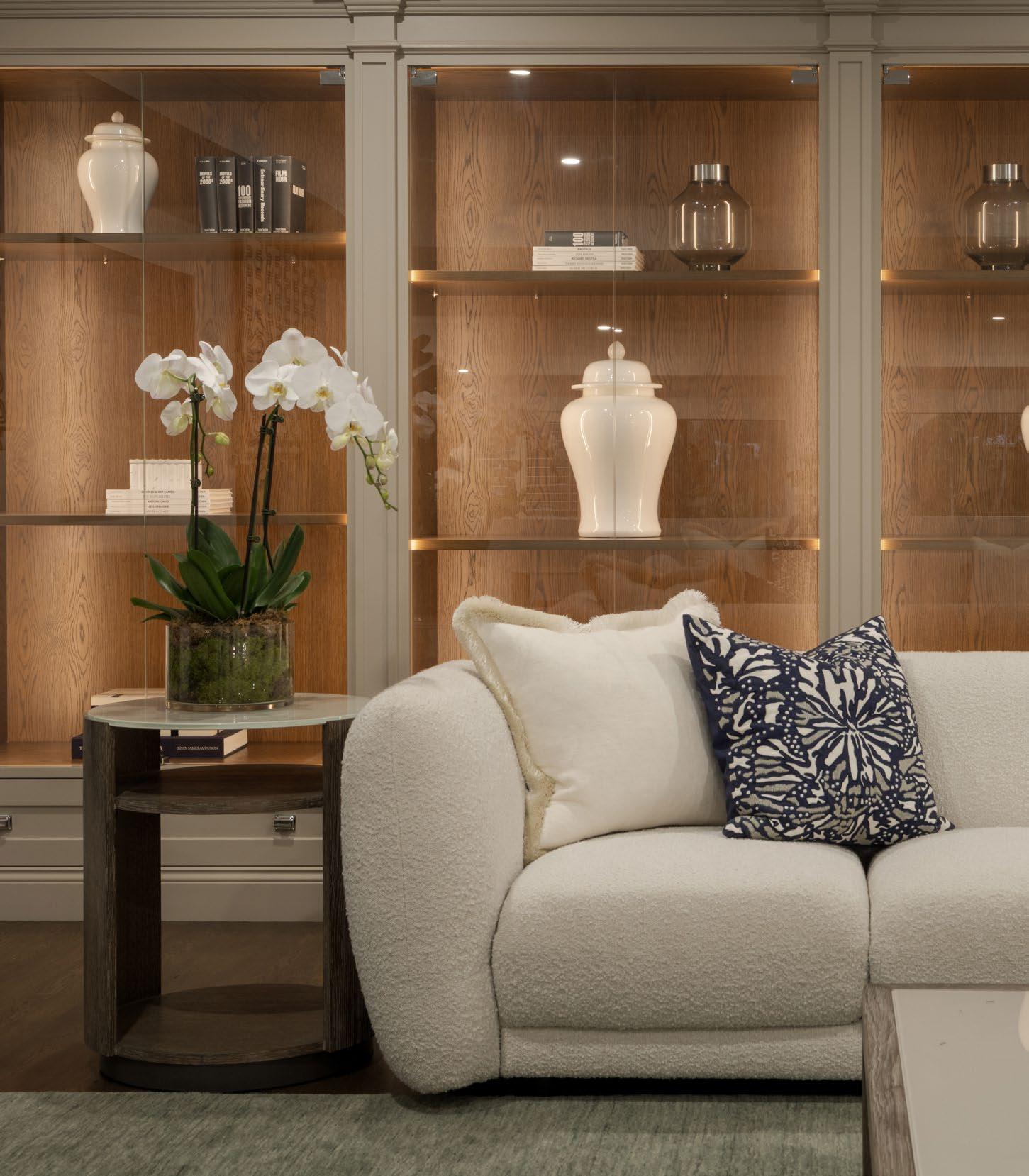
Branded residences represent a unique intersection of luxury real estate and hospitality excellence. These developments carry the names of renowned luxury brands, predominantly five-star hotel groups. Increasingly, however, fashion houses, automotive marques and lifestyle brands, offering residents not just an address, but an experience curated by globally recognised names synonymous with quality and service.
The appeal works on multiple levels. For buyers, these properties deliver exceptional design standards, access to hotel-grade amenities and services, and the prestige of residing within a globally recognised brand. For developers, partnering with established brands can command premium pricing, typically 20 to 40 per cent above comparable nonbranded properties, whilst attracting international buyers already familiar with the brand’s reputation.
THE AUSTRALIAN CONTEXT
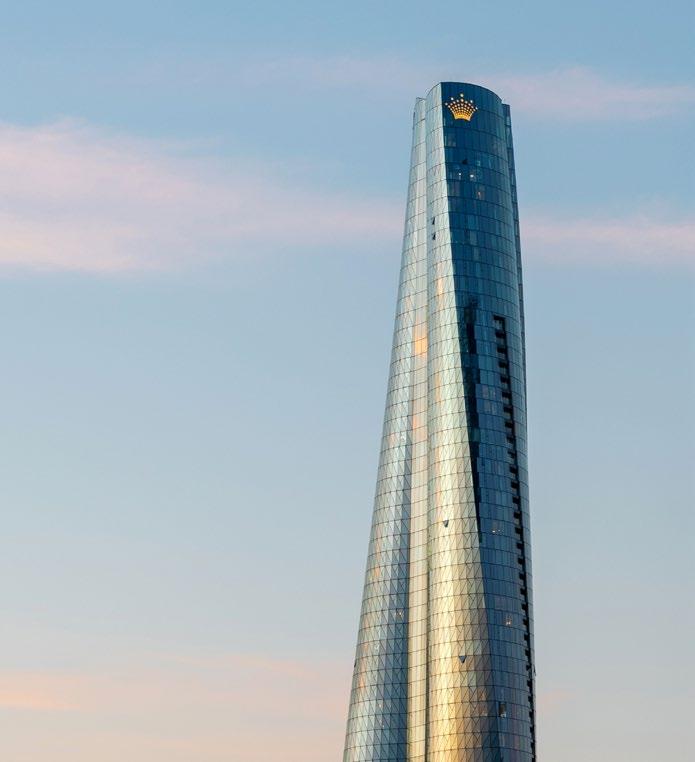
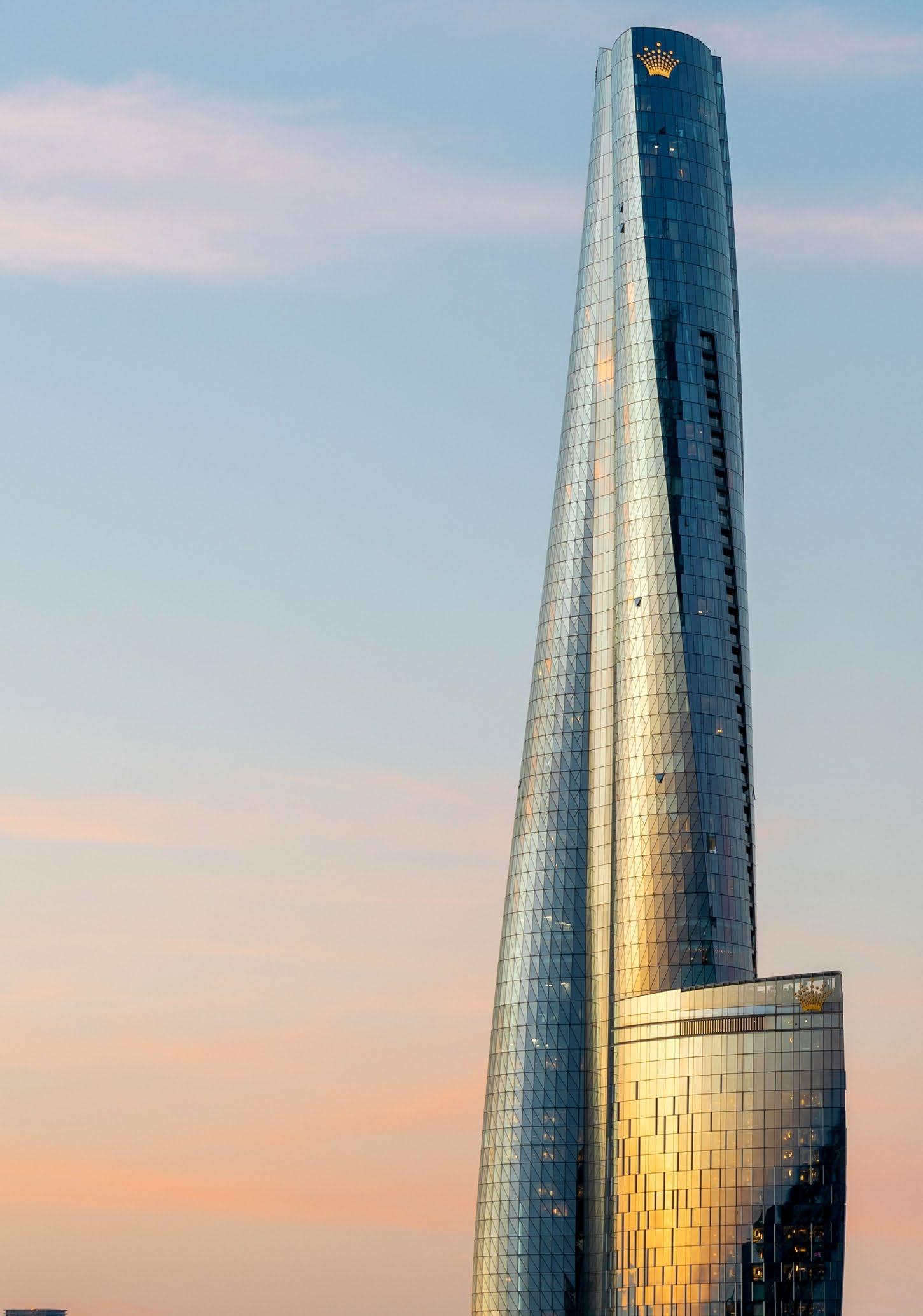
Australia’s entry into the branded residences arena has been cautious but significant. Crown Residences at One Barangaroo in Sydney represents the country’s most prominent example to date, with its successful sales campaign providing clear evidence of substantial local appetite for this product type.
Melbourne is advancing its credentials with Seafarers development by Riverlee, operating under the 1 Hotels brand, featuring apartments priced up to $18 million. The Gold Coast’s Mondrian Residences demonstrated strong market validation by selling all 84 apartments within six months of launching off the plan in 2021.
Despite these successes, Australia’s branded residence sector remains in its infancy compared to international markets. The opportunity for expansion is considerable, particularly given Australia’s growing population of high-net-worth individuals and strong economic fundamentals.
WHAT DRIVES DEMAND?
The typical branded residence buyer is a globally mobile high-net-worth individual seeking lock-up-and-leave properties to complement an existing portfolio. These buyers value the security, service standards and lifestyle associations that established brands provide.
Brand loyalty plays a powerful role in purchase decisions. When individuals have established positive relationships with a hotel brand through repeated stays, owning a residence bearing that same name, with access to familiar service standards, becomes highly appealing. This loyalty factor is particularly pronounced among younger wealth demographics, with Millennials and Generation Z demonstrating disproportionately strong brand affinity.
Contemporary buyers increasingly prioritise wellness amenities, experiential offerings and sustainable design. The post-pandemic shift toward flexible working has also influenced preferences, with buyers using their branded residences for extended periods, prompting developers to enhance work-from-home facilities and expand amenity offerings.
THE AUSTRALIAN OPPORTUNITY
Several factors position Australia favourably for branded residence expansion. The country’s major cities offer the lifestyle amenities, cultural attractions and business connectivity that appeal to the target demographic. Brisbane’s upcoming 2032 Olympic Games presents a particular catalyst, with developers and international hotel operators eyeing opportunities ahead of the global spotlight.
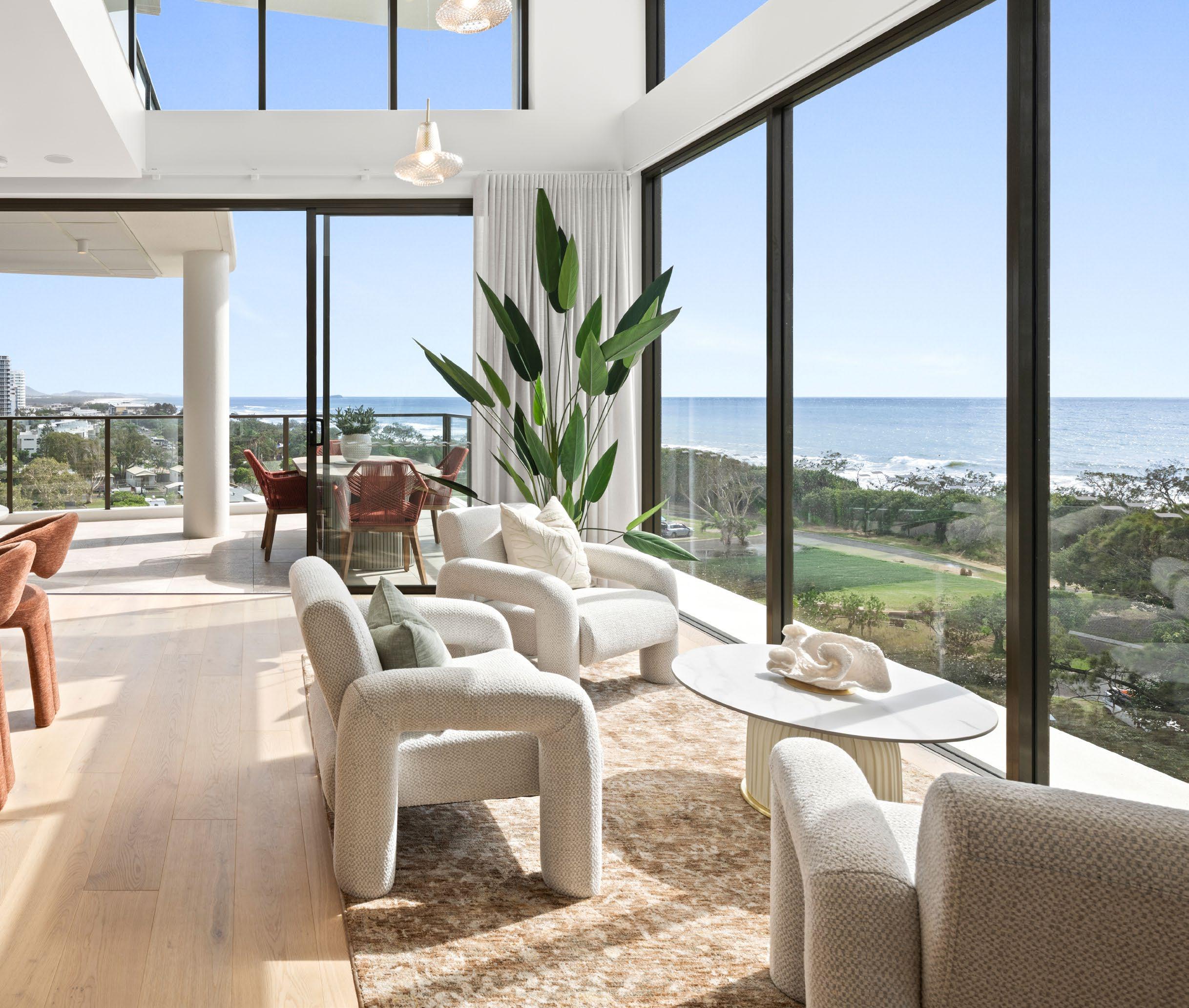
Queensland’s coastal strip, with its established reputation as a lifestyle destination and strong tourism infrastructure, offers compelling prospects for schemes targeting both domestic upgraders and international secondhome buyers.
Coastal regions and wine country destinations could attract buyers seeking hassle-free ownership with the security and services that branded developments provide. The market dynamics are also evolving, with growing acceptance of standalone branded residential schemes opening possibilities for boutique urban developments where site constraints previously made branded residences unviable.
International evidence suggests branded residences command significant pricing premiums. Analysis across multiple markets indicates that branded schemes typically achieve prices 20 to 40 per cent above comparable non-branded stock, with the premium varying based on location type and market maturity.
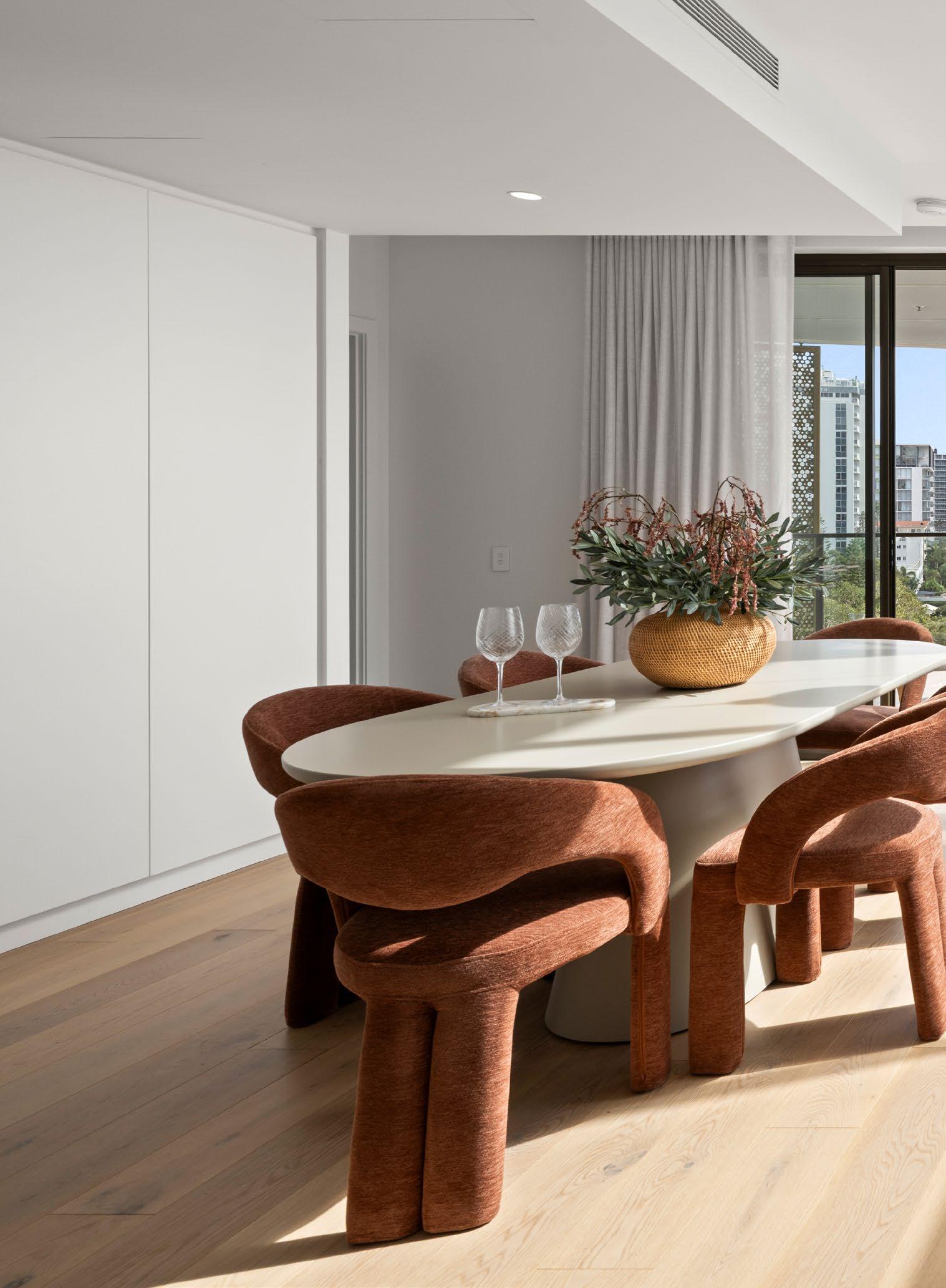
When individuals have established positive relationships with a hotel brand through repeated stays, owning a residence bearing that same name, with access to familiar service standards, becomes highly appealing.
Looking ahead
For Australia’s branded residence sector to reach its potential, developers require sites capable of supporting the scale and amenity expectations these schemes demand, whilst brand selections must resonate with both domestic and international buyers.
The global trajectory suggests branded residences will transition from novelty to established category within Australia’s luxury property landscape. Proposed schemes such as the Trump International
Hotel Tower on the Gold Coast, if they proceed to completion, will play an important role in establishing market expectations and demonstrating viability in Australian resort settings.
Australia stands at the threshold of this evolution. The question is not whether branded residences will expand locally, but rather how quickly, in which locations, and which brands will define this next chapter of Australian luxury living.
Intelligent HOMES
VANESSA RADER
RAY WHITE GROUP HEAD OF RESEARCH
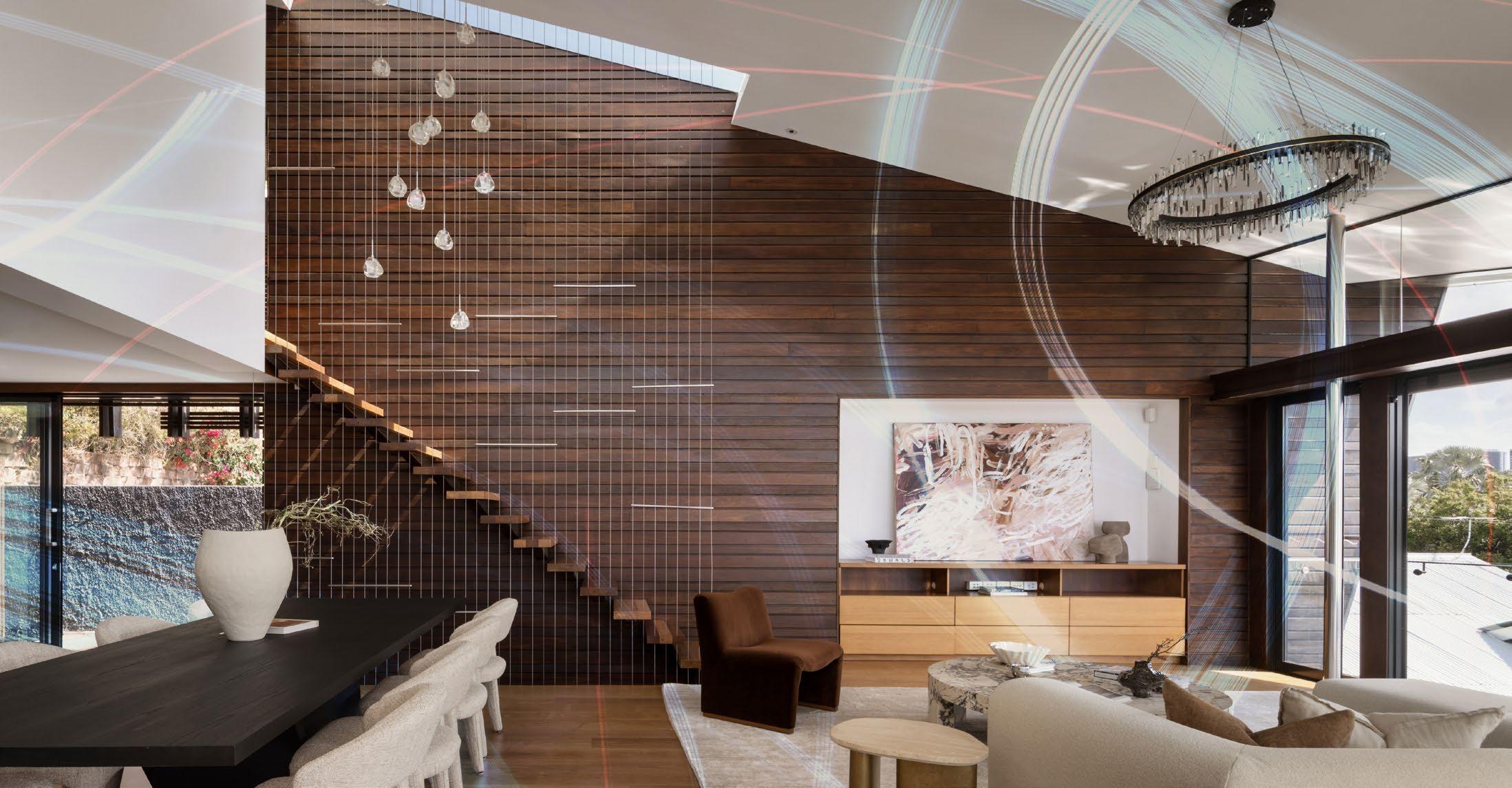
Australian luxury real estate has entered a new era where invisible technology trumps visible opulence.
As the nation’s wellness economy reaches $141 billion, representing 7.8 per cent of GDP, the most significant transformation is happening behind the walls. Artificial intelligence, biometric sensors, and environmental monitoring systems are turning homes into responsive health ecosystems.
AI-POWERED ENVIRONMENTAL OPTIMISATION
The most profound shift in wellness real estate isn’t what you can see: it’s what you can measure. Leading Australian developments now deploy AI-powered platforms that continuously monitor and optimise indoor environments. These systems track air quality, temperature, humidity, and light levels in real-time, making thousands of micro-adjustments daily to maintain optimal conditions for human health.
Advanced circadian lighting systems represent a quantum leap beyond simple dimming controls. These networks analyse individual sleep patterns, activity levels, and even seasonal variations to deliver precisely calibrated light throughout the day. Morning systems simulate natural sunrise with gradually intensifying blue-spectrum light to support cortisol production and alertness. Evening protocols shift toward amber wavelengths that promote melatonin secretion, preparing occupants for restorative sleep.
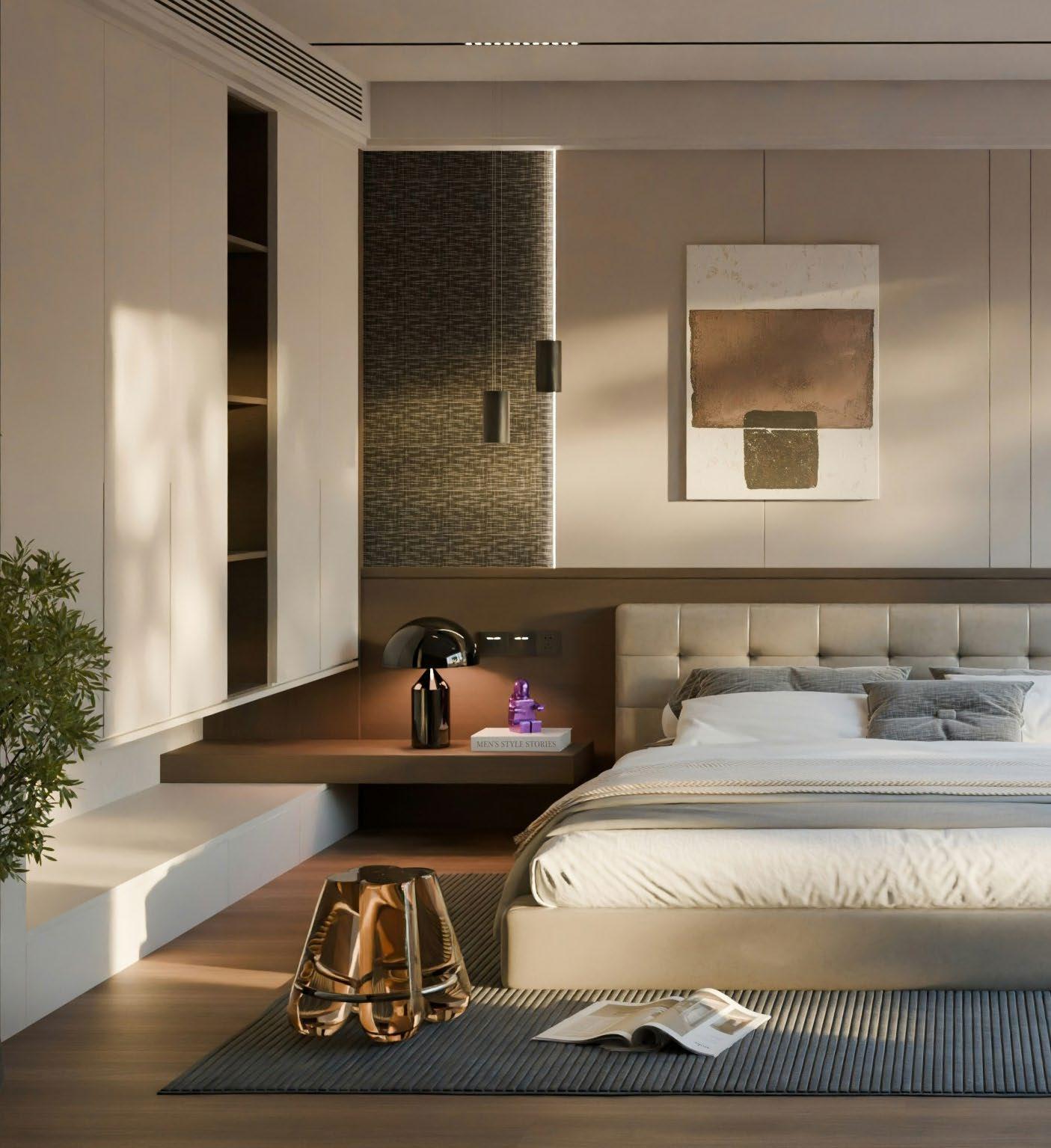
Some premium Sydney and Melbourne properties now integrate voice-activated wellness assistants that control entire environmental systems. Residents can request specific wellness protocols: “activate focus mode” triggers lighting optimised for concentration, air ionisation for alertness, and background acoustic frequencies supporting cognitive performance. “Recovery mode” initiates opposite settings: soft lighting, enhanced air purification, and bioacoustic soundscapes promoting parasympathetic nervous system activation.
Australia spends 6.2 time more than the global average on wellness.
Source: Global Wellness Institute (2026)
CONTINUOUS HEALTH MONITORING WITHOUT WEARABLES
The next frontier eliminates the need for fitness trackers and smartwatches entirely. Emerging Australian developments incorporate non-invasive monitoring technology directly into home infrastructure. Pressure-sensitive flooring tracks gait patterns and balance metrics. Bathroom mirrors with integrated sensors analyse skin condition, hydration levels, and even subtle cardiovascular indicators through facial scanning technology.
Sleep monitoring has evolved beyond wearable devices to sophisticated bed systems that track respiratory patterns, heart rate variability, and movement throughout the night, all without physical contact. These systems feed data into central AI platforms that identify patterns and suggest environmental modifications to improve sleep quality. Detected irregularities can trigger automated responses: poor sleep metrics might prompt the system to reduce bedroom electromagnetic field exposure or adjust mattress temperature for the following night.
ELECTROMAGNETIC FIELD MANAGEMENT
As concerns about EMF exposure grow, Australian luxury properties are pioneering sophisticated mitigation strategies. Wholehome EMF reduction infrastructure isolates sleeping zones from electrical interference, using specialised wiring configurations and shielding materials that maintain modern convenience while minimising electromagnetic exposure during rest periods.
Smart home systems now include EMF monitoring that displays real-time exposure levels throughout the property. Automated protocols can power down non-essential electrical systems in occupied spaces, particularly in bedrooms during sleep hours. This represents a significant evolution from the “smart home” concept: instead of maximum connectivity everywhere, intelligent systems now balance technology benefits against potential health impacts.
ADVANCED AIR AND WATER INTELLIGENCE
Medical-grade air purification has become baseline in premium Australian properties, but the technology has evolved dramatically. Contemporary systems don’t just filter: they actively optimise. Sensors detect specific pollutants, allergens, and pathogens, triggering targeted filtration responses. Some systems incorporate ionisation technology that replicates the beneficial electrical properties of pristine natural environments, creating indoor air quality that exceeds outdoor ambient conditions even in urban settings.
Water systems have similarly advanced beyond simple filtration. Smart water technology now analyses incoming municipal supply, automatically adjusting treatment to remove detected contaminants while adding beneficial minerals for optimal hydration. Some systems can even customise water composition for different uses: slightly alkaline for drinking, demineralised for bathing.
HYDROTHERAPY TECHNOLOGY INTEGRATION
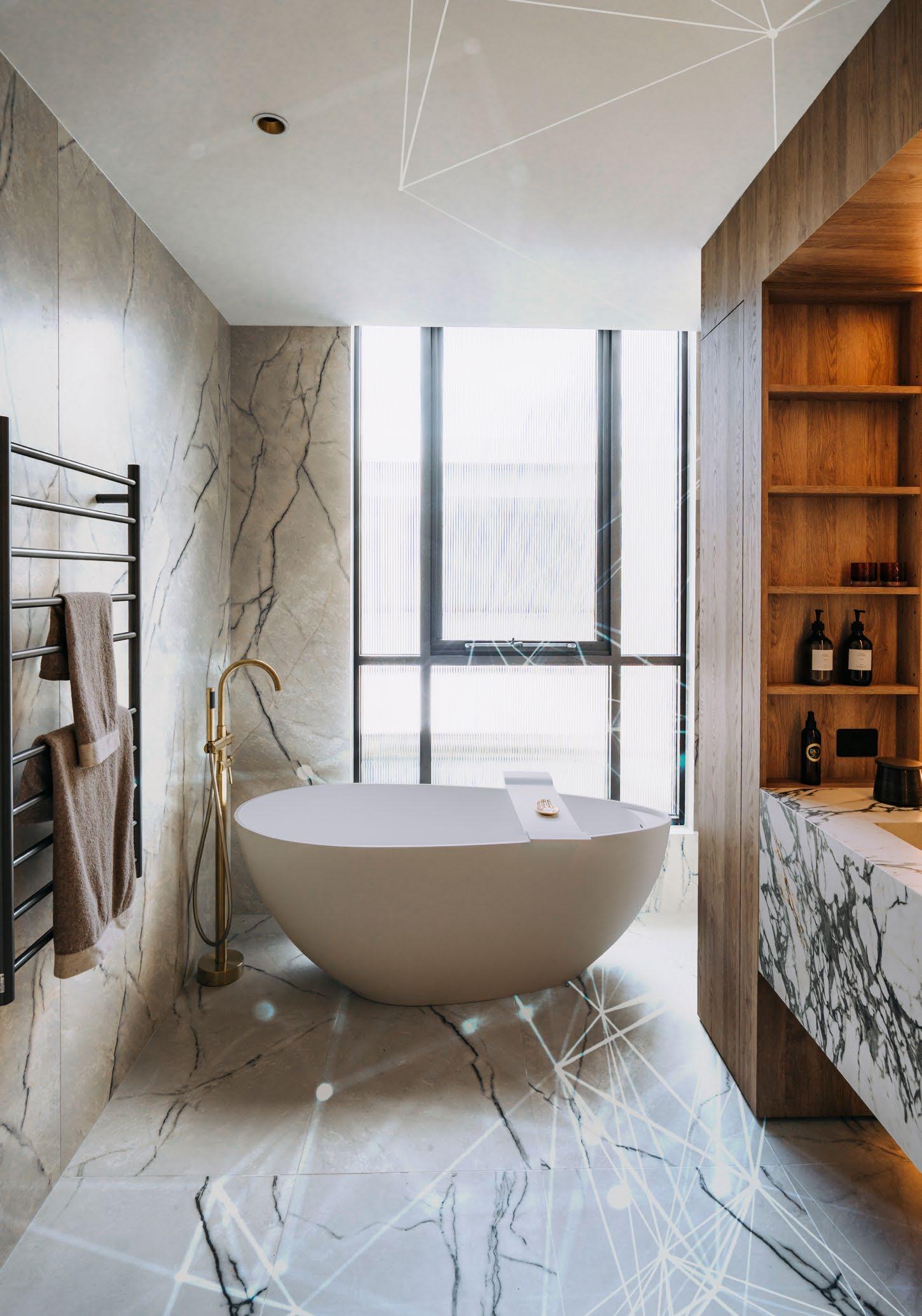
The bathroom has become a high-tech wellness hub. Multi-function shower systems combine chromotherapy (coloured light therapy), aromatherapy, and acoustic therapy with precision temperature control and varied water pressure patterns. Users can select specific protocols: “morning energise” delivers cool water, invigorating scents, and bright blue light; “evening decompress” provides warm water, calming lavender, and soft amber illumination.
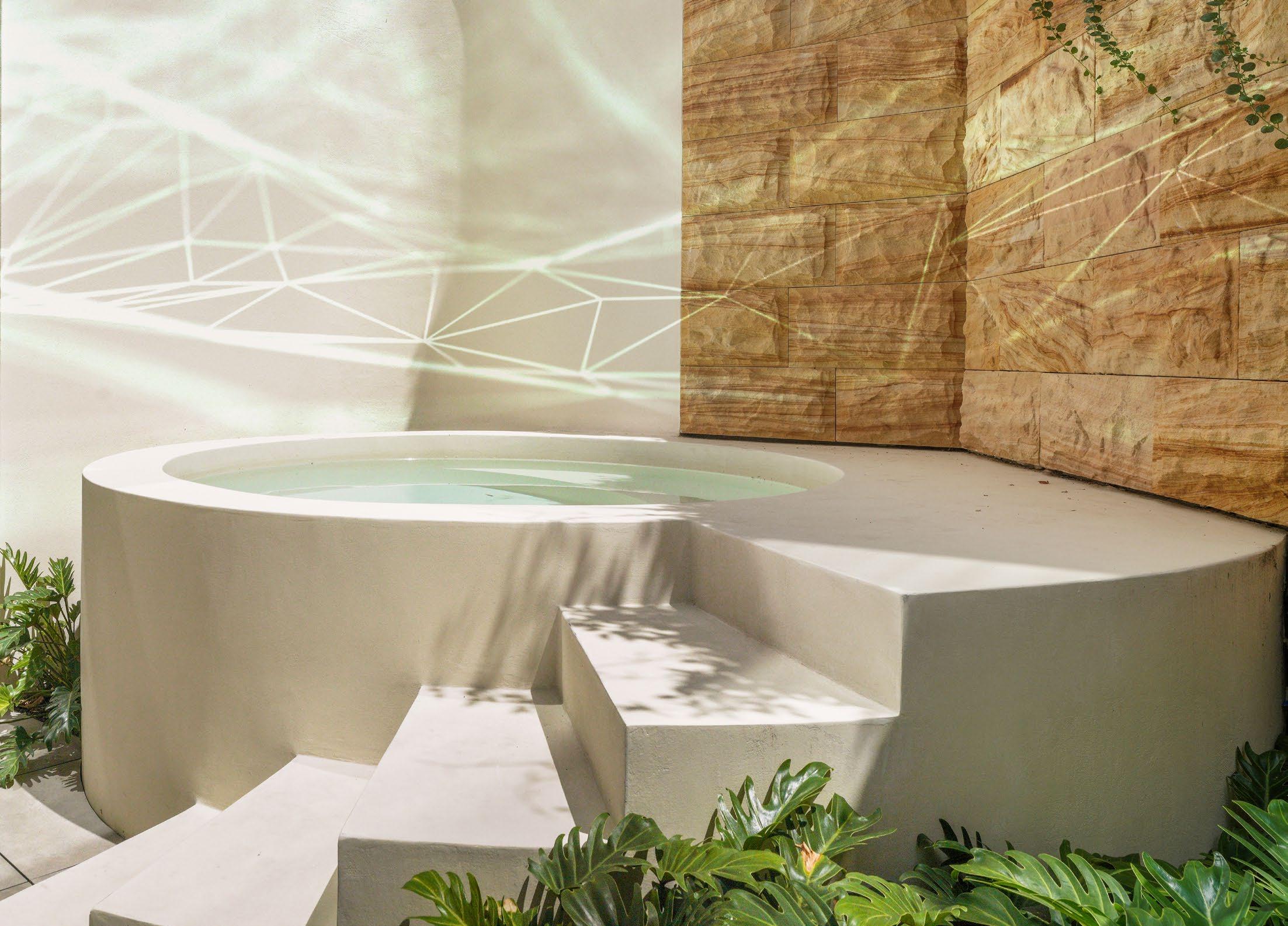
Hot and cold plunge therapy installations now feature medical-grade temperature precision and automated cycling protocols. Integrated timers and temperature controls allow users to follow specific therapeutic regimens, with systems that can preprogram contrast therapy sequences for optimal recovery benefits.
The Australian market response
With Australians spending $5,184 per capita annually on wellness (7th globally) and the wellness economy growing at 7.6 per cent annually versus 4.5 per cent GDP growth, the market validation is undeniable. Properties incorporating comprehensive wellness technology command 15 to 30 per cent premiums over conventional luxury stock, with the gap widening as buyer awareness increases.
This premium reflects fundamental market transformation. Where previous generations allocated budgets to entertaining capacity and status signaling, contemporary luxury buyers invest in personal health optimisation systems. The home has evolved from passive shelter to active health partner: an intelligent environment designed to support human flourishing through continuous environmental optimisation.
Looking forward
As Australia’s wellness real estate sector accelerates toward 2028 projections, expect further technology integration.
Upcoming innovations include AI nutrition systems that analyse personal health data to provide automated meal planning, grounding systems with conductive flooring materials based on emerging electrical connection research, and predictive health monitoring that identifies potential wellness issues before symptoms emerge.
The intelligent wellness home isn’t coming, it’s already arrived in Australia’s premium property market, redefining luxury for a generation that values optimisation over pure showiness.
Luxury VEHICLES


VANESSA RADER RAY WHITE GROUP HEAD OF RESEARCH
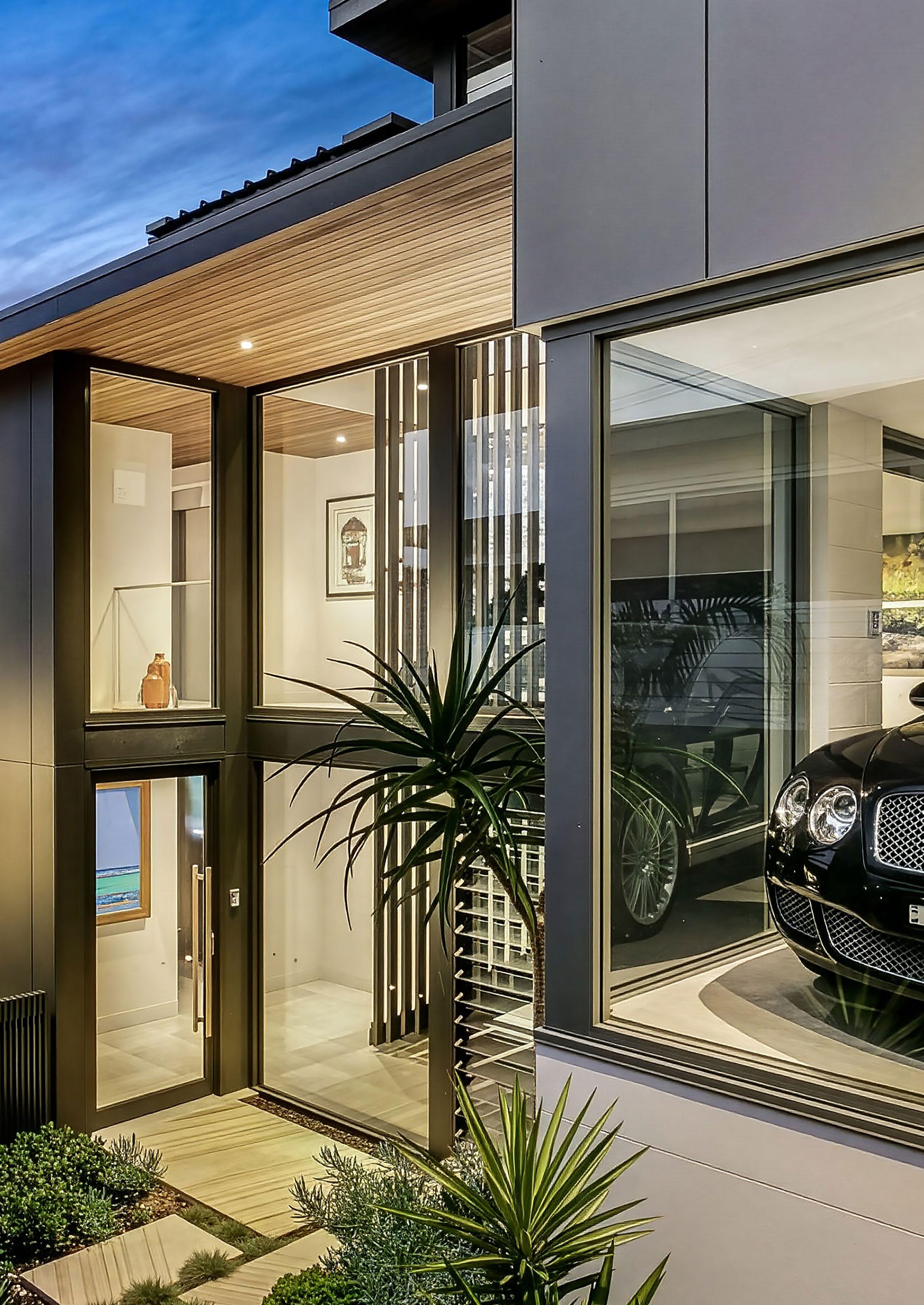
Australia’s luxury vehicle market captures a sophisticated convergence of traditional prestige and technological disruption. For high-net-worth individuals investing in premium properties, their automotive choices increasingly mirror the same values driving residential decisions: quality, performance and environmental consciousness. Just as wellness features and sustainability credentials have become expected in luxury homes, electric powertrains are rapidly transitioning from novelty to necessity.
THE SUV SUPREMACY CONTINUES
The most striking trend across luxury brands remains the dominance of SUVs over traditional sedans. BMW’s X1 and X3 models, Mercedes-Benz’s GLC Wagon, Audi’s Q3 and Q5, and Lexus’s NX collectively represent the core of luxury sales in 2025. This preference reflects practical Australian realities: versatility for urban driving and weekend escapes, commanding road presence, and perceived safety.
Just as buyers increasingly demand homes that serve multiple purposes, luxury SUVs have become Swiss Army knives on wheels. They’re sophisticated enough for business meetings, practical enough for school runs, and capable enough for weekend adventures. This versatility explains why traditional luxury sedans continue to lose market share.
German engineering prestige still commands the market
BMW’s leadership with 26,842 sales, followed by Mercedes-Benz at 22,850 and Audi at 16,014, confirms that German engineering prestige still commands the market. These three brands collectively represent over 65,000 vehicles sold, demonstrating that established brand equity matters immensely to luxury buyers.
However, not all luxury brands weathered 2025 equally. Porsche experienced the steepest decline among premium marques, down 1,896 units, while Volvo dropped 1,659 units. These drops contrast sharply with the relative stability of BMW, Mercedes-Benz and Audi, highlighting how even established luxury brands can quickly lose momentum if product cadence or positioning falters.
Electric vehicles now command 13.1 per cent of new car sales, a 38 per cent year-on-year surge.
THE ELECTRIC REVOLUTION
The most significant narrative in 2025 isn’t which traditional brand sold most but how rapidly electrification has moved from experimental to essential. Battery electric vehicle sales exceeded 100,000 units for the first time, reaching 103,300 vehicles, while plug-in hybrids almost doubled to 53,484 units. Electric vehicles now command 13.1 per cent of new car sales, a 38 per cent year-on-year surge.
Tesla’s Model Y remained Australia’s bestselling vehicle overall, proving that luxury buyers are embracing electric vehicles enthusiastically when the product delivers on performance and technology.
New entrants like Polestar (2,373 sales) and Zeekr (1,994 sales) signal how electrification creates opportunities for
challengers. Zeekr’s entry demonstrates Australian buyers’ growing willingness to consider Chinese luxury brands, provided the product proposition is compelling and focused on advanced electric powertrains.
For buyers not yet ready to commit entirely to electric motoring, plug-in hybrids have become the pragmatic middle ground. The near-doubling of PHEV sales reveals a market segment seeking electric efficiency for daily commutes while retaining combustion backup for longer trips. This mirrors property buyers who adopt sustainability features while maintaining connections to traditional utilities as backup.
Beyond established luxury brands, Australia’s ultra-luxury marques tell a different story. While Ferrari (220 sales) and Lamborghini (272 sales) represent a fraction of overall volumes, their importance extends far beyond numbers. These vehicles serve as rolling statements of achievement, often complementing harbour-side mansions and penthouse apartments.
What’s fascinating is how even these bastions of combustion theatre are cautiously embracing electrification. Ferrari has announced hybrid models, Lamborghini is developing plug-in powertrains, and Rolls-Royce has introduced its first fully electric model, the Spectre. Not even ultraluxury brands with V12 heritage can ignore the electric transition.
For these brands, electrification presents unique challenges. Their customers aren’t buying transportation but emotion, sound and exclusivity. Yet even these buyers are accepting that electric powertrains can deliver extraordinary performance, providing that exclusivity and craftsmanship remain uncompromised.
THE LIFESTYLE PARALLEL
For Australia’s luxury property buyers, the automotive market’s evolution provides a telling mirror. The same demographic investing in wellness-focused homes with sustainability credentials and smart technology also expects their vehicles to reflect these values.
The shift toward electric powertrains isn’t driven by budget constraints but by environmental consciousness and appreciation for cutting-edge technology. This parallels premium property buyers who choose solar panels and advanced home automation because these features align with their expectations of what luxury means in 2025.
From the practical luxury of BMW and Mercedes-Benz SUVs to the ultra-exclusive realm of Ferrari and Lamborghini, Australia’s luxury vehicle landscape demonstrates that sustainability and performance are no longer opposing forces but complementary expectations of what premium truly means. The wealthy Australians buying prestige homes are the same ones driving luxury vehicle adoption toward zero emissions, smart technology integration, and brands that align with their values.
METHODOLOGY METHODOLOGY
The Ray White Luxury Report 2026 is a comprehensive analysis of Australia’s premium residential property market, drawing on multiple data sources to provide authoritative insights across each chapter of this report.
What is luxury?
Luxury price thresholds were sourced from Neoval, analysing house and unit prices at the 95th percentile across Australian markets. The 95th percentile represents the price point at which 95 per cent of properties in a given market are priced lower and only five per cent are priced higher. This measure captures the entry point to luxury real estate in each location without being distorted by a small number of ultra-premium transactions. We compared thresholds as of February 2016 with corresponding figures as of February 2026 to establish ten-year growth trajectories, and with February 2025 figures to establish one-year movements.
Where is growth?
To identify where luxury price growth is occurring at a suburb level, we sourced median house and unit prices from Neoval at SA2 level. We compared median prices as of February 2025 with corresponding figures from February 2026 to calculate one-year percentage growth. Suburbs were included in the analysis where the median house price exceeded the national luxury threshold of $2.75 million, with the exception of Sydney, where a higher statelevel threshold was applied to reflect that city’s distinct market. SA2s with insufficient transaction volumes to produce a reliable median were excluded.
Who is buying?
Buyer profile analysis drew on transaction data from Pricefinder (Valuer General Sales), focusing on the highest-value residential property transactions across Australia with contract dates between February 2025 and February 2026. After identifying the top transactions, buyers were researched using publicly available information, including company records, media profiles, and industry publications, to establish career backgrounds, wealth sources, and industry affiliations.
Who are your neighbours?
Demographic analysis of luxury suburbs used data from the Australian Bureau of Statistics 2021 Census of Population and Housing. Suburbs were grouped into price bands based on median house price and analysed across three dimensions: country of birth, method of travel to work, and household family structure. Price bands were constructed to allow comparison across the full spectrum from sub$750,000 to over $2.5 million.
Regional luxury
Regional luxury market analysis used median house prices sourced from Neoval at SA2 level. Fifty regional SA2s were grouped into seven distinct precincts based on shared demand drivers and geographic character. Within each SA2, analysis focused on the top quartile of house sales to isolate the premium segment of each local market. Price series were averaged across SA2s within each precinct to produce representative trajectories covering the period from 2016 to 2026.
Branded residences and The intelligent home
These chapters draw on publicly available market data, industry reports, and developer disclosures. Sources include international branded residence market analysis, Australian development announcements, and data from the Global Wellness Institute on wellness economy size and per capita expenditure.
Luxury vehicles
Vehicle sales data was sourced from the Federal Chamber of Automotive Industries (VFACTS), covering new vehicle registrations for the 2025 calendar year. Battery electric vehicle and plug-in hybrid figures are as reported in VFACTS annual release data.
Geographic scope
Geographic analysis was conducted using Australian Bureau of Statistics regional classifications to ensure consistency with official boundaries while providing appropriate granularity for different market segments. SA2 (Statistical Area Level 2) regions represent communities that interact socially and economically, typically containing populations between 3,000 to 25,000 people. SA3 (Statistical Area Level 3) regions capture regional labour markets and service areas, generally containing populations between 30,000 to 130,000 people. SA4 (Statistical Area Level 4) regions represent the largest sub-state regional boundaries designed for labour market analysis and typically contain populations above 100,000 people. This hierarchical approach allowed us to identify local market variations while maintaining consistency with official regional planning and economic analysis frameworks.
APPENDIX 1. TOP 10 MOST EXPENSIVE AREAS BY STATE (HOUSE)
APPENDIX 1.
APPENDIX 1.
APPENDIX 2. TOP 10 MOST EXPENSIVE AREAS BY STATE (UNIT)
APPENDIX 2.
APPENDIX 2.
Ray White Group Economics Team
The Ray White Economics team delivers independent research and analysis across residential, commercial, and rural property markets. Led by Chief Economist Nerida Conisbee, the team combines rigorous data analysis with deep market expertise to produce insights that are both credible and accessible.
Drawing on one of Australia’s largest real estate datasets and a national network of market intelligence, the team tracks the trends, forces, and shifts shaping Australian real estate, helping buyers, sellers, and investors navigate with clarity and confidence.
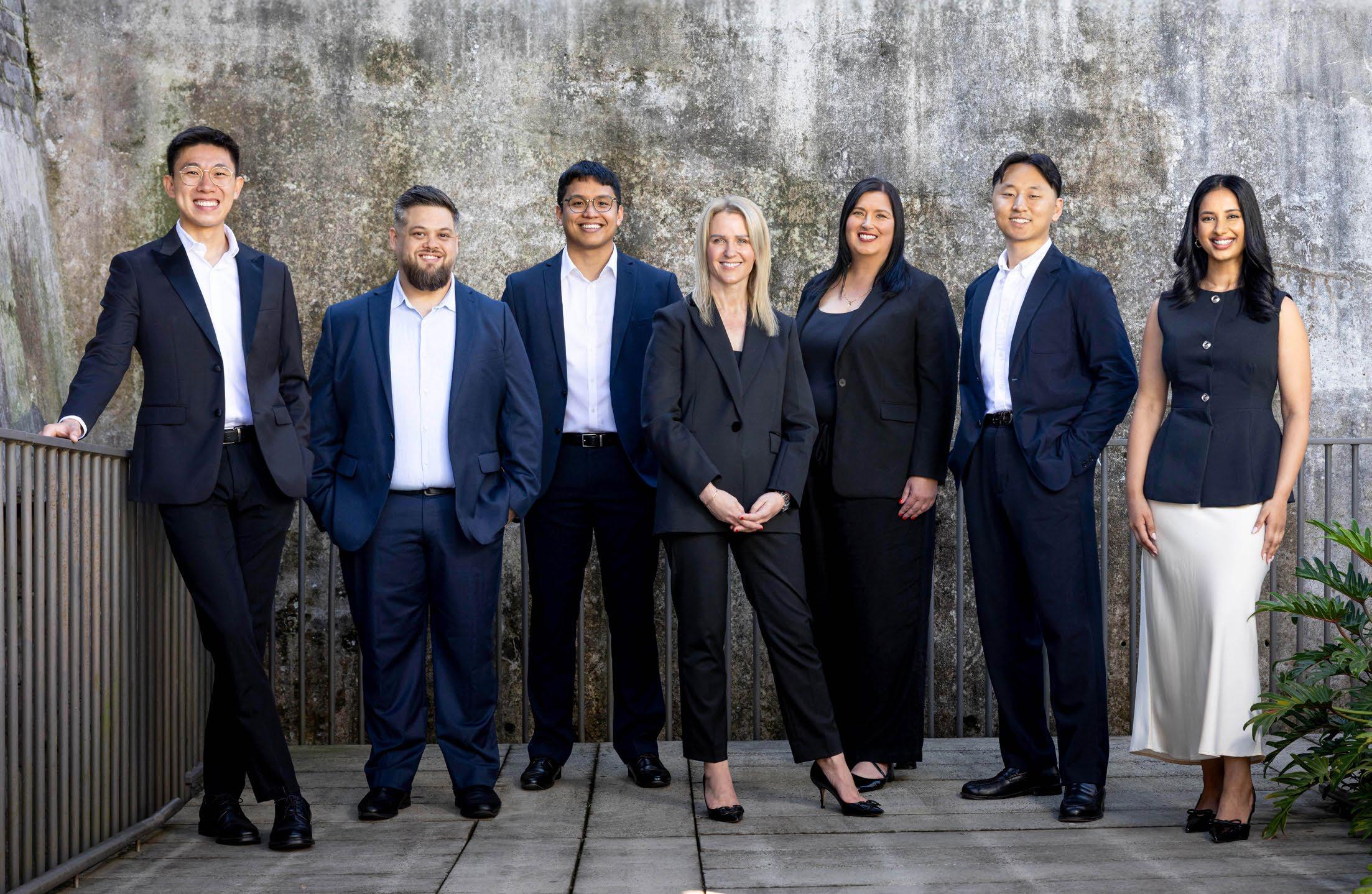
ATOM GO TIAN Economist JORDAN TORMEY Strategist
PAULO SUMULONG Data Scientist
NERIDA CONISBEE Chief Economist
VANESSA RADER Head of Research
KEVIN WANG Content Production Coordinator
ANITA VENKATESH Content Strategy and Production Lead
Expense is a threshold, whereas luxury is what sits on the other side of it.
ATOM GO TIAN RAY WHITE GROUP ECONOMIST