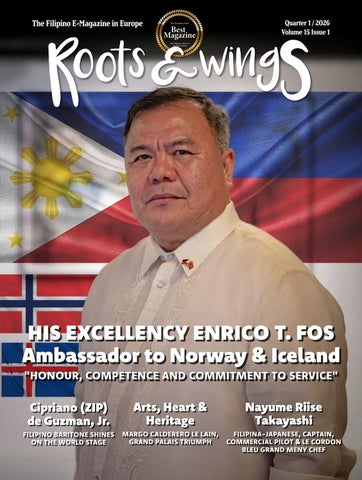
Welcome to Q1 2026 Issue of Roots & Wings, the Filipino E-Magazine in Europe!
We open this issue with great pride and privilege, as His Excellency Ambassador Enrico T. Fos, Philippine Ambassador to Norway and Iceland, offers us a rare and illuminating window into the breadth and depth of his diplomatic work - now spanning nearly five years of distinguished service. Together with his beautiful and very supportive spouse, Madame Myla Antonette F. Fos, the Philippines could not ask for a more passionate, capable, and dedicated representation abroad. We are truly honored by their presence on these pages. Norway has been home for over 35 years. This country with sweeping landscapes, abundant natural resources, and long, close relations with the Philippines, feels safe and secure. Filipino Norwegians have thrived in this peaceful country where social equality is the norm. About 30 thousand Filipinos reside here, another 30 thousand are based in Norwegian-owned international vessels. Filipino seafarers are much valued partners in the Norwegian shipping industry. Natural resources in oil and gas, forestry, and fisheries, with transparent governance, have made this a prosperous country.
In the world of music, we are delighted to spotlight the internationally acclaimed, multi-awarded Filipino baritone, Cipriano "Zip" Mercado de Guzman, now dazzling audiences from his base in Luxembourg. Belfast Country Editor, Feds Murray, brings us a beautifully written portrait of his remarkable journey.
In the world of art. France Country Editor Dennis Manaay takes us inside Le Grand Palais, where Filipina French artist Margo Babilonia CaldereroLe Lain transforms exhibition space into something far more profound, a conversation between culture, identity, and art. Do not miss his vivid and moving reflections on her extraordinary work.
Behind every great society are the hands - and hearts - that hold it together. In Helsinki, Philippine Ambassador Domingo Nolasco joined Finnish trade union JHL to celebrate something simple and powerful: the dignity of Filipino workers who show up every day, for the people of Finland. Country Editor Anne Tafalla brings us this warm story of solidarity.
In celebration of International Women's Day, Associate Editor and Dublin Country Editor, Hilda
Arenas, presents a compelling tribute to strong, confident, and remarkable Filipina women who are shaping the world around them.
We are inspired by the story of beautiful Filipina Japanese, Norway-based Nayume Riise Takahashi a breathtakingly accomplished: a licensed Commercial Pilot and a Le Cordon Bleu Paris Diplôme Grand Meny Chef. Her story is one of courage, discipline, and grace — and her message lingers long after you've read it: "Kindness is one of the most important qualities we can have — it allows us to connect deeply with others." Read these and more inspirational stories brought to you by our remarkable writers and editors from across Europe! Our aspiration at Roots Wings is to bring to our readers stories of work, achievements, and hope, to inspire everyone to achieve what they want to be, and to share the good and beautiful in the Filipino and Euro-Pinoy. Our Raw-Mags family continues to evolve and grow. We thank our team for their great cooperation, generously sharing valuable time, talents, and skills to bring these wonderful stories to readers. We pray for peace and understanding among peoples and nations, as we look forward to greater times ahead.
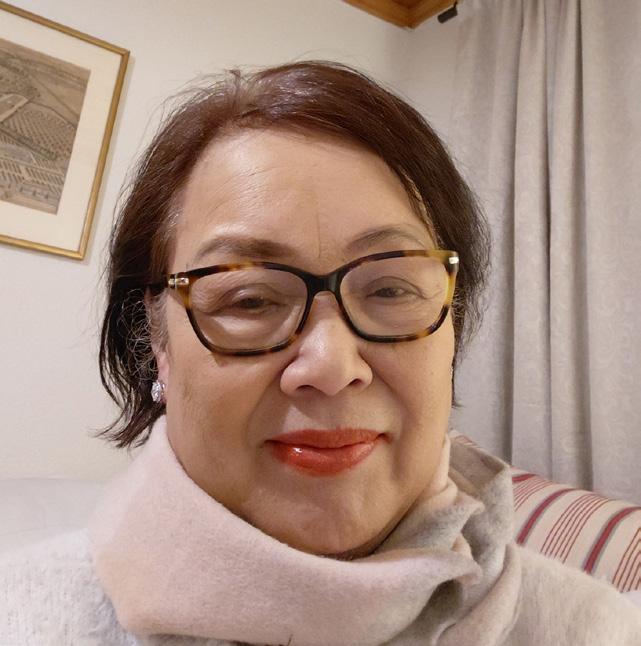
Luz LG Bergersen EDITOR-IN-CHIEF
EMAIL: LGB1312@GMAIL.COM TEL: 00 47 90130871
MEET THE TEAM P 4
HIS EXCELLENCY ENRICO T. FOS P6
CIPRIANO “ZIP” DE GUZMÁN JR. P 14
MARGO CALDERERO-LE LAIN'S GRAND PALAIS TRIUMPH P1 8
DAVID KAUFMAN STONE P 21
PHILIPPINE AMBASSADOR IN FINLAND P 24
NAYUME RIISE TAKAHASHI P 25
JOANNÉ NUGAS P2 8
LADIES OF RIZAL SWITZERLAND P 30
INTERNATIONAL WOMEN’S DAY 2026 TRIBUTE P 32
SANTO NIÑO ACROSS EUROPE: ONE FAITH, THREE NATIONS P3 7
ASH WEDNESDAY THE ICELANDIC WAY P 43
BAYBAYIN: THE SCRIPT THAT REFUSES TO BE FORGOTTEN P 45
TERNOCON P 49
“SEA MAJOR PROJECT” BAND P 51
PROFESSOR JONATHAN AREVALO COO P 53
THE PHILIPPINES STANDS WITH LGBTQIA+ FILIPINOS ABROAD P 54
THE COMMISSION ON FILIPINOS OVERSEAS P 56
NEW TEAM MEMBERS P 58
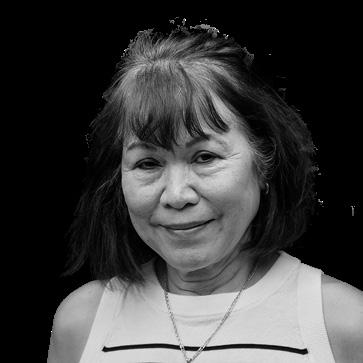
MEET THE TEAM








Roots&Wings
roots & wings filipino magazine in europe published by rachel publishing co. stockholm, sweden 2009-2025
Jennifer Fergesen associate editor, country editor, norway
Rebecca Urbančík Garcia head of social media, country editor, czech republic
Louise Baterna country editor, belgium
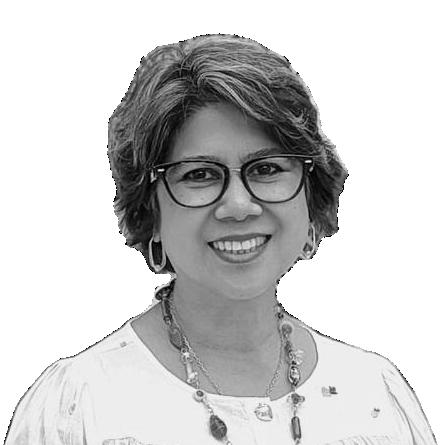
Hilda Arenas associate editor & country editor, the republic of ireland
Luz Bergersen editor-in-chief, country editor, norway member advisory council member advisory council
Rachel Hansen publisher/founder, sweden member advisory council
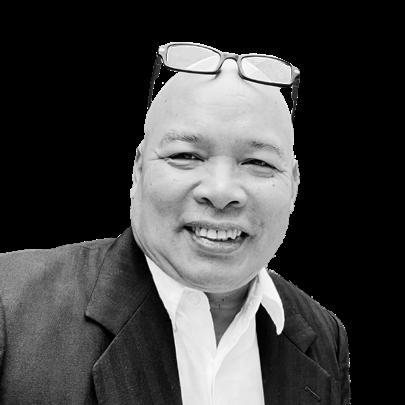
Ralph Anthony Chan country editor, austria
Jenny Hansen art director/layout, philippines
Myla Arceno country editor, uk member advisory council
Anton Miguel D. De Vera contributor, austria
MEET THE TEAM








FOLLOW US ON SOCIAL MEDIA
instagram: @raw.mags twitter: @rawmags facebook: @rawmags
youtube: @rawmags linkedin/rawmags
FEEDBACK PAGE
What do you think of our magazine? Email lgb1312@gmail.com
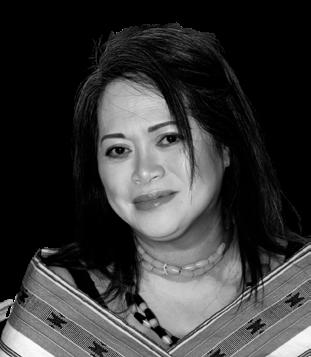
Cipriano “Zip” De Guzman country editor, luxembourg
Mildred Manuel- Vidarsson country editor, iceland
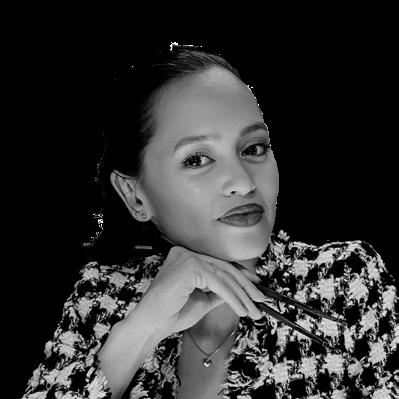
Donna Patricia Manio lifestyle & country editor, philippines
Hanna Stenbacka Köhler country editor, sweden
Aieshah Balmori country editor, poland
Dennis Manaay country editor, france
Antonina Eraida Tafalla country editor, finland
Maria Josephine Renker country editor, germany
Junart Kim Nieva assistant country editor, london, uk
Feds Murray country editor, northern ireland, uk
Jonathan Pico country editor, wales, uk
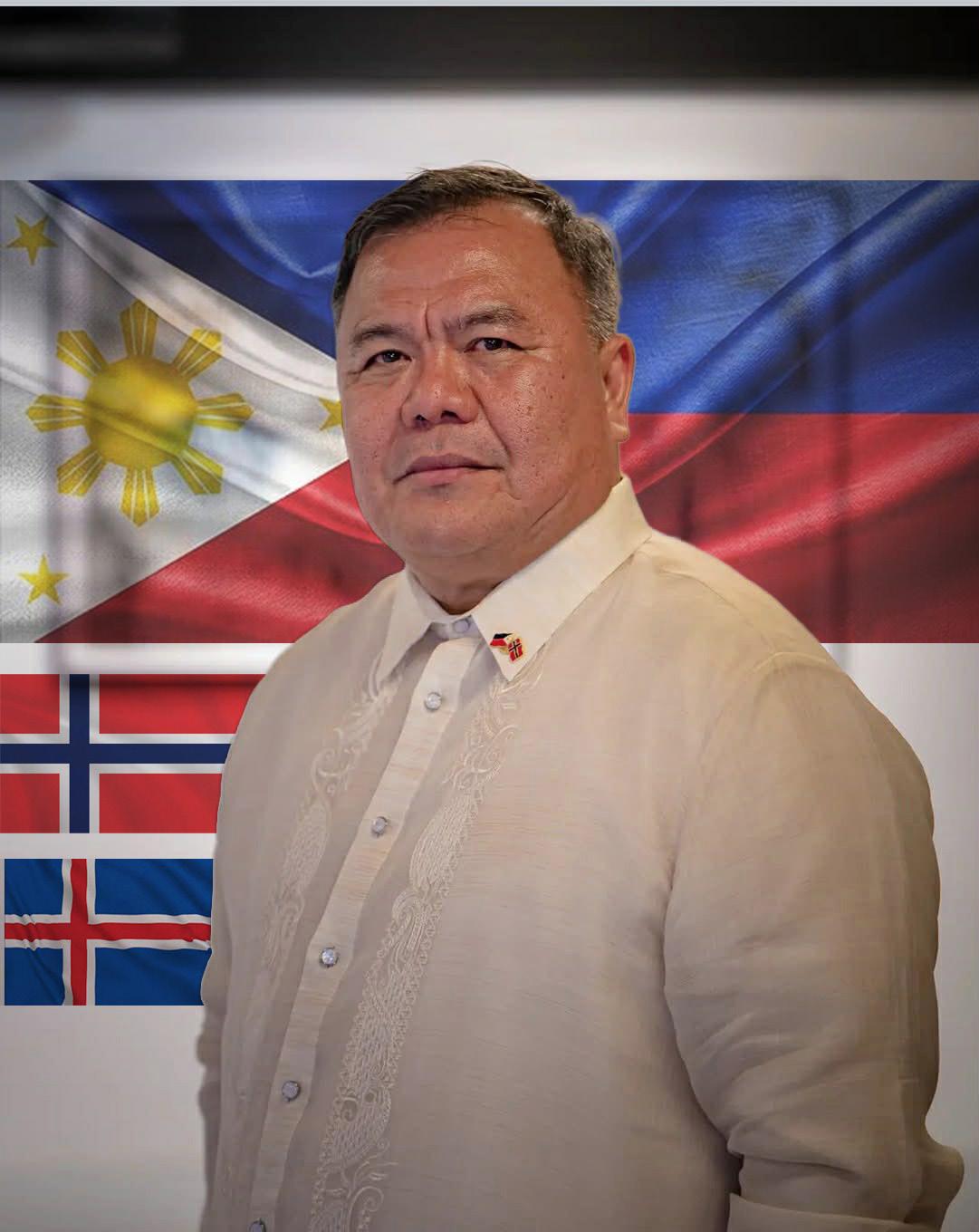
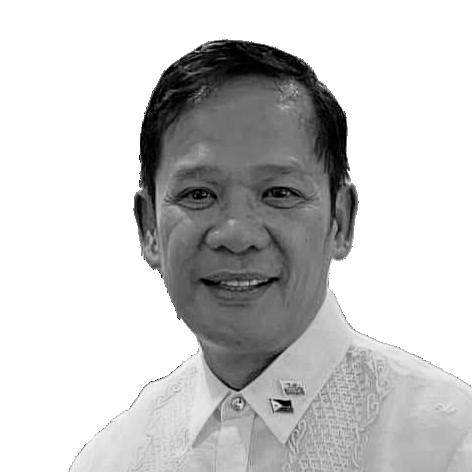
His Excellency ENRICO T. FOS
By Luz Bergersen, Norway
Roots & Wings Magazine is honoured and proud to feature in this first quarter issue, the highly respected, admired, and awarded His Excellency ENRICO T FOs Ambassador Extraordinary & Plenipotentiary of the Republic of the Philippines, to the Kingdom of Norway and the Republic of Iceland.
Now in his fifth year in current post, Ambassador Fos’ tenure is marked by his deep engagement with matters and issues on relations among the countries. Both in government and person-to-person levels, His Excellency represents the Philippines with pride, joy, and most sincere service to the country and the Filipino people wherever he may be.
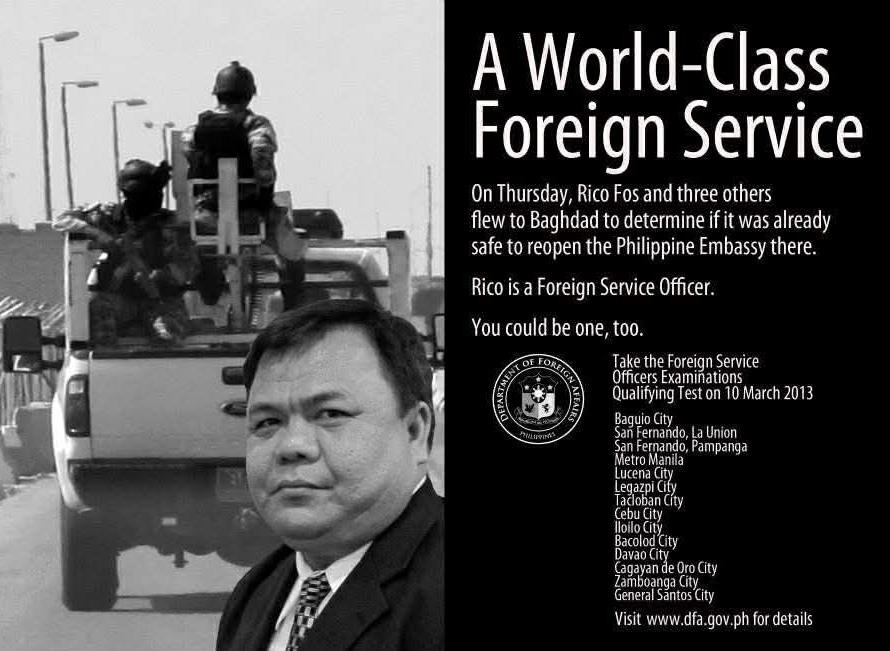
Anyone who meets the Ambassador would be impressed and feel at home with the most friendly, humble, approachable, energetic and top Filipino diplomat to come to Norway and Iceland. His Excellency has travelled the length and breadth of the two countries, on diplomatic and official levels, and also on a personal level, meeting Filipinos from all walks of life, listening to their stories, dreams, hopes and aspirations. The Ambassador reaches out to each and every one in the community. He has introduced and initiated measures and projects aimed for the betterment and improvement of the Filipino people, and the Philippines.
concurrently, as Consul General at the Philippine Consulate in Geneva. He also served as Consul at the Philippine Embassy in Washington DC, UsA, from 2002 to 2008.
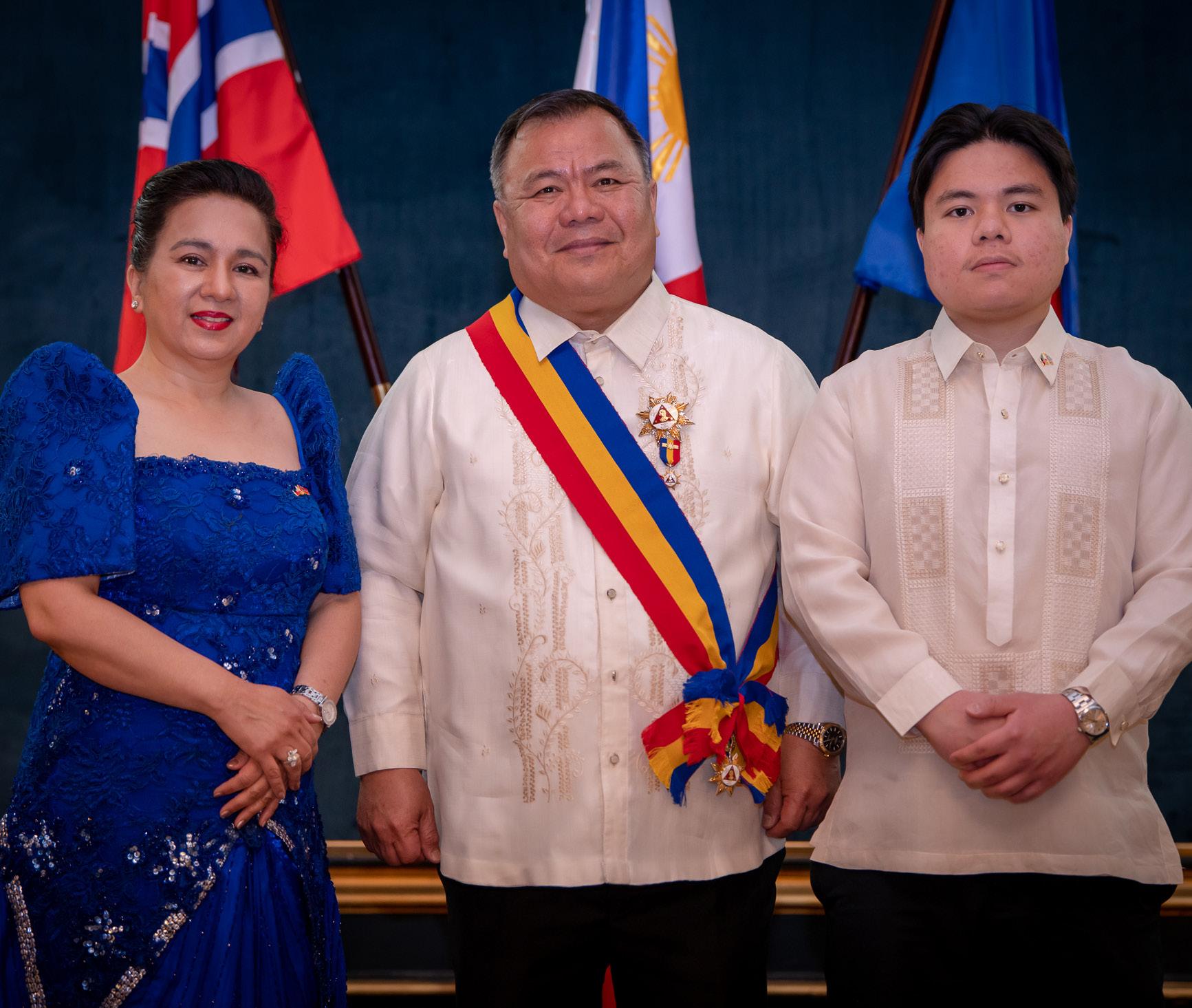
His Excellency is married to Madam Myla Antonette F. Fos, they have a son, Enrico Antonio F. Fos, Jr., 24, currently completing his studies at the BI Norwegian Business school in Oslo.
QPLEASE TELL US ABOUT THE START OF DIPLOMATIC RELATIONS BETWEEN THE PHILIPPINES AND THE KINGDOM OF NORWAY? WITH ICELAND?
Rendering service far and beyond the normal calls of duty, Ambassador Fos has received the highest honours and accolades from three Philippine Presidents — in recognition and acknowledgement of his exemplary and extraordinary services to the country and Filipino people. The Ambassador obtained his bachelor's and law degrees from the University of the Philippines, Diliman. He is a diplomat, lawyer, and public servant for almost three decades with the Philippine Department of Foreign Affairs. He has served as First secretary, and later on, as Minister at the Philippine Permanent Mission in Geneva, switzerland, 2012, and from 2015
Formal diplomatic relations with the Kingdom of Norway commenced on 2 March 1948 (78 years) while that with Iceland was on 24 February 1999 (27 years). However, the people-to-people relationship with Norway began much earlier, at around the turn of the 20th century, when Norwegian seafarers were among the crew of Dutch merchant vessels calling port in Manila for trade.
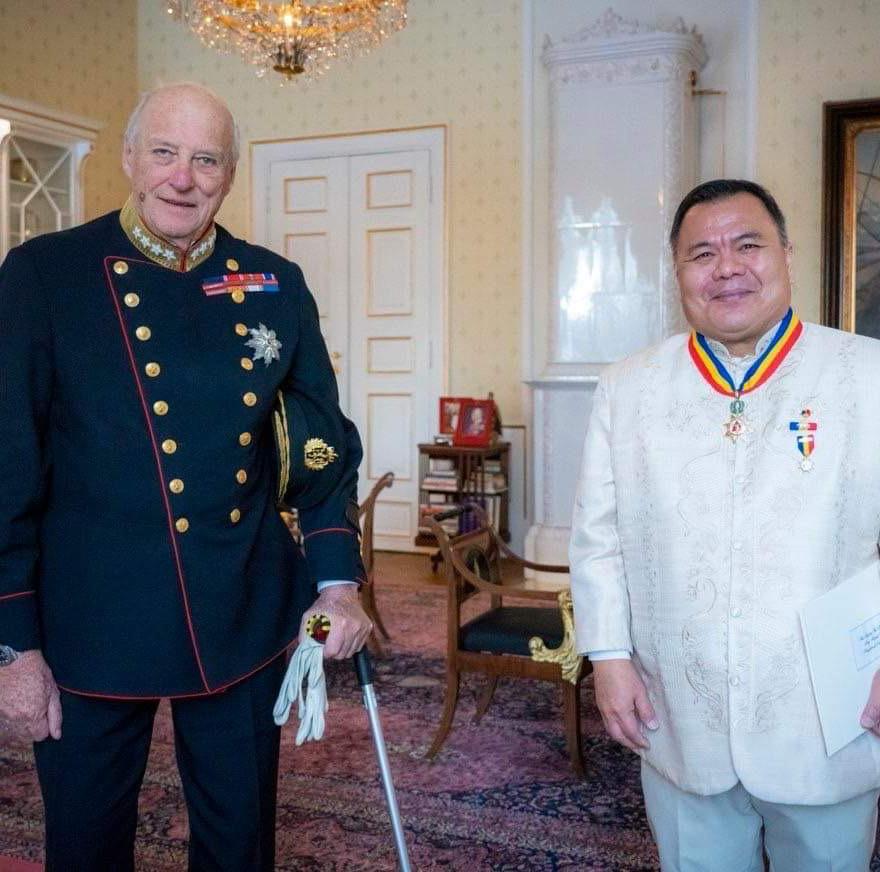
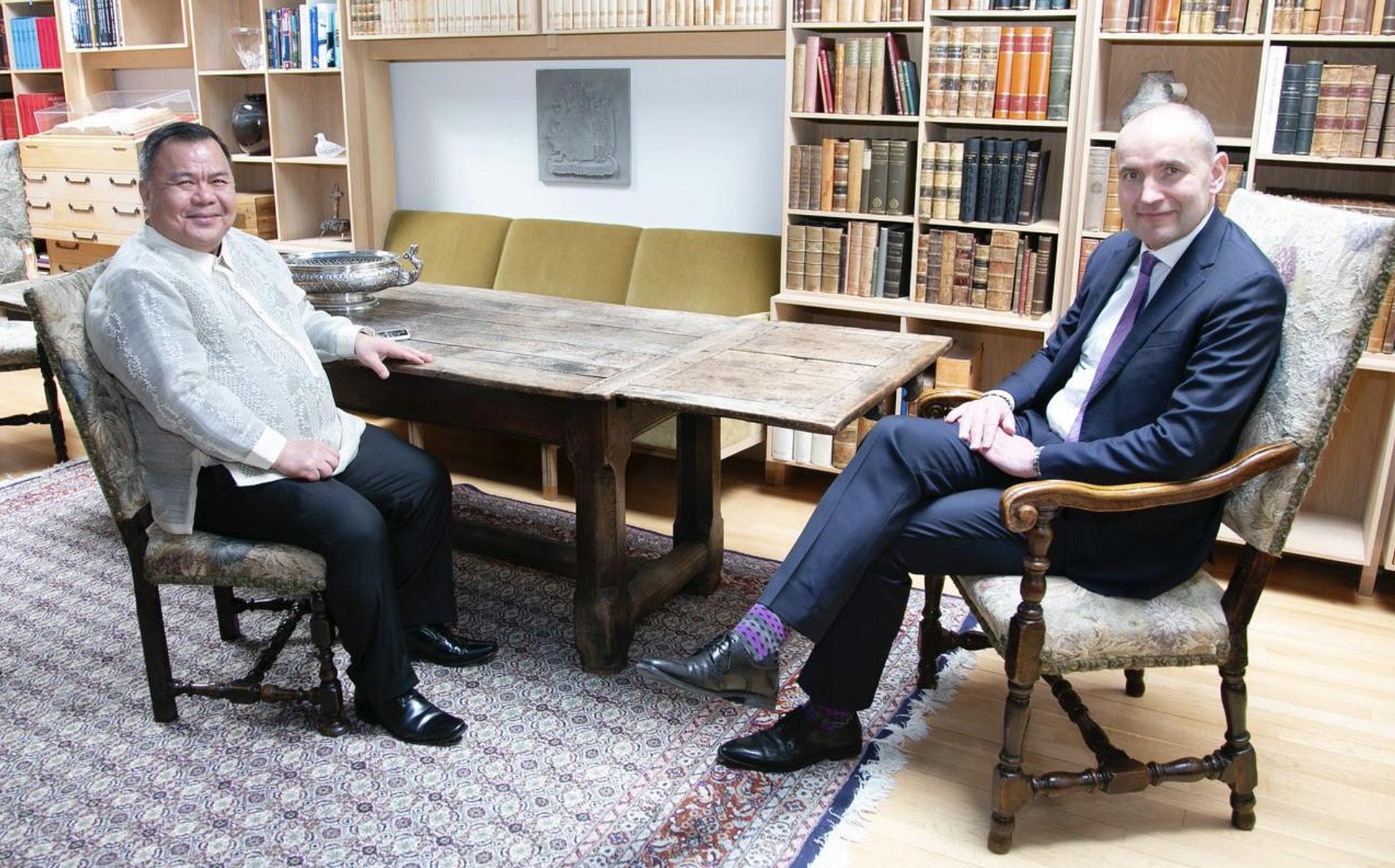
I formally started my tour of duty as Ambassador of the Philippines to the Kingdom of Norway on 2 December 2021 upon my presentation to and acceptance of my credentials by King Harald V. For Iceland, I formally started my tour of duty on 27 April 2022, upon my presentation of credentials to then Iceland President Gudni Th. Johannesson.
QWHY AND WHEN DID YOU DECIDE TO BECOME A DIPLOMAT?
I was a reluctant diplomat, actually. I was already a young lawyer in 1995 when I took the Foreign service
Officers (FsO) examination upon the invitation of a former law school classmate who joined the foreign service a year ago. After three stages—rigorous written examinations, individual, group and panel interviews, and formal dinner--I was among the 38 from around 4,000 applicants who made it.
I was then working as one of the lawyers at the University of the Philippines-Office of Legal services (UP-OLs) when I took and passed the FsO exams. so instead of immediately accepting my appointment by taking oath and starting my diplomatic career, I continued to work for the UP-OLs for a year, until my late mother convinced me to go for and try the diplomatic service. she then said: “You’re already a lawyer. Just go and try working in the diplomatic service. If you don’t like it, get out and go back to law practice”.
Almost 30 years since 1997 when I joined the foreign service, I’m still here. I have reached the pinnacle of my career in the di plomatic service-obtained the highestpossible rank (Chief of Mission, Class 1) and assignment (Ambassador Extraordinary and Plenipotentiary, for a career Foreign service Officer . since then, I have been recognized for my diplomatic work by three successive Philippine Presidents: a Presidential Citation in 2010 by then President Gloria Macapagal Arroyo; Gawad Mabini
with rank of Commander by then President Benigno Aquino III in 2013, and another Gawad Mabini with rank of Grand Cross by then President Rodrigo Duterte in 2021.
The Gawad Mabini, named after the first Philippine Foreign Affairs secretary, Apolinario Mabini, is an order of merit conferred to diplomats by the President of the Philippines for distinguished service and exemplary performance in promoting national interest, including assisting overseas Filipino workers
HIGHLIGHTS IN YOUR CAREER, SO FAR? PROUDEST MOMENTS?
Honor, competence, and commitment to serve, are my personal yardsticksthrough the years in my diplomatic career.
However, there are four things that I think stood out. First, leading the repatriation efforts of Filipinos in distress abroad during the COVID 19 pandemic. Despite the lockdown, our team, the team I led at the DFA migrant workers affairs office, was able to successfully repatriate more than 500,000 Filipinos from all over the world, facilitated the provision of
quarantine facilities for them and brought them home to their home provinces. We were also able to help establish and implement the “green lane” that allowed crew changes for maritime vessels easing the disruption of maritime traffic and ensuring continuing flow of goods and merchandise worldwide (note that a third of the world’s seafarers are Filipino seafarers). For this work both on operations and diplomacy during the pandemic, I was given the Gawad Mabini Award with the rank of Grand Cross.
second, earlier in my career, I took a leadership role in getting out of harm’s way. Filipinos who were working in the Middle East and North Africa area during the Arab spring crisis, the Fukushima earthquake and nuclear plant meltdown in Japan, and Christchurch earthquake in New Zealand, all in 2011. For the work I havedone in these crises, I was given the Gawad Award in 2013.
in getting migrants out of harm’s way in countries experiencing crisis.
Fourth. A series of major achievements reached while assigned as Ambassador to Norway and Iceland is latest highlight of my diplomatic career.
“ HONOUR, COMPETENCE & COMMITMENT TO SERVE
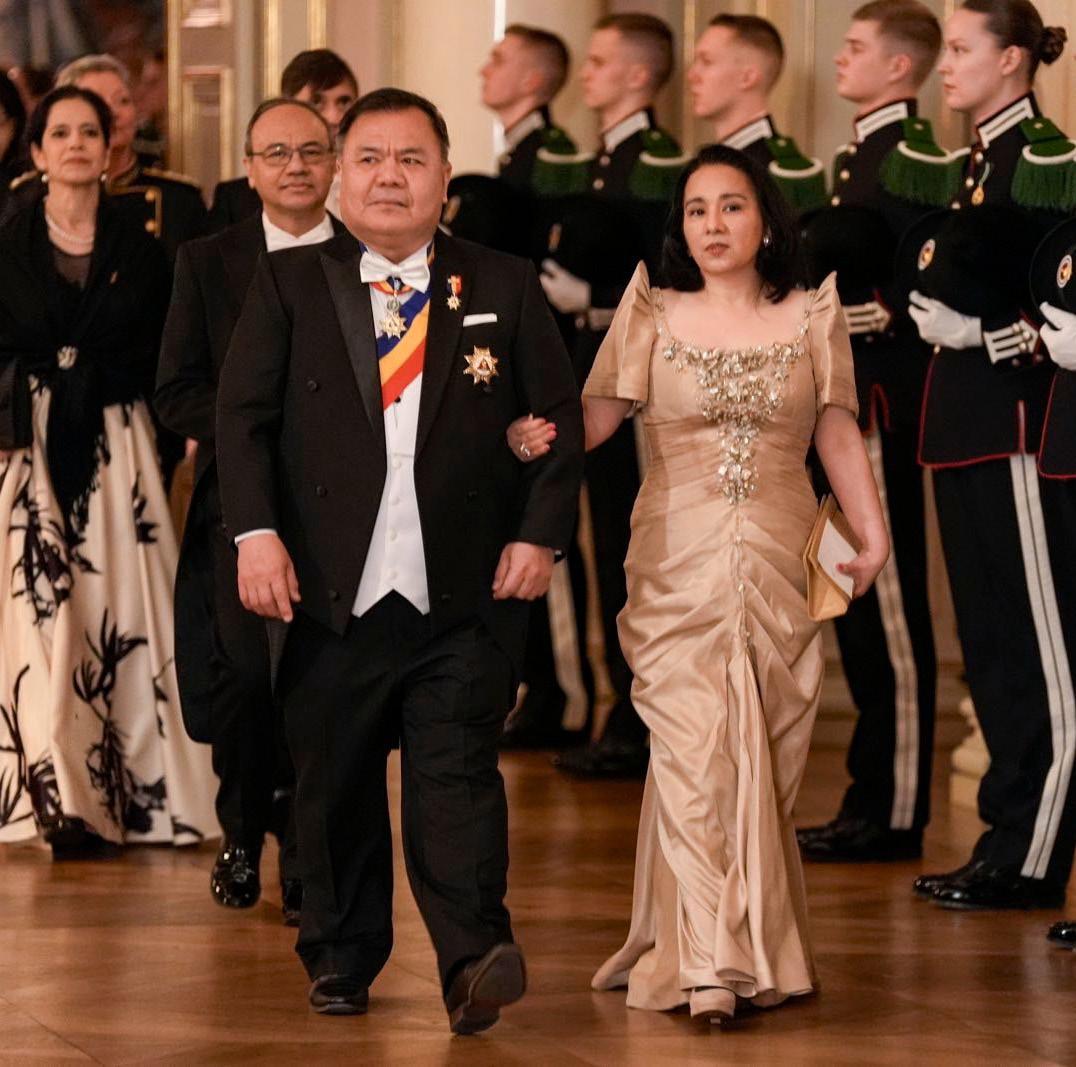
As Ambassador to Norway, I helped secure Norway’s full support for the Philippines’ on the Issue of the West Philippine sea. For the first time, Norway explicitly declared during the Philippine Independence Day Diplomatic Reception in June 2024 in Oslo, Norway that it is supporting the 2016 Arbitral Award that invalidated China’s expansive claim in the south China sea. since then Norway has been issuing statements in support of the Philippines with regard to the south China issue.
Third, as one of the lead negotiators for the Philippines, I helped craft the Global Compact for safe, Orderly and Regular Migration (GCM), which is now the globalstandard for managing international migration. I am most particularly proud of the inclusion of the labor mobility provision in the GCM, which has become the basis for reforms in Middle East countries which practices the very restrictive kafala system.
Prior to this, I was one of the experts from five countries (United states, Australia, switzerland, Bangladesh and the Philippines) that formulated the Migrant in Countries in Crisis (MICIC) guidelines of the International Organization for Migration (IOM). The MICIC is a handbook of principles and proven in the field practical guide
In 2025, a Norwegian Navy frigate joined a UK-led naval task group that sailed through the Indo Pacific and south China sea asserting freedom of navigation in the south China sea.
I also facilitated the recognition of Filipino nurses to be able to work as authorized nurses in Norway through agreements with the Norwegian government and; educational institutions by giving them the opportunity to complete the education and skills required in their workplace.
For the Filipino seafarers, I facilitated negotiations that led to the signing of a Memorandum of Agreement between the Maritime Industry Authority (MARINA) of the Philippines and the Norwegian Maritime Authority (NMA) concerning the recognition of sTCW certificates in 2024. This MOU further enabled the entry of more Filipino seafarers to Norwegian-owned or flagged vessels. The then Norwegian Maritime Authority (NMA) Director
General estimates that with the implementation of the MOA, an additional 25 thousand more Filipino seafarers will be employed in Norwegian-flagged vessels. Last year, about four thousand Filipino seafarers boarded Norwegian owned and controlled vessels.
In consular service, I implemented the cashless payment system for consular transactions in my first year as Ambassador. I also implemented the no appointment policy which allowed consular clients to avail of consular services without the need for prior appointment. These improvements were highly appreciated and applauded by the public.
We have improved the frontline services of the Embassy and made it more welcoming to clients. First, we designed the consular section as a cozy place with not just stackable chairs but also with comfortable armchairs. And second, you enter the consular section passing through a corridor with a display of cultural materials making you feel that you are in the Philippines.
We also have organized more mobile consular services - at least thrice a year in Norway and one mobile consular outreach service annually in Iceland.
On promotion of Philippine culture, I also showcased Philippine culture with a big bang. In
2023, the Embassy celebrated the 75th PhilippinesNorway Diplomatic Relations & the Philippine Independence Day Diplomatic Reception at the Oslo City Hall. It was the first time a diplomatic mission in Norway was allowed to celebrate an event in that prestigious venue. The event was also graced not only by diplomats and high government officials but also by the Mayor of Oslo bringing much prestige and pride for the Filipinos.
We have also successfully introduced the Philippine traditional fibers in Norway and Iceland, that even Norway`s candidate to the Miss Universe pageant last year donned an outfit made of Philippine traditional fabrics, as created by an Oslo-based Filipina fashion designer. It showcased the Philippine traditional fabric not only in Norway but to the entire world.
As a hands-on Ambassador and in the course of my tour of duty as Ambassador, I have met not only with the Filipino communities around Norway but with their respective Mayors to discuss common interests in integration, employment, and other economic opportunities.
I spearheaded the formation of a platform for interchurch collaboration through the “PaskongPinoy”, the festival of Filipino choirs from Christian churches frequented by Filipinos. The annual Paskong Pinoy
Concert in Norway, is collaboration of various Christian church choirs in Norway with participants coming from different parts of Norway. It also served as a platform for dialogue among Christian churches in Norway.
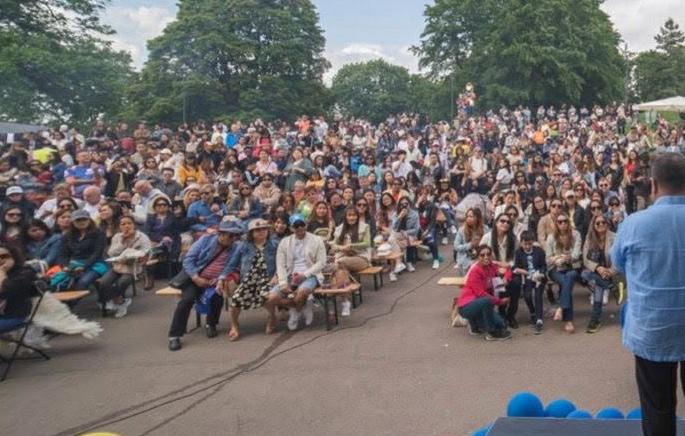
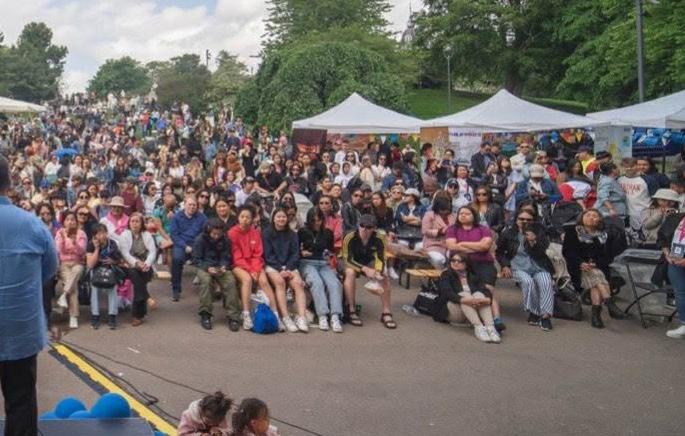
since its initial iteration in 2022, the Paskong Pinoy has become an Embassy signature event during the Christmas season attracting a 900-1000 plus crowd every year.
QHOW ARE THE RELATIONS BETWEEN THE PHILIPPINES AND NORWAY? WITH ICELAND?
The bilateral relations between the Philippines and Norway and Iceland have been strengthened over the years.
For Norway, we have deepened our maritime cooperation with the Memorandum of Agreement (MOA) on the Recognition of Training and Certification of seafarers under the Terms of the 1978 sTCW Convention, as amended which was signed on 13 May 2024 between the Philippines` Maritime Industry Authority (MARINA) and the Norwegian
Maritime Authority (NMA). This MOA will be enhanced by a follow-on agreement by MARINA and NMA on data sharing and systems integration, expected to be signed in April 2026.
The Philippine National Police (PNP) and the Norwegian Police are also set to sign a Memorandum of Understanding (MOU) on cooperation in the fight against online sexual abuse and exploitation of children (OsAEC) in April 2026. This will strengthen bilateral cooperation in the fight against sexual predators of children.
And of course the public declaration of support for the 2016 Arbitral Award on the south China sea by Norway has further strengthened the bilateral relations between the Philippines and Norway.
For Iceland, on 18 June 2024, the Philippines and Iceland entered into a MOU on establishment of bilateral consultation mechanism and had its inaugural meeting in september 2024. This is the first bilateral agreement between the two countries after 26 years of diplomatic relations. This mechanism calls for a regular meeting every two years and allows bilateral discussions on matters and concerns between the two countries.
Moreover, the Philippines and Iceland are set to negotiate and conclude an Air service Agreement in
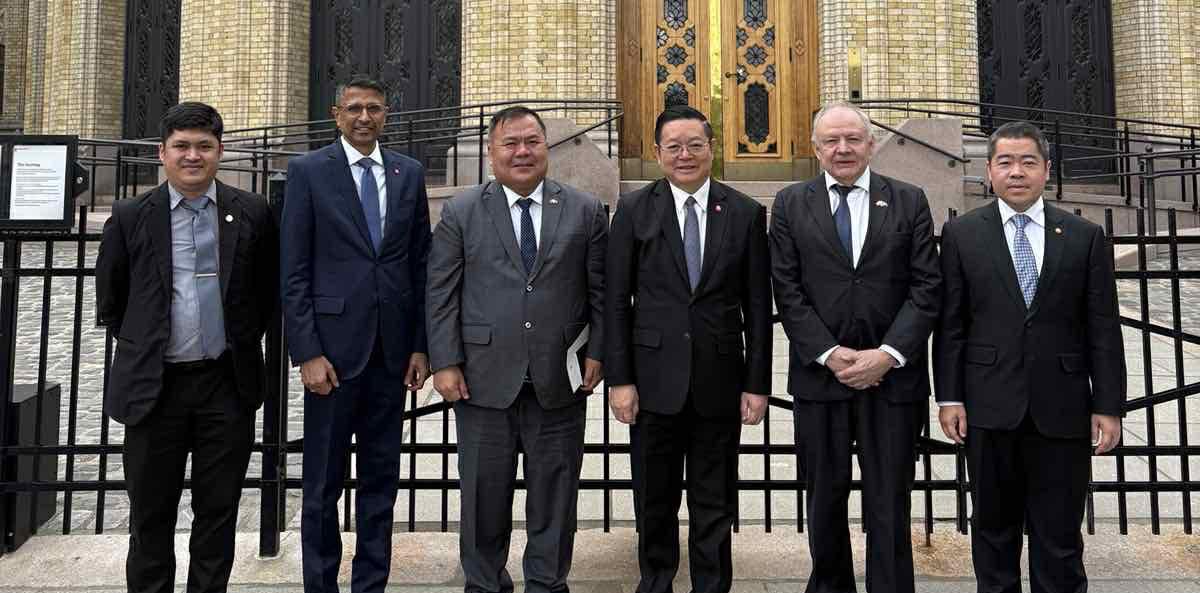
May 2026. This would open an air route between the PH and Iceland, initially on code sharing arrangement and may eventually lead to direct flights between Manila and Reykjavik.
Two way investments and trade while remaining modest, also grew in the last few years. These investments are in the renewable energy sector, particularly in offshore wind, hydro, and geothermal energy. More consumer goods have entered into each other’s markets.
Tourism traffic from Norway to the Philippines has increased to 22,000 arrivals in 2024 and is expected to grow in the years to come.
QWHAT ARE THE NUMBERS OF FILIPINOS IN NORWAY? IN ICELAND?
There is a large Filipino diaspora both in Norway and Iceland. As of the end of last year, the official number of Filipinos residing in Iceland is 2,822 people, largely women (1,854 women and 967 men), and most (at 80% or 2, 279) at working age (between ages 20 to 59 years old). Filipinos comprise around 8 percent of the total population of Iceland. Filipinos is now one of the largest migrant community and comprise around 8 percent of the population of Iceland similarly, in Norway there are 34,994 Filipinos (8,342 men; 26,652 women). In addition, the Norwegian shipowners Association estimates there are now about 29,000 Filipino seafarers employed in
Norwegian owned, controlled or flagged vessels. Most of the Filipinos in Norway are employed, with a large number in the healthcare sector, engineering and IT, particularly in the oil and gas sector.
The Filipino diaspora in both Norway and Iceland have been reinvigorated. An increasing number of Filipino-Norwegian organizations established in their respective communities all over the country organized socio-cultural and religious events showcasing Philippine culture through dances, music and artwork.
I would like to believe that this is partly inspired by the active engagement of the Embassy with the Filipino community, reaching out not only in the big cities like Oslo, Bergen, Trondheim, and Tromsø, but even those small and lesser known municipalities like Rjukan, stord, Bømlo, Fitjar, Råde, Moss, Kongsvinger, Nesodden, Nittedal, Tjøme, Farsund, Odda, Voss, Heddal, Kirkenes, Vardø, Vadsø, Narvik, Bodø, and Harstad.
In 2025, the Filipino community in Norway through the various organizations, in cooperation with the Embassy, organized and mounted 17 well attended Philippine Independence Day (PID) events, from late May to late July. This is not only unprecedented in terms of the number of activities--from two activities in 2022 when I started organizing/helping organize PID events to 17 events; from just a participant in a multinational cultural event to 17 stand alone PID themed socio-cultural events — in three years.
More importantly, the reinvigorated Filipino community events have painted a very positive image - an image of unity, organization, self-help,
and affirmative contribution to Norwegian societyfor the Filipino community in Norway.
Q
WHAT ARE THE AVAILABLE OPPORTUNITIES FOR FILIPINOS IN BOTH COUNTRIES?
In terms of employment, the health care, IT and the oil and gas sectors are still the areas where the Filipino migrants could find employment.
Q
CAN YOU TELL US ABOUT THE TRADE BETWEEN THE COUNTRIES, APPROXIMATE VOLUME, AND WHAT PRODUCTS ARE INTERESTING? HOW ARE THE INVESTMENT AND TOURISM AREAS?
My tour of duty is ending next year. Looking back, I think I have made a lot of progress in forging stronger relations between the Philippines and Norway and Iceland.
We have had key bilateral agreements as enumerated above which were forged during my tenure.
We have engaged not only the national government but also numerous local governments. Of particular note is the fact that I always bring with me the local Filipino organization whenever I engage with local government officials - to introduce our community and to offer the Filipino community assistance in the spirit of bayanihan or dugnad for kommune activities - which has resulted in continuing interaction between the local Filipino community and the cities and municipalities.
We organized several cultural activities showcasing both Philippine-based and Norway and Iceland-based Filipino artists. We have successfully introduced the Philippine traditional fibers in both Norway and Iceland.
We have organized a platform for inter-faith collaboration through the “Paskong Pinoy”, the festival of Filipino choirs from Christian churches frequented by Filipinos.
We have vastly improved the frontline services of the Embassy and made it more welcoming to clients which were highly appreciated by Filipino community and other consular clients of the embassy.
YOU HAVE DONE A LOT DURING YOUR TERM OF OFFICE. WHAT MORE DO YOU WANT TO ACHIEVE DURING YOUR AMBASSADORSHIP?
We are still working on more key bilateral agreements with Norway on labor, portability of social security benefits and security; and with Iceland on avoidance of taxation and labor migration.
THANK YOU VERY MUCH YOUR EXCELLENCY, FOR SHARING YOUR MOST VALUABLE TIME AND INSIGHTS TO RAW MAGS READERS. IN CLOSING, CAN YOU SHARE A SPECIAL MESSAGE TO THE EURO-PINOYS, OR FILIPINOS IN GENERAL?
I encourage Filipinos in Europe to continue to be competent, trustworthy and patriotic and contribute positively to our host communities in Europe.
Note: The Philippine Embassy in Norway is centrally located at Nedre Vollgate 8, 4th Floor, 0158 Oslo, close to Parliament and main government offices.
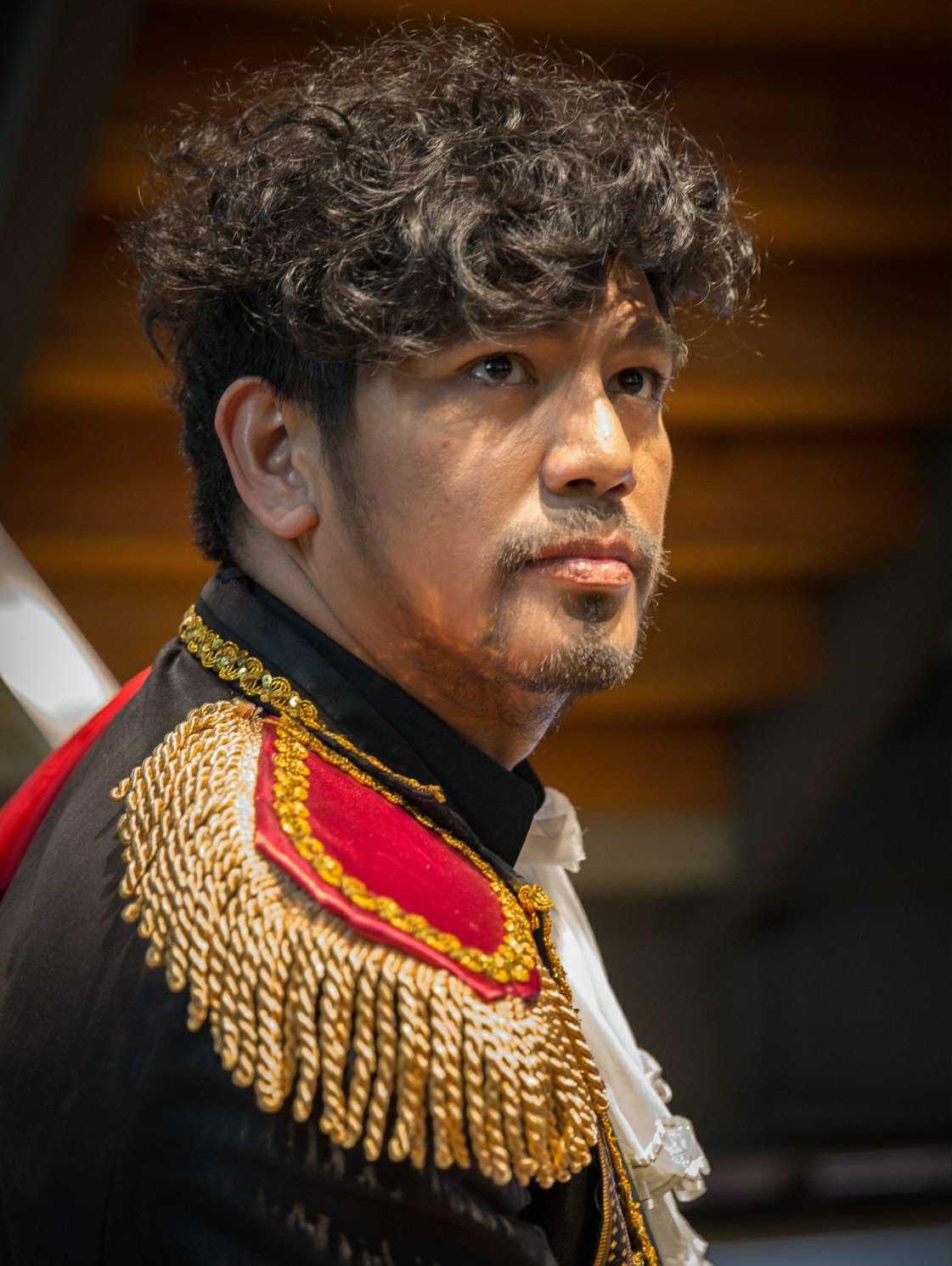
CIPRIANO “ZIP” DE GUZMÁN JR.
The Filipino Baritone, Shines on the World Stage
By
An Opera Singer, Chorister and Music Educator
Feds Murray, Country Editor, Belfast, Northern Ireland, UK
Hailing from one of the oldest cities in Metro Manila, Pasig, Philippines, Cipriano “Zip” De Guzmán Jr. grew up with music in his soul. At age 16, he joined the church choir in Pasig. When he was studying Communication Arts in college, he mustered all his courage and worked with passion by joining The University of the East Chorale which gave him an opportunity to sit-in during the rehearsals of the famous Madrigal singers. In 2001, he was inspired to take extension classes in the University of the Philippines College of Music Extension Program. Zip was toying with an idea of becoming an English teacher when he stumbled upon a life-changing opportunity to work in Thailand. However, a sudden plan took over — his love for music prevailed — he enrolled and started taking formal music classes at the Conservatory of Music in the University of santo Tomas (UsT) in June 2006.
When Zip stepped into the University of santo Tomas for the first time, he did not expect the great opportunities which were on the horizon. He was offered a minor role as “Monsieur Guillot” and a place in the chorus in the first full opera production of the Conservatory of Music in september 2006, Pyotr Ilyich Tchaikovsky’s beloved opera, “Eugene Onegin”, which was staged at the Cultural Center of the Philippines’ Main Theater. It didn’t take long after his enrolment before he was included in several opera productions, concerts, and events of the conservatory. His voice mentors at the UsT Conservatory, Prof. Randy Gilongo, Jun Jaranilla, and Maestra Irma Ponce-Enrile Potenciano incredibly helped him during his formative years in the conservatory. In 2012,
Zip graduated with a Bachelor’s Degree in Music Education Voice Emphasis minor in Piano, Cum Laude. He was able to perform again at the Cultural Center of the Philippines’ Main Theater in the co-production opera of the CCP and Daejeon Opera Company, Giuseppe Verdi’s “La Traviata”. He was given the minor role of “Marquese d’Obigny”.
Zip continued to travel an extraordinary path — facing and surmounting difficult challenges along the way — to harness his natural vocal instrument with an unstoppable pursuit of excellence in his craft through sheer hard work and unrivalled determination. He went as far as New York from the Philippines to take vocal lessons from a famous teacher. Despite deflating and mocking criticisms which are harsh realities in the music industry, Zip remained zealous. He was not deterred by his detractors. Passion, focus, resilience, hard work, and professionalism are Zip’s undeniable qualities. When asked how he became very successful and conquered global stages, he expressed, “I always believe that hard work always beats talent. I wasn’t born with a talented voice like many other Filipinos — mine was not of sheer luck and talent — what you are seeing now is a byproduct of sweat, tears, and blood — of pure hard work. There are millions of talented people but the only way to outshine the talented is to relentlessly work as if your life depends on it - no excuses, no luck, and nobody will save you but yourself. People will only see the tip of the iceberg so you better work tirelessly.”
In 2013, Zip had the opportunity to perform his first lead role outside of the Philippines, in Georges Bizet’s opera, “Carmen” — he played the main role of
“Escamillo”. In 2013, The New strait Times Malaysia published an article which described him as the Filipino baritone, Cipriano De Guzmán Jr. — “the charming and debonair Escamillo who easily steals the heart of Carmen from Don Jose”. This marked the beginning of his international career — he performed in many hugely successful concerts far beyond the Philippines. He graced international stages in Malaysia, singapore, Thailand, Guam, Canada, the United states, Japan, and all over Europe with his musical prowess.
Zip attained his first Master’s Degree in Music - Vocal Performance - with Distinction (st. Cecilia Award) at Elisabeth University of Music in 2015 in Hiroshima, Japan, where he performed extensively in the university as a soloist in Handel’s “Messiah”, and in various opera productions of Hiroshima City Opera. He clinched 2nd Prize at the 10th Yokohama International Music Competition, special prizes at the 8th Tokyo International Vocal Competition, and the prestigious Espoir Prize in the Lieder Category at the coveted 18th Osaka International Music Competition. He earned his second Master en Interpretación de Òpera from the Conservatori superior de Música del Liceu in Barcelona, studied under the tutelage of Joan Martín-Royo, and received opera coaching from the renowned mezzo-soprano, Teresa Berganza.
De Guzman has been creating nothing short of a luminous career throughout the years. He is a world-class opera singer, chorister, and music educator based in the Grand Duchy of Luxembourg. He has garnered acclaim by winning prizes in prestigious international vocal competitions in different cities across the globe such as
New York, London, Rome, Tokyo, Osaka, Yokohama, Lugano, Barcelona, and salzburg. Notably, he became the first Filipino to be a two-time winner at the American Protégé International Music Competition — he performed at the Weill Recital Hall of Carnegie Hall in New York City in 2016 and 2017.
During the Covid pandemic, Zip was living in Andorra la Vella, Principality of Andorra. He sang with the Andorra Lírica (Opera d’Andorra). In 2022, he moved to Luxembourg where he received his business license in 2024, and opened his own music school, the Accademia Musicale Cipriano s.à.r.l.-s, a hub for artistic excellence, in Differdange, Luxembourg. He is also a Professor of singing at Centre d’Education Musicale Altrimenti in Luxembourg City. He performed his first operetta in the Luxembourgish language, “An der schwemm”.
In 2024, the 19th Congress of the Philippine House of Representatives passed House Resolution No.266 “Commending Filipino Classical Musician Cipriano De Guzmán Jr., whose dedication in investing himself to classical music has brought honor to the theater industry of the Philippines.” At the same time, the City Government of Pasig, Metro Manila, honored him with the “Gawad Parangal sa mga Natatanging Pasigueño 2024” in the Culture and the Arts Category (Music).
Zip won First Prizes at the Grand Prize Virtuoso Competition in July 2024. He also performed at the Petit Palau de la Música Catalana Barcelona and solitär Mozarteum salzburg. In 2025, he became part of Fondation EME Luxembourg at the Philharmonie Luxembourg and performed
in the circus opera production, “Lene fliegt ins Zirkusland”, at the Luxembourg Philharmonie.
On December 15, 2025, Zip won the Best Male Filipino Artist Based Abroad Award at the 38th Aliw Awards held in Manila Hotel, Philippines. He also won the Best Male Performance in a Concert at the 35th Aliw Awards in 2022 in Manila, Philippines. In 2019, he became the first Filipino classical singer nominee in the Best male Classical soloist Category at the 16th BOH Camerion Arts Awards in Kuala Lumpur, Malaysia.
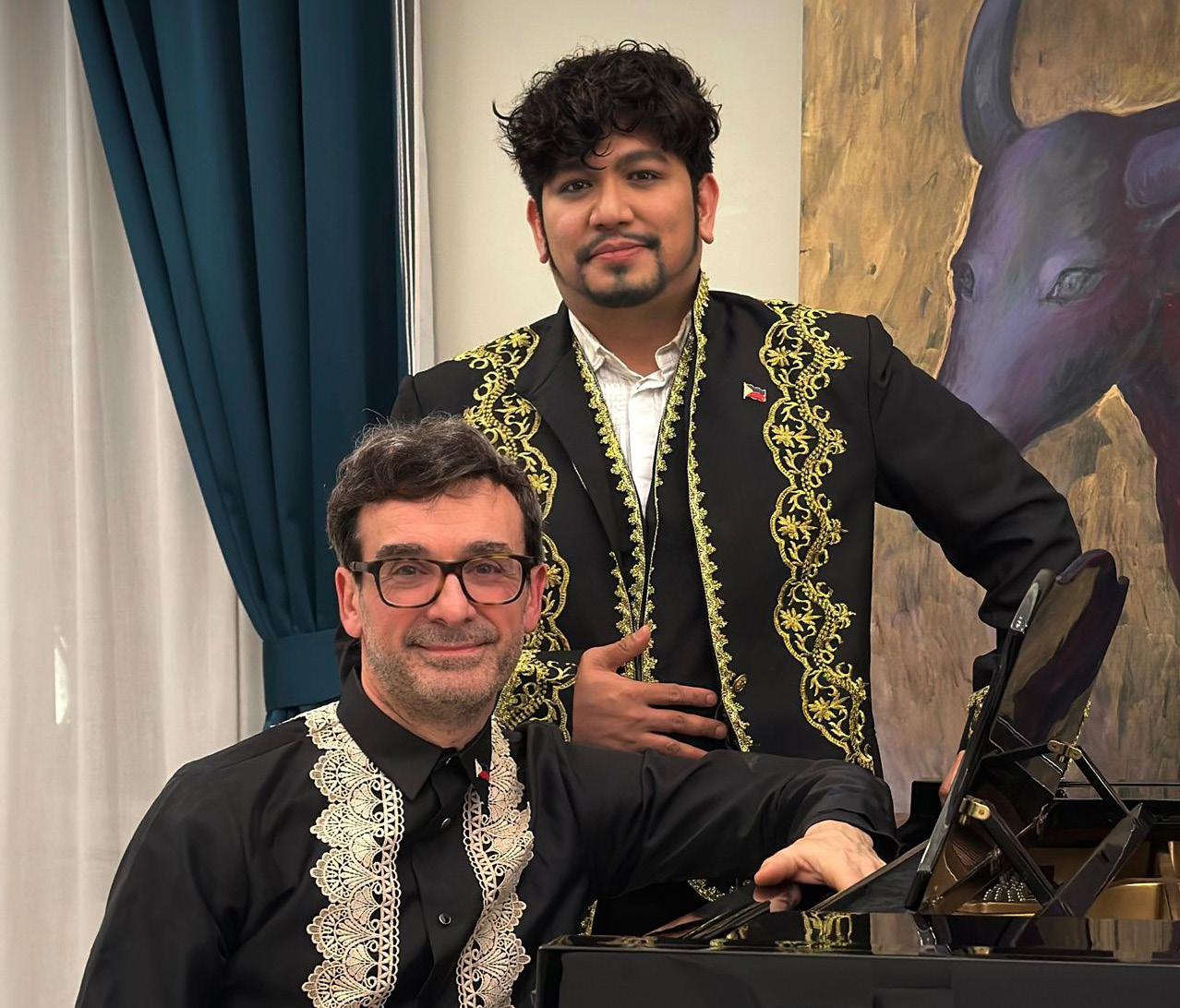
Cipriano De Guzmán Jr. performed in Rome on 12 February 2026 at the Philippine Embassy in Rome’s Valentine concert, “Arias for Eros II: Love songs from Italy,
the Philippines, and the World” which was held in Chancery’s social Hall. He was featured as an acclaimed opera singer along with a distinguished Italian pianist, Maestro simone Maria Marziali, of the Accademia Verdiana di Carlo Bergonzi in Busseto. According to a press release from the Philippine Embassy in Rome, “Held on the eve of Valentine’s Day, the concert offered an evocative musical journey across cultures, languages, and generations—celebrating the universal language of music while highlighting the rich traditions of the Philippines and Italy in song.
From the heartfelt strains of “Júrame” by María Grever and the immortal French classic “La Vie En Rose,” to the operatic brilliance
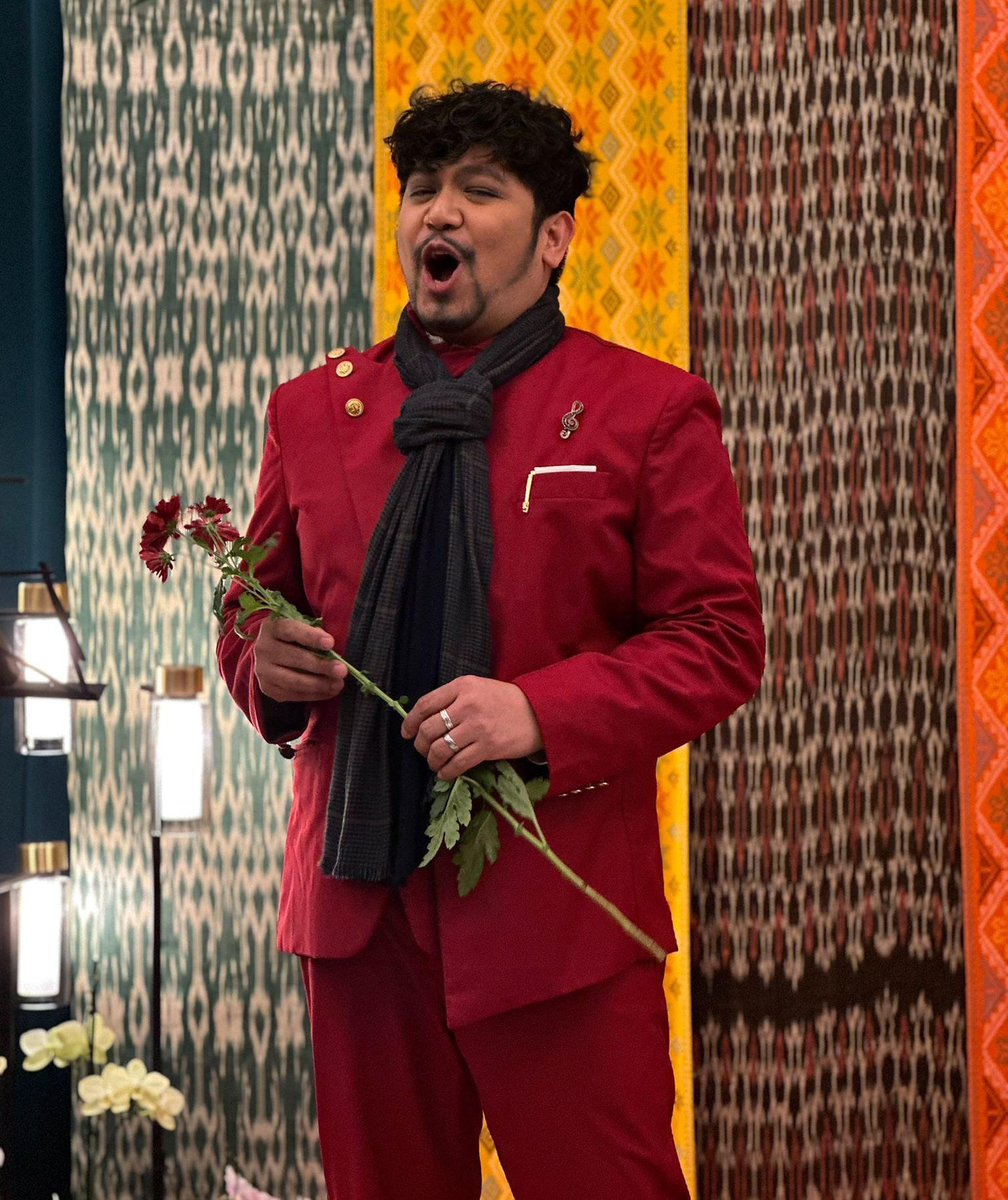
of Donizetti’s “Bella siccome un Angelo” from Don Pasquale, De Guzman’s rich baritone resonated powerfully within the Chancery halls. Italian favorites such as “O sole Mio, Con Te Partirò”, and Morricone’s hauntingly beautiful “Cinema Paradiso (se)” further enthralled the audience.
The program also paid tribute to the Philippines’ rich musical heritage, featuring “Minamahal Kita” by Miguel Velarde Jr., “Pobreng Alindahaw” arranged by Philippine National Artist for Music Lucio D. san Pedro, and the enduring OPM classic “sana’y Wala ng Wakas” by Willy Cruz — pieces that drew warm appreciation from both Filipino and Italian guests alike.
During the intermission, Maestro Marziali showcased his virtuosity with stirring piano interpretations from Puccini’s “Manon Lescaut” and Mascagni’s “Cavalleria Rusticana”, further elevating the evening’s artistic depth.
In his remarks, Philippine Ambassador to Italy Neal Imperial said that “The concert, spanning arias from Italy, the Philippines, and the wider world, reminds us that while our languages may differ, the emotions that move us are shared. In hearing these arias and love songs side by side, we are invited to listen not only with our ears, but with our souls — to recognize ourselves in one another.”
The Ambassador underscored that the concert formed part of the Embassy’s celebration of the Philippines’ National Arts Month, anchored on this year’s theme, “Ani ng sining: Katotohanan at Giting” (“Fruits of the Arts: Truth and Bravery”). He emphasized that the arts are not merely decorative expressions, but vital forces that give voice to truth, inspire courage, and build bridges across
cultures. Highlighting music as one of humanity’s most powerful connectors, the Ambassador noted that long before borders were drawn and treaties signed, melodies travelled across nations, expressing shared human experiences of love, longing, joy, and hope.
The event gathered members of the diplomatic corps, Italian officials, and leaders from both the Italian and Filipino communities, underscoring the Embassy’s continuing commitment to cultural diplomacy and people-to-people engagement.
Through initiatives such as this concert, the Embassy also seeks to highlight Filipino artists based in Europe and promote Filipino talent on the international stage. Through music, the evening strengthened bonds between Italy and the Philippines, demonstrating how culture transcends borders and unites communities.
With “Arias for Eros II”, the Philippine Embassy once again reaffirmed its role as a platform for cultural exchange—celebrating
artistic excellence, showcasing Filipino talent, and strengthening the enduring friendship between the Filipino and Italian peoples.”
On every aria or song that Zip sings, the exceptional control, emotional depth, and unique timbre always shine through. On every vocal lesson that he teaches every student, his artistry, expertise, and experience instil a life-long and meaningful music education.
Beyond the stage, De Guzmán is very committed to philanthropy, channeling concert proceeds to charitable initiatives in the Philippines and funding higher education for underprivileged students in Mindanao, Philippines. He currently serves as the Luxembourg Country Editor for Roots and Wings Magazine and Press Relations Officer for the University of santo Tomas Conservatory of Music Alumni Association.
Cipriano “Zip” De Guzmán Jr., the Filipino Baritone, is truly a force to be reckoned with.
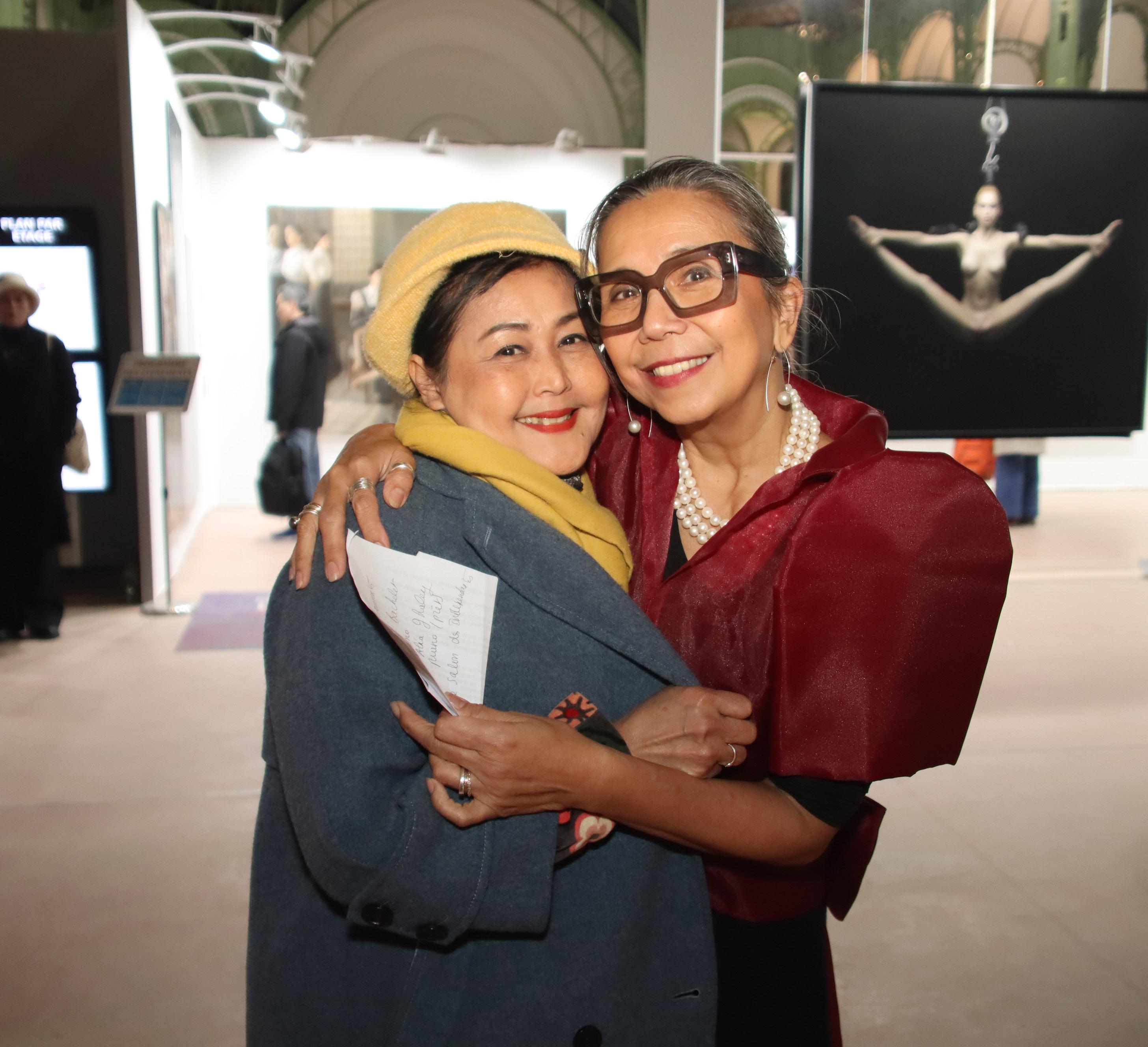
GRAND PALAIS TRIUMPH
BY DENNIS MANAAY, COUNTRY EDITOR FRANCE
PARIS — During Art Capital 2025, the Grand Palais witnessed something extraordinary. From February 12 to 15, amid hundreds of international artists, one Filipina stood out — not just for her art, but for her heart.
Margo Calderero-Le Lain had transformed one of France's most prestigious venues into more than an exhibition. On February 13, the event began in the afternoon with a special conference at the Philippine Embassy in Paris honoring the life and legacy of the late Filipino artist Macario Vitalis — a tribute that connected past and present, homeland and diaspora. That evening, her "Night of Art and Music" became an immersive celebration where paintings conversed with live performances, where Filipino talent claimed its place alongside European masters, and where resilience met elegance beneath the Grand Palais's iconic glass dome.
"Where I come from, helping others is part of our upbringing," Margo says. Her words carry the weight of a journey that began in Mauban, Quezon, Philippines, and led to the cultural capital of Europe.
FROM MAUBAN TO THE GRAND PALAIS
Margo's path to Art Capital was not paved with privilege — it was built on community values, quiet determination, and an artist's eye that never forgot where it first learned to see.
Growing up in Mauban, Quezon, she absorbed more than tropical landscapes and vibrant colors. she
learned that art and service aren't separate callings — they're two expressions of the same generous spirit.
When life brought her to France, those values traveled with her. They shaped not just what she painted, but why.
WHEN ART BECOMES EXPERIENCE
The February 13 "Night of Art and Music" was months in the making. As both featured artist and lead organizer, Margo curated more than a gallery show — she orchestrated a dialogue between disciplines, a showcase of Filipino excellence on an international stage.
Beneath the Grand Palais's soaring architecture, visual art met musical performance. Filipino talent shared the spotlight with international voices. Attendees moved between stillness and sound, between canvases that spoke of home and melodies that carried them there.
But for Margo, the evening's success wasn't measured in prestige alone.
Different cultures meeting as equals under one roof.", she explained.
The symbolism wasn't lost on the diverse crowd that filled the venue — or on the artist who made it possible.
ACCES: THE PURPOSE BEHIND THE PAINT
Behind the Grand Palais glamour lies the reason Margo creates at all.
she is the founder of ACCEs, an association supporting underprivileged children in the Philippines, Tanzania, and Uganda through
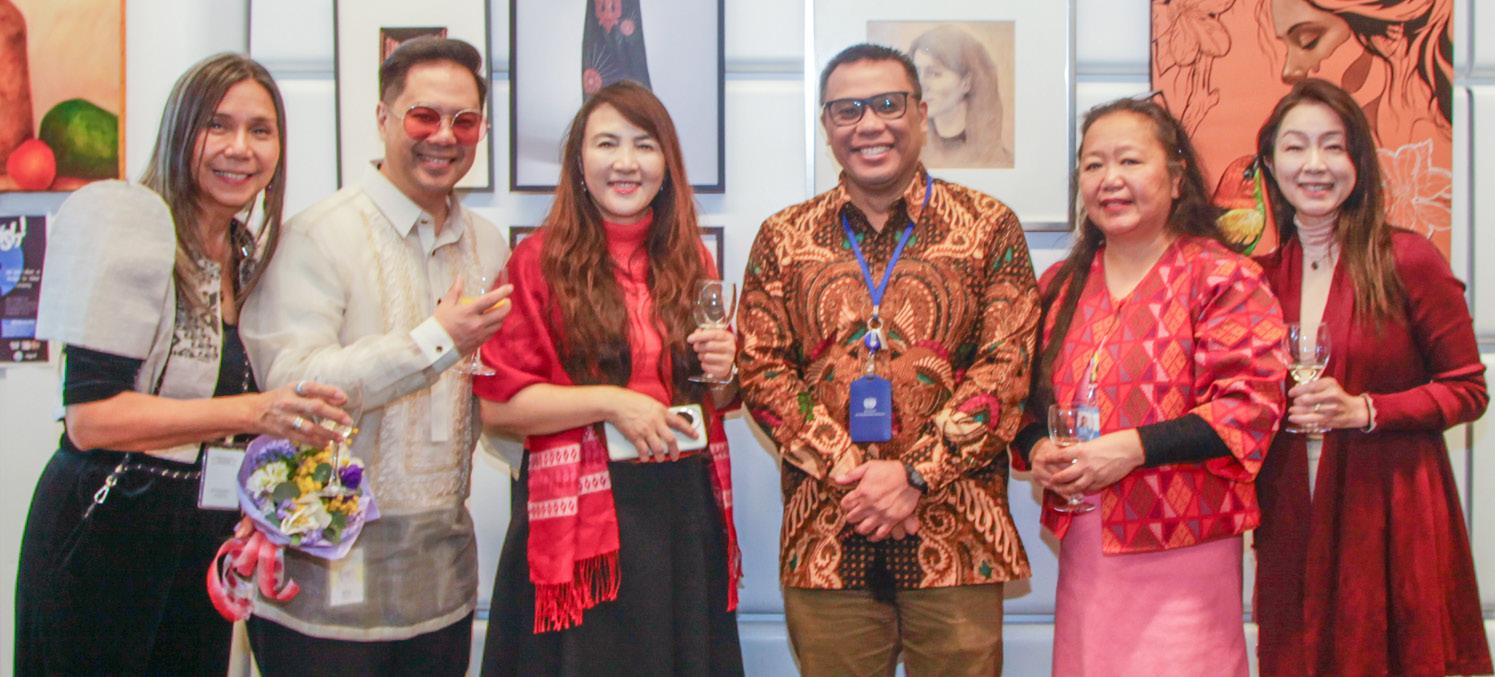
educational assistance, school supplies, tuition fees, and mentorship. Born from what she calls "gratitude and responsibility", ACCEs represents Margo's commitment to children who face barriers she once knew too well.
Art gave her the possibility to give more — and visibility in France. ACCEs gives that visibility meaning.
Through fundraising events and community partnerships, she channels success into scholarships. Gallery proceeds become school supplies. International recognition becomes a local opportunity.
"Art gave me visibility," Margo reflects. "ACCEs gives my work purpose."
LIVING BETWEEN TWO WORLDS
Managing international exhibitions while running a humanitarian organization across three continents would overwhelm most people. Margo makes it look like choreography.
she moves between Parisian art circles and outreach programs in the Philippines, Tanzania, and Uganda. Between creative expression and organizational leadership. Between her paintings and the communities where she serves. Her secret? Balance rooted in values.
Family, cultural pride, and faith guide her decisions. Her family — both in France and in the Philippines
— remains her sanctuary, the place where she returns to herself between the demands of dual missions.
A MASTERPIECE STILL UNFOLDING
Margo's vision extends far beyond the Grand Palais success. she plans to continue ACCEs's outreach programs, giving children tools to discover their own paths and voices.
In France, future editions of "A Night of Art and Music" are already taking shape with friends and collaborators, with plans to deepen impact and broaden international participation.
Under that radiant glass dome in February, hundreds witnessed an artist who gives more than she receives. But those who know Margo's full story recognize something more profound at work.
she isn't just creating art. she's building bridges — between cultures, between privilege and need, between the girl from Mauban, Quezon, and the woman lighting up France.
That's the kind of masterpiece that takes a lifetime — and Margo Calderero-Le Lain is just getting started.
Margo Calderero-Le Lain's work can be viewed through her association ACCES, which continues to accept support for educational programs in the Philippines, Tanzania, and Uganda.
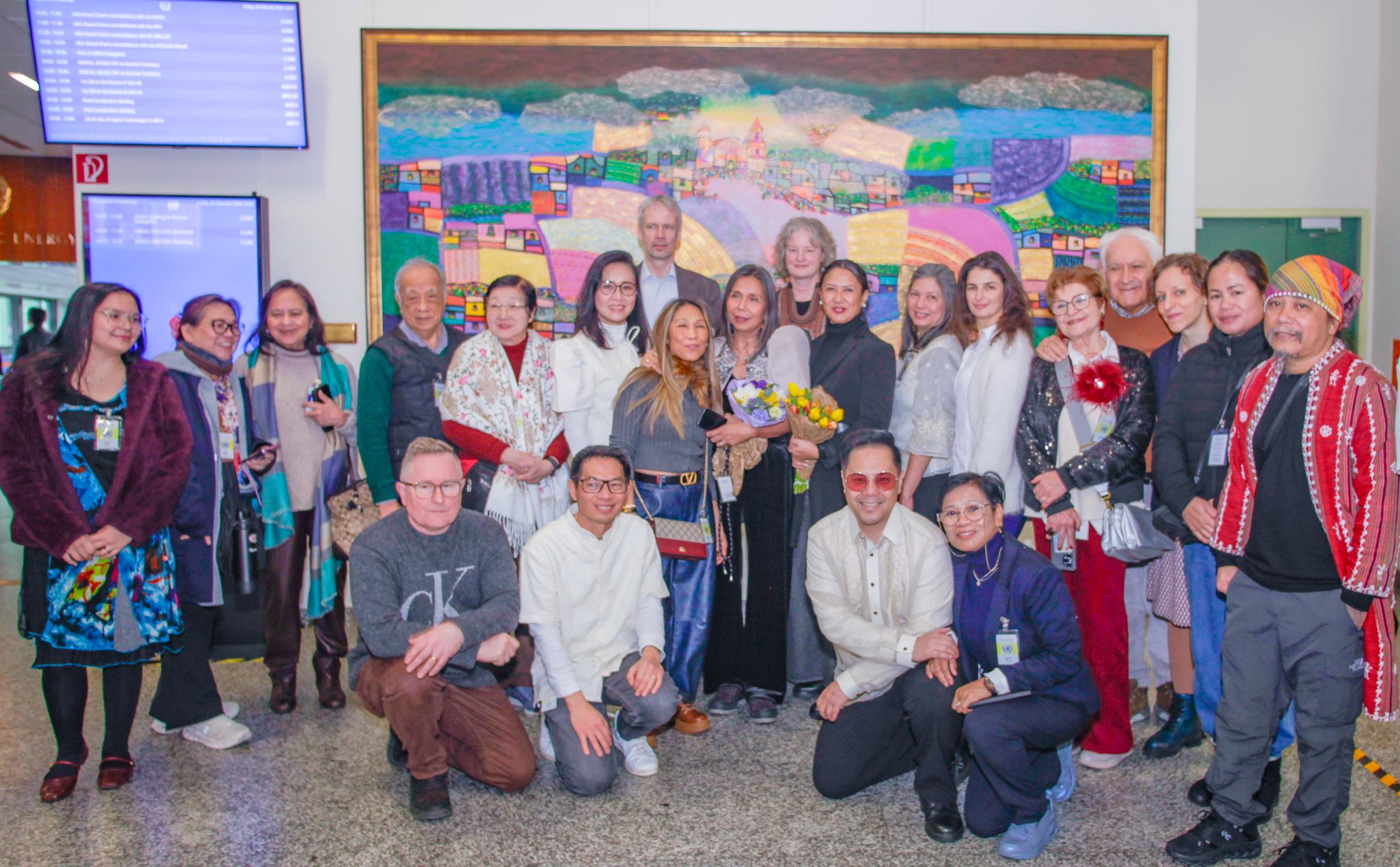
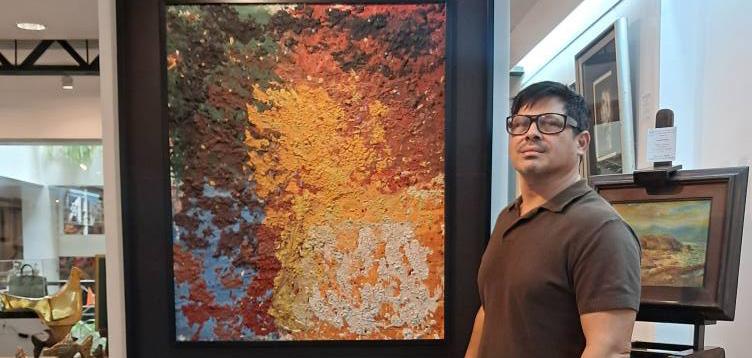
DAVID KAU FM AN STONE
By Maria Josephine Renker, Country Editor Germany
David Kaufman stone is a contemporary artist of Filipinospanish descent whose work spans abstract painting, photography, mixed media, and sculpture. Educated at De La salle University's College of saint Benilde in Manila and a postgraduate of the University of Oxford, he brings a rare combination of academic rigour and creative freedom to everything he makes.
Beyond the canvas, Kaufman is the founder of one of the Philippines' most respected architectural stone companies — a business built over 30 years on collaboration with the country's leading architects on some of its most prestigious private, commercial, and institutional projects.
Today, he maintains active art studios in both Manila and
Madrid — exhibiting across the Philippines, spain, Germany, and Indonesia — carrying the pulse of Filipino identity into galleries around the world.
His work does not ask you to simply look. It asks you to feel.
Following the success of his exhibition at ARTMUC in Munich from May 1–4, 2025, Filipino artist David Kaufman stone continues to bring the pulse of Manila’s streets to the European art scene.
Blending intimate street photography with bold expressionist abstraction, Kaufman transforms everyday Filipino faces into emotionally charged canvases that resonate across cultures. His work bridges continents – from Tagaytay to Madrid to Munich –while remaining deeply rooted in Filipino identity and human connection.
In this Q&A, Kaufman reflects on vulnerability, authenticity,
artistic chaos, and what it means to carry the stories of Manila’s streets into European galleries. Q
YOU HAD A MUNICH EXHIBIT THAT INTRODUCED EXPRESSIONIST ABSTRACTION AS A FRESH PERSPECTIVE ON FILIPINO ART. WHAT ELEMENTS OF MANILA’S STREET LIFE FOUND THEIR WAY INTO YOUR CANVASES HERE IN GERMANY?
My artistic process involves intimate street photography, where I capture the essence of Filipino individuals within their vibrant context. Each photograph serves as a crucial reference during my painting process. I have always made it a point to remember each person I have encountered, along
with the unique moments shared with them. Consequently, every painting I create is a tribute to the Filipinos I deeply respect and admire. I find them to be the most compelling subjects in the world.
Q
IN “NAKED STREETS AND NAKED DISTORTION”, VULNERABILITY SEEMS TO ECHO THROUGH YOUR TITLES. WHAT DO YOU BELIEVE GETS “EXPOSED” IN YOUR ART WHEN PLACED IN A EUROPEAN CONTEXT LIKE MUNICH?*
The final artwork represents only half the story. When I present the painting alongside the photograph of the person who inspired it, the narrative becomes complete. While my subjects often include those living on the streets or facing hardship, I aim not to showcase their suffering. Instead, I focus on celebrating their humanity and the stories etched into their faces. My intention is not to make political or moral statements; rather, I seek to capture their inherent beauty.
Q
YOUR WORK OFTEN DANCES BETWEEN “STRUCTURED CHAOS” AND EMOTIONAL RAWNESS. HOW DO YOU DECIDE WHEN A PIECE IS FINISHED — OR IS IT MORE ABOUT SURRENDERING TO THE UNFINISHED?
I intentionally leave some areas of my work unfilled and let them resonate with me. When I overwork a piece in an attempt to achieve a photographic level of detail, the
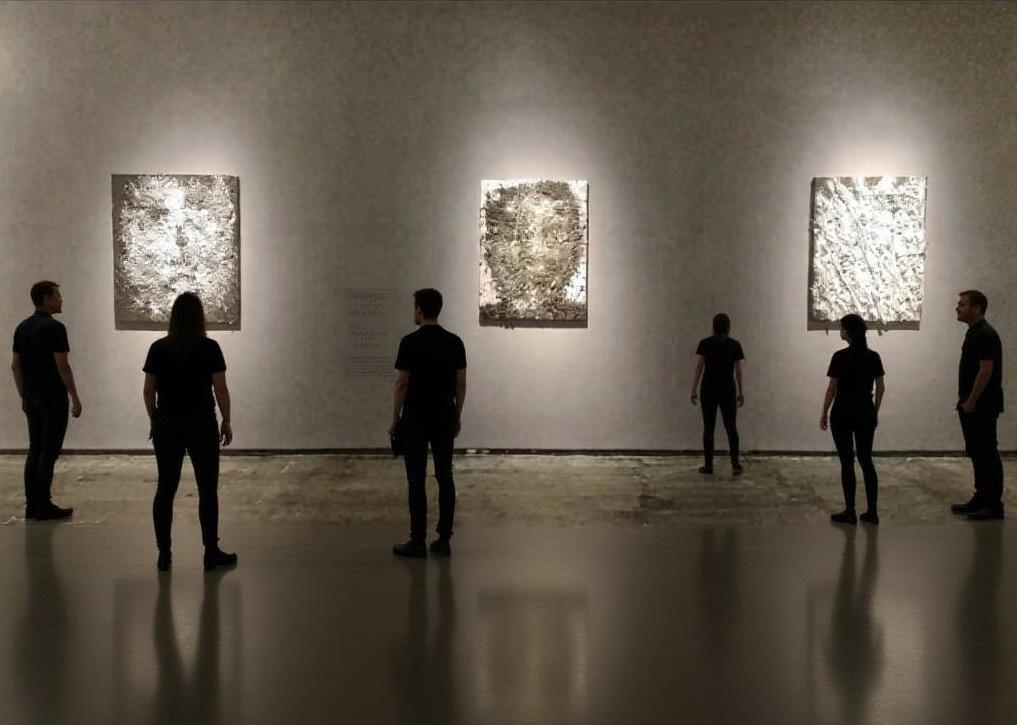
result often feels compromised. I embrace the rawness of the artistic process, allowing a single stroke to fade naturally, rather than concluding abruptly. This approach invites an element of randomness, akin to the splashing of paint, enriching the artwork with an organic quality that reflects the chaos I often encounter in my artistic process.
QFROM TAGAYTAY TO MADRID TO MUNICH, YOUR JOURNEY SPANS CONTINENTS. WHAT PART OF YOUR FILIPINO IDENTITY FEELS MOST CHALLENGED — OR MOST AMPLIFIED — WHEN CREATING ABROAD?
My Filipino identity often finds itself both challenged and amplified when creating abroad. Living in different countries exposes me to diverse artistic perspectives and methods, which can sometimes feel at odds with my cultural roots. Yet, this very contrast serves to amplify my identity, as I draw more deeply from my experiences, traditions, and the essence of my homeland. Each piece I create abroad is infused with the richness of my Filipino heritage while also evolving through the new contexts
I find myself in, creating a unique blend that reflects both worlds.
QYOUR TRANSITION FROM STONE ENTREPRENEUR TO FULL-TIME ARTIST MIRRORS THE TENSION BETWEEN PERMANENCE AND SPONTANEITY. HOW HAS WORKING WITH STONE INFORMED YOUR APPROACH TO PAINTING AND MIXED MEDIA?
My background in working with architectural stone taught me the importance of precision, structure, and permanence, as every project comes with stringent design specifications and zero tolerance for error. However, in my painting and mixed media practice, I relish the spontaneity of creating art myself. While I no longer work with stone in that capacity, the principles of commitment and foundational structure I learned inform my approach to composition and technique in painting. Adapting to new environments, I have embraced materials like spray paint and various art supplies that differ from what I used in Manila, yet I continue to paint portraits of Filipinos, ensuring
that my work is a continuous thread connecting my artistic journey across the globe. Q
IF ONE OF YOUR PIECES FROM THIS EXHIBIT COULD SPEAK IN THE DIALECT OF MANILA’S STREETS, WHAT WOULD IT SAY TO A GERMAN VIEWER ENCOUNTERING FILIPINO ABSTRACT ART FOR THE FIRST TIME?
If one of my pieces could communicate in the dialect of Manila’s streets, it would convey the message that Filipino art deserves recognition as cutting-edge and innovative, parallel to any Western contemporary art. There is often a misconception that Filipino artists are solely focused on traditional themes like classical family portraits. My work challenges that stereotype, showcasing the vibrant and sometimes unconventional spirit of Filipino creativity. I hope viewers can see that we also embrace the chaotic beauty that comes with artistic exploration, just like any artist in the Western art scene. Q
HAVING STUDIED IN MANILA AND OXFORD AND PAINTED IN MADRID, YOU EMBODY A TRUE CULTURAL HYBRID. HOW DO YOU NAVIGATE THE RISK OF LOSING AUTHENTICITY WHILE EMBRACING GLOBAL INFLUENCES?
I always bring my photographs of Filipino people wherever I paint. I no longer photograph spanish individuals, as my close-up style does not resonate with them. I
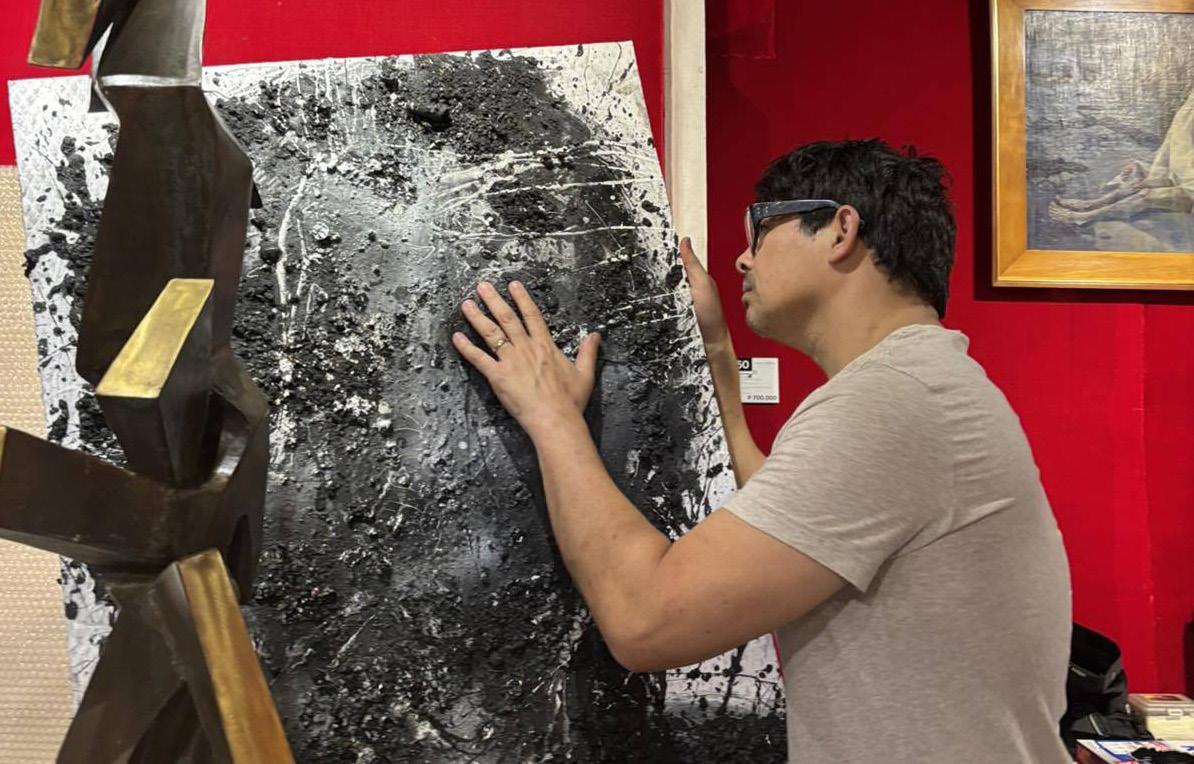
focus solely on intimate portraits, often taken just 12 inches from their faces, ensuring my work remains deeply personal and authentic.
QWHAT WAS THE MOST UNEXPECTED REACTION OR INTERPRETATION YOU’VE RECEIVED FROM A NONFILIPINO AUDIENCE ABOUT YOUR WORK - AND HOW DID IT RESHAPE YOUR VIEW OF THAT PIECE?
It is refreshing when audiences connect with my art without needing words. Regardless of our cultural differences, the artwork creates a shared understanding. This connection makes me feel like a brother to viewers, highlighting our common humanity.
Q
THE TITLES OF YOUR EXHIBITS — TAG 4120, NAKED STREETS — EVOKE CODES AND INTIMACY. WHAT ROLE DOES NAMING PLAY IN BRIDGING THE ABSTRACT WITH THE PERSONAL IN YOUR ART?
I choose titles that resonate visually and meaningfully with what I wish to express. A fellow
artist once connected with one of my titles, highlighting our shared experiences despite our different backgrounds. Naming is a bridge that connects my work to others.
QAS A MENTOR FIGURE TO YOUNG FILIPINO ARTISTS EYEING THE GLOBAL SCENE, WHAT IS ONE MISCONCEPTION ABOUT “MAKING IT INTERNATIONALLY” YOU WISH YOU COULD DISMANTLE THROUGH YOUR OWN EXPERIENCE?
It is crucial for artists to find and stay true to their own artistic voice, regardless of external opinions. Financial stability is key, as many artists struggle to make a living. A secure income allows you to pursue your art freely without compromise, especially since showcasing work can be costly both internationally and at home.
BUILDING BRIDGES THROUGH WORK AND SOLIDARITY: Philippine Ambassador joins JHL’s Filipino Night in Helsinki
By Anne Tafalla, Country Editor Finland
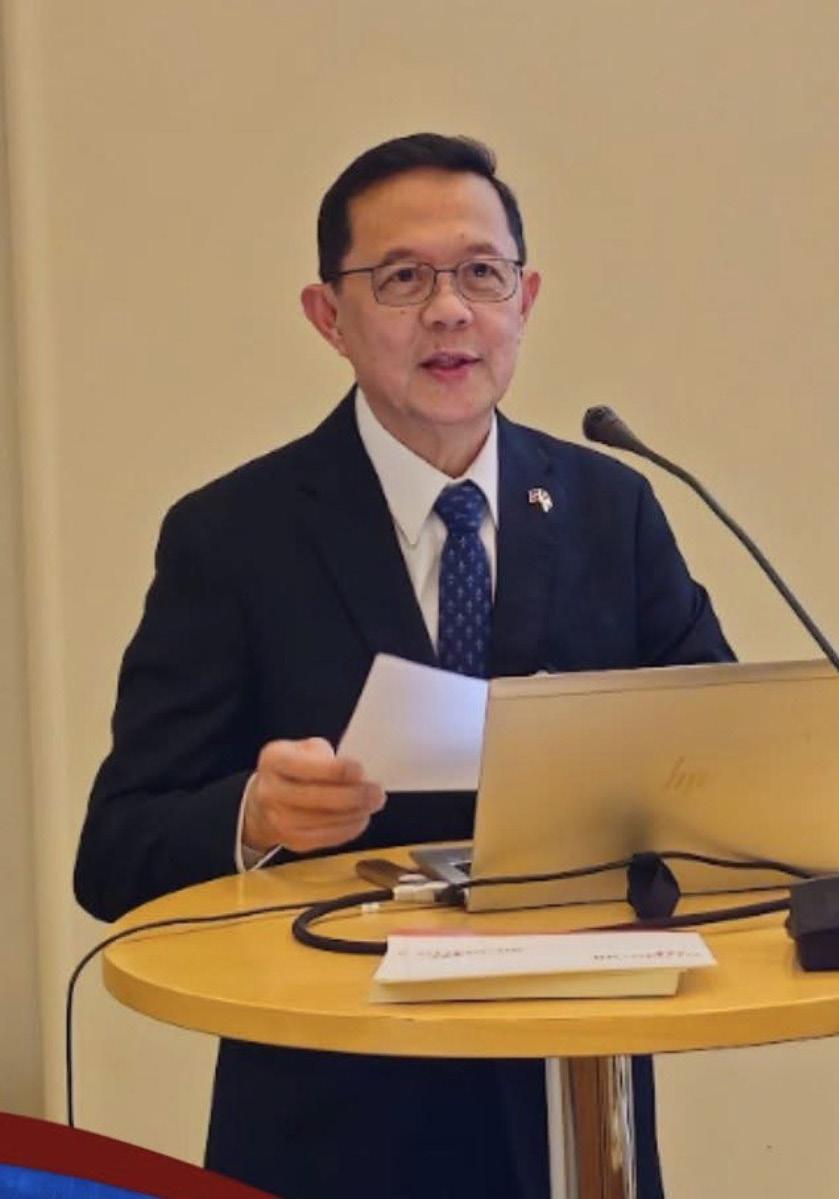
On January 21, 2026 in Helsinki, the spirit of community and solidarity took center stage as Philippine Ambassador to Finland Domingo Nolasco attended Filipino Night, an event organized by the Finnish Trade Union for Public and Welfare sectors (JHL), Finland’s largest union representing workers in the public and welfare sectors.
The gathering celebrated not only Filipino culture, but also the shared values that bind workers and communities across borders. In his remarks, Ambassador Nolasco emphasized the essential role of trade unions in upholding dignity in work, advancing social justice, and protecting the welfare of all workers — regardless of nationality. He noted that these principles reflect Finland’s long-standing commitment to equality, inclusion, and human rights, values that resonate deeply with the Philippines as well.
Ambassador Nolasco paid tribute to the many Filipino workers who have become an integral part of Finland’s public welfare system. He said, “Through their dedication, professionalism, and compassion, Filipinos contribute daily to the well-being of Finnish society and the communities they serve. Beyond their professional contributions, Filipinos also play a meaningful role as cultural bridges, fostering understanding and strengthening ties between the Philippines and Finland.”
The Ambassador also reaffirmed the Philippine government’s commitment to working closely with Finnish authorities to ensure that Filipino workers are protected and empowered. This includes promoting fair labor practices, ensuring access to reliable information, and creating opportunities for skills development and career advancement.
Concluding his remarks, Ambassador Nolasco emphasized the importance of collective action. He
stressed that meaningful progress is achieved when trade unions, governments, and communities work together to safeguard workers’ rights and ensure that everyone — regardless of background — is treated with dignity and respect.
Filipino Night served as a reminder that behind every welfare system are workers whose labor, values, and shared humanity continue to build stronger, more inclusive societies.
NAYUME RIISE TAKAHASHI
Commercial Pilot (Captain), and Le Cordon
Bleu Grand Meny Chef
Interview by Luz Bergersen, Editor-in-Chief & Country Editor Norway
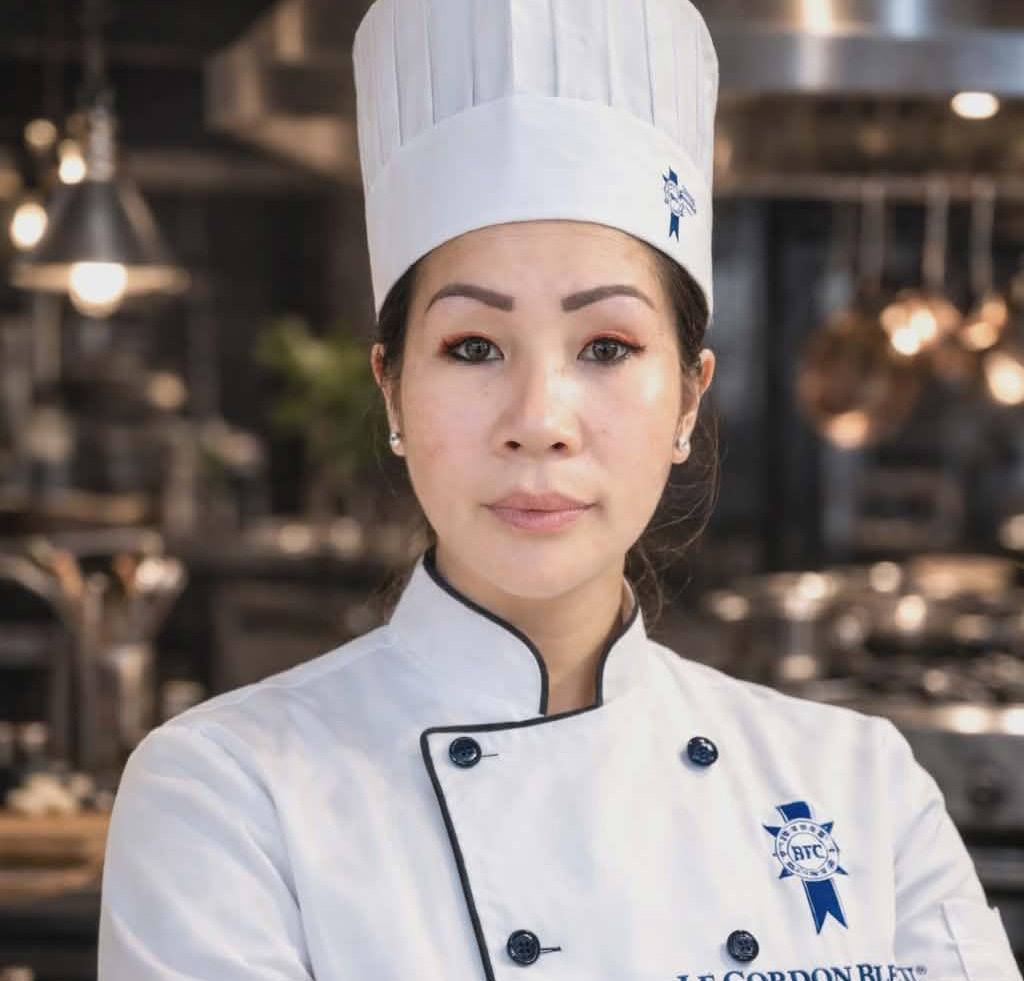
It is not every day that one meets a lady who is both a Commercial Pilot (Captain), and a Grand Diplôme Chef from the College of Culinary Arts, Le Cordon Bleu Paris! Both are very demanding, expensive careers, requiring years of study, dedication and training.
so, who would not be mesmerized when meeting Nayume -Filipina-Japanese - who is exactly that?
Roots& Wings Mag is proud to introduce Captain Nayume who shares her story and experiences with us. Many young women searching for a career path may find inspiration in her story.
Whether wearing her Pilot Captain hat, or Grand Chef hat, Nayume, a remarkable woman and mother to three grown-up daughters, exudes beauty, professionalism, and quiet discipline.
Nayume is a Captain for Norwegian Air and Emirates Airlines. When not in the skies, Nayume is a passionate Le Cordon Bleu Paris Grand Meny chef! Q
PLEASE TELL US ABOUT YOUR BACKGROUND. WE UNDERSTAND YOU ARE FILIPINO/JAPANESE?
Becoming a chef was most suitable for my situation, so I pursued this and it has shaped who I am today!
“Being a pilot can be very enjoyable, as the view never gets old! Even taking off and landing is exciting and satisfying! You get to visit different countries and cities, and one of our greatest achievements is keeping our passengers safe and sound as we land.
WOMEN AS PILOTS?
Yes, women are capable of being pilots. Being a pilot is not about physical strength, it is about knowledge, training, discipline, situational awareness, and the ability to keep calm under pressure.
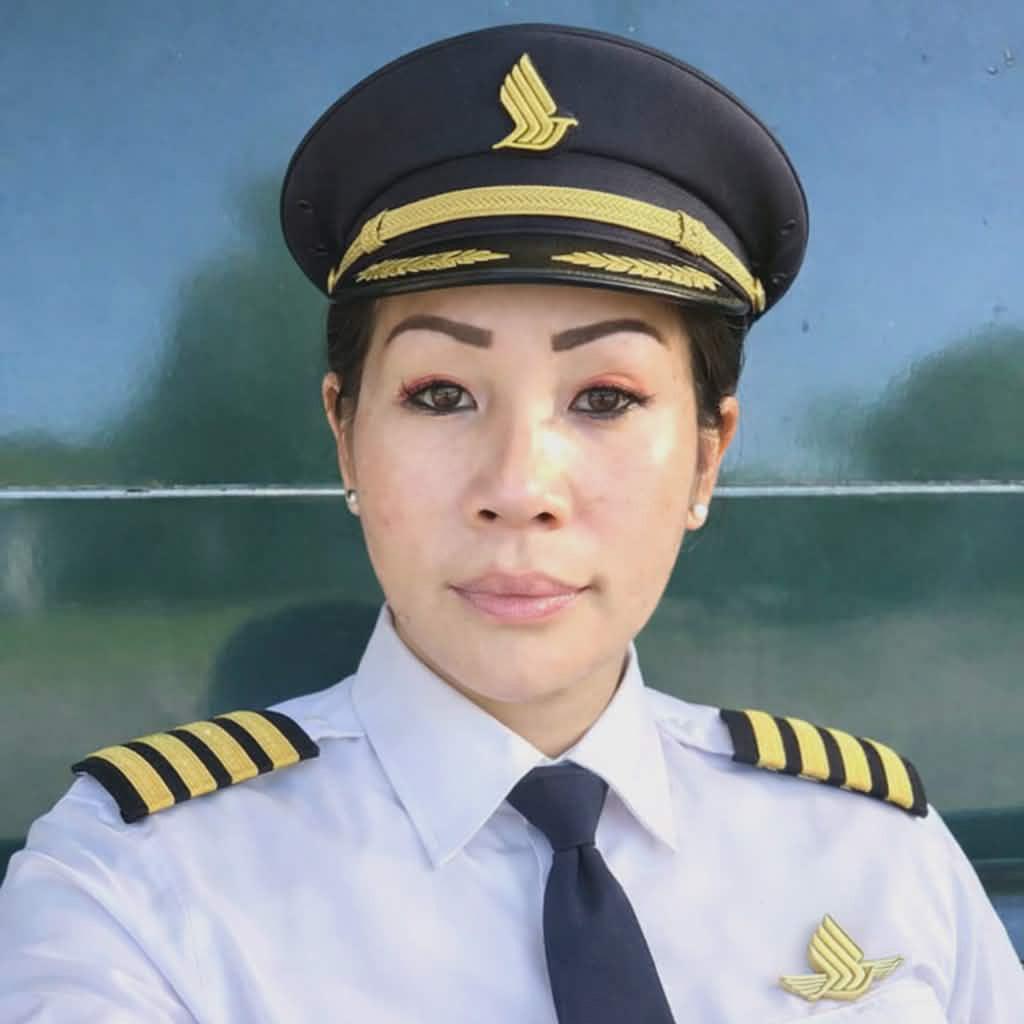
Nayume candidly tells us her story: My mother is a Filipina, from Cebu. My biological father was Japanese. He and my mum were separated before I was born. I grew up carrying my stepdad Alex's surname, Mozo. He gave me all the love and support as a true father, as I was growing up. We keep in touch with our Filipino family and visit the Philippines every year.
YOUR PATH TO BECOMING A COMMERCIAL PILOT? WHO
OR WHAT INSPIRED YOU?
I studied to be a commercial pilot in the Us. After I graduated, I became a commercial pilot for singapore Airlines. I have three children who I need to take care of, aside from my demanding work. My husband advised me to transfer to a culinary program.
Becoming a pilot, especially a commercial pilot, requires training, self-discipline, time and financial investment. It is like becoming a doctor or an engineer. It is a long professional journey, not a quick course. You need to gain flying experiences through licenses such as a Private Pilot License, and a Commercial Pilot License, and build up enough skills and flight hours to safely operate an aircraft.
As a pilot, I worked five days on and four days off.
BECOMING A CHEF.
I graduated from Le Cordon Bleu Paris - sITTATT, (skills, Instruction, Training, Testing and Management). studying Culinary Arts at Le Cordon Bleu Paris is considered a very intensive, professional-style
training experience, rather than a typical classroom course. The program focuses heavily on classical French culinary techniques to prepare students for a real kitchen career.
Right after I finished my course, I worked as sous Chef for Their Majesties the King and Queen at the Norwegian Royal Palace. It was one of the best work experiences of my life, because it shaped me into a better person.
I worked as a Chef and owned a restaurant, but I later sold it to prioritize my family.
What I love about being a chef is that I can share happiness with others through my food. I feel so grateful for that.
“ BE THE BEST OF WHATEVER YOU DO IN LIFE, AND BE KIND TO ONE ANOTHER
As of today, I work two jobs, as a pilot and I also work as a chef!
HOW IS YOUR FAMILY, LIFE GOALS?
I have three beautiful grown-up daughters. I am separated from their father.We visit our relatives
in the Philippines every year. I am happy with my life now, together with my children. They are my happiness and inspiration. My life goal now is simply to share my blessings with others, especially my family. I hope I can inspire others through my story. I want to be a source of hope, to show that no matter what circumstances you face, you can overcome them with passion and dedication! Q
ANY MESSAGE TO THE FILIPINO YOUTH?
My message is not only to the youth, but to all my countrymen — Euro-Pinoys and everyone alike: Be the best of whatever you do in life. Always keep your feet on the ground and be kind to one another. Kindness is one of the most important qualities we can have - it allows us to connect deeply with others.
THANK YOU, CAPTAIN NAYUME FOR SHARING AND INSPIRING OUR R&WMAGS READERS! HATS OFF!
JOANNÉ NUGAS
When a Voice Breaks the Surface - From The Little Mermaid
to
Max Martin’s World of Pop
By Hanna Stenbacka Köhler, Country Editor Sweden
FINDING HER VOICE
she is the swedish voice of Ariel in Disney’s 2023 live-action film The Little Mermaid (Lilla sjöjungfrun).
she is Juliet in the swedish production of the Broadway musical & Juliet, featuring music from the iconic swedish producer Max Martin. The show includes global hits such as Britney spears’ “...Baby One More Time” and Katy Perry’s “Roar” — debuting in February 2026 at the well-renowned Cirkus in stockholm.
she is Joanné Nugas.
Joanné still remembers the moment clearly, at seven years old, standing in the church choir of her hometown, surrounded by harmony. As the voices rose around her, goosebumps swept over her skin, and in that instant a lifelong passion was born.
“I wouldn’t be the artist I am today without my Filipino roots”
Her parents are from the Philippines - a culture where music is woven into the fabric of everyday life. Her dad would play the guitar in the kitchen, her mother always had the radio on,
and every time she visited a tita’s house, she would sing karaoke — building her skills, telling a story, and learning how to evoke the emotions of her audience. These occasions were the formative training grounds that shaped her.
propelled her to where she is today — among the crème de la crème of the swedish music industry.
“I think one thing that has helped me is my mindset. I never want to feel like I’ve reached the finish line.”

Source: Nordisk Film bio
DISCIPLINE BEHIND THE DREAM
Coupled with a luminous talent, it is Joanné’s mindset that has
she often sees herself as the weakest link in the room - not as a criticism, but as a constant reminder to keep improving. This mentality keeps her humble and reminds her that there is always room to grow. This hunger for growth informs everything from her rehearsals to her daily routines. When preparing for major roles, she focuses on the fundamentals: practice, nutrition, sleep, and emotional presence.
“You prepare as much as you can. And then at some point, preparation ends and presence takes over,” she says. “That’s where the magic happens.”
AN UNEXPECTED MESSAGE
One day she got a random message on her phone, where they stated they would like to try her voice for an upcoming Disney role. That message led to her first

dubbing audition - and soon after, to becoming the swedish voice of Ariel in The Little Mermaid.
After years singing behind many of sweden’s biggest artists, this was the first time she truly stepped into the spotlight. The role also carried profound personal meaning.
“The Little Mermaid was my absolute favorite Disney movie growing up. Ariel was my favorite character because her story revolves around her voice. As a kid who had just discovered singing, that was incredibly inspiring. I genuinely wanted to be her when I was younger.”
A FULL CIRCLE MOMENT
Her current role in the musical & Juliet feels like another chapter of destiny aligning. As a selfdescribed ’90s kid, the music of Max Martin shaped her earliest dreams.
“One of the first English songs I ever sang was “…Baby One More Time.” I must have been around four years old, and I remember
wanting to become a pop star just like Britney spears.”
Now, standing on stage performing a musical built around those very songs, she feels the symmetry - a full-circle moment.
WHERE BELONGING BEGINS
Growing up in stockholm, Joanné rarely saw people who looked like her in the media or in the music industry.
“That affected my confidence. There were times I struggled with how I looked because I didn’t see myself anywhere.”
If she had seen more people who looked like me, she would have been more confident much earlier in life.
“Representation tells you that you belong.”
Today, Joanné stands not only as a performer, but as a mirror inspiring the next generation.
CARRYING HER VOICE TO THE HORIZON
Her vision for the future is still unfolding, but one epic dream
remains steady. she plans to create her own music and go on tour with it.
And for anyone walking their own uncertain path, her advice is simple, hard-earned, and hopeful:
“Never stop doing what you love. There will be moments when you feel frustrated or discouraged… don’t give up - and be kind to yourself. Good things take time.”
From Tita' s living room to the center of the swedish music industry, Joanné’s achievements show that with passion, discipline, and a strong mindset - you can find your voice and share it with the world.
NAME JOANNÉ NUGAS
LOCATION STOCKHOLM, SWEDEN
INSTAGRAM JOANNENUGAS
Source: Broadway World
LADIES OF RIZAL SWITZERLAND: PROMOTING RIZALISM FOR A BETTER WORLD
By Michelle Ngo Salangsang
On November 26, 2025, a meaningful chapter in Rizalian history was written with the founding of the Pioneer Chapter of Ladies of Rizal switzerland, Affiliate of Knights of Rizal in Lucerne, established with the capacity to act autonomously while remaining firmly guided by the values and ideals of Dr. José Rizal. More than an organization, it is a movement grounded in service, cultural pride, and moral leadership.
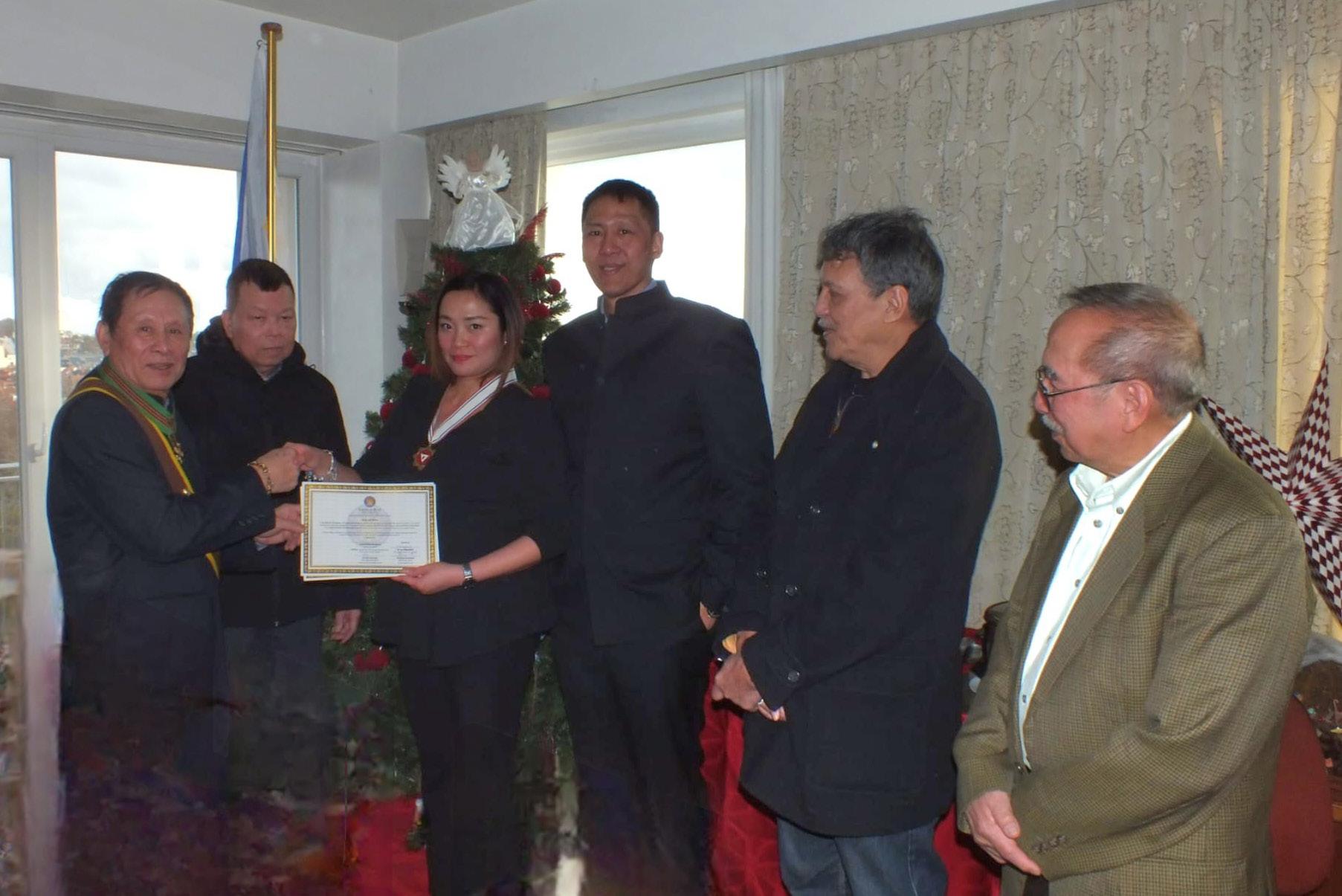
This journey has been deeply personal and profoundly humbling. Upon my Oath-Taking into the Knights of Rizal at its European Headquarters in Belgium, I was honored to receive a medal of recognition from sir Lino Wy Paras, KGCR—a medal that was his own. That gesture of trust left an indelible mark on my heart. In accepting it, I made a solemn promise to serve my oath with dedication, sincerity, and love for our people. It strengthened my resolve to live Rizalism not merely as a philosophy, but as a way of life.
The Ladies of Rizal is an organization for women from all walks of life—professionals, entrepreneurs, homemakers, and especially mothers who juggle everything just to survive. It is for women who seek meaning, who desire to serve, and who aspire to become role models for the next generation of Rizalians. It is a sisterhood founded on character, compassion, and courage, where leadership is nurtured and service is lived daily.
From its earliest days, Ladies of Rizal switzerland has embraced humanitarian service as a cornerstone of its mission. Among its ongoing and supported projects are feeding programs for children with terminal cancer in Quezon City, livelihood support for women who are survivors of domestic violence, and assistance for former female convicts from siargao as they rebuild their lives with dignity and hope. The organization has also launched Blessing Boxes for
children, distributed through churches to bring care, joy, and spiritual encouragement to young lives. These initiatives reflect a commitment to inclusive and compassionate service, reaching the most vulnerable with empathy and respect.
As the early months of its founding unfold, reflection comes naturally. What began as a vision has grown into a living sisterhood that honors Filipino identity
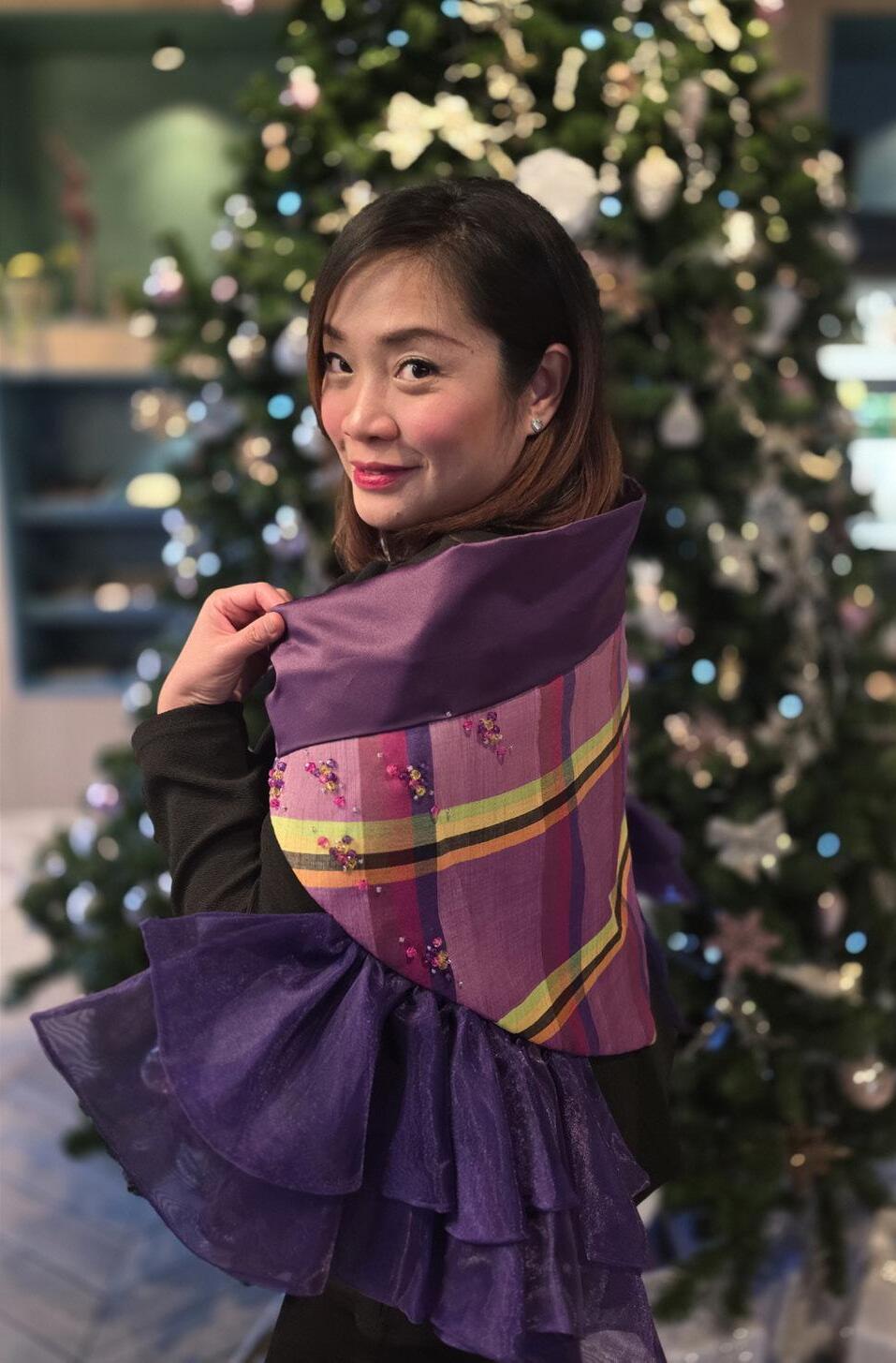
while embracing responsibility and leadership abroad. Ladies of Rizal switzerland represents not only the establishment of an organization, but the beginning of a legacy—one that places values at the center of action and women at the heart of nation-building.
Two significant milestones will formally shape this journey. On February 27, 2026, the organization will hold the Oath-Taking Ceremony of its appointed officers and pioneer members, women chosen for their integrity, dedication, and sincere belief in the mission. This will be followed on May 2, 2026, by the OathTaking of new members, welcoming applicants who wish to join and strengthen the growing community. Together, these moments mark the formal beginning of a legacy built by and for Filipino women in switzerland.
As President and Founder, I commit to upholding the organization’s mission with integrity and ensuring that our guidelines are faithfully followed. More importantly, my vision is to nurture a sisterhood that inspires growth—not only as leaders and professionals, but also as mothers, daughters, and cultural bearers. When women uplift one another, families and communities flourish.
Many have asked why I accepted this calling. The answer lies in my deep love for the Philippines
and my devotion to Rizal’s ideals. Even before my Oath-Taking in Belgium on January 2, vested by sir Felino Wy Paras, KGCR, with the support of sir Yenz salangsang, KCR, sir Antonio Guansing, KGOR, sir Johnny Villa, KGCR, and sir Jim Rebong, KGOR, I was already seeking women who shared my belief in purposeful service. I knew the path would not be easy, but I have always welcomed challenges—because Filipinos are worth it.
Beyond my roles, I am a career woman, a business owner, and above all, a mother. My child is my greatest source of strength. My parents, both ill in the Philippines, inspire me to continue, knowing that every step I take here gives them hope. This organization is my way of giving back—to them, to the Filipinos who care for them, and to the enduring legacy of our national hero.
To every woman seeking purpose, empowerment, and belonging, the doors of Ladies of Rizal switzerland are open. Together, we will build a community of power and grace—women who inspire generations, honor Rizal’s values, and keep the spirit of the Philippines alive, even from afar. Let us stand together—united in service, strong in faith, and proud to be Filipino.
BECAUSE EVERY SEED PLANTED RETURNS A HARVEST
By Hilda Arenas, Associate Editor & Country Editor Dublin, Republic of Ireland
This year’s theme — Give to Gain — stopped me the moment I read it. Not because it was new. But because I had already lived it.
Three women had shown me, long before anyone gave it a name, exactly what it means to give without calculation, without keeping score, without ever asking what would come back to them. What came back to them is this. These words. This life. This tribute.
I am a mother, a writer, a community leader and a founder of International networks. None of it — not a single chapter - arrived without women. There are

more women who have walked beside me, believed in me, and shaped me in ways I carry every day — and this tribute is for all of them. But today, I want to begin with three whose names I need to say out loud.
“No woman rises alone. The women who shaped me never asked for recognition. That is exactly why I will never stop giving it.”
The Women Who Made Me. Not every mentor announces herself. sometimes she simply arrives — as a mother, a teacher, a distinguished diplomat and inspiring leader — and changes the entire course of someone’s story. These three women changed mine.
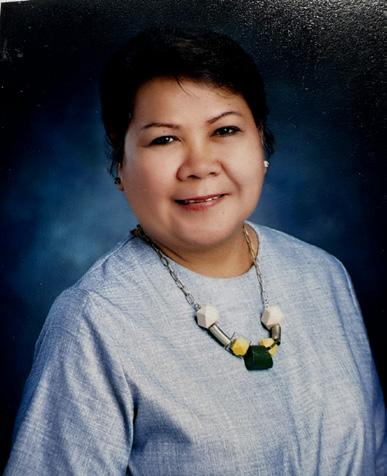
01 IN MEMORIAM · ALWAYS PRESENT MY NANAY LINDA
Mother of Four · Primary School Teacher · The First and Greatest Love
Photo credit: EAC Photography
she was a teacher by profession and a nurturer by nature - and she never once separated the two. she was also my very first teacher of the English language, long before any classroom. she insisted on it at home — gently, consistently, as only a teacher-mother could. Looking back, that insistence was one of the greatest gifts she ever gave me.
Nanay Linda gave herself to her classroom and to her four children with the same wholehearted devotion. she was kind, not occasionally, not conditionally, but always — the kind of constant,
quiet kindness that does not announce itself but simply is. Present in every moment. Felt in every room. she made every child around her feel seen, worthy, and deeply loved.
she left this world when I was ten years old. Forty-four years have passed. I am still learning from her.
That is the measure of a life well given. Not the years lived, but the lessons that outlast them. Nanay Linda’s values did not retire when she did. They travelled. They crossed oceans. They built
communities she never knew existed, in countries she never set foot in. They are still at work today — in every act of patience, every instinct to show up, every moment of warmth offered to a stranger who needed it.
Give to Gain — she never asked what she would gain. she simply gave — her time, her heart, her whole self — to her children and the students in her care. Her harvest? still growing. still visible. still us.
“Everything I am rooted in, I learned from you first. I carry you, Nanay Linda. Always.”
02
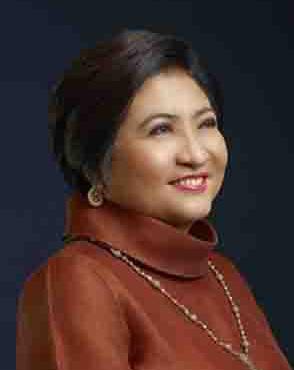
THE TEACHER WHO GAVE ME A VOICE MRS LINDA MANALAD NÉE
BURGUILLOS
English Teacher · Dominican School, Dagupan City, Pangasinan, Philippines
Photo credit: Mrs Manalad
s ome
teachers teach a subject. Miss Burguillos taught a future. she stood in front of a classroom in Dominican school and gave her students something far greater than grammar and composition. she gave them a love of language — a living, breathing belief that words have power, that English spoken well is a key that opens doors the world will try to keep shut, and that every student sitting in front of her was worth every ounce of her time and expertise.
she taught the way great teachers always do: with patience, with genuine care, and with an
almost stubborn insistence that the student in front of her could go further than they imagined. she did not just prepare her students for examinations. she prepared them for the world.
I was one of those students. After high school, I moved to scotland with my siblings, built a career in English — speaking boardrooms and international networks, and now write for Roots and Wings Magazine, which reaches a global readership, while leading communities across Europe. I have never forgotten the woman in that classroom in Dominican school who made the English language feel like a gift
worth treasuring for a lifetime.
Miss Burguillos could not have known what she was building. she simply gave - lesson by lesson, correction by correction, belief by belief — and trusted that it mattered. It mattered more than she will ever fully know.
Give to Gain — she gave a love of language to a girl who had no idea what that gift would one day make possible. Every word written, every door the English language ever opened - it began in her classroom.
“I write today because you taught me how, Ma’am. And I write with joy because you made that joy possible. salamat.”
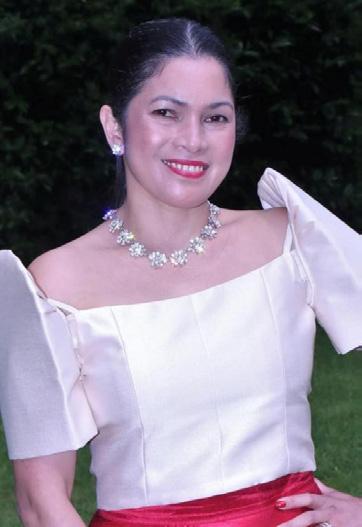
03 THE DIPLOMAT WHO RAISED THE STANDARD H.E. AMBASSADOR HJAYCEELYN M. QUINTANA
Ambassador · Diplomat · The Definition of Leading with Honour · A Cherished Friend
Photo credit: Credit to the owner
There are diplomats by career and appointment. And then there are those who lead to lift others.
H.E. Ambassador Hjayceelyn M. Quintana has always been the latter.
To know Ambassador Quintana is to know the very best of the Philippines — its heart, its excellence, its grace under
pressure. Her creative mind sets standards other nations aspire to. Filipinos look to her with pride. Non-Filipinos with admiration. she carries the Philippines into every space she enters — its culture, its creativity, its trade, its story — making the case, quietly but powerfully, that the Philippines belongs at every table
and in every conversation. she does not confine her impact to the powerful. she reaches everyone because she has never forgotten that true leadership is not about the room you command. It is about the people you bring with you. she does not lead with noise. she leads with presence — the kind felt the moment she enters a
INTERNATIONAL WOMEN’S DAY 2026 TRIBUTE · GIVE TO GAIN
room and remembered long after she has left it. she uplifts without diminishing. she challenges without breaking. she is the same woman in every room — steady, warm, and completely present. What makes her truly extraordinary is not her title. It is what she does with it.
she gives her time, her expertise, her compassion, and her presence
to every person she serves — wholly, without reservation, without ever making them feel they are anything less than the reason she is there. The leaders she has mentored will carry her example into rooms she may never enter herself. That is the true reach of her leadership. That is what it means to give in a way that gains for generations. she does not wait for the Philippines to be
seen. she makes it impossible to be overlooked.
Give to Gain - she gave a standard. The gain is a generation of people who aspire to it - in every country, in every room, carrying her example forward.
“You showed me that power and compassion are not opposites. In the right hands, they are one and the same.”

Give. And Look at What Is Gained. Three women. Three different kinds of giving. One life - transformed by all of it.
Nanay Linda gave her whole heart to four children and a classroom, without ever knowing how far those seeds would travel. Mrs Manalad gave her love of language to a girl in Pangasinan, without knowing the writer she was quietly building. Ambassador Quintana gives herself to her people every single day, with the certainty of someone who has always understood that this is simply what service requires, and without knowing the community leader in me, she helped build.
None of them asked what they would receive. Look at what was gained.
To every woman reading this — in Ireland, across Europe, in the Philippines, and every corner of this world — you are already someone’s Nanay Linda. someone’s Mrs Manalad. someone’s Ambassador Quintana. You may not see it yet. But somewhere, in ways you may never fully know, your giving is already becoming someone else’s everything.
GIVE FREELY. GIVE FULLY. TRUST THE HARVEST. I am because of them — and because of every woman who has ever believed in me, walked beside me, or simply showed up when it mattered. I will make sure that means something, every single day.
MABUHAY ANG KABABAIHAN. LONG LIVE THE WOMEN.
THE WALL OF HONOUR FILIPINAS WHO INSPIRE
Across every generation. Every field of human endeavour. Filipino women who lead, create, serve, and shine — at home and across the world.
And because inspiration should never stop at three — here is a Wall of Honour. A celebration of Filipinas across generations and every field of human endeavour who gave freely, led boldly, and made the Philippines shine simply by showing up. These are the women who inspire us. This wall belongs to all of them — and to every woman in our lives. INTERNATIONAL WOMEN’S DAY 2026 TRIBUTE · GIVE TO GAIN
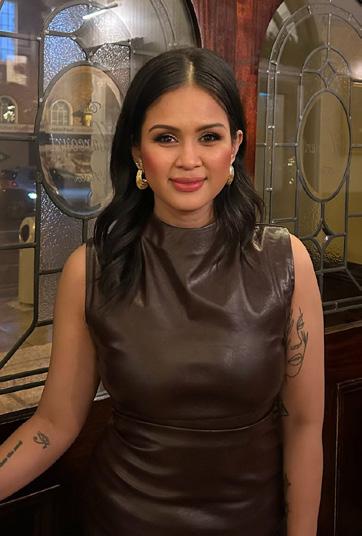
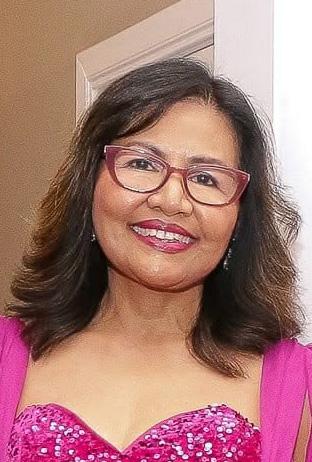
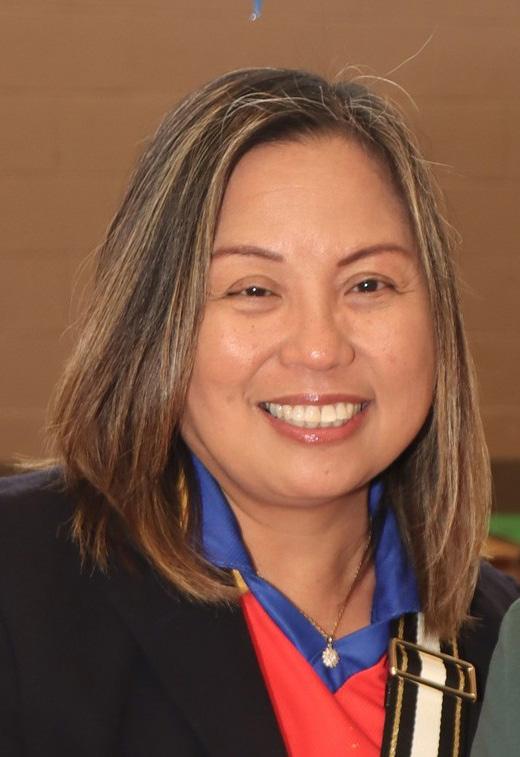
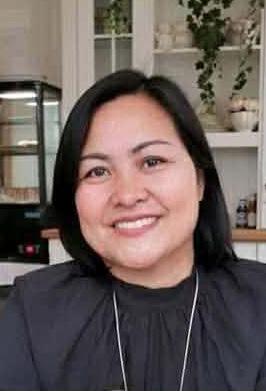
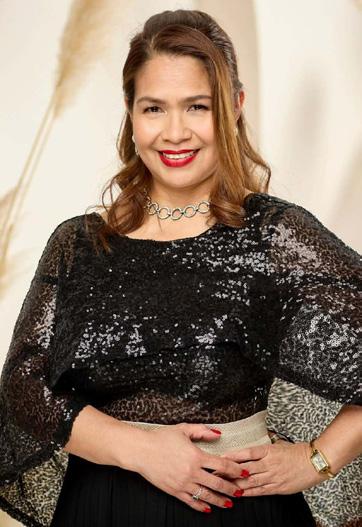
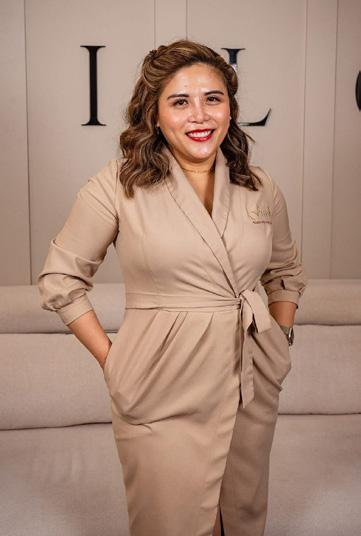
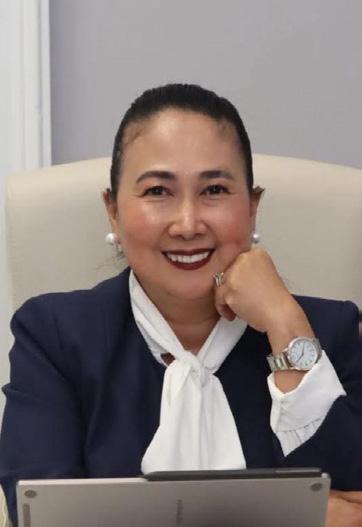
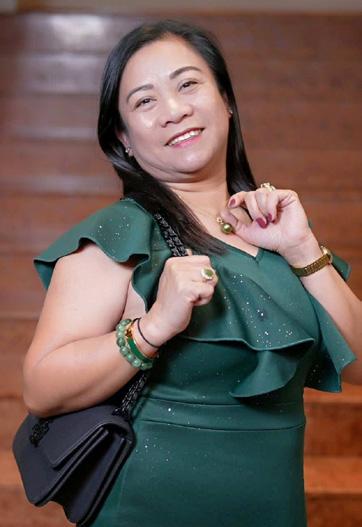
ALEAH ESPANTA CUNNINGHAM Entrepreneur, Health, Wellness & Beauty
ANNABELLE I LOZADA Community Leader
CARMEN ACUTINA Healthcare Professional & Writer
CAROL PANDAY Writer and Community Champion
DAISY MAUHAY Entrepreneur, Founder & CEO –Facilities & Healthcare Agency
CHRISTINA QUINGCO Nurse, Entrepreneur, Founder of Filo Clinic – Health, Wellness and Beauty
AINA CONWAY Community Leader Champion
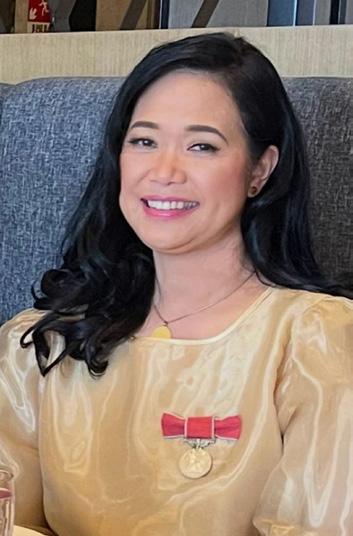
CHARITO LEONARDO British Empire Medal Awardee Nurse and Community Leader
ARLITA PATALINGHUG Healthcare Professional, Entrepreneur and Community Leader
ESTELLA TOLENTINO Community Advocate
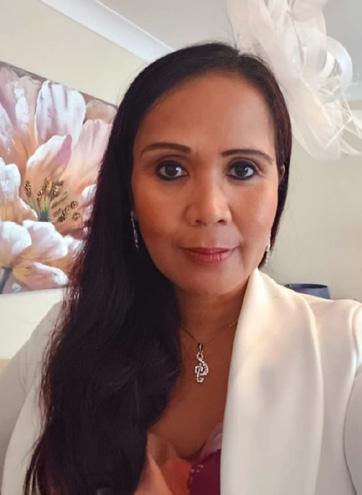
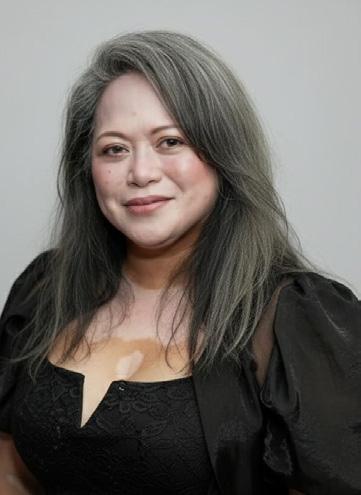
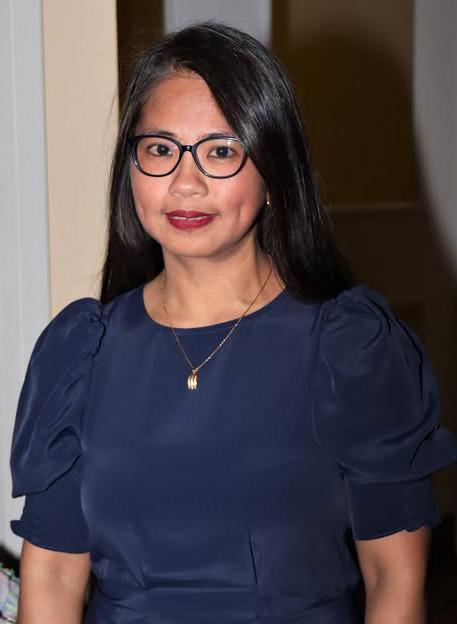


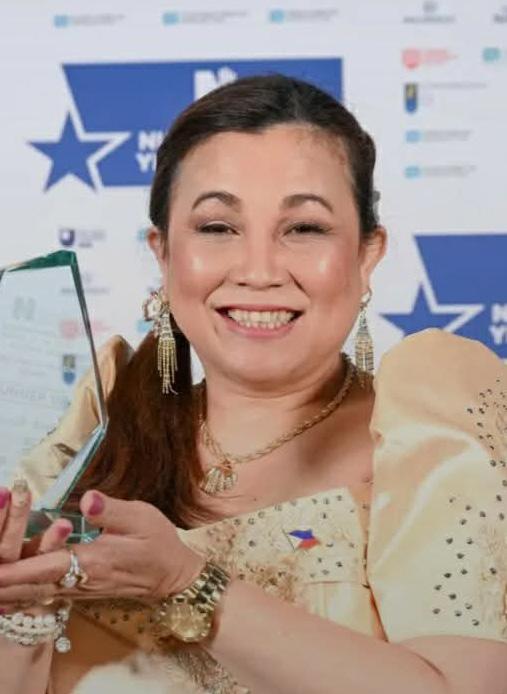
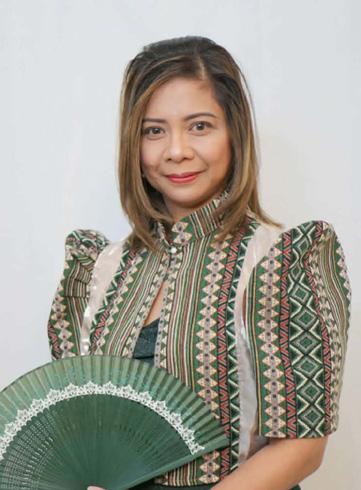
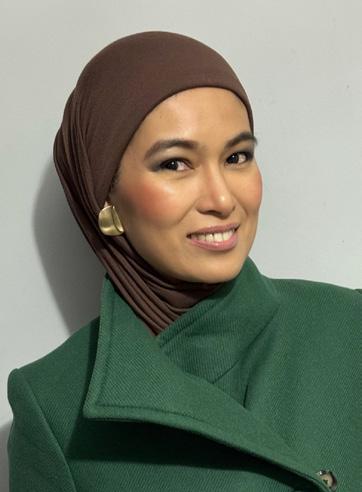
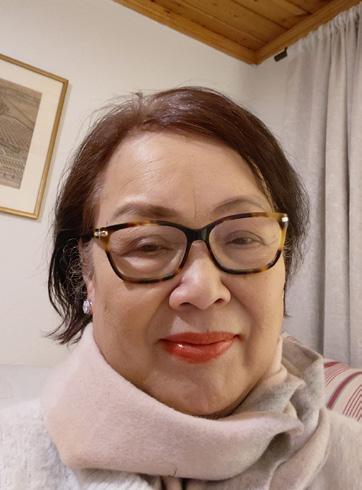
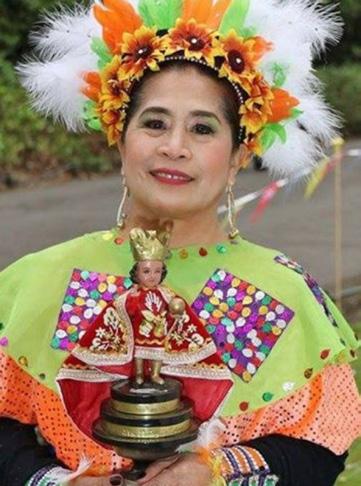
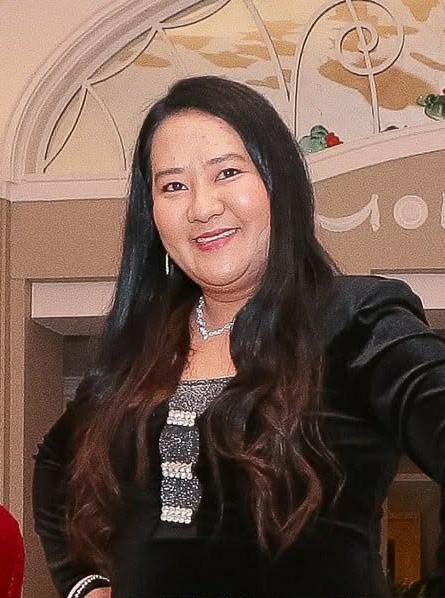
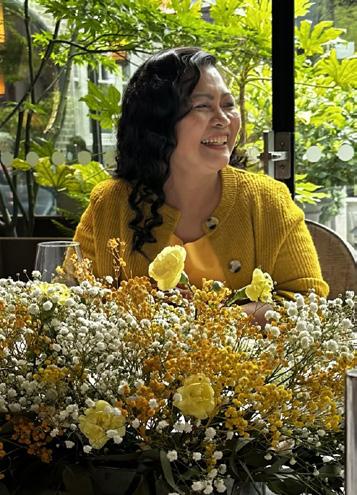
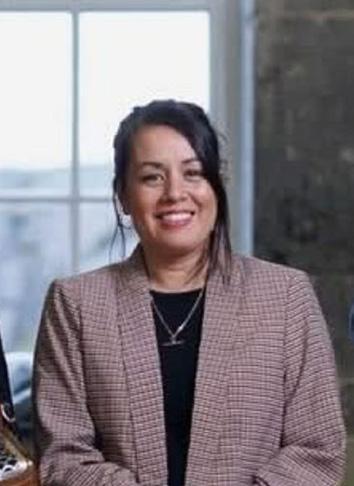
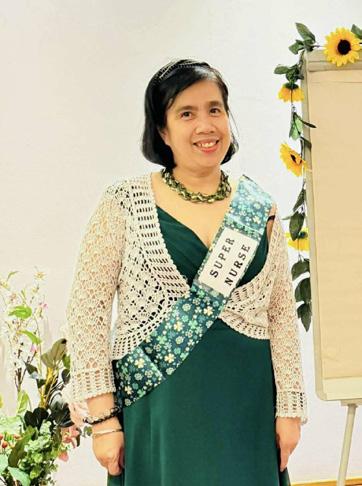
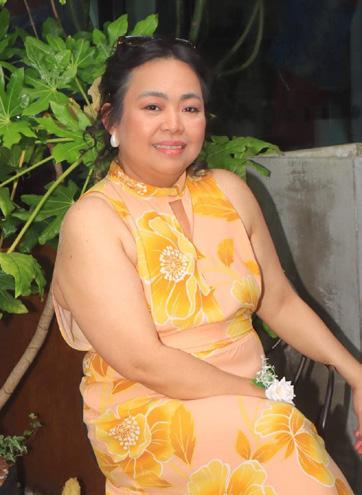
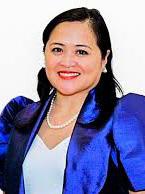
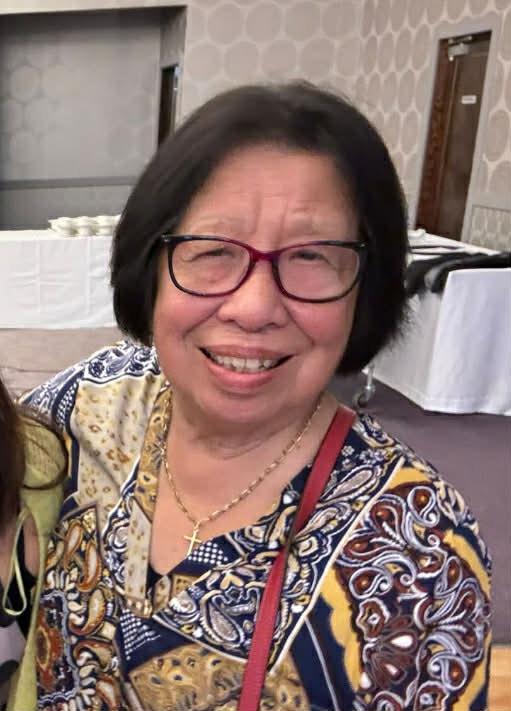
LUZ LOCSIN-GAJE BERGERSEN Community Founder & Leader, Editor-in-Chief Roots & Wings Magazine
MARIA JONA P FERNANDEZ Community Leader
REMELYN O LE BAULT Sports Advocate
RACHEL HANSEN Founder & Publisher Roots & Wings Magazine
MARICON FERRER PATHY Healthcare and Community Advocate
VANDA MARIE MACION BRADY Recipient of the 2021 Presidential Awards for Filipino Individuals under the Banaag and Cultural Advocate
SHEILA MAE MURRAY Healthcare Professional and Community Leader
HILDA ARENAS Writer and Founder & Leader of International Networks
NELIA RAREZA Healthcare Agency Co-Founder & Chair and Community Leader
VICENTA KENNEDY Author, Founder of the Filipino Forum Magazine (Republic of Ireland)
IRENE JAGOBA Migrants and Community Leader Champion
NORIANA KENNEDY Artist –Singer
JENEMAE CORPUZ Cultural and Youth Advocate
REBECCA NAVARRO IGAYAC Cultural Advocate
ROSA CUETO Healthcare Professional and Community Religious Leader
FEDS MURRAY Healthcare Professional, Artist, Writer, & Community Advocate
JOCELYN SINGSON Entrepreneur, Founder & CEO –Facilities & Healthcare Agency
JONAH ATOS Healthcare Professional & Community Leader
KATRINA APOSTOL ALBARICO Healthcare Professional & Community Leader LORA KIRAM Healthcare Professional, Model & Podcaster
FAITH & CULTURE · SPECIAL FEATURE
Wherever We Are, The Holy Child Finds Us
Filipinos Across Europe Keep One of the World's Oldest Devotions Gloriously, Joyfully Alive
By Hilda Arenas Associate Editor & Country Editor, Dublin, Republic of Ireland
In 1521, Ferdinand Magellan gifted a small wooden statue of the Holy Child Jesus — the santo Niño — to Queen Juana of Cebu upon her baptism, marking the arrival of Christianity in the Philippines. When Miguel López de Legazpi rediscovered that same image in 1565, it became the founding miracle of the Basilica Minore del santo Niño — the oldest Christian relic in the country.
More than 500 years later, the santo Niño remains the most beloved symbol of Filipino faith and culture — celebrated by Filipinos in every corner of the world. Wherever they go, the Holy Child goes with them.
And today — in Dublin churches, Oslo halls, and a quiet Welsh town on the North Wales coast — He is still being carried, still being celebrated, and still making Filipinos feel, no matter how far from home, that they are exactly where they belong.
In this special feature, Roots & Wings Magazine brings you three remarkable stories of that devotion alive and flourishing across Europe.
In Ireland, 27 extraordinary years of devotion have built the oldest Filipino religious community in the country — now an Official Chapter of the Basilica Minore del santo Niño de Cebu.
In Norway, devotees from across the country gathered in Oslo under the theme “United in Faith and Love,” with visiting priests from Rome and a celebration as warm and joyful as any held under the Philippine sun.
And in the United Kingdom, history was made quietly and beautifully in Abergele, North Wales, with
the very first Filipino-language Mass at st. Theresa’s Catholic Church, celebrated on the Feast of the Holy Child himself.
Three countries. Three communities. One unbreakable faith.
The Holy Child is with us. Wherever we are — He is with us.
Viva santo Niño. Pit señor!
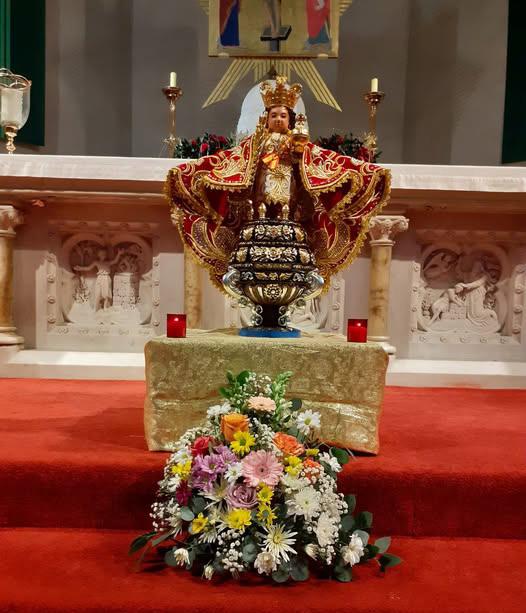
FAITH & CULTURE · SPECIAL FEATURE IRELAND
Santo Niño Ireland - 27 Years of Faith, Community, and the Filipino Spirit That Refuses to Fade
By Hilda Arenas, Associate Editor & Country Editor Dublin, Republic of Ireland
Photo
credits: Santo Niño Ireland
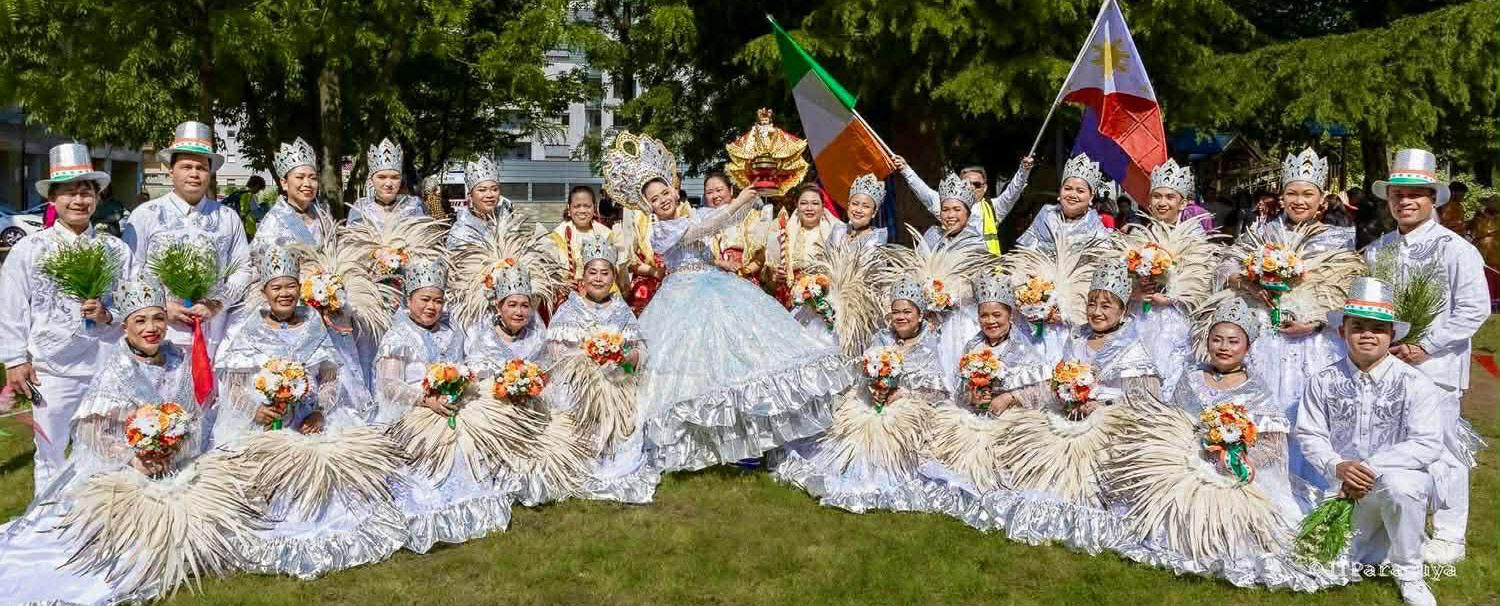
Picture this. Dublin, January 2000. A small group of Filipinos — most of them domestic workers employed at foreign embassies in Donnybrook — gather quietly in a church on Berkeley Road. There is no grand production. No elaborate procession. No hundreds-strong congregation. Just a handful of people, far from home, united by something that no ocean crossing could ever diminish: their faith in the santo Niño.
Twenty-seven years later, that quiet gathering has become the oldest Filipino religious devotion in Ireland — a vibrant, joyful, deeply rooted community that grows stronger with every passing year.
This is not just a story about religion. It is a story about identity, resilience, and what happens when a people refuse to let go of who they are — no matter where in the world life takes them. Viva santo Niño!
HOW IT ALL BEGAN
The man who planted the first seed was Fr. Patrick Keenan, OCD — an Irish priest with a deep respect for Filipino faith and culture. From 2000 to 2009, he led the annual Feast Day Mass and the simple but sacred entrance procession of the statue of the Holy Infant of
Prague at st. Joseph's Church, Berkeley Road. Year by year, the devotion grew — quietly, steadily, the way the most enduring things always do.
Then in 2010, the community placed its trust in a couple who would go on to give the next 15 years of their lives to this devotion: Marlou and Lorna Patindol. What they built is nothing short of extraordinary.
From a founding team of eight couples and two individuals, they grew santo Niño Ireland into a structured, thriving community of 12 couples and five individual coordinators — each deeply committed to planning and implementing every aspect of the santo Niño calendar throughout the year. Under their stewardship, the devotion did not merely survive. It flourished.
But perhaps their greatest achievement came at the close of their tenure. Before stepping down as Head Coordinators at the 25th Annual Feast in January 2024, Marlou and Lorna secured something that would anchor the devotion for generations to come: Official Chapter status with the Basilica Minore del santo Niño de Cebu. Achieved in March 2024 through a special ceremony conducted by Fr. Basilio sungataon, this recognition connected santo Niño
FAITH & CULTURE · SPECIAL FEATURE
Ireland directly to the heart of global devotion — a milestone fifteen years in the making.
True to character, they did not simply hand over the reins. They trained new leaders, established clear structures, and ensured the community was ready. As one devoted member quietly observed — "They are still working behind the scenes."
That, perhaps, says everything about who Marlou and Lorna Patindol are.
A NEW CHAPTER, THE SAME HEART
Leadership of santo Niño Ireland now rests with Efren and Remy Caballero — the current Head Coordinators serving their two-year term, which concludes in June 2026. In keeping with the By-Laws of the Cofradia, new Head Coordinators are always chosen from within the existing team — people who are not only deeply familiar with the devotion but who bring fresh perspectives from their involvement in other Filipino community groups across Ireland.
Tradition continues. The flame is passed. The devotion endures.
THE 27TH FEAST: IN SANTO NIÑO, WE ARE ONE
This year's theme could not have been more perfectly chosen: "In santo Niño, We Are One."
The 2026 Feast followed the beautiful rhythm that has defined every celebration — nine days of novena and Masses, the recitation of the rosary, two outdoor processions, the blessing of children, and the
deeply moving sinulog offering. These are not simply activities on a programme. They are the pillars of a living tradition — rituals that link the Filipino community in Dublin to centuries of devotion across the archipelago.
But what made this year's celebration truly unforgettable was the performance of the Kaplag Dancers. These remarkable young people had represented santo Niño Ireland at the European Fiesta señor Celebration in Venice, Italy in April 2025 — where they brought home numerous awards and made every Filipino in Ireland stand a little taller with pride. To see them perform on home ground, in Dublin, was a moment of pure joy. A full circle. A community celebrating itself at its very best.
MORE THAN A FEAST — A LIFELINE TO HOME
Ask any Filipino in Ireland what the Feast of santo Niño means to them and you will not get a simple answer. Because it is never simple. It is the smell of incense and candles that takes you back to a church in the provinces. It is the sound of the sinulog that makes your heart remember something your mind had almost forgotten. It is the feeling — rare and precious when you live abroad — of being completely, unapologetically yourself.
santo Niño Ireland has worked tirelessly to make that feeling real and lasting. In 2014, a santo Niño statue — an exact replica of the original image, carved by the Basilica's official wood carver and
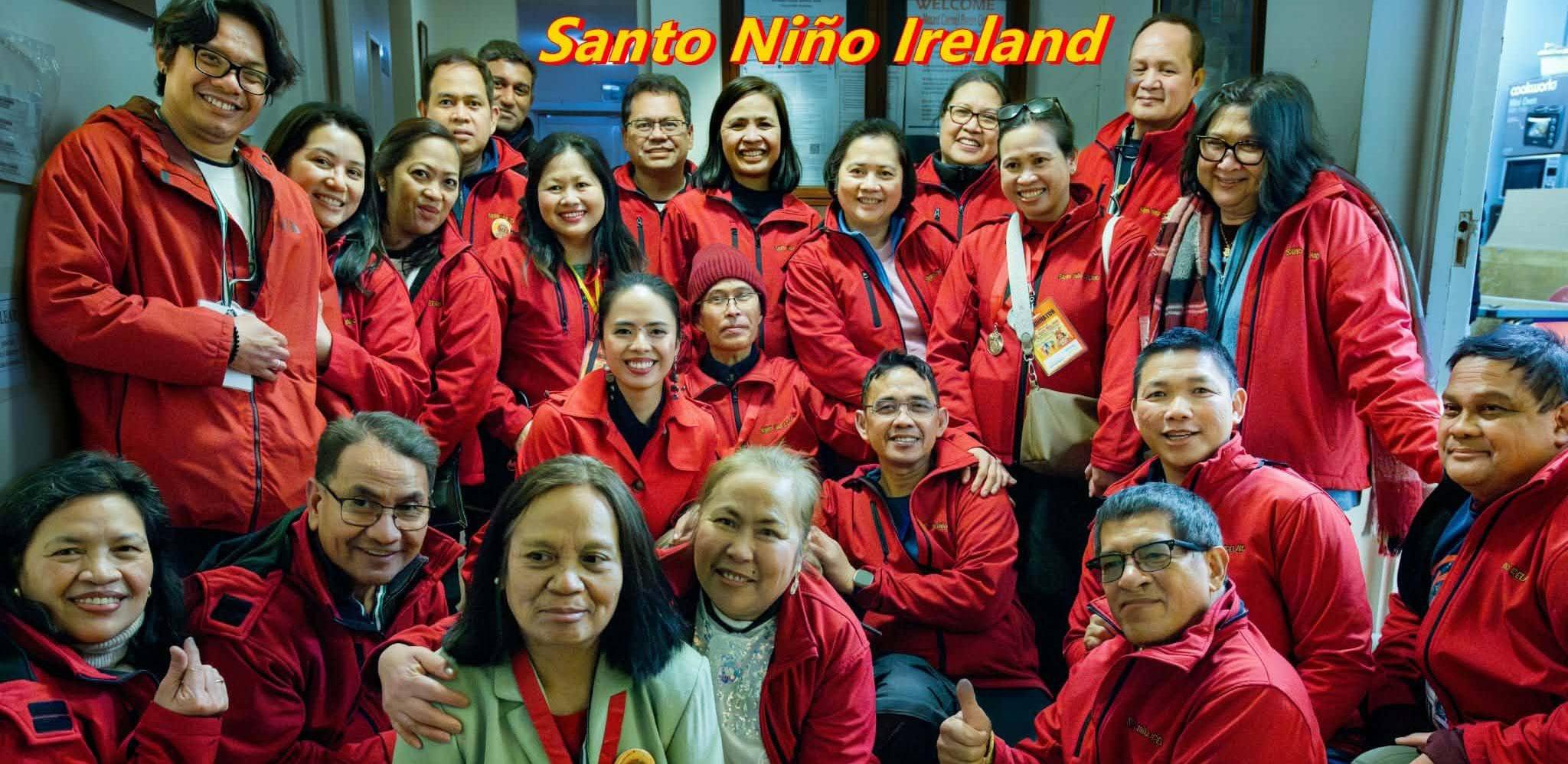
In grateful recognition of the dedication and hard work of the Sto. Niño Ireland Coordinators, whose commitment and service help sustain and strengthen the devotion and community spirit of the Sto. Niño in Ireland. Sto Niño Ireland Coordinators: Ciara Abragan, Sally Aronales, Shulan and Raquel Brizuela, Efren and Remy Caballero, Prudy and Ruby Cabrera, Elmer and Judy Colico, Dhun and Helen Comajig, Patrick delos Santos, Fernando and Ruby Enriquez, Jomar and Niña Fernandez, Kenneth and Haydee de Jose, Ed Jubinal, Juanito and Mabel Paraguya, Liza Selene Patindol, Marlou and Lorna Patindol, Lando and Finnah Patolilic, Randy and Chat Simbulan, Joel and Charmaine Vallejo
FAITH & CULTURE · SPECIAL FEATURE
commissioned by Augustinian Friar Fr. Jose seidel Jr. — was brought to Ireland. In January 2017, a santo Niño shrine was constructed at st. Joseph's Church, Berkeley Road, with a special Enthronement Ceremony that drew the community together in celebration.
Every First Friday of the month, Filipinos from different social, civic, and religious groups gather for the ongoing devotion — a monthly heartbeat that keeps the community connected, not just to their faith, but to each other.
The celebrations follow the same dates as in the Philippines. The activities mirror those at home. Because that is the point. Distance changes your address. It does not change who you are.
WHAT THE SINULOG SAYS
The sinulog is, at its heart, an act of offering. A prayer in movement. But it is also something more — a declaration of identity so vivid and so beautiful that no one who witnesses it can mistake its origins.
The rhythm. The costume. The statue held aloft. The forward and backward motion that mirrors the flow of the Pahina River in Cebu. Every element speaks of the Philippines — of a people whose faith and culture are inseparable, who express devotion not only in words and prayer but in the whole body, the whole spirit.
For Filipinos living far from home, this matters enormously. It says: we are still here. We have not forgotten. And we are proud.
As Marlou Patindol wrote in the January 2012 souvenir Programme — in words that still ring out across every celebration:
"I believe there is a need to celebrate our faith. No matter where in the Philippines one comes from, no matter what language one was taught as a child, no matter what state in life one is in right now — there is a need to show that we can be together in expressing our gratitude and faith as one."
LOOKING FORWARD: THE ROAD TO 2029
The community has its eyes set firmly on the horizon. The 30th Anniversary in 2029 is already being anticipated with great excitement — a landmark celebration that will honour the past, give thanks for the present, and set the course for the next generation of devotees.
Because that is what makes santo Niño Ireland truly special. It has never been only about the
Filipinos who are here today. It has always been about the children and grandchildren who will carry this devotion forward — who will one day stand in a Dublin church and feel, in the flicker of candlelight and the sound of the sinulog, exactly what it means to be Filipino.
Twenty-seven years ago, a handful of people gathered in faith. Today, that faith fills a church, dances in the streets, and reaches all the way back to Cebu.
some seeds, when planted with enough love, grow into something that can never be uprooted.
Viva santo Niño. Pit señor! santo Niño Ireland holds its monthly devotion every First Friday of the month at st. Joseph's Church, Berkeley Road, Dublin. All are welcome — Filipino and non-Filipino alike.
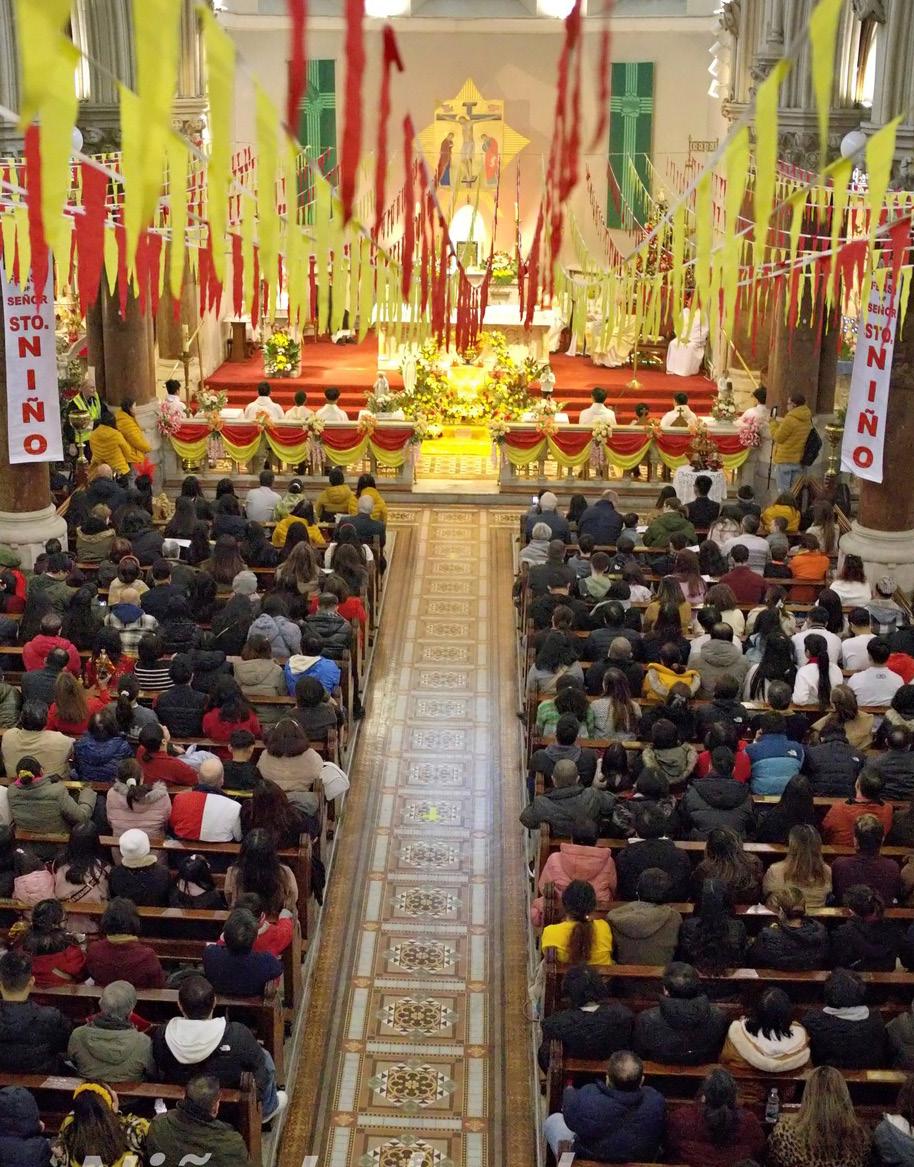
R&W Magazine extends its warmest gratitude to Lorna Patindol and Remy Caballero for their time, their generosity, and their passion in sharing the beautiful story of Santo Niño Ireland with our global readership. Lorna and Remy, your dedication to this community — and your willingness to keep telling its story — is itself an act of devotion. Maraming salamat.
The Feast of Señor Sto Niño - Norway
By Amabelle Mitzi Salarda No-ot, Contributor Norway
The Feast of señor sto. Niño, celebrated on January 17 in Oslo, was once again a resounding success and a deeply moving expression of faith for the Filipino Catholic community in Norway. This year’s celebration carried the beautiful theme “United in Faith and Love,” perfectly reflecting the spirit of unity and devotion shared by all who took part. Devotees from different communities all over Norway came together, making the occasion truly vibrant and grace-filled.
The celebration was made even more meaningful by the presence of two visiting priests from Rome: Monsignor Jonas Achacoso of the Vatican supreme Court and Rev. Fr. Gregorio Adolfo of the Augustinian Order. Their presence brought added spiritual depth to the Eucharistic celebration and served as a powerful reminder of the universality of our Catholic faith.
The success of the sto. Niño Feast would not have been possible without the dedication and tireless efforts of the organizers. The Our Lady of Mount Carmel Chaplaincy Pastoral Council, led by Rev. Fr. Johan Dumandan, worked diligently to ensure a prayerful and well-organized celebration. The cooperation and service of the Hermanas of 2026,
headed by the Lucero sisters, also played a vital role, exemplifying true devotion and panata to the Holy Child.
Beyond the solemnity of the liturgy, the celebration was filled with joy and laughter. The festive atmosphere was made even more exciting through the raffle draw, where lucky winners were greeted with loud cheers and joyful applause—adding a fun and communal spirit to the gathering and creating lasting memories for all present.
More than a cultural event, the Feast of sto. Niño continues to draw us back to our roots and reminds us that this devotion, now more than 500 years old, is a celebration of faith that transcends time and place. It is a living testimony to the faith handed down through generations and kept alive in our hearts wherever we may be.
As we give thanks for this year’s successful celebration, we also look forward with excitement and hope to an even bigger and more joyful sto. Niño Feast next year, as our community continues to grow in faith and love.
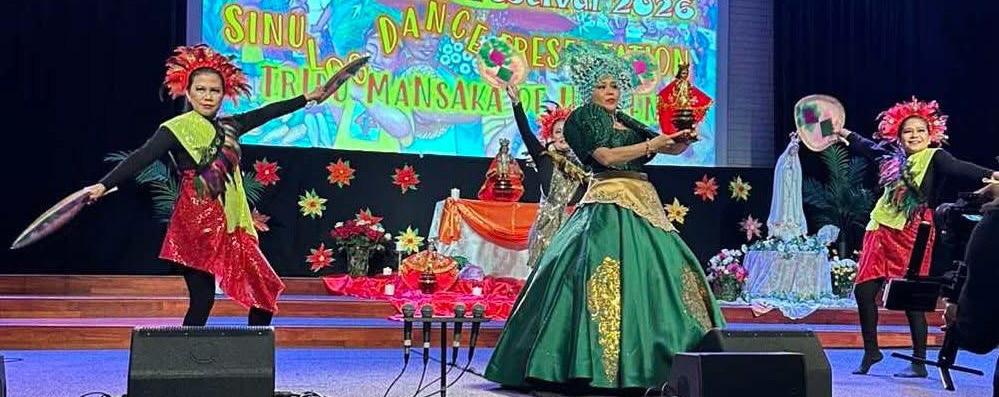
VIVA PIT SEÑOR
UNITED KINGDOM
FAITH & CULTURE ·
A Historic Celebration of Faith, Culture, and Community: The First Filipino Mass
By Jonathan Pico, Country Editor Wales, UK
The celebration of the first Mass in the Filipino language at st. Theresa’s Catholic Church in Abergele was more than a milestone — it was a moment of joyful reflection, shared memory, and renewed belonging. What unfolded was not simply a liturgical event, but a gathering that gently wove together faith, culture, and community in a way that felt both familiar and deeply moving.
The Mass was celebrated by Father Edson Paguntalan, a Mill Hill Missionary from the Philippines. His presence and leadership carried a profound sense of home for many in attendance. Hearing the prayers, responses, and hymns in a language shaped by shared roots allowed the community to worship not only with their voices, but with their stories. It served as a quiet reminder that faith travels with people — that even far from home, devotion remains alive, personal, and deeply rooted.
The presence of members of the Liverpool Filipino Catholic Community further enriched the occasion. Their regular Filipino Mass has long been a source of strength and inspiration, and their participation reflected how Filipino communities, though spread across different towns and cities, remain spiritually connected and united in faith.
For that afternoon, st. Theresa’s Church became a space where cultures met and complemented one another. Father John Bosco Bukomba, parish priest of the church, reflected that when Filipinos gather, it naturally feels like a celebration — a sentiment that perfectly captures the spirit of the day. Deacon David Gozzard, who assisted in the Mass, shared that although he did not understand the language, the liveliness of the liturgy and the voices of the choir spoke clearly of joy and reverence. The music of the Filipino Voice Choir – North Wales carried the prayers beyond words, allowing everyone present to feel included in the sacred moment.
Those who gathered came from the towns of Rhyl, Abergele, and Colwyn Bay in North Wales, joined by friends from Liverpool and Chester in England. What
united them was not geography, but a shared desire to worship together and reconnect with something deeply familiar. In that space, the Mass became an expression of belonging — proof that community is not defined by place, but by presence.
Celebrated on the Feast of the Holy Child, señor santo Niño, the Mass echoed themes of joy, simplicity, and trust. There was no grand occasion being marked, yet the day revealed a deeper truth: simply gathering as one people, in faith and hope, is already a celebration.
For many, the moment carried personal resonance. Twenty-five years ago, some of the first Filipino nurses working in the local hospital began their faith journey in this very church before moving on and continuing their worship elsewhere. Returning now felt like coming full circle — a gentle reminder that faith accompanies life’s journeys, adapting and enduring through time.
As the celebration came to a close, what lingered was not only gratitude, but a quiet sense of hope — that this gathering was not an end, but a beginning. A beginning rooted in shared faith, enriched by culture, and sustained by community.
Maraming salamat po, thank you very much, diolch yn fawr—and may God bless us all.
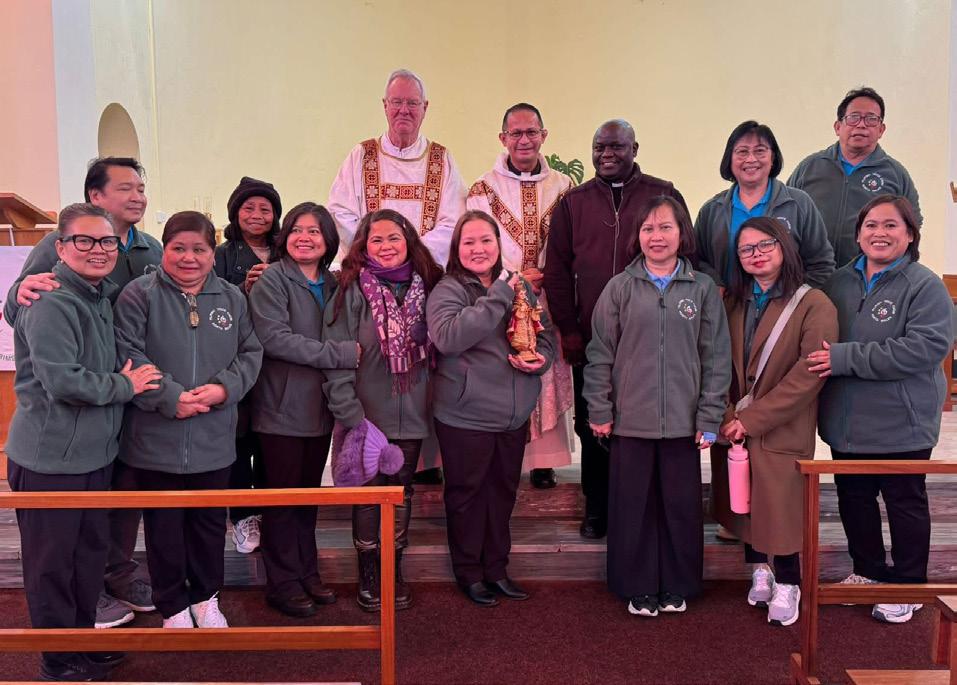

SWEET BUNS, BURSTING PLATES, AND ASHES: HOW LENT BEGINS DIFFERENTLY IN ICELAND
By Mildred Manuel-Vidarsson, Country Editor Iceland
Across much of the Christian world, Lent arrives quietly. The mood turns reflective. Ashes are pressed onto foreheads. Fasting begins. But in Iceland, the road to Lent is anything but subdued. Before the solemnity comes celebration — three spirited days filled with cream puffs, salted meat, singing children, and centuriesold customs that blend Nordic flair with Christian tradition.
While many countries slide gently into the penitential season, Icelanders charge toward it with laughter and full stomachs.
A LUTHERAN BACKDROP WITH A NORDIC TWIST
Though Iceland adopted Christianity around the year 1000, its modern religious life has largely been shaped by Lutheranism. Today, the Lutheran Church of Iceland remains the country’s national church, and the liturgical calendar — including Lent — still frames the religious year.
Yet Iceland’s cultural expression of the days before Lent feels distinctly its own. Instead of Mardi Gras parades or Carnival masks, Iceland celebrates a three-day sequence that is cozy, culinary, and
deeply communal: Bolludagur, sprengidagur, and Öskudagur.
BOLLUDAGUR: THE DAY OF THE BUN
The festivities begin on Bolludagur (literally “Cream Puff Day”), observed on the Monday before Lent. If Lent is about restraint, Bolludagur is about indulgence.
On this day, bakeries overflow with bollur — choux pastry buns filled with whipped cream and often topped with chocolate glaze or icing. Families either buy them fresh or bake them at home. some versions are split and filled with jam and cream; others are piled high with elaborate toppings.
But the sweetest tradition may be the most playful: children gently spank their parents with decorated paper wands first thing in the morning, shouting “Bolla!” for each swat. For every tap, they earn a cream puff. The custom adds a mischievous charm to what might otherwise be just another feast day.
Unlike the grand public spectacles of Carnival in southern Europe, Bolludagur is intimate—rooted in homes, kitchens, and neighborhood bakeries. It
feels less like a parade and more like a shared wink before the fast.
SPRENGIDAGUR: BURSTING WITH SALTED MEAT AND PEAS
Tuesday is sprengidagur, or “Bursting Day,” Iceland’s answer to shrove Tuesday.
The name hints at abundance. Traditionally, people eat saltkjöt og baunir — salted lamb and yellow pea soup — until they are “ready to burst.” The dish reflects Iceland’s historic reliance on preserved meats and hearty legumes, staples that sustained communities through long winters.
Where many Christian countries celebrate shrove Tuesday with pancakes, doughnuts, or king cakes, Icelanders gather around steaming bowls of soup. The mood remains festive but grounded, hearty rather than flamboyant.
sprengidagur underscores something essential about Icelandic culture: celebration is tied to sustenance. The food is not merely decorative — it reflects survival, climate, and tradition. Even in festivity, practicality endures.
ÖSKUDAGUR: ASHES AND COSTUMES
Then comes Öskudagur—Ash Wednesday.
In most Christian nations, Ash Wednesday marks the beginning of solemn reflection. Churchgoers receive ashes on their foreheads as a sign of repentance. Iceland retains religious observance, but culturally, the day takes on a surprisingly playful tone.
Children dress in costumes — sometimes homemade, sometimes store-bought — and go from
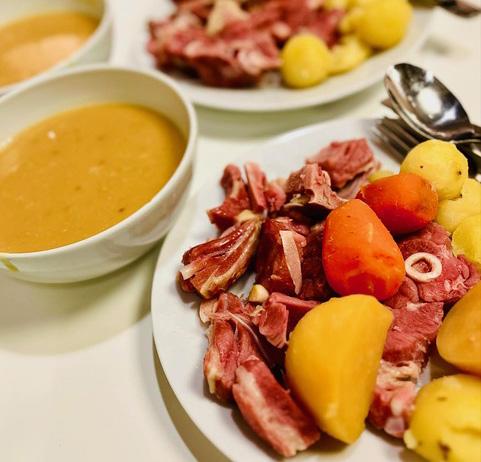

shop to shop singing for candy, much like a cross between Halloween and caroling. stores prepare small treats for visiting groups, and the streets fill with colorful disguises.
The origins of this custom are debated, but it likely evolved from older European Ash Wednesday practices combined with local creativity. Over time, Iceland transformed what elsewhere is a quiet religious observance into a day where children’s laughter echoes through town centers.
Even as ashes symbolize humility in church services, outside the church doors, community life remains vibrant and festive.
A DIFFERENT RHYTHM OF LENT
In many Christian-majority countries, Lent is preceded by Carnival — a final explosion of excess before weeks of fasting. In Iceland, the three days before Lent offer something gentler, cozier, and unmistakably local.
There are no samba parades or masked balls. Instead:
• Families bake cream puffs.
• Plates are filled with salted lamb and peas.
• Children sing in costume through snowy streets.
The Icelandic approach reflects the nation itself — small, close-knit, shaped by climate and history. The transition into Lent feels communal rather than theatrical, culinary rather than extravagant.
And when Ash Wednesday finally settles in, Icelanders, like Christians around the world, enter the season of reflection. But they do so by shared sweetness, sustenance, and song.
In a land defined by volcanic fire and Arctic winds, even the path to solemnity carries warmth.
BAYBAYIN · SPECIAL FEATURE
The Script That Refuses to Be Forg otte n
By Hilda Arenas, Associate Editor & Country Editor Dublin, Republic of Ireland
Before the spanish arrived. Before colonisation rewrote our history. Before we were taught to write in any alphabet other than our own — there was Baybayin.
This issue, we are proud to feature two remarkable perspectives on this ancient yet enduring Filipino script. They come from two different voices, two different experiences, and two different parts of the world — and yet they arrive at the same powerful truth: Baybayin is not a relic. It is a living, breathing act of identity.
In our first feature, Ralph Chan — Country Editor of Austria and champion of Filipino cultural storytelling — brings us the deeply personal journey of samuel Heinrich, a young Filipino-German navigating the complex terrain of mixed-race identity in Europe. samuel's story of discovering Baybayin not in a classroom but in a search for belonging will resonate with every Filipino who has ever been told "you don't
look Filipino" — and who has had to find their own way back to what that truly means.
In our second feature, Assistant Editor for the United Kingdom - Junart Kim s. Nieva takes us inside Anatomya ng Baybayin — a groundbreaking new book by designer and researcher John NL Leyson that challenges everything colonial-era scholarship told us about the script. Far from incomplete or primitive, Baybayin emerges here as a sophisticated visual system with its own internal logic, its own beauty, and its own long-overdue recognition.
“Together, these two articles remind us that Baybayin was never just a script. It was a statement. Reclaiming it today is an act of resistance, of pride, and of love — a love letter to a people who were never truly without a voice. It was simply silenced, slowly and quietly, over centuries of colonial displacement. And now, one titik at a time, it is being heard again."
Read on. And remember where we come from.

BAYBAYIN · SPECIAL FEATURE
Reclaiming Filipino Identity Across Borders Through Baybayin
Author: Samuel Heinrich
A common experience for many mixed-race people is the sense of not fully belonging to either side of their heritage. “You don’t look Filipino” is a remark I have heard repeatedly, and it often triggered small identity crises that left me feeling foreign in the country where I was born and raised. simply reassuring myself that I am both Filipino and German, rather than half of each, was unfortunately not enough for me. I felt compelled to validate my identity by compensating for what others perceived as my lack of Filipino-ness. It was in this search for affirmation that I began to
learn something considered inherently Filipino yet largely unfamiliar to many Filipinos themselves: the precolonial writing system called Baybayin. In studying what homeland Filipinos had long forgotten, I found a way to reclaim what colonization had taken from all of us.
I am far from alone in this pursuit. scholars often attribute the weakening of Filipino cultural identity to colonial legacies, globalization, and the homogenizing effects of mass media. This dynamic tends to be even more pronounced among overseas Filipinos whose
BAYBAYIN · SPECIAL FEATURE
everyday lives offer only a limited connection with the Philippines itself, if any at all.
BAYBAYIN’S QUIET COMEBACK
One notable response has been the renewed interest in Baybayin over recent decades by Filipinos all over the globe. Although it has not been formally integrated into the national curriculum, Baybayin has found semi-official recognition on Peso bills and passports, and appears in tattoos, cultural designs, and calligraphic presentations of poetic Filipino words. However, most Filipinos cannot actually read or write it; usage remains largely artistic rather than functional.
But here is the thing: Baybayin is so easy to learn that one good afternoon with a warm drink and paper should be enough to get the hang of it. In what follows, I offer a beginner-friendly overview of Baybayin for anyone who, like me, has searched for a more grounded way of relating to Filipino identity.
WHAT BAYBAYIN ACTUALLY IS
Derived from the Tagalog word baybay, meaning “to write/spell,” Baybayin was one of a handful of writing systems that were used in the Philippines before spanish colonization. It is often erroneously called Alibata due to presumed Arabic origins, when it actually traces back to the Brahmic scripts of ancient India.
One practical reason why Baybayin is approachable is that it contains fewer “letters” - called titik (teeteek), than the Latin alphabet. It is written left to right and is very phonetic, reflecting the oral nature of precolonial Filipino culture, where writing functioned more for personal communication than for extensive record-keeping.
Baybayin is an alphasyllabary or abugida, which means that each titik represents a full syllable (consonant + vowel), rather than a single sound. For example, the word tiwala (trust) requires only three characters: ti, wa, and la - ᜆᜒᜏᜎ.
Now think of each titik as having a built-in vowel that you gently nudge around. Each character naturally comes with the sound “a,” so ᜃ is read as ka. If you want to change that vowel, you simply add a small mark called a kudlit (kood-leet). Put the kudlit above the character, and ka turns into ki or ke: ᜃᜒ . Move the kudlit below and it becomes ko or ku: ᜃᜓ . To show only the consonant sound, writers use a kind of “vowel killer,” either a tiny cross (krus kudlit) under
the character: ᜃ᜔ ; or a more readable, short curved line (pamudpod) to its lower right like ᜃ᜕. With just these few marks, you can already write words like ᜉᜐᜒᜎ᜕ᜌᜓᜓ (pa-si-l-yo), the title of a Filipino song heard worldwide.
SPELLING SPANISH AND ENGLISH NAMES
Writing exclusively Filipino words is relatively straightforward because Baybayin developed in relation to precolonial speech patterns. The challenge arises when rendering spanish and English loanwords that entered the language over the past five centuries. In such cases, writers often combine titik to approximate new sounds. The everyday Filipino word siya (sha), meaning ‘she’ or ‘he,’ hints at how Filipino phonology can adapt to foreign sounds. For instance, sharon becomes si-ya-ro-n (ᜐᜒᜌᜍᜓᜈ᜕), where the “sh” sound is indicated by combining si + ya. Other borrowed sounds are reshaped too: “th” becomes “t”, “f” often turns into “p”, “v” becomes “b”, the “j” sound is rendered as “dy-”, and “tch” is expressed as “ts”. Familiarity with Filipino orthography is therefore an advantage when writing non-Filipino words or names. Learning Baybayin did not fully resolve my identity crisis or make me appear “more Filipino,” but it offered a way of belonging that is not tied to how others read my face or name. It created a tangible link to a heritage that colonial history tried to erase, and for those of us far from the archipelago whose identities are often questioned, it becomes a quiet act of connection. More than preserving a precolonial script, Baybayin opens space for futures where Filipino identity is sustained through our own practices. By learning even a few titik, we join a lineage that stretches across centuries. One curve, one line, one afternoon at a time.
ABOUT THE AUTHOR
Samuel Heinrich (Instagram: @samuelheinrich) is a 22-year-old Filipino-German currently studying Artificial Intelligence in Austria. Raised in the Philippines, he began exploring Baybayin shortly after moving to Europe, realizing that staying connected to his Filipino roots now requires intentional effort. Outside his studies, he enjoys documenting life through photography and videography.
UNITED KINGDOM
BAYBAYIN · SPECIAL FEATURE
Anatomy of a Living Script: Rethinking BAYBAYIN Through Visual Logic
By Junart Kim S. Nieva, Assistant Country Editor London, UK
Baybayin, the precolonial Philippine writing system - has long fascinated scholars and cultural enthusiasts, studied primarily through historical records and linguistic analysis. Now, designer and researcher John NL Leyson offers a fresh perspective that shifts focus from phonetics to the visual structure of the script.
His recently published book, Anatomya ng Baybayin (Anatomy of Baybayin), presents a framework that treats Baybayin as a coherent visual system with its own internal logic. Leyson argues that many of the script’s underlying principles have remained overlooked, even though they are embedded within the very forms of the characters.
The book represents over five years of research and introduces what Leyson calls a “Form Logic” methodology. Rather than relying solely on linguistic comparison or colonial documentation, this approach systematically analyzes Baybayin glyphs through visual breakdown. It reveals recurring structural patterns that connect the characters and suggest a deliberate, sophisticated design tradition.
At the heart of the work is the Anatomya ng Baybayin Framework, which identifies five visual archetypes as the script’s foundational forms: Ulo ng Kalabaw (carabao’s head), Kagitingan (valor), Balay (house), Unawa (understanding), and Ilog (river). These archetypes serve as a structural core, linking every Baybayin character to a shared visual language shaped by perception, strength, shelter, and flow.
Leyson’s research challenges long-standing assumptions shaped by colonial-era scholarship, which often portrayed Baybayin as incomplete or underdeveloped. By highlighting its visual coherence, the book positions the script as both ancient and intellectually rigorous, rooted in indigenous knowledge systems.
Leyson’s work was made possible through the support of colleagues and friends, especially Mr. Ric Patriarca, founder of the London Filipino Centre (LFC) and a valued mentor. I was also fortunate to
work alongside him through LFC, helping to share Philippine history and culture with overseas Filipinos and university societies across the UK. Those experiences not only deepened my appreciation of Baybayin but also allowed me to connect with communities eager to explore and celebrate their heritage.
More than a historical examination, Anatomya ng Baybayin invites readers to reconsider how Philippine scripts are studied and taught. It opens new pathways for scholars, designers, educators, and cultural workers to engage with Baybayin as a living visual tradition.
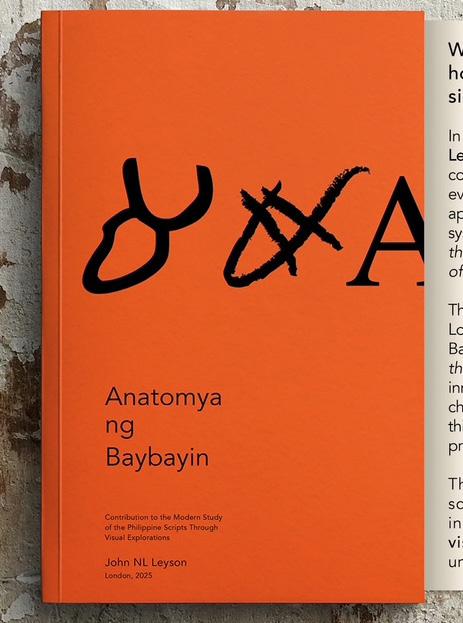
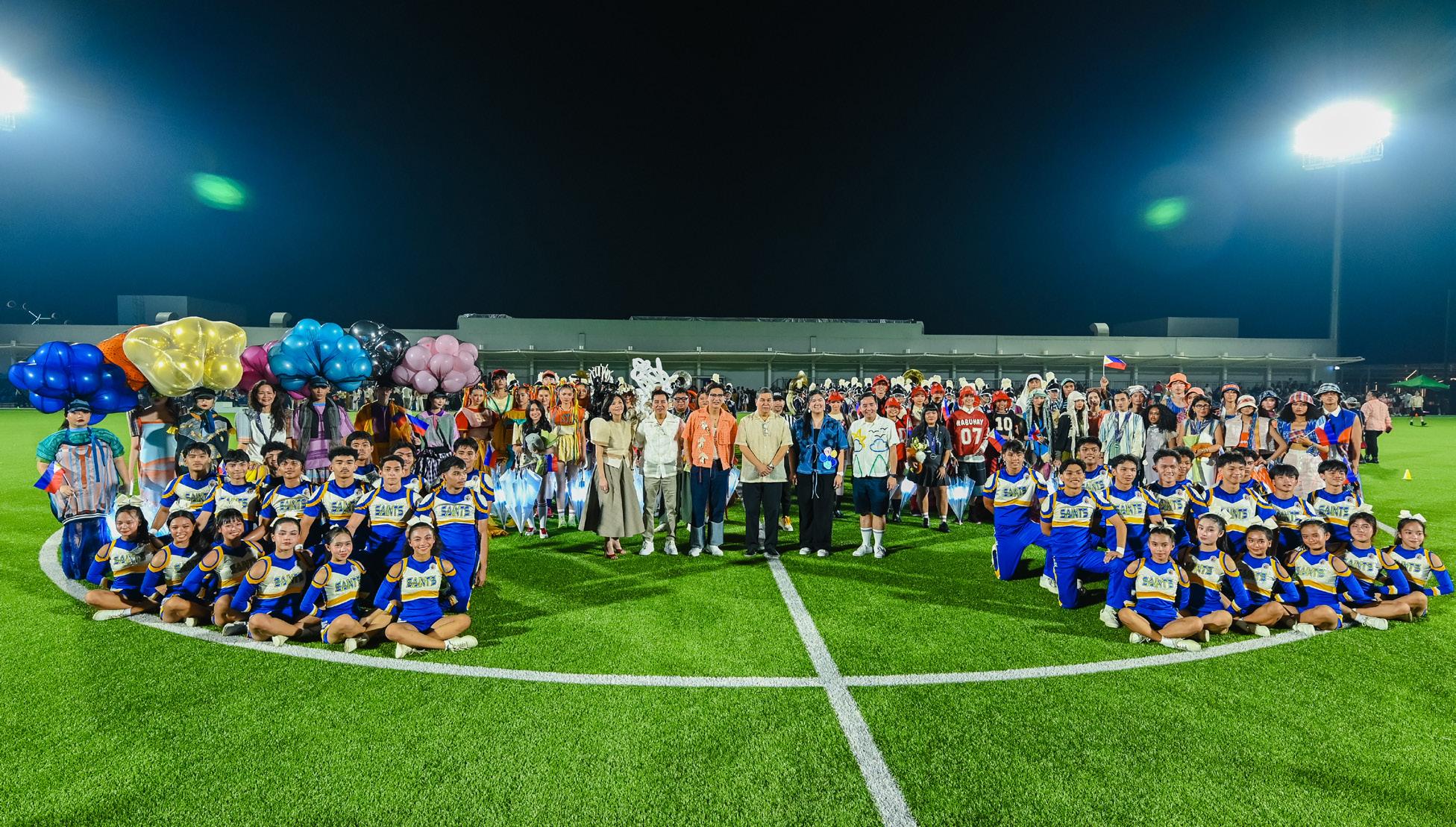
TERNOCON PALARO REIMAGINES FILIPINO HERITAGE THROUGH PLAY AND INNOVATION
By Donna Patricia Manio, Lifestyle & Country Editor Philippines
Filipino heritage took on a renewed sense of energy and possibility as sM supermalls, Bench, and the Cultural Center of the Philippines (CCP) presented TernoCon: Palaro, the latest special edition of the country’s leading platform for modern Filipiniana. Held at the FIFA-certified MOA sky Football Pitch, the event transformed a sporting venue into a dynamic runway — signaling a deliberate shift toward freshness, movement, and creative freedom. The show was a refreshing take on a Philippine fashion staple, the terno, which has long been associated with formalwear.” With “Palaro,” the beloved terno is reimagined and made playful for the appreciation for younger generations.
At its core, TernoCon: Palaro explored the idea that tradition thrives when it evolves. By merging
fashion with sport, performance, and communal play, the show demonstrated how Filipino heritage can be modernized through fun and innovation—remaining relevant, wearable, and exciting.
“Palaro” celebrated the joy of play, the diversity of Filipino identity, and the fluidity of creative expression. Filipiniana silhouettes were reimagined with sport-inspired details, relaxed forms, and contemporary materials, proving that heritage need not be static or solemn to be meaningful.
six forward-thinking Filipino designers were chosen to interpret the theme, each bringing a fresh lens shaped by both tradition and the present moment. Hannah Adrias delivered a modern Filipiniana rooted in bold, 1980s-inspired silhouettes, pairing confident forms with a youthful sensibility. Glyn
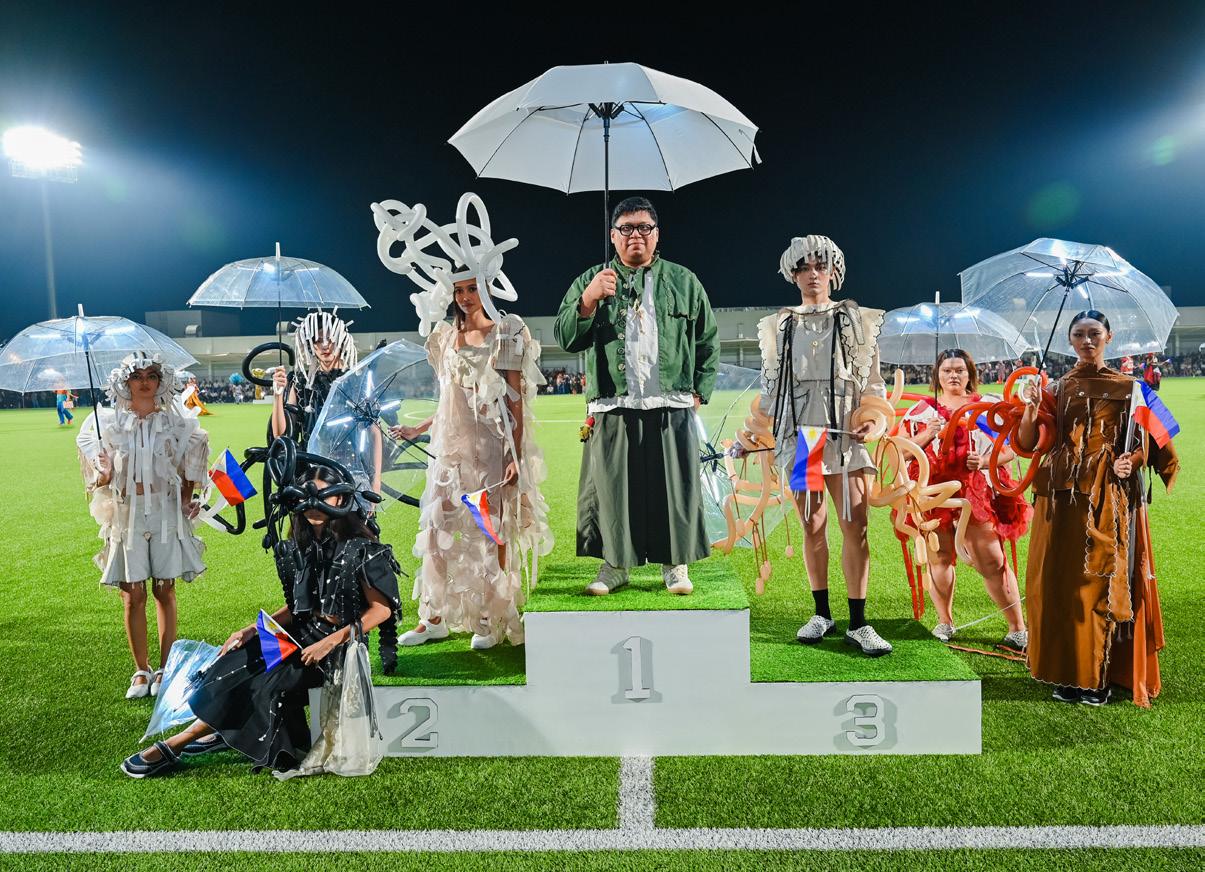
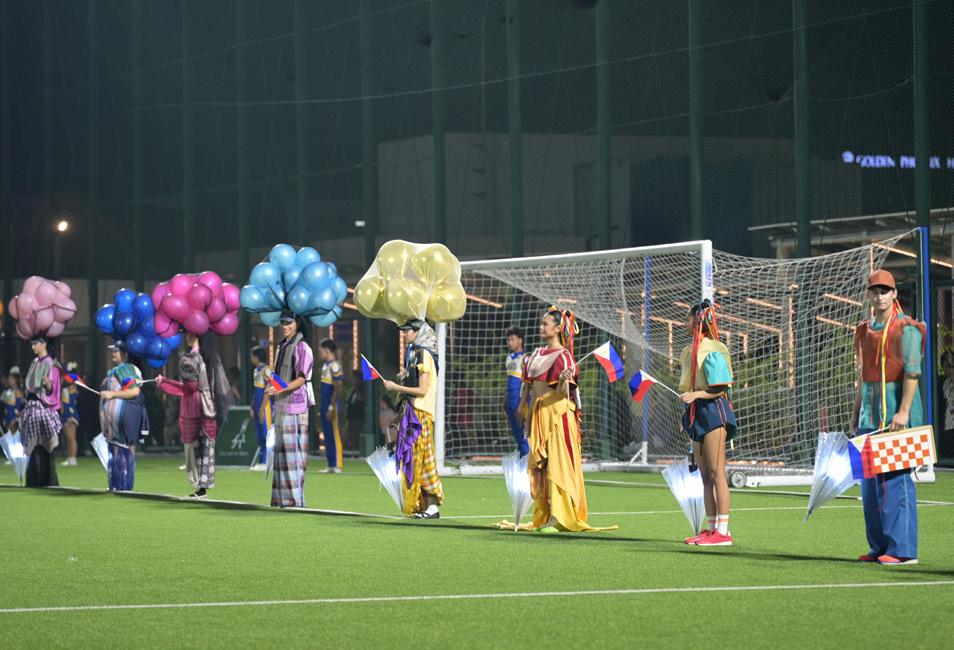
Alley Magtibay’s Intramurals drew from the collective energy of campus athletics, weaving native textures into designs that felt tactile, spirited, and grounded in lived experience.
With Liga, Jo Ann Bitagcol infused her work with nostalgia and ease, offering a softer, more relaxed take on heritage. Len Cabili of Filip+Inna celebrated the country’s deep-rooted basketball culture through Basketball Parabola, translating a shared national pastime into wearable expressions of movement and pride.
Renz Reyes streamlined classic Filipiniana forms, introducing sport-inflected elements that felt clean, contemporary, and accessible. Meanwhile, Carl Jan Cruz reworked archival Bench shirts and found fabrics into clever, wearable statements — an approach that underscored innovation, sustainability, and the evolving language of Filipino design.
Beyond the collections, palaro came alive through performance. A marching band, cheerleaders, and
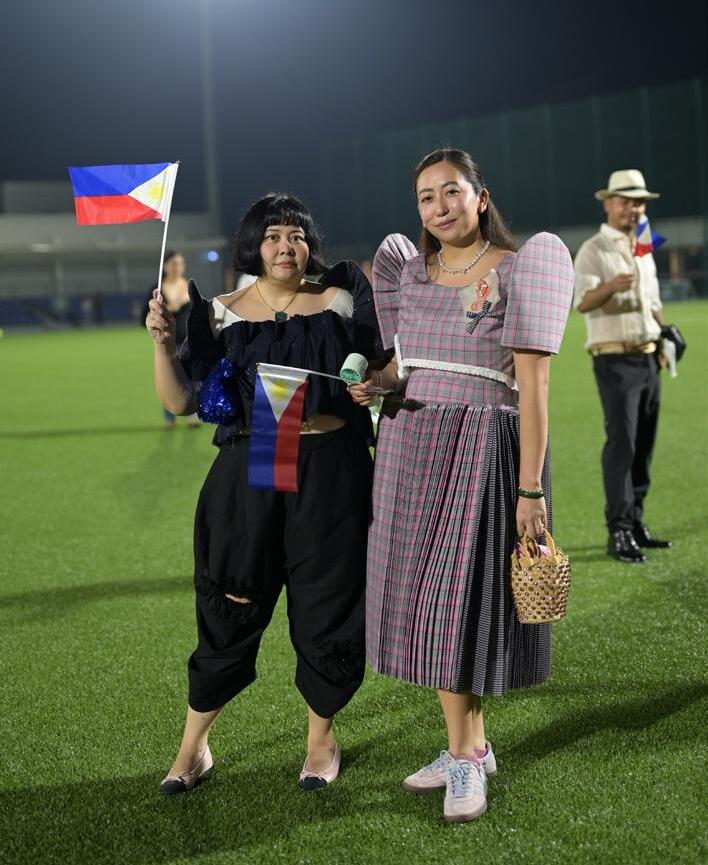
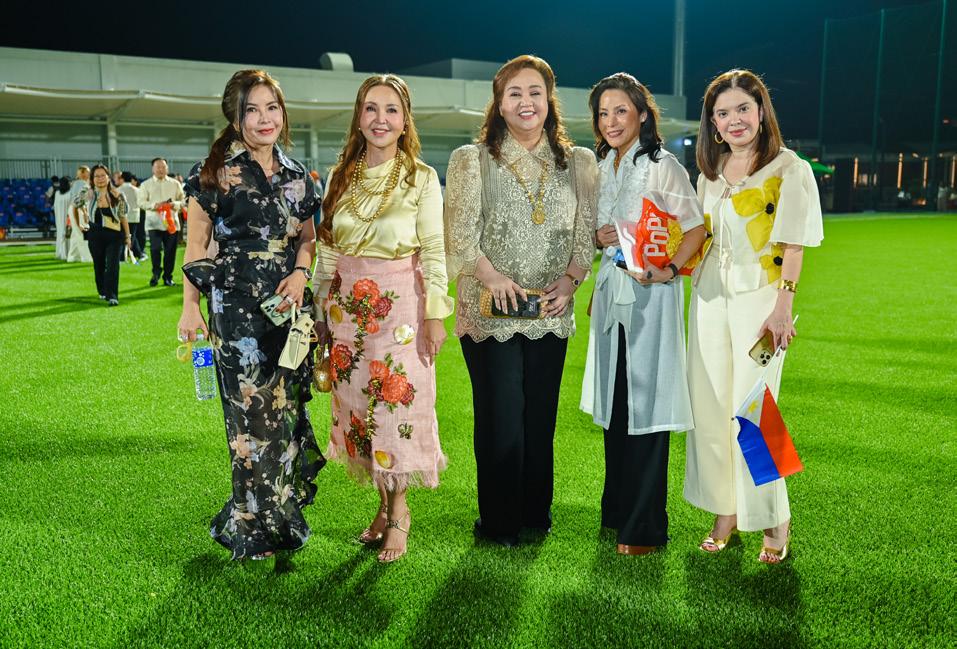
even a referee animated the runway, encouraging audience participation and reinforcing the idea of fashion as a shared cultural experience rather than a distant spectacle. The atmosphere was lively, inclusive, and unmistakably Filipino.
When woven together, these elements captured the essence of TernoCon — that Filipino fashion embodies both grace and vitality, blending heritage with contemporary style while remaining proudly rooted in local identity. More importantly, the show reaffirmed TernoCon’s deeper cultural role.
As a platform, TernoCon functions as cultural advocacy. Beyond the runway, it serves as a living cultural icon, ensuring that the terno continues to evolve as a modern, wearable garment rather than being confined to museums or ceremonial contexts. By encouraging innovation and spotlighting designers who approach heritage with curiosity and confidence, TernoCon actively shapes the future of Filipino fashion.
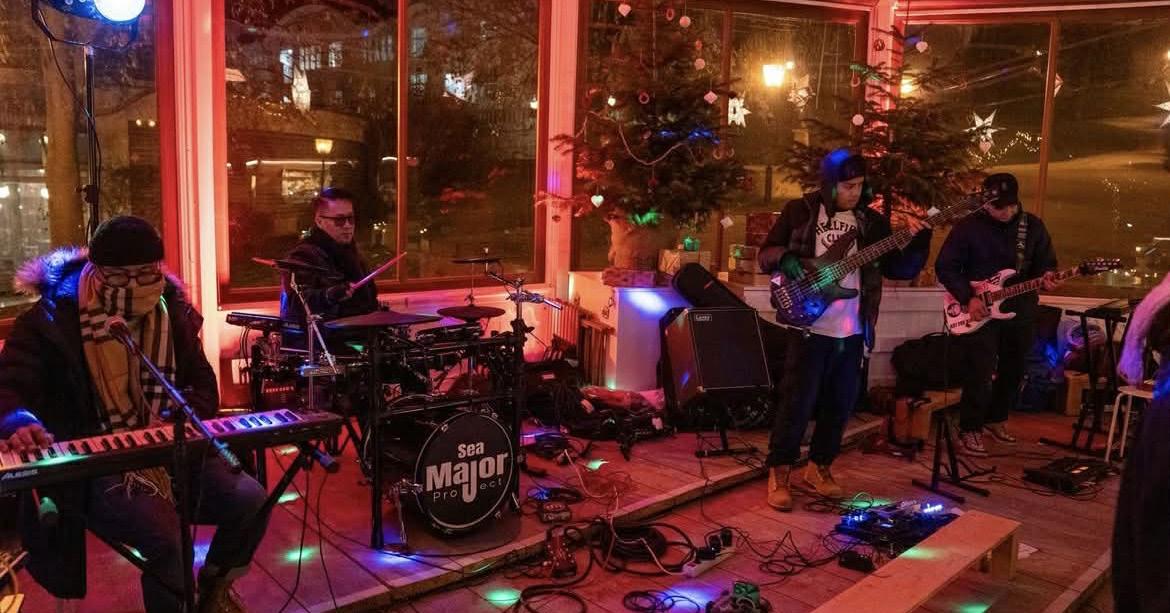
“SEA MAJOR PROJECT” BAND: THE RHYTHMIC
PULSE
OF THE FILIPINO-AUSTRIAN DIASPORA
By Anton Miguel De Vera, Contributor Austria
Music has always been the bedrock of Filipino culture, serving as a powerful medium of expression and a creative bridge for people from all walks of life. From the legendary ‘90s era of the Eraserheads and Rivermaya to modern icons, such as Lola Amour and Ben&Ben,
The evolution of Original Pinoy Music (OPM) has solidified a vibrant band culture. Today, this influence has traveled across continents, inspiring the Filipino diaspora in Europe to craft their own unique musical identities.
A FUSION OF HERITAGE AND HEALTHCARE
On July 7, 2025, a collective of Filipinos — some born in Austria and others who migrated laterfounded the “sea Major Project”. Formed through a tight-knit network of family and friends, the band represents a diverse cross-section of the Filipino Austrian community. While they are musicians by
passion, many serve as the backbone of the Austrian healthcare system as nurses, while others work within Vienna’s international organizations and businesses, attend local schools, or pursue advanced academic degrees.
THE COLLECTIVE TALENT.
The band’s sonic depth is anchored by a versatile lineup of performers. The vocal front features the diverse range of Ody, Michelle, and Carol, alongside male and acoustic guitarist Miggy. Their sound is brought to life by a team of experienced instrumentalists: Harold: Lead Guitar; Marko: Bass; Robert: Drums, Ricky: Keyboards PJ: Multi-instrumentalist (wind keyboards, percussion, and guitar) Kenneth: sound Engineer
A GLOBAL “SONGBOOK”.
The sea Major Project "songbook" is a curated blend of genres that captures a broad demographic. Their
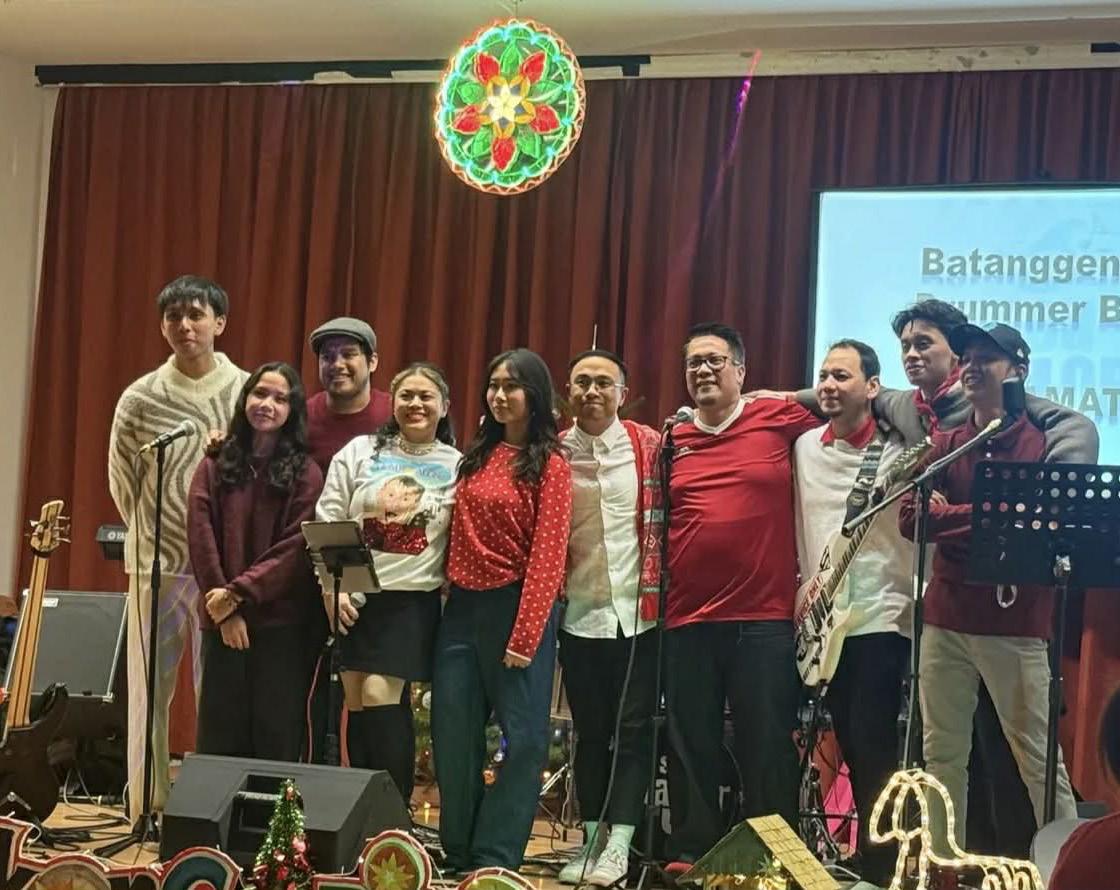
repertoire ranges from the rock and R&B of Bon Jovi and Amy Winehouse (whose hit "Valerie" has become a band staple) to the contemporary sounds of Billie Eilish and the "hidden gems" of Laufey and Olivia Dean. At the heart of their identity, however, remains OPM. By performing hits like "Manila" by Hotdog and "Tuloy Pa Rin" by side-A, they bring the soul of the Philippines to European stages - from the trendy halls of Hotel Am Brillantengrund, to the festive Christmas markets in Baden.
IMPACT AND FUTURE VISION.
In the six months since their formation, sea Major Project has transformed a "fun hobby" into a pillar of community connection. Their debut at the FilipinoAustrian Barrio Fiesta resonated deeply with the diaspora, providing an emotional homecoming through song. Their influence extends to philanthropy as well - the band was recently invited to perform for Matthias stelzmüller, an Austrian entrepreneur
advocating for Filipino children’s welfare through his "skate the World" program.
Looking ahead, the band remains grounded in the joy of the craft. Their primary hope is to continue bonding over rehearsals and live shows, watching with curiosity and excitement as their collaborative sound evolves over time. For the sea Major Project, every note played is a way to contextualize heritage, build confidence, and unite two cultures under one rhythm.
CONNECT WITH THE SEA MAJOR PROJECT.
Experience the journey and stay updated on upcoming performances by following sea Major Project on Instagram profile. From behind-the-scenes glimpses of their rehearsals in Vienna to highlights from their latest gigs at local festivals and markets, their digital community is the best place to witness their sound evolve. Follow them today to support the local Filipino-Austrian music scene and be the first to know where they will be taking the stage next!
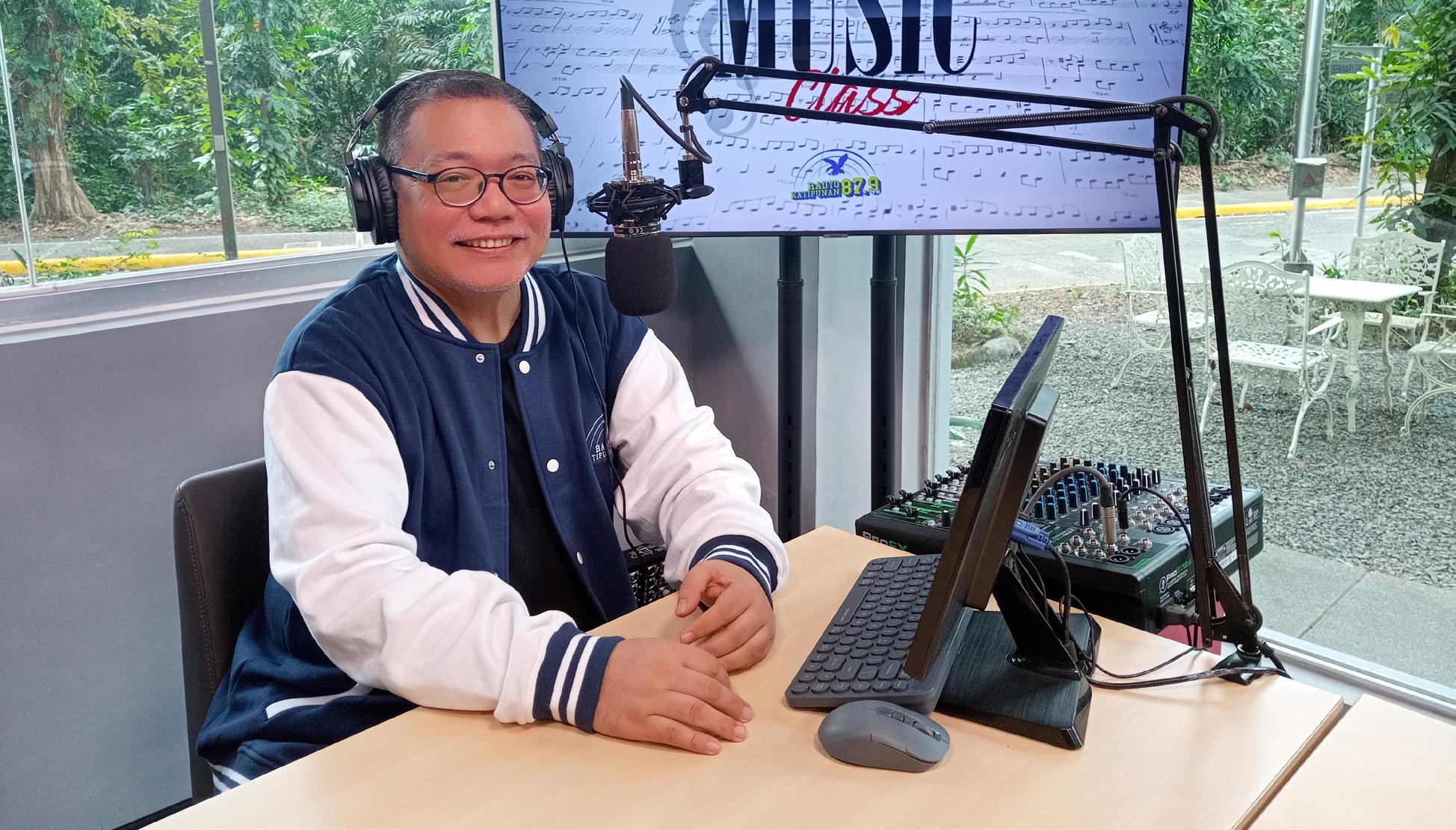
PHILIPPINE NATIONAL COMMISSION FOR CULTURE AND ARTS:
OFFICE OF THE PRESIDENT OF THE PHILIPPINES
By Prof. Jonathan Arevalo Coo
RAW MAGs is proud to announce that former RaW-Mags Associate Editor in charge of culture and music (piano), Professor Jonathan Arevalo Coo, was recently appointed as member of the Executive Council, Philippine National Commission for Culture and Arts, for the period 20262028. The NCCA Commission is directly under the Office of the President.
Prof. Jonathan Arevalo Coo is an internationally known musician and performer. His appointment is in recognition of his invaluable service and contributions in undertaking programs that
promote and preserve cultural heritage.
Professor Coo is appointed in particular to the National Committee on Communications NCCCom, also in recognition of his work as producer and program leader for "RADYO KATIPUNAN", since the NCC is embodied by media practitioners.
A "pasasalamat" or thanksgiving event will be held on the 10th of March 2026. This will include the oathtaking of the new officers and members for the term 2026-2028, and the turn-over ceremony.
Professor Jonathan Arevalo Coo is a creative thinker, strategist,
and life coach. He was educated at the st. Paul University in Manila and at the University of Rochester, UsA.
"KUNDIMAN AT KLAsIKO", a much acclaimed concert was hosted by Roots&Wings, with Prof Jonathan Arevalo Coo from Manila, Filipino Tenor Datu Abdul Candao from Vienna, and soprano Armela Fortuna Widmer, from France. This outstanding classical concert was presented by Roots & Wings some years ago in stockholm and Gothenburg in sweden; Oslo and stavanger in Norway. The concert was hailed by many as the best musical concert presented locally.
COMMUNITY & ADVOCACY · OVERSEAS FILIPINOS
Seen, Supported, and Never Alone
The Philippine Government Makes a Historic Commitment to LGBTQIA+ Filipinos Abroad
By Hilda Arenas, Associate Editor & Country Editor, Dublin, Republic of Ireland
For every Filipino who has ever left home carrying not just their dreams, but questions about how they will be received, recognised, and protected in the country they are moving to — this news matters.
For LGBTQIA+ Filipinos in the diaspora, the journey abroad has always carried a particular
kind of complexity. Beyond the universal challenges of migration — rebuilding a life, finding community, navigating unfamiliar systems — many have had to do so without dedicated government support that truly understands and addresses their specific needs.
That is beginning to change.
In a significant step towards inclusive governance, the Commission on Filipinos Overseas (CFO) and the Department of social Welfare and Development (DsWD) special Committee on LGBTQIA+ Affairs have joined forces to develop
specialised support programmes for LGBTQIA+ Filipinos living abroad — with a particular focus on same-sex couples preparing to emigrate.
It is a quiet but powerful declaration: that the Philippine government sees all of its people. And that all of its people deserve equal care, equal preparation, and equal support — regardless of who they are or who they love.
R&W Magazine shares the full details below.
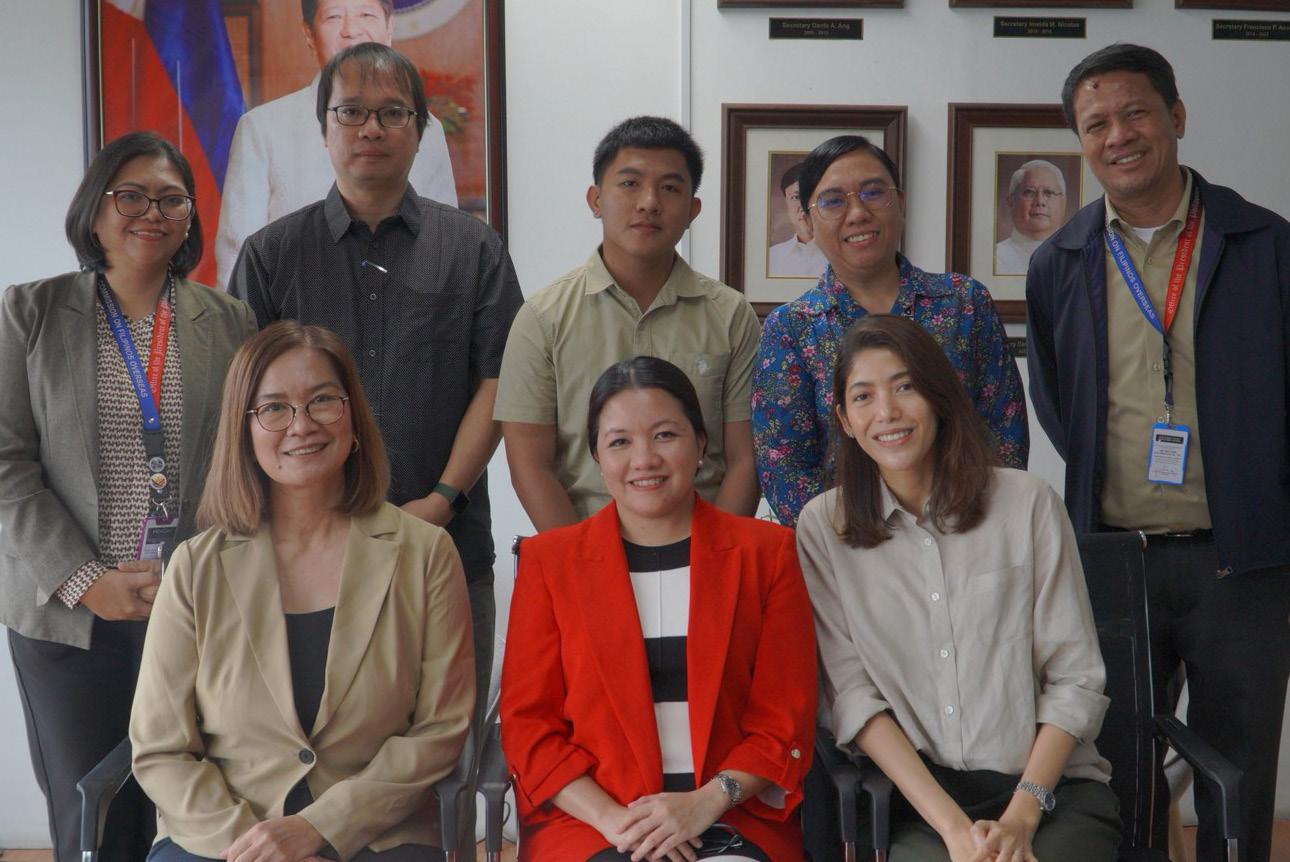
COMMUNITY & ADVOCACY · OVERSEAS FILIPINOS

CFO to develop specialized support mechanism for LGBTQIA+ Filipinos living abroad
The Philippine government’s commitment to inclusive governance will now extend to specialized support for LGBTQIA+ Filipinos abroad.
Officials from the Commission on Filipinos Overseas (CFO) and the Department of Social Welfare and Development (DSWD) Special Committee on LGBTQIA+ Affairs met Thursday, Feb. 12, at the CFO’s Pasay City office to explore collaborative programs, specifically focusing on developing specialized guidance counseling for same-sex couples in the diaspora.
This initiative directly links to the CFO’s core mission of providing pre-departure education and integration support to all departing Filipinos, ensuring their welfare regardless of orientation or identity.
The meeting was led by CFO Undersecretary Ma. Arlene S. Borja and DSWD Undersecretary Elen De Vibar Pasion of the Special Committee on LGBTQIA+ Affairs, with Assistant Secretary Cynthia C. Kim also attending. The DSWD committee was created under a 2023 executive order to reinforce the government's diversity and inclusion program.
During the session, Mhin Gunabe of the CFO’s Migrant Integration and Education Division presented data on CFO registrants, including statistics on same-sex couples. This data spurred discussions on the need for more responsive government services.
A key proposal that emerged was the creation of a customized Guidance and Counseling Program (GCP) for emigrating same-sex couples.
The CFO would lead the implementation, with the DSWD Special Committee providing policy support to ensure the program is rights-based and responsive to the specific needs of the LGBTQIA+ community.
Both agencies affirmed their dedication to ensuring that government programs for overseas Filipinos are equitable and inclusive.
About the Commission on Filipinos Overseas
The Commission on Filipinos Overseas (CFO), established under Batas Pambansa 79, is dedicated to the welfare and empowerment of Filipinos permanently residing abroad. It is distinct from the Department of Migrant Workers, which primarily addresses the needs of Overseas Filipino Workers (OFW) and other temporary migrants.
The Giving Never Stopped
How the Filipino Diaspora is Quietly Building the Philippines
— One School, One Scholar, One Community at a Time
They left. But they never stopped giving back.
The story of the Filipino diaspora is often told in remittances — in the billions sent home each month to support families, pay school fees, and keep roofs over heads. But that is only part of the story. Beneath the headline figures lies something deeper and less visible — a quiet, sustained, and profoundly
intentional act of nation-building, carried out by Filipinos who may live thousands of miles from home, but have never stopped believing in it.
This week, that story was given the spotlight it deserves.
The Commission on Filipinos Overseas (CFO) and Feed the Hungry, Inc. (FtH) — a U.s.-based non-profit whose members include professionals from the World Bank
and the International Monetary Fund — reaffirmed a partnership that has spanned more than 30 years and channelled over ₱500 million into Philippine national development. From school buildings in Cavite to scholarship grants, feeding programmes, and disaster relief — this is what diaspora love looks like in action.
R&W Magazine shares the full details below.
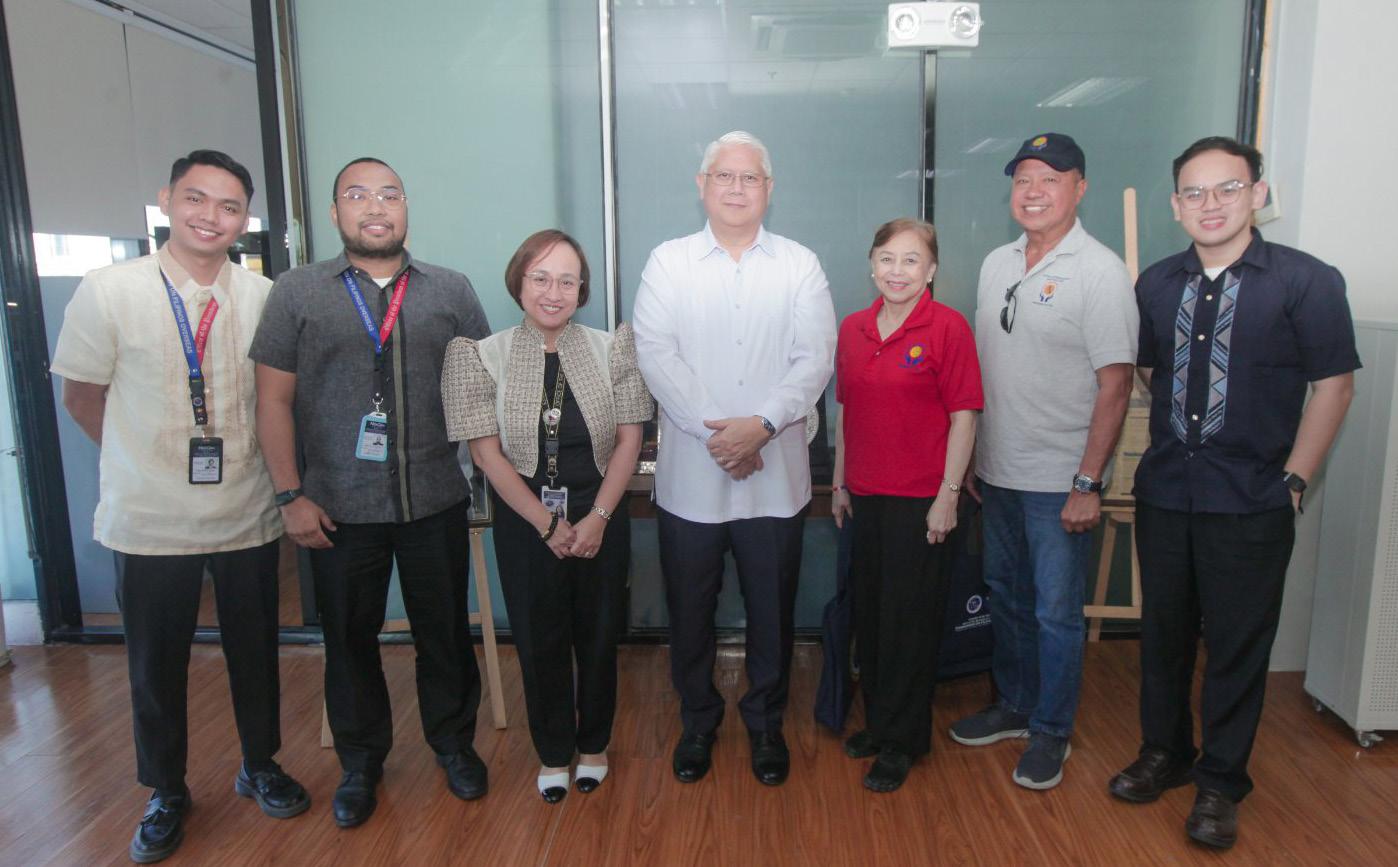
COMMUNITY & NATION-BUILDING · OVERSEAS FILIPINOS
CFO cites Filipino diaspora’s immense contribution to national development
The immense contributions of the Filipino diaspora to national development, extending far beyond financial remittances, were spotlighted this week as a leading overseas Filipino organization reinforced its decades-long partnership with the government.
Leaders of Feed the Hungry, Inc. (FtH), a U.S.-based non-profit whose membership is composed primarily of individuals affiliated with the World Bank and the International Monetary Fund, paid a courtesy call on Secretary Dante “Klink” Ang II, chairperson of the Commission on Filipinos Overseas (CFO). The meeting highlighted the CFO's strategic pivot toward deeper engagement with the diaspora, aiming to reconnect overseas Filipinos culturally, politically, and economically to the motherland through tangible nation-building projects.
The visit followed FtH's Feb. 6 groundbreaking ceremony for an eight-classroom school building in Naic, Cavite.
FtH Chairman Larry Pacis and Board Member Milagros Nazal discussed expanding their collaboration with Ang to integrate CFO support further into their communitydriven initiatives.
The commission and FtH have partnered for more than 30 years through the CFO’s Lingkod sa Kapwa Pilipino (LINKAPIL) program.
LINKAPIL serves as a central conduit for overseas Filipinos to fund specific development projects back home. Through this mechanism, FtH has facilitated diverse multisectoral initiatives, including feeding programs, scholarship grants, disaster relief, livelihood assistance, and small-scale infrastructure projects like water systems and school classrooms.
During the meeting, the CFO emphasized the necessity of tracking these contributions to measure the true scale of diaspora engagement. According to CFO data, total donations channeled through LINKAPIL from 1990 to 2024 have reached P3.4 billion.
Since its inception in 1993, the FtH has contributed more than P500 million to Philippine national development, P226 million of which was coursed through the CFO’s LINKAPIL Program.
Ang welcomed the continued collaboration, exemplifying how overseas Filipinos impact local progress despite their distance from home. The commission renewed its commitment to assist FtH in expanding its reach to more Filipino beneficiaries.
New R&W Team Members

ANTONINA ERAIDA TAFALLA COUNTRY EDITOR, FINLAND
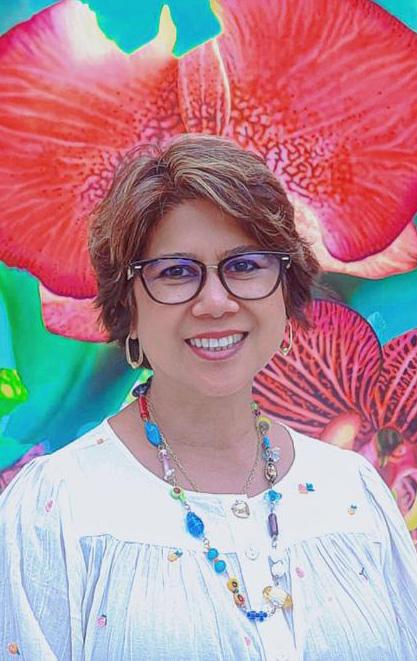
LOUISE
BATERNA COUNTRY EDITOR, BRUSSELS, BELGIUM
FROM CONTRIBUTOR TO COUNTRY EDITOR: CELEBRATING ANTONINA ERAIDA TAFALLA
We are thrilled to announce that Antonina Eraida Tafalla, a valued Roots & Wings contributor for several years, is stepping into her new role as Country Editor for Finland!
Antonina's journey with us has been inspiring to watch. Her journalism roots run deep — a Bachelor of Arts in Journalism graduate from the University of Eastern Philippines and former Senior Writer at the Weekly Tribune (2002 — 2005). Since moving to Helsinki in 2009, she has built a remarkable life as an entrepreneur for over a decade, championing financial literacy through IMG International Marketing Group and
actively investing in both Philippine and global markets.
Her contributions to Roots & Wings have consistently captured the heart of the Filipino experience in Finland with authenticity and insight. Now, as Country Editor, she will amplify even more voices and share the compelling stories of our community in the Land of a Thousand Lakes. Antonina thrives in dynamic environments, embraces challenges, and continuously seeks growth opportunities - qualities that make her perfect fit for this role. Welcome to your new chapter, Antonina! Finland's stories are in the best hands.
A WARM ROOTS & WINGS WELCOME TO LOUISE BATERNA!
By Hilda Arenas, Associate Editor & Country Editor Dublin, Republic of Ireland
We are thrilled to introduce Louise Baterna as our new Country Editor for Brussels, Belgium!
If you have experienced Filipino culture in Belgium over the past few years, whether at a food festival, art exhibition, literary event, or the groundbreaking first Asian Literary Festival in Brussels — you've likely felt Louise's impact. As founder and president of the Philippine Art and Culture Exchange (PACE), she has been the driving force behind platforms that elevate Filipino and Asian voices across Europe.
Louise's journey from Manila Bulletin journalist to Brussels-based cultural curator is remarkable. A University
of Santo Tomas journalism graduate, she has curated exhibitions at Brussels' Museum of Migration, studied contemporary art curation at University of the Arts London, and in 2025 was invited to serve on the jury for the Asian Prize for Poetry. She does not just write about culture — she shapes it, curates it, and gives it a stage.
Now, from her Writers Cottage in the village of Surice, Louise will be bringing her unique perspective, editorial expertise, and unwavering commitment to Filipino excellence to every issue of Roots & Wings.
Louise, we could not be more honored to have you. Welcome to the family!
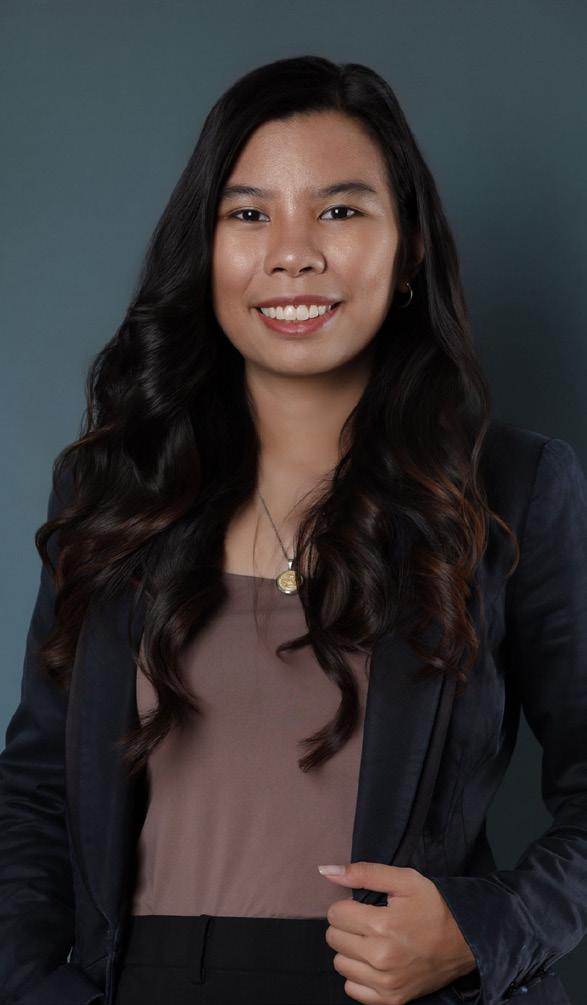
AIESHAH BALMORI COUNTRY EDITOR, POLAND
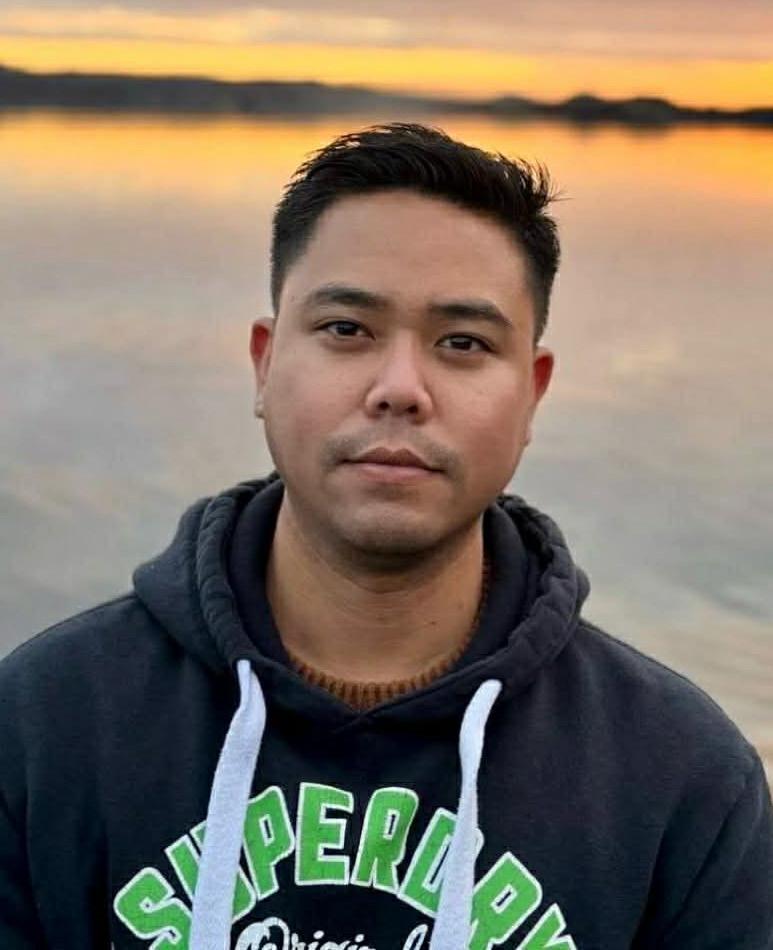
JUNART S NIEVA ASSISTANT COUNTRY EDITOR, LONDON, UK
INTRODUCING AIESHAH BALMORI — COUNTRY EDITOR, POLAND
By Hilda Arenas, Associate Editor & Country Editor Dublin, Republic of Ireland
Roots & Wings is thrilled to welcome Aieshah Balmori as our new Country Editor for Poland. A Filipina currently based in Kraków, Aieshah brings a truly international perspective to the role — one shaped by years of living, studying, and advocating across Europe and beyond.
A graduate with distinction from the Erasmus Mundus Joint Master Programme in European Politics and Society, Aieshah studied at Charles University in Prague, Leiden University in the Netherlands, and Jagiellonian University in Kraków, where she focused her research on migration, labour, and integration in Europe. She holds a Bachelor’s degree in Consular and Diplomatic Affairs from De La Salle — College of Saint Benilde in Manila, where she graduated Cum Laude.
WELCOME
Beyond academia, Aieshah is a passionate advocate for the Filipino diaspora, serving as a Director of the European Network of Filipino Diaspora (ENFiD) and as an active youth leader with the Humanitarian Organization of Pinoys in Europe (HOPE) — both of which keep her closely connected to the migrant communities she writes about and for. Whether she is co-organising youth forums at the United Nations, teaching ASEAN studies back in Manila, or navigating life as a migrant herself, Aieshah understands deeply what it means to carry your roots while learning to grow new wings. We cannot wait for you to see Poland through her eyes.
TO THE TEAM — MEET OUR ASSISTANT COUNTRY EDITOR FOR LONDON, UK
Roots and Wings Magazine is delighted to introduce Mr. Junart S. Nieva as our Assistant Country Editor for London, United Kingdom.
An active member of the Knights of Rizal and a founding member of both the Camarines Sur Filipino Community UK and the London Filipino Centre — where he dedicated his time to teaching the Filipino language — Junart is a passionate advocate for Philippine history, heritage, and Rizalian values. He champions migrant causes, environmental awareness, and youth
empowerment with equal heart and dedication.
He holds a Bachelor of Secondary Education major in English from the University of Santo Tomas, a postgraduate certificate in Social Entrepreneurship, and is currently training as a pharmacy technician. A traveller, writer, and natural community organiser, Junart continues to make his mark across the Filipino diaspora — and we are thrilled to welcome him to the Roots and Wings family.

JOIN THE ROOTS & WINGS FAMILY!
Roots & Wings — the Filipino E-Magazine in Europe — is growing, and we are looking for passionate and talented Country Editors and Contributors to join our team! Are you based in any of these countries? Bulgaria • Croatia • Denmark • Estonia • Greece • Hungary • Italy (Rome & Milan) • Latvia • Lithuania • Malta • Portugal • Romania • Slovakia • Slovenia • Spain • Switzerland • The Netherlands
If you have a story to tell, a community to represent, and a passion for celebrating the Filipino and Euro-Pinoy experience — we want to hear from you!
Reach out to us and be part of something truly meaningful. Luz Bergersen – lgb1312@gmail.com Hilda Arenas – hildaarenas007@gmail.com
Together, let us keep telling our stories — one country at a time.
Photo by cottonbro studio via Pexels