From the Editor-in-Chief
From the Editor-in-Chief
Dear Readers,
This is our Second Quarter Issue this year, and it arrives in the middle of a season that feels almost too full of life to contain. Inside these pages you will find photographs from Flores de Mayo and Santacruzan celebrations already held across Europe - beautiful, moving, and thoroughly Filipino. But June is not over yet, and more celebrations are still unfolding before the month is out. The same is true of Philippine Independence Day: some communities have already marked 128th years of freedom with events we are proud to document here, while others are still ahead. Consider this issue a living record of a community in full flight, captured mid-celebration.
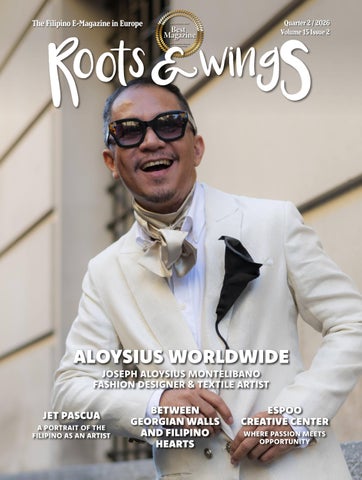
Our cover story is one that we hope you read slowly, and more than once.
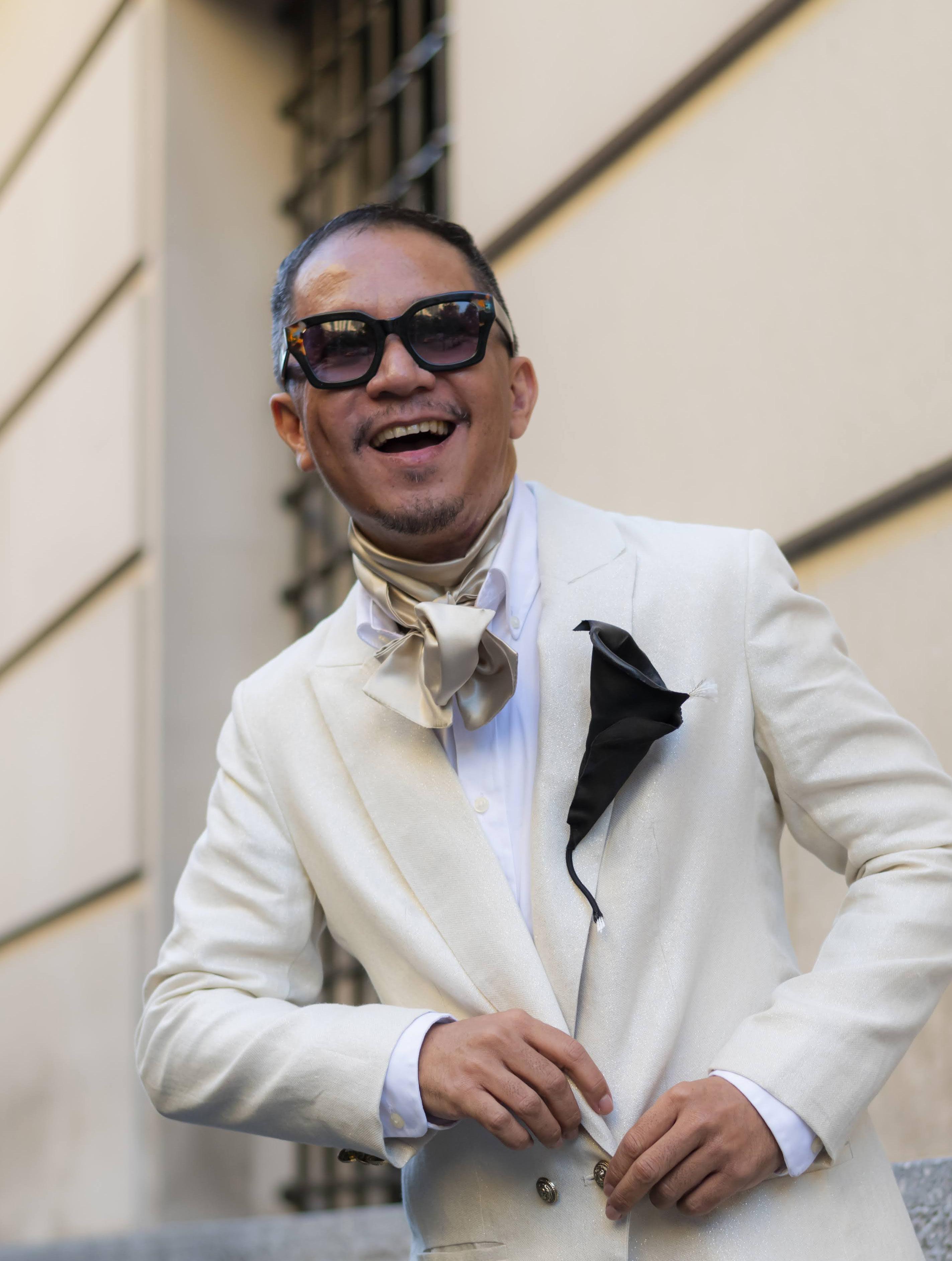
Joseph Aloysius Montelibano - the creative force behind ALOYSIUS Worldwide - is a fashion designer, textile artist, and chef who has spent more than two decades bringing the finest Philippine-inspired designs and materials to the world stage, all while ensuring they never lose what makes them distinctly, irreducibly Filipino. His is a story of artistry with roots, of someone who has travelled the world without ever leaving home behind. A passionate advocate for Philippine travel, Joseph has also organized journeys to some of the country's most extraordinary destinations, His story is a gift. Give it time it deserves.
We are also proud to feature Filipino-Norwegian artist Jet Pascua, whose work is introduced through a beautifully crafted article by US-based Filipina artist and curator Carina Evangelista, with profile photography by Norway-based Filipina photographer, Grace Orbon Emmelot. A collaboration that itself is a portrait of what this community does naturally: show up for each other across borders, oceans, and disciplines.
Elsewhere in this issue, visit Ricky Carranza's ECC Espoo Creative in Finland, celebrate achievers, and catch up on community news and press releases from across Europe.
And, about the breadth of this issue - from a Filipino food shop bringing a taste of home to the
heart of Austria, to Filipino artists celebrated in the Republic of Ireland with Philippine Independence Day as their backdrop, this issue is a testament to talent that knows no borders. Aptly and joyfully, it is all here: food, fashion, the visual arts, community milestones - proof that wherever Filipinos go, they do not simply arrive. They create, they contribute, and they make every place richer for it. Do not skip a single page.
Roots & Wings exists because this community keeps showing up and keeps insisting its stories are worth telling - because they are. Across this continent, Filipino talents in music, the arts, crafts, and food have found fertile ground to grow in ways that would make us all proud. We are honoured to document it and share it with family and friends around the world.
May and June are glorious months in Europe. The flowers are in bloom, the days are long, and life is being celebrated in the best possible way. It is a wonderful time to be Filipino in Europe.
Celebrate loudly this summer. You have earned it. Happy Summer!
Sincerely,
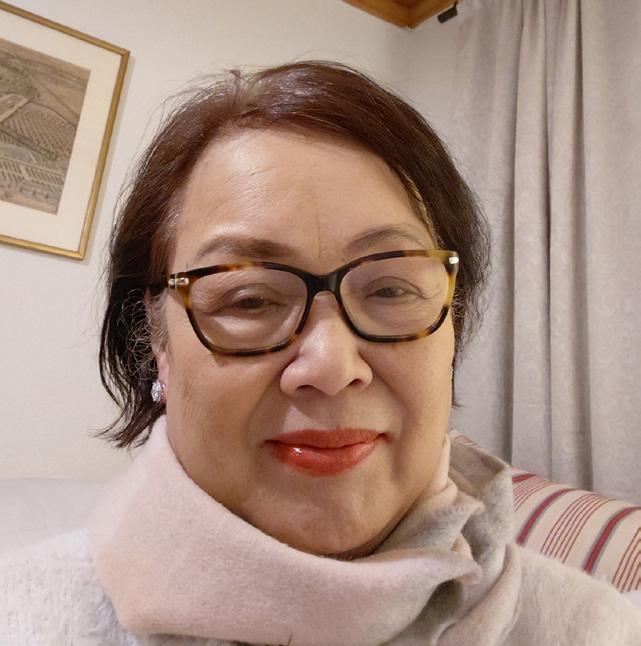
Luz LG Bergersen EDITOR-IN-CHIEF
EMAIL: LGB1312@GMAIL.COM
TEL: 00 47 90130871
MEET THE TEAM P 4
ALOYSIUS: FASHION DESIGNER & TEXTILE ARTIST P6
JET PASCUA: A PORTRAIT OF THE FILIPINO AS AN ARTIST P 16
THE MOST FILIPINO ROOM IN DUBLIN P 21
HIWAGA HANDS: THE QUIET LUXURY OF SLOWING DOWN P 29
ESPOO CREATIVE CENTER (ECC) P 31
FILIPINO EUROPEAN AUTHORS P 33
AIESHAH BALMORI - FILIPINA HONORS GRADUATE P 36
POMPEI BANAYOS - CHARGE NURSE P 40
FILIPINO NURSES ASSOCIATION P 41
BEYOND THE HEIDI TALE P 43
BETWEEN WORLDS: THE QUIET FORCE OF MARVI GIL P 45
WOMEN MIGRANTS COME TOGETHER FOR IWD P 48
PHILIPPINE FOOD FESTIVAL IN BRUSSELS P 51
A TASTE OF HOME: BAHAY KUBO EXOTIC SUPERMARKET P 53
CAMPUS MANILLA P 56
TENS FOUNDATION: CHANGING LIVES IN THE PHILIPPINES P 57
FLORES DE MAYO P 60
128TH PHILIPPINE INDEPENDENCE DAY CELEBRATIONS P 63
THE FILIPINO SPRING FAIR KKK P 84
IGOROT COMMUNITY UK SPORTS FESTIVAL 2026 P 86
CFO - PRESS RELEASE & NEWS P 87
FIMUS & CFO SIGNS MOU P 92
GABI NG AWITING PILIPINO P 94









roots & wings filipino magazine in europe published by rachel publishing co. stockholm, sweden 2009-2025







FOLLOW US ON SOCIAL MEDIA
instagram: @raw.mags twitter: @rawmags facebook: @rawmags

youtube: @rawmags linkedin/rawmags
FEEDBACK PAGE What do you think of our magazine? Email lgb1312@gmail.com
By Donna Patricia Lopez Manio

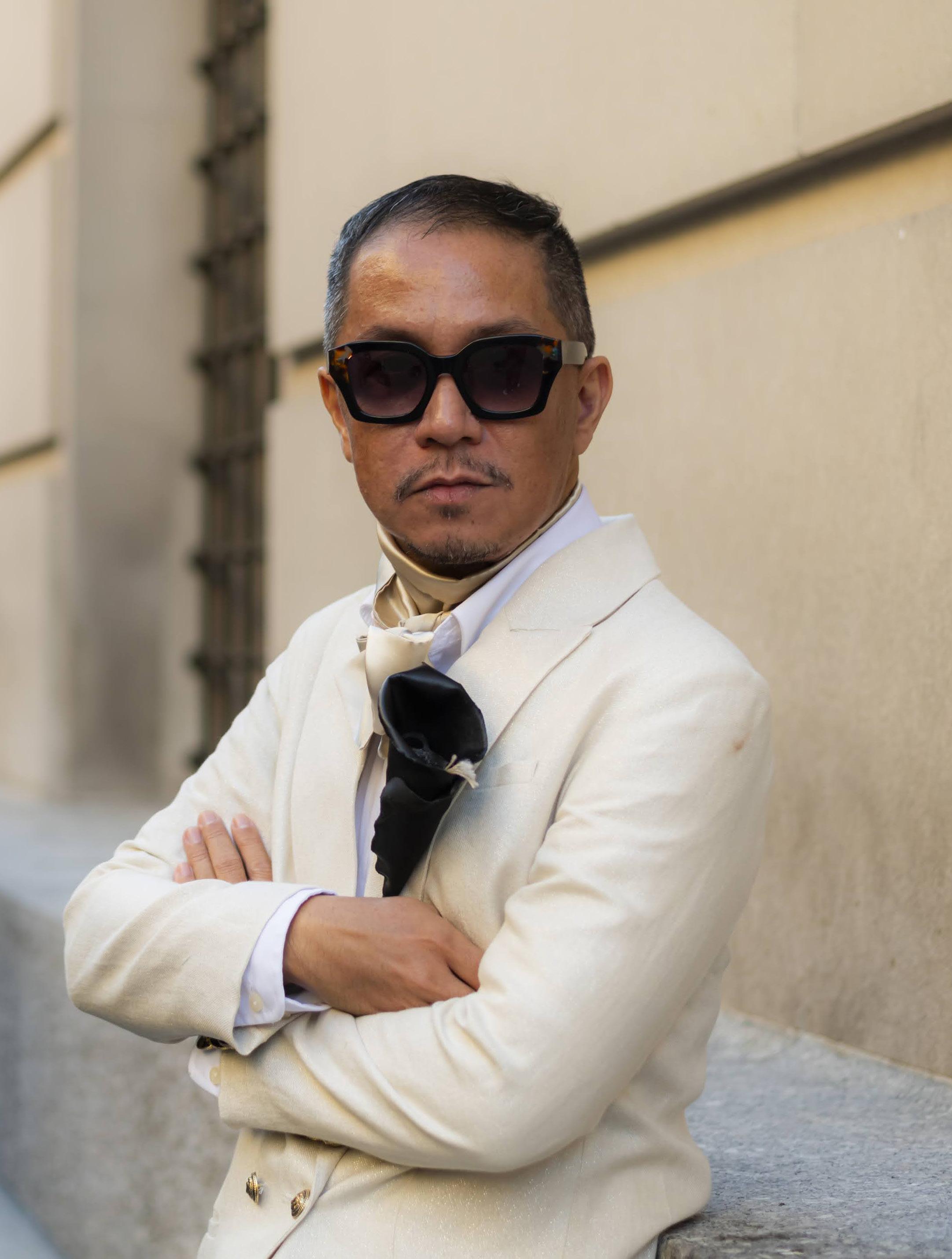
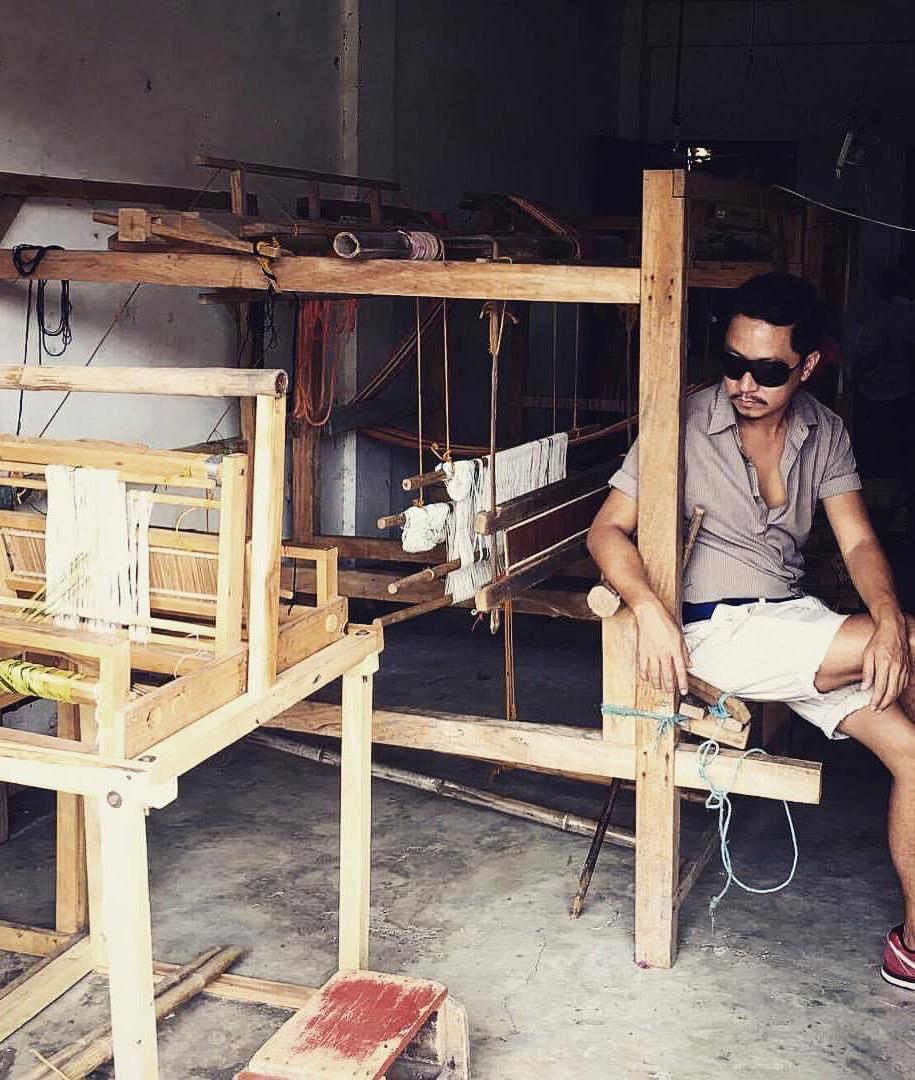
ALOYSIUS is a global heritage fashion brand established by Filipino designer and textile artist Joseph Aloysius Montelibano. His creative process and design direction highlight anthropological approaches and artisanal techniques that yield masterful work. ALOYSIUS has produced environmentally responsible products and purposeful exhibitions in relevant cities worldwide since 2010, from runway presentations in London and New York to cultural missions in Northeast India.
Montelibano stands at the forefront of charitable initiatives and humanitarian causes in relation to the fashion industry. In 2019, he was commended by the Office of the Ambassador of the Philippines in the USA for “showcasing eco-friendly and sustainable couture” in a benefit gala to combat human trafficking. His advocacies range from defending human rights, furthering anthropological studies, improving artisanal techniques, raising awareness for global
sustainability solutions, and ultimately, harboring cultural understanding through fashion.
For almost two decades, Montelibano has spoken at countless summits and engagements. His expertise has been recognized and featured in local and international press. In 2017, the ALOYSIUS excursion to Northeast India Fashion Week led Montelibano to a fork in the road: to design and produce clothing that uses the influence of fashion to create cultural unity and a more peaceful world.
Montelibano continues the exhibition’s tour domestically and abroad, conveying its messages of peace through diplomatic and academic engagements.
Complementing this work, he will launch , Aloysius Worldwide Tours in June 2026. A program dedicated to cultural education and immersive travel experiences designed to strengthen cross-cultural awareness and understanding among global communities.
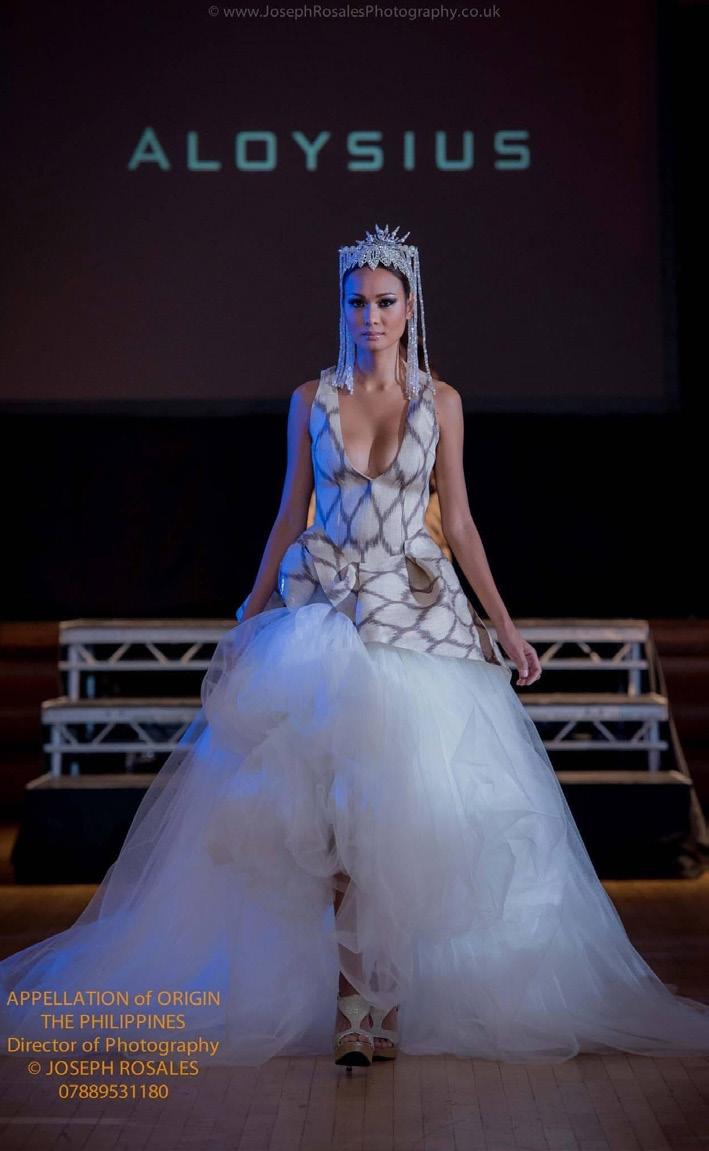
London 2015
Appellation of Origin:
The Dulay Dreams Collection presentation
New York 2016
Piña Calado runway presentation and exhibit
Philippine Consulate General
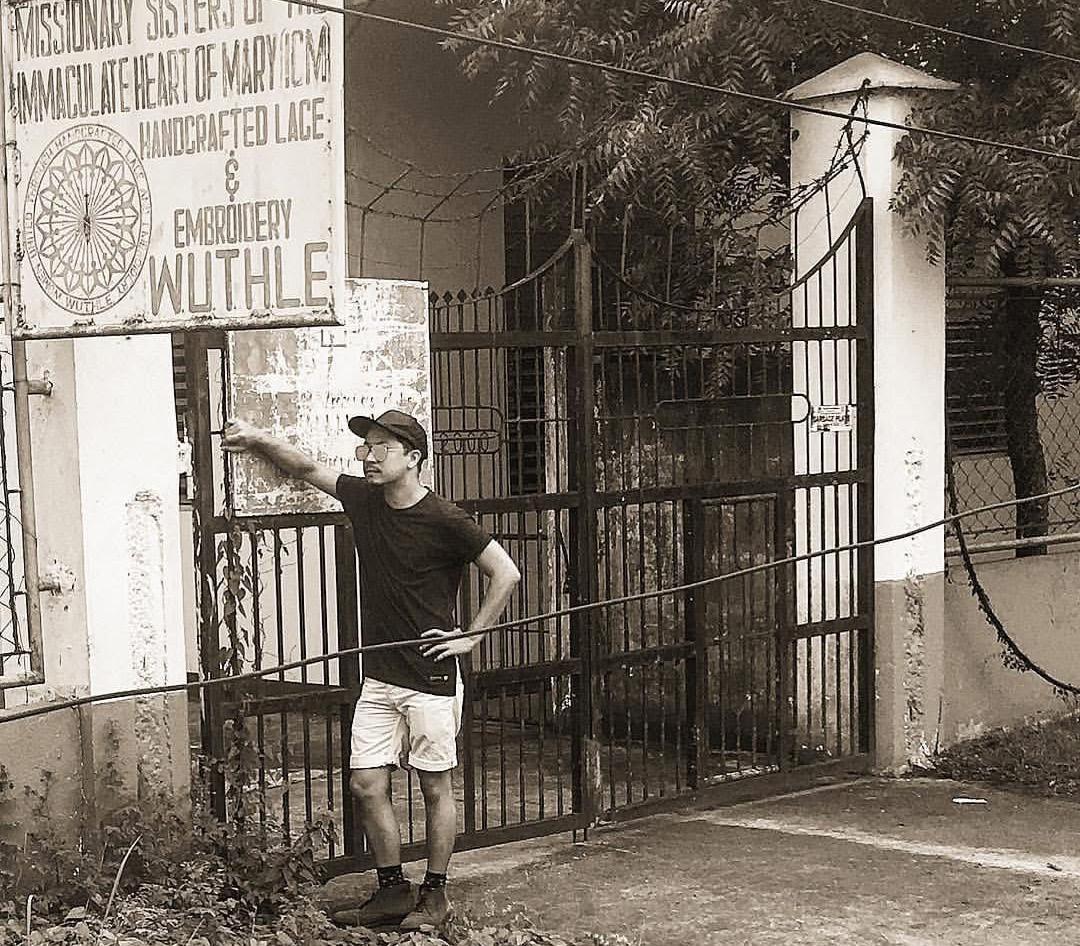
Northeast India 2017
Featured guest designer
Northeast India Fashion Week
Virginia Beach 2019
Guest speaker & featured designer
A New Beginning fundraiser
Benefitting the fight against human trafficking
Cultural Diplomacy Conference 2018 | DFA
Featured Stakeholder
Brand Pilipinas 2018
Guest speaker | Featured Designer
World Speech Day 2018
Guest Speaker
De La Salle - College of St. Benilde 2018
Gliceria Exhibit Curator
AGREA Agricultural Summit 2018
Featured Designer Exhibit
Sustainability Summit 2017
Guest Speaker
iAcademy 2013
Design Workshops | Guest Lecturer
Project runway Philippines S3 2011–2012
Featured finalist designer
DOT Indigenous Fiber Fair 2010–2014
Iloilo Fiber Fashion Show
Featured Designer
by Joseph Aloysius Montelibano
We have entered an age of chaos.
We are Standing at a unique crossroads in the human story.
With a single swipe of a finger, we possess the god-like power to summon sublime beauty or unleash sheer devastation.
The very tools that promised to stitch the world together and unite us is now too often weaponized to separate, radicalize, and dehumanize.
For as long as I can remember, I have been a student of beauty. Drawn to what visually uplifts the senses.
As a child, the television was my flickering portal to the world.
I discovered beauty in everything there: in performances that stirred emotion, in images that lingered, in stories that made the world feel vast and full of possibility.
Everything felt elevated. Sacred, even. Because I didn’t yet know what beauty could conceal.
By the time I reached young adulthood, I knew I wanted to serve the sanctuaries of beauty.
I found my way into fashion, into visual merchandising, design, textiles, spaces where beauty is crafted with intention and presented as aspiration.
For a long time, that felt enough.
But as the years passed, I began to notice something unsettling.
Even in the most exquisite spaces, dissension always found its way in.
Discord slips quietly into the seams of an anything that is beautiful in the world.
In fall of 2001, It was a clear, crisp fall morning.
I lingered in bed a little longer than usual in my topfloor walk-up apartment in Brooklyn, knowing I didn’t have to be at work until the afternoon because It was New York Fashion Week. That night I was producing the after-party for one of the rising designers of the moment- an elevated concept, a stunning venue, and a remarkable guest list. It was shaping up to be one of the most sought-after invitations of the week.
Still cocooned in soft pillows, mentally preparing myself for the beauty, energy, and excitement the day promised, my phone rang. It was my boss.
Instinctively, I rolled my eyes and answered.
“I’m not supposed to be at work until after lunch,” I said.
“You’re not coming in today,” she replied. “Turn on your television.”
Then the line went dead.
My thoughts raced. Had something gone wrong— with a client, the venue, the event itself? I sat up quickly and turned on the TV.
Every channel showed the same image. I couldn’t comprehend what I was seeing.
I stepped out onto the fire escape and climbed to the rooftop. From there, it was unmistakable—the New York City skyline told the story in full view—the magnificent Minoru Yamasaki designed twin towers now engulfed in the darkest smoke and fire, the citys iconic skyline irrevocably altered in front of my eyes. , transformed into scenes of devastation and loss.
I saw both towers collapse into a big black hell cloud and into nothingness.
That day, Rather than being the door bitch commanding aesthetic splendor, I was instead attempting to return it to those hurt by the devastation.
I found myself volunteering outside St. Vincent’s Hospital in downtown Manhattan, assisting paramedics who were overwhelmed by the scale of what was unfolding.
In hindsight, I was grateful to have spent my day there at St Vincent’s, instead of an eventually cancelled party.
Because The designer I was working for would later be sentenced to 60 years in prison for years of sexual abuse and exploitation of young models.
One more unforgettable story, if I may:
In 2015, A few years after coming home to the Philippines, I was invited to present a runway show in London. I wanted it to be more than just a display of clothes; I hoped to convey a concept that could bridge cultural understanding between Filipino and european audiences, creating a showcase both meaningful and timely.
To find inspiration, I traveled to Lake Sebu, in South Cotabato, a picturesque mountain lake side town. A perfect example of a sanctuary for artists and abode for thinkers. Beyond its striking natural beauty, the area’s quiet, soulful surroundings felt almost otherworldly—distant, unspoiled, and imbued with a gentle, lingering magic. I wanted to go to London carrying not only sketches and fabrics but also a vision shaped by the misty mornings, serene rhythms and cerebral value of this remarkable place.
During my visit, I had the privilege of attending the wake and funeral of Lang Dulay, the godmother of dream weaving. A cultural Master of the Tnalak fabric. In her humble home, a traditional TBoli hut, I met the family and learned about the tradition of weaving through dreams, a practice passed down through generations. As I shared in their grief, I realized that my show should and must be a tribute to her life and legacy.
After the funeral, I sat with her daughters , the other local weaving community and government
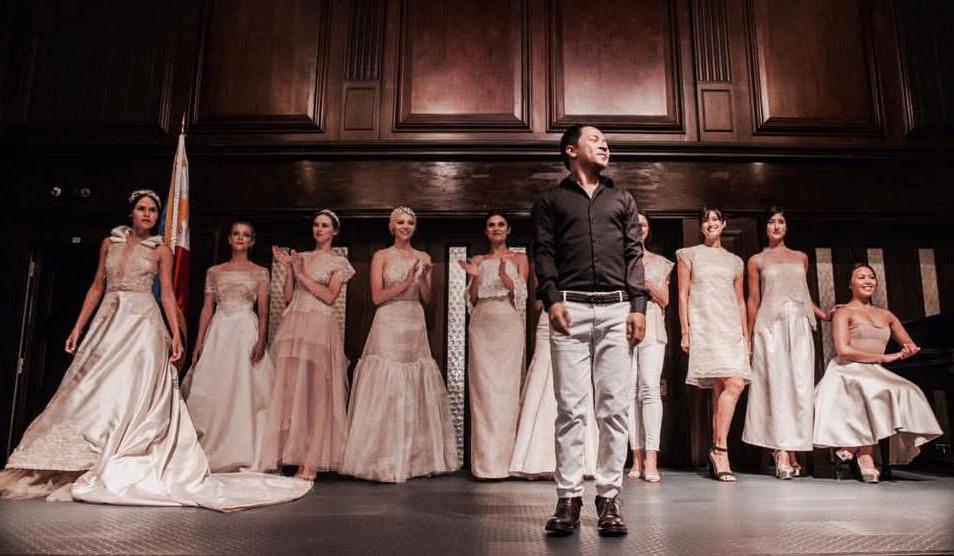
representatives to present my concept and plans for London-a show celebrating the artistry, culture, and spirit of Lake Sebu and the Tnalak fabric. intending to honor Lang Dulay and her contribution to the T’boli people.
I proudly proposed the title Dulay Dreams, Without batting an eyelash, the representative of the agency who was supposed to be the gatekeeper of these heritage and traditions, snapped in fury.
“WHY DULAY? She’s now dead and irrelevant” Right in front of her still grieving daughters.
I was stunned. A cold silence fell in that long table. I immediately had mixed emotions and didn’t know how to respond.
I left in confusion and a bit of fear, as I found out the officer was pursuing to sell me the weaves that her office was pushing to tourists. I didn’t engage in her hostility.
On my way home, Fueled by strong convictions and rage at how that meeting was handled, I went on to display and speak about Tnalak, the TBoli and lake Sebu at my fashion show in London entitled DULAY DREAMS.
10 Years later, after being cornered and ran out of town, I went back to Lake Sebu just last September 2025.
Lake Sebu in all its serene magic remains.
I made my way back to Lang Dulays resting place, only to see her signature traditional TBoli home tore down and replaced with a atrocious skeletal metal framework and partial plywood walls and ceiling
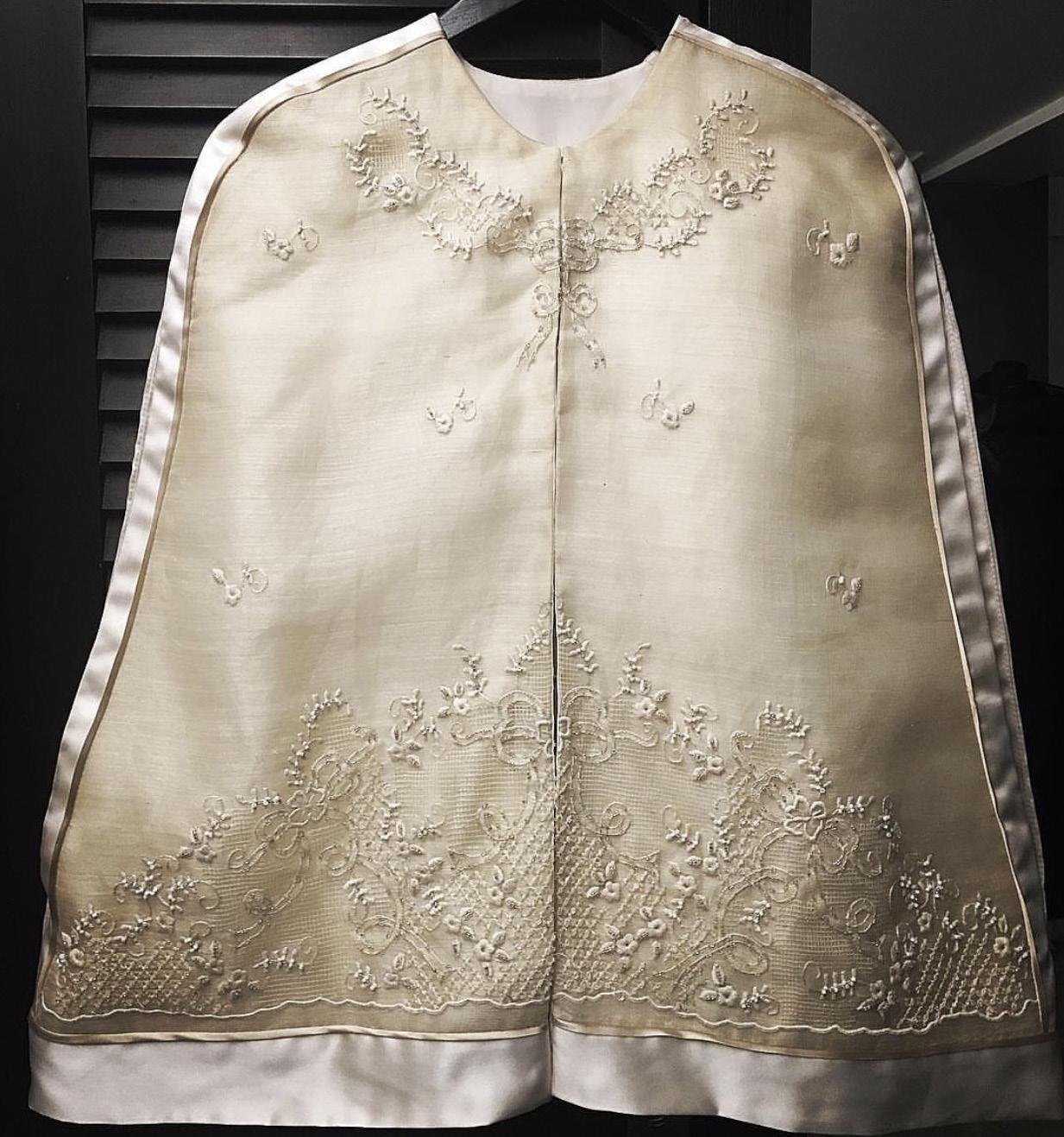
covering only half of the entire disastrous structure. An unfinished project since 2023 by that same entity supposed to preserve our culture and heritage.
Looking back, those moments —one marked by devastation, the other by quiet inspiration—taught me what it means to witness and respond to the world with intention. On 9/11, I saw the fragility of life and the urgent need to bring comfort where I could. In Lake Sebu, I felt the restorative power of beauty, of space, and of mindful creation. Both experiences, though so different, reminded me that our purpose is often found not in grandeur or spectacle, but in how we translate what we encounter—whether tragedy or wonder—into acts of care, reflection, and expression.
It is in that translation that life, art, and humanity converge.
As I moved from consuming beauty to creating it, I began to feel its weight.
My journey included watching pieces of great design, something meant to inspire, become a lightning rod for hostility. A single image or title stripped of context, weaponized. What began as creative expression ended as a battleground of ideology, identity, and outrage. How easily beauty could be turned against itself.
Those moments stayed with me. Because it revealed something I hadn’t understood as that wideeyed child watching television:
Beauty is never neutral.
It never exists in a vacuum.
day, in the spaces where beauty is most celebrated, runways, glossy campaigns, curated feeds, conflict leaves its fingerprints everywhere. Representation is announced as progress, yet erasure still lurks beneath the surface. Technology promised connection, but delivered echo chambers. A single scroll can expose us to brilliance or plunge us into fear, misinformation, or hate.
Peace at our fingertips or war.
The same platforms that allow a designer’s work to reach the world can spread corrosive ideas in seconds.
A thoughtful post becomes an invitation to cruelty.
A beautiful garment becomes a symbol of supremacy.
The machines we built to reflect our best selves now too often mirror our worst.
And yet I do not preach moments of despair. Because we are standing at a threshold.
We are at the precipice of a new world order -if you’d like to call it that -one that is not merely defined by treaties or trade, but by the very fabric of our human interaction. - cultural and deeply human.
A moment that asks simple questions with
Probably difficult answers.
What do we value?
Whose stories do we amplify?
What are we willing to defend and what are we willing to challenge?
What is appropriate?
And What is normal?
We are learning that beauty, like peace, cannot simply be consumed. It must be cultivated. Protected.
Actively defended.
Not only in what we create, but in how we engage.
In the voices we uplift rather than silence.
In the nuance we allow instead of flattening complexity.
In the compassion we extend especially when it is uncomfortable.
In this age of chaos, beauty must evolve. It can no longer be just harmony of form or perfection of image.
It must become a powerful force of connection, a language that bridges difference rather than deepens division.
This is where responsibility enters.
Because every swipe is a choice.
Every share is a decision.
Every creation, whether a garment, an image, a post, and event carries consequence.
Peace at our fingertips is not an illusion.
But it is not guaranteed either. It is forged slowly, deliberately through intention, restraint, and courage. It begins when we refuse to let beauty be hollow.
When we insist that what we make, promote, and celebrate reflects not just what is pleasing, but what is humane.
We as creators, must continue to design with conscience.
We as curators, must amplify with care.
As consumers pause before you swipe, question before you share.
Treat beauty not as an escape from the world, but as a tool to shape it.
Because unlike the world I once watched from behind a glowing screen, this world is not simply meant to be admired.
It is meant to be shaped. And that shaping, quietly, powerfully, begins with each of us and what we do with our hands as skillful people
Peace is not given at our fingertips.
It is built by what we choose to do with them.
Let us choose to rebuild a world that is not only pleasing to the eye but restorative to the human spirit.
Thank you.
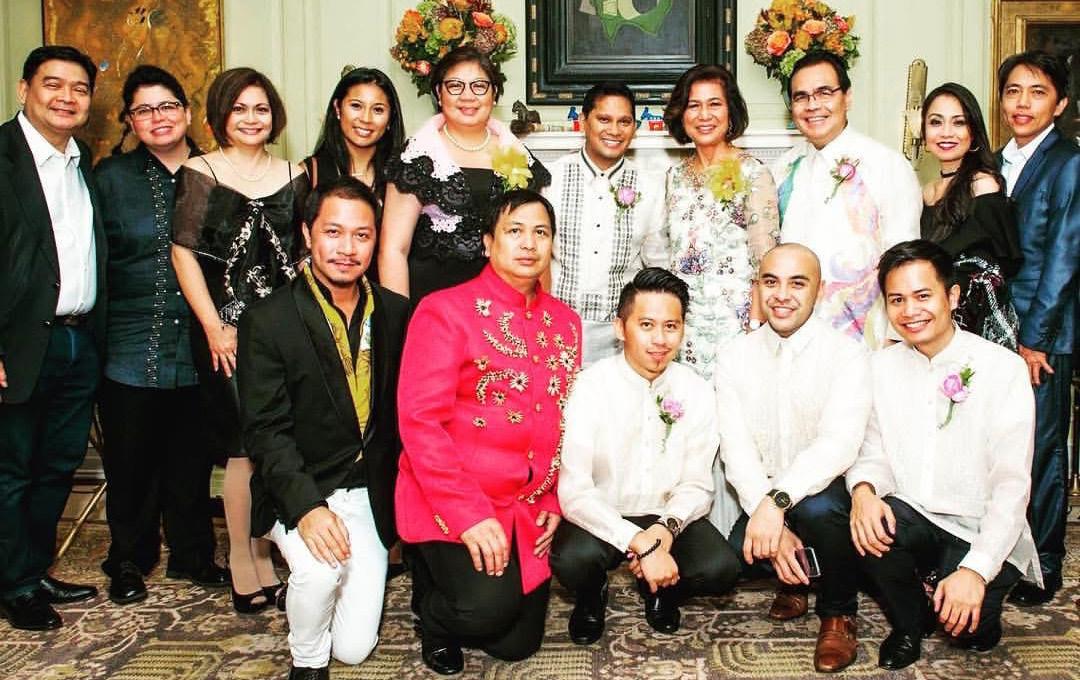
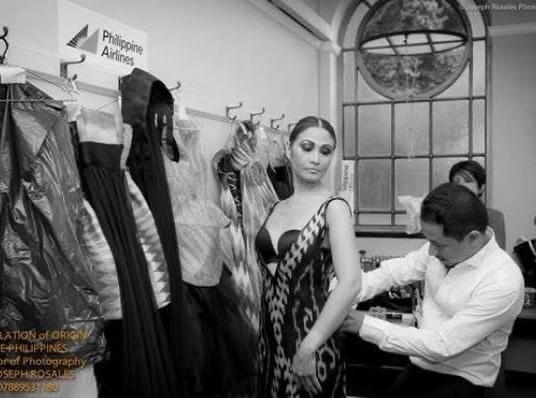
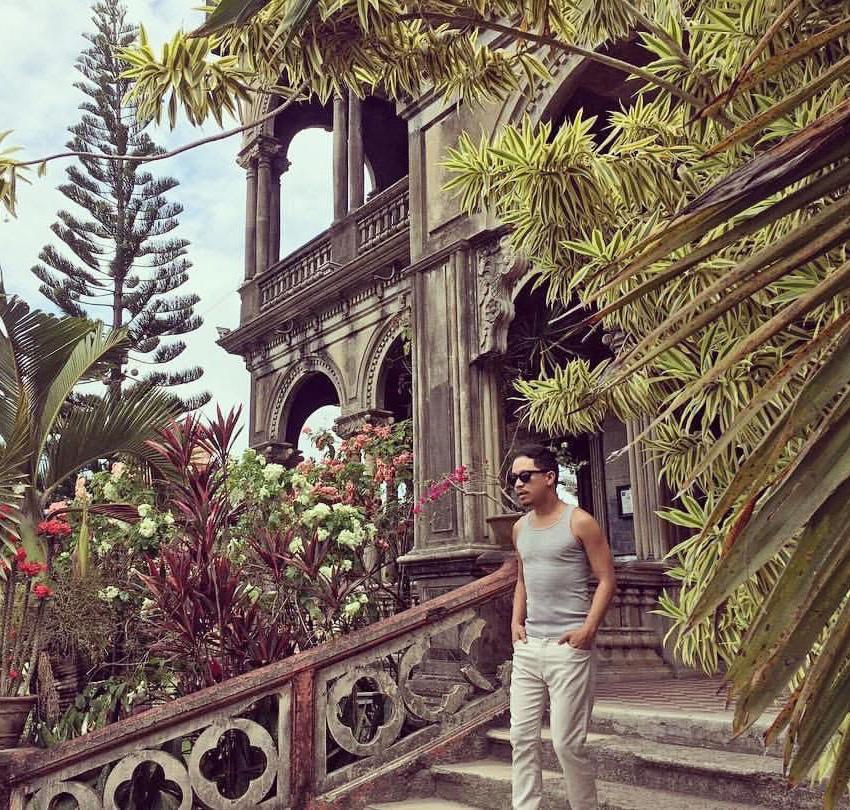
Ifind myself sitting with these questions as I think about ALOYSIUS, not just as a fashion brand, but as something that feels like it has been moving across places, ideas, and encounters for years— quietly, deliberately, almost like a journey that refuses to be rushed.
There is a certain feeling I get when I come across work that doesn’t try to impress immediately, but instead asks to be understood slowly. ALOYSIUS feels like that.
Founded by Filipino designer and textile artist Joseph Aloysius Montelibano, the brand carries with it a way of seeing fashion that feels deeply rooted in observation. Not just of form or fabric, but of people, cultures, and the stories that exist between them. There is something almost reflective about it, like each piece is the result of listening before creating.
What struck me most is how the work moves— between cities, contexts, and conversations. Since 2010, ALOYSIUS has been shown in places like London and New York, and has extended into cultural engagements in Northeast India. But it doesn’t feel like traveling for visibility’s sake. It feels more like movement with intention, as if each stop is part of a longer dialogue about identity and belonging.
I keep thinking about how rare it is to see fashion approached this way.
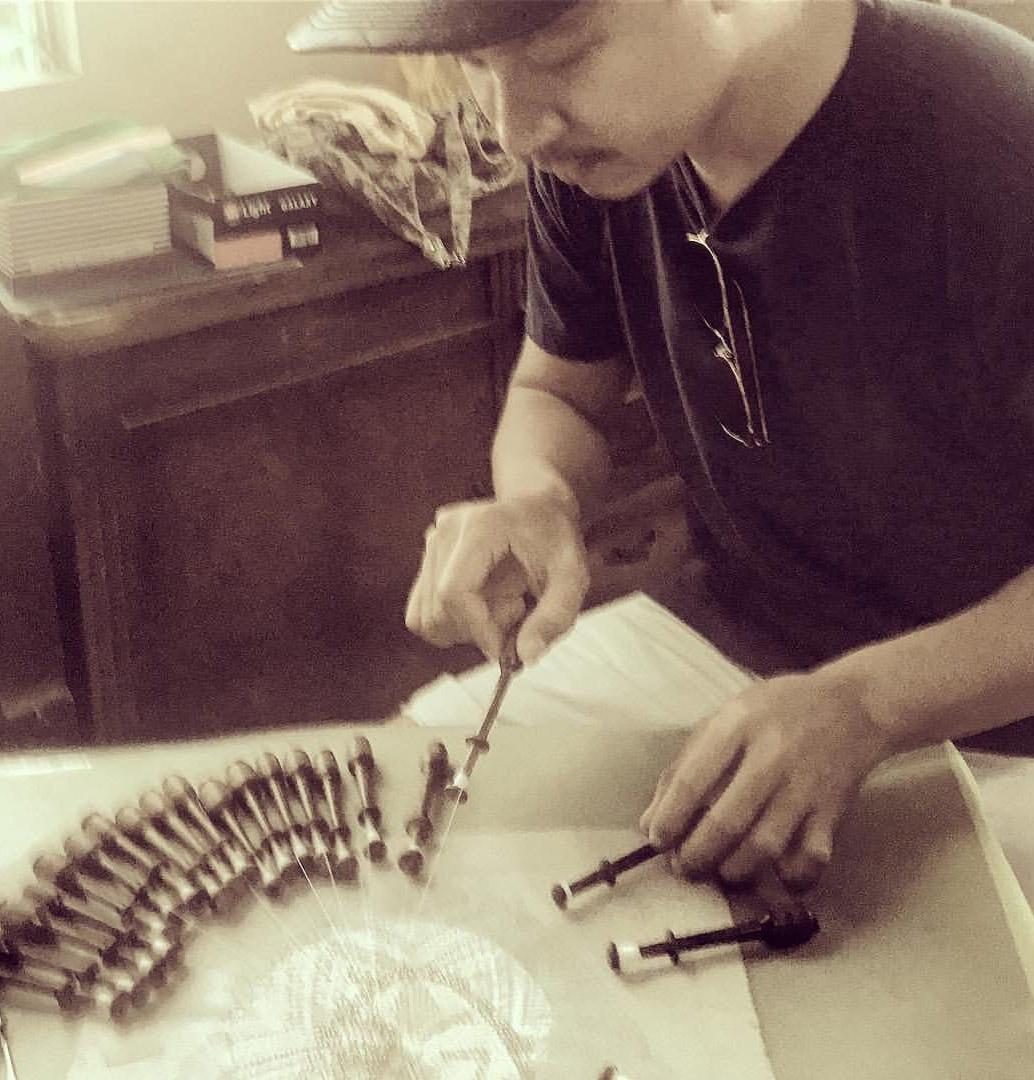
Montelibano’s process is rooted in anthropology and artisanal techniques, and you can sense that in the way the brand treats creation as something slow and considered. There is attention here—not just to how things look, but to how they come into being. It reminds me that design can be less about output, and more about relationships: with material, with craft, with culture.
And then there is the weight of what the work carries beyond aesthetics.
In 2019, he was recognized by the Office of the Ambassador of the Philippines in the United States for eco-friendly and sustainable couture shown at a benefit gala against human trafficking. I pause on this because it shifts how you see the work. It is no longer just about garments, but about how those garments enter the world—what they stand for, what they respond to.
Over time, Montelibano has also spoken at various summits and engagements, and his work has
been featured internationally. But what feels more important to me is not the scale of recognition, but the consistency of direction. There is a clear thread here: fashion as a way of engaging with the world, not escaping from it.
I think about his 2017 experience during ALOYSIUS’s excursion to Northeast India Fashion Week. Sometimes, it feels like travel does not just show you new places—it reveals something about the path you are already on. From there, his work seems to have taken on an even clearer intention: using fashion as a space for cultural unity, for conversation, for something closer to understanding than display.
The exhibitions continue to travel, crossing both local and international spaces, carrying ideas of peace into diplomatic and academic contexts. And yet, they don’t feel heavy. They feel like they are still in motion.
What stays with me most, though, is something Montelibano once shared:
“As I moved from consuming beauty to creating it, I began to feel its weight.”
There is something honest about that shift—from looking at beauty to being responsible for it. He speaks about how easily it can be stripped of context, reshaped, or even turned into something divisive once it leaves its source. It is a reminder that what we create does not stay where we leave it.
“Beauty is never neutral,” he says. “It never exists in a vacuum.”
I find myself returning to that line as I think about everything he has built.
Because maybe ALOYSIUS is not just about fashion at all.
Maybe it is about what happens when culture moves—how it changes us, how it is received, and how it continues to mean something long after we’ve looked away.
And in 2026, when Aloysius Worldwide Tours begins—offering immersive cultural experiences for deeper understanding—it feels less like expansion, and more like continuation of the same question that runs through all of this:
How do we learn to see each other, properly, across distance?
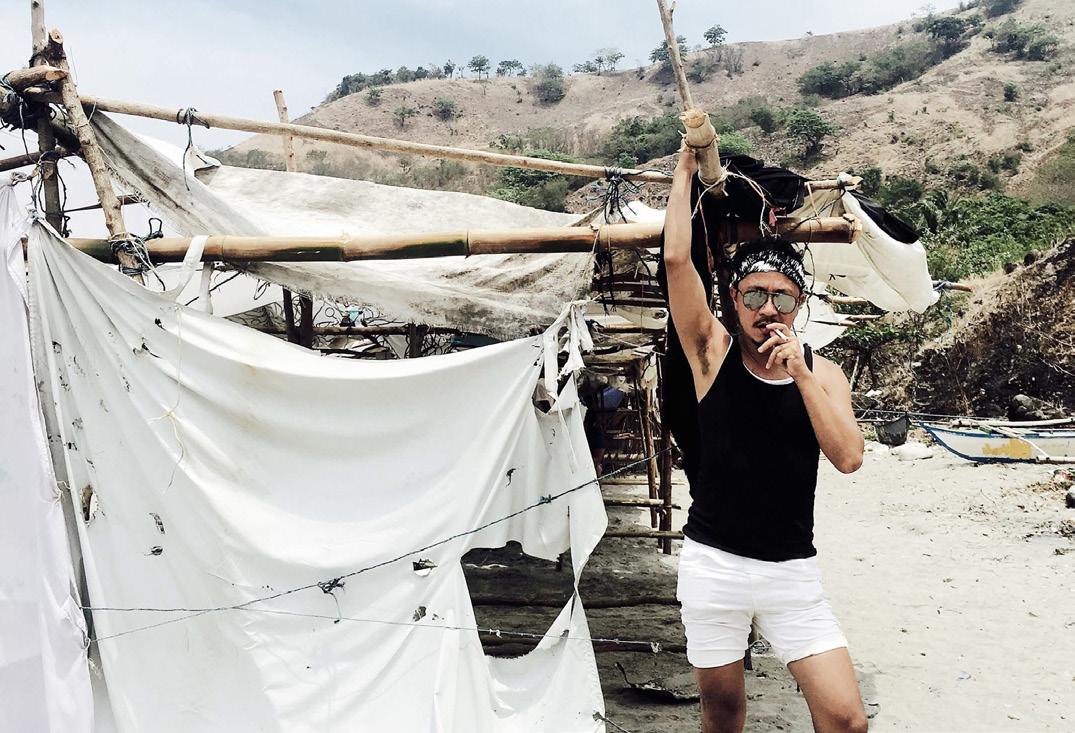
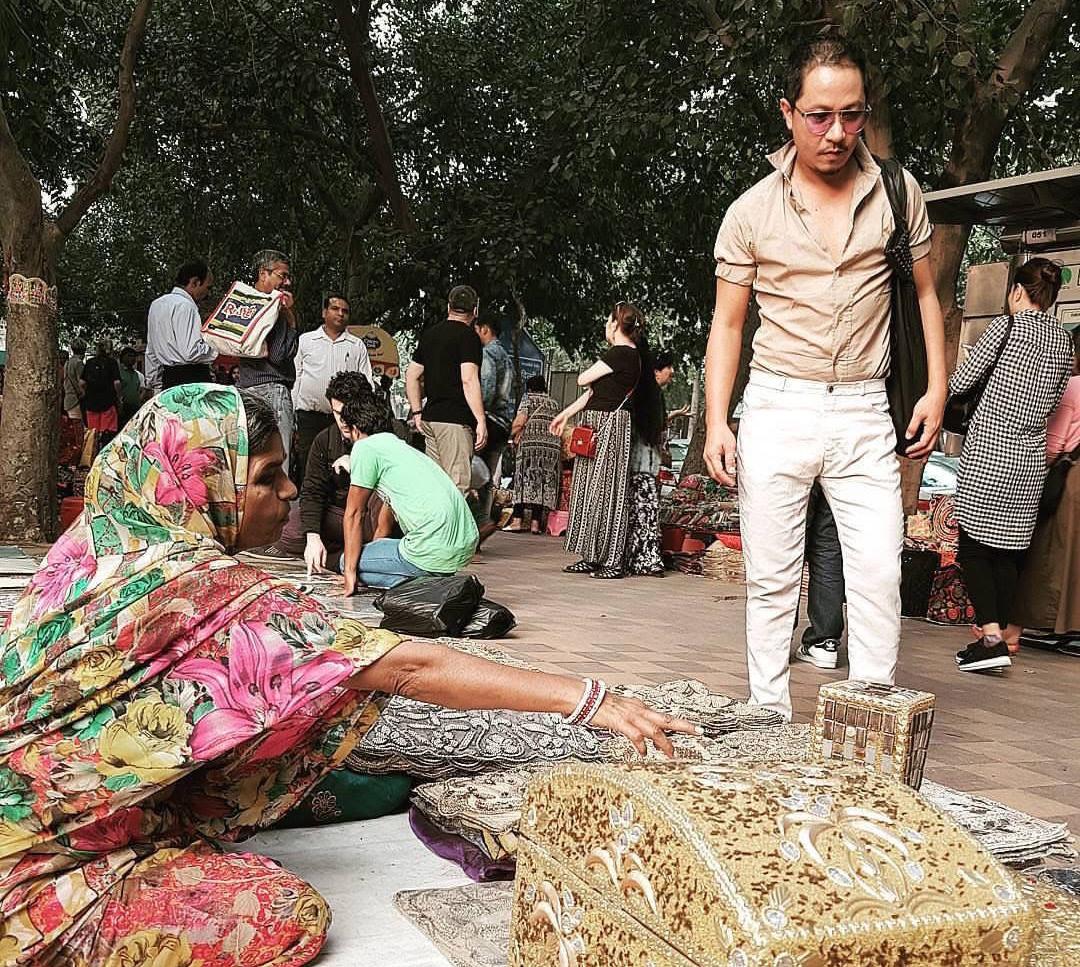
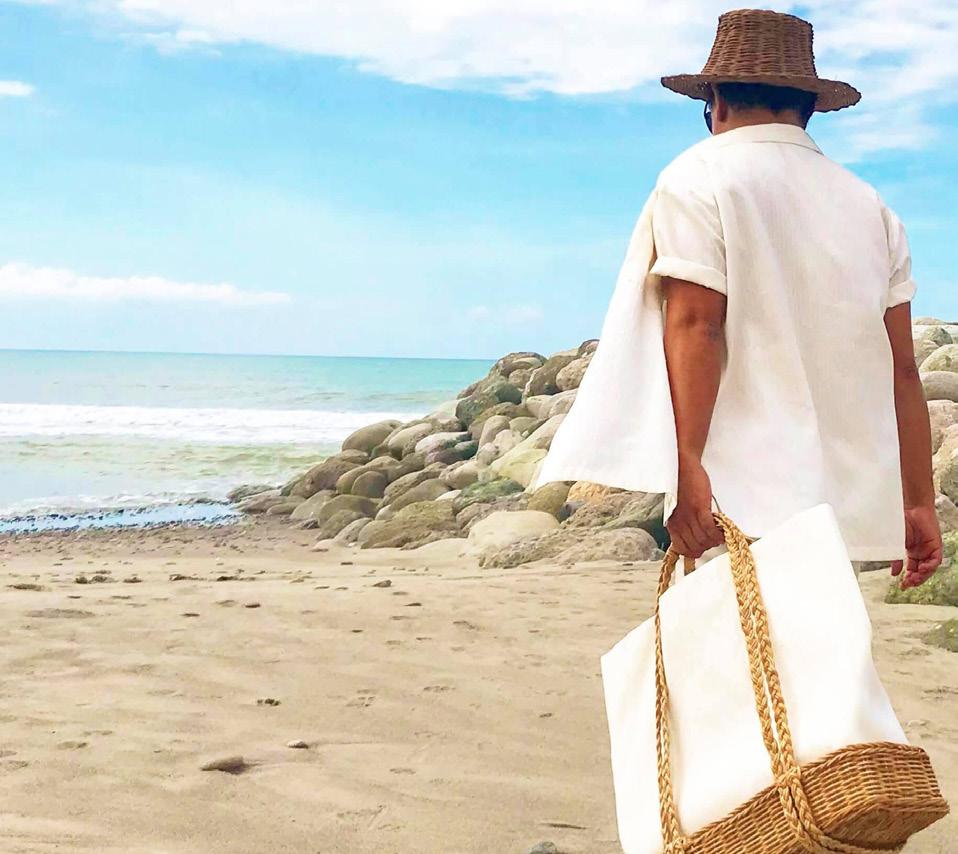
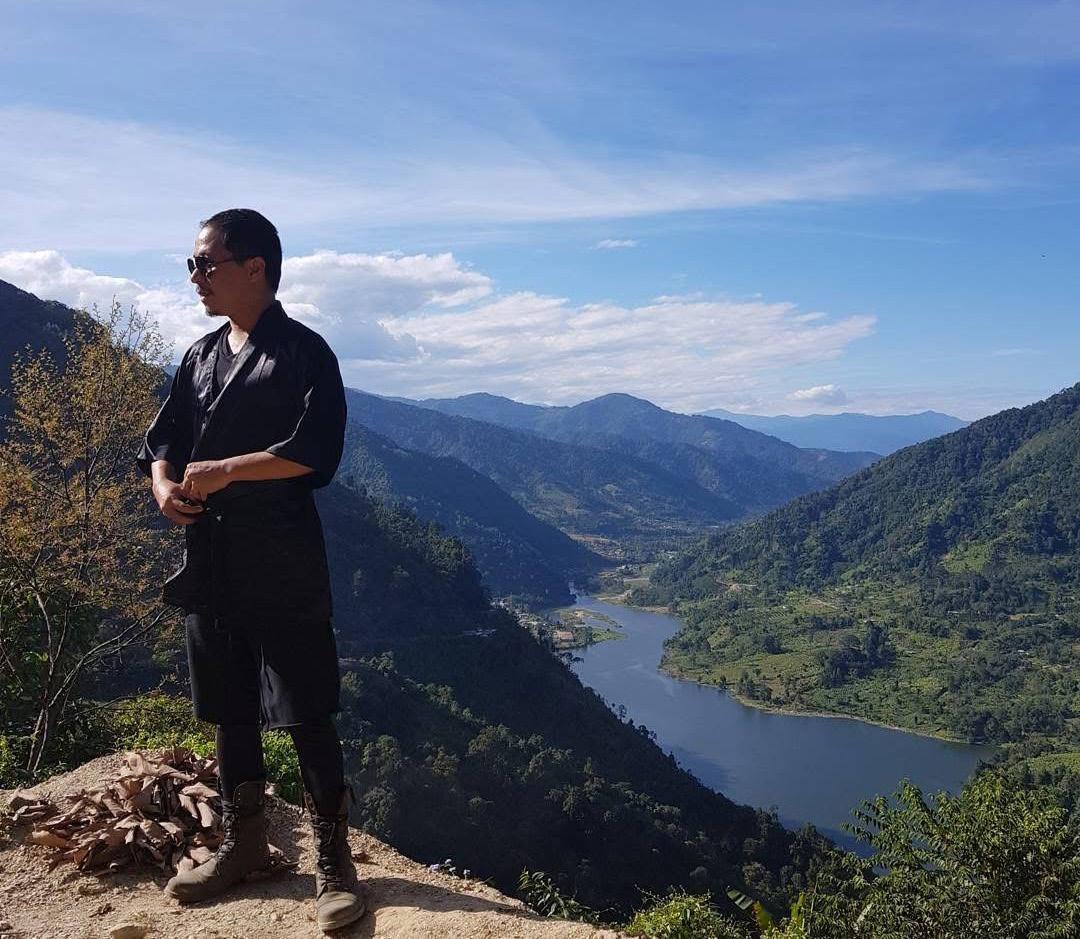
Four Journeys. One Philippines. Countless Stories.
What if travel became more than simply arriving somewhere?
ALOYSIUS WORLD presents a collection of curated Cultural Education Tours across the Philippines — designed for travellers seeking deeper connections through heritage, creativity, wellness and meaningful cultural experiences. Each journey offers a different way to discover the country — not through landmarks alone, but through people, traditions and stories.
Ancestral Echoes: A Journey to Indigenous Wisdom Featuring The Dream Wellness Fest
8 Days / 7 Nights
An immersive journey through Davao and Lake Sebu exploring indigenous traditions, ancestral knowledge and mindful living.
Guests are invited to experience weaving traditions, artisan encounters, coffee and cacao culture, village visits and moments of reflection inspired by the heritage of the Bagobo Tagabawa, B’laan and T’boli communities.
PANAY
Pigment & Palates of Panay: An Avant-Garde Textile & Coastal Odyssey
8 Days / 7 Nights
A vibrant celebration of textile artistry, culture and island life.
From weaving communities and heritage experiences to culinary discoveries and coastal escapes, this journey showcases the creativity and richness of Western Visayas.
ILOCOS & LA UNION
Heritage & Horizons: An Ilocandia & La Union Cultural Odyssey
8 Days / 7 Nights
Optional La Union Weekender available
A slower and more immersive way to explore Northern Luzon through heritage towns, artisan traditions, wellness experiences and contemporary Filipino craftsmanship.
We, The Heroes: A Southern Luzon Heritage Odyssey
7 Days / 6 Nights
A journey through stories that shaped the nation — blending history, fashion, food, architecture and cultural identity across Manila and Southern Luzon.
Across all four journeys, ALOYSIUS WORLD combines premium stays, curated experiences and meaningful encounters designed to encourage travellers to experience the Philippines differently. Not simply as a destination — but as a living story.
@JOSEPHALOYSIUSM
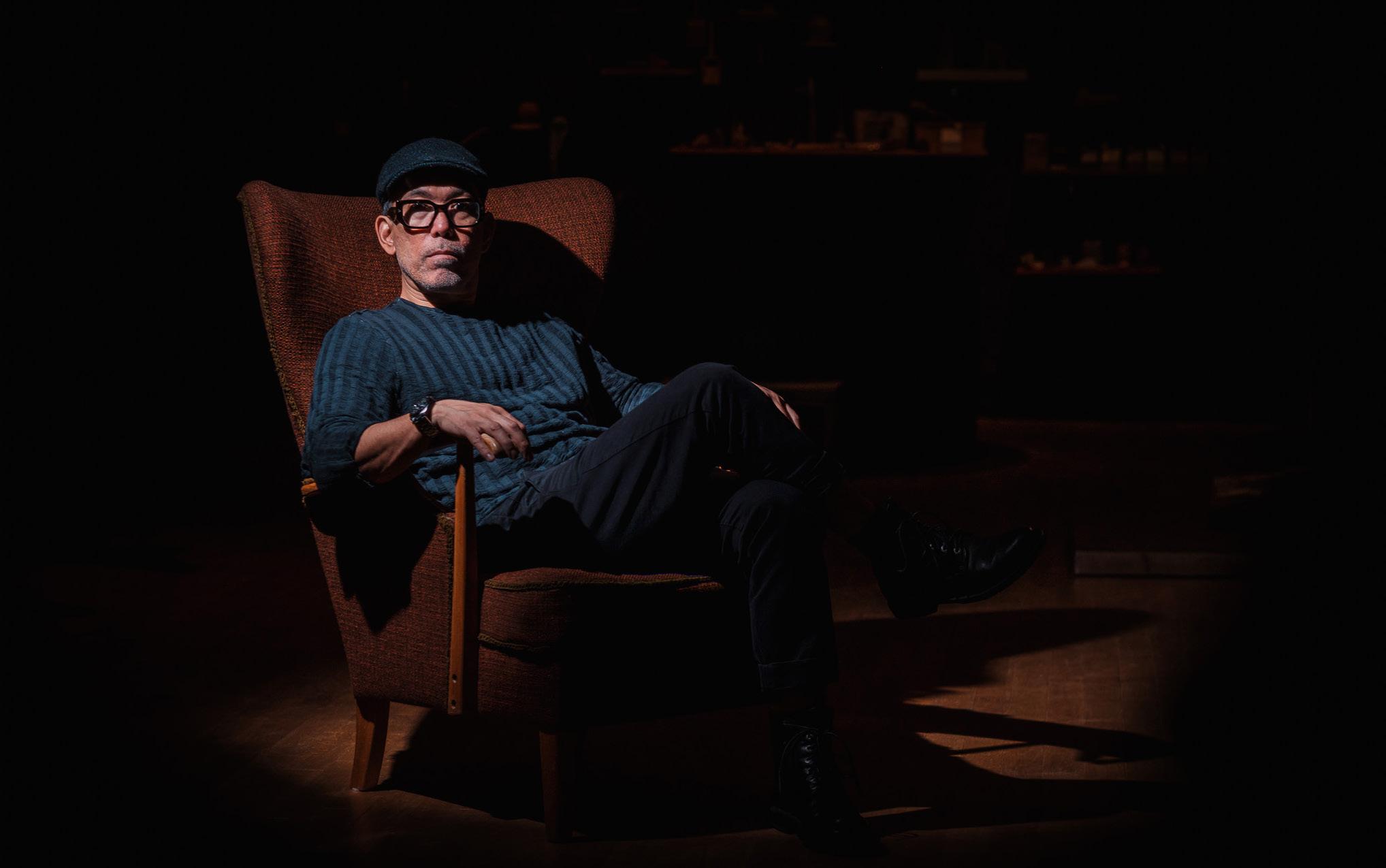
By Carina Evangelista
Acamera with a bird’s eye view records a man resolutely stamping knee-high snow with his feet to spell out the word “SAKLOLO.”
The mind that conjured this video art is Jet Pascua’s. Titled Lost in Translation, there are multiple possibilities for what is lost.
The word itself. “Saklolo”–Filipino for “Help!”–is rooted in the Spanish “Soccorro.” One wonders how the original, with the vibrante alveolar múltiple pronunciation of the double R, conceded to two L’s, considering Filipinos can easily pronounce “rumaragasa (raging).” Could “saklolo” have formed on the retroflex fricative tongues of Chinese merchant migrants to the Philippines, to whom the letter R curls
softly into L, making distinguishing between the two difficult?
The man himself. Pascua left his homeland for Norway in 2003, among the many waves of diasporic Filipinos the world over since Henry the Black (Enrique of Malacca), Ferdinand Magellan’s slave, believed to have hailed from the archipelago that would later be colonized as the Philippines and recognized as the very first person to circumnavigate the world. To be “kayumanggi” (the brown skin tone deriving from the Malay “kayu manis” or “sweet wood” for the spice from cinnamon bark) is to be “sun-kissed” from evolutionary adaptation to the intense sunlight in the equatorial region. Imagine how lost such a man
might feel, suddenly transplanted to a country that’s closer to the North Pole than the equator?
The place itself. Is it the man that’s lost in translation or the place? The cinnamon body that plods through the snow feels the meaning of “saklolo” viscerally. It is the white snow that is foreign to the body. The below-zero arctic weather is a physical embodiment of the isolation rooted in profound rootlessness in a new country where none of the alveolar or fricative sounds in its language registers with meaning, much less comfort, to the new transplant.
Losses in multiple layers notwithstanding, the man plods. Crying for help in a language foreign to the land he adopted and inscribed in snow that would eventually collapse unto itself and evaporate is tragicomic. Pascua is the laugh-cry emoji plowing through winter wonderland. Humor is defiantly Filipino.
If Filipinos will or warp survival–of colonization, natural disasters, socioeconomic privation, political dynasties–by laughter, Pascua wills and wraps his
diasporic psyche in art. Emigrating as an adult, wrestling with one’s identity upon finding himself living among people not his own becomes pronounced. He charts the tougher path. Refusing the tropes of the fiesta, the lechon, or the tinikling with which to feel or declare, “I’m Filipino,” he chooses to “problematize what it means to be Filipino.” One might survive by laughing. One can thrive by interrogating. Pascua weaves the philosophy of the examined life into his art and work.
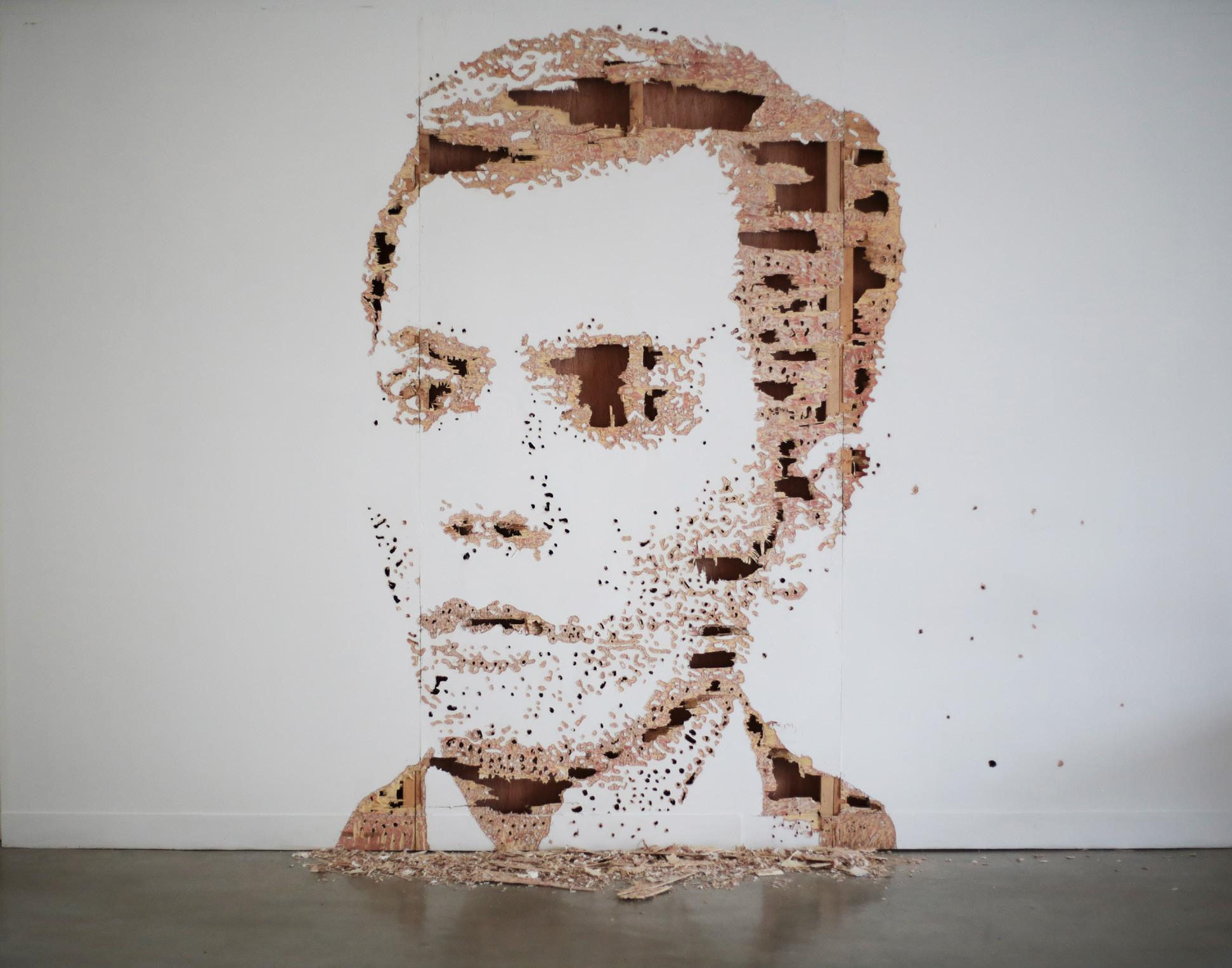
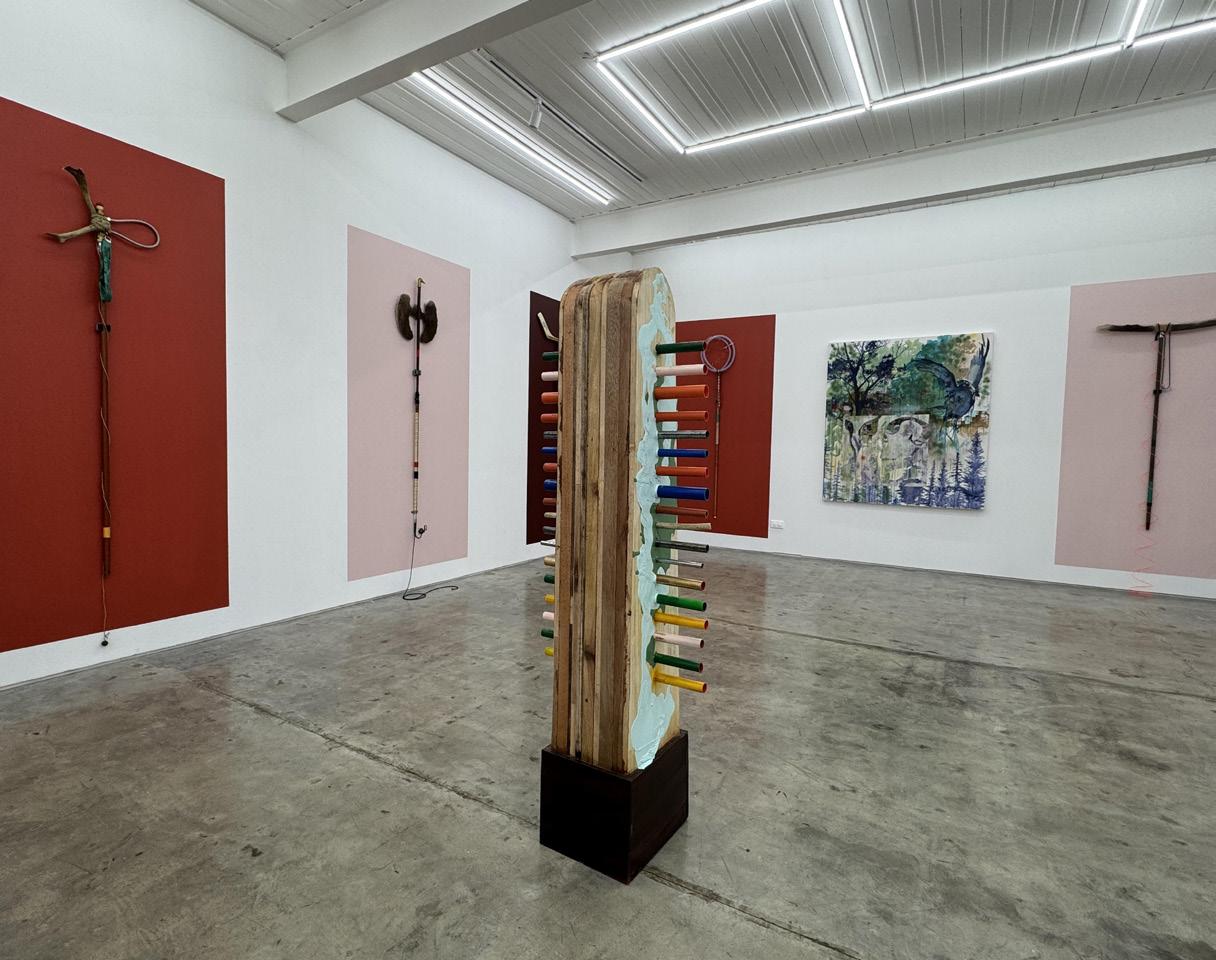
To create Alikabok (Dust), Pascua hacked the portrait of the hero, Andres Bonifacio, into a wall with an ax, reenacting the hero’s brutal murder by machete upon Emilio Aguinaldo’s instruction. This led to Aguinaldo’s ascendance to power as the first president of the Philippines. To Pascua, “Bonifacio’s murder is the foundation of the Philippine government, and this crime is the dust that Filipinos still breathe.” Pascua’s violent action painting is the figuration of tragedy and treason among the ranks of Filipino revolutionaries, even before the yoke of colonialism from Spain
could be shaken off. It bears noting that Bonifacio’s executioner, Lazaro Macapagal, is the ancestor of the 9th and 14th presidents of the Philippines.
Alikabok (Dust), a version of which is in the collection of the Nordnorsk Kunstmuseum, has had various iterations over the years. Each time Pascua re-performs the hacking, the narrative of the birth of the nation, nearly Biblical in parallelism with Aguinaldo's Cain killing Bonifacio's Abel, is ritualized. Categorically refusing to be complicit in historical revisionism or amnesia, the dust and shards from the hacked wall pay deeper homage to the martyrdom than Bonifacio’s face on the Philippine five-peso coin (0.76 NOK) ever could.
Moving to another country as an adult is akin to birthing oneself. Pascua arrived in Norway with training in Painting at the University of the Philippines. The following degrees in fine arts came in succession: BFA from The Royal Academy of Fine Arts in Oslo, MFA from the Bergen Art Academy, and PhD from the Tromsø Academy of Contemporary Art. Both his artistic practice and academic research have revolved around how “abandonment of one’s
country conditions the Filipino mind,” dissecting and digesting the ravages of dislocation.
These academic achievements belie Pascua’s beginnings in Manila, practically as a school dropout. Barely into his teenhood, the panganay (firstborn) was suddenly parent to his younger siblings when their parents moved to California, where they were held hostage for a decade with thwarted attempts to achieve immigrant status. The obligation to be the responsible “adult” at age fourteen would be capped years later with brief homelessness in Manila. He repaid the kindness of Presiding Justice of the Court of Appeals, Nathanael De Pano Jr., who took him in by offering to be his driver. It was the judge’s wife, Aurora, who encouraged him to return to school.
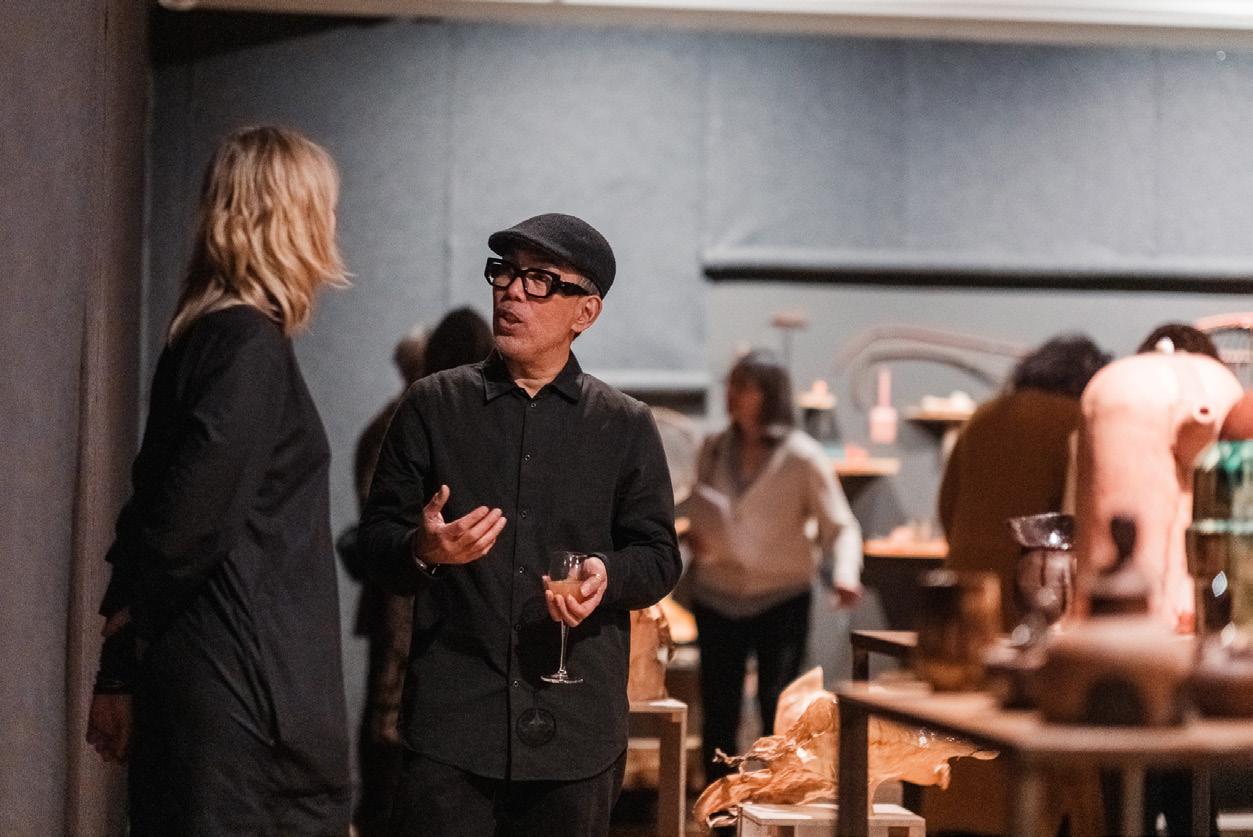
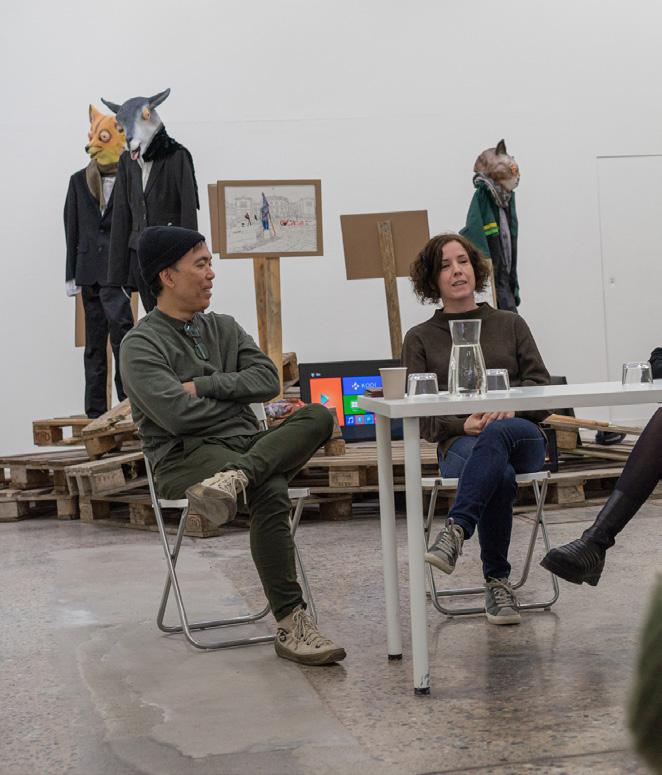
Pascua carved a name for himself over the years while raising three Filipino Sami sons whose mother is from a reindeer-herding family. Now a single father, he juggles preparing meals for his sons while ensuring their self-reliance when he travels for exhibitions or art fairs with his role as Artistic Director for the Møre og Romsdal Kunstsenter. His credentials in the last five years alone include serving as Stipend Jury Member
of the Sami Center for Contemporary Art; Stipend Committee Member of NBK Prosjektstøttet; Member and Leader of the Norwegian Stipend Committee; Board member of Nordnorske Bildende Kunstnere and Nordnorsk Kunstnersenter; guest curatorship, teaching, and jury membership at organizations in Europe and the U.S. Numerous grants received include a five-year artist work grant in Norway and residencies in Europe and abroad.
Represented by Drawing Room in Manila, he recently mounted a solo exhibition there titled Mythologies in Transit. He was featured in the ALT Art Fair in Manila and the Supermarket Art Fair in Stockholm early this year. Slated in the coming months into next year is a residency at Projeto Fidalgo in São Paulo and exhibitions at Surnadal Billag and the Sami Center for Contemporary Art in Norway, Torrance Art Museum in Los Angeles, and Hin Bus Depot in Penang.
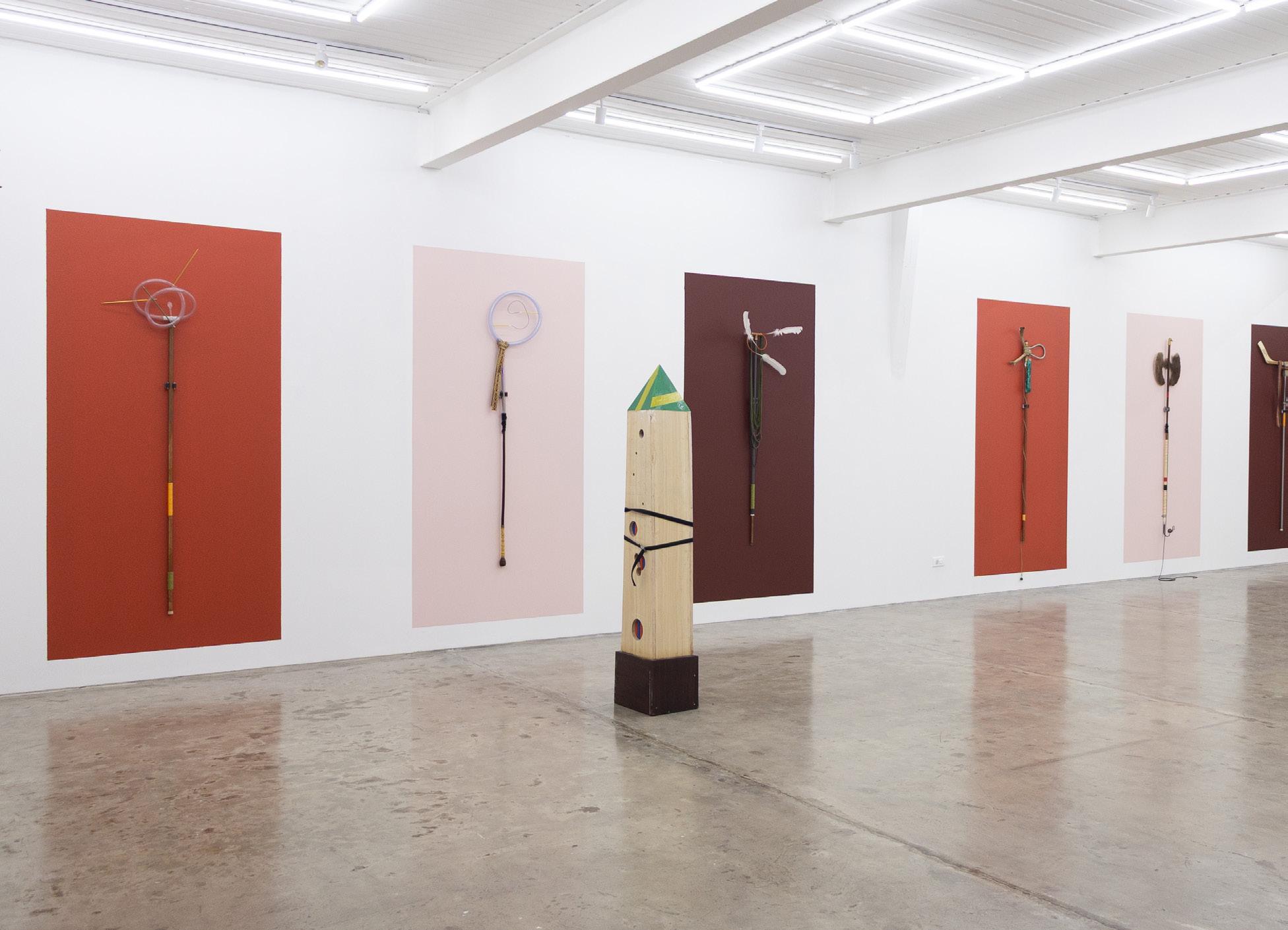
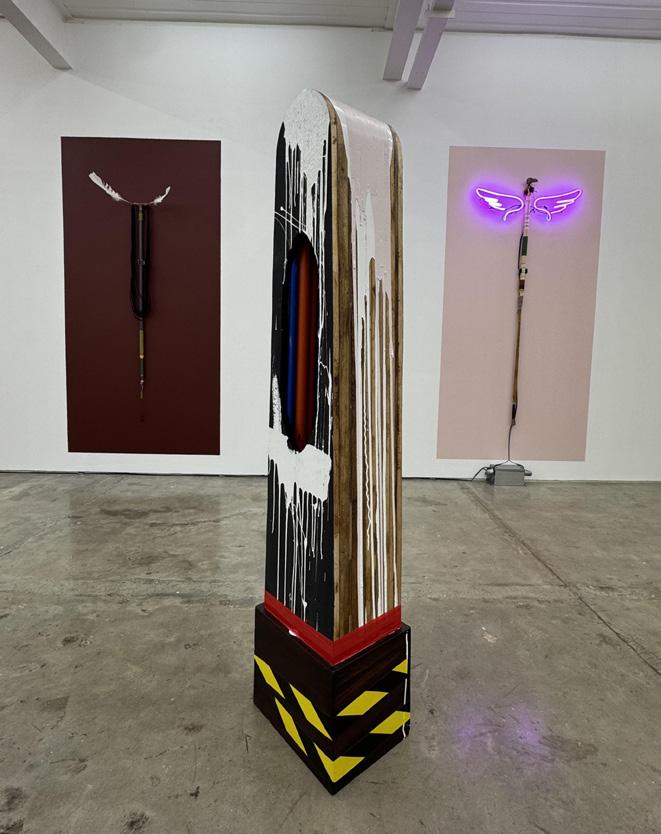
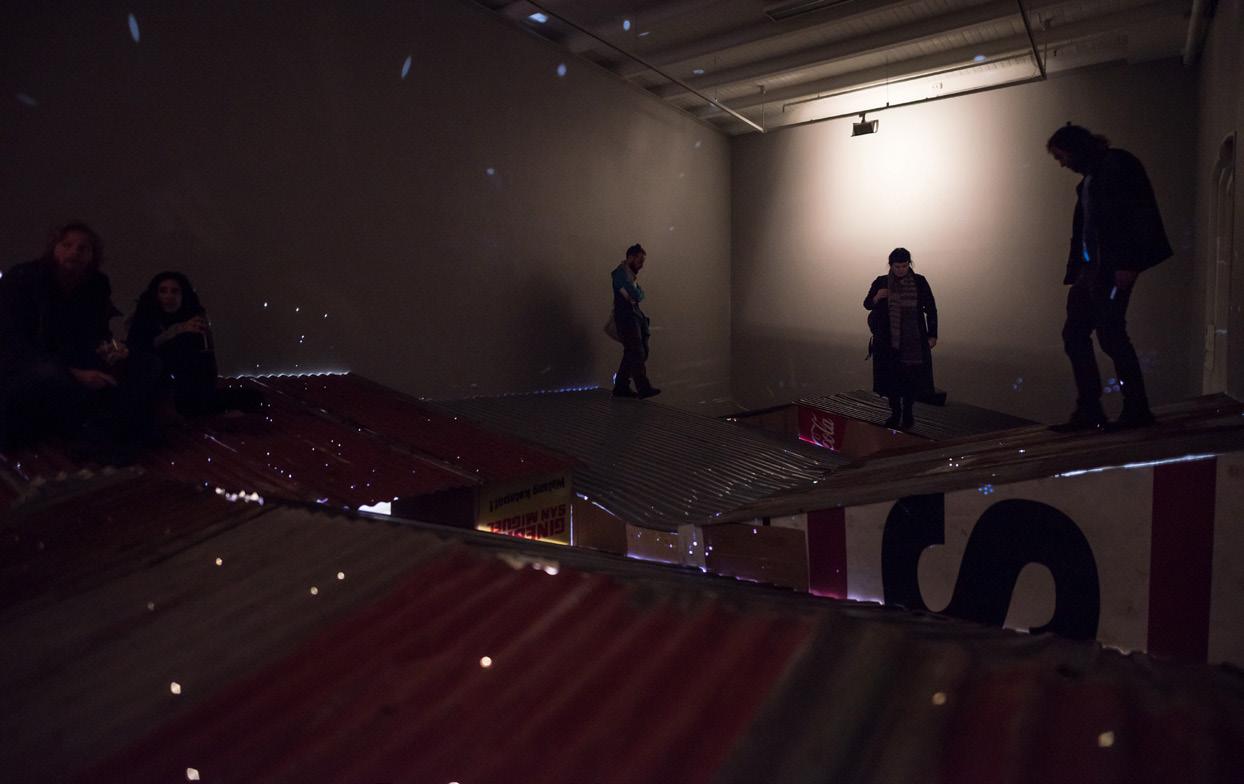
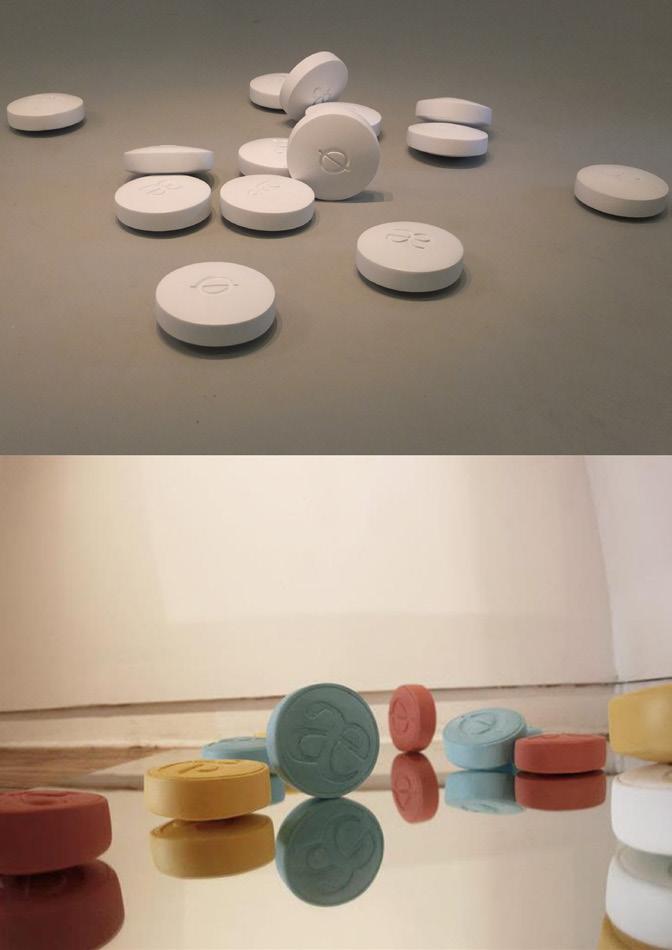
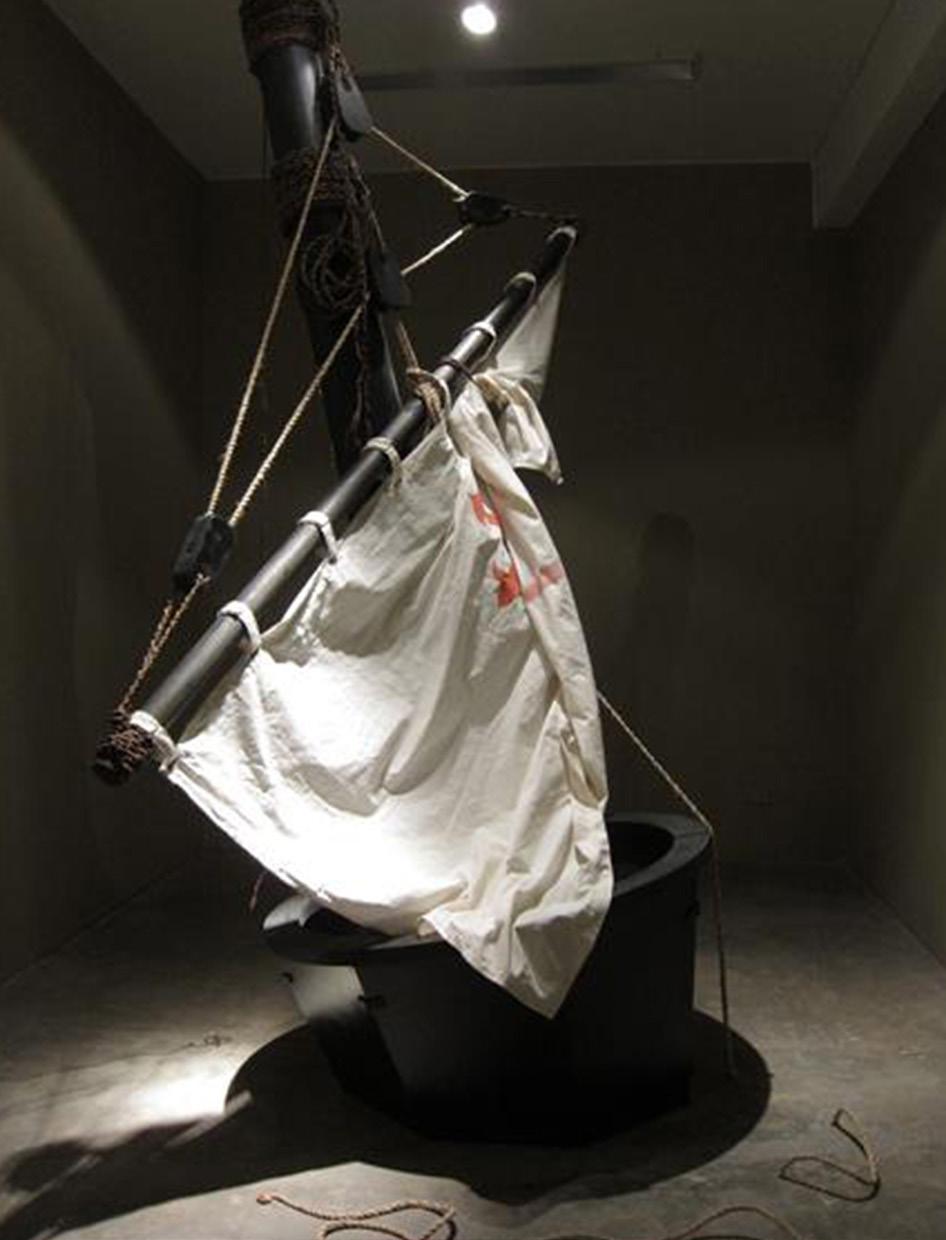
Pascua navigates the challenges of being an artist and an immigrant with drive, critical thinking, and gravitas. The Others is a life-size installation of a Manila slum comprising corrugated roof plates, lumber, lights, and the soundtrack of human activity, radio, and television. The Victoria is a small replica of the lone ship that managed to return to Spain after Magellan was killed in the Philippines, shown sinking to conjecture an alternative history had that ship not made it back to Spain. But he has not lost the funny Filipino bone. Grappling with learning a new language, he created Language Pills, oversized pills etched with Norwegian letters, one set “medicinal” and the other “recreational.”
What awaits finding in the mistranslations rife in diasporic life is sculpture–molded from ever-evolving struggle and longing. And yes, Pinoy humor.
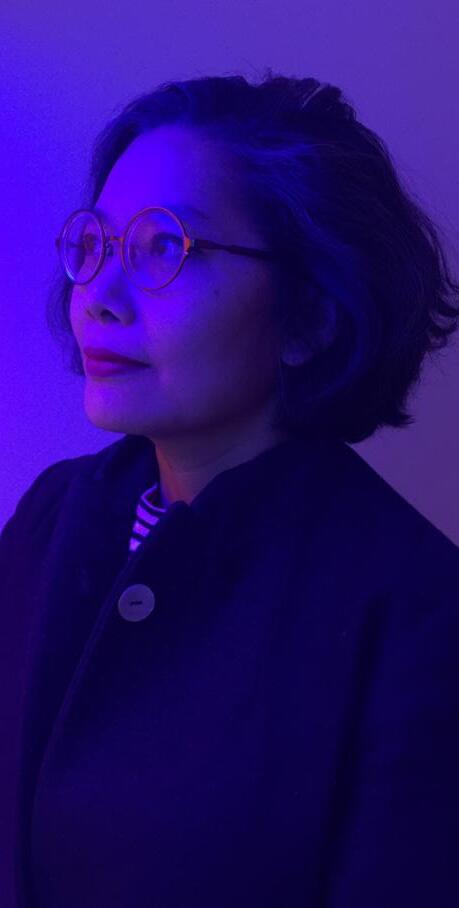
Carina Evangelista is a curator and an artist. Currently Director at Zane Bennett Contemporary Art in Santa Fe, New Mexico, Evangelista has worked in curatorial and/ or editorial capacities at institutions both in the U.S. and the Philippines. She has served as Senior Director of Curatorial Affairs at Oklahoma Contemporary; as Deputy Director and subsequently Interim Director at Asia Society Museum and its Global Artistic Programs in New York; as Editor at Artifex Press (now Cahiers d’Art Institute); as Curator at Delaware Contemporary; and as Guest Curator and Guest Lecturer at Art Fair Philippines and universities in the Philippines. She started her career as an art professional at The Museum of Modern Art in New York
where she worked on numerous exhibitions from Projects shows to retrospectives and the museum-wide exhibition, MoMA2000. Her published writing on Philippine art has featured artists such as Poklong Anading, Martha Atienza, Constancio Bernardo, Annie Cabigting, Bea Camacho, Roberto Chabet, Nilo Ilarde, Jet Pascua, Yasmin Sison-Ching, Gerardo Tan, and MM Yu. Evangelista's own creative practice has included writing the libretto for Manhid, a musical staged at the Cultural Center of the Philippines; serving as actor and lyricist for the film Pisay; mounting a solo exhibition titled Las Flores del Mal at MO_Space in Manila; and participating as visual artist in the Manila Biennale, Open City.
By Hilda Arenas
Ialmost didn't know what to expect as I walked up Upper Mount Street that afternoon.
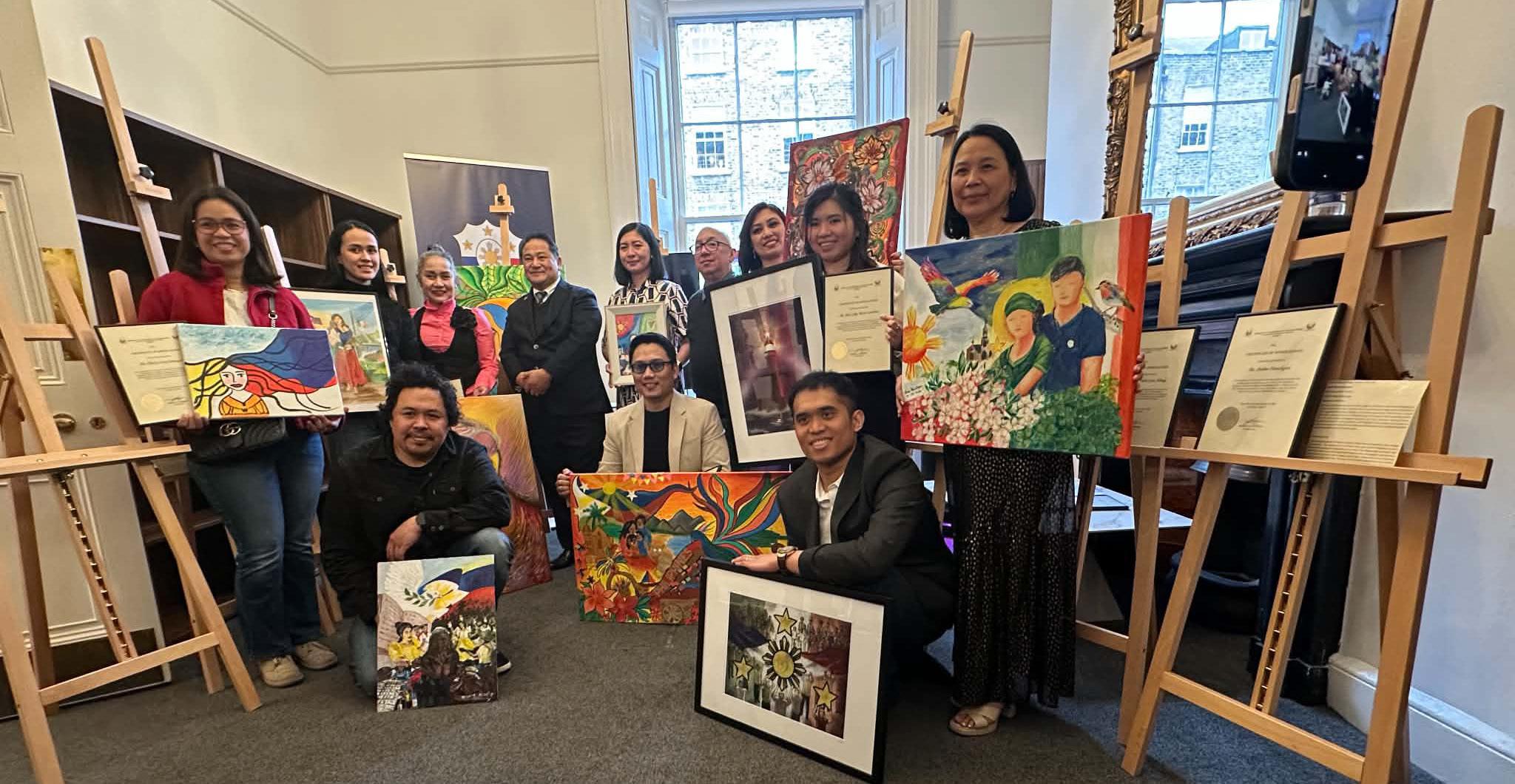
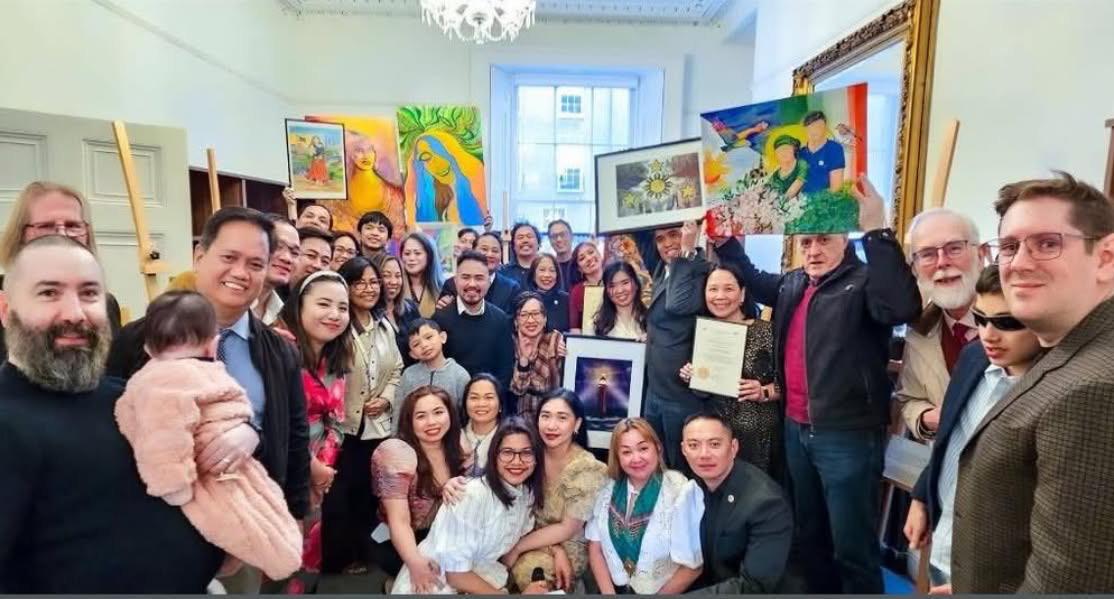
Annabelle Lozada, Chairperson of the Filipino Multicultural Society (FiMuS), and I (Founding President of FiMuS) had been invited alongside fellow community leaders and friends of the Embassy to the Philippine Embassy's culminating event for the Paint Our Hope Art Challenge. As we stepped through those Georgian doors at number 37, something stopped us both before we even reached the room. Standing on easels. Already commanding every inch of the space they occupied.
This was also a historic occasion — the first official reception held by the Philippine Embassy Dublin with the Filipino community as its guests since the Embassy moved to
its new residence at the end of 2025. That this milestone was marked not with a formal diplomatic gathering but with art and with artists said everything about the kind of Embassy this would be.
H.E. Ambassador Daniel R. Espiritu welcomed the room with a warmth that immediately set the tone — acknowledging each artist not with formality but with genuine, personal recognition. This was a community being seen. Properly. Fully. On its own terms.
Behind the scenes and very much at the heart of it all was Cultural Officer Ms. Vallesfin — whose vision and dedication had reached into the Filipino community across Ireland and drawn out these stories, these colours, these truths. This was her harvest too.
Moving from easel to easel, I felt the full weight of what was in that room whose lives are shaped by migration, sacrifice, reinvention, and an unshakeable pride in who they are. Each one donated their painting to the Embassy that day — a permanent gift to the Philippine government and to every person who would ever walk through those doors after them.
And that is no small thing. Because those doors open to more than just our community. They open to diplomats and dignitaries, government officials and business leaders, friends of the Embassy and allies of the Philippines — people who come from every corner of the world, for every kind of reason. And every single one of them will pass these paintings. Will stop, perhaps, in front of a canvas painted by a
Filipino nurse, a single mother, a migrant worker, a teacher turned cake artist — and will understand, in a way no diplomatic briefing could ever convey, who Filipinos in Ireland truly are.
That is the quiet power of what these artists gave. Not just to us — but to the world that walks through that Embassy.
Some now hang on the walls. Others stand on easels. All permanently displayed at 37 Upper Mount Street — there now, and long after all of us have moved on to whatever comes next.
We publish this in June 2026, as the Philippines marks 128 years of independence — and the timing feels exactly right. These
artists painted the truth of what independence really looks like when it is lived, not just declared. They are not a footnote to that history. They are a living part of it.
As Founding President of the Filipino Multicultural Society, I am often asked what drives the work — what keeps you going, why it matters, what it is all for.
This is what it is all for. For the truth that Filipinos in Ireland are not just passing through, we are building something real, something rooted, something that will outlast any one of us. These artists walked into that Embassy on the thirteenth of March 2026 and gave their work — and something of themselves — permanently to the Philippine
government. To say: I was here. I felt this. I made something from it. And I am leaving it for whoever comes after me.
That is the truth. That is courage. Ani ng Sining: Katotohanan at Giting.
And we were there to witness it.
The paintings from the Paint Our Hope Art Challenge are now on permanent display at the Philippine Embassy, 37 Upper Mount Street, Dublin 2. Meet the artists and discover the stories behind each work on the pages that follow.
The following artwork are presented in no particular order and do not reflect ranking, placement, or award outcome.
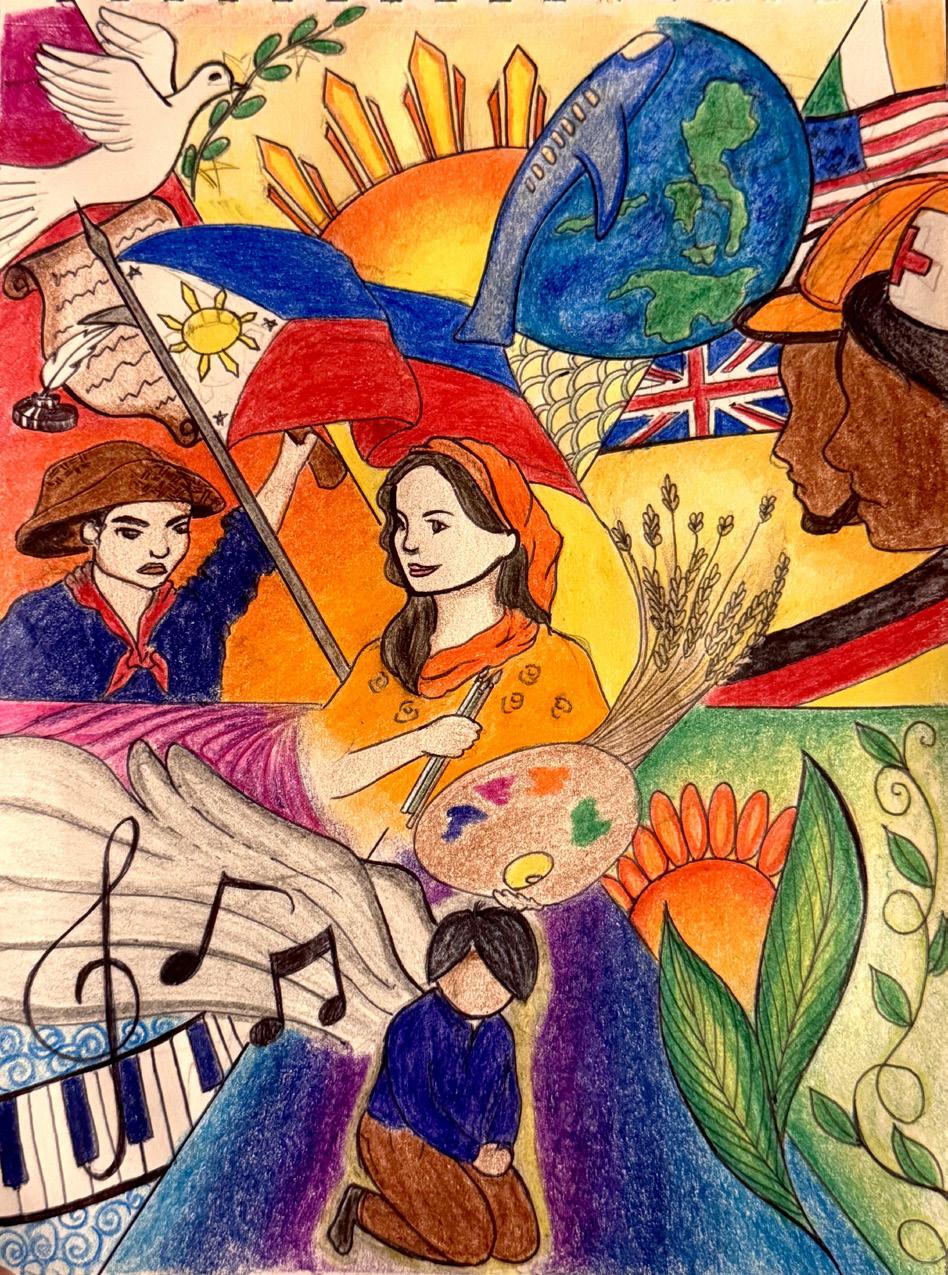
There are artworks you look at. And then some artworks look back at you. "Ani ng Sining: Katotohanan at Giting" by Shery Ann F. Villagracia is the latter.
Based in Dublin 6, Shery Ann poured something deeply personal into this piece — not just her talent, but her heart's quiet ache for home. For the family she left behind. For the Philippines she carries within her, no matter how far the distance.
But grief and love, in the hands of an artist, become something extraordinary.
On her canvas lives an entire nation — vibrant colours and musical notes, singing of creativity, revolutionary figures standing tall with pride, a dove and rising sun whispering of hope, and nature woven through it all as a gentle reminder of what truly matters.
Giting. Valor. That is the word at the heart of this work — and it is the word that describes Sherry Ann herself. A Filipina living far from home, turning homesickness into heritage, and nostalgia into something the whole world can see and feel.
This is what Filipino art does. It doesn't just decorate a wall. It tells the truth.
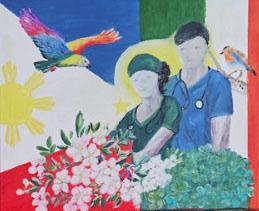
Some paintings tell you what they are immediately. "Filipino Hands in Irish Soil" by Daime Panaligan takes its time — and the longer you look, the deeper it pulls you in. Two nurses stand together, their faces intentionally undefined. Because Daime didn't paint two people. She painted all of us. Every Filipino who packed a life into a suitcase, crossed an ocean, and quietly — without fanfare — made themselves essential to the country that welcomed them.
Sampaguita and shamrock share the same soil. The Philippine sun casts its golden halo over both. Two birds — one in flight, one at rest — tell the whole story of migration in a single glance. The Leaving. The Arrival. The staying.
And behind this breathtaking work stands a woman with a story just as layered as her canvas.
A former high school English teacher turned Senior Security Researcher at the Asian Development Bank, protecting diplomats across the world — Daime eventually found her way to Ireland, reinvented herself, fell in love, settled in Waterford, and never once stopped creating. She paints every week. Cards. Canvas. Murals. Because art, for Daime, has always been how she makes sense of the world.
She painted these nurses thinking of every Filipino healthcare worker she has met since arriving in Ireland. Not as heroes on a pedestal — but as everyday people doing extraordinary things. Quietly. Consistently. With care.
This is what it looks like when truth meets valour meets belonging.
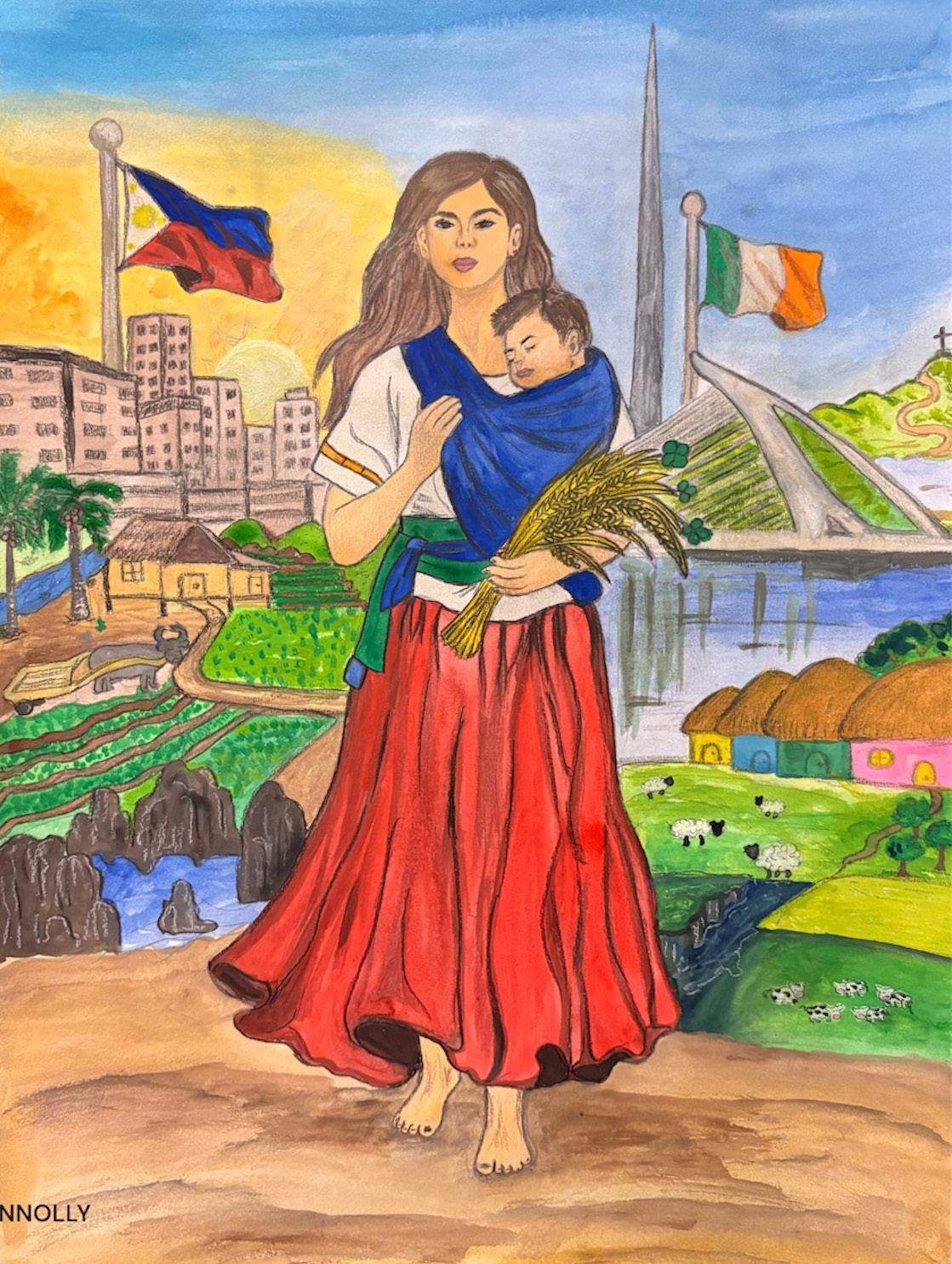
PLANTED IN A FOREIGN SOIL. GREW ANYWAY.
There is something quietly revolutionary about Haylin B. Connolly's "Harvest of Strength." It doesn't shout. It isn't in demand. It simply stands — the way a Filipina mother stands — with everything she carries, and still finds a way to bloom.
Surrounded by rice and shamrock side by side. The Dublin skyline rising in the background of a life rebuilt from scratch. No relatives to call. No familiar hands to lean on. Just a woman, her love for her family, and a strength she didn't even know she had — until Ireland asked her to find it.
Haylin is not painting from imagination. She is painting from lived truth. Every grain of rice in this canvas is a sacrifice made quietly. Every shamrock is a day she chose to stay and grow rather than fold. Every brushstroke is proof that Filipino values don't wilt in the cold — they harvest.
She calls it Ani ng Sining — a harvest of resilience. We call it one of the most honest paintings we have seen in a long time.
To every Filipino mother building a life in a country that was never in their original plan — this painting is yours too.
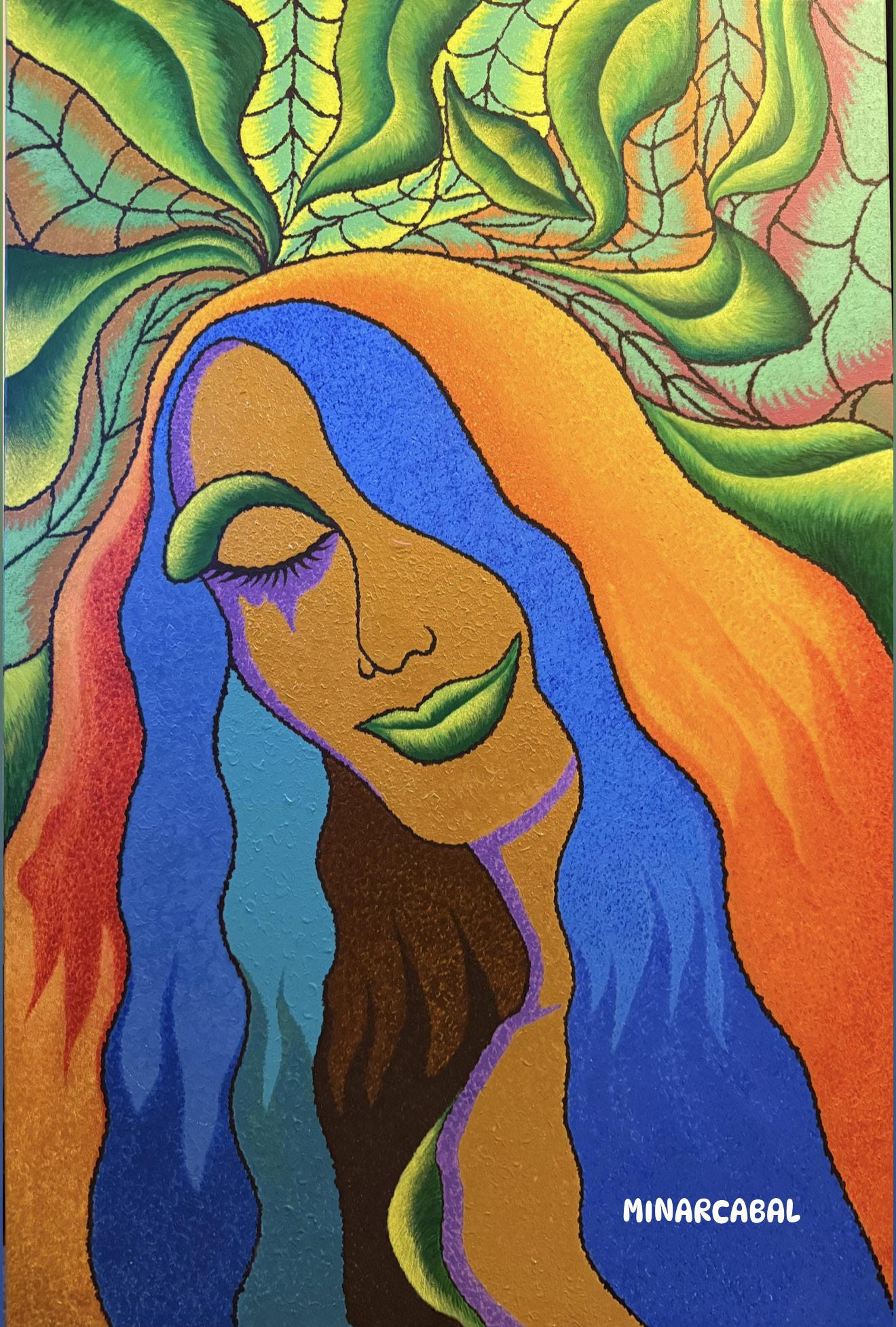
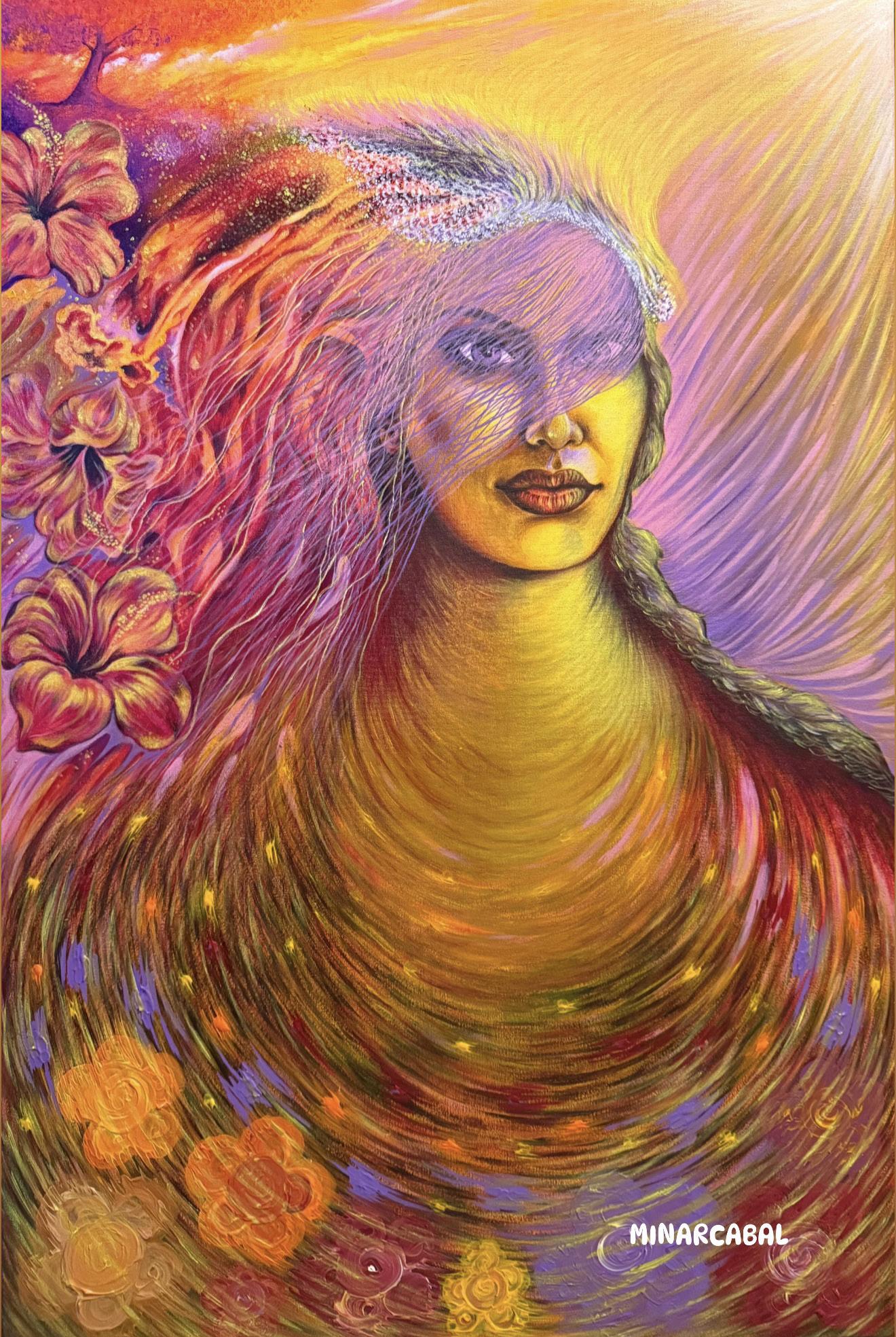
#4 & #5
INA. THE MOST POWERFUL WORD IN ANY LANGUAGE.
Some titles need no explanation. "Ina" is one of them. Mina Santiago didn't just paint a mother. She painted every mother — the ones who hide their tears behind closed eyes, whose joy spills quietly through a smile, whose dreams bloom like gumamela in full colour around them.
Two canvases. One truth. In Mina's work, a mother is not a single image — she is a universe. She is the dawn breaking open every morning with quiet resolve. She is the flow of water and the force of wind — soft enough to nurture, strong enough to carry
everything. She is colour and light and dignity, all at once. And Mina paints all of this not from the outside looking in — but from the inside, because she is one. A mother herself, living and loving in Ireland, far from the land that shaped her, yet never far from the values that define her. She creates not just to make art — but to honour every woman who has ever put her family above herself and still found a way to stand tall.
"Na may puso at dignidad." With heart and dignity. If there was ever a more perfect way to describe both the subject and the artist herself — we haven't found it.
Not every act of courage announces itself loudly. Some show up quietly — in the form of a woman walking back into a classroom after nearly a decade away and saying: I am still here. And I still have something to give.
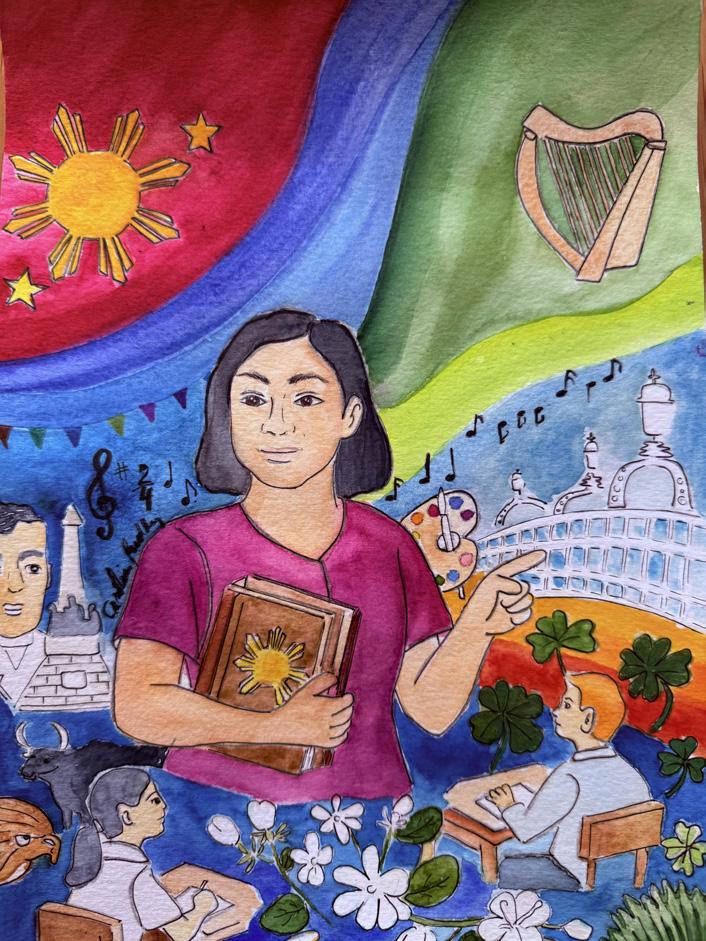
#7
SHE CAME WITH A DREAM. SHE STAYED WITH A STRENGTH NO ONE COULD HAVE PREPARED HER FOR.
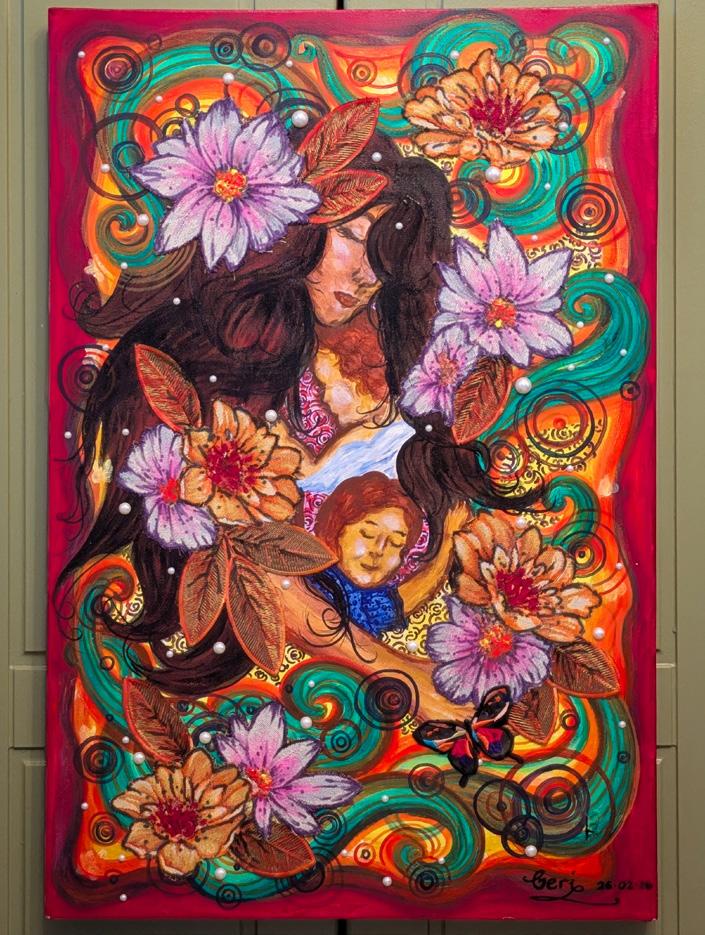
BY GERALDINE REORIZO
Caroline Ruddy is Irish-Filipino, a mother, a teacher, and — as this artwork proves — a woman who understands that every season of life carries its own profound truth.
For almost ten years, she poured herself completely into her family. No applause. No recognition. Just the deep, unglamorous, irreplaceable work of building a home and raising children across two cultures. And then, when the time was right, she walked back into the world — not as someone who had been away, but as someone who had been quietly preparing.
She returned to teaching with Katotohanan — the truth of who she is, where she comes from, and the heritage she carries with pride into every classroom. And it took every ounce of Giting — that quiet, fierce bravery — to reclaim a professional identity she had placed on hold out of love.
Now she shares that creative spark with her Irish students every single day. Not just as an art teacher. But as living proof that there is dignity in every season. That stepping away is not the same as giving up. That authenticity is not just a value — it is the most powerful lesson anyone can ever teach.
Caroline didn't just return to the classroom. She harvested everything she had become.
Read this one slowly. Because Geraldine Reorizo's story — and her painting "Mithi" — deserves every single word.
Ten years ago, Geraldine arrived in Ireland heavily pregnant, with a three-year-old in tow, leaving behind a career and a comfortable life in Southeast Asia. She came not for herself — but for love. For family. For the hope that a new country might mend what was broken.
Two years later, she was a single mother. No career. Almost homeless. Two young children. A foreign country. And the kind of silence that falls when everything you planned falls apart.
But here is what Geraldine knew — even in her darkest moments — that being Filipino is not just a nationality. It is a backbone.
"Pagsubok ka lang. Pilipino ako."
She picked up the pieces. Slowly. Quietly. Stubbornly. The university lecturer reinvented herself as a cake artist — because art, in every form it takes, has always been her refuge, her comfort, and her way back to herself.
And now? She has her own home. Her children. Her craft. Her peace. Her mithi — finally, fully, gloriously within reach.
"Magandang buhay, kaligayahan at kapayapaan."
A beautiful life. Happiness. Peace. She didn't just survive Ireland. She made it her second home. And she did it the only way a true Filipina knows how — with heart, with grit, and with art that tells the truth even when the truth is hard.
"Pagsubok ka lang. Pinay ako."
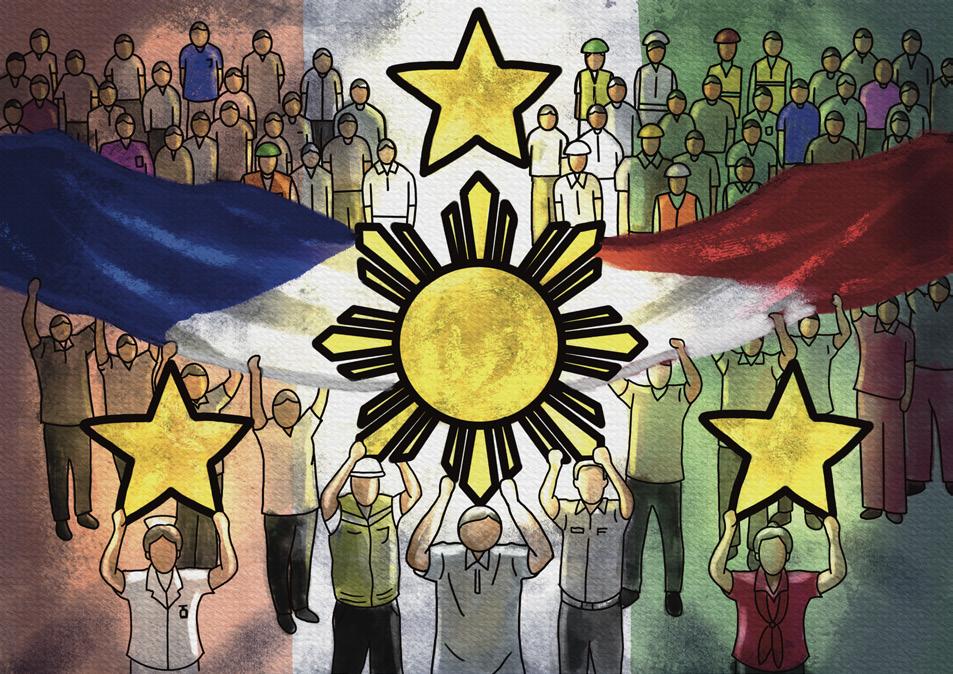
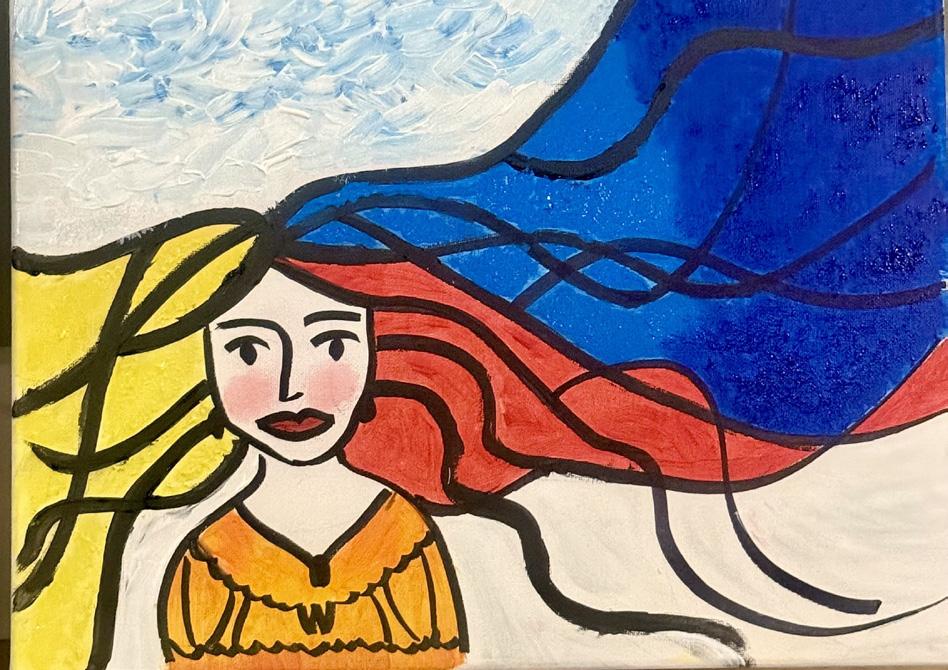
There are paintings that make you stop mid-scroll. "Pillars of the Pearl (Haligi ng Perlas)" by Jessmer Dela Cruz Abing is one of them.
Jessmer's story is one many Filipinos will recognise. He came from Saudi Arabia, made his way to Ireland, and built a new life — and when he did, his wife followed, over a year ago, choosing love and a shared future over the comfort of the familiar. Two people. One leap of faith. Together.
And now, in a moment that feels almost poetic, both husband and wife stand as fellow competitors in this very art challenge — two artists under one roof, channeling their journey, their culture, and their heart onto canvas side by side.
Look closely at Jessmer's canvas. The figures are not background details. They are paintings. Nurses. Labourers. Workers of every kind — standing tall, shoulders bearing the weight of a nation, arms quietly holding up the stars and sun of the Philippine flag.
And behind them? The colours of Ireland. Not as a contrast — but as a shared space. A testament to the journey taken, the host country embraced, and the unity quietly built between two nations through the lives of ordinary people doing extraordinary things every single day.
He dedicated this work to every Filipino migrant worker in Ireland and across the world. The ones who wake up early, work hard, send money home, miss birthdays, and still — still — carry the pride of the Philippines wherever they go.
He didn't paint heroes. He painted the truth. And sometimes, the truth is the most powerful art of all.
When Cherry Leay Sumugat picks up a brush, she doesn't just create art - she tells a story of courage, identity, and the many journeys that shape a life.
Now based in Dublin, Cherry is no stranger to embracing new beginnings. She began her career with NTT DATA in the Philippine sin 2007 and, over a decade later in 2018, stepped into leading international teams across borders and cultures. Her leadership journey has since taken her across global environments spanning Dubai, China, and now Ireland - managing talents from Spain, Brazil, Germany, Jordan, Kyrgyzstan, Morocco, Turkey, and beyond, often as the only Filipino in the room. Her path is one built not only on professional achievement, but on adaptability, cultural intelligence, and quiet determination.
The same spirit is reflected in her artwork, "Proud Pinay" - a tribute to Filipino women whose strength is not always loud, but always present. Women who lead with empathy, carry resilience with grace, and cross oceans not only to build better futures, but to inspire others along the way.
And now, her journey continues to gain recognition beyond the workplace. Cherry has recently been nominated for the Women in Tech Awards 2026 - a meaningful acknowledgement of her contribution as a leader making an impact in the global technology space. The winner will be announced in early October.
Cherry may describe herself as an amateur painter, but there is nothing amateur about the story she carries - or the life she continues to build. This one is for every Filipina who has every entered a room full of strangers and left it having made her mark.
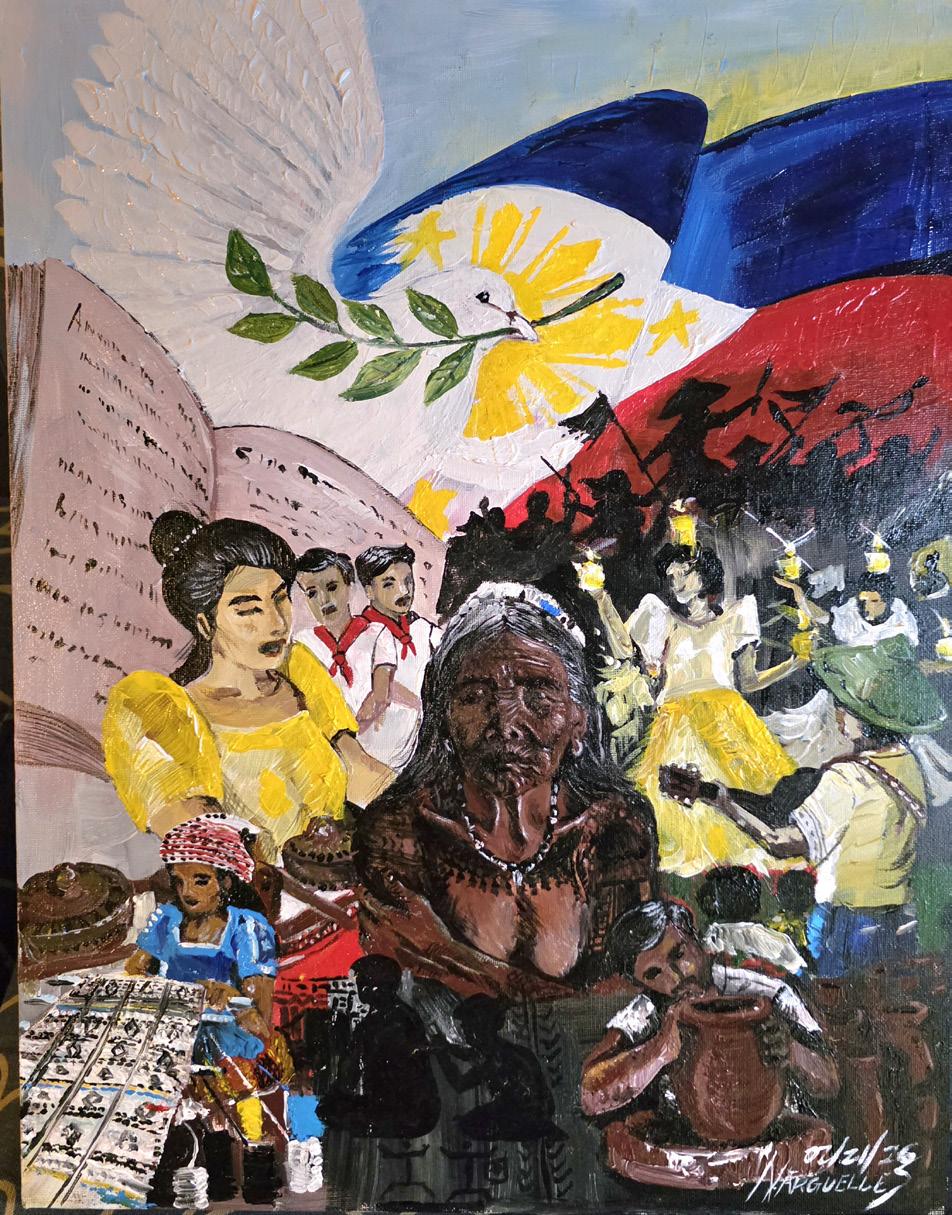
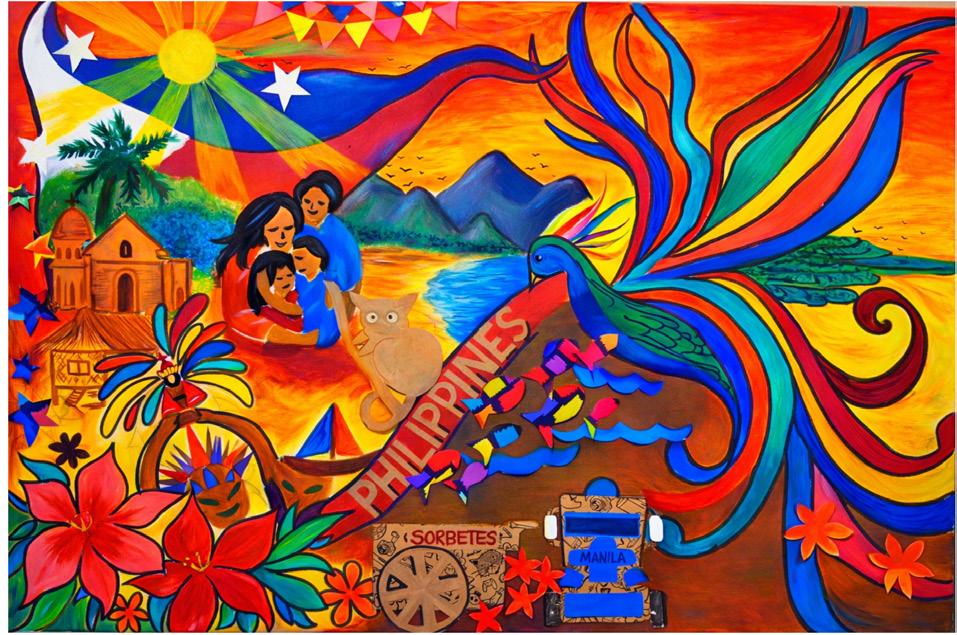
Some truths don't need translation. Noel Arguelles knows this — and "Pusong Pinoy" proves it.
At the heart of this work beats something every Filipino recognises instantly — that innate, unstoppable creativity that has always defined who we are. Not taught. Not performed. Simply lived. Through dance, through song, through weaving, carving, and painting — the Filipino soul has always expressed itself boldly and beautifully.
But Noel goes deeper than celebration. He anchors his pride in one of the most powerful symbols of Filipino artistry the world has ever known — Apo Whang-od. The legendary mambabatok of the Kalinga people. A living testament to what it means to carry your culture in your very skin, to practise your craft across a lifetime, and to become — without ever seeking it — a gift to the entire world.
For Noel, "Pusong Pinoy" is not just a painting. It is a declaration. That Filipino creativity is not a trend. It is not a moment. It is a harvest — of truth, of courage, of a people who have always known how to turn their stories into something eternal.
He painted with pride. And it shows.
throws away — he turned into windows to a future he dared to imagine. A dream house sketched in pencil. A life drawn into existence from nothing.
From crayons to charcoal to acrylic. From a child filling silence with colour to an artist standing before the world with his truth fully formed. Every stage of that journey lives inside "Sining ang Nagpalakas" — layered, textured, and deeply, unmistakably real.
At the heart of this canvas sits the Ibong Adarna — that beloved Filipino symbol of healing, hope, and the courage to endure. Because Jeno knows what endurance looks like. He has lived it. He is still living it. Because behind this extraordinary painting is an extraordinary grief. Just months ago, Jeno lost his Mama to cancer. The woman who was the reason behind everything he is and everything he creates. She planted in him the love of family, the gift of perseverance, and a quiet strength that no hardship could ever take away.
There are origin stories. And then there is Jeno Malana's.
Jeno didn't grow up with brushes and canvases. He grew up with scraps. Discarded paper. Old cartons. Paper bags. Letter cuttings. The things the world
This painting holds his childhood, his truth, his grief, and his gratitude — all at once. It is the most honest thing a person can offer the world.
Sining ang nagpalakas. Art made him strong. And this painting will make you feel it.

If you have ever stood at the edge of something unfamiliar and wondered whether the person you were back home would survive the crossing — Ana Lumibao painted that feeling. And she made it beautiful.
"Tawid Dagat: The Light We Carry" does something no map could ever do. It places a vibrant Filipino parol — that most tender symbol of faith and light — atop the iconic Poolbeg Lighthouse standing tall in Dublin Bay. Two worlds. One image. One profound and quiet truth. The lighthouse says: you are here now. The parol says: but you never really left.
Ana didn't just create art. She created a landmark for the Filipino soul in Ireland. A reminder that the bravery it takes to cross vast oceans doesn't erase who you are — it illuminates it. That Filipino culture, faith, and identity are not things we leave behind at the departure gate. They are the very light that guides us through unfamiliar waters and keeps us whole.
In a single canvas, she captured what thousands of Filipinos in Ireland feel but rarely find the words for. The truth of migration. The valour of holding on. The grace of carrying your culture like a lantern — across every ocean, into every new beginning.
The light we carry never dims.
By Donna Patricia Manio
I’ve been thinking a lot about how we define luxury these days.
Not the kind that announces itself loudly, or the kind that collects value through rarity or price— but something quieter, almost unspoken. The kind that has more to do with how you move through your days, and whether you ever allow yourself to slow down enough to actually feel them.
Hiwaga Hands feels like it belongs to that quieter definition.
It started, almost unexpectedly, as an online plant store during the pandemic—for plantitos and plantitas finding comfort in something living while
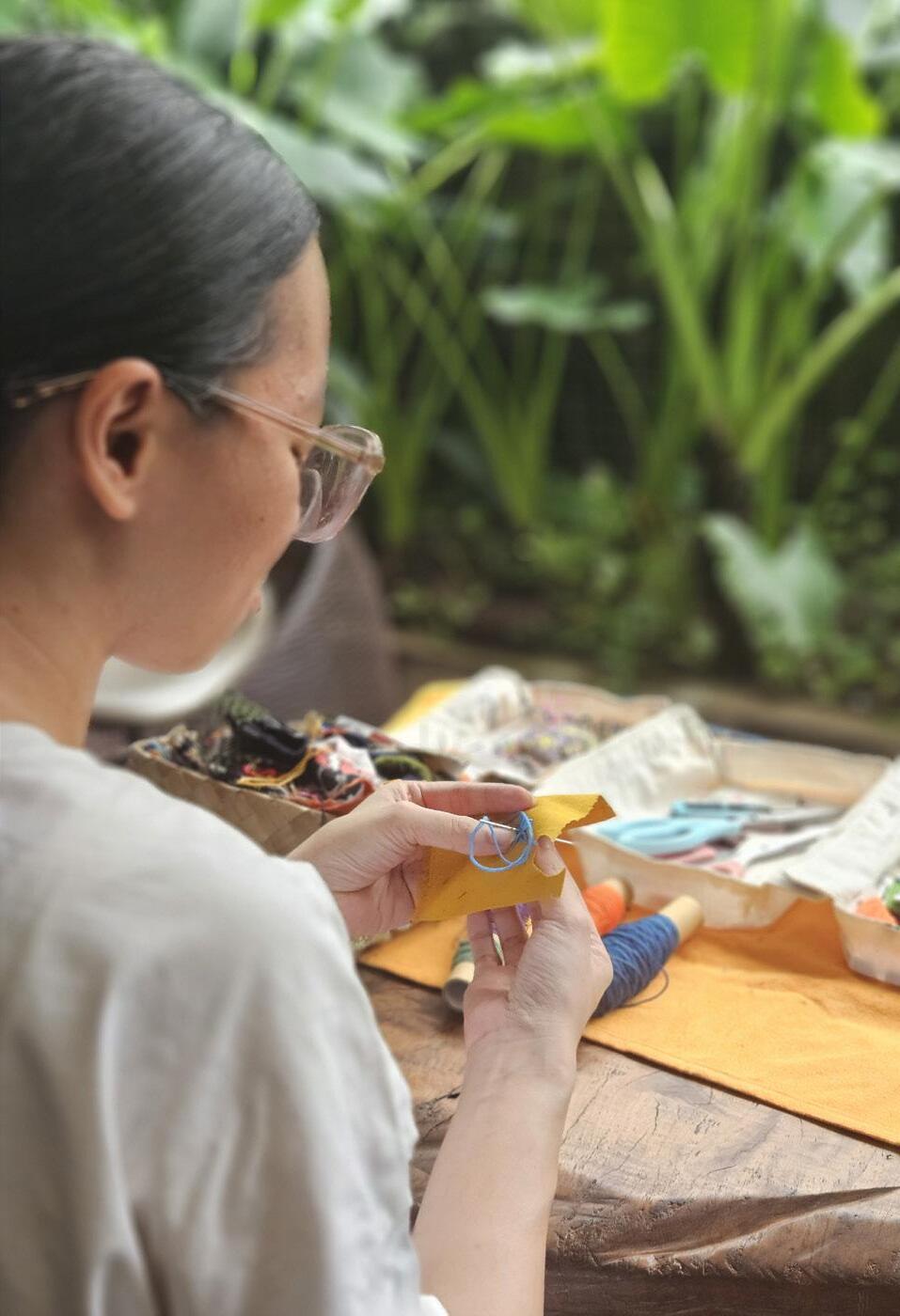
everything else felt uncertain. But somewhere along the way, it shifted. Not in a sudden reinvention, but in a gradual unfolding into something more intimate: a space where making things by hand becomes a way of returning to presence.
There is something about that transition that stays with me. How something so simple can evolve into a practice of slowing down.
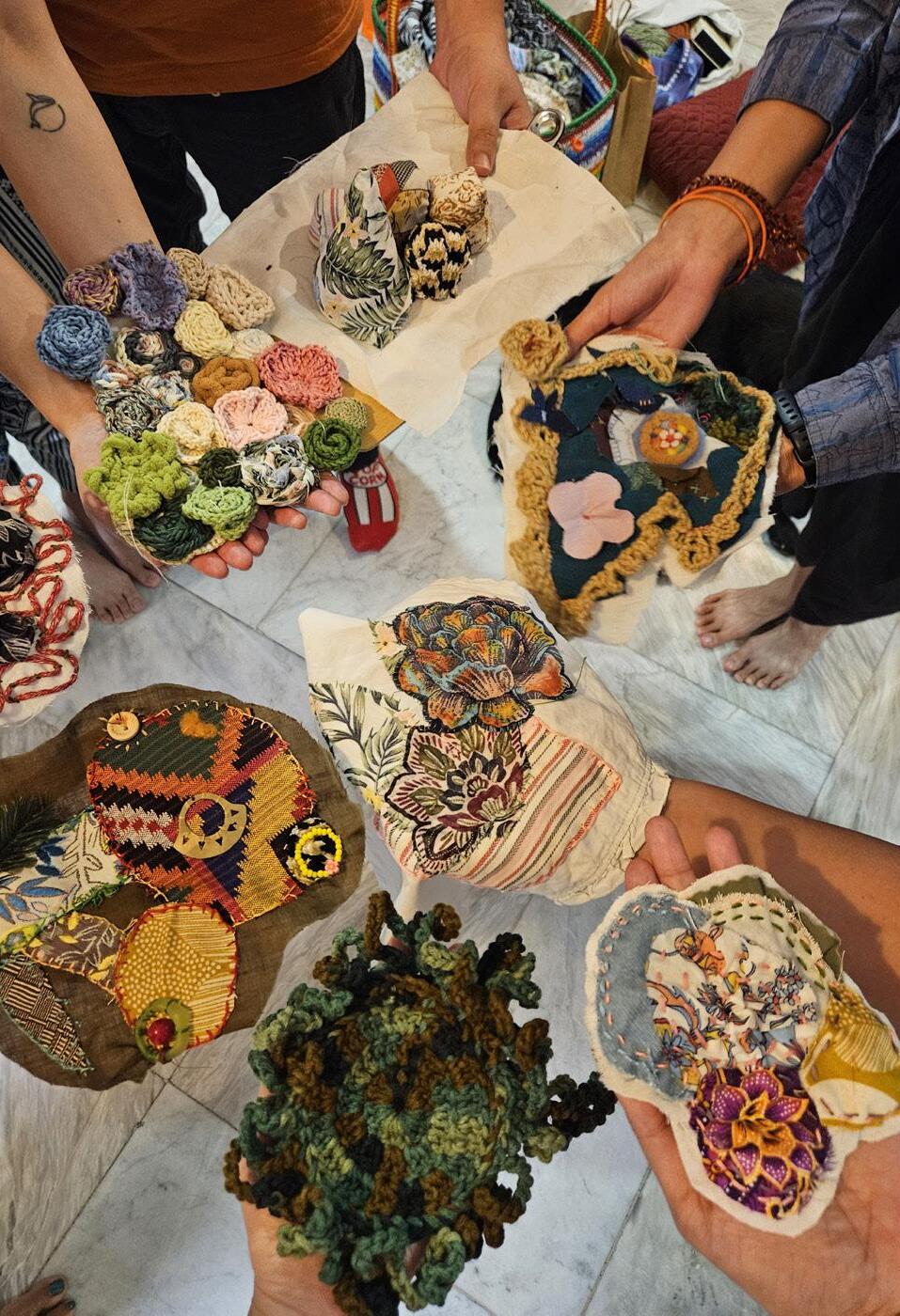
What Hiwaga Hands offers now—through its workshops and “creative potluck” gatherings—feels less like an activity and more like an atmosphere. A space where there is no pressure to perform creativity correctly, or to produce something that needs to be
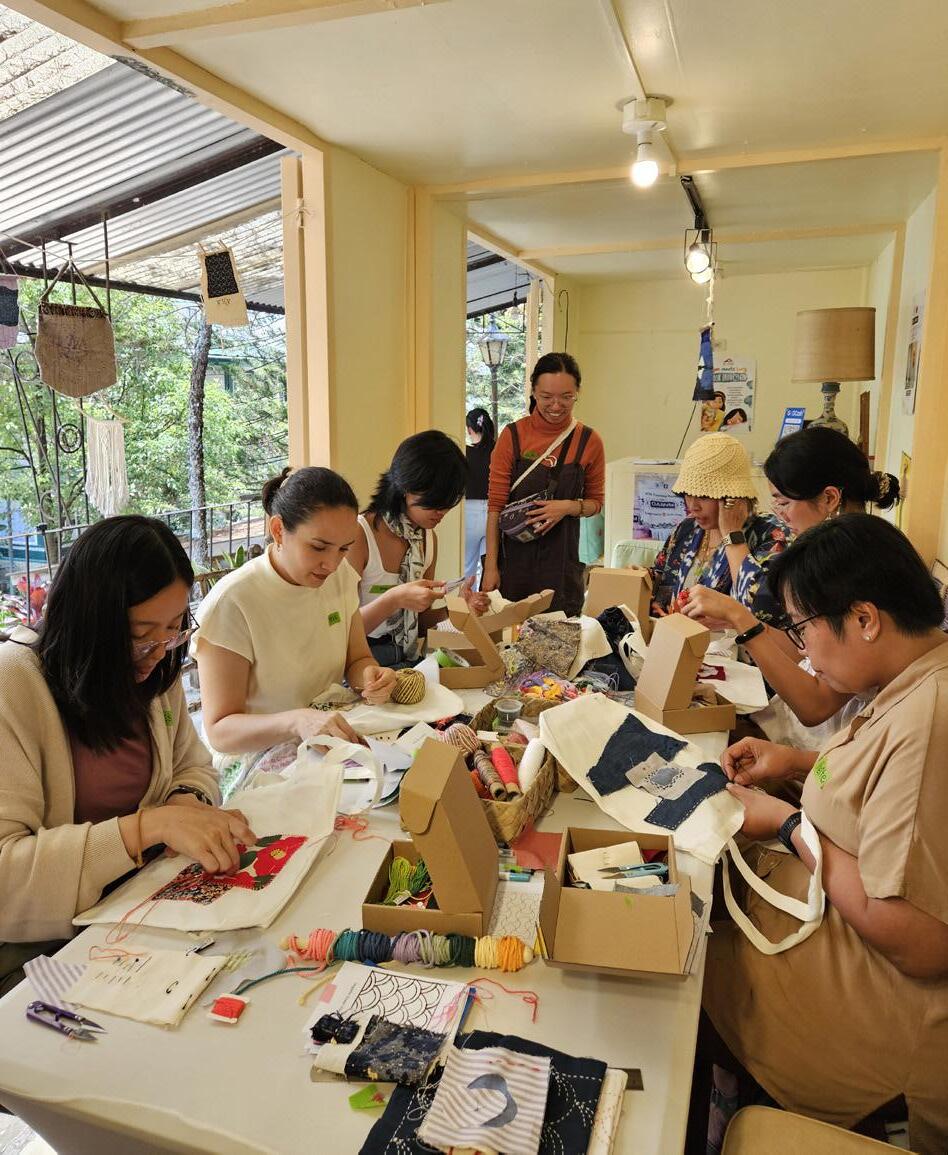
validated later. Instead, there is only the invitation to sit with your hands, your materials, and the quiet rhythm of making.
In a world that rewards speed, that kind of slowness feels almost unfamiliar at first. And then, strangely necessary.
Sewing and crafting sit at the center of it all, but what I keep returning to is the way attention itself becomes the practice. The act of focusing on small movements, of noticing texture, of staying with something long enough for it to change in your hands.
Many of their techniques draw from Japanese sashiko, a visible mending tradition where repairs are not hidden, but honored. Stitches become part of the design. Imperfections become visible history. There is something deeply human about that—this refusal to erase what has been broken, and instead, choosing to make it part of what continues.
It makes me think about how we often treat repair in our own lives.
Hiwaga Hands workshops are open to everyone, regardless of experience. Co-founders and facilitators Keina Sabay and Riela Subido shape the space in a way that feels both intentional and gentle—like it knows exactly what it wants to be, without needing to insist on it.
The gatherings take place in soft, creative environments where people come together to sew, craft, drink coffee, and slowly ease into conversation.
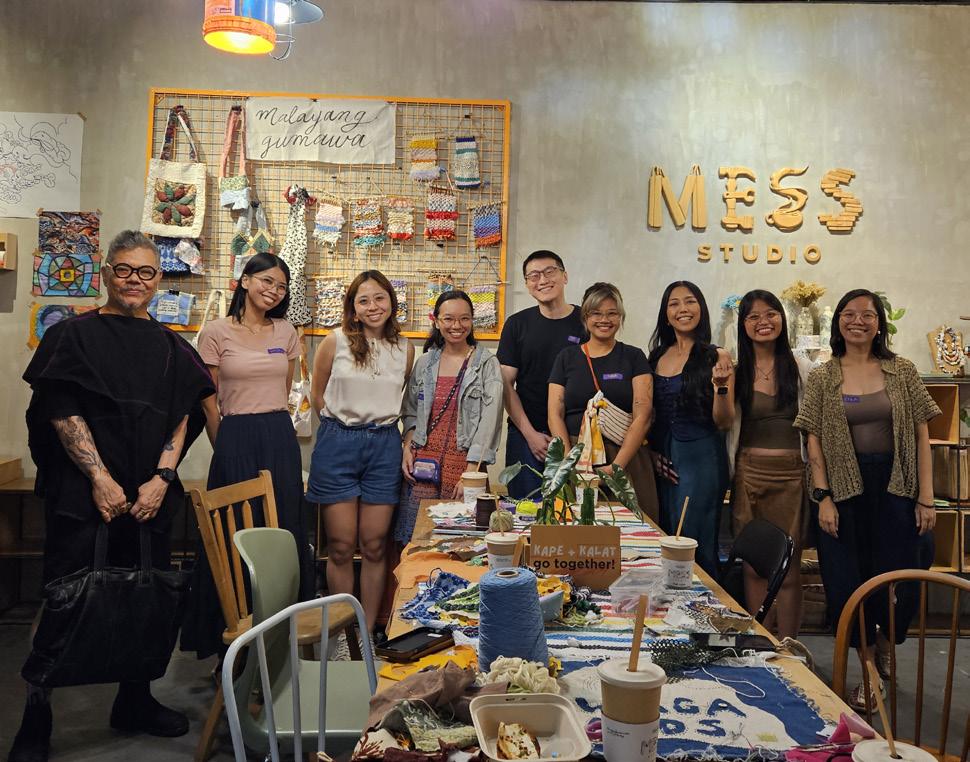
Nothing about it feels forced. And yet, something always forms in the space between strangers sitting side by side.
I find that part interesting—the way connection doesn’t always arrive loudly. Sometimes it just happens in the background, while your hands are busy doing something simple.
As Hiwaga Hands continues to grow, it has begun appearing in larger cultural spaces like the Biyaya Sustainability Festival, CURMA Fair, and HABI Fair. It has also collaborated with artist Ged Merino for an ARTFAIR Philippines project. But even as it moves outward, it doesn’t feel like it is leaving its center. It feels like the same idea, simply finding more rooms to exist in.
There is also something quietly telling about the range of people who come into these spaces—firsttimers, regulars, and even travelers from different countries. It suggests that the need to slow down is not local or occasional. It is shared.
I think about something Keina Sabay once shared from her travels—that she has met people in different places who are also searching for this kind of rhythm. A life that is less about constant output, and more about meaningful attention.
And I keep returning to that idea.
That maybe we are not meant to move as quickly as we do.
Maybe we are meant, sometimes, to sit still long enough to notice what our hands are doing. To repair something without hiding the repair. To create something without needing it to be more than what it is in the moment.
Hiwaga Hands, in the end, feels less like a brand and more like a reminder.
That slowing down is not absence; it is a form of presence.
By Anne Tafalla
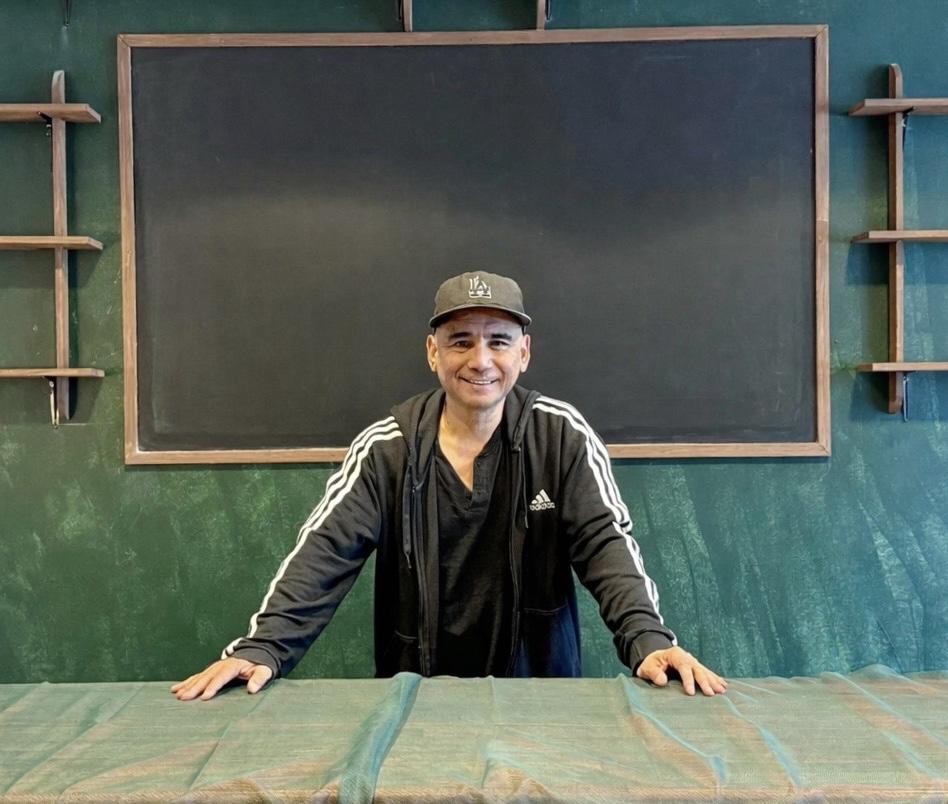
The Espoo Creative Center (ECC) is an emerging hub for artists, entrepreneurs, and creatives, located in Olari, Espoo Kuunkehrä 4 ,Finland. More than just a traditional venue, ECC is designed as a “broadcast-ready
stage”—a dynamic environment where creativity, technology, and collaboration come together. It is a space built not only for expression, but also for growth, innovation, and real-world opportunities.
Founded by Ricky Carranza, ECC was created with a clear and
powerful vision: to bridge the gap between artistic expression, street culture, and entrepreneurial success. Recognizing that many talented individuals struggle to find direction or access the right opportunities, Ricky envisioned a place where creativity could
be nurtured and transformed into something sustainable and impactful.
ECC is more than just a creative venue—it is a community and a support system. It serves as a home base for creators who want to develop their ideas, produce meaningful content, and share their work with a broader audience. Whether you are an aspiring artist, a content creator, a performer, or an entrepreneur, ECC provides the tools and environment needed to take your passion to the next level.
One of the most unique aspects of ECC is its mission to guide individuals who feel that their passion lacks direction. Many people have talent and ambition, but do not know where to start or how to grow. ECC addresses this challenge by offering workshops, mentorship, and networking opportunities designed to help members discover their strengths and refine their skills. It is a place where raw potential is shaped into purpose.
Through its programs and collaborative culture, ECC focuses not only on developing talent but also on building character. Members are encouraged to grow into confident, disciplined, and goal-oriented individuals. The center believes that success is not just about skill, but also about mindset, resilience, and the ability to work with others.
As of early 2026, ECC is still in its pre-opening and development stage, yet it is already making an impact. Events, creative sessions, and networking opportunities are beginning to take shape, attracting a diverse group of individuals who share a passion for creativity and self-improvement. This early momentum reflects the strong vision behind the center and the
growing demand for spaces like ECC.
What truly sets ECC apart from other creative hubs is its inclusive and empowering approach. It welcomes everyone, regardless of their background, experience, or status in life. Whether you are just starting out or already experienced in your field, ECC provides a space where you can continue to grow and connect with others. The emphasis is not on competition, but on collaboration.
At ECC, collaboration is at the heart of everything. Members are encouraged to work together, exchange ideas, and support one another’s projects. This creates an environment where creativity thrives, and innovation happens naturally. By bringing together people from different disciplines—artists, performers, entrepreneurs, and creatives—ECC becomes a melting pot of ideas and opportunities.
Ricky Carranza strongly believes that passion and purpose go hand in hand. According to him, having a dream is only the beginning; what truly matters is taking action and surrounding yourself with the right people. ECC was built to be that supportive environment—a place where individuals are motivated, encouraged, and guided toward achieving their goals.
“It is not too late to pursue your dream,” Ricky emphasizes. This message is at the core of ECC’s philosophy. No matter where you are in life or what challenges you have faced, ECC believes that you still have the potential to succeed. With the right mindset and support, dreams can be turned into reality.
ECC also aims to integrate creativity with modern technology. By offering a “broadcast-ready stage,” the center allows creators
to produce high-quality content and reach wider audiences. This approach reflects the evolving nature of the creative industry, where digital platforms play a crucial role in building careers and sharing ideas.
For many, ECC represents more than just a physical space—it is an opportunity to rediscover passion and build a future around it. It encourages individuals to step out of their comfort zones, explore their talents, and take meaningful steps toward their dreams. The environment is designed to inspire, motivate, and empower every member who walks through its doors.
Ricky Carranza describes ECC as his long-awaited dream, a vision he hopes will one day be recognized worldwide. His goal is not only to create a successful creative hub, but also to make a lasting impact on people’s lives. By helping others succeed, ECC becomes a place where dreams are not only imagined but realized.
In a world where many people struggle to find direction, ECC Espoo Creative Center offers something truly valuable—a sense of purpose, a supportive community, and a clear path forward. It is a place where passion is nurtured, talents are developed, and opportunities are created.
Whether you are an artist, an entrepreneur, or someone still searching for your path, ECC welcomes you. It invites you to share your unique talents, collaborate with others, and experience a journey of growth and transformation. At ECC, passion is not just a feeling—it becomes a foundation for success.
Now is the time to take that step. Join the movement, be part of the community, and turn your passion into reality at ECC Espoo Creative Center.
By Feds Murray
The accomplished Filipino European authors of the compelling books, 'Common Diversities' and 'Common Diversities 2 Filipino Europeans Remaking the Past, Reshaping the Future' have unequivocally and excellently risen to the challenge in sparking critical thinking in the minds of their readers.
RALPH CHAN is a qualified sociologist from the University of Vienna. Through his research and personal interest, he focuses on the topic of " The Philippines / Filipinos and the Filipino community in Austria". This stemmed from his search for his own identity and his desire to understand his life story.
STEPHANIE HEID is half-Filipino, half-Swiss. Alongside her work in human resources, she is particularly interested in engaging with other
second-generation Filipinos in German-speaking countries. As part of her personal journey of selfdiscovery, she came across the "Halo Halo" network. Since then, community work and the promotion of exchange and networking within "Halo Halo" have been particularly close to her heart.
ARLENE CASTAÑEDA is the editor and author of the publications “Common Diversities – Young Filipin@s in German-speaking Countries” and “Filipino Europeans – Remaking the Past, Shaping the Future” (the “Common Diversities” project). She is the founder and director of the association Sentro – Centre for Austrian and Filipino Culture and Languages.
LENNY KAYE BUGAYONG is a linguist with roots in Zurich. Since co-founding the group Noi-P.ch in 2010, her focus has been on the issue of anti-discrimination
from the perspective of the Filipino community. Through her work at studiyo filipino, she hopes to strengthen the community’s presence in Swiss society through language, culture and research.
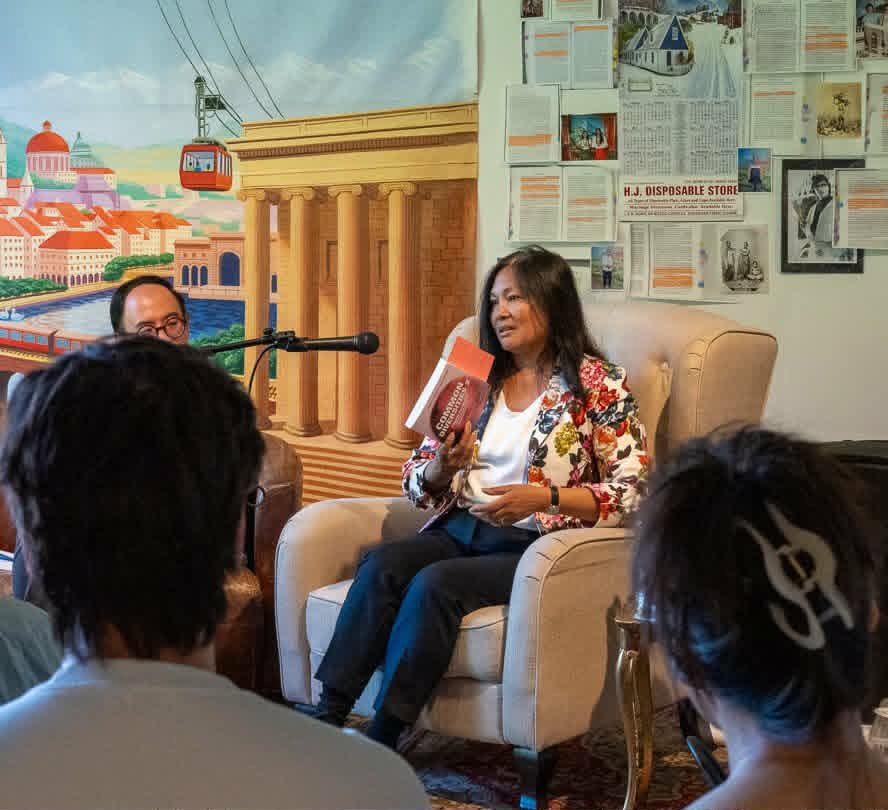
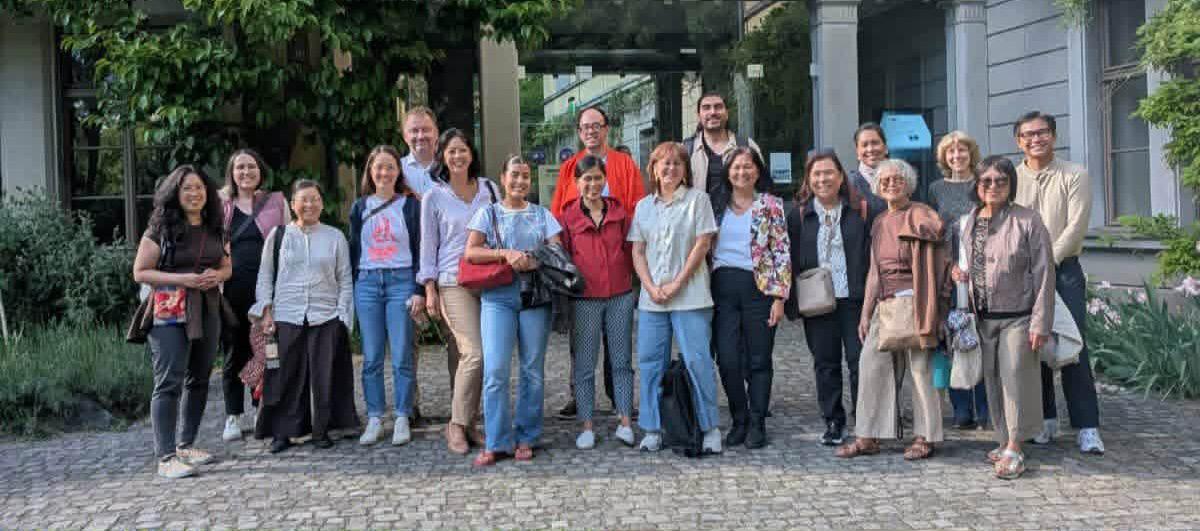
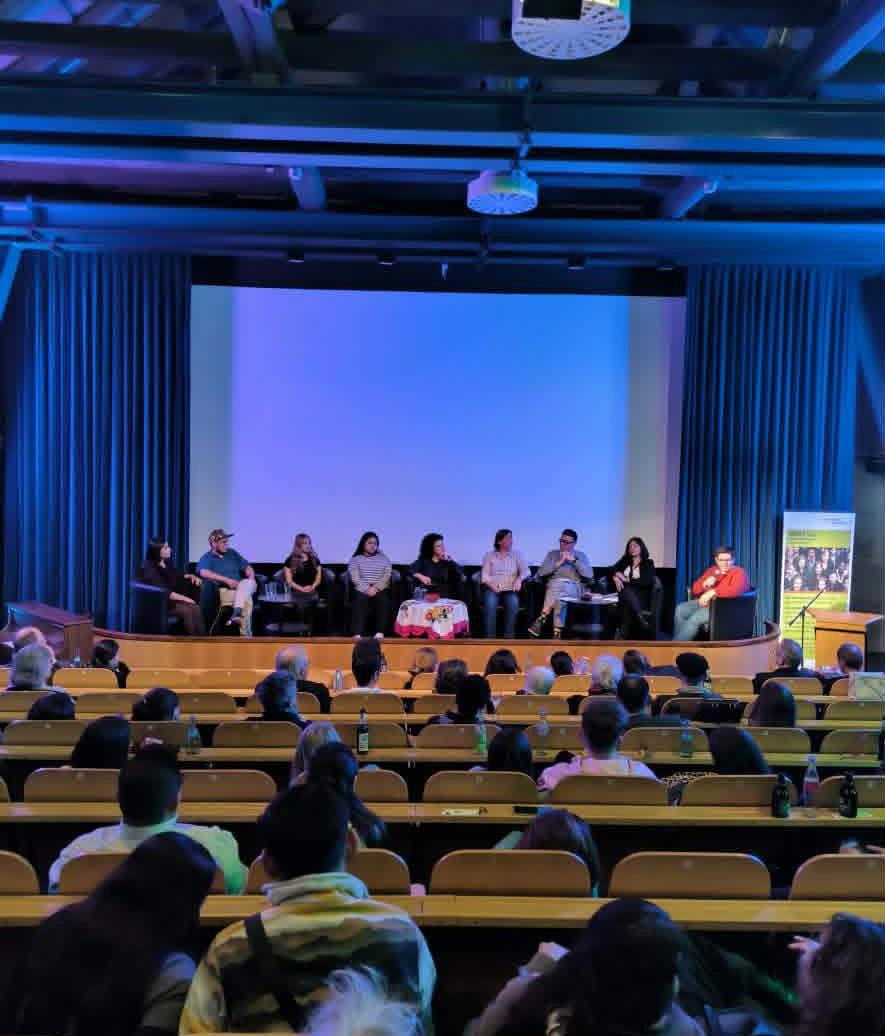
There were book presentation, reading, and workshops held by the authors on 9 May 2026 in Zurich, Switzerland. The authors and organisers received great support from many readers from different backgrounds and across different ages at their book-presentation event in collaboration with studiyo filipino and Halo-Halo network.
There were two workshops which provided an indepth understanding of the contexts of the books.
"In this workshop, we will engage in an open and voluntary group discussion within a safe space on the topic of identity and diaspora experiences in Switzerland. The first part will consist of a round of introductions and an introduction to the topic, whilst in the second part, participants will have the opportunity to talk and discuss key questions together. The workshop will be led by Stephanie Heid and Ralph Chan."
"In this workshop, we turn our attention to our inner landscapes and explore, on a physical, emotional and mental level, how being at home and a sense of belonging can feel and manifest within us. Taking a resource-oriented approach, we focus on what
sustains us, strengthens us, and is alive within us. Through perceptual and creative exercises, space is created to perceive and express our own experiences. A voluntary exchange within the group opens up opportunities for resonance and new perspectives. The workshop is led by Marlisa Strauss."
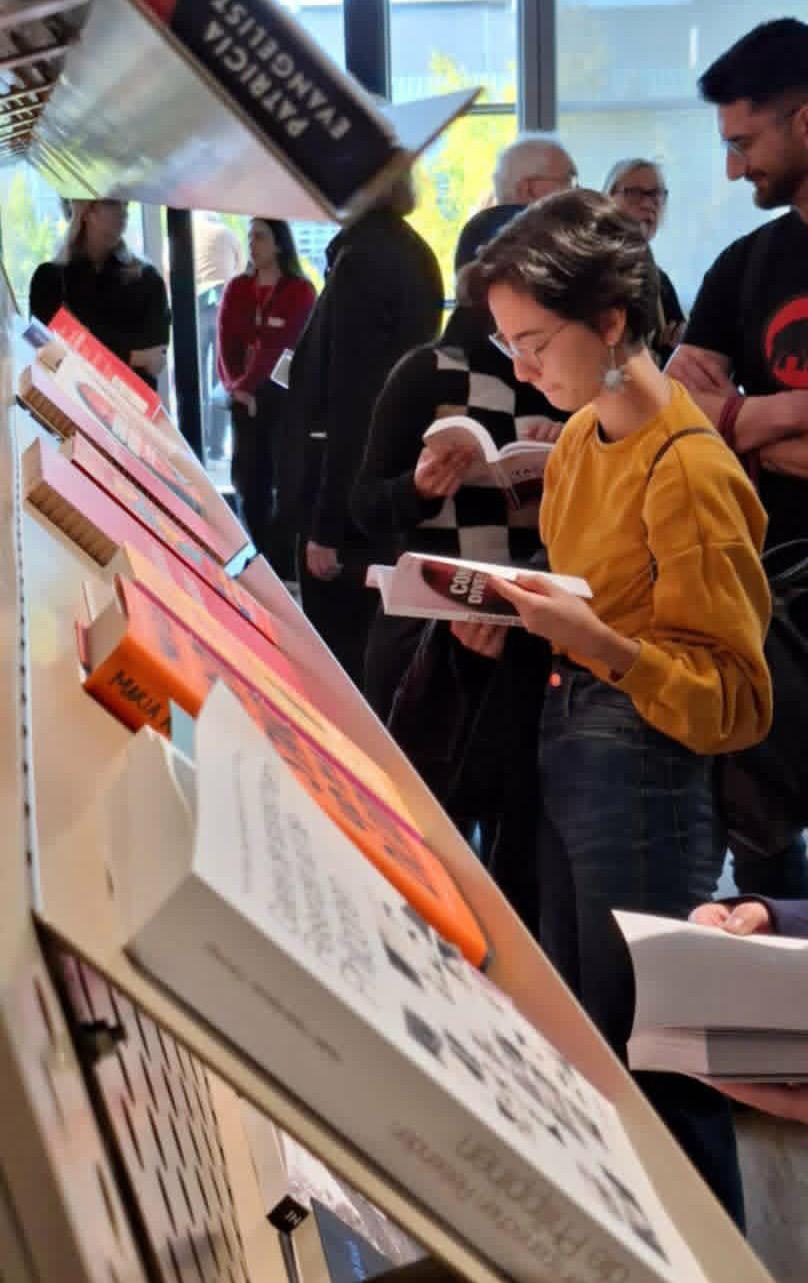
The successful book launch and presentation was in October 2025 - Common Diversities 2 at the Frankfurter Book Fair with Halo-Halo network in Frankfurt, Germany. According to the authors, "The Philippines was the guest of honor at the 2025 Frankfurt Book Fair. Our main goal was to be there with our new book, Common Diversities 2 Filipino Europeans Remaking the Past, Shaping the Future, and we made it in time! Many thanks to everyone involved for their contribution. We would like to share a few impressions. First of all: this fair was impressive—we were overwhelmed by the diversity of the offerings and the number of visitors.
It is an unforgettable sight to find our two (!) books displayed on the shelves of the Philippine Salon. Proud to be part of this large selection, we enjoyed seeing so many books from the Philippines and talking to some of the authors. Of course, it was a great pleasure to personally present H.E. Ambassador Irene Susan Natividad with a copy of our Common Diversities 2.
But we weren’t just guests; we also took the opportunity to present our book outside the fair and celebrate our milestone together with friends:
On Friday, October 17, 2025, we held a special book reading at the Bockenheim University Campus entitled “Philippines – Migration, Diaspora, Exile Search for Identity.” The focus was on three current publications that highlight Philippine realities in very different
ways: Our Common Diversities 2 (regiospectra Verlag), Von Marcos zu Marcos (Promedia Verlag) by Jörg Schwieger and Rainer Werning, as well as Der singende Gefangene und die Bibliothekarin mit nur einem Buch (regiospectra Verlag) by Michael Beltran. Many thanks to Jörg for organizing the event.
On Saturday, we simply celebrated. At the Office for Multicultural Affairs, whose premises we were allowed to use, we reviewed the creation of Common Diversities 2 Filipino Europeans Remaking the Past, Shaping the Future with the authors and Halo-Halo network and guests. It was an evening full of joy and emotion. Many thanks to Jenny Reith and her team for their great support."
Arlene Castañeda wrote: " Filipino Europeans Remaking the Past, Shaping the Future After the groundbreaking first volume, Common Diversities: Junge Filipin@s im deutschsprachigen Raum, which gave Filipinos in German-speaking regions the space to speak their truths — about identity, migration, family, and belonging — we continue the journey. It was one of the first times their stories were told on their own terms, in their own voices.
Now, with Common Diversities 2, the conversation expands. This second book brings together a wider chorus of Filipino European voices — artists, thinkers, activists, and everyday storytellers — who are courageously remaking the past and shaping the future. Through personal reflections, essays, and creative works, they challenge invisibility, reclaim identity, and celebrate the richness of our shared experiences.
These two volumes are pioneering.
They are among the first of their kind to center Filipino European perspectives with such depth and diversity. They speak of migration, memory, belonging, and the beauty of living between cultures.
We warmly invite you to read the book.
Let it move you. Let it challenge you. Let it connect you to a vibrant, growing community of voices that continue to evolve and inspire.
Whether you are part of the diaspora, a curious reader, or someone passionate about diversity and inclusion — this book is for you."
There was another book presentation and talk by Arlene Cataneda and Ralph Chan on 'The Quiet truth of Identity' at the University of Vienna, Austria on 1 June this year in the University of Vienna. Sentro ng Kultura at Wika ng Austria at Pilipinas documented, "The Quiet Truth of ldentity explores how identity is shaped and reshaped over time. It considers whe- ther identity is inherited or created, whether it can be fixed or is always in motion, and whether we are defined
more by the voices we carry or the choices we make. Drawing on reflections and readings from Common Diversities: Junge Filipin@s im deutsch- sprachigen Raum and Common Diversities 2: Filipino Europeans Remaking the Past, Shaping the Future- two pioneer publications that amplify Filipino Euro- pean voices this presentation examines identity as a dialogue between heritage and agency."
In January 2026, they held a book presentation at Diversoviel in Vienna, Austria.
In March 2026, there was a book presentation at the Austrian 3rd Anti-Racism Fair in Vienna, Austria. There was also another book presentation in the same month, with Halo-Halo network, in Saarbrücken, Germany.
In April 2026, a book presentation with philippinenbüro and Halo-Halo network was held in Cologne, Germany.
What a very successful and soul-fulfilling trail of book launch and presentations by the authors in across the European countries. They are deeply thankful for the support of their readers.The books are available for purchase on Amazon. Any collaborations to promote their books are highly appreciated and will play an important part in spreading the beautiful stories and real-life narratives of real people who navigate the search for identity, remaking the past, and shaping the future - while living in the diversities of true and meaningful existence. The books are truly written with heart, passion, and authenticity.
By Rebecca Urbančík Garcia
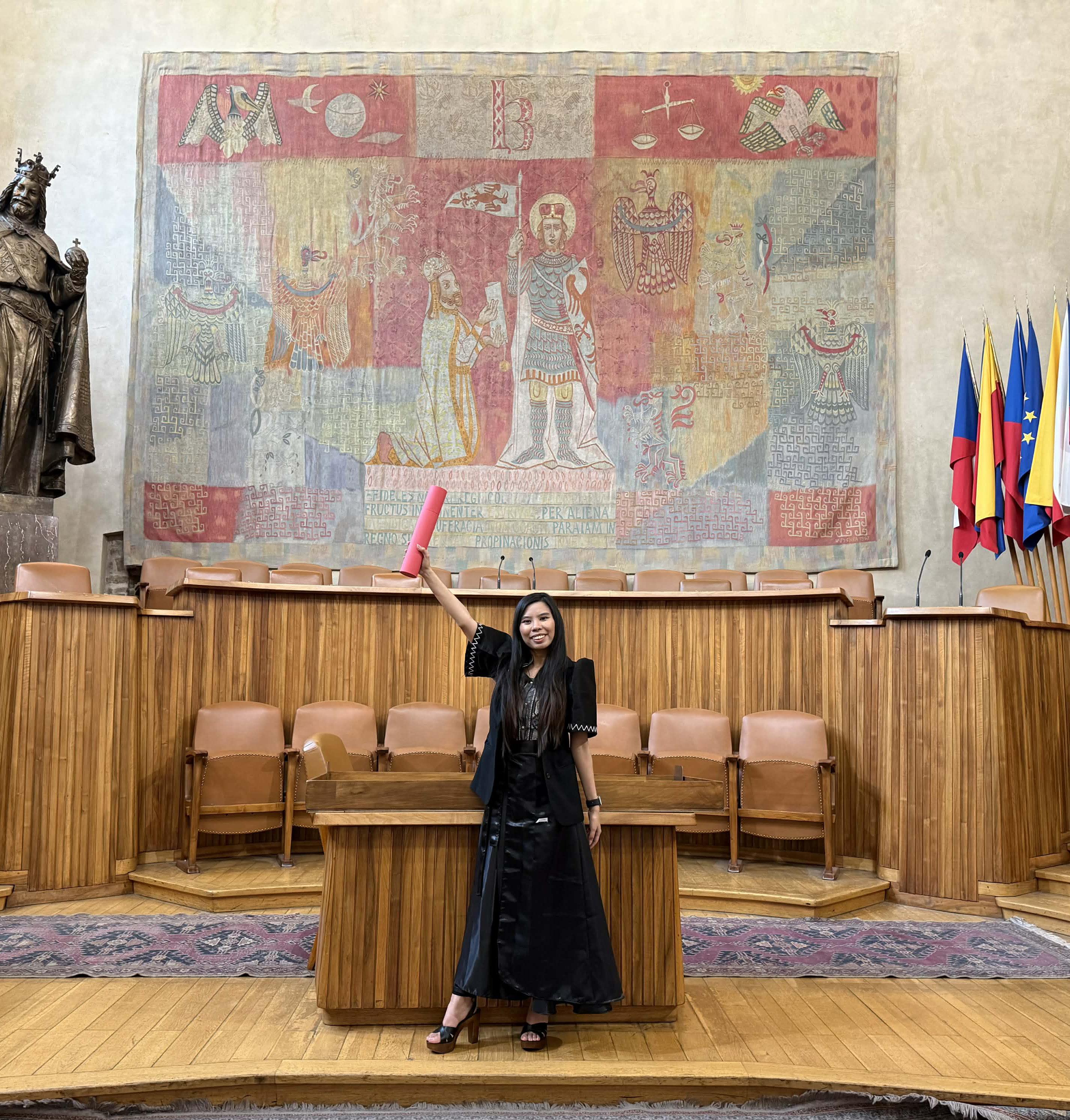
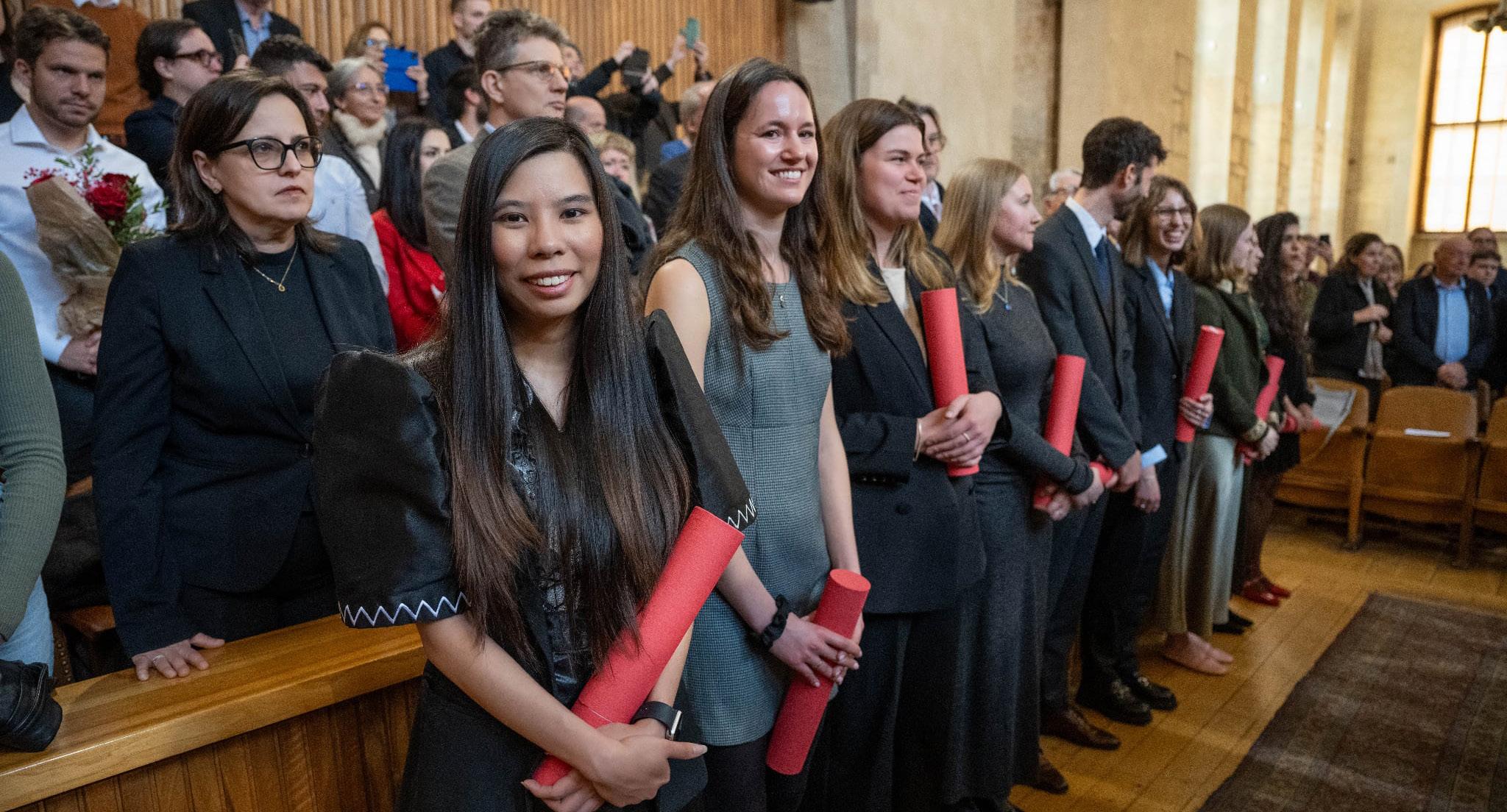
In the historic halls of Charles University—one of Central Europe’s oldest and most prestigious institutions—a Filipina scholar marked a milestone that resonates far beyond academia.
Aieshah Balmori graduated with top honors after completing the Václav Havel Joint Master Programme in European Politics and Society, earning distinction for her research on the complexities of labor migration—work that has drawn praise from diplomatic officials and shines a light on oftenoverlooked migrant experiences. Her academic journey, shaped across multiple European countries, reflects both intellectual rigor and a deep commitment to telling the stories that too often go unheard.
Roots & Wings had the pleasure of catching up with Aieshah in this brief interview.
living in the United States, many of my Polish friends encouraged me to consider the region, and that support played a big role in where I am today. After completing my degree, I chose to stay in Poland to continue developing my academic and professional path.
ON GAPS IN RESEARCH AROUND IRREGULAR LABOR MIGRATION IN EUROPE— WHAT INITIALLY DREW YOU TO THIS TOPIC, AND WHAT DID YOU FIND MOST SURPRISING IN YOUR RESEARCH?
My thesis focused on identifying the trends, gaps, and challenges in researching irregular labour migration in Europe.
CONGRATULATIONS AGAIN ON YOUR GRADUATION! COULD YOU SHARE A BRIEF INTRODUCTION ABOUT YOURSELF—WHERE YOU’RE CURRENTLY BASED, YOUR ACADEMIC BACKGROUND, AND THE JOURNEY THAT LED YOU TO PURSUE YOUR STUDIES AT CHARLES UNIVERSITY?
Thank you for the congratulations! I’m originally from Makati in the Philippines. I completed my bachelor’s degree in Consular and Diplomatic Affairs at De La Salle College of Saint Benilde, where I graduated with Latin Honors and received the Leadership Award for my batch.
I was sent to the US for a summer camp by my university through my scholarship programme and then went back to the Philippines to figure out what I wanted to do. I considered taking the FSOE and they're requirement was to have a 2 year master degree or 2 years work experience. So I chose the academic path!
I then pursued my master’s degree under the Erasmus Mundus Joint Masters. My degree is Vaclav Havel Joint Master Programme in European Politics and Society. My mobility was in Charles University (Prague), Leiden University (Leiden), and Jagiellonian Unversity (Cracow). Fun fact that they're the oldest universities in their respective countries. I was drawn to the program because of its strong offerings in migration studies, which aligned closely with my long-term academic interests.
My decision to study in Central Europe was also shaped by personal connections. While I was
Initially, I planned to focus specifically on irregular Filipino migration to Europe. However, I encountered significant challenges in securing ethics approval for interviews, which led me to reconsider my approach. That moment of difficulty became a turning point. I shifted my focus toward examining the broader research landscape itself.
What I found most striking was the limited number of longitudinal studies on irregular migration. Much of the existing research is framed around crises (e.g. Pandemic, Brexit, Refugee Crisis, etc), which shapes how migration is understood and discussed. This creates gaps in long-term analysis and in understanding everyday realities beyond emergency contexts.
Moving forward, I hope to build on this work by contributing more sustained and longitudinal research, especially studies that center Filipino migrants and their lived experiences.
HAVING STUDIED ACROSS MULTIPLE COUNTRIES DURING YOUR PROGRAM, HOW DID THOSE INTERNATIONAL EXPERIENCES SHAPE BOTH YOUR PERSPECTIVE AND YOUR ACADEMIC WORK?
Before starting my master’s, I already had a strong interest in European studies. I thought I had a solid understanding of the region. Studying across different countries showed me how much perspective depends on where and how knowledge is produced.
There are clear differences in how European and Asian academic institutions approach migration. In Europe, migration is often framed through governance, regulation, and border control, while in many Asian contexts, it is more commonly discussed in terms of labour mobility, economic contribution, and family livelihood strategies.
Learning alongside classmates from diverse backgrounds pushed me to question my assumptions and refine my approach to research. It made my academic work more critical and more reflective. It also reminded me that knowledge is never neutral. It is shaped by experience, location, and background.
QYOU’VE SPOKEN ABOUT HOW MIGRANT STORIES, ESPECIALLY FILIPINO ONES, ARE OFTEN OVERLOOKED—HOW DO YOU HOPE YOUR WORK HELPS BRING THOSE VOICES MORE INTO FOCUS?
Filipino migrant stories are often underrepresented, especially in academic and policy discussions.
I see my work as part of a longer effort to change that. By continuing to write, research, and speak about these experiences, I want to help bring more visibility to Filipino migrants, both their challenges and their contributions.
I am also committed to promoting awareness of safe and legal migration pathways. Better information and stronger public understanding can help reduce vulnerability to irregular migration channels. At the same time, I believe that strengthening media literacy within our communities is an important step in empowering individuals to make informed decisions.
QYOU DESCRIBED GRADUATING WITH HONORS AS BOTH AN HONOR AND A RESPONSIBILITY— WHAT DOES THAT RESPONSIBILITY MEAN TO YOU PERSONALLY MOVING FORWARD?
Graduating with honors is something I am deeply grateful for, but I also see it as a responsibility.
For me, that responsibility is tied to giving back. I carry with me the support of my family, my community, and my country. That creates a strong sense of duty to contribute in a meaningful way. Being Filipina also comes with a responsibility to represent my community with integrity and to create work that contributes to how we are understood globally.
As a Filipina working in migration studies, I want my work to reflect both excellence and purpose. The Philippines has a long history of labour migration, and Filipino workers are present across the world. Contributing to research and policy in this field feels
like a direct way to serve both my country and the global community.
YOU’VE STAYED CLOSELY CONNECTED TO THE FILIPINO COMMUNITY THROUGH YOUR WORK AND INVOLVEMENT—HOW HAS THAT CONNECTION INFLUENCED YOUR PATH, AND HOW DO YOU SEE IT SHAPING WHAT COMES NEXT?
Staying connected to the Filipino community has been central to my journey. It keeps my work grounded and reminds me why this research matters, and keeps me connected to who I am.
These connections have shaped both my academic focus and my future plans. I want to continue documenting the experiences of Filipinos in Europe, not only their struggles, but also their achievements and contributions.
Writing these stories is important. It creates visibility, preserves history, and helps us understand where the community stands today.
Looking ahead, I hope to contribute to making the Filipino diaspora more visible, more recognized, and better understood, both in academic spaces and beyond.
As Aieshah Balmori moves forward from this milestone, her journey is about more than academic success—it’s about purpose, perspective, and giving voice to stories that matter. Her work helps shine a light on the experiences of Filipino migrants, while also contributing to more thoughtful and inclusive conversations around migration. For many Filipinos abroad, her path is both inspiring and affirming—a reminder that our stories belong in global spaces, and that our voices can help shape them.
Thank you again, Aieshah for your time – and wishing you all the best in your future endeavors!
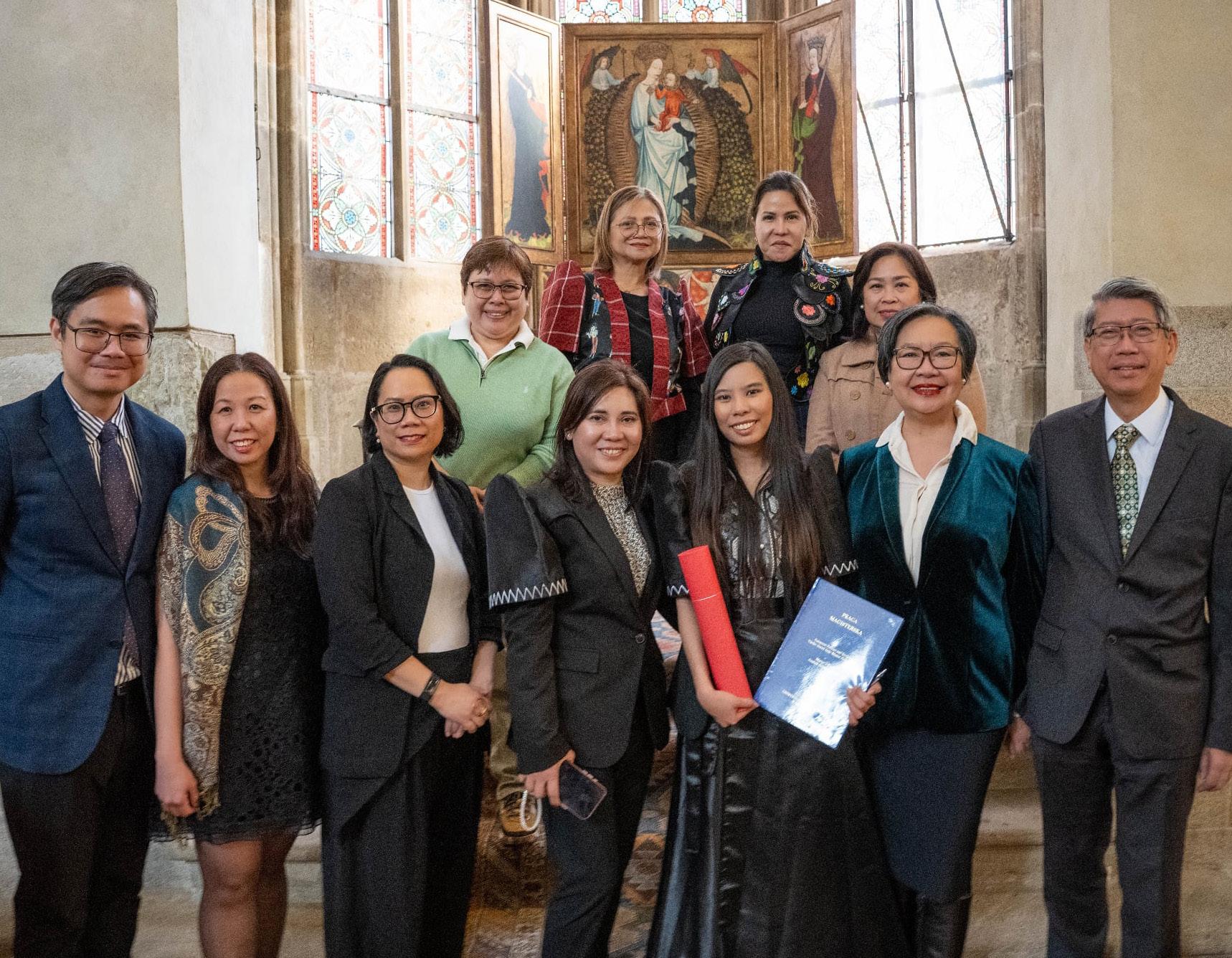
By Feds Murray
AFilipino-British Charge Nurse in Ward 301's acute haemodialysis unit in the University Hospitals Birmingham NHS Foundation Trust in England, UK, Mr. Pompei Banayos, authored an abstract and presented it in the United Kingdom Kidney Week 2026, which was held in the Harrogate Convention Centre in Yorkshire on 10-12 March 2026.
The three-day conference was attended by more than 1,100 healthcare professionals from all over the United Kingdom, other European countries, and the United States. It created an excellent opportunity for conversation, learning, and shared experience across the UK kidney community and beyond. Global kidney health and genomics to workforce, inequality and the future of kidney care were among the key topics included in the programme this year. The delegates showed strong engagement throughout the plenary session and lectures.
Banayos was hugely successful on the presentation of his abstract - Regional haemodialysis hub: Bridging the gap in providing emergency renal support for West Midlands hospitals without haemodialysis facilities - A haemodialysis delivery. He showcased his department; a 41-station haemodialysis unit - the biggest in West Midlands (one of the biggest haemodialysis units in England)providing emergency/urgent haemodialysis facilities covering the West Midlands, Worcestershire, and Herefordshire. He highlighted how busy his unit is and the role of the nurse-in-charge in liasing and organising safe transfer and haemodialysis delivery to all patients with acute and chronic kidney disease.
The significant contribution of Mr. Pompei Banayos to the conference has key significance to the development and advancement of the haemodialysis service he delivers to his patients with his team. His dedication and expertise in kidney care are reflected on the high quality of care patients receive in his care.
He is deeply committed to learning and professional development.
Banayos has been a dedicated and amazing nurse in Birmingham for almost 25 years. He will be celebrating his 25th year anniversary of his arrival in the UK from the Philippines in August this year. He is married to Mrs. Lucy Banayos who is also a nurse - a clinical business analyst and change manager in the University Hospitals Birmingham NHS Foundation Trust.
Mr. Pompei Banayos and his wife are both talented singers. They performed in Birmingham's International Convention Center in a production"Life and Times" which celebrated all that the Heart of England NHS Trust had achieved on its 60th anniversary.
Banayos is also a lead vocalist of Acoustic Harmony band, founded by Paul Fernandez, in Birmingham.
Mr. Pompei Banayos is truly an outstanding and inspirational healthcare professional worth emulating.
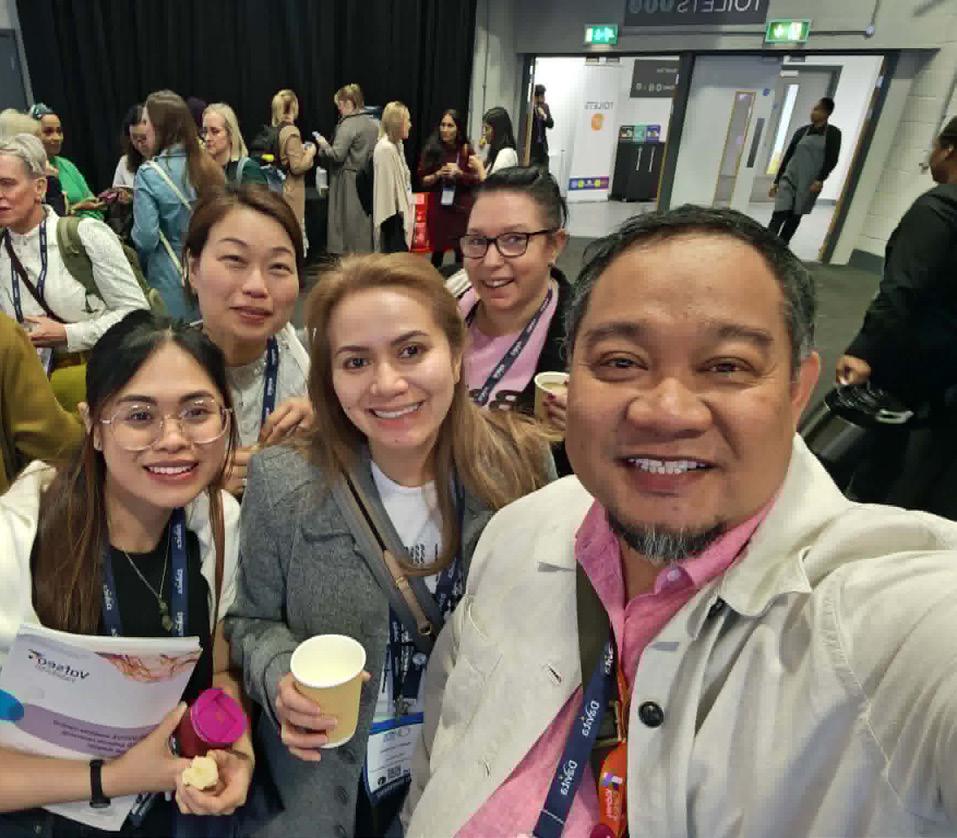
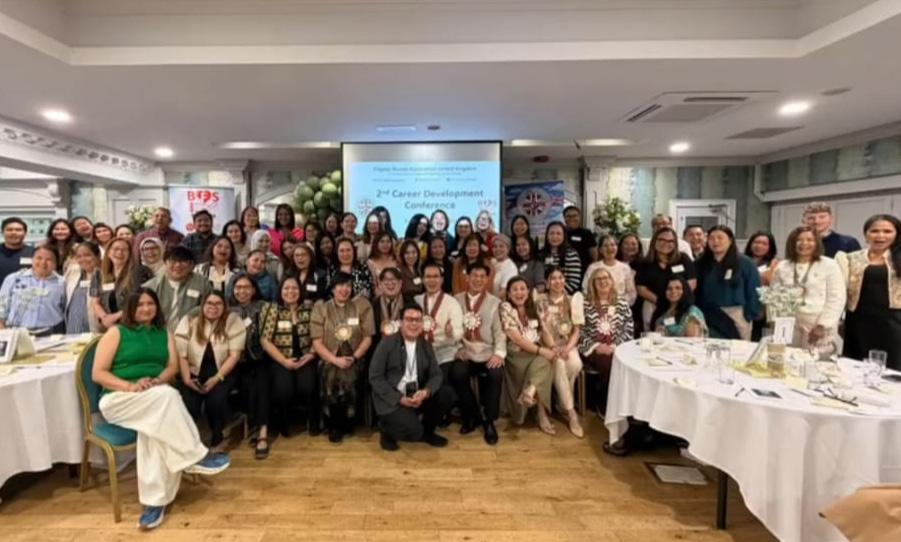
By Feds Murray
Belfast - The Filipino Nurses Association United Kingdom Northern Ireland organisation (FNAUK-NI) and BFS Healthcare Ltd healthcare agency held a hugely successful 2nd Career Development Conference on 6 June 2026 at the Balmoral Hotel in Belfast, Northern Ireland. The theme of the event: 'Inspiring Futures at the 2nd Career Development ConferenceNorthern Ireland, UK' resonated clearly on the topics presented and discussed.
From the meticulous planning and preparation behind the event to the insightful presentations delivered by the distinguished speakers, the conference has truly provided a meaningful platform
for learning, professional growth, leadership development, and career advancement among healthcare professionals.
The keynote speakers whose expertise, knowledge, and inspiring messages empowered attendees to pursue excellence in nursing practice and leadership were given special appreciation. Keynote addresses were delivered by Arniel Hernando, Vice President of FNAUK and Lead Advanced Nurse Practitioner - Betsi Cadwaldr University Health Board Bangor North Wales, Jose Ariel Lanada, President of FNAUK and Divisional Lead for Practice, Development, and Education - Oxfordshire University Hospitals, Katrina Apostol, co-lead nurse of the Ethnically
Diverse Network in the Royal College of Nursing NI and Advanced Nurse Practitioner - District NursingBelfast Trust NI, Hazelline Buenaventura, FNAUK-NI Regional Director and Anaesthetic Nurse SpecialistSoutheastern Trust NI, Jincy Labade - Northern Trust NI, and Jonah Atos, FNAUK-NI Regional Director and International Nurse Coordinator - Western Trust NI. Their dedication to sharing invaluable insights, in-depth knowledge, and extraordinary professional experiences have made a lasting impact on all the participants. Their resilience and courage were the common threads of priceless values that were deeply woven in the fabrics of their keynote addresses and messages.
One of the Regional Directors of FNAUK-NI, Rosa Cueto, opened the conference with a heartfelt prayer.
The Country Director of FNAUK-NI and Director of BFS Healthcare Ltd, Roy Galit, welcomed every participant warmly with his sincere welcome remarks. A partnership address was meaningfully delivered by Emily Ambat, a director of BFS Healthcare Ltd.
The oathtaking of the officers of FNAUK-NI was conducted by President Jose Ariel Lanada who also set the tone of the event with his opening remarks.
The Deputy Chief Nursing Officer of Northern Ireland, Mary Frances McManus, graced the conference with her presence and message with a powerful and positive influence.
Northern Ireland Practice and Education Council for Nursing and Midwifery's Senior Professional Officer, Cathy McCusker, delivered an excellent presentation and motivated the audience.
Feds Murray and Janette Ancog superbly hosted the conference with wit and professionalism. The duo also shared key insights with energy and wisdom to inspire and empower their listeners.
The organizers, speakers, sponsors, and volunteers truly deserve a commendation on the excellent
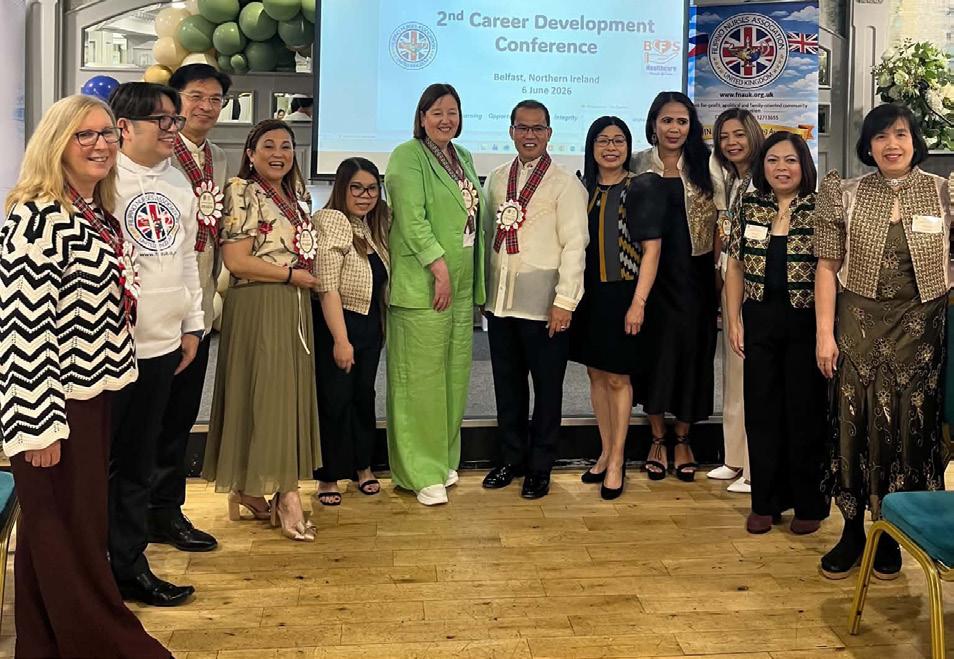
staging of such an empowering and inspiring event. The participating healthcare professionals showed enthusiasm, interest, and engagement throughout the conference.
Jonah Atos led a group game, Human Bingo, which everyone immensely enjoyed. The game provided an important opportunity for networking and casual interaction. It filled the conference room with fun and laughter.
The Q and A segment further empowered the attendees as the panel of speakers addressed their questions and concerns.
The sponsors of the conference - Trulife, Prestige, and SMDC, were acknowledged with gratitude and appreciation for their utmost generosity.
The technical execution of a seamless flow of the programme was made possible by Zandrine Zingapan and Macky Lorenzo. Marjorie Galit and Grace Batacan-Hermoso showed their smiling faces and hospitality at reception. Rosendo Soriano monitored the smooth implementation of the conference.
The hallmark of such a massively successful event continues to inspire Filipino and other internationallytrained nurses and healthcare assistants to strive for greater achievements, embrace lifelong learning, and make significant contributions to the healthcare profession both in the United Kingdom and beyond.
Greater success is wished for FNAUK-NI and BFS Healthcare Ltd as these dependable, dynamic, and unstoppable nursing organisation and healthcare agency lead in providing high-quality nursing professional trainings, encourage conversations and dialogues on relevant issues in nursing - with the changing and challenging healthcare landscape in the UK - and inspire excellence through unique, astute, and strong leadership for many healthcare professionals in Northern Ireland who actively shape futures in the different nursing areas of specialities.
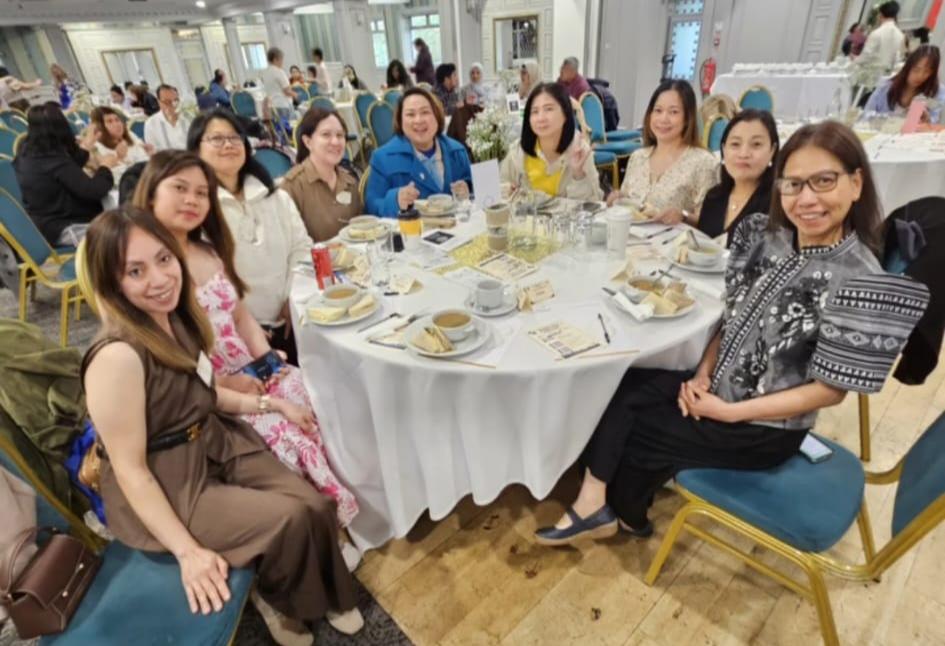
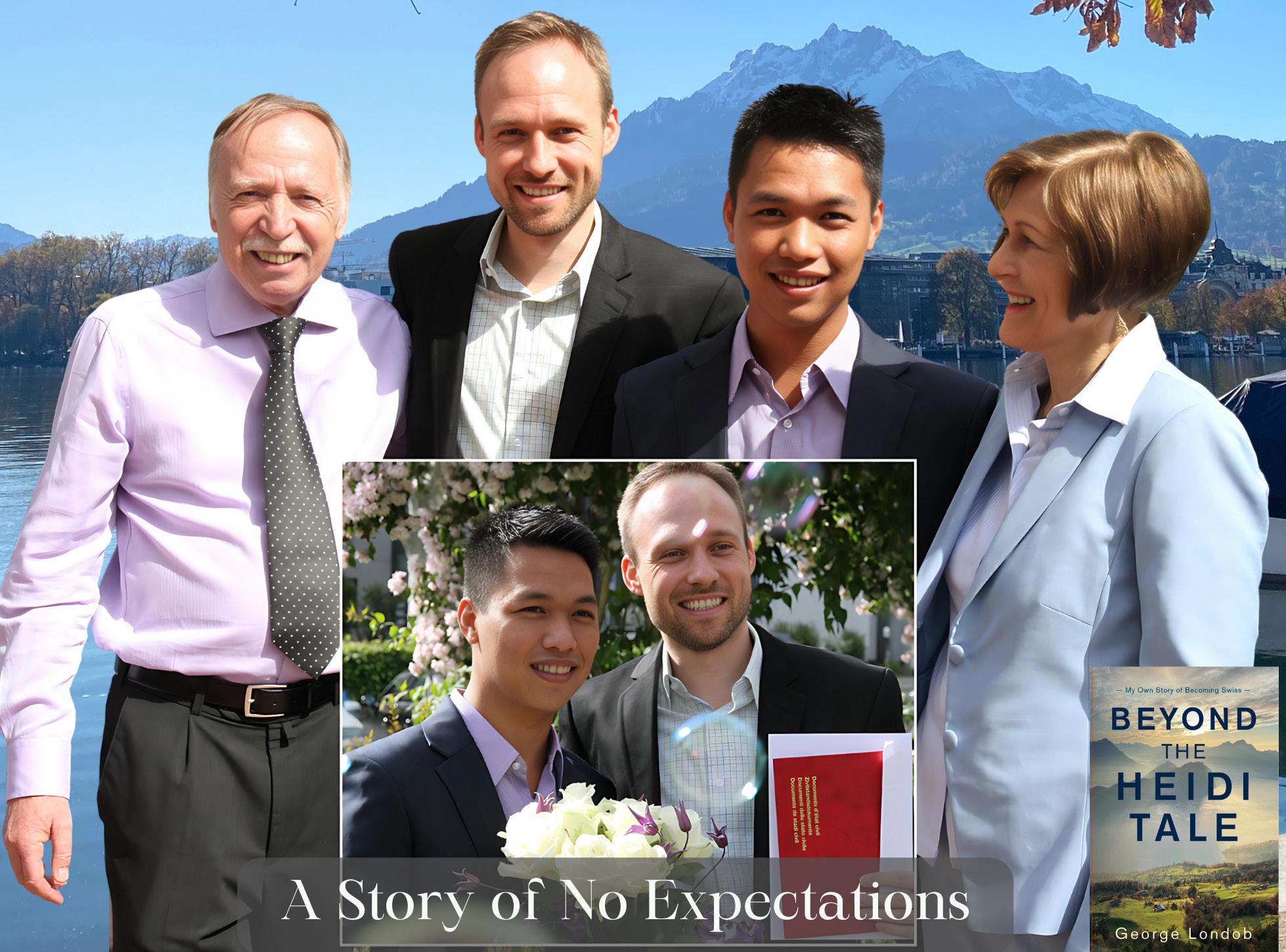
By George Londob
Iam George Londob, originally from Cervantes, Ilocos Sur, and now based in Zurich. I work as a Global Market Research Analyst for an international company in Lucerne.
So how did I end up in Switzerland? In 2011, while living and working in Bangkok, I met my Swiss partner during what was meant to be a temporary exchange period for his master’s studies.
What began as a chance encounter gradually evolved into something more grounded and lasting. He later returned for a project, and we ended up living together for a year.
During that time, we discovered something important— we were different in ways that complemented each other. He doesn’t enjoy cooking but takes pleasure in cleaning and organizing. I love cooking and
don’t mind a bit of chaos, as long as things eventually fall into place. It sounds simple, but those differences created a rhythm that worked for both of us.
Eventually, he proposed, and in 2014, I moved to Switzerland to begin a new chapter of life with him.
LEARNING SWITZERLAND, SLOWLY AND HONESTLY
Adjusting to life in Switzerland was not immediate. One of the biggest shifts for me was the structured nature of social life. In contrast to what I was used to, everything here is planned in advance. Even meeting for coffee often requires scheduling weeks ahead. At first, I missed the ease of spontaneous conversations—the kind that happen naturally when people are simply present and nearby.
Over time, however, I learned to appreciate structure. Planning brought clarity. It made life feel less rushed and more intentional. I was fortunate to live with my in-laws when I first arrived. They did not merely accommodate me— they included me. They welcomed me into their routines, their home, and their community, which made the transition much smoother.
Food became one of the most meaningful bridges between cultures. I learned to cook Swiss dishes with my mother-in-law while introducing Filipino and Thai flavors into their kitchen. Potatoes gradually replaced rice in my daily meals, and I even learned to enjoy dairy despite being lactose intolerant.
Even the weather required a shift in perspective. I adopted a Norwegian saying: There is no bad weather, only bad clothing. At first, the cold felt intimidating, but I adapted over time. Now, I look forward to the changing seasons.
Beyond the Heidi Tale began as a personal project—a way to mark my ten years in Switzerland and preserve the experiences I had gathered along the way. I felt fortunate for what I had lived through, and I wanted to share it. My hope is that whoever reads it—Filipino or not—will find something meaningful about
integrating into a new country and discover Switzerland beyond the stereotypes.
I found time to write during my daily train commute to Lucerne. It was in those quiet, in-between moments that the book slowly took shape.
At its core, the book is about integration—and my belief that it is never a one-way process. While I made efforts to adapt, I was also deeply shaped by the people around me, especially my partner, his family, and the friends I met along the way.
Integration requires openness from both sides. I brought my own culture, resilience, and adaptability. Switzerland gave me structure, opportunity, and a new way of seeing life.
The book also explores the realities of living and working in Switzerland. One of my biggest professional challenges was entering the Swiss job market. Beyond academic qualifications, I had to learn how to present myself differently—how to speak about individual achievements during job interviews rather than the collective style I was used to back home.
It was a shift in mindset. I had to learn how to “sell” my skills without losing authenticity. That process became part of my broader transformation—not just professionally, but personally.
The book also acknowledges the kindness and generosity of Filipino community in Switzerland in welcoming newly arrived kababayans. During my master’s thesis, members of Samahang Filipina, an organization of
Filipinas in Switzerland, supported my research by participating willingly and generously. Their help allowed me to complete my studies on time, but more importantly, it reminded me that I was not alone.
I also found connection with fellow Igorots in the country. Through gatherings, we practiced our traditions and introduced younger generations to their Igorot heritage, even far from the Philippines.
These moments of community profoundly shaped my understanding of belonging. It is not defined solely by geography— it is defined by connection. And that sense of connection within the Filipino community in Switzerland is strong.
After more than a decade in Switzerland and becoming a dual citizen, I no longer see identity as something I must choose between. I carry both Filipino and Swiss identities with me. One does not replace the other; instead, they coexist, shaping how I see the world. This duality has made me both more adaptable and more grounded.
I consider myself fortunate to have experienced all that I have. It was not always a bed of roses, but each challenge and moment of uncertainty has shaped who I am today.
Writing Beyond the Heidi Tale allowed me to make sense of my journey—not as a straight line, but as something richer and more layered than I could have planned. It is a story not just of moving, but of learning how to belong, to adapt, and to grow without losing where I came from.
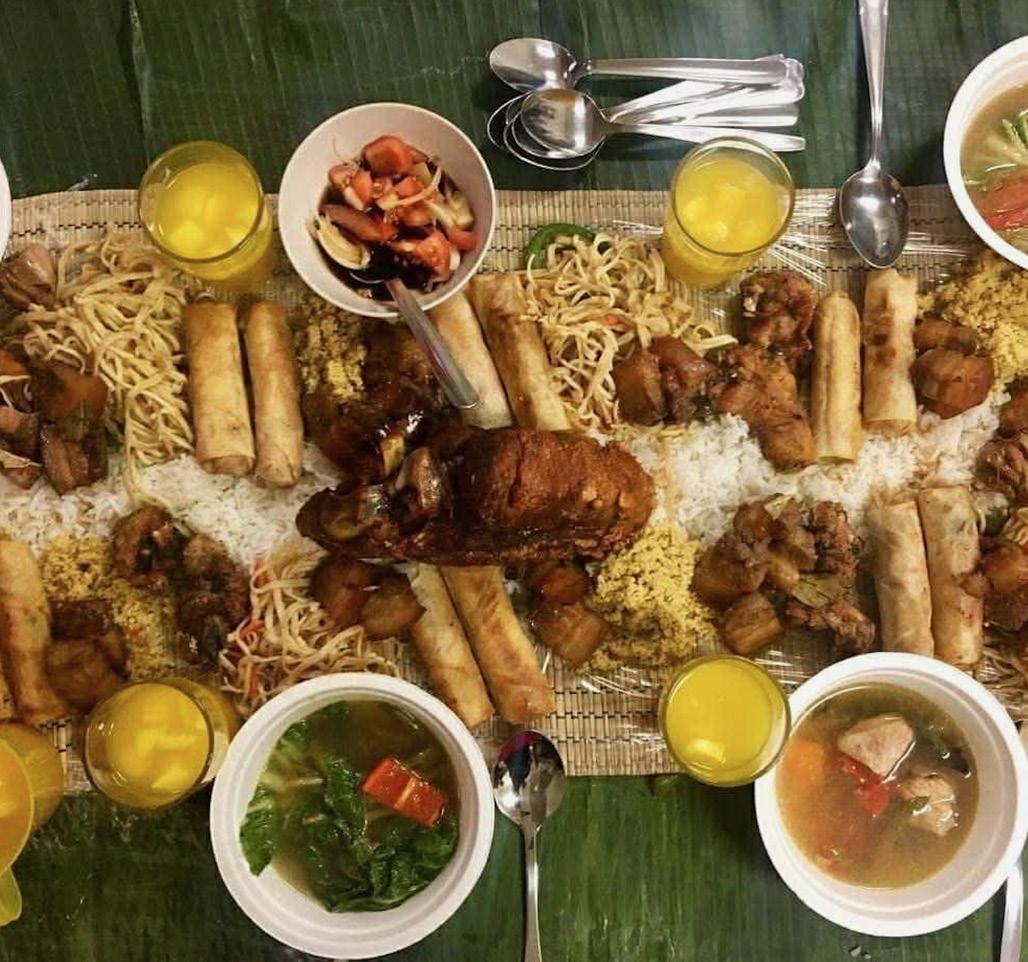
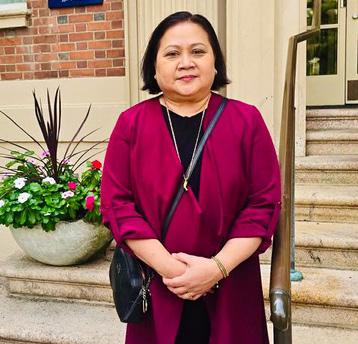
By Mildred Manuel-Vidarsson
In a life shaped by movement, language, and resilience, Marvi Gil has learned to exist between worlds and to build bridges where none existed before.
Born Maria Victoria in Cebu, Philippines, her name was lovingly reimagined by her father into “Marvi,” a fusion that mirrors the layered identity she would later embrace. Today, she carries a name that feels as international as her journey: Filipino at heart, with an unexpected Icelandic twist - “Gil,” meaning gully in Icelandic.
Her story stretches across continents. From Cebu to China, from the Netherlands to a brief American fellowship, Marvi’s early life reads like a map in motion. Yet it is in Iceland - a place she once considered “far and unreachable” - where her life’s most profound transformation has unfolded.
Before Iceland, Marvi’s world revolved around words.
She was a writer first - long before she became a nurse, educator, or advocate. In the Philippines, she
built a name as a poet, fictionist, and journalist. Her career flourished in newsrooms, from columnist to editor at Cebu Daily News, and later as a publication editor under the Inquirer Group, where she led specialty magazines distributed across some of the country’s most prominent communities.
“I think people back home still know me more as a writer,” she reflects. But life has a way of redirecting even the most certain paths.
After completing nursing school and a brief, unhappy attempt at medical studies, Marvi followed a deep personal calling. When her mother fell ill, the pull of family reshaped her trajectory. A conversation with her father introduced an unlikely possibility: nursing opportunities in Iceland.
What once felt distant became inevitable.
Her first days in Iceland were disorienting - not because of the cold, but because of the light.
“I was always tired,” she recalls. Arriving just before summer, she found herself navigating endless
daylight, her body struggling to adjust to a rhythm that refused to dim.
Like many immigrants, she faced the expected challenges: language, culture, and the quiet loneliness of starting over. But for Marvi, language was less an obstacle and more a familiar rite of passage.
“We are Pinoys,” she says with quiet confidence. “By the time we finish university, we are already trilingual.”
Still, belonging takes more than vocabulary. It came, unexpectedly, through humor.
“When I started understanding the jokes….that’s when Iceland began to feel like home.” It had taken two years. Then came a moment in northern Iceland that sealed it: after telling locals she was from the Philippines, they insisted on asking again….“No, where in Iceland are you from?”
It was a small question with a powerful message. She had crossed an invisible threshold.
Today, Marvi has spent over two decades working in Iceland’s psychiatric system, moving through emergency psychiatry, acute care, and forensic rehabilitation. She now serves as Deputy Manager for Forensic Outpatient Services, while also teaching cultural understanding in mental health assessment.
But to describe her work purely in clinical terms would miss its deeper purpose.
Marvi operates in the spaces between cultures - helping foreign nurses integrate, guiding
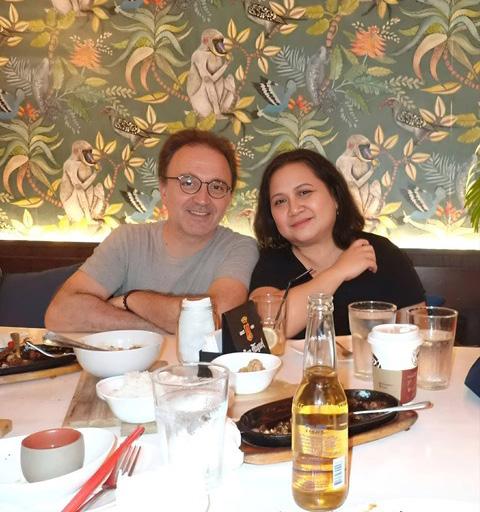
conversations around mental health, and translating not just language, but lived experience.
“It’s not really teaching,” she explains. “It’s sharing knowledge across cultures.”
Her influence extends beyond the hospital walls. She is a peer counselor with WOMEN Iceland, contributes to the Nordic Migrant Experts Forum, and co-founded Happy Pinoys. Each role reflects her commitment to immigrant communities navigating unfamiliar systems.
Perhaps her most innovative work is also her most human.
In late 2024, as part of a Yale fellowship, Marvi founded Eldhús Reykjavík or Kitchen Reykjavík, a project that reimagines how mental health support can be delivered.
Here, therapy doesn’t happen in sterile rooms. It happens in kitchens.
Participants gather to prepare meals together while discussing real-life challenges: navigating Iceland’s healthcare system, raising children in a new culture, or coping with isolation. Experts such as psychologists, teachers, and social workers join not as distant authorities, but as part of the shared experience.
“The kitchen becomes the treatment environment,” Marvi explains.
In a country where solitude is part of the landscape, this simple act of cooking together creates something
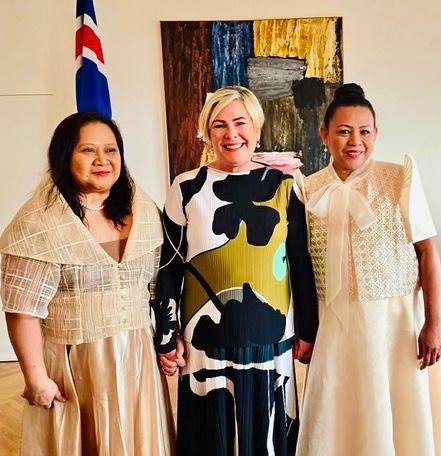
powerful: connection, trust, and access to knowledge that often fails to reach immigrant communities.
Her vision is ambitious - a permanent, open “dropin kitchen” for immigrants, but already the impact is tangible.
Living in Iceland has reshaped Marvi in quieter ways, too. The country’s stark beauty and cultural restraint have softened her instinct to judge and strengthened her ability to endure. In a society that values simplicity over status, she found relief from the pressures often faced by immigrants elsewhere.
“There’s no competition about who has the biggest house or the most expensive bag,” she says. “I love that.”
Instead, Iceland has given her something less visible but more enduring: resilience. “It made it harder to put down.”
Despite her accomplishments, Marvi is reluctant to claim success. “I still feel that I have not accomplished anything of significance,” she says, a statement that reveals less about her achievements and more about her perspective.
Her focus now is on what comes next - not just for herself, but for the generations that follow.
She speaks of a “concrete ceiling” facing immigrants in Iceland: not transparent like glass, but
opaque, limiting not only progress but visibility of what lies beyond.
“We have to break the thinking that immigrants are just workhorses.”
Her goal is to create workshops and events that encourage younger immigrants to aim higher - not just for survival, but for leadership.
It is a long-term vision, one that may take years to fully realize. But Marvi understands that change begins with someone willing to start.
When asked about the impact she hopes to leave, Marvi pauses, not out of uncertainty, but out of awareness.
She knows the scale of what she is trying to shift.
“I want to be the one breaking those barriers,” she says. “So that those who come after are better prepared and can achieve their dreams faster.”
It is a legacy rooted not in recognition, but in access. In clearing paths. In making space. And perhaps, one day, in being remembered simply as an immigrant Icelander who gave something back.
Though she adds, with a smile, winning the lottery wouldn’t hurt.
In the end, Marvi Gil’s story is not about arrival - it is about continuation. A life still unfolding, still building, still bridging.
Between cultures. Between people. Between what is….and what could be.
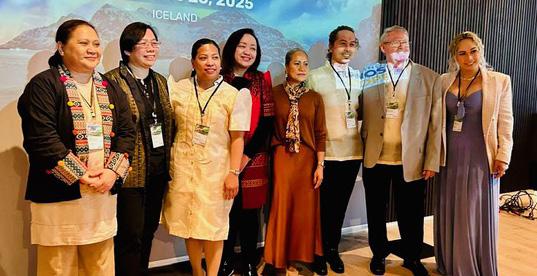
By Aieshah Balmori
Warsaw, Poland – A diverse group of women gathered at the Multicultural Center in Warsaw on March 8, 2026, to mark International Women's Day through a focused and community-driven event organized by the European Network of Filipino Diaspora - Poland (ENFiD-Poland) and the Humanitarian Organization of Pinoys in Europe (HOPE) Foundation. The event marked the first joint initiative of the two organizations for the year and brought together migrant women from the Philippines, Poland, Kenya, Iran, Syria, Colombia, and other communities.
It was a small but meaningful space where every woman felt seen and acknowledged. Each one was recognized for her achievements and for the journey behind them. Stories were shared openly, and conversations flowed easily - creating a sense of connection that felt natural from the start.
The event opened with a simple icebreaker that set the tone for the gathering. Women were invited to respond to a series of statements reflecting the many roles they play in their busy, meaningful lives. Some are eldest daughters who have long taken on responsibilities at home. Others are building lives in a country far from where they were born and raised - supporting families across borders while adapting to a new culture. Many are working in domiciliary care, healthcare, and community sectors. Others are studying, restarting, or forging new career paths.
There are women who are balancing work and family life, helping fellow migrants find their footing, and learning to set boundaries and take care of themselves. Some are holding on to dreams they are still fulfilling with hard work and passion - while others are quietly proud of how far they have come
in life. The range of experiences shared by everyone in the room reflects the challenges met with strength and determination by these women living and working away from their homelands.
As the women openly shared their personal, inspiring stories, it became clear that the magnitude of the load each woman carries with courage and dignity is an honourable achievement. The activity created a moment of recognition - experiences overlapped, and a sense of understanding swept across the room. It allowed participants to see parts of themselves in others - building connections without the need for long introductions.
One of the directors of ENFiD Poland, Anarose Panaga, opened the program by sharing her own story. She spoke about arriving in Poland six years ago and taking on different jobs along the way before finding her niche in teaching. Looking back on her remarkable journey, she described it as something she had to fight for. She underscored, “I didn’t just find my place in Poland; I fought for it - one small, brave ‘yes’ at a time in a wave of a thousand, deflating ‘noes'!" Her story reflects the reality many migrants face - filled with uncertainty, adjustment, and persistence. At the same time, it gives hope by showing that growth is possible even when the path seems unclear from the beginning.
A guest speaker from Kenya, Pascalia H. Nyamita, continued the conversation by sharing her own special and unique journey as a migrant in Poland. She introduced the concept of "Ubuntu" - the idea that our humanity is shaped through others. She spoke about how her work now involves leading workshops centered on this message of connection and shared humanity. Nyamita also shared her experience as a TED Talk speaker - reflecting on how her story
continues to reach wider audiences and inspire others beyond the communities she directly engages with.
"Ubuntu" resonated deeply with Filipino participants who shared the concept of "Kapwa" - a sense of shared identity and belongingness. Despite coming from different cultures, the message felt familiar - women supporting women - understanding each other and finding strength in community. The exchange of these ideas created a moment of cultural connection that strengthened the shared purpose of the gathering.
Both speakers addressed the realities faced by migrant women - including social and structural challenges, as well as experiences of discrimination. These reflections were grounded in lived experience and spoke to the realities many in the room continue to navigate. At the same time, the discussions emphasised on resilience, achievement, and the importance of building supportive communities which allow women to grow and support one another.
The gathering also highlighted cultural exposure through food. The HOPE Foundation offered Filipino
delicacies, including puto, which quickly became a favorite among guests. The soft rice cakes sparked curiosity and conversation - especially around ube and its distinct color and flavor. This small gesture added another layer of connection - allowing participants to engage with Filipino culture in a relaxed and welcoming way.
The event concluded with informal discussionsenabling the attendees to continue tell their authentic stories and strengthen connections. Many stayed beyond the program - took time to speak with one another, shared experiences, and built relationships. The event reinforced the importance of safe and inclusive spaces for migrant women where shared experiences can lead to stronger networks and continued support.
As the first joint initiative of ENFiD Poland and HOPE Foundation for 2026, the event set the tone for future collaborations aimed at supporting and empowering Filipino and migrant communities across Poland.
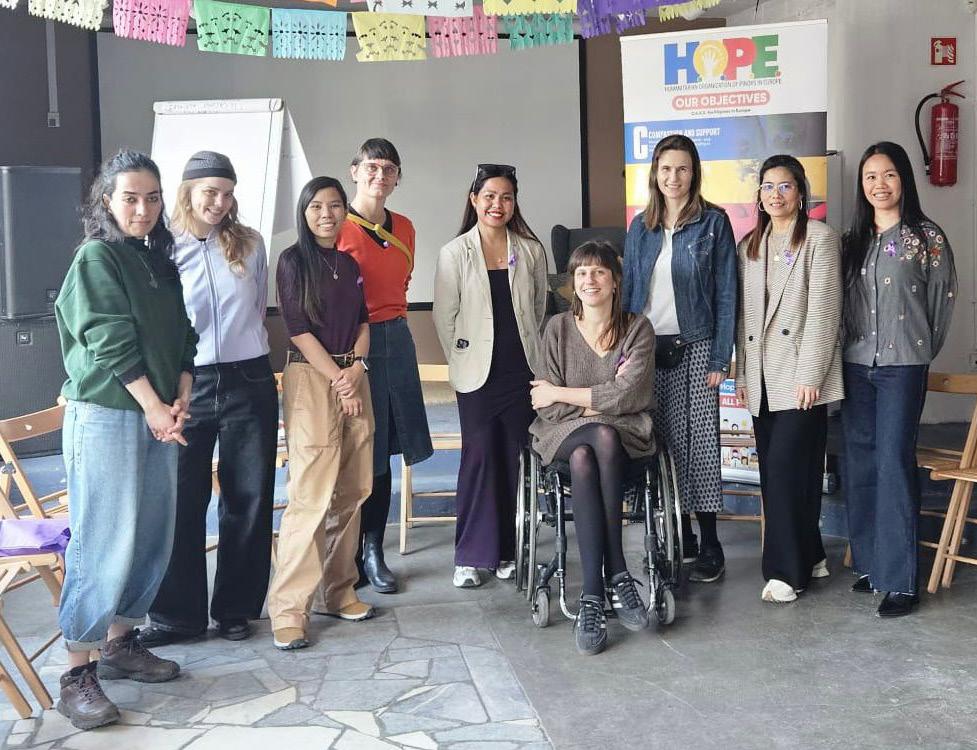

“Cultural
By Louise Hubert-Baterna
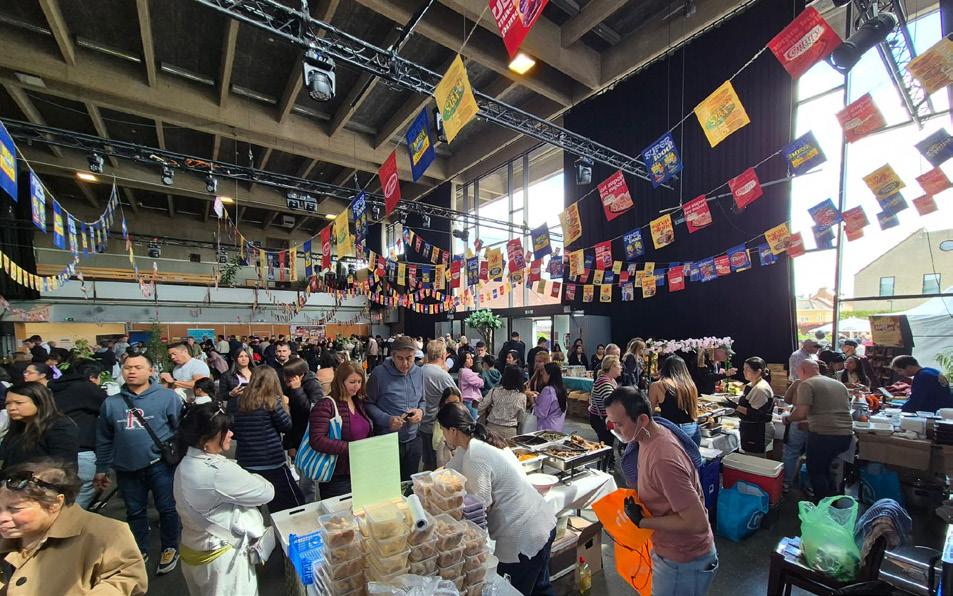
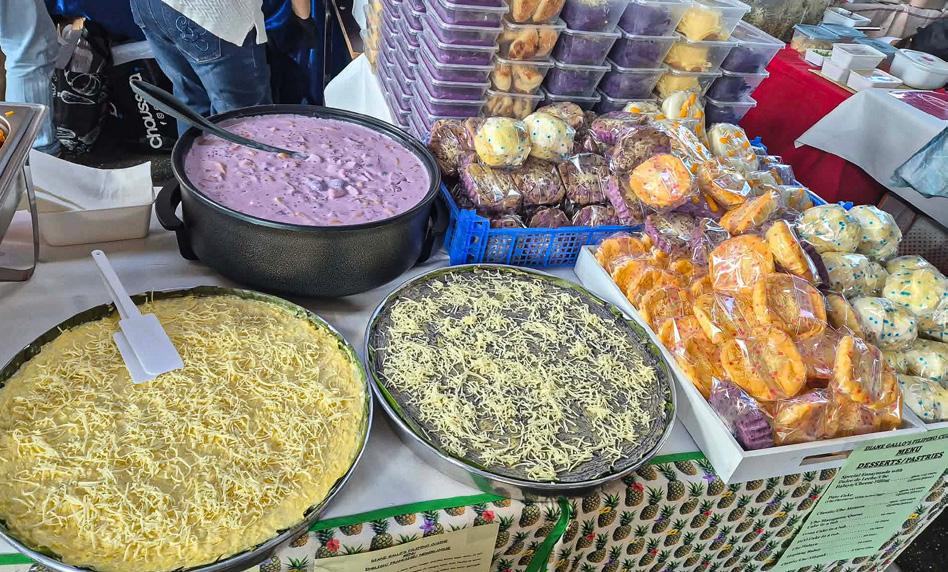
If there is one easy and compelling way to promote the Philippines, it is through food. After all, we often say that the best way to a man’s—or woman’s—heart is through the stomach. Food is one of the borderless elements of culture. It transcends frontiers, often carried in the baggage of memory by those who have left the country. When exported, food also fascinates. With its blend of indigenous, Asian, and colonial influences, Filipino cuisine stirs curiosity among food lovers.
Food is the vehicle, but what it essentially carries is the connection among people from different regions,
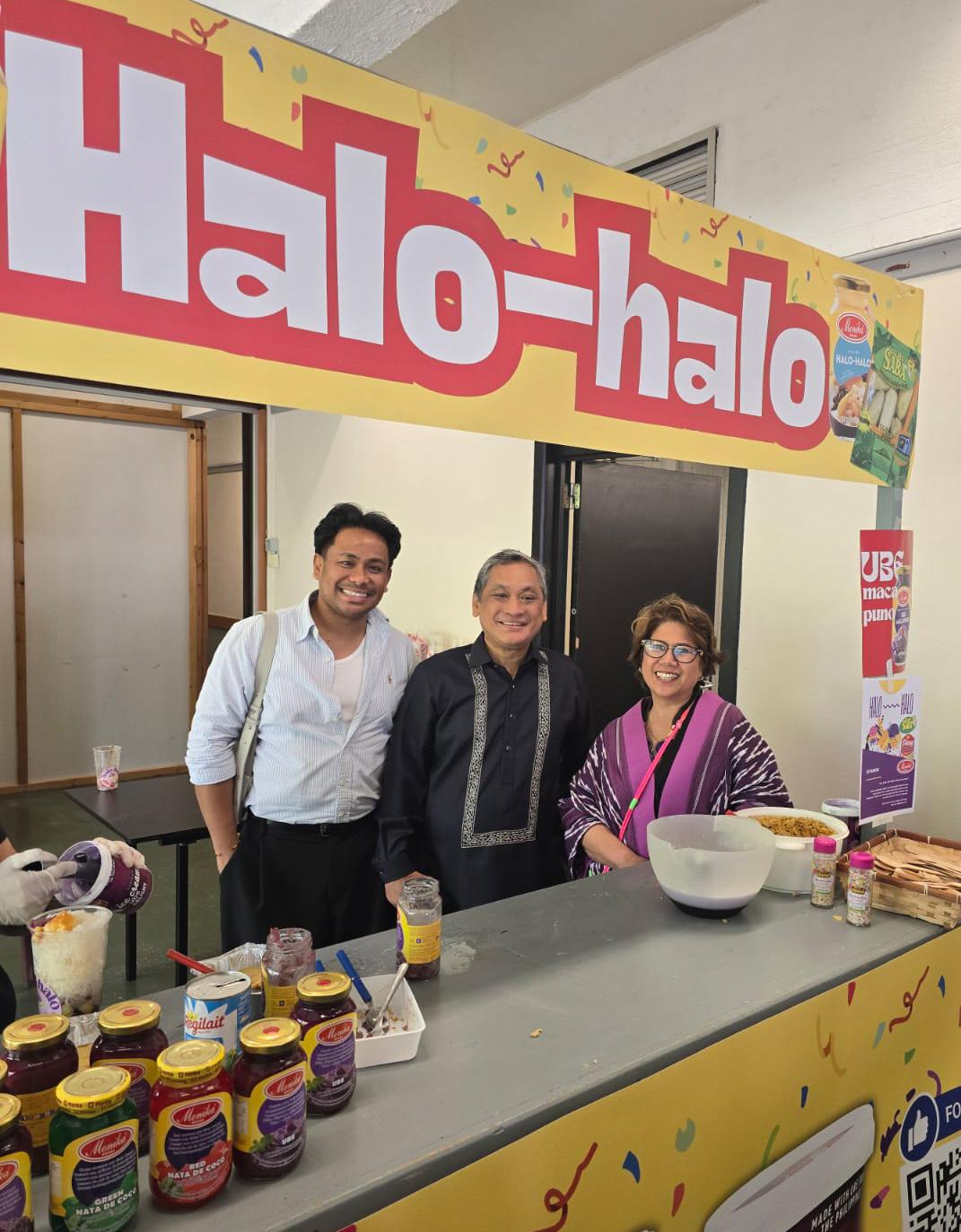
cultures, backgrounds, and generations. For potential tourists, it is a gateway of discovering a country.
Every shared meal becomes an invitation: join me at my table, taste our stories, and experience our way of life—a quiet and effective way of saying, “Come visit my country.” It is cultural diplomacy served on a plate. That is what the Brussels-based Philippine Art and Culture Exchange (PACE), a non-profit organization, seeks to achieve through its annual Philippine Food Festival.
Each year, crowds arrive early, long before opening time, and gradually fill the festival’s now-expanded
grounds, which are provided free of charge by the city in the posh neighborhood of Woluwe-Saint-Pierre. Around 20 food stalls participate annually, offering a wide variety of home-cooked dishes that often represent the regions they come from, while always featuring Filipino favorites such as adobo, palabok, pancit, sisig, barbecue, and even dinuguan—which, surprisingly, many non-Filipinos are eager to try— along with a range of rice-based desserts and the much-awaited halo-halo.
It is a day when Filipinos in the diaspora reconnect with food that reminds them of home while opening the doors for non-Filipinos to discover the country’s rich and diverse cuisine. Visitor statistics show that half of the attendees are non-Filipinos, many of whom return every year.
PACE’s Asher Serrana disclosed that the festival is now in its sixth year, with each edition showing continuous improvement not only in visitor turnout but, more importantly, in the quality of participating exhibitors, though he added that there is still much to learn.
PACE ensures that the festival remains a strong platform for promoting Philippine cuisine and supporting budding entrepreneurs. A month before the event, the organization conducts free hygiene and business workshops to raise awareness about local food sanitation regulations while also teaching the fundamentals of starting a business and identifying possible sources of financial assistance. For example, all stalls are required to provide Dutch and French translations of their menus and ingredients, as well as a list of allergens.
This year’s workshop was especially significant because the hygiene seminar was conducted by AFSCA, Belgium’s food safety authority, while the business workshop was facilitated by Brussels Finance, a key institution that supports and funds micro-enterprises in Brussels.
Nancy Marcelo, who books a stand at the festival every year, shared that her participation has helped enhance not only her cooking skills but also her ability to handle logistical challenges and manage stress effectively. She said she has learned valuable kitchen best practices through the experience.
Each year, her table is piled high with regional specialties from Bicol and Pampanga, which consistently sell out by the end of the day. Her participation has also taught her how to compute costs and pricing, identify which dishes sell well and which do not, and recognize the importance of promoting her business and festival participation through social media.
John Roque of B-Engine, a newly launched search engine and mapping platform for Filipino businesses in Europe, stated in a Facebook post that Filipino entrepreneurs in Belgium may not yet be highly visible in official statistics because they often operate in smaller, community-centered spaces—salons, restaurants, and neighborhood shops scattered quietly across the country. He added that although official numbers are still unavailable, the networks of these entrepreneurs, most of whom are women, are alive and active, “woven through social media groups, circles of friends, and cultural events like the Philippine Food Festival itself.”
“In these spaces, entrepreneurship becomes more than business. It becomes a way of building community, preserving identity, and carving out a sense of belonging far from home.”
Equally important is the role these festivals play in passing on culture to second-generation Filipinos. Adrien VJ is one of them and takes pride in promoting Philippine coffee from his Filipina mother’s hometown through a stand featuring coffee, chocolate, and salabat tea.
“Beyond showcasing the richness of Philippine cuisine and culture, and supporting Filipino entrepreneurs, it is a powerful gathering place for the whole community, particularly a way to inspire younger generations to reconnect with and keep our parents’ traditions alive,” he said.
Like many children who grew up in a biracial household, Adrien believes that these moments and spaces are essential in helping them preserve a connection to their roots. He also shared that this year’s Philippine Food Festival in Brussels once again confirmed its status as a must-attend event in Belgium. “It’s impossible not to feel delighted by such an incredible crowd and enthusiasm,” he said, while observing the long lines in front of the many stands.
The event was endorsed by the Philippine Embassy in Brussels and supported by Pinoy Kitchen, the marketing arm of Filipino products of Heuschen & Schrouff, a major importer in the Netherlands. Pinoy Kitchen carries its own brand of all-time favourites like hotdog and siopao but also Mama Sita, Fisher Farms, Monika, Golden Saba, Lucky Me,Argentina and many more, and has succeeded in bringing Filipino products into the mainstream marketplace. The Philippine Food Festival also featured a pop-up photo and art exhibit in collaboration with the Belikha Artists Group, as well as an arnis demonstration by PTK Brussels, much-welcomed additions to this year’s edition last April 19.
By Ralph Chan
For anyone attempting to cook Filipino and Asian dishes, the search for the right ingredients can be a familiar frustration. In Vienna, that gap is now being filled by Bahay Kubo, an Asian supermarket that has become a reliable source of Filipino staples and specialty products. They don’t just sell products; they embody the spirit of bayanihan. Roots & Wings is happy to feature Bahay Kubo Exotic Supermarket and have a conversation with the founder, Nicko Valino.
QPLEASE INTRODUCE YOURSELF AND BAHAY KUBO EXOTIC SUPERMARKET. HOW HAS YOUR UPBRINGING OR CULTURAL BACKGROUND INFLUENCED YOUR VALUES AS AN ENTREPRENEUR AND SHAPED YOUR BUSINESS?
My name is Nicko Valino, 30 years old, born and raised in Vienna, Austria. I am the founder of the Bahay Kubo Exotic Supermarket, a family-run business in the heart of Vienna. We, Filipinos, are known worldwide for our hard work and our knack for finding solutions, even in difficult situations. The challenge of setting up and running a business has always been very exciting and rewarding for me personally. At the start of this journey, it was important to me to keep the supermarket authentic. That’s why you’ll find typical Filipino motifs at Bahay Kubo – such as jeepneys, tricycles and the world-famous tattoo artist
Whang-Od. The shop is accompanied exclusively by Filipino OPM music and characterized by a genuine willingness to help and support our customers, as we choose to build close relationships. We make a special effort to strike up conversations with new customers, for example, by asking them about how they plan to prepare the products they’ve bought. In our view, food brings people together, which is evident at Bahay Kubo. Conversations often end with gratitude for the sale of certain products. Sometimes recipes are exchanged with customers who’d like to learn more about Filipino cuisine.
WHAT INSPIRED YOUR FAMILY TO OPEN A FILIPINO SUPERMARKET IN AUSTRIA, AND WHAT CHALLENGES DID YOU ENCOUNTER AS MIGRANT ENTREPRENEURS?
We wanted to open a shop that both reflects culture and connects with people. When it came to finding a name for our shop, “Bahay Kubo” immediately sprang to mind. In the Philippines, Bahay Kubo often symbolize a sense of community and fond memories. Starting a business with my family, creating shared memories and building something together is a blessing that I don’t take for granted. Personally, I am delighted that we have the opportunity to represent Filipino culture in Vienna in so many different ways. For us, it is about more than just selling products; it
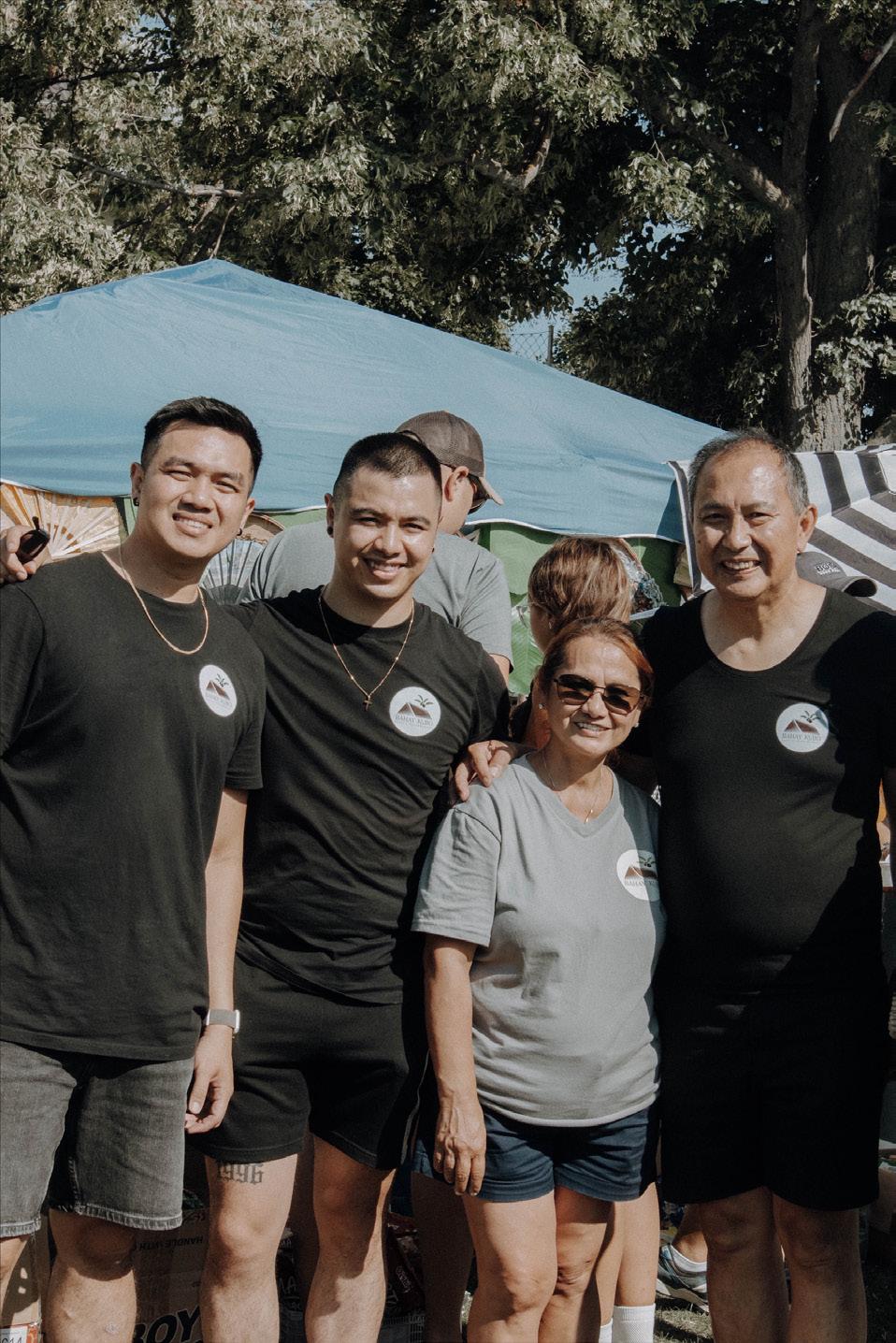
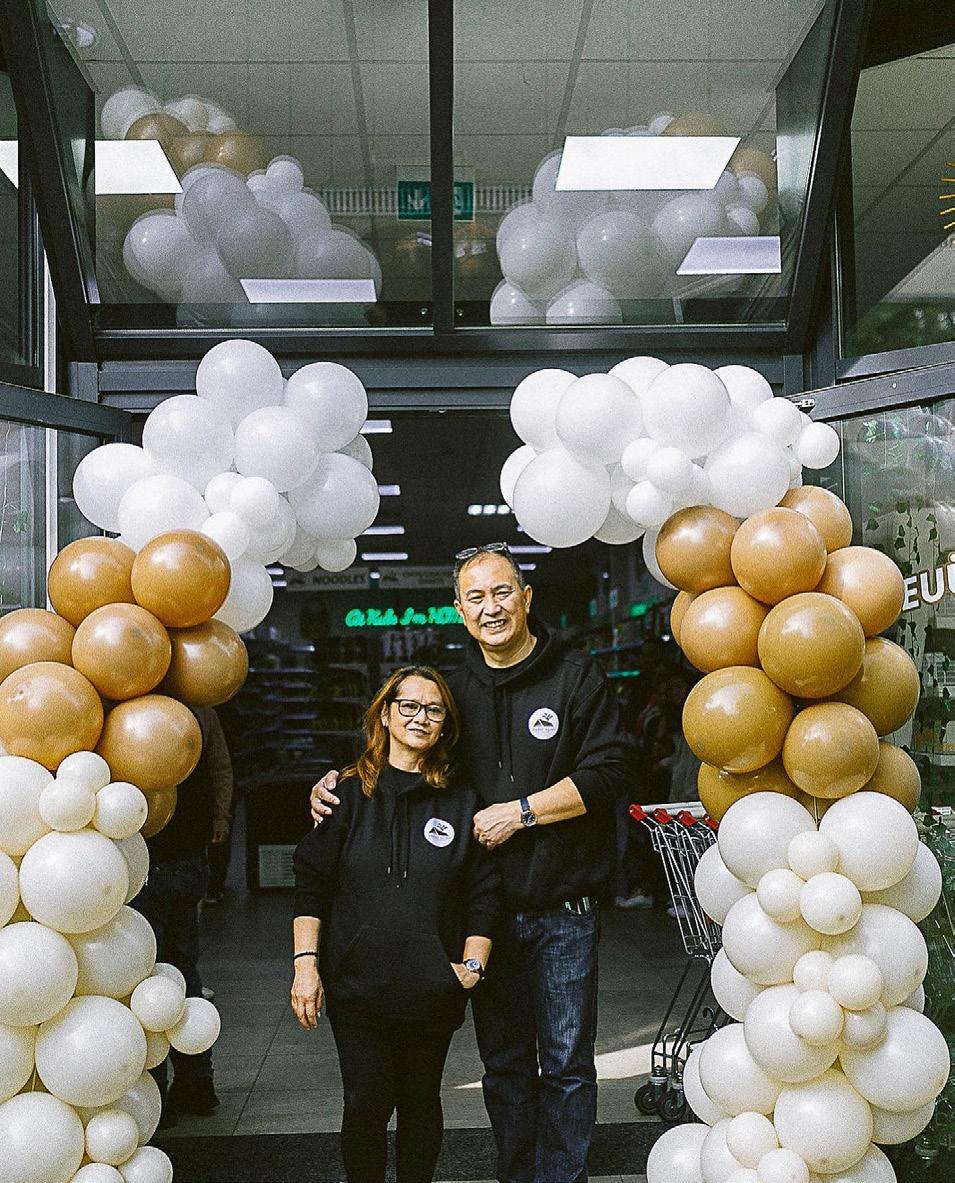
is about building a sense of community and giving a little piece of home. Bahay Kubo Exotic Supermarket not only benefit Filipinos but should also convey a sense of warmth and familiar flavors to all people, and even outside the country. At the start, many questions arose. Numerous formal aspects – such as legislation, contracts and bureaucratic paperwork – were difficult but necessary to overcome. However, we did not view these as challenges; instead, we tackled the process step by step and thus paved the way for ourselves. We are grateful that much of the experience required to build a business was gained from the ground up. These were valuable learning processes that have enriched not only me, but also my family. Every detail of the business, from the till system to the import of goods, was a new learning experience. It was a true ‘learning by doing’ project.
One of the hallmarks of Bahay Kubo is our commitment to conveying a sense of warmth to the community through our hospitality and helpfulness. It’s not just a supermarket, but a place where you can feel at home. For Filipinos who have recently moved to Vienna, we do our best to help them settle in. From job hunting to education, we put them in touch with the right contacts. So far, we’ve been very successful in connecting the community, for example, by offering a Filipino buffet in the shop at our own events. We also take part in various Filipino sports events, where we support Filipino organizers with our snacks and drinks. In doing so, we aim to give something back to the Filipino community and convey a piece of culture as well as a touch of home. Through our partnership with Western Union and MoneyGram, we have also created the opportunity to transfer money to the Philippines, which is an important part of our business. Furthermore, we offer delivery services specifically tailored to the needs of senior citizens. In the future, we would like to help other Filipinos and work with them to support the community in Vienna and promote its cultural flourishing.
We always keep an eye on the latest trends and consider which products can remain a permanent part of our range. Some products, such as Boy Bawang, Chippy or Calamansi juice, not only evoke memories for our customers – they also carry very personal stories with them. Be it old college stories, a fun evening with their ‘kaibigans’ (friends) or a precious moment with a loved one. The annual tradition of taking part in street festivals such as the ‘Barrio Fiesta’ is something very special too. It allows us to showcase our Filipino products and serve people of all origins and backgrounds. We were able to connect with the community, collaborate with our partners at the annual bazaar organized by the Philippine Embassy in Vienna and sell our popular products there as well.
QWHAT CHANGES HAVE YOU SEEN IN THE FILIPINO COMMUNITY? HOW HAS RUNNING BAHAY KUBO IMPACTED YOU PERSONALLY, AND WHAT GUIDANCE WOULD YOU OFFER ASPIRING YOUNG FILIPINO ENTREPRENEURS IN AUSTRIA?
We plan to find more partners and allow small businesses to grow. We also hope to inspire the next generation of Filipinos to pursue their dreams and goals, and hopefully encourage them to start their own businesses as well. Running a business takes a lot of time and energy. However, you have to tackle these challenges with passion and stay true to your own vision. Personally, it has turned me into a problemsolver. There is no challenge that cannot be solved. My experiences with Bahay Kubo have made me more resilient and have had a positive impact on me as a person. My message to the readers is to believe in yourselves and your team. Pressure is a privilege. Challenges are there to help you become a better person. Love your fellow human beings and always stay true to yourselves. Work hard for your dreams. Every small goal is a step forward. Stay resilient and believe in your dreams. Trust in God in everything you do.
RAW Mags thanks Nicko Valino and Bahay Kubo Exotic Supermarket for the interview.
Instagram: @bahaykubo.vienna
Facebook: Bahay Kubo Exotic Supermarket
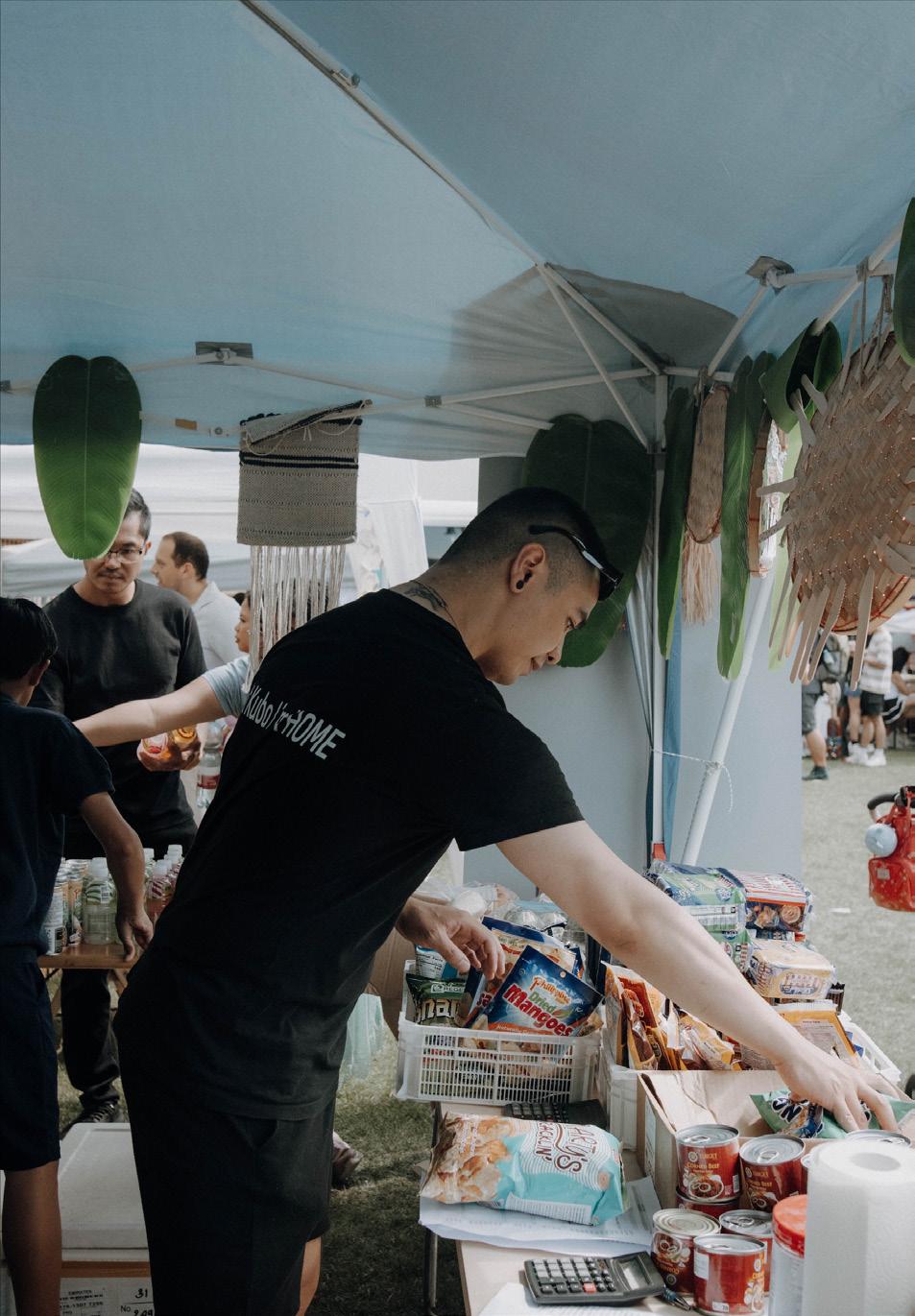
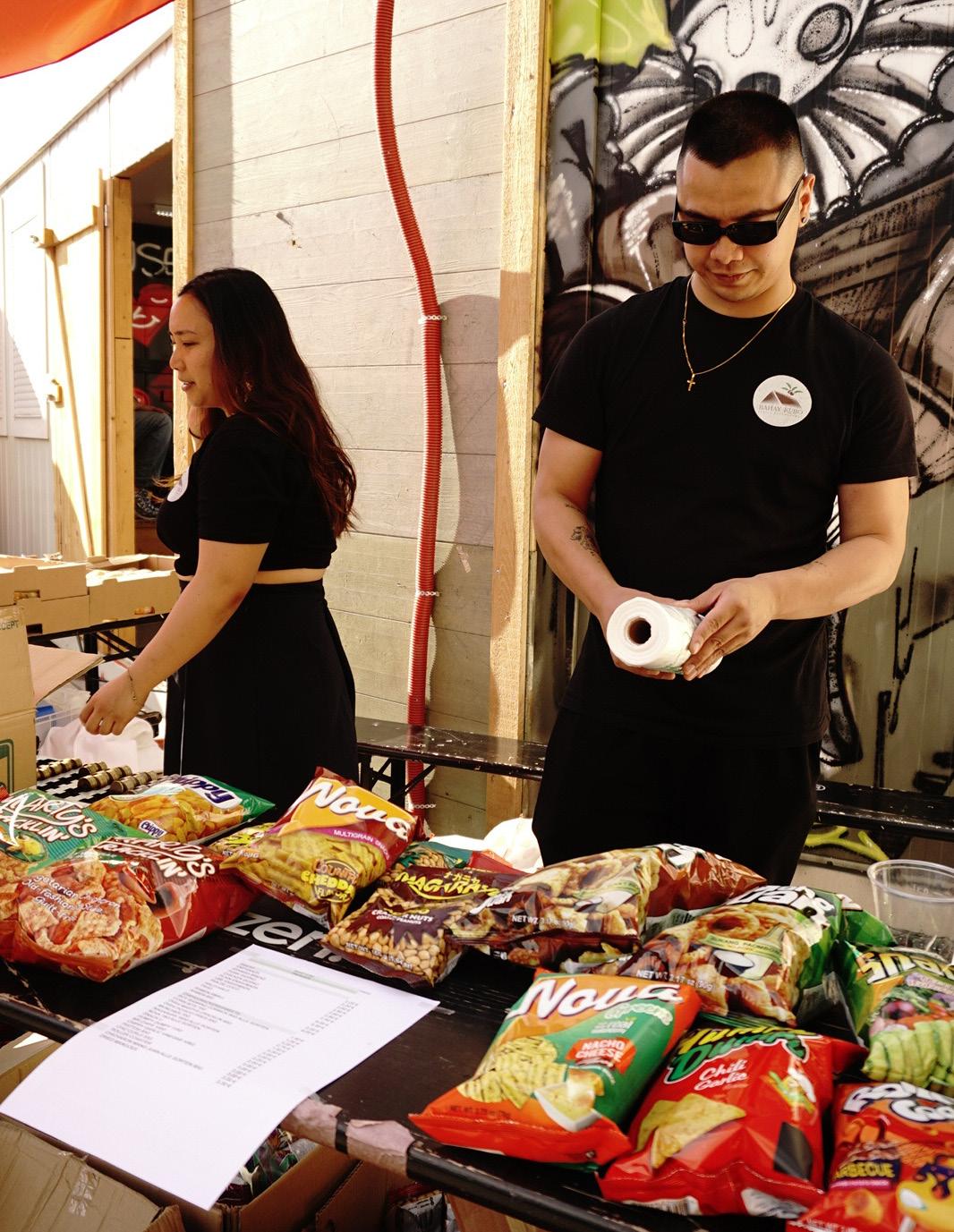
By Hanna Stenbacka Köhler
Hidden on a royal island in the heart of Stockholm, a piece of the Philippines has survived for over two centuries.
In 1565, the Spanish conquistador Miguel López de Legazpi led an expedition that established Spain’s rule over the Philippines. Manila became a key hub in global trade.
More than two centuries later, on the other side of the world, this name would resurface in an unexpected place.
In 1790, King Gustav III granted land on Djurgården to Ignacio María del Coral y Aguirre, Spain’s envoy to Sweden. There, on the island’s green waterfront, del Coral named his estate “Manilla,” after the distant colonial capital. He laid out a park and began constructing buildings, envisioning a grand residence.
But the project was never completed. After Gustav III’s assassination in 1792, del Coral lost his patron and left Sweden. The unfinished estate gradually fell into decline and was later divided into three parts: Upper Manilla, Lower Manilla, and nearby Manhem. Much of the current built environment dates from later 19th-century development, including the main stone building that still stands today.
The name, however, endured. It remains visible in local street names such as Manillavägen and Nedre Manilla, just a short walk from Skansen.
In the early 19th century, educator Pär Aron Borg established pioneering education for deaf and hearingimpaired children, which later became associated with the Manilla site. Manillaskolan would go on to play a central role in Swedish special education for more than two centuries.
In 2013, the school relocated, and a new institution moved into the historic setting.
Campus Manilla opened in 2013 as an independent, publicly funded school with admission based on queue rather than selection. Demand is extremely high, with
families often registering years in advance. Today, around 500 students attend from primary through secondary level.
The school gained widespread attention when Princess Estelle, daughter of Crown Princess Victoria and Prince Daniel, enrolled in 2018, followed by her brother, Prince Oscar. Since then, it has attracted families from across Stockholm’s public, business, and cultural life. One parent reportedly described the school community as representing “a significant portion of Sweden’s GDP.”
The school has also faced scrutiny. In 2023, the Swedish Schools Inspectorate raised concerns about grading practices.
Today, Campus Manilla has no direct connection to Filipino culture or community. Yet the name remains - a quiet link between Stockholm and Manila, stretching across more than two centuries.
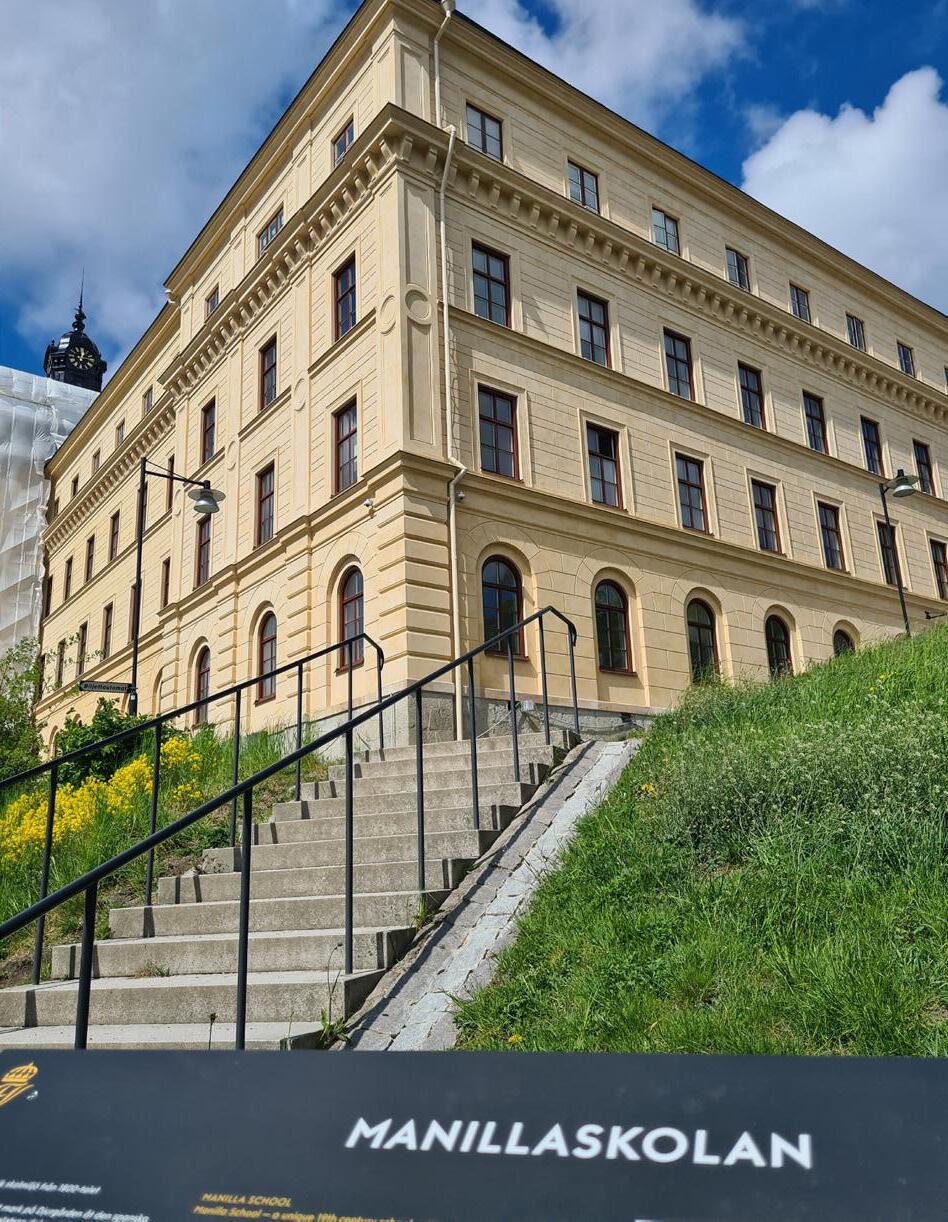
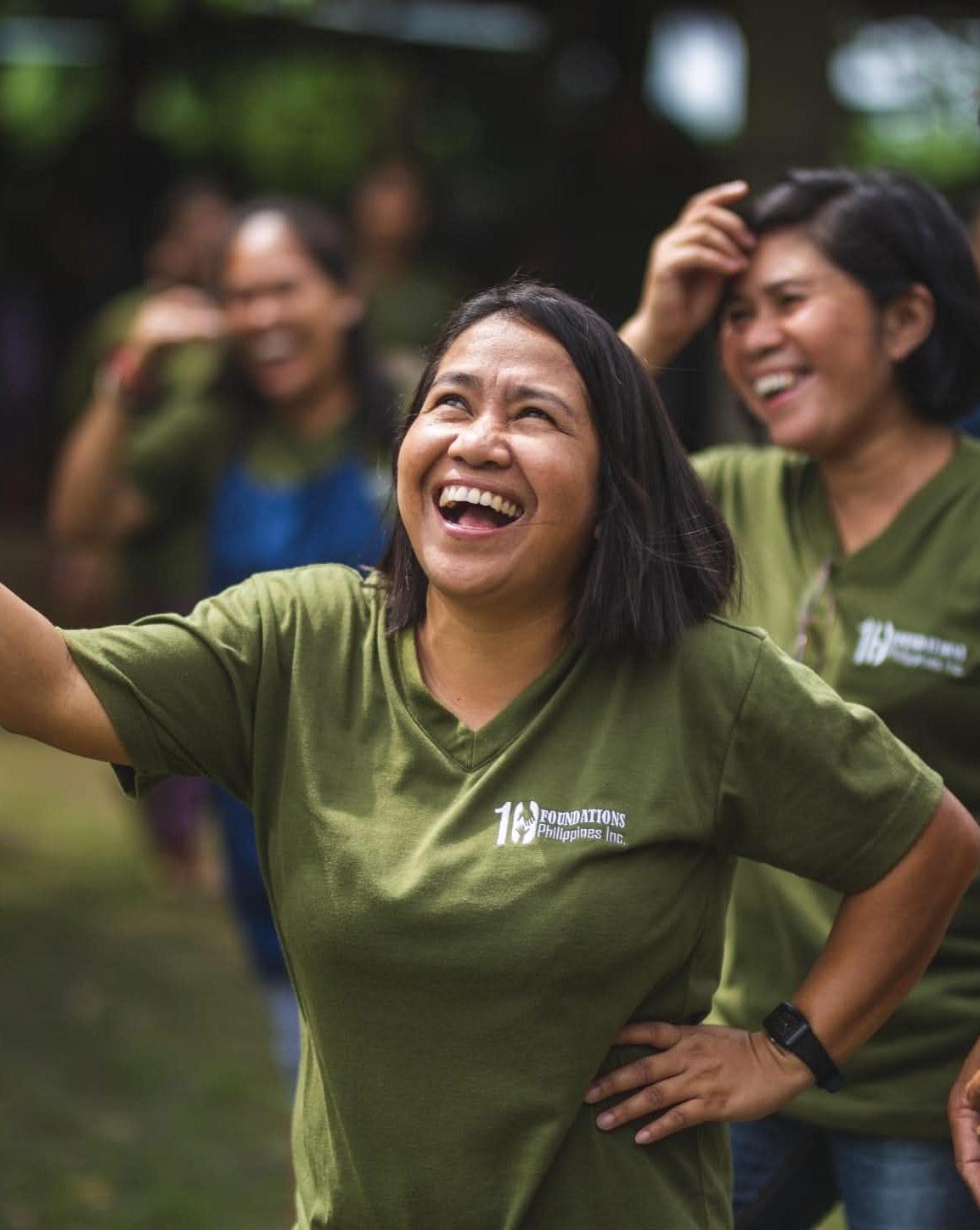
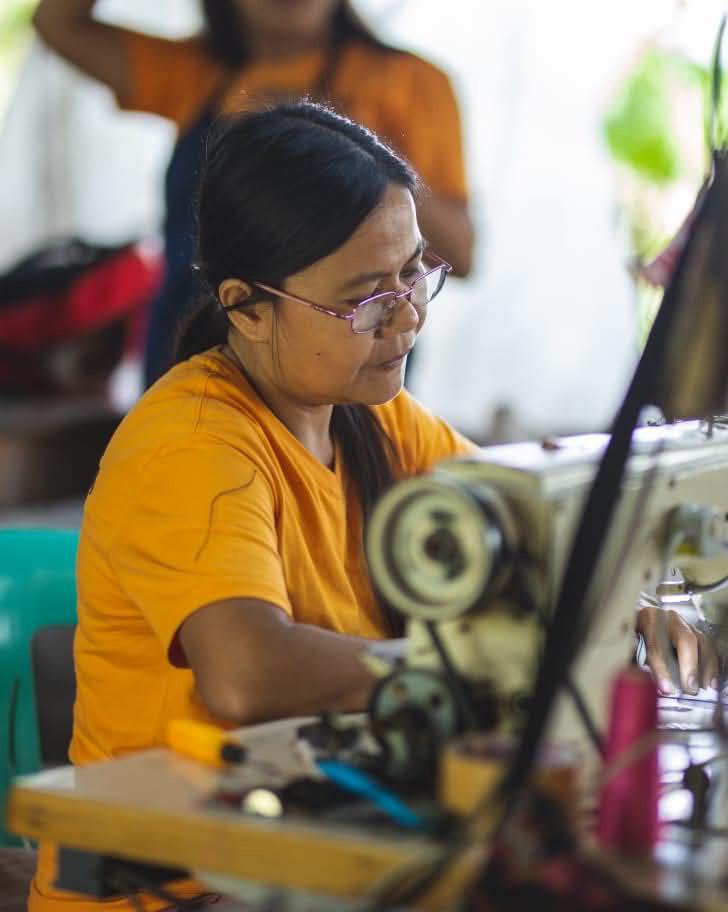
By Feds Murray
Ten Foundations is a non-profit organisation which gives hope and opportunity to struggling citizens in Balayan, Batangas, Philippines. It is a purpose-driven charity organisation founded by Ian Campbell in 2012 in Belfast, Northern Ireland, United Kingdom. Campbell aims to empower women living in extreme poverty in the Philippines by helping them break free from the relentless cycle of poverty - where limited access to education, stable income, and health care prevents families from improving their circumstances across generations.
Through the livelihood programme, women are taught the skills and given the tools to transform their own lives - by being able to design and produce extremely high-quality school bags/backpacks to
be sold throughout the UK and Ireland instore and online.
The knock-on effect of this is that they are now able to provide their families with food, healthcare, home, and improvements. Most importantly, they can send their children to school every day - this aids the escape from the extreme poverty cycle that they have been born into.
The organisation currently employs over 70 paid staff in the Philippines which consist of research and development, designers, bag makers, marketing, quality control, and a management team to oversee the project.
Ten Foundations in Belfast manages the sales process for the bags in two stores, as well as in school roadshow. Along with selling the bags, Ten Foundations stores
sell homeware, furniture, jewellery, adult and children's clothes, and vintage clothes.
One big core value of Ten Foundations in Belfast is the fact that none of the staff are paid - they are all volunteers with the same goal to help people in need. Ten Foundations staff are comprised of volunteers from schools looking for experience and to give back, working people who help out in their spare time, and retirees.
According to Ian Campbell, "At Ten Foundations, we want to give people the gift of hope. Hope for the future, for themselves, and their families - long term hopes and dreams through empowering women and giving them the tools and skills to improve their own lives. This will allow them to be able to improve their homes, have decent food every day, medical insurance, and most of all, to be able to send their kids to school every day. Helping the people we work with in the Philippines, I see people, women especially, who have never had a chance in their lives. Many are over 40 years of age that have had a miserable life of struggle and hardship. For the first time in their lives they can see a light at the end of a long dark tunnelfor the first time in their lives, there is someone there who cares about them."
Being the founder of Ten Foundations, a deep desire to help the poor and disadvantaged is what drives Ian Campbell to fulfill his dream through determination, persistence, and hard work every single day of his life. Despite all the challenges and setbacks he has to face, Ian Campbell stated, "My dream, my vision is to have many livelihood centres all over the Philippines, helping and training many more people to lift themselves and their families out of the dreadful cycle of extreme poverty they have been born into.
We have a great template in place that can easily be replicated anywhere in the Philippines, we know how to recruit those in need, how to train them, we know how to make high quality school bags/backpacks and how to sell them in the UK and Ireland. We have, in the Philippines, a dedicated and resourceful team ready and willing to help Ten Foundations in the next phase of its expansion.
Our school bags/backpacks have become a huge part of the Ten Foundations' story. I want to build a brand that is synonymous with fair trade, with integrity, sustainability, and honesty. A brand that people can trust, I want that brand to be the first choice of school kids everywhere for their school bag, as well as being the first choice someone has for a backpack. I want people to know that they really can
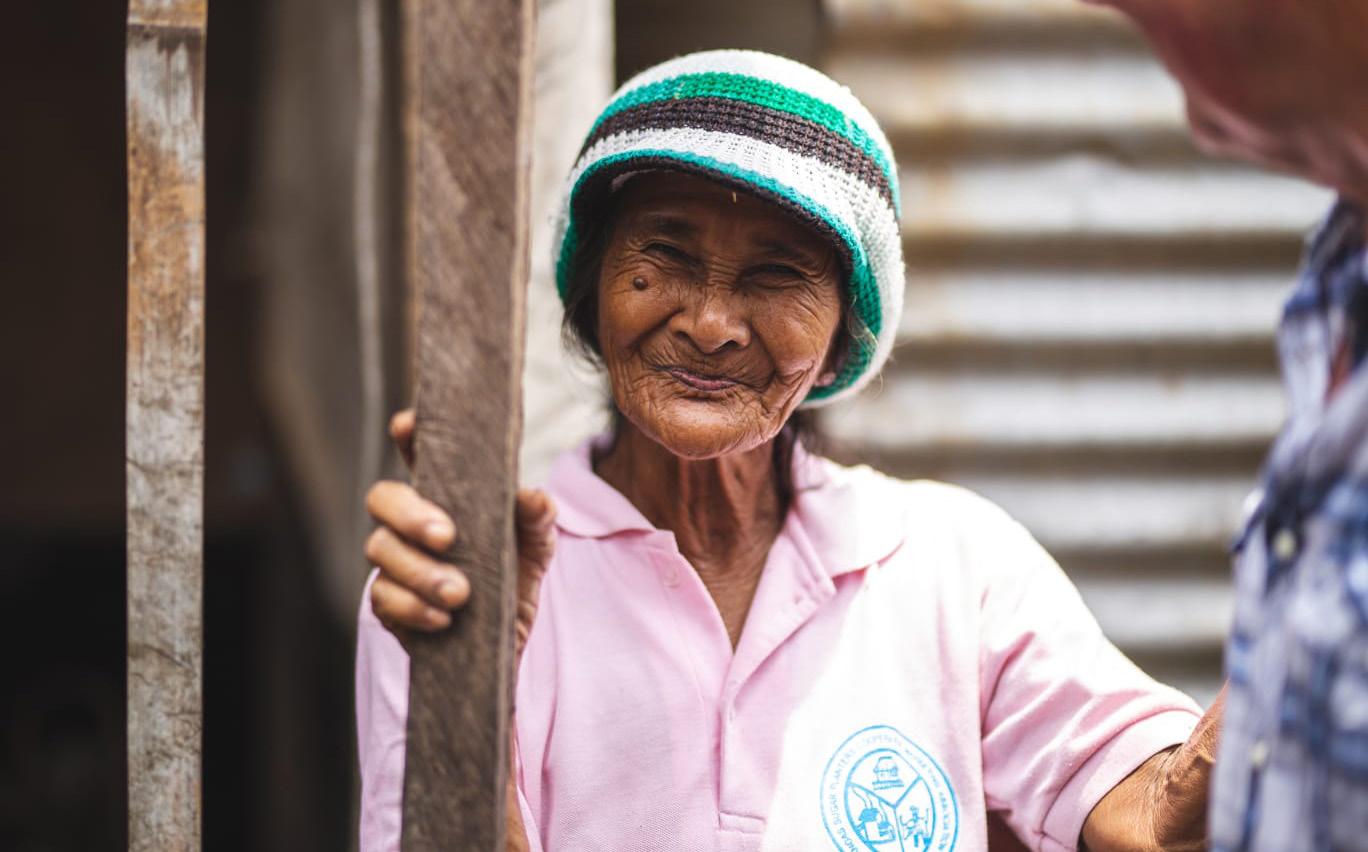
change lives through a simple thing such as a school bag/backpack. I want to give hope and make dreams come true!"
Balayan Village is truly a healing place located in the heart of Batangas.
Ian Campbell shared, "Nestled among sugar cane and surrounded by the sounds of village life - it isn't just a place to stay- it's a place to recover, rest, and reconnect with yourself and the world around you.
A couple of years ago, a young boy arrived in Balayan Village in the middle of the night. He had walked miles to reach us, lost and in pain, both physically and emotionally. Arlene (the manager) and the team welcomed him with love, food, and gentle understanding. The next afternoon, as I stood beside Arlene, watching some children play basketball, one boy ran past me, full of life smiling, and leapt high to score a basket. I looked at Arlene in disbelief and asked her, 'Is that the boy from last night?' She smiled and said, 'Yes, Papa Ian, it's a healing place.' That moment stayed with me ever since. It captures what 'Bayanihan' village truly is - a community where compassion heals, where kindness restores, and where visitors often say they feel a calm energy the moment they arrive.
Each of our native bamboo 'kubos' is hand- built by local craftsmen and cared for by the mothers in our livelihood program. When you stay here, you're not only giving yourself the gift of rest, you're also helping others rebuild their lives through TEN Foundations.
Come and experience the peace that lives here. Come for the sunshine, stay for the healing."
Every support reaches further than any supporter would know. Every donation, big or small, helps Ten Foundations to continue bridging worlds through education, opportunity, and hope. Any support goes directly to the heart of its mission: "Empowering families in the Philippines through our livelihood and scholarship programmes, funded by people like you."
Any donation to Ten Foundations can be made on its website (Tenfoundations.org). Your support will change lives.
Each bag carries "pag-asa" (hope), "lakas" (strength), and "aruga" (care) - ea ch bag is handcrafted with purpose by skilled artisans in the Philippines. Indeed,
they are symbols of the hope, strength, and care shared between the women who make them and the children and adults who carry them.
The school bags and backpacks are proudly made by real women with real stories - making them a Filipina-made brand - created by strong and hardworking mothers in Balayan, Batangas. This brand is built on skill, identity, and pride. It's a purchase with a purpose - this makes a real impact.
A sincere and poignant invitation from Ten Foundations to Filipinos within all Filipino communities in the United Kingdom, Ireland, and other countries in Europe is to feel proud to carry the bags which represent pride, identity, heritage, progress, and empowerment.
The bags are available for purchase online on the Ten Foundations website (Tenfoundations.org), as well as from the two Ten Foundations stores in Belfast - Castle Court store's address: Castle Court Shopping Centre, Royal Avenue, Belfast, UK and Lisburn Road store's address: 355 Lisburn Road, Belfast, UK BT9 7EP.
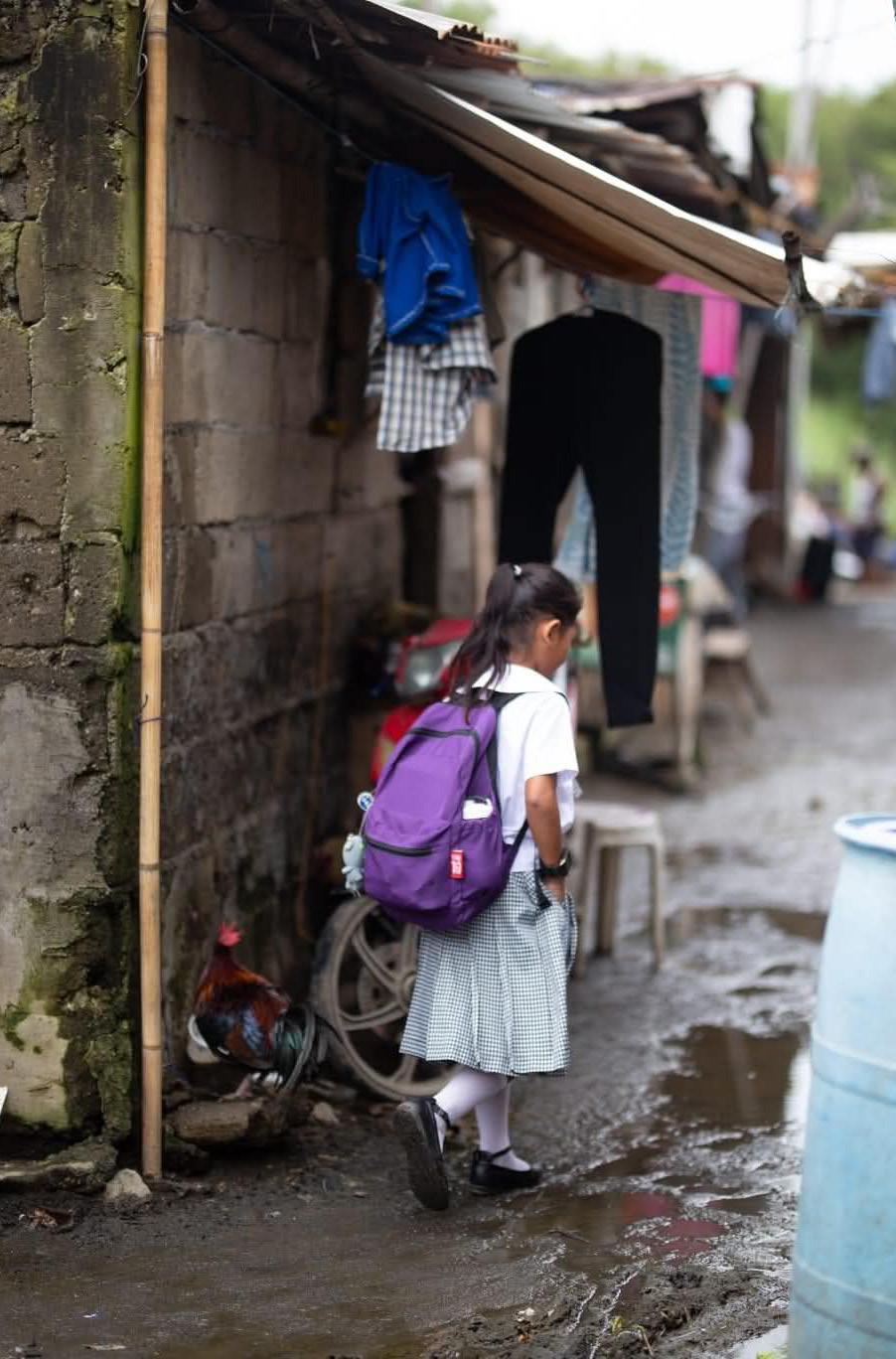
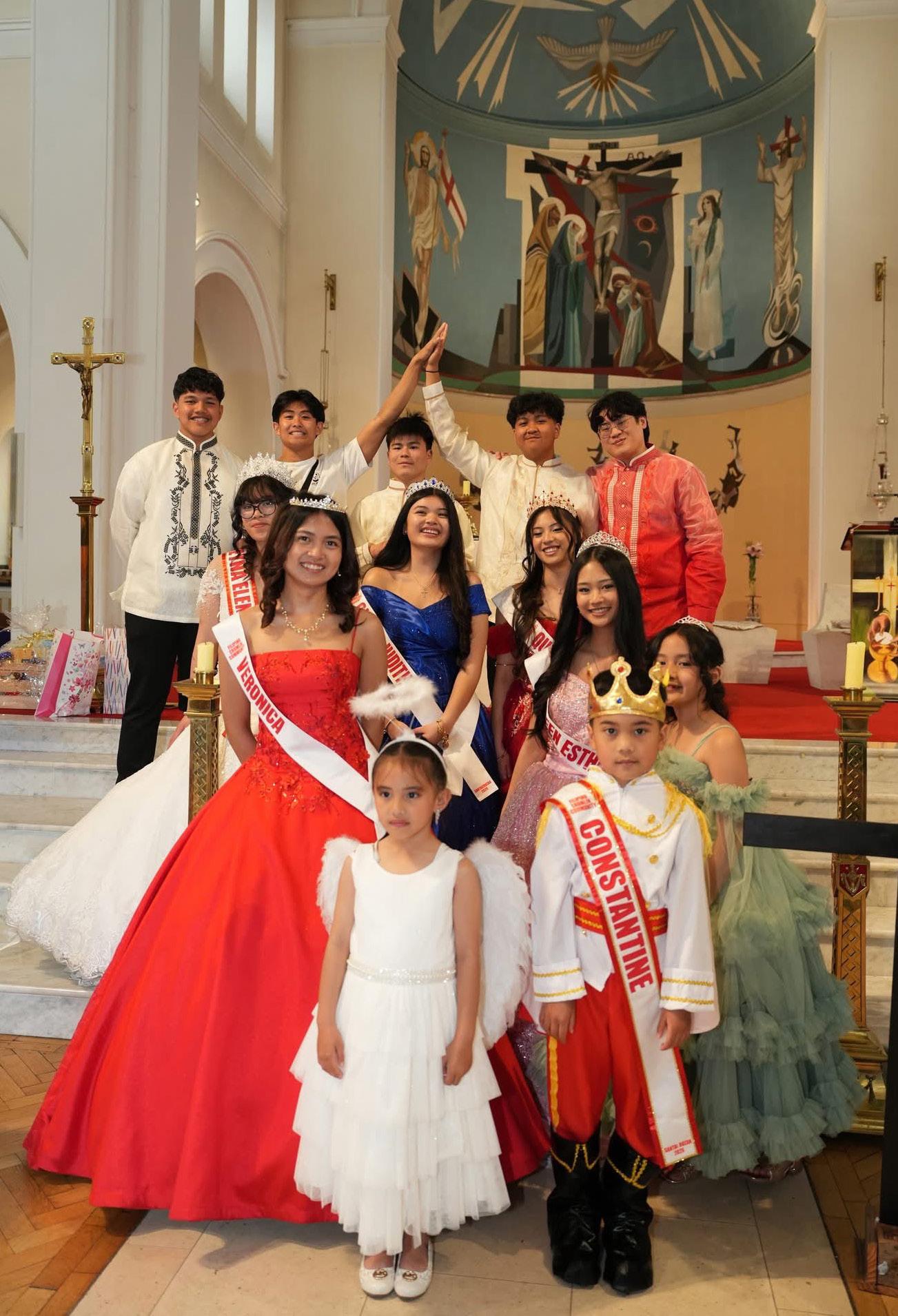
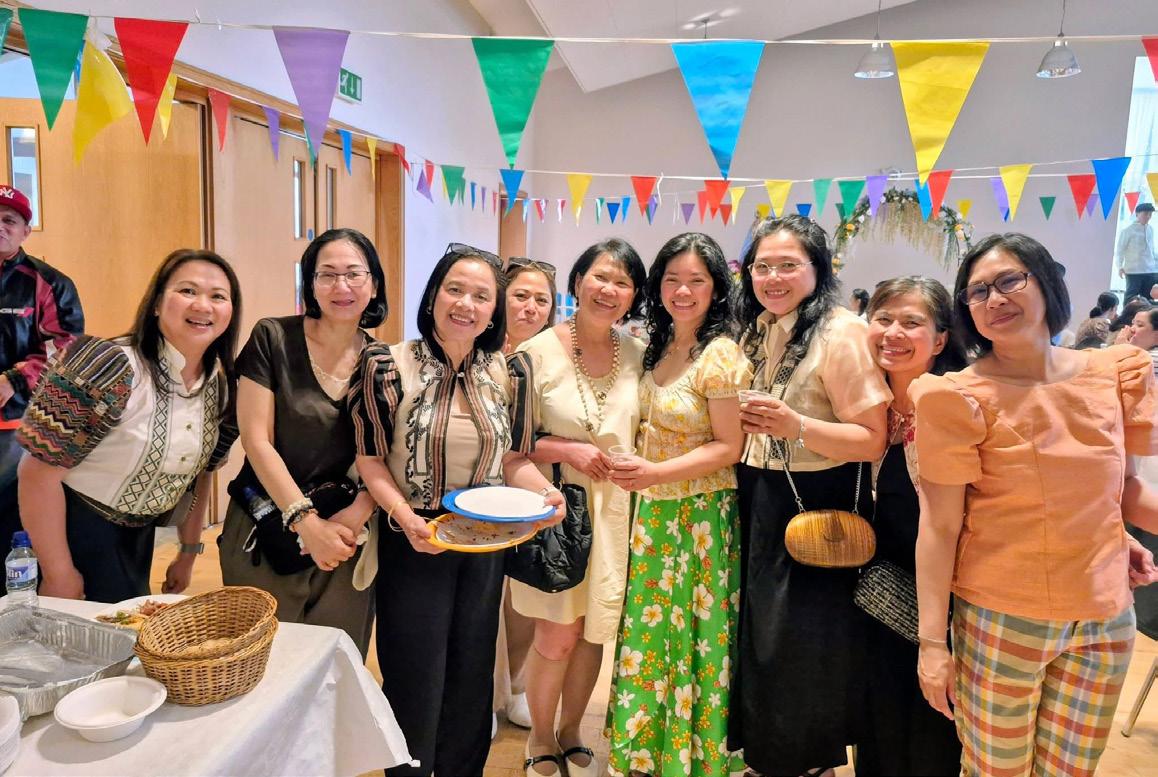
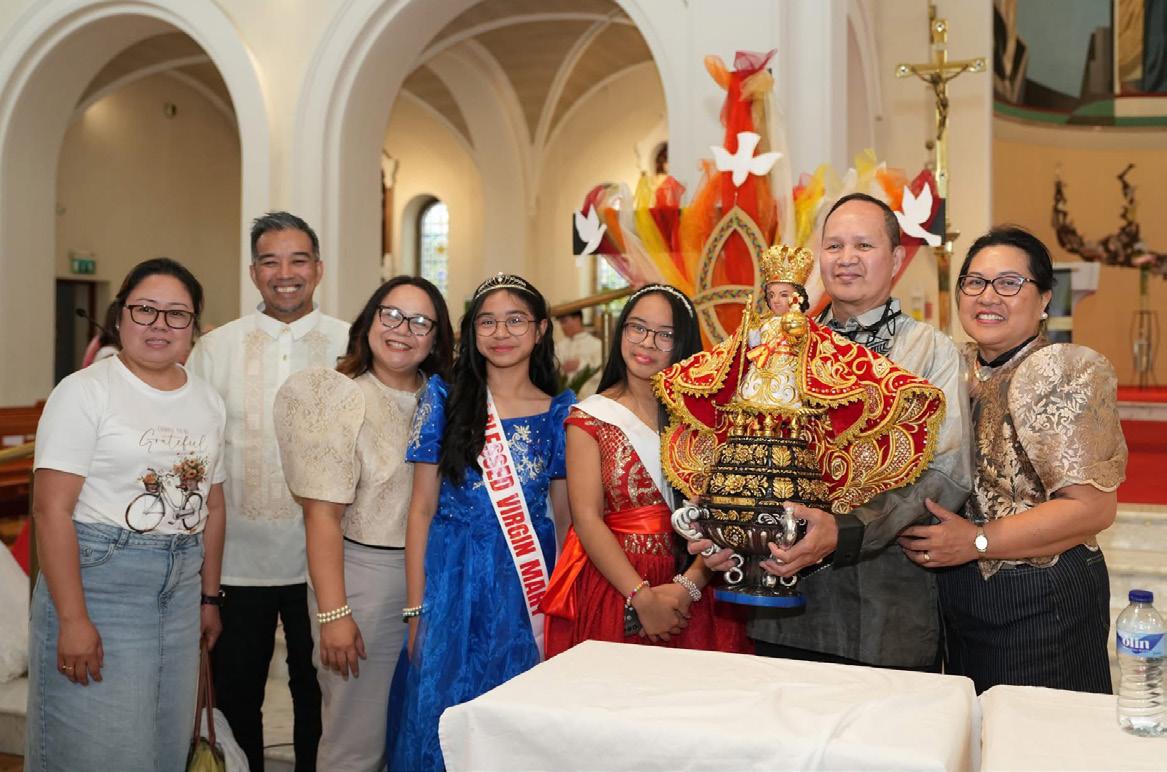
By Hilda Arenas
A beautiful tradition, a vibrant community, and a celebration that continues to bring generations together.
Established in 2010 by the Filipino Community Crumlin, the Annual Santacruzan has become a much-loved tradition celebrating faith, culture, heritage and community spirit through its colourful outdoor procession and gathering of Filipino families and friends.
Sharing moments from this year’s celebration — honouring Filipino traditions and showcasing the beauty of community, culture and togetherness here in Ireland.
And as always, the celebration ended the Filipino way — with a joyful salo-salo, where stories were shared, friendships strengthened, and everyone gathered around food and community.
Congratulations and thank you to the Filipino Community Crumlin for continuing this beautiful tradition.
Mabuhay ang kulturang Pilipino!
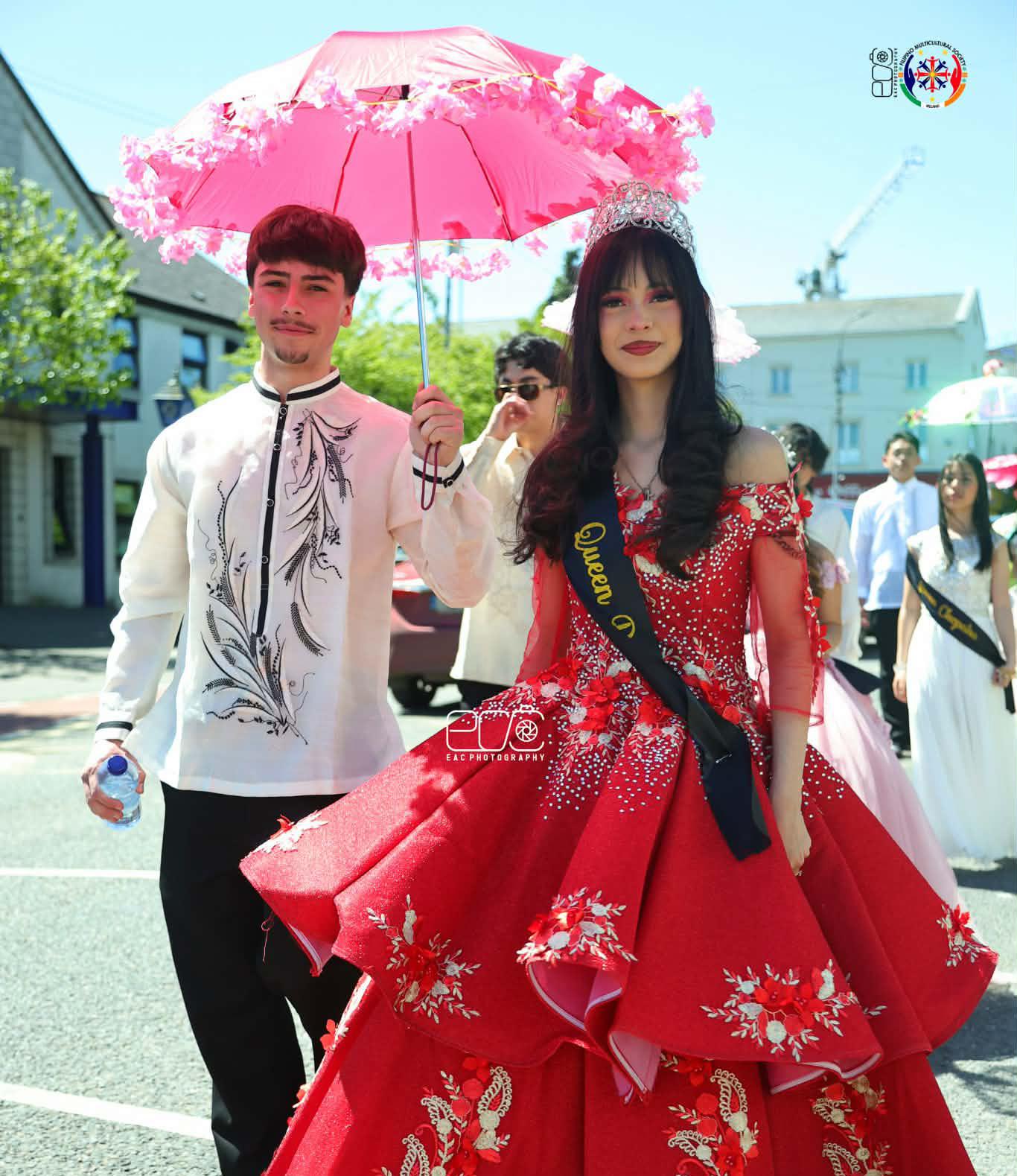
By Hilda Arenas
In 2014, Ms Glenda Panes made history in Newbridge, Co. Kildare by bringing the beloved Filipino tradition of the Santacruzan to Newbridge for the very first time, marking the birth of a cultural and religious tradition that continues to thrive in Newbridge and beyond.
A vision. A tradition. A legacy.
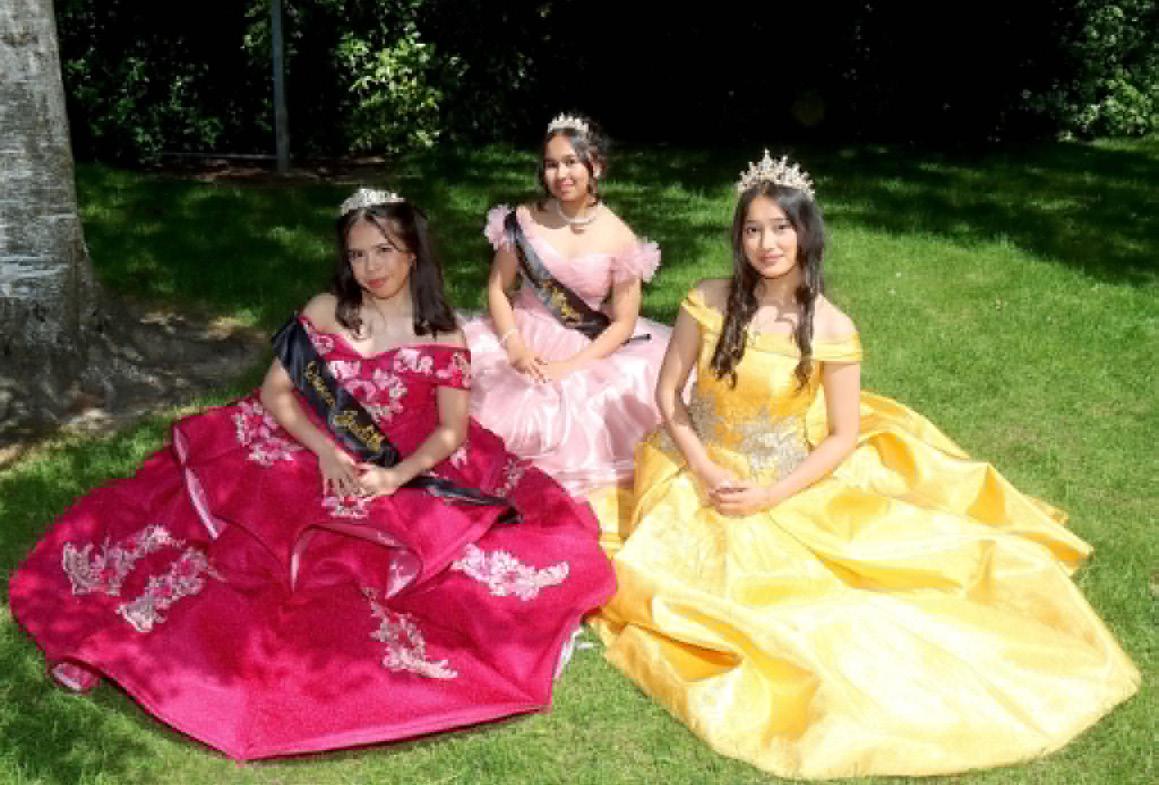
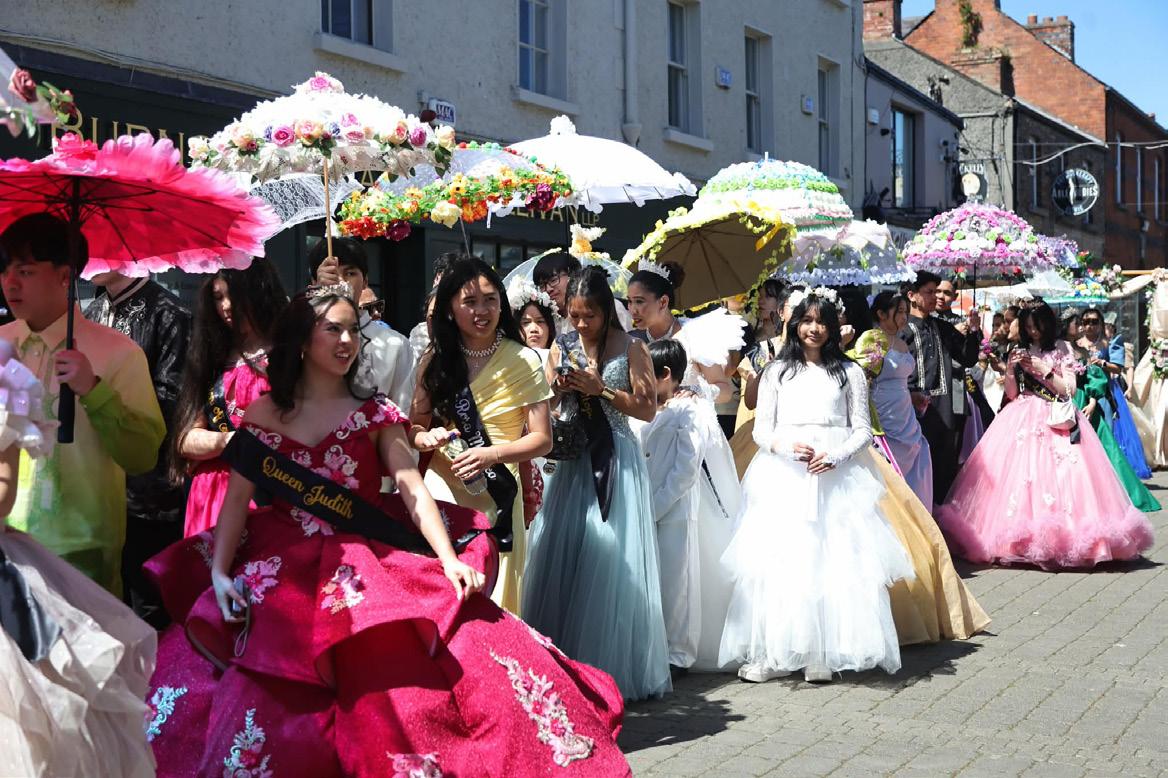
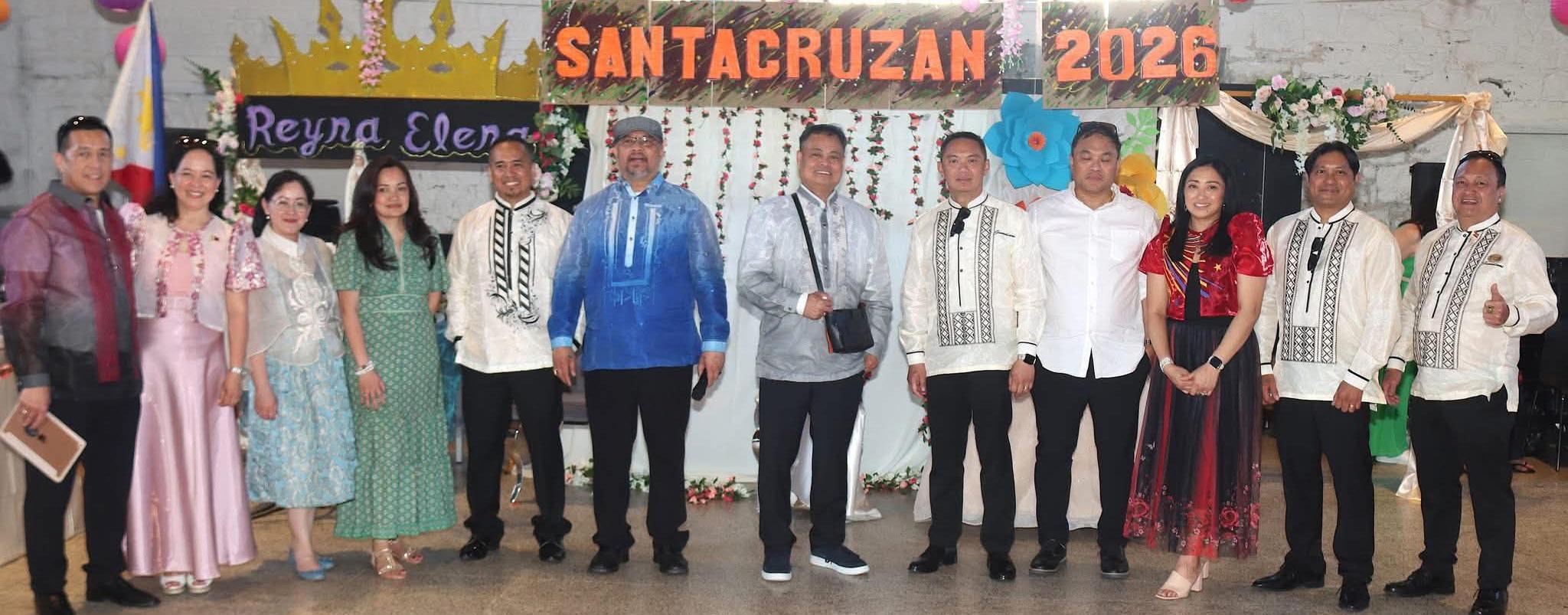
By Feds Murray
The Filipino Community in Northern Ireland had its first Santacruzan Festival in connection with the Flores de Mayo celebration on 17 May 2026 at St. Anthony's Church in Larne, Northern Ireland. The organizers of the amazing and successful festival were Marc Anthony Sy, Rica Regis, and Maribel Trumata. The meaningful collaboration efforts by the organisers and the different parish group leaders from Larne, Newcastle, Lisburn, Magherafelt, Ballymena, and Antrim catholic groups proved a unified diaspora with faith and tradition at its center.
The procession was a vibrant spectacle of beautiful queens, (reynas), princes (prinsipes), and angels (anghel) led by the priests, Fr. Manuelito Milo (celebrant) and Rev. Fr. Everett Corvera who officiated the mass.
The choir sang with full hearts, echoing praises of worship with beautiful melodies.
There was a gathering after the mass in the church hall with a good spread of delicious Filipino food which everyone enjoyed.
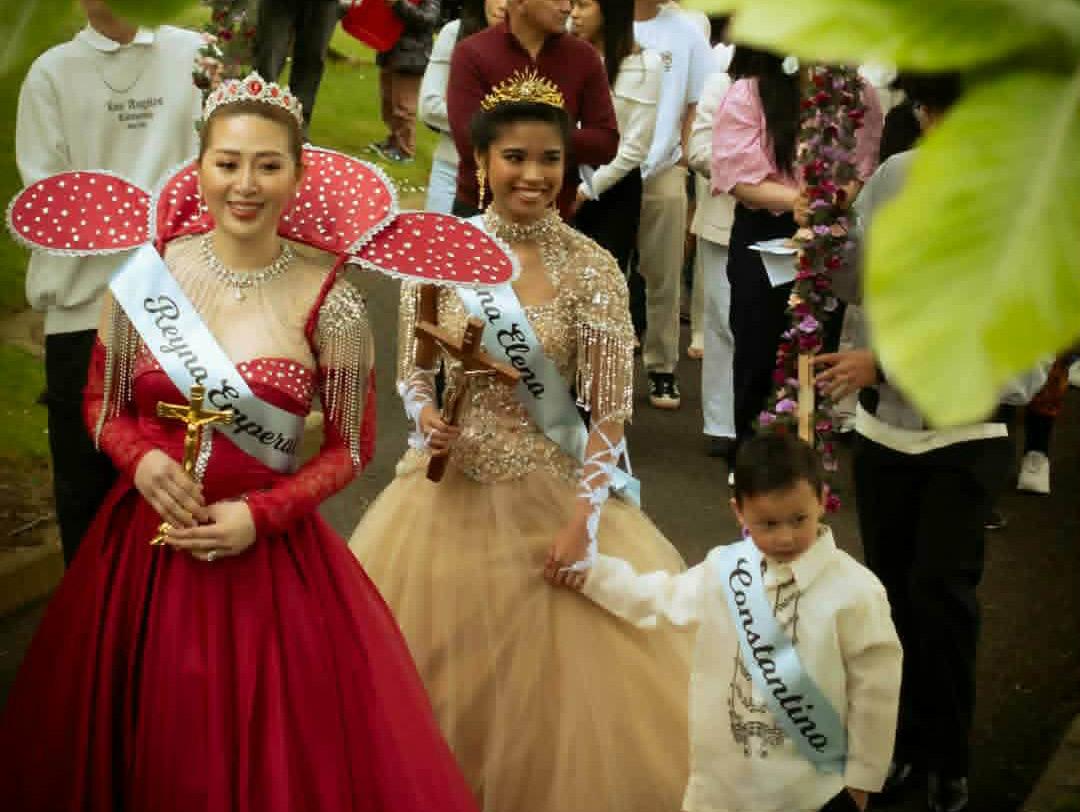
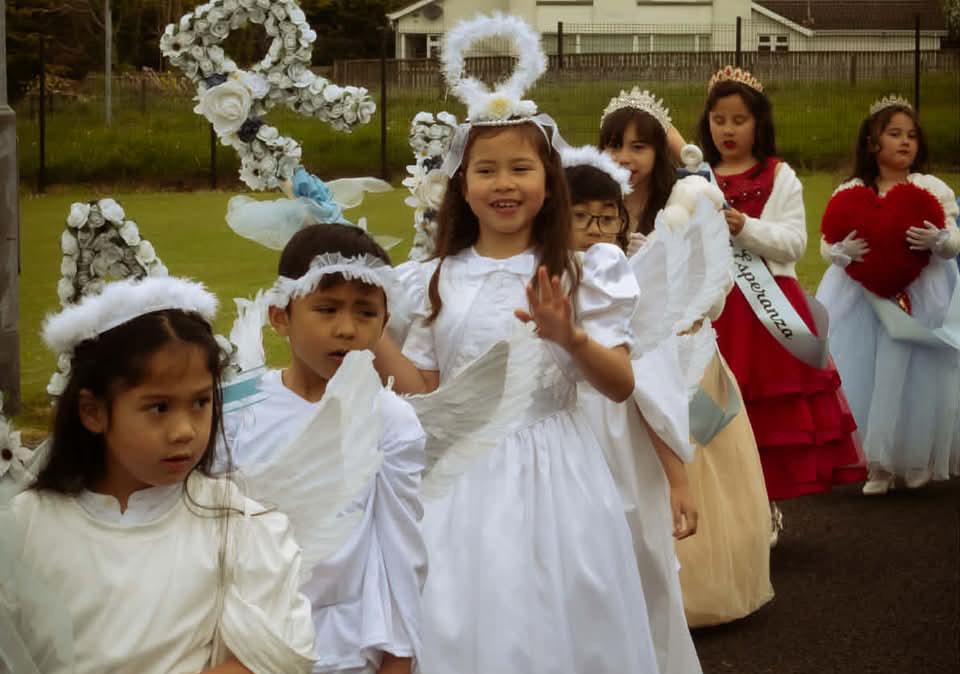
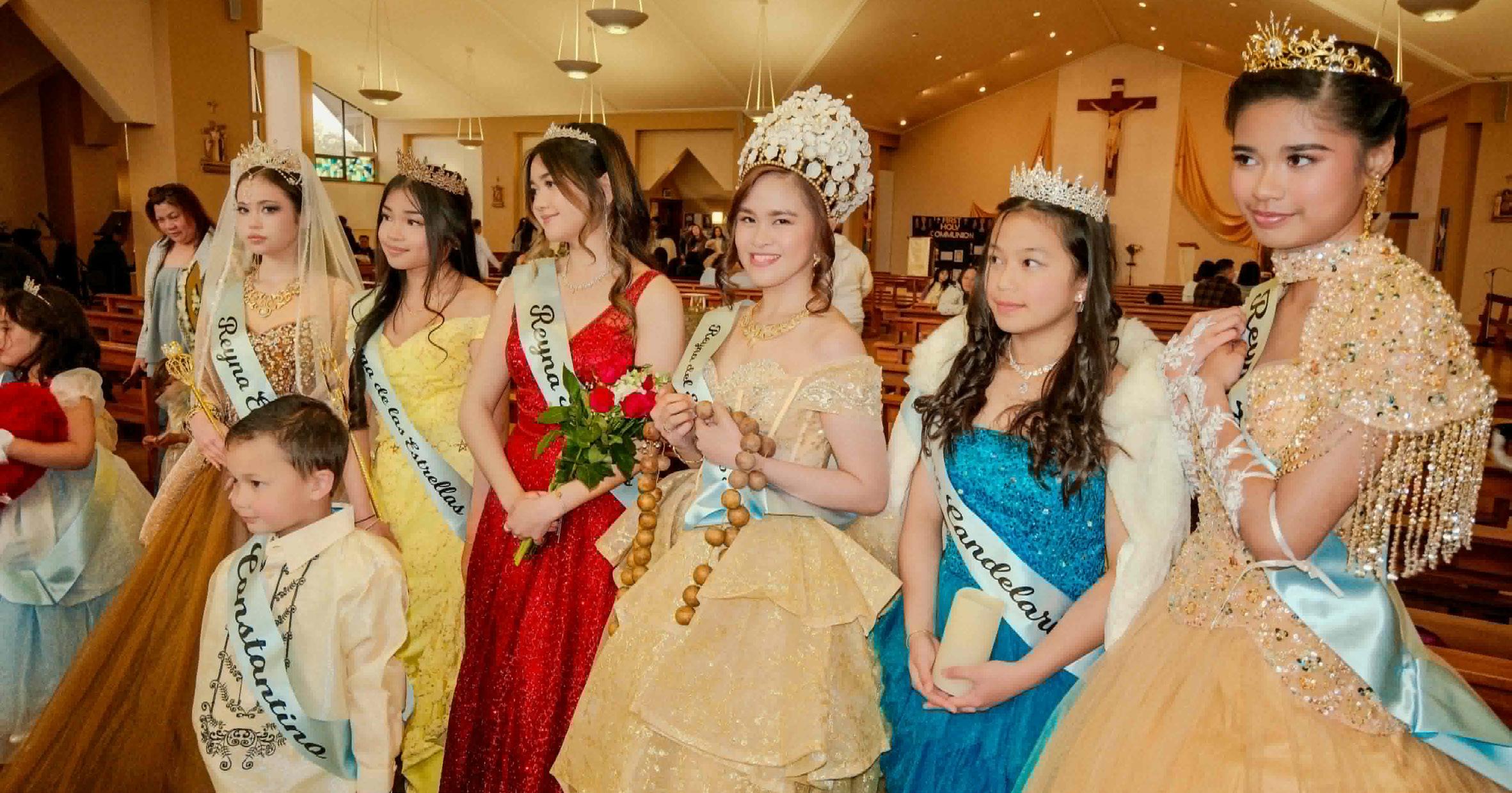
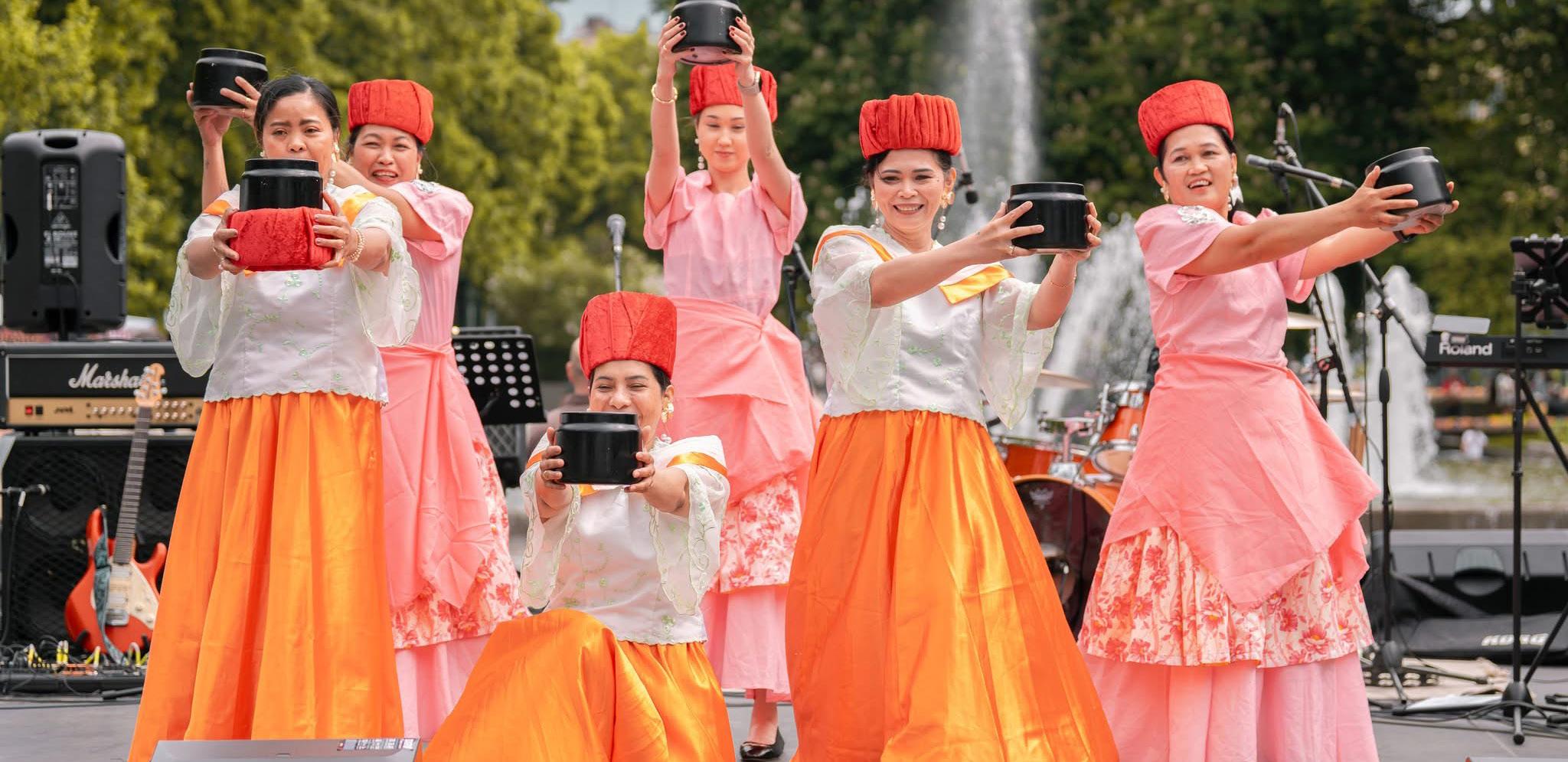
By Jubirose Grijaldo, Secretary of Kalayaan Norge
On a beautiful sun-filled Saturday, May 30, 2026, the Filipino community in Norway came together in a remarkable celebration of heritage, family, and national pride during the 128th Philippine Independence Day Cultural and Family Day at Spikersuppa, Oslo.
Organized by Kalayaan Norge Oslo, the event drew nearly 15,000 attendees, including Filipinos, Norwegians, and other nationalities. More than a commemoration of Philippine independence, the gathering became a joyful testament to the enduring Filipino spirit and the strong sense of community that thrives far from home.
The celebration began at 9:00 a.m. with a Holy Mass officiated byRev. Fr. Jose Johan Dumandan,Chaplain of the Sacred Heart of Jesus Filipino Champlaincy, bringing families together in
prayer and thanksgiving.In true Filipino tradition, faith provided the foundation of the day’s festivities, reminding everyone of the values that continue to unite Filipinos wherever they may be in the world.
Following the Mass, the atmosphere came alive with the Parade of Banners, featuring officers of Kalayaan Norge Oslo, representatives from the Philippine Embassy, Filipino organizations across Norway, community leaders, and event sponsors. Proudly carrying their banners and the Philippine flag, participants filled Spikersuppa with color, energy, and a shared sense of identity.
Throughout the day, audiences were treated to a vibrant cultural showcase featuring more than twenty talented Filipino performers. Traditional dances, contemporary music, and cultural presentations highlighted the creativity and artistry of Filipinos in
Norway. The performances reflected not only talent but also a deep desire to keep Filipino culture alive for future generations.
The celebration was honored by the presence of Norway’s Minister for International Development, Åsmund Aukrust, and Philippine Ambassador to the Kingdom of Norway and Iceland, H.E. Enrico T. Fos. Their attendance underscored the valuable contributions of Filipinos to Norwegian society and the growing friendship between the Philippines and Norway.
Yet beyond the speeches, performances, and formal program, the heart of Kalayaan 2026 could
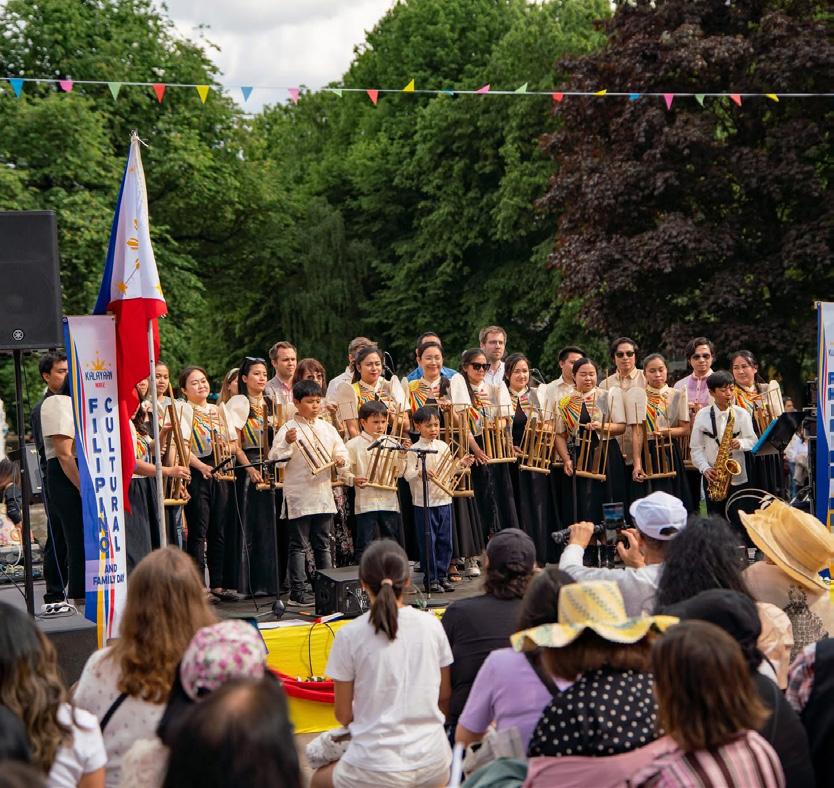
be found among the families gathered across the venue. Children laughed and played in organized games, parents enjoyed community activities, and grandparents proudly watched younger generations participate in cultural traditions. It was a living reminder that Filipino culture is best preserved not only through celebrations but through family connections and shared experiences.
Adding to the festive atmosphere was the bustling Food Bazaar, where 35 Filipino food vendors, the food stalls offered a comforting taste of home, while Norwegian guests and other international visitors enjoyed discovering the rich flavors of Filipino
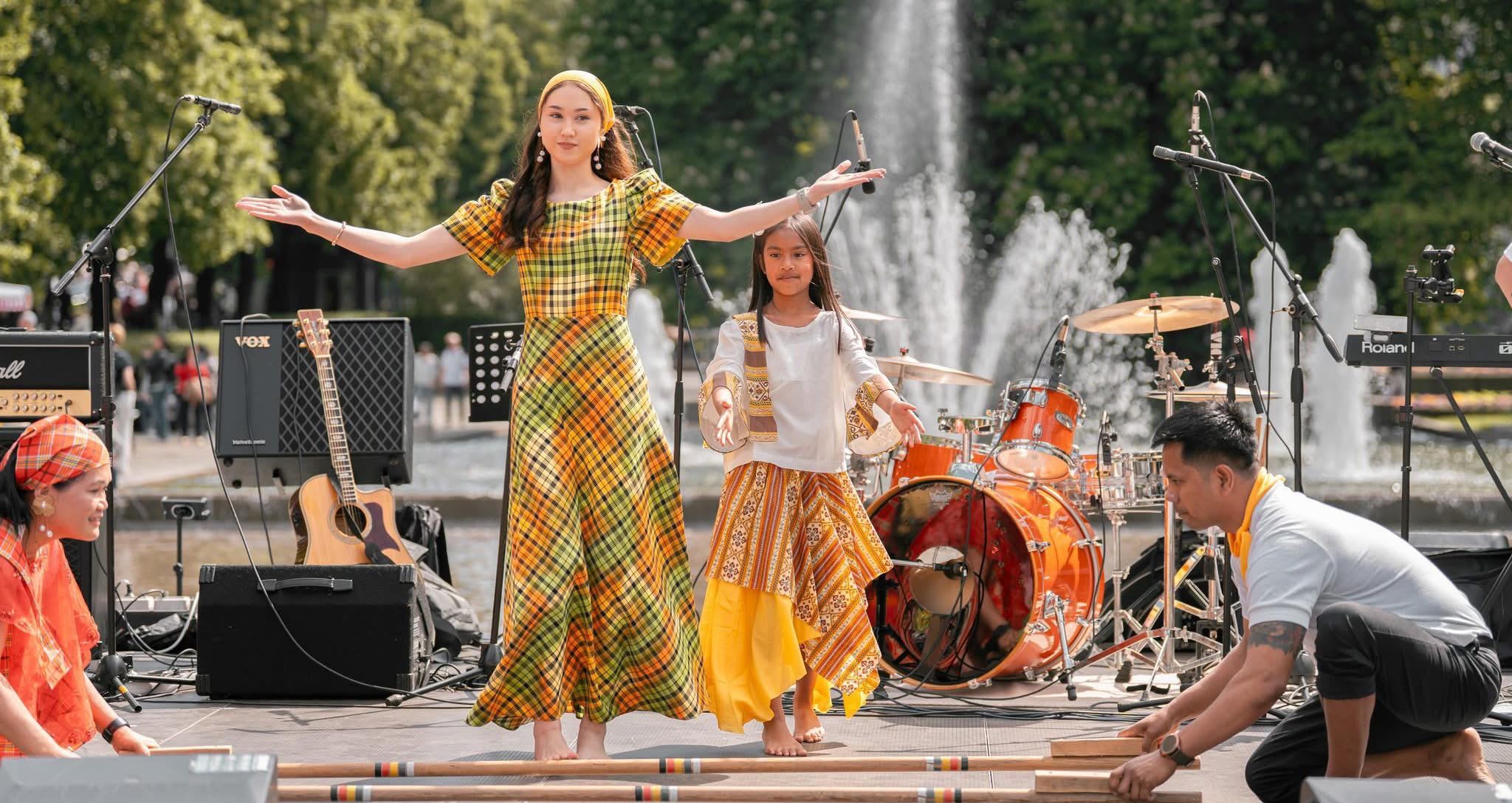
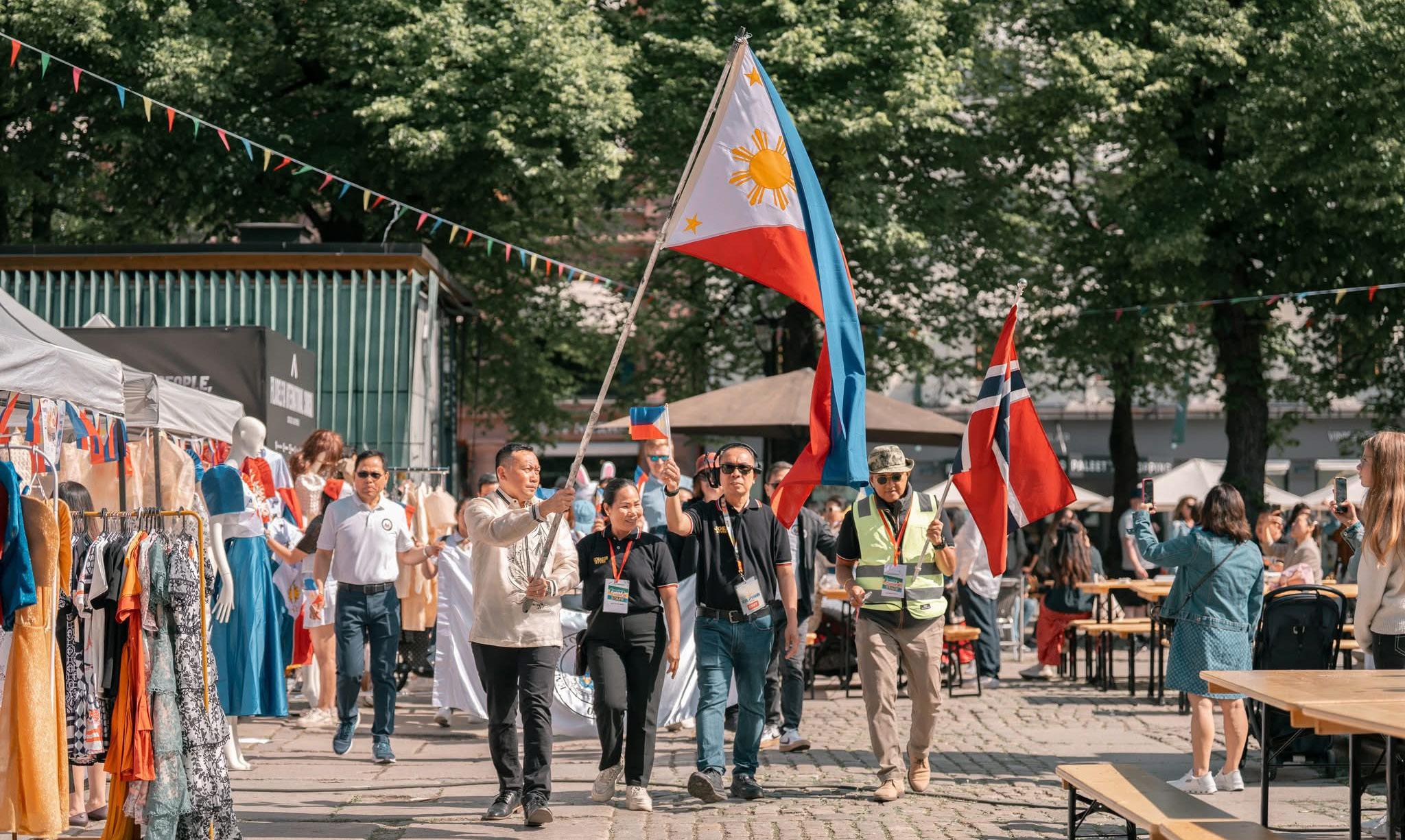
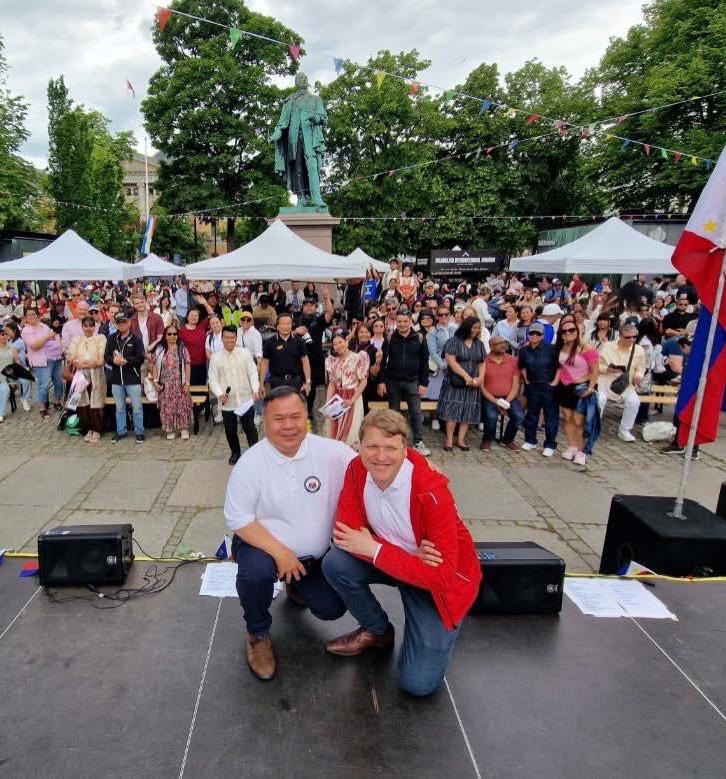
cuisine. The overwhelming success of the food bazaar highlighted how Filipino cuisine continues to serve as a bridge connecting cultures and generations.
Excitement reached another high point during the raffle draw, where cash prizes totaling up to NOK 35,000 brought cheers and anticipation throughout the crowd. For many, however, the greatest reward was simply the opportunity to celebrate together.
At the core of Kalayaan Norge Oslo’s mission is a commitment to preserving Filipino identity among young people growing up in Norway. Many children in attendance were born and raised outside the Philippines, yet through events such as this, they are given opportunities to learn the stories, traditions,
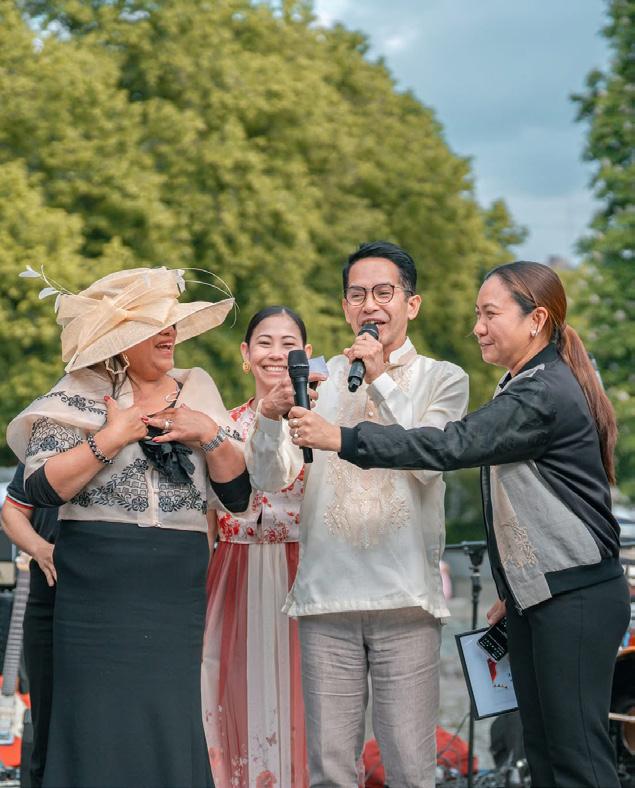
values, and cultural heritage of their parents and grandparents.
As families packed their belongings and the day’s festivities drew to a close, one message remained clear: Filipino culture continues to flourish wherever Filipinos gather with faith, unity, and love for family.
Kalayaan 2026 was more than an Independence Day celebration. It was a powerful reminder that while Filipinos may live thousands of miles from their homeland, their roots remain deeply connected to their heritage, and their wings continue to carry that heritage forward to future generations that will carry our story forward.
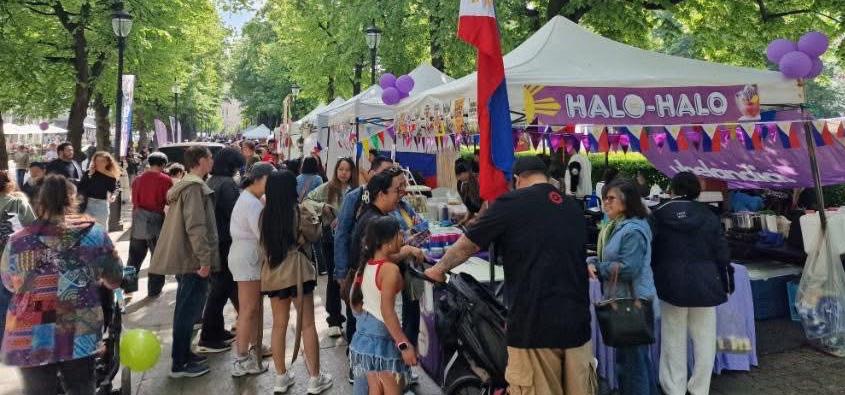
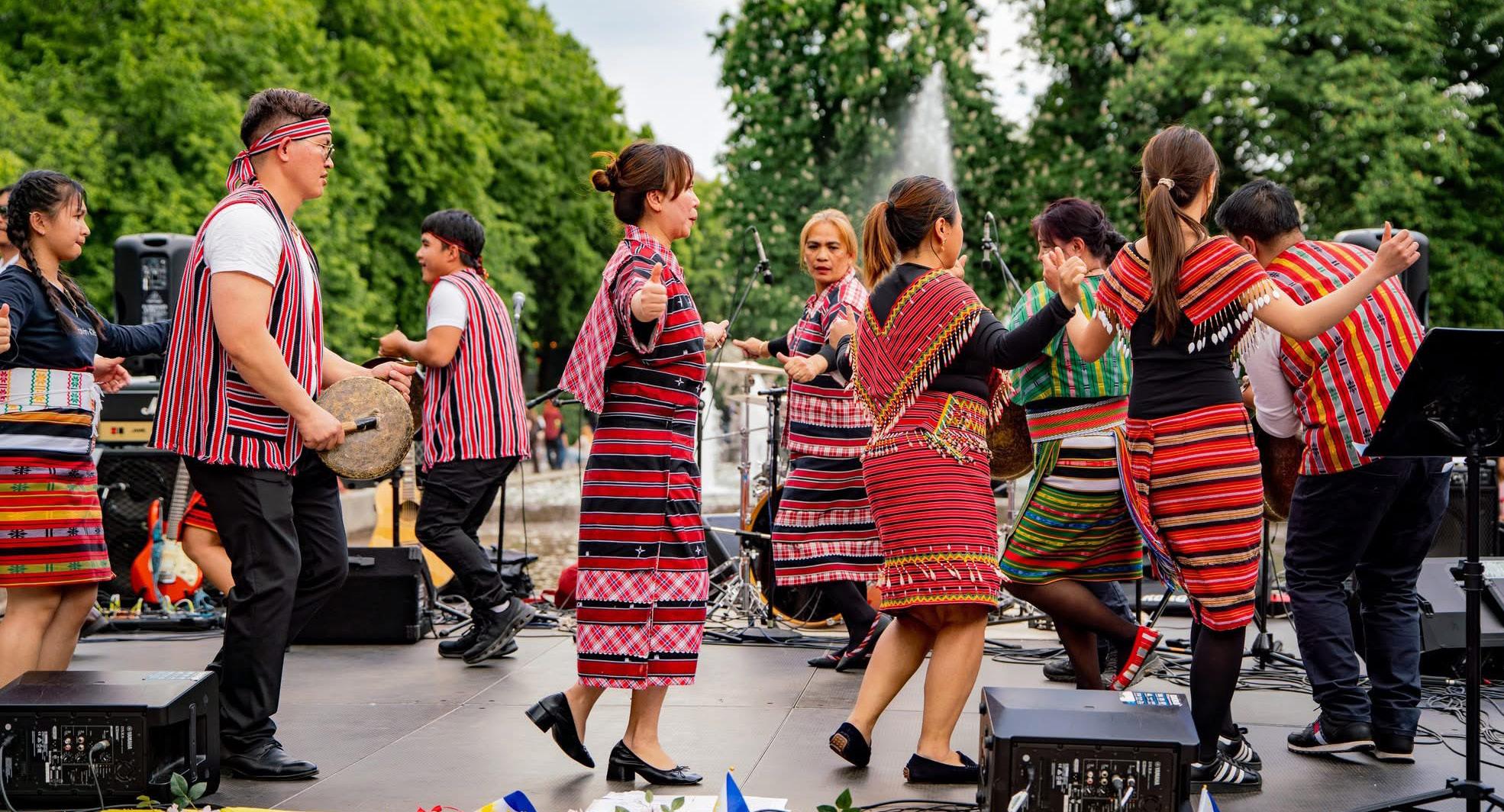
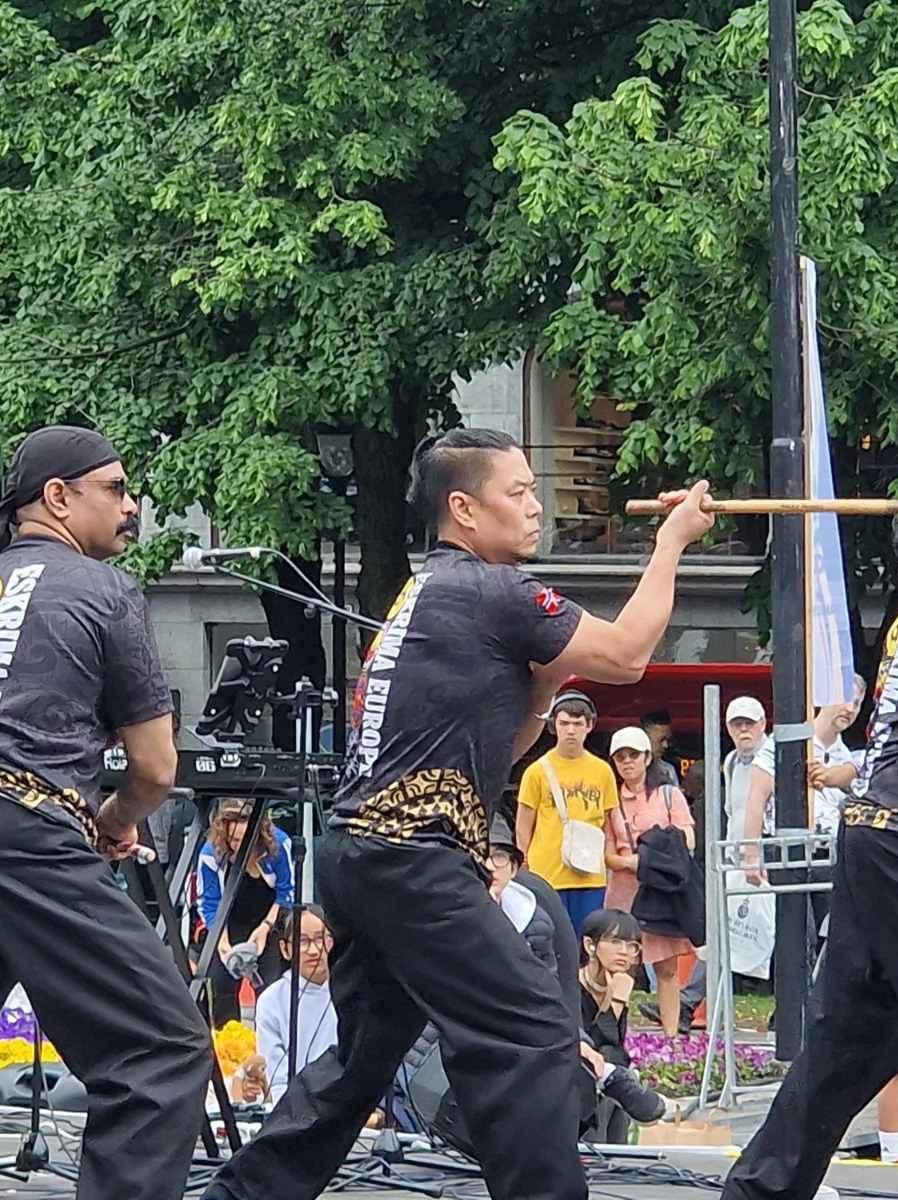
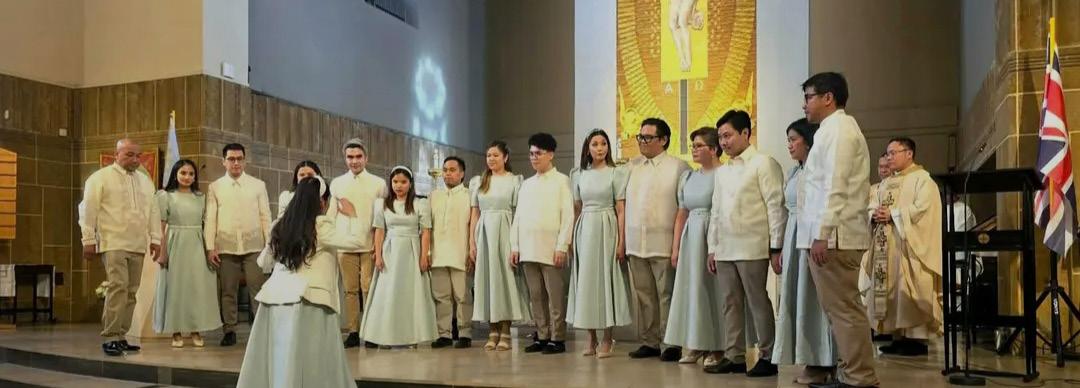
By Feds Murray
London - The Celebration of Philippine Independence Day Mass was held on 7 June 2026 at the Our Lady of Victories Church in High Street Kensington, London. It was a special mass that was attended by many religious and non-religious organisations.
The Ambasador of the Philippine Embassy in the United Kingdom, H.E. Teodoro Lopez Locsin, Jr., was very delighted to attend the special mass. He stated, "The Independence Day Mass was a beautiful showcase of Filipino devotion."
The award-winning, Haraya Choir, stunningly sang and led the Philippine and British National Anthems, conducted by Karlene Hayworth.
The Sinag Himig Chorale London sang the Responsorial Psalm under the baton of Nikko Oliver Villanueva. The choir sang beautiful and deeply meaningful songs of faith with other wonderful choirs from different parishes throughout England, forming the Echoes Filipino Chaplaincy Grand Choir 2026. There were more than 80 singers who remarkably joined their voices together to offer the gift of music.
Carol Panday and Amy Balliao, Directors of Britanya Ngayon, attended the mass and felt blessed with a renewal of faith. They were also in awe of the
music offered by all the very talented and dedicated Filipino singers and musicians.
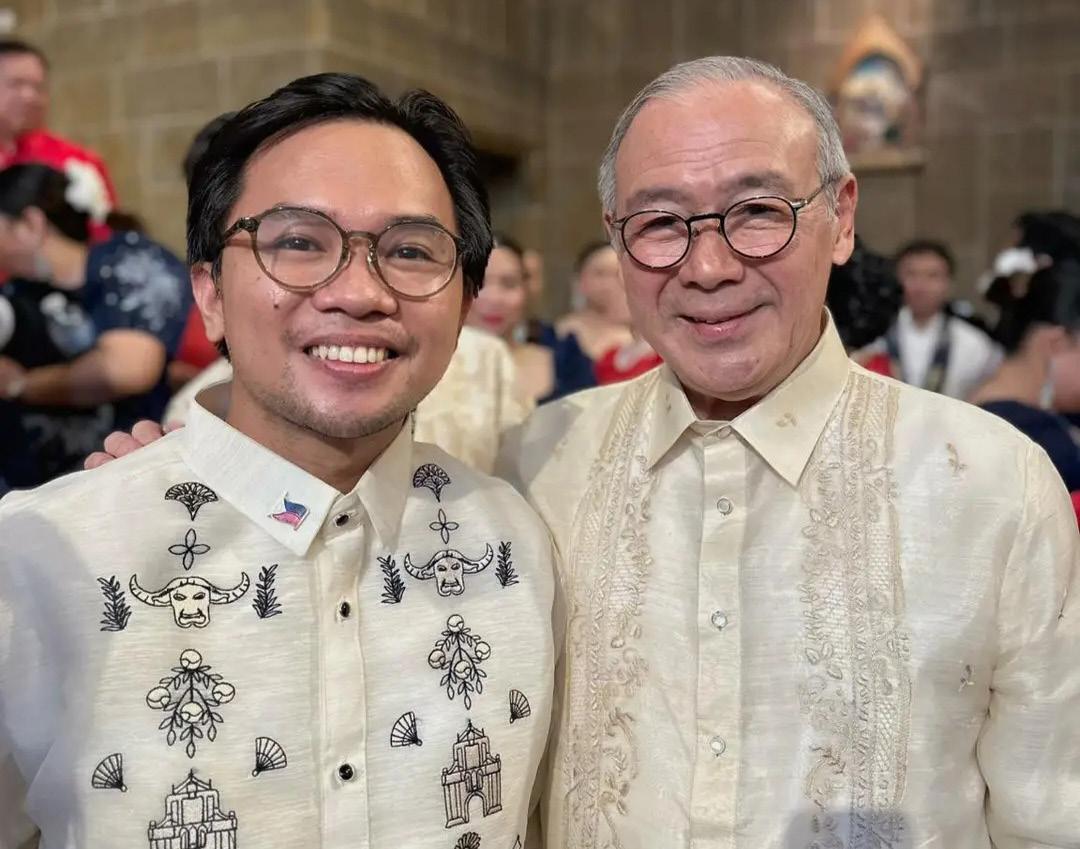
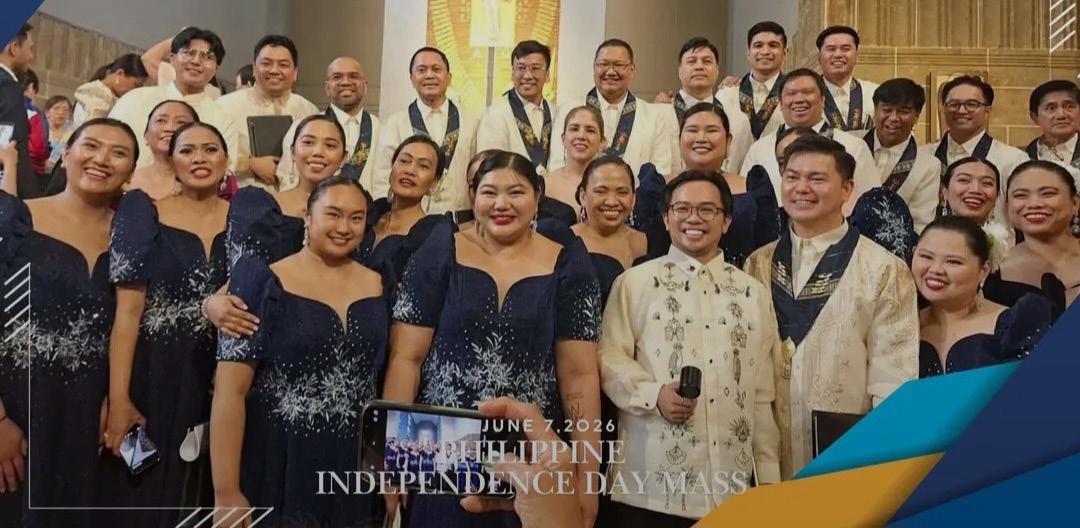
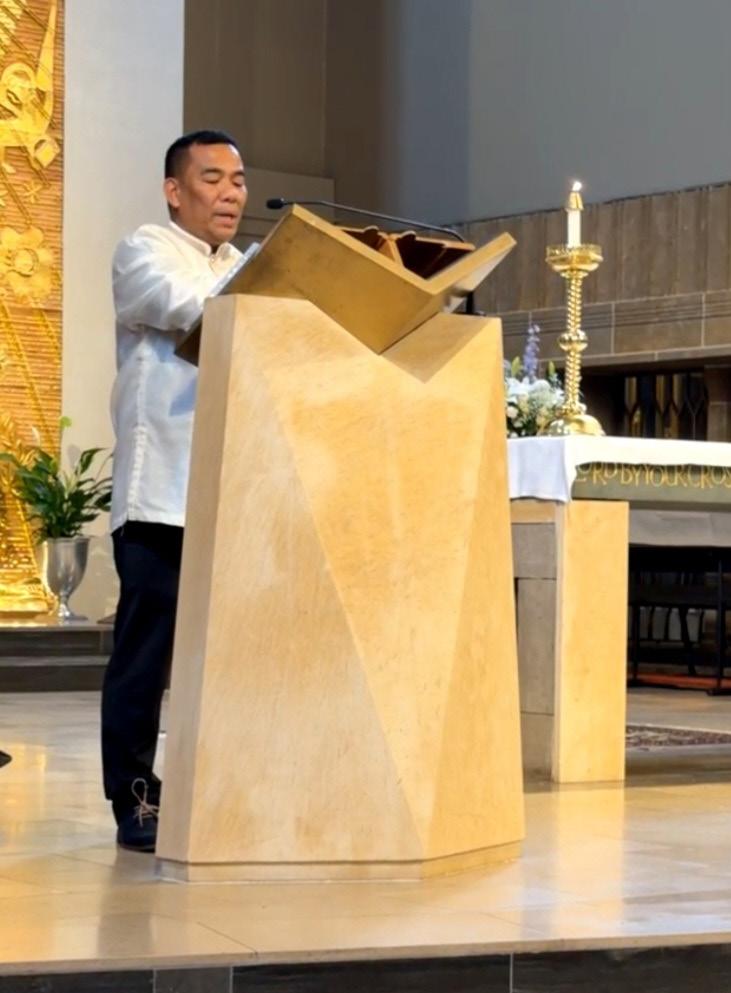
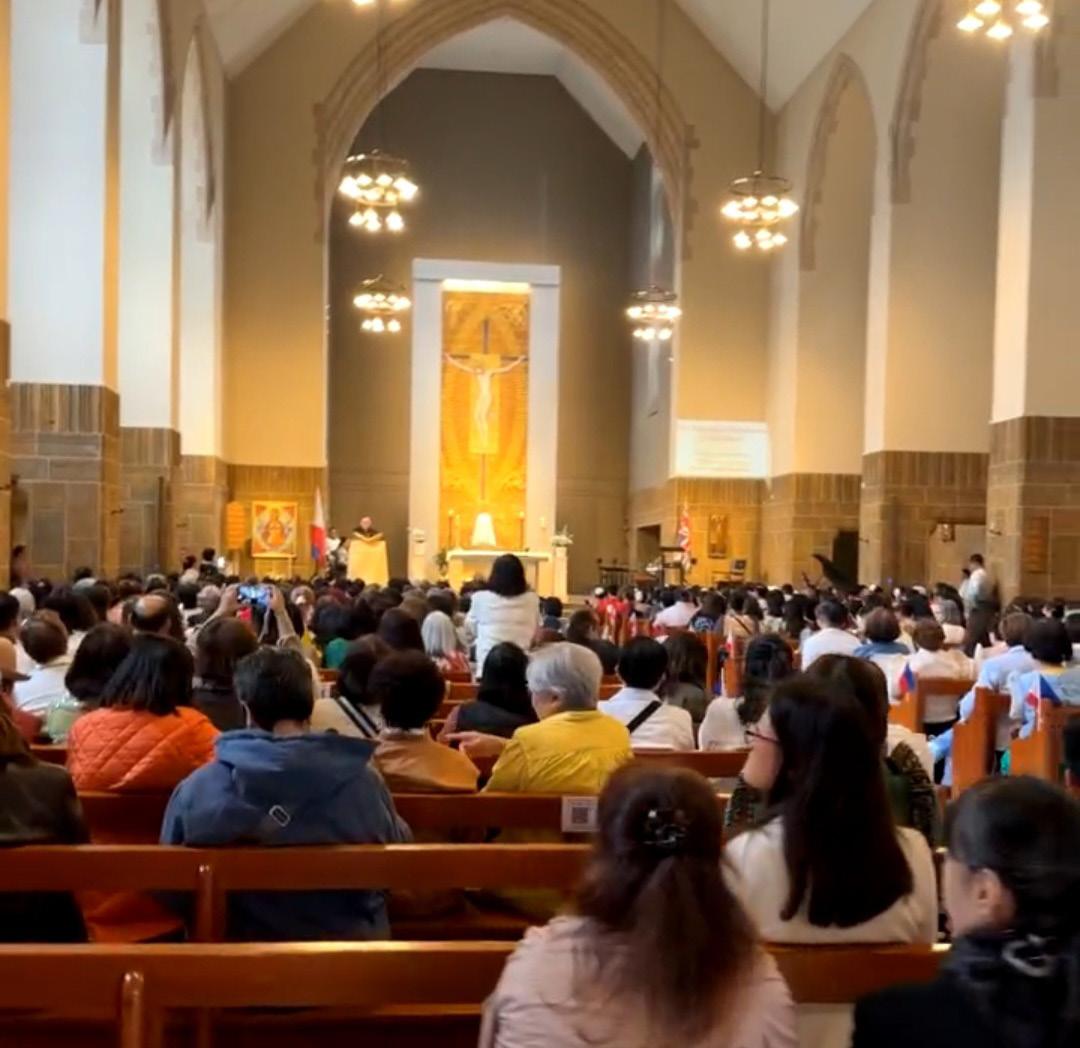
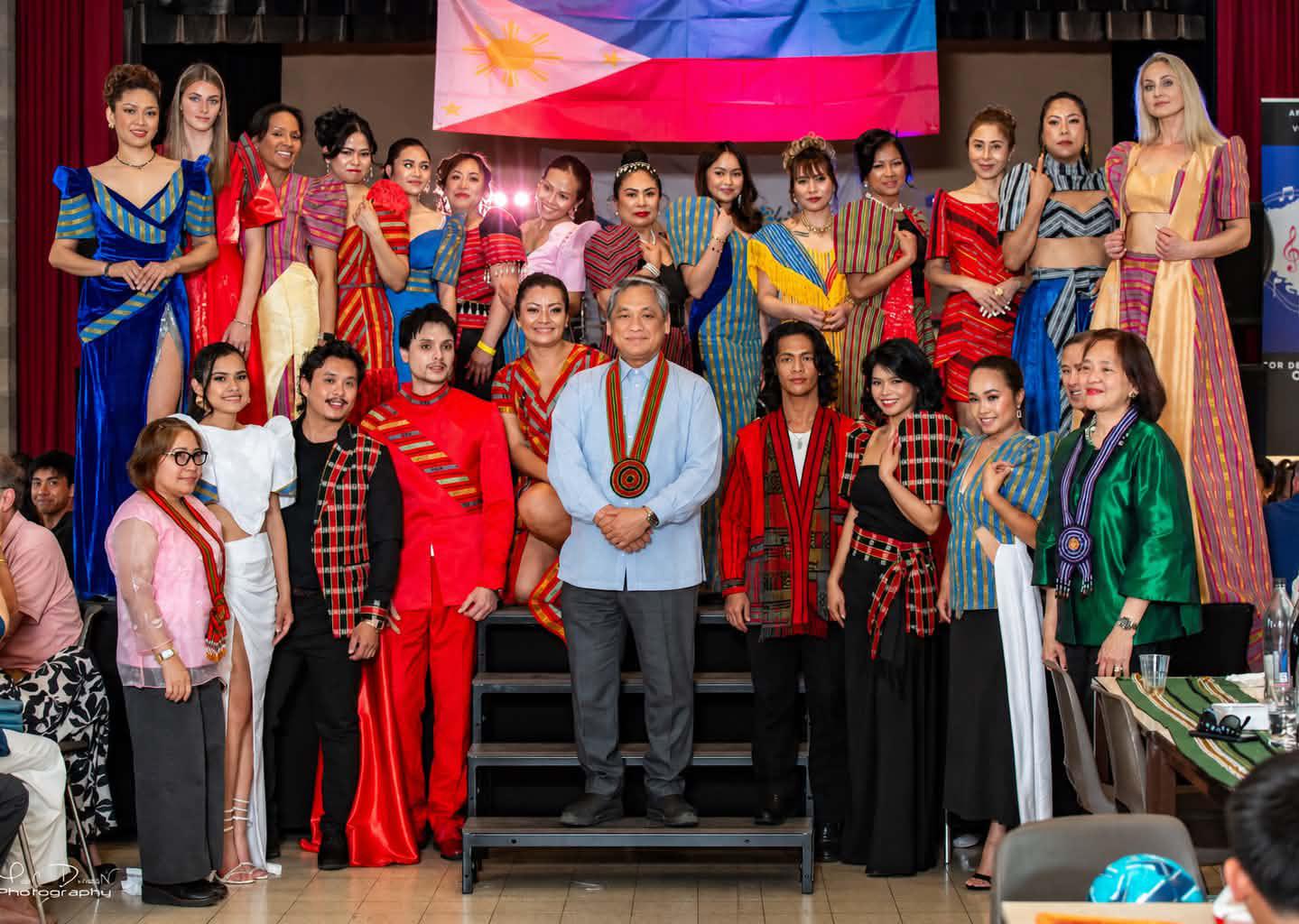
By Feds Murray
On 2 May 2026, the very first Philippine Independence Day celebration held in Limburg, Belgium, brought together hundreds of Filipinos and Belgians for a historical, stylish, momentous, and meaningful celebration that created memories for everyone to
cherish for a lifetime. The opening 'salvo' was the Parade of Pride & Heritage which was a vibrant display of beauty, style, culture, heritage, faith, unity, and identity - setting a joyful tone to the full celebration that was witnessed with much anticipation
by all who came to celebrate and participate. It was a lived experience of Filipino cultural immersion in the southernmost province out of the 12 provinces in the Netherlands - an area that strikes a good balance between innovation and a love of tradition.
At the heart of the spectacular cultural celebration was Amy Balbawang whose passion, vision, artistry, and dedication brought the celebration to life in cooperation with the Philippine Embassy in the Kingdom of Belgium - with such remarkable impact to the Filipino community in Limburg. Stylish Cordilleralux Fashion and Events' owner, Amy Balbawang, blends unparalleled sustainable fashion with Filipino cultural pride in Europe, Amy Balbawang is a Filipino fashion designer, event organizer, and cultural promoter based in Belgium. She is best known as the founder and head designer of Stylish Cordilleralux, a fashion and events brand that showcases Filipino heritage through modern couture and cultural productions.
Here’s a clear overview of who she is: Fashion Designer & Creative Director – Creates couture inspired by Filipino textiles and traditions, especially
Cordillera weaving. Event Organizer & Producer –Organizes large cultural events such as Philippine Independence Day celebrations, fashion shows, and food festivals in Europe. Cultural Ambassador –Promotes Filipino culture, fashion, and community abroad through events, pageants, and collaborations. Model, Host & Influencer – Also active in modelling, hosting, and social media, representing Filipino creativity internationally.
In short, Amy Balbawang is a multi-talented entrepreneur and cultural advocate who brings Filipino fashion, food, and traditions to international audiences—especially within the Filipino community in Europe.
The Ambassador of the Philippine Embassy in Belgium, Jaime Victor Ledda, supported the celebratory event with his presence and speech during the program. He was introduced as a distinguished diplomat who has served in public service and international relations for many years. His speech truly warmed the hearts of everyone. During his speech, he underscored the importance of the close relationship between Belgium and the Philippines in
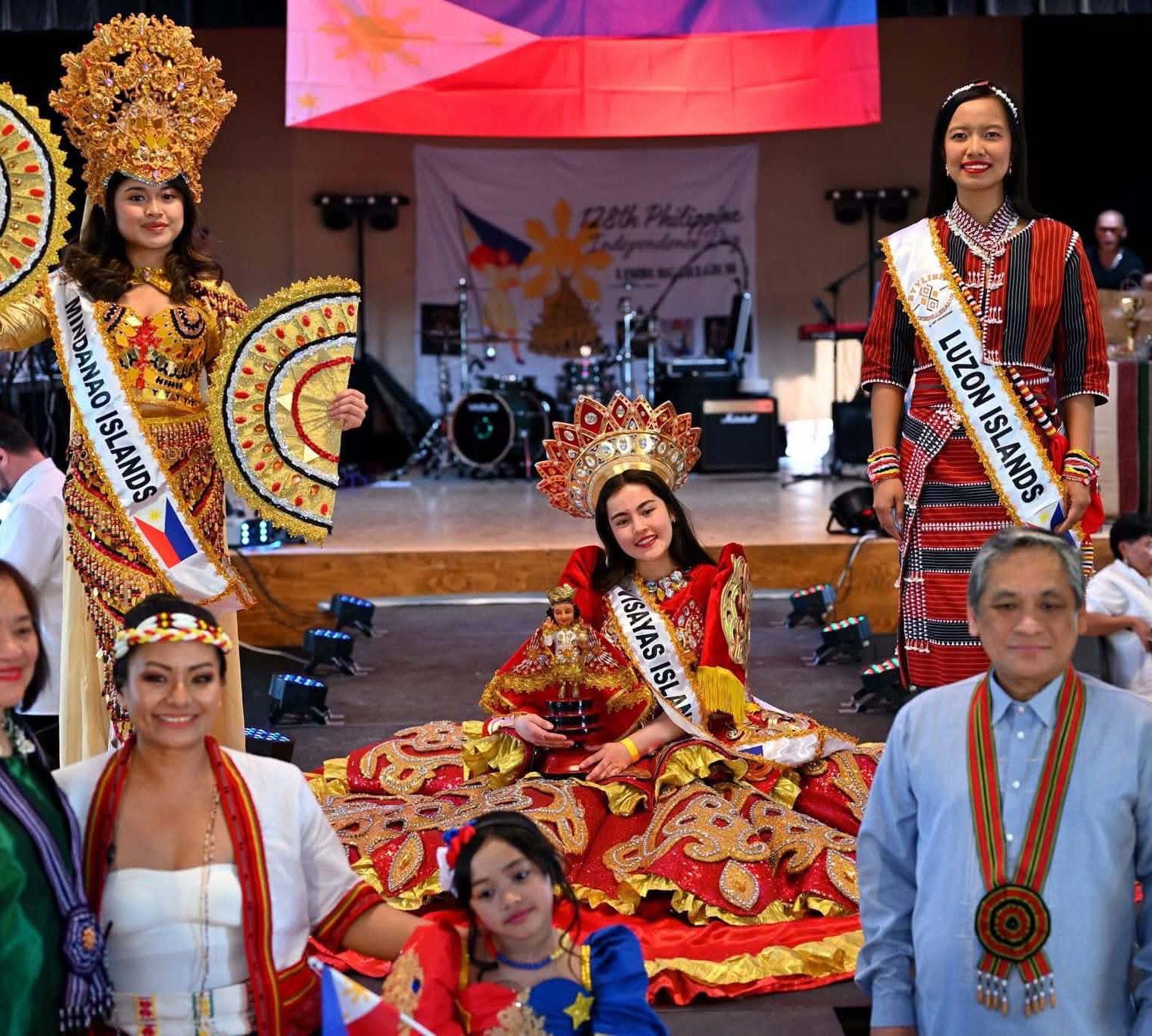
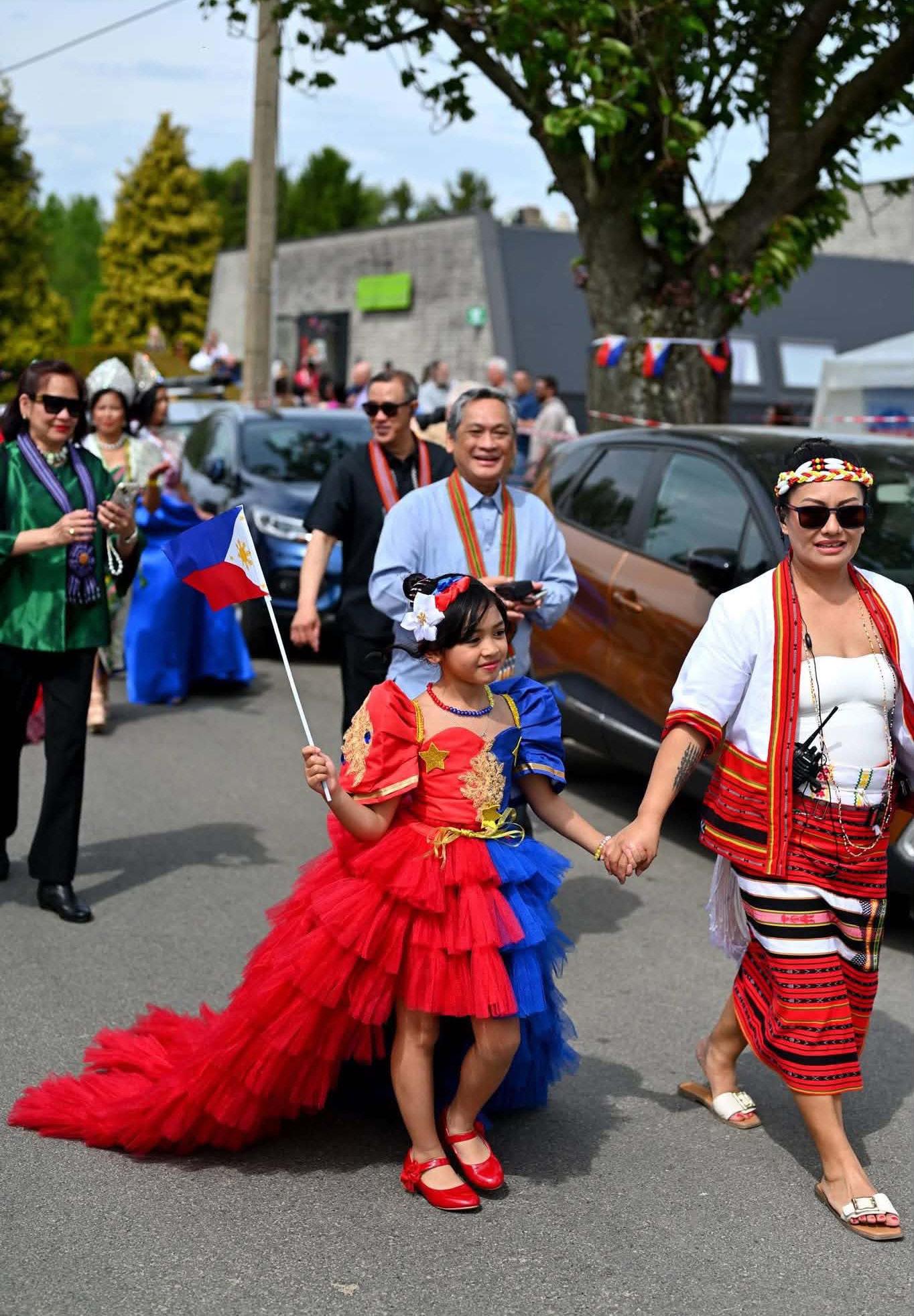
the celebration, with the upcoming 80th anniversary of diplomatic relations between the Philippines and Belgium. He said, "Let's continue to share our Filipino virtues and interact with our host country."
He linked the timely event to the Filipino celebrations in the months of March (International Women's Day), April (Filipino Food Month), May (‘Flores de Mayo’ and ‘Santacruzan’), and June (Philippine Independence Day). He also said: "The Philippines is a country of festivals, a country of celebrations, and a country of rich cultural heritage." The ambassador emphasized his deep appreciation to Filipino women especially those who are leading entrepreneurs.
The Cultural Attaché Miss Virginia Abad was also one of the special guests. The main highlights of the celebration was the Spring Food Festival, Contemporary Filipino Collection 2026 by Stylish Cordilleralux Fashion and Events which showcased Filipino-inspired artistry and the meeting point of tradition and runway glamour - the Filipina Queens dazzled with crowns, beauty, cultural sparkle, and poise onstage - including the crowning of Mutya ng Europa, the unbeatable musical talents of Filipino performers, and the high energy and pure enjoyment shown by the wider Filipino community who were present. After the event, Amy Balbawang expressed deep gratitude to the Philippine Embassy in Belgium: "A heartfelt thank you to the Philippine Embassy in Belgium headed by His Excellency Jaime Victor
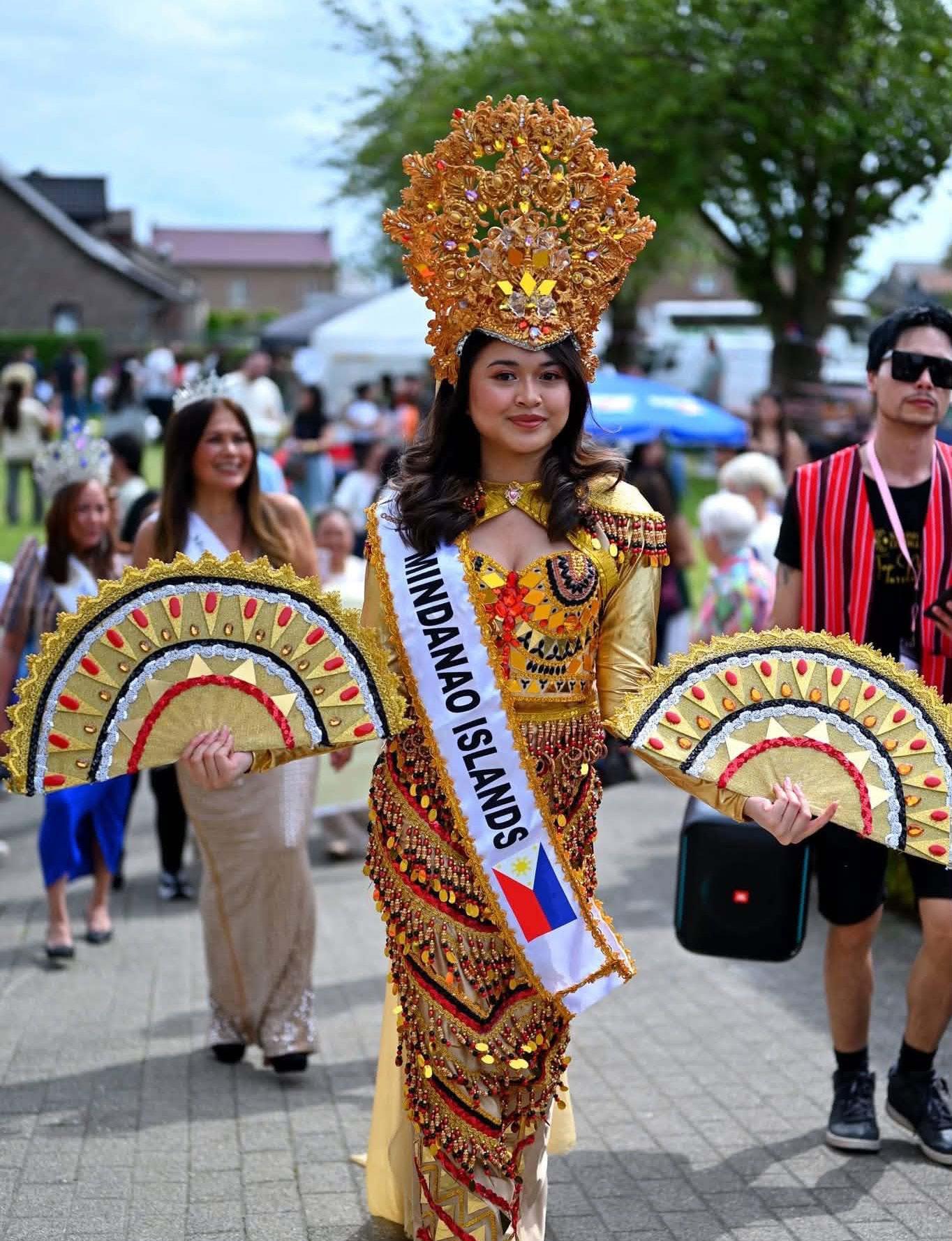
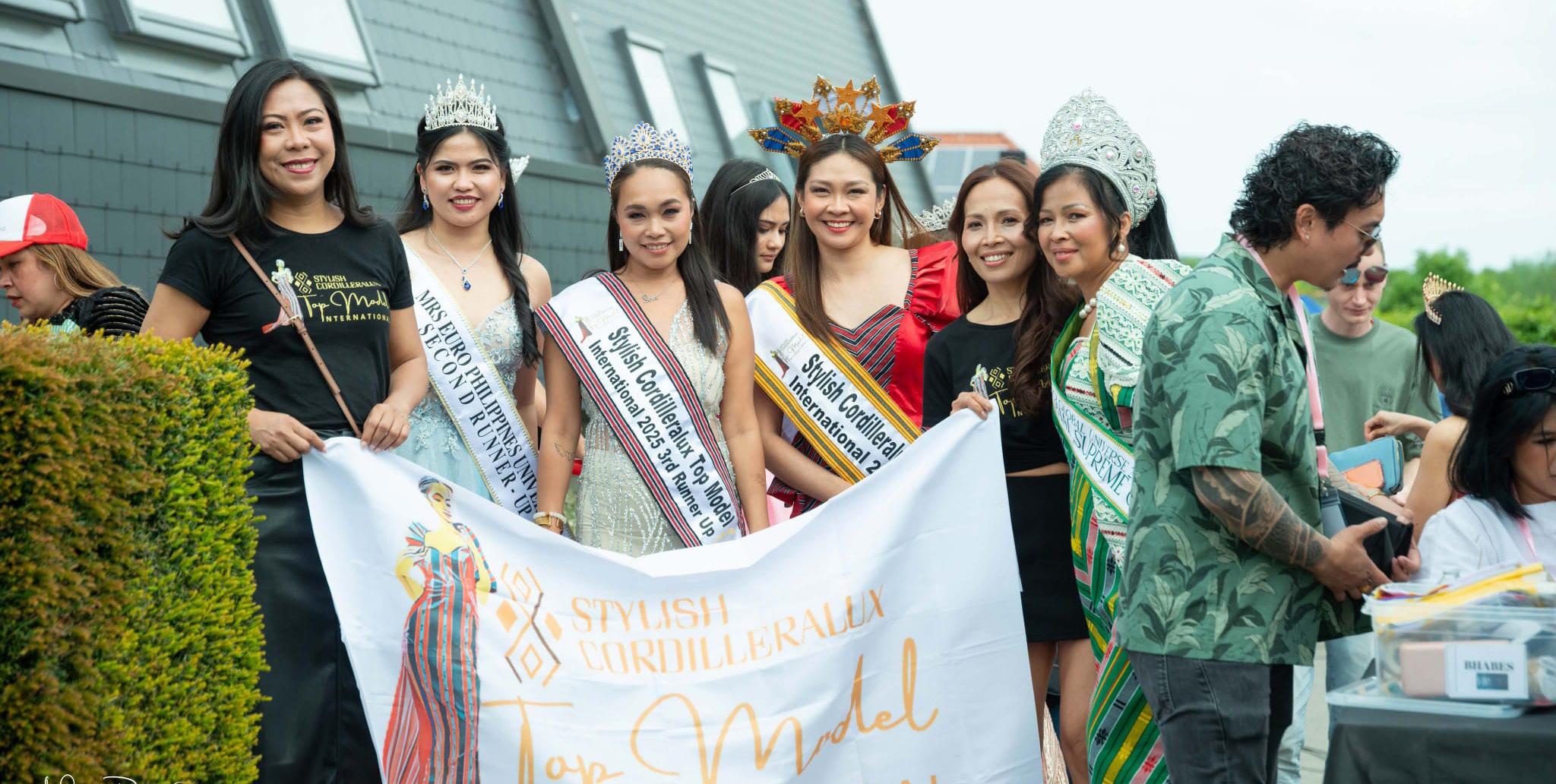
Ledda, together with our Cultural Attaché Miss Virginia Abad, for gracing us with your presence at the very first Philippine Independence Day Celebration in Limburg, Belgium.
Your attendance meant so much to our community and added great honor to this historic milestone. It was truly inspiring to celebrate our Filipino heritage together, strengthening the bond between our ‘kababayans’ and our homeland. We deeply appreciate your support, encouragement, and commitment to the Filipino community in Belgium. Your presence made this celebration even more meaningful and unforgettable.
Maraming salamat po, and we look forward to more collaborations in the future!" 80th anniversary of diplomatic relations (Friendship Day) between the Philippines and Belgium
Amy Balbawang has been chosen by the Philippine Embassy in Belgium to design a Filipino-inspired garment for the famous Manneken Pis of Brussels. The official ceremony for the donation of the Philippine Embassy's garment will take place on 7 July 2026 at 11:00am at the Brussels City Hall.
According to Amy Balbawang, "I am truly honoured to be the designer of this special garment that will dress one of the most iconic symbols of Brussels. Through this creation, we continue to preserve and promote Filipino culture, heritage, and craftmanship on the international stage."
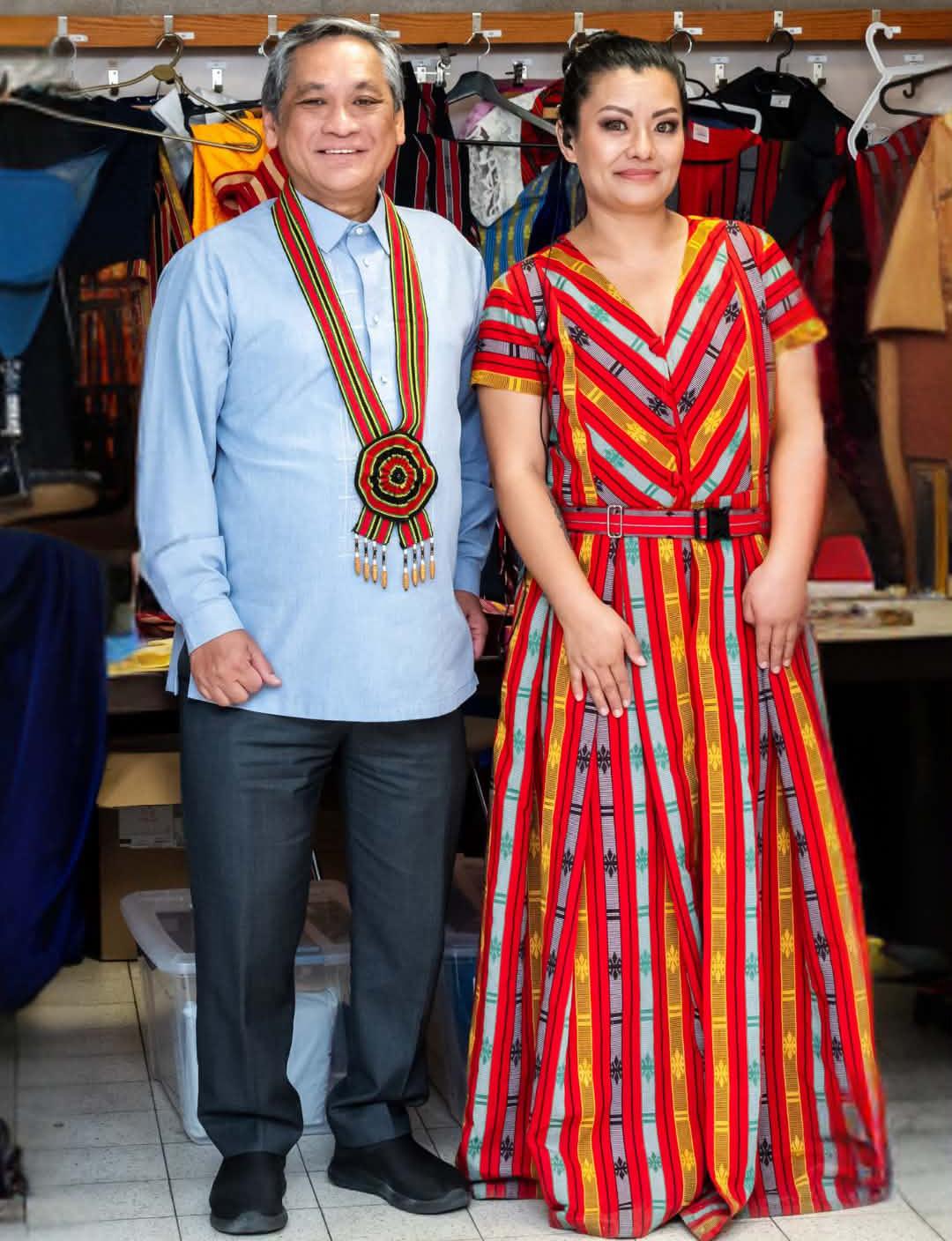
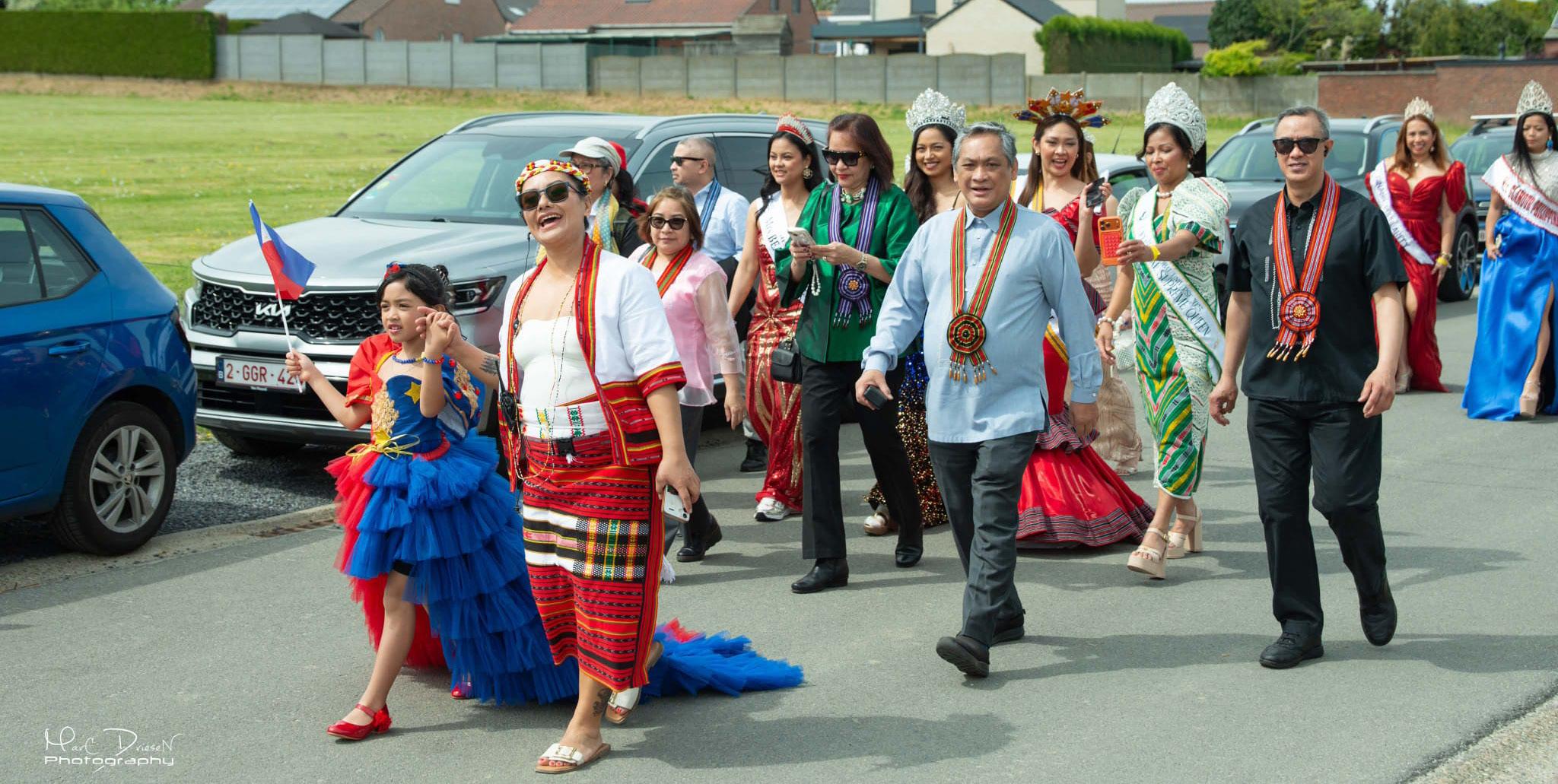
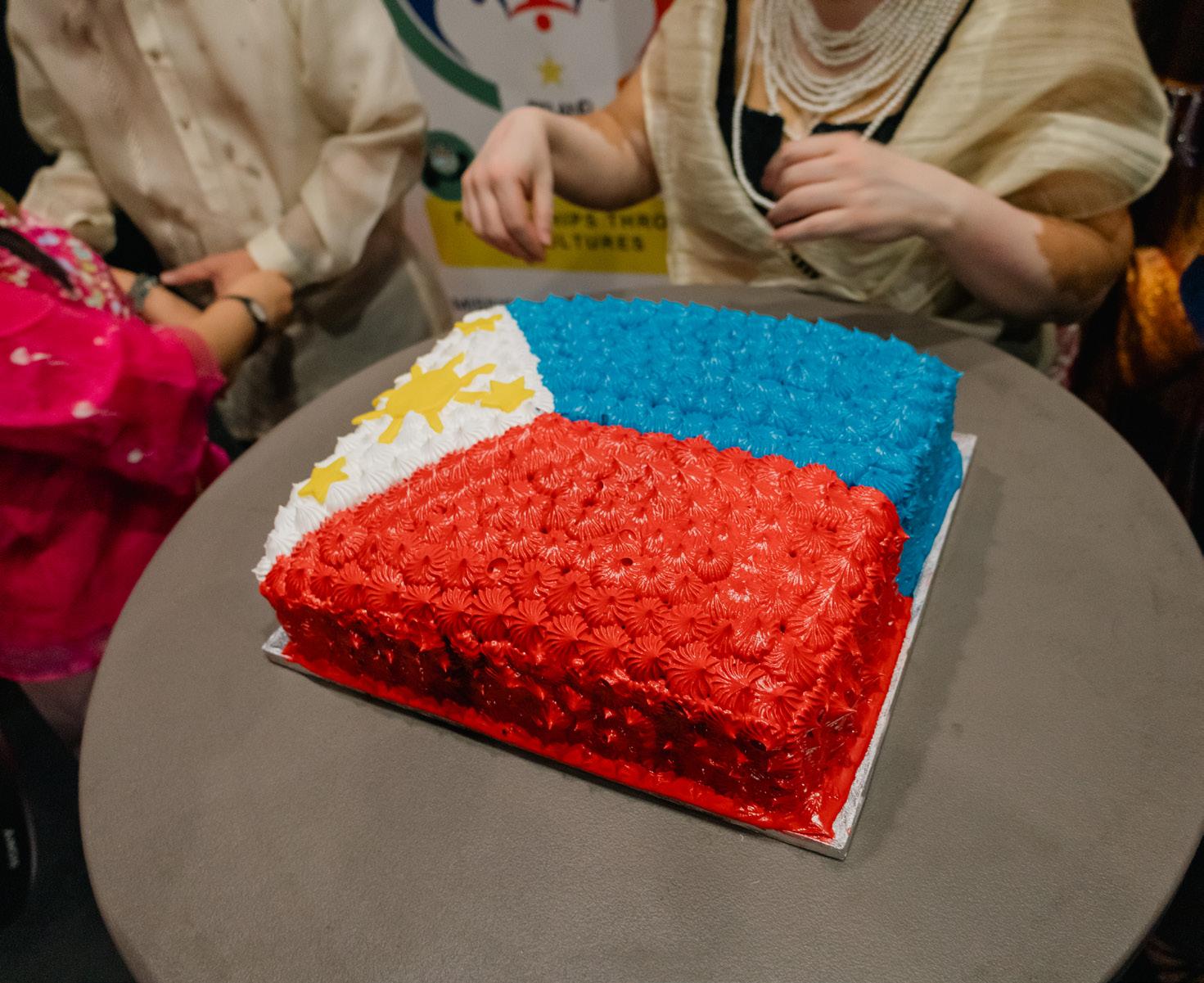
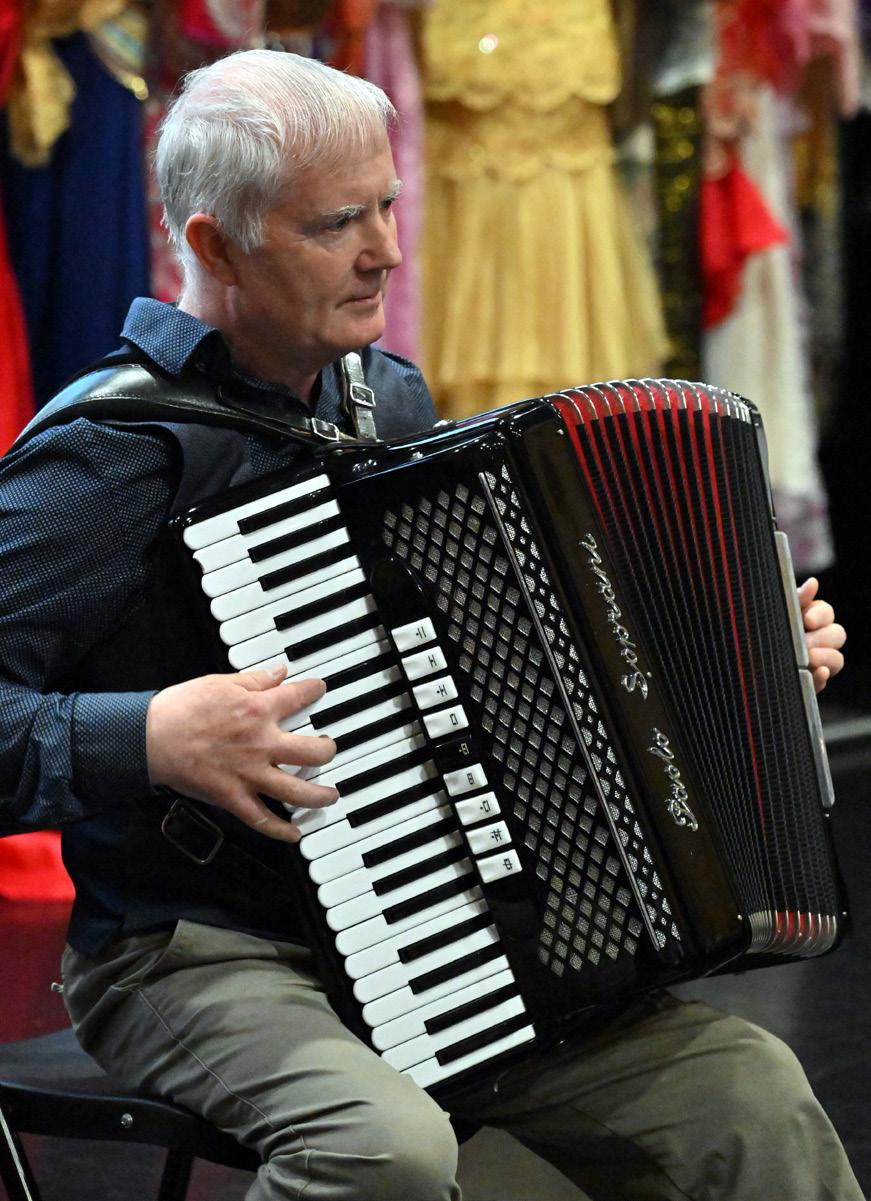
By Hilda Arenas
There is a particular kind of pride that fills a room when a community realises — perhaps for the first time, perhaps all over again — that it is truly seen. Not performed for. Not showcased. Seen.
It happened on the afternoon of Thursday, last where culture is most powerful when it is genuinely shared.
The result was Isang Pagdiriwang — A Philippine Celebration. And it was only the beginning.
Built on Real Partnership. Behind the evening stood a remarkable coalition: the Philippine Embassy in Ireland, Dún Laoghaire-Rathdown County Council, the Commission on Filipinos Overseas, and the Philippine Department of Tourism London Office — alongside a growing network of civic, cultural, and
community partners who believed in what was being built.
Yet what every guest encountered at the door was not hierarchy — it was mabuhay. Whether diplomat or neighbour, government official or first-time visitor, Irish, Filipino, or from any of the many nationalities gathered in that room, every person was received with identical warmth and equal regard. No top tables. No inner circles. In a world where events habitually sort people by status, FiMuS made a quiet and powerful statement: here, everyone belongs.
The programme opened with both national anthems performed live. Deanna Agsalud and Eleanor Dalayap of the TCD Filipino Society sang Amhrán na bhFiann — Ireland's anthem, rendered
with care and pride by Filipino voices. FiMuS Chief of Services Estella Tolentino then performed Lupang Hinirang, filling the Studio with the sound of a nation 10,000 kilometres away. From the very first note, the character of the evening was clear. This was not a Filipino event tolerating an Irish audience. It was a celebration that insisted on honouring both nations equally.
Words That Carried Weight. Leas Cathaoirleach Councillor Pierce Dargan opened the formal proceedings with a welcome that was warm, unhurried, and genuine — the kind that tells a room it is truly wanted, not merely invited.
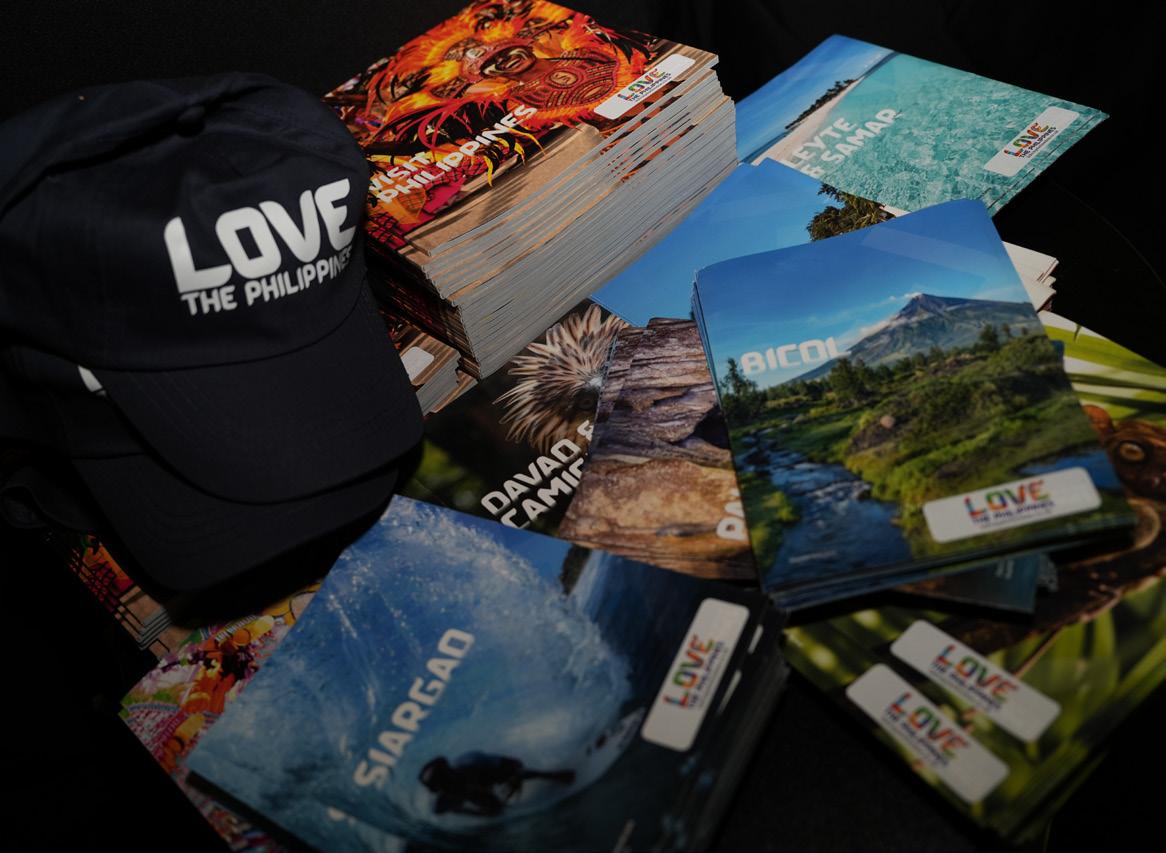
He was followed by Philippine Ambassador H.E. Daniel R. Espiritu, and the significance of what followed was not lost on anyone present. This was the Ambassador's first-ever Philippine Independence Day address to the Filipino community in Ireland — and he delivered it at a FiMuS event. Drawing on the history of Philippine independence, the resilience of its people, and the living bond between two nations, he held the room with every word. That he went on to speak at further Independence Day commemorations in the weeks that followed only underlined what the evening had already made clear: FiMuS has set a
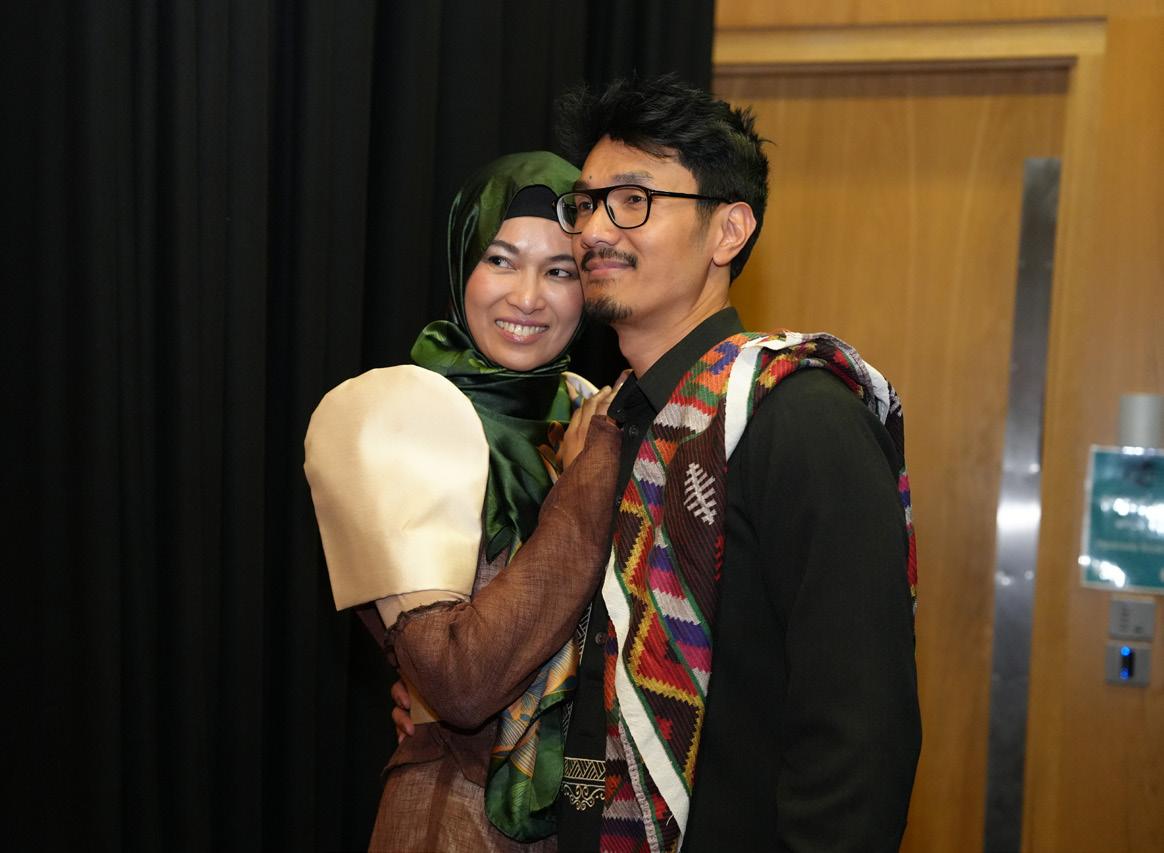
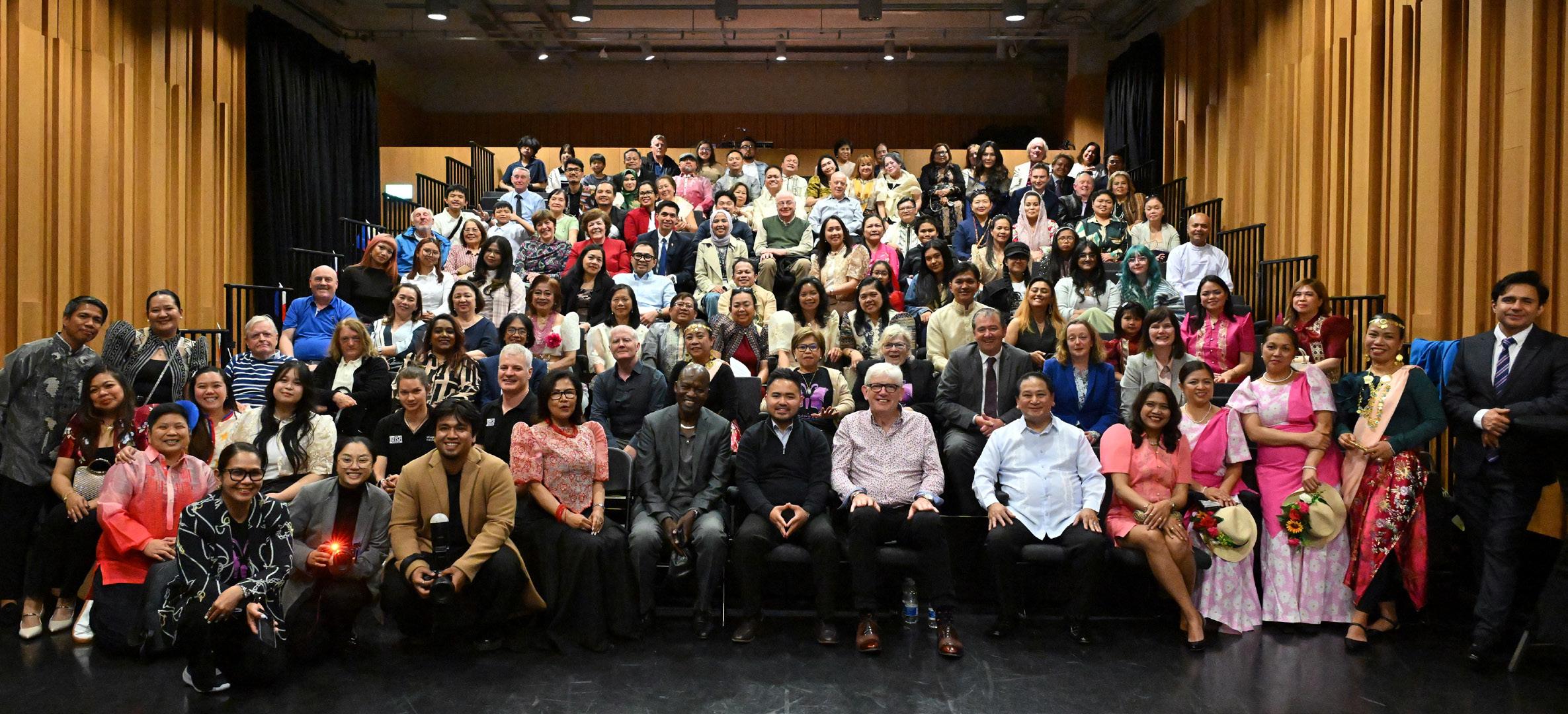
new standard for how this community marks its most important national day.
From Manila — where she was representing Ireland at that very moment — H.E. Ambassador Emma Hickey, Ireland's Ambassador to the Philippines, sent a video message that bridged ten thousand kilometres in an instant. Her words landed warmly on a room full of people who understood, better than most, what it means to carry one country in your heart while building a life in another. Then the room went still.
A personal message from the President of Ireland, Catherine Connolly, was read aloud by Siobhán Nic Gaoithin, Integration Support Coordinator with the DLR Local Authority Integration Team. A sitting Irish President sending personal words to a Filipino community celebration is not a routine gesture. It was a formal and deeply resonant declaration — at the highest level of the Irish state — that the Filipino community does not exist at the edges of Irish society. It is woven into it. For those who have spent years giving to this country through its hospitals, schools, care homes, and communities, it was the kind of
acknowledgement that settles something deep and does not fade.
Music, Memory, and a Thread Between Nations. Irish composer and accordionist Ken Tuohy set the emotional temperature of the evening with music that moved between Irish tradition and contemporary grace, preparing the room for a tribute to the national heroes of the Philippines — and the revelation of a historical connection most Irish people have never heard.
Josephine Bracken was born in Hong Kong to a family with roots in Birr, County Offaly. She walked into the life of Dr José Rizal — the Philippines' greatest national hero and father of its independence movement — and never left his side. That an Irish woman stands at the very heart of Philippine history is one of those truths that, once known, cannot be unfelt.
The documentary journey that followed — From the Pearl of the Orient to the Emerald Isle — traced the deep and largely untold connections between the two nations across generations. Among the most powerful: the arrival of the first 500 Filipino nurses
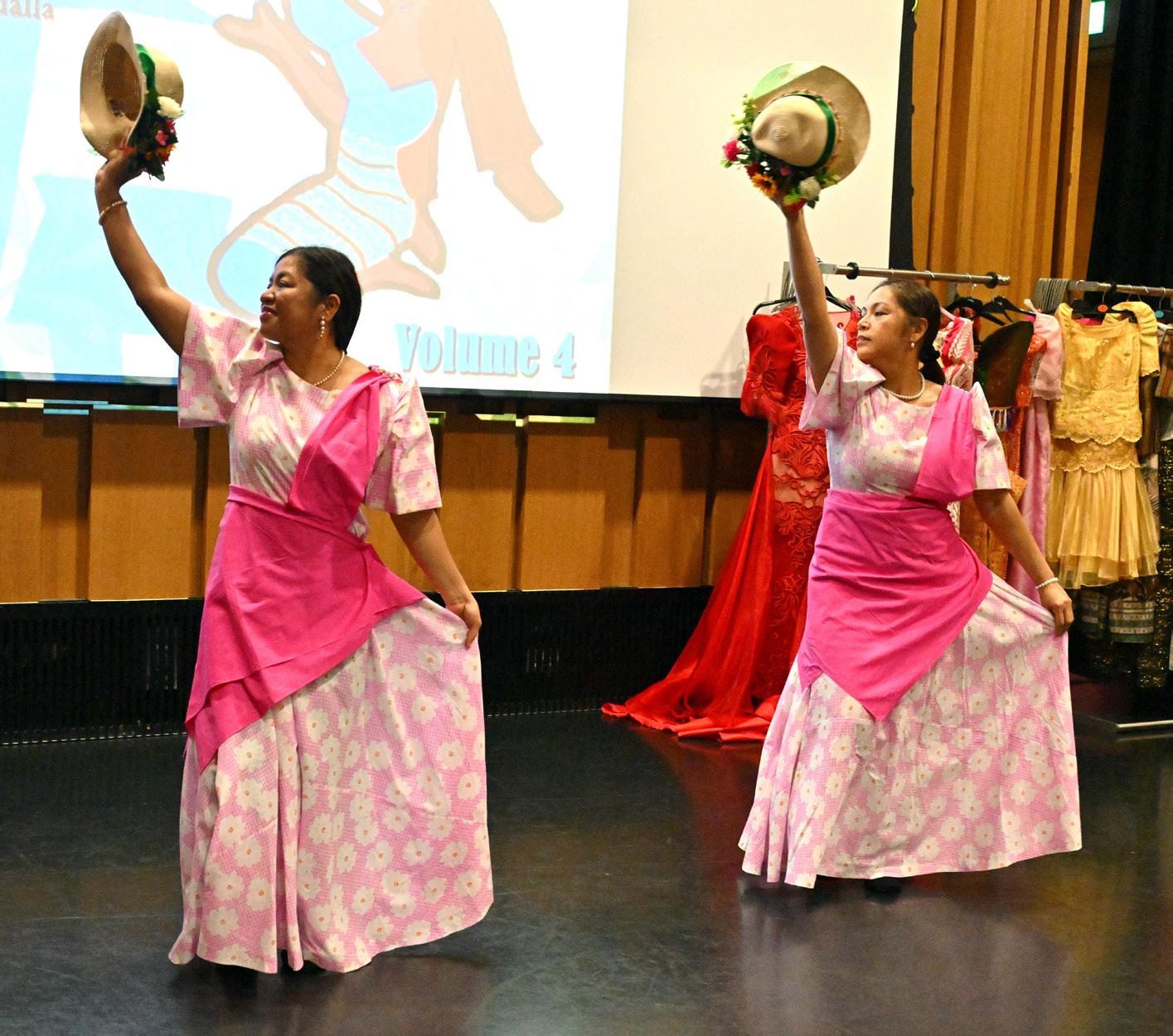
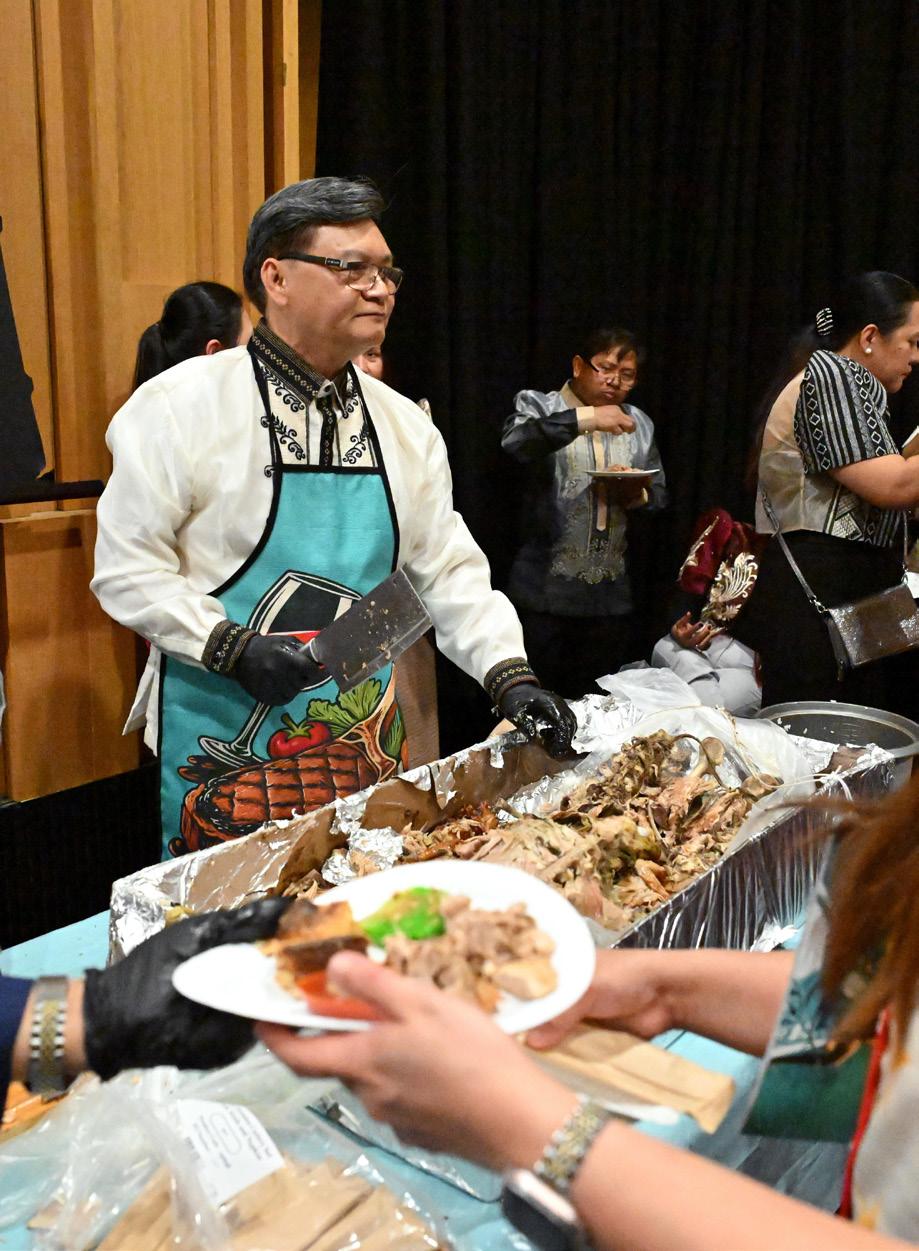
to Ireland in the early 2000s, women who came to a country that needed them and stayed to help shape it. Several of those trailblazing women were in the audience that night, watching their own chapter of history honoured on screen. The applause was long, and it was felt by everyone in the room regardless of where they had come from.
The presentation closed with a tribute to Father Shay Cullen, a missionary and a native of Glasthule, Dún Laoghaire — whose decades of humanitarian work in the Philippines continue to this day. That this acknowledgement was made in the very community Father Shay calls home gave the moment a quiet resonance that no speech could have manufactured.
Irish tenor and storyteller Noel O'Grady — fivetime Oireachtas na Gaeilge winner, 35-year Irish Army veteran, and acclaimed interpreter of the works of James Joyce — then took the stage. His voice did what great voices do: it made the distance between two cultures feel like no distance at all.
A Voyage Through the Archipelago. The evening then became a journey. Through vivid video, the audience travelled the length of the Philippine
archipelago — from the mountains and cities of Luzon, through the Visayas where Filipino cuisine took richly flavourful centre stage, to the breathtaking landscapes of Mindanao. Each region was not merely described but embodied.
After the Luzon showcase, the FiMuS Tala Fusion Dance Troupe performed the Subli — one of the oldest and most sacred folk dances of the Philippines, rooted in the province of Batangas — with a precision and grace that stopped the room. After Mindanao, they returned with the Dayang Dayang, a dance of royalty and elegance that brought the audience to its feet. More than 7,600 islands. One stage. One extraordinary company of dancers who carried every one of those islands with them.
Guests had travelled from across Ireland and beyond — with supporters making the journey from London among the many who came to be part of this historic evening. FiMuS Founding President Hilda expressed heartfelt gratitude to every partner, sponsor, and guest, because a celebration of this scale is never built by one organisation alone. It is built by everyone who believes in it — and none of it would
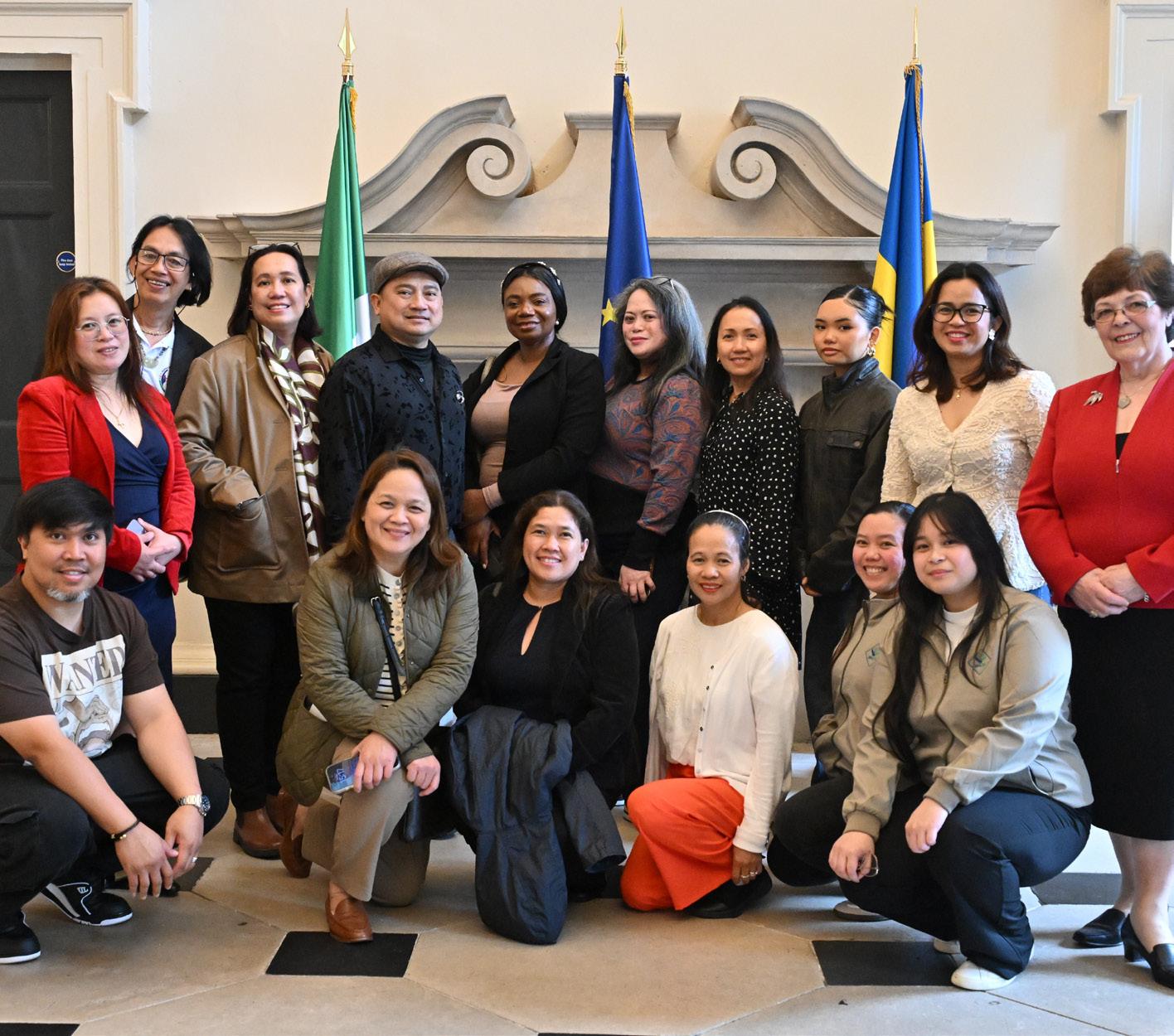
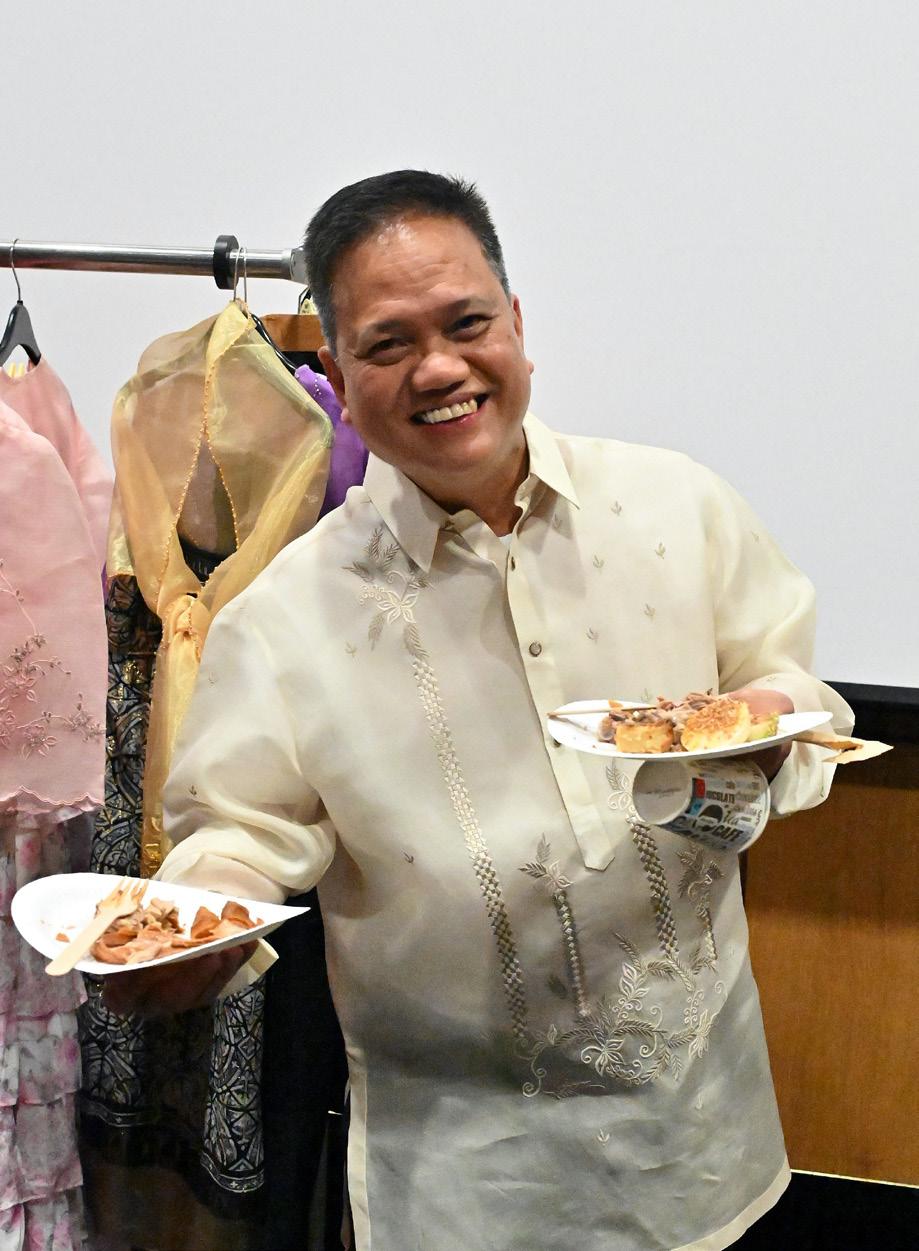
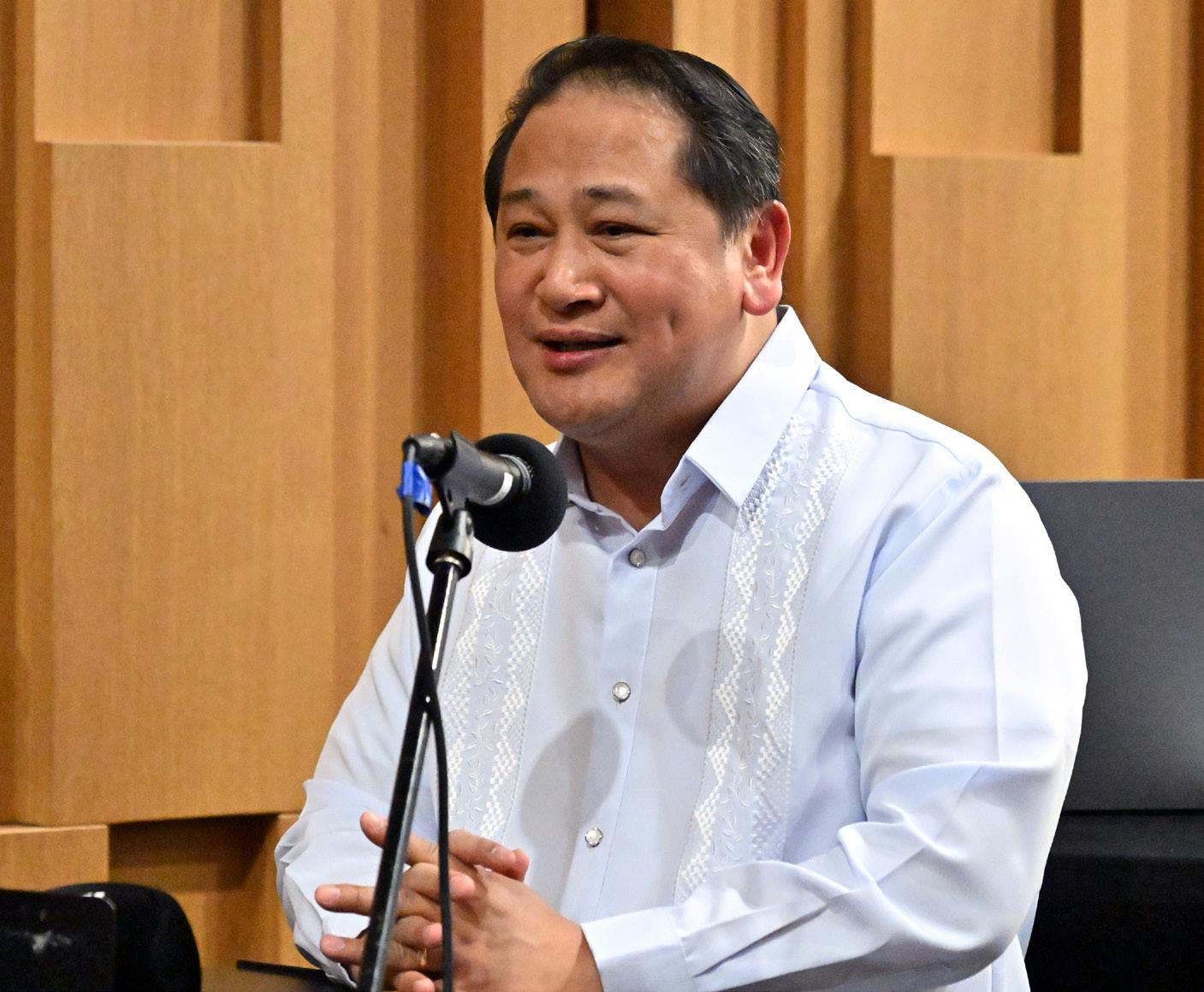
have been possible without the tireless dedication of FiMuS officers and members, who gave their time, energy, and heart to ensure that every detail reflected the pride and warmth of the community they serve.
The formal programme gave way to a Merienda Salo-Salo reception — lechon (star of the table), kakanin, music, and the kind of unhurried conversation that is, in itself, a form of celebration.
On the Eve of Independence — Leinster House. One of the most significant moments of the entire series took place inside Leinster House — the seat of the Irish parliament — where FiMuS brought community members and guests on a private tour on the eve of Philippine Independence Day.
The timing was deliberate and deeply symbolic. To stand inside the house of Irish democracy on the day before the Philippines marks 128 years of hardwon freedom is to understand something no speech can fully convey: that independence is not a date on a calendar. It is a living thing — fought for, honoured, and carried forward by every generation that refuses to forget what it cost. For a community that has contributed so much to Ireland across decades of steadfast, often unsung service, it was an invitation to stand not as guests in this country, but as people with a rightful and permanent place in its civic life.
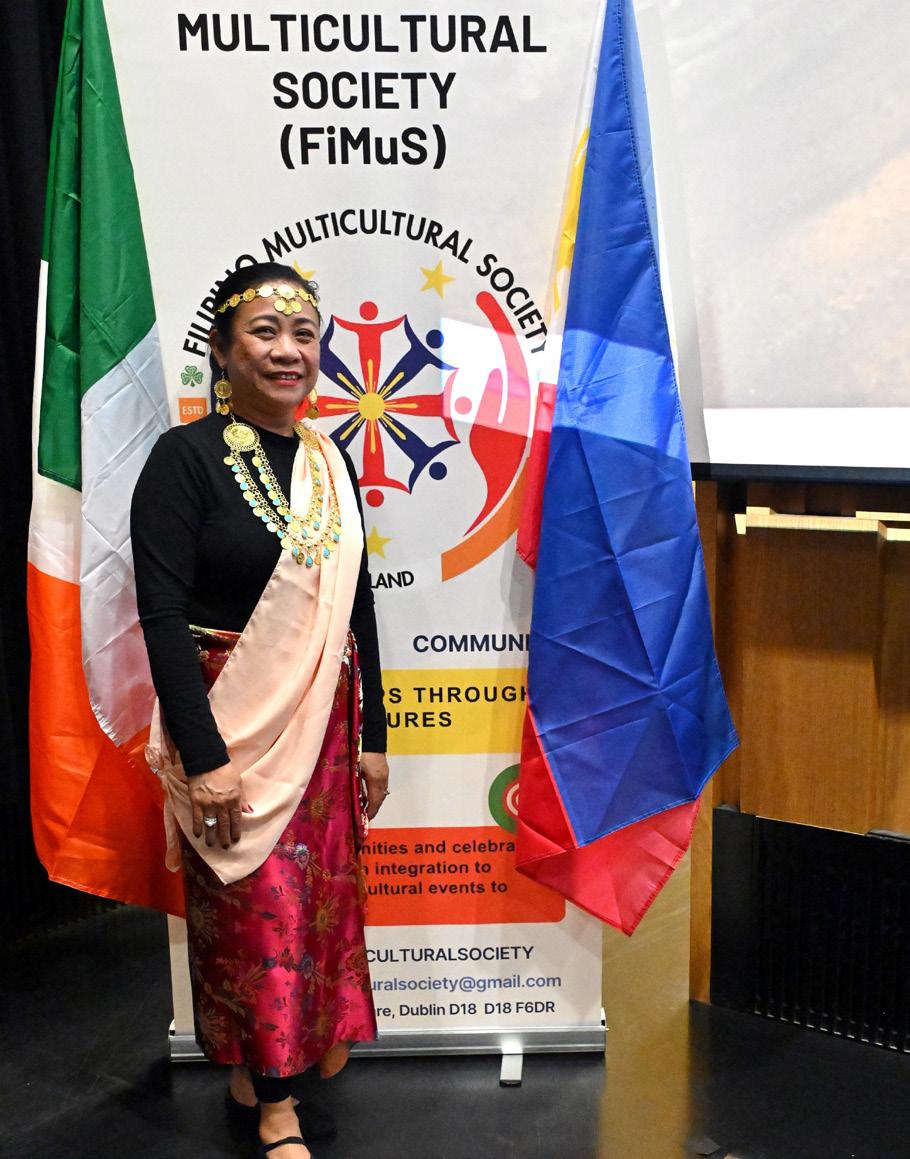
For many who were there, it was a moment they will carry for the rest of their lives.
A Series Still Unfolding. Isang Pagdiriwang was an opening, not a finale. The Philippine Independence Day Celebration Series 2026 has been unfolding across June and July — and not all of it is behind us yet.
Already, the folk dance workshop at the Eblana Club brought Paro-Parung Bukid to audiences who fell in love with it on first encounter. Still ahead: families will explore Filipino creativity through arts and crafts at the Samuel Beckett Library; Beyond Borders, Beyond Labels — a special LGBTQ+ dialogue co-hosted with the Commission on Filipinos Overseas — will hold inclusive space for honest conversation about identity and belonging; and Arnis, the national martial art of the Philippines, alongside traditional outdoor games and a Multicultural Day, will bring the wider community together at Moran Park.
The series closes on 18 July with Ang mga Kwento ni Lola Basyang at LexIcon Library — beloved Filipino folk tales brought to life for children growing up far from the motherland, so that the next generation carries the stories forward.
A New Standard — and an Annual Promise. The Philippine Independence Day Celebration Series 2026 is something the Filipino community in Ireland has not
seen before. For the first time, a Filipino organisation has brought together — across a sustained, thoughtfully curated programme — embassies, Irish state representatives, county council partners, Philippine government agencies, cultural institutions, and the wider public in a celebration as educational as it is joyful, as civic as it is cultural, and as forwardlooking as it is rooted in history.
This is not independence marked with a single evening. It is independence honoured with weeks of meaning.
FiMuS has committed to making the Celebration Series an annual event — growing in scope and ambition with every edition. Founded in January 2024 with the tagline Friendships through cultures, the organisation has built — in just eighteen months — a network spanning embassies, government agencies, county councils, and civic partners, sealed this year
with a landmark Memorandum of Understanding with the Commission on Filipinos Overseas.
What FiMuS has proven through every event in this series is simple and profound: the Filipino community in Ireland is not waiting to be recognised. It is too busy building something worth recognising.
The bar has been raised. The standard has been set. And every person who has shown up — Filipino, Irish, or from any corner of the world — is part of the story now.
FILIPINOMULTICULTURALSOCIETY@GMAIL.COM
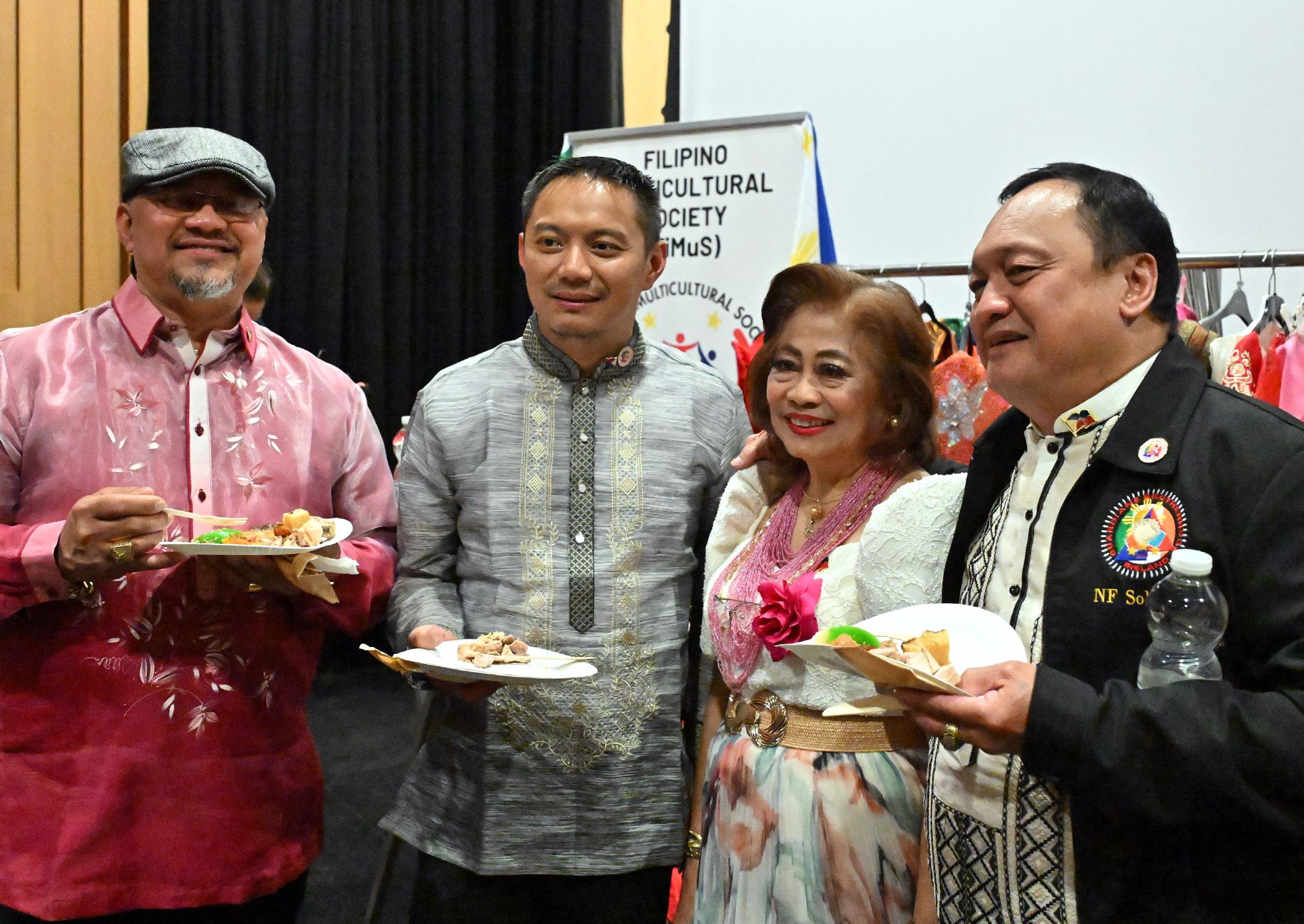
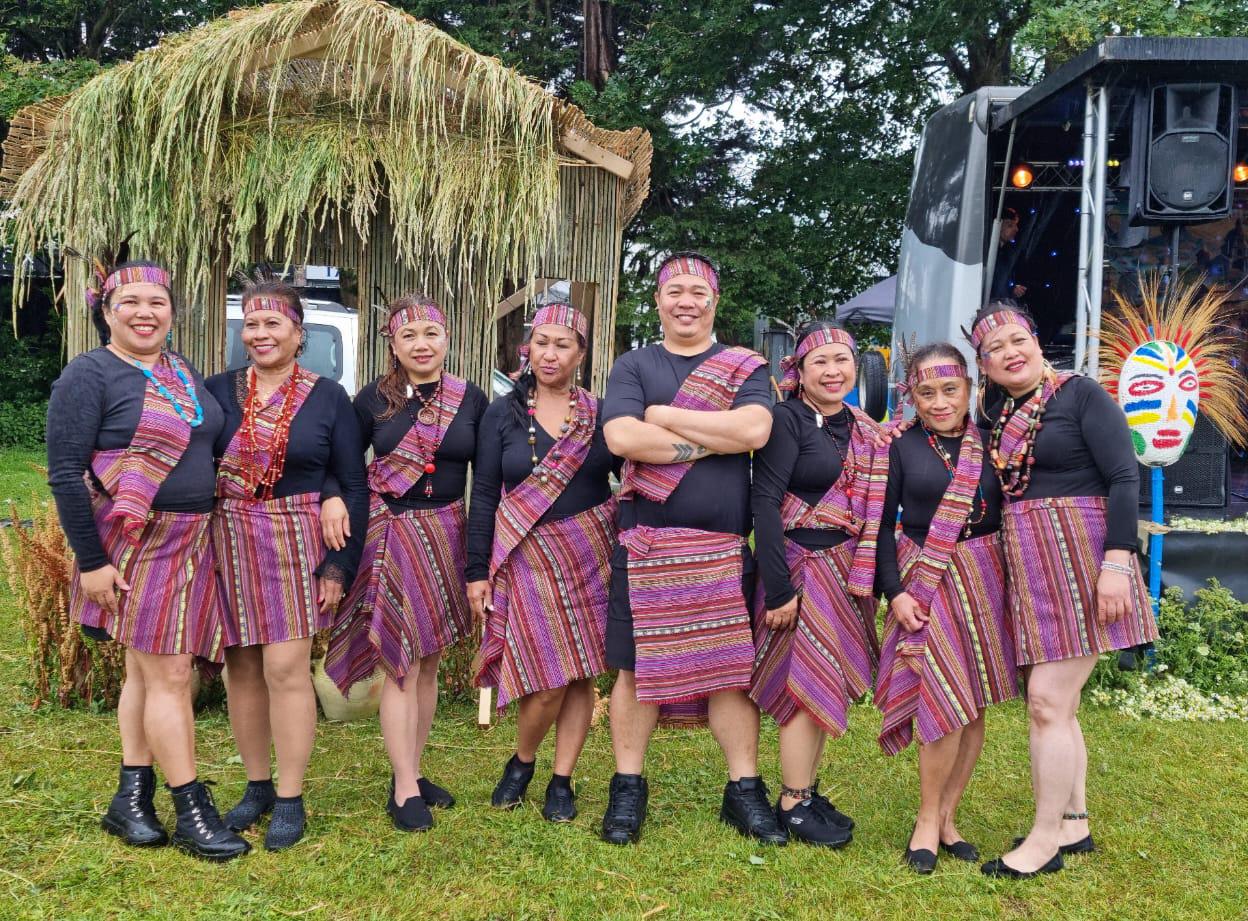
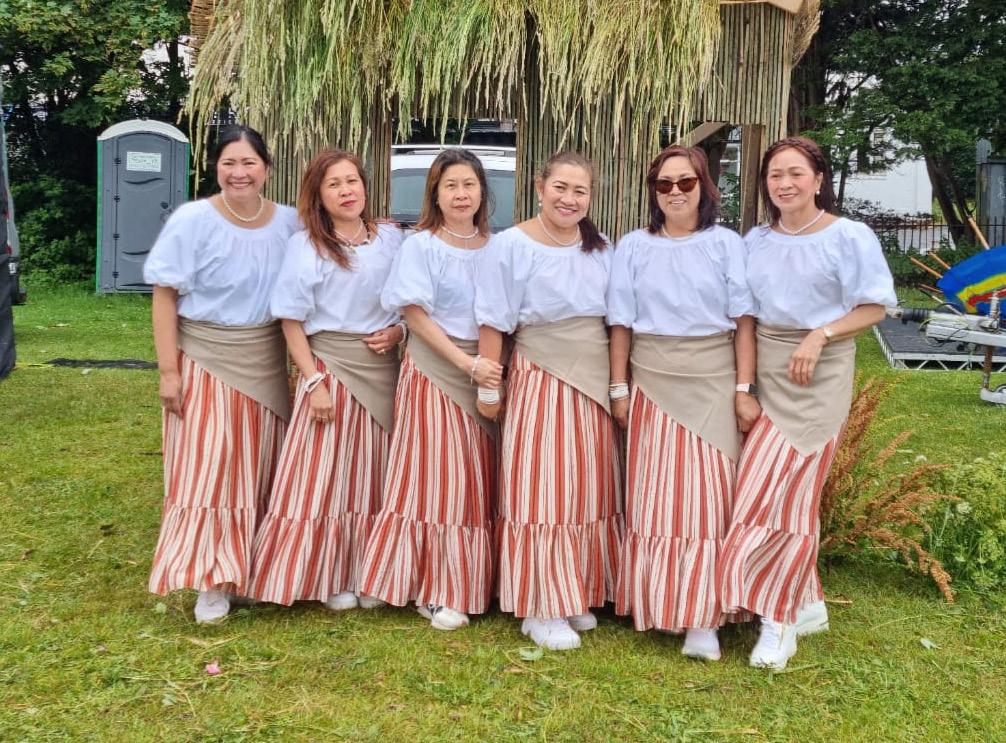
By Feds Murray
England - The Filbrits Community of Dorset officers and members curated a very successful Barrio Fiesta in Bournemouth on 6 June 2026 in King's Park, Bournemouth, England. The spectacular and unforgettable Filipino cultural celebration was full of fun, entertainment, food, and cultural heritage.
The main acts of the fiesta's show were Inday Garutay, a timeless stand-up comedian, and Charlie Green, a successful singer, delivered their performances with passion, heart, and real talent. Talented members of the Filipino community in Bournemouth also showcased their talents with their amazing performances of contemporary songs and traditional Filipino dances which set the stage to unbeatable entertainment. The crowd was mesmerised by the performances.
A Bayanihan spirit and Filipino cultural pride filled the air as the dedicated organisers and all those who attended the fiesta showed passion, unity, and camaraderie.
The fiesta was a full-circle cultural immersion for the visiting guests to the fiesta in the stunning and popular coastal resort town of Bournemouth.
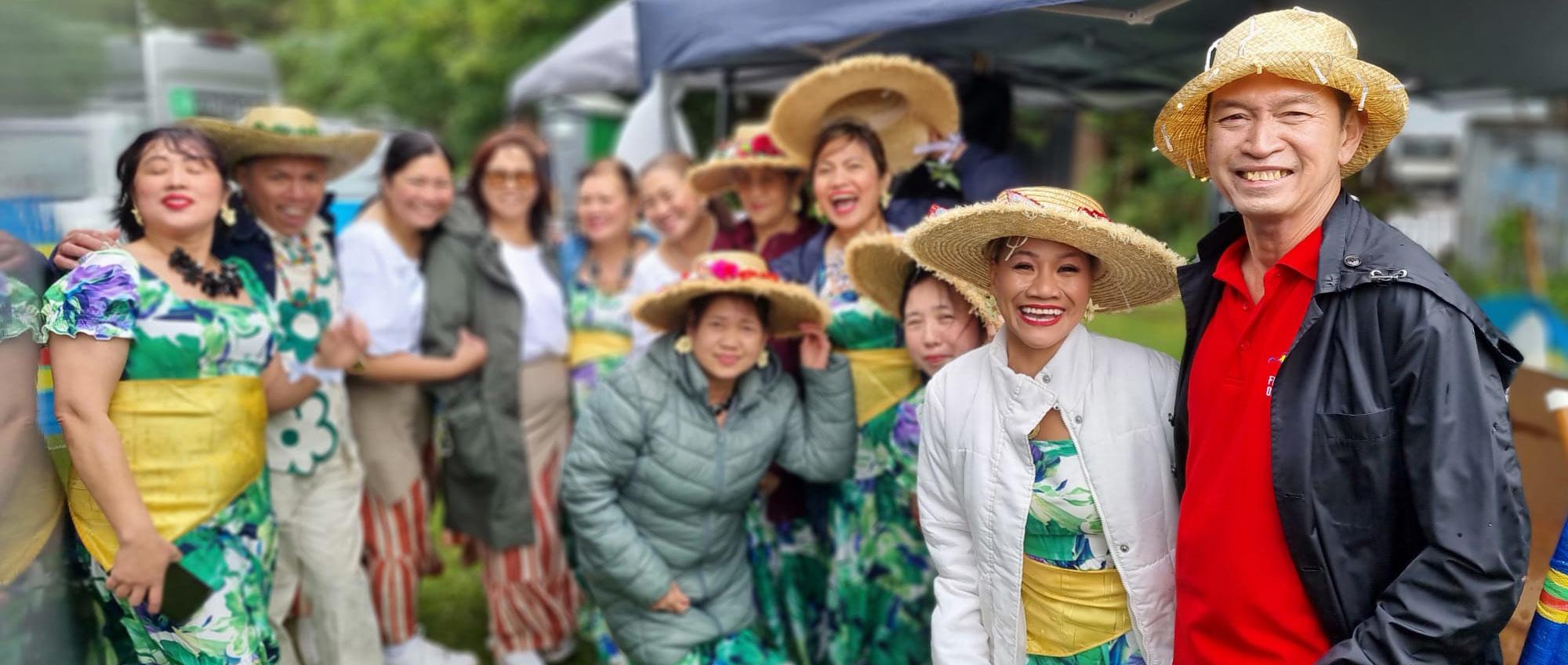
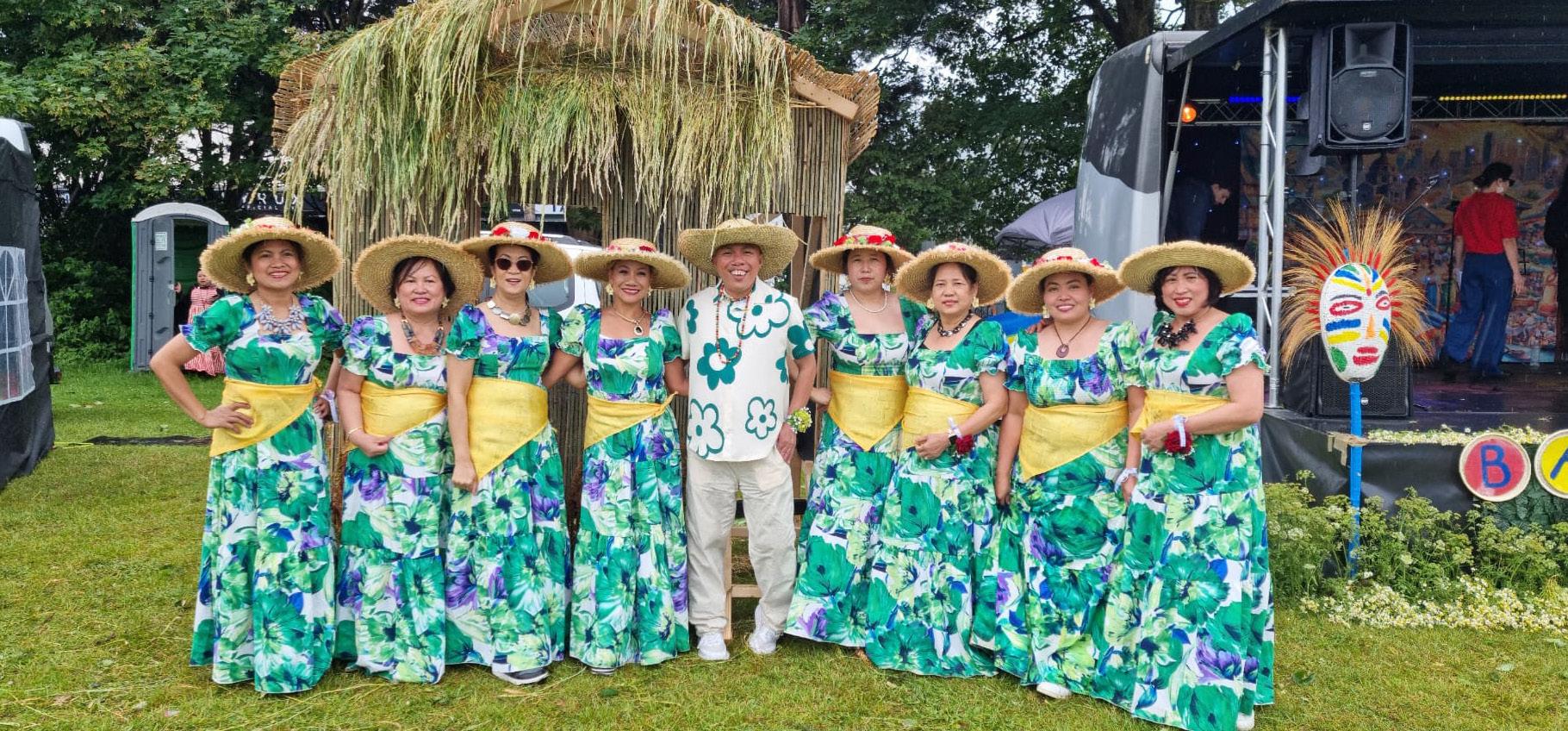
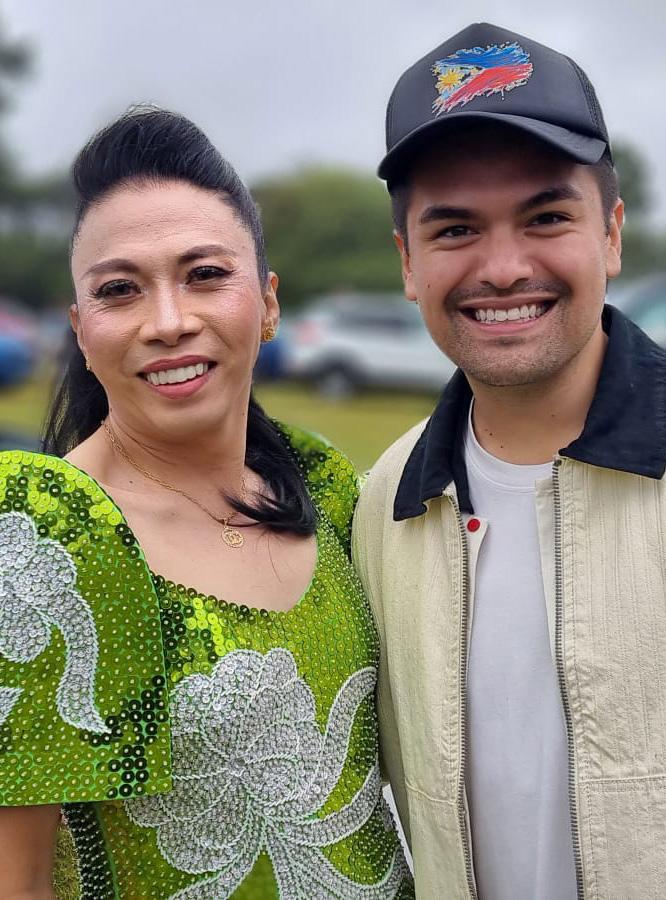
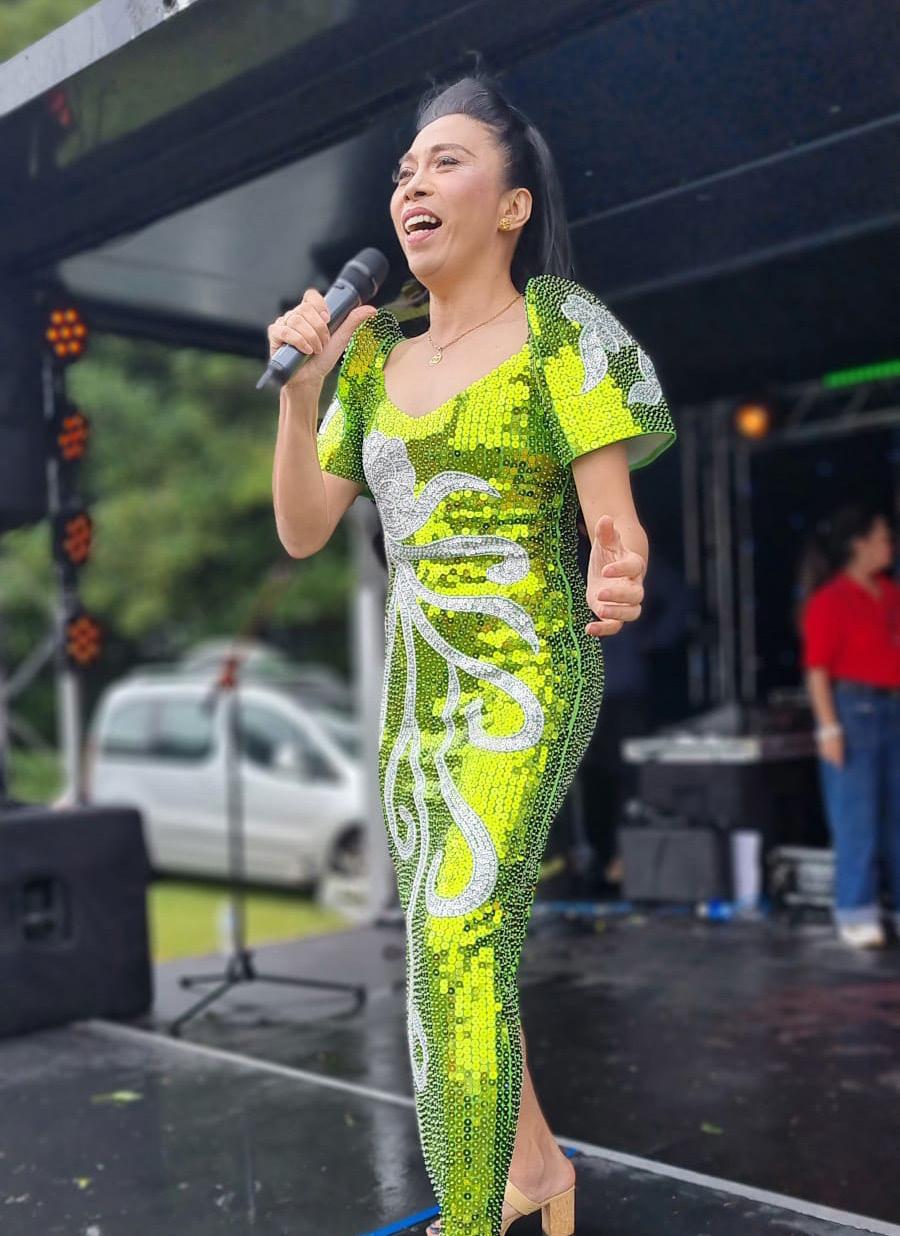
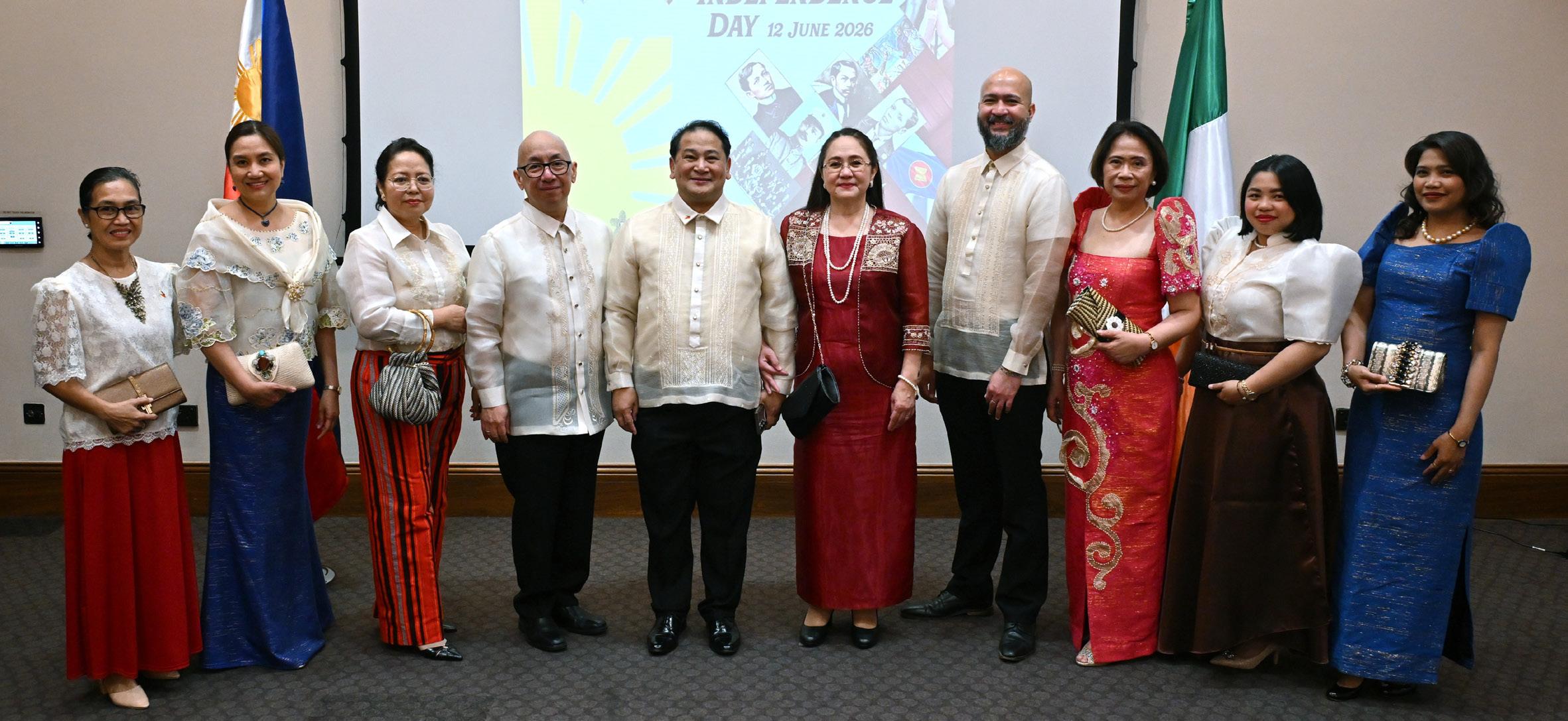
The Philippine Embassy in Ireland marks the 128th Philippine Independence Day - and reminds a community it was never forgotten
By Hilda Arenas
I did not expect to feel emotional walking into the Herbert Park Hotel on the afternoon of 9 June 2026. But the moment I stepped into that room, something caught in my chest and stayed there for the rest of the afternoon.
Let me share this with you….for over thirteen years, I led the International Charity Bazaar, the official charity of the resident embassies in Ireland. I organised the International Diplomatic Ball, our flagship fundraising gala attended by ambassadors and diplomats from over 50 countries, and Around the World in a Day, where embassies opened their doors to share their cultures, crafts, and cuisines with Ireland and beyond. National day receptions were not occasional events in my life. They were part of my social calendar.
And yet, through every one of those years, through every reception I attended and every independence
day I celebrated alongside communities from over 50 nations — there was always one gathering that was never on the calendar. One flag I never got to stand under. My own.
I watched other communities walk into their Embassy receptions year after year with something quietly lodged in my chest. Not bitterness — never that. But a particular, patient longing that only sharpens when you spend years helping others celebrate exactly what you are missing.
On 9 June 2026, that longing finally had somewhere to go.
I arrived as Founding President of the Filipino Multicultural Society of Ireland, a role I have held for just over two years. But in that moment, titles felt
beside the point. What I carried through that door was fourteen years of watching from a slight distance, and the quiet accumulation of every national day that was never mine to claim.
What stopped me before a single speech was delivered was the care with which the Philippines had been brought into that space. The artefacts and textiles on display — intricate weaves from Luzon, crafts from Visayas, richly worked pieces from Mindanao — were not hired props. They were carried there personally by Ambassador Espiritu and his team. Consul Ajeet put it simply: they always carry a piece of the Philippines with them wherever their posting takes them. It is their purpose and their privilege to show the world what the Philippines truly is — not a postcard, not a cliché, but something living, layered, and deeply worth knowing.
I stood in front of those displays longer than I should have. I was not looking at crafts and textiles. I was looking at home.
Ambassador H.E. Daniel R. Espiritu and Madame Carryn S. Espiritu welcomed every guest with a warmth that was entirely their own. I have attended enough diplomatic receptions to know the difference between a host who is gracious by training and one who is warm by nature. They are emphatically the latter — and it showed in every handshake, every conversation, every moment of genuine attention given to each person in that room regardless of rank or role.
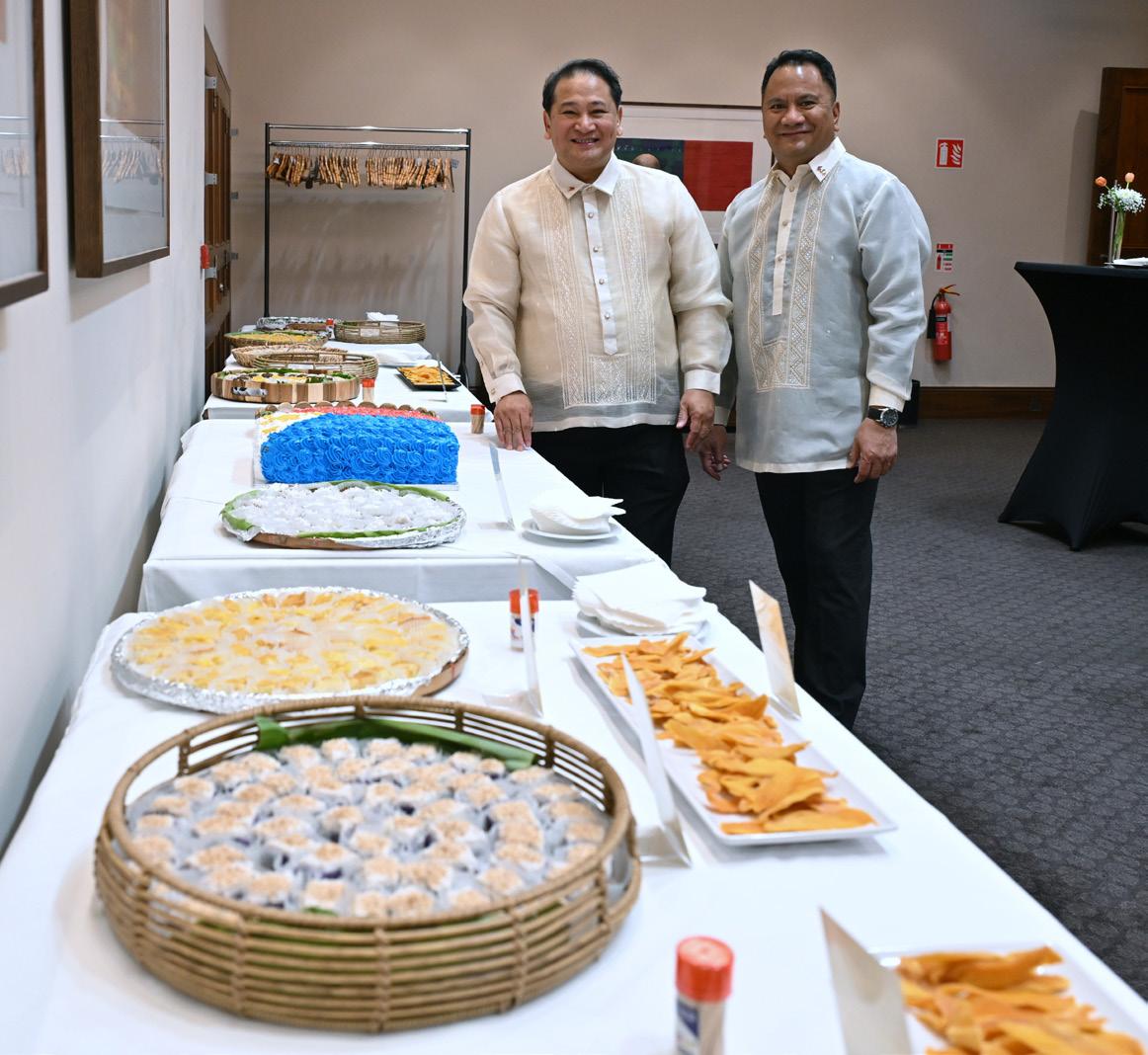
This afternoon carried a particular weight. It was the first official diplomatic event hosted by Ambassador Espiritu, and the first Philippine Independence Day reception he presided over, since presenting his credentials to former Irish President Michael D. Higgins in July 2025. Less than a year in post, he had already chosen to mark this occasion not within the walls of the chancery but out in the open — with his community, with Ireland, with the wider diplomatic world. That was not a small decision. It was a declaration of intent: that this Embassy would be present, visible, and genuinely engaged. For a community that had waited thirteen years for exactly that, it landed with force.
The Embassy team matched that energy throughout. They worked the room the way only Filipinos can — moving between guests with ease and genuine warmth, making introductions, drawing people into conversation, making sure no one felt like a stranger. It was not a duty. It was a character. Filipino hospitality, full and unself-conscious, right in the heart of Dublin 4.
The Ambassador's welcome address set the tone for everything that followed. He spoke about independence not as a date but as a living responsibility, and about the Filipino community in Ireland not as a demographic but as people — people who have given greatly to this country and who deserve to be genuinely seen in return. Around me, heads nodded. Eyes glistened. I was not the only one who had needed to hear those words, said with that sincerity, in a room like that.
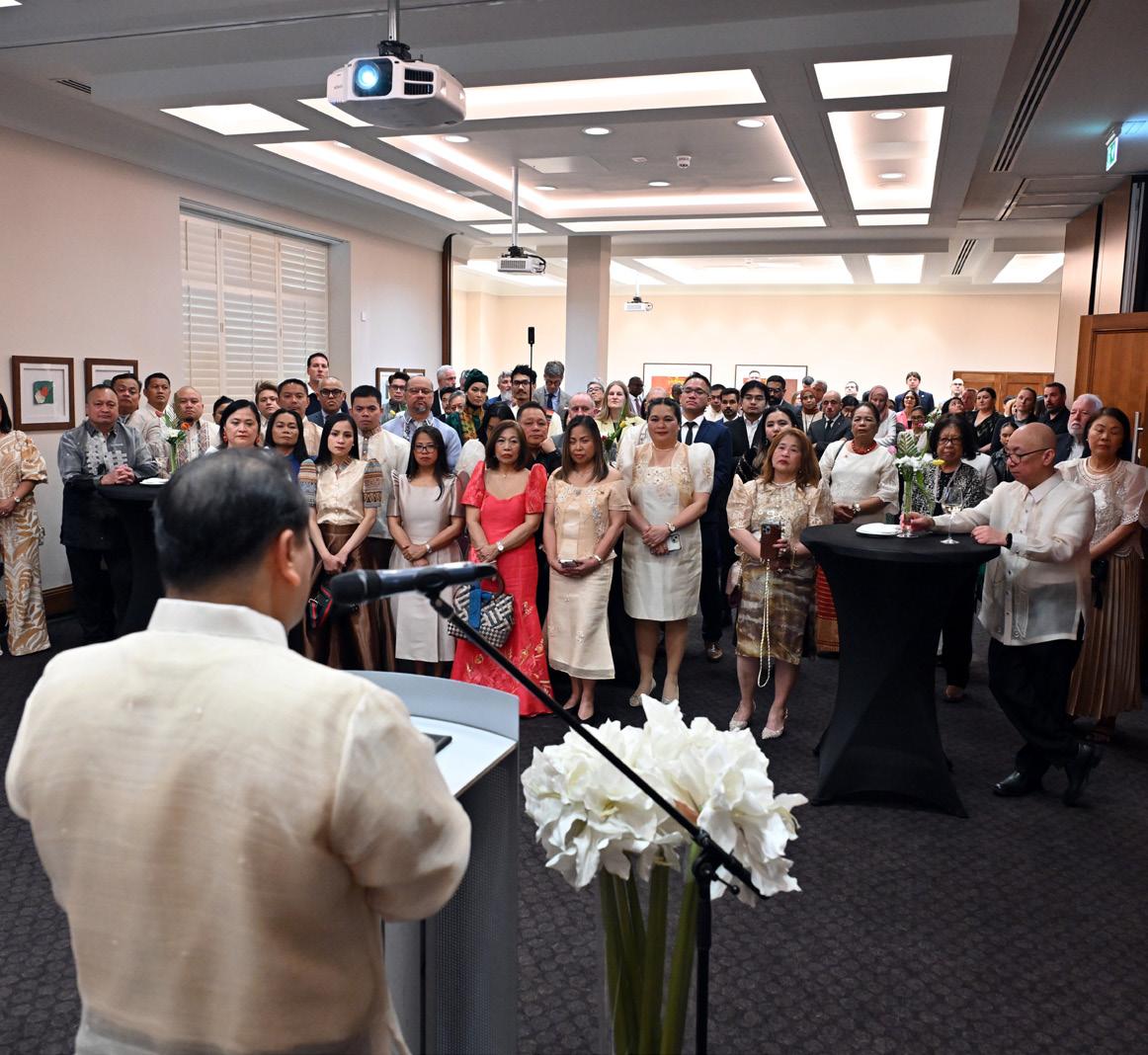
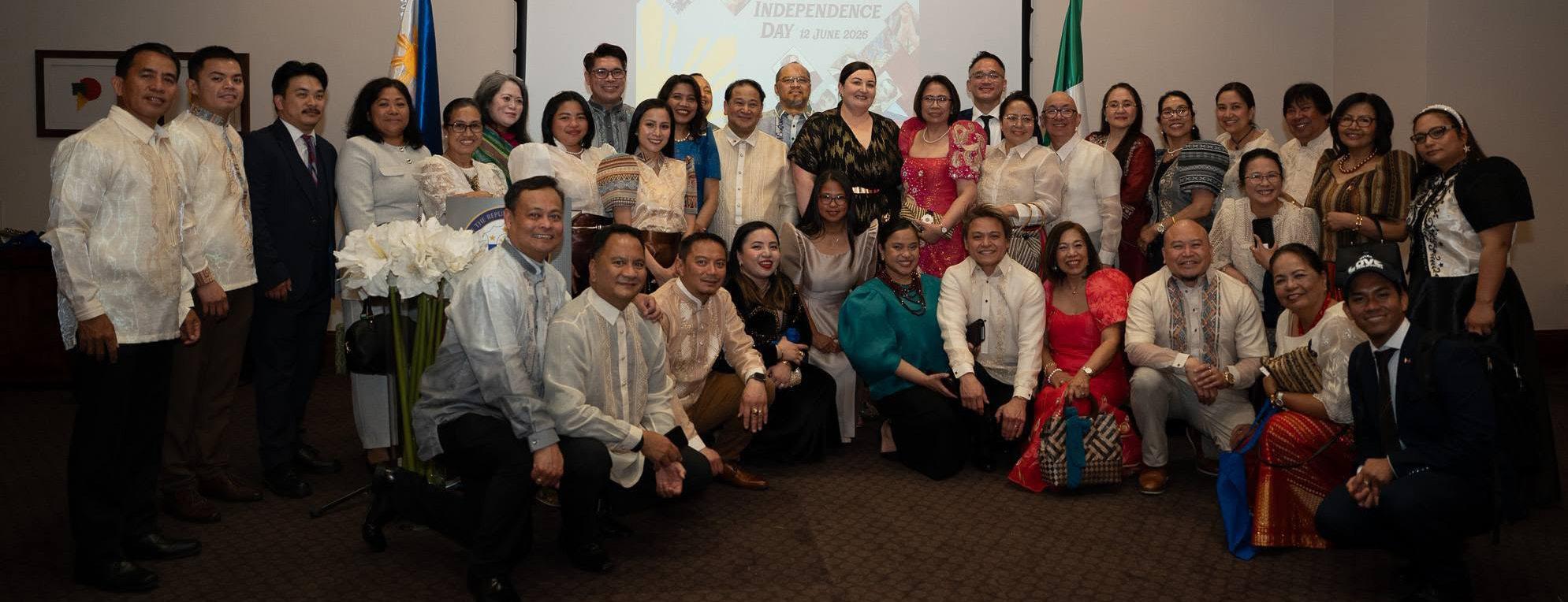
Guest speakers Colm Hayes of the Department of Foreign Affairs and Senator Aubrey McCarthy added institutional weight to the afternoon, acknowledging plainly what the Filipino community has contributed to Ireland across generations. It was good to hear it said in that room, by those voices, on that day.
Then a cake was cut to mark the 128th Philippine Independence Day — the first time in thirteen years the Embassy had hosted this celebration. There was applause and laughter and the kind of smile no Filipino in that room could have suppressed even if they had tried. Wide, proud, and entirely our own.
The afternoon was generous in every sense. Lumpia Shanghai, sapin-sapin, dried mangoes, and a spread of Filipino cuisine that turned a Dublin hotel into something that smelled and tasted like every family table and Sunday afternoon any of us has ever loved. For guests tasting it for the first time, I watched the precise moment it happened — that particular expression of someone discovering something wonderful and immediately resenting all the years they did not know it existed. For the rest of us, it simply tasted like belonging.
The Philippine Department of Tourism sent guests home with tote bags, caps, brochures, and leaflets.
The afternoon closed with the Irish debut of Panganay, a short film directed by Alex Gill and produced by Cracking Light Productions, supported by the Engine Short Film Scheme. Set in the world
of Filipino immigrant care workers in Ireland, it tells the story of a mother and daughter and the weight of love that sacrifice carries across generations. Anne Cruzado and Cristin Dieza Limpahan perform it with a stillness that is almost unbearable in the best possible way. When it ended the room went quiet — not the polite quiet of an audience being courteous, but the real quiet of people who have just seen something true. Then the applause came, and it was full and unhurried and meant.
The Philippine Embassy first opened in Ireland in 2009, and the last time it hosted an Independence Day reception was June 2012 at Hainault House in Dublin 2. Chargé d'Affaires Hjayceelyn M. Quinata presided over a morning that has never fully left me. There was Filipino food fayre, the particular comfort of familiar flavours in an unfamiliar city. There were people who had been part of this community from the beginning, and newer faces still finding their footing. And there was a moment of recognition — community leaders and individuals acknowledged for their dedication and service — that reminded everyone in that room why the unglamorous, consistent, often invisible work of building a community genuinely matters.
Not long after, the Embassy closed.
That morning at Hainault House became, without any of us knowing it, a memory we would quietly carry for thirteen years.
On 9 June 2026, I stood in a room of ambassadors, diplomats, senators, and community leaders — and for the first time in all my years attending and organising diplomatic events, I was not there to support someone else's celebration.
I was there as one of my own.
A few of the ambassadors I had known for years through my work with the International Charity Bazaar, who had invited and seen me at countless receptions in service of other communities — they approached me during the afternoon and said they were very happy to see me celebrating my own independence day, with my own Embassy.
It was a simple thing to say. But it found the exact place it was meant to reach, and it has stayed there since.
Before I close, I want to say something that goes beyond courtesy — because this was not an ordinary afternoon, and these are not ordinary people.
What Ambassador Espiritu and Madame Carryn S. Espiritu created on 9 June 2026 was not simply a reception. It was a homecoming — for every Filipino in Ireland who has spent years wondering whether the Philippines still sees them from this distance. The answer, delivered through every detail of that
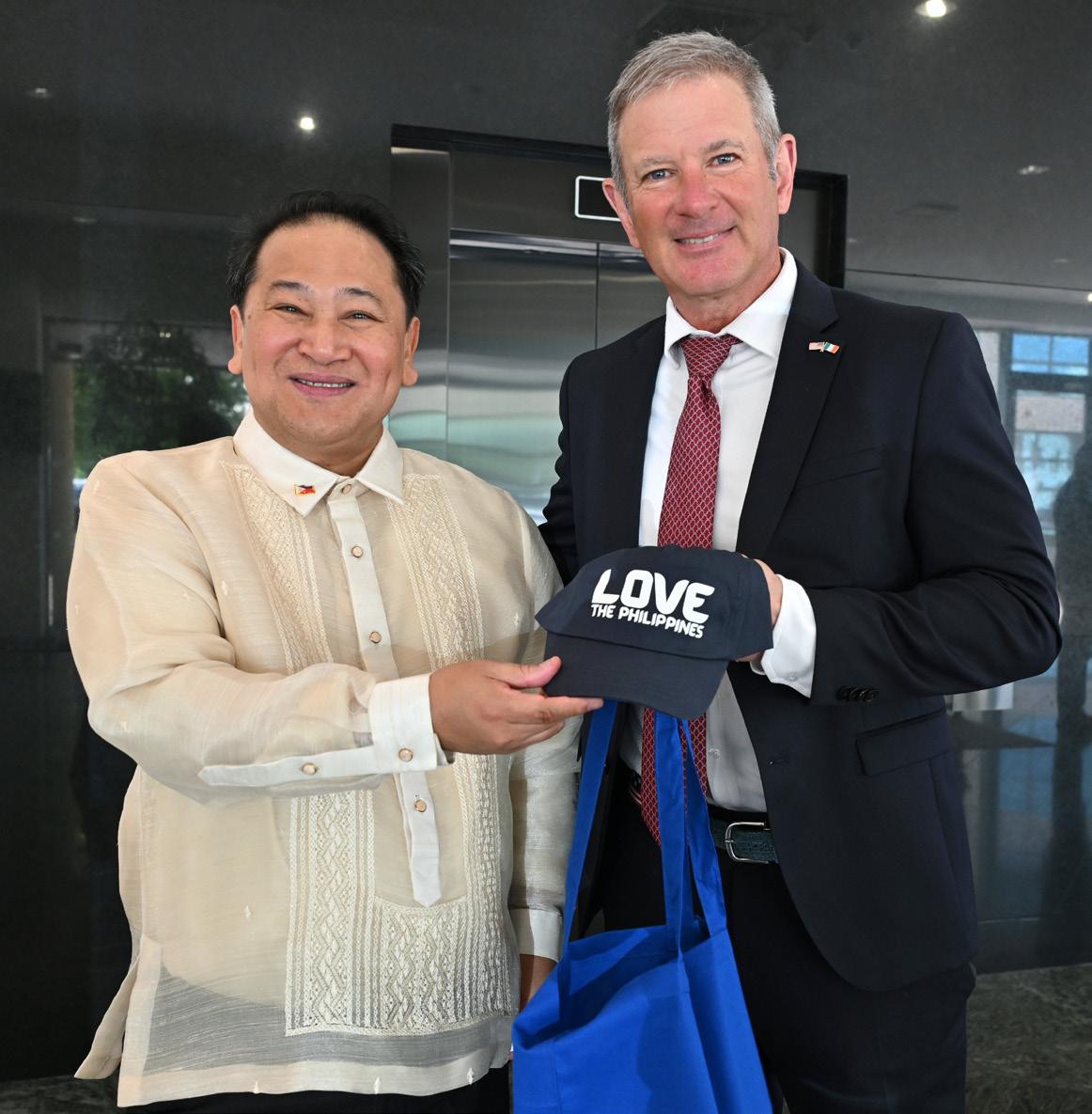
afternoon, was clear and unambiguous: yes. It does. And I am proud.
The artefacts carried from home, the food prepared with love, the film chosen with precision and courage, the personal warmth extended to every single guest — none of it was accidental. It reflected the character of an Ambassador and his wife who understand that their role extends far beyond the walls of a chancery, and an Embassy team who carry the Philippines with them not as an obligation but as a calling.
To every member of that team — maraming salamat. You made every person in that room feel not like a guest at a function, but like family at a reunion long overdue.
To Ambassador Espiritu and Madame Espiritu — thank you. For coming back. For showing up. For making 9 June 2026 a day the Filipino community in Ireland will not forget.
After thirteen years, we finally had our day.
Hilda Arenas is the Founding President of the Filipino Multicultural Society of Ireland (FiMuS) — Friendships through cultures
filipinomulticulturalsociety@gmail.com Photo credit to the respective owners
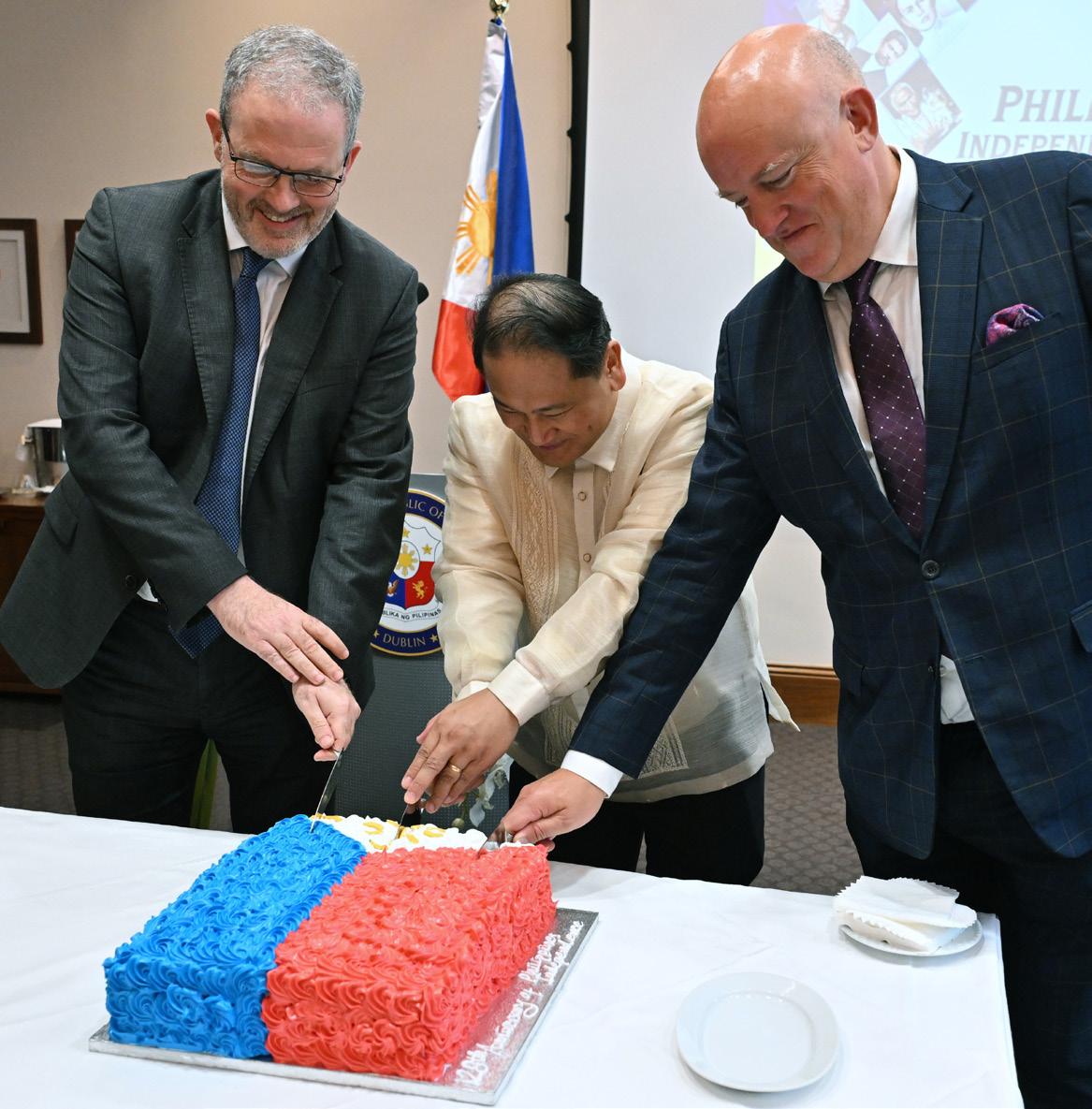
By Feds Murray
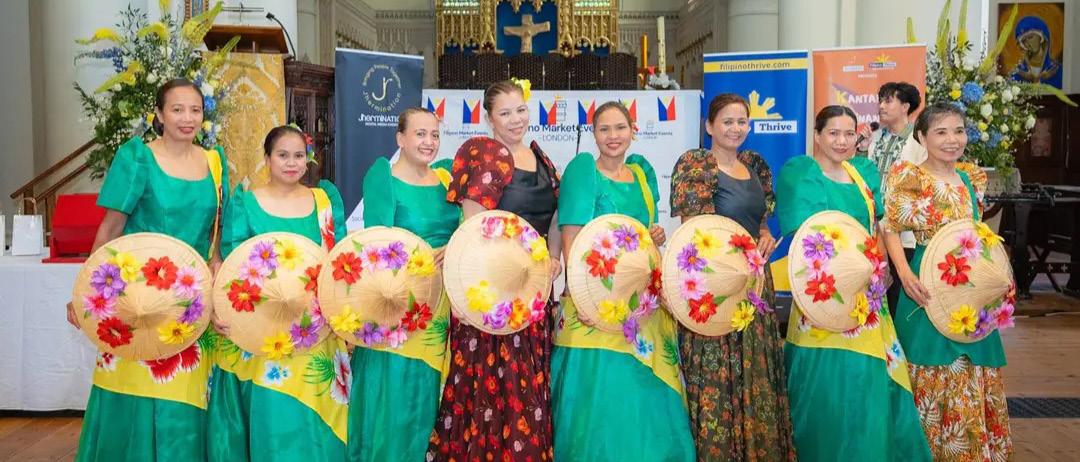
London - On 23 May 2026, JhermiNATION Events, Filipino Market Events London, and Filipino Thrive UK marked the third year of the Filipino Spring Fair: " Kantahan, Kainan, Kultura" which celebrates Filipino culture, community, and entrepreneurship. The fair was held at St. John's Church in Nottinghill, London.
The annual event is fuelled by the curators' passion and purpose to bring communities together, support local Filipino businesses, celebrate culture, and promote Filipino talents in a foreign land.
Igorot- UK, winner of Best Community Award in One Nation Awards UK, performed in the event as one of the main highlights of the day. Other amazing performers also enriched the stage with their talents.
Carol Panday, a community champion in the UK and Director of Britanya Ngayon, collaborated with the organisers in this event. She stated, " The fair brought together Filipinos and friends from various backgrounds for a day filled with music, food, culture, and community spirit.
The fair also served as a stage for talented Filipino artists and performers, giving them an opportunity to share their gifts with audiences and celebrate the creativity that thrives within the Filipino diaspora. From musical performances to cultural presentations, the event reflected the diversity and talent of Filipinos living in the United Kingdom.
As a multicultural nation, the Philippines has so much to contribute to London's diverse cultural landscape.
More than just a market, KKK has become a symbol of unity, pride, and cultural identity. It continues to strengthen community bonds from different backgrounds, helping build greater understanding and appreciation of the Filipino way of life.
As the Filipino Spring Fair grows each year, it remains committed to its vision of bringing people together through 'kantahan' (singing), 'kainan' (food), and 'kultura' (culture) - creating meaningful connections and lasting memories for generations to come.
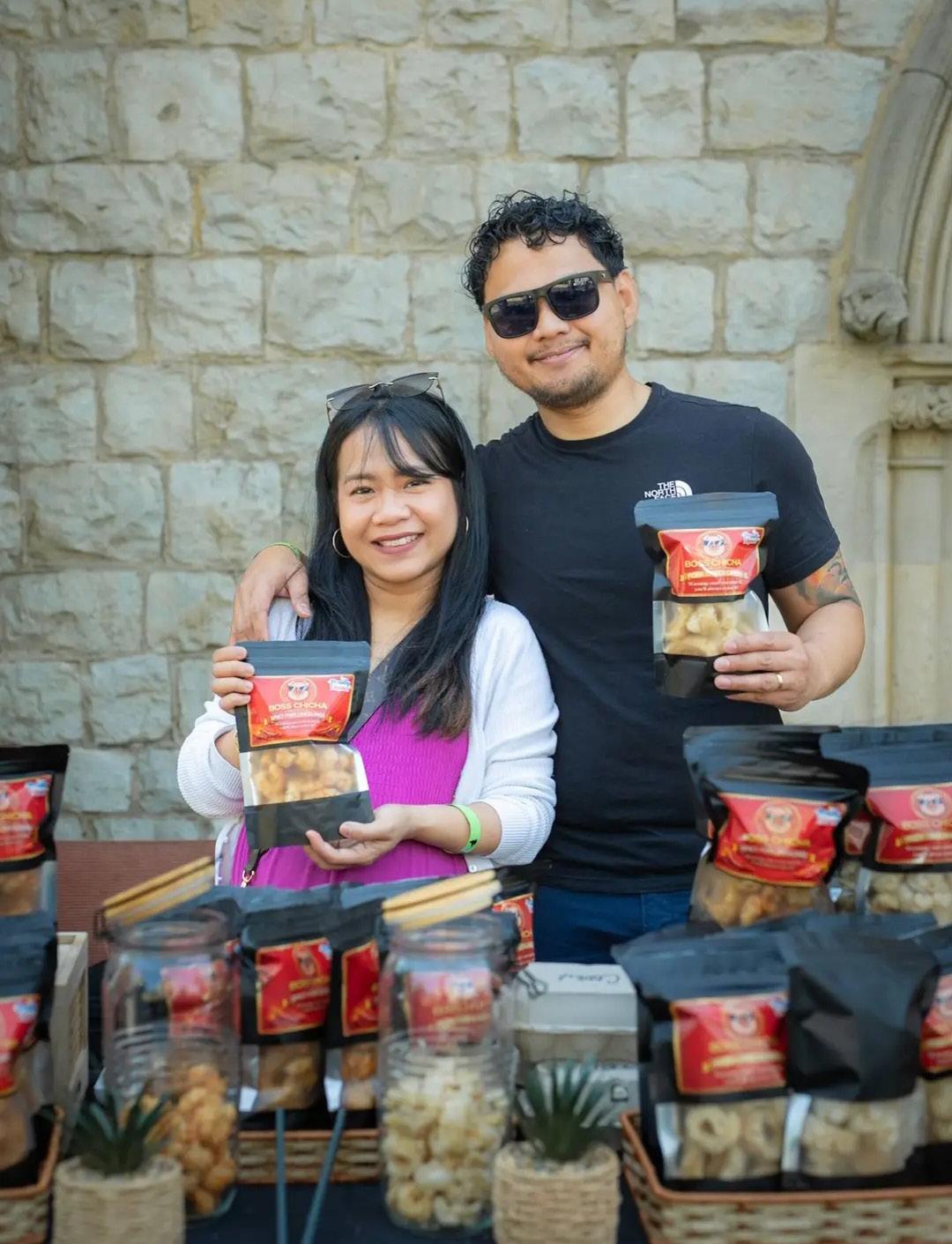
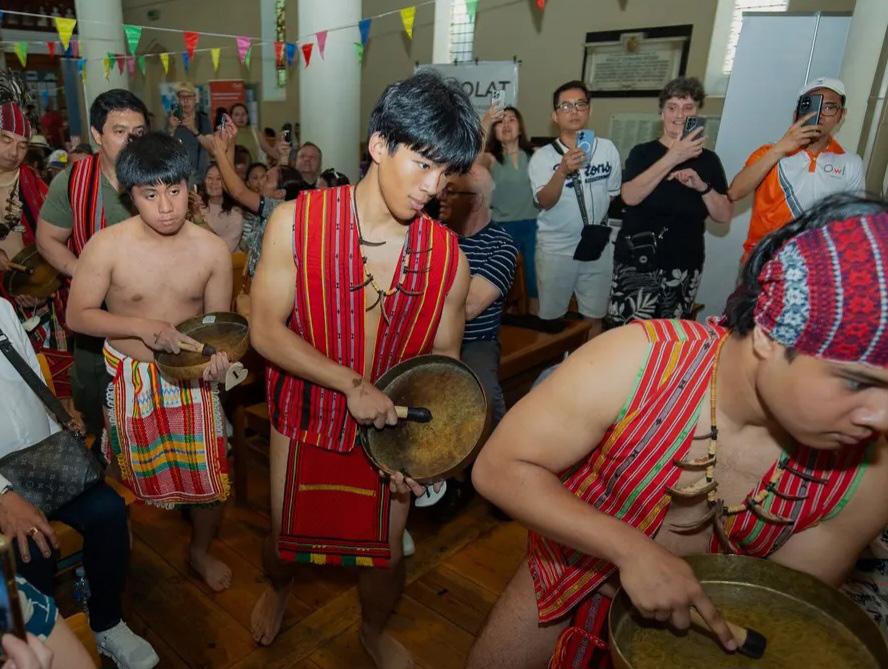
With the continued support of sponsors, vendors, performers, volunteers, and community members, the future looks bright for their growing celebration of Filipino heritage in London."
Joey Palomeno, the official photographer of KKK, expressed, "The festival was filled with people, laughter, and amazing aroma of Filipino food. Families and friends shared picnics, enjoyed the food, the performances, and celebrated community in the best way."
Jhermy Roy, a lead curator of KKK, took to social media to thank everyone who was involved with the successful spring fair. He stressed: "We are grateful, beyond measure, for the outpouring of love and support for our recently concluded 3rd Filipino Spring Fair."
Jhermy Roy works strategically with Mimi Milli - a woman who aims for perfection in all her efforts. They are brilliant collaborators to the many entrepreneurs and local Filipino British performers in their community and beyond. These two lead curators are so hardworking and creative who work tirelessly to deliver meaningful and enjoyable events to the Filipinos in London.
Photo credit: Mimi Milli, Britanya Ngayon and Joey Palomeno

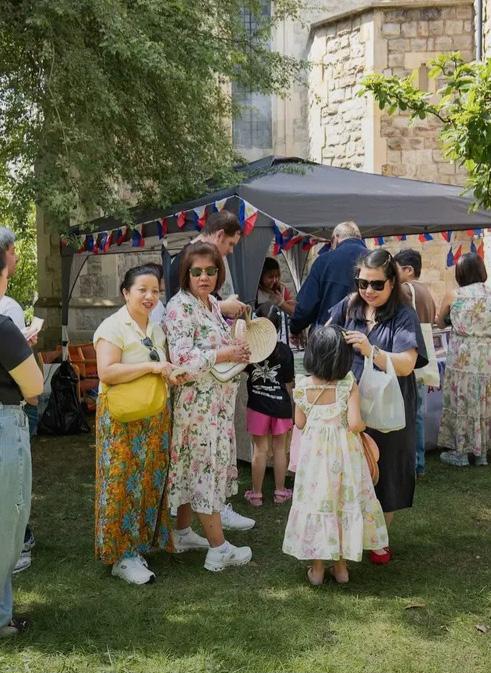
By Feds Murray
The Igorot Community UK had its Sports Festival 2026 recently. It was a fullcircle cultural immersion experience that brought a strong and established group of Filipinos in England who preserve their Igorot heritage with remarkable determination. The event was packed with sportsfest fun and the evening program ran with the Little Mr and Ms Igorot UK Sportsfest 2026 pageant.
According to Mimi Milli, one of the creators of JhermiNATION and Filipino Market Events London who attended the event:
"The Igorot Community UK Sports Festival was more than an occasion of sportsmanship and unity. It was far more than a day of friendly competition. It was a homecoming. A declaration and passage from one generation to the next.
It was a proud moment for the parents and tribes to see the little ones showcasing their talents and wit, making sure for the next generation, traditional roots and practices were passed on.
With intermission production of Eskrima or Arnis - a national martial arts and sports form the
Philippines, and Igorot dances, the event was truly majestic to be part of.
More than any trophy or podium, the spirit of the day captured the Igorot community in the United Kingdom not merely surviving in the diaspora - thus is active and lovingly thriving. They understand that identity is not inherited automatically. It must be shown, sung, cooked, danced, and handed over with deliberate care.
The mountains of Cordillera may be thousands of miles away, but on this particular hot British afternoon, they felt very close."
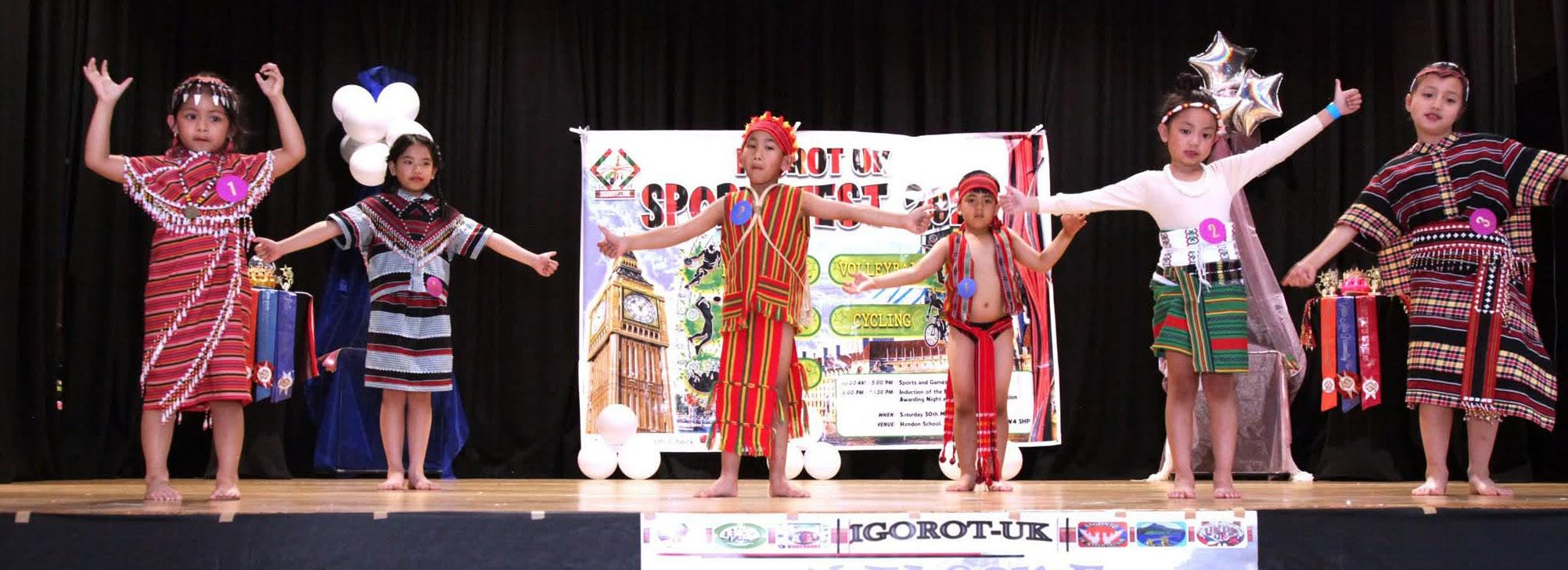
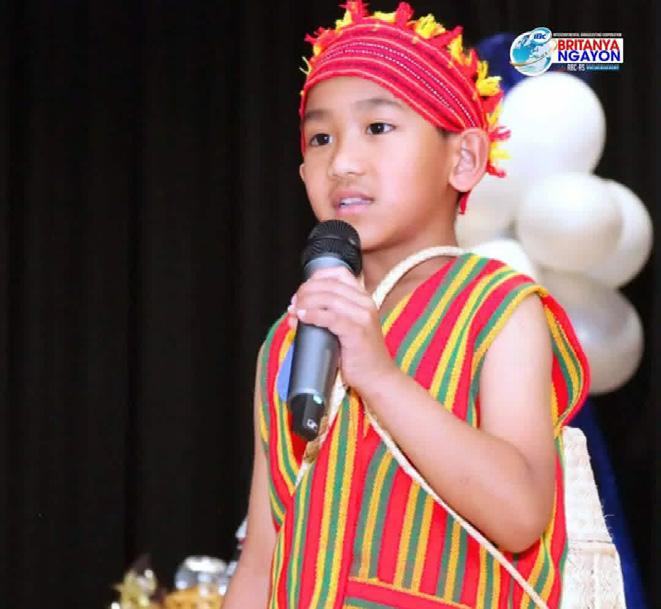
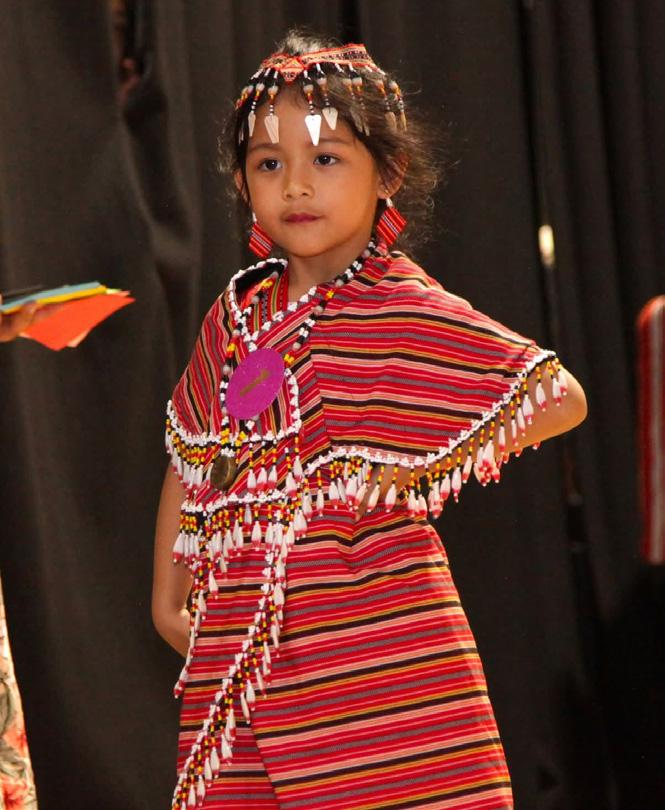
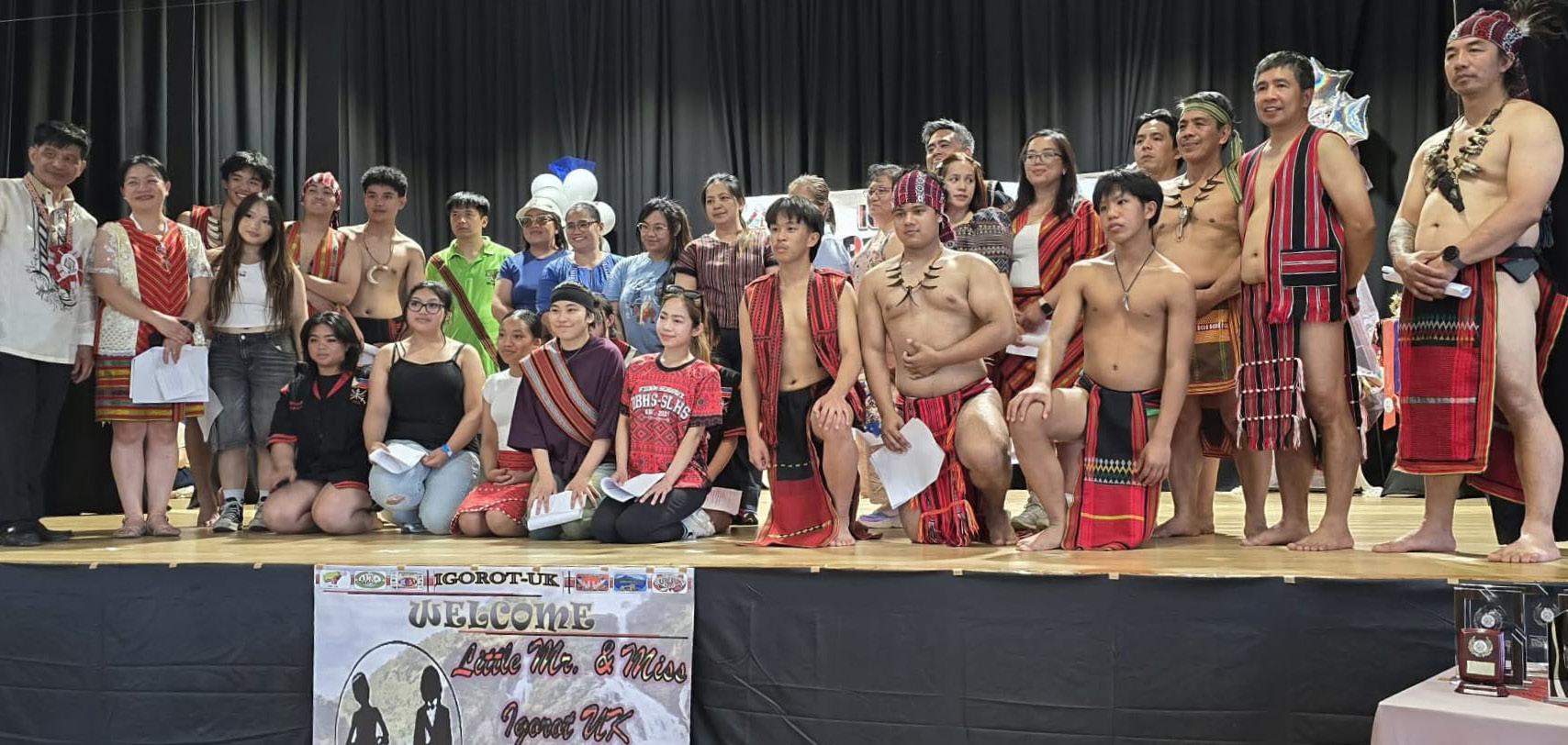
Compiled by Feds Murray, Associate Editor, Editorial Board
The Commission on Filipinos Overseas (CFO), established under Batas Pambansa 79, is dedicated to the welfare and empowerment of Filipinos permanently residing abroad. It is distinct from the Department of Migrant Workers, which primarily addresses the needs of Overseas Filipino Workers (OFW) and other temporary migrants.
The CFO, which is an agency under the Office of the President, works to strengthen the political, economic, and cultural ties of global Filipinos with their home country. Its primary stakeholders include Filipino permanent migrants, dual citizens, spouses and partners of foreign nationals, participants of the US Exchange Visitor Program, participants of Au Pair Program for Europe, and Filipino descendants overseas.
The Commission on Filipino Overseas have issued the following press releases focusing on key issues and phenomena that face and affect the Filipino diaspora in Europe.
Digital storytelling is emerging as a powerful bridge connecting the global diaspora to the motherland, a theme central to a recent high-level meeting between the Commission on Filipinos Overseas (CFO) and naturalized Filipino content creator Kyle “Kulas” Jennermann.
CFO chairperson, Secretary Dante “Klink” Ang II welcomed Jennermann—the Canadian-born personality behind the popular BecomingFilipino platform—to discuss how authentic narratives can strengthen the ties between 10 million overseas Filipinos and their heritage.
The meeting aligns with the CFO’s core mandate to foster cultural, economic, and political linkages between the Philippines and Filipinos abroad. As the primary agency tasked with promoting the interests of the diaspora, the CFO views purposeful storytelling as a vital tool in its mission to maintain Filipino identity across borders.
During the meeting, Ang underscored the CFO’s commitment to amplifying Filipino stories on the global stage. Both parties explored integrating Jennermann’s expertise into the CFO’s Virtual Sentro

Rizal Educational Series, a program designed to reconnect second- and third-generation Filipinos abroad with their roots.
"His work serves as a cultural bridge, bringing authentic narratives to a global audience while capturing the spirit of bayanihan and resilience," he noted.
The discussion also highlighted synergy between Jennermann’s advocacy and existing CFO initiatives, such as Youth Leaders in the Diaspora (YouLeaD) and the Lingkod sa Kapwa Pilipino (LINKAPIL) program. The latter allows overseas Filipinos to directly support community development projects, a mission echoed by Jennermann’s focus on grassroots experiences.
Jennermann’s journey from a foreign traveler to a naturalized citizen provides a unique perspective for the CFO’s mission.
Born in Canada, Jennermann moved to the Philippines in 2013, eventually dedicating over a decade to documenting the country’s diverse cultures and everyday kindness.
His immersive approach—often traveling to remote provinces to highlight local traditions— culminated in his naturalization as a Filipino citizen in 2023, granted through an act of Congress in recognition of his significant contributions to promoting the Philippines to the world..
Jennermann expressed strong support for the CFO’s initiatives, noting that storytelling not only celebrates identity but also uplifts the communities being featured. Both sides expressed optimism that future collaborations will foster a deeper sense of pride in Filipino heritage and position the Philippines as a source of meaningful, inspiring narratives worldwide.
Instilling prudent financial behavior in the families of migrant workers is vital to transforming foreign remittances into long-term tools for nation-building.
The Commission on Filipinos Overseas (CFO) recently joined forces with New Era University (NEU) to train 65 Foreign Service students—many of whom are children of overseas Filipinos—on the fundamentals of budgeting, saving, and wealth enterprise.
The training highlights the critical intersection between the youth as future economic stakeholders and the historical role of overseas Filipinos in driving national development. Beyond immediate family
support, diaspora contributions and philanthropic transfers remain a cornerstone of local community development and macroeconomic stability.
The workshop directly supports the legal mandate and mission of the CFO.
Established in 1980 under the Office of the President, the CFO is tasked with promoting the welfare and interests of Filipino emigrants and permanent residents abroad, as well as preserving their ties to the homeland.
Recognizing that migration impacts families left behind, the CFO’s mission extends to the local beneficiaries of overseas migration.
Through its PESO Sense Program, the agency bridges the gap between the diaspora’s earnings and the sustainable economic development of their families in the Philippines.
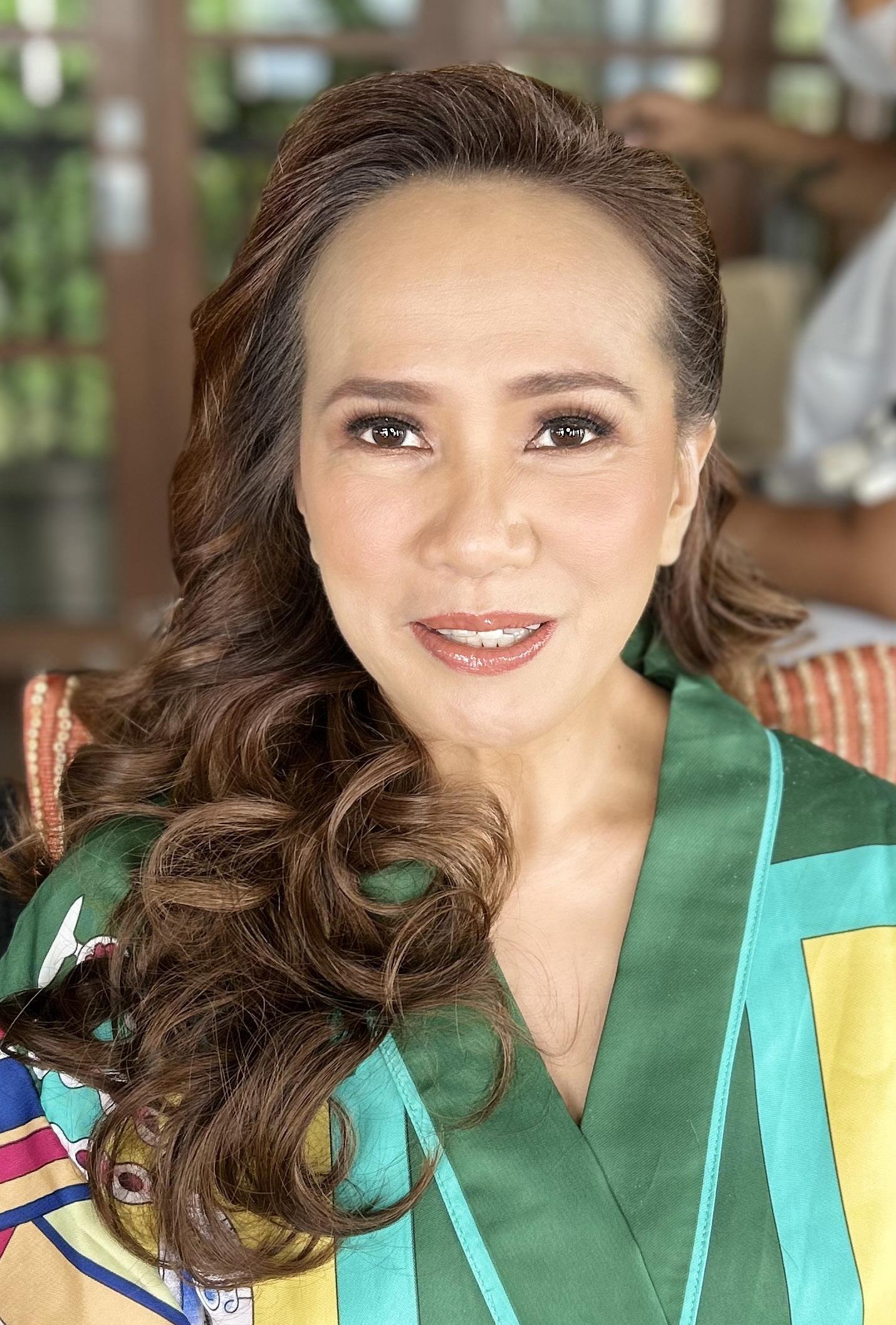
Warner Dawal, Senior Emigrant Services Officer of the CFO Project Management Division, also briefed the students on the "Three Pillars of Diaspora Engagement." He urged the students to view remittances not merely as passive household subsidies, but as capital that can fuel local entrepreneurship and national growth.
Professor Noe Pobadora, Director of the NEU ASEAN Studies Center, underscored the urgency of embedding financial discipline into higher education curricula.
“Integrating financial literacy in academic institutions helps students develop responsible financial behaviors at an early stage,” Pobadora said, adding that the university intends to tap the CFO’s PESO Sense team to replicate the training for its faculty members.
The CFO continues to roll out its seminars nationwide, targeting students, remittance recipients, and returning migrants to foster a culture of sound financial decision-making and entrepreneurship.
For decades, the Philippine migration narrative was a somber one, defined primarily by "brain drain"—the exodus of the nation's brightest minds in search of better horizons. But in the quiet halls of the National Graduate Institute for Policy Studies (GRIPS) in Tokyo, a new framework is being mapped out: brain circulation.
Deonah Abigail Miole, a foreign service officer with the Department of Foreign Affairs currently pursuing a Master’s Degree in Public Policy, is at the forefront of this research. Her work explores how the movement of highly skilled Filipinos, particularly within the startup and technology ecosystems, can be transformed from a permanent loss into a recurring national gain.
The traditional concept of "brain drain" suggests a one-way street. However, contemporary migration data suggests a more fluid reality.
According to research from the World Bank and the International Organization for Migration (IOM), the global diaspora is increasingly engaging in "brain gain"—where migrants contribute to their home country’s development through remittances, which reached a record $37.2 billion for the Philippines in 2024, and more importantly, through the transfer of "social capital."
Miole’s research focuses on how this "brain gain" evolves into "brain circulation." This occurs when nonresident Filipinos (NRFs) do not just send money, but
return—physically or virtually—to invest their global expertise, networks, and technical skills into the local economy.
Central to this evolution is the Commission on Filipinos Overseas (CFO).
In a recent policy briefing with Miole, the CFO detailed its strategic pivot from a purely regulatory agency to a primary catalyst for diaspora engagement connecting NRFs to the motherland.
Established in 1980 with a mandate to strengthen the ties between the motherland and its non-resident citizens, the CFO has redefined its mission. It no longer views migration as a loss of human capital, but as the creation of a "global Philippine nation."
"The role of the diaspora has moved beyond being the nation's 'modern-day heroes' through remittances," the CFO noted during the briefing. "They are now partners in innovation, entrepreneurship, and knowledge exchange."
Miole’s research specifically looks at the role of the Filipino diaspora in the burgeoning local startup scene.
Data from the Philippine Startup Survey indicates that a significant percentage of successful local tech founders are "returnees" or have spent significant time working in hubs like Silicon Valley, Singapore, or Tokyo.
These individuals represent the "circulation" in the framework—bringing back specialized knowledge in Artificial Intelligence, financial technology, and sustainable energy that can only be acquired through global exposure.
To support this, the CFO has intensified programs that facilitate the economic and political participation of non-resident Filipinos. These include facilitating "virtual returns" where experts abroad mentor local entrepreneurs, creating pathways for NRFs to invest directly in Philippine-based startups and infrastructure and ensuring the second and thirdgeneration diaspora remain connected to their roots, securing a long-term pipeline for future "brain circulation."
As Miole continues her research in Japan, the engagement highlights the CFO’s commitment to evidence-based policy. By moving away from the "drain" narrative and embracing the "circulation" model, the Philippines is positioned to turn its global footprint into its greatest domestic strength.
For the CFO, the mission is clear: ensure that no matter where a Filipino professional travels, the road always leads back to national development.
Investing in science, technology, engineering, mathematics (STEM), and healthcare education is vital to creating a future-ready workforce capable of navigating a rapidly shifting global landscape, officials and diaspora leaders said on Thursday, May 21.
To drive this mission forward, the Commission on Filipinos Overseas (CFO) and Unilab Education, Inc. (UniED) formalized a partnership aimed at leveraging the specialized expertise of non-resident Filipinos (NRFs) to fortify local educational and healthcare career pathways.
CFO Executive Director, Undersecretary Ma. Arlene S. Borja, and UniED president Jose Maria A. Ochave, signed a Memorandum of Understanding (MOU) during a ceremony at the Unilab Corporate Center in Mandaluyong City.
The collaboration directly aligns with the CFO’s core mandate and mission to optimize the potential of the global Filipino diaspora for nation-building. It also marks CFO’s strategic pivot which is increasingly focused on transitioning traditional diaspora philanthropy into structured, high-impact knowledge transfers.
By focusing on sustainable capacity-building, the CFO seeks to systematically channel the intellectual capital of NRFs back into critical sectors of the Philippine economy.
“The rapidly evolving demands of our time call for a more resilient, inclusive, and future-ready educational ecosystem that can effectively respond to emerging global challenges and opportunities,” Borja said, noting that the alliance values NRFs as active catalysts in national growth.
Under the agreement, CFO and UniED will actively engage past recipients of the Presidential Awards for Filipino Individuals and Organizations Overseas (PAFIOO)—specifically those recognized in STEM and healthcare disciplines—to serve as mentors and educators.
Ochave emphasized that modern professional success requires digital readiness, expanded technical competencies, and cross-cultural adaptability. He noted that the MOU operationalizes these goals by utilizing UniED’s established pathways, which encompass technical training, diploma programs, and targeted upskilling initiatives. These programs will now serve as institutional platforms for global Filipino professionals to share their advanced skills and insights.
A working discussion immediately followed the signing ceremony to map out the agreement’s implementation.
According to the joint working group, UniED’s extensive networks are designed to complement the CFO’s existing Lingkod sa Kapwa Pilipino (LINKAPIL) program.
By integrating UniED’s platforms, the partnership will expand the scope of traditional diaspora assistance, offering NRFs a structured avenue for long-term mentorship and curriculum development.
The strategy also features a forward-looking demographic component. Officials noted that the initiative builds sustainable professional pathways meant to attract second- and third-generation NRFs, offering them a concrete framework to reconnect with their heritage while contributing to the country's development.
Policy experts are calling for a fundamental shift in how the Philippines approaches retirement for its returning diaspora, emphasizing the need to frame institutionalized care within Filipino socio-cultural values that prioritize family-based traditions like “pagsisilbi” or service to elders.
The Commission on Filipinos Overseas (CFO), in partnership with Atikha Overseas Workers Communities Initiative, Inc., recently held a virtual consultation with Non-Resident Filipinos (NRFs) in Australia to address these concerns.
The meeting highlighted a critical challenge: promoting dignity, independence, and quality of life for retirees while respecting the deeply ingrained cultural expectation that children care for their parents at home.
The initiative is a cornerstone of the CFO’s strategic pivot toward proactive diaspora engagement. By focusing on evidence-based reintegration policies, the CFO is evolving its mandate—moving beyond administrative assistance to becoming an architect of sustainable, culturally sensitive environments for NRFs who are returning home after decades of working abroad.
A central theme of the consultation was the differentiation between "professional care" and "abandonment."
Participants stressed that for a Continuing Care Retirement Community (CCRC) to succeed in the Philippines, it must not be seen as a Western-style "nursing home," but as an extension of the Filipino family unit.
Academic research into "transnational aging" suggests that Filipino migrants often experience "cultural dissonance" when considering institutional care.
Studies indicate that while the diaspora recognizes the practical benefits of integrated healthcare, the emotional barrier of "hiya" (shame) regarding the perceived neglect of parents remains a significant hurdle.
To address this, the CFO and stakeholders recommended targeted research methods—including focus group discussions and case studies—to better understand the risk perceptions and decision-making processes of prospective retirees.
The consultation, which included leaders from the Australian Filipino Community Services (AFCS) and associations from Ballarat and Melbourne, served as a precursor to a major Retirement Forum scheduled for May 18, 2026.
This forum will focus on investment opportunities, healthcare access, and the logistical realities of reintegration.
Michael Apattad of the CFO Policy Planning and Research Division noted that these consultations are vital to ensuring that the Philippine government's retirement programs are not just aspirational, but practical and culturally resonant for the millions of Filipinos who call the world their home.
2026 Filipino Diaspora Summit to be held on 16 June 2026 in Metro Manila, Philippines.
The 2026 Filipino Diaspora Summit is a landmark gathering which celebrates CFO's 46th anniversary and will bring together approximately 350 diaspora leaders, government officials, private sector representatives, and civil society organizations under the theme - "Transformation Through Diaspora Engagement: Harnessing Filipino Global Power in Advancing the Philippines' Cultural, Economic, and Political Goals." The Summit will feature highlevel discussions, networking opportunities, and the signing of a Declaration of Commitments for sustained diaspora-Philippines partnership.
Economic engagement takes many forms—from business leadership to community investments. Miss Aimee Alado-Blake will share insights on strengthening economic ties between the Philippines and communities abroad in the 2026 Filipino Diaspora Summit.
Miss Alado-Blake is an international lawyer, cross-border adviser, and hybrid entrepreneur
specializing in sustainable infrastructure, climate transition, and cross-border investment between the United Kingdom and Southeast Asia. A part-time UK civil servant, she brings more than two decades of experience across the public, private, and third sectors, with expertise in governance, regulatory risk, and complex stakeholder environments. Her work sits at the intersection of policy, finance, and infrastructure delivery, particularly in energy, waste, and climate-resilient development.
In her private capacity, she is the Chair of the ASEAN UK Business Forum (AUBF), which advances trade and investment corridors between the UK and Southeast Asia. She is also a social and impact investor committed to the Blue Economy and circular economy models, and a Trustee of WELL Trust, which supports post-disaster rebuilding and livelihood programmes in communities affected by Typhoon Haiyan in Capiz, Philippines. Based in London, she works to mobilise trusted partnerships for a resilient future.
Miss Aimee Alado-Blake is the Legal Counsel of Roots and Wings, The E-Magazine in Europe.
Story, texts, and photos from: The Commission on Filipino Overseas and GMA News
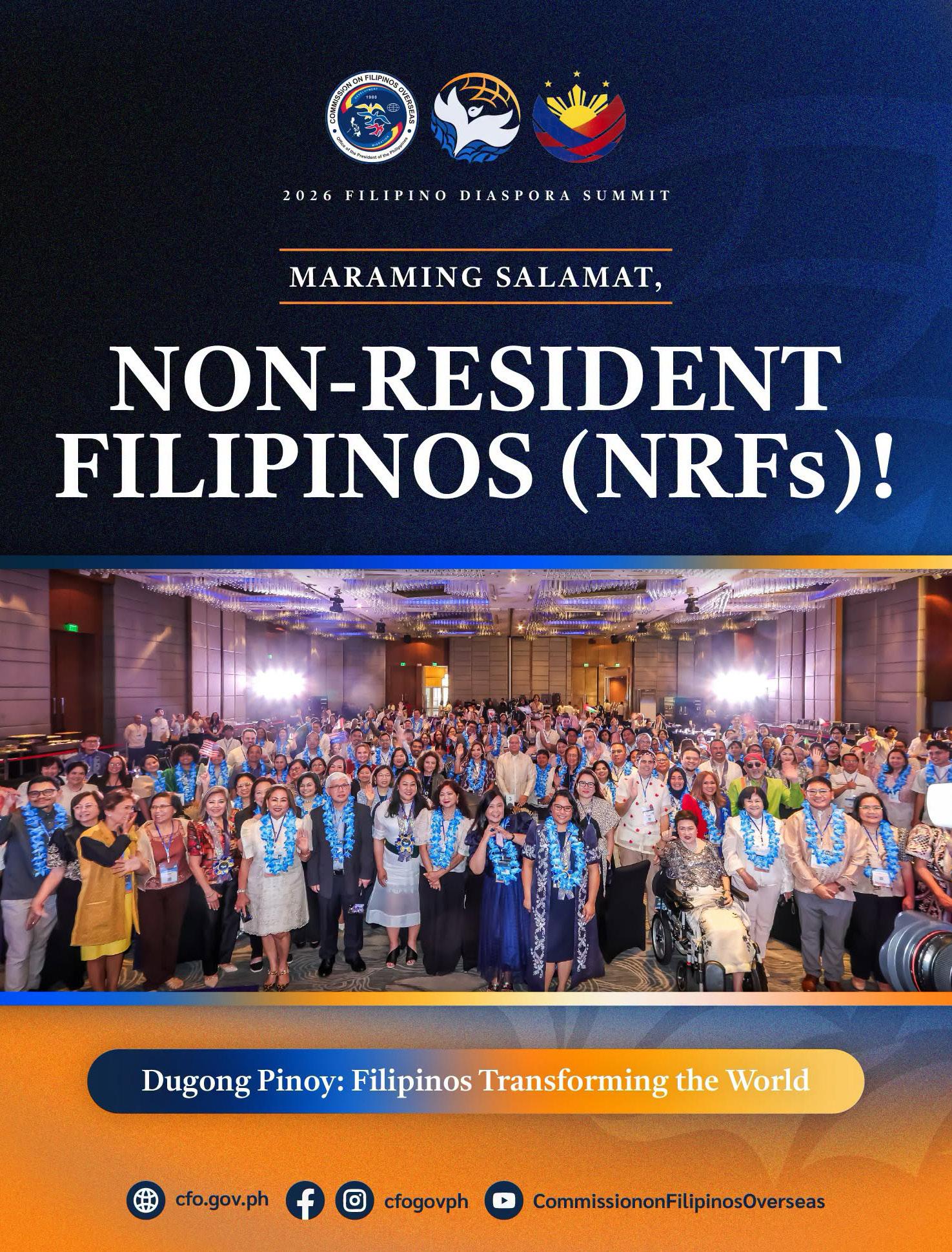
The Commission on Filipinos Overseas and the Filipino Multicultural Society of Ireland unite in service of the Filipino diaspora
The Commission on Filipinos Overseas (CFO), under Chairperson Dante 'Klink' Ang II, and the Filipino Multicultural Society of Ireland (FiMuS), led by Founding President Hilda Arenas, signed a Memorandum of Understanding on 21 May 2026 — marking a significant new chapter in service of the Filipino community in Ireland.
The signing was held at the Philippine Embassy in Dublin, where Ambassador H.E. Daniel R. Espiritu formally witnessed the agreement, affixing his signature alongside the official seal of the Philippine Embassy in Dublin — lending the MOU its full diplomatic weight.
On behalf of FiMuS, the MOU was signed by Founding President Hilda Arenas, the organisation's official representative. Chairperson Annabelle Lozada also signed, alongside Communications Director Sheila Murray, both designated as the persons responsible for its implementation — together ensuring FiMuS's full leadership commitment to this partnership.
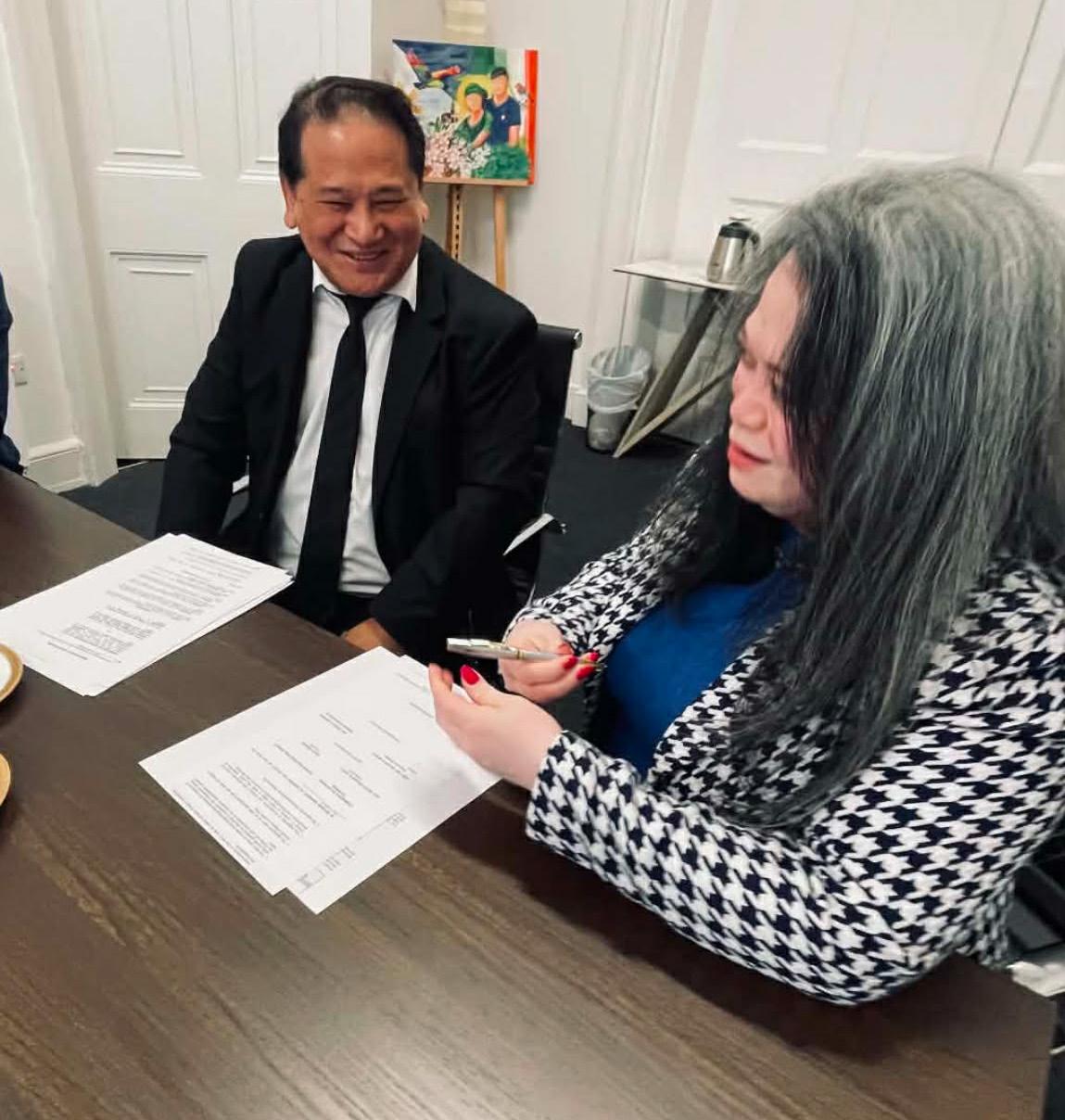
With the CFO team based in Manila, the document was signed separately across both locations — distance no barrier to a shared commitment.
The partnership was officially declared and announced to the community on 05 June 2026 at the Philippine Independence Day Celebration — the inaugural opening of the FiMuS Philippine Independence Celebration Series 2026 at The Studio, DLR Lexicon Library, Dún Laoghaire — making the occasion all the more momentous as a declaration of both heritage and purpose.
FiMuS extends its sincerest gratitude to CFO Chairperson Dante 'Klink' Ang II, Atty. Jan Karlo Magracia, and the entire CFO Manila team, as well as to Ambassador Espiritu and the Philippine Embassy Dublin. Further details on what this partnership means for Filipinos across Ireland will be shared with the community soon. For FiMuS, this is not a destination. It is a beginning.
The Filipino Multicultural Society of Ireland (FiMuS) was founded on 6 January 2024. Follow FiMuS on social media for updates. Facebook Page FilipinoMulticulturaSociety Friendships through cultures.
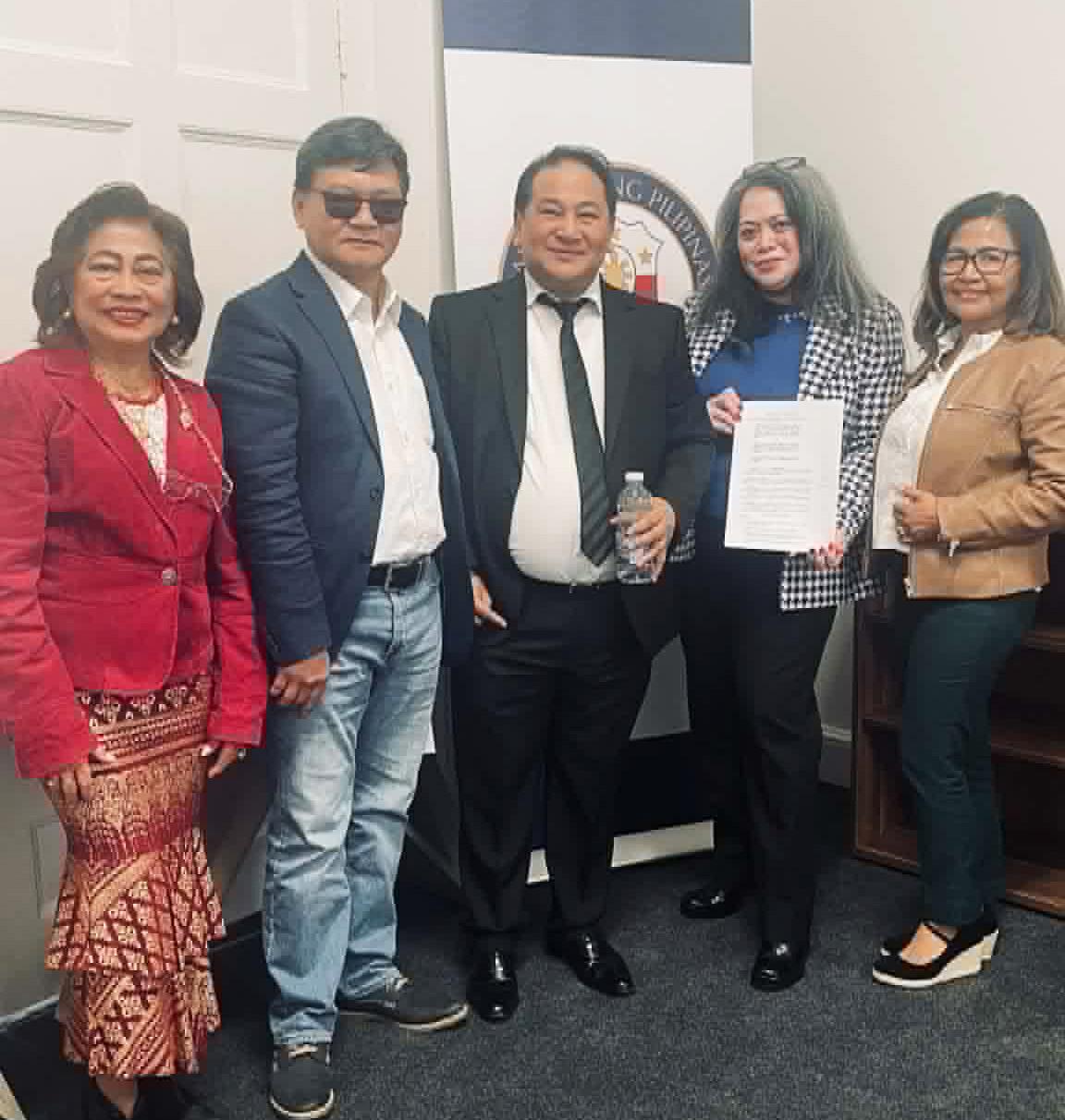
Roots & Wings — the Filipino E-Magazine in Europe — is growing, and we are looking for passionate and talented Country Editors and Contributors to join our team! Are you based in any of these countries?
Denmark • Italy (Rome & Milan) • Spain • Switzerland • The Netherlands • Greece • Portugal • Malta • Croatia • Hungary • Estonia • Latvia • Lithuania • Bulgaria • Romania • Slovakia • Slovenia
If you have a story to tell, a community to represent, and a passion for celebrating the Filipino and Euro-Pinoy experience — we want to hear from you!
Reach out to us and be part of something truly meaningful. Luz Bergersen – lgb1312@gmail.com Hilda Arenas – hildaarenas007@gmail.com
Together, let us keep telling our stories — one country at a time.
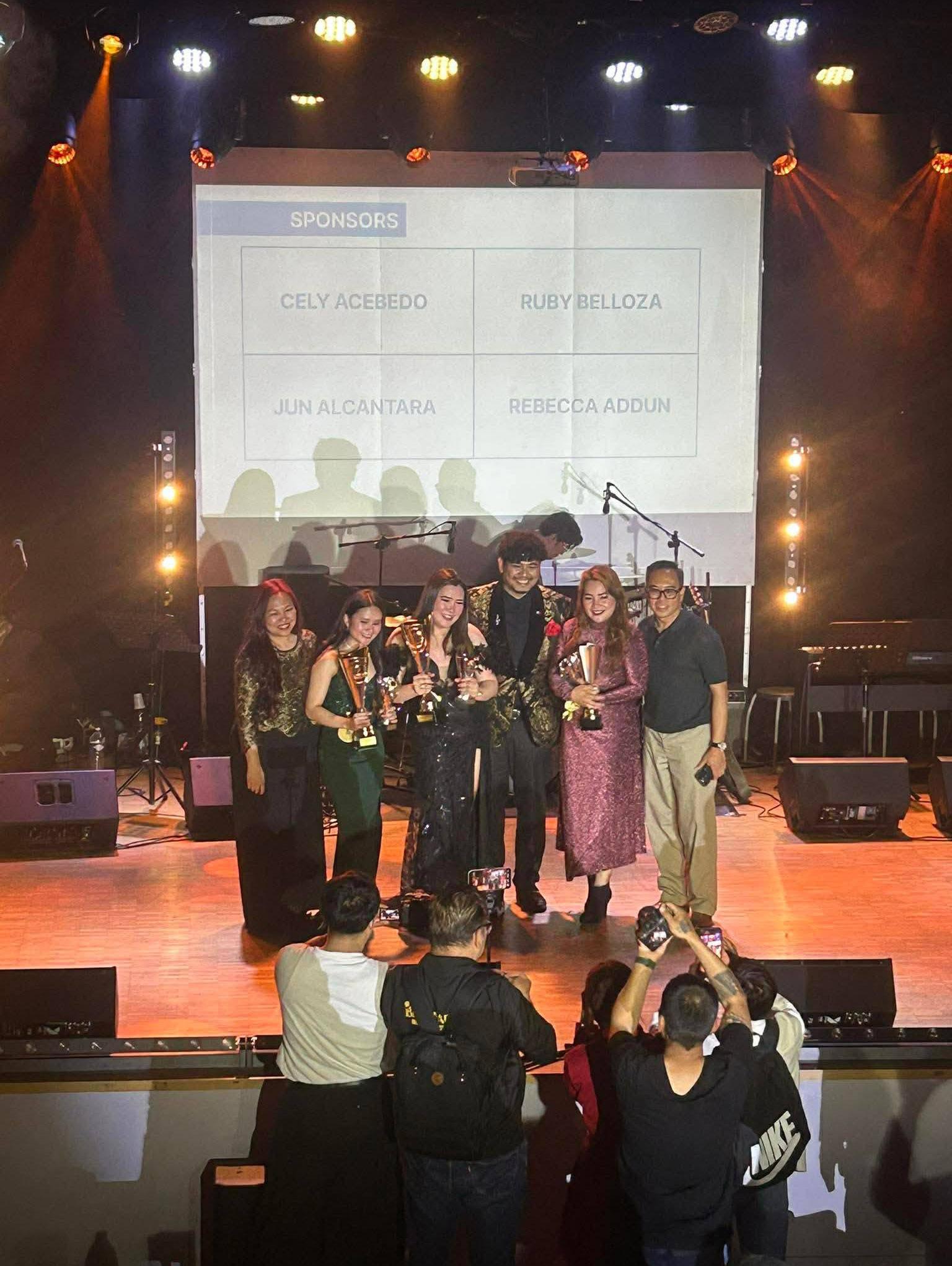
By Cipriano De Guzman Jr. – The Filipino Baritone®
For more than two decades, Gabi Ng Awiting Pilipino (GAP) has stood as one of the most significant celebrations of Original Pilipino Music (OPM) in Europe. More than a singing competition, it has become a cultural institution for Filipinos abroad — a stage where heritage, faith, artistry, and identity continue to thrive across generations.
Now on its 12th edition, the event once again gathered the Filipino-French community in a vibrant showcase of Filipino talent and music in Neuillysur-Seine, France. The evening was further honored by the presence of His Excellency Eduardo Jose De Vega, Philippine Ambassador to the French Republic, who attended the event and delivered a meaningful speech to the Filipino community, reaffirming the importance of preserving Filipino culture, music, and identity among overseas Filipinos.
Behind the success of this year’s production is Ma. Socorro “Cory” De Jesus, overall coordinator and director of Gabi Ng Awiting Pilipino, whose dedication to OPM and Filipino culture has helped sustain the project for many years.
“My love for OPM and the will to promote it to the Fil-French community gave me the inspiration to promote Filipino music abroad,” De Jesus shared.
Her involvement in the project began through the church music ministry where she served as part of the band, playing drums while also participating as a singer in church programs.
“I think I was called to be part of the band,” she recalled, “but I would sing as well in small programs in our church and got involved in organizing church concerts.”
Her musicality, leadership, and passion for organizing performances eventually led her to become one of the key figures behind GAP.
The roots of Gabi Ng Awiting Pilipino trace back to 2002 through the vision of Bishop Elmer Belmonte and the Charismatic Episcopal Church.
According to De Jesus, the event was never intended to be merely a fundraising project for Filipino church missions abroad.
“The concept began in the heart of our Bishop Elmer Belmonte,” she explained. “He felt that the church had to have a positive influence on the Filipino community in Europe by helping keep our Filipino heritage aflame in the hearts of our kababayan.”
As more Filipino children were born and raised in Europe, organizers recognized the importance
of preserving Filipino identity among younger generations.
“With the increasing number of Filipino children born and raised in Europe, he felt the need to instill in them an understanding of their roots as Filipinos so as not to forgo their love for their country, their faith, and their moral values,” she added.
Founded by the Charismatic Episcopal Church community, the original vision of GAP was clear: to showcase Filipino songs and culture while encouraging Filipinos abroad to sing, appreciate, and preserve OPM.
“The vision and objective is to showcase our very own songs and culture, with a singing competition meant to encourage our kababayan to recall, learn, and sing Original Pilipino Music that would likewise serve to introduce our culture to Europeans,” De Jesus said.
Longevity in cultural productions requires commitment, sacrifice, and unwavering support from the community. For over twenty years, GAP has continued because of the passion shared by organizers, performers, and audiences alike.
“The continued support of the Filipino community, the positive feedback that we have received from each event, and the development from the talents produced
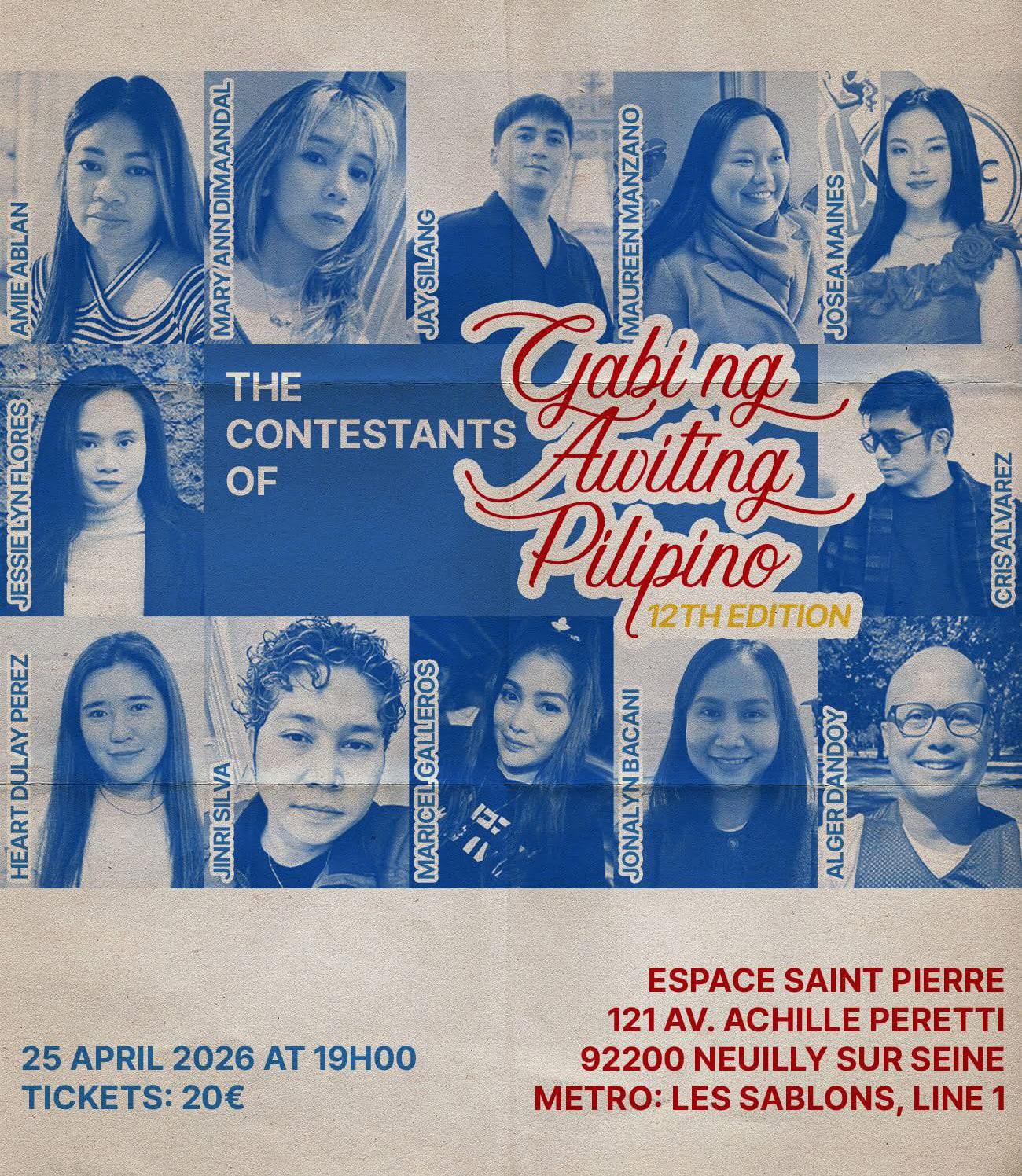
from the GAP” have sustained the project, De Jesus emphasized. She believes that the event’s success is deeply rooted in faith and service.
“The love and dedication we have invested in this project is priceless. Everything that we accomplish, we do it for the glory of God.”
While the essence of the program has remained unchanged since its beginnings, GAP has evolved artistically and technologically through the years.
“We have kept the format of the Gabi Ng Awiting Pilipino from the beginning until the 12th edition,” she explained. “What evolved were the talents involved and our approach in how toutilize our ideas on the production numbers so as to highlight the beauty of Filipino music and culture.”
Technology has likewise elevated the production quality.
“The technology has also helped us level up in terms of sound system, equipment, musical instruments, and even backdrops. We have become more digital now.”
Organizing a production of this scale requires months of preparation and a highly coordinated team.
“Normally, it takes six months to execute one edition of Gabi Ng Awiting Pilipino,” De Jesus revealed.
This year’s organizing committee operated through a carefully structured system that contributed significantly to the success of the event.
The overall coordinator oversees contestant selection, programming, repertoire, talents, and rehearsals. Program coordinators supervise dancers and production numbers, while the production team manages backstage operations. Solicitation and ticketing teams handle sponsorships, ticket sales, and event finances.
For the 12th edition, the move to Neuilly-sur-Seine was both practical and visionary.
“We intended to have more audience and the accessibility of the venue has attracted more Filipinos to come,” De Jesus explained.
Although there was no singular official theme, the repertoire was intentionally curated to resonate with audiences across generations.
Songs like MAPA by SB19 paid tribute to parents and family, while Bagani symbolized the sacrifices and heroism of Overseas Filipino Workers — modern-day warriors who continue to uplift their families despite distance and hardship. One of the defining characteristics of this year’s
edition was the emergence of younger performers and musicians.
“We have a new generation of performers, younger ones and more musicians,” De Jesus proudly stated.
Contestants were selected primarily based on voice quality, while many performers were themselves products of previous GAP competitions.
“Most of the performers are products — recent and past winners of the GAP,” she noted.
Preparation for the performers began months before the event.
“We give them the materials four months before the show, same thing with the musicians,” De Jesus explained. “We start practicing together two months before the show discussing the message of the song and the attack onstage, trying to perfect each song.”
The emphasis on interpretation and storytelling reflects GAP’s deeper philosophy that Filipino songs are not merely performed — they are lived and emotionally communicated.
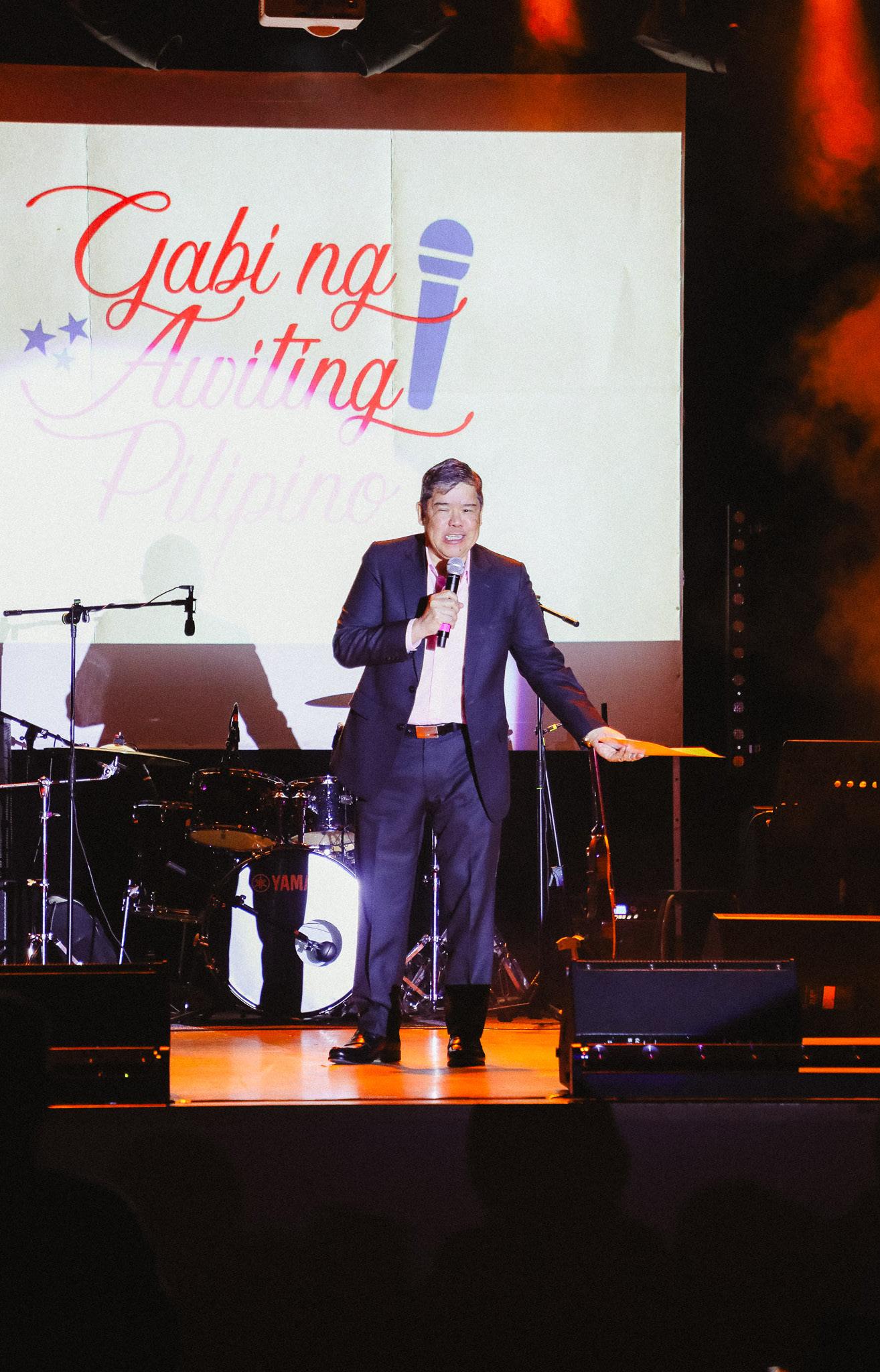
Heart Dulay Perez captured the first prize honors, followed by Jessie Lyn Flores in second place and Maricel Galleros in third place.
According to De Jesus, “their voice quality, interpretation, and choice of songs have set them apart.”
Ensuring fairness in the judging process remains a top priority for the organizers.
“The board of judges should not be familiar with the contestants and should also be musically inclined and experienced in the field of music,” she explained.
This year’s distinguished panel of judges included Belle Maitai, Dennis Astorga, and Cipriano De Guzman Jr. — The Filipino Baritone®.
Contestants were evaluated according to vocal technique, including control, timbre, range, and diction, as well as interpretation and rendition,
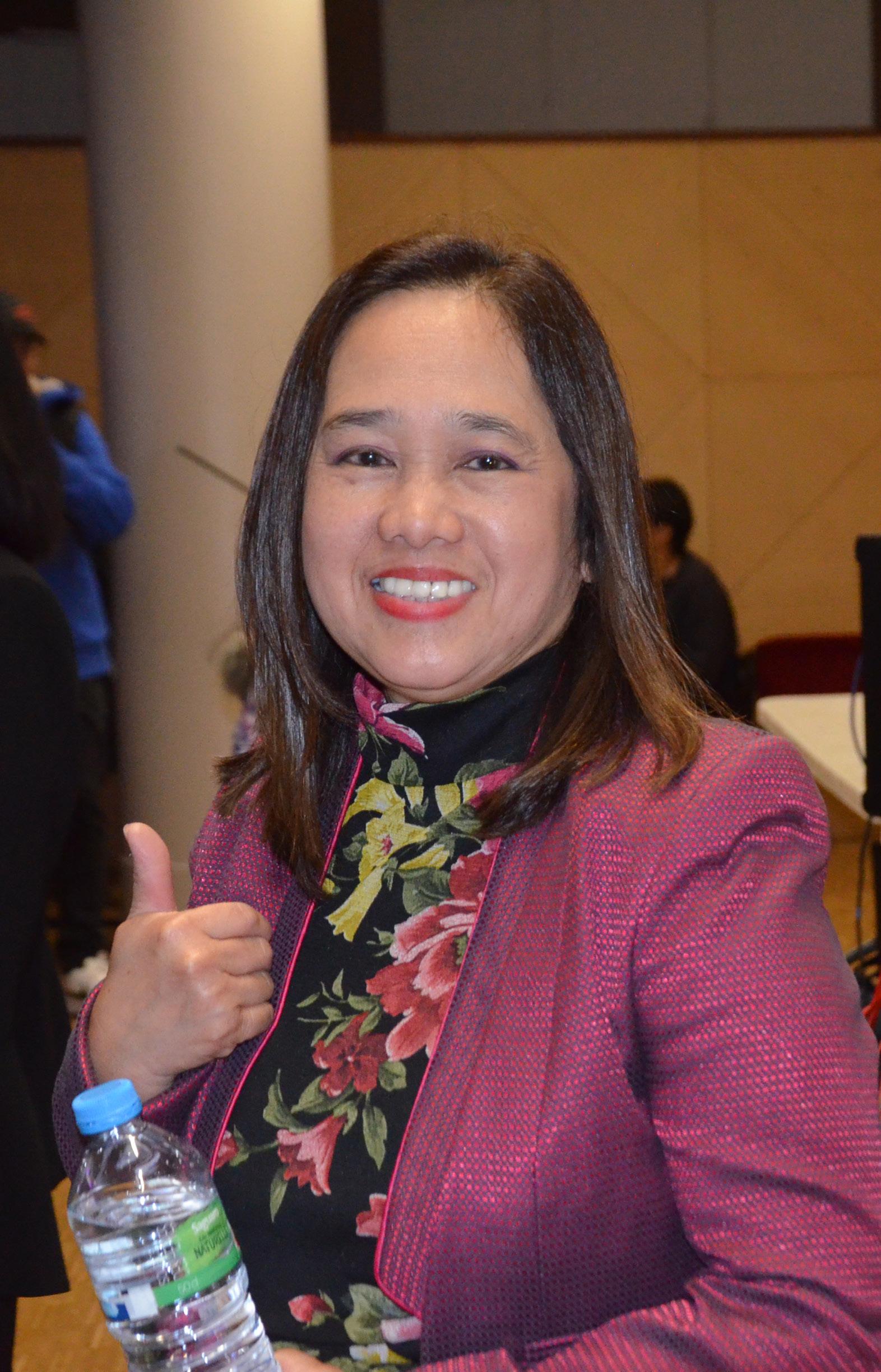
stage presence, personality, costume, grooming, and overall audience impact. Beyond technique, however, cultural authenticity remained essential.
“It is important to understand how your cultural identity shapes vocal traditions,” De Jesus emphasized.
For De Jesus, what makes Gabi Ng Awiting Pilipino unique is its singular devotion to Philippine music and culture.
“It was intended to promote and showcase Philippine music and culture and discover Pinoy talents,” she said. Over the years, organizers have witnessed generations of performers grow artistically while developing a deeper love for OPM.
“To inspire Euro-Phils, the youth of Filipino parents born in Europe, to take interest in their parents’ cultural heritage,” De Jesus explained, “for Filipino immigrants to be reminded of their roots so as to never forget their homeland, and to our French hosts, to also be introduced to our rich culture and music.”
The event also serves as a bridge between Filipino and non-Filipino audiences.
“Filipinos by nature love music, more so OPM,” she said. “The GAP has left a trademark among the Filipino community. Every Pinoy talent would want to be part of this prestigious event and always look forward for the next show.”
Despite the event’s success, organizing a large-scale cultural production abroad continues to present major challenges.
“To find a new venue is always challenging as it’s very expensive to find a better venue that would cater to the needs of doing this kind of event with a big number of contestants and live music,” De Jesus admitted. Financial sustainability likewise remains one of the organization’s biggest concerns. Still, her vision for the future remains hopeful.
She expressed her desire “that more and more young Filipinos would be interested to join the competition and be discovered with their God-given talents. In everything we do, we always give back the glory to God,” Cory de Jesus said.
As the curtains closed on the 12th edition of Gabi Ng Awiting Pilipino, one truth resonated powerfully throughout the evening: no matter how far Filipinos may travel from home, music remains one of the strongest ties to heritage, memory, faith, and identity.