Called, pushed, or pulled? Becoming a churchwarden and God’s provision
The route to becoming a churchwarden varies. Some feel a strong sense of personal call, some are ‘persuaded’, others feel they ‘ought to’, and in a few places it still feels like an inheritance that can’t be avoided!
However you arrived in the role, trust this: God was at work. He has called you. You are his choice for this church, at this time.
Being a churchwarden can be demanding. It asks for time, energy and heart. In those moments, it matters to remember that God has seen something in you.
Nineteenth-century preacher Smith Wigglesworth said: “God does not call those who are equipped; he equips those he has called”. We are never alone in our calling, and God is always ready to equip us. By his Holy Spirit, God is with you, and he wants to provide you with all you need to serve your parish.
But to receive God’s support, we need to know our need for it. If we fall into the trap of thinking we are ‘equipped’, we risk missing out on what God wishes to give us. He grows our skills. He shapes our character. And he places others around us so that the work is shared.
As you heed God’s call to serve as churchwarden, you are not alone – nor are you called to serve in your own strength. May you know God’s blessing and be equipped by him throughout the year ahead.
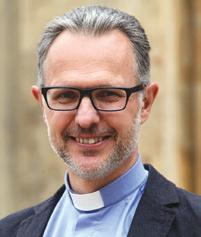
The Ven Andy Broom, Archdeacon of the East Riding
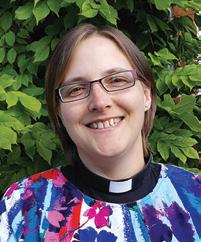
The Ven Dr Amanda Bloor Archdeacon of Cleveland
The Ven Andy Broom Archdeacon of the East Riding
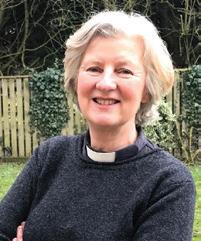
The Ven Liz Hassall Archdeacon of York
Faithful stewardship in Upper Ryedale
Expanding our world as we serve
Serving Christ as a churchwarden stretches our world beyond the church walls. It reaches into our communities, our schools, and the everyday lives of the people we serve.
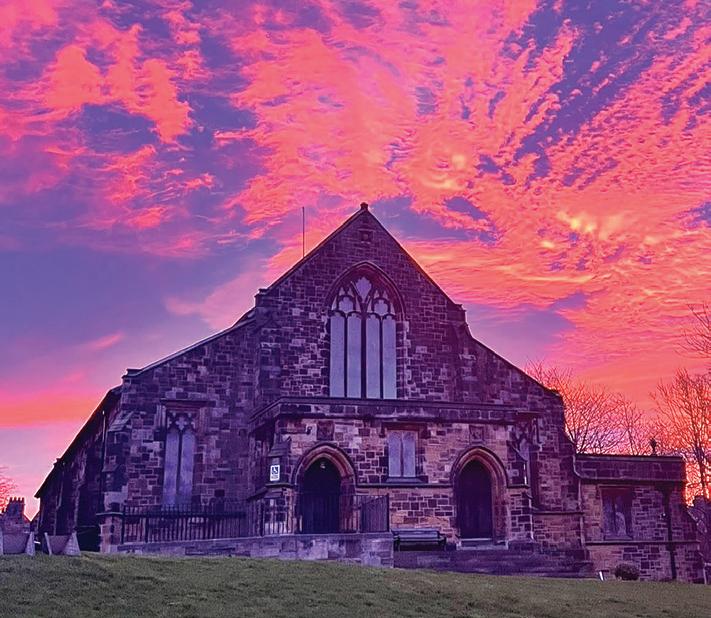
I see this at St Margaret of Antioch, Brotton, where I am privileged to be part of a team that supports our incumbent in not only welcoming our congregation but also widening our reach within our community.
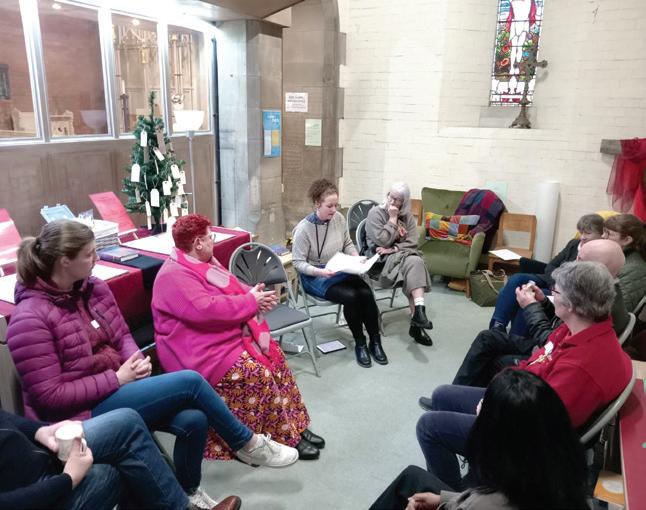
We have long had a Wednesday coffee morning, where, after the morning Eucharist, we welcome visitors old and new (literally, from grandparents to great-grandchildren, and many ages in between). Local councillors and PCSOs drop in. Friends from Middlesbrough FC Foundation visit. Our regulars return week by week. These gatherings raise valuable funds and, just as importantly, build relationships. Many who join us also support our Christmas Fayre, Easter draw, school carol services, Lent lunches and other events.
It is wonderful to provide such services and to see how appreciative our church friends are of our efforts. Churchwardens look after buildings, of course. Boilers need servicing, and roofs need replacing. But we do this so we have a welcoming place for people to feel safe whilst they are with us and when they are out in the community.
We also have strong links with our two primary schools, including St Peter’s Church of England Primary School, where I serve as a
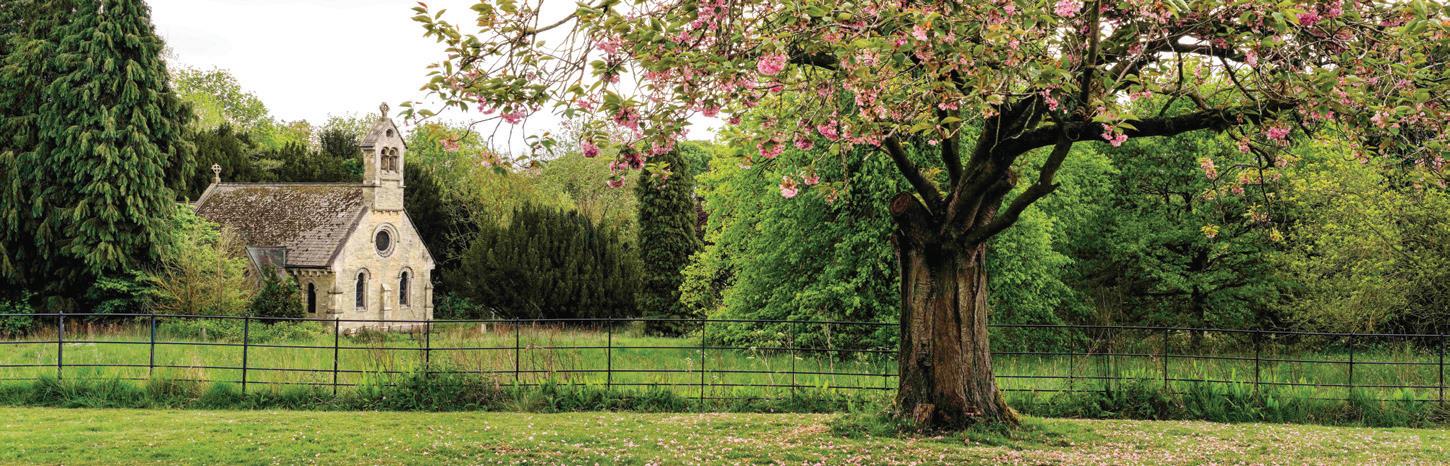
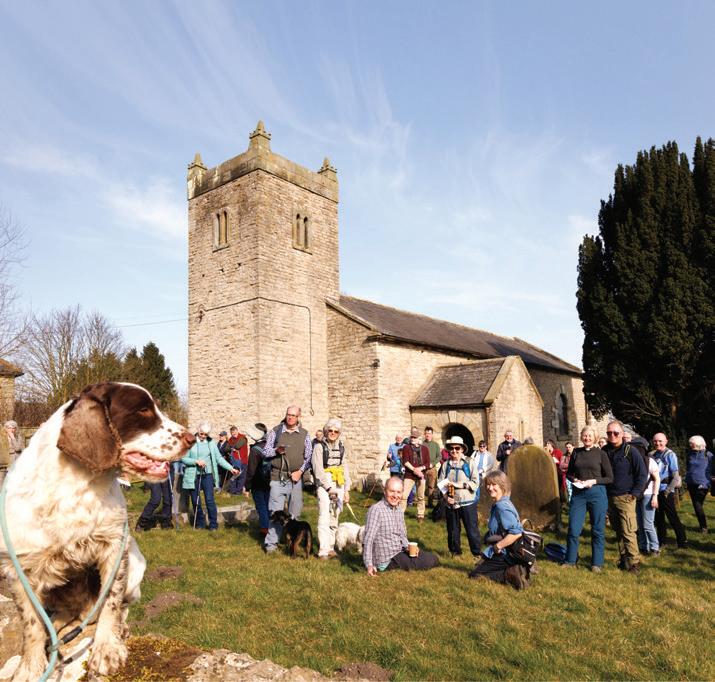
Set among the hills, dales, and moorland of the North York Moors, our churches stand as quiet witnesses to centuries of prayer and faithful presence. As churchwardens, we share the privilege and responsibility of caring for these buildings and safeguarding them for future generations. Though we each serve a different church, we are united by a shared calling and a common rhythm of parish life.
Worship moves between our four churches each week. Travelling together has deepened our unity. We attend one another’s services, read and assist in worship, and support each other whenever needed. We share not only practical responsibilities, but also the spiritual life of our parish.
Each of us brings a different story. Rooted in the farming community, Dorothy has served at St Mary’s, Scawton, for nearly four decades. Ben, a retired army officer, serves at All Saints, Hawnby, with commitment shaped by a lifetime of service. Tony, a retired judge at St John’s, Bilsdale, offers thoughtful oversight and devotion to church and community. Ivan, a farmer at Old Byland, is the newest among us and has embraced the role wholeheartedly.
In caring for our churches, sustaining worship, and offering hospitality, we seek to keep these ancient buildings living places of prayer and faithful presence for generations to come.
George Gyte Churchwarden
Foundation Governor and Chair of Governors. Not only has it helped shape the future of children, but it has also been a very rewarding and worthwhile addition to my own life.
In a recent service, we prayed that we might be stewards, healers and people of compassion. That feels close to the heart of this calling. We serve, trusting that God knows our needs. Remember that, and you can’t go wrong!
Lynne Richards Churchwarden
Photo courtesy of Val Mather.
Photo courtesy of Paul Waugh.
Celebrating the everyday callings
Living Christ’s Story begins with recognising that God calls every one of us. Vocation is not reserved for a few, nor confined to those who wear a collar or hold a licence. From the moment of our baptism, each of us is invited into God’s work of love, reconciliation, and hope in the world.
Our churches depend, day by day, on the faithful ministry of lay people. Churchwardens, PCC members, pastoral visitors, children and youth leaders, administrators, musicians, sacristans, welcomers, coffee brewers, prayer warriors, and many others quietly and faithfully enable the life and mission of our parishes to flourish. Much of this ministry happens unseen, yet it is deeply valued by God and vital to the Church’s witness.
At times, however, God’s call may stir in new ways. Some are prompted to take on a different responsibility, to explore training, or to offer gifts that have not yet been named or encouraged. For others, the nudge may come through the affirmation of someone else: “Have you ever thought about…?” or “I wonder whether God might be calling you to…?” These holy conversations are often the starting point of discernment.
Vocation is not primarily about filling gaps or meeting institutional need. It is about listening — to God, to the Church, and to the deep gladness God has placed within us. That listening can lead to authorised lay ministries, to new expressions of service within parish life, or sometimes to ordained ministry. Just as importantly, it may lead to a renewed sense of calling in the role someone already inhabits — including the vital work of churchwardens, who model steady, practical discipleship in every community.
If you or someone in your parish feels God may be inviting a new expression of ministry, you are warmly encouraged to start a conversation. Speak with your incumbent, archdeacon, or a vocations adviser. Asking the question is not a commitment; it is an act of faithfulness.
As we give thanks for the ministry of churchwardens and all who serve, may we continue to nurture a culture where vocation is named, affirmed, and joyfully lived — for the flourishing of the whole people of God.
Diocesan Adviser for Vocations and Director of Ordinands
Meeting house and temple: the care and use of our church buildings
I visit places old and new, rural and urban, and encounter people and buildings of every age and kind across the diocese. In all of them, I find the same thing: energy. Certainly, at times, I encounter worries about how to keep that energy going, but the commitment of God’s people to the life of God’s Church is far stronger than the gloomy picture we often hear in the media.
A visible witness
“What we sow we reap.” (Galatians 6:7–9)
Simply keeping a church open maintains a visible, laudable witness. Where we find wider encounter to the fringes and beyond, we see growth. Food banks, lunch clubs, youth groups, rewilding projects, and the teams caring for grounds and buildings all provide simple points of contact. These activities help change perceptions on every side. They create a welcome that shows what it means to live out Christ’s story in local communities.
Choirs of girls and boys enrich our worship and bring friends and families into church life. They also help young people grow in confidence, creativity, and social skills. They witness our part in providing education, high art, literary richness, and beauty for all God’s People, not just an elite.
Holding sacred and shared space together
“The gates of the city of God stand open.” (Revelation 21.25)
We value both our Catholic and Reformed heritage. It shapes how we understand our buildings. Some churches feel more like meeting houses, others like temples. Most sit somewhere in the middle, holding both traditions together. In an increasingly diverse, divided world, God’s People of the Anglican Tradition have related gifts to share.
By loving our churches and using them fully and well, I see a part of our answer to God’s call. They can never be permitted to become either private shrines or select clubhouses. Many communities have found a way to be both sacred spaces and community hubs. The degree and manner of sharing will vary according to needs, resources, and situation but we owe it to God and to all God’s people to be both.
We need to offer places of meeting and welcome. They will be comfortable with good facilities where possible, but an attitude of openness is fundamental. At the same time, we must offer noble, defined, sacred spaces uniquely reserved for prayer and worship, as distinctive, guarded, and carefully furnished (in their way) as the community spaces.
We seek God in His holiness. We must let God find us if we are to find Him in others, and if we are to find Him in ourselves. Our buildings are assets for mission as much as responsibilities. When we use and care for them well, they help us reach new people and become more like Christ.
Consider one small action this month that strengthens your church’s welcome — a clearer noticeboard, a refreshed entrance, or a better routine for opening the building. Small steps make a real difference.