Archdeacons’ Visitation News
Dear Churchwardens
Over recent months, I have been increasingly encouraged by conversations across our parishes about the longing to place children, families, and intergenerational community at the very heart of our common life. This is not simply an optional “extra” for a few keen volunteers, it is a core expression of the Church’s calling to proclaim the gospel afresh in every generation. If we are to nurture disciples who can grow, question, serve, and flourish, then our ministry with children and families must be one of our most visible and confident priorities.
Children are not the Church of tomorrow; they are the Church of today. Their curiosity, energy, honesty, and spiritual insight enrich us all. Likewise, families of every shape, size, and story need spaces where they are welcomed without judgement, supported in the joys and challenges of life, and encouraged to explore faith in ways that feel authentic and accessible. Many are searching not for programmes, but for belonging.
Intergenerational ministry is key to this. When different ages learn, worship, serve, and laugh together, we discover a deeper picture of the Body of Christ. It strengthens relationships, grows empathy, and allows faith to be modelled, not only taught. Grandparents sit beside toddlers; teenagers share their gifts with elders; adults rediscover the wonder and simplicity of childlike faith. This is not

about replacing tradition, but about expanding our imagination for what shared discipleship can look like. We are grateful for all that churches are already doing in this area and would encourage every parish to reflect intentionally on how we can strengthen our commitment to children, families, and intergenerational community. Small shifts can make a profound difference.
Thank you for all you are doing to help us build churches where every generation knows they are seen, valued, and loved by God, and by us.
Mark and Nikki
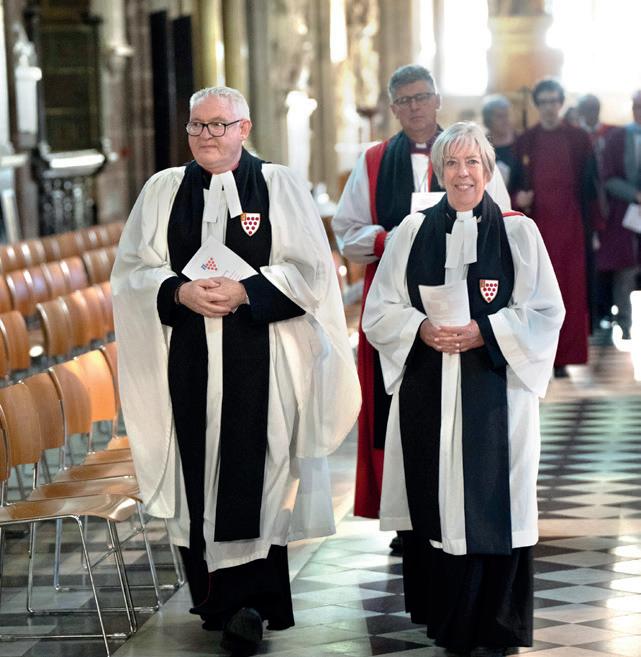
Mark Badger
The Archdeacon of Worcester
Nikki Groarke
The Archdeacon of Dudley
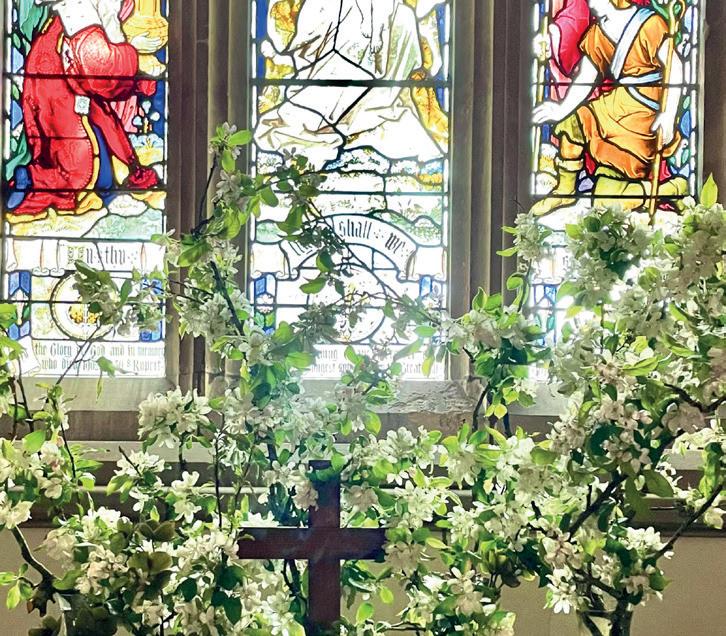
Ensuring our church flowers are sustainable
In February, General Synod backed our diocesan synod motion encouraging churches to explore ways of arranging flowers that are both beautiful and environmentally responsible.
The motion encouraged churches, wherever possible, to consider using seasonal, locally sourced flowers and foliage, and to phase out single-use floral foam. It was introduced by Bishop Martin who said:
“This motion comes from a village PCC wondering how they could make a difference in caring for God’s creation. The Sustainable Church Flowers movement began around a kitchen table but is now a fast-growing national and ecumenical movement, with florists, growers and above all wonderful church flower arrangers spreading the word and giving practical help and advice.
“This motion rejoices in flowers in church and encourages us to source them locally and seasonally wherever possible, rejoicing in what’s around you. Think simple, natural, beautiful.”
Sustainable Church Flowers (SCF) began in Harpley, Worcestershire, with individuals exploring how traditional flower arranging methods could reflect the Church’s commitment to caring for creation. On the SCF website there are resources and tutorials.
Members of SCF said: “We are delighted by the positive outcome of the General Synod vote. This process has prompted important conversations in churches and the wider floristry sector. At the heart of it lies something simple and hopeful: a desire that the way we adorn our churches reflects the care and reverence we hold for God’s creation.”
Find out more at:
https://suschurchflowers.com
Getting to know the new Bishop of Worcester
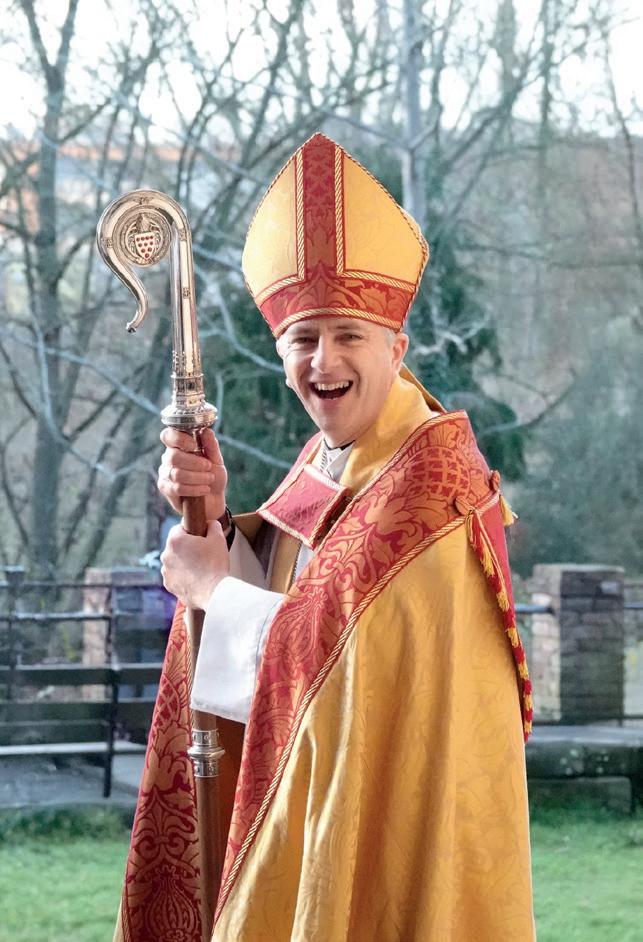
Bishop Hugh didn’t know the area before being installed as our new Bishop! His previous knowledge of Worcester was limited to New Road Cricket Club and Worcestershire sauce (which he does like), so he has greatly enjoyed learning more about us as he settles into the role.
Once he got over the shock of being told he would be our next Bishop, he describes feeling “a profound sense of great joy and deep peace”. He said: “I’ve learnt over the years when something has the hand of God on it. I felt like a jigsaw piece slotting into place, and I still feel that.”
Hugh has moved to Worcester from Truro in Cornwall where he was Bishop of St Germans. He felt more certain this potential move would be right for him after he read our Statement of Needs: “It gave me a sense of a diocese that really values its roots and the faith that has been handed down the generations, and which wants to pass that faith on again to future generations. It’s not about scrapping the past but thanking God for all that’s been and then asking, ‘What’s next?’. I think that’s what ‘being faithful’ looks like!”
Bishop Hugh is looking forward to continuing to meet with the children and young people of our diocese. He said: “I’m genuinely intrigued by what focusing on children and young people is going to teach us, and how it will change us.”
Hugh has four children with wife Lizzie, now in their late teens and twenties. Hugh said: “Coming from a family of vicars I’ve always had a faith. It is one of the great gifts my family has given me. As a young man I didn’t think I’d ever want to be a priest, but after I was ordained in 2010, I found I absolutely loved being a parish priest.”
Before Ordination, whilst studying Theology at Worcester College, Oxford, Hugh felt that he was being called to ‘live in community’. He found a book in a charity shop about the network of 120 communities for adults with and without learning disabilities, called L’Arche (French for ‘The Ark’). He joined the London community, meaning to stay a year, and stayed 13 years. He says: “Most of what I know that’s of value about people, God and about myself, I learnt in L’Arche.”
Bishop Hugh is clear that churches have a role to play in serving their communities practically as well as spiritually and building communities of hope. “We’re called to be Kingdom People. That means exploring the kingdom though worship, study and prayer; pointing to the kingdom wherever we see God at work, and building the kingdom of love, compassion, justice and freedom through practical service. It’s about listening to our communities, and where they feel the kingdom is further away, bridging that gap! In some places that’ll be a food bank or a parent and toddler group, in other places it’ll be wellbeing groups or bereavement care. There’s always something we can do – and whatever it is, we do it in the name of Jesus and invite people to find out more about him.”
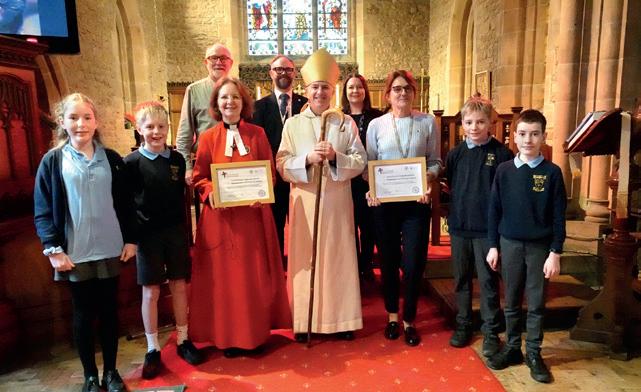
He adds: “We have to acknowledge as well, that some people are never going to come to a traditional Sunday service, no matter how good or holy it is, so we need New Worshipping Communities. It’s still exploring and building the kingdom, just in places and with people we’ve not engaged before.”
Bishop Hugh is keen though that for now his role is one of listening and discernment, visiting churches, hearing from clergy, and thanking churchwardens and other leaders for their critical work. Seeing how God is already working in and amongst people, and getting to know everybody, as they get to know him.
Apart from cricket, Hugh’s other interests are cooking, gardening, football and rugby. He is a fan of the Wolf Hall books about Thomas Cromwell and when asked what fictional character he would invite to dinner if he could, he replied: “Gandalf would be fun!”
And if you’re ever serving tea to the Bishop, he takes it with milk, no sugar. “I’m not fussy though,” he says, “You don’t need to warm the pot!”
An update on our transformation journey
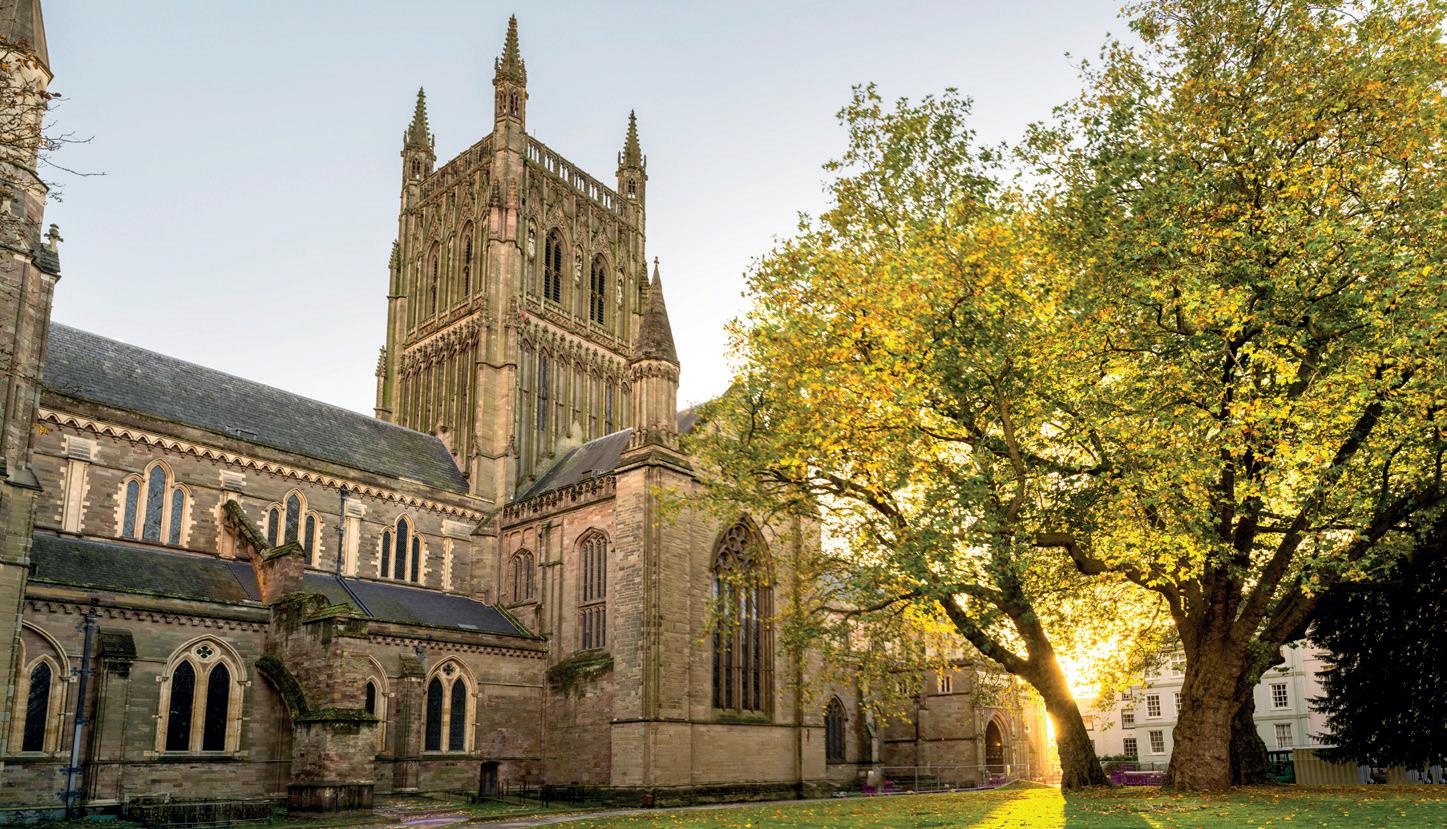
With Hugh joining us as our new Bishop, this is an exciting time in the life of our diocese. As we move into Phase Two of our transformation journey, we are continuing to focus on our key diocesan priorities. Although there will clearly be adjustments as we navigate an ever-changing landscape and identify new challenges and opportunities, we believe these are the right priorities and will be essential to ensuring our churches are healthy and sustainable.
Health and sustainability conversations
A number of encouraging stories were highlighted during last spring’s health and sustainability conversations carried out with every church. However, it was also important to name our current reality – for many churches, the present is difficult, and the future looks even more challenging. We spoke to 252 churches with parishes and facilitators together categorising them as:
• Review recommended – 85 churches
• Potential with intervention – 143 churches
• Healthy however… – 21 churches
• Flourishing – 3 churches
Learnings from these conversations, as well as from the first phase of the transformation programme more generally have enabled us to identify six key missional challenges as we move forward into Phase Two:
• Leadership Challenges
• Discipleship (Spiritual Formation) Culture
• Declining Attendance
• Low Missional Energy
• Ageing Congregations
• Unsustainable Churches
Equipping Ministers for Mission
It is increasingly clear that to tackle these missional challenges, leadership support and development is central, reflecting the importance of our underpinning priority: Equipping Ministers for Mission. Phase Two of our journey will have a significant
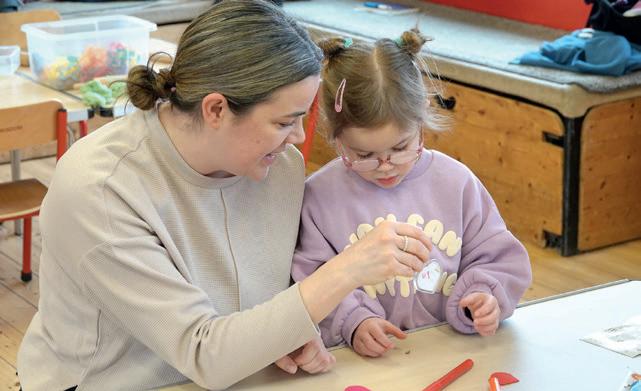
focus on coaching both clergy and lay leaders, accompanying them to be better positioned to respond to local needs, inspire missional energy and help navigate ongoing change. We will also focus on nurturing new leaders from among our congregations and continue to foster a culture of shared leadership across our diocese.
Progress on our priorities
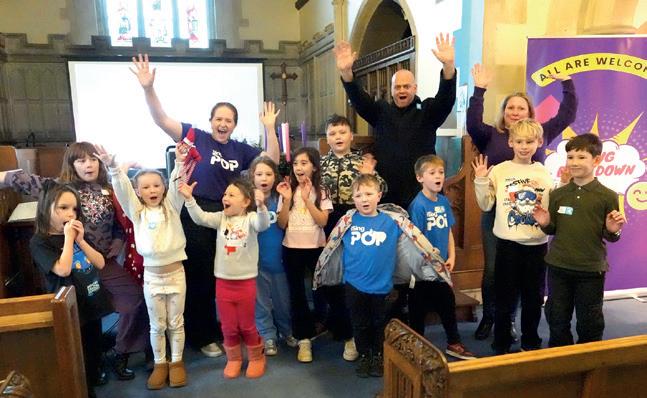
We now have 21 employed children and family workers across the Diocese, with 4 due to start in the next few months. Our iSingPOP pilot has worked well, resulting in 6 new worshipping communities. 11 churches and schools have achieved a Church School Partnership Award, with many others working towards an award.
There have also been positive signs of growth in our renewal churches. They have seen a 49% increase in their Average Weekly Attendance and have started 21 new worshipping communities with around 180 individuals attending.
Our learning from Phase One has been that where there is already vision, energy and clear leadership, funded projects thrive. For Phase Two we want to continue to look at where God is already at work and join in!
Funding
The national Church’s focus on clergy wellbeing through funding pensions and stipends means there is less money available for diocesan projects. This means the amount of funding available from the Strategic Mission and Ministry Investment Board (SMMIB) is not as much as we were originally led to believe.
However, we are committed to finding funding for those things which are essential to enabling our parish churches to flourish, including making additional applications to other funds held by the national Church, and thinking carefully about how we use our Healthier Churches Fund, released through careful management of our reserves. This may involve a slight refocus of that fund, although there are still grants available for capital costs of new worshipping communities and other missional activities.
Next steps
Phase Two of our transformation journey will be a continuation of Phase One, recommitting to our diocesan strategic priorities and building on the foundations laid. It will respond to what we have learned and what we continue to discern, as we seek to grow in health and sustainability across every context.
With a renewed focus on leadership, discipleship, children and youth, missional innovation and renewal, we are committed to supporting every church that wants to grow, offering opportunities for people of all ages to come to and grow in their faith, able to realise their God-given potential.
Checking in on clergy and Reader wellbeing

Clergy responses
At the end of last year, we asked clergy and Readers to respond to a survey asking about their wellbeing and whether there was more the diocesan wellbeing group could do to offer support in this area.
Three-quarters of clergy who responded felt they were in good or very good health. Sadly, nearly 70% of clergy said they continued to work when feeling unwell and many clergy also didn’t feel they have sufficient time to spend with family and friends.
It’s important that clergy don’t feel under pressure to continue to work when they are unwell and we are looking at making our sickness reporting policy more straightforward. We are also exploring how to enable more clergy to take two consecutive days off each week.
Over half of clergy have experienced bullying or harassment. As a diocese, we have a zero tolerance to any kind of harassment. The diocesan wellbeing group is currently exploring whether we can offer an independent, confidential reporting service providing an alternative channel for highlighting difficult situations.
Although most clergy felt that they would access diocesan support at times of vulnerability, only just under half of those responding agreed that the diocesan team adequately supports their health and wellbeing needs, highlighting a need to be clearer about the support that is available and how it can be accessed.
As we develop the enabling structures – measurement, funding, and people planning – we remain rooted in prayer, open to the Spirit, and focused on our shared vision: to grow as Kingdom People in healthy, sustainable churches across the Diocese.
Thank you for all you are doing to share in this transformation journey. Please continue to pray and share your stories as we discern together the shape of God’s exciting plans for the next phase of the life of our diocese.
The majority of those responding felt that their ministry was valued. Most agreed that they had a strong sense of calling compared to when they were first ordained and felt they were fulfilling their sense of vocation. However, the survey highlighted areas where we could do more to improve wellbeing, and the diocesan team are looking at these.
Reader responses
Over two-thirds of Readers who responded to the survey considered themselves in very good or good health, although almost a quarter have a long-term health condition or disability which affects their daily life.
Bullying and harassment has also been experienced by almost a quarter of Readers in the context of their ministry, yet most did not report it. Almost a third of Readers weren’t sure they were equipped to deal with any bullying and harassment they witnessed, demonstrating a need for more work in this area.
Most Readers felt their ministry is valued and they are happy in the current context and around three-quarters feel the amount of time given to their ministry is about right, although 14% did feel it is slightly excessive and around a fifth wanted more meetings with their incumbent or clergy supervisor.
None of the Readers who responded had accessed support such as the diocesan counselling service or the Warden’s Discretionary Fund. The wellbeing group will be looking at ways in which they can make the support available to Readers clearer and more accessible.
The diocesan wellbeing group were grateful to all those who took the time to complete this survey. Changes will be made as a result, and the group will be looking to repeat the survey in future years to see whether these changes have had an impact.