Welcome to the new look Archdeacons’ Visitation News containing even more local news and articles written by members of our Diocesan team to support our Churchwardens in their role. We offer our thanks for the generous sponsorship of this publication by Ecclesiastical Insurance and for its ongoing support of our church life in so many ways across the Diocese.
For the Archdeacons this publication provides another opportunity for us to publicly thank our Churchwardens and all who support them with their work in our parishes and benefices in all parts of the Diocese. This faithful service of God in our churches and local communities undertaken week by week supports our mission and ministry across the Diocese. So whether you are a newly elected Churchwarden or you are returning to serve again in this role, we thank you for your commitment and ministry, your partnership with us and your support of us as we seek together to bring the Good News of the love of Christ to those around us. Please do continue to pray for us as we pray for you.
In all our work, whatever our role, we are supported by our dedicated team of Diocesan Officers and staff and we thank them for their contribution to our work. This includes providing articles for this publication to support the work that you and others are doing or planning for in your parish or benefice and
we commend them to you. Please do be in touch with any of the Teams with questions or enquiries as you plan and develop ideas to encourage and enable the worship and work of God in your communities.
In the past year we have seen the retirement of both Lynne Griffiths and Shirley Lee as PAs in our offices. We thank them for their work and service over many years. This means that we have welcomed two new colleagues - Kate Casey is working as PA with Archdeacon Janet and Natalia Deas is working as PA with Archdeacon Charles. Alongside Tricia Reed, working as PA with Archdeacon Dave, they too are always ready to offer support and advice. The Diocesan website also provides a wealth of information.
At the time of writing this article, we are still waiting and praying for an announcement of a new Bishop of St Albans. By the time you are reading this article it is likely that this announcement will have been made and we will know who the person is that God has called to lead us. In the uncertain world in which we are living, we are blessed by the steadfast love of God sustaining and supporting us day by day. As we encounter those seeking meaning in their lives, we give thanks that our churches and communities are able to offer that welcome to those we serve. Thank you for your ministry and service.
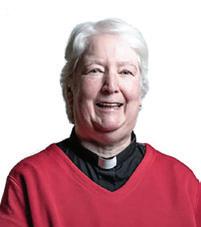
Ven Janet Mackenzie The Archdeacon of Hertford
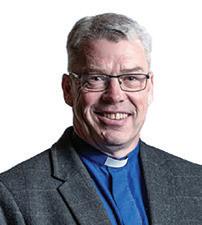
Ven Dave Middlebrook The Archdeacon of Bedford
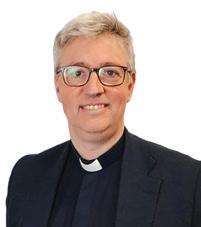
Ven Charles Hudson The Archdeacon of St Albans
Mission & Ministry: Supporting You in the Ministry You Carry
Churchwardens stand at the heart of parish life. You support worship and welcome, governance and growth, faithfulness and community life. In Mission and Ministry, our desire is simple: to support you as you nurture communities that are deeply rooted in Christ and open to what God is doing next. So, we’d like to highlight three particular aspects of Mission and Ministry support at this time:
Flourishing Churches
Our Flourishing Churches team exists to encourage the health, resilience and growth of your local church. We long to see Christ-centred communities where people of all ages and backgrounds are nurtured as disciples and share God’s transforming love in their neighbourhoods.
Through vision days, support for mission planning, and practical consultation, we work alongside PCCs, leaders and teams to discern priorities and strengthen confidence. Revd Kate Lomax (Hertfordshire) and Revd Nick Smith (Bedfordshire), our Church Growth Officers, are available to support you in developing vision, engaging your community and growing both spiritually and numerically.
Every baptised person is called to serve God in every bit of life. Part of your role as Churchwardens is helping create a culture where people can discover and grow into that calling.
Our Discipleship and Vocations team offers training, resources and events to help individuals deepen their faith and explore how God may be leading them — whether in lay ministry, ordained ministry, or faithful service in everyday life.
Our Vocations Advisers are always happy to meet with those exploring next steps, and Ruth Dennigan the Discipleship and Vocations Officer is available to visit to preach or speak about discipleship and vocation. ruth.dennigan@stalbansdiocese.org
The Alban Way
The Alban Way is our diocesan pathway helping children and young adults grow in resilience, prayer and confident faith.
The Year 6 programme builds strong links between parish and school, culminating in a celebration within the parish church. In many places, it has become a catalyst for renewed youth engagement.
For young adults, the non-residential “Year Out” provides space to deepen faith, serve locally and grow in confidence. Many describe it as life-changing.
rachel.drury@stalbansdiocese.org
We are here to serve you. If your parish is discerning next steps, seeking encouragement, or simply wondering what might be possible, please be in touch.
Tim Lomax
Director of Mission and Ministry mmsupport@stalbans.anglican.org
Support In Your Ministry (SIM)
SIM is for you!
SIM is a diocesan scheme whereby anyone in ministry can meet (in total confidence) a trained volunteer to take stock, share the joys and challenges of their ministry, think out loud, talk through issues – in fact talk about anything on your mind.
Users of the scheme include people in all types of ministry –clergy, readers, lay ministers, youth workers, administrators …and of course Churchwardens!
SIM is entirely voluntary and is free to use. About 100 people in ministry in the diocese already use the scheme. The person you will meet (we call them ‘Assistants’) will not have known you previously. We aim to offer you an Assistant who has no connection with you or your church so you can talk freely.
Confidentiality
SIM is entirely confidential (naturally with the usual safeguarding proviso). Confidentiality doesn’t just cover what is said between you and your Assistant. The fact that someone uses the scheme is also entirely confidential.
Meetings with Assistants
The frequency and length of meetings is your decision, but typically they happen every 3-4 months. You decide what you talk about. Your Assistant may question, support, encourage or challenge, but will never take the conversation in a direction you don’t want to go.
Why SIM
Some people say they don’t need SIM because they don’t have any problems, but SIM is not simply about dealing with problems. It’s about taking time out, reflection, self-care, having a trusted person to talk to, even celebration! Our booklet contains more information about SIM, including some quotes from users of the Scheme. You can download it from our webpage:
If you are interested in having a SIM Assistant, or would simply like further information, then please contact Judy Salisbury –judithsalisbury58@icloud.com 07889 912269
Safeguarding Audit
In 2027, our Diocese will take part in an independent audit. This represents an important moment in our shared commitment to ensuring that our churches are safe, welcoming and well-governed. We welcome independent scrutiny as an opportunity to reflect, to celebrate progress, and to identify where we can grow stronger.
Independent audits are vital. They offer an objective perspective, and test whether safeguarding is embedded in culture.
Over recent years, safeguarding culture has strengthened across the Church. Safeguarding is no longer seen as a specialist concern for a small group of trained individuals. It is increasingly recognised as a fundamental expression of pastoral responsibility and theology of care. Creating safer churches is something we should continually aspire to, recognising that every person deserves dignity, protection and respect.
This cultural shift requires vigilance. Policies must be up to date. Safer recruitment processes must be followed. Training must not simply be completed but applied. Record-keeping must be clear and secure. Above all, concerns must be listened to carefully and responded to promptly. An audit helps us measure how well these commitments are working in practice.
Churchwardens and PCCs have a particularly important role. Your leadership sets the tone by keeping safeguarding visible, supporting the Parish Safeguarding Officer, and ensuring compliance is monitored.
The forthcoming audit should be approached as a partnership. It is an opportunity to demonstrate the progress made, to learn from constructive challenge, and to renew our collective commitment. By working together, clergy, Churchwardens, PCC members and other volunteers can continue to develop a culture where safeguarding is woven into the fabric of parish life.
Jez Hirst Diocesan Safeguarding Officer
safeguarding@stalbans.anglican.org
Safeguarding
As we continue to strengthen safeguarding practice across the Diocese, it is important to reflect on the role of PCCs in ensuring that appropriate activity risk assessments are in place. For Churchwardens, this is not simply an administrative task but a central part of your leadership in creating a safe and well-governed parish.
PCCs, as charity trustees, carry legal responsibility for safeguarding and for the safe conduct of all church activities. This includes worship, children’s and youth ministry, pastoral visiting, community events, and new initiatives. Activity risk assessments are one of the practical ways in which PCCs demonstrate due diligence and good governance.
An activity risk assessment is not about generating paperwork but is about thoughtful planning. It asks: What could go wrong? Who might be at risk? What reasonable steps can we take to reduce harm? This applies not only to safeguarding risks but also to health and safety considerations. A well-considered assessment helps ensure that activities are inclusive, properly supervised, and compliant with safer recruitment and training expectations.
Churchwardens play a crucial role in ensuring that risk assessments are embedded in parish life. You often hold the overview of buildings, volunteers, and practical arrangements. By working closely with your incumbent, Parish Safeguarding Officer, and PCC colleagues, you help ensure that risk assessments are completed before activities begin and reviewed when circumstances change.
The Parish Safeguarding Dashboard is an invaluable tool. It provides a clear snapshot of your parish’s safeguarding compliance and highlights key requirements. Regularly
The Diocesan Finance Department
Allow me to take the opportunity to introduce you to the friendly, finance team, what we do and how we can help you.
There are five of us, three working part-time. We are:
In a sentence, I (Glyn) support the diocesan mission with a strategy for finance that underpins its aims, vision and mission. If all that sounds a bit vague, then you are most likely to meet me when we are discussing budgets and what Parish Share looks like for the year ahead.
reviewing the Dashboard at PCC meetings keeps safeguarding visible and ensures that gaps are addressed promptly.
In addition, the Diocesan Safeguarding Hub offers guidance, advice, and practical support for safely recruited roles and other roles. On the diocesan website you will find example activity risk assessment templates, designed to assist parishes in thinking through common scenarios such as children’s groups, pastoral visiting, and activities for other vulnerable groups. These templates are there to support you; they can be adapted to reflect local circumstances.
A healthy safeguarding culture is characterised by attentiveness rather than anxiety. When PCCs routinely consider risk, and record their decisions carefully, they build confidence within the church community.
As Churchwardens, your oversight and encouragement make a difference. By championing good practice in risk assessment and ensuring that safeguarding remains a standing priority, you will help your parish to grow safely in its mission.
safeguarding@stalbans.anglican.org
Nichola looks after Parish Share – collection and adjustments and is the first point of contact for questions. She does all our invoicing for our grants and all other income. She also deals with payments and receipts for parish trust funds.
Alison manages our finance system, making sure that everything is posted correctly. She also manages our payroll and liaises with National Church over clergy payments.
Heather makes sure that all our invoices and expenses are posted and ready for payment. (In case you are wondering, we process over 7,000 invoices a year and manage around 8,000 separate income transactions.)
Lindsay looks after parochial fees, ensuring that she receives returns from all of you. She helps Nichola in administering the trust funds and looks after our invoices when Heather is on leave.
However, the above doesn’t cover one of the most important things that we all do – which is support you with all your questions and concerns. So please don’t be shy or hesitant in contacting us. We agree that the most rewarding thing we do is in helping you. You can contact us with any questions via the finance email: finance@stalbans.anglican.org
Types of Trust Funds
One of the most daunting areas that trustees of a charity can face is the funds they have and how they can be used. It is always gratifying when someone makes a donation or leaves a legacy, but it leaves the trustees trying to work out what they are able to do with that gift. The rules and terminology can be quite complex, but a few simple explanations (and hopefully Figure 1 below) can make it much less daunting.
Charity funds are primarily classified by restrictions on their use:
• those that are unrestricted in their use, which can be spent on any of the charitable objectives
• those that are restricted in their use and which must be used for a specific purpose specified by the donor.
Restricted funds are further analysed between restricted income funds and endowment funds. Endowment funds consist of assets, often investments, donated to the charity. Those endowment funds where only the income generated can be used and the capital cannot be spent are known as permanent endowment funds. Those where the capital can be spent under certain conditions are known as expendable endowment funds.
Unrestricted funds do not have any restrictions or conditions on their use and can be spent or applied at the discretion of the trustees to further any of the charity’s objectives.
Trustees may choose to set aside a part of the PCC’s unrestricted funds to be used for a particular future project or commitment. In this way, the trustees set up a designated fund, which remains part of the unrestricted funds of the charity. The designation does not create any legal restrictions. This means that the trustees can exercise their discretion in how to apply the designated fund and can change what the funds are designated for. Trustees can decide to remove the designation at a later date.
One last thing to consider is where the PCC decides to raise money for something by asking for donations specifically for that. That makes it a restricted fund, because then donor is making the donation for that specific purpose.
Growing Generous Giving: Changing the message
Every parish depends on generosity. It sustains worship, enables mission, and keeps our buildings open as places of prayer and welcome. Beyond the figures and budgets, there is a bigger story — and the way we talk about giving shapes how people respond.
In many parishes, the message around money is practical and honest: “We need to pay our Parish Share.” “Times are hard.” “We’re struggling.” These realities matter. Yet when communication focuses mainly on deficits and bills, generosity can begin to feel like plugging a gap rather than participating in God’s mission.
What if we shifted the message?
Instead of leading with need, we can lead with vision. Instead of anxiety, we can speak about gratitude and hope. “I give because this church matters.” “I give because I want to see faith grow here.” “I give because I believe in our parish’s future.” These motivations reflect thanksgiving for what we have received and a desire to invest in what God is doing among us.
As Churchwardens, you help set this tone. When giving is framed positively — in meetings, newsletters and conversations — people are more likely to see it not as an obligation but as an invitation. You are inviting partnership and shared ownership of the church’s future.
While one-off gifts and collections are always welcome, the greatest long-term impact comes from focusing on two key areas.
First, monthly giving. Regular giving through standing order or direct debit brings stability and confidence to parish finances, enabling ministry to flourish. Framed as a prayerful, intentional commitment, it is far more compelling than a last-minute appeal to cover a shortfall.
Second, legacy giving. Encouraging members to consider leaving a gift in their will is not about being morbid; it is about hope. A legacy says, “This church has shaped my faith, and I want that blessing to continue.” Gentle, normalised conversations can make a lasting difference.
To support this approach, we’ve created a short film for parishes, Thank You for Your Giving. It celebrates impact, expresses gratitude, and models positive language that nurtures generosity. You can find the film, along with discussion prompts and practical resources, on the Diocesan website.
The Diocesan Giving Team is ready to help with advice and templates. Together, we can move from messages of survival to messages of hope — building confident, generous churches for the future.
giving@stalbansdiocese.org
Figure 1: The classes of charitable funds
Grants Available to your Parish
There are many grants available to support works in your parish. The Diocesan website has a separate grants page (stalbansdiocese.org/grants) detailing all of those below, and more. Links take you to detailed information about criteria and application forms for completion. We would encourage you to explore this section of the website and see what is relevant for your individual parish situation and aspirations. Diocesan grants are considered by the Parish Grants Committee, which meets four times a year. Criteria vary, and many grants require matched funding or a commitment to long-term sustainability.
Missional Grants – Two grants directly funded from the DBF’s designated funds – one for major mission initiatives (i.e. employment of a youth worker or refurbishment), and the second for ‘seed money’ for small mission initiatives such as toddler groups.
Net Zero Carbon Grants – These include grants for up to 20% of the cost of NZC major parish projects (also from designated funds) as well as smaller grants for NZC ‘Quick Wins’ funded by the national Church.
Grants for Church Repairs - There are many sources of funding for church repairs, both Diocesan and external. Our DAC team are available to help you decide which grants are appropriate for you.
City Church Fund Grants – Available to churches in a specific geographical area for missional projects or works to Church buildings. Proposals must be discussed with and agreed by your Archdeacon prior to applications being made.
Welfare Grants – The Diocese administer Grants from a number of historical welfare Trusts and Funds, all of which have specific geographical and social criteria. The individual criteria for each grant are listed on our website.
Other Grants - Our website also has links to a number of ministry development and bursary grants, including those from the Verulam House Fund Trust.
Income Generation
Our churches and churchyards offer special places for worship and coming together. We are blessed to have such wonderful spaces for daily use for various parish duties. They can also be put to good use for generating income to support daily mission and ministry, general upkeep, maintenance or development.
“Fundraising” is a vitally important activity for church life, but sometimes labelling everything as such can be too broad. In reality, parish income can be split into five streams each with their own role to play. Having a good understanding of your income diversity can be a key factor towards ongoing sustainability and shouldn’t just be a conversation for the PCC treasurer. Can you articulate how each of them is contributing to your parish finances?
• Giving (donations, legacies etc)
• Grants (one-off or time-bound donations from an external body, usually bid for)
• Income Generation (commercially generated trading income)
• Investments (returns on savings)
• Fees (weddings etc)
Income generation is essentially any income from “commercial trading activity”. For example, hiring out your church or church hall to a third party, renting out a parking space to a local business, an organ tutor using the church for teaching their students. There are a wealth of examples of parishes using their spaces in such ways…and you don’t need a hall / parish room to do so. Churches across our Diocese with the right acoustic are in-demand to be hired by musicians for recitals and recordings away from the noisy hustle and bustle of London. We’re also well placed to welcome TV and film crews from nearby studios at Cardington, Borehamwood or Elstree. It costs nothing to list yourself as a suitable location for these activities, but can bring a significant cash injection if you do.
To arrange an Income Generation Healthcheck visit to your parish, please contact Richard Jackson, Local Church Income Generation Support Officer.
rjackson@stalbans.anglican.org
The Faculty Process
As DAC Secretary, I get lots of enquiries from Churchwardens and others in parishes about whether they need a faculty, how to apply for a faculty and more generally about caring for their church buildings. One recent enquiry was perhaps not typical, but probably what many people think:
“I’ve heard there is something called a DAC or a faculty and that there’s a really tortuous process to get one.”
The important things are:
1. The national Minor Matters lists and diocesan Additional Matters Orders set out what doesn’t need a faculty. You can refer to them here:
www.stalbansdiocese.org/resource/minor-matters/
If you can’t find what you’re planning, it probably needs a faculty, but do upload the proposal as a new application via the online portal and we’ll check.
2. The Diocesan Advisory Committee (DAC) doesn’t take decisions about proposals. It’s there to give expert advice (for free!) to parishes as well as the Archdeacons and the Diocesan Chancellor, so do make the most of that by asking for DAC advice at an early stage.
3. The faculty process is evidence based, so please provide as full information as you can about your needs, the significance of the church (not usually needed for repairs or List B applications) and the proposals themselves. Do include plans, photos, specifications and technical information.
Rather than me trying to explain the whole process, my colleagues in the wider DAC team came up with the idea of a flow-chart. Please scan the QR code or click the link to see the chart: https://www.stalbansdiocese.org/resource/ faculty-process-flowchart-for-pccs/
We hope you find it helpful and that you don’t find the process tortuous.
Emma Critchley
dac@stalbans.anglican.org
Creative Uses of Churches and Churchyards DAC Resources
Supporting parishes with care and development of church buildings:
You may feel you have enough on your plate looking after your church and churchyard, but there are plenty of imaginative ideas for worship as well as wider uses.
You may already be using the church for varied worship: prayer stations, reflective worship, special liturgy for the Church’s calendar. Some churches have extended this into the churchyard, using the peace and natural environment or simply the open space as the setting for Muddy Church, Forest Church or community gardening as outreach. One village church continued a simple form of outdoor worship begun during the pandemic restrictions.
Think about what is special about the church or churchyard. Stained-glass windows can inspire creative artwork and textile projects. Use the church’s wildlife to create stories, make bird feeders, or offer a safari trail. Victorian floor tiles and Baroque wall memorials are great starting points for developing treasure hunt leaflets.
What workshops and events are being offered locally? Could you offer something different? How about a daytime book group, a group for gardening, local history, flower arranging, or cake & natter? Does someone need a venue for a fashion show, art exhibition, concert, day-time silent disco or puppet show? Tap the DAC team for suggestions and resources for using your space imaginatively.