
Diocese of Salisbury Making Jesus Known
Archdeacons’ Visitation News

Dear Churchwardens
Welcome to the 2026 edition of Archdeacon’s Visitation News
We hope that you enjoy the articles here, with news, ideas and reflections to encourage you in your own setting. At the time of writing this I have been Archdeacon of Wilts for nine months and have very much enjoyed getting to know the people, places and churches of Wiltshire. As Archdeacon of Wiltshire, I am Archdeacon for both Wilts and Sarum, working closely with Assistant Archdeacon Canon Jane Curtis who also works across both Archdeaconries.
Since starting in this role, I have had the pleasure of visiting over 50 churches across Wiltshire, each with their own set of opportunities and challenges. In each place I have been warmly welcomed and have met many faithful and committed volunteers working together to support church and community in so many different ways. Thank you.
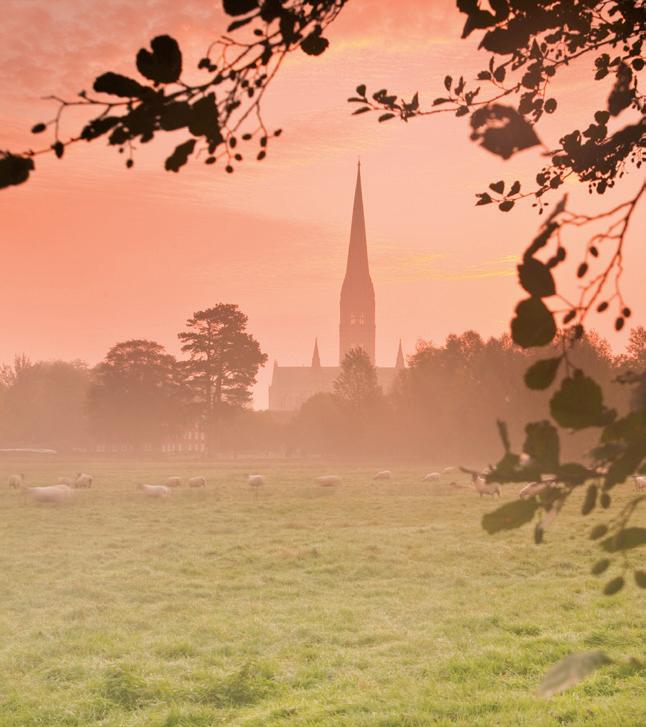
It has been greatly encouraging to see the many and varied ways in which our church communities are seeking to ‘Make Jesus Known’. So, thank you for the loyal and faithful service of church officers, volunteers and congregations across the Diocese, for your hospitality and welcome, for all you do to look after our wonderful buildings and for continuing day by day to ‘Make Jesus Known’. In the months ahead I look forward to visiting more of our wonderful churches and communities and getting to know you more.
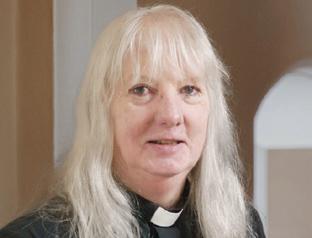
The Venerable Louise Ellis Archdeacon of Wilts
The Venerable Louise Ellis Archdeacon of Wilts
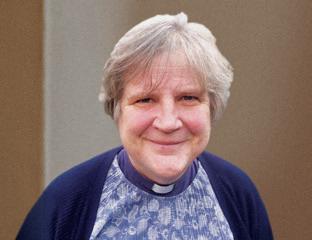
Jane Curtis Assistant Archdeacon of Wilts
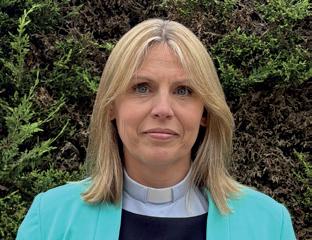
Lucy Holt Assistant Archdeacon of Dorset and Sherborne
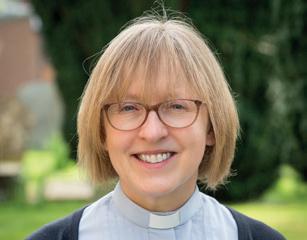
The Venerable Penny Sayer Archdeacon of Dorset and Sherborne
Dear Colleagues
I commit myself to nurturing, supporting and praying for all our parishes, chaplaincies, cathedrals and schools, where quiet faithfulness is coupled with a readiness to respond to every opportunity, however small, to embody the hope of the Gospel at the heart of a community; where people, together, become places where the Kingdom happens.
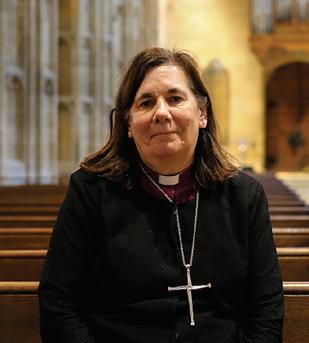
So said Archbishop Sarah Mullally in her first Presidential Address to General Synod, only a week after her Confirmation of Election.
This section of her address speaks directly to the whole church, in all its various expressions. In this time of challenge both within the church and world, her words spoke to the heart of who we are in every place. We are local and ‘on the ground’ in a world that is increasingly digital and with people meeting virtually; we are faithful; we embody the Gospel of Jesus Christ and reach out to all with his love and we therefore reveal the Kingdom of God in any given place.
Central to our ability to do all this is the ministry of Churchwardens. As ever I thank you for your ministry in this ancient role – for the time you give; the sacrifices you make; the responsibility you carry; the problems you solve; the support you give to so many; the way that you, in doing so, are Making Jesus Known.
Yours has never been an easy ministry. Some of the remarkable Churchwardens’ accounts from the sixteenth century act as not only a commentary of the significant changes – both liturgical and practical – that the English church was going through, but also the challenge that this presented to the Churchwardens amidst great turmoil.
Today, the challenges are still there and I never underestimate what this asks of you and the ministry you offer. Yet as the church, as the body of Christ, we meet these challenges together. We are never a team of one or two, but a diocesan family which seeks to listen, support and encourage all who serve the church in varied and different ways – nurtured and upheld by prayer that we would all, together, be a place where ‘The Kingdom happens.’
Thank you for your ministry and may God bless all of us in Making Jesus Known.
The Rt Revd Karen Gorham Acting Bishop of Salisbury

Save on Church Heating Oil
Parish Buying National Agreement
What’s Included?
If your church still relies on oil heating, this is an opportunity to reduce costs immediately. Parish Buying have secured a national agreement with Certas Energy, providing all types of heating oil to churches at discounted rates. The negotiated pricing is typically around 10% lower than regional rates, even compared to going direct. With energy costs continuing to fluctuate, this agreement offers both immediate savings and greater certainty.
• Discounted rates on Gas Oil, Ultra35 and Kerosene
• Intelligent fuel monitoring to help manage usage and avoid surprises
• A dedicated account manager for church support
• Emergency deliveries available
• Optional automated top-up service
A Real Example
One church recently saved £300 on a £1,000 order after switching to this agreement. Louise Wharton louise.wharton@ certasenergy.co.uk , Campaign Manager at Certas, helped move them from their previous supplier arrangement — and this is just one example of how the contract is delivering real financial benefit to parishes.
Contact Louise Wharton at Certas to discuss your requirements and place an order - remember to mention you are a Parish Buying member.
https://parishbuying.org.uk
Fire Safety in Historic Churches
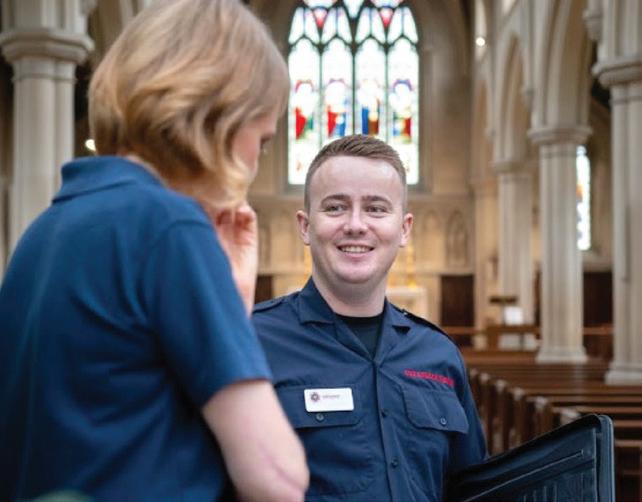
Many churches in the Diocese of Salisbury are historic buildings, often centuries old and constructed long before modern fire safety standards were introduced.
Churchwardens and Parochial Church Councils (PCC) have a legal responsibility to take reasonable steps to manage fire risks and protect all who use their church buildings.
Key Fire Safety Considerations:
Compartmentation - where a space is divided with fireresisting partitions to limit spread of fire.
Many churches contain concealed voids in roof spaces, towers, walls, and floors, especially where alterations have taken place over time. These voids can allow fire to spread unnoticed. A Fire Risk Assessment completed by competent assessor with experience in heritage buildings can help identify these risks.
Fire Doors
Fire doors can help limit the spread of fire and smoke. In historic churches, modern fire doors may not always be appropriate. Existing doors should be solid, well-fitting, and in good condition.
Electrical Safety and Lighting
Electrical faults remain a common cause of fires in churches. Wiring and electrical installations should be inspected regularly by a competent person, and any defects addressed promptly.
Hot Works
Maintenance work involving heat (such as lead roofing, plumbing or metal repairs) present a significant fire risk. Only competent contractors should be used, with clear risk assessments and fire safety controls and hot work permits in place. Fire watches during and after works are strongly recommended, and insurers may need to be informed in advance.
Means of Escape
How will people escape in an emergency? Consider: full capacity (weddings etc), unsupervised openings to the public, the needs of people with disabilities.
All exit points should be kept clear and exit signage should be in pictogram form.
Automatic Fire Suppression Systems
Automatic fire suppression systems can provide valuable early protection, especially in churches that are remote or infrequently used. Any system must be carefully designed to protect the historic fabric while minimising visual impact and damage.
Taking a Proportionate Approach
Fire safety in historic churches requires a practical and proportionate approach that balances life safety and heritage protection, with the church’s mission and community use. Solutions should be tailored to each building’s construction, layout, and patterns of use.
Ensure you seek advice from the Diocesan Advisory Committee (DAC) prior to any structural work or alterations.
Further Support
Further guidance is available at: www.dwfire.org.uk/business-fire-safety/fire-safetyguidance/

Dear Churchwardens
“The theme of multiplication runs throughout the Bible. What cannot be achieved by addition, God does by multiplication. You reap what you sow, only many times more. What you give to the Lord, he multiplies.”
Day 55 The Bible in One Year
As Giving Advisor, I am usually speaking with our PCC Treasurers. We are so blessed to be able to count on those who God has gifted with the love of numbers! But, I am at pains to point out, our Treasurers are not necessarily fundraisers. This is a task for the whole PCC, and that is why I’m asking for your help.
As Churchwarden, you have a unique understanding of what your church needs and I expect you have ideas for growth. But how to fund them, when there is no money in the budget?
It is understandable that we feel cautious. But if we do not invest in our church, the result will be a slow decline. It is time to be courageous; to trust in God and plan for growth!
In Matthew 25, Jesus tells the Parable of the Talents, where the servant is scolded for burying the talent in the ground, instead of putting it to work to multiply its value. I believe that when we invest in our church, God will multiply our efforts.
This year, please support your Treasurer and encourage your PCC to set a budget for growth.
Rather than budgeting according to what we expect to receive, start by looking at what your church needs – not just to survive, but thrive. Be bold, and include additional budget to invest in ministry in your church.
This is your budget for Making Jesus Known
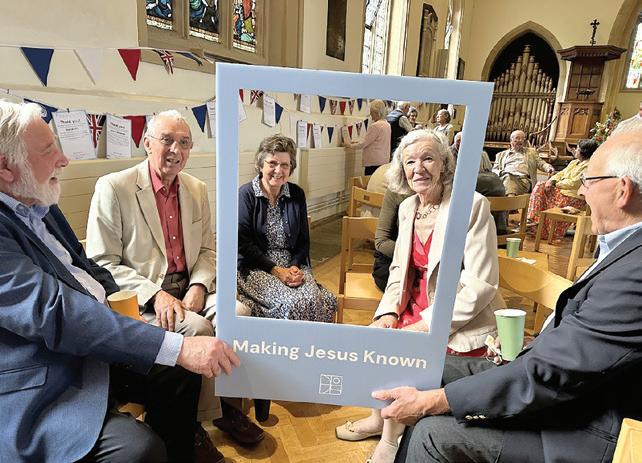
What might this look like? Perhaps you could give a Christmas book to every toddler, a Bible for school leavers, free Harvest supper, a bookmark for every visitor, an advertisement, a boosted Facebook post or leaflets through every door. It is more important than ever that we reach new people.
You likely know people who come to festival services, but not Sunday worship. There are many more who do not know the Gospel at all. Do not assume that they do not want to come, but instead, that they do not know what they are missing. How do we reach them? We may feel like we have tried, but we must keep trying and not give up.
“Now when he had left speaking, he said unto Simon, ‘Launch out into the deep and let your nets for a draught’. And Simon answering said unto him, Master we have toiled all the night and have taken nothing: nevertheless at thy word I will let down the net. And when they had done this, they inclosed a great multitude of fishes: and their net brake”.
Let’s cast out our nets again.
How will we raise the extra income needed to invest in growth? This is where the fundraising comes in . It might be a combination of small changes: use of QR codes, applying for grants, an extra community event, a local appeal. A stewardship review or Gift Day.
“God is able to do a lot with a very small amount. Whatever you give to God, he multiplies.”
Help everyone in your church contribute ideas to raise the funds we need to grow. Encourage big thinking and a challenging target! It’s far more exciting to fundraise for a vision than a shortfall.
Thank you for all you are doing to Make Jesus Known in the Diocese of Salisbury.
Are you ready to get going?
The Giving Team is here to help. Call the Giving Team for an initial chat, or to book a meeting in person or on Zoom, on
07500 831566
Scan this QR code to sign up for our monthly Faith, Finance and Fundraising email, or visit www.salisbury.anglican.org/publications
If your PCC Treasurer role is vacant, we have advice and resources to help you through. Don’t hesitate to ask for help.
Anna Hardy Giving Advisor for the Diocese of Salisbury
Luke 5: 4-5 KJV
Anna Hardy
Volunteers at a diocesan volunteer celebration event in Marlborough
Buildings for Mission
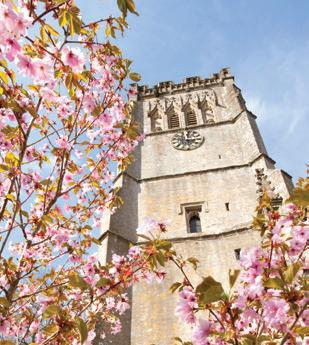
How do we respond to the challenges facing our church buildings today, and what might a viable, vibrant future look like? Over the past year, these questions have shaped my work with a group of pilot churches in the diocese as part of the national Buildings for Mission initiative. It has been an exciting year of learning, experimentation and progress.
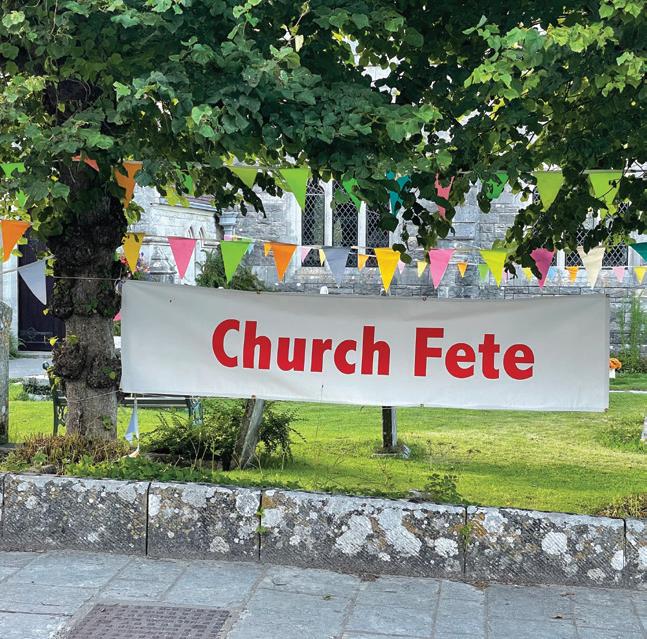
As ever, the key lies in our communities. Traditional connections such as fetes, Parish Giving and regular fundraising have long sustained our buildings, but in many places these ties are weakening — and in some cases have broken altogether. As Pope Francis observed, we are not living through an era of change, but a change of era.
One response is Asset Based Community Development (ABCD), which offers a fresh way to shape a missional vision for church buildings with communities rather than for them. This involves shifting from asking what the church provides to exploring, together, how the building can support local flourishing. In practice, this means community conversations about shared needs, assets and possibilities, recognising the wealth already present in people, associations and organisations across the parish.
The churches I have been working with face very different challenges — from the risk of closure to scepticism about the church’s relevance. Yet ABCD has enabled each to change perceptions, connect with new people, test new uses of their buildings and begin engaging the community as partners in shaping the future.
Many churches already work in these ways, and there are inspiring examples across the diocese. A key opportunity now is to share this learning more widely, building peer-to-peer support through what ABCD describes as “know–teach–learn”: strengthening skills and confidence by learning from one another.
This approach also supports our core Christian mission. Church buildings speak powerfully of God’s love, but it is through shared endeavour and genuine relationship that stories of faith are naturally shared and invitations offered.
Further resources on Asset Based Community Development are available via the Church Urban Fund: cuf.org.uk/resources/abcd-guide
Toni Bush
Community Engagement Enabler, Church Buildings

Case Study:
St Philip and St James’, Chapmanslade
A community conversation with the local headteacher marked the starting point for St Philip and St James’. It opened up fresh thinking about how the church building might support the school and soon led to the church hosting a children’s exercise group displaced by the need for the school to provide more wraparound care.
Not long after, the school was a partner for and promoted the church’s Community Harvest Celebration. Families from the exercise group joined this event co-created with the local history group and farming families, while a Facebook post inviting memories of “harvest assembly bangers” sparked stories and song ideas.
Momentum grew. The local Police Community Support Officer began holding surgeries in the church, and a young volunteer offered to support Gen Z-focused communications. Perceptions continue to shift, with the church increasingly seen as a catalyst for connection and community flourishing, as well as a place of worship.
Chapmanslade School
Volunteering and serving
Across the UK, the number of people able to volunteer their time to serve their church and community is shrinking. A report for the Royal Voluntary Society (RVS) last year reported a shortfall of three million volunteers in the charity sector.
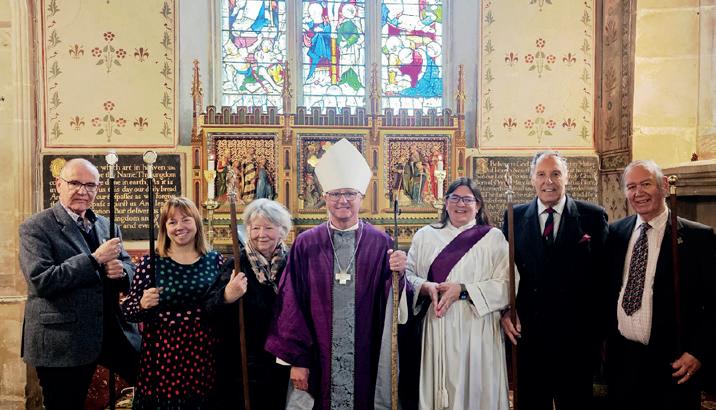
The three volunteer events held last year across the diocese to celebrate the faithfulness and commitment of those who give their time to their local church were wonderful opportunities to say thank you – and in some cases, a very overdue thank you - to churchwardens, treasurers and the many who hold ‘unofficial’ roles, keeping their church open and serving its community. But conversations with those who attended also showed how many were concerned that when they stepped back, there would be no-one to replace them.
That concern has led to a piece of research being commissioned to understand the experiences and needs of churchwardens in the diocese better. If you took part in the survey, thank you. The feedback showed that parishes are struggling to fill key PCC roles, that more than 90 per cent of all parish volunteers are aged over 60, and that many volunteers have to fill more than one role. Acting on these findings, a group including an Archdeacon, volunteers and a small number of DBF staff, including myself, are looking to improve support and resources for parish volunteers. We are starting with overhauling communications, including the website, to make it much easier to find key information. We also plan to provide better support to clergy in supporting their parish officers, including providing role profiles, more comprehensive training and support, and in recruiting new people to serve.
Serving as a churchwarden is not about serving the diocese – it is about serving God through and with your local church family. It is a vital ministry. But it needs more support and investment to allow all who serve to flourish, and through flourishing, the local church to thrive.
Rebecca Paveley Director of Engagement
Safeguarding
Safeguarding continues to be a priority across the Diocese of Salisbury during the year, as we seek to create environments where people feel and are safe. The Diocesan Safeguarding team has focused on supporting parishes to effectively carry out their safeguarding responsibilities by providing online tools, advice and support. This included a monthly online session attended by up to 70 Parish Safeguarding Officers to share learning and good practice.
The Safeguarding Dashboard (an online safeguarding compliance tool for parishes) continues to provide transparency and measurable compliance with Church of England and statutory safeguarding policies. When a parish first starts using their Dashboard, it begins at Level 1, and they can progress up to Level 3 by completing compliance actions. The increase from 22% of parishes at Level 3 in 2024 to 37.8% in 2025 demonstrates cultural embedding rather than simply a box-ticking exercise. Particularly well done to the 21 parishes who have completed and updated their Dashboards to 100%.
In the summer a data breach from our Disclosure and Barring Service (DBS) provider had a significant impact on many individuals and parishes. By this point we were already underway with a DBS Transition Project to introduce a new online safeguarding hub and change DBS provider. Around 75% of parishes have now signed up to the hub which allows them to record and monitor DBS and safeguarding training information for their volunteers and staff. The Diocesan Safeguarding team is rolling out training for using the new systems.

Churchwarden at Silton in the Gillingham Benefice, Dorset, with the Bishop of Salisbury, the Rt Revd Stephen Lake
Church Buildings and DAC Review
Bean Research have now completed and submitted the review of the Church Buildings Team and Diocesan Advisory Committee (DAC). The review affirms and validates the lived experience of parishes, clergy and volunteers, recognising the genuine frustration and cumulative burden caused by the complexity and perceived opacity of faculty processes. It notes in particular the impact of national legislation and digital systems, including the Online Faculty System, which shape much of the parish experience and sit largely beyond diocesan control. At the same time, the review affirms the professionalism, commitment and statutory diligence of the DAC and Church Buildings Team, while identifying areas where local governance clarity, communication, capacity resilience and strategic alignment can be strengthened.
In response, a phased Management Response and Delivery Plan has been written and will be shared with the Bishop’s Council at its meeting in March. The delivery focuses on strengthening governance clarity, leadership resilience, workload visibility, escalation pathways and parish-facing communication, while positioning church buildings work more clearly within diocesan strategy and planning. Clear ownership and oversight arrangements will be established, with progress monitored through existing governance structures. A subsequent phase will build on this foundation, developing a more ambitious, mission-led strategic approach to church buildings, including long-term sustainability (particularly in relation to vulnerable and closed churches) and exploration of regional partnerships for resourcing and support.
Anglican Heritage Salisbury
We are delighted to announce that, thanks to funding from the National Lottery Heritage Fund, we have now appointed a Project Manager, Sarah Hollingdale, for the Anglican Heritage Salisbury project. This marks the start of the beginning of an exciting project, considering the challenges facing ‘fragile’ churches and how we can best support them, and we look forward to sharing more in the coming months.
In setting up this project we recognise that our wonderful church buildings are central to mission and our presence in the community. We all know that there are financial and practical challenges in maintaining these and this project seeks to identify ways to sustain and safeguard our rich heritage.
Creative Partnerships in Local Mission
As part of our diocesan vision and strategy Making Jesus Known, we are investing in 13 Mission Hubs across the Diocese – local communities already demonstrating missional health and readiness to partner with others to grow disciples, raise up leaders, and help every community flourish and grow.
The Mission Hubs are one of the key ways we are putting our diocesan vision into practice. By focusing energy and resources where there is both strength and generosity of spirit, we are enabling churches to work together in new ways – sharing learning, building confidence, and releasing capacity for local mission. This isn’t about creating something separate but about connecting what God is already doing in each place and helping it multiply.
Over the past few months, each Hub has been working with Stuart and colleagues to develop its own Mission Design – a practical plan that sets out how it will live out its calling and contribute to the wider diocesan vision. These Designs are helping local teams clarify priorities, focus leadership, and identify the partnerships and resources needed to sustain long-term growth.
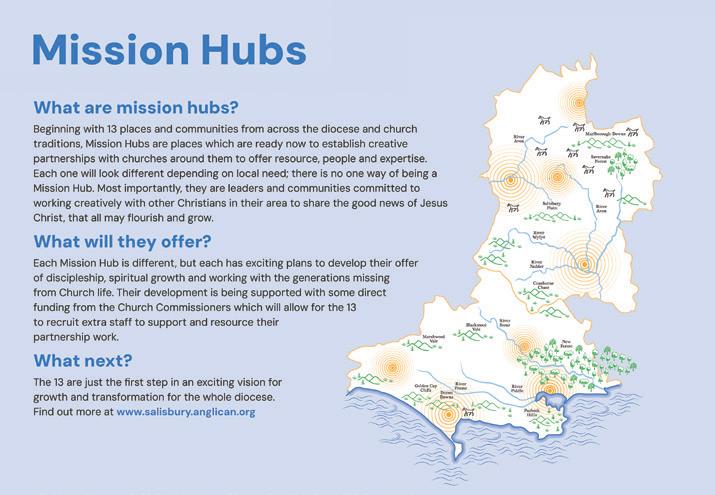
Scan the QR code to vew a larger map.
In October last year, the Strategic Mission and Ministry Investment Board (SMMIB) approved the first two Designs for Corfe Mullen and Melksham, marking an exciting step forward. The remaining Mission Designs are now well underway, exploring what partnership and mission could look like in their own contexts – from intergenerational mission to new worshipping communities, leadership development, and support for neighbouring parishes.
Although each Hub looks different depending on local need, all share a clear sense of purpose: to strengthen the life and witness of the Church in their area and to work collaboratively with others to Make Jesus Known in every place.
We’ve also produced a short animated and story video that brings the Mission Hubs to life – sharing glimpses of what’s emerging across the Diocese.
Scan the QR code to see the video.