One of the great joys of being an Archdeacon is meeting Churchwardens and other church officers, whether it’s around a Sunday service, or at a DAC site visit, or just in the normal course of things. Hearing stories of fruit and frailty, and seeing it lived out, in local church life is both a joy and challenge. Our intent as Archdeacons is to encourage and equip all those who serve in this way, and the many others needed locally. We hope this magazine, and the Visitation service, can play a part in that. Thank you for all you do.
Richard
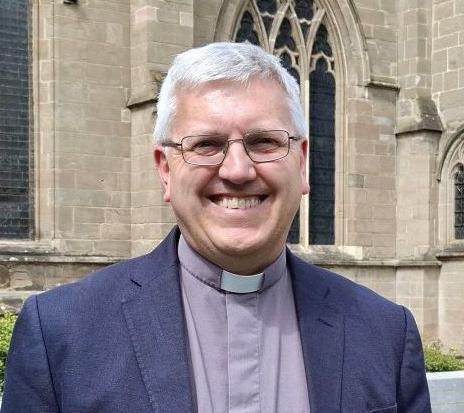
The Ven Richard Trethewey Archdeacon of Leicester richard.trethewey@leicestercofe.org
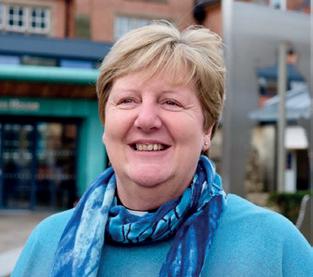
The Ven Claire Wood Archdeacon of Loughborough claire.wood@leicestercofe.org
Dear Churchwardens
It is my privilege to serve as the Archdeacons’ Parish Engagement Manager for the Diocese of Leicester. Based at St. Martin’s House, I took up this role in January and am currently focused on supporting our Minster Communities as they move into the implementation stage of their shared journey.
Before joining the diocese, I worked as a project manager in the NHS. I also serve as a trustee of the Rise multi-academy trust. Since starting, I have been immersing myself in the life of our diocese. Through conversations with our two wonderful Archdeacons, diocesan colleagues, and many of you across our parishes and communities, I have been struck by the depth of commitment I have encountered and by the creative ways our churches are embodying the gospel. Every conversation deepens my appreciation for walking alongside you in this work.
Working closely with the Archdeacons and the Diocesan Registry, much of my role involves supporting Minster Communities as they develop their Memoranda of Understanding and Agreement. I am here to help communities shape how they live out their shared mission, offering the support of the Archdeacons’ office as you discern the way forward. It is my hope and prayer that our conversations together will bear fruit for the Kingdom of God.
If your Minster Community would welcome a conversation, please do get in touch. And if your query falls outside my area, I will gladly direct you to someone who can help. I look forward to working alongside you as we grow, serve, and imagine the future together in Christ – who is the only way, the truth, and the life (John 14:6).
By Jaison Mathew Archdeacons Parish Engagement Manager (APEM)
Welcome to the Archdeacons Office
In April 2025, after 8.5 years of university education, my time as a student came to an end. But, as the saying goes, as one door closed, another one opened, and this time, it was to become the Executive Assistant to the Archdeacons of Leicester and Loughborough.
I have been in post for just over a year now, and have thoroughly enjoyed my time at the diocese so far, and have had the pleasure of speaking to many of you here today either on the phone, or via email, and strive to ensure that queries and issues are signposted and dealt with as quickly and effectively as possible.
A typical day can include welcoming visitors, minute-taking at meetings, diary management and planning, or attending events such as these annual visitations. I particularly enjoy getting to help plan and execute gatherings, including our Church Officers’ Training Day, which will be taking place on Saturday 26 September, at St Andrew’s, Leicester Forest East, from 9.30am – 1pm.
Outside of the office, I enjoy reading, travelling, baking (with varying levels of success), films, going to the theatre, and making my first house a home with my husband, Adam.
It has been a privilege to become a member of the team and serve the Archdeacons over the past 12 months, and I look forward to seeing what the next year has to offer!
If you require the assistance of the Archdeacons, please do not hesitate to contact me via email:
As you continue to make our parishes what they are – I wish you all the joy that comes with the rebirth and renewal of spring.
In the spirit of change and newness, this is a good time to formally introduce myself.
I am Sophie Holder, the Director of Racial Equity at the Diocese of Leicester. My role is funded for three years and sponsored by the Racial Justice Unit at the National Church in the hopes of advancing racial equity within the diocese. I am proud to be part of a diocese that takes this work seriously. I see this reflected in those at senior levels of the organisation but also with you as Churchwardens, who have spoken to me about your desire to make your parishes and churches more welcoming, accepting and accessible to all those who represent the kingdom of God.
While at the diocese for the past year, much of my work has focused on understanding how the diocese functions but this year I look forward to spending much more time in the local churches.
One of my first directives when taking this role was to look at the existing Racial Equity Strategy and create actions that will help the diocese be a safer, more diverse and more equitable place for all staff and congregations. It is clear to me, that one of the key areas that this goal must relate to first is the spaces where our members meet every week, where our greatest impact in the community is felt – where you are as wardens. As such, one of the areas I will be working on for the remainder of my role is to provide training for those at the church level – to ensure you feel equipped to deal with diversity and difference.
One of the biggest challenges people can face in this work is feeling underprepared or worried about saying or doing the wrong thing. Yet, what I am looking for is a willingness to learn, to show up, and not worry about having all the answers – because none of us do.
As the apostle Paul says in Philippians 4:13, “I can do all things through Christ who strengthens me”. I will take these words with me into each new day and I pray that you take them with you also as we embark on this racial equity work together.
Sophie Holder
Applying for faculties and other permissions
Once upon a time, not so very long ago, all applications for faculty works in churches were made by post, using paper forms which had to be filled out by hand. Eleven years ago, the Online Faculty System was introduced in Leicester and Truro and gradually adopted by the majority (not all!) of dioceses as a simpler, faster way of processing the same information. This system was a great improvement but still had several limitations, including a user interface which many people found confusing.
This summer, a new way of applying for permissions – including faculties, List Bs, temporary minor reordering and recording List A works – is being launched nationally. The Buildings Management Portal has been developed to be a more user-friendly and flexible interface, still retaining the heart of the application process (which is enshrined in law and has not changed), but providing more step-by-step guidance and easier completion of the required information. Behind the scenes, it will also simplify the process of consultation and review, which should make it quicker for the DAC to comment and respond to applications. All the existing open applications will be automatically carried over into the new system, so nothing which is currently being worked on will be lost.
As this is a national project, funded by the national church institutions, they will produce a variety of training materials, including videos, available in the run-up to the launch. As a diocese, we will also provide some local training and support for church officers in using the new system as it becomes available.
Richard Trethewey
Communication
Good communication is at the heart of parish church life. It helps people feel connected, welcomed, and part of something bigger, which is exactly what our churches are here to nurture.
When we communicate well – whether through newsletters, websites, or social media – we celebrate our community, build trust, reach new people of all ages with the good news, and inspire discipleship in everyday, meaningful ways.
Digital platforms are a huge part of this mission. Every parish and benefice automatically has a page on AChurchNearYou.com , and for many people searching online, it’s their very first glimpse of your church. Because it’s free, simple, and widely used, lots of churches rely on it as their main website – or at least keep it updated alongside one. A tidy, welcoming page can make all the difference to someone wondering what your church is like or when to come along. You can find help and how tos for using it here:
For broader digital support, Church of England Digital Labs is a fantastic hub of resources to support your digital evangelism and discipleship, packed with guides and tips on everything from creating Facebook pages and free Canva Pro accounts, to making videos and websites.
The Diocese of Leicester website (www.leicester.anglican. org/communications) includes practical help on livestreaming, online giving, branding and using digital tools confidently. Together, these resources can help parishes communicate clearly and in a way that strengthens both local identity and our shared diocesan mission.
And of course, the diocesan communications team is always here to help. We communicate the messages and mission of the diocese, share news and stories, create videos and social media content, put together the weekly Diomail e-newsletter, and support churches engaging with press and broadcast media. We absolutely love hearing your everyday faith stories and missional endeavours in your worshipping communities, so please do get in touch at:
communications@leicestercofe.org
If you don’t yet receive Diomail, you can sign up here:
www.leicester.anglican.org/diomail/
Parish Contributions
Parish ministry in the Diocese of Leicester is funded by Parish Contributions. Parish Contributions are contributions made by every parish to provide and support clergy in the diocese, and to further our work in every parish across Leicestershire.
Why do we pay parish contributions?
The way we can offer ministry across our diocese is not funded by a tax or hidden investments, but through parish contributions.
As Christians, we understand our lives and our identities are rooted in our relationship with God. As children of a loving and generous God, we are invited into a relationship with him and are brought together to join with others in Christ, his church.
“For just as each of us has one body with many members, and these members do not all have the same function, so in Christ we, though many, form one body, and each member belongs to all the others.” (Romans 12:4-5, NIV)
We are not all the same, but, like different parts of a body, we play our own part in supporting the flourishing of the whole body so that the hope of Jesus can overflow into all the communities of Leicestershire.
Parish contributions are a tool which supports this mission. It is grounded in our calling to share together a life shaped in response to God’s abundant generosity and the hope we have in him.
What’s next for parish contributions?
The distribution of ministry is being reshaped in the diocese through the Shaped by God process. The allocation of stipendiary ministry available to each minster community will be linked with parish contribution payments. From 2027, there will be a new parish contribution strategy that aligns with the diocese’s new structure. I am looking for feedback on the parish contributions process and communications. As part of this, you will gain initial insight into my thoughts and ideas on a new strategy. If you are interested, please scan the QR code to complete the form, or email Laura Taylor : laura.taylor@leicestercofe.org
Safeguarding
The public’s focus on safeguarding in the Church of England has probably never been greater. Recent reviews, including Makin and Scolding, have brought shocking revelations of the scale and nature of physical, emotional and spiritual abuse within church settings and our thoughts must be with the victims and survivors.
Parishes are at the forefront of preventing harm and keeping everyone safe, particularly children, young people and vulnerable adults – a serious responsibility.
In autumn 2024, the Church of England launched the National Safeguarding Standards which now underpin safeguarding arrangements in the Church and parishes. The five standards are culture, leadership and capacity, prevention, recognising, assessing and managing risk, victims and survivors and learning, supervision and support. Materials are available for use in the parishes and there are a number of supportive tools. Links are on the Diocesan website.
The Diocesan Safeguarding Oversight Group (DSOG) is formed of diocesan officers, two Parish Safeguarding Coordinator (PSC) representatives and external members representing statutory agencies – police, probation and local authorities. DSOG’s role is to provide advice and scrutiny of safeguarding arrangements and activities in the diocese, through keeping in touch with strategic developments and their impact on safeguarding, e.g. Minster Communities, undertaking audits (e.g. of risk assessments) and the six-monthly Safeguarding Intelligence Pack which highlights any areas of concern. A bulletin is circulated across the diocese following each meeting and DSOG presents an annual report to the Bishop’s Advisory Forum and the Trustees.
Parochial Church Councils (PCCs) hold overall responsibility for parish safeguarding arrangements; ensuring that safer recruitment processes are in place, the required safeguarding training is undertaken and victims and survivors are listened and responded to. Most parishes are using the Parish Dashboard to maintain their safeguarding data and reports from the dashboard are an excellent way of PCCs identifying strengths, areas for development and risks.
A key role in any parish is that of Parish Safeguarding Coordinator. There is growing awareness that this can be an extremely demanding and challenging role, particularly if the PSC holds more than one role and/or the church is in vacancy. A recent local survey highlighted that some PSCs are feeling isolated and overwhelmed.
It is therefore crucial that whoever holds this role is well supported by and regularly reports to the PCC, including an annual report.
The dedicated and highly experienced Diocesan Safeguarding Team, led by Rachel Spiers, Diocesan Safeguarding Officer, provides safeguarding advice, has responsibility for risk assessments and risk management and coordinates diocesan safeguarding training. The Team offers a range of support opportunities for PSCs, including regular communications and drop-ins, as well as a yearly training conference and service of thanksgiving. The Assistant DSO provides considerable support to PSCs regarding maintaining the Parish Dashboard and there is helpful national and local information on the diocesan website.
A significant recent development has been the launch of the Survivor Care Strategy , developed with the engagement of survivors, which outlines how the diocese and Cathedral will care for and support victims and survivors. It is vital that church settings take steps to become safer places for those who have experienced trauma and abuse and the
Quinquennial Inspection
All churches must undergo a quinquennial inspection (QI) every five years. For many Churchwardens, this can feel daunting: a statutory requirement, a long report, and a day spent poking every corner of the building. A QI isn’t a way of scolding you for not having correct maintenance or paperwork though. It’s a snapshot overview of the building’s condition; a structured health check which becomes one of the most useful tools to help you care for your church.
From an architect’s perspective, the best inspections are the ones where Churchwardens feel prepared and supported. These practical steps will help you get the most from the process.
Before the Inspection
Choose the right architect: Your PCC appoints the inspecting architect, and there is good guidance to help on this process on the Diocesan website. Ask neighbouring churches who they work with. Choose someone you trust and can communicate with easily, and you feel will support you both during the inspection process and beyond.
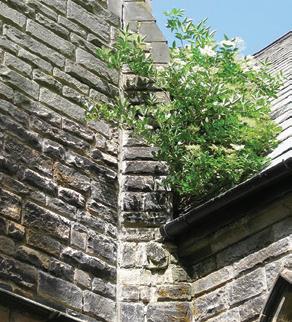
Plan ahead: Check when your QI is due (it is good practice to carry out a report in a different season to the previous QI). What was recommended last time? What has been completed? What still needs attention? Make sure all areas are accessible, especially towers, roof spaces, and boiler houses, and that keys and safe access are available.
strategy contains ten key points that the focus group highlighted as important for church settings to consider.
In response to a recommendation of the Independent Inquiry into Child Sexual Abuse, the Church commissioned INEQE to undertake a programme of safeguarding audits in every diocese and cathedral which commenced early in 2024. Leicester’s audit will be undertaken in the autumn this year. Surveys from INEQE will be sent out in June/ July and as many people as possible are encouraged to participate. Reports of the audits already undertaken are available and provide a good overview of the areas INEQE will consider.
I would like to conclude with a question. One of the recommendations of the Makin Review is that safeguarding should be a ‘golden thread’ running through the Church, so that activities and developments, whether at a strategic or parish level, should be considered through the lens of safeguarding. I would ask you to continue to reflect on your role within your parish and consider whether there is anything further that you can do to ensure this is happening day to day.
Adrienne Plunkett DSOG Independent Chair
Gather documents: Have your up-to-date logbook, test certificates, and any recent reports ready. A small amount of organisation makes a big difference on the day. The DAC of Leicester has a checklist available on their website.
Flag upcoming work: If you’re considering repairs or new projects, let your architect know in advance. The QI is an ideal time to discuss feasibility and timing.
On the Day
Meet on site: A brief welcome and a check through paperwork. In the winter months pointing out the kettle is very welcome, as is the nearest WC! Highlight issues no matter how unusual – a strange mould on the wall, a patch of damp, we’ve lost the key to the tower!
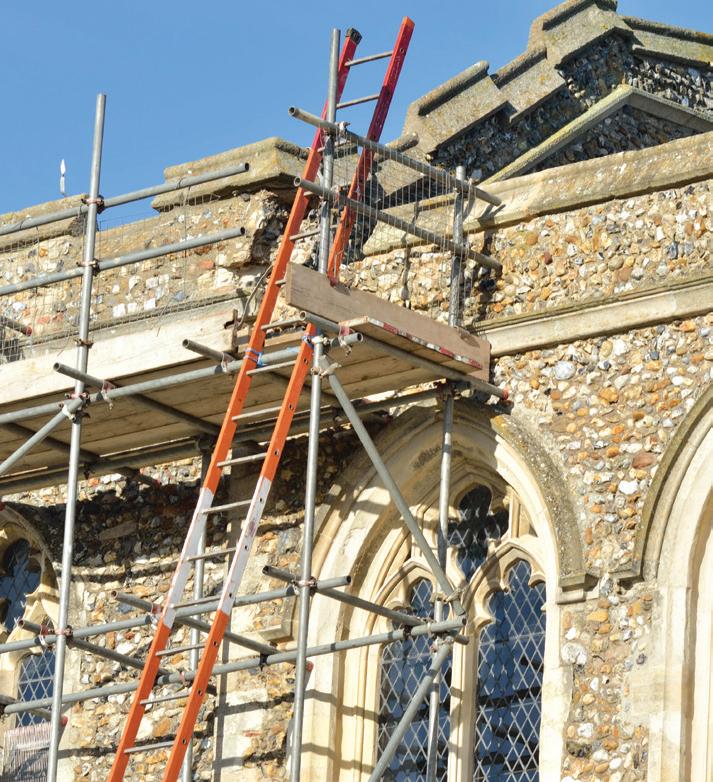
You don’t need to supervise: Most architects work independently but some bring assistants. Ensure they are aware of your health and safety policy especially with working at height, agree a rough finishing time, swap phone numbers, and leave them to it.
After the Inspection
What to expect: Your QI report will prioritise recommendations, explain risks, outline timescales, and give indicative costs. Don’t be alarmed by its length; it’s designed to be thorough, not intimidating. It is not a quotation nor a specification for the works it recommends. Great QIs have a good key plan and plenty of reference photographs.
Follow- up: Arrange a meeting to go through the report to seek clarification and shape a realistic maintenance strategy. Work with your architect on any immediate repairs, QIs are usually more work and commitment than their fee commands.
Final thought: The main thing to remember is that your architect is on your side. A good architect will care for the building as much as you do and they’ll want to help you to look after it.
Simon Bird
Discipleship and Vocation
To live out faith in the whole of life is the calling of all Christians: rooted in our baptism and Jesus’ commandment to love our neighbour. This is seen in the thousands of people across the diocese serving their churches and communities. However, our primary calling is to grow as the beloved of God. This is a life-long journey into the heart of God that is marked by encounter, transformation and, from there, the call to serve.
• Holy Habits for Everyone
• Spiritual Direction
Trees put down deep roots that provide nourishment and stability. Paying attention to our spiritual habits provides such rootedness for our growth in faith. You will have your own habits of prayer and reading the Bible but other resources can help to establish fresh spiritual roots:
Trees are most fruitful when they grow together. Roots interconnect to share resources and above ground; trees shelter and cross-pollinate each other. We too grow best in the shared life of the local church. There are plenty of resources for churches to deepen faith together and the Journey in Faith Course also offers a rich environment for mutual growth.
The life of the forest enhances the environment beyond its boundaries. Seeds and fruit are dispersed widely; water is filtered and the air enriched. The worship, prayer and discipleship of each
church releases spiritual blessing into the community and equips all to serve.
My role as Discipleship and Vocation Enabler is to offer resources to people and churches in deepening faith, discerning the call of God and enabling that call to be realised. The Life Signs exercises can help us attend to the voice of God and the For Everyone workshops are available to enable all to serve more confidently, these include:
• Pastoral care
• Leading worship
• Welcome and hospitality
• Sharing faith stories
• Holy habits
• Storytelling
Some are called to specific roles authorised by the church, such as:
• Locally authorised ministers
• Focal ministers
• Associate ministers
• Ordained ministers
A variety of pathways exist for these roles but a starting point may be to explore the following questions:
• What does my head say?
• What does my heart say?
• What does my spirit say?
• What do others say?
If you would like to know more, please get in touch with Liz Rawlings: liz.rawlings@leicestercofe.org
Further details and more information can be found on the Diocesan website.
Liz Rawlings
Good Governance: A Framework for Flourishing
Understanding governance and how it underpins the life of the church is vital for the role of the Churchwarden. Although governance can sometimes feel like an administrative burden, at its heart it is simply the way we ensure that our churches are well run, accountable, and equipped to serve their communities. Good governance creates the conditions in which mission can thrive. It involves clear decision-making, proper stewardship of resources, good communication, and a commitment to safeguarding and care for all.
Trusteeship and PCC Responsibilities
As members of the PCC, Churchwardens are charity trustees under UK law. This brings specific legal duties, which can be grouped into a few key responsibilities:
1. Acting in the best interests of the Church’s charitable purpose PCCs exist to promote the whole mission of the Church. Every decision – financial, pastoral, or practical – should support worship, witness, service, and community flourishing.
2. Managing resources responsibly
Trustees must ensure that money, buildings, and other assets are used wisely and protected for future ministry. This includes budgeting, financial reporting, and ensuring the Church meets its legal obligations.
3. Ensuring compliance
This covers safeguarding, health and safety, data protection, employment law where applicable, and charity law. PCCs need to meet reporting obligations to the diocese, Charity Commission if a registered charity as well as any other obligations, for instance in respect of grant funding.
4. Acting collectively
PCC decisions are made jointly. While Churchwardens bring leadership and experience to discussions, decisions belong to the whole body. Clear minutes, transparent processes, and prayerful discernment help PCCs work effectively together.
Rules of engagement
One of the first things that you may look for as a new charity trustee is the constitution of the organisation. For PCCs this is a bit complicated because there are two points of reference
• The Parochial Church Councils (Powers) Measure 1956 (as amended); and
• The Church Representation Rules.
The Church Representation Rules contain model rules for PCCs which set out who is a member, how often meetings must take place, how agendas are set, notices and minutes etc. The rules don’t cover every eventuality and sometimes it is necessary to apply good judgement. It is possible to add to them through a motion passed at an APCM, where there are specific needs for the parish in question. It is important that PCC members
understand that although these are called ‘model rules’, they apply automatically to all PCCs because the Church Representation Rules have the force of law.
Mission
Although governance can feel quite dry and technical, it is meant to be in the service of mission, not the other way round. The PCC is responsible for ensuring that the church/parish meets its charitable objectives which relate to ‘co-operation with the minister in promoting in the parish the whole mission of the Church, pastoral, evangelistic, social and ecumenical’. Church finances, buildings and committees are to work in service of this mission and are not ends in themselves. PCC agendas should therefore allow time to discuss the mission of the church/parish alongside these other matters.
Support
The good news is that you are not alone in this work. Clergy and lay minister, other PCC members and officers as well as a whole range of volunteers help to support the work of the PCC. And training, advice and support is available from a range of sources including diocesan officers and the Registrar. There are also books and a wide range of resources on the internet. One particularly valuable website is Parish Resources: https://parishresources.org.uk/
There is an annual diocesan training day for church officers which usually takes place in September – this year it is on 26th September, at St Andrew’s, Leicester Forest East. Regional training mornings, held by the Archdeacons, on ‘What does it mean to be a PCC Trustee?’ are also offered for support and guidance. The Archdeacons, Registrar and Director of Operations and Governance deal with a wide range of queries on a regular basis.