
RASHID AL KHALIFA
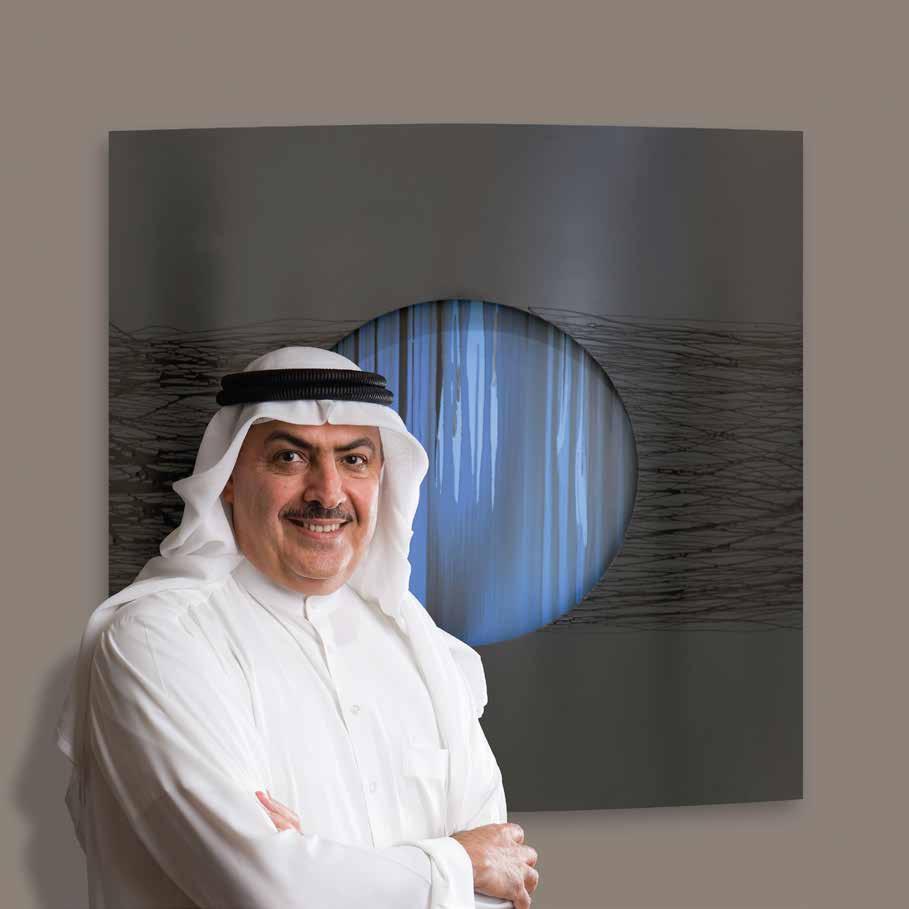
It is evident from reviewing the work of Rashid Al Khalifa that his career as an artist is a steady progression of approaches to the problems of firstly depicting, and later implying, the presence of space within a painting. Fully aware that a finished work is a conveyor of impressions and meaning from the artist to the viewer, for Rashid it has long been the result of inner reflection, of thinking deeply about his perception of the world and the function of painting in a changing world. The intention of offering viewers the possibility of entering into a contemplative relationship with the work, while not being unique to this artist, is somewhat unusual among contemporary artists, and the decisions that Rashid has made have been considered, each work developing logically from the preceding ones, and have led to a dynamic evolution in his approach to the making of art.
Into a different dimension
The origins of this artist’s work featured in this catalogue can be traced back to his first work with canvases that were stretched over convex frames that protruded from the wall to create a form that reached into the space of the gallery, and towards to the viewer. These works, some with a matt surface, others that incorporated the glossier surface of lacquer, modulated the light falling on to them in ways that a more conventional flat surface could not. The fact that the convex surfaces protruded from the flatness of the gallery wall also permitted an engagement with the paintings across a wider arc of viewing. At the same time the content of the paintings demonstrated bold developments in his approach to abstraction, with less in the way of figurative references, relying more on the interactions of colour and texture to create bold effects.
A major exhibition at the Bahrain National Museum in 2010, with the title, ‘Convex: a New Perspective’, presented these works in a dramatic installation, where the paintings, many at a large scale, were spot lit against the dark grey walls of the large gallery spaces. Isolated individually, yet unified by their structure and surface modulations, these paintings marked a clear and important departure for Rashid. No longer confined by flatness, these works moved out from the wall and into the environment of the viewer, creating a greater sense of engagement, a more direct relationship that shifted as viewers walked around the gallery.
The curved thickness of the works allowed viewing not only full on but also from the sides. At the same time Rashid showed developments in the nature of his use of abstract mark making and colour fields, moving from the exuberant colours of the paintings of the first decade of the 21st century, and into a quieter, more restricted and sombre palette. In addition, his use of lacquer as the background surface allowed the introduction of a further element, that of providing a surface from which the light reflected more emphatically than from a matt canvas surface. Even the partial reflection that lacquer provides, introduces a new element into the relationship between the viewer and the work, a closer sense of complicity.This development introduced a new characteristic that was to be developed further in the works that followed this major exhibition.
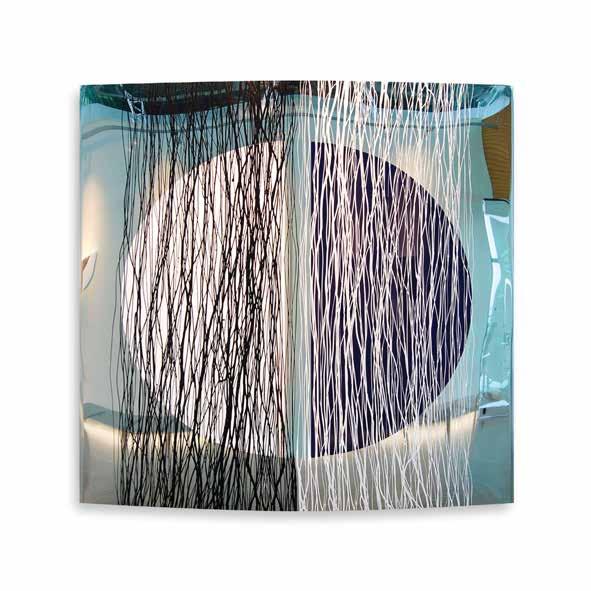
In the two years between the ‘Convex’ exhibition and his next major exhibition, he took further important steps to refine and extend his explorations of the potentialities of paint. ‘Reflection’ at the Fine Arts Gallery of the Bahrain Financial Harbour showed a completely new dimension. Being made from chrome-plated metal, by its very nature, gave the paintings an entirely new identity, challenging for the viewer. While some of the works incorporated geometric shapes painted in bright colours, all of them featured a densely overlaid network of lines of enamel, interlaced or gathered together to further define the interior space of the paintings. As a further level of significance the lines are not applied with a brush but are dripped on the surface, a more
immediate method of application that allows for a combination of chance and control. The artist refers to these new works in his artist’s statement:
“I express my feelings in the colours I use on forms and shapes based on my recollection on the seasons in life that has passed; times of laughter and embrace, mourning and sorrow, success and failure.The spontaneous paint work on the chrome surface, inspired by women’s veils, laces and ‘mashrabia,’ partly conceals the loci of society or life where we see fractions of ourselves - broken, buried, whole, empty, blurred and full –are reminiscent of the paths we traveled to reach where we currently stand. Once the viewer is face to face with the artwork, it breaks down the barriers; it becomes a journeying encounter like a freeflowing sense of interaction - a glance of the real, a starting point, waiting to be followed through, allowing the viewer to do the completing, the reflection of self.” (Rashid Al Khalifa, January 2012)
This quotation provides an important point of access to this new body of work, setting up the painting as the intermediary between his life and the lives of those who encounter the work. This is further enhanced by the use of a chrome-plated metal surface that, literally, incorporates a somewhat distorted (by virtue of its convexity) image of the viewer and others, as well as the space in which the painting is displayed. The viewer, and the environment of which the viewer is part, become, in a very literal way, a temporary part of the work, entirely complicit with it and the viewer’s experience of it.
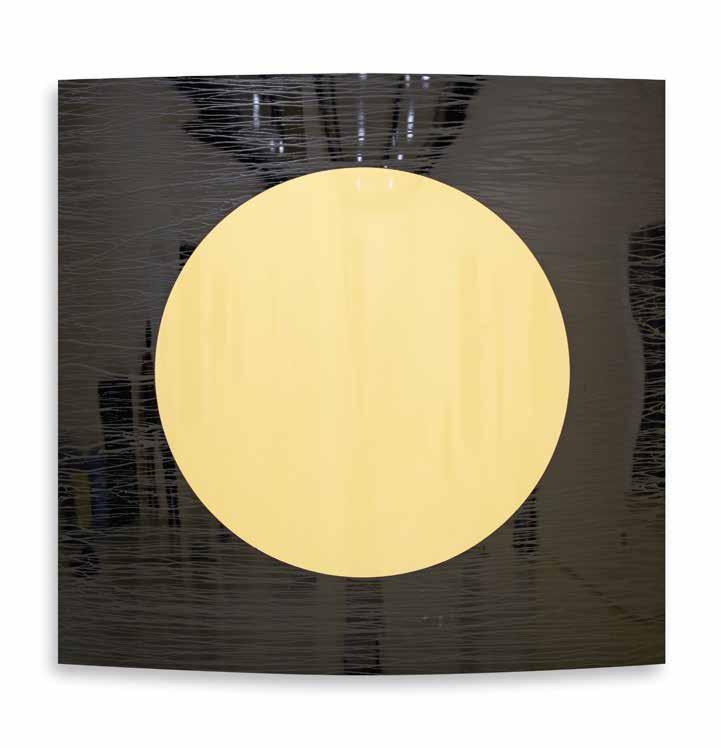
The paintings made in 2013 incorporate a large circle in the middle of the square of the supporting surface. This basic geometrical relationship has been part of art and architectural history for a very long time. It has an elemental potency that can be interpreted by artists and viewers in many ways, andis open to
differing philosophical considerations. In some paintings the circle is black, denoting perhaps nothingness or the void, or perhaps the eternal unknowable essence of existence, it is both substance and absence and creates a tension with the other elements of the paintings in which it appears. The circle is yellow in some paintings, a symbol generally connected with the sun, the source and sustenance of all life on earth. It is a colour of hope and vitality, and in circular form offers a warm and positive element that contrasts greatly with the more serious and sombre nature of the black circle. The subtlety of interpretation of this motif also depends on the nature and colour of the surrounding space and the dripped and painted trails of colour of each work. In addition, the layers of colour and form vary from painting to painting so that different spatial effects are created, adding further visual depth and possibilities of meaning.
The new paintings
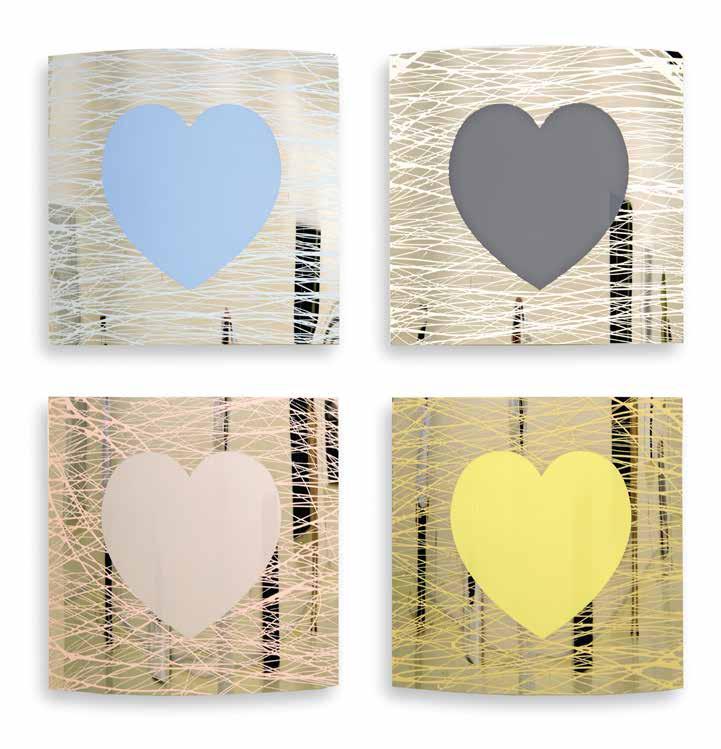
At the beginning of 2014 the artist made a series of paintings on a unified theme, to celebrate the 30th anniversary of his marriage. Each painting, 60cm square, intended for display as a grid of 5 x 6 elements, was made on a convex chrome surface and comprised a heart shape in a range of pastel colours with an interlaced set of dripped lines in enamel that are of necessity made swiftly, and which can be seen to refer to the fabric of society and relationships: as the artist says, ‘Lines are endless, they can go into infinity and create an endless story.’ This work, that has deep personal connotations for the artist, played an interesting interim part in his work of that year, and led on to a further set of paintings on convex chrome, lacquered in a range of greys, once again featuring the motif of the circle in the square. Devoid of colour, and perhaps more sharply because of this, these paintings offer a quietly meditative proposition to the viewer.
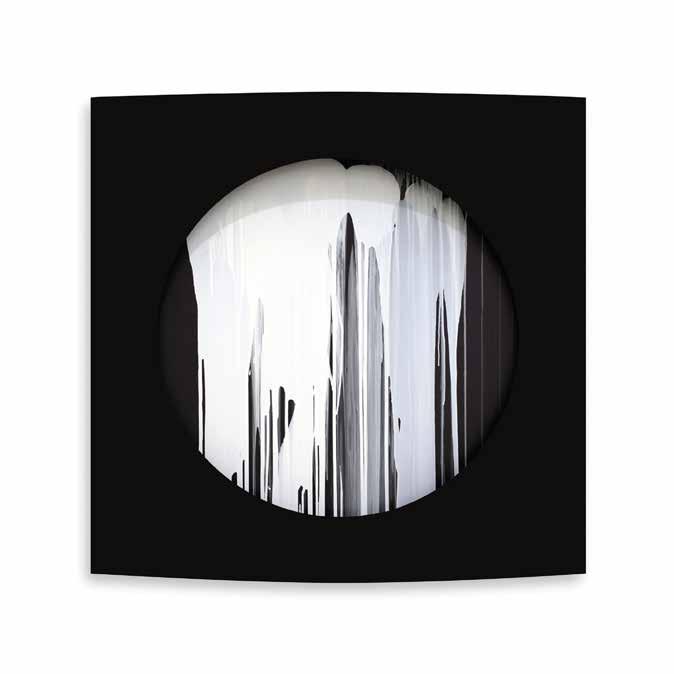
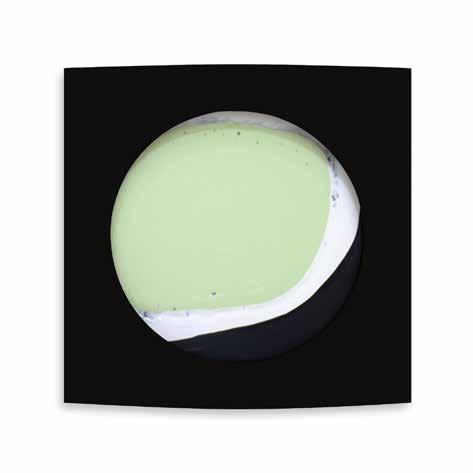
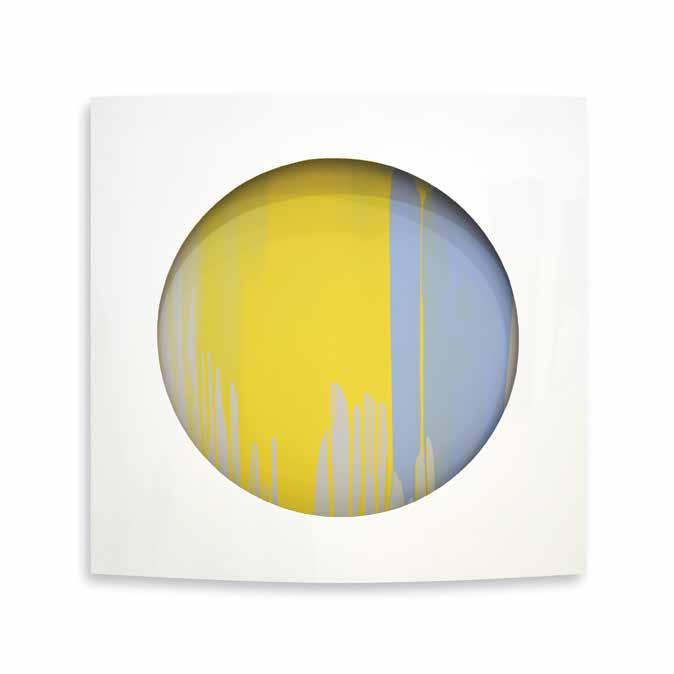
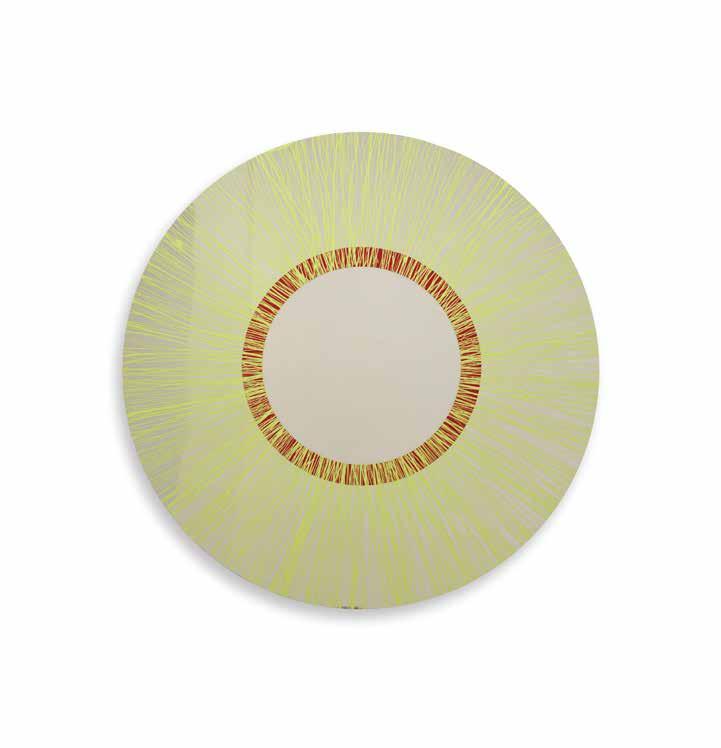
Towards the end of 2014, Rashid’s painting entered a new phase, one that followed on logically from the preceding stages but that also presented him with new challenges, and which offers the viewers of his work with a fresh insight into his creative power. The painted circle has become a circular hole in the curved metallic surface. It is an emphatic presence and yet is a negative space, it is both there and not there, a striking and powerful philosophical conundrum.
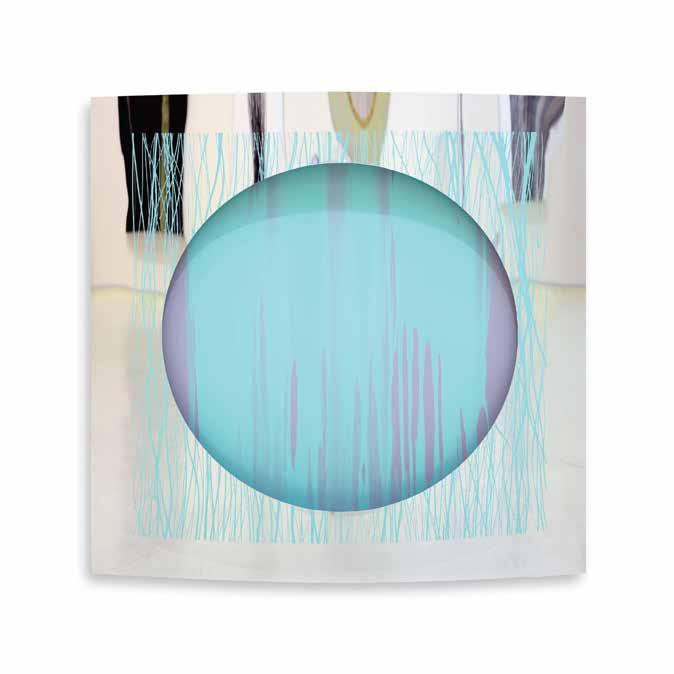
The face of the curved surfaces has also changed: some are reflective metal, while others are lacquered in black, white or grey. Beyond the edges of the circles and behind the convex form lies another flat surface, with dripped paint providing a rich surface upon which the subtle interplay of colours from a clear and restricted palette creates a painting within a painting. The relationship between the two surfaces also creates the shadow of the circle cut in the convex front surface of the metal that falls on the flat back surface, dependent on the direction and intensity of the light with which it is lit.
The variations that are possible between the colour and reflectivity of the convex surface, and the colours and textures of the flat surface revealed through the cut out circle, present a scope of possibilities that create the potential for a range of emotional, philosophical and intellectual responses from those who encounter these works, allowing each viewer to experience the paintings in their own way. A brief glance, caught in passing, will reveal little, whereas a more considered exploration, an observation from a point of stillness in front of each work, will allow each viewer to consider the personal impact that the painting has on them. The cut out circle is both there and not there – it represents the presence of absence, while at the same time allowing the viewer to see through to the surface that lies behind and the relation to each other of both surfaces and the colours they carry, and then onwards to a consideration of the work as a whole. While standing in front of these paintings there isalso the nature of the chrome front
surface that will reflect, with a degree of distortion due to the curve, the environment in which it is placed, the viewer, and others within the space. That which might at first glance appear simplistic is in fact far from that when considered quietly over a longer period of time.
The strength of Rashid Al Khalifa’s work lies in its simple and yet complex initial appearance that on deeper consideration reveals a powerful evocation of abstract form and colour, which reaches out from the walls of the places in which it is seen and into the experience of those who encounter it. Such directness of expression and communication, with such a diversity of potential personal interpretation, is to be welcomed. This is work with a truly international relevance that offers much to consider, slowly and with open eyes, in an art world that, like so much else, is sometimes prone to rapid changes of taste and fashion. By contrast, the work of this artist has a strong quality that has the power to withstand the passage of time, remaining thought-provoking and relevant, offering stillness and strength that transcends all boundaries.
Richard Noyce. Wales, December 2014
Richard Noyce is a writer and artist, who has for the past thirty years written about the international visual arts. His reviews, interviews and features have appeared in print and online journals in a number of countries. In recent years he has specialised in writing about Polish Art, including two major books on painting and graphic art in that country, and international contemporary printmaking, on which he has written three well-received books. He is also an experienced international competition juror, curator, conference speaker and lecturer.
Works
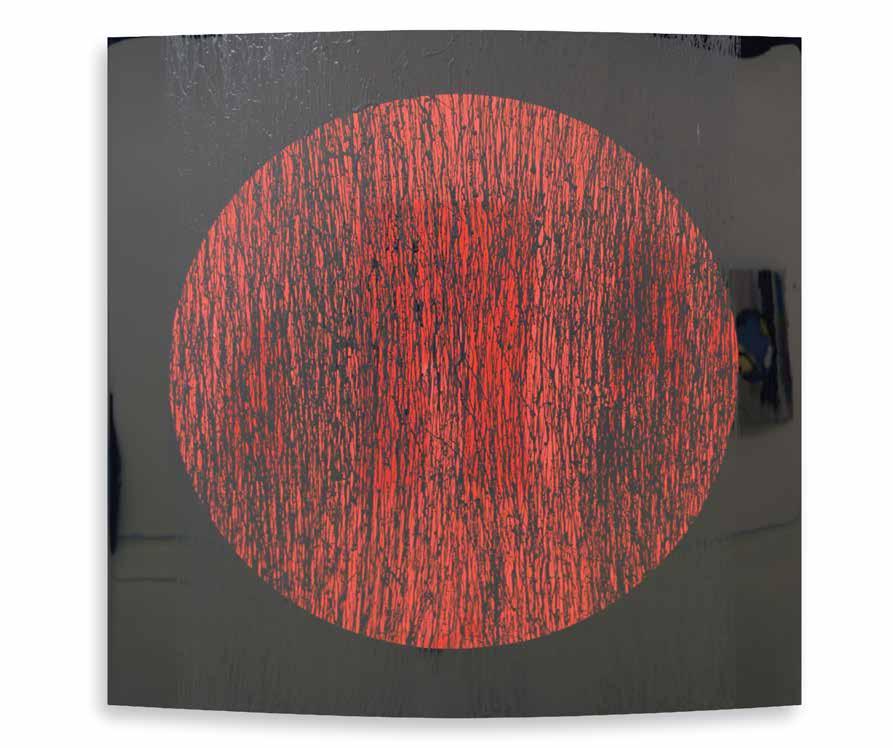
Black and Red, 2010
Enamel on black lacquered aluminium
190 x 190 cm
Gold and Black, 2013
Enamel on black lacquered aluminium
150 x 150 cm
The Dark and the Bright Side of the Moon, 2012
Enamel on chrome-plated metal
90 x 90 cm
Black and White, 2014
Enamel on black lacquered aluminium
120 x 120 cm
Pastels, 2014
Enamel on chrome-plated metal
150 x 150 cm
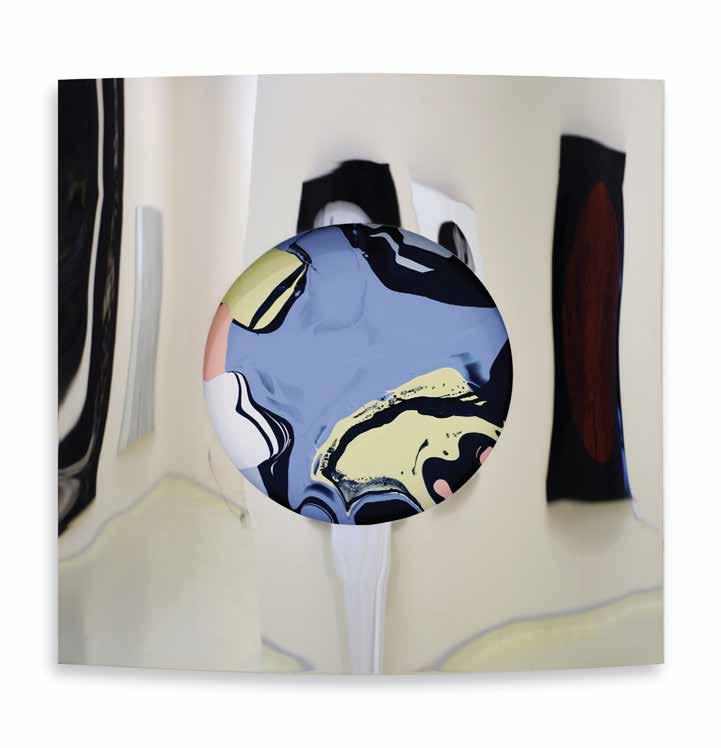
Total Eclipse, 2013 Enamel on chrome-plated metal 90 x 90 cm
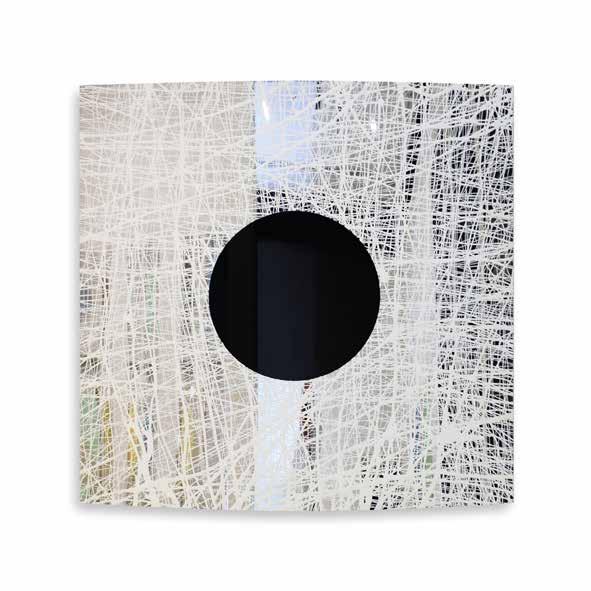
Total Eclipse, 2013 Enamel on chrome-plated metal 60 x 60 cm (each)
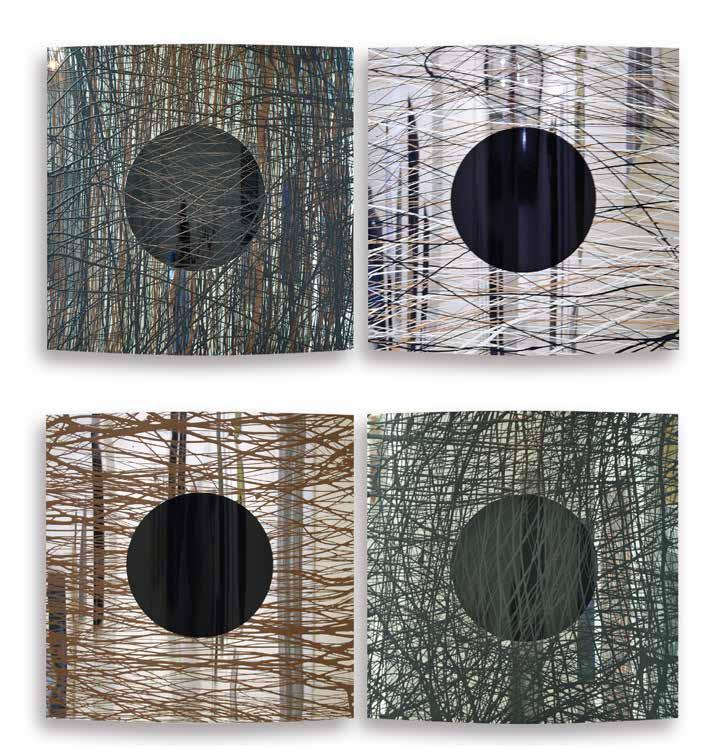
Black Circle, 2013
Enamel on black lacquered aluminium 90 x 90 cm
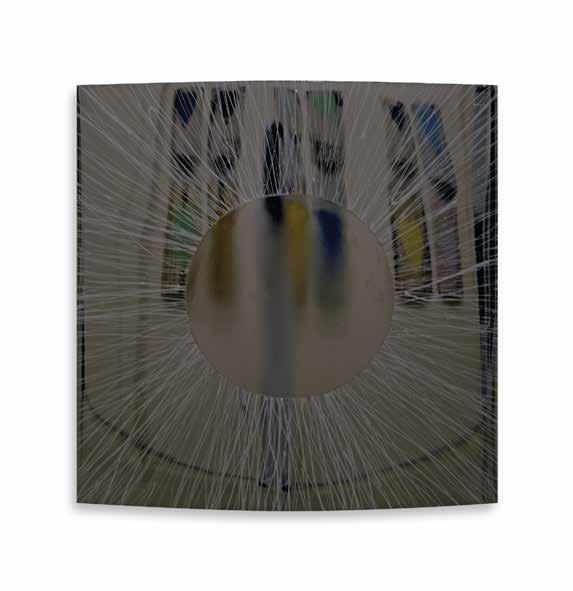
Black with White Lines, 2013
Enamel on white lacquered aluminium
150 x 150 cm
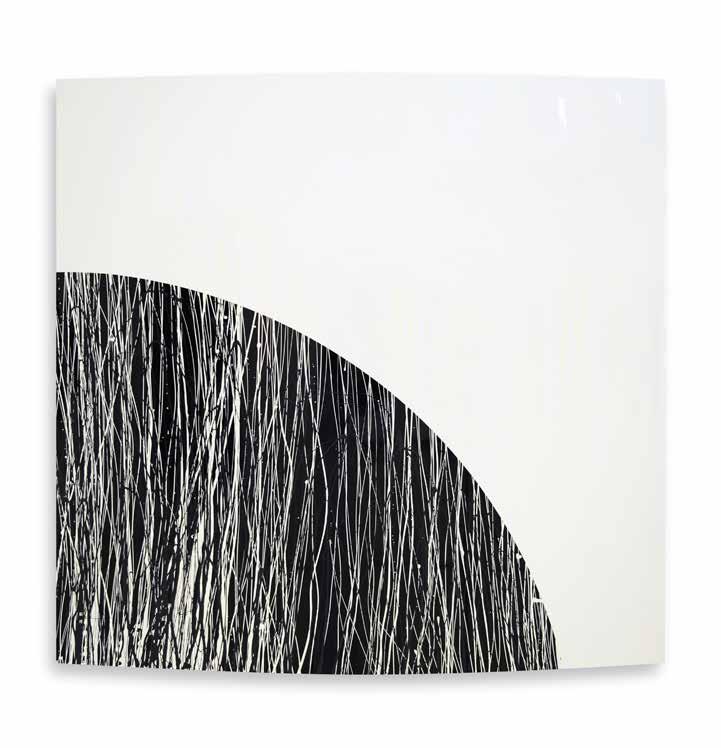
White with Black Lines, 2013
Enamel on black lacquered aluminium
150 x 150 cm
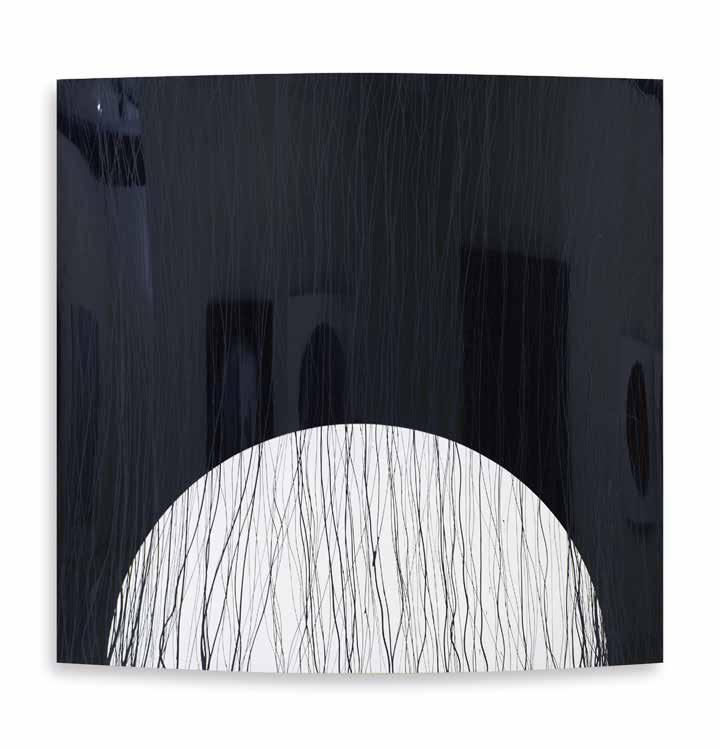
Black on White, 2010
Enamel on white lacquered aluminium
190 x 190 cm
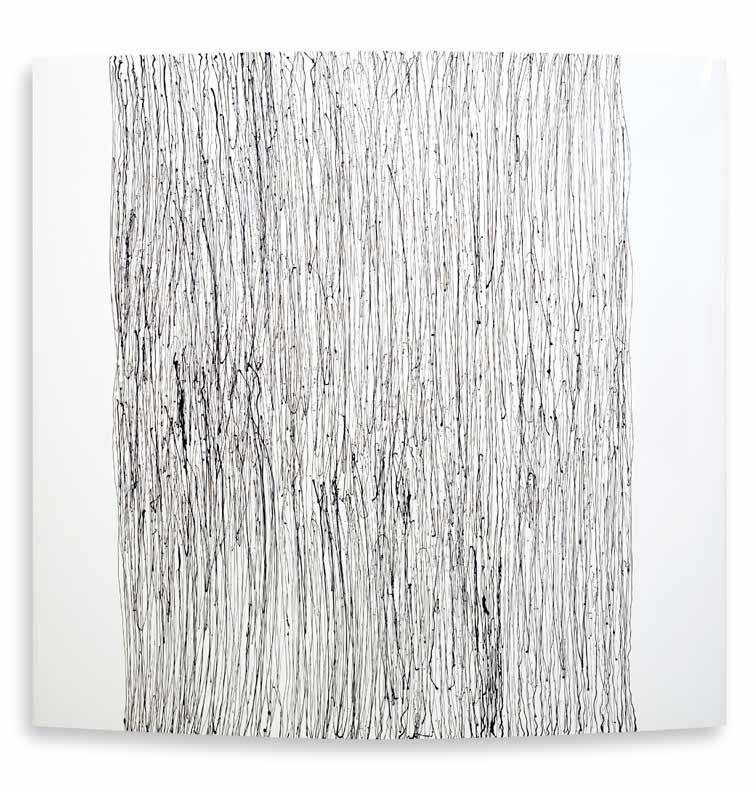
Black on Black, 2010
Enamel on black lacquered aluminium
190 x 190 cm
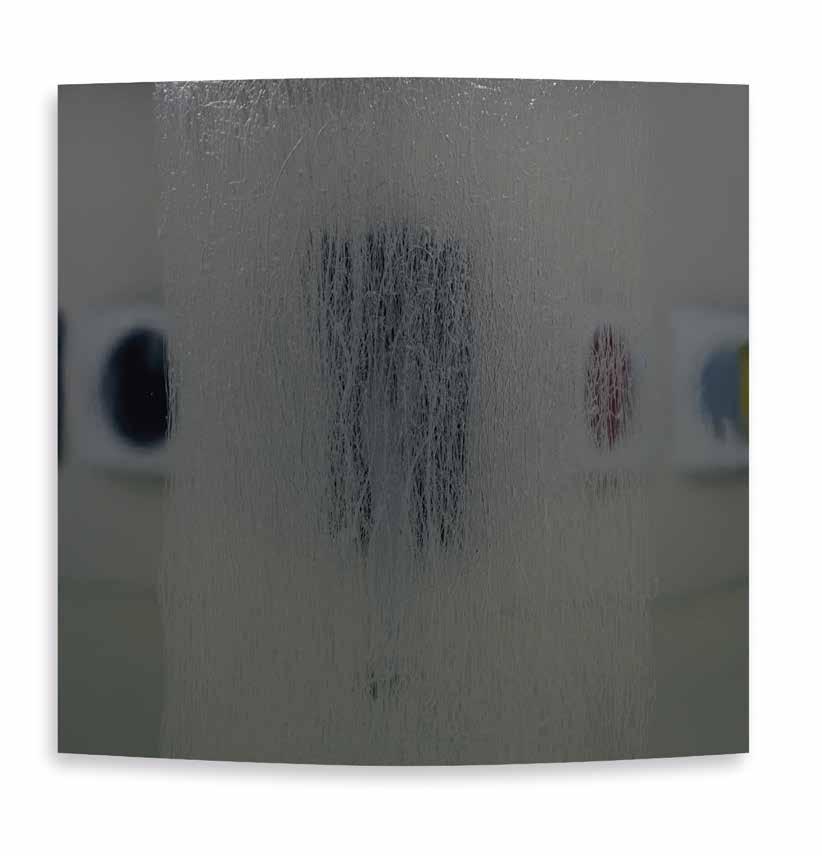
Green and White Stripes, 2010
Enamel on black lacquered aluminium
190 x 190 cm
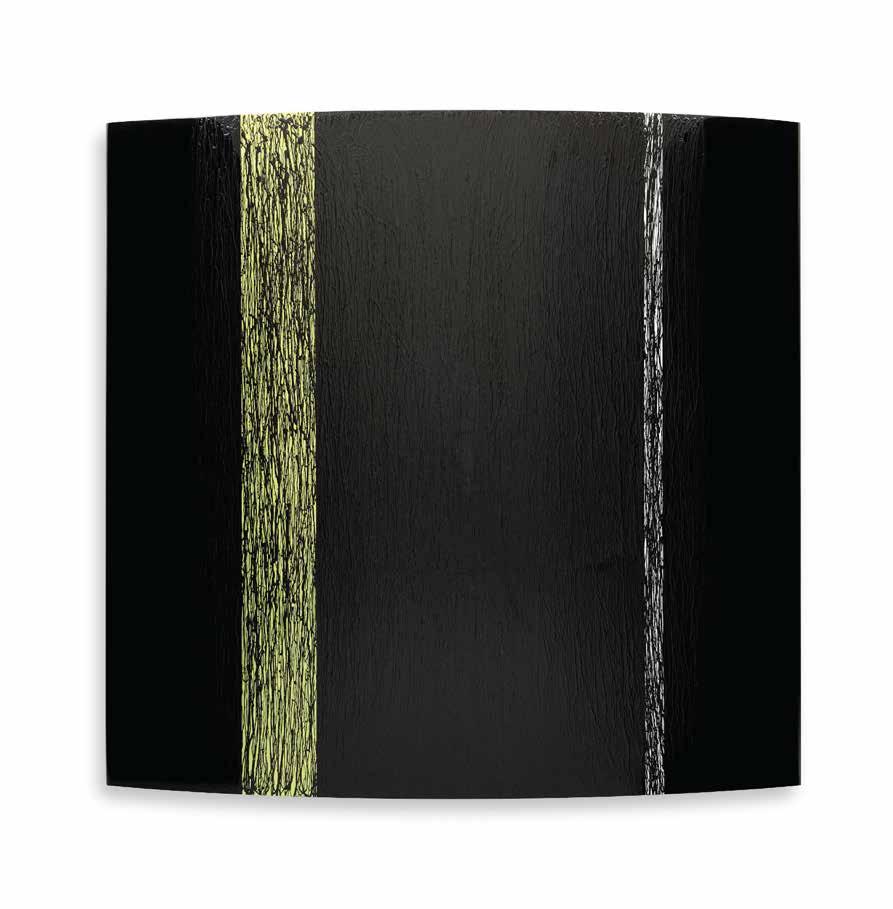
Homage to California, 2011
Enamel on lacquered aluminium
190 x 190 cm
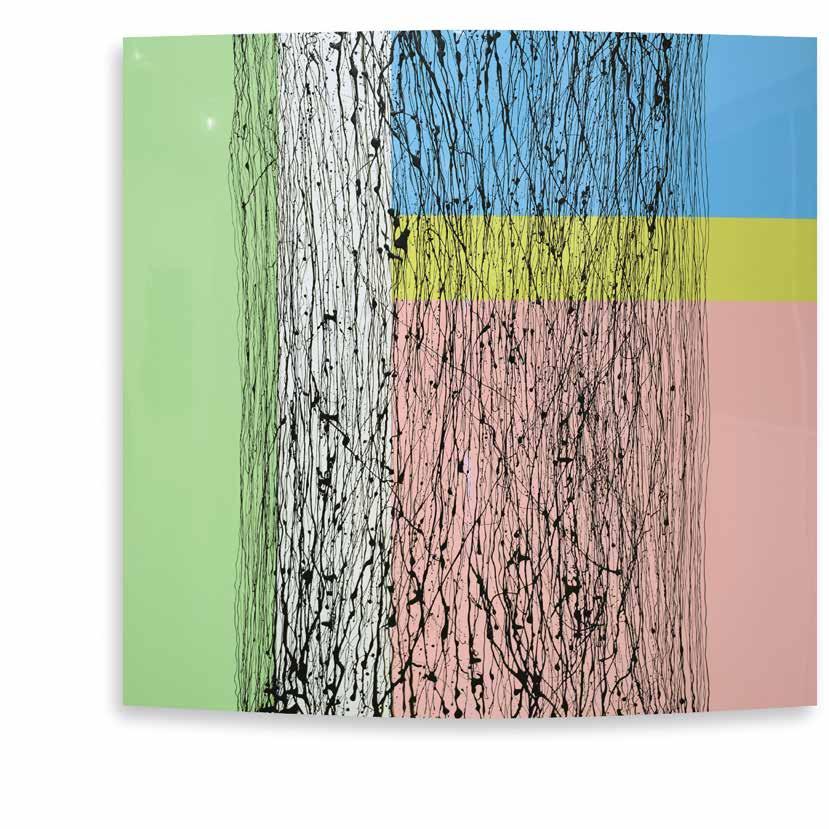
Fabric of Society, 2011
Enamel on white lacquered aluminium
150 x 150 cm
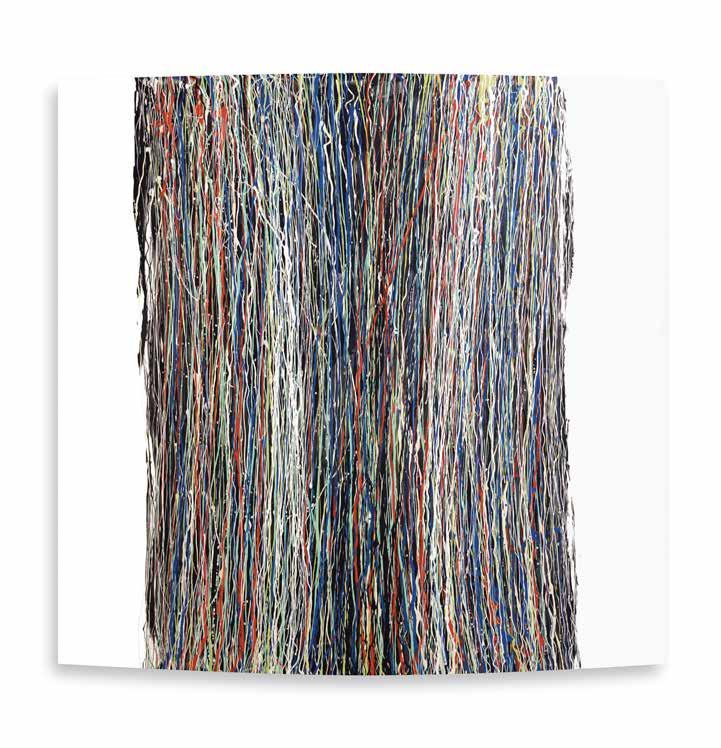
Going Alone, 2011
Enamel on white lacquered aluminium
150 x 150 cm
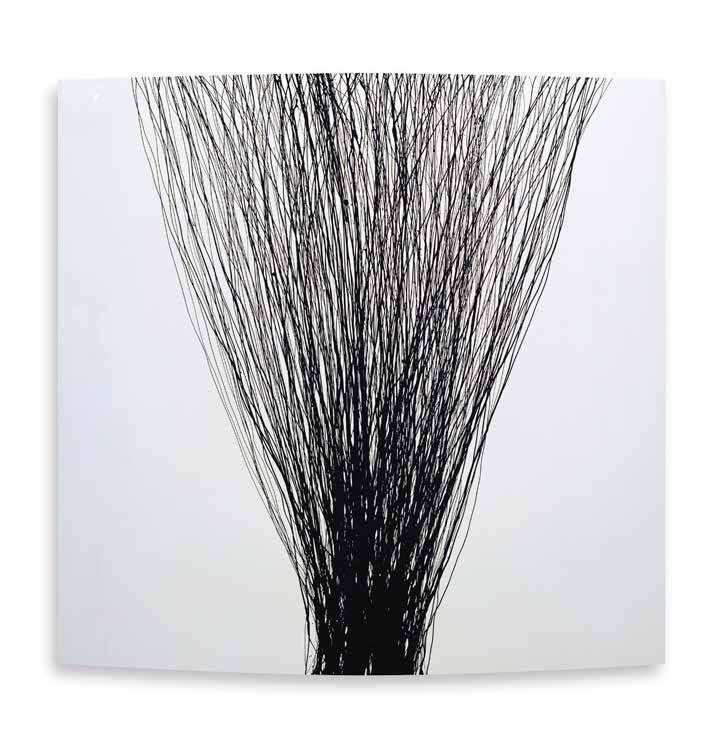
Yellow Circle with Yellow Lines, 2013 Enamel on gray lacquered aluminium
60 x 60 cm
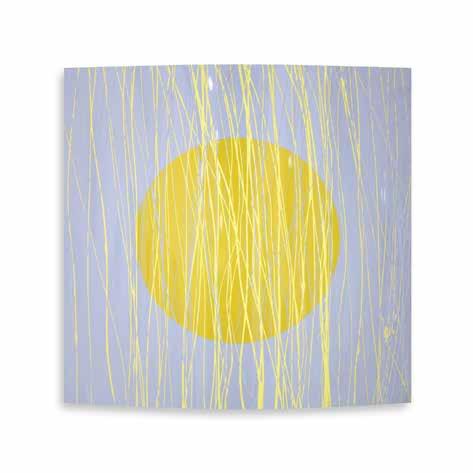
Yellow Circle with White Lines, 2013
Enamel on chrome-plated metal
60 x 60 cm
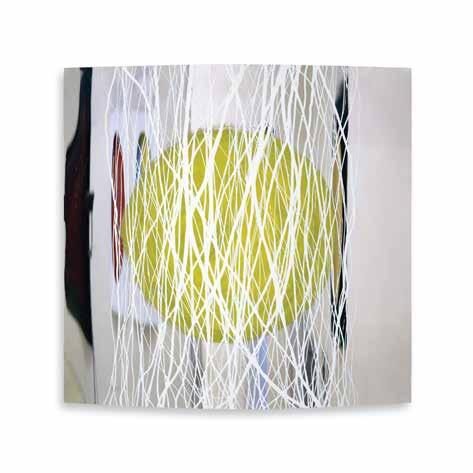
Hearts, 2014
Enamel on chrome-plated metal 60 x 60 cm (each)
Black, Green and White, 2014
Enamel on black matte-finish aluminium
60 x 60 cm
Yellow and Blue, 2014
Enamel on white lacquered aluminium
120 x 120 cm
Turquoise and Gray, 2014
Enamel on chrome-plated metal
120 x 120 cm
Black and White, 2014
Enamel on white lacquered aluminium
120 x 120 cm
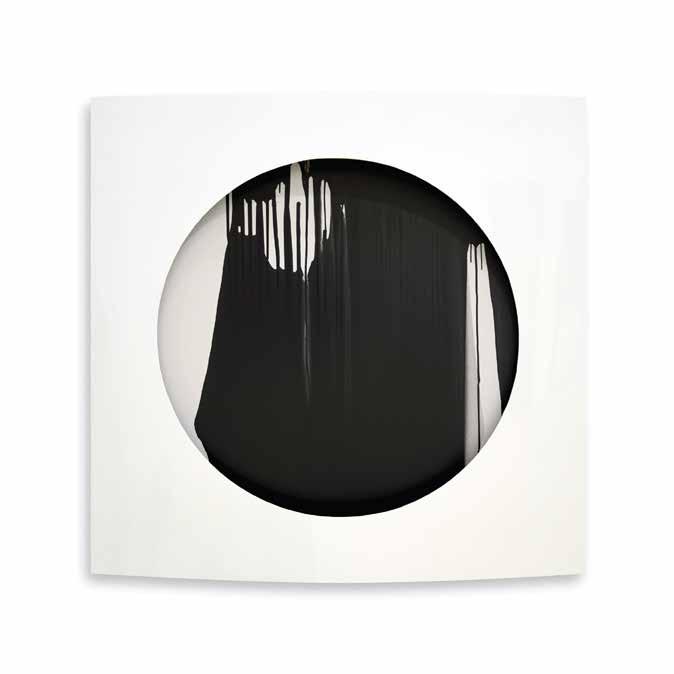
Gray and White, 2014
Enamel on chrome-plated metal
120 x 120 cm
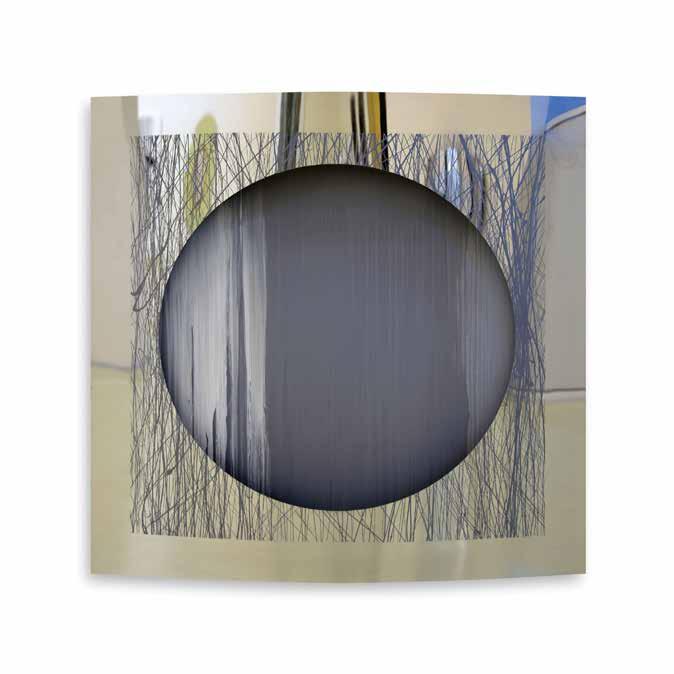
Red and Blue, 2014
Enamel on white lacquered aluminium
120 x 120 cm
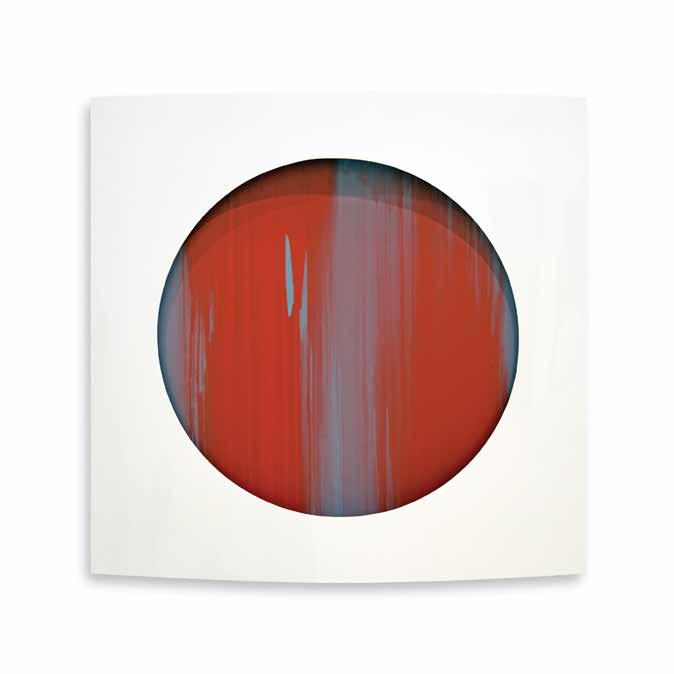
Blue and White, 2014
Enamel on chrome-plated metal
120 x 120 cm
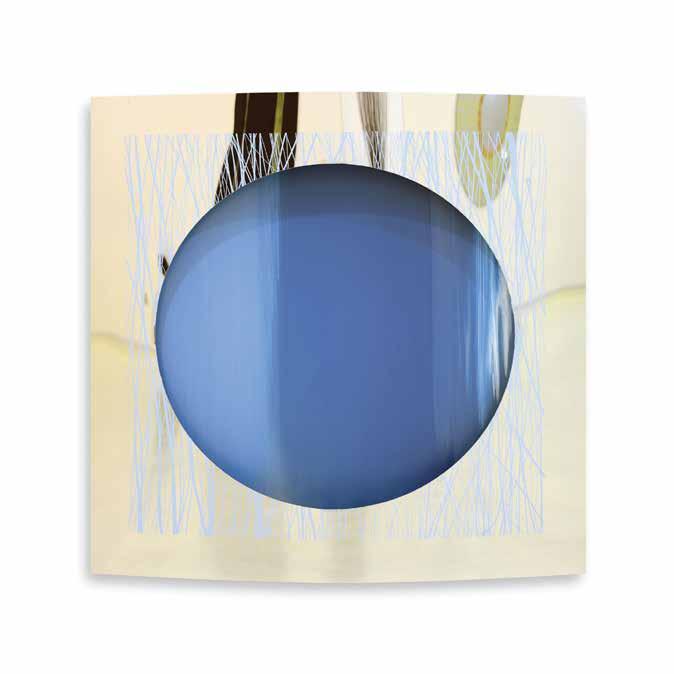
Blue and Gray, 2014
Enamel on chrome-plated metal
120 x 120 cm
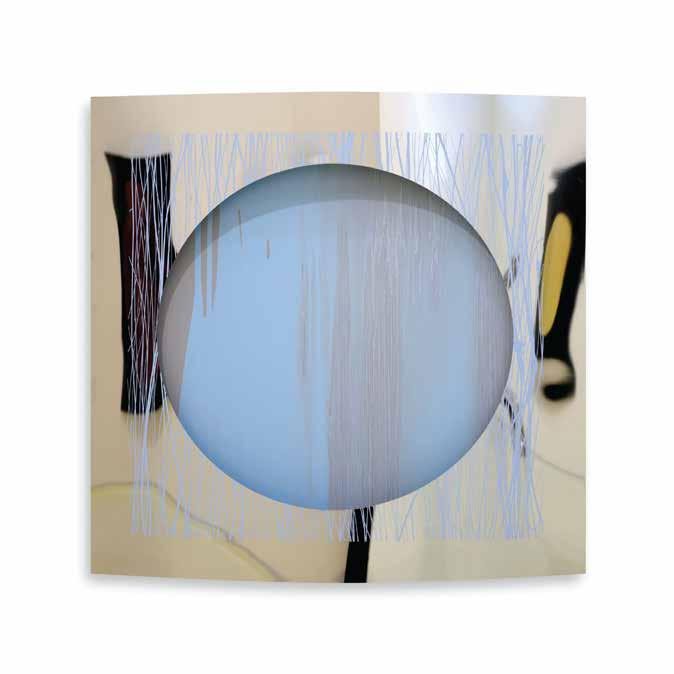
Black and Blue, 2014
Enamel on black matte-finish aluminium
120 x 120 cm
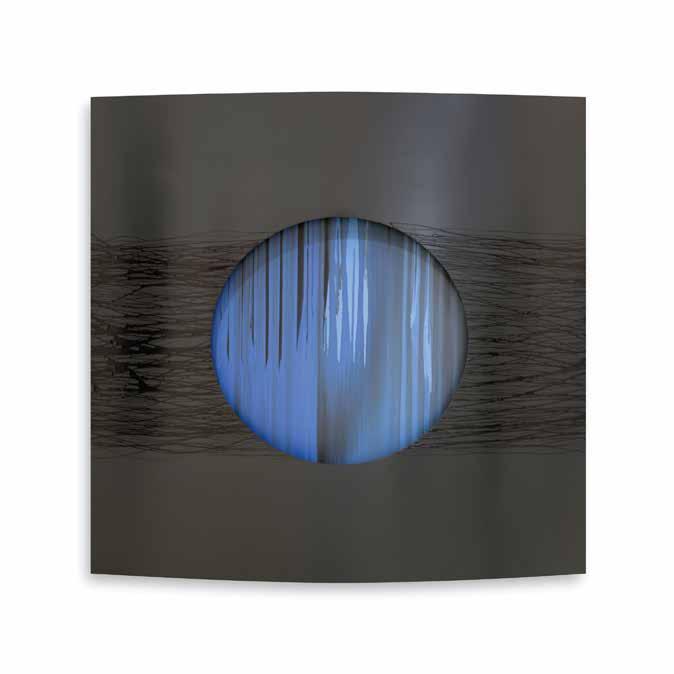
Black and Gray, 2014
Enamel on chrome-plated metal
120 x 120 cm
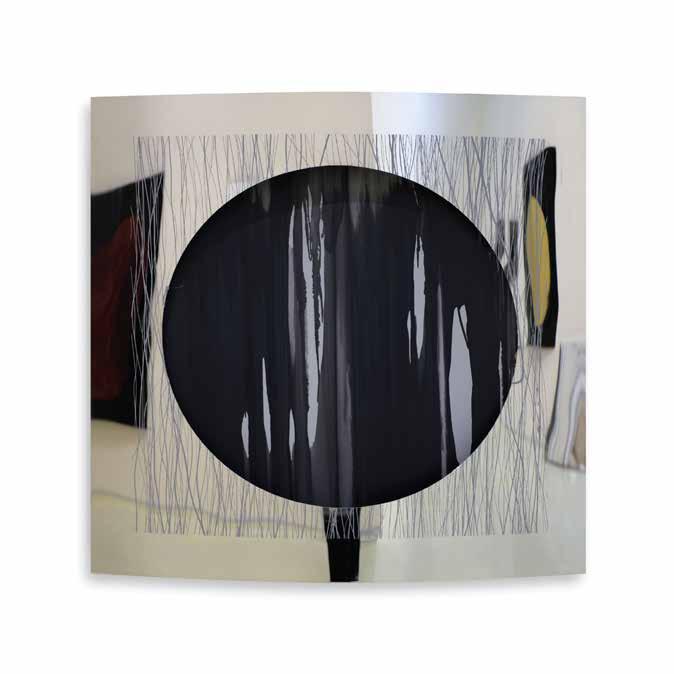
Shades of Gray, 2014
Enamel on gray lacquered aluminium
120 x 120 cm
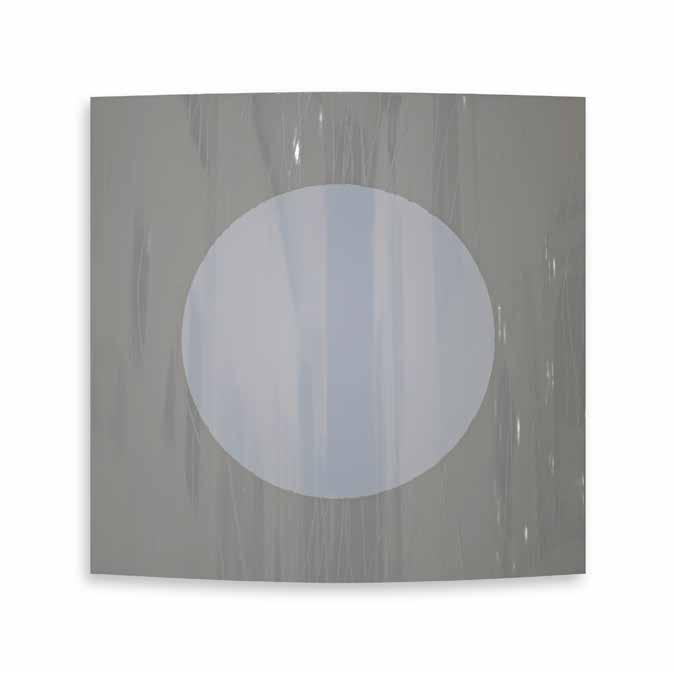
Iris, 2013
Enamel on chrome-plated metal 120 x 120 diameter
RASHID AL KHALIFA
Born 1952, Manama, Kingdom of Bahrain
Education: Hastings College of Arts, Brighton, England
Solo Exhibitions
2014 WWALA, Los Angeles Conventional Hall - Los Angeles, California, USA
2012 Beirut Art Fair, Beirut International Exhibition & Leisure Center - Lebanon, Beirut
2012 REFLECTION, BFH Fine Arts Gallery - Kingdom of Bahrain
2010 Convex: A New Perspective, Bahrain National Museum - Kingdom of Bahrain
1997 Art Department, Shuman Arts Organization - Amman, Jordan
1996 De Caliet Gallery - Milan, Italy
1996 El Kato Kayyel Gallery - Milan, Italy
1982 Middle East Institute - Washington, D.C., USA
1982 Sheraton Hotel - Kingdom of Bahrain
1970 Dilmun Hotel - Kingdom of Bahrain
Selected International Exhibitions
2014 Art Dubai with Nasser Al Yousif - Dubai, UAE
2013 In Dialogue with Modhir Ahmed, Abdulrahim Sharif and Walid Siti - The Waterline Gallery, Kingdom of Bahrain
2013 Two-man show with Ernesto Liccardo, Art International Zurich - Zurich, Switzerland
2013 Art Dubai - Dubai, UAE
2012 Abu Dhabi Art - Abu Dhabi, UAE
Exhibitions alongside the Bahrain Arts Society
2014 Bahrain - Asilah Arts & Culture Forum, Morocco
2013 Bahrain Contemporary Art, Russian Academy - Moscow, Russia
2007 Bahrain Contemporary Art, Unesco - Paris, France
2005 Modern Art Exhibition, Royal Ireland College of Surgeons - Dublin, Ireland
2004 Two-man show with Balqees Fakhro - Berlin, Germany
Annual Art Exhibition 32- Bahrain National Museum - Kingdom of Bahrain
2002 Bahraini Culture Week - Amman, Jordan
Bahraini Culture Week - Peking, China
1999 Taipei Art Exhibition - Taipei, Taiwan
Sharjah Biennial - Sharjah, UAE
Delmun Exhibition - Paris, France
1998 Bahrain Arts Society Exhibition, Gallery Alexander - Ladoux, France
1997 Art Expo Singapore - Singapore
Art America Exhibition - Miami, USA
Europe Art Festival - Geneva, Switzerland
Bahrain Arts Society Exhibition - Cannes, France
1996 Europe Art Festival - Geneva, Switzerland
Bahrain Artists Exhibition - Rome, Italy
Sharjah Biennial - Sharjah, UAE
1995 Two-man show with Abbas Al-Mousawi, Hotel Du Rond - Geneva, Switzerland and at the UN Center - Lusanne, Switzerland
1989 Bahrain Art Society Exhibition - Cairo, Egypt
1988 Festival of Asian Artists - Malaysia
New Art Center - Baghdad, Iraq
1986 First GCC Art Exhibition - Japan
1985 Cairo Biennial - Cairo, Egypt
Alia Center - Amman, Jordan
1984 Bahraini Artists, Leighton House - London, England
Salon des Artists Francises, Grand Palais - Paris, France
1981 Raffles Hotel Singapore - Singapore
1978 Hilton Hotel - Kingdom of Bahrain
1975 Gulf Hotel - Kingdom of Bahrain
1973 Periodic GCC Youth Exhibition - Kingdom of Bahrain
1972 College of Arts Exhibition - Brighton, England
1969 First Art Exhibition, Gulf Hotel - Kingdom of Bahrain