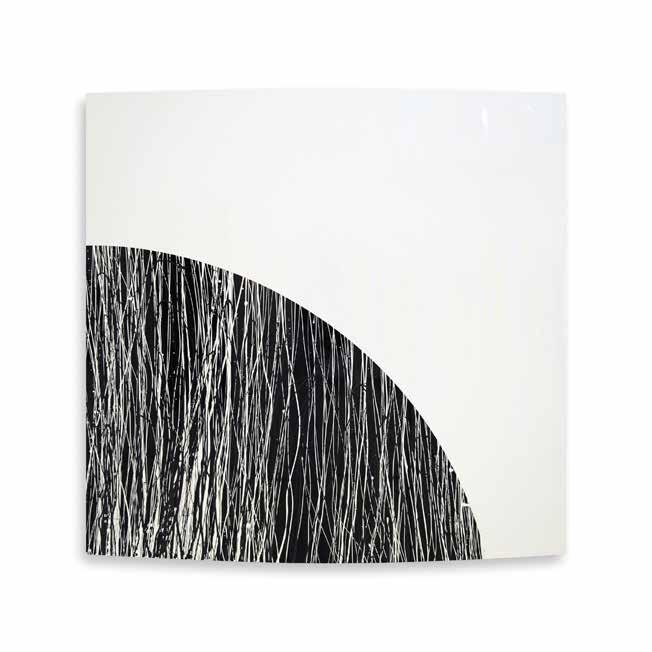
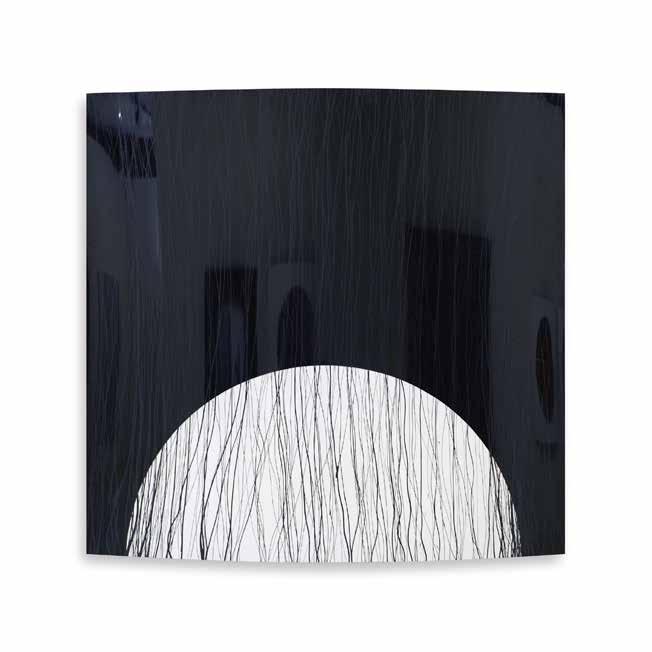
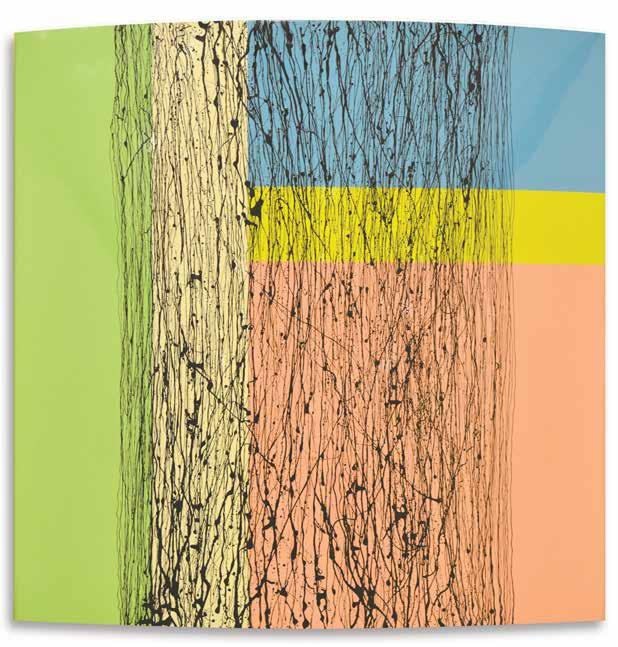
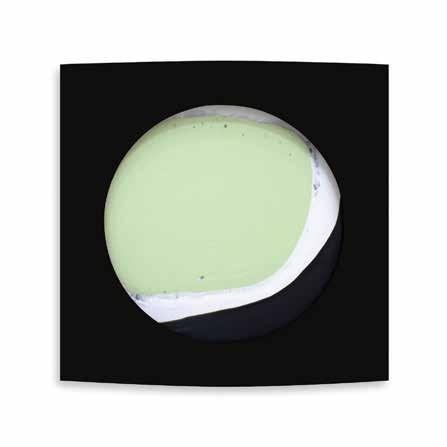
I thought about the exhibition as the narration of an averted loss, aware that ours is the time of anomie, a time that erases names beyond any possible explanation that express the meaning of life and its qualities. Among many it must be registered that every day is a time of living. The day does not reveal the passing of every second and every instant. It is as if we were walking along a treelined avenue without noticing the trees, without hearing the rustle of the leaves or paying attention to their colour. Thus, even the link between the wood of the tree and the wood of a piece of furniture in the house is lost. Therefore, the minimal version of the substance and even the information and the knowledge it brings escape with the real risk that this passing will erase the names and the qualities that feel life beyond the biological limit.
So, I considered Rashid Al Khalifa and Ernesto Liccardo’s works as they were stones thrown into a still and flat pond, as they are names that were entered into a latent or evident emptiness offering impressions and suggestions. The name is the witness of an existence and it is its consciousness.
I would like those who visit the exhibition to establish a direct relationship with each of the works displayed and to feel while exiting the hall the need of using the names suggested or others to write their own story.
Ho pensato alla mostra come alla narrazione di una perdita scongiurata, cosciente che il nostro sia il tempo dell’anomia, un tempo che cancella i nomi. Oltre ogni possibile spiegazione, c’è il dato della riduzione dei valori che esprimono il senso della vita e delle sue qualità e credo che il giudizio morale non possa modificarne la sostanza. Tra le molte esclusioni c’è da registrare quella della quotidianità come tempo del vivere. Il giorno non rivela più le sue scansioni, i suoi secondi e gli attimi. E’ come se camminassimo lungo un viale alberato senza notare gli alberi, senza sentire il frusciare delle foglie o far caso al loro colore. Così si perde anche il nesso tra il legno dell’albero e quello di un mobile di casa. Sfuggono perciò l’attimo/albero/foglia, la versione minima della sostanza e anche le informazioni e le conoscenze che porta, con il rischio reale che questo andare cancelli i nomi e le qualità che sentono la vita oltre il limite del biologico.
Ho pensato allora alle opere di Rashid Al Khalifa e di Ernesto Liccardo come fossero pietre lanciate in uno stagno immobile e piatto, come fossero nomi che entrano in un vuoto latente o evidente offrendo suggestioni e suggerimenti. Il nome è la testimonianza di un’esistenza e ne è la coscienza.
Mi piacerebbe che chi visita la mostra stabilisse un rapporto diretto con ognuna delle opere esposte e che uscendo dalla sala, sentisse il bisogno di usare i nomi suggeriti o altri per scrivere un proprio racconto.
While reading the last verses that Dante Alighieri dedicated to him, Ulysses gives a sentimental smile - it is in this infernal meeting where Alighieri marks him as a man thirsty of knowledge. As he continues to read, he takes a pause to reminisce about his lost Ithaca and the Pillars of Hercules that seemed to him to be just an idea, a memory and no longer the endpoint where this demigod “set his own concerns.” He knows that “the further” is a fact of the material world and no longer of the imagination.
Now that Ulysses is a man of our time, Ithaca remains to him a memory of an island and of “the further” that is beyond the pillars, a data of knowledge, and his dream is lost. He knows that the journey is the conjunction between a point and another and it is only the temporal condition imposing its increasing speed; the sense of the path like the going for knowing is erased by the need to arrive. Ithaca is no longer the house of refuge and there is no mystery left beyond the pillars.
For this reason he feels truly alone, because “now” he knows that the world has always been equal to itself and the only difference is that “the further” belonged to his knowledge and the knowledge of both encouraged him to pursue his journey.
But he doubts that a space - that is only awaiting to be penetrated in its value of going to arrive - will erase its memory because it does not leave either signs or names. So what is the difference between space and emptiness?, he asks himself.
Where do the trees and the leaves of spring and autumn end? The description of summer and winter and their names? And the sunsets, the joyful or dark faces, the sweetness, in other words, the definition of a person and the lines that testifies and multiply his existence? Where are the questions? And the instant that you fear to lose? And the doubts? Where are the complex and simple colours, the elementary and yet vital breath that establishes existence? Which are his data? And which could be, in the absence of the path, a sign that can donate the pleasure of beauty or the strength of love or hatred or fear or the strength that kills or stultify death always lurking? This is the risk.
Once he assimilated the doubts in loneliness, Ulysses dug in his memory and found the urgency of desires, faces, images and gestures to give them a shape. Wanting to be the witness of existence, he searched in the dimension where his imagination has formed but he could not find the necessary support that would show the expression of his tale. He looked-for a purpose to create a shape by holding dialogues with new objects - where the signs and colours express their meaning and the infinite world could be revealed with a simple infinitesimal gesture - entering into the substance of the quotidian that must be told, remembered and recorded.
Mentre legge gli ultimi versi che gli dedica Dante Alighieri nell’incontro infernale dove lo segna come un uomo assetato di conoscenza, Ulisse ha un sorriso che sa di nostalgia. Sospende la lettura e pensa alla sua Itaca perduta e alle Colonne di Ercole che gli sembrano solo un’idea della memoria e non più il punto finale dove il semidio “fissò li suoi riguardi”. Egli sa che l’oltre è un dato del mondo sensibile e non più dell’immaginario. Ora che è un uomo del nostro tempo, di Itaca gli resta la consistenza dell’isola e dell’oltre che si trova dopo le colonne il dato della conoscenza, ma il suo sogno è perduto.
Egli sa che il viaggio è la congiunzione tra un punto e l’altro ed ha la sola condizionante temporale che impone velocità sempre maggiori; il senso del percorso come l’andare per conoscere è cancellato dalla necessità di arrivare. Itaca non è più la casa che restituisce sicurezza e nulla è rimasto del mistero oltre le colonne.
Ora egli si sente veramente solo perché ora sa che il mondo è sempre stato uguale a se stesso e solo diverso in quell’oltre che apparteneva alla sua e alla coscienza di ogni altro e che lo spingeva a non interrompere il viaggio.
Ma ha il dubbio che uno spazio che attende solo di essere penetrato nella sua valenza di andare per arrivare, cancelli la memoria perché non lascia né segni, né nomi. Ma allora qual è la differenza tra questo spazio e il vuoto?, si domanda.
Dove finiscono gli alberi, le foglie della primavera e dell’autunno e quelle che raccontano l’estate e l’inverno e i loro nomi? E i tramonti, i volti festosi o rabbuiati, la tenerezza, insomma la grande varietà che definisce la persona e le linee che testimoniano e moltiplicano la sua presenza? Dove le domande? E l’attimo che temi di perdere? E i dubbi? E dove i colori composti e quelli semplici e il respirare, l’elementare eppur vitale alito che ne fissa l’esistenza? E quali i suoi dati? E quale potrebbe essere, nell’assenza del percorso, un segno capace di donare il piacere della bellezza o la forza dell’amore e anche dell’odio o della paura o della forza che uccide o che invalida la morte sempre in agguato? E’ questo il rischio.
Assimilati nella solitudine i dubbi, Ulisse scava nella memoria e vi ritrova l’urgenza di desideri, di volti, immagini e gesti per dare loro forma. Cerca nella dimensione dove si è formato il suo immaginario che ora vuole essere testimonianza dell’esistere, ma non trova il necessario, dei punti di appoggio che permettano al suo racconto di mostrarsi. Deve allora cercare il senso a cui vuole dare forma dialogando con nuovi oggetti in cui i segni, i colori, possano dire del loro senso e del mondo infinito che egli può rivelare con un semplice gesto ancorché infinitesimale. Entrare quindi nella sostanza di una quotidianità che deve essere raccontata ed essere memoria e traccia.
As the incumbent risk of emptiness lurked and reality was no longer able to express a common imagination, Ulysses discovered a new relationship with the object, with the matter, and accomplished a miracle to make it a thing and a cause. He lived the urgency to show its life as if it was one of his possibilities among many - a dimension of the world that showed itself with an unexpected sign - a hint that revealed one of its qualities that is an ancient quality of the world, like a new course of names and memory.
Thus, Ulysses took back the reason for his journey - desire and reconquered love. He can now take the route that brings him to his Ithaca that is waiting for him at the end of the path or he can also push the ship beyond the Pillars of Hercules. He can live free in the infinitely small with his many conquered names.
Like Ulysses, the artist needs to conquer his work - a journey into the matter - the fear of emptiness by revealing the names that the matter has in itself. He puts them in front of the world of the infinitely big as they were the mirror where the world can look at itself. Thus, he delivers to the infinitively big, a reason of the self - filed with names acquired along his journey in the infinitively small.
With the dialogue he realizes, he recovers the uncertain sense of life. And, with his work, intellect, imagination and desire - recompose a significant shape, propose equilibriums and paths that bring back beauty, struggle or harmony - in other words they push to re-appropriate a key that opens the door towards the multiplicity that gives a sense of life beyond biology.
With the work he composes an archipelago where he places the instance of happiness, the rests, and the regenerative oasis as they were some pauses of the inexorable fate of man which consists in going beyond the limit and beyond himself having consciousness and memory. Thus, in the time of expansion and of velocity, the world, potentially or actually conflictual, can find its meeting point and a new peace in the art that rebuilds the polyphonic and polymorphic valence of everyday and of its gestures, restoring the vital action of the difference and also allows that, in the places of the rest, meetings and healthy contaminations may occur to give place and life to the story.
This is what happened to Rashid Al Khalifa and to Ernesto Liccardo.This exhibition is about their journey and conquests, as Ulysses did.
Names, reveal the essence of cause as origin and it is the celebration of the matter. It is the journey and the story of the two artists in the momentum which returns into itself to discover and create an intelligible dimension of the imagination that then becomes a challenge and advances in the emptiness to make it a space…a significant dimension…a name.
Nell’incombente rischio di un vuoto sempre in agguato, in una realtà non più capace di esprimere un immaginario comune, Ulisse scopre un nuovo rapporto con l’oggetto, con la materia e compie il miracolo di fare che esso sia cosa e causa. Egli vive l’urgenza di mostrarne la vita come fosse una delle sue possibilità fra le molte, una dimensione del mondo che si mostra con un segno inatteso, un accenno che rivela una sua qualità che è qualità antica del mondo, come nuovo percorso di nomi e di memoria.
Ulisse si riappropria così della ragione del viaggio che ora è desiderio, amore riconquistato e può prendere la rotta che lo porta alla sua Itaca che lo attende alla fine del percorso o anche spingere la nave oltre le Colonne di Ercole. Egli può vivere libero nell’infinitamente piccolo e con suoi molti nomi conquistati.
Come Ulisse, l’artista sconfigge con l’opera - viaggio nella materia - il timore del vuoto rivelando i nomi che ha la materia in sé. Egli li mette davanti al mondo dell’infinitamente grande come se fossero lo specchio dove esso possa guardarsi. Così, consegna all’infinitamente grande una ragione di sé depositata nei nomi conquistati con il viaggio nell’infinitamente piccolo. Con il dialogo che realizza, egli recupera l’incerto senso della vita in un divenire per sé e per chi vive altre inquietudini. E in questo lavorio, intelletto, immaginario e desiderio ricompongono una forma significante, ripropongono equilibri e percorsi che riportano alla bellezza, alla lotta o alla dolcezza, a riappropriarsi, insomma, di una chiave che apra le porte verso la molteplicità che dà un senso della vita oltre la biologia, per mettere al margine la fine.
Con l’opera egli compone un arcipelago dove colloca gli attimi di felicità, le soste, le oasi rigeneratrici come fossero delle pause dell’inesorabile destino dell’uomo di dover andare oltre il limite e oltre se stesso avendone la coscienza e la memoria. Così, nel tempo della dilatazione e della velocità, il mondo, potenzialmente o realmente conflittuale, può ritrovare un suo punto di incontro e nuova pace nell’arte che ricostruisce la valenza polifonica e polimorfa della quotidianità e dei suoi gesti, ristabilisce l’azione vitale della differenza, e permette che nei luoghi della sosta possano verificarsi incontri e contaminazioni salutari tali da dare luogo e vita al racconto.
Come è accaduto a Rashid al Khalifa e a Ernesto Liccardo. In questa mostra essi ci raccontano, come Ulisse, del loro viaggio e dell’incontro.
Le opere di Rashid Al Khalifa e di Ernesto Liccardo sono come un dialogo tra forze del mondo in cui la pittura si introduce per essere una loro terza dimensione rivelatrice di una valenza nascosta, ma intrinseca. Malgrado le differenze di formazione culturale e di immaginario, i due artisti fanno ricorso ambedue alla linea curva e alla pittura che esalta, ma con delicatezza, quanto la materia desidera esprimere.
The works of Rashid Al Khalifa and Ernesto Liccardo are like a dialogue between the forces of the world in which the painting is introduced to be a third dimension of them revealing a hidden, but intrinsic valance. Despite the differences in cultural and inspirational background both artists use the curved line and the painting that gently enhances what the matter would like to express.
In their work there is a message of peace, a desire for reconciliation that belongs precisely to the line that is curving…the shape that favours convex. Its curved nature seems to facilitate movement that avoids every possible obstacle as if trying to avert the danger of separation that begins in every journey.
In the curved line there is the echo of relief - of respite and of the story - a recovery of the neglected and perhaps forgotten truths.
It will be interesting to verify how the matter speaks about the work of Rashid Al Khalifa and Ernesto Liccardo in this new form of meeting. And what hidden meanings will be revealed in the dialogue that seeks for names.
Franco Avicolli
November 2nd – December 14th, 2014 Venice, Italy
Nell’opera di Rashid Al Khalifa e di Ernesto Liccardo c’è un messaggio di pace, un desiderio di conciliazione che appartiene appunto alla linea che si curva, alla forma che privilegia il convesso. La sua natura curva sembra facilitare il movimento ed evitare ogni possibile ostacolo, e sembra scongiurare il pericolo che la separazione stessa, avvio di ogni viaggio/conoscenza, possa correre il rischio della lacerazione. Nella linea curva c’è l’eco del ristoro tutto umano della sosta e del racconto come recupero delle verità trascurate e forse dimenticate.
Sarà interessante verificare come la materia che parla di Ernesto Liccardo contaminerà l’opera di Rashid Al Khalifa con una sua nuova forma dell’incontro. E quali sensi nascosti saranno rivelati nel dialogo che cerca nomi.
Franco Avicolli
2 Novembre - 14 Dicembre 2014
Venezia, Italia
I have been painting all my life. I believe that art is an ever evolving process and an artist needs to re-define how their art would fit into the global contemporary art conversation. That is why my work continues to adapt and mutate. Over the last 40 years I have developed my work by moving steadily back through the history of painting to reach the contemporary.
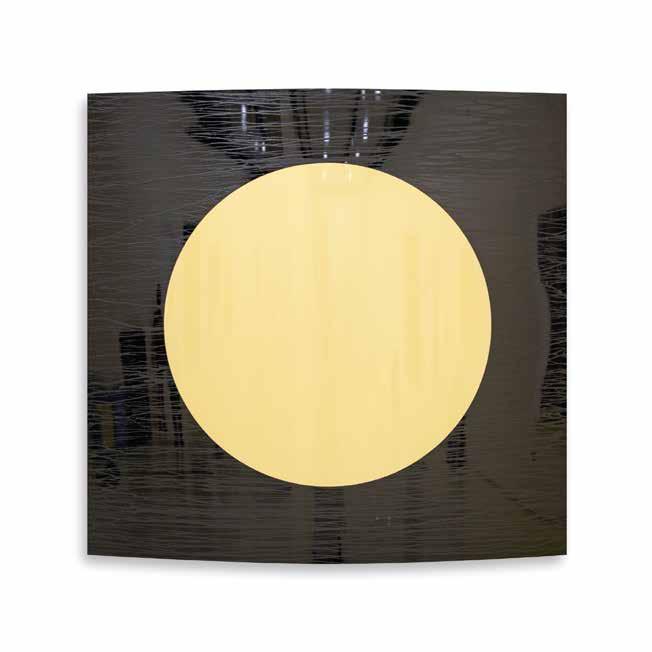
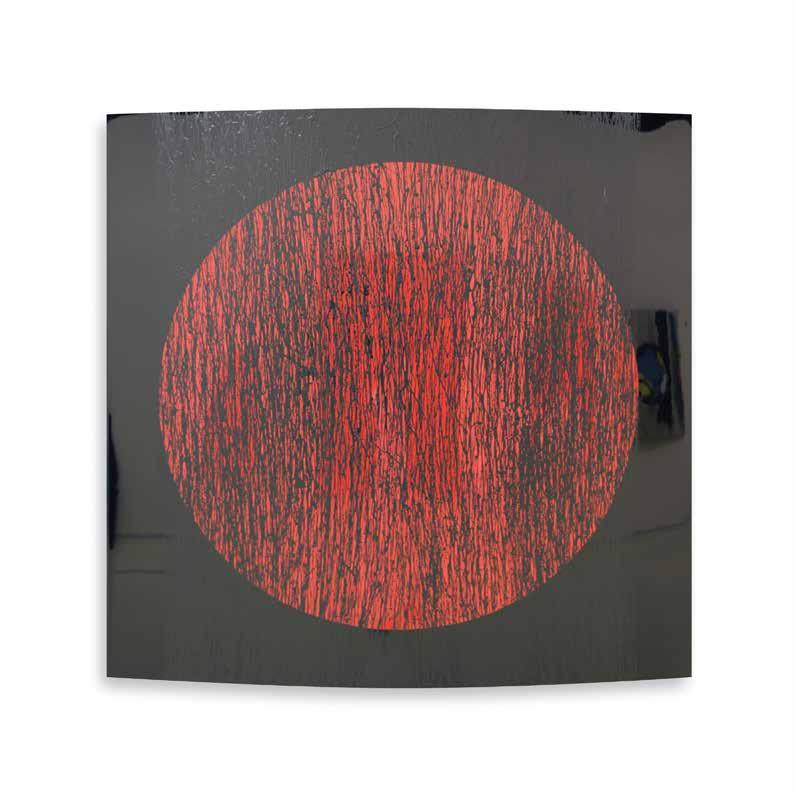
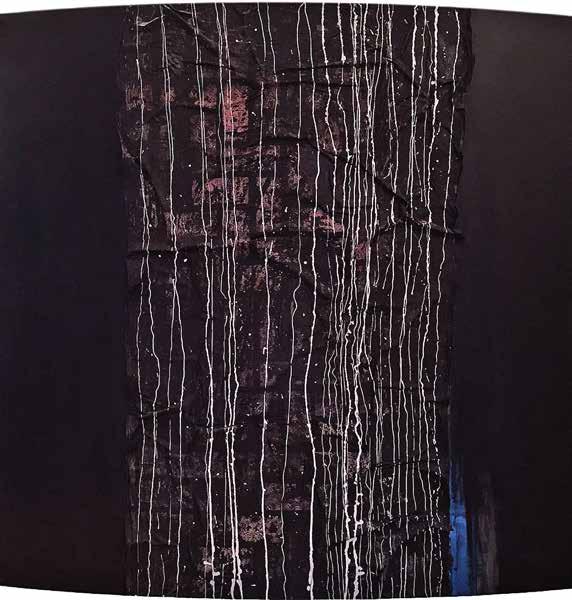
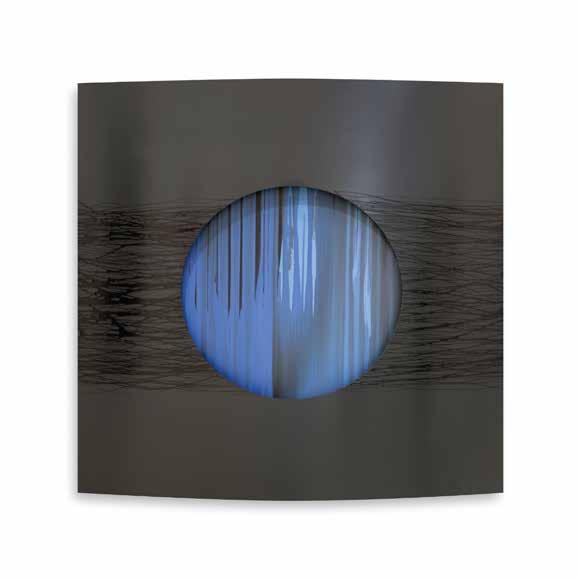
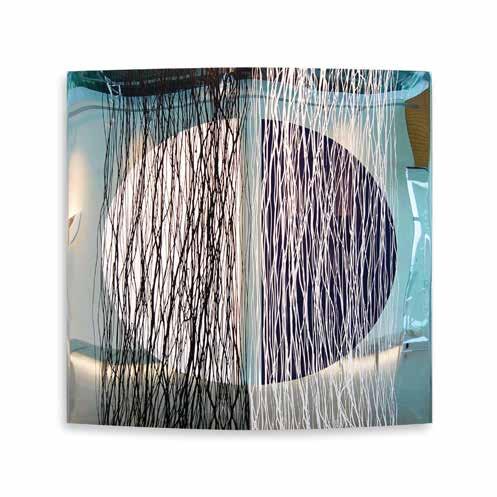
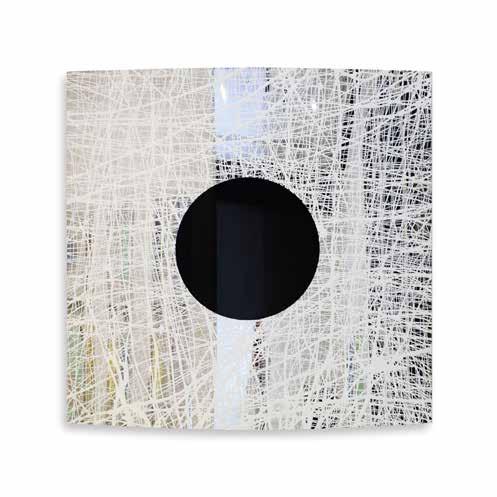
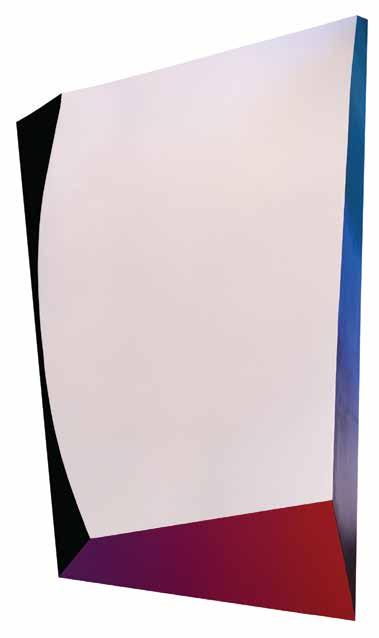
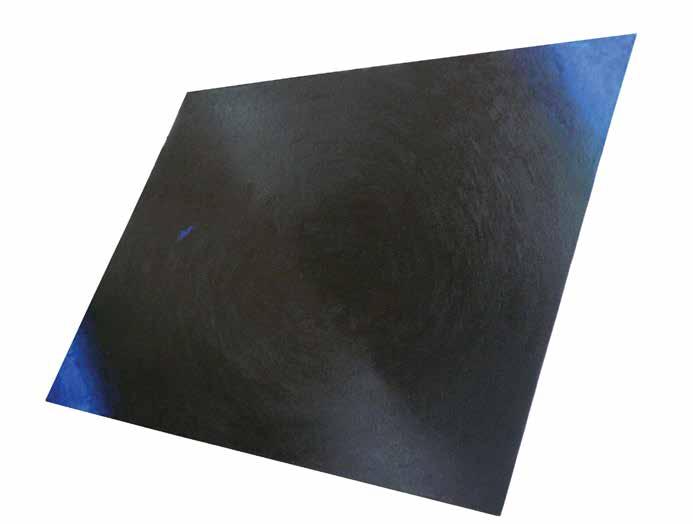
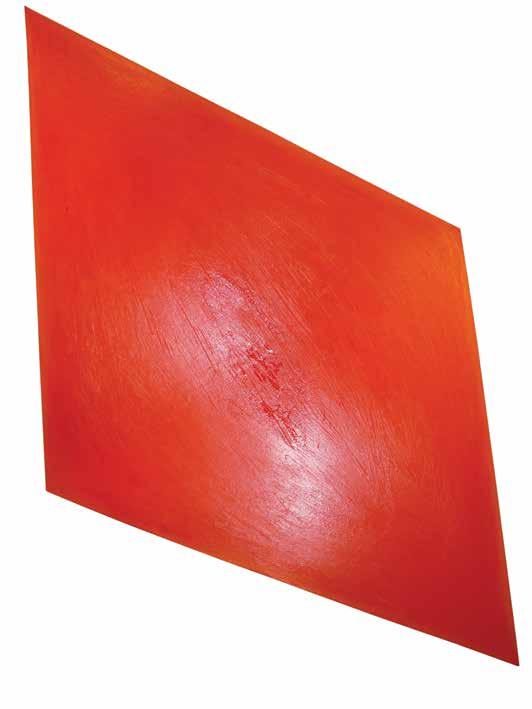
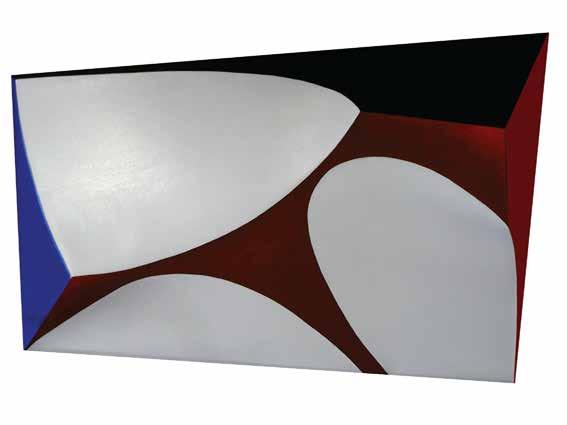
In the late 1990s I stumbled upon a formula that is subtle, a step towards the deconstruction of the picture plane. A canvas stretched by approximately 25 degrees resulting in a convex-shaped canvas, a structure that enabled my paintings to be seen in a different “light.” With the use of paint (oil, acrylic or enamel), and texture (fabric and glue, high-gloss or matte lacquer finish and mirror-like chrome) – the convex-shaped service (wood, aluminium and stainless steel), offered me a spontaneous and uninhibited form of expression. This departure from conventional compositional devices and manipulation of the canvas allowed me to use the elements of design in a process where the service, paint and the material are all equally important to make up the composition of the painting.
Through the use of geometry, my paintings are created from fragments of my natural surroundings such as landscape, light and the environment, rendered on surfaces that are reflective. I try to emphasise a duality between the real space perceived through or between the material and the reflected image. It can mean ‘to reflect’ or contemplate but also the literal reflection as in a mirror. In this kind of duality, there can be two very different visual realms in one work, first the image or shape you are looking at, and second, the reflection, demanding a different way of seeing. Facing the artwork, it is as if we are looking at ourselves in the mirror, but we see our image in reverse and that is not how the world sees us because we don’t see ourselves as others see us.To further add to the sense of disorientation, our transitory presence reflects back the myriad colours it captures in that moment.
Whether it be through how we reconstruct and interpret what we see or how our minds parse the information that will enable us to explain and understand what we are seeing, my artwork is a form of communication and sensorial engagement for self-exploration, for myself and the viewer.
Rashid Al
Khalifa,
2015 Manama, Kingdom of Bahrain
RASHID AL KHALIFA
The dialogue and the imaginary
The triptych of the Battle of San Romano by Paolo Uccello recreates the atmosphere of the bloody clash and its cruelties resorting to the laws of perspective as if the author wanted to give it shape and body. Doing so the author has highlighted the role that the artifice plays in the artwork and I think that for this reason it is a good reference to enter into the world of Rashid Al Khalifa. He builds the artistic discourse as if he wants to give body substance to the subject-matter dealt according to its properties and in accordance with the meanings of consciousness.
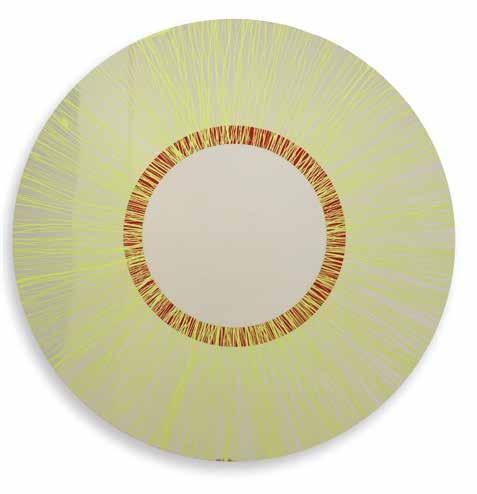
To achieve this goal he relies on a morphology dominated by the curved line, perhaps because it doesn’t offer resistance and has the soothing quality suitable for banishing emptiness and fear.With this proposal, it seems that the artist is willing to accompany the viewer and lead him into a vast space and for some inspired reason he insistently returns there.The purpose brings with itself the echo of the circle and the sphere which in turn refers to the totality of finite categories - including or excluding, perfection and wholeness, harmony and a principle of life - that is open beyond the shape.
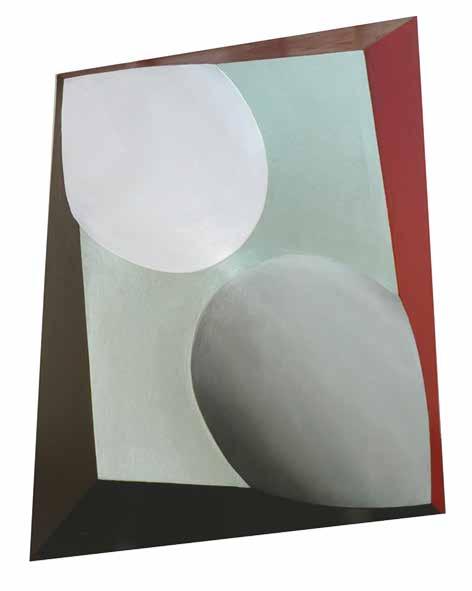
The immediate reading stops at morphologies encouraging the viewer who feels like establishing a relationship with the work digging into their own experiences and their knowledge. The freshness of the colours and the balance of the shapes, simple and clear, has an inviting tone that leads to a second level of interpretation which is only apparent as the complexity of the work gradually reveals itself into threedimension informed by a balanced and thoughtful allocation of colours overlaid with intelligible lines that moves in various directions.
The first interpretation of these works suggests levity - of transparency and light that have a confrontation with complication.The balanced dialogue between the forms - the many symbols that evoke the sphere and the circle – lead to a clarity that wins over confusion. Therefore, it seems that the artist wants to transmit a message of peace that seems to win every will to conflict and mitigate potential dispute. It seems that these values belong to the essence of the matter that insinuates the gap between the evident object and the possibilities of the matter it is made of.
This indication makes us think instinctively about the concreteness of the work and this thought leads to the artist’s research and to its structure. It is a metal convex surface with which painting comes in complete symbiosis, revealing that its function as a simple support is only apparent because the artist has transformed it into the body of the matter that he treats. It is a sense that the artist makes even more evident when he paints the circular shapes on the inside, as they were a vital point of observation, or its third pictorial dimension, invisible dimension, the other side of the coin, the soul of the matter itself.
As the viewer gradually realises that the work reflects the image of the artist - which he is in a sense one of the morphologies inviting him to participate in his realisation - he automatically seeks a dialogue with the artist in spirit.
“My works are an instinctive self-reflection in a certain situation.” writes the artist. “They are an immediate and spontaneous product, but they can also be the result of a creation with a longer gestation. The colors are the language of the mood of the moment.”
I wish to draw attention to a component that I think is relevant to the understanding of the artist of Bahrain and that concerns his presence in the work precisely with the use of a symbolism which refers to a circular shape. In this specific case it brings back to the eye of the viewer.
History tells us of early masters who have included their presence in their painting as an invitation to the viewer to enter the scene. This is a theme touched by the Dutch painter Jan Vermeer with The allegory of painting. Full of symbols and references to history or glory, Vermeer shows his back and allows the viewer to observe him working. Another is the Spanish painter Diego Velasquez with Las Meninas. The artist appears before the picture where he is painting a scene with characters of the court of Philip IV. The two works refer to the world of painting and to the invitation that the artist addresses the viewer because he becomes part of it. For this reason, these works abound in references, symbols and artifacts as if the artist wanted to reveal to the observer some secrets. These are considerations that accompany the suggestions produced by the work of Rashid Al Khalifa that stimulate the quest for an imaginary to which he draws and for which he searched and seeks an appropriate language to express it, so it can be a way of life or life itself as entity.
When, where and how did Rashid Al Khalifa’s creativity developed? His vision is an open dialogue and the first works by this Bahraini artist suggests that his creativity was formed in the everyday life of the open landscape and urban dimension. The language he chose aims at chromatic interpenetration where more defined morphologies are imposed. They bring to mind Minimalists and in part, Abstract Expressionism; however he detaches from it, precisely because of the structural recourse to the convex surface. Those forms are extremely simple and essential with a refined deletion of elements that on the contrary, enhances the picture of what appears to the eyes. This is all sublimated by an oriented choice of colour. His work echoes American painting of the second half of the last century, to which he looked for some elucidate comparison to find the language capable of giving life to the matter and releasing the meanings and symbolisms that belong to its essence.
However, the recurrent convex element and the repetitiveness return to the theme of the circular shape in its possibilities, is not only recurrent in the work of Rashid Al Khalifa, but it is also structure and body. It sounds like rhythm and a rite, and it is an indication, a suggestion of a path that would lead to an origin of wisdom in which are contained the answers to the many questions of life. Here resides a perfection to which it is only possible to aspire, but it is unreachable.
The frequency of the circular shape that characterises the work of Rashid Al Khalifa is also accompanied by the variation that strengthens the idea of his creation. The variation is passionate love and obsession, and in its rhythmic insistence, it is above all the search for an inevitable path towards an impossible knowledge that feeds the desire as a condition of existence and pulse of men’s original nature to go beyond the limit which is always circumstantial. Each change is thus an endeavour, an approximation, so that the different levels of interpretation of the artwork by the Bahraini artist, offer a path of the object itself that is transformed in its possibilities and its iteration confirms its status as an object searching for truth.
The artistic bodies of Rashid Al Khalifa have a vital polyvalence that represents them as thing, in the sense of a matter that reveals and hides its multiple possibilities; their proposition is like a way of narrating life itself. Art without collective intelligible morphologies is as real as the one that mentions the value resorting to an object of common understanding. The medieval and renaissance art are full of symbolic references such as, a simple gesture of a flower or a fruit, a musical instrument or a laurel wreath recall to the fear, the glory, the fame, the concord, the holiness, love and many other values because they tell the meaning of what is…
Similar to modern and contemporary painting the idea coincides almost always with the representation that is used to express it. In most cases, the task is given to the colour, to the point and to the line that draws morphologies, volumes, relationships, assonances and dissonances. But it also happens that an object predisposed on purpose participates to the construction of meanings as well.
As Rashid Al Khalifa manages to create a relationship between the constituent parts of his work by setting in advance a fire of observation with the impacting shape - the sphere - this central dominant element reveals his search for equilibriums that belong to things…to the world. It is here, in this precise point where his eyes are placed as if he wanted to meet the viewer on the chromatic convex surface to involve him in the truth that he has found and that he feels in his art.
Franco Avicolli
December 2014
Venice, Italy
As a child I had the privilage to learned from masters like Marcel Duchamp, Pablo Picasso, Constantin Brancusi, Modigliani and Lucio Fontana. At the same time I have had the honour to exhibit my work with Alberto Burri, Dennis Oppenheim, Vettor Pisani,Tito Amodei and Achille Pace.These were just but a few artists amongst the may others whose thought process and conceptual path have inspired me and made me to realise with strong conviction that art is not only a means of communication but it can become the means of doing.
Moreover, reading from great philosophers from Aristotle to Hegel, Heidegger to Derrida, who gave their own definition of the boundaries of art and beyond, have been useful in directing my current research. Based on these, though brief and superficial studies, I was able to appreciate and understand to my great fortune, the work of the artist Rashid Al Khalifa who I met in 2012. And through the study of his creative thinking has allowed me to understand his gesture that started from a two-dimensional surface distorting the concept of space with a delicate hint of convexity.
Based on my studies I was able to notice and appreciate how this production, surprisingly simple, can have great relevance with the gesture of Fontana in cutting his canvas in search of the third dimension as well as the squares of De Chirico on the road of Metaphysics.
And here we come full circle as an App that loads on the iPhone.
This helped me and will help me for my artistic research on the third dimension pictorial, imagining the universe and its infinite space.
Ernesto Liccardo, 2015 Isernia, Italy
ERNESTO LICCARDO
Clonvex - the element of truth
Supreme power? Mark of delimitation? Announcement of emptiness? These are the questions, or at least a few which come to mind in front of a piece of contemporary art. The unmediated question insinuated in one’s mind, “What does it represent?” asking oneself instead if there is anything to be seen in the work of art in general not necessarily a specific answer rather a world moving ahead towards a previously unknown freedom and now in front of the work, a shape which has been conquered.
As not to discuss anything else but art, let us refer to an episode in Christ’s life which together with the Holy Family representing an almost exclusive and specific element of Italian art for over a millennium. Consider The Last Supper, a theme of noticeable representation of at least 14, by Giotto, Leonardo,Tintoretto, Rubens, and many more besides the Flemish artist. The content is well sustained by accounts of all four Gospels which relate the story in itself with similitude. The painter offers his personal vision of a story known to all which sees a figure subject of secular worship and who so being is part of the individual and collective conscience of man. This fact which is not to be underestimated precedes its artistic representation not only temporally but rather ideologically as well. The beholder knows of course, what The Last Supper is and in front of a painting representing this theme and is in search of those countenances involved. He or she creates more or less consciously the necessary links between image, historical facts and its characters.
The person looking at the work now has the possibility of examining factual detail offered within the enfolding atmosphere highlighting the position of Christ and his apostles seated together as one or as a group identifying who is who, describing what one looks like and relating what expression one has in an attempt to “be part” of the scene perhaps even taking someone’s side. The viewer profoundly perceives what they express and recalls the scene in their totality to attain something along the lines of a “common sentiment” which makes it all real confirming in some way what he or she already knows and establishes a visual and emotional bond. From its creation and expression, the beholder can now understand what love is all about, to know and feel Christ’s pain and sorrow and solitude. In the momentum, the beholder is led into another dimension. Not only he or she “enters” within the work itself, but also within the same instance represented and in a limited time-span lives in its complexity as to make it one’s own.
Is such magic possible with contemporary art? Not only do I believe it is possible, but rather necessary. Whoever visits a work of contemporary art without the necessary prior awareness or without any crossreference in a way is an introductory form which eventually leads to a sense of communion between the beholder and the work of art which allows for the bond to be established.
Wanting to confirm the truth in view of one’s own vision of the world and to generate sensations the artist is also obliged to find a way of allowing the clarity of the truth to come forth. It is only through the ability to adequately develop the properties of the chosen language and a balance between its formal exaltation that the work of art is given value which in its unique quality of proposing and representing takes on an artistic meaning…an inventiveness…a journey guided by technique, experience and a feeling well beyond the object of emotions expressing its entire intensity.
Ernesto Liccardo has measured himself with every single prospect and accepted the challenge which he hands over to us through Clonvex, an object before anything else which immediately needs to be classified as a special object having the artist assigned a message…a truth.
Why ever should the artist resort to such an expedient? In order to understand life as what is clearest to him in his need to learn what is given by conscience through the course of revelation. He therefore, assigns his manual skill the task of conducting his own imaginary form which urges him on to recompose the very same as to satisfy his desire of taking on shape.
Clonvex is an object like a mask holds its own inherent truth at the same time a suggestion of the meaning which the artist hands over as a shape communicating with the material which it is made of.
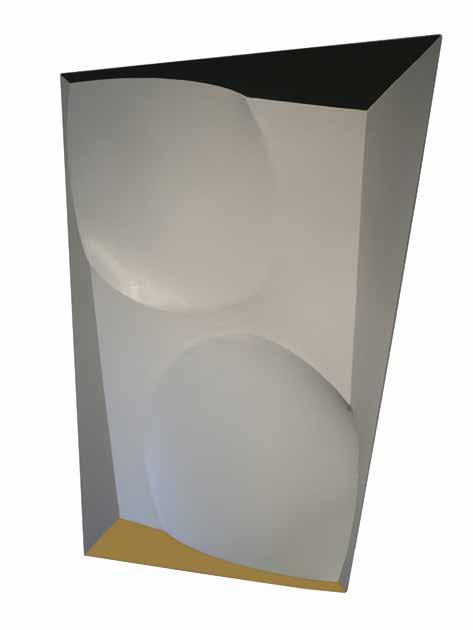
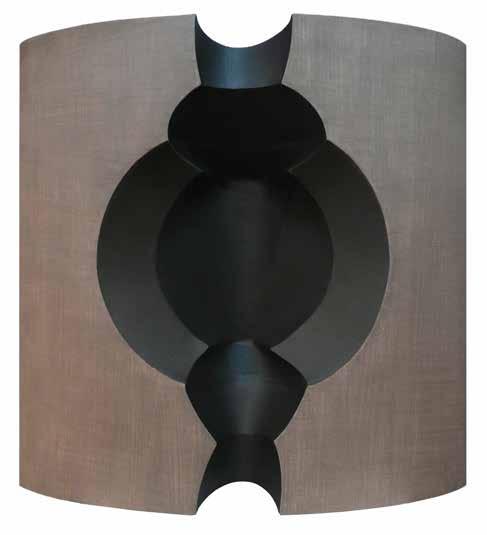
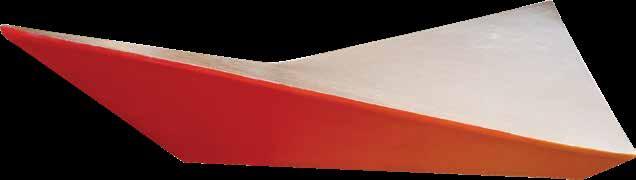
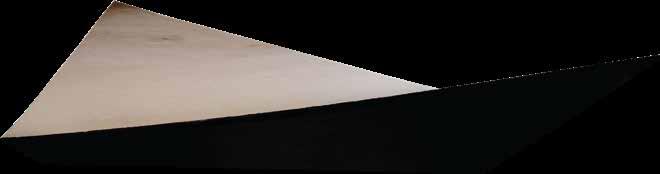
Is it a sculpture? It has the features of the three-dimensional shape, but it also encompasses shapes marked by painting. It is “something” strictly related to “cause” with correlated meanings. An object where painting and sculpture play a role in the construction of a meaningful shape closely related to architecture. A feature of genre’s which the artist wisely recomposes in the given prominent curvature.Thus, the work of art could be called Eulogy of a curve a name given as to the space it represents, architecture of the curved shape. It is this very element which renders the work unique because of volume, surface and depth. It can simultaneously re-purpose the curve in meaning and shape.
The proposal comes out of its uncertainty and acquires the role of experience a bond between the work and its beholder.Truth previously experienced during the solitude of its creation, nothing more than the attained action of an artist giving free rein to his idea in creating a shape present in his mind but without tangible reference. It is the possibility before becoming reality and when created it appears as strong evidence of what is possible. What was the artist’s intention? He wanted to put together as one, two paths where the curvilinear movement was on one hand the volumetric part “the clone” and on the other the surface part “the convex” as to establish a new generating principle expressing a
vital idea and a shape which represents a unique proposal of its complex creation. The principle of life by which the artist is inspired and all in all remains a mystery, Clonvex turns out to be his revelation.
Liccardo’s world is the world of wood where its properties are those decided upon and assigned by the artist. It becomes a living matter subject to the will of him or her who asks it to become what it did not know it could be.
As Rilke the poet would say “withdrawing in its deeper aspect while appearing to expand”. It illustrates a finite material revealing at the same time its infinite possibilities as comes about in life and with it, its status which can go beyond invention and potential.
We must then follow the suggestion by Clonvex as to make ours the experience originating with the bending of a line and becomes a curve by will. It starts off at one point and thrusts itself as if unable to resist, relapsing as if it wants to return alive to its own vital space respecting the curved shape which is to take on something else. Here, the surface becomes deep without either appearing disunited.With this accomplished the material and its eventual possibility plainly becomes visible. It takes on the colour meaningfully and decisively as if to hide time and to show that this is what it truly wanted to be: a curve and its infinite possibilities as to give this appellation to emptiness.
In this journey rendered comprehensible by the talent of he who has traced it, the craftsman’s simplicity is revealed giving shape no longer to the material but simply along the lines of an object with an unbiased experience before becoming Clonvex the object of truth by Ernesto Liccardo.