Refrigerator Compressor Problems: Causes, Solutions, and Repair Tips Cold food depends on a refrigerator compressor that runs properly and keeps the cooling cycle moving. When the compressor stops working, the refrigerator may become warm, make unusual sounds, or fail to cool at all. If you need refrigerator compressor repair in Tarzana, knowing the common causes can help you identify the problem and decide what to do next.
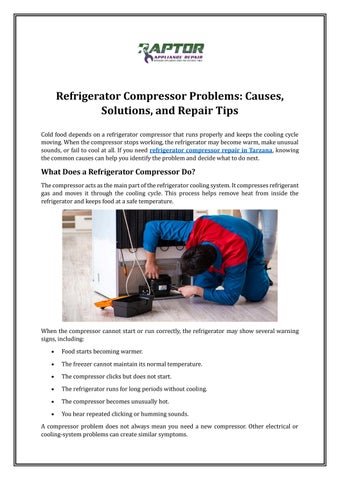
What Does a Refrigerator Compressor Do? The compressor acts as the main part of the refrigerator cooling system. It compresses refrigerant gas and moves it through the cooling cycle. This process helps remove heat from inside the refrigerator and keeps food at a safe temperature.
When the compressor cannot start or run correctly, the refrigerator may show several warning signs, including:
Food starts becoming warmer.
The freezer cannot maintain its normal temperature.
The compressor clicks but does not start.
The refrigerator runs for long periods without cooling.
The compressor becomes unusually hot.
You hear repeated clicking or humming sounds.
A compressor problem does not always mean you need a new compressor. Other electrical or cooling-system problems can create similar symptoms.
Check the Power Supply First Before examining the compressor, check whether the refrigerator receives steady power. A loose plug, tripped breaker, damaged outlet, or power problem can prevent the compressor from starting. Try these basic checks: 1. Make sure the power cord fits firmly into the outlet. 2. Check the home's electrical panel for a tripped breaker. 3. Test the outlet with another suitable appliance. 4. Look for visible damage around the power cord. 5. Avoid using extension cords for the refrigerator unless the manufacturer specifically allows them. If the refrigerator has power but the compressor remains silent, continue with other possible causes.
Check the Temperature Settings Incorrect temperature settings can sometimes make a refrigerator appear to have a compressor problem. Check the control panel and confirm that the refrigerator and freezer settings remain within the manufacturer's recommended range.
Also check whether someone recently changed the settings. Some refrigerators enter special modes that reduce or stop normal cooling. If the temperature settings look correct and the refrigerator still does not cool, the problem may involve the compressor, thermostat, control board, or another component.
Listen for Clicking or Humming The sounds coming from your refrigerator can provide useful clues.
1. Repeated Clicking Repeated clicks may indicate a problem with the compressor start relay or another starting component. The compressor may try to start but shut down shortly afterward. 2. Humming Without Cooling A steady humming sound usually means the compressor runs. However, if the refrigerator remains warm, the system may have another issue, such as restricted airflow, a refrigerant problem, or a failing compressor. 3. Complete Silence If the refrigerator has power but you hear no compressor activity, a thermostat, control board, wiring problem, start component, or compressor failure could explain the issue. Do not rely on sound alone to diagnose the exact problem. A technician can test the components safely.
Inspect the Condenser Coils Dirty condenser coils can make the refrigerator work harder and increase heat around the compressor. Over time, heavy dust and debris can reduce cooling performance. Unplug the refrigerator before cleaning accessible coils. Use a suitable brush or vacuum to remove dust carefully. Keep the area around the refrigerator clear so air can move properly. If cleaning the coils does not improve cooling, the compressor may not be the main cause.
Check for Excessive Heat A compressor normally becomes warm during operation. However, extreme heat can indicate that the compressor works too hard or cannot complete its normal cooling cycle. Several issues can contribute to excessive compressor heat:
Dirty condenser coils
Poor ventilation around the refrigerator
Failed condenser fan
Electrical starting problems
Refrigerant-related issues
Compressor wear
Never touch a very hot compressor with your bare hand. Allow the refrigerator to cool and arrange professional inspection if the problem continues.
Test the Start Relay and Capacitor Many refrigerators use a start relay and, depending on the model, a capacitor to help the compressor start. If one of these parts fails, the compressor may click, buzz, or attempt to start without running normally. A faulty start component can look like a failed compressor. This matters because replacing a compressor cost considerably more than replacing a smaller electrical component.
A technician can test the starting components and determine whether they work within the manufacturer's specifications.
When the Compressor Itself May Have Failed Sometimes the compressor has internal mechanical or electrical damage. Signs may include:
The compressor receives power but will not start.
The compressor repeatedly trips the circuit breaker.
The compressor makes unusual mechanical noises.
The compressor becomes extremely hot.
The refrigerator cannot reach the correct temperature despite proper airflow and clean coils.
Professional testing confirms abnormal electrical readings.
At this point, refrigerator compressor repair may require professional diagnostic work. A technician can determine whether the compressor needs repair, replacement, or whether another component causes the symptoms.
Should You Repair or Replace the Compressor? The right choice depends on the refrigerator's age, condition, repair cost, and compressor condition. Repairing a related component may make sense when the compressor itself still works. For example, replacing a failed start relay can restore normal operation without replacing the compressor. A compressor replacement may require more labor and specialized equipment. If the refrigerator is older and has several other problems, compare the repair cost with the price of a replacement appliance. Ask the technician to explain the confirmed problem and the available repair options before approving major work.
What Not to Do When the Compressor Stops Trying to repair a refrigerator compressor without the right tools can create electrical, mechanical, and refrigerant-related risks. Avoid:
Opening sealed refrigeration lines yourself.
Handling refrigerant without proper equipment and authorization.
Bypassing electrical safety components.
Repeatedly turning the refrigerator on and off when the compressor struggles to start.
Replacing expensive parts before confirming the actual fault.
Professional diagnosis can prevent unnecessary parts replacement and help protect the refrigerator from additional damage.
How to Prevent Future Compressor Problems Regular maintenance can reduce stress on the cooling system and help the refrigerator operate efficiently. Follow these simple habits:
Clean accessible condenser coils periodically.
Keep ventilation areas clear.
Avoid packing the refrigerator too tightly.
Check door seals for gaps or damage.
Keep the refrigerator away from excessive heat sources.
Maintain the temperature recommended by the manufacturer.
Address unusual clicking, buzzing, or cooling problems early.
Small maintenance steps can help you spot developing problems before they become major repairs.
When Should You Call a Refrigerator Repair Technician? Call a qualified technician when basic checks do not solve the problem or when the compressor shows clear signs of failure. Professional service becomes especially important when the refrigerator has electrical faults, repeated breaker trips, refrigerant concerns, or a compressor that will not start. If you are searching for refrigerator compressor repair in Tarzana, provide the technician with useful details before the visit. Mention the refrigerator brand and model, current symptoms, unusual sounds, temperature changes, and anything you already checked. This information can help the technician prepare for a more focused diagnosis.
Final Thoughts A refrigerator that stops cooling does not always need a new compressor. Power problems, temperature controls, dirty coils, faulty start components, fans, and other issues can create similar symptoms. Start with safe basic checks, but avoid opening sealed systems or working on electrical components without proper knowledge. When the compressor remains unreliable, professional diagnosis can identify the actual cause and help you choose the appropriate repair.
FAQs 1. Why is my refrigerator humming but not cooling? A humming sound can mean the compressor runs, but another problem may prevent proper cooling. Dirty coils, airflow restrictions, fan problems, refrigerant issues, or compressor failure can cause this symptom. 2. Why does my refrigerator compressor keep clicking? Repeated clicking often occurs when the compressor tries to start but cannot continue running. A faulty start relay or another electrical problem may cause it, although a technician should confirm the exact cause.
3. Can a refrigerator compressor be repaired? Some compressor-related problems come from replaceable components such as start relays or capacitors. If the compressor has internal damage, replacement may provide the practical solution. 4. How do I know if my refrigerator compressor is bad? Common signs include poor cooling, repeated clicking, excessive compressor heat, unusual noises, or a compressor that receives power but fails to start. These symptoms can have other causes, so testing helps confirm the diagnosis. 5. How much does refrigerator compressor repair cost in Tarzana? The cost depends on the refrigerator model, failed component, labor, and whether the compressor needs replacement. Ask for a diagnosis and written estimate before approving a major repair.
Contact Details Phone: 424-292-0000 Email: raptorappliances@gmail.com Website: https://maps.app.goo.gl/qh7ChDaha9qHcoUKA