
MYOFASCIAL RELEASE TRAINING REIMAGINED
A Modern Clinical Approach by Rapid Neurofascial Reset
Many clinicians begin their journey exploring myofascial release training to better understand fascia, pain, and mobility Traditionally, this training focuses on manually stretching or releasing connective tissue restrictions. While this model has been widely taught, modern research suggests that the real change during treatment is neurological rather than mechanical
Rapid Neurofascial Reset offers a science informed evolution of myofascial release training. Instead of attempting to physically alter fascia, this approach focuses on how sensory input influences the nervous system and protective muscle tone This shift in understanding changes everything about how clinicians assess, treat, and measure results.

UNDERSTANDING WHAT REALLY CHANGES DURING TREATMENT
Fascia is incredibly strong and resistant to deformation. The amount of force required to physically lengthen fascia is far greater than what can be safely applied with human hands. So what explains the immediate improvements in pain and mobility often seen in sessions labeled as myofascial release training
The answer lies in the nervous system.
When therapists apply pressure or movement, they stimulate mechanoreceptors embedded within fascial tissue. These sensory receptors send information to the brain. The brain then evaluates safety and adjusts muscle tone and pain perception accordingly.
What feels like a release is actually a recalibration of neurological output.
WHY CLINICIANS CHOOSE
RAPID NEUROFASCIAL RESET
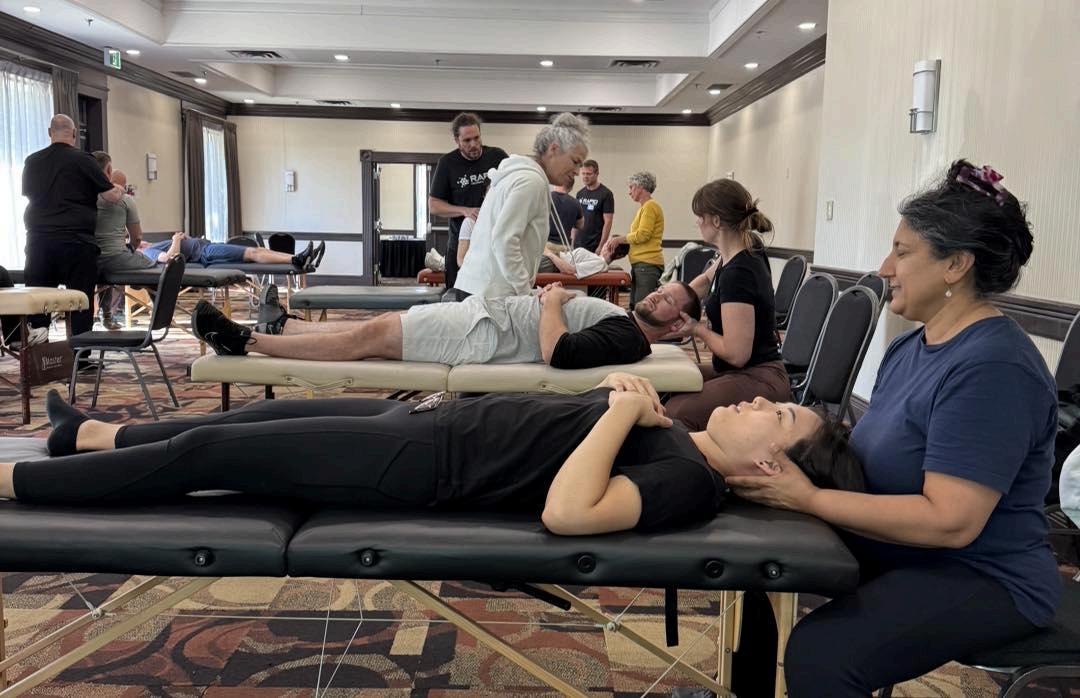
Therapists seeking myofascial release training often want better outcomes, clearer reasoning, and lasting results. Rapid Neurofascial Reset provides a structured framework rooted in modern pain science and neurobiology. This system helps clinicians:
Improve assessment clarity
Target areas of neurological overdrive
Re test immediately for objective change
Reduce physical strain during treatment
Increase confidence in clinical decision making
Rapid Neurofascial Reset represents the evolution of myofascial release training. By focusing on nervous system communication rather than mechanical force, clinicians can achieve rapid improvements in pain, mobility, and function. When you stop trying to force tissue to change and start guiding the nervous system instead, results become predictable, repeatable, and measurable.
Website: www.rapidnfr.com
Contact: (403) 443-3336
Address: 221 Main St, Three Hills, Alberta, T0M 2A0, Canada