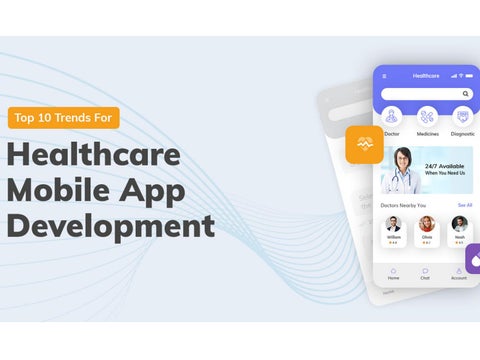
To illustrate the importance of digital technology in healthcare, let’s look at the ten key healthcare mobile app trends in 2020.
Source: https://www.fatbit.com/fab/
Patient-Generated Health Data (PGHD) PGHD is a health-related data characterizing the history of a patient, including details of disease (if any) and recovery. PGHD mainly includes symptoms of the disease, treatment history (with health details), details on the healing process, biometric data, lifestyle, habits, and more. A careful analysis of this data can significantly reduce patients’ visits to a clinic.
Wearable Devices Smart wearable devices offer constant monitoring of health at all times. From breathing, chest movement to heart rate, wearable devices have various sensors to track and monitor these health parameters.
Telemedicine and Telehealth Apps Telemedicine is among the fastest-growing segments in healthcare IT. It is convenient, cost-effective, and offers better access to reliable doctors reducing absenteeism. Telehealth apps like “doctor on demand” or “HealthTap” provide video calls with board-certified doctors right away or by appointment to patients.
Communication Channels With an effective communication process, the chances of treatment success also improve. There are several communication channels like instant messaging, real-time video calls, emergency calls (SOS signal), and more.
Geolocation Geolocation is one of the main features in healthcare mobile applications and here’s why: Geolocation allows a patient to locate the address of nearby hospitals, pharmacies, clinics and more In case a person gets injured at an unknown location, the feature helps him/her make an emergency call Provide medical news and information regarding emergencies (such as areas of the hotspot during the COVID-19 pandemic), and more
Contact Tracing Contact-tracing allows silent tracking of individuals and notifies the user if any of their contacts have been tested COVID-19 positive.
Data Protection The biggest challenge for healthcare mobile apps is the protection of sensitive patient data from unauthorized access.Moreover, as new technologies emerge, data protection is bound to improve emerging as a new trend in healthcare app development.
mHealth Payment Services Arranging cash and making the payment during a medical emergency is no longer an issue.There are several payment methods like mobile wallets, Near Field Communication (NFC), payment portals, and more that can be integrated into a healthcare mobile app.
Internet of Things (IoT) IoT is widely used in healthcare systems to collect the necessary information from connected devices and transfer it to the healthcare service provider.
Cloud-Based Solutions Cloud-based solutions allow easier access to patient records, medical bills, insurance plans, and more. Cloudbased solutions make healthcare mobile app services more accessible.
Source: https://www.fatbit.com/fab/healthcare-mobile-app-trends/
Conclusion Amid the COVID-19 pandemic, the importance of healthcare mobile app is increasing exponentially. It eases the burden on healthcare workers by connecting patients with doctors online and even offers contact tracing to prevent the spread of the virus. With the Apple-Google partnership on COVID-19 contact tracing technology, efforts are made to offer a comprehensive solution. At FATbit Technologies, we strive to deliver custom mobile applications for healthcare businesses while implementing the latest trends to ease the burden on hospitals and patients. For a complete guide on healthcare mobile app development, click here
WEBSITE https://www.fatbit.com
PHONE NUMBER
TALK TO US
+1 469 844 3346
HOW TO REACH US
EMAIL ADDRESS sales@fatbit.com