Rambling Angler Outdoors
EDITOR & PUBLISHER
Ken McBroom
EDITOR AT LARGE
Bill Cooper
Bill Cooper Troy Seal
Mike Schoonveld
You might hear me say that spring is my favorite time of year. Then when October hits you might hear me say fall is my favorite time of year. Just know that spring and fall is my favorite time of year and depends on what time of year I am saying it.
Spring brings warmer weather with redbuds then dogwoods blooming. When you have fished all your life these thing become etched into your soul and an internal clock that automatically gets you excited. The fall brings changing colors, cooler weather with great fishing then deer season.
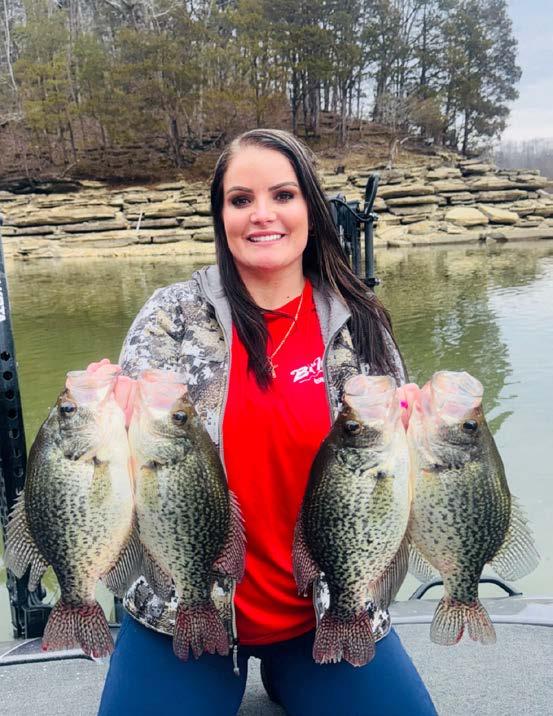
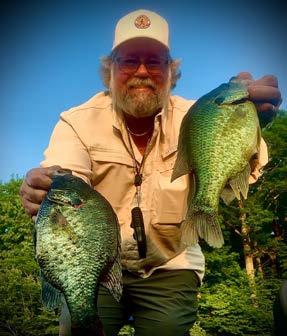
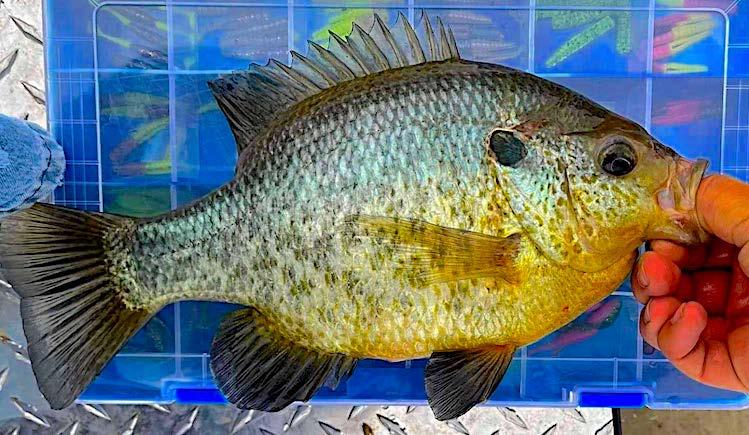
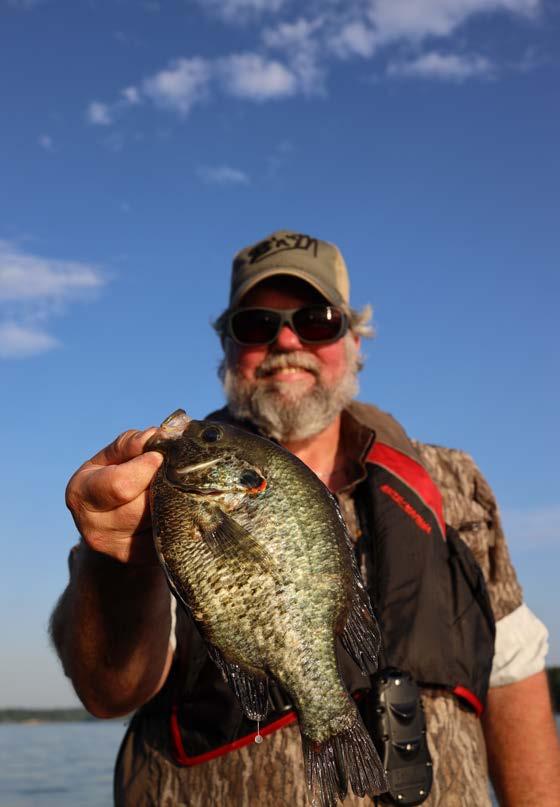
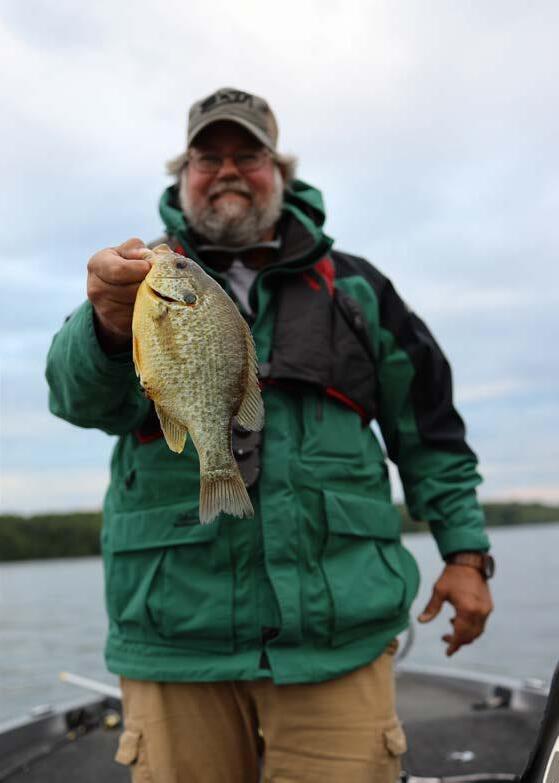
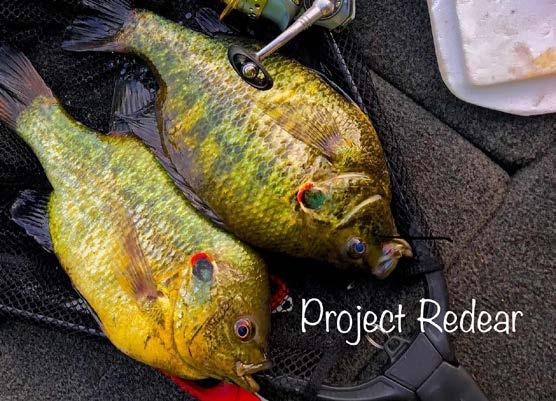
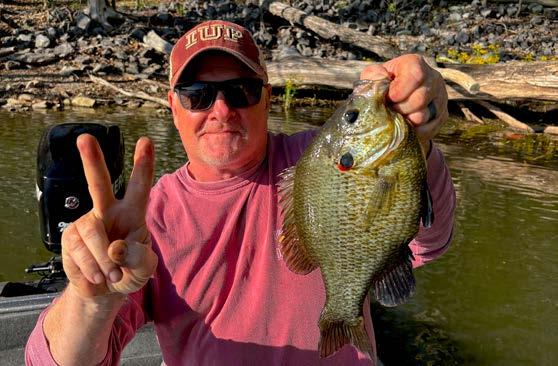
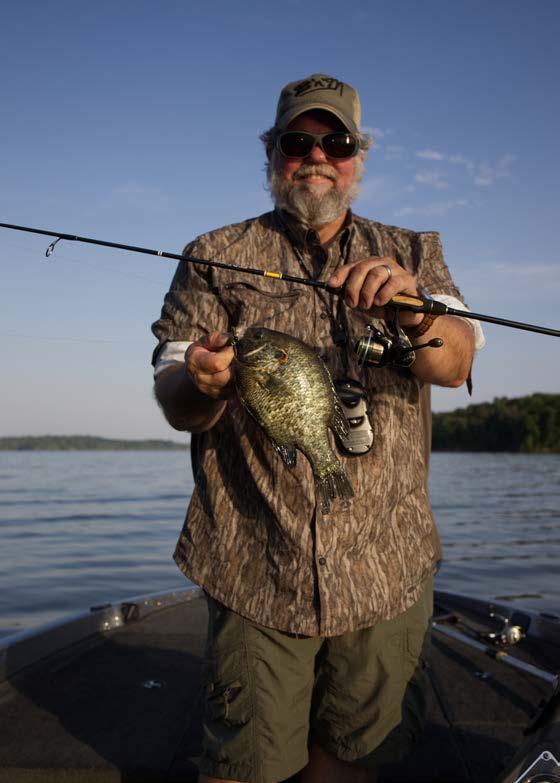
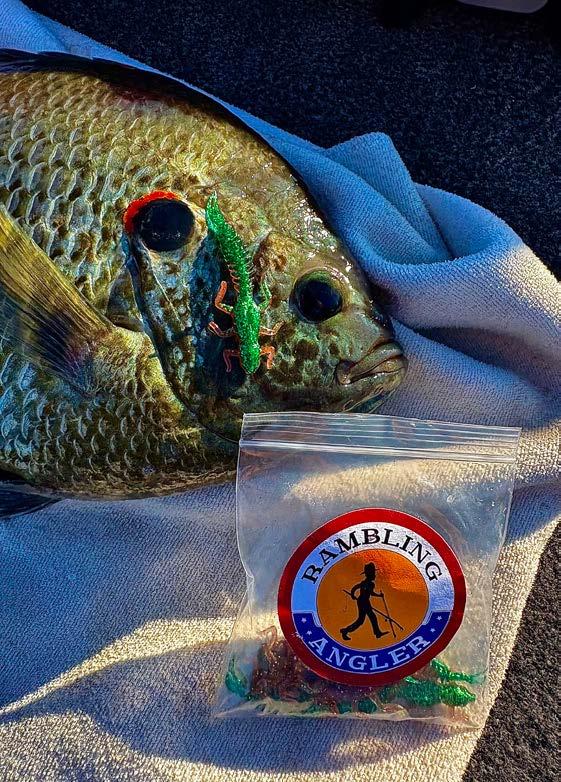
Spring, for me at least, was the crappie spawn for most of my life. However; in the past 10 years my focus has shifted to the redear sunfish. This hard fighting and elusive species if like hunting big bucks with a bow, it ain’t easy. While I do still love chasing slab crappie I do it in the “off season”. February and March has become my favorite time to catch crappie. As they feed up for the spawn and become more and more aggressive as the water warms this is my favorite time now, leaving the warm springs for chasing redear.
As an outdoor communicator, through writing, photography, and now video, it is my hope to teach you and those that follow what I know about all things outdoors to include the elusive redear sunfish. I don’t plan on giving you my spots, I won’t even tell my granny where my spots are. However; I will help you find your own spots. Please enjoy a few of my favorite photo journey. Troy Seal takes you up and down the river on a multi-species adventure. Tom Berg goes on a road trip to Kansas for some bass fishing and Bill Cooper shares his camping adventures on a turkey hunt.
I want to thank all of my subscribers for helping me see my dream of creating an outdoor magazine. Ken McBroom











By Ken McBroom
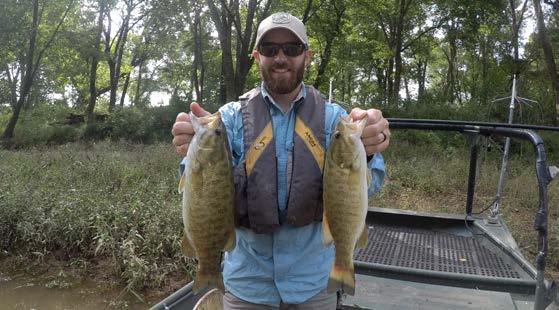
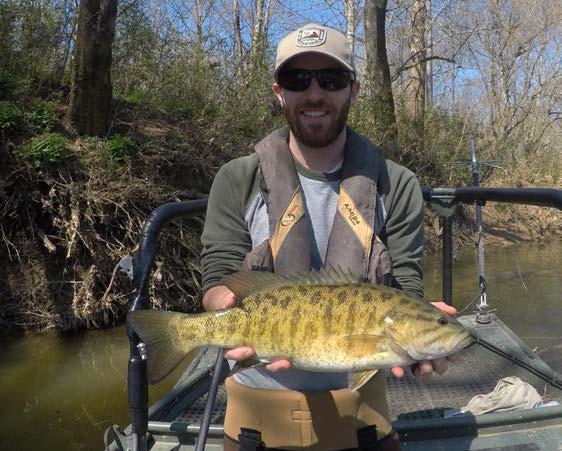
Kentucky is home to some great waterways that offer plenty of recreational opportunities. Green River and Barren River are no exception. These two river systems offer canoe and kayak adventures, hiking, camping, and great smallmouth bass fishing. Green and Barren are known for their great smallmouth fishery and it’s about to get even better. The removal of century-old dams on the two rivers will create a safer environment for paddlers as well as better habitat for fish like the smallmouth bass.
These dams were built to allow the passage of steamboats and other watercraft to move goods along the river. While the dams were crucial to area commerce at one time, they eventually outlived their usefulness and were removed. The most recent dam removal was on Barren River in the fall of 2022. Not only will the dam removals provide added public access for paddlers and anglers alike it will also help restore sections of the two rivers to a
more natural state. This improvement to the ecosystem will only enhance vital habitat that all fish in the rivers will benefit from.
I spoke with Big Rivers Fisheries Research Biologist at Kentucky Department of Fish and Wildlife Resources Jason Herrala about what to expect from the fishery from these recent dam removals. My focus was on one of my favorite fish species, the smallmouth bass. Jason told me that because of the time to get the removals approved that data was collected in a way to compare the dammed-up sections before and after dam removal. He also says that while the removals are recent that there are already noticeable improvements for smallmouth bass in these sections.
“The slow-moving water created by the dams causes higher water temperatures than in flowing sections,” Jason says. “Returning these sections back to normal will reduce temperatures in these sections and flush out the built-up sediment that accumulated for so long. This will improve the smallmouth fishery. It will take time, but the river bottom will eventually return to its natural state and provide the smallmouth more habitat as well as the minnows and crayfish that they love to eat.”
Jason shared his favorite lures to use to catch smallmouth bass on the rivers. His go-to bait is a green pumpkin colored worm rigged wacky style. He says that this bait will catch smallmouth both big and small and is why he prefers it. “There are times when a small topwater bait is the way to go. The most important thing on catching smallmouth bass on these rivers is to keep your bait profile small. The baitfish on these rivers aren’t very big and your bait should match that to get more strikes.” Jason concluded.
By Jarrett Manek
Smokey Bear is a great icon for the US Forest Service and promotes preventing wildfire, but I am not talking about smoke and fire, nor am I talking about Smokey Bear, I am talking about Smoky the Dog. Smoky is not just any dog, but is a beautiful, friendly, and intelligent black Labrador retriever and a K-9 conservation officer police dog assigned to Harrison County Conservation Officer Jim Schreck. As with any working k-9 unit, they are not just a dog, they are so much more. From working law enforcement partner with extensive training, to family companion, any department will back their K-9 as a liaison for the area and community. As for any working dog, each k-9 has its own unique strengths and training. Some are tracking dogs, some are recovery dogs, some are used for drugs, and some are used for apprehending a suspect, and more. It has been said for any dog, you should always trust their nose. If they are well trained and experienced, a dog can astound any handler with its natural ability. However, I have also heard that a dog is only a reflection of its owner!
If anyone has hunted for a very long time or even a new hunter can find frustration in getting crowded out of their hunting spot or experiencing a non-courteous, rude individual that does not respect the unspoken boundaries or legal boundaries of a deer stand or property line. It goes beyond hunting. It can be someone fishing too close to you or sneaking into an off-limit area mushroom hunting and just pushing the boundaries beyond what that person has legal permission for. Trespassing occurs too often. Many times, the individual just does not ask for permission, or they have been denied permission and decide to cross over anyway because they think they can. Many folks say, “Well I have done it for years!”. Unfortunately, for one hunter on opening morning of the Indiana deer gun season, the boundaries were pushed way too far. Just because you don’t think anyone can see you, does not mean that someone cannot smell you!
As my 18-year-old son and I sat in the buddy tree stand waiting for dawn to break and shooting light be legal. We sat with anticipation of the hunt. Trudging up the hill, playing the wind, getting situated, listening for the crackling of footsteps in the leaves, everything that each outdoorsman gets excited for on opening day. Feeling like I needed to spend quality time with him, I urged him to sit together and enjoy father/son time in the woods. It was not about who got the biggest deer, but about spending time together and mentoring him on being an outdoorsman and making good choices. It was not long after the sun came up and we were surprised in the lack of deer, or actually no deer being seen period.
Our stand location was placed well off the neighboring property line, but we could easily see the neighboring property. Keeping our stand locations a good distance from the property line ensured our chances from anything we may harvest to stay on the property we had permission to hunt, even after shooting a deer. I have always stressed good close shots increase your chances for success and a quick clean kill and recovery. Plus, the neighboring property was strictly off limits with no trespassing and/or hunting. We knew the
owners very well and wanted to be respectful and courteous to their wishes. The owners understood hunting but did not want to be a part of it and wanted their property to be a refuge for wildlife. So it was to our surprise when off in the distance, through the trees I had spotted a faint glimmer of hunter orange in a tree on that property. It gave me some resolution to why we were not seeing any deer movement because we always see deer when we sit at this particular stand location. You can imagine the multitude of feelings that both my son and I had go through our minds. Do we leave? Do we contact the neighbors and say something? Are they letting someone hunt now? Several questions went through our heads. I asked my son, “So what do you want to do? This is just as much your opening day as it is mine.” If we called it in, then our opening day hunt will probably be over. He made his choice and wanted to do what he thought was the right thing.
The decision was made by him to message the neighbors and to ask them. It was not a surprise when they said absolutely, no one was to be hunting on the property. Being that we were at the location, they asked us to take care of it, so we called it in to the Indiana TIP line (Turn in a Poacher Hotline 1-800-TIP-IDNR) it was within no time, we were contacted by Officer Schreck, an Indiana Conservation Officer. Both the landowner and I personally knew Officer Schreck, so communication was easy while we stayed sitting in our tree stand. I did not know where the trespassing individuals entered the woods or where they came from, but I knew it was not anywhere near the location where we were parked. I sent him a pin location and asked if he wanted us to come out of the woods to meet him down near our vehicle. Officer Schreck, said not to worry, it will be good practice for Smoky to find the individuals.
As we waited and watched with our binoculars, Officer Schreck gave us a notification that he thought he located the suspects’ vehicle parked along the edge of the highway, opposite to where we were parked. He said he was headed into the woods with Smoky leading the way on track. Smoky immediately went to work diligently sniffing and finding the trail of the suspected trespassers. Hot on the trail, we watched from a distance with binoculars, Smoky was doing what he was trained to do. He never missed a step and his nose took them straight to the base of the tree where the suspects were hunting. We could see them get down, stand talking awhile, then head down the hill to a UTV, then, towards their vehicles along the highway. It was not until afterwards when we found out what had transpired.
Officer Schreck did his normal questioning and it did not take long before the trespassing individual and his 15-year-old grandson admitted that they knew they were in a place where they did not have permission. They drove a UTV up to the property line, then crossed over and trespassed the rest of the way on foot. The trespasser acknowledged that he had already filled his buck tag on the property and he did not have permission to hunt, and when Officer Schreck noticed Smoky sniffing fresh blood in the back of the UTV, he asked him if the blood in the back of the UTV was from his buck, he of course said yes. Then ironically, the fifteen-year-old grandson, quickly replied, “no grandpa, that was from the other buck you shot”! Caught! Officer Schreck knew that he had more than a good case. The gentleman finally admitted the violations after trying to lie in front of the teenager, but he knew he was caught thanks in part of Smoky’s keen sense of smell. The deer heads and meat were confiscated, citations were wrote and lessons I hope were learned from both individuals, young and old. My son and I watched and learned that you should always trust your dog, his nose won’t lie!
I have always preached to my kids that life is about choices. Some are bad and some are good. You must decide what kind of choice you want to make. And with each choice, there are either rewards or consequences. For my 18 year-old, he literally got a reward. A $500 TIP reward for the conviction of trespassing, and overtaking of antlered deer, and not tagging the deer with the intention of over-bagging. I was proud of my teenager and what I have taught him about his choices. What are you teaching your teenagers about the outdoors? If you teach them anything, teach them that 1-800-TIP-IDNR is a good number to know. The Turn In A Poacher program is not just for hunting either, it has many purposes and can be anonymous.
Bill Cooper has published over 1,500 articles and hosted TV and radio shows over a half century as an outdoor communicator. Recognized on the floor of the Missouri House of Representatives in 2016 for his career of promoting the outdoors, Bill has stood the test of time through his unwavering love of the outdoors.
Bill is also a member of the Freshwater Fishing Hall of Fame and the Legends of the Outdoors Hall of Fame and still going strong. We welcome his experiences and outdoor communicator skills to Rambling Angler Outdoors and look forward to all the remarkable stories and adventures ahead.

By Bill Cooper
Spring turkey seasons are opening across the country. If you are traveling long distances to hunt public lands, camping on areas where allowed makes a lot of sense.
Modern-day turkey hunters are mobile creatures, often hunting in several states in a single season. Camping while turkey hunting is a cost-effective way to spend multiple days in a new place, and many public land hunting areas offer camping areas with numerous amenities. Camping on public lands allows one to be mobile, allows for more time to be spent in the springtime woods, therefore increasing the likelihood of a turkey harvest.
There are about as many ways to plan a turkey camp as there are ways to kill a turkey. But the following are some basic things to keep in mind while planning a trip.
Locate camping areas - Once you have secured the appropriate license for the state you intend to hunt, begin looking for camping opportunities near your chosen hunting location.
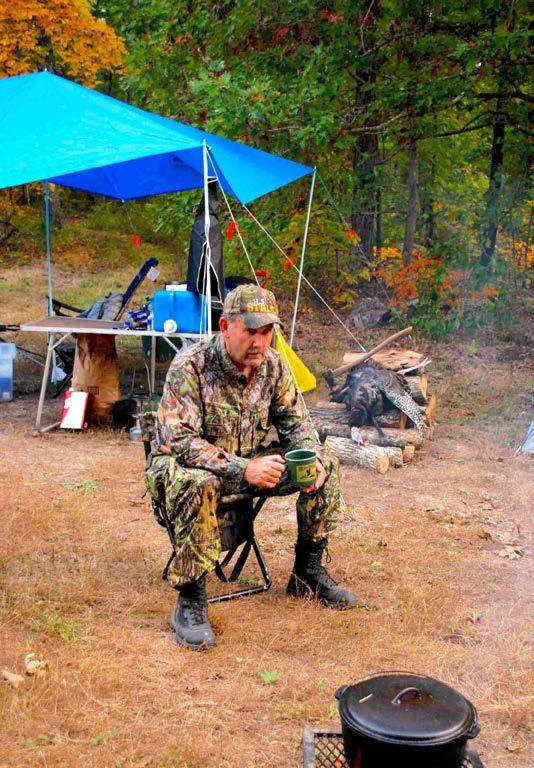
Choosing an appropriate camping spot depends on the amenities you desire as well as proximity to your hunting area. Most campgrounds provide access to bathrooms, showers, water, sewage dump, and electrical hookups. If you camp in a camper that utilizes electricity,
You must find sources with the right hookups. Remember, too, that many campgrounds have not yet opened by turkey season. Check it all out before arriving, or you may be met by locked gates.
A great alternative to established campgrounds is camping on state or federal lands where you will be hunting. Be sure to check area regulations about camping and staying overnight. Many state wildlife management areas offer primitive camping and most US Forest Service lands offer camping in established areas as well as primitive camps. In the larger forests you can drive around until you find areas with old fire rings where people commonly camp. These areas are free and don’t require a reservation. However, there are no bathrooms or electric hookups.
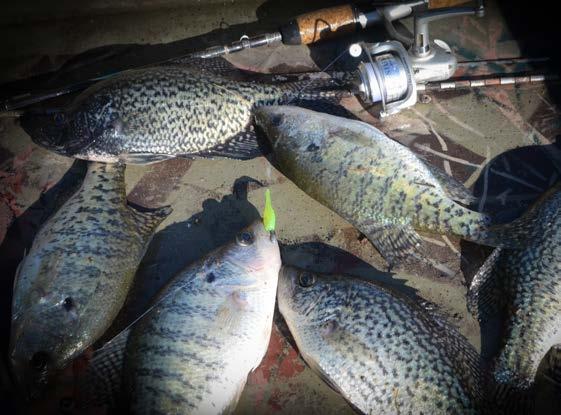
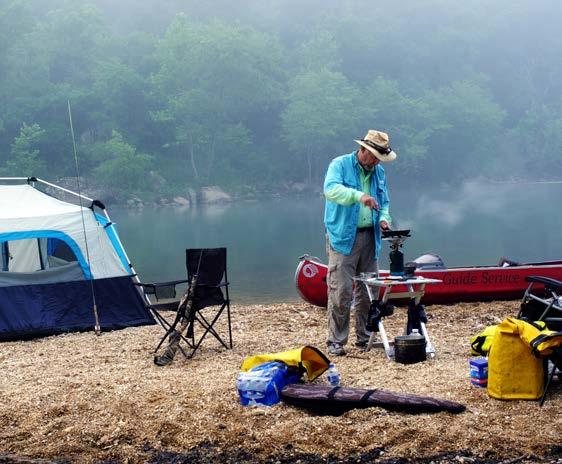
Plan for cold storage - Primitive camping comes with numerous challenges, including a means to keep food and turkey meat cool. Cool spring weather will help with the cooling process, but is not sufficient for a several-day stay. I freeze water in 1-liter bottles and find that it lasts up to five days in cooler temperatures.
Water sources - Water is essential for any hunting and camping trip. Your water consumption needs will increase while being extra active, such as hunting and hiking. Fill a number of water containers to carry along on the trip. Five-gallon cans are handy. One-gallon jugs of water are cheap, and individual bottles are easy to carry in a hunting vest. As an extra precaution, a backpacking-grade water filtration system is a good investment for camping and turkey hunting trips. Plan well and you will spend far less time running to the nearest town to secure water.
Take advantage of all camping has to offer - Killing a turkey may be your main goal, but approach your camping trip with the attitude of enjoying all the multi-day experience has to offer. It’s springtime and you will have several days to be outdoors during one of the best times of the year. New life will be appearing everywhere as wildlife begin to birth young. Wildflowers will be blooming and morel mushrooms will be popping. Take time to do a little fishing. Many state and federal lands have rivers and lakes within their boundaries. Check regulations and purchase necessary fishing license. The perfect turkey camp meal consists of the trifecta of morel mushrooms, crappie fillets and wild turkey breast.
Spend this quality time with family and friends. We all long for those carefree days in the woods hunting for our favorite game bird, the wild turkey. Take lots of photos and videos to preserve your hunting camp memories.
Large national forest areas often offer large blocks of wild lands. You may find yourself hunting wild turkey gobblers with little competition from other hunters. Hunting pressure often drops off sharply in these areas after opening day, or consider planning your trip later in the turkey season.
A bit of solitude is near and dear to a turkey hunter’s heart. Combining a turkey hunt with a camping trip adds a whole new dimension to the experience. What may have been a few mornings chasing wild turkey gobblers can easily be turned into an extended trip of a week or more. Another advantage of being a mobile turkey hunter is the ability to pick up your camp and move to another location.
On many occasions over my five decades of turkey hunting, I have spent a few days camping and hunting in one county, or region, only to pack up and drive an hour or more to an entirely new location. The advantages of turkey hunting in such a fashion are many, but being able to see new, wild areas during the spring when the dogwoods and wildflowers are in full bloom is an incredible outdoor experience.
Many clearwater streams course their way through much the Ozarks in my home state of Missouri, offering opportunities to take a float tip as well. Too, it is a great way to catch a few fish for a camp meal, while drifting downstream listening for a turkey to gobble high on an Ozark ridge.
Finally, don’t forget to take a little time to hunt for more mushrooms. For a new turkey hunting experience this spring, plan a turkey hunting camp and enjoy the trip of a lifetime.

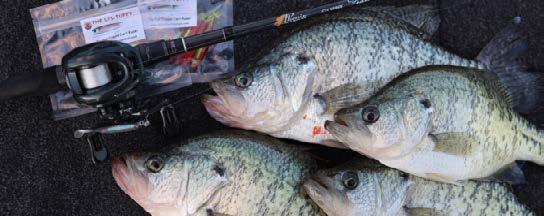
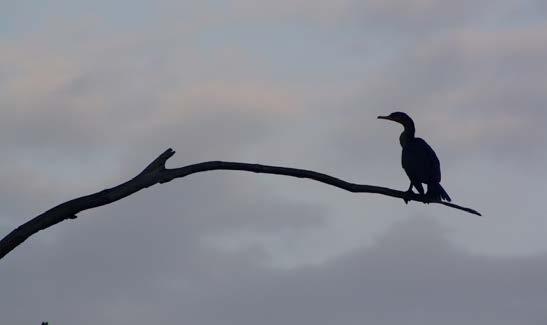
There are many subtle clues on the water that can help you locate fish when bass fishing and birds can be the simplest clue of all. Birds can help you find the baitfish but they can also pinpoint submerged grass where bass love to hide to ambush bait fish that are there for the security and nutrients the grass offers. Listed below are a couple of the most common types of birds found on most bass lakes across America. The old saying goes “Find the Birds Find the Bass”.
Herons and cranes wade shallow water stalking shad and other bait fish trying to get a meal. When you see these birds along the shoreline, you can bet there are bait fish in the area. This also means that the bait fish are up shallow which will bring bass up to eat them. When cranes and herons in the shallows, fish shallow techniques to catch the bass lurking below.
You can determine the mood of the bait fish by watching the mood of the birds. When birds are perched above the water, they’re waiting for the baitfish to move to them. This usually happens along a creek channel. Birds will wait for the migration out of the back of the cove by morning and back into the cove by evening.
When you see this the bass may not be actively feeding in the shallows but it tells you that there are bait fish around and to search for them with your electronics. They will probably be suspended in open water and the bass will be with them. When you see those birds start to stalk and feed you know the shad are moving along the shoreline. A great time to get in there with a spinnerbait or flipping rod and take advantage of the situation.
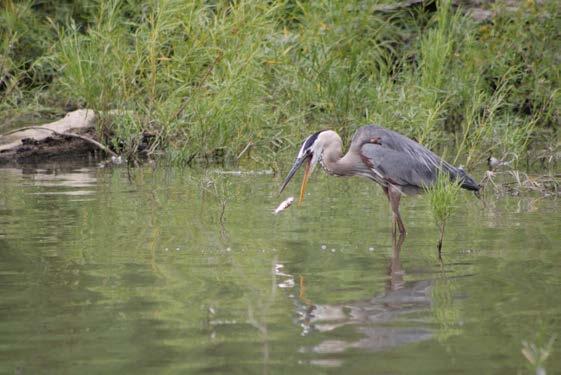
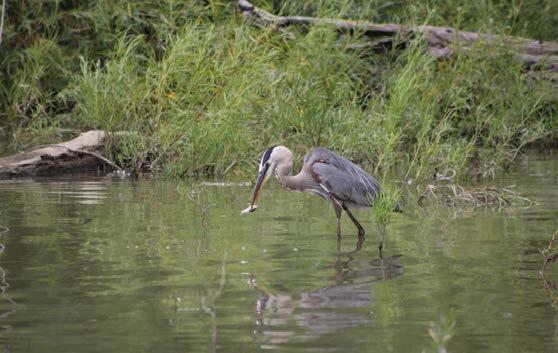
Seagulls are the most notorious divers and are the easiest to see as they soar around pin-pointing baitfish for anglers as they dive bomb the surface for a meal. When you locate the seagulls diving it means that the baitfish are close to the surface and oftentimes fish are pushing them up to it. There are many fish species that do this so you have to check it out to see if bass are feeding with the seagulls. If the bass aren’t feeding at that time they could be later, so keep this area in mind.
There are also deep divers such as loons and cormorants. These voracious feeders consume their weight in fish every day. This means that where you see these birds there is sure to be baitfish nearby. The baitfish suspends below the birds. You can get an idea of how deep they are by how long the divers are underwater. These birds are my big fish locators because usually they are diving on some big shad and the bigger bass usually follow the bigger shad.
There is one more diver worth mentioning and that is the American Coot. While the Coot will eat fish, it primarily forages for aquatic vegetation. If you’re a bass angler you know that bass love aquatic vegetation. Always be on the lookout for Coots, they might just show you a patch of grass nobody else knows about.
Loons have stouter necks and relatively smaller beaks; however, they’ll also point you to baitfish. The thing about loons is that they prefer larger fish to eat. This can be important when you are looking for big bait that attract bigger predators or bass in this case. The bites will probably be few and far between but usually those bites are from big bass. Fishing around the loons can be great when you have a limit in the box and need one big kicker to move up the board.
I have used birds to find fish from Florida to Alaska. In Florida the ospreys told us where the bluegills were and in Alaska the sea gulls always pinpointed a great starting spot for catching salmon when trolling or fishing from shore in estuaries. This all taught me to focus on birds and bass when I started fishing bass tournaments. The funny thing is it took me a little while, like everything else, to catch on to something I already knew. The knowledge gained in Florida as a kid and the knowledge gained as a young man living on a boat in Alaska probably helped me realize that birds and bass were connected.
During my days fishing bass tournaments I spent many days practicing. I started to note that when I found a few bass oftentimes there were birds present. After the first couple years fishing bass tournaments I started to use the birds to find the bass. Of course using birds to find bass is most effective when the baitfish are shallow. However, there are times when birds can help you with your fishing all year long. One thing I learned throughout the years is that if there is no bait around there ain’t no fish. At least in any great number. Work on including birds and bass to your arsenal and you will catch more bass.
By Jason Jami Jackson
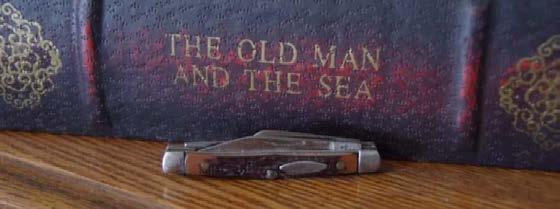
Less than 40 years have passed and I am astonished to see how the times have changed since my father bought this knife for me as just a small boy. I do still have it, which by today’s standards is an anomaly. I’ll leave the discussion of our throwaway culture for another time.
Yes, this pocket knife has witnessed many changes in our society. Technology, communication, transportation, and even education have dramatically changed from the way it was just a generation ago. My pocket knife and I are neither quite certain if all the changes have been for the good. When I look across the landscape of America and take note of the differences, the greatest change that I see is in the people themselves.
Growing up in rural Northeast Alabama in the foothills of the Appalachians, I was privileged to catch the tale end of what was an era marked by ruggedness and self-sufficiency. I grew up around men that were willing to fix what was broken and take the time to do it right.
My father was a Vietnam veteran and the product of growing up farming the hills of these same mountains where I was raised. He always carried a small pocket knife much like the one pictured. He had an affinity for Case knives, but would carry the occasional “Old timer” or “Buck” or even “Schrade”. One thing was for sure. He always had one with him, wherever he was. You could be pretty sure that his pocket knife would be super sharp. If you stared at it too long your eyeballs would bleed. Now that’s pretty sharp. The pocket knife was an important part of his life.
Whether it was to slice a freshly picked apple, or to cut some twine, (coincidentally twine can patch most any broken farm implement until you can get home) he was always prepared. At Christmas time, my father always had his knife waiting to help open those pesky gifts that needed cutting open as only a father can do best.
My father was not the only man in my young life that I watched wield his trusty 3 bladed pocket knife. He used it as if it was a surgeon’s scalpel. My uncles, my friend’s dads, my bosses, they all carried pocket knives. I watched and learned a resourcefulness in the these men, that is seldom seen today. For my father and many others of a generation gone by, a pocket knife was an essential tool for daily life.
The men who carry pocket knives are hardworking, do it yourselfers. They were raised to rely on themselves in nearly every situation. I’ve seen a pocket knife start a tractor, remove a splinter, slice a watermelon, carve a toy, and open a can. They have been used to clean wild game, cut gum/tar out of hair, sharpen pencils, cutting bait, and teaching responsibility. The list goes on and on. The uses of the pocket knife are as varied and
strong as the men who use them.
I adopted this tool at a very early age as one that would always be at my side. A pocket knife has always been a part of who I am. So much so that I was almost offended when I encounter a grown man who didn’t have one in his own pocket. I took it upon myself in my 20’s to start gifting knives. Sometimes to random strangers, sometimes to close friends.
The conversation would start by asking if I could borrow someone’s knife. Knowing full well that I had 2 in my own pocket. If the answer was proudly “why sure”, then I would take the knife and inspect it for its level of wear. This is an indicator of how much work it had actually seen. Often paying a simple compliment as I return the knife. If the answer was that they didn’t have a knife to let me borrow, I would quickly reach into my pocket and deliver one to their hand along with a reference to the fact that every man should carry a knife. To date, I have given out somewhere north of 300 knives.
So, who are the kind of men who carry pocket knives today? They are typically utilitarian. They are the type of men who earn an honest living, work hard, and stand fearless in a world gone mad. To put it simply, they are the type of men that I feel this world needs more of.
If you find yourself in a tight spot and need some help, just ask the guy with the pocket knife. They may be few and far between, but chances are he can and will be able to lend a hand. I carry, do you?
Ken McBroom
When I was 5 years old, we were headed to the lake for some fishing and camping. Those days were so much fun. Some of my most vivid memories from that time are those weekend outings spent with my twin sister Kim, my mom, and my dad. Sister and I spent hours catching crawdads along the shoreline, turning over rocks and snatching them before they left the scene. When momma wasn’t grilling hot dogs or making sandwiches, she and my sister went swimming. It was a great time for us all.
The highlight of these camping trips, for me, was fishing with my dad. We had a small boat and could see the camp from where we fished. I would wave at Momma each time we passed near enough, and if we caught a fish, I held up the size with my hands. My dad was a serious angler. He had good fishing equipment that included one of those giant two-sided tackle boxes filled with tackle. At the time, I had only used two types of fishing poles, spinning rods and B’n’M jig poles that my grandfather used. I had never seen a cane pole until that day on the way to the lake.
There was a small gas station, or filling station as we called them back then, on the way to the boat ramp. We always stopped for food and minnows. On this day, standing at the counter waiting to pay, I happened to look up into the rafters where there were fishing poles like I had never seen. I had seen cane growing along a creek, so I knew they were cane. Without any guides or even a place for a reel, I might not have known they were used for fishing except for one thing: the B’n’M logo.
You see, those B’n’M jig poles that my grandfather kept in his little barn shed had that same logo. After gathering tools for planting beans or repairing the hog pen, my grandfather always let me close that little shed door. Maybe he wanted to teach me to keep the door closed, or maybe he was giving me a moment to dream about going fishing by checking out those poles.
As fishing technology progressed, so did fishing poles, even the cane pole. My cane pole days were limited to probably that one trip, now more than 50 years ago. I would not let go of that cane pole the entire weekend. I thought it was the coolest thing to use a pole with no guides and no reel. Today, my cane pole fascination is back.
B’n’M pro staffer and friend Kent Driscoll handed me one of B’n’M’s new cane poles. The name of the pole is the Ambush, and it was designed by legendary crappie angler Steve Coleman. I couldn’t wait to use it. The pole has sections that move in and out in increments of 2 feet or so. You can telescope out to put your presentation right where the fish are. When you hook one, you pull the fish in by collapsing each section until the fish can be netted. The Ambush I use goes out to 24 feet and allows you to stay back and not spook fish in shallow water. It’s an amazing pole that brings back vintage memories with a modern touch.
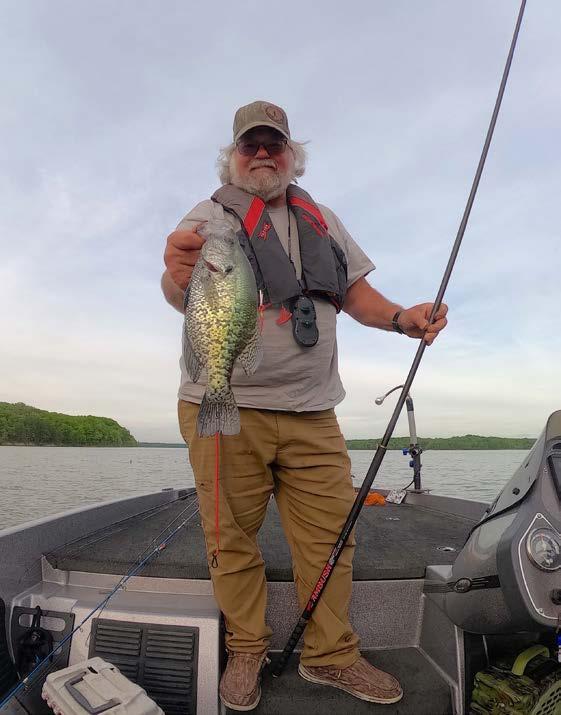
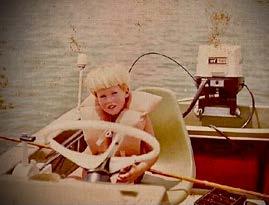
More than 50 years of fun with B’n’M cane poles. The newer versions might not use cane, but man are they fun.

by Tom Berg
Last year I made a fishing road trip to southeast Kansas. Who doesn’t love fishing road trips? I have driven through Kansas multiple times over the years on my way out west, but never took the time to stop and explore this beautiful state. It is a long drive from northern Indiana, but I’m glad that I finally took the time and made the trip.
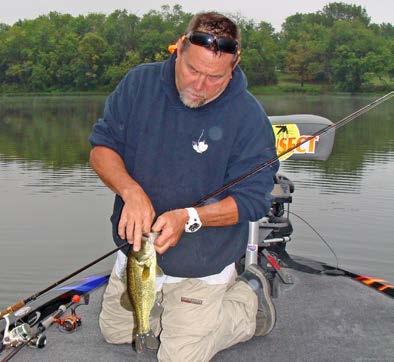
While planning the trip, I traded numerous emails with Jim Zaleski, a longtime friend and former Hoosier from Hammond, Indiana. Although he grew up in Indiana, Jim moved out of state many years ago and now Parsons, Kansas is his home. Since he has been a serious bass fisherman for decades, I knew he would have a great handle on the bass fishing in the local waters.
I arrived in Parsons and got to bed early that night since Jim would be picking me up at the hotel before 6:00am. The next morning he was right on time, and I hopped in his truck for the 30-minute drive over to Big Hill Lake. Labette County’s Big Hill Lake is a sprawling reservoir that covers more than 1,200 acres.
There is a wide variety of fish habitat in the lake, from shallow bays and weedy points to deep areas
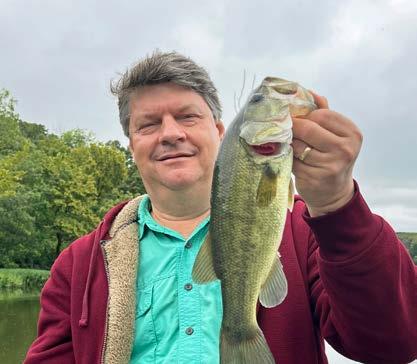
near the dam that are 60 feet deep. There are spots with plenty of submerged trees and standing timber, too, from when the lake was impounded. Largemouth bass inhabit most of these areas, and we would be targeting them. The lake also features some rocky and sandy shorelines, and the resident smallmouth bass were more likely to be found in those areas. We were hoping to catch some of them, also.
We arrived at the boat ramp in the gray morning light and quickly launched the boat. It was cloudy and there was no wind. Jim suggested we motor over to one of his favorite areas where a point jutted out into the lake with some nice weeds growing up to the surface. Since it was early, we tied on some topwater plugs to see if we could get the bass to hit on the surface.
Although the spot looked very fishy, we couldn’t get a hit. Jim removed the plug and rigged up a green 5-inch Yamamoto Senko worm that he could fish wacky style. Before he made a cast with it, though, he decided to modify it just a bit. He dipped each end of the worm in chartreuse Dip-N-Glo dye. The bright chartreuse color made the tips of the Senko look almost fluorescent, and he explained that the
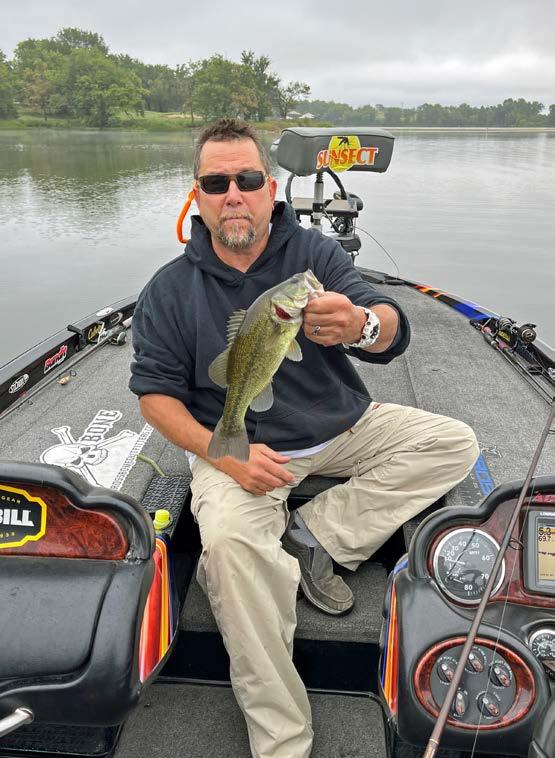
action of the wacky worm would make the brighter tips of the bait look like the fanning pectoral fins of a small sunfish – one of the favorite snacks of the resident bass.
After just a couple of casts, Jim hooked a bass. It was not terribly big – maybe 12 inches or so, but it was the first fish of the day. After he released it I decided to switch to a Senko worm, too! Jim dipped the ends of my bait in the bright dye just like he had done, and we both started working the deeper edge of the point as it extended out away from shore.
Near the end of the point I felt a fish pick up my worm, and I let it run with the bait for a short distance. When I set the hook, though, the fish had already dropped it. I am not nearly as experienced as Jim when it comes to fishing for bass with these Senko worms, but I was learning. After working the point thoroughly with no more action, we decided to move to another spot.
Jim motored over to one of the areas with lots of dead trees and rotting timber sticking up out of the water. There were numerous stumps just below the waterline that became visible as we got near them, too. The area looked very fishy to me. Jim was the first one to connect with a fish here, too. He suddenly set the hook mid-retrieve and a chunky largemouth leaped clear of the water. After a short fight, he swung it aboard. Jim posed for a quick photo, then released it to fight again.
It was my turn next, although I didn’t know it until a bass grabbed my worm and took off at nearly full speed! I set the hook and saw a nice bass boil right at the surface. Another largemouth, and although it made a strong first run, it gave up fairly quickly and Jim netted it at the side of the boat. We snapped a couple photos and released this one, too.
This continued for some time as we worked around the standing timber and shoreline weeds. Thick stands of emergent weeds crept from the shoreline out to three or four feet of water, and the largemouth bass seemed to like sitting right at the edge or even a foot or so back in the thick green stuff. We each caught multiple bass from this area before moving on.
While fishing along a hard-bottomed shoreline later in the morning, I hooked two smallmouth bass. The first was only about 10 inches long and after swinging it aboard I quickly released it. But then I hooked a much bigger smallmouth. This one ran straight towards the boat and jumped clear of the water only about 10 feet away from me. I could see that it would likely weigh two or three pounds. A nice smallmouth! Unfortunately, I was also able to see the lure fly out of its mouth when it came out of the water. Easy come, easy go!
If you decide to make your own trip to the Parsons, Kansas area (www.parsonschamber.org) or Labette County (www.labettecounty.com), rest assured that there are plenty of great things to do once you arrive. Fishing is always #1 on my list, and besides the bass fishing that we experienced on Big Hill Lake, there is excellent fishing for bass, catfish, panfish and rainbow trout in the strip pits on the nearby Mined Land Wildlife Area (Google it). But that is a story for another day.
For the non-fishermen in the family, Labette County and the surrounding area has an abundance of museums, restaurants, state parks and other attractions. One local attraction that is a must-see is Big Brutus, a gigantic earth-moving machine that was used for coal mining there in the 1960s and 1970s. It is located about 20 miles east of Parsons. Check it out (www.bigbrutus.org). It is an amazing sight to see in person.)
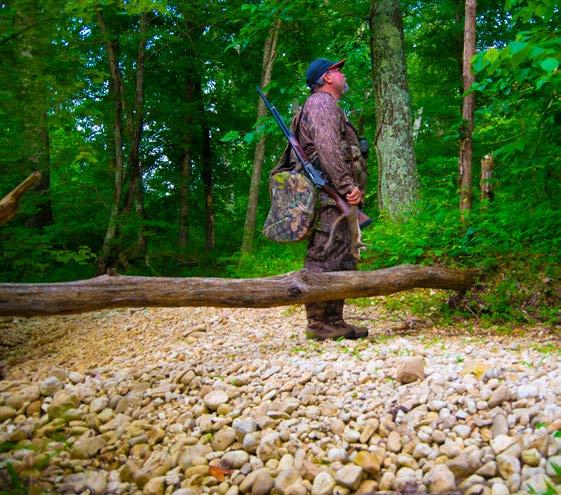
I REMEMBER AS A BOY walking the many fence rows near my house. I would go straight home from school, grab the single-shot 16, stuff a handful of shells in my pockets and I was set till dark. It wasn’t until I moved to Kentucky that I learned that there was a spring squirrel season. Hunters have the opportunity to hunt bushytails in the spring, since squirrels have two litters each year. There’s a lot going on during May here in Kentucky: bass are still shallow; bluegills are going on bed; and crappie continue to bite. While it can be difficult to decide what to do, I always find a few days for a springtime squirrel hunt.
When the first settlers came to America, the squirrel was a vital food source for the many families working to carve out an existence in the new land. Squirrel dishes were even served in fancy restaurants in the early days.
Squirrel hunting long has been considered the best way to introduce people, especially kids, to hunting, but it has lost some of its popularity in recent years—and that’s unfortunate. Kentucky’s squirrel population is booming here and with fewer hunters in the woods, the spring season is a great time to enjoy a high success rate. The grey squirrel is not only fun to hunt, but it hones the hunter’s skills for hunting other game.
Squirrel also provides excellent table fare for the hunter and is a great way to enjoy the harvest after the hunt. Fried squirrel is probably the most popular recipe among squirrel hunters, but squirrel can be used in many different recipes.
My grandfather used to make me squirrel stew when I was a little boy, and it was my favorite. It was his specialty, and the only thing I ever knew him to cook. I knew he was fixing it before I ever entered his house or houseboat, where he lived for several years: I could smell it cooking as soon as I opened the car door.
Squirrel hunting is a wonderful reason to get into the great outdoors. I encourage you to get in the woods this spring to enjoy a springtime squirrel hunt of your own; grab a friend to go with you, or teach a kid our hunting traditions. Then create more memories by sharing a squirrel dish at the table.


Childhood Memories of Squirrel and Dumplings I can remember as a young boy when I was walking the hills of Tennessee with my single shot 16 gauge Winchester trying to kill a few squirrels for dinner. Hunting has always been as much about eating to me as anything else. Even before I began to cook my own wild game my mom or my grandmother would always prepare wildgame as long as I harvested and cleaned the critters. I was scolded when the squirrels weren’t cleaned well enough, I’m so thankful that I was. It made me think about what I was doing. It carried over to all other things in life. So many hunters today hunt because “it’s the thing to do” I hunted because I knew when I got them back home we was going to have something good to eat and man we did. Still my favorite is Bobwhite quail with mashed potatoes and white gravy and biscuits and this squirrel and dumpling recipe is right there with it. These dumplings make it yummy.
The drop dumplings is how my grandmother fixed them. The first time I had the rolled out dumplings (I call those noodles). Always wondered why they were calling them dumplings. I like those flat dumplings ok, but nothing is as good as the fluffy dumplings. I call them drop dumplings since I found out about those other ones. This squirrel and dumpling recipe is the one that we fixed when I was a kid the only variance would be when my grandfather fixed it there would be a large amount of black pepper. He loved black pepper and I even fix a stew that I finally matched to his by adding way more black pepper than is reasonable. It is good though. So enjoy this squirrel and dumpling recipe and be sure to have fun hunting the squirrels it is all about the whole experience. Enjoy the Harvest
• 3 whole squirrels
• Bisquick Mix for dumplings
• 1 large can of chicken stock (optional)
1. Boil squirrel until meat falls from the bone
2. Remove meat from bones and return to pot
3. Add chicken stock or stock retained from boiled squirrels
4. Follow direction on box for drop dumplings
Thicken stew with flour and or cornstarch. You can add some milk or heavy cream or just let the dumplings do their magic. You can add celery and carrots or peas like traditional chicken and dumplings. This recipe is simple with just salt and pepper to taste.
tackle tips and techniques
Troy is an avid angler from Bean Station Tennessee. Troy is a “nothing fancy” kind of guy well except maybe for his tackle. Troy is a multi-species angler but loves panfish, especially the sun fish. He has tinkered with and honed his tackle and techniques to target these great panfish. Fishing from a small aluminum boat without electronics or any of the modern day gadgets Troy loves getting old-school in a new world of fishing. We are happy to have Troy’s expertise within these pages and I think you will be too. Troy has the popular Facebook group The Bluegill Network
Everybody seems to have their favorite season to fish. My personal favorite is December and January in the south. In Northeast Tennessee that’s when I catch the biggest redear sunfish of the year. But universally everybody agrees the spring is the most looked forward to season there is. Many of us have been cooped up all winter long or have been hunting or fishing and just look forward to doing outdoor activities without 15 layers of clothes on.
In many parts of the country there are man-made reservoirs with a dam system below and in the upper end. Many of them have a hydroelectric plant with a upper dam that diverts water to cool the system that produces electricity. In these reservoirs there are many options for good fishing in the upper end of the lake where the headwaters meet the river. Most of these reservoirs have a summer and winter pool. As the water comes up and warms every species under the sun starts their spring migration to the upper end. While many fish, like smallmouth, largemouth, and spotted bass don’t migrate as heavily as fish that need current to spawn like white bass, and walleye, bass too will follow the lake up into the river for feeding opportunities.
At this time of year you can finish these areas from the bank with great success as long as you have a little access. Many places you can just park your car on the side of the road and make a short hike to the river. Some places have access areas where there’s parking. Whether you are fishing from the bank, a boat or even floating a section in a kayak or a canoe, good fishing and multiple options are available. If you have a jet boat you can go further than most people, which is even better. Getting away from the crowd can be a positive, not everybody enjoys elbow to elbow combat fishing.
It depends on what part of the country you’re in, for example the bodies of water that I fish
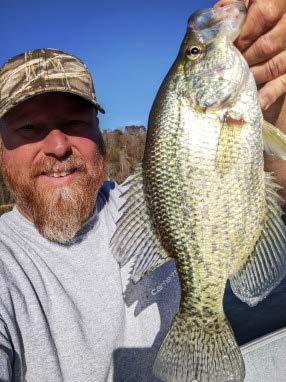
the most common fish to catch during the spring, in the upper end of the lake where the river meets the Stillwater, are white bass, Cherokee bass also known as hybrids, stripers, walleye, small mouth, largemouth and spotted bass and even the occasional crappie and bluegills. The type of water that you fish will kind of dictate what you catch. If you have stronger current through the middle look for eddies or pockets along the shoreline that will have slow or slack water in them. Many fish will stage in those areas.
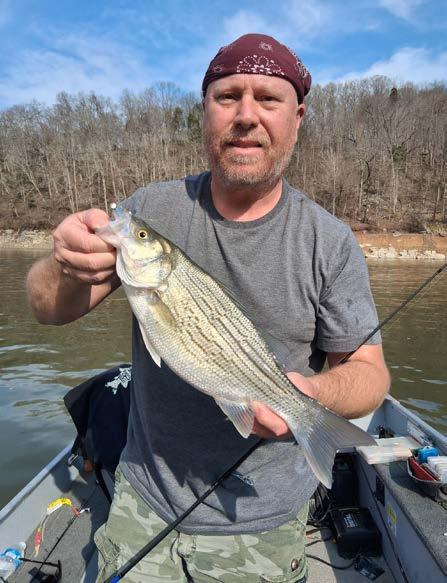
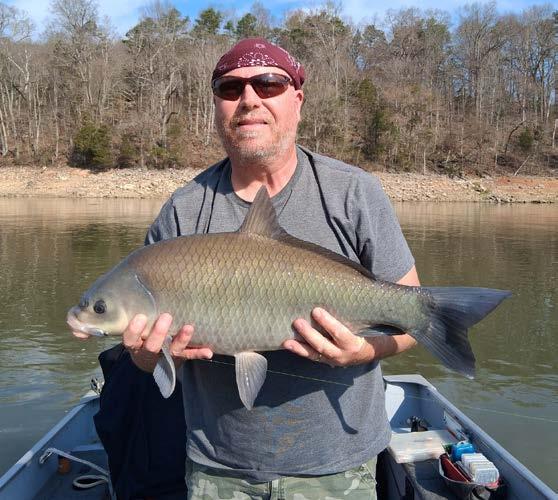
Pockets in the shoreline will hold bass, slow sections on the sides will hold white bass and hybrids, deeper sections will hold walleyes and stripers seem to just Cruise everywhere. Crappie will be on some sort of cover in slower water especially if it’s a little deeper. Points that jot out into the river or Rock piles on the shore are magnets for everything imaginable. I’ve even caught buffa-
areas.
There are several different ways to Target different species on the same technique. Your gear will have to be kind of general. Not bass gear or technique specific rods, but definitely not ultralight or light rods. Walleye gear is kind of the best of both worlds and I’ve talked about that here before, it’s soft enough to handle panfish but you have enough beef to catch larger fish too. A medium light spinning combo with a 2000 series Shimano or Daiwa spinning reel or a 30 series pflueger is about the size that you need to cast six and eight pound test well. I’m a Daiwa guy but this is where most of the time I choose a size 30 pflueger as the arbor/spool of the real is slightly bigger than a 2000 size spinning reel but slightly smaller than a 2500. Put that on a 7 ft medium light rod especially if you’re fishing off the bank, the length will help keep your lure
up off the bottom when you hold your rod tip high and you’re fishing shallow areas. Plus a 7-footer will launch your bait further than a 6 ft rod. If you are in a boat it’s not as important to have a lengthy rod.
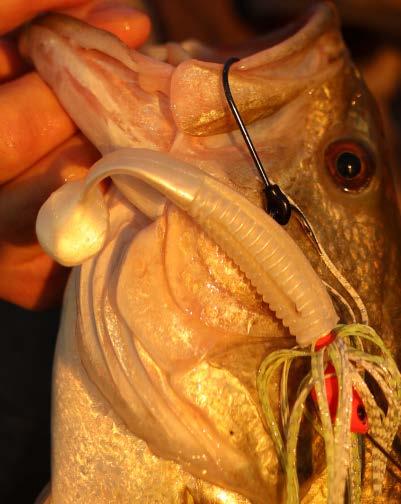
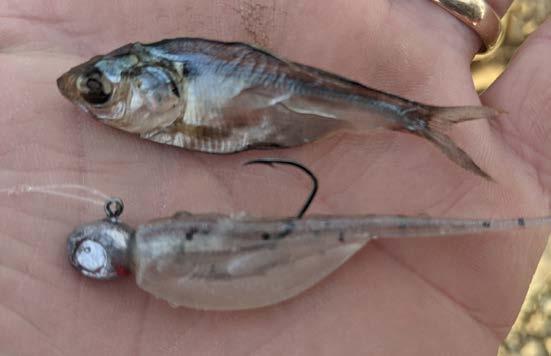
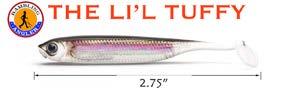
Lures I like are in the two and a half to three inch range. I have caught many large crappie on 2.5 to 3 inch soft plastics and I have also caught my share of stripers on 3 inch paddle tails like Slider Grubs or old school Sassy Shads by Mister Twister. Another great bait and probably my favorite multi-species bait is a Slab Magnet buy Crappie Magnet which is a shad shaped soft plastic minnow lure much like a Bobby Garland except a little bigger and with a flat tail that works much like a beaver tail except it’s thinner and comes to a point. I reel slowly and gently shake my rod tip. A standard curly tail grub is hard to beat also or the LiL Tuffy swimbait. Put these on a 1/8 jig head or 3/16 if the water is a little deeper let’s say over 6 ft and you can pretty much catch anything that swims.
If you are fishing from a boat with an outboard, a good practice is to troll flicker shads upstream and cover water till you find fish, making mental notes as you do. When you float back
down you can vertical jig to pick up some walleyes and to cover quite a bit of water. When you come across productive water you can always start up and make multiple drifts through that area. Some people use a drag chain to slow the drift while some people just drift with the current using their trolling motor to keep the boat in optimum position. I’ve done both, both ways work.
I prefer to drift naturally and to control the boat with a trolling motor; however in a kayak or canoe a drift chain is a wonderful tool, and the chain is definitely a better option for a kayak or canoe than an anchor for safety reasons. If you get an anchor hung in current when fishing from a kayak or a canoe you’re just going to have to cut it loose as this can be dangerous. Remember the water is still cold. And if you’re fishing from a boat of any kind a dry bag with some extra clothes is not a bad idea. When fishing from the bank waders are not a bad idea, sometimes wading out 10 ft from the bank will get you the casting distance that you need to make contact with fish.
Keep it simple. A small box with an assortment of soft plastics and jiheads are all you need though a few hard baits like the flicker shad, minnow/jerkbaits, spoons or inline spinners
are a good bet too. A chest pack is invaluable to the bank and wade fisherman to keep you mobile and efficient and many have great storage options. A backpack is lower efficiency and highly inconvenient. A backpack also tends to allow you to carry too much tackle. You want to spend more time fishing than swapping lures. This window is only open for a few weeks so you are gonna have to check often or you will miss it all together. The prime will be about 6-8 weeks long then it will taper off. Remember these fish are moving up stream so you might catch fish here today and not catch fish here later today. Be mobile.
Have a great spring season.
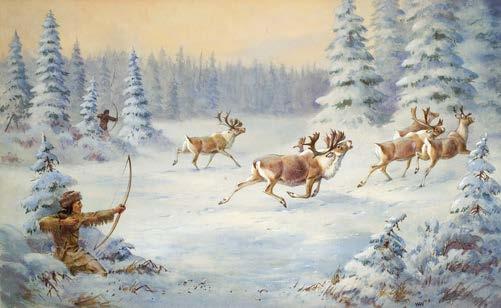
The Monarch rose at the first sign of light on the eastern horizon. The herd would not follow until the sun rose above that horizon and the chill of dawn moved them on the long journey to their wintering grounds. The Monarch had learned that the hunters from the rocks would not attack a single caribou as he had led the herd through the river valley for four seasons.
The young hunters were away chasing Hare and Ptarmigan with their bows as the veterans of the hunting party prepared arrows and throwing spears. The spears were used to dispatch the animal after the shot from the bow had downed them. This helped save the much labor-invested arrows for longer shots.
The party had been waiting several days and nights. The lookout, among the rocks, had served them well for many seasons. Anticipation ran high among the hunters, as the Shaman had seen much blood run from the mouth of their oracle, which meant great success for this hunt and a comfortable winter for them all.
Nukgan was the youngest of the hunting party and the son of the best hunter in the village and his grandfather had been best before him. There was great pressure on Nukgan to help provide much needed meat and furs for the winter. Nukgan remained at the lookout with his father and the other hunters as the sighting of the herd was of great importance and although he decided to stay, he was pleased when one of the young hunters returned with a fresh Hare or ptarmigan for the fire.
Nukgan was the first to spot the lone monarch as it rounded the river bend. The young hunter was unable to hold in the excitement and began to point in the direction of the great beast. Nukgan’s father was quick to scold his son then instructed him to fetch the young hunters in the rocks and return quietly for the hunt to come.
When all was assembled Nukgan was given a lesson in respecting the great Caribou and its spirit. He knew not to point at the animal, but the excitement had clouded his judgment hoped he had not offended the Great Caribou Spirit and the hunt would be as successful as they believed.
The lone Caribou slowly made his way up the river valley leading the same herd that Nukgan’s Grandfather had hunted at his age. The Monarch knew the hunters were hidden in the rocks but offered his herd to them as a gift. The Monarch looked to his rear letting the hunters know his herd was following.
The hunters sat motionless as the Lone Monarch passed below. Even the veteran hunters could not refrain from looking at the great beast even though they knew it was wrong.
Nukgan nudged his father to scold him for looking then they both smiled at this great moment in their lives as they prepared for the coming of the herd. The clicking of many thousand hooves grew louder in the valley and visions of savory stew and warm parkas danced in each man’s mind.
Nukgan hid among the rocks, as the clicking sounds grew louder drowning the prayers of each hunter as they gave thanks for the returning herd and the Great Caribou Spirit. The herd was now visible and would be in range soon. Nukgan glanced in the direction of the Lone Monarch in hopes of a final glimpse. When Nukgan finally spotted the Monarch he was looking directly into his eyes as if to say. “I will see you next winter my friend and enjoy my gift to you and your people once again, a gift to you for sharing and tending to our lands for so long.” Then the Monarch turned and disappeared like a ghost into the rocks.
Nukgan now had a story of his own to tell around the fire and smiled as his father jumped from his hiding spot and charged the herd with bow and spear. Nukgan looked around quickly and was stunned at the number of Caribou before him even more spectacular than he had imagined.
Finally, Nukgan charged focusing on one animal and one spot for his target just as his Father had taught him. The point of the spear found that spot and the caribou fell. It was Nukgan’s first kill and with the spear his grandfather had given him as a gift, leaving the fate of himself and the village in the hands of Nukgan and the others.
Much the same, the Lone Monarch will grow old and weak, and a new leader will emerge around that same bend in the river one day. The same bend they have traveled for so very long leading the herd to Nukgan and his people yet another winter and once again thanks will be given to the Great Spirit of the Caribou.