Ramaz Middle School Parent & Student Guide 2025-26
Arrival & Dismissal Schedule
Simulated School Night
Promoting
Consequences
Middle School (MS) Orientation: Tuesday, September 2
9-11:30 AM
12:30-2:15 PM
1:15-3:00 PM 5th Grade
6th Grade
7th and 8th Grades
FIRST FULL DAY OF SCHOOL - WEDNESDAY, SEPTEMBER 3
Arrival & Dismissal
5th-8th Grades
SIMULATED SCHOOL NIGHT
Simulated School Night will be in person on Tuesday, September 16.
SUPPLIES NEEDED FOR THE SCHOOL YEAR
Please make sure your students bring the following supplies for the upcoming academic year:
Required for 5th grade and recommended for all other grades - One large binder with dividers, folders and looseleaf paper (and optional pencil case) for General and Judaic Studies. Or two separate binders (different colors), one for General Studies and one for Judiac Studies. For 7th Grade - one marble composition notebook in addition to above. Grades 5/7 and 8 will require comp notebook.
Pens, pencils, erasers, highlighters, and two packages of 3x5 index cards.
Water bottle (labeled)
Sturdy backpack
RAMAZ PARENT PORTAL
The Ramaz Parent Portal is a great resource for parents. Here you will find school directories, calendar subscriptions, academic reports, school emails and more. To log into your personalized portal visit www.ramaz.org/parentportal and enter your Ramaz parent login.
MEDICAL FORMS AND MAGNUS HEALTH PORTAL
In accordance with the New York State Health Code, school policy requires all children to submit a Health Examination Report. All students are required to be up to date on their vaccines. It is strongly recommended to have a flu shot. All students must have all medical records completed and uploaded to our electronic medical system, Magnus Health Portal, on the parent portal before the first day of school each year.
Magnus Login Instructions
To access your Magnus account, please go to www.ramaz.org/magnus and enter your Ramaz parent login.
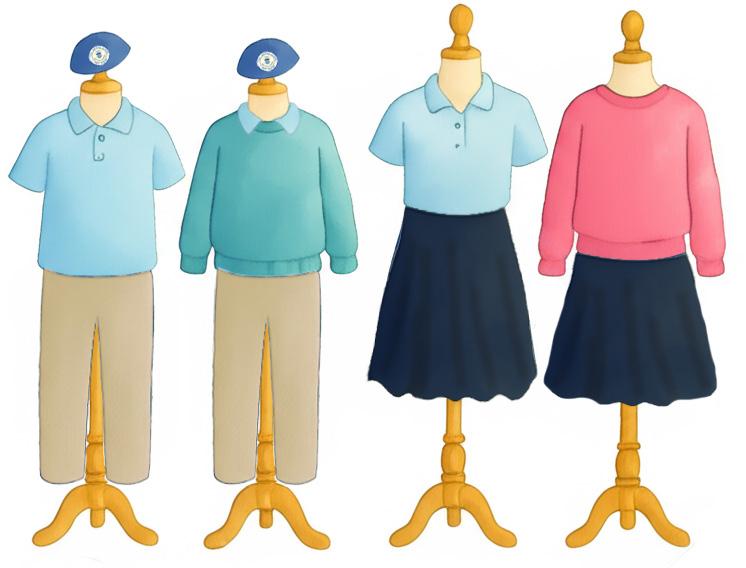
DRESS CODE
We consider our school to be a Makom Kadosh, similar to the sanctuary of a shul or synagogue. This should affect the way we treat the building itself and one another, and should be a guiding principle and reminder for how we should conduct ourselves within our building. Part of that kavod is that we require male students, parents, and visitors to wear a kippah whenever they are at the school. In a building infused by God’s presence, we honor our covenant with God by wearing kippot. Our security desk keeps a supply of kippot for guests if needed. Students are expected to bring their own kippot.
Please keep in mind our dress code when shopping for school clothing:
Monday - Thursday Boys:
Kippot and tzitzit must be worn at all times while in the building. Spare kippot (5-10) must be kept in your child’s locker as they are not given out in the Middle School.
Solid-color trousers
No denim or sweatpants
Solid-color polo shirts with collars, turtlenecks, or button-down shirts (no t-shirts)
Solid-colored sweaters, sweatshirts or vests may be worn over a collared shirt.
For All Students:
Girls:
Dresses, skirts, or jumpers must reach the knee (even if leggings are worn underneath). Denim is permitted, but no slits above the knee.
Solid-color tops without embellishments such as studs, sequins, lace, etc.
No scoop neck or v-neck shirts, no sleeveless or cap sleeves.
Shirts and sweaters may not expose the midriff.
Leggings may be worn under skirts but sweatpants may not.
Overlayers such as sweaters and sweatshirts must be solid. No hoodies or patterns.
Shoes, sneakers or sandals may be worn. No backless shoes, slippers, slides, or crocs due to safety concerns.
Heels must be no higher than two inches.
Caps, hats, or kerchiefs may not be worn in school.
On Rosh Chodesh, Ramazwear and patterned shirts, skirts and overlayers may be worn.
Erev Shabbat (Friday) - Boys and Girls
Students are asked to wear blue or black bottoms and solid white tops in honor of the approach of Shabbat.
Watch for sales at different points of the year. Should you need something in between, please email PC@ramaz.org. RamazWear may be worn on Rosh Chodesh and on designated school spirit days.
RAMAZWEAR
THIS YEAR IN TRANSPORTATION
Busing
Busing will again be provided through the New York City Office of Pupil Transportation for students in grade 5 and 6.
MetroCards
MetroCards are available to eligible students in grades 5-8.
DAILY TEFILLAH
Prayer enhances spiritual connections and highlights our Jewish values as we “set our intention” - stating what we intend to accomplish through our actions - for a full day of learning and positive growth. Coming on time to tefillah and sitting in your assigned seat sets the proper tone for tefillah. Attendance will be taken and please note that a student’s tefillah attendance will be looked at on a monthly basis. A student who is marked late for the third time in a month will receive a detention. If lateness continues, it may result in a parent conference.
Shacharit
Fifth graders will daven together every morning in the innovation lab beginning at 8:15 AM.
Sixth, Seventh, and Eighth graders will daven either in the Ashkenazi minyan in the auditorium, or the Sephardi minyan in the Beit Midrash every morning beginning at 8:15 AM.
There is also an exploratory prayer service open to 6th-8th graders.
Mincha
Grades 6-8 daven mincha in the auditorium Monday through Thursday. Missing mincha for any reason may result in a detention. Grade 5 goes to recess during this time.
ADVISORY/RECESS
Students will see their advisor Mondays through Thursdays in homeroom after second period, for 10 minutes. On Tuesdays, there will be a long advisory for a full period to enable participation in special activities.
Recess will take place during the first or second half of a student’s lunch period.
LUNCH/SNACK
Lunchtime is split into two 20-minute segments: lunch and recess. During recess, students go to the gym or roof, depending on weather, for physical activity.
Fifth and Sixth graders eat lunch during fifth period Monday through Friday.
Seventh and Eighth graders eat lunch during sixth period on Monday through Friday.
The Ramaz Middle School adheres to a six-hour waiting period between eating meat and dairy. Therefore, only pareve single serving snacks (no candy) may be eaten following lunchtime on meat menu days. Please check the Ramaz website to see the daily menu.
HELP ENSURE A SMOOTH, ENJOYABLE LUNCH PERIOD
Follow the “Three P’s:” - Be PATIENT, POLITE, and say PLEASE
Line-up outside the cafeteria until it is time to come in. Please do so politely, without pushing or raising voices.
Wash your hands with soap and water and make HaMotzi (if eating bread) before joining the food service line.
Wait patiently while waiting in line to be served. Be polite when asking our servers for food and remember to show appreciation with a “Please” and “Thank You.”
Keep tables neat, and clean up completely when finished eating.
Bracha Achrona is respectfully recited as a grade. Speak to one of the teachers on lunch duty if going to the restroom or a club meeting.
Laptops and other electronic devices are not permitted in the lunchroom.
PEANUT, TREE NUT AND SESAME AWARENESS
With a number of Middle School students navigating severe, potentially life threatening food allergies, we need your partnership in helping ensure a safe learning environment for all. The Ramaz MS building is peanut, tree nut (including coconut), and sesame aware; including items that contain labels that state “may contain”, “processed with”, and “shared machinery”. Students should bring healthy foods such as fresh fruits or vegetables for snack and other healthier alternatives. Below is a list of other food items that are not permitted:
No Candy
No Gum (gum chewing is not permitted in school)
No Soda, coffee or beverages in glass bottles or containers. No high caffeine drinks (i.e prime/red bull)
No Lollipops or other foods on sticks
Please consult with our school nurse with any questions or concerns.
SHARING SNACKS DURING
SCHOOL
Due to food allergies, students may not share snacks with friends without first showing them to a teacher or advisor. Ramaz Faculty will only allow food items to be shared when the item is in its original, unopened package.
HOMEMADE AND STORE-BOUGHT PRODUCTS
Homemade cakes and other home-baked goods are not permitted in Ramaz. Food items that are being shared must be in their original, unopened packages bearing a Ramazacceptable kashrut symbol.
The list of kosher agencies worldwide has peaked to 1,100 and the number continues to grow. For the sake of uniformity of school standards, please use the following list of kosher agencies as your guide. They are: OU, OK, Khaf K, Star K, Scroll K, Heart K California, HalfMoon K, KSA, CRC-Chicago and COR-Canada. Please refrain from sending into school any package bearing only a K, Triangle K or Tablet K. Please consult with our Assistant Head of Middle School Rabbi Chaim Hagler for any questions related to kashrut.
View the KJ listing of acceptable local kosher establishments here.
When hosting any Ramaz student in one’s home, or a gathering of students in a restaurant or establishment, Ramaz families are expected to adhere to the guidelines above. Commercially prepared foods from establishments not on the CKJ list should not be ordered in, nor those establishments visited.
CELL PHONES/SMART PHONES/SMART WATCHES
Students who have a smart phone, smart watch, or regular cell phone they anticipate bringing to school are expected to purchase a Yondr pouch prior to the start of the academic year.
Upon entering the school building each morning, students will be required to insert their phones or watches into this individual magnet-locked pouch, where they will remain throughout the school day. Students who do not have Yondr pouches will not be permitted to bring a phone or smart watch to school. If your child needs to reach you during the day, or if you need to get in touch with your child, school phones are always available in the main office. Parents, you also may email us at mspinknotes@ramaz.org if you need to get in touch with you child during the school day. Students whose phone or smart watch is not in their pouch during the school day will be asked to turn it into the main office and a parent must come to retrieve it. There will be disciplinary consequences for students who consistently do not place their phone or smart watch in the pouch or for students who tamper with their pouch.
LOCKERS & LOCKER AREAS - A STUDENT’S “HOME BASE”
A student’s locker is essentially “home base” for the duration of the school year and is the place to keep “school stuff.” This is why it’s important to keep the following in mind:
Your locker combination is meant for you alone. It is a way of keeping your belongings safe. Do not share your locker combination with anybody.
After you use your locker, make sure it is closed. Open lockers present unnecessary temptations. Do not jam the lock to keep the locker open. Coats and jackets should be hung neatly on the coat racks in the lobby or hooks in the hallway. Please do not leave them on the floor. Keep all food in sealed packages or containers
By all means, decorate your locker! When decorating your locker, however, please make sure all pictures are appropriate and respectful. We ask that students refrain from public displays of political advocacy.
Before vacations, clean it out thoroughly.
At the end of the school year all decorations must be removed. The locker belongs to the school and therefore should be treated properly.
WHERE IS MY LOCKER?
Fifth-grade lockers are located on the second floor, sixth-grade lockers are on the third floor, seventh-grade lockers are on the fourth floor, and eighth-grade lockers are on the fifth floor. If you have trouble with your combination, please report it to the Second Floor Office.
ELEVATORS
Students may use the elevators before the school day begins and after the school day ends. They may not be used during the school day, with the following exceptions:
If you have a medical pass from the nurse (a doctor’s note with diagnosis, restrictions and limitations must be handed in to the health office) you will be added to the elevator list.
During lunch, if you are going to a club or seeing a teacher for a meeting and you have food with you, you may use the elevator.
If you are returning from gym class or gym recess.
PUNCTUALITY MATTERS
Being punctual shows that you respect our school, your teachers, and your classmates. When you are late to school or class, it disrupts the learning process for many other people, and yourself. If you need to miss a class because of a specific student activity, responsibility, or guidance appointment, you must get permission in advance. Remember: you are responsible for making up any missed work. If you are consistently late to school or class during a semester, you may receive detention before, during or after the school day or be docked from a club or team.
Students of all grades should be in school promptly at 8:10 AM. If you arrive after 12 noon even with a note, a member of the MS leadership team has the discretion to decide if you will be admitted to school for the day.
ASSESSMENTS AND TESTS
Part of learning involves demonstrating what you know, how you think, and how you solve problems. You will have tests, projects (long and short-term, individual and group), oral presentations, research papers, and demonstrations (experiments, digital presentations, fairs, and artwork). There are a variety of different kinds of tests as well: in-class (the way you are used to most of the time), open book, take-home, double period, and untimed. The more variety, the better your teachers understand your strengths and weaknesses.
Guidelines
All teachers submit a test date request to Rabbi Chaim Hagler, Assistant Head of Middle School. We are very careful to keep track so that the test/project/research paper is manageable for you. Sometimes, there are exceptions to these guidelines, but, if you believe they aren’t being consistently followed, speak to your teacher first. If the problem continues, speak with your advisor or Rabbi Hagler.
Frequency of Quizzes and Tests
Grade 5: 1 test and 2 quizzes a week 1st semester and 2 tests and 1 quiz a week for the 2nd semester are permitted.
Grade 6: 2 tests and 1 quiz per week are permitted.
Grade 7: 2 tests and 1 quiz per week are permitted.
Grade 8: 2 tests and 1 quiz per week are permitted.
REPORT CARDS
Report cards help you and your parents know how you are progressing as a student. You receive report cards twice a year, once in the Fall and once in the Spring. Keep in mind the old saying that teachers do not give you grades - you earn them. Your report card tells you to continue doing what you did well, and work to improve where needed. Ask for help if you need it.
There are grades at the top of the report cards that describe aspects of character and work habits in each subject. Below them are the academic grades, which give you details about skills in that subject. The comments your teachers write are important to read. They may give you details about many things, including your work in class, how you rise to challenges, your study skills, and your behavior.
SCHOOL ENVIRONMENT
The Ramaz Middle School is committed to fostering a positive, joyful environment conducive to learning. Therefore, students are expected to behave appropriately at all times. This includes a prohibition from engaging in any of the following behaviors:
Fighting, bullying, cyber-bullying, physical confrontations, verbal abuse, harassment, inappropriate sexual behavior, damaging property, or putting yourself or others in danger. The result of your involvement in any of these actions will have serious consequences.
Please note that all physical altercations will result in an automatic suspension from school. You are expected to represent Ramaz’s values outside of school as well.
Students are expected to accord proper respect to their teachers and fellow students and to treat all individuals with courtesy and dignity.
If a student should feel harassed or threatened either by another student or an adult, the student should report the incident to a member of the MS leadership team or to Dr. Berliner, an advisor or any other trusted adult. The leadership team member or faculty member will work sensitively and confidentially with the student to support the student and to determine an appropriate response.
No one may bring to school, school events, or trips any gun/toy gun, knives of any sort, laser pointers, laser pens, or any other item that may be potentially harmful to you or to someone else.
If a student brings such items listed above, they will be confiscated and the student will be subject to significant consequences.
Slime and toys are not permitted.
Students on athletic teams are required to model menschlichkeit and fineness of character both inside and outside of school. Any student who neglects to uphold Ramaz values may be suspended or removed from our teams.
Students are not permitted to buy and sell food, toys or other items during school hours.
Students are asked to refrain from political advocacy in public spaces and are asked not to decorate their lockers with political stickers or slogans.
GUIDING PRINCIPLES FOR CONDUCT
The Ramaz Middle School strives to engender a spirit of trust, honesty and community. We expect students to interact with one another and teachers in a positive manner and comply mindfully and respectfully with our school’s expectations. As stated above, if a student does not attain this goal, we converse privately with the student and adopt a compassionate and fair approach. If the misbehavior warrants it, we will notify the student’s parents and Advisor. If the situation is of greater magnitude or the student repeats previously unacceptable actions, we may follow up with stricter consequences. We try to administer reasonable consequences that are commensurate with the infraction and view them as an opportunity for constructive learning.
Ultimately, we sincerely hope that an initial consequence will elicit from the student a response that will not only enhance growth, but also increase self-reflection.
Respect for others . When we show respect for others; are careful with words, gestures, facial expressions, laughter, and volume to make sure we never “silence” another person or purposely embarrass or shame him or her; avoid talking down to people or insulting them; are sensitive to people’s boundaries and privacy and do not touch them inappropriately or expose them to inappropriate material, we: are sensitive to ideas, beliefs and ways of doing things that may be different from our own; accept, support, and stand up for others’ right to be different, to be their own persons; listen to what others say, look at them while they talk, and don’t speak until they are finished.
Respect for oneself . When we respect ourselves, we: behave in ways that allow us to be proud of how we act; behave as we wish others to behave towards us; make every effort to use good judgment, to think before we act, and to imagine the consequences of our choices.
Respect for the dignity of each individual . When we respect the dignity of each person, we: let every person in the building know they matter and treat them civilly and kindly; consider both the individual person and the needs of the group; understand the difference between fair and equal. Each person’s individual needs must be considered. Since each person is unique, situations demand treatment that needs to be fair, and therefore will not always be equal.
Responsibility . When we act in a responsible manner, we: are in control of our own actions. We understand, foresee, and weigh the consequences of our behavior to ourselves, other individuals, the community, and to all the environments of which we are a part; both “own” and “own up to” our behaviors and do what is necessary and proper to repair any damage we do: are careful not to repeat behavior which we already understand to be wrong or has harmful consequences;
use good judgment about the choices we make; take responsibility for our own work and learning, and make sure that our individual efforts are solely our own;
respect the privacy and ownership of others’ or the community’s possessions; and act kindly, decently, and respectfully both inside and outside the building, to all people with whom we come in contact.
The Ramaz School is part of a larger community. We have the responsibility and obligation to behave appropriately when we are outside school, whether on our own or as part of a Ramaz-sponsored activity. We should, therefore, be aware of what we say, what we do, who is near us, and that we are not the only ones on the street. Give others space, wait and step aside for those who need it (e.g., the elderly, small children, those carrying or wheeling something or someone), and help out where it is appropriate.
Student Conduct Accountability
Some examples of behaviors that will justify sanctions from the School include, but are not limited to:
Disrespectful or disruptive behavior
Physical or verbal intimidation of others
Cyberbullying
Cheating, plagiarism or other violations of the Honor Code
Defacing school property
Repeated lateness to school or classes
“Cutting” a class
The use of alcohol, tobacco, or illegal drugs on or off school premises (This includes vaping).
To assist us in creating greater student accountability, students who disrupt the classroom or Middle School learning environment will experience the following consequences:
First Infraction
The student will be given a formal warning from a faculty member or member of the MS leadership team.
The student will be asked to report to the Middle School Office where s/he will be asked to write a brief description of what happened (from the student’s and teacher’s point of view) in a “Conduct Report” and to suggest what steps ought to be taken in the event of a future occurrence. The Advisor and/or Grade Coordinator will be notified.
Second Infraction
The student will register the incident in the “Conduct Report.” The student will have a discussion with the Advisor and/or Grade Coordinator, and a member of the MS leadership team. The parents will be notified of the incident.
Third Infraction
The student will register the incident in the “Conduct Report. “The student will have a discussion with the advisor and a member of the leadership team. A conference with the student, parent(s), advisor, and/or grade coordinator will take place with an appropriate member of our MS leadership team. A letter summing up the salient aspects of the discussion will be placed in the student’s file.
Fourth Infraction
All of the aforementioned will occur. The student may be suspended from school for two days.
Fifth Infraction
All of the aforementioned will occur. A discussion with the appropriate parties will take place to determine the viability of the student’s continuing as a member of the Ramaz community. The above steps are meant to serve as guidelines. Should a situation arise that may be time-sensitive, the process may be abridged in the interest of the community and the welfare of the student.
Ramaz, in all of its divisions, reserves the right to counsel out any student who does not meet the academic or behavioral standards of the School. Such a decision, while regrettable, will only be reached after a comprehensive examination of the issues and a belief that withdrawal from the School is in the best interests of the child.
Any member of the Ramaz leadership team reserves the right to advance these consequences based on the behavior.
Probation
The School has two forms of probation: academic and social. Students who fail two courses, receive below average evaluations in more than one course, or who have consistent problems submitting work may be placed on “academic probation.” Students who pass their courses, but consistently maintain a performance that is below grade level may also be placed on probation.
“Social Probation” is applied to students unable to respect the School’s guidelines for conduct. Persistent disruptive behavior in class, reluctance to treat others with respect, cheating, lying, and stealing may all be grounds for “social probation.”
(Probation Cont’d)
Ultimately, we have full confidence in our students’ ability and desire to conduct themselves in a manner consistent with our standards. However, we will maintain those standards when a student reaches his or her limit. Probation is intended to act as a support for the very few students who warrant it and as a means by which a potentially harmful situation - to both the student and the greater community - can be transformed into a constructive, positive experience. Students failing to meet these criteria over an extended period of time or because of a repeated placement on probationary status may, in terms of negative behavior or substandard academic performance, be asked to withdraw from the School.
SOCIAL-EMOTIONAL
LEARNING
(SEL)
Our Advisory Program
A key part of our Social-Emotional Learning program is Advisory, a weekly program designed to help our students strengthen relationships and navigate the challenges they often face throughout the school year. Read more here.
The MS Advisory Curriculum is built on thoughtfully crafted lessons developed by our dedicated Ramaz staff, designed to nurture social-emotional growth while connecting to our school’s core Judaic values and mission: A commitment to menschlichkeit, reflecting fineness of character, respect for others, integrity, and the centrality of chesed in all its manifestations.
To enrich and extend these values, we also incorporate Win at Social, a nationally recognized program created by The Social Institute. The Social Institutes peer-topeer platform equips students with the tools to navigate the complexities of their social world, both online and offline, with high character and confidence. Created with students and grounded in positivity, the lessons highlight real-life scenarios and trending topics that resonate with today’s learners.
Through this powerful combination of values-based learning and modern, studentdriven content, the MS Advisory Curriculum supports the development of thoughtful, kind, and capable young individuals—anchored in tradition and prepared for the challenges of today.
GUIDANCE: SAFEGUARDING THE EMOTIONAL HEALTH OF OUR STUDENTS
During Middle School years, your child changes in so many domains - intellectually curiosity and abstract reasoning skills expand, physically, the body matures and emotionally, peer relationships grow deeper and more complex. It is a transformative time. Consistent with its mission of cultivating self-esteem within a warm and nurturing environment and inculcating a sense of responsibility for others, Ramaz views supporting students’ emotional and social development and inclusivity as paramount. We help your child gain confidence, independence and responsibility. Please check out our online library of parent resources.
The Director of Guidance provides counseling services and helps students manage emotional and learning challenges which affect academic progress. Students are encouraged to drop by to discuss what’s on their minds.
We believe in a collaborative, team approach and encourage you to partner with us; if appropriate, the Director of Guidance will make referrals to previously vetted outside learning specialists and mental health professionals with whom (assuming parents’ authorization) regular contact is maintained throughout the school year. If a parent is concerned about a child’s academic progress, we advise meeting with the Director of Guidance to discuss the possibility of interventions such as a psychoeducational evaluation.
The Director of Guidance is also available for crisis intervention. Specific protocols are in place for psychiatric acute situations:
If a faculty member, parent, or student suspects or witnesses that another student is at risk for self-harm, is endangering others in the school community, or is at risk due to the behavior of another individual, this information should be reported immediately to the Director of Guidance and/or a member of our Middle School leadership team.
Our social emotional and guidance team will gather information from appropriate members of school faculty and, if the team deems it warranted, will converse with the student and parents, or an appropriate child welfare agency when necessary.
A social emotional and/or guidance team member will notify parents and assess the student for risk to self and/or others. In some circumstances, the school may mandate an outside psychiatric evaluation within 24 hours of notification. Permission to return to school may be dependent upon participating in such an assessment and receiving clearance. In some cases, the school may also mandate that the student receive ongoing external therapeutic support. If so, the school would further request that members of our social emotional team be permitted to maintain ongoing communication with the external professional during the school year to help best support the student in school.
HONORABLE USE POLICY FOR TECHNOLOGY (HUP)
The Ramaz School seeks to provide a safe, robust learning environment for the use of network resources through which all may learn and expand their intellectual curiosity, guided by the principles of menschlichkeit, including integrity and respect for others.
Our school’s computer network provides access to a variety of resources such as: (1) educational software; (2) the online library catalog; (3) the Internet; (4) the Google Application Suite and; (5) electronic mail accounts. The computer network supports legitimate pursuits, research, and telecommunications. It is an important tool to enhance classroom and community-wide teaching and learning. Members of our School community – students, faculty, staff, and selected guests – have access to these network’s resources. Please note that Ramaz school email is considered school property and can be read at any time by the School.
Once you have reviewed this section with your child, please sign and submit the Honorable Use Policy for Technology no later than the first week of school .
Students are expected to:
understand that they represent Ramaz values even when posting information on the web outside of school hours
use computers only for academic purposes approved by teachers, librarians or administration
keep password and other identifying information such as address and phone number private access only appropriate websites
use appropriate, polite and respectful language in all online communications that respects users’ race, religion, gender, age, ethnicity give copyright credits when copying text or images from a website inform a faculty member if they become aware of any inappropriate communication print multiple copies only with permission sign the headphones out before use and returning them after use
Students may not:
Use AI technology without expressed permission from their teachers.
harass or bully anyone through using the computer, Internet, social networking sites, email, or cell/smartphone
try to access other students’ or teachers’ files
touch or use the teacher’s classroom computer
log on as another student or impersonate another person online
record or photograph faculty, staff or other students without their express permission
post or send inappropriate pictures of themselves or others online or by using any electronic devices
engage in online gambling or sexual activities
vandalize a computer or deliberately attempt to harm or destroy hardware or data of another user
eat or drink near computers
unplug an existing Internet connection from a school computer in order to use the cable or unplug any keyboard, mouse or other cables or wires that are attached to a school computer without the permission from a teacher, librarian or member of the MS leadership team.
PERSONAL SCHOOL LOANED COMPUTER AND PHONE DEVICES
(For use during school hours and in the classroom)
The School views student use of any computer/phone device during class to be a privilege and not a right. Its use is permitted under the following conditions:
It is a teacher’s prerogative to allow or not to allow a student’s use of an electronic device.
Students must obtain permission from the teacher for each instance of accessing the Internet during class
Students must participate in training sessions and other relevant sessions in order to use electronic devices during school hours and in the classroom.
During school hours students may not: play computer games or watch television or online movies in the school building, even in the library
take computer photos or videos or share photos, videos or music without a teacher’s express permission to download, and/or share inappropriate apps on any electronic device.
ACADEMIC INTEGRITY
The Ramaz School seeks to prepare students to respect and acknowledge the ideas, creativity, and scholarship that came before them, and in doing so, provide leadership in a world that is changing at a rapid pace. Our Academic Honor Code defines the common vision and standards we have set for ourselves and our students and helps us teach our students to be principled and to act with honesty, integrity, and responsibility.
Our Academic Honor Code is based on a straightforward premise:
Each student takes pride in their achievements. There is nothing more satisfying than putting your best effort into a project knowing that all of your ideas were a result of your own hard work. Being a student in our middle school is demanding. We also know that we are cultivating an environment based on the integrity of each individual. Therefore, we have high standards when it comes to academic integrity. All forms of cheating are prohibited. There will be serious consequences for instances of cheating or plagiarism.
It is our expectation that every member of our Ramaz community must strive to be honest in all matters. Plagiarism, cheating on a quiz or test, copying someone else’s homework, or submitting any AI-generated work, are dishonest acts. And if and when we make mistakes, we need to accept responsibility which, in turn, rebuilds honesty.
Our Expectations
All work handed in - whether a quiz, test or homework, must be your own. You should never make your work available to someone else.
If you write a paper and use someone else’s words or ideas (whether from the Internet or from a book) give him or her proper credit by citing your sources completely. Not doing so is considered plagiarism. Using AI in any form without expressed permission of a teacher is also considered plagiarism.
If you work in a group on a project, you must do your fair share instead of expecting someone else to do your work. If you are ever in a situation where a group project does not seem to be working out fairly and equitably, speak to your teacher or your advisor.
Once you have reviewed this section with your child, please sign and submit the Ramaz Honor Code no later than the first week of school .
Wednesday, November 19, Early Dismissal, Evening Conferences
Monday, March 9, No Sessions
The Parents Council fosters the “student and parent experience” in all four divisions of our school. Parent representatives act as liaisons between parents and leadership on school programming, help celebrate the Jewish holidays that punctuate our school year and raise funds for important events. Whether gathering volunteers to bake for teacher appreciation gifts; displaying school spirit through branded RamazWear; creating enjoyable Chol HaMoed activities for LS and MS students; or organizing social gatherings for parents to connect, Ramaz Parents Council continues to explore new avenues to foster kinship and menschlichkeit. Every Ramaz parent is encouraged to become an active member of Parents Council. Want to get involved? Email any one of this year’s leaders:
Gabby Fridman, President Gabriella.Fridman@gmail.com PC@Ramaz.org
Meytal Gamlieli, Vice President MeytalAlbo@gmail.com
SCHOOL RESOURCES
MIDDLE SCHOOL LEADERSHIP TEAM
Ruth Gafni Head of N-8 gafnir@ramaz.org
Rabbi Chaim Hagler
Assistant Head of Middle School haglerc@ramaz.org
Kim Gantz Wexler
Teacher & Senior Advisor 5th-8th Grades
New Faculty Advisor wexlerk@ramaz.org
Jennifer Bernstein Head of Middle School bernsteinj@ramaz.org
For appointments with Ms. Bernstein, email
Jeanette Salem Botnick at salemj@ramaz.org
Dr. Atara Berliner Director of Guidance atarab@ramaz.org x8047
Alison Esses Director of Social-Emotional Learning and Coordinator of Learning Center essesa@ramaz.org
(212) 774-8040
Jeanette Salem Botnick Office Manager salemj@ramaz.org x6167
Judith Rose, RN Ramaz Health Care Coordinator Middle School Nurse rosej@ramaz.org x8046
Andy Greenspan Innovation Lab greenspana@ramaz.org
Smadar Hadas Hebrew and Science hadass@ramaz.org
Avigail Hirschfield Learning Center hirschfielda@ramaz.org
Elad Itzhari Hebrew itzharie@ramaz.org
Brian Kaplan Physical Education kaplanb@ramaz.org
Amanda Kramer English and Math krameram@ramaz.org
Nachum Lerner Learning Center lernern@ramaz.org
Rabbi Yisroel Levy Judaic Studies levyyi@ramaz.org
Ariela Maryles Learning Center marylesa@ramaz.org
Adella Myers History/Learning Center myersa@ramaz.org
Galit Naftali Judaic Studies naftalig@ramaz.org
Orit Nawrocki
Hebrew - Head of Department nawrockio@ramaz.org
Scott Newman Math - Head of Department newmans@ramaz.org
Ellen Phillips Data Manager, N-8 and Registrar phillipse@ramaz.org
Sylvia Probst Math and Learning Center probsts@ramaz.org
Beth Reisman Art reismanb@ramaz.org
Hadassah Rosenkrantz Music rosenkrantzh@ramaz.org
Tzipora Ross Judaic Studies - Head of Department rosst@ramaz.org
Ruth Schwarz Judaic Studies schwarzr@ramaz.org
Jacqueline Segal* Innovation Lab segalj@ramaz.org
Galit Silver Hebrew Silverg@ramaz.org
Elizabeth Sollors English - Head of Department sollorse@ramaz.org
Rabbi Pesach Sommer Judaic Studies sommerp@ramaz.org
Tamar Teller Judaic Studies tellert@ramaz.org
Emily Turtil Learning Center turtile@ramaz.org
Amy Untch English and Math untcha@ramaz.org
Rayna Weinstein Math weinsteinr@ramaz.org
Elizabeth Weissman Science - Head of Department weissmane@ramaz.org
Elizabeth White Learning Center whitee@ramaz.org
Kim Gantz Wexler Senior Advisor 5th-8th Grades Public Speaking, Exploratory Tefillah wexlerk@ramaz.org
TIPS TO PREPARE FOR A POSITIVE START TO THE SCHOOL YEAR
We recognize that children experience a range of emotions surrounding the start of a new school year. This can evoke excitement and relief as well as stress and uncertainty. To help with your child’s transition, here are some tips and strategies:
Keep a positive mindset. Children look to their parents for cues on how to respond to new or stressful situations. Please remember that you set the tone for your children. Modeling calm, confident behavior about returning to school and using cheerful, positive messages will go a long way.
Be open and available. Create an environment where your children can ask questions that matter to them. Validate feelings, whatever they may be, and help identify and label emotions, whether “nervous,” “excited,” or “scared.” Explain to your child that whatever they might be feeling is normal, and give them a safe space to express apprehension and ask for help when needed.
Prepare your child for what to expect. Give your child concrete information, without being overwhelming. Tell them about the different exciting experiences they will have, the kids they will meet, and who will be there to pick him/her up at the end of the day. Talk about the things they can look forward to as well as what may look different. For example, some old friends will be coming to school, while others may be in a new class or not returning.
Return to routines. Help your child return to school routines, such as regular bedtimes and meals. When children have predictable daily routines, it reinforces a feeling of safety and gives them a sense of control over their environment. Here are two useful articles to help think about sleep and routines.
Create a daily backpack list. Resuming school requires our Middle Schoolers to remember to pack a lot of things, particularly if they plan to participate in afterschool programs or sports. Creating a daily backpack checklist of the “essentials” will help ease early morning preparation for the school day.
ADDITIONAL RESOURCES
10 Ways to Help Your Child Succeed in Middle School
Back To School Anxiety: How To Help Kids Manage Worries And Have A Successful Start To The School Year