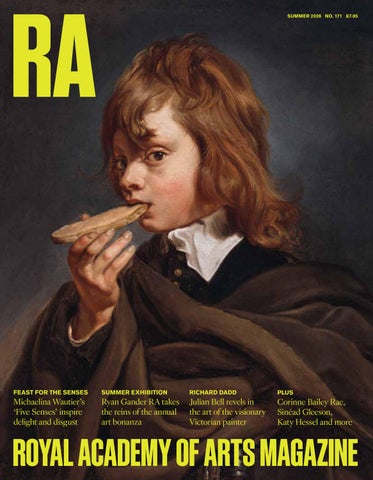
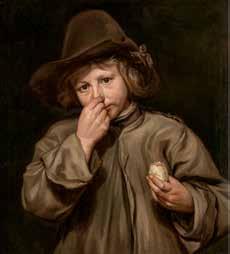
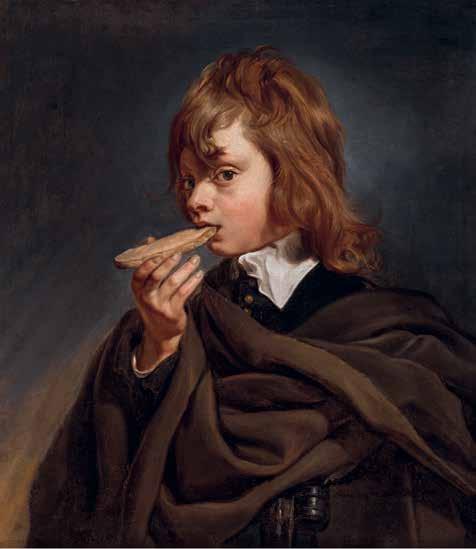
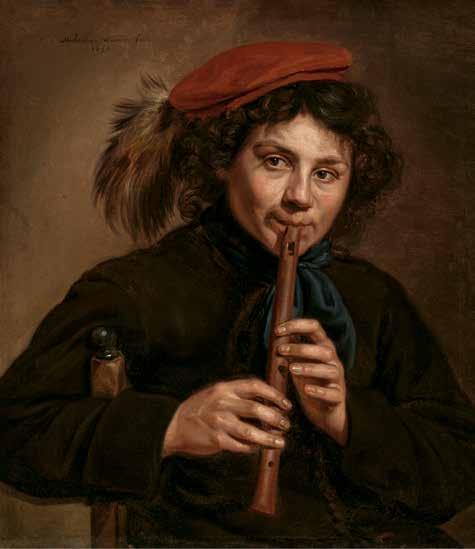
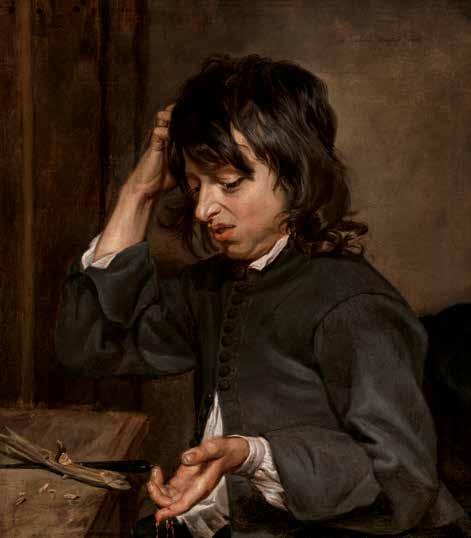
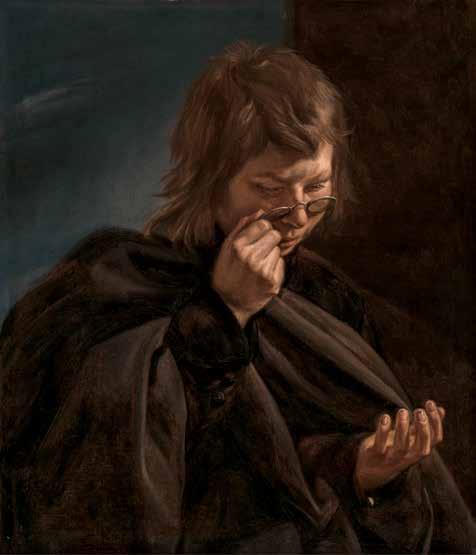
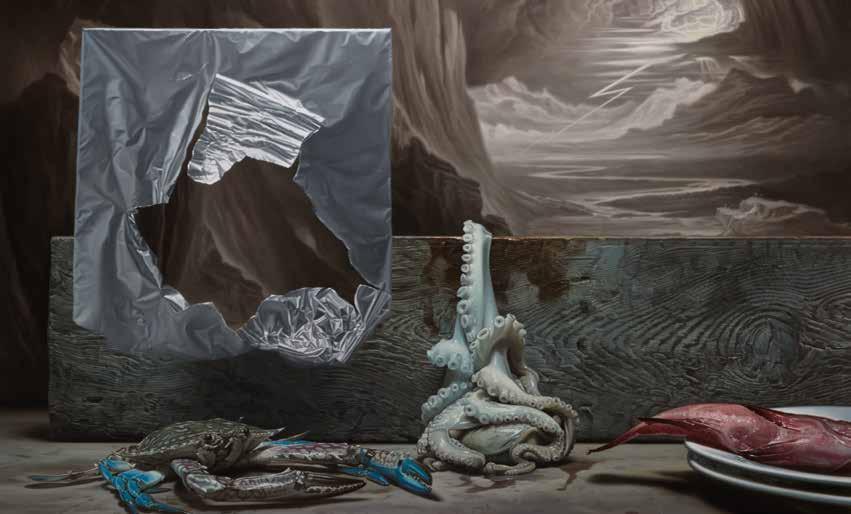
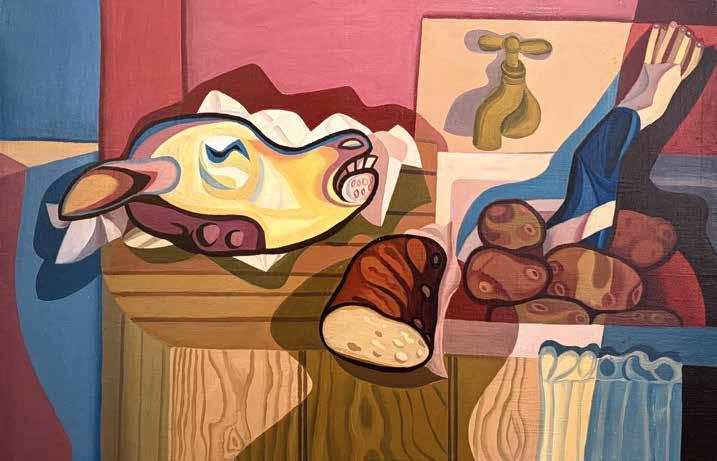
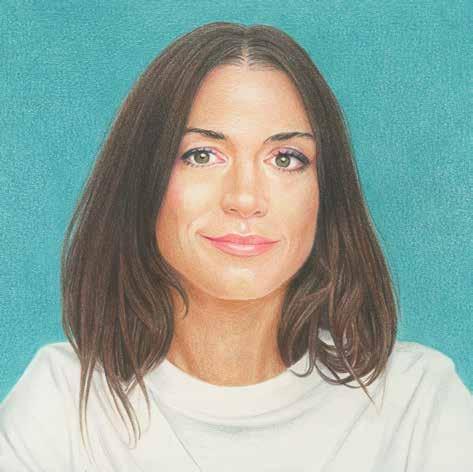
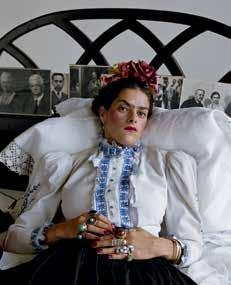
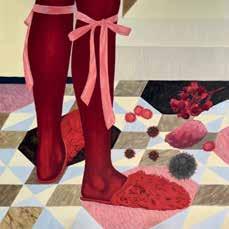
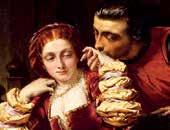
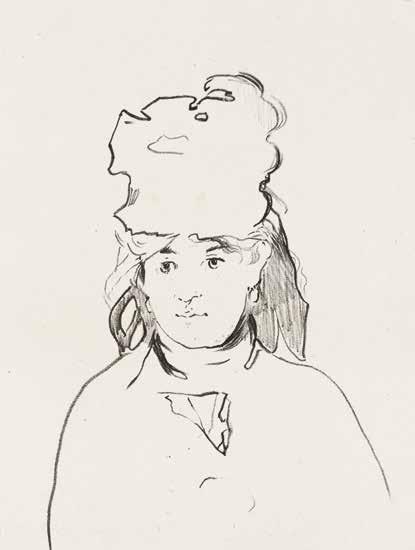
Michaelina Wautier’s ‘Five Senses’ inspire delight and disgust
SUMMER EXHIBITION
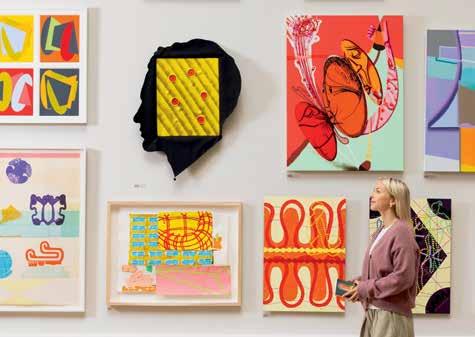
Ryan Gander RA takes the reins of the annual art bonanza
RICHARD DADD
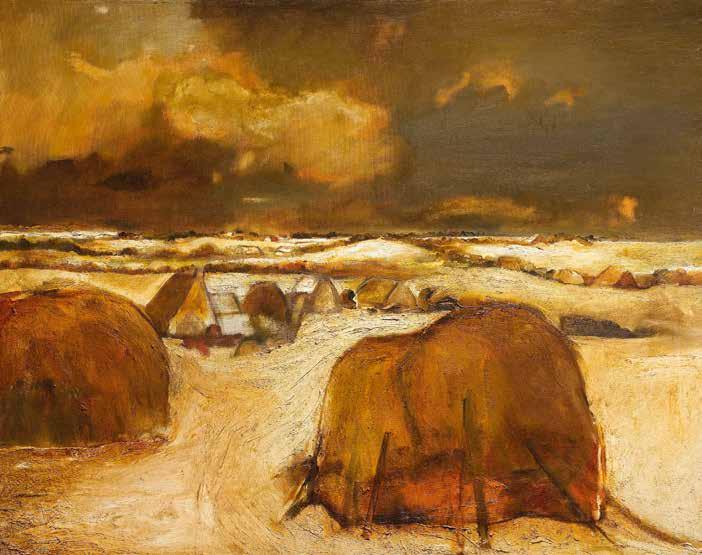
Julian Bell revels in the art of the visionary Victorian painter
PLUS Corinne Bailey Rae, Sinéad Gleeson, Katy Hessel and more
ROYAL ACADEMY OF ARTS MAGAZINE
RA Magazine Summer 2026
6 Introducing the issue
11 What’s hot
The pick of the season’s gifts from the RA Shop
13 Showcase
Ten must-know stories from here and abroad
18 Exhibitions diary
The shows to see at the RA this summer, and a look ahead to autumn
26 Perspective Sinéad Gleeson is spellbound by an Ana Mendieta self-portrait
29 RA Schools Show 2026
Four graduating artists reflect on notions of home
36 Opinion
Anne Desmet RA on the value of thinking through making
39 When art meets gardening Cedric Morris’s Benton End is the quintessential artist’s garden, says gardener Matt Collins
23 Portrait of an artist
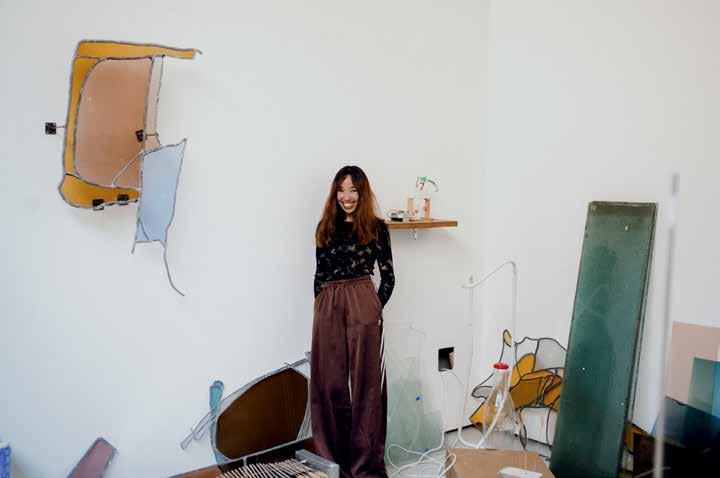
Ceramic artist Ranti Bam surrenders to her kiln goddess
43 Young artists at the RA Hettie Judah on what artists have learned from looking at children’s art
Ryan Gander’s Summer Exhibition
Always enticed by a challenge, the artist in charge of this year’s summer show isn’t afraid to upend tradition, as Richard Godwin discovers on visiting his Suffolk studio
Richard Dadd
Beyond Bedlam
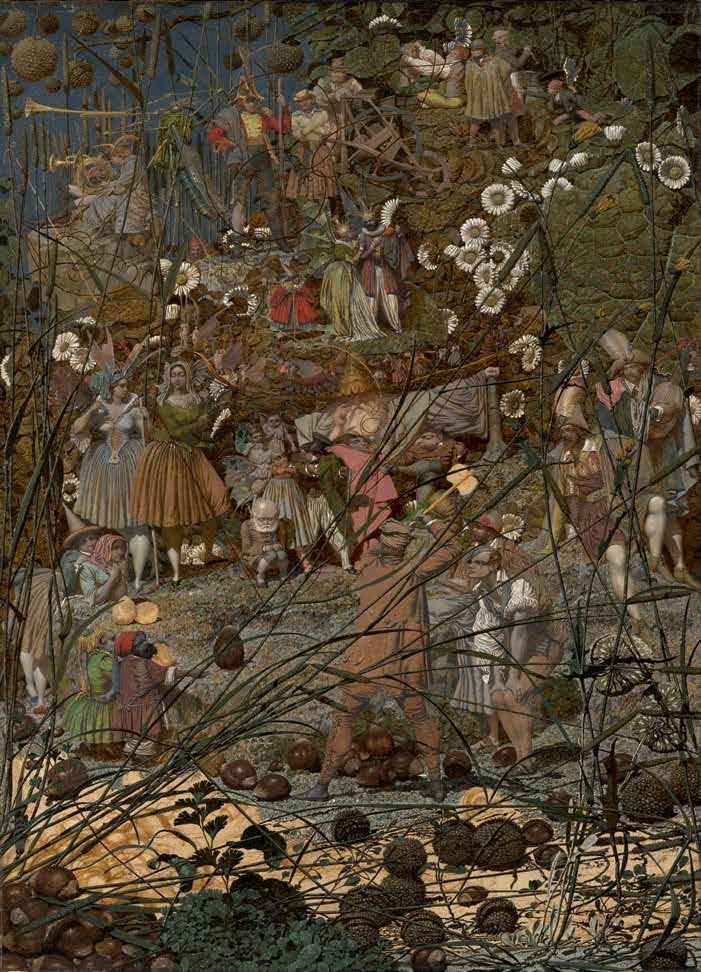
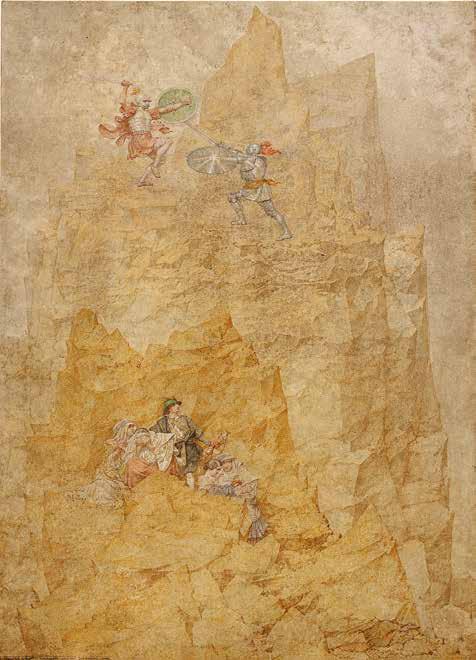
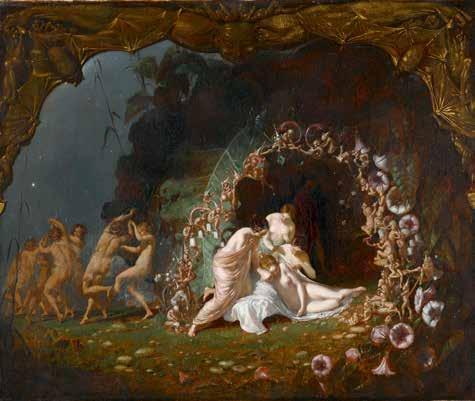
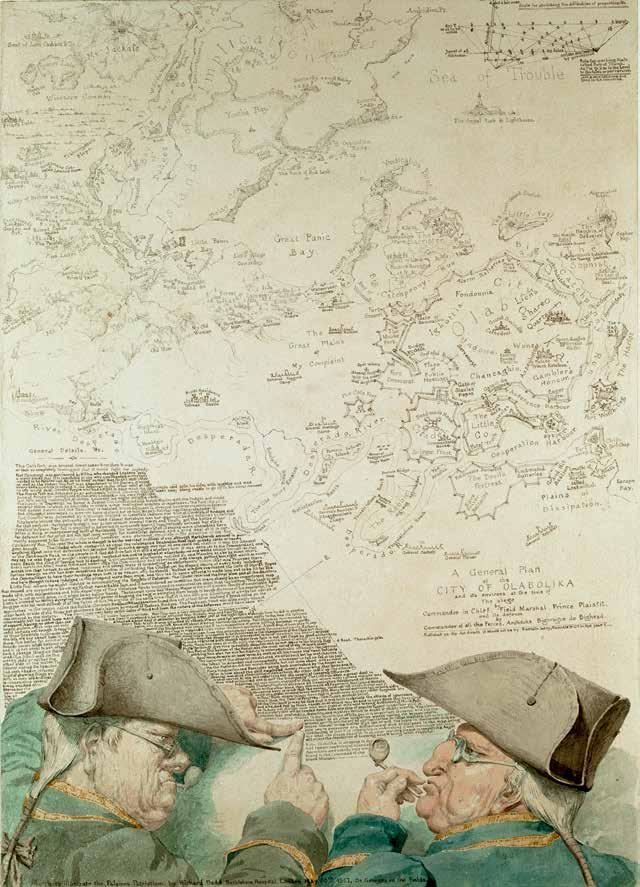
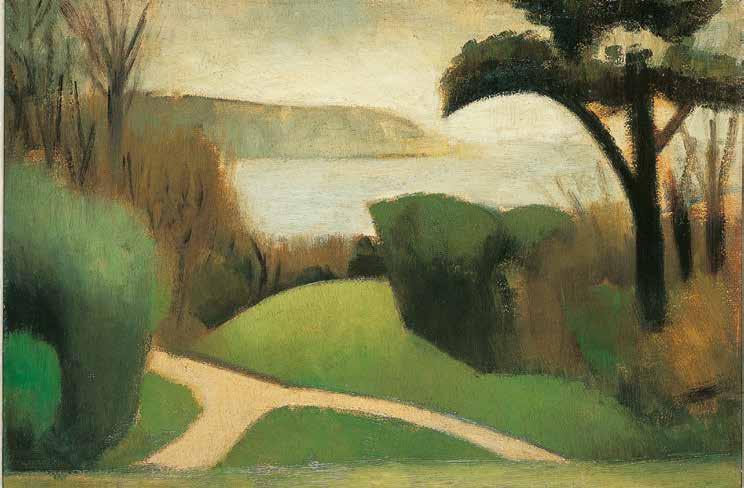
Julian Bell rejoices in the fantastical art of the Victorian painter, much of it made while a patient at Bethlem and Broadmoor hospitals, as a show of his work arrives at the RA
45 State of the arts How the Summer Exhibition remains financially afloat
49 Artist in residence Where Anthony Eyton RA’s house ends and studio begins is hard to tell, says Lucy Davies Shows
62 Summer Exhibition Laura Jackson and Sadie Clayton on the thrill of buying and selling at the summer show
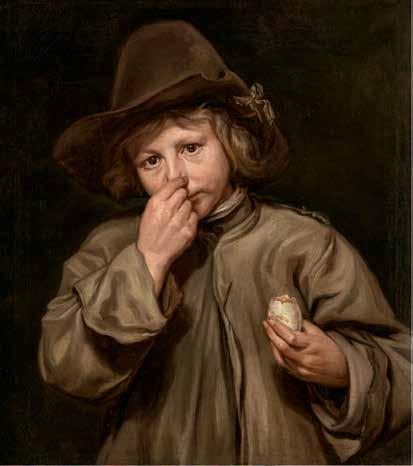
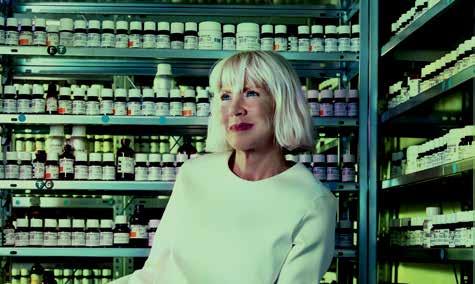
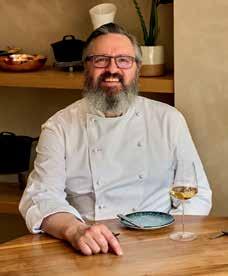
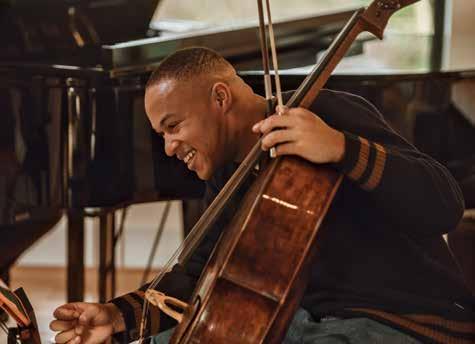
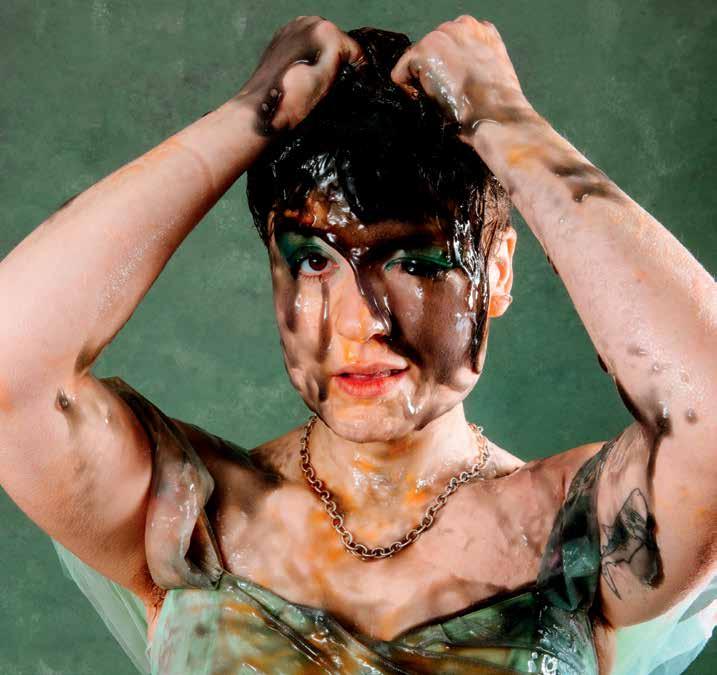
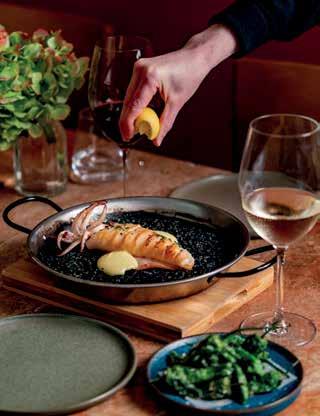
70 Sensory extremes Inspired by Michaelina Wautier’s series ‘The Five Senses’, five experts reveal their most visceral sensory experiences
Agenda
83 Cultural curator What’s on art historian and author Katy Hessel’s radar
85 Glasgow International Festival director Helen Nisbet on the Scottish art biennial
86 Events Courses and talks at the RA
89 RA News
A round-up of RAs’ projects
93 Listings
A guide for gallery lovers
98 Life study Musician Corinne Bailey Rae on her love of Black art
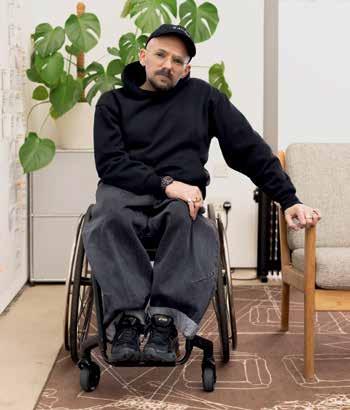
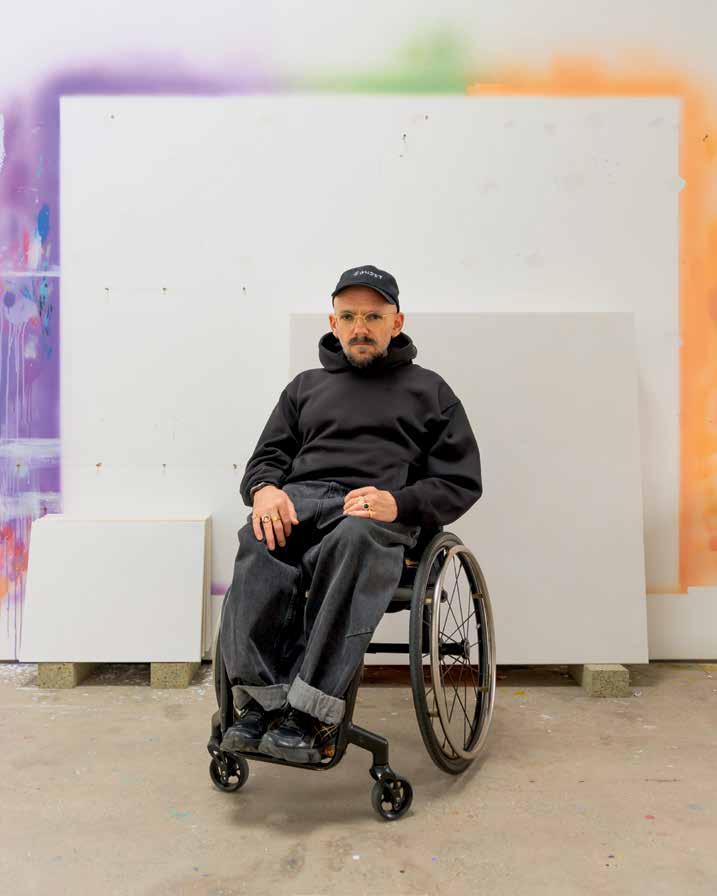
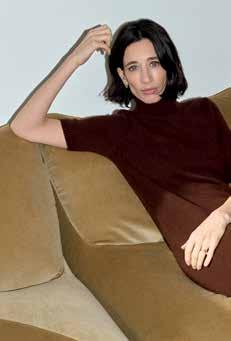
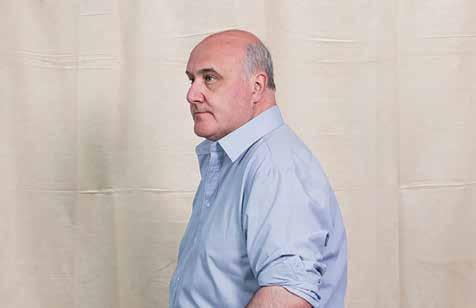
Left Ryan Gander RA in his studio, photographed by Kemka Ajoku
New season, new magazine
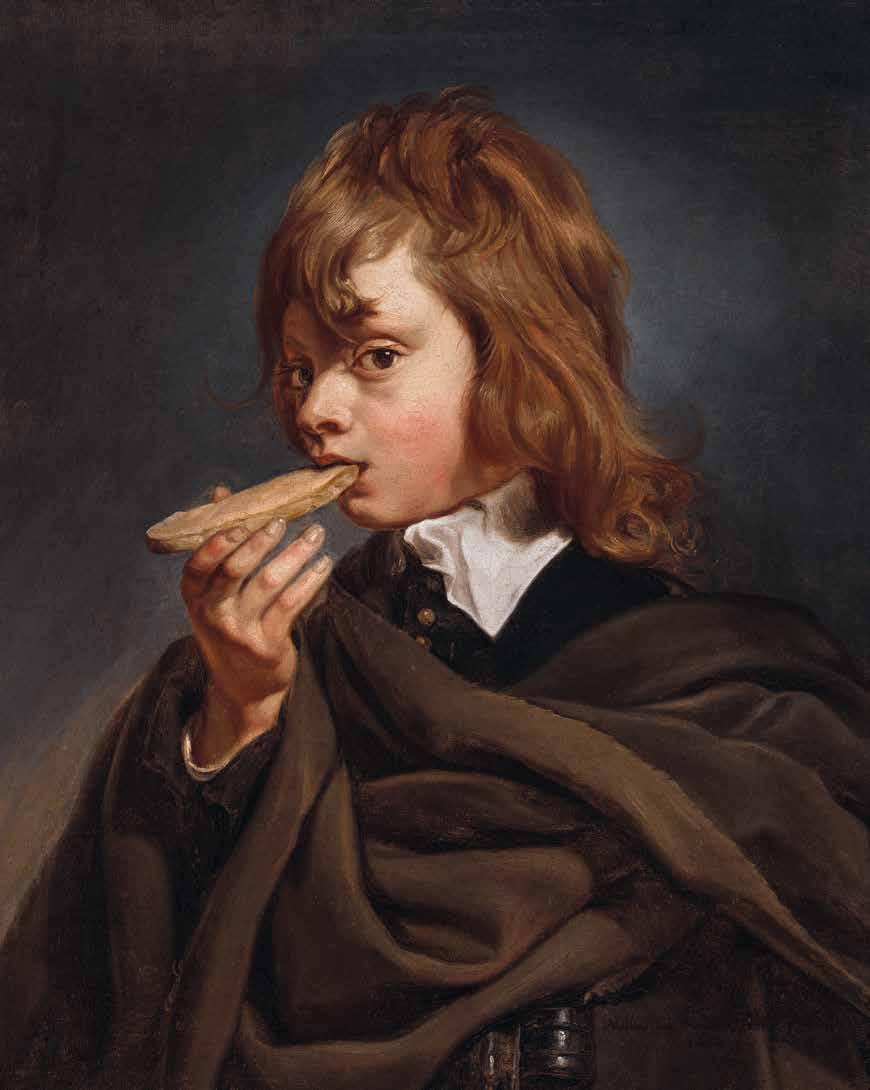
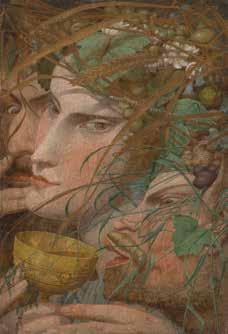
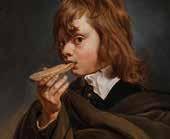
If this is not your first time reading RA Magazine, you may have noticed some changes as we’ve had a bit of makeover. New size, new design, new features and new sections that should make it easier for you to navigate all the good stuff inside. On top of all those tweaks, we’ve printed five separate covers for this new issue – each one showcasing an artwork from Michaelina Wautier’s ‘The Five Senses’ series ( Hearing, Sight, Smell Taste and Touch). We have no idea which one you’re holding as they were allocated randomly, but we hope you enjoy it. The refreshed design doesn’t detract from what you’re used to though – great reads about great art. We visited Ryan Gander RA in his studio to discuss his plans for this year’s Summer Exhibition; he is the co-ordinator for 2026 and he gave us an insight into what to expect from the year’s greatest British and international art show (page 56). As well as featuring them on our covers, we celebrate Wautier’s ‘Five Senses’ by asking sensory experts to share their experiences of extreme sensations (page 70), and we take a look at the extraordinary life and work of Victorian painter Richard Dadd (page 64). With a new look comes a chance to plan ahead, so now is as good a time as any to start thinking about the shows that will be coming to the RA next year. The 2027 programme is packed… Rembrandt, Simone Leigh, Picasso, Klee and Matisse will all be in our galleries and we’ll also be reopening Burlington Gardens after its own makeover. You can find more details on next year’s exciting programme at roy.ac/apl27. We do hope you’ll enjoy our new look. If you have any comments or suggestions, we’re all ears. Please do get in touch… Terry Barbrook, Editor
Contributors
Some of the people who helped create this issue on the first artwork they ever fell in love with…
Novelist and essayist Sinéad Gleeson, who communes with the work of Ana Mendieta (p26).
‘I first saw Duncan Grant’s Bathing aged 15 and became instantly obsessed. The colour, the composition of the waves, the sheer kineticism of those diving bodies. I still have the postcard.’
Gardener Matt Collins, who pays tribute to Cedric Morris’s green fingers (p39). Summertime, by Edward Hopper, for its ideas around isolation, sunlight and freedom that have lived in my mind since.’
Photographer Kemka Ajoku, who travelled to Suffolk to shoot Ryan Gander (p56). ‘The shimmering colours of Marcus Pfister’s children’s book The Rainbow Fish I later also fell in love with anything by Basquiat.’
Head of Editorial Content
Terry Barbrook
Deputy Editors
Imogen Greenhalgh, Rosanna McLaughlin
Design and Art Direction
Significant
Designer & Production Manager
Catherine Cartwright
Sub-Editor Gill Crabbe
Project Manager
Phoebe Exon
Editorial Advisers
Eliza Bonham Carter, Michael Landy RA, Goshka Macuga RA, Fiona Mahon, Níall McLaughlin RA, Kira Milmo, John Shevlin, Simon Wallis
RA Magazine Digital Georgiana Ashworth, Tom Hutton, Charlie Murray, Cristina Ricci. RA Magazine Digital is supported by Paulo and Caroline Pereira
CONTACT THE ROYAL ACADEMY Burlington House, Piccadilly, London W1J 0BD 020 7300 8090. friends@royalacademy.org.uk tickets@royalacademy.org.uk
JOIN AND SUPPORT THE RA Membership starts from £70. Visit roy.ac/join
RA SHOP 020 7300 8090 (select option 2). Visit roy.ac/shop or email raonlineshop@royalacademy.org.uk
All reasonable attempts have been made to clear copyright before publication. Registered charity number 1125383 RA Magazine is the quarterly publication of London’s Royal Academy of Arts. Established in 1983, it is one of the most widely read art magazines in the UK, with a circulation of around 80,000 copies. RA Magazine is published in March, May, September and November, and mailed to Friends and members of the Royal Academy of Arts as part of their membership. It is also mailed to patrons and other supporters of the RA, and can be purchased from the RA Shop, newsstands and on subscription. The opinions in this publication do not necessarily reflect the views of the RA. Paper used in RA Magazine is sourced from responsibly managed forests and other controlled sources.
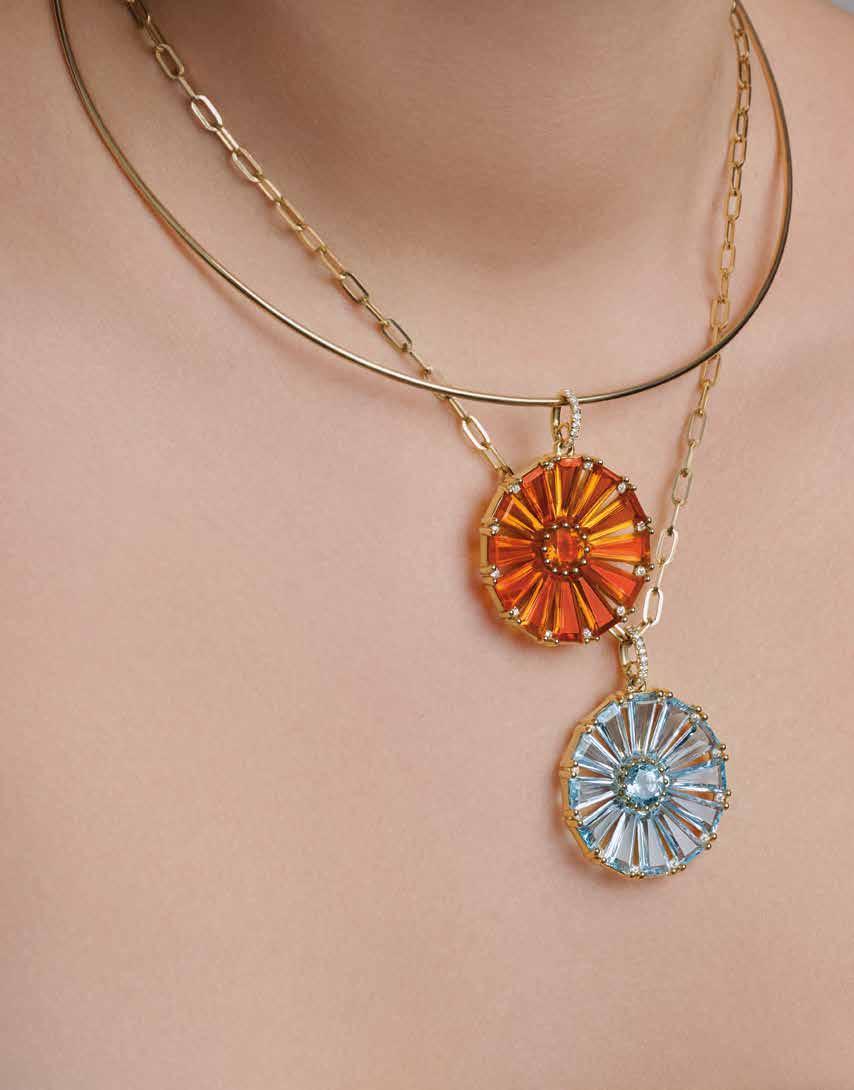
Roi Soleil Fire Opal, Blue Topaz & Diamond
147 Sloane Street London
WHAT’S HOT FOR SUMMER
Brighten up someone’s day – or your own – with the season’s best buys from the RA Shop
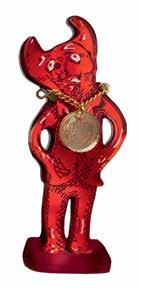
1. Grayson Perry Red Alan brooch You too can wear an RA’s medal with this bright accessory (£75)
2. RA tote bag
A colourful cotton tote celebrating Pride (£7)
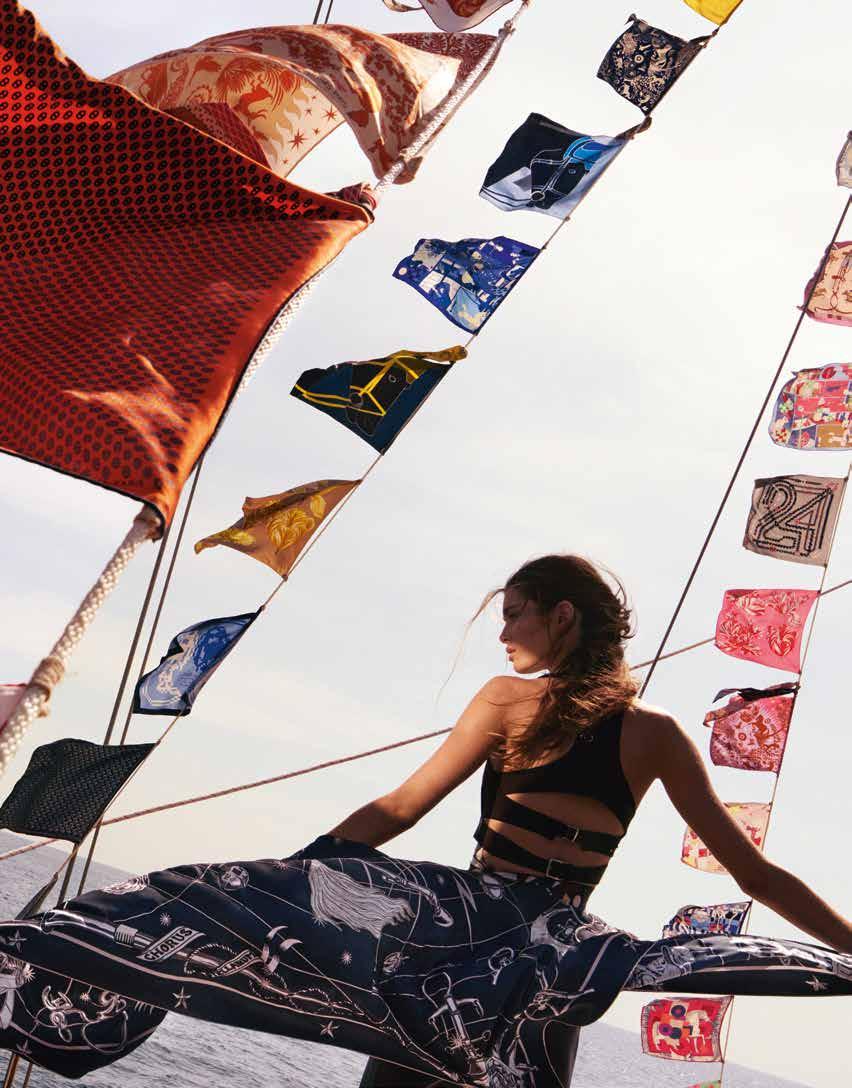
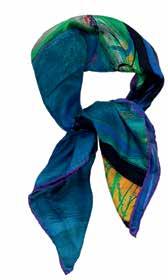
3. Barbara Rae silk scarf Rae’s Dark Signs becomes a wearable work of art (£125)
4. Ryan Gander cap A cap sporting Gander’s Summer Exhibition slogan is a great memento (£22.50)
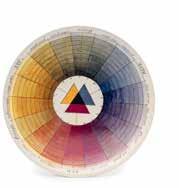
5. Prismatic Wheel tray An 18th-century colour wheel is the basis for an eye-catching birch wood tray (£25)
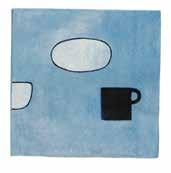
6. William Scott’s Jug and Two Plates napkins These smart and understated napkins are ideal for a cocktail party (£4.50, pack of 20)
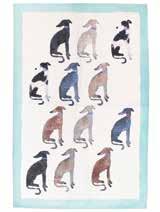
7. Sally Muir dog print tea towel Dry the dishes with the help of Muir's elegant hounds (£12.50)
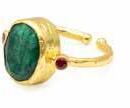
8. Emerald cocktail ring Designed by Ottoman Hands, this adjustable gold-plated ring has an emerald stone and two petite red zirconia crystals (£75)
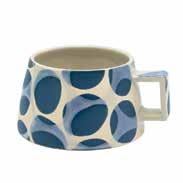
9. Spore ceramic cup A beautiful blue and white design gives this chunky ceramic cup an artisan feel (£42)
10. Blue Rhombus socks Don’t be square with a mismatched pair of cotton-mix socks (£8.50)
A different sort of Old Master.
SHOWCASE
The top ten stories you need to know this season
1 Anish Kapoor comes full circle
The celebrated sculptor returns to London’s Hayward Gallery, the site of his first solo show in Britain
The brutalist concrete bones of London’s Hayward Gallery will soon house an arresting array of new works by Anish Kapoor RA – almost three decades after his first UK survey was held there in 1998 (16 June to 18 Oct). ‘Since my first show, the gallery hasn’t formally changed that much,’ says the sculptor, on the phone from the Venice Biennale. ‘So it’s made me think, well, what can I do now?’
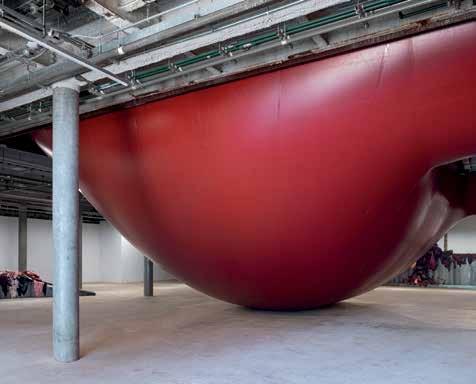
In answering that question, ‘challenging myself as much as anything else’, Kapoor has devised various ambitious sculptures. These include the vast site-specific All of Nothing (2026), which he refers to as ‘an
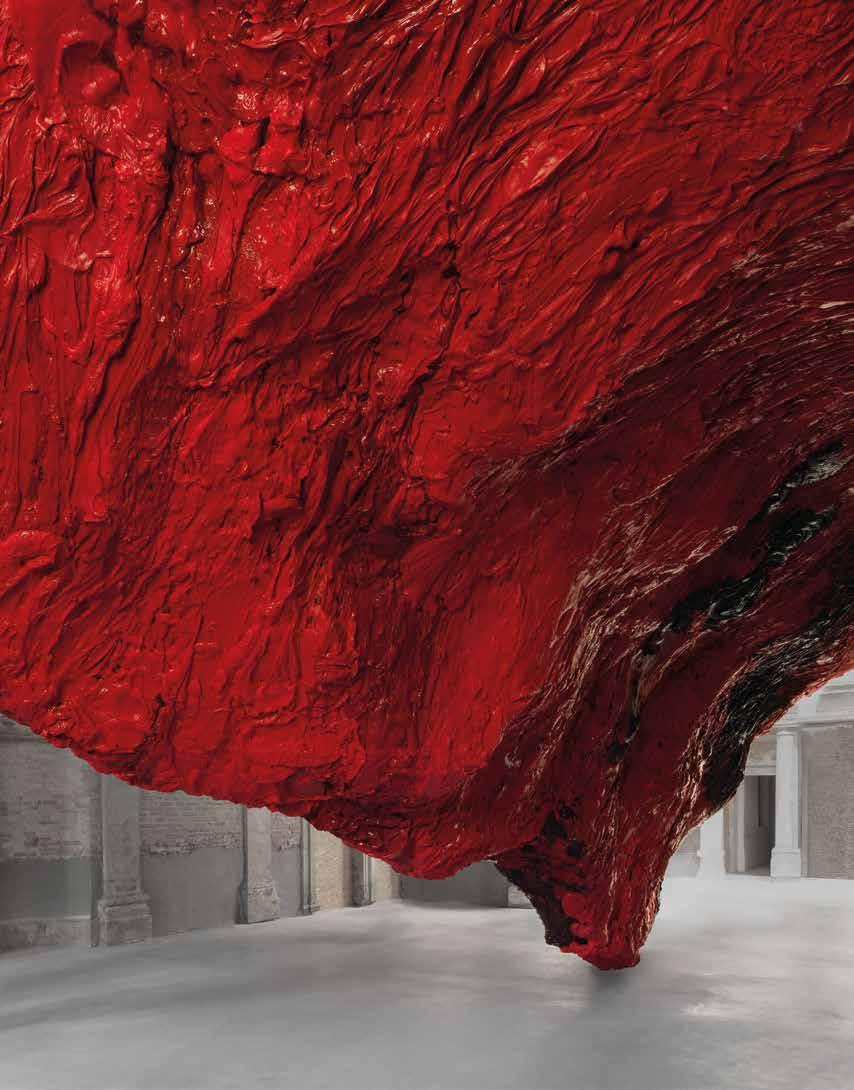
inflatable object’, set to confront visitors as they enter the show. The work recalls earlier pieces including Blinded by Eyes, Butchered by Birth, which bulged through the interior of the Casa Bradesco in São Paulo, Brazil (2024; above). In London, All of Nothing promises to be a similarly unruly presence, defying the gallery’s internal architecture to extrude up and outwards through its spaces.
‘The work is a kind of skin that fills the first room as you enter, but fills it in such a way that you can’t see all of it,’
Kapoor explains. Instead, the visitor is invited to make their way through the exhibition, meeting another side of the
‘Disruptor’ is an apt title for a show by the late Phyllida Barlow RA, her tottering sculptures and fizzing paintings (Untitled, 2010; below) set to ruffle the grandeur of Norfolk’s Wolterton Hall (until 31 Oct).
sculpture at a later point. ‘That makes it an act of memory. What was there and what’s here? The two sides are quite different from each other, though they are related. I think it’s important that you engage the viewer’s body in the act of looking, not just their eyes.’
The almighty physical presence of Kapoor’s work often makes an encounter with it a rather unsettling experience. His pieces either impose on a space or stage their own dissolution, as is the case with his use of the light-trapping pigment Vantablack and his void works. In Italy this summer, enthusiasts of his work have the chance to experience a very different side, at the artist’s Palazzo Manfrin in Venice (until 8 Aug). Alongside new large-scale installations are a series of 100 models, showing realised and unrealised projects from the past 50 years – a rare chance to see the artist’s bravura imagination confined to a small scale.
3 James Turrell’s light spectacular
Take a trip to Aarhus in Denmark to see the latest installation by the illuminating American artist, who transforms skygazing into breathtaking art
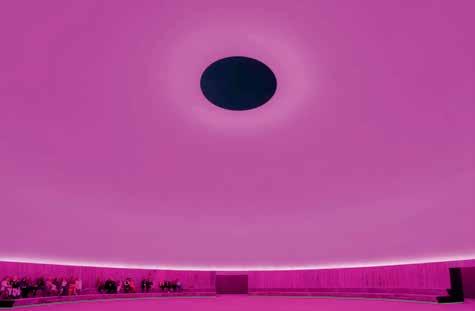
‘I paint with light,’ says James Turrell Hon RA of his métier. ‘Others paint light – its effects, its reflections – but for me it is about working with the material itself. Light is closer to sound than to pigment: it unfolds in time, it occupies space, and it must be experienced rather than grasped.’ From 20 June at ARoS Aarhus Museum in Denmark, visitors can immerse themselves in a new permanent installation by an artist who works with a palette of natural phenomena ( As Seen Below, 2026; above).
Walk through an underground tunnel and enter a giant dome, where
TISH MURTHA’S HOMECOMING
Celebrated for her documentation of working class life in north-east England, the late photographer Tish Murtha’s work returns to the region for the Baltic’s exhibition ‘Close to Home’ (4 July to 4 April 2027). Murtha’s raw and revealing images of marginalised local communities (Youth Unemployment 1981; right) are paired with new work by Newcastle-based artist Kuba Ryniewicz.
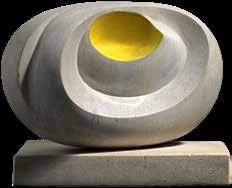
Explore Barbara Hepworth’s use of colour, and the chromatic influence of the Cornish coastline on her sculptures, as the Courtauld Gallery celebrates the varied hues of one of the UK’s best-loved artists (12 June to 6 Sep).
an aperture in the roof frames the sky above, creating a spectacle of changing light, colour and cloud formations – the perfect space for quiet contemplation. At intervals, the aperture closes and coloured light illuminates the dome’s interior. Since 1974 Turrell has created more than 90 similar SkySpaces, and this is the largest to date.
Wondering what time is best to visit?
The artist recommends the crepuscular hours: ‘At dawn and at dusk – in the transitions – we are most receptive. Colour detaches from form. Certainty softens. By nature, we are twilight hunters.’
...is the number of years it has taken to complete Barcelona’s Sagrada Familia basilica, Antoni Gaudi’s tour de force of Gothic and Art Nouveau style. See the long awaited finished article as part of city-wide celebrations marking the centenary of Gaudi’s death this summer.
7 Kentridge at Glyndebourne Festival
‘I think of the invitation to direct an opera as an invitation to make a drawing in four dimensions… To help you with the drawing, you’re given a designer of sets, of costumes, a lighting designer. Also
8 A celebration of London’s art scene
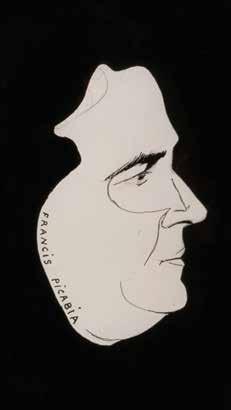
Fancy seeing Francis Picabia back-to-back with Eileen Agar RA, perhaps followed by a dash of much-vaunted German artist Anne Imhof? The programme for London Gallery Weekend (5 to 7 June) promises this and more, as over 100 galleries roll out the red carpet, with shows, tours and talks. Besides Picabia (at Hauser & Wirth; Self-Portrait, c. 1924; right), Agar (at Alison Jacques) and Imhof (at Sprüth Magers) in Mayfair, don’t miss ones to watch from the RA Schools alongside established names in a show curated by Brian Griffiths RA at Elizabeth Xi Bauer on Exmouth Market, or the unsettling art of George Rouy at Hannah Barry in Peckham. Ten years after Brexit, there are rumblings of a cultural revival in the capital. This is your chance to nose around and decide for yourself.
three hours of some of the best music written, maybe 10 great singers, and a chorus of 40 extra people to fill the stage when needed…’ So says William Kentridge Hon RA of Glyndebourne’s invitation to direct a new production of Monteverdi’s L’Orfeo (workshop; left) the first time the opera – the earliest still to be regularly performed – will appear at the festival.
Few who remember the South African artist’s theatrical 2022 blockbuster at the RA will be surprised to learn that he is an Olivier Award-winning opera director, and has overseen productions at La Scala in Milan and the Metropolitan Opera in New York. Glyndebourne 2026 marks a rare chance to see one of his opera productions premiere in the UK (14 June to 25 July).
He sheds light on the artistic process at an in-conversation at the RA on 17 June (visit roy.ac/events; online tickets available).
Fans should also head to the RA’s neighbour the Goodman Gallery from 25 Sep, when works created in preparation for the production go on display.
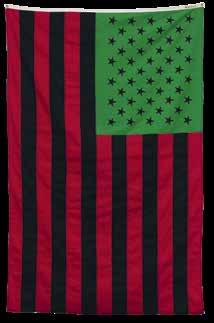
THE ART OF PANAFRICA David Hammons’s African-American Flag (1990; below) is among 300 artworks set to star in a new Barbican show putting Panafricanism on the map. ‘Project a Black Planet’ reveals the art that has emerged from the movement, forging solidarities between people of African descent around the world (11 June to 6 Sep).
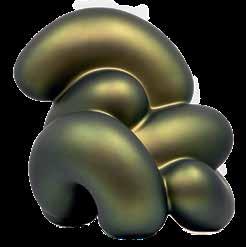
9 A legend of the 1960s LA art scene, Ken Price transformed ceramics into space-age eye candy (below). London’s Lisson Gallery celebrates this West Coast great (until 25 July). 10
STROUD SENSATION
THIS SEASON AT THE RA
Britain’s beloved Summer Exhibition, plus young artists to watch and a Victorian visionary
Michaelina Wautier
Until 21 June
The Jillian and Arthur M. Sackler Wing of Galleries
Supported by the Rothschild Foundation. With additional support from the Athene Foundation, Katherina Minardo Macht (Barrett) and William Strong Barrett, the Delegation of Flanders to the UK and Ireland and VisitFlanders
Young Artists’ Summer Show 2026
14 July to 30 Aug
Weston Studio, Burlington House Made possible by Robin Hambro
Opening Hours:
The RA is closed on Mondays. The rest of the week, it is open 10am to 6pm, until 9pm on Fridays, and until 9pm on Saturdays for the
Summer Exhibition 2026 16 June to 23 Aug
Main Galleries
Friends Previews: 13 June, 10am to 9pm; 14 June, 10am to 6pm and 15 June, 10am to 6pm Celebrating 20 years of sponsorship by Insight Investment
Richard Dadd: Beyond Bedlam 25 July to 25 Oct
The Jillian and Arthur M. Sackler Wing of Galleries
Friends Previews: 23 July, 10am to 6pm; 24 July, 10am to 9pm
Supported by the Tavolozza Foundation and Cockayne – Grants for the Arts. With additional support from Colin McCorquodale, Miss Rosemary Lomax-Simpson and The Dr. Lee MacCormick Edwards Charitable Foundation
RA Schools Show 2026 12 to 28 June
The Royal Academy Schools’ studios and the Weston Studio Sponsored by Stewarts
Coming soon: Painting the French Riviera 2 Oct to 31 Jan 2027
Main Galleries
Friends Previews: 29 Sep, 10am to 9pm; 30 Sep, 10am to 6pm and 1 Oct, 10am to 6pm
Supported by Kenneth C. Griffin and Griffin Catalyst, The Idan & Batia Ofer Family Foundation, the Huo Family Foundation, CMA CGM, Christie’s, and David and Molly Lowell Borthwick. With additional support from Ömer Koç and the International Music and Art Foundation
Fell (RA)
| Knights Hill info@roseberys.co.uk
‘I
LOVE TO INVITE THE KILN GODDESS TO DO WHATEVER SHE WANTS’
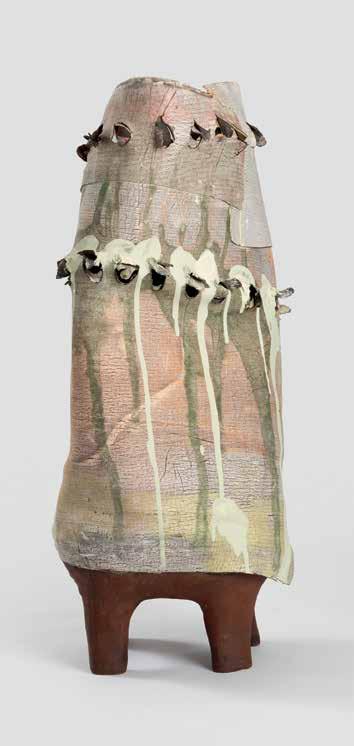
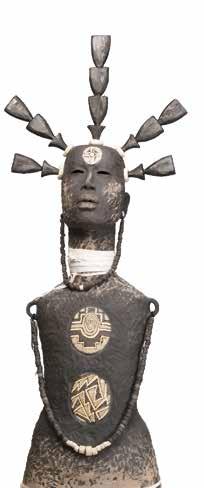
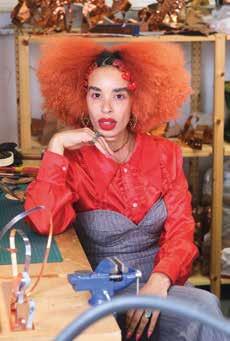
I arrive in Ranti Bam’s studio in Aubervilliers, a suburb northeast of Paris, the day after her pieces have been picked up for her exhibition at the South London Gallery, ‘Sacred Groves’. Only one of her vessels has been left behind: a terracotta sculpture which, during my visit, she continues to paint in a light blue hue and gently dabs with a sponge. Like many of her works, it has a Yoruba name – this one is called Aawon which means ‘grill’, in reference to the grill-like texture on its surface.
‘My mother always insisted on speaking Yoruba to us because she wanted us to be able to communicate with our grandparents,’ says Bam, who was born in Lagos and raised in London. Language is a big creative influence – she is fascinated by etymology and chooses her words carefully. It was her need to communicate complex ideas, however, that led her to become an artist. ‘I was looking for a way to encapsulate a feeling, put it in the palm of my hand and offer it to someone,’ she says. ‘Clay is language to me.’
Ranti Bam’s exuberant vessels unearth the spiritual nature of clay. Julia Webster Ayuso visits her Paris studio, ahead of Bam’s London solo show
Bam discovered ceramics in school, but as the daughter of a nurse and an engineer, she did not grow up thinking of art as a viable profession: ‘We never went to galleries or anything like that.’ A pivotal moment came in 2005, when she visited ‘Africa Remix’ – an exhibition at the Hayward Gallery featuring the work of more than 80 artists from across the continent. ‘The first thing I saw was an El Anatsui curtain,’ she says, describing an encounter with a work made from flattened aluminium bottle tops. ‘I remember feeling like something opened up inside me. It felt so accessible, so free. I realised I can do this.’
Bam initially studied industrial design at London Guildhall University but quickly found functional objects too restrictive. She subsequently enrolled at the School of Art, Architecture and Design at London Metropolitan University, where her thesis used clay to explore the idea that humans are inseparable from nature. With a lot to say but lacking in technical skill, Bam followed this ›
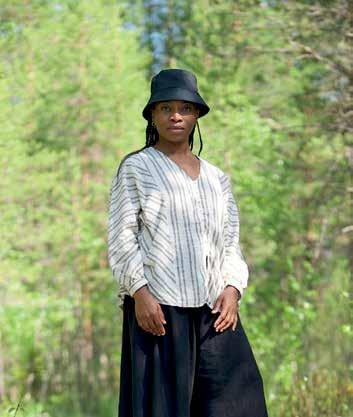
Previous page Ranti Bam photographed in Oulu, Finland
Below Igbo 2026, by Bam, a sculpture made from black stoneware
‘I want to create a totem, I want to feel close to the divine. Clay is my secret space, my altar, my temple’
› up with a ceramics course at London’s City Lit. ‘When I started, my ambitions for what I wanted to express were bigger than my facility with the clay. It was like going to a foreign country and not speaking the language,’ she says. One particular assignment helped her feel at ease. ‘It was a brief called “abstract vessel”. I was inspired to grab slabs of clay and collage around the base to create form, and that has become my signature.’
Since this breakthrough her star has continued to rise. Her work has been shown in Dakar, Bucharest and Paris and featured at the V&A, the Brooklyn Museum in New York and Fondation Thalie in Brussels, among other places. This year, she is presenting her work at the 61st Venice Biennale and in Finland at the European Capital of Culture in Oulu. Each of her pieces begins with a sturdy base, sometimes supported by two or three small, animal-like legs. After settling on a pattern or a colour – inspired by everything from Nigerian textiles to Renaissance paintings and, as on the day of my visit, purple works by Zimbabwean painter Portia Zvavahera – Bam works instinctively.
First, she paints a pattern on slabs of clay before flattening them with a rolling machine. Then she builds the structure by layering the thin slabs around the base. Crucially, she fires the clay past its prescribed temperature, producing unexpected colour variations and causing the unglazed surfaces to bend, stretch and even tear. ‘I’ve noticed these really delicious things, like these bumps,’ she says, pointing to tiny bubbles at the base of a sculpture. ‘I want it to warp. I almost want it to collapse. I love to invite the kiln goddess to do whatever she wants,’ she says.
When it’s not the goddess doing the shaping, Bam uses her own body. Her work is a deep exploration of what she calls the ‘primal feminine’, but also the inherent vulnerability and fragility of ceramics, a medium that has a long association with female hands. These impulses are perhaps most evident in her ongoing series ‘Ifas’ – a reference to the Yoruba words I–fàá (to pull close) and ifá ’ (divination). For these works, she physically embraces the clay, pressing it against her body to give it shape. ‘I want to create a totem, I want to feel close to the divine,’ she reflects. ‘And for me, clay is my secret space, my altar. It’s my temple, really.’
Over time, Bam’s works have become bigger. ‘I’ve gone from resting in the materiality of the work to asking: how does the work contain the story that I want to tell?’ Bam approaches her work from a curative perspective, seeing clay as a natural material for exploring our connection not just to the earth, but to each other. ‘Clay is like ancient sunlight – it’s ancient civilisations that have crumbled into the soil,’ she says. ‘So to touch clay is to reconnect with everything that has gone before.’
Julia Webster Ayuso is a freelance journalist based in Paris Ranti Bam: Sacred Groves South London Gallery, until 23 Aug
16 Jun – 18 Oct 2026
Anish Kapoor, Mount Moriah at the Gate of the Ghetto 2022.
Sinéad Gleeson gets up close to an intensely personal and political work from the Cuban-born artist’s ‘Silueta’ series, ahead of her Tate show
AT ONE WITH THE ART OF ANA MENDIETA
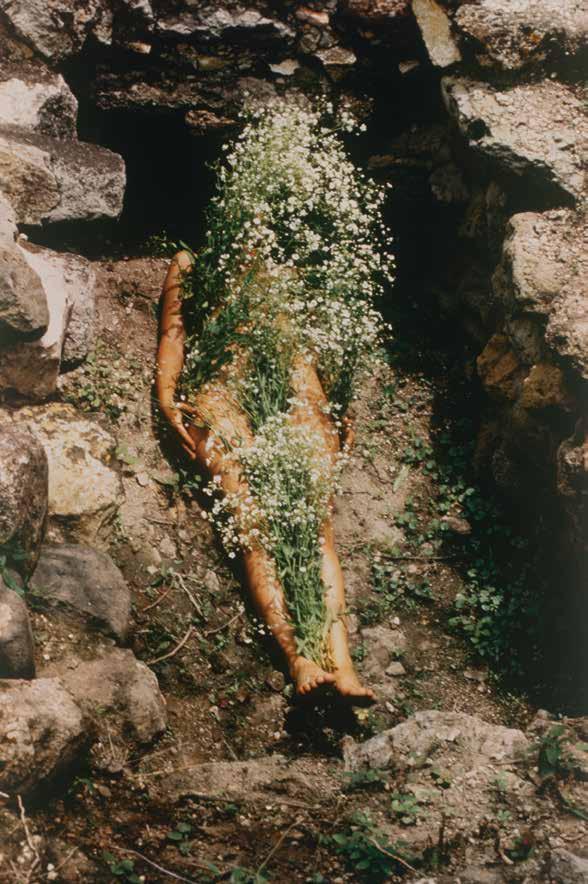
A woman lies on the ground surrounded by rocks. Her face and naked body are covered with white flowers that seem to grow out of her flesh. At first glance, this could be a corpse. On closer inspection, the site is an actual grave. In his influential 1980 study of photography, Camera Lucida , Roland Barthes discusses the concept of the punctum (Latin for ‘puncture’), an intense, subjective response that a viewer has to an aspect of a photograph. When I first saw this image, it punctured me almost literally. What exactly was I looking at? A murder, a ritual burial… it seemed to carry the whole history of female experience in one arresting image. I had written a book about the body, illness and politics. Here was an artist making her own body the fulcrum of her art.
Imágen de Yágul (1973; opposite) was the first of a series, Silueta’ (‘silhouette’ in Spanish), by the Cuban-American artist Ana Mendieta. In several of these works, Mendieta arranged her body, or a sculpted outline of it, in a specific landscape – a field, riverbed or shoreline – placing herself at the boundary between the human and the natural world. The image here is laden with contrasts. The vitality of nature is juxtaposed with the inevitability of death; the otherworldly and folkloric rooted in something as solid and immutable as the earth.
The location in which she made the work is significant. Mendieta was born in Cuba in 1948, and was sent to the US under Operation Peter Pan in 1961 after Fidel Castro came to power. The artist was just 12, and her sister 15, when they landed in Florida. It proved a huge wrench, and the trauma of being transplanted from her home country haunts much of Mendieta’s work. She made Imágen de Yágul in Mexico, the tomb itself Zapotec, belonging to an indigenous people of Mesoamerica. Placing herself in the earth is an act of re-rooting, an attempt at anchoring herself to a new homeland. In one interview Mendieta explained: ‘I have no motherland, I feel a need to join with the earth.’
The sense of a displaced diaspora and the difficulties of being an immigrant feel more timely than ever in the current climate. Many of Mendieta’s other thematic concerns also seem prescient, from her interest in eco-feminism, the legacies of colonisation and the inequalities of capitalism, to the ongoing epidemic of violence against women. Imágen de Yágul channels the divine feminine energy of strong figures like Mother Earth or Afro-Cuban goddesses, offering matriarchal alternatives to patriarchal figures of power. Every culture finds a way to politicise the female body. Far from being passive, the figure in the grave is a reminder of the impact of a body’s presence. Mendieta summons its power as a tool of activism and dissent – echoing its use in protest marches and demonstrations – which is partly why I think the work still has the capacity to puncture viewers today. Mendieta’s art acts as a conduit: for life and death, for the corporeal and the spiritual. It is pure energy, umbilically and pantheistically connected to nature. She herself becomes the art, embodies it to tell her story, but in doing so creates something universal – a stark and striking memento mori. The work is confrontational and timeless, a manifesto that speaks to today. To me, there is no more elemental artist.
Sinéad Gleeson is author of the essay collection Constellations (Picador) and the novel Hagstone (4th Estate) Ana Mendieta Tate Modern, London, 15 July to 17 Jan 2027
Right Imágen de Yágul, 1973, by Ana Mendieta
ON THE HOME STRETCH
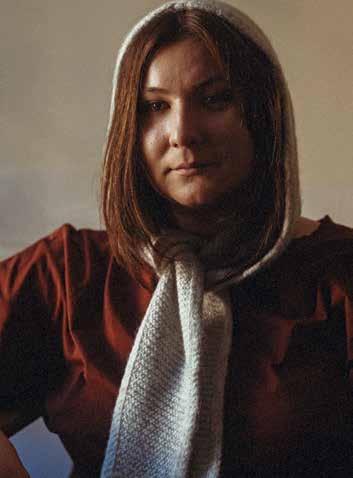
Belonging and displacement are threads running through the work of four very different students graduating this summer from the RA Schools, discovers Dale Berning Sawa. Portraits by Benjamin McMahon
Vitaliia Fedorova comes from a family of witches. After completing a BA in psychology at the Taras Shevchenko National University in her hometown of Kyiv, Ukraine, she decided to pivot to art and left for Italy, to study at the Nuova Accademia di Belle Arti in Milan. It was 2017. No-one really knew much about where she was from. So she set about making work that would show them. To begin with, Fedorova delved into pre-Christian Slavic cultures and the pagan symbols, songs and dances she’d grown up around. She made installations using post-Soviet newspapers and family photographs and began to make films. ‘It was always connected to my family history,’ she says. ‘My great-grandmother ›
VITALIIA FEDOROVA
› is 100 years old now. She is the oldest person in my family, the carrier of memory.’ In her village, she was considered a witch from birth, although, as Fedorova puts it, in adulthood this was largely because she wasn’t married and had three children and was doing everything on her own. ‘But also she did do some witchcraft,’ she says, ‘as I think did many eastern European women 100 years ago.’
Her 2021 film MAVKAS explores the matriarchal bonds that have shaped Fedorova’s world, referencing, in the title, the forest mermaids of Ukrainian folklore that dance with their long green tresses and tickle men to death. She filmed the women in her family (her mother, her grandmother, her great-grandmother) making amulet dolls, braiding hair and reading cards. She was missing home, which she came to think of as a thing she could carry around in her pocket wherever she went. About five years ago, Fedorova says, her grandmother gave her a tiny toy in the shape of a house. ‘I wish you to have a home once,’ she said, by which she meant a place where Fedorova might stay and feel complete. With these works, Fedorova also felt like she was trying to show viewers how different the place she came from was from theirs. With the Russian invasion of Ukraine in 2022, however, her sense of how to do that – and why – started to shift and blur.
‘Home, for me, became a very complicated place. Because you love this place and at the same time, when it’s under attack and you escape occupation, you really want to leave, but then you want to return, but you don’t know if you can. To return is about safety and about being able to live your life. Before I was more interested in symbols and mythology. Now, I speak about human experience and vulnerability. And time.’
Nyxtà Dodomy ( Nyxtà Come Home ; 2026), her most recent work which will appear in her RA degree show, is a multi-channel
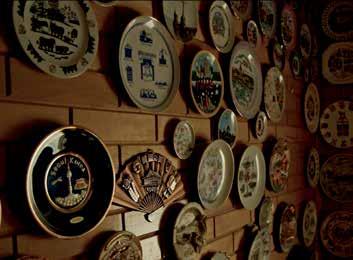
video piece filmed in the house in which she spent the occupation, before escaping to the UK. ‘It was maybe the 10 worst days of my life. And I’m super lucky I’m here. My family is alive. But three years have passed and it’s still difficult to return.’ The question the work hinges on is whether adequately talking about this is at all possible or indeed necessary. Here, the titular character, Nyxtà, is a cat. The house belongs to Fedorova’s partner’s family and is filled with his father’s collection of souvenir plates – some 3,000
‘Fedorova came to think of home as a thing she could carry around in her pocket wherever she went’
KATRINA COWLING
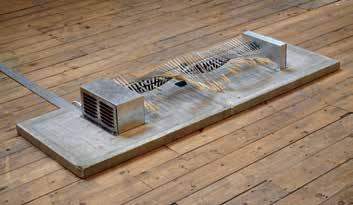
For one of her first forays into kinetic sculpture, Katrina Cowling installed a system of fans beneath a section of the beautifully ornate grate that is inset into the floor of the Royal Academy’s Weston Studio. She then tied bits of plastic to the grate itself which, she says, ‘sort of flailed around for a month’, becoming more and more raggedy.
Previous page
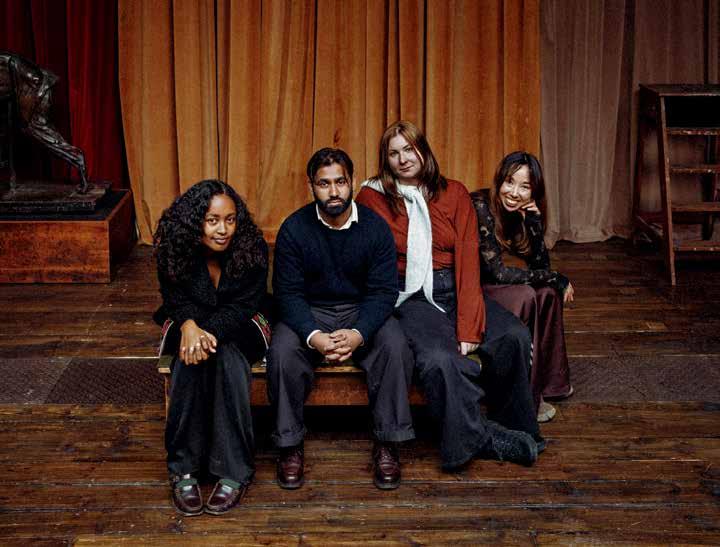
Some of this year’s graduating class at the RA Schools. From left:
Maya Gurung-Russell Campbell, Mohammed Adel, Vitaliia Fedorova and Katrina Cowling
This page
Fedorova in her studio, and a still from her video Nyxtà Dodomy, 2026
Opposite page
Cowling in her studio, and a recent sculpture, Phaedra in Four Parts, 2025
line the walls and cover the surfaces. After initially escaping to Germany, his mother Vita returned to live in the house alone. Vita now sends Fedorova videos of her cats and the birds she’s feeding so much that they can no longer fly. These the artist has woven into the piece, a patient enigmatic video essay on domesticity and the hyper-normalisation of unthinkable things. ‘In all my films, I’m looking for something human. I film and I hunt, I wait until something happens.’
In Cowling’s words, it was a ‘light gesture’. It had a certain pathetic quality she enjoyed – like those inflatable tube men that flop about in car parks as advertisements, only much, much smaller. The plastic she’d chosen wasn’t just any plastic. ‘It had to be this very particular blue. I was looking for months and ordering all of this plastic sheeting and these plastic bags, but it was never the right thing.’ And then she found the exact stuff she’d been looking for back home in Bradford. ‘My mum had some Asda freezer bags which were’ – she pauses for emphasis – ‘perfect.’
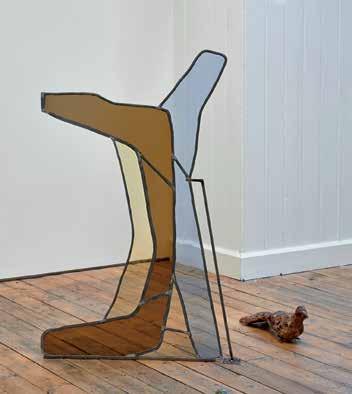
There is both great specificity and huge range in the materials and sculptural qualities Cowling has rooted out, since studying sculpture as a BA fine art student at Falmouth University. She is a trained neon bender. She uses upholstery, stained glass, automata, coding, robotics and found objects. She draws incessantly.
For her RA degree show, she has wrangled a shopping trolley all the way from Brixton to Piccadilly, which will be set in ›
› motion within the space. When the time comes to install the show, she will employ a road markings operative to paint four parking bays on the floor. What comes through this plethora of textures, gestures and shapes is a cleaving to a very particular kind of mundanity.
‘There is something about coming from somewhere that most people think of as quite bleak,’ she tells me. Growing up, she says, all she wanted to do was run away from Bradford. These days, she finds herself not only defending her hometown but missing it for its post-industrial understatedness, and for the comforting fact that it never changes. ‘Maybe that comes through in some of my choices of materials, which are overlooked or everyday,’ she says. ‘And it’s about the people as well. My best friends and my family are still in Bradford. They all know that Asda so well.’
Included in the show are automata that combine metallic mechanics with blades of wheat, the stems each activated individually (don’t go chasing waterfalls 2025; below). The effect is uncanny and mesmerising. They quite easily break. Cowling underscores how keenly she homes in on very human qualities in things: their awkwardness and fragility, their sadness, their strangeness. ‘Most of my forms are precariously balanced, on the brink, like they could collapse at any moment.’
‘Cowling underscores how keenly she homes in on very human qualities in things: their awkwardness and fragility’
MOHAMMED ADEL
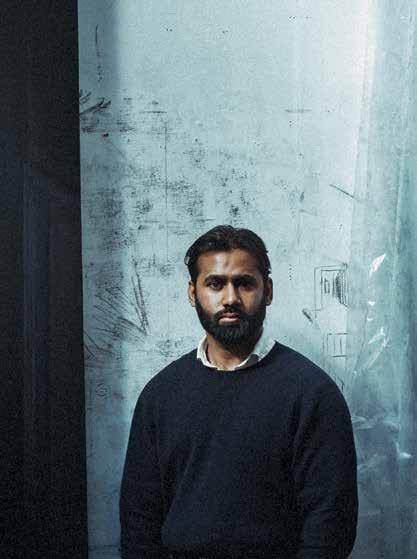
Mohammed Adel’s paintings map out a twilight world of notably narrow geographical spread. For the past four or five years, the east London painter has alighted on interior scenes in his family home, the house he still lives in with his mother. But when I ask how many of the house’s rooms he has painted to date, he replies, ‘I mean, do I even count the first two paintings? They’re in such a different light, but they’re still scenes from within the same room.’
Adel’s is a painstakingly considered survey of one corner after another – a view down the hall here, a perspective on the table there. Together they draw, in almost unknowable terms, one family’s world and what it might feel like. ‘I like to think that the works come across as more than interiors,’ he says. ‘But also, there’s a conservatism, in that I’m not giving you everything. I don’t want to give everything.’
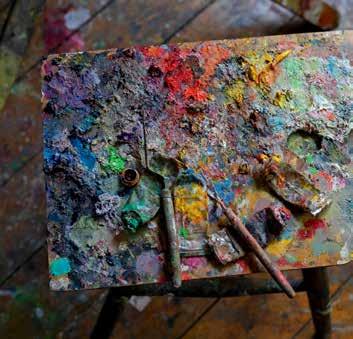
This tension translates into a uniquely restrictive dark palette. To the impatient eye, Adel’s actual painting palette (a flat smooth surface on a small table in his RA studio space) boasts a whole lot Above
of the same black. But of course it doesn’t. His ‘Black Paintings’ series is a study in the infinite depth and variety contained within the colour that swallows all the others.
The works Adel completed immediately after finishing his BA in painting at Camberwell College of Arts in London, in 2020, are full-colour figurative family scenes. A couple stands in a room, young children in their arms, the mother’s black sari, edged with white lace, draped gently over her head. A group of men in open neck shirts sit around a table with their arms folded in front of them, stainless-steel tumblers glistening in the light. Furniture is red, walls are blue, carpets and settees patterned in vibrant florals. Adel describes these early colourful works as quite romantic. ‘There was darkness,’ he says, ‘but it was implied darkness.’
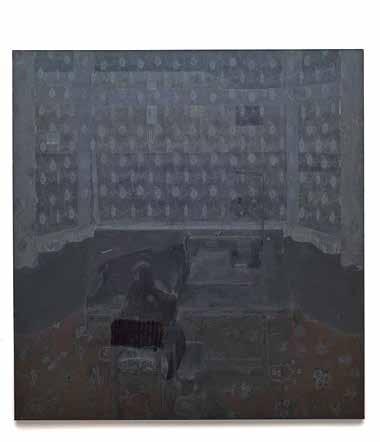
The ‘Black Paintings’ series that followed has seen him gradually lean into the expressive potential of actual darkness and the tones it requires ( Living Room 2024; above right). He highlights the frustration this palette results in. The rooms in his scenes now feature the same patterned carpets, soft furnishings and wall coverings, but your eyes strain to catch their details. Everything appears washed in a waning light. A sense of
foreboding or pre-emptive loss is unmistakable. ‘A lot of the work is about recall, and how a space exists when you no longer have access to it, the way it shifts and changes. These aren’t spaces that I’m drawing from memory. They’re spaces I have access to every day. So it’s thinking about how, eventually, at some point, they won’t exist.’
The single female figure in a headscarf that features in many of Adel’s works is his mother. ‘My mum came from Bangladesh,’ he says. In depicting her, the question he is asking is: ‘What does it mean to move away or to lose something and to have only a memory? You hold remnants of a space in your mind,’ he says, ‘and when you take that and put it on the canvas, how do you fill in those gaps?’
Adel went to Bangladesh himself for the first time in January 2025 and has started making work on the family homes he ‘met’ there, so to speak. He has sat with opposing thoughts, that it is both a place his mother has lost, by being in London, yet one which he has never had. ‘What does that look like as generations go by?’ he asks. How is belonging passed down, and what is eroded in the process? ›
don’t go chasing waterfalls 2025, by Cowling
Left and below Adel, in his studio, and Living Room, 2024, by the artist
MAYA GURUNG-RUSSELL CAMPBELL
When Maya Gurung-Russell Campbell turned 18, she found court documents detailing how, aged four, she came to live in her grandmother’s house. It is the home her grandmother herself has lived in ever since she came to the UK from India in 1983. How it came to be the young Maya’s home too was never a taboo subject, she says, but reading the actual record of the case functioned nonetheless, as she puts it, ‘as a portal into that time’.
‘I found all of these documents that had all of this family history recorded,’ she recalls. They relay the custody battle between her father, who is from Jamaica, and her grandmother, who is from Nepal and India, and the reasons each of them gave for why they should be the one to raise her. They are also an account of their individual journeys to the UK.
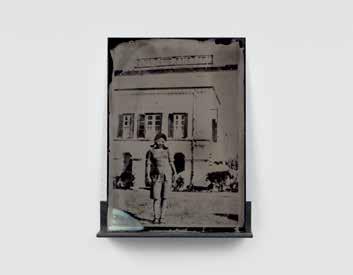
Since studying at the London College of Communication and the Radical Film School, Gurung-Russell Campbell has worked with archival materials, both personal and public. She started out in photography. Using the Victorian wet-plate collodion photographic process, she made what are known as tintypes of her grandmother’s erstwhile travel documents and snapshots ( Hotel Manaslu 2024; above right). Another series of tintypes features imagery from the National Maritime Museum archives, showing fragments of flags and fabric that had washed up during British naval expeditions.
During the COVID pandemic Gurung-Russell Campbell branched out into a wider experimentation with materials. This led to a video performance in which she donned a bronze cast of her face and a veil of Nepalese fabric. Notions of cultural theft, spiritual loss and a plurality of belongings thread through all the works that she makes.
These court documents, however, operate on an altogether more heightened level. ‘I’ve only shown them once in a group
exhibition but they have become an informal touchstone that I refer to and use, in an indirect way.’
The home Gurung-Russell Campbell shares with her grandmother, who is also an artist, has, as she puts it, a slight hoarder quality: ‘There is a lot of stuff. Every inch of my home is filled with her paintings.’ For her RA Schools degree show, she has invited her grandmother to exhibit with her.
Gurung-Russell Campbell’s latest work is an ever-growing installation of knotted jute rope, the shape of which is dictated not by aesthetic choices but by the knotting process itself. The installation is titled Splinter, a word she relates to memory: ‘The first house that I lived in, which was with my mum in Brixton, before I went into my grandmother’s care, we had wooden floorboards and I would often get splinters,’ she explains. ‘There’s something about that, in language, that I really like, and in sculpture too, in relation to tactile memory and sensory perception.’ The knot is the kind that children learn to do when they are really young.
Gurung-Russell Campbell likes that, as she puts it, ‘when you do it a lot of times, it produces something that has this weight to it.’
This intuitive and improvisational system results in something that hovers between net and shelter, tangle and weave. ‘I don’t see a divide between my work and what’s going on in my life, emotionally. The studio has to support that in some way.’
Nestled within this knotted structure will be two of her grandmother’s watercolour paintings, which were made in the 1980s. One depicts Agni Dev, the Hindu god of fire, unusually depicted here in female form. The other is the only painting they still own that Gurung-Russell Campbell’s grandfather contributed to: ‘They made it together.’
Dale Berning Sawa is a freelance arts writer and author of the Substack ‘Untitled, 1974’ RA Schools Show 2026 The Royal Academy Schools’ studios and the Weston Studio, 12 to 28 June. Sponsored by Stewarts
2 May – 1 Nov 2026
Nancy Holt, Hydra’s Head [detail] (1974) Installation view: Goodwood Art Foundation, 2026 Concrete, earth, water
Left and below
Gurung-Russell Campbell in her studio, and Hotel Manaslu, 2024
WHY THINKING THROUGH MAKING
A retinal approach to creating art – thinking through making – is often undervalued, sidelined in favour of Duchampian conceptual models which have so captivated artists and teachers from the modern era onwards. This dichotomy has expanded in the past four decades, seemingly since British Fine Art degree courses began to require written justification for the visual art that students were making. In this environment, creative people who are not also adept theoreticians can be overlooked and underrated. Teenagers who don’t yet have a clear rationale that elucidates their creative output can find it hard to gain places at art school. Yet, while a concept may be easier to describe in words than to construct as a worthwhile visual artwork, a piece created by thinking through making may move beyond the limits of language to justify or even adequately describe it. While I don’t decry cognitive/conceptual strategies for art-making, I do believe that the historic process of thinking through making is an equally valid, albeit less fashionable, approach which should be encouraged and celebrated.
Great paintings, such as Vermeer’s View of Delft (c. 1660-61), perfectly exemplify thinking through making: a process of hand/eye coordination and concentration that involves the maker’s thorough engagement with materials, their every move informing the next as they progress a work towards completion. Vermeer must have made innumerable intuitive decisions to translate his experience of his home city into his mesmerising painted expression of it. Without that process this cityscape that Proust described, in a letter of 1 May, 1921, as ‘the most beautiful painting in the world’, could never have come into being. An encounter with it generates a visceral response – like listening to music, another art in which thinking through making is paramount.
It is usually through the act of making that the mind conceives the next creative possibility. Making is thinking.
Has the conceptual come to dominate art to its detriment?
Anne Desmet RA makes the case for the essential relationship between an artist’s hand, eye and their materials
MATTERS
In Richard Sennett’s book The Craftsman published in 2008, this insight is also applied to creative writing: ‘Degas is once supposed to have remarked to Stéphane Mallarmé, “I have a wonderful idea for a poem but I can’t seem to work it out,” whereupon Mallarmé replied, “My dear Edgar, poems are not made with ideas, they are made with words.”’ The same sensibility is expressed in the Swiss-German artist and Bauhaus teacher Paul Klee’s Pedagogical Sketchbook, from 1925, in which he describes drawing as ‘simply a line going for a walk’: a free-flowing process rather than the outcome of a preconceived plan. The paper cut-outs of Matisse’s later years were likewise created intuitively: their results determined by decisions made in direct response to visual effects elicited at each stage of cutting and placing.
Most memorable art has strong cognitive underpinning. Yet, to leave a lasting impression and tap into one’s deepest emotions, its visual impact is the hook that holds the viewer. Attempts to separate cognitive and conceptual concerns from the retinal and intuitive act of making, and to attribute greater significance to the former – such as with Marcel Duchamp’s readymades – have long persisted in contemporary art debate. Such attempts probably explain why, in earlier centuries, landscape or still-life themes were considered less significant than religious or mythological subjects in which grander concepts appeared to apply. Yet the enduring relevance of thinking through making is exemplified as keenly in Tate Britain’s recent show of Turner and Constable as it is in Rose Wylie RA’s exhibition at the Royal Academy earlier this year. Surely thinking through making is essential for any artist? Cognitive underpinning may develop later, but from the hands-on experience of working with physical materials.
Anne Desmet RA is an artist and author. Her new book, Wood Engraving: A Personal Approach (The Crowood Press), is out now
Its garden has been compared to Sissinghurst and its art school once taught Lucian Freud and Maggi Hambling. As Benton End in rural Suffolk reopens alongside an exhibition in London, Matt Collins celebrates its groundbreaking approach to painting and pollination
WHEN ART MEETS… GARDENING
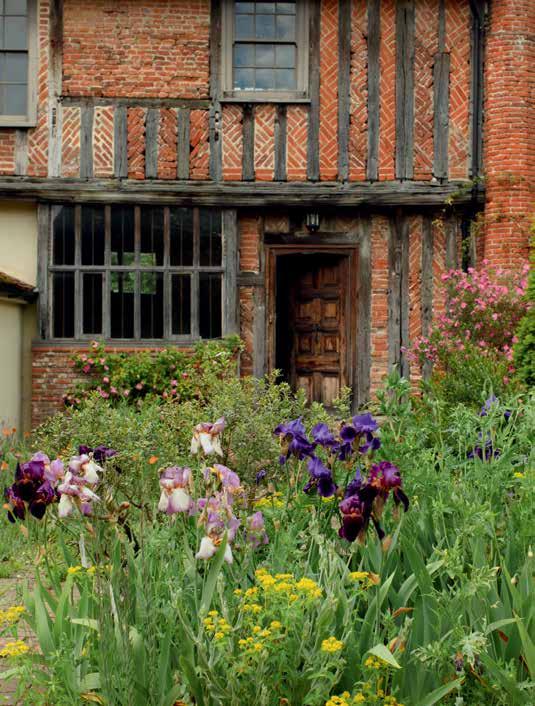
Right The entrance to Benton End, a Tudor farmhouse and garden that was home to the East Anglian School of Painting and Drawing, with some of its famous irises in bloom
The story of Benton End and its associated artists has long captured people’s imaginations; and all the more so now, with London’s Garden Museum embarking upon the Suffolk garden’s thrilling rejuvenation. But when describing this progressive rural convergence of art and gardening to someone uninitiated, I refer always to the account by the late chronicler of the countryside Ronald Blythe, in whose memoir The Time by the Sea (2013) the spirit of Benton End’s mid-century heyday is so evocatively conveyed. Like many creative people in the familiar orbit of this Tudor farmhouse near Hadleigh in Suffolk, Blythe would visit for the ‘rich odour of garlic, wine and oil paint’, and a particular sense of belonging. Often in the company of the painter John Nash, he would pitch up of an afternoon ‘to see the boys’ – the boys being the artists, lovers and Benton End proprietors Cedric Morris and Arthur Lett-Haines. In 1940, the couple had fitted out the house’s miscellany of rooms as a residency-style art school, The East Anglian School of Painting and Drawing. Through its informal tutelage, its unrestrained talk and lively communal mealtimes, the school nurtured the developing talents of, among others, artists Maggi Hambling, Lucian Freud and Joan Warburton. But
its wider circle was decidedly interdisciplinary: figures such as the pioneering high society florist Constance Spry and the food writer Elizabeth David were drawn, like Blythe, to Benton End as a place of unique inspiration. Morris and Lett-Haines saw each person as distinctive and interesting, Blythe remembered. Behind the house was the walled garden, a gently sloping, west-facing acre of rich yet light Suffolk soil. This was where Morris would most often be found, and where students set easels among the blooms and learned to look for the character, rather than simply the contours, of plants. It was, as Blythe later described it, ‘a paradise of pollen and paint’, the garden celebrated at one time on a level with Vita Sackville-West’s Sissinghurst in Kent. While Lett-Haines turned the garden produce into elaborate ‘peasant-French’ meals, Morris pioneered an early form of horticultural naturalism, filling many small island beds with the botanical treasures of travel – cuttings and bulbs brought home from winter painting trips in the Mediterranean. These were wild plants picked out by an artist’s eye and cultivated by a gifted gardener: ink-blotched ‘widow’ irises, scarlet anemones, drifts of delicate, earth-toned fritillaries. As a painter of flowers
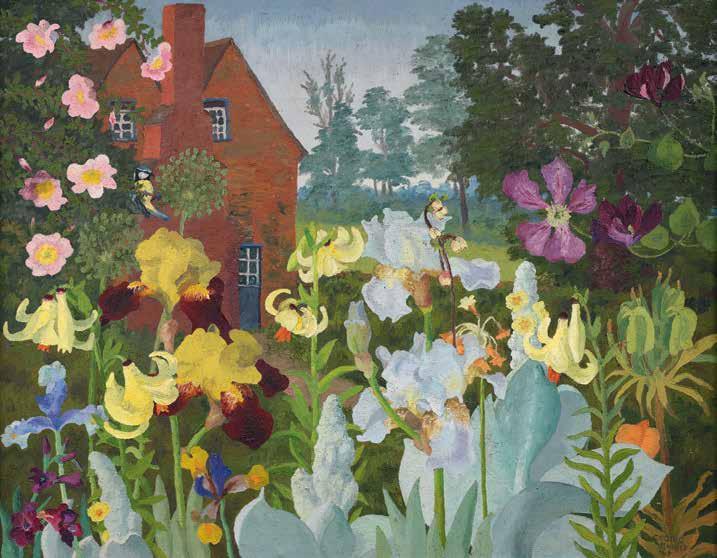
Morris had the rare ability to retain their vitality on canvas; none more so than the exquisite ‘Benton’ irises he bred in the garden.
In his depiction of an iris you understand immediately its softness of petal, its tautness of stem and the impossible richness of colour. Little wonder both his iris cultivars and his iris paintings have stood the test of time.
Such explicit straddling of gardening and art might be what marks Benton End as the definitive ‘artist’s garden’, and sets it aside from other obvious comparisons – Vanessa Bell’s Charleston, Monet’s Giverny, Barbara Hepworth’s studio garden in St Ives. Indeed, only Morris followed a love of plants into the expert realm of cross-pollination breeding. But I believe it is something less precise than that. Undoubtedly, Benton End’s rare and exhilarating species were what enticed many visiting gardeners, but just as an artist’s interpretation of subject matter is more interesting than the subject itself, Morris’s affection for plants – his charismatic delight in their particular character –appears to have been universally contagious. Blythe recollects the joy of listening to him discuss the garden, how Morris became ‘convulsed by the habits of some plants’, often bestowing them with human qualities. And though Beth Chatto – one of Britain’s most renowned gardeners – will have visited any number of compelling gardens, it was Morris, and her visits to Benton End, she credited as her primary influence. Seemingly, there was a magic there that enraptured people from all walks of life: much more than a muse, or an artist’s personal refuge, it was a garden that enabled others to flourish. ‘In one way or another,’ wrote Blythe, ‘all of us flowered at Benton End.’
These interdisciplinary perspectives are the focus of the Garden Museum’s latest exhibition, ‘Benton End: A Paradise of Pollen and Paint’, this summer. Designed by awardwinning theatre-set designer Jeremy Herbert as an immersive reconstruction of the kitchen and dining rooms at Benton End, the exhibition explores its formative influence on Freud, David, Chatto and others. And with much excitement, the show opens alongside the rebirth of the garden itself. Reimagined and
‘In one way or another,’ wrote Ronald Blythe, ‘all of us flowered at Benton End’
replanted by head gardener James Horner – who, aptly, studied fine art before turning to horticulture – in creative collaboration with landscape designer Sarah Price, the garden’s opening this summer heralds a new chapter in Benton End’s heady influence.
Matt Collins is head gardener at the Garden Museum
The garden at Benton End is open 4 June to 19 July. For full details, visit gardenmuseum.org.uk
Benton End: A Paradise of Pollen and Paint 2 June to 20 Sep, The Garden Museum, London
Opposite page Benton Blue Tit, 1965, by Cedric Morris. The garden at Benton End was a fertile subject for artists studying at the East Anglian School of Painting and Drawing
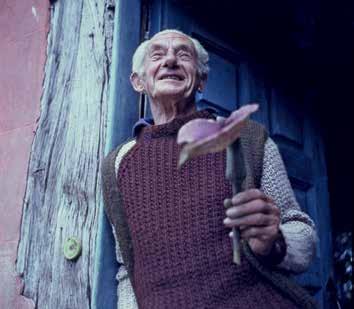
Left Morris photographed with a flower from his garden. He was renowned for his skills in cross-pollination breeding
Below
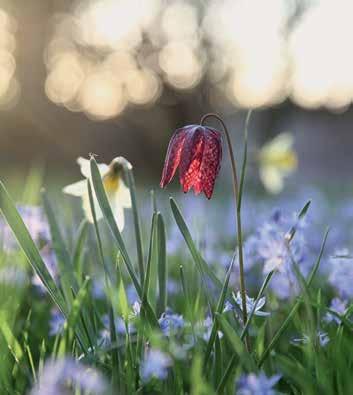
The delicate pink lantern of fritillaria meleagris in the garden at Benton End that Morris carefully cultivated
‘My child could have made that’ has long been an insult lobbed at the avant-garde.
Many would have found it high praise, writes Hettie Judah
WHAT CHILDREN
A decade after the Second World War, two adults encountered one another at an exhibition of children’s art in Paris. One, Pablo Picasso, examined the paintings with care before commenting to the other, the art critic Herbert Read: ‘When I was the age of these children I could paint like Raphael. It took me many years to learn how to paint like these children.’ The exhibition was heavy with symbolism: children’s creativity offered hope that human invention, wit and spirit had survived the war. But both Picasso and Read had an interest in children’s art that predated the conflict, and they were not alone.
Now in its eighth year, the RA’s Young Artists’ Summer Show is part of an important lineage. If today we consider such exhibitions significant because they support and celebrate young people’s creativity, for the avant-garde of the early 20th century, the art itself was a profound source of inspiration.
Rejecting the (adult) art of previous generations as bourgeois and ill-suited to the modern world, they hoped the study of children’s art might help them in a process of unlearning. If they could see as though through the eyes of children, they might learn how to navigate, interpret and make sense of the world afresh.
We can trace this history back to the earliest years of that century when, in Vienna, the Secessionist painter Franz Cižek amassed a collection of drawings by children. Many were displayed in 1908 at the Kunstschau Wien, a grand celebration of Austrian culture for which Gustav Klimt became a figurehead. In Germany, artists of the Blue Rider group – among them Wassily Kandinsky and Gabriele Münter – regarded children’s art as a form of pure and authentic expression, untainted by the constraints of the academy. Kandinsky thought children could access a spiritual level of reality that was closed off to adults, and wrote of ‘an unconscious, enormous power in the child… which places the child’s work on the same level as that of the adult (and often on a much higher one!)’. In 1912 works by children were shown as part of the second Blue Rider exhibition.
At the Bauhaus, the radical and hugely influential German school of art and design, the idea of returning to a childlike state was a key part of the curriculum. Teaching there between 1921 and 1931, Paul Klee led his students in a process of self-negation and instructed them to re-learn from the beginning: ‘Then you
CAN TEACH ARTISTS
will avoid all trace of artificiality, and the creative process will function without interruption.’ Two decades earlier, aged 23, Klee wrote of his determination to approach his art ‘like a newborn child’, ‘without any technique’, even using his own childhood drawings as source material.
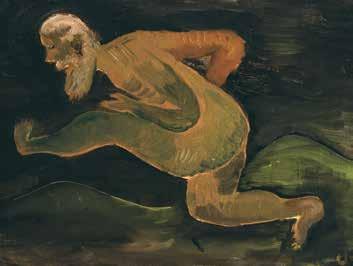
Interest in children’s art reflected emerging ideas about childhood development, and new philosophies of education. In October 1938, Peggy Guggenheim’s Exhibition of Paintings and Drawings by Children’ at her Guggenheim Jeune gallery, in London, coincided with the flourishing of progressive education in the UK, which focused less on drilling and forming young minds and more on providing spaces and structures for them to flourish. Many works shown were made by children schooled at progressive establishments, among them Guggenheim’s own children, as well as Lucian Freud – then aged 15 – who had attended both Dartington Hall and Bryanston. Freud’s Old Man Running (1936; above) is included in ‘Peggy Guggenheim in London’, the exhibition opening at the RA this November. It is a dark and dynamic painting of a naked, bearded figure sprinting through a hilly landscape, and even at this young age Freud’s wicked humour and interest in the unclothed body are evident. It is a cheeky testament to the free-spirited imagination of young artists, and the support they need in order to give that imagination full expression.
Hettie Judah is a writer and curator. Her latest book, How to Enter the Art World… (Hoxton Mini Press), is out now Young Artists’ Summer Show 2026 Weston Studio, Royal Academy of Arts, London, 14 July to 30 Aug, and online at roy.ac/youngartists. Made possible by Robin Hambro
Experience the world’s greatest artistic achievements with expert speakers, seamless travel and privileged access.
Choose from over 200 itineraries including: Vienna’s Masterpieces Flemish Painting | Art in Madrid Art in the Netherlands & more.
How exactly does one of the nation’s biggest art events get funded? Gabrielle Schwarz delves into the fiscal history of the Summer Exhibition…
On 28 November 1768, 22 artists presented a petition to George III, requesting his ‘gracious assistance, patronage and protection’ in establishing a ‘Society for promoting the Arts of Design’. The proposed organisation would provide a school for artists and an annual public exhibition. ‘It would be intruding too much upon your Majesty’s time to offer a minute detail of our plan,’ they wrote. The intention was to cover costs using the profit from the exhibition. Any leftover income would go to charitable causes. All they asked of the King was his ‘support’ if they couldn’t balance the books. Less than two weeks later, the Royal Academy of Arts was born.
99% of travellers rate us excellent or good in over 1,100 reviews. Book now at martinrandall.com
Or call us on 020 8742 3355
There’s a fantasy of culture as an autonomous realm, free from material concerns. Yet the Academicians knew that institutions and artists need resources, and resources cost money. Attending to practical needs while maintaining independence (and ethics) is a delicate task. (Consider the recent debates over arts funding, from protests against BP sponsorship to the government’s proposal that national museums charge tourists for entry.) The overlooked yet crucial question of how art is funded is central to the history of the RA and its annual display – the Summer Exhibition.
The RA’s inaugural exhibition, held in a former auctioneer’s on Pall Mall in 1769, was not the first of its kind. Over the previous decade, a couple of societies had organised shows for artists to sell their work. Costs were covered by a visitor fee, for ›
STATE OF THE ARTS
› admission, a catalogue or both. The RA adopted this model: one shilling for entry. It justified this not on a financial basis but to control crowds. In the catalogue, the Academicians claimed to have ‘not been able to suggest any other Means than that of receiving money for Admittance to prevent the Room from being filled by improper Persons’.
What distinguished this new venture was royal patronage. In the first 12 years, George III paid £5,116 1s 1d to cover costs. We might today think of this as state support but the founders chose not to go for legal recognition via royal charter, which would have involved a degree of public oversight. As long-time archivist of the RA Mark Pomeroy explains, the creation of the Academy was by ‘personal act of the King’. That’s why even now – unlike many comparable venues – the RA receives no government funding. In 1780, the RA moved into Somerset House at the pleasure of the King. ‘It was larger, so visitor numbers increased,’ says Pomeroy. That year, exhibition receipts totalled £3,069 1s 0d. From that point the whole enterprise was self-funded, with profits from catalogue sales – and later also the exhibition’s entry fees. Over time there were bequests and gifts too, but these rarely provided unrestricted capital. It was the tickets that paid the bills. So, when did things change? As Pomeroy explains, the repeated capital shocks of the early 20th century slowly eroded the income of the RA, now in Piccadilly’s Burlington House, where it has been situated since 1869. The last straw was the Second World War; an annual deficit developed into debt. The Summer Exhibition had fallen out of vogue, being regarded as a rather fusty relic, which had failed to keep up with the fast-moving currents of contemporary art. In 1962, the RA took a radical step to keep its doors open, selling one of its most prized treasures: a Leonardo cartoon. (The work is now at the National Gallery.) But this was not a long-term solution. At first gradually, then more rapidly, the RA adapted to the modern era. Minor adjustments included the introduction of a handling fee and a small commission on works sold at the
Summer Exhibition. (Similar charges are in place now, though the costs for exhibitors are lower than the cut taken by most commercial galleries.) More significantly, the RA began to look outwards – to individual givers, philanthropic organisations and corporate sponsors – for support. As well as Hugh Casson, who became President of the RA in 1976, Pomeroy credits a lesser-known figure – Griselda Hamilton-Baillie – for spearheading this transformation. The Royal Academy Trust and the Friends programme were set up. An appeal for support in 1985 carried the tagline ‘our Summer Exhibition is as much a part of the Season as strawberries and cream’.
As with the rest of the exhibition programme, sponsorship became a way to sustain the Summer Exhibition. The first sponsor, in 1983, was tech company IBM. In the 1990s, Guinness and its parent company Diageo came on board. The management consultancy A.T. Kearney was involved for a while. This July, however, marks 20 years of the Summer Exhibition’s sponsorship by Insight Investment, an asset management company. ‘We believe it to be one of the longest running corporate partnerships in the arts,’ says the firm’s CEO Raman Srivastava. In exchange, as well as helping to ‘empower arts institutions to continue to pursue their purpose’, Insight gets to host a client event for 1,000 guests just before the Summer Show’s public opening.
This is a big draw – over the past two decades in particular the Summer Exhibition has very much returned to its place as a fixture in the UK social calendar. ‘It’s a similar picture to the way it was in 1880 or 1890,’ says Pomeroy. No longer seen as a conservative backwater of the art world, the Summer Exhibition has been successfully recast as a democratic festival of culture, where anyone can enter to show and sell their work to an audience reaching hundreds of thousands. And with an upswing in attendance, that success continues to grow.
Gabrielle Schwarz is a freelance writer and editor
For more on this year’s Summer Exhibition , see page 56
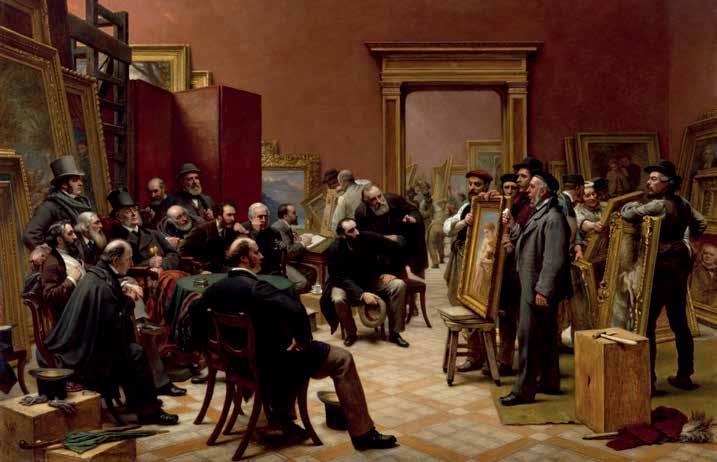
Previous page The Council of the Royal Academy selecting Pictures for the Exhibition, 1875, 1876, by Charles West Cope RA
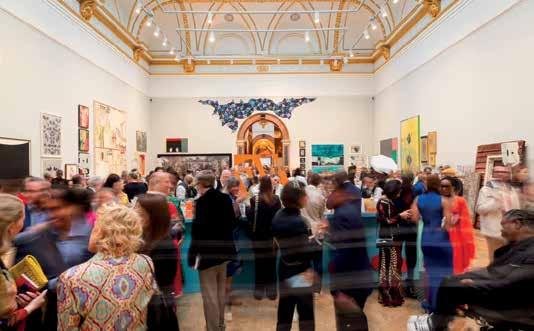
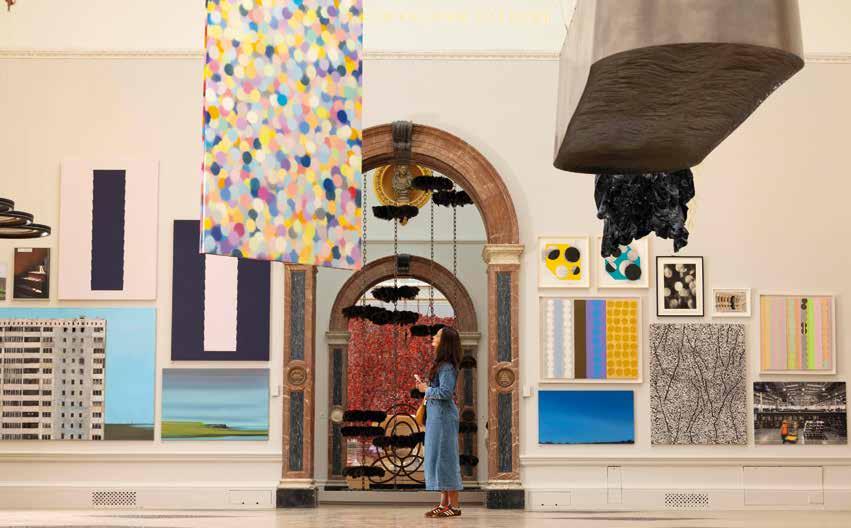
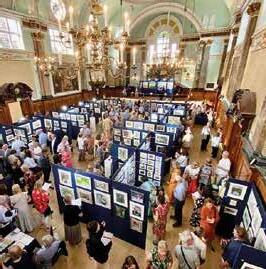
Galleries of the Royal Academy at the Summer Exhibition preview party, 2024
At 103, painter Anthony Eyton RA left it quite late to become a social media megastar, with an audience of 220,000 now following life in his townhouse and studio in Brixton. Lucy Davies dropped by for a visit
AT HOME WITH ANTHONY EYTON
Step into the south London townhouse that has been Anthony Eyton RA’s stronghold for nearly 70 years, and the real world recedes. A place of tall ceilings and nooks, its four storeys are a jumble of pattern and treasures, as bursting with colour and energy as the British artist’s work.
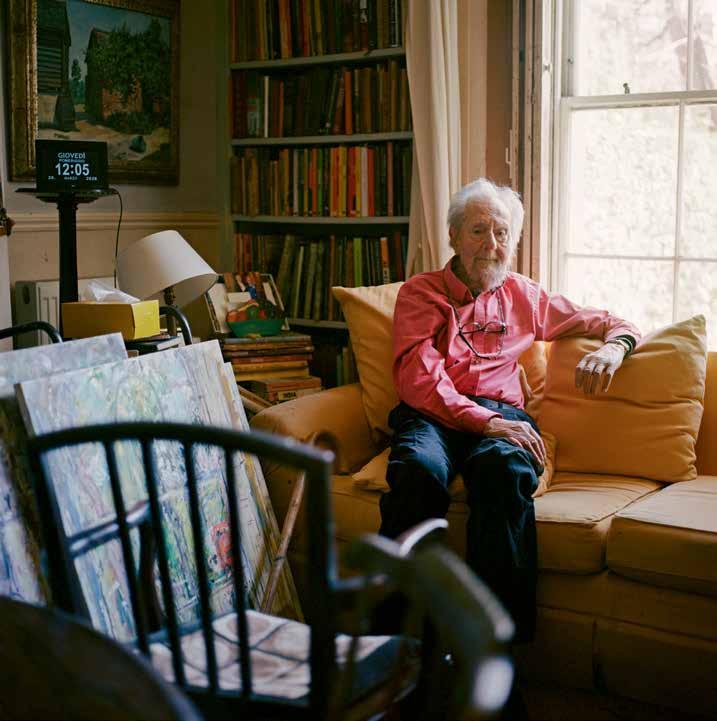
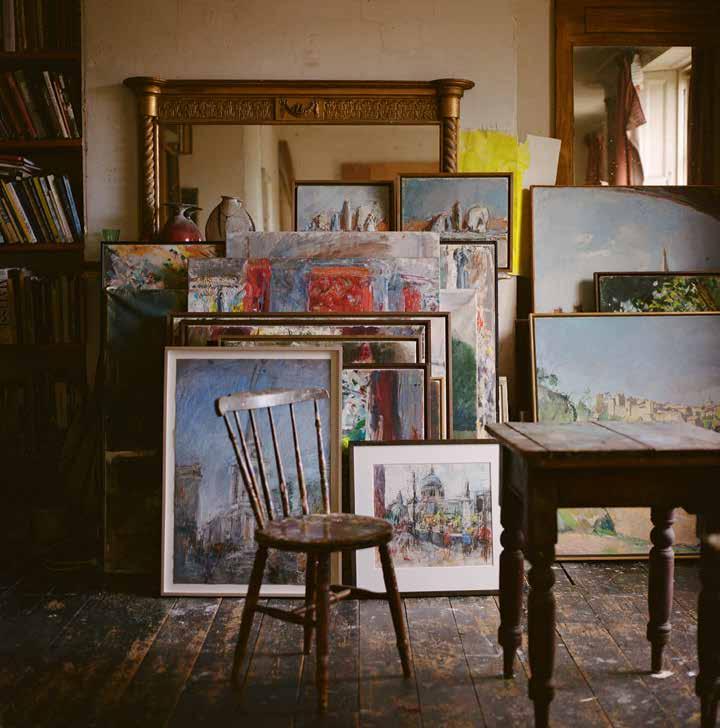
Pictures are the first thing you see. Every wall is densely hung with them, and every horizontal surface thick with books, magazines and squeezed, split-open tubes of pigment. Most of the furniture and all of the floors are splotched with paint. A smock or some other sort of protective clothing seems called for. ‘It’s always been a working house,’ says Eyton, settling into the custard-coloured sofa and narrowly missing a cat. We are in what would once have been the sitting room, an airy but enveloping space with handsome Georgian bones. Light streams through its arched window over Eyton’s shoulders despite the March damp.
When I meet Eyton, elected RA in 1986 and awarded an OBE in 2023, he is about to turn 103, and remains enviably prolific. Wearing a burnt-orange fleece, blue trousers and thick socks, he describes two still lifes he is working on – one quinces, one stones; both a whirl of sinewy brushstrokes – and his new passion for the paintings of the impressionist Berthe Morisot, which ‘seem to have all the light and the kind of magic I aim for myself’.
Those qualities are perhaps in Eyton’s DNA: above the mantel are paintings by his mother, Phyllis, who died in an accident when he was six. ‘One thinks of Constable,’ he says, gesturing to a glassy river landscape and a portrait of trees in blossom. The latter was accepted by the RA for the 1929 Summer Exhibition shortly before her death. ‘That meant so much to her. My father wrote in his diary that she danced with joy.’
Eyton was born in Teddington in 1923 and grew up in Hampshire. After serving with the Cameronians (Scottish Rifles) he entered Camberwell School of Arts in 1947, rising to prominence over the following decade as a realist painter in the tradition of the Euston Road School. The pleasure to be found in close observation thrills him still: ‘Looking out of the window, I get excited. If I’m in a crowd, I get excited. Which is not common these days. People are, in a way, almost blind to reality.’
Early in his career, Eyton travelled extensively, living for long periods in India, Sudan, Hong Kong, Canada and Italy. All found their way into his work, and the same is palpably true of the house in London: paintings of its unusual curving staircase, views, chairs and cherished curios surround us like a flotilla of boats.
Eyton moved here in 1960 with his late wife, Mary, a sculptor turned university lecturer, after falling for the enormous garden and the ‘rather romantic thought’ that a few feet beneath the site, Brixton’s lost river, the Effra (culverted in the 19th century) still ›
Previous page
This page, from top
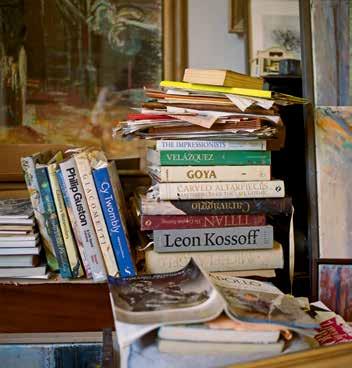
from Eyton’s home, including a heavily used paint palette and part of his vast book collection
Snapshots
Anthony Eyton RA in his sitting room, photographed by Lydia Goldblatt in March 2026. All interior and garden photography by Goldblatt
Above Paintings stacked up in Eyton’s first-floor studio
› ribboned through the dark. ‘How wonderful it must have been when you crossed little bridges to the houses opposite,’ he says. Their three daughters, Jane, Clare and Sarah, grew up here, which was ‘a little chaotic’. Clare once had to have her stomach pumped after swigging from a milk bottle filled with turps, but otherwise they muddled along. All three have also become artists. His photographer daughter Sarah regularly features scenes from his home on her Instagram account – and it’s not hard to see why he has attracted such a substantial following.
Eyton leads the way downstairs, to ‘the engine room’. He has easels set up all over the house, moving from one to another with the shifting light, or as the mood takes him. He sometimes uses a walking frame, but can happily put away three or four hours at the easel. This space was once the carriage house. It’s chilly and cobwebby with bare brick walls, but you grasp instantly why he likes it: a large skylight, a glass lean-to, a view onto the garden. On a table are the stones he described earlier, ochre, grey and earthy brown. They have been in the house for years, he says; booty from the Thames at Deptford and his travels.
He likes to play Kate Bush down here. On the first floor, it’s Bach. As we climb the pink-carpeted stairs – concave from decades of tread – he points out the London Underground poster of
his 1992 painting Brixton Market and, nearby, one of a series made inside the old Bankside Power Station, shortly after it had been announced as the site for Tate Modern in 1994. ‘The place was decaying, rusty, dripping with water; sort of gothic, and I got it right somehow,’ he says wonderingly. ‘I’m amazed now I could do that.’
Before I leave, Eyton shows me the room in which he rests or watches Netflix. Black-and-white films usually. Roman Holiday and The Talented Mr Ripley are other favourites, even if the screen is almost lost among the great creeping sea of painting materials. Anyway, often he simply sits and gazes out over the trees to the houses beyond, ‘with homage to Hitchcock ’s Rear Window ’, he says with a chuckle.
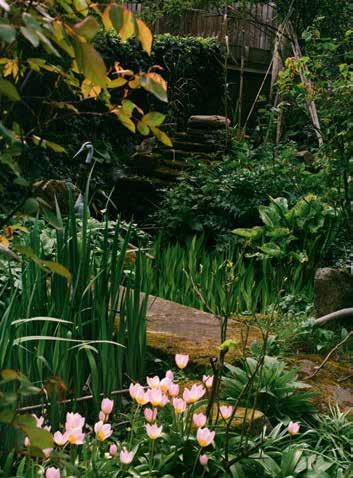
The garden is beautiful, with a path winding through its many differing textures. He spent more than half a century creating it, the one art nourishing the other, and was still rolling huge stones about at the age of 88, when his daughters put a stop to it. He takes most pride in his roses, of which there are some 70 varieties, designed to flower in phases. ‘I like the continuous change,’ he says, a little lost in that thought.
Lucy Davies is a journalist and author. Her most recent book, Vigée Le Brun: Self Portrait in a Straw Hat (National Gallery/Yale), is out now
Hold to This Earth
Above
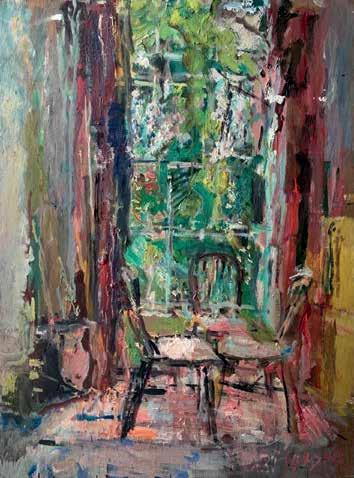
Three Chairs in the Studio III, 2019, by Eyton
Above
The burgeoning garden at Eyton’s Brixton home
An enduring partnership
‘The way things look doesn’t really matter’
Ryan Gander loves a challenge and, as this year’s Summer Exhibition co-ordinator, the maverick artist is set to upend its traditions. By Richard Godwin. Portrait by Kemka
Ajoku
Ryan Gander did not spend much of his childhood looking at art. Growing up in north-west England – in a ‘working class-aspiring-to-be-middle class family’ – he didn’t give much thought to the museums and galleries of London. ‘I think we forget that London is like another country to everyone in Britain outside of London,’ he says. His father worked as an engineer in the Vauxhall factory in Liverpool, his mother was a teacher, and while it wasn’t exactly a cultural desert, they weren’t talking about Joseph Beuys at the dinner table.
He does, however, recall one teenage trip to London, a ‘life-defining moment – like we all have at 15.’ His art teacher, Pauline Clubbe, took him to see the Royal Academy’s Summer Exhibition. He remembers taking the train and walking from Euston to Piccadilly; he remembers wearing a Suede T-shirt and listening to the Velvet Underground on his Walkman; and he remembers what he said to her: ‘One day I am going to apply to be in this exhibition.’
Now 50, and one of Britain’s most celebrated conceptual artists (though he refutes the term himself), Gander has moved some distance beyond that ambition. A Royal Academician since 2021, he is this year co-ordinating the Summer Exhibition itself: inviting submissions, sifting through thousands of public entries, deciding – with the help of a committee of fellow RAs – what gets shown and how. His phone is full of images of cats, eggs, buses, owls, racing cars, haberdashery. ‘It’s good to see how weird people are. When you see art by thousands of people who all have such madly idiosyncratic, specific interests and views on the world... It just made me think, “Wow, this is better than social media.”’
We are talking in Gander’s studio in a former registry office near Saxmundham, Suffolk, chosen as it’s close to where his three children live. Spread across several rooms, workshops and a recording studio, it is a hive of activity – producers move between projects, an on-site cook prepares a communal lunch – and clearly a wonderful place to work.
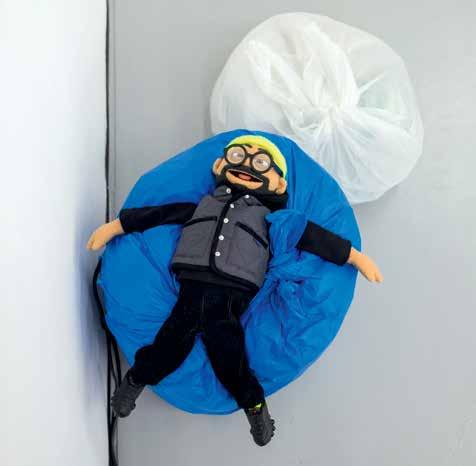
Below left: Hope is a discipline – An Apology (They will only encourage you to perform the script), 2026, by Ryan Gander
Photographed in Gander’s studio by Kemka Ajoku, this animatronic soft toy representing the artist lies discarded on a small pile of rubbish bags. As if drifting in and out of sleep, it delivers a speech reflecting on the value of proverbs and sayings as a means to encourage hope
Right: A cabinet containing a selection of Gander’s collaborations with brands
The trainers are the outcome of a 2014 collaboration with Adidas Originals in Tokyo, to customise its ZX750 trainers. One looks as if it has been adorned with pencil drawings, the other as if covered in mud.
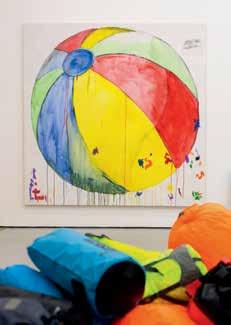
Below: For I am a sign –, 2026, by Gander
In this series of new works, Gander copies educational language cards given to his non-verbal son Baxter. Gander paints in acrylic, then invites Baxter to finish the works at his prerogative, using oil sticks.
‘If you open your eyes and your mind, there’s more absurdity and wonder just walking to the bus stop every day than there is at a gallery’
‘I have total control, total agency,’ he says. ‘No one has a job where they can wake up and decide to do whatever they want. I want to… choreograph a ballet! Or design a sports car!’ (The fact that his father would have appreciated such agency is not lost on him.)
Gander has, indeed, done a version of all this. He has taken part in the Venice Biennale, had solo exhibitions across Europe, Asia and America, created public works from Mexico City to Liverpool, directed a music video for British band Idles, presented documentaries for the BBC, collaborated on trainers with Adidas (above), and edited a brilliant cocktail book, Artists’ Cocktails (Sample recipe: Drink your own piss/Drink someone else’s piss, by David Shrigley; ‘Piss may or may not be a metaphor’.)
And yet the Summer Exhibition presents a different kind of problem. Not least because Gander is prone to saying things like: ‘The way things look doesn’t really matter.’ Or dismissing the very notion of painting, which has been central to the exhibition since its inception in 1769. ‘When you tell people you’re an artist, everyone says: “Oh, you must be good at drawing.” Obviously, I can’t draw anything. Can’t draw a thing. I’m colour blind. I have a terrible sense of scale. I know very little about art history. These are stereotypical things that people assume are the characteristics of a good artist – but this is not art for me.’
He is more interested in the art of language and ideas – ‘art based on the brain’. Indeed, it can be hard to pin down what kind of artist Gander is; he is more likely to tell you what he is not than what he is. His studio reflects that elusiveness. There are animatronic mice and artfully strewn bits of rubbish; a vending machine stocked with drug tests, gaffer tape, whisky and After Eights; a Muppet-like puppet of Gander himself (opposite page); a series of paintings made in collaboration with his non-verbal autistic son whom he clearly adores ( For I am a sign – , 2026; above left). ‘As an artist, we spend all our time in museums and galleries looking at stuff, thinking this stuff’s really important,’ he says. ‘But the world outside is way better than the world inside. If you open your eyes and your mind, there’s more absurdity and wonder and serendipity and excitement just walking to the bus stop every day than there is at an art gallery. It’s funny. Life’s amazing. The world’s amazing. You really see that with small children.’ ›
› It can be difficult to define his art, partly as he is so resistant to repeating himself. ‘The commercial art world is built on stylistic signatures, which is a massive error, because it pushes artists to repeat things,’ he says. ‘But the definition of creativity is to push boundaries – to change, to make mistakes, not to be conformist.’
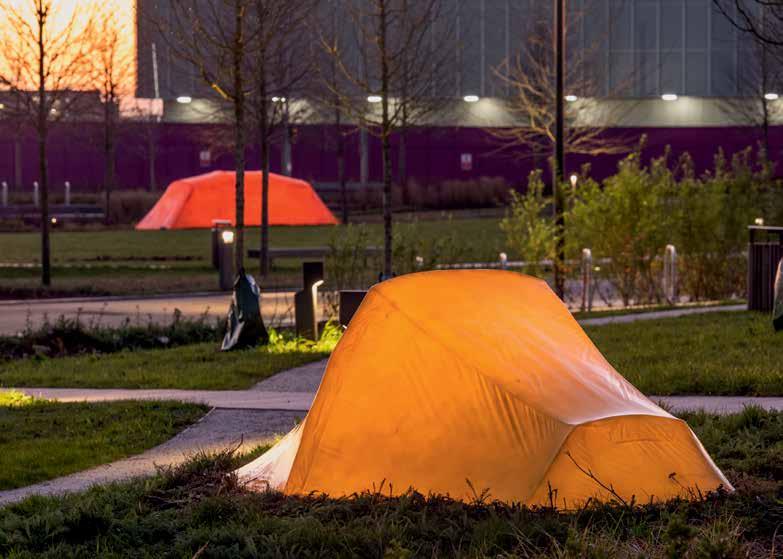
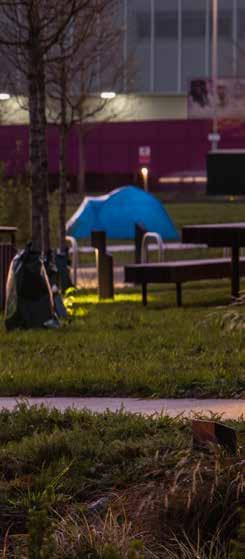
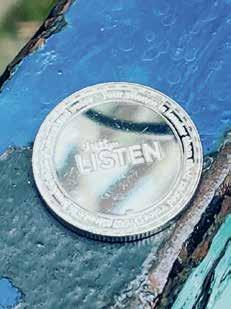
Instead his favourite kind of art, he says, is art that doesn’t announce itself as art – work that allows for a ‘natural’ response and as such defuses any political or class associations. For The Find (2023; right), he minted hundreds of thousands of coins inscribed with prompts on either side – solo/together; speak/listen; pause/action – and released them across Manchester as a kind of municipal treasure hunt. For his installation, I Need Some Meaning I Can Memorise (The Invisible Pull) (2012), he exhibited a cool breeze circulating in a gallery. One of my favourites is The Green & The Gardens (2019; above) at the Royal Papworth Hospital in Cambridge: five hyper-realistic fibreglass tents that light up from within at night. The idea is, patients, particularly children, can look out of their hospital beds and feel as if a festival is happening somewhere on the periphery of their imagination.
What he particularly likes to do is philosophise – ‘The only difference between us and machines is that machines can’t ask abstract questions,’ he says at one point – and as we talk, two things strike me. The first is that he has in abundance the kind of creativity that artificial intelligence lacks, trapped as it is by the patterns of the past. He is an ideas machine. Indeed, in the room in which we speak, thousands of postcards filled with ideas
are stuck to the walls and fi led in boxes, kernels for future projects: FIRE IN A TUNNEL INSIDE A WALL and WORLD BEHIND A LIGHT SWITCH.
The second thing that strikes me is that his mind is supremely associative – a sensibility that will feed directly into his vision for this year’s Summer Exhibition. The show is historically associated with crowded walls and visual excess. Gander is less interested in imposing order or highlighting excellence than in amplifying collision. ‘I’m really into associations and serendipity and chance – the way things collide, all the weird noises that are made when things come together that you wouldn’t expect. For me, the Summer Exhibition is like a masterwork in association, because it’s so wildly sporadic.’
The result, he hopes, will be a kind of ‘sociological diagram… representing what we share communally, in an era when everybody’s obsessed with identity politics and di erences.’ What co-ordinating the show has taught him is that Britain in 2026 is a lot more hopeful than is generally assumed. ‘It manifests itself in people sharing their love and their interest in a subject – or maybe how they use those subjects as a kind of escapist distraction from the world.’
It’s not hard to trace Gander’s emphasis on collectivity to his own childhood, though he is quick to resist reductive readings. Born with a bone condition, he spent much of his childhood in and out of hospital. This meant he was often bedbound, socialised by adults, left alone for long stretches.
When you are stuck in bed all day, he says, you ‘prototype’ in your head. You’re missing out on the birthday party. So you must imagine the birthday party. And imagination is like a muscle. ‘If you use it all the time, it gets big. And you realise you can use your imagination to bring yourself up to a kind of equality with everyone else. You can go beyond just imagining things in your head and develop a speculative imagination. You can imagine things that could actually happen.’
So, in that sense, he adds, it wasn’t fantasising. ‘It was more like: “I’m gonna write a radio programme from my bed.” So I did it and recorded it. Or: “I’m gonna open a shop that sells bookmarks out of a suitcase.” They were things I could actually do. And they just became bigger and bigger to the point now where it’s like, maybe I can make a million coins and drop them all around a city for people to pick up.’
He interrupts himself at this point. ‘I’m not a disabled artist, OK? You need to write that. Don’t identify with being disabled at all. It’s of no relevance to my life whatsoever.’ His wheelchair, he says, is no more remarkable than his glasses – simply a piece of technology. Nevertheless: ‘In the sense that we’re characterised by our histories – this idea of the institution and understanding collectivity in society, that we’re more than a series of individuals, is really important.’
Above: The Green & The Gardens, 2019, photographed by Charles Emerson
Tents of varying size fabricated from coloured, semi-translucent fibreglass resin, and lit from within, installed in the grounds of the Royal Papworth Hospital in Cambridge
Left: The Find 2023
As part of Manchester International Festival, Gander created hundreds of thousands of metal coins imprinted with prompts, then hid them across the city, to create a vast, free treasure hunt, a ‘currency of happenstance’
I ask if he felt he had barriers to overcome. He certainly does now. He is a conceptual artist at a time when he feels the contemporary avant-garde has become deeply unpopular and tradition is newly back in vogue. ‘We’re not in a moment in history where people want to be challenged. People want certainty and comfort. People want to be pleased. But the point of art is not to please people. It’s to challenge people. It’s to change people’s perspectives – 99% of art doesn’t do that, but that’s what art is.’
He feels that the RA – for much of its life, a byword for conservatism – has come to embrace such challenges. ‘As the Royal Academicians change, the interest is becoming more contemporary. And that’s really nice. You can see that among my peers – the other Academicians at meetings. It’s becoming an institution that is more representative of its time, right?’
And if there is a contradiction in all of this, so be it. ‘The people that interest me the most are people who have pluralistic minds – their lives are based in a multiplicity of confl icting opinions and interests. I like people contradicting themselves. People say: “You just contradicted yourself!” Yes,’ he laughs. ‘It’s good to contradict yourself.’
Richard Godwin is a journalist for publications including the Guardian and the Sunday Times Summer Exhibition 2026 Main Galleries, Royal Academy of Arts, 16 June to 23 Aug
Celebrating 20 years of sponsorship by Insight Investment
Friends Previews 13 June, 10am to 9pm; 14 June, 10am to 6pm and 15 June, 10am to 6pm For related events including a talk with Gander, see page 86
Buy
Laura Jackson relies on gut instinct when buying work at the summer show, says Emily Steer...
There is a distinctly jubilant aesthetic driving Laura Jackson’s creative life and work. Across her online art and homeware marketplace Glassette, her multiple TV series and fashion collaborations as well as her hugely popular Instagram account, she embraces handmade skills and sumptuous detail. Jackson co-founded Glassette in 2021, to feature a playful selection of paintings, prints and photography. ‘It’s about how to make art approachable for everybody,’ she says, taking a similar approach in her own selection of works to the Summer Exhibition’s broad scope of curation. ‘Buying art can feel quite intimidating as an area. There’s so much nuance that comes with it. I want to make it super accessible for everybody to enjoy. Having art on your walls is so joyful.’ She describes her own interest in art as falling into two categories: photography and raw, energetic paintings. When it comes to photography, she says, ‘I’m still completely mesmerised by how a piece of equipment can capture a moment in time forever. I really like repertoire photography, capturing people in their everyday lives. Then I find work like Rose Wylie’s paintings so joyful. They’re so colourful and open to interpretation.’ In Jackson’s east London home are works of art by powerful women artists, including a print of a bird by Tracey Emin RA, one of her most treasured pieces. ‘I love how she is so unapologetically herself. To have something of hers on my wall is really amazing. As a woman, I feel like it makes a statement about what I believe in and the values I align with. I love that it’s a bird; it feels like it’s about being as free as you possibly can be.’ Jackson tries to attend the RA Summer Exhibition every year. She describes her collecting style being led by ‘gut and instinct’, after which she spends time imagining where an artwork might sit within her home – as all the art she buys is for domestic display. ‘I’m not researching up-and-coming artists before I go to the Summer Exhibition. I’ve got too many other hobbies. But I love going into the Main Galleries and feeling the vast scale of the show, right in the middle of London.’
She acquired Nicola Jackson’s painting NEMESIS from the Summer Exhibition in 2021. Like Jackson, the New Zealand artist also focuses on the importance of joy in art, creating paintings and prints that celebrate colour and expressive mark making. ‘We’re so used to buying things online now. But seeing art on a gallery wall and immersing yourself in an institution to find something that really resonates… I love that. There is so much work on the walls at the Summer Exhibition, so what you buy is going to be something that really pulls you in. I always get there early and pick something before I talk to anybody.’
&
Sell
… while for artist and designer Sadie Clayton selling a sculpture felt like a career milestone
‘The word limitless is so important to me,’ Sadie Clayton says of her practice, which fuses fashion, art and technology. ‘I have always been curious, always asked questions.’ This open-minded approach saw Clayton dress the world’s fi rst humanoid robot, Sophia, in her sculptural copper designs for a technology festival in 2018; later that year, the pair opened Shanghai Fashion Weekend together. ‘I’m not a tech head, but I love how technology can push creativity and spark ideas.’ She subsequently invited Ai-Da, an artist robot, to create art while participating in a group for Black creatives at Tate Modern. Clayton, who graduated with a degree in fashion from Kingston University in 2013, has an ongoing series of copper sculptures which drape and curve in a manner that reflects the human body. These pieces explore the spiritual and technological connotations of a material that has historically been used as a healing conduit to repel negativity, and is an important component in conducting electricity. Works from this series featured in the Summer Exhibition in 2023 and 2024. The fi rst was a small scale piece in a room devoted to sculpture, placed by the room’s curator Tim Shaw RA on a plinth. ‘When I got the email telling me that the piece had sold, I was so thankful to Tim for the hang,’ she says. ‘It was such a career highlight. Little old Sadie from Mirfield has a piece in the Summer Exhibition and now it has sold, all thanks to Tim, who gave me the opportunity to exhibit in a space where my work could shine.’
In 2024 she showed a larger work in the architecture room, which provided a new lens through which to view her bodily sculptures. They are punctured by metal rivets which, in an architectural context, read like tiny abstract figures wandering in a built environment. ‘When I saw the work in that gallery, I thought, “Well of course it’s in here!”
There were a lot of pieces that looked as though they were still in process. I had made that piece a few years ago and showed it in New York. It had oxidised over time so it felt fitting in that space. Copper is so versatile; it’s possible for it to work in a lot of di erent spaces and frameworks.’
This year, Clayton returns as a judge for one of the exhibition’s annual prizes. ‘I’m looking forward to seeing what mediums are being used. I hope, having worked in fashion, tech and art, that I can bring a unique perspective. It’s like a full circle moment.
I now have a critical eye as a judge. It feels like I’ve grown up as I’ve moved through this world of art at the RA.’
Emily Steer is a London-based art and culture journalist
PHOTO: SADIE CLAYTON
at the Summer Exhibition
As the Victorian artist’s work arrives at the RA, Julian Bell ponders the inimitable vision of a painter whose life story has often overshadowed appreciation of his artistry
Richard Dadd Beyond Bedlam
We wait in dread. What will fate decide, how will the battle go, on the unreachable heights above? Like nail-biting doomscrollers, we are no longer on ground level: rather, we perch on a ledge in the mists, uncertain what climb might connect us to that loftier peak on which history is determined. Nonetheless it is history that grips us, causing this woman to wring her hands, that other to clutch her temples in despair, two more to hug close their little infants. ‘We’, that is to say, are a group of figures, some 13 centimetres across, in the lower half of an 1866 watercolour by Richard Dadd entitled The Crooked Path (below). The lone man in this group sports a Tyrolean hat, and the peaks resemble those of the Tyrolean alp known as Lavaredo: although Dadd, who had never visited that region of the Alps, signed off the sheet as painted in Broadmoor, the ‘State Criminal Lunatic Asylum’ in Berkshire in which he was confined. Whatever picture references may have been available in this hospital, the alumnus of the Royal Academy Schools, who likely had what we now describe as schizophrenia,
interpreted them with crystalline handiwork. The multiple warm sienna washes laid over an underlying scumble of grey mountain mist have each been carved into myriad jagged facets. Tiny serried stipples and scratches build up a plausible geology in which that clutch of anxious commoners can huddle – and upon which the men of destiny fight. Two epochs, it seems, are at it, sword and shield: the medieval knight looks to be vanquishing the ancient Roman centurion. Many a compartmentalised scheme of history could be obtained from the reading matter Dadd had to hand – which ranged from classical to Biblical and much else besides. Dadd’s art offered his take. Time is squashed flat. In the world that Dadd pictures, fate has agency and we have none. He pictures an unease he considers eternal. Like the figures on the ledge, we will forever wait in dread.
The medics dealing with this most singular of Victorian artists – the subject of a Royal Academy show that opens in July – were known in their day as ‘alienists’. The premise was that they cared for persons whose thought processes were alien to the rest of society. Madness was considered an otherness, a language the sane could not follow.
Previous page
The Fairy Feller’s Master-Stroke, 1855-64, by Richard Dadd. The mesmerising detail in this small canvas took almost a decade to paint
Left
The Crooked Path, 1866, by Dadd, was made while the artist was confined in Broadmoor, the ‘State Criminal Lunatic Asylum’
The Crooked Path is not exactly incomprehensible. Nowadays we assign varieties of mind to a ‘spectrum’, and perhaps that’s helpful here: if the watercolour is strange, this is because it addresses thoughts and feelings with which we might all be familiar but wrests them into an extreme form. We may puzzle at our political impotence, or at the hard unyieldingness of rocks. Dadd puzzled more persistently, and more astonishingly.
Now and again we sit in waiting rooms. Dadd sat in them for most of his life. He was hospitalised at the age of 26 and remained in custody for his remaining 43 years.
A condition he had likely inherited (two of his siblings also wound up ‘incurable’) had led him, in August 1843, to stab his father to death and then to attempt to kill a stranger. Obliged at once to categorise the young London artist as a ‘criminal’ – i.e. as responsible – and as a ‘lunatic’ – i.e. as not – the authorities treated him with distinct humanity. They kept him supplied with working materials and sufficient studio space for his mostly small-scale picture-making, and they offered him portrait commissions.
The vertiginous heights of The Crooked Path likewise dominate a miraculously delicate fantasy landscape entitled Port Stragglin (1861). Its subtitle – The Rock and Castle of Seclusion – suggests the metaphorical drift. Dadd conjures up correlatives, not so much ›
‘In the world that Dadd conjures, fate has agency and we have none. He pictures an unease he considers eternal’
Left
Titania Sleeping, 1841. The painting was exhibited at the RA in 1841, receiving enthusiastic reviews which served to establish Dadd’s reputation as a fairy painter
But
‘The world was reduced to paper: its histories, topographies and costumes accessible from the asylums’ reading matter’
› for his mental disturbance per se, as for his ongoing, waiting-room detachment from everyday society. The patient, minute punctiliousness of his mark making testifies to this abnormal yet relatable mode of passing a lifetime. The world was reduced to paper: its histories, topographies and costumes accessible from the asylums’ reading matter.
Dadd also drew inspiration from old sketchbooks and his tenacious visual memory. At 24, he had been the up-and-coming artist selected to accompany a gentleman on a grand tour of ‘the East’. Passing on muleback through Turkey, Syria, Palestine and Egypt, he used his pencil to pin down, as exactly as he could, the glamorous attires and architectures that confronted him. The challenging journey seems to have kickstarted his disorientation, leading to the family tragedy that occurred upon his return. It did however leave him with a body of research notes on which to make good.
Dadd’s other unfailing resource was Fairyland. In his early twenties he ventured into this Victorian bandit country with canvases alluding to A Midsummer Night’s Dream terrain in which devotees of Shakespeare and folklore lawlessly jostled with softcore and opium-dream enthusiasts (Titania Sleeping 1841; page 67). In those pieces, gravity and right angles are banished, with naked sprites floating free in spirals. When Dadd returned to the genre in the asylum, there is a prompt from science, that of the microscope. His most famous piece, The Fairy Feller’s Master-Stroke (1855-64; page 65), probes a wayside habitat of elves and goblins imagined as near but beneath the scale of human vision. The focus on their entanglements with sedges, seeds and insects zooms ever inward. Inspect each frond and tendril and tiny creatures emerge, squeezed peas in tight pods, each with a reserve of cryptic, unbiddable individuality. Some stare back at you, others seem, like those huddled on the alp, to brood on an ever-impending, foreboding doom. Working on this canvas, just under A2 in size, for almost a decade from 1855, Dadd channelled his life experience into a transformative meditation. The piece does not mesmerise because it communicates misery, but rather because its microscopy smacks of infinite variety. Dadd’s instinct is to freeze the surge of information with his distinctive slow-mo brushwork, but his pictorial compositions go every which way, and each time what they close in on is an enigma. A long-running series of watercolours with a very loosely moralistic pretext, entitled ‘Sketches to Illustrate the Passions’, licensed him to dream up dramas enacted by Chinese assassins, Gothic courtiers, biblical fratricides and Chatham lowlifes. When he came in 1857 to the passion of Patriotism (left) he caricatured grouchy veterans in the manner of the celebrated Georgian-era political cartoonist James Gillray. The work tips over into the mapping of the imaginary campaign over which they reminisce, and further, into an internal caption inscribed in Lilliputian lettering. Deciphered, this yields a scrambled, sardonic, probably self-referential allegory – Pilgrim’s Progress through a shattered mirror – that passes from bafflement to regret to resignation. To quote from its final passage:
It does not matter now who was right and who was wrong. Sufficient it is... it fell and the story of it will be handed down from one step of popular favour to another until it reaches that profundity, obscurity and mystery which no doubt it richly merits. The circumjacent country relates to the mysteries of life, but it is imperfect of course and has the same basis as all other mysteries worth noting viz. broken hearts, bruised spirits and the art of victimisation in those matters. Let everyone please himself in the matter if he can or will.
Julian Bell is an artist and writer. His latest book Natural Light: The Art of Adam Elsheimer and the Dawn of Modern Science (Thames & Hudson) is out now
Opposite Sketch to Illustrate the Passions. Patriotism 1857, by Dadd. The watercolour depicts a map of the imaginary city of Olabolika, with features such as the Desperado River and the Gate of Slavish Hopes
Richard Dadd: Beyond Bedlam The Jillian and Arthur M. Sackler Wing of Galleries Royal Academy of Arts, 25 July to 25 Oct
Supported by the Tavolozza Foundation and Cockayne – Grants for the Arts. With additional support from Colin McCorquodale, Miss Rosemary Lomax-Simpson and The Dr. Lee MacCormick Edwards Charitable Foundation
Friends Previews 23 July, 10am to 6pm, and 24 July, 10am to 9pm
For related events including a curator talk, see page 86
EXTREM ES SENS ORY
In her series ‘The Five Senses’, Baroque painter Michaelina Wautier rebuffs the idealised portrayals that were the convention in her time. In tribute, Imogen Greenhalgh and Rosanna McLaughlin ask five figures famed for their perceptual powers about their most unpleasant sensory encounters
Odour scientist Sissel Tolaas claims there are no bad smells, yet her work includes developing aromas of the most visceral kind
You might think Sissel Tolaas would be exactly the kind of person to have an opinion on what counts as a terrible stink. After all, this is a woman who has made cheese from a molecule harvested from David Beckham’s shoe, captured the smell of male fear and created a unique library of more than 7,000 bottled scents. Yet according to Tolaas, ‘there is no such thing as a bad smell’, only the negative associations we have learned to attach to them. In fact, undoing her olfactory prejudices, and training her nose to unlock its fullest potential, has become her life’s work. ‘When you don’t use something, it starts to go extinct,’ she warns me. ‘We don’t have a tail because we don’t need a tail. If we don’t use our sense of smell it will disappear.’
Tolaas’s adventures in the olfactory have led her to produce all manner of challenging aromas – often of the kind the rest of us would run from. Among her most extreme projects to date was the recreation of the smell of a First World War battlefield, for the Dresden Museum of Military History in Germany in 2011. ‘Because almost everybody that took part in that war was already dead,’ she says, ‘I had to rely on history books, and people from the army, people working with dead bodies and people who have been in a war who could give me references.’ From her research she created a smell that combined ‘mustard gas, dead horses, dead bodies and urine’. The result, she recalls, ‘was so horrific that visitors were throwing up’. For Tolaas the strength of people’s reactions was part of the point. ‘The war was gruesome, so I had no intention to make the smell of roses. My argument was always that this was a reality. Why should we fake that?’ Smell’s vast potential to connect us to history, and to teach us more about ourselves and the world in which we live, has become something of an obsession. ‘Even when I sleep,’ Tolaas tells me, ‘I wake up because I smell something that lingers in the air. We breathe up to 24,000 times a day. Every moment we inhale, we inhale information. Every moment we exhale, we are giving information. And the molecules stay in that air for the rest of time.’ RM
SMELL
TASTE
Michelin-starred chef Jonny Lake recalls a childhood moment when his mother’s baking session went pear-shaped
Many starry chefs have at their fingertips a well-worn tale of their earliest kitchen memory, standing at their mother’s elbow as a steaming pot infuses them with a fragrant sense of what good cooking means. Not so for triple-Michelin-starred chef Jonny Lake, who cites a cake baked by his mother as the single most rancid thing he’s ever eaten. Lake was raised in Canada by English parents. ‘They were from Croydon, and grew up during the Second World War, so there wasn’t much cooking with nice ingredients going on.’ After she’d relocated to Canada, Lake’s mother tried to master home cooking, snipping out magazine recipes for dishes like meatloaf. ‘I don’t know why, but this one occasion just sticks out. She was determined to make a jelly roll’ – the Canadian name for a Swiss roll – ‘and we were all involved: my mum, my sister, my dad. We all became totally attached to the project. Everything stopped, because Mom was making this jelly roll and really struggling with it. It isn’t easy to get the texture of the cake right so it rolls and doesn’t break, you know?’ As Lake recalls, the tension in the kitchen ›
Sissel Tolaas is a smell researcher and artist
Above, from top Sissel Tolaas in her odour laboratory; Smell (The Five Senses) 1650, by Michaelina Wautier. All artworks in this feature are by Wautier
Right Taste (The Five Senses), 1650
MICHAELINA WAUTIER
› mounted slowly, his own hungry anticipation building as he stared at the photograph of the dessert in the recipe and watched his mother painstakingly at work. ‘She finally finishes it, and there it is, in front of us. It’s going to be amazing, right? And then she dusts it with all this white powder, icing sugar. And she slices it up and… Well, she’d just mistakenly covered the whole thing in baking soda, and all of a sudden we have this crazy sensation, so bitter that it’s pulling at the inside of the mouth, making it tingle, like Szechuan pepper. And the whole, carefully made thing has to go straight in the bin.’
The high wire act of home baking ended in heartbreak. ‘I phoned her up yesterday, and forty-odd years on we can just about laugh about it,’ he chuckles. Since then, Lake has trained in elite kitchens around Europe, rising through the ranks to become executive chef at the Fat Duck Group, before leaving to open two of his own successful restaurants, which earned him those Michelin stars. Perhaps this formative culinary mishap taught him a healthy respect for experimenting in the kitchen? ‘I’ve certainly learned to try out any substitution for an ingredient you make before you serve it,’ he says. He learned that the hard way. ‘All I’ll say is there’s a reason we don’t eat venison liver parfait…’ IG
Jonny Lake is Head Chef and co-owner of Trivet, a two-Michelin starred restaurant, and Labombe by Trivet, its one-starred sister restaurant
HEARING
With an ear as sensitive as celebrated cellist Sheku Kanneh-Mason’s, even ambient sound can induce shudders
What does the world sound like to one of the best-known living classical musicians? Often, smiles Sheku Kanneh-Mason, a little unpleasant. ‘I find it really difficult to be in a setting or a context where there is background music, no matter what kind of music it is,’ says the cellist, who topped classical charts in his teens and played at the wedding of Prince Harry and Meghan Markle – a performance beamed to an audience of millions when he was still only 19. ‘I think the problem is if there’s music on in a restaurant or
wherever, I can’t remember anything else that has happened. It’s just where my ear is drawn. And it’s kind of everywhere, all the time.’
Silence, on the other hand, can be as moving as sound itself if you pay attention to it, he suggests. ‘The silence just before a performance begins is this beautiful thing, a kind of emptiness, like a blank canvas almost. And as the musician, you’re about to make the first stroke, the first splash of colour. That can feel quite emotional.’ Of course, he adds, ‘very rarely is it completely silent, because there’s always the sound of people breathing, or moving, or the humming of the lights.’ That, though, is a source of comfort, not distraction, to most performers, even the most virtuoso. ‘I’ve been in rooms where they make it totally devoid of any tiny background noise, and that’s actually terrifying as it’s also empty of life. It’s too intense, not to have that softening of other, tiny sounds.’
Kanneh-Mason, who plays a cello crafted in 1700 by the Venetian master luthier Matteo Goffriller, has a sensitivity to tonal variations in sound far more subtle than most. But the worst sound he can think of is probably one many fellow Londoners would cite: the cacophonous squeal of the tube. ‘It’s unbelievably loud, but I think it must also be the range of frequencies that’s so penetrating – from the highest, screechy pitches to really low frequencies… It’s like being attacked by a whole orchestra,’ he shudders. Next time you catch the Jubilee line, spare a thought for the musically gifted among us. IG ›
Sheku Kanneh-Mason is a musician, and the first cellist to reach the Top Ten of the UK albums chart. His debut book, The Power of Music: How Music Connects Us All (Viking), is out now
‘The silence just before a performance begins is this beautiful thing, but in rooms made totally devoid of any tiny background noise it’s actually terrifying’
Opposite, top Chef and restaurateur Jonny Lake
Opposite, below Cellist Sheku Kanneh-Mason Below Hearing (The Five Senses) 1650
There’s no gentle touch in Rosa Garland ’s gross-out performances, which feature slime, worms and bodily fluids
TOUCH
When I speak to the queer clown and anarchic performer Rosa Garland, she’s part way through a tour of her acclaimed show Primal Bog following a prize-winning run at the Edinburgh Fringe Festival. It is not an evening for the faint-hearted. Audiences can expect to see Garland naked and covered in orange slime, peeing in a vase and even being tattooed live on stage. ‘The show looks at the things I grew up being disgusted by, like body fluids and bodily processes, and the fear of being gross,’ she tells me. ‘I just wanted to put all of that in a big pot and then cover myself in the problem. To be like: “I’m here, and I’m pretty gross. I’m hairy and slimy and gay, and I’m also taking control of it, because I’m making you laugh – I’m the clown!”’ Garland is no stranger to using sensory gags as part of her comedy. Past feats include licking salad cream off the floor, and shoving cotton buds up her nose and then putting them in her mouth. ‘I have always been interested in touching stuff that you don’t traditionally want to touch. Partly this is because of the thrill of it,’ she explains. When
I ask the queen of gross-out what the worst thing she’s ever touched is, she tells me that there is a particular part of Primal Bog that makes her squirm along with the audience. While slathered in orange slime she picks up a lob worm – the common earthworm found in gardens across the UK – and begins to make out with it. ‘I love them very much,’ she says, taking a worm out of its box and dangling it on her finger. ‘But there’s something very primal about holding one. Everything’s movable and wet. It’s kind of like a penis, firm but soft as well. And then when the worm starts moving through your fingers, you get this jolt. It’s like, “Oh no, I’m not in control, this thing is moving!”’ For their sake – and for hers – she makes sure not to touch the worms for too long. ‘I hold them covered in soil, because then there’s something between us,’ she says, before saying goodbye to her wriggling collaborator and gently lowering it back into its box. RM ›
Rosa Garland is a clown, live artist and theatre maker
Above Rosa Garland covered in slime
Opposite Touch (The Five Senses), 1650
Having an eye for detail is key to an art forger’s
success,
says Shaun Greenhalgh, whose own forgeries fooled the most eminent experts
The first rule of making a convincing art forgery, according to Shaun Greenhalgh, is observation. ‘You’ve got to look deeply at proportion and style. If a work doesn’t have the correct proportions, it’s dead in the water, as the experts will spot it. After that it’s practice, practice, practice.’ Greenhalgh should know. The Bolton-born, self-taught master forger has faked everything from ancient Egyptian artefacts to 18th-century pottery, and sculpture by Degas. Between the 1980s and 2000s his creations fooled some of the world’s most venerated art experts – until he was finally caught and jailed for four years and eight months in 2007. ‘I have a very low boredom threshold,’ he tells me, a rather modest explanation for his mind-boggling range of artistic talents. ‘I will do painting for a few days and then I’ll think, “I’m tired of this, I want to do something else.”’ Even with all the talent in the world, some mediums make it far easier to identify a fake than others. ‘Most people, when they think of forgeries, think of a beardy old man in a studio painting Old Masters,’ Greenhalgh tells me. ‘But oil painting is just about
the most difficult thing you can do as a forger. When you paint with oils, especially in impasto, it takes years for them to harden. There are ways of hardening oil paints artificially, but with lab techniques today you can spot them right away, so it’s almost impossible not to be detected.’ In contrast, he describes ceramics as something of a gift to the forger, as they are ‘virtually ageless. I’ve made 18th-century porcelain that I’ve got out of the kiln, put a little bit of “age” on and taken to a respected dealer. And it was only fired the day before.’
Honing an extraordinary eye for detail is key to a forger’s success. But did he ever miss any howlers in his own work? Greenhalgh suggests that his years of crime began to weigh on his conscience, and so he began to leave ‘tells’ – intentional errors visible to anyone with an eye sharp enough to spot them. This was the case for one of his best known forgeries: an alabaster sculpture known as the Amarna princess, accredited by the British Museum, sold for almost half a million and hailed as a masterpiece of ancient Egyptian art. The ‘tell’? The presence of humble Araldite glue, invented in the 1940s.
Having researched the Amarna era and concocted a credible-sounding provenance story, Greenhalgh ordered a big block of stone. ‘Top quality calcite alabaster it was, and I tripped and dropped the damn thing when I went to the garden shed. It broke right through the middle. I thought, “What am I going to do?” I glued it together with Araldite and put it in a clamp, and then I carved the statue through the glue. If you look at it there’s a crack across the waist, just below the bust. It sounds crazy but I left it in.’ To Greenhalgh’s amazement the glue went undetected when the statue was being authenticated. ‘I have a high regard for experts,’ he says, ‘but how the Amarna princess got waved through, I have no idea to this day.’
Eventually, Greenhalgh’s run ended when an expert at Bonhams auction house raised the alarm over a set of Assyrian sculptures he’d forged. By the time the police caught up with him, he explains, ‘it came as a relief’. These days, his expert eye is confined to art appreciation. ‘I still go to galleries and have a look. But as far as making stuff goes, I’ve come to the end of the road.’ RM
Shaun Greenhalgh’s memoir A Forger’s Tale: Confessions of the Bolton Forger (Allen & Unwin) is out now Michaelina Wautier The Jillian and Arthur M. Sackler Wing of Galleries, Royal Academy of Arts, until 21 June. Exhibition organised in collaboration with the Kunsthistorisches Museum, Vienna. Supported by the Rothschild Foundation. With additional support from the Athene Foundation, Katherina Minardo Macht (Barrett) and William Strong Barrett, the Delegation of Flanders to the UK and Ireland and VisitFlanders
‘You’ve got to look deeply at proportion and style. If a work doesn’t have the correct proportions, it’s dead in the water, as the experts will spot it’
British Landscapes
CulturalCurator
Art historian, podcast host and Instagram phenomenon Katy Hessel on the books, artists, films and art world destinations that are on her radar this summer
having a show in London at Lyndsey Ingram gallery in November. Her work is steeped in the art and culture of the Italian Renaissance – she uses pink from Fra Angelico, say, but then addresses subjects that I feel are pertinent to women in their early 30s, like myself, today. A more established artist is Anne Rothenstein, now in her 70s. She’s fantastic. I’m a trustee of Charleston, where she had a show in 2024, and I think she should have more recognition.
‘I’m
flying to New York, so to get me in the mood I’m re-reading Patti Smith’s memoir Just Kids ’
Which exhibitions, here and abroad, are on your must-see list?
I’m very excited about Tate Modern’s hat trick of women artists this summer, with Tracey Emin RA’s show, and Frida Kahlo and Ana Mendieta opening soon (page 26). It’s going to be electric. I’m also looking forward to visiting the Venice Biennale – with Jenny Saville RA at Ca’Pesaro and Lorna Simpson at Palazzo Grassi. Oh, and the ‘Metamorphoses’ show, at the Galleria Borghese in Rome, will include Bernini’s Apollo and Daphne (1622-25), which, full disclosure, is one of my favourite artworks in the world.
You run @thegreatwomenartists on Instagram, celebrating emerging and established women artists. Who are you most excited by at the moment?
I run a residency in Italy each year at Palazzo Monti, in Brescia, and I try to champion emerging artists through that. Recently, I’ve been to see Talia Maidenberg, a graduate of the Ecole des Beaux-Arts, in her studio in Paris. She makes very intimate, small portraits of stars from the past or people from her memory. Another really interesting emerging artist is Dani Trew (Ordeal by Fire 2024; page 84). She will be
What books are on your bedside table? Gosh, I’m the owner of thousands of books – no amount of shelves would be enough. I’m currently reading the new Patrick Radden Keefe, London Falling I worship at the altar of his writing. If I’m travelling, I like to read something to get me in the mood of where I’m heading: I’m flying to New York tomorrow, so I’m re-reading, maybe for the seventh time, Patti Smith’s memoir Just Kids. Oh, and I can’t wait to read the latest Siri Hustvedt, Ghost Stories, which deals with the loss of her husband, novelist Paul Auster. I’m saving it for my flight. ›
Your favourite art world destinations? New York has to be one. I can’t wait to see the new hang of the Studio Museum in Harlem, and I loved the rehang at the Frick Collection last year. The Met Museum must be one of my favourite places on earth. Then again, Niki de Saint Phalle’s Tarot Garden, in Tuscany, is where I want my ashes scattered. I brought my niece and nephews there when they were little and we still talk about it. I’ve spent a lot of time in Mexico City, which has amazing places like Frida Kahlo’s house museum, as well as the National Museum of Anthropology and Diego Rivera’s Anahuacalli Museum, showing his pre-Columbian collection. But there are also loads of younger galleries, which means it’s just the most exciting scene.
You host a brilliant podcast ‘The Great Women Artists’. Any other podcasts you’d recommend? It might make me sound rather basic, but I love ‘The Rest is Entertainment’. Then BBC Radio 4 has the programme ‘Soul Music’, which I love. Each episode is centred on a song, say Kate Bush’s
Running Up That Hill and they interview interesting ordinary people about what it means to them.
I also love the American podcast ‘The Open Ears Project’, again a deep dive on a single piece of classical music and how that resonated with a person – it could be a school teacher in New York, say, or a firefighter who was at 9/11. Oh, and one of the best podcasts ever made was from the BBC’s ‘Legend’ series, ‘The Joni Mitchell Story’. I urge everyone to listen to that.
Do you listen to music when you’re visiting exhibitions, or working at your desk?
I love it when exhibitions come with playlists, like ‘Soul of a Nation’ at Tate Modern had – it brings the show to life. But generally I don’t like listening to music when I’m visiting a show if they don’t prescribe it. One of my favourite artists is Pipilotti Rist Hon RA (right) and she often makes her own music, which I love. When I work, it’s Max Richter or Philip Glass.
How about films or TV shows – are there any you truly love?
I’m a complete documentary head. I was watching Dreaming Walls, the film about the Chelsea Hotel, last night, again to get me in the mood for New York. My must-see documentaries about art would include Finding Vivian Maier, about discovering the American street photographer, as well as artist Nan Goldin’s All the Beauty and the Bloodshed and Eva Hesse, a film about the 1960s sculptor and installation artist.
Below Pipilotti Rist Hon RA, photographed in 2023; Rist is one of Hessel’s all-time favourite artists
Below left Ordeal by Fire, 2024, by Dani Trew, whose work will be shown in London in November this year
Who are the fashion designers you’re most inspired by and why?
Recently I went to the Schiaparelli show on now at the V&A, it’s absolutely phenomenal. Bella Freud is a great friend; I have her suits in every colour (her ‘Fashion Neurosis’ podcast is another I love). And I’m very inspired by Gabriela Hearst, who, like me, is fanatical about Surrealist artist Leonora Carrington.
Apart from visual art, what are your cultural go-sees for the rest of the year?
I’m sad it’s a fallow year for Glastonbury, as I always go. In London, at the National Theatre, there’s Les Liaisons Dangereuses and later in the year Caryl Churchill’s Cloud 9. And later this summer Cleansed, at the Almeida Theatre.
Any cultural guilty pleasures? Celine Dion? I’m obsessed with musicals, which I guess isn’t very cool. I go with my sisters.
Katy Hessel runs @thegreatwomenartists on Instagram and is the author of The Story of Art without Men (Penguin), now available as a new, illustrated children’s edition
A guide to the Glasgow International
Festival director Helen Nisbet gives the inside scoop on what to see at this year’s Scottish biennial of contemporary art (5 to 21 June)
The local art scene Glasgow is alive with artists and people presenting artist’s work. This year’s festival includes brilliant local galleries such as Cento, David Dale, Patricia Fleming Projects, Govan Project Space and the Common Guild. During the festival, Glasgow’s legendary commercial gallery, The Modern Institute, opens its new space at Carlton Place overlooking the River Clyde, with a solo show of the American artist, writer, filmmaker and AIDS activist David Wojnarowicz (Untitled (Face in Dirt) 1991; below). The show comprises work in various disciplines made by Wojnarowicz throughout the 1980s and early 90s, until his passing from an AIDS-related illness.
Art in unexpected settings
One of my favourite things about biennials is encountering art in non-traditional spaces, and this year’s Glasgow International promises to show work in some historic spots.
At the Necropolis, a beautiful Victorian cemetery, Listen Gallery hosts an experimental, self-guided walking and listening experience by Bex Šik, Natasha Thembiso Ruwona and Adam McNeil. Projects will also take place in civic sites across the city, including Kinning Park Complex, a former Edwardian school building now run as a community-led cultural space, Springburn Park, where sculptural works by Mandy McIntosh go on display, and the vast, beautiful Mitchell
Up-and-coming artists
The Briggait, a former fish market, is the festival’s central venue and home to the public programme and two gorgeous new projects: RA Schools graduate (and Turner Prize nominee) Tanoa Sasraku’s exhibition ‘Tropical Hardware’, which transforms uniforms and trinkets into sculptures that reflect on memory and masculinity; and Renèe Helèna Browne’s moving image installation Flat (2026), which traces life amid Ireland’s mica housing crisis, where excessive use of the mineral has caused buildings to crumble.
Below
Dame Tracey Emin as Frida Kahlo 2000, by Mary McCartney. Both Emin and Kahlo have solo shows at Tate Modern this summer
Helen Nisbet is Festival Director of the Glasgow International 2026
Library, where Alice Brooke shows silver gelatin prints.
Around the RA this summer
A selection of RA talks, workshops and other events. Visit roy.ac/events for full listings. Book online, in person at the RA box office or by telephone on 020 7300 8090
HOUSE
MEMBERS’ BREAKFAST
5 June
House Members and one guest can enjoy an early morning private view of ‘Michaelina Wautier’, followed by a complimentary breakfast in the the club room.
The Academicians’ Room, Keeper’s House, 9am to 10am; free, includes entrance to Michaelina Wautier 8am to 10am. Booking required
Plan a summer visit
Summer Exhibition 2026
As a Friend, you receive unlimited free exhibition entry with a family member as your guest, and up to four under 16s. Visit us and explore more than a thousand works in this year’s Summer Exhibition.
Late openings on Saturdays
As well as late Fridays, we’re excited to be hosting late openings on Saturdays, until 9pm, for the duration of the Summer Exhibition – an extra chance to enjoy an unmissable celebration of British and international art.
Explore the Fine Rooms
Discover the historic John Madejski Fine Rooms at the heart of Burlington House, and see treasures from the RA Collection spanning more than 300 years. As the RA embarks on an ambitious new project to expand our Collections Gallery, we invite you to come and see works from the RA Collection on display in the magnificent Fine Rooms. Experience the art, architecture and history of these sumptuous rooms until early 2027 (11am to 4pm and until 9pm on Fridays), with occasional closures. Entry is free, with drop-in 15-minute spotlight talks taking place on Thursdays at 11.45am.
FRIENDS AND MEMBERS’ LIFE DRAWING MORNING
10 June
Whether you are sharpening your skills or just beginning your journey, join expert teacher and artist Mick Kirkbride as he warmly welcomes you for a morning of life drawing arranged specially for Friends and members of the RA.
Clore Learning Centre, Burlington Gdns, 10am to 1pm; £65
FRIENDS AND MEMBERS’ LIFE DRAWING AFTERNOON
10 June
A second chance to join expert teacher and artist Mick Kirkbride for this afternoon of life drawing, an event exclusive to Friends and members of the RA. Suitable for beginners, as well as those honing their skills.
Clore Learning Centre, Burlington Gdns, 2pm to 5pm; £65
RYAN GANDER RA IN CONVERSATION
7 July
Hear the internationally acclaimed artist and this year’s Summer Exhibition co-ordinator discuss his take on the show’s theme of interconnectedness, with arts broadcaster and curator Kate Bryan. Benjamin West Lecture Theatre, Burlington Gdns, 6.30pm to 7.45pm; £20/£12; £10/£8 online
A COFFEE WITH JENNIFER HIGGIE
5 Sep
Choose your brew and sit down with the former Editor of frieze magazine, who reads from and reflects on the re-release of her book Bedlam: A Novel, an imagined year in the life of Victorian painter Richard Dadd. John Madejski Fine Rooms, Burlington House, 11am to 12.15pm; £20/£12
ART THROUGH THE SENSES: SUMMER SCHOOL
16, 17, 18, 19 & 20 June
Immerse yourself in five days of art history and art making, drawing on the RA’s Michaelina Wautier exhibition. Explore how artists have expressed human experience through the senses to inform your own studies.
Clore Learning Centre, Burlington Gdns, 10.30am to 5.30pm; £1,900
ART IN VICTORIAN BRITAIN: TALK SERIES
1, 8, 15, 22, 29 Sep & 6 Oct
Explore the Arts & Crafts movement, the Pre-Raphaelites and the Holland Park Circle, as leading academics, curators and arts professionals take you through a defining century in art in this six-week series of talks. John Madejski Fine Rooms, Burlington House, 6.30pm to 7.45pm; £340
CURATOR TALK: RICHARD DADD 12 Sep
Join Nicholas Tromans, curator of ‘Richard Dadd: Beyond Bedlam’ and author of The Artist and the Asylum, to explore the imaginative world of myth and fairytale that Dadd created.
Benjamin West Lecture Theatre, Burlington Gdns, 11am to 12.15pm; £15/£9
FAIRIES AND FOLKLORE: PAINTING WITH WATERCOLOURS AND INK
12 & 13 Sep
Inspired by Richard Dadd’s Victorian fairy paintings, this weekend art-making course invites you to conjure a world of myth and fairytale via watercolour and ink.
Clore Learning Centre, Burlington Gdns, 10.30am to 5.30pm; £480
SATURDAY SKETCH CLUB: THE TRAVELLER’S SKETCHBOOK
19 Sep
The sketchbooks from Richard Dadd’s Grand Tour are the starting point for this class exploring drawing as a means to document the places you visit. Led by artist Lee Putman you will practise drawing directly from observed scenes. Livestreamed online, 10.30am to 11.45am; £10/£8
The Keeper’s House by José Pizarro
Drink, dine and unwind this summer Friends and members can bring up to three guests to enjoy our refreshed spaces in the Keeper’s House by José Pizarro. Visit over the summer months to make the most of the verdant Keeper’s Garden, a perfect spot to while away an afternoon – bring a book, catch up with friends and enjoy a cocktail or al fresco dining with our new seasonal menu.
Make a private dining reservation
Private dining in our intimate Reading Room in the Keeper’s House is available exclusively to Friends and members of the RA. Set menus, featuring tapas classics from acclaimed Spanish chef José Pizarro, are bookable for groups of six to twenty guests – making it the perfect spot for your next special occasion. To make a reservation, visit roy.ac/keepershouse
The Membership Team is here to help. We’ve been dealing with a high volume of calls, so please bear with us. During this busy period, the best way to reach us is at friends@royalacademy.org.uk HENRY HERING, PORTRAIT OF RICHARD DADD (DETAIL), C. 1857, COURTESY OF
This weekend course explores the Bard’s enduring influence on visual culture over time, from Hogarth to Richard Dadd and Rose Wylie RA and further afield to the realms of manga and pop music. John Madejski Fine Rooms, Burlington House,10am to 5pm; £420
WHERE IDEAS BEGIN: FINDING INSPIRATION
15 Oct
How does a thought become an artwork? Join us for a discussion on the origins of creativity with a panel of distinguished artists, writers and filmmakers, who will share their personal sources of inspiration. Benjamin West Lecture Theatre, Burlington Gdns, 6.30pm to 8pm; £15/£9
The downstairs restaurant in the Keeper’s House by José Pizarro will now be open until 9pm from Thursday to Saturday, with extended service hours (last orders at 8pm for food, 8.30pm for drinks), offering more time to enjoy vibrant Spanish dishes into the evening. We’re open until 6pm on Tuesdays, Wednesdays and Sundays.
Annual maintenance closure
Please note, the Keeper’s House by José Pizarro will be closed from Monday 24 August until late September for annual maintenance. Keep an eye on our website for more details at roy.ac/keepershouse. We apologise for any inconvenience caused.
Contact us
Royal Academicians: news and projects
Academy notices
The RA is delighted to welcome two new Royal Academicians, Jeremy Deller and Ishbel Myerscough Deller is best known for his politically engaged and large scale participatory artworks, including Sacrilege (2012; below), a lifesized inflatable replica of Stonehenge. Myerscough, meanwhile, uses oil on canvas, sometimes on a miniature scale, to realise finely detailed, expressive works, often capturing herself, her family and close friends, and her domestic world ( Ishbel 2024; right).
The RA was saddened by the loss of Peter Freeth , an inspirational printmaker, and Kenneth Draper an innovative sculptor and painter, both of whom were elected as RAs in 1991. Tributes will follow in the autumn issue. In May, Honorary Academician Georg Baselitz passed away. He will be remembered as a hugely influential artist, whose iconic shows included a major 2007 retrospective at the RA.
Solo exhibitions
In London, photographic works by Ian McKeever go on display at HackelBury Fine Art (4 June to 1 Aug), taken at the neolithic Avebury henge in Wiltshire (Untitled (Standing Stone), 2017; page 90). The show coincides with the RA’s publication of a new collection of McKeever’s writings on art, with a launch planned at the Academy’s bookshop (17 June; 2.30pm).
Elsewhere in the capital, Camden Arts Projects focuses on recent work by Allen Jones (5 June to 30 Aug); Liane Lang exhibits at Kristin Hjellegjerde (26 June to 25 July); Clare Woods is in the spotlight at Pitzhanger Manor & Gallery, with the artist’s paintings installed throughout the historic house and its galleries (29 July to 8 Nov), and Caragh Thuring has a solo show with Thomas Dane Gallery (5 June to 19 Sep).
The Royal Drawing School kicks off a new annual exhibition series devoted to the drawing practice of major
artists, with a show focusing on Frank Bowling , spanning early student sketches to recent drawings (25 June to 22 Aug). Lubaina Himid appears at Lisson Gallery in an artistic partnership with Magda Stawarska, in a show that includes works centred on Himid’s loss of her father when she was a baby (4 June to 22 Aug).
Outside London, Mali Morris has a show at the
Project Space at Churchill College, Cambridge (until 3 July). In Scotland, David Remfry is celebrated at Dovecot Studios in Edinburgh with an exhibition bringing together his paintings with his first tapestry, made with the Dovecot weavers (until 12 June). At Mount Stuart, on the Isle of Bute, Veronica Ryan has her largest solo show in Scotland to date (until 18 Oct). ›
Group shows
In London, Frank Bowling , Richard Deacon , Ryan
Gander Gary Hume
Chantal Joffe, Michael Landy, Lisa Milroy, Mali Morris , Cathie Pilkington Emma Stibbon Alison Wilding and Rose Wylie are among those included in the Drawing Room’s ‘Drawing Biennial’ (until 23 June), while Claudette Johnson and Honorary RA Marlene Dumas take part in ‘Project a Black Planet’ at the Barbican (page 16; 11 June to 6 Sep).
Outside the capital, in Buckinghamshire, at National Trust manor Claydon House, artists represented by White Cube show work, including Tracey Emin and Antony Gormley and Honorary RAs
El Anatsui and Anselm Kiefer (6 June to 13 Sep).
In Sussex, at the Kew Gardens rural outpost Wakehurst, Rana Begum exhibits a new site-specific sculpture in a show inspired by Henry Moore (5 June to 23 May 2027), while Goodwood Art Foundation includes a new tapestry by Eva Rothschild in its summer programme (until 1 Nov).
At the Royal West of England Academy in Bristol, David Remfry has co-curated ‘Dance Out’ (until 9 Aug), a group show including fellow RAs Tracey Emin and Gillian Wearing ( Dancing in Peckham, 1994; below right). In Norwich, at the Sainsbury Centre, Tacita Dean takes part in ‘Living by the Rule’ (until 4 Oct). David Nash has a show at Lotherton
Hall in Leeds, his work placed in dialogue with that of fellow land artist Andy Goldsworthy (until 18 Oct).
Beyond the gallery
In London’s Cork Street, Lubaina Himid unveils a series of banners featuring male figures from her paintings, a nod to her interest in dress and the tailors of nearby Savile Row. The banners launch alongside London Gallery Weekend (page 16), and remain on view until May next year.
At Margate’s Turner Contemporary, David Hockney ’s Sunley Window commission transforms the gallery’s floor-to-ceiling window overlooking the North Sea with a depiction of
a sunrise (until 1 Nov).
The charity Hospital Rooms has commissioned major artworks by figures including Veronica Ryan for a new NHS mental health inpatient service in Bristol, to be installed this summer.
The polished surface of Anish Kapoor ’s newly installed Sky Mirror, Blue reflects the skies over Saudi Arabia’s capital Riyadh. Meanwhile, Rana Begum responds to subarctic Oulu, in Finland, the European Capital of Culture in 2026, with interactive sculptures for its central square (from 13 June).
Previous page, and below Ishbel, 2024, by Ishbel Myerscough; Sacrilege, 2012, by Jeremy Deller; Untitled (Standing Stone) 2017, by Ian McKeever; Dancing in Peckham 1994, by Gillian Wearing
masterpiece of printmaking
William Blake’s engraved illustrations of the Book of Job are masterpieces of intaglio art. Dated 1825 in the plate and published the following year, they were based on his watercolours of the same subject from 1806 and 1821. Unlike the watercolours, the prints have complex marginal decorations that comment upon the biblical text. They are among the most inspired and sublime artistic achievements of this visionary artist and poet of the British Romantic period.
This handsome volume reproduces the Royal Academy’s copy of John Linnell’s 1874 printing, which comprised 100 copies on India paper laid on unmarked heavy paper. Katharine Dell, Professor of Old Testament Literature and Theology at the University of Cambridge, introduces the biblical text, and Joseph Viscomi, Professor at the University of North Carolina at Chapel Hill and co-editor of the Blake Archive, gives an account of the creation of Blake’s engravings. The 22 illustrations are reproduced at actual size from new photographs especially taken for this publication and are accompanied by a series of magnificent details of the prints.
How will a year of drawing transform your practice?
The Online Drawing Development Year is a rigorous, flexible, three-term programme for artists seeking a structural shift in their practice — wherever they are based.
• 18 hours live tuition each week
• Small global cohort
• 1-2-1 mentoring & tutorials
• Final exhibition
Jan–Dec 2027
£4,150 | Apply by 29 July
Join an open day – book online
Gallery listings
For inclusion in RA Magazine’s paid listings section, email ra.advertising@royalacademy.org.uk
London Commercial
155A GALLERY
155a Lordship Lane SE22, 07930 340092, 155agallery.com
Abstraction, Narrative and Mood: James Bland and invited artists 4 to 20 June. Until Finally From Somewhere: Louise Hardy 25 June to 11 July. What The Water Gave Me 16 July to 1 Aug.
BROOKE-WALDER GALLERY
2nd Floor, 15 Duke Street, St James’s SW1, 07770 477661, brookewalder.com
Robert Colquhoun and Robert MacBride: The Celtic Soul 3 June to 3 July.
CRISTEA ROBERTS GALLERY
43 Pall Mall, London SW1, 020 7439 1866, cristearoberts.com
Yinka Ilori: Joy Through Resistance He Who Laughs Last, Laughs Best 5 June to 11 July. Summer Exhibition 23 July to 20 Aug.
HANINA FINE ARTS
21 Woodstock Street W1, 020 7243 8877, haninafinearts.com
Gestural v Geometric Abstraction: The Post-War Dichotomy 3 June to 19 Aug.
MALL GALLERIES
The Mall SW1, 020 7930 6844, mallgalleries.org.uk
NEAC 140th Anniversary Exhibition 11 to 20 June.
OSBORNE SAMUEL
21 Cork Street W1, 020 7493 7939, osbornesamuel.com
Treasure House Fair 24 to 30 June.
Modern British Art 8 June to 31 July.
ROYAL DRAWING SCHOOL
19-22 Charlotte Road EC2, royaldrawingschool.org
Frank Bowling: Driven to Draw Works from Bowling’s personal archive spanning more than 60 years, offering a rare and intimate insight into the role drawing has played in his practice; 25 June to 22 Aug.
THACKERAY GALLERY
18 Thackeray Street W8, 020 7937 5883, thackeraygallery.com
Christine McArthur: Winter evening thoughts and other poems 2 to 19 June. Gallery
Royal Academicians at the Aldeburgh Festival. Eileen Cooper, Anne Desmet, Tracey Emin, Ryan Gander, Nigel Hall, Chris Orr, Peter Randall Page, Alison Wilding 14 to 28 June (by appt). Art on the Beach July and August. Arts Club Open 11 to 20 Aug.
GALLERY EAST LIMITED
24 Church Street, Woodbridge, Suffolk, 07836 325497, galleryeast.co.uk
The Lightness of Being – an abstract quartet. With Alex Ayliffe PS, Neil Canning, Miles Cole and Jean Noble RI, ASWA 20 June to 1 Aug.
The Singing Sky Unique work with printed feathers by Rebecca Jewell Ink drawings with salt depicting wild birds in flight by James Roberts
The two artists’ collaboration focuses on landscape and birdsong. Kevis House’s 10th exhibition for the Petworth Summer Festival; 16 July to 1 Aug.
PALLANT HOUSE GALLERY
8-9 North Pallant, Chichester, 01243 774557, pallant.org.uk
British Landscapes: A Sense of Place 30 May to 1 Nov. Haroun Hayward: Path through Trees 30 May to 1 Nov.
SLADERS YARD CONTEMPORARY ART AND CRAFT GALLERY West Bay Road, West Bay, Bridport, Dorset, 01308 459511, sladersyard.co.uk Beyond Words: Alex Lowery recent paintings Yo Thom recent ceramics Petter Southall furniture, until 4 July Sladers’ Summer Print Show 11 July to 5 Sep.
Four Seasons: Bruce and Tink Munro Light art exploring time and place, and the influence of nature, landscape and the environment, until 29 Nov. American Connections until 29 Nov.
YORKSHIRE SCULPTURE PARK
West Bretton, Wakefield, West Bretton, 01924 832631, ysp.org.uk
LR Vandy: Rise until 13 Sep. Louise Lockhart: Cake Crumbs and Lemonade until 28 June.
Above Portland 197, 2025, by Alex Lowery, at Sladers Yard Contemporary Art and Craft Gallery
VILLAS & GARDENS AROUND ROME
The Roman countryside is home to some of the greatest historic gardens in Europe, as well as a number of remarkable 20th century creations. In the company of expert Roman resident Caroline Howard, our small group tour will explore the elegant Renaissance landscapes of the Villa Lante and Villa Farnese, the hanging garden at Villa D’Este, designed for the son of the infamous Lucrezia Borgia, and the ruins of Hadrian’s Villa at Tivoli which inspired the English landscape designers of the 18th and 19th centuries. We also see the garden at La Landriana created by the Marchesa Lavinia Taverna, and the garden at Ninfa, planted a hundred years ago over the ruins of the 14th-century walled town.
Price from £2,645 (single supp. £349) including five nights accommodation with breakfast, return flights to Rome, three dinners and two lunches.
- 27TH JUNE 2026
www.society-women-artists.org.uk
Life Study
Grammy award-winning singer Corinne Bailey Rae, who won fans on either side of the Atlantic with Put Your Records On, shares her passion for Black art and how it shapes her music
Who has had the greatest creative impact on your life?
Meeting Theaster Gates and going to the Stony Island Arts Bank in Chicago opened a door into contemporary Black visual art. Theaster trained as a ceramicist but he makes work in all different forms. He shows that you can shape things with your hands, but you can also work on a wider level. You can work with a building or a whole neighbourhood.
What art do you have on your walls? I find decision making really hard. I’ll ask myself: why this picture and not
that one? So we end up with quite a lot of bare walls at home. But I have loads of art books – that’s how I like to engage with art.
How has art influenced your music?
In the case of my last record, Black Rainbows it made realise how big the canvas is. When you’re with a record company there’s pressure to make something that’s universal and easy to understand, and it can be very limiting and stifling. Seeing Black visual art by American artists Betye Saar, David Hammons and Faith Ringgold made
me realise that, with lyrics, there’s so much that can be poetic and abstract that doesn’t need to sound like a page torn out of a diary.
What do you most admire about artists?
I love people who make things. It’s the most heartening thing that people can do. It says so much about them, and it’s such a vulnerable thing to do, to say, this is in my imagination, this is my interior world.
Is there an art show that has particularly moved you?
Senga Nengudi at the Henry Moore Institute in Leeds in 2018. She’d carry what she needed to set up an exhibition in her purse. The humility of it, the lack of permanence, how her work changes depending on where it’s shown, really spoke to me. I love this about songs, too. Every time you play a song it’s slightly different. The room’s bigger or more echoey, or the audience is livelier and they’re shouting all the way through. A song is not an edifice – it’s something that can be interacted with, that can be moulded and shaped by the environment.
What are you working on now?
I’m collaborating with The Glasshouse International Centre for Music in Gateshead for the next few years. I’m guest curating the Cheltenham Jazz Festival until 2028, and I’m playing at the Royal Albert Hall in October. My first album is 20 years old, so I’ll be playing songs from that, along with newer work.
What’s more important for artists... hard work or talent?
You’ve got to have both, but what you need is self-belief.
This interview has been edited for length
Let art be your legacy
Protect the future of the Royal Academy with a gift in your Will
For over 250 years, the Royal Academy of Arts has given art lovers a sense of wonder; artists a chance to create. Together we’ve been absorbed in past masterpieces and inspired by future marvels. As a working Academy with no government funding, our community is our lifeline. With a gift in your Will, you could help the Royal Academy to make, debate, and exhibit art for years to come. To find out more about how you can support, please contact us –legacies@royalacademy.org.uk
Two etchings from the Reclining Figures suite,1977/8. Part of our large selection of original Henry Moore prints, many of which are from the Stanley Jones archive.