Leading Fremont into the Future: Growth with Inclusivity
Empowering Growth, Embracing Diversity, Envisioning Fremont’s Future.

RajSalwan
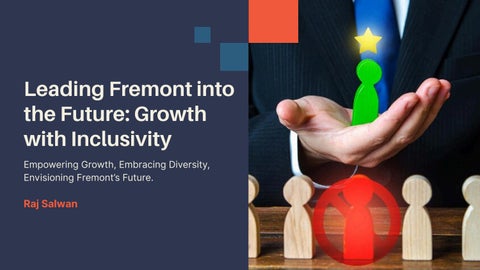
Empowering Growth, Embracing Diversity, Envisioning Fremont’s Future.
The city’s evolution into a hub of opportunity hasn’t happened by chance. It is guided by a vision that reflects the needs and aspirations of its residents. Mayor Salwan’s approach to leadership is centered on listening to the community, understanding its challenges, and implementing solutions that create measurable impact. This vision is not about short-term fixes; it’s about long-term prosperity.
From neighborhood safety to housing affordability, the mayor’s priorities address the most pressing issues facing Fremont today. He understands that a thriving city is built on trust between leaders and residents, and that trust grows when leadership delivers tangible results.



Public safety forms the foundation of any thriving community. Without it, economic development, education, and quality of life cannot flourish. Fremont’s leadership has made significant strides in supporting its police and fire departments, investing in advanced training, technology, and community programs that strengthen the relationship between law enforcement and residents. Efforts such as increasing neighborhood patrols, expanding community watch programs, and improving emergency response times ensure that residents feel secure in their homes and public spaces. These initiatives not only reduce crime but also build trust, reinforcing the idea that Fremont is a safe place to live, work, and raise a family.
The Bay Area’s housing crisis is a challenge felt deeply in Fremont. With rising rents and housing costs, many families struggle to find a place they can afford. Mayor Raj Salwan has made affordable housing a top priority, working to expand development projects that cater to middle- and low-income residents. Through strategic partnerships with developers, non-profits, and state agencies, the city is creating new housing opportunities without compromising on quality or sustainability. Affordable housing initiatives also aim to reduce displacement, ensuring that long-time residents can continue to call Fremont home despite economic pressures.
The mayor’s strategy balances the need for new construction with responsible urban planning. By focusing on mixed-use developments near transit hubs, Fremont can accommodate growth while minimizing environmental impact and traffic congestion.

A thriving Fremont is one where small businesses have the resources they need to succeed. Local entrepreneurs are the backbone of the city’s economy, creating jobs, driving innovation, and shaping the character of neighborhoods. Under current leadership, the city has implemented programs to streamline business licensing, reduce regulatory burdens, and provide access to grants and training. Small business incubators and innovation hubs have also been established to encourage startups and creative ventures.
These efforts ensure that Fremont remains competitive in attracting investment while preserving the unique, community-oriented feel of its commercial districts.
A healthy local economy benefits everyone, from shop owners and employees to residents who enjoy more choices in goods and services.

Infrastructure is the lifeline of any growing city. Roads, public transit, parks, and community facilities must evolve to meet the demands of a growing population. Fremont has embraced this challenge by investing in projects that enhance mobility, safety, and environmental sustainability.
Upgrades to roads, bike lanes, and pedestrian pathways make it easier and safer for residents to navigate the city without relying solely on cars. Public transit improvements connect neighborhoods to regional job centers, reducing commute times and environmental impact. Sustainability is another cornerstone of Fremont’s development strategy. From expanding green spaces to adopting renewable energy projects, the city is working toward reducing its carbon footprint while improving quality of life. Initiatives such as tree-planting campaigns, electric vehicle charging infrastructure, and solar energy adoption are creating a greener, healthier environment for residents.


The work of building a thriving and inclusive city is never complete. Challenges such as housing affordability, climate change, and economic shifts will continue to test Fremont’s resilience. However, the city’s progress so far demonstrates that with strong leadership, community engagement, and a shared vision, these challenges can be met head-on.
Mayor Raj Salwan’s tenure reflects a commitment to balance — between growth and preservation, innovation and tradition, prosperity and equity. His leadership is not just about steering the city through today’s challenges, but about laying a foundation for a future where Fremont continues to thrive as a place of opportunity, safety, and unity.
In a rapidly changing world, Fremont stands as an example of what is possible when a city embraces diversity, invests in its people, and plans thoughtfully for the years ahead. With a clear vision and dedicated leadership, the city is well on its way to becoming not just a better place to live, but a model for communities across the nation.