Protecting Digestive Wellness: The New
Era of Preventive Gastroenterology by
Raj Devarajan

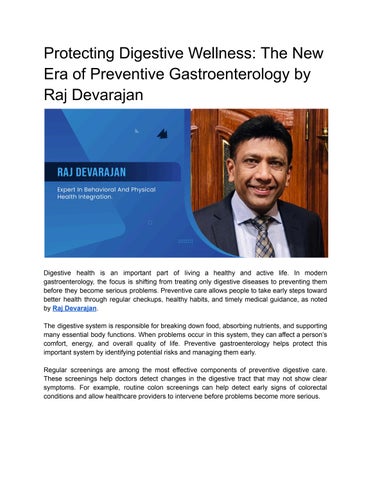
Digestive health is an important part of living a healthy and active life. In modern gastroenterology, the focus is shifting from treating only digestive diseases to preventing them before they become serious problems Preventive care allows people to take early steps toward better health through regular checkups, healthy habits, and timely medical guidance, as noted by Raj Devarajan
The digestive system is responsible for breaking down food, absorbing nutrients, and supporting many essential body functions When problems occur in this system, they can affect a person’s comfort, energy, and overall quality of life. Preventive gastroenterology helps protect this important system by identifying potential risks and managing them early
Regular screenings are among the most effective components of preventive digestive care. These screenings help doctors detect changes in the digestive tract that may not show clear symptoms For example, routine colon screenings can help detect early signs of colorectal conditions and allow healthcare providers to intervene before problems become more serious.
Preventive care also encourages people to develop healthier daily routines A balanced diet with fruits, vegetables, whole grains, and fiber supports good digestion and helps maintain a healthy gut Drinking enough water, exercising regularly, and reducing unhealthy eating habits can also improve digestive function and lower the risk of certain conditions.
Another important part of modern gastroenterology is patient education When people understand their digestive health, they become more aware of changes in their bodies. Symptoms such as ongoing stomach discomfort, unusual bowel changes, or unexplained weight changes should not be ignored Early communication with a healthcare professional can help identify concerns and provide proper support.
Technology has advanced, making preventive gastroenterology more effective New diagnostic methods allow doctors to examine digestive health with greater accuracy. These improvements help create personalized care plans that match each patient’s needs, making prevention more practical and successful.
Preventive care also helps reduce the need for complicated treatments in the future By identifying risks early and following medical advice, patients can often manage their health more effectively This approach saves time, reduces stress, and encourages long-term wellness
The future of gastroenterology will continue to focus on prevention, awareness, and personalized care By making healthy choices, attending regular screenings, and staying informed about digestive health, individuals can take meaningful steps toward protecting their well-being. Preventive gastroenterology is not only about avoiding illness; it is about building a healthier lifestyle for the years ahead