REPORT
BACK
BACK
SUMMARY FINDINGS ON ROUNDTABLE #3 OF THE QUEER FORCED DISPLACEMENT INITIATIVE BANGKOK, THAILAND MARCH 5-6, 2024

ASEAN
ASYLUM SEEKER
CITIZEN
CSO
HRD
IDP
IOM
ILO
LGBTQI+ NO LEGAL STATUS
Association of Southeast Asian Nations
An asylum seeker is a person who has left their country and is seeking protection from persecution and serious human rights violations in another country, but hasn’t yet been legally recognized as a refugee.
A citizen is a person who, by place of birth, nationality of one or both parents, or naturalization is granted full rights and responsibilities as a member of a State.
Civil Society Organization
Human Rights Defender
Internally Displaced Person
International Organization for Migration
International Labor Organization
Lesbian, Gay, Bisexual, Transgender, Queer, Intersex, other identities not specifically listed, such as asexual, pansexual, nonbinary, two-spirit, and more.
Someone without any legal immigration status (either temporary or permanent) in their country of residence. This is sometimes also referred to as someone who is “undocumented” or “non-status”.
NSM PERMANENT RESIDENT
National Screening Mechanism: An administrative framework created by the Thai government to identify individuals unable to safely return to their countries and designate them as “protected persons.”
A person who has been granted the right to reside permanently in a certain country, but is not a citizen. Permanent residents are often afforded basic rights similar to those of citizens, with some limitations and restrictions.
REFUGEE
RLO
RSD
RTG
SOGIESC
STATELESS
PERSON TEMPORARY
RESIDENT
UNHCR
A refugee is someone who, owing to well-founded fear of being persecuted for reasons of race, religion, nationality, membership of a particular social group or political opinion, is outside the country of their nationality and is unable or, owing to such fear, is unwilling to avail themself of the protection of that country; or who, not having a nationality and being outside the country of their former habitual residence, is unable or, owing to such fear, is unwilling to return to it.. The legal definition that applies to a given refugee varies between countries based on the applicable national legal framework, regional declarations and conventions, complementary protection policy frameworks, and international law. The broad definition offered here is derived from the 1951 Convention Relating to the Status of Refugees and its 1967 Protocol.
Refugee Led Organization
Refugee Status Determination
Royal Thai Government
Sexual Orientation, Gender Identity and Expression, and Sex Characteristics
A person is “stateless” if no State recognize them as a citizen. Stateless persons lack critical protections and are deprived of many basic rights such as education healthcare and the ability to travel outside of their country.
A foreign national who is legally authorized to enter and live in a certain country for temporary purposes (work, studies, etc.).
United Nations High Commissioner for Refugees
This report summarizes key insights from the Queer Forced Displacement Initiative (QFDI) roundtable consultation held in Bangkok, Thailand, on March 5-6, 2025. The Thailand roundtable was the third in a series of global consultations convened by Rainbow Railroad to understand the challenges facing LGBTQI+ refugees and migrants in transit country contexts, and to gather expert input on the creation and design of a coordinated, multi-stakeholder global network on queer forced displacement.
The roundtable convened LGBTQI+ civil society organizations (CSOs), migrant-led groups, individuals with lived experience, and human rights defenders, alongside representatives from diplomatic missions in Thailand, UN agencies, and international organizations. The consultation provided an opportunity to identify priority concerns, examine systemic and structural drivers of displacement, and to explore the value and feasibility of establishing a global network to strengthen protection, knowledge sharing, and advocacy.
Thailand occupies an important geopolitical position at the crossroads of Southeast Asia and has served as both a major destination and transit country for people fleeing conflict, political persecution, discrimination, and economic instability. In recent years, the escalating crisis in Myanmar has dramatically increased cross-border movement, with Thailand receiving large numbers of displaced people, including LGBTQI+ individuals seeking safety. While Thailand is widely perceived as a comparatively progressive setting for LGBTQI+ rights—having decriminalized homosexuality in 1956, enacted gender equality legislation, and recently passed marriage equality—roundtable participants emphasized that these protections do not extend to migrants without legal status. As one participant noted during the consultation, “that safety is not for migrants.”
For LGBTQI+ migrants and asylum seekers, Thailand’s non-accession to the 1951 Refugee Convention creates a deeply insecure protection environment. Without a comprehensive legal framework for refugee recognition, asylum seekers are classified under domestic law as “ille -
gal migrants,” leaving them vulnerable to detention and deportation regardless of their protection needs. This gap between Thailand’s progressive domestic LGBTQI+ legal framework and the precarious reality facing LGBTQI+ forcibly displaced persons formed a central tension throughout the roundtable discussions.
This report distills the core issues surfaced through the consultation process, and contextualizes them with publicly available evidence on Thailand’s migration landscape, legal and policy environment, and challenges facing LGBTQI+ forcibly displaced people. It concludes with participant input on the design and priorities of a global network on queer forced displacement. The collective data and findings emerging from Thailand, alongside insights from all other regional consultative roundtables, will be integrated into the design, focus, and function of the multi-stakeholder network on LGBTQI+ forced displacement, which will be officially launched in 2026.
For more information about the QFDI, visit https://www.rainbowrailroad.org/qfdi.
Note: This report aims to provide a snapshot of conditions facing LGBTQI+ forcibly displaced persons in Thailand. However, it does not purport to offer an exhaustive understanding or comprehensive representation of the diverse realities of all forcibly displaced LGBTQI+ persons in Thailand. As a limited scope consultation, certain perspectives, nationalities, and lived experiences are inevitably absent from this account. The findings herein reflect what these specific participants experienced and chose to share during the consultation, acknowledging that many other voices, challenges, and contexts remain undocumented in this report.
The following recommendations emerged from participant testimony regarding urgent reforms needed to address systemic barriers facing LGBTQI+ forcibly displaced persons in Thailand and the broader Southeast Asian region:
Recommendations to the Royal Thai Government
• Accede to the 1951 Refugee Convention and 1967 Protocol and establish comprehensive domestic asylum frameworks that recognize SOGIESC-based persecution as grounds for refugee status. As a non-party to the Refugee Convention, Thailand lacks a legal foundation for refugee protection, leaving asylum seekers classified as “illegal migrants” and vulnerable to detention and deportation regardless of their protection needs. Thailand and other non-signatory states in the region must accede to these international instruments or, at minimum, develop domestic legal mechanisms for refugee recognition to ensure that LGBTQI+ individuals fleeing persecution are protected against refoulement.
• Reform and expand the National Screening Mechanism (NSM) to provide robust, meaningful protection and a pathway to permanent residence. TThe scope of protection offered through the NSM is severely restricted—access to the process is only available to individuals held in immigration detention, and “Protected Person” status confers only temporary stay in Thailand and protection from refoulement. Reforms to the NSM must include expanding access to protection those outside of detention, guaranteeing freedom of movement and work rights to Protected Persons, and establishing clear pathways to durable solutions.
• Grant legal status, work authorization, and protection from refoulement to UNHCR-recognized refugees. UNHCR refugee recognition in Thailand does not confer legal status, work authorization, or long-term residency, and critically, does not protect against detention or removal. Thailand must ensure that UNHCR-recognized refugees receive legal status that includes work rights, freedom of movement, and protection from deportation. UNHCR must also work to streamline registration and determination processes, reduce barriers to accessing RSD procedures, and ensure SOGIESC claims are assessed with cultural competency.
• Simplify and expand regularization pathways to ensure LGBTQI+ forcibly displaced people can access legal status. In the absence of a comprehensive refugee protection framework in Thailand, LGBTQI+ individuals must pursue alternative routes for legal status that are prohibitively expensive, administratively complex, and governed by constantly shifting regulations. Thailand must develop accessible regularization pathways that reduce cost and documentation barriers, expand work authorization beyond restrictive labor categories, and offer routes to permanent residence in Thailand.
• Ensure that existing LGBTQI+ legal protections and anti-discrimination measures extend to migrants and asylum seekers. While Thailand has enacted progressive domestic LGBTQI+ legislation, including marriage equality and gender equality laws, participants emphasized these protections do not extend to non-citizens. As a result, LGBTQI+ forcibly displaced people face discrimination when accessing healthcare, housing, employment and other essential services without legal recourse. Thailand must ensure that anti-discrimination protections apply regardless of migration status.
• Operationalize domestic laws against torture and enact comprehensive anti-trafficking legislation. Thailand must strengthen the implementation of the Prevention and Suppression of Torture and Enforced Disappearance Act B.E. 2565 to prevent deportation of individuals at risk of torture. Thailand must also enact comprehensive anti-trafficking legislation and establish mechanisms to combat cross-border human trafficking to protect LGBTQI+ refugees vulnerable to exploitation.
• Implement alternatives to detention for irregular arrivals and ensure LGBTQI+ individuals are not placed in facilities based on sex assigned at birth. Participants identified immigration detention to stigmatize and dehumanize migrants, with transgender and gender nonconforming individuals facing heightened risks of sexual harassment and violence when detained. Thailand must prioritize community-based alternatives to detention and ensure that when detention is unavoidable, placement decisions respect gender identity rather than sex assigned at birth.
• Strengthen regional protection frameworks and accountability mechanisms to counter transnational repression and protect human rights defenders. ASEAN’s principle of non-interference — which prohibits member states from intervening in each other’s domestic affairs — constrains Thailand’s willingness to provide comprehensive protection to asylum seekers. Regional frameworks must prioritize protection obligations over diplomatic non-interference, with accountability mechanisms to prevent states from using bilateral agreements with neighbouring countries to circumvent refugee protection responsibilities. This includes establishing safeguards to protect human rights defenders from retaliation, criminalization, and refoulement.
• Expand resettlement opportunities and develop complementary pathways for LGBTQI+ refugees. In the context of shrinking global resettlement quotas and increasingly limited protection opportunities, LGBTQI+ forcibly displaced people face prolonged limbo without durable solutions. Resettlement countries must increase intake specifically for LGBTQI+ refugees, prioritize SOGIESC-based persecution cases, and develop complementary pathways.
• Increase funding and coordination support for LGBTQI+-inclusive refugee services and grassroots organizations. Recent global funding reductions have decimated already limited services, leaving LGBTQI+ forcibly displaced people without adequate support. Donors must provide sustained investment in specialized, intersectional service provision and facilitate coordination mechanisms that enable organizations to share expertise, make effective referrals, and collectively address the needs of LGBTQI+ migrants and refugees.
• Ensure meaningful participation of LGBTQI+ forcibly displaced people in international forums and policy-making processes. LGBTQI+ refugees and asylum seekers remain significantly underrepresented in global discussions where key protection policy decisions are shaped. International bodies and governments must create accessible mechanisms for people with lived experience to participate in policy development, provide concrete support for their engagement, and ensure their perspectives fundamentally guide protection responses.
Drawing from participant input on network design, governance, and strategic priorities, the following recommendations provide guidance for establishing and sustaining an effective global platform:
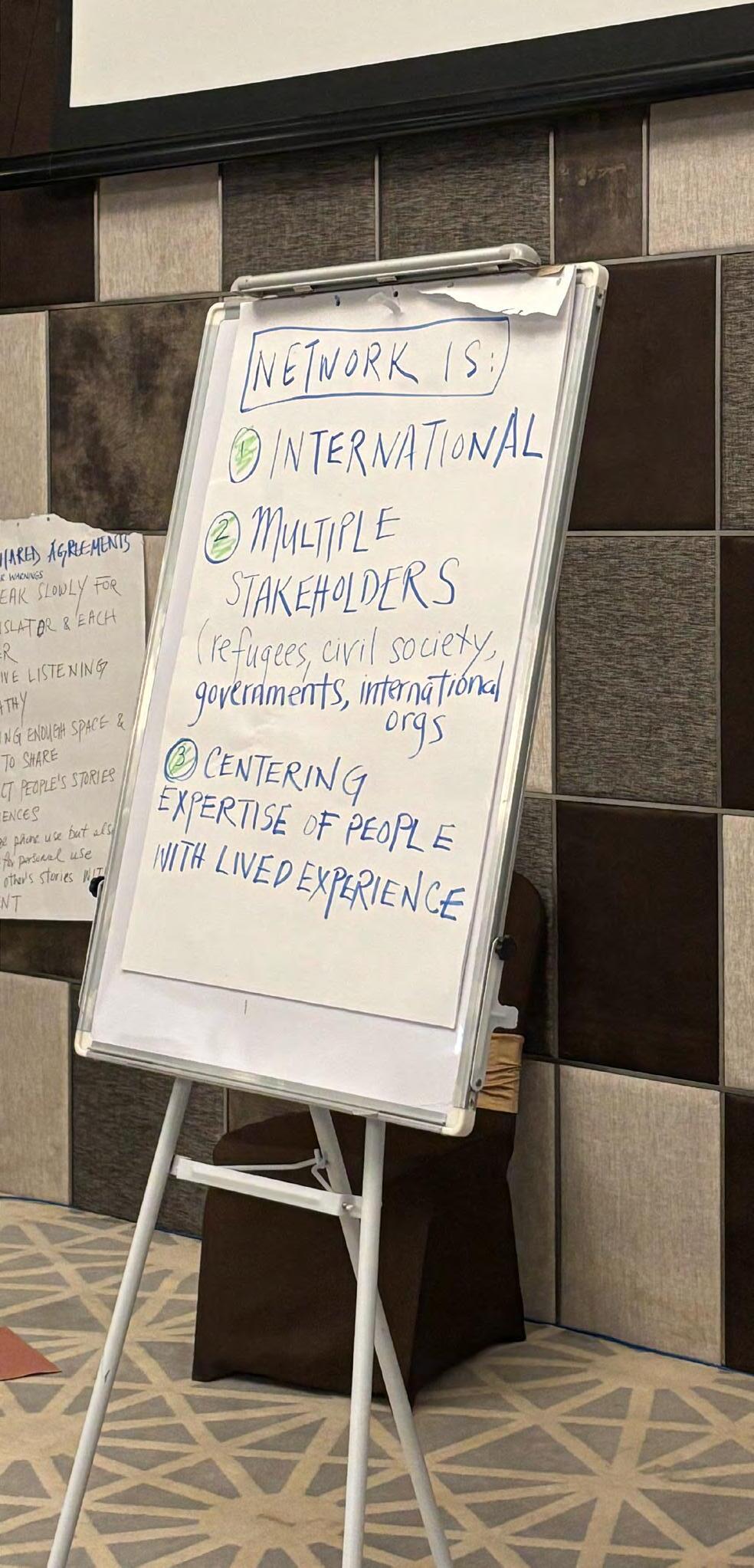
• Center the expertise and leadership of local organizations and people with lived experience in all aspects of network design and governance. Participants emphasized that meaningful change requires centering those with direct experience of forced displacement, and ensuring the network addresses root causes rather than imposing top-down solutions. Decision-making must be rooted in local experience and the network must intentionally platform unheard voices, including disabled LGBTQI+ migrants who are often excluded from decision-making spaces.
• Design the network around the principle of complementarity, filling gaps that individual organizations cannot address alone. The network should focus on activities that single actors cannot accomplish, creating collective power and achieving shared goals beyond individual organizational capacity. Participants cautioned against duplicating existing work, emphasizing the need to leverage and optimize efforts already underway rather than reinventing the wheel.
• Establish multi-stakeholder membership with safeguards against institutional co-optation and power imbalances. While multi-stakeholder coalitions can shift power dynamics and leverage diverse expertise across sectors, participants identified significant risks, including government or UN agency domination, Global North agenda-setting, and exclusion of grassroots actors. The network must implement clear governance structures and accountability mechanisms to ensure community-led priorities are not undermined by more powerful actors.
• Create flexible governance structures with rotating leadership and community-centered decisionmaking. Participants recommended against overdefining the network structure during early phases, advocating instead for a loose, organic framework that can evolve responsively. A secretariat should coordinate activities and information-sharing, with decision-making roles rotating to ensure power remains evenly distributed and new voices are continuously elevated.
• Prioritize trust-building and relationship cultivation during nascent years before rigid structures are imposed. Participants emphasized that authentic connections around common goals are more likely to sustain engagement beyond initial convenings than imposed frameworks. The network should create spaces for dialogue where shared values emerge naturally, addressing network fatigue by identifying where resources exist, and strengthening capacity for genuinely safe and inclusive spaces.
• Balance global coordination with local autonomy through bidirectional dialogue mechanisms. Any global agenda must remain firmly grounded in local expertise and experiences, with formal mechanisms ensuring local realities directly inform network priorities. The network cannot become dictatorial or prescriptive, but must support local initiatives with full autonomy, strategically engaging with existing coalitions rather than duplicating efforts.
• Develop the network as a “learning space” for knowledge exchange, data collection, and evidence building. Participants identified the dearth of reliable data on migration and LGBTQI+ communities in Southeast Asia and globally as undermining evidencebased policymaking. The network should create searchable databases, facilitate access to data for resource-constrained organizations, and remove administrative burdens that prevent grassroots groups from focusing on frontline advocacy.
• Coordinate strategic advocacy on concrete priorities including legal recognition in countries of arrival, NSM reform, and alternatives to detention. The network should pursue specific campaigns grounded in documented challenges while also addressing underrepresentation of people with lived experience at forums like the Global Refugee Forum, ensuring LGBTQI+ forcibly displaced people can advocate on issues affecting them at the highest levels of policy-making.
• Explore innovative funding models that transform humanitarian access for marginalized populations. Participants proposed the network serve as a grantee with sub-granting capacity, identifying grassroots experts and distributing funding directly with minimal intermediary layers. This approach could reach people in conflict zones, rural areas, and those facing humanitarian blockades who are excluded from traditional granting mechanisms.
• Embed robust data protection protocols and security considerations in all network activities. Security risks are paramount when working with LGBTQI+ migrants and refugees who face vulnerabilities including information leakage, imprisonment risks, and complex consent issues. Mitigation requires securing government buy-in, establishing comprehensive data protection, and ensuring safety is foundational to decision-making processes.
• Diversify funding sources at local, regional, and global levels to ensure network sustainability. Participants emphasized engaging multiple sectors, including private sector corporate social responsibility and public advocacy, to prevent competition among organizations for limited funding. The network should facilitate connections and provide technical assistance rather than implementing programs directly, positioning itself as a support mechanism rather than a resource competitor.
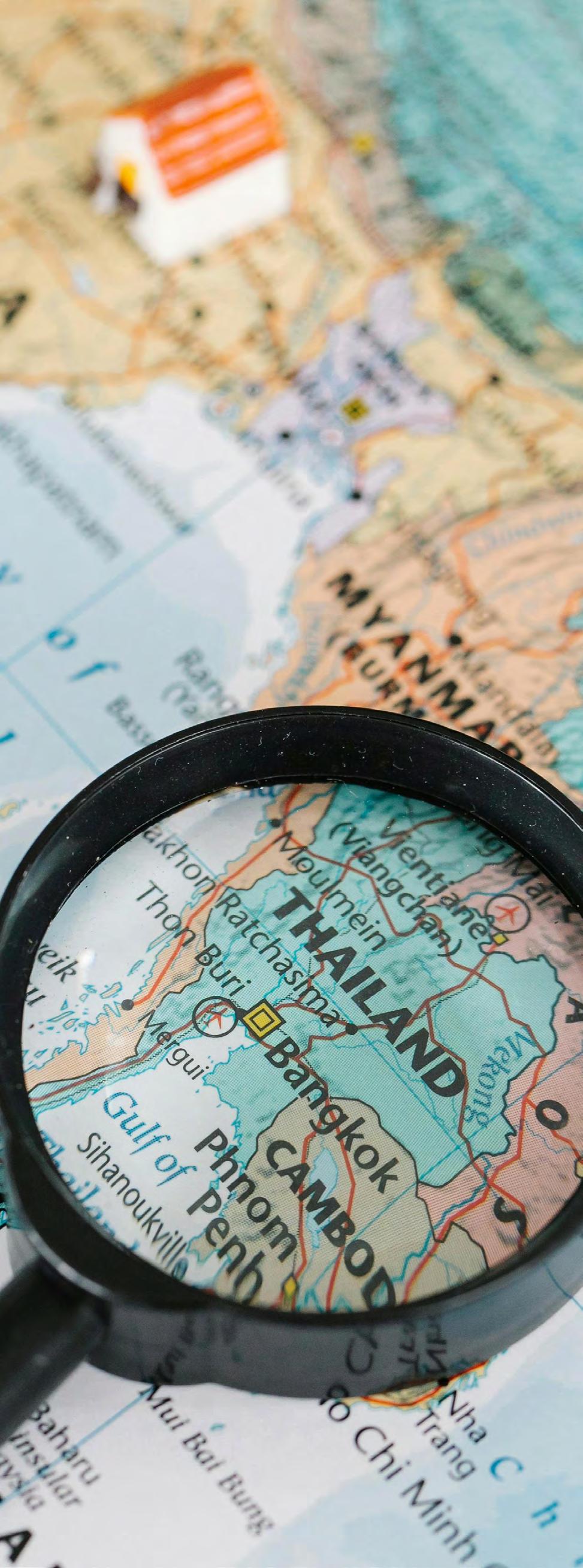
Thailand’s migration landscape is shaped by its geographic position at the crossroads of Southeast Asia, sharing land borders with Myanmar, Laos, Cambodia, and Malaysia. This positioning, combined with its status as a regional economic hub, creates distinct migration dynamics characterized by substantial labor migration through both regular and irregular channels, as well as significant flows of forcibly displaced individuals seeking refuge from civil wars, political repression, and other forms of persecution—including LGBTQI+ individuals fleeing SOGIESC-based persecution (IOM, 2024; UN Network on Migration, 2024).
Thailand’s role as a host country for refugees and asylum seekers became even more pronounced following Myanmar’s 2021 military coup, which created a renewed forced displacement crisis with hundreds of thousands of individuals seeking refuge in Thailand. Recent data from the International Organization for Migration (IOM) indicates Myanmar nationals constitute the largest migrant group in the country, with an estimated 1.3 million Myanmar nationals crossing the border in 2024, many in search of longterm safety from conditions of violence and persecution. (IOM 2024).
Progressive LGBTQI+ Rights Without Refugee Framework
Thailand may be particularly attractive to LGBTQI+ migrants given its reputation as one of the more progressive countries in the region regarding LGBTQI+ rights. Homosexuality was decriminalized in 1956, and the Gender Equality Act B.E. 2558 (2015) prohibits unfair gender-based discrimination against all persons including male, female, and LGBTQI+ persons (UN Women, 2020). The Marriage Equality Act entered into force in January 2025 (Al Jazeera English, 2025), and a Gender Recognition Act introducing legal gender recognition based on self-identification is currently progressing through parliament (Lexology, 2024).
However, for many LGBTQI+ migrants and asylum seekers, the promise of safety and freedom stands in stark contrast to the reality of an extremely insecure protection environment in Thailand. Despite receiving hundreds of thousands of refugees over the course of several decades, Thailand remains non-signatory to the 1951 Refugee Convention and lacks a comprehensive legal framework for the recognition of refugees (UNHCR, 2025). Rather than committing to global protection standards, the government has consistently managed mass displacement situations through bilateral arrangements or regional mechanisms (IOM 2024). Asylum seekers continue to be classified under domestic law as “illegal migrants” leaving them vulnerable to detention and deportation regardless of their protection needs. (East Asia Forum 2025).
As Thailand is a non-party to the Refugee Convention, “the mandate to grant refugee status in the country lies with the UNHCR” - the UN Refugee Agency. ( The New Humanitarian, 2025). The UNHCR’s Refugee Status Determination (RSD) process is complex and lengthy, with waiting times of several months to years due to the large number of asylum applications (Asylum Access, 2025). Registering with UNHCR does not guarantee access to material assistance, which is extremely limited and unavailable to the vast majority of refugees and asylum seekers in Thailand (UNHCR, n.d.). Critically, UNHCR recognition does not provide secure protection, confer legal rights or status in Thailand, nor does it prevent individuals from being detained or deported by Thai authorities (UNHCR, n.d.).
In 2023, the Royal Thai Government (RTG) launched the National Screening Mechanism (NSM), an administrative
framework operating independently from UNHCR’s registration and RSD process, designed to identify individuals unable to safely return to their countries due to fear of persecution, and designate them as “Protected Persons” (Center for Asylum Protection, n.d. ; CRSP, 2024). However, the mechanism’s legal scope remains severely limited, with the UN Network on Migration noting that, “Other than offering temporary stay and protection from refoulement, the legal status of a “Protected Person” remains unclear and does not include freedom of movement or the right to work” (UN Network on Migration, 2024). Independent assessments further note deficiencies in the mechanism’s clarity, delays in implementation, and restrictive eligibility criteria that excludes certain groups and undermines accessibility for vulnerable populations (APRRN, 2021; UN Network on Migratin, 2024). It was reported that these uncertainties within the NSM process have left asylum seekers feeling insecure and unable to plan for their futures (APRRN, 2021).
Thailand also maintains a network of immigration detention centers and long-standing refugee camps along the Thai-Myanmar border, which are marked by heavy surveillance, movement restrictions, and shrinking humanitarian resources (Global Detention Project, 2024; APHR, 2025). LGBTQI+ forcibly displaced people face heightened protection risks in carceral settings, including physical and sexual abuse ( Williams Institute, 2022). Transgender and gender nonconforming individuals are especially at risk, as they are often placed in detention facilities according to their sex assigned at birth rather than their gender identity, and are exposed to severe violations of their fundamental rights (Manushya Foundation, 2023; UNDP, 2019).
In view of the lack of viable protection pathways, forcibly displaced LGBTQI+ people often attempt to regularize their stay through alternative routes including labor schemes, education visas, and temporary documentation options. These pathways are governed by complex bilateral agreements and constantly shifting criteria (IOM, 2024), making them frequently inaccessible to those fleeing persecution and offering no durable solutions.
Moreover, the UN has reported that “while Thailand has progressively strengthened legal protections for people with diverse SOGIESC, the reality on-the-ground can be complicated”. (UN Network on Migration in Thailand, 2024).
Individuals with diverse SOGIESC face direct and indirect discrimination affecting access to employment, essential services including healthcare, education, and mental health support, as well as broader social exclusion. LGBTQI+ women face particular difficulties accessing housing and healthcare, which are exacerbated by their migration status (OHCHR, 2024).
Finally, many LGBTQI+ individuals fleeing Myanmar do so amid overlapping risks extending beyond SOGIESC-based persecution, including political repression, retaliation for human rights work, and targeted violence under conscription laws introduced in 2024 (ASEAN SOGI Caucus, 2025). These intersecting drivers of displacement, combined with restrictive migration systems in Thailand, place LGBTQI+ forcibly displaced people at the margins of already fragile protection structures.
Taken together, these dynamics underscore why Thailand is a critical location for understanding the experiences of LGBTQI+ forcibly displaced people in the region and highlight the urgent need for coordinated, multi-stakeholder approaches to address complex cross-border drivers of displacement, strengthen protection mechanisms, and ensure that LGBTQI+ migrants and refugees are not left behind.
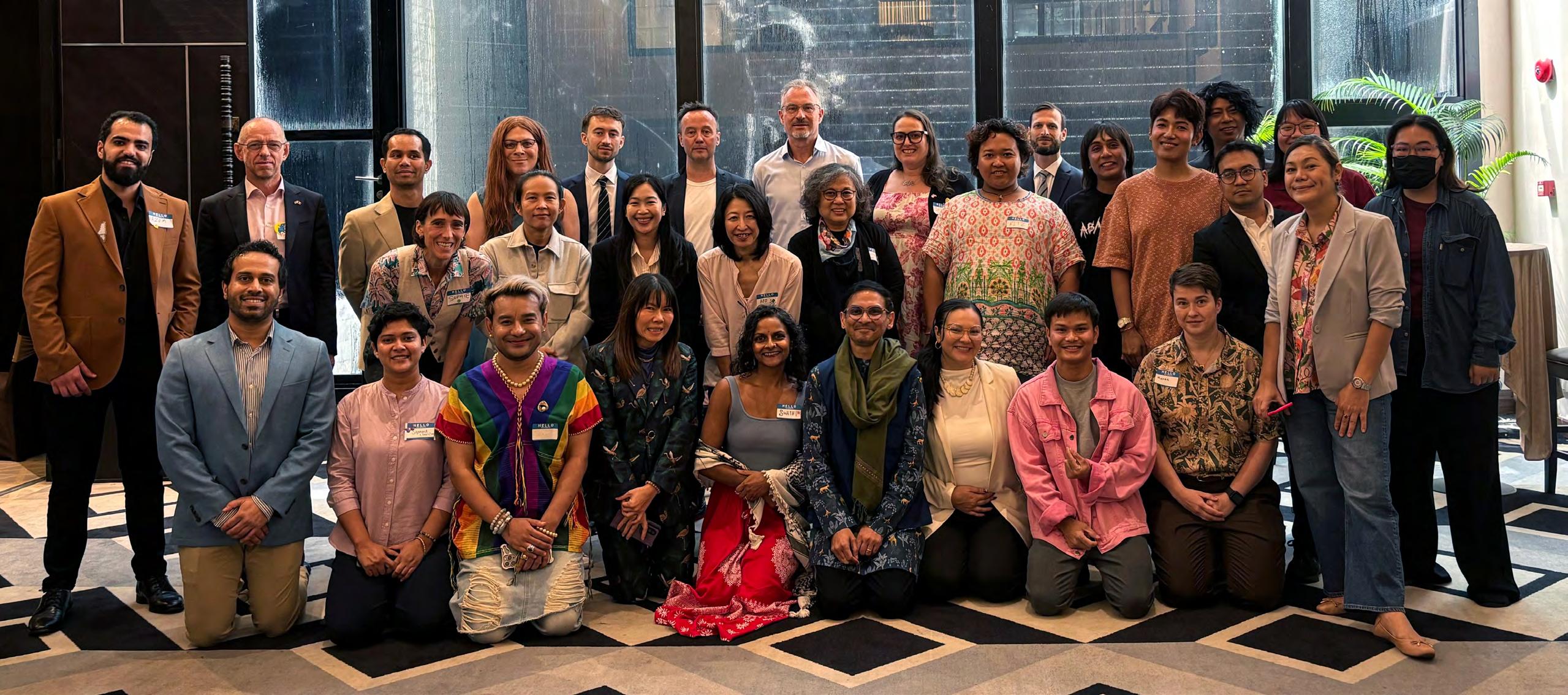
The Thailand roundtable was organized in partnership with the Equal Asia Foundation (EAF), Asia’s only LGBTIQ+ think tank, which addresses intersectional vulnerabilities including displacement through strategic foresight, advocacy, and capacity building. EAF provided critical support in identifying and reaching participants, tailoring content to the local context, and facilitating sessions during the roundtable. Additional planning support came from Canadian diplomatic staff in Thailand who assisted in connecting with other diplomatic missions for the second day of consultations and provided guidance on the regional political landscape. The roundtable utilized an inclusive, participatory approach that combined open discussions with focused breakout sessions to explore both the challenges facing
LGBTQI+ forcibly displaced persons in Thailand and the design of a global network to address these issues. The roundtable expanded on the second day to include representatives from governments and international organizations, fostering collaborative dialogue and knowledge exchange between grassroots actors and institutional stakeholders.
Sessions were conducted with simultaneous interpretation in English, Thai, and Burmese.
The roundtable convened 37 participants representing CSOs, migrant-led groups, individuals with lived experience of forced displacement, and human rights defenders, alongside representatives from diplomatic missions in Thailand, UN agencies, and international organizations. Of the 19 day one attendees, 17 completed pre-event surveys and 13 completed post-event surveys.
Participants represented diverse gender identities, with notable representation of transgender women, cisgender men and women, and genderfluid individuals. Sexual orientations were similarly diverse, with gay and queer identities most represented. The majority of participants (16) were based in Thailand at the time of the consultation.
Day one participants were predominantly from Myanmar (eight out of 17 survey respondents), with Thai nationals (six) and one Indonesian participant also present. This demographic composition largely reflects Thailand’s migration context, where Myanmar nationals constitute the largest migrant and refugee group in the country. However, the predominance of Myanmar perspectives represents a limitation of the day one findings, as the experiences discussed may not fully capture the diversity of LGBTQI+ forced displacement across Southeast Asia.
Participants included nine individuals connected to civil society organizations, nine with lived experience of forced displacement (including six individuals with refugee status and four asylum seekers), and seven activists or human rights defenders. While the consultation did not include participants residing directly in border camps, it featured representation from CSOs that provide services in camp and border settings, offering important insights into those contexts.
Day two expanded to include representatives from diplomatic missions (including Canada, Belgium and the European Union), UN agencies (UNHCR, UN Women), and international organizations, adding institutional and policy perspectives to the grassroots insights gathered on day one.
This limited scope consultation reflects the perspectives and experiences of a small group of participants, and does not purport to comprehensively represent all LGBTQI+ forcibly displaced people in Thailand or capture every dimension of their experiences. In particular, this consultation did not include the direct participation of individuals residing in refugee camps or detention centers, reflecting the structural challenges in accessing these settings. Thailand’s refugee camps along the Thai-Myanmar border operate under strict confinement policies that severely restrict both refugees’ freedom of movement and humanitarian actors’ access to these populations (Human Rights Watch, 2023); (APHR, 2025). LGBTQI+ individuals in these closed settings face compounded barriers to engagement, making their perspectives significantly more difficult for researchers and advocates to reach. While CSO representatives with border-based programs provided important insights into camp contexts, the absence of direct testimonies from camp residents and detainees represents an acknowledged gap in the consultation’s scope.
The majority of data collected was through simultaneous Thai and Burmese interpretation to English, which imposed certain limitations on the nuance and precision of participant statements, particularly regarding culturally specific concepts and experiences.
Finally, note that throughout this report, the terms Burma and Myanmar are used interchangeably, as are LGBTQI+, LGBT, and queer, reflecting the varied terminology used by participants during the consultation. This report also uses the terms “migrant, refugee, asylum seekers and forcibly displaced people” to encompass the diverse experiences of LGBTQI+ displacement individuals in Thailand. Many participants themselves used these terms interchangeably when detailing their own experiences navigating complex migratory experiences as LGBTQI+ persons.
Preliminary Note: Drivers of Displacement for LGBTQI+ Forcibly Displaced Persons from Myanmar
As noted above, the roundtable demographics reflected a majority of Myanmar nationals.As such it is helpful to examine more closely the displacement drivers affecting this population to contextualize the protection needs and experiences of LGBTQI+ Myanmar nationals who reach Thailand, as well as highlighting the plight of millions who remain trapped as internally displaced persons (IDPs).
Following the 2021 military coup, Myanmar has experienced escalating violence and state persecution that has driven mass displacement across the region. An estimated 19.9 million people in Myanmar—more than a third of the population—are in need of humanitarian assistance in that country, including more than 3.5 million internally displaced (UN Myanmar, 2024). With an estimated 1.3 million Myanmar nationals entering Thailand in 2024, the Thailand-Myanmar border remains “the largest country-to-country migration corridor in Southeast Asia” (IOM, 2025). Among the roughly 5.3 million non-Thai nationals in the country, at least 4 million originate from Myanmar as of 2024 (IOM, 2025; UN Network on Migration, 2024). It is further estimated that upwards of 1.7 million Myanmar nationals in Thailand are undocumented, exposing them to “the constant threat of harassment, arrest and deportation” (HRW, 2025).
Participants described how the military junta’s 2024 conscription law has created acute dangers for LGBTQI+ individuals who face being detained and forced into military service. One participant explained that transgender men, perceived as masculine by military officers, are particularly targeted for conscription despite widespread unwillingness to serve. Those conscripted are often placed on front lines as human shields, facing extreme human rights abuses and gender-based violence. Human rights organizations report that following the coup, LGBTQI+ individuals have been subject to extreme, systematic rights violations, including arrest, detention, torture and death (Human Rights Myanmar, 2024). In the wake of the military junta’s 2024 Conscription Law, it is reported that LGBTQI+ individuals face increased risks of “violence, insecurity and exploitation”, driving many to flee in order to avoid conscription (Queers of Burma Alternative, 2025). Roundtable participants described LGBTQI+ individuals in Myanmar being detained and forced into
military service. One participant explained that transgender men, perceived as masculine by military officers, are particularly targeted for conscription, and another participant shared that LGBTQI+ conscripted individuals are sometimes placed on the front lines as human shields, facing extreme human rights abuses and gender-based violence.
Participants shared that LGBTQI+ individuals in Myanmar also experience intensified verbal, physical, and sexual abuse specifically because of their identities, with transgender women facing especially severe violence. One participant noted, “I personally know a few people from the trans community who are on the run, and [there’s] no way to contact [them] at the moment.” The conscription law has also fueled increased human trafficking, as traffickers exploit the chaos of mass deportations and migration flows.
For those attempting to flee, barriers are formidable. Participants reported that obtaining passports is extremely difficult, travel costs are prohibitive, and movement is heavily restricted. Youth activists and pro-democracy advocates face particular scrutiny at borders and airports. One participant shared findings from their organization’s surveys indicating that before the conscription law, 93.1% of LGBTQI+ individuals were able to remain in Myanmar, but after its implementation, this dropped to 74%, with many now living in conflict zones or internally displaced camps. Others attempt to reach neighboring countries—China, Laos, or Thailand—either through regular channels by obtaining and extending visas (a costly process), or through irregular migration.
While the findings in this report focus primarily on the experiences of LGBTQI+ migrants and refugees in Thailand, participants repeatedly emphasized the dire conditions facing their LGBTQI+ friends and loved ones unable to escape Myanmar.
The roundtable engaged 24 attendees on day one. Pre-event surveys indicated that most day one partici-
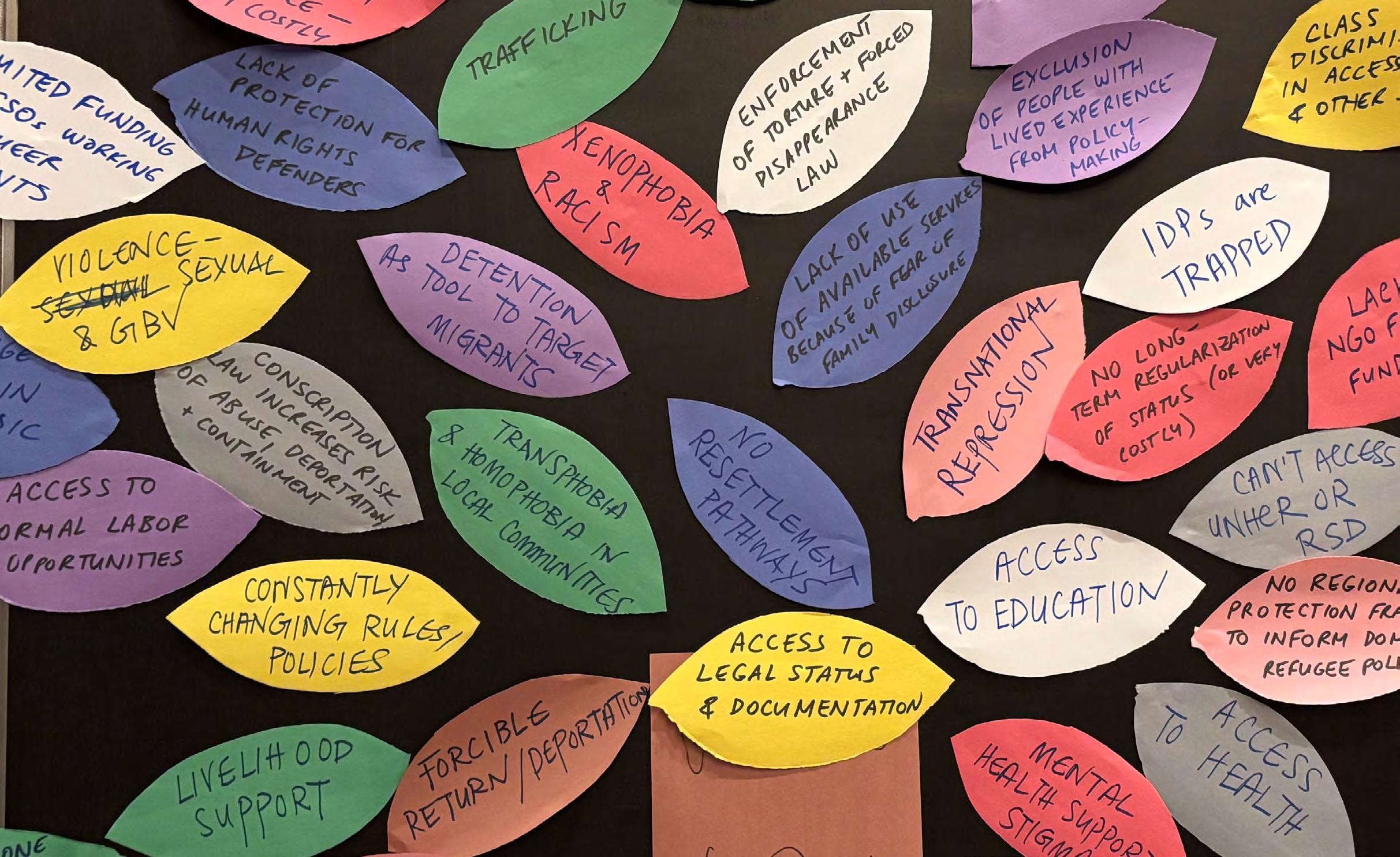
Participants in the Thailand roundtable identified several interconnected challenges facing LGBTQI+ migrants and refugees. These issues stem from systemic barriers within Thailand’s restrictive legal and policy framework for migration, compounded by regional and geopolitical dynamics, social discrimination, and insufficient support for LGBTQI+ forcibly displaced people. The challenges described below reflect the structural conditions that impact LGBTQI+ forcibly displaced people navigating these systems.
Among the most fundamental challenges facing LGBTQI+ migrants and refugees in Thailand is the absence of legal pathways to protection and regularization, which manifests in two primary forms: lack of access to asylum and formal protection systems, and the absence of viable pathways to regularization and durable solutions.
Individuals fleeing persecution, including SOGIESC-based persecution, have extremely limited options for obtaining formal protection status in Thailand, or being safeguarded against refoulement. This issue takes on particular urgency for LGBTQI+ refugees as they find themselves caught between progressive domestic protections for LGBTQI+ Thai citizens and a restrictive migration regime that offers no formal asylum pathway.
Participants noted that although the Thai government presents the country as an attractive destination where LGBTQI+ individuals can live safely, the reality of applying for protection and interfacing with the UN system ends up creating new forms of precarity:
“The representation from the Thai Tourism Authority is ‘Go Thai, Be Free’ so people come and want to overstay visas. But [they] have to wait for many years to get refugee status...lots of LGB and trans refugees feel [the] struggle.”
Without a domestic asylum determination framework, the UNHCR has long been the only avenue in Thailand for individuals seeking safety to access refugee status determination (RSD) procedures and protection from refoulement. However, participants described long timelines, complex processes, and uncertain outcomes that impede meaningful access to protection. UNHCR registration and determination can take months or years, and not all registered asylum seekers receive RSD interviews. One participant noted that since contacting UNHCR Thailand for support several years ago, they only received one call back in 2022. Another stated that it is “very difficult to reach the UN,” and recounted having to wait three months just for an initial
connection with UNHCR, only to be later told “not to come” to Thailand.
Participants also highlighted ongoing limitations within UNHCR’s RSD process that create particular barriers for LGBTQI+ asylum seekers, noting that “Being LGBT is not enough”, and that applicants must also demonstrate that they are “highly functional and [under] constant threat of persecution...It’s unfair and cruel. What needs to be advocated to UNHCR is that refugee status should be taken seriously whether they are two minutes away from death or not.”
Finally, it must be noted that refugee recognition by the UNHCR does not confer legal status, work authorization, or long term residency in Thailand (UNHCR Thailand, n.d.), and perhaps most critically participants highlighted that even for those who do get it, UNHCR registration or status does not protect against removal. The result is an RSD process that offers recognition without meaningful protection.
Outside of the UNHCR system, the only other avenue for LGBTQI+ asylum seekers in Thailand to access formal protection status comes through the recently implemented National Screening Mechanism (NSM), created by the Royal Thai Government (RTG) to identify vulnerable individuals and designate them as “protected persons.” Established in 2019 and operational since late 2023, the NSM was intended to provide an avenue for protection outside of UNHCR processes. However, participants stated the NSM is currently a non-viable option for most LGBTQI+ forcibly displaced people. Still in its very early stages of implementation, participants shared that as of the date of the roundtable in March 2025, fewer than ten cases had been approved through this mechanism. One participant, representing a resettlement country government, noted that the effectiveness and reach of the NSM has been severely limited:
“They have specific conditions to be able to apply, and only very few cases have gone through to reach ‘protected persons’ status.”
It was further highlighted that the NSM is very restrictive in its scope, is only available to individuals held in immigration detention, and that applicants are required to pay their own bail if they wish to reside outside of detention.
The cumulative effect of these barriers, lengthy UNHCR processes that offer recognition without legal protection, and an NSM mechanism with extremely limited accessibil -
ity, is that LGBTQI+ forcibly displaced persons in Thailand have no meaningful access to formal protection systems.
With both UNHCR and domestic protection mechanisms processes offering limited or no effective protection, LGBTQI+ individuals must pursue alternative routes for legal status through Thailand’s general migration system. Participants described these options as prohibitively expensive, administratively complex, and governed by constantly shifting regulations that create sustained insecurity.
One regularization pathway which participants attempted to access in Thailand was education visas, but these require acceptance to specific Thai universities and substantial financial resources which many forcibly displaced individuals lack. One refugee participant assigned to Mae Sot explained the barriers:
“To join universities in Thailand, you need an education visa. It’s expensive and inaccessible. You have to be accepted to a university, but can’t do that because of the government.”
One activist who previously worked with LGBT youth in Burma described spending a year consumed by navigating ever-changing requirements and onerous visa renewal timelines:
“[It took] me one year to get legal documents and lots of money. [The visa is] so expensive. [I] faced a lot of changing rules and regulations from both countries ... I can’t even sleep at night because I have to wait to apply [to] so many processes to extend [my] visa. Every 45 days [I] have to go and get [my] visa stamped. It took one year to finally get a secure visa.”
Even when individuals do manage to secure visas, they face ongoing precarity due to permit restrictions. One participant, an LGBTQI+ activist fleeing forced conscription in Myanmar, described how although they are attending university with an education visa, they are still forced to work without authorization in order to survive, creating a pervasive sense of unease:
“I have a constant fear. I teach here to cover my living costs, but because I don’t have a Thai teaching license ([it] isn’t legal) ... I have a visa but could be deported
or arrested at any time, [by] the Thai government or Burmese government.”
Access to work authorization permits present equally significant barriers. Participants described the complex “green book” labor registration system for irregular migrants from Myanmar, which offers only basic labor opportunities with severe restrictions. One participant explained:
“Only registered with [a] work visa for basic labour. We have a green book where we can travel around Thailand but cannot move outside borders. It’s registered to the Ministry of Labour and Migration, which is tied to the military junta.”
This reflection also points to a dangerous added complexity for many LGBTQI+ migrants in Thailand: because these regularization programs are governed by bilateral agreements between the neighbouring countries, verification and cooperation from origin country governments is required, creating a very real risk for anyone fleeing persecution from those same authorities. In the context of LGBTQI+ migrants from Myanmar, multiple participants reported being unable to apply for work visas without alerting the ruling military government to their whereabouts in Thailand, limiting options for regularization even further and underscoring how losing legal status carries immediate life-or-death consequences for many.
The constant stress of navigating perpetually uncertain legal status profoundly affects the mental health and daily functioning of LGBTQI+ migrants. Some roundtable participants providing mental health services to the community shared that they themselves struggle with severe anxiety and a crippling fear of deportation. One counselor stated:
“I’m offering counseling to people struggling with mental health—[the] strange thing is, I’m also struggling but helping others heal. I feel anxious, insecure, and can’t sleep. I need legal protection and mental health support.”
Another described how documentation burdens consume the energy needed for community work:
“I work with LGBT community to empower them [through] counselling, but I still need counselling for myself, [on] how to survive and start a new life. We as professionals, [are] also trying so hard to work and get legal status, to work for [the] community.”
Ultimately, participants recognized how Thailand’s systems of classification of and legal designations of asylum seekers as “illegal migrants” create artificial categories of exclusion, dehumanizing LGBTQI+ refugees and trapping them in impossible situations, where they are unable to survive in their home countries, and then face criminalization in Thailand based on their legal status.
Several participants shared how Thailand’s geographic and political position in Southeast Asia significantly shapes the experiences of LGBTQI+ forcibly displaced people in the country. In particular, many roundtable attendees identified transnational repression and the threat of forced return as pressing issues that leave LGBTQI+ migrants feeling profoundly insecure in Thailand.
Participants noted how Thailand’s diplomatic relationships and bilateral agreements with neighboring countries creates serious vulnerabilities for those fleeing persecution, highlighting how the Association of Southeast Asian Nations (ASEAN) principle of non-interference—which prohibits member states from intervening in each other’s domestic affairs—acts as a constraint on Thailand’s willingness to provide comprehensive protection to asylum seekers. Roundtable participants shared how complex regional power dynamics and external forces serve to undermine the possibility of receiving meaningful protection from the government of Thailand:
“The Thai authorit[ies] perceive the military junta [in Myanmar] as the governing power, whereas Burmese people don’t. [There is] pressure from the junta to the Thai government due to ASEAN policies.”
Geopolitical factors also collide to politicize and limit access to protection through UNHCR systems. One participant explained:
“For UNHCR in Thailand, there are limitations from the Thai government. For people from Myanmar, they can’t get refugee status because of bilateral agreements with Myanmar and the ASEAN governments. It’s outside UNHCR’s power.”
When reflecting on their experiences, participants consisThe external influence of regional governments and geopolitical agendas has grave implications for LGBTQI+ migrants. Disturbingly, some participants reported that immigration enforcement is being weaponized as a proxy tool to target and deport Myanmar nationals who fled forced conscription laws. One participant described the pervasive, all encompassing fear within migrant communities due to these violent practices:
“Right now in Thailand, [there is] so much stigma, [and a] fear of police raids and deportation. This is especially serious because of recently enforced conscription laws, [and the] use of immigration crackdown[s] to force [the] return of Burmese people. As soon as they reach Burmese soil, they are arrested and taken for conscription.”
Participants further noted that Thailand also lacks comprehensive laws to combat cross border human trafficking, driven by the desperation of vulnerable LGBTQI+ individuals fleeing conflict and experiencing mass displacement in Myanmar.
Other participants relayed instances of individuals with specific profiles or identities, such as Uighurs from China and LGBT people from Malaysia, being targeted and forcibly removed to their countries. Even where protective frameworks theoretically exist, they remain unimplemented. One participant noted that Thailand’s Suppression of Torture and Forced Disappearance Act, passed in 2022, has yet to be been operationalized, with the result that “people at risk of being tortured will be deported.”
Critically, participants highlighted the absence of protection for human rights defenders in Thailand, which creates a chilling effect on local advocacy and organizing. One activist stated:
“I have friends in jail in Cambodia, in Kazakhstan, because they are working as human rights defenders. We don’t know how long we are free to speak like this. We’re trying to make sure that we won’t be criminalized.”
Another participant observed how those most visible in supporting LGBTQI+ migrants face heightened risks of being targeted:
“Power is with policymakers and life-experience leaders. Refugee leaders have no voice to challenge. If they challenge, they face backlash. There is no protection for human rights defenders.”
Participants drew connections between these local practices and broader global trends, including the rise of rightwing governments and the erosion of foundational refugee law principles. As one participant noted:
“Transnational repression undermines the principle of non-refoulement. Because the world is going towards the right, it seems like these actions and tactics will happen more.”
These trends are compounded by regional governance gaps and the absence of comprehensive protection frameworks. Another participant observed:
“Good governance is lacking in many countries in the region. Many countries don’t have refugee laws, even ID laws. There is a lack of refugee protection components, lack of gender sensitivity for LGBT communities. [The] framework is lacking regionally—[there is] no way to align to international standards.”
These regional governance gaps and the growing threat of transnational repression underscore the urgent need for coordinated regional and global advocacy mechanisms that can strengthen protection frameworks and hold states accountable to international standards, a role that participants envisioned the network could play.
LGBTQI+ migrants and refugees in Thailand reported facing compounded discrimination based on both their identity and migrant status, creating vulnerabilities distinct from those experienced by either LGBTQI+ Thai citizens or non-LGBTQI+ migrants.
Participants described experiences of exclusion from basic services due to homophobia and transphobia. One LGBTQ migrant participant explained:
“Some people are trans and have been criminalized because you are too feminine—they need a ‘real’ female. At the hospital when you go there, hospitals don’t accept you because you are LGBT.”
While Thailand’s Gender Equality Act prohibits unfair gender discrimination, participants emphasized these protections do not extend to LGBTQI+ migrants without legal status, further impeding access: “For foreign people, like people from Myanmar, [you] can’t get full LGBT rights. You can’t go to the hospital like Thai citizens, can’t get insurance.” Xenophobia further prevents integration and access to systems necessary for survival and integration into the local community:
“I am Burmese, and face discrimination based on that alone. When it comes to housing, when it comes to banking, [there are] so many layers of discrimination because the government system does not give us secure documents.”
Within refugee settings, LGBTQI+ individuals face additional stigma that forces them into hiding. As one representative from a camp-serving organization noted:
“In camps, LGBT communities do not self-identify due to cultural and societal pressures. No one knows the numbers. Data is very spotty.”
This invisibility entrenches exclusion from already limited programming. One participant described an individual in Mae Sot who enrolled in a migrant school for his GED1 but faced severe bullying due to his LGBT identity, ultimately forcing him to drop out.
A roundtable participant from an organization providing paralegal services to refugees further highlighted that homophobia not only makes it difficult to reach LGBT refugees in urban, camp and border settings, but also creates a risk of exposure for service providers working with LGBT populations. The participant noted that “some people resigned from working with us” after facing stigma and difficulties in their community due to this work, demonstrating how discrimination constrains the already limited support infrastructure.
Participants noted that the broader climate of anti-migrant sentiment in Thailand compounds these challenges, saying that “xenophobia, hate speech, fake news, and misinformation” are weaponized, with “refugees and migrants becoming scapegoats.” Another participant explained:
“Immigration detention is used as a tool to stigmatize, used for xenophobia, to dehumanize them.”
The cumulative effects of discrimination, stigma, and exclusion produce severe health consequences for LGBTQI+ migrants. Participants described “severe mental health challenges—depression, anxiety, and trauma,” noting that the lack of safe spaces for LGBTQI+ migrants further compounds their isolation and vulnerability to exploitation. Participants also highlighted physical health challenges, particularly the inability to access critical sexual and reproductive health (SRH) care due to both anti-LGBTQI+ discrimination and xenophobia.
Together, these intersecting forms of discrimination create conditions of severe marginalization for LGBTQI+ migrants and refugees, whose protection needs fall through the gaps between systems designed to serve either LGBTQI+ Thai citizens or non-LGBTQI+ refugees, but not both.
Gaps in Expertise, Capacity and Coordination
A critical gap identified by participants is that LGBTQI+ service organizations lack the specific knowledge, expertise, and resources to adequately support migrant and refugee populations, while refugee service organizations often lack SOGIESC-inclusive approaches.
Participants working in LGBTQI+ organizations described being unprepared for the migration-related needs of their clients. One CSO representative explained that their organization receives many referrals for cases involving visa issues and requests for support from people seeking to reside in Thailand, but acknowledged that they lacked sufficient expertise in migration processes to provide adequate assistance.
One participant working with an HIV hotline explained that transgender refugees often call the line seeking general refugee support because “LGBT organizations need more information and understanding in order to serve LGBT people who are refugees.” However, “there is no protocol to work on that, even though we are experts for queer and trans people,” the worker added. Participants also
highlighted the lack of LGBTQI+-focused services more broadly, particularly the scarcity of psychological support providers with experience serving both LGBTQI+ individuals and refugees. This gap leaves LGBTQI+ migrants without access to specialized support that understands both their identities and their migration circumstances.
Organizations working specifically with refugees similarly struggle with inadequate resourcing and limited SOGIESC expertise. These challenges were dramatically intensified in 2025 in the wake of massive global funding cuts to both LGBTQI+ and refugee sectors.
One representative working in a border region described how funding cuts have decimated already limited services:
“We serve half the population outside the camps— that was before the funding cuts. We still have a program but it’s much smaller. We do prioritize LGBT clients and refugees for protection and healthcare, but because of funding cuts, we are much reduced.”
Inadequate funding for LGBTQI+ programming means continued exclusion, with one participant describing feeling “left behind” due to the resource scarcity among service providers.
Participants emphasized the urgent need for better information sharing and coordination across service providers. One participant from an LGBTQI+ organization described the challenges of working in isolation without access to official networks. They noted that when LGBTQI+ migrants seek assistance, the organization is not equipped to make referrals to appropriate agencies or access formal channels like UNHCR or visa systems. The participant called for improved coordination mechanisms and greater flexibility from official agencies to enable LGBTQI+-serving organizations to better support their communities.
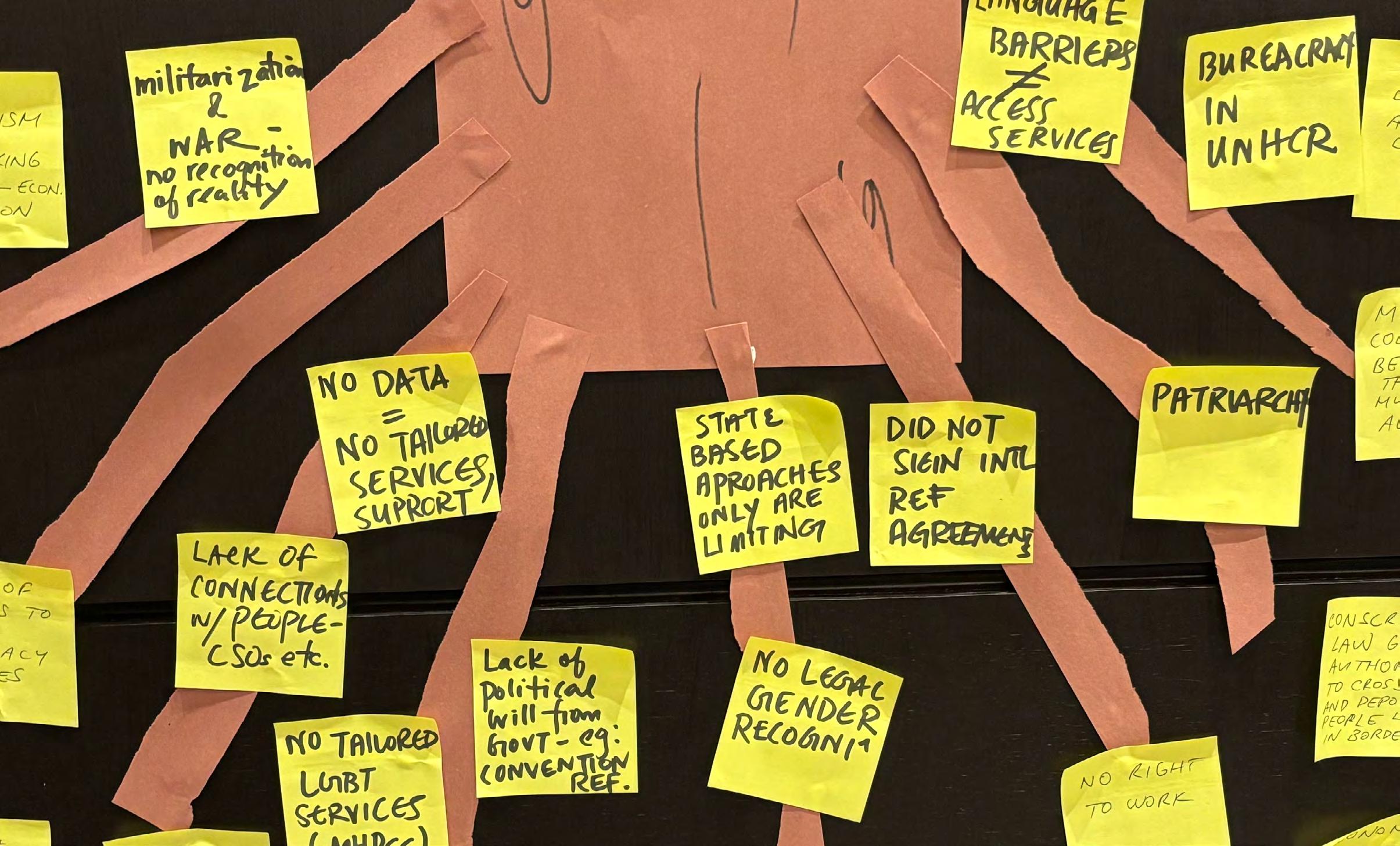
In response to the systemic barriers documented above, participants articulated recommendations for establishing a global network on LGBTQI+ forced displacement. The following sections capture their vision for a multi-stakeholder platform designed to bridge protection gaps, amplify marginalized voices, and coordinate advocacy across regions. Participants emphasized that meaningful change requires centering the expertise and leadership of people with lived experience and local organizations working directly with affected communities, with this principle serving as the foundation for all aspects of network design and governance.
Roundtable participants emphasized that addressing the root causes of LGBTQI+ forced displacement requires centering people with lived experience and local organizations. Building on this foundation, participants identified complementarity as a critical component of true solidarity, ensuring the network fills gaps that individual organizations cannot address alone, creating collective power, and achieving shared goals that exceed what any single actor could accomplish:
“[The] network should do things that organizations cannot do—that is the role of the network, that is the role of solidarity. We don’t need to have 10 or 20 activities or goals; set up small goals together that are attainable to drive that issue.”
Participants cautioned against pinkwashing and emphasized the importance of leveraging and optimizing work already done by existing organizations rather than reinventing the wheel.
Participants stressed that network membership should prioritize representation from LGBTQI+ migrants, refugees and grassroots organizations. The network must also work to include voices from the community that have historically been left out of these conversations, such as disabled communities, who often find themselves excluded from decision-making spaces due to unmet access needs. As stated by one participant:
“What does leadership even mean or look like? If we are coordinating educational workshops in a conflict area, how often do we hear from people who are enduring the conflict, who have a disability? We don’t hear from them at all. There’s not a lot of space to hear their stories—we need to really platform unheard voices.”
To proactively address these gaps, participants shared that the network must intentionally consider the access needs of disabled LGBTQI+ migrant communities, implementing measures such as providing language and translation support, utilizing communication methods accessible to
people at varying levels of technological literacy and education, and designing spaces where diverse people with lived experience can meaningfully participate.
Beyond ensuring accessibility within LGBTQI+ migrant and refugee communities themselves, participants examined the broader question of how to structure engagement across diverse stakeholder groups.
Participants acknowledged that building effective multi-stakeholder coalitions—bringing together UN agencies, governments, civil society, academics, and private sector actors—requires a significant investment of time, dedicated individuals (often volunteering their own time), and the long-term strategic cultivation of relationships with policymakers. However, they emphasized that even if resource intensive, the most efficient networks invest in a whole-of-society approach, leveraging different voices, expertise, and resources across sectors.
The potential of a multi-stakeholder model to shift power dynamics was highlighted as transformative. One participant described how their coalition, created to end immigration detention of children in Thailand, evolved through collective action:
“Through building collective power, now I don’t go to UNHCR—they have to come to me, and meet me where I am.”
This rebalancing of power creates space for expertise and contributions from people with lived experience and grassroots actors to be more equitably valued, resulting in more relevant, reflective, and informed protection solutions.
Participants also identified significant risks inherent in multi-stakeholder models, including: how to include hypernationalistic governments or homophobic NGOs, how high-level dynamics might negatively impact (or result in the exclusion of) grassroots actors, and how to address the domination of resources and agenda setting by the Global North. A primary concern was the potential for powerful actors such as governments, UN agencies, or other large international organizations to dominate or co-opt the network, undermining its multi-stakeholder character and community-led priorities.
Navigating these tensions—between maintaining broad inclusion and community-centered priorities, as well as leveraging institutional power and preventing co-optation— emerged as a central challenge for network design. Participants emphasized that clear governance structures and accountability mechanisms would be essential to ensuring that diverse stakeholder participation strengthens rather than dilutes the network’s core mandate.
Participants emphasized that community-centered decision-making with meaningful participation from people with lived experience is essential for the network. “Decisions should be rooted in local experience,” said one participant. In exploring different frameworks for how the network might be organized, some roundtable participants suggested establishing regional caucuses or thematic working groups, with the specific configuration to be determined by network size and organic evolution.
The role of a secretariat emerged as an important element of the network’s decision-making structures, with participants emphasizing the need for a coordinating body that can provide awareness and information to members, enabling them to effectively communicate the network’s activities back to their organizations and communities. Participants recommended rotating decision-making roles within the network, ensuring that power remains evenly distributed and that the network continuously elevates new voices and ideas.
Critically, participants cautioned against over-defining the network structure and mandate, particularly during early phases of network development, noting that imposing a rigid framework from the outset risks “box[ing] people in.” Instead, participants recommended that the network “keep it simple,” advocating for a loose network structure that can evolve organically and be responsive to the diverse mandates and directions of member stakeholders.
Participants proposed that during its nascent years, the network should prioritize the creation of spaces where stakeholders can engage in dialogue and build relation -
ships of trust, allowing for shared values to emerge naturally through this process. Several participants raised concerns about the risks of network saturation, ineffectiveness, and fatigue, recognizing the inherent challenge of building trust between diverse and sometimes polarized actors in coalitions. To mitigate these risks, participants recommended that the network’s first priority should be identifying where resources exist, then strengthening capacity to create genuinely safe and inclusive spaces, with donors playing a crucial role in supporting this collective strengthening. Participants emphasized that if network members are able to connect around a common goal authentically through these trust building processes, they are more likely to maintain meaningful connections that extend beyond initial convenings. Adopting an iterative, flexible approach was seen as crucial to ensuring network sustainability and resilience.
Participants questioned how an unelected network will be able to exert influence with governments and stakeholders, especially in hostile environments where it may face battles for recognition and credibility. One proposed mitigation strategy involved carefully defining the network’s mandate, and positioning it as a group of experts commenting on specific priorities, rather than claiming to represent all LGBTQI+ people.
Participants emphasized the potential for the network to serve as a platform for facilitating knowledge exchange between stakeholders across different geographic contexts. In the network’s initial phases, they recommended conducting a comprehensive mapping exercise of stakeholders, organizations, and available skills and expertise. This foundational work would help clarify what currently exists, what other organizations are doing, and where specific capacities are concentrated, improving network sustainability and contributing to institutional memory.
Roundtable attendees also proposed organizing further consultation sessions and structured information-sharing forums during the first years of network establishment, with a goal to strengthen collective understanding of the nuanced and intersectional issues facing forcibly displaced LGBTQI+ people across different geographic contexts.
Sharing skills and best practices within the network was identified as essential for coordinating between local organizations, avoiding duplication of existing efforts, and creating stronger, more relevant referral mechanisms to address community needs.
While recognizing the benefit of building solidarity across borders, participants stressed that any global agenda must remain firmly grounded in local expertise and experiences. The network must not impose top-down solutions from global stakeholders, but rather create formal mechanisms for bidirectional dialogue, ensuring that any global agenda remains firmly linked to and directly informed by local realities. Given its global scope, the network cannot become dictatorial or prescriptive, but must instead support local initiatives with full autonomy and independence.
Participants strongly emphasized that the network must not duplicate, but rather support and amplify existing coalitions and networks. As one participant shared, the network must engage in honest and critical self-reflection about its own utility, and divert resources if that is what is required:
“I have been part of some successful networks, while others are really struggling ... Everyone needs to think about how we can work together. Can we? If not, then what networks already exist that we can support?”
Geographic location emerged as a practical consideration with significant implications. Where the network is based— whether Switzerland, Belgium or Singapore—affects power dynamics, funding access, foreign aid eligibility, and proximity to key platforms like the UN. These decisions must be made strategically to maximize the network’s effectiveness and accessibility while minimizing barriers to participation and resource mobilization.
Participants also identified practical challenges with working across borders, including finding a unifying time to meet across different time zones and navigating language barriers. To address these constraints, attendees recommended leveraging technology to create more accessible ways to connect, suggesting that the network should invest in technological infrastructure at the outset.
Participants identified multiple strategic functions the network could serve, ranging from facilitating knowledge exchange and evidence building to coordinating advocacy efforts and transforming humanitarian funding models.
Participants repeatedly emphasized the potential for the network to serve as a “learning space,” or platform for collecting and disseminating key data, sharing evidence and best practices, and facilitating knowledge exchange between stakeholders.
Attendees pointed to the dearth of reliable data and research on migration and LGBTQI+ communities in Thailand and Southeast Asia in particular, stressing the urgent need to support more strategic, evidence-based policymaking in the region. They noted that facilitating access to data through the network could also remove administrative and capacity burdens from resource-constrained grassroots organizations, enabling them to focus on advocacy grounded in their invaluable frontline expertise.
Practical proposals included the eventual creation of a searchable database on key issues accessible to network members and relevant stakeholders.
Participants identified concrete advocacy goals and campaigns that the network could pursue, grounded in the challenges faced by LGBTQI+ migrants and refugees in Thailand and Southeast Asia, with relevance to other global contexts. Priority areas included pushing for legal recognition of refugees in first countries of arrival, reforming Thailand’s National Screening Mechanism, and advocating for alternatives to detention for irregular arrivals.
In the face of a shrinking global funding pool, participants noted that sustainable solutions for refugees have become increasingly limited, necessitating a strategic focus on temporary protection measures and complementary pathways as critical means of saving lives in the short term, while continuing to push for durable solutions for LGBT refugees and asylum seekers.
Participants also identified significant gaps in global-level advocacy, particularly the underrepresentation of people with lived experience at forums such as the Global Refugee Forum. The network could play a crucial role in reducing this gap and ensuring that LGBTQI+ forcibly displaced people can advocate for issues affecting them at the highest levels.
Looking beyond immediate advocacy priorities, participants envisioned a transformative role for the network as a means to create a more just and accessible humanitarian funding model. In the context of Myanmar, participants highlighted that existing granting mechanisms often exclude people in conflict areas, rural locations, or those facing humanitarian blockades, as well as grassroots ethnic groups doing critical work on the ground but lacking international representation or registration outside their countries. As shared by one participant:
“There are people in conflict areas or very vulnerable situations who are not eligible to get grants. We need a humanitarian system that could transcend borders, creating more accessible funding and granting options.”
To address these gaps and reduce barriers to accessing funding, participants discussed a novel proposal for the network to serve as a grantee with sub-granting capacity, drawing on models such as UN Women’s approach of identifying grassroots experts and targeting funding directly to them with minimal intermediary layers. The network would work directly with human rights defenders and local experts to identify eligible organizations and individuals, establish referral mechanisms, and facilitate distribution to those facing barriers such as lack of electricity, limited technology access, or the inability to register as NGOs internationally. This streamlined approach, with only one layer between funder and beneficiary, could help ensure aid reaches its intended recipients while minimizing interference and corruption risks. Local organizations and grassroots groups working directly with affected communities would themselves become beneficiaries, enabling more effective and accountable resource distribution to the most vulnerable LGBTQI+ forcibly displaced people.
Security risks were identified as paramount when working with LGBTQI+ migrants and refugees. Participants noted that these populations face specific fears regarding the leak of private information, risk of imprisonment, and complex consent issues, including for migrant workers who are navigating restrictive rules and regulations. While these risks will not disappear immediately, mitigation plans must include securing buy-ins from member governments, establishing robust data protection protocols, and ensuring that safety considerations are embedded in all network activities and decision-making processes.
Successful networks, participants noted, depend on people with passion to drive action beyond initial convenings. Without dedicated champions, “we gather and go home and nothing happens.” Since much of this work relies on voluntary contributions, careful consideration must be given to what platform and structure can realistically sustain momentum.
Participants identified resource mobilization at local, regional, and global levels as critical to network sustainability. The importance of diversifying donors was emphasized, including engaging the private sector through corporate social responsibility and advocating to the broader public. “It’s important to have other sectors on board,” said one participant in reference to financial sustainability. This approach aims to prevent networks from competing with each other for limited funding.
One suggestion was that the network could facilitate connections and provide technical assistance and fundraising support rather than implementing programs directly, positioning it as a support mechanism rather than a competitor for resources. However, participants acknowledged the inherent tension in this model, noting they had never seen a truly collaborative network model that only fills gaps without eventually competing for resources.
The Thailand roundtable consultation offered a crucial snapshot of the pressing issues and systemic barriers facing LGBTQI+ forcibly displaced people in Thailand and the surrounding region. The findings document profound protection gaps, reflective of structural failures that leave LGBTQI+ migrants and refugees navigating impossible situations, caught between persecution in their home countries and criminalization, exclusion, and insecurity in Thailand.
Yet despite these formidable obstacles, participants expressed tremendous commitment to this work and deep enthusiasm for contributing to the global network as it evolves. Throughout the two-day consultation, there was palpable hope that this network could become a transfor-
mative platform—one that meaningfully centers the voices and leadership of refugees themselves, strengthens coordination across borders, and addresses gaps that no single organization can tackle alone. As one participant powerfully articulated, this network represents “the missing jigsaw” in their work for refugee human rights, and through collective effort and sustained solidarity, can ultimately help achieve better long-term protection outcomes for LGBTQI+ migrants and refugees in Thailand and beyond.