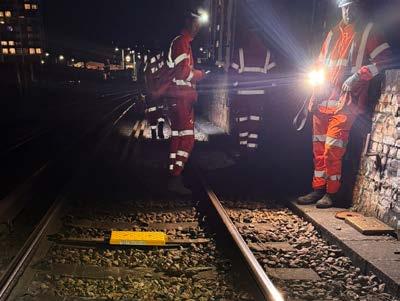
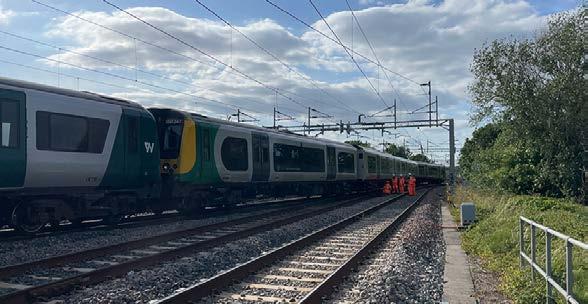
Following the tragic collision near Bedford on 19 June, our thoughts turn to those directly and indirectly affected.
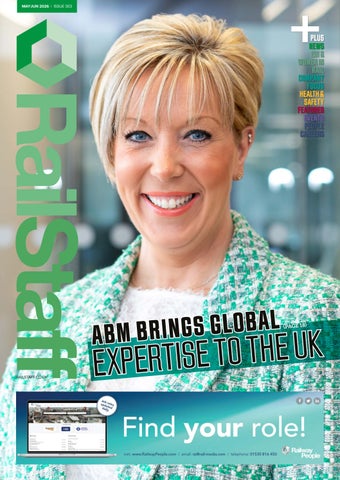
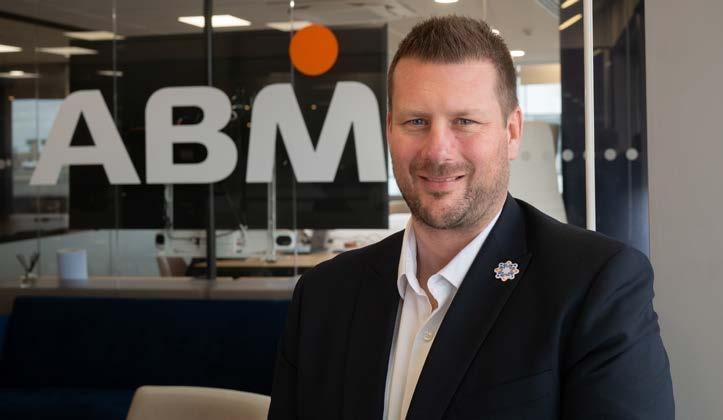
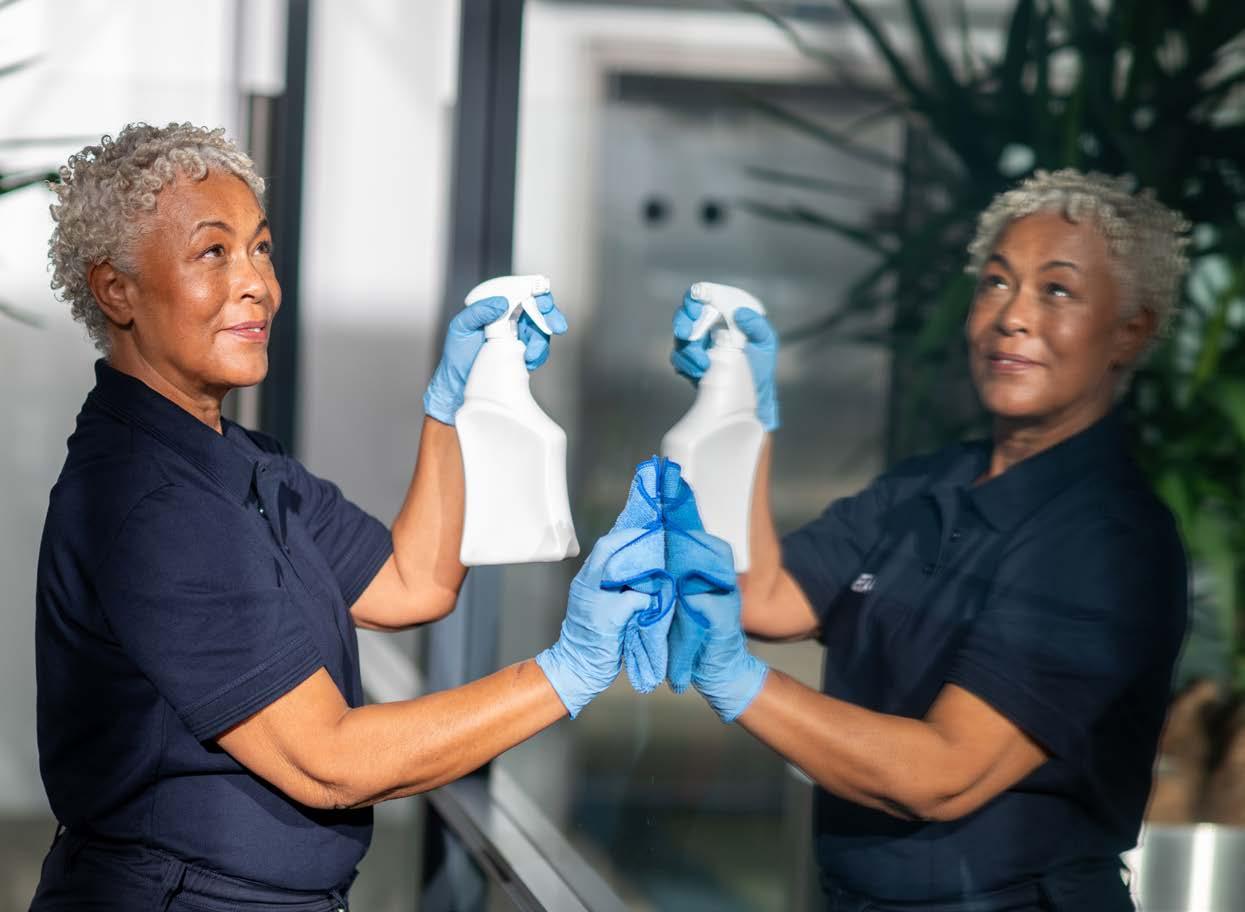
ABM BRINGS GLOBAL EXPERTISE TO UK RAIL | 18
Employing over 100,000 people worldwide, the US-backed firm is making moves in the UK rail market.
RECOGNISING THE VALUE OF SMEs
| 22
Small businesses are critical to delivering rail infrastructure projects, as Andy Ridout of Advance TRS explains.
UK RAIL MAKES ITS MARK | 24
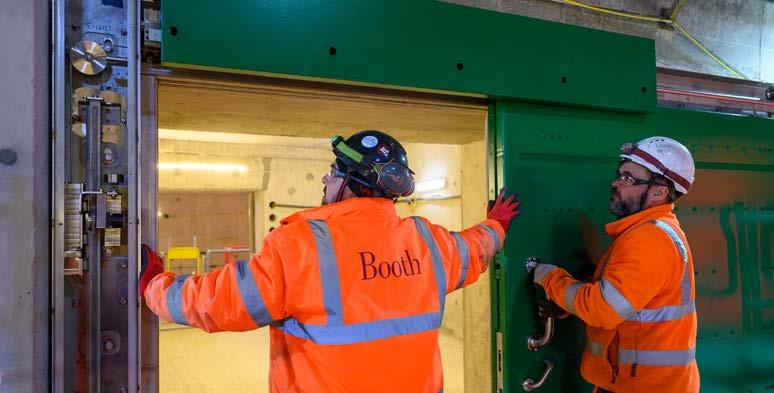
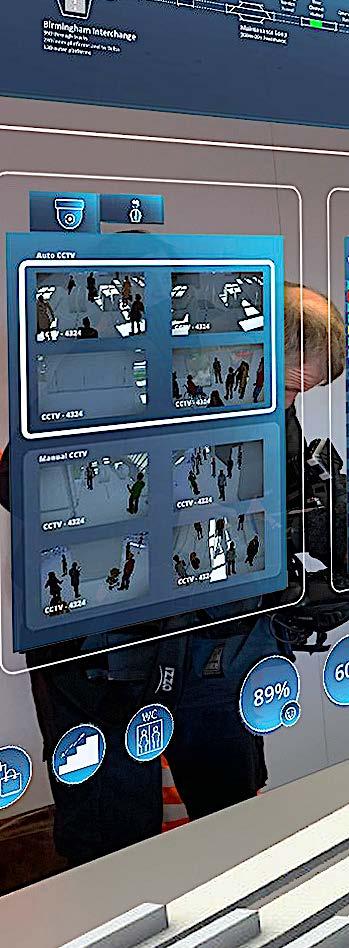
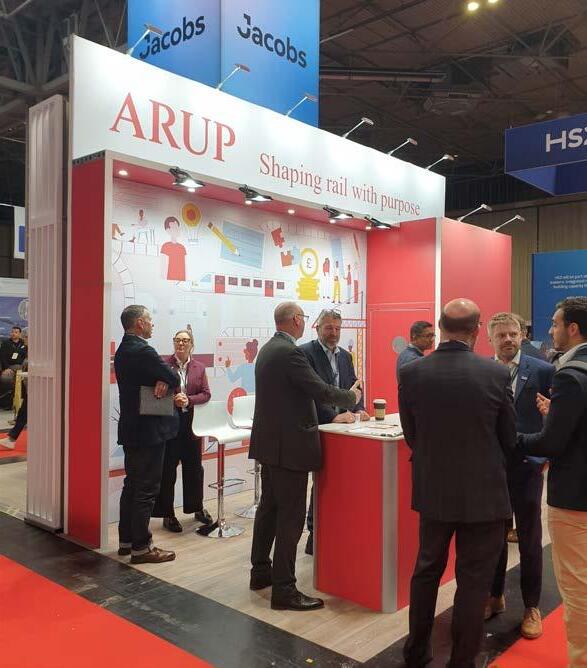
Over 3,000 rail professionals descended on Birmingham's NEC as a new exhibition made its debut.
OPENING DOORS FOR ALL ABILITIES | 30
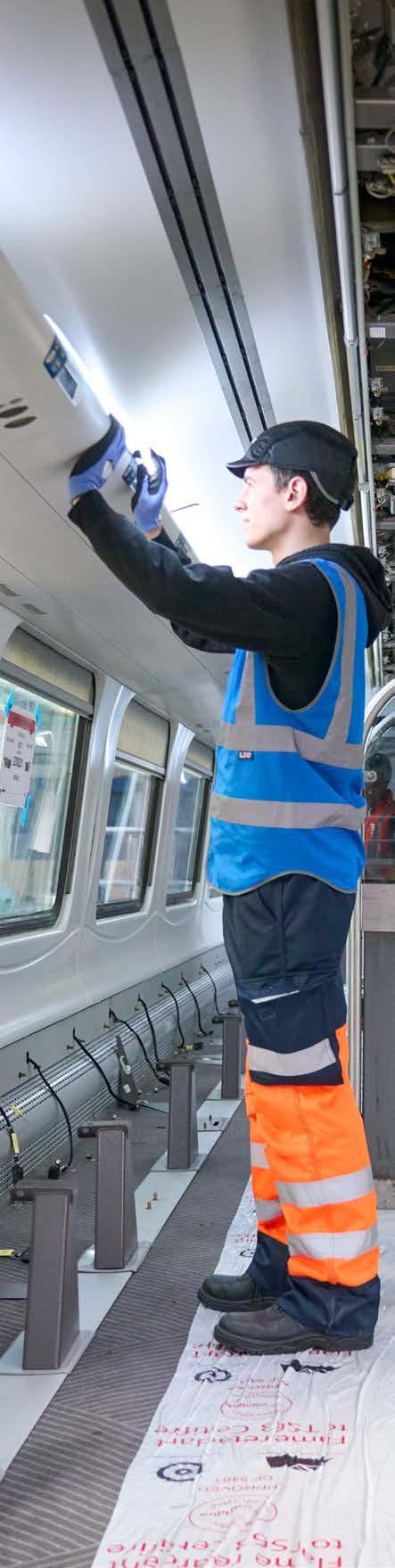
Alstom is creating opportunities for young people with special educational needs and opening doors into employment.
Connecting the UK rail industry for over 29 years.
Contact us:
Editor: Matt Atkins
Production and design: Adam O’Connor
Track safety: Colin Wheeler
Advertising: Craig Smith
PEOPLE AT THE HEART OF THE RAILWAY
Contact email addresses
News: news@rail-media.com
Track safety: colin@rail-media.com
Pictures: pictures@rail-media.com
Adverts: adverts@rail-media.com
Subscriptions: manda@rail-media.com
Contact details
RailStaff Publications,
Rail Media House, Samson Road, Coalville, Leicestershire, LE67 3FP.
Tel: 01530 816 444
Fax: 01530 810 344
Web: www.railstaff.co.uk
Email: hello@rail-media.com
Printed by PCP Ltd.
RailStaff is published by
RailStaff Publications Limited
A Rail Media Publication
There are moments when the railway family comes together not to celebrate success or innovation, but to support one another through tragedy. The collision near Bedford on 19 June, which claimed the life of EMR driver Shaun Burton, is one such moment. Our thoughts remain with Shaun's family, friends, and colleagues, and with everyone affected by the incident.
As this issue explores, events like this reach far beyond those directly involved. They have a profound impact on railway staff across the industry, reminding us that behind every service, project, and engineering achievement are people. We look at the invaluable support provided by organisations such as the Railway Mission and the role they play in helping colleagues through the most difficult of times.
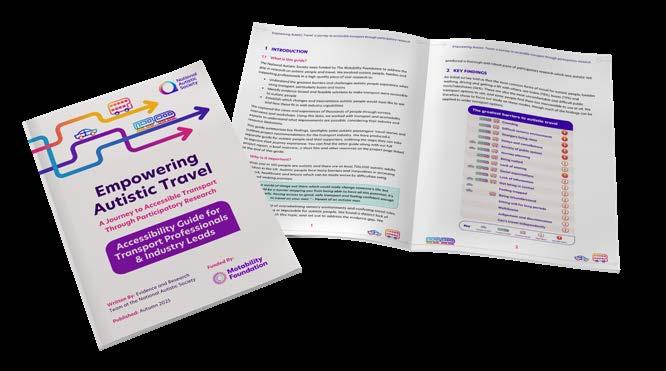
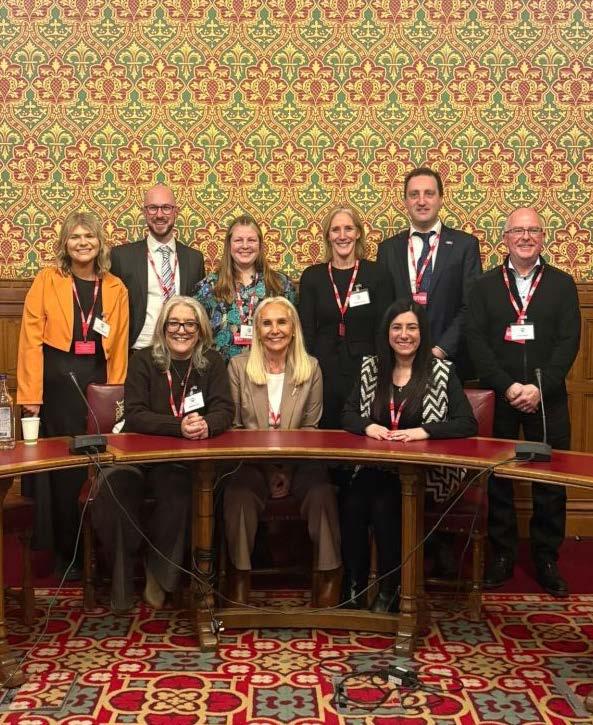
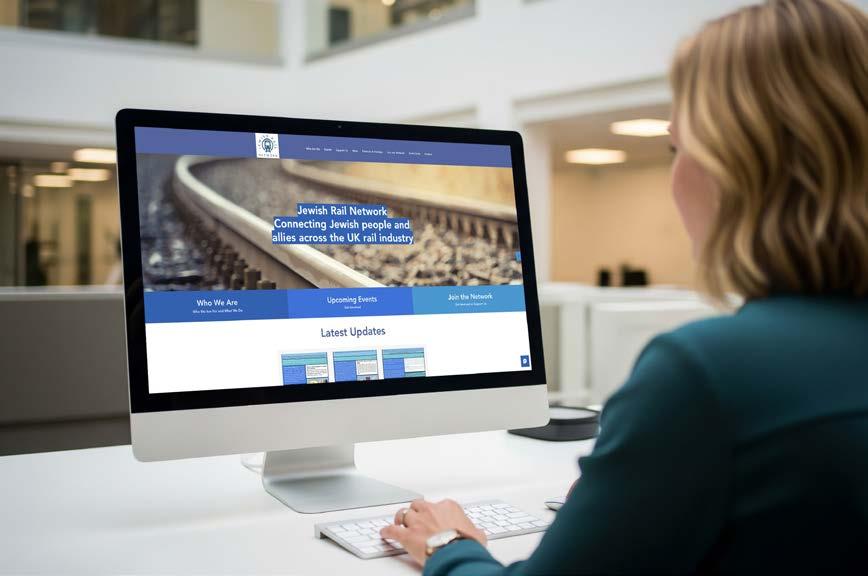
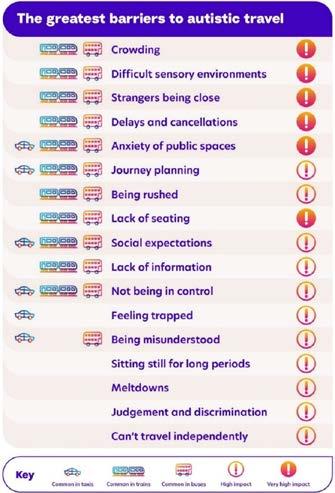
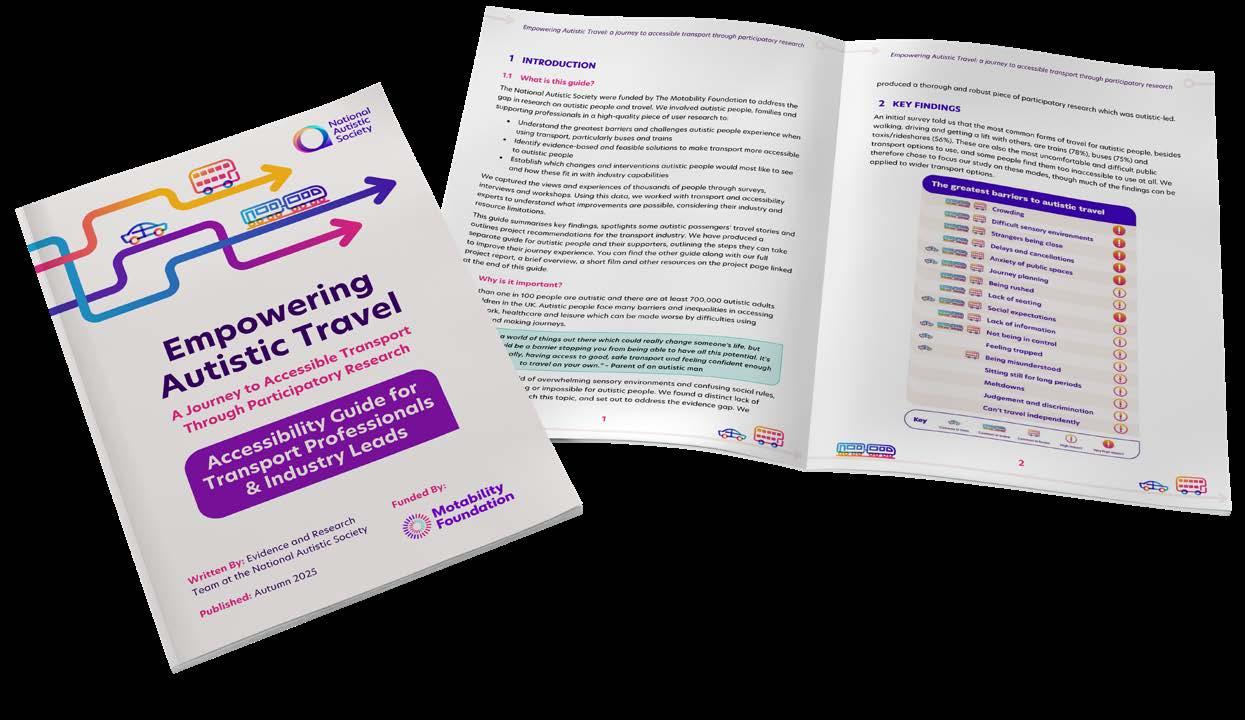
That sense of people looking after people runs throughout this edition of RailStaff. It is reflected in our coverage of the National Autistic Society's research into making journeys more accessible for autistic passengers, and in features highlighting the work being done to create a more inclusive railway for employees and customers alike. From Alstom's supported internship programme to the activities of the Jewish Rail Network and Muslims in Rail, this issue demonstrates that inclusion is not simply about policy – it's about creating an industry where everyone can thrive.
Elsewhere in these pages, we examine the vital contribution small and mediumsized enterprises (SMEs) make to Britain's infrastructure projects. Andy Ridout of Advance TRS explains why these businesses continue to provide the specialist skills, innovation, and agility that major programmes rely upon, despite often facing barriers to procurement.
We also report on a new entry to the industry conference scene. More than 3,000 rail professionals gathered in May at Birmingham's NEC for the inaugural UK Rail exhibition, where collaboration, digital innovation, and sustainability dominated conversations. For a first event, it made an impressive statement and suggested there is plenty of appetite for a new meeting place for the industry.
There are also encouraging signs that confidence in the sector is growing. We speak to ABM, the global facilities and infrastructure services provider as it continues to expand its presence in the UK rail market. Its story highlights the opportunities that continue to exist across Britain's railway and the investment being made in its future by organisations of all sizes.
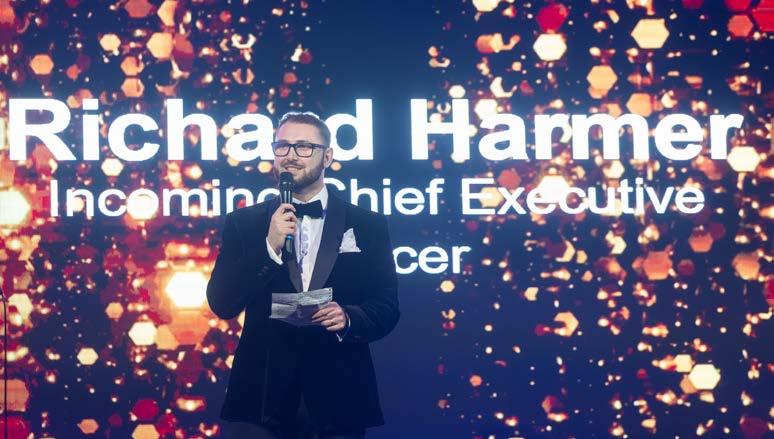
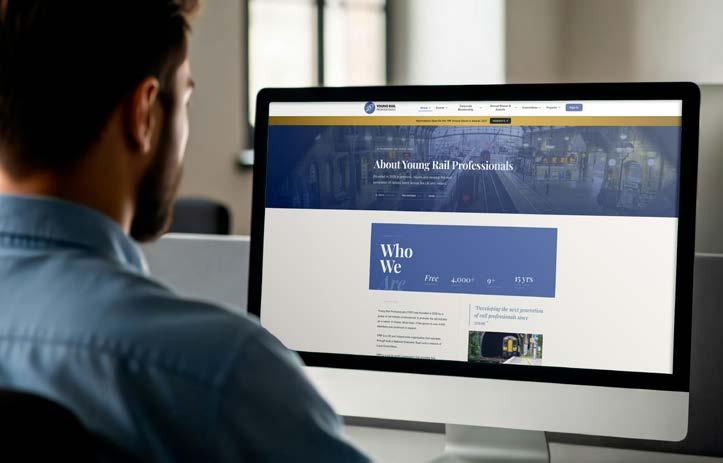
Our regular contributors are back with fresh insight and expert opinion. We meet the new chief executive of Young Rail Professionals as he outlines his vision for the organisation's future, while Colin Wheeler returns with his latest reflections on safety, reminding us that there is always something new to learn on the railway.
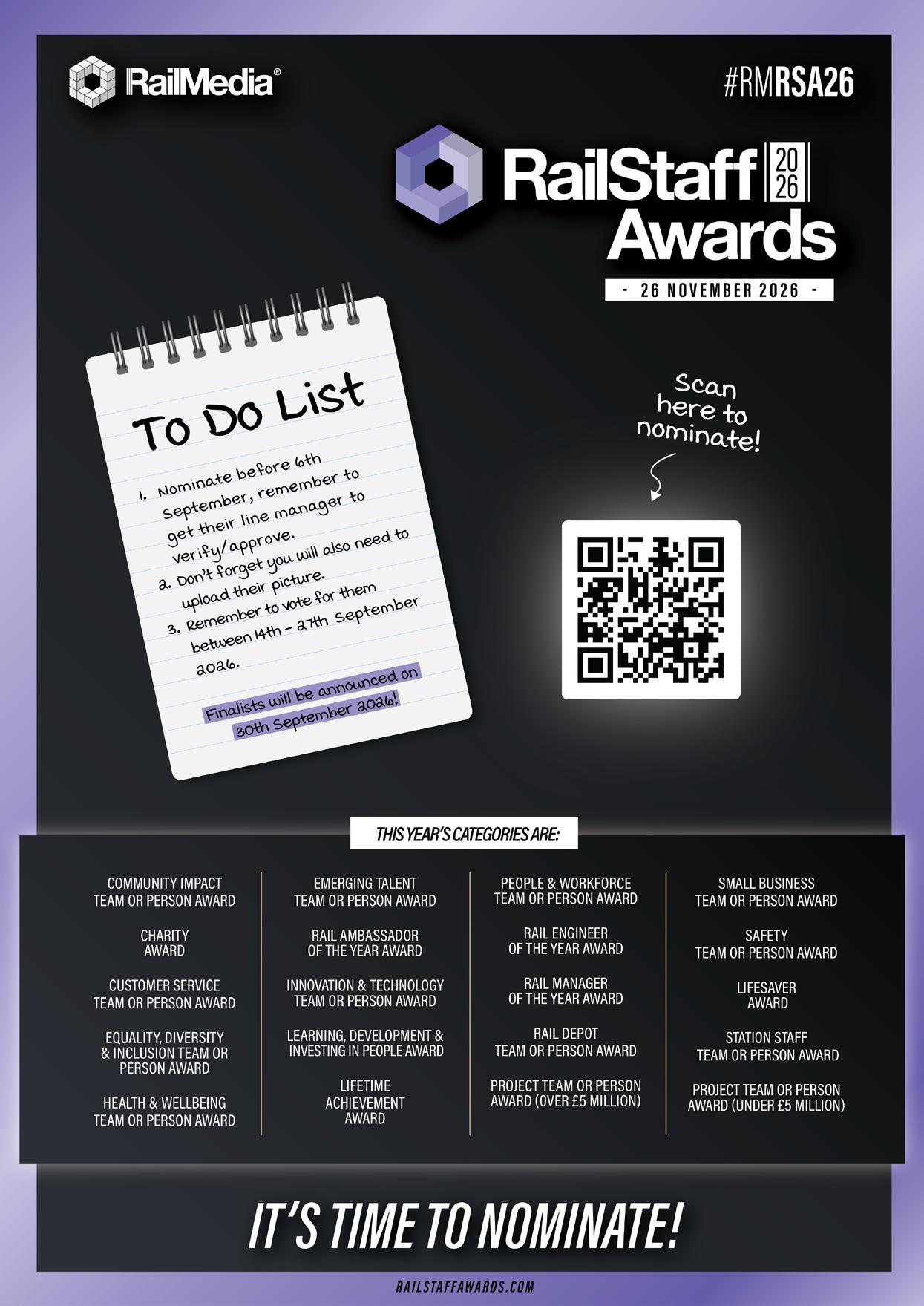
Finally, with nominations now open, we continue our countdown to the 2026 RailStaff Awards.
Every year, the awards celebrate the people whose commitment, professionalism, and compassion make our railway what it is. If you know someone who has gone above and beyond, please take the time to tell everybody about their achievements.
Recognition means more than a trophy – it reminds people that their hard work, often carried out behind the scenes, truly matters.
Shaun Burton.
First GBR-branded train is unveiled
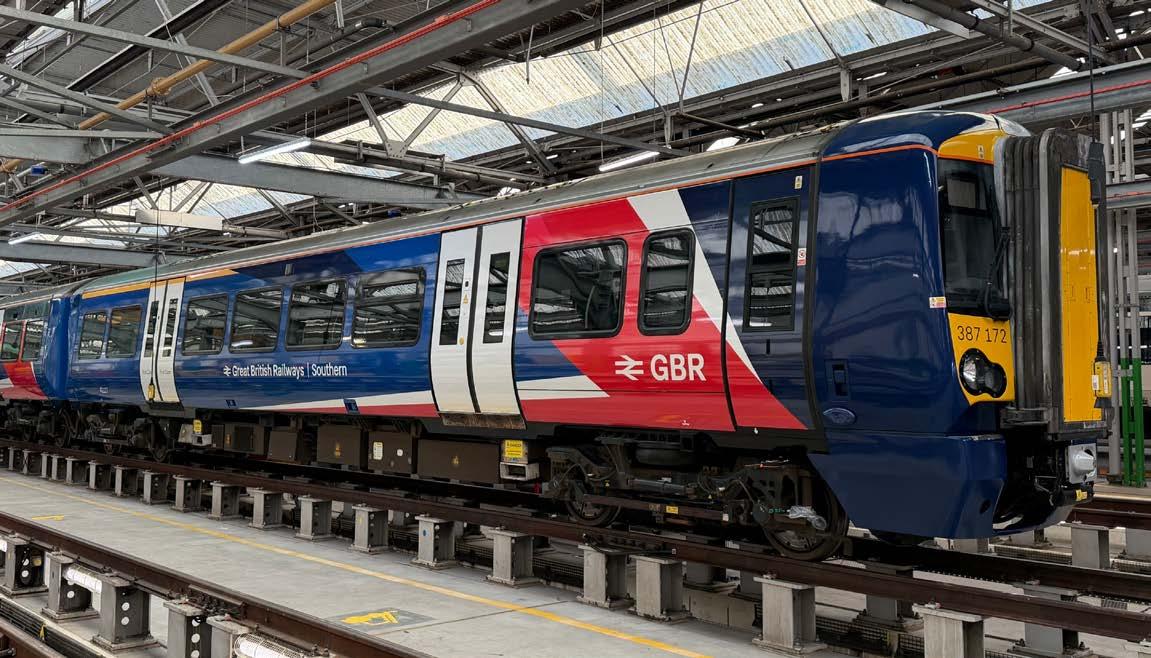
A historic moment for Britain’s railway was marked on Thursday 21 May, as the first Great British Railways (GBR) branded train was unveiled in Brighton.
On the long weekend of 24-26 June, rail travellers to the south and southeast caught a glimpse of the striking new red, white and blue livery, now operating on the tracks.
The first GBR-branded train, a Class 387 operated by Southern, was unveiled, to mark Britain’s largest train operator Govia Thameslink Railway (GTR) joining the growing publicly owned network on Sunday 31 May – just in time for summer. It also comes ahead of the first anniversary of South Western Railway entering public ownership.
Transport Secretary, Heidi Alexander, said: "The unveiling of the first GBR-branded train in Brighton today makes the future of Britain’s railways a reality.
"It represents all of the work being done by staff up and down the country to fundamentally reform our railway.
"This isn’t just a paint job – it’s an important step towards building a more joined-up, publicly owned railway that puts passengers first, delivers better services, and leaves the frustrations and fragmentation of the past behind."
The GBR brand will also feature on the incoming GBR ticketing app – a one-stop shop where passengers can check train times, buy tickets with no booking fees, and book Passenger Assist.
John Whitehurst, chief operating officer for GTR, said: We’re very pleased to be the first train operator to have a Great British Railways-branded train on our network, and I’m proud of how hard colleagues have worked to get us here.
"It’s a significant milestone for everyone at GTR, which reflects our readiness for change and the improvements we’ve already been delivering for customers.
"Our priorities remain providing safe and reliable services every day, with customers, colleagues and communities at the heart of
ORR sets action plan for safe adoption of AI
The Office of Rail and Road’s (ORR) Safe AI Innovation Action Plan, published on 29 May, sets out how ORR will enable the safe adoption of AI within UK rail and England’s strategic road network.
One of ORR’s first actions will be to clarify safety risks and regulatory expectations for AI use. This will be published by the end of September via the Digital Safety Strategy and Strategic Risk Chapter on health and safety risks arising from the use of digital systems.
ORR’s use of AI is already embedded into some internal processes. This year, the regulator will explore how innovations can be built into the process of checking that trains and infrastructure can safely work together across the rail network (interoperability authorisations). ORR will also build AI into its analysis of
consumer datasets to aid early detection and intervention of issues to better protect consumers.
Data has an important role in decisionmaking and ORR is committed to building on its transparent and open data approach. This would mean that even more data can be used to inform regulation without relying on sensitive or identifiable data.
Stephanie Tobyn, director of strategy, policy, and regulation at ORR said: "ORR’s action plan illustrates how we’re playing our part in enabling responsible adoption of AI with users at the heart of innovation.
"We’re providing regulatory stability for industry in what we expect from them and in doing so also providing reassurance to users that within the industries we regulate AI can be utilised responsibly, transparently and safely."
HS2 depot deal boosts jobs for Birmingham
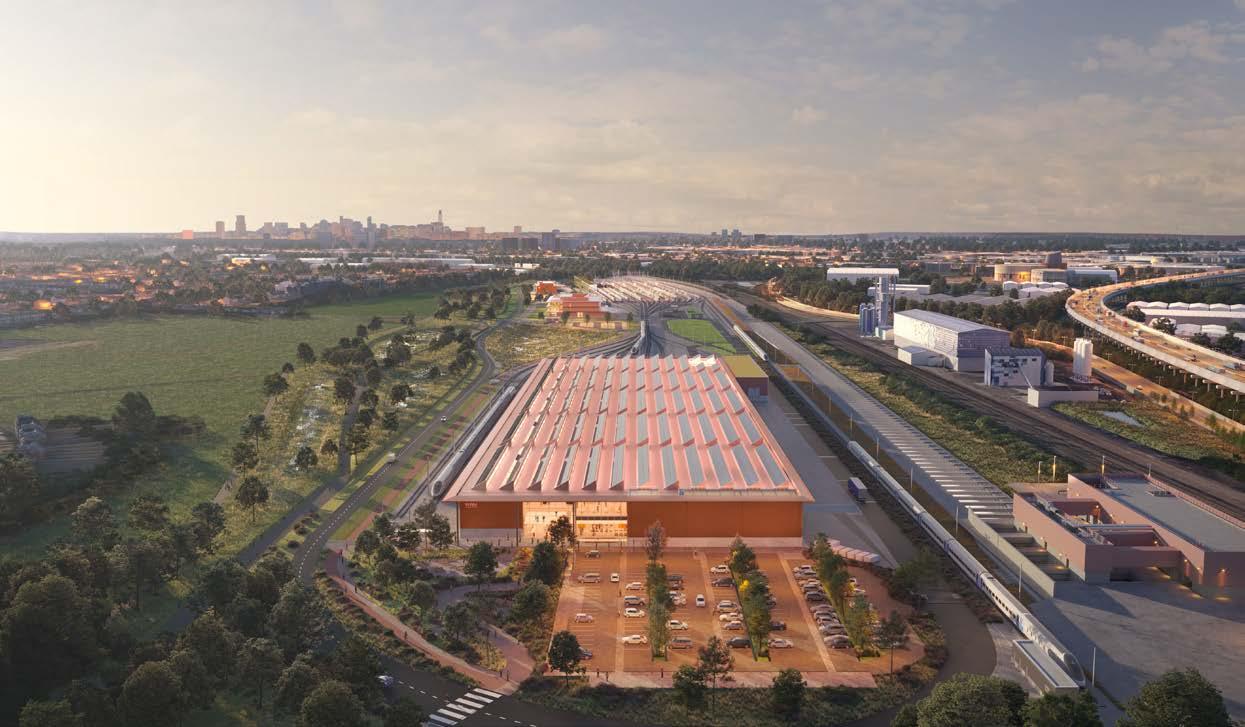
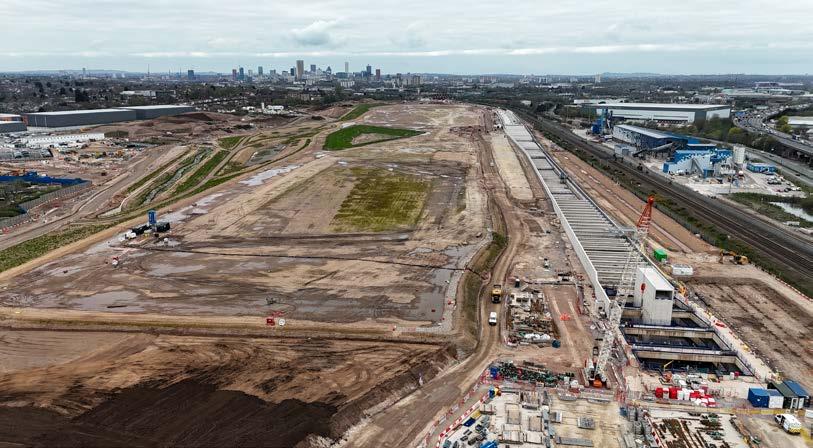
HS2 Ltd has confirmed that Taylor Woodrow Infrastructure Ltd and Aureos Rail Ltd (TWA JV) will build the high-speed railway’s control centre and rolling stock depot at Washwood Heath in Birmingham, in a contract worth around £856 million.
The project will transform the 70-hectare former LDV and Metro-Cammell brownfield site into a major business and logistics hub, supporting over 1,000 long-term jobs and around 500 temporary construction roles.
The 30-hectare depot will include a Rolling Stock Maintenance Building, carriage wash, Automatic Vehicle Inspection Building, train sidings, and a test track. It will also house the Network Integrated Control Centre (NICC), where staff will oversee train dispatch, driver communications and network operations.
Additional office and staff facilities will be built, with remaining land released for commercial development, green space, and wildlife habitat.
The investment is significant for Washwood
Heath, one of the UK’s most deprived areas, where 77% of households experience deprivation in at least one dimension, according to 2021 Census data.
The contract marks further progress on HS2’s delivery programme following recent governance and cost reviews. A recent study also found HS2 is expected to generate a £10 billion economic uplift across the West Midlands over the next decade.
Washwood Heath has a long railway heritage, having been a manufacturing hub for more than a century. The site, which closed in 2005, produced some of the final Pendolino trains now operated by Avanti West Coast between London and Birmingham.
HS2’s construction partner, Balfour Beatty VINCI, has already prepared the site by clearing buildings, removing contamination and completing a 750-metre retained cutting linking to the Bromford Tunnel. Work is also progressing on nearby viaducts connecting services to Curzon Street Station.
Conductor shares passion for rail on TikTok
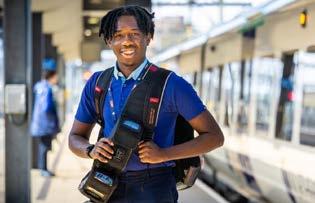
Demario Green, 22, has gained around 8,000 TikTok followers by presenting videos about different types of trains, tickets, stations, and railway history.
“We want to bring different people in and get them to take an interest –younger people and people from different backgrounds and cultures,” he said.
“I used to think I wouldn’t fit in on the railway, but now I feel at home here.
“We’re trying to show people who we are and what we do to keep the trains running, but I also want to show them there are so many different opportunities here if they want to join.”
Demario joined Northern as an apprentice, shortly before his 18th birthday, and gained experience working in station ticket offices and as a dispatcher, before a colleague convinced him to apply for a conductor role in 2024.
“Since joining the railway, I’ve never looked back,” he said. “It feels like I’m part of a family here.
“I would love to drive trains one day, that’s definitely my goal. But right now, I’m enjoying my role.”
As a teenager, Demario started making YouTube videos for his little brother, who is autistic and didn’t like travelling on public transport.
He creates videos for a TikTok account (@transportwithdee) with his friends Leon Green and Jacob Dube, who both work on the railway, and they have launched a podcast called Transport With Us Podcast.
AFTER BEDFORD SUPPORTING THE RAILWAY FAMILY
The railway industry remains in shock following the tragic train collision near Bedford on 19 June. As investigators work to establish the cause of the collision, another recovery is already under way –supporting the railway professionals whose lives have been changed by the tragedy.
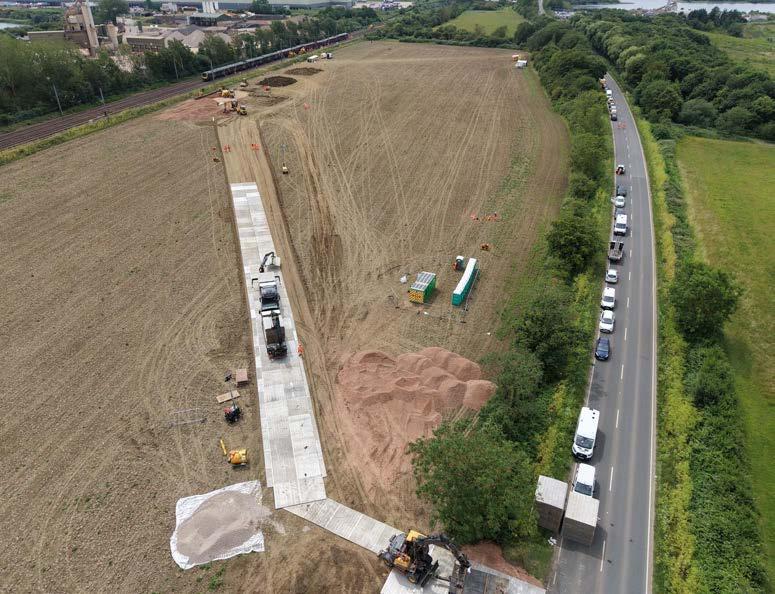
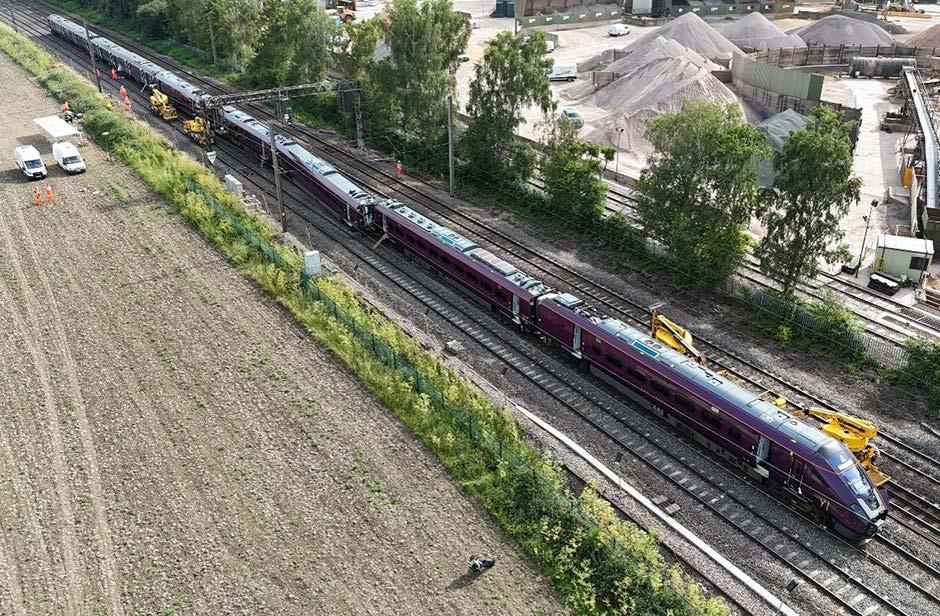
The collision, which occurred south of Bedford near Elstow, involved two East Midlands Railway (EMR) passenger services. Around 160 people sustained injuries, 11 of them serious. Sixty-year-old Shaun Burton, a mainline driver with EMR, sadly lost his life. While the Rail Accident Investigation Branch, British Transport Police, and industry partners continue their work to establish the cause of
the collision, many across the railway have been reminded of a hard reality: behind every serious rail incident are people whose lives are changed forever.
A RESPECTED COLLEAGUE
Among those mourning the loss is the East Midlands Railway community, where Shaun was widely respected not only for his professionalism, but also for the support and friendship he offered to colleagues throughout his career.
Paying tribute to a much-loved member of staff, EMR Managing Director Will Rogers described Shaun as a highly respected railway professional whose influence extended far beyond his operational duties.
“Shaun was known for his quick-wit, kind, generous, and intelligent nature, and for always having a smile on his face,” he said.
“He was a well-respected colleague both in his role as a driver, and in his previous role as a train manager, often acting as a trusted advisor and available to share his wisdom, support, and guidance to others. He will be greatly missed by all who knew him.”
Those sentiments have been echoed throughout the industry.
THE HIDDEN IMPACT
While investigations focus on technical causes and operational lessons, major incidents also leave a lasting emotional impact on the people involved.
Traincrew, station staff, signallers, and more can all be affected by traumatic events and need support teams. That’s not to mention emergency responders, managers, recovery personnel, and support staff. Even those not directly involved may experience feelings of shock, grief, anxiety, or distress as news of an incident spreads through depots, offices, and workplaces across the network.
BEDFORD
For many railway professionals, incidents such as the Bedford collision serve as a stark reminder of the risks associated with operating a complex transport system and the human consequences when things go wrong.
The emotional impact can persist long after damaged infrastructure has been repaired and services have returned to normal. Colleagues may struggle with grief following the loss of a friend or co-worker. Others may experience trauma-related symptoms after witnessing distressing scenes or supporting those involved.
Recognising these challenges and seeking support early is an important part of recovery.
In the immediate aftermath of the Bedford collision, one of the organisations which quickly mobilised to support those affected was the Railway Mission, which provides independent pastoral care to railway staff throughout Britain.
The organisation deployed chaplains to support colleagues across the EMR network and at locations connected to the incident.
Liam Johnston MBE, executive director of Railway Mission said: “At the Railway Mission, we are deeply saddened by the loss of a member of our railway family.”
“Our thoughts and prayers are with their family, friends, colleagues, and everyone affected by this devastating incident.
“Railway Mission chaplains are doing all they can to provide a compassionate and supportive presence during this incredibly difficult time, both at the scene and across the EMR route.
“We stand alongside the whole railway community in grief and solidarity.”
The charity’s response highlights an often unseen but vital aspect of railway welfare. Following serious incidents, Railway Mission chaplains work alongside operators, trade unions, occupational health teams, and emergency responders to provide emotional and pastoral support.
Unlike formal counselling services, chaplains often provide a listening ear, a reassuring presence, and practical support for staff who may simply need someone to talk to during difficult circumstances.
Their work can continue long after public attention has moved on. It also goes beyond the immediate railway family.
Speaking after the incident, Liam also shared the story of a school pupil who contacted a Railway Mission chaplain after finding herself deeply affected by the tragedy. Concerned about the driver, his family, and railway colleagues, she reached out for reassurance after a teacher suggested she speak with a chaplain.
Liam reflected: “This conversation is a powerful reminder that the effects of a railway tragedy reach far beyond the immediate scene. They can touch passengers, railway staff, families, schools and entire communities.
“We are deeply grateful to the teacher who recognised that this young person needed someone to talk to and guided her towards support. It also reminds us of the importance of listening, reassurance, and human connection during difficult times.”
SEEKING SUPPORT
The Bedford collision is a tragedy that has affected hundreds of people directly and many more indirectly across the railway community.
While investigations will determine the causes of the accident and identify any lessons for the future, the wellbeing of those affected remains a priority today.
Railway staff experiencing distress following a traumatic event are encouraged to make use of the support available to them, whether through their employer's wellbeing services, trade unions, occupational health teams, employee assistance programmes, or organisations such as the Railway Mission.
The railway is often described as a family. In moments like these, that sense of community becomes more important than ever. As colleagues continue to mourn the loss of Shaun Burton and support those recovering from the Bedford collision, the industry is once again demonstrating that caring for its people is every bit as important as maintaining its infrastructure.
The industry will work hard to discover what happened at Bedford, and the investigation will identify causes, recommendations, and lessons we can learn from. But one lesson is already clear: supporting the people affected by tragedy is every bit as important as understanding how it occurred.
RailStaff’s thoughts are with those directly affected by this incident and all in the railway family who have felt its impact.
NEWS IN BRIEF
Diverse talent
Amey marked International Women in Engineering Day by bringing together students from across the UK for the final of its ‘We Solve It STEM’ initiative, aimed at inspiring girls and young women to consider careers in engineering.
The national finale, took place in Birmingham on 23 June, uniting the winners of a series of regional heats. It forms part of Amey’s commitment to developing future skills and supporting a more diverse talent pipeline. Throughout the day, participants collaborated on the theme “a city I’d want to live in”, developing innovative ideas before presenting their concepts to a panel of women in senior roles at Amey.
Second life
South Western Railway (SWR) and Network Rail Wessex have formally handed over the keys of the Haslemere Signal Box to the Haslemere Signal Box Trust, marking the transfer of the Grade II listed landmark into community ownership.
The Trust will now manage the site, a unique, platform-level signal box at Haslemere station, as a railway museum for the public to enjoy. The handover event took place on Saturday 13 June, during a special ceremony at the station, marking the culmination of years of collaboration with local volunteers to preserve an important part of the town’s railway heritage.
Got signal?
Customers on the Bakerloo, Metropolitan, and Circle lines are now able to stay connected for more of their journeys after further sections gained high-speed mobile coverage in recent months.
In total, around 60% of stations that are ‘underground’ now have coverage, and work is on track to bring coverage to the whole network by the end of the year. Three UK, EE, Vodafone, and Virgin Media O2 (VMO2) are all taking part in the rollout..
New heights
HS2 engineers have finished building Curzon 2 – the tallest bridge on the new high-speed network – and final checks are underway ahead of its launch over the Cross City railway line, just outside Birmingham city centre.
The intricately designed structure is part of the Curzon approaches, a network of five viaducts that form the final mile of the journey towards HS2’s Curzon Street Station. The bridge’s striking 24-metre-high truss is composed of 670 individual steel sections that were welded to form the triangularshaped units. It is built using weathering steel, which will naturally darken in colour over time.
Milestone nears as HS2 viaducts installed
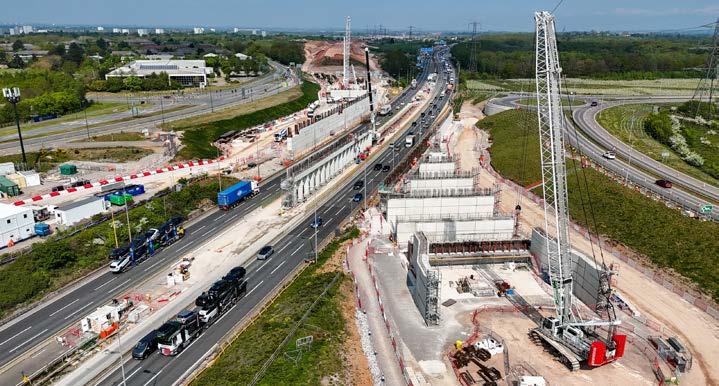
HS2’s complex civil engineering programme will shift up a gear this summer, as it prepares to deliver its biggest programme of work yet over the motorway network.
The construction schedule, which began in June, will see three huge structures built over busy sections of the M42 and M6 in the West Midlands.
In one operation, a twin box will be built above both carriageways of the M42 near Birmingham Business Park – allowing the railway to be constructed over the top. Additionally, two single-track viaducts will be extended over the M42/M6 Toll near Water Orton, and a twin-track viaduct will be installed over the M6 near Chelmsley Wood.
The scale of the engineering works will underline the progress being made on HS2 as viaducts and structures built for the railway – which have been taking shape by the roadside over the last year – start to bridge the carriageway.
HS2 Ltd and its civil engineering partner, Balfour Beatty VINCI (BBV), have spent over a year planning the motorway crossings, in conjunction with National Highways, and every effort has been made to minimise disruption and keep traffic moving.
The six-month schedule was initially planned with nine closures, but the team has synchronised most of the work on the twin box structure and the Water Orton viaducts into the same weekends. This meticulous planning means the total number of motorway closures has reduced from nine down to six.
To minimise impacts on commuters at peak traffic times, junction closures will only take place from 9pm on Friday evenings through to 5am on Monday mornings.
Agnes Usciak, HS2 Ltd’s senior project manager for the works, said: “The progress we’re making on the viaducts and structures next to the M6 and the M42 is already clear to see, and over the next six months, we’ll start bridging the gaps above the carriageways.
“It’s been a huge team effort to condense this vast programme of work into just six weekend closures, and I’d like to thank all our partners for their co-operation and support. Safety will always be our number
one priority, which is why we need to divert traffic away from the carriageway while we conduct these vital works.”
The M42 overhead works began on the evening of Friday 26 June, with the installation of the roof deck for the twin box. This 300-metre-long structure will allow the high-speed line to be built over the M42. Once complete, vehicles will drive through the box, while trains travel above.
The walls for the twin box are being built using a modular construction method, and these works are progressing at pace, without closing the motorway.
The roof deck will be constructed over four weekend closures, allowing engineers to install 175 individual beams, each weighing between 56 and 92 tonnes. The giant beams, which have been manufactured off-site in Leicestershire, will be lifted into place using a 300-tonne crawler crane.
At the same time, engineers in nearby Water Orton are preparing to extend two single-track viaducts that will carry highspeed trains into Birmingham Curzon Street and the rolling stock depot at Washwood Heath.
Already around 1,200 metres long, the team will use a different construction technique to build the remaining 135-metre sections of the Water Orton 1 and 2 viaducts that will bridge the gap between the piers either side of the motorway.
Instead of continuing with the cantilever construction method, the viaducts will be prefabricated in sections adjacent to the carriageway, removing the need for further closures. Once fully assembled, they will be moved into position using self-propelled modular transporters and locked into place above the piers. This significantly reduces the installation time and means engineers can complete the works in just four weekends. This programme of work will commence at 9pm on Friday 24 July.
The final construction challenge – the installation of the M6 South Viaduct West – requires just one weekend motorway closure, as two stages of the fully restrained slide process will take place over live traffic, eliminating the need to close the carriageway. The single weekend closure will commence at 9pm on Friday 21 August 2026.
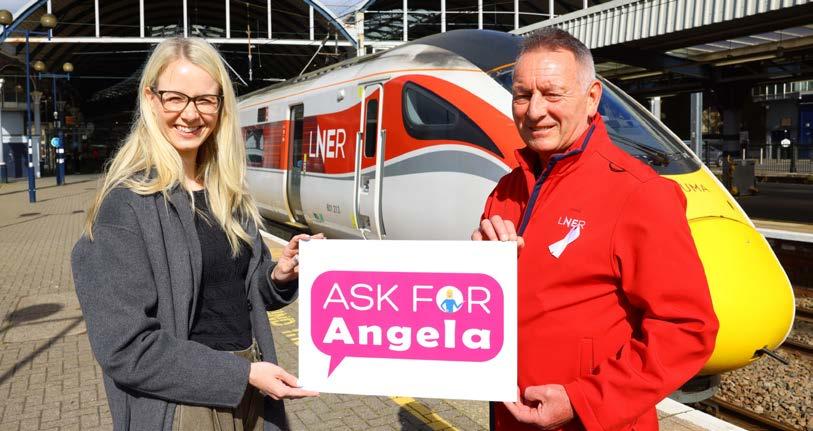
LNER has become the first UK train operator to introduce the ‘Ask for Angela’ safeguarding scheme across its trains and managed stations. The launch comes in Rail Safety Week, an industry-wide initiative which focuses on rail safety for all.
Now in its tenth year, ‘Ask for Angela’ is widely recognised in the night-time economy and helps people leave situations where they feel unsafe. Customers who feel vulnerable can discreetly ask staff for ‘Angela’, alerting them that assistance is needed.
The scheme was rolled out across all LNER services and managed stations from Tuesday 16 June and works in the same way. When asked for ‘Angela’, LNER staff will recognise the request and respond quickly and discreetly to
LNER launches 'Ask for Angela' scheme
support customers.
Developed by Hayley Crawford and named in memory of Angela Phillips, who was killed in 2012 by her husband, the initiative continues to expand into new sectors.
Angela’s daughter Hollie said: "I'm absolutely delighted to see LNER introduce 'Ask for Angela'. The scheme was named in memory of my mum, and to know her name will now help LNER customers who find themselves in unsafe situations fills me with enormous pride. This is exactly the kind of difference she would have wanted to make."
Hayley commented: “When I created 'Ask for Angela', the aim was simple: to give anyone who feels unsafe a discreet way to ask for help and know they'll be taken seriously. Trains and stations should be safe places. This partnership
with LNER means thousands more people will have a quiet, trusted way to reach support when they need it most. It’s a proud moment for us.”
To show how the scheme can help, LNER has released a short video featuring Nicola, a North East based customer who was recently followed by an unknown man through Newcastle station. She approached LNER staff for help and was supported to continue the rest of her journey safely.
Nicola said: “For many people, personal safety is a concern when travelling, particularly for women and girls making a journey alone. LNER introducing ‘Ask for Angela’ is a fantastic idea which reassures customers that if you need help, it will be provided.”
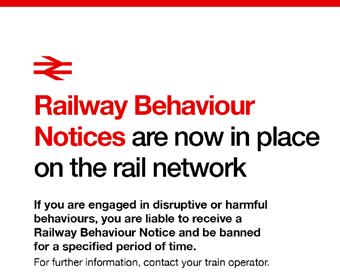
Railway Behaviour Notices to be rolled out
Passengers and frontline rail staff are set to receive more protection from persistent antisocial behaviour at train stations across the rail network, as early trials show encouraging results. Railway Behaviour Notices banning repeat offenders from stations are being rolled out across the rail network this summer, as a new early intervention measure to improve passenger and staff safety.
Backed by overwhelming public support, more than eight in 10 passengers say they want people who abuse staff or other passengers to face railway bans. The notices, aimed at dissuading repeat offenders from
accessing railway stations, can be issued by train operators or British Transport Police to individuals who repeatedly put others at risk. They remove a person’s permission to enter a specific station or station(s) for six to 12 months, acting as a first line of defence to stop harmful behaviour before it escalates into formal criminal proceedings.
Early trials show a clear reduction in repeat offending, with frontline rail staff reporting safer working conditions. In nationally representative polling of more than 2,000 frequent rail passengers:
Eighty-six percent of rail users support the rollout of Railway Behaviour Notices, with nearly 80% reporting that stronger action against abusive behaviour would
make them more confident when travelling.
Railway Behaviour Notices were ranked by passengers as one of the top three most effective safety measures, following increased visibility of British Transport Police and stronger penalties for abusive or aggressive behaviour.
Jacqueline Starr, executive chair and chief executive officer of Rail Delivery Group, said: “Railway Behaviour Notices help create immediately safer conditions for customers and frontline colleagues by banning individuals from the network who have shown they cannot use the railway responsibly.
“Crucially, they help stop harmful behaviour early, preventing situations from escalating to
the point of formal criminal proceedings.
BTP Assistant Chief Constable Ian Drummond-Smith said:
“Railway Behaviour Notices give train operators stronger powers to tackle repeat anti-social behaviour, helping stop crime in its tracks before it happens. We’re committed to working closely with our rail industry partners when these notices are issued.
“Anyone who experiences or witnesses an offence on the railway is urged to report it to us by texting 61016, or by calling 999 in an emergency.”
Major step towards reopening of Portishead line
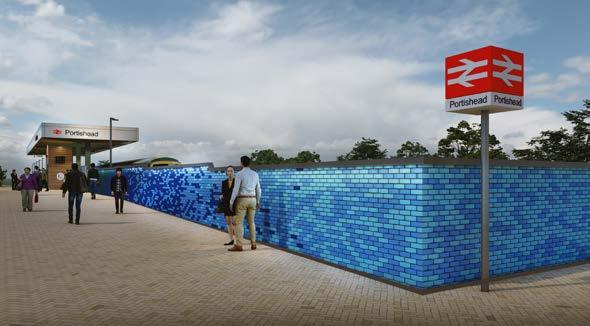
One of the most-anticipated rail projects in the south west took a major step forward on Friday 1 May, as contracts worth £200 million were signed at Bristol Temple Meads to deliver two brand new stations and reinstate the Portishead railway line closed to passengers since 1964.
Three contracts have been awarded to deliver the project. Morgan Sindall Infrastructure will lead construction of the line and highways improvements at Portishead, Colas Rail will design and install a new digital signalling system, and AmcoGiffen has been appointed to deliver bridge works and associated highways work in Bristol.
The core work involves building two new stations, relaying three miles of track and delivering the infrastructure needed to run a modern, reliable rail service along a corridor that has been dormant for generations.
This project is funded by the Department for Transport (DfT), the West of England Mayoral Combined Authority, and North Somerset Council and will be delivered by Network Rail.
Construction is now underway and, once opened in winter 2028/29, the line will reconnect more than 50,000 people to the railway for the first time since the line was closed for passenger services in 1964, improving access to jobs, education and services while supporting more sustainable travel options.
Journeys to Bristol Temple Meads will take around 25 minutes from Portishead and 20 minutes from Pill - around half the time it takes to complete these journeys by road.
To mark the signing of these contracts, invited guests took part in a special train journey from Bristol Temple Meads along the line towards Portishead and the location of the new Pill station. Those on board included: the Mayor of the West of England, Helen Godwin, North Somerset Council leader Mike Bell, Network Rail Western route managing director Marcus Jones, Great Western Railway managing director Mark Hopwood, Karin Smith, MP for Bristol South, Kerry McCarthy, MP for Bristol East and Sadik Al-Hassan, MP for North Somerset.
As part of GWR's Growing Places research, stations across the South West are projected to contribute billions of pounds in economic value and thousands of new jobs by 2036, and Portishead and Pill will play a key role. The Portishead Line project is forecast to generate an estimated £43 million in economic growth each year when complete.
Marcus Jones, managing director of Network Rail’s Western route, said: “This is a significant milestone in the return of the railway to Portishead and Pill, and a proud moment for everyone involved in bringing this scheme to life. With these contracts now signed, we’re moving from years of planning into full delivery.
“This project will reconnect more than 50,000 people to the rail network for the first time in decades, unlocking better access to jobs, education and services, while offering a faster and greener alternative to road travel.
“Working closely with the Department for Transport, the West of England Mayoral Combined Authority, North Somerset Council, Great Western Railway and our industry partners, we’re committed to delivering a modern, reliable railway that supports long-term growth for the region and meets the needs of local communities for generations to come.”
Government promises end of HS2 "neglect"
Transport Secretary Heidi Alexander, has declared an end to an “era of neglect” on HS2 as she set out plans to reset the project, delivering the railway as quickly as possible and at the lowest reasonable cost.
Following years of mismanagement, the Transport Secretary convened the team that delivered the Elizabeth Line and set out new costs and timeframes for the project, including efforts to cut construction costs and get passengers on trains sooner.
The Government announced on Tuesday 19 May that the project is now expected to cost between £87.7 and £102.7 billion, with two thirds of the increase due to works being missed from the scope of the original project plan, underestimation by previous Governments, inefficient delivery – and the remaining third due to inflation.
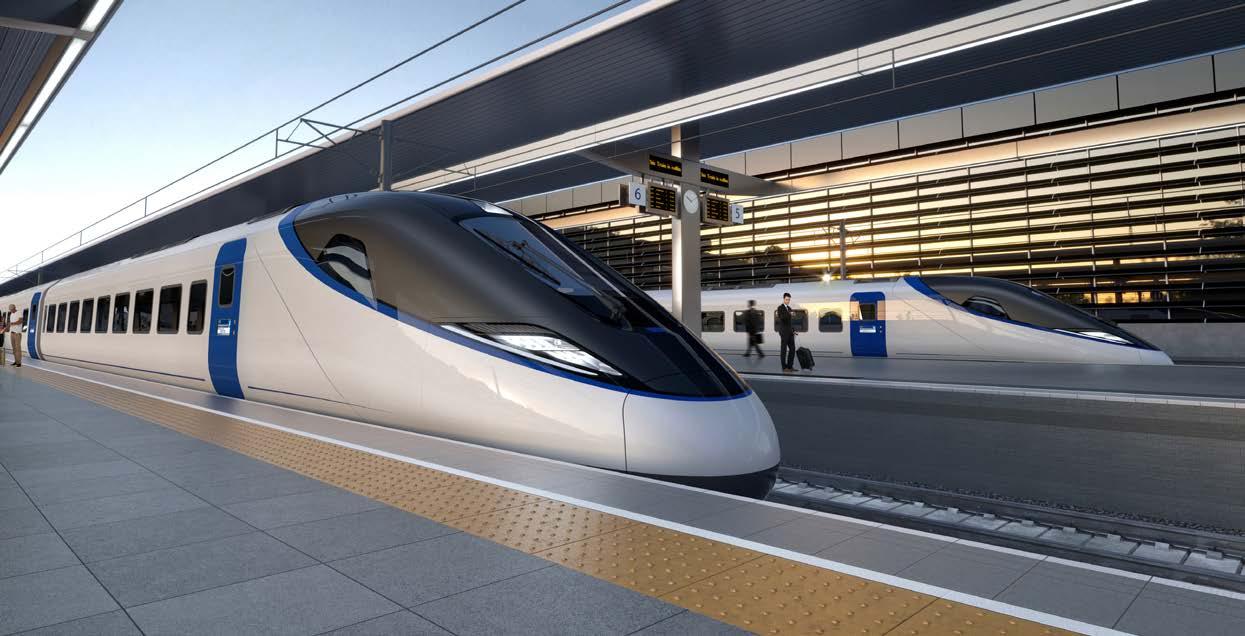
The Government has also confirmed HS2 will run at 320km/h (200mph), aligning with speeds across Europe and Japanese bullet trains. In previous plans, HS2 trains were set to run at 360km/h (225mph) but with no existing track to test trains at that speed in Great Britain, adding
to spiralling costs and build time.
The change in speed could deliver savings of up to £2.5 billion and at least a year in delivery time, so communities can start to benefit sooner.
The first trains are now expected to start between Old Oak Common in west London and Birmingham Curzon Street between 2036 and 2039. An estimate of the full scheme from London Euston to Curzon Street and a connection to the West Coast Main Line is between 2040 and 2043.
Heidi Alexander, said: “Taxpayers, passengers and communities along the route have been let down by years of mismanagement on HS2.
“I share their anger about the waste and mess, but I am proud that this Government has worked with HS2’s new senior team to get this project off life support and on the road to recovery.
“We will get the job done but we will also take every opportunity to save time and money in the process, getting a grip on delivery, controlling costs, and stripping out the complexity that’s plagued the project in the past.
Landmark innovation centre completed
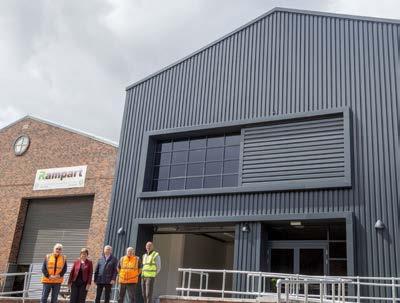
Construction of a state-of-the-art rail innovation and training centre in Barrow Hill, Staveley has been completed – and it is set to officially open its doors later this year.
The Derbyshire Rail Industry Innovation Vehicle (DRIIVe) will create high-quality jobs and skills opportunities for local people, and bolster Chesterfield’s ambitions to be a leading destination for the rail sector.
Works on the new facility, which is located next to the historic Barrow Hill Roundhouse, were completed in early May by Chesterfield Borough Council’s contractor Stepnell.
The building is designed as a flagship destination for the rail industry offering modern classrooms and training areas,
specialist research and development facilities including a digital laboratory, and high-quality commercial workshop space.
DRIIVe is part of the multi-million-pound Staveley Town Deal programme and has received additional funding from Chesterfield Borough Council and East Midlands Combined County Authority.
Councillor Tricia Gilby, leader of Chesterfield Borough Council and vice chair of the Staveley Town Deal Board, said: “It’s fantastic to see work on the construction of DRIIVe now complete. This has been a long standing ambition for our council, and its delivery strengthens Chesterfield’s position within the rail sector.
“DRIIVe is a unique facility that not only provides space for businesses to undertake
“We can and must build big infrastructure projects in Britain. But we also need competent people in charge of them. This is the same team that delivered the Elizabeth Line. We have done it before, we will do it again.”
HS2 Ltd CEO Mark Wild’s ongoing reset has already borne fruit – with six major construction milestones reached earlier than planned in the last year – as well as eliminating 300 bureaucratic roles, and scrutinising contracts to ensure taxpayers get value for money.
In response to the Transport Secretary’s announcement he said: “I recognise this will be unwelcome news for local communities and taxpayers, and I share in their disappointment that it will take longer and cost more to bring HS2 into service.
“Resetting HS2 was the only way to regain control of the project. We have turned a corner in the last 12 months with significantly improved levels of productivity, helping us to deliver major milestones ahead of schedule. We're also progressing with plans to bring HS2 into line with other high-speed railways in Europe - further reducing the project's complexity without compromising on benefits.”
vital research and development, including cutting edge digital innovation, but also creates new training opportunities for local people. This will help us attract high value employers to the area while ensuring our residents gain the skills and qualifications needed to secure high quality jobs in the
Industry unites to champion social mobility
Leaders from across the rail industry have joined forces, taking part in a symbolic rail journey to champion social mobility and inspire the next generation of talent.
Travelling between Birmingham New Street and Birmingham International, where they supported the Big Bang Fair, one of the UK’s largest science and engineering events for young people, senior leaders and employees from DfT Operator (DFTO), Network Rail, and the wider industry came together with key partner organisations to mark Social Mobility Day on 11 June.
The railway journey, hosted by West Midlands Railway, was an opportunity to announce their shared ambition to change lives by opening up opportunities in rail and supporting social mobility. United by a commitment to go further and faster, the programme is now focused on scaling impact across the country through deeper collaboration and strong external partnerships.
The programme is working with a group of expert partners that have already demonstrated successful impact within rail and offer strong opportunities to scale. These partners include The Purpose Coalition, The Social Mobility Foundation, The Talent Foundry, The King’s Trust, Youth Futures Foundation, Beyond Barriers, and Community Rail Network. By working together, the industry aims to broaden reach, deepen impact, and deliver meaningful change at scale.
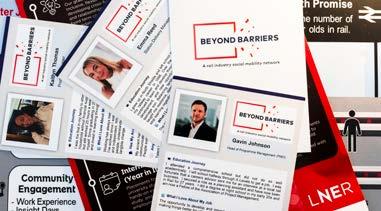
The activity was led by the rail industry social mobility steering group – a group of rail leaders with lived experiences of social mobility and a shared passion to create change. ‘Beyond Barriers’, a community of rail colleagues and allies from less advantaged backgrounds, is also part of the taskforce, providing a safe space for colleagues to talk about shared challenges.
The programme, co-sponsored by Steve White, managing director at Southeastern Railway and Paul Rutter, Route Director of the East Coast at Network Rail, and chaired by Navleen Kalra, Network Rail’s People and Transformation Director is working to widen access ensuring that background is never an obstacle to a successful career in rail.
GTR takes aim at youth antisocial behaviour
The UK’s largest train operator is investing in new community projects to address youth antisocial behaviour across the South Coast.
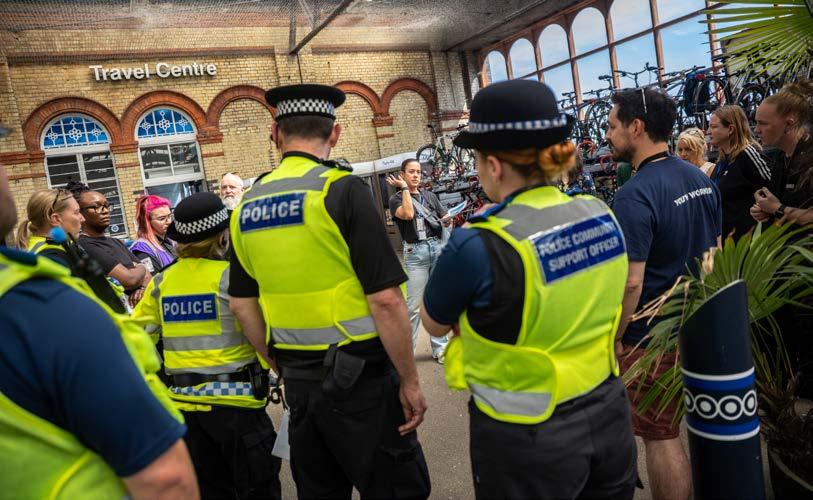
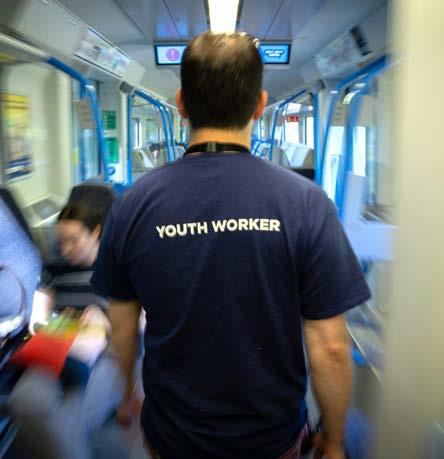
Youth workers have been deployed on trains to Brighton to identify vulnerable young people, and mentors will support them into careers as part of Southern and Thameslink’s latest £300,000 Your Station, Your Community funding round.
The train operators have announced the recipients of the 2026/27 fund, supporting initiatives designed to reduce antisocial behaviour, safeguard vulnerable young people, and help prevent exploitation and criminal involvement.
Rebecca Butler, Southern and Thameslink’s safeguarding manager said: “Our huge network can play a holistic role in tackling these societal issues contributing to antisocial behaviour, in addition to the close partnerships we have with the police and other agencies already.
“The Your Station, Your Community fund invests in projects that enrich the communities we serve, and we’re proud to contribute to making them vibrant places to live, visit and work.”
Working with the Brighton Crime Reduction Partnership (BCRP), trained youth workers will be deployed on services from hotspot areas and at Brighton station, using intelligence from local stakeholders and the railway, on key dates where large numbers of young people are expected to be travelling into the city.
The approach, called On The Tracks and made possible with £49,522 from the fund, aims to provide a visible, supportive presence on trains and within the station – a key “gateway” into the city – offering early intervention that can prevent young people from becoming involved with higher-risk situations. Where appropriate, young people can be referred onwards to relevant statutory agencies and support services.
The BCRP works closely with Sussex Police and local partners to improve safety within the city, having created an Early Intervention Youth Plan which tackles youth crime at its roots – focusing on prevention rather than enforcement.
On The Tracks has been developed in direct response to concerns raised by community members, businesses, frontline professionals, and young people themselves following significant safeguarding challenges experienced in previous summers.
Sarah Morris, from the Brighton Crime Reduction Partnership, said: “The railway connects thousands of young people to our city every year, providing access to our vibrant seafront, independent businesses and social spaces.
“While the vast majority travel safely and positively, for a small number of vulnerable young people these journeys can also present risks linked to exploitation, criminality, substance misuse, and county-lines activity.
“Having listened to the concerns of our partners and stakeholders, and learning from the experiences of previous summers, we have developed this early intervention partnership to bring agencies and communities together around a shared holistic approach.
“By working collaboratively across the rail network and local services, we can identify those who may need support earlier, offer trusted relationships and positive opportunities, and help ensure young people feel welcomed, supported and connected to the city in a safe and constructive way.”
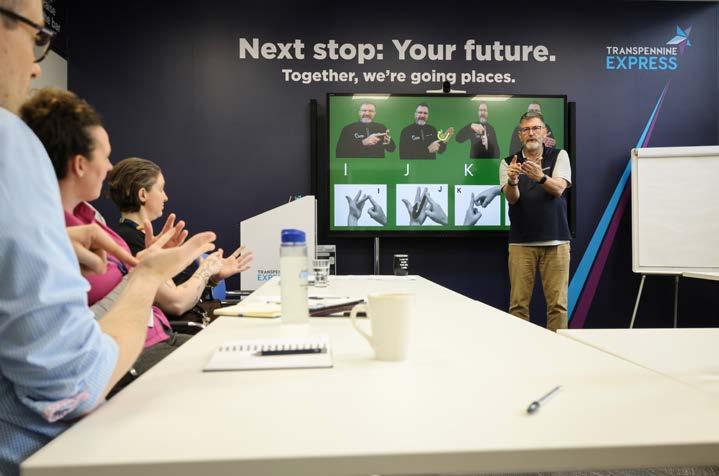
Dozens of staff at train operator TransPennine Express (TPE) are learning sign language to help make rail journeys easier for hearing-impaired customers.
So far, more than 70 colleagues, including conductors and customer-facing teams, have completed a course in basic British
Sign Language (BSL).
The sessions include teaching everyday phrases such as greetings, numbers, and common customer service interactions, as well as terms regularly used on the railway covering tickets, platforms, and delays.
According to the Royal National Institute for Deaf People, one in three adults in the UK are
TPE staff learn sign language
deaf, have hearing loss, or tinnitus. It is estimated that there are 25,000 people who use sign language as their main language across the UK.
Andrew McClements, customer experience and transformation director at TransPennine Express, said: “We’re proud of the enthusiasm our colleagues have shown in taking part in this training. We’re hoping it will help break down barriers and make rail travel more inclusive for everyone who uses our services.”
The course also includes an introduction to deaf awareness, helping staff better understand the needs of passengers and how best to support them throughout their journey.
Run by Deafero5, the voluntary programme has proved popular with colleagues, with more than 90 additional spaces available for staff to take part in the coming months.
Partnership aims to tackle violence on women
Women’s charity Soroptimist International Great Britain and Ireland (SIGBI) has partnered with Southeastern Railway to establish a community-led forum, launching this summer. It will be focused on improving safety and confidence for women and girls using rail services.
Southeastern Railway is working in collaboration with SIGBI and other representative groups, to ensure the forum is inclusive and reflects a wide range of lived experiences. This partnership approach will help shape services that continue to meet the needs of passengers, with the forum launching in early summer.
The partnership stemmed from SIGBI’s relaunched ‘The Future of the Railways’ survey last year, when members from the charity’s Medway and Maidstone clubs connected with the Safeguarding Liaison Manager (Adults) at Southeastern Railway.
Adam Downing, safeguarding liaison manager (adults) at Southeastern Railway, said: “At Southeastern, we recognise that safety is not measured solely by reported incidents, but by how safe people feel when travelling on our network.
“That is why we are proud to be working alongside SIGBI and wider community partners to establish a community-led forum that will help shape meaningful action to improve safety, trust and confidence for women and girls.
“This is about listening, learning, and working together to create a railway where everyone feels safe, supported and able to travel with confidence.”
The organisation has made a clear commitment to the safety of women and girls across its network and is an active supporter of White Ribbon UK, a charity which engages men and boys to prevent violence against women and girls (VAWG).
Dr Roxanne St. Clair, president of Soroptimist International South East England and chair of the Commonwealth Girls Education Fund, said: “We welcome the news that Southeastern Railway is establishing a community-led forum focused on improving safety and confidence for women and girls using rail services.
“This collaborative approach is a true indication of the network's commitment to passenger safety and well-being – an approach that our members in the South East England region are ready to support."
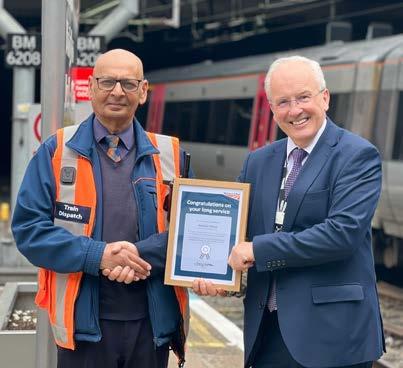
Railwayman marks 50 years' service
A West Midlands man who has helped keep millions of people on the move during a 50-year career has celebrated a milestone anniversary at Birmingham New Street.
Harjinder 'Paul' Dhami, from Tipton, has worked in public-facing and safety-critical jobs on the railway since he started in June 1976.
On 15 June he was presented with a longservice award to mark his five decades of service - and, at 70-years-young, he has no plans to stop just yet.
Paul started his career on 14 June 1976 as a carriage cleaner in Tyseley, before working as a shunter driver in Nuneaton and at stations on routes between Lichfield and Redditch and Kidderminster and Stratford-upon-Avon.
In 1990, he joined Birmingham New Street as 'chargeman', taking on responsibility for preparing trains for service. He was later promoted to platform supervisor and now, as a train dispatcher, he meets trains arriving at the station and makes sure they leave safely and on time, sending passengers on their journeys from the busiest station outside of London.
Paul now works part-time but, in his safetycritical role over the years, he has safely sent hundreds of thousands of trains on their way to destinations all over Great Britain.
Commenting on his career, anniversary, and family, Paul, said: “I came over from India and I needed and wanted to get a job. The railway was advertising and I applied. It’s the best decision I have ever made, it’s given me and my family a life we couldn’t have envisaged.
“My wife and I are so proud of our three daughters who all got to university. The railway has given us all that and I have always been grateful by working hard to ensure I do my job to the best of my ability every minute of every shift.”
Fraser Pithie, station operations manager at Birmingham New Street, said: “Paul is a hugely respected member of the team and is known for his professionalism and strong presence on the platform. He makes sure trains are dispatched safely and on time, and has always been a strong advocate for safety and high standards.
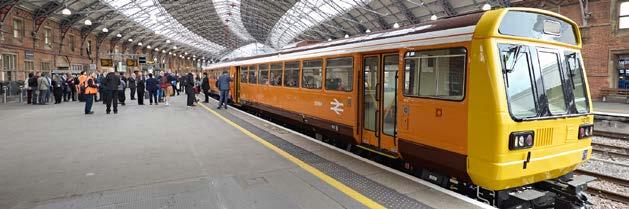
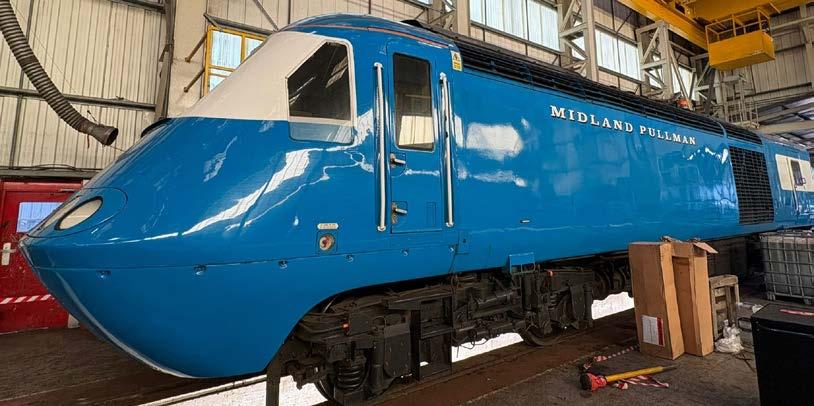
The project to fit equipment for digital in-cab signalling to the iconic High Speed Trains (HSTs), which form a major part of Britain’s railway story, is setting new standards for delivering vehicle retrofitment.
The third unit in a schedule of 16 Class 43 power cars being fitted with European Train Control System (ETCS) equipment has now been returned to owner RailAdventure UK just eight weeks after being presented for the work at UKRL’s facility in Loughborough, the former Brush locomotive works. The fourth unit is anticipated to be completed shortly also within an eight-week timescale.
The eight-week vehicle retrofitment is the quickest turnaround of a digital fleet upgrade delivered so far as part of the £1.4 billion East Coast Digital Programme (ECDP). The ECDP will transform rail operations by replacing traditional, lineside signals with continuous information displayed inside drivers’ cabs, delivering a more reliable, greener, and even safer railway.
The four power cars belong to RailAdventure, a specialist European freight operator, and are used for freight, rolling stock movements, and charter services. Learnings taken from challenges faced during the fitment of the first two vehicles enabled the rapid progress with the next two, and have set a standard that ECDP aims to continue and improve upon with other regular vehicle retrofitments (those not part of First in Class).
The next four units to undergo retrofitment belong to Locomotive Services Limited (LSL) and are used for private charter trains. The first
Classic High Speed Trains go digital
of these has already arrived at Loughborough.
Ben Mason, charter and heritage lead for ECDP, said: “ECDP is all about learning by doing. We’ve had to re-learn how we retrofit older generation trains and create a more streamlined and efficient assurance process.
“Hitachi and their fitment teams have really turned it around. We’re now in a strong place to quickly deliver the remaining 12 Class 43 units, using an efficient productionised process and avoiding unnecessary duplication. The significant progress we’ve made is all down to teamwork and collaboration.”
Paul Maynard, vice president, integrated communications supervision, Hitachi Rail, commented: “The pace of progress on the Class 43 programme has been a real turnaround and reflects the strength of collaboration across the project between Network Rail, the vehicle owners and operators, and the wider delivery teams.
“Alongside the wider programme progress, huge credit goes to the installation and test teams on the ground, whose hard work, adaptability and attention to detail have been instrumental in making this productionised retrofit approach a success. The way teams have worked together to solve challenges in real time and maintain momentum has been key to getting us where we are today.”
The team involved is working to secure regulatory approval to place the Class 43s into regular service using ETCS, and the aim is to have them operating using digital signalling between Welwyn and Hitchin from later this year.
Class 700 gets digital upgrade
Successful testing at speed of upgraded digital software on a Thameslink Class 700 unit has been completed, preparing the largest passenger fleet on the East Coast Main Line (ECML) for the introduction of in-cab digital signalling.
The 115-strong Thameslink fleet is the largest passenger fleet in the Governmentfunded £1.4 billion East Coast Digital Programme (ECDP). ECDP will transform the way rail services are provided by replacing traditional, lineside signals with continuous information displayed inside drivers’ cabs, delivering a more reliable, greener and even safer railway.
Over two separate Sunday evenings in April and May, a GTR Class 700 Thameslink
train was tested in the Central London ‘core’ section of Thameslink (the section between London Bridge and St Pancras International), using European Train Control System (ETCS) version 3.6.0, an upgrade of the digital signalling software. The testing work was carefully planned to ensure no disruption to the start of Monday morning passenger services at 4:30am.
GTR is currently the only operator in the UK using ETCS 3.6.0 in passenger service, on its Class 717 fleet and this builds on the experience gained using digital signalling on the Northern City Line. The testing, done in collaboration between GTR, Network Rail, and Siemens Mobility, was carried out to ensure the train’s existing functions continue to operate normally alongside the benefits of the
upgraded software.
The upgraded software allows more flexibility for services to operate in a high traffic area like the ECML by connecting the train to the trackside via GPRS, using ‘packet switching’.
The first passenger services to use ETCS on the ECML (between Welwyn Garden City and Hitchin) are expected later this year, initially involving Class 717 units. The Class 700 fleet is expected to begin migrating to ETCS on the ECML from 2027. The software upgrade of the Class 700 fleet will also help its readiness for future ETCS on the Brighton Main Line and Midland Main Line.
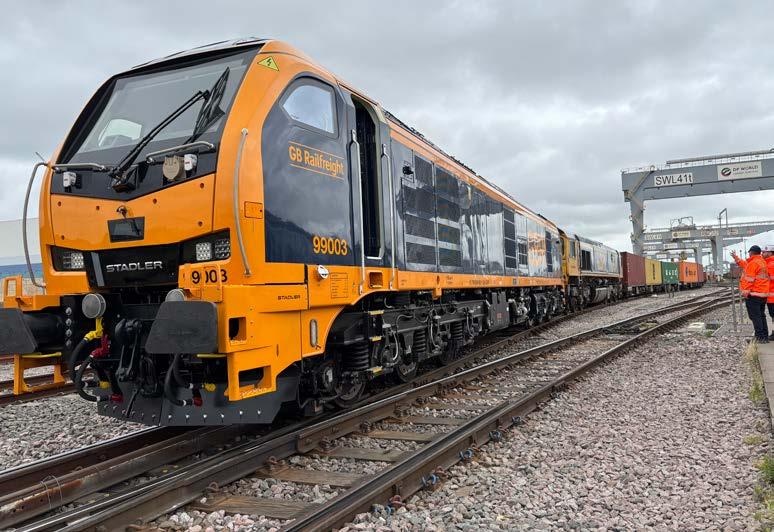
GB Railfreight marks milestone for Class 99 fleet
GB Railfreight, in collaboration with Maritime Transport and DP World, has marked a significant milestone in the introduction of its new Class 99 locomotive fleet, as testing progressed to the next stage on Wednesday 17 June, with an intermodal service successfully operating between DP World’s London Gateway and Maritime’s Hams Hall Rail Freight Terminal.
The successful operation represents one of the final stages in the testing and commissioning programme ahead of full commercial operations for the Class 99 fleet, which are due to commence in July.
The trial saw one of GBRf’s new locomotives hauling a live intermodal service along a key strategic freight corridor, demonstrating the Class 99’s capability in real operating conditions. The new fleet represents a major step forward for UK rail freight, combining electric and diesel capability to make the cleanest and safest way of moving goods around the country even cleaner and safer.
By successfully operating between London Gateway and Hams Hall Rail Freight Terminal, the trial underlines both the operational flexibility of the Class 99s and their role in supporting more sustainable, resilient, and productive intermodal logistics across the UK.
This trial came in the same week that the newest member of the Class 99 fleet, locomotive 99010, arrived at Avonmouth, further strengthening the fleet ahead of entry into service.
John Smith, CEO of GB Railfreight, said:
“This is one of the final milestones before the Class 99s enter full commercial service, and it
is fantastic to see an intermodal train hauled by one of these new locomotives on the network. The Class 99 represents a real step change for our industry, building on rail’s position as the cleanest and most productive way to move goods around the country.
“After a successful trial, we are ready to deliver a new era for rail freight in Britain.”
REPORT BY MATT ATKINS
ABM BRINGS GLOBAL
EXPERTISE TO THE UK
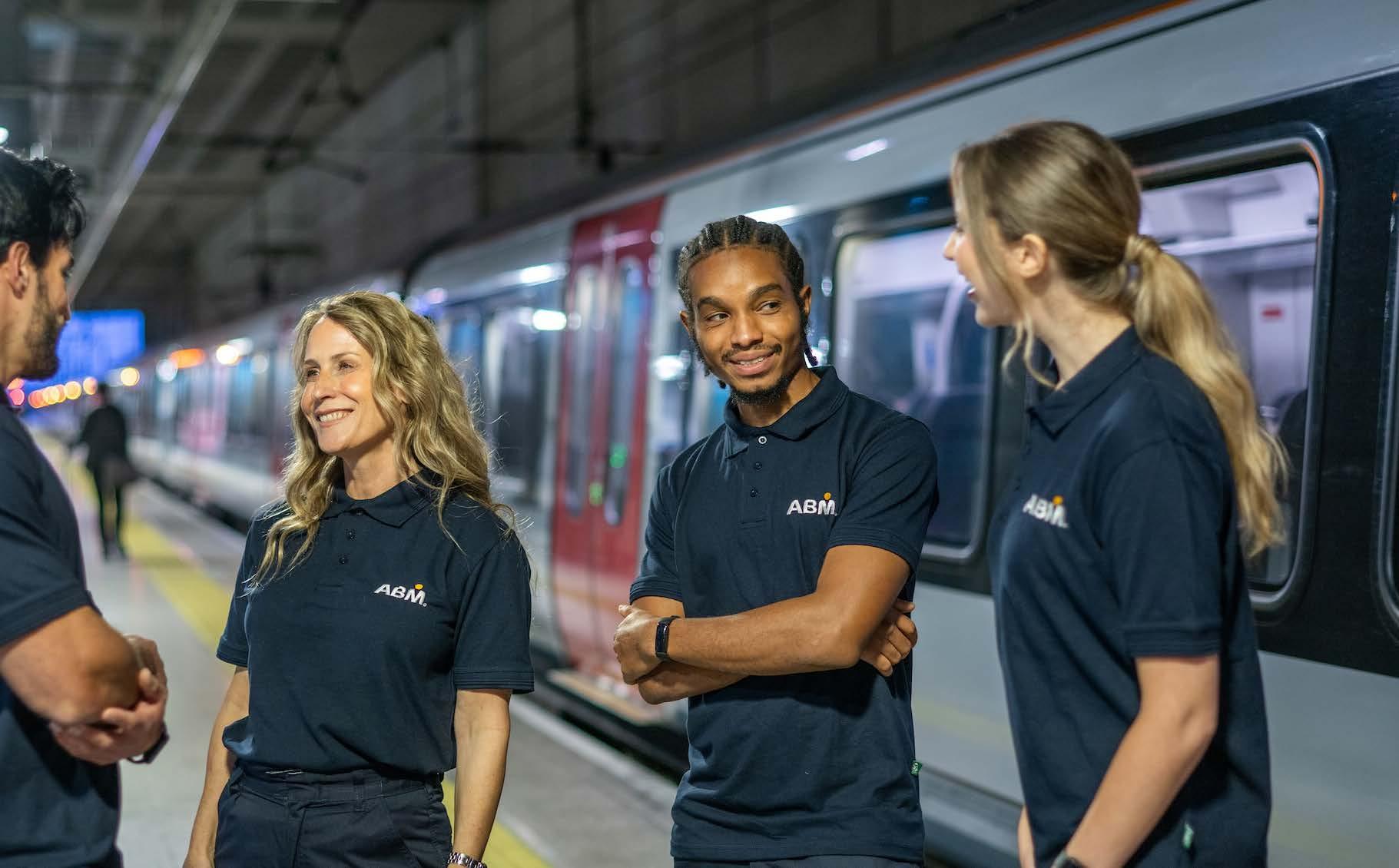
For a company operating at the scale of ABM, expansion into new markets is nothing new. One of the world's largest providers of facilities, engineering, and infrastructure services, the US-backed giant is now turning its attention to UK rail. Employing over 100,000 people across the globe, a key focus is on the transport sector.
With a strong reputation in aviation, ABM works across 75 airports worldwide, delivering services spanning facilities solutions, ground handling, travel retail services and accessible travel assistance. While it is no stranger to the British rail industry – with TfL and Eurostar as headline sector customers – ABM is serious about expansion. The company is focussed on leveraging new opportunities as passenger expectations rise and the industry is reformed under Great British Railways (GBR).
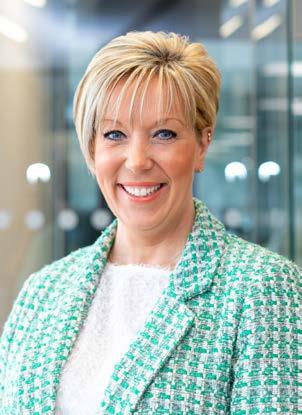
As part of this strategy, ABM has recently appointed two highly experienced industry figures to drive its ambitions. Kelly Parish and David Miles bring decades of expertise, and their arrival will shape the company’s position as a major player in Britain’s evolving rail landscape.
“Harnessing our combined rail experience to build a powerhouse presence in the industry with ABM is a career-defining opportunity,” explains Kelly, Vice President, Transport and Aviation at ABM UK&I, who leads the ABM transport strategy. “This was a clear strategic decision by the business. Rail is growing, passenger numbers are increasing, and there’s a real opportunity to bring some of the expertise ABM has in aviation into the rail environment.”
EXPERIENCED LEADERS
Both Kelly and David bring deep specialist knowledge to ABM. Kelly has spent more than 16 years across facilities management, transforming operations for Network Rail, train operating companies, and the aviation sector. David began his career in depot cleaning before progressing through leadership roles spanning managed stations, security, and facilities services.
Together, the pair see a major opportunity to apply lessons learned from aviation to improve rail operations and the passenger experience.
“One thing aviation and ABM in particular does exceptionally well is passenger experience,” says David. “Rail is moving in that direction. Stations are increasingly becoming destinations and meeting places, not simply somewhere people pass through.”
The pair also believe that passenger expectations have shifted significantly in recent years, with travellers now expecting transport hubs to provide cleaner, safer, accessible environments which offer a warmer welcome.
“Passengers remember every touchpoint of a journey,” Kelly says. “Whether it’s cleanliness, accessibility, security, or how they’re supported during travel, all of that shapes the overall experience.”
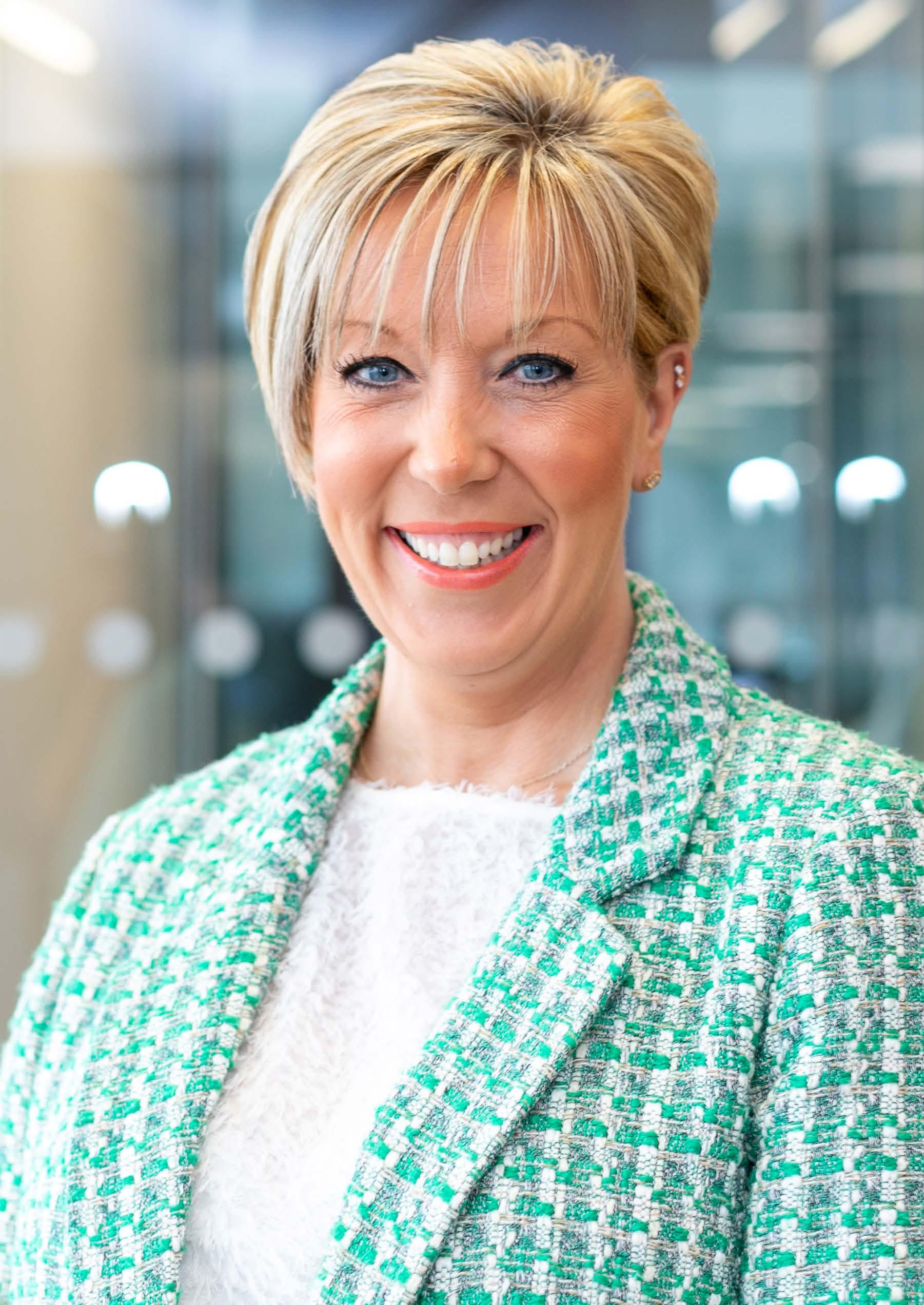
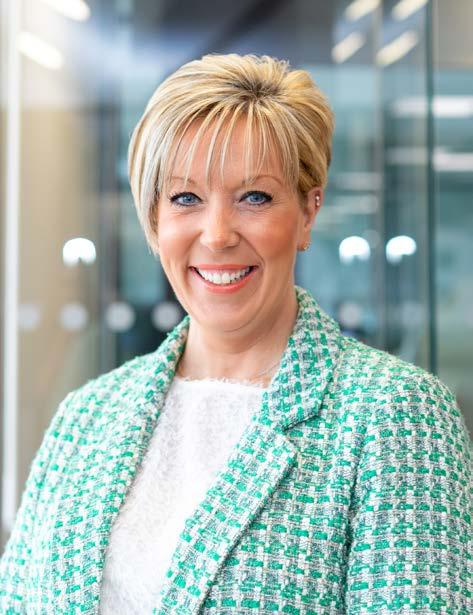
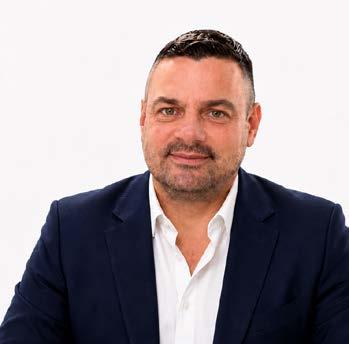
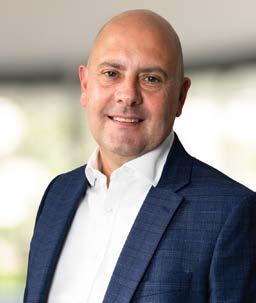
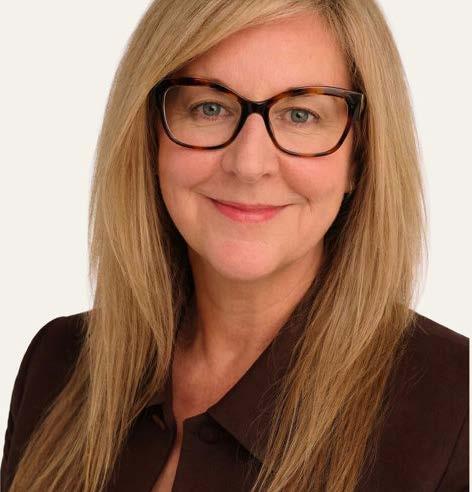
Kelly Parish.
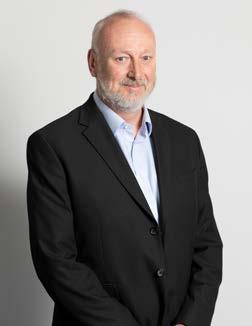
David Miles.
IMPROVING ACCESSIBILITY
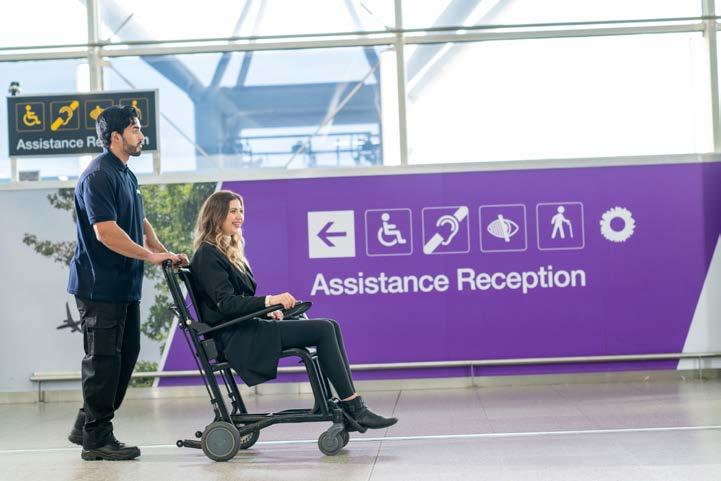
One area where aviation can offer invaluable lessons is in accessibility and assisted travel. ABM recently took on a major passenger assistance contract at Heathrow Airport, transferring more than 1,600 employees into the business and becoming the UK’s largest accessible airport travel provider. Kelly believes the expertise developed in airports can help support rail operators as accessibility becomes a critically important issue across the network.
“There’s a substantial opportunity to improve assisted travel in rail,” she says. “We have developed industry leading expertise in aviation around accessible travel services, training, and customer support, and we believe that translates extremely well into rail.”
David, meanwhile, stresses that improving accessibility is about more than compliance – it is about encouraging more people to travel confidently by rail.
“If we can create a better experience for passengers who need additional support, that benefits everybody,” he explained. “It makes rail more inclusive, more attractive, and ultimately encourages greater use of public transport.”
Technology plays a major role in this strategy, with ABM investing heavily in digital tools and operational technology designed to improve the overall passenger experience.
Among the innovations currently being explored is a customer-facing platform designed to improve communication with passengers requiring assistance. The system would allow travellers to share journey details in advance and connect directly with support teams during travel.
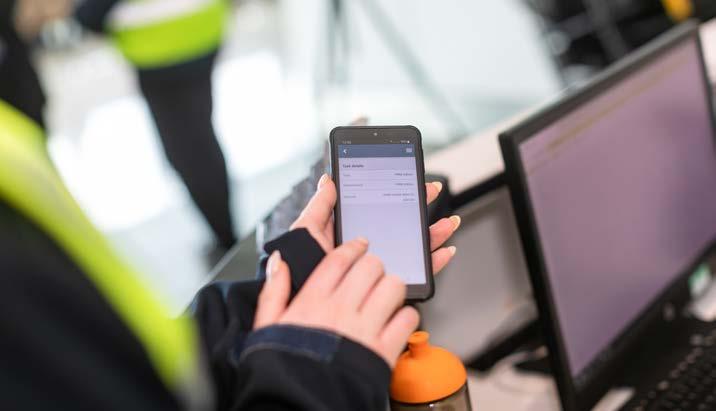
ABM is also using technology to transform operational approaches. ABM Connect takes operational transparency to a new level, linking frontline teams directly to clients and managers through real-time data: tracking
task completion, flagging deficiencies as they happen, and feeding actionable insights into a single dashboard. Its demand-led approach ensures teams are in the right place at the right time, matching resource to need as it arises. In a sector where reliability is everything, that kind of visibility and responsiveness matters.
“It’s about creating efficiencies without compromising service,” says Kelly. “Passenger numbers are increasing year-on-year, so we have to find smarter ways of working while continuing to improve standards.”
SUSTAINABLE VALUES
Sustainability is another challenge facing the industry and both Kelly and David believe facilities management companies have a major role to play in helping rail to reduce its environmental impact. This is not exclusively through headline initiatives such as electric vehicles, but also through the everyday operational decisions that shape large transport environments.
“We focus heavily on the detail,” explains David. “It’s not just about the big sustainability headlines. It’s about everything from chemicalfree cleaning products and recycled materials through to reducing waste and limiting what goes back into the watercourse.”
ABM is adopting more sustainable cleaning technologies, reducing transportation and packaging through local production, and reviewing procurement to ensure suppliers meet its ESG goals.
“There’s a real responsibility on businesses like ours to make sure the products and partners we work with share those same sustainability ambitions,” Kelly says.
Alongside this, ABM prioritises social value by partnering with schools, charities, and community groups to promote sector careers and support underrepresented groups, aligning with the growing emphasis on social value in rail procurement.
“Social value used to be almost an afterthought in tenders,” says Kelly. “Now it can account for 10, 15, even 20% of the evaluation process. Quite rightly, the industry wants to see businesses making a positive impact beyond the services they deliver.”
For ABM, sustainability and social value are not simply about meeting targets, but about building long-term partnerships that support cleaner, safer, and more inclusive transport networks for passengers and communities alike.
A NEW GENERATION
On the topic of social value, ABM understands the importance of attracting and retaining outstanding talent and creating opportunities for those seeking work. Both Kelly and David are passionate about demonstrating that careers in facilities management and transport operations offer genuine progression.
“It’s important that people can see a pathway,” says David. “I started out as a cleaning operative and worked my way through the industry. We need to show people that these are real careers with opportunities to develop.”
ABM is investing in apprenticeships, training, and community engagement initiatives
designed to encourage younger people into the industry, while also introducing more technology-led roles that appeal to a new generation of workers.
“It’s no longer just about standard mop and buckets,” Kelly says. “Today’s rail facilities management environment is being shaped by technology, robotics, and AI, helping operators deliver smarter, more efficient, and more resilient spaces.”
LOOKING AHEAD
With rail reform continuing and passenger expectations evolving, ABM believes the timing is right to establish a stronger foothold in the UK rail industry.
Both Kelly and David see the future creation of GBR as a major opportunity for the business to position itself as a long-term strategic partner capable of delivering integrated support services across the network.
“We want to be seen as a key player in the market,” says Kelly. “We genuinely believe we can bring something different to rail.”
For ABM, expansion into rail represents more than simple growth. It is a chance to reshape how support services contribute to the passenger experience – combining operational expertise, technology, accessibility, and passenger experience to help create a more welcoming and efficient railway for the future.
RECOGNISING THE VALUE OF SME s
SMALL BUSINESSES ARE CRITICAL TO DELIVERING
THE COUNTRY’S BIG INFRASTRUCTURE PROJECTS.
ANDY RIDOUT, FOUNDER AND GROUP MANAGING
DIRECTOR OF ADVANCE TRS, EXPLAINS MORE.
Having spent more than two decades working across engineering and infrastructure recruitment, one thing has always been clear to me: many of the UK’s largest infrastructure programmes depend heavily on some of the smallest businesses in the supply chain.
Major national programmes such as HS2, energy grid upgrades, airport expansion and rail modernisation involve vast delivery organisations and Tier-1 contractors. But much of the specialist expertise required to deliver these projects often sits within small and medium-sized enterprises (SMEs).
These businesses frequently provide highly specialised capabilities in areas such as geotechnical engineering, environmental consulting, surveying, digital engineering, and systems installation. In many cases, they are solving the highly technical challenges that sit at the heart of major infrastructure delivery.
SMALL BUSINESSES, BIG IMPACT
The scale of SME involvement is often underestimated. For example, HS2 Ltd has reported that more than 70% of businesses in its supply chain are SMEs, with over 2,500 small businesses contributing to the programme. That reflects something many of us working across infrastructure already recognise, even the UK’s biggest projects rely heavily on smaller specialist suppliers.
At the same time, there remains an opportunity to increase SME participation in public procurement.
SMEs make up 99.9% of UK businesses and employ around 61% of the private sector workforce, yet they receive a much smaller share of public sector contracts. Analysis from the British Chambers of Commerce shows that SMEs received around £45.4 billion in government procurement spending in 2024, representing roughly 20% of total public procurement expenditure.
That sits well below the UK Government’s long-standing ambition that 33% of public procurement spending should go to SMEs, either directly or through supply chains.
Andy Ridout.
PROCUREMENT BARRIERS
From where I sit in the industry, this reflects a difficult balancing act within procurement systems. On one hand, frameworks and financial thresholds play an important role in managing delivery risk, although they can sometimes present challenges for smaller specialist businesses.
Common challenges SMEs face include complex framework bidding processes, strict financial thresholds, and procurement systems that rely heavily on structured digital responses. These mechanisms are designed to create fairness and consistency, but they can sometimes make it difficult for smaller suppliers to demonstrate specialist capability or innovative solutions.
This matters because SMEs bring qualities that are increasingly valuable in large infrastructure projects: specialist expertise, agility, and the ability to innovate and deploy quickly.
A STRONGER SUPPLY CHAIN
SMEs often operate with leaner structures and can scale resources directly in response to project demand. Instead, they recruit and scale in direct response to client needs, building teams around specific project requirements rather than deploying pre-existing resources that may not be ideally suited. This creates a more efficient operating model with lower overheads and allows SMEs to grow in alignment with project demand.
This model also enables faster mobilisation. By recruiting to defined project requirements rather than reallocating internal resources, SMEs can often deploy talent more quickly, improving speed to hire and overall delivery efficiency. This responsiveness is particularly valuable in time-critical infrastructure programmes, where delays in resource allocation can directly impact project timelines and therefore increase costs.
Additionally, this approach supports wider economic impact. As SMEs grow in response to project pipelines, they create new jobs, contribute to the tax base, and open up niche career paths and development opportunities within highly specialised areas of the industry. Smaller organisations often operate closer to the technical challenges projects are trying to solve. With simpler organisational structures, SMEs can often respond quickly to evolving requirements, they can develop and test solutions and deploy resources rapidly, respond to evolving project requirements, and deliver outcomes at pace. Larger organisations and SMEs often bring different strengths, with SMEs sometimes able to adapt more quickly in niche or fast-moving areas.
At the same time, SME participation plays an important role in spreading the economic benefits of infrastructure investment across the country, supporting regional economies and strengthening local supply chains.
With the UK entering a new period of major infrastructure investment across transport, energy and water, creating supply chains that allow SMEs to contribute alongside major Tier 1 suppliers will become even more important.
MORE THAN 3,000 RAIL PROFESSIONALS DESCENDED ON BIRMINGHAM AS UK RAIL 2026 MADE ITS DEBUT.
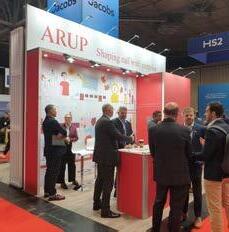
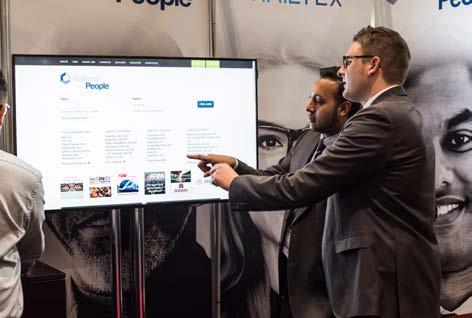
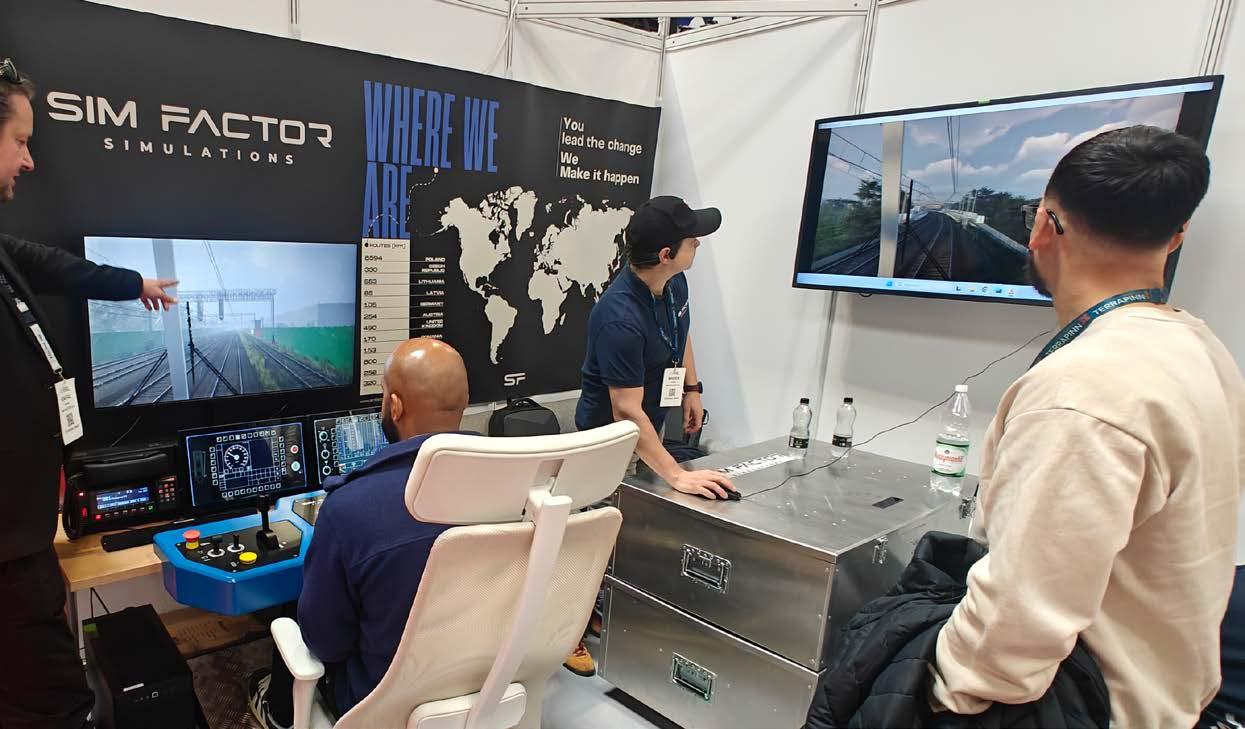
Organised by global events company Terrapinn, UK Rail 2026 brought together representatives from every corner of the rail supply chain. Boasting 86 exhibitors and 165 speakers, the event firmly established itself as a valuable addition to the industry calendar.
Designed to bring operators, infrastructure managers, manufacturers, suppliers, and more under one roof, the exhibition provided an opportunity not only to showcase the latest products and services but also to address the challenges shaping the future of Britain's railways.
From the moment the doors opened, there was a clear sense of optimism. Despite the well-documented challenges facing the sector, conversations throughout the halls focused on opportunity – whether through digital innovation, infrastructure investment, decarbonisation, or the ongoing reform of Britain's railway.
INDUSTRY INNOVATION
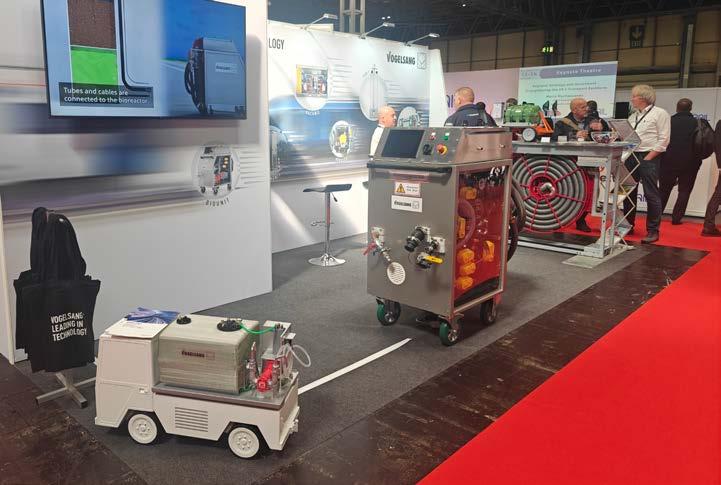
Though it had a slightly smaller footprint than more established events, the exhibition floor reflected the breadth of today's rail industry. Companies from across the spectrum demonstrated technologies designed to improve reliability, efficiency and safety. Exhibitors in attendance represented the signalling, rolling stock, and infrastructure sectors, alongside many including cybersecurity and artificial intelligence (AI). Indeed, AI was one of the defining themes of the event. Exhibitors showcased predictive maintenance platforms, intelligent asset monitoring and data-driven decision-making tools capable of helping operators identify faults before they become failures. Digital twins, remote inspection technologies and automated monitoring systems also featured heavily, highlighting the industry's growing confidence in digital solutions.
Cybersecurity emerged as another key topic, reflecting the increasing importance of protecting critical infrastructure as rail systems become ever more connected.
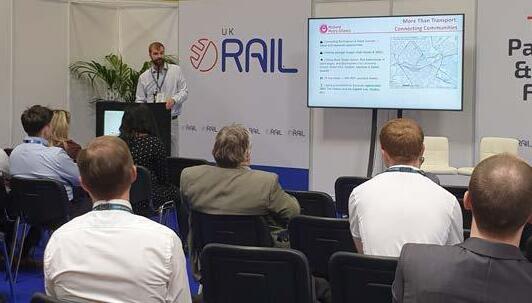
Away from the exhibition, the conference programme tackled many of the issues dominating industry discussion.
Sessions explored the ongoing transition towards Great British Railways, regional transport leadership, accessibility, infrastructure investment, and the role of technology in delivering a more reliable railway. Senior figures from across government, operators and infrastructure organisations shared their perspectives on the opportunities presented by reform and the importance of closer collaboration across the industry.
The programme also highlighted the increasing importance of customer experience, commercial strategy, and integrated transport, recognising that the railway's long-term success depends not only on engineering excellence but also on delivering a better service for passengers and freight customers alike.
SUSTAINABLE SOLUTIONS
Environmental responsibility was another recurring theme.
Exhibitors demonstrated low-carbon construction methods, batterypowered maintenance equipment, energy-efficient technologies, and innovative materials designed to reduce the railway's environmental footprint.
Alongside discussions around electrification and alternative traction technologies, many organisations highlighted practical steps they are already taking to support the industry's journey towards net zero, demonstrating that sustainability is increasingly embedded in day-to-day business rather than treated as a standalone initiative.
While technology dominated many conversations, people remained firmly at the heart of the event.
Skills shortages, workforce development and attracting the next generation of railway professionals featured prominently throughout the conference agenda. Apprenticeships, graduate schemes and leadership development programmes were widely promoted, reflecting the industry's determination to build a workforce capable of delivering the railway of tomorrow.
Several sessions also focused on diversity, accessibility, and creating an inclusive working environment, reinforcing the message that innovation depends as much on people as it does on technology.
Perhaps the greatest success of UK Rail 2026 was its ability to bring together organisations that don’t always have the opportunity to meet face-to-face.
Across both days, networking areas remained busy as exhibitors connected with clients, suppliers developed new partnerships, and delegates exchanged ideas on some of the sector's biggest challenges. The event's broad representation fostered an environment where cooperation took centre stage.
LOOKING AHEAD
For a first edition, UK Rail 2026 exceeded expectations. The combination of a substantial exhibition, a high-quality conference programme, and excellent networking opportunities demonstrated that a demand remains for events dedicated to bringing together the entire rail supply chain.
As the railway continues its journey through reform, digital transformation, and decarbonisation, events such as UK Rail provide an invaluable forum for sharing ideas, forging partnerships, and showcasing the innovations that will shape the network for decades to come.
If the enthusiasm and engagement seen across the NEC are anything to go by, UK Rail looks set to become a permanent fixture in the industry's events calendar.
It returns to the NEC in 2027.
ENGINEERING CHANGE
FROM DATA SYSTEMS TO FLEET MODERNISATION, TWO RAIL ENGINEERS ARE CHALLENGING STEREOTYPES AND SHOWCASING
THE DIVERSE OPPORTUNITIES ENGINEERING OFFERS.
Often associated with hard hats, workshop floors, and hands-on technical work, modern engineering careers encompass a broad range of disciplines, from data analysis and asset management to project delivery, fleet modernisation, and strategic planning.
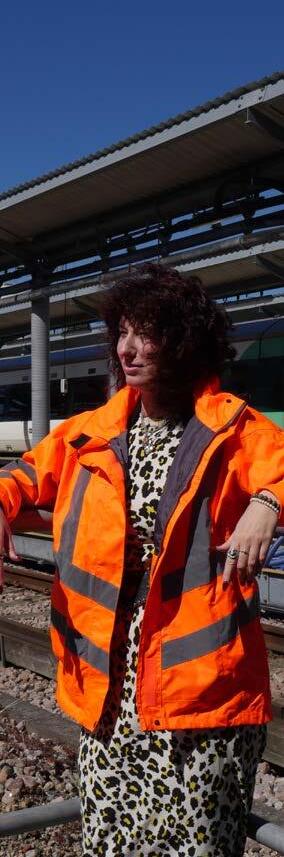
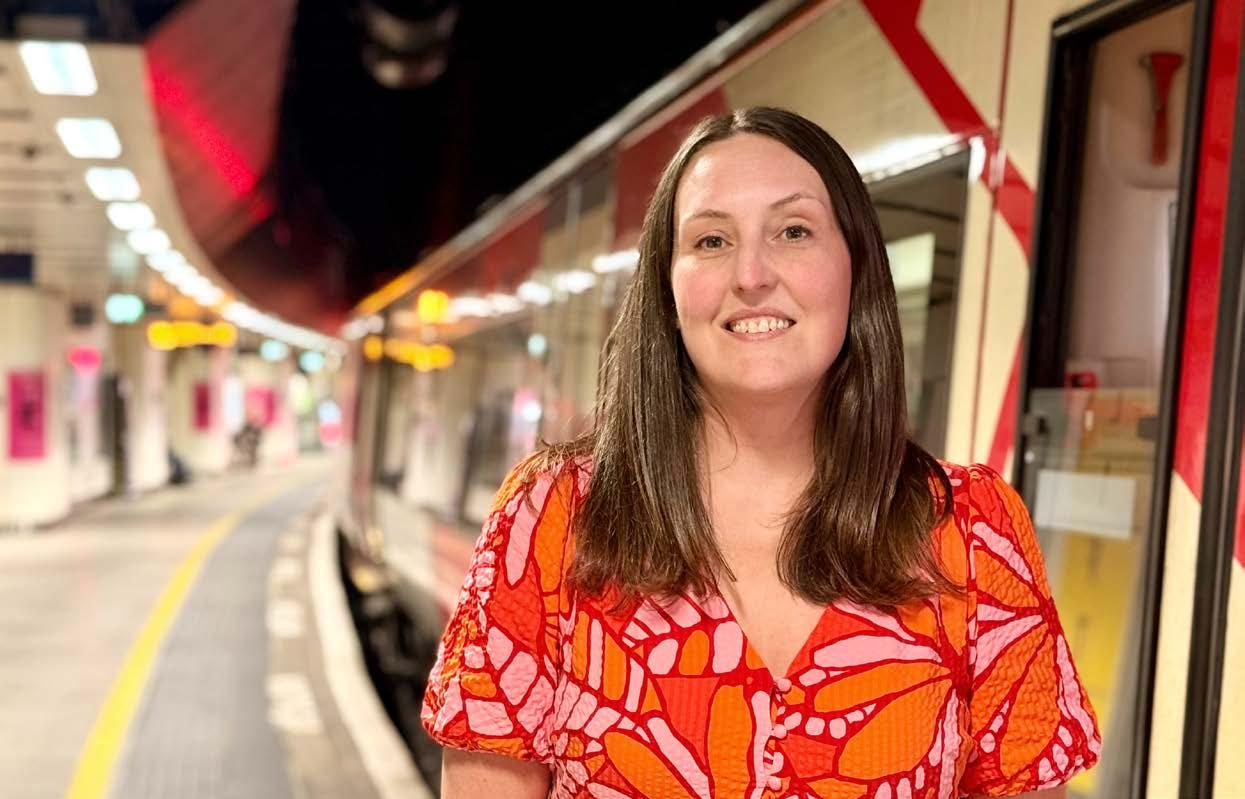
As the industry marked International Women in Engineering Day on 23 May, two women working in very different areas of rail engineering helped to challenge perceptions about the profession while highlighting the rewarding careers available across the sector.
For Megan Smith at Govia Thameslink Railway (GTR) and Kerry Childs at CrossCountry, engineering has provided opportunities to solve problems, improve the railway, and make a difference to both colleagues and passengers. Though their journeys into the industry have followed different paths, both demonstrate the value of diverse perspectives, supportive workplaces, and the many routes into engineering careers.
DISCOVERING RAIL
For Megan, a career in rail was never part of the original plan. Before joining Southern's engineering team, she worked as a Year Three Course Coordinator at Brighton and Sussex Medical School following university. But while she enjoyed the role, she struggled to see a clear route for progression.
That changed when a family member suggested she explore opportunities in rail.
"Once I started looking into it, the industry quickly became something that felt worth exploring," Megan explains.
She successfully applied for an Asset Management Systems Data Specialist role at Southern's Selhurst Depot in 2022, attracted by the opportunity to work with data and systems. Today, she plays a vital role in supporting fleet maintenance programmes, helping to ensure trains receive the right work at the right time.
"A normal day for me depends on the project I'm working on, but recently I've been focused on maintenance plans for Class 379 trains," she says.
"The fleet engineers map out the work which needs doing and I take that information, structure it, and plan how it will be delivered. That includes checking the
data is accurate, building it into spreadsheets, and coordinating with production teams to make sure everything lines up."
While some people may not immediately associate data management with engineering, Megan believes her role demonstrates how diverse engineering careers have become.
"When people talk about women in engineering, they often picture roles on the shop floor or working directly on trains, but there's also a whole data and systems side to it.
"That's where I sit and it's a good reminder that engineering isn't just hands-on work, it's also everything happening behind the scenes."
Several hundred miles away, Kerry Childs, CrossCountry's head of industry projects, followed a different route into engineering.
Growing up near Matlock in Derbyshire, Kerry developed an early fascination with understanding how things worked.
"As a kid, I remember helping my dad with cars in the garage and at school I naturally gravitated towards practical subjects,” she says. “The Design and Technology department at school was great and helped develop my interest in engineering."
Although she was often one of only a handful of girls studying technical subjects, it wasn't something she thought much about at the time.
"I chose science and practical subjects because I enjoyed them and they kept a lot of options open for university," she explains.
That curiosity eventually led her to study Electrical and Electronic Engineering before embarking on a rail career that has spanned fleet engineering, reliability improvement, consultancy, project management, and major rolling stock programmes.
Today, Kerry oversees a portfolio of fleet improvement projects at CrossCountry, including the introduction of additional trains, refurbishment of the operator's Turbostar fleet, and the modernisation of its Voyager trains.
Together, the programmes are improving reliability, accessibility, and the overall customer experience for millions of passengers across the network.
SHARED SKILLS
While Megan and Kerry work in very different roles, both highlight the wide range of skills that engineering careers can develop.
CHANGE
For Megan, problem-solving and pattern recognition are central to her success. As someone who is autistic, she says her role aligns closely with how she thinks.
"For me, this job fits the way my brain works," she says. "Pattern recognition is something that comes naturally to me, along with problemsolving and approaching things from a different angle.
"I also love research, so having a role that allows me to lean into those strengths has made a real difference."
Kerry's career has also been shaped by recognising and embracing different ways of thinking. While studying at university, she encountered challenges that eventually led to a diagnosis of severe dyslexia at the age of 22. The diagnosis enabled her to access support which helped her successfully complete her degree before going on to study for a Masters in Maintenance Engineering and Asset Management.
Rather than viewing dyslexia as a barrier, Kerry sees it as one part of a wider skillset that has contributed to her success throughout her career. Her story serves as a reminder that engineering benefits from diverse perspectives and experiences.
SEEING THE RESULTS
One of the attractions of engineering is the opportunity to see the impact of your work. Whether that means delivering a major fleet refurbishment programme or ensuring maintenance plans are accurately recorded and implemented, both women take pride in helping to improve the railway.
For Kerry, there are few moments more rewarding than seeing a project move from concept to reality.
"It's exciting to see a major project come to life, particularly when you can see the difference it's made," she says. "The larger
That work can include improving reliability, refining processes, solving complex problems, or delivering changes that improve the experience of passengers and colleagues alike.
Megan experiences a similar sense of achievement through the systems and processes she develops. One recent highlight involved helping to create the virtual train structure within the asset management system for Southern's Class 379 fleet.
While passengers may never see the work directly, it plays a vital role in supporting effective maintenance and ensuring trains remain available for service.
Both Megan and Kerry are keen to highlight the importance of support throughout their careers.
For Kerry, encouragement from family, teachers, managers, and mentors helped her navigate challenges and develop professionally. Reflecting on her experience in rail, she describes the industry as a supportive environment where colleagues are willing to share knowledge and help others succeed.
"I've always found the rail industry to be a supportive place to work," she says. "People are always willing to share their experience and offer support when it's needed."
Megan has similarly found opportunities to develop both professionally and personally within GTR. Alongside her day-to-day responsibilities, she serves as chair of the company's Disability Employee Network, helping to promote inclusion and support colleagues across the business.
Their experiences demonstrate how supportive workplaces can help people thrive, regardless of their background or circumstances.
LOOKING TO THE FUTURE
Established by the Women’s Engineering Society in 2014, International Women in Engineering Day celebrates the achievements of women engineers while encouraging the next generation to consider careers in the profession.
Although significant progress has been made, women remain underrepresented in many engineering disciplines, including rail. Changing that requires not only attracting more women into engineering but also showcasing the wide variety of opportunities available.
The experiences of Megan and Kerry demonstrate that engineering is far more diverse than many people realise. It can involve data analysis, project management, commercial decision-making, systems development, reliability improvement, rolling stock refurbishment, or countless other specialisms.
For those considering a career in engineering, Kerry's advice is straightforward. "If you're interested in engineering, just do it, or use the resources available now to find out more," she says.
"Engineering gives you a strong foundation and develops skills that can take you in lots of different directions."
It's a message echoed by Megan, whose own journey into rail demonstrates that engineering careers are open to people from a wide range of backgrounds.
As the railway continues to modernise and adapt to future challenges, attracting talented people with different skills, experiences, and perspectives will be essential. International Women in Engineering Day offers an opportunity to celebrate those already making a difference while encouraging many more to follow in their footsteps.
refurbishment projects tend to get all the attention, but a lot of the work that makes a difference isn't so visible."
THE JEWISH RAIL NETWORK ON THE MOVE
The UK rail industry, with an estimated workforce of 240,000, is celebrated for its diversity and its vital role in connecting people and places across the country.
Yet, as with many sectors, certain communities have historically been underrepresented.
Recognising this gap, the Jewish Rail Network (JRN) was established in March 2025 and officially launched in June 2025 to provide a platform for Jewish people and allies in the rail industry. In just a year, the network has grown into a vibrant, positive, and inclusive space that is reshaping Jewish representation, understanding, and community within the rail sector.
The JRN was founded and is led by a dedicated group of volunteers who balance their day jobs with their passion for inclusion and Judaism. The network aims to connect Jewish people and allies across the rail industry, regardless of religious observance, cultural background, or professional level. In its first year, the JRN has already attracted 100 members (approx 70% Jewish; 30% allies) from nearly 50 organisations.
At its core, the network advocates for greater understanding and meaningful representation of Jewish people. This includes raising awareness of cultural festivals, religious observances, and historical experiences, while creating an environment where members can come together, share stories, develop professionally, and grow personally.
LEARN, SHARE, AND CELEBRATE
One of the JRN’s key achievements has been encouraging both social and professional connections. Members are invited to attend eightweekly network meetings; a safe and welcoming space to discuss experiences, share knowledge, and build relationships. Beyond these meetings, the JRN has established a range of communication channels, including a website, a LinkedIn page, a WhatsApp group, and a quarterly newsletter, ensuring members can stay connected.
The JRN hosts a diverse range of events to celebrate Jewish culture and provide professional development. Informative online sessions have focused on Jewish holidays such as Rosh Hashanah, Chanukah, and Passover. These events provide insights into traditions, historical
significance, and importance to Jewish life, while also allowing allies to engage with and understand these celebrations. Of course, these occasions wouldn’t be complete without traditional foods like doughnuts, apple and honey, and matzah, which help create moments of togetherness and shared identity.
Social gatherings have taken place in London and Manchester, while online workshops provide opportunities for sharing experiences and networking. Importantly, the JRN ensures these events are inclusive, welcoming not only Jewish members but also allies within the industry.
ADVOCACY, EDUCATION, AND MENTAL WELLBEING
A primary aim of the JRN is to advocate for, and educate about, the needs of Jewish people in the rail industry. This includes guidance on supporting religious observance, promoting cultural awareness across organisations, and tackling antisemitism. Workshops such as ‘What it’s like to be Jewish in the rail industry’ provide invaluable insights, creating understanding among colleagues from diverse backgrounds.
The JRN has also partnered with organisations such as Jami, a specialist provider of mental health services for the Jewish community. Members were advised of strategies for maintaining wellbeing during challenging times and practical tools to build resilience.
COMMEMORATION AND INCLUSION
The JRN’s largest in-person event of its first year was held at the House of Lords for Holocaust Memorial Day. Opened by Lord Hendy and closed by Lord Katz, a central and deeply moving moment of the event came from Angela Cohen MBE, who shared the testimony of her late father, Moishe Malenicksky, a Holocaust survivor who lost his whole family.
Lord Hendy’s address emphasised the enduring importance of remembrance: “Intolerance, hatred and violence are not acceptable,” he said.
“Words and perceptions matter, especially in a time when tolerance has diminished, disinformation is rampant, and antisemitism is on the rise once again.”
The event not only honoured those who lost their lives but reinforced the JRN’s broader mission of empathy, education, and inclusion across the rail industry where everyone feels seen, valued, and respected.
MEMBER EXPERIENCES
Feedback from members has been overwhelmingly positive. One member shared: “From giving us a forum for Jewish people to network and support each other as a minority in our organisations, it has also given us the confidence
NETWORK
to stand up, be visible, build allyship, and have a voice in the railway family.”
Another reflected: “Being involved in the JRN has been vital to me over the last year. I’ve connected with other Jews and allies, deepened my understanding of our faith and it’s helped me feel safe expressing my Jewish identity in our industry.”
Members have praised the welcoming atmosphere, the quality of events and the educational opportunities. The network has created a space where Jewish identity is celebrated and dialogue with colleagues from other faiths is encouraged, resulting in a positive learning experience for all.
INDUSTRY COLLABORATION
The JRN collaborates with Transport for London and British Transport Police Jewish Employee Networks, participates in the JewishERG, and attends the Jewish Board of Deputies’ work conferences. It is also an active member of Rail Unite for Inclusion, which has helped to create a multifaith network that includes Christians in Rail, Hindus in Rail, Muslims in Rail, and Sikhs in Rail. During Interfaith Week, the JRN shared a ‘knowledge bite’ to promote understanding across faiths, helping the industry become more cohesive and inclusive.
“I’m humbled to have supported the JRN to establish their group and to have them as key members of our industry inter-faith group,” said the chair of Rail Unite for Inclusion
“JRN has flourished and become a vital community within the industry. Its dedication to fostering inclusion and belonging is exemplary along with its support for the Jewish community.”
LOOKING FORWARD
As the JRN moves into its second year, the network has ambitious plans to continue expanding its impact. Upcoming activities include synagogue visits, further collaborations with Jewish organisations, training opportunities, and regional networking events. The
network is also exploring charitable status to formalise operations, ensuring its sustainability and long-term support for Jewish professionals across the rail industry.
In just a short time, the Jewish Rail Network has become a source of pride, connection and learning. Its first year proves that when people come together to support one another, celebrate diversity and promote understanding, the rail industry is not just connecting destinations; it is connecting hearts and minds.
For more information, or to sign up as someone who identifies as Jewish or an ally, visit: www.jewishrailnetwork.org.
FOR ALL ABILITIES OPENING DOORS
A PIONEERING INTERNSHIP SCHEME IS OPENING DOORS FOR YOUNG PEOPLE WITH SPECIAL EDUCATIONAL NEEDS AND CREATING PATHWAYS INTO EMPLOYMENT.
For many young people with special educational needs and disabilities (SEND), finding a route into meaningful employment can be a challenge. Research suggests that only 4.8% of individuals with a learning disability or autism spectrum condition in England are in permanent paid employment, despite many possessing valuable skills, enthusiasm, and a strong desire to work.
Alstom is hoping to change that, having launched its first supported internship programme, ASPIRE, at its historic Derby Litchurch Lane Works. The programme provides students with real workplace experience, structured support, and the opportunity to develop the skills and confidence needed to secure long-term employment.
Delivered in partnership with Derby College Group, the programme combines hands-on work experience with classroom-based learning and dedicated support from a job coach. At the same time, Alstom's Training Academy is providing bespoke teaching designed to complement the interns' day-to-day experience on site.
The first interns to join the programme, Aaron Donaldson and Harry Hedges, are already playing a part in one of the UK's most significant train refurbishment programmes.
REAL EXPERIENCE
Aaron and Harry are working on Alstom's CrossCountry Voyager refurbishment project at Derby, supporting both mechanical and electrical workstreams.
Valued at around £60 million, the programme is modernising CrossCountry's fleet of Class 220 and Class 221 Voyager trains. Across 312 vehicles, passengers will benefit from new seating and tables, fresh interior finishes, improved lighting, new carpets, passenger counting technology, and a striking new exterior livery.
Owned by Beacon Rail and operating on routes stretching from Aberdeen to Penzance, the Voyager fleet serves communities across the length of Britain. Through ASPIRE, the interns are contributing to a project that will improve the experience of millions of passengers for years to come.
For Alstom, however, the programme is about far more than refurbishment work.
"We've been genuinely impressed by the interns' knowledge of both historic and modern rolling stock – it's clear they're passionate about what they're doing, and it's a joy to have them on board," said Nina Atwal, head of social value, UK and Ireland, at Alstom.
"Working with Derby College Group has already shown how powerful collaboration can be, especially when it comes to creating meaningful opportunities for underrepresented groups.
"I'm excited to watch our first group of interns grow at Alstom – not just gaining valuable work experience, but also building life skills, confidence, and self-belief that will help them thrive and move into paid employment."
CONFIDENCE AND SKILLS
The journey to the shop floor began long before the interns officially started work.
In summer 2025, Aaron and Harry visited Derby Litchurch Lane Works alongside their tutors from Derby College Group. During the visit they met future colleagues, learned more about Alstom's operations, and explored Britain's largest and oldest operating train factory.
Several familiarisation days followed, helping the students become comfortable in their new surroundings before beginning internships that will last for up to a year.
Aaron was selected by Derby College Group because of his engineering ability, extensive railway knowledge, and determination to build a career through employment. Harry's enthusiasm for rail stretches back to childhood and includes volunteering with the Ecclesbourne Valley Railway.
The careful preparation reflects the programme's emphasis on ensuring students feel supported and confident as they take their first steps into the workplace.
Amy Bacon, supported internship and work experience lead at Derby College Group, said: "We are incredibly proud to be partnering with Alstom on their supported internship programme.
"This collaboration is opening doors to truly life-changing opportunities for our interns, giving them a unique chance to gain realworld experience in a supportive and inclusive environment.
"Alstom has gone above and beyond to welcome our interns, working closely with them ahead of their placements to ensure a smooth and confident transition into the workplace. Its commitment to our interns and inclusion has made a real difference, and the interns are excited and eager to begin this next chapter."
She added: "This partnership is a powerful example of how education and businesses can come together to empower young people with SEND, helping them build the skills and confidence they need to progress into meaningful employment."
CREATING OPPORTUNITIES
The rail industry continues to face skills shortages across a range of disciplines, making it more important than ever to attract talent from every part of society.
Supported internship programmes such as ASPIRE not only provide opportunities for young people who may otherwise struggle to access employment, but also help employers tap into an often-overlooked pool of talent.
CrossCountry has welcomed the initiative and the opportunity it provides for young people to gain practical experience on a major rail project.
Amanda Hopkins, management development advisor at CrossCountry, said: “We are delighted to be part of Alstom's new supported internship programme, which will provide brilliant opportunities for Derby College Group students with special
education needs and disabilities through real workplace experience.”
"Playing their part in the refurbishment of our Voyager fleet will be the perfect springboard for the students on their journey into the rail industry – we look forward to working with them now and hopefully into the future."
LOOKING AHEAD
ASPIRE forms part of Alstom's wider commitment to inclusion and workforce diversity. As a Disability Confident Leader employer, the company hopes to expand the programme beyond Derby and eventually introduce supported internships at other locations across its UK and Ireland network.
Later this year, Alstom plans to welcome a further four interns aged between 16 and 24 to Derby Litchurch Lane Works.
The site is uniquely placed to support programmes such as ASPIRE. As the UK's only facility that designs, engineers, builds, and tests trains for both domestic and export markets, it is also home to Alstom's Training Academy.
Opened in 2023, the academy features 1,600 square metres of practical learning space, including a full carriage and driving cab, allowing learners to gain hands-on experience before joining live manufacturing teams.
For Aaron and Harry, however, the most important lesson may not be found in a classroom or workshop.
By providing meaningful work experience, structured support, and the chance to contribute to a major rail project, ASPIRE is helping young people develop something equally valuable: the confidence to build a career in the railway industry.
(left to right) Tom Eisenberg, Inclusion Job Coach at Derby College, and Harry Hedges, Production Intern at Alstom.
The National Autistic Society was funded by The Motability Foundation to address the gap in research on autistic people and travel. Our year-long project produced eye-opening findings, and clear recommendations.
Our ambitious project involved autistic people, families, and supporting professionals in a high-quality piece of user research to:
• Understand the greatest barriers and challenges autistic people experience when using transport, particularly buses and trains.
• Identify evidence-based and feasible solutions to make transport more accessible to autistic people.
• Establish which changes and interventions autistic people would most like to see, and how these fit in with industry capabilities.
We captured the views and experiences of thousands of people through surveys, interviews, and workshops. Using this data, we worked with transport and accessibility experts to understand what improvements are possible, considering their industry and resource limitations.
“From sensory point of view, there are so many sounds, the smells, the proximity of people. People aren't following rules, they’re vaping on buses. Others have got their music on and they're being so loud and inconsiderate.” – Autistic woman
WHY IS IT IMPORTANT?
More than one in 100 people are autistic and there are at least 700,000 autistic adults and children in the UK. Autistic people face many barriers and inequalities in accessing school, work, healthcare and leisure which can be made worse by difficulties using transport and making journeys.
“I've arrived at train stations to find that my train has been delayed or cancelled and I have no idea what I'm supposed to do then. I've felt very lost and frightened." – Autistic woman
In a neurotypical world of overwhelming sensory environments and confusing social rules, travel can be exhausting or impossible for autistic people. We found a distinct lack of quality, UK-based research this topic, and set out to address the evidence gap. We
produced a thorough and robust piece of participatory research which was autisticled.
Overall, we found a need for:
• Support for autistic passengers.
• Accessible information.
• Sensory adaptations.
• Autism understanding.
• Reducing uncertainty.
Parent of an autistic man
These evidence-based recommendations from our project report must be actioned by transport professionals and industry leads, across the short and long term. You play a crucial role in helping to make transport accessible for autistic people. Whatever stage you’re at in developing systems to
autistic-travel
Improve your autism and neurodiversity knowledge at: https://www.autism.org.uk/ what-we-do/autism-know-how
Take a look through our short guide which summarises key findings, spotlights some autistic passengers’ travel stories and outlines project recommendations for the transport industry.
REPORT BY NASIR KHAN MBE, MUSLIMS IN RAIL CIC
SAFETY AND CONFIDENCE MATTER TO EVERYONE MUSLIMS IN RAIL
Railways connect millions of people every day. Passengers rightly expect to travel safely, be treated respectfully, and feel confident using the network regardless of their background, faith or identity. While safety is often associated with engineering, infrastructure, and operations, public confidence is also shaped by lived experience.
Muslims in Rail (MIR) was established to connect, grow, and inspire people working or seeking work in the rail and transport industry whilst helping organisations better understand some of the challenges affecting passengers and staff. Our work focuses on improving understanding, strengthening accountability and supporting inclusion across an industry serving increasingly diverse communities.
GROWING POLARISATION
Over the past year, conversations around inclusion and safety have become increasingly important. Periods of heightened international tension, large demonstrations, and growing polarisation on social media have all had visible impacts across public transport networks. Many Muslim passengers and staff, particularly visibly Muslim women, have reported feeling more vulnerable whilst travelling. Some have changed travel behaviour, avoided certain routes or altered working patterns during periods of heightened tension.
One of the most important lessons we have learned is that many incidents still go unreported. In operational industries, what is not recorded is often not fully understood. Small incidents may appear isolated, but collectively they can significantly affect workforce confidence, passenger behaviour and trust in the transport system. This is why accountability and record keeping are so important.
The rail industry already understands the importance of reporting cultures in safety-critical environments. Near misses, operational failures, and infrastructure risks are documented because learning depends upon evidence. The same principle applies to hate crime, intimidation, and harassment. Consistent reporting helps organisations identify patterns, allocate resources appropriately, and implement meaningful interventions.
Late in 2025, MIR partnered with Muslim Census to better understand the experiences of Muslim passengers using public transport. The findings showed significant numbers of respondents modifying travel behaviour due to concerns around hostility or abuse, with visibly Muslim women reporting particularly low levels of confidence when travelling.
MIR meeting with Rail Minister Lord Peter HendyFebruary 2026.
Osman Khatriwho served LNER for 37 years, alongside David Horne (MD, LNER) at the Muslim Railway Heritage Exhibition in Houses of Parliament.
The purpose of this work was not simply to produce statistics. It was to create evidence that could support constructive engagement with transport leaders, operators, and stakeholders across the sector.
COLLABORATION AND IMPROVEMENT
Encouragingly, there has been growing willingness across the industry to engage seriously and constructively with these issues. MIR has engaged with individuals and organisations including Lord Hendy, Transport for London (TfL), British Transport Police (BTP), Rail Delivery Group (RDG), and Network Rail on themes including passenger confidence, staff wellbeing, safeguarding, reporting culture, and operational preparedness during major events.
Importantly, these conversations have focused on collaboration and improvement rather than blame.
Transport systems are complex operational environments serving people from every background imaginable. Building trust within those environments requires visible leadership, meaningful engagement and a willingness to listen to lived experiences. Many organisations across the rail sector are already undertaking positive work in this space, and there is growing recognition that inclusion and operational excellence are not separate conversations.
Alongside strategic engagement, MIR has continued supporting practical awareness initiatives across the sector. These have included educational sessions on Islamophobia and violence against women and girls (VAWG), collaboration with employee networks and the continuation of the ‘Pioneering Muslims in Rail’ exhibition, which highlights the contributions of Muslim professionals and communities to Britain’s railway history and transport infrastructure.
COMMUNITY ENGAGEMENT
MIR has also focused heavily on bringing communities together through initiatives including Discover Ramadan events, Fast Money charity fundraising, and inter-community sporting activities such as the Al-Noor Boat Race. These initiatives help strengthen relationships, improve understanding, and foster trust across workplaces and communities.
MIR leadership team meeting - 30 April 2026.
Representation matters, but representation alone is not enough. Inclusion must also translate into confidence, fairness, and a sense of belonging. Staff should feel supported within their workplaces and passengers should feel able to use public transport without fear of intimidation or hostility.
The railway industry has a long history of adapting to changing social expectations while continuing to deliver safe and reliable services under immense operational pressure. The conversations taking place today around inclusion, accountability, and public confidence should be viewed through that same lens. They are part of building resilient, trusted, and publicly accountable transport systems.
Railways do far more than move people from one place to another. They shape how communities experience public life, opportunity, and belonging every single day.
The challenge for all of us now is ensuring that our transport networks continue to reflect not only operational excellence, but also dignity, fairness, and trust. A truly safe railway is one where every passenger and every member of staff feels confident that they belong there.
Discover Ramadan Annual Iftar Dinner 2026 at East London Mosque.
REPORT BY COLIN WHEELER
PEOPLE MATTER MOST IN RAILWAY SAFETY
Artificial Intelligence is increasingly being promoted as a tool that could transform railway safety and performance. But while new technology undoubtedly has a role to play, there remains a strong argument that people – and the way they work together – are still the industry’s greatest strength.
With Britain’s railways moving back towards public ownership under Great British Railways (GBR), the industry has a rare opportunity to create a safer, more reliable, and more unified network. Bringing operators, infrastructure providers, and regulators closer together could help restore the collaborative culture that many experienced railway professionals believe has been lost over recent decades.
Having spent decades working as a railway civil engineer across Leeds, York, Sheffield, Newcastle, Manchester, and Liverpool – as well as undertaking a secondment with the British Railways Board – I have seen first-hand the value of experience, local knowledge, and teamwork. The expertise of railway staff and their ability to work collectively to solve problems remains invaluable.
Recent incidents on the railway underline why communication, situational awareness, and effective teamwork remain essential safety tools, regardless of how advanced technology becomes.
INJURIES AT PORT GLASGOW
On 24 March, the Rail Accident Investigation Branch (RAIB) released its report on an accident that occurred at around 20:30 on 15 March 2025 at Port Glasgow, Inverclyde. A wagon was being propelled by a rail mounted crane within an engineering possession when it struck the two track workers. One was trapped between the wagon and the lifting beam and was seriously injured. The other was trapped under the wagon but only suffered minor injuries.
A crane had lowered a section of track for the renewal onto the track ahead of the propelling crane and the wagon that it was moving to
collect. The two trackworkers were standing close to the track panel discussing where it was supposed to be set down. A staff member controlling the propelling issued a stop command over the radio, but this was not heard by the crane’s driver. Staff on track did not realise that the crane had not stopped moving.
The propelling crane operator did not have a clear line of sight and was reliant on radio contact from ground staff. There was no lighting on the leading end of the wagon-despite the requirement set out in the Rule Book, says the RAIB report.
WORKER STRUCK AND KILLED
This fatal accident occurred at 21:00 Sunday on 15 March on the Midland Main line between Radlett Junction and Elstree and Boreham Wood Station in Hertfordshire. The East Midlands Train involved was travelling at 110mph when it struck the worker. The worker was one of a pair who were carrying out track measuring on the adjacent Down Fast Line following an earlier embankment failure and ongoing repair work.
Colin Wheeler.
The measurements were taking place within a line blockage of the Down Fast Line whilst the Up Fast remained open the rail traffic. An RAIB investigation is underway.
RAIB advises its understanding is that the worker was acting as the Controller of Site Safety (COSS) and was looking to impose a speedrestriction due to a sink hole at Elstree and Boreham Wood Station.
NEAR MISS AT HARPENDEN
This incident, which occurred on 7 March at 23:41, involved a Govia Thameslink passenger train travelling at just 62mph. The trackworker who experienced the near miss was an Engineering Supervisor (ES) who had accessed the track from a designated access point adjacent to the Down Fast Line. The task of the ES was to place work site marker boards on the Up and Down Slow lines that had been blocked to traffic as part of an overnight possession between Radlett and Flitwick Junctions.
Closed circuit television from the train cab shows the ES walking on the Down Fast line which was open to traffic. On becoming aware of the approaching train, the supervisor jumped clear with just a second to spare!
RAIB’s investigation is underway and will consider “the way in which gaining access to the Up and Down Slow lines to place marker boards was planned.”
If it is hazardous to use marker boards which must be set out manually, surely there is a better way?
DERAILMENT AT DENBIGH HALL SOUTH JUNCTION
Monday 13 April saw RAIB issue its report on a derailment between Bletchley and Milton Keynes Central which occurred at 12:27 on Thursday 26 June 2025.
The train involved was making a wrong direction move when it derailed on switch diamonds. There were no injuries, but damage was caused to the train and railway infrastructure. The wrong direction move was necessary due to a fault which prevented the driver from using the cab at one train end.
Rugby Control Centre proposed a path for the train “which they did not realise was invalid”. When the train arrived at the junction, no one in the leading cab noticed that the switch points were in an unsafe position for the train to pass over.
RAIB’s report 04/2026 identifies as “an underlying factor” the training of signallers when authorising wrong direction movements. It adds that: “The Rule Book did not cover the specific circumstances, nor information, strategies and knowledge used by experienced signallers.”
The recommendations identify four learning points. Firstly, understanding the impact that personal issues can have, along with the importance of taking the time to stop and check again, and asking a competent person to check on “underlying management factors”.
This incident occurred at around 16:40 on 20 March, when a heavy goods vehicle (HGV) travelling northwards on the M2 motorway collided with another road vehicle, left the carriageway, and hit the containment barrier. The M2 runs parallel to the Belfast to Derry-Londonderry railway.
The containment barrier failed to prevent the HGV leaving the carriageway and it came to rest adjacent to the Up line and only just clear of passing trains.
The driver of the 15:51 Larne to Belfast service saw the HGV and applied the brakes, just passing it at 16mph without hitting it. The train stopped at York Street Station where its driver reported to the signaller. The HGV driver was injured in the road traffic accident. The railway incursion damaged the HGV, the containment barrier, and fencing. RAIB is investigating.
MANCHESTER PICADILLY TRAM DERAILMENT
On 5 April at 13:39, a Metrolink tram travelling from Ashton to Bury derailed as it approached Piccadilly. Two coupled sets were involved, and the tram was travelling at just 8mph when it derailed.
The driver was initially unaware and drove on with one wheel axle derailed before stopping at the platform. Passengers were able to disembark and no injuries were reported. RAIB is investigating and advises that “only minor damage was caused to the tram and infrastructure”.
LOOKING AHEAD
The creation of GBR, with its national headquarters in Derby, offers the chance to reunite the industry around a common purpose. There may also be merit in strengthening local oversight, including the return of dedicated regional inspectors within His Majesty’s Railway Inspectorate.
Ultimately, motivated staff committed to delivering the best possible railway for passengers and freight customers alike will always be the foundation of a successful network. Artificial Intelligence may prove beneficial, but a truly united railway that works cooperatively across all parts of the industry could deliver even greater improvements.
RAILSTAFF AWARDS: CELEBRATING EXCELLENCE ACROSS THE INDUSTRY
Thousands work across Britain's railway each and every day to keep passengers and freight moving safely and reliably. From drivers to engineers, station staff to security, and all that’s in between, often their dedication goes unnoticed beyond the colleagues who work alongside them.
The RailStaff Awards exists to change that.
For almost 20 years, the awards have celebrated the people who go above and beyond, recognising the individuals and teams whose commitment, professionalism and kindness make a real difference. On Thursday 26 November, the rail community will once again come together to celebrate their achievements at Birmingham’s NEC.
More than an awards ceremony, the evening is an opportunity to recognise outstanding people, share inspiring stories, and celebrate everything that makes rail such a unique industry.
TIME TO NOMINATE
Nominations are now open across 20 categories, and we encourage everyone in the industry to think about their colleagues who deserve recognition.
The strongest nominations often focus on the everyday actions that make a lasting impact. It could be someone who consistently supports their team, mentors new colleagues, delivers exceptional customer service, or calmly steps up during difficult situations. Others may have organised fundraising initiatives, championed
KEY DATES
Nominations Open | Now – 6 September 2026
Public Voting | 14 – 27 September 2026
Judging Period | 1 – 16 October
Finalists Announced | 30 September 2026
Ticket & Table Bookings
Early Bird Window | 1 February – 3 July 2026
Standard Bookings | 3 July – 13 November 2026
Tables available for reservation until mid-November.
Ceremony
The Ceremony | Thursday 26th November 2026
Location: Hall 1, NEC, Birmingham
Our thanks go to the following for their early support:
• ABM
• Carlisle Support Services
• HALOS Body Cams
• Hitachi Rail
• RailwayPeople.com
• Readypower Group
• Telent
• Train’d Up
• Transport Benevolent Fund CIO (TBF)
• Vertiv
wellbeing, or gone above and beyond to help passengers in need.
When preparing a nomination, think about the qualities that make your colleague stand out and include specific examples that demonstrate their contribution. Explaining what happened, when it took place, and the difference it made will help judges understand why your nominee deserves recognition.
Finally, visit www.railstaffawards.com and click on 'Nominate Now'. Submitting a nomination is free and only takes a few minutes, but it could become one of the most meaningful acknowledgements a colleague ever receives.
Before submitting, remember to obtain approval from the nominee's manager or director and include a recent photograph.
If you need guidance, the Rail Media events team is available to help with drafting nominations and answering any questions throughout the process. Contact the team at events@rail-media.com.
JOIN THE CELEBRATION
Whether you're attending to support a colleague, celebrate your own nomination, or simply enjoy an evening with friends from across the industry, the RailStaff Awards promise yet another memorable occasion.
Guests can look forward to a glamourous drinks reception, delicious three-course meal, stunning live entertainment, and the opportunity to celebrate alongside hundreds of railway professionals from every corner of the network. Now is the ideal time to secure your place.
The railway succeeds because of its people. The RailStaff Awards is an opportunity to recognise their achievements and say thank you for the difference they make every single day.
To submit a nomination or book tickets, visit www.railstaffawards.com.
SPONSORSHIP
industry partners. Sponsorship opportunities are now available, providing an excellent platform to showcase your organisation while demonstrating your commitment to recognising the outstanding people at the heart of the railway.
If your organisation is interested in sponsoring an award or supporting the event more broadly, we’d be delighted to hear from you. Get in touch at www.railstaffawards.com/RSA26/en/page/contact
TRANSPORT BENEVOLENT FUND CIO: CELEBRATES SPECTACULAR STATION STAFF
Whether dispatching trains, assisting customers, or responding to emergencies, the nation’s station staff play a vital role in ensuring a positive travel experience. The Station Staff Team or Person Award recognises the individuals and teams whose professionalism, dedication, and care make a lasting impression and keep passengers picking rail as a means of travel.
GWR’s Emma-Jane Kennedy was astonished to win the award last year. As dispatch supervisor at Weston-superMare, Emma exemplified dedication and compassion. Responsible for the safe and efficient running of the station, she was nominated for consistently ensuring punctual dispatch, compliance, and operational excellence.
Beyond her duties, Emma supports colleagues, enhances customer experience, and leads community initiatives such as the Weston-super-Mare station carnival. A qualified first aider and mental health first aider, she also fosters wellbeing and teamwork across the station.
“I’m in shock,” said Emma on accepting the Award. “I was up against so many great people, that just to be a finalist was fabulous. I was already a winner in my own heart, but this is just amazing. I’d love to thank the lady who nominated me, I owe it all to her. She recognised the work I do, and I'm so grateful for that.”
VALUED SUPPORT
The Station Staff Team or Person Award was sponsored in 2025 by the Transport Benevolent Fund CIO (TBF), and it returns to support the award once again.
Founded in 1923 by the predecessors of Transport for London (TfL), TBF provides relief from hardship and distress among those who work in (or are retired from) the public transport industry and its related services. TBF helps out when things aren’t going so well, offering a wide range of benefits including health, welfare, and financial support, including a comprehensive range of complementary therapies, grants towards priority arrears, legal advice, scans and tests, medical equipment, convalescence and bereavement grants to its members and their dependants.
The Fund is open to anyone engaged in the public transport industry in Great Britain; membership costs £1.25 a week, covering the member, their live-in partner
considered separately, and benefits paid are not cumulative for the whole family.
“TBF helps its members and their dependants in times of need, and the Station Staff Award is our way of saying thank you to those who help customers on a daily basis,” says TBF CEO John Sheehy.
“As well as carrying out their regular duties, without warning, they can be dealing with a traumatic event and, in some cases, help save someone’s life. They are a customer’s first point of contact and play a vital role in making the customer experience a safe and pleasant one.”
Rail Media thanks TBF for its continued support of this award, which remains a fitting tribute to the dedication and professionalism of the rail industry’s frontline teams.
READYPOWER CHAMPIONS RAIL'S RISING STARS
Readypower Group is a long-time supporter of the RailStaff Awards and this year has stepped up to sponsor a brand-new award.
The Emerging Talent Team or Person Award celebrates the future of the rail industry by recognising individuals or teams who have made a significant impact in the early stages of their careers.
Replacing our previous Apprentice and Graduate of the Year prizes, this new
category shines a spotlight on those who have brought fresh perspectives, infectious energy, and a commitment to excellence in their roles, proving that you don’t need decades of experience to drive meaningful change.
With a market-leading operated asset hire business and specialist civil engineering division, Readypower supports infrastructure projects across the UK rail network, providing operated plant, engineering expertise, and frontline support services to the sector.
Employing experienced rail
construction and maintenance teams across the UK, Readypower understands the importance of attracting and developing new talent. From frontline operations to office-based support roles, its workforce plays a key role in delivering projects and services across the industry.
INVESTING IN PEOPLE
In 2025, Hitachi Rail’s Rohan Manion was named Apprentice of the Year, a category also sponsored by Readypower. As an engineering apprentice Rohan had made an exceptional impression early in his career, according to his colleagues. Through his leadership, innovation, and dedication he played a central role in a project for the Department for Transport, where he delivered a high-impact report on Driver Advisory Systems. His
volunteering in Ghana and outreach at apprenticeship events also reflected his dedication to learning, collaboration, and inspiring others.
On handing over the prize, Readypower Head of HR Erin Neilson said: “Apprentices are everything for this industry, especially considering some of the skills shortages that we face. It’s wonderful to give people a start in the industry and help them to develop new skills. Apprenticeships keep the industry alive and will support us through the future.”
In 2026, Readypower is excited to once again support rising stars by sponsoring the Emerging Talent Team or Person Award and wishes the best of luck to all those who are nominated.
“At Readypower, we believe in investing in people and empowering them to thrive,” says Readypower Head of Engineering Daryl Sim. “The RailStaff Awards play a crucial role in recognising the hard work and achievements of individuals across the rail industry, and we’re honoured to support an event that highlights excellence, commitment, and the bright future of our workforce.”
As the industry continues to tackle skills shortages and attract a new generation of professionals, awards such as the Emerging Talent Team or Person Award play an important role in recognising those already making their mark. With Readypower’s backing, this new category is set to celebrate the people and teams helping to shape the future of Britain’s railways.
UK's
Readypower is proud to sponsor the Apprentice of the year Award at this year's RailSta Awards
Readypower is proud to sponsor the Emerging Talent Team or Person of the year Award at this year’s RailStaff Awards
YOUNG RAIL PROFESSIONALS ALL CHANGE AT THE TOP
SAY HELLO TO THE NEW CEO OF YOUNG RAIL PROFESSIONALS, AS HE OUTLINES HIS PLANS FOR THE NEXT 12 MONTHS.
Hi, I’m Richard Harmerthe CEO of Young Rail Professionals (YRP) for 2026/27. I've worked in the railway since 2017 (almost nine years) after completing my electrical and electronic engineering degree at Bangor University.
I started my journey as an electrical engineering graduate at Network Rail. I progressed through the graduate scheme and stepped into roles across maintenance, asset management, innovations, and projects, which is where I found my home for most of my career. Some of my favourite achievements include introducing the Class 777 rolling stock on the Mersey Rail network between 2019 and 2024, as well as my first project, which was a platform bay enhancement project. This was close to my heart as it was my hometown station, Wigan North Western.
I also had a great opportunity to write a standard for Network Rail whilst being a Project Engineer. This was intimidating initially, but I
learned a lot from the experience and built an appreciation of standards that help guide us to protect our passengers.
I progressed from graduate engineer to working as an assistant project engineer and project engineer in North West Enhancements before a year’s secondment learning about ETCS and the signalling strategy across NW&C in the Directorate for Safety & Engineering. This was just before joining the West Coast North Modernisation team as a senior project engineer specialised in signalling, which is where I do my trade now, leading as a designated project engineer working on building an ETCS Driver Training Area and hopefully a future ETCS West Coast North Mainline capable railway.
I've been working on projects focused on smart renewals, looking at ETCS deployment on the West Coast North Mainline. I've also completed a masters' degree at University of Birmingham (Railway Systems Engineering & Integration) and I achieved chartership status through the IET in 2024. I also support as a chartership mentor for several electrical engineer graduates.
THANK YOU
My involvement in Young Rail Professionals stems from attending some ad hoc events in 2021, before going on the YRT (Young Rail Trips) to Italy. In 2023, I decided to step up my involvement, becoming the North West Committees vice chair. From there I moved to chair in 2024 and chief operations officer in 2025, overseeing the local committees across the UK & Ireland before starting in April 2026 as CEO.
As we start a new year, I wanted to pass on my thanks to last years' volunteers. The efforts of everyone last year have pushed us onto greater expectations and I'm excited to share some of the plans and events YRP has to offer in 2026/27 to early career professionals.
First off, I’d like to start by saying that if you're looking for role experience outside your comfort zone, looking to contribute back to the wider rail community, or want to make some new friends and have fun in the process, then why not come join YRP?!?
There are a variety of roles at local and national level, stemming from leading projects such as Young Rail Trips, Heritage, and Young Rail Voices (our newest project of which I'll share some more details later) and we’re looking for professional development coordinators, corporate engagement coordinators, ED&I coordinators, and many more!
Richard Harmer.
This last year we’ve tried to improve the structure and governance side of YRP, ensuring that we have clearer communication channels with our members and corporate sponsors, which will lead to more high-quality development events and an improved experience for all. Moving forward, this should lead to stronger community engagement for YRP at all levels, nationally and locally.
An area of development I’m keen to see this year is giving young / early career professionals the confidence to speak up about their ideas in the industry. Having an engineering
background myself, I often felt unconfident speaking on a more senior level.
I’ve presented at IET & IMechE-style engineering events and would like to push an overall rail-focused project at YRP. That’s why this year we’re launching Young Rail Voices. This is a project we hope to run across all our local UK committees, and in Ireland, to encourage young people to speak up about great ideas, projects, and thoughts on the railway – both theoretical and practical. You’ll see more about this project through our social channels and on our brand-new website.
Those who are keen eyed will notice the website went into maintenance for a few months earlier this year. This was to allow for the development of a new site, which was launched in March. It now has a refreshing look to it, and it is now much more user-friendly. New and existing members can see what events YRP has recently put on and what’s coming up from our committees. We’re in the process of adding previous events and you can now see the incredible night we had at the Annual Dinner & Awards.
MOVING FORWARD
Finally, I’m excited to see how our volunteers grow this next year. As COO, I was close to the ground with our local committees, and it made me so thankful to be surrounded by so many passionate, driven young professionals. Time and time again, I’ve seen people develop in ways they did not expect and make great achievements. Best of all, I’ve seen them return again this year to develop and achieve more. With so many initiatives and unique opportunities, and with so many tenacious volunteers up and down the UK and Ireland, you’re never going to be far from an interesting event or meeting some fantastic railway professionals.
New team to lead operation of London Overground
First Rail London has announced a new management team that has begun operating the London Overground on behalf of Transport for London (TfL).
Heading up the team as managing director is David Statham, currently the commercial director for First Rail.
He is leading the new team responsible for running the network on TfL’s behalf. Among his directors are Lee Archer as people director, Mike Fortune as finance director, and Oliver Owens as concession and transformation director, all of whom currently work within First Rail.
Niall Rooney as customer experience director, Charlotte Whitfield as operations director, Kate Marjoribanks as engineering director, and Mark Hughes as head of safety, health & wellbeing and compliance will also move across from the Overground’s current operator, Arriva Rail London.
David said: “The London Overground has transformed the way people travel across the capital, now carrying around four million passengers each week. We’re really excited to be
operating the network from this weekend on behalf of Transport for London (TfL). We will be focused on delivering a safe and reliable network for customers, colleagues and communities.”
First Rail Managing Director, Steve Montgomery commented:
“As a long-standing and reliable partner in public transport, we value our strong relationship with TfL, where we already operate tram, cable car and some bus services. This weekend marks a significant milestone as we broaden and strengthen our portfolio in the capital.”
First Rail London’s contract with TfL is initially for eight years with an option to extend for up to two additional years at TfL’s discretion.
RSSB names new chief product and technology officer
The Rail Safety and Standards Board (RSSB) has appointed Alexander Moor as chief product and technology officer, effective immediately.
In this role, Alex will lead RSSB’s product strategy and digital capability, overseeing the development and delivery of tools and services that support the safety, efficiency, and performance of Britain’s rail network. He joins the Executive Committee and will report directly to CEO Mark Phillips.
Alex joined RSSB in 2012 and has been central to the growth of the organisation’s digital and data capability. Under his technical leadership, RSSB has developed a suite of digital products used across the industry, including the Safety, Health and Sustainability insights platform. These tools bring together complex data to support decision making for operators, safety leaders and others across the GB rail network.
He has led RSSB’s achievement of ISO 27001 accreditation, introduced AI-enabled capabilities that help users extract insight from safety event data, and built a high-performing team focused on innovation and delivering value to customers.
Jason Gray joins Carlisle Support Services
Carlisle Support Services has announced the appointment of Jason Gray as its new technical solutions director.
Jason brings a wealth of experience across the fire and security sectors, having progressed from a foundational engineering background into senior leadership roles focused on innovation, integrated system design, and commercial strategy.
In his new role, Jason will spearhead the development of technical solutions that bridge the gap between complex product capabilities and real-world operational needs. Working closely with the senior leadership
team, he will focus on creating credible, practical, and award-winning integrated systems spanning CCTV, access control, remote monitoring, and emerging connected technologies.
“I am really excited to be joining Carlisle Support Services,” says Jason.
“Having worked with the business previously as a partner, it feels great to be back with an organisation I already know, trust, and respect. Carlisle has always stood out to me for its supportive and professional culture, and I am looking forward to developing practical, innovative solutions that deliver real value for our customers.”
His appointment reflects RSSB’s commitment to placing digital and product at the heart of its offer to the rail industry, from operators and infrastructure managers to the supply chain and government.
Mark Phillips, RSSB chief executive officer, said: 'Alex has been at the heart of building RSSB’s digital capability for over a decade, and few people understand better what our products need to do and what it takes to deliver them. His technical expertise is matched by a deep commitment to RSSB’s purpose and a real understanding of the industry we serve. I am delighted that he is taking on this role, and I have every confidence he will lead our product and digital agenda with exactly the ambition and rigour the moment demands.'
PEOPLE MOVES
M Group names new chief people officer
Adele Barker has joined M Group as chief people officer, to lead the people strategy, supporting sustainable business performance.
With extensive sector expertise and strategic leadership experience from senior positions held at British Gas, Orange, and other wellknown consumer brands, Adele is well placed to drive business growth, transformation and change, in line with M Group’s ambitions.
Adele joins M Group from Pennon Plc. She champions the power of engaged teams and believes in nurturing exceptional leadership at all levels.
Chief Executive Andrew Findlay said: “Adele
brings outstanding experience to M Group at a pivotal time for our business. Her focus on leadership and people engagement will drive sustainable performance and help us build strong, agile teams for the future. I’m delighted to welcome Adele on board.”
Adele commented: “I’m excited to be joining M Group and for the opportunities ahead. I strongly believe that the best businesses today are those with engaged teams empowered to do what’s right for customers, and each other, working together to deliver long-term business success.”
“I look forward to leading the M Group people strategy, working with Andrew and the executive team.”
Egis makes transport senior appointment
Egis has named Mike Birch as transportation director for the UK and Ireland, bolstering both its leadership team and its transport capability as it accelerates growth across the region.
Mike joins Egis with over 35 years of experience across both public and private businesses, and a strong track record in managing and delivering complex transport projects. He joins from West Yorkshire Combined Authority, where he was Mass transit director, overseeing the development of a £3 billion programme to deliver a new tram network for the region.
Mike’s earlier career included senior roles at leading engineering consultancies, including Jacobs and Ramboll, with experience spanning all four major transport sectors – road, rail, ports and aviation. He also held Joint Venture board-level positions on some of the UK’s most high-profile infrastructure programmes, including contracts on HS2, Crossrail, and a number of major strategic highways projects.
In his new role, Mike will lead growth and delivery of Egis’
transport offering in the UK and Ireland. His initial focus will be on bringing together capabilities across the firm, strengthening relationships with clients and delivery partners and ensuring the business is well placed to respond to changing market priorities, including the growing role of locally led transport programmes.
The appointment supports Egis’s ambition to increase its overall footprint in the UK and Irish transport market, building on recent successes across light rail, heavy rail, highways and active travel. It also reflects the changing nature of the industry, with increasing emphasis on cross-sector and partnershipbased delivery.
Go-Ahead Group appoints COO
Go-Ahead Group has announced that, in July, Sian Leydon will be joining the company as chief operating officer, a newly created role. Sian will take her track record of leading growth, transformation, and delivering results across complex, customerfocused industries to Go-Ahead.
Sian was most recently managing director for mainland Europe at Arriva. Before that, her career included senior leadership roles across a range of sectors, including transport, aviation, utilities, and management consulting.
Throughout her career, Sian has held roles spanning operational leadership, strategy, transformation, customer, engineering, finance and general management. She is also an independent advisor on the board of EDF Energy Nuclear Generation Ltd.
As chief operating officer, Sian will join Go-Ahead’s executive leadership team and oversee operational performance, service reliability, and customer experience across Go-Ahead’s international portfolio. She will help drive our mission of connecting people and communities.
She said: “Go Ahead has clear ambitions for the future, and I’m delighted to be joining the team at such a pivotal moment. I’ve been particularly impressed by their commitment to customers and the positive impact they have on their communities. I’m looking forward to supporting the team to continue delivering high-quality, sustainable, and accessible public transport.”
Go Ahead operates bus services in the UK and across the globe. It also operates rail services in Norway, the Stockholm Metro in Sweden, and the Elizabeth line, on behalf of Transport for London.
At Rail Live 2026, we’re demonstrating how technology can reduce operational and maintenance costs, and transform the efficiency and affordability of renewals and enhancements. siemens.co.uk/mobility