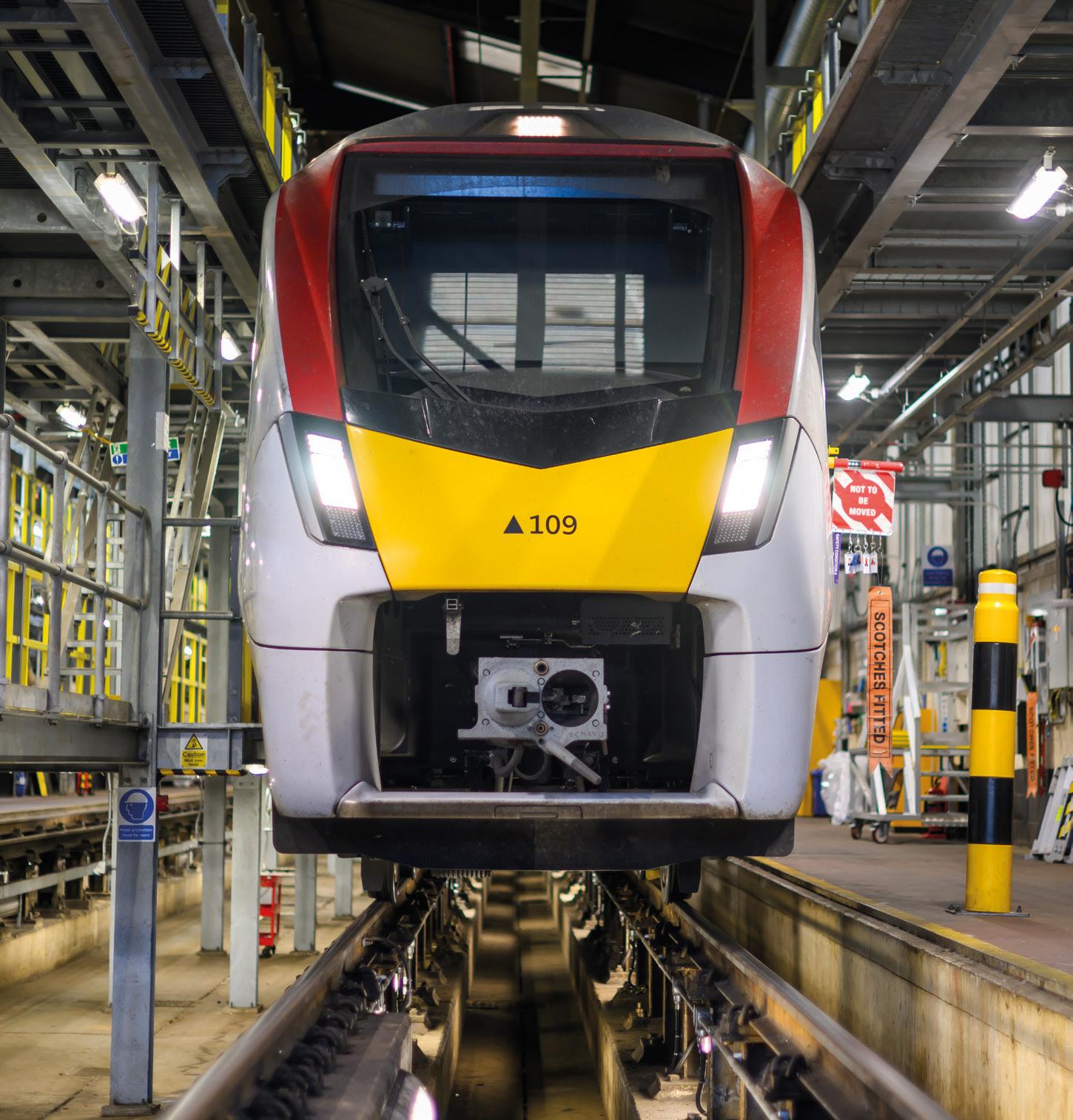
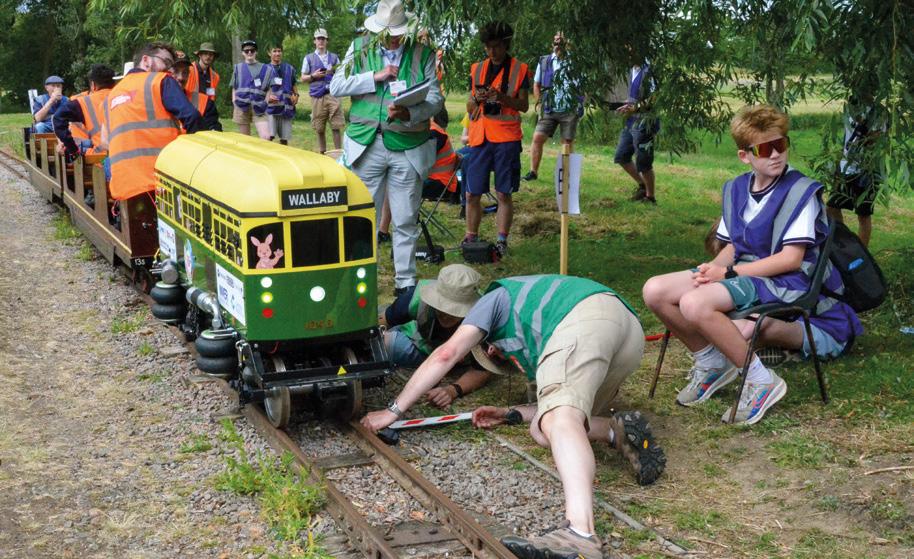
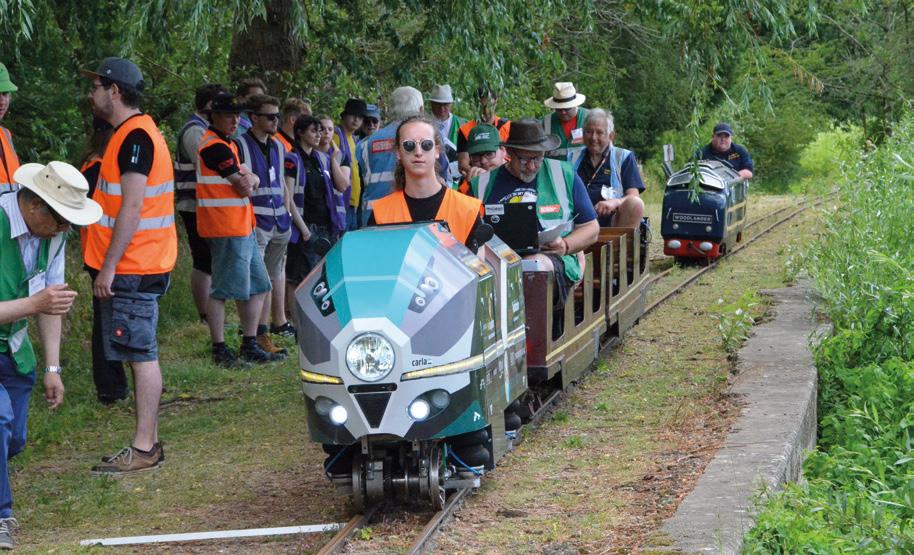
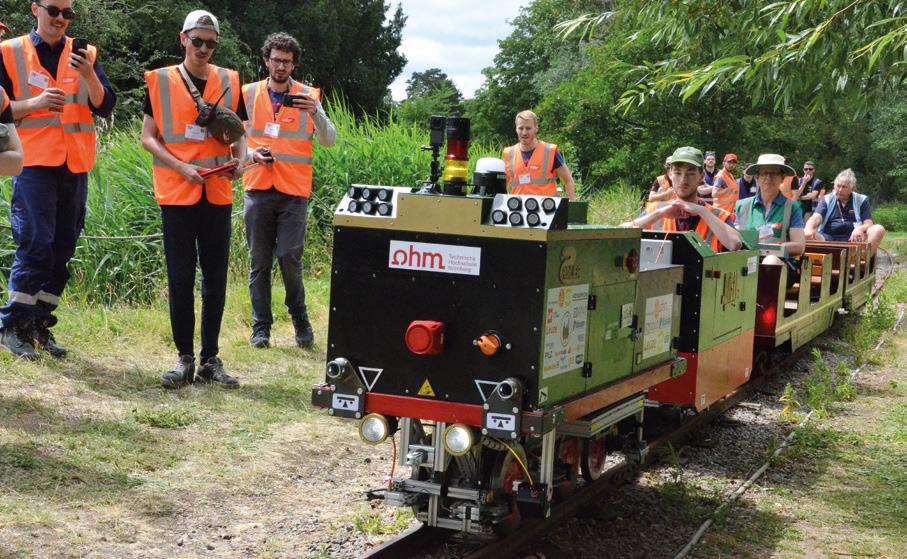
Creating the Rolling Stock and Infrastructure Strategy
Susan Khan
A true champion for inclusion in rail
Rail Safety Week
Setting the foundations for a thriving railway
YOUR GUIDE TO RAIL NEWS, VIEWS, AND INSIGHT
Jul/Aug 2026
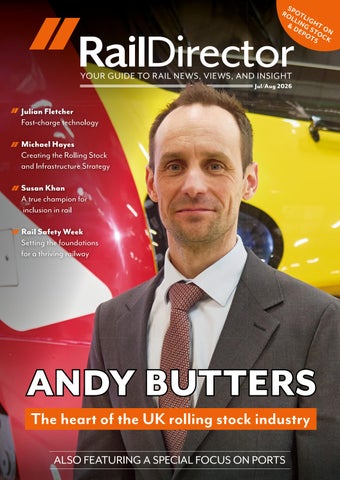
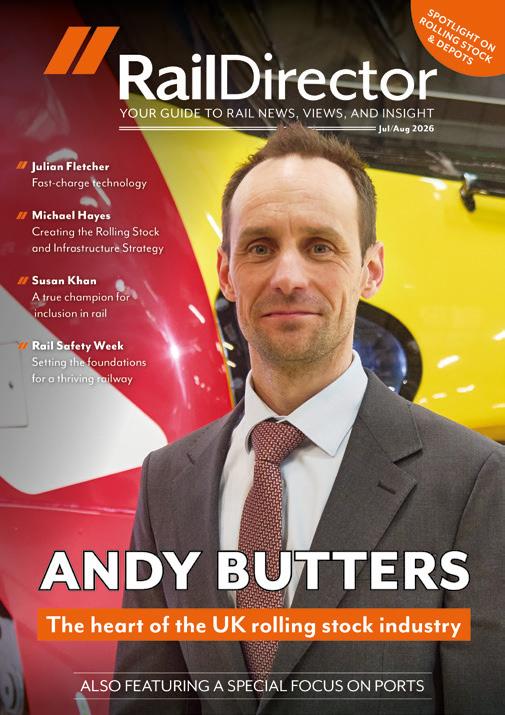
ANDY BUTTERS
Pivotal moment for rolling stock
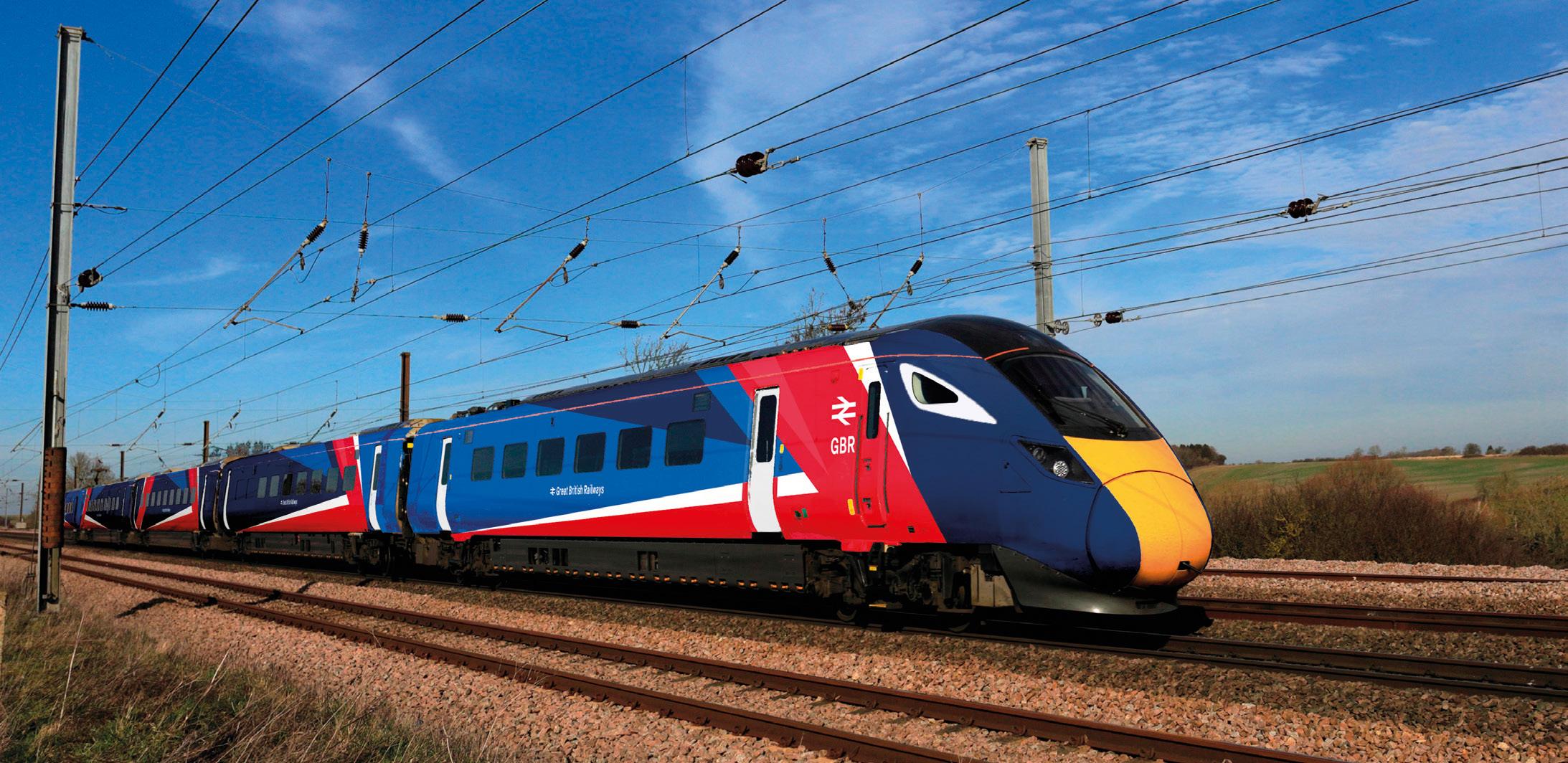
elcome to the latest edition of Rail Director, which comes as the UK welcomes its latest Prime Minister Andy Burnham into office. This month’s magazine is centred around rolling stock and depots, and as the Prime Minister has pledged to restore hope to communities, it feels there is a similar feeling among the industry with the imminent release of the Rolling Stock and Infrastructure Strategy, the first in 30 years.
A long-term pipeline is so important. Trains cannot be built overnight and that clarity in what is needed when ensures efficiency and allows manufacturers to invest, plan and innovate, which can only be a good thing for everyone who works and uses the railway.
Although the strategy hasn’t yet been released, from page 14 you can read details from Michael Hayes, Deputy Director Rolling Stock and Infrastructure Whole System Strategy at the Department for Transport explaining more about its objectives.
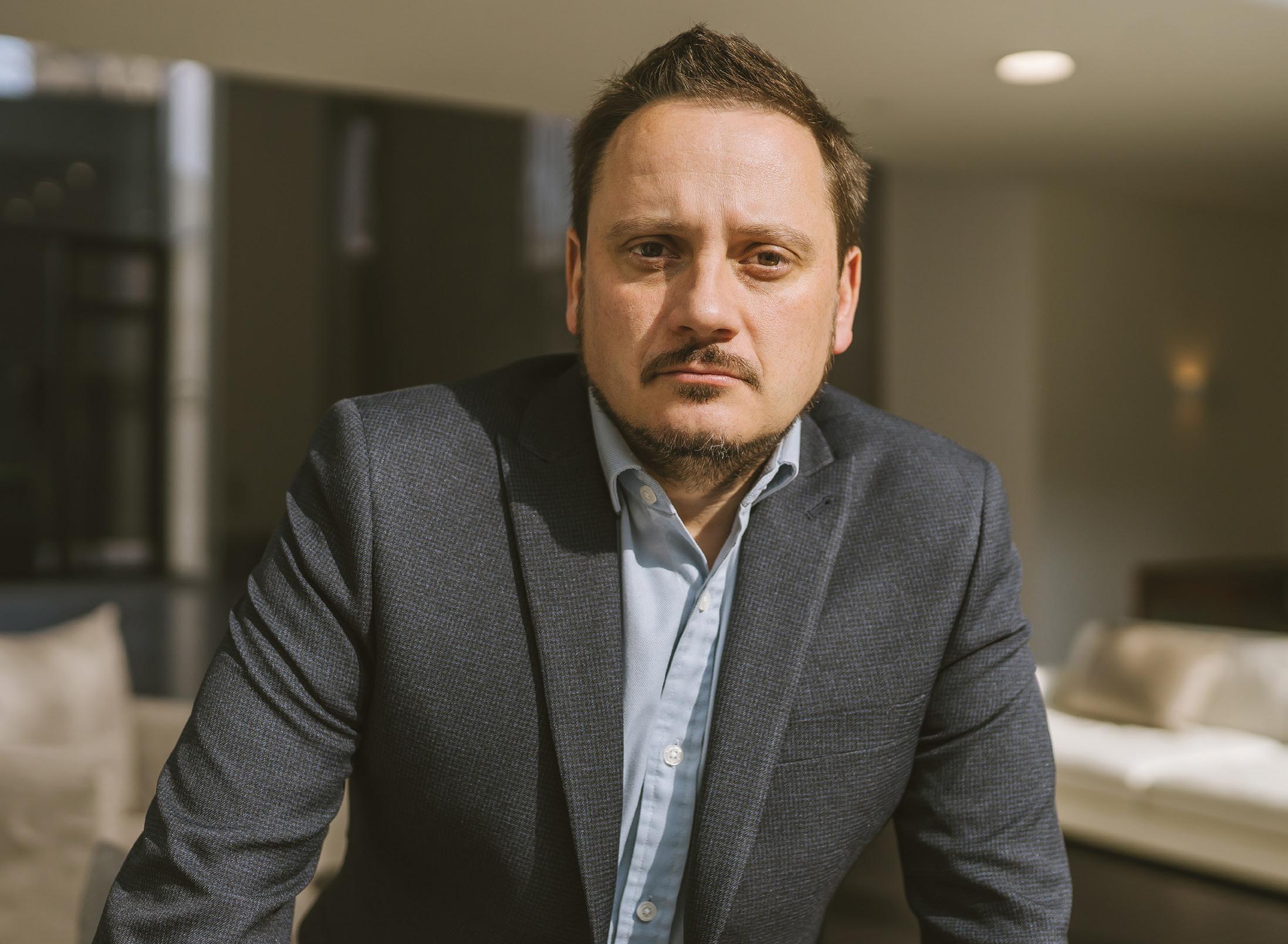
It does feel like we are entering a more optimistic era, a view shared by Alstom’s Andy Butters, who spoke to Rail Director shortly after the first of 10 new Elizabeth line Class 345s left the production line for final checks.
It was only in recent years that the manufacturer started a redundancy consultation, putting 1,300 jobs at risk. This contract secured the future of the site, and it is heartening to hear from Andy from page 6 about his optimism for the future.
This month we also feature a special section on ports, highlighting the untapped potential when it comes to rail freight. From page 36 Geraint Evans explains how ports have not benefitted from significant rail infrastructure capacity improvements in recent decades, and the challenge to deliver better infrastructure for movements to and from our major ports is now acute in the UK.
It’s a view shared by Mathis Edwards from the Rail Freight Group, who from page 40 writes about the opportunity to create a more productive, resilient and lower-carbon logistics network. Failure to do so could see growing port volumes simply translating into more lorries on already congested roads.
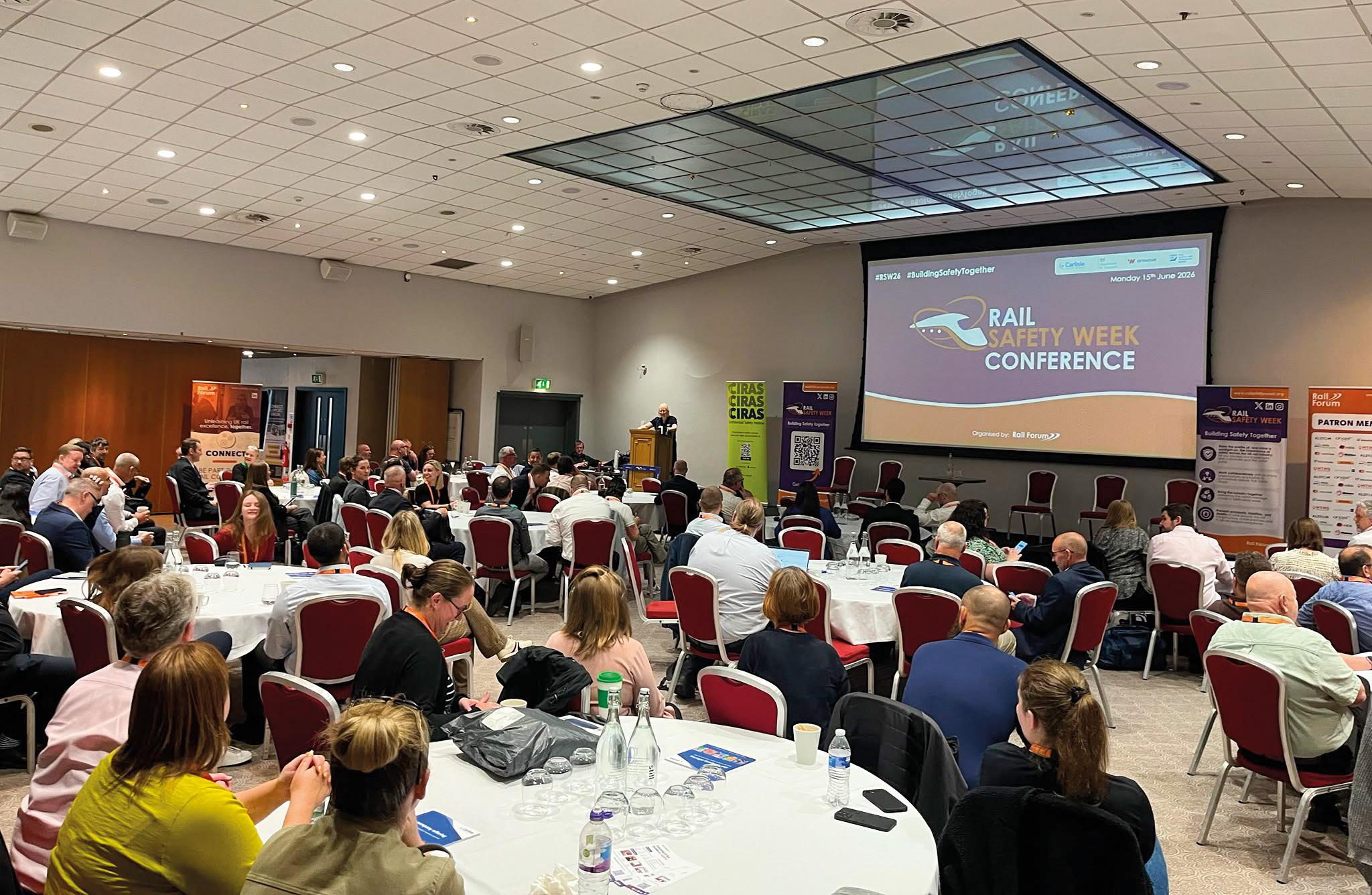
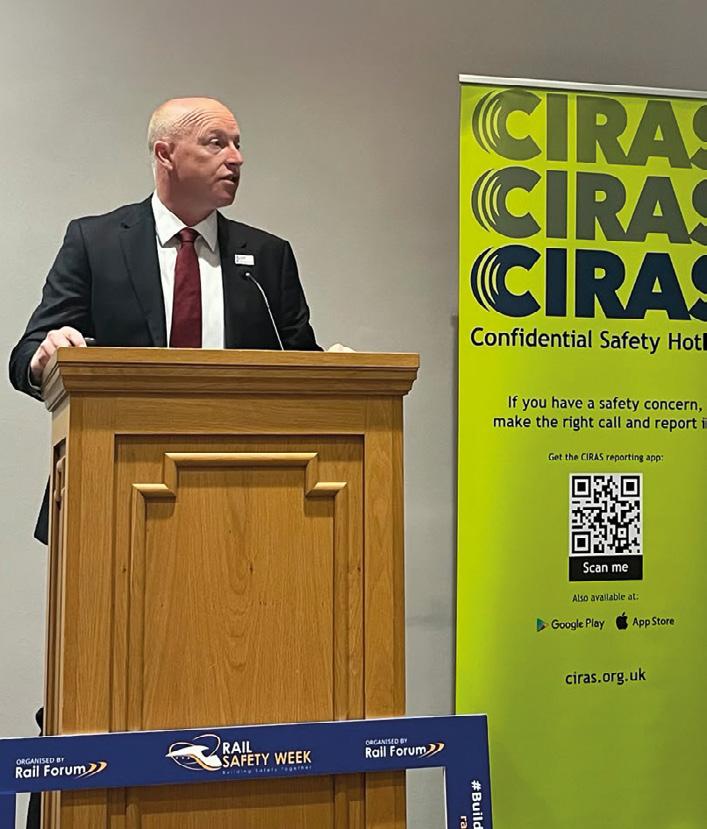
Alongside the two focus areas, this month’s magazine also features a round-up of the recent Rail Safety Week from page 64. It was a real privilege to have attended the event’s conference, in which representatives from organisations large and small came together to ensure safety is at the forefront of people’s minds, and firmly in the spotlight, sharing ideas and best practice.
There is also another fantastic column by Mike Roberts from page 84 who reflects on his time as a Railway Chaplain, and he answers the question of what the one thing is that he’s learnt from the role.
I hope you enjoy this month’s edition. Thanks to the team for all of their hard work and all of those who have contributed. The next edition will be in September, which will be focused on stations and the rail opportunities in the island of Ireland. Please get in touch with the team if you’d like to feature.
All the best,
Danny Longhorn Editor
That clarity in what is needed when ensures efficiency and allows manufacturers to invest, plan and innovate
Rail Director magazine and Railbusinessdaily.com are assets owned by the Railway Industry Association. Railbusinessdaily.com delivers more than 70 stories a week to +50,000 rail industry professionals in our daily 7am newsletter. If you have not already subscribed, it’s free and it’s easy to do so at www.railbusinessdaily.com, please also encourage your colleagues to do the same. This is the very best way to keep abreast of what is happening on the UK’s railways. There is a digital copy of Rail Director on our website.
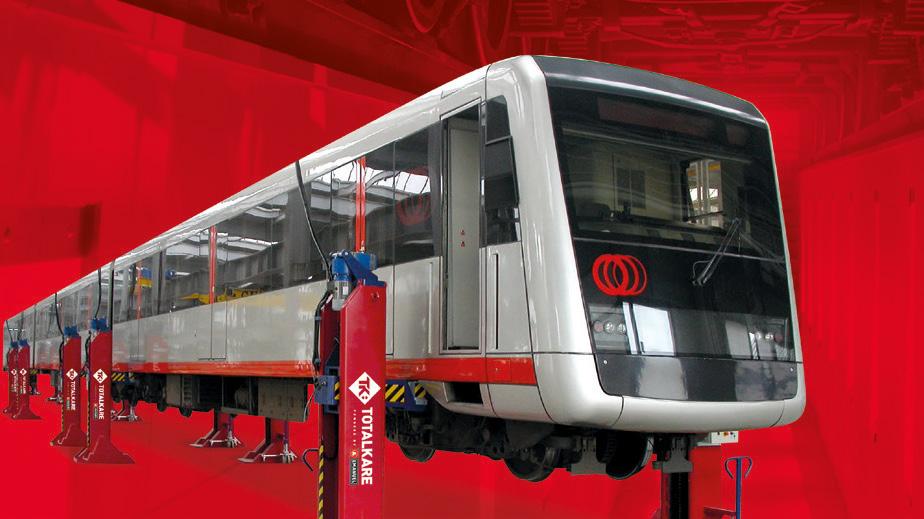
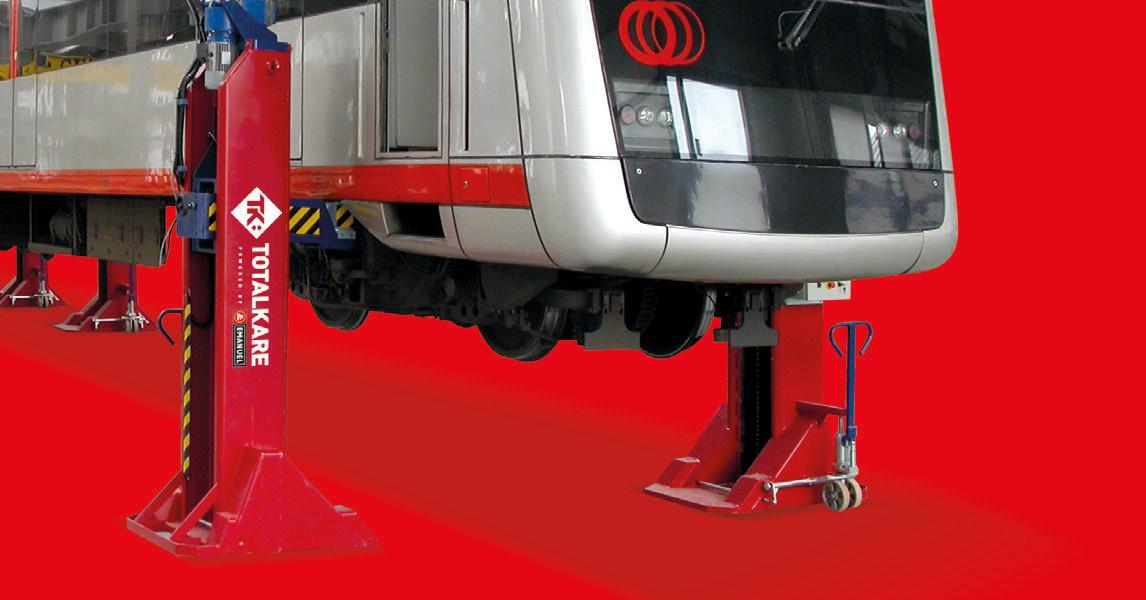
JACKS
With over 40 years’ experience of high quality, heavy duty vehicle lifting, Totalkare combines world class products with industry leading support to facilitate effective maintenance and repair.
For more information or to request a site visit:
6
Proud moment for everyone at Litchurch Lane
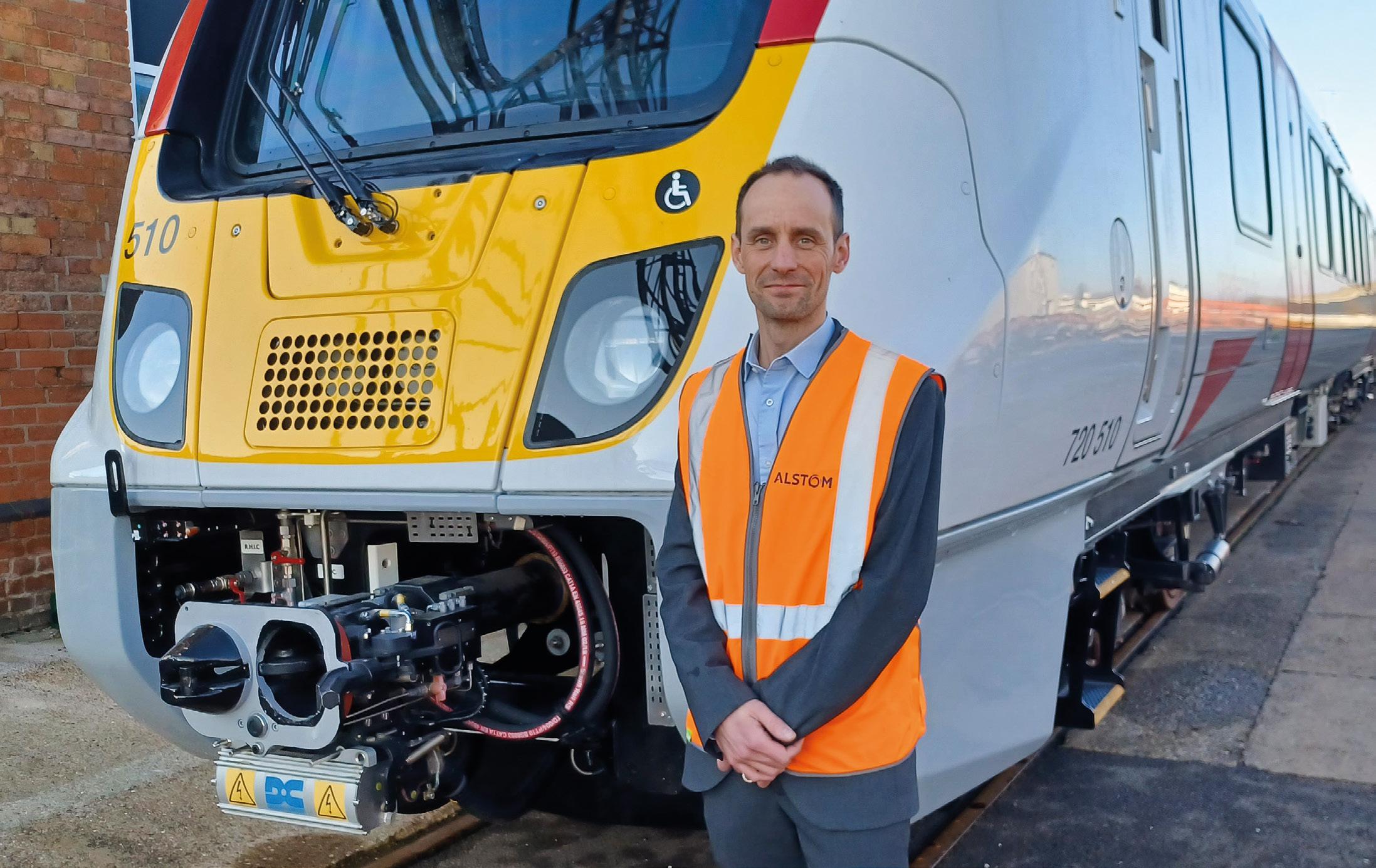
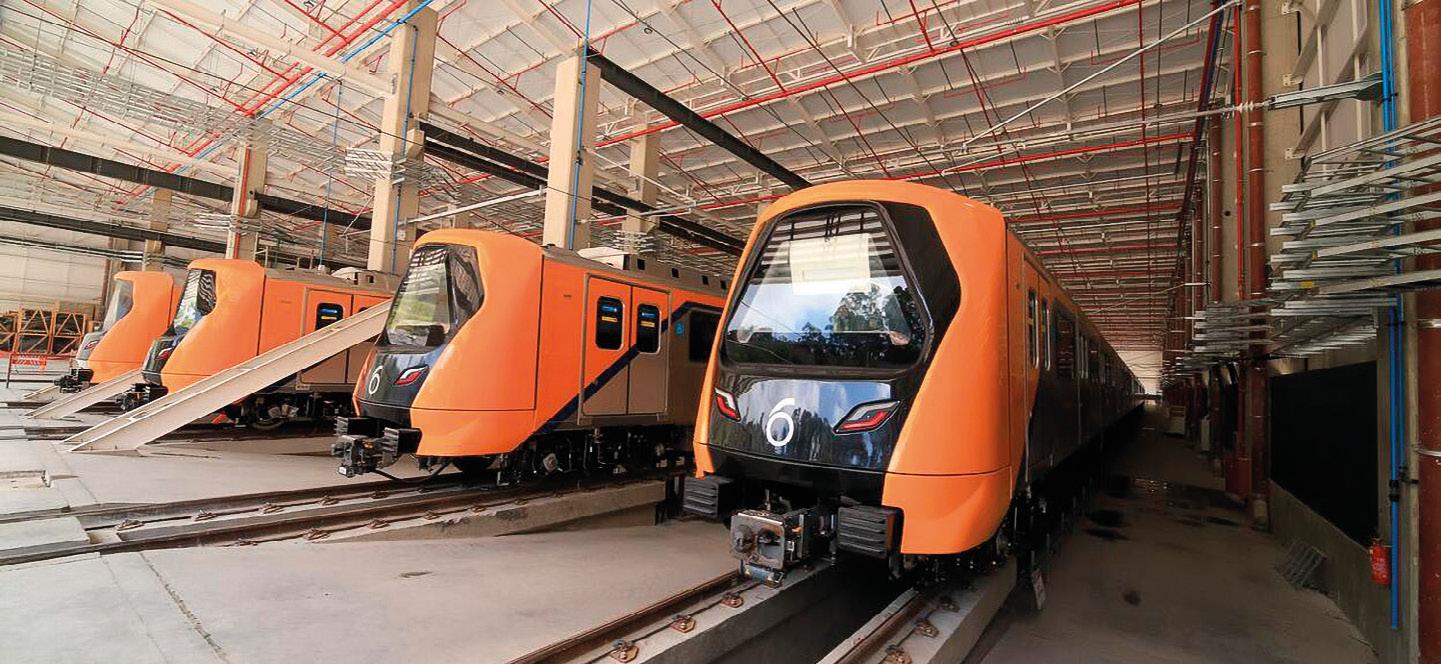
The first of 10 new Elizabeth line Class 345s has left the production line and is undergoing final checks. Andy Butters, Managing Director of Derby Litchurch Lane Works at Alstom, reflects on the milestone and looks to the future with optimism.
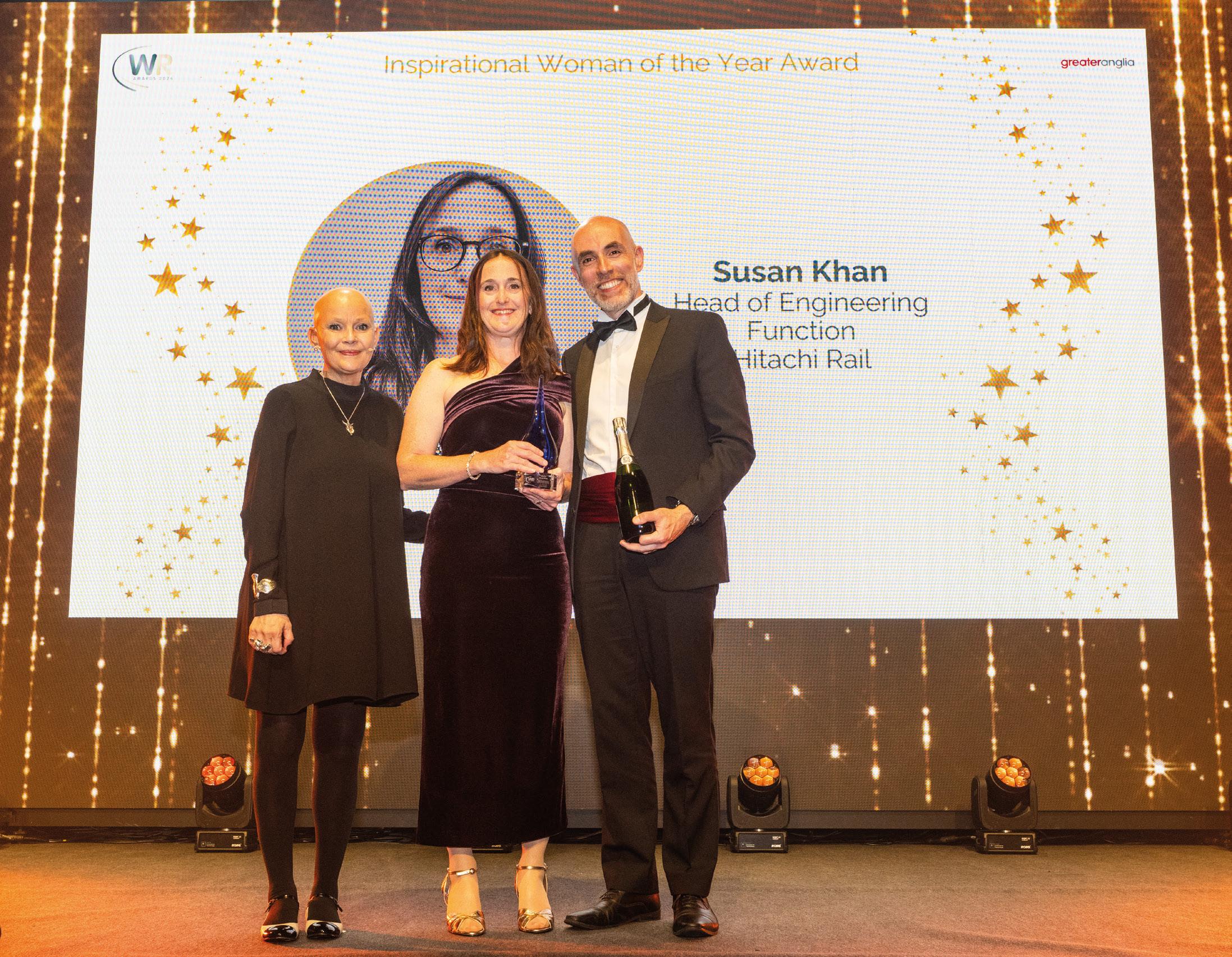
A true champion for inclusion in rail
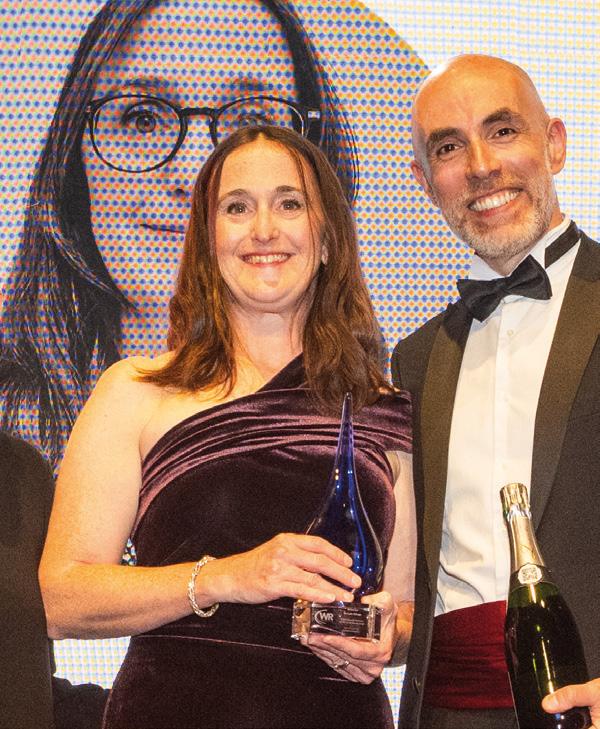
Susan Khan has been named Inspirational Woman of the Year at this year’s Women in Rail Awards. She reflects on her career.
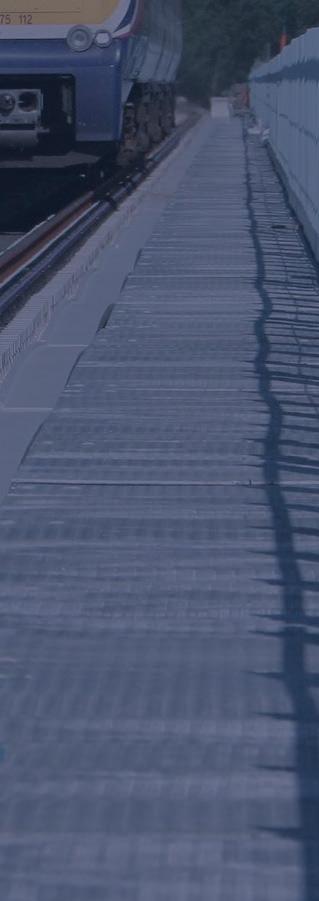
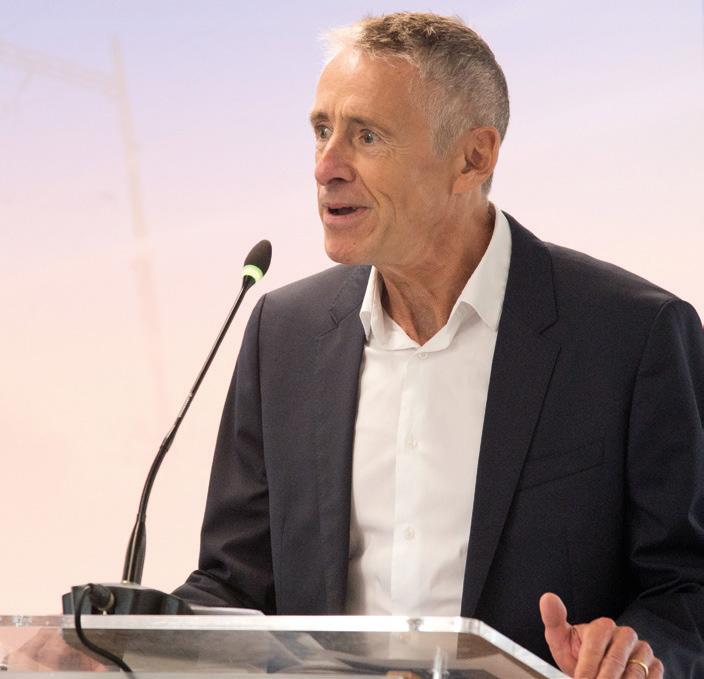
Creating the Rolling Stock and Infrastructure Strategy
Ahead of the release of the Government’s Rolling Stock and Infrastructure Strategy this summer, Michael Hayes from the Department for Transport explains more about the work going into it.
Driving better network performance
Daniel Mann, Director of Industry Operations at the Rail Delivery Group, writes about the power of depot-level data.
Fast-charge technology
Julian Fletcher, Technology Development Manager at Great Western Railway, discusses introducing fast-charge battery technology for services between West Ealing and Greenford.
Fond farewell to Tyne and Wear Metro trains
The last remaining Tyne and Wear carriages have been phased out, marking the end of an era for Metro and for the whole region.
Rolling Stock Networking
A round-up of this year’s RSN.
It’s time to get serious about unlocking intermodal growth
Mathis Edwards, Policy Manager at the Rail Freight Group, writes about the once-in-a-generation opportunity of Great British Railways to further strengthen the relationship between ports and rail freight. 48
It’s all happening at Allach
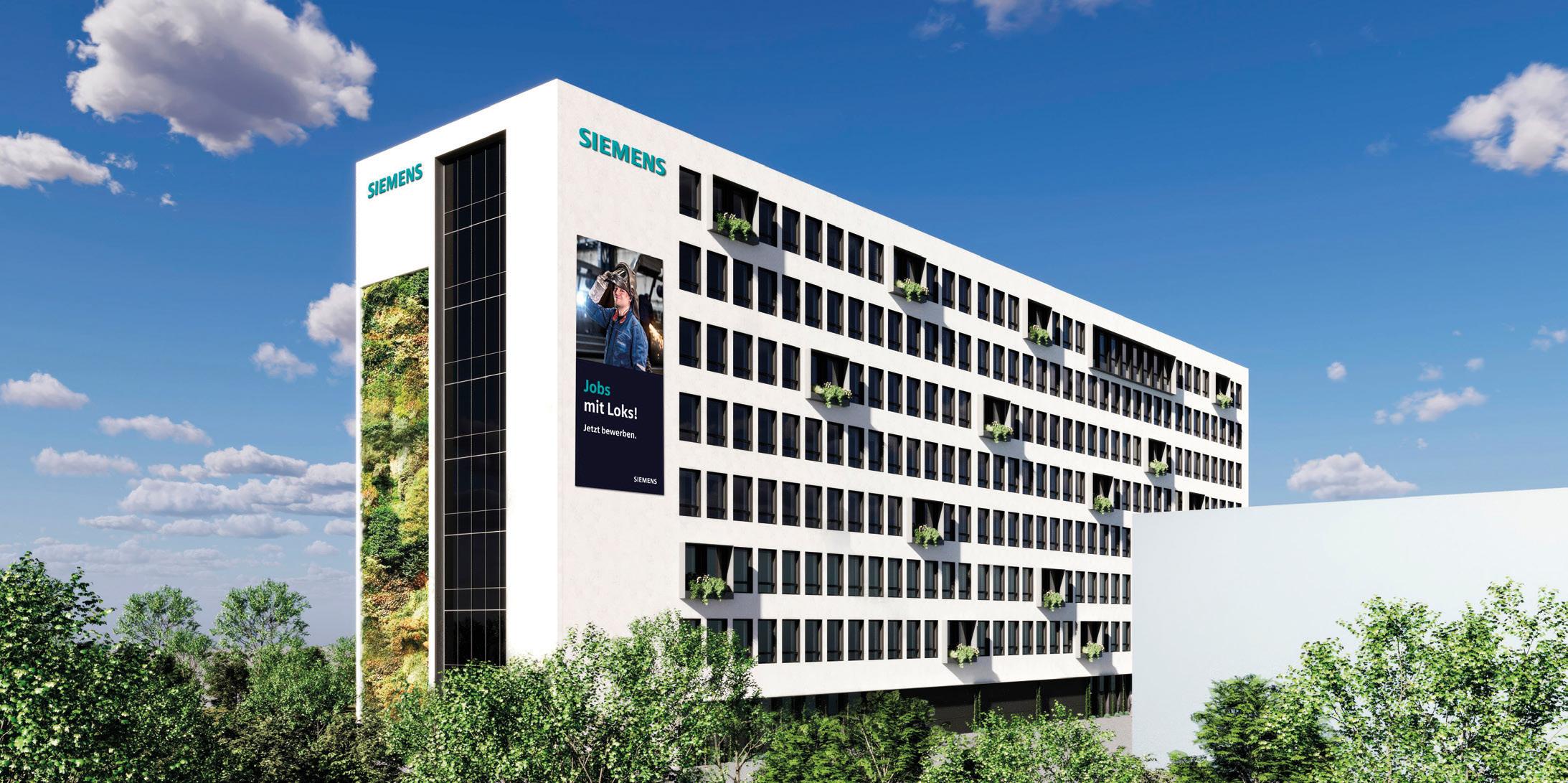
The future of rail freight and loco-hauled passenger services in continental Europe looks bright as it becomes increasingly more sophisticated. That’s according to Nigel Wordsworth who has visited Siemens Mobility’s factory in Munich-Allach in Germany.
56 Rail Ops Conference
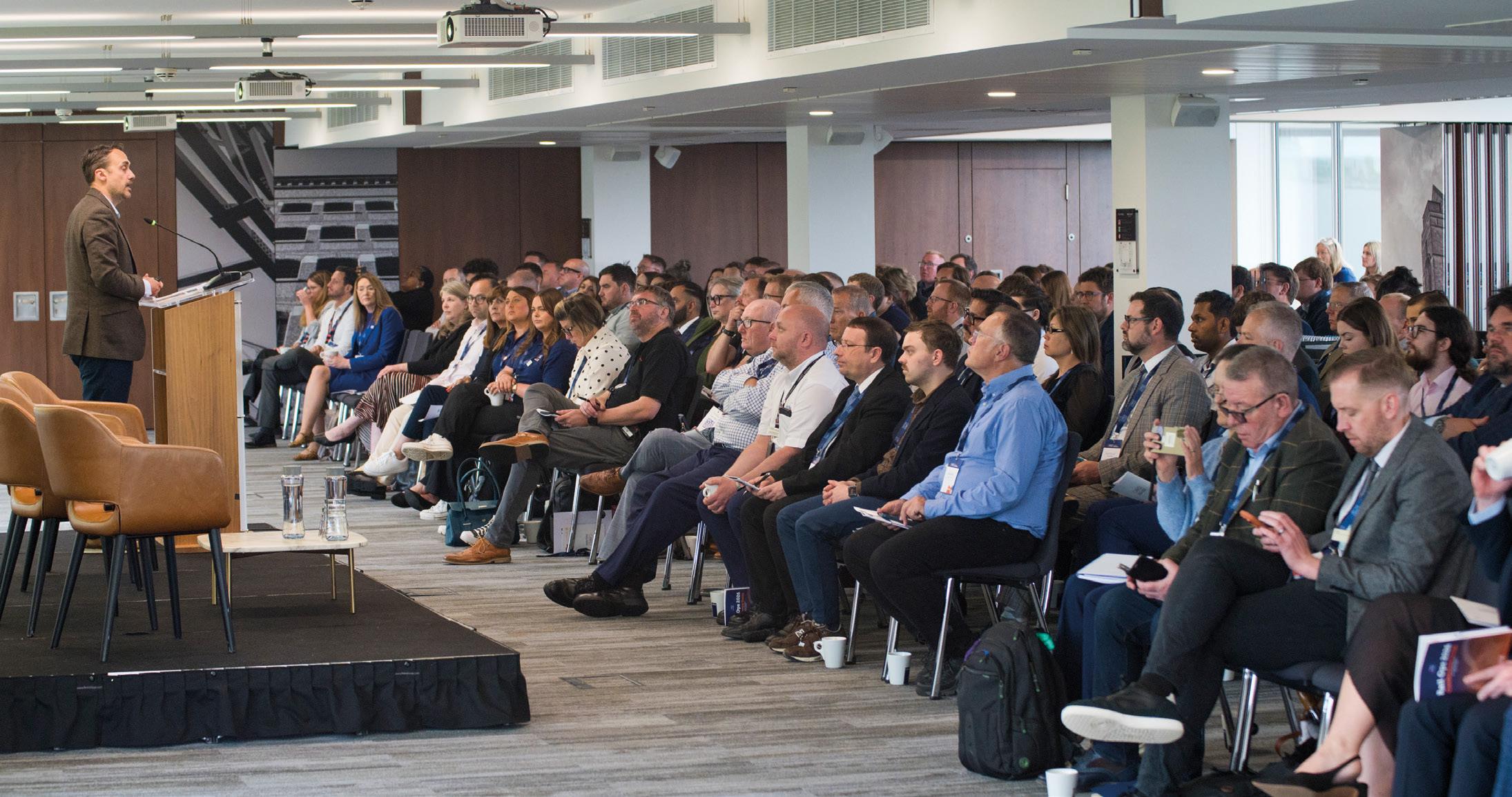
CIRO has hosted it sixth annual Rail Ops Conference. Rail Director was among the attendees for a day of presentations and interactive Q&A sessions from prominent rail specialists.
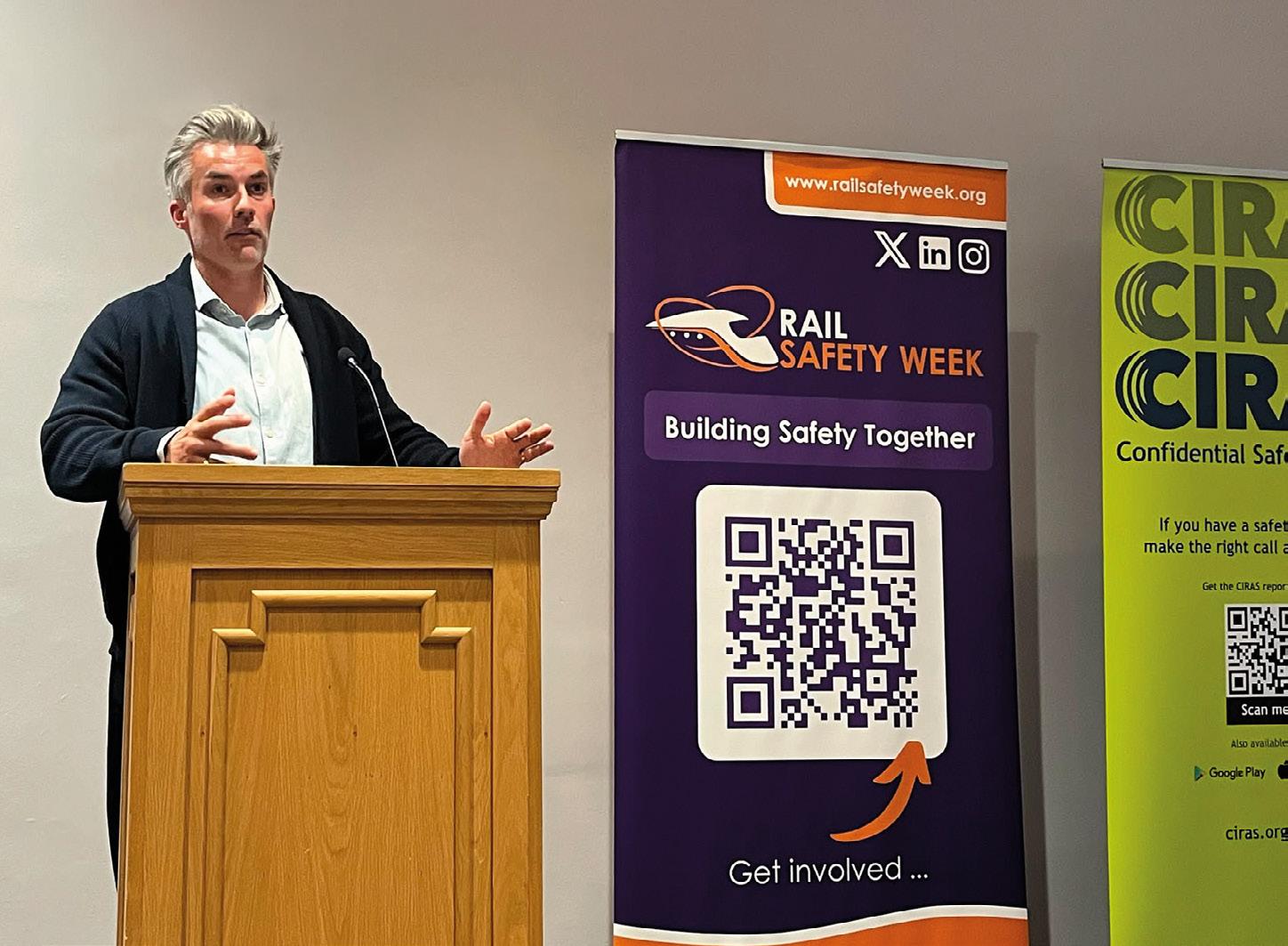
64 Setting the foundations for a thriving railway
The industry has come together for Rail Safety Week. Rail Director was at the opening day conference that featured fascinating speeches and an overall passion to bring rail safety to the forefront of people’s minds.
74 Aachen tops IMechE Railway Challenge for the third time
Teams have been competing to design, build and run a railway locomotive. Nigel Wordsworth reports.
80 Celebrating railway industry supplier excellence
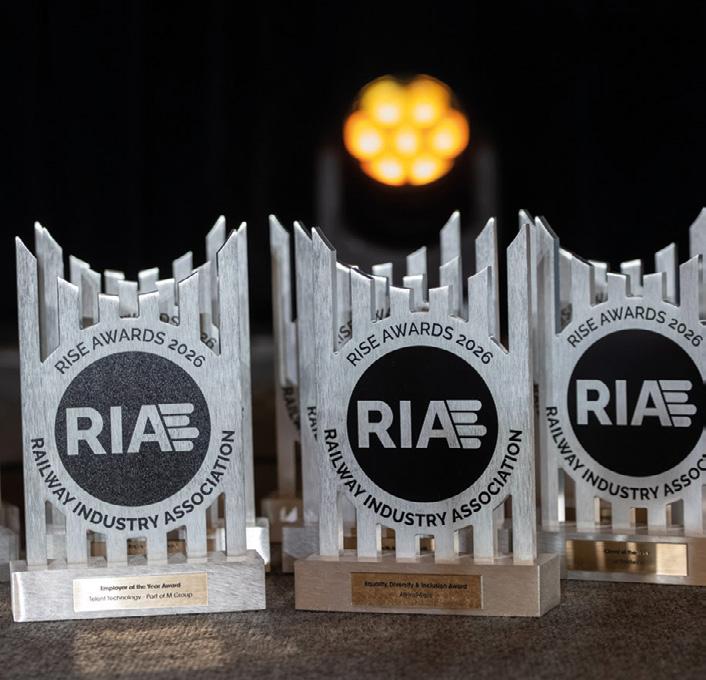
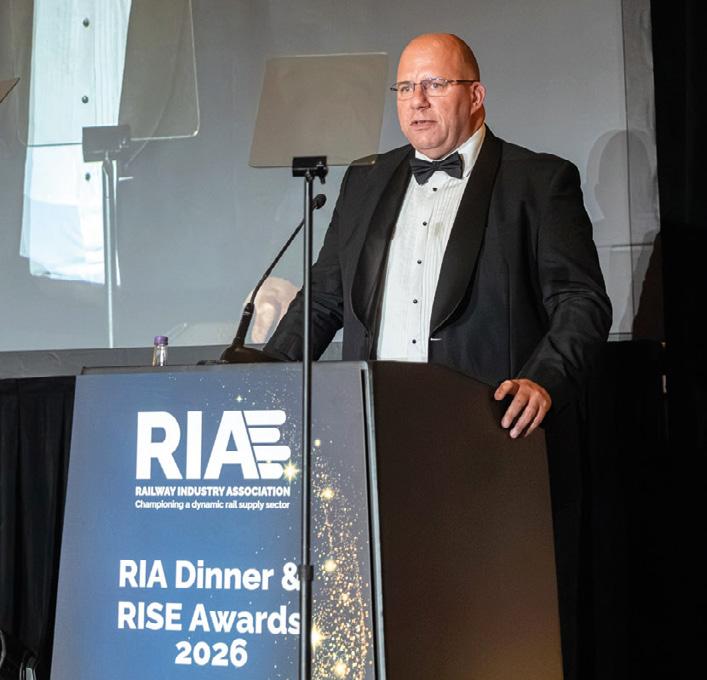
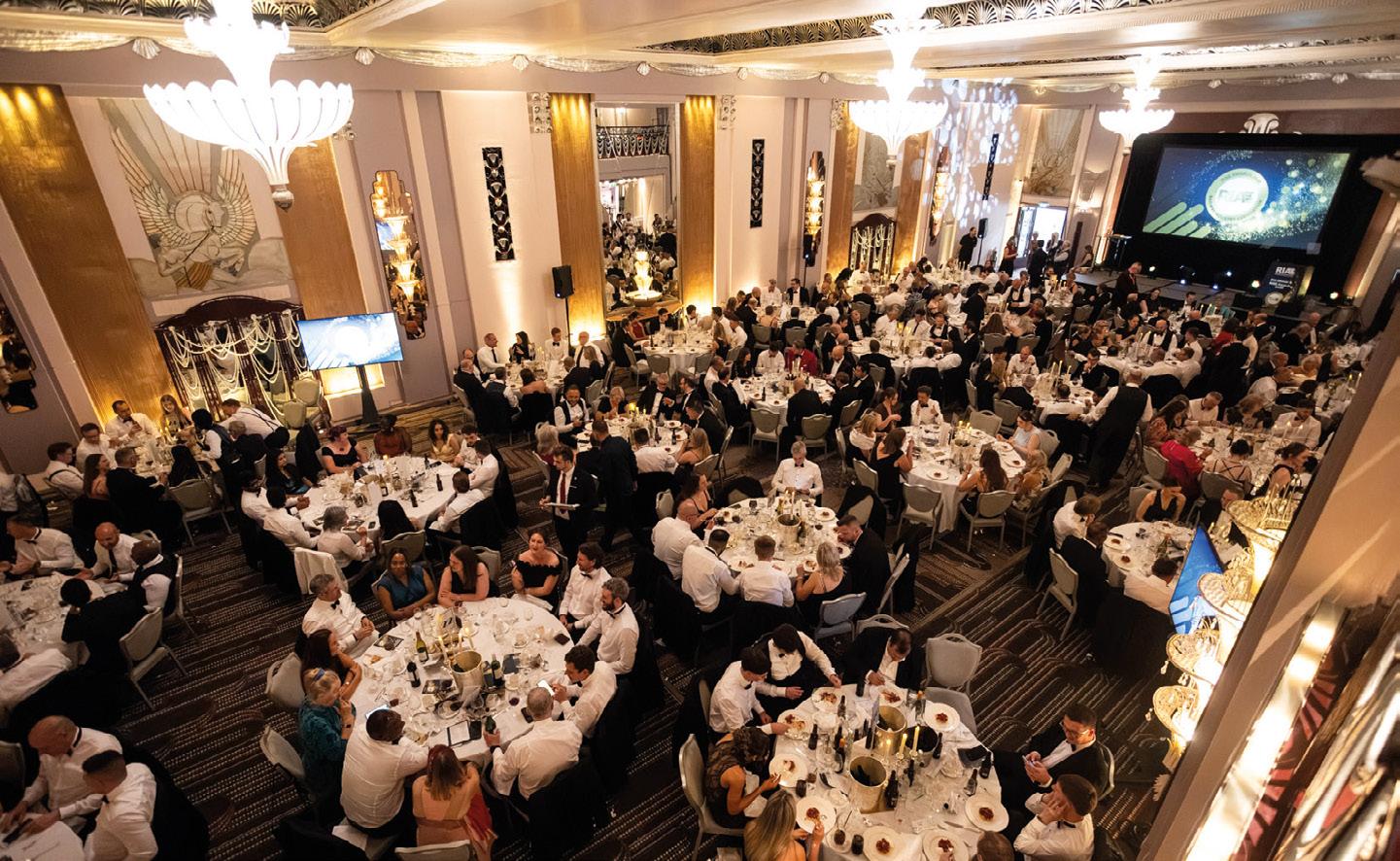
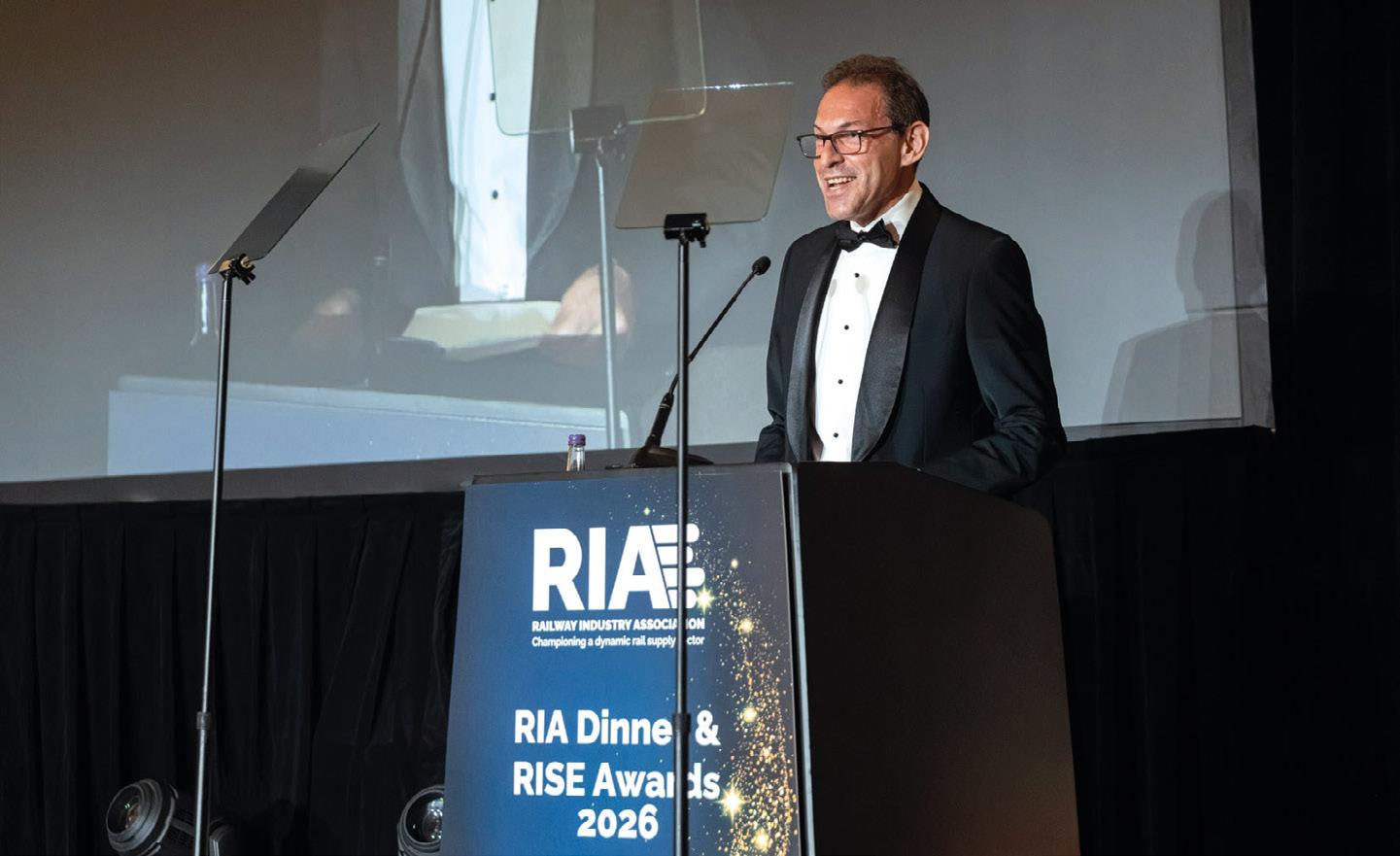
The very best of the UK rail supply chain has been celebrated at the Railway Industry Association Dinner and Railway Industry Supplier Excellence Awards. Rail Director was among those in attendance.
84 Changing trains: 2,878 days and counting
In his latest quarterly column Mike Roberts reflects on his time as a Railway Chaplain.
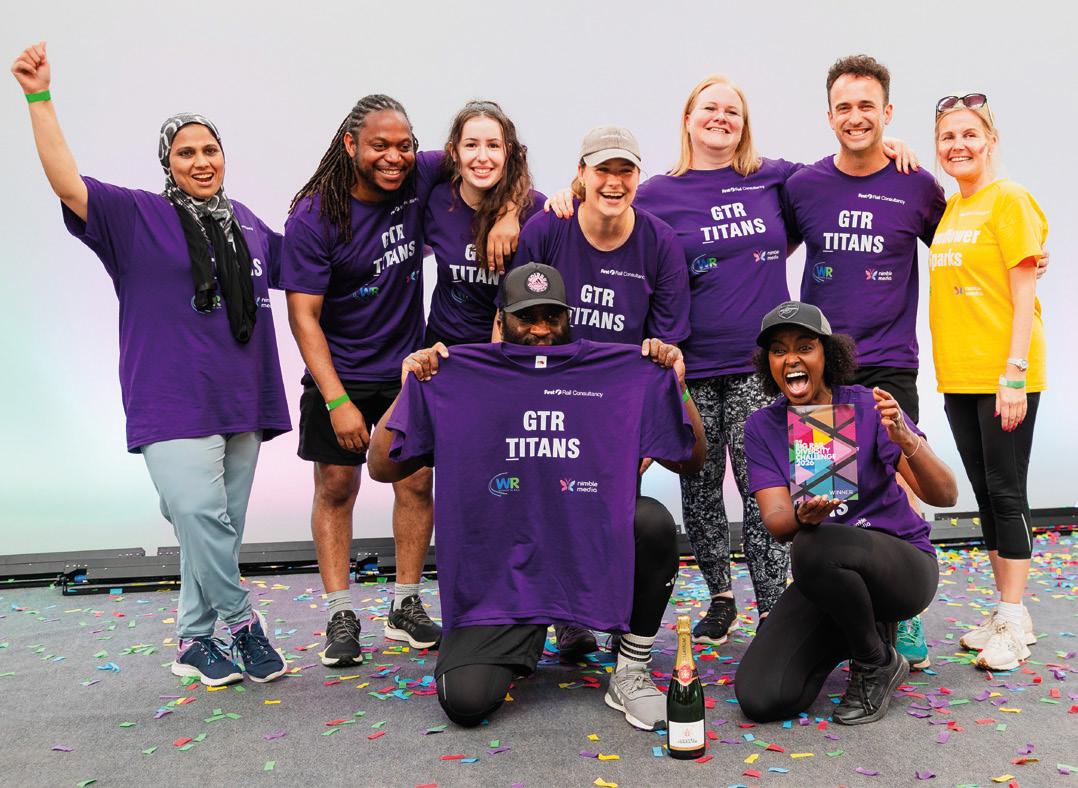
90 The Big Rail Diversity Challenge 2026
This year’s Big Rail Diversity Challenge has taken place, highlighting the benefits of gender balance and diversity in the UK rail industry. Rail Director was there to witness the action.
92 Taking the impact of community rail partnerships much further
Community Rail Network has appointed Chris Birks as its new Director of Policy and Communications.
94 ‘A pivotal moment in our journey’
Mike Birch has been appointed Egis’ Transportation Director for the UK and Ireland, as the organisation looks to increase its overall footprint in the UK and Ireland.
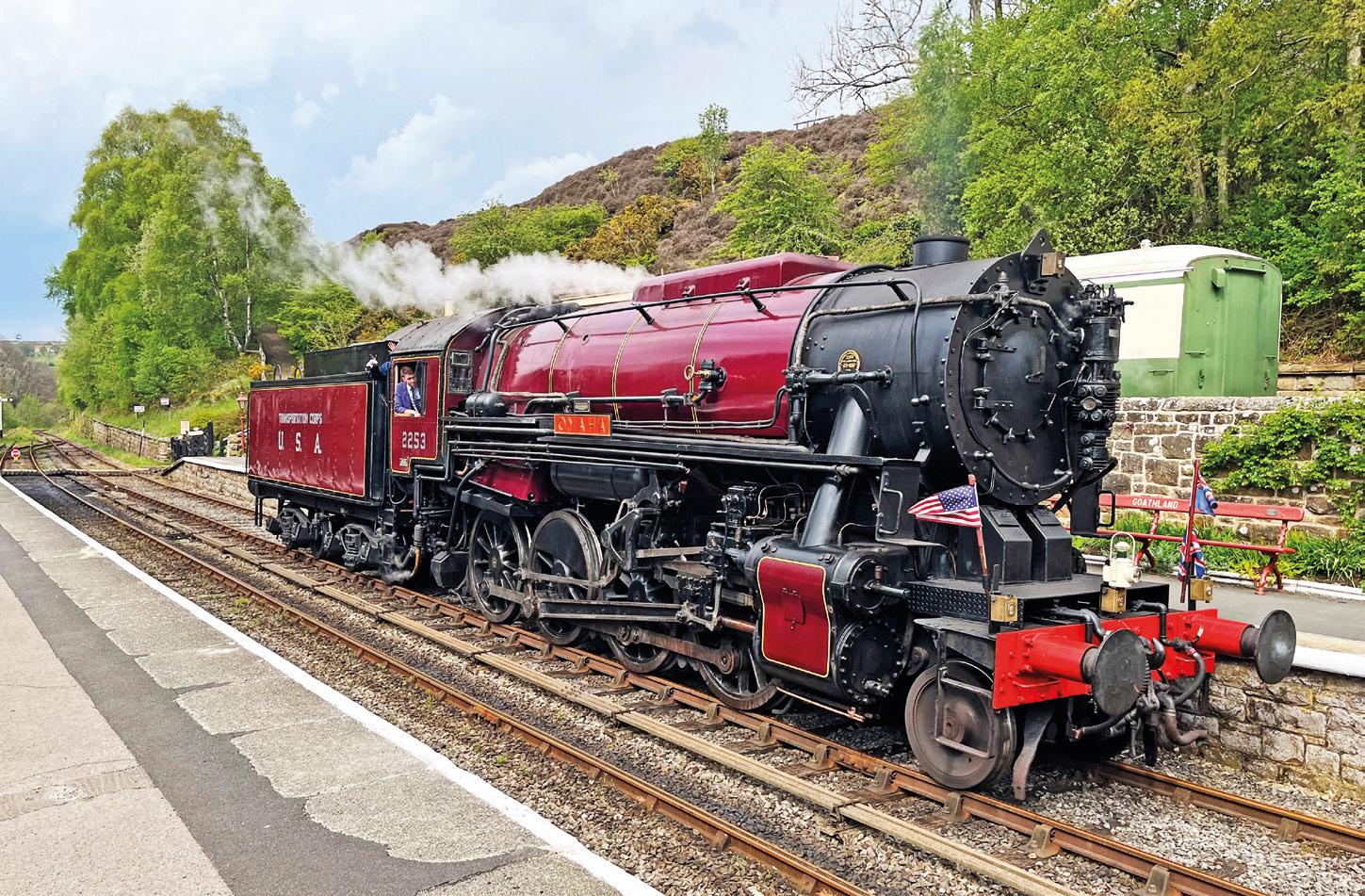
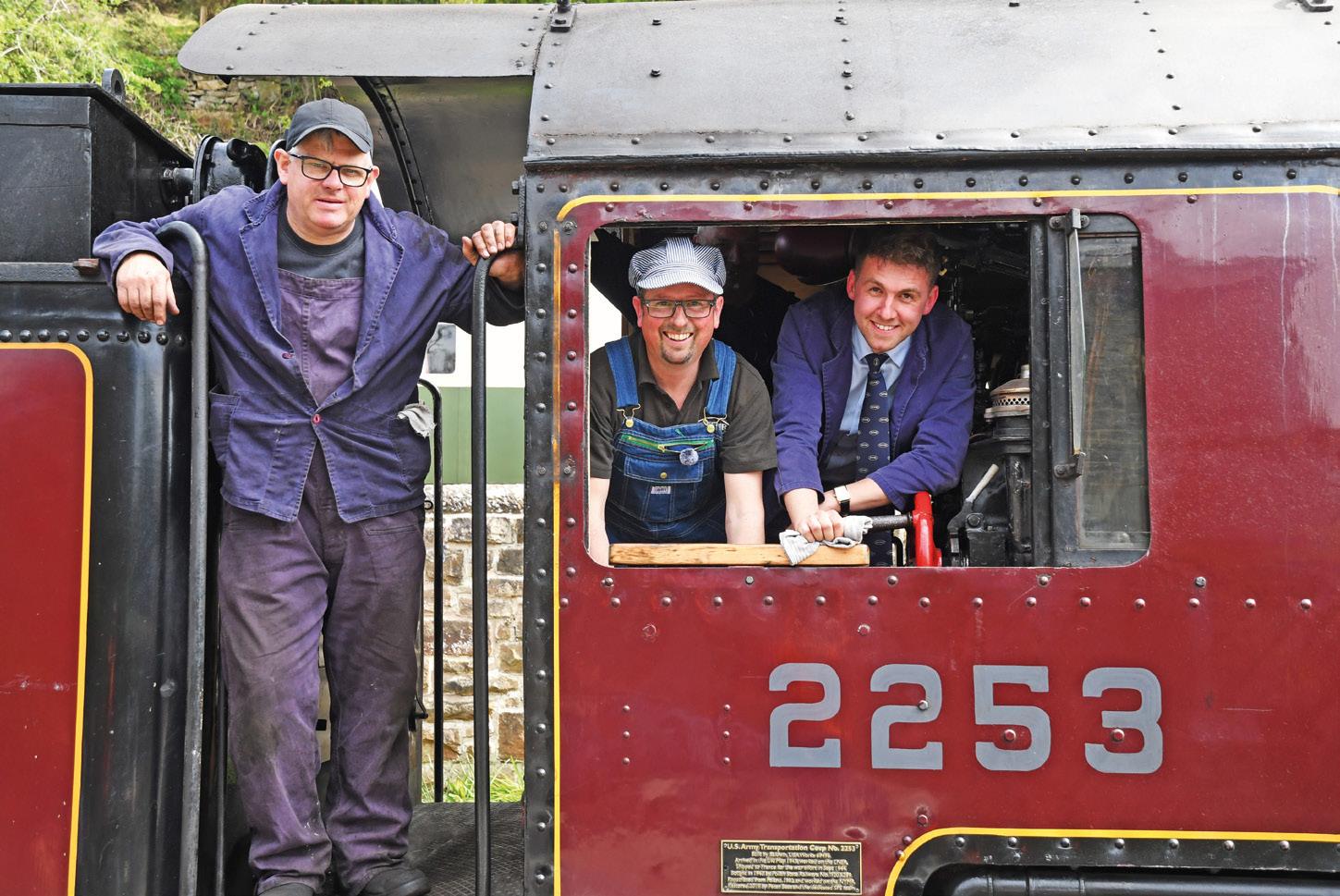
98 North Yorkshire Moors Railway converts steam locomotive from coal to oil
Paul Middleton, Director of Mechanical Engineering, describes the project as not only advancing the organisation’s sustainability strategy, but also ensuring operational resilience during hot weather.
Reproduction of the contents of this magazine in any manner whatsoever is prohibited without prior consent from the publisher. For subscription enquiries and to make sure you get your copy of Rail Director please ring 01132 082620 or email info@railbusinessdaily.com. The views expressed in the articles reflect the author’s opinions and do not necessarily reflect the views of the publisher and editor. The published material, adverts, editorials and all other content is published in good faith.
Image: Alstom
Proud moment for everyone at Litchurch Lane
The first of 10 new Elizabeth line Class 345s has left the production line and is undergoing final checks. Andy Butters, Managing Director of Derby Litchurch Lane Works at Alstom, reflects on the milestone and looks to the future with optimism.
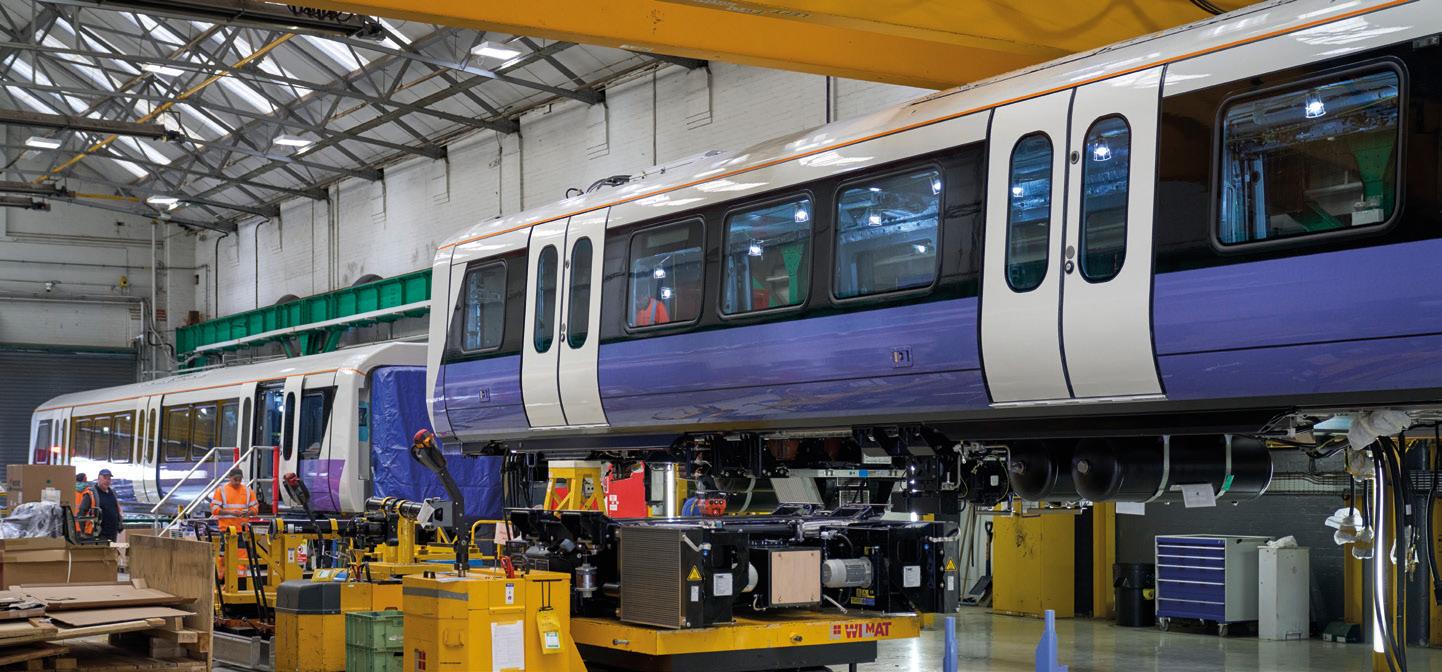
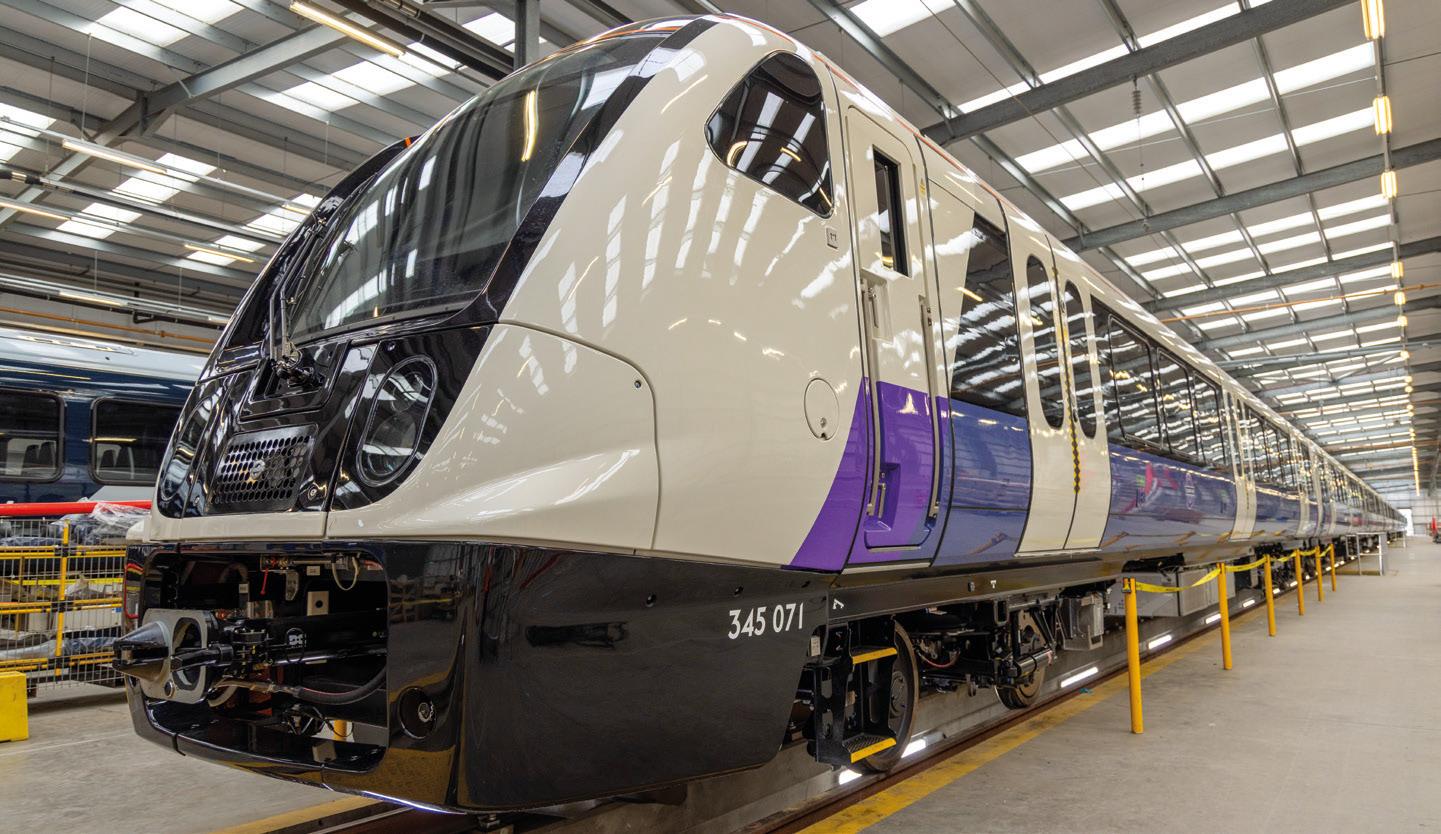
The first of Alstom’s 10 new Elizabeth line Aventra trains has rolled off the production line at the Litchurch Lane site in Derby, part of a deal that helped save the UK’s largest rail assembly factory.
Alstom secured the £370 million contract in 2024, a few months after starting a redundancy consultation which put 1,300 jobs at risk – a move that secured the future of the site and the organisation’s supply chain supporting almost 40 companies.
“It’s been a difficult couple of years, but in the last few months we’ve been able to celebrate the first Voyager refresh and even more recently the milestone of the new rolling stock project for the Elizabeth line plus,” said Andy Butters, Managing Director of Derby Litchurch Lane Works at Alstom.
“Both have been really proud moments and what we’ve needed for some considerable time.”
The first of the new nine-carriage Class 345
There are the opportunities longer term, in the short term our focus is on making sure we identify shortcycle refurbishment opportunities to keep the skills retention within the region
Aventra trains left the 150-year-old Derby factory last month containing five miles of welding, 50 miles of cabling, and more than 47,700 screws and 31,700 bolts.
For Andy it feels poetic to be able to conclude the Aventra story – a journey that began with the original 70 trains built by Bombardier Transportation prior to the company’s acquisition – with the final 10 trains.
“It’s been immensely successful, with the customer and passenger feedback continuing to be brilliant,” he said.
“The passengers and drivers love the trains, so to be able to celebrate that platform of rolling stock in that environment is fantastic.
“The contract for the 10 trains arrived when we needed it the most. We were in really bleak times and the support from the Department for Transport (DfT), Transport for London (TfL), from Government authorities and from the public and the campaigns that they ran to help save the
Images: Alstom unless specified otherwise
Derby site led to this contract that secured jobs and skills in the region.”
The first of the new trains left the manufacturing line as the Elizabeth line celebrated its four-year anniversary. It has become the UK’s single busiest railway service, with more than 850 million passenger journeys made since it opened in May 2022. When all the new trains are complete, the total fleet will be almost 10 miles long with a total capacity of around 120,000 people, which is more than London’s Wembley Stadium.
“The statistics are amazing, especially when you think that the full fleet is capable of carrying a full Wembley Stadium, and it is about the difference the trains make to commuters in London every single day,” Andy said.
Andy began his career in rail in 2008 working on Alstom’s Turbostar fleet in Derby as Project Engineering Manager. Having left the site in 2011 to gain experience in other global manufacturing businesses, he rejoined as Project Director in 2019 to lead the delivery of the Aventra Class 730 fleet and was later promoted to his previous role of Site Projects Director.
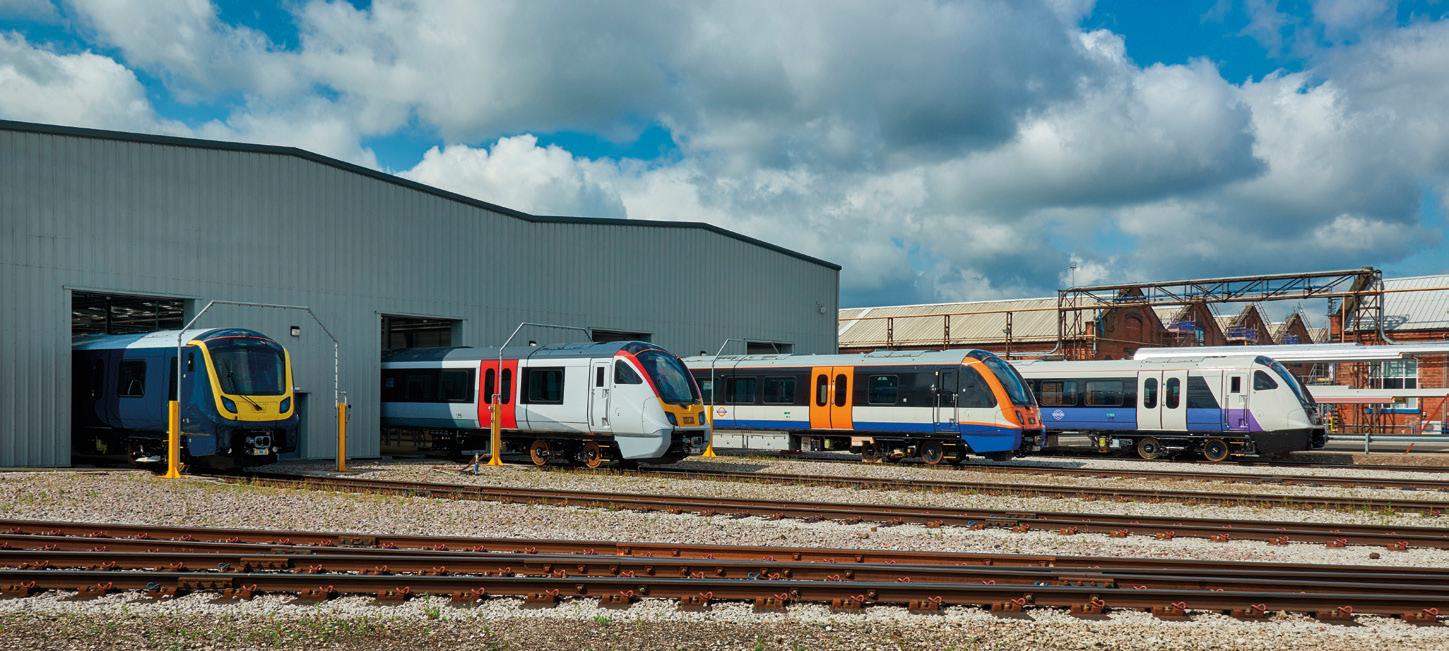
He’s been in his current post for 18 months, explaining how the team has learned a lot from the original 70-train Aventra fleet for the Elizabeth line, and subsequent work for London Overground, West Midlands Railway, London Northwestern Railway, South Western Railway, Greater Anglia and c2c.
“We have faced challenges in stabilising the
design, securing the supply chain, and making sure we get the parts on the line during the peak Aventra production,” he said.
“This 10-train fleet is also the first developed under truly Alstom processes. Since Alstom’s acquisition of Bombardier, the electronic systems on the production lines, the way that we interface and control the delivery of parts, the logistics flows have all evolved, and the quality control checks are far more robust.
“It’s leading to more stable production, higher-quality production output and better cost control.”
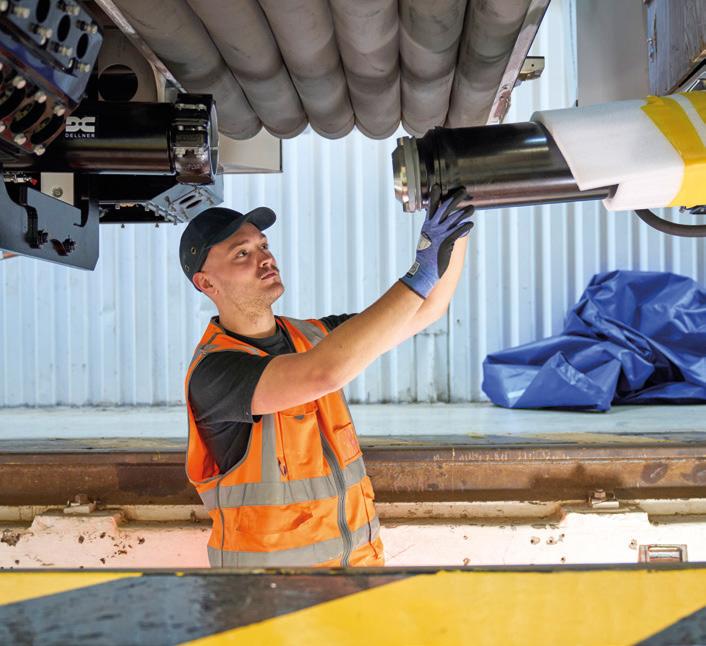
Elaborating on the production process, Andy says that put simply it is complete knockdown construction, basically like building Meccano.
Image: Alstom / Steve Bright
“We make it as modular as possible, so the volume of hours on the production line is as efficient as possible,” he said.
“It comes together in its component parts. A floor, for example, is constructed as a floor in its own right, and the lino gets fitted on the floor even before it’s tubed.
“All of the pipe work on the underframe is fitted before it is even tubed and then it starts to become erected and you see the roof suspended over the underframe, and the bodyside sectional pieces bolted into place.
“You see the cab and inter end being fitted so it starts to become like a tube, and then progressively we fit the parts inside of it.
“Working this way offers major production benefits in terms of the efficiency of the process because it means we can keep a lot of the construction away from the production line, but it also offers significant maintenance benefits because it means the whole train is modular.
“If a train suffers an incident in service you can remove the whole front cab and replace it in relatively short order.”
Although the processes are vital, Andy emphasises the importance of the team with around 150 people directly employed in the contract in Derby, alongside around 1,000 jobs in the supply chain within the region.
“The success comes down to an incredible effort from the team,” he said. “That includes the supply chain whose skills and competence have enabled us to carry out the work.
“Even more broadly there are the partnerships with the likes of TfL, DfT, and authorisation bodies like the Office of Rail and Road and the RSSB.
“This project involves a broad range of railway partners coming together to deliver a game-changing rolling stock fleet into London that’ll deliver value to hundreds of thousands of passengers every single day.
“It also highlights how investment in London infrastructure delivers benefits in skills and jobs outside of the capital.
“It is these kind of projects that drew me to the railway because it is such a unique experience to build a train. For many years to come, I’ll be travelling around in London and I’ll get to ride on the Elizabeth line trains and it will always have that emotional connection to celebrate the team’s efforts in Derby.”
Down the line
With the first of the new Aventra trains undergoing trials on train lines near London and on the Elizabeth line before being put into passenger service later this year, attention at Litchurch Lane continues on the remaining nine through to May 2027.
“Beyond Elizabeth line plus we are still developing the HS2 product, working closely with our joint venture partners and Government authorities to secure stability around that programme, and making sure that we’ve got a clear and understood delivery schedule,” Andy said.
“Even further beyond that we are in active tender for our new electric commuter platform Adessia, which we believe is a market-leading product for the UK infrastructure, and offers many design features aligned with the DfT rolling stock strategy for the future.”
It’s an exciting time for the UK’s leading supplier of new trains and train services, with 63 per cent of the country’s installed train fleet supported by the company around the clock, and made possible by around 3,000 colleagues across 30 depots.
Earlier this year the organisation unveiled the first refurbished train in CrossCountry’s Voyager fleet. When complete, in two years, teams in Derby will have refurbished 136 Voyagers (Class 220) and 176 Super Voyagers (Class 221), including an additional 12 trains added to the operator’s fleet following their release from Avanti West Coast.
“There are new-build opportunities in the longer term, but in the short term our focus is on making sure we identify short-cycle refurbishment opportunities to keep the skills retention within the region,” Andy said.
“I believe the future is bright and the UK rolling stock procurement pipeline is coming back again. With the mid to long-term prospects with the development of Great British Railways, I am very bullish about our position in the future of UK rolling stock and I can also see that mentality in
“After a couple of years of really difficult times, there’s more of a buzz about the place, more optimism and a real pride in being able to take our place at the heart of the UK rolling stock industry.”
Alongside the ongoing work, Andy says they are still looking at how the business can be reshaped and diversified to further futureproof the Litchurch Lane site. Among the initiatives include third party organisations, with new contracts, bids, products and services.
“The diversification of the site is still a fundamental core part of the business strategy, but we will always be a rolling stock production site, we’ll always be building new trains in Derby and that will be the very heart of what we do,” Andy said.
“But it’s clear that we still have to complement that with other workload, refurbishment work like the Voyager programme.
“We need to continue to secure new partnerships with the launch of Yellow Rail and with Opus Rail that have now made homes at the Litchurch Lane facility.
“We continue to work towards that rail hub concept of a grouping of railway industries brought together to grow skills and competence in the region, so the site has to diversify to make sure it sustains itself and it can last for another 150 years to continue to build new rolling stock in the UK.”
the team that works around me.
Image: Alstom / Steve Bright
Elizabeth Line train on the production line at Derby Litchurch Lane Works. Image: Alstom / Steve Bright
Building resilience in a tough rail market
Clare Brecknell, Client Director at Jobson James Rail,
writes about why an insurance mid-term review is essential.
conomic pressure, evolving regulatory expectations, and heightened scrutiny around performance and safety are leading to an increasingly complex operating landscape.
In this context, an insurance mid-term review is no longer a nice to have, it is a vital exercise in resilience, strategic alignment and risk management.
At its core, an insurance mid-term review provides an opportunity for rail businesses and their insurance advisors to pause, reflect, and recalibrate, especially when much may have changed.
Without a structured review, organisations risk continuing on outdated financial projections, changing asset values, trajectories, and other business changes which, if not notified to the insurers as material fact changes, leaves
them potentially exposed to nondisclosure risk and uninsured losses.
Critically, the review should consider claims experience, loss trends, and capital expenditure. Have there been unanticipated incidents or increased frequency of claims? Are insurance structures still aligned with the business’s risk profile? Have capital investments delivered the expected returns, or do they present emerging vulnerabilities? These questions are fundamental in identifying gaps and uncovering latent risks that could escalate if left unaddressed.
From infrastructure resilience and supply chain fragility to workforce challenges and regulatory compliance, the pressure points are numerous. Overlay this with inflationary pressures and tighter margins, and the need for robust risk management becomes even clearer.
A well-executed mid-term review
analyses performance against original forecasts and stress-tests assumptions against current market conditions, enabling organisations to strengthen their position.
It allows leadership teams to identify where resilience needs to be built – whether that is through revising risk transfer strategies through contractual agreements, enhancing operational controls, or amending insurance programmes to better reflect exposure and keep pace with business change.
The review process also presents
an opportunity to reassess how risk is financed. In the current market, relying on historic arrangements may no longer be sustainable or cost-effective. Exploring alternative structures, optimising retention levels, and ensuring alignment with business strategy can create both financial efficiencies and improved protection.
A good mid-term review requires a blend of strategic insight, demonstrable sector-specific knowledge from the broker, and an independent perspective to challenge assumptions and uncover blind spots.
This is where rail expert guidance becomes invaluable. Working with a specialist broker who understands the nuances of the rail sector can transform a mid-term review from a retrospective exercise into a forward-looking strategy.
Contact Clare 07794 019669
A true champion for inclusion in rail
Susan Khan has been named Inspirational Woman of the Year at this year’s Women in Rail Awards. She reflects on her career and her passion for diversity.
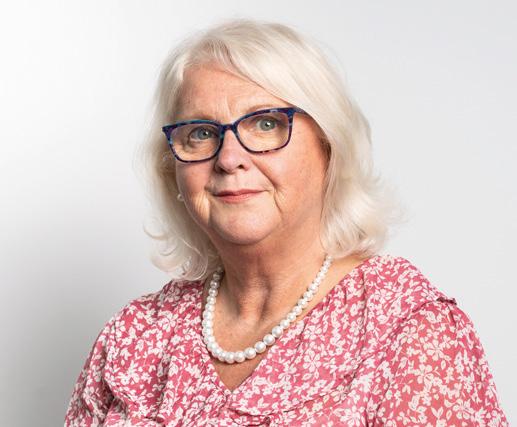
Susan Khan is celebrating 25 years working in the railways, a journey that initially started from an enjoyment of studying maths and science, and a passion in doing something that can positively impact so many lives.
“It’s quite important to me to do something with purpose – something that I get from working in the railways, an industry that fits with my own set of values,” she said.
A graduate trainee role at Metronet Rail gave her a good grounding, starting with a placement in Neasden Depot, experiencing the maintenance
of trains on the shop floor and also in the office planning works; but it was her second experience that set the platform for where she wanted to specialise.
“I found I really liked the logic and the technical side of signalling and that is where I’ve ended up specialising, moving on to become a signal design engineer,” she added. “It was that that set me off to get a job as a signal engineer.”
Susan is currently Head of Engineering Function at Hitachi Rail and, alongside the job, she is keen to inspire the next generation about the opportunities the industry can offer.
“I’ve always had fantastic support from being a graduate through to my current role working in an industry with a really good culture and lots of opportunities,” she reflected.
“It is an industry that can get overlooked, so I’m keen to ensure there is more visibility of diversity in the railways. The whole adage of you can’t be what you can’t see is very true, so that is something that needs to continue to change.
“We also need to start early, encouraging young people to get into engineering, making it an accessible career, and highlighting the wealth of opportunities that come with it.”
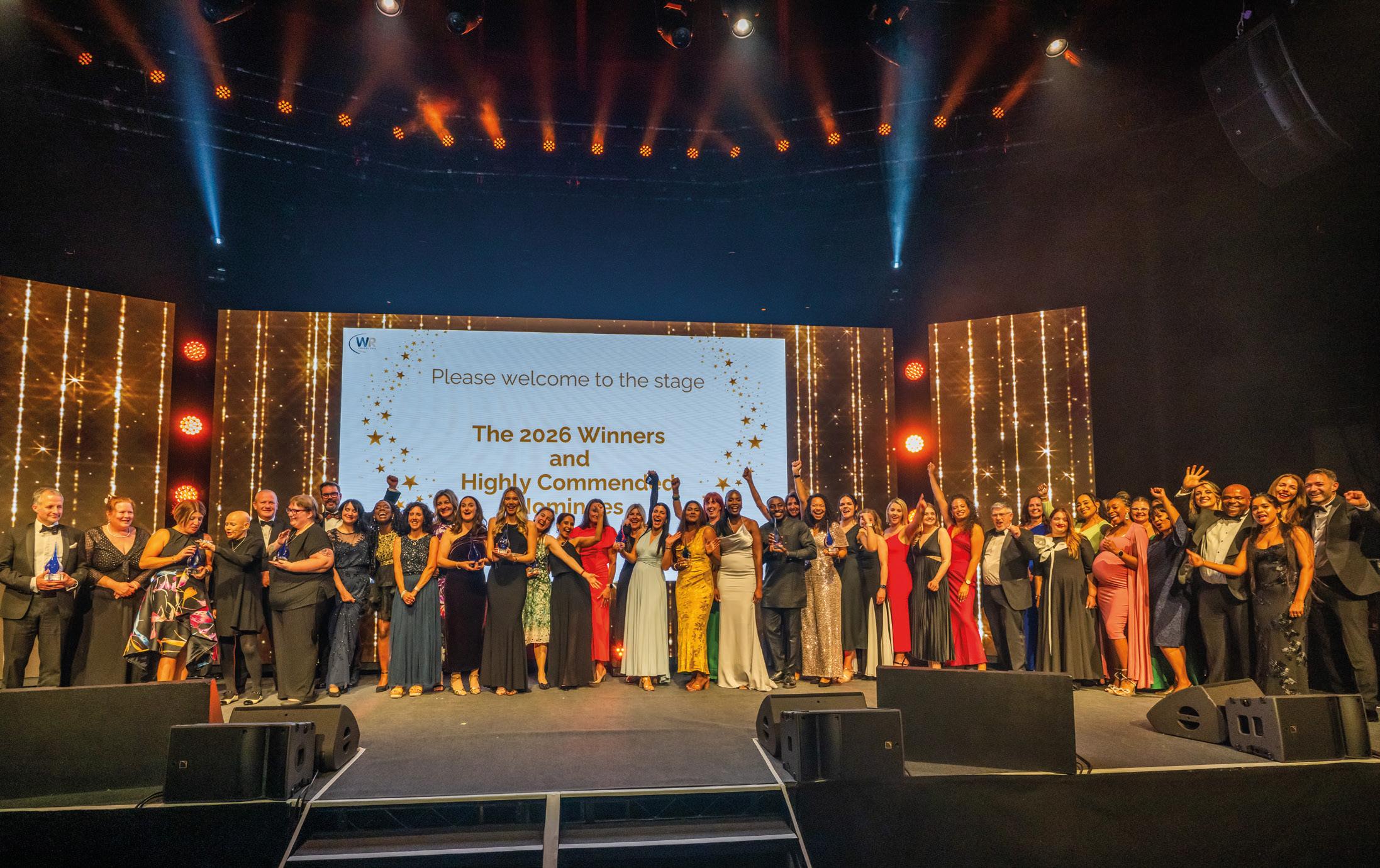
Women in Rail Awards 2026. Image: Nimble Media
Trailblazing engineering leader
Susan’s efforts haven’t gone unrecognised. At this year’s Women in Rail Awards she was named Inspirational Woman of the Year, described as a true champion for inclusion in rail, and for her efforts in mentoring others and advocating for gender equity across the sector.
“I’m still really surprised,” she said. “It was lovely to be nominated and attend the awards, which was such an inspiring evening.
“I feel really proud of myself, but I was really happy for the people who nominated me from our women and allies network as well, who put a lot of effort into writing the nomination.”
Judges praised her powerful leadership and personal resilience, noting her extensive STEM outreach, support for women in engineering, and tireless commitment to opening doors for future generations.
Susan is modest in response. “It just feels like it’s the right thing to do, everyone should have a good chance to succeed,” she said.
“I think people are our biggest asset so it’s important to look after them and help them all reach their potential.”
The UK rail industry remains male-dominated. NSAR’s latest Rail Workforce Survey found gender diversity has increased over the last 12 months, but is still only at 18.9 per cent.
“It’s especially nice seeing women succeed because there is still a low number of women working in the railways,” Susan said.
“I like working with people and being a people manager and leader, especially seeing them succeed and advance in their careers. That is a really rewarding part of the job.
“We take on quite a lot of apprentices and graduates who you see start straight out of school and a few years later they’re in really important roles, delivering projects. It’s not just them though, I like seeing everyone in my team progress.”
Susan was Thales’ first Head of Hardware and Software Engineering – a role she held for fourand-a-half years before the organisation was acquired by Hitachi Rail, when she became Head of Engineering Function.
“We’d had a female engineering director before, but I was the first female to hold the Head of Hardware role, which has now evolved to looking across all of engineering,” she explained.
“I joined Thales several years ago as quite a junior designer and since then I’ve had lots of opportunities to develop and move on. When there’s been the next step up I’ve always felt supported to go for those jobs, rather than feeling they’re not for me, and I’ve always been supported by colleagues at Hitachi in those applications.”
She currently works in the signalling rail control part of the business heading up the engineering team, which is made up of around 200 engineers in various disciplines who work on different projects across the whole organisation.
“It’s really about making sure that we’ve got
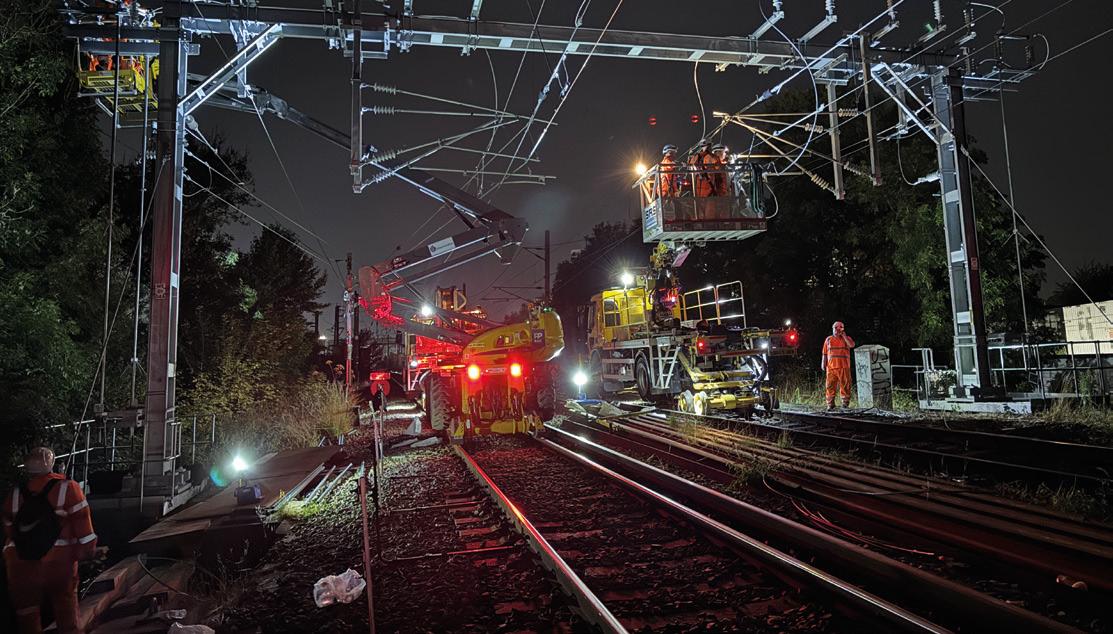
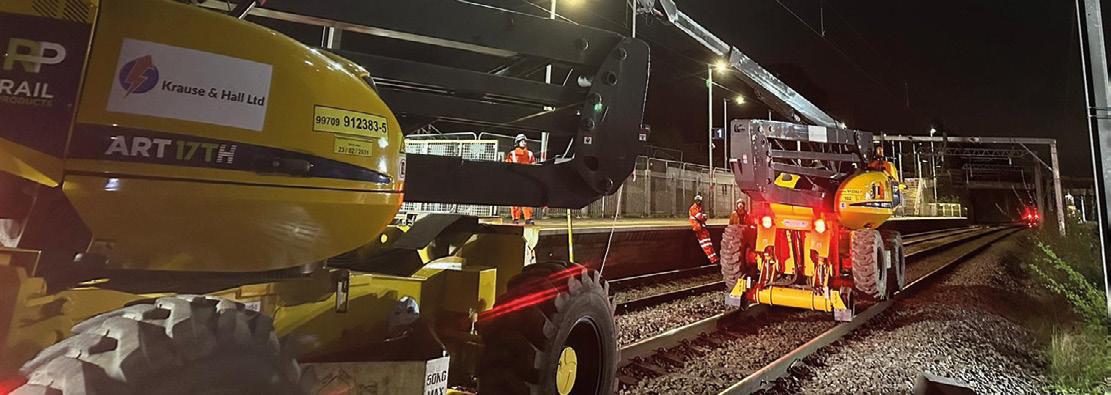
Specialising in the provision of Overhead electrification and rail services since the company’s formation in 2007.
of Overhead electrification and rail services since the company’s formation in 2007.
We also need to start early, encouraging young people to get into engineering, making it an accessible career and highlighting the wealth of opportunities that come with it
Specialising in the provision of Overhead electrification and rail services since the company’s formation in 2007.
Specialising in the provision of Overhead electrification and rail services since the company’s formation in 2007.
We have established ourselves in becoming a trusted supplier for our client base offering flexible and valued working relationships. Krause and Hall has a proven record in the industry and is able to provide experienced management and delivery systems to enable our clients requirements to be met.
We have established ourselves in becoming a trusted supplier for
Specialising in the provision of Overhead electrification and rail services since the company’s formation in 2007.
Specialising in the provision of Overhead electrification and rail services since the company’s formation in 2007.
Specialising in the provision of Overhead electrification and rail services since the company’s formation in 2007.
We have established ourselves in becoming a trusted supplier for our client base offering flexible and valued working relationships.
We have established ourselves in becoming a trusted supplier for
info@krauseandhall.co.uk www.krauseandhall.com
info@krauseandhall.co.uk www.krauseandhall.com
info@krauseandhall.co.uk www.krauseandhall.com
info@krauseandhall.co.uk www.krauseandhall.com
info@krauseandhall.co.uk www.krauseandhall.com
info@krauseandhall.co.uk www.krauseandhall.com
info@krauseandhall.co.uk www.krauseandhall.com
the right number of people, the right skills, the right tools, the right competence, and supporting the projects to deliver,” she said.
“It can be challenging, but it is enjoyable as well because I’ve got a really good team.”
Despite the slight change in role in recent years, Susan says the biggest jump in her career was going from being an engineer on a project to managing the engineers.
“It’s accepting that you can’t know the detail of everything and learning to trust the team but still be accountable for things, but not hands-on delivering everything, which is hard to get used to when you’re doing an engineering job,” she said.
“Particularly when we were working on the Northern Line project and it was quite a large team and a high-pressure project. There was a lot to do, but it was knowing when to get involved in the detail and when to step back and let others do it.
“But it was very satisfying, especially on that project when you can see what’s happening, we can all travel on it and we can see that positive impact. There is a tangible end result.”
Underground by reducing journey times and providing more frequent trains that reduce crowding and help improve the passenger experience. More than half of it is now in service, with some big commissions coming up this year.
There is also the retrofitting of on board European Train Control System (ETCS) to existing fleets, and the upgrade of the radios that connect all the operators on London Underground who use the Connect radio system.
“It’s quite a diverse set of projects,” Susan said. “It’s exciting but can be challenging to resource because we need lots of different specialists and disciplines and must make sure that we’ve got the right capabilities for all of them.”
Despite the ongoing projects for Hitachi Rail, there will be no slowing down in Susan’s work in ensuring her team can thrive, and in opening doors for future generations of workers into the railways.
The event was all about apprentices and inspiring people to join the railways
The track ahead
The future looks bright for Hitachi Rail and Susan is excited about the role she can play. The organisation is doing more work in the light rail space, including a 15-year Technology Partner Framework Agreement with South Yorkshire Mayoral Combined Authority.
Other projects include the Four Lines modernisation project, London’s largest signalling upgrade, which is increasing capacity on the
Speaking to Rail Director shortly after the organisation attended the York Festival of Ideas, a series of events designed to educate, entertain and inspire, she concluded: “The event was all about apprentices and inspiring people to join the railways.
“There are so many different jobs in the rail industry and opportunities to learn and develop. I’ve really enjoyed my career so far and I’m optimistic for its future.
“The more diverse people we get involved the better it will get, but we need to get that message out. There’s so many jobs in engineering and if people can see that, then they can see that they might have a role in it.”
All the winners from the Women in Rail Awards 2026. Image: Nimble Media
Creating the Rolling Stock and Infrastructure Strategy
Ahead of the release of the Government’s Rolling Stock and Infrastructure Strategy this summer, Michael Hayes from the Department for Transport explains more about the work going into it.
The Government is getting close to publishing its Rolling Stock and Infrastructure Strategy, scheduled to be released this summer, which will focus on several key areas to ensure the long-term viability and efficiency of the railway system.
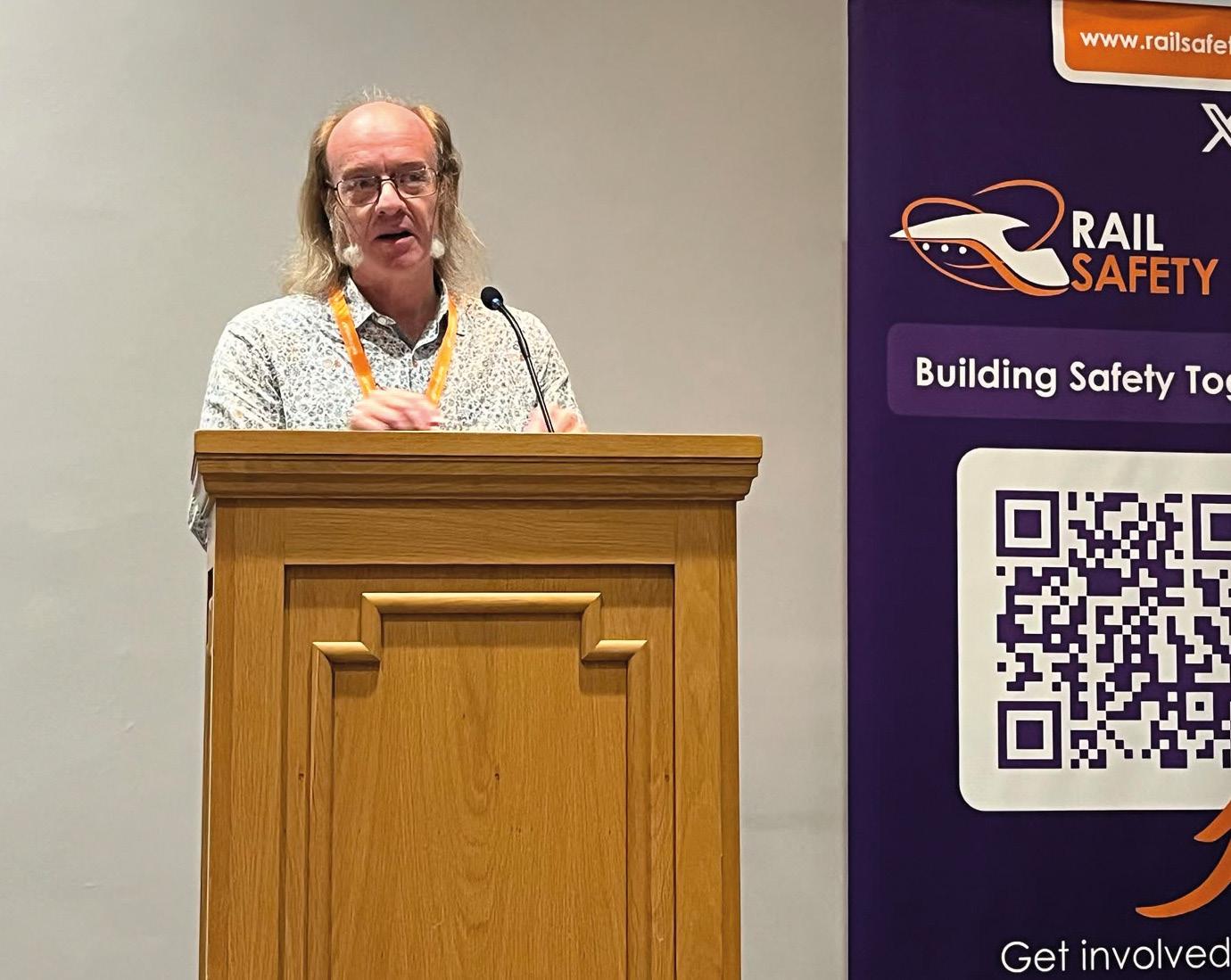
Ahead of its publication Michael Hayes, Deputy Director Rolling Stock and Infrastructure Whole System Strategy at the Department for Transport, has discussed what it is that is hoped will be achieved, and why a whole system strategy is so important.
“We haven’t had a rolling stock and infrastructure strategy in 30 years, but with rail reform we have a really big opportunity to do things to get more out of the money that goes into the railway industry,” he said. “The better the rate of return, the more attractive it is to invest in the rail industry, whether it’s Government or the private sector. This is really about improving the system as a whole.
“The opportunity is looking across operators so that we consider a national fleet, and secondly to look across infrastructure and services to plan investments so that we’re making the same decisions or coordinating decisions at the same time, which will be really helpful.”
Speaking at the Railway Industry Association’s PowerEx, delivered in partnership with Network Rail, he emphasised the importance of aligning operators and infrastructure with their decision making and investments
“It’s important to get that lined up so that we are more effective over long-term investments, bringing operators and the infrastructure providers together,” he said. “It’s about thinking over the lifespan of the assets and making decisions which are better in the longer term, driving value.”
Work on the strategy started last year, with Michael highlighting the huge amount of work involved. He’s been particularly pleased with the involvement of operators, suppliers, and infrastructure providers, all keen to look at how to do things differently and change mindsets.
“This strategy is not just about the supply chain, a really important theme is about tying it back to what is the railway actually delivering and getting more clarity,” he added. “The objectives are the same as for the long-term rail strategy, which is due to be published next year.
“We’re making sure that we are aligning what we are doing on rolling stock and supporting infrastructure and everything around it to what
we’re trying to achieve in the railway as a whole. The more we do that, the stronger the case that there is for investment.”
Among the objectives includes:
Meeting customer needs – making sure the trains are more consistent across the network so that people know what facilities they will have. Longer term it is about making sure the right trains are operating on the right services, rather than which train is available at a particular operator’s depot.
Financial sustainability – Around £4 billion is spent on Department for Transport Operator (DFTO) operators’ rolling stock (leasing, maintenance, refurbishment), with around another £1 billion a year spent on fuel. Getting more out of what is being spent on rolling stock is really important for financial sustainability of the railway.
Long-term economic growth – Running services and making sure there is the right rolling stock. It is about running services more efficiently, and enabling the serving of areas where potentially rail demand is lower, and about getting a stronger financial case, an
Image: Network Rail
economic case for running trains. This assists the case for funding in railways and the return for those funders, private or public sector.
Environment sustainability – This isn’t just about decarbonisation, it’s also about things like noise pollution, and local air pollution. It’s important that the focus is about the type and number of trains, but also what the overall ambitions.
“The overall strategy is looking at rolling stock requirements over the next 25 years,” he said. “That’s not about just new rolling stock, but also existing because we can’t afford to just replace everything on the network whenever we want. We need to make sure we’re getting the value out of the existing rolling stock, not just about asset life, but also about how it’s used by passengers.
“Around two-thirds of the cost of rolling stock is about how it’s maintained and refurbished over its life period. The strategy is also about the supporting infrastructure. That might be electrification, but it’s also the investment in depots, the interface with signalling, and the introduction of European Train Control System around the network and the implications that that’s got on rolling stock as well.
“What we really want to do is tie projects in the future in terms of new rolling stock and supporting infrastructure back to what is actually delivered and deliver that in the cheapest way possible, the
most efficient way possible with the best value as well.
“The second part is around more upfront work and earlier work. Planning better and delivering more quickly is really important in terms of getting innovation in there as well.”
Ahead of the strategy’s release, Michael said an implementation team is being created to ensure its delivery.
Giving his message to the suppliers, Michael concluded: “The focus is on what the railway delivers for passengers. That is what everything needs to tie back to and what our decisions are around.
“In terms of the strategy itself, things such as technology will change in the future, so the strategy isn’t just about pipeline, it’s about a decision framework so that it can drive better decisions in terms of detailed design.
“It’s not just about what gets delivered, but about how it gets delivered. Being smarter right the way through all of project delivery, approval, funding, design and making sure that we are getting a more efficient system right across the whole life cycle.
“We’re hugely grateful to all of the organisations and individuals that have spoken to us over the last few months. This strategy has benefited from an awful lot of input from right across the industry and fingers crossed we will hope to meet as many of your expectations as possible.”
Driving better network performance
Daniel Mann, Director of Industry Operations at Rail Delivery Group, writes about the power of depot-level data.
The need for better visibility and shared understanding across the network has never been clearer. For the first time we have consistent, comparable visibility of traincrew resourcing at depot level. This is a significant achievement across the industry, which should not be underestimated.
Network performance is the number one priority for our customers, and therefore it continues to be our top priority as we look towards the future and Great British Railways (GBR). The industry has set an ambition to achieve 90 per cent time to three performance, meaning that 90 per cent of recorded station stops are called at within three minutes of the planned time in Great Britain alongside keeping cancellations
across more than seven million annual passenger services on the network below two per cent.
Traincrew resourcing sits at the heart of railway performance. The link is direct and measurable: if trains cannot be crewed, they do not run.
Only a few years ago, the consequences of insufficient traincrew resourcing across the network were visible, and driver-related cancellations were a critical issue. At that time, the railway was facing a structural challenge with inconsistent planning approaches, which meant that operators were often reacting to traincrew shortages rather than managing them proactively.
The scale of the problem was clear, yet the industry lacked the information needed to fully
understand the underlying issues in order to effectively address them.
Through the Traincrew Programme, Rail Delivery Group (RDG) introduced a set of Key Performance Indicators (KPIs) in early 2022 to measure traincrew resourcing across the network and its impact on network performance.
The KPIs were developed in collaboration with operators to not only measure performance, but to embed consistent definitions to help drive a common understanding of the issues which, in turn, allowed us to start to develop guidance, tools and insight to further improve performance outcomes.
They were implemented as an industry change, with a clear governance structure. From the
Rail Delivery Group
start, there was a clear expectation that the new measures would be adopted across the network and data collection started in January 2022 with 23 operators.
The industry had never before had access to this level of traincrew data, granting oversight of which areas were performing well and which areas needed strengthening. Through the Traincrew Forum, operators could share best practice and learn from each other to introduce meaningful improvements in the way they managed the allocation and productivity of their traincrew.
The impact of having access to this data, and delivery of wider products within the traincrew programme, have been profound. Since the start of the Performance Restoration Framework in December 2024, operators have collectively reduced traincrew-related cancellations by 50 per cent. Not only did this improve service for customers, but it also delivered a £64 million boost to rail revenue between 2024 and 2025.
While the introduction of the KPIs was groundbreaking and an industry first, over time it became apparent that more needed to be done. The high-level averages from the data masked local variation, and the KPI reports recognised that period and operator-level data can hide important differences between depots.
Furthermore, many of the real drivers of traincrew performance were at depot-level: local availability patterns, route knowledge gaps, roster design and allocation constraints.
Looking at depot-level data became the next natural step and RDG worked with operators and other key industry partners to develop a set of KPIs, which were introduced in September 2025.
At the moment, the data is collated from every operator every two months. There are eight depot-level KPIs, which have been designed to answer a simple question: do we have the right people, with the right skills, in the right place, at the right time? Examples include measuring route and traction knowledge, unavailability and cancellations due to traincrew factors.
Depot-level data has given the industry greater granularity, enabling operators to diagnose issues more precisely, target interventions more effectively, and understand the real causes of resourcing challenges. The good practice sharing that has been made possible from having visibility of data at this level has proved incredibly beneficial in a short period of time.
For example, East Midlands Railway (EMR) has optimised its use of depot-level data, using detailed analysis and Power BI dashboards to track key drivers of traincrew efficiency. This has enabled targeted, location-specific interventions, helping optimise rosters, manage training needs and maintain consistently low service cancellation levels.
TransPennine Express (TPE) is using the depot-level KPIs internally and has continued to drive local ownership and management for competence development and efficient utilisation. We have achieved so much in the traincrew
performance space over the past few years. Yet this is not a time for complacency. The industry goal is to reach a place where traincrew-related cancellations account for a mere 0.5 per cent of total services – an ambitious target.
Emerging themes from our depot-level data continue to be discussed at a strategic level via the Traincrew Board, attended by senior industry leaders. In addition, operators are sharing best practice through the Traincrew Forum and helping to embed the insight we’ve developed into meaningful and measurable improvements.
In the past few months, we have already seen substantial improvements using this more granular data, and we will continue to push forward with identifying and implementing further enhancements.
Looking ahead, we’ve secured funding to develop an industry-wide approach to measuring traincrew diagram resilience and efficiency. This will offer a consistent, evidence-based way of further understanding the relationship between efficiency and resilience, feeding into strategic timetable planning to optimise performance outcomes so we can deliver better services for our customers.
During this period of change and opportunity, it’s crucial that we continue to work together to drive improvements in the area that customers value most – network performance. We mustn’t forget that the management of traincrew resource lies at its heart.
Traincrew resourcing sits at the heart of railway performance. The link is direct and measurable: if trains cannot be crewed, they do not run
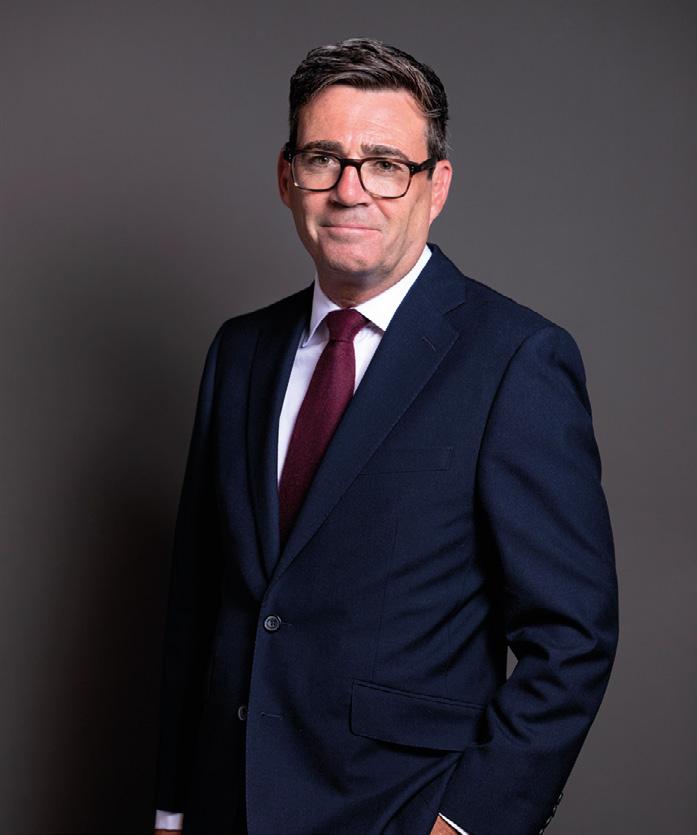
Prime Minister pledges growth in every postcode across whole of UK
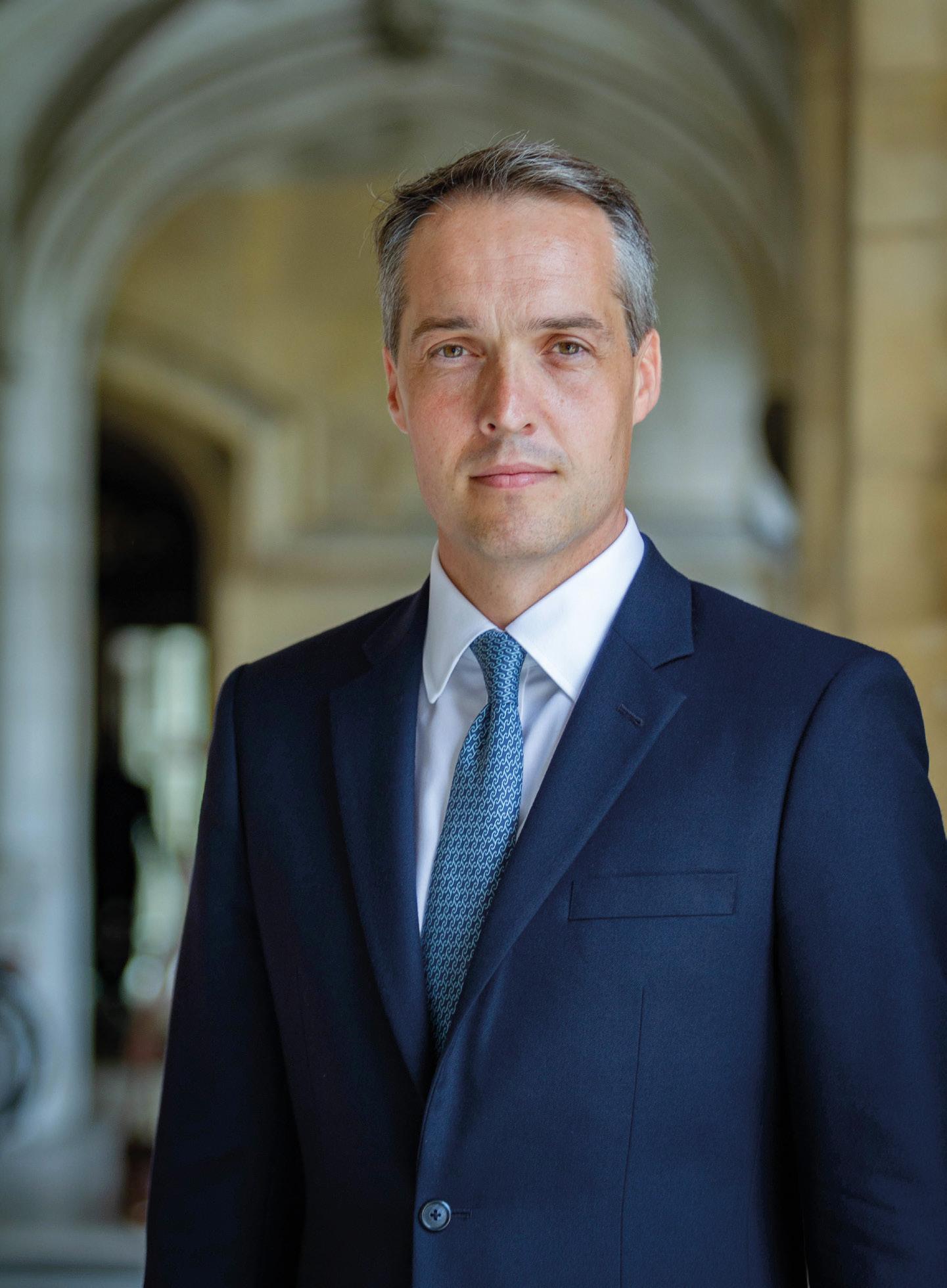
Andy Burnham has become the seventh Prime Minister since 2016. Heidi Alexander is remaining Transport Secretary and Lord Hendy of Richmond Hill CBE Rail Minister.
Image: UK Parliament
Andy Burnham has become the new Prime Minister, vowing to drive to build an economy that works for every postcode.
“I am acutely conscious that I am the sixth person in the last 10 years to walk up this street, the seventh Prime Minister since 2016,” he said. “Making this a moment for reflection and new resolution it requires my generation of politicians to raise our game, and rise to the new challenge.
“Britain needs to show the world that we can regain our stability once again, and that is our challenge, to make politics work, to make it work better. I know people at home are fed up with politics. I hear you. And I want to be honest with you. We have not been good enough, and we need to be better.
“We will be. We will make this moment a circuit breaker for Britain, bringing forward the biggest changes in the last 40 years. A new political model and a new economic model.”
The former Mayor of Greater Manchester has previously pledged to revive the northern leg of HS2 if he becomes Prime Minister, which was cancelled in 2023 by the Government due to escalating costs
His plan focuses on a slower, cheaper railway line between Birmingham and Manchester, designed to reduce costs while still delivering high-capacity rail infrastructure.
Following his appointment, the Railway Industry Association (RIA) assessed rail policy progress two years since the Labour Government won the 2024 General Election and urged the new Prime Minister to make rail reform an early test of its national renewal agenda.
RIA argues that he should use rail to unlock place-based investment, growth in the nations and regions of the UK, skilled jobs and better outcomes for passengers and freight.
Marking two years since the Labour Government took office in July 2024, RIA’s latest six-monthly review concludes that, while the foundations for rail reform are clearly being established, the next phase must be defined by delivery, investment certainty and practical partnership between Government, Great British Railways (GBR), devolved leaders and the rail supply sector.
This matters because the National Infrastructure and Service Transformation Authority’s (NISTA) recent ‘red rating’ of delivery confidence for GBR should be treated as a prompt for urgent action, not a reason to slow reform.
When I say we need good growth in every postcode, I mean every postcode across the whole of the UK. Every place and every person matters
RIA’s Two Years of a Labour Government review sets out five immediate steps to help the Government turn rail reform into a delivery programme to dovetail with Andy Burnham’s national renewal agenda, supporting placebased growth and long-term confidence across the rail supply chain.
Recognise the full value of rail in public investment decisions.
Establish GBR without a hiatus.
Use place-based investment to unlock growth.
Plan now for the future rail capacity the country will need.
Publish a clear investment plan to reduce costs and give businesses confidence to invest.
RIA Chief Executive Darren Caplan said: “The new Andy Burnham-led Government, focused on growth around the UK and national renewal, should view the railways not simply as a cost to be managed, but as a strategic economic asset.
“Rail connects communities, unlocks housing, supports skilled jobs and drives productivity across the UK. With a clear long-term approach, rail reform can become one of the defining delivery legacies of this Parliament.
“With the foundations for rail reform being put in place, the task now is delivery. NISTA’s ‘red rating’ for GBR preparedness underlines the need to maintain momentum, publish clear investment pipelines, and give the rail supply sector the certainty it needs to invest, innovate and support the country’s growth.”
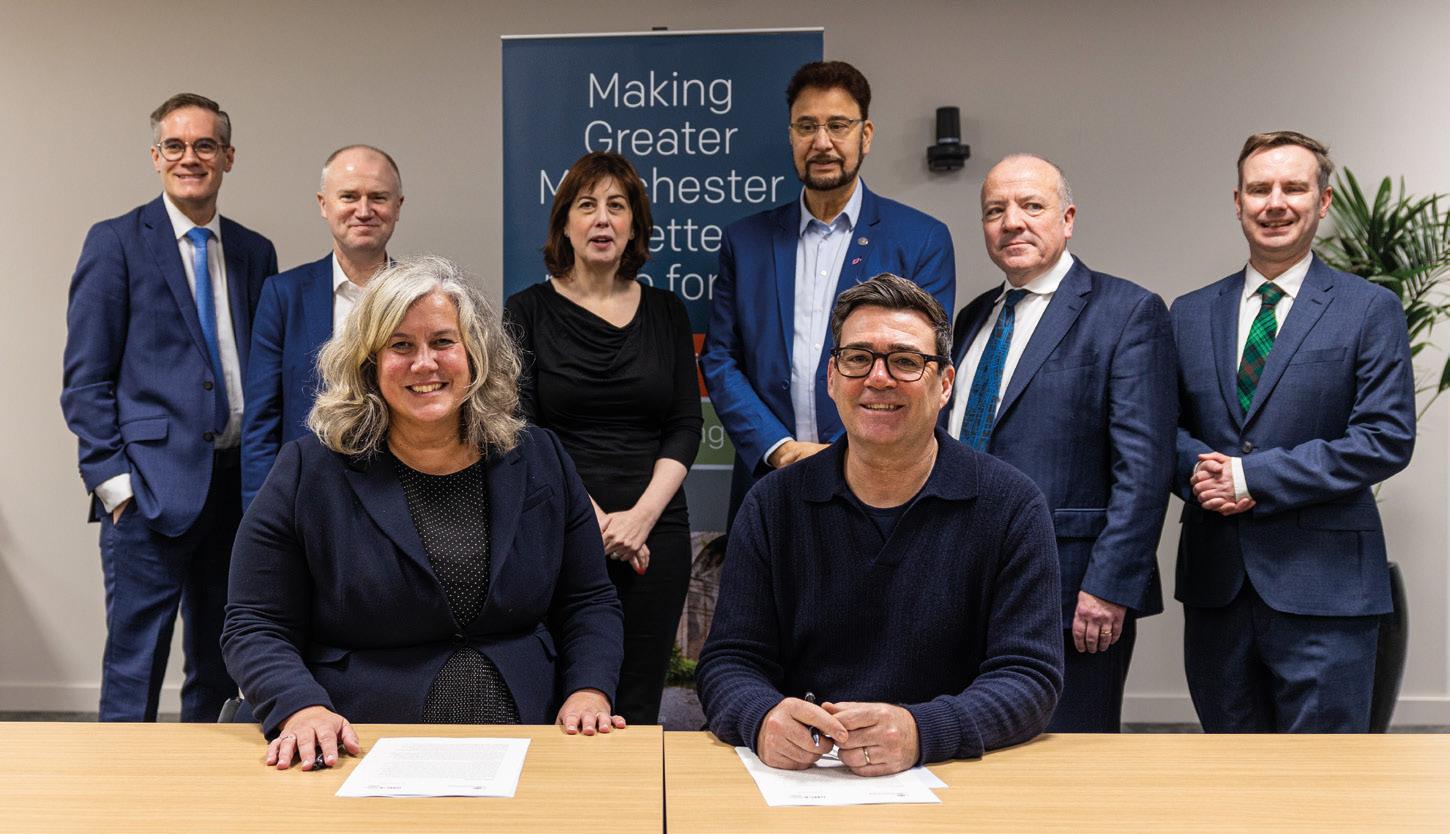
Image: Transport for Greater Manchester
40 years of CML
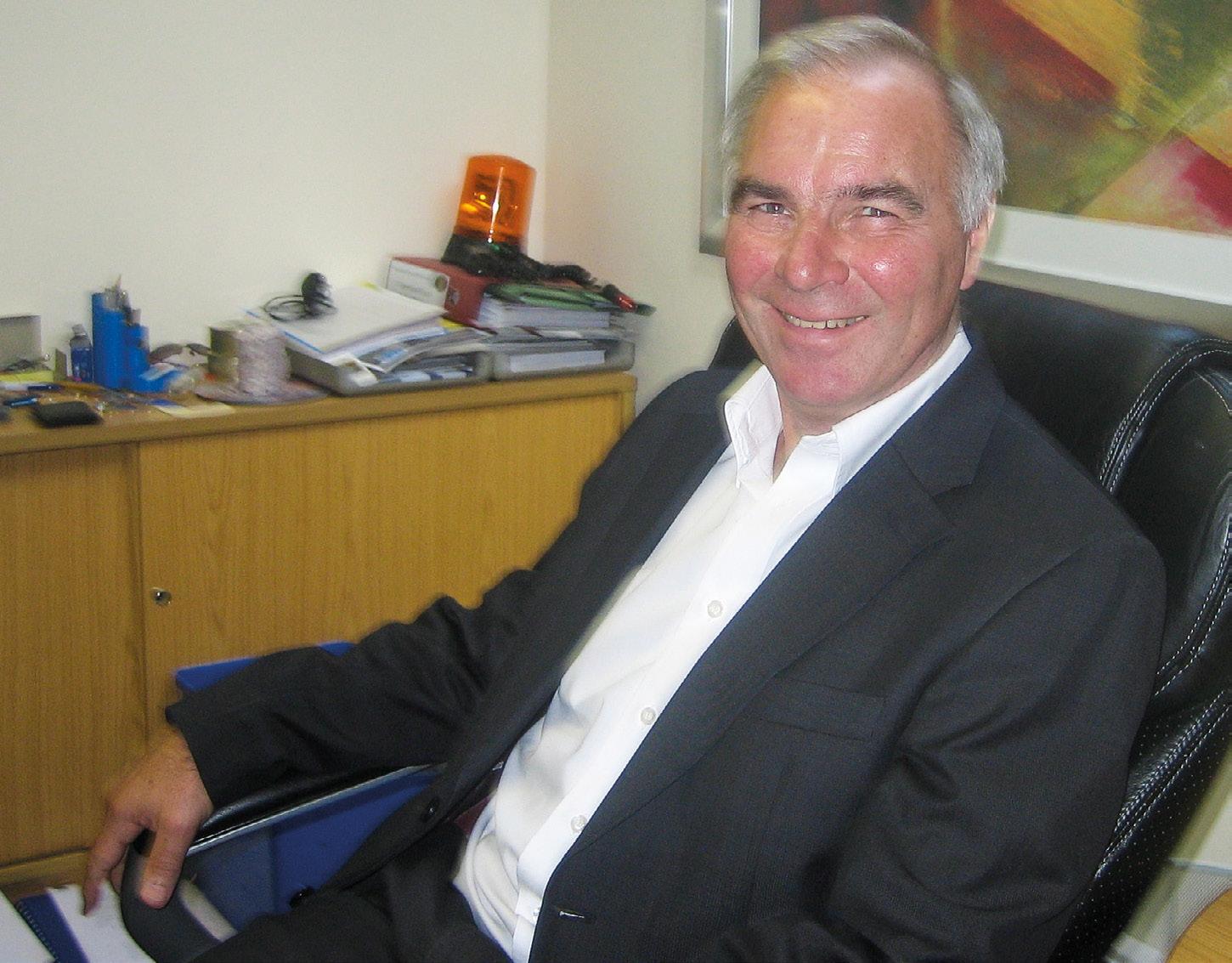
Geoff Mortimer, Founder and Chairman of CML, reflects on four decades of civil engineering, and how the future is in safe hands.
The year 1986 was one of sharp contrasts in the UK. London’s financial sector was booming, fuelled by the deregulation of the stock exchange, while many towns and cities across the Midlands and the North were gripped by post-industrial decline and rising unemployment. But where some saw a bleak economic outlook, others saw opportunity.
Geoff Mortimer, Founder and Chairman of CML, began his civil engineering career in consulting, specialising in heavy foundation engineering design. Eager to be more involved in construction, Geoff moved into contracting, which took him overseas working on large scale projects in the marine sector in the Middle East and Africa, and eventually moving his family out to Singapore in the early 1980’s to work on major projects in Indonesia and Malaysia. When his employer was taken over and restructured, Geoff spotted an opportunity in the UK’s marine and civil engineering infrastructure sector. And so in 1986, Construction Marine Limited (CML) was born.
“The first two years were tough,” he reflected. “We put the family home on the line as collateral to finance our early projects and worked out of a small industrial garage in Leeds. We targeted water authorities, port authorities, British Rail, essentially any infrastructure client with assets that interfaced with water.
“Much of our early work was in remote shipping and ferry terminals around the Scottish coast, and wherever the railways met the rivers and coastline of Wales. Slowly, we built a reputation as a reliable specialist contractor who could solve complex civil engineering problems in the marine environment.”
He added: “I found I was spending more time updating lenders than growing the business, so I made it an early goal to become debt-free and self-financed. That made our growth controlled and organic. Avoiding the pitfalls of rapid scaling, we built a stable business with a committed workforce, who we’ve always seen as our most important asset, and still do today.”
By the early 1990s, CML was a recognised name, working for British Rail, Yorkshire Water, British Waterways and other infrastructure clients. A significant turning point came with the formation of Railtrack in 1994. Following the Latham Report of the same year, partnering was becoming the preferred model for the industry, moving away from the confrontational culture of competitive tendering.
Railtrack recognised the specialist skills and collaborative approach CML brought to the table, and CML secured its first partnership contract in the rail industry. As the volume of rail work grew, so did the organisation’s opportunity to broaden its skill base – investing in specialist plant, equipment, training and facilities to build a workforce capable of delivering multi-disciplined building and civil engineering projects.
That early investment in skills set a pattern that has defined CML ever since: developing people from within and building a structured apprenticeship and training programme that has become the backbone of its delivery capability. It is this pipeline of home-grown talent, working alongside experienced engineers and site teams, that today allows CML to take on complex, multidisciplined building and civil engineering projects with confidence.
CML continued to deliver work for infrastructure clients outside the rail sector, but rail is a unique industry, demanding a unique set of skills, both on site and in the back office. Through the 2000s, CML evolved from the marine specialist founded in 1986 into more of a rail specialist, though it remains one of the sector’s leading suppliers of scour protection, sea defences and underwater repairs.
To keep growing, the business diversified
further, building a large in-house fleet of earthmoving and civils plant to deliver earthworks and drainage projects, and establishing building and structural engineering teams constructing new bridges, full platform restoration, station and depot construction and maintenance.
Construction Marine Limited began trading simply as CML, preserving its history while reflecting the breadth of services the business now delivers.
That early commitment to training now speaks for itself. CML’s apprenticeship programme has produced 27 successful completions over the last five years, with a 96 per cent overall completion rate – dramatically ahead of the national average of around 54 per cent.
Behind the numbers is a culture of dedicated mentoring, with training pathways built around CML’s real business needs rather than a generic curriculum – an approach recognised with 11 industry awards since 2020. Home-grown talent understands CML’s business and culture from day one, directly strengthening the workforce capability behind the company’s delivery and growth.
The ultimate test of survival for any family business is succession. Fewer than five per cent of UK businesses survive 40 years, and less than a third of family businesses make it to the
Geoff Mortimer, Founder and Chairman of CML
second generation. So what’s the secret to CML’s success?
“We’ve always been a close family,” explained Geoff. “The children moved away as adults, even working overseas, but somehow we’ve all ended up back within a few miles of each other, which must say something about how well we get along.
“When they were growing up, and I was working flat out to get the business off the ground, I’d take them on ‘days out’ in the school holidays. Most families went to the beach. I’d take mine to look at a 100-year-old bridge in North Yorkshire that needed rebuilding, so I could take a few photos and measurements before they got bored.
“In a way, they’ve been involved in the business as long as I have. It’s hugely satisfying, 40 years on, to see the projects our people deliver, and to see the next generation carrying the legacy forward.”
CML’s future is now in the hands of the next generation, Faye and Charles, who have worked in the business for more than 20 years. Both took on senior leadership roles on the board more than a decade ago: Charles, a qualified Civil Engineer,
as Managing Director, and Faye as Director of Corporate Services, responsible for Finance, HR and Training.
Speaking to Charles and Faye, it’s clear they share the same drive and ambition to keep growing the business in size and capability.
“We’ve seen huge change in the industry over our careers – mostly for the better, as we all strive to be safer, more efficient, and to have a more positive impact on communities and the environment.
“There are certain things about CML that shape its culture and feel, and we believe they’re key to our success and we’ll keep working hard to protect them. None of this happens without the right people. We’re proud of the strong senior leadership team around us, and just as proud of our commitment to training and apprenticeships: an investment in the next generation of talent, and in the future of the business itself.
“But every decision, at every level, comes back to one thing – doing right by our clients, delivering real value, and making every pound work as hard as possible.”
Every decision, at every level, comes back to one thing – doing right by our clients, delivering real value, and making every pound work as hard as possible
www.cml.uk.com/
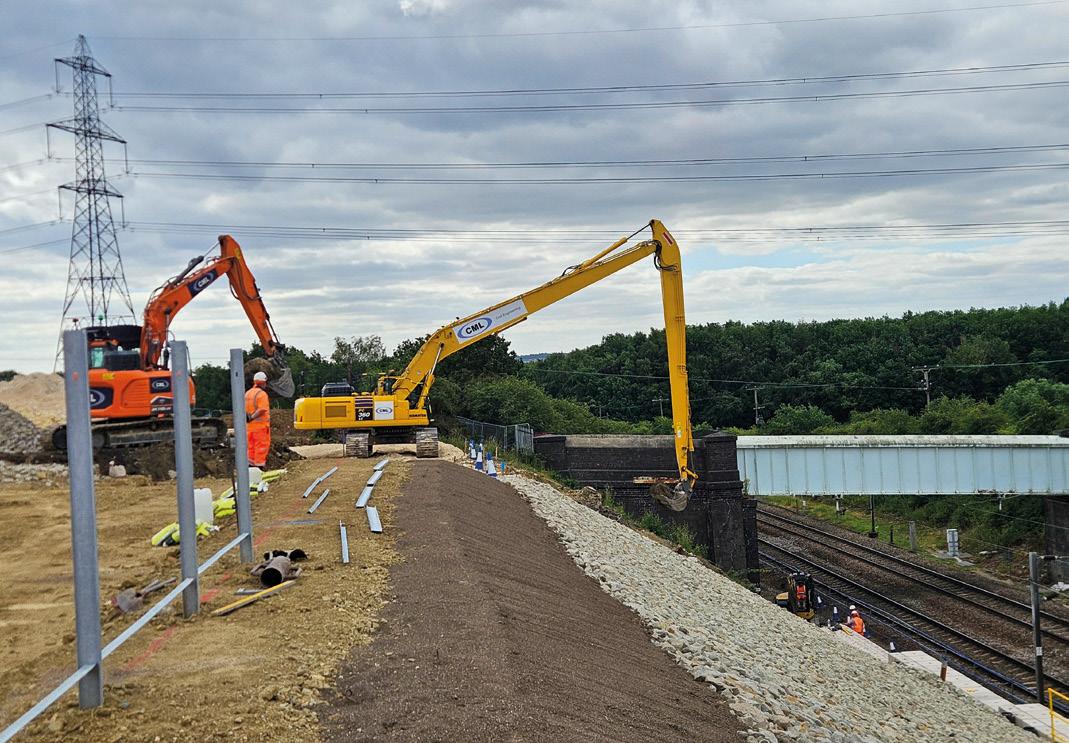
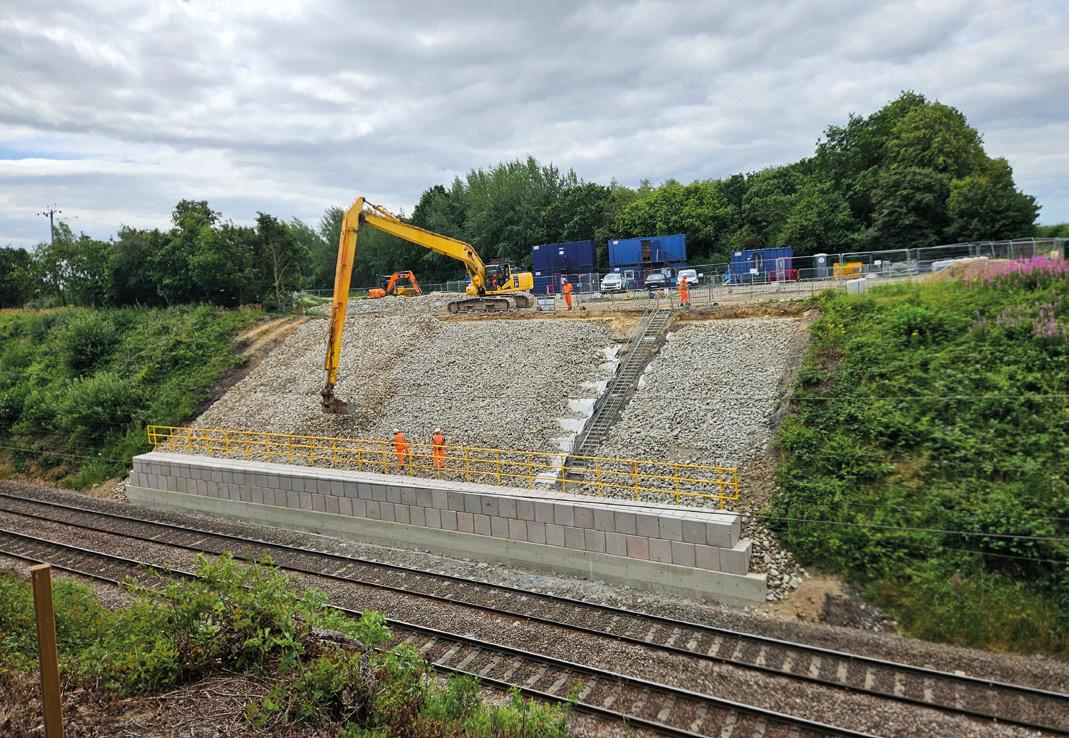
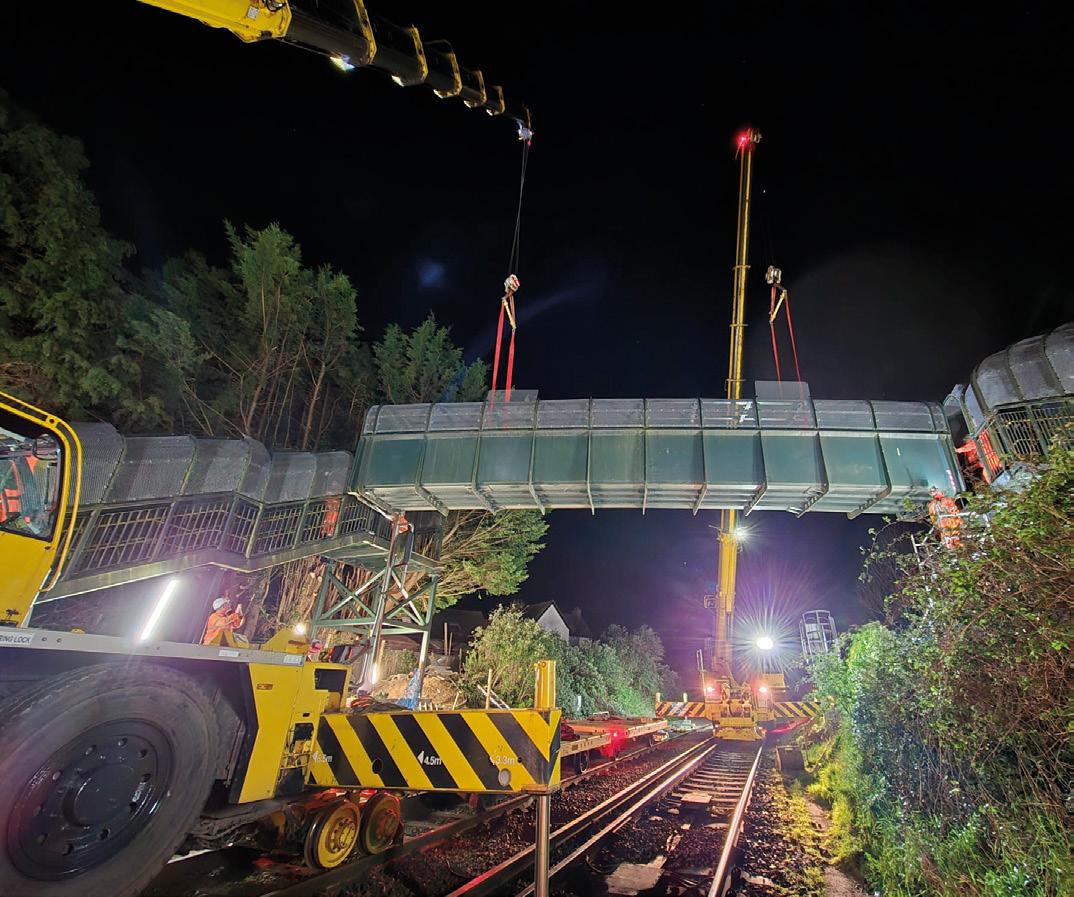
CML responds rapidly to two simultaneous emergency landslides on the Doncaster - Wakefield line
Fast-charge technology
Julian
Fletcher, Technology Development Manager at Great Western Railway, discusses introducing fast-charge battery technology for services between West Ealing and Greenford.
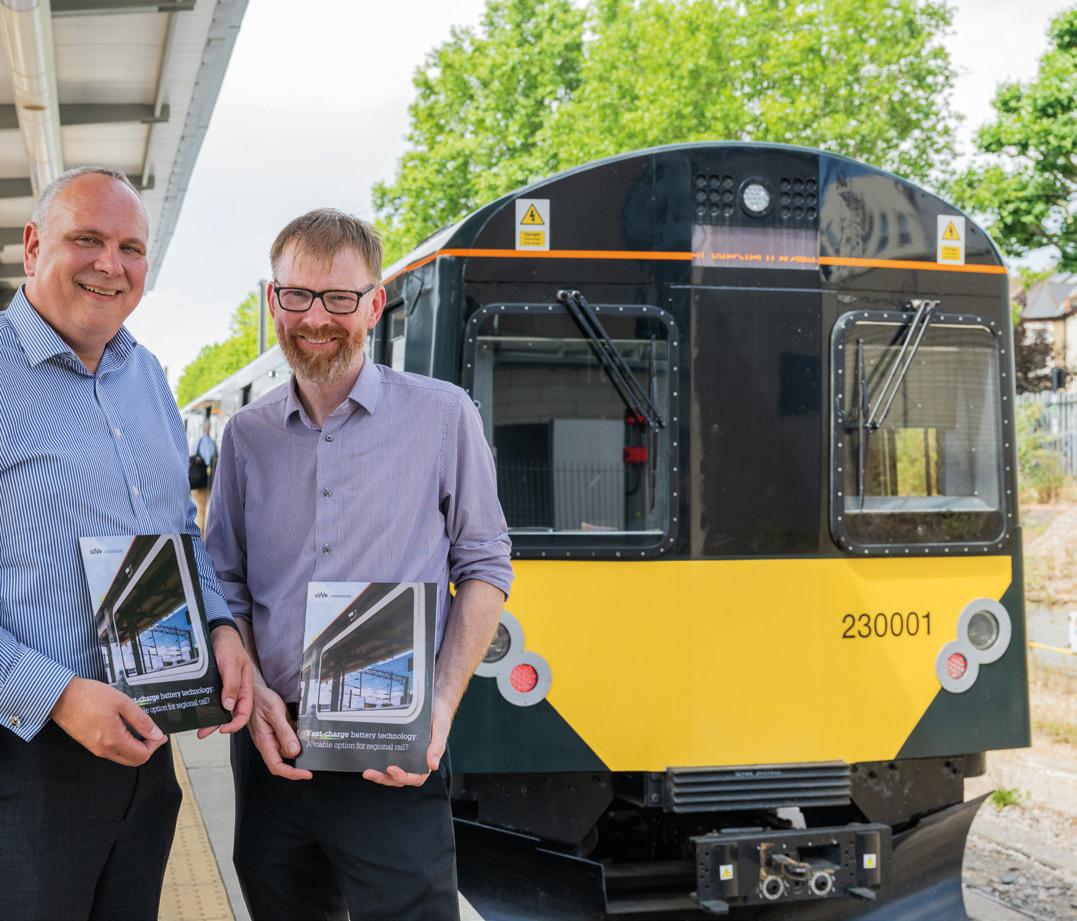
Julian Fletcher jokes that he was driven by the voice of his mother to not let her down and embarrass himself when tasked with sorting out the charging system for Great Western Railway’s (GWR) first battery-only powered train into passenger service.
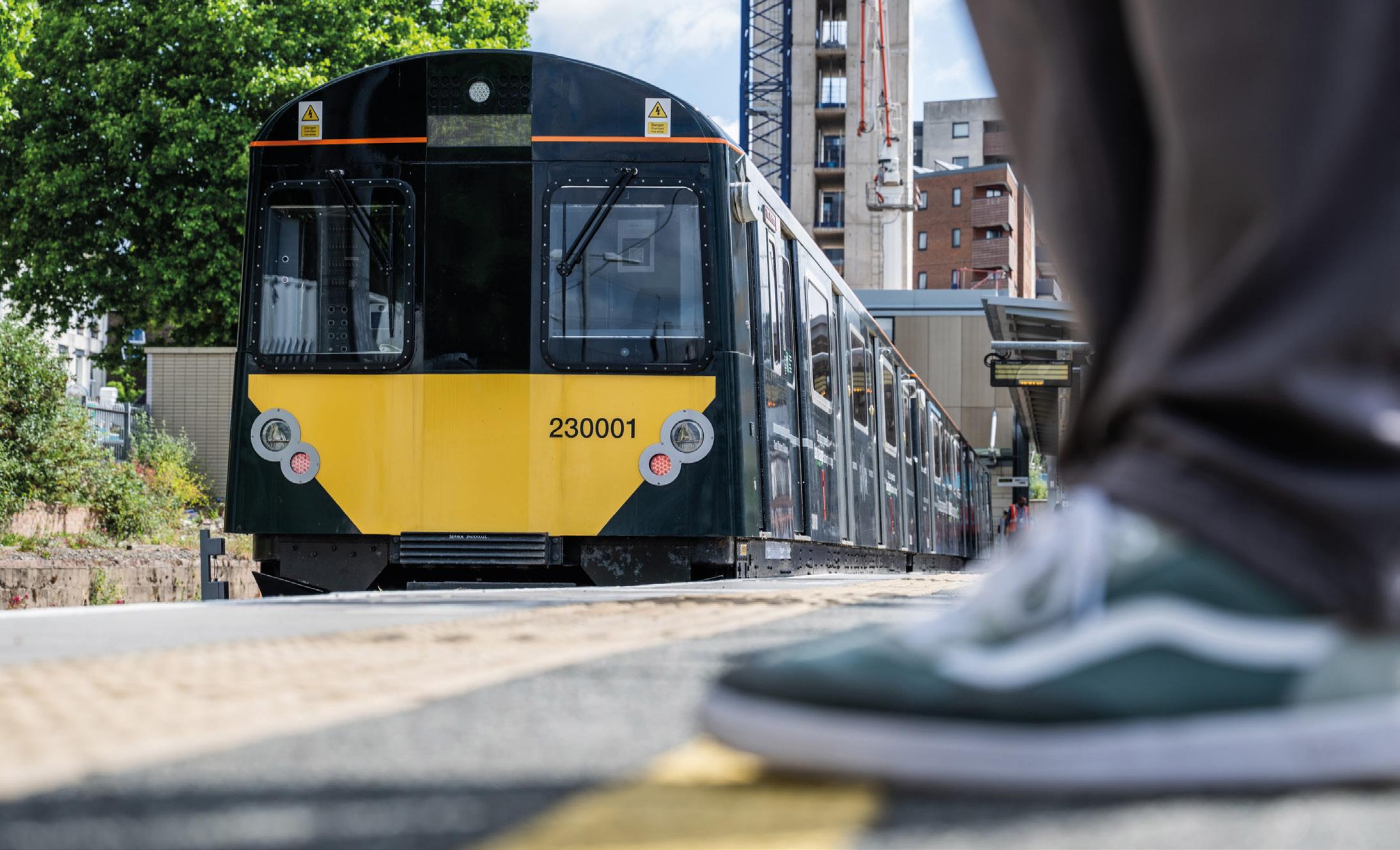
The Class 230 had been used for the successful trial of fast-charge technology on the Greenford branch line over the past two years in rigorous trials and replaced its diesel counterpart earlier this year to run along the 4km-long West Ealing to Greenford track.
“The big thing was to not make a fool of myself, with the testing programme that I put together to prove the whole system worked come rain or shine,” he said.
“My remit was the design of the running rails and the charging shoe on the train and I was given three-and-a-half minutes to charge the train, and go and make it happen.”
The project made headlines across the globe last summer when the Class 230 achieved a distance of 200.5 miles on a single charge. The
success has been recognised, being named winner in the Innovative Rolling Stock category at the Spotlight Rail Awards, and weeks earlier claiming the Innovation of the Year prize at the Rail Business Awards.
Explaining how the charging system works, Julian said: “It’s a light industrial grid connection to a trackside battery bank, which trickle charges 24/7.
“We have the radio-frequency identification (RFID) reader on the train which goes over the first tag that says you are at West Ealing platform five. The next tag says lower your shoes, and finally there’s a little tag that says you are at the charging location and then the hardwired proximity sensors form part of the safety interlock that starts the charging process.”
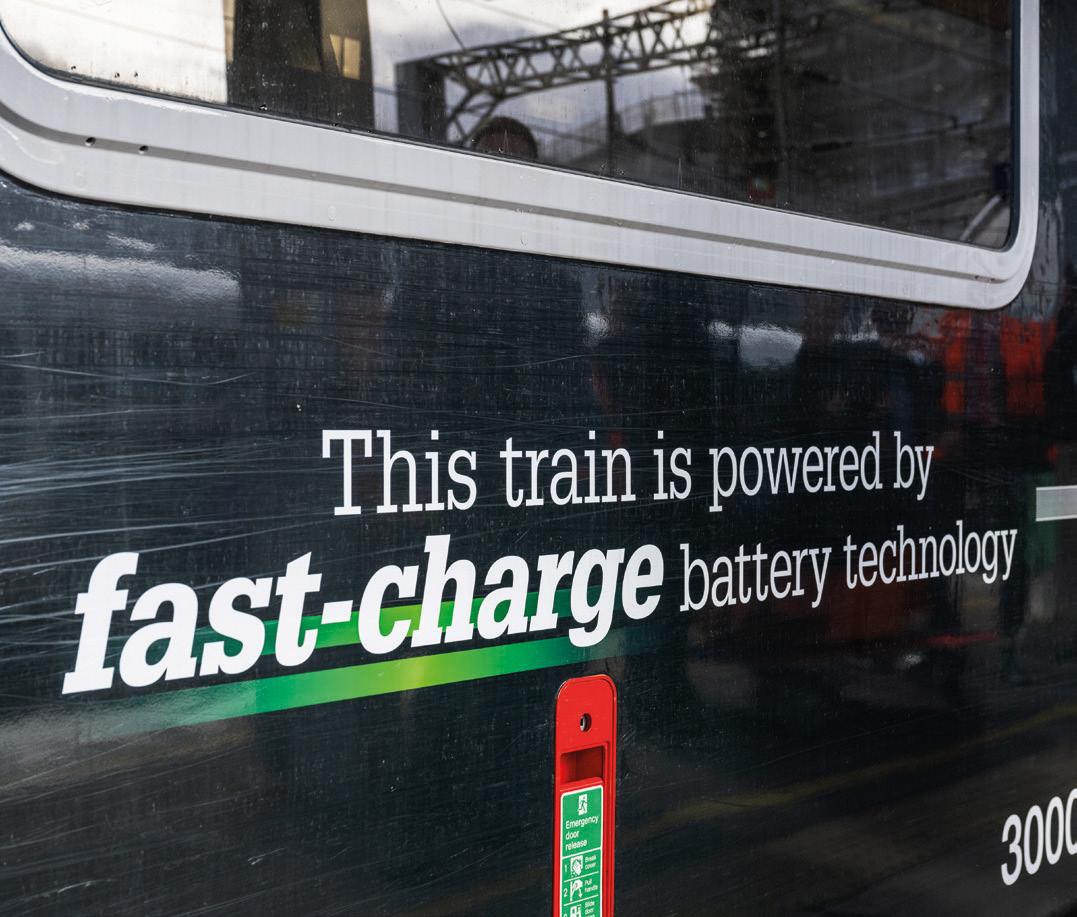
Fast-charge battery train technology works
The battery idea by GWR comprises two elements: one is a bank of batteries sitting by the lineside and connected to a simple DNO electrical supply on one side and, on the other, to a set of
charging rails placed on the track.
The second element is an electric train equipped with batteries and retractable shoes that connect with the charging rails.
Speaking at the recent Railway Industry Association PowerEx 2026, delivered in partnership with Network Rail, Julian explained more about the level of detail involved in the testing process on a former London Underground train that was converted especially for this fastcharge project.
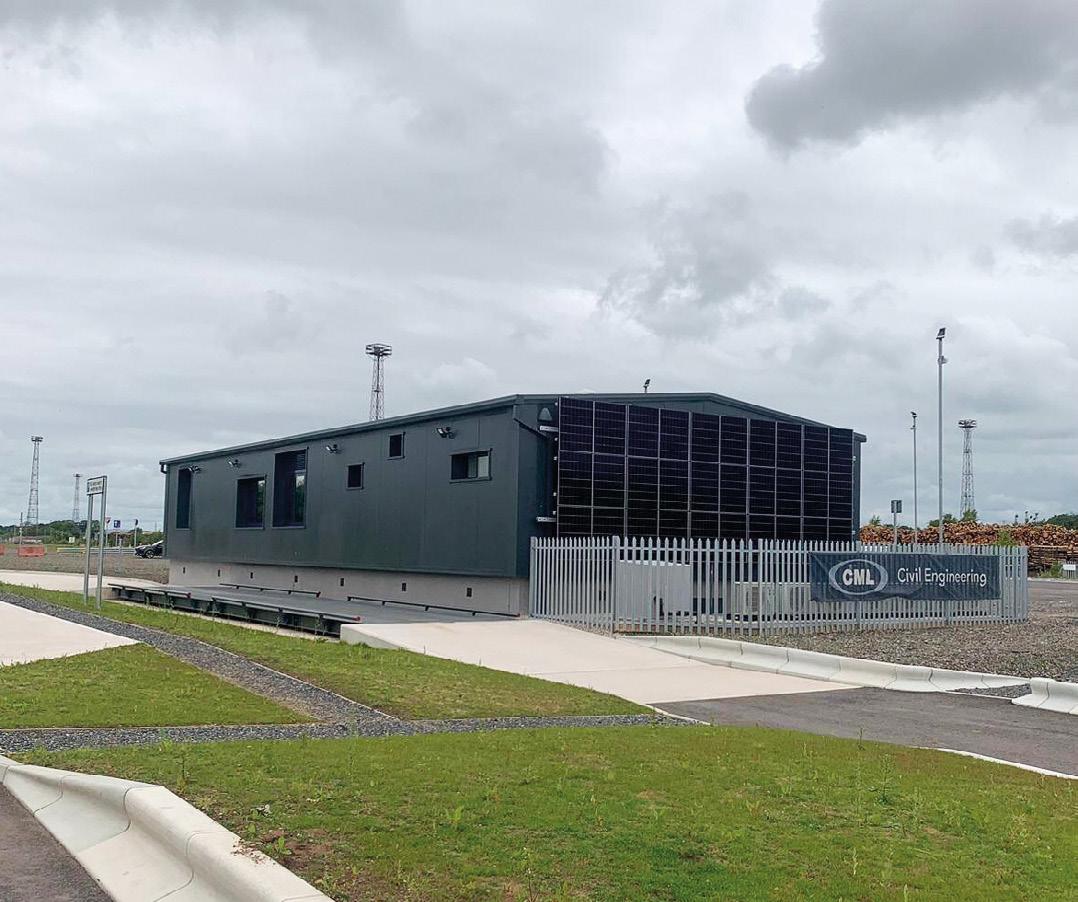
The batteries themselves are housed in small shipping containers, normally used as emergency power sources in hospitals, installing them by the side of the line at West Ealing.
“We had to do everything we could from a testing point of view to make sure this really works,” he said.
“It’s been tested in hot weather, snow, ice, rain, with leaves on the rails and even sticking crisp packets to the charging rails to simulate the effect of litter and other debris.”
Other testing included seeing how the system operates with some of the train’s batteries
Images: Great Western Railway
switched off, placing heavier loads on the train, including recruiting 230 volunteers as passengers to give a 21-tonne load.
“Another test involved looking at the worst position we could be in with a stranded train, which involved nearly getting to the charging point on a really hot day with passengers on board,” he said.
“Worst case with maximum auxiliary loads, full air con load, is five hours. If you turn the aircon down you’ve got 24-and-a-half hours.
“We drove simplicity right from the off. When I turned up and was given the shoegear to do, the late Adrian Shooter (the project was his vision) sat me down and said that he wanted all of the quality of aerospace but none of the cost, so that’s where we’ve come from.”
The future
As part of its future rolling stock plans, GWR will need battery trains to routinely cover more than 60 miles between charges, with the current success providing evidence that the technology is a viable solution for the UK’s railway.
Alongside the ongoing passenger service one day a week, GWR is also working closely with the Department for Transport (DfT) and other
train operators to build the best financial case for investment in battery-powered trains.
“We are looking at the DfT’s request at a highpower version of the system that’s at West Ealing and there’s other options that you can do with your battery energy system,” Julian said.
“You can play tunes on it for using off-peak charging, or you can connect to renewables, whichever you want to do.”
The batteries could be charged from solar panels or from other local renewable sources such as wind turbines. Lineside batteries could be set up to charge only when cheap electricity is available.
As to where the shoegear can be fitted, Julian said there is a lot of potential: “The shoegear and the system were specifically designed to be agnostic from the vehicle it was put on.
“My remit for the installation on the train was to make it as small and compact as we could, so in theory you can put it onto other trains.
“Overall it is all about the charging power, and how far you’re going between charges, because all you want to do is to get the energy back in the train. The ground-based fast-charging system demonstrated at West Ealing provides a costeffective and simple way to do this.”
Overall it is all about the charging power, and how far you’re going between charges, because all you want to do is to get the energy back in the train
The platform for top-class punctuality and reliability
Jeff Baker, Engineering Director at c2c, gives an insight into the hard work that goes into ensuring c2c is the number one train operating company in the country.
Rail operator c2c Railway has been named the number one train operating company in the country for service punctuality and reliability.
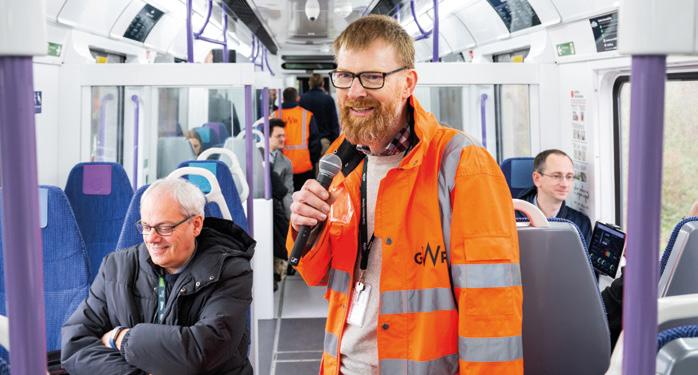
In the 12 months to 31 March 2026, 91.9 per cent of services arrived at stations within three minutes of their scheduled arrival time. Cancellations during the same period were just 1.7 per cent. It’s a statistic Jeff Baker, Engineering Director, is very proud of. He’s been at the operator for 15 years, and in his current post is responsible for making sure the right number of trains are available to meet the timetable to serve the customers every day, morning and evening, and that they are clean and reliable.
“We are a lean, small team who all take an awful lot of pride in the service we provide and the impact we have on so many lives,” he said.
“It is a tight-knit team. You can go on to a station and you’ll be welcomed, you can discuss any issues being faced by the teams but at
the same time share encouragement with the challenges being faced.
“People recognise the brand and what we stand for. We continue to grow and improve as an organisation, giving our customers the best experience. We will be one of the important pieces in growing Essex Thameside and that’s something we’re all proud to be part of.”
Earlier this year a new unified leadership was put in place to bring together c2c, Greater Anglia and Network Rail Anglia, aligning track and train more closely to deliver a more joined-up and reliable railway for passengers in the East of England.
Jeff said: “The new structure is designed to provide an even better service for customers and communities – by enabling faster, more coordinated decision-making across the network, with benefits for both day-to-day service delivery and the long-term planning of customer improvements.”
One team
Jeff is keen to emphasise that the success goes beyond c2c, with the maintenance of the trains undertaken by Alstom in collaboration with the operator.
“We’ve done a lot of great work with Alstom over the last couple of years to improve how we work. This includes the introduction of a joint reliability improvement plan and several collaboration workshops,” he explained.
“Although we are separate organisations it’s one team with a common set of objectives that place the customer at the heart rather than contracts.
“It can be challenging, but with the local teams, particularly at the East Ham depot, we’ve carried out initiatives such as joint offsite workshops, we’ve agreed and implemented joint key performance indicators and business objectives, focusing on fleet performance but also challenging what we should be delivering
Images: c2c
as a combined engineering unit.”
A joint meeting is held every morning between Alstom and c2c looking at the performance of the fleet the previous day, the maintenance work that is taking place and planned, and to ensure a plan of action is in place so the units are ready for service during the next 24 hours.
“The meetings with c2c and Alstom’s engineering teams are open and challenging conversations are encouraged,” said Jeff.
“An example of a recent conversation was around heating, ventilation and air conditioning (HVAC) performance in light of the hot weather forecast, ensuring we deliver the right environment for our customers.”
The collaboration is important in c2c maintaining the high levels of reliability and punctuality for the 37.3 million journeys made on its services every year.
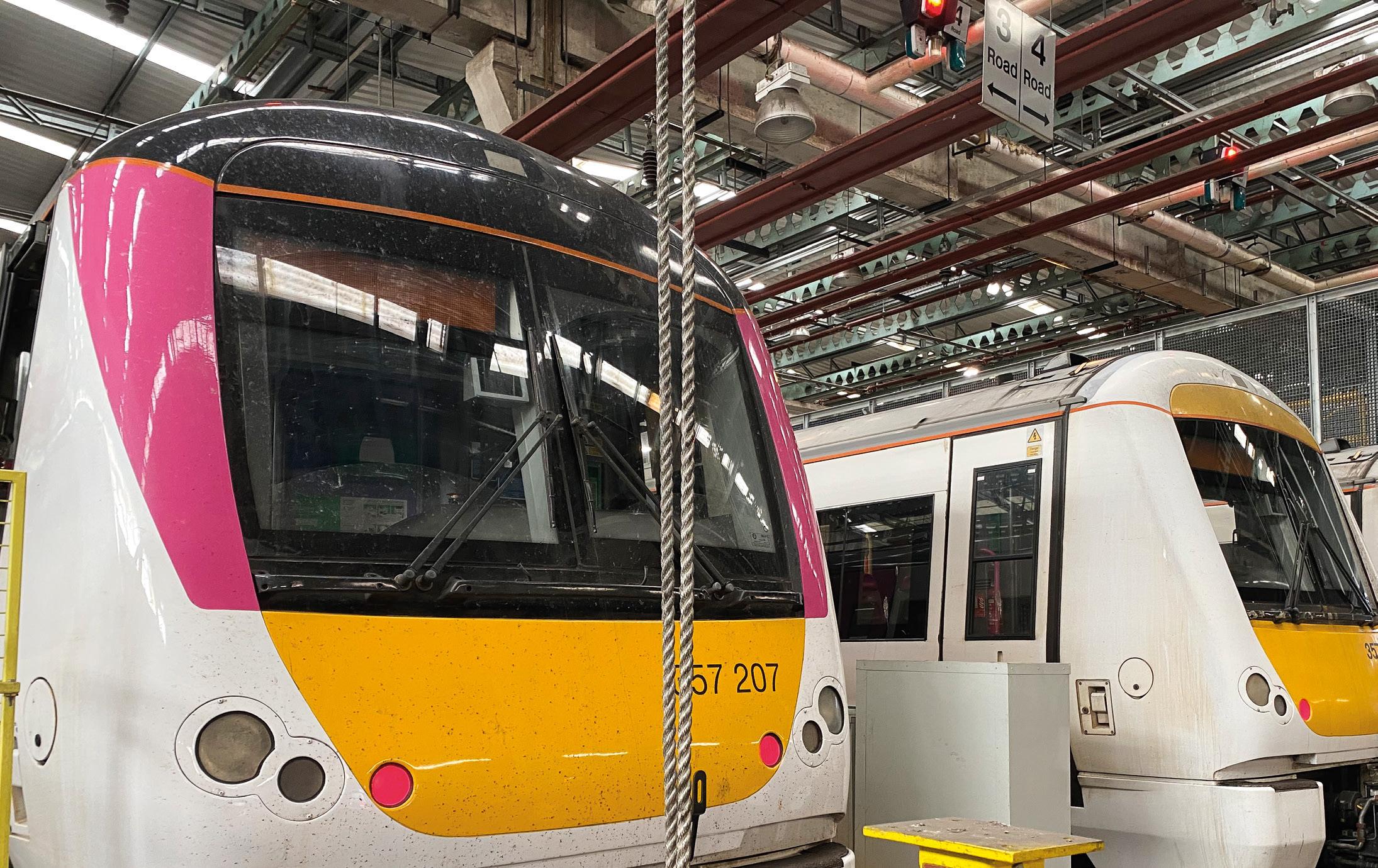
“It is a challenge to maintain these high standards, especially as the units are getting older. Our Class 357 fleet are now more than 25 years old,” said Jeff.
“We’re looking to the future about what we can do with these units to keep them in the best possible condition.
“It’s clear there is a difference between these and our new Class 720s. It’s like chalk and cheese when it comes to the internal environment.
“It’s much easier these days for customers to submit comments to the company, particularly through social media, so we have to be very responsive to that and we are. Effectively our customers are helping us improve by giving real time feedback and performance monitoring.”
For Jeff it is about getting the basics right and having the right people in the right place with the right competences, building on a strategy around engineering created in recent years. This alongside ongoing work around innovation and continuous improvement.
“We are a single train operator in a big industry, so it’s about learning and benchmarking from others and pushing ourselves a little bit,” said Jeff.
“It’s also about effective contract management and this is where I come back to the one depot team. I talk about Alstom but there is also Bidvest Noonan, which undertakes the cleaning of the trains and stations.
“It’s all part of the same ethos, that we’re all focusing on the same targets and in doing so making sure that everybody understands the role they play in the bigger picture.
“I’m very keen that everybody on the depot has the opportunity to understand what train performance we’re delivering in real time, as well as what we’ve achieved in the past and importantly what the customer thinks of us.”
From an innovation perspective, c2c is evolving its onboard monitoring, helping the operator and the wider network. Rather than rely on Network Rail’s yellow monitoring trains, it is starting to install equipment on the trains that run up and down the line every day with the data sent to the infrastructure teams at Network Rail.
“Infrastructure monitoring is a real opportunity, we’ve installed monitoring for ride monitoring as an example,” said Jeff.
“We’ve got another piece of monitoring called PANDAS, which looks at the overhead line system and detects developing faults and provides pictures to engineers who can investigate the issue before having to go out to the site.”
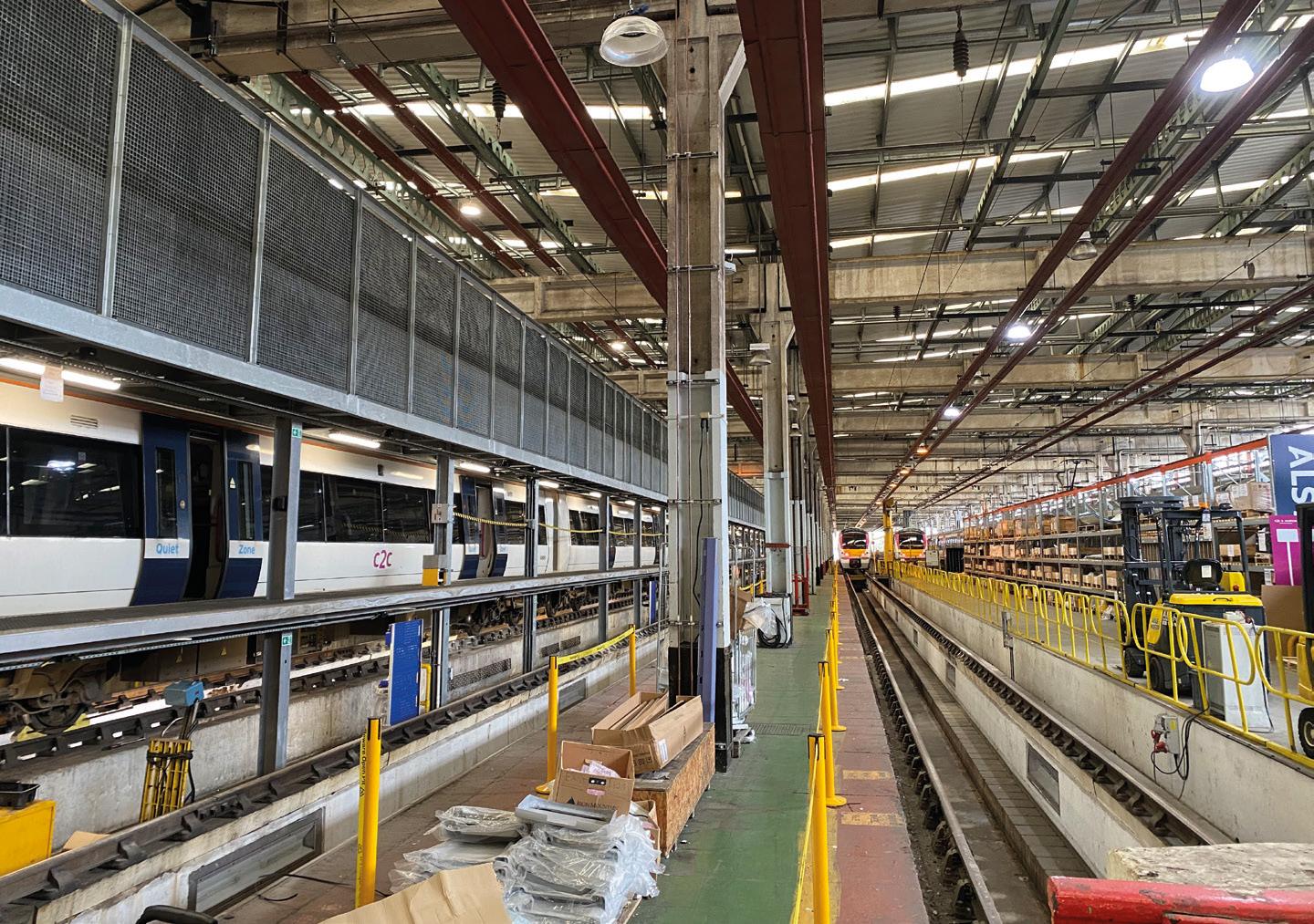
It’s not just about improving performance, but about improving safety as well. When Jeff started at c2c, work at height in East Ham depot involved using ladders and attaching yourself onto a mansafe system.
In recent years the organisation has introduced a full-length fixed gantry system at East Ham depot, which makes it safer and easier for the technicians to get up onto the roof of a train.
Jeff added: “When we brought in the Class 720s we invested quite heavily in East Ham depot, introducing equipment and facility upgrades that are essential to maintain our Class 720s.”
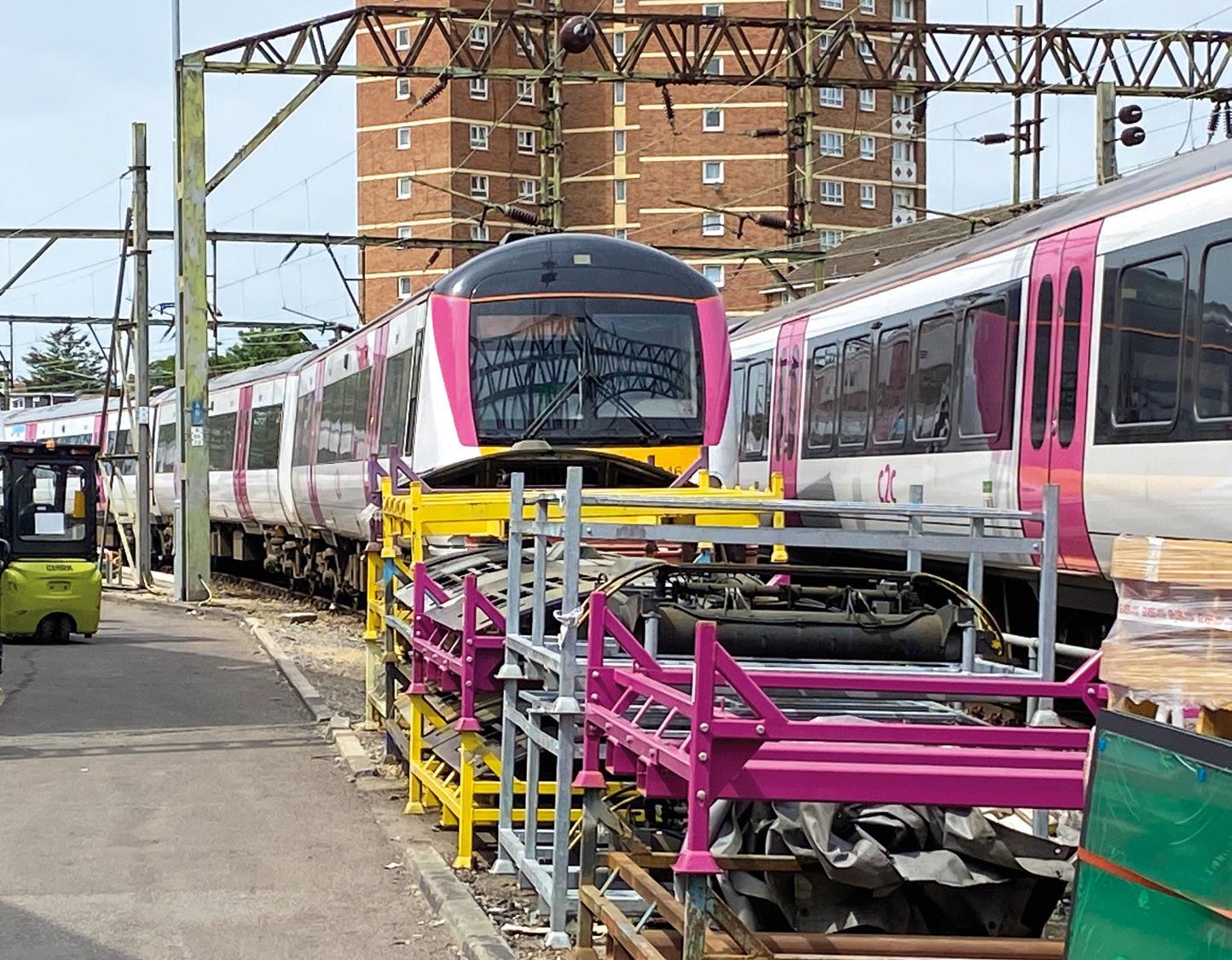
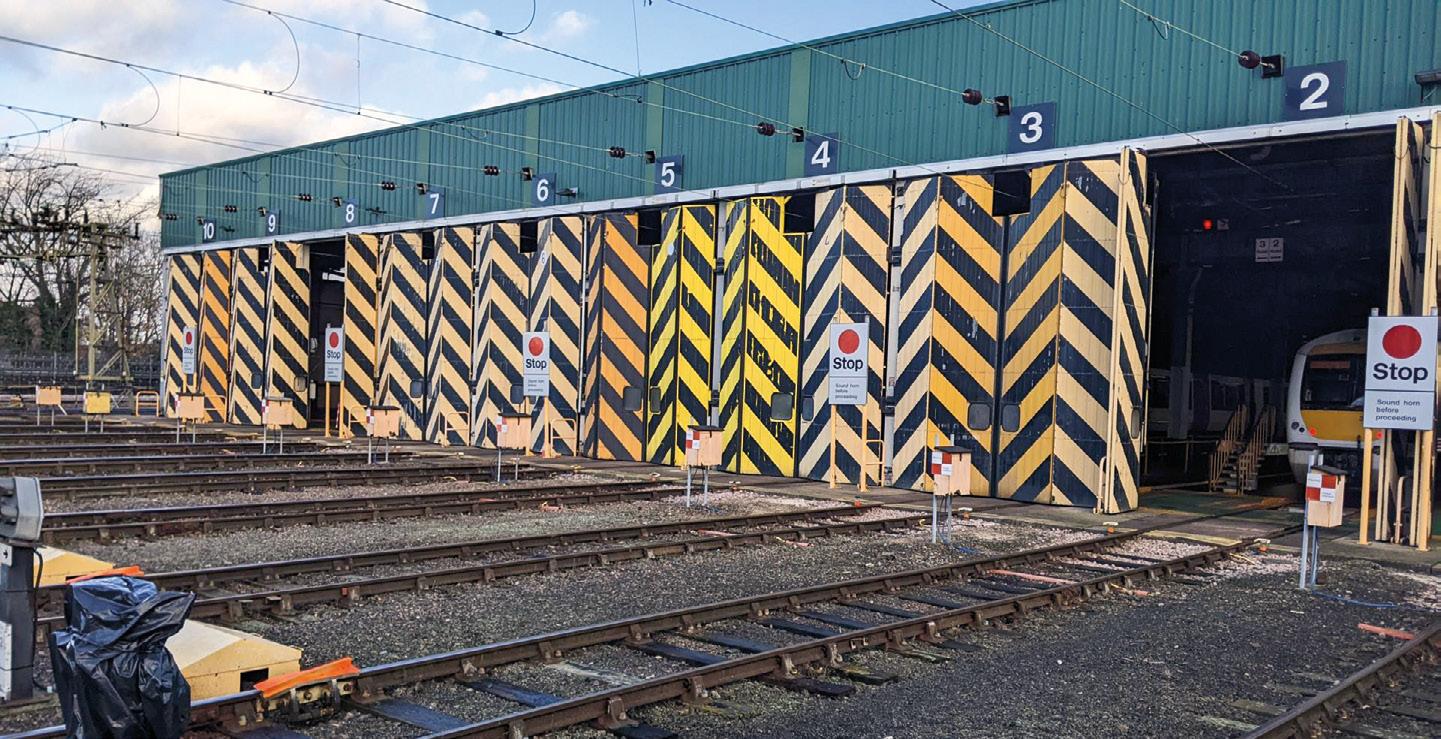
The work at East Ham depot saw the removal of part of a redundant platform to create space for a plant room as part of a new controlled emission toilets system, the construction of a new track slab and sleepers, as well as overhead line equipment upgrades.
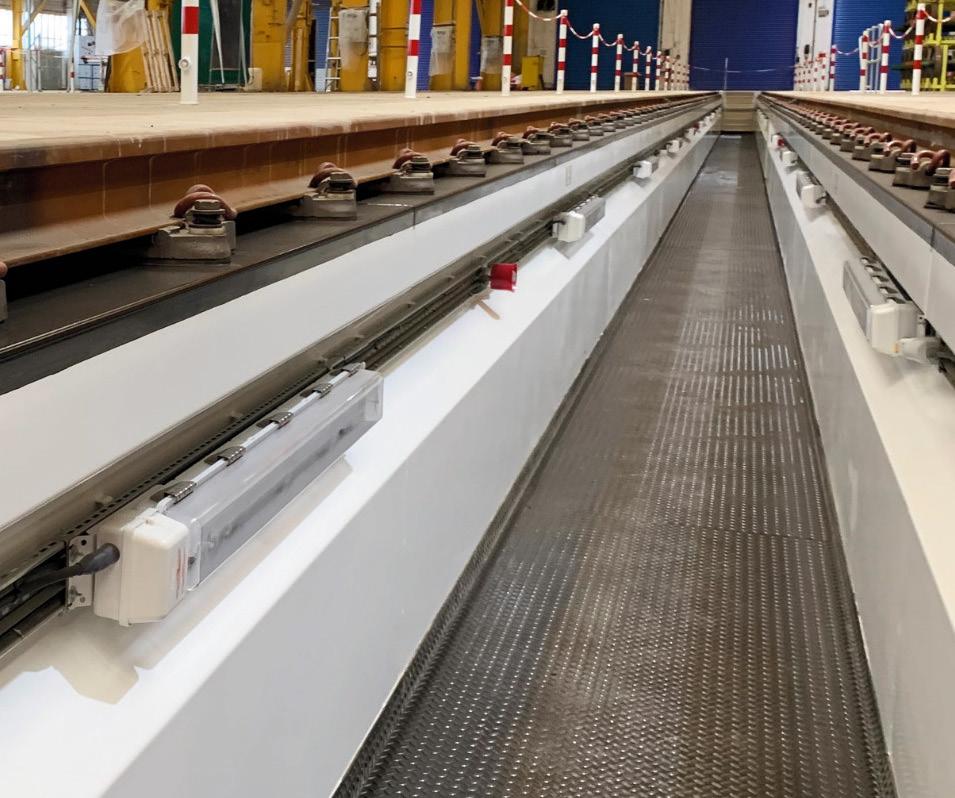
It also included new interlocking access gantry and emergency access gates, and improvements to the depot’s maintenance shed, including a new gantry crane, wheel drop facility, access platforms and calibrated track. Remarkedly, the works were completed while the depot remained operational.
“East Ham consists of 11 roads and to remain operational works were restricted so that we would take only four roads out of service at any one time. The work would be undertaken, completed and signed off before moving onto the next four roads,” Jeff explained.
“East Ham depot was built in the 1950s and it was originally a cleaning depot. Over the years it’s been developed into what is now classed as a light maintenance depot, so there are still
We are a lean, small team who all take an awful lot of pride in the service we provide and the impact we have on so many lives
restrictions in the extent of train maintenance that we can do.”
Alongside the day-to-day challenges, c2c is currently repainting Class 357 trains, consisting of 74 units, with the work extending the longevity of the fleet. Each train takes approximately 20 days to complete, with the work involving stripping back the existing paint, including exterior fittings, undertaking minor repairs and restoration and comprehensively repainting the train, a layer at a time, to prevent future corrosion.
“We’re two-thirds of the way through the project, which is progressing at a rate of one unit a week. The programme is expected to be completed towards the end of November this year,” Jeff said.
“What we’re looking to do next is to refurbish the interiors of the 357s. This would include new flooring, new seating, new information systems, new CCTV and refurbished HVAC.
“The desire is to reduce the gap between what is provided on a new Class 720 to what we’re providing on the Class 357s. If we get it right, we’ll be able to continue to use these way into the mid2030s.
“We’re just getting the spec in order but timescale wise if the prediction for customer growth is what is expected by 2030, we will need all our units back in service at that time. So the window of opportunity to carry out this work is between 2027 and 2029, meaning this potential project has high focus at the minute.”
Great British Railways
The one team approach is being strengthened by the unified leadership team bringing together c2c, Greater Anglia and Network Rail Anglia. It is an important step towards the establishment of Great British Railways (GBR), with the new structure designed to enable faster, more coordinated decision-making across the network, with benefits for both day-to-day service delivery and the long-term planning of customer improvements.
“We are already learning from each other,” said Jeff. “As an example, Greater Anglia is a far bigger train operator, with more depots, with its Ilford depot a similar age to the East Ham depot.
“Ideas for improvement have already been shared between engineering colleagues and this has now been extended to how to share resource and competence.
“It is early days, but we’ve got a lot of joint ideas created by working together, which will be for the benefit of the customer.”
A year ago next month, c2c was brought under public ownership operated by the Department for Transport Operator, having originally been run by Trenitalia.
“There have been changes, with the creation of the integrated railway with a new exec team. I now report to Chief Operating Officer Martin Beable,” Jeff said.
“It’s also been exciting to work with Ben Parry, my opposite number at Greater Anglia, coming up with ideas that could benefit both of us.
“Resource sharing is one example where the integrated railway has delivered benefit. Greater Anglia had a problem cleaning a 10-car unit in terms of facilities, whereas we’ve potentially got the capacity to do it at East Ham, so we are exploring how we can bring these units to the East Ham depot.
“Other activities are being reviewed between the teams, sharing ideas and best practice. One improvement introduced is a joint fleet performance review meeting. We now meet every Friday from a fleet perspective to review the performance on the previous week.
“It’s not just c2c’s performance and Greater Anglia, but looking at the Anglia route in totality, bringing in the Elizabeth line and London Overground and freight.
“This is a direct result of bringing the integrated railway together and it’s already bearing fruit because we’re challenging each other about what we can do and where we can make improvements.”
Looking to the future and Jeff is interested to
explore making the best use of AI, particularly around the monitoring of data, such as the temperature on coaches and ride quality, which he says could be analysed artificially before somebody gets hold of it and walks on a train to see what’s going on.
“Innovation in that way is really exciting,” he said. “This is the industry to get into, with the way it is developing and growing. The house building on the Essex Thameside route is astronomical so the potential for additional customers to our railway is really high, and we need to make sure we’re ready to meet that challenge.
“We need to ensure we have the right skills for the future. I am keen to bring in apprentices and graduates to our railway. We will benefit from their ideas and new ways of thinking.
“There’s plenty to go after, especially working closer together as an industry. We can bounce off each other, build off each other, and sometimes come up with one answer that can solve a multitude of problems. That will improve the wider industry for the future.”
Fond farewell to the old Tyne and Wear Metro trains
The last remaining Tyne and Wear carriages have been phased out, marking the end of an era for Metro and for the whole region.
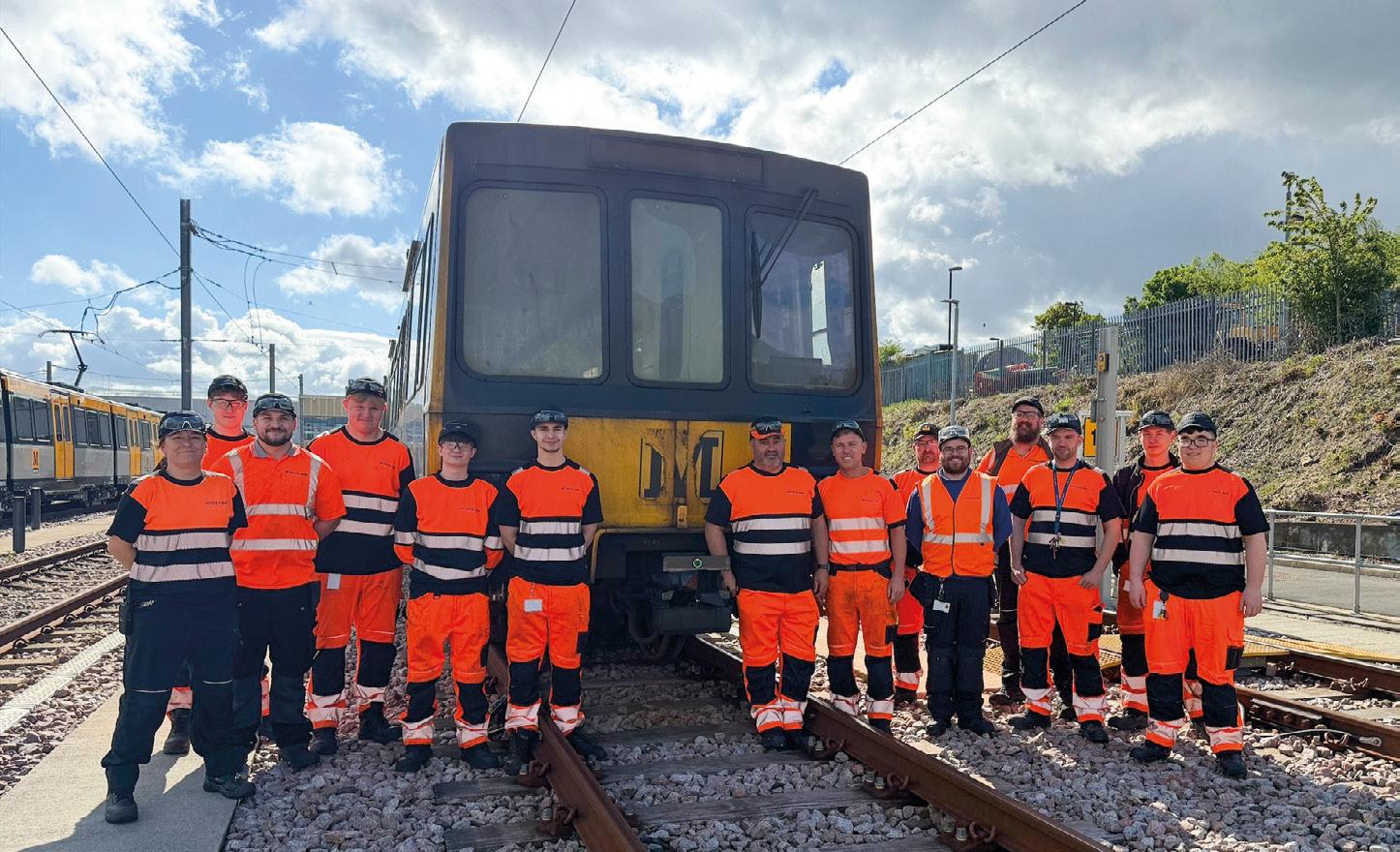
Workers at the Tyne and Wear Metro depot have said their final farewell to their old trains.
Known as the Metro Class 599s and originally marketed as the ‘supertram’, the carriages arrived in the region in 1975 at a test track in North Tyneside before starting to carry passengers on 11 August 1980.
“The old trains have been great workhorses for so many years. They have been the life blood of our region, taking people to work, to appointments, and on nights out,” said Paul Patrick, who started his career at the Metro depot in 1995 as an apprentice fitter.
Now Stadler’s Head of Region for the UK, Ireland and North America, he added: “Metro is the beating heart of the North East and not many other UK cities have a railway quite like it. The trains we are about to say goodbye to have pride of place in Metro’s story.
“I worked on them when I became an apprentice aged 16. It’s a bittersweet feeling to see them go. Everyone recognises they are life expired now. They have done their job.
“You do feel an attachment to them. There are many I’ve repaired many times over and they’re now in a breaker’s yard. The new trains are amazing and it’s absolutely right that we have them now. They bring a smile to people’s faces when they see them arrive.
“We must move on to the new technology, and I’m so also proud to be part of the introduction and maintenance of the new fleet.”
The 599 trains have carried 1.7 billion customer journeys since entering service and have clocked
up half a billion kilometres. Their last runs in service were June.
Gemma Bousfield, a Materials Manager at the depot, said: “I started 12 years ago as a fitter. It was good old fashioned mechanical engineering with those trains, it was like looking after a fleet of really old cars. I’ll miss them, but they’ve definitely had their day.
“Getting parts has been an increasing challenge. Many are obsolete. One time we had to get a part specially made at a foundry just to complete a repair.”
The trains have been replaced by the new Class 555, with linear seating, mobile charging points, climate control, 44 CCTV cameras, battery technology, and new accessibility standards, including an automatic sliding step at each set of doors to allow for seamless boarding.
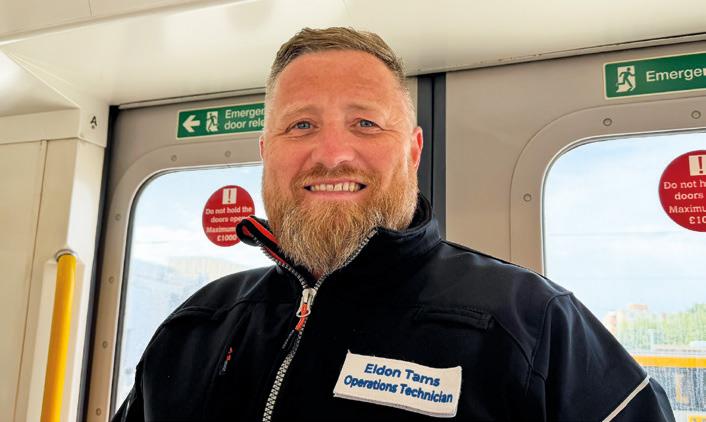
Depot Controller Eldon Tams said: “It’s sad to see them go but we have to look to the future with the new trains. The old trains used to be really reliable but less so in recent years due to their age. The new trains are going to be much better for the passengers.
“I used to work in Metro customer services before I joined the depot, so those old trains are all I knew for so many years. They’ll be missed.”
James Hind, a Commissioning and Warranty Support Technician with 22 years of service, said: “People here have worked on these trains their whole lives. We’re looking to the future with the new trains, but the old ones are iconic and everybody knows them.
“It’s sad to see them go, but rolling out new trains is exciting and historic for the Metro.”
Tyne and Wear Metro legacy fl eet in numbers
90 trains.
3 visits by The Queen.
20 hours a day Metro operates, 5am-1am. 1.7 billion customer journeys.
500,000,000 kilometres clocked up. 17,000 kilometres – the total distance the trains covered every day. The equivalent of Newcastle in England to Newcastle in Australia.
240,000 – the number of times every Metro train door opens and shuts per year.
The old trains have been great workhorses for so many years. They have been the life blood of our region, taking people to work, to appointments, and on nights out
Images: Nexus
Eldon Tams
Paul Patrick
ACHIEVING MORE
• OLE installation, foundations, vegetation management and specialist labour.
ECS Group's one seamless delivery model. Unlocking efficiency. Driving performance.
• HV/LV and integrated energy solutions that boost efficiency and cut carbon impact.
• ESG driven, sustainable delivery for stronger, future ready infrastructure.
Building a more resilient depot workforce
Discover how behavioural insights can help depot leaders strengthen recruitment, support career progression and improve workforce planning.
Recruiting and retaining depot staff is becoming increasingly challenging. Operators need people who can work safely in demanding environments, adapt to changing operational requirements and develop new skills. However, many depots continue to lose experienced employees to mainline driving roles. Together, these pressures make it harder to build and retain the skilled workforce needed to keep depot operations running safely and efficiently.
To address this, depot leaders need workforce strategies that strengthen recruitment, development and career progression. Understanding the behaviours that underpin operational excellence provides a strong foundation for achieving this.
Although depot roles can often differ in title and responsibilities, the behavioural capabilities they require are often more closely aligned than may first appear.
Identifying the common skills
Katie Breach, Business Psychologist at OPC Assessment, recently reviewed a range of depot role profiles alongside historical research into Non-Technical Skills (NTS) to identify the behaviours that support safe and effective performance.
The analysis found that many depot roles share core NTS, including concentration, rule adherence and effective communication. However, these skills are applied differently depending on the role. For example, while all depot staff require concentration, the level of sustained attention varies according to operational demands.
Understanding these shared and role-specific behaviours can help provide an evidencebased framework for recruitment and employee development.
A smarter approach to recruitment
Using insights from OPC Assessment’s research can help depot leaders make more confident, evidence-based recruitment decisions.
A funnel-based recruitment process enables operators to assess candidates against the core NTS identified in the research, helping ensure new employees have the behavioural foundations needed to work safely and effectively in a depot environment.
OPC Assessment offers a range of assessment tools to support this approach, which may include: Safe Concentration and Attention Test (SCAAT)
Technical Skills (NTS) Training helps develop common behaviours across depot roles, with additional modules available to support employees as they move into new responsibilities.
Once these foundational skills have been identified, organisations can then assess the additional capabilities required for specialist roles, helping identify employees with the best-fit skills and potential to progress internally. This strengthens talent pipelines, supports internal mobility and retains valuable organisational knowledge. OPC Assessment psychologists can also conduct job analysis to identify the behaviours required for specific roles, before recommending suitable assessment tools and journeys.
Strong recruitment lays the foundation for a safer workforce. Identifying key behavioural characteristics early can enable organisations to better support development, training, and progression while helping reduce the risk of incidents throughout the employee lifecycle.
Supporting career progression
By identifying shared NTS during recruitment, operators create opportunities for structured career development. Clear progression pathways allow employees to build on existing skills and move between roles, broadening their experience while increasing operational flexibility. This helps organisations fill vacancies internally while giving employees clearer opportunities to progress.
For example, shunters or depot drivers may progress to signal operator roles by developing planning and decision-making skills.
Learning and development programmes can reinforce this progression. The OPC’s Non-
Katie Breach explained: “Once employees have developed strong core skills, they can build the additional capabilities required for specialist roles over time. This supports structured career progression while helping organisations develop a more flexible and resilient depot workforce.”
Planning for the future
Recognising the shared behavioural foundations across depot roles enables a more strategic approach to workforce planning. By combining evidence-based recruitment with structured development pathways, organisations can improve recruitment efficiency, support employee progression and create greater operational resilience.
Katie concluded: “As the industry continues to face recruitment and retention pressures, recognising the shared behavioural foundations across depot roles enables more effective workforce planning. By identifying common capabilities, operators can strengthen recruitment and development pathways while building a more flexible depot workforce.”
Ready to strengthen your depot workforce? Contact the OPC Assessment team to find out how they can support your recruitment and development strategy.
Email: admin@theopc.co.uk
Telephone (Office): +44 (0) 1923 234 646
Website: www.theopc.co.uk
Safe Communication Exercise (SAFECE) Risk Anticipation & Time Focus Questionnaire (RTQ)
At OPC Assessment, we are more than test publishers; we’re experts in our field with more than 25 years’ experience supporting our global clients in the rail and transport sector, engineering industry and beyond.
Our psychometric tools help to: recruit top-tier talent develop high-performing employees support career-long growth
Hosted on our user-friendly Candela™ platform, clients can explore our extensive range of innovative assessment tools. Guided by our expert psychologists, we can advise on bespoke recruitment solutions tailored to your specific needs.
Coastal connection
Geraint Evans, Chief Executive Officer at the UK Major Ports Group, writes about the need to redouble collective efforts to ensure that the rail connections are enhanced or where they don’t exist, strategic consideration is made to the coastal communities that do not benefit.
As gateways to the world, the UK’s major ports are fundamental to the country’s prosperity, connectivity and security.
A total of 95 per cent of the UK’s physical trade by volume moves by sea, with ports acting as critical nodes in national and international supply chains and as major economic hubs for regions across England, Scotland, Wales and Northern Ireland, as well as providing critical dual use capability to defend the nation.
Ports are one part of a complex logistics path in the UK – the port gate does not exist as far as trade and military capability is concerned.
Coastal communities in the UK, including ports, have not benefitted from significant rail infrastructure capacity improvements in recent decades, and the challenge to deliver better infrastructure for movements to and from our major ports is now acute in the UK.
Rail freight movements require strategically planned infrastructure and capacity in addition to well planned passenger movements. Furthermore, coastal communities should also benefit from enhanced infrastructure in parallel with our airports and major conurbations in the centre of the country.
We also need to ensure that we embed a ‘one island’ approach to freight movements. Devolution allows for local and hyper local decision-making. But in parallel, goods leaving a major port in the south rely on joined up infrastructure and paths that cross several constitutional, historical and political boundaries on what is ultimately a small island in global trade terms.
Coastal communities and freight require a new level of consideration when it comes to immediate capacity and connection issues as well as the longer-term view on supporting connectivity that, as an outcome, delivers growth to UK plc.
A further example across the water in Northern Ireland – freight journeys to and from Belfast need efficient access to and from ports in Scotland, an absolutely crucial path to maintain competitiveness in a fast-changing logistics jigsaw.
Port connectivity is a crucial cog in maintaining a level playing field in a highly competitive and dynamic ports and logistics sector in the UK.
One further example is London Gateway, a brand new port in historical terms that has grown rapidly over the past decade, including 52 per cent growth last year alone. The question for
today is has rail connectivity and capacity to and from London Gateway kept pace? The question for tomorrow is how will rail capacity impact future growth and investment across major ports? Investment and creation of capacity outside the port fence is often the crucial element for investment decisions made inside the port fence.
Other nations that have put freight and logistics at the centre of economic development have understood the criticality of joining up the freight
journey as the key driver of ‘getting to yes’ when it comes to foreign direct investment (FDI) from global operators in key sectors. One such example is the Kingdom of Morocco, a fast-growing economy operating as a gateway to Africa.
Tanger Med port has been operational for the same period as London Gateway in the UK, but has benefitted from significant infrastructure commitments delivered outside the port gate. So much so that two major automotive
Kaymac provides tailored maintenance and renewal solutions across the UK rail network, including underwater engineering, structural repairs, and scour remediation, to keep assets operational and safe.
Ĺ Delivering asset integrity for 50 years.
Enhance Door Performance.
Extend Seal Life
Engineered for the demanding rail environment, our advanced seal lubricant delivers reliable, long-lasting performance where it matters most.
New thinking is urgently needed to ensure the movement inland to and from the port matches or even exceeds the levels of investment and sophistication of movements inside the port
manufacturers now transport more than 700,000 vehicles to and from the port per year by dedicated rail infra – not a single mile by road thanks to aligned rail infrastructure directly to the port quay side.
Many international investors into the UK consider the role of critical national infrastructure (CNI) when it comes to UK assets, but nonetheless it is a phrase open to interpretation between industry and governments. In a new geopolitical landscape, the UK’s major ports are the key pieces and the jewel in the crown of critical international infrastructure (CII).
Trade wants to, and always will, move between producer and consumer in the most efficient and effective way, using modern ports as the foundational factor in international and global trade. This is particularly acute for island nations like the UK.
Trade abhors bottlenecks and disruption that restrict the fast, safe movement of goods to market by rail – with a port just one critical touchpoint in the journey. This is the same challenge whether for trade and military capability, not today, but in a more hostile environment.
The ability to plan and adapt but maintain efficiency of movement by rail could be the difference between an effective military response or where rail capacity/infrastructure becomes a failure point.
In the same way that commercial trade has little or no consideration for national, local, county and political borders or ownership of key transport nodes in the public or private sector, I am struck by the pressing need for new and collaborative ways of working across the transport sector to ensure our major ports have both better connectivity and an enhanced protective ring of resilience – that is mutually defined – from national level right down to port level agreement.
Crucially, infrastructure that surrounds CNI/
CII is the most important element in ensuring we can respond effectively to a changing dynamic globally. Careful thought is needed regarding infrastructure that sits outside the port estate (fence/gate) – roads, rail connections, grid connections and regulatory processes need to be readied for the new normal and to support dual use.
It is vital to recognise that an ultra-modern and efficient major port in the UK needs the same modern and efficient connections outside the port gate as other countries. European nations have worked diligently to create seaport, road and rail military mobility corridors that cross borders (North-Sea Baltic, Rhine-Alpine, Atlantic, East-Med Corridors). In doing so, they have achieved a balance between port adaptability and a new efficiency with rail connections that will create a seamless journey to and from the port.
We don’t have that defined or agreed plan here in the UK; public investment is roughly 20 to 25 years behind private investment in the port industry. We now need both a remedial and strategic approach from Government both inside and outside the port fence in the UK.
New thinking is urgently needed to ensure the movement inland to and from the port matches or even exceeds the levels of investment and sophistication of movements inside the port. We can also speed up infrastructure planning decisions and the creation of an environment with an ability to react to a changing dynamic in trade or military terms. The result is a dual output – realising the plan for military capability, while also improving the trading and investment conditions for our major ports for the decades ahead.
Dual use is not a new concept for the UK ports sector. Major ports are designed to support everyday trade at scale, while retaining the flexibility to respond to disruption, crisis or
surge requirements when needed.
Ports around the UK continue to evolve and adapt, meeting the changing requirements of customers and modernising their operations. As the Government places renewed emphasis on a ‘home defence’ approach to security and resilience, and ports as a ‘foundational’ part of the Industrial Strategy, it is increasingly recognised as part of the UK’s strategic base. Civilian infrastructure that can adapt quickly, integrate with Government and defence partners, and deliver resilience without compromising commercial performance.
Commitment and clarity is a two-way challenge in a multiagency/cross-government model. Constructive and accountable dialogue is required way to the left of the call coming late at night to ensure that industry and colleagues across the British state are aligned on dual use of the major ports in every nation of the UK and keep the shelves stocked day in, day out.
Resilience relies on a plan, and a plan relies on assumptions. We have some of the most modern and highly productive ports in the world in the UK, but we must redouble our collective effort to ensure that the rail connections are enhanced or, where they don’t exist, strategic consideration is made to the coastal communities that do not benefit.
Together with the Government, the major ports sector is helping ensure that the UK’s most important gateways continue to support both economic growth and national security, now and in the decades ahead.
About UK Major Ports Group
Formed in 1993, the UK Major Ports Group is the trade body for the UK’s major port operators and represents nine of the top 10 port operators in UK. Visit https://ukmajorports.org.uk/ for more details.
Image: Photograph with kind permission of The Bristol Port Company
It’s time to get serious about unlocking intermodal growth
Mathis Edwards, Policy Manager at the Rail Freight Group, writes about the once-in-a-generation opportunity of Great British Railways to further strengthen the relationship between ports and rail freight.
Intermodal freight has become the largest rail freight market in Britain, accounting for more than 40 per cent of all traffic moved.
While rail carries only around eight per cent of the UK’s total freight by tonne-km, its role in the container market is significantly greater, with around a quarter of deep-sea containers now moving to and from ports by rail.
That relationship between ports and rail freight is becoming increasingly important as the UK seeks to drive economic growth, improve supply chain resilience and reduce transport emissions.
As ports invest in new capacity and compete for growing volumes of international trade, a critical question emerges: can Britain unlock the full economic value of its ports without simultaneously working to strengthen their inland connectivity through the rail network that serves them?
The answer is increasingly clear. If the UK is serious about achieving its ambitions for growth, trade and decarbonisation, rail freight must be placed at the heart of future transport and logistics planning.
Ports and rail connectivity
Britain’s major container ports already demonstrate the value of rail connectivity. The Port of Felixstowe, London Gateway and Southampton each achieve rail mode shares of around 30 per cent, allowing large volumes of freight to move efficiently beyond the port gate without adding further pressure to the road network. Around the coast, rail is also serving key markets from ports including Teesport, Liverpool, Bristol, Immingham and Tilbury.
For these ports, handling significant container
While the private sector ports and rail companies are stepping up, Government needs to play its part on the rail network
volumes, rail offers an immediate and practical way to increase throughput while reducing congestion both within port estates and on surrounding roads.
A single freight train can remove on average 76 HGV journeys from the road network, helping to improve reliability, reduce emissions and support more efficient logistics operations. For customers, rail helps meet their corporate social responsibility and sustainability targets and offers a quick and reliable solution.
The benefits extend beyond the major container gateways. Ports handling aggregates, construction materials, biomass, steel and other bulk commodities are also recognising the value of rail connectivity in attracting customers seeking resilient and efficient supply chains.
Associated British Ports (ABP), the UK’s largest ports operator, reports that 16 of its 21 ports are connected directly to the national rail network, supporting close to 100 rail freight movements every day. Across the sector, rail is increasingly viewed not simply as a transport option but as a strategic asset that enables growth.
Why growth targets matter
The importance of port-rail connectivity becomes even clearer when viewed through the lens of the Government’s Rail Freight Growth Target, which is a long-term ambition to increase rail freight volumes by at least 75 per cent by 2050. The target reflects growing recognition of rail freight’s role in supporting economic growth, strengthening supply chains and helping the UK meet its environmental objectives. Three years since it was set, the significance of
Images: Rail Freight Group
WHEN OTHERS SAY IT CANNOT BE DONE.
When failure is not an option
2.5 million EJOT self-drilling screws secure the containment superstructure over Chernobyl’s ill-fated reactor #4.
When super-strong meets super-light
EJOT’s unique friction-weld system has significantly advanced light-weighting of vehicle chassis design.
When bespoke makes a big difference
Special EJOT mechanical undercut anchors are believed to be the largest ever used in a UK civil engineering project.
Some engineering challenges redefine what is considered possible From infrastructure to light-weighting, our fastening technologies have helped engineers make the seemingly impossible achievable.
ALTERNATIVE FASTENING SOLUTIONS FOR RAIL Find out how EJOT can work for you. Visit www.ejot.co.uk
that target should not be underestimated. A 75 per cent increase in rail freight is not simply a transport ambition; it is fundamentally an economic growth ambition. Britain is seeking to deliver new housing, expand renewable energy infrastructure, strengthen domestic manufacturing and support greater international trade. Every one of these objectives depends on
the efficient movement of large volumes of goods and materials.
As the Rail Freight Group highlighted in its recent Freight Forward report, rail freight will be essential in moving the aggregates, steel, containers, biomass and other commodities needed to support the UK’s long-term economic ambitions. Growth in these sectors will place increasing demands on ports and inland transport networks alike.
growth rather than an afterthought within a passenger-focused system.
The establishment of a Strategic Freight Unit within the GBR Transition Team has been a welcome step. It recognises that freight requirements must be embedded within future decision-making and that rail freight can play a central role in delivering wider Government objectives. However, important concerns remain.
If freight is genuinely embedded within rail reform, Britain has an opportunity to create a more productive, resilient and lowercarbon logistics network
For ports, the implications are significant. Many are investing heavily in additional capacity and expanded facilities. However, new berth capacity alone will not unlock economic value if inland transport links become constrained. Every additional container, trainload of aggregates or bulk shipment must continue its journey beyond the port boundary. Put simply, port growth and rail freight growth are increasingly inseparable.
Rail reform
The Government’s plans to establish Great British Railways (GBR) should provide a once-in-ageneration opportunity to further strengthen the relationship between ports and rail freight.
The creation of GBR offers the potential for a more strategic approach to planning the railway, one that better integrates infrastructure investment, capacity management and longterm freight requirements. It also provides an opportunity to ensure that rail freight is considered as a core contributor to economic
Freight operators continue to compete for capacity on a network that remains heavily focused on passenger services. If the Rail Freight Growth Target is to be achieved, future railway planning must ensure sufficient capacity is available on key freight corridors while protecting reliable access to ports, terminals and industrial customers.
That means recognising freight requirements when timetables are developed, supporting investment in network enhancements for freight and ensuring that port expansion plans are reflected in future railway strategies.
The challenge is not only about building new infrastructure. In many cases, it is about making better use of existing assets through more integrated planning and stronger coordination between ports, rail operators, infrastructure managers and Government. It can also require relatively modest upgrades – for example, upgrading level crossings rather than the multi-billion-pound schemes often seen in the passenger railway.
Extending the reach of Britain’s ports The growth of Strategic Rail Freight Interchanges (SRFIs) is further strengthening the relationship between ports and rail freight.
Facilities such as Daventry International Rail Freight Terminal (DIRFT) in Northamptonshire, East Midlands Gateway, Northampton Gateway and iPort Doncaster have demonstrated how railconnected logistics hubs can extend the reach of Britain’s ports deep into the national economy.
Containers can be transferred quickly from ports onto rail services, moved long distances efficiently by train into onsite warehousing and then distributed locally by road for the final stage of their journey.
This approach helps reduce pressure on congested and damaged roads around ports and major urban centres while creating more efficient supply chains for retailers, manufacturers and logistics providers. Several new SRFIs are currently under development or construction, reflecting growing demand for rail-connected warehousing and distribution networks.
Their continued expansion will be an important factor in supporting future freight growth and ensuring that ports can maximise the value of their investments. Viewed together, ports, rail freight services and inland logistics hubs form a single integrated system. The success of one increasingly depends on the success of all the others.
A shared vision for growth
For Britain’s ports, rail freight operators and policymakers, the challenge is increasingly a shared one. Ports need rail to unlock future growth. Rail freight needs ports to generate volume and investment. Government needs both sectors to deliver economic growth, supply chain resilience and decarbonisation. And while the private sector ports and rail companies are stepping up, Government needs to play its part on the rail network. The Rail Freight Growth Target provides a clear destination, while GBR offers an opportunity to reshape how the railway is planned and managed. The question now is whether the industry can translate ambition into delivery.
If freight is genuinely embedded within rail reform, Britain has an opportunity to create a more productive, resilient and lower-carbon logistics network. If it is not, growing port volumes risk simply translating into more lorries on already congested roads.
The UK’s container ports already provide a compelling demonstration of rail freight’s potential. Around one-third of deep-sea containers leave port by rail, removing thousands of lorry movements from the road network and supporting more efficient supply chains.
The challenge now is not proving that the model works. It is creating the capacity, policy framework and long-term certainty needed to grow it further.
The Government’s plans to establish Great British Railways (GBR) should provide a once-in-ageneration opportunity to further strengthen the relationship between ports and rail freight
The untapped potential of rail freight
Ross
McKissock, Mark Faraway and John Stevenson from Forth Ports Group
discuss
building port
capacity to support customers’ low-carbon supply chains in support of the Government’s rail freight target.
Forth Port’s Scottish ports, and Tilbury in the south, offer rail connections that serve nationally important freight corridors in support of the construction market in Scotland, London, the South East and beyond, and the distribution of consumer goods across Britain for sectors including automotive.
At Tilbury alone, there are nearly 40 freight services each week across four railheads, representing five per cent of the port’s throughput. By 2030, confirmed and prospective tenants and service operators are estimated to require as many as 95 rail services. This will result in almost 30 per cent of total port tonnage being moved by rail, with an additional railhead planned for the port estate to cater for demand.
Mark Faraway, Senior Commercial Manager at the Port of Tilbury, believes there’s an important few years coming up for rail freight in the UK.
He said: “The industry is thriving, with bulk aggregates, intermodal and automotive sectors focused on carbon savings while seeking to achieve economies of scale by moving more over to rail.”
It’s a positivity shared by Ross McKissock, Director of Unitised, responsible for integrating the unitised container and trailer cargo across the group, who said: “The pent-up demand for rail far exceeds that current useable capacity and it’s a great opportunity for us to unlock that.”
Forth Ports owns and operates eight commercial ports in the UK and is the country’s third largest port operator. In addition to the
customer-specific rail services, the organisation has ambitions to increase the intermodal rail services running between Tilbury and the company’s Grangemouth site, alongside more to the Midlands too.
But Tilbury is not alone. John Stevenson, Director of Corporate Affairs, said: “Over the next four years, between London Gateway and Tilbury, we will have built two new rail terminals and three new port terminals – the biggest port capacity growth in the UK – and we need additional rail capacity to be realised by Network Rail along the Essex ThamesideNorth London route and across the wider Eastern area to support that private sector capacity injection.”
The Port of Tilbury is the number one UK port for construction materials, including cements and aggregates, and for recycled material. To increase its offering there has been a significant investment in the bulk terminal, switching the former Freightliner terminal into a dedicated bulk terminal, with plans to extend it further.
“Innovation is happening across the sector as everyone searches for greater utilisation and capacity,” Mark said. “Currently we deliver three rail services on outbound aggregates and they want to link the scrap metal to inbound returns, to reuse the wagons.
“From a bulk materials perspective, we are currently moving more than 20,000 tonnes a month into HS2 by road which could switch along with other strong flows that are starting to come from the port up to Sizewell where demand
can’t always be met by the ports further up the country.”
Capacity on the network is an issue. It has been highlighted in the Essex Thameside Strategic Advice, issued by Network Rail, which identified various improvements required to grow the railway’s capacity and capability to handle more freight trains to and from Essex Thameside terminals, alongside other freight traffic and growing passenger needs.
In the short term this includes level crossing upgrades and closures, and the activation of Pudding Mill Lane power supply to the Great Eastern main line.
Looking at the medium term, this could include the rearrangement of traction power feeding areas to balance power draw, Ripple Lane Nodal Yard marshalling, the electrification of the Thames Haven branch and a package of core cross-London capacity upgrades.
Further ahead, the recommendations are for the creation of a new high-capacity traction power feeder station in the Barking area, and the Bletchley chord and other supporting enhancements.
Ross concluded: “We are building rail capacity in Tilbury to satisfy both future demands and the current requirements in some markets. We are very conscious that all new projects will have a rail element to them where it is feasible.
“We believe that rail is the future of long-term decarbonisation, especially as we transition towards a more electrified railway across the country.”
Forth Ports Group
The untapped potential of rail freight
Chris Lawrenson, Chief Executive Officer at Freightliner, discusses investments the organisation has made alongside the changes needed to ensure rail freight thrives.
Chris Lawrenson never wants to hear the phrase ‘that’s the way it’s always worked’.
Instead, the Freightliner Chief Executive Officer embraces a culture where together as a team they look at how they want things to work for the better. Freightliner is the UK’s largest maritime intermodal operator with more than 60 years’ experience of providing innovation, resilience and a commitment to delivering first-class rail freight solutions.
Among its recent successes in driving positive change for the sector has been a £24 million investment into terminal operations and the rolling out of a state-of-the-art terminal access and operating system, including a booking system (VBS) that has reduced turnaround times at ports from 57 minutes to consistently under 30 minutes.
“The only way we could utilise all of our assets better was to make that a slicker process,” Chris said.
“We introduced a booking system, which is linked to our gate system, which is also linked to our terminal operating system. Hauliers make an appointment, tell us when they are going to show up, so we know where their containers are and that they are available on arrival.
“It’s had a phenomenal impact and in some of
our sites we’re turning vehicles around in under 15 minutes. It’s all part of this changing culture, looking at our processes and at what is the art of the possible, rather than having the blinkers on. The team is chuffed to pieces with the results.”
During peak periods, Freightliner handles around 5,000 containers a day. Records were broken at Southampton earlier this year, where at that single port 1,080 were handled in a single day.
“It’s brilliant seeing how pleased colleagues are when benchmarks are being exceeded,” Chris said.
“It’s about seeing a little further down the track and optimising every asset that we’ve got in the business.”
Last year Freightliner announced an agreement with Porterbrook for 150 new intermodal wagons to be built by WH Davis. They are due to start arriving early next year and will feature a new design based on 40ft platforms, which will allow greater efficiencies in the transportation of container volumes and around a seven-per-cent carbon reduction compared with 60ft platforms.
“Around 75 to 80 per cent of the market is 40ft containers,” explained Chris.
“On a standard train you can run with 36 60ft wagons to get within the 775 metres; with
the short liners we can run at 44 or 48 wagons depending on weight, so we can get a potential additional eight wagons without adding another locomotive, another train path, another berthing window at the port, another window inland.
“We are also focusing on the utilisation of our trains because nobody wants to run a half-full train.
“Using our systems and algorithms, we’ve increased the utilisation of our trains by about eight per cent in the last 12 months. It’s all about using technology to invest in the right areas to make rail more efficient.”
Collective change
A change Chris is pushing for is around port costs. As it stands ports do a deal with the shipping line, which includes lifting containers off the ship and onto a road vehicle, whereas moving them onto rail involves shunt and lift fees.
Chris notes that while rail doesn’t pay a Vehicle Booking System charge, port charges mean that it costs roughly £60 to load a box onto a train –significantly more than the road charge.
As a result, the current charging regime incentivises road movements out of ports, increasing HGV traffic and adding to congestion and the ongoing shortage of haulage drivers.
Image: Freightliner
“On top of the costs to lift a box onto a train you’ve then got the rail journey, which incurs track access charges, the wagons, the locomotive, the driver, the fuel, the costs at the inland terminal to lift the box off, and the haulier at the other end,” Chris explained.
“Rail could be effectively £100 behind road charging before it even starts, it is a fine margin.”
Although from a haulier perspective Chris welcomed the freezing of fuel duty, from a rail perspective there is real term and inflationary track access charge increases every year.
“When we talk about rail, it is important that we are specific about the whole end-to-end journey and about how that impacts rail,” Chris said.
“Take London Gateway as an example, which is going to be the largest container port in the country, where to get out of the port you have to go on the A13, the M25 or across London by train in one of the most congested areas to get onto the West Coast main line, or the East Coast Main Line.
“It’s great that two new berths are being built, but there will be a pinch point of how many containers can actually get out of London Gateway by rail purely because of the infrastructure that there is trying to get across London.
“Add to that the fact that two level crossings locally outside the port near Tilbury restrict rail movements, meaning services cannot operate in or out of the port for around four hours a day, including the morning and evening peaks.
“It needs collective thinking and the infrastructure requirements of either building bridges or underpasses so that you can get them open and can maximise the number of trains that can run.”
The solution, Chris explains, is to ensure that the Government’s target to grow rail freight by at least 75 per cent by 2050 is underpinned by a coherent policy framework, including the charging regime, and supported by sufficient infrastructure capacity, particularly access to and from ports.
“Freightliner will continue to play our part by investing in our facilities, our rolling stock and our people, but delivery of this growth must be aligned with both the policy framework and
network capability,” said Chris, who calls upon DP World and Network Rail to work together with the rail industry to resolve capacity constraint.
“Freight has to be considered as part of the global network, looking at how we can allow freight operators to get on and off the network in order to achieve the growth targets that Government’s putting forward,” he said.
“We need the support of the ports, Government and customers to think differently. If freight has been sitting on the water for several weeks, can we coordinate deliveries to optimise deliveries by rail, ensuring efficient services?
“There is a lot to do by everyone and technology has a huge role to play but alongside that we need to access the network and get on and off the network.
“Overall, there’s a lot of untapped potential, including running more freight trains on weekends, utilising the network and maximising the amount of freight that goes by rail.”
Optimising every asset
It all comes back to Chris’s opening comments of looking at how they want things to work for the better – a mindset shared by his former boss Tim Shoveller, who would say “what is it that would have to be true to make it happen?”.
“It puts a completely different spin on things and that’s where the excitement comes,” said Chris.
“Look at how the organisation has evolved; we can now track a container from the minute it comes onto one of our sites, all the way until it arrives at a customer’s premises. That wasn’t possible a few years ago.
“Look at everything from iWagons and European Rail Traffic Management System and it feels like we are on the verge of this technology revolution and that rail is beginning to catch up.
“But there is still a long way to go, and that means there’s a whole host of things out there that we can grab a hold of and say ‘we can do that’.”
Since joining Maersk in 1988, Chris has been involved in the logistics industry for nearly 40 years, and he is just as excited about the industry now as he was then.
“Back in 1988 6,000 TEU was the largest vessel in the world and now we’ve got 24,500 TEU vessels turning up at the dock, so it’s exciting
to think how the industry will evolve down the line,” he said.
“The advancement there’s been within the supply chain is fantastic with rail being a huge part of that.
“The country needs rail as much as rail needs containers, but to succeed it needs a lot of people to come together to realise how important to the economy and environment rail is, to appreciate the whole journey.
“At Freightliner, we need to work behind the scenes to simplify the process. This is something we have been working on and we have now launched our own front-end booking systems allowing people to go online, get a quote and make a booking directly into our operating systems.
“Collectively, we need to get the message out that rail can be simple to use. There are many people behind the scenes working to make that a reality, but we also need to do more as an industry to communicate the benefits, particularly how rail can support the decarbonisation of supply chains, improve their resilience, and help drive economic growth.”
The country needs rail as much as rail needs containers, but to succeed it needs a lot of people to come together to realise how important to the economy and environment rail is, to appreciate the whole journey
Image: www.BenHarrisonphotography.co.uk
Image: Picturascope
It’s all happening at Allach
The future of rail freight and loco-hauled passenger services in continental Europe looks bright as it becomes increasingly more sophisticated. That’s according to Nigel Wordsworth, who has visited Siemens Mobility’s factory in Munich-Allach in Germany.
Michael Peter, Chief Executive Officer (CEO) of Siemens Mobility, has described the company’s factory at Allach, a suburb of Munich, as a “special place, not only for Siemens Mobility, but for Siemens as a whole”.
But why is Michael so enthusiastic about this particular facility?
For a start, Allach is now the headquarters for Siemens Mobility worldwide. The company, which became a standalone wholly owned Siemens subsidiary on 1 August 2018, was first based in Munich-Perlach but relocated in July 2025 as part of a €250 million investment in the Allach site.
In addition, Allach is the manufacturer and spiritual home of Vectron, Siemens’ most successful railway locomotive. First seen at the InnoTrans exhibition in Berlin in 2010, Vectron has been delivered to customers across Europe in many forms – electric (in various voltages), diesel and hybrid.
More than 2,200 Vectrons are now operating all around Europe, from France to Serbia, with a further 800 on order.
That’s a big success story for Siemens Mobility.
The beauty of the Vectron is that it is a modular locomotive. The same basic design can have a number of modules installed – AC power, DC
We don’t have individual locomotives anymore, the locomotives learn from each other in one big ecosystem
power, diesel engines, batteries, various signalling systems – there are more than 80 different variants. It keeps the cost down and improves the retained value.
If a leasing company takes a loco back off lease, it will be to the specification laid down by the first operator. So it may be difficult for the lessor to place a loco with that particular specification with another customer.
As Vectron is modular, it can be altered – different national signalling, different combinations of traction power – it is all possible. Leasing companies like them as this versatility extends their life, albeit at a cost.
Even the running gear can be exchanged. Swapping out freight bogies for high-speed ones means that a used Vectron can be converted for use on passenger trains.
Technology is also changing the way the Vectron fleet operates. “We don’t have individual locomotives anymore,” Michael Peter explained. “Our locomotives come to service in a lifecycle and the locomotives learn from each other in one big ecosystem, benefiting every single locomotive and every single customer.”
This is the result of Xcelerator, Siemens Mobility’s open digital business platform that connects rail-asset owners, operators and
Siemens Mobility headquarters at Munich-Allach. Image: Siemens Mobility
Michael Peter, Siemens Mobility CEO. Image: Nigel Wordsworth
DB Cargo UK offers single-source rail logistics across Europe. We deliver door-to-door freight solutions by combining rail and road, providing flexible transport and fully multimodal services for our customers.
EUROPEAN NETWORK
• Coverage across 18 European countries with customs-approved inland terminals
• Integrated rail, terminal and materials handling services from a single partner
• Customs-ready freight support including ICS2 and Destin8
• 24/7 operations with real-time reporting and responsive recovery services
delays at Dover & Calais
maintainers in one mobility ecosystem to help unleash additional rail capacity.
It does this by enabling seamless travel experiences for passengers, by optimising the lifecycle costs of rail infrastructure and rolling stock, and by facilitating automation for faster, safer and higher capacity mobility.
Xcelerator is an open platform that bundles the expertise of many industry stakeholders, featuring:
1. Modular software – to ensure customers get the best from their investment through its entire lifecycle.
2. Standardised APIs (Application Programming Interfaces) – to unleash the full potential of available data.
3. Moving software to the cloud – to eliminate inefficiencies and keep software secure and continuously up to date.
Vectron X
In response to this shift in the handling of data, and to the sheer quantity of data that modern systems can generate, Siemens Mobility has launched the Vectron X, a digitally connected locomotive. The modular structure of the Vectron platform is retained but now advanced digital capabilities and seamless connectivity help operators optimise performance and efficiency while supporting long-term operability.
Designed to adapt over time, Vectron X allows customers to integrate new digital functions and solutions as their requirements change, creating lasting value across the entire lifecycle.
From June 2026, every Vectron locomotive that is delivered will be, at its heart, a Vectron X. Connectivity is not an add-on, it is designed into the architecture, from the locomotive itself to the surrounding digital ecosystem.
The result is the ability to scale rail operations over the entire lifecycle, integrate new digital capabilities over time and continuously adapt operations to changing requirements without redesigning the locomotive itself.
never run in the UK in its current form – there could well be plans to introduce similar connectivity into other Siemens platforms in the future, including British passenger fleets.
Keeping the fleet running
In a way, Vectron is a victim of its own success. With locomotives spread all around Europe, many operating across national borders, service becomes a real problem. Many operators and leasing companies don’t wish to service locomotives themselves, they want to send them back to Siemens for overhaul.
The major overhaul cycle for a Vectron is every eight years. There are currently more than 80 service locations in 17 countries, of which 14 are Siemens’ own rail service centres for preventive, corrective, and condition-based maintenance, some in cooperation with partners. Going forward, that won’t be enough.
Below right: Vectron locomotives can be interrogated, even started, remotely. This loco, which is stabled in Austria, is seen on a screen in Munich… Image: Nigel Wordsworth
Vectron Eco Cruise is one example. As a connected Driver Advisory System, it supports energy-efficient driving by turning real-time data into system-executed action, improving efficiency and sustainability in daily operations.
While Vectron X may be of academic interest to UK train operators – due to its size the Vectron will
The two-road service centre at Munich-Allach was capable of overhauling 35 locos a year, which was clearly not sufficient. It has recently been expanded so four locos can be worked on simultaneously while their major components, such as bogies, are removed for separate overhaul.
As a result, capacity has increased to 80 overhauls a year, supporting 640 vehicles over the eight-year cycle or about one quarter of the current fleet.
Below: The newly expanded service centre at Munich-Allach can overhaul 80 Vectron locomotives a year. Image: Nigel Wordsworth
Vectron X locomotive. Image: Siemens Mobility
In addition, crash damage is typically repaired at Munich-Allach, as the factory is a useful source of components of all sizes, from simple systems to complete cab fronts and bogies.
Other European service centres will be expanded and upgraded as well. “These are located strategically on all of the major transportation routes along the European transport network,” Elmar Zeiler, CEO of Customer Services, explained.
“So, whenever there is a challenge, the solution is not far away.”
Siemens Mobility is also standardising its tools and processes. With systems becoming increasingly complex, Siemens is moving beyond hardware – mechanical and electronic maintenance – and is increasingly becoming a software maintainer.
“Software patching becomes a regular routine,” Elmar continued. “And this is on top of taking care of all the mechanical and electrical components.
“Every vehicle generates a billion data points per year. We can measure vibration. We can measure voltage. We can measure temperature. And, in the future, we will also add baseline measurements to add additional data points, which help us to improve the maintenance workflow.”
Railigent X has been developed as a suite of applications that delivers rail specific applications
and data services supporting the digital transformation of rail systems for sustainable transportation of people and goods.
It brings together asset operations and condition data and helps organisations to tackle challenges such as detecting faults, streamlining maintenance, and supporting staff decisionmaking.
By integrating data from trains and signalling systems, Railigent X optimises maintenance and service reliability, and helps to improve operations and passenger satisfaction.
“Railigent X is our IoT (Internet of Things) suite for services and applications,” Elmar stated. “It’s our digital platform for maintenance, execution, and operation support.
“It helps us to optimise the assets over the whole lifecycle and it enables decision support. And, at InnoTrans 2026, we will also launch our AI-enhanced lifecycle management.
“We are already applying it and extending it every day. We are applying AI algorithms to transform the raw data we get from all the different systems to valuable insights. And we combine maintenance expertise for every phase of the asset lifecycle.”
The future of rail freight and loco-hauled passenger services in continental Europe looks bright as it becomes increasingly more sophisticated. Hopefully, this new technology will transfer to the UK in the not too distant future.
Whenever there is a challenge, the solution is not far away
RAIL LIFTING JACKS & PIT EXPERTS
Elmar Zeiler, CEO of Customer Services.
Image: Nigel Wordsworth
Accelerating team cohesion, trust, and delivery
The Railway Industry Association’s Training programme has a deep sense of purpose and intent for the supply chain. Member Relations Manager and Training Programme Lead Fiona Broomfi eld explains why.
Training teams together builds shared knowledge, understanding, and momentum – whether across one or multiple departments. In some cases, even across the entire organisation.
We know that team training in the rail industry is also crucial for improving communication and breaking down silos. Ultimately, bringing people together to learn is about getting everyone up to speed with relevant knowledge and skills as well as on the same page so they can combine strengths, identify gaps and fill them, share responsibility, solve challenges, and identify opportunities.
Business growth happens when teams possess the right skills and knowledge, are aligned with a shared vision, operate with high accountability, and can think and adapt quickly.
Think about it in the context of your organisation. Is your goal to build specific individual skills or develop collaborative competencies and performance? Perhaps it is both.
At the Railway Industry Association (RIA), we have initially focused group training courses on two distinct groups of people within the rail supply chain. The first is new entrants to the industry, the second is work winning teams.
Business growth happens when teams possess the right skills and knowledge, are aligned with a shared vision, operate with high accountability, and can think and adapt quickly
Team training for the supply chain
There is a very specific intent here. With the former, it is specifically about how RIA, as the trade association for the supply chain, can help new entrants engage with being part of the railway industry.
It is one thing to bring people into the supply chain, and another thing entirely to engage and retain them longer term. Investing in training new hires with a collective vision adds value to both the companies they work in and the sector.
People are more likely to stay when they are bought into the bigger picture. So, the ‘Introduction to the UK Railway Industry and Supply Chain’ course has been carefully crafted to join the dots between people’s jobs and the companies they work for with the wider industry context and impact. It is the perfect complement to in-house inductions and works for teams across single or multiple departments.
The latter group, which is work winning teams, are arguably facing challenging times and increased competition. The intention with the ‘Work Winning in the UK Railway Industry’ course is to empower work winning teams as a collective so that they think in new and different ways, have new tools, tactics, and strategies to employ throughout the work winning lifecycle, and increase their winning capabilities.
RIA can deliver these group training courses wherever your teams are based in the UK.
To enquire about team training, contact Fiona on 020 7201 0777, 07949 409 829, or email fiona.broomfield@riagb.org.uk
Expert-led courses
RIA Training Services courses are open to everyone in the railway industry, with RIA members benefitting from discounted rates. There are two courses available:
Introduction to the UK Railway Industry and Supply Chain – is a one-day course designed to induct new entrants into rail, providing people with useful information about the industry’s past, present, and future, how everything works, the organisations involved, railway elements, commercials, and how to build valuable networks.
Work Winning in the UK Railway Industry – is a one-day course designed for people and organisations seeking to win work in the UK and export overseas, including business owners, business development, sales and bid teams. It provides insights, tactics, and templates on everything from identifying opportunities through to winning work and handover to internal teams.
Courses are endorsed by the National Skills Academy for Rail (NSAR) and include a post training completion certificate and resource pack.
Find out more at https://www.riagb.org.uk/ Training
The new depot facility speeding up train repairs and servicing
Passengers across South Wales are benefi ting from more reliable services following a £12 million investment at Cardiff’s Canton rail depot.
Anew £12 million bogie drop has been installed at Canton rail depot in Cardiff to help maintain and service Transport for Wales’s (TfW) fleet of new trains. It has been funded by the Welsh Government through TfW and allows engineers to remove, repair and replace the wheel and underframe equipment beneath train carriages more safely and efficiently than before.
Trains that previously had to be sent elsewhere on the network for specialist maintenance can now be serviced on site, meaning they return to service faster.
Deputy Minister for Transport Mark Hooper said: “This investment at Canton is part of our commitment to building a modern, resilient transport network — one that performs well for the passengers who depend on it every day.
By bringing this specialist maintenance capability inhouse, we can significantly speed up repair times, improve daily reliability, and ensure we keep more trains running for our customers and the communities we serve
“By maintaining more of our fleet locally and efficiently, we can get trains back into service faster and continue to improve reliability and punctuality for passengers across the region.”
Canton depot maintains trains serving communities across South Wales. The facility will be particularly important during autumn, when leaves on the line and adverse weather increase the demand for swift maintenance turnarounds.
Dan Tipper Chief Infrastructure Officer at
Transport for Wales said: “We are delighted to see the new bogie drop facility officially in service at our Canton depot. This £12 million investment is a fantastic milestone in our journey to transform rail services across Wales and the Borders.
“By bringing this specialist maintenance capability in-house, we can significantly speed up repair times, improve daily reliability, and ensure we keep more trains running for our customers and the communities we serve.”
Deputy Minister for Transport Mark Hooper MS with Dan Tipper Transport for Wales Chief Infrastructure Officer at Canton Bogie drop. Images: Welsh Government
Rail industry leaders gather for Rail Ops Conference
CIRO has hosted it sixth annual Rail Ops Conference. Rail Director was among the attendees for a day of presentations and interactive Q&A sessions from prominent rail specialists.
“Anew railway is a new opportunity” was the message from Bill Reeve, Director of Rail Reform at Transport Scotland, speaking at the sixth annual Rail Ops Conference, adding: “It will require new sorts of operators and new sorts of engineers who talk to each other, and who have got out and seen best practice.”
The conference, held at etc. venues in Manchester, was organised by the Chartered Institution of Railway Operators (CIRO), with Bill urging attendees: “Take time in your careers to get out and learn while you can. I continue to do so every year, I always learn something new.”
Drawing on his experience in Scotland, he highlights the importance of giving colleagues in Network Rail, ScotRail and across the railway industry in the country a clear, strategic goal and priorities, which has enabled them to respond by investing in the right equipment, the right people, and with confidence that the plans can be seen through. It’s delivered a high-performing, lower-cost railway, and it’s delivered the political support.
He also highlights the A,B,C of Scotland’s railway: A standing for alignment of train
operators with infrastructure; B for building capability of the railway system, and to do so more sustainably through a rolling programme of electrification, but also building the capability of railway managers and staff; and C is a competitive railway, delivering attractive services, efficiently.
Bill added: “Underpinning all of that is a transport strategy and that sets out how our investment in transport should reduce inequalities,
including a reduction in child poverty, climate action, addressing the sustainability challenge and delivering sustainable economic growth.”
The conference featured a day of prominent rail specialists sharing their valuable knowledge, experience and thoughts, including an informative panel of Simon Elliott, Network Director – Rail, Transport for Greater Manchester; Clare Waller, Head of Planning and Performance, Network Rail; and Tricia Williams, Managing Director, Northern.
An afternoon session featured commentary by Gunnar Lindahl, Joint Operations Director – LNER and Network Rail East Coast; Carol Deveney MAPM Practice Lead: Sponsorship, Governance and Assurance CPCS; and David Burley MCIRO, Former Chief Executive Officer of Rail Operations Group.
Following that, Mark Phillips, Chief Executive at RSSB, reflected on his career and spoke about the potential of Great British Railways (GBR), describing it as “the opportunity to reconnect what privatisation separated, better understood as one system again”.
“CIRO has a fantastic opportunity to shape the professional network that we need to adapt to
Images: CIRO
Mark Phillips
We’ve got to operate and run the railways safely, we’ve got to think about what our customers want, particularly around punctuality and reliability, but we’ve also got to think about what our funders want and there is a very strong desire to bring costs and cost of running the industry down
that new world,” he said.
“The opportunity we have with rail reform is extraordinary. The answer is the same as it always has been: understand the weight of the responsibility that you carry in your roles, listen to the people closest to the problem, and own your part of the system.”
He also spoke about technology, predicting that in a couple of years every role in this industry will change.
“Our job is to make sure people are equipped for that and not left behind,” he said. “Forty years ago I wasn’t even given a mobile phone or a laptop, and now we all have them and the opportunity is to make better decisions with that.
“But the technology does not replace our human judgement. The railway leaders of the future will still need that system understanding, they will still need to accept responsibility and accountability, and they will still need the courage to make that call. Technology changes the tools, it does not change the responsibility.”
Following Mark was Tennessee Airdrie, Head of People Strategy at the Rail Delivery Group, who said: “We can’t lose momentum. The gains we’ve made are very meaningful but sustaining them is essential if we’re going to deliver a consistently reliable service for our passengers.”
Asks of railway operators
Addressing attendees Steve Helfet, the Deputy Director of Railway Operations at the Office of Rail and Road (ORR), had three asks to railway operators as the industry goes through its biggest transformation in a generation.
“Keep doing what you’re doing in many aspects – that is a massive driver of revenue, that reliability of the train service is hugely important,” he said.
“Secondly, focus on the day job because take safety – without safety we don’t have a railway, we don’t have a business.
“The third one is to keep that commercial edge that has been through the private sector days of railway. Keep innovating, keep developing and keep looking for that. Think about what really will make people use the railway.”
CIRO develops and promotes the profession of rail operations. Jake Kelly, Network Rail’s Managing Director for North West and Central, speaks about how GBR is an opportunity to make the railway the kind of success we want it to be, but stresses the importance that every pound spent on it is spent in pursuit of its purpose.
“The reason we get so much money, the reason we do what we do is because of the huge benefit that a really effective transport system can bring to communities, can bring to our economy, can bring to society as a whole,” he said.
“I know in organisational change that brings uncertainty. Many of us look at the future and don’t quite know what job we’re going to do.
“But actually, if we concentrate on delivering the best job we can now, delivering the best railway we can now, none of us have got anything to worry about. There’s more than enough for us all to do to unleash the railway that we all want.”
The conference was also an opportunity for Adam Fenton, CIRO’s Chief Operating Officer, to announce details of a new alumni network the
organisation will be launching before the end of the year.
He said: “We’ve heard consistently about the importance of sustained curiosity, professional development and that structure of a full programme, a way to stay connected.
“That is why we’re launching our alumni for all graduates who have gone through our academic programme, any of our apprenticeships and some of our class courses as well. It’s a space for continued learning and ongoing engagement with the CIRO community.”
Adam stresses that CIRO isn’t designing this in isolation but has started to reach out to graduates to ensure it is something created collectively to meet the needs of those who will use the platform.
“Rather than seeing programmes as standalone experiences with CIRO, we want to build that professional journey,” he added.
“This alumni network creates an opportunity to extend the professional relationships and share experiences, develop through the learning into that longer-term engagement with CIRO.”
Opening the conference, Mark Hopwood CBE, Managing Director at Great Western Railway and Chair of CIRO, said: “We are an industry in transition, but I think our fundamentals remain the same.
“We’ve got to operate and run the railways safely, we’ve got to think about what our customers want, particularly around punctuality and reliability, but we’ve also got to think about what our funders want and there is a very strong desire to bring costs and cost of running the industry down.”
Steve Helfet
Jake Kelly
Adam Fenton
www.geoaccess.co.uk
Asset Inspections
Access Solutions
Bespoke Projects Enabling Works
EMR unveils newly refurbished Class 360 train
Dominic Booth, Chief Executive Offi cer at Transport UK, says it secures the long-term reliability of a modern electric fl eet that has already achieved a 77 per cent reduction in carbon emissions on this route.
The first fully refurbished East Midlands Railway (EMR) Connect train has been unveiled and is to enter service this month, marking a major step in a £30 million investment to transform journeys between Corby and London St Pancras International.
The newly upgraded Class 360 train is the first of the EMR Connect fleet to return to service as part of the operator’s wider £60 million regional refurbishment programme, which is modernising trains across the East Midlands network.
Dominic Booth, Chief Executive Officer at Transport UK, which operates EMR, said: “The unveiling of this first fully refurbished Class 360 train marks a key delivery milestone and demonstrates Transport UK’s unwavering commitment to our passengers.
“This is a perfect example of our delivery first culture in action, driven by operational expertise.
“As part of our substantial £60 million regional refurbishment programme, it ensures comprehensive upgrades, delivering a higher quality journey for EMR passengers.
“Crucially, this commitment extends beyond today’s comfort: we are securing the long-term reliability of a modern electric fleet that has already achieved a 77 per cent reduction in carbon emissions on this route, serving the region responsibly and sustainably for years to come.”
The refurbished trains feature a completely redesigned interior, including new 2+2 seating throughout, combining airline-style seating and table bays to create a more spacious and comfortable experience.
Customers will also benefit from upgraded luggage facilities, power and USB charging points, improved passenger information systems, refreshed interiors and enhanced accessibility features.
Will Rogers, Managing Director of East Midlands Railway, said: “This investment will transform the experience for our customers, delivering trains that are more comfortable, more practical and better suited to modern travel.
“The refurbished fleet will provide a stepchange for passengers using EMR Connect and Luton Airport Express services and I look forward to hearing what customers think of it when the first enters service.”
EMR Connect operates twice-hourly
electric services between Corby and London St Pancras International, calling at Kettering, Wellingborough, Bedford, Luton and Luton Airport Parkway.
The service was introduced in 2021 as EMR’s first all-electric route, reducing carbon emissions by 77 per cent compared with previous diesel operations.
Further refurbished Class 360 units are
This is a perfect example of our delivery first culture in action, driven by operational expertise
expected to enter service over the coming months as the programme continues across the fleet.
Aglaja Schneider, Joint UK and Ireland Chief Executive, Siemens Mobility UK and Ireland and Managing Director for Rolling Stock and Customer Services, said: “It’s great to see the first refurbished Class 360 completed. We are delighted to be upgrading the Class 360s to deliver enhancements both to the passenger environments and technology to transform the passenger journey.
“Our teams in Northampton and Bedford have worked closely with East Midlands Railway and Angel Trains throughout, and the result is a train that looks and feels noticeably different for passengers.
“There’s more to come as the rest of the fleet moves through the programme, and we’re looking forward to completing more trains to ensure comfortable and reliable journeys in the region for the long term.”
Images: East Midlands Railway
•
Alstom celebrates the start of operations on Line 6-Orange
Alstom is celebrating the inauguration of São Paulo’s Line 6-Orange metro, a milestone that marks the beginning of commercial operation of the section between Brasilândia and Perdizes.
The project is a public-private partnership (PPP) of the São Paulo State Government with the LinhaUni Concessionaire, and represents a strategic advancement for urban mobility in the city of São Paulo.
Suely Sola, General Director of Alstom Brazil, said: “The inauguration of the first section of Line 6-Orange is a very special moment for Alstom.
“For more than 70 years in Brazil, we have actively participated in the construction and evolution of rail mobility in the country, and it is a source of pride to see trains manufactured in Taubaté entering operation in this emblematic project for São Paulo.”
Alstom has already delivered 12 six-car Metropolis trains, manufactured at its industrial unit in Taubaté (SP), as part of a total fleet of 22 trains.
Delivery of the trains began in July 2025. Each train is subjected to extensive testing to validate performance, reliability, and safety standards.
In addition to meeting all contractual and regulatory requirements, the trains are subjected to additional protocols aligned with Alstom’s global quality policies, reinforcing the company’s commitment to operational excellence.
Production of GYSEV’s new InterCity EMUs progressing at full speed
Final assembly of 11 FLIRT InterCity electric multiple units by GYSEV is under way at Siedlce in Poland. It follows the manufacturing of the car bodies at Stadler’s Szolnok plant.
The trainsets are scheduled to arrive in Hungary at the end of 2026 for type testing and, following the acquisition of the necessary regulatory approvals, they will gradually enter passenger service from 2027 until summer 2028. The 11 new FLIRT-type EMUs represent the first InterCity procurement in Hungary in 30 years, marking a significant milestone and a major step forward in the modernisation of domestic rail transport.
The painted car bodies are continuously being manufactured at Stadler’s plant in Szolnok and are shipped on a planned schedule to Siedlce, Poland, where the production process of the trains is finalised.
With a capacity to transport up to 2,044 passengers and a speed of up to 80km/h, the trains are manufactured in stainless steel, making them lighter and more energy efficient, as well as extremely durable – built to last for more than 40 years. The interior layout is designed to offer comfort and a better optimised experience for passengers, with accessibility, ergonomics, and safety solutions defined from simulations carried out in Alstom’s Lab 4.0 – the company’s virtual reality laboratory.
Suely added: “In addition to expanding access to job opportunities, education, and essential services for the population, Line 6-Orange also strengthens the national rail industry by boosting
local production and a broad supply chain.
“We will continue alongside our partners, contributing with safe, innovative, and sustainable solutions for millions of passengers.”
With a length of 15.3km and 15 stations, Line 6-Orange will connect the Brasilândia neighbourhood in the North Zone to the São Joaquim Station in the city centre, reducing a journey that currently takes up to an hour and a half by bus to approximately 23 minutes.
The line is expected to transport approximately 633,000 passengers per day and will establish itself as one of the city’s main structural mobility axes. The civil works are being carried out by ACCIONA.
A key milestone in the digitalisation of Finland’s rail infrastructure
Siemens Mobility has achieved a historic milestone in Finland, conducting the Nordic region’s first automated train operation on a European Train Control System (ETCS)equipped main line.
The successful demonstration, held on the 19km route between Juurikorpi and Hamina, showcased the seamless integration of Automatic Train Operation with the ETCS Level 2.
Using a modernised train owned by Pääkaupunkiseudun Junakalusto Oy (JKOY) and operated by VR-Yhtymä Oyj (VR), Siemens Mobility demonstrated state-of-the-art digital rail technology, delivering precise automated stops, smooth acceleration, and controlled braking. These semi-automatic (GoA2) test runs underscored the stability, repeatability, and innovation of the system in real-world
main line conditions, marking a significant step forward in the digitalisation of Finland’s rail infrastructure.
By maximising the use of existing infrastructure, the ATO system based on ETCS enhances the capacity, efficiency and punctuality of main line traffic, offering clear benefits for rail operations.
Marc Ludwig, Chief Executive Officer Rail Infrastructure at Siemens Mobility, said: “This demonstration marks a significant step toward more efficient and sustainable rail transport in Finland.
“We are proud to drive this transformation alongside the Digirail programme. With our technology, our customers can increase capacity by 30 per cent, significantly improve punctuality, and save over 30 per cent energy.”
Image: Concessionária Linha Universidade
Powering customer-first journeys across rail, bus
and beyond
Transport is evolving and expectations are rising.
Today, it’s not just about selling tickets. It’s about delivering seamless, connected journeys that feel simple from purchase to destination.
Worldline brings together retail, payments and data to make that possible.
From mobile and web ticketing (MTiS & WebTIS) to contactless Pay As You Go (Tap 2 Use), intuitive ticket vending (TVKs) and the rail network’s central ticketing and revenue system LENNON, we enable operators to modernise infrastructure while improving the customer experience at every touchpoint.
Our solutions are designed to:
• Connect every stage of the journey
• Simplify complex transport ecosystems
• Enable frictionless, customer-first mobility
• Deliver real-time insight and smarter operations
With decades of transport expertise and billions of transactions processed annually, we’re a trusted partner to operators, authorities and mobility providers shaping the future of transport.
Missed us at Transport Ticketing Global this March?
It’s never too late for a chat. Get in touch at worldline.com to book an appointment and discover how Worldline can support your network.
Setting the foundations for a thriving railway
The industry has come together for Rail Safety Week. Rail Director was at the opening day conference that featured fascinating speeches and an overall passion to bring rail safety to the forefront of people’s minds.
The UK rail industry has come together around a shared commitment: ensuring every person who uses, works on, or lives near the railway returns home safe, every day.
Rail Safety Week (RSW) is at the heart of that mission, bringing safety to the forefront of people’s minds, and keeping it firmly in the spotlight, with ideas and best practice being shared between industry colleagues.
This year’s event, which happened just days before two East Midlands Railway trains collided near Bedford in which one of the drivers sadly died, opened with a conference in York.
Addressing the audience Paul Evans, Chief Executive Officer at headline sponsors Carlisle Support Services, described the week as one where the industry “pauses, reconnects, reflects, but more importantly, recommits to the standards
that underpin everything that we do”.
He added: “However, safety should never be just for a week, nor should it be for a couple of days. It is the foundation of the trust that underpins the railway in every single service, contract and partnership that operates across it.”
Paul asked the several hundred attendees at The Milner Hotel in York to reaffirm three commitments: “We need change in the way that protects and supports the people who are actually delivering it; we treat every service incident as an opportunity to learn, to improve and to share those lessons openly, and finally we need to recognise that wellbeing is fundamental to safety, not just a part of it.
“If we hold ourselves to these principles, we do more to reduce harm, we strengthen our trust that is in the railway that we all love, we will enhance professional and personal pride and we will
Images: Rail Forum
Paul Evans
Training combines accredited learning with practical, real-world experience, preparing the next generation of engineers for the demands of the rail industry. Apprentices and trainees learn in live environments, supported by experienced professionals.
This investment ensures Tecforce Limited maintains high standards today while building capability for tomorrowbenefiting customers and the wider industry alike.
London Underground Rolling Stock Asset Performance Mechanical Team Leader, TfL
“The Welding Appreciation Seminar provided both relevant and interesting theory with a practical element that I enjoyed having never done it before.”
We’ve built trust and we’ve strengthened industrial relationships in a way that supports long-term change. Without this we wouldn’t be where we are now
ensure that all of those who come to work each day go home feeling physically and mentally safe.”
RSW is an industry-wide and industry-led initiative focusing on rail safety for all. Rupert Lown, Group Safety, Security, Health and Environment Director at the Department for Transport Operator, stressed the need to talk about health far more than we do, telling attendees “you come to work as you are and you should finish your working career in exactly the same state”.
He added: “We should get to the end of our working career and enjoy our pensions, retirements we’ve worked so hard for, and we should have a good level of health there.
“During our working careers if you don’t have your health in a good position you’re not going to deliver the performance that you aspire to and that our organisations want us to deliver.”
This year’s conference explored two key themes, the first of which looked back at lessons learned from the Cullen Report into the Ladbroke Grove rail crash, and the importance of ensuring these are not lost amid the scale of change currently sweeping the sector.
Stuart Heaton
Attendees sat in silence as Greg Morse, Operational Feedback Lead at the RSSB, showed the video of the crash when a Thames Trains passenger train passed a signal at danger and collided almost head-on with a First Great Western passenger train on 5 October 1999. Thirty-one people died and 417 were injured. Greg opened his speech with a question from one of the survivors, Pam Warren, asking what are we doing to stop more people being killed or harmed like she had been.
He said: “The overarching lesson of Ladbroke Grove is that change increases risk, or it can do. Change the driver training, change the signal
layout, change the organisational structure and if you haven’t handled it properly, your failings could line up in the form of an accident.”
He added: “Ladbroke Grove is part of our corporate memory and as more and more of our people retire and as more and more new people come in to replace them, what we learn, what we change for the better and how and why we do so risk fading and vanishing unless we make an effort to remember.”
James Le Grice, Head of Rail Safety and Standards at the Department for Transport, says it’s important that the industry doesn’t lose all of those important lessons over the last 200 years since the start of the modern railway.
He added: “But it is very important that we keep our focus on the present, knowing that what has worked in the past is not necessarily always going to continue to work and that we keep evolving railway safety to manage the railway that we have in the here and now.”
The second theme of the conference was about managing wellbeing during times of change. With the industry undergoing what is arguably its biggest upheaval in more than 30 years, the conference looked at psychological safety, sharing examples of current good practice, and exploring the importance of truly understanding the people.
It was a thought-provoking day, with speaker Dave Brough, Director at Rail Competence and Compliance, highlighting the importance of promoting engineering and ensuring skills are transferred, particularly in light of the ageing workforce with 90,000 people projected to leave the industry by 2030.
“If I ask one thing of you today, have a think about how you can transfer your knowledge to the next generation,” he told attendees.
Sven Heuten, Business Unit Director at
Greg Morse
PADS-approved solutions meeting Network Rail requirements, with proven delivery across complex London Underground installations.
+ Proven thyristor-based technology
+ 20+ year operational lifespans
+ Battery tripping units for safe operation
+ Secure substation telecoms & SCADA integration
+ Managed battery replacement & lifecycle support
Primary school pupils become Watford Junction station announcers for Rail Safety Week
Passengers at Watford Junction station were reminded of how to stay safe on the railway by a series of special announcements following a partnership between London Northwestern Railway (LNR) and a local primary school.
Children from Cherry Tree Primary School in Watford paid a special visit to the station to record the announcements, which were played out during Rail Safety Week. Amelie, Kian, Ayman, Raaya and Sanuka were chosen following a colouring competition run by the school using LNR-themed photographs as the template. The announcements included six different safety warnings, such as reminders to stay back from the platform edge, how to stay safe in the heat and reminding passengers to mind the gap when boarding.
Simon Newell, Safety, Security and Sustainability Director at LNR, said: “All the students did a great job of recording their safety announcements. We hope they made our passengers smile as they travelled through Watford Junction, while acting as a reminder of how to stay safe on board and at stations.”
Emma Hibberd, Assistant Head Teacher from Cherry Tree Primary School, said: “This was a wonderful opportunity for our students to see behind the scenes at their local station and learn more about staying safe on the railway.
“At Cherry Tree, we always talk about ‘Learning together, learning for life,’ and this project perfectly captured that spirit, taking education beyond the classroom to help keep our whole community safe.”
Onwave, spoke of how respect for people comes first and then resilience flows from that, and also challenged attendees to spend time with their colleagues listening; while Katie Johnson, Stakeholder Manager at RSSB/CIRAS, highlighted the confidential safety hotline for the transport sector, for those who might not feel like they can raise issues with their bosses.
‘Our mission remains unchanged’
The day showed an overriding passion to evolve when it comes to safety, evidenced by the way the industry has got behind Rail Safe Friendly, a programme dedicated to spreading the vital message of rail safety among young people, educators and parents.
It was launched following the tragic death of 11-year-old Harrison Ballantyne, who received a fatal electric shock after climbing over a fence to retrieve his football at a train depot.
Stuart Heaton, Managing Director at Learn Live, the organisation behind the programme, opened his speech with a video from Harrison’s mother Liz, who said: “What brings me comfort now is knowing that his story is helping to make a difference. Through this programme, young people are learning how to stay safe around the railway and that education can save lives.
“Your support means this message is reaching more schools, more families and more communities. It means Harrison’s story is not just one of loss, but one that is helping to protect others.”
As the programme enters its fourth year, Stuart says 135 companies are part of the initiative and 16,000 schools rail safe friendly. It is now in Northern Ireland and has been adopted by Irish Rail, and from September this year, rail safety will be part of the curriculum for schools in the UK.
He said: “Our mission remains unchanged, and it always will be every child, every school, rail-safe,
wherever they live, learn, or travel.
“The programme helps children understand risk, make safer choices and develop awareness that can stay with them throughout their lives. We’ve connected education, social value and the benefits of rail, with some of those young people potentially being the future workforce.”
Giving a special address after lunch, David Skaith, Mayor of York and North Yorkshire, highlighted the importance of the railway for the region and the importance of health and wellbeing.
“All of us in places of work as businesses have a real duty of care to look after the people who work for us and who we support, he said.
“It’s more than just doing it in a sense of ticking boxes, it’s actually if we’re creating a workforce of people who are healthy and resilient, they will help our businesses, our organisations to be more resilient.”
He added: “What we’re trying to do as a combined authority is not only support our sectors in terms of growing them, investing in them and giving them the skill set, we’re also making sure we’re working to create an environment where those people who worked in those sectors also have their wellbeing.
“It’s all well and good wanting to grow an economy, we want to grow an economy that’s full of healthy people as well. I personally believe we can do those together.
“It doesn’t have to be either or, we can have good solid businesses growing and investing and performing well, but also have teams of people in those who are fundamental to that success, who also have their wellbeing.”
There is a huge amount of great work under way in the industry, highlighted by Karen Bennett, Education and Youth Engagement Adviser at the Community Rail Network, and Debbie Easby, Lead Occupational Health and Wellbeing Specialist at TransPennine Express, who speak
Watford Junction staff members Helena Bullen, far left, and Nicolae Gabor, far right, with staff and students from Cherry Tree Primary School. Image: London Northwestern.
David Skaith
Academic Programme Applications
Start
Whether
New
From
Together,
Through this programme, young people are learning
how to stay safe around the railway and that education can save lives
LNER becomes fi rst UK train operator to launch Ask for Angela scheme
LNER has become the first UK train operator to introduce the ‘Ask for Angela’ safeguarding scheme across its trains and managed stations.
Now in its 10th year, ‘Ask for Angela’ is widely recognised in the night-time economy and helps people leave situations where they feel unsafe.
Customers who feel vulnerable can discreetly ask staff for ‘Angela’, alerting them that assistance is needed. The scheme was rolled out across all the operator’s services and managed stations last month.
Developed by Hayley Crawford and named in memory of Angela Phillips, who was killed in 2012 by her husband, the initiative continues to expand into new sectors.
Angela’s daughter Hollie said: “I’m absolutely delighted to see LNER introduce ‘Ask for Angela’. The scheme was named in memory of my mum, and to know her name will now help LNER customers who find themselves in unsafe situations fills me with enormous pride. This is exactly the kind of difference she would have wanted to make.”
Hayley said: “When I created ‘Ask for Angela’, the aim was simple: to give anyone who feels unsafe a discreet way to ask for help and know they’ll be taken seriously.
“Trains and stations should be safe places. This partnership with LNER means thousands more people will have a quiet, trusted way to reach support when they need it most. It’s a proud moment for us.”
about the impact of early intervention and shared ownership.
“They are not just ideas, they are absolutely transformative, but in rail they only work when there’s that trust,” Debbie said.
“We’ve built trust and we’ve strengthened industrial relationships in a way that supports long-term change. Without this we wouldn’t be where we are now.”
During the afternoon at the conference Erika Allen, Quality, Health, Safety, Security and Environment Director at Nexus, posed the question ‘what if safety was a conversation?’ and encouraged attendees to find out from the frontline what’s not working for them.
“We start by listening and learning and it’s amazing how many people have the answer to things you’ve been grappling at for months,” she said.
“Then the important thing is to focus on the conversations, we don’t finger point and we certainly don’t jump to conclusions.”
On the theme of conversations, Mike Roberts, a former Railway Chaplain at the Railway Mission, explained how data matters, but that it’s the stories that are transformative.
“Wellbeing can flow from a culture where people are safe to tell their story, to live their story and to share together,” he said.
“Answers can be found as quickly in somebody’s stories, as with endless points of data that can give us the wrong answer.
“Use and collect the data, but make time to listen to the story and from there let us become storytellers, to share that, to grow from that and to make sure we understand not just who we are because of our story, but the story of our organisations, the railway and those around us.”
The conference was also an opportunity to look at experiences from different sectors. Andy Elwood, Director of Northlight Consulting, reflected on his time from a rescue helicopter career, how sometimes admitting you don’t know how to do something is the right answer, and how every day is a school day.
Charlotte Whitaker, Partner at Burges Salmon, who has been advising on health and safety related compliance issues, investigations and prosecutions for the past 15 years, particularly in the rail sector, spoke about the Horizon IT scandal involving the Post Office.
More than 900 people were eligible to have convictions overturned as a result of unsafe prosecutions for crimes because of a faulty IT system. The inquiry involved hundreds of witnesses and millions of documents and years of hearings.
“The Post Office failings is a story of what happens when an organisation uses a tool to achieve something it wasn’t designed for and then all the fault lines align to prevent there being a reckoning,” she said.
“A point where no one steps in to correct it or put a stop to it, until the Bates and Post Office Group Litigation finally confronted Post Office to look at the truth.”
Addressing attendees at the conference, Charlotte focused on three lessons; the extent to which a tolerable risk must be looked at in the context of the intended use of the system; the characterisation or the mischaracterisation of risks that drove the wrong mitigations, wrong organisational actions and the wrong behaviours; and the vital role of challenge and independence.
Summing up the conference, Elaine Clark OBE, Chief Executive at Rail Forum, custodians of RSW, underlines the importance of that dialogue, and emphasises the importance that the conference lays the foundations for improved health, safety and wellbeing every day of every year.
“We’ve taken you on a bit of a journey, talking a lot about learning from the past, learning from previous incidents, learning from current everyday situations, and perhaps even more importantly learning from each other,” she reflected.
“We all have an important role in sharing our knowledge, not just with our current colleagues, but future colleagues and young people.”
Concluding the conference, she had this challenge for attendees: “It is about what you do next, what you do when you go out into the workplace, and indeed what you do when you go home.
“RSW is the start, but it is one week out of the 52 weeks in a year. It is the start of that dialogue but make sure it is the start of the dialogue not just for this week, but for every week because that is what is going to make a difference to safety on the railway.
“From today take what you have learned, what you can show your colleagues and make it the start of that dialogue of a safer, healthier railway.”
Erika Allen
Debbie Easby
Customer Nicola and LNER Safety and Safeguarding Manager Jim Rawcliffe. Image: LNER
Protecting people, assets and infrastructure: Why modern depots need more than protection systems
Mark Meyrick, Founder & Managing Director, and Richard Carr, Strategic Growth Advisor, FirstClass Safety & Control, explain why integrating depot protection, depot control and operational visibility is becoming essential for safe, efficient and future-ready railway operations.
Across the UK and internationally, operators are investing heavily in new fleets, modernising maintenance facilities and introducing new technologies to improve reliability, efficiency and passenger experience.
Whether supporting conventional rolling stock, light rail vehicles, battery-powered fleets or emerging alternative traction technologies, depots have become critical operational assets that directly influence railway performance.
Yet while significant attention is often focused on trains, signalling and infrastructure, the environments in which those assets are maintained and prepared for service are equally important.
Modern depots are complex operational ecosystems where people, vehicles, plant and infrastructure interact continuously. Managing
those interactions safely and efficiently remains one of the rail industry’s most important responsibilities.
For organisations operating depots today, safety and operational efficiency are no longer separate conversations. Increasingly, they are one and the same.
A changing depot environment
The role of rail depots has evolved significantly over the past decade.
Maintenance activities have become increasingly sophisticated, while operators are expected to deliver higher levels of reliability and fleet availability. Many depots now support a diverse range of rolling stock and operate around the clock in highly constrained environments.
Richard Carr, Strategic Growth Advisor at FirstClass Safety & Control, believes this
Safety remains the primary objective, but when done correctly it also improves productivity, asset utilisation and operational confidence
– Mark Meyrick
evolution is changing how operators view depot safety systems.
“Rail depots are no longer simply places where trains are maintained,” he said. “They are strategic operational assets that directly influence service reliability, fleet availability and customer outcomes.
“As operators introduce new rolling stock technologies and increasingly sophisticated maintenance regimes, the complexity of depot operations continues to increase. That places even greater importance on having robust protection and control systems that provide confidence to both the workforce and management teams.”
Operators increasingly require greater visibility, operational flexibility and systems that support both safety and productivity.
The evolution of depot protection
Historically, depot protection systems were often considered standalone safety solutions designed primarily to prevent unauthorised vehicle movements and protect personnel working on rolling stock.
While these functions remain fundamental, the requirements of modern depots extend far beyond basic protection.
Today’s operators increasingly seek integrated systems that combine movement protection, depot control, equipment interlocking, operational
KiwiRail
Etihad Rail Al Faya Operations & Maintenance Facility. Images: FirstClass Safety & Control Ltd
Safe operations are efficient operations. When staff have confidence in the systems around them, they can focus on delivering the task rather than managing unnecessary risk
monitoring and workforce management into a single platform.
Mark Meyrick, Founder and Managing Director of FirstClass Safety & Control, has spent more than 25 years delivering safety and control solutions across multiple industries and rail networks worldwide.
According to Mark, the industry’s expectations have changed significantly.
“Historically, depot protection systems were often viewed purely as a safety requirement,” he said. “Today, operators expect much more.
“They need systems that protect people while also supporting efficient depot operations, reducing operational uncertainty and providing real-time visibility of what is happening across the facility.
“The best solutions are those that integrate protection, control and operational management into a single platform. Safety remains the primary objective, but when done correctly it also helps improve productivity, asset utilisation and operational confidence.”
This shift is driving greater integration between Depot Protection Systems (DPS) and Depot Control Systems (DCS), enabling operators to manage both safety-critical and operational activities through a coordinated approach.
Creating safer working environments
At its heart, every depot safety system exists for one reason: protecting people.
Maintenance staff, cleaners, drivers, operations teams and contractors all work in close proximity to moving vehicles, heavy equipment and energised systems. Creating an environment where these activities can take place safely requires more than procedures alone.
Modern systems increasingly utilise technologies such as Radio Frequency Identification-based workforce protection, intelligent interlocking, remote monitoring and supervisory control systems to provide additional layers of protection and operational visibility.
Richard believes this is an important distinction: “The most successful organisations recognise that safety and efficiency are not competing priorities,” he said. “In reality, safe operations are efficient operations.
“When staff have confidence in the systems around them, they can focus on delivering the task rather than managing unnecessary risk. That benefits individuals, operators and ultimately the travelling public.”
Technology should support operational behaviours rather than dictate them. The most
– Richard Carr
effective solutions combine people, processes and technology to create a culture where safety remains an active consideration throughout depot operations.
The value of integration
One of the most significant developments in recent years has been the growing demand for integrated depot safety and control solutions.
Modern depots contain numerous interfaces between infrastructure, rolling stock and maintenance equipment. Depot doors, lifting jacks, wheel lathes, shore supplies, fuelling facilities, points systems and vehicle movements all require careful coordination.
Managing these interfaces through disconnected systems can create inefficiencies and increase operational complexity.
Integrated depot protection and depot control systems allow operators to bring these activities together, providing a single operational view while maintaining appropriate safety controls.
Benefits include:
Enhanced workforce protection.
Reduced operational uncertainty.
Improved asset utilisation.
Better visibility of depot activities.
Faster fault identification and diagnostics.
Simplified operational management.
Ultimately, integration helps depots operate more safely and more efficiently.
Canton Depot – a modern example
Transport for Wales’ Canton Depot provides an excellent example of how integrated safety and control systems can support a modern rail operation.
Over recent years, FirstClass Safety & Control has delivered multiple phases of work across the site, supporting the transformation of the depot to accommodate Transport for Wales’ modern fleet.
The project has included the deployment of depot protection and depot control systems across maintenance roads, stabling facilities, wheel lathe operations, underframe cleaning facilities and specialist maintenance buildings.
The integrated solution incorporates numerous safety-critical interfaces including derailers, points machines, depot doors, shore supplies, lifting equipment and operational control systems.
For Mark, projects such as Canton demonstrate
the importance of understanding how a depot operates before designing a solution.
“There is no such thing as a standard depot,” he said. “Every facility has its own operational challenges, infrastructure constraints and maintenance requirements.
“Our role is to understand those challenges and develop a solution that works for the people who use it every day.
“The technology is important, but the operational outcome is what matters most.”
Looking beyond the UK
While FirstClass Safety & Control remains firmly rooted in the UK rail sector, the company’s expertise has also been deployed across international markets including Australia, New Zealand, the Middle East and Europe.
Despite differing regulations and operational practices, one common theme consistently emerges: every operator wants confidence that people, assets and infrastructure are protected. This universal requirement continues to drive demand for innovative depot safety solutions that combine proven engineering with operational practicality.
Looking to the future
The next generation of depots is likely to become even more connected, more automated and more data driven. Digital technologies, intelligent diagnostics, remote monitoring and enhanced supervisory systems will all play a growing role in supporting depot operations. However, the fundamentals will remain unchanged.
Safety will continue to be the foundation on which successful depot operations are built.
As railways continue to invest in new fleets, new facilities and new technologies, depot safety and control systems will become increasingly important in delivering reliable and efficient railway services.
Mark concluded: “We are seeing increasing demand for systems that provide more information, more visibility and greater operational control.
“Technology will continue to evolve, but the most important factor remains understanding how a depot operates and ensuring any system supports the people working within it.
“Ultimately, everything we do comes back to one objective: protecting people, assets and infrastructure while enabling safe and efficient railway operations.”
Because every successful railway starts with a safe depot.
Aachen tops IMechE Railway Challenge for the third time
Teams have been competing to design, build and run a railway locomotive. Nigel Wordsworth reports from the annual Railway Challenge.
The annual Railway Challenge, organised by the Railway Division of the Institution of Mechanical Engineers, sees teams of graduates, undergraduates and apprentices compete to design, build and run a railway locomotive that meets a number of requirements, needing careful thought, planning and a degree of innovation.
The locomotives are, of course, not full size. They are 10¼” gauge, but they still weigh about three quarters of a tonne and are packed with technology, some of which is not even seen on main line trains.
The process starts in October, as teams come together. Some are drawn from university undergraduates, others from a combination of industry apprentices and graduate trainees, or perhaps a mix of the two.
If a team has entered before, there may be an existing locomotive that needs to be upgraded and improved. If not, the team may have to start from scratch with a design that will meet the challenge specification.
Challenges
To make life easier for new entrants, there is an entry-level competition for newcomers. This consists of only the presentational challenges, so teams can see what the competition is all about before having to build a locomotive for their second year.
All the other teams – those making full entries – also have to undertake the presentational
challenges, though in some cases there are separate awards for entry-level participants.
Presentations are made to a panel of judges and cover design, CAD (computer-aided design –Entry Level only), a business case, a technical and aesthetic poster, and innovation.
The on-track challenges, which are held over the last weekend in June at the Stapleford Miniature Railway outside Melton Mowbray in Leicestershire, replicate those faced by industry designers on full-scale trains.
The locomotive must stop automatically at a specified mark (Auto Stop Challenge); its suspension must be compliant enough that the bodywork is isolated from the worst of the unevenness in the track (Ride Comfort Challenge); it must have an energy recovery system that can then be used to drive the locomotive later in its journey (Energy Storage Challenge); it must have good traction away from a standing start uphill (Traction Challenge); it must be easy to maintain (Maintainability Challenge), and it must be reliable (Reliability Challenge).
Each year the teams continue to exceed and excel in meeting the new challenges
In addition, there are five optional challenges that can give teams extra points – Autocoupler, Aerodynamic Drag, Ride-on Locomotive, Location Announcements and Remote Data Recording.
Entrants
A total of 13 entries were received for the 2026 Challenge. Two of these were at entry level – the University of Huddersfield which, although a previous Challenge winner, had not entered the competition for several years and was re-entering with a completely new team, and Instituto Superior Tecnico, the University of Lisbon, Portugal.
There was an international flavour to the standard level entries as well. Teams from Network Rail and Colas Rail, Newcastle University, Siemens Mobility, the University of Sheffield, Transport for London, the University of Derby with Alstom and the University of Huddersfield were joined by overseas entries from ESTACA Engineering School, based in Paris, FH Aachen (Aachen University of Applied Sciences) from Germany, Nürnberg Institute of Technology (also Germany), Poznan University of Technology (Poland) and Monash University from Melbourne, Australia.
Lisbon was a completely new entry. FH Aachen first competed in 2017 and won the challenge in 2019 and 2022, while Poznan won in 2023. Nürnberg were runners up in 2025, while FH Aachen came third and Poznan fourth that same year – Network Rail with Colas Rail won.
Overall winner fh2rail, the FH Aachen entry, waits for the signal to undertake the Ride Comfort Challenge. Image: Nigel Wordsworth
The University of Sheffield’s entry finished second overall. Image: Nigel Wordsworth
Also in 2025, ESTACA from France won the entry-level competition, while Monash University came second. Now both were back with locomotives, the Australian university having contributed AUS$15,000 towards shipping costs while a sponsor covered the team’s personal travel expenses.
Practice days
The teams gathered at Stapleford on Thursday 25 June, ready for competition to begin the following day. Safety briefings and static scrutineering – to ensure locomotives complied with the regulations – were held, as was the Maintainability Challenge where every team had to remove one wheelset completely from their locomotive and replace it.
FH Aachen won this with a stunning time of just 38.43 seconds. Poznan was also under one minute (47.62 seconds), just shading Nürnberg and the University of Sheffield, who were both in the 63-second bracket.
The teams also now had their first runs on the Stapleford track. For fairness, practice at this venue is banned, although all teams were encouraged to undertake dynamic testing before they arrived for the competition. Most had done this to some extent or another. Monash, without a 10¼” gauge railway in their vicinity, has tested on a 12” gauge railway, so their locomotive had to be adjustable to run on both gauges.
ESTACA, unfortunately, found that there is a great difference between running on a test track
Left: PUTrain (Poznan University of Technology) on track at the Stapleford Miniature Railway.
Image: Nigel Wordsworth
Right: Monash University undertakes the Auto Stop Challenge.
Image: Nigel Wordsworth
I am seriously impressed with the professionalism and the quality of the entrants
and on a real railway with curves, cant, switches and crossings. Several derailments convinced the team that, however much they adjusted the suspension, it wasn’t going to work, so they withdrew from the competition, hopefully to be better prepared next year.
Siemens and the University of Newcastle also encountered terminal problems. With Derby having withdrawn a couple of weeks earlier, that left seven teams to compete head-to-head on Sunday.
On-track challenges
Sunday morning dawned bright and sunny, and Aachen and Poznan were the first pair of teams away.
The Auto Stop Challenge requires teams to place a token/balise/reflector on or near the track, and for the locomotive to then stop automatically 25 metres later. Time is also an element of this challenge, to prevent teams running too slowly
up to the mark. The driver has no input in this challenge; the entire braking process has to be automatic.
Aachen stopped 1.53 metres short of the mark after 10.67 seconds. Poznan went the other way, overshooting the mark by 2.35 metres in 9.31 seconds.
Later in the day, and after a re-run due to problems with the management of its first attempt, the University of Sheffield overshot the mark by 0.05 metres (actually 45mm) – an amazing result.
Then each team in turn ran around Stapleford’s kilometre-long loop, with accelerometers recording the comfort of its driver. Aachen’s reading of 1.05 NMV (the NMV Index is the standard metric used in railway engineering to quantify passenger ride comfort) was the best result of the day. Anything under 1.5 is regarded as being very comfortable under the European Standard that defines the evaluation. Sheffield (1.09) and Poznan (1.25) were also in the very comfortable bracket.
Recovering energy while slowing down and stopping from 15km/h, and then using that energy to drive the loco forward as far as possible, is the essence of the Energy Recovery Challenge. FH Aachen managed 47.65 metres, Sheffield 27.03 metres and Transport for London 24.38 metres. Two other competitors were under 20 metres, while two more attempted the challenge but failed to get a result – although they did
earn points for their efforts.
Energy Recovery complete, competitors proceeded to the bottom of the hill up to the tunnel on their return journey to the main station. They were timed as they made their way up the gradient from a standing start. Poznan (3.81 seconds) was the most impressive, most others were between four and seven seconds.
Reliability among the competitors was so good that no fewer than six teams shared first place – Aachen, Monash, Network Rail, Nürnberg, Poznan and Sheffield.
Judges’ deliberations
After about an hour of deliberation and consideration, the prizes were awarded. Organising committee chairman Simon Iwnicki opened proceedings by thanking competitors, judges and visitors for their participation. He
Left: FH Aachen won the Energy Recovery Challenge. Image: Nigel Wordsworth
Right: Eagle (Adler) from the Nürnberg Institute of Technology.
Image: Nigel Wordsworth
particularly thanked the Friends of Stapleford Miniature Railway for their involvement, without which it would be impossible to run the Railway Challenge, and landowner Lord Gretton, who had been present on the day. Simon also thanked the event’s sponsors – Angel Trains, RSSB, Ansys, Network Rail and the Pamela and David Rollin Foundation.
Then it was down to the results. FH Aachen won overall with four individual challenge wins and 1,911 points to their credit. The University of Sheffield came second (1,879 points and four wins), and Poznan third (1,831 points and four wins).
Australian entry Monash University was fourth (1,586 points and three challenge wins), while individual challenges were won by ESTACA, Network Rail and Nürnberg (three challenges and fifth overall).
The University of Lisbon won the entry-level competition and also two challenges outright –the Business Case and the CAD Challenge.
It had been an impressive weekend, and head judge Bill Reeve was pleased with the result.
“The standard goes up every year, which was reflected in the overall reliability of so many of the locomotives this year,” he said.
“We’ve added more and more complexity to the design requirements and each year the teams continue to exceed and excel in meeting those new challenges, so I am seriously impressed with the professionalism and the quality of the entrants we have seen this year.
“And to any employers who are interested in picking the cream of the talent to work in a railway engineering business, I would gently enquire why you’re not here, because you’re really missing an opportunity.”
Maximising the use of electric freight
A new report has highlighted how increasing the use of electric rail freight could deliver immediate benefits for freight customers, passengers and taxpayers. The paper was released at the Railway Industry Association’s Future of Rail Freight: Growth, Innovation and Delivery event.
Freight services are a vital underpinning for the whole UK economy, but there is scope to increase rail freight significantly with a Government target for 75 per cent growth by 2050.
An important factor in achieving this could be electric rail freight, which can deliver faster services, greater network capacity, lower costs and significant carbon savings.
That’s the findings of a new industry report, written by the Railway Industry Association (RIA) in conjunction with the Rail Freight Group (RFG) and the Railway Engineering Institution with research undertaken by the University of Birmingham.
But David Clarke, RIA Senior Technical Advisor, emphasises that the UK needs to act now to maximise the value of existing electrification.
“Rail freight is one of the UK’s greatest but often overlooked economic assets,” he said.
“The Government has set an ambitious target to grow rail freight by 75 per cent by 2050. Achieving that target will require a strategic approach to freight electrification, focused on the key routes where electric traction can deliver the greatest benefits.
“Electrification has a crucial role to play in creating more capacity and train paths for both freight and passengers.”
The report, ‘Growing rail freight: the need for targeted electrification’, states there needs to be a strategic rail freight network that is electrified. This doesn’t mean electrifying the entire UK rail, with a previous report by the membership organisation finding that electrifying a further third of the network for passenger traffic would also electrify 95 per cent of freight traffic.
It was launched at RIA’s Future of Rail Freight: Growth, Innovation and Delivery, an event combining the organisation’s Future of Rail and Unlocking Innovation initiatives, with David addressing attendees about the findings.
“The immediate opportunity, our first recommendation, is to use the wires that we’ve already got, finding ways of using electric locomotives or bi-mode locomotives more given the fact they have higher power and acceleration and therefore a higher average speed,” he said.
“Recommendation two builds on that by
maximising the electrification to allow more freight traffic to use those wires by looking at power supplies. Those modest interventions could have a serious beneficial impact.”
In the medium term, David says that the Rolling Stock and Infrastructure Strategy has got to properly consider freight. He highlights RIA’s plan of thirds, which found a third of the network is electrified; a third doesn’t need to be electrified because you could use battery electric passenger trains on the more lightly used parts of the network; and that the remaining third, the trunk routes, really does need to be electrified.
“The Chartered Institute of Logistics and Transport did a piece of work that identified if that third was electrified then you get 95 per cent of freight under wires,” he explained.
“Our third recommendation is therefore that passenger strategies really need to consider freight. We need a system strategy and we need to carefully consider where we’re going to deploy
discontinuous electrification for battery electric passenger trains, because with maybe a little bit of tweaking, maybe with some infilling, then we can also use those routes for freight.
“Seeing what batteries can do for passenger traffic we wanted to test what they could do for freight and so we commissioned the University of Birmingham to simulate battery and hybrid battery electric locomotives operating on real freight routes.
“The research established that battery-only locomotives are only suitable for shunting. However, hybrid locomotives, while not a substitute for a ‘go-anywhere’ diesel, could be viable on multimodal routes with short unelectrified sections.
“The conclusion of the research was that electric locomotives are the optimal solution and they get benefits that go beyond freight because that greater power and acceleration can lead to greater capacity for passenger traffic. So it’s a win-win.”
More than 100 people attended the Future of Rail Freight: Growth, Innovation and Delivery, which alongside the launch of the report explored what is needed to achieve the Government’s rail freight target, and how Great British Railways (GBR), devolved authorities and the private sector need to work together to deliver a world-class freight service.
Huw Merriman, a former Rail Minister and now Consultant at the Rail Freight Group, kicked off proceedings speaking about his frustrations that only eight per cent of all freight moved is done so by rail.
“We should be able to get the railway as the spine of freight,” he told attendees. “We need to do more to sell the message of the benefits, the virtues.”
Paul Harwood, the Head of Freight at Network Rail, spoke about the importance of making sure that under GBR there is an environment that gives people confidence; confidence to invest and in services that currently exist to continue.
He said: “Within GBR, freight is one of two critical customer groups alongside passengers. That, to me, is a big, big mission, not a small side show as it sometimes feels and as suppliers, I urge you to get involved and hopefully get excited about it.”
Paul’s excitement is driven by the benefits of rail freight, highlighted by 600 trains each day taking the equivalent of 41,000 lorries off the road, which equates to an average of just over one lorry
not required for every three quarters of a mile.
He said: “Rail freight represents so many things that are positive within the rail sector, wrapped up in a relatively discreet package.
“It’s such a great sector, but it often feels like it’s a little marginalised. Its strength as a community is brilliant but its weakness, I believe, is that a lot of people think it’ll sort itself out.”
Alongside the keynote speakers the event, at The Milner in York, featured panel sessions featuring representatives from Network Rail, DP World, CILT (UK), Baker Rose, University of Birmingham, RSSB and Buckland Rail, discussing what is needed to meet the UK growth target, the Rolling Stock and Infrastructure Strategy, and freight innovation and technology.
There was also a section on innovation with talks from Buckland Rail, Network Rail, Instrumental, Unipart, and Velociti Solutions. The event concluded with interactive roundtable discussions involving all attendees, who discussed breaking down barriers to entering the rail freight market, and strengthening engagement between operators and the supply chain.
Event partners were Network Rail and the Rail Freight Group, Platinum Sponsors Buckland Rail, and Gold Sponsors Journeo and Unipart.
To read ‘Growing rail freight: the need for targeted electrification’, visit https://issuu.com/ railindustry/docs/growing_rail_freight_the_ need_for_targeted_electr
Rail freight is one of the UK’s greatest but often overlooked economic assets
Celebrating railway industry supplier excellence
The very best of the UK rail supply chain has been celebrated at the Railway Industry Association Dinner and Railway Industry Supplier Excellence Awards. Rail Director was among those in attendance.
Transport for London (TfL) Commissioner Andy Lord has praised the railway supply chain for the role it plays working tirelessly to keep London moving.
Speaking at this year’s Railway Industry Association (RIA) Dinner and Railway Industry Supplier Excellence (RISE) Awards, he said behind every one of the organisation’s successes is the supply chain.
“At TfL we know that our supply chain does far more than deliver projects,” he said. “It brings the innovation and know-how that helps inform many of our key decisions.
“And now, during a moment where our industry is having to advocate for itself more than ever before and demonstrate its value day after day, it’s important for industry leaders to highlight its strengths too.”
At the RIA RISE Awards, a cross-sector judging panel of industry experts selected the winners
At TfL we know that our supply chain does far more than deliver projects. It brings the innovation and know-how that helps inform many of our key decisions
from 11 categories, including Client of the Year, the Application of Digital Technology, Employee of the Year, Employer of the Year, Equality, Diversity and Inclusion (EDI), Innovation, Partnership, Rising Star, Safety, SME Growth in Rail, and Wellbeing. More than 300 people attended the prestigious Sheraton Grand London Park Lane for the awards ceremony, where guests heard from the Transport Commissioner and supported the Railway Mission charity appeal, in an evening hosted by presenter and magician Ben Hanlin.
Among the winners was Liz Baldwin, Southern Integrated Delivery (SID) Director at Southern Renewals Enterprise, who was awarded Client of the Year by the RIA Board for going above and beyond to develop good supplier relationships.
After receiving her award, Liz said: “The real thing for me is that I feel it isn’t me who won the award, it’s the team.
“It’s the foresight of the region to create such a collaborative model. A huge thank you to our
Images: Rob Finney
ecosystem partners who have made collaborating with them so easy.”
The Transport Commissioner himself won the same award in 2023, regarded by the RIA Board as the rail client individual who had done the most to deliver rail in their area and build strong supplier relationships over the year.
“RIA is genuinely instrumental in providing a guardian voice for our industry, and that matters more than ever as we navigate unprecedented friction in global supply chains alongside another period of change in the political landscape at home,” he said.
The Commissioner says TfL has a more stable and positive outlook following the Government’s £2.2 billion capital commitment last summer,
claiming it is now well equipped over the next four years.
“The commitment is a significant and positive result for TfL and for London and for our supply chain partners,” he said.
“It is the result of years of rigorous planning, influencing and case making, and it means that TfL now has much greater financial certainty.
“It is the highest value, longest-term capital settlement we’ve had for more than a decade.
“We’ve also just delivered our third consecutive year of an operating surplus, which means we’ve covered our cost of operations – the only integrated public transport authority to do so, with the exception of Hong Kong.”
During his speech, Andy told attendees how
TfL relies on a vast network of more than 3,000 suppliers that spans the length and breadth of the UK.
“There is a misconception that investing in London only benefits London, but the numbers tell a completely different story,” he said.
“Independent research found that across the financial years 22/23 and 23/24, we invested more than £12 billion pounds directly into our supply chain.
“That investment generated more than £11 billion in gross value added to the wider UK economy in the exact same period, supporting thousands of highly skilled jobs across the country, and supporting 100,000 jobs across the country’s supply chain.
Predict and Prevent Switch & Crossing and other Asset Failures with
Andy Lord
Ben Hanlin
The calibre of entries this year was exceptionally high, and showcased the breadth of expertise, dedication and talent that runs throughout the UK rail supply chain
The award winners
Client of the Year Award – Liz Baldwin, Southern Integrated Delivery (SID) Director, Southern Renewals Enterprise. The Application of Digital Technology Award – LNER – Digital & Innovation Team.
Employee of the Year Award – Kathryn Duncan, AtkinsRéalis.
Employer of the Year Award – Telent Technology – Part of M Group. Equality, Diversity & Inclusion (EDI) Award – AtkinsRéalis.
Innovation Award, sponsored by Magellan – Peninsula Transport STB.
Partnership Award, sponsored by GeoAccess – Motion Applied (Partnered with Peninsula Transport, Great Western Railway (GWR), Network Rail, and Hitachi Rail).
Rising Star Award, sponsored by Infinitive Resources – Caitlin Richardson, Richardson Rail Services Ltd.
Safety Award – TfL Elizabeth line / AARC Professional Services.
SME Growth in Rail Award – MoniRail. Wellbeing Award – Cleshar.
Entries highly commended:
The Application of Digital Technology Award – Ultrabeam.
Employee of the Year Award – Sooyash Dosonyee, Nextec Engineering.
Employer of the Year Award – Railway Project Services Consulting Ltd.
Innovation Award, sponsored by Magellan – Gripple.
Partnership Award, sponsored by GeoAccess – Project Leaders Ltd.
Rising Star Award, sponsored by Infinitive Resources – Aamir Zahabi, WSP.
Safety Award – TRU East SHES Team.
SME Growth in Rail Award – TeamBA. Wellbeing Award – QTS Group.
“Collectively, our suppliers have helped us secure stopgap deals when we needed them most, and now thanks to many of you, we finally see a brighter horizon ahead.”
RIA champions a dynamic UK rail supply chain sector and has more than 480 members across the whole of railway supply, covering a diverse range of products and services and including multi-national companies and SMEs.
Chief Executive Darren Caplan said: “Many congratulations to all the people and railway businesses recognised at the RIA Dinner & RISE Awards 2026, including those named as winners and highly commended by our judges.
“The calibre of entries this year was exceptionally high and showcased the breadth of expertise, dedication and talent that runs throughout the UK rail supply chain.”
Speaking to attendees, Darren emphasised the importance of the supply chain and for Government and its railway bodies to work more closely with the supply chain, ensuring the arrival of Great British Railways (GBR) is used as an opportunity to address friction points.
“We want GBR to see the supply chain as its key delivery partner, and this is essentially
important, given that two-thirds of its spending in the future will be through the supply chain,” Darren added.
He also highlighted recent Office of Rail and Road (ORR) figures showing there were 1.83 billion journeys between April 2025 and March 2026, the most on Great Britain’s rail network since 1920 and a six per cent increase on the 12 months prior. Fare revenue was more than £12 billion – just eight per cent less than pre-pandemic levels.
“There is a positive future for rail in the UK, and the individuals and suppliers taking part at the RISE Awards – whether nominees or winners – will play a crucial part in ensuring we have the products, services and innovations UK rail will need as it develops an even bigger and better railway for the future,” he added.
“So thank you everyone who attended and who helped make this year’s event such a success. We look forward to coming together again next year to once again showcase the railway industry’s supplier excellence and achievements across the rail supply sector.”
For sponsorship opportunities for next year’s event, please contact rose.garber@riagb.org.uk
Darren Caplan
Network rail approved p ortable p
Instagrid GO RAIL
The world’s most advanced 110 V portable power station designed for professionals in the UK’s Rail Industry who need a grid-like supply in remote and off-grid locations. GO RAIL is approved for use on the UK Rail Network (PA05/08057) combining reliable performance with hand portability. Available to hire (via our rental partners) or purchase. To enquire or find out more scan the QR code.
https://instagrid.co/gb/products/go-rail
Changing trains: 2,878 days and counting
In his latest quarterly column Mike Roberts reflects on his time as a Railway Chaplain and answers the question of what is the one thing he’s learned from it.
In 1985, my dad took me to Steamtown, a working railway museum in Carnforth, now the site of West Coast Railways.
Mainly, I think, he took me to give my mum some peace and quiet while we were on holiday. It’s my first rail memory and I remember being in awe of Sir Nigel Gresley, the A4, in full steam bearing the legendary, glorious blue, as I stood at track level, just a fraction of the height of the driving wheels of 60007.
Even then, I didn’t want to be a train driver. It wasn’t my dream, but I liked the rhythm, the look and the predictability of the trains. Steamtown became a regular summer trip, whenever we stayed in the North West.
Now, 41 years later, some of my best friends are train drivers and I know I couldn’t have done it, and I admire their skill and temperament. But I still like the rhythm and routine that the railway brings. I’m not a rail enthusiast though: eight years since I put on a hi vis for the first time I am, more than ever, a person enthusiast who finds all the best people on the railway.
I stepped on a train on the morning of 1 August 2018 having never used a train before for any reason other than to get somewhere. Trains were a means to an end, and until then I certainly didn’t appreciate the number of people who were involved in taking me from A to B.
Then, as I stepped off 1B00, the 2226 Preston to Blackburn, on 18 June this year – my last train journey as a Railway Chaplain (incidentally, arriving a minute early!) – I looked back at a huge change in me and in the railway in the eight years since I started.
Some of those changes are obvious. The 142 Pacer from that first morning is now more likely to contain baked beans in your cupboard, having been withdrawn some years ago; and my final traction being a Northern 195’ which I had the privilege of being on in June 2019 for their launch journey from Preston to Manchester Victoria. But the changes (both subtle and obvious) for me are all in the people.
Accidental vocation
The story of how I came into the railway is – like for many – entirely accidental. I married Rebecca in 2017, and she was a new vicar in Warrington. We said if we both looked for churches we’d never
Being ‘the railway chaplain’ has been a privilege that’s opened a huge number of doors, but more than that it has been the seed from which relationships have flourished with people who have taught me what ‘railway family’ is all about
actually see each other, and so I looked for something we described at the time as ‘different’.
It certainly was different. From applying for a job I didn’t really understand through to a life punctuated by control messages, train times and disruption, the railway has become a place where I feel a greater sense of belonging than I found in any previous work.
But it never was the job – as I step away from chaplaincy, it’s about the relationships. Being ‘the railway chaplain’ has been a privilege that’s opened a huge number of doors, but more than that it has been the seed from which relationships have flourished with people who have taught me what ‘railway family’ is all about.
I never expected to make such genuine friends and end up standing at the front taking the wedding of an amazing driver-friend, nor sitting with friends in a Manchester hospital, approaching the end of life preparing for a funeral together.
Stories have been shared, relationships have thrived, and people have never not mattered. That didn’t stop at 2245 when I tapped out of my last station on my last day. Trains have changed. That 142 is now a 195, Virgin Trains red became Avanti West Coast’s graphene, and the trains through Bolton are now electric, but the heart of the people is constant.
People carry us in the darkest days
As I write this article, Rail Accident Investigation Branch (RAIB) and British Transport Police (BTP) are at the scene of the tragic rail incident at Elstow, just south of Bedford. The East Midlands Railway driver who lost his life has been named as Shaun Burton.
As I flick through social media, there is no company allegiance or geographical bias, just an overwhelming sense of family that binds the railway together, and we are stronger for it.
The darkest days since I joined the railway are
those indelibly linked with place and tragedy. Our railway story (since I joined) is punctuated by locations such as Margam, Carmont, Talerddig, and now Elstow. But what I take away from each of these is the strength in adversity from our railway community, and a determination to be better that can be seen back at Quintinshill, Harrow and Wealdstone, Clapham Junction, Ladbroke Grove and a thousand other places that are tragically not as familiar.
In these places we learn from our dark days and do all we can to ensure the shadows of that day are not repeated. As we look ahead (and as I look back at the last eight years) I want to challenge us to think about a question I was asked by a member of staff last week on my penultimate day. She asked, “what would be your one thing you’ve learned from all this?” as she waved around the station that surrounded us.
My dry humour chipped in straight away with, “never leave home without coffee in
Adding value through
Tyseley Depot Enhancements
£2.5M 4 months cost savings
Delivered programme reduction
EARLY CONTRACTOR INVOLVEMENT (ECI)
For smarter, more efficient rail depot delivery
BENEFITS OF ECI
Depots designed around real operational constraints
Reduced disruption to live railway environments
Find out more about our ECI, Feasibility and Design capabilities, visit: spencerrailengineering.co.uk or scan the QR Code
Greater cost and programme certainty
Future-proofed facilities for evolving fleets
RAIL AWARDS
SPOTLIGHT WINNER
DELIVERING FOR THE CUSTOMER
We need that guiding voice, that encouraging word, that critical friend and the supportive arm
the morning and always expect it to rain in Crewe.” It’s a humour that’s got me into trouble on occasion, but if you take it away there’s not much of me left.
But as we walked down the platform, she prodded me for a serious answer. I started the sentence about five times before I got out the whole answer. “People matter more than I realised or imagined. If people think they’re a consumable or replaceable, we’re all screwed.”
We go into schools and talk about railway careers, we open doors with apprenticeships, and we offer people an amazing start, but sometimes I’ve seen people treated like they are like a battery, used until they are exhausted and then left without function or purpose.
My final printed words as a Railway Chaplain echo what I said at Rail Safety Week in York in June. We need an industry filled with technological innovation, operational excellence and financial responsibility, but it all needs building on compassionate, relational leadership. It’s about leadership where the journey matters just as much as the destination.
What matters is how the journey is, who you went on the journey with, and the experience of each step. The next generation of the railway will not rise or fall on how a new livery looks on a train, or the signage. Organisational structures will matter, but what will make our railway thrive (as I learned from Walt Disney) is the people-
driven leaders we release to say to our front line staff at stations, depots, on trains and in offices, “this is the vision for the future, this is why I’m in, and I want you to make it with me…” We’ve communicated the colour scheme far more clearly than we’ve communicated the wider vision.
Leadership is a huge term, encompassing people at every level of the railway, but without it or with poor leadership we flail around like a rowing crew without a cox. We need that guiding voice, that encouraging word, that critical friend and the supportive arm. I am not talking about weak leaders who do whatever those around them want, but strong, self-aware and emotionally intelligent leaders who will walk with people, take them with them and share a vision.
By the time this article is published I will have started a new role, working for a train operator in what my mum has labelled a “proper job”. It’s a different challenge, and a new way of thinking. My new job has the word ‘manager’ in for the first time ever, so I’m off to consider what it means to be a leader who makes the railway a better place for those who are walking with me on the journey, and to work out what I’m like if I’m shaped by personal values of compassion, authenticity and humility in the way I lead.
Mike Roberts: From July 2026, Mike is Partnerships Manager for Lumo, focusing on the open access operator’s new West Coast route. He can be contacted at mike.roberts@lumo.co.uk
Pre-fabricated Rail Pits
Transforming Rolling Stock Maintenance and Inspection.
MAINTENANCE PITS
WASHDOWN & ASH COLLECTION PITS
SAFETY COVERS
PIT ACCESSORIES
• Welded construction to ensure a water tight finish
• Quicker installation time compared to precast concrete
• High quality finish
• All internal service ducts fitted prior to installation
• Easy to clean
• Rail attachments fitted prior to installation
Premier Pits has led the way in pit manufacturing for over 35 years, supplying workshops worldwide. From inspection and maintenance to ATF, rail, and wash pits, we don’t just manufacture - our experienced Installations Teams handle the complete fitment, ensuring your pit is installed safely, efficiently, and with total peace of mind.
The Big Rail Diversity Challenge 2026
This year’s Big Rail Diversity Challenge has taken place, highlighting the benefi ts of gender balance and diversity in the UK rail industry. Rail Director was there to witness the action.
From axe throwing and go-kart racing through to dancing and art, Newark Showground was awash with colour and challenges as teams from across the industry took part in the annual Big Rail Diversity Challenge.
Now in its 11th year, the event continues to capture the industry’s hearts and minds, demonstrating the passion, support and enthusiasm for the brilliant work that Women in Rail undertakes.
Kelly Warburton, Trustee of the Board of Women in Rail, said: “It was a real privilege to be part of this year’s Big Rail Diversity Challenge and to spend time with such inspiring people and teams from right across the rail industry.
“At a time when our sector is evolving faster than ever, it’s clear that we are at our strongest when we bring together diverse perspectives and make the most of the creativity, talent and insight we have across the UK.”
As one of the Women in Rail charity’s annual flagship events, The Big Rail Diversity Challenge is the only team-based rail event showcasing the diversity that the UK railway industry seeks to achieve. The challenges are designed to promote the message that diverse teams work better together, with companies taking part in a series of physical, mental and skill-based sessions, including Catwalk Challenge, Silent Disco, Human Table Football, Shelter Building, the Santa Pod Drag Race and Diversity Dance Off.
The challenges are designed to test a team’s
communication and teamwork skills and ensure that everyone has a role to play.
Kelly added: “This year’s event was a powerful reminder of what’s possible when we collaborate and why the work led by Women in Rail remains so important in shaping a more inclusive and forward-looking industry.”
The event is supported by many key industry bodies, organisations and charities, including Railway Benefit Fund, which had participants supporting one another through the toughest of times, blindfolded and carrying ‘beans’ through an inflatable obstacle course as part of their Bring on the Beans challenge, while the Railway Children charity had teams constructing a oneperson shelter using basic materials that could be available to a child living on the streets.
At the end of the day the efforts were recognised with a series of awards.
The Best Team Name Award went to London Northwestern Railway and West Midlands Railway for Equality Street.
Sponsored by Railpen, the Capa-Bubble Challenge Award was presented to Off the Rails with AtkinsRéalis. The Bridging the Gap Challenge, sponsored by Greater Anglia, was presented to Mind the Gap of Railpen.
For creating the best shelter and showing the best teamwork on the Railway Children Shelter Building Challenge, the award went to In Rail We TRUst from Amey.
The Bring on the Beans Award was presented to Signal Boost Squad of M Group; and finally the
Team of the Year Award, for achieving the highest overall score with an impressive 252.5 out of a possible 260, went to GTR Titans from GTR.
Kelly added: “My sincere thanks to everyone who took part and to those who contribute every day to strengthening our sector and supporting the communities we serve.”
Register your interest for The Big Rail Diversity Challenge 2027
Next year’s event will take place on 16 June. Teams can represent the same company or a group of companies.
In line with the event’s values, teams of 10 should be made up of a diverse mix of genders, aiming for balanced representation wherever possible.
All teams will receive:
Breakfast on arrival, picnic-style lunch, afternoon tea and soft drinks.
Branded water bottle.
Official t-shirts displaying your team name.
A packed day with a serious message.
Participation in a series of physical, mental and skill-based challenges.
Visit https://bigraildiversity.co.uk/ enter-today for more details.
Images: RJ Photographics and Nimble Media
Transformation starts with people
From apprentices and engineers to digital specialists and leaders, we’re investing in skills that will shape the future of UK rail.
New skills . New opportunities . One team.
Taking the impact of community rail partnerships much further
Congratulations on your appointment, what attracted you to the role?
Community Rail Network has appointed Chris Birks as its new Director of Policy and Communications. Prior to his new role Chris served as Head of Communications for the Mayor of the East Midlands and previously led regional communications and engagement work for the UK’s largest trade union. He also spent more than a decade working in broadcast media in the UK and Middle East. Image: Community Rail Network
Thank you! What attracted me was the chance to be part of what is probably the biggest structural shift in the railway in a generation, and make sure that in all that change, communities aren’t just consulted – they’re genuinely shaping what happens.
I’ve always felt strongly that decisions shouldn’t be done to local people but shaped by them. Community rail already does that brilliantly on the ground, but this felt like a chance to take that further into the national conversation.
Working with a directly elected mayor really showed me how you can bridge that gap between local experience and national policy and get things done. And I’ll be honest – I’m a lifelong rail nerd too, so it felt like a great fit.
Just explain a bit about your role and the wider role of Community Rail Network as Great British Railway (GBR) develops?
My role is about working across Government, mayoral authorities, industry and community rail partnerships to help strengthen the voice of community rail and make sure it carries real influence at national and regional levels.
Community Rail Network exists to bring all of that together – to amplify the voices of community rail partnerships, station groups and passengers, and make sure what’s happening on the ground shapes the bigger decisions.
As GBR develops, that means feeding real local insight into rail reform, devolution and wider industry thinking, so the future railway isn’t just designed from the top down but shaped by the people who use and care for it every day.
How do you hope your wealth of experience in strategic communications, public affairs and stakeholder engagement will help in the current role? I’ve been fortunate to work across communications, public affairs and politics, and one thing I’ve learned is that good ideas don’t speak for themselves – you have to build understanding, bring people together and make the case for change.
A lot of my career has also been spent bringing different people around the same table
and finding common ground. Whether that’s politicians, businesses, campaigners or local communities, progress tends to happen when people listen to each other and work towards a shared goal.
I hope that experience helps community rail tell its story even more effectively and strengthen its influence as the railway evolves. There are brilliant things happening across the movement every day – the role is about helping make sure that reaches the people shaping decisions, and that community rail has a strong voice in those conversations.
How did you find moving from radio into communications?
It’s all about storytelling – finding it, shaping it and making it connect with people. After 16 years in radio, I was ready for a new challenge, and there’s a natural overlap in skills. What I’ve really enjoyed is moving from reporting stories to helping shape them – being part of making the news rather than just covering it.
Community rail partnerships are already making a massive difference in communities, what potential is there for them to grow even further and what is the key in fulfilling that potential?
Community rail partnerships are already making a huge difference – often quietly but very
powerfully – whether that’s around inclusion, accessibility, station adoption or helping people feel more confident using the railway day to day.
The potential is for that impact to go much further, but only if it’s properly embedded into how the railway develops from here. As train operators, Department for Transport, Department For Transport Operator Limited and GBR all shape reform, there’s a real opportunity to make community rail an integral partner in that process – not a nice to have sitting alongside it.
The insight coming from community rail partnerships is happening every day on the ground, particularly around inclusion and accessibility, and it needs to sit much more centrally in how decisions are made about the future of the network.
Are you excited/optimistic for what the future holds?
I am, although I think it’s a moment of both uncertainty and real opportunity as the rail industry continues to evolve.
What makes me optimistic is the work already happening through community rail partnerships. They’re bringing new passengers into the railway, helping educate children around rail safety, supporting stations as community hubs, and playing a real role in the visitor economy by connecting people to places and tourism destinations.
My role is about working across Government, mayoral authorities, industry and community rail partnerships to help strengthen the voice of community rail and make sure it carries real influence at national and regional levels
If that work is properly built into the future system, there’s a huge opportunity to reconnect people with the railway in a much more meaningful way.
55+ years of supplying sharp talent into rail projects across the UK
In rail, there’s no room for delays.
From design to delivery, the sector needs skilled people who can keep pace with rising demand, sustainability goals and complex programmes. Morson Edge connects the sharpest rail talent with the missions that matter most.
Rail jobs for candidates. Workforce support for clients. www.morson-edge.com
‘A pivotal moment in our journey’
Mike Birch has been appointed Egis’ Transportation Director for the UK and Ireland, as the organisation looks to increase its overall footprint in the UK and Ireland. He has more than 35 years’ experience across both public and private businesses.
Congratulations on the new role – what attracted you to the position?
My decision to join Egis was driven largely by the vision shared during my initial conversation with Francois, our Managing Director for UK and Ireland (UK&I). Beyond that, I was drawn to the opportunity to scale one of the leading transport divisions in the UK and Ireland.
We are at a pivotal moment in our journey, with a great opportunity to build on strong foundations to elevate our profile and deliver meaningful client impact.
Another key attraction was that, having split my career between the client side and consulting, I felt I could bring a slightly different perspective
and a persistent focus on what clients actually need, rather than simply focusing on what’s easiest to deliver.
That combination of growth, ambition and the chance to add real value was hard to ignore.
Aims and aspirations – short term and longer term?
In the short term – over the next six to 12 months – my focus is on accelerating growth through deeper integration. Because our UK and Ireland transportation business has been formed through a number of successful acquisitions, a key priority is unifying these teams into a single, cohesive offering.
We will ensure that our clients benefit from a seamless, integrated approach that leverages the full breadth of our combined expertise, not just from within UK&I but also by accessing our global resources.
Alongside that, I want to make sure the strength of what Egis has built is well understood across the industry. The business has fantastic credentials and a strong track record, and part of my focus will be making sure that story lands with the right people across the UK&I infrastructure ecosystem.
Looking ahead to the next two to three years, success will be defined by our ability to attract and retain top-tier talent, elevate our industry profile,
Image: Egis
and establish ourselves as the partner of choice rather than an alternative. Ultimately, this growth will translate into a more robust, established foothold within our core target markets.
How do you hope to help Egis expand its presence across the UK and Irish transport market, and become the go-to for integrated, locally led transport schemes?
Light rail is something I’m genuinely excited about. Egis’s global track record in this sector is exceptional, and there’s a real opportunity to bring that experience to have greater impact within the UK&I.
I also see a major opportunity to drive growth by leveraging our highways expertise from Ireland, applying those successes to help us secure more contracts across the UK.
The UK market is moving in a direction that suits us, with a shift away from big, centrally led projects towards a more locally driven delivery approach, through combined and local authorities.
Ireland, meanwhile, just continues to offer huge opportunities in its own right. If we can bring all those strengths together into one genuinely integrated offer, rather than a set of separate legacy businesses, that creates a powerful proposition as a first-choice partner for local and regional clients.
What does good consultancy look like?
Honestly, it comes down to walking a mile in your client’s shoes. I believe we must get under the skin of their business, understanding not just their technical challenges, but the pressures and organisational dynamics they manage on a daily basis. Without that empathy, we can’t truly align our solutions. To provide truly impactful consultancy support, we must first earn the right to understand their world.
Technical capability and a great CV count for surprisingly little on their own. They only mean something once you’ve matched them with real client knowledge and adapted how you actually deliver.
There’s another bit people don’t talk about
I believe we must get under the skin of their business, understanding not just their technical challenges, but the pressures and organisational dynamics they manage on a daily basis
enough: knowing when to walk away. I sometimes joke that it’s a bit of a Nanny McPhee thing – when you’re needed, you’re really needed, but the job’s only done properly when the client doesn’t need you anymore.
What have been your biggest learnings over the 35 years working across road, rail, ports and aviation; especially when it comes to the railways?
People. Always people. Whatever happens with automation and AI, that’s not going to change. If you build a team that genuinely feels aligned to what you’re trying to achieve, you’re most of the way to a successful delivery. That’s true for any sector but particularly for rail.
In my experience people working in rail, heavy or light, tend to be properly passionate about their profession. Sometimes it almost feels like a hobby for them, and I say that as a good thing. The skill is finding the sweet spot where the project, the client and that personal passion
are aligned. That’s when good things happen. The UK rail market is pretty tough at the moment, and if we don’t see things pick up soon we’ll risk losing skilled people to other sectors and other parts of the world. Egis has ridden that wave well to date, having secured numerous contracts on high-profile projects including Midland Metro Alliance, Old Oak Common, HS2 and a good few major schemes in Ireland too, across a varied client base. That portfolio has helped us continue growing and bringing good people into a strong business.
Having worked on such major infrastructure programmes, what keeps you going on the more stressful days, and is it a job where you get time to reflect on the positive impact your work has on so many lives?
Keep smiling, have fun, enjoy life. It matters, what we do, it really does, but at the end of the day you go home to your family.
I started out in the public sector, and right before joining Egis I was leading the £3 billion tram programme at West Yorkshire Combined Authority. The impact that kind of work has on communities and the impact of my teams has always mattered to me. Wherever I’m working, whoever’s paying my wages, I think of myself as a public servant first.
As for what resets me – music and exercise, usually both at once. I’ve had to get a lot more deliberate about protecting that time in recent years. I’ve also been lucky enough to have benefited from excellent coaching through my career, which has helped me figure out what drains me and what fills me back up. Helping other people grow in their careers is one of the things that I find most rewarding. I try to never let that slip.
Are you optimistic for the future?
Always. I’ve had a few dips over the years, everyone in this industry has, but there’s always a rise that follows. It usually takes a bit of time, and sometimes a fair bit of personal or organisational reinvention, but if you’re willing to adapt there’s always reason to be positive.
Discover organisations that you want to do more business with. Find new rail suppliers, buyers, partners, and investment opportunities
The UK market leader in insurance solutions for railway companies. Jobson James Rail has a rail client base, currently at 1000+, growing month by month.
A people driven consultancy specialising in complex transport and infrastructure programmes. We help reduce risk and deliver safe, efficient, sustainable outcomes across the UK and internationally.
enquiries@m3consult.co.uk www.mercury3consult.com
The Railway Industry Association – Championing a dynamic rail supply sector.
ria@riagb.org.uk
ww w.riagb.org.uk 02072 010777
We are here for all your signal sighting needs. We offer and deliver signal sighting forms, assessments and committee meetings. Working closely with client project teams, we provide clear, accurate and safe sighting decisions.
We solve your energy challenges through innovative solutions, delivery resilience, cost efficiency and sustainability to deliver a bright energy future.
North Yorkshire Moors Railway converts steam locomotive from coal to oil
Paul Middleton, Director of Mechanical Engineering, describes the project as not only advancing the organisation’s sustainability strategy, but also ensuring operational resilience during hot weather.
North Yorkshire Moors Railway’s (NYMR) USATC 2253 Omaha is returning to service this summer following the successful conversion from coal to oil.
This milestone marks the first full-size steam locomotive oil conversion in the UK since the end of steam, and is described as a major step forward in future-proofing the busiest heritage railway in the country.
Paul Middleton, Director of Mechanical Engineering at the NYMR, said: “Completing the oil conversion of No. 2253 is a huge achievement for the railway.
“This project not only advances our sustainability strategy by reducing particulate emissions but also ensures operational resilience during hot weather.”
No. 2253 was built by Baldwin Locomotive Works in America and shipped to Britain in May 1943 to work on the LNER from its base at Neville Hill depot at Leeds. Designed by the United States Army Transportation Corps, No. 2253 was one of 800 S160-Class locomotives shipped to Great Britain in support of the war effort.
Following the end of the Second World War, it was bought by the Polish State Railway and became TR203-288. It was brought back to Britain in 1992 after reportedly having a full overhaul and, in 2013, No. 2253 was sold to Peter Best.
The NYMR engineering department carried out the oil conversion with expert support from FMW Solutions, a US-based railroad contractor and consulting firm that specialises in mechanical and engineering design and alternative fuel technology and research. Key components were manufactured at FMW workshops in Tennessee and by the NYMR at Grosmont, ensuring a seamless transatlantic collaboration.
As part of the commissioning, the NYMR will be trialling cold pressed rapeseed oil. Working with Phoenix Group, this sustainable fuel would be a step forward in reducing the reliance on fossil fuels. No modification is required to burn different types of liquid fuel, which helps with development in fuel supplies in the future.
Paul said: “With the cost and availability of high-quality steam coal becoming increasingly
challenging, converting Omaha to oil secures the future of steam operations for our visitors and volunteers alike.”
Omaha will return to service as part of the NYMR home fleet locomotives this summer.
The railway’s long-term plan also includes the conversion of austerity class locomotive No. 3672 Dame Vera Lynn. The NYMR alongside dedicated volunteers, are busy raising funds to get the engine back up and running operationally.