Easy Guide to Caring for Working Bots with RobotsOps
Introduction Steel helpers roll across floors and carry heavy boxes every hour. Still, keeping hundreds of them happy takes steady care. Gears squeak, batteries fade, and code freezes. Clever teams turn to a fresh system called RobotOps to run their machines without stress. This method combines software tricks, internet tools, and plain common sense. Many years back, we fixed rattling conveyer belts inside noisy shipping hubs. We watched one missed line of code halt an entire packing line. That wild day inspired us to make RobotsOps so that kids, students, and engineers can learn smooth machine care.
The Brains Behind Robotics Software Steel plates build the body, but Robotics Software gives the machine its real wits. This sharp program guides the bot to look, judge, and roll. Vision programs use lens snaps to point out crates or workers in the hall. Steering programs pick the cleanest line around any lost toy. Programmers write direct logic so spinning wheels never hit a wall. Crisp code keeps the machine cool, even in loud, packed rooms.
Safe Play with Robot Simulation
Smart builders never drop fresh code onto real metal gear first. Instead, they try every move inside a Robot Simulation on a PC screen. Engineers shape digital twin bots inside make-believe rooms. They test wall taps, slick floors, and slow cameras using quick clicks. Robotics guide Sarah Chen says digital tests save shops thousands of coins in repair bills. A screen crash breaks zero real glass. So, crews squash every glitch long before they flip the main power lever.
Coding Connections with ROS 2 Builders all over the globe assemble smart bots with ROS 2. This open set of tools works like string between tin cans. The eyes tell the chip what they see, and the chip tells the feet where to march. It fits tiny pocket boards and big shop rigs equally well. Students check out real ROS 2 nodes, packages, and code patterns on RobotsOps to make fun projects. Its strong data pipes make it a top pick for real-world machines.
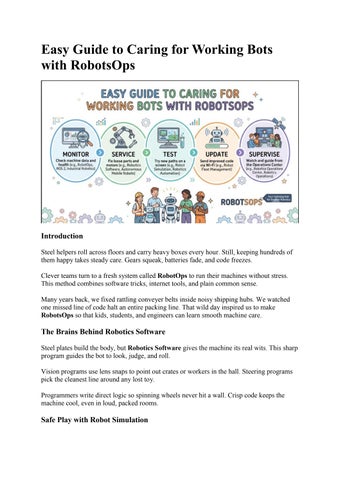
Everyday Tasks in Robotics Operations Daily machine care is what folks call Robotics Operations. You check motors, push fresh code, and swap bad parts before anything snaps. Think of a cheerful pit crew at a soapbox derby race. One child tightens loose lug nuts while another cleans the plastic visor. Operators use visual boards to watch every bot on the floor. They catch hot gears and low charge right away. Because teams see small alerts fast, the bots work without surprise stops.
Moving Fast with Autonomous Mobile Robots Nimble carts known as Autonomous Mobile Robots zip around big storage rooms. These helpful carts drag heavy tubs without any floor rails or human hands. They bounce quick light flashes to map walls, shelves, and moving shoes. In busy hubs, these carts shuffle tons of mail while humans stay safe. Workers avoid back pain and sore knees. The carts pull the hard weight, so people can pack gifts and plan fun projects.
Guiding Packs with Robot Fleet Management Steering thirty carts at once demands Robot Fleet Management. This setup lets you guide, track, and update every unit from one cozy chair.
Programs read live machine signals to keep carts on their best lines. When a unit runs low on juice, the computer guides it to a plug. Next, another bot rolls out to finish the chore. Plant logs show that fleet software cuts random stops by nearly a third. It turns a crowded room into a polite line of ducks.
Big Muscle in Industrial Robotics Car plants rely on Industrial Robotics to weld, lift, and mold thick metal plates. Mighty mechanical arms grab car frames and paint shiny doors in seconds. These huge helpers need rigid steel bases, fast chips, and smart guards. Technicians set light gates near every steel arm. If an operator steps too close, the arm stops on a dime. Worker safety rules every plant choice. Beginners explore arm switches and light gates on RobotsOps to keep people safe while boosting speed.
Real Speed from Robotics Automation Forward-thinking shops pick Robotics Automation to sweep away dull, boring work. Quick arms sort wooden crates, stack fruit cartons, and check glass jars for chips. A berry farm used rolling picker bots to harvest sweet fruit. The machines picked berries twice as fast and dropped far fewer treats on the ground. This automation lowers grocery prices and delivers crisp fruit to dinner tables sooner. It also lets people do creative thinking instead of back-breaking work.
Watching Gears in the Robotics Operations Center A modern Robotics Operations Center looks just like a space rocket control room. Watchers sit before wall screens and track every machine on duty. They read wheel spin, motor heat, and route maps across morning and night shifts. If a bot gets trapped between two boxes, a remote pilot guides it out with a thumb stick. The control room keeps watch through rain or shine. It acts like a bright tower that stops tiny bumps from closing down an entire shop.
Comparing Common Robot Styles Picking the right machine style depends on your floor size, cash, and daily goals. Machine Style Fixed Arms Mobile Carts
Main Task
Key Tools & Sensors
Welding, stacking crates, and Strong frames, light bolting plates beams, motion chips Hauling boxes, running down Light radars, live maps, aisles, mapping paths ROS 2 links
Great Perk High speed, razor aim, and safe workers Skips clutter and stops back pain
Machine Style Screen Twins
Main Task
Key Tools & Sensors
Great Perk
Finding code errors inside virtual rooms
3D room shapes, fake lenses, physics code
Zero broken parts and rapid fixes
Quick Steps to Launch Bot Fleets Crews take four simple steps to send out machines without headaches:
Step 1: Run digital tests. Try your ideas inside computer rooms to spot code bugs right away. Step 2: Place safety guards. Mount big red stop buttons and laser curtains near moving parts. Step 3: Connect health feeds. Link machine data lines to a single screen for rapid health checks. Step 4: Push code to few units. Test the update on two bots first before sending it to forty.
Helpful Roles in Machine Care Different workers take care of distinct parts of daily machine life:
Desk Pilot: Sits at the master board, watches warning lights, and steers trapped carts out of tight corners. Floor Fixer: Walks the plant floor, replaces dead battery packs, turns screws, and cleans dusty lenses. Software Crafter: Writes update plans, tracks motor heat, improves road paths, and polishes floor charts.
Frequently Asked Questions About robotsops Does RobotOps mean fixing metal frames only? No, it means updating code, tracking batteries, and fixing machines using modern cloud tools. Can virtual worlds really stop machine wrecks? Yes, computer tests let you bump fake walls so you do not shatter real steel arms. How do rolling helpers dodge walking humans? They shoot invisible light pulses at shoes to draw live maps and change paths quickly. What happens inside a machine control room? Workers track screen maps, watch battery lights, and steer stuck carts with game controllers. Why do builders like ROS 2 so much?
It works like a friendly telephone line that links eyes, chips, and wheels in a snap. Do factory bots need wire plugs for code updates? No, modern systems send new code through the air while machines sit in their docks. How does fleet software stop hall traffic jams? The central computer gives each bot its own lane so carts never bump noses in tight aisles. What keeps people safe near huge welding arms? Invisible light beams shut off power the moment a foot steps past the safe line. Where do students find clear machine lessons? Curious minds read RobotsOps to explore setup guides, code ideas, and fleet tools. How does early part care save coins for shops? Heat sensors spot warm bearings early, so mechanics grease joints before parts break.
Closing Ideas on Smart Machine Upkeep Machines change how people build, haul, and enjoy fun things every day. Teams that master basic upkeep run clean shops and finish jobs with a smile. When you run digital tests, watch live heat data, and use clean code, your metal pals work great for years.