Kia ora and welcome to The Chatter News – your Northern Waikato community newspaper in print and online.
With more than 20 years’ experience in community media, we are proud to deliver positive, relevant and trusted local news. We believe community newspapers play a vital role in keeping people informed and connected, supporting local businesses and celebrating the people, events and achievements that make our region unique.
Each month, 6,000 copies of The Chatter News are delivered to homes and businesses across Te Kauwhata, Huntly, Taupiri and surrounding districts. Our growing online presence also helps us reach communities throughout the region.
This is your newspaper and your community’s voice. We welcome stories about local people, young achievers, businesses, farming initiatives, creative projects, environmental work and anything else worth celebrating.
To contribute, suggest a story or discuss advertising opportunities, please get in touch.
Jacqui info@chatternews.co.nz
Ganga Sudhan | Sarah Morcom | Claire Simpson
Chatter Community Newspaper is published monthly on the first Wednesday of the month and circulated throughout the North Waikato.
Readers contributions of articles and letters are welcome. Publication of contributions are entirely at the discretion of the Editor.
Contributions will only be considered for publication when accompanied by the author’s name and surname, telephone number and residential address.
All reasonable steps are taken to ensure accuracy.
Opinions expressed are not necessarily those of the owner or publisher.
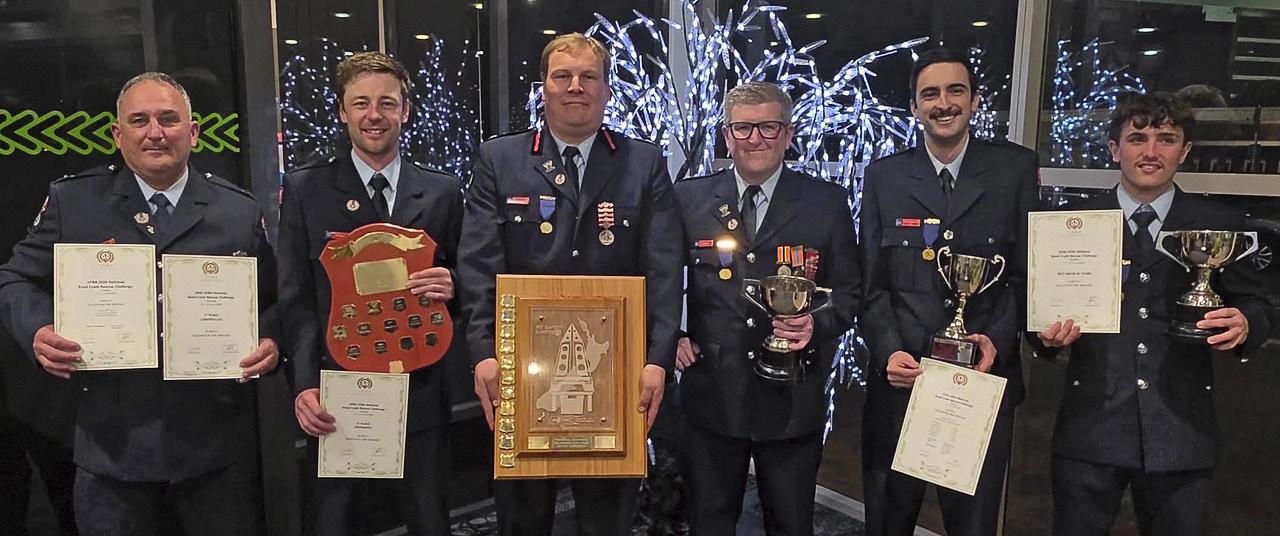
The Huntly Volunteer Fire Brigade (HVFB) has returned home victorious after delivering an outstanding performance at the United Fire Brigades’ Association (UFBA) National Road Crash Rescue Challenge, held over three days beginning Thursday, June 11.
Competing against 16 of the country’s top brigades, Huntly faced a series of highly advanced and increasingly complex rescue scenarios designed to test crews’ technical skills, teamwork, and medical response under pressure. Despite the tough competition this year, the Huntly team excelled across multiple disciplines, securing an impressive list of top honours.
The brigade claimed first place in several key categories, including Overall Trauma (Medical only scenarios), Best Medic Team (Whole competition), Heavy Entrapment, and Controlled Rescueachievements that highlight both their technical rescue capabilities and medical expertise.
The highlight of the competition came when Huntly Volunteer Fire Brigade was awarded the prestigious New Zealand Safety Trophy, the highest accolade presented at the event and one that brigades nationwide aspire to win.
The remarkable result follows months of intensive training, preparation, and dedication by the volunteer crew. Their success reflects a strong commitment to
excellence and readiness in responding to real-life emergency situations.
Deputy Chief Fire Officer and Road Crash Rescue Team Leader Matthew Tregoweth said the result was a true reflection of the team effort behind the scenes.
“This achievement is something the entire brigade can be proud of. The amount of work, commitment, and sacrifice that goes in behind the scenes is hugenot just from our firefighters, but from their families who support them every step of the way and make it possible for them to attend trainings, callouts, and competitions,” Tregoweth said.
“We’d also like to extend a huge thank you to the UFBA for once again hosting such a well-run and challenging event, and to our sponsors, Ward Demolition and Bil Autos, for their ongoing support making competitions and trainings possible. We acknowledge the high calibre of all the brigades who competed, it’s a privilege to work and compete alongside such dedicated crews from across the country.”
The brigade also acknowledged the high standard of competition, congratulating all teams who took part from across New Zealand and those who received awards.
The achievement has been met with pride throughout the local community, with the Huntly Volunteer Fire Brigade earning widespread recognition for their exceptional performance on the national stage
TE KAUWHATA FIRE BRIGADE WAIKATO VOLUNTEER TEAM OF THE YEAR
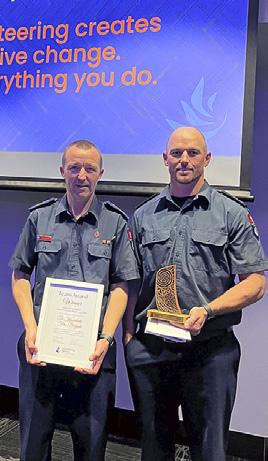
TeKauwhata Volunteer Fire Brigade took out Team of the Year honours, in a strongly contested category of the Volunteer Awards in Hamilton last week
The teams category had the greatest number of entries (20) including the “Gardeners of Te Kauwhata Community Garden.
Chief Fire Officer Glen Whitaker (Mush) and Senior Station Officer Mike Simpson attended the ceremony to receive the award on behalf of the Te Kauwhata brigade and said they were extremely humbled and grateful win the team award.
The brigade dedicates hundreds of hours each year to protect their community, responding to emergencies, whether fire, medical or motor vehicle crashes, turning up to training every week and supporting people where they need it most.
“We also reach out into schools and educate youngsters on fire safety, check and install smoke alarms, work with the Aparangi Retirement Village to make sure their residents can be safely evacuated in the event of an emergency, and attend community events,” says Whitaker
“With so many incredible volunteer groups across the
Waikato, it was a privilege just to stand alongside them at the awards evening. To be recognised among such outstanding community minded teams is something we don’t take lightly.
“This recognition belongs to every one of our volunteers who give their time, energy, and heart to serving Te Kauwhata; and to our community, whose ongoing support makes everything we do possible.
“To all volunteers across the Waikato region: thank you for the mahi you do every day. This one is for you, Te Kauwhata community!”
Left to right: SFF Jason Biddulph, FF Ben Savage, DCFO Matthew Tregoweth, SSO Michael Rix, FF Jacob Hammond, FF Ben Biddulph.
Award Winners: FO Mush Whitaker and SSO Mike Simpson
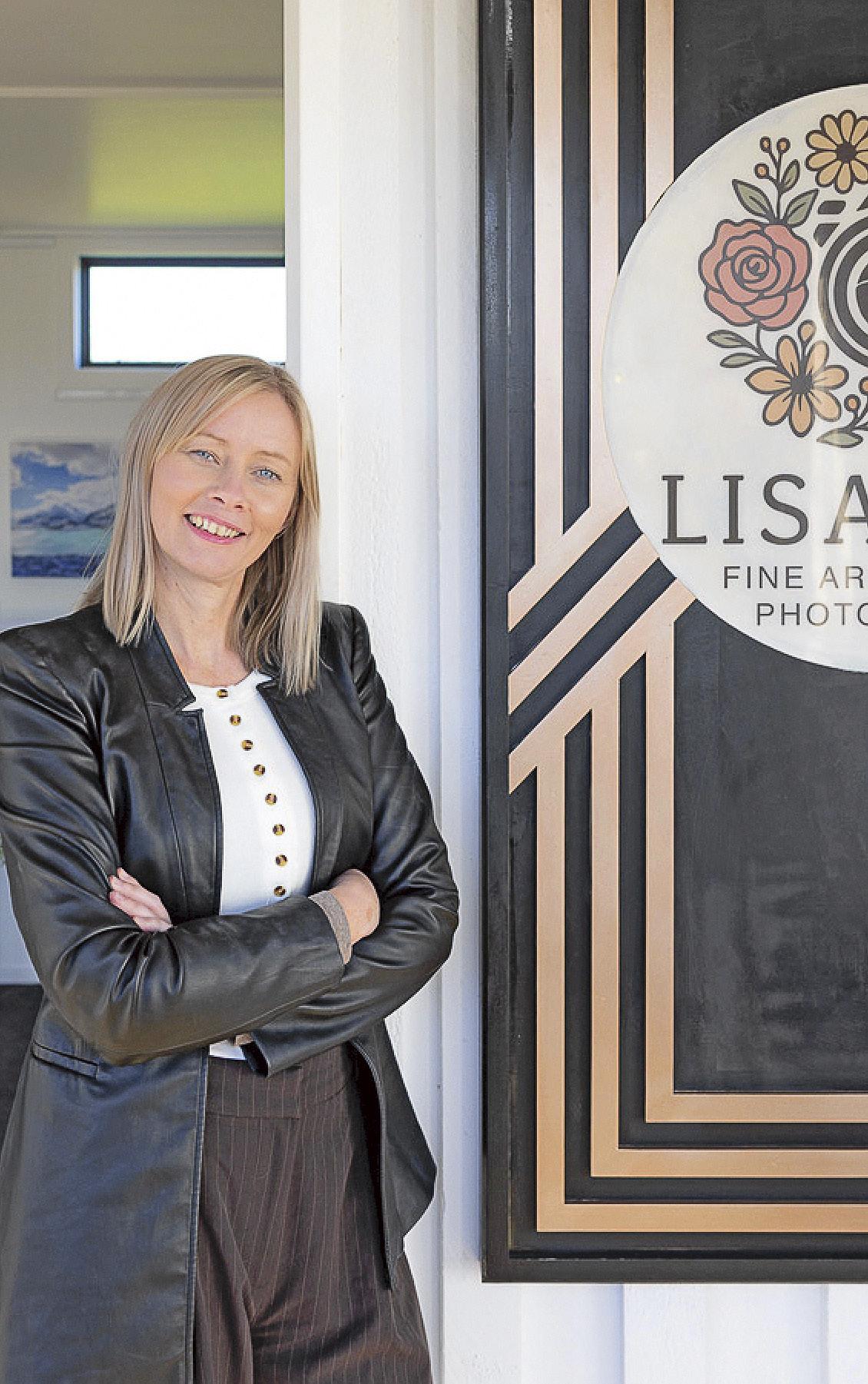
NEW PHOTOGRAPHY STORE RANGIRIRI
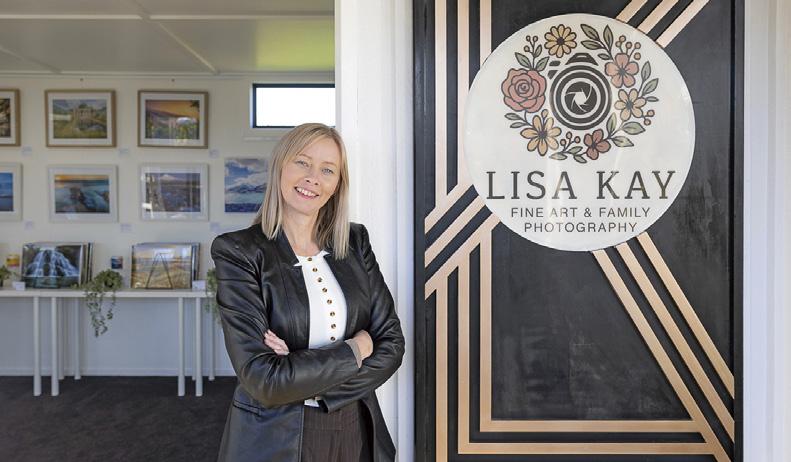
Photographer Lisa Kay has opened a new gallery and gift shop in Rangiriri, showcasing her landscape, animal and creative photography alongside work by other New Zealand artists. The space brings a long-held dream to life and offers visitors a welcoming place to discover locally inspired art.
Can you please describe your photography?
My photography is a blend of landscape, animals, and creative photography. I have always loved capturing the beauty of New Zealand’s landscapes and the character of animals, but the area I am most passionate about is creative photography. I enjoy pushing the boundaries of what is possible with an image and creating photographs that inspire people to see the world in a different way. Whether I am photographing a misty Waikato sunrise, or creating imaginative fine art pieces, my goal is always to tell a story and evoke an emotional connection. Photography allows me to combine creativity, imagination, and technical skill, and I love sharing that vision through the images displayed in my shop.
How did you discover the art and how have you pursued it up until now?
I’ve always loved photography, but it was during the COVID lockdowns that I really picked up my camera and started taking it seriously. I was inspired by the annual Te Kauwhata Photography Competition and began exploring different themes through my photography. Since then, I’ve joined the Pukekohe Camera Club and the Photographic Society of New Zealand (PSNZ), entered national salon competitions, and have been fortunate to receive awards along the way. I also occasionally photograph families and special events.
Why have you decided to set up in Rangiriri with your own space?
I’ve wanted my own creative space for years. After selling my work at markets over the last few years, I loved meeting people but grew tired of the early morning and constant packing and unpacking. When the opportunity came up in a beautiful space in Rangiriri, I jumped at it! Having my own gallery and shop is something I dreamed about.
Tell us what people will discover there?
Visitors will discover a collection of my framed and unframed prints, along with a carefully selected range of giftware from New Zealand based creatives. The gallery also features work from other talented photographers including Carole Garside, Keely Muir of the Stable Light Gallery in Waiuku, and Auckland photographer Jasmine
Booth. Every print is created with passion, I pour my heart and soul into each image.
What is your vision for your new venture?
My vision is to create a welcoming space where I can share the photography I’m so passionate about, while also providing opportunities for other photographers to display their work. I hope the gallery becomes a place
that connects with the community, celebrates local creativity, and inspires people through art.
How can people find you in person and online?
My shop is located at 12 Rangiriri Road, Rangiriri behind the Fixate Cafe. I’m on Facebook as Lisa Kay Photography and Instagram lisa_ kayphotography
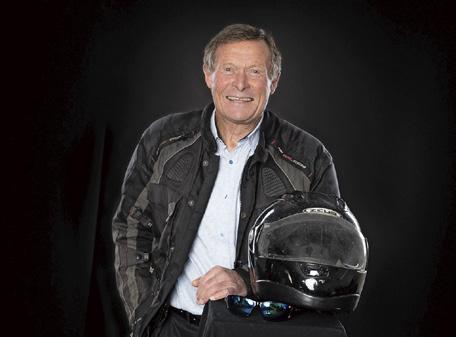
ARTIST SPOTLIGHT: MIKE LYNCH, MIDI PIONEER
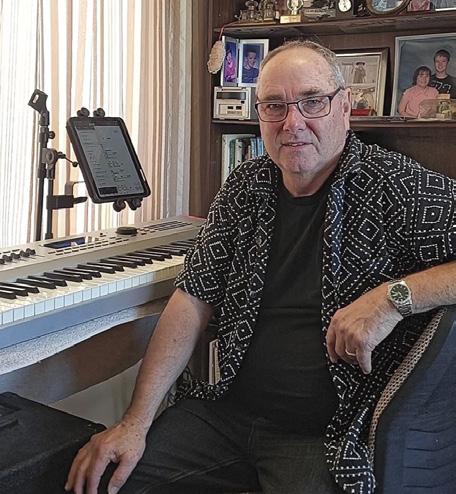
Apioneer in MIDI technology and a pillar in introducing the technology to Waikato musicians, Mike Lynch has witnessed revolution and evolution alike in the Waikato world of music.
Lynch, a working musician in Huntly for several decades now, began at the beginning with digitally imitated instruments–the very beginning.
“When it first came out, there were no MIDI available on the internet, so we had to make our own. I’ve still got the TR-66 or whatever it was that I used, one of those old Roland drum machines.
“So I would sit there and listen to the song and work out how many drum patterns there were in that song, what the basic rhythm was, and then I’d write it all out.”
That painstaking work was what made him and an old school-friend so successful in their two-piece, fourinstrument band.
“We’d be playing live, and we would make sure we put all our songs in an order that we wanted to do. I’d play my five songs, and then while he’s playing something, I’d flip the disc and shove it in,” Lynch said.
He and Phillip Hart were just about the only ones working live with MIDI instruments in the Waikato, joined only by one or two other groups.
BY SARAH MORCOM
“Basically all we did was pretty much the drums, a bass line, and then you might add some strings that you couldn’t do on the keyboard while you’re playing piano, and that’d be about it.
“They were all just amazed. They all said, wow you guys have got such a big sound! Because at that stage it was new, you know, and there were only a few of us in the Waikato.”
Opportunities for gigs grew in numbers, and Lynch and Hart found themselves playing weekend after weekend, sometimes twice in one day. But things have begun to change, said Lynch, or rather–they haven’t changed enough.
“We’re getting paid the same for gigs as we were in the 80s or 90s. Sure the price of food and drink has gone up, but the price of musicians apparently hasn’t. You really have to pick and choose which gigs are actually worth it.”
However, Lynch said he feels glad to be in a central location such as Huntly, where he can travel to neighbouring towns on rotation, always pleasing a new crowd.
And some things have certainly changed for the better, Lynch said.
“All the new technology makes it easier. In one day I can probably add about six, seven songs to my
repertoire easy, right from scratch even. We didn’t have the amount of chord charts that are online before.”
Today Mike Lynch plays with No Exit band, among other musical ventures.
Lisa Kay’s new photography store has opened in Rangiriri.
HUNTLY PEACEKEEPER RETURNS FROM OPERATIONS IN SOUTH SUDAN
NZ DEFENCE FORCE
Healthcare, running water, electricity and sealed roads are all things you take for granted in New Zealand - Waikato soldier Major Dylan Wright says South Sudan is nothing like that.
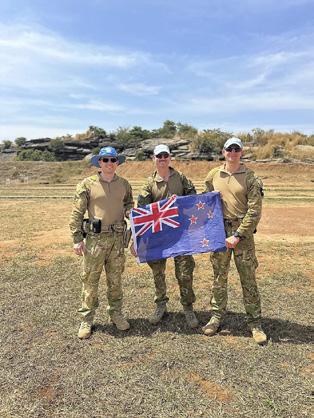
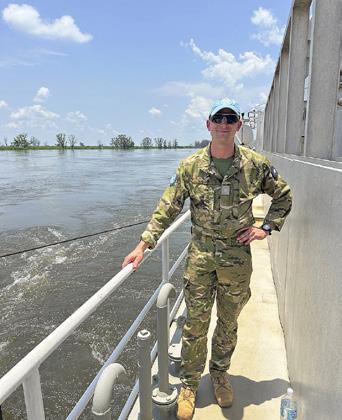
Major Wright has just completed a nine-month deployment to Operation Sudden, as a military staff officer to the United Nation’s peacekeeping mission to South Sudan (UNMISS).
He joined the New Zealand Army in 2012, after attending Huntly College.
“The military was always of high interest to me through my childhood and high school years. The attraction of doing something cool and exciting played a big part,” he says.
He had always been attracted to visiting a remote part of the world that had a certain element of risk and adventure. Op Sudden had been on his radar as something to do once he promoted to major.
United Nations Peacekeeping, the largest and most visible representation of the United Nations, seeks to secure commitment and cooperation towards peace and security in volatile environments, particularly through the deployment of peacekeepers.
Over decades, the New Zealand Defence Force (NZDF) has supported a number of these peacekeeping initiatives, from the Middle East to North Africa and Asia, with the posting of personnel to these regions.
South Sudan is in the midst a humanitarian crisis driven by ethnic conflict.
New Zealand has supported UNMISS since 2011. Prior to South Sudan’s
independence, New Zealand supported peace efforts in Sudan from 2005 to 2011.
The goals of the mission are to protect civilians, facilitate humanitarian assistance, provide electoral support, support the peace process and monitor, report and investigate violations of human rights.
Major Wright was based in Juba, the capital of South Sudan, helping maintain one of a number of military sectors that cover the country. Each sector is commanded by a Sector Headquarters – along the lines of an Army Brigade Headquarters.
His main job, in Sector Juba HQ, was the upkeep of the team’s crisis contingency plan for if the security situation in South Sudan deteriorates and people need to be protected or evacuated.
Major Wright’s other responsibilities included helping with training and assessment for battalions in the section, and going on patrols to get a feel for how
the patrols were being conducted and received.
He said patrols provide the “ground truths” in the neighbourhood; Juba might be the most stable part of the country, but it’s all relative.
“You still need to be aware of your surroundings as soon as you step outside the base.
“There are crazy driving conditions, opportunistic crime, small-scale conflicts, and police and military checkpoints with varying degrees of confrontation.”
English is the second language for most people and the level of training or experience amongst the United Nations cohort could be vastly different, said Major Wright.
“There are multiple levels of political, strategic and tactical challenges in the mission that can make it very difficult to feel like you are achieving what we are
HUNTLY MUSEUM: INTERVIEWS INTO THE PAST
The latest project for Huntly Museum captures the lives of Huntly identities in their own words, highlighting the struggles, triumphs and humour of daily life in an era that is passing into history.
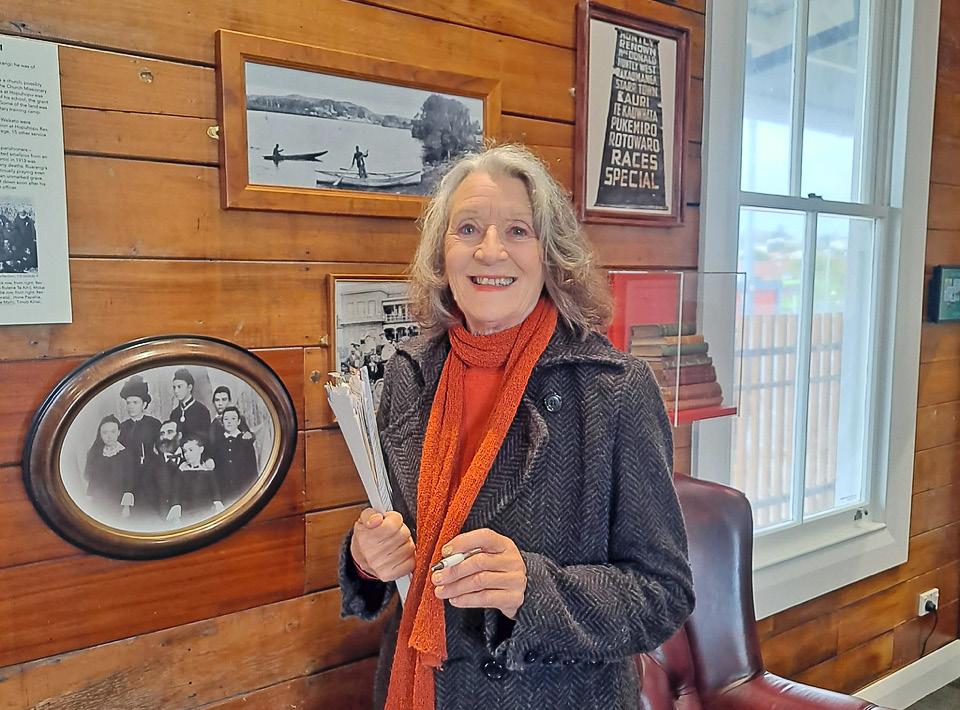
Interviews with past editor of Huntly Press and The New Tatler, Pam Ferla, are being printed as leaflets, with proceeds going towards the museum.
Those interviewed included the last mayor of Huntly, as well as miners, shop keepers, doctors and musicians.
“There have been some delightful characters over the years and I’ve loved listening to their stories,” says Pam. “They gave me an insight into their daily lives and remind me of the camaraderie of the
miners and the warm-hearted nature of people in this town. I hope locals and anyone linked to Huntly will also enjoy their stories.”
While the majority of interviews have been done with a book in mind, several were previously published in Huntly Press and The New Tatler.
Those interviewed include: Bill Lynch, Ray Penny, Robin Wright, Fred Rix, Maude Ralph, Harry Meyer, Guy King, Snow Finn, John Stewart, Dr Bruce Ryburn, Ray Urquhart, Andrew Peattie, Bert Roberts and Rhys Jones. Also included are Eddie Farrell, Roy Gill, Cecil Smith, Dr Eric Tilson, Alice Chisholm, Edie Taylor, Wetere Paki, Brownie Paki, George Dow, Bob Offord and Ian Olsen.
For more information contact Debra Kane, Collections@huntlymuseum.co.nz
here to do - which ultimately is to stop people from dying.
“Mental resilience is important. You also need to be able to manage your emotions in times of confrontation, negotiation and explanation - extremely important when you find yourself in a sticky situation.
“Humility can also go a long way towards understanding that everyone around you has vastly different experiences and perspectives.”
Something that stuck with him was the resilience of the children.
“The fact they can have a smile on their face, laugh and play amongst living conditions beyond belief in our world, helps keep you going when all the other frustrations are weighing you down.”
Despite the adversity he witnessed, Major Wright said he had gained a lot from the experience and opportunities that couldn’t be replicated elsewhere.
Pictured: Pam Ferla at the Huntly Museum
Major Dylan Wright (right) with New Zealand Defence Force colleagues
Major Dylan Wright at a local school in South Sudan
Major Dylan Wright aboard a barge on the Nile River
STRONG SIGNALS FROM FIELDAYS
Like many across our region, I had hoped to attend Fieldays at Mystery Creek this year, but prior commitments meant I couldn’t be there in person. Since then, I’ve been speaking with locals who made the trip, and the message has been consistent and clear – confidence in the rural sector is lifting.
Fieldays is always a useful barometer for provincial New Zealand, and this year’s sold-out event –with more than a thousand exhibitors – reflects a sector that is moving forward with renewed optimism.
Farmers and rural businesses are benefiting from improved returns across dairy, red meat and horticulture. That is giving many the confidence to pay down debt, invest in equipment, and plan for the future.
The Government has made a number of announcements designed to support that momentum. This includes a $59 million investment, in partnership with the primary sector, into projects that enable smarter land use and drive innovation on the ground. That means higher productivity and ultimately more jobs and stronger communities in our regions.
There is also a commitment to double baseline funding for the Queen Elizabeth II National Trust. This is about practical environmental stewardship, helping landowners with upfront costs like fencing, protecting native
bush, restoring wildlife corridors, and safeguarding threatened species. It recognises the important role farmers and landowners play in protecting the natural environment while continuing to run productive businesses.
We’re also seeing tools like Investment Boost helping to encourage businesses to bring forward spending on equipment and technology, supporting growth and productivity across the sector.
What stood out most from the feedback I received was how quickly this optimism travels beyond the farm gate.
When farmers invest, local mechanics, transport operators, rural suppliers and contractors all benefit and our townships thrive. The primary sector remains a cornerstone of our economy, supporting jobs and opportunity right across regional New Zealand. Fieldays plays an important role in this cycle. It is where ideas are exchanged, deals are struck, and new technologies are adopted. These benefits flow back into communities like ours, helping to keep small businesses busy.
Of course, challenges remain. Input costs, infrastructure pressures and regulatory settings continue to be raised in conversations. But the overall shift in sentiment this year is notable.
Even from a distance, Fieldays has reinforced something we know well – when farming is strong, New Zealand is strong, and our communities feel the benefit. That’s something well worth backing.
TIM’S NEWS
It’s tempting to focus solely on the present, however that’s neither prudent nor practical.
Aging is a fact of life; there is only one unpalatable alternative. We must consider what we’ll need as seniors and how prepared we’ll be. Insufficient fiscal resources brings limitations, unwanted stress, and dependency. The fundamental premise of KiwiSaver is to enable New Zealanders to contribute from their earnings for that later date, to provide opportunities and security to best manage financial demands in our golden years.
My colleagues and I in Government have prioritised managing our nation’s finances with diligence. We take the responsibility seriously, ensuring wasteful spending is curbed, and the strategies invested in generate benefit for Kiwis. Likewise, we know prioritising the need for all working Kiwis to contribute to KiwiSaver from 1 April 2028 is both essential and sensible. It’s a vital policy platform as we head towards the election; a re-elected National Government has the fiscal focus that will benefit every Kiwi in the future. We’ve already committed to lifting KiwiSaver contribution rates to 6% each for all employers and employees, to match Australia’s 12% by 2032. We’ve extended the Government’s KiwiSaver contribution to 16- and 17-year-olds. Our older workforce should not be disadvantaged. National will change the settings for those 65 years and older who are still working, so employers will be required to continue KiwiSaver contributions.
Preparation for retirement is important, so a re-elected National Government will introduce ambitious changes to set Kiwi kids up for a more secure future and support parents on paid parental leave too. Automatically enrolling every Kiwi baby into KiwiSaver at birth and providing a Baby Boost payment contribution of $1500 will kick-start their savings. Our changes will also support mums and dads to continue building their KiwiSaver while on paid parental leave. Welcoming a new baby to the family can add financial pressure as households adjust to a reduced income and more expenses. Many parents, most often mothers, choose not to contribute to KiwiSaver during this time, which is understandable. Current rules mean they miss out on the Government’s matching contribution. National propose to change this by providing a Government contribution to a parent’s KiwiSaver while they’re on paid parental leave, even if the parent isn’t contributing themselves.
We support Kiwi’s doing the right thing by working hard, saving up, and investing. Kiwis deserve a Government that backs them, not punishment with more taxes that hit their investments and make them worse off. National’s plan is to fix the basics and build the future for all New Zealanders. Kiwis will be better able to build financial security, have a better quality of life and more opportunities in retirement. Self-sufficiency relieves burden on the taxpayer purse and provides more options to spend our nation’s finances on other areas of need. Tim van de Molen – MP for Waikato.
COUNCILLOR’S CORNER
MARLENE RAUMATI
Waikato District Council adopted its 2026/27 Annual Plan, confirming a general rate increase of 2.8%, which is lower than the 3.0% increase originally signalled through the 20252034 Long Term Plan.
The reduction reflects Council’s ongoing commitment to affordability while continuing to deliver essential services and infrastructure to communities across the district.
The 2.8% general rate increase is one of the lowest increases experienced by the district in more than a decade and sits below current inflation levels. It has been achieved through a range of cost-saving initiatives, including tighter management of staffing levels, postponement of selected technology upgrades, and significant procurement efficiencies. These measures have enabled Council to absorb increasing operational pressures while limiting the impact on ratepayers. General rates contribute towards services and activities that benefit the entire district, including roading, planning, community services, governance, and other Council functions. The rate is calculated on a property’s capital value, with the 2026/27 increase equating to approximately $6.17 per $100,000 of capital value.
water, wastewater, rubbish and recycling collection, stormwater management, and community facilities. The 2026/27 Annual Plan demonstrates Councils focus on balancing affordability with the need to maintain service levels, invest in critical infrastructure, and support the continued growth and wellbeing of the district at large.
While balancing affordability against levels of service, Council continues to explore what local government reform, under the Government’s Head Start pathway, might look like. While no decisions have been made about amalgamation or future council structures, Council is focused on understanding the options. The possibilities being discussed are an “All of Region” approach, a “Hamilton Metro and Waikato Towns and Rural” approach, a “HamiltonWaikato-Waipa” approach or “Do Nothing.”
Hearing from you is critical to ensuring that when a decision is made, local representation, local identity and strong community voices remain at the heart of any future arrangement. The key message is that Council wants you to help shape the future of local government for our District rather than have decisions made for it through the Government’s “BACKSTOP” process. Your feedback is vital.
For a residential property with a median capital value 0f $600,000, this represents an increase of approximately $37 per year through the general rate component only.
While the general rate increase is 2.8%, the overall average rates increase across the district is 3.79% once targeted rates and service-specific charges are included. Individual properties will experience different rates impacts depending on their capital value and the services they receive, such as
For more information, go to www. waikatodistrictcouncil/ haveyoursay/ simplifyinglocalgovernment to fill out an online feedback form.
Please note, the above options are for discussion only. They are shared so that you can think them through. Feedback closes Friday 10 July 2026. In the meantime, if you have a council related concern, please feel free to contact me either by email at marlene.raumati@waidc. govt.nz or by phone on 020 - 40012548.
A MESSAGE FROM THE WAIKATO DISTRICT COUNCIL MAYOR
MAYOR AKSEL BECH
The biggest shake-up of local government and councils since 1989 is coming with the government directing how councils are organised across New Zealand.
Most parts of the country have two councils: a regional council (looking after environmental management, public transport and planning) and a territorial authority (district or city council managing roads, water, rubbish, libraries, and parks).
However, the Government’s ‘Simplifying Local Government’ programme aims to reduce duplication and cost, for example by combining two or more territorial authorities, together with regional council functions, into a single “unitary” council combining those jobs.
And they have given all councils a choice: tell us your preference for a new way to simplify your region by August 9th or Government will do it for you!
That’s the whole Waikato region which includes Hauraki, Thames-Coromandel, Matamata-Piako, Ōtorohanga, Waitomo, South Waikato, a little bit of the Rotorua rural area (around Reparoa) along with Waipā, Hamilton City and ourselves.
We have very little time to talk to our neighbours and with you -but we are doing our best as letting Wellington draw our new lines on the map doesn’t seem likely to get the best outcome for us.
Frankly, looking out of the window of the Beehive it is difficult to tell the
WAIKATO DISTRICT COUNCIL – COMMUNITY BOARDS UPDATE
Tuakau Community Board received updates on the Harrisville Road Bridge replacement, water infrastructure upgrades, and progress on the new satellite dog kennel facility.
Work continues on the Tuakau reservoir renewal and Henderson Avenue pipe replacement, while the official opening of Pipinui Playground has been delayed slightly to allow remedial works to be completed.
Upcoming Meetings
1. Ngaaruawaahia Community Board meets Tuesday, 28 July 2026
2. Rural–Port Waikato Community Board meets Thursday, 30 July 2026
3. Tuakau Community Board meets Monday, 04 August 2026
4. Raglan Community Board meets Wednesday, 05 August 2026
5. Taupiri Community Board meets Monday, 10 August 2026
6. Huntly Community Board meets Tuesday, 11 August 2026
MUSEUM WELCOMES FIRST RANGATAHI / YOUTH AMBASSADORS!
HUNTLY MUSEUM
Tdifference between a community in Te Kauwhata and Tokoroa, Thames or Taupō.
But we know they are different.
Whilst where the lines are drawn for new council amalgamations will be important, what’s more critical is how new governance structures are designed to protect your local voice.
That is, in a bigger grouping how will smaller towns and communities still have a say in decisions that matter to them? A say in local matters and a way to hold accountable those spending their rates dollars.
That is a key focus for us, along with recognising other councils all have different levels of debt and states of assets that must also be taken into account.
Time is short but until July 10 there is opportunity for all of our residents and ratepayers to give input. I urge you to look at our webpage; there’s a feedback form, FAQ section and also lots more information and maps to help inform your input. It’s important because you will help shape the new councils.
This pathway is a voluntary, faster option that lets councils put forward an initial proposal to government that reflects their communities. Reform of local government is happening, whether we like it or not.
These conversations are about helping shape what it looks like for our district. No decisions have been made.
e Whare Taonga o Raahui Pookeka Huntly Museum has proudly launched a new initiative with the appointment of its first Rangatahi Ambassadors.
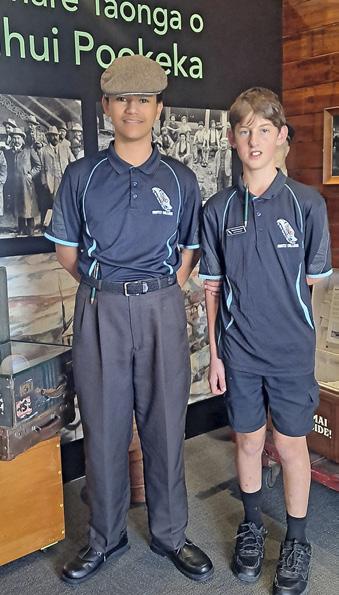
The inaugural group of Museum Ambassadors — Manaia Vaka, Sam Newman, Emmanuel Marshall Hoeta and Adrian Narcilla, all from Huntly College — will gain behind the scenes insight into museum operations while contributing their own ideas and perspectives.
Representing a range of ages, interests and experiences, the students have been selected to ensure young people have an authentic voice in the future development of the museum. Throughout their year-long role, the ambassadors will provide feedback to the museum’s governing committee and help shape new exhibitions and public programs.
The Museum recently moved to 2a Glasgow St and has a commitment to share community stories.
Collection Manager Debra Kane said the project is an important step in ensuring the museum remains relevant and connected to younger generations.
“The students have a real voice in the museum, and their input is valued. We are very grateful to Huntly College Principal Rachael
Parker for partnering with us on this project,” said Kane.
The Rangatahi Museum Ambassadors programme reflects Te Whare Taonga o Raahui Pookeka’s commitment to fostering youth leadership and encouraging greater community involvement in preserving and sharing local history.
Pictured below are ambassadors Emmanuel and Sam, two of the four students selected for 2026.
Youth ambassadors Emmanuel and Sam
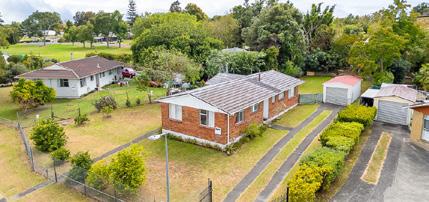
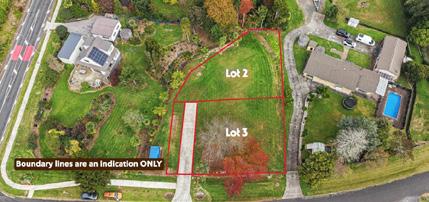
Stirling Place, Huntly —
Great South Road, Taupiri
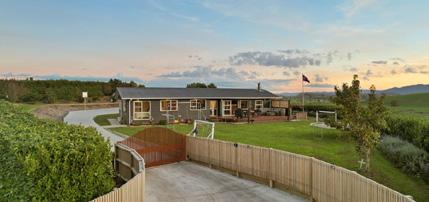
Renown Road, Waikokowai
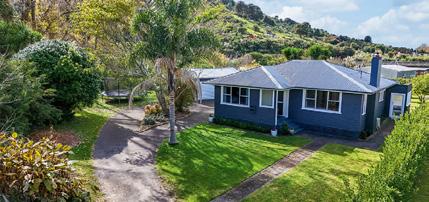
Kimihia Road, Huntly
Renown Road, Waikokowai —
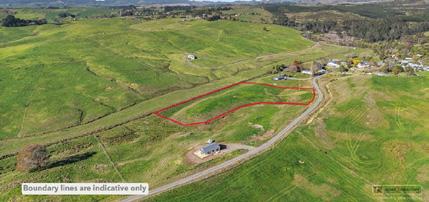
136B Great South Road, Taupiri —
3/86 Horotiu Road, Horotiu
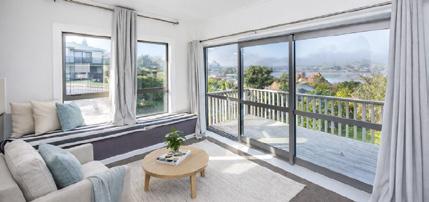
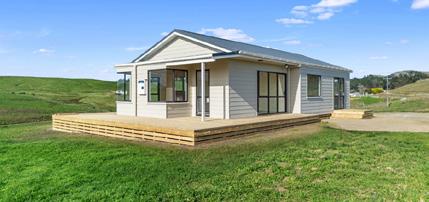
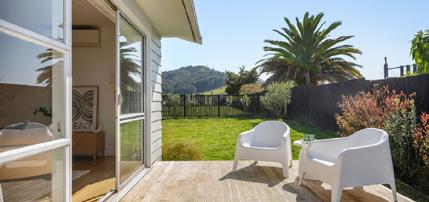
Do you own land? Build with Golden Homes.
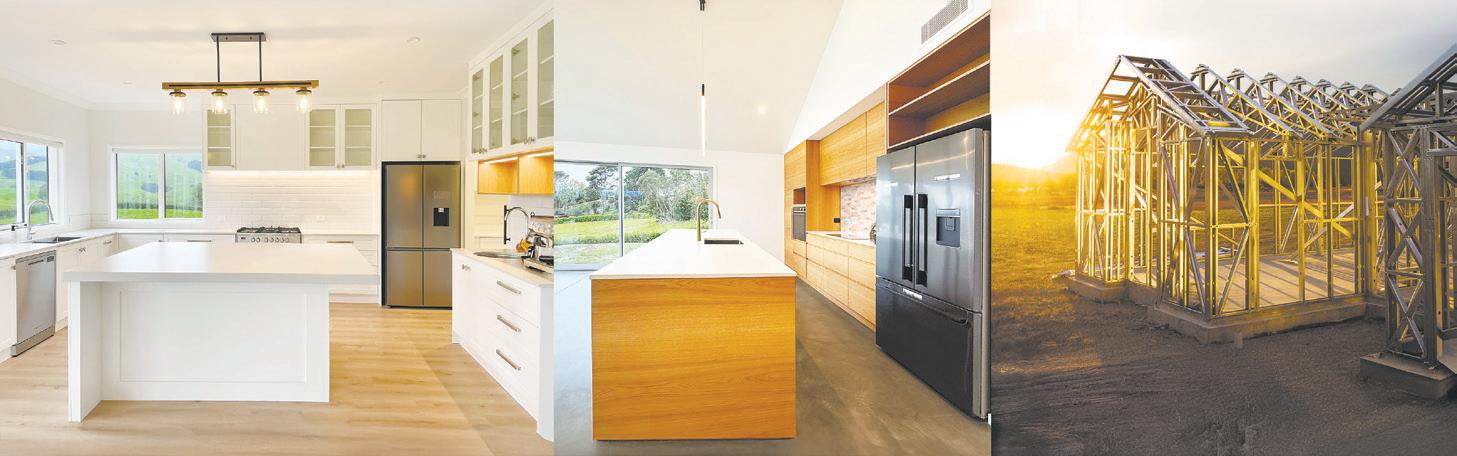
With over 35 years of experience and industry-leading ZOG® steel framing, we build homes that are stronger, warmer, drier, healthier, and designed to perform in New Zealand conditions.
Our beautiful home designs are fully customisable, giving you the freedom to create a home that’s uniquely yours; designed to suit your section, your family, and the way you want to live.
From first concepts through to handing over the keys, our experienced Waikato team will guide you every step of the way. Whether it’s understanding council requirements, walking your section with you, or designing a home that makes the most of your land, we’re here to help you get it right - from the start
Talk to Nicole, your local New Home Consultant, and start planning your dream home today! Or visit our Te Kauwhata office at 19 Main Road, Te Kauwhata 8:30am - 3:30pm
Call Nicole: 021 889 182
nicole jenkins@goldenhomes co nz
n z Scan this QR code to get your FREE Home Design Pack.
WHERE NEXT FOR LAKE WAIKARE AND WHANGAMARINO?
FROM JOHN CUNNINGHAM
As one of the community representatives on the Whangamarino and Lake Waikare working group I wanted to provide an update from the community perspective.
I am a long-time resident in the village, previous chair of the Te Kauwhata Community (ending in 2025), chair of the Te Kauwhata Water Association and the Aparangi Retirement Trust Board. I am also a JP and through this and all my other community work, have a large number of community contacts and associations.
I came to the working group with this strong community lens, along with a background as a Fellow and past president of Engineering NZ, and a post graduate qualification in environmental engineering, for which I also hold the Arthur Mead Award and as a former board member of Cawthron in Nelson. I also chair a number of environmental-focussed companies.
The committee met regularly over the last two years to consider issues in the area and potential restoration plan for both. The lake is shallow, looks dirty and regularly hosts brightly coloured algal blooms. The Wetlands are neglected and untidy and have regular outbreaks of botulism. Despite these challenges, it is a home for flora and fauna, and the rate swamp helmet native orchid.
A long-awaited plan to improve the condition of both outstanding features has been prepared and now is the time for staging, business cases and potential timing for the improvements.
The last 50 years have seen a number of plans and scientific papers, but little concerted action on improvement. Individuals around the lake have made small improvements over the years, but this plan brings together a whole of area improvement.
The working group has membership from Iwi, Farmers, TK Community, WRC, WDC, DOC and Fish and Game. All agree that action is required to improve and rehabilitate the wetlands and the lake.
The Te Kauwhata community is well aware of the progress of the group, through regular meetings, updates and extensive editorial in the local newspaper as well as strong social media updates. There is also a community-wide desire to see the lake suitable for recreation and ths has been raised many times both to District and Regional councillors and staff.
We all realise that it will take time, but a staged plan needs to start now. There have been many meetings that have ended with promises to ‘do something’, but in reality, nothing has ever been done on the scale and over the time frame needed to address all the contributing issues
TO SUM UP:
• The plan that has evolved and has been summarised in a number of actions that can be taken – from reduction/removal of Koi Carp through to native plantings and managing the lake’s flood protection role in a more nuanced manner. These are sensible approaches backed by science and the latter is achievable through engineering.
• This plan is supported by the community and now needs business cases on the individual parts, and a timetable and funding regime needs to be drawn up.
• It may take 20+ years to carry out the plan, but making some early action will show progress and may attract funding and help from a number of sources for future actions.
• If the plan is spread over a number of years, then the funding can also be spread over time -years or decades, but the vision and plan need to be clear for all and build on the voluntary work that has started already.
• Both natural assets are valuable not only to the community but to the wider economic benefit to the country noting also the Ramsar status of the Whangamarino wetlands.
RURAL CHATS: THE GOOD, THE BAD AND THE MUDDY
BY CLAIRE SIMPSON
The Waikato is synonymous with farming and in June hosted yet another epic Fieldays. We chatted to a couple of local farmers about the good, bad and hopefully not too ugly.
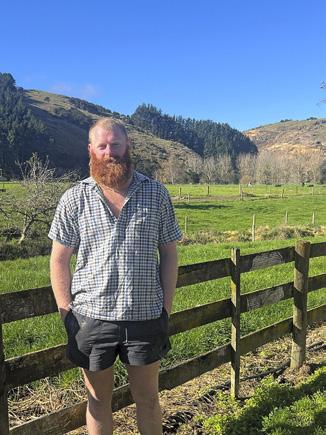
JIMMY CLEAVER farms just north west of Te Kauwhata and is the new North Waikato Federated Farmers branch chair., He explains how that happened: “ I put my hand up for the role as the former chair, Chris Woolerton, stepped up to be Waikato President, After a conversation with him, I said I’d be keen on this role, which would free him up for his work with wider Waikato duties.”
Jimmy sees the big picture for his role as listening to local farmers about issues they are facing in their area and helping bring those issues to the forefront where regional solutions might be found.
“I also want to create a connection between Young Farmers and Federated Farmers in the area, to make sure our Federated Farmers have young people coming through to lead the next generation.”
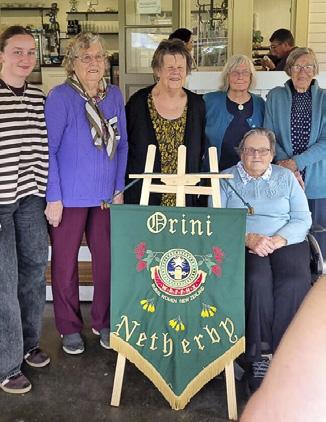
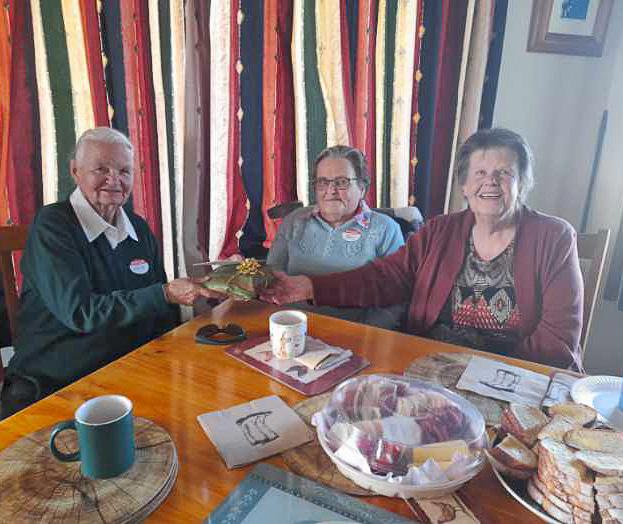
On Tuesday 2 June 2026 members of this Branch, along with guests, met at the “Woodlands” Historic Homestead where two beds of “Rural Women” roses developed especially to celebrate the centenary along with the plaque which was made and donated by Robin Singers and dedicated by Bronwyn Main, RWNZ Board Member and Centennial Chairperson.
Bronwyn was introduced by Branch President, Laurel
Jimmy comes to the role with a fair amount of experience under his relatively young belt. “I’ve been dairy farming since I left school and am currently in my third season of sharemilking 210 cows on my parent’s farm located on the edge of the Whangamarino wetlands.
“I was named Auckland/Hauraki Manager of the Year at the Auckland/ Hauraki Dairy Industry Awards 2022. I also attended Telford back in 2017 and passed with distinction in the Telford certificate in agriculture.”
A recent meeting unveiling the Whangamarino-Lake Waikare Action plan in Te Kauwhata drew a large crowd of farmers concerned at the potential impact on their farms. Jimmy highlights this as a top priority for him and wants to be certain the voice of the rural farming community is being heard.
That, along with local government reform which carries uncertainty about whether the rural sector will be adequately represented, or forgotten in a focus on towns and cities, is a topic of concern as well.
“The thing that worries me most about the reform is the farmers’ voice may not be heard or even considered. Farmers have done a lot of work over the past 10 years with regards to water quality that contribute positively to the Waikare - Whangamarino action plan.
For instance, we now have better effluent management, fencing off drains, and riparian planting which is a huge cost to the farmer, but farmers feel they haven’t been recognised at a council level. But I do agree that more can be done to get the outcomes we all want.”
CHRIS WOOLERTON, newlyelected Waikato provincial president of Federated Farmers, reports a sense of positivity for Fieldays – and a bonus of good weather.
“There’s a bit more money around for capital expenditure and lots of new technology to ponder upon. Like many, I got a deal on wet weather gear for the
coming season. And it’s always good to catch up with suppliers over lunch and find fellow farming friends amongst the crowds.”
Woolerton attended the Waikare/ Whangamarino Action plan public meeting in Te Kauwhata along with around 50 farmers from the area. He says the Waikato Federated Farmers have been advocating to the Regional Council that the ‘action plan’ title hasn’t helped as it is not near any implementation stage.
“It’s probably more of a scoping study, and we’ve pushed for a lot more feasibility work. Efforts must be workable and affordable as well as acknowledging the work farmers have already done.”
He said his focus as president would be on ensuring Waikato farmers are fully engaged with Federated Farmers’ advocacy work and priorities, and local members feel heard, not just represented.
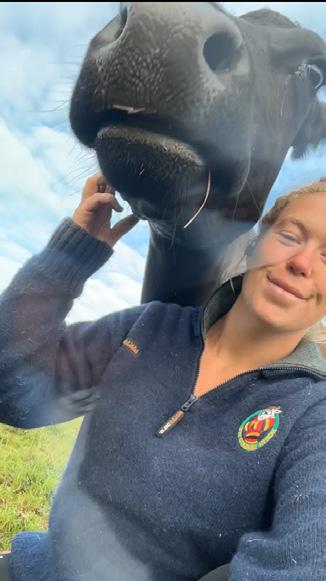
SHEREE FITZPATRICK, now chair of North Waikato Young Farmers has held committee positions there for the past four years, along with two years as events coordinator on the WaiBOP regional committee.
“ I decided to put my hand up for chair this year as I felt I had gained enough knowledge and made enough connections to be able to lead and do my part in growing the club, gaining the community involvement whether its turning up and helping run events or being able to hold fundraisers (such as our annual bark up) to give back to the community.
“My goal is to see our club grow and have members from all agricultural sectors, where we can make those connections with other people, gain knowledge from others where possible. Also being able to make more connections with our farmers and supporters in the area where they’re able to reach out to us for any help or anything throughout the year.
RURAL WOMEN NZ ORINI-NETHERBY BRANCH
Blissett, and spoke of the Centennial Book which will be published later this year and covers the first 100 years of RWNZ.
After the dedication the group retired to the Woodlands Cafe to enjoy a delicious lunch followed by a most interesting account from Melissa Gay of her voluntary time spent nursing on the Mercy Hospital Ship based in Seirra Leone. Melissa thanked the groups who had given her financial assistance for this venture and the impact this experience had made.
Sheree moved into farming from a five-year long stint as a bartender.
“ I was running a bar with my best mate, but during covid times my uncle reached out and asked for help on his farm during mating time and after that we sold the bar and I got my first dairy farm job in Te Kauwhata.
“I think the main issue young farmers are facing is finding jobs with employers that are actually willing to help support and guide them and train to keep them on farm for a long period of time and progress in their career, but also being able to put them into decent housing that they are happy and comfortable going back to after a hard/long day and properly recover ready for the next day.
Her take on Fieldays is positive with the number and range of vendors that were there, but at the same time a little disappointed in the drop of the small and local businesses that weren’t.
“It was still a good couple of days though with still a good turnout, with some good deals still around, as always.”
RANGATAHI TAKE THE FIRST STEP TOWARDS DRIVING INDEPENDENCE
FRIENDSHIP HOUSE
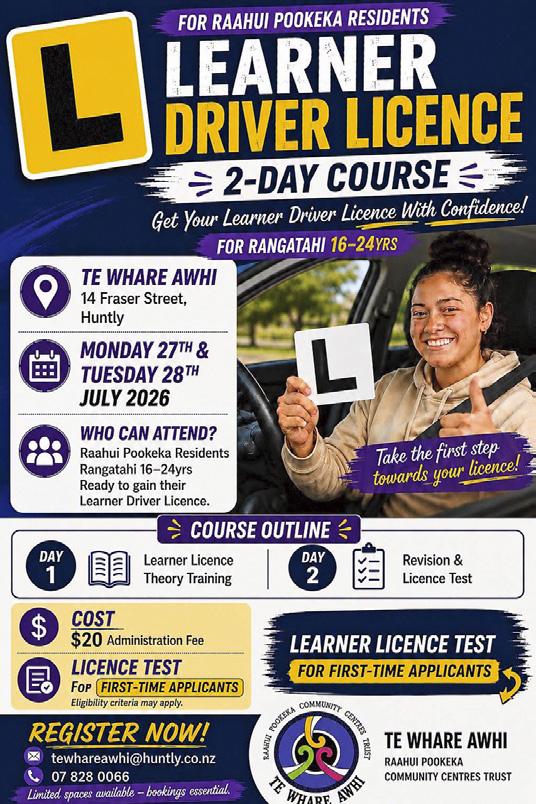
Overtwo days on 16–17 June, Te Whare Awhi hosted a Learner Licence Programme for local rangatahi taking their first step towards gaining a driver licence.
The programme provided participants with support to learn the New Zealand Road Code, prepare for their learner licence theory test and build confidence in a positive and encouraging environment.
The course was open to first-time applicants and aimed to remove barriers that can prevent young people from obtaining a licence. Having a driver licence can open doors to employment, education, training and greater independence.
We would like to congratulate all participants for their commitment and effort throughout the programme and thank everyone involved in making the course a success.
Following strong interest in the programme, we are pleased to announce that the next Learner Licence Course will be held on 27–28 July 2026. The course is open to first-time learner licence applicants from Huntly, with limited spaces available. Rangatahi interested in attending are encouraged to register early to secure their place.
For more information or to register, please contact Joy at Te Whare Awhi on 07 828 0066.
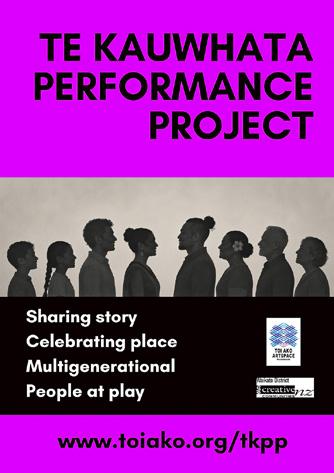
TE KAUWHATA PERFORMANCE PROJECT
TeKauwhata Performance
Project (TKPP) is a collaborative project designed to engage people in our community who have a story to tell, who enjoy performing, or perhaps have a knack for writing, design or technology.
It is an opportunity to bring people of all ages, skills and backgrounds together through creativity, to share skills, build confidence and celebrate who we are as a growing community.
While we do aspire to a performance, the process is just as important. Do it for yourself or bring a friend or as a family. There is a role for everyone whether you prefer centre stage or behind the scenes. Join us!
The project will be delivered in three stages.
Phase 1: Story
You will see the Toi Ako Team out and about on the streets and at events in July & July 2026 to talk with the people in our community, gather memories, stories and ideas. Contributions can be anonymous
but where permitted we would also like to photograph the people we interview for use in later parts of the project. We will also be connecting with people who may be interested in joining us for the next phases of the project. This the phase we are in now. We invite you to get in any of the following ways:
Email: artstekauwhata@gmail.com
Phone: 0212225682
Coming to our first project meeting –Sat 18 July at 3pm at Toi Ako Artspace, underneath St Margaret’s Hall at 3 Waerenga Rd. Drive to the bottom of the driveway to the left of the church
Answering our 10 story prompts in this form – https://tkch.infoodle.com/f/ TeKauwhataPerformanceProject
Phase 2: Play
In a series of workshops through August & September we will use drama games and devising processes to explore the story ideas gathered in phase 1. As we play we will tease out pieces of work that we would like to share back to our community.
Phase 3: Production
We will shape our workshop pieces into a production, adding in elements such as props, costume, set, music, technology. We will rehearse through September and share our performance with an audience in October.
We would love your involvement, whether on stage or behind the scenes. We will need actors, musicians, dancers, costume design and sewing, set design and construction, AV design, make up and hair, stage management, front of house management, marketing assistants and much more.
Please contact us in any of the ways detailed above and we will add you to our project team.
Thanks to Creative Communities Waikato for making this possible.
HOUSE OF TREASURES FURNITURE SHED
The House of Treasures furniture shop has now got a designated room at the Eastern end of the Te Kauwhata Bowling Club.
They are now able to receive donated items of furniture in good condition for resale. Please call into the House of Treasures shop by New World to arrange delivery or ring them on 0274696315 during shop hours.
All donated goods are photographed and put on the House of Treasures Te
Kauwhata facebook page. These photos are also held in a file at the shop.
Any persons interested in buying can express interest at the shop who can then arrange a viewing or you can call into the Aparangi office and one of the Aparangi staff will open the furniture shed.
A volunteer from the Aparangi village will open the furniture shed every Thursday 11.00am to 1.00pm when anyone is welcome to peruse.
All profit is returned to Aparangi for the betterment of the people living in the village.
TE KAUWHATA BOWLING CLUB
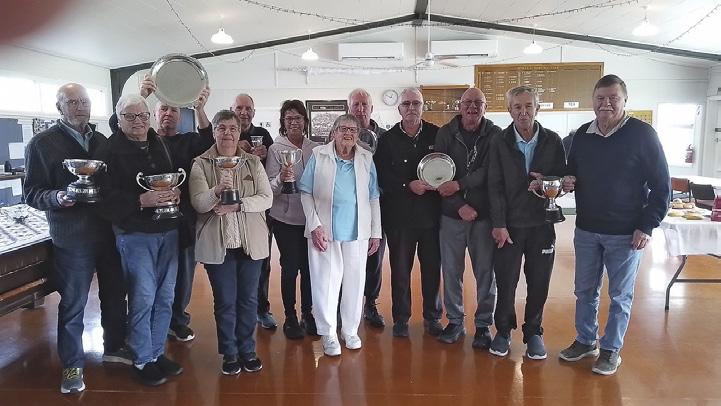
June is AGM month and annual prizegiving time for TKBC. Welcome to the five new members who have joined the Board, and congratulations to the prizewinners, with lots of new faces in the Championship line-up.
The Club Championship Singles winners were Chris Paget (Men) and Linda Williams (Women).
Pairs winners were Lyn Welch and Graeme Calverley (Men), and Pat Hall and Katherine Pascoe (Women).
Triples: Russell Harrison, Chris Paget and Ann Paget.
Fours: Lyn Welch, Graeme Calverley, Neil Rollo and Tony Hall.
Club trophy winners: Dot Palmer Cup: Larry Simmonds
Aunty
Gore Cup: Tony
Perry Cup: Pat Hall
Maskell Cup: Chris Paget and Ann Paget
Ethel Bryce Trophy: Chris Paget and Nigel Trout
We are still getting good fields at Tuesday and Saturday roll-ups, with only ONE session (so far) having to be cancelled due to weather. The Club’s first winter bowls season on our new allweather bowling green is proving to be very popular.
This is a good time of year to come along and ‘have a go’ if you’re interested. There is no cost to try.
Linda, tekauwhatabowls@gmail.com
OPERATION COVER UP
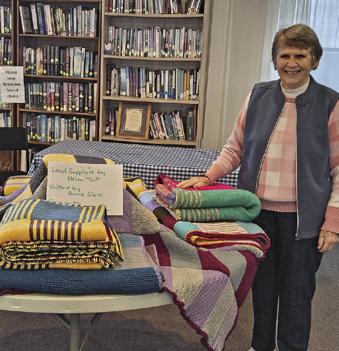
On Wednesday 17 June 2026, a beautiful display of wool blankets and other knitted goods was held at St Margaret’s Church Hall, Te Kauwhata.
Many people have been busy knitting and crocheting during the year to support this project, which is helping the poor and marginalised in Eastern Europe, mainly Moldova, Romania, Albania, Bulgaria and Ukraine. Due to the ongoing war in Ukraine, millions have been displaced, so the need for gifts of warm blankets and items of clothing is as great as ever, especially when winter temperatures can fall as low as -30°C.
Items displayed included:
Large blankets: 30
Hats: 82
Slippers/socks: 17
Jerseys: 19
Scarves: 2
A very big thank you to all who made the display a success and to those who donated towards freight costs. A total of $500 was raised for freight.
We look forward to your continuing support over the coming year.
Raffles:
First draw: Cherry Jefferis
Second draw: Judy Periam
Third draw: Sylvia Smoods
Fourth draw: Irene Lynch
Pearls Pairs Trophy: Noel Williams and Doug Foreman
Rosie Trophy: Gary Penfold and Ann Haszard
Hall
MEET THE STUDENT LEADERS OF TE KAUWHATA COLLEGE
Te Kauwhata College’s 2026 student leaders share what leadership means to them, the experiences shaping their final year and their hopes for life beyond school.
Can you please introduce yourself to the wider community?
Kia ora koutou katoa
Ko Tainui te waka
Ko Taupiri te maunga
Ko Waikato te awa
Ko Maurea te marae
Ko Waikato te iwi
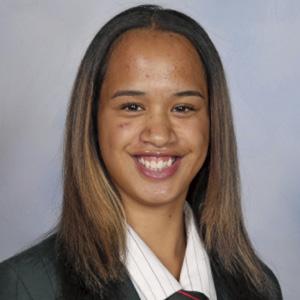
Ko Jodeci Epiha tooku ingoa
I was born and raised in Te Kauwhata and am a Year 13 student at Te Kauwhata College, where I have the privilege of serving as both the Student Representative on the Board and Media Leader.
What does being a student leader mean to you, and what does it involve?
Being a student leader means leading by example and helping create a positive, inclusive school environment. It involves representing students’ voices, supporting others and working as a team to improve the school. It also requires responsibility, commitment, and approachability, and the willingness to step up and help make a difference when needed.
What do you like about the role, and what do you hope to achieve?
What I like about my role is being able to connect with people and help others feel included. I also enjoy the creative side of being the media leader by sharing events, achievements, and school spirit on social media.
How would you sum up your year so far?
I would sum up my year so far as very busy and productive. I’ve taken on different responsibilities and challenges, learnt a lot and continued to grow as a person. Even though it has been full on at times, I’ve stayed motivated and focused, and I know there is still more to come for the rest of the year.
When not at school, what do you enjoy doing?
When I’m not at school, I enjoy dancing, singing, and playing sports because they help me stay active, confident, and connected with others. I also love spending time with my whaanau and friends. I enjoy making good memories with the people who matter most to me.
What are your plans for 2027?
My plans for 2027 are to attend the University of Waikato to study a Bachelor of Nursing. I want to give back and help people in need, just like others did for me while I was growing up.
When you look back, what do you think will be the highlights of the Te Kauwhata College experience?
When I look back on my time at Te Kauwhata College, I think the biggest highlights will be the lifelong friendships, the memories made through school events and activities, and the personal growth I’ve experienced over the years. I’ll always remember the teachers and staff who believed in my potential and supported me through both the good and challenging times. Their encouragement helped shape me into the person I am today. I’ll also look back fondly on the opportunities to be involved in sports and the performing arts, and to connect with my school and wider community.
Can you please introduce yourself to the wider community?
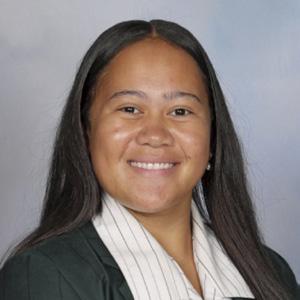
Teenaa koutou katoa ko Atarehia Hema tooku ingoa, he uri ahau noo Te Puaha o Waikato. Hello everyone, my name is Atarehia, I am 18 years old and proud to serve as the Head Student of Te Kauwhata College. I have lived in Te Kauwhata for many years, but my schooling journey has taken me through many places. I attended Bombay School, Tuakau Primary, Tuakau College, and finally started at TKC in 2022. These experiences helped shape who I am today and taught me the importance of connection, resilience, and community.
What does being a student leader mean to you, and what does it involve?
To me being a student leader means being a voice for the students and a representative for our kura. I enjoy supporting students, listening to their ideas, and helping create opportunities for everyone to feel included and heard. I never wanted leadership to be about being above others; instead, I wanted to help bring people together and make positive changes for our school community.
What do you like about the role, and what do you hope to achieve?
What I like about my role is knowing that I can be someone students feel comfortable to talk to about their
ideas they might have for the school. Or to simply just be someone they feel safe around, I love that I am also able to be involved in the school and wider community, and help make changes within the school.
How would you sum up your year so far?
This year so far has already been busy and rewarding. Working alongside our student leaders to build committees and establish the student council has been an exciting challenge. Balancing school responsibilities with sports, Kapa Haka, whaanau, and other commitments can sometimes be difficult, but I enjoy staying involved both inside and outside of school.
What are your plans for 2027?
In 2027, I hope to attend Te Whare Wananga o Awanuiarangi and study Maaori Performing Arts while working towards a Bachelor’s degree in Maaori Performing Arts.
When you look back, what do you think will be the highlights of the Te Kauwhata College experience?
Looking back on my time at TKC, I know my greatest highlight will be the connections I have built throughout the kura, from the students all the way up to the cooks. From arriving in Year 9 feeling shy and uncertain, to now serving as Head Student, I am incredibly grateful for the support, encouragement, and opportunities this kura has given me. I hope to leave a positive legacy that inspires younger students to believe in themselves, work hard, and stay connected always.
Can you please introduce yourself to the wider community?
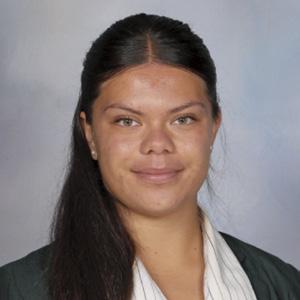
Kia ora, my name is Adyson Sa. I am 17 years old and one of the head students at Te Kauwhata College. I grew up in various areas of New Zealand such as Manurewa and Waiuku. In 2018 my family moved to Australia, where I spent part of year 4 and all of year 5. In late 2019 we moved back home, and I started my studies at TKC. These schools have in many ways taught me to make friends and get along with others, no matter our differences.
What does being a student leader mean to you and what does it involve?
To be a student leader is a great honour and privilege. For me it means being someone that youth can look up to, role-modelling a kind, helpful, respectful, and honest student with
every intention to serve my school/ community. This role involves a lot of behind the scenes work like meetings, planning, and a lot of emails. Besides this, I spend a lot of time talking with others and of course, leading them.
What do you like about the role and what do you hope to achieve ?
I really enjoy the planning aspect of the role and having a ‘checklist’ to complete. It’s extremely productive and there is always something to work on/do. However, the impact that I can make on rangatahi is massive to me. I love having conversations with students and giving them advice or just being a ‘light’ to them. I hope to achieve a positive influence on others and show them that great levels of success are possible.
How would you sum up your year so far?
So far, this year has not been easy and it certainly has demanded more time than any other. At times I struggle with balancing my academics and leadership roles but I have learnt to manage my time wisely. I’ve really enjoyed our school events and I’m simply savouring my final year of high school. Thanks to my awesome friends, this year, so far, has been really fun.
When not at school, what do you enjoy doing?
I am quite heavily involved with my church in Pukekohe, and I sing in the worship team. I spend my Sundays at church and love the community I have there. If I’m not at church, I’m probably spending time with my mates or catching up on school work. I have been riding horses for the vast majority of my life, and being around the horses is something I’ve always enjoyed.
What are your plans for 2027?
Unlike most people, I will not be going to university next year, but I will be taking a gap year to save some money and prepare myself for tertiary education in 2028. In 2027, I hope to spend lots of time with my family, get a job, see my friends, and apply for scholarships. Though next year will be much slower than this year, I believe I’ll appreciate a break.
When you look back, what do you think will be the highlights of the Te Kauwhata College experience?
Honestly, I truly believe that the relationships I’ve made will be the main highlight of my experience at Te Kauwhata College. I’ll look back on the memories made with my close friends, and the goofy conversations I’ve had with younger students that always make me laugh. The good thing about going to a smaller school is how relational it is. I’m grateful for the education I have at TKC, and I am very fortunate to be surrounded by encouragement and support by my peers and teachers.
More student leader interviews will be punlished in upcoming issues if the Chatter.
Ata
Ady
Jo
NEW HOSPITAL BED FOR TE KAUWHATA COMMUNITY HOUSE
Te Kauwhata Community House loans a wide range of medical and mobility equipment to community members living in Te Kauwhata & Districts.
Walkers, wheel chairs, shower stools, commodes and more can provide short term assistance to people recovering from illness or injury, assist people waiting for delivery of equipment through other agencies such as ACC or support visiting family members who may need additional supports while in the area. Loans are by koha and available for up to 3 months (or longer by special arrangement). One of the items available through the Community House, for many years, has been a hospital-level care bed which has served primarily as a hospice bed. This bed has enabled many families to care for a loved one through end of life in their own home.
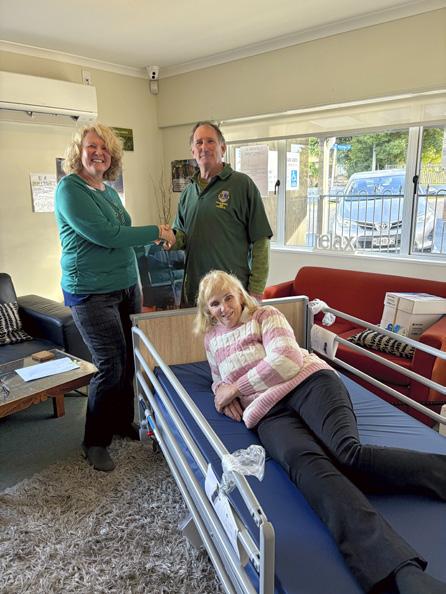
This month Te Kauwhata Lions purchased a brand new bed for the community. The bed is a welcome addition ensuring the Community House can continue to meet community need. The bed was officially handed over by Te Kauwhata Lion’s President Mark Wilson to Te Kauwhata Community House Manager Angela McKee. It has many modern features that our previous bed did not. Functionality includes electric rising and lowering, lifting and lowering options for feet and head, specialist mattress and optional safety rails. Pictured in the bed is Community House Assistant Lynda Halverson who gives the bed a 5 star comfort review.
If you have a friend or family member in Te Kauwhata or surrounding districts (Meremere to Ohinewai, Glen Murray to Waerenga) who has need of the hospital-
level care bed please contact Te Kauwhata Community House on 07 826 4303 or assistant@tekauwhata.org. nz. We will arrange delivery and set up. We also offer a range of other services to support your family through end of life journeys and the period that follows the loss of a loved one.
The staff and Board of the Te Kauwhata Community House thank Te Kauwhata Lions for their service and dedication to our community. We are incredibly grateful for this gift and know what an important role it will play in the lives of many in our community.
MATARIKI IN THE GARDEN
FROM THE TE KAUWHATA COMMUNITY GARDEN:
July in Aotearoa finds people in a celebratory mood. It is around this time that Matariki rises in the night sky and marks the Maaori New Year.
Many celebrate with displays of Maaori performing and visual arts, kite flying and feasting. Matariki is also time for remembering those who have passed, reflecting on family and whaanau matters of the past year and planning for the future. Matariki has a very deep association with food. It is a time for giving thanks for all the food that has grown for us, storing and preserving food, tidying gardens and preparing the garden for the next year.
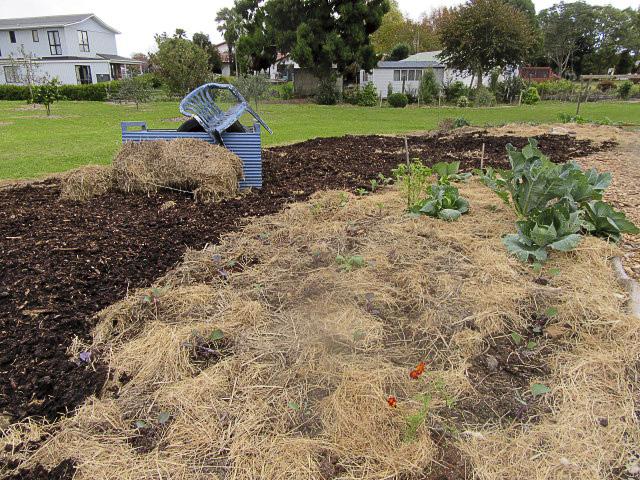
The summer saw our garden being very bountiful. For a long time the soil was covered with sprawling plants that produced summer beans, tomatoes, capsicum, lettuce, kumara, pumpkin and kamokamo. It has been cleared away now and the gardeners are building and replenishing the soil. Lots of available organic materials are being spread in layers over the garden. These include our own compost, hot compost from the primary school, sheeps wool, damaged hay, decomposing wood chips and sawdust from the Lion’s firewood yard, autumn leaves and raking from horse stables. All these alive with small animals, fungi and bacteria use water and oxygen to break down the bulky material into humus rich soil.
Maaori cultivated warm climate plants of kumara and hue (gourd) in their mara (gardens). While the winter weather was happening the soil was resting and small animals and other micro-organisms were restoring the soil. These days there are cultivated green leafy plants that can be planted and grown in the layers of resting soil, which is what we do at the community garden.
Celebrate Matariki with a feast by boiling up meats of pork or bacon bones, add in stored garden vegetables of potato, kumara, pumpkin, kumara and fresh green vegetables like cabbage, cauliflower, silverbeet. Sharing a pot of kai is a great way to give thanks for family, friends and the environmental forces that give us our nourishment and sustenance through lovely food.
LIFE UNCOMPLICATED
REFLECTIONS ON WORK, LIFE, AND THE LITTLE THINGS THAT MAKE A DIFFERENCE
This column reflects on the small patterns and quiet shifts that shape our everyday lives – uncovering meaning in ordinary moments. It doesn’t claim to offer answers but hopes to bring perspective and perhaps a little calm.
IT WAS NEVER ABOUT THE TABLET
Overthe years, I’ve worked with many learners who have joined digital literacy programmes with a degree of hesitation.
One learner in particular was friendly, capable and engaged in many other aspects of life but when it came to digital technology, he had already reached a conclusion about himself. There was no hostility in his words – just a quiet acceptance that the world of technology belonged to other people.
As always, we started small learning how to navigate between applications and finding information online. Even so, every unfamiliar screen seemed to reinforce in him the feeling that the world was moving in a direction he hadn’t quite kept pace with. Every mistake risked becoming evidence that perhaps he wasn’t cut out for this after all. But over time, slowly but surely he became comfortable enough with the basics that the technology itself was no longer the centre of his attention. And that was when I introduced ChatGPT.
At first, there was the usual curiosity mixed with a little scepticism. But after a few demonstrations, he began asking questions of his own. Before long, he was using it to understand things he had always found confusing, draft messages that would have previously taken much longer to write and explore ideas that interested him.
What surprised me wasn’t how quickly he learned to use the tool. It was how quickly he found value in it. Perhaps for the first time, technology wasn’t something demanding effort from him but was giving effort back instead. The tablet had become a doorway to things that were suddenly easier, quicker and more accessible than before.
A Thought to Carry With Us?
Looking back, I don’t think the learner changed because the technology became less intimidating. I think he changed because he discovered a reason to care – and perhaps that is true of change in a more general sense?
We often assume that people adapt because they become comfortable with something new. But from what I’ve observed, people are far more likely to embrace change when they can clearly see what it makes possible. The discomfort doesn’t disappear – it simply stops being the most important thing in the picture.
In the end, it was never really about the tablet at all for this learner. It was about discovering that the future still had something to offer him – and that he was capable of being part of it.
Ganga enjoys finding small insights in everyday moments and sharing them as reflections on work, life and the in-betweens. He also empowers individuals through customised digital literacy courses. You can reach him at ganga@ rte.co.nz or find him on LinkedIn via the QR Code.
THE PEOPLE BEHIND THE PICKUP
WAIKATO DISTRICT COUNCIL
Waikato District Council is launching a social media campaign today to highlight the important mahi our rubbish and recycling contractors do for our communities, while promoting waste minimisation and safe working environments.
The campaign comes in response to an increase in aggressive behaviour and verbal abuse towards collection crews and, in one case, physical abuse.
These incidents often arise when rubbish or recycling is not collected because it does not meet collection requirements, such as oversized bags, inorganic items like TVs, mattresses and toilets, non-recyclable materials, or bags and wheelie bins without the correct pre-paid stickers or tags.
While Council understands the costof-living pressures many households are facing, we’re asking residents not to overload bags that contractors manually lift into trucks, and not to take
frustrations out on collection crews. If you have a question about your collection, please call 0800 492 452.
Waste Contracts Coordinator Sheree Holgersen said the campaign, Behind the Pickup, is designed to introduce the community to the people behind the service, and in doing so, strengthen the connection to the community.
“We know times are tight, and people are looking for ways to save money,” she said.
“It’s about finding the balance between encouraging waste minimisation, reducing the amount of rubbish going to landfill and helping manage costs for residents, while also reminding people not to take their frustrations out on our rubbish crews.
“They’re out working when many of us are still asleep, in the heat, the cold and the rain. We want to encourage good habits and greater respect for the people doing this essential work.”
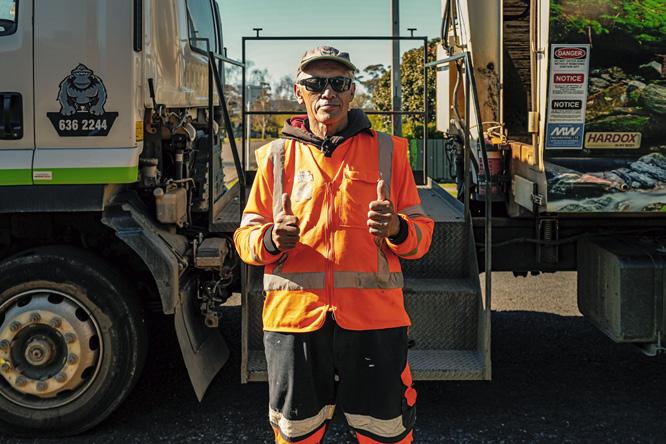
The five part video series was filmed in Huntly with Green Gorilla and in Tuakau with Smart Environmental. The campaign introduces five individuals who work on the district’s collections, beginning with Jimbo from Huntly, who collects recycling for Green Gorilla. It will be run over several weeks on
Facebook and Instagram - the first video launched Monday, 15 June.
Acting Zero Harm Manager Joanne McArthur said Council is focused on making sure contractors can work in safe environments. While most people interact respectfully with crews, a small number of people don’t.
“Everyone deserves to be safe at work, to enjoy their job and to be treated with respect,” she said. “As Jimbo says (in the video), all labour has dignity. These are the people who help keep our communities clean running after trucks and lifting heavy crates and bags every day, and in all kinds of weather.”
“We hope that by sharing their stories, people will see these workers are like them. Doing a job to support themselves and their families – and that this understanding will lead to greater care, and even pride in the mahi they perform for our communities.”
The campaign was funded by central government’s Waste Minimisation Fund. You can find out more about the fund on the Ministry for the Environment’s website.
Residents can find more information on Council’s website about reducing rubbish and recycling effectively.
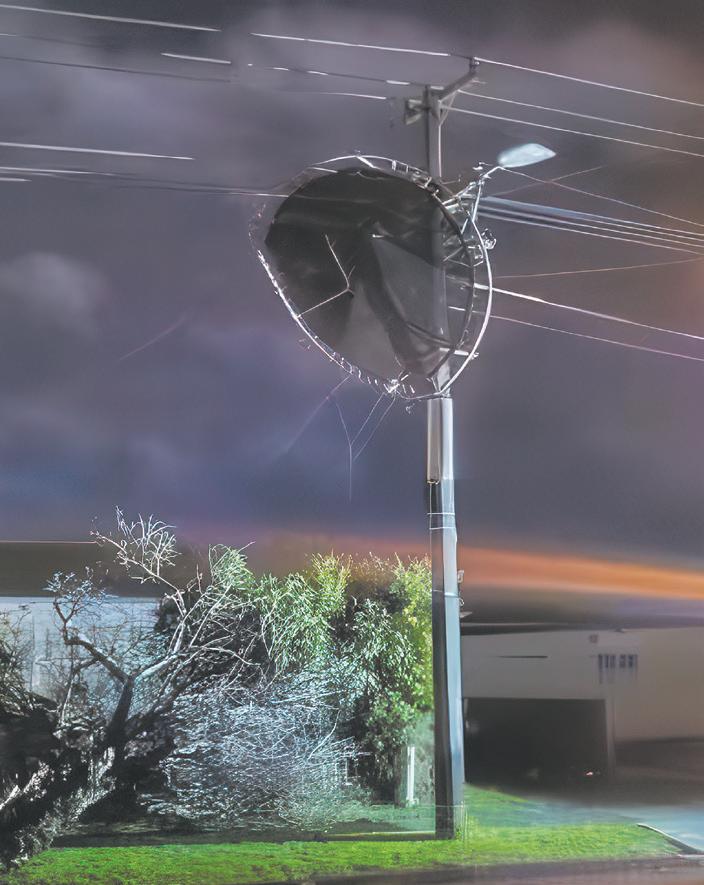
Storms Create Chaos
ENDLESS POSSIBILITIES
JOIN US IN CELEBRATING THE POWER OF INDIGENOUS KNOWLEDGE
Educate | Create | Activate Matariki opening | Friday 28 June at 3pm
Local Māori Artists Exhibition | Fri 28 June - Sun 7 July, 10-2 Kōrero | 28, 29, 30 June and 5 July Films | 28, 29, 30June and 5 July At the Raglan Old School Arts Centre Visit www.raglanihub.nz
PUBLIC NOTICE FOR LEASE APPLICATION ON RECREATION RESERVE
Waikato District Council gives public notice of a lease application from Te Kauwhata Scout Club (part of the Scout Association of New Zealand) for 15-year lease for their clubroom located at the Te Kauwhata Domain, 33 Mahi Road, being Section 76 Te Kauwhata township.
Any person wishing to make a submission or objection to this proposal is required to lodge this no later than 5pm on Friday 7th August 2026 by:
Email: Strategic.Property@waidc.govt.nz Or in writing to: Strategic Property
Waikato District Council Private Bag 544 Ngaaruawaahia 3742
For more information on the lease application visit Councils website under the public notice section or contact Strategic.Property@waidc.govt.nz.