








Kia ora and welcome to The Chatter News – your Northern Waikato community newspaper in print and online.
With more than 20 years’ experience in community media, we are proud to deliver positive, relevant and trusted local news. We believe community newspapers play a vital role in keeping people informed and connected, supporting local businesses and celebrating the people, events and achievements that make our region unique.
Each month, 6,000 copies of The Chatter News are delivered to homes and businesses across Te Kauwhata, Huntly, Taupiri and surrounding districts. Our growing online presence also helps us reach communities throughout the region.
This is your newspaper and your community’s voice. We welcome stories about local people, young achievers, businesses, farming initiatives, creative projects, environmental work and anything else worth celebrating.
To contribute, suggest a story or discuss advertising opportunities, please get in touch.
Jacqui
info@chatternews.co.nz
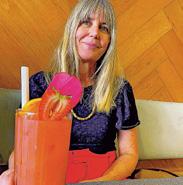
Chatter Community Newspaper is published monthly on the first Wednesday of the month and circulated throughout the North Waikato.
Readers contributions of articles and letters are welcome. Publication of contributions are entirely at the discretion of the Editor.
Contributions will only be considered for publication when accompanied by the author’s name and surname, telephone number and residential address. All reasonable steps are taken to ensure accuracy.
Opinions expressed are not necessarily those of the owner or publisher.
Contact Jacqui
Phone: 021 428 808
Email: info@chatternews.co.nz www.chatternewspaper.co.nz
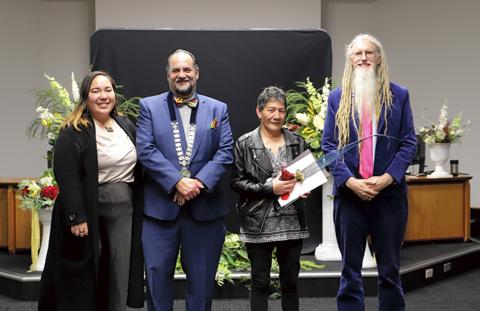
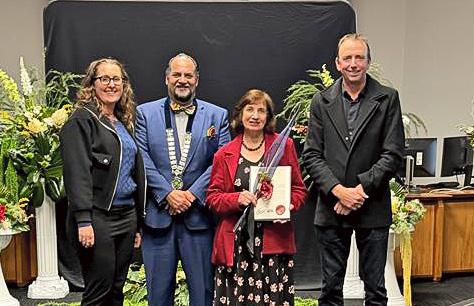
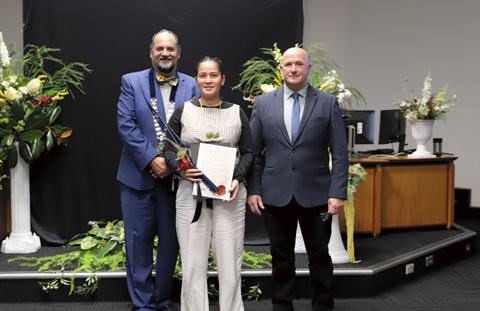
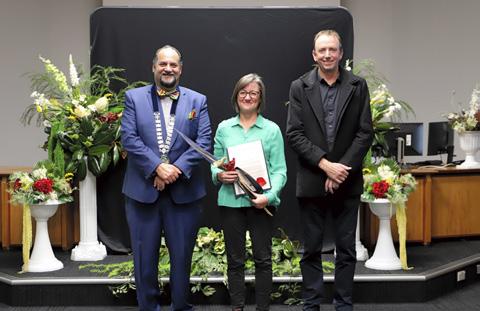
People making a difference across the Waikato district have been recognised through Waikato District Council’s Mayoral Community Awards.
Hosted by Mayor Aksel Bech, the annual awards celebrated individuals, groups and organisations whose dedication and service help strengthen their communities.
Hine Timothy
Category: Making a Difference
Hine Timothy was recognised for more than a decade of volunteer service to the Huntly community.
As a longstanding volunteer at the Huntly Community Hub, Hine has helped sort and distribute rescued food to families experiencing hardship, ensuring valuable resources reach those who need them most.
She was involved in the early days of Huntly Kids Kitchen, an initiative that has supported local tamariki and
Hine has also volunteered with the Community Health Shuttle, providing companionship and practical assistance to people attending medical appointments.
She is now involved in programmes supporting kaumātua wellbeing, including Age Concern initiatives, Strong and Steady classes and a kaumātua lunch programme aimed at reducing isolation.
Her quiet leadership and commitment to helping others have enriched the lives of many people across Huntly.
Julie Lynch
Category: Making a Difference
Julie Lynch has been a dedicated member of the Taupiri School community for more than 20 years.
She has run the school’s Wednesday programme, often contributing from her own pocket to create opportunities

Hamilton: 2pm, Sun, 6 Sept
Distinction Hotel 100 Garnett Avenue
Julie has consistently gone above and beyond to ensure tamariki feel encouraged and included, while receiving the support they need to reach their potential.
Her care and commitment have had a lasting impact on families across Taupiri. She has continued to give her time without seeking recognition, becoming a valued pillar of the community.
Nga Mako Totorewa
Category: Sport, Recreation, Arts and Culture
At 23, Nga Mako Totorewa has already made a significant contribution to sport and youth development in the Waikato.
She played an important role in establishing the Rangiriri Storm Rugby League Club and Te Rua o Tarakookoomako Waka Club, which operate under the Rangiriri Cultural Sports Club.
The clubs use sport to engage whānau and reconnect people with their whakapapa and heritage.
Nga Mako coaches tai tamariki in paddling techniques, steering and water safety through the waka club. She also takes on the demanding job of towing four 15-metre waka ama canoes to practices and events.
At Rangiriri Storm, she coaches the under-10s, cocoaches the senior women’s team and serves on the club committee, helping organise team activities and preseason campaigns.
Di Morris
Category: Making a Difference
Di Morris was recognised for her contribution to the Onewhero community through emergency response, community preparedness and animal welfare.
A valued member of the Onewhero Fire Brigade, Di specialises in medical response as a qualified first responder and trainer. She also volunteers with St John, attending to patients and serving as an ambulance driver.
Di has been instrumental in the development of the Onewhero Community Response Group.
As one of its three original members, she helped develop the community response plan and continues to play a key role in reviewing it.
Her love of dogs has also benefited the community. Di cares for lost dogs until their owners can be found and helps arrange new homes when needed.
Her practical support and commitment to others have made her one of Onewhero’s most valued community

Thames: 2pm, Sat, 15 Aug War Memorial Civic Centre Auditorium 200 Mary Street
Matamata: 2pm, Sun, 16 Aug Civic and Memorial Centre 11 Tainui Street

BY SARAH MORCOM
Anew home for the fuzzy, furry, and fluffy is now open in Huntly.
The Waikato Pet Community House shifted from its previous location in Hamilton a few weeks ago. The staff are already getting to know the Huntly community, and its love of dogs.
“I can’t remember how many dog adoptions we’ve done since we moved here. We came with about eight puppies and one went almost immediately,” said manager Brooke Ings.
They spent three weeks setting up their new home, creating appropriate spaces for their animals, and politely turning away some keen locals who were enchanted by puppies and guinea pigs playing out the front of the business.
Eventually they couldn’t hold off anymore–Huntly wanted to see those cuties. In mid-July, they opened their doors and the love flooded in.
“I really like the neighbourhood here,” Ings said.
“We’ve got the river view out the back, which is just the best view, it’s wicked. [The neighbouring businesses] also have dogs, so at 7am each day we all open up our back doors and the dogs sort of run out to say good morning to each other.”
Ings, her co-manager Summa Broadmore, and their teenage volunteer Ben Wright-Taplin (who travels all the way from Hamilton) have been enjoying meeting new friends and neighbours in Huntly. However, it’s been a slow process of trust-building, as the team are
still shaken from events at their last location in Nawton, Hamilton.
“We were attacked by the neighbours at our location on Grandview Road. We had six guinea pigs killed and two dogs injured,” Ings explained.
“Our windows were attacked, our barbecue was attacked, someone’s car was damaged–hence why we did the big shift and added more security-wise as well.”
They’ve been meeting Huntly “through the gates” of their business, cautious and curious. They’ve grown fond of the town in just a few weeks.
“We used to have people sit on our couch and make coffee with us. It used to be, our house was everyone’s home.
“We were open from 7am to 7pm at one point. And that was exhausting, but we wanted to share it with the community, and it worked really well.
They hope to get to that point with the Huntly community. Already they’re forming camaraderie with their neighbours and landlords.
“Our landlady is really cool. She even sings for us at the end of the day sometimes.”
Among those calling the Pet Community House home at the moment are about a dozen cats and kittens, some guinea pigs, a litter of puppies, and surprisingly, a possum called Dobby.
“We have an exemption for Dobby, and he’s microchipped. He is our only one, and he’s a permanent resident,” Ings said.

Huntly’s lucky Lotto store has produced a local millionaire after one man claimed all four First Division prizes from the same draw.
The four winning lines, worth $250,000 each, were sold on one ticket at The Bookshop and Lotto on Main Street.
When the results were first announced, store owners Vaibhav Chokshi and his wife Jalpa did not know whether the prizes belonged to one person or four different players.
“The prize for each ticket will be $250,000 each. But whether four people have those tickets or one person bought all four, we don’t know,” Vaibhav said at the time.
Lotto NZ later confirmed a regular local player had selected the same six Lotto numbers on four lines, with a different Powerball number on each.
The winner did not initially realise he had won the full $1 million. After reading reports that the four winning lines may have been on one ticket, he returned to the store to have it checked.
He has remained anonymous and said the money would be used to support his family.
“We sell a lot of Lotto tickets, and we have had prizes won before. But this is certainly the first time that all four winning tickets were sold here. Good on Huntly!” Vaibhav said.

Ings herself calls the place home, too–she basically eats, sleeps, and lives amongst the animals, especially the indoor cats who enjoy her company.
As well as animals, the centre also has a stall outside their space on the footpath–items free to a good home. Ings said it’s about giving back to the community, as well as welcoming people in.
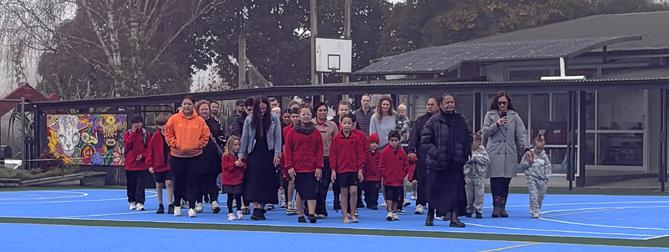
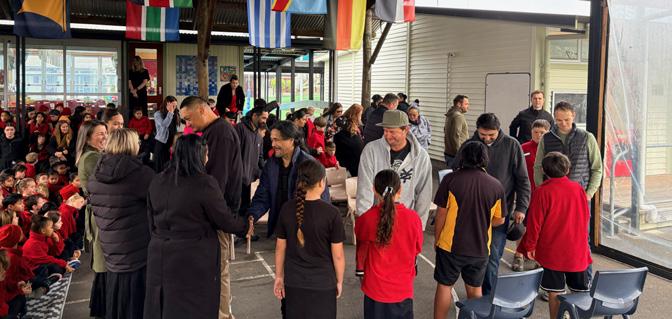
Last week Te Kauwhata Primary welcomed 19 new students and their families to the school family with a Term 3 Poowhiri. Students led the process to welcome the school’s new tamaiti. Attending the poowhiri for their children were proud parents, whanau and new arrivals in Te Kauwhata.
Brian Martin, Te Kauwhata Primary principal says the poowhiri plays an important role in the school’s ethos, with an iuncreased focus on bilingual learning through its new exterior learning space for Ngaa Maramara o Ngaa Muka.
Through this initiative, the school offers a high quality Māori immersion programme (rumaki) growing children’s abilities under the shelter of the Māori language. Children are surrounded by Māori language the entire day, from mathematics and science to arts, haka and physical education.
BY CLAIRE SIMPSON
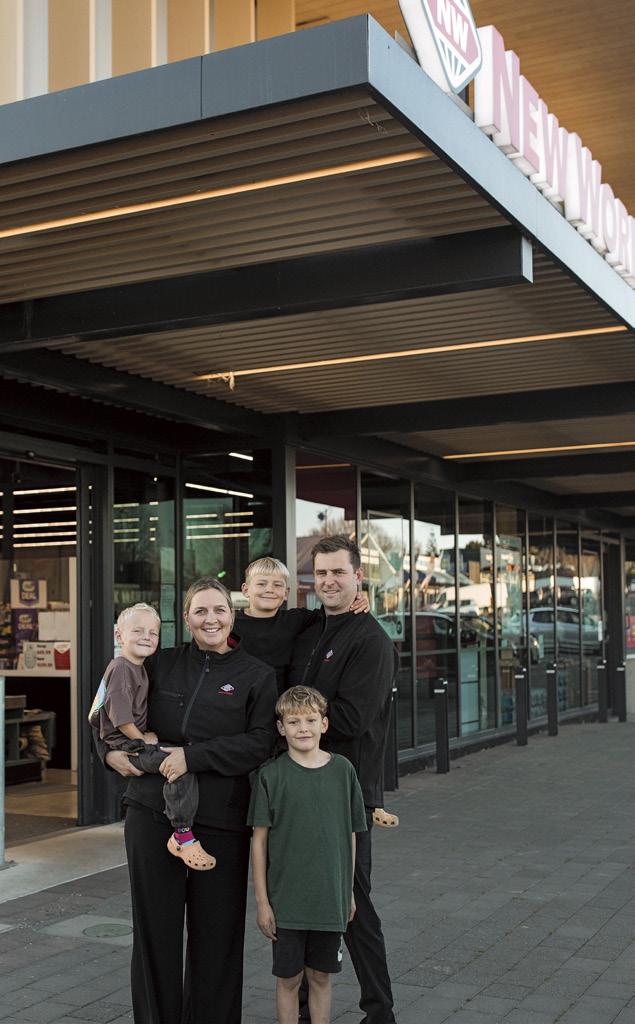
Te Kauwhata’s New World supermarket has new owneroperators, bringing a win-win all round for the community as the family settles into a new home, new job, a new school; and the volunteer Fire Brigade about to get the added benefit of an experienced firefighter.
Chris and Becky Beard come with impeccable credentials, with nine years under their belts owning and operating Four Square stores at Tokomaru Bay on the East Coast and more recently in Coromandel- and a very strong focus on family and community.
But it’s the first New World for the couple and to say they are excited is an understatement. “Owning our first New World is a significant milestone for Becky and me. Four Square gave us the opportunity to become well-rounded owner-operators and taught us the importance of community, relationships, and great service,” says Chris
“Moving into the larger and more extensive New World is an exciting next step, and we’re looking forward to bringing everything we’ve learned into a larger format while continuing to put customers and our team first.”
The couple came into the grocery sector after returning from overseas, settling first in Ohope. Chris says they were looking for a way to build their future together, and that journey eventually led into Foodstuffs ownership
“Te Kauwhata felt like the right opportunity for us. The store already has a strong reputation, a fantastic team, and a loyal customer base. We’re excited to build on the great work that’s already been done while becoming part of the local community and contributing to its future.”
Chris is a Qualified Firefighter with the Coromandel Volunteer brigade and is keen to continue his voluntary work transferring to the Te Kauwhata brigade.
“One of the things we’ve valued most as owners has been becoming part of the
communities we’ve lived in. From Tokomaru Bay to Coromandel, we’ve enjoyed supporting local events, schools, clubs, and community initiatives wherever we could,” says Chris.
“We look forward to continuing that in Te Kauwhata and finding ways to give back and support the organisations and people who make the village such a great place to live. We have three boys, who are now enrolled at the local primary school and community preschool, and we’re excited to settle into the area and be part of the Te Kauwhata community as a family.”
He reflects on what the couple want out of their involvement in Te Kauwhata, and what that will mean for locals. “We absolutely want to continue building on the strong foundation that’s already in place. We want New World Te Kauwhata to be known for outstanding customer service, a great shopping experience, and a positive workplace where our team can grow and thrive.
“Ultimately, we also look forward to continuing to give customers even more quality, choice and value across our fresh departments. We want the store to be a genuine part of the community and somewhere locals are proud to shop and work in.”
His message to locals (new and long term) is that the couple are approachable, committed, and genuinely excited to be here. “We believe the best supermarkets are at the heart of their communities, and we want to get to know our customers, understand what matters to them, and make sure the store reflects the needs of the people who shop here. We’re here for the long term and look forward to becoming part of the Te Kauwhata community, “he says.
And switching off from a move, a new house and school and a whole new world, Chris says he likes to switch off by spending time outdoors. whether fishing or hunting, when he gets the chance. “But most importantly, I enjoy spending quality time with Becky, our three boys, and catching up with family and friends.”


The primary sector is of unparalleled importance here in the mighty Waikato.
In North Waikato and other communities within the electorate, there are multitudes of farms and associated supporting businesses. Our farmers are undeniably hardworking, resilient, dedicated. They care for their stock, crops, and the land on which they live and work. At this time of year, local dairy farmers are busy with calving throughout the day and night. Growers are planting crops including brassicas, salad greens, and onions. Berries are being cultivated so they’re ready for the high demand season.
Working in the food and fibre sector, one develops the skill to pivot any time a challenge presents itself, adapting to variables including the weather, staffing issues, market demand, and in response to biosecurity threats. Overseas impacts of H5N1 bird flu and the potential risk it presents locally are taken seriously here. Waikato is home to small and large-scale poultry operations, reliant on the health and welfare of their flocks for their fiscal viability and the livelihoods of their employees. Prudence is paramount to protect our primary sector from biosecurity threats; our National-led Government is setting regulations in place to help Waikato poultry farmers manage H5N1 bird flu, and to ensure our supply of this favoured Kiwi foodstuff is secured. Poultry farmers with more than 100 birds will need to set planning in place outlining prevention and management of avian disease in their flock. The MPI On Farm Support team will assist small operators
to develop and implement their plans and give guidance on being prepared and responding to this infection risk. Prevention measures, such as registers, disinfection, and cleaning, along with response measures, such as humane culling and disposal, will be essential to minimising further spread – no easy feat considering wild birds are also susceptible but don’t respond to guidelines and regulation. Whether you’re a townie or in the country this matters. Backing our poultry farmers with appropriate measures to manage this risk to their industry is essential to their businesses and to everyone who loves a crispy drumstick with their fries.
Our practical changes in the rural sector extends to modernising the Recognised Seasonal Employer (RSE) Scheme. Our plans to introduce changes from early 2027 will simplify and clarify the process, prioritising opportunities for Kiwi workers and maintaining protections for staff from overseas. The scheme is vital to the horticulture and viticulture industries, sectors which are reliant on the 17,000 workers from the Pacific who meet the peak season labour demands which aren’t met from our domestic workforce. Removing the unnecessary complications in the current system and improving the opportunity for RSE workers to move between RSE employers is essential to ensuring the scheme continues to be successful for our primary sector. Sensible changes bring the sector more certainty, adds safeguards for workers, and fosters the ongoing growth our primary industries need to succeed.
Tim van de Molen – MP for Waikato.










MARLENE RAUMATI
On Wednesday 22 July Council met to discuss the findings of the recently conducted Head Start Pathway community engagements, and to determine the appropriate way forward for our district.
Over a five-week period there were close to 1,350 interactions. Those interactions derived from a diverse set of communication channels and pathways.
From the “Quick-Poll” face-book pulse survey respondents put everyday affordability first. Maintaining and improving infrastructure, value for money, strong local voice for communities, consistent services, keeping council debt manageable, reducing bureaucracy and improving efficiencies, also featured as priorities.
However, from the website survey, the key significances were prioritised with reliable core services and infrastructure first, followed by strong local representation and voice, protecting rural voice from urban dominance, and affordable rates and value for money last. Overall key findings were local representation, infrastructure and core services, and debt, rates and financial fairness.
The five criteria that every proposal will be assessed against are deliverability, supports the new planning system, simplifies local governance, economies of scale, and maintains local voice. These criteria are exactly what our communities have insisted upon.
Failing to submit a proposal by 9 August will not bode well. If we don’t decide, central government’s “Back Stop” substitution will. The risks from a back stop perspective could result in reduced local control, accountability without authority, financial and resource risk, reputational impact, and reduced flexibility. A back stop process would see reorganisation arrangements determined for the region rather than by it.
The evidence-based proposal, scheduled for ratification by Council on Wednesday 5 August, is a proposal built around the river and its communities. The Waikato District Council proposal seeks to converge with Hamilton, Waipaa, South Waikato, and Taupoo.

Marlene Raumati Waerenga-Whitikahu
General Ward Councillor marlene.raumati@waidc.govt.nz 020 400 12548
The success of this proposal, depends on whether the parties agree to come together as a single Western Waikato Unitary Authority (“WWUA”).
The finer details are yet to be worked on. For example, ringfencing legacy debt, ensures that the debt each council brings, stays attached to them rather than being spread across the new entity. Moving forward, Council will determine the scope of the proposal, governance direction, Maaori representation and partnership, financial principles and risk appetite.
Mayor Aksel will release a statement shortly after the 5 August Council decision.
If you have a council related concern, please feel free to contact me either by email at marlene.raumati@waidc. govt.nz or by phone on 020 - 40012548.
Raglan Community Board discussed









pool, supported consultation on local government reorganisation, and approved two new road names (Waikokowai Lane and Repo Tai Lane). Members also sought updates on the Greenslade Road playground and the World Surf League event’s impact on the community.
Upcoming Meetings

1. Taupiri Community Board meets Monday, 10 August 2026
2. Huntly Community Board meets Tuesday, 11 August 2026
3. Ngaaruawaahia Community Board meets Tuesday, 08 September 2026
4. Rural–Port Waikato Community Board meets Thursday, 10 September 2026
5. Tuakau Community Board meets Monday, 15 September 2026
6. Raglan Community Board meets Wednesday, 16 September 2026
BY SARAH MORCOM
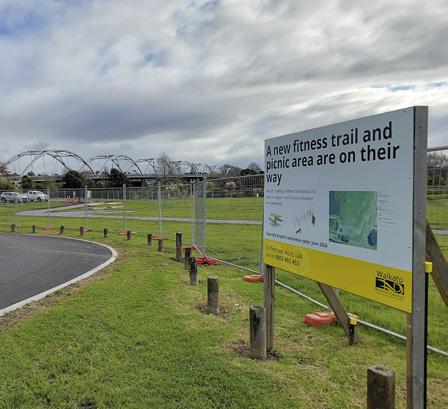
Anew riverside fitness and recreation area expected for Huntly East is now expected to be finished four months later than its original completion date.
The delay is due to ground conditions in the area which have been driven by river levels, says Waikato District Council.
Initially expected to be finished by the end of June, Huntly river-walkers will now have to wait until the end of October, or early November, to enjoy the new developments to the area.
“The fitness module will now be installed once the water levels have dropped to the appropriate level,” said Council’s open spaces services manager, Glyn Morgan.
The gear that needs to be installed at the site includes static fitness equipment, designed to be used outdoors. Its later arrival is not the only change of plan to come from the site’s location.
“Although a natural surface material (such as hoggin) was initially preferred for its aesthetic and environmental qualities, concrete was selected due to its superior durability and ability to withstand the site conditions.”
Once completed, the area will serve as a valuable community-focused space, Morgan said.
“This improved community space is a place where whanau and friends can gather, share kai, and engage in physical activity.
“The fitness trail is designed to cater to all fitness levels and ages and provide an accessible and enjoyable environment for exercise. It will also foster social interaction within the community.”
“This work is being completed in support of community wellbeing and to encourage recreational use of the reserve and its connectivity.”
The development is being co-funded by WEL Energy Trust, and is being supported by local iwi, the Huntly Community Board, and Waikato District Councillors.
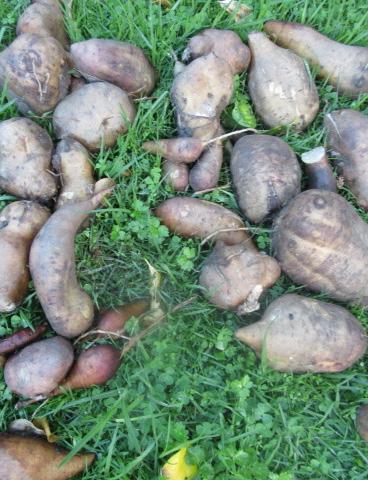
Over the winter months yacon has been appearing on the shelves of the Paataka Kai. Yacon could be mistaken for kumara and both crops do originate from South America. Yacon is a tuber that grows in the soil beneath a tall leafy sunflower plant. This sunflower is only the size of a two dollar coin and it flowers in winter.
Yacon can be peeled and eaten raw as a snack food or as part of a salad. It can also be roasted along with other winter vegetables. One of our gardeners, who is very committed to preserving the harvest, owns a home kitchen dehydrator and made dried yacon pieces. She brought them to the garden for us to try. They would make a very tasty snack for the lunch box snack or a great dried fruit to be added to the Christmas cake.
One of the purposes of the Community Garden is to provide new ideas for people to have their own garden spaces to grow food to supplement their supermarket spends. Yacon is easy to grow and is also available to eat in winter when other foods are slow growing. To get your plot growing you must collect a clump of green shoots from an established yacon plot and transfer it to your own garden. Thereafter, tall leafy stems grow up while beneath the soul the tubers are growing. When the flowers appear it is time to dig the yacon up.
A striking sight on the front fence of the garden at the moment is the tree dahlia. This is a very tall growing bushy plant with the mass of white flowers. Both the yacon and tree dahlia are welcome plants in a garden. Then when they have finished growing for the year, the stems and foliage are cut down and chopped up to compost and add bulk to the depth of the souls. The roots of the plants remain under the soil and reproduce next year.
REFLECTIONS ON WORK, LIFE, AND THE LITTLE THINGS THAT MAKE A DIFFERENCE
This column explores the quiet ideas hidden within everyday life – drawing meaning from ordinary moments and inviting us to see familiar things a little differently. It doesn’t claim to offer answers but hopes to bring perspective and perhaps a little calm.
One of the things I enjoy most about conducting training is the questions.
Not because I always know the answers but because the questions themselves often reveal far more than people realise. Over the years, I’ve noticed that learners will sometimes begin with a question that seems perfectly sensible but it’s not these questions that matter most.
As we continue talking, something interesting often happens. The original question slowly gives way to another. The person asking about AI isn’t really looking for software but for more time in the evenings. The learner asking about Excel isn’t hoping to master spreadsheets but rather, trying to keep track of a household budget with more confidence. Likewise, the person wanting help with a CV isn’t really asking about formatting but hoping to find work that gives their family a little more security.
And when that deeper exploration happens, the conversation changes – not because we’ve found a better answer, but because we’ve discovered a better question instead. One of the unexpected truths that I’ve learned as an educator is that my role isn’t usually to provide better answers in reality. More often than not, it’s to help people ask better questions, and once the question becomes clearer, they often begin to see their own way forward.
A Thought to Carry With Us?
That realisation has changed the way I think beyond the classroom. When I find myself stuck, I now spend less time searching for the perfect answer and more time wondering whether I’m asking the right question in the first place – am I trying to solve the real problem or just the most obvious one?
It’s no secret that we live in a world that celebrates answers – search engines promise them, experts provide them and AI tools generate them in seconds. Of course, there is no denying that there is tremendous value in that.
But perhaps we sometimes overlook the quiet importance of the question that comes first. A good answer might solve today’s problem, but a thoughtful question can quietly reshape tomorrow. And perhaps that’s why some of the most valuable questions don’t immediately make life easier – they simply help us begin looking in the right direction.
Ganga enjoys finding small insights in everyday moments and sharing them as reflections on work, life and the in-betweens. He also empowers individuals through customised digital literacy courses. You can reach him at ganga@ rte.co.nz or find him on LinkedIn via the QR Code.









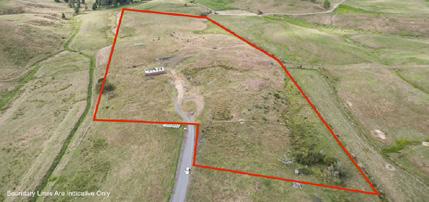









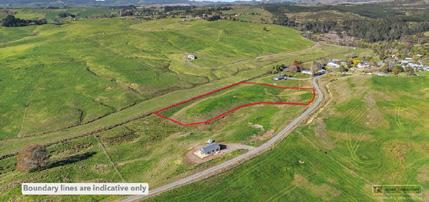




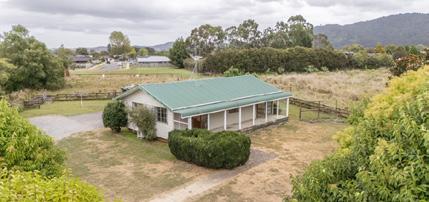






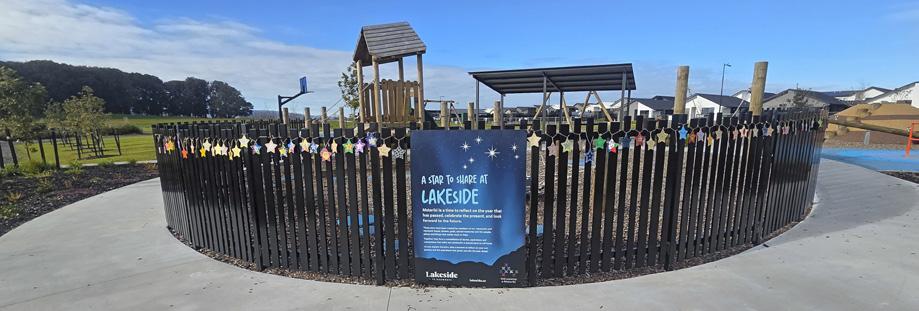
Over Matariki weekend, the new Lakeside Playground became home to a special community installation celebrating reflection, creativity, and connection.
Titled “A Star to Share,” the temporary artwork installation brought together hundreds of wooden stars decorated by members of the Te Kauwhata community. Inspired by the themes of Matariki - remembrance, celebration, and looking ahead - each star featured a personalised message sharing memories, gratitude, and hopes for the future.
Community members of all ages took part, painting stars and adding thoughtful reflections. Some honoured loved ones who have passed or people who have made a difference in their lives, while others celebrated milestones from the past year, from new friendships to personal achievements. Many looked to the future, expressing hopes to learn, grow, and embrace new opportunities.
Displayed throughout the Matariki-themed playground, the stars transformed the space into a colourful constellation of stories and aspirations. While
BY SARAH MORCOM
Ron Farrar started playing guitars from a young age. Then he started making them.
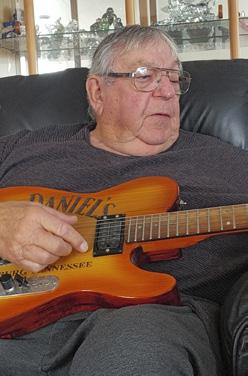
The guitars hanging and sitting around his home in Huntly East are made with love, and played with love. One of his best is a seemingly booze-themed electric guitar with a Jack Daniel’s logo engraved into the body.
“The wood is actually off a huge wine barrel. The back of it was off a barn, I think. It’s quite rough,” Farrar said.
“I took the body into a place in Hamilton and said to him, can I get [the Jack Daniel’s logo] done with the laser? As he was engraving it, you could smell the wine or whatever that was in the barrel.”
“I don’t drink Jack Daniel’s, by the way.”
Farrar has lived in Huntly for most of his life. He now lives with his wife Shirley, and sees his son Steve often. Music is just a part of his world, he said.
“If you haven’t got music, you haven’t got anything, really. The first thing I do in the morning is turn the radio on. I listen to music in the car, same thing, you know, music in the car all the time.”
He began as a young teenager with no guitar teacher and no books. Almost everything Farrer knows, he learnt by ear and memory. Eventually he found himself in a band during his college years.
“In 1962, we became resident artists at Starlight Ballroom in Hamilton. So that was a regular thing for us.”
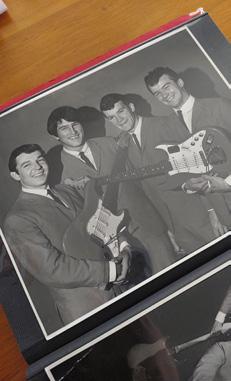
The Starlight Ballroom was a big deal in Hamilton in the 50s, 60s, and 70s. The venue has regular events including dances and socials.
“We had a guitar and a big fender piggyback amp. So we had plenty of noise, but just about the only thing you could get for any effects was a tape echo unit, which gave you some of the echoes and the effects.”
Back then, and pretty much all the way through the rest of the 20th century, rock and roll and modern rock were very prevalent in his sets. However, Farrar said he always had a quiet love of country music, and is now making an effort to bring it into his playing.
He now plays once a month, sharing the country music he’s discovered with Huntly and Waikato audiences.
“The people in the town are really friendly and everybody knows one another,” Farrar said about Huntly.
“And the amount of people that are musical or have musical talent in Huntly, it’s quite an unbelievable amount of people that sort of just come out of the woodwork. They play guitars, mouth organs, all sorts.”
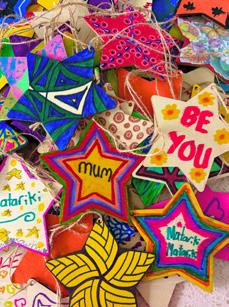
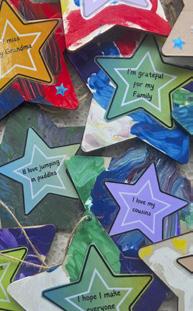
the installation was temporary, it created a meaningful opportunity for the community to connect with the values at the heart of Matariki.
The installation showcased the power of community and storytelling, creating a space where people could share what matters most to them. Through hundreds of individual stars, A Star to Share captured the collective spirit of Lakeside and the values that make Matariki such a meaningful time of year.
Step into the world of

A gallery-style store showcasing original photographic prints 12 RangiririRoad,Rangiriri(BehindtheFixateCafé) Come and support local, and be inspired

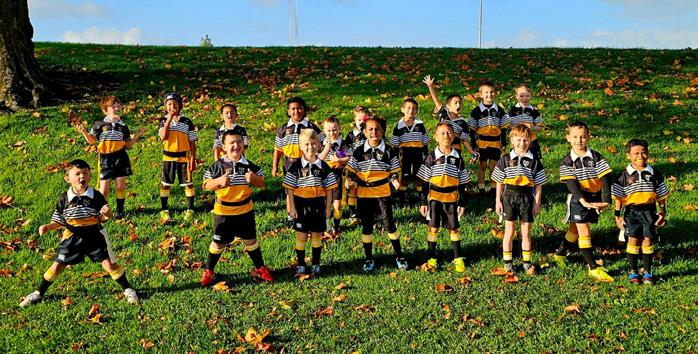
WITH TE KAUWHATA’S YEAR 2 RIPPA RUGBY TEAM
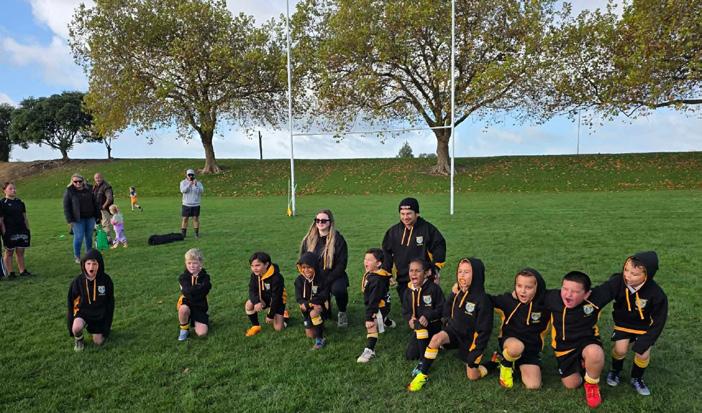
The Chatter catches up with Matthew Shaw, coach of TK’s Year 2 Rippa team.
What has been your favourite moment of the season to date?
A favourite moment would have to be our last Rippa rugby game, which we played at Waiuku. A young girl, Seteri, is playing her first season of Rippa rugby and is always shy at training. She managed to score her first try of the season all by herself! It made me and our team manager very proud.
How have the players improved since the first game?
Each and every one of them has improved in their own way. About 95% of the team had never played rugby before this season, yet they can all listen and stay within the rules of Rippa rugby.
Who has surprised you the most this season and why?
I could say the whole team!
Kymani – I had the privilege of coaching him in Year 1 and, back then, he was really shy and reluctant to get involved. Fast forward to this year and it’s a completely different story. His confidence has grown so much. He’s always around the ball, scoring tries, making crucial rips and giving 100% every game.
It’s been awesome watching him develop into such a confident and talented young player and, hand on heart, he is one of the best players in our team now!
What is one thing your team does really well every week?
Listening and focusing isn’t always an easy task for Year 2s, but they have all adapted really well to following instructions. They are also encouraging of each other on and off the field.
What’s the funniest thing that’s happened at training or on game day this year?
The funniest moment would have to be when Kaiser scored a try against Maramarua. The kids were in what looked like a Rippa rugby ruck, in proper All Blacks mode, and Kaiser picked up the ball, jumped over all the kids who had fallen over in the ruck and scored the try. He then stood up and did a victory dance!
Who on the team gives the biggest celebrations after scoring a try?
Rihare – he does a Michael Jackson moonwalk when he scores!
What are you most looking forward to for the rest of the season?
Just seeing all the kids and supporters continue to have fun.

The 2026 season will be remembered for years to come by the Taupiri/ Te Kauwhata Women’s Rugby Team.
Both clubs began the year unsure whether they would be able to field a women’s side. By joining forces, they turned that uncertainty into an unbeaten season and a championship title.
The combined team quickly became a close-knit group, going undefeated before claiming the 2026 Women’s Championship with a 28–10 win over United Matamata Sports.
The season carried added meaning as the players honoured the memories of CJ and MJ, taking their spirit with them throughout the campaign.
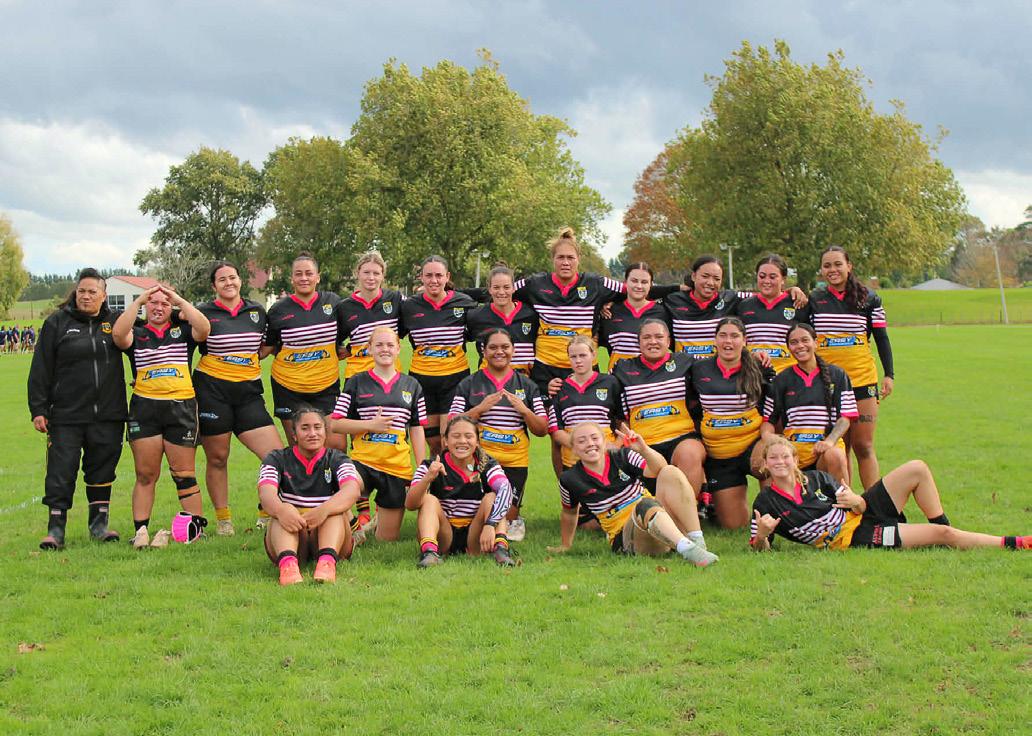
Their success was further recognised when they were named the Power Farming Club Team of the Year, a fitting acknowledgement of the determination and commitment behind their season.
A special shout-out goes to Taupiri Rugby Club, its committee, Guts, Craig, Mere, Tish, Joey and Hera, along with the supporters and players who welcomed Te Kauwhata Rugby Club with open arms and helped make the combined team such a success.
JAY KAIWAI, HEAD COACH
Sporting seasons are often judged by a single result. One game. Eighty minutes. A final score that appears to define success or failure.
But anyone who followed TK Thunder this season knows the story runs much deeper than the Grand Final scoreboard.
While the championship ultimately went to their opponents, the result failed to reflect one of the club’s most memorable campaigns in recent years—a season that restored pride, united the community, and set a new standard for Te Kauwhata Rugby Club.
From the opening round, there was something different about this team. They weren’t simply chasing victories; they were building a culture. A demanding pre-season laid the foundations, with fitness, accountability and commitment becoming non-negotiable. Every training session had purpose, and every player understood they were contributing to something greater than themselves.
That culture quickly translated onto the field.
TK Thunder became one of the competition’s most consistent sides, playing with intensity, discipline
and belief. Their attacking flair excited supporters, while their defensive resilience earned the respect of opponents. Home or away, they developed a reputation as a team that competed relentlessly and never gave in.
Yet the season’s greatest achievement extended beyond the rugby itself.
Crowds grew week after week. Families lined the sidelines, former players returned to support the club, and volunteers and sponsors continued to invest their time and energy into a team clearly heading in the right direction. Every home game became a celebration of community, with the senior side inspiring the next generation by demonstrating the values of hard work, humility, resilience and teamwork.
As the finals approached, TK Thunder embraced every challenge. Pressure became opportunity, leaders stood tall, and players who had worked tirelessly throughout the season delivered when it mattered most. Their performances earned them a deserved place in the Grand Final.
Although the final score suggested a one-sided contest, those who witnessed the match know otherwise. Every breakdown was fiercely contested, every metre hard-earned, and momentum shifted
repeatedly throughout the game. Small moments proved decisive, and the scoreboard simply did not reflect the effort, courage and determination shown by every player wearing the Thunder jersey.
One result cannot erase months of dedication, sacrifice and excellence. Nor can it diminish what this group achieved for the club.
This season has established a platform for future success. Standards have risen, expectations have changed, and the belief that Te Kauwhata can consistently compete with the best is now firmly embedded within the club.
To the players, coaches, management, medical staff, volunteers, sponsors and supporters—this achievement belongs to you all. Together, you created something far greater than a Grand Final appearance. You reminded the community what Te Kauwhata Rugby stands for: passion, commitment, resilience and pride.
The trophy may have gone elsewhere this year, but the respect earned by TK Thunder will endure long after the final score is forgotten.
If this season has proven anything, it is that TK Thunder’s story is only just beginning.
The Te Kauwhata and District Lions Club was founded more than 50 years ago by a group of forward-thinking members of the local community.
Over the years, the club has organised many fundraising activities that have helped provide permanent fixtures throughout the district. These include planter boxes on the main street, a memorial seat outside New World and the clock above The Bake House. The club also contributed to the soldiers’ memorial on the Village Green.
Each year, the Lions support local individuals and organisations with donations totalling thousands of dollars.
During the past year, the club helped 10 Te Kauwhata College students take part in a Spirit of New Zealand voyage. It also sent two students to a four-day camp at Lakewood Lodge and assisted with the costs of attending the Maadi Cup in Twizel.
The Lions also provided the Community House with a new hospice bed, which can be lent to local people when needed.
The club runs a monthly luncheon on behalf of the
Community House for people aged 65 and over from Te Kauwhata and the surrounding district. The well-attended event is greatly appreciated by those who take part.
Lions members also run the barbecues at community events such as Splash ‘n’ Dash and the Christmas parade. For Anzac Day, the club provides chairs along with poppies and crosses. It also makes a monthly donation towards the Community Patrol’s operating costs.
Fundraising activities include cake stalls and firewood sales, along with catering and an annual golf day. At the club’s monthly dinner meetings, local community groups can provide the meal as a fundraiser for their own activities.
The Te Kauwhata Lions are an active group of local people who are always looking for new ways to support and improve their community.
New members are welcome to join and help the club continue living by the Lions motto, “We Serve”.
Follow the Te Kauwhata and District Lions Club on Facebook to learn more about its work or make contact with the club.
Mark Wilson President
TE WHARE AWHI
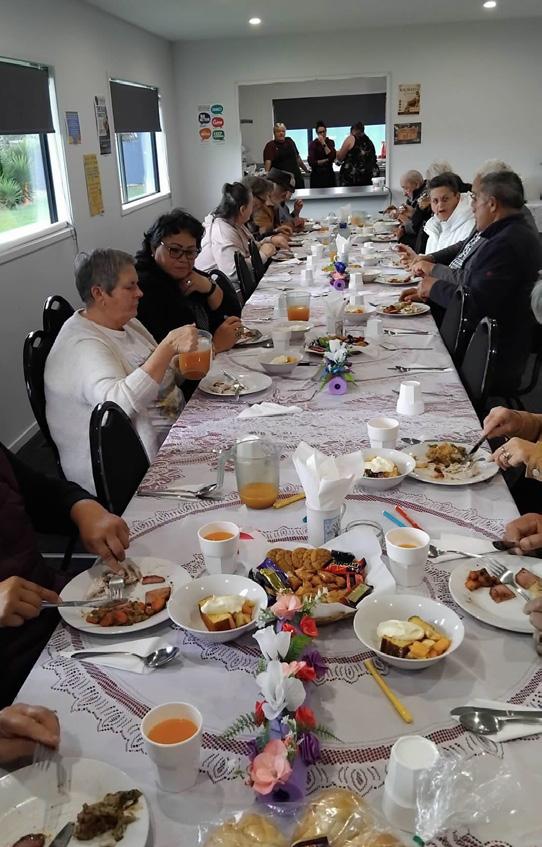
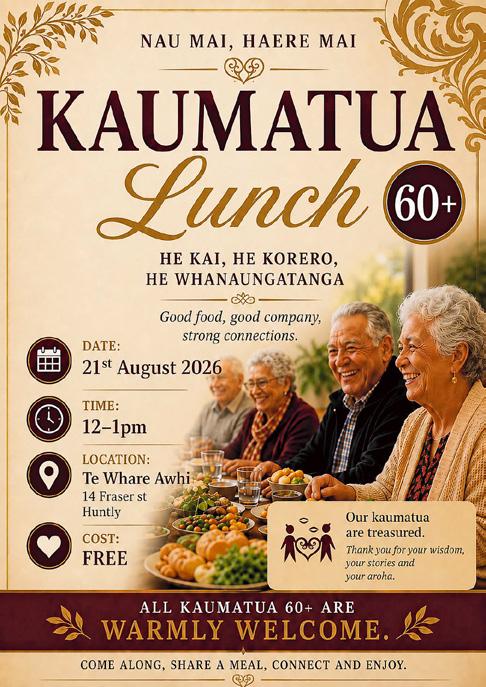
InJune, Te Whare Awhi held its very first Kaumātua Lunch, welcoming local community members aged 60+ for a hot meal, great company and plenty of laughter.
The room was filled with conversation as people caught up with old friends, met new ones and enjoyed a delicious homecooked meal together. It was wonderful to see everyone leave with a smile and already looking forward to the next lunch.
The Kaumātua Lunch was created to provide a welcoming space for those aged 60+ to get out of the house, stay connected and enjoy spending time with others in the community.
Sharing a meal is a simple way to bring people together, and the positive response to our first lunch showed just how valuable these gatherings can be.
A huge thank you to our amazing volunteers who generously give their time to prepare, cook and serve each meal. Their kindness and dedication are what make this programme possible.
Following the success of our first event, the Kaumātua Lunch will now be held every month.
Our next Kaumātua Lunch is on Friday, 21 August, at Te Whare Awhi, 14 Fraser Street, Huntly.
If you’re aged 60+, we’d love to welcome you along for a delicious meal, friendly conversation and the chance to meet new people.
To register or find out more, contact Te Whare Awhi on 07 828 0066 or email tewhareawhi@huntly.co.nz.
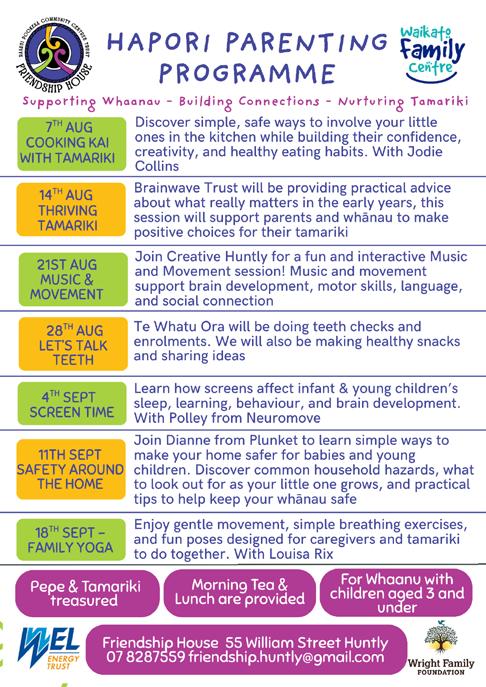
If you’ve got just a few hours a week to spare but want to make a real difference in our community, then Te Kauwhata Girl Guides are looking for volunteers.
Right now, there’s a waiting list of girls who are excited to join Girl Guides, and the team would love to welcome them. But, to make that happen, they’re looking for a couple of enthusiastic volunteers to add to the leadership team.
What do you need? It’s not necessary to have been a Guide before; just a willingness to encourage, inspire, laugh, learn, and help young girls build confidence, friendships, and lifelong skills. Along the way, you’ll make great friendships of your own and be part of a supportive, fun team.
The ‘ideal person’ is described as someone who is comfortable to learn and grow new skills and teach the girls whilst having fun. You don’t need to be too
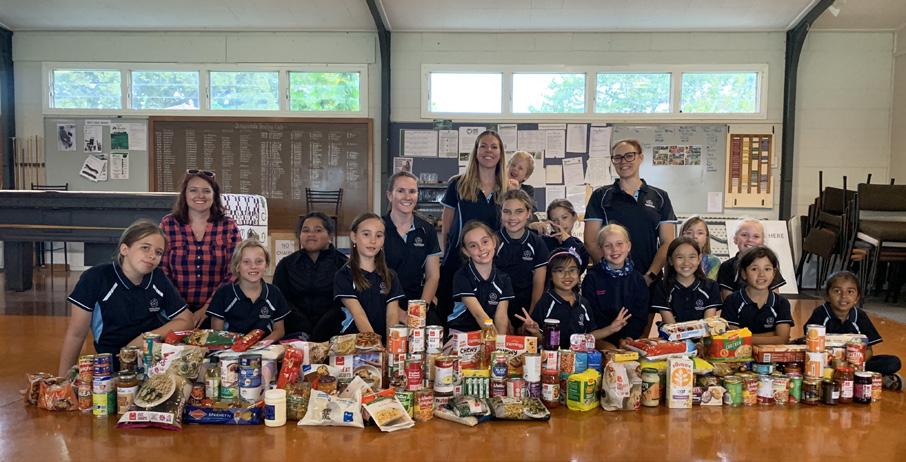
outgoing, but some confidence in speaking in groups of kids, some organisation skills and computer literacy to help with programme running would be helpful. No age limit (but you need to be over 18), and able to turn up each week during term time and get involved in the 1.5-hour sessions. However, like all volunteer jobs, there is some flex in determining who does anything additional. Currently the Guides have two qualified leaders and a further two in training, plus a helper visiting from the UK until the end of the year. They were all involved in one of the biggest achievements for the Girl Guides this year in collecting food donations for the Community House.
Whether you’re new to the community, a longstanding resident, have a few hours to spare or have great memories of your own Girl Guiding days -then the Guides would love to hear from you.
Email tekauwhatagirlguides@gmail.com or text/ message 021 033 1362 to find out more.
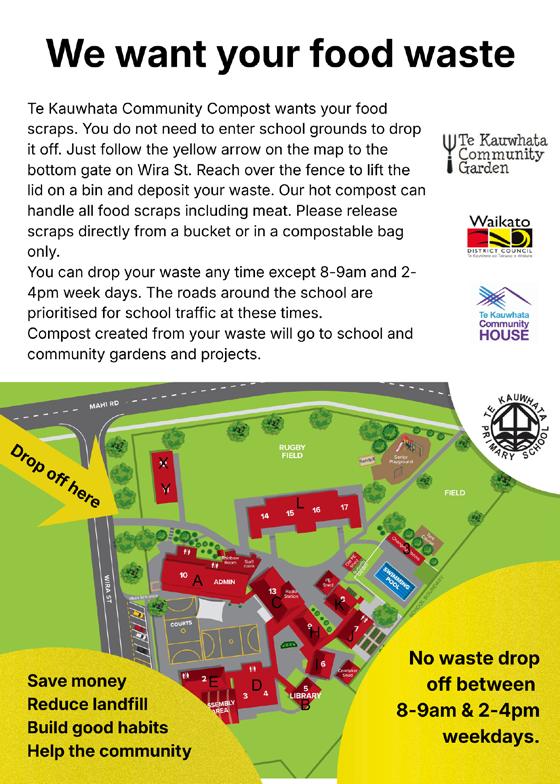
In 2024, Te Kauwhata Primary School installed a vermin-proof CarbonCycle hot composting system with funding from Waikato District Council.
In its first year, the system diverted 2.5 tonnes of waste from landfill, reduced greenhouse gas emissions and produced compost for school and community spaces.
The school is now partnering with Te Kauwhata Community House and Community Garden on a six-month trial allowing the public to drop off food scraps. New bins funded through the council’s Waste Minimisation Fund will be installed on lower Wira Street and a Community Compost Co-ordinator has been appointed.
From Monday, August 10, food scraps can be placed in the bins at any time except 8am to 9am and 2pm to 4pm on weekdays. The bins are outside the school grounds near the lower gate, so users can simply lift the lid from the footpath.
The hot composting system can process all organic waste, including meat. Community contributions will help it maintain the temperatures needed to produce nutrient-rich compost for local schools, gardens and projects.
The trial relies on community support to prove its value. Households are encouraged to collect their food scraps in a bag or bucket and bring them to the Wira Street bins.
For more information, contact Te Kauwhata CIf you have any questions about Community Compost feel free to contact Te Kauwhata Community House on 07 826 4303 orassistant@tekauwhata. org.nz. You can also visit the Community House between 9.30am and 4pm Monday to Friday or pop down to the Community Garden on a Tuesday morning to speak to the gardeners. They welcome new volunteer gardeners so if you have a spare morning or are curious to see how it all works go and say hello. They would love to meet you.

• 09/07 05:28 Fire alarm activation, McDiamid Cr, Huntly.
• 10/07 12:41 Scrub fire, HakarimataRd, Ngaruawahia.
• 10/07 13:05 Car fire, Waikato expressway, Huntly.
• 14/07 04:55 Fire alarm activation, Onslow St, Huntly.
• 15/07 13:02 Fire alarm activation, Olds Rd, Taupiri.
• 15/07 20:47 Medical call, overdose, unconscious, Renown Rd, Renown.
• 17/07 05:41 Fire alarm activation, Bridge St, Huntly.
• 18/07 15:30 Implement shed fire, Kopuku Rd, Maramarua.
• 19/07 12:52 Smoke showing from roof, Hakanoa St, Huntly.
• 21/07 17:26 Motor vehicle crash, car v car, Great South Rd, Huntly.
• 22/07 07:39 Person with hand caught in machinery, Rotowaro Rd, Huntly.
Inpast years, the Waikato Rugby League season, as with most provincial unions, usually consisted of a club home-and-away round-robin local competition, followed by playoffs and a September grand final, then provincial representative footy.
NZ Kiwi tours to other continents would usually be undertaken during October and November, or sometimes into December and January when touring the northern hemisphere to play Great Britain and France during the northern winter.
National U15 Schoolboy tournaments and a Junior Kiwi team were the only age-grade footy on offer. The Aotearoa NZ Māori Labour Weekend tournament became a regular event from 1993. So why am I telling you all this?
Well, the year 1996 had become a logjam of rugby league in Aotearoa. The normal club season began in April. The Lion Red Cup began in March.
The Pacific Championship, featuring seven teams from Western Samoa, Fiji, Tonga, PNG, the Cook Islands, Western Australia and NZ Māori, ran through June and July. Julian David and Jacob Marsters were selected for the Cook Islands team. Ben Ransfield, Tukere Barlow and Tama Hohaia, with Jody Brewer on standby, were selected for NZ Māori. Aaron Tucker was selected for the NZ Residents.
An NZRL version of State of Origin, the North Zone v South Zone competition, was instigated. An NZ Universities team featuring Cougars Nathan York, Tony Waikato and Darryl Fisher played in a Student World Cup at Warrington in the UK.
A Lion Red Cup XIII featuring Tama Hohaia, Tukere Barlow and trainer Willie Ford played Great Britain and PNG.
Rapana, Adam Baker, Wairangi Koopu and team manager Rex Hohaia, toured Australia for two weeks in September, playing against Canberra, Cronulla and Penrith.
Greg Cameron and David Noda were named in the NZ U18 team after a Super League-funded tournament at Hopuhopu, where 50 scholarships were awarded.
The Auckland Warriors played 22 rounds in the Australian Rugby League Optus Cup and the NZ Kiwis whitewashed the ‘Poms’ 3-0 at home, with the Junior Kiwis playing curtainraisers to five Tests, including PNG.
Finally, Graham Norton coached the NZ Nines at a tournament in Fiji. Aaron Tucker played for the USA.
Whew! I’m exhausted just writing all that!
Consequently, the LRC took a midwinter break, but the ‘pointy’ end of the season was beginning to heat up for the Cougars.
With the Super League war still raging across the Tasman, a number of their top referees were being shipped to NZ to keep their ‘awareness’ on song.
Once normal transmission resumed, our Round 21 clash against Waitakere City at their home ground became the ‘guinea pig’ for sports betting. While betting per se has been around since Adam and Eve were jockeys, betting on LRC games was a new phenomenon and seeing the boys’ names in the TAB with odds attached was quite a ‘highlight’.
Making the top five for the third straight season was an achievement in itself, but the aim was to go one better than last season’s finish, 80 minutes short of a grand final.
The BOP Stags had improved out of sight, from wooden spooners in 1994 and 1995 to fifth spot in 1996 under
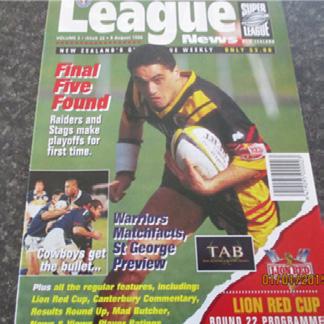
Cup in 1997 and later competitions such as the Bartercard Cup.
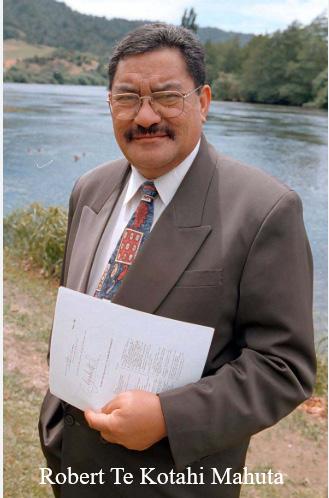
Other events outside LRC footy, but closely related to the 1996 season, included a Queen’s Birthday knighthood bestowed on Robert Mahuta, 24 April 1939 to 1 February 2001.
head coach Lawrence Brydon, and were our opposition in the first week.
However, a 35-18 win at Rotorua International Stadium put us up against our old nemesis, North Harbour, in the second-week elimination final. But those tūpuna at Davies Park were on our side this time around.
Good friend Cameron Bell was at the helm of the Counties Manukau Heroes and Carlaw Park was the holy grail to them lads from the ‘Hood’. They weren’t going to let no Pussycats from south of the Bombays steal their thunder!
A 22-6 thumping put us into Mad Monday mode again, 80 minutes short of a grand final for the second year running. Damn!
Neither were the ‘bogans’ from out West going to take the gold medal from the vastly experienced Coach Bell, and Counties beat Waitakere 34-22 in the 1996 Lion Red Cup grand final.
The 1996 Waikato Cougars Player of the Year was Tama Hohaia. Best Forward was Tukere Barlow, Best Back was Darryl Beazley, Sportsman of the Year was Ben Ransfield and Most Improved was Darryl Fisher.
Little did we know, but time was running out for the kaupapa that became known as the Lion Red Cup.
The competition started with a hiss and a roar in 1994 and was superseded only by the Warriors’ entry into the Winfield Cup in 1995.
It was another enjoyable season of top-flight rugby league, but the competition ended after the 1996 season because it ran at a significant financial loss for the New Zealand Rugby League, despite being popular and providing a good platform for players during the tumultuous Super League era.
Although it succeeded in raising the profile of domestic rugby league, its high costs led to its discontinuation, paving the way for the Sky Challenge
Sir Robert, or Bubs as we all knew him, was hugely instrumental in the Tainui Trust Board becoming a major, but silent, sponsor in 1995 and 1996.
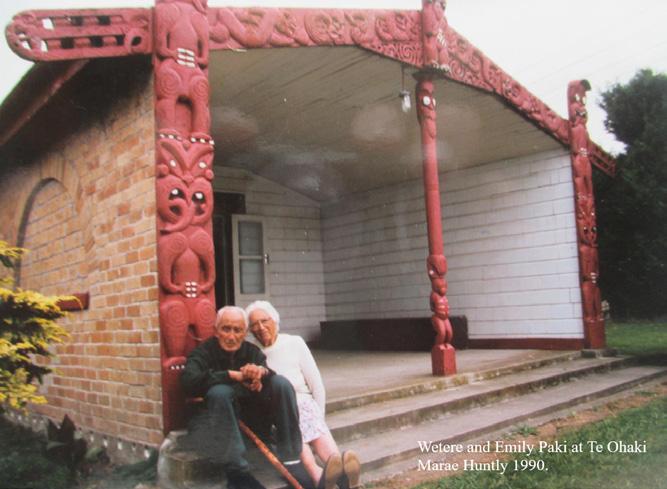
My grandfather, Wetere Paki, 19 February 1899 to 21 April 1996, passed away peacefully in his 98th year.
Grandad was the VIP guest who handed the match ball to Waikato Country Fare Bakeries Cougars captain Tukere Barlow on Sunday, 20 March 1994, at Davies Park in Huntly to kick off the Lion Red Cup.
Wetere was one of the many volunteers who readied Davies Park back in 1937. My mum once told me a story about riding her bike from Te Ōhākī Marae, across the bridge to Davies Park, to give Grandad his lunch.
Taniwharau president and Cougars supporter Rori Nathan, 28 April 1939 to 8 June 1996, passed away at Trust Bank Park in Hamilton while watching his beloved Taniwharau play the Hamilton City Tigers in the curtain-raiser to a Cougars v North Harbour game, with a beer in his hand!
One of the old-school players from the 1970s, it was often said that if you knew Rori well, you were in trouble, because you were going to have a good time with plenty of amber fluid in close proximity.
Koroneihana weekend is a highlight of the Waikato-Tainui calendar and the weekend of May 25 and 26 was special for two reasons.
Firstly, 411 rangatahi had gathered to receive scholarships and educational grants to assist in their quest for greater knowledge.
Secondly, for the first time in its short history, a Lion Red Cup competition game was held during the celebrations.
The curtain-raisers were the Cuzzy Bros v the Cuzzy Bros and, of course, the Cuzzy Bros won. Haha.
The main game result was Cougars 22, Counties Manukau 14.
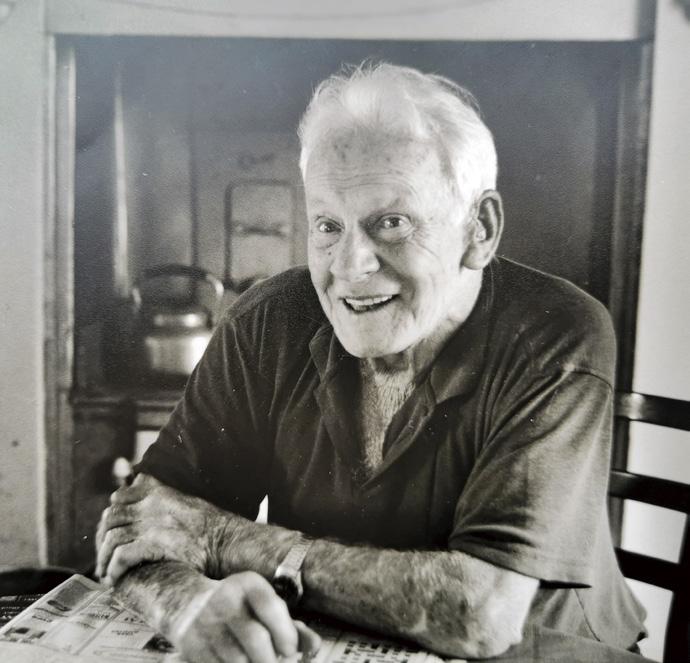
Huntly Museum’s latest project is near completion, with just a few gaps to be filled. Five leaflets featuring past interviews with old identities of Huntly bring to life memories of the past.
But author Pamela Ferla has a mystery to be solved. Who is the man in this photograph, which was taken about 1988? He is believed to be one of the miners she interviewed at that time.
The publications, which will be available soon, offer insights, humour and heart-warming stories from characters who have lived in this special town.
Here is an extract from the series, which includes miners, Māori elders, shopkeepers, town officials, doctors and musicians.
“During the war years, it was illegal to strike, but the 500 men were desperate
to get their pay up to at least minimum wage. So they staged a protest strike.
“They were immediately arrested and summoned to court. The tiny courthouse, situated next to the Rotowaro branch railway line, was so crowded with defendants that they spilled out on to the lawn. Some folk sat along the railway bridge, waiting for the verdict.
“When they were all found guilty and sentenced to one month’s jail, the police had a big task on their hands. They said there were too many men to round up. So they told the miners to report the next day to be transported by a special convict train to Mount Eden.”
But the police could not find a train driver willing to drive all the miners to jail. However, the problem was solved through the intervention of a sympathetic Labour MP and resulted in the Government quashing the miners’ sentences.
For more information, contact Huntly Museum or Pamela on 021 035 8017.
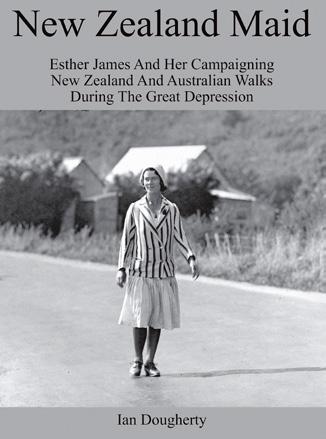
She was the first person to walk the length of the country, which is remarkable in itself. But she did so in 1931–32, during the Great Depression, wearing only New Zealandmade clothes and eating only New Zealand-produced food to encourage people to ‘buy local’.
She then walked from Melbourne to Brisbane.
Meet Esther James, whose walking feats are the subject of author Ian Dougherty’s latest book. The following edited extract covers the North Waikato section of her New Zealand walk.
James made a slight detour to Pukekohe, where she was the guest at a pay-to-attend reception and social at the Oddfellows’ Hall, organised by the Pukekohe branch of the Women’s Institute.
She was met by town clerk S. Bish and welcomed by mayor John Routly and H.H. Pattle from the Chamber of Commerce. She delivered an address about her experiences during the walk and listened to songs and readings by locals.
After supper, the evening concluded with the singing of ‘For She’s a Jolly Good Fellow’, ‘Auld Lang Syne’ and the National Anthem.
James stayed with the president of the Pukekohe Women’s Institute, Mrs
J.H. Wyatt. Before walking to Mercer the following day, she was shown around a large farm where potatoes, onions and pumpkins were grown.
From Mercer, James walked to Te Kauwhata, collecting blackberries from the roadside and sending them home to her mother in Auckland to bake into blackberry and apple pie.
James noted that, as she walked along the hot, dusty roads, it was a great temptation not to stop under a shady hedge and eat the wild blackberries.
When Esther James walked into the small settlement of Rangiriri on her way to Huntly, she had covered 400 miles, noting in her logbook: ‘A new town each day’.
In an experience reminiscent of her first day walking through the wilds of Northland, when she had felt almost defeated and all alone, miles from anywhere, she now felt like cheering in the middle of the road. But there was nobody to hear her, so she simply walked on.
At Huntly, James was received by mayor Edgar George and spoke that evening at the local picture theatre.
About three miles outside Ngaruawahia the following day, she was met by mayor Herbert Sampson, who escorted her into town, where she was welcomed at an evening social.
Hamilton-bound the next day, she stopped at Horotiu and inspected the local freezing works.
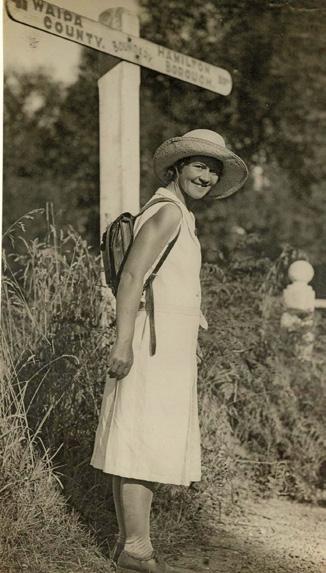
James was met on the outskirts of Hamilton by the South Auckland Caledonian Pipe Band and Hamilton Girl Guides, who escorted her into town.
It had become known that James was a former Ranger in the Girl Guide movement, and the guides continued to support her as she made her way south.
James was met in the town centre by mayoress Claudine Pinfold, with whom she stayed. She spoke at a civic reception in Alexandra Hall, where she was welcomed by mayor and local doctor Francis Pinfold.
He said: ‘Her advocacy in the encouragement of New Zealand-made goods was a most commendable one and one that should have the support of every loyal New Zealander. She was walking as a missionary to tell the people that the goods made in New Zealand were as good as those of any other country.’
James also spoke on Hamilton radio station 1ZH.
New Zealand Maid: Esther James and Her Campaigning New Zealand and Australian Walks During the Great Depression is available from bookshops or directly from the publisher at saddlehillpress@xtra.co.nz for $40, post-free.
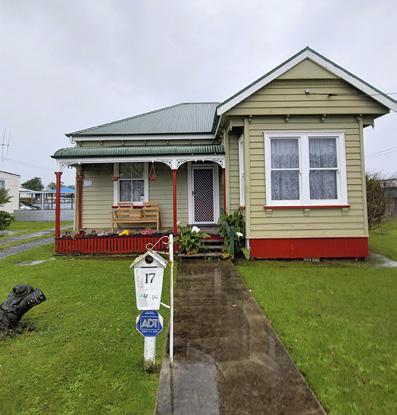
Having lived in her home for over a decade with her husband, dog, and cat, Gwen August has spent the years finding out the quirks and hauntings of her over-100year-old home.
How old is the house?
It was built in 1910. It’s had a few owners and renters, I don’t know the original people of course. I also don’t know whether it was a railway house or what it was. I presume it would have been. But my landlord who’s passed now, he bought this place off a couple in 1981 and he started renting it out then, I think.
It definitely has some character and some history. We actually use [the woodstove] to heat our water.
How has the house become home for you?
Well I knew the landlord, I worked with him at Huntly West. The couple that were in here at the time mentioned they were moving out, and I was in a housing corp house on the other side. So I approached the landlord and asked him, you know, could we come and
have a look, and I just… something called out to me; this house just needed me. And I just said, well I’ve got to have it. I’ve got to have it.
How did you end up decorating the front of the house with the gumboots?
I did that during lockdown. Because you know, you get so bored. So I decided to use some old paint and well, there’s heaps of work boots hanging around. The front of the house itself was painted the way it is now when we moved in [in 2013], and it hasn’t had any paint since then.
What is life like for you outside of home?
I drive a school bus. Yeah, it’s not bad, I’ve been with the company for 20 years this year.
I started driving special needs children in the van for Hamilton, then they transferred me to Huntly Depot and then I took up the school bus driving.
It’s good, although they can get a bit noisy. I threaten to take mine back to school. Obviously, you’re not allowed to, but sometimes you can threaten them.
What is interesting about your house to you?
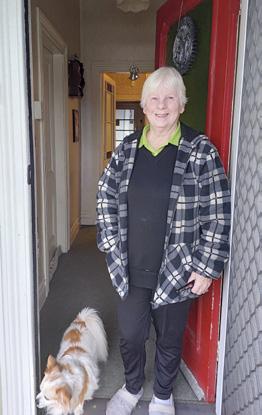
Well, the old guy, Ray, that owned the house before, died in the lounge and sometimes he makes his presence felt. [My dog] would often let me know when we moved in here. She’s quite aware of things like that.
Stuff just randomly happens, like the TV turns on by itself in the middle of the night. And it’s when it shouldn’t be on either, it will have been fully turned off before that. So I think it’s either him or maybe somebody else.
It also used to be a bit of a gathering spot, this house. There was a group of

them, the landlord or the owners, and another guy, Pat, that lived around the corner. They all used to get together and party back in the day.
And Pat’s house was also quite a party house.
How is the location?
Oh, good. Yeah, because I only have to walk to work in the summer. And it’s good, close to town and stuff. I’ve never had a problem here.
by Sarah Morcom


Annual Donations - 2026
Annual Donations 2026
The Te Kauwhata Water Association, a registered charity, generates its income through the sale of non-potable water in the district. In accordance with Clause 12 of our Rules, we invite eligible parties to submit requests for donations.
Application Process:
Stuart Robert McNab
It is with deep love and respect that we announce the passing of Stuart Robert McNab, who left us on July 5, 2026, at age 77. Stuart was the beloved husband of Jillian, father of Ben, Cathryn, and Alasdair, cherished Poppie to Lillie, Stevie, and Pippa, and beloved father-in-law to Lisa.
Hailing from Waipawa, Central Hawke’s Bay, Stuart’s passion for art and design led him to a career as a graphic designer. Later in life, he became a dedicated lecturer, sharing his knowledge not only in design but also in faith. He was deeply passionate and knowledgeable about his faith in God, applying that same devotion to guiding others.
The Te Kauwhata Water Association, a registered charity, generates its income through the sale of non-potable water in the district. In accordance with Clause 12 of our rules, we invite eligible parties to submit requests for donations.
• Forms: Requests will only be accepted on the official 202 6 application form, which must be fully completed and signed by authorised representatives of the applicant. The form can be downloaded from our website: www.tkwa.co.nz or requested via email water@tkwa.co.nz
• Submission Deadline: All applications must be received by mail or email no later than 4:00 PM on Friday 28th August 2026
Application process
For any queries, please contact:
Emma Adams Administration Manager P O Box 15, Te Kauwhata 3741
Email: water@tkwa.co.nz
Free Phone: 0800 TKWATER (0800 859 283) Website: www.tkwa.co.nz
• Forms: Requests will only be accepted on the official 2026 application form, which must be fully completed and signed by authorised representatives of the applicant. The form can be downloaded from www. tkwa.co.nz or requested by emailing water@tkwa. co.nz.
• Submission deadline: All applications must be received by mail or email no later than 4pm on Friday, 28 August 2026.
For any queries, please contact:
Emma Adams Administration Manager PO Box 15, Te Kauwhata 3741
Email: water@tkwa.co.nz
Freephone: 0800 TKWATER (0800 859 283) Website: www.tkwa.co.nz
The family offers heartfelt thanks to everyone who supported Stuart through his journey with pancreatic cancer, and who stood by our family in his final moments—especially the compassionate care of Hospice Waikato. A celebration of Stuart’s life will be held at a later date.