




Executive Editors
Kavita Koppa
Mo Murrie
Managing Editor
Beth Andrachick Hauptle
Associate Editor
Kara Hoving
Editorial Team
Melanie Canales
Kelli Dale
Hope Ostane-Baucom
Justine Post
Teiara Turner
Staff Contributors
David Allen
Amanda Meyers
Hope Ostane-Baucom
Graphic Designer
Jessie Despard
RAFI is a registered 501(c) (3) nonprofit organization, and as such, donations are tax-deductible to the full extent allowed by law. EIN #56-1704863. RAFI believes in transparency, ethical accounting, and donor stewardship. RAFI has earned the 2025 Platinum GuideStar Exchange Seal and the seventh consecutive 4-star rating from Charity Navigator.
© Rural Advancement Foundation International - USA (RAFI)
Email: livingroots@rafiusa.org
Web: rafiusa.org
Union Label MAGAZINE


Greetings!
Welcome to our ninth issue of Living Roots, the rst of three in 2026, and the rst since we’re in place as RAFI’s new Co-Executive Directors. As always, if you have ideas for stories you’d like to share — or stories you’d like to read — we’d like to hear from you at livingroots@ra usa.org.
In these pages, you’ll nd articles we hope are useful in the everyday work of running a farm business. We cover topics like knowing when it’s time to scale up and what that can involve, record-keeping practices that can help position your farm for USDA programs, and how land commons are helping address land access issues for some. We also share stories of creative solutions farmers have developed to tackle particular challenges related to processing and soil health.
Thank you for being a part of this community. We are grateful for the work you do and wish you a strong and successful growing season.

Kavita Koppa

Mo Murrie Co-Executive Directors
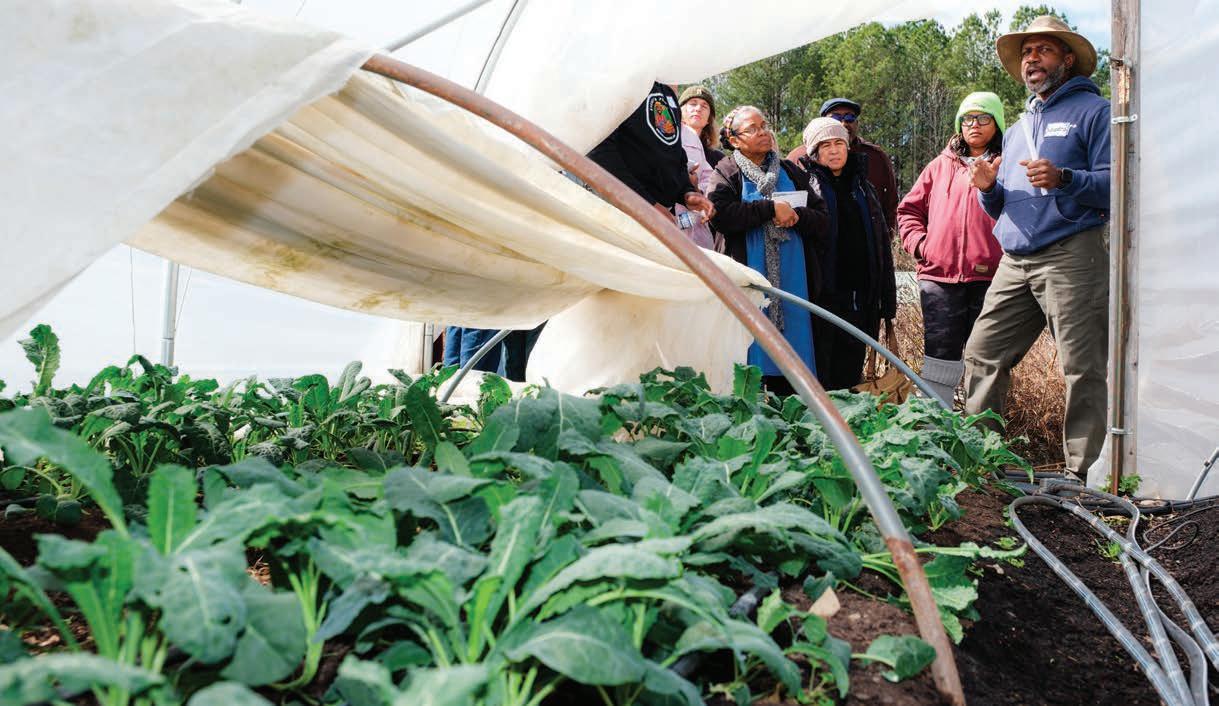
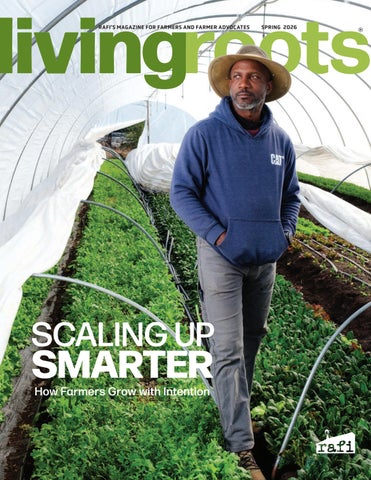
IN FEBRUARY, FARMERS from the Chapel Hill region gathered at Faithfull Farms to participate in a Four-Season Market Gardening Workshop. Farmer Howard Allen led an engaging discussion on developing a strategy for maintaining a productive market garden throughout the year. Attendees explored topics such as winter bed preparation for spring planting, succession crop planning, and optimizing space in high/low caterpillar tunnels, all essential planning techniques for year-round production. Farmer attendees brought a diverse range of experiences and expertise to share and learn from one another. RAFI is pleased to partner with farmer leaders like Allen to create opportunities for peer-to-peer knowledge exchange and to support farmers in maintaining pro table and scalable businesses.

SCAN to register for the Meeting the Moment retreat and learn more about FSA programs.
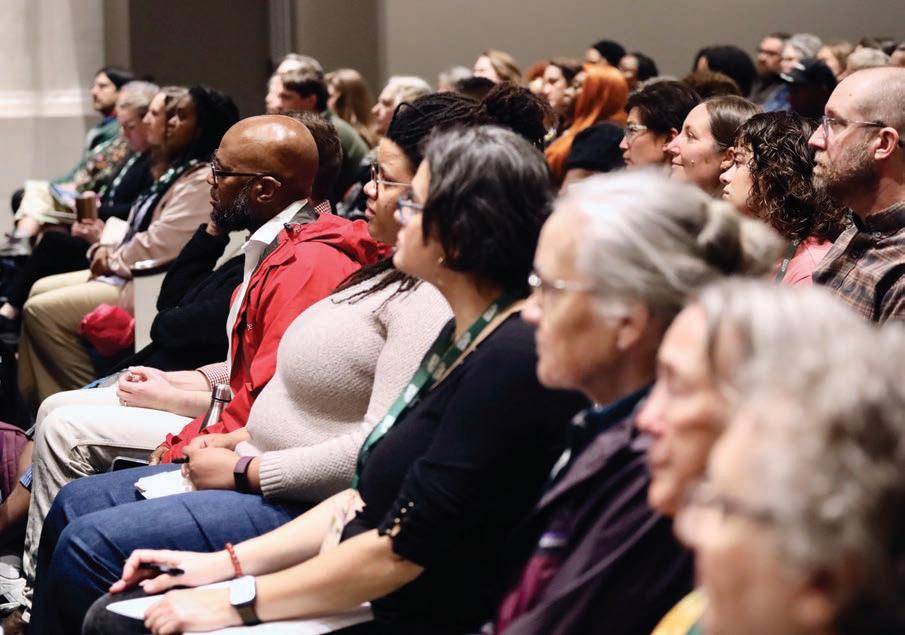
Conference attendees listen to a keynote at the 2026 Come to the Table Conference in WinstonSalem, NC.
ENERGIZING, TRANSFORMATIVE, BELONGING, and togetherness. These are words attendees used to describe their experience at RAFI’s 2026 Come to the Table Conference. Over 370 food system leaders gathered to discuss the theme of “Food & The Common Good” through moving keynotes led by Mariana Chilton, Tianna Gaines-Turner, and Rebecca de Souza. There were over 30 practical workshops and an intimate night of storytelling centered around food. Attendees learned about the lived experiences of foodinsecure communities and prioritizing their voice in policy change, and explored strategies of building dignity and justice in food assistance spaces. The conference remains a meaningful space for peer connection and the sharing of impactful ideas among leaders seeking a common good in the food system. One attendee said, “I know that was a lot of work to pull o and it was absolutely the best conference I have ever attended. Thank you for the incredible work RAFI does every day and for holding space ‘round the table for folks to gather for these important conversations and re ections.”
Following the success of last year’s regional Food & Retreats, the Come to the Table team is excited to announce our next opportunity to engage in retreat-style learning and networking. Join us for Meeting the Moment , a retreat welcoming anyone in the food system navigating the increasing needs, shrinking resources, and increasingly harmful public discourse around people experiencing hunger. Together, we will reflect on the challenges of the last year, including both the measurable challenges and emotional toll; explore where participants’ work fits along the spectrum of charity-based approaches to rights-based solutions; and build practical tools to shift narratives, center dignity in food access, and practice bystander intervention.
WHO: People who work in the food system
WHAT: Meeting the Moment Retreat
WHERE: Camp Caraway, Sophia, NC
WHEN: May 13–14, 2026
HOW TO PARTICIPATE: Register with a $50 fee (covers private lodging and three meals); scholarships available upon request.
SCAN THE QR CODE ABOVE TO REGISTER.
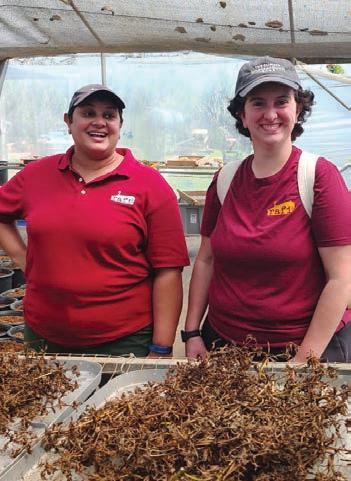
Familiar Faces at the Helm RAFI recently announced the appointment of Mo Murrie to join Kavita Koppa as RAFI’s new coexecutive leadership team. Bringing proven track records of leadership in agricultural, nancial, nonpro t, and community spaces, Murrie and Koppa are ushering forward RAFI’s work of challenging the root causes of unjust food systems and advocating for system change.
This new shared leadership model re ects RAFI’s values of integrity, collaboration, and resilience. Both directors have risen through the ranks of RAFI and are uniquely positioned to advance the organization’s mission in partnership.
MO MURRIE (THEY/THEM) began at RAFI in 2017 through the Come


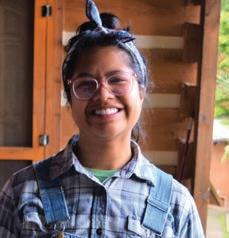
to the Table program. In 2022, they assumed the role of Director of Operations, and over the next three years continued to serve in roles of increasing responsibility. Mo earned a Master of Divinity degree from Duke Divinity School and a Master of Social Work degree from UNC-Chapel Hill, and also worked with faith- and community-based organizations in North Carolina and Washington, DC.
KAVITA KOPPA (SHE/HER) began her career as a farmhand and farm manager, which shaped her commitment to helping farmers succeed. She joined RAFI in 2013 as an Americorps VISTA, later working for an agricultural lender and managing a climate-smart loan fund. Kavita returned to RAFI in 2023 and became co-executive director in 2025. She holds a Bachelor of Arts in geography and biology from UNC-Chapel Hill and a dual MBA/MA in Public A airs from the University of Texas at Austin.
RAFI’s Board Welcomes Fresh Expertise
RAFI is also pleased to welcome three new board members: Eva Caison, Ameesha Sampat, and Adam Hymans.
EVA CAISON (SHE/HER) has spent over a decade working at the intersection of sustainable agriculture, land access, and farm business viability. A former small-scale farmer and educator, she has led national programs
helping farmers navigate legal risk at Farm Commons, and has taught farm business planning, agricultural law, and food policy at Guilford College. She now serves as program manager of the Carolina Farms Fund at The Conservation Fund, advancing a ordable land access for farmers while ensuring permanent conservation.
AMEESHA SAMPAT (SHE/HER) is the Managing Director for Outreach and Organizing at FarmSTAND, where she leads communications and base-building e orts to strengthen relationships with communities directly impacted by industrial agriculture. She previously worked at Public Justice, Asian Americans Advancing Justice (AAJC), and Immigration Equality, focusing on coalition work, digital organizing, and storytelling.
ADAM HYMANS (HE/HIM) is a seasoned marketing and communications practitioner, facilitator, and resource mobilizer for narrative change across the social impact sector. He leads the food systems, integrative healthcare, and environmental health practice as Managing Director at Resource Media, where he brings 20 years of experience shaping culture, shifting policy, and strengthening organizations for lasting impact. In addition to his food systems work, Adam leads national and community-based initiatives at the intersection of climate, health, and democracy building.
Deadlines for Farm Service Agency programs are fast approaching! See RAFI’s website for more details.
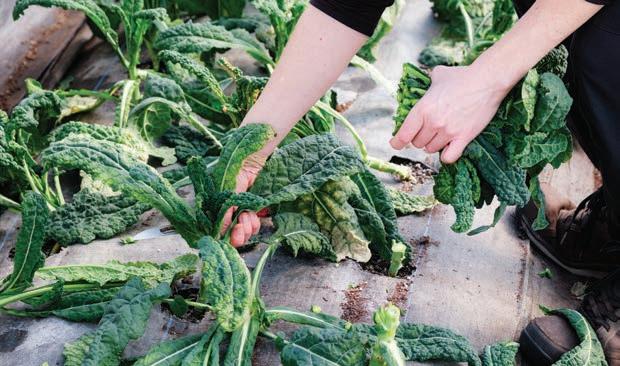
Supplemental Disaster Relief Program (SDRP)
Deadline: April 30, 2026
SDRP provides assistance to producers for necessary expenses due to losses of revenue, quality or production of crops due to weather-related events in 2023 and 2024. Stage 1 applications will leverage Federal Crop Insurance or Noninsured Crop Disaster Assistance Program (NAP) data as the basis for calculating payments. Producers with non-indemni ed (including shallow losses), uncovered (uninsured), and quality losses can apply for Stage 2 assistance.
Final Loan Date: May 31, 2026
(Corn, Cotton (bales), Dry peas, Grain sorghum, Lentils, Mustard seed, Long grain rice, Medium grain rice, Sa ower, Small chickpeas, Large chickpeas, Cotton, Soybeans and Sun ower seed)
LDP o ers payments to producers of eligible commodities when market prices fall below the loan rate, providing immediate cash ow to producers, helping to manage nancial risk and stabilize farm income during periods of low market prices. This program covers a variety of crops, including grains, oilseeds, wool, and other designated commodities. Applications are accepted year-round, but must
be submitted by the nal loan availability date for the commodity or before bene cial interest is lost.
Marketing Assistance Loans (MAL)
Deadline: May 31, 2026
(Corn, Cotton (bales), Dry peas, Grain sorghum, Lentils, Mustard seed, Long grain rice, Medium grain rice, Safower, Small chickpeas, Large chickpeas, Cotton, Soybeans and Sun ower seed)
MAL o ers loans to producers of eligible commodities to help manage their cash ow needs and provide marketing exibility. By using their harvested commodities as collateral, producers can obtain interim nancing and delay the sale of their crops until market prices improve. Applications are accepted year-round, but must be submitted by the nal loan availability date for the commodity or before bene cial interest is lost.
Deadline: July 15 is a major deadline for most crops, but deadlines to file vary by crop and by state and county.
Crop acreage reports document the crops grown on your farm or ranch and their intended uses and are required for most USDA program eligibility.
Deadline: Applications must be submitted by the crop-specific application closing date.
NAP o ers nancial support to producers of eligible crops for which federal crop insurance is not available (such as fruits, vegetables, aquaculture, oriculture, mushrooms, ginseng, honey, and others) who experience losses from natural disasters that result in lower yields, destroyed crops, or the inability to plant. NAP provides basic coverage equivalent to the catastrophic level risk protection plan of insurance coverage and additional buy-up levels of risk protection. SCAN THE QR CODE ON PAGE 4 FOR MORE INFORMATION.

BY AMANDA MEYERS
Maintaining adequate records has many bene ts for farms of all sizes and is crucial for making more informed business decisions. Additionally, maintaining crop planting and production records and submitting them to the Farm Service Agency (FSA) can open up access to a large number of potential resources at USDA, like farm loans, crop insurance, and nancial assistance for disaster recovery. But for small-scale, diversi ed, or beginner farmers, record-keeping often gets put on the back burner in the face of other urgent tasks.
The administrative burdens of record keeping, sometimes combined with FSA sta discouragement, often leave farmers asking, “Why bother to report?” As a result, small-scale, urban, and diversi ed operations have historically had low participation in FSA. But the fact is, the presence or absence of crop reporting is often the deciding factor in whether or not a farmer is able to bene t from most FSA programs. Recent disaster programs have generated pre- lled applications based on producers’ prior year records, leaving many farmers who have never reported out of luck. Establishing a production history is also an important part of being ready to apply for both private and FSA loans — particularly if your crop or production method is unfamiliar to your local FSA o ce sta .
Reporting crop production generates data that helps inform the FSA about farmers’ needs in your area. Many factors in uence national USDA policymaking, but if small-scale farmers don’t participate, they will not be counted — and that can a ect future funding decisions and how programs are implemented at the county level.
• Qualify for more FSA programs — especially ad-hoc disaster assistance
• Help you make more informed business decisions
• Establish a production history with FSA for potential future loan applications or crop insurance
• Ensure that farms like yours show up in the data USDA uses to make funding and program decisions
There are two layers of crop reporting for FSA: crop planting and crop production. Crop planting refers to the type and quantity of what you put in the ground during your planting seasons. Crop production refers to the type and quantity of what gets harvested.
Crop planting records — often known in FSA lingo as certication, crop acreage reporting, or reports of commodities — involve documenting eld-speci c planting data that aligns with your FSA Farm Map. Producers must have an FSA-registered farm number to receive their map, so new producers will rst need to apply for one. For your crop acreage report, you must document the following:
• Crop type and variety
• Intended crop use: fresh, grain, forage/hay, grazing, seed, processed, or silage
• Quantity planted in acres or feet
• Planting date in month/date/year format
• Planting pattern: solid, skip/strip, or orchard
• Whether it is irrigated or not
• Producer’s share of the crop
This information could be written down in a notebook or entered into an Excel spreadsheet. Whatever method you choose, this information must be reported to FSA using your FSA Farm Map. Using your Farm Map, you will need to notate which farm number, tract number, and eld num-
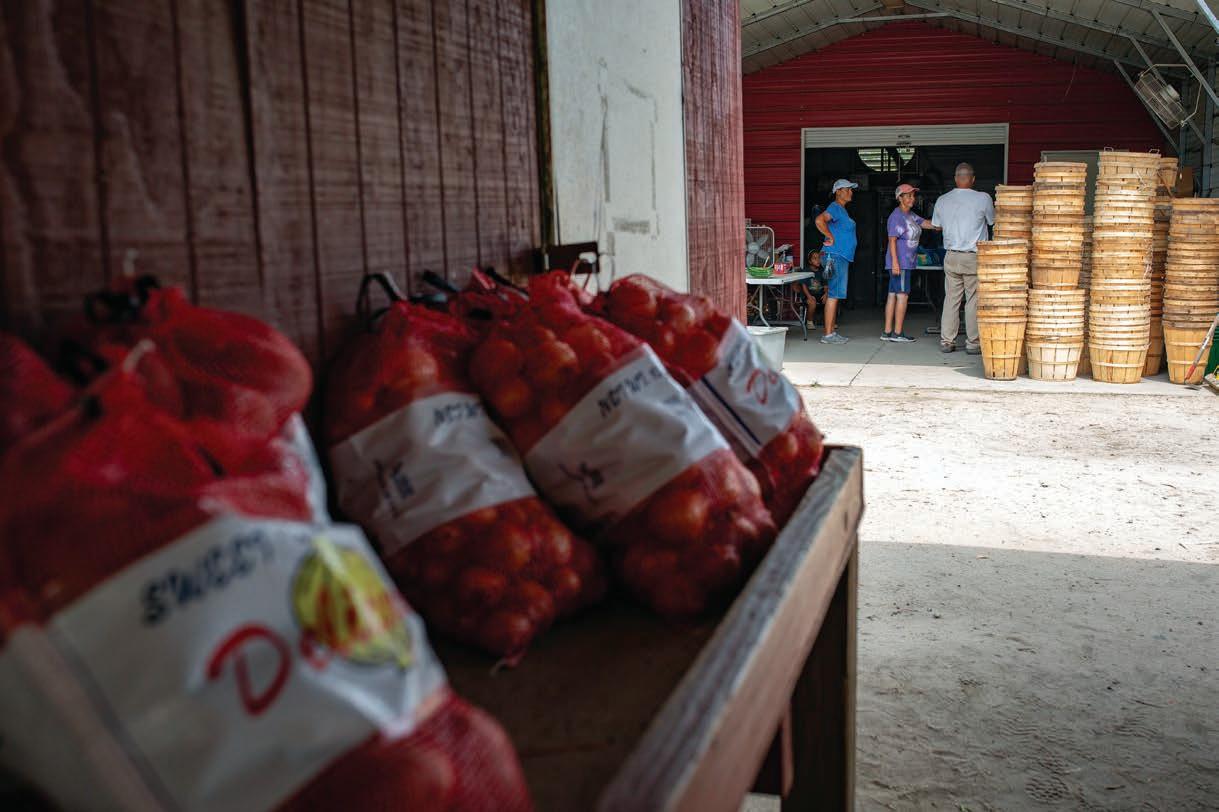
Harvested bags of onions piled outside Locklear Farms’ fresh produce stand in Pembroke, NC. FSA requires production records measured as the amount of crops harvested by weight.


SCAN for more recordkeeping resources and information on FSA programs.
ber the crop is grown in. If your operation is small in acreage, grown indoors, or planted in skip rows, this task can be very challenging, depending on what the aerial imagery of your farm looks like. Note that even if you are a small producer and your production space isn’t considered cropland, you can still report it. Crops may be reported in as small as a 2.5-inch by 2.5-inch area. We recommend printing out the aerial image and writing out the details in a bold pen anywhere on top of the image where it can be easily read, on the back page of the map, or on a separate sheet of paper.
Once you submit your completed Farm Map, your local FSA o ce will load your information into the software and generate an FSA-578 “Report of Commodities” form per farm. We recommend getting a photocopy of the datestamped, signed report and map once it has been submitted to FSA for your records, along with a Receipt for Service.
is the measurement of how much crop is harvested per unit of land area, like pounds per acre. You may have a particular method of production record-keeping that works best for your operation, capacity, and goals. Harvest season is gener-
Also referred to as: certi cation, crop acreage reporting, or report of commodities
WHAT TO RECORD : Record what is planted, using the FSA Farm Map that your FSA staff will provide.
Crop reporting deadlines vary depending on the state you are farming in, the crop type, and whether it is insured. You must report your crops and sign the FSA-578 “Report of Commodities” form by the crop-speci c deadline to be considered “timely led.” We recommend contacting your local or state FSA o ce to request a copy of your state’s acreage reporting deadlines for all crops, printing it out, and keeping it somewhere handy, like on the refrigerator, as a reminder. You may late- le your crops after this deadline within one year of the deadline if you can verify the existence of the crop and pay the late fee. An FSA eld visit is required for most late- led reports.
WHEN TO REPORT: Must be reported by the deadline, which varies by the crop and the state. Late filing is an option (requires verification and a fee)
RELEVANT FORMS: Sign the FSA-578 “Report of Commodities” FSA staff will generate from your completed Farm Map.
WHAT TO RECORD : Record what is harvested by weight (pounds, bushels, tons, or CWT/hundredweight)
WHEN TO REPORT: Deadlines vary by program
RELEVANT FORMS: For NAP, “CCC-452 Actual Production History and Approved Yield Record .”
For other programs, the producer turns in their own recordkeeping (per the county committee’s requirements) .
Documenting what you harvest or produce can help you better understand your business. Not only is keeping these crop production records good practice, but there are often hard requirements for certain private and FSA loans, crop insurance, subsidies, and disaster programs. Failing to maintain production records can negatively impact your indemnity payment if you su er a crop loss due to a disaster. It can also prevent you from qualifying for certain loans or for crop insurance with higher coverage levels.
In this context, production means the amount of crops harvested by weight — measured in pounds, bushels, tons, or CWT/hundredweight — at a particular time. Your crop yield
ally very busy, so what is e cient and easy may look di erent for di erent farmers. For some farmers, counting units once the crop has been washed and prepped for market may work best. Even if you don’t sell your crops by weight, you will still need to measure and record weights to meet FSA information requirements.
Record keeping is often a daunting task, especially when trying to comply with FSA rules. If it feels challenging to you, you are not alone! RAFI is here to help you nd solutions for your operation. RAFI sta can help you identify your goals for record-keeping and help develop strategies that work best for you.
AMANDA MEYERS is a RAFI Farmer Advocate based in South Carolina. Amanda is passionate about local food systems and supporting farmers.
| BY KARA HOVING
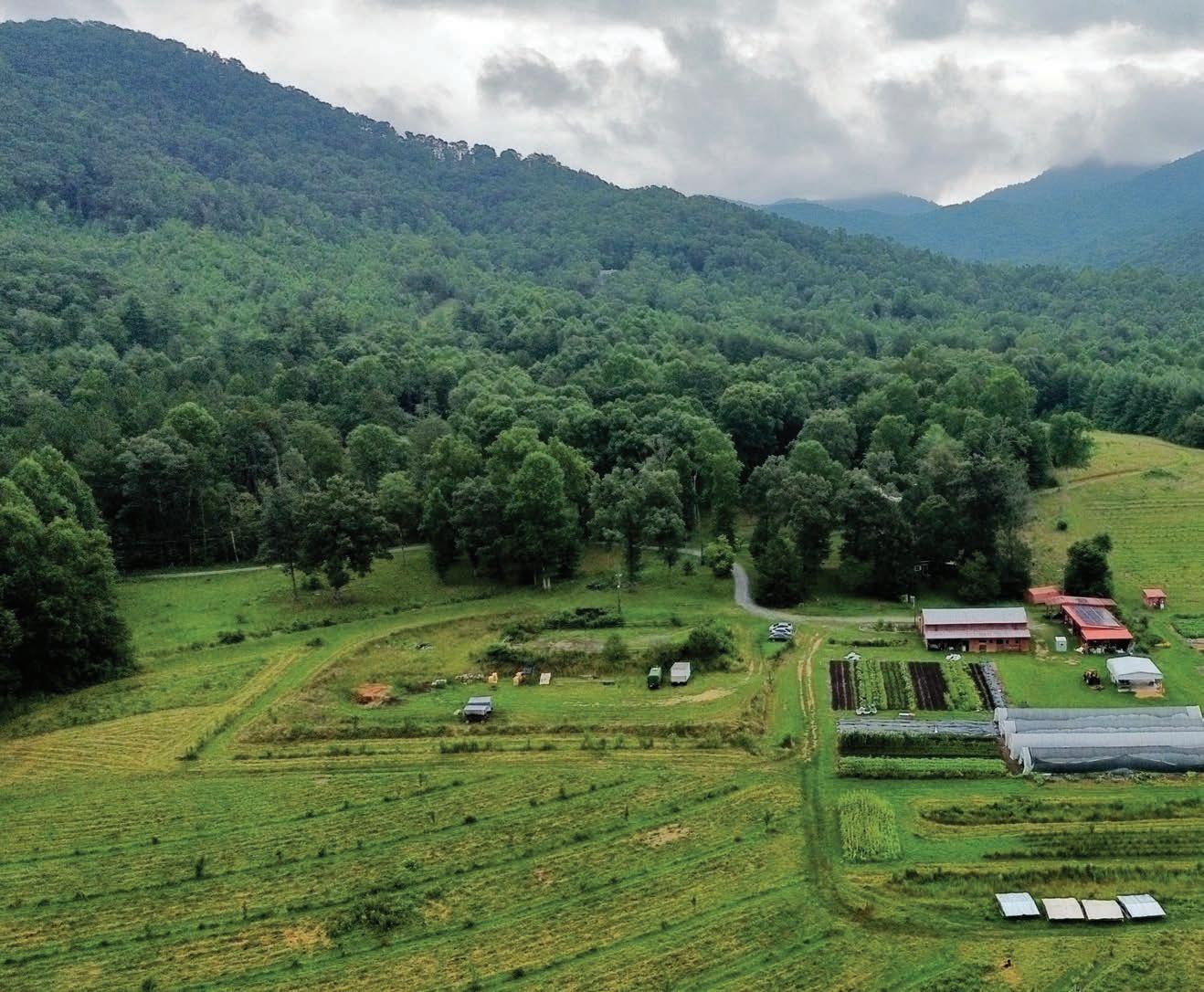
Nestled in the verdant hills of western North Carolina, Wild East Farm feels like a stage set for a carefully choreographed dance. Sheep graze on pasture grass in the emerging shade of young fruit trees, with apples, Asian pears, persimmons, pawpaws, and mulberries evenly interspersed with hazelnut shrubs. Chickens follow close behind the sheep as they rotate daily across the pasture, adding fertility to the soil as they move, accompanied by portable shelters. In adjacent elds, you might nd turkeys strutting among rows of pecan, black
walnut, and hickory trees, or gobbling away between lanes of blueberries. Elsewhere on the farm, pigs root beneath the canopy of an abandoned pine plantation, clearing away the dense undergrowth of invasive plants.
As the animals move with the days and seasons across Wild East Farm’s 12 acres of former cattle pasture, they are transforming the land into something new. The system that farmers Noah and Lyric East are using here is called silvopasture, a type of agroforestry that intentionally integrates trees, animals, and pasture into a single functioning system. Silvopasture requires intensive management and careful observation of the farm’s ecology. But for creative and enter-
prising farmers, it can o er innumerable bene ts to both the farm’s bottom line and the health and resilience of the land.
Cows in the woods? There’s more to it. Indigenous peoples of North America and around the world have practiced various forms of silvopasture for millennia. Silvopasture is more than just turning livestock loose in the woods. Rather, it involves managing trees, animals, and forage plants together in a way that is mutually bene cial, such that the whole system becomes greater than the sum of its parts.
The National Agroforestry Center describes the “Four I’s” of silvopasture: livestock and forage are intentionally com-
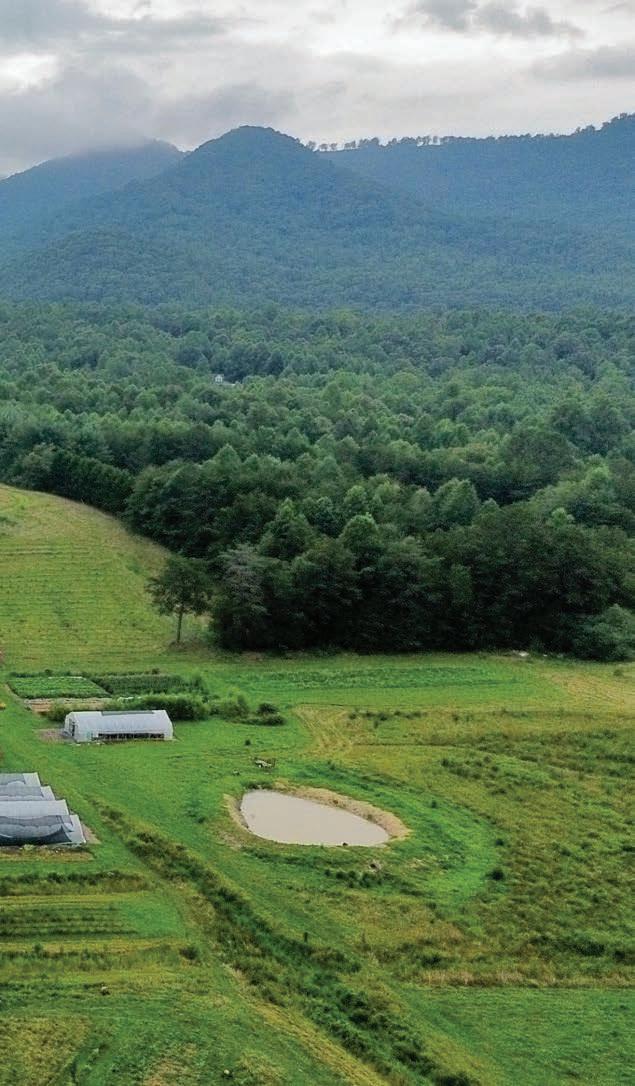
Wild East Farm in Marion, NC employs a system of rotationally grazed silvopasture. In addition to their annual vegetable production (center), farmers Noah and Lyric East graze chickens, sheep, and turkeys among fruit and hazelnut trees, (bottom left), nut trees (bottom right), and blueberry plantings (behind the buildings).
bined with complementary trees and/or shrubs and managed through intensive practices such as tree maintenance and rotational grazing. These practices aim to maximize positive interactions among the tree, pasture, and animal components, which together generate harvestable products and conservation bene ts as an integrated system.
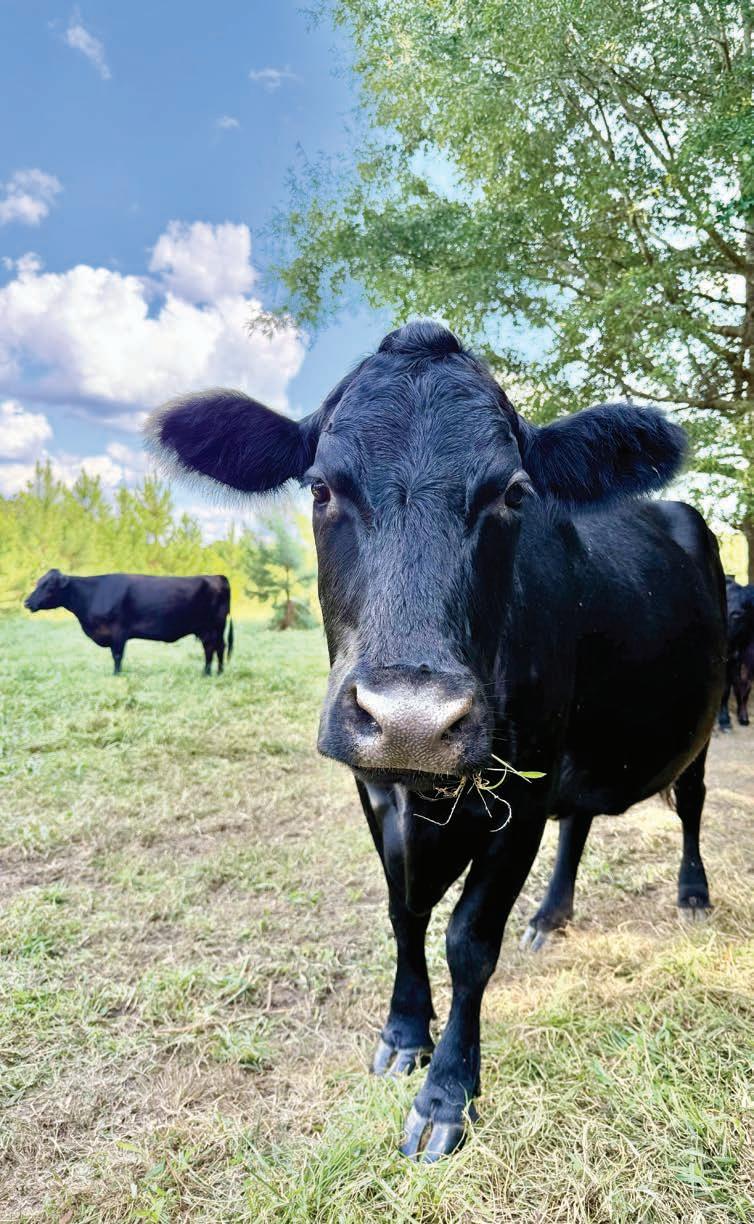
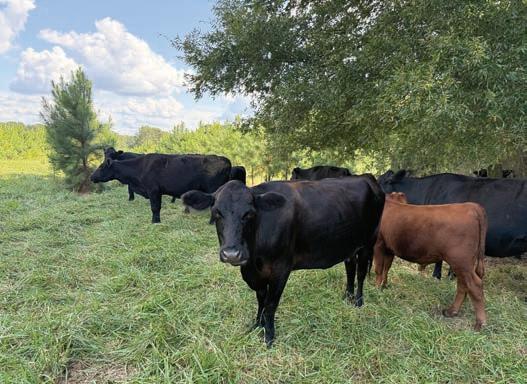
What do these bene cial interactions look like? Livestock manure fertilizes both trees and forage. In turn, the trees provide shade and shelter, stabilizing microclimates and reducing animal stress during the extreme heat of summer and cold winds of winter. Some trees supplement the animals’ diets with fallen fruits and nuts, while others can be coppiced, or cut back periodically to provide branches for animal fodder. Their shade can even reduce lignin content in the underlying grasses, improving digestibility.
Trees also bene t the pasture itself. Shade reduces soil moisture loss due to heat and drought. Deep-rooted trees may also bene t the pasture by drawing up nutrients from deeper in the soil and cycling them back into the system.
A mature silvopasture mimics a savanna ecosystem, with trees thinly spaced over a grassland to create a park-like landscape. This creates habitat corridors for wildlife like wild turkeys, quail, and grouse. The trees also help prevent soil erosion and sequester carbon from the atmosphere, making silvopasture a powerful tool to mitigate climate change.
Farmers can take advantage of countless possible combinations of animals and trees to generate stable and diversi ed income streams. With creativity and careful planning, silvopasture systems can be adapted to t farm operations of any scale.
John Fike, an associate professor and State Forage Specialist at Virginia Tech, conducts research on silvopasture systems and advises silvopasture adoptees through Virginia Cooperative Extension. He explains that many of the silvopasture systems originally proposed in the Southeast 30 to 40 years ago were squarely rooted in the traditional industrial timber production model, typically on pine plantations. But with changing timber and pulp markets and challenges of scale, growing trees for timber may not always be the best option, especially for farmers with limited acreage.
“The more recent de nitions of silvopasture have created more space for alternative products and alternative purposes for the trees in the system,” says Fike. “The people that make these systems work economically are the people who are
willing to think outside the box and gure out other ways to utilize tree products and services.” He encourages farmers to think beyond a monoculture of timber trees to create a greater diversity of opportunities.
That might mean planting fruit and nut trees for direct sales or U-pick opportunities, as Wild East Farm has done. Farmers could also utilize tree species like black locust to harvest rot-resistant fence posts. In some regions, farmers can set up maple syrup production or cut logs for mushroom cultivation. They can plant native species, like mulberries, to attract wildlife like deer and game birds, and then generate
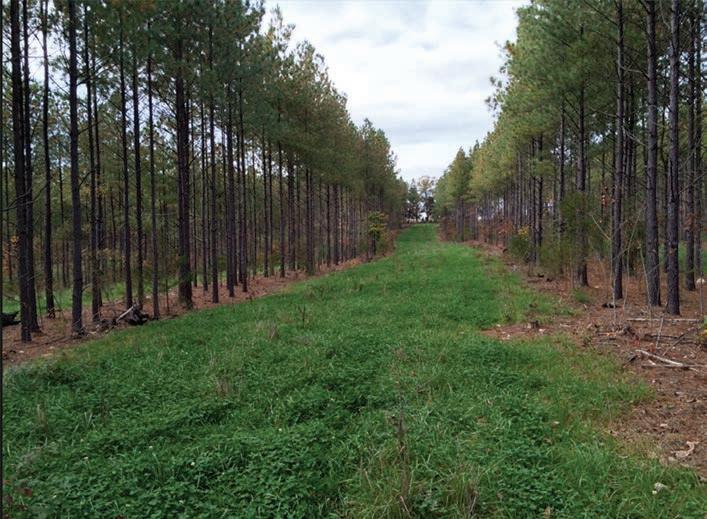
Top: A poorly-managed subtraction silvopasture. Overgrazing and poor soil and tree management has led to soil compaction and erosion. Bottom: Well-managed subtraction silvopasture. This pine stand has been thinned in strips with healthy forage established between rows.
income by leasing out hunting rights. If they can verify carbon sequestration in their trees and soil, they can even earn money by selling carbon credits through o set markets.
Beyond direct income, silvopasture also adds long-term value to the land. “The trees also add to the value of the property and to the quality of life on the farm, adding aesthetic value and also acting as a bu er to increase resilience to increasing weather extremes,” says Fike. “Harvesting the trees is not essential for you to realize their value.”
Farmer Wyn Miller harnessed her professional background in landscape architecture to establish a diverse silvopasture on her family’s fth-generation cattle farm in Je erson County, Tennessee. She has planted hundreds of hardwood and softwood trees across Lick Skillet Farm’s 1,000 acres, originally with the goal of more evenly dispersing shade among the rotationally grazed pastures. But beyond that, she also feels driven by a long-term vision for the landscape she wants to see.
“Something to consider when thinking about trees is that they can o er a type of value that other farm improvements can’t, because of their intergenerational nature. Trees create a legacy for family members or future landowners,” says Miller. “Planting hardwood trees is akin to putting land in a land trust — you’re showing priorities for any future family or farming operation. That can mean a lot to people — it shows that I believe in the future of this place.”
There are two main pathways for creating a silvopasture system: addition, or planting new trees on existing pasture, and subtraction, or thinning trees from an existing woodland.
Many farmers rst approach silvopasture with a preference for the thinning method, according to Stesha Warren, president of the Association for Temperate Agroforestry. “Here in Central Appalachia and the Southeast, farmers often have that back 40 that they’re just getting rewood o of. They may hunt it occasionally, or lease it out for recreational use, but for the most part, it just sits there,” she says.
Farmers see thinning out these woodlots for silvopasture as an opportunity to expand their land base and utilize their full acreage for production. Thinning also has the advantage of providing immediate shade and shelter from mature trees, whereas newly planted trees will take several years
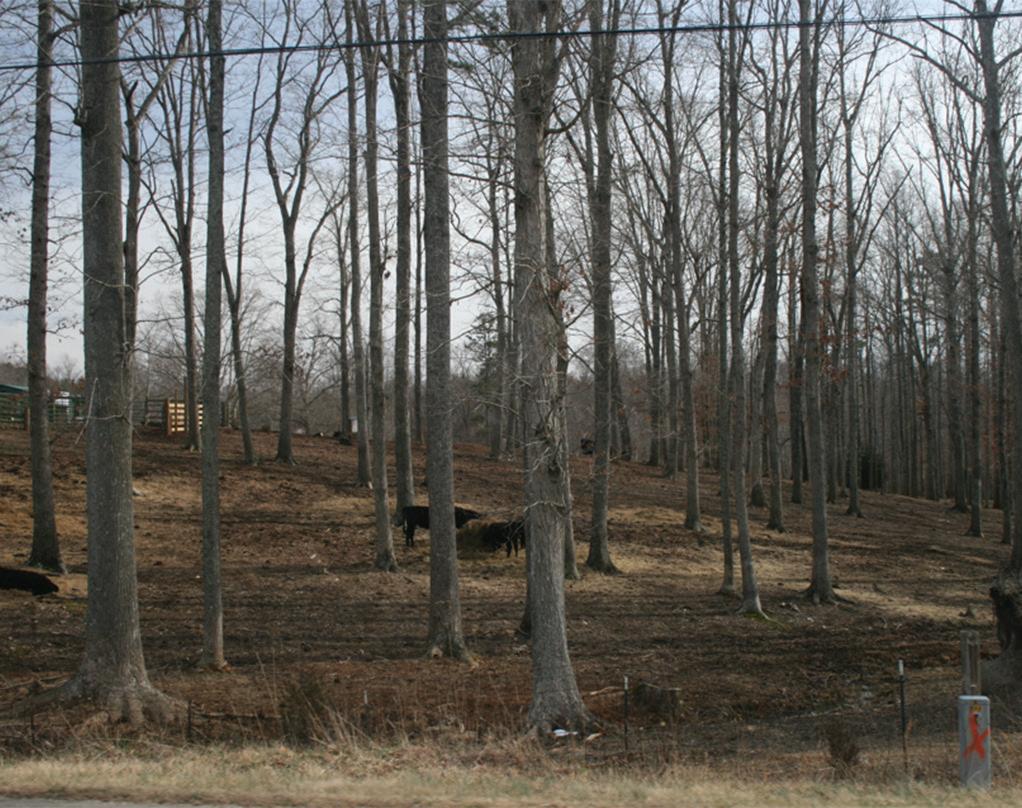
Cattle on a silvopasture farm in Sanford, NC. Trees in a silvopasture system provide shade, shelter, and fodder for the animals and can even enhance the nutritional value of pasture grasses.
to start manifesting these bene ts.
However, upfront costs of subtraction can run high due to the need for heavy equipment to cut down trees and remove stumps. It also requires careful planning to achieve the correct light percentage, establish adequate forage, and prevent machines and livestock from damaging tree roots and compacting the soil. If not done properly according to sound forest management principles, this method can be highly damaging to the remaining forest — so much so that most states don’t allow subtraction silvopasture to qualify for NRCS funding due to the risk of ecological damage.
But if done well, it can also have ecological bene ts. Animals can help clear out invasive plants like autumn olive, multi ora rose, or oriental bittersweet, opening space for a greater diversity of native birds, pollinators, and understory plants. Warren emphasizes the need for better education for both producers and farm service providers on how to responsibly thin a woodland to create a healthy, living silvopasture system.
Planting silvopasture, on the other hand, comes with its own set of demands and opportunities. Though it takes longer to establish and begin yielding signi cant bene ts, planting new trees often costs less up front and allows for a much greater degree of customization. Farmers have more freedom to choose tree species and spatial con gurations that align with their goals.
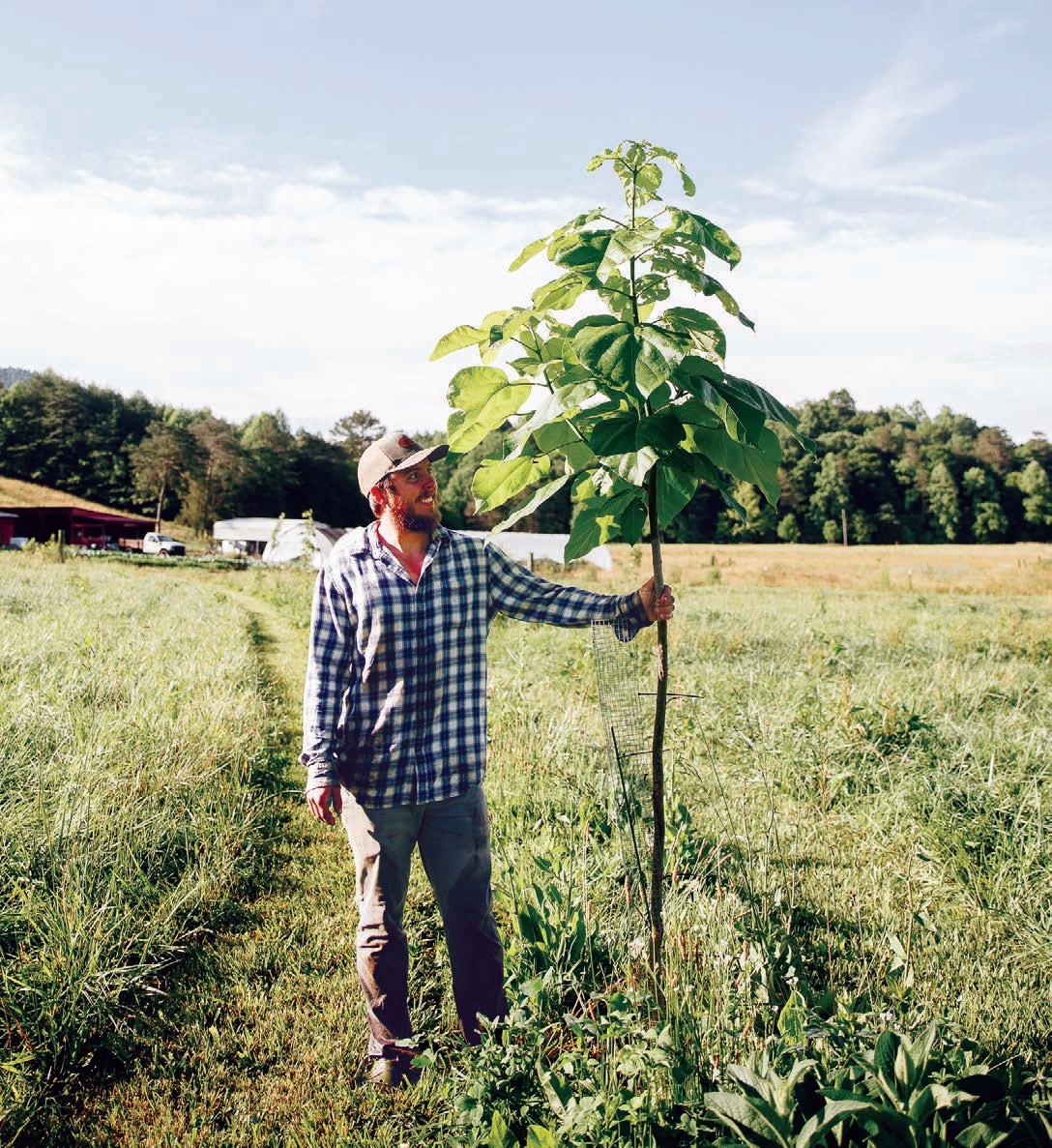
Planting trees involves more than just digging holes and plopping seedlings into the ground. Finding the right seedlings can take time, especially if you are looking for certain specialty tree crops or locally adapted ecotypes. Proper preparation of the soil before planting and ongoing care and maintenance will set the young trees up for success. Trees also require protection from livestock and deer. Newer innovations such as vented tree tubes, berglass stakes, and electri ed polywire fencing, like the system Wyn Miller employs, can help optimize conditions for the sapling without excluding livestock from the pasture.
At Wild East Farm, Noah East uses both approaches. His experience re ects the pros and cons of each: “The tradeo is that it is cheaper and easier to plant a lot of trees than to turn a forest into a silvopasture, but with the forest you already have big trees, diverse fodder, and shade,” he says.
To balance these tradeo s, East emphasizes the need to build in diverse income streams and to plan over multiple time scales. Wild East Farm’s annual vegetable plots and broiler chickens formed the farm’s economic foundation in its rst few years, generating quick cash ow and a strong return on investment. Now in their fourth season, the fruit trees and blueberries will generate income through U-pick opportunities in the near term, while East sees the nut trees as more of a long-term legacy planting. Meanwhile, in the pine stand, the Easts have secured NRCS funding to thin out
the dense canopy. Their forest-raised pigs clear out poison ivy and invasives and provide enough disturbance to prepare the soil for planting pasture grasses. However, due to the prohibitive cost of grinding down the stumps to create an ideal pasture surface, East sees the process of converting the woodland to silvopasture as an ongoing project that he sees no need to rush.
Ask any silvopasture practitioner, and you’ll hear the same refrain: there is no one right way to do it.
“Lots of people get this paralysis about what if they plant
the wrong trees. But every farmer needs to make decisions for themselves about what their goals and needs are and put that at the forefront of the design process,” says East, who also runs a consulting service for ecological farm design. “Ask yourself the questions, ‘What does this land need? What kinds of yields and ecology do you want? What does the market look like in your locality?’
“But just as important is, ‘what are your interests and skills? What do you enjoy picking and eating?’”
Understanding the land is the rst step. East recommends looking at contour maps, preferably with contours at threefoot intervals or lower, to understand the distribution of

SCAN here to access these resources and more to get started with your silvopasture journey.
water and light across the farm. Next, you can use online tools like the National Agroforestry Center’s tool library to identify tree species that would thrive on your land, and Google Earth to start calculating your tree spacing and sketching out a design. It’s imperative to go out in the eld to groundtruth your design, to account for any anomalies that maps and models can’t capture. From there, consider your time constraints and the kinds of tools you have available to you to begin implementation.
In addition to her work at Lick Skillet Farm, Wyn Miller provides agroforestry technical assistance through Appalachian Sustainable Development (ASD). She stresses that it’s important to be realistic, and to remember that a system that works well in one place may not work well in another. “People get very excited about things they see online or in a book, so it can be easy to bite o more than you can chew,” she says. Miller recommends starting o with maybe 100 trees of three or four di erent species, including a mix of hardwoods and softwoods with a range of growth rates. “It takes a lot of work to manage a certain number of trees, so be patient, start o small, and learn as you go.”
Especially in the South, farmers exploring silvopasture for the rst time may feel like they’re braving uncharted waters. Fortunately, it’s not a journey they have to travel alone.
Agencies like NRCS, state extension services, soil and water conservation districts, and various nonpro t organizations can help farmers access resources, information, and funding for silvopasture adoption. Silvopasture is covered under NRCS’s Environmental Quality Incentives Program (EQIP) in certain states, and farmers can also access funds through the Catalyzing Agroforestry Grant Program and Working Trees’ ASSETS grant.
Many funding programs also come with access to technical assistance. TA providers can provide critical guidance during the development process and help identify any constraints you might have missed. John Fike recommends seeking diverse perspectives from advisors with di erent areas of expertise, including forestry, forage science, and local agricultural markets. “Having a team working together to help to get it right on the front end can minimize mistakes and improve outcomes,” he writes.
As silvopasture and other agroforestry practices grow in popularity, demand often outpaces the availability of resources. Stesha Warren, who formerly worked as an Agroforestry Technical Trainer for Appalachian Sustainable Development, recalls a survey conducted by ASD that found that 80% of surveyed producers expressed interest in silvopasture. However, the majority cited lack of access to technical
Check out the resources below to get started with your silvopasture story.
Websites:
National Agroforestry Center
Virginia Cooperative Extension
University of Missouri Center for Agroforestry
Appalachian Sustainable Development
Books:
Silvopasture: A Guide to Managing Grazing Animals, Forage Crops, and Trees in a Temperate Farm Ecosystem by Steve Gabriel
Restoration Agriculture by Mark Shepard
Funding opportunities:
Catalyzing Agroforestry Grant Program
Working Trees ASSETS Grant Program
Contour Lines Tree Planting Grants
assistance and demonstrations as their top barrier to adoption. ASD’s Agroforestry Trainings for Natural Resource Professionals provides education on silvopasture and other agroforestry practices to professional service providers and farmer mentors. The project aims to expand capacity for agroforestry technical assistance for farmers across the region.
For farmers who would like to see more resources for silvopasture in their area, Warren encourages making a visit to the local county ag building or USDA Service Center. “Let those people know that you want to see more support in agroforestry practices and silvopasture,” she says. “Getting that information to the state level starts with producers talking with their local agents, and producer demand is what drives that federal funding.”
KARA HOVING is a writer and policy advocate specializing in sustainable food systems and climate change communication. She helps nonprofi ts tell solutions-based stories that build momentum for positive change.
“People think about scaling up as just doing more, but scaling up is doing enough on purpose.” –Cherie Jzar
BY HOPE OSTANE-BAUCOM
Growth is often treated as the natural next step in farming. More acres. More markets. More production. But for many small- and midsized farmers, expansion is not a straight path forward. It is a complicated threshold where opportunity and risk meet, and where growth demands new skills, stronger systems, and clearer purpose.
When your farm experiences consistent growth you begin to notice that scaling is rarely about just producing more. It requires rethinking labor, land access, infrastructure, and personal capacity. It also asks farmers to make dicult choices about what to continue, what to change, and what to leave behind.
Across our region, farmers are navigating this expansion in their business and community relationships. They see scaling as a means of securing land that allows the farm to stabilize and expand. Their business models show the bene ts of investing in tools and work ows that allow the farm to grow without exhausting the people who sustain it. These farmers are rede ning success beyond sales totals
to include workforce stability, community food access, and long-standing impact.
Below are two farmers who have moved through critical growth thresholds while maintaining strong connections to their values and the communities they serve. Their experiences reveal that scaling is not a single model but a series of intentional decisions shaped by resources, relationships, and long-term vision.
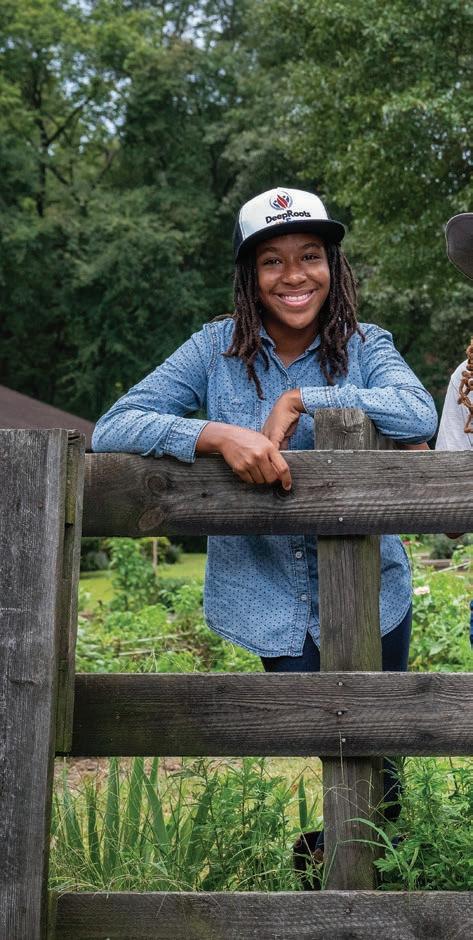
When Cherie Jzar talks about scaling Deep Roots CPS Farm, she rarely begins with acreage or production numbers. Instead, she talks about responsibility — to community, to history, and to the long-term stability of local food systems.
Deep Roots began as a homestead-based operation where Jzar and her family produced food on a small footprint while building relationships with neighbors and community partners. Early success quickly revealed a limitation familiar to many small-scale growers: strong
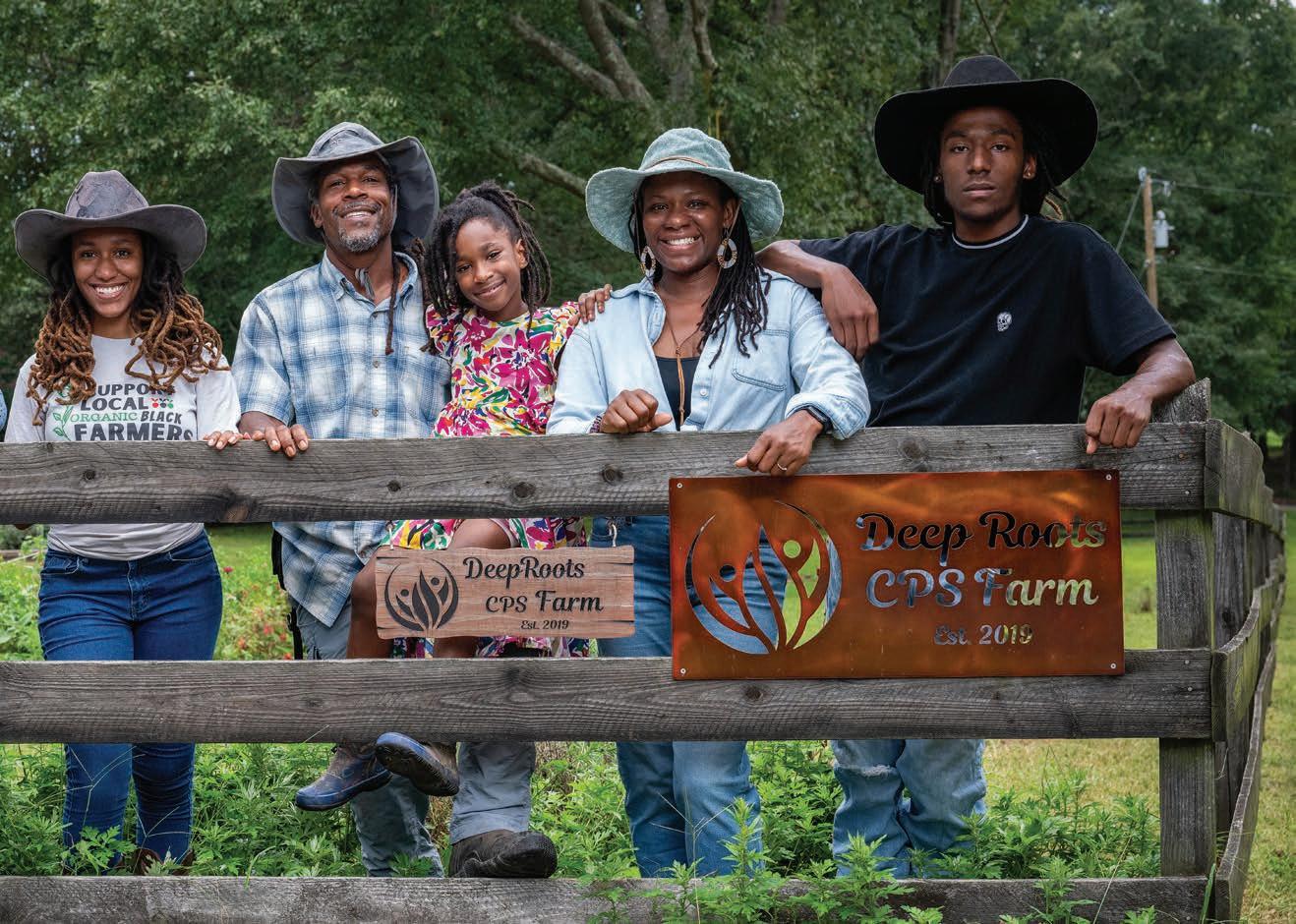
demand paired with limited production capacity.
“When you have a limited amount of land, you’re only going to be able to grow so much produce,” Jzar said. “We realized very quickly … we would not be able to get to the point where we actually can be a source of produce for the community.”
That realization marked the beginning of Deep Roots’ expansion journey. The farm gradually transitioned from an eighth-acre homestead to multiple urban plots before securing larger production space, now totaling seven acres in Charlotte, NC. Consolidating production helped reduce ine ciencies caused by managing scattered plots, and strengthened longterm stability.
Jzar describes scaling not as an e ort to become larger, but as an e ort to become more intentional.
“Scaling up is not about just growing bigger for growth’s sake,” she said. “It’s about growing smarter so that we can produce more food for the community. … Food is the center of it, but people are the most important.”
Location plays a critical role in Deep Roots’ growth strategy. The farm operates near Charlotte’s Beatties Ford Road
corridor, an area that has historically experienced limited access to fresh food. Establishing production in Charlotte’s West End allows Deep Roots to remain in close proximity to the community members who need fresh produce, removing transportation as a food access barrier.
For Jzar, land access represents more than production potential. Through a partnership with The Conservation Fund’s Working Farms Fund, Deep Roots secured a 44-acre property with a long-term pathway to ownership. The transition introduced infrastructure challenges, including lack of water infrastructure, but it also created stability that supports future expansion.
Jzar sees the farm as part of a larger e ort to rebuild agricultural infrastructure within Black communities.
“We need institutions that can outlive the person who started them,” she said. “That’s what we want Deep Roots to be … something we steward now while growing it for the future.”
Operational systems serve as the foundation supporting that vision. Deep Roots integrates project management software, production tracking, and strategic planning tools into daily operations. These systems allow the farm to evaluate enterprise performance annually and make adjustments based on data rather than guesswork.
“If you looked at our project management tracker, you could know everything you need to know about Deep Roots,” Jzar said. As opportunities have expanded, Jzar has also learned that growth requires boundaries. She encourages farmers to resist external pressure to expand in directions that do not align with long-term goals.
“People think about scaling up as just doing more,” she said. “But scaling up is doing enough on purpose.”
Today, Deep Roots balances production, education, hosting youth programs, training emerging farmers, and strengthening community food access. Jzar measures success not only by yield totals, but by the farm’s ability to serve as a stable, intergenerational resource.
• Define long-term vision before pursuing expansion. Choose land and infrastructure that support community access.
• Use data and planning tools to guide decisionmaking.
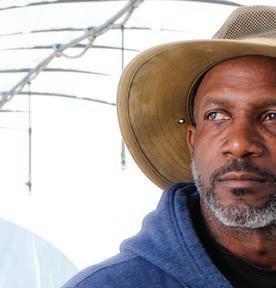
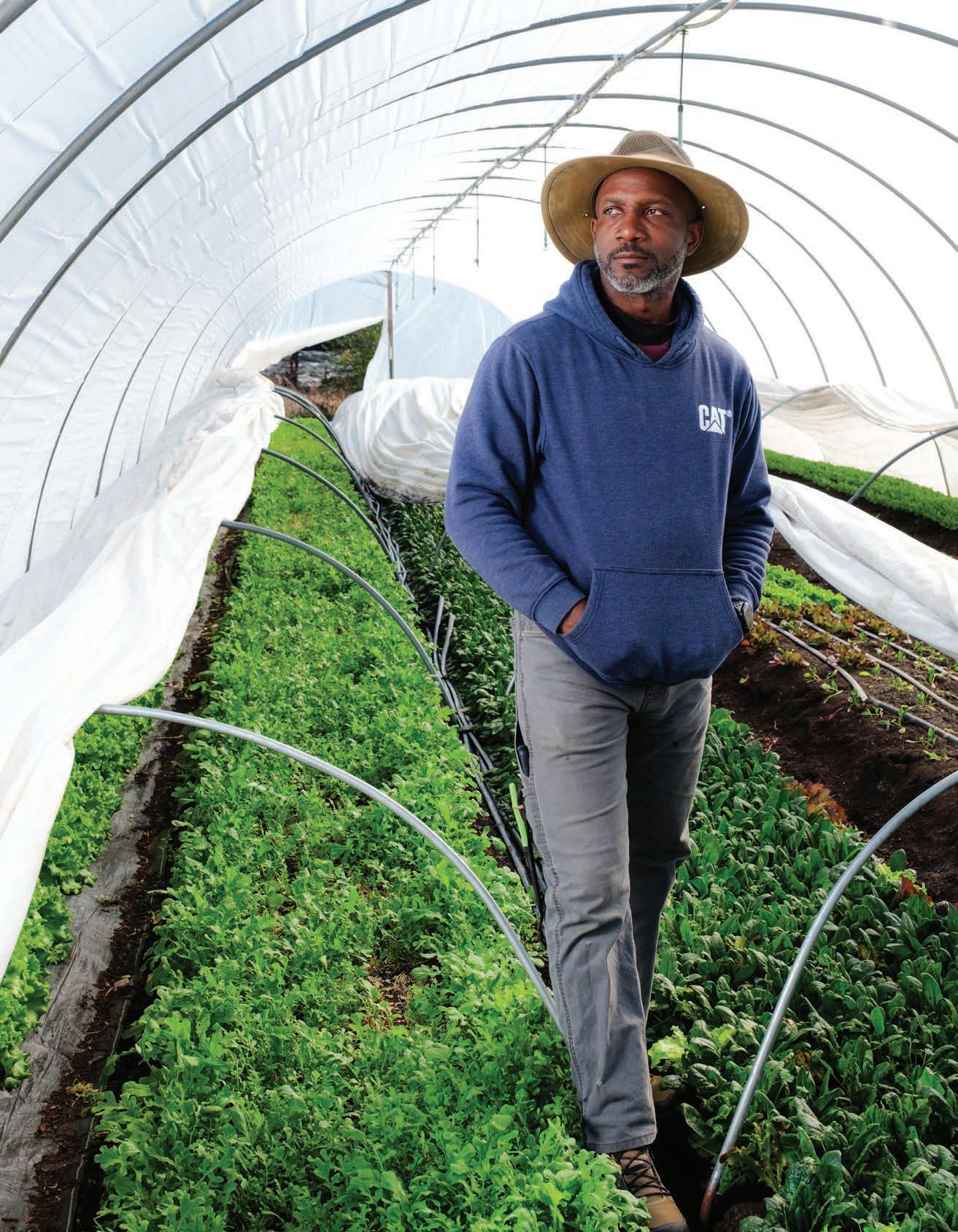
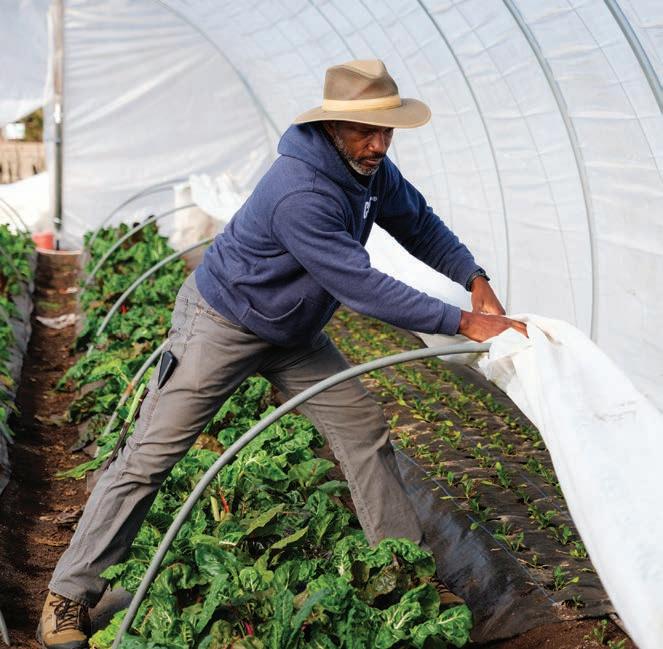
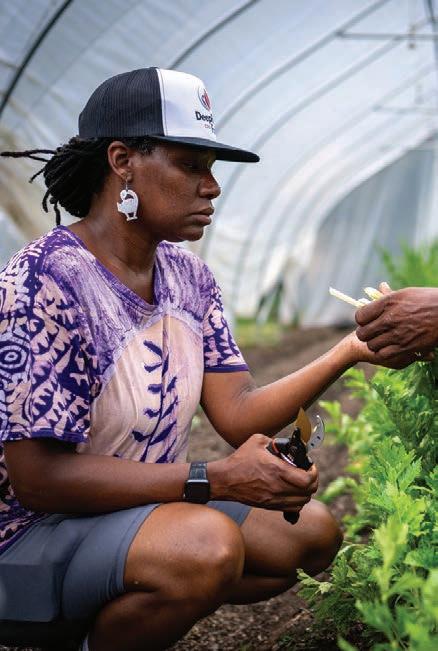
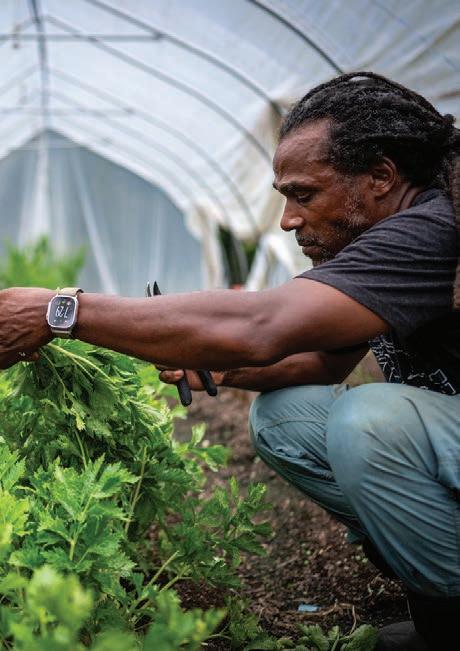
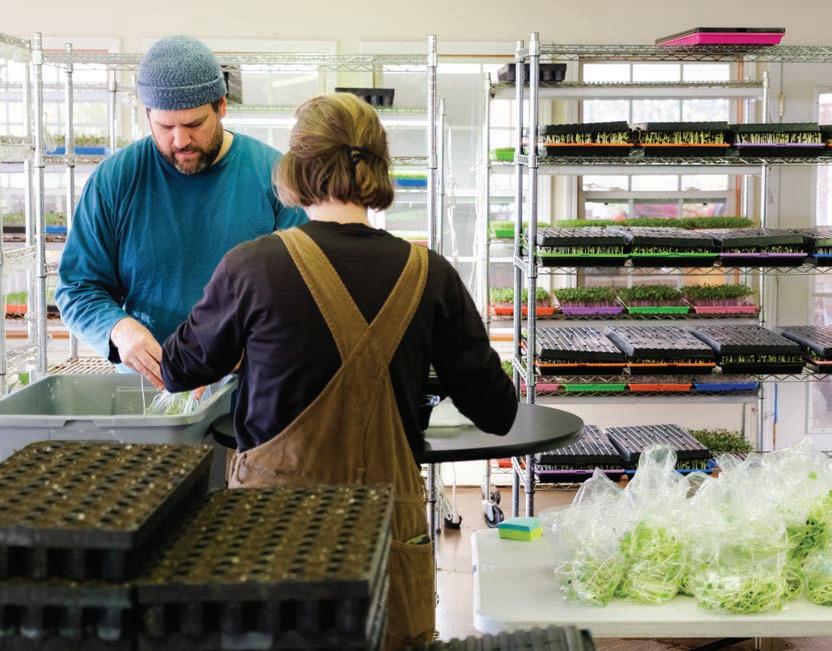
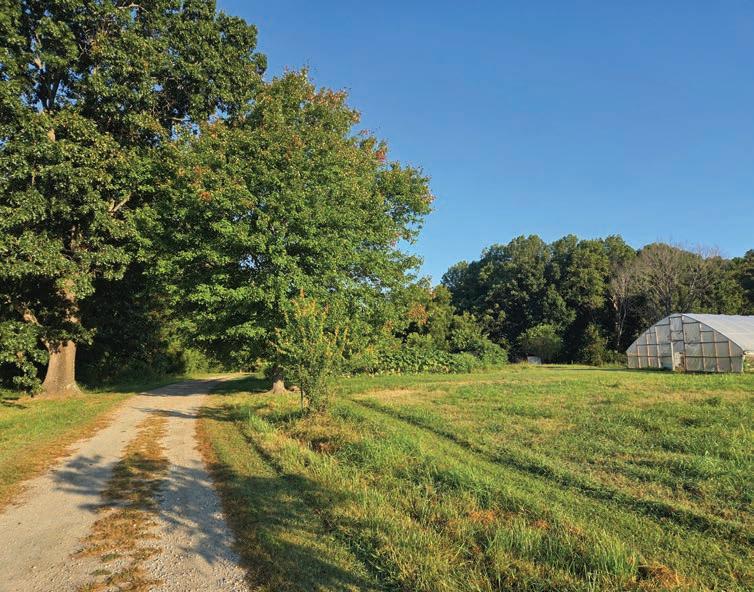
Left: Howard Allen, owner at Faithfull Farms, uncovers produce inside a greenhouse tunnel at his farm in Chapel Hill, NC. Right: Cherie Jzar and her husband Wisdom Jzar harvest herbs in their greenhouse tunnel at Deep Roots CPS Farm in Charlotte, NC. Far right: Employees at Faithfull Farms bag microgreens for an order.
•Protect the mission by setting clear boundaries around growth.
• Scaling can strengthen communities, not just farm output.
Growth is often romanticized as abundance: fuller elds, heavier harvests, longer market lines. But at Faithfull Farms, Howard Allen learned that true expansion begins long before the crops ll the soil. It begins with preparation, planning, and the courage to build a farm capable of sustaining its own success.
“From day one, everything was about scale in terms of production,” Allen said. “We got into the farmers market … and immediately saw there was a lot of opportunity for growth.”
Faithfull Farms launched in 2018 and built a strong customer base through direct markets. As production increased, Allen shifted his focus from expanding acreage to strengthening operational systems that could support consistent growth.
“We focus on techniques that we can replicate and rinse and repeat going forward,” he said.
Allen credits business education with helping him understand how farm growth requires leadership evolution. In uenced by The E-Myth Revisited, he began to view his role as a balance of entrepreneurship, management, and technical production.
“I had to be less of a technician and become more of a manager,” Allen said. “If I stayed in the eld all the time, the business wouldn’t grow.”
Technology has played a major role in that transition. Equipment such as paperpot transplanters and mechanical harvesters allows Faithfull Farms to increase e ciency while reducing physical strain on sta .
“With a paperpot transplanter … one person can do in 15 to 20 minutes what used to take two hours,” Allen said.
Allen believes e ciency gains allow farms to grow sustainably without overwhelming sta or compromising quality. Workforce development remains central to that approach. Faithfull Farms prioritizes building long-term employment opportunities rather than relying solely on seasonal labor.
“We want to build a culture where we create job opportunities that are long-term, sustainable,” Allen said.
Mentorship also plays a role in hiring practices. Allen encourages employees to view their time at Faithfull Farms as part of their broader professional development.
“We see you as a partner … and we want to sow into your growth,” he said.
Financial strategy has supported Faithfull Farms’ steady expansion. Allen describes reinvestment as a compounding process that allows infrastructure improvements to build over time.
“Scaling is replicating operations to increase production,” Allen said. “Growth is how we grow as a team, how we grow our culture, and how we evolve while maintaining our values.”
Today, Faithfull Farms continues expanding production while prioritizing team stability, e ciency, and quality of life for farm leadership and sta . Allen encourages farmers approaching growth plateaus to focus rst on strengthening systems before pursuing aggressive expansion.
• Develop repeatable production systems before expanding acreage.
• Transition from hands-on labor to management / leadership.
• Strategic equipment investments improve efficiency and worker safety.
• Workforce stability strengthens production consistency.
• Reinvestment supports long-term infrastructure growth.
HOPE OSTANE-BAUCOM has been with RAFI since July 2024, serving as its Farmers of Color Network Communications Project Manager. Hope is passionate about local food systems and integrated pest management. She volunteers at farmers markets, tends her garden, and performs spoken word poetry.
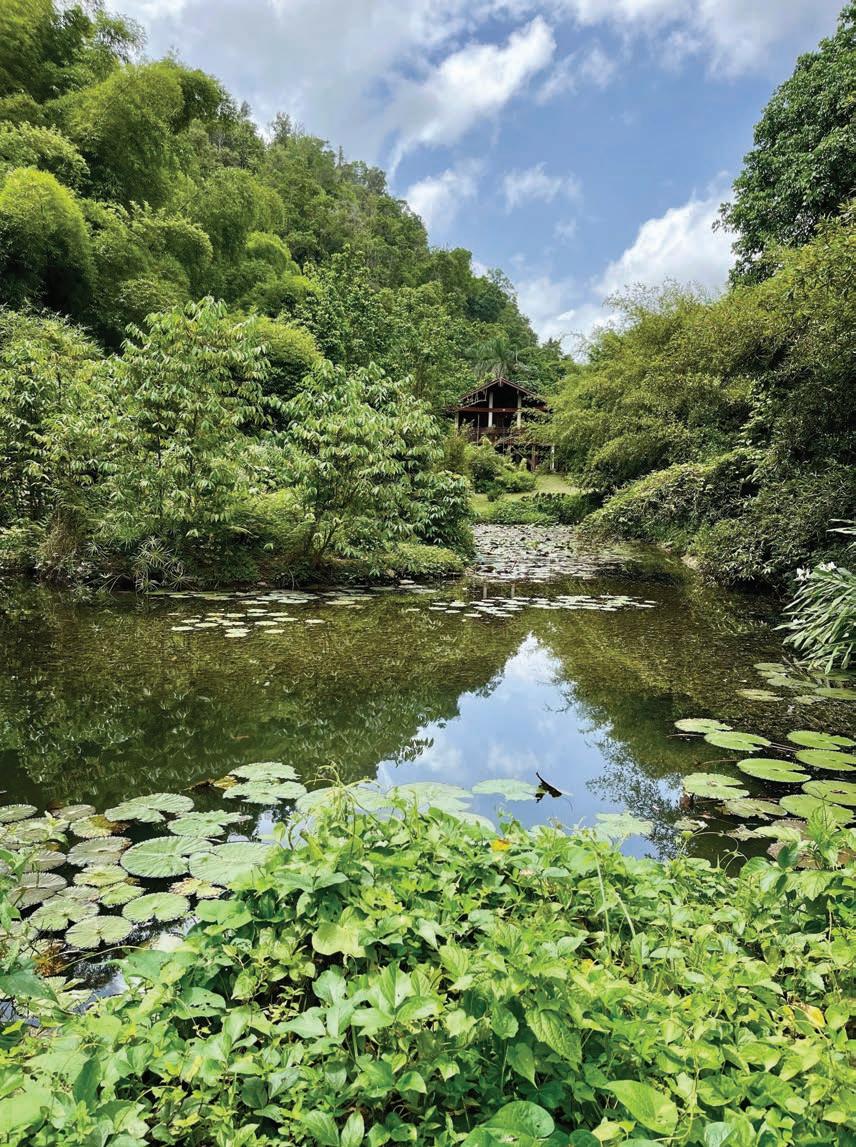
At Finca Las Perdices in Ciales, Puerto Rico, a quiet transformation is underway. In 2023, the 31-acre farm became the rst piece of land in Puerto Rico protected under an agricultural commons. Landowners José Colón López and Nélida Agosto Cintrón donated their land to the Fideicomiso de Tierras Comunitarias para la Agricultura Sostenible (Community Land Trust for Sustainable Agriculture), known as FiTiCAS. FiTiCAS works to secure farmland in Puerto Rico so that new generations of farmers can strengthen local food security and sovereignty through agroecological practices.
They propose to do this by acquiring farmland and holding it in commons, a community-centered approach to landholding and land governance aimed at providing long-term tenure for farmers who cannot a ord to buy land outright.
The core concept of commons is nearly as old as agriculture itself. Societies around the globe, from Indigenous peoples of the Americas to medieval Europeans, have practiced collective land stewardship to grow food and manage natural resources. In a modern commons, farmland is removed from the speculative market and placed into a community-governed structure, protected for agricultural use.
remains the top challenge for young and beginning farmers, especially Black, Indigenous, and other farmers of color.
Commons o er an alternative path, one that bypasses the land-as-commodity market to bridge the gap from one generation of farmers to the next.
Here’s how it works: a group of community stakeholders form a nonpro t entity designed to buy or receive donations of land and hold title to that land in perpetuity. Like in a conservation land trust or community land trust, this prevents the land from being sold. Without speculative market pressure
“For us, commoning is a process of reestablishing a di erent relationship to land based on collective ownership,” says FiTiCAS co-founder and Executive Director Mariolga Reyes Cruz. “We’re envisioning a future where land is protected in perpetuity so multiple generations can have access to land and steward it for the next generations.”
FiTiCAS is part of a growing movement promoting land commons as a response to the growing challenges of farmland loss, generational turnover, and barriers to land access.
The average U.S. farmer is over 58 years old, and more than 400 million acres — over 40% of farmland — is expected to change hands by 2030. Without heirs or a ordable retirement options, many farmers see no option but to sell to the highest bidder, who are often developers or corporations with no intention of keeping the land in agriculture. With roughly 2,000 acres of farmland being lost to development every day and land prices at record highs, access to a ordable land
BY KARA HOVING
to drive up rents, the commons can set a ordable long-term leases (often 99-year leases or as long as their state allows), giving the leaseholder secure tenure to live and farm on the land. The commons is governed by a board of nonpro t and community stakeholders, including the farmer leaseholder(s), who together adopt governing values, establish land stewardship standards, and set equitable lease terms.
Moving land outside of private ownership requires creative legal structures to ensure protection under existing law. There are a handful of di erent legal structures communities can choose from to achieve this, including 501(c)(2), 501(c)(25), or 501(c)(3) nonpro t entities (you can learn more about these models through the QR code on page 22). The right choice of commons entity depends on the context of the local com-
munity, but the underlying goal remains the same: to o er an a ordable pathway to long-term land security while protecting the land for future generations.
It’s important to note that holding land in common is not the same as collective use. A commons is not the same as a cooperative, though it can be structured as one if desired. Under most models, land is leased to a single farmer or farm family, or split up into parcels that each function as independent enterprises. Each farmer still has the autonomy to operate their own farm business and make key management decisions, provided those decisions align with agreed-upon stewardship principles.
While the legal structure provides stability, it also allows exibility for the vision and impact to be truly community-
driven. Working within the basic commons framework, farmers and board members can work together to tailor land-use agreements and farm management plans based on the needs and goals of the local community. This could mean committing to care for the land through regenerative practices or habitat protection, nurturing future farmers by hosting educational events or farmer incubators, or fostering equity and economic empowerment by launching local enterprises, growing culturally important crops, or providing space for community connection.
The process of creating a commons looks di erent in every community. In most cases, it takes time to assemble the right stakeholders, farmers, and land availability for the commons to succeed.
Femeika Elliot and Laila Malik are both food justice advocates at Rooted East, a community-led collective combating food apartheid in East Knoxville, Tennessee. They are also founding board members of the East Tennessee Community, Housing, & Farmland Commons. Rooted East works to create a self-su cient food system for East Knoxville’s majority Black community through community garden initiatives, gardening education, and skills training.
“What we’ve noticed over the last three years of working with this community is that people are ready for kind of the next step, for leveling up their game from home gardeners to small-scale market producers,” says Malik. Unfortunately, over half of the participants in Rooted East’s programs are renters, and even those who own their homes don’t have enough land for viable farming. So when Elliott encountered the idea of commons at the 2022 Tennessee Local Food Summit, it seemed like the perfect solution.
Their initiative is one of seven commons formed in part-

nership with The Farmers Land Trust, a national nonpro t organization advancing a particular commons structure they call the Farmland Commons. Their website is a treasure trove of templates and guidance on the complex legal process of establishing a commons.
In this model, three to 35 nonpro t organizations pool resources through a 501(c)(25), which is an IRS-designated entity dedicated solely to holding property.
“Collaboration and sustainability are very much core to the organization that we’ve created,” says Kristina Villa, Cofounder and Co-Executive Director of The Farmers Land Trust along with Ian McSweeney. “The 501(c)(25) structure brings together multiple nonpro ts to co-own and share the power of land collectively. That aids in the resiliency and sustainability of the organization, because if one of these nonpro t partners were to dissolve or go away or change mission, then the other ones are still there to hold that land and support that farmer into the long term.”
Because the 501(c)(25) entity is legally restricted to holding land, it cannot be involved in the farm’s actual business operations or day-to-day decision-making. This is an advantage, Villa says, because “it’s what gives that lease-holding farmer, legally, the most autonomy and independence on the land as possible.”
After making contact with The Farmers Land Trust, Elliot
began the work of assembling the team of nonpro ts, community leaders, and food and housing justice champions who would become the eventual board of the East Tennessee Farmland Commons. Rooted East already had strong relationships in the community through engagement in mutual aid e orts, but it still took time to get to know everyone, build trust, and agree upon shared values for the commons. From there, the stakeholders worked to establish shared agreements and bylaws, select board members, and incorporate the commons with the state. Right now, the collective is working to nalize model leases and soon will begin the process of land acquisition. Altogether, the process has taken about two years.
The complex legal process of creating a commons requires patience, says Villa, as well as an understanding that you won’t be able to compete on the same time scale as the real estate market. “These land transitions, they do take time, and so when a landowner gets to the point where they need to sell right now for a certain amount of money, that is not going to work for us,” she says. That’s why it’s important for landowners seeking to preserve their farms to plan ahead and start having succession conversations with their family. These conversations may be uncomfortable, but they ensure there will be enough time to secure a lasting legacy for future generations.
Across the state border from Rooted East and their collaborators, another commons is working to help farmers of color ourish. For the Central Virginia Agrarian Commons, it began with a gift of land.
When Callie Walker inherited some of her father’s land in Amelia County, Virginia, her vision for the land was always to serve the community. After the United Methodist pastor and her husband learned about commons at a conference presentation by Agrarian Trust, they decided the best way to achieve that vision for the land was to give it away.
Agrarian Trust pioneered the concept of commons in the United States, helping a dozen communities nationwide establish Agrarian Commons. Agrarian Trust provides technical support to guide grassroots organizations through the process of choosing the right legal framework for their con-
text and completing all the proper paperwork to hold land securely in common. They also play the all-important role of connecting farmers and organizations with the land and resources they need.
“The reason why Agrarian Trust exists is to channel philanthropic capital down to grassroots agrarian movements,” says Nathan Galaviz, Commons Manager at Agrarian Trust. “It is our ability to acquire land, receive donations, and get upstream of this land that is barreling towards development pressure.”
With Agrarian Trust’s support, Walker donated 72 acres to the newly formed Central Virginia Agrarian Commons. Governed by a board of experienced local growers and food justice leaders, the CVAC aspires to support BIPOC access to land and resilient regional food systems, cultivated through an interconnected network of urban and rural farmers of color.
CVAC board member Renard Turner sees the commons as a potential path to help reverse the crisis of Black land loss and dispossession. He describes farming as “liberation” and hopes to see the farm become “a living, working model” for Black vocational farming.
Walker views the formation of the commons as an act of reparative justice, a step towards healing the land’s plantation history. “When we made this decision, I had this feeling like the land was breathing a sigh of relief,” she says. “I believe that I have done right by the land.”
This attitude from landowners is echoed in Puerto Rico, where FiTiCAS recently ran an online educational campaign about commons. Since the campaign wrapped, Reyes Cruz says that over 200 landowners and potential allies have approached FiTiCAS. “The response has been overwhelming,” she says. “It just shows that people really do want to be part of alternatives that take care of everybody, that take care of people and take care of the land.”
Across these examples, one lesson stands out: commons only work through community.
“Community is going to be what saves us, and being in community, and knowing how to be an active community member is going to be what sustains us,” says Femeika Elliot of Rooted East. “And so it’s a constant practical skill that you have to exercise — it’s like a muscle. You literally have to work it out.”
Commons o er an alternative path, bridging the gap from one generation of farmers to the next.
Galaviz says this same dedication to right relationship with the land has driven dozens of values-aligned landowners to reach out to Agrarian Trust over the years. “For them, the key word is legacy,” he says. Landowners who have invested their life’s work and savings into regenerative or ecological stewardship want to pass their farms to the next generation of farmers rather than sell to someone who wouldn’t honor that legacy.
Various Agrarian Commons and Farmland Commons have used di erent agreements to ensure an equitable transition for outgoing landowners. Landowners can sell at a bargain rate and receive a charitable tax deduction for the donated portion, utilize seller nancing to contribute to retirement income, or retain a life estate or leaseback arrangement so that they can live the rest of their lives in their family home or continue farming on a portion of the land as it transitions to a successor. Customized arrangements allow farmers to retire with dignity while carrying on their legacy for the next generation.
Commons bring together people with different goals and motivations, so it’s essential to establish shared values and principles alongside clearly de ned roles, norms, and expectations. Consider building con ict-resolution protocols into your bylaws or guiding documents, and remember that it’s okay not to be in perfect agreement all the time, as long as you understand how to collaborate towards a workable solution.
Experts recommend working with an attorney who can ensure the commons structure adheres to state laws and can help work through local issues like zoning. Also consider building a diverse board that includes a variety of perspectives, personalities, and skillsets, including legal and nancial expertise.
For Elliot, the commons approach shifts the focus from ownership to relationship — treating land not as a possession, but as a partner in justice, regeneration, and shared responsibility. “It’s about reshaping how we show up in relationship with the land and its people,” she says. “Repair begins when we act with humility, shared power, and remembering that land justice is community justice.”
With patience, collaboration, and care, agricultural commons o er a pathway to protect farmland — and the people who steward it — for generations to come.
KARA HOVING is a writer and policy advocate specializing in sustainable food systems and climate change communication. She helps nonprofits tell solutions-based stories that build momentum for positive change.
BY HOPE OSTANE-BAUCOM
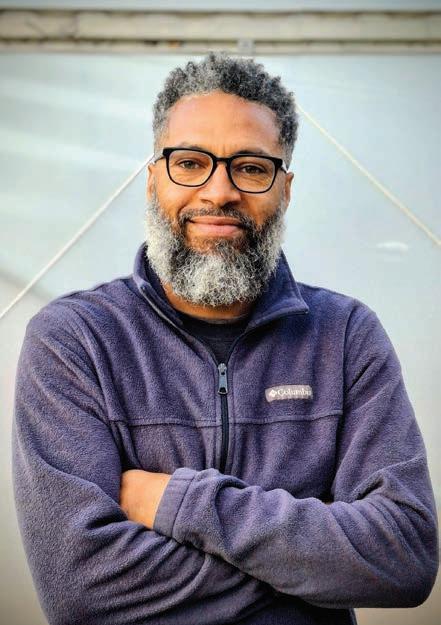
Sundiata Hardy-El, a graduate of Florida A&M University, considers himself a social entrepreneur. The owner of Compost Community, Tallahassee’s only compost pick-up service, Hardy-El also manages the Frenchtown Urban Farm, Promise Land Urban Farm, and the FAMU Agroecology Mini Farm. Much of his time is spent in a service capacity, speaking on compost, gardening, health, and nutrition to various groups throughout Tallahassee and Florida. Hardy-El has 13 years of experience in the urban farming movement and subscribes to the Soil Food Web School composting methodology.
RAFI Farmers of Color Network Communications Project Manager Hope Ostane-Baucom spoke with Hardy-El about composting for smallscale farmers. This conversation has been edited for brevity and clarity.
Hope Ostane-Baucom (HOB): Can you share how Compost Community began and what inspired you to focus your work on composting in Tallahassee, Florida? Sundiata Hardy-El (SHE): Compost Community started in 2013 with the idea of providing an important service to the people of Tallahassee. I was inspired by compost itself. Compost is an intricate network of microorganisms working in harmony to provide life to other organisms, i.e., plants and then humans. I learned how important composting is, and the process itself intrigued me.
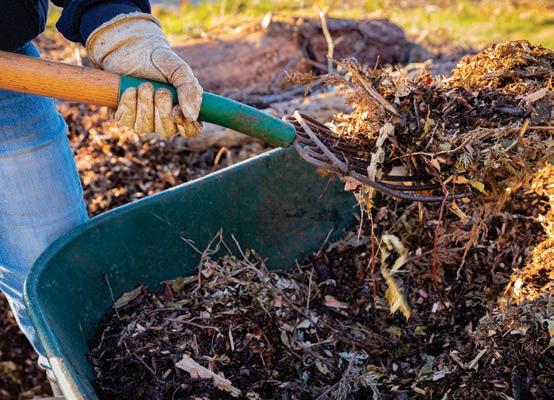
HOB: What benefits will farmers see when they begin producing and managing their own compost? SHE: Composting can signi cantly reduce the amount of soil inputs, like fertilizer, on any farm. Composting will automatically improve soil fertility, leading to greater
ers can generate additional income from producing compost and selling that compost or creating compost-related products such as seed-starting mixes that are tailored to speci c groups of plants. This can be done with research and product development.
plant growth and nutrient density. Farmers will experience increased crop health when they implement composting and agroecological principles into their farming systems. In addition to saving on inputs, farm-
HOB: What makes compost truly effective in terms of nutrient availability and balance for plants? SHE: A good, quality compost is a catalyst for what we call nutrient cycling. Nutrient cycling is the process by which particular organisms in the soil make nutrients available in the form of soluble trace minerals that are available to be taken up by the roots of plants. Additionally, one of the organisms of a good compost is the presence of fungi, which act as “gatherers” of additional nutrients for the plants’ root systems. Some mycorrhizal fungi integrate with the root system of plants and stretch out farther than the root system to pull in what the plant needs through its hyphae into the root. Good compost is able to increase nutrient availability. Pretty amazing, isn’t it?
HOB: How does composting contribute to climate resilience on farms, especially in regions facing extreme weather? SHE: Composting helps with carbon se-
questration, the process of removing carbon dioxide from the atmosphere — where it contributes to global warming — and absorbing it into the soil, where it improves soil health to bene t plants.
HOB: What knowledge or skills do farmers need most in order to manage compost effectively? SHE: Farmers should adhere to the organic standards for compost manufacturing and the Soil Food Web method to manufacture compost e ectively and con dently. Discipline in taking temperatures and monitoring moisture levels is required to ensure the compost is being produced properly. Otherwise, the compost is merely organic matter, lacking nutrient density.
The soil food web is the living network of organisms in soil, including bacteria, fungi, protozoa, nematodes, insects, and earthworms, that break down organic matter and make nutrients available to plants. When this underground ecosystem is healthy and balanced, it improves soil structure, water retention, plant health, and overall farm resilience. The concept was pioneered by soil microbiologist Dr. Elaine Ingham, founder of the Soil Food Web School, whose work highlights the vital role soil biology plays in sustainable agriculture.
HOB: Compost Community blends environmental stewardship with entrepreneurship. Can you walk us through how your composting business model works and how you sustain it financially? SHE: Our revenue model allows us to generate revenue on the front end and the back end.
Customers who purchase a subscription have their compost picked up/dropped o , and we also sell nished compost to our local community. We’re able to sustain primarily because of that subscription model, which allows us to pay employees and reinvest in the business.
HOB: How does Compost Community help bridge urban waste streams and local food production? SHE: We primarily serve home gardeners and homesteaders who focus on “Grow Where You Are.” Many of our clients experience a signi cant reduction in their waste production. This is evidence of our impact on the local community.
HOB: For farmers interested in launching their own compost enterprise, what are important first steps they should consider? SHE: For farmers and individuals looking to launch their own compost enterprise, the rst consideration should be the target clientele. This decision will help shape the business model and streamline e orts ( nancial and marketing) in the right direction. Consider whether you want to focus on collecting residential waste, commercial organic waste, or both to supply your compost, as well as whether you want to go around and pick up the waste for composting or create drop-o locations.
HOB: What do you say to farmers who are hesitant to start composting? SHE: It takes time, labor, and space in order to reduce input
costs. This approach is critical to any farm’s sustainability e orts. Even if there’s minimal compost produced, it can be used to start seedlings for the farm. You don’t have to produce a ton of volume for it to be pro table.
HOB: Looking ahead, what gives you hope about the future of composting and soil health in the Southeast? SHE: Composting is the future of the earth. Carbon sequestration is a major component of composting. Compost and soil health in the Southeast will thrive as more farmers come to understand the importance of biological farming without synthetic inputs. We are garnering support from the larger community, from Florida to Texas and up the East Coast, to begin transforming our soil pro les through compost, compost teas, and extracts. The compost industry as a whole is advocating for policy changes in many states and municipalities across the country, and we are excited about the legislative changes underway. I am extremely excited and hopeful about the future of composting.
HOPE OSTANE-BAUCOM has been with RAFI since 2024, serving as its Farmers of Color Network Communications Project Manager. Hope is passionate about local food systems and integrated pest management. She volunteers at farmers markets, tends her garden, and performs spoken word poetry.
When meat processing options fell short, one North Carolina farmer built a workaround rooted in culture, care, and community. BY HOPE OSTANE-BAUCOM
IN THE ROLLING elds of North Carolina, farmer and veteran Marvin Frink has built something rare: a local meat operation designed not just to sell beef, but to keep food, skills, and value rooted in the community.
For many livestock farmers across the state, the hardest part of farming isn’t raising animals. It’s what comes next. Access to processing — especially reliable, a ordable options — has become one of the most persistent bottlenecks in North Carolina agriculture. Frink knows this rsthand. And rather than waiting for the system to change, he built a bridge through it.
Frink’s original vision was ambitious: a full-scale slaughterhouse that would allow him to control the entire process,
from pasture to plate, while keeping pro ts in the hands of small farmers.
Recognizing the declining cattle industry and the impracticality of the initial large-scale model, Frink pivoted strategically. The business transformed into a smaller, private custom meat and fresh butcher shop, successfully adapting to market demands.
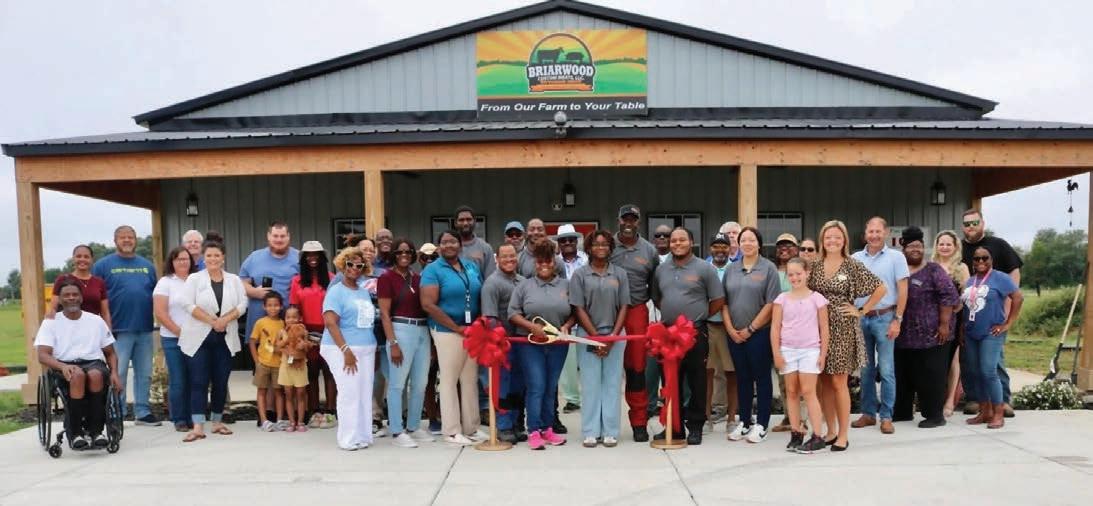
Rather than abandoning local processing altogether, Frink created Briarwood Custom Meats Butcher Shop in Red Springs, NC, a custom butchering operation that bridges the gap between slaughter and retail. He sends his cattle to various USDA facilities for slaughter, then brings the carcasses back whole to nish processing in-house — breaking them down into retail cuts, culturally speci c products, and value-added goods.
Processing: North Carolina’s Choke Point
Frink’s story mirrors a challenge facing livestock farmers statewide. North Carolina has limited slaughter and processing capacity relative to demand, particularly for small and mid-scale producers. Many farmers report wait times of six months to a year, long transport distances, and little exibility once an appointment is scheduled.
Decades of consolidation hollowed out local slaughter infrastructure, replacing it with fewer, larger facilities designed to serve industrial-scale operations. What remains is a patchwork of small processors stretched thin, booked far in advance, and often located hours away from the farms they serve.
Processing determines everything — when animals can be sold, how much farmers are paid, whether customers can be served consistently, and whether growth is possible at all.
Briarwood doesn’t eliminate that bottleneck. But the custom operation gives Frink — and his customers — more control on the other side, keeping the value local even when infrastructure is scarce.
Across North Carolina, farmers and advocates are experimenting with additional ways to navigate the processing gap. Mobile slaughter and processing units — trucks or trailers equipped to handle humane slaughter and basic processing on-site — present a promising option, especially for rural areas far from brick-and-mortar facilities.
Mobile units can reduce transport stress on animals, cut travel time for farmers, and provide exible scheduling. Some models operate under USDA inspection, while others function under custom-exempt rules. But they come with their own challenges: high upfront costs, regulatory complexity, limited throughput, and the need for skilled labor.
Other farmers rely on custom-exempt processors for directto-consumer sales, use out-of-state facilities, or scale back livestock production altogether. Each option carries tradeo s, and none o ers a simple, statewide x.
These approaches help individual farms survive. They do not yet add up to a system that reliably supports local livestock agriculture.
At Briarwood, Frink’s approach to meat re ects the community he serves. Alongside familiar cuts, he o ers oxtail, cow liver, beef fat, and other products often overlooked by mainstream markets.
“We sell our products via culture,” he explains.
From Caribbean cow foot soups to ancestral recipes that use the whole animal, Briarwood caters to culinary traditions that value nourishment, history, and respect for the animal. That focus allows Frink to meet demand while reducing waste and honoring heritage.
“You can do everything right on the farm — and still hit a wall once the animals are ready.”
Every carcass at Briarwood is used fully. Frink and his wife, Tanisha, have developed a lineup of valueadded products — chow chow, pickles, hot sauces, spice blends — all made in-house.
One of the shop’s most meaningful innovations is the “Cowboy Blend,” also called the “Ancestral Blend.” The ground beef mix incorporates nutrient-rich organs like heart and liver, o ering customers high protein and mineral content without sacri cing familiar avor.
“Seeing a calf born, hit the ground, and then go to slaughter — that’s very emotional for me,” Frink says. “That’s why it’s important to use every part of the animal.”
That ethic extends beyond food. Briarwood operates with dual generators so it can continue refrigerating, grinding, and smoking meat during power outages — keeping food accessible when systems fail. Frink also sells unprocessed beef fat at a low cost, encouraging customers to render it and use it themselves rather than turning it into a premium product.
Frink’s operation demonstrates what farmer ingenuity can accomplish — and where its limits lie. Custom processing, mobile units, and creative partnerships o er a lifeline, but they cannot yet fully meet demand for slaughter capacity. Still, ventures like Briarwood show how local businesses
can stregnthen rural meat economies.
State lawmakers and agricultural institutions are increasingly acknowledging the problem. Proposed solutions include state programs to support small processors, expand workforce training, and invest in regional infrastructure. But even supporters recognize that building capacity takes time — years, not months — while farmers continue to operate under pressure.
Up next for Briarwood is a shipping container–turned–concession stand surrounded by picnic tables, serving a ordable meals made to create no waste. The stand will serve customers, homeschool groups, and visitors attending farm workshops, deepening Briarwood’s role as a community food hub.
“We’re creating a hub area where we can feed our local community,” Frink says.
His work is a reminder that the future of food access and rural resilience depends not on massive infrastructure or distant corporations, but instead on farmers and community members who see the whole picture and who are willing to build the bridge between farm, family, and food security.
As policymakers and agricultural institutions seek solutions to a fractured food system, they would do well to look to Briarwood, where community is the model and waste has no place.


By Hope Ostane-Baucom


This work is reasoned in staying, staying long enough to feed families, ample enough to share surplus with neighbors, gatebreaking enough to teach new hands old soil, full measure as memory and labor to bloom into possibility.
This work is weighed by honored seasons, with planned details, lightened by the many hands of the collective, taking carefully crafted risks, and work that outlives this moment.
This work is the rhythm of staying, the assiduity of fallow earth, recalling the mustard seed, when plans and climate collide, the clarity reborn in rest, and the liberty to pause.
This work is measured in land that developers cannot exploit, that remains terra firma, fields held for generations, in permanence, in cultivation.

This work is weighed by legacies kept, by fed hunger and quiet security, heavily grounded in that which endures as the other options fade.
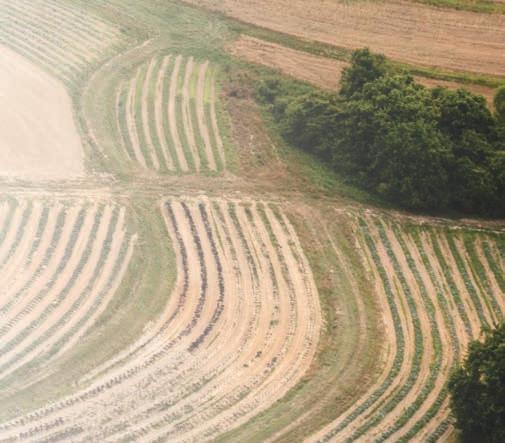

This work is measured in what survives past this moment: soil kept fertile, communities kept whole, hope passed forward, nutrient-dense and forever fed, made sacred by those who remain.