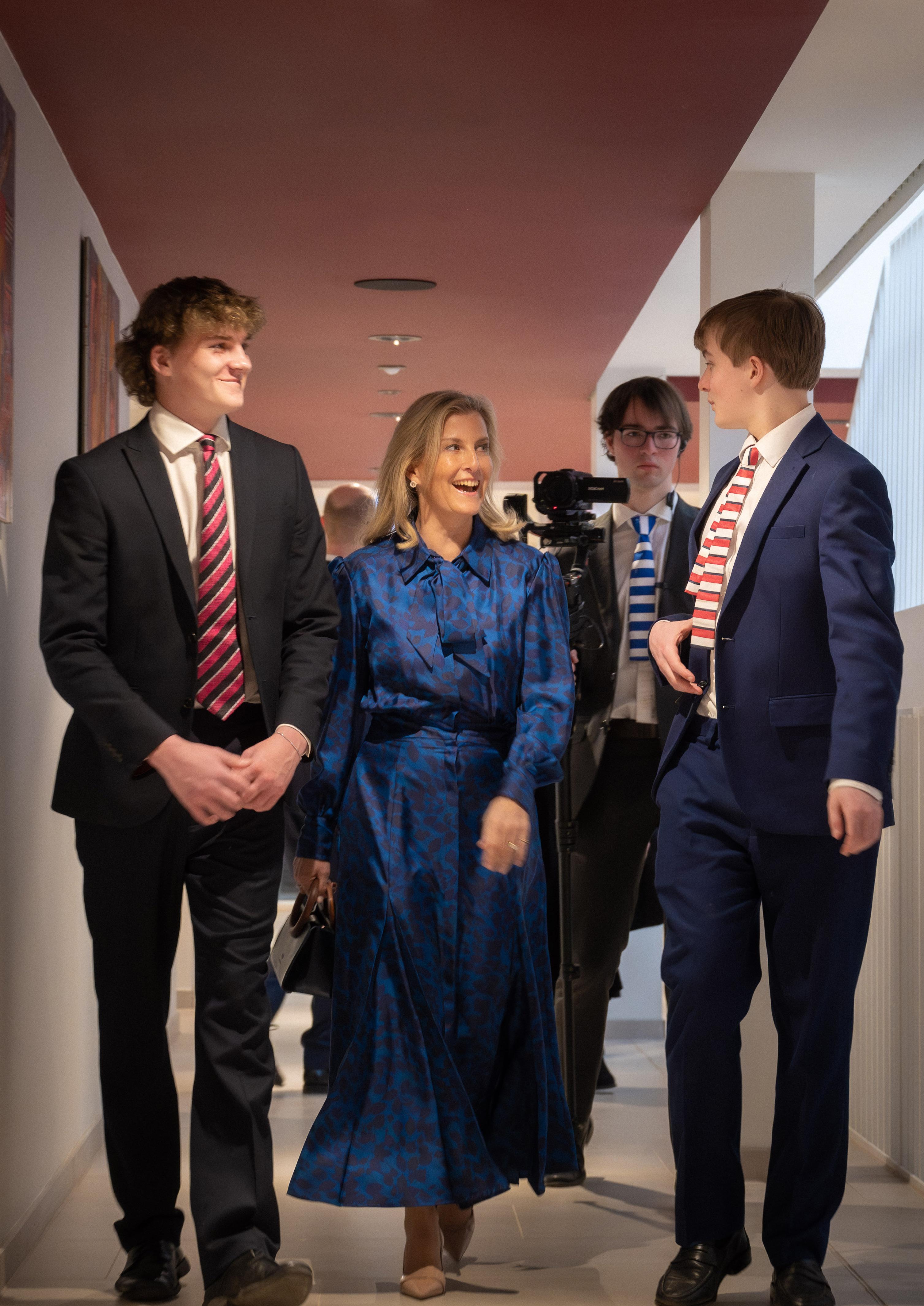
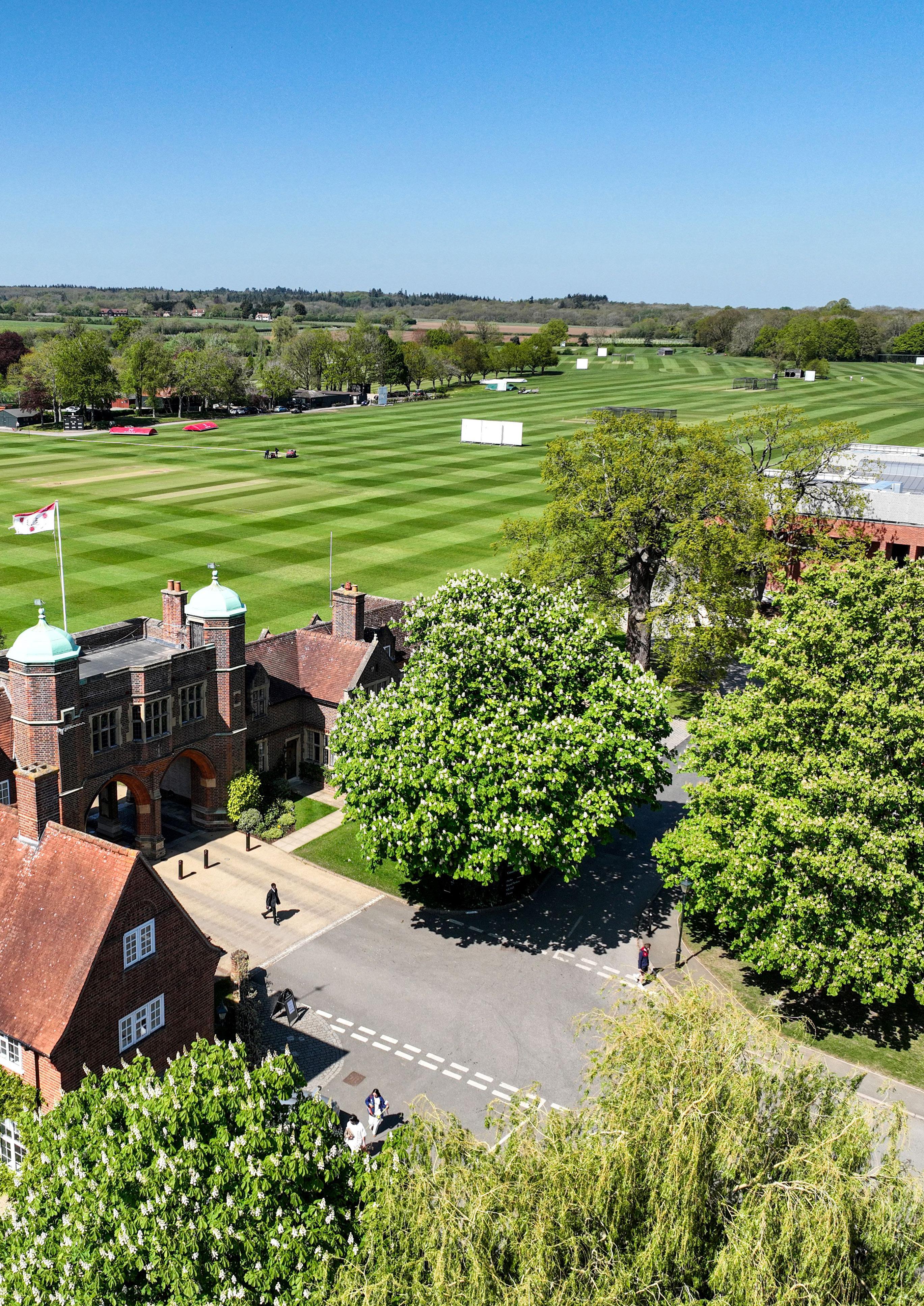

It is no coincidence that the day after a wonderful concert to mark the official opening of the new Music School – where we were honoured to have Her Royal Highness, the Duchess of Edinburgh with us to unveil the plaque – four hundred primary school children were in the same space being led in a series of singing workshops (‘The Big Sing’) by the legendary choir director Pete Churchill. One event follows another at Radley...
The two together reflect much of the central ethos of what we are about.
A sell-out concert in our wonderful new Silk Hall, with extraordinary performances from Chamber Choir, Brass Ensemble (both performing world premieres of pieces composed by Radley boys mentored by renowned composer Cecilia McDowell), Orchestra, Guitar Quartet, Concert Band, Radley Voices and Big Band. Ambitious repertoire, high expectations and exceptional levels of performance. Then, the following day, making sure we use the space for the benefit of others, building a sense of aspiration and achievement in young children and asking our boys to develop themselves as they help lead the project. Partnership work at the heart of what we do.
We were delighted that the recent ISI inspection recognised the quality of our partnership work in the local community; we are proud of it. Of course, music is only part of that; in
the final week of the Lent Term we also had two major sports events: one here at the College and the other at the heart of the Blackbird Leys estate in OX4, where we work with a number of local schools on physical literacy programmes. It is one of those rare things in life: a win-win. Our boys benefit hugely as well as promoting trust and support for the local community.
As we celebrate that work and build on the success of the opening series of concerts, we are also keen to offer more opportunities through our Keys Awards to boys with real musical potential from state school backgrounds, expanding the academic programme we have developed in recent years. I am always reminded of the privilege it has been – and continues to be – to be able to promote talented boys into Radley who would not otherwise be able to come. They bring with them the temperament and talent that inspires and motivates those around them. It makes the College a better place for all.
As I reflect on an opening programme that has shown off the skills and wonderful facilities we are lucky enough to have, and couple that with our commitment to increase aspiration through our partnership programmes and the Keys Awards, it feels to me that the balance is as it should be. Two musical events remind me of it but they are replicated in so many different ways across College life.
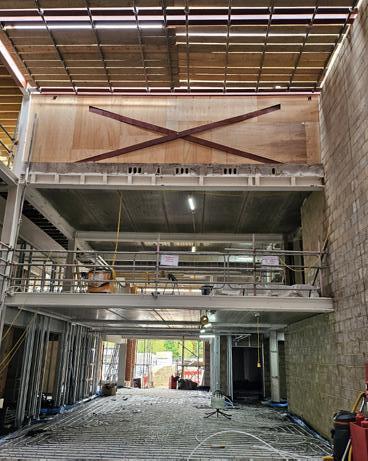
Music at Radley certainly has more of a buzz around it now,” notices Will (V, F), the guitarist of student band ‘50/50’. His observation has good cause. Radley’s redeveloped Music School is a momentous step forward, the last piece of a ten-year programme associated with the expansion of the College to 770 pupils. The project involved two and a half years of planning and design and then a year and a half of construction – 100,000 hours of labour, 37 different types of acoustic panel, and 65,000 bricks. At the heart of the project, the founding principles were clear: “This state-ofthe-art building will ensure Radley remains at the forefront of school music-making, now and in the future.” Warden John Moule reiterated the message in 2026: “In a school which cares about beauty, emotion, collegiality and culture, music has to be at the centre of what we do. Emphatically, at Radley, it is.”
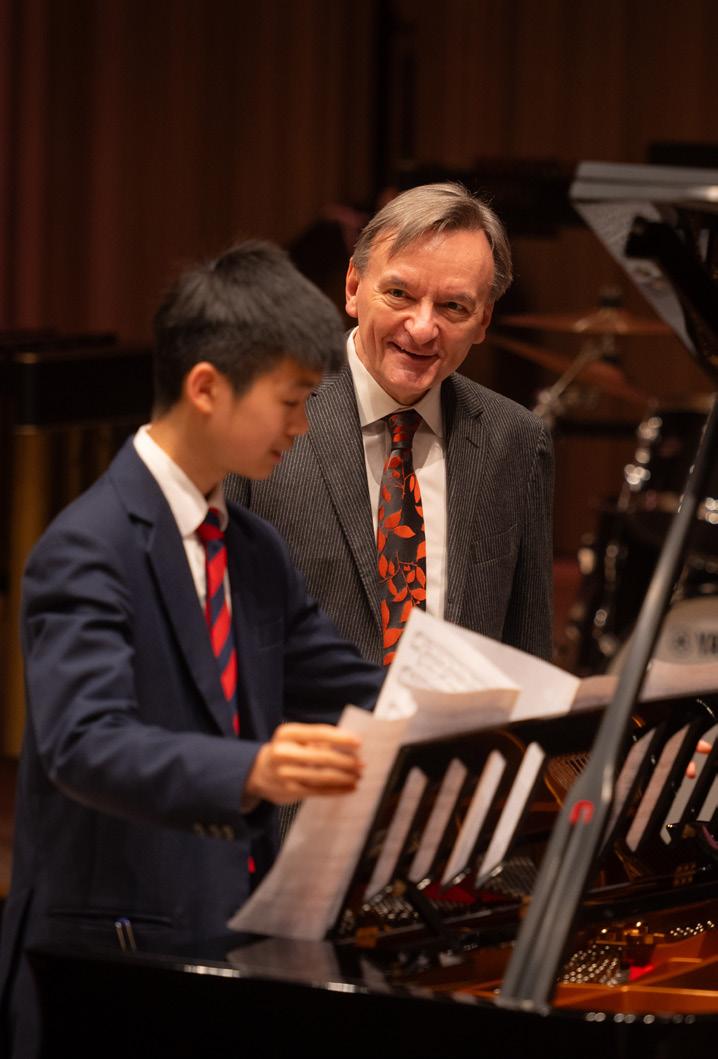
The Music School’s first engagement was on 29th January 2026 – a lunchtime woodwind concert, which began with Didrik’s (V, F) performance of Mozart’s Flute Quartet No. 1, I. Allegro. Since then, the building has hosted a packed schedule of sessions, workshops and recitals. These have included Radley’s internal competitions for strings, woodwind, guitar and drums, as well as a cavalcade of featured guest performances. Pianist Sir Stephen Hough CBE wowed on the Music School’s new Yamaha CFX concert grand, an instrument tuned by two technicians flown in especially from Japan. Jazz woodwind aficionado Giacomo Smith, and his Hot Five, played alongside the College’s own groups (including the Jazz Ensemble, Big Band, and ‘5’9’) on self-penned compositions like Two Four No More and Blues Overture
The new building has also helped to support the ‘Music Flood’ partnership, a music education advocation scheme bringing together 18 schools, the Abingdon Music Centre charity, the Thames Vale Youth Orchestra, and a network of professional musicians. On 2nd February, around 300 local children visited the Music School for a ‘Music Flood Orchestral Day’ – the College’s Shells and Removes mentored them in group performances of Prokofiev’s Dance of the Knights and This Is Me from The Greatest Showman. There followed a 400-strong ‘Big Sing’ at the end of Lent Term, and a second ‘Orchestral Day’ scheduled for 8th June. “Seeing the pupils’ faces was truly joyous; young people feeling the space is a place for them is truly important,” wrote Music Partnerships Coordinator Emma Griffiths and Vocal Animateur Tim Keasley. The Thames Vale Youth Orchestra, which usually rehearses in a school gymnasium, has also had the chance to perform Brahms and Bizet here: “It was a brilliant opportunity for our young performers to play in a proper venue. It raises their aspirations and encourages them to play their best.”
“It is clear that the impact of the building has been huge,” Precentor Sam Gladstone observes. Indeed, Radleians from all year groups now use the Music School for almost 50 weekly ensembles, with several concert opportunities every week. The state-of-the-art recording studio, home to Radley Records, sits next to an intimate recital area and across from the 300-seat concert venue ‘Silk Hall’. Alongside the ‘Song Room’ (used for choral rehearsals), the 26 practice rooms are busy day and night with boys practising.
by David Anderson (then Estates Bursar)
july 2024 – ground breaks
“Following the initial demolition phase, significant scaffolding support has been installed to hold up the floors and roof of the existing Music School. We will then remove the side wall that faces Silk Hall before it is incorporated into the new Foyer space.”
september 2024
“Over the Michaelmas Weekend we installed a tower crane which stands 25 metres tall. The radius of the crane will encroach onto Bigside rugby, which would be fine if Radley didn’t have the tallest posts on the circuit, so this has given me the odd sleepless night…”
december 2024
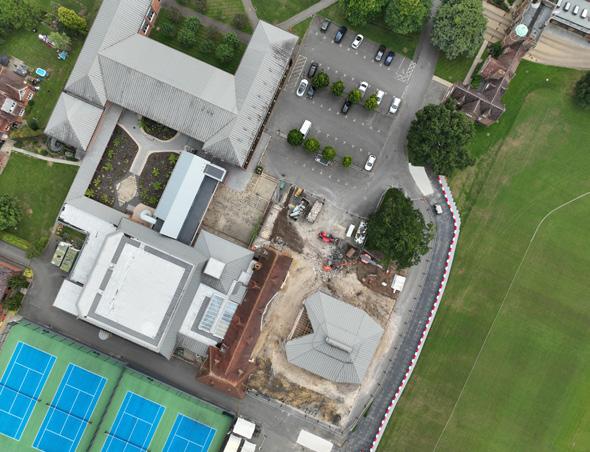
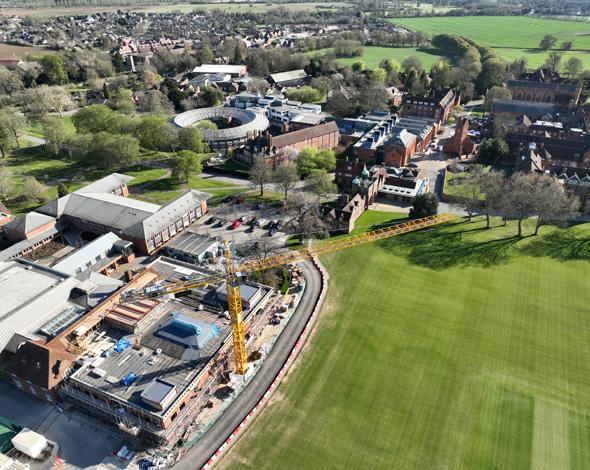
“The 120 tonne steel frame and the ground floor structure are now substantially completed. The upper floors are in progress: pre-cast concrete planks lifted off the lorry by the crane and placed into position. Because the building is designed as a steel frame, we are also able to do external brickwork and roof structure simultaneously, as the walls don’t hold up the roof.”
february 2025
“Things will now start to get complicated, with multiple different trades working simultaneously within the building – bricklayers, concrete contractors, carpenters, and a roof covering contractor.”
may 2025
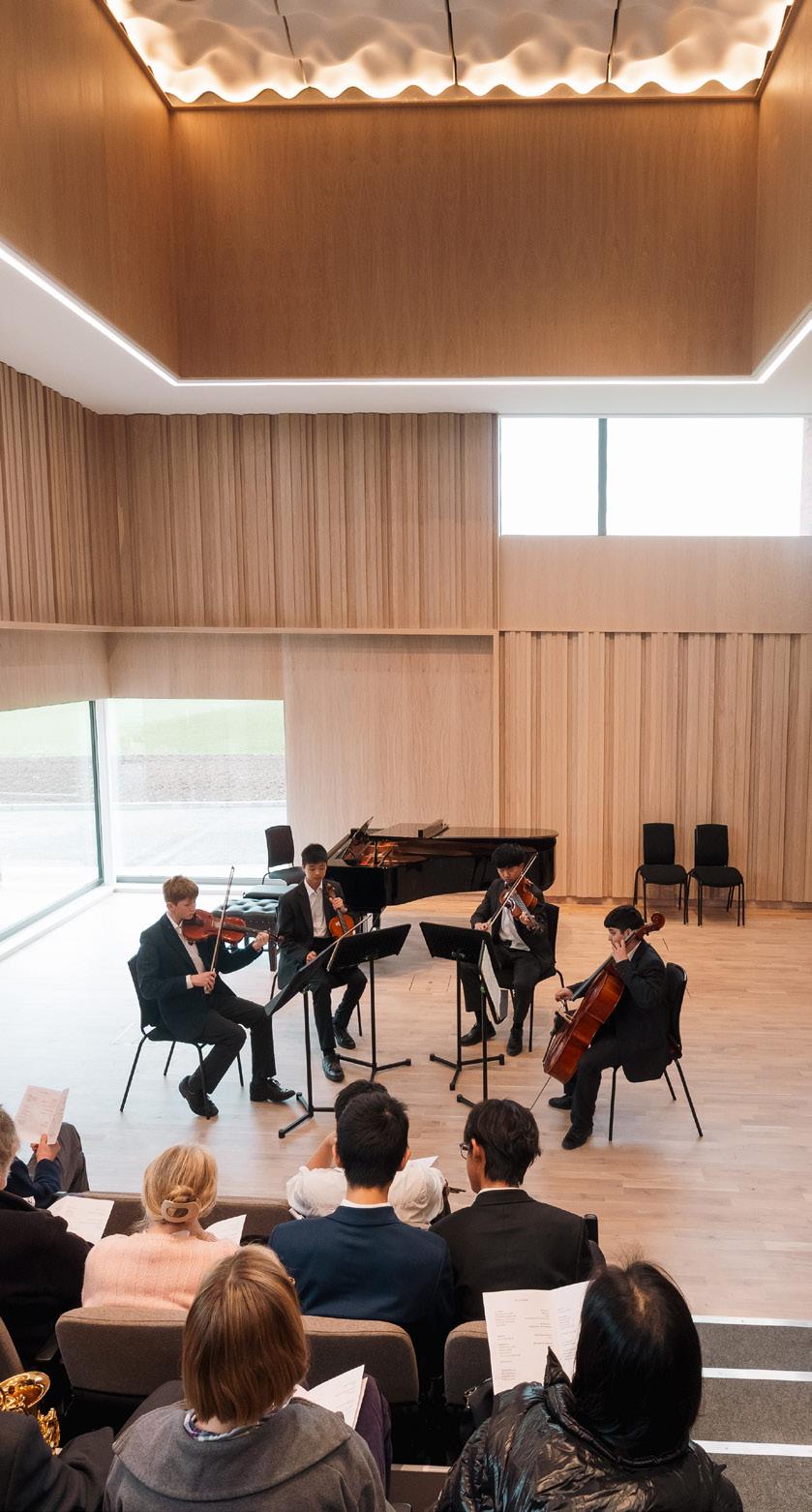
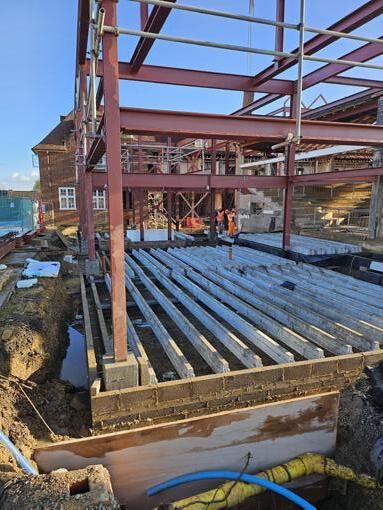
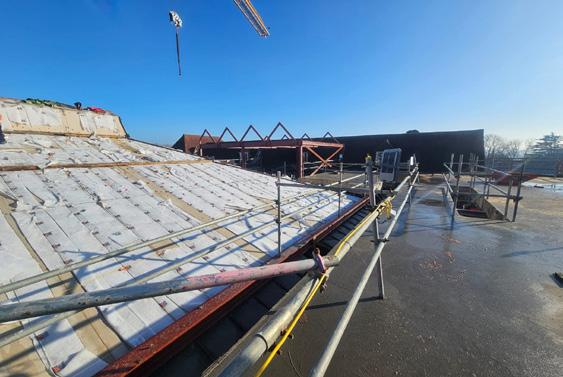
“Flooring, partitioning, and first fix mechanical and electrical installations are well underway. By mid-June the windows will start to be installed and the scaffold will be removed to clearly reveal the building.”
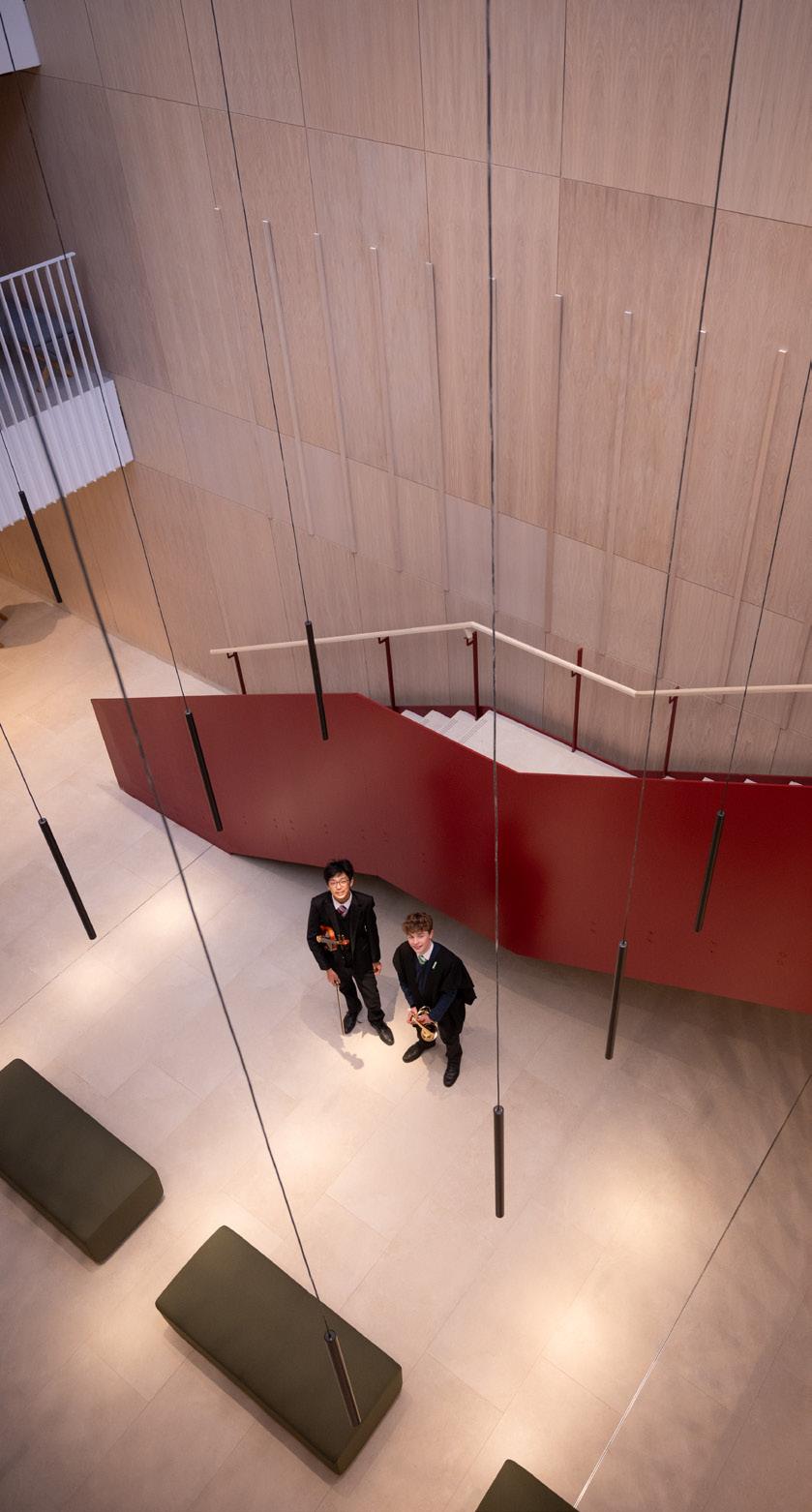
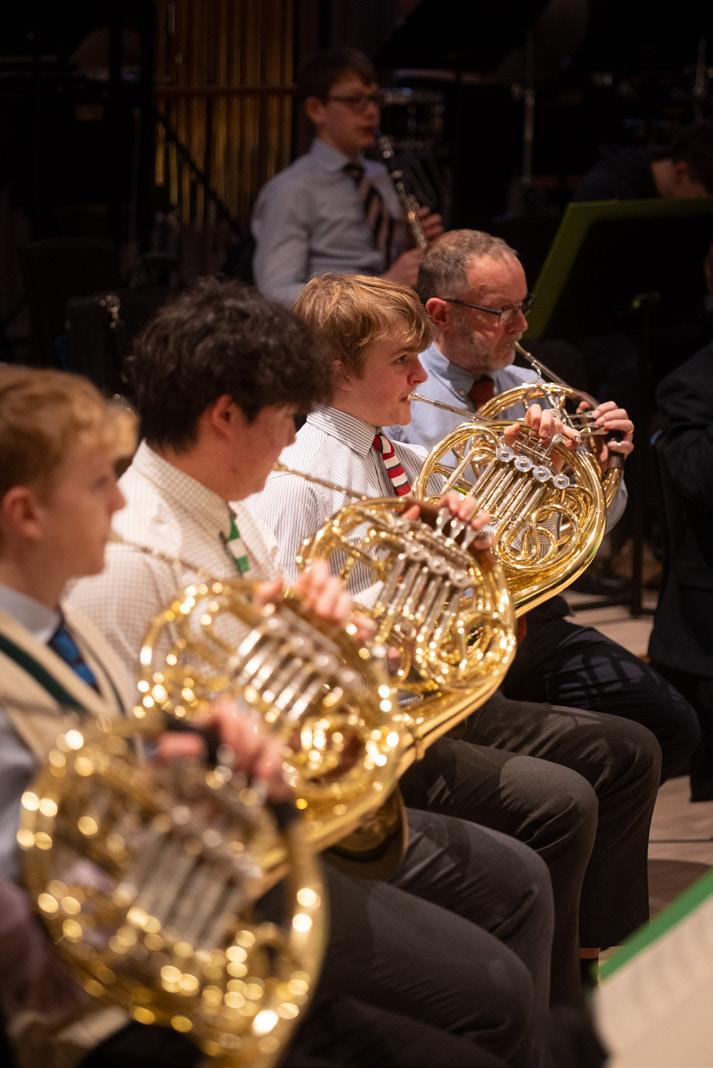
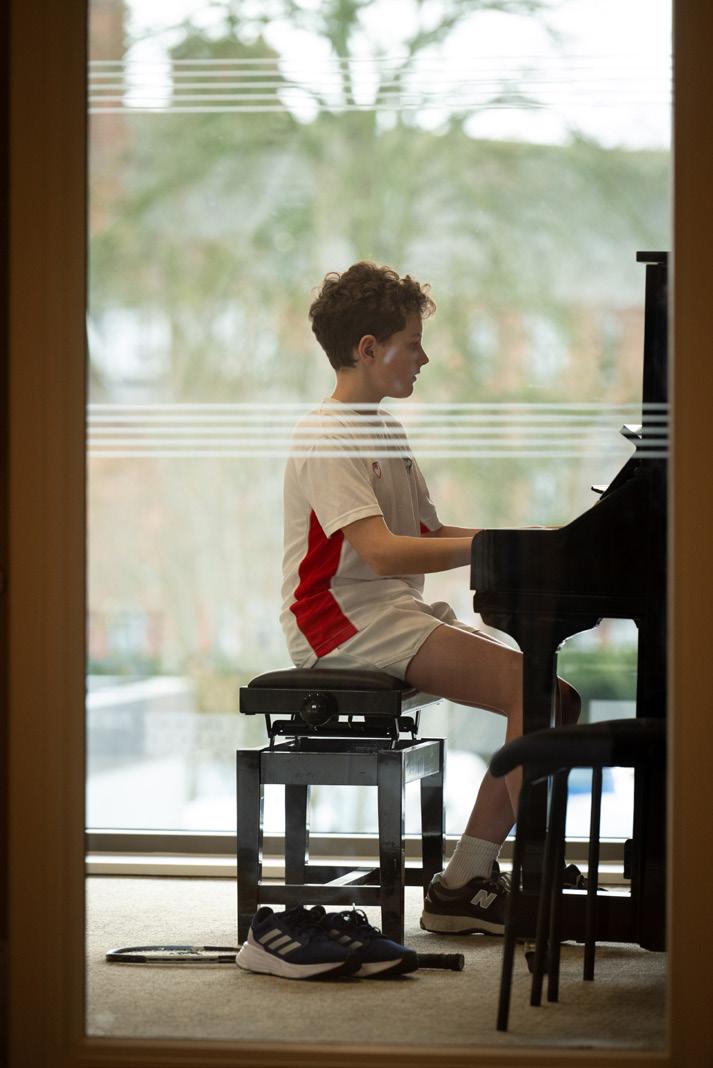
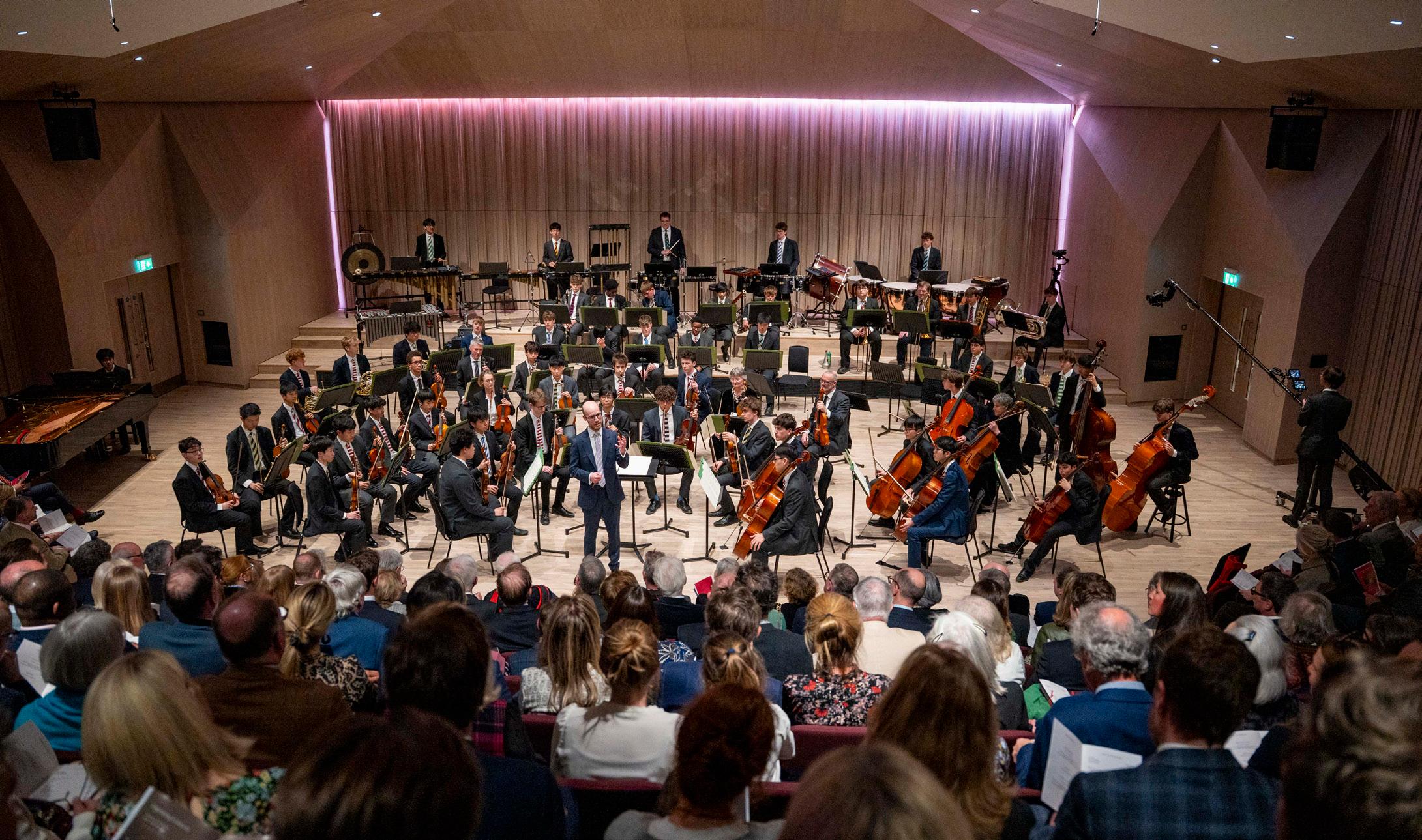
Almost half of Radley boys have music lessons, with a total of almost 600 lessons every week: “The new building has meant that it is so much easier to motivate yourself to go and practise in the mornings, as it is such an incredible place to play. I cannot wait to make as much use out of the building as I possibly can.” comments French horn player Sam (6.1, J). Theo (V, K) echoes this sentiment, “I have been so lucky to have access to the new practice rooms, amazing instruments and even the new chamber organ, as well as the opportunity to perform in the fantastic acoustics of the new Silk Hall and Recital Room.”
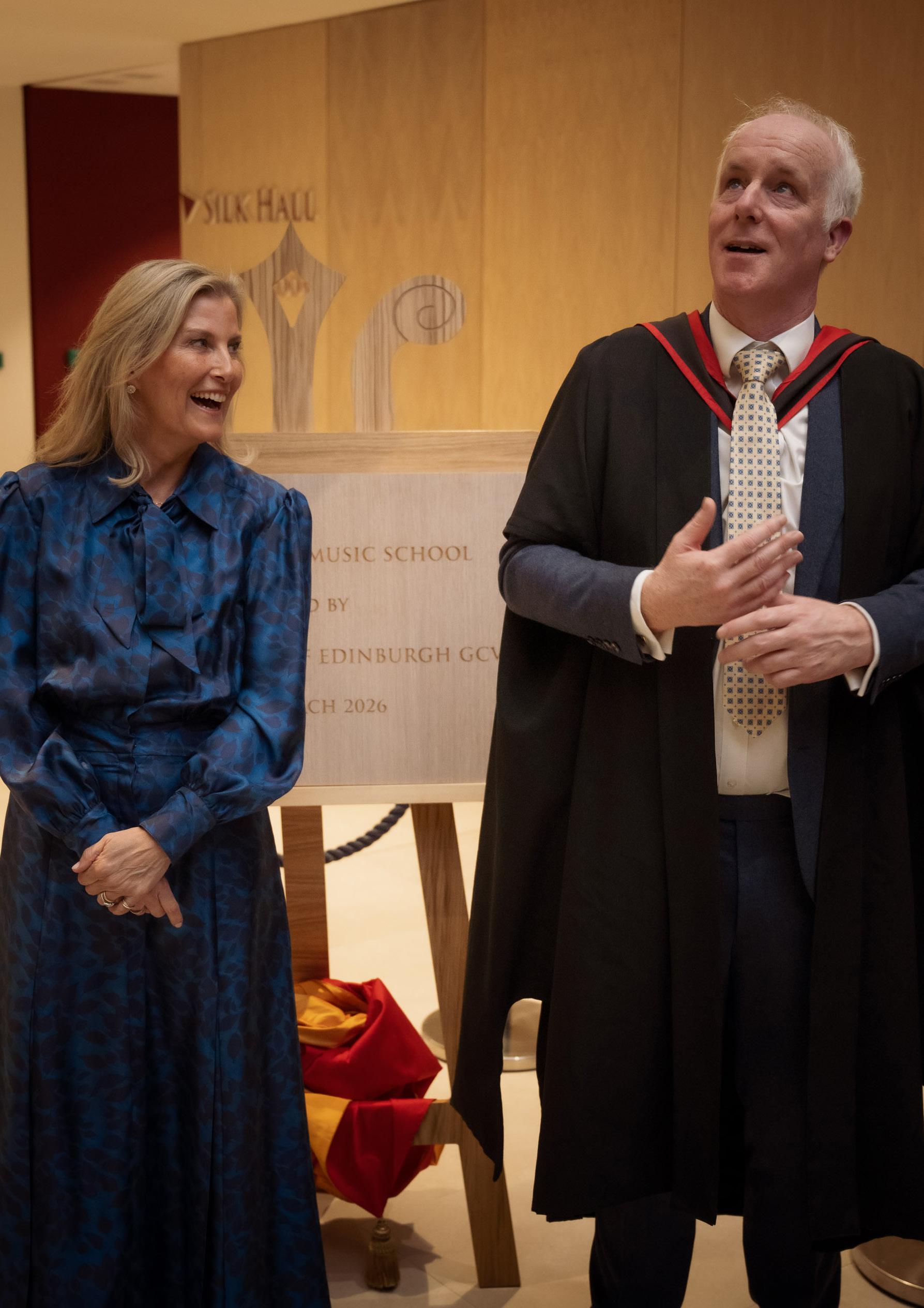
On 22nd March 2026, before the Music School’s official ‘Opening Concert’, special guest HRH The Duchess of Edinburgh stood in the building’s lobby and addressed the crowd. “My hope is that this is a building that becomes a central part of the community of the College, and that it is loved, and it is used and it has life. That’s what music brings.” With that, she unveiled the commemorative wooden plaque, and the Music School resounded with rapturous applause.
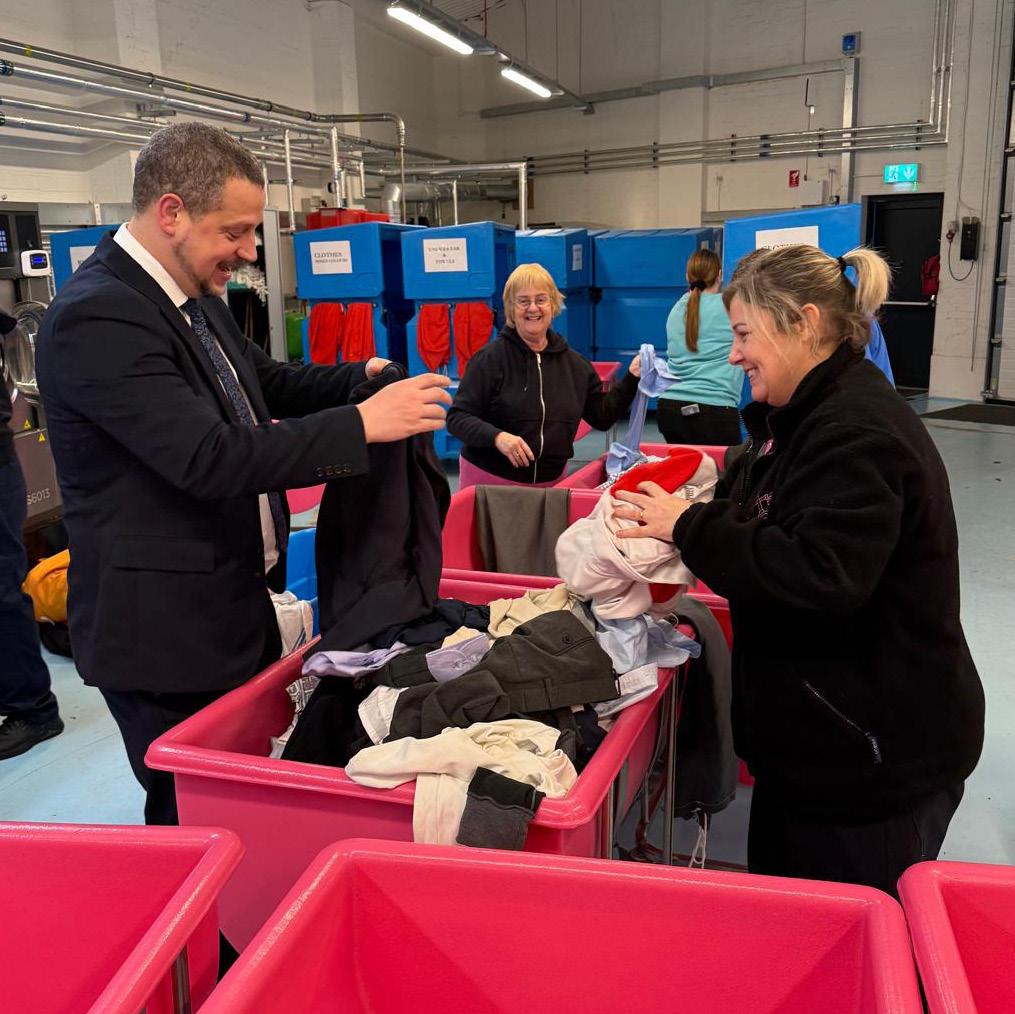
Jonathan Bochenski was appointed Bursar of Radley College in October 2025, following two years as Director of Operations at three Girls’ Day School Trust schools. As he completes his first full term in the role, it seemed the perfect opportunity to get to know him better.
We began by asking Jonathan to tell us more about his career so far...
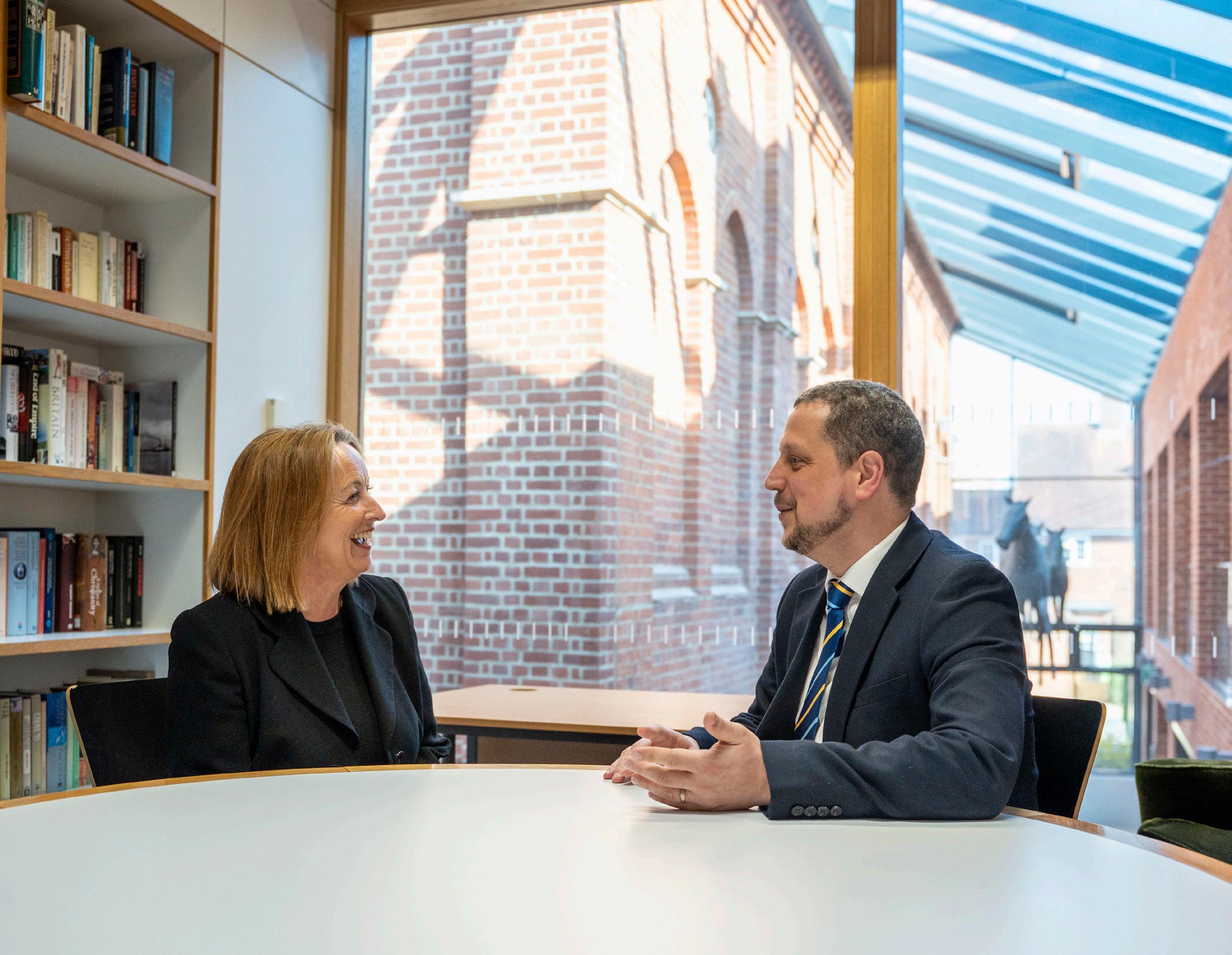
After a brief career as an Economics and Business Studies teacher, I spent 15 years as a civil servant in HMRC, HM Treasury, the Bank of England and the Valuation Office Agency in a range of roles from strategy to finance to operational leadership and change management.
If there is a theme running through my career so far it would be people and innovation. I think the best change is delivered when you listen to feedback from people actually doing the job or using the service and then make incremental improvements that are ideally a win for everyone.
What has impressed you about Radley so far?
The friendliness of everyone in the community and the incredible scale of what’s achieved each day, term and year.
And what has been the biggest challenge?
Being away from my family in the week as they still live in South London for the time being. My wife is the Director of Humanities at a grammar school in Surrey and I have three sons who are 13, 11 and 10.
What appealed to you about the role at Radley?
First and foremost it was the incredible sense of purpose and community. I wanted to live and work in a place that is doing great things and doing them as a community of hard-working people.
And your plans for your first year as Bursar?
Lots of listening and learning. I’d like to spend time with as many people and teams as possible hearing their thoughts on Radley. This place is always moving forward, so I want to make sure we focus on the right things that will have the biggest impact.
What might we find you doing in your spare time?
I was born in Oxford but grew up in Blackburn, returning to study PPE at Regent’s Park College. One of my favourite things to do since moving back to the area is spending time meandering around Oxford city centre. As a family, we like going for walks and playing board games – the more complicated the better. My boys keep me busy with all their various interests and I enjoy nothing more than having a nice family meal and talking to them about their week.
Favourite sport?
Watching? Rugby. Playing... croquet.
dream dinner party guests?
James Acaster, Keifer Sutherland and Martin Sheen. I’d want to hear their stories as James always makes me laugh and I want to know more about 24 and the West Wing. I’d most likely serve them a takeaway as then I wouldn’t have to worry about cooking.
Favourite film?
National Treasure. favourite radley quirk?
The gowns. It really makes it feel like an Oxford College.
Favourite Book?
The Harry Potter series –I loved reading them to my sons. best joke? What do you call an accountant without a spreadsheet? Lost.
The first thing you notice when you walk into Queen’s Court – affectionately known as The Doughnut – is that the Radley College Biology department does not subscribe to a minimalist philosophy of interior design. The space is chock full of display cabinets containing fossils, and the walls are adorned with photographs of smiling students getting up close and personal with all manner of wildlife. But then, out of the corner of your eye, you’ll notice movement. It may be a splash or a slither that alerts you to the fact that this museum is alive, and that you’ve stumbled into Radley Zoo.
Stephen Ryan, Teacher of Biology, shows us around...
As you progress through the walkway and wander into laboratories, the variety of animals on display becomes even more impressive. Depending on who you ask –and how keen you are to count each of our Madagascan hissing cockroaches – there are in excess of 40 different species represented in the department, with more than 200 different animals. Almost all of these can be handled, with only our orange baboon tarantula (or ‘Orange Bitey Thing’) kept under lock and key for everybody’s safety and comfort. Despite being one of our furriest specimens, it’s best to avoid the nasty bite she might deliver.
“in some classes, there are books. in this class, there are snakes.”
imm (S,J)
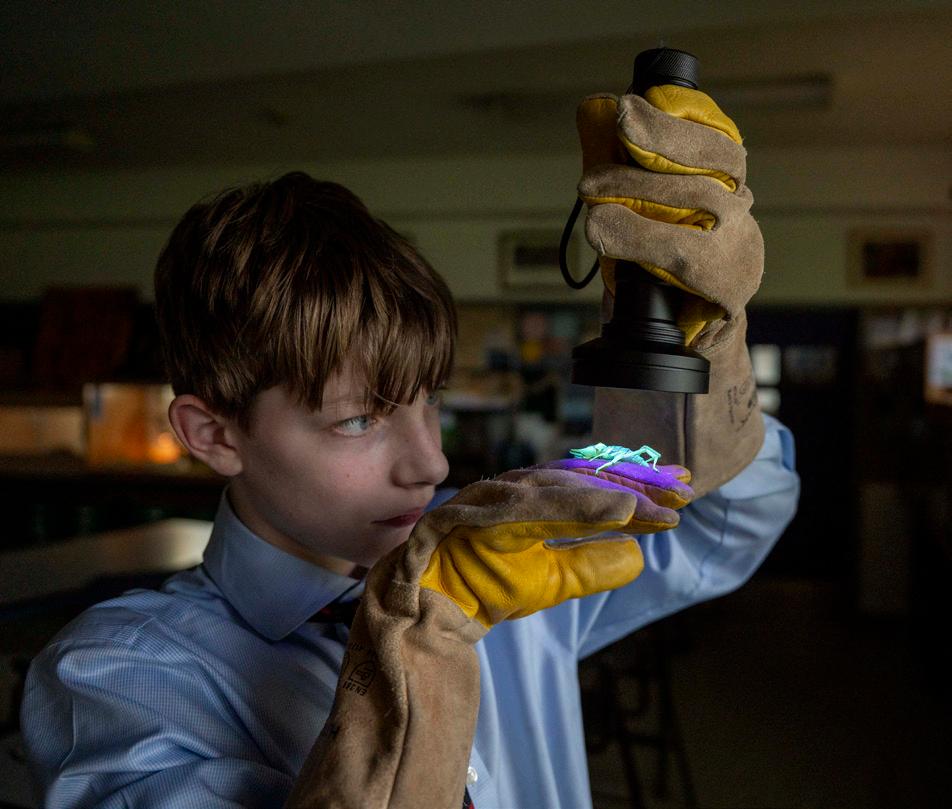
The animals in the department are fundamental to the work of the dons. They help the boys to better appreciate the natural world by understanding their place within it, particularly in relation to the other creatures with which we share the planet. They form an integral part of the curriculum when we study classification, evolution, ecology, and feeding relationships. After all, how better to demonstrate how organisms deal with unique environments than by looking at the adaptations of our four axolotls? Their prominent frilly gills help them to live an entirely aquatic existence in tanks dotted around the department, replicating the stillness of the lakeside canals they occupy in Mexico. Not to mention our scorpions who are so well adapted to survive in a scorched desert environment that you can see them glow under UV light – a side-effect of their very own kind of sunscreen.

40 over different species who eat around 50 rodents per month 1
custom fridge for our tortoise to hibernate in

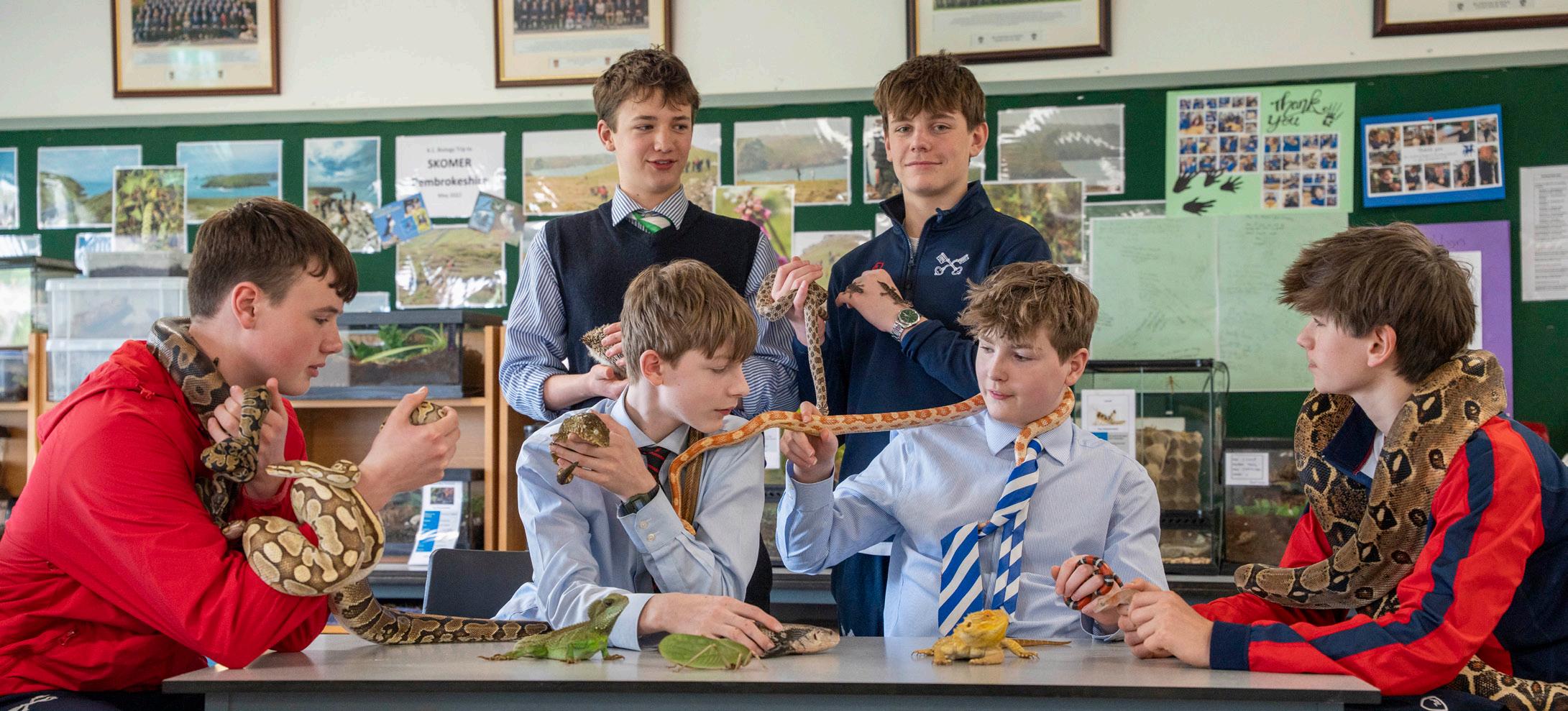
Solely keeping the animals within the walls of Radley would do a disservice to the joy and excitement that they can bring to children of all ages from around the Oxford area, so we make sure to get them out and about as often as possible. Most weeks, our technician team and a willing group of boys scoop up a large sample of animals into prepared boxes and take them out to primary schools as part of our ongoing commitment to partnership work.
Exposure to the animals is one of the best ways to learn about the living world and we often see trepidation turn to tentative touching as pupils step out of their comfort zone in a safe environment. This is an opportunity that benefits both sides as Radley boys can show off not only their reptile wrangling skills but also their knowledge of our four-legged or nolegged friends. In addition to the curriculum and partnerships work, our zoo also forms a key part of a more informal strand of pastoral care provided at Radley.

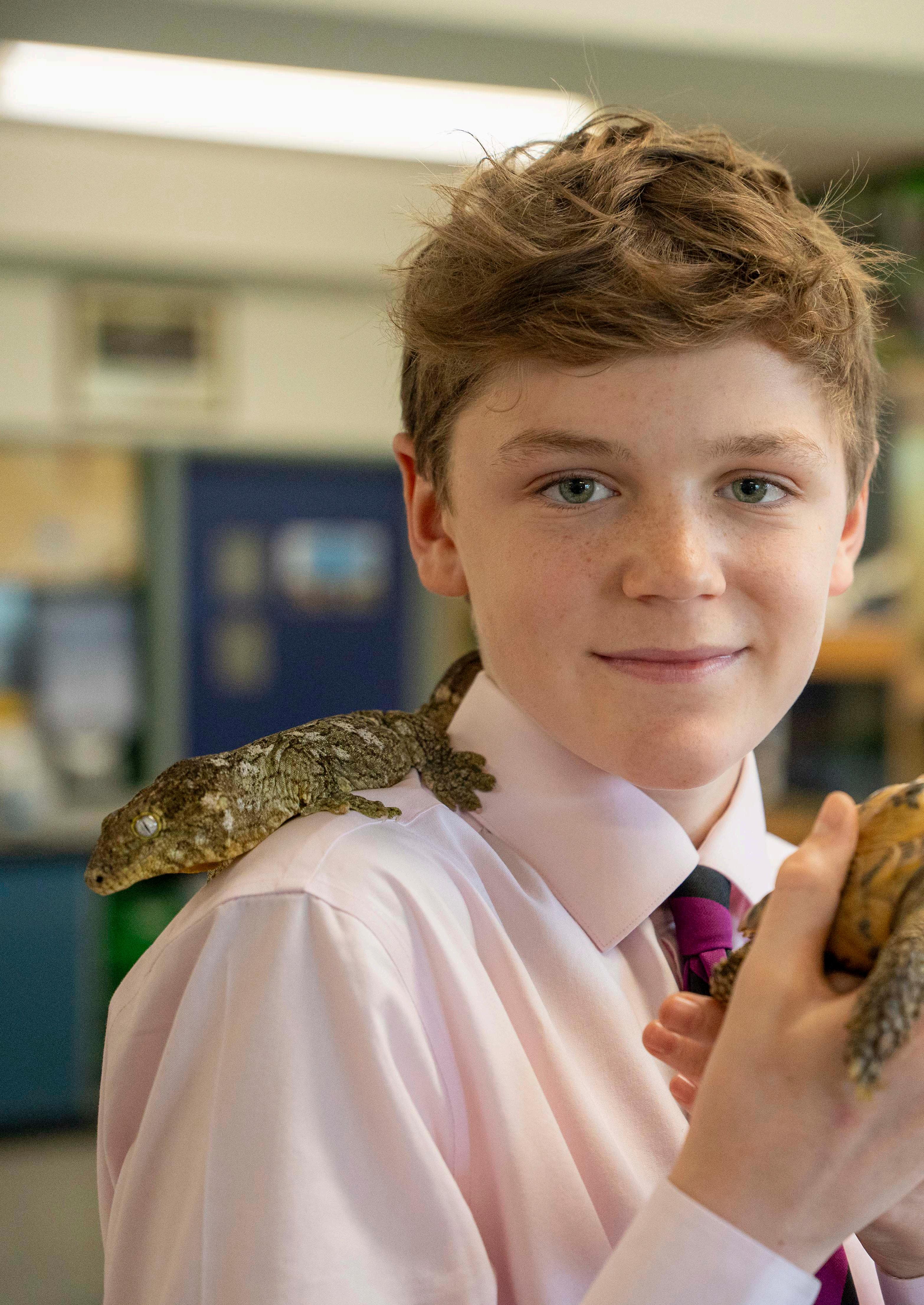
Each week, Head of Biology Mr Noone convenes meetings of the ever-popular Animal Society, where boys come for a chat with a snake draped around their neck or a gecko perched on their shoulder. The sessions are designed to be informative and relaxed, providing boys with experience of handling animals to take their minds off a busy day. Research shows handling animals is a great way to reduce stress and the boys always arrive with curiosity and leave with a better understanding of our animals and themselves.
The Masters in Charge of Sport give us an overview of recent success stories.
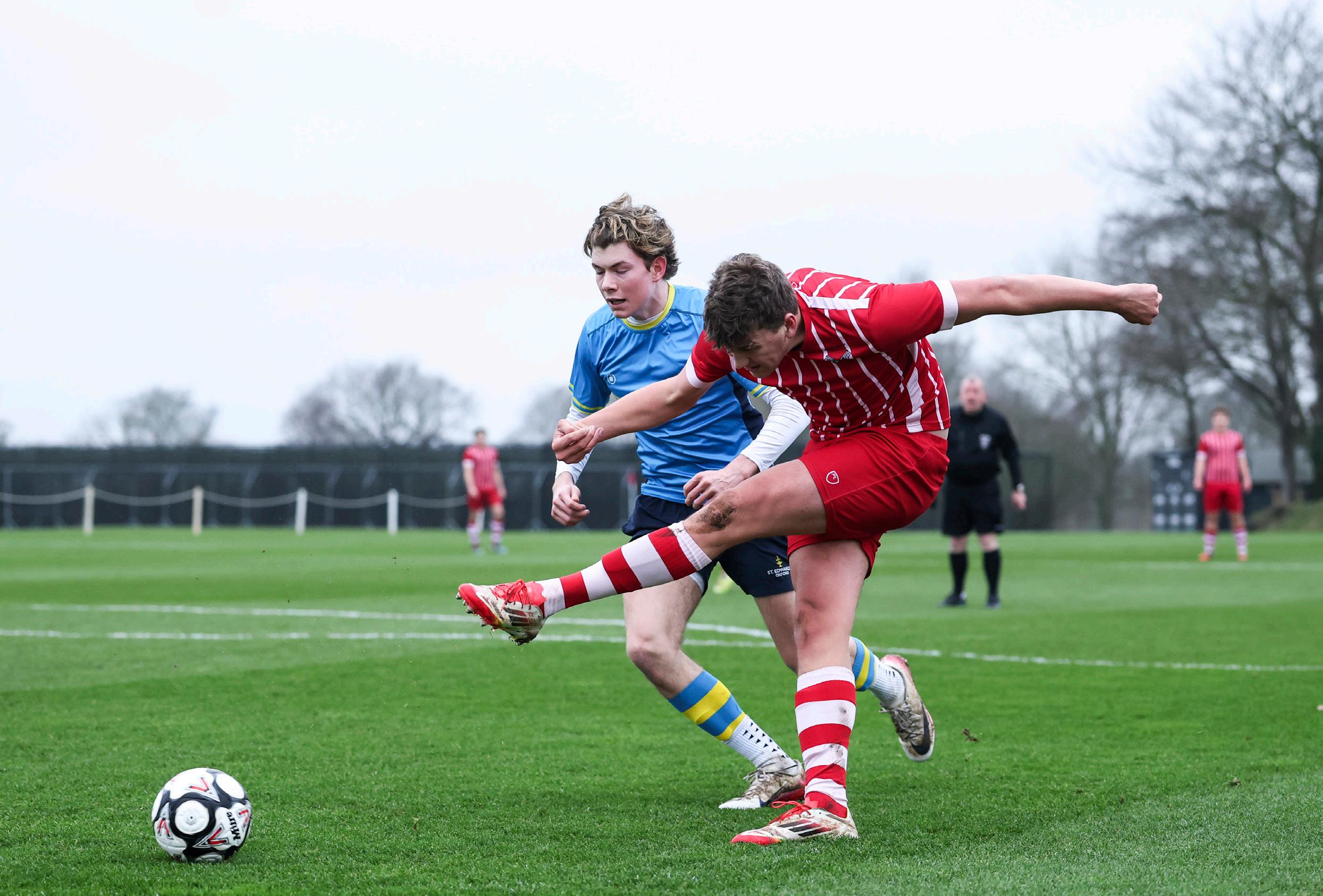
Despite the relentless wet weather in the first half of term, the football season still produced plenty of highlights, with up to 15 teams fielded on some weekends. JC1 really impressed and have a bright future, finishing third in the Central IS League. Both the mighty 4th XI and 5th XI were the closest teams to go unbeaten, losing one game each. Colts 2 also won the majority of their matches.
The 1st XI enjoyed a memorable pre-season tour and new experience at Spurs besting a Highgate team, followed by standout victories under the lights at Abingdon United against the Oratory and Teddies.
There were notable individual accolades too: after an outstanding season between the sticks for the 1st XI, Arjan (V, L) has earned selection for the Midlands ISFA U18 squad heading to the Gothia Cup this summer, whilst Douglas (6.2, L) and Gabriel (R, A) claimed the Senior and Junior Golden Boots with nine goals each.
Another d amp Lent Term has made river rowing challenging, but the squads have adapted well, with recent results at the Schools Head looking promising. The 1st VIII came home third, 4.3 seconds off the top spot, boding well for an exciting summer to come. All seven other crews placed from second to sixth, meaning all have realistic chances of A Finals and medals to contend for at National Schools in late May.
The J14 Squad have made full use of the Dorchester Lake to help take their first strokes before the first racing of their Radley careers at the Junior Scullery. Two octuples and one coxed quad got a taste of the Olympic Lake at Dorney and gave a good account of themselves over the 3,600m head race.
Over the Easter break, training camps in Portugal and the UK for 100 boys kick-started preparations for the summer regatta season, beginning with the BASHER Regatta in April.
The hockey club continued to put out 16 sides, providing matches weekly for 220 boys. Very few schools can now match this output.
Colts 1 reached the last 16 of the National Cup competition, losing narrowly 3-2 to Dr Challenor’s Grammar School in a match that could have gone either way.
The Lent Term saw the club post a 60% win percentage. The 3rd XI and Colts 2 won all their games, with JC1, JC3 and Midge 5 all remaining unbeaten. The 1st XI had a much stronger season and finished well with wins against Bradfield and the Galleons (OR team).
Mike Hills Master i/c Hockey
This season has seen Radley’s 1st pair remain unbeaten in school fixtures and good results from the rest of the club, with wins at Eton and Cheltenham.
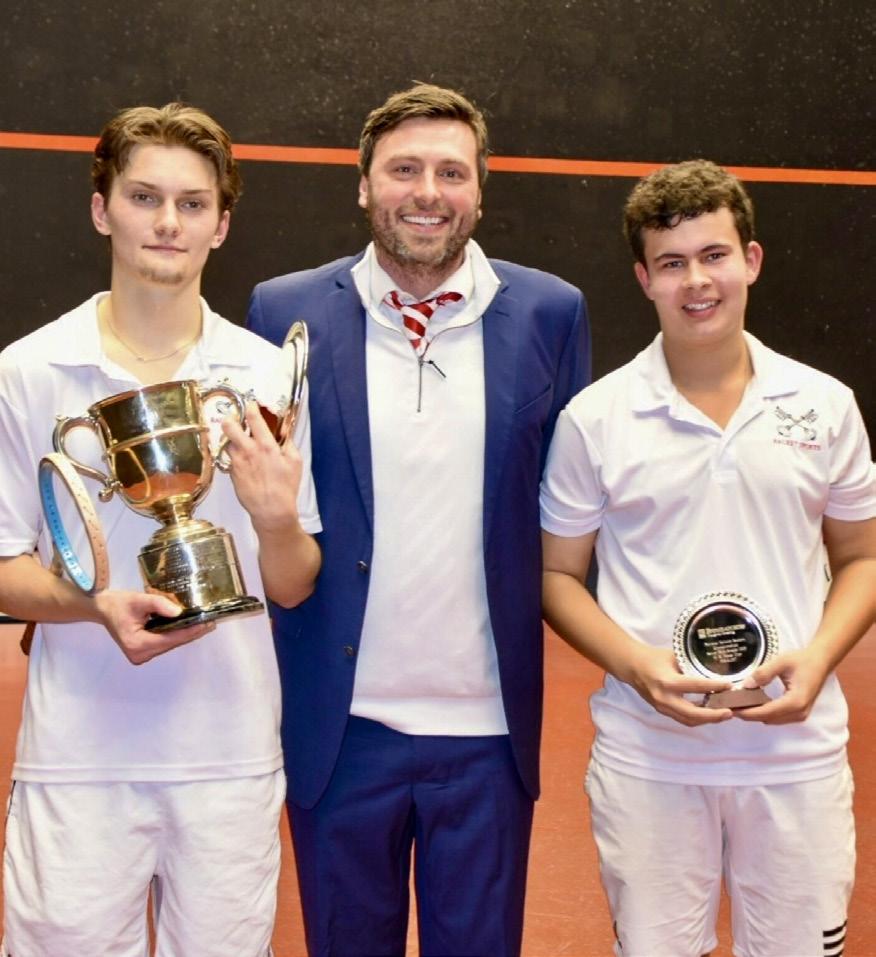
Laszlo (V, C) defeated Nathan (6.2, L) in the Foster Cup Final. To have both finalists is an extremely unusual occurrence for a school and a fantastic achievement by both boys.
Laszlo, in winning the Foster Cup, has now won five tournaments from a possible five at schoolboy level at Queen’s (‘playing up’ an age
group four times). He has won the U15 Cup singles cup twice, the U15 Doubles once (partnered with Evy, 6.1, C), and the U18 doubles (partnered with Nathan). Laszlo became the second Fifth to win the Foster Cup since its inception in 1951.
Congratulations to Benedict (6.2, D), for having reached the semi-final of the Renny Cup, and Ade (V, J), the last eight of the U16’s.
James Rock Master i/c Racket Sports
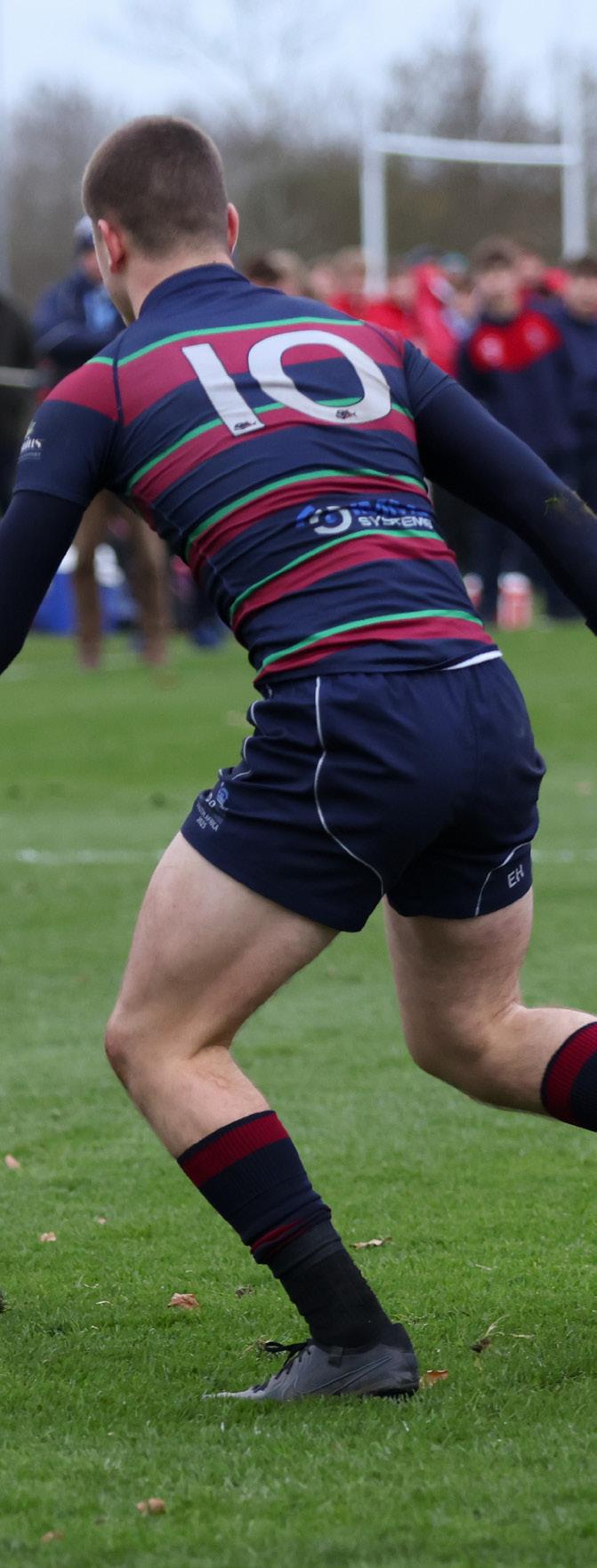
The season kicked off with 47 boys and eight staff on tour in Tignes, reaping the benefits of the Alpine scenery, the challenge of training at altitude, and two games against fierce – and large – opposition.
Back at Radley, there unfolded a joint Colts and Junior Colts camp over the first two days in September; taken together, over 100 boys gained advance preparation ahead of a promising season. And what a season it was!
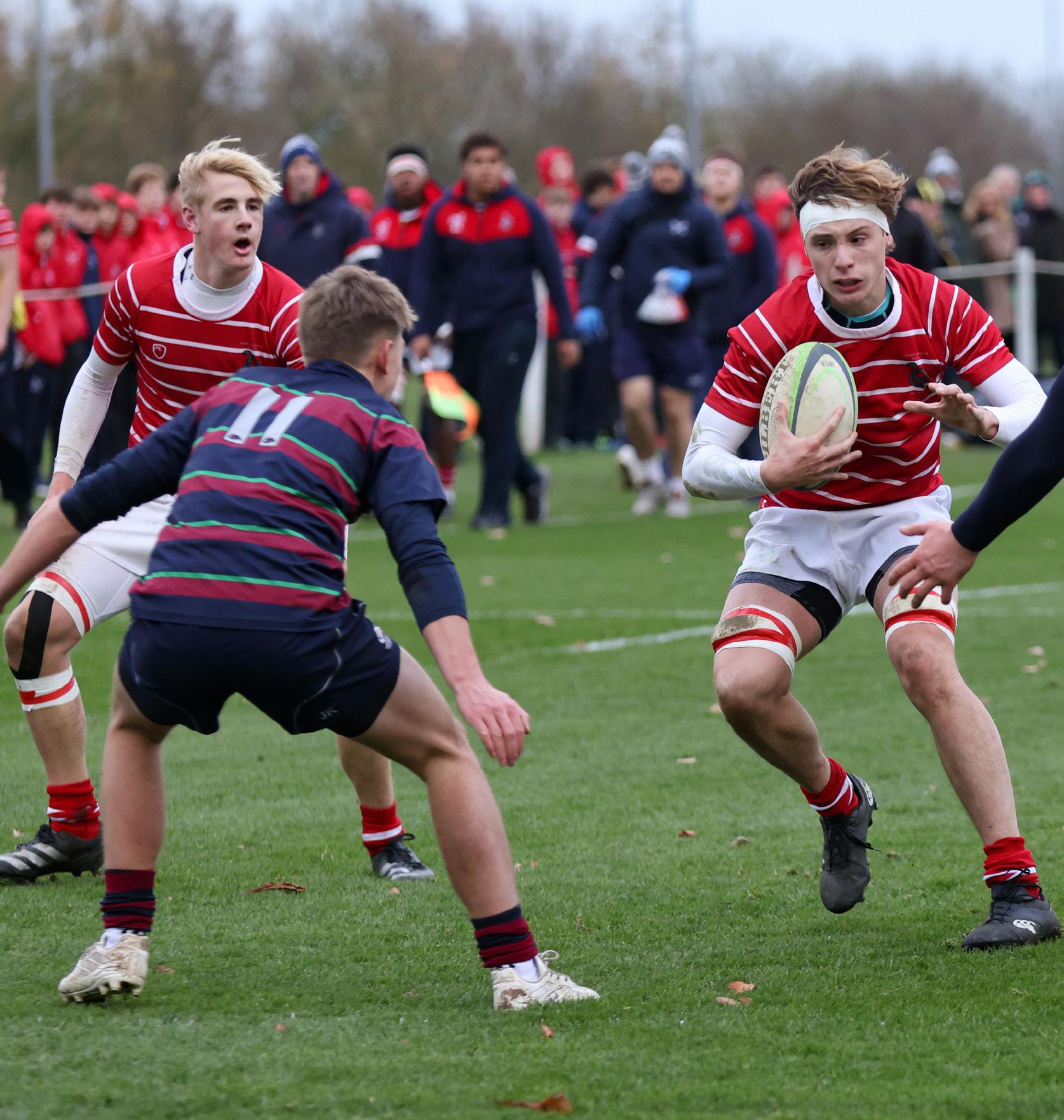
Alongside continuing to engage two-thirds of the student body, there were lifelong memories forged throughout the club: from the clean sheet over Harrow and Eton (the 1st XV game against Harrow, in particular, one of the greatest matches to grace Bigside – and a result that left the team with 12 wins out of 14, the most successful Radley 1st XV in history) and two teams pushing into the final stages of the U15 and U18
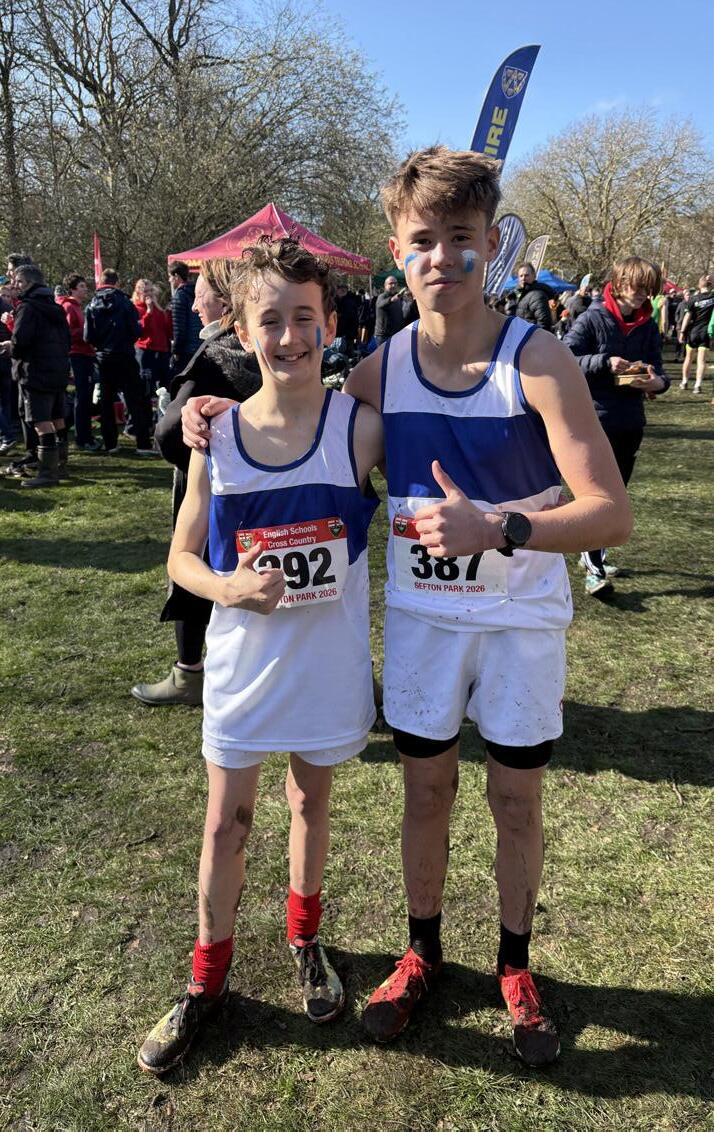
An impressive winter for the club culminated in Shells Oscar (A) and Flynn (D) representing Oxfordshire at the English Schools’ CrossCountry Championships. A further standout occasion was hosting 100 teams and more than 400 runners at the Radley Relays. The event is increasingly renowned as a premier fixture, offering deep competition, challenging terrain, and a unique opportunity for runners of all ages and genders to test themselves against one another.
Both the Inter and Senior teams progressed to the regional round of the National Cross-Country Cup, with the former narrowly missing out on the National Final by a single place. Our Inters enjoyed a particularly strong season, recording dominant victories on home soil at the Radley Relays and away at Marlborough, alongside third place finishes at the Harrow Ten Schools and the South East Schools Cross-Country Championships.
Dan Studley Cross-Country Coach
national competitions, to the unbeaten records of JC3, 4 and 5, and Midgets 3.
The number of Radley teams that played one or two levels above against various different opponents over the course of the term reflected enormously well on the depth of our programme, the quality of our players, and the boys’ willingness to seek out and overcome greater challenge – the latter aspect an essential part of their character education.
Beyond Radley, it was fantastic to see Radleians achieving higher honours: Jonno Balding (2020, B) and Oscar Rees (2020, E) called into the England U20 and Wales U20 squads respectively, competing in this year’s U20 Men’s Six Nations. Mosese Tuliakiono (2022, E), after a lengthy return to fitness, has also made it into the Wales U18 squad. Already, the excitement for 2026 is palpable.

Through the vast array of trips over the past calendar year, crossing continents and representing disciplines within and beyond the curriculum, a Radleian education could only be described as a cosmopolitan affair. We hitched a ride to get a taste of some of the highlights…
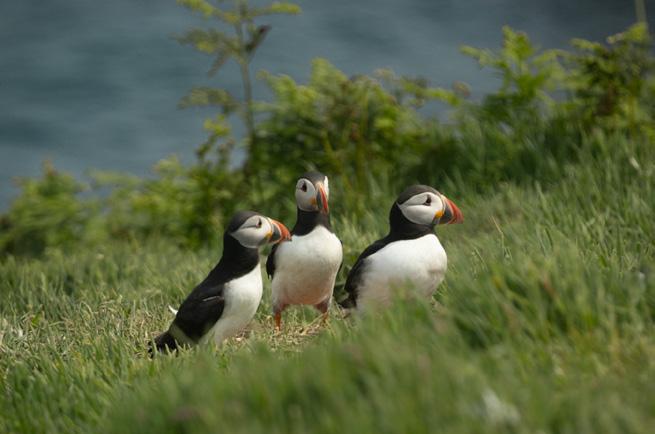
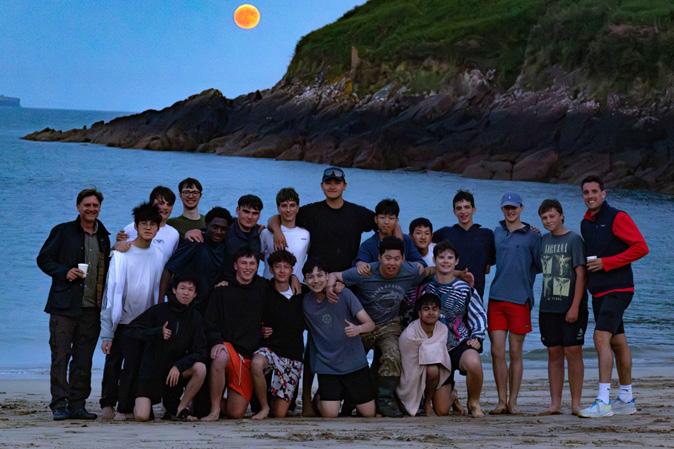
George (6.2, D) leans forward over the coarse Celtic grass and peers down the camera gripped between his fingers. His target, perched anxiously on a guano-stained rock, blinks back, staring down its stubby orange bill as if it were a pair of reading glasses. The 19-strong contingent of boys are on a Biology trip, working from Pembrokeshire’s Dale Fort Field Centre to study one of the UK’s most incredible nature spots – an enormous seaside colony of rare red-billed choughs, gulls and nearly 50,000 Atlantic puffins, swooping above the students’ heads. As dusk draws near, the group gathers to take a selfie on the beach, grinning beneath a ‘strawberry moon’ tinted bright pink by the Irish Sea sunset. Boys later inform their dons that the A-Level Biology paper prominently featured puffins as a question topic.


An evening meal along the bustling Via de Plebiscito has become a fierce debate for the cohort of Removes, who swap their bestloved moments of the Classics trip thus far. Harry (R, H) begins the discussion with “My favourite was the Trevi Fountain… pretty cool”, before quizzing another boy on his favourite type of ice cream from the nearby establishment Flor Gelato. Other excursion highlights from around the table, in order of proposal, are passion-fruit flavour gelato, the Colosseum, passion-fruit flavour gelato (again), the Trevi Fountain (again), and the Roman Forum. The following day’s agenda presents the pupils with an alternative acme, the great marble-lined dome of the Pantheon, as Hugo (R, F) and Danik (R, K) excitedly present a piece to camera from within the monument. “Aside from the massive rotunda, there’s also the massive monolithic pillars outside. As well as loads and loads of space, where you can see the statues.”


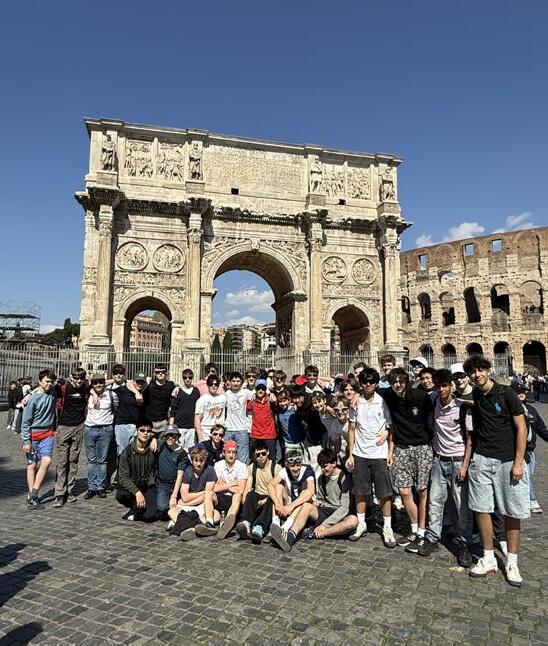
2025)
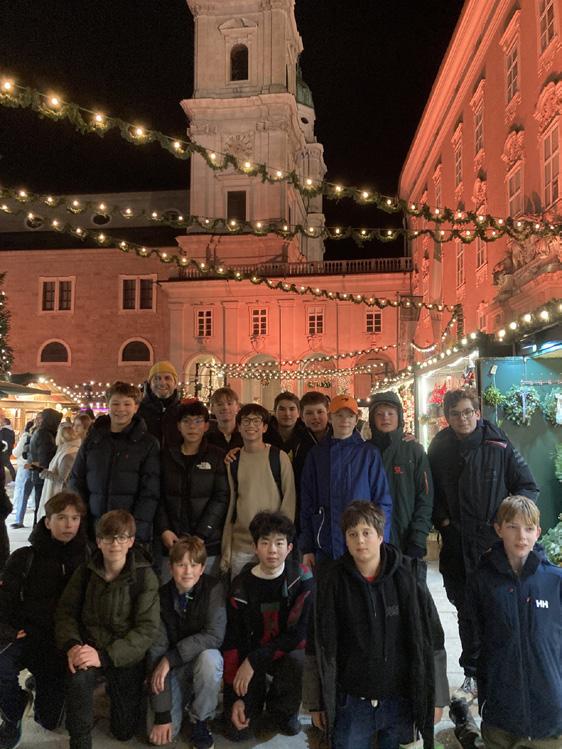
They have been Radleians for barely a term yet, giggling around the Christmas market of the UNESCO-protected city centre, or visiting the birthplace of Wolfgang Amadeus Mozart, the 15 Shells show as much camaraderie as any year group. The chilly weather necessitates puffer jackets and woolly hats in the ice hockey rink-side, as well as during the special reception with Salzburg State President Dr. Brigitta Pallauf, but the trip’s sheer diversity of cultural activities allows for fashion beyond this. In the Haus du Natur museum, the boys discard their winterwear to operate the interactive science displays with glee. In the Hallein historic salt mines, they wear white jumpsuits to navigate the gloomy tunnels, scraped away over almost three millennia. In the Edelweiss Cooking School, they don red checkered aprons and prepare authentic strudel and biscuits in the low light.

BOSTON, USA (OCTOBER 2025)

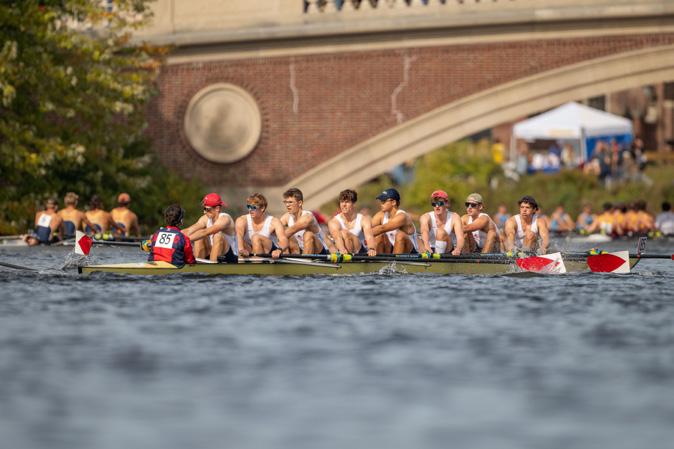
The crowd goes wild! The flotilla of rowing crews race down the winding Charles River with aggressive haste, prows carving and splitting the rippled reflections of the New England skyline. Heads turn from the bank as one bobbing boat, bearing the Radley 1st VIII, surges from its original 85th place position. The squad have been training on the waterway since their arrival, acclimatising to the course’s unique conditions and finessing their strategies in early morning sessions. Now, in the planet’s largest three-day rowing regatta, their efforts are paying off and, with impeccable steering, they manoeuvre deftly into an impressive eighth place. After the competition, the boys travel down the Eastern Seaboard to Princeton for a training camp on the scenic Lake Carnegie. Some chat to the university’s recruitment coaches about collegiate rowing pathways and scholarships, and begin to wonder…

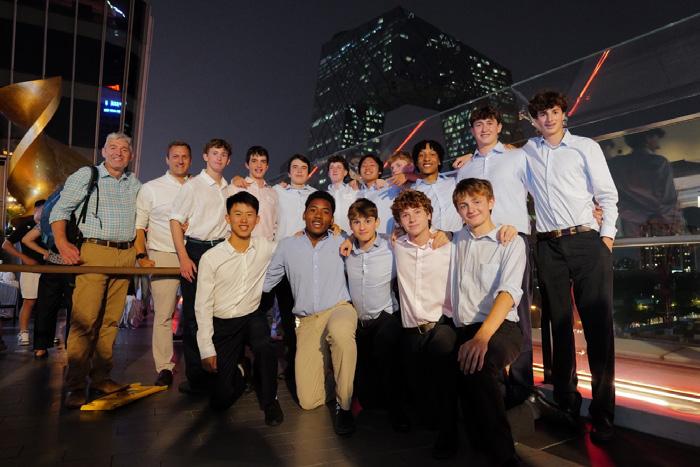
The Temple of Heaven is 3.4 times older than Radley – both are bustling complexes of architectural fancy, accumulations of lifetimes of work, poised within swathes of welcome green. The 14 Radleians standing around the Prayer Hall and Imperial Vault underwent an intense selection process to be here, a business studies trip with one of the city’s top centres for e-commerce. The company welcomed them earlier in the week with a specially designed version of their logo, constructed from the boys’ names. The following week, DingDing (6.2, D), Felix (6.2, C), and Freddie (6.2, J) will win an award for their pitching skills: a hypothetical proposition to bring British athletic brand Gymshark to Chinese markets projecting an annual revenue of ¥5,000,000 in five years.
For now, within a 3,000-year-old metropolis harbouring 22 million people, the party enjoys a free weekend. Two of the boys pacing aside the trees, DingDing and Ben (6.2, B), are due to be inaugurated as Senior Academic Prefect and Senior Prefect, two of the College’s most prestigious student roles. Their names join a lengthy list of forebears within Radley’s esteemed history. With the wisdom and broadmindedness fuelled by experiences like this, they may well be equally revered in many more places yet.

One year after Radley’s announcement that it would form Radley Schools Group, the College is helping to shape the future of education through the launch of the Compass Curriculum . The innovative new curriculum reflects Radley’s distinctive approach to education: one that is designed to nurture intellectual rigour while developing young people of strong character and clear purpose.
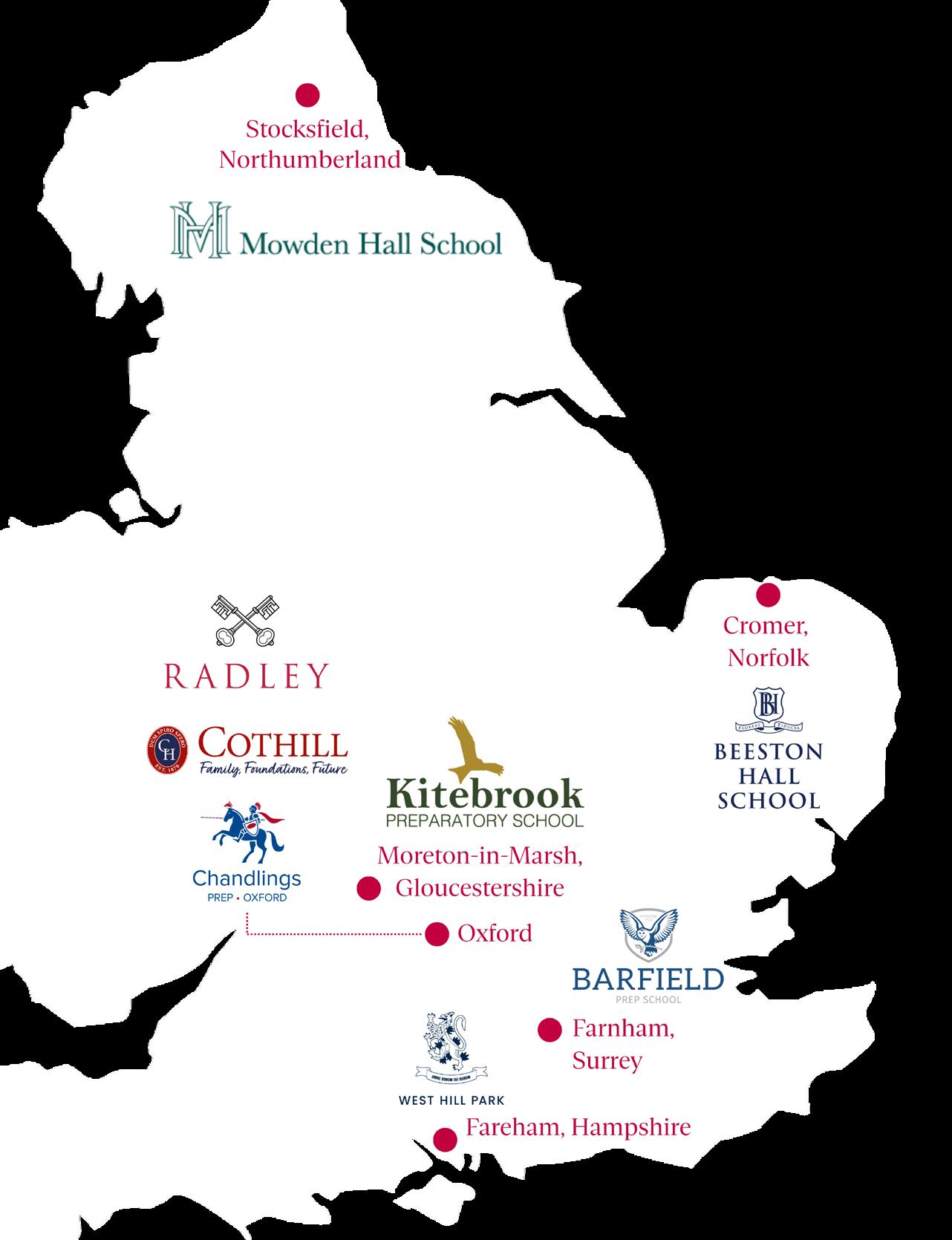
From September 2026, the Compass Curriculum will be introduced across the Group’s seven prep schools – Barfield, Beeston Hall, Chandlings, Cothill, Kitebrook, Mowden Hall, and West Hill Park. Developed collaboratively between prep specialists and Radley College, Compass will
enhance each prep school’s established academic and co-curricular programmes. It will reinforce academic foundations whilst helping pupils develop the judgement, independence, and confidence they need to flourish at senior school and beyond.
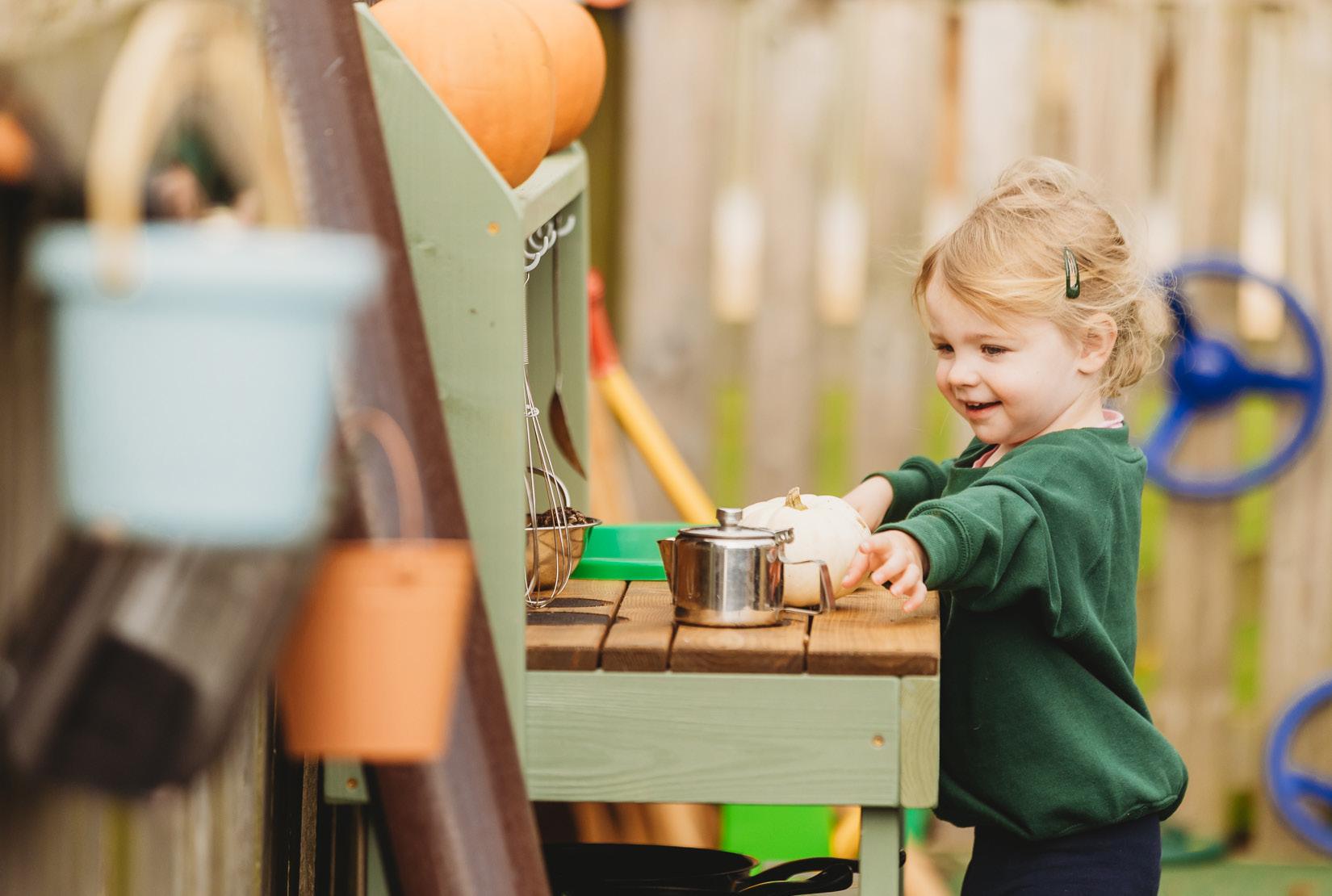
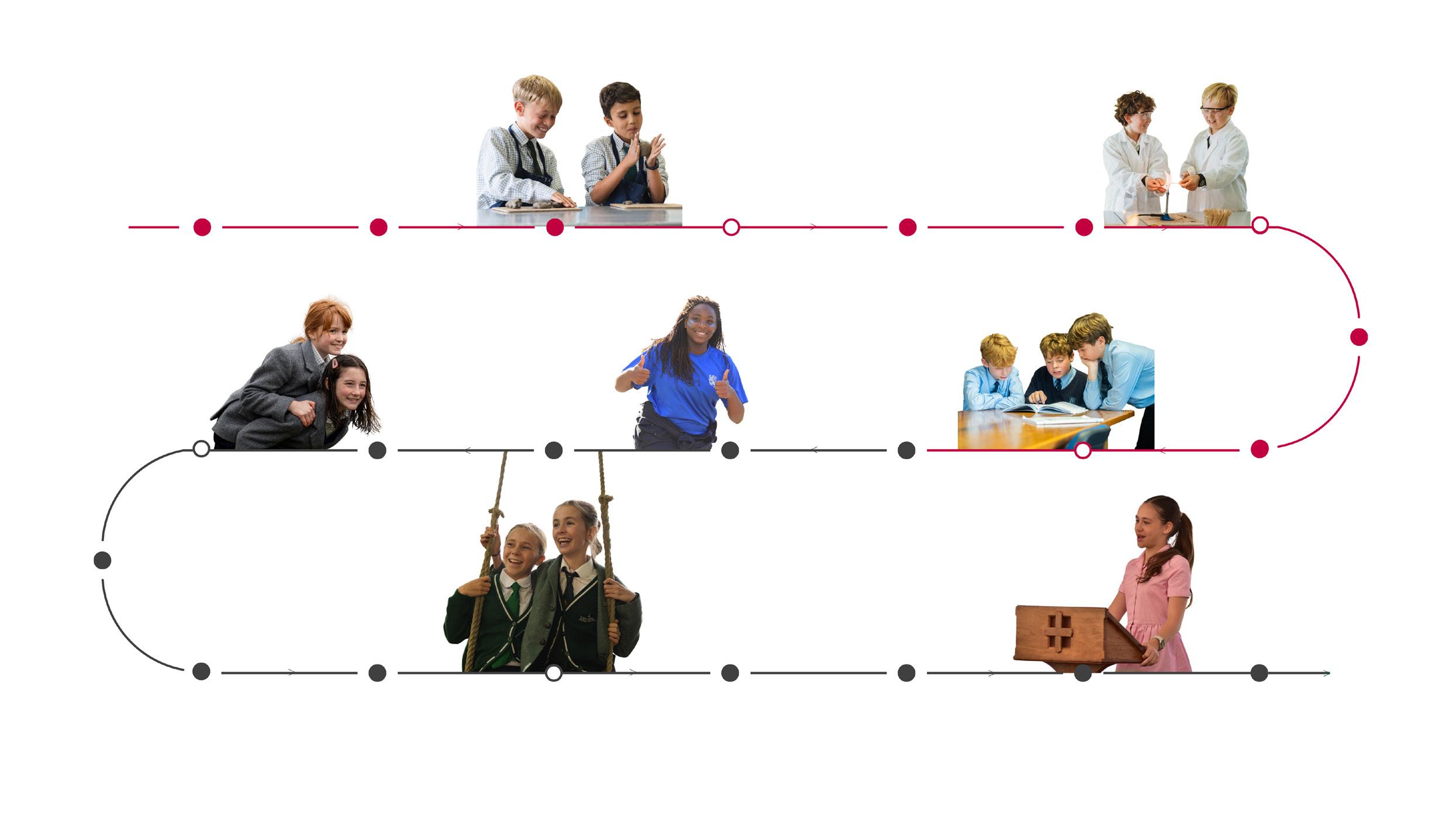
Compass will make these formative years at our prep schools the pinnacle of prep education – purposeful, distinctive, and rich with opportunities. Blending the best of tradition with innovation, the curriculum is designed to strengthen leadership, communication, and analytical thinking through four key areas:

From Year 3 onwards, pupils will work towards the Compass Award, with Bronze, Silver, and Gold levels celebrating their progress and achievements. These awards will encourage children to develop independence when planning, organising, and completing their work. What will begin as guided challenge in the younger years will evolve into sustained, self-directed work as pupils grow in confidence in the senior years.
In Years 7 and 8, the programme will develop this further through six termly modules designed to enrich and elevate the existing curriculum.
Across the six modules, pupils will:
– Tackle innovative STEM challenges.
– Engage in philosophical and ethical enquiry.
– Explore real-world financial and entrepreneurial scenarios.
– Investigate sustainability, the environment, and humanity’s relationship with nature.
Each module is carefully designed to spark curiosity, challenge thinking, and build practical, real-world skills. Reflecting Radley’s belief that learning should extend beyond the classroom and traditional academic boundaries, pupils will take part in collaborative, project-based work with peers from across Radley Schools Group, and join shared residential camps.
With its emphasis on character, collaboration, and real-world readiness, the Compass Curriculum aims to redefine what independent charitable prep schooling can offer. It gives prep school education direction and purpose: combining shared ambition through collaboration, creativity, and curiosity, enabling every child to benefit from the collective strength of Radley Schools Group.
Buoyed by the College’s founding principle of beauty, founder William Sewell saw students’ pursuit of drama as key to Radley’s image – a rural paradise, primed to broaden cultural palates, suited the presence of light-hearted theatre. Just as the school has evolved from these Victorian roots, its stage ventures have similarly developed, accommodating a greater range of subjects and styles than the original spread of Shakespeare and All Saints Day vignettes. The drama team’s ambition, expertise and success has in no small measure been fashioned by support from the wardrobe department, headed presently by Lianne Oakley-Rowland, its Costume Designer of 20 years.
“I originally wanted to be involved with music videos because I love music, and I was obsessed with music videos when I was a kid. And then I got to work on a music video and I didn’t enjoy it,” Lianne admits, detailing her eclectic selection of early wardrobe jobs. “I worked for Nickelodeon for about a year or so. Stints on Eastenders, Waking the Dead, a sports show for Sky… bits and bobs!” Her first theatre gig (the West End iteration of Les Misérables) stemmed from a lucky break at university. Her Radley career stemmed from unluckily breaking her kneecap. “I was recovering from that operation, and my then-boyfriend (now husband) saw an advert in the local paper, looking for someone to run the wardrobe department for 10 hours a week. That was 20 years ago, and I now do a lot more hours!”

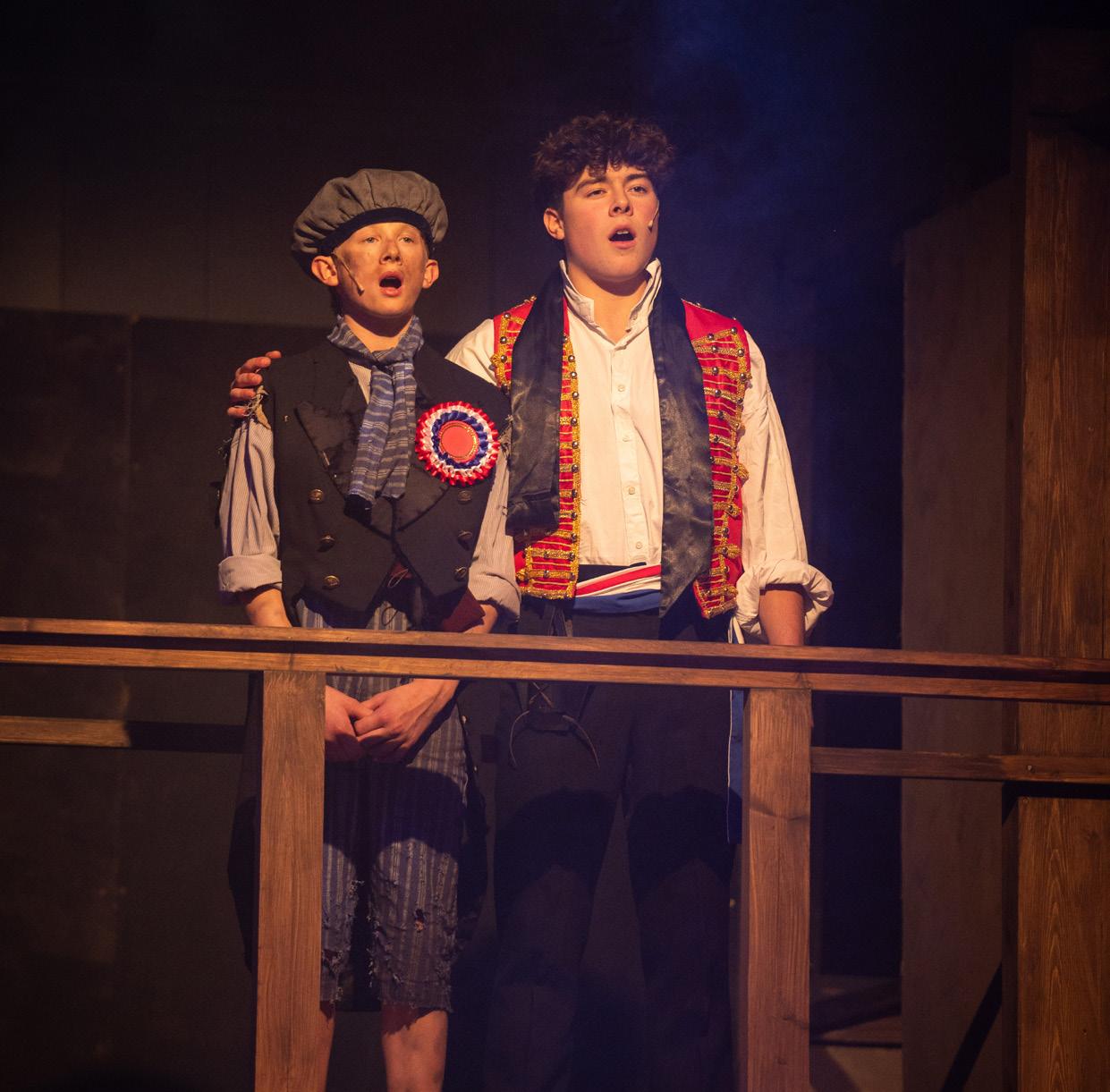
Her arrival roughly aligned with the opening of the College’s current Theatre facilities. Lianne has since honed an efficient pipeline of charity shops and online shopping to source clothes (“We do more productions in a year now, so the time we get to spend on each production is shorter!”), with costumes rarely hired on account of cost and overall inflexibility. As a result, the wardrobe permanently throngs with coat-hangers loaded with shirts, jackets and trousers – though any signs of their original on-stage usages are long gone. “People think that my wardrobe department is like a fancy-dress shop and everything is there, already created. That’s not the case! Once we’ve done a production, everything gets deconstructed. Any badges that we’ve sewn on get taken off, all the accessories go, and everything gets put back in its bare state.” Some outfits are spared such treatment. “Over the years we’ve been really lucky to have boys’ parents donate items… So we have a lot of authentic World War I costumes, which are really special. I try not to use all of them because they’re not going to last forever.”
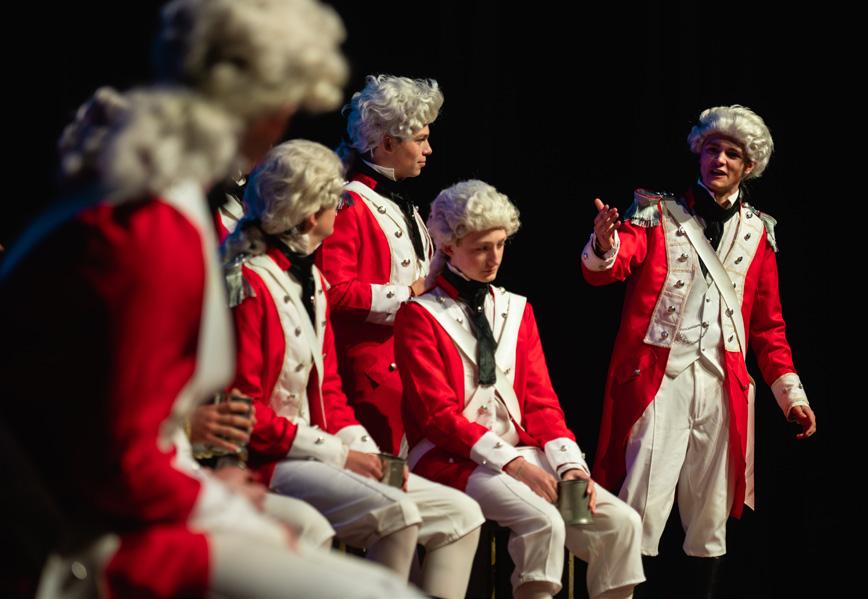
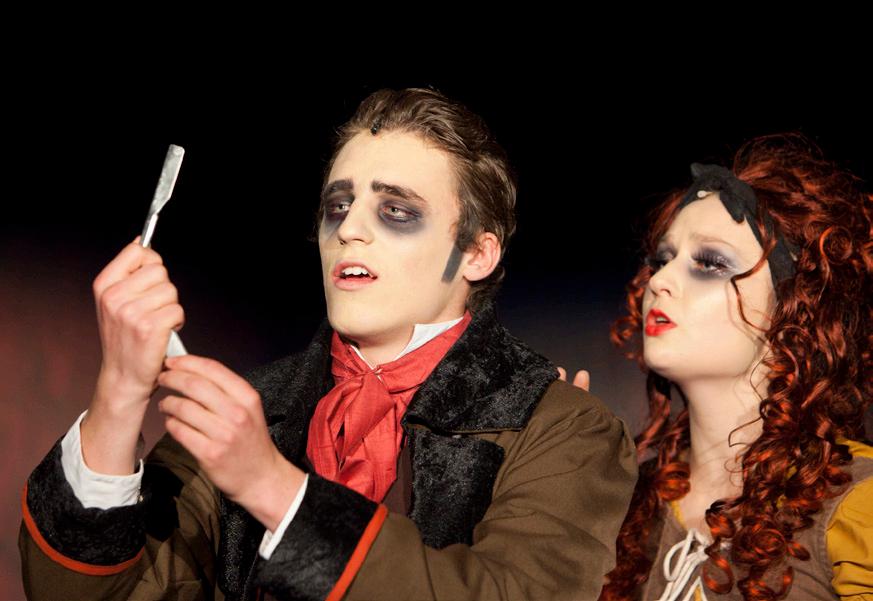
Lianne’s first Radley assignment in 2006 was a production of Aaron Sorkin’s A Few Good Men –the same show would be performed again 16 years later as the 6.1 Play, albeit with its own distinct wardrobe flourishes. “From a creative point of view, I don’t want two shows the same. We’ve done Sweeney Todd here twice – the first time I based it on a Victorian circus, so it was very dark and quite macabre. The second time we did it was loosely based on costume designs that Director of Drama Victoria Buse had seen in Cabaret with Eddie Redmayne – they had a unique colour palette, and so I took inspiration from that, but still kept it quite authentic to the Victorian period.”

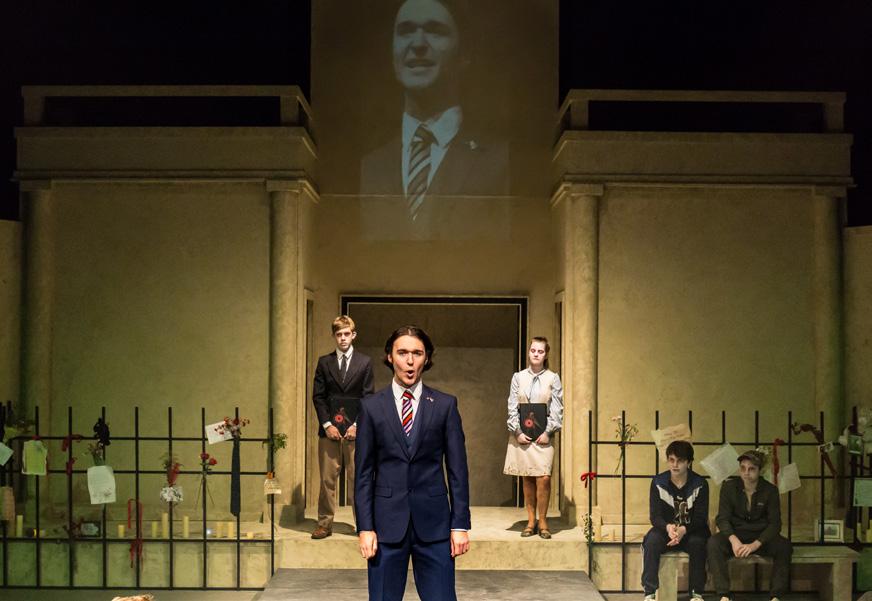
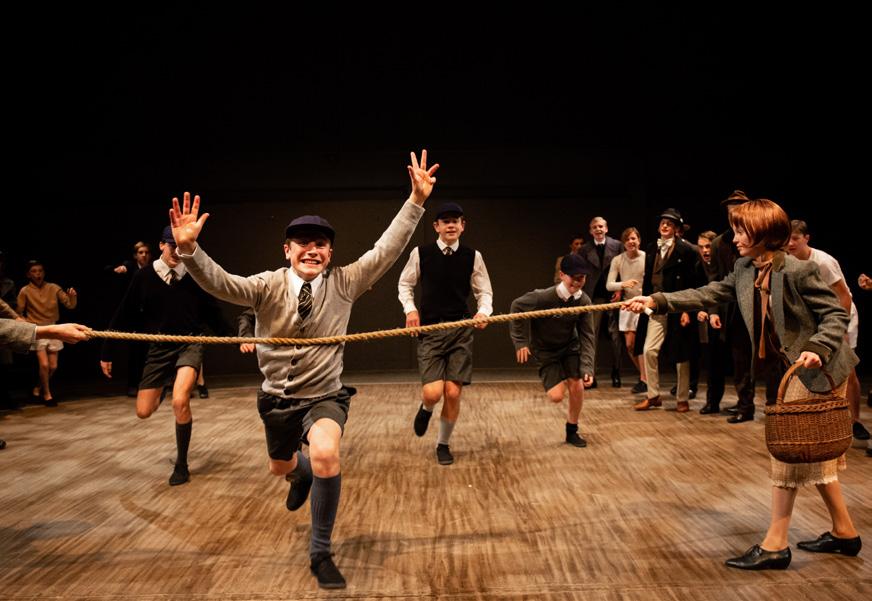
“I really wanted to emulate this idea of a kind of grotesque cabaret world,” Victoria adds on the topic. The imagination of theatre would suffer were it not collaborative, and over her own nine years as Radley’s Director of Drama, she has worked closely with Lianne on each production’s appearance. “When I work on a production, I have an overall concept for the show, which brings a particular kind of style or look to the piece. And then I work with the design team to bring that overall look to life.” 2019’s Chariots of Fire was drenched in nostalgic sepia, a 1920s atmosphere framed in coffee and straw tones. The dress code of 2025’s Quiz – balancing aesthetic polish with the realistic fashions of the play’s 2001 setting – required as much thought. 2023’s Darknet warned of a digital apocalypse through a lurid spectrum of neon, Lianne adorning boiler suits with blacklight-ink computer code to visualise a computer virus.
The Theban plague of 2017’s Oedipus Rex was effectively portrayed through wardrobe shorthand – the wretched king standing alone, neatly suited, in the midst of decaying fabric set on broken silhouettes.
With infinite money, what would be your ideal show? Lianne picks two. “Priscilla Queen of the Desert! A big bus! And the big heels! That would be really cool. I’d also love to do The Lion King – all the puppets and masks. They’re incredible pieces of art.” As, indeed, are Radley’s Theatre productions. Even as the drama department enters a new era (since our interviews, Victoria has announced that she would be leaving the College for pastures new), the legacy of Sewell’s aesthetic ambitions remains – and its costumes are never the worse for wear.
It is approaching four years now since Radley launched its first Sustainability Strategy, an ambitious, enduring and long-term initiative to bring about positive change across the site and in the way in which we think about and interact with nature, energy, water and waste. At the heart of the strategy lies a determination to enhance the biodiversity across our 800-acre site, and to ensure that the boys appreciate the part that they can play throughout their lives in the restoration of our world. Charlie Herbert, Countryside Centre Director, updates us on current progress.
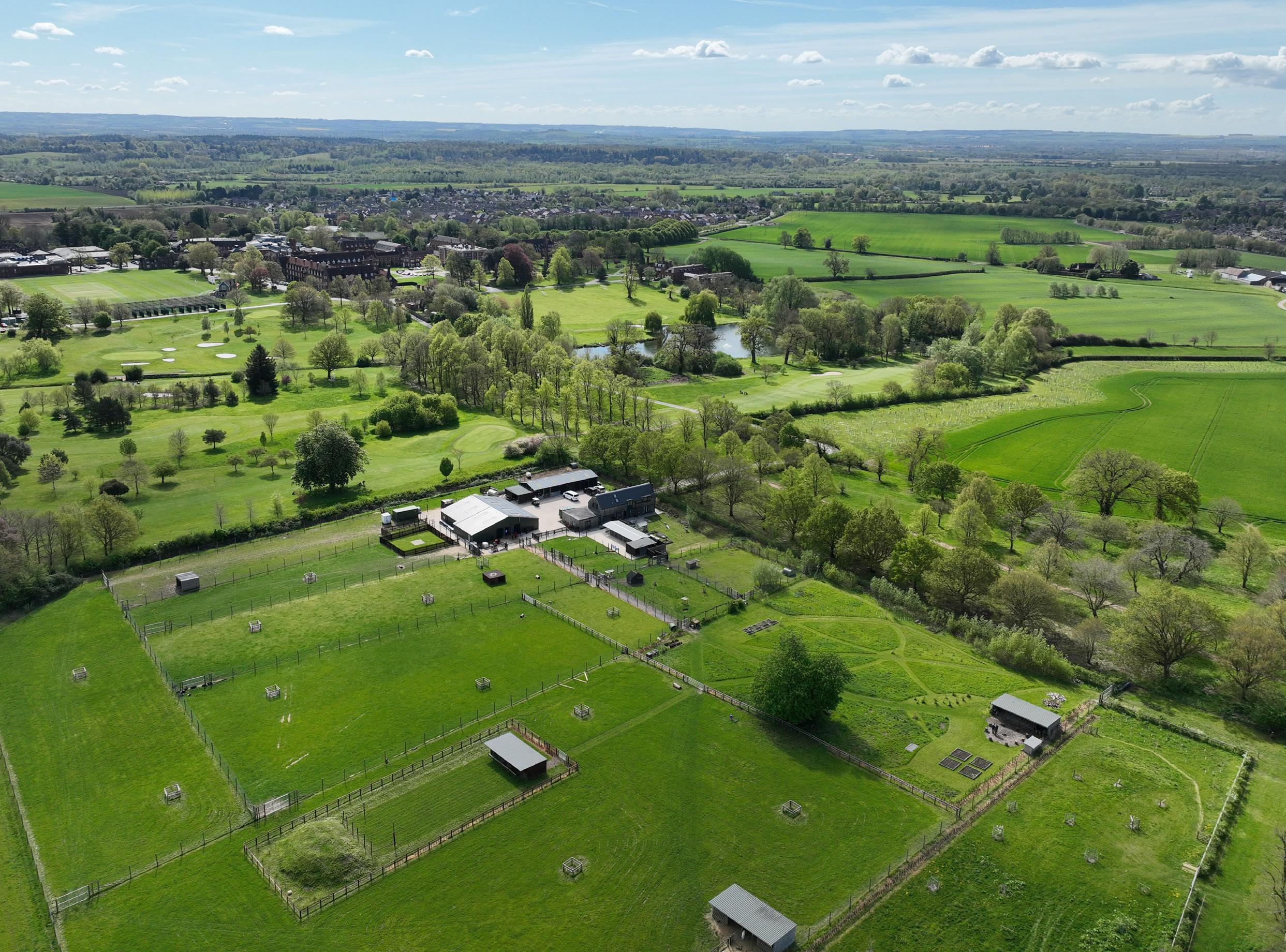
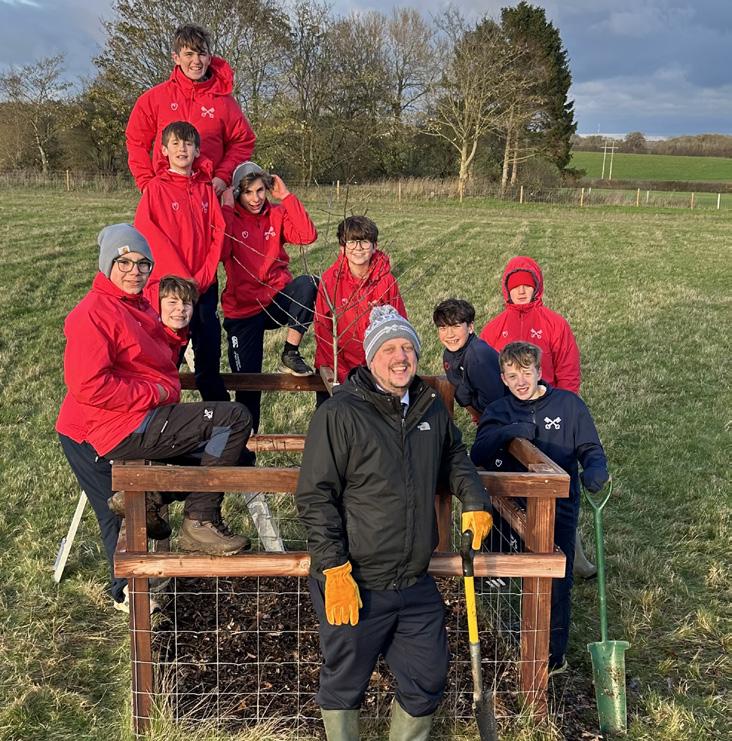
The UK remains one of the most nature-depleted countries in the world, with far less tree cover than our European neighbours and nearly half our species in decline. There is a huge imperative to change this and across the Radley site we’re taking positive action: planting 38,000 trees over a three-year period on our less productive farmland, restoring hedgerows, creating new wildlife corridors for birds, insects and mammals, and creating a mosaic of habitats where all wildlife can flourish.
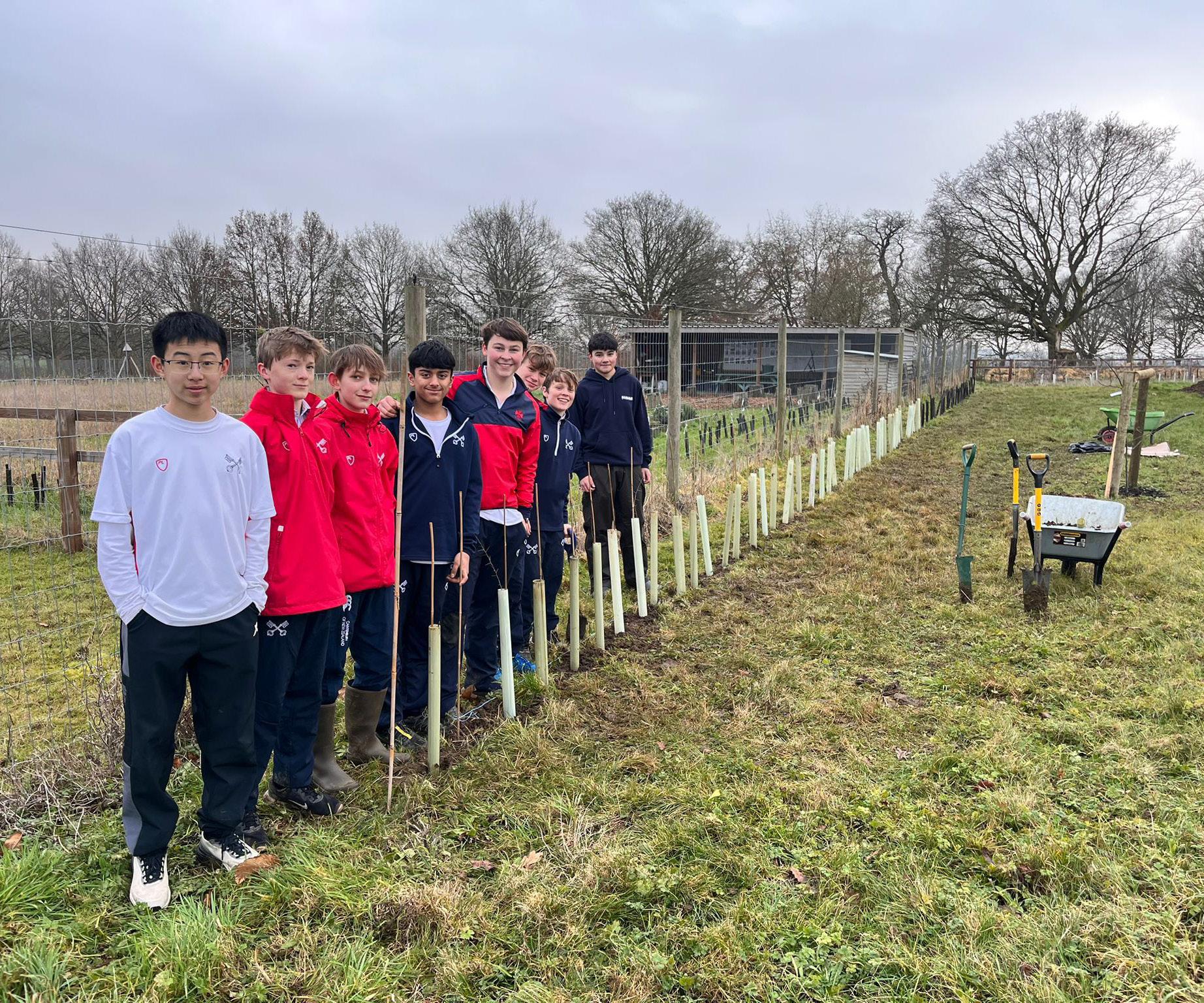
As a school, our aim is to do as much of this as we can with, and through, the boys as part of their broader education. All Shells now spend five or six Wednesday afternoons at the Countryside Centre, and this year have planted another 200 metres of brand new native English hedging, shelter belts and copses, as well as contributing to the restoration of 20 acres of traditional woodland pasture fields, in areas more recently used for intensive arable farming. Our aim is not of course to deplete the amount of dedicated farmland, but to reconsider how it can be used to balance the occasionally competing demands of food production and biodiversity enhancement. As an example, woodland avenues once not farmed will hopefully soon be used for the periodic grazing of the College’s small flock of Herdwick sheep.
Elsewhere, Head of Biology Michael Noone is making great strides to embed mainstream environmental sustainability into the education of Radleians, creating a small but important conservation demonstration garden on a patch of otherwise nature-depleted grassland near K Social. Through a mix of planting and natural succession, combined with some low maintenance conservation techniques, it is hoped that the area will develop over the next few years into the perfect environmental test bed. Concurrently, Sixth Form biologists are starting to see the results of their biodiversity work around Queen’s Court with starlings, redwings, a pair of nesting mistle thrushes and some stock doves now feeding regularly in this area.
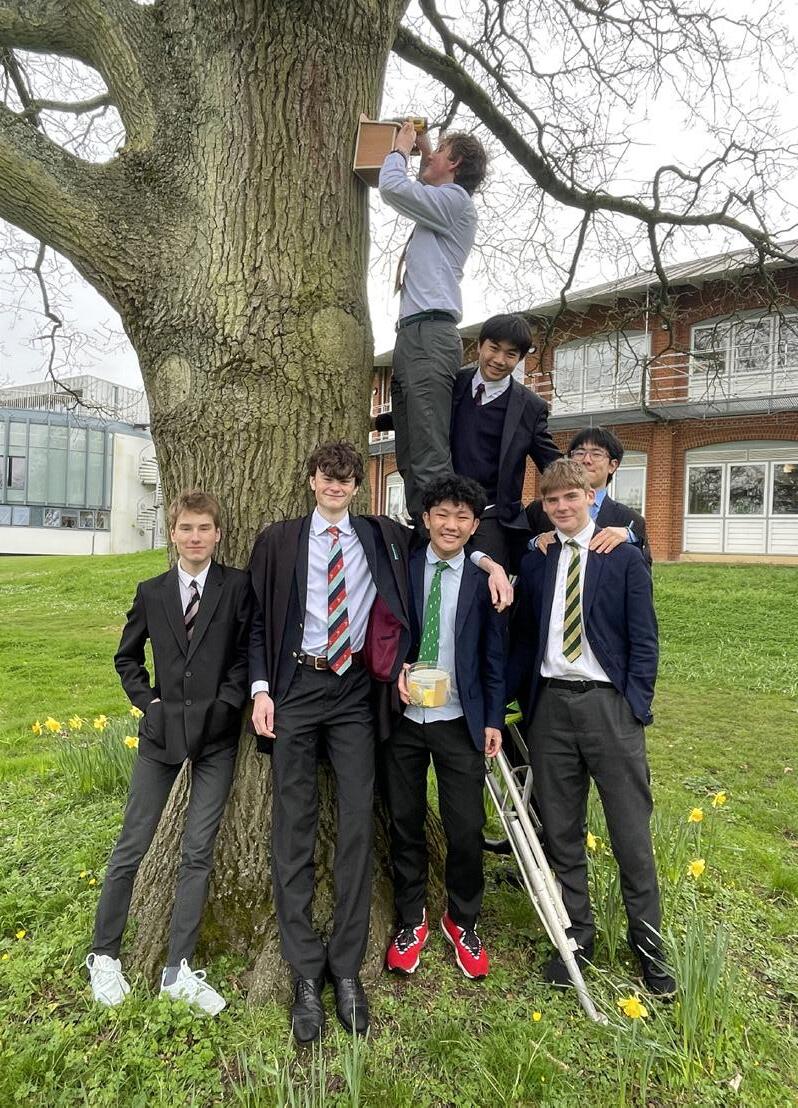
With our baseline ecological surveys completed in 2024, students take part in the RSPB’s Big School Birdwatch and are starting to get better at identifying our native species, often with the help of the Merlin app. In addition, Michael has overseen the construction of hundreds of bird boxes, now installed on trees throughout much of the campus.
The UK’s biodiversity has been depleted over centuries and it will not be fixed in the short term. But by educating our boys, by capturing in their hearts and minds an understanding and an interest in the natural world, we can make a genuine difference. Not just to Radley, but across the world.
With Michaelmas 2025 marking the end of Andrew Ashton’s 17-year tenure as Radley’s Bursar, John Sparks (Director of Partnerships) takes a look back across his history, and at his incredible impact on College life for almost two decades…
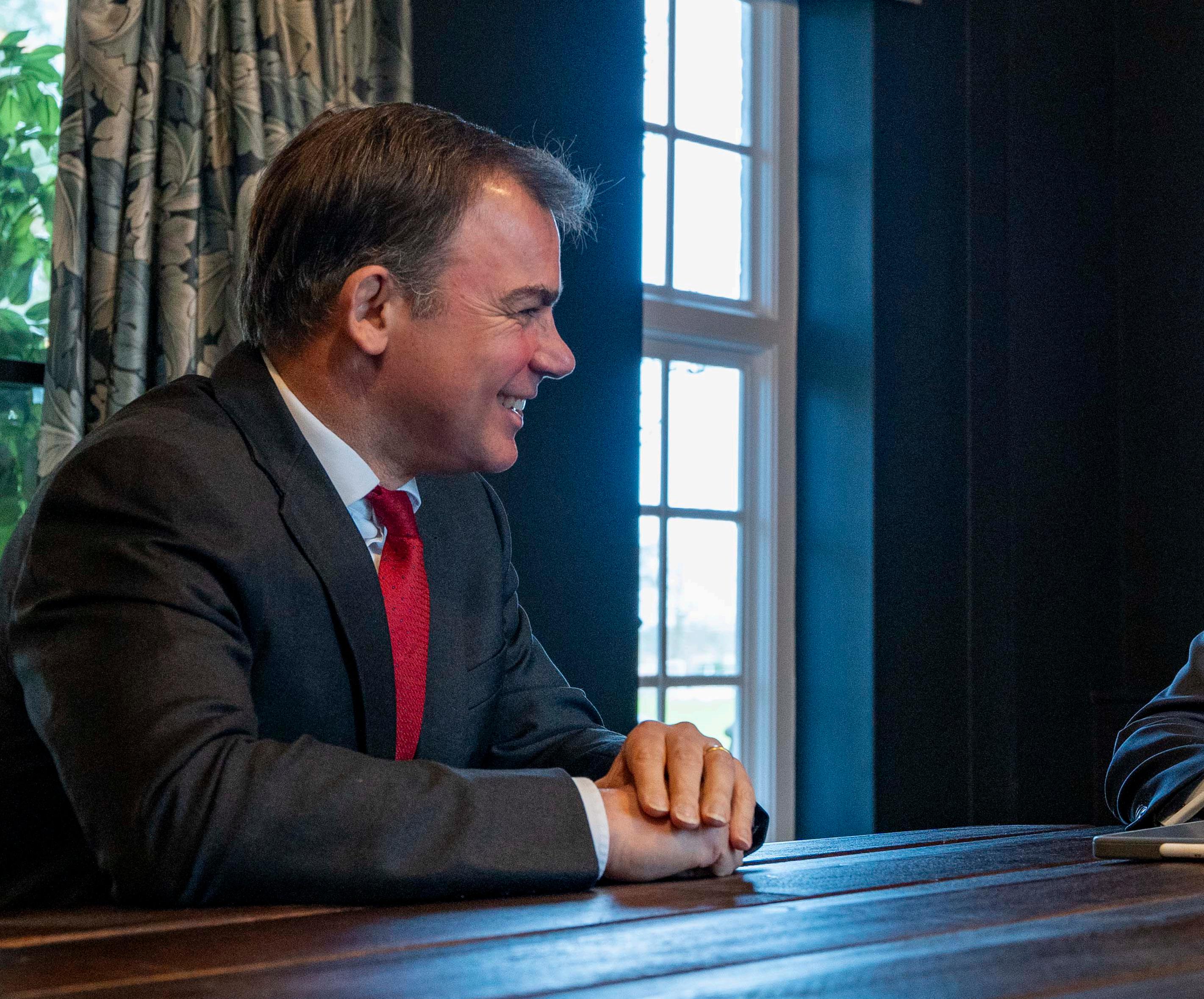
His time will go down as transformational in Radley history. And as that transformation is analysed and understood, it will be the name of Ashton that emerges as a – possibly the – key figure. Always done personably, ethically, humbly. Always on behalf of staff and boys.
John Moule, Warden
It’s a long way to Newcastle – and when I made the pilgrimage by train, I was given one request: to find and photograph Andrew’s name on the Oxford University honours board at the Royal Grammar School. I imagined it proudly displayed in the main hall, perhaps with a spotlight and velvet rope. Instead, I was met with polite confusion and a suggestion to ‘try behind the organ’. And there it was – tucked away, yet unmistakable in gold letters: A. Ashton, University College, Oxford. Quiet distinction.
Andrew has spent the past 17 years transforming budgets into buildings, constraints into opportunities, and spreadsheets into strategy. In doing so, he has echoed Radley’s founding spirit: a place built on beauty, purpose,
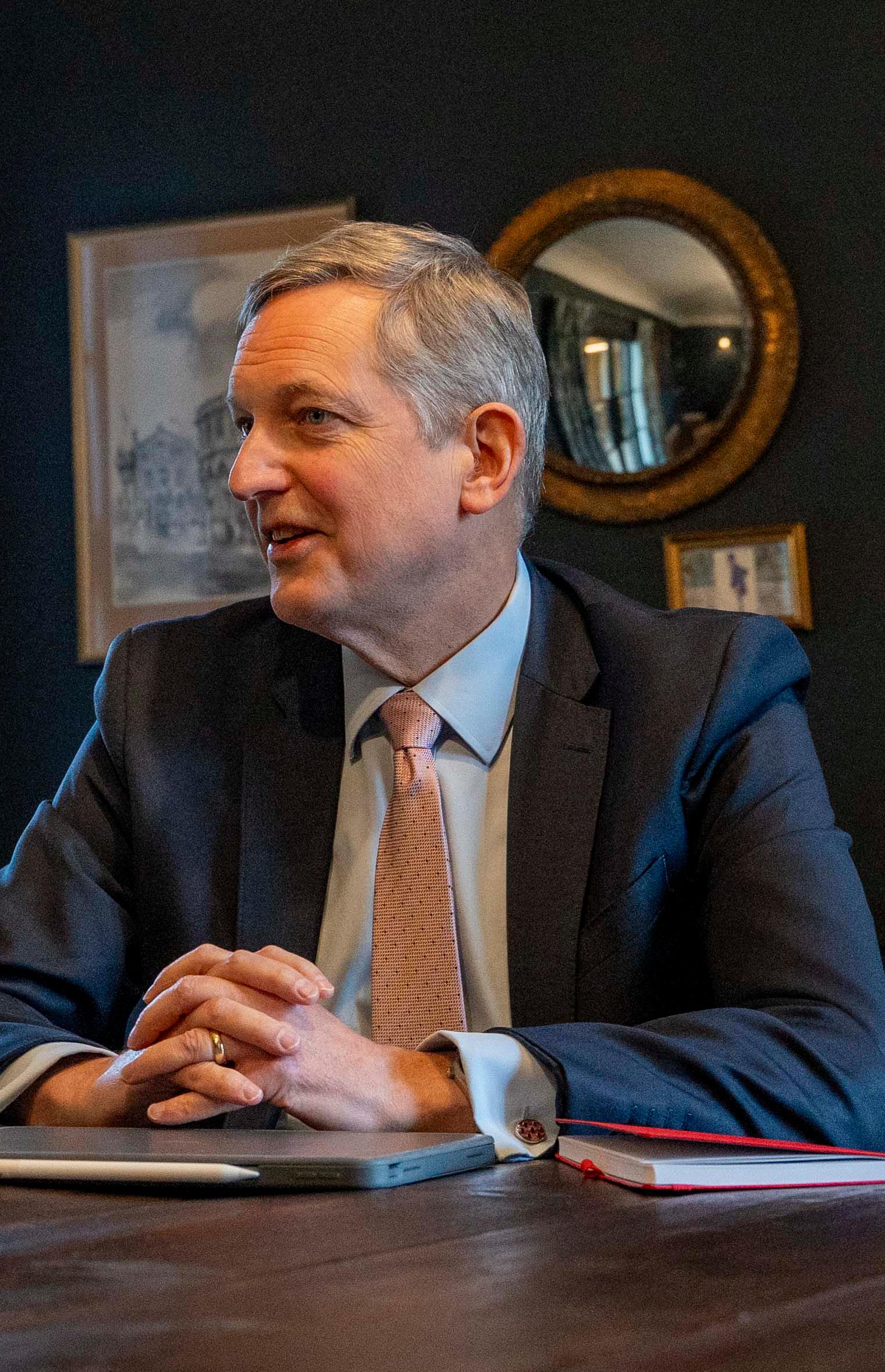
and thoughtful stewardship. The kind of place where doing things well matters. Shaping the school in ways that feel timeless – and unmistakably Radley.
Many of us here have felt the ripple effects of Andrew’s decisions – whether in the buildings we teach in, the budgets we manage, or the calm assurance he brings to every meeting. His work has touched every corner of this school, often quietly, but always profoundly. Laughter is never far away – especially when it’s sparked by one of his own bad jokes. And through it all, he has remained modest. No large office or grand gestures for him – just a remarkable work ethic and a deep sense of service, marked by kindness and support for the bursary team, operational staff, and Common Room.
His guiding principle has remained beautifully simple: is it good spend, or bad spend? That question has shaped much – from the restoration and creation of numerous buildings, to navigating VAT reforms, national insurance shifts, and economic tempests – Andrew must have been the only bursar in the universe to see these as opportunities. Yet his decisions have not been just financial judgments; they are reflections of values, priorities, and purpose.
And so, to new pastures of Radley Schools Group. I wonder if the opportunity to spend more time back in the North East at Mowden Hall influenced his decision for a change in direction? Governor meetings will, I am sure, now coincide with a home match at St James’ Park. But we all know that Andrew does not work that way. His oversight of the prep schools is a decision he will not have taken lightly. He will make a big impact, as he has done here, at a time when the prep school sector needs people like Andrew to give a steer, reassurance, and kindness.
Andrew, thank you, we all wish you well in this new venture, yet know that you will not be too far away.
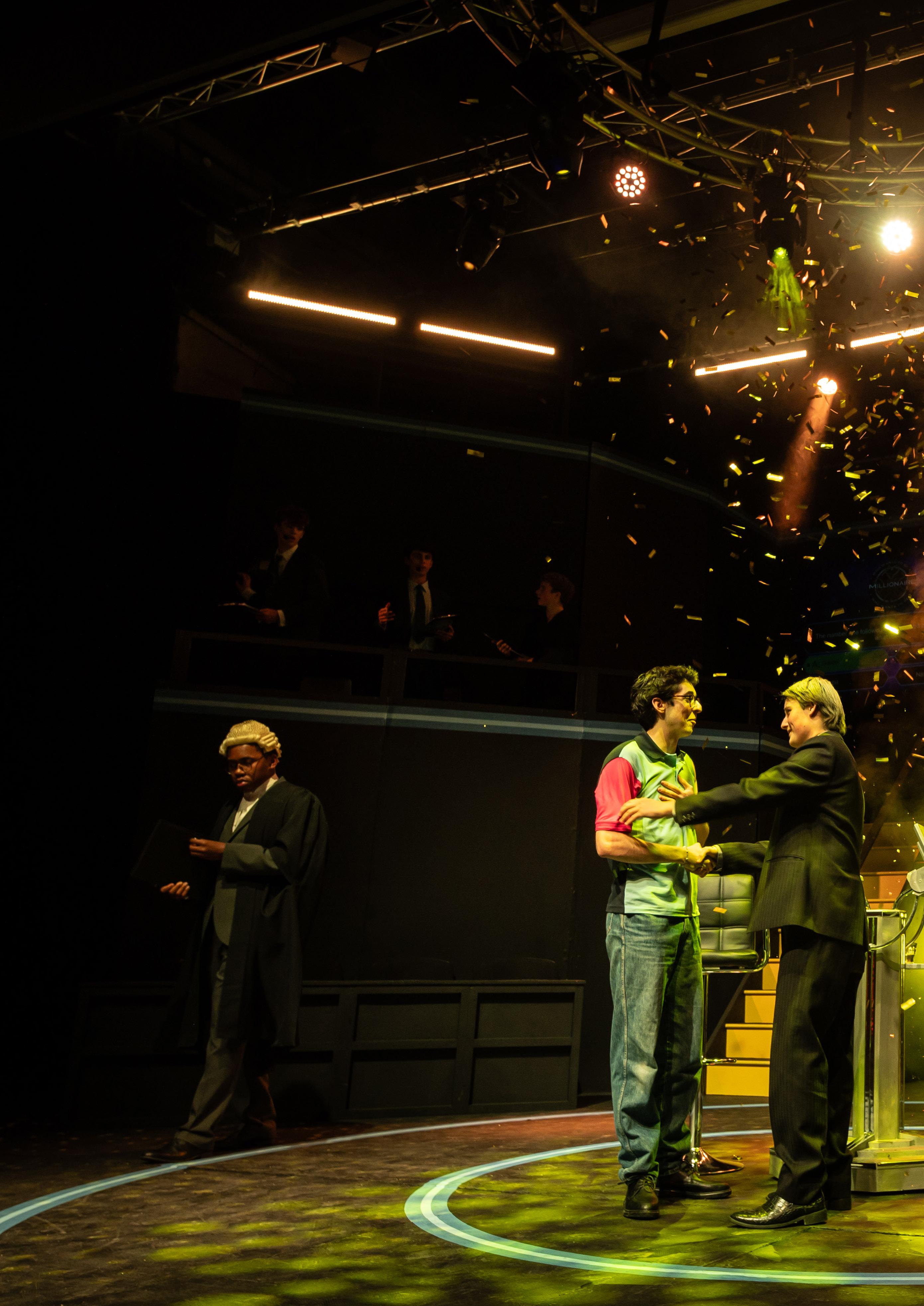
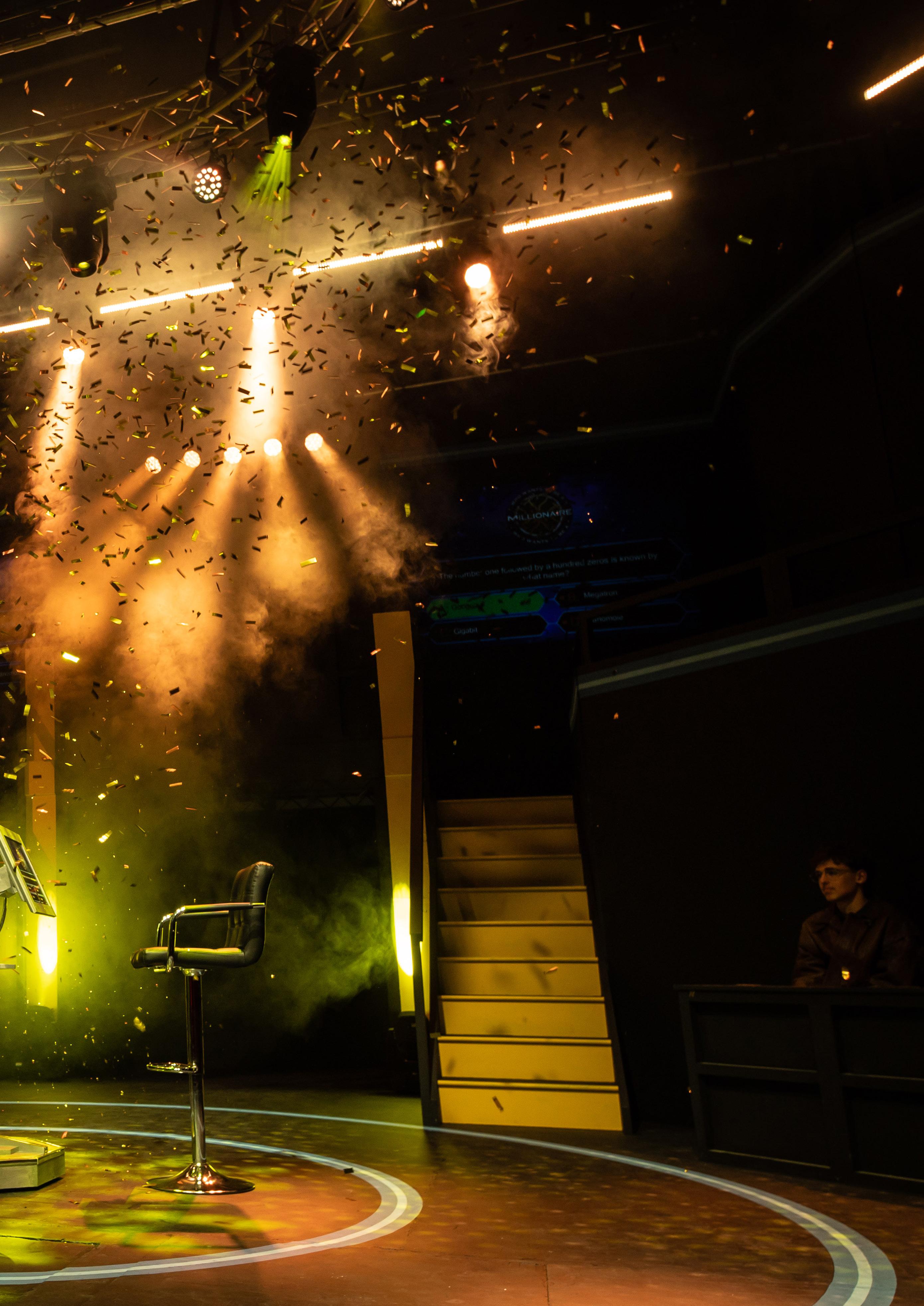
Across three nights, this year’s College Play, Quiz by James Graham, was an engaging and thought-provoking performance exploring the infamous Who Wants to Be a Millionaire? scandal, brought to life by a fantastic cast and production team.
Act One brought a whole heap of energy, portraying the playful spirit of British gameshow culture. The narrative introduced a hugely enjoyable sequence of iconic British game shows woven into the larger narrative through flashbacks.
These quick-fire segments, featuring memorable hosts such as Jim Bowen, played by Sam (6.1, J), and Leslie Crowther, played by Johnny (6.2, K), added variety, nostalgia and pace. Audience participation was constant throughout the first act. Whether voting on Charles Ingram’s guilt or taking part in the mini quizzes, ‘members of the jury’ were actively drawn into the fun. This not only energised the atmosphere, but also cleverly echoed one of the play’s main themes: the idea that public opinion can become part of the spectacle itself.
The tonal shift in Act Two brought a notable change in the atmosphere. The colour and comedy of the game show transformed into a more restrained and thoughtful courtroom, where the defence presented a strong argument
to convince the jury of Charles Ingram’s (Adam, 6.2, H) and Diana Ingram’s (Emma) innocence. This transition was handled with maturity by the cast who demonstrated strong discipline as the narrative delved beyond the surface and into questions of truth, bias and media influence.
Under Miss Buse’s direction, scenes that could easily have lost the audience were made compelling through clear rhetoric and controlled pacing by QCs, Hilliard (Maxwell, 6.2, G) and Woodley (Chloe). Technically, the production was equally as strong. Lighting and sound were intelligently used to signal the move between entertainment and legal scrutiny, while smooth scene transitions ensured the play maintained its rhythm. These technical elements undoubtedly played a crucial role in supporting the storytelling; for example, the tension was palpable during the Millionaire quiz scenes, with suspenseful underscoring from the actual gameshow gently rumbling as the questions increased in prize money.
Overall, Quiz was a highly entertaining yet thoughtprovoking production, showcasing the brilliant creativity and talent within the Radley community, and successfully presented a complex story with both wit and integrity.
Freddy (6.1, F)
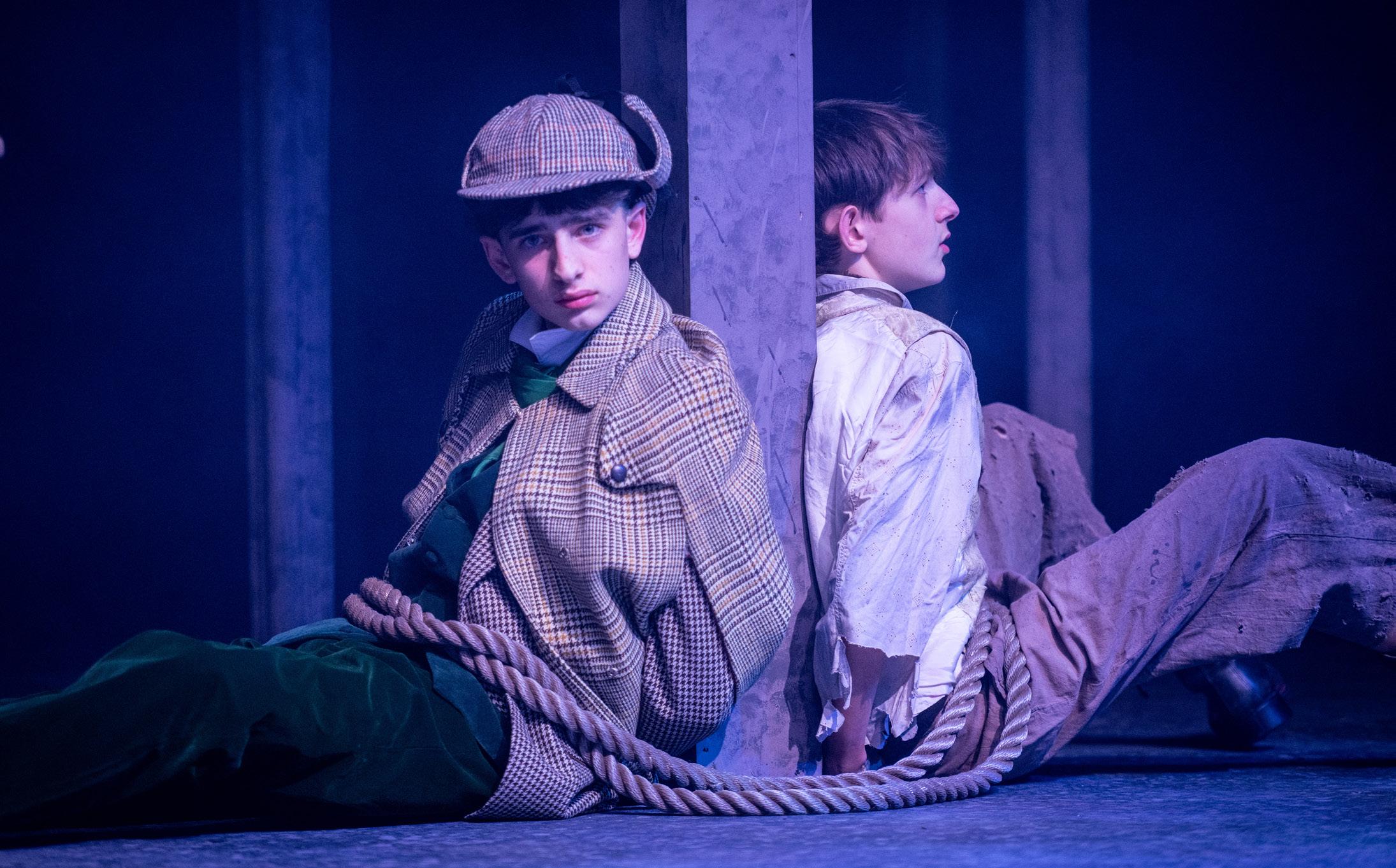
For over a century, Sherlock Holmes has enthralled audiences. The Removes’ recent stage adaptation – directed by Miss Ayres – vividly demonstrated his lasting impact. Set against the atmospheric backdrop of 1890s London, their production brought Sir Arthur Conan Doyle’s iconic world to life – the set design, created by Matt Barker and Jon Goodall, seamlessly shifting between bustling streets and more intimate interiors.
The play opened with the energetic voices of newsboys, establishing a world filled with crime, jewel thefts, and high-society gossip regarding the upcoming wedding of the Prince of Bohemia. The plot focused on Wiggins (Luke, D), who possessed letters from the Prince to his late sister – documents that could spark an international scandal.
Conflict arose when the devious Larrabees (Danik, K and Arthur, J) hired safecracker Sid Prince (Ollie, J) and criminal mastermind Professor Moriarty (Hugo, F).
With a slicked-back look and menacing trench coat (designed by Lianne Oakley-Rowland and Nina Baker), Hugo effectively conveyed Moriarty’s influence across London’s underworld. A standout moment was the verbal jousting between him (Moriarty) and Sherlock (William, H) at 221B Baker Street.
The production thrived on the dynamic between Holmes and Dr Watson (Caspar, G). Watson’s jovial and loyal nature provided the perfect foil to Holmes’ dry intensity, keeping the story moving through its twists. The narrative built to an explosive climax as Moriarty’s assassination attempt failed, leading to his arrest, and Holmes immediately turned to his next famous mystery The Hound of the Baskervilles
Overall, the production was a fast-paced triumph. With strong performances, the cast and backstage team delivered a professional and exciting adaptation. Congratulations to everyone involved for capturing the timeless spirit of Sherlock Holmes so effectively.
Rupert (V, B)
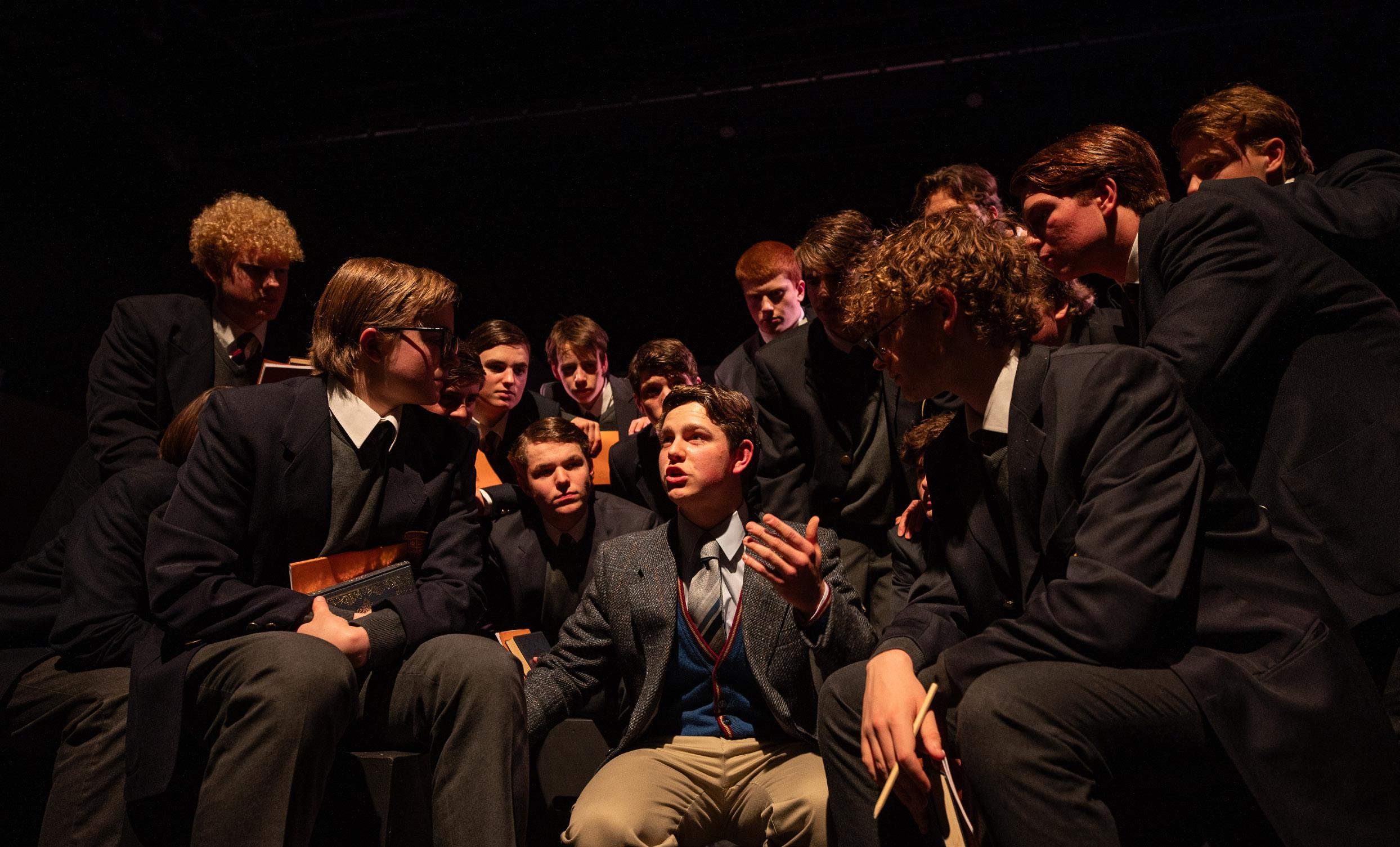
Setting to stage a classic film such as Dead Poets’ Society was no small challenge, yet the parallels between Welton Academy and Radley made it an obvious choice. The cast, aware of the familiarity of the portrayed environment, embodied it on a personal level. The story was brought to Radley just as powerfully as it had been to cinemas 37 years earlier.
Following Mr Keating (Freddy, F) and his English class, the play began strongly, with heartfelt line delivery by Hort (A) and Hugo (C), playing Knox and Neil respectively. Piran (E) stood out in the classroom scenes as Todd, a shy and introverted poet whose interactions with Keating and Neil are particularly touching and demonstrate immense acting maturity.
Other highlights included the tension between the artistic nature of Neil and paternal authority of his father Mr Perry (Arthur, H), and the romance between Knox and Chris (Dora).
The play’s ingenuity in stagecraft was evident. Filmed outdoor scenes were directly projected on the stage, going beyond the spatial limitations of the Theatre. The cave scenes took place in pitch dark, barring the cast’s flashlights, perfectly recreating their cosy and intimate feel in the film.
Later scenes were striking and shocking – Jasper (L) and Harry (C) shone particularly in these, as broken friends of Neil in search of a culprit for his fate.
The last scene, in which Keating’s students pay him tribute one more time, solemnly concluded a great show. Similarly, Ms Buse must be commended for her last play at Radley. Her and the creative team’s efforts in bringing this play to stage are a testament to the brilliance of the drama department, and her management of school productions will be missed. Carpe Diem!
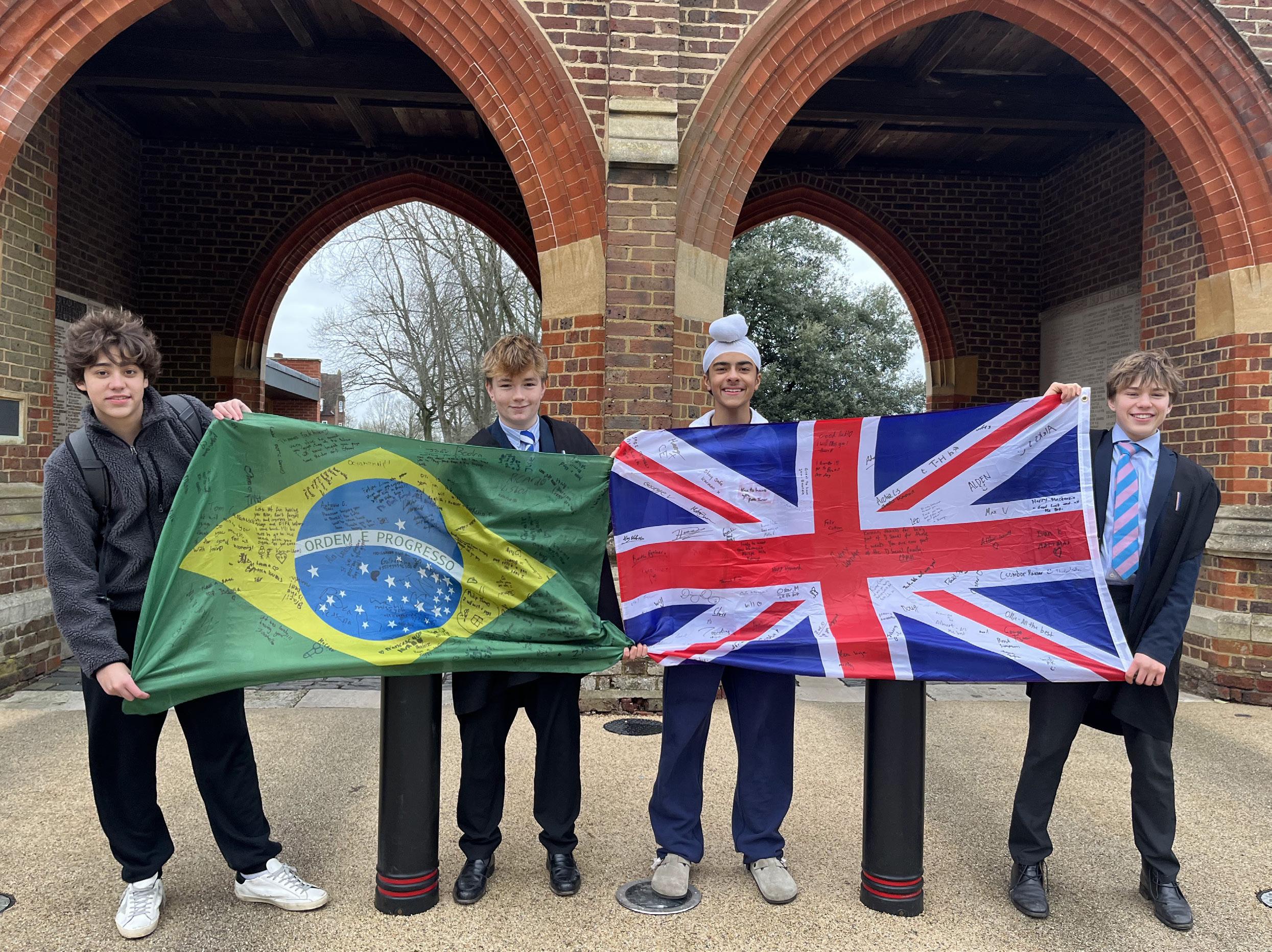
An international exchange can be judged by distance travelled, but its true value lies in how it shapes young people over time. Radley’s growing strand of international partnership, exemplified by its relationship with St Paul’s School, São Paulo, strengthens academic thinking, independence and global awareness, and forms part of a wider range of international opportunities available to pupils during their time at the College.
Now in its second year, the partnership has begun to move beyond exchange as a discrete event and towards a more sustained presence within Radley’s international outlook.
Teachers have observed that the presence of visiting pupils, alongside the perspectives brought back by Radley boys, enriched classroom discussion.
Differences in educational approaches encouraged comparative thinking, deeper curiosity and greater confidence in engaging with global perspectives, particularly in subjects shaped by cultural context.
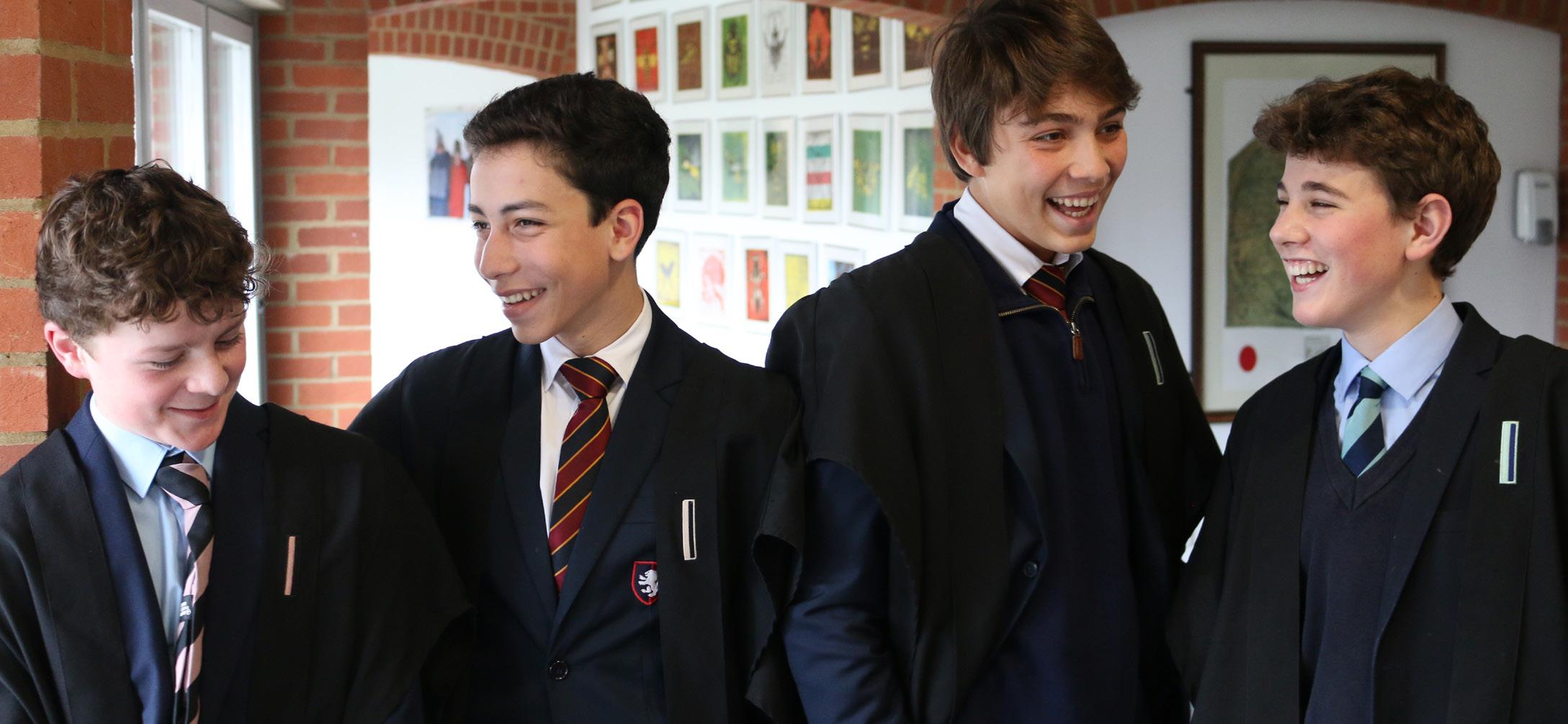
For the pupils involved, both from Radley and from São Paulo, the experience proved transformative. Living with host families and attending lessons in a different national context required adaptability and openness, qualities that pupils developed through the experience rather than needing to possess in advance. Participants also reflected on the responsibility and privilege of representing their school abroad. Visiting pupils, in turn, encountered Radley’s distinctive boarding culture, where academic ambition is closely interwoven with communal life.
The impact of the exchange was also evident in everyday school experience. During the Brazilian pupils’ time at Radley, the exchange became part of daily life in B Social, where the visitors stayed, and in J and D Social, home to the Radley exchange pupils. Informal conversations over cocoa ranged from curriculum and school traditions to music, sport and national identity, bringing global perspectives into the heart of Social life and extending the exchange’s influence well beyond its formal participants.
The partnership was further shared through the rhythm of the school. Presentations at Social Prayers gave pupils opportunities to
reflect publicly on what they had learned, not only about another country but about curiosity, openness and engagement with difference. In this way, the exchange was understood not as an isolated opportunity but as part of a collective commitment to developing thoughtful, outward - looking young people.
Families played a vital role in the success of the programme. Host families spoke warmly of the experience and of the care, organisation and pastoral support that underpinned the exchange, valuing both the reassurance provided and the friendships formed.
Most significantly, the exchange generated momentum. Pupils returned keen to share their experiences with younger year groups, encouraging others to see international engagement not as an exception, but as a natural and valued element of a Radley education.
In an increasingly interconnected world, partnerships such as this matter deeply. The exchange with St Paul’s School demonstrates how international collaboration can foster empathy, confidence and intellectual curiosity, while helping pupils to develop the perspective and maturity needed for life beyond school. As the partnership continues to evolve, it stands as a compelling example of how widening horizons for a few can broaden ambition and outlook for many.
While adorning a CV with pen-andink qualifications and technical achievement is undoubtedly important, the significance of ‘soft skills’ can also not be overstated. From creativity and adaptability to critical thinking and leadership, employers are beginning to value candidates’ broad abilities over specialisation, in the wake of an increasingly unpredictable world of work. “These skills and qualities enable you to be a productive and communicative team member,” stated the editorial team of Indeed, the world’s largest employment website, last year. “They can apply to almost any situation and can adapt to changes in technology or other external factors. They also make specific knowledge and technical skills fully productive.”
Therein lies a key aspect of Radley College’s Curriculum Extension Programme (CEP), in which 6.1s take on additional classes free of the limitations of an A-Level examination. Kevin Mosedale, the initiative’s lead, understands the importance of this. “The CEP can promote and develop independent learning and the kind of study skills that are needed to flourish at university… it’s an opportunity for boys to try something new that will broaden their horizons and make them a more interesting person as a result!” Prior to starting at Radley, Mosedale spent 16 years as an Army Officer and this undoubtedly informs his conviction that soft skills and values such as courage, respect for others and integrity are at least as important as formal qualifications.
CEP options cover a wide range of topics, each designed to foster different abilities. ‘Entrepreneurship’ and ‘Current Affairs’ allow
for pursuits of global politics and industry, while ‘Music Technology’ and ‘Art & Creativity’ develop visual literacy and imagination. Some complement A-Levels (CEP ‘Biology’ aligns the pre-existing curriculum with the temperate biodiversity of Radley’s 800-acre campus), others provide their own endpoints (‘Public Speaking’ results in a Grade 8 LAMDA Speaking in Public assessment, ‘Robotics and Coding’ in a presence at the VEX V5 Robotics Competition). Included within the Programme’s umbrella is the Academic Dissertation where boys research and write a 5,000 word paper on any topic that interests them and then present their findings in the second half of the Summer Term. For those who want to take it further, the dissertation can lead onto the Extended Project Qualification (EPQ), which is recognised by many universities and can lead them to lower their offer criteria for students with at least an ‘A’ grade in their EPQ.
Nonetheless, despite the obvious functional role of ‘soft skill’ development, the CEP above all else exemplifies a less formal, but equally important, core of Radley – allowing each boy to flourish in their own individual way. “We focus on ensuring that every student is given the opportunity to develop and achieve their very best,” Kevin Mosedale commented, a sentiment carried forward from the College’s founding. By allowing for such personalised ‘learning for learning’s sake’, Radley hopes to help produce a generation of happy and curious young men capable of not only adapting to an uncertain world of work, but, with any luck, changing it for the better.
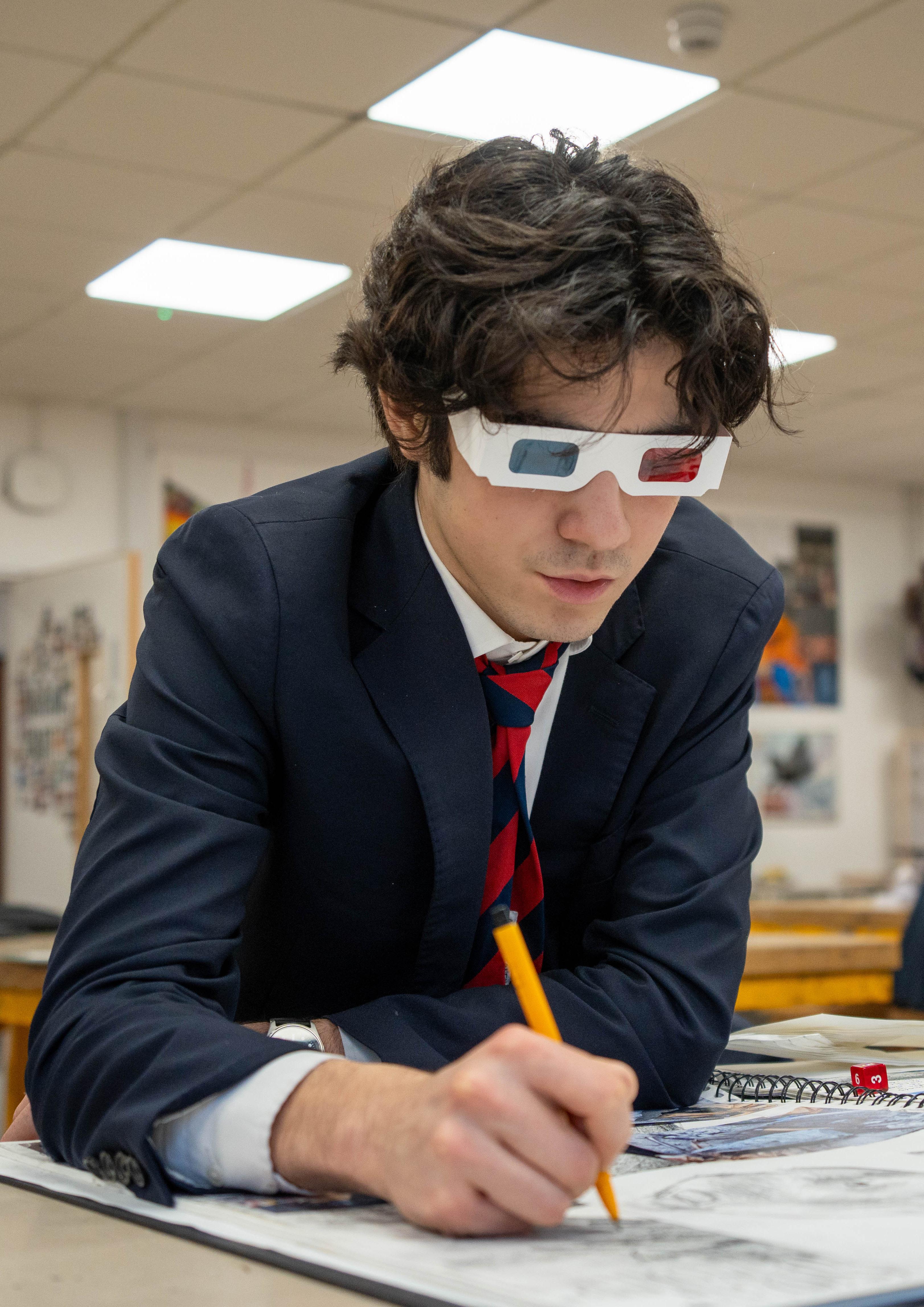

The annual Battle of the Bands competition featured 32 boys across all year groups. Solo artist Adam (6.2, H) was crowned the champion of the evening with his original composition Rain Song.
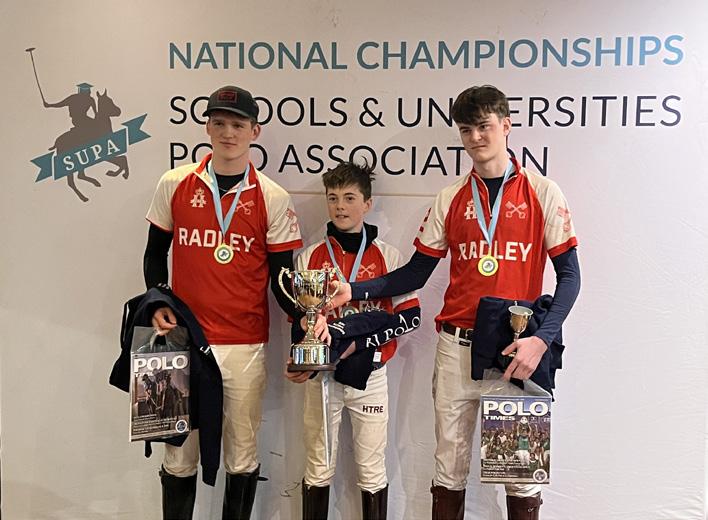
Angus (6.2, C), Harry (6.1, J), and Harry (R, A) won the final of the British Schools Arena Polo Championships, officially making them the best school arena polo team in the UK.
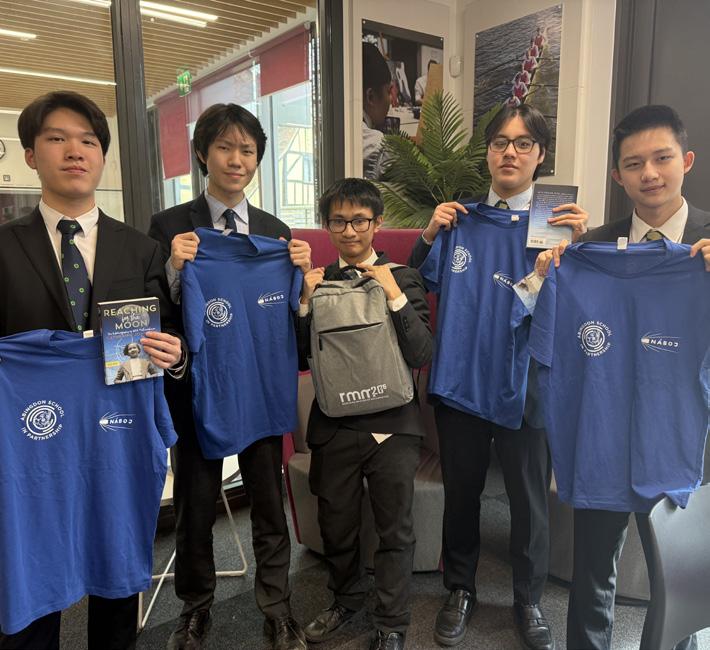
Kelvin (6.2, C), Kevin (6.2, E), David (6.2, L), Ray (6.1, H) and Leonardo (6.1, H) came an astounding joint fifth in the UK in the Naboj International Team Maths Challenge which put them 32nd out of the 1,000 global teams who entered the competiton.
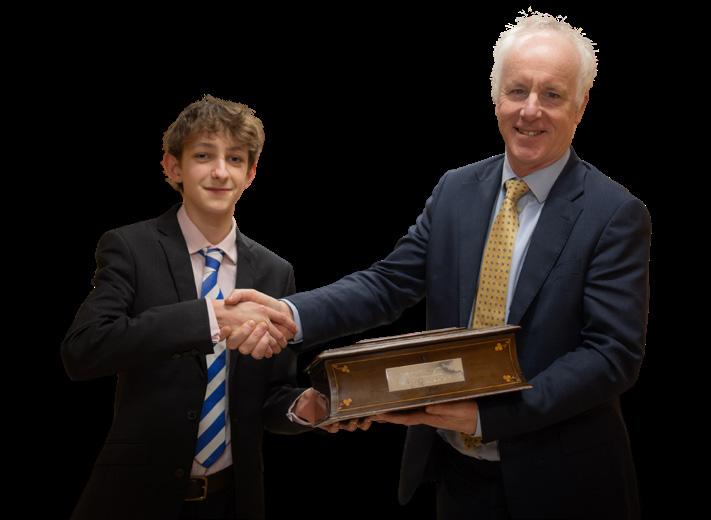
The Declamations competition involved nearly 650 boys with six finalists from each year performing in front of their peers and guest adjudicator Simon Ammora. Luke (R, D) was awarded the overall Victor Ludorum for his rendition of a family letter dating from the First World War.
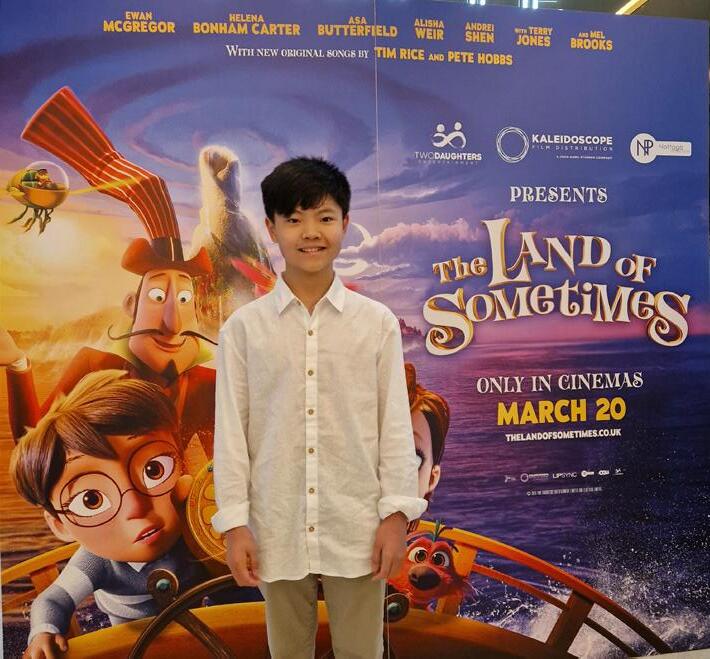
Andrei (S, C) is the lead in the new animated fantasy The Land of Sometimes, which also features Ewan McGregor and Helena Bonham-Carter.
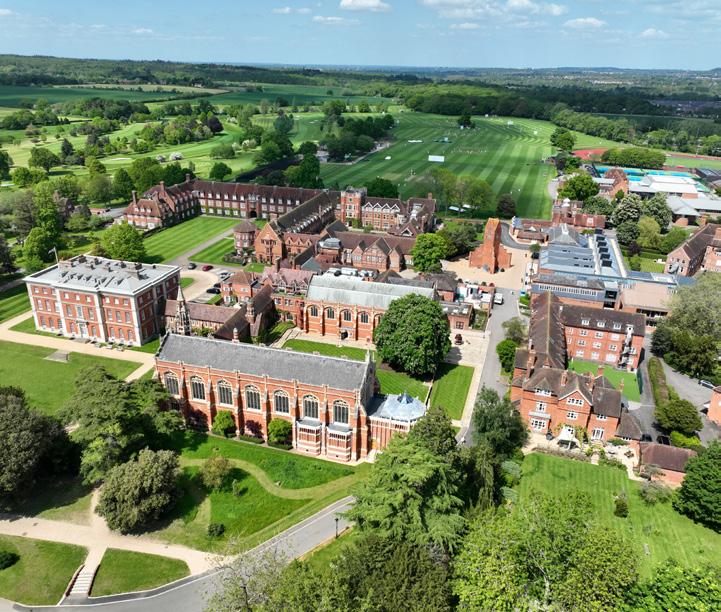
Spears Magazine has listed the College as one of the top 100 independent schools in the world – the ranking reflects its "standing among the most exceptional institutions globally, as assessed by an independent panel of judges and Spear’s in-house research team.”
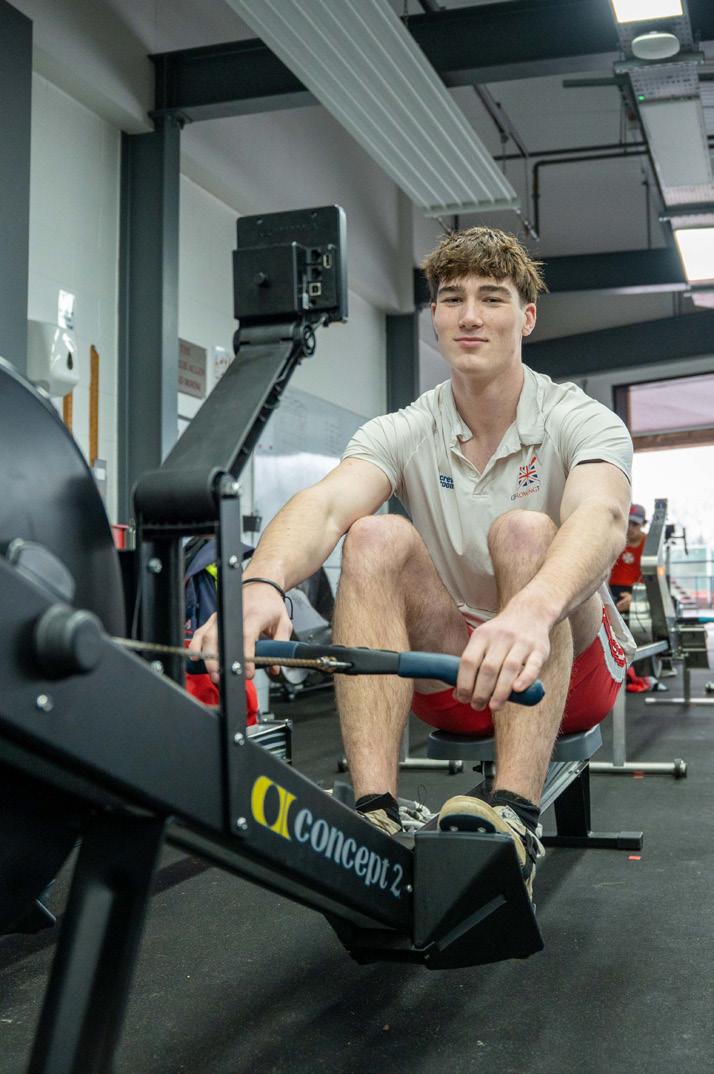
Dylan’s (6.2, D) Inter-Social Ergo Competition performance, in which he rowed 402 metres in one minute, is now the British Record for Heavyweight Men 17-18.
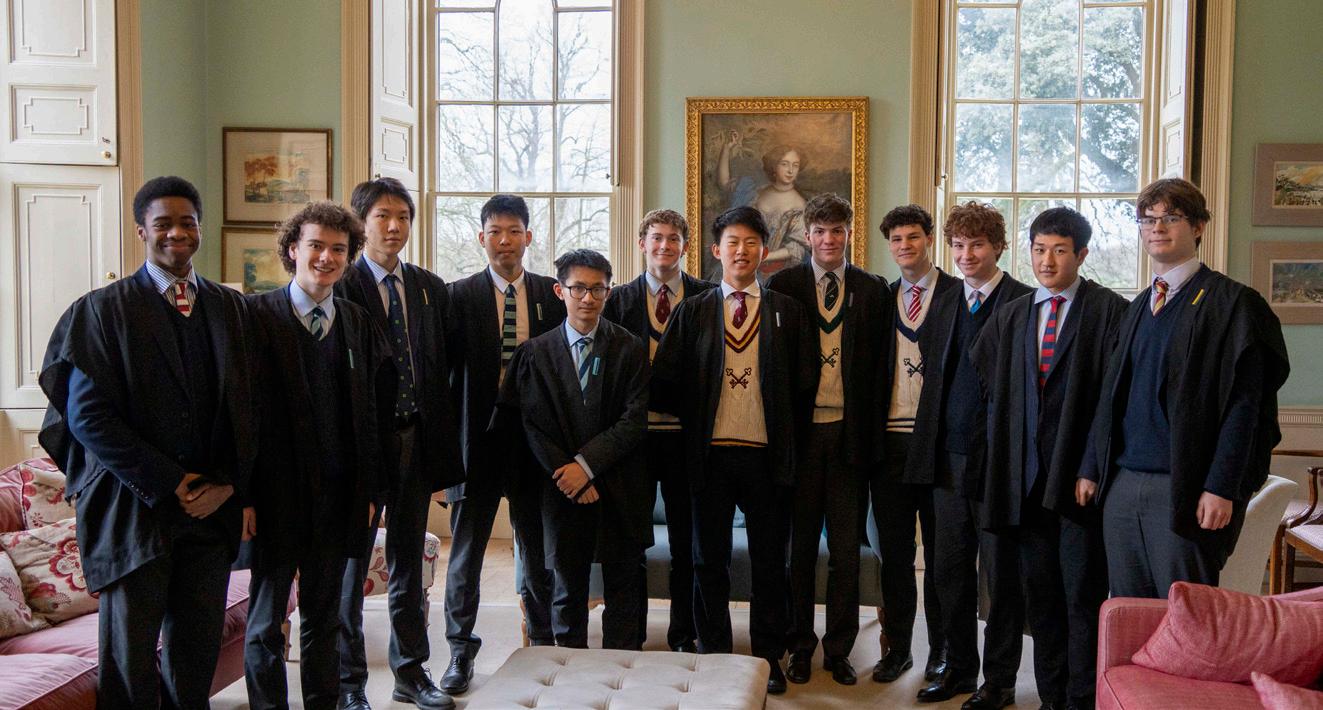
Radley’s 6.2s received 13 Oxbridge offers (10 to Oxford and three to Cambridge), along with seven early offers from leading US universities (including Harvard, Yale, Boston College, UPenn, two from Northeastern, and the University of Denver).
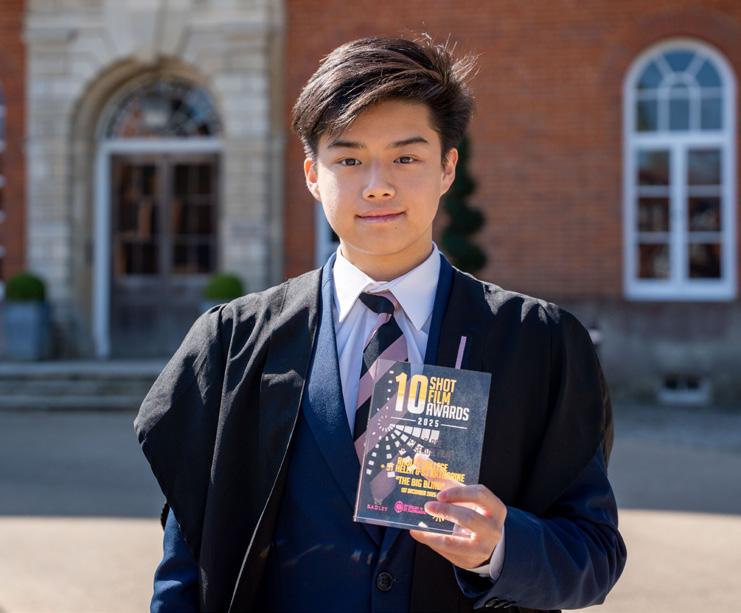
Radley College and St Helen & St Katharine jointly won second place in the Young Film Academy’s 10 Shot Film Awards for ‘Best Sequel Film’. The film, The Big Blind, was filmed at a special One Day Film School last June.
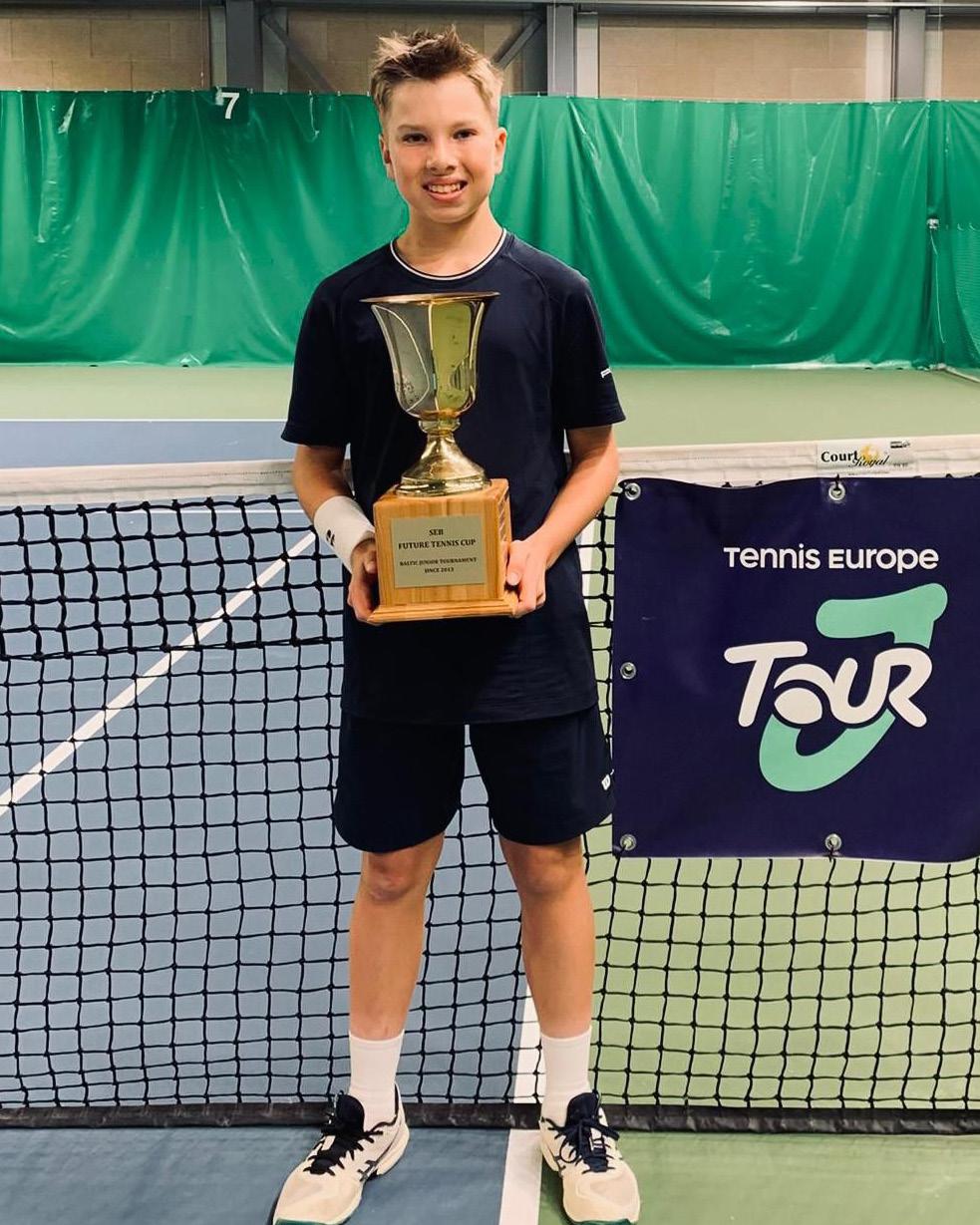
Pekko (S, F) won the 2025 Baltic Cup Tennis Championships, playing at the number one position for Finland in both singles and doubles.
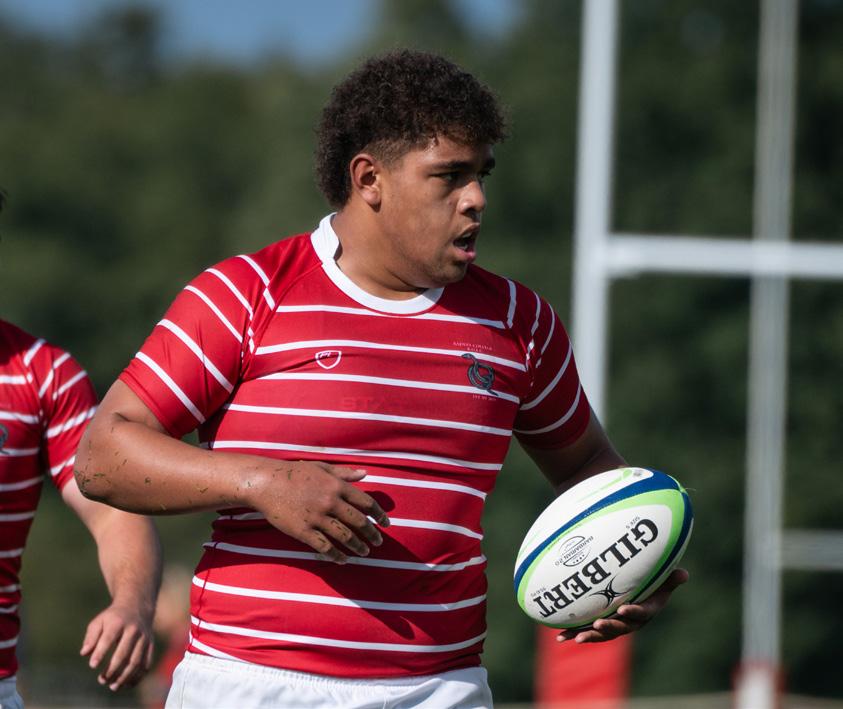
Mosese (6.1, E) was selected to represent Wales in the U18 Six Nations and was nominated one of the players of the tournament, with intense matches against Italy, France, Scotland, Spain, and Ireland.
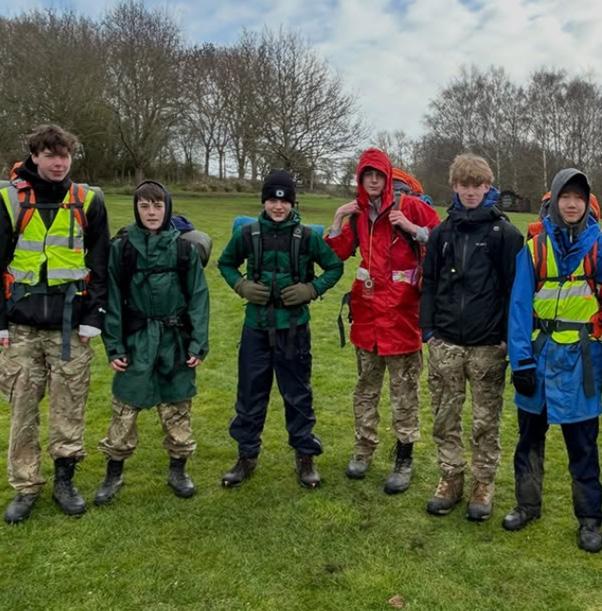
Around 200 boys and 25 staff were involved in planning and conducting the Lent Term CCF Field Exercises, including 70 boys undertaking their Bronze DofE Expedition.
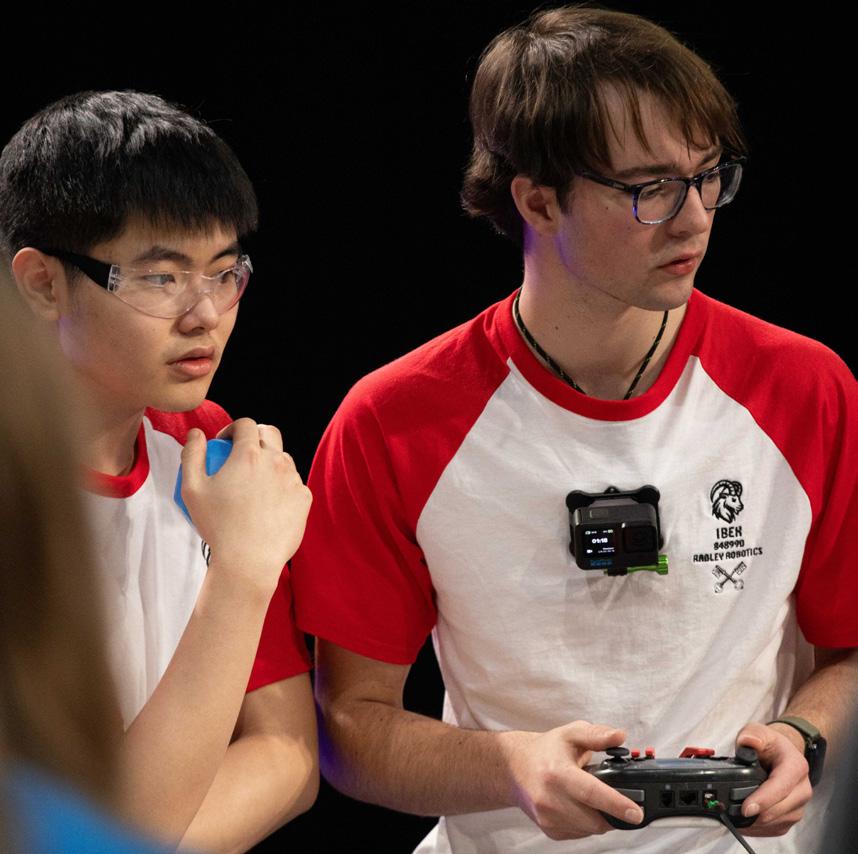
Three Radley teams faced a busy two days of intense competition in the Vex National Championships at the Telford International Centre, with ‘Ibex’ (6.2s) picking up the prestigious Judge’s Award.
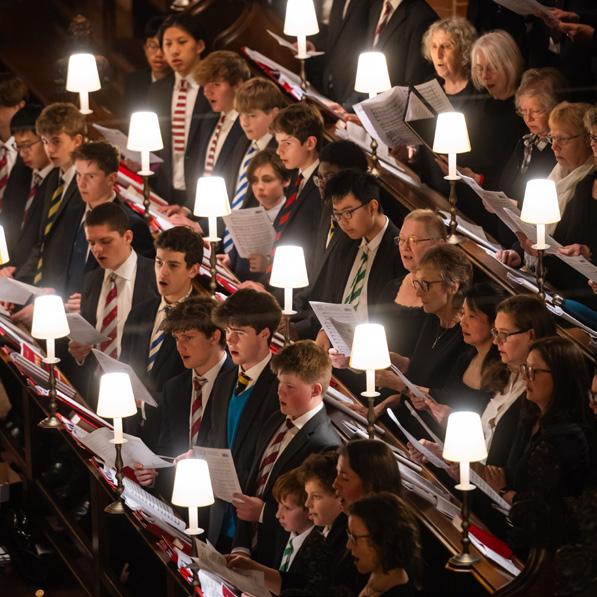
The entire school came together to sing Handel’s Messiah in Chapel on Advent Sunday. The concert also involved an orchestra of boys, professionals, the Choral Society (parent, staff and local singers), and the 130-strong choir.