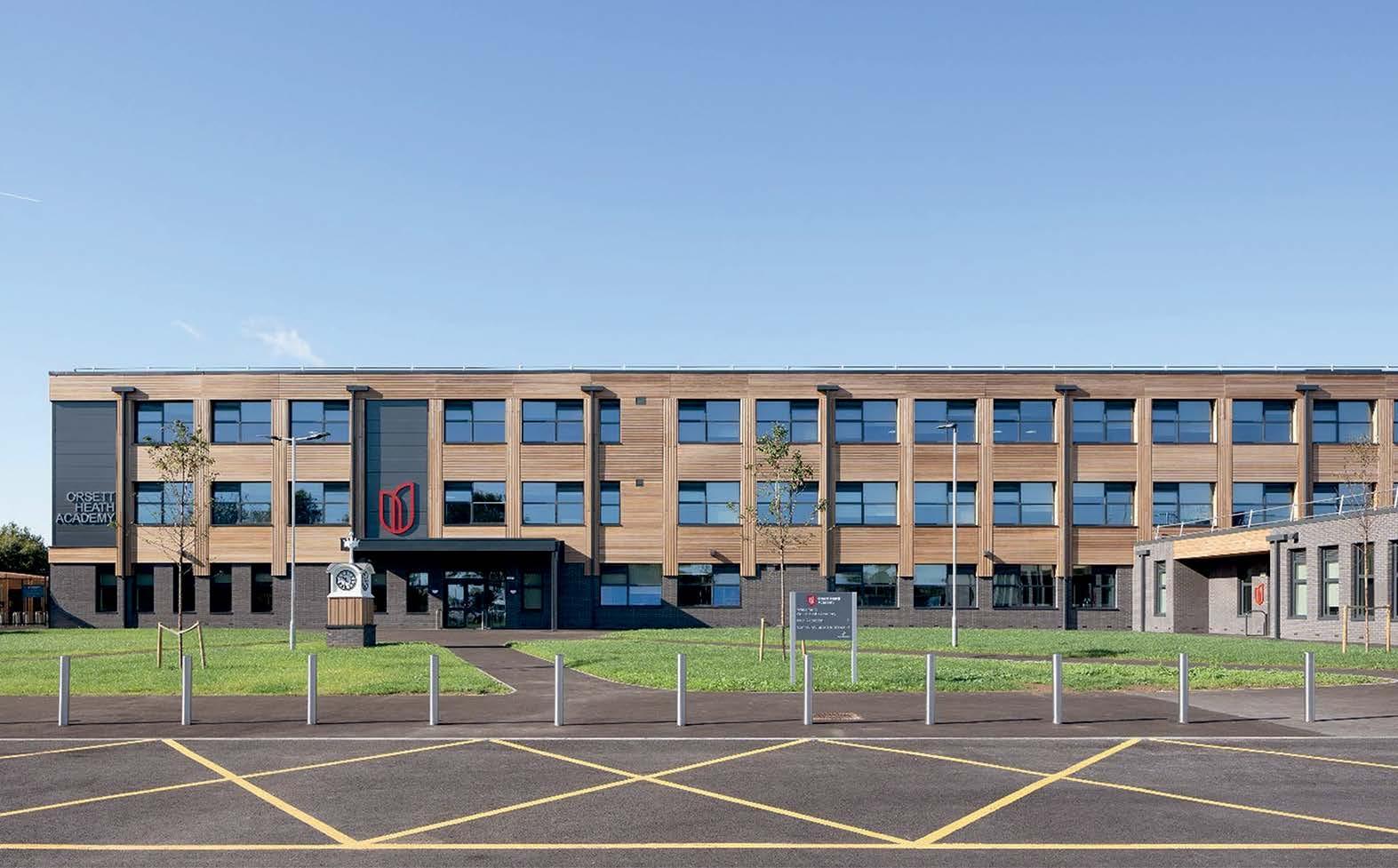
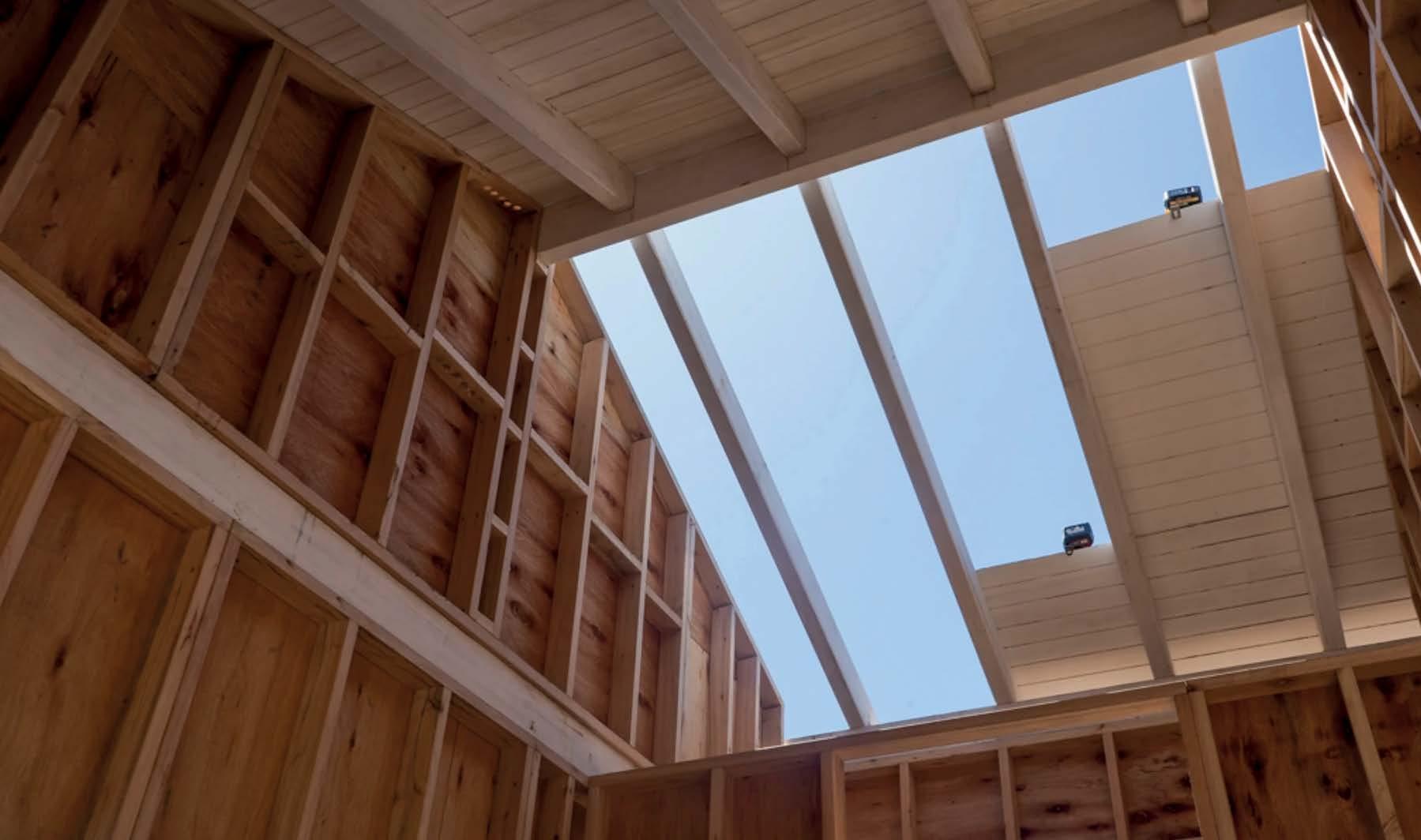
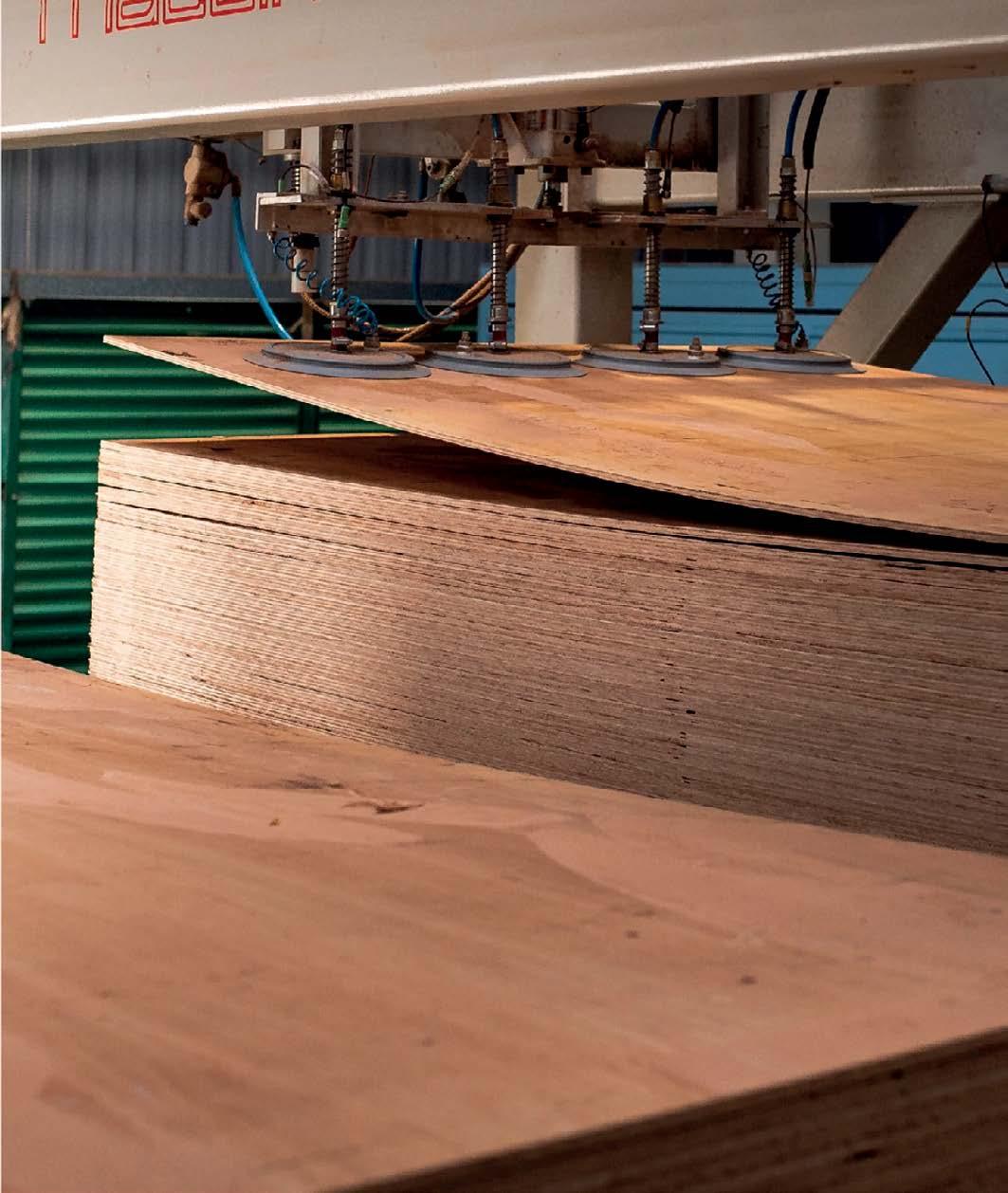
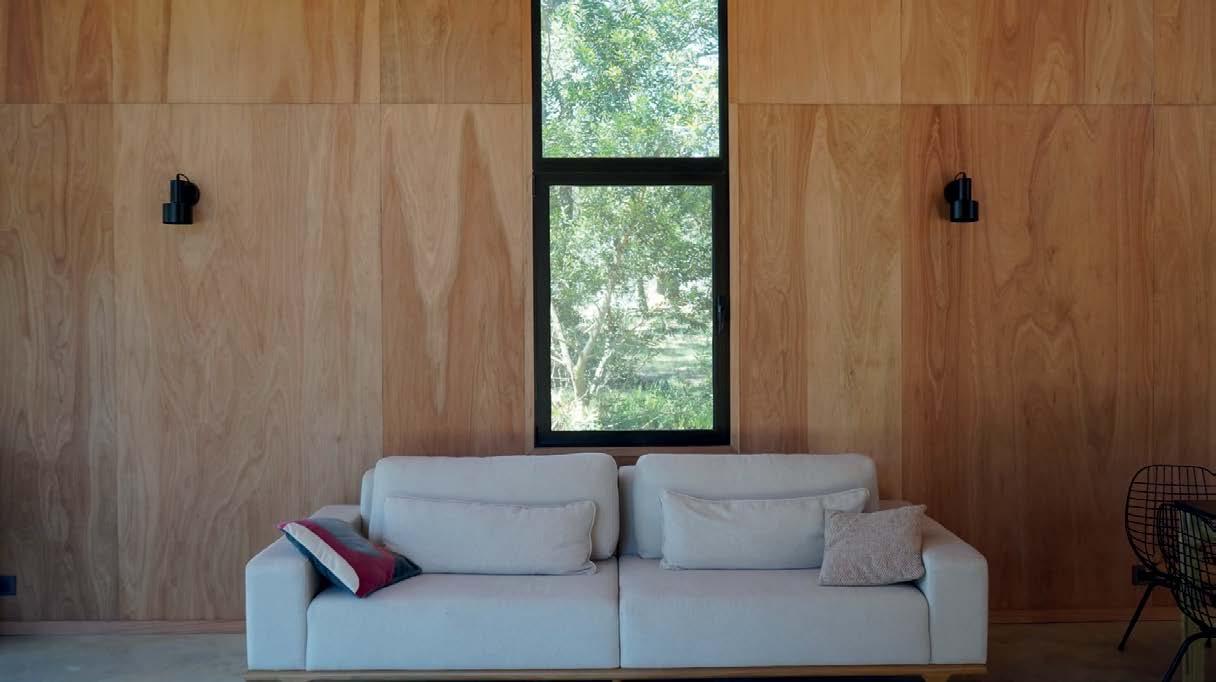
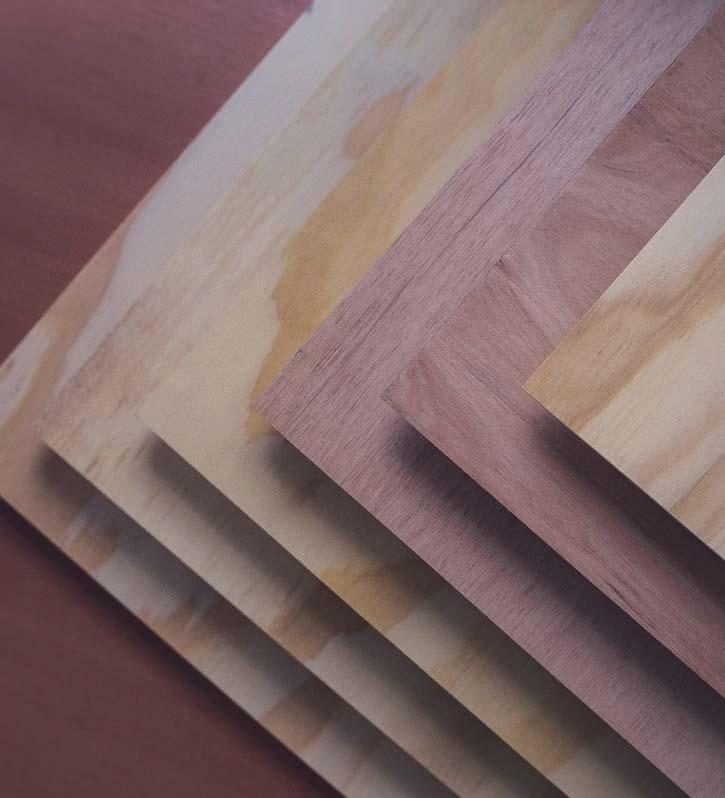
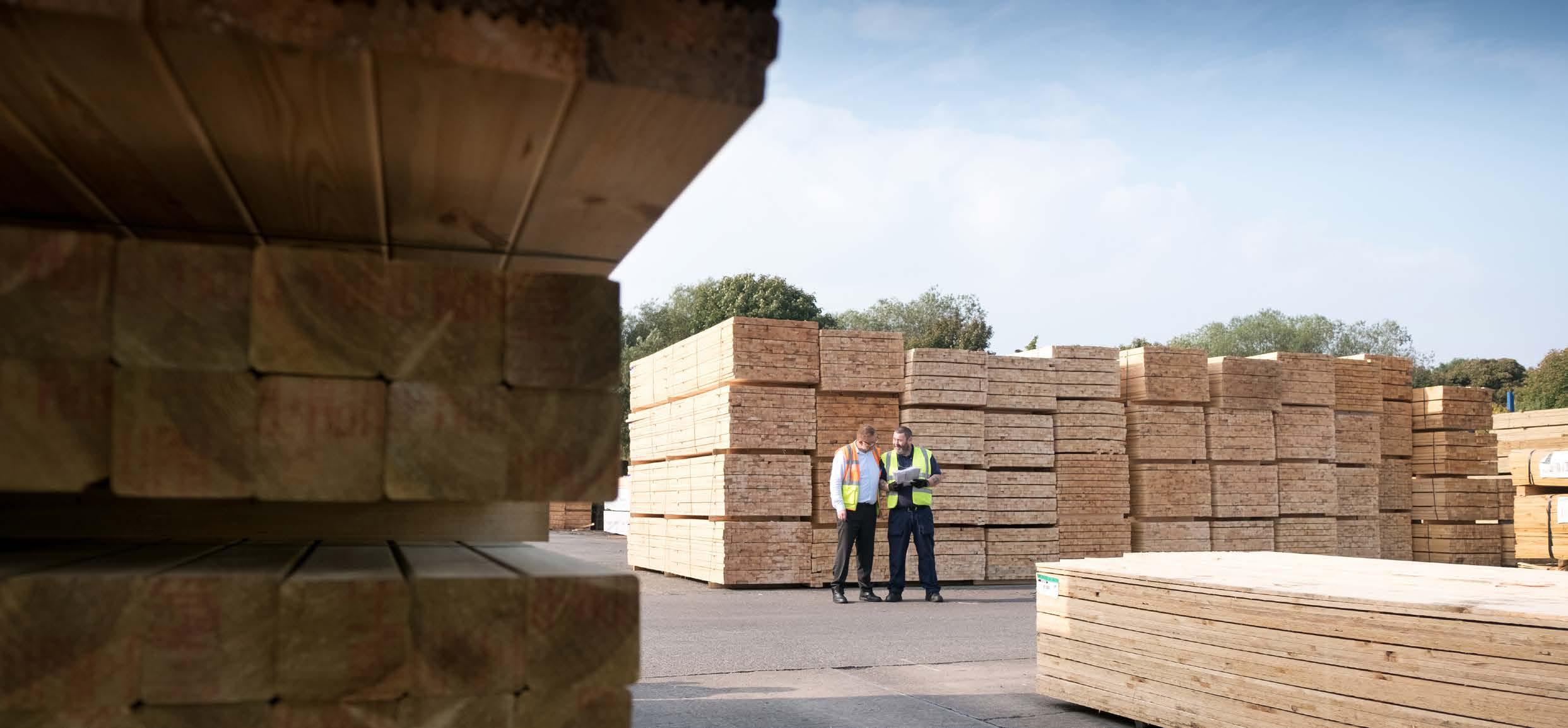
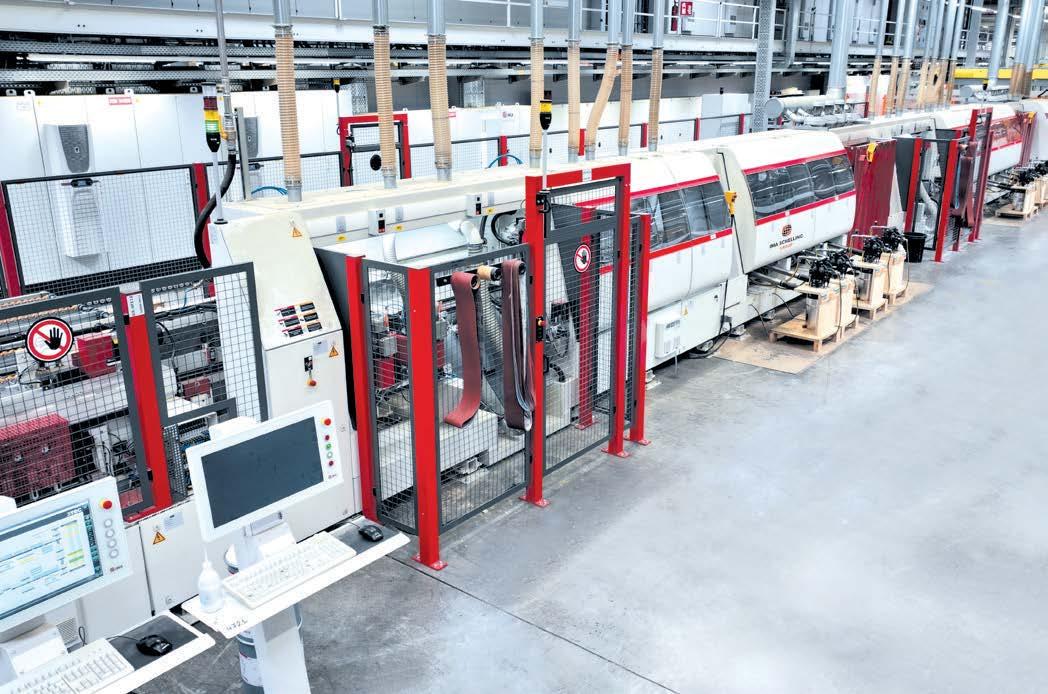
CNC processing drives timber frame production gains - how Essetre’s Techno Saw is helping Fleming Homes improve precision, throughput and off-site capability
ELECTRIC TIMBER HAULAGE 32
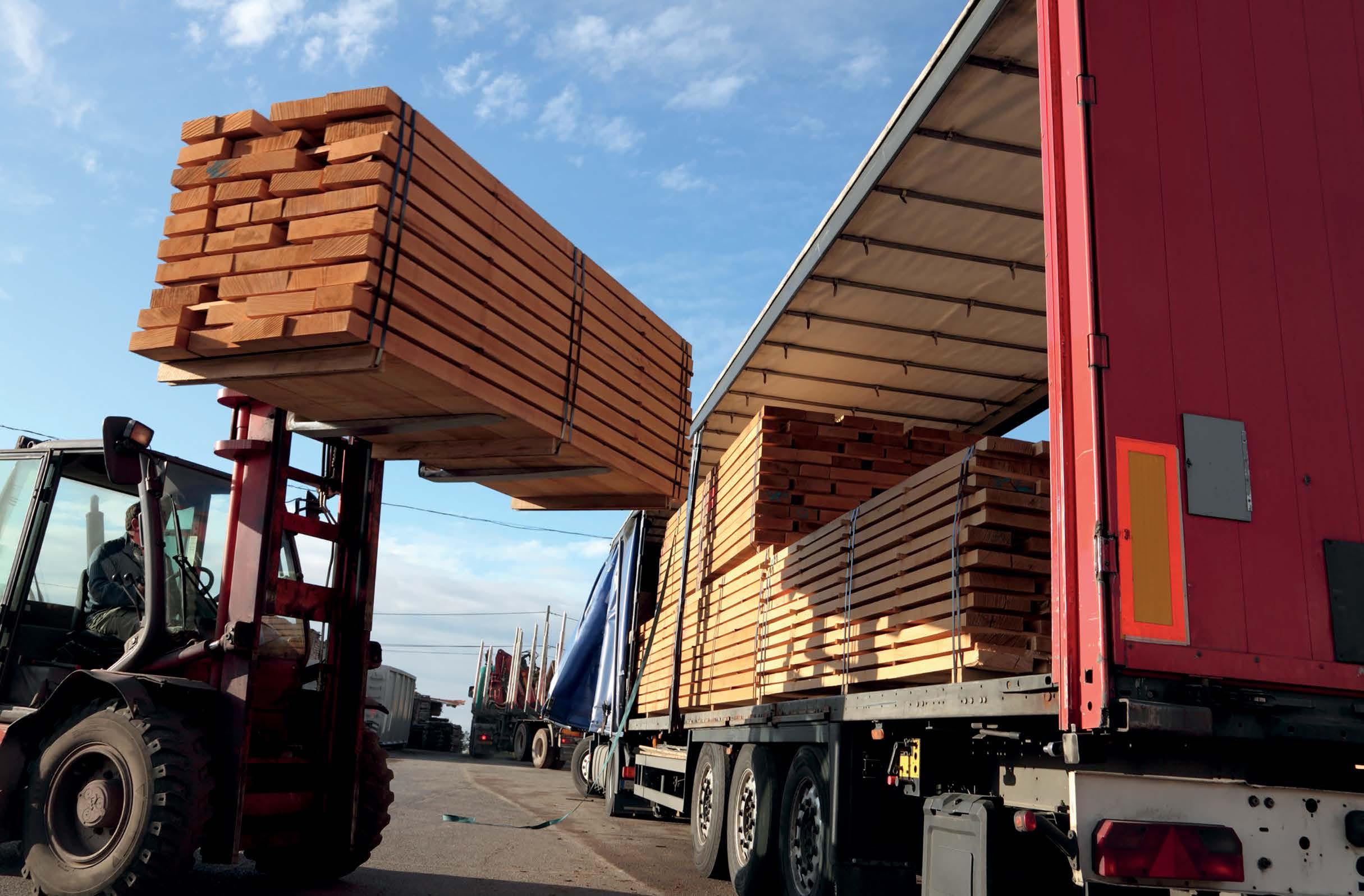
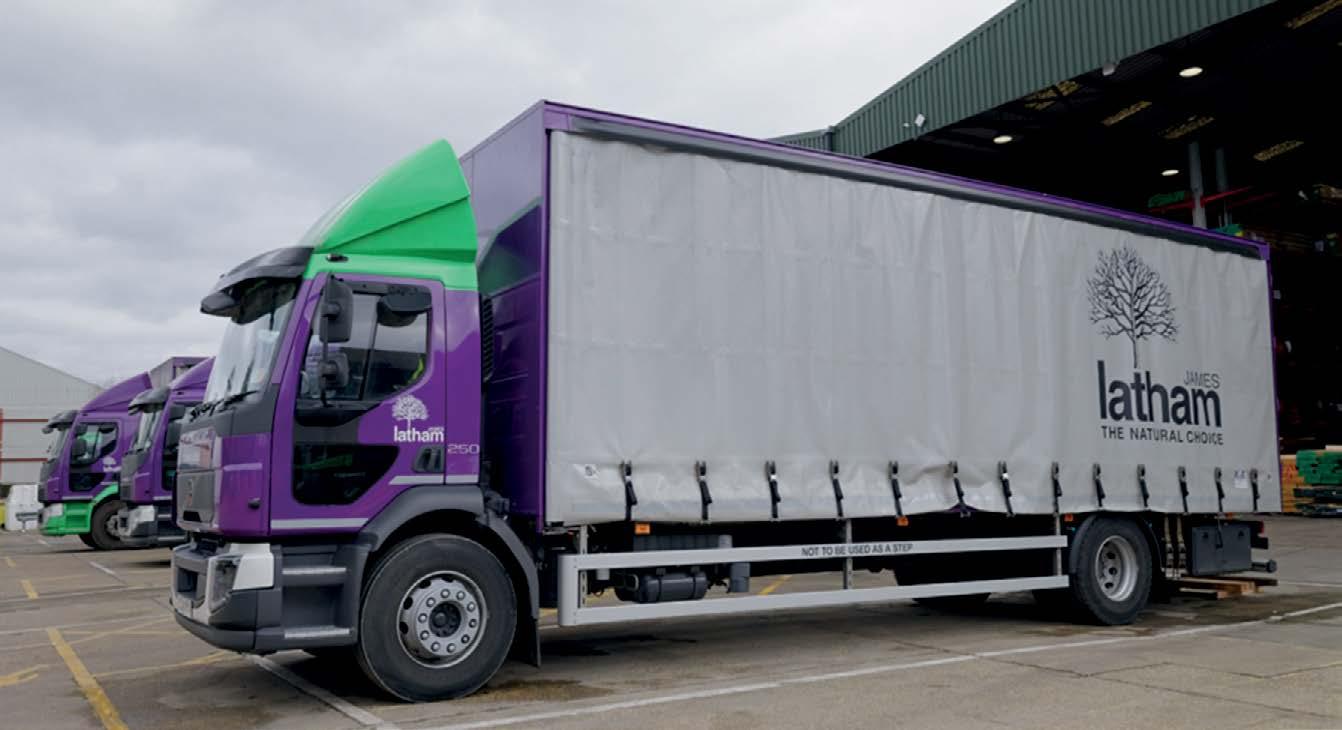
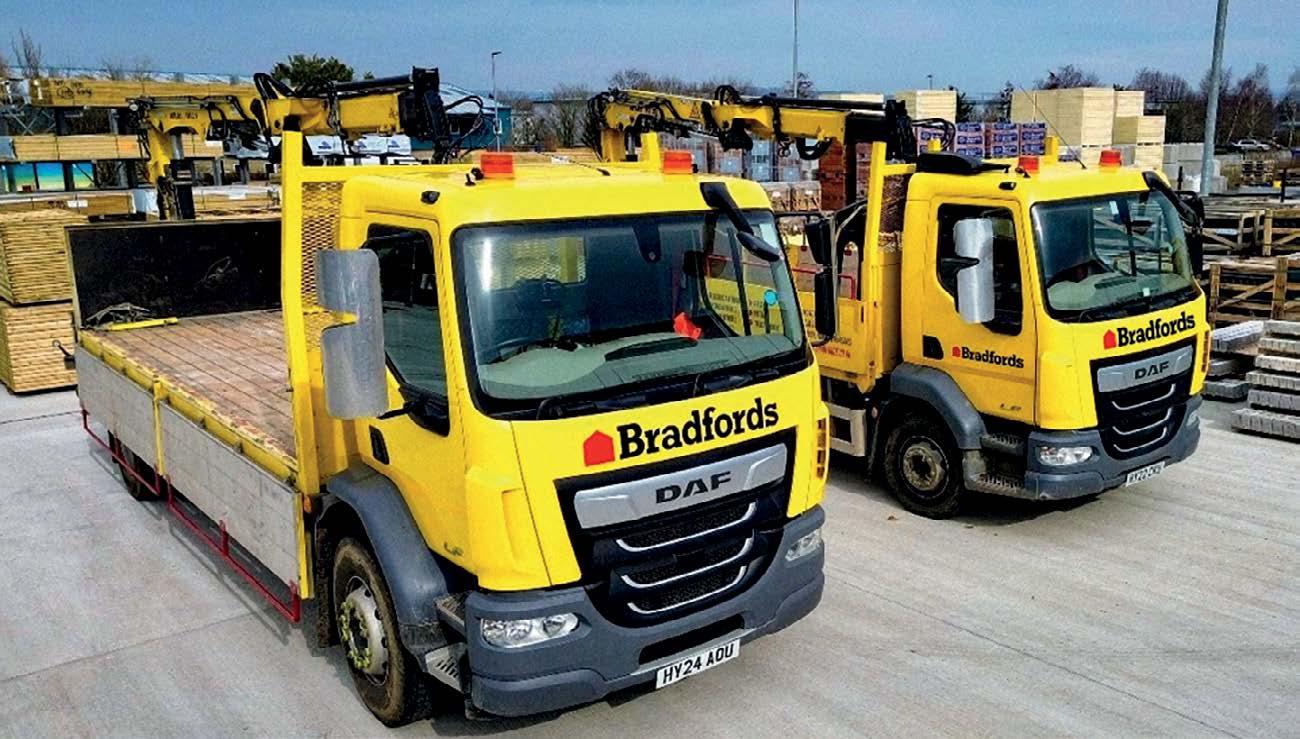
Can battery-electric HGVs carry the weight of timber transport?
MARKET REPORT 48
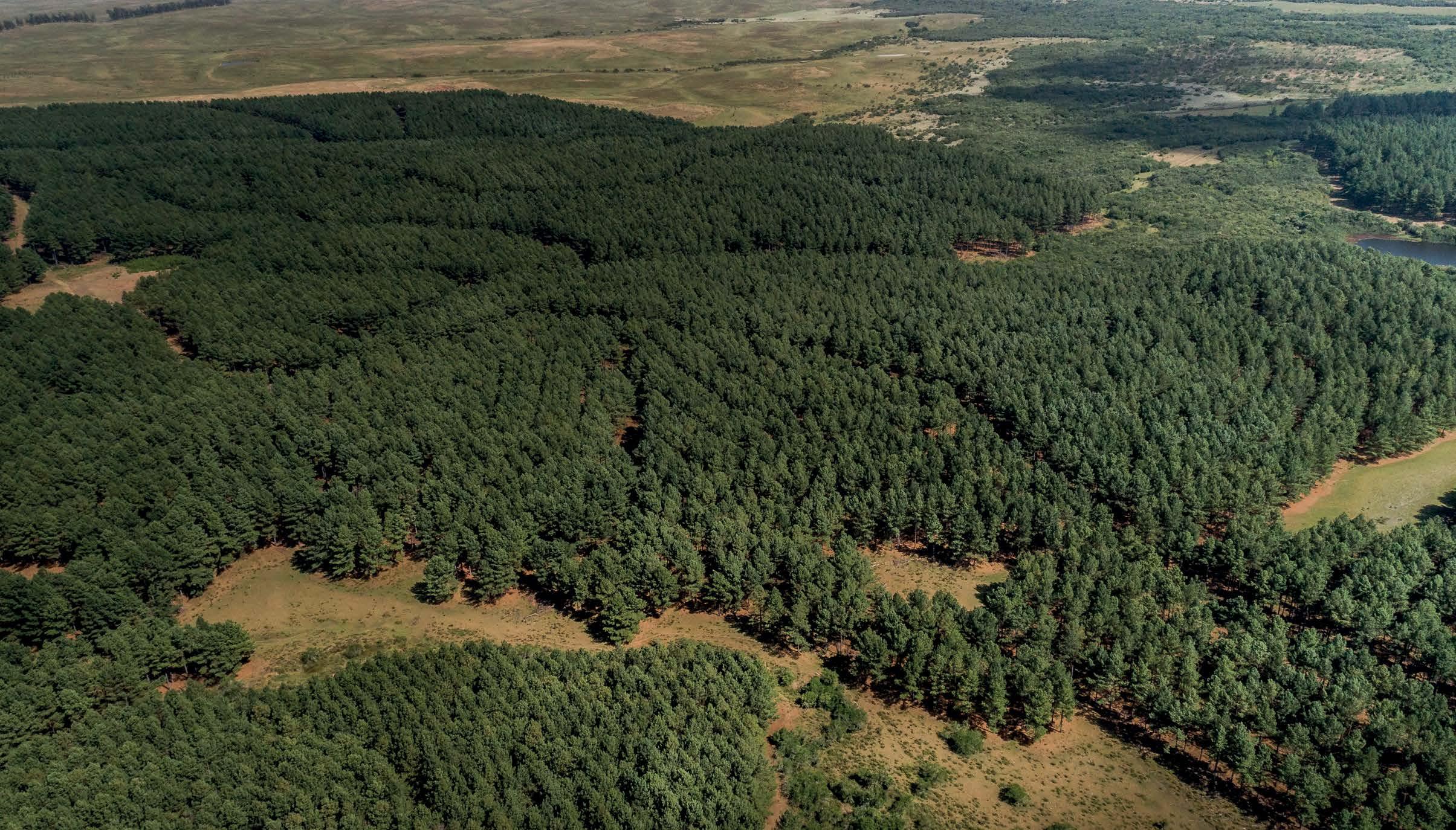
Europe’s forests are growing - but supply is entering a tougher era
05 Industry News
A range of news and views from across the timber industry. Appointments, investments and policy moves shaping the months ahead.
26 Cover Story: Michael Weinig / Fleming Homes
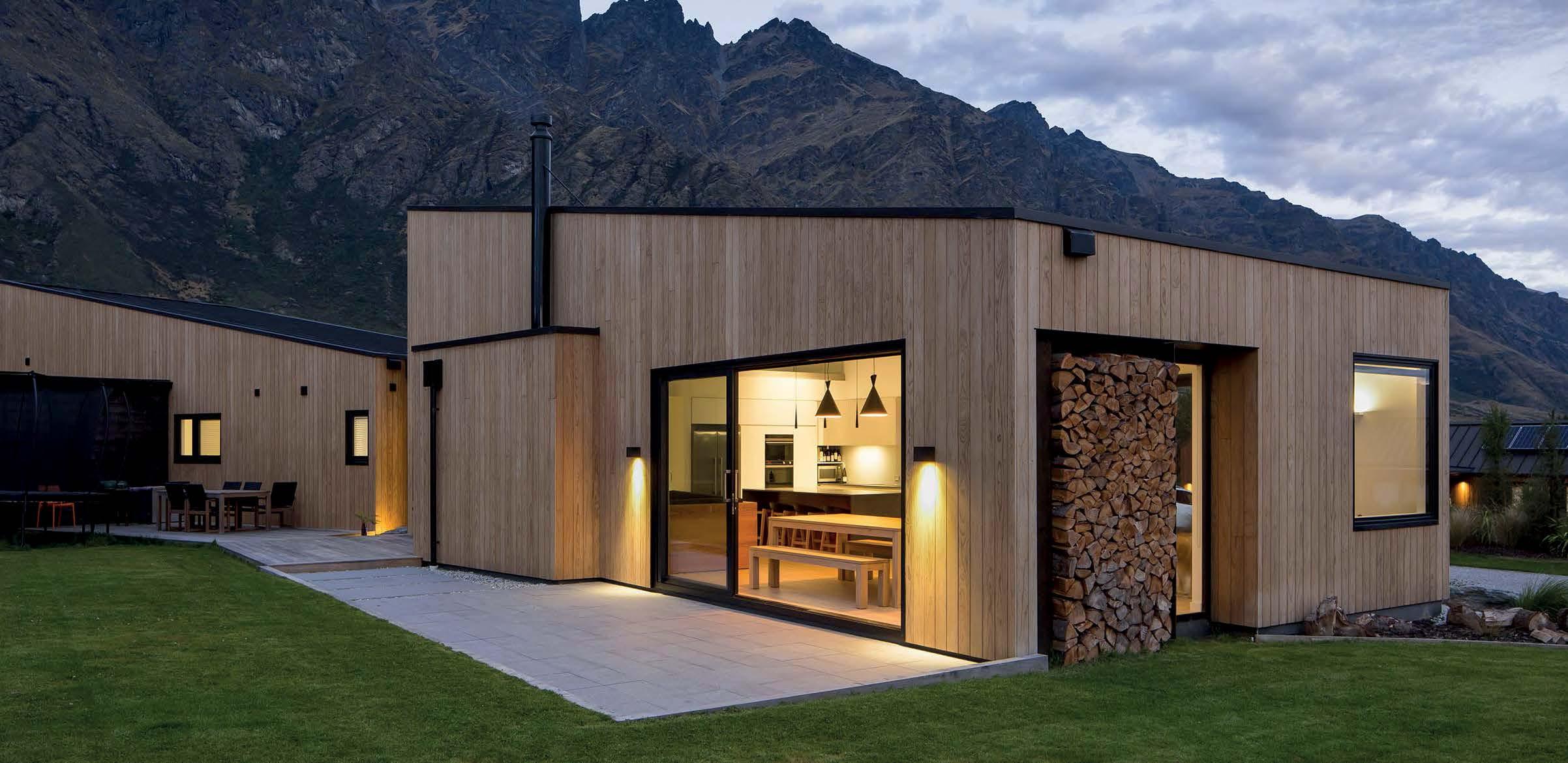
Essetre Techno Saw drives production gains for Fleming Homeshow CNC processing is helping improve precision, throughput and off-site timber frame capability.
28 Case Study: Mon Timber
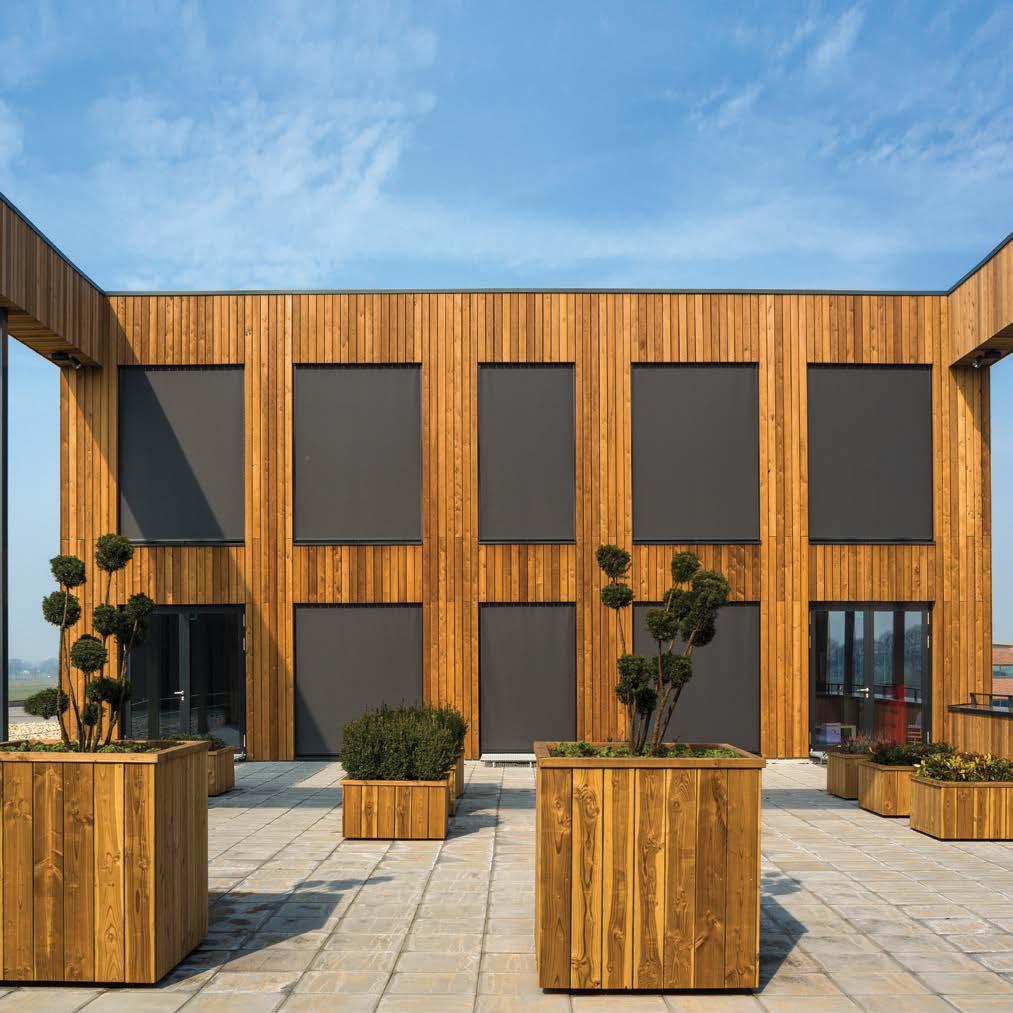
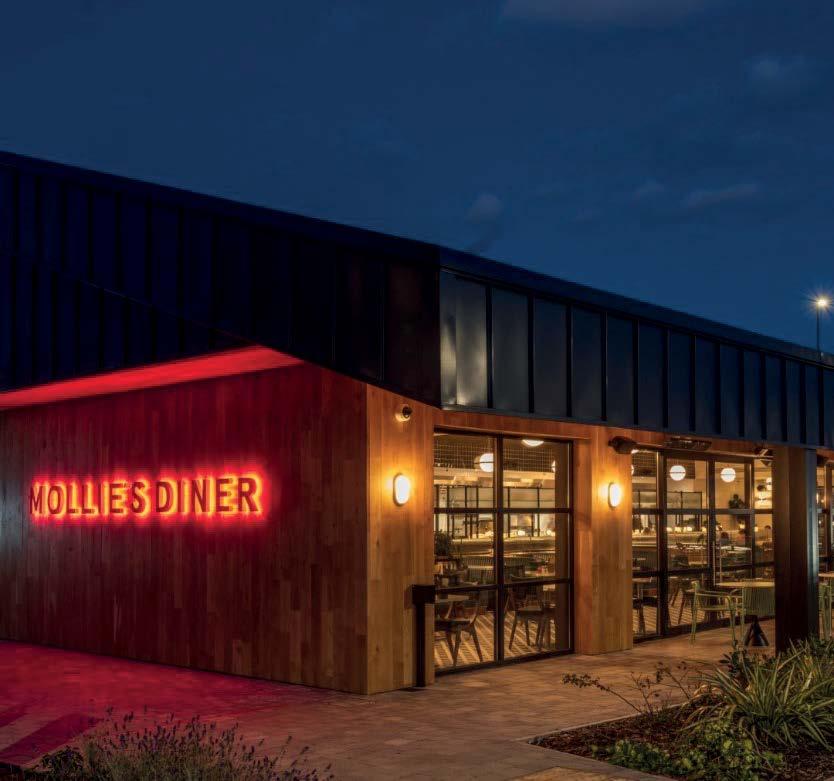
Cladding switch keeps Starbucks project moving - how Mon Timber helped replace an unavailable Siberian larch specification with Canadian larch for a new Greenock store. A practical example of supply-chain response, in-house machining and specification flexibility.
32
Feature: Electric timber haulage
Can electric HGVs carry the weight of timber transport? What the Net Zero Timhaul project reveals about payload, range, charging and forestry logistics.
40
Feature: Danzer UK / Thermory
Thermowood moves into sharper focus for exterior timber - a closer look at Thermory’s thermally modified cladding and decking range.
41 Case Study: Duffield Timber
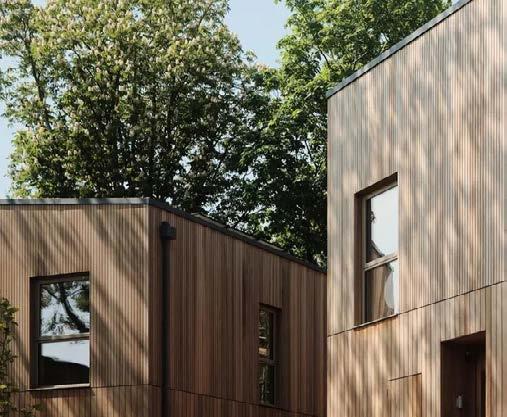
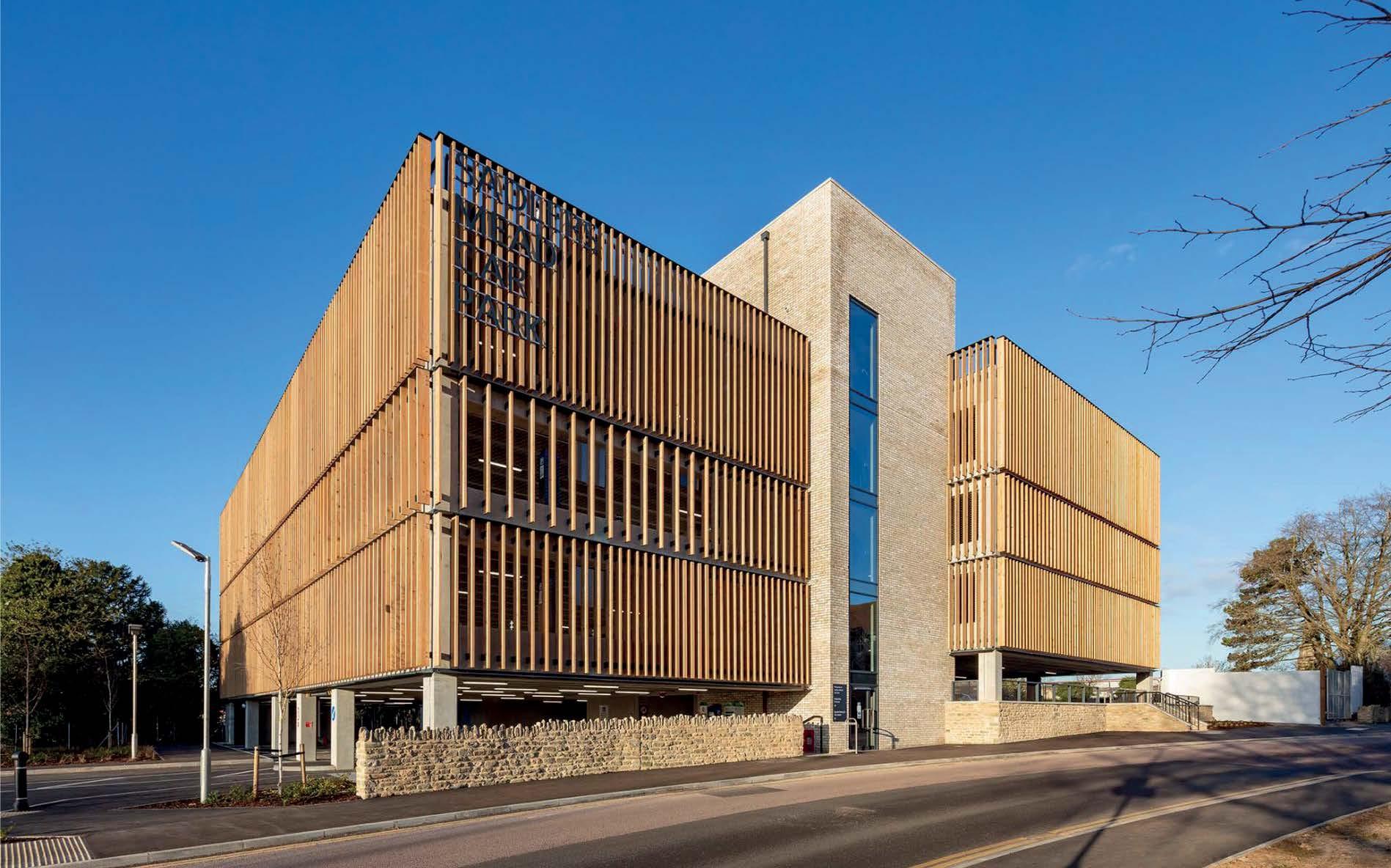
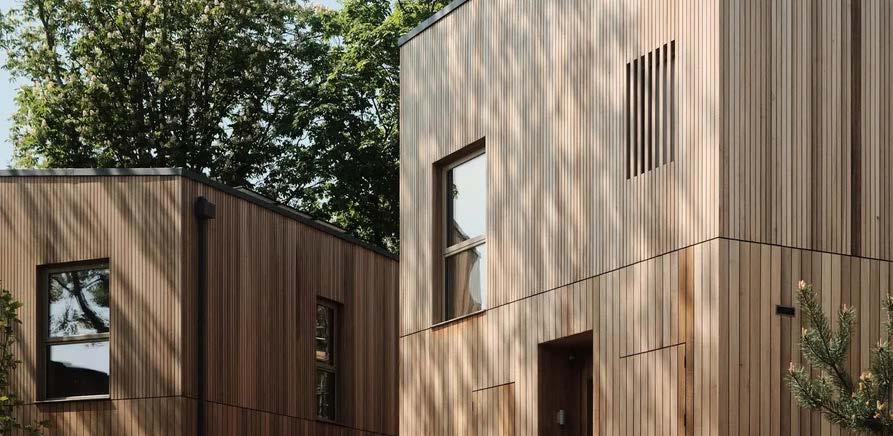
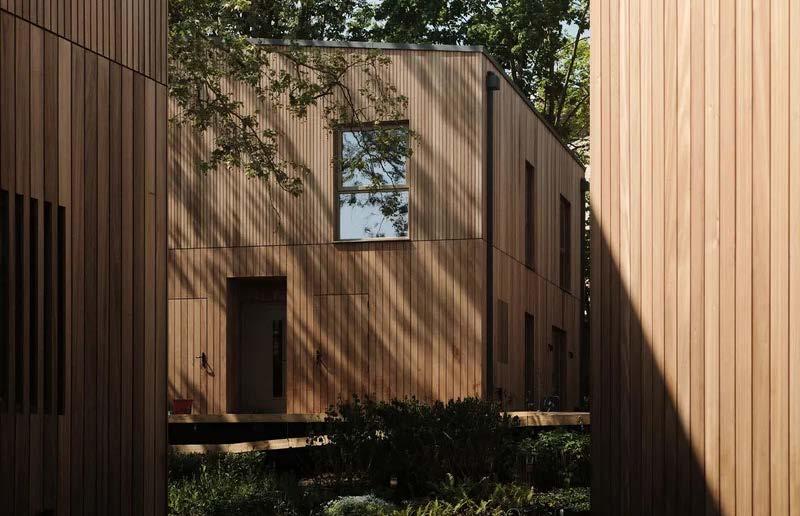
Thermo-Ayous brings natural warmth to south London housing - a visually led case study in FSC-certified cladding, shadow gap detailing and natural weathering.
42 Professional Woodworking Expo 2026
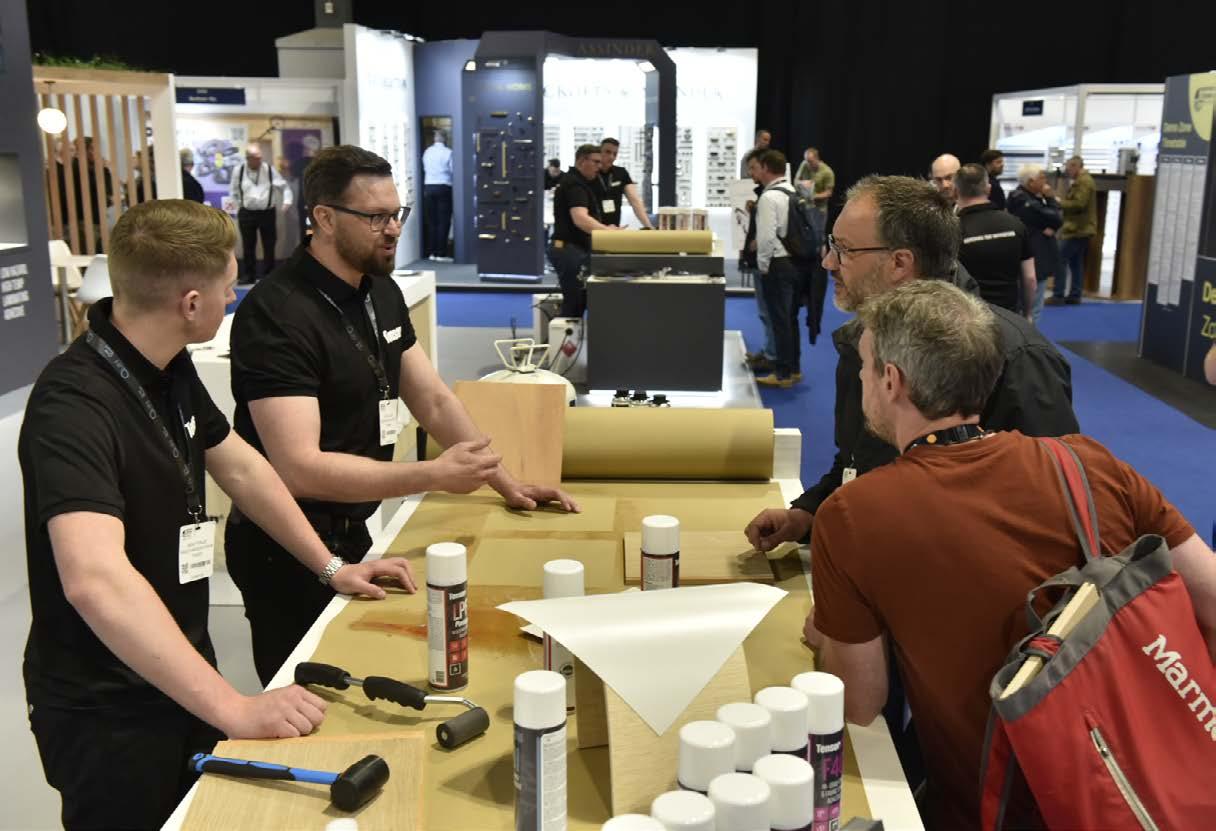
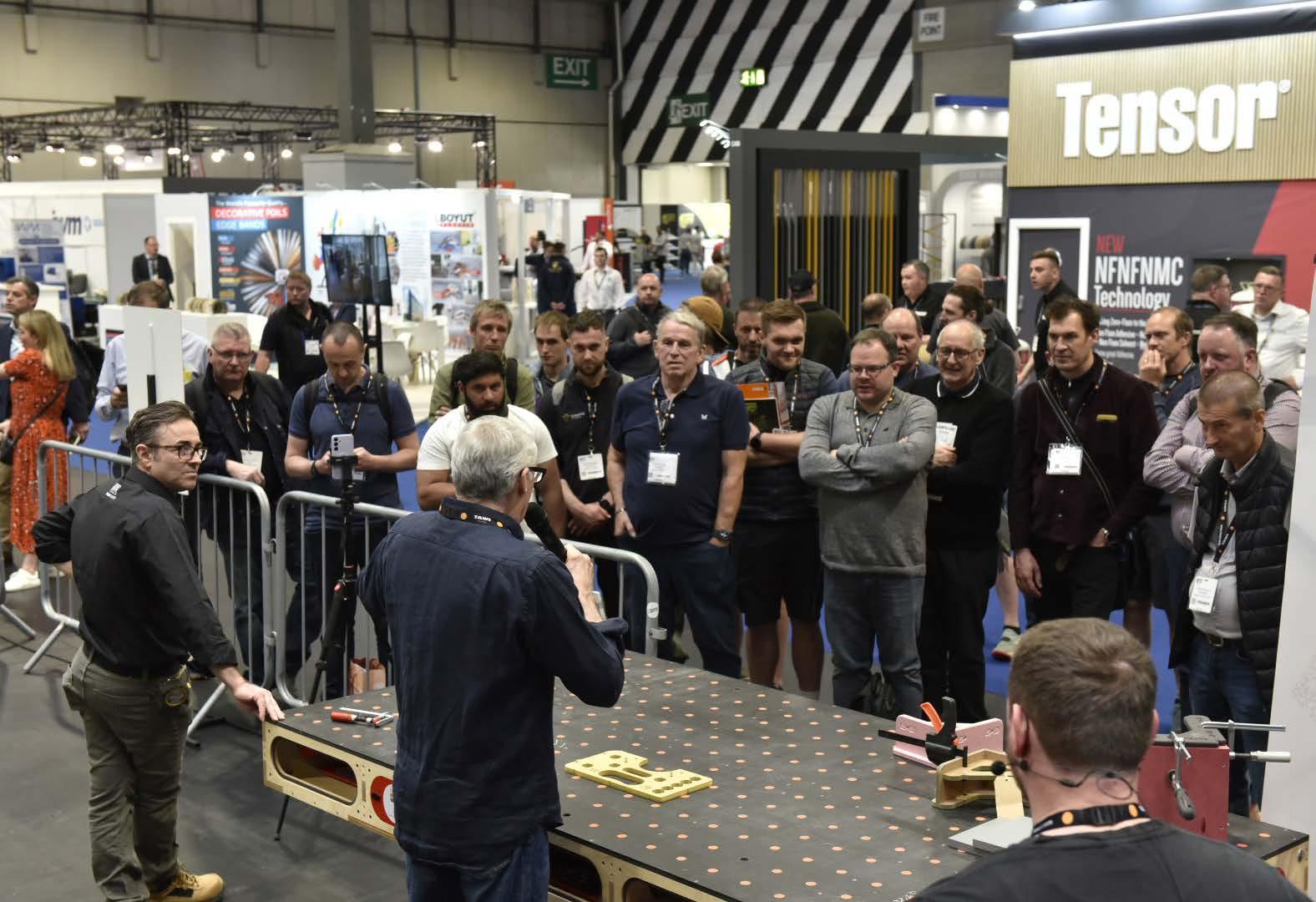
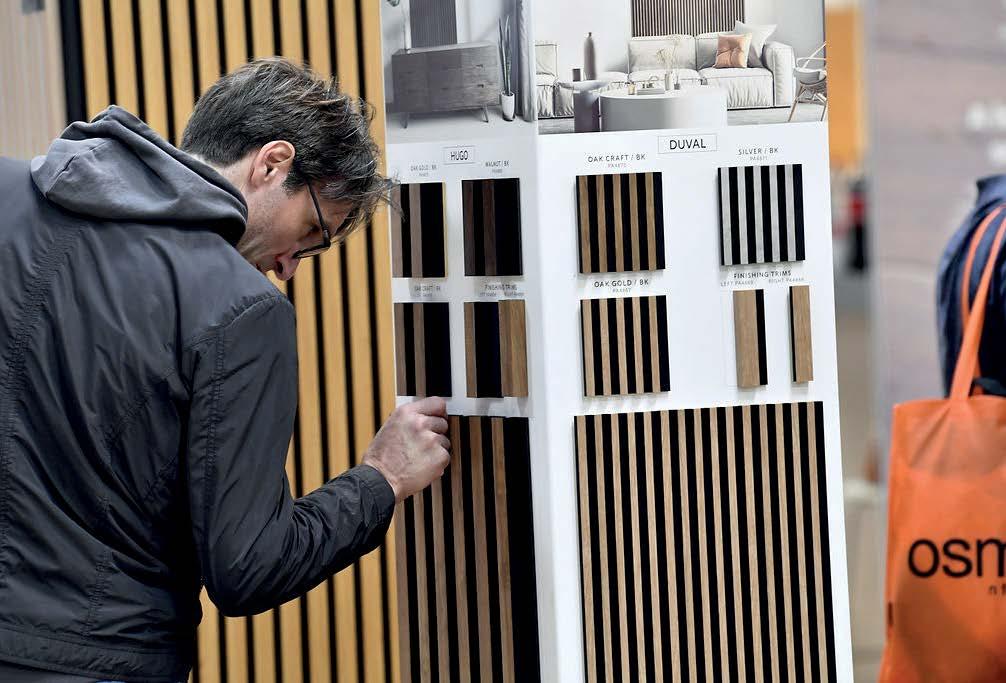
Professional Woodworking Expo returns to the NEC Birmingham from 23-25 June 2026, bringing together machinery, tooling, software and live demonstrations.
48 Market Report: Forest Europe
Europe’s forests are growing - but timber supply is entering a more demanding era. What the latest Forest Europe report means for long-term supply.
50 Report: Wood protection engineering
Wood protection, treatment and specification remain central to timber’s long-term performance. We look at the evidence and decisions behind durable timber use.
Vincent Bolton
vincent.bolton@radar-media.co.uk
01743 290001
www.timbermedia.co.uk
Timber Media:
RUNNING RINGS AROUND THE COMPETITION
New alliance launched to give wood occupations a stronger voice
The Wood Occupations and Materials Alliance (WOMA) has been launched in London, bringing the Institute of Carpenters and National Association of Shopfitters together behind a shared public voice for carpentry, joinery and shopfitting.
A new alliance has been formed to champion the UK’s wood occupations, with the Institute of Carpenters (IOC) and National Association of Shopfitters (NAS) signing a declaration of intent at Carpenters’ Hall in the City of London.
The Wood Occupations and Materials Alliance (WOMA) was launched on 22 April during the joint Members’ Day of the IOC and NAS. It is intended to act as a publicly facing voice for individuals and businesses across the sector, while allowing both existing organisations to retain their independence.
The move comes at a significant moment for the trades WOMA has been created to represent. Carpentry, joinery and shopfitting remain central to construction, fit-out and manufacturing, but concerns continue around skills, recruitment and the loss of knowledge as experienced craftspeople retire. The IOC and NAS have both been
working to raise the profile of training, professionalism and career opportunities across the sector.
“WOMA is the unified voice that represents the interests of the wood occupations,” added James Filus, IOC Director. “Through the IOC and NAS, WOMA has a unique vertical through the wood occupations, from education to employment, and beyond. Our ambition is to ensure the wood occupations are seen as professional, aspirational careers, respected by all.”
At the Members’ Day, outgoing IOC President Geoff Rhodes described the creation of WOMA as an important step for a sector that has often struggled with fragmentation.
“This is a significant step within our sector where there is so much fragmentation and where cooperative stronger voices of many will carry more weight.”
“WOMA has the scope to grow and expand in the years ahead –watch this space!”
Rhodes said WOMA would operate as an umbrella body above the IOC and NAS, with the potential to bring in other aligned organisations over time. He also positioned the new body as complementary to the Confederation of Timber Industries, noting that WOMA would focus more specifically on the related carpentry, joinery and shopfitting sectors.
Trustees are set to be appointed and a logo has already been created. WOMA will now help streamline and manage joint strategic activities between the IOC and NAS, built around the shared values of Promote, Support and Develop.
For a sector seeking to attract the next generation while protecting hard-won craft knowledge, the launch represents a practical attempt to turn shared concerns into a stronger, more coordinated voice.
Stora Enso wood products sales rise as Junnikkala acquisition boosts 2025 results
Stora Enso’s wood products division delivered stronger sales in 2025, helped by the acquisition of Junnikkala, higher sales prices across sawn timber and building solutions, and firmer by-products sales.
Stora Enso’s wood products division increased annual sales to €1.817bn in 2025, up from €1.522bn the previous year, as the business benefited from the integration of Junnikkala and improved pricing across key product areas.
Adjusted EBITDA for the division reached €43m, while the operating result remained in loss at -€16m. However, this represented a significant improvement on 2024, when the division recorded an operating loss of -€73m. Wood product deliveries totalled 4,256,000m³.
The figures point to a better year for the division, albeit one still shaped by difficult market conditions. Stora Enso said raw material costs increased during the year, reflecting the wider pressures still facing the sector.
The company described construction demand as stabilising, but from a weak base. “The construction market stabilised at a low level, with a slight increase in demand,” it said.
Production was also adjusted to match those conditions. “Production curtailments were implemented to align with market conditions.”
Across the timber and wood products market, the results underline the uneven nature of the recovery. Better sales and a reduced operating loss suggest some progress, but the underlying trading
environment remains far from straightforward. Higher raw material costs, subdued construction activity and volatility in end markets continue to shape decision-making across the supply chain.
The group has also been reviewing parts of its European footprint.
In 2025, Stora Enso initiated a strategic review of its Central European sawmills and building solutions operations, with the stated aim of sharpening its business focus and ensuring operations remain aligned with long-term value creation goals.
Across the wider Stora Enso group, annual sales reached €9.326bn, compared with €9.049bn in 2024. Pre-tax profit was €783m, reversing the previous year’s pre-tax loss of -€118m.
Looking ahead, Hans Sohlström, President and CEO of Stora Enso, said trading conditions were expected to remain challenging.
“As we enter 2026, we expect market conditions to remain subdued and volatile, shaped by ongoing macroeconomic and geopolitical uncertainty,” he said.
“We will continue to execute our strategy and drive proactive, systematic, and determined work across the whole Group.”
Timber businesses watching demand signals across Europe will recognise the pattern: signs of improvement remain cautious, costsensitive and closely tied to construction activity.
Rettenmeier strengthens UK presence with new subsidiary and warehouse network
European sawmilling group Rettenmeier has established a UK subsidiary, with a Birmingham head office and Warrington warehouse facility forming the base for further growth in the British market.
Rettenmeier, one of Europe’s largest sawmilling groups, has launched a dedicated UK subsidiary as it looks to expand its presence, improve service levels and build closer customer relationships across the country.
The newly formed Rettenmeier UK Ltd will be headquartered in Birmingham and will coordinate the group’s UK activity, including sales operations, customer service and logistics. A new warehouse facility in Warrington has also been established to support faster delivery times and improve supply reliability for customers nationwide.
For the German-headquartered business, the move represents a significant step in its long-term international growth strategy Rettenmeier has served the UK market in recent years through direct deliveries from Germany, with a particularly close relationship with B&Q owner Kingfisher. The company told TTJ it was “proud to have B&Q as a strong partner, and we are expanding our collaboration with them in this context”.
The new local structure is intended to provide a stronger platform for growth in the UK, while allowing Rettenmeier to serve existing and new customers more directly. As part of the expansion, the company plans to strengthen its UK team further, with additional roles expected in sales, logistics and operations.
The investment comes after a period of significant production expansion across the wider Rettenmeier Group. In recent years, the business has increased capacity substantially, including the acquisition of the Plößberg sawmill in Germany from the insolvent Ziegler Group.
The Plößberg site has an annual sawn and planed timber capacity of 1,305,000m³. Rettenmeier is also developing a new site in Inčukalns, Latvia.
Those investments have broadened the company’s product portfolio, particularly in categories where demand remains strong in the UK. Rettenmeier manufactures solid wood products for construction, gardening and industrial applications, including DIY products, sawn timber, planed timber, construction timber and garden timber.
“The UK is a key growth market for us, with consistent demand for sustainable wood solutions,” said Dr Stephan Lang, CEO of Rettenmeier Holding AG.
“By expanding our production capacities and strengthening strategic partnerships, we have created the basis for further growth. With Rettenmeier UK Ltd, we are now establishing a dedicated strong enterprise that will enable us to serve our customers in the United Kingdom even more directly and efficiently.”
Rettenmeier Holding AG is headquartered in Wilburgstetten, Germany, and employs around 2,200 people across eight strategic locations in Germany, Latvia and Slovakia. The group supplies customers in more than 90 international markets.
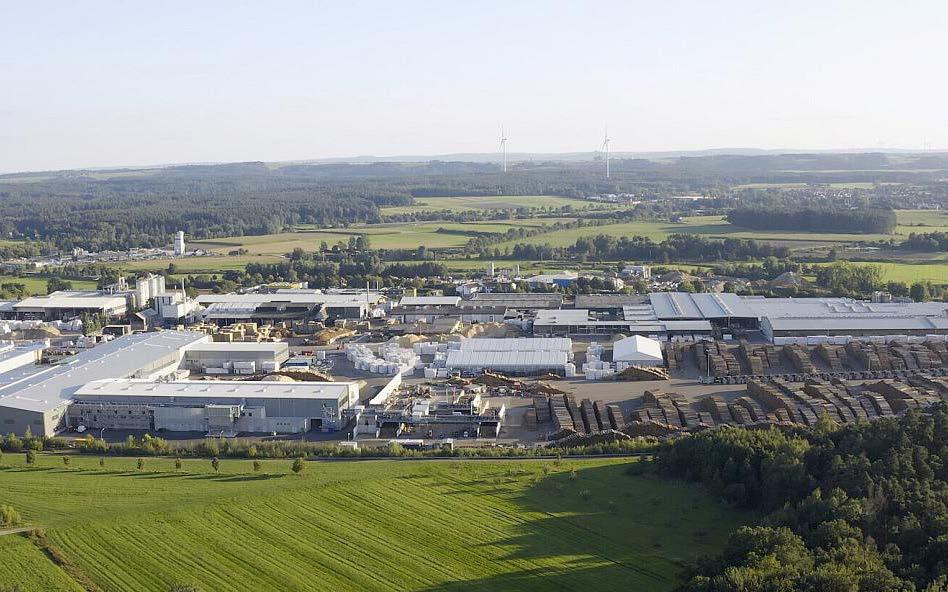
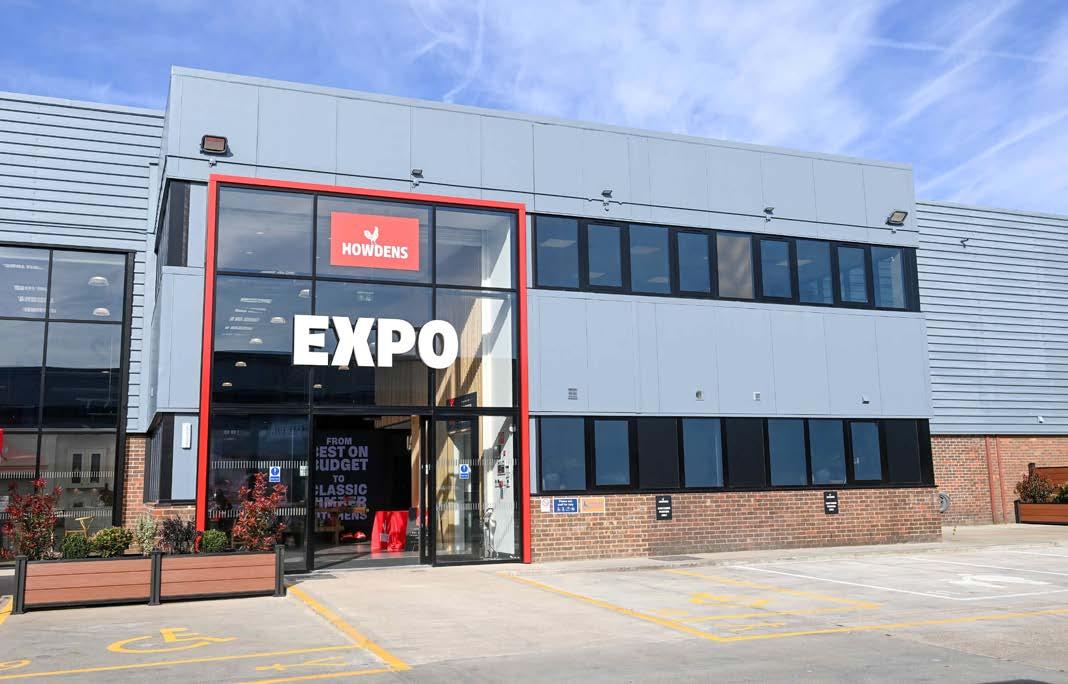
Howdens has expanded its depot network with 16 new openings since December 2025, creating 85 new jobs and increasing local trade access across the UK and Ireland.
The latest openings span locations across England, Scotland, Wales and Northern Ireland, including West Drayton, Wynyard, Esher, Cheetham Hill, Meir Park, Kirkham, Swindon East, Banchory, Bailliestonn, Boughton, Alcester, Brislington, Blackburn, Neath, Ballynahinch, Cinderford and West Maidstone.
The expansion takes Howdens’ network to more than 850 depots across the UK and Ireland, reinforcing its local depot model and widening access to stock for builders, joiners, installers and other trade customers.
Stock held locally
The newly opened depots carry stock in depot, including more than 100 kitchen and fitted bedroom collections, alongside joinery, doors, flooring and other product lines.
For the trade, the move adds further local availability across Howdens’ core categories, with the company emphasising the importance of having its full range available from stock.
“It has been fantastic to open the doors to our new depots and to welcome so many trade customers from local areas,” said Austin Cooke, Managing Director Trade at Howdens. “We are well set and ready to support them with their jobs all over the UK and Ireland with our full range being available from stock.”
With more than 850 depots now operating across the UK and Ireland, the latest round of openings underlines Howdens’ continued investment in its physical depot network at a time when speed, local access and reliable stock availability remain key service priorities for trade customers.
Deanta opens £15m Ely facility to support next phase of growth
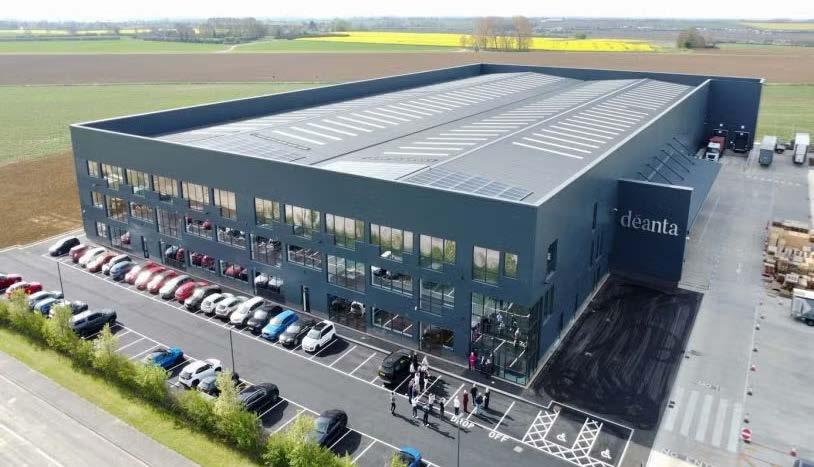
Deanta UK has formally opened its new £15m flagship facility in Cambridgeshire, marking a significant investment in the company’s next phase of growth.
The new site at Lancaster Way, Ely, sits alongside Deanta’s existing premises and effectively brings the business together under one roof Design, research and development, operations and distribution will now be based around the expanded site, while the existing building has been repurposed to accommodate manufacturing operations previously located at Pymoor, near Ely.
For a business supplying doors, associated joinery, hardware and specialist doorsets to builders’ merchants and door shops across the UK, the move is as much about integration as it is about scale. By consolidating its operations, Deanta is aiming to improve efficiency, strengthen collaboration across teams and create room for further expansion.
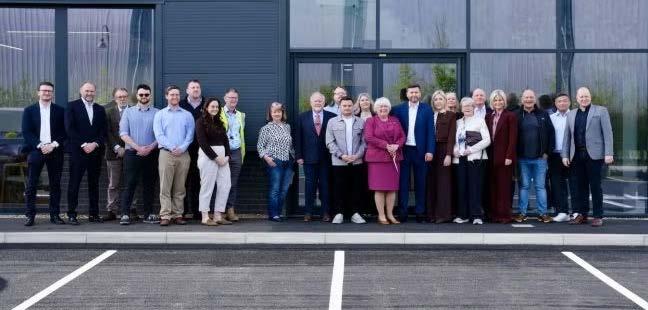
The facility was officially opened at a ribbon-cutting ceremony led by Charlotte Cane, MP for the local constituency.
“The building is really a testament to the commitment and hard work of all our staff over the years,” said Mike O’Toole, Managing Director of Deanta UK.
“We’re investing in our business and our workforce – adding in a gym and leisure facilities to reward our staff and giving us the room we need to continue to grow, service and add value to our customers.”
The investment is also expected to provide a boost to local employment. Deanta says the new facility will create 150 skilled roles over the next three years, spanning manufacturing, logistics, sales, technical and support functions.
Research and development will form a central part of the enlarged operation. A dedicated R&D centre is planned as the next phase of
development and will be built progressively over the next three years.
The centre will include three specialist areas: fire research, acoustic testing and research, and hardware cycle testing and design. Each will be led by technical experts, reflecting the growing importance of tested performance, compliance and product assurance in the doorset and joinery supply chain.
The site will also include a customer showroom and training facility, giving clients the opportunity to view product developments first-hand.
The space will support staff training as well as training programmes for Deanta and Precision customers across the UK.
With manufacturing, R&D, distribution, training and customer engagement now centred around the Ely site, Deanta has given itself a stronger platform to support product development and respond to rising expectations around tested, performance-led joinery products.
For more info visit www.deantawood.co.uk
Deanta’s new Ely facility will include dedicated R&D space for fire research, acoustic testing and hardware cycle testing
Deanta UK officially opens its new £15m flagship facility in Ely
MEDITE SMARTPLY calls for joined-up action on timber skills
MEDITE SMARTPLY has warned that the UK construction skills crisis will not be solved by recruitment campaigns alone, arguing that the timber sector needs deeper collaboration, better training routes and earlier exposure to modern wood-based technologies.
The call comes as the Construction Industry Training Board estimates that construction will need to recruit 239,300 additional workers between 2025 and 2029the equivalent of almost 48,000 extra people every year.
The Ireland-based manufacturer, which operates an OSB mill in Waterford and an MDF plant in Clonmel, says ambitious housing targets, the transition to low-carbon buildings and the increasing use of modern methods of construction all point towards a sector in transformation.
Last year, MEDITE SMARTPLY partnered with the Structural Timber Association to examine the pressures facing the UK timber sector. The findings showed that 73% of UK respondents were experiencing skilled labour shortages, with concerns raised over
attracting new entrants, the availability of apprenticeships, local training pathways and the long-term viability of the workforce.
The survey points to a growing disconnect between policy ambition and on-the-ground capability. Demand for timber systems may be rising, but delivery still depends on having enough people with the right practical and technical skills.
“While demand for timber systems continues to rise - driven by housing targets and demand for low-carbon housing - the pool of skilled workers able to deliver these systems is shrinking,” said Roly Ward, MEDITE SMARTPLY Head of Business Development.
“An ageing workforce, coupled with lingering misconceptions about careers in construction and manufacturing, is making it increasingly difficult to bridge that gap.”
MEDITE SMARTPLY is urging manufacturers, educators, industry bodies and policymakers to work more closely together. The company is already involved in the Institute of Carpenters’ Timber Industry College Hub programme, which brings together students, educators, industry leaders and aspiring
carpenters and joiners to strengthen the link between education and employment.
It has also taken the approach beyond the UK. In the Netherlands, MEDITE SMARTPLY has partnered with vocational school SintLucas on practical design projects using MEDITE TRICOYA EXTREME, helping students understand sustainability, material performance and design through hands-on work with wood-based panels.
The company is also supporting higher education through a €250,000 donation to TU Dublin, helping establish the new Design + Construct centre. The facility will focus on collaborative learning across architecture, engineering and construction, with an emphasis on off-site and modular construction and near-zero energy buildings.
“Building the next generation is about more than filling vacancies,” added Ward.
“It’s about creating a workforce ready to deliver sustainable, high-quality buildings at scale - and ensuring that timber, and the people behind it, are central to that future.”
• The modern, user-friendly alternative to creosote for heavy-duty, industrial timbers.
• An oil-based copper wood preservative with water repellent properties.
Tanalith® Family
• High-pressure water-based treatments.
• Metal-free and VOC-free formulations available.
• Built-in colour options.
Vacsol® 6118
• Low-pressure water-based treatment.
• Metal-free and VOC-free.
• Treatment marker options.
German sawmills call for action on beetle-damaged spruce
Germany’s sawmilling sector is pushing for a national plan to expand storage capacity for beetle-damaged spruce, as research shows that properly handled timber can remain usable for longer than many in the market may assume.
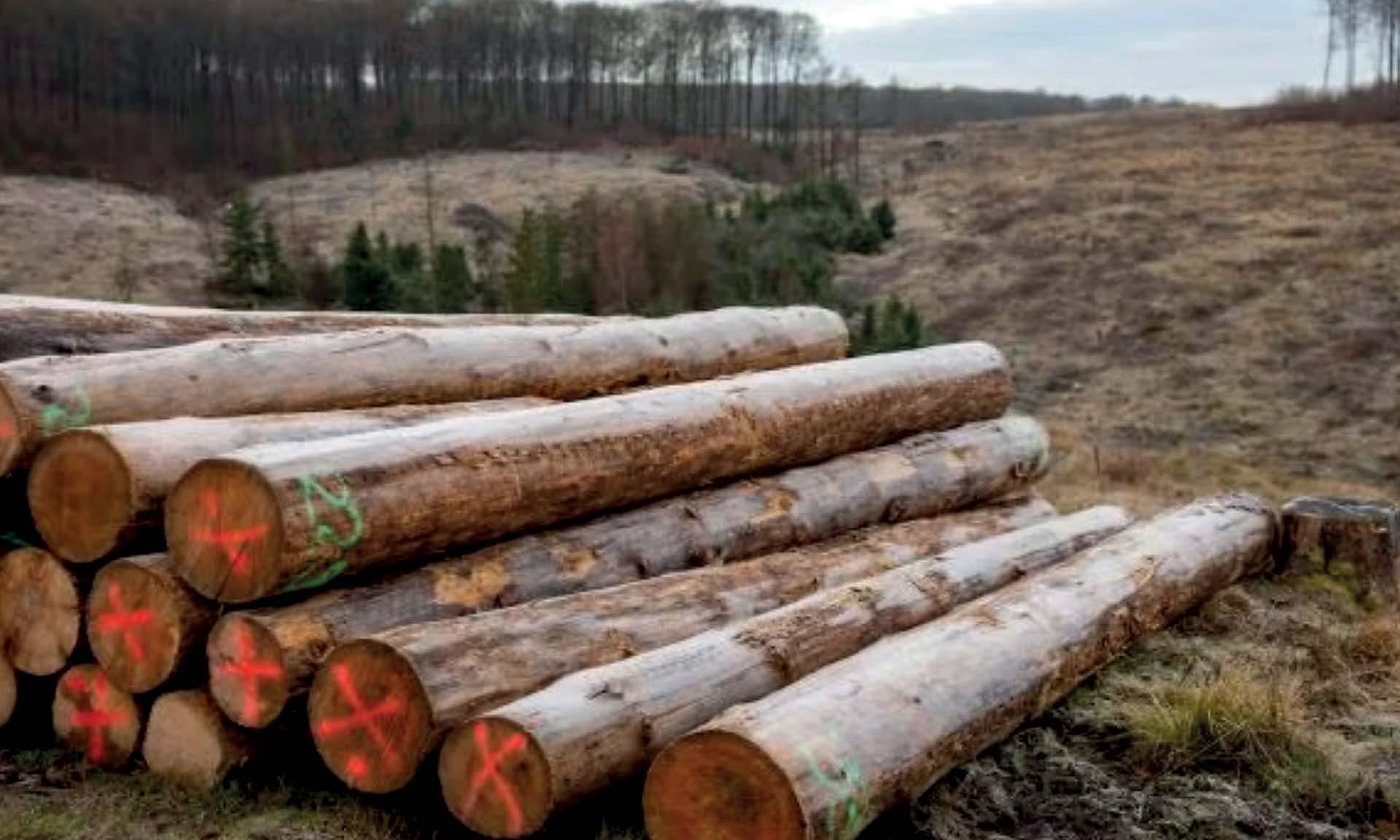
Germany’s timber industry is once again grappling with one of the most visible consequences of climate stress in European forests: large volumes of spruce damaged by bark beetle.
The German Sawmill and Timber Industry Association, DeSH, has called for urgent action to expand storage capacity for damaged spruce across the country, following the publication of new recommendations on how salvaged material should be stored and used.
The issue is far from marginal. Research highlighted by DeSH shows that hundreds of thousands of hectares of German spruce forest have been affected by the spruce bark beetle, creating serious financial pressure for forest owners, processors and the wider timber supply chain.
At the centre of the latest guidance is the NUKAFI project, formally titled Investigations into the Material Utilization Potential and
for
The collaborative research project, run through Germany’s Agency for Renewable Resources, examined how damaged spruce can still be retained as a usable raw material when handled correctly.
Its new guidance, Handling Spruce Damaged Timber, is aimed at forest owners, forestry companies and woodprocessing businesses, offering practical recommendations on how to manage damaged timber before quality loss becomes too severe.
One of the key findings is that severely damaged trees, known as deadwood stands, can remain in the forest for a limited period depending on weather conditions. However, the clock is ticking. After roughly two years, processing options for sawmills and timber businesses become sharply reduced as quality deteriorates and production disruption increases.
That makes storage a critical part of the response. The methods set out in the guidance are intended to help stagger harvesting, marketing and processing, preserving wood quality over a longer period and reducing pressure on the market when
large volumes of damaged timber become available at once.
The guidance also makes clear that storage is not a simple fix. Occupational safety, potential quality losses, logistics, monitoring and control all need to be managed carefully if damaged timber is to remain a commercially useful resource.
For DeSH, the technical recommendations are only part of the answer. Julia Möbus, Managing Director of DeSH, said: “Science has shown the way - now it’s up to policymakers.”
“We need to expand storage capacities nationwide. The federal government, states, and municipalities must work together and develop a joint action plan for disaster management.”
The central challenge is how to make effective use of large volumes of damaged timber before value is lost. For Germany’s sawmilling sector, storage capacity is now directly tied to wood quality, processing efficiency and the ability to turn a forest health crisis into usable material rather than wasted resource.
Storage Options
Spruce Damaged Timber.
Institute of Carpenters sets out future skills agenda
The Institute of Carpenters has briefed its Royal Patron on leadership succession, skills development and new initiatives aimed at strengthening the UK wood occupations sector.
The current and future leadership of the Institute of Carpenters has met HRH The Duchess of Gloucester as the organisation looks to its next phase of activity.
The meeting saw IoC President Geoff Rhodes formally introduce Richard Galbraith as President Designate ahead of his official start on 22 April.
Skills, mentoring and sector development
The Duchess was updated on the IoC’s strategic work, including the changing UK craft skills landscape and the successful conclusion of its Mentoring Champions programme.
New initiatives discussed included the WoodWork programme and the Wood Occupations and Materials Alliance, described by the institute as a new venture for the sector.
The meeting also covered the potential for a Royal Charter, the forthcoming 50th anniversary of the Merlane Trophy in 2027, and the upcoming IoC-NAS AGM and Members Day, which remains a key event for the professional community.
Earlier this year, the institute established The Duchess of Gloucester Award for the advancement of skills within the timber industry. The annual award will recognise organisations and individuals making an outstanding and measurable contribution to tackling skills needs in the timber sector.
The IoC’s international activity was also highlighted, including collaborations through TCE and new connections in Berlin and France.
“The Duchess expressed her strong support for our mission, marking a positive and secure step forward for the IOC and our members,” said IoC President Geoff Rhodes.
The IoC represents professionals working with wood, including carpenters, joiners, furniture makers and shopfitters.
For 25 years, Combilift has been revolutionising the way companies handle and store goods. Our pioneering product range of multidirectional, articulated and pedestrian forklifts, straddle carriers and container loaders allows you to manoeuvre long loads safely, reduce aisle widths and increase the amount of space available for storage. To find out how Combilift can help you unlock every inch of your storage space.
Accoya selected for Queen Elizabeth II Memorial Garden benches
Accoya wood has been chosen for the seating within the new Queen Elizabeth II Memorial Garden at Regent’s Park, where durability, low maintenance and long-term outdoor performance are central to the design.
Accsys has confirmed that Accoya wood will be used for the benches within the Queen Elizabeth II Memorial Garden at London’s Regent’s Park, a £5 million project honouring the life of Her Majesty Queen Elizabeth II and her deep personal appreciation of the outdoors.
The scheme will include a central circular bench and six linear benches, providing seating for up to 75 people. Accoya has been specified for the seating due to its stability, resistance to decay and ability to perform in exposed outdoor environments with limited maintenance.
With a proven above-ground lifespan of 50 years, the material is intended to support the long-term character of the memorial, where the benches will need to withstand heavy public use and changing weather conditions while retaining their appearance over time.
The memorial garden has been designed by Millimetre, the designer and manufacturer working closely with HTA Design and The Royal Parks to develop, manufacture and install the seating. Millimetre has previous experience with Accoya, having crafted Accoya seating for the Strand in London, and is also working on Accoya structures for the Parkinson’s UK garden at the RHS Chelsea Flower Show 2026.
The choice of material reflects the wider aims of the garden, which is being designed around a balance of public accessibility, longevity and sustainability. For a prominent public memorial in one of London’s bestknown parks, the specification places emphasis not only on appearance, but on how the seating will age and perform over decades of use.
Karn Sandilands, Director at Millimetre, said, “For a memorial like this, longevity is essential, it’s about creating something that will endure as a lasting tribute to HM the Queen’s life and legacy. Accoya allows us to make design choices with confidence, knowing the material will perform over the long term while retaining a timeless, natural quality that feels entirely appropriate to the setting.”
Accoya is already used across a range of landscaping and public realm applications, where timber must combine visual quality with predictable performance. In this case, the material’s low-maintenance credentials are particularly important, helping ensure the benches can remain in use and continue to weather gracefully.
Laura Keily, Head of Marketing at Accsys, added, “It’s an honour for Accoya to be part of the Queen Elizabeth II Memorial Garden. We’re seeing good traction for Accoya in landscaping applications, its performance in busy public spaces makes it particularly well suited to environments where quality, comfort and durability must be maintained year after year.”
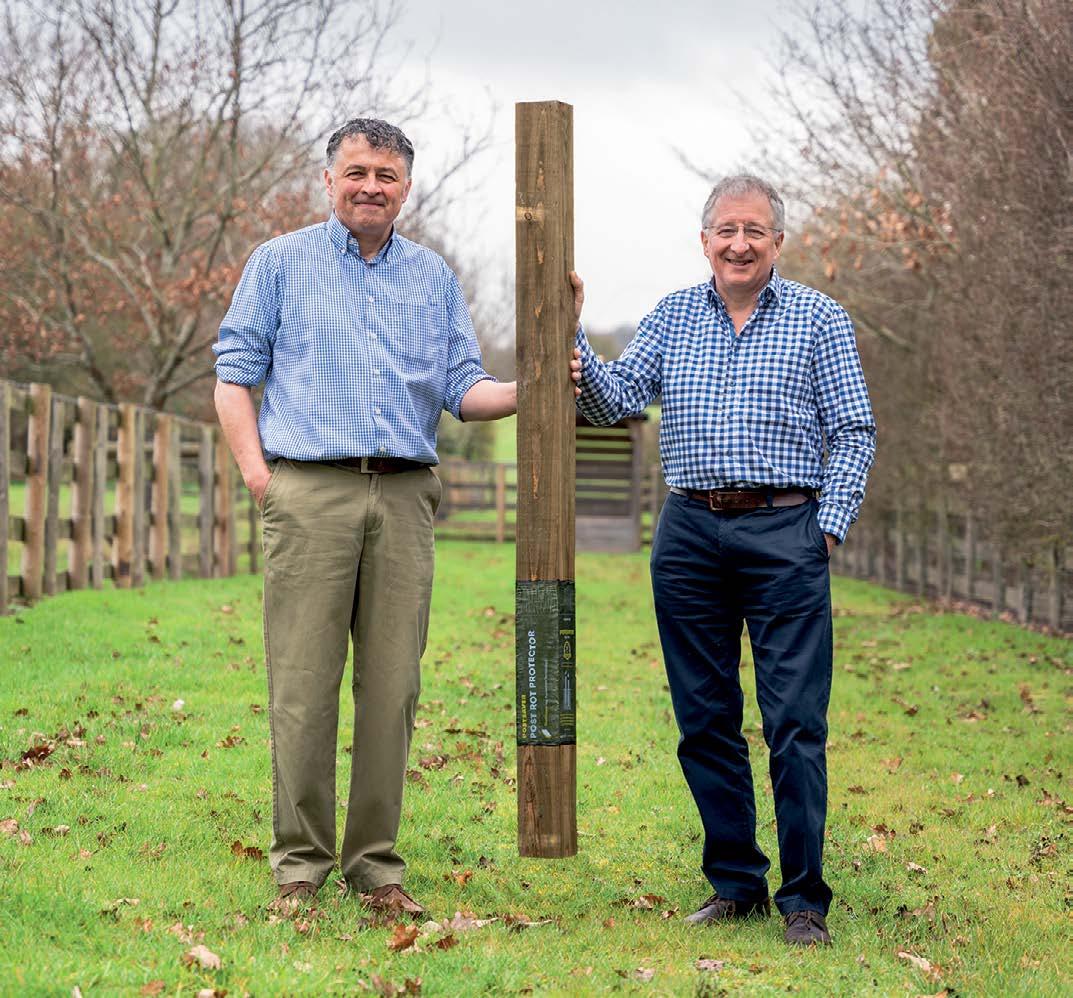
Ground-line timber protection specialist Postsaver has secured approval under both the International Residential Code® (IRC) and International Building Code® (IBC), providing further recognition of the long-term performance of its timber post protection system.
The approvals confirm that Postsaver products meet recognised international construction standards for use in structural timber applications, giving additional assurance to specifiers, engineers and contractors working across residential and commercial projects.
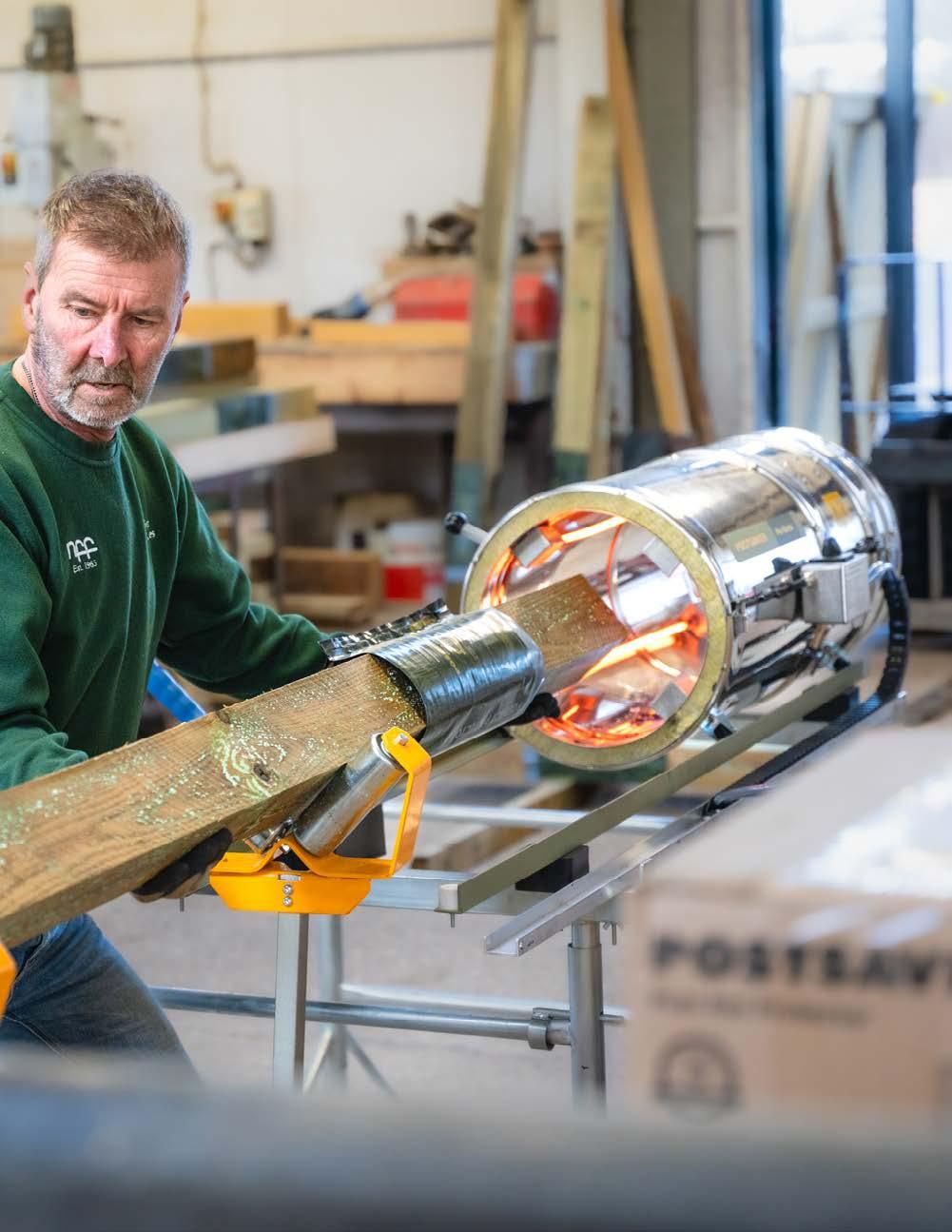
Designed to tackle one of the most common causes of premature timber failure, Postsaver protects posts at the critical ground-line zone, the point at which moisture, oxygen and fungal activity combine to accelerate decay. The dual-layer barrier system incorporates a tough heat-shrunk outer layer and a meltable thermoplastic lining, helping to significantly extend the service life of timber posts in decking, fencing, landscaping and agricultural applications.
With sustainability and whole-life performance continuing to influence material selection, durability remains a key consideration for specifiers. Postsaver says its products can help extend the lifespan of UC4-treated timber posts for decades and are backed by warranties of up to 40 years.
The company believes the approvals will further strengthen confidence in timber as a durable structural material, particularly in
applications where hidden ground-line decay has historically resulted in costly maintenance and premature replacement.
Postsaver products are manufactured in the UK and are widely used across fencing, landscaping and outdoor timber construction sectors, with the company continuing to invest in product testing, technical certification and specification support.
Recovered fibre could reshape MDF’s carbon story
New Life Cycle Analysis suggests MDF made with recovered fibres from MDF Recovery’s process can reduce manufacturing carbon impact, with further gains possible through renewable energy and higher recycled content.
Recycled MDF fibre could play a meaningful role in lowering the environmental impact of board production, according to new Life Cycle Analysis carried out for MDF Recovery.
The study, conducted by Eunomia Research and Consulting Ltd with funding support from Innovate UK, examined the environmental performance of MDF made using recovered wood fibre from the MDF Recovery process. Its headline finding is that using 30% recycled fibre content can deliver a direct 12% reduction in the carbon footprint of the board manufacturing process when compared with MDF made entirely from virgin fibres.
That is a significant result for a sector under increasing pressure to demonstrate measurable progress on resource efficiency, carbon reduction and circularity. MDF is widely used across furniture, interiors, joinery and construction-related applications, but end-of-life panel waste has long presented a challenge. A viable route for recovering fibre and feeding it back into new board production would therefore be of obvious interest to manufacturers, merchants and specifiers.
The LCA compares MDF board made from 100% virgin fibres with boards containing 20%, 30% and 60% recovered wood fibre. All recovered fibre used in the assessment is assumed to come from the MDFR process. The analysis uses the EU Commission’s Environmental Footprint impact assessment method, assessing the full cradle-to-gate environmental profile across EF 3.1 impact categories.
According to the report, substituting virgin fibres with recovered fibres reduces the environmental impact of MDF board across the vast majority of the studied categories. The benefits are not limited to carbon. The study also identifies advantages in climate change, photochemical ozone formation, land use and fossil fuel resource use impact categories.
“Recovered fibres produced by the MDFR process and subsequently dried to the level required for MDF board manufacture use less energy in their production than virgin wood fibres,” concludes the study
“Therefore, using recovered fibres sourced from the MDFR process to replace conventional virgin wood fibres in the production of MDF boards is attractive from the perspective of climate change, photochemical ozone formation, land use, and fossil fuel resource use impact categories.
“It is therefore recommended to maximise the quantity of recovered fibres produced from the MDFR process within future MDF production.”
Further gains may also be possible. The report forecasts that additional carbon footprint reductions could be achieved if renewable or biomass-based energy sources are used in the process, or if higher levels of recycled fibre are incorporated into board production.
The impact categories used in the LCA differ from those typically shown in an Environmental Product Declaration, and further work is planned to revise the analysis. This will include more robust consideration of biomass and end-of-life wood products as energy sources, the biogenic nature of the material, and renewable electricity use.
The report suggests that taking these factors into account could deliver further reductions of 30-50% in kgCO2 equivalent, pointing to a potentially important pathway for lower-impact MDF manufacturing. For more info visit www.mdfrecovery.co.uk
Timber Media Products and Services Directory provides the industry with a comprehensive listing of top suppliers and manufacturers operating in the timber sector, all in one place on the www.timbermedia.co.uk website.
A listing provides a highly effective, cost-efficient way to promote your products and services online, alongside the industry’s top brands. Generating inbound leads and enquiries, as well as backlinks through to your own website!
Over 3,750 unique web visits per month
Over 50 product / service categories Only £600 per annum
For more information, email julie.williams@radar-media.co.uk or call 01743 290 042 www.timbermedia.co.uk
Tilhill trials automated planting machine to support woodland creation
Tilhill Forestry has successfully trialled an automated tree planting machine as the sector looks for practical ways to increase woodland creation, improve delivery capacity and support planting teams at scale.
The forestry sector is under growing pressure to deliver more new woodland, driven by climate targets, biodiversity recovery, timber security and the need for more sustainable land use. Meeting that demand is not simply a matter of ambition. It requires enough people, the right equipment and reliable establishment standards across a wide range of site conditions.
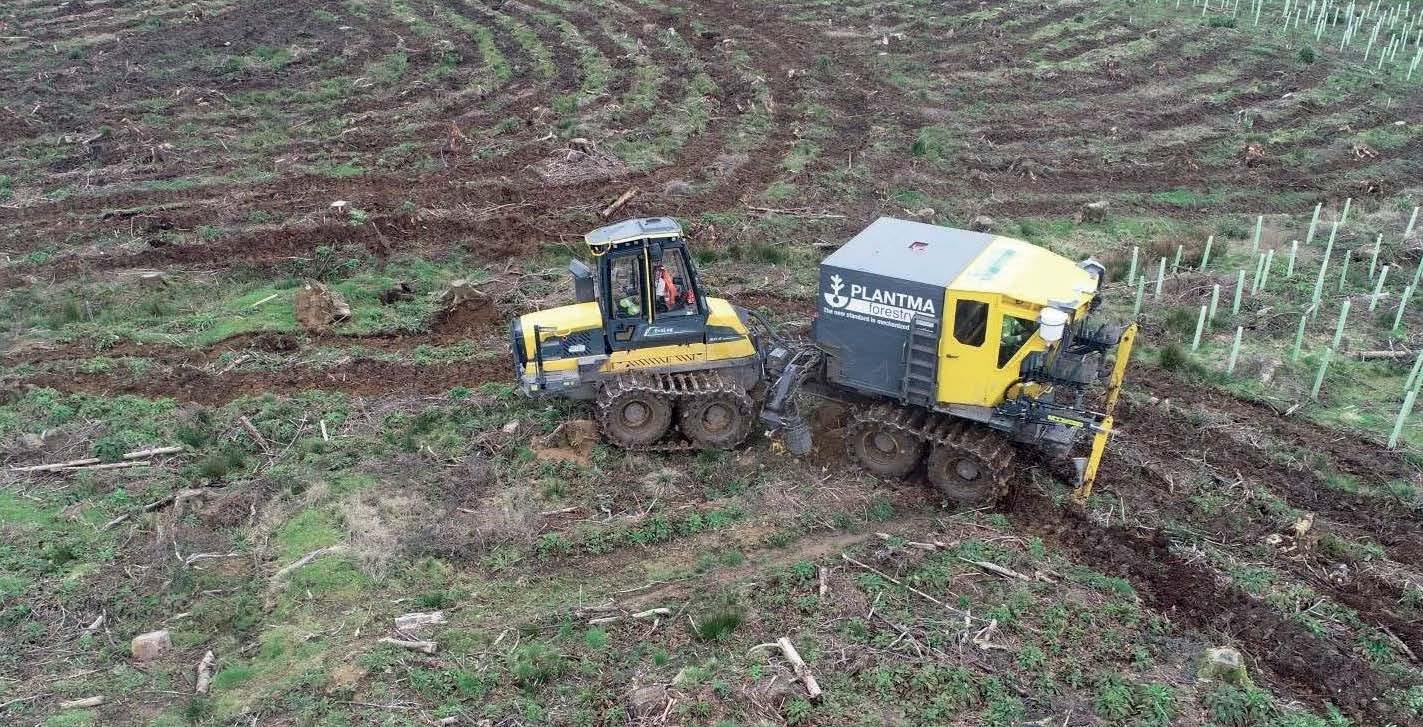
Tilhill Forestry, part of BSW Group, is now exploring whether mechanised planting can play a greater role in that mix. The company has trialled the PlantMax automated planting system, developed by Swedish company Plantma Forestry, to assess how it could support woodland creation and restocking programmes in the UK.
The emphasis is on support rather than replacement. Tilhill says automated planting is being evaluated as a complementary approach to manual, labour-intensive planting, adding extra flexibility where ground conditions allow. The trial sits within the company’s wider forestry operation, which spans tree nurseries, woodland management, harvesting and restocking.
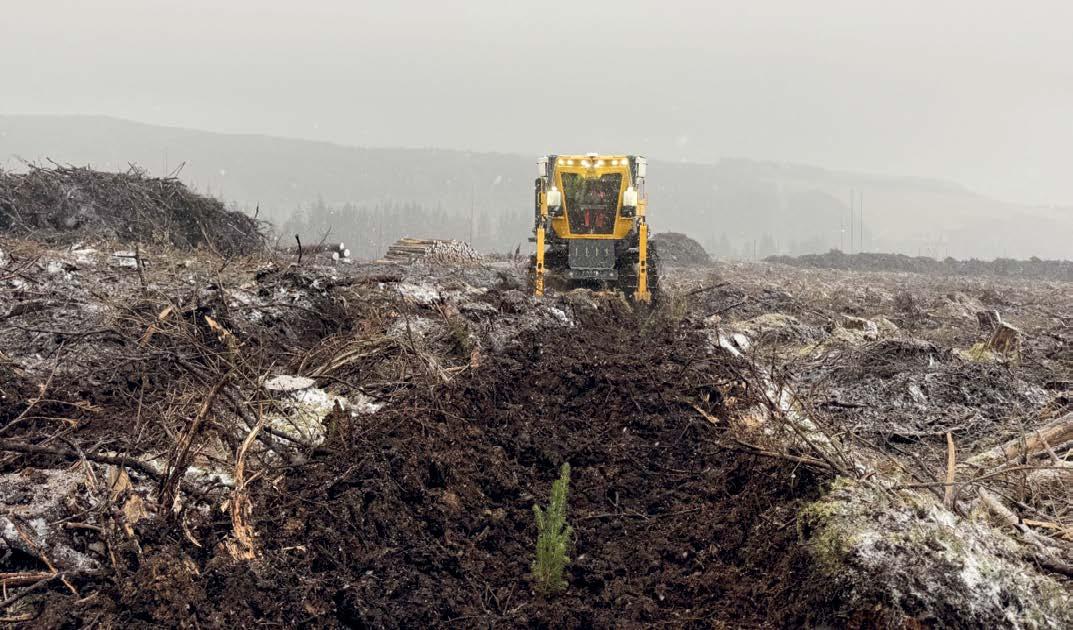
Early results are promising. According to Tilhill, the PlantMax system has demonstrated an ability to plant consistently across a number of different sites at commercially viable rates. The machine brings together several establishment functions, including ground scarification support and automated planting arms with adjustable compaction.
That matters because successful woodland creation depends on far more than simply getting trees into the ground. Seedling quality, site preparation, drainage, terrain and soil conditions all influence longterm performance. Tilhill is assessing the system across a range of UK forestry site types to understand where mechanised planting can work most effectively, and where established manual methods remain the better option.
Harry Stevens, Forestry Director at Tilhill Forestry, said: “Innovation like this is a critical part of the future of UK forestry. As the demand for woodland creation grows, the sector needs practical solutions that strengthen delivery resilience while maintaining the highest establishment standards. We’re excited to explore how these tools can help our fantastic planting teams continue their excellent work, while improving outcomes in hard-to-reach areas and enhancing safety.”
The investment reflects a wider push to improve delivery resilience across the full forestry lifecycle, from harvesting through to restocking and long-term woodland management. With BSW Group support, Tilhill says it will continue to explore how new technologies can strengthen sustainable forestry outcomes for landowners, investors and rural communities.
Further trials will continue over the coming seasons, with Tilhill working alongside partners to validate planting quality, operational fit and the role automation could play in supporting the UK’s woodland ambitions.
The UK commercial forestry market recorded more than £250m in plantation sales during 2025, but new analysis suggests headline figures are masking a slower and more selective market.
Forestry and woodland specialist John Clegg & Co’s latest annual Forest Market Review points to a market that remained active in value terms, but softened when measured against prices, sales speed and buyer confidence.
The report shows that 11,300 stocked or plantable hectares were sold during 2025, more than double the area recorded in 2024. Total selling price reached £261m, setting a new high for the market.
However, according to Simon Hart, Head of Forestry in Scotland at John Clegg & Co, the headline figure needs careful reading.
“At first glance, the market in 2025 looks to have been incredibly strong,” he said.
“A total of 11,300 stocked or plantable hectares were sold which is more than double the area sold in 2024, with a cumulative selling price of £261m – a new high.
“However, more than half of this was accounted for by three large sales - the Griffin sales (Lots 1 and 2) and the Caledonian and Irish Portfolio, which were so large they mask the underlying trends.”
Those underlying trends suggest a more cautious plantation market. More forests sold within the £10,000 to £20,000 per hectare bracket than has been seen for some time, while only 45% of sales completed within six months of launch. Around a third of sales took more than a year, the weakest performance on that measure for a decade.
Average sale prices reached 102% of guide, but 30% of transactions were completed below guide price.
“Excluded from these figures are also woods that remain for sale or have been quietly withdrawn from the market,” added Mr Hart.
“Our sense is that a 10% drop in average plantation values is a truer reflection of the market.”
John Clegg & Co points to several factors behind the shift, including a flat timber market, higher interest rates, uncertainty around import and export tariffs, and changes to inheritance tax rules. Timber returns remain well below the immediate post-COVID peak, while restocking and maintenance costs have continued rising faster than inflation.
Site quality and location are now playing a sharper role in valuations.
Mr Hart said productive forestry on poorer sites, distant from markets, is becoming more challenging economically, with even relatively mature spruce woods struggling to achieve £10,000 per hectare. By contrast, well-located woods close to markets are still attracting strong interest, with some mature spruce properties selling above £40,000 per hectare.
Looking ahead, realistic pricing is expected to remain critical.
“If the price is too high in this current market, then it is hard to persuade potential investors to even inspect the property.”
While many forestry owners may have the financial flexibility to wait, John Clegg & Co concludes that the market is likely to remain cautious until improved domestic timber prices feed through into plantation values.
Europe’s woodworking sector calls for timberled housing push
Europe’s woodworking industries are urging the European Commission to put timber construction at the heart of its response to the bloc’s housing crisis.
The European Confederation of Woodworking Industries (CEI-Bois) has submitted its response to the European Commission’s consultation on the forthcoming Affordable Housing Act, calling for a structural shift towards industrialised timber construction.
The Brussels-based body argues that Europe’s housing challenge is, above all, a supply problem. In its submission, CEI-Bois says increasing the number of homes available must remain the central pillar of EU action, while also supporting sustainability and industrial competitiveness.
That gives timber construction a clear role in the debate. Rather than being treated as a niche environmental preference, wood-based building systems are being presented as a practical route to faster, better and lower-carbon housing delivery.
“Timber-based construction can support the rapid expansion of affordable and quality housing while contributing to the EU’s climate objectives,” CEI-Bois said.
The organisation is also calling for policy detail to match the ambition. In its response, CEI-Bois highlights the need for clearer EU guidance and stronger regulatory frameworks to help remove financial,
regulatory and standardisation barriers still holding back wider adoption. Its recommendations include more efficient permitting and regulatory procedures, harmonised and modernised building codes, updated construction product standards, and science-based sustainability assessment methods.
CEI-Bois also argues that renewability should be recognised as equally important as recyclability within EU circular economy policy.
That distinction matters for wood-based industries, where renewable raw material use, long-term carbon storage and high-value applications in buildings all form part of the sustainability case.
With housing delivery, climate targets and industrial competitiveness now increasingly connected, the CEI-Bois submission adds to the pressure for European policymakers to give timber construction a more central role in future housing policy.
CP650
PRODUCTIVITY, EFFICIENCY, FLEXIBILITY
For sharpening tooth faces and tops on carbide tipped circular saw blades, Vollmer has now raised the standard with the CP650. Delivering maximum productivity, performance, cost-effectiveness and flexibility, this benchmark 4-axis CNC machine guarantees to optimise grinding times and provide astounding surface finishes and precision. Minimised set-up times and ease-of-use exemplify this flexible and highly capable machine that can process all common tooth geometries in a single cycle. Be ready for anything that comes your way.
www.vollmer-group.com
LUMIN to demonstrate the ‘future of forests’ at Carrefour International du Bois
The Uruguayan timberlands and forest products company will exhibit at the leading international timber industry event for the first time.
LUMIN will make its debut at Carrefour International du Bois 2026, taking place from 2–4 June in Nantes, France, where it will present its vision for the “future of forests” and the role of plantation-based plywood in global supply chains.
The Uruguayan business will use the event to showcase how its forestry and manufacturing model delivers sustainable, traceable and scalable plywood supply to international markets.
As one of the timber sector’s most established global events, Carrefour International du Bois provides a platform for LUMIN to connect with partners across construction, distribution and manufacturing, while highlighting a model that responds directly to tightening environmental regulation and growing demand for lowcarbon materials.
LUMIN’s presence comes at a significant moment for the business, marking 20 years since its first exports to Europe and building on more than 30 years of plantation forestry development in Uruguay. The company manages its own sustainably cultivated timberlands, enabling full control of supply from seedling to finished product.
At the exhibition, LUMIN will present its full suite of plywood solutions, including its Tropical Replacement Panel (TRP) range, developed as an alternative to traditional tropical hardwood plywood. Produced from plantation-grown Eucalyptus grandis, the panels offer
consistent performance, verified environmental credentials and full supply chain traceability.
Visitors to the stand will also gain insight into the company’s ongoing expansion, including the development of its third industrial mill in Melo, which will significantly increase production capacity and support long-term global supply.
John Guerin, Managing Director (Sales) – Europe at LUMIN, said: “Global plywood supply is undergoing a fundamental shift. Increasing regulatory pressure and the need for verifiable environmental performance are accelerating the transition away from traditional tropical hardwoods.
“At LUMIN, we have spent decades developing a plantation-based model that delivers both sustainability and industrial reliability at scale. Carrefour International du Bois provides an important opportunity to demonstrate how eucalyptus plywood can meet the structural, environmental and traceability requirements of modern construction and manufacturing markets.
“Our approach is built on long-term thinking – from how we establish and manage our forests through to how we manufacture and supply globally – which is the true ‘future of forests’.”
Attendees are invited to visit LUMIN at stand H2 – D13 to explore its products and connect with the team.
For more info visit www.lumin.com www.timbershow.com
LUMIN produces its Tropical Replacement Panels from plantation-grown Eucalyptus grandis
Calders & Grandidge joins WPA as treated timber focus sharpens
Calders & Grandidge has joined the Wood Protection Association, strengthening its links with the wider industrial wood preservation sector.
Boston-based Calders & Grandidge has become the latest member of the Wood Protection Association (WPA), bringing one of the UK’s longest-established pressure-treated wood manufacturers into the organisation’s membership.
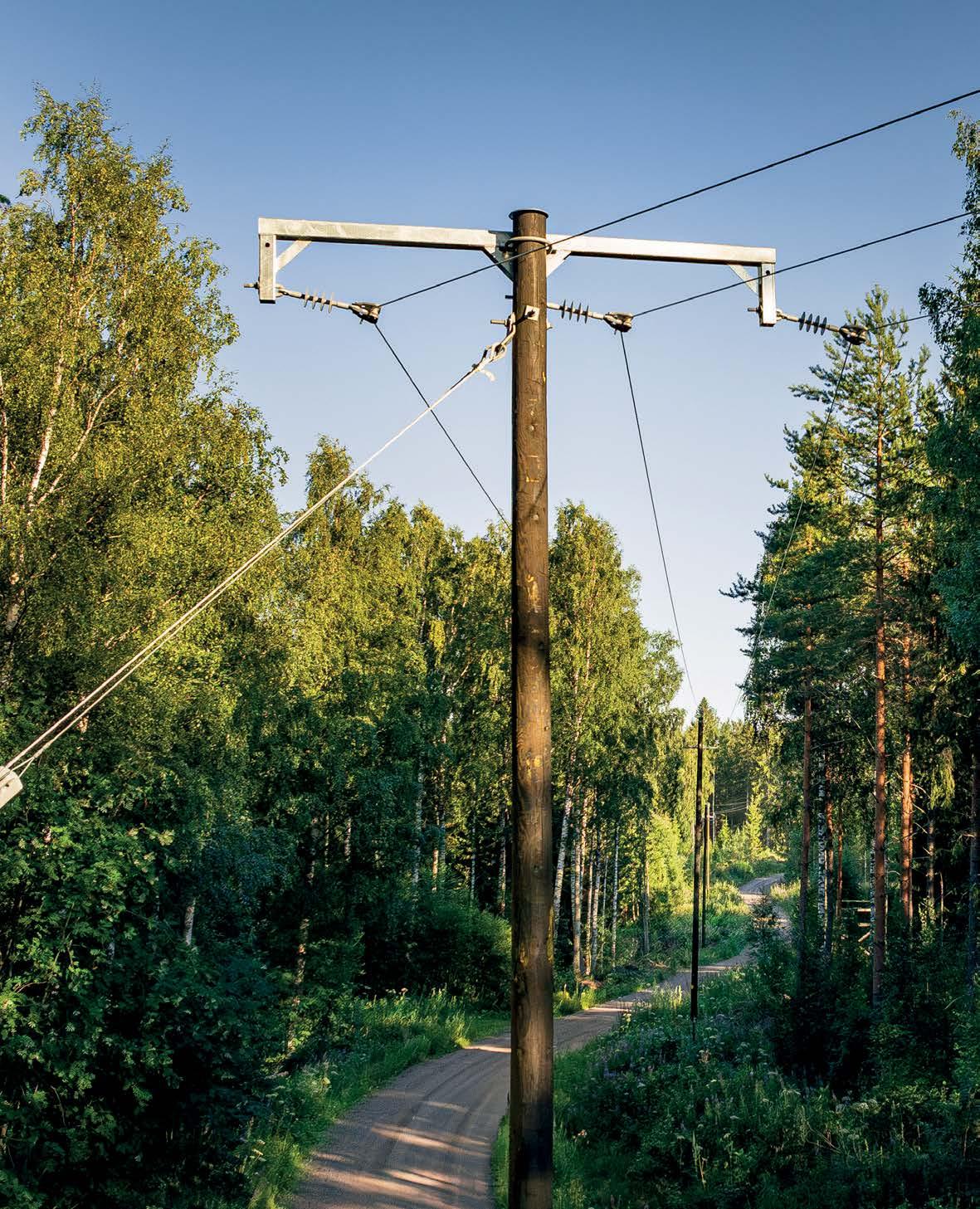
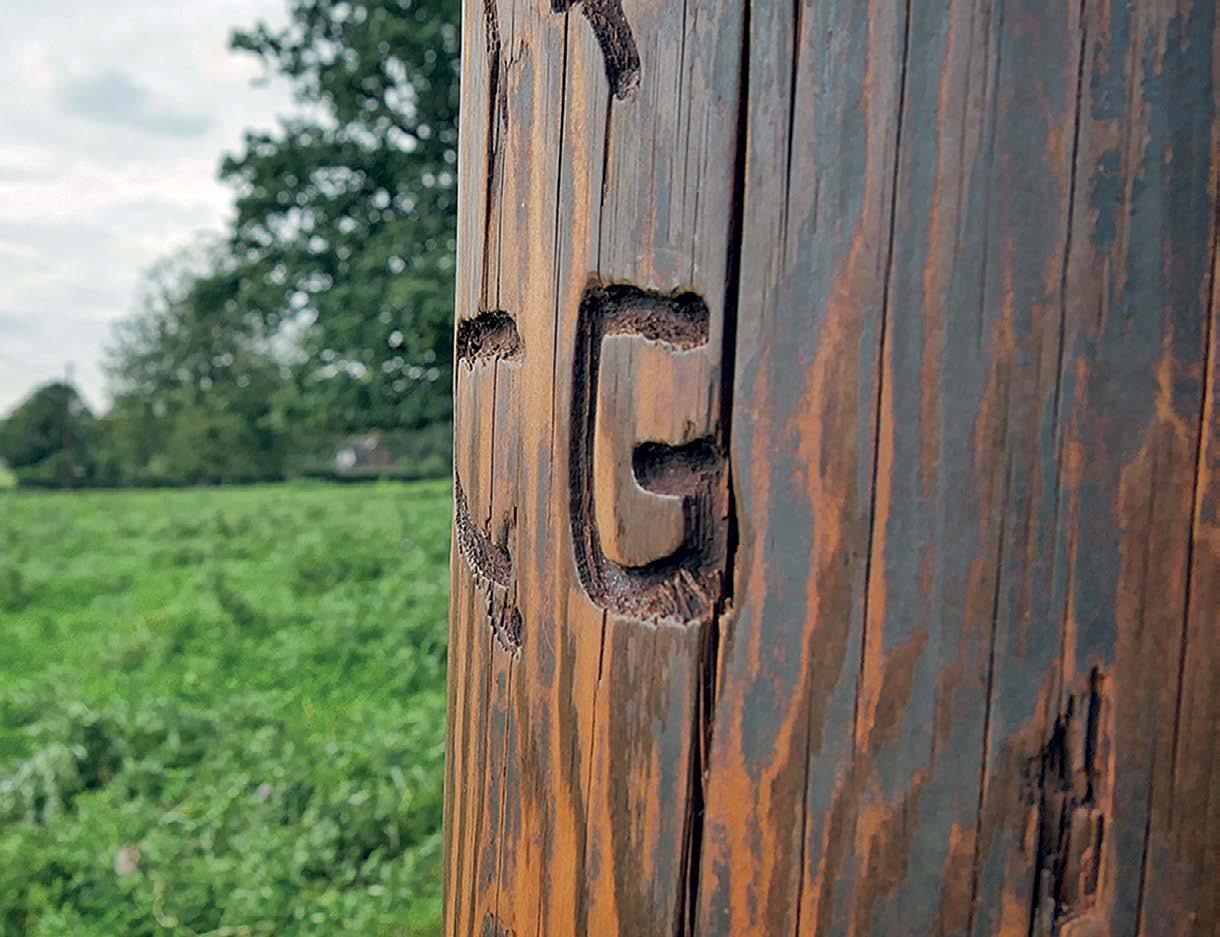
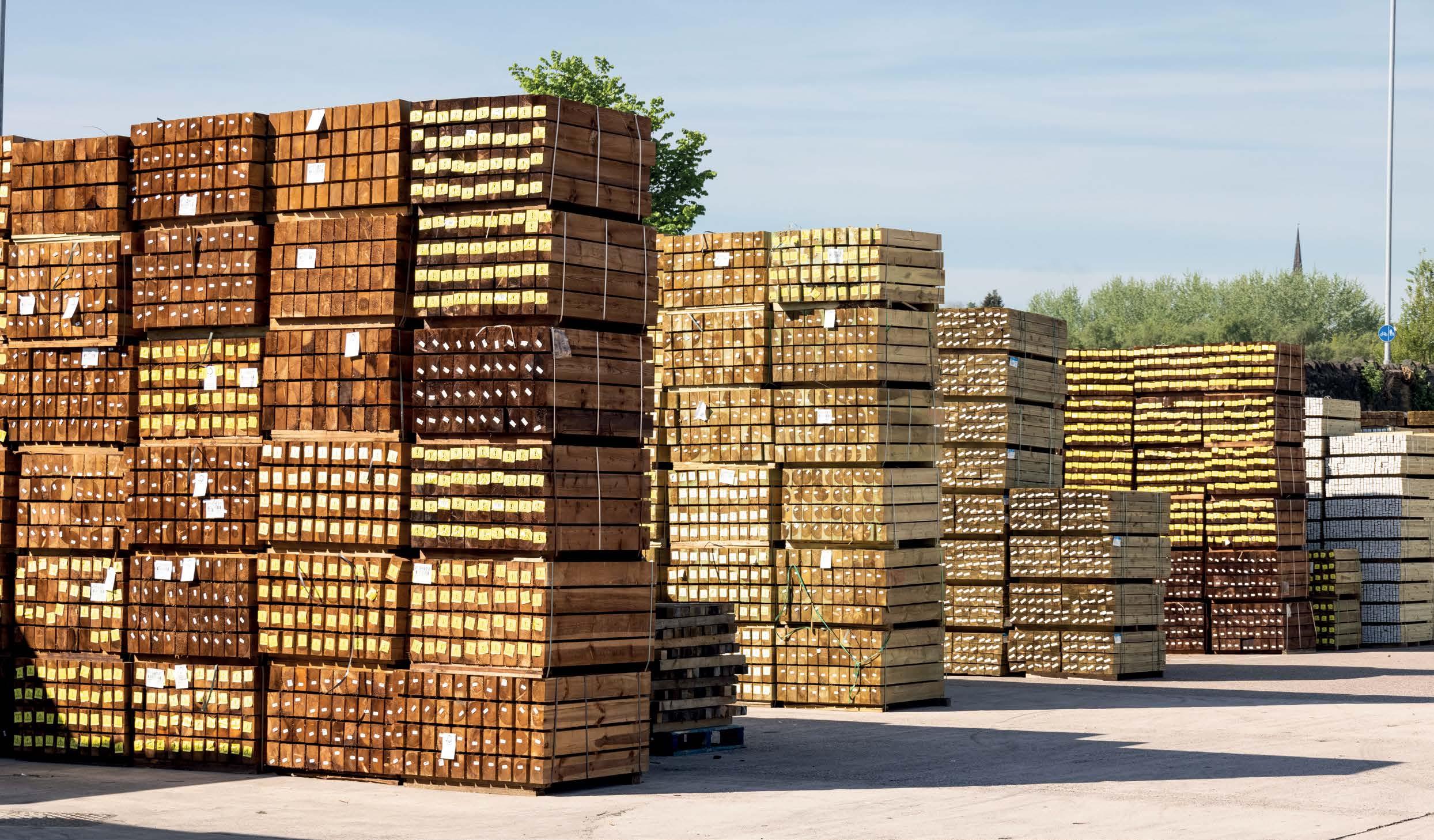
The Lincolnshire business has more than 125 years of experience and supplies utility poles for the power and communications sectors, railway sleepers and high-performance fencing products. It is also well known across infrastructure, equine and agricultural markets, where durability, consistency and dependable supply remain central to product performance.
Calders & Grandidge has held a Royal Warrant since 1986 for the supply of preservative pre-treated fencing to the Royal Stud and His Majesty The King’s Sandringham Estate. Now part of the Rundvirke Group, the company’s strategy remains focused on durable, high-specification fencing components and gates manufactured from pressure-impregnated softwood, alongside extended-service-life utility poles and railway sleepers.
C&G Business Director John Secker said: “Becoming a member of the WPA reinforces our commitment to technical excellence and supports the wider advancement and integrity of industrial wood preservation.”
WPA Chairman Steve Young said: “Calders & Grandidge is a wellrespected business with a strong reputation for producing high-quality treated wood products. We look forward to working with them to promote correctly treated materials and highlight the benefits of wood as a sustainable, low-environmental-impact construction solution.”
The move comes as correct treatment, evidence-based specification and longer service life remain important themes across the timber supply chain.
BSW Timber Solutions has committed to reducing its greenhouse gas emissions through the Science Based Targets initiative, setting near-term reduction targets across Scope 1, 2 and 3 emissions by 2030.
BSW Timber Solutions has formally signed up to the Science Based Targets initiative (SBTi), marking a further step in the company’s work to reduce emissions and strengthen its sustainability commitments.
The company, part of BSW Group and one of the UK’s leading timber processors, has had a series of near-term emissions reduction targets validated through the SBTi process. The framework is internationally recognised and provides companies with a route to set climate targets aligned with current climate science.
Under the approved targets, BSW Timber Solutions Limited has committed to reducing absolute Scope 1 and 2 greenhouse gas emissions by 61.37% by 2030, using 2021 as the base year. Scope 1 emissions cover direct
emissions from owned or controlled sources, while Scope 2 covers indirect emissions from purchased energy.
The business has also committed to reducing absolute Scope 3 greenhouse gas emissions by 25% over the same timeframe. Scope 3 emissions are typically the most complex to address, covering wider value chain impacts such as transport, purchased goods and services, and downstream activities.
Alongside these emissions targets, BSW Timber Solutions has committed to maintaining no deforestation across its primary deforestation-linked commodities. The company said the targets underline its dedication to meaningful climate action and to supporting positive change across the industry.
The SBTi provides standards, tools and guidance for businesses setting near-term and net-zero targets. Its validation process is intended to give confidence that corporate climate targets are credible, measurable and
aligned with the latest climate research.
Bruce McKay, Managing Director of BSW Timber Solutions, said: “As a timber business, with nature at the heart of what we do, we recognise the critical importance of science-based climate action. We are proud to align our decarbonisation strategy with the SBTi framework and are committed to tackling greenhouse gas emissions to achieve our targets.”
BSW Timber Solutions said it will publish an annual SBTi Progress Report, setting out the actions being taken and progress made towards meeting the targets.
The company noted that its Scope 1 and 2 targets currently include energy and industrial emissions only. Forest, Land and Agriculture (FLAG) emissions have been excluded at this stage, with BSW Timber Solutions stating these will be included once a pathway for timber and wood fibre becomes available.
IMA Schelling UK focuses on practical shopfloor solutions at PWE
IMA Schelling UK will exhibit at the Professional Woodworking Expo (PWE) at the NEC, Birmingham from 23–25 June 2026, presenting a focused range of solutions for small and medium-sized woodworking businesses across the UK and Ireland (Stand X).
Best known for its panel-processing machinery, handling systems and wider production solutions, the company is using this year’s event to highlight equipment that addresses some of the day-to-day pressures faced by smaller manufacturers.
“Waste handling, safe panel lifting and flexible investment options are all areas where we can deliver immediate value,” explains Markus Freuis, Managing Director of IMA Schelling UK.
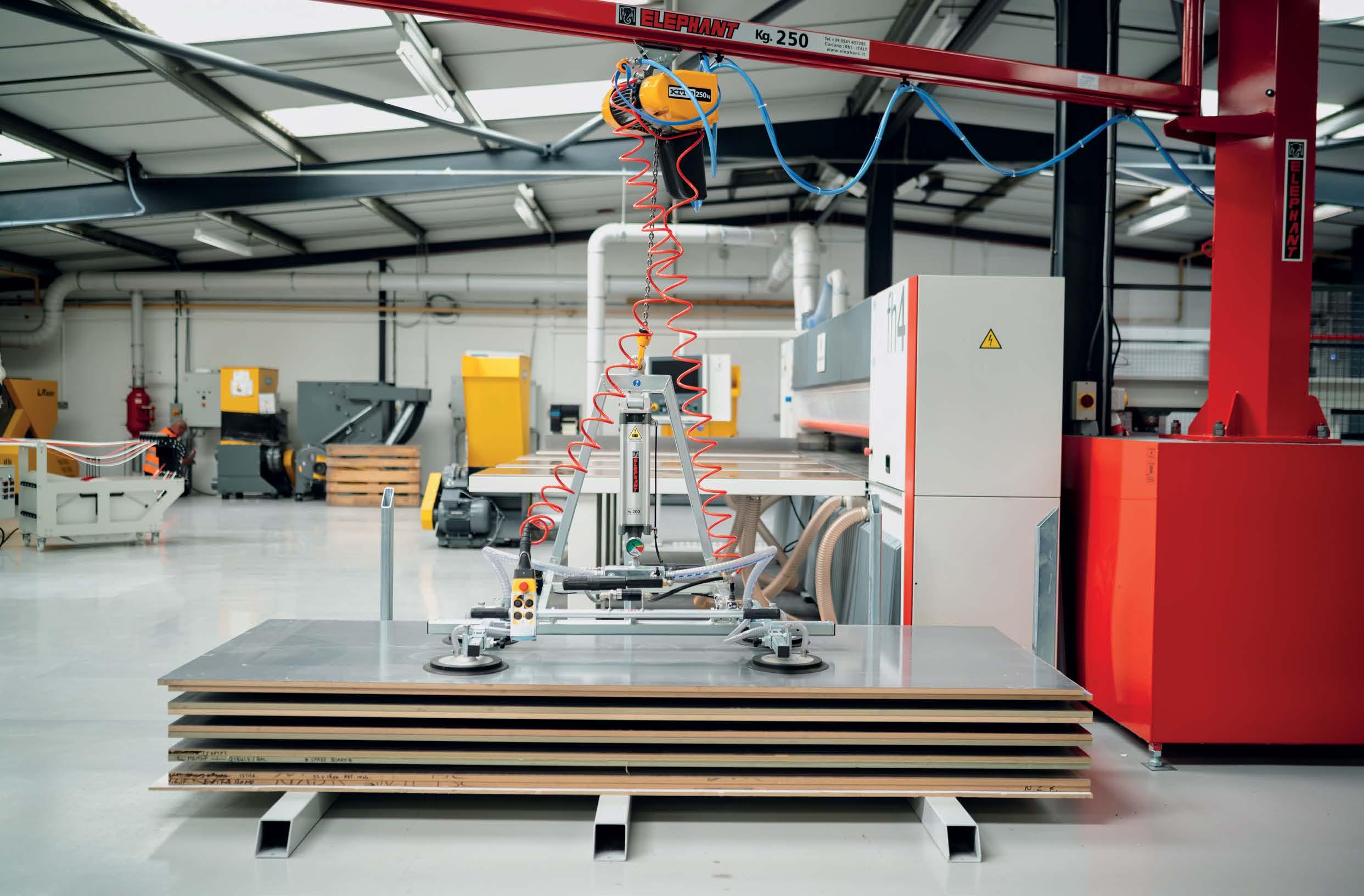
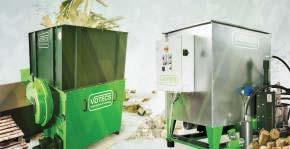
On the stand, visitors will see two compact UNTHA wood-waste shredders designed to help manufacturers manage offcuts, reduce disposal costs and free up valuable floor space. The stand will also feature an Elephant vacuum lifter that enables safer, more efficient single-operator handling of heavy or bulky panels, reducing manual handling and improving workflow.
Alongside this, IMA Schelling’s wider solutions will be shown digitally on the stand, including Modesta extraction systems for woodworking and other applications.
“Solutions like UNTHA shredders and Elephant lifters work alongside existing machinery,” Markus adds. “They help manufacturers improve handling, minimise waste and make better use of space without significant changes to their setup.”
Recognising that upfront investment can be a barrier, IMA Schelling UK will also highlight a new finance option covering selected UNTHA shredders, Elephant lifters and pre-owned machinery. Agreements can be arranged quickly, helping businesses spread the cost while delivering immediate improvements on the shop floor.
The IMA Schelling UK team will be on hand throughout the show to share practical insight, recommend suitable solutions and help visitors get more from their production, with finance options available to support investment where needed.
For more info visit www.imaschelling.co.uk
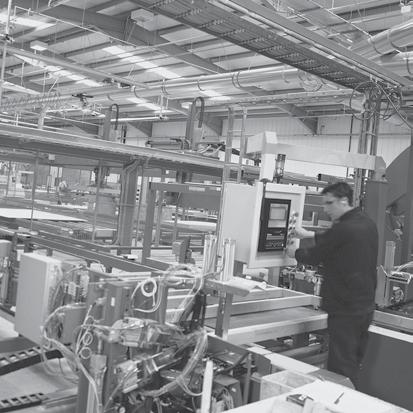
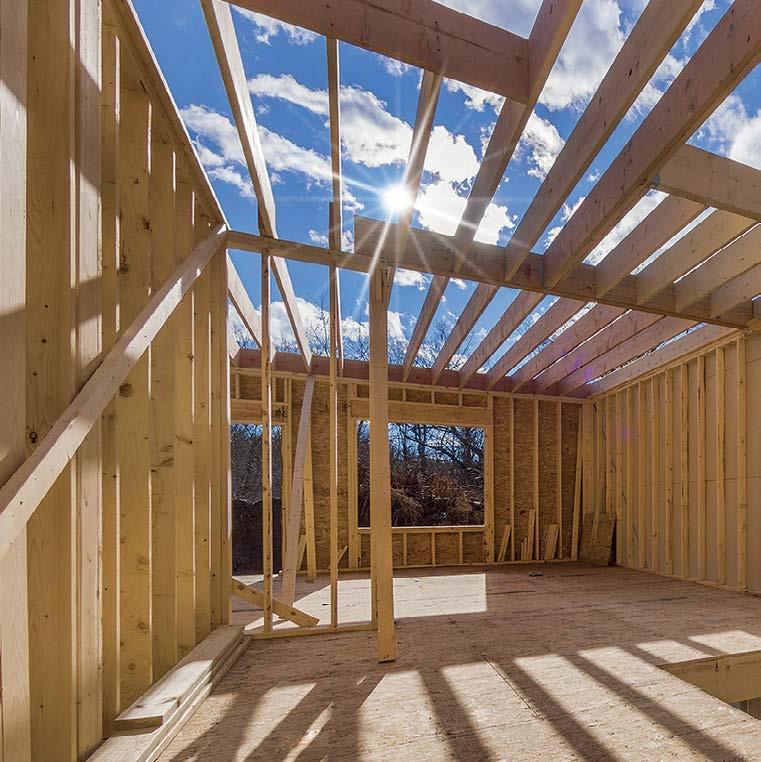
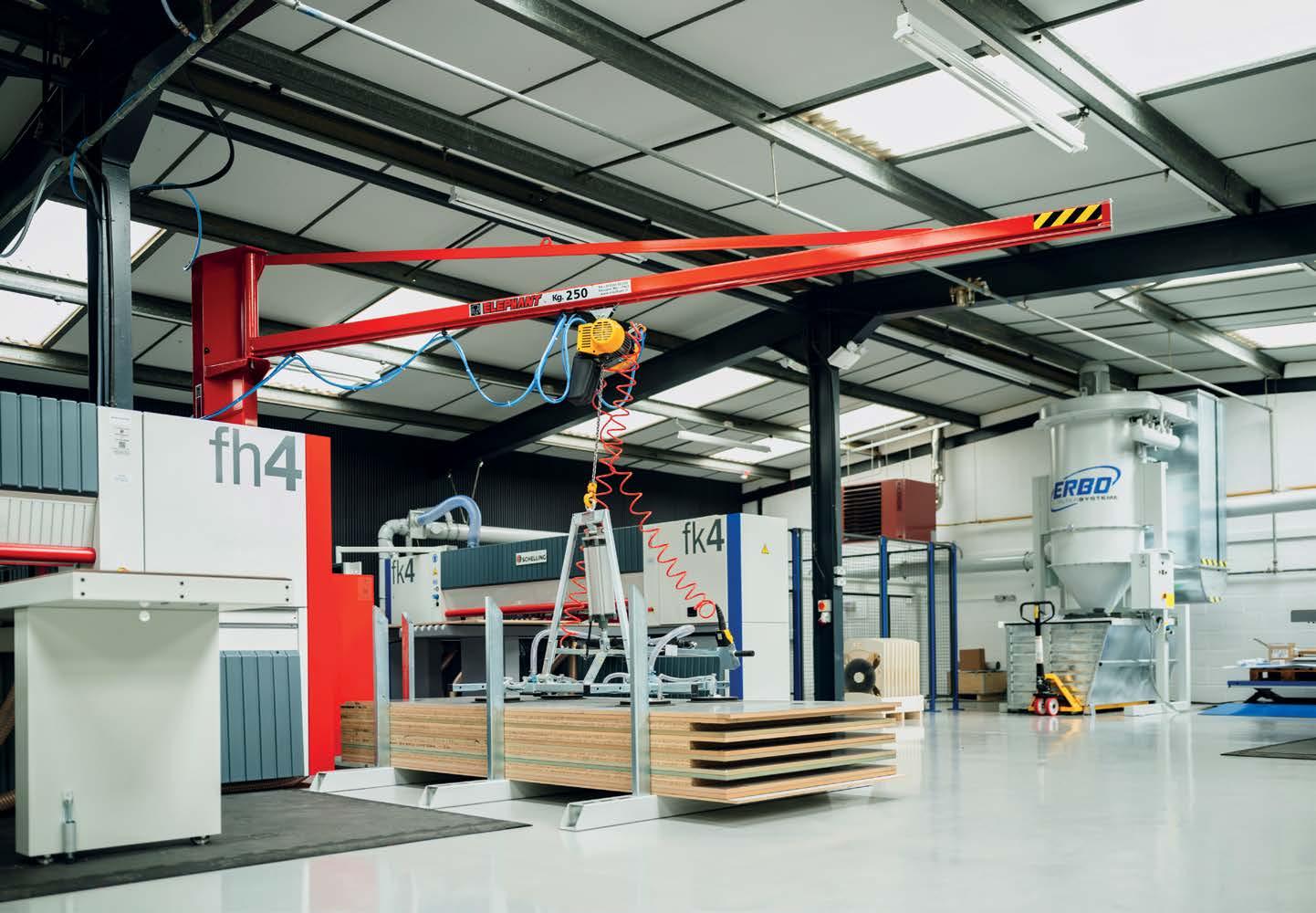
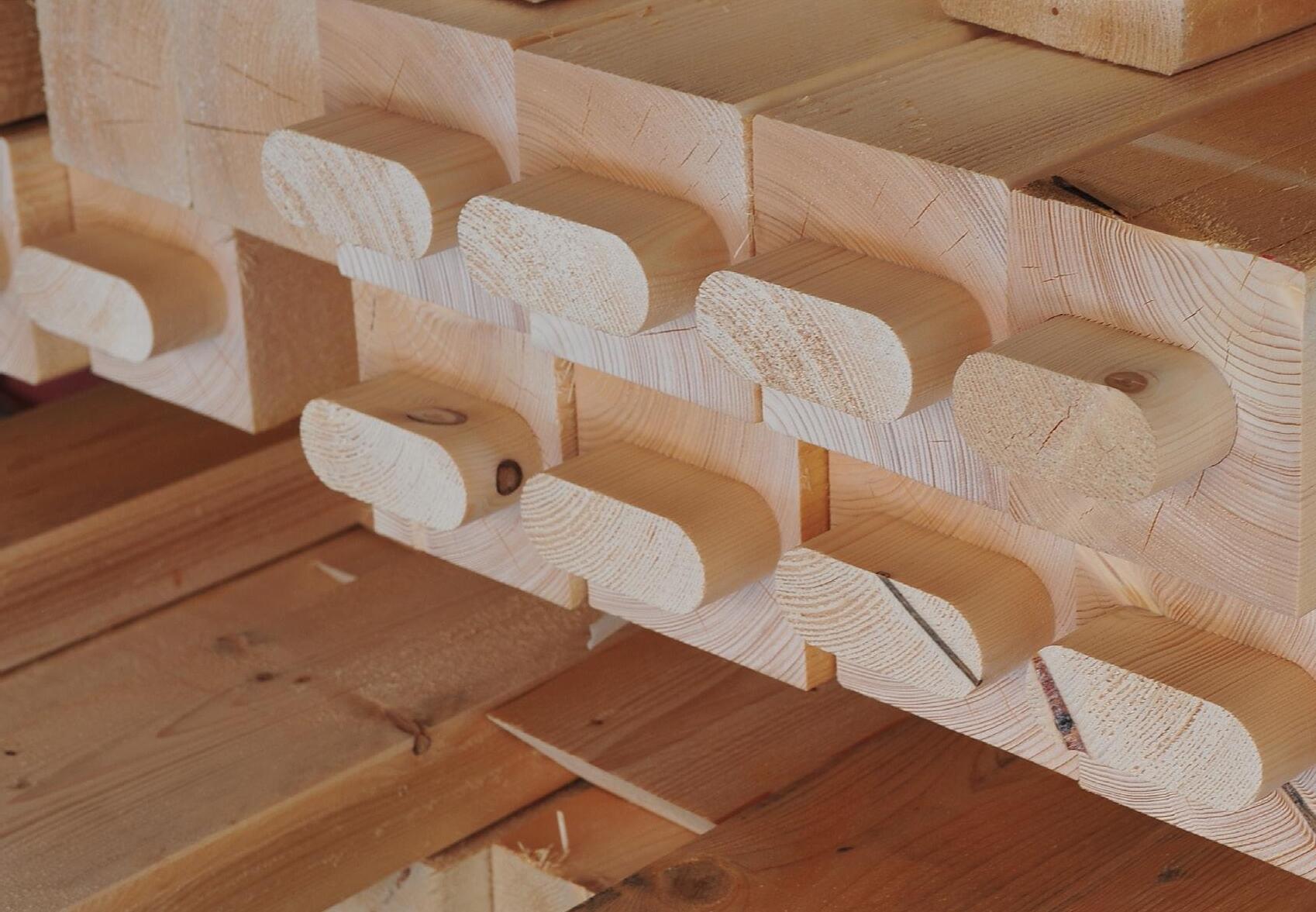
Essetre Techno Saw drives production gains for Fleming Homes
Essetre’s Techno Saw CNC is enabling UK timber frame manufacturer Fleming Homes to raise production efficiency, precision and off-site capability as pressure continues to grow across the sector to deliver high-quality timber systems at scale.
Manufacturers across the UK are under increasing pressure to deliver precision-engineered products quickly and at scale without compromising on quality.
For Fleming Homes, a long-established manufacturer of bespoke timber frame homes, investing in advanced CNC technology has become a key part of meeting that challenge.
Founded in 1986, the company has built a strong reputation for delivering high-quality timber frame homes for self-builders and developers throughout the UK. Today, under the leadership of Managing Director Sarah Mathieson and Operations Director Hayden Martin, the business continues to focus on simplifying the self-build process through innovation, precision manufacturing and increased off-site construction.
That commitment recently led Fleming Homes to invest in the Essetre Techno Saw CNC, supplied in the UK through Michael Weinig (UK) Ltd, part of the globally recognised WEINIG Group.
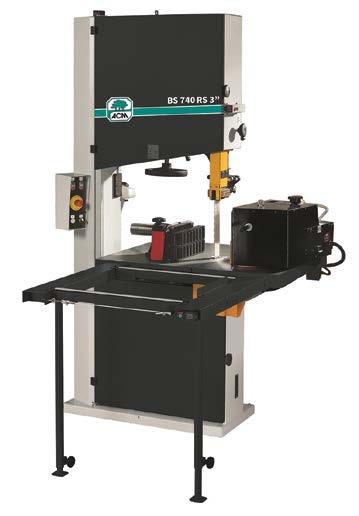
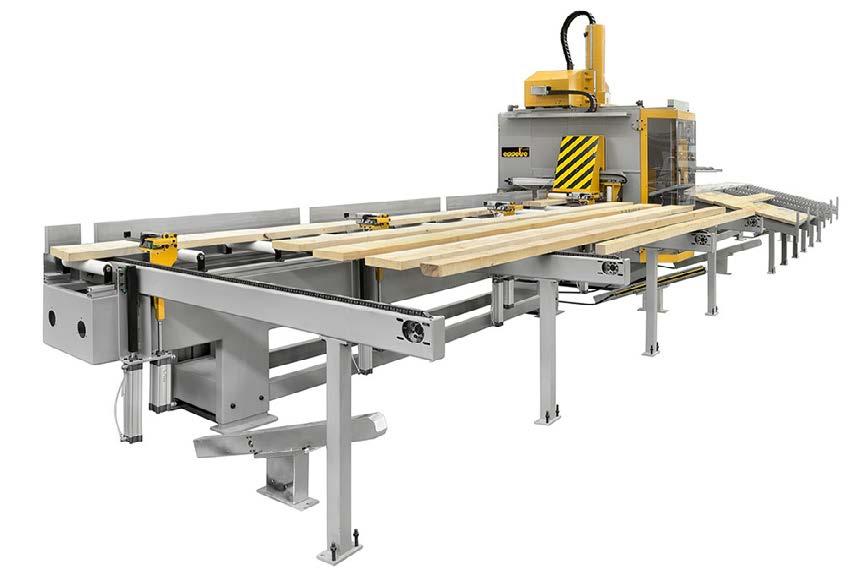
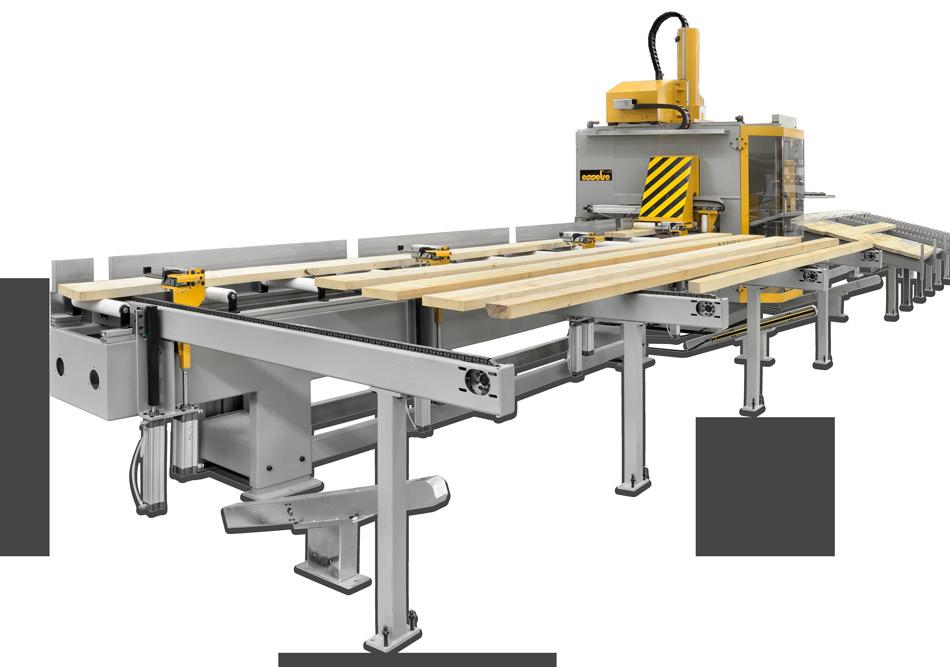
Designed specifically for modern timber construction applications, the Essetre Techno Saw delivers the speed, flexibility and precision required for the efficient production of timber frame elements, roof cassettes and engineered structural components. Its ability to process multiple workpieces simultaneously, combined with an 8-position tool magazine for sawing and routing operations such as holes, grooves and rebates, gives manufacturers a highly versatile solution for modern production environments.
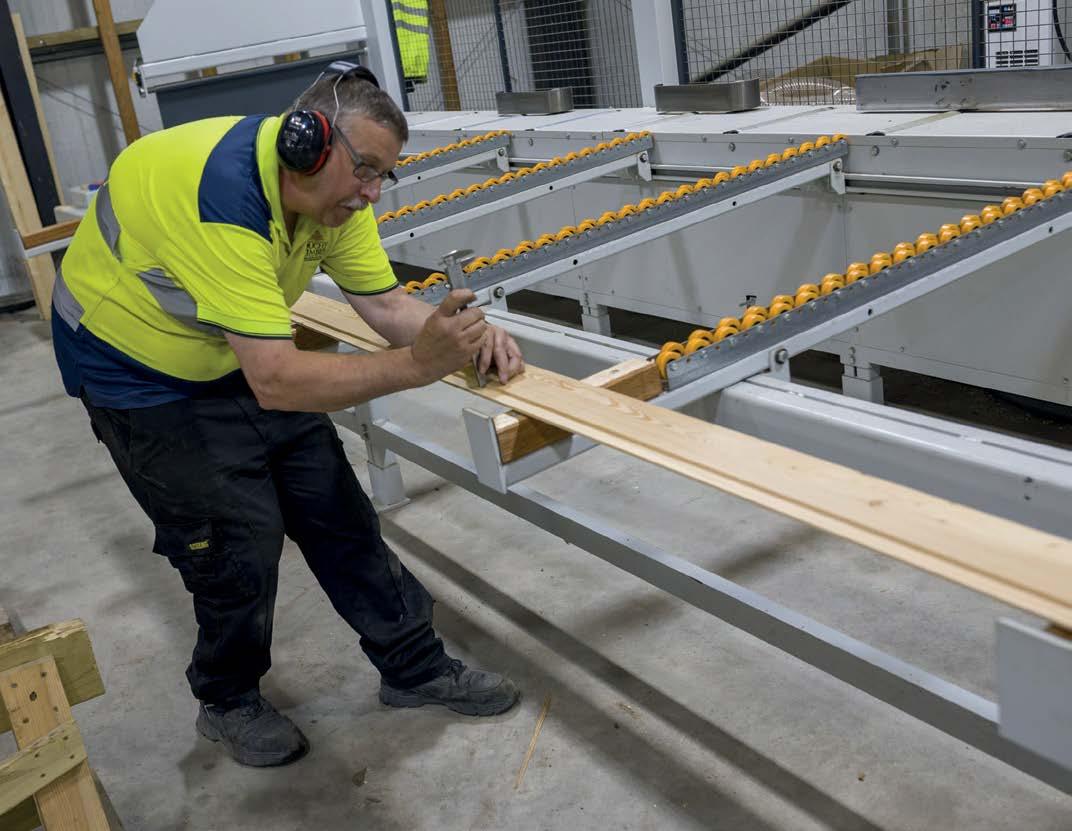
For Fleming Homes, the machine’s integration with digital design software was a major advantage, enabling components to be cut directly from digital models with exceptional accuracy. This not only improves consistency but also reduces manual handling, minimises waste and shortens production times.
The Techno Saw is particularly suited to smaller cross-section timber elements such as trusses and frame components, but its versatility also allows Fleming Homes to manufacture more complex architectural features and ancillary timber products with ease.
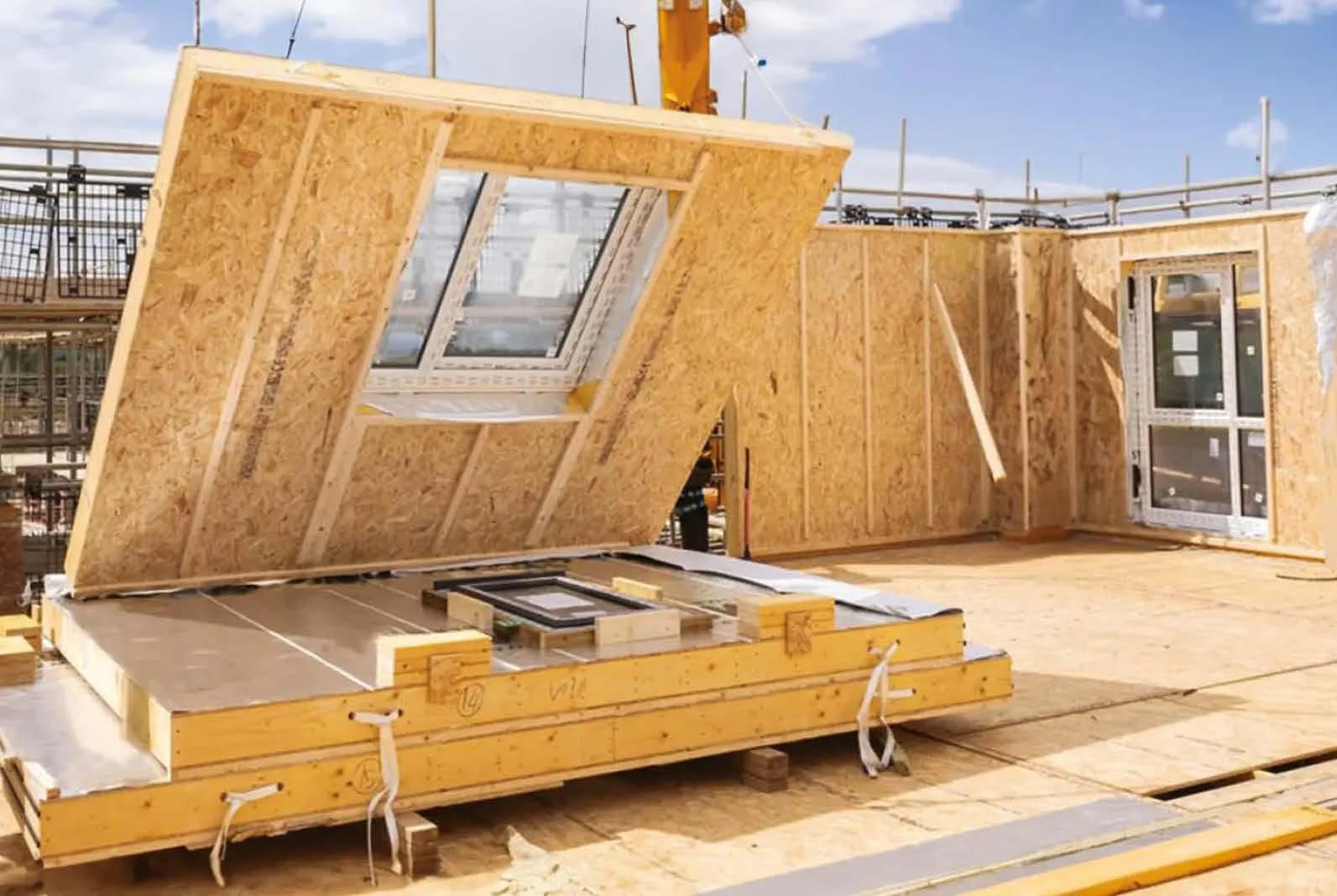
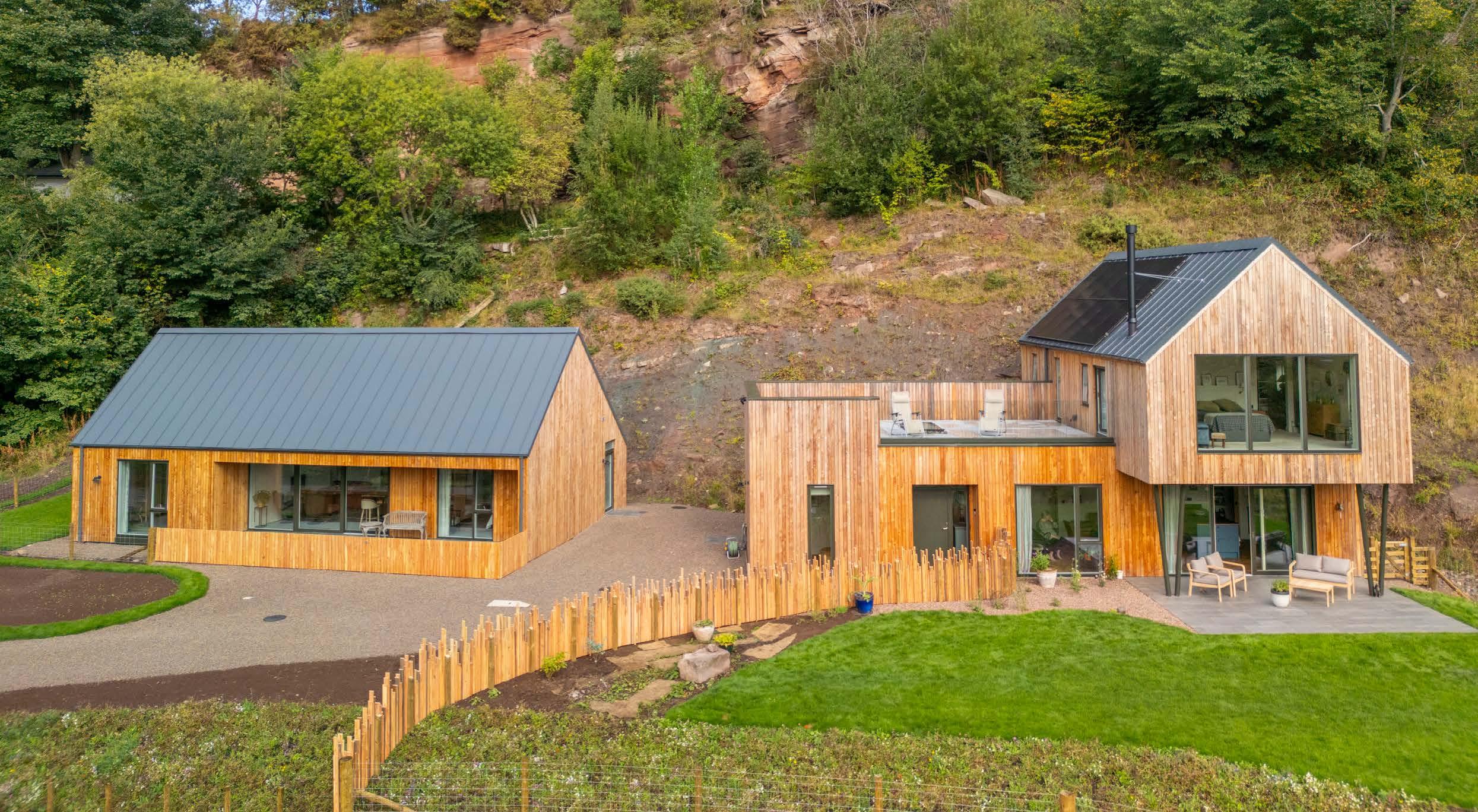
The investment aligns with the company’s expansion into its new manufacturing facility, Platform 1, where Fleming Homes has increased its off-site capabilities with enhanced prefabricated systems, including closed panels with factory-installed insulation, airtight membranes and service voids for plumbing and electrical installations.
Roof cassettes are also produced off-site, allowing vaulted ceilings to be manufactured in a controlled factory environment. By moving more construction stages into the factory, the company can reduce on-site labour, improve build consistency and shorten project lead times.
Sarah Mathieson explains: “This investment is making self-building far more straightforward. By completing more of the work in the factory, we can reduce complexity onsite, shorten build programmes and improve quality control throughout the process. The Essetre Techno Saw has significantly increased our production efficiency and
allows us to prefabricate more structural detail, which ultimately benefits our customers.”
For Operations Director Hayden Martin, the decision to invest in the Techno Saw was based on performance and long-term production gains.
“We selected the machine that best matched our manufacturing needs. The precision, speed and flexibility of the Techno Saw allows us to improve efficiency while maintaining the quality standards our customers expect. It gives us the confidence to deliver increasingly sophisticated designs while keeping production streamlined.”
The investment was supported by Weinig UK’s technical and after-sales team, including in-depth sales guidance from National Sales Manager Damon Harris.
TECHNO
This level of support reflects the strength of the partnership between Weinig UK and Essetre, combining advanced Italian CNC engineering with a dedicated UK-wide service network. For timber manufacturers looking to scale production, this partnership offers access to a range of solutions tailored to modern timber construction.
Alongside the Techno Saw, the Essetre range includes options to suit a variety of manufacturing requirements and budgets. The Techno Fast is built for fast, accurate chainsaw cutting in structural timber applications, while the compact Essetre Techno Saw XS offers a practical and cost-effective solution for manufacturers looking to introduce automated all-angle crosscutting and increase production efficiency within a smaller footprint.
All machines are designed to improve productivity, reduce waste and provide the precision required to support timber frame manufacture, roof truss production, glulam processing and other offsite construction applications.
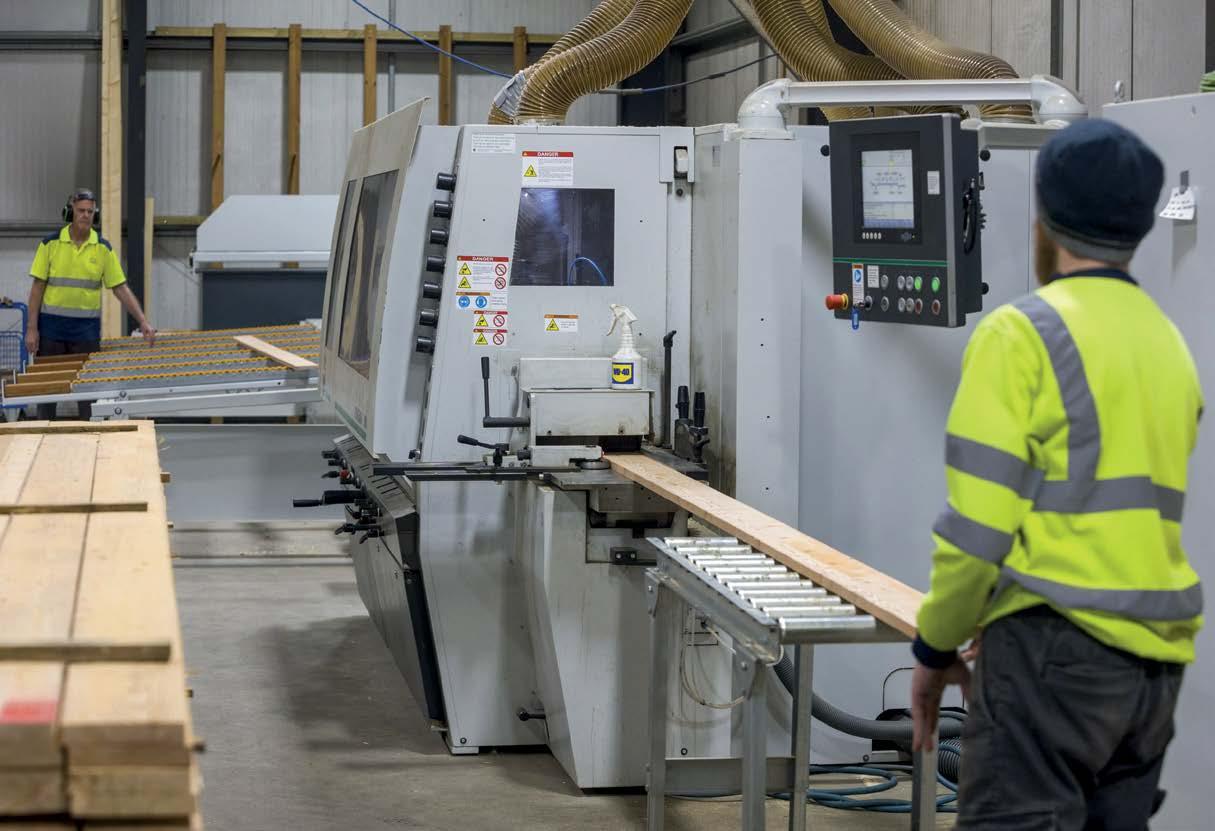
Now fully operational, Fleming Homes’ Techno Saw is helping the business increase throughput, improve repeatability and expand its off-site manufacturing capabilities, all while maintaining the company’s reputation for quality and attention to detail.
The Weinig–Essetre partnership is playing an important role in advancing off-site construction in the UK, equipping manufacturers with high-performance technology and dependable support to meet growing demand for faster, more efficient building solutions. For further information on the Essetre range in the UK, contact Michael Weinig (UK) Ltd on 01235 557600 or email
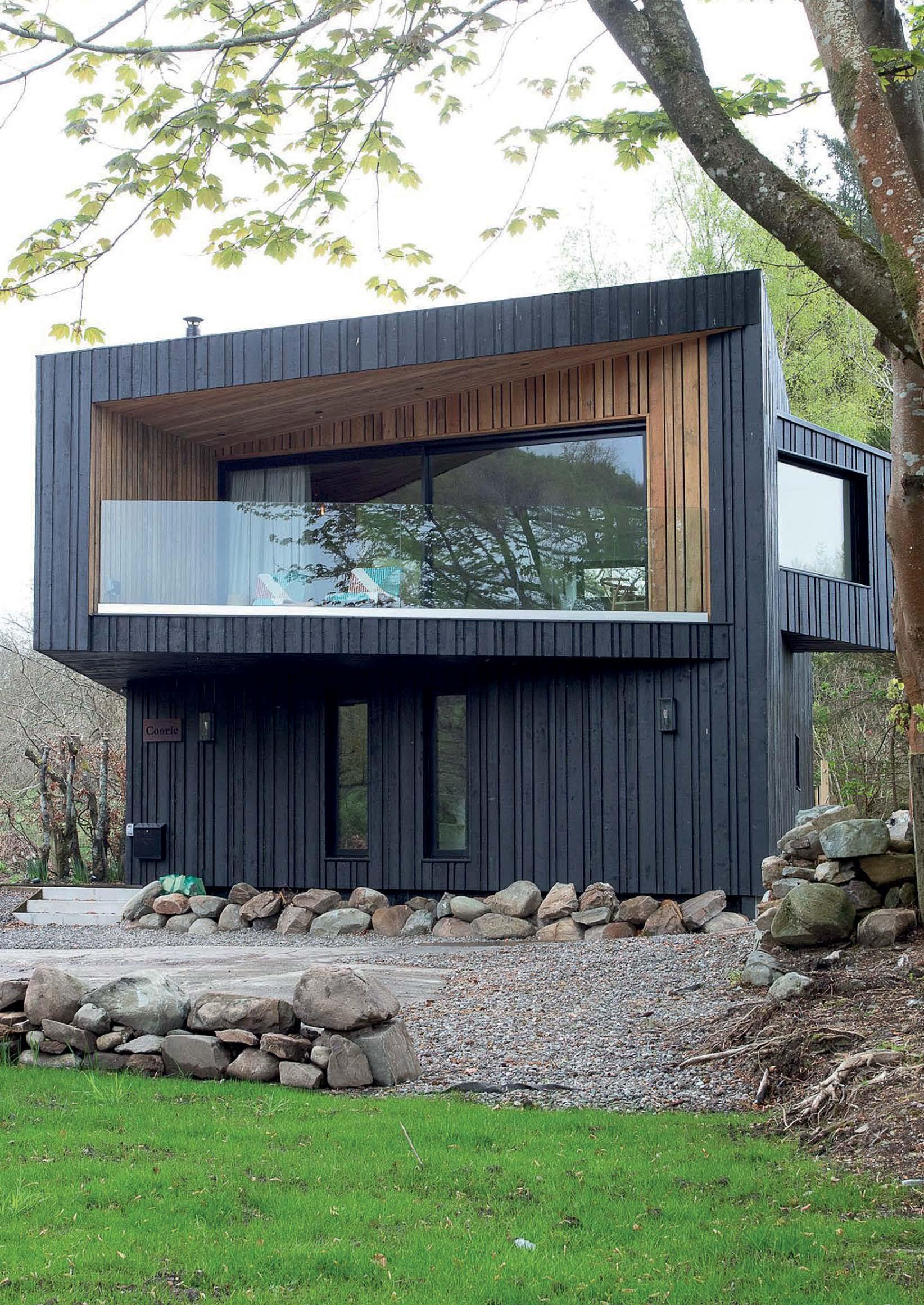
Cladding switch keeps Starbucks project moving
When the original Siberian larch specification for a new Starbucks in Greenock became unavailable, Mon Timber helped keep the project on track with a Canadian larch alternative, supported by in-house machining, coating and supply-chain coordination.
Commercial projects do not always fail because of design intent. More often, the pressure comes when a specification meets the reality of supply. That was the challenge facing Trojan Construction Management on a new Starbucks location on Cartsdyke Avenue, Greenock, where the exterior timber cladding package had originally been specified in Siberian larch.
Following the import ban on goods from Russia, that material was no longer available. The project team still needed a durable, visually suitable timber that could satisfy the design brief, meet Starbucks’ requirements and avoid delay on site. Mon Timber responded by recommending Canadian larch as an alternative, with the proposed switch approved by both Trojan and Starbucks.
Finding a workable alternative
More than 2,000 linear metres of Canadian larch were ordered for the project. The material was selected for its strength, durability and appearance, offering a warm natural finish suitable for a branded commercial environment while providing the weather resistance needed for external cladding in Scotland’s challenging conditions.
The choice also reflected the practical reality of timber supply. With the original specification no longer viable, the replacement had to be technically appropriate, available in sufficient volume and capable of being processed to the required profile and finish without disrupting programme.
Machined and coated in-house
Mon Timber worked with sister company Duchy Timber to machine the larch to match the required cladding design. Once machined, the timber was coated to provide a durable and visually consistent finish, helping the material sit comfortably within the wider Starbucks design language.
The job also demonstrated the benefit of supply-chain links within the wider Premier Forest Products group. By drawing on group capability for machining, coating and material supply, Mon Timber was able to provide a coordinated solution rather than simply supplying boards.
Richard Wadley, Hardwood & Specialties Manager at Mon Timber, said: “The Starbucks project was a great opportunity to showcase our ability to deliver top-quality materials, even when supply challenges arise. The Canadian larch we provided ensured the project could continue smoothly, meeting all the client’s expectations.”
Supply chain value
The finished building makes clear why the material choice mattered. The timber cladding gives the Greenock store warmth and texture, softening the commercial form while providing a robust external envelope suited to the setting.
Geraint Thomas, Procurement Manager at Trojan Construction
Management, added: “Mon Timber’s quick response in sourcing an alternative to Siberian larch was crucial. The Canadian larch met all of Starbucks’ requirements, and we were able to complete the project on schedule. The cladding looks fantastic, and both Starbucks and Trojan are delighted with the results.”
As a case study, the project is a useful reminder that timber supply is not just about availability. At its best, it is about finding the right material, processing it correctly and keeping the job moving when conditions change.
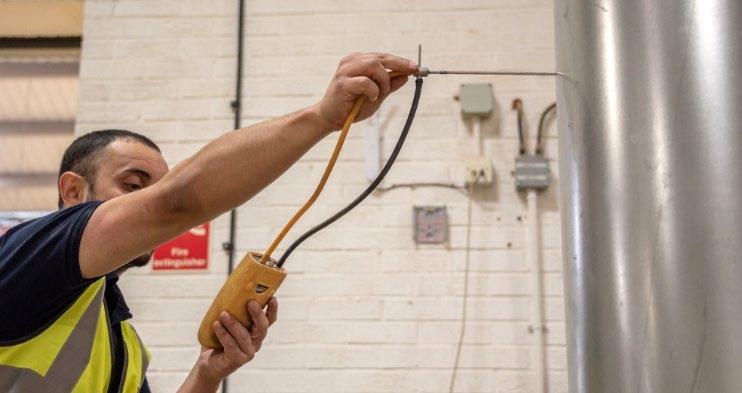
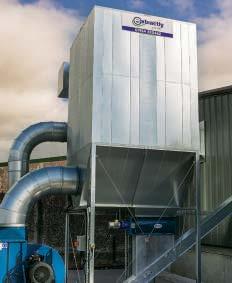
I s y o u r ex t r a c ti o n sy s t
Employer s who provide dust or fume extraction equipment in order to ensure employees are not exposed to substances hazardous to health, are legally obliged to examine and test the equipment in order to comply with the Health and Safety at Work Act and COSHH Regulations
Employers must ensure that all Local Extraction Ventilation (LEV) equipment is maintained in an efficient state, in proper working order, and in good repair. Thorough testing should be carried out at least once every 14 months and, in some industries, far more frequently.
The HSE enforce s the COSHH regulations and makes sure that all LEV Testing is carried out by competent engineers. Extractly’s LEV Test engineers are qualified to BOHS P601 level as a minimum.
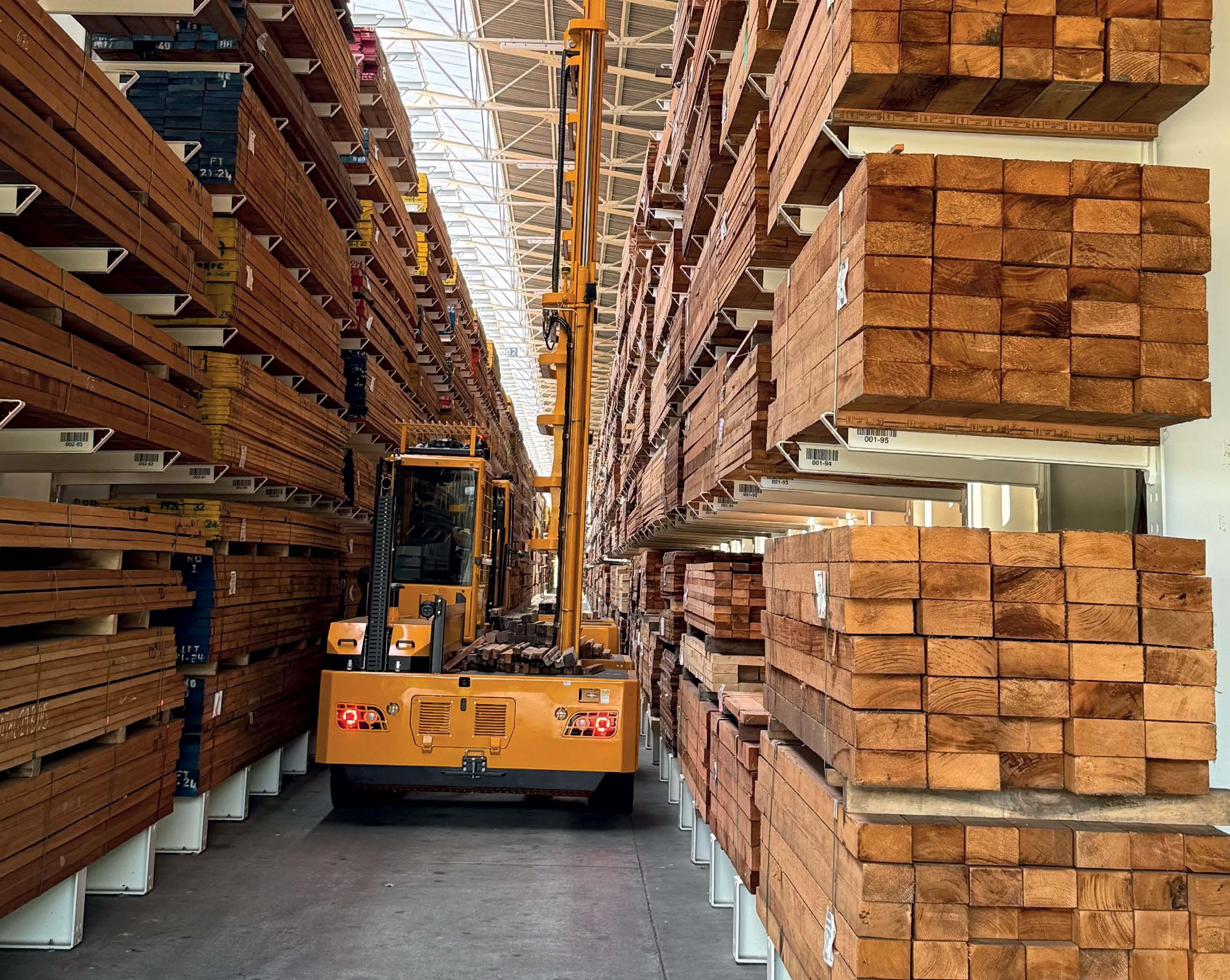
Material Handling Solutions for Modern Timber Construction
Despite ongoing challenges in the wider construction sector, timber construction remains resilient, driven by renovation, sustainability targets, and the continued growth of industrial prefabrication. Efficient material handling, storage, and logistics within factories and yards have become a key success factor.
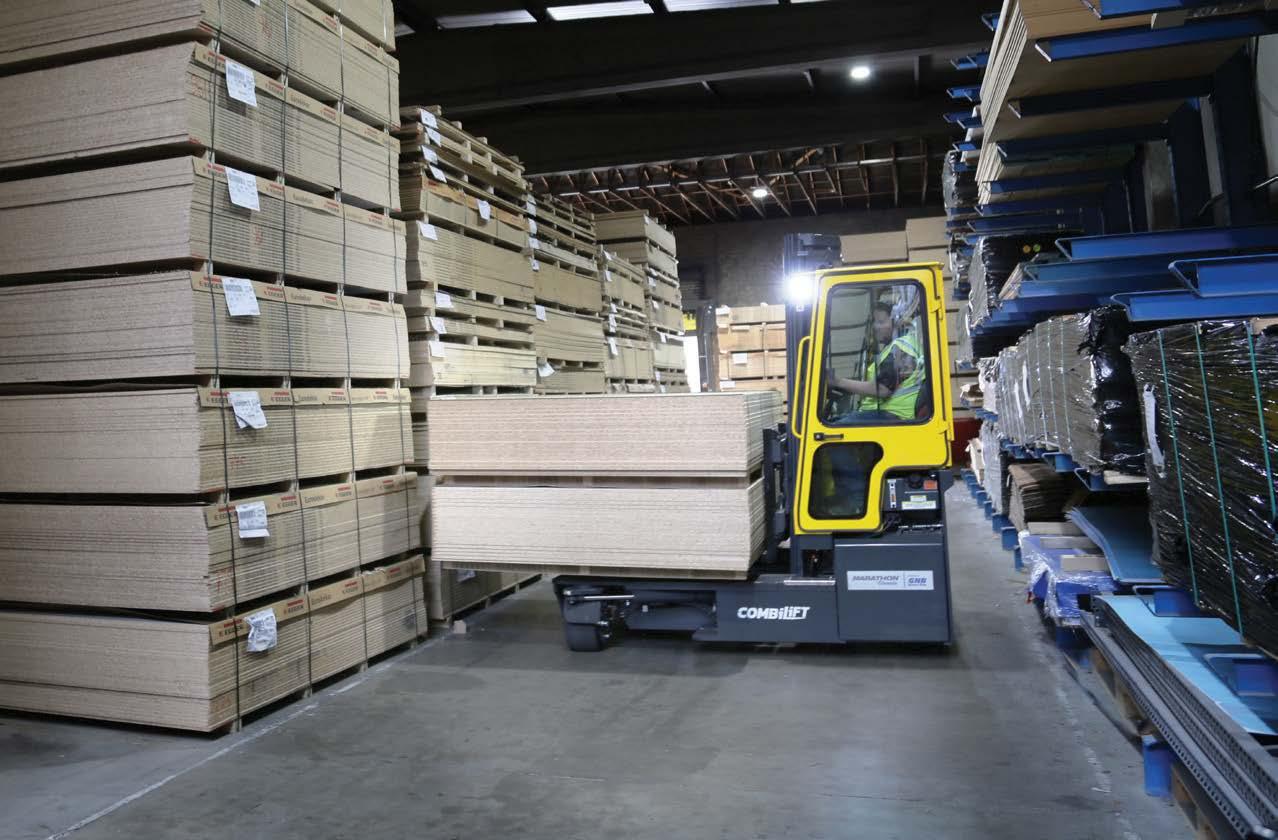
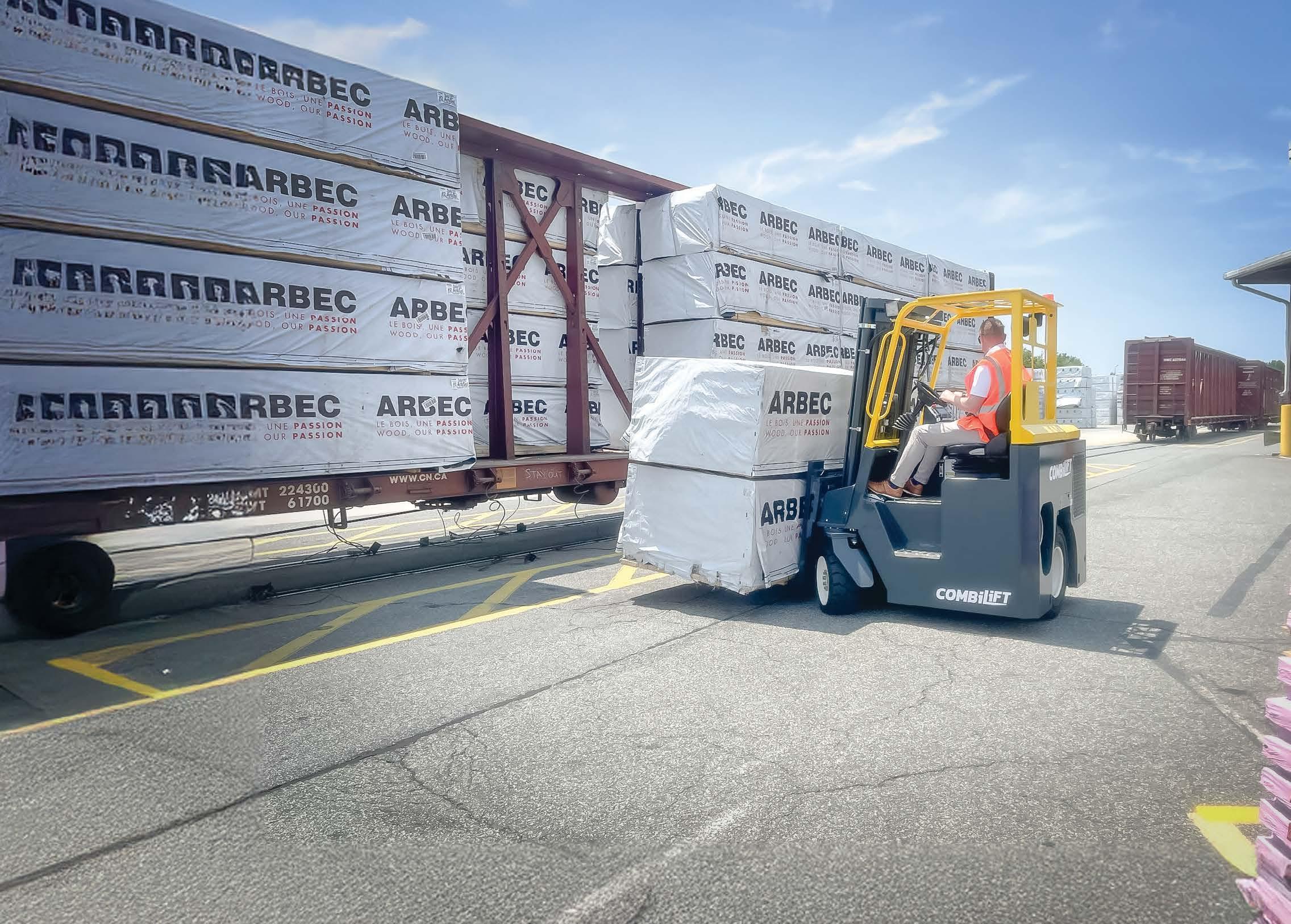
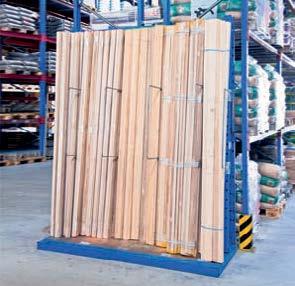
CComponents such as trusses, beams, and timber frame panels can vary in size, shape, and weight. They are typically challenging to handle due to their bulkiness, heaviness, and lengths that can exceed 14 meters. These high-value components need to move seamlessly throughout various areas, from raw material reception in the yard to final dispatch station.
Material handling specialist Combilift addresses these challenges with its wide range of purpose-built, space-saving material handling solutions.
Multidirectional forklifts for handling long loads
The multidirectional C-Series forklift is specifically designed to handle long loads. Its versatility allows it to work as a regular counterbalance but, at the flick of a switch, transform into a sideloader capable of navigating in much narrower aisles and doorways while transporting long, heavy loads, keeping them low to the ground and resting on the integrated platform. The sideways capability eliminates the need for overhead carrying while navigating narrow aisles and tight spaces, significantly reducing the risk of injury, product damage, and collision, and, in turn, enhancing safety and space efficiency.
One of the latest additions to the expanding electric range is the multidirectional Combi-CB70E. It has a 7-tonne lifting capacity and is the most compact counterbalance truck in its category. Its small footprint and lateral movement capability enable seamless operation in confined spaces and narrow aisles - ideal for handling long and bulky timber loads and beams with precision and ease.
Electric sideloaders for long-distance transport
The Combi FSE 8000 is the newest addition to the company’s fourwheel electric sideloader range, delivering the power and performance needed for demanding, long-distance operations - while supporting cleaner, more energy-efficient material handling. This fully electric model further strengthens the commitment of Combilift to sustainability, reinforcing its focus on developing high-performance, energy-efficient solutions that meet the evolving demands of modern material handling.
With an 8-tonne lift capacity, it is ideal for handling structural timber, sawn wood packs, panels, and engineered wood products in both indoor and outdoor environments where space is limited.
Handling the largest and heaviest loads
For even larger components and oversized structural modules, Combilift’s Straddle Carrier delivers secure, stable handling and lifting with direct trailer loading, removing unnecessary double handling and reducing reliance on cranes. Its compact design allows exceptional manoeuvrability in confined spaces, facilitating loads to be stacked closely together, as it only requires space for its wheels. The Combi-SC’s three-wheel design and small footprint also minimise ground pressure, which, in turn, eliminates the need for reinforced flooring and lowers maintenance costs.
Beyond Manufacturing: Warehouse Design Expertise
Combilift goes beyond designing and manufacturing specialised material handling equipment. A core element of the company’s philosophy is maximising space utilisation. The company also offers a free, in-depth warehouse and yard layout design service, demonstrating how a customer’s facilities can be reconfigured according to the capabilities of its equipment, which ensures enhanced efficiency, safety, and optimised space usage.
Making simple adjustments, such as narrowing aisles or increasing racking heights to better utilise vertical space, can deliver substantial gains. In many cases, storage capacity can increase by up to 50%, enabling companies to expand output without the cost and disruption of new building extensions or relocations.
By combining space efficiency, operational flexibility, and durability, the material handling solutions from Combilift offer a highly costeffective solution for handling the heaviest and longest timber elements with safety and precision.
For more info visit www.combilift.com
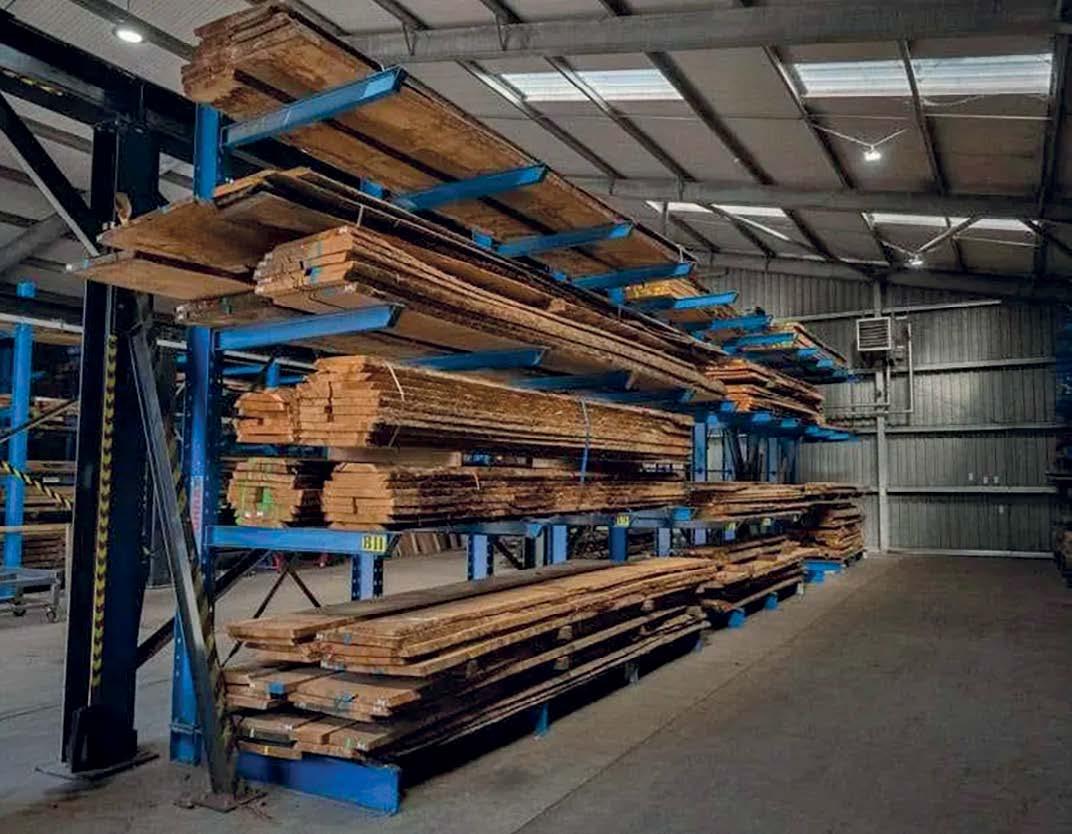
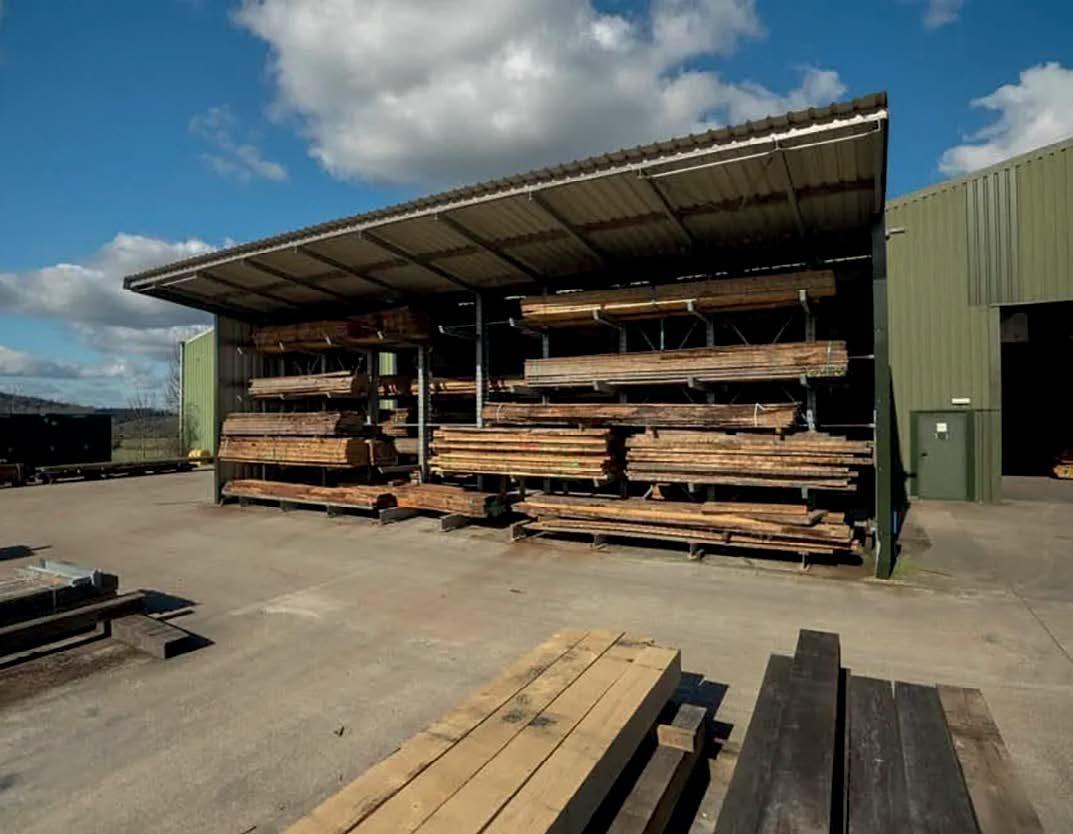
Storage, Airflow and Detailing: Protecting Timber on Site
Good timber can be undermined by poor handling. Drawing on practical guidance from English Woodlands Timber, Timber Trader looks at how storage, airflow, fixings and detailing can protect timber value after delivery.
Timber performance does not begin and end at the point of supply. A board, beam or cladding pack may leave the yard in good condition, correctly specified and fit for purpose, but what happens next can make a significant difference to how it looks, moves and performs.
Unlike many construction materials, timber continues to respond to its surroundings. Rain, humidity, poor stacking and direct ground contact can all affect its appearance and condition. In a wetter and less predictable climate, the basics of storage and handling are not just good practice - they are part of protecting the value of the product.
Keep it clear of the ground
One of the simplest mistakes is also one of the most damaging: leaving timber directly on the ground. Moisture can travel upwards from damp surfaces, increasing the risk of staining, fungal growth and deterioration at points of contact.
Raising packs on sacrificial timbers, bearers or suitable offcuts helps keep material clear of puddles and damp ground. Even support is also important, particularly for long lengths, where poor stacking can allow boards or beams to sag before they are used.
Airflow matters
Covering timber may feel like the safest option, but tightly sealed stacks can trap moisture and create the very conditions that lead to mould and decay. Timber needs protection, but it also needs ventilation.
Thin spacers between layers allow air to move through the stack, while breathable covers or netting can protect against weather without sealing moisture in. Where possible, exposed ends and good circulation help timber dry more evenly, reducing the risk of distortion or surface problems.
Design out splash and standing water
Storage is only part of the issue. Once timber is installed, groundlevel splashback can quickly become a weak point. Rain bouncing from paving or soil can soak the bottom of cladding, posts or other exposed elements, increasing the risk of premature decay.
Simple detailing can make a considerable difference. Keeping the lowest timber elements clear of the ground, using stone bases or padstones where appropriate, and designing vulnerable sections so they can be repaired or replaced all support longer service life.
The same principle applies across sills, ledges, cappings and cladding. Surfaces should shed water rather than hold it, while ventilation gaps behind cladding help moisture escape.
Plan for natural movement and staining
Some timber behaviours are natural rather than signs of failure. Oak, for example, will leach tannins when exposed to rain, often leaving tea-coloured staining on surfaces below. That process should be planned for, particularly where paving or landscaping is being finished beneath oak elements.
Fixings also matter. Austenitic stainless steel, particularly 316 grade, is generally the reliable choice where timber, moisture and tannins meet, reducing the risk of black staining, corrosion and weakened connections.
Good handling will not turn the wrong product into the right one. But it can prevent good timber being compromised before it has had the chance to perform. For merchants, suppliers and contractors, clear advice on storage, sequencing and detailing can reduce waste, avoid disputes and help customers get the best from the material they have specified.
For more info visit www.englishwoodlandstimber.co.uk
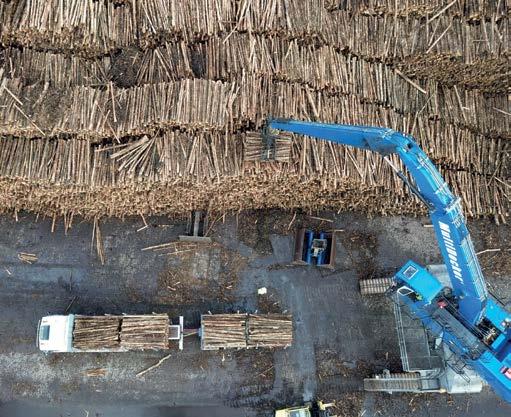
Can electric HGVs carry the weight of timber transport?
As the Net Zero Timhaul project moves deeper into real-world operation, electric timber haulage is beginning to look less like a theory and more like a serious option - but forestry’s toughest transport demands still expose the limits of today’s charging infrastructure.
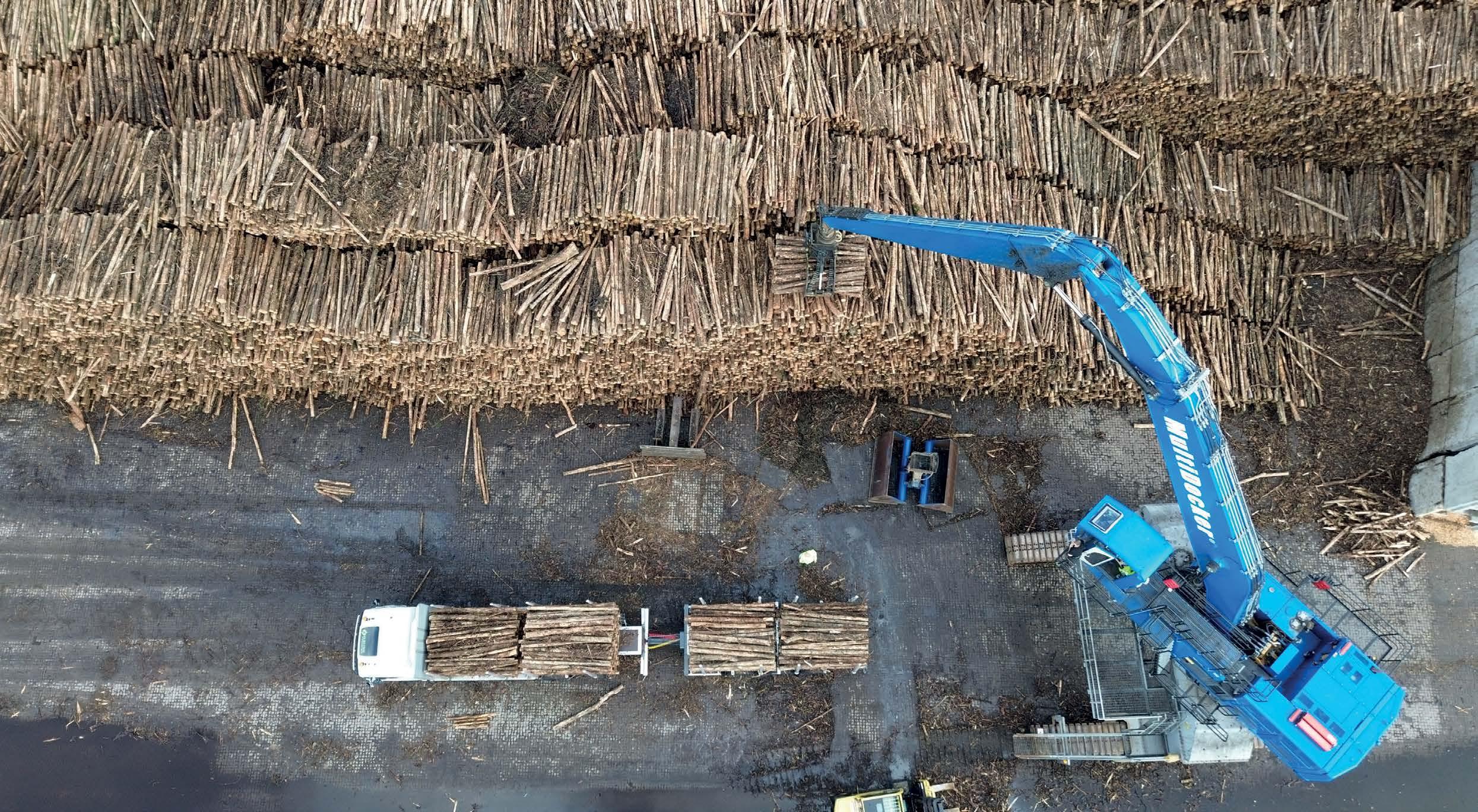
Timber transport is not an easy place to start an electric vehicle revolution. Loads are heavy, routes can be remote, working patterns are often dictated by forests, ports, mills and weather, and diesel has long provided the flexibility hauliers need to keep timber moving.
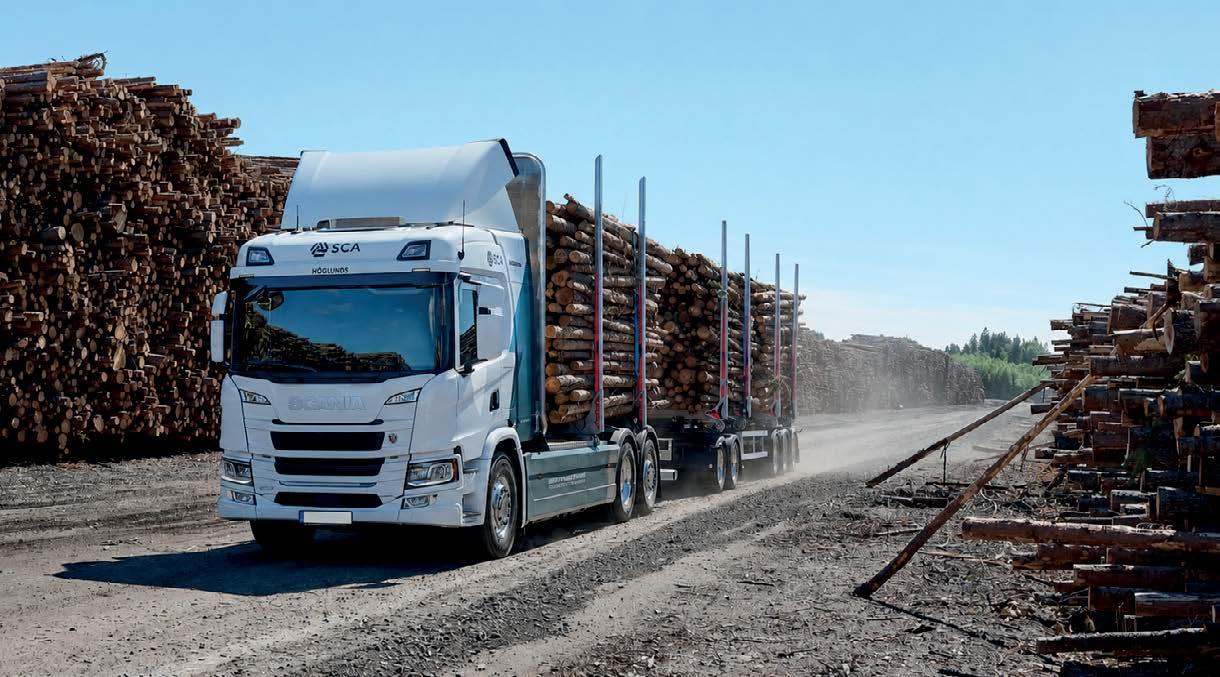
That is precisely why the Net Zero Timhaul project matters. Funded by Scottish Forestry through the Strategic Timber Transport Scheme, the demonstrator was set up to test whether battery-electric HGVs could work in real timber freight operations, rather than in idealised road haulage conditions.
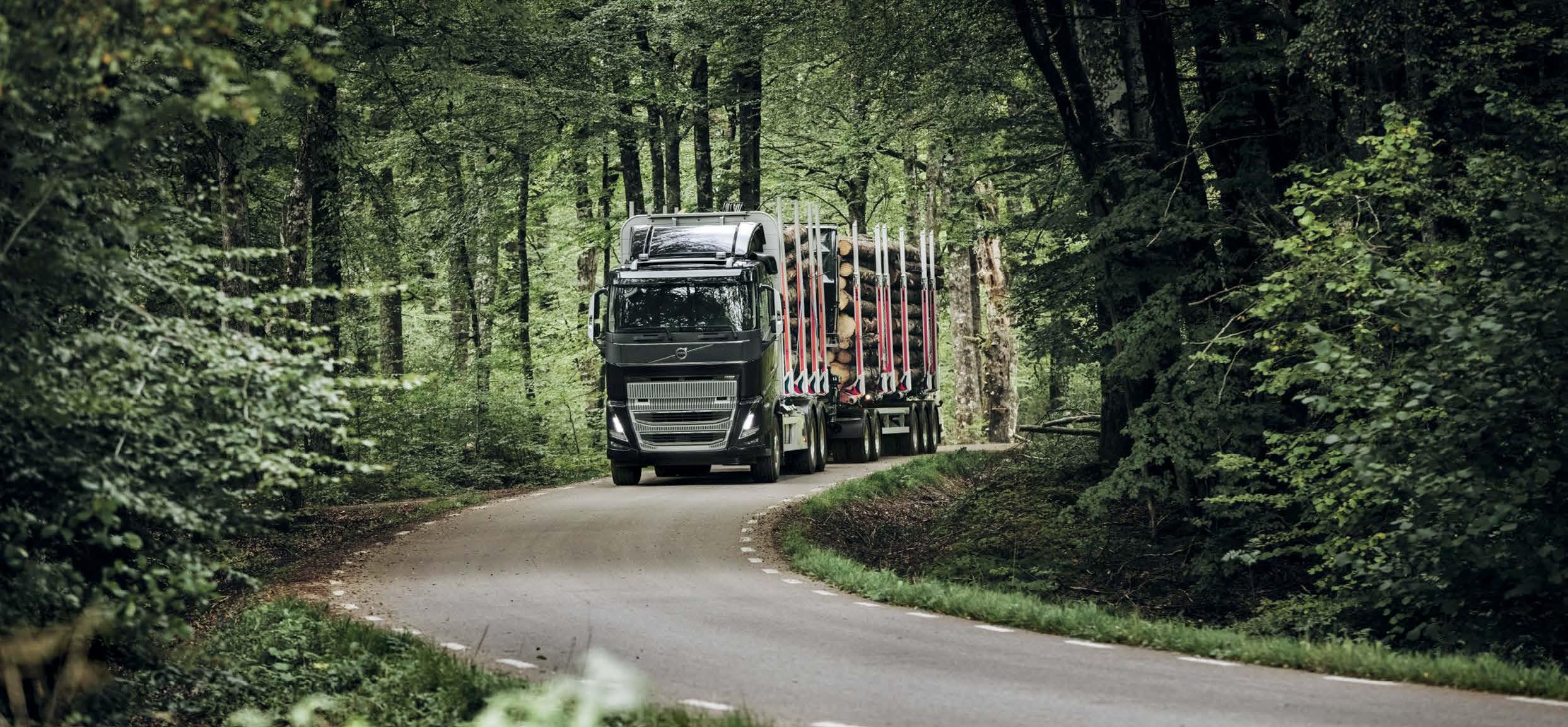
The project brought together Scottish Forestry, Creel Maritime, James Jones & Sons, Scotlog and Volvo Trucks. Two Volvo FH Electric vehicles were deployed in 2023, each matched to a different timber haulage application. James Jones & Sons has been operating a 40-tonne, five-battery tractor unit with a flatbed trailer, shunting sawn timber products from the Stevenscroft sawmill near Lockerbie to the Hangingshaws Distribution Centre at Johnstonebridge. Scotlog has been operating a 44-tonne, six-battery rigid unit with a fixed drag trailer and specialist timber body, moving roundwood from Inverness Harbour to West Fraser and other local mills in the Highlands.
The result is one of the most useful sources of practical evidence yet on what electrification could mean for timber haulage.
From proof of concept to operational evidence
The 2025 Net Zero Timhaul Progress Report shows that, by October 2025, the project was around 65% through its programme. By that point, the two electric HGVs had completed 132,309km, or 82,213 miles, avoiding 165 tonnes of CO2 equivalent emissions. The report states that the trucks are saving just over 1kg CO2e per mile per lorry,
with both drivers and fleet managers reporting positive experiences.
Year two performance was also described as consistent, with no material deviations in efficiency, availability or service delivery under normal operating demand. That is important. Early-stage demonstrators often prove that technology can move, but not always that it can settle into working routines. Net Zero Timhaul suggests electric trucks can do both, at least in the right duty cycles.
Energy efficiency across the two vehicles averaged between 0.53 and 0.55km/kWh, including the contribution from regenerative braking. That translated into an operating range of around 182km, or 113 miles, on a full battery. This is not diesel-equivalent flexibility, but it is enough to make predictable return-to-base operations viable.
As Neil Stoddart of Creel Maritime puts it in the report: “Now that we have verified field data showing it works in baseline conditions, electrification of forest logistics is no longer purely theoretical.”
The reality of timber haulage
The harder question is where the baseline stops and full forestry haulage begins. Much of the trial has operated on a return-to-base model, largely because public charging infrastructure for HGVs is still not sufficiently developed. That limits what can be tested. Longdistance motorway work, public charging costs and more variable destination routes remain harder to assess.
Forestry also places demands on vehicles that many forms of haulage do not. Trucks are often working at or close to maximum gross weight. Routes can include rural roads, forest tracks, steep gradients and remote collection points. Delays and weather can affect energy use. Winter conditions reduced range in the trial by around 15%, partly due to battery chemistry and increased auxiliary loads such as heating, although the report notes that diesel vehicles also suffer seasonal efficiency losses.
Payload is another constraint. Because 44 tonnes is the UK legal maximum gross vehicle weight, the additional weight of battery systems can reduce usable payload. The report identifies a 15% reduction in payload to accommodate battery weight in one comparison, with the issue becoming even more significant if a hydraulic timber crane is mounted.
This matters because timber haulage is not moving parcels or lowdensity consumer goods. In many cases, payload is the business model.
The commercial equation
The economics remain finely balanced. The report compares a diesel Volvo FH with an electric equivalent and highlights the scale of the capital cost challenge: around £144,000 for the diesel vehicle compared with £333,000 for the electric HGV before support.
Lower running costs help close that gap. The report’s modelling puts maintenance at £0.11 per mile for the electric HGV against £0.19 per mile for diesel, while the cost per mile comparison is £1.04 for electric against £2.50 for diesel, based on the assumptions used. However, total cost of ownership parity is not reached until year five under current conditions.
That is the commercial crux. Electric timber haulage can be cheaper to run, but it is still more expensive to buy, more dependent on grants,
and more sensitive to electricity tariffs, charging access and duty cycle. Low-cost depot charging is essential. Public charging, where available, is likely to be more expensive and less predictable.
Grant support is therefore not a side issue. The UK Plug-in Truck Grant can reduce the cost of electric trucks by up to £120,000, while the wider Zero Emission HGV and Infrastructure Demonstrator programme is intended to support vehicles and charging infrastructure across the UK.
Charging is the critical path
The report is clear that infrastructure will determine how quickly electrification can move beyond predictable depot-based routes. Shared depot charging, bus depot access, semi-private fleet charging and remote battery storage systems are all identified as potential routes forward.
That point is particularly relevant to forestry. Commercial forests are often located away from motorway corridors and established EV infrastructure. In some cases, temporary or mobile charging at forest sites could be needed simply to give operators enough resilience to complete shifts safely and productively.
The project’s proposed next phase would explore more remote routes, public and partner charging, and performance across a wider range of real forestry conditions. That feels like the right next step. The question is no longer whether electric timber trucks can work. It is where they work best, what support they need, and how quickly the wider system can catch up.
Electric HGVs will not solve every timber transport challenge overnight. Diesel’s flexibility, existing infrastructure and embedded cost model remain difficult to displace. Yet Net Zero Timhaul shows that battery-electric haulage is now a credible part of the answer, particularly for regional, repeatable, return-to-base movements.
The weight of timber transport is heavy in every senseoperationally, commercially and environmentally. Electric HGVs are beginning to carry some of it. The next test is whether infrastructure, investment and supply chain coordination can help them carry more.
For more info visit www.forestry.gov.scot
The Cost of Small Inefficiencies
It’s entirely possible to run a good business on a system that ‘does the job’. Many timber traders do. It works. The team knows it. And day to day, it gets you through. But there are usually a few nigglesthings that take a bit longer than they should, workarounds you’ve developed, or situations where you rely on someone knowing how to do certain things. Individually, you can live with them. Over time, they tend to add up.
When the system doesn’t quite fit
That’s where the gaps start to show in how you actually work. Most systems will cover the basics. What tends to separate them is how naturally they handle the detail - the industry specifics - things like working across different units of measure, tracking timber by pack or batch, or managing processed and treated timber alongside standard lines. If those aren’t handled cleanly, they tend to create small bits of friction across your day.
Stock confidence
Stock is often where inefficiencies are felt most, day to day. “We never really know what we’ve got” is something we hear a lot. Not because people aren’t doing their jobs - but because no one’s completely sure what the system is telling them.
So it shows up in small ways. “Hang on, let me check.” Walking the yard. Double-checking before committing.
And that’s where it starts to have an impact - on how quickly you can respond and the confidence you have in your answers.
At the trade counter
You see it straight away when a customer is standing in front of you. Speed matters, but so does accuracy. Pricing, availability, alternatives - it all needs to come together quickly, without slowing the conversation
down. If it doesn’t, it shows up in small delays and starts to shape how your customer experiences your business.
Out on the road
You see it here as well. Planning deliveries across spreadsheets, managing multiple vehicles, trying to keep track of what’s gone out and what hasn’t - it can quickly become hard to stay on top of. Changes happen. Orders move. Drivers call in. And without a clear view, it turns into a lot of back-and-forth just to keep things running. It’s all manageable - but noticeably easier when everything is connected and visible in one place.
Seeing the numbers
You have loads of data - it’s just not easy to find what you’re looking for or get it in a format you can use. Spreadsheets, reports, different versions of the same numbers. By the time you find what you need, it’s already out of date. That slows decisions down more than it shouldand makes it harder to trust what you’re looking at.
Best solution?
There isn’t a single ‘best’ system for every timber trader. But the better ones tend to handle industry detail well, reduce day-to-day friction, and give you confidence in the numbers you’re working from.
And that’s usually what separates something that simply works… from something that really helps.
If things feel harder than they should - or your team has adapted around your system - it’s worth asking why.
Then see what you’re missing with the latest browser-based business software built for timber businesses, GenetiQ Cloud.
Timber cladding trends point to performance, finishing and supply resilience
As refurbishment demand, modified timber and factory-finished systems continue to shape specification, recent insight from Vincent Timber highlights how the UK cladding market is becoming more performance-led and commercially pragmatic.
Timber cladding is no longer being specified on appearance alone. Across education, residential and commercial projects, the market is moving towards products that can offer durability, stable supply, clearer warranties and a predictable finish once installed.
That shift is reflected in recent market commentary from Vincent Timber, which points to continued demand for modified timber, preservative-treated redwood, factory-finished systems and naturally weathering cladding products. The result is a market where service life, compliance and whole-life value are becoming central to the specification conversation.
Education has emerged as a particularly active sector, with timber facade systems being specified across school and public building projects. Examples cited by Vincent Timber include Harwell Science and Innovation Campus using VTX Redwood, Orsett Heath Academy featuring Thermo Ayous, and The Swan School incorporating homegrown larch.
Refurbishment keeps momentum moving
Alongside new-build activity, refurbishment is becoming an important driver of demand. As homeowners and developers upgrade existing buildings rather than relocate or rebuild, external timber products are being used to refresh facades, improve kerb appeal and support longer-term asset value.
This is particularly relevant in a market where installation and labour costs remain high. Once a facade system is installed, clients
want confidence that the material will continue to perform. That has strengthened interest in cladding products with documented durability, clear warranties and proven stability in exposed applications.
That performance-led shift is visible in the products now carrying demand. Accoya remains prominent where dimensional stability, sustainability credentials and a long above-ground warranty are valued,
particularly on higher-end residential and commercial schemes. VTX preservative-treated European Redwood is also finding a place across housing, education and commercial facades, offering a more costcompetitive option with durability warranty support and Euroclass B compatibility where required.
Modified timber gains ground
Modified and thermally treated timbers are moving further into the UK cladding market. Thermally modified Radiata Pine and Thermo Ayous are both cited as areas of increased demand, offering improved dimensional stability and durability, with service lives exceeding 30 years.
The reason is practical. Vincent Timber’s market commentary notes that installation and labour costs now make up such a large proportion of facade work that the material installed needs to last and continue performing year after year.
That point is increasingly shaping buying behaviour. A lower-cost cladding board is not necessarily the best-value option if movement, maintenance or premature replacement erodes the saving. Modified timber gives specifiers another route to durable external timber without relying only on traditional high-durability species.
European larch has also become an important substitute for Siberian larch in the UK market, offering a more readily available option for ventilated facade systems. While not a like-for-like answer in every situation, it has become one of the more practical alternatives for projects seeking a familiar larch aesthetic from a more available supply route.
Factory finishing and natural weathering
Factory-finished cladding is also drawing interest, particularly where colour consistency, reduced site labour and coating warranties are valued. Systems such as Sivalbp and Cape Cod show how pre-finished
timber can give clients a more controlled appearance from day one, with options including pre-weathered finishes and coloured coatings backed by warranty support.
However, natural weathering remains a major part of the market. Unfinished timber cladding continues to dominate overall demand, particularly where clients want the material to weather gradually to a silver-grey finish and age with the building.
Western Red Cedar shingles also remain popular, particularly for projects seeking a distinctive natural finish across roofing and cladding.
One example is The Gingerbread House by Architect Laura Dewe Mathews, which uses Canadian Western Red Cedar shingles for their natural weathering characteristics and classic appearance.
Outlook for 2026
Looking ahead, the outlook for timber cladding remains positive, although the wider timber market has not been without disruption.
The past year has also underlined the importance of supply chain resilience, with supplier failures forcing established businesses to adapt quickly and rethink how they maintain continuity for customers.
Despite those challenges, demand is expected to remain aligned around sustainability, longevity and low maintenance. Refurbishment activity is likely to continue supporting the market, while new-build housing and public-sector work should maintain demand for compliant, high-performance timber facade systems.
The direction of travel is clear enough. Cladding choices are now being judged not just on species and appearance, but on stability, treatment, coating performance, warranty support and supply confidence. In a market still dealing with cost pressure and supplier disruption, the products best placed to hold demand are those that combine a strong visual offer with credible long-term performance. `
Find out more at www.vincenttimber.co.uk
Specialist timber without the stock risk
As merchant customers ask for broader timber and panel ranges, Bradfords Building Supplies’ work with James Latham points to a wider shift in how specialist products are being supplied across the trade.
The builders’ merchant model has always depended on getting the basics right: the right product, in the right place, at the right time, at a price that makes sense.
But as timber and panel specifications become more varied, that simple formula is becoming harder to deliver.
For many merchants, the challenge is no longer just whether they can supply core commodity lines efficiently. Increasingly, branch teams are being asked about decorative MDF, birch plywood, specialist cladding, hardwoods and technical panel products that sit outside everyday stock profiles. Architects and contractors are specifying in more detail. Customers expect answers faster. And branches are left with a familiar commercial dilemma: how do you offer a wider specialist range without tying up large amounts of capital in slow-moving stock?
That question sits behind Bradfords Building Supplies’ decision to revise part of its specialist timber and panel supply model through a closer partnership with James Latham.
A changing merchant market
Bradfords had been working with a broad spread of suppliers across different categories. The arrangement functioned, but it brought familiar problems. Product knowledge was uneven, particularly around
more technical or higher-specification materials. Pricing and availability could be difficult to track consistently. Branch staff were not always in the strongest position to respond confidently when enquiries moved beyond routine lines.
At the same time, holding specialist products locally carries risk. Slower-moving stock can absorb capital, take up valuable space and create uncertainty around turnover. For merchants operating across multiple branches, duplicating that exposure across the network can become expensive very quickly. The stock may be needed, but not necessarily often enough to justify sitting in the yard.
Bradfords’ response was to move towards a more consolidated model, using James Latham’s centrally held range as an extension of its own offer. Rather than asking every branch to carry deeper specialist inventory, the business could access a wider range of timber and panel products through a distributor already structured around breadth of stock.
Access over ownership
The principle is straightforward, but commercially important: access can sometimes matter more than ownership. Branches do not need to hold every line locally if they can draw on reliable stock, clear information and delivery schedules that match customer demand.
That distinction is becoming increasingly relevant in a market where product range expectations are rising, but merchants remain under pressure to control working capital. Specialist timber and panels are useful lines to be able to offer, but they can be difficult lines to hold speculatively. The Bradfords model reflects a more flexible approach, where availability, technical support and logistics carry as much weight as branch-level stock depth.
A key part of the change was reducing reliance on branch-led stockholding. Instead of committing capital to slower-moving specialist products, branches began placing smaller, more regular orders aligned with actual demand. James Latham’s inventory effectively became part of the wider supply proposition, supporting enquiries for sheet materials, hardwoods, cladding and other products that might otherwise have been difficult to service consistently.
Delivery and product knowledge
Delivery capability underpinned the model. James Latham promotes 24/5 depot operations and rapid deliveries as part of its merchant offer, and that structure supports smaller, more frequent ordering rather than larger speculative buys. In practical terms, this gives branches a way to respond to customer requirements without overloading their own yards with products that may not turn quickly enough.
The shift was not only about logistics. Bradfords also introduced branch-level training to improve familiarity with specialist timber and panel products. That matters because range expansion only works if branch teams can talk about the products with confidence. Customers asking about decorative MDF, birch plywood or phenolic-faced boards are often looking for more than a price and lead time. They need reassurance around suitability, application and availability.
This is where the revised model becomes more than a procurement exercise. By combining access to stock with stronger product knowledge, Bradfords aimed to improve the quality of customer conversations as well as the breadth of what it could supply. In a competitive merchant market, that kind of confidence can be a differentiator.
A practical shift in supply
The results appear to have been positive. Andrew Jones, Merchant Sector Manager at James Latham, has described Bradfords as the distributor’s “biggest success story”, noting significant growth over the past two to three years. Paul Crook, Timber Development Manager at Bradfords Building Supplies, said: “Access to James Latham’s product range has significantly strengthened our ability to meet customer requirements, especially for specialist and hard-to-source products.”
Bradfords has also reported strong growth in decorative MDF, birch plywood and Buffalo phenolic-faced board, underlining the value of having more specialist material available without forcing every branch to hold deep local stock. Operationally, the business has reduced reliance on holding specialist stock at branch level while maintaining service levels and improving the consistency of customer interactions where technical specification is involved.
What it means for merchants
The wider significance lies in what this says about the merchant sector. Traditional stock-led models still have their place, especially for fast-moving core lines. But as product demand becomes more fragmented, and as customers expect broader access without longer waits, merchants may need more nuanced supply arrangements.
That does not mean outsourcing expertise or becoming passive order-takers. Quite the opposite. The model only works when branch staff understand the products, when suppliers can provide credible technical support, and when delivery is predictable enough to give customers confidence.
Specialist timber demand is unlikely to become simpler. If anything, the combination of tighter specifications, sustainability expectations, design-led projects and more varied panel applications points in the other direction. Merchants that can widen their effective offer without weakening stock discipline will be better placed to capture that demand.
Bradfords’ work with James Latham is one example of how that balance can be struck. It is not a radical reinvention of merchanting, but it is a practical adjustment to the way the market now behaves: fewer assumptions about what must sit in branch, more emphasis on responsive supply, and greater value placed on the knowledge needed to sell specialist products properly.
In a sector where availability, margin and expertise all matter, that may prove to be the real lesson. The strongest specialist offer is not always the one with the most stock on the ground. Sometimes, it is the one with the best route to the right product - and the confidence to know when and how to use it. `
Thermowood moves into sharper focus for exterior timber
As demand grows for durable, stable and lower-chemical exterior timber, Danzer UK is bringing Thermory’s thermally modified cladding and decking range to the UK market.
Exterior timber specification has always involved tradeoffs. Appearance, durability, movement, maintenance, price and availability all have to be balanced, particularly in exposed applications such as cladding and decking where poor performance is highly visible.
Thermally modified timber has been gaining ground because it speaks directly to that problem. Rather than relying on chemical preservative treatment, the process uses heat and steam to alter the structure of the wood, improving its resistance to moisture, weathering, pests and mould while increasing dimensional stability.
Danzer UK is positioning Thermory as a premium answer to that growing demand, with the company stating that it is the UK’s only provider of Thermory decking and cladding. The range is built around real timber, modified for long-term outdoor use, rather than synthetic alternatives or tropical hardwood substitutes.
The principle is straightforward. Carefully selected, certified timber is exposed to high temperatures in a controlled process, changing the behaviour of the material throughout the board. The result is exterior timber designed to cope with harsher conditions while retaining the warmth, grain and character that make wood attractive in the first place.
For cladding applications, Thermory offers a range of thermally modified species including Thermo Red Oak, Thermo Pine and Thermo Spruce. Each brings a different visual character, from the richer tones of modified hardwood to the familiar grain and texture of softwood. The cladding offer is supported by a choice of profiles, patterns and surfaces, giving specifiers and installers room to match the product to the building rather than forcing one standard look across every project.
Decking follows a similar logic, with Thermo Ash, Thermo Pine and Thermo Spruce available for outdoor applications. Danzer’s material highlights the combination of durability, stability and ease of installation, with Thermory decking designed for long-lasting use in exposed environments.
Installation detailing is also part of the proposition. Hidden fixing systems are available to support a cleaner finish, while end-matching can be specified on most profiles. That detail matters commercially as much as aesthetically, helping reduce measuring and cutting time while improving the finished appearance.
The sustainability argument is equally important, but it should not be overstated into vague marketing language. The key point is that Thermory uses certified timber and a modification process based on heat and steam. That gives merchants, contractors and specifiers another route into durable exterior timber where chemical-free modification is preferred, without moving away from real wood.
Thermory will not replace every treated timber product, and nor should it be presented that way. Its value is more specific: a stable, visually strong, trade-ready option for cladding and decking where durability, appearance and responsible sourcing all need to work together.
With exterior timber under growing scrutiny from clients, designers and end users, products such as Thermory show how modified timber is moving beyond niche specification. The category is becoming better understood, better supported and increasingly relevant to the UK timber trade. `
Thermo-Ayous brings natural warmth to south London housing
Duffield Timber’s FSC-certified Thermo-Ayous cladding has helped create a calm, contemporary exterior for a south London housing development, using clean shadow gap detailing and a material palette designed to weather naturally over time.
Good cladding projects often succeed because the material is allowed to do its job quietly. On this south London housing development for family-run property developer Silvercrow, Duffield Timber’s Thermo-Ayous gives the buildings a refined but natural exterior, combining vertical rhythm, warm colour and a close relationship with the surrounding trees.
The product supplied was FSC-certified Thermo-Ayous, a thermally modified African hardwood valued for its clear grade appearance and rich brown tone after heat treatment. Ayous starts out pale, but the modification process gives it a warmer, more consistent colour while improving durability and dimensional stability. For external cladding, those qualities matter. The timber needs to perform, but it also has to hold the architectural line.
Here, that line is deliberately crisp. Two Duffield Timber shadow gap profiles were used on the project: DTC15 vertical shadow gap secret nail and DTC47 double vertical shadow gap secret nail. The result is a clean contemporary elevation, with narrow vertical boards and recessed shadow lines giving the facades depth without overcomplicating the detail.
The setting does much of the work. Surrounded by mature trees, the buildings sit within shifting light and shade, with the cladding picking up changes in tone across the day. Rather than fighting the natural surroundings, the Thermo-Ayous has been specified to settle into them. Over time, the timber will slowly silver off, allowing the exterior to weather into a softer, more muted finish.
Sustainability was also part of the specification. The timber carries FSC chain of custody certification, confirming that it comes from responsibly managed forests and has been checked through the supply chain. In a market where timber appearance, provenance
and performance are increasingly judged together, that traceability strengthens the material story.
The project is a good example of where thermally modified hardwood can sit within the cladding market. It offers the visual appeal and natural warmth designers often want from timber, while giving merchants, specifiers and installers a product with improved stability and a clear exterior application.
Most importantly, it shows the value of restraint. With carefully selected profiles, consistent detailing and a timber that is intended to age rather than stay frozen in place, the finished scheme feels contemporary without being sterile. The images say much of the rest.
The vertical shadow gap profile gives the Thermo-Ayous cladding a crisp contemporary finish while allowing the natural character of the timber to remain visible
Professional woodworking Expo 2026 set to bring the industry together
Professional Woodworking Expo (PWE) 2026 is set to become one of the UK’s leading events for the woodworking and joinery sector, bringing together manufacturers, joiners, installers, machinists, furniture makers and suppliers for three days of innovation, networking and practical learning.
ETaking place at the NEC Birmingham from 23-25 June 2026, the exhibition will showcase the latest machinery, tooling, software, finishes, materials and manufacturing solutions, while giving visitors the opportunity to discover new technologies and hear directly from industry experts. Organisers expect more than 6,000 visitors and over 200 exhibiting brands across the three-day event.
A major development for 2026 is the co-location with InstallerSHOW and Painting & Decorating Show, creating a larger multi-trade destination that reflects the increasingly connected nature of modern construction and fit-out projects. The combined format is expected to encourage collaboration across trades and attract professionals from throughout the wider built environment sector.
Insights and Innovation on the PWE Mainstage
The PWE Mainstage will deliver a seminar programme designed for joiners, carpenters and woodworking professionals looking to stay ahead of industry developments. Organisers say the programme will combine expertled seminars, live discussions and practical advice focused on improving efficiency, adopting new technologies and increasing profitability.
Sessions will cover both technical and commercial topics affecting the sector, ranging from advanced joinery techniques and material innovation to compliance updates and business growth strategies.
Highlights from the 2026 agenda include:
• Applying AI in joinery: from enquiry to workshop floor
• The hidden ventilation risks in modern joinery and fit-out
• UK timber regulations explained
• How the new European Construction Products Regulation will affect windows, doors and building hardware
• From workshop to system: how joinery manufacturers are scaling without more labour
• LED-curing for timber
• Giving London’s trees a second life
Confirmed speakers and contributors include Matthew Burns from the Office for Product Safety and Standards (OPSS), Kevin Underwood from the British Woodworking Federation, Neil Newbrook from Mirka UK Ltd and Fiona Fang from Oslek Coatings Limited.
According to organisers, the seminar programme has been developed to provide practical takeaways that businesses can implement to improve productivity, compliance and operational efficiency. Sessions will also address wider challenges including sustainability, labour shortages and changing legislation.
Live Demonstrations Across the Demo Zone
One of the biggest attractions at PWE 2026 will be the return of the Demo Zone, where visitors can see woodworking machinery, tooling and manufacturing systems operating live on the show floor.
The Demo Zone will be divided into four dedicated areas, each focusing on a different aspect of woodworking and joinery manufacturing.
Machinery Showcase
The Machinery Showcase will focus on high-performance timber processing and automated production systems. A headline
demonstration will feature the LMC Leadermac Smartmac 523 paired with a Doucet handling system, showing how integrated manufacturing solutions can improve speed, accuracy and workflow efficiency.
Hosted in partnership with Advanced Machinery Services, the area will demonstrate how automation and modern machinery can help manufacturers increase output while maintaining quality standards.
Window Manufacturing Zone
The Window Manufacturing Zone will explore the future of timber window production through live joinery demonstrations. Featuring machinery from Vertongen and Martin alongside tooling from Leitz, the feature is being delivered in collaboration with The Joinery Network and Markfield Woodworking Machinery.
Visitors will see modern manufacturing techniques in action while learning more about efficient workflows, precision engineering and innovations shaping timber frame window production.
Carpentry Skills Hub
Hosted by Fix Radio’s Carpentry Show presenter Robin Clevett, this section of the Demo Zone will focus on skills development
and emerging industry talent. Third-year construction and joinery students will take part in a live roof build demonstration alongside experienced professionals.
The feature has been designed to highlight the importance of hands-on training while giving visitors the opportunity to engage with the next generation of woodworking professionals.
Innovation Station
Designed as a hub for discovery and problem-solving, the feature will connect visitors with suppliers offering solutions aimed at improving efficiency, product quality and workplace safety.
Leading Exhibitors Confirmed
Alongside the live demonstrations and seminar programme, visitors will have the opportunity to meet many of the sector’s leading manufacturers and suppliers.
Exhibitors already confirmed for the 2026 event include IMA Schelling, Festool, Nederman, Doucet and Leitz, with additional brands continuing to join the line-up.
The exhibition floor will feature innovations in timber processing, joinery production, tooling, finishing systems and digital manufacturing technologies, allowing attendees to compare products and speak directly with suppliers about their operational requirements.
A Key Event for the Industry
With live demonstrations, expert-led content, major exhibitors and thousands of professionals under one roof, Professional Woodworking Expo 2026 is shaping up to be a major event for the woodworking and joinery manufacturing sector.
Combining innovation, education and hands-on experiences, the show will provide visitors with an opportunity to discover new technologies, strengthen industry connections and explore the future of woodworking in the UK.
Carrefour International du Bois 2026: At the Crossroads of Trade and Transformation
As global timber markets face slower demand and ongoing uncertainty, the Carrefour International du Bois (CIB), held from June 2–4, 2026 in Nantes, France, positions itself as both a key trading platform and a reliable indicator of market direction.
With over 600 exhibitors and visitors from over 100 countries, the event remains one of Europe’s leading business hubs for timber products. From sawn timber and parquet to panels and engineered solutions, it offers international buyers direct access to a broad supply—making it a place not just to explore, but to secure business.
A market under pressure, but resilient and shifting towards higher value
Global conditions remain challenging. Weaker demand in China and uncertainty around US trade policies continue to impact volumes and pricing. Product standardisation and increased drying capacity are becoming essential for companies aiming to meet international requirements and remain competitive. Beyond short-term pressures, the industry is moving up the value chain. Secondary processing, engineered wood, and industrialised construction are gaining momentum, driven by demand for consistent, ready-to-use solutions— particularly in low-carbon construction.
Labour and productivity challenges
Recruitment remains a structural issue, with tens of thousands of roles to be filled in France in the coming years. Shortages in technical positions are directly affecting production capacity. In response, companies are investing in automation, digital tools, and off-site construction methods to improve productivity and maintain competitiveness in international markets. At CIB, dedicated showcases will highlight recruitment solutions, training initiatives, and programmes supporting emerging talent with various features throughout the show.
A business platform, insight hub and market barometer
More than a trade show, CIB also offers a structured conference programme running across the three days, addressing key market
challenges—from trade dynamics to industrial transformation and resource management. These sessions provide valuable insight for professionals looking to anticipate market shifts and refine their strategies.
In parallel, dedicated features such as the “Biosourced Space” will showcase practical applications of timber and bio-based materials through live demonstrations and full-scale mock-ups, highlighting how innovation is translating into real-world solutions.
Bringing together business opportunities and market intelligence, CIB 2026 offers timber trade professionals a clear opportunity to align with market realities—and act on them.
With multiple daily direct flights from the UK and high-speed trains from Paris in just 2 and a half hours, accessing Nantes—and the market—has never been easier. `
Plantation to panel: inside Lumin’s plywood supply chain
As timber buyers face growing pressure on traceability, compliance and sustainability, Lumin’s Uruguayan plywood operation shows how closely forest management, manufacturing and product evidence now need to be connected.
PPlywood is one of the timber trade’s great workhorse products. It sits behind hoardings, formwork, transport floors, furniture, joinery and packaging, often doing the heavy lifting without much attention. Yet the questions being asked of panel products are becoming more demanding, from fibre origin and supply reliability to sustainability evidence and in-use performance.
LUMIN’s answer begins a long way before the panel reaches a merchant’s yard. Its plywood is produced from plantation-grown pine and eucalyptus in Uruguay, within a supply chain that runs from forest management and nursery production through to veneer peeling, panel manufacture and export. For the UK timber trade, the relevance lies in how clearly that model reflects a panel market increasingly shaped by provenance, process control and documented performance.
Growing the resource
LUMIN’s commercial plantation story began in 1997, when the business, formerly operating as Weyerhaeuser, established eucalyptus and pine plantations in Uruguay. Today, the company manages plantations across northern and eastern Uruguay, with its operations carried out under a Forest Management Plan.
One of the more distinctive parts of LUMIN’s model is its clonal nursery, designed to produce more than three million seedlings annually. Its clonal improvement programme selects plants suited to local growing conditions and industrial requirements, with the resulting trees intended to provide wood and veneer of consistent quality.
Once established, the plantations are actively managed. Commercial thinning takes place at around 11 or 12 years, while
pruning and selective thinning are used to regulate growth and improve the production of knot-free wood. Final harvest is at 15 years for eucalyptus and 21 years for pine.
The point for timber buyers is simple: panel quality is being influenced long before the first veneer is peeled.
From log to veneer
At harvest, logs are cut, processed and stored before being assessed for plywood production. Logs that meet LUMIN’s expectations are peeled into veneers, while residual material from the peeling process is chipped and shredded for use as solid fuel for power generation.
Efficient use of the log is central to the production story. LUMIN processes around 500,000 tonnes of wood a year and uses virtually 100% of each log, with residuals converted into fuel for conditioning and drying. In panel products, sustainability is not only about certification at the forest boundary; it is also about yield, waste streams, energy use and intelligent resource use.
LUMIN’s Uruply plywood mill is located outside Tacuarembó in north-central Uruguay. With a biomass energy plant and seedling nursery on site, the operation brings forestry, raw material preparation and manufacturing closer together than is often visible in the finished panel.
The product offer
Made from eucalyptus and pine, LUMIN plywood serves a broad range of uses, from construction and carpentry to transport, packaging and furniture. The company offers standard and proprietary grades
in 12mm, 15mm and 18mm thicknesses. The grade range includes TRP, BCX, CCX PTS and CDX. That gives buyers a choice between higher appearance grades and more utility-led products for general construction or industrial use. TRP, with a clear “B” eucalyptus face, is described as a substitute for tropical plywood in most applications. Its face veneers are more than 3mm thick, compared with less than 0.5mm for many tropical plywood faces.
The application range is wide, covering site fencing and hoarding, floors, walls and roofs, concrete shuttering, formwork, transport floors, packaging, joinery and furniture.
Compliance and confidence
For UK and European buyers, product evidence is as important as product description. LUMIN states that its panels meet CE2+ requirements and comply with standards including EN 636-2 for structural use in humid conditions and EN 314-2 Bonding Class 3. Its literature also references Formaldehyde Class E1, CARB Exempt status, PEFC certification and Chain of Custody, EUTR compliance and ISPM 15 export requirements. UK buyers will still need to consider their own due diligence obligations when placing timber products on the market.
Practical handling still matters. LUMIN recommends acclimatising panels before use, storing them clean, dry, off the floor and under cover where possible, and sealing exposed faces, edges, cuts and holes to reduce moisture penetration. Poor handling and inappropriate exposure can undermine even a well-made panel, so the supply story has to extend into storage, specification and correct use.
A supply chain story, not just a product story
LUMIN is most interesting here not simply as another plywood brand, but as a window into the supply-chain expectations now surrounding panel products. Merchants, manufacturers and specifiers are looking for material that is consistent, documented, legally sourced and commercially available, while customers increasingly expect sustainability claims to have substance behind them.
Plywood may remain one of the trade’s most familiar materials, but the way it is sourced and scrutinised is changing. From plantation to panel, the strongest suppliers will be those able to show not only what they make, but how confidently the chain behind it can stand up to scrutiny.
Find out more at www.lumin.com/english
Europe’s forests are growingbut timber supply is entering a more demanding era
Europe’s forest resource continues to expand, but slower growing stock growth, rising harvest levels and mounting climate pressure are changing the assumptions behind longterm timber supply.
Europe’s forests remain one of the continent’s great natural and economic assets. They cover more than 232 million hectares across the FOREST EUROPE countries, accounting for around 35% of total land area. Total growing stock is estimated at 38.3 billion m³, with almost four-fifths located in forests available for wood supply.
On the face of it, that is a reassuring picture. Forest area is still increasing. Biomass is still rising. Harvesting remains below overall forest growth. Europe continues to be a major producer of roundwood and a net exporter of primary wood and paper products.
But the latest State of Europe’s Forests 2025 report also makes clear that the underlying picture is becoming more complex. The question for the timber sector is not simply whether Europe has forests. It clearly does. The more pressing issue is how resilient, available and commercially usable that forest resource will be as climate, policy and market demands intensify.
A larger resource, but slower growth
Europe’s forest area has expanded by more than 23 million hectares since 1990, with
gains recorded across all regions.
In 2025, forests covered 232.3 million hectares, up from 230.1 million hectares in 2020. The expansion reflects afforestation, natural regeneration and the gradual conversion of land into forest over several decades.
Growing stock has also increased substantially. Since 1990, Europe’s forests have added nearly 11.9 billion m³ of growing stock, reaching 38.3 billion m³ in 2025. That matters directly to the timber supply chain because growing stock is one of the key indicators of long-term wood availability.
However, the pace of increase has slowed sharply. Over the past 35 years, growing stock rose by almost 1.3% per year on average. In the last five years, that rate dropped to around 0.3% annually. The report links this slowdown to several factors, including reduced forest area expansion, changing age structures, higher utilisation rates and increasing forest damage.
This is not a signal of immediate shortage. Europe’s forest resource is still growing. But it does suggest that the comfortable long-term assumption of steadily increasing supply needs to be treated with more care.
Harvesting remains below growth
The productive function of Europe’s forests remains strong. Roundwood production has reached around 626 million m³ per year, with Sweden, Finland, Germany, France and Poland together accounting for half of total European production.
Harvesting has risen significantly over the long term. The report states that forest harvesting increased by 47% between 1990 and 2020, from approximately 425 million m³ to more than 625 million m³. At the same time, fellings remain below net annual increment, with around 81% of annual growth utilised.
That balance is important. It means Europe’s forests are still being harvested within the limits of overall growth at panEuropean level. But the margin matters. Higher utilisation rates may be perfectly sustainable, particularly in well-managed forests, yet they leave less room for disruption when storms, pests, fire or drought affect regional supply.
The report also notes that increased cuttings can be linked to salvage logging and the need to regenerate mature stands in certain regions. In market terms, that can
mean sudden shifts in availability, grade mix, quality and price, rather than a smooth flow of planned production.
Climate pressure moves into the supply chain
Climate change is presented as one of the most significant emerging risks to Europe’s forests. Droughts, storms, wildfires, heatwaves, pests and diseases are already affecting forest health and productivity, with impacts varying sharply between regions.
In southern Europe, wildfire risk is a dominant concern. In central regions, storms and insect outbreaks are major damaging agents. Drought and heat stress are increasingly important across several areas, often combining with pests or disease to create more severe compound impacts.
For timber businesses, these are not abstract environmental issues. Disturbance can increase salvage volumes in the short term, but damage future growing stock, reduce timber quality, alter harvesting schedules and create logistical pressure. A bark beetle outbreak or windthrow event may temporarily flood a market with material, while also weakening future planned supply.
The carbon picture tells a similar story. Europe’s forests remain a significant carbon sink, with forest biomass absorbing an average of around 106 million tonnes of CO₂ per year between 2010 and 2025. Yet the report also points to signs of a weakening sink function in
parts of Europe, linked to disturbances, ageing forests, climate stress and harvest levels.
A changing forest mix
Europe’s forests are also changing in composition. Around 43% are predominantly coniferous, 40% predominantly broadleaved and 17% mixed. The share of broadleaved forest has increased over the past five years, while around 70% of forest area now contains two or more tree species.
From an ecological perspective, that trend can support resilience. More diverse forests may be better able to withstand pests, disease and climate stress. From a timber supply perspective, it raises longer-term questions about species availability, processing capacity and future product markets.
The report also notes that broadleaved growing stock has increased faster than coniferous growing stock over the past 35 years. That does not immediately change the requirements of markets heavily dependent on softwood, but it is a signal worth watching. If the forest resource evolves, the downstream industry may eventually need to adapt with it.
More demands on the same resource
Perhaps the strongest message from the report is that forests are being asked to do more at once. They are expected to provide timber and fibre, store carbon, support biodiversity, deliver renewable energy,
protect soil and water, and contribute to rural economies.
Those roles are not always in conflict, but they do create trade-offs. More protected forest may support biodiversity and ecosystem services, but can reduce the area available for wood supply. Higher demand for wood in construction supports decarbonisation, but competes with biomass, packaging, panel products and paper. Carbon policy can encourage longer rotations or greater standing biomass, while the timber sector requires reliable, usable flows of material.
That is why the report’s findings matter to merchants, importers, sawmillers, processors and manufacturers. The headline story is positive, but not simple. Europe’s forests are expanding, growing stock remains high and harvesting continues below growth. Yet the operating environment around that resource is becoming less predictable.
The practical takeaway is clear enough. Future timber supply will depend not only on how much forest Europe has, but how well that forest is managed, how resilient it becomes, and how intelligently policymakers balance climate, biodiversity, production and market needs.
Europe is not short of forest. The challenge is making sure the resource remains healthy, accessible and fit for the demands now being placed on it.
Wood protection starts with the process
The WPA is reminding the timber trade that effective treatment depends on more than preservative chemistry, with plant design, process control and traceability all critical to reliable performance.
For treatment to perform as intended, the process has to be right: appropriate plant design, accurate controls, correct conditioning and clear documentation from batch to batch. Without that foundation, even the right formulation can fall short.
As WPA Chairman Steve Young puts it: “In any discussion about the performance of pre-treated wood, preservative efficacy is often the only topic of conversation. The reality is far more complex - well documented factory production controls are essential - and pre-conditioning, preservative impregnation or wood modification plant and equipment manufacturers have a vital role to play as a wood protection formulation is only as effective as the plant designed to use it.”
Engineering reliable treatment
UK-based Timber Treatment Solutions (TTS) designs, manufactures, installs and upgrades high- and low-pressure timber impregnation plants, controls and associated equipment for sawmills, treaters, merchants and infrastructure suppliers, covering waterborne preservatives, oil-based products, creosote and heat treatment.
For TTS, the challenge is to help customers treat timber consistently and in
line with recognised best practice, including penetration, retention and process control requirements associated with BS 8417 and the WPA Code of Practice.
Joe Watson, Director at Timber Treatment Solutions, says: “As an equipment supplier, our role is to make it as easy as possible for timber treaters to get the process right every single time. Correct treatment is more than just durability performance, it’s also about safety, environmental responsibility and preserving confidence in wood as a long-term, sustainable construction material.”
Recent projects include a purpose-built copper oil treatment system for SNCF railways in France and a high-capacity pressure plant for Impregna in Sweden.
The company has also continued to develop incising equipment for species such as spruce, particularly where timber is being treated for ground contact applications.
Control, traceability and confidence
Danish specialist Wood Treatment Technologies (WTT) brings the same focus to treatment plants, process solutions and services, with Managing Director Jakob Jakobsen emphasising process control, documentation, health and safety, and environmental performance.
“Correct wood treatment is about applying the right chemistry in the right way,” he says. “Accurate dosing control is essential to avoid overconsumption of preservatives, protect the environment and ensure a commercially sustainable product. It is equally important that the process itself can be operated correctly for every batch, time and time again.”
That traceability is increasingly important as customers, regulators and specifiers look for stronger evidence behind treated timber claims, including compliance with Best Available Techniques and Industrial Emissions BREF requirements where relevant.
Current activity includes a new treatment plant for railway sleepers in the USA, designed for energy efficiency, process stability and full traceability through WTT’s proprietary SCADA system.
That shifts the discussion around wood protection away from a narrow focus on formulation and towards the system behind it. Plant design, dosing accuracy, incising, traceability and documentation all shape whether treated timber performs as specified. As durability, sustainability and compliance expectations rise, the quality of the treatment process is becoming central to confidence in the finished product.
Whatever your LEV demands Extractly will tick all the boxes
When it comes to dust and fume extraction, Extractly delivers the complete package...
From the wide choice of filter types and technologies available, we source the most appropriate and cost-efficient system to meet your requirements and, from initial consultation and design, all the way through to installation and commissioning, we will be with you at every stage of the process.
The wealth of practical experience within the company, together with an extensive range of proven products, allows Extractly to offer extraction systems which are individually tailored to customers’ specific needs.
Whether you need a small mobile extractor, or a high-capacity modular filter unit, an energy-efficient shredder or briquette press, or perhaps a modern spray booth or enclosure… from simply adapting ductwork to suit a new machine installation, to commissioning a complete waste-to-energy system, Extractly’s experienced engineers deliver the optimum solution.
Extractly is the Master UK Distributor and Installer of the Ecogate® energy-saving system, and an Authorised Dealer and Installer of Nordfab Quick-Fit® ductwork
Dust & Fume Filtration
Shredding & Briquetting Energy-Saving Technology Control Panel Engineering Spray Booths,
LET ’ S MANUFACTURE WORLD CLASS MACHINES.
PERFECTION BEGINS WITH THE RIGHT DOOR
Efficient. Precise. Flexible. With IMA Schelling‘s state-of-the-art manufacturing solutions, you can take your door production to the next level. Whether for batch size one or series production, our automated systems offer the highest quality with maximum cost-effectiveness.