FEATURE LIGHT STEEL FRAME
The CostEffective Route to Net Zero Net zero is no longer an aspiration for the construction industry – it is now a commercial, regulatory and environmental imperative – so be prepared. Ben Towe, Chair of the Light Steel Frame Association (LSFA) describes how.
1
WITH THE UK Net Zero Carbon Buildings Standard
That means considering the environmental impact of
entering its early adoption phase and the Future
a building from material extraction and manufacture
Homes Standard on the horizon, the construction
through construction, occupation, adaptation and
industry must move beyond ambition and embrace
ultimately – deconstruction. This is where light steel
practical solutions that can deliver measurable carbon
frame comes into its own. Steel is one of the world’s most recyclable materials
reductions at scale. The challenge is significant. We must reduce
and, unlike many alternatives, it can be reused or
embodied carbon, improve operational performance,
recycled indefinitely without any loss of structural
extend building lifespans and embrace circular
performance. Today’s light steel frame systems
construction principles – all while delivering safe,
already contain between 60-90% recycled steel, while
high-quality buildings that remain commercially
the steel industry continues to make rapid progress
viable. The good news is that one solution already
towards low-carbon and ultimately near-zero-carbon
exists. Light steel frame construction is uniquely
steel production through Electric Arc Furnace (EAF)
positioned to help the industry meet these challenges
technology and renewable energy. A key milestone
without compromising on safety, performance or cost.
in this journey is the new electric arc furnace project
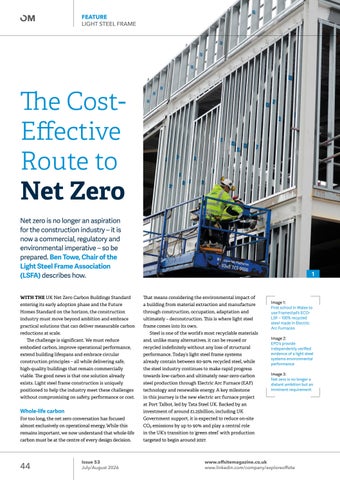
Image 1: First school in Wales to use Frameclad’s ECOLSF – 100% recycled steel made in Electric Arc Furnaces Image 2: EPD’s provide independently verified evidence of a light steel systems environmental performance Image 3: Net zero is no longer a distant ambition but an imminent requirement
at Port Talbot, led by Tata Steel UK. Backed by an
Whole-life carbon
investment of around £1.25billion, including UK
For too long, the net zero conversation has focused
Government support, it is expected to reduce on-site
almost exclusively on operational energy. While this
CO₂ emissions by up to 90% and play a central role
remains important, we now understand that whole-life
in the UK’s transition to ‘green steel’ with production
carbon must be at the centre of every design decision.
targeted to begin around 2027.
44
Issue 53 July/August 2026
www.offsitemagazine.co.uk www.linkedin.com/company/exploreoffsite