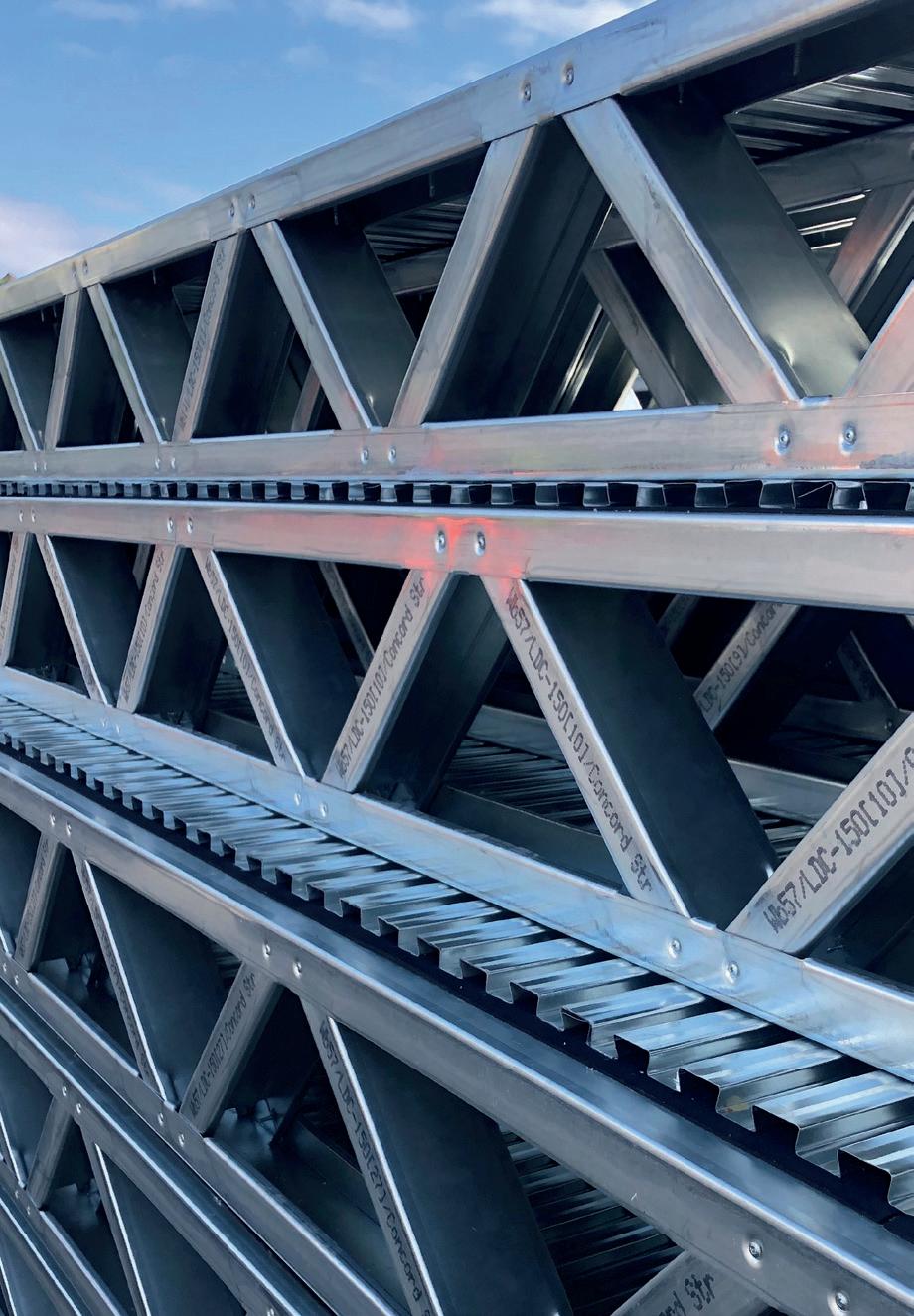
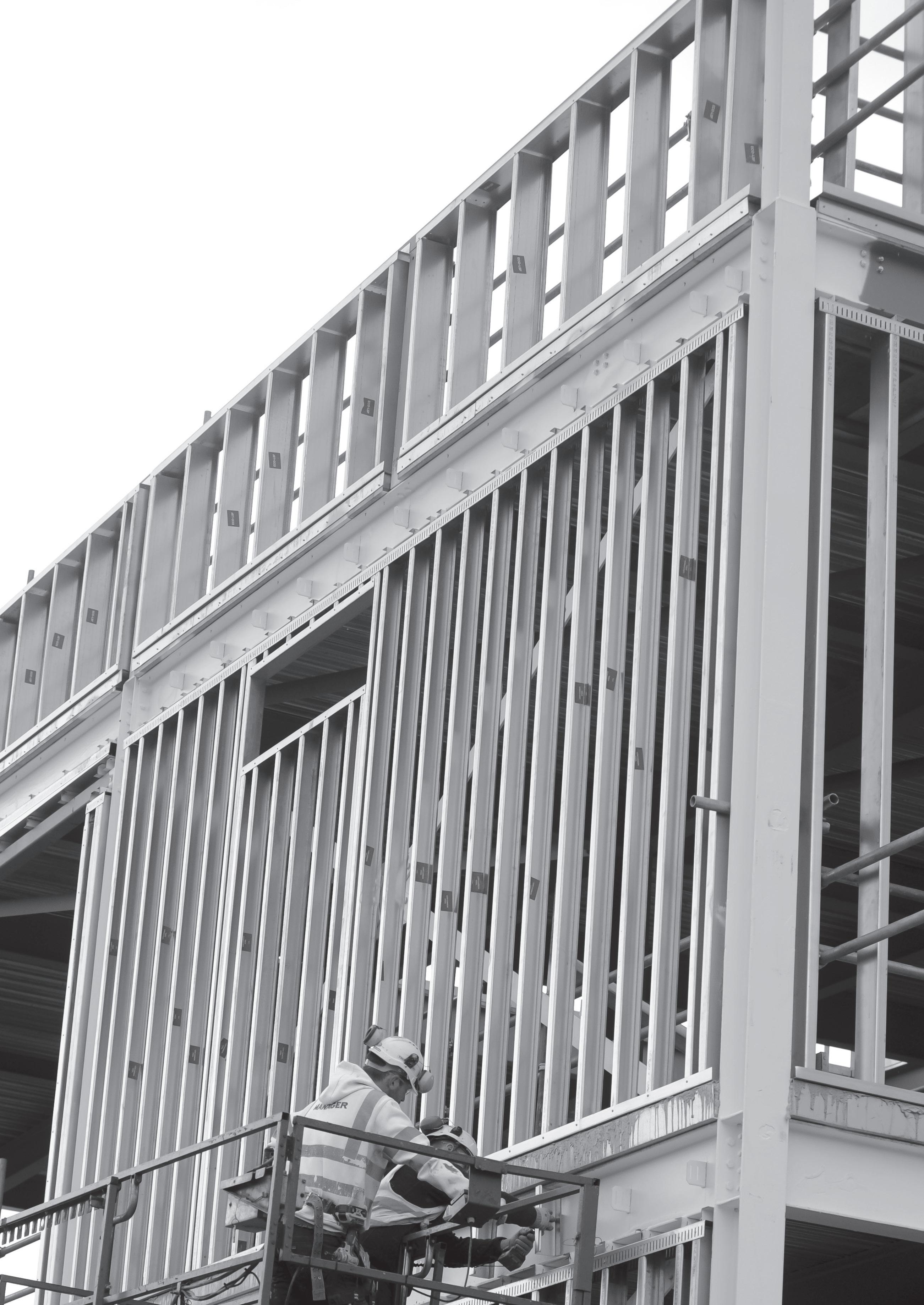
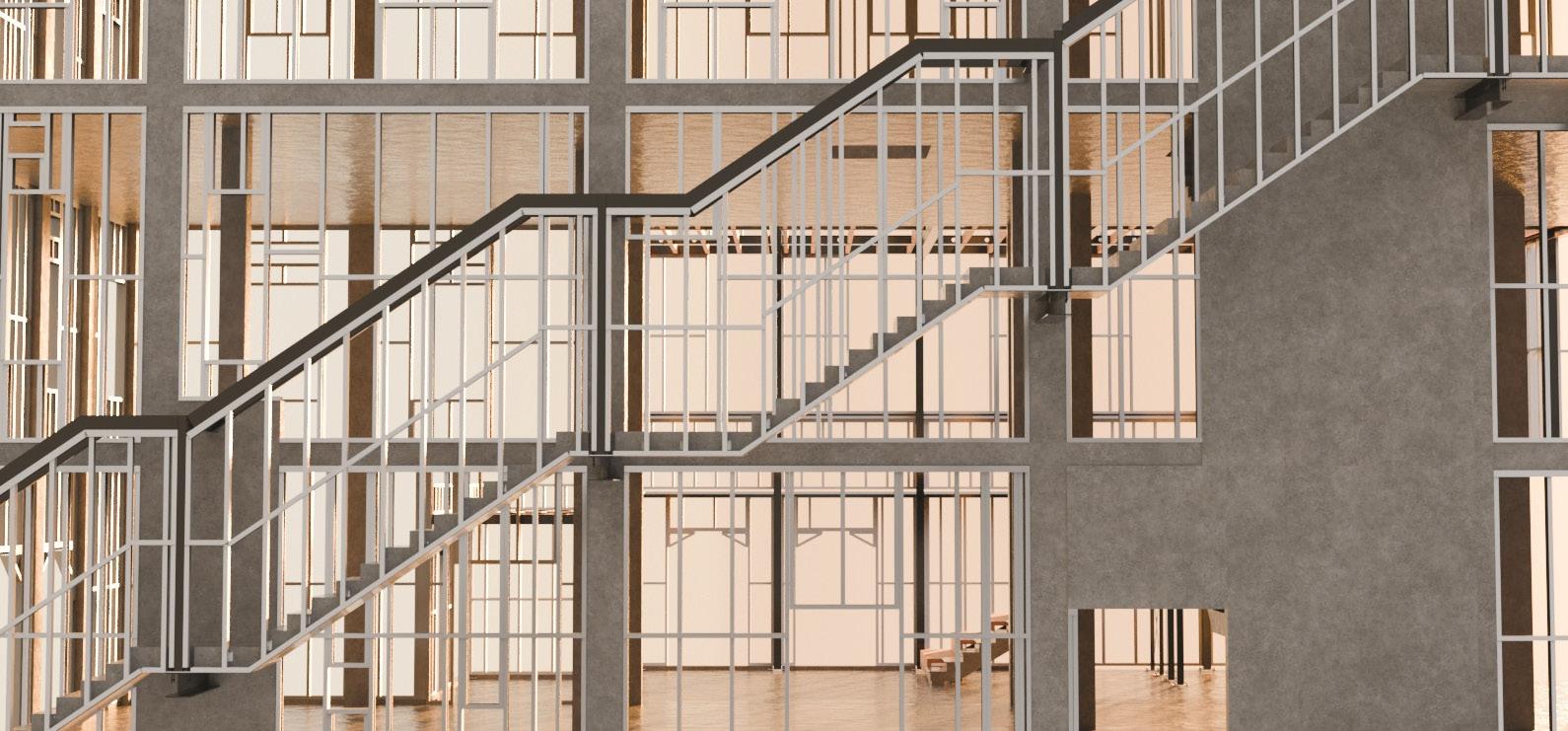
Grounded in the principles of circular construction and powered by the rapid decarbonisation of steel production –light steel frame is emerging as a leading Net Zero solution.
When designed as a material bank rather than a single-use asset, this proven future-ready technology, empowers the construction industry to achieve ambitious carbon targets – without compromise and without a vastly inflated cost premium.
Net Zero Ready
Fully recyclable → circular economy alignment
Inherently circular, steel can be continuously reused or remanufactured without loss of performance. With recycled steel content ranging from 60% to over 90%, embodied carbon is significantly reduced.
High material efficiency → lowers embodied carbon
Delivering a substantially smaller carbon footprint, light steel systems achieve required structural performance using significantly less material per square metre than concrete or masonry.
Lightweight structures → reduces foundation requirements
Significantly lighter than concrete, masonry or timber, light steel frame reduces foundation loads, minimises excavation and cuts concrete use – making vast cost and carbon savings in the ground.
Precision construction → enhances real-world performance
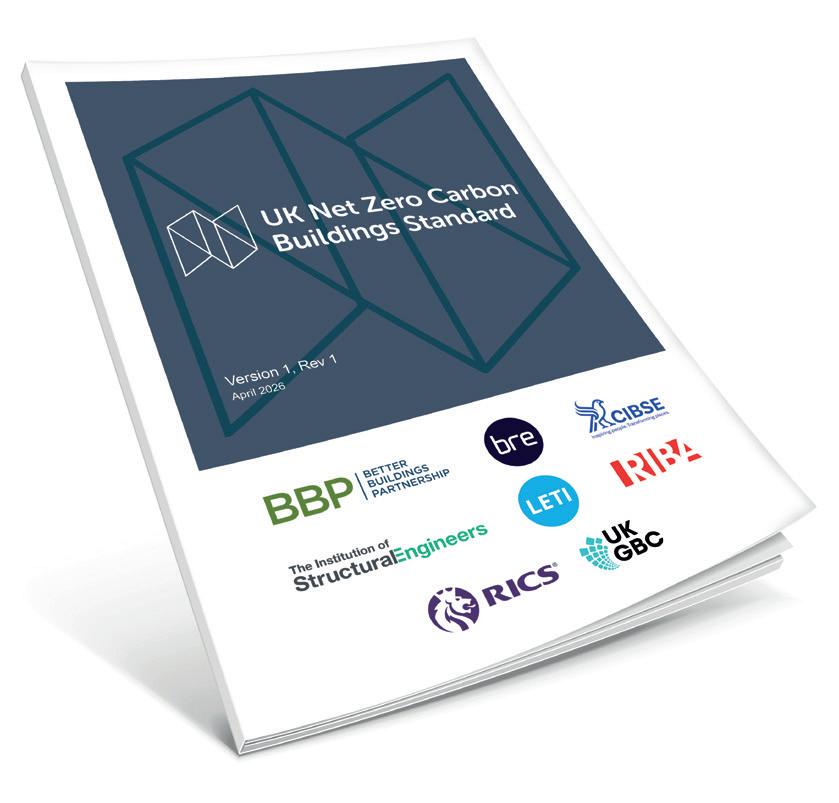
Manufacturing tolerances minimise air leakage, improving performance. This lowers operational energy demand in line with the Net Zero Carbon Buildings Standard and the Future Homes Standard.
Offsite manufacture → cuts waste and emissions
Drives Net Zero through smarter, faster production. Factory-controlled manufacturing slashes material waste to near zero, while fewer deliveries cut on-site construction emissions. All material waste is recycled.
250 YEARS
Extending the building lifespan → reduces whole-life carbon
According to SCI guidance, light steel systems can achieve a design life of up to 250 years when used within a warm frame environment, delivering long-term durability and long-life construction.
Supports low operational strategies → required by modern building standards
Compatible with low-carbon energy technology. Integrates with heat pumps, MVHR and solar PV systems. Precise assembly enhances airtightness and light steel frame systems mitigate overheating.
Design flexibility → reduces the need for demolition
Adaptability and design flexibility keep buildings in use for longer as structures are easy to modify, extend or retrofit, avoiding carbon-intensive demolition and rebuild.
Fire, durability → delivering safety and insurance advantages
Durable and dimensionally stable, non-combustible light steel systems do not add to the fire load – reducing lifecycle replacement impacts – protecting people, property and the environment.
Championing Change
Net Zero construction is no longer a distant ambition –it is an imminent requirement. With the early adoption phase of UK Net Zero Carbon Buildings Standard due this year and the phased introduction of the Future Homes Standard in March 2027 – the direction of travel is clear.
Whilst timber has been widely promoted as the default Net Zero solution, its combustible nature and application limitations due to new building safety standards, present growing challenges for modern, safe and scalable construction.
Uniquely Positioned to Lead the Transition
Light steel technology is uniquely positioned to lead the transition. Light steel’s exceptional material efficiency, durability, longevity, together with unmatched reuse and recyclability credentials – provide a compelling Net Zero solution – without compromising safety or vastly increasing costs.
Grounded in the principles of circular construction – supported by the rapid decarbonisation of steel production – ‘low carbon steel’ is rapidly becoming mainstream and ‘no carbon steel’ is on the horizon
Light steel frame technology will support the construction industry in meeting ambitious carbon targets using proven technology, that will stand the test of time – without paying a premium.
Net Zero in a nutshell
Net Zero refers to balancing carbon emissions across the entire building lifecycle – from raw material extraction and manufacturing –throughout construction, operation, adaptation and end of life.
For light steel frame construction, this means:
Reducing embodied carbon in materials and manufacturing
Enhancing operational energy performance
Retaining material value at end of life through reuse and recycling
Light steel frame construction aligns naturally with these principles.
Low embodied carbon by design – light steel systems use high recycled content and efficient offsite manufacturing, reducing material waste and carbon emissions from production and construction.
High operational energy efficiency – precision engineering enables airtight, well-insulated building envelopes with reduced thermal bridging, supporting lower heating and cooling energy demands across the building’s lifecycle.
Efficient, adaptable construction system –offsite fabrication and lightweight components enable faster assembly, reduced site impact and easier adaptation or disassembly for future reuse.
Circularity at its core
Circular construction replaces the traditional linear model of take – make – dispose with a regenerative approach:
Its core principles are:
Designing out waste
Designing for reuse
Designing for deconstruction
Light steel frame construction aligns naturally with these principles:
High material efficiency with minimal waste
Standardised, repeatable components
Durability and consistent long-term performance
Unique ability to recycle or reuse infinitely
Unlike many construction materials, steel does not degrade through reuse or recycling. Steel retains its structural properties indefinitely, allowing components to be reused, remanufactured, or fully recycled at end of life, supporting circular economy principles. Light steel frame buildings can therefore be designed not as single-use assets, but as material banks – retaining value across multiple future lifecycles.
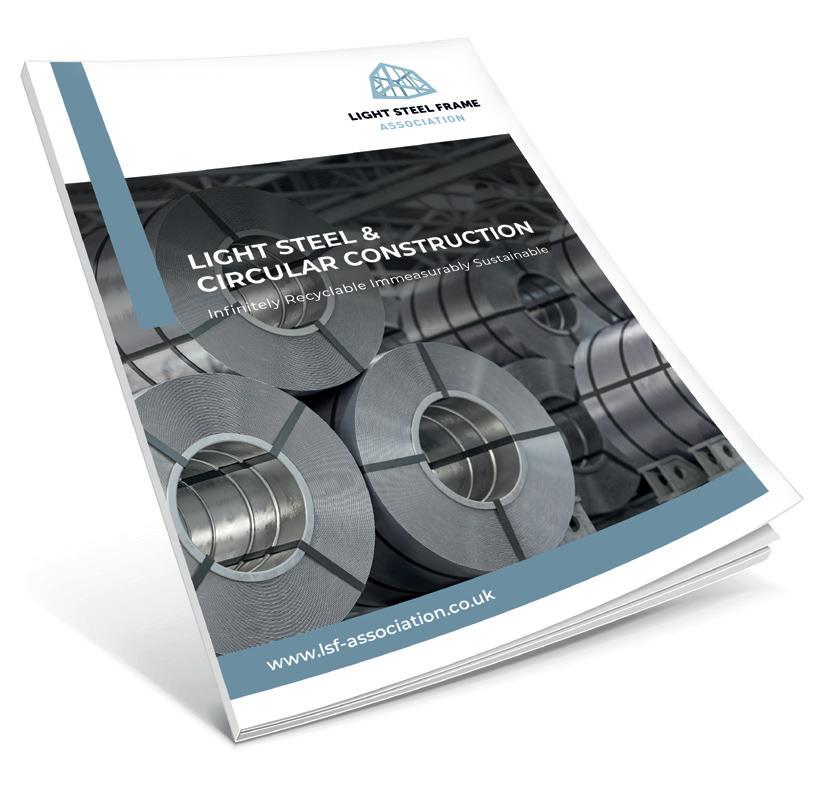
Download our Circular Construction Guide
Light steel frame buildings can go beyond single-use structures, functioning instead as enduring material banks that preserve and unlock value across successive lifecycles.
The Net Zero Journey
From Production to Deconstruction
LOW CARBON STEEL
The steel industry is rapidly decarbonising through:
Increased recycled content
Electric Arc Furnace (EAF) production
Growing use of renewable energy
Light steel frame systems already benefit from recycled content often exceeding 60–90%, with further carbon reductions underway.
WHOLE-LIFE CARBON THINKING
Carbon reduction is achieved not only through material choice, but through smarter design and collaboration:
Early stage supply chain engagement
Integration with high-performance, low-carbon envelopes
Coordinated design for buildability and efficiency
NO CARBON STEEL
Refers to advanced steel framing systems designed for ultra low or near zero embodied carbon in construction, achieved through 100% recycled content, produced using electric arc furnaces powered by renewable sources and optimising designs to use less material without compromising structural integrity. It also includes reducing waste during fabrication through precision manufacturing and offsite construction techniques.
RE DUCE. USE. CYCLE. PEAT.
REDUCE: Design Efficiency
Light steel frame systems offer high strength-to-weight ratios, enabling structural performance with significantly less material. Intelligent design optimises spans, grids and layouts, reducing both material use and embodied carbon.
REDUCE: Design for Operational Energy Performance
Light steel construction offers significant advantages in operational efficiency. U-values below 0.15 W/m²K can be achieved cost-effectively without the need for excessively thick walls. High levels of airtightness, typically below 3 m³/m²/h, are readily achievable using sheathing boards and membranes incorporated into the light steel framing systems. This airtightness, combined with high-performance insulation, ensures that buildings remain thermally stable while avoiding overheating issues commonly associated with structural timber construction.
In addition, light steel systems are highly compatible with renewable energy technologies. This supports the achievement of Zero Energy or Net Zero designs, contributing to long-term operational savings and sustainability objectives.
REUSE: Design for Reuse and Deconstruction
Reuse sits above recycling in the circular hierarchy and delivers even greater carbon savings. Standardised profiles, predictable performance and minimal degradation enable the reuse of panels, studs and modules in new buildings or extensions.
Designing light steel frame systems for reuse focuses on Design for Deconstruction (DfD), using standardised fastenings and connections for easy disassembly, creating a digital material passport for traceability and designing with fewer, larger, durable components that retain value, enabling future recovery and reassembly in new projects to achieve a circular economy. Key strategies include planning for deconstruction from the outset, making steel an ideal material for repurposing and reuse.
Extending Lifecycles
REUSE: Adaptive Buildings
Light steel frame buildings are inherently adaptable and well suited to:
Vertical extensions
Change of use
Internal reconfiguration
The lightweight nature and non-loadbearing internal partitions allow buildings to evolve over time, significantly extending useful life and avoiding demolition.
RECYCLE: Lasting Material Resource
Steel has a unique characteristic as it can be reused and recycled repeatedly without losing its qualities as a building material. All steel used in today’s construction projects has up to 90% recycled content. The recovery infrastructure for steel recycling is highly developed and extremely efficient and has been in place for decades. Current recovery rates from demolition sites in the UK are 99% for structural steelwork and 96% for all steel construction products – figures that far exceed those for any other construction material.
REPEAT: Creating a Regenerative Construction Cycle
Circular construction is not a one-off intervention – it is a continuous loop. Light steel frame construction relies on repeatable systems, manufacturing processes and quality assurance. This consistency enables ongoing optimisation, innovation and carbon reduction at scale.
By combining material efficiency, adaptability, reuse and infinite recyclability, light steel frame construction delivers a regenerative model for the built environment – proving that Net Zero can be achieved without compromise, without added cost and without increased risk.
Net Zero Verification Data
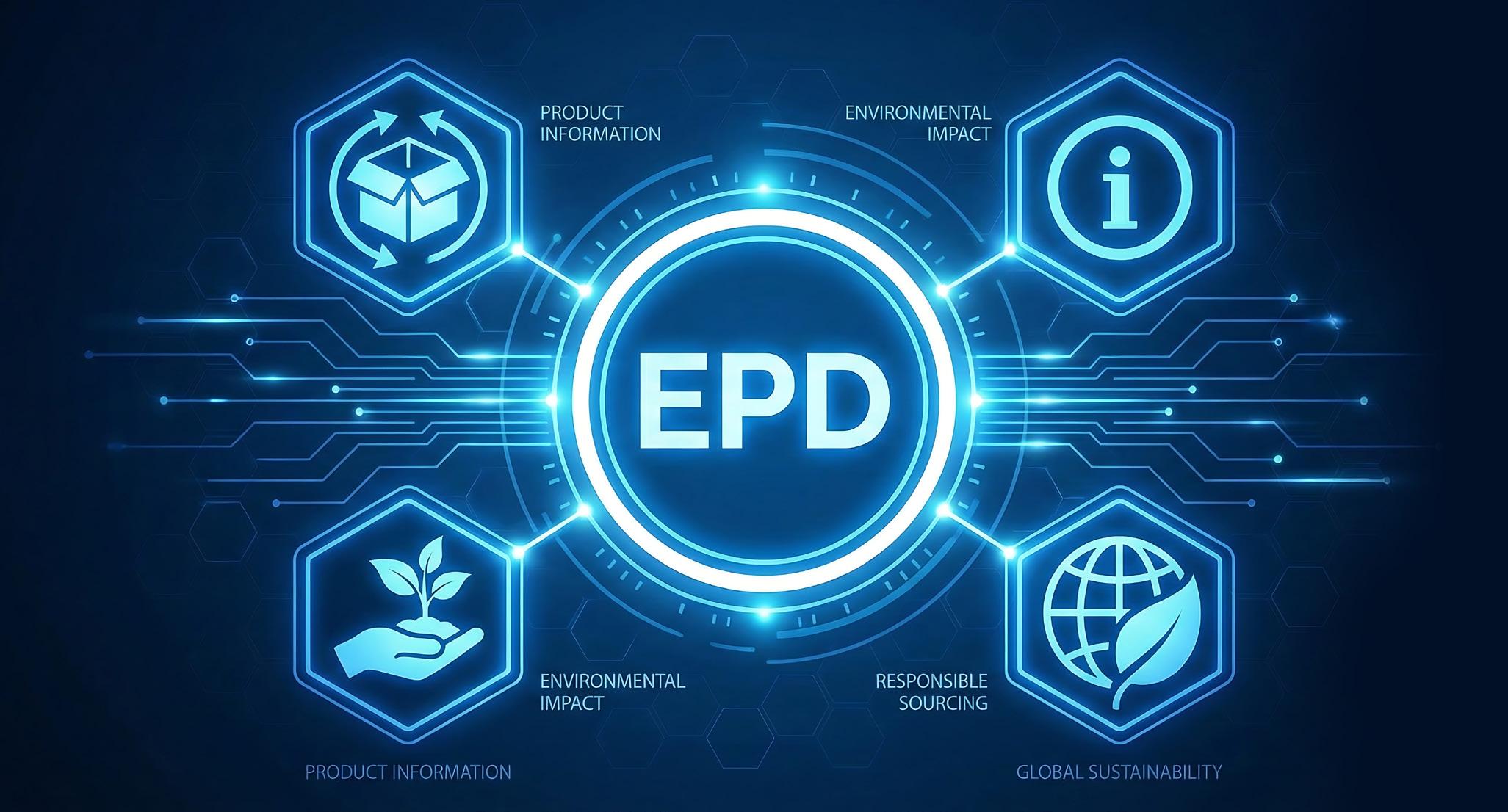
Environmental Product Declarations (EPDs)
Transparent carbon data enables informed decision making. EPDs allow designers and clients to compare systems, specify responsibly and drive demand for lower carbon solutions.
Environmental Product Declarations for light steel frame systems provide independently verified, transparent evidence of a product’s environmental performance, giving designers, specifiers and developers confidence when assessing sustainability credentials. Verified by an accredited authority and compiled in accordance with EN 15804+A2 and relevant ISO standards, the EPD presents a comprehensive lifecycle assessment covering manufacture, transport, installation and end-of-life.
This robust, standardised data supports informed design decisions and helps project teams demonstrate compliance with increasingly stringent whole-life carbon and sustainability requirements. Light steel frame systems offer significant environmental advantages that are clearly demonstrated through EPDs.
Precision design and offsite manufacture minimise material waste, while the lightweight nature of steel framing reduces foundation requirements, improves logistics efficiency and enables rapid installation on site.
At the end of a building’s life, steel’s near 100% reuse and recyclability rates support circular principles and reduce environmental impact.
Net Zero Verification Data
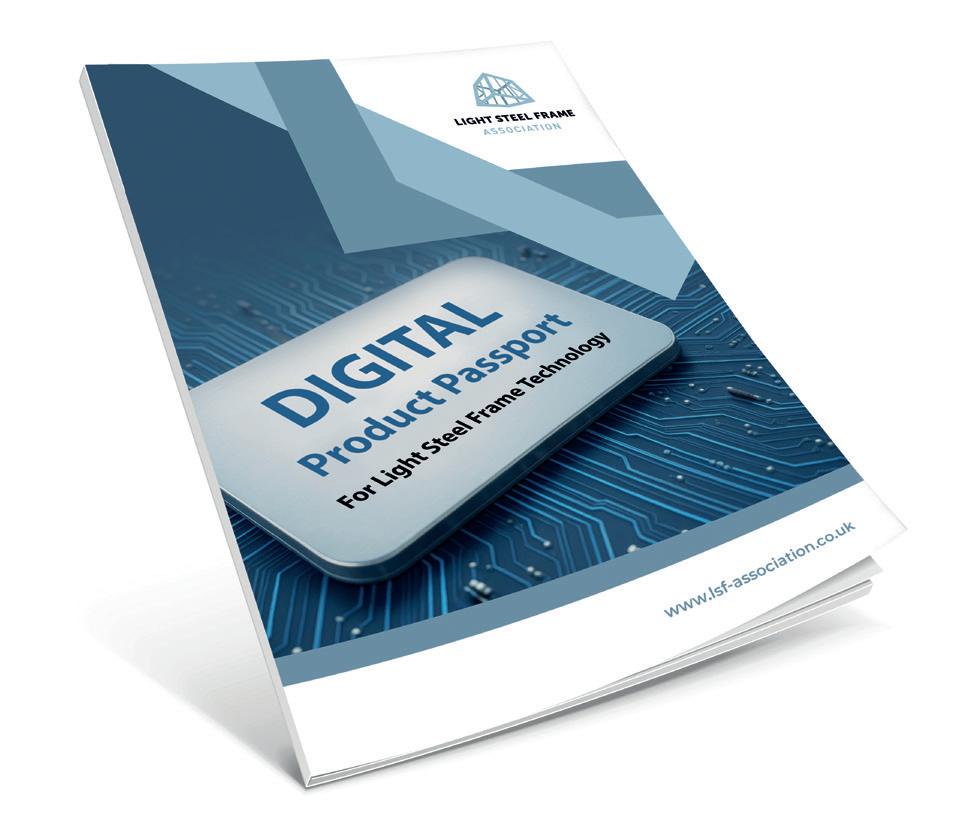
Digital Product Passports (DPPs)
Set to become a major catalyst for transformation across the construction industry, particularly for the light steel frame sector, Digital Product Passports create a secure, standardised digital record of a product’s full lifecycle. For light steel systems, they ensure that current and future owners clearly understand the embedded material value, provenance and recovery potential within building components.
Light steel frame construction already excels in precision manufacturing, consistent quality control, and circular design principles. DPPs build on these strengths by providing the digital infrastructure needed to evidence and communicate them transparently. They act as a structured repository of verified data, reinforcing trust and enabling more informed decision-making at every stage of a building’s life.
In addition, DPPs strengthen the ‘golden thread’ of information required under Building Safety Regulations by ensuring critical data remains accessible, accurate and up to date. This includes documentation of recycled content, embodied carbon, product performance characteristics, installation records and defined end-of-life pathways such as reuse, remanufacture, or recycling. They significantly enhance traceability and accountability across the built environment.
By enabling detailed material intelligence to be carried forward through multiple building lifecycles, DPPs reinforce the circular economy credentials of light steel systems and help unlock secondary material markets. Components are no longer seen as static elements, but as assets with retained and recoverable value.
Ultimately, a simple digital scan can provide instant access to a building’s material history, including covering certifications, sustainability metrics and performance assurances – adding long-term financial, environmental, and operational value to both buildings and the materials within them.
Download our Digital Product Passport Guide
Take The First Step
Light steel frame construction is uniquely positioned to lead the UK’s transition to a low-carbon, circular built environment, whilst enhancing safety, performance, or cost effectiveness.
By combining material efficiency, durability, adaptability, and exceptional recyclability, light steel technology offers a practical, scalable pathway to Net Zero across the full building lifecycle.
Rooted in circular construction principles, light steel systems are actively reducing both embodied and operational carbon. Through design for disassembly, reuse and deconstruction – alongside the use of recycled and low-carbon steel – measurable carbon reductions can be achieved at scale.
Supported by robust verification through Environmental Product Declarations and the growing adoption of Digital Product Passports, light steel frame construction provides transparent, data-led assurance for designers, developers and clients.
The Light Steel Frame Association (LSFA) is committed to advancing the adoption of light steel technology, helping the industry deliver safer, more sustainable buildings designed to stand the test of time.
Our aim is to equip construction professionals with the knowledge and confidence to specify light steel frame systems as a credible Net Zero solution – demonstrating that high-performance, future-ready buildings can be delivered without a cost premium.
Early Engagement Drives Success
This guide is a starting point – engaging with a LSFA manufacturing member is the next step. Early collaboration with the right expertise can transform project outcomes, unlocking a more sustainable, safe and cost-effective pathway to Net Zero. www.lsf-association.co.uk/findamember