Rusty Richard’s Almanac
Writing to you on a rainy Sunday morning, I’m feeling particularly grateful for everything that’s going on in our Chapter and in our hobby.
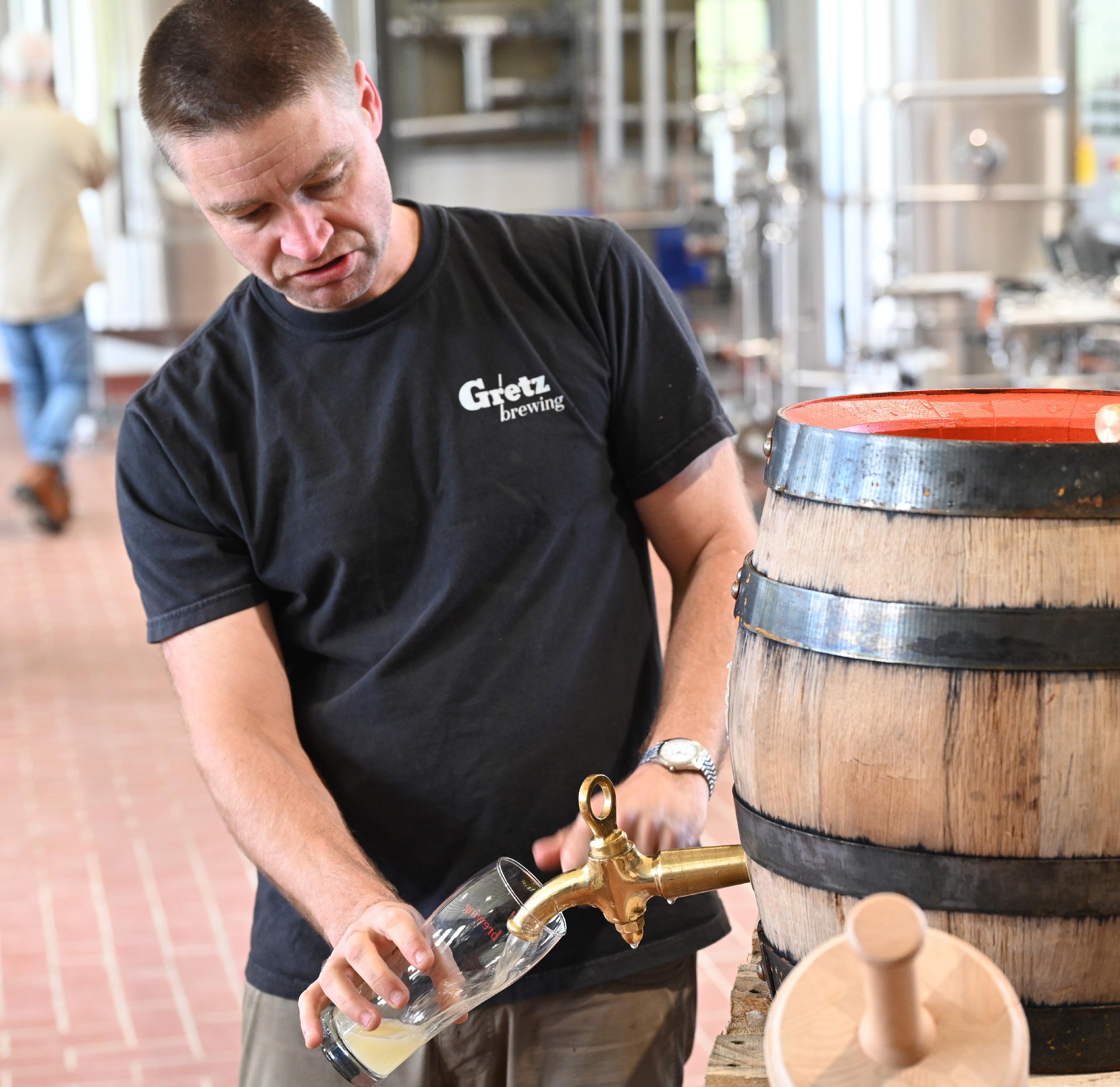
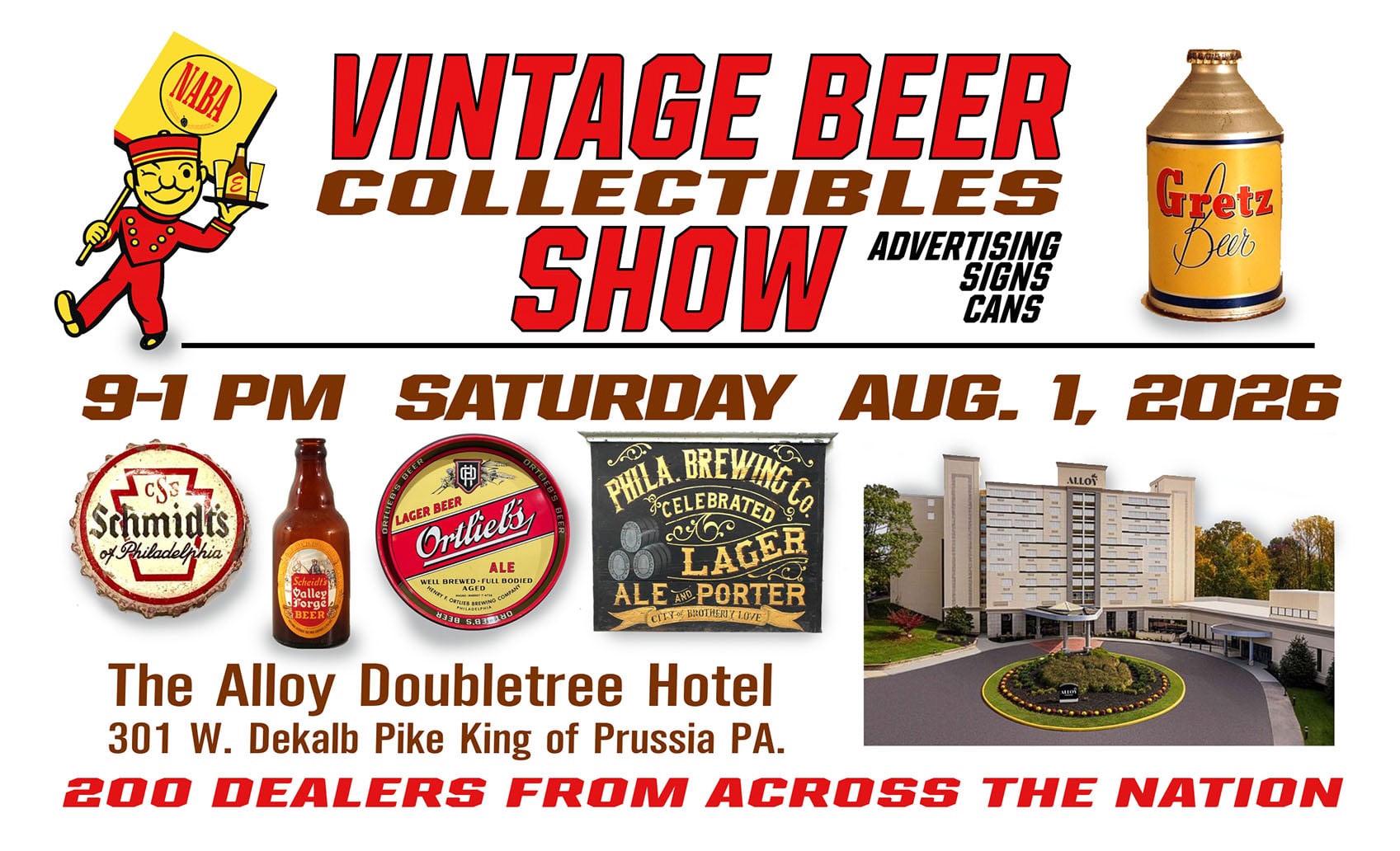
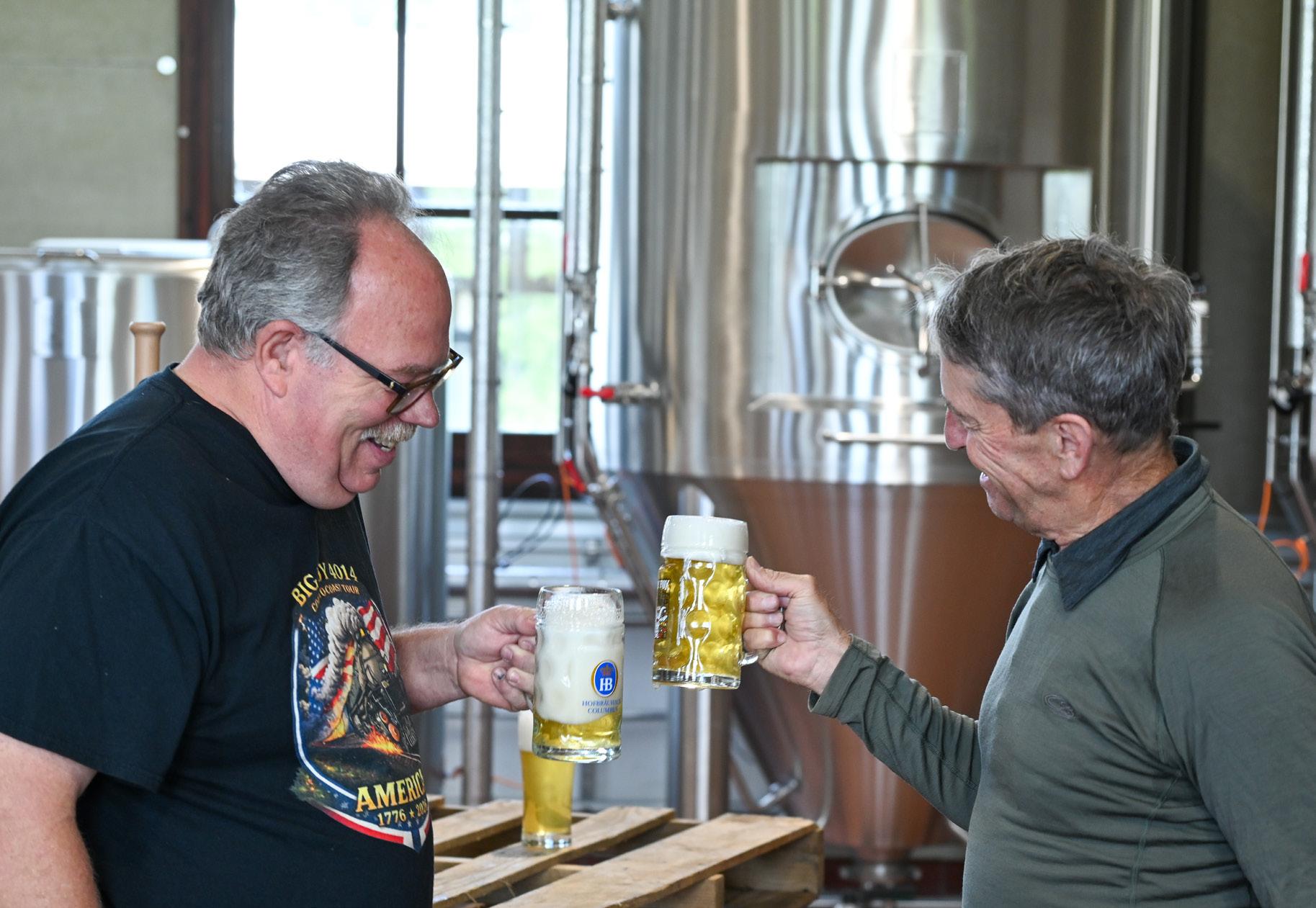
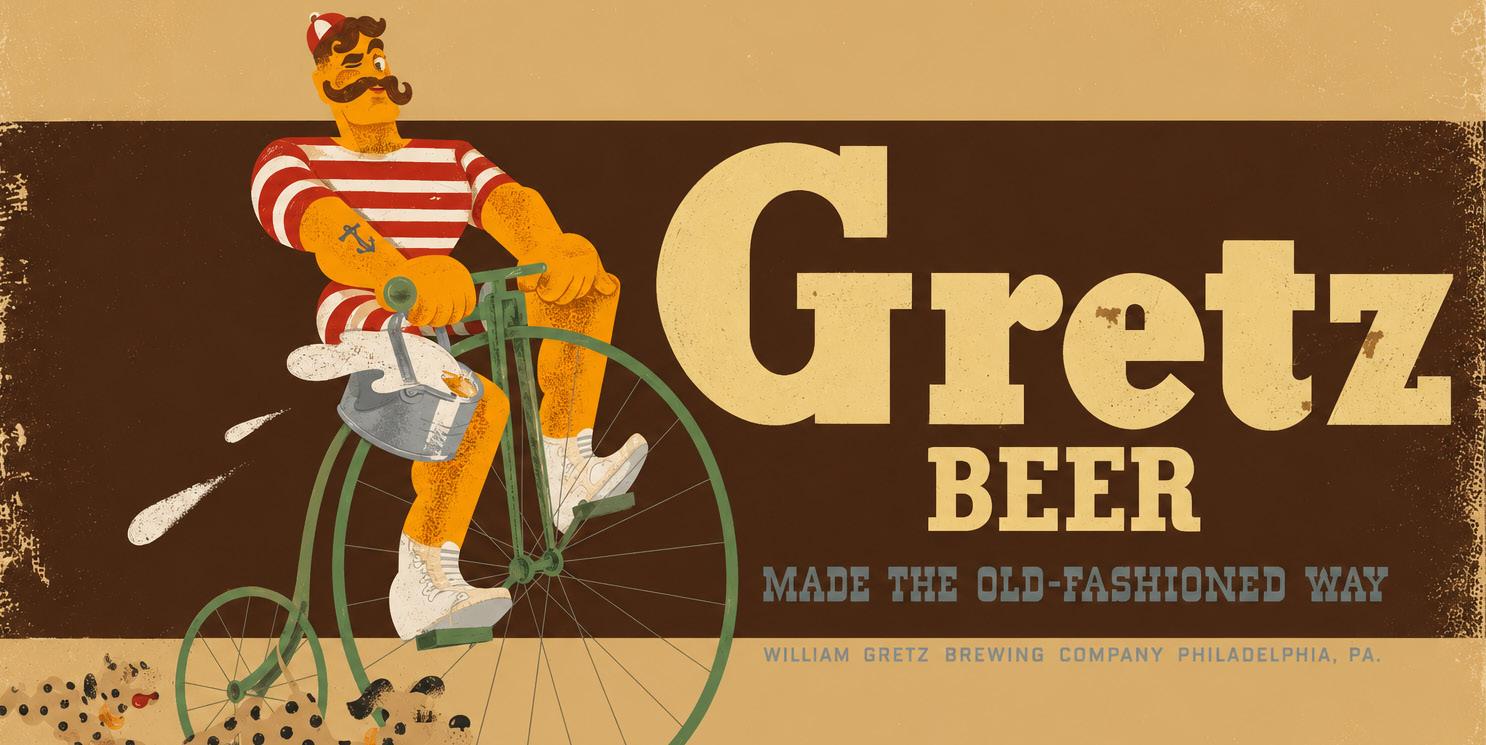
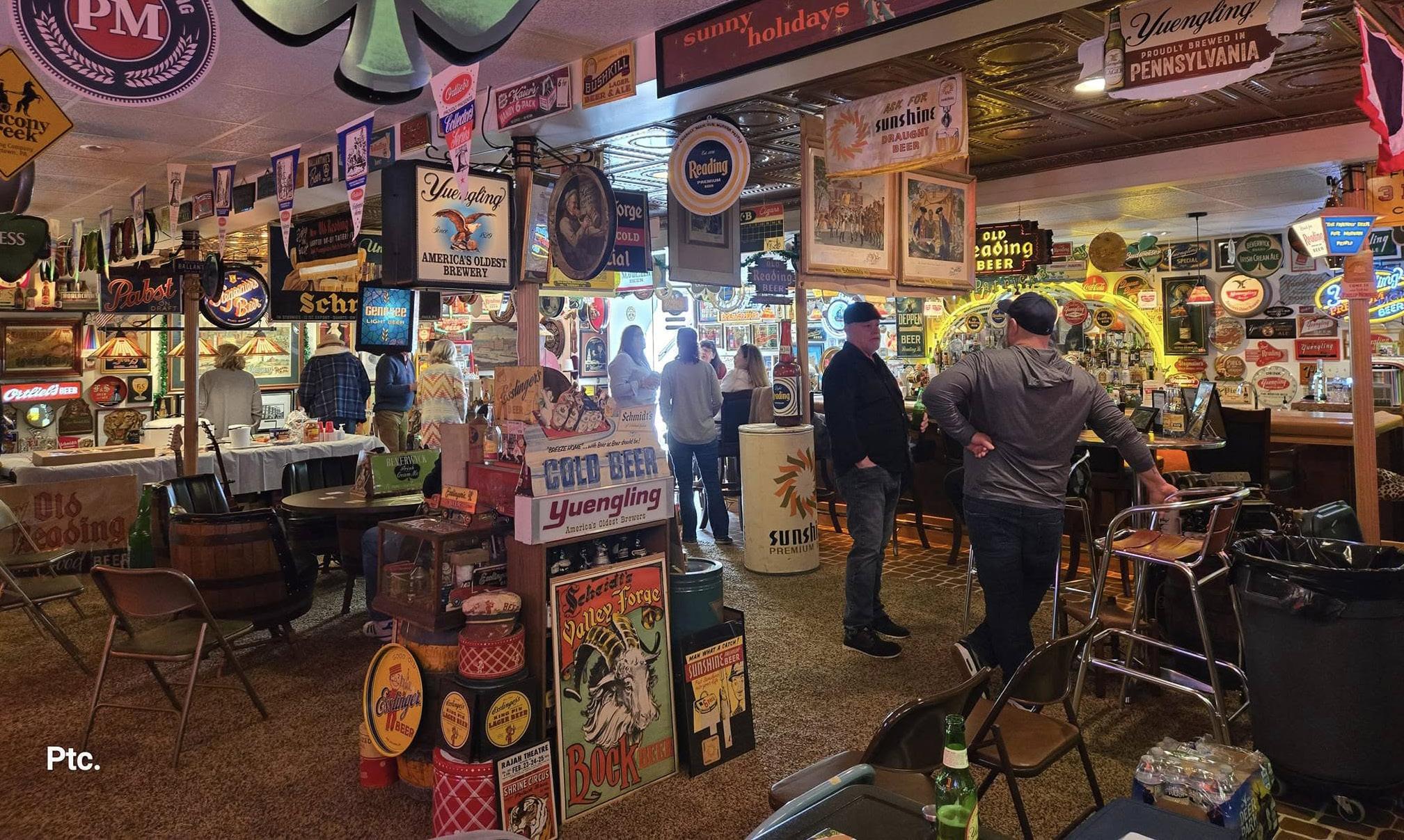
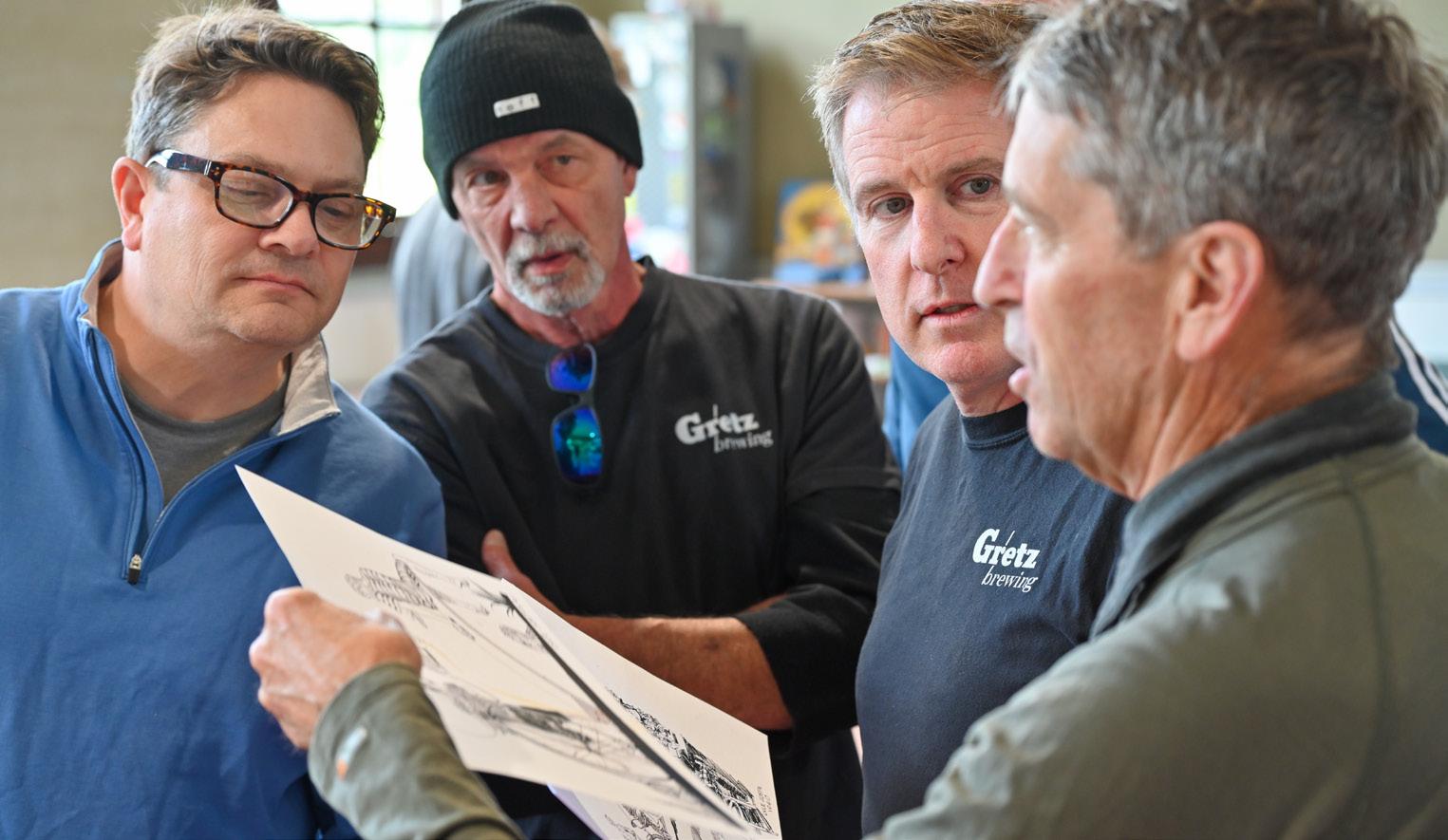
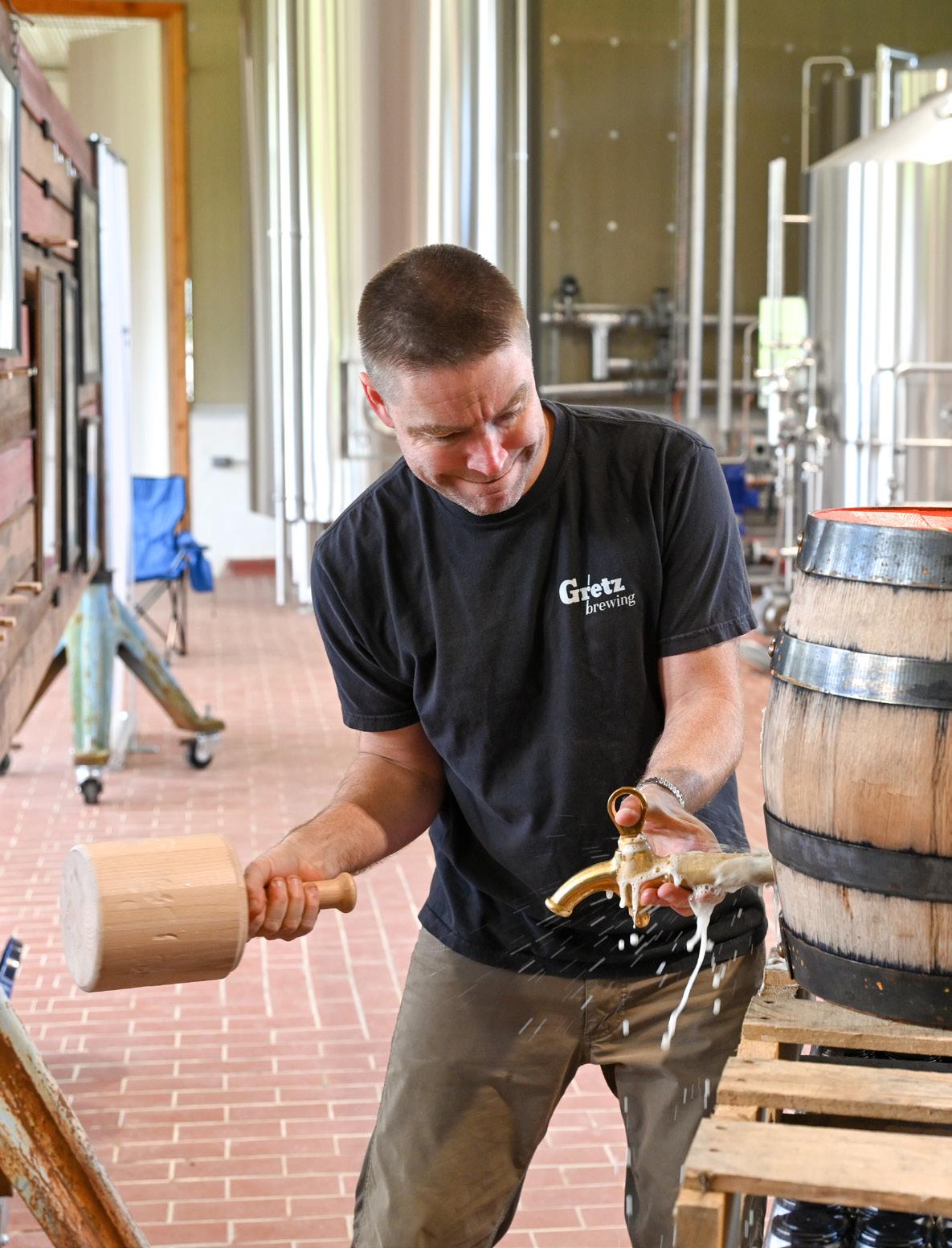
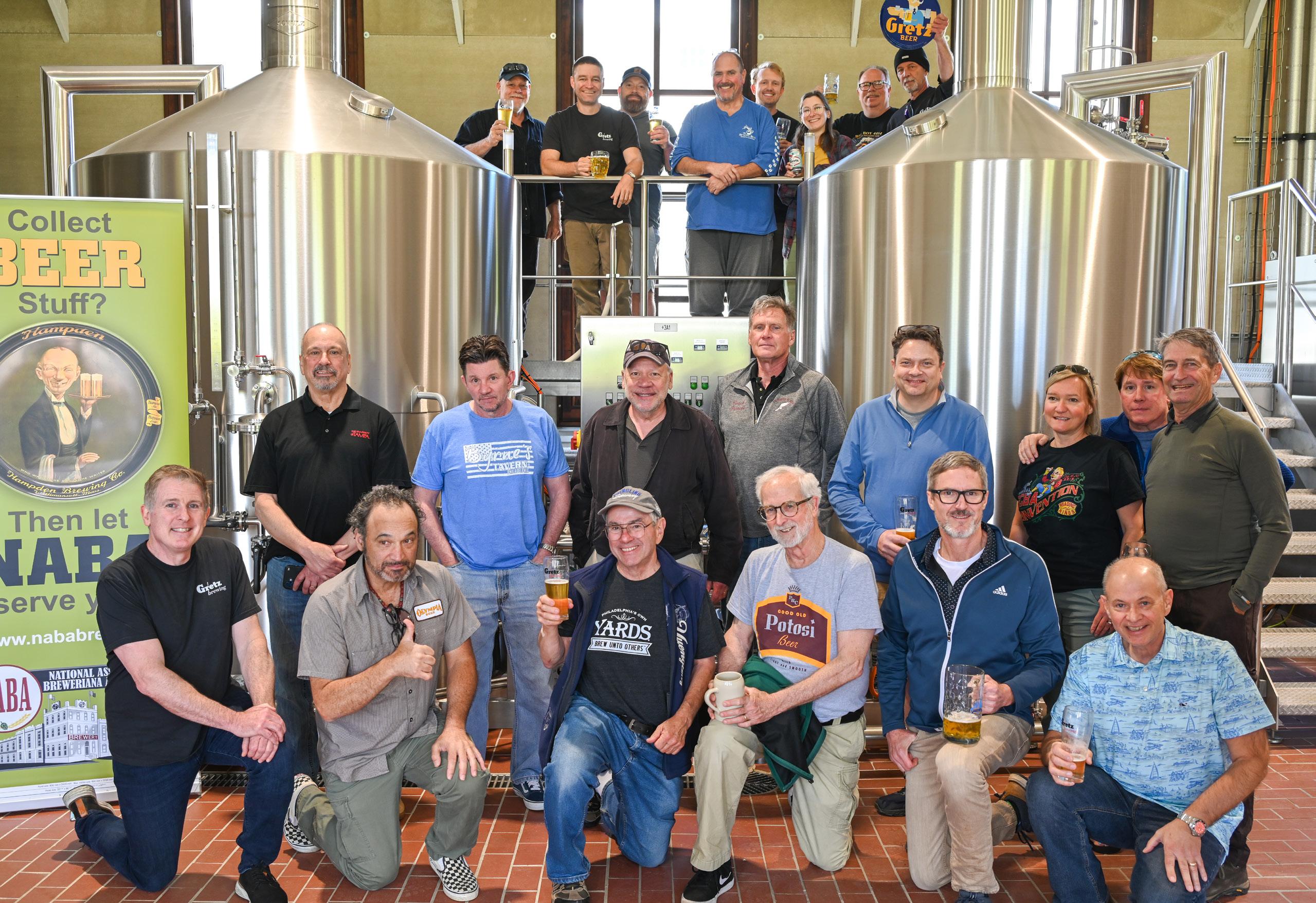
It’s convention season, with the ABA Convention coming up June 9-13 in Springfield, IL and then of course NABA right here in Philadelphia from July 27-August 1. We have our Chapter meeting on May 30 – at Gretz Brewing for the first time in the 50-plus-year history of the GDVC – followed by the Old Reading Chapter show in Oley, PA on June 6. Plus, the Doxie collection for our meeting on Saturday, June 27. What a great season this is!
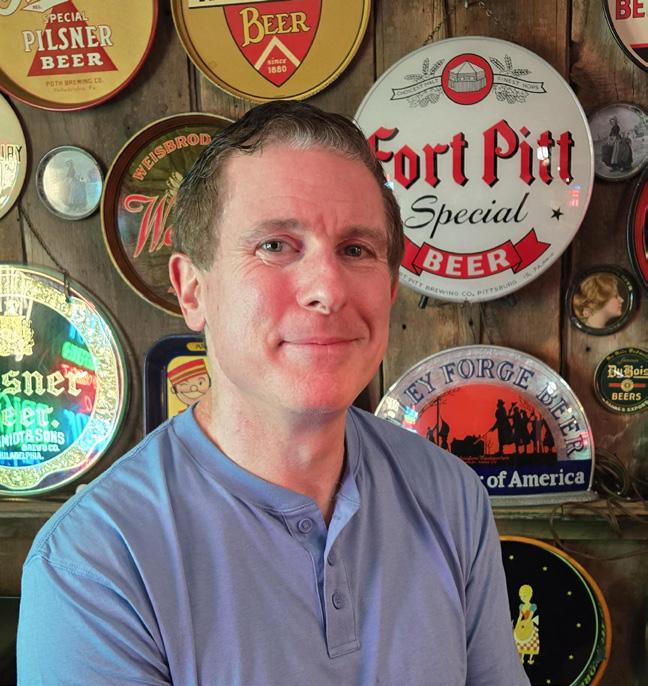
Dale and Leslie and I spent some time together yesterday in preparation for the Post-Prohibition Brewing in Philadelphia seminar, which I’ll be delivering on Thursday morning during the NABA Convention. I’m grateful for Dale’s experience and writing skills as he pulls together history on each brewery that reopened following Prohibition. The seminar is going to focus on those stories, and what each brewery contributed to the advertising and the historical relics that we collect today. Larry and I are pulling together the Philadelphia Breweries of 1896 display, and it’s amazing how many of those breweries we are going to be able to represent with breweriana of the period. Having such a history, and people like Dale and Larry active and contributing to our group, is an honor. Thank you both, gentlemen.
We’re up to 84 active members, and most have paid 2026 dues. If you’ve not sent your dues yet, you’ll be getting another email from Michael Philips. He’s made it easy to re-up through Paypal or Venmo, and of course you can still come to a meeting or a show and pay your $10 in cash.
Thanks again to Dale for all of his contributions to this newsletter, and to Chad for putting it all together and making it look fantastic.
One last call out, I need a leader, a champion, to head up the Taste of Philly event that takes place at 12:30 on the Thursday of NABA week. I’ll be organizing and speaking at the seminars, and simply cannot be in two places at once to organize Taste of Philly. We’ll need to get the cheesesteaks, tomato pies, soft pretzels, and Tastykakes to the hotel and set up in the National Brewery Museum Library suite up on the 9 th floor near the hospitality suite. Oh, and the shoefly pie. That ain’t Philly in my book, but Larry wants there to be shoefly pie. Who can take charge of that event to recruit and manage volunteers, and make sure it’s all ready to go at 12:30 when the seminars let out? Maybe a couple of people can team up and co-lead that. I need the help, please!
Thanks to all of you. Cheers!
Greg
I don’t have a whole lot to say this issue. It has been a long dreary winter, other than our club meetings.
In advance of the NABA convention we will send out a special issue dedicated to what the Greater Delaware Valley Chapter will be doing at the convention – and it promises to be alot.
Remember, Dues are Due.
Your 2026 dues need to be sent to our treasurer, Michael Phillips. $10 can be made by check, Venmo, or paypal.
His mailing address is: 207 Wayne Avenue, Cinnaminson, NJ 08077. Email: r.michaelphillips@yahoo.com.
Help us be able to strut our stuff at NABA ’26.
As always, enjoy this issue.
Dale Van Wieren CREATIVE
Chad Campbell
Dale Van Wieren
Chad Campbell
PRESIDENT
Greg Evans
VICE PRESIDENT
Dale Van Wieren
SECRETARY
Jack Gallagher
TREASURER
Michael Phillips
By Dale Van Wieren
I could be snarky and say the history is brief because there was none, but that isn’t quite true. Bucks County was one of the original three counties established by William Penn from his land grant, and was named for Buckinghamshire, his home in England. Bucks County was far larger originally, having been subdivided over time to create Northampton and Lehigh Counties.
Why was there such a difference between counties when it came to brewing? Philadelphia was clearly designed to be the business hub of William Penn’s colony. Bucks County on the other hand, was almost purely agrarian in nature. Large estates and small hamlets occupied by early English settlers predominated. How rural was Bucks County? The construction of Levittown in the 1950s increased the population by over 50%. To be sure, Englishmen love their ale, but there was plenty being produced in Philadelphia, and that was no doubt supplemented with estate breweries, much like that of William Penn. Another huge factor? Germans! Germans were the first groups to accept Penn’s invitation to his colony, and rapidly spread northwestward into the Oley Valley and beyond. For a German community not to have a brewery was unthinkable.
Not surprisingly, most of the 18th century breweries were along the Delaware River. An unknown person built a brewery and malt house at Mill and Pond Streets in Bristol in the 1730s. He is only known because in 1739, he sold his operation to John Abraham Denormandie, who may have owned it until his death in 1757. Denormandie was a wealthy investor, and owned the brewery as a rental. He described the brewery in an 1840 ad in the Pennsylvania Gazette offering it for rent as “A good large commodious Malthouse well fitted for business, also a good brew-house, the only one in town or county well custom’d”. Quite possibly, that brewery was originally owned by Richard Mountain, who owned a brewery in Bristol from 1728 to 1733. Southampton, about 15 miles inland, had a brewery that was operated from the mid-1740s till 1747 by Abraham Bennett, and from1747 till 1755 by Nathaniel Davids.
Morrisville came into its own for brewing in the 19th century. There was one brewery that closed in 1796 owned by Daniel Mun, but that is all I know about it. Michael Krafft started a brewery in 1800 at a most favorable location - the foot of Ferry Road by The Middle Ferry. The Middle Ferry was the only company with the franchise to run its pontoon boats from Morrisville to Trenton. A lot of commerce passed the brewery, which most likely was connected to an Inn. Eventually, bridges began to replace ferries. The Calhoun Street Bridge, connecting Calhoun Street in Trenton with Trenton Avenue in Morrisville opened in 1884. Frederick Haas & Son were ready to roll, and opened a brewery and restaurant near it at the same time. They were charged in 1886 with selling liquor without a license, and selling liquor on Sunday. They were convicted of selling without a
license, but acquitted of selling on Sunday. In one of the most unusual court rulings I’ve ever seen, the jury directed that half of the court costs be paid by the Reverend Osborne Congleton, the Methodist Minister in Morrisville who brought the charges. However, Haas was fined $200 (about $7000 today) and sentenced to 90 days in jail. It appears they gave up the brewery shortly thereafter.
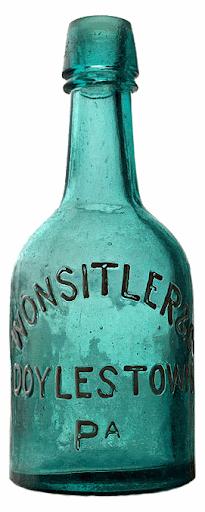
Newspaper clippings can only lead you so far. Once again, I owe a debt of gratitude to Tod Von Mechow and his remarkable site “Soda and Beer Bottles of North America” for putting flesh on the bone. In 1868, Jonathan Wonsitler built a brewery in Doylestown, Bucks County. Apparently financially unable to complete his project, he offered the building for sale, and failing a sale, took in a partner under the name Wonsitler & Company. His partner, Martin Herter, was an experienced German brewer from Philadelphia, reportedly of the same family as Christian Herter of the Eble & Herter Brewery in Philadelphia. The modern location of the brewery would be the east side East Ashland Avenue between East State Street (Business Route 202) and Golf View Road. This short-lived brewery would leave the only artifacts of brewing in Bucks County, several varieties of Wonsitler bottles. Wonsitler & Co. operated 1869-1870 before going into bankruptcy. The brewery was bought by a group of investors, and operated until 1874 under Herter. It then became a cider mill. Jonathan Wonsitler had suffered several business “embarrassments” as they liked to call them back then. On April 24th, 1873, he hung himself from a tree in the woods near his home in Sellersville. In the newspaper prose of the day, “Financial embarrassment to so sensitive a nature seems to have dethroned his reason”.
And that, barring some future discovery, is the total history of brewing in Bucks. In modern times, there have been at least 36 craft breweries in the county thus far.
Usually, I’m shedding a tear for the demise of some craft brewery. This time, I’m cheering about it. The Species X Beer Project opened in January 2024 in the former Sixth Street space of Platform Beer in Cleveland. Species X was to be the cornerstone of the future of brewing. They classified their beers in two categories, or “Species”: Carbon and Silicon. Carbon beers were built around “novel biological microorganisms”, particularly hybrid or mutated yeast strains. Silicon beers, were developed using Artificial Intelligence. All they needed was robot bartenders to create a perfect terror. Thankfully, the public rejected it, and the brewery and tasting room were closed by October, 2024.
That is the name of an inaugural brew at Iron Hill’s center city Philadelphia location when it reopens in April. A new corporation named Rightlane LLC, headed by former Iron Hill principal Mark Edelson, acquired all rights to the Iron Hill brand in January. In addition to center city, over the next couple months they will reopen Iron Hills in Lancaster, Hershey, Huntingdon Valley, and Wilmington. A few facts regarding the collapse of Iron Hill have become clear in the bankruptcy proceedings. The original triumvirate of owners, Edelson, Kevin Finn, and Kevin Davies, who built Iron Hill into a solid gold brand, sold control to a private equity firm. That group embarked on the national expansion, which combined with economic factors killed the chain. Now we see that the original owners had become “employees” of Iron Hill, rather than owners. They are also creditors of the bankrupt chain. The great part of that is they are not personally part of the bankruptcy – they keep what they own. However, as creditors,
they will likely receive pennies on the dollar for whatever portion of that $20 million that is owed them. On the opposite side of the state, the Penn Brewery, located in part of the ancient Eberhardt & Ober brewery, has filed for Chapter 11 bankruptcy. They plan to continue operations uninterrupted. Opened in 1989, the Penn Brewery was the third craft brewery to open in PA, after Stoudt’s and Nodding Head. Founded by Tom Pastorius, Pittsburgh was actually his second choice, after he couldn’t formulate a workable plan for a Philadelphia brewery. Pastorius was a descendant of Francis Daniel Pastorius, the founder (1683) of what is now the Germantown neighborhood of the city.
Two craft breweries in our area have closed since the last issue – 21 Locks in Morrisville, Bucks County, and HiJinx, in Allentown. HiJinx calls it a “pause” not a closure, while they look to form a new partnership and relocate.
When I saw the name of this brand-new craft brewery in Bellows Falls, Vermont, I had to look it up. The brewery is owned by four middle aged guys who have been best friends since grade school and home brewers almost as long. One of the quartet is a testicular cancer survivor. Need I say more? That’s droll Vermont humor for you.
There is a brewery in El Paso TX named “Dead Perezidents”. It’s a spoof on the rap slang for paper money and the name of the owners – Albert & Ivonne Perez.
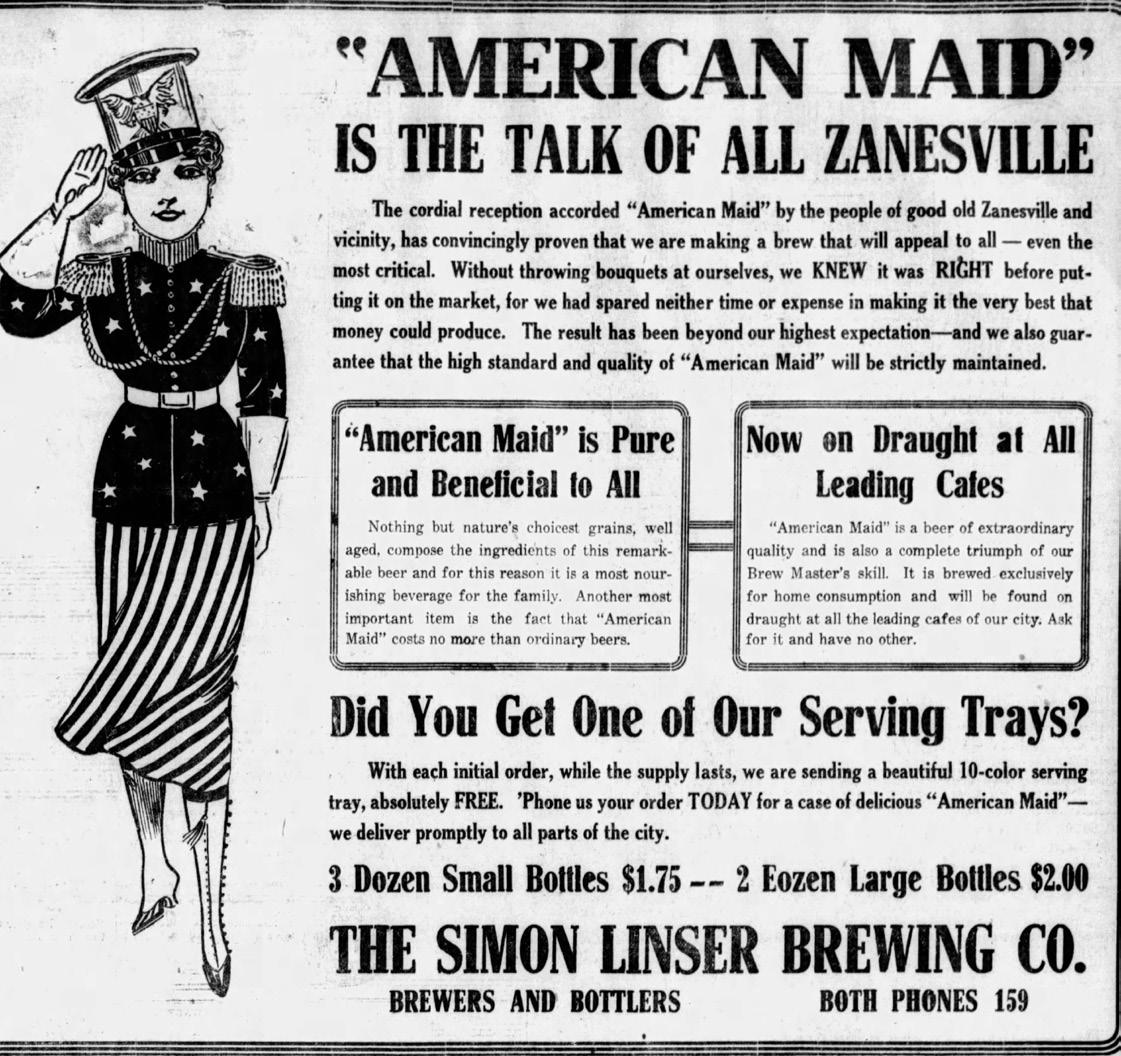
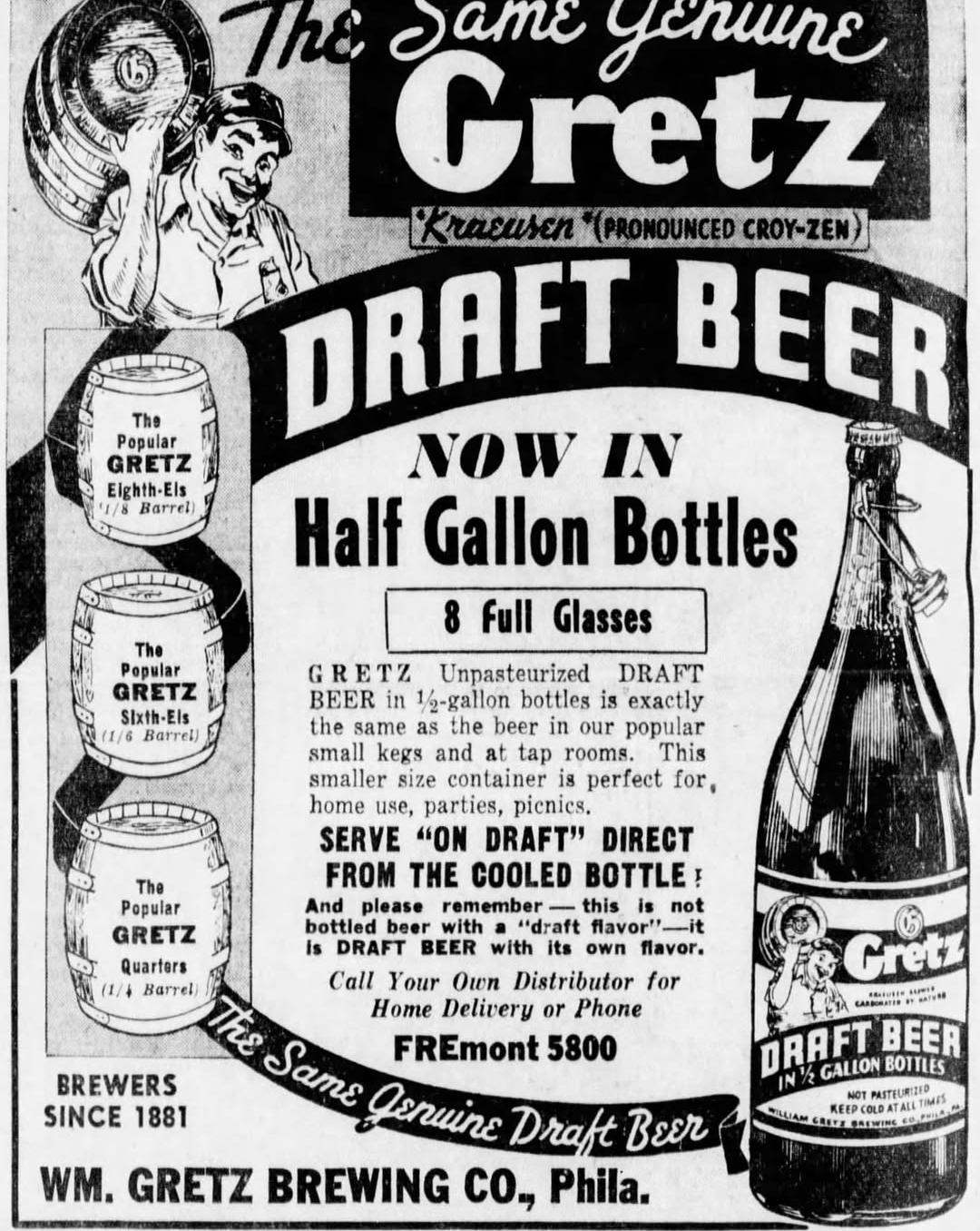
How great is the ad at right? Dating from May, 1915, the lass hawking American Maid beer has one of the classiest outfits I’ve ever seen outside of “The Music Man”.
Take note near the bottom that with each initial order for a case of beer you get a free 10-color serving tray!
Another ad for Linser, in 1906, touted that their beer was “absolutely free of typhus germs”. Huh? What a strange claim. A little research revealed that “Typhoid Mary” was big news, and 13,000 people died of typhoid that year.
John Bools opened his brewery in Williamsburg, Ohio, in 1859. It sparked more than a little displeasure. On November 18th of that year, 60 women charged the brewery, hatchets in hand. They knocked the heads out of whiskey and beer barrels and dumped them in the street. Having dispatched the inventory, they smashed the furnaces and kettles, and destroyed the hops and malt. Bools rebounded and operated till 1884.
In 1870, Charles Brook advertised his brewery in Ravena, Ohio, with an added feature – “Also, builder of wrought iron fence and gates”.
1000 ways to die while brewing. I have a whole file of horrific things that happened to brewery workers. Brewing was always considered a very dangerous occupation. It wasn’t unusual to see staff seriously injured or killed while working with the horse teams, but this one was a bit different. In May of 1869, the driver for Schaffer’s Brewery in Steubenville, Ohio, took his team to the river to wash them. While standing in shallow water, the horse he was sitting on became restless, and tossed him over a wall into deep water. He could not swim, and drowned.
The folding match holder was invented in 1892 in Philadelphia. A fault with the original was that the strike strip was inside the cover, lending itself to being a flare rather than a match. In 1893, an inventor in York PA came up with an improved version. The strike strip was on the outside, and it included the warning “close cover before striking”. There were the inevitable patent suits, but both companies eventually sold out to the Diamond Match Company. Diamond had the brilliant idea of selling match books as pocket sized billboards, and the first advertising matchbook ever, in 1896, was for Pabst Beer
Very frequently in old newspapers you see an editorial comment that so and so’s brewery sent a keg to the newsroom which they all polished off and unfailingly thought it to be the best beer on earth. For example, this excerpt from The Weekly Democrat (Natchez MS 12/1/1858):
“A moving tableau, intended we first thought to represent Atlas bearing the world upon his shoulder, walked into our sanctum yesterday, mid all the rain and gloom of that November day. When it paused long enough for its various features to be clearly discernable, we found it was a boy from the Natchez Brewery of Messers Heene and Achle, and upon his stalwart shoulder rested a huge keg; and from he keg stood forth a faucet; and from the faucet, when you turned it, steamed forth a vast torrent of creamy beer, such as King Gambrinus might have taken pleasure in when he drank to remembrance of Fader-land. ‘Twas an excellent beverage, for flavor, clearness and life, and so pronounced by some judges of the article who happened to be visitors of the office on the occasion alluded to.”
That is only a tad more exuberant than most of its kind. I suspect that in 1868 when Ed Reuter opened his brewery in Ottawa, Kansas, he neglected that fine bit of liquid bribery, for the editor of The Western Home Journal (Ottawa, 12/24/1868) described the new brewery thusly:
“It may be generally known, and it may not, but if not, now be it known to all lovers of lager that Ed Reuter & Co. are manufacturing beer at their brewery on the north side of the river, and beer too which is said to be as good as any that is made anywhere. For this we cannot vouch, not having tasted it, and even if we had, not professing to being an expert in the business. But John Walruff, who knows almost everything and certainly ought to know about this, deposes and says Ed Reuters beer is “goot”.
My home of Lansdale never had a brewery prior to the craft era, but I just stumbled across a near miss. In February 1899 it was announced that Frank X. Hauser of Marcus Hook had an agreement of sale for the former Effrig Pork packing plant between South Broad Street and the Stoney Creek Rail line. His intention was to turn the huge plant into a brewery. For two years he operated Effrig’s large ice plant, then sold it. Thus ended Lansdale’s brewing dreams for another 110 years.
Uncovered by Chad Campbell
A few years ago, Chad Campbell received an epic lead through his website - www.brewaf.com, when an older collector reached out about a remarkable piece he had quietly held in his personal collection for decades.
The gentleman explained that he originally acquired the book in 1978 while working as a writer and producer on the original Battlestar Galactica movie. Knowing his appreciation for good local beer, a prop master gifted him the old leatherbound volume as a keepsake. For years, it remained tucked away as an interesting curiosity—until its true significance became clear.
What Chad was presented with turned out to be an authentic Brewers Journal from the F. Gaul & Smith Brewing Company of Philadelphia, PA, dating from 1839. Even more incredible, the journal was handwritten entirely in the brewmaster’s own hand.
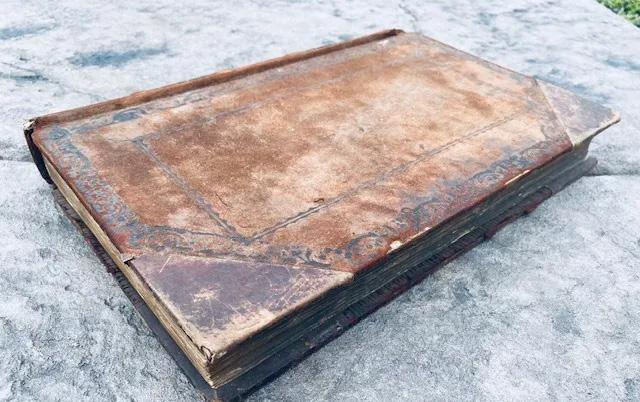
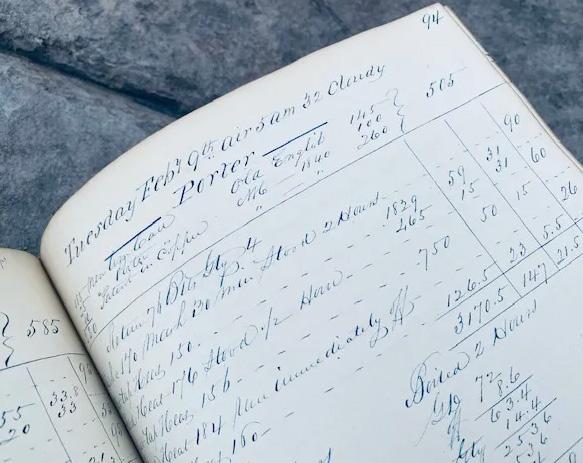
The book begins on August 21, 1839, and continues through March 5, 1840, documenting daily brewing operations in extraordinary detail during the pre-Prohibition and pre-Civil War era. Each page is carefully headed with the date, weather conditions, and daily temperatures before diving into detailed brewing records including beer styles, ingredient bills, boiling schedules, fermentation notes, and production methods. The brewery itself would eventually become Betz Brewery, making the journal an exceptionally important surviving piece of early American brewing history.
This discovery instantly became one of the oldest and most historically significant pieces ever encountered in Chad’s breweriana collection—a true once-in-a-lifetime find connecting Philadelphia brewing history.
Read the whole story at: https://tinyurl.com/gaul-smith
My favorite beer styles are Belgian. I recently had a draft KlevereTien (Ten of Clubs) from the Het Nest Brouerij located in Turnhout Belgium. The beer was a lovely 10% Belgian Strong Dark Ale (Quadrupel) aged in Oak barrels with Anise. I had never heard of the brewery, but was intrigued by the note “Hobbybrouwerij Het Nest”. That of course is what we call a microbrewery.
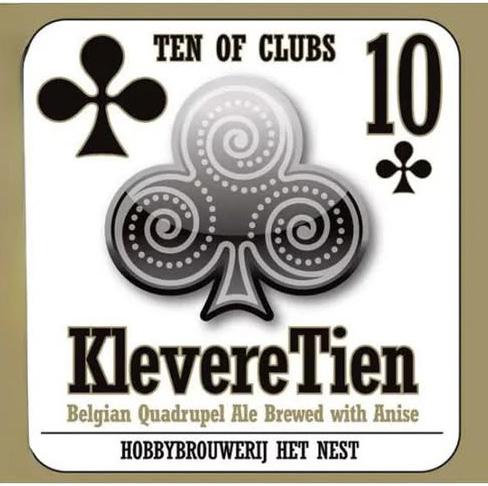
Frequently craft breweries here grow from homebrewers. Het Nest grew from a club of beer aficionados called the “Order of the Drunken Sparrow” – drunk as a Sparrow being Belgian slang for totally wasted. They got into home brewing, won some awards, and in 2008 Het Nest was founded as a contract brewer. More awards, and in 2015, they launched their own brewery. Turnhout Belgium is the playing card capital of the world, with over 1.3 million decks a day being produced there. So, it was a natural to name their beers after playing cards, and put their likenesses on the labels. That’s where the story gets interesting.
Their first beer was Schuppe zot – Flemish slang for the Jack of Spades, which was shown on their label – but in Flemish it means “the fool”. That was enough to make De Halve Maan (Bruges) come after them for confusion with their main brand, Brugse Zot (The fool of Bruges). Rather than engage in a legal battle, they changed the name to the literal translation for the Jack of Spades, SchuppenBoer. Their beers were a big hit all over Europe, selling on the label alone before distributors even tried the beer. Then came America. First it was HertenHeer – The King of Hearts. The ATF, under its assumption that all consumers are morons, refused to allow it to be sold, as the King of Hearts playing card on the label would lead consumers to believe it was good for their heart. The brewery was also exporting a whiskey under the Jack of Spades brand, which brought a lawsuit from Jack Daniels. They withdrew both the whiskey and the beer from the American market – then decided to hell with the American market altogether, they would concentrate at home. KlevereTien was brewed for their 10th anniversary, and while I haven’t found bottles, it is available in the States on draft. I immediately thought of Rick when I saw they make a non-alcoholic beer called “Dead Man’s Hand”. If I ever get back to Belgium, I know what bottles I’m bringing back. Know someone not a member
Refer a Friend to our Membership Team

Follow us on Facebook

Greater Delaware Valley Chapter of the BCCA, ABA, and NABA
Scan & Follow
Proudly supported by:
Old Reading Show
Sponsor: Old Reading Chapter
In memory of Jerry Matonis
June 6, 2026 @ 9 AM
Oley Valley Fairgrounds Pavilion
Oley, PA
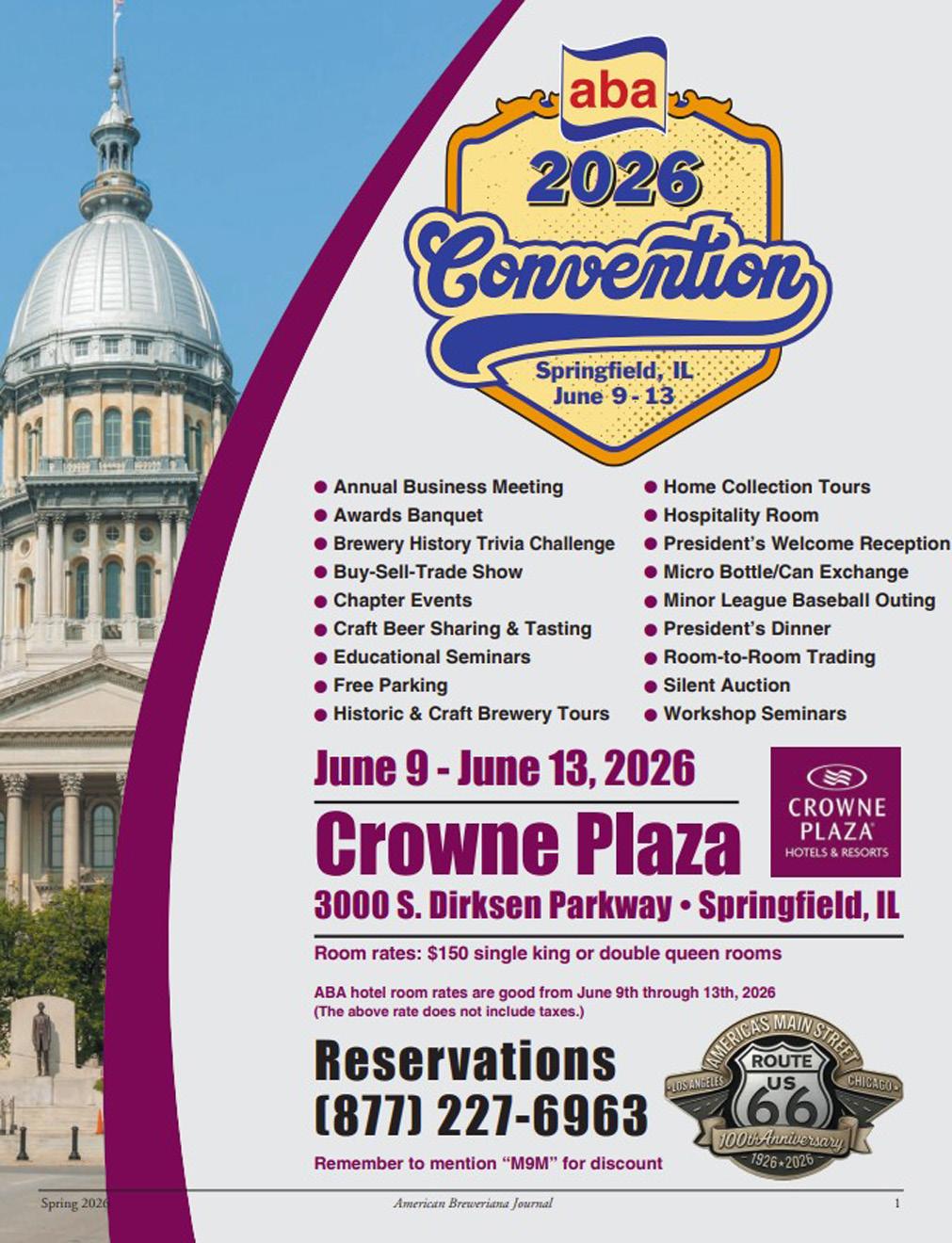
2026 ABA Convention
Sponsor: ABA
June 9 - 13, 2026
Crown Plaza Springfirld, IL
Dave Doxie Collection
June 27, 2026 @ 12 PM
112 Slater Drive
Wernersville, PA
June 28, 2026 @ 7:30 AM - 4 PM
Renninger’s Antique Market
Adamstown, PA
Be sure to stop by Chad’s booth. Back lot - Behind Door 72, Booth A88
AAAA Convention
Sponsor: AAAA
July 22 - 25, 2026
Holiday Inn | Morgantown Morgantown, PA
2026 NABA Convention
Sponsor: NABA
July 27 - August 1, 2026
The Alloy King of Prussia DoubleTree by Hilton King of Prussia, PA
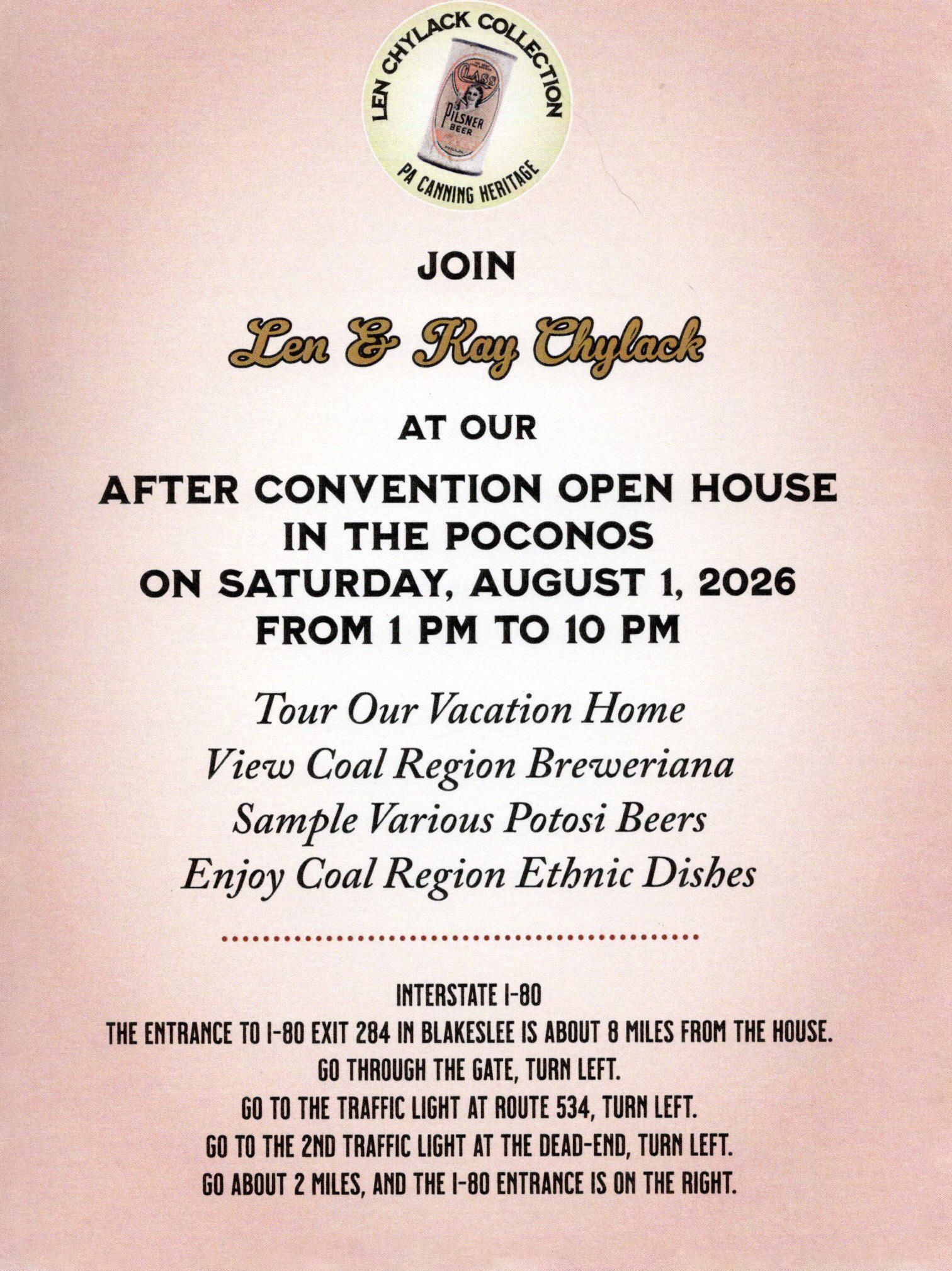
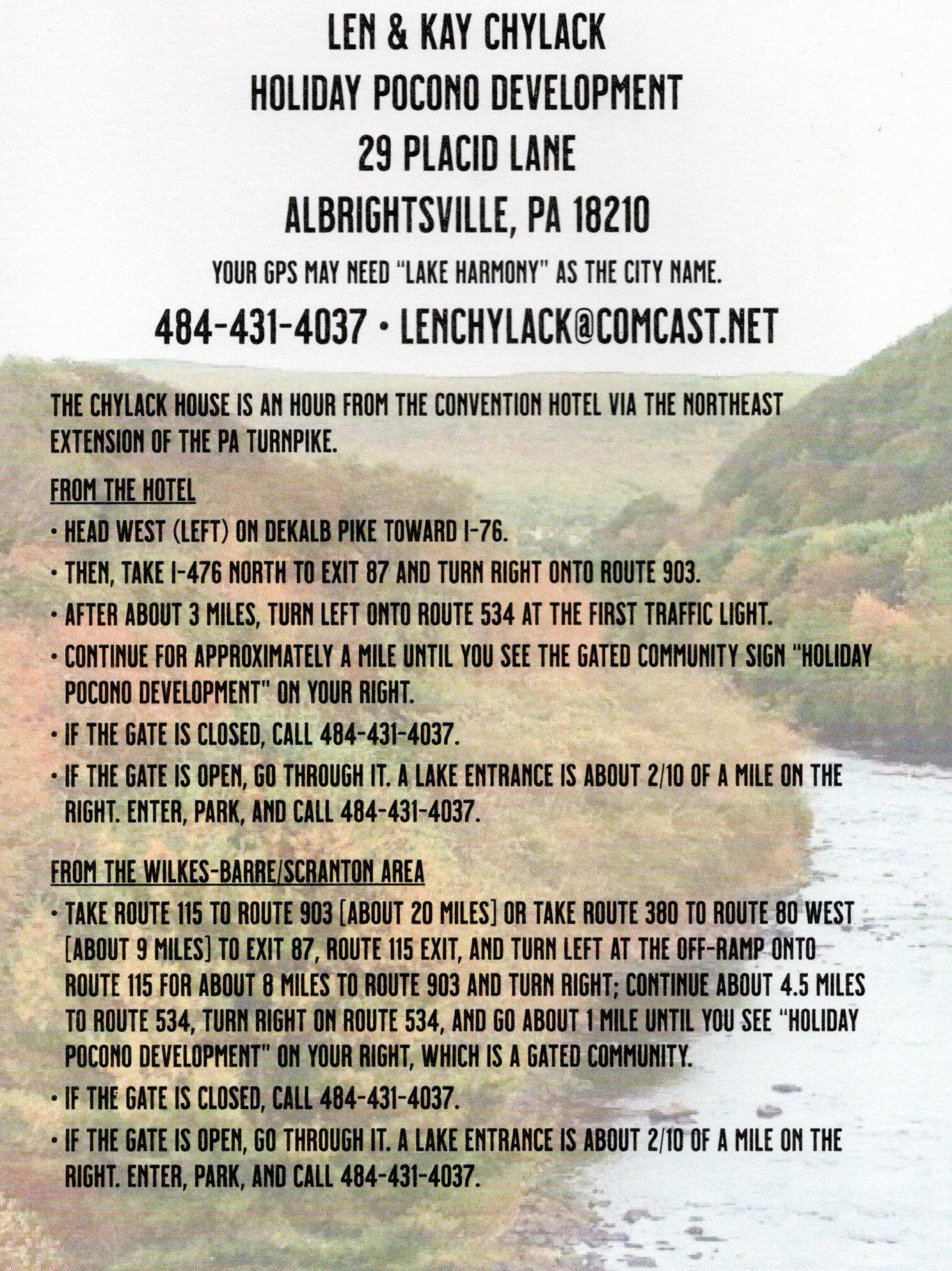
Chylack Collection Tour
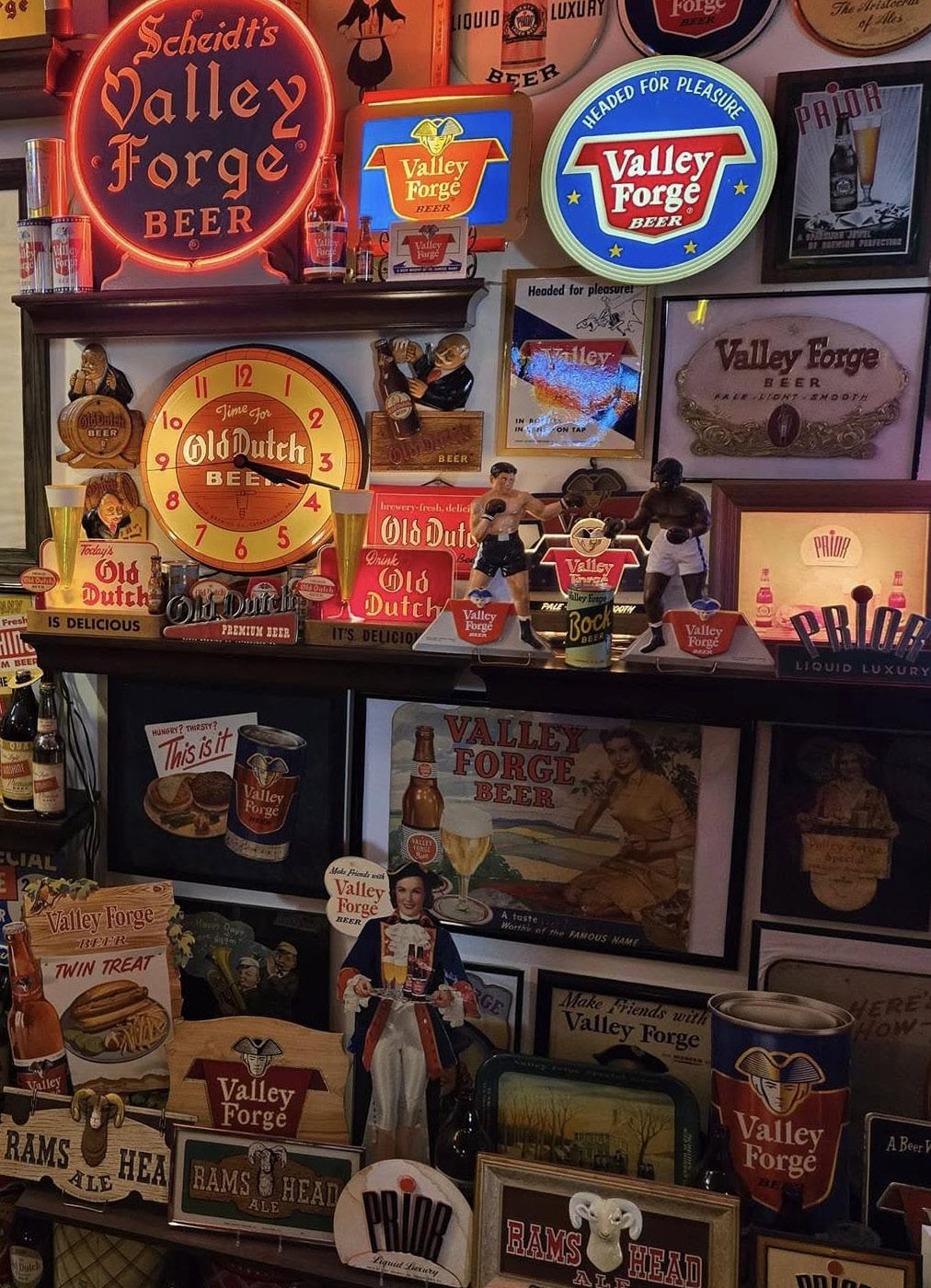
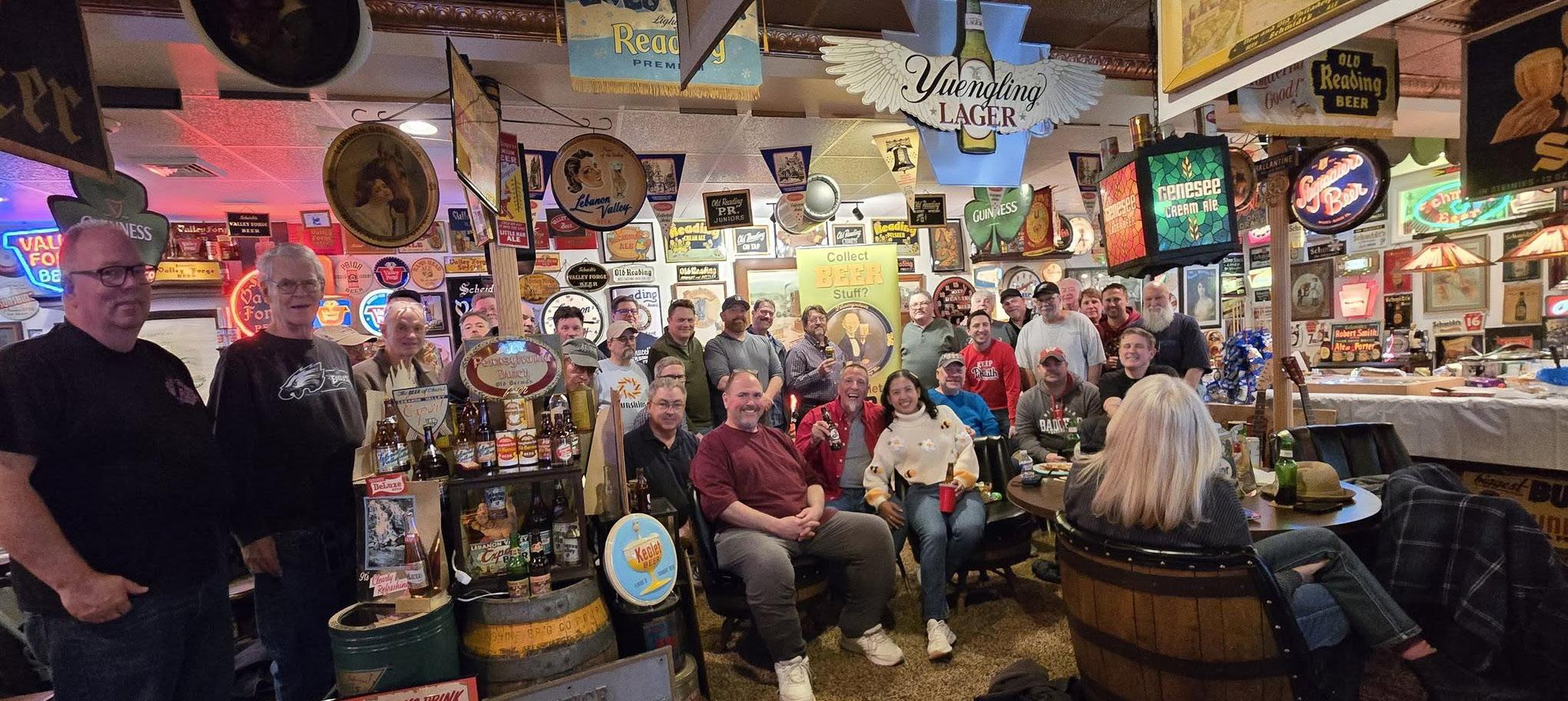
Len & Kay Chylack Collection
August 1, 2026 @ 1 PM - 10 PM
29 Placid Lane
Albrightsville, PA
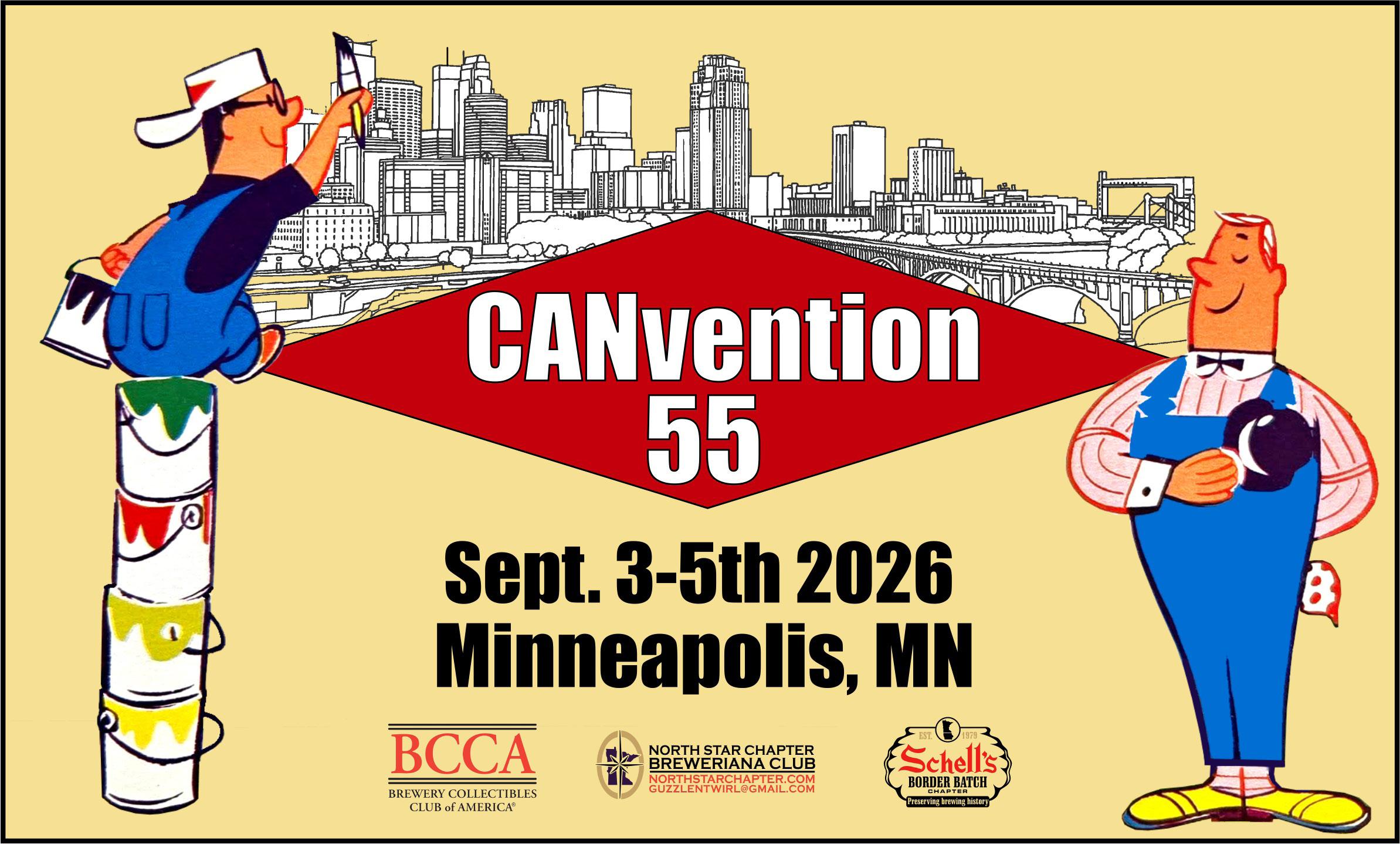
2026 CANvention 55
Sponsor: BCCA
September 3 - 5, 2026
Hyatt Regency | Minneapolis Minneapolis, MN