The pre-schooler mantra must be, “I can do it myself.” At Dôme, we help little people feel like big ones by encouraging independence. They’re free to help themselves to water – and if they spill a bit, we’ll just discreetly mop it up. We’ve also designed our Junior Menu with plenty of pictures, so they can ‘read’ it themselves. A little bit of freedom means every meal comes with a side of self-esteem. For gently building confidence, there’s no place like Dôme.
Perth Metro, WA Regional: Albany, Bunbury, Busselton, Esperance, Geraldton, Kalgoorlie, Katanning, Northam, Port Hedland, Rottnest.
For deaf, hearing or speech impaired members: Emergency Roadside Assistance SMS number 0434 182 877
All queries accesshub.gov.au
See page 81 for more contact details
AUSTRALIA POST ISSN NO 0810 8285
The opinions contained in this publication may not be shared by The Royal Automobile Club of W.A. Limited or its related bodies corporate (together “RAC”) or any of its or their councillors, directors or employees. Advertisements in Horizons are the responsibility of the advertiser. No person should act or rely upon such opinions or advice and RAC accepts no liability for them. Any rewards or rights provided to a member cannot be transferred, assigned, sold or redeemed for cash. Inclusion of a product should not be construed as an endorsement by RAC.
OUR PLASTIC WRAPPER IS BIODEGRADABLE. PLEASE PLACE IN YOUR GENERAL WASTE BIN.
next car will probably be from
Driving change
How we’re working towards a safer, sustainable and connected Western Australia. Learn more at rac.com.au/betterwa
From the President and Chair
A road safety reset is needed in WA
Every trip on our roads carries responsibility.
Most days, it feels routine. We get in the car to go to work, pick up children, visit family, take a holiday or run errands. But routine should never make us forget what is at stake.
Road deaths have been at crisis levels in Western Australia for consecutive years. Last year, 184 people did not return home to their loved ones, following 188 deaths in 2024. Many more have been seriously injured.
This year, the devastation has continued at alarming rates.
Behind every number is a person who mattered deeply to someone. A family changed forever. A community left grieving.
The numbers are sobering, but they also remind us that road safety outcomes are not predetermined. It is something we shape together, through the choices we make and the culture we create.
Governments have a critical role through safer road investment, effective education and enforcement, and strong road safety governance. Progress has been made in
many of these areas, but clearly there is more to be done. That responsibility lies with government, but also with all of us who travel on our roads.
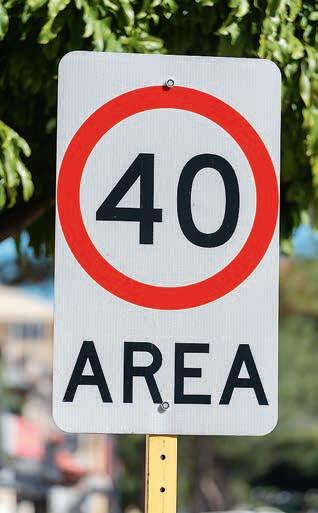
WA’s Slow Down, Move Over law is an important example. When passing stationary emergency response vehicles with flashing lights (including RAC Patrols), motorists must slow to 40 km/h and, if possible, move lanes. Those who fail to do so face a $300 fine and three demerit points. Unfortunately, many still appear unaware of this requirement. Beyond the law itself there is a larger point, which is that looking out for vulnerable people on the roadside should be second nature, regardless of the rulebook.
Sweden and Norway, leaders in road safety with much lower fatality rates, have demonstrated what can be achieved when a Vision Zero strategy is consistently applied. Western Australia shares the same aspiration through its own road safety strategy, but our results show there is still considerable work to do. Having the right vision matters, but outcomes depend on translating it into action.
We know WA is different. We are a vast state with long travel distances, a sprawling capital city, and regional routes that carry unique risks. Although in some ways this can make our challenge harder, the principle remains: road trauma is not something we accept as inevitable. A culture of road safety must be embraced. For motorists, this emerges in small moments. Slowing down to drive to
road conditions. Putting the phone away before you start the car. Letting another car merge. Backing off instead of pushing forward when being overtaken.
Western Australia needs a road safety reset. Persistently high fatalities make that clear.
It is not the responsibility of any one group. It is a shared task that demands our collective attention.
And the journey starts with the next trip, for all of us.
John Driscoll
Meet your RAC Directors rac.com.au/directors
RAC Rescue reaches new heights
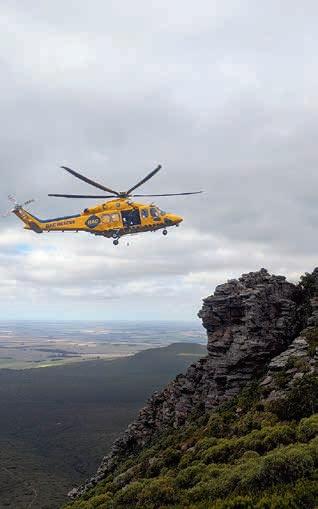
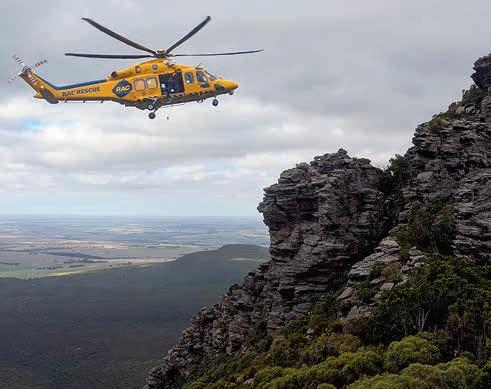
Emergency rescues from Western Australia’s Stirling Range can be challenging and often rely on the extensive skillset and experience of the RAC Rescue helicopter crew, especially in inclement weather.
In April this year, an avid hiker along with her friends took on the challenge of hiking Bluff Knoll. The weather was fine, and they were prepared with sufficient supplies for two nights. However, along the track, she fell and shattered two bones in her lower leg. Unable to continue along the hike, they called emergency services for help.
As the group was on the challenging Stirling Ridge Walk Trail between Ellen Peak and Bluff Knoll, the decision was made to dispatch an RAC Rescue helicopter. Once in the search zone, the helicopter crew were quickly able to locate the hikers on the trail.
The patient said she was amazed that, within three hours of falling, she was safely on board RAC Rescue. She was flown to Albany Airport and then transferred by ambulance to Albany Hospital and has since fully recovered from her injury. This rescue marked the 11,000th mission RAC Rescue has flown since it commenced over 23 years ago. Over the past 12 months, the crews have been called to more than 50 search and rescue missions, some as straightforward as this one, but many others far more complex - a timely reminder to be prepared if you’re planning on exploring the great outdoors.
With decades of experience, the combined RAC Rescue crew of Pilot, Aircrew Officer, and Critical Care Paramedics ensure the great outcomes that we see every day across the state, when members of our community are in need of help.
The RAC Rescue helicopters are funded by the State Government, managed by DFES and sponsored by RAC.
USING THE POWER OF FOOTY TO DRIVE ROAD SAFETY
In 2025, WA recorded 184 road fatalities, and so far this year we’re on track to record one of our worst years on the roads in more than a decade.
As the Official Road Safety Partner of the Fremantle Dockers, RAC is harnessing the power of sport to deliver important road safety messages and drive action with football fans across Western Australia.
In March this year, RAC’s Road Safety game was held when more than 35,000 spectators watched the Fremantle Dockers played the Richmond Tigers at Optus Stadium. Our Get Home Safe campaign was launched with footy fans able to engage through in-stadium activations, including photo booths.
In April, two junior football clinics were delivered at the Fremantle Dockers HQ attended by almost 200 children. These young fans were able to train with their footy heroes and learn about road safety with the RAC Rescue Experience, a virtual reality helicopter activation, and our road safety Hot Shot’s Challenge.
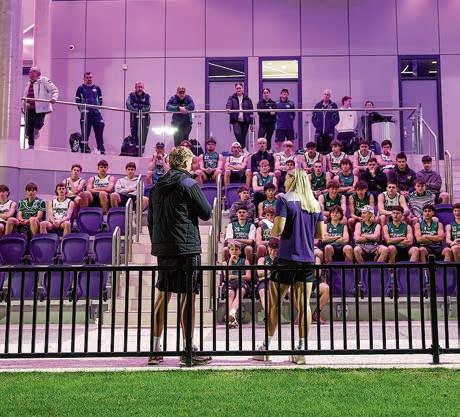
Then in June, RAC and the Fremantle Dockers held a workshop for the Hammond Park Football Club with more than 70 players aged 16 to 19. Attendees saw presentations from guest speakers about the impacts of road trauma, with real-world insights into peer pressure and resilience, to encourage safer behaviours as those young players begin their journey on our roads.
Through our partnership with the Fremantle Dockers, we’re reminding the whole community that we can all play a part in making our roads safer through the choices we make every day.
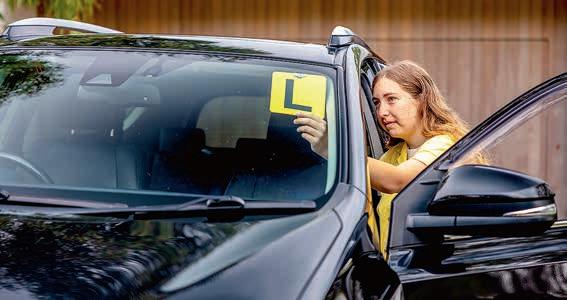
New requirements for those learning to drive
RAC has welcomed the WA Government’s announcement of changes to the graduated licensing system for novice drivers.
In our submission to the licensing system review, RAC called for an increase to at least 80 hours of supervised driving, an extension of the minimum learner period from six to 12 months, an extension of the provisional period from two to three years, and the introduction of online theory and hazard perception tests.
The WA Government has now adopted all of these measures which are due to be rolled out by the end of 2027.
Rhys Heron, RAC’s Head of Communications, said the
changes would deliver important road safety improvements.
“For several years, RAC has highlighted the need to strengthen the graduated licensing system to help address the devastating rate of deaths and serious injuries on WA roads.
“We know more time spent in the learner phase, and more time learning under supervision across a wide range of conditions, can help reduce the risk of crashes for young and inexperienced drivers.
“These are important and welcome changes that will bring real road safety benefits, and we look forward to engaging with the WA Government as part of the future implementation process.”
The Royal Automobile Club of W.A. Limited will hold its Annual General Meeting on 23 November 2026. Details regarding the business to be conducted at the AGM will be published on our RAC website. If you have any queries, please contact us at annualgeneralmeeting@rac.com.au
NEXT-GENERATION
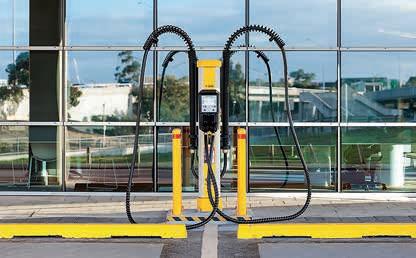
EV CHARGING NOW AVAILABLE AT RAC WEST PERTH
Electric vehicle uptake continues to grow in WA, with one in eight new vehicles now electric, up 55 per cent in the 12 months to December 2025.
It was back in 2015 that RAC installed the first EV chargers at our West Perth office as part of the RAC Electric Highway in WA –the first of its kind in Australia.
Over the past decade we’ve continued to update our chargers to keep up with evolving technology.
Following recent upgrades and an expansion, five new chargers are now available at our West Perth site, using the latest high speed charging technology. These offer improved performance and efficiency with speeds up to 240 kWh for compatible vehicles. The site also includes a dedicated charger for ACROD bay users to improve accessibility for members and visitors.
These busy inner-city chargers have recorded over 40,000 sessions in the past two years highlighting strong demand for public chargers – particularly from inner-city residents without home charging, as well as commuters, visitors and regional travellers passing through the CBD.
With five chargers now available and improved performance with faster charging times, members and users can now conveniently keep their EVs topped up while on the move.
Here’s to the ones who always show up
You’re always behind your team, and we’re always behind you. Every. Single. Day.
Freo’s Official Road Safety Partner
You’re always behind your team, and we’re always behind you. Every. Single. Day.
RAC. Official Road Safety Partner of the Fremantle Dockers.
Snapshot
Car theft goes high-tech
Until recent times, brute force, some basic knowledge, and a little physical dexterity were all that was required to steal a car.
As a result of high rates of car theft through the 1980s in Australia, vehicle manufacturers began fitting immobilisers as standard equipment.
Today, the move away from physical keys to keyless entry has seen a whole new wave of thefts as car thieves use sophisticated devices to hack into a car’s electronic control system, all without leaving a scratch.
Theft rates have been particularly high in Queensland and Victoria, and though at this stage WA hasn’t seen the same rate
of increase, motorists in the state are still being impacted and should be vigilant.
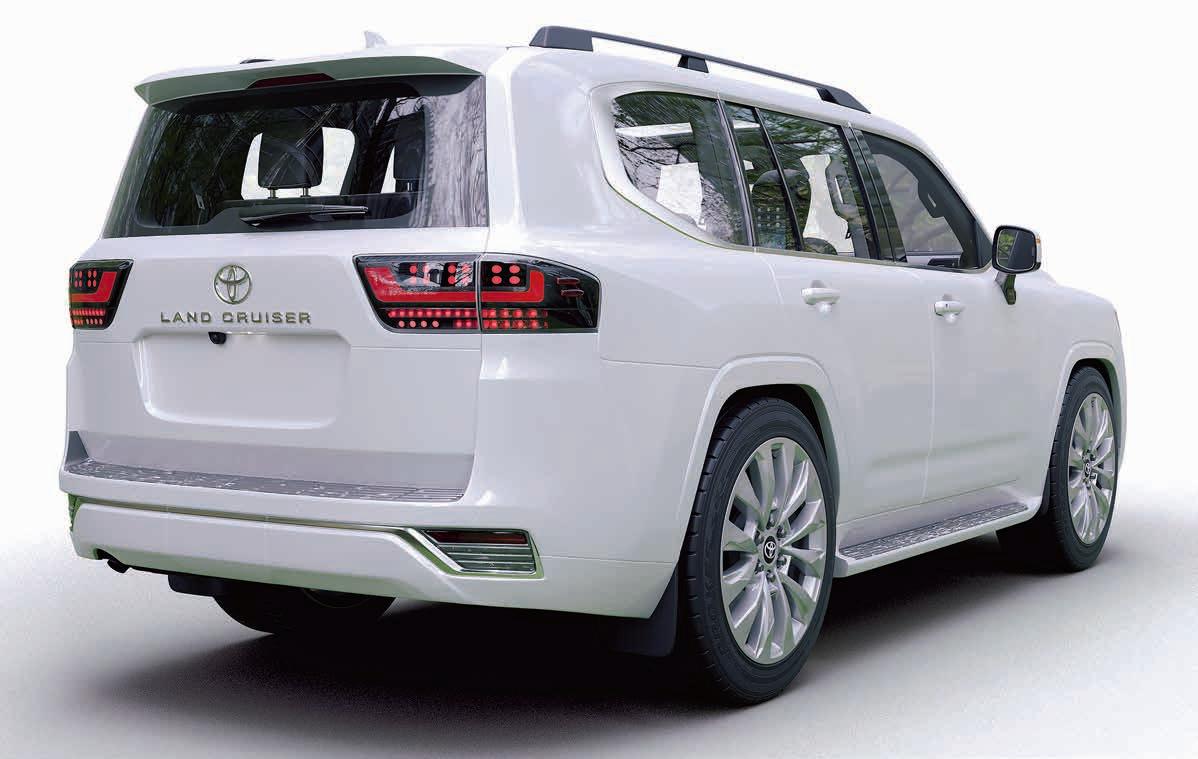
Theft of high-value Toyotas such as newer LandCruisers has been an issue in WA for some time.
In January this year, Toyota finally acknowledged the problem and announced improved security for new HiLux, LandCruiser 300, and LandCruiser Prado models, in addition to developing add-on security devices for existing vehicles.
To keep your vehicle safe, where possible, park in a locked garage or carport. At home keep your key fob at least 10 metres away from the car to keep it out of range of devices used to disable in-car security and control systems.
Find out from the vehicle manufacturer via a dealership if there are security software updates available.
An old-fashioned steering wheel lock is still an option and can act as a visual deterrent.
You could also consider aftermarket engine immobilisers, ignition shields, and battery isolators.
LABELS REQUIRED ON ELECTRIC CAR NUMBER PLATES INCLUDING HYBRIDS
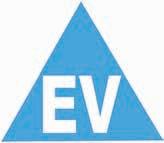
Labels that identify electric and hydrogen fuel cell vehicles became mandatory to display on a vehicle’s front and rear number plates in Western Australia from 1 January this year.
The labels enable emergency services to easily identify electric vehicles (including hybrids and plug-in hybrids) and hydrogen fuel cell vehicles, and apply different safety procedures in the event of a crash or an instance where one of these vehicles has sustained damage.
Only vehicles built or modified on or after January 2019 will be required to display the labels.
From 1 January, there is a 12-month transition period to enable vehicle owners to comply, with enforcement by WA Police and Authorised Inspection Stations commencing from 1 January 2027. It is the vehicle owner’s responsibility to ensure the labels are affixed to their number plates.
The requirement brings WA into line with other states and territories.
The labels are available to purchase online and at automotive stores. They cost approximately $10 and are generally adhesive. Vehicle owners must ensure the labels are correctly fitted on both the front and rear number plates and also on any auxiliary plates used on the vehicle.
Vehicles with custom plates must also display the labels in clear space on the front and rear number plates. Auxiliary custom plates are also required to display the labels.
The labels must be placed in an upright position and placed so as not to fully or even partially obscure any characters on the plates.
Is it okay to engage with your smartwatch while driving?
Under WA’s Road Traffic Code, a Visual Display Unit (VDU) is a device that can display images on a screen. WA Police considers that smartwatches meet this definition.
According to Regulation 264 of the Code, a driver must not operate a vehicle with a VDU switched on and displaying images if any part of the image is visible to the driver from a normal seated driving position, or if it could distract another driver. The rule applies when the vehicle is in motion or is stationary but not parked.
So, in much the same way as a driver while operating a vehicle is not permitted to watch images on the screen
of a portable device, such as a tablet, they are also restricted from viewing a smartwatch screen while it is being worn or anywhere else in the vehicle. If the smartwatch is being used to operate mobile phone functions, such as calls, messages, emails, notifications, or apps, this is also considered mobile phone use under Regulation 265.
The only situation where a regular driver is permitted to use a VDU device is where it is being used as a driver’s aid, such as for navigation. A VDU used as a driver’s aid must either be integrated into the vehicle design or secured in a commercially manufactured mounting affixed to the vehicle. It cannot be worn on a wrist. Misusing a VDU in a vehicle attracts three demerit points, while using a smartwatch to operate mobile phone functions can attract higher penalties.
NEW ROAD SAFETY CAMERAS NOW ALSO ON MITCHELL FREEWAY
Following the rollout of fixed road safety cameras on Kwinana Freeway in February last year, new fixed cameras are now also monitoring drivers travelling on Mitchell Freeway, with cameras capable of detecting seatbelt, mobile phone, and speeding offences installed at Vincent Street and Karrinyup Road.
Until November 2026, the cameras are operating under a six-month education and awareness phase. During this period, drivers caught not wearing seatbelts or using mobile phones will receive caution notices rather than a traffic infringement. However, infringement notices for speeding offences will be issued, with no caution notice period.
Full enforcement is expected to commence on 1 December 2026 for all detectable offences.
The cameras are part of a statewide deployment that includes mobile safety camera trailers, which can be moved to various locations across WA. A fleet of eight safety camera trailers is currently in operation.
The fixed and mobile cameras have already delivered strong results, with the rate of seatbelt and mobile phone offences dropping by more than 85 per cent since their introduction.
RAC supports the use of the new cameras to reduce road trauma in Western Australia. As with any new technology, it is important the government monitors how it is operating to ensure it is having the right impact.
When an emergency vehicle needs to get past you
Drivers must give way to or make every reasonable effort to give a clear and uninterrupted passage to any police and emergency vehicle displaying a flashing red or blue light, or sounding an alarm.
However, you may not break any road rules to get out of the way, for example, by speeding or entering an intersection against a red light. When you see flashing lights or hear a siren, stay calm, check your surroundings and give way.
If you need to change lanes, pull over, or stop, indicate early to alert the emergency vehicle driver and other road users.
If you’re travelling on a multi-lane road, indicate and move to the left as soon as you safely can. Drivers already on the left should make room for other vehicles trying to move left.
If you’re not able to move left, stay calm, slow down, indicate left and let the emergency vehicle pass around you.
If directed by police or emergency services personnel, always comply, but be aware of the movement of traffic around you.
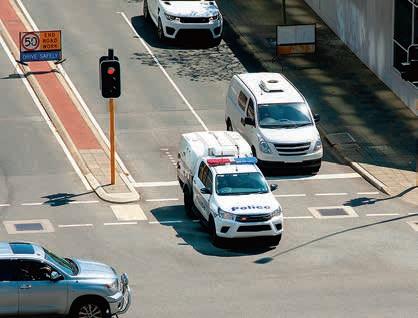
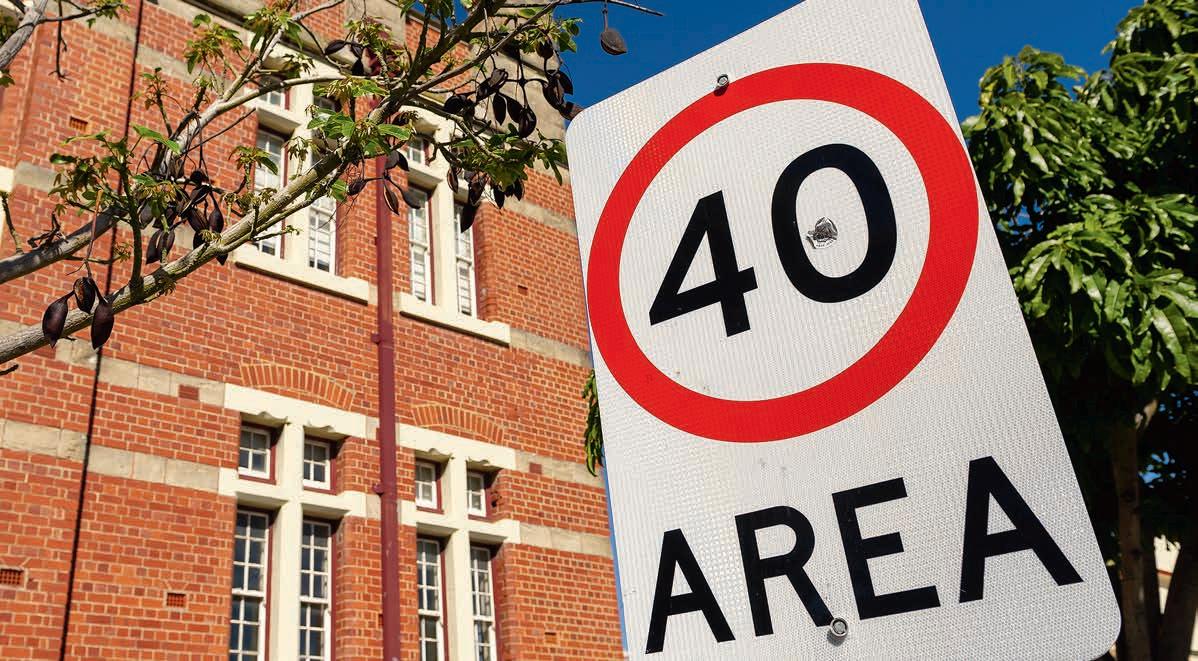
If you are passing a stationary emergency or incident response vehicle, including RAC Patrols, that are displaying flashing lights at a roadside incident, remember that the Slow Down, Move Over (SLOMO) law also applies. You must slow down, move over if possible, and pass at no more than 40 km/h. As you do so, brake gradually and safely.
Goodbye Horizons
AND
THANKS FOR THE MEMORIES
After 15 years at the helm of Horizons, editor Vanessa Pogorelic (Ness) is closing one chapter and looking forward to a new one as she heads off to retirement. Reflecting on her time with RAC’s member magazine, it’s the connection with readers that stands out above all else.
“Every time I open an email from a member thanking us for something they read in the magazine that directly helped them in some way, I’m reminded of why I love this job.
“Being Horizons editor has been an absolute privilege, and not a day has ever passed that I wasn’t aware of the enormous responsibility I had to our members,” Ness says.
Over the years, Horizons has grown alongside Western Australia, now reaching more than 750,000 households while expanding beyond print to include a YouTube channel and the Horizons online content hub. During that time, Ness has chronicled sweeping changes in motoringfrom the rise of electric vehicles and emerging self-driving technology to the arrival of e-bikes and e-scooters. Yet some things have never changed.
“West Aussies still love a road trip,” she says. “Our WA travel stories remain firm favourites. Readers are also very passionate about understanding road rules, and the ‘mysteries’ of fuel pricing.”
After 15 years, her favourite magazine cover and story was from 2014, about Volkswagen ending production of the Kombi van. Its simple white cover, with a bright orange Kombi and the headline Goodbye Kombi... Thanks for the memories, struck
a chord. Readers responded with heartfelt letters, photographs, and stories of adventures shared in their beloved vans.
Among the many memorable stories she’s covered, Ness especially enjoyed writing about the Canine Unit within the Department of Fire and Emergency Services.
“These are just regular dog owners who volunteer their time to train themselves and their pet dogs to carry out search and rescue work. It was a great example of ordinary people doing extraordinary things.
I also think dogs are pretty special little creatures who can teach us a lot about being better human beings.”
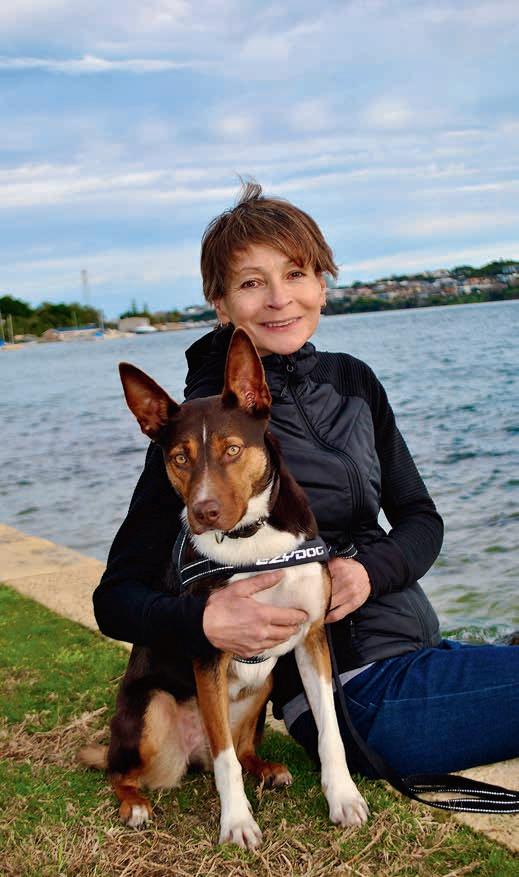
Retirement for Horizons’ editor will bring more time paddling on the Swan River, playing her guitars, and enjoying the beach with her best friend, Deejay.
Her farewell message is one of gratitude: “Thank you for your feedback over the years. Your letters and emails have provided ideas, inspiration, and valuable insights into where we should turn our attention.
In four years, your member magazine will celebrate its 100th birthday, and I’ll be looking forward to reading that very special edition. But for now, it’s goodbye Horizons... and thanks for the memories.”
Momentum grows for lower speeds on local streets
By Ruth Callaghan Drive
Why the call to slow down in our suburbs is continuing to grow
When WA introduced 50km/h speed zones for local streets in built-up areas in 2001, there was an immediate impact on road safety.
Despite concerns by some road users who felt they were being slowed to a crawl on streets they had normally navigated at 60km/h or more, the proof of the project could be measured in lives saved.
Pedestrian crashes in Perth in the first two years fell by half — an incredible reduction, given early studies found around 20 per cent of drivers were still travelling at least 10km/h above the new limit.
An evaluation conducted soon after the implementation estimated 45 lives had been saved in Perth and 20 lives saved on regional roads in just two years, with more than 700 people across the state saved from serious injury.
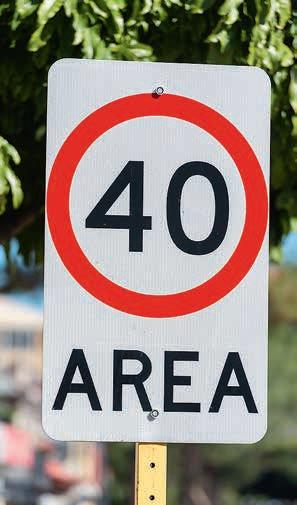
Now, 25 years on, there’s a push to lower speeds again, this time to 40km/h on local streets close to the city. And just as with the drop from 60 to 50km/h, changing to 40km/h is predicted to have far-reaching implications for road safety — as well as some community pushback.
Looking at the numbers
Research conducted for RAC by the Centre for Accident Research and Road Safety –Queensland (CARRS-Q) in 2022 estimated that more than 500 fatalities and serious injuries in WA could be prevented between 2022 and 2030 if all 50km/h speed limits were reduced to 40km/h.
Since then, concerns around resurging road trauma have only grown.
In 2024, more than 1400 people were seriously injured and 188 killed on WA roads, with about 60 per cent of serious injuries and fatalities combined, happening on roads signposted 70km/h or below.
On average, 18 people die each year on 50km/h roads in WA, with nearly 300 seriously injured.
For RAC Manager Road Safety Policy, David Elston, physics makes a strong case for reduced speeds on roads where people walk, cycle, play, or interact with vehicles. Lower speeds not only give drivers, pedestrians, and cyclists greater time to react and avoid a potential crash but also reduce the speed of impact if a crash does occur.
Research shows cars travelling at 50km/h can take about 35 metres
On 50km/h roads in WA, a yearly average of
18 people die
300 seriously injured
to stop on a dry road, he says, while stopping distance falls to 26 metres at 40km/h and 17 metres at 30km/h.
That might still be too far to avoid a collision, but the reduced distance and shorter stopping time means the vehicle is slowing, so any eventual crash is at a much lower speed.
“If you reduce vehicle traffic speeds, then it decreases deaths and serious injuries,” Elston says.
“The slower the driver is going, the quicker they can react, and the quicker they can come to a stop. Even if they don’t come to a stop, because the human body is fragile, it can only take a certain amount of force in a crash.”
A pedestrian hit by a car at 50km/h has just a 20 per cent rate of survival. At 40km/h that chance rises to 60 per cent but a pedestrian hit at 30km/h has a 90 per cent chance of surviving.
Despite the safety advantages, perceptions of lower speeds can make people less supportive of 40km/h limits, Elston says.
“The primary concern we hear from people is that it might affect their journey time, but if you’re reducing speed limits on local residential streets, people typically
are only driving very short distances on those streets before they join a more major road,” he says.
“The impact on journey times on those urban streets is usually very minimal.”
Similar scepticism was seen in the introduction of 50km/h limits, although support grew rapidly once drivers became used to the new system.
Whereas only 60 per cent of community members approved of the drop to 50km/h in 2000, by 2003, 91 per cent were in favour and hardened opposition had fallen to 3 per cent.
RAC’s David Elston says most drivers come to understand the benefits of calming traffic on the local streets where people live, and reserving higher speeds for arterial roads designed to move large volumes of traffic.
“The biggest benefit is safety and that is the primary reason for looking at speed limits, but there are a range of additional benefits,” he says.
“It can make streets more welcoming, encourage walking and cycling, reduce vehicle noise and in some cases even reduce fuel consumption and emissions,” he says. Rate of survival if a pedestrian is hit by a car
Stewart Allen
Working together on safer streets
The Perth Inner City Safer Speed Zone Project brings together groups including the Department of Transport, Main Roads WA, the WA Local Government Association, RAC, and the Road Safety Commission, along with a number of inner-city councils.
Working on the principle that a 20 per cent reduction in speed from 50km/h to 40km/h can translate to a 200 per cent increase in survivability, the group is seeking to reduce speeds across a 62km2 area close to the CBD.
The City of Vincent was the earliest council to act, launching a 40km/h trial in 2019 that reduced speed limits on local roads between Newcastle and Vincent streets.
In 2023, it began rolling out the new limit across the local government area with nearly 60 per cent resident support.
While a reduction in crashes was identified as part of the trial, other changes were also observed that helped cement the adoption of lower limits.
Resident surveys showed a 21 per cent increase in the perception of improved liveability, while 34 per cent reported being more likely to choose walking or riding over local car trips. The number of pedestrians and cyclists in the area also climbed by 14 per cent in the first 12 months.
PJA transport planner, Tim Judd, says the momentum for change across the inner city is growing.
“What helped in Vincent was that it started with a temporary trial, which helped get it off the ground more easily,” he says.
“After COVID came, it was a chance to leave the trial in place and allow more people to walk and ride. When you looked at the 12-month review we had of the trial compared to the three-year review, the change in people’s attitudes towards the lower speeds was remarkable.
“They were saying, ‘Yeah, the world didn’t end, and it’s not really affected my dayto-day journeys at all.’ It felt a bit safer for people to allow their kids to walk or ride to school. It felt a bit calmer.
“The change in community perception was quite significant.”
Five additional local governments, including Perth, South Perth, Cambridge, Subiaco, and Victoria Park, have now approved the adoption of 40km/h on at least some local streets.
In November, the City of Perth approved 40 km/h limits for access roads and local distributor roads in all city neighbourhoods, extending the limit that already applies in the CBD to West Perth, East Perth, and parts of Crawley. Major roads, including Mounts Bay Road and Thomas Street will be unaffected.
In July 2025, the Victoria Park council also voted to progress plans to reduce speeds but noted publicising the change became more expensive if each council had to act independently, rather than as a group.
Tim Judd says applying a uniform 40km/h speed limit makes joint action desirable — and represents an enormous saving when compared to physical infrastructure changes such as roundabouts, road narrowing or other ways to slow down traffic.
“Most councils wait until they get a complaint from someone about speeding
on their road and then go and check it out. Then they might come up with a traffic-calming design that needs to be consulted on and funded,” he says.
“It can take one or two years just on a single road based on someone’s complaint.
“What they can do now is say, it’s 40km/h everywhere. We can now monitor the speeds and where we’re not getting the compliance, and focus funding on any physical measures to get the speeds down to where we want them.
“You can effectively do all the roads in all the inner-city area for the same cost as maybe three roads with physical interventions.”
In 2025, RAC launched a major trial in partnership with the Shire of Augusta Margaret River, with support from Main Roads WA, to test reduced speed limits on 550 local roads in the region.
The trial, which will run until mid-2028, was motivated by 59 deaths or serious injuries in the area between 2019 and 2023, and is testing a new approach to speed limit setting, focusing on harm
minimisation and analysing roads in a holistic, area-wide way.
“Community consultation conducted in late 2024 found that a majority of respondents supported 40km/h on residential streets and two-thirds supported 40km/h in town centres,”
PJA’s Tim Judd says.
“Bringing down those speeds makes it a more pleasant environment for people, and makes people feel safer to be out walking or riding.”
WA is also not alone in its move to restrict local speeds, he says, with examples of similar projects in NSW and Victoria, while in Europe, many cities are moving towards 30km/h limits on their local streets.
“There is a widespread international trend towards slowing speeds in urban environments, and that’s to increase liveability.
“There are lots of countries and lots of cities that are looking at this as a way of improving safety but also creating environments that are more peoplefocused and friendlier for people who are walking and riding.”
“It can make streets more welcoming, encourage walking and cycling, reduce vehicle noise and in some cases even reduce fuel consumption and emissions.”
Listen to the Horizons podcast
To
learn more about the push for slower local roads, scan the QR code to listen to our podcast.
Stewart Allen
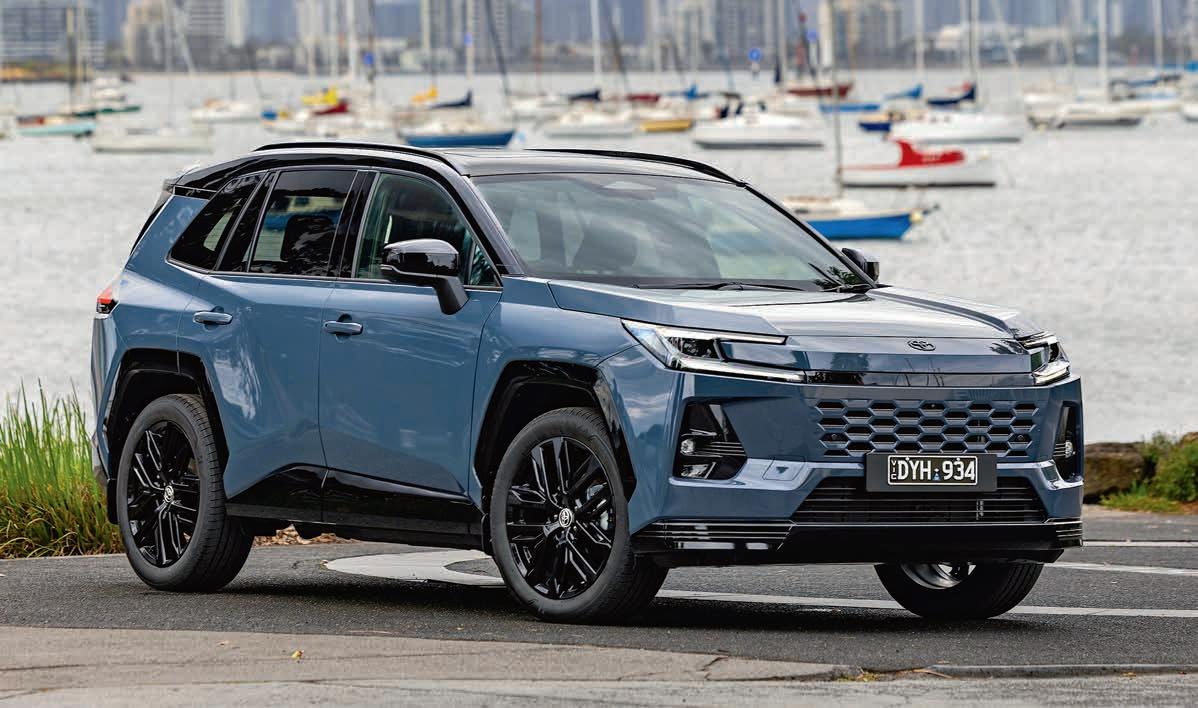
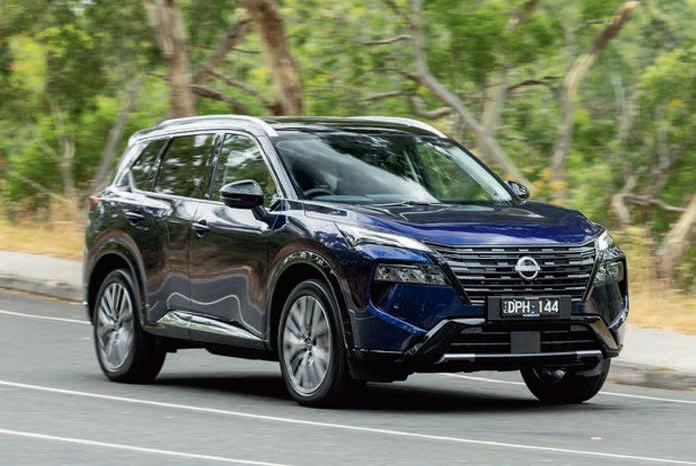
Why your next car will probably be from China
IF YOU NEED PROOF THAT THE AUTOMOTIVE WORLD IS CHANGING FAR MORE RAPIDLY NOW THAN EVER BEFORE, CONSIDER THE BIG CHANGE IN NEW VEHICLE REGISTRATION FIGURES THIS YEAR.
By Byron Mathioudakis
Australians now officially buy more vehicles sourced from China than from any other single country.
However, because several major Japanese brands build some of their most popular vehicles in Thailand (think Toyota HiLux, Isuzu D-Max, Mitsubishi Triton), Japanese brands still outsell Chinese brands. The Ford Ranger and Everest are also built in Thailand. But Chinese vehicle sales continue to rise.
According to figures released by the Federal Chamber of Automotive Industries (FCAI), which represents new car importers in Australia, and the Electric Vehicle Council, Chinese-built vehicle sales reached 25,781 units in February, up from 15,410 the same time last year.
To put those numbers in perspective, at the start of 2020, the corresponding registration figures for February that year were just 3600.
China’s sales growth has come from year-on-year numbers jumping by more than 60 per cent. As a result, China now commands around 30 per cent of the entire car market in 2026, compared to just 16 per cent last year.
In the five months to the end of May 2026, Japan-built cars sold in Australia were down 24.8 per cent to 117,332 and sales of Thai-built vehicles were down 10 per cent to 90,241. South Korean vehicles were up 1 per cent to 60,676.
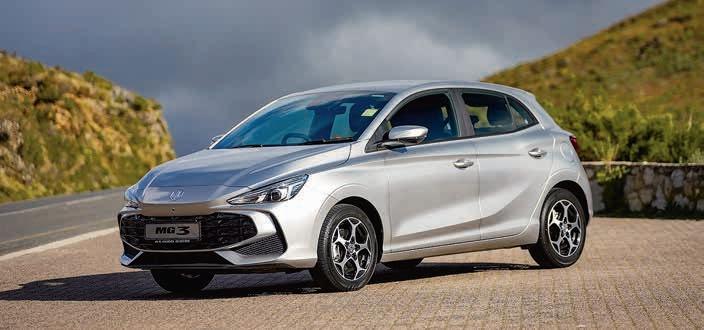
Predictably, leading the charge for China are Chinese brands BYD, GWM, Chery, and MG, making up four of the top 10 manufacturers year-to-date in Australia, and followed close behind by a rising Geely, Omoda-Jaecoo (by Chery), Zeekr (a Geely brand) and LDV.
In BYD’s case, it has also become the highest-placed Chinese brand in history, hitting the number two position, ahead of Ford, Hyundai, Kia, and Mazda –though it is still considerably behind first-placed Toyota.
The new price leaders
Comparatively inexpensive models like the BYD Shark 6 PHEV ute, Haval Jolion, Chery Tiggo 4, and MG ZS are now commonplace on our roads.
Since the beginning of this decade, they have emerged as a force in the lower-end of the new-vehicle market in Australia, propelled by comparatively lower prices and higher specification levels against rival products.
At the same time, established brands from Japan, Europe, South Korea, and North America have either reduced their presence or completely abandoned the cheap end of the market, giving the looming Chinese brands a free kick and a clear path to Australian consumers seeking affordable new cars.
An often-cited example is Toyota, which shocked the Australian car industry when it launched the latest version of an established city car favourite, the Yaris, at over $7000 more than the outgoing model at the beginning of this decade.
From what was widely promoted as a $14,990 model for 20 years, it instantly rocketed to over $23,000 in a single generational change overnight.
Sure, the 2021 Yaris was demonstrably better than its predecessor in almost every facet including safety, refinement, and efficiency. But buyers at the bottom end of that market could not afford one.
Result? The Yaris was swiftly overtaken by the far-cheaper (though far-inferior) MG 3 hatch to become the best-selling light car in Australia. This is a position it has yet to relinquish.
Of course, unforeseen external events have played in China’s favour, including the global pandemic of 2020 and its profound aftermath of broken supply-chain-driven new-vehicle shortages during 2021 and 2022, significantly higher manufacturing and shipping costs, and the subsequent rise in the cost of living.
Largely self-sufficient and shielded by global component delays, buyers turned to readily available Chinese vehicles in droves.
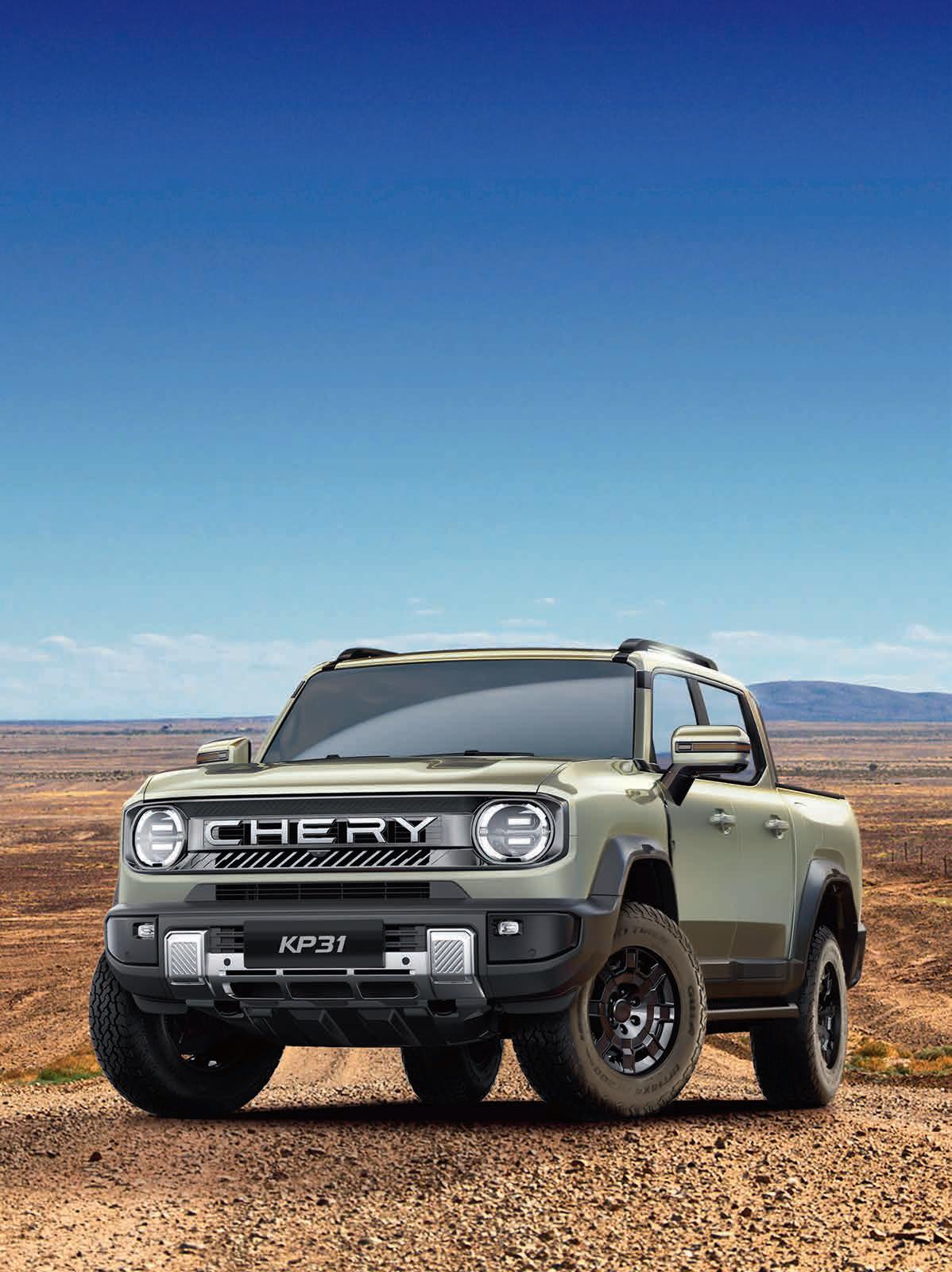
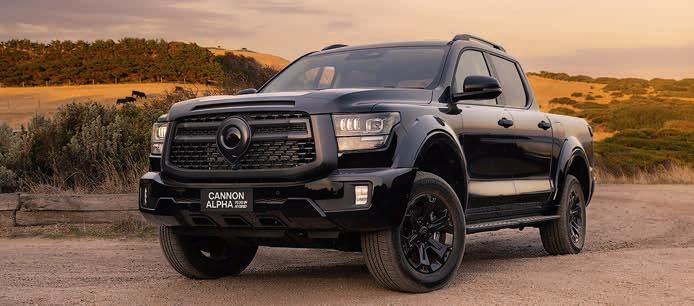
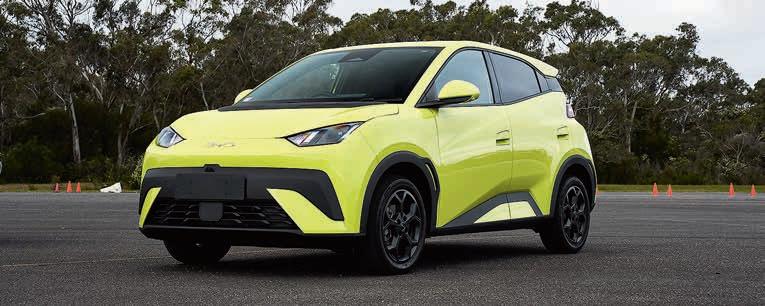
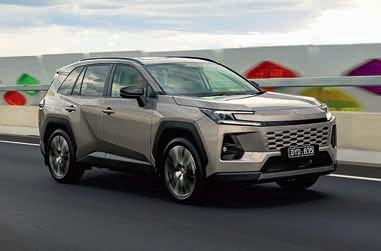
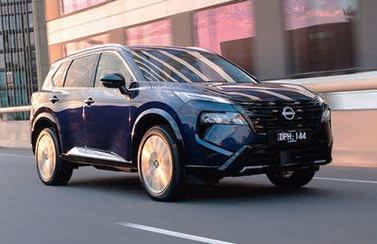
IMAGES: BYD, GWM (top), Chery (left), and MG (above), are some of the Chinese brands in the top 10-selling manufacturers in Australia.
The rise of electrification
Accelerating this growth is China’s strength in supplying Australians with affordable, attainable electrified vehicles, including hybrids, plug-in hybrid electric vehicles (PHEV), extended range electric vehicles (EREV) and full battery electric vehicles (EVs).
With spiking oil prices earlier this year due to the Middle East conflict, consumers turned to electrified vehicles in a big way, nearing 50 per cent of all new-vehicle sales volume. This has created a near-monopoly situation for Chinese brands, as rivals struggle to match their aggressive pricing and marketing strategies.
While some analysts believe the boom in electrified vehicle sales is just a blip that will see demand return to pre-war levels, others suggest that a dramatic increase in new, cheap models from China will help sustain demand. Basically, the taps have been turned on even more than before.
BYD is already making strong headway with the Atto 1 and Atto 2 launched in late 2025 as two of the cheapest EV city cars and EV SUV choices in Australia, joined by newcomer GAC, Chery, GWM, and MG, among others.
Breaking new ground
Additionally, China is pushing forward into the electrified ute market that it helped create after the runaway success of the BYD Shark 6 PHEV in 2024, with JAC, GWM and Chery all responding with lower-priced PHEV pickup alternatives during the course of this year. And there are more in store for 2027.
Similarly, the EV van market is set to boom primarily because of two key players from China, the LDV eDeliver 5 and Geely-made Farizon V7E mid-sized offerings. Starting from around $50,000, these are upwards of $30,000 cheaper than the existing EV van alternatives from Europe by Mercedes-Benz, Ford, VW, and Peugeot.
Chinese alliances
China is not just represented by Chinese brands, however, as an increasing number of vehicles from foreign manufacturers are built there.
The largest and most relevant by far is Tesla, whose entire model range for Australia is from China despite being an American company.
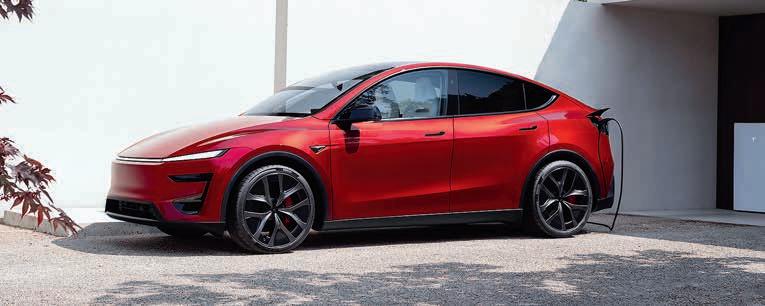
A strong player in the EV segment since late last decade, Tesla achieved a historic first in Australia in May, with the Model Y sourced from China topping the sales charts, edging out the Ford Ranger, Toyota RAV4, and Toyota HiLux.
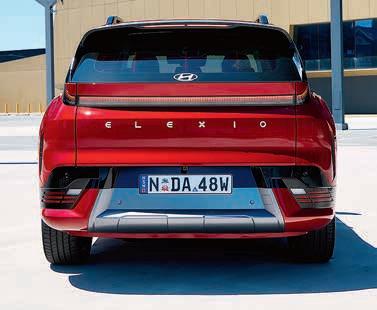
Other non-Chinese-branded SUVs already on sale include the BMW iX3, Smart #1, #3 and #5, Cupra Tavascan, Kia EV5, and Hyundai Elexio, as well as the Mazda 6e. Most of Volvo’s models now also come from China instead of Europe, as do its former sub-brand Polestar’s, but both Swedish marques have been under Geely ownership for more than 15 years.
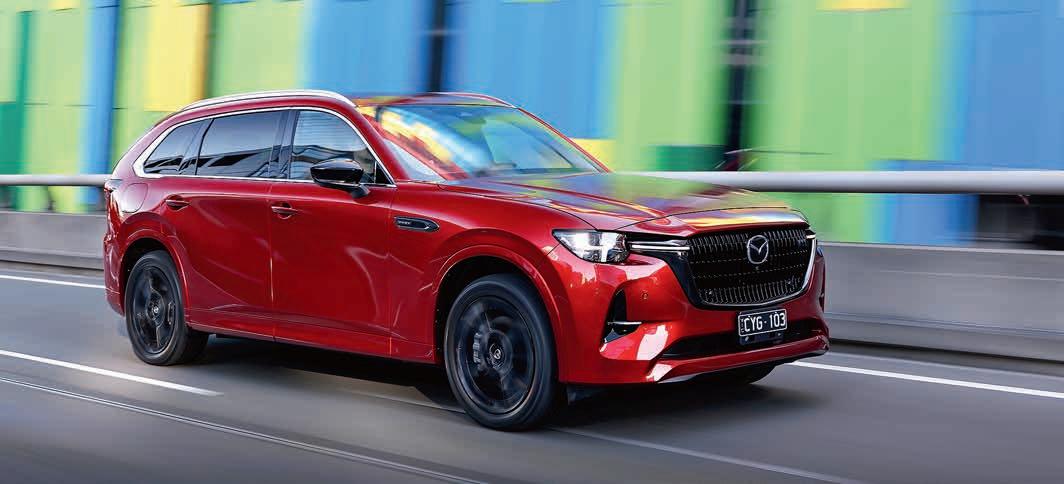
By the end of next year, there will be others as well, notably another Mazda (the CX-6e), a Ford (Bronco hybrid SUV) and Nissan (Navara Pro ute and closely related Terrano SUV), with more coming soon.
A key difference here compared to the wholly US-owned and controlled Tesla situation is that all these ‘foreigner’ models made in China are a result of a long-standing Chinese governmentmandated joint-venture strategy, whereby the Chinese partner has 50/50 ownership in the program.
Yet more new brands to come
Beyond the aforementioned brands, there is Zeekr (by Geely), XPeng, GAC, Leapmotor (20 per cent owned by US/ Euro conglomerate Stellantis), IM Motors (by MG), Denza (by BYD) and Wey (by GWM). The final three are upmarket divisions, breaking yet another glass ceiling for China’s manufacturers.
Other brands from China include Jetour, Lepas and iCaur (also both from Chery), Freelander (a joint venture between Chery and Indian-owned UK carmaker Jaguar Land Rover), Firefly by Nio, Forthing and JMC. Watch this space.
TOP: The BYD Atto 1 is one of the cheapest EV choices in Australia; ABOVE: The Tesla Model Y sourced from China topped Australian sales charts in May.
Buying a second-hand electric car
THIS YEAR’S VOLATILE FUEL PRICES PUSHED ELECTRIC CARS ONTO THE SHOPPING LISTS OF MORE AUSTRALIANS WHO MIGHT OTHERWISE HAVE BOUGHT HYBRID, PETROL, OR DIESEL VEHICLES.
Booming sales of new EVs have caught some manufacturers off guard, and the unprecedented interest has flowed through to the used car market, where second-hand electric cars are being snapped up in record numbers. There are hundreds of thousands of EVs now on Australian roads and increasing numbers of EVs coming out of their leasing terms, or owners are turning them over for sale in the used car market.
For those who don’t want to splash out on a new EV, a second-hand EV can unlock better value. But what should you look for when buying one?
There’s been plenty of chatter about how EVs don’t hold their value well on the used car market. But with consumers increasing their familiarity with EVs in recent years, and with this year’s fuel shocks, EVs have become much more appealing to more people.
Check the basics
By Toby Hagon
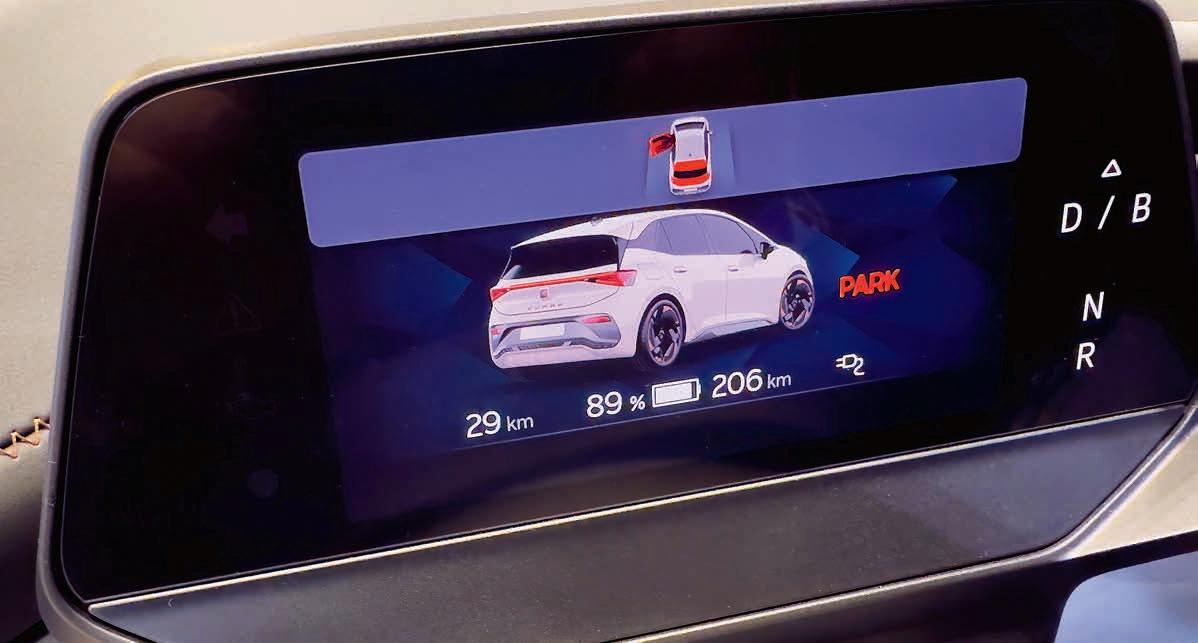
The key drive system components of an EV are the electric motor (sometimes two) that is powered by a large battery pack which, in most EVs, consists of thousands of individual battery cells joined together. The battery pack’s performance and health is managed by an inbuilt thermal management system.
The electric motor itself doesn’t need regular maintenance, but other systems around it do, such as liquid coolant for the battery and final drive unit. Beyond that, there’s plenty in common with a car powered by liquid fuel.
There are wheels, brakes, suspension components, heating and ventilation systems and a cabin increasingly packed with technology, from electric seats to the infotainment system.
They need regular checking, although without the internal
combustion engine, an EV is far simpler to service than a regular car.
While EVs typically have much lower brake wear than a regular car, the pads and discs still need to be checked; brake pads can eventually corrode or degrade, for example.
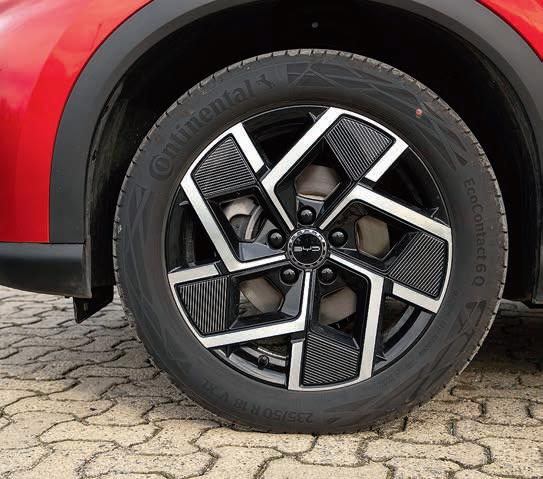
The wheel alignment can be knocked out just as easily as an internal combustion engine (ICE) car. EV tyres can also wear more quickly than tyres on equivalent liquid-fuelled vehicles, and replacements can be more expensive. Plus, EVs need filters replaced for their cabin ventilation system.
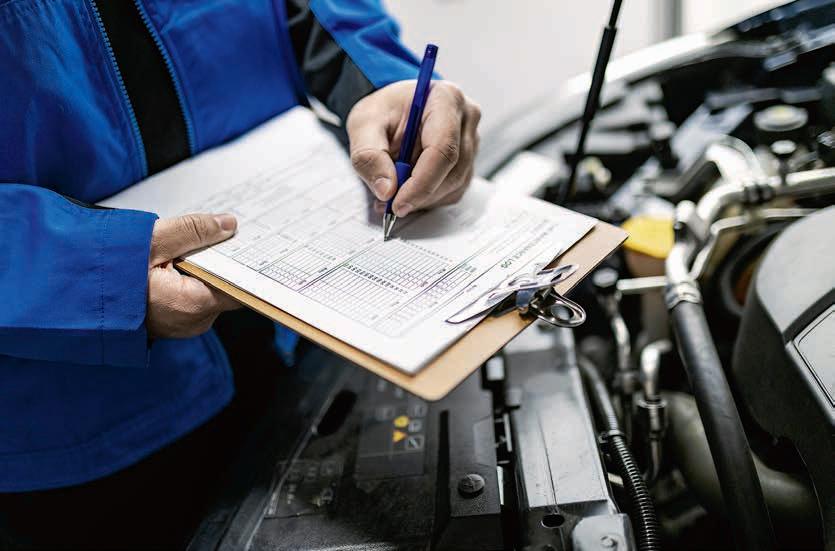
As with an ICE vehicle, you’ll need to check the service history, remembering that some cars (such as Tesla) monitor their service requirements according to use and may have a digital record within the vehicle’s infotainment system, rather than a book.
The condition of the battery
The high-voltage battery pack is by far the most expensive item in an EV.
The lithium-ion technology is the same technology you’ll find in a smartphone or laptop, but it’s obviously a lot larger - sometimes weighing half a tonne or more. It will have more individual cells as well as supporting software and management systems for maintaining the optimum temperature and cell voltage.
EV batteries will also have more robust protective casings to manage crash forces.
EVs typically have a separate battery warranty covering at least eight years and 160,000km of driving (some offer up to 10 years). For that reason, EV owners who have experienced issues have typically not been out of pocket.
“The majority of EVs are still within warranty - eight to 10 years - so the manufacturer basically takes care of the replacement,” says Oscal Vall, general manager of customer experience at Infinitev, which provides repair and recycle services for hybrid and EV batteries.
EV battery issues come down to three main areas: the cells, the relay assemblies, and the battery management system.
“Usually it’s cells that drop out; they don’t charge or discharge like the others, and the system flags that as a problem.
“Some manufacturers make battery packs with little to no repairability. In those cases, the whole pack has to be replaced,” says Vall.
In many cases, though, he says a block of faulty modules can be replaced. With an older car though, it may not make sense.
Lithium-ion battery cells are expensive, and when you
have hundreds of kilos of them, it can add up to tens of thousands of dollars.
Like replacing an engine in an ICE vehicle, it’s unlikely you’ll bother replacing the battery pack in an old EV because it’ll likely cost more than the value of the car.
But Vall says the repair and reconditioning industry will evolve as more EVs hit the road. That’s assuming there’s an issue.
A recent study from researchers at the University of Birmingham, London School of Economics and Political Science, the University of California San Diego, and Switzerland’s University of Bern, found that the projected lifespan of an EV is now 18.4 years – longer than petrol and diesel cars.
Battery degradation
The most common issue with batteries is degradation, where
the battery pack slowly loses its ability to hold a charge.
The older the car is and the more charge cycles the battery has been through (how many kilometres it has driven is a good measure), the more it will likely degrade.
But real-world battery degradation is also much lower than even many manufacturers anticipated.
A recent study by USbased Recurrent Auto, which monitors EV battery health, said, “The average EV retains 97 per cent of its range after three years and 95 per cent after five years, according to our analysis of over one billion miles.”
In the UK, a study by Generational of 8000 EVs found high battery capacity retention over many years, prompting the organisation to conclude that “in most cases, the battery is likely to exceed the lifespan of the vehicle”.
THEY NEED REGULAR CHECKING, ALTHOUGH WITHOUT THE INTERNAL COMBUSTION ENGINE, AN EV IS FAR SIMPLER TO SERVICE THAN A REGULAR CAR.
How
can you check the health of an EV
battery?
That’s not to say you shouldn’t consider the health of the battery. The challenge for a used EV buyer is working out the battery’s state-of-health (SoH).
look at the estimated range to empty.
All EVs will estimate how far the car will travel on the current charge.
WHEN YOU FINALLY GET BEHIND THE WHEEL FOR A TEST DRIVE, YOU’RE LOOKING FOR MANY OF THE SAME THINGS YOU WOULD IN A PETROL OR DIESEL CAR.
Despite mountains of data and sometimes pointless information and readouts within their digital displays, most EVs are ‘secretive’ about the condition of their battery.
It’s not that EVs don’t monitor that data or have easy access to it. It’s just that it seems car makers would prefer not to make it obvious to you.
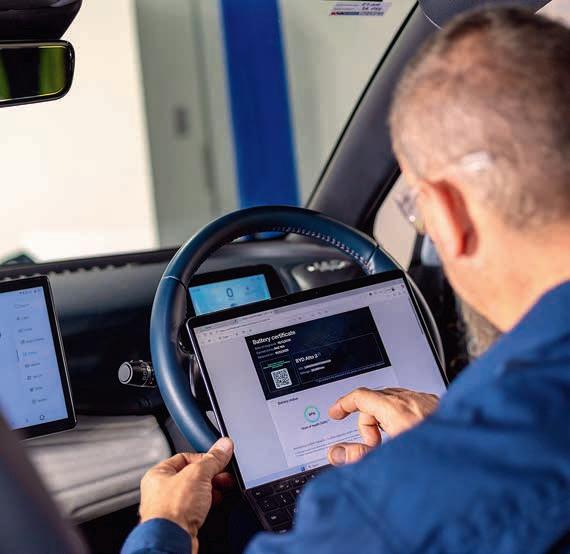
But various independent operators have formulated tests, providing broader pre-purchase inspection for additional peace of mind on the EV you’re considering.
An easy EV battery test
A rudimentary measure of battery health is to have a
While it’s not a perfect science – turning off the air conditioning can increase the range, for example, while extreme cold temperatures can reduce the range – it should at least give you an idea of its ability to hold a charge.
You can easily calculate what it’s estimating it will achieve on a full charge.
Do an internet search to determine how much range the car was designed to have when new.
Don’t expect it to hit that exact number. Even when it was new, it was unlikely to have achieved its claimed range (most EVs are 10-20 per cent below the figure that is calculated to a government test) but it’ll at least give you an idea of whether the battery is holding a decent charge – or enough for how you plan to use it.
During a test drive
When you finally get behind the wheel for a test drive, you’re looking for many of the same things you would in a petrol or diesel car.
Does it track straight and corner crisply? Are there any strange noises? Do all the lights and features work? Also, keep an eye on the battery capacity to make sure it’s dropping at a similar rate to the distance you’re covering. It’s basic stuff.
Check tyre wear – on the inside and outside of the tyre – because the heavier weight of an EV can wear tyres more quickly.
Regardless of how much you know about cars, it’s always worth bringing a friend so you have a second set of eyes and ears on your side. Then, if you’re serious about the car, consider a pre-purchase inspection, which will likely delve deeper to uncover potential issues or concerns.
Are there phone apps included?
Some EVs have smartphone apps to operate basic functions. When buying the car, it’s important the owner hands over control of the car to you and disconnects their phone and account from the car.
If that’s not done, the person may be able to remotely activate functions such as locks and ventilation and even drive the car away.
Check the owner’s manual (it could be a digital manual) or search online to see what you need to do for the specific model you’re looking at.
Charging at home
A major consideration when buying an EV is how you’re going to charge it. Anyone with off-street parking can charge at home.
Whether you need a dedicated wallbox charger depends on your usage. If you’re driving less than 100km per day, then a portable charger that plugs
into a standard power point will be fine. Check the car you’re looking at comes with one; most new EVs were sold with one (Tesla being a notable exception) but some owners may not pass them on with the sale of the car.
If the seller wants to hold onto the charging hardware it doesn’t mean you walk away. But you should use that to negotiate a lower price. A basic charger will cost a minimum of a few hundred dollars.
For those driving bigger distances, a wallbox charger makes sense because it can supply up to 10 times the power of a standard power point. That’s for a three-phase outlet.
For most people, a standard single-phase wallbox will be fine, easily charging most EVs from flat to full in less than 10 hours.
As with any car, do your research and be prepared to walk away if the deal isn’t right – there will likely be plenty more to choose from.
BOOK AN RAC BATTERY HEALTH CHECK
RAC Auto Services now offers EV battery health checks. Book it as either as a standalone service or alongside a pre-purchase vehicle inspection for a full vehicle report.
For more details and to book, visit rac.com.au/evbatterycheck
WA national parks with more than just hiking trails
By Myke Bartlett
There’s no doubt that WA’s many national parks offer an abundance of excellent hiking trails, but once you’re done hiking, what about those other drawcards?
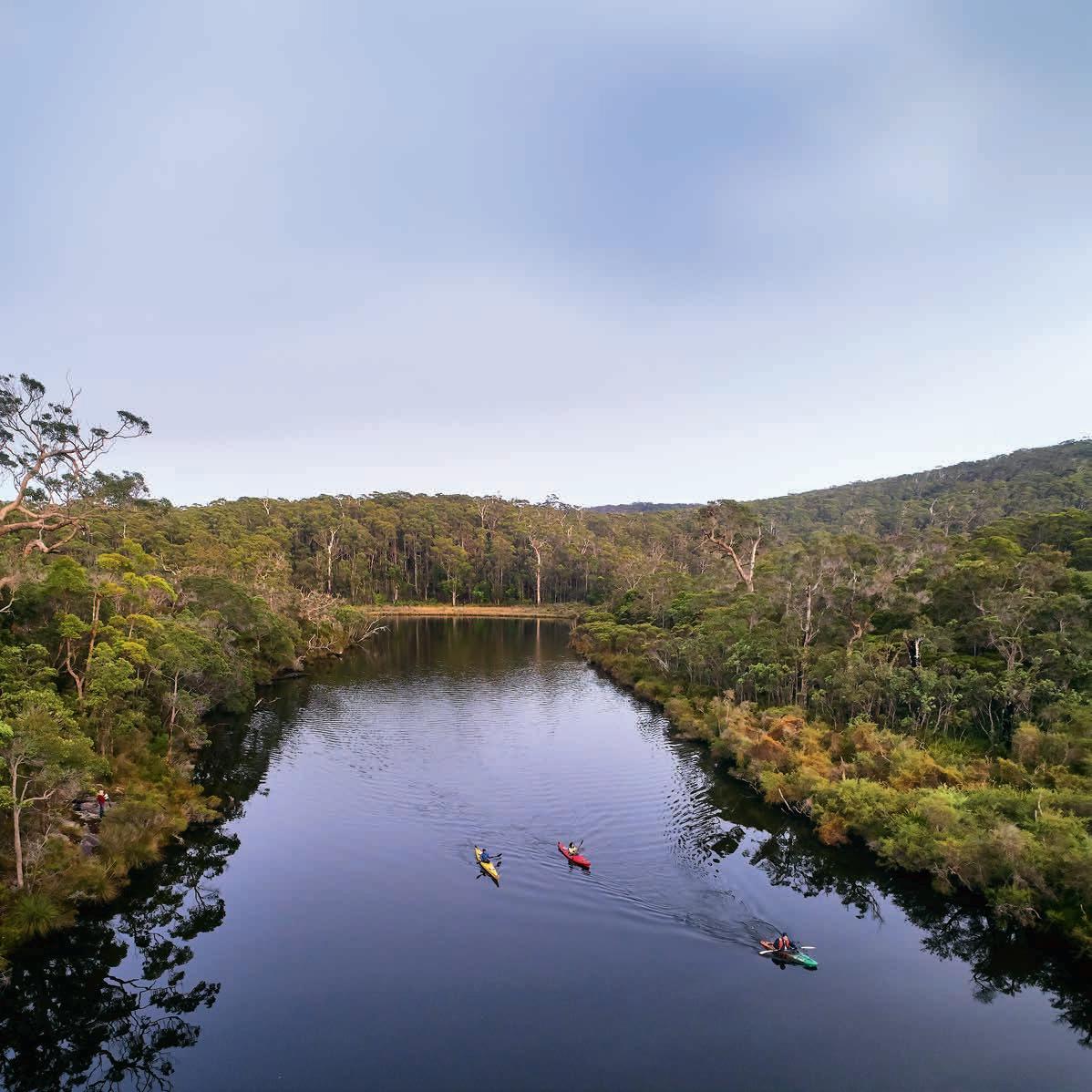
The arrival of spring inspires many of us to get active after the winter chill, and there’s no better place to get outdoors and enjoy the burst of colour that spring brings than in one of the state’s many national parks. Not up for hike? That’s okay because not every national park visit needs to involve a long walk and a heroic blister. Across WA, some of the best outdoor adventures are found close to the car park, by a pristine beach, under the stars or high among the trees — if you know where to look.
D’Entrecasteaux
National Park
400km from Perth
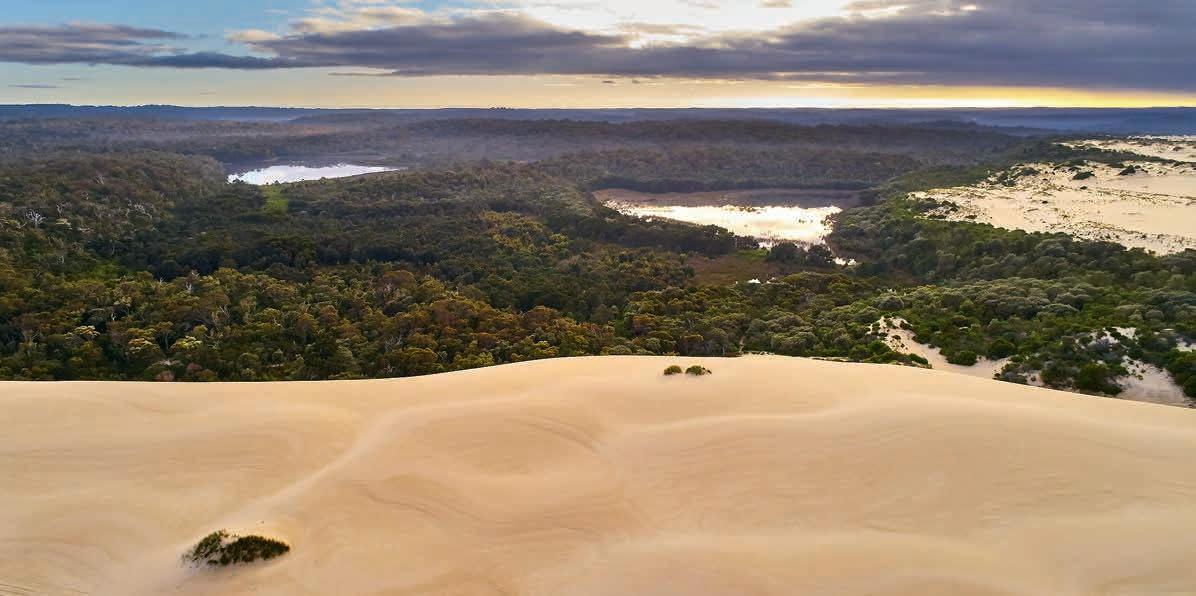
‘Wild’ is the key word for D’Entrecasteaux — a narrow and remote strip of wilderness stretching between Augusta and Walpole. From windswept beaches with crashing surf to its towering cliffs of volcanic rock, this is a place where it’s hard not to be awed by the power of nature. It’s also a park that is always changing, with the Yeagarup Dunes forever on the move.
Beside the freshwater Yeagarup Lake, these dunes are one of the largest land-locked mobile dune systems in the Southern Hemisphere. They are
slowly heading inland, surging towards the karri forest, and swallowing up the wetlands in their path. The dunes can be explored on foot or can be crossed by four-wheel drive en route to the beach.
More stable is Black Point, a vast outcrop of hexagonal volcanic rock that has remained largely unmoved for 135 million years. The point can be accessed by a short walk along the beach, and if the weather is right, visitors may be treated to the organ-like music created as the wind and waves weave through the gaps in the basalt. Two separate, bookable campgrounds are nearby for those wanting to stay awhile on the Southern Ocean coast.
Walpole-Nornalup
National Park
450km from Perth
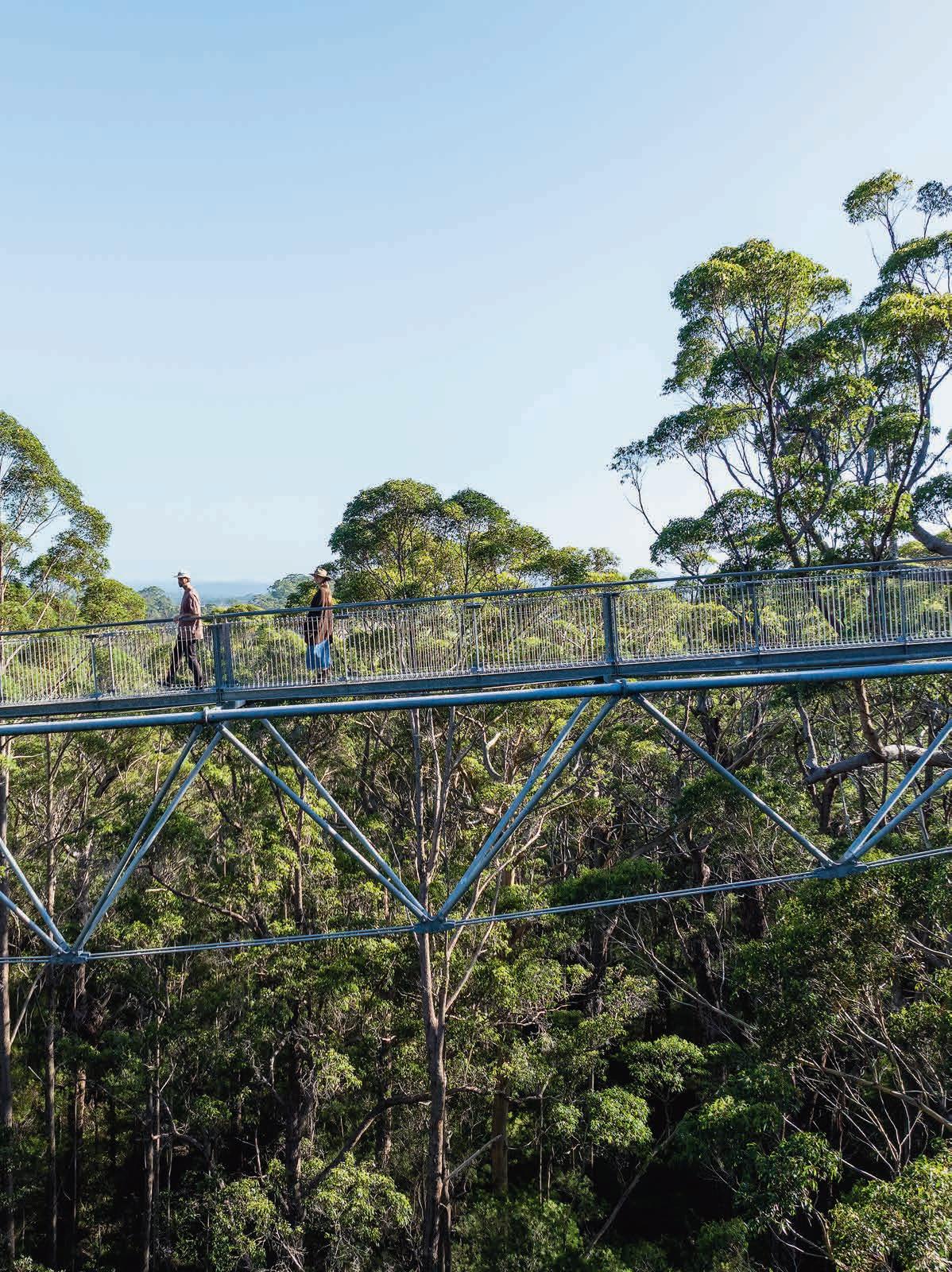
After the wild D’Entrecasteaux coast, Walpole-Nornalup National Park is your gateway to the forest. The Valley of the Giants Treetop Walk allows you to tiptoe through the tingle trees — ancient giants thought to be around 400 years old. The accessible path is a half-kilometre loop lifting you 40m off the ground, high above the forest canopy.
BELOW: Take in the treetop views at the Valley of the Giants walk, high above the forest canopy.
There are also a number of prize picnic spots, such as The Channels, where you can overlook the channel between the Walpole and Nornalup inlets, surrounded by mighty karri, marri and more tingle trees. Mount Clare offers a gentle walk to a summit spot with forest views, and the imaginatively named Sandy Beach allows for fishing and kid-friendly swimming. If you fancy getting out on a boat, Coalmine Beach is an ideal place to launch, with accommodation available at a nearby holiday park. And there are plenty of trail options available, including one that leads from here back to Pioneer Park in Walpole.
Kalbarri National Park
590km from Perth
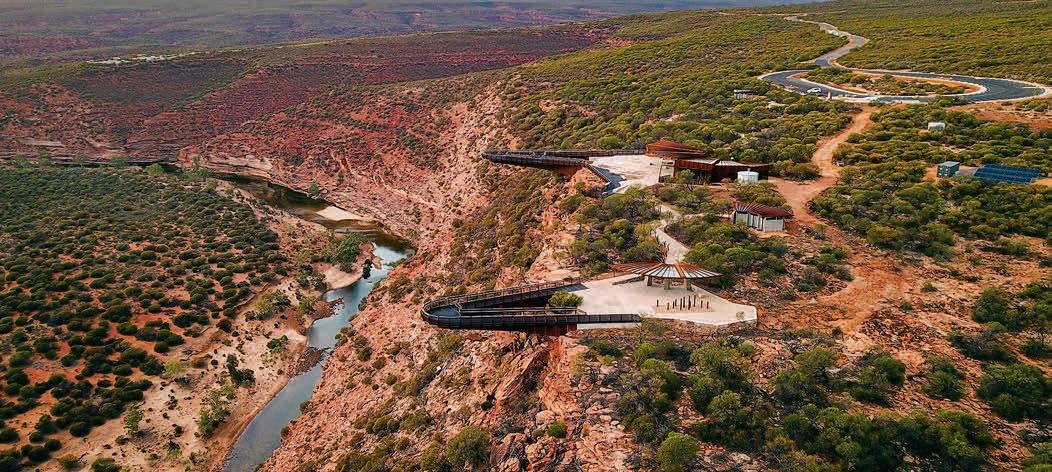
Kalbarri might be famous for its trails, but there are some outstanding views in reach without donning your hiking boots. The Kalbarri Skywalk consists of twin cantilevered platforms sitting more than 100m above the Murchison River Gorge and affording spectacular views — with café treats close at hand.
Those wanting to walk a bit further can peer through Nature’s Window – a winderoded opening in the layered sandstone that frames another view of the river. The walk is only a kilometre there and back, with spectacular views of the gorge
available from a sealed path before you encounter the final, rocky section. More experienced walkers may prefer the Loop Trail — a challenging 9km hike taking you deeper into the gorge. The views above the park are no less spectacular. Night-time guided tours at the Skywalk can help you explore the universe without walking anywhere. A supplied astronomy telescope offers a tour of the Milky Way, planets and constellations — and the glimpse of the occasional meteor. Stop in at Red Bluff Beach on your way to experience the setting sun lighting up the rust-red cliffs.
Fitzgerald River National Park
600km from Perth
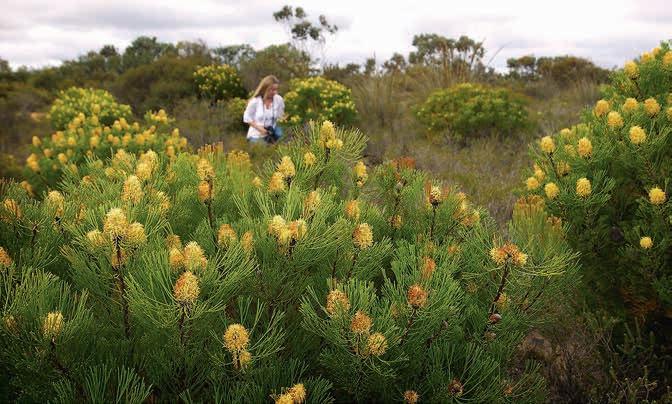
Wildflower enthusiasts are unlikely to find a better spring showcase than this park in the Great Southern. Around 75 endemic species are found nowhere else outside this biodiversity hotspot, 250 more are classed as rare, and with the total number of species approaching 1800, it’s unsurprising that the blooms here comprise 20 per cent of the state’s described plant species. September’s Ravensthorpe Wildflower Show is the highlight of this seasonal abundance, but the local visitor centre can direct you to a self-drive tour — note that not all the roads are sealed.
Twitchers are just as well served, with more than 200 bird species calling the park home. Come at the right time of year and your birding binoculars might also help you catch a glimpse of migrating southern right and humpback whales between July and October as they shelter and nurse their calves in the shallow bays. Smaller scale ocean dwellers will find plenty here to keep themselves busy, with an array of beautiful beaches ideal for swimming, snorkelling, and surfing — and inlets providing calmer waters for fishing, canoeing and kayaking.
Accommodation options include campgrounds at Four Mile Beach (book in advance) and St Mary’s Inlet (which is first come, first served). Fitzgerald River is usually one of the state’s quieter parks, but it’s best not to leave it too late to nab a berth, as St Mary’s Inlet is quite a long way down an unsealed road.
Cape Le Grand National Park
760km from Perth
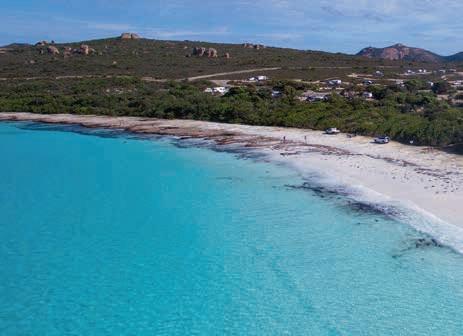
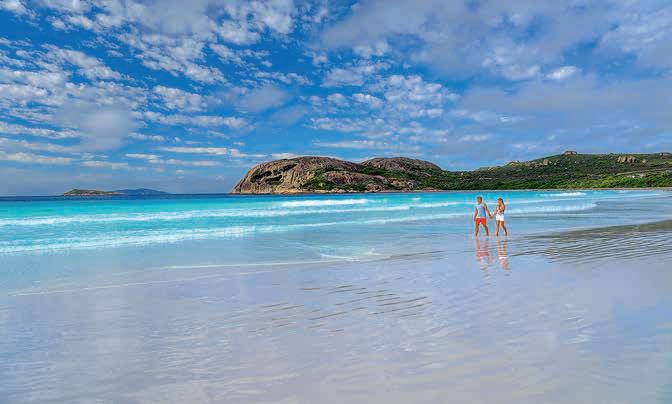
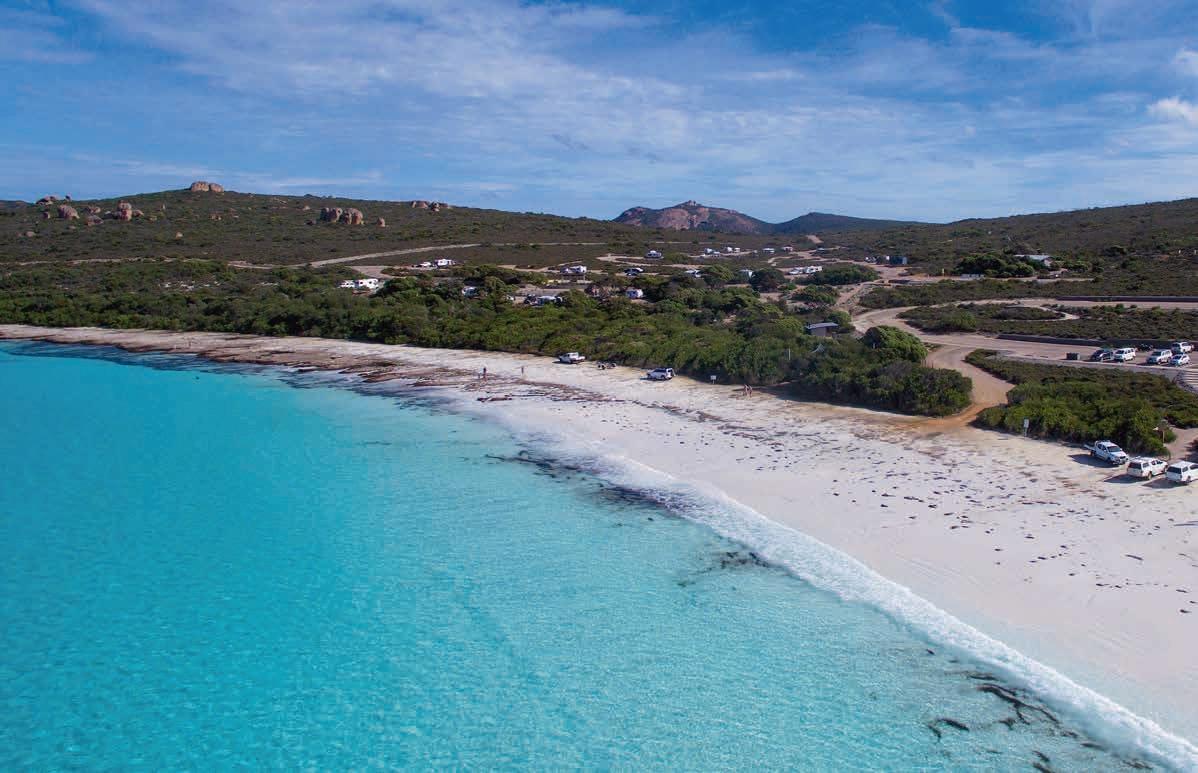
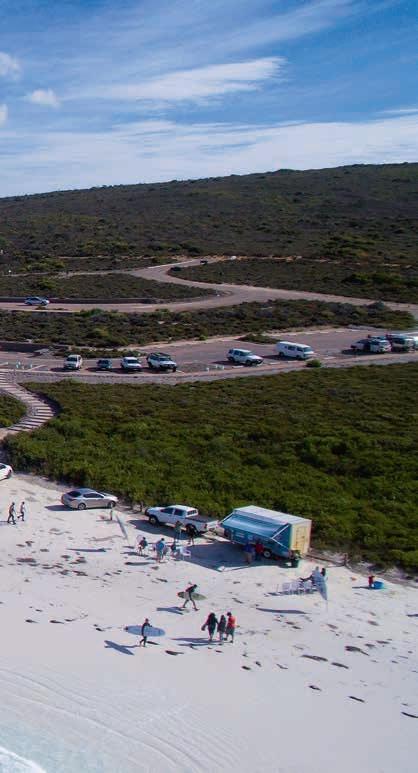
Beautiful beaches are the prize attraction here, with the picturesque and sheltered Lucky Bay voted the whitest in Australia (not without controversy), courtesy of its brilliant sands. Le Grand Beach, just around the headland, is less sheltered but no less pretty, and adorned with some great (in size and appearance) rock
ABOVE: The Yeagarup Dunes can be explored on foot or by four-wheel drive at D’Entrecasteaux National Park; Frances Andrijich
formations that demand to be clambered over. Both beaches are served by bookable campgrounds within a stone’s throw of the shore. Park yourself down for a few days and make the most of the clear waters for fishing, surfing, swimming or getting out on a boat. Do be aware that Lucky Bay has more recently proved more treacherous to vehicles. The sand may well be less stable than it appears.
Flora and fauna abound, with the heathlands home to kangaroos, pygmy possums, and colourful wildflowers, including banksias. Indeed, beachgoers shouldn’t be surprised to see roos roaming the shore or even indulging in a spot of sunbathing.
Cape Range National Park
1300km from Perth
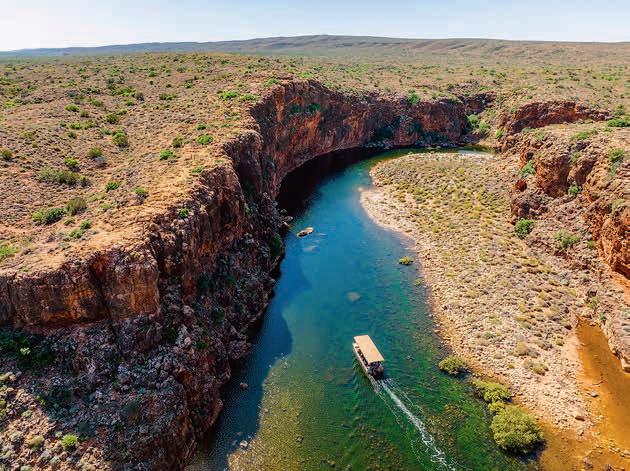
This park is a place of contrasts — to the west are lagoons and turquoise waters, to the east rugged gorges and canyons. Relax on pristine beaches or go four-wheel driving over dry creek beds along gorge floors. Alternatively, compromise on a boat tour through Yardie Creek Gorge, home to a permanent water source running between sheer and spectacular cliffs.
Usually top of visitors’ lists, Yardie is an ideal starting point to acquaint yourself with some of the park’s diverse wildlife,
ABOVE: Take in the spectacular views above the Murchison River Gorge at the Kalbarri Skywalk; BELOW: Wildflower enthusiasts are unlikely to find a better spring showcase than in Fitzgerald River National Park; BOTTOM: The sand at Lucky Bay was voted the whitest in Australia.
such as the endangered black-flanked rockwallaby. Expect also to see echidnas, roos, and emus alongside birds including ospreys, egrets and red-capped plovers.
The big draw for wildlife is often the hardest to spot. Loggerhead turtles love the Ningaloo Reef and have several established rookeries within the park. (They also tend to be bolder and more curious than other turtles, happy to glide by snorkelling visitors.) Spring isn’t the best time to see them, however. Between November and February turtles come ashore to nest, with the next generation emerging to scramble for the waves between January and March.
Accommodation options are plentiful, with a number of bookable campgrounds, including one within a short distance of Yardie Creek Gorge, and Sal Salis, a luxury eco resort that allows residents to sleep mere metres from Ningaloo Reef. Before travelling, check current park alerts, as parts of the Ningaloo Coast were affected by Tropical Cyclone Narelle in 2026.
Karijini National Park 1400km from Perth
At around 627,000 hectares, Karijini is WA’s second largest national park and also one of the most isolated. Nearby Tom Price is around 45 minutes away, but the drive from Perth is a full day’s slog, with many adventurers breaking up the journey by stopping in at Exmouth en route.
If you are coming from Exmouth, it’s best to travel via Paraburdoo and not to be led off the sealed road by your onboard navigator. Once you’re in the park, most of the roads are sealed and suitable for a two-wheel drive, but conditions can vary.
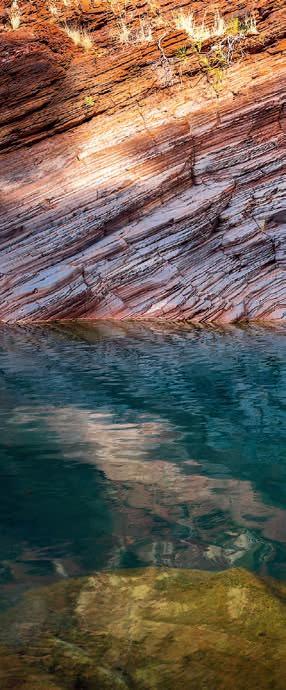
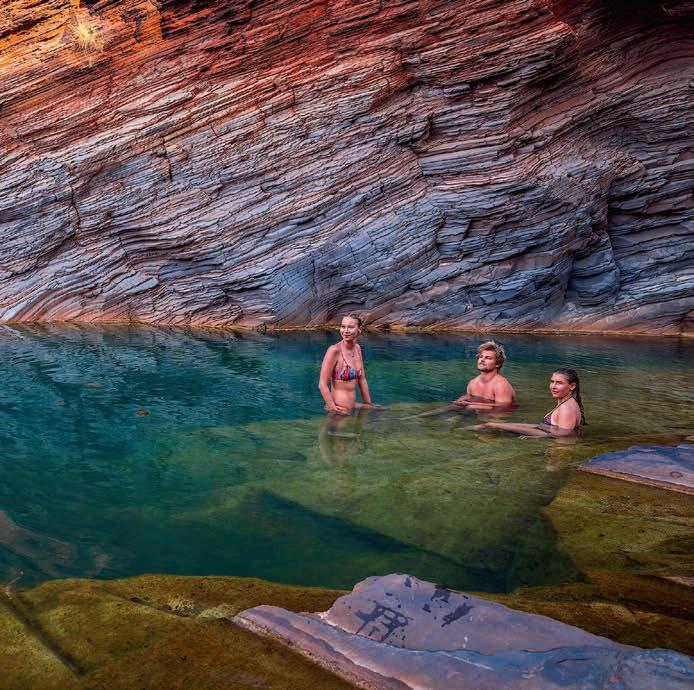
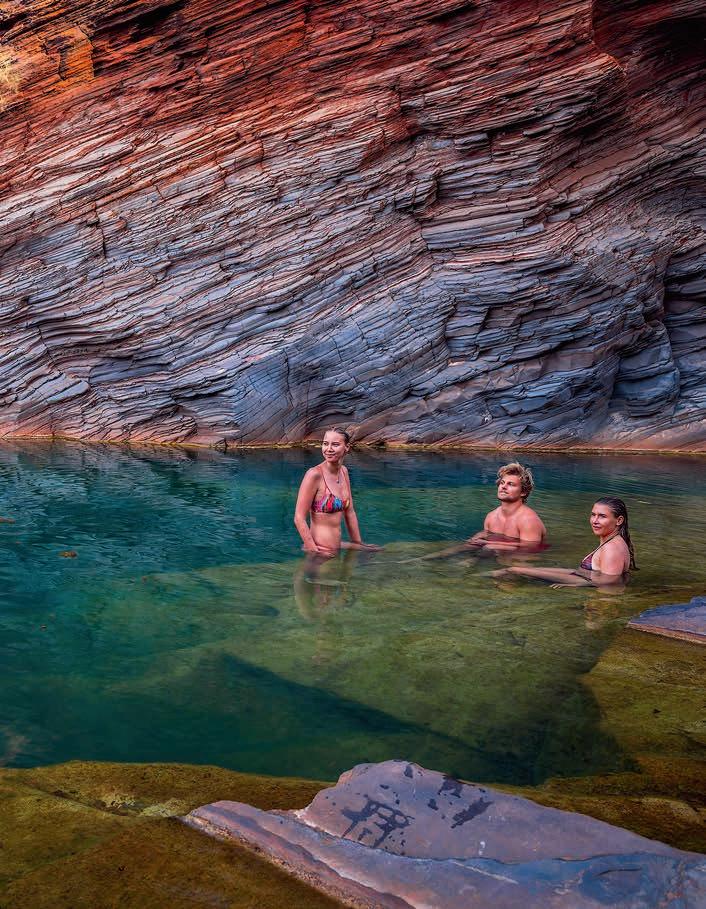
Gorge visits should be high on your itinerary, promising picturesque freshwater falls and secluded swimming holes. Highlights include Dales Gorge, featuring Fortescue Falls, Fern Pool and Circular Pool, with a well-maintained campground a short walk away (best to book ahead). More glamorous options are available at the Karijini Eco Retreat, which has an alfresco bar and restaurant, as well as a range of eco tents. If you’re feeling particularly adventurous, consider a canyoning and abseiling tour that will take you through a number of iconic spots and into a few lesser-trodden locales.
TOP: Take a boat tour through the towering cliffs at Yardie Creek; BOTTOM: Gorges promise picturesque freshwater falls and secluded swimming holes in Karijini National Park.
RAIL TOURS, MY STYLE
SCOTLAND BY RAIL
MAGICAL JAPAN
EDINBURGH TO GLASGOW � 10 DAYS DEPARTS APRIL TO OCTOBER 2027
• Travel with no more than 24 guests on your tour
• Nine nights in premium accommodation
TOKYO TO OSAKA � 12 DAYS DEPARTS MARCH TO NOVEMBER 2027
• Travel with no more than 24 guests on your tour
• 11 nights in premium accommodation
• Includes 13 meals, sightseeing excursions, tipping, rail porterage and transfers
• Ride the scenic West Highland and Kyle of Lochalsh railway lines
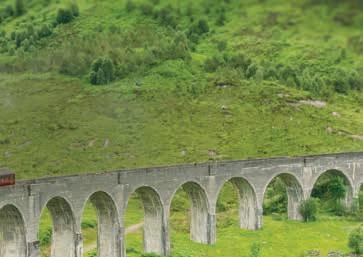
• Travel on one of the world’s most famous rail journeys aboard The Jacobite steam train
• Includes 18 meals, sightseeing excursions, tipping and transfers
• Travel by Limited Express train and Shinkansen bullet train
• Explore Miyajima's iconic Itsukushima Shrine and its famous floating torii gate
Part of The APT Travel Group
Stay & Save in iconic WA locations
WA travel brief
WA’s official trails website is now an app
If you’re an avid user of the Trails WA website, you can now take it with you on your next adventure. Trails WA recently released an app with details of more than 1100 tracks and trails across WA.
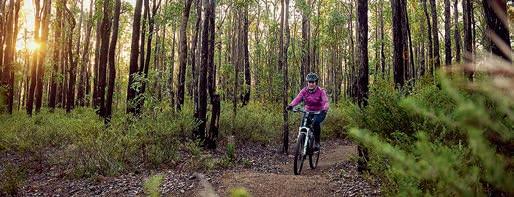
As with the website, 12 different trail types are covered, from hiking and MTB trails, paddle and snorkel trails, even horse trails and four-wheel drive tracks.
You’ll find details about everything from short walk trails
close to where you live to multiday hikes in some of the state’s most spectacular locations.
The app uses GPS navigation to keep you on track and also offers the ability to download maps to use offline for areas where mobile reception is poor. You’ll also get notifications of any trail alerts to keep you safe.
The Trails WA app is available for iOS and Android devices and available to download at trailswa.com.au
NEW BOARDWALK READY FOR SPRING HIKES IN THE PERTH HILLS
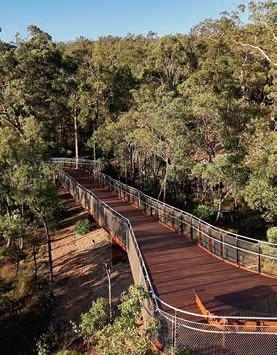
An elevated walkway offering sweeping views across Glen Brook and the surrounding granite outcrops opened earlier this year in John Forrest National Park.
Stretching 250 metres, the Glen Brook walkway is built from reclaimed spotted gum and corten steel, and gives visitors a unique way
to experience WA’s oldest national park.
John Forrest National Park is an iconic destination in the Perth Hills, known for its waterfalls, heritage trails, and the historic Swan View Tunnel. The walkway forms part of a major transformation project underway within the park,
PERTH’S BIGGEST LAKE HAS A STUNNING NEW LOOKOUT
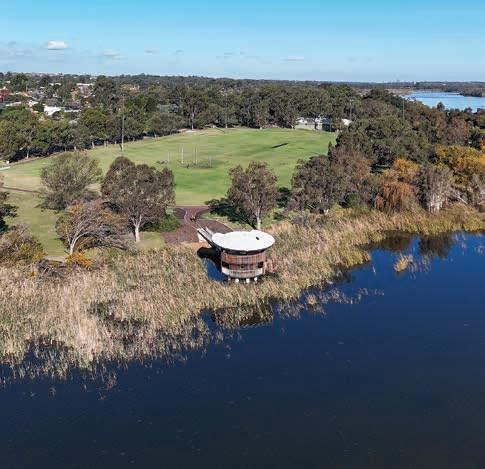
A striking new two-level viewing tower has opened at Yellagonga Regional Park in Wanneroo, offering sweeping lakeside views and exceptional birdwatching opportunities.
Overlooking Lake Joondalup, Perth’s largest freshwater lake, the bird’s nest-inspired tower has been designed to provide the perfect vantage point for wildlife watching while protecting the natural environment.
Located on the eastern side of the lake, the $2.2 million project forms part of a broader revitalisation of Yellagonga Regional Park, which stretches from Burns Beach in Joondalup south to Hepburn Avenue in Kingsley.
Visitors can access the tower via an elevated walkway, pause to take in the views, and learn about the area’s birdlife, before climbing to the upper level for panoramic views across the lake and wetlands.
aimed at improving visitor facilities and creating a new central hub for recreation and tourism.
The West Ridge plaza, next to the redeveloped West Ridge car park, is expected to open early 2027, and will connect to the new walkway. It will feature landscaped gathering spaces, seating, bike racks and a bike maintenance station, and a sheltered main trailhead.
Frances
Andrijich
What’s on in WA
SEPTEMBER
Bloom Festival
12 September – 11 October
Great Southern region
Spanning towns across the entire Great Southern Treasures region, the festival celebrates everything that blooms and includes guided hikes, wildflower displays, food and wine events, art exhibitions, agricultural shows, and cultural activities. greatsoutherntreasures.com.au
Margaret River Open Studios
12-27 September
Over two weeks, the artisans of WA’s South West open their studio doors for a celebration of creativity and community. Get a behind-thescenes look into the creative worlds of painters, sculptors, ceramicists, printmakers, photographers, and more. mrropenstudios.com.au
Cuby Groove Festival
18-20 September
Cuballing Shire
Cuby Groove Fest is a celebration of the rural lifestyle, unique surrounds, and enduring heritage of the Shire of Cuballing. This year’s festival will feature the Wheatbelt’s biggest ever lineup of bands and performers, including the Southern River Band, Fool Nelson and 19 Twenty. On-site camping is available with weekend ticketed events. cubygroovefest.com.au
OCTOBER
Dardanup Bull and Barrel Festival
10 October
This free country festival in the Ferguson Valley brings the best of the valley to the table, with more than 150 market stalls featuring regional flavours, local wares, and demonstrations. The festival culminates in the evening with the lighting of the giant bull fire sculpture. bullandbarrel.net.au
Cape to Cape MTB
15-18 October
Margaret River region
Starting from Cape Leeuwin Lighthouse, mountain bike riders wind their way north on a four-day race through forest and coastal trails, including otherwise inaccessible private land, heading to Cape Naturaliste. The race covers around 200km through stunning terrain. With low technical difficulty, the race is rideable for any reasonably fit MTB riders. capetocapemtb.com
AFGRI
Mountain
Country Music Muster
29 October – 1 November
Stirling Range region
It’s a country music shindig like no other, held in the beautiful Stirling Range region. Saddle up for four days of live music, line dancing, market stalls, and true-blue muster vibes, all kicking off with an outdoor movie night. Held at Mt Trio Bush Camp & Caravan Park, your tickets include three nights of camping in an unpowered site. mttriomusicmuster.com.au
NOVEMBER
Turquoise Coast Festival
7 November
Jurien Bay
Overlooking the sparkling turquoise waters of Jurien Bay at Fauntleroy Park, the Turquoise Coast Festival is a showcase of local highlights. Sample the fresh seafood the region is famous for along with other home-grown produce. Browse market stalls, enjoy live entertainment, and see the annual Blessing of the Fleet. The festival wraps up at 8pm with a fireworks display. turquoisecoastfestival.org
Pair’d
19-22 November
Margaret River region
Pair’d will be hitting the high notes again, bringing together the perfect combination of world-class wine matched to the many unique culinary and cultural offerings of the Margaret River region. Enjoy a program of exclusive tastes and specially curated events held in some of the South West’s most stunning locations. pairdmargaretriver.com
Blues at Bridgetown
13-15 November
From blues and roots legends to a showcase of exciting new talent, this year’s Blues at Bridgetown features another huge and impressive line-up, headlined by Boy and Bear, along with Pearce Brothers and End of Fashion. The Blues Street Party will also see Bridgetown’s main street buzzing with street performers, food stalls and local wares. bluesatbridgetown.com.au
Event dates correct at time of publication.
Camping + caravanning
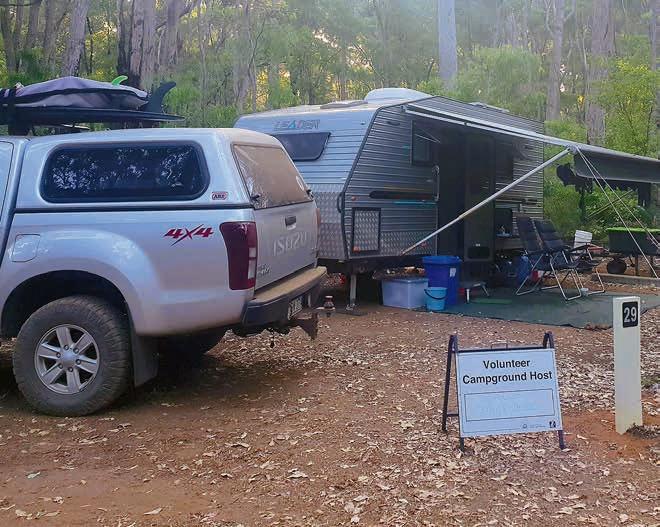
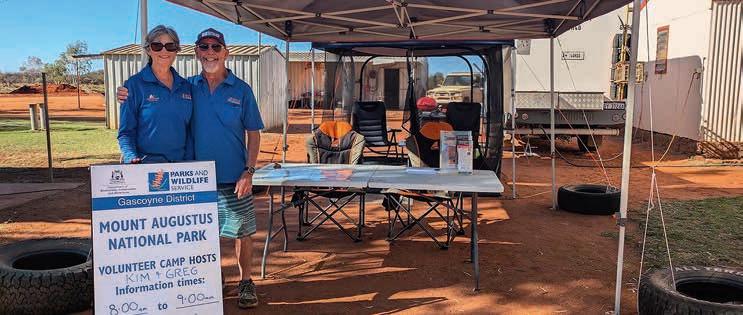
Become a campground host
If you enjoy the simplicity of caravan park life and being surrounded by nature, campground hosting in the state’s national parks is well worth considering.
The Campground Host program in WA is managed by the Parks and Wildlife Service through the Department of Biodiversity, Conservation and Attractions (DBCA).
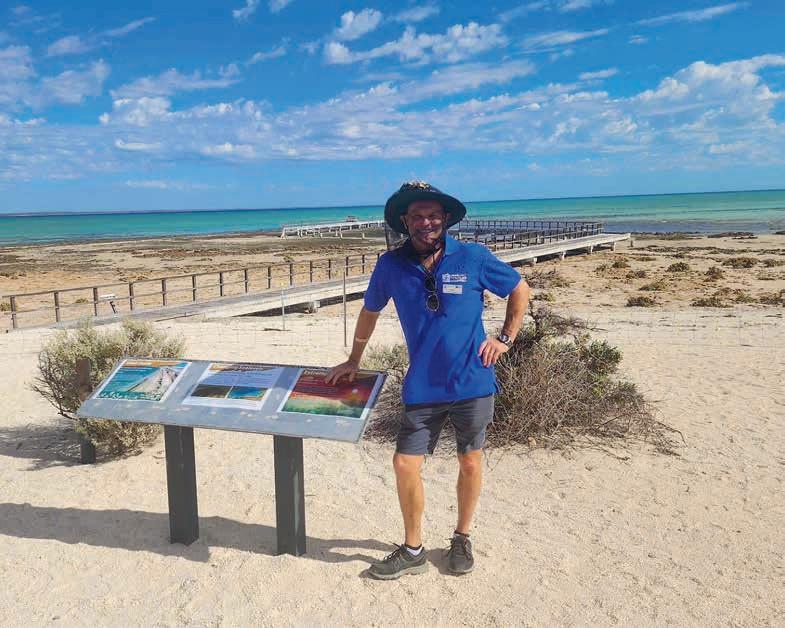
As a host, you’ll be given a site for your caravan or camper trailer for the duration of your stay and be involved in assisting guests at check-in, providing information about local attractions, helping with the upkeep of the campground, and generally supporting Parks and Wildlife Service staff.
There are more than 80 sites across WA where the program operates, including a small number of visitor centres and conservation reserves. Some locations are quite remote with only basic facilities, while others are closer to larger population centres with more amenities.
While there are no formal qualifications required, hosts must complete a training and induction day prior to their placement.
A minimum commitment of around four weeks per year is recommended, though you can certainly stay for longer periods.
To register your interest in becoming a campground host, contact the DCBA at PWSvolunteers@dbca.wa.gov.au
For more about campground hosting, see page 46.
BE AWARE OF YOUR PHONE COVERAGE WHEN TRAVELLING IN WA
An important but often overlooked part of planning your trip into regional and remote areas in WA is checking mobile and internet connectivity in the areas you are travelling into.
Mobile coverage, internet access, and emergency communication options can vary widely outside cities and towns. No matter which mobile network you use, factors such as local infrastructure, local outages, and even the terrain can impact your phone and internet connectivity.
In WA, the Regional Tech Hub is a website with tips and information about phone and internet connectivity in regional and remote areas to help you stay connected while road tripping.
Find out what to expect when visiting WA towns, connectivity between towns, what to do when signals are weak, and what your options are to stay connected, including in an emergency.
The Regional Tech Hub can also provide a Connectivity Report that details your phone and internet options at various locations.
Staying connected ensures you can access GPS apps, weather updates, emergency contacts, and be across any emergency alerts.
To stay safe and connected on the road in WA, visit regionaltechhub.org.au/travellers
Sally Field
Stickybeak inside the Williams’ caravan
For Britt and Wade Williams, life on the road began with a lifechanging diagnosis.
After Wade was diagnosed with a brain tumour, the couple reassessed their priorities and decided to make the most of their time together as a family. They sold their home, packed up their lives with sons Nixon and Thomas, and set off to travel Australia full-time in their Titanium 20.6ft Hardcore ATX caravan.
The family, known online as Wandering with the Willys, has embraced a lifestyle centred around adventure, connection, and flexibility. Along the way,
they’ve learned to balance remote work, homeschooling, and budgeting while exploring some of the country’s most remote and beautiful destinations.
Britt says full-time travel isn’t always easy, but the rewards far outweigh the challenges.
“We realised life can change in an instant. Travelling Australia together has given us experiences and memories we could never have created sitting at home.”
From Cape York to Western Australia, the Williams family continues to share the realities of life on the road — the highs, the lows and everything in between — inspiring others to consider a different way of living.
To have a stickybeak through Britt & Wade’s caravan, watch the video walkthrough by scanning the QR Code.
Common causes of caravan damage
Your caravan is an expensive leisure investment, so make sure you’re treating it well to avoid expensive problems down the track. Here are some common issues to be aware of.
Wrong tyre pressures
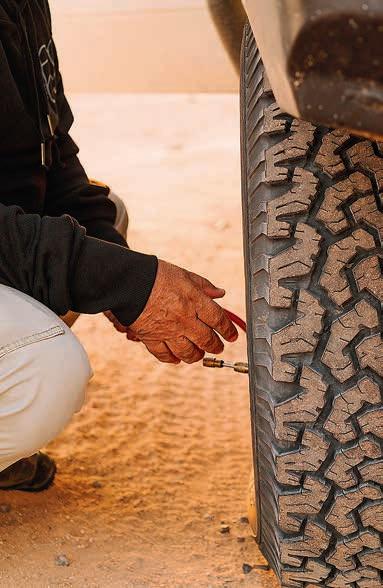
Not dropping tyre pressure on gravel or dirt roads is a common cause of damage to vans. Generally speaking, you should run 45-50 psi on the road, around 30 psi on gravel, and down to 20-25 psi on sand. On really rough or soft roads, dropping below 20 psi won’t be a problem but will make towing easier.
Going too fast
Many caravan industry professionals see vans damaged or worn out prematurely because they’re towed too fast for the conditions. Off-road, where corrugations, potholes, and rough patches are very common,
caravans are being stressed beyond what they’re designed to handle when people treat these roads like highways.
Battery maintenance
Letting batteries of any kind go flat over extended periods can affect their performance and ability to hold charge, so making sure they’re properly charged during storage can save a lot of grief at camp.
Overloading your trailer
All tow vehicles and trailers have maximum weight limits. Exceeding these can and will put undue stress on them. Overloading the drawbar, in particular, can cause damage to your car’s suspension and usually decreases braking effectiveness. Some overloaded vehicles have even suffered chassis damage. So think twice before you start packing too much in.
WATCH VIDEO
How donating to the Perron Institute can affect your brain.
When you donate to the Perron Institute, people living with neurological conditions aren’t the only beneficiaries.
You’ll experience a range of positive emotions knowing that, thanks to your generosity, you’ll be turning today’s neurological research into tomorrow’s clinical breakthroughs.
It’s also worth knowing that your donation is tax deductible.
When it comes to supporting life-changing neurological science, please keep us top of mind.
Discover more at perroninstitute.org
Scan the QR code to learn more.
Small town spotlight
Say ‘cheese’
Why Harvey has so much to smile about
By Jessie James
Harvey is a small town guaranteed to make you smile, and not only because it serves up some of the South West’s best cheese, wine, and fresh produce. Behind its deep farming roots lies a collection of hidden gems, from bushland trails and secret gardens to historic landmarks and signature views. And the best part – it’s only 90 minutes from Perth. For a first taste of the region’s natural beauty, make a stop at Lake Brockman (or Logue Brook Dam) along the way. Built in 1963 to provide irrigation water, this turquoise blue, Instagram-worthy lake is a popular recreation spot and is also dog friendly. By day, you can take part in just about any water sport from swimming to wakeboarding and by night, camp beneath the stars and towering jarrah trees. For the more adventurous, get your heart pumping on the Munda Biddi Trail - one of the world’s longest off-road cycle trails.
Local wares and produce
From here, it’s only 20 minutes to Harvey, and the next stop is a local standout, tucked away on the highway. Bizee Hands is a not-for-profit community craft and gift shop where almost everything is made or grown within the Shire of Harvey. Proud volunteer Robyn, who greets us with a big local smile,
proclaims this popular little shop has “one of almost everything.”
Bizee Hands has been busy celebrating the region’s artisans for over twenty years. Browsing the abundant local wares and fresh produce, my hands were very busy with jars of orange marmalade, cauliflower mustard pickle, knitted animals, and a sensational jam and coconut slice, made from Robyn’s grandmother’s recipe.
The next stop is the heart of every country town – the bakery. Behind the counter of Harvey’s Italian-inspired Harper Street Bakery is 21-year-old owner Kulaiya, who has turned her lifelong love of baking into a thriving local business. “I grew up baking cakes and cupcakes,” she explains, offering up a Sponge Kiss, a sweet treat that comes served with a big country smile.
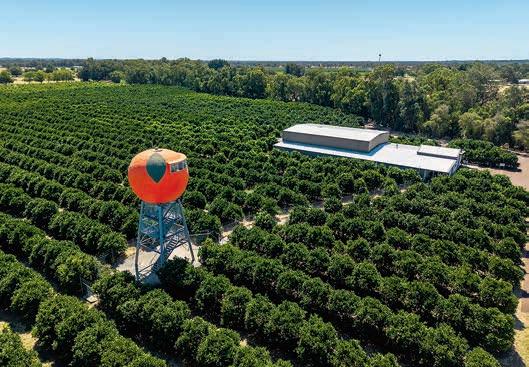
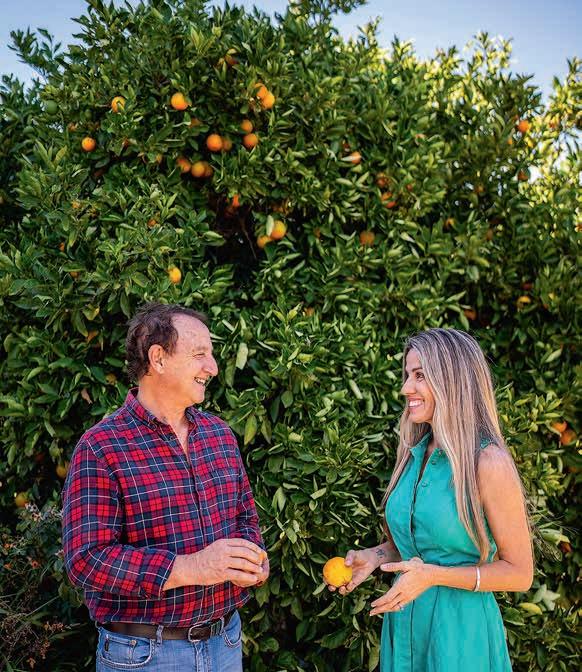
Harvey’s truly iconic landmark is one you really can’t miss –it’s the 17-metre-high Big Orange sitting proudly on the grounds of Harvey River Estate. Climb its 62 stairs for stunning views across Harvey’s agricultural landscape. At the base of the towering structure, owner Kevin Sorgiovanni shares how his father arrived in Harvey from Italy in 1928 and laid the foundations for a family enterprise encompassing citrus orchards, fruit juice
TOP: Harvey’s Big Orange; MIDDLE: Harvey Cheese; BOTTOM: Wildflower Ridge Walk Trail.
production, and even beef farming. Today the family are also wine growers. At the cellar door, the Sorgiovanni’s passion for wine blends with their Italian heritage through varieties such as Barbera and Montepulciano. This fruit-first town also has its own brewery. Drop into Brugan Brewery for a bite to eat and sample local craft beers made by Bruce and Megan (hence the name Bru-Gan). The roasted miso and sesame pumpkin beer was a favourite.
The big cheese
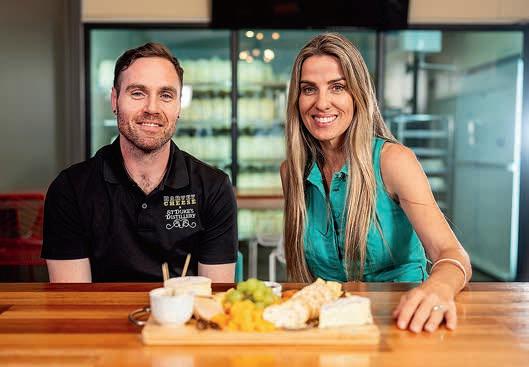
Of course, you can’t come to Harvey and miss the delicious Harvey cheese. Owner Charl, whose family also has deep farming roots, explains that
the region offers the perfect combination of fertile soils, abundant pasture, and ideal weather conditions for cheesemaking. In winemaking, they call it ‘terroir’ - basically the taste of the place, and according to Charl, Harvey serves up the ‘perfect storm’ when it comes to cheese.
Tucked off the highway, on the banks of the Harvey River is the beautiful Stirling Cottage Gardens. Rich in history and country charm, this enchanting site is linked to both the region’s early colonial history and beloved Australian children’s author May Gibbs. Can you believe the Gumnut babies Snugglepot and Cuddlepie were made in Harvey?
The colours of the valley
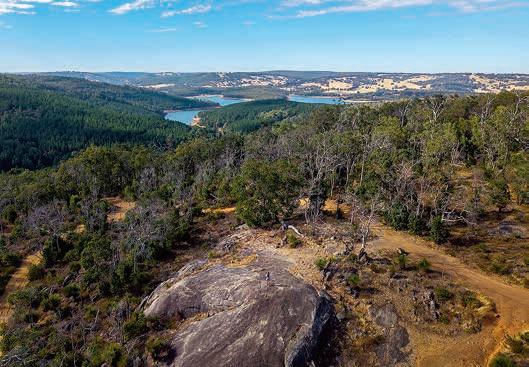
Need to walk off that cheese? Head to the Wildflower Ridge Walk. This 1.4km loop trail offers breathtaking panoramic views over the hills to the Harvey Dam. Take a seat on one of the many benches or pack a picnic for a relaxing lunch in nature.
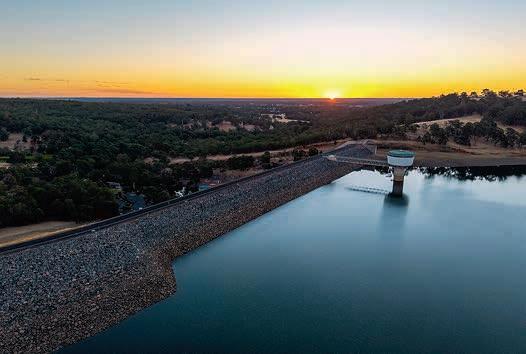
Another popular picnic hot spot is Harvey Dam. Walk along the dam wall for stunning views, or even better, arrive at sunset for a beautiful golden light show. You can access the dam for water activities such as canoeing or fishing (permits required), and if you’re lucky, catch a show at the impressive Gibbs Pool open-air amphitheatre.
To end a long day exploring, Harvey Hills Farm Stay was easily one of the highlights of the trip. Armed with a bucket of carrots left inside the selfcontained chalet, the door was opened to a welcoming committee of alpacas, goats, chickens, a Shetland pony, and a very vocal donkey named Dinkie. It’s a simple yet delightful concept, particularly for families. Between feeding the animals on the doorstep, to a dip in the pool, and the stunning ever-changing colours across the valley, it was a special experience. For this trip, spring was in the air, but no matter what time of year you visit Harvey, this town will give you many things to smile about.
ABOVE: Kevin Sorgiovanni from Harvey River Estate wines; TOP LEFT: Harvey Dam; LEFT: Harvey Cheese.
WATCH VIDEO
Join Jessie as she explores Harvey on our Horizons YouTube channel.
Asia's hidden gem
Outback South Australia & Kangaroo Island
Highlights & Inclusions
• All accommodation, meals and select beverages throughout the tour
• Travel aboard a custom 4WD Mercedes-Benz with a 2-person crew
• Spend 3 nights on Kangaroo Island and explore Flinders Chase National Park, including Remarkable Rocks and Admiral’s Arch
• Meet sea lions up close on a guided walk at Seal Bay
• Spend 2 nights at Wilpena Pound and explore the Flinders Ranges
• Take a 2 hour scenic flight over Lake Eyre North and South
• View the ‘Painted Hills’ on Anna Creek Station on a scenic flight
• Explore Coober Pedy’s opal fields and stay at the Desert Cave Hotel
• Take a 4WD Ridge Top tour at Arkaroola Wilderness Sanctuary
• Journey through the Clare Valley and tour Penfolds Magill Estate
“You’ve always got your time off. Depending on the season, you can go down to the beach and have a good time, then come back and check in the people coming in for the night.”
Becoming a campground host
By Myke Bartlett
For most road trippers, a WA national park campground is a place to pull up, pitch a tent, and then move on. But for campground hosts, it can be home for a period of time, as they become part of the experience itself, as well as getting to stay in some of our state’s most beautiful spots, free of charge.
Managed by the Parks and Wildlife Service through the Department of Biodiversity, Conservation and Attractions (DBCA), the Campground Hosting program allows volunteers to stay at one of the more than 80 sites across WA and play a crucial role in supporting staff and other visitors. Lee Hollingsworth is the Volunteer Program Coordinator at the Parks and Wildlife Service. He says that while the exact duties differ from site to site, the core role remains the same. Hosts are
expected to be the human face of the park and keep everything running smoothly.
“They’re often the first point of contact with the department – or the department’s first contact with visitors,” Lee says. “They’re there to make visitors have a great time, basically.”
The best way to make sure other people are enjoying themselves tends to be for hosts to make sure they’re having a good time, too. Gina has been volunteering for almost 30 years and says she enjoys it as much as ever.
Balancing work and play
“Oh golly, I love it,” Gina says. “I really enjoy helping people to appreciate and enjoy the environment in the park, the flora and the fauna, and I just really love meeting new people.”
Peter has been a host for the past 13 or 14 years but agrees interacting with others is the key attraction. Both he and Gina stay at multiple sites every year, often for more than a month at a time, and have got to know some of the returning regulars.
“You get long-termers who stay for a month, and then you get to know them, and you know they’ll be there next year.”
Beyond the meet and greet, Lee says it tends to be up to the individual host how involved they want to get with other jobs around the campground. There is some necessary tidying and cleaning, but hosts can also help with anything from flora and fauna surveys to storm clean-ups.
“Some have even got involved in rescue operations. But some hosts just want to do the minimum and then go fishing.”
Peter says the bare minimum tends to take up 2-3 hours a day, although this can vary depending on the site. He never feels that he is too busy.
“You’ve always got your time off. Depending on the season, you can go down to the beach and have a good time, then come back and check in the people coming in for the night.”
Gina agrees.
“If I have my great-grandchildren with me, I can spend some time showing them around. I might spend an hour sitting
CLOCKWISE FROM LEFT: Lucky Bay, Cape Le Grand National Park; Fitzgerald River National Park; Volunteers Kim and Greg at Mount Augustus National Park; Parks and Wildlife Service campground hosts.
and talking with people, or I might have a long lunch break one day. There’s nothing defined, no timetable. You just get on and do things as they need doing.”
Seeing WA from a different perspective
For many hosts, it isn’t the time off but the time on that is most attractive. Volunteers find hosting can be a great way to travel around the state while still feeling they are giving back.
“A lot of our hosts are retirees, but they still have skills to offer,” Lee says. “They don’t want to sit around and do nothing. They want to help, and they want to feel valued. They can still be a camper, but they have a purpose.”
Gina says she and her late husband began looking for that sense of purpose before they retired and leapt at the chance to host when it was first suggested to them.
“It keeps the little grey matter working.”
Hosts also tend to find, once they’ve proven themselves to park rangers, they are asked to return whenever a vacancy arises.
“I’m trying to relax, but the rangers keep ringing me up and saying, ‘Can you come and do this one?’” Peter jokes.
Peter says he first stumbled on the host program while travelling and has since managed to sample every site on the books. While the variety of works and landscapes across the different parks is appealing to him, he says there’s one constant that makes the job irresistible.
“Wherever you go, you tend to have the best spot on the site. It’s like being given the keys to the park.”
Best for the outdoor type
Lee says the induction sessions, which are run twice a year in Perth, tend to give people a clear sense of whether or not they’ll enjoy the realities of hosting.
“You probably want to be someone who likes the outdoors, and obviously someone who likes to speak to people about, or cares about, conservation and national parks.”
The sessions tend to be popular, but the program is always looking for new
“I really enjoy helping people to appreciate and enjoy the environment in the park, the flora and the fauna, and I just really love meeting new people.”
recruits who have four weeks free in their schedule. This minimum stay is intended to allow people enough time to get to grips with the unique demands of a particular location without risking hosts developing a sense of ownership over a site.
A general level of fitness is required, given the need for basic maintenance and the occasional need to help out rangers with their broader duties. Having your own caravan or camper will definitely help, too.
“Staying in a tent is not impossible, but it’s not ideal,” Lee says. “Generally, it’s a caravan or camper trailer setup.”
While it’s inevitable hosts will find themselves dealing with difficult customers from time to time, neither of them has been drawn into any real issues. Lee says hosts always have the full support of the Parks and Wildlife Service staff.
“They’re not there to police the site. They’re there to be a presence and look after campers. Anything that puts their safety at risk, they’re expected to call the ranger.”
Peter says the induction training helped, as it covered de-escalation and conflict
resolution techniques, but he’s always been clear about knowing where to draw the line.
“If it’s outside your line, or something’s getting a bit more aggressive, you just walk away and call a ranger, because that’s their role, not yours.”
Anyone wanting to try hosting should start by visiting the DBCA campground hosting page and completing the Expression of Interest form.
Both Peter and Gina say the best way to find out if hosting is for you is to just give it a go, ideally starting somewhere not too remote.
“You’ve got to be comfortable in it, and you’ve got to be comfortable with people of all shapes, sizes, descriptions and moods,” Gina says, noting the irony that she often finds herself working harder in retirement as a host than she did when still in paid work. But the rewards are obvious.
“I get more out of it than I put into it,” she says. “Just go for it. It’s an amazing life.”
Peter puts the appeal more simply.
“It’s a small amount of effort to be staying in some amazing locations.”
IT’S WHO YOU GO WITH
Small Groups
All Considered Freedom to Explore Italian Discovery 19 days from $17,995*
The only thing we love more than travel, is doing it together. From truffle hunting in Langhe and pasta making in Tuscany to exploring the iconic sights in Rome, Venice and Florence. We’ve put everything you’ve ever wanted to see and do (plus a few hidden gems) into one all-things-considered small group tour. Let’s go!
*All prices shown are per person based on twin share. Single supplements apply. Prices are correct at time of printing but are subject to change. For full terms and conditions visit our website. Bunnik Travel Pty Ltd - trading as Bunnik Tours • CATO Membership No. 45818253.
Venice, Italy by
Holly Benger
Grand Tassie Tour
Great Value Touring
• 16 Nights Quality Accommodation
• 14 Days All Inclusive Economy Auto Car Hire^
• Experience Tasmania Gray Line Tours –Grand Hobart Tour
• Port Arthur Historic Site – Site Entry
• Devils at Cradle – Day Keeper Tour
• Tamar River Cruises – Cataract Gorge Cruise
• National Parks Pass – Statewide Park Entry
MEMBER BONUS • $200 Free Fuel Voucher^ • $200 Tour and Attraction Credit^
Premium Tasmania
Signature Touring Experience
• 12 Nights Premium Accommodation
• 12 Days All Inclusive Small SUV Auto Car Hire^
• Josef Chromy Wines – Let’s Do Lunch
• Gordon River Cruises – Window Seating
• National Parks Pass – Statewide Park Entry
• Breakfasts Included on 6 Mornings
BONUS • $150 Free Fuel Voucher^
$150 Tour and Attraction Credit^
SYDNEY TO PERTH
Coast to Coast | All-inclusive rail journey | 4 Days
Highlights & Inclusions
• 3 nights aboard the Indian Pacific, travelling from Sydney to Perth
• All-inclusive multi-course dining and beverages, featuring fine wines, beers, soft drinks, and barista made coffee
• Off Train Experiences in Broken Hill, Adelaide and surrounds, Cook and Rawlinna
• Visit Australia’s oldest mining town of Broken Hill
In my garage
THE LOCAL LEGEND WHO BUILT THE WORLD’S FASTEST JAGUAR E-TYPE
Every evening, Allen settles into the same spot on his driveway, a fold-out chair, a cold drink in one hand and a handful of birdseed in the other. Before long, he’s surrounded by pigeons, content to watch the afternoon drift by.
It’s an unassuming scene. You’d never guess that tucked away in the garage behind him sits one of the most remarkable Jaguars in Australia.
Allen’s 1962 Jaguar E-Type has become something of a legend among motoring enthusiasts. Capable of speeds approaching 200mph, it’s widely regarded as the fastest production E-Type in the world. Yet for Allen, the car has never really been about records.
Allen’s affection for the Jaguar is obvious. Ask him about the car and the conversation quickly shifts from lap times and speed
records to admiration for the machine itself.
“Good engine? It’s the best bloody engine in the world,” he says with a grin.
He bought the Jaguar in the late 1970s for around $1000 after it had been damaged in a crash. The bonnet was battered, but Allen could see beyond its scars. What started as a project to get the car back on the road slowly evolved into a decades-long journey of curiosity, persistence, and problem-solving.
Long before the E-Type became known for its speed
on the salt flats of South Australia, it had already proven its toughness elsewhere. Allen entered the Panama to Alaska rally, a gruelling journey covering thousands of kilometres through vastly different countries, roads, and conditions. Many doubted the sleek British sports car would survive the trip, with some even betting against it.
But Allen didn’t pay much attention to the doubters.
Against the odds, the E-Type completed the journey, reinforcing what he already knew: the Jaguar was capable
of far more than most people gave it credit for.
That same curiosity eventually led him to a race week at Lake Gairdner. After watching competitors race across the salt, Allen and a few mates found themselves discussing it over a couple of beers.
“Geez, it looked too easy,” he recalls.
Of course, it wasn’t.
What began as an idea between mates soon became a challenge that would span more than a decade. Year
after year, Allen and a group of equally passionate motoring enthusiasts returned to the salt, learning, experimenting, and slowly unlocking more performance from the E-Type.
The original 3.8-litre engine remained under the bonnet, carefully developed and refined rather than replaced. Progress came incrementally. There were setbacks, lessons, and countless hours spent tinkering.
Eventually, the E-Type earned its place among the fastest
Jaguars of its kind anywhere in the world.
But spend a few minutes talking to Allen and it becomes clear that the achievement isn’t what matters most to him.
He speaks about the Jaguar less like a machine and more like an old friend. It’s been with him through decades of adventures, challenges, and discoveries. It has tested his patience, rewarded his persistence, and carried him across some of the world’s most demanding roads.
In many ways, the story of Allen’s E-Type feels uniquely West Australian. It’s a reminder that world-class achievements don’t always come from factory-backed teams or unlimited budgets. Sometimes they come from ordinary people with a shed, a stubborn streak, and an irresistible curiosity to find out what’s possible. Judging by the smile on Allen’s face as he nestles in behind the wheel for another drive, that curiosity still hasn’t faded.
WATCH VIDEO
Watch the full episode of In My Garage on the Horizons by RAC YouTube channel.
Test drive
TOP: The new Toyota RAV4 is more economical around town; LEFT: The 2026 Nissan X-Trail has an extended distance between servicing; RIGHT: The RAV4’s 12.9-inch touchscreen is part of its interior upgrade.
WATCH VIDEO
Watch Alex’s full review of the Toyota RAV4.
MID-SIZED HYBRID SUVS GO BACK-TO-BACK
We compare the Toyota RAV4 with the Nissan X-Trail.
By Alex Forrest
More than ever, people expect a tremendous amount from their cars. Refinement, connectivity, life-saving safety features, and low running costs to name a few. That’s largely because cars have never offered so much of these things – even mainstream vehicles that sell in the tens of thousands.
Take mid-sized SUVs, for example. They’re roomy inside but not hard to park, fuel efficient but able to tow a medium-sized trailer, and they can handle mild off-road driving but are also easy to handle in the suburbs.
And despite ever-increasing complexity, reliability has, for the most part, been improving.
Two of the top ten selling affordable mid-size SUVs are the new Toyota RAV4 and the recently updated Nissan X-Trail. The RAV4 can now be had as a plug-in hybrid as well as a regular hybrid, while the X-Trail comes as either petrol only or a range-extender hybrid. Both have their talents, but which has the most? Let’s find out.
Value for money
Pricing for the Nissan X-Trail starts at $41,490, which is $10,000 less than the entry-level Toyota RAV4 price. But that’s not all due to the so-called ‘Toyota tax’, because the RAV4 has one major feature that the X-Trail lacks at the entry level.
The entry level RAV4, like all others in the range, is a hybrid. The entry level X-Trail is petrol only, with no electric assistance.
That extra spend on the RAV4 also gets you a whole lot of soft value, like affordable servicing ($325/year for the RAV4, $399 per year for the X-Trail), strong retained value, and cheaper fuel costs – despite the RAV4 needing 95 RON fuel.
But the X-Trail does give you a bigger infotainment screen on base models, and it’s also available with seven seats, unlike the RAV4.
Behind the wheel
The basic petrol-only X-Trail ST’s handling is predictable and safe. But it lacks the quiet grunt of its electrically
driven e-Power siblings and for many, these will be the justifiable choice.
The unusual series hybrid system of Nissan’s e-Power models is better in practice than how it sounds in a brochure or car review. E-Power X-Trails are driven only by electric motors powered by a 2.1kWh battery. This means the petrol engine is not connected mechanically to the wheels, and is only used to recharge the battery.
The RAV4 AWD hybrid still uses less fuel though, at 4.6L/100km compared to the all-wheel drive X-Trail e-Power’s 6.1L/100km.
The RAV4 is now also available as a plug-in hybrid, which starts at a substantial $66,100 but offers about 120km of electric-only range.
Safety and practicality
The current model RAV4 did not have an ANCAP rating at the time of writing, while the X-Trail has a 5-star rating that dates from 2021, and is due to expire in December 2027. The RAV4 is expected to get an ANCAP rating later in 2026, which will be against the current strict testing protocols.
Commendably, both the X-Trail and RAV4 come with spare tyres, though they are space savers. However, the RAV4 GX two-wheel drive does offer the option of a full-sized spare tyre.
The X-Trail wins some extra practicality credit with its seven-seat option. Somewhat ironically, if you spend big on the RAV4 plug-in or X-Trail e-Power hybrids, you’ll get less boot space.
Verdict
The Nissan X-Trail has had some notable updates for 2026, including a longer distance service interval and more comprehensive camera monitoring. At a time of increasing prices, $41,000 for a medium SUV from an established brand will be appealing to many, especially one that offers a seven-seater option. But if you can stretch another $10,000 and don’t need seven seats, the RAV4 will be better value in the long run thanks to its lower running costs and better retained value.
ABOVE: The X-Trail’s seats are well bolstered and stylish.
Nissan X-Trail
Toyota RAV4
HYUNDAI ELEXIO
When Hyundai launched its Elexio mid-sized electric SUV in Australia back in February, it represented a major first for the South Korean car making giant.
The Elexio is the first China-built vehicle Hyundai has sold in Australia. Like other Hyundais though, the Elexio does get a specific steering and suspension tune for the Australian market.
This means the steering feels sharper, and the suspension is more handling-focused than iterations sold in other markets.
Currently there are just two variants, with the base Elexio starting at $55,990 and the Elexio Elite needing $59,990. The latter gets 20-inch wheels and leather seats, amongst other tweaks.
It comes as front-wheel drive only, and as such, is far more focused on space and efficiency than performance.
Under the skin, the Elexio uses the same platform as its Kia-badged sibling, the EV5, which is also built in China.
A major feature of the Elexio that you can’t miss is the enormous 27-inch
infotainment and driving display screen, which unusually is biased towards the left side of the vehicle. The screen integrates the majority of the Elexio’s functions, and echoes Tesla in some of its design ideas, such as the ability to use it for gaming when stationary and the minimisation of physical buttons.
There is a small screen directly ahead of the driver that displays speed, speed limit, and remaining range plus other information like time and date. This is well executed as it does a similar job to a headup display but doesn’t suffer from changing light intensities, as some head-up systems can.
With 160Kw from its single motor and a mass of 2.1 tonnes, the Elexio’s performance isn’t up there with its ridiculously quick Ioniq 5N sibling, but it is certainly crisp enough for day-to-day, mid-sized SUV driving.
Watch Alex’s full review of the Mazda CX-80.
MAZDA CX-80
It’s no wonder some prospective buyers will need to take some time to fully comprehend the differences between the Mazda CX-60, 70, 80, and 90 SUV models.
Then, across those four different models there are four different equipment levels and three different drivetrains to choose from.
Among those models, the CX-80 may be the sweet spot. It’s not as wide as the CX-90, but it is longer than the CX-60, which allows it to have a third row of seats.
And those seats can fit a 190cm tall person back there without that person having to be a yoga enthusiast. They might appreciate regular stops though.
Engine options comprise a petrol engine and a diesel, both inline sixes and both 3.3 litres in size. These two utilise 48-volt mild hybrid systems, which offer some slight electrical assistance to the petrol (or diesel) engine. A third powerplant option in the CX-80 is a plug-in hybrid, which has a larger 17.8kWh battery and more potential fuel savings if you charge it up often enough.
Of these three engine options, the diesel mild hybrid drivetrain is the best value for its significantly lower fuel consumption than the petrol, and its lower up-front cost than the plug-in hybrid versions.
In the time we had the CX-80 diesel, it used just 6.7L/100km – impressive for a 2.1-tonne SUV with 187kW and 550Nm available. By comparison, the Kia Sorento diesel has a smaller 2.2-litre engine with less power and torque but uses more fuel.
Once underway, there’s no shortage of surge from the big diesel. Though the mild-hybrid assisted engine stop/ start system does need the driver to finesse on the brake pedal to smooth out starts from standstill.
The CX-80’s interior certainly has premium European levels of fit and finish, with quality materials and well thought through ergonomics.
ENGINE 3.3-litre six-cylinder diesel mild hybrid
POWER 187kW @ 3750rpm
TORQUE 550Nm @ 1500-2400rpm
CLAIMED FUEL ECONOMY 5.2L/100km
PRICE from $69,300 drive away* ANCAP SAFETY RATING
*D50E Touring
WATCH VIDEO
WA’s Best Engineering Jobs 2026
By Nicolle Jenkins
TITLE Regional Director WA
EMPLOYMENT LENGTH 5 years
WORKPLACE RATING
WHY YOU LIKE WORKING AT AGILITUS
“Working in an environment where people are empowered to innovate and improve how we deliver value to clients.” TITLE Structural
WORKPLACE RATING
WHY YOU LIKE WORKING AT AGILITUS “I love the culture here, everyone is very supportive. They encourage me to learn and empower me to take ownership of my works while helping me grow personally and professionally.”
Why choose Agilitus for your next career.
Our vision is to be the most sought-after multidiscipline engineering business. We achieve this by attracting, developing, and retaining talented people who share our values and commitment to excellence.
TITLE Senior Project Manager
EMPLOYMENT LENGTH 3 years
WORKPLACE RATING
WHY YOU LIKE WORKING AT AGILITUS
“I love being surrounded by such technically strong people who’ve sharpened me as an engineer and shaped how I lead, in a fastgrowing business where there’s always a new challenge to take on and clients who genuinely value what we bring.”
As a 100% employee-owned business, our success is genuinely shared. We recognise and reward loyalty, strong performance and alignment with our culture. We are committed to supporting long-term, meaningful careers. From your first day, we work with you to shape a career path that evolves over time—whether that spans technical expertise, project delivery, or leadership.
Jamie Cigulev Lucy Nguyen
Sebastien Nalletamby
Car doctor
QIf my vehicle is scheduled for its next service at either 10,000km or six months, but I have driven less than 400km during that period, is it still necessary to proceed with the service, or may I defer it until I have driven a greater distance?
Deepesh, Gosnells
A If either the time or distance component of your vehicle’s service schedule has expired, you need to have it serviced. Even if you’ve only driven 400km, you’ve exceeded the time limit, then your vehicle needs a service. Lack of use can also cause issues such as engine oil contamination, which can be addressed by a service.
QOil catch cans are being recommended for 4WDs by aftermarket sellers and 4WD enthusiasts and have positive reviews online. However new car dealers don’t necessarily support them. Are they worth fitting?
Scott, Winthrop
AOil catch cans are designed to separate engine oil and water vapours and prevent them being drawn back into the engine for combustion, as many modern engines are designed to do. But they do require extra maintenance and may also affect the vehicle’s factory warranty. For many people, these would be the reasons to keep the vehicle standard.
Q I have a 2010 Volvo S80 petrol, which is starting to use a few litres of oil in between services. Would putting in a thicker type of oil (10W 40) than what is recommended by Volvo (5W 30) help stop it burning through the oil?
Christopher, Mount Hawthorn
AUsing a 10W 40 in place of the manufacturer’s recommended 5W 30 is a common way to temporarily reduce engine oil burning, especially in hot climates, as in much of WA. However, your car may also be losing oil due to a leak, which you may also want to investigate.
RAC members can take advantage of our Auto Advice Line.
If you have a motoring question, call 6150 6199 Monday to Friday between 8.30am and 5pm to speak to one of our experts.
WIN FREE FUEL
Send us your question for the Car Doctor and if it’s published, you’ll receive a $50 fuel voucher to use at any Puma and Caltex locations Australia-wide, thanks to RAC Member Benefits.
Send your questions to editor@rac.com.au or post to The Car Doctor, Horizons, GPO Box C140, Perth WA 6839
Please include your full name, address and daytime telephone number with your question.
If your question is chosen for publication, please allow up to eight weeks for delivery. See page 81 for terms and conditions of entry.
Member lounge
Buying a used EV? Let us check the battery
With increasing numbers of electric vehicles (EV) and plug-in hybrid electric vehicles (PHEV) on our roads, the second-hand market for them is also expanding.
If you’re considering buying a used EV or PHEV, you’ll want to know exactly how much life is left in the battery that powers it.
RAC Auto Services now offers EV battery health checks, which can be booked either as a standalone service or alongside a pre-purchase vehicle inspection for a full vehicle report. The battery check provides a comprehensive report about the battery’s general health, any issues with it, and the remaining range.
EV battery health checks can be performed on most major brands, including Tesla, BYD,
MG, Mitsubishi, Nissan, BMW, Hyundai, Kia, and Volkswagen.
The health check can also be valuable for sellers to show the battery’s remaining capacity.
Once complete, you’ll immediately receive a certificate with full battery diagnostics.
The EV battery health check is just $175 for members and can be done at any RAC Auto Services centre or we can come to you anywhere in the Perth metropolitan area.
For more details and to book, visit rac.com.au/evbatterycheck
ARE YOU READY TO SWITCH TO AN EV?
Electric cars are rapidly becoming the new standard for modern driving. They offer lower emissions, reduced fuel costs, and access to the latest innovation.
With more charging stations across Australia, improved battery ranges, and government incentives supporting greener choices, owning an EV is more convenient and accessible than ever.
When you’re ready to make the move to finance an electric car, you’ll enjoy 0.50% p.a. off your car loan interest rate with RAC Finance*.
This means lower repayments so you can enjoy more value and a cleaner choice.
Get a quote today by calling 1300 045 197
*Discount applies to fully electric new and used vehicles, excludes hybrid vehicles. Offer is subject to RAC Finance Lending Terms and Conditions.
HOW SEAWORTHY IS THE BOAT YOU’RE THINKING OF BUYING?
Defects on a boat are not always obvious during a viewing, and major problems could easily be missed by someone not trained to pick them up.
Hull condition, safety equipment, steering, electrical systems, trailer condition, and general maintenance can all affect whether a vessel is safe and ready for launch.
Through an exclusive RAC member discount, SeaWorthy Inspections can undertake an independent prepurchase boat inspection designed to help you make a safer and more informed choice before committing to buy.
A SeaWorthy inspection provides a practical overview of the boat’s condition, helping identify concerns before they become costly or unsafe problems on the water.
Once inspected, buyers are better placed to understand the vessel, arrange insurance, and prepare for the season ahead.
If you’d like to find out more about boat inspections and how to buy a used vessel with confidence, SeaWorthy Inspections will be at this year’s Perth Boat Show at the RAC Boat Insurance stand.
The Perth Boat Show is on from 4-6 September at the Perth Convention and Exhibition Centre.
See us at stand 019.
GAME ON: BOOKING YOUR SPORTING EVENT HOLIDAY
Travelling for a major sporting event is about more than just the event itself. The buzzing atmosphere of the host city can make it an extra special time to visit.
Booking a complete sports package takes the pressure out of planning, especially when demand is high and availability is limited.
With event tickets, accommodation, and key inclusions organised in
advance, you can focus on enjoying the experience, knowing everything is taken care of, and have time to explore the city in between.
Some popular sports event packages you can book with RAC Travel include the Australian Open, the Singapore Grand Prix – one of the best events in the Formula 1 calendar or the Melbourne Grand Prix, the AFL Grand Final and much more.
All experiences can be tailored to suit members’ needs.
To find out, more visit rac.com.au/travel
Why using a registered travel agent is the most secure way to travel
Booking with an accredited travel agent means you’re leaving the job to an expert who has access to complex booking systems with more information than consumer-based online booking platforms.
An agent can see all booking options at once and quickly determine which best fits your intended itinerary.
They can get you better flight connections, the best airfares, and first-to-market offers. They are also good at handling complicated
itineraries – a much slower process that can be prone to easy errors when you do it yourself.
Very importantly, a travel agent is someone to fall back on in the event that you run into problems such as cancelled or delayed flights that may affect other connections, or other unforeseen disruptions.
Australian travel agents with official ATAS accreditation must meet strict standards, so you can be sure you’re dealing with a trusted agency.
out of life. With fantastic locations across Perth, St Ives gives you the space, security and freedom to ensure your next move is the best one yet. Why not take your first step today and book a Village tour at
Make the most of the great everyday savings you get as an RAC member. Whether it’s discounts on travel, fuel, gas for your home, pharmacy, groceries, entertainment, dining or RAC products and services – RAC members save every day.
Save at IGA, Woolworths and Coles, plus unlock discounted wildlife tours too.
Page 64 & 65
Go behind the scenes at WA Wildlife and discover wildlife rescue and rehabilitation in action. Tour the WA Wildlife Hospital, watch vets and volunteers at work, and meet beloved residents including dingos, koalas, emus, possums, reptiles and Vinnie the wombat. A hands-on conservation experience that’s educational, inspiring and unforgettable.
RAC members save 10%*
Plantation Shutters for comfort and style
Get the timeless look of plantation shutters with our range, custom made for your home. Available in PVC, Basswood and aluminium. Professional installation.
• Premium Promesh Stainless Steel
• Tough & affordable SecureGrille
• Aust Standard triple locking system
• Replace old flyscreens & doors
RAC Members save 10%. Plus claim the $400 Safety and Security Rebate^
• Control heat and light
• Increase privacy
• Modern contemporary design
• Premium quality with a 25 year warranty
Members save $920
Members save 20%* on stays of 3 nights and more
stunning Kalbarri, surrounded by epic gorges, Skywalk and protected swimming bays Fantastic facilities with heated swimming pool (seasonal), camp kitchen and just 4 minutes walk to beach and cafes. Stay in
air-conditioned cabins or powered caravan, camping and ensuite sites.
Entrants may submit more than one entry. Up to three entrants (winners) will be awarded only one prize as follows: one $50 fuel voucher to use in one transaction at any Puma/ Caltex location Australia-wide. The prize is not transferable or redeemable for cash. Entries that do not, in the absolute discretion of the panel of judges, comply with these requirements are invalid. The winner will be notified by email, telephone or letter. When the winner is notified of their prize, they will also be provided details as to the collection of their
prize. Entrants published in the spring 2026 edition of Horizons must claim their prize by 16 October 2026. In the event that no contact details are supplied, or RAC cannot make contact with the winner, the prize may be withdrawn at the absolute discretion of Horizons magazine. Prizes will only be awarded following winner validation and verification. This competition is subject to the promoter’s privacy and security statement and group privacy policy.
Full terms+conditions for competitions available at rac.com.au/competitions
Ten best
FARM STAYS
Lindum Farm Stay
Lindum
Lindum Farm, in WA’s Wheatbelt region, is a fully operational agricultural business growing wheat, barley, and other grains, as well as a farm that raises sheep and chickens. Guests at Lindum get a taste of authentic farm life while enjoying long bushwalks on private tracks and evening campfires. The neighbouring towns of Coorow and Perenjori are renowned for their spectacular wildflower displays until late October.
The Mains Guest House
Corrigin
The working farm at The Mains Guest House runs a small brood of sheep, alpacas, poultry, and a few family pets that kids are welcome to help feed and care for during their stay. Corrigin is renowned for its spectacular and clear night sky, and the guest house is a great spot for stargazing.
Settlers Rest Farm Stay
Swan Valley
For a private farm stay experience not far from Perth, try the Settlers Rest cottage in the Swan Valley. The turn-of-the-century cottage has three bedrooms and a well-equipped kitchen, while the variety of animals to meet and feed will keep the kids super busy. There’s even a stable area with competition show horses.
Gumleaf Cottage Farmstay
Hovea
Gumleaf Cottage Farmstay
is a 12-acre farm located in the Perth Hills, with daily animal feeding, hay rides, and evening possum spotting. There’s also a playground on the property and the option to book a pony ride for an extra-special farm adventure. There are two private cottages, each with its own verandah or patio, and private garden with barbeque.
Harvey Hills Farmstay
Harvey
Take in the expansive views of the Harvey Dam from the balcony of your cosy chalet at Harvey Hills Farmstay. This 100-acre working farm has four selfcontained chalets that can sleep up to six people. Kids can hand-feed the resident sheep, ducks, alpacas and goats, and even collect fresh eggs for breakfast when the hens are laying.
Ferguson Farmstay
Ferguson Valley
Ferguson Farmstay is the perfect getaway for any nature-loving family. The property is home to ten cosy, rammed-earth chalets, each well-equipped and with a private verandah that affords an idyllic view of the starry night sky. Each day there’s a schedule of farm activities for guests, including animal feeding and tractor rides.
Lucieville Farm Chalets
Bridgetown
Located just a few kilometres south of Bridgetown, Lucieville Farm Chalets overlooks an expansive and tranquil lake which you can explore via canoe or paddle boat. There are plenty of opportunities to feed, pet, milk, and play with many farm animals and even try your hand at damper making.
Diamond Forest Farm Stay
Manjimup region
Not too far from the towering forests this region is renowned for, the Diamond Forest Farm Stay comprises two picturesque red cedar cottages that are fully selfcontained. Meet and feed the animals, canoe on the lake, and head to the games room when the outdoors gets a bit chilly. Both cottages have a secure fenced area so you can bring your dog as well.
Chestnut Brae Farm Stay
Nannup
Chestnut Brae combines a quaint farm stay and foodie adventure in one. Take a tour of the sustainably managed chestnut farm and sample some of the chestnut products made on-site. Chestnuts will please the adults, while the kids can get their kicks meeting the friendly farm goats, Wessex saddleback pigs, turkeys, and bantams.
Sandalwood Downs
Toodyay
At Sandalwood Downs
Fabulous Farm Stay kids get the chance to feed, pat, and interact with many farm animals, including cows, donkeys, alpacas, camels, deer, lambs, goats, pigs, turkeys and rabbits. There are spacious caravan and camping sites and a self-contained twobedroom cabin with a balcony and outdoor fireplace.