Rabbi Ranon Teller’s Guide to Choosing the Right Philanthropic Cause for Your Values
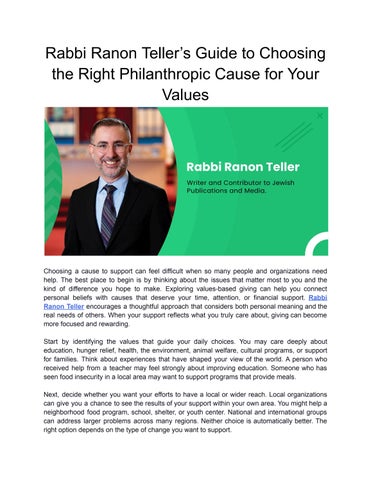
Choosing a cause to support can feel difficult when so many people and organizations need help. The best place to begin is by thinking about the issues that matter most to you and the kind of difference you hope to make. Exploring values-based giving can help you connect personal beliefs with causes that deserve your time, attention, or financial support. Rabbi Ranon Teller encourages a thoughtful approach that considers both personal meaning and the real needs of others. When your support reflects what you truly care about, giving can become more focused and rewarding. Start by identifying the values that guide your daily choices. You may care deeply about education, hunger relief, health, the environment, animal welfare, cultural programs, or support for families. Think about experiences that have shaped your view of the world. A person who received help from a teacher may feel strongly about improving education. Someone who has seen food insecurity in a local area may want to support programs that provide meals. Next, decide whether you want your efforts to have a local or wider reach. Local organizations can give you a chance to see the results of your support within your own area. You might help a neighborhood food program, school, shelter, or youth center. National and international groups can address larger problems across many regions. Neither choice is automatically better. The right option depends on the type of change you want to support.
Research is also important before making a commitment. Look at how an organization explains its mission, uses donations, and reports its results. Reliable groups should provide clear information about their work and goals. You can also read independent reports or speak with people who have volunteered with the organization. A little research can help you feel more confident about where your resources are going. Consider what you can realistically contribute. Philanthropy is not limited to writing a check. Your time, professional skills, knowledge, and personal network may also be valuable. A designer could create materials for a nonprofit, while a student might tutor younger children. Choosing a form of support that fits your life makes it easier to remain involved over time. You should also give yourself permission to adjust your priorities. Personal values can change as you gain new experiences and learn about different issues. A cause that feels important today may lead you toward another area later. Reviewing your choices from time to time keeps your giving connected to your current beliefs. Purposeful philanthropy starts with understanding what matters to you and finding a responsible way to act on those beliefs. You do not need to support every worthy cause to make a difference. Focus on an issue that feels meaningful, learn about the people already working on it, and choose a level of involvement you can maintain. Thoughtful support can create real value for others while making generosity a more meaningful part of your own life.