Australian SportPilot Magazine - Issue #113 - December 2025
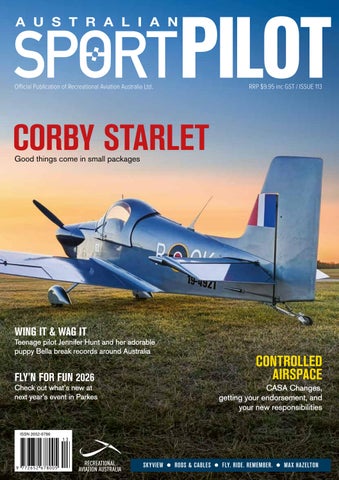
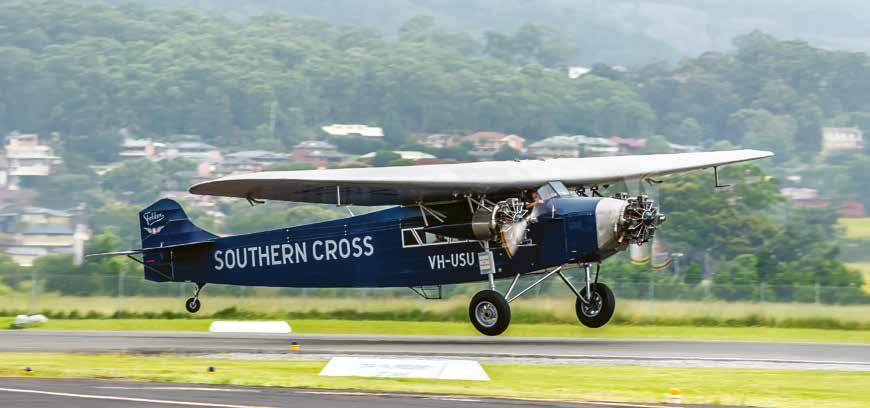
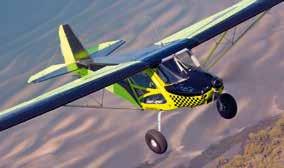
CORBY STARLET
Good things come in small packages
WING IT & WAG IT
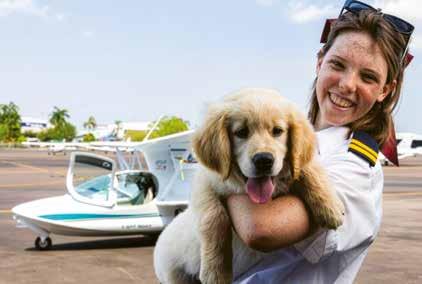
Teenage pilot Jennifer Hunt and her adorable puppy Bella break records around Australia
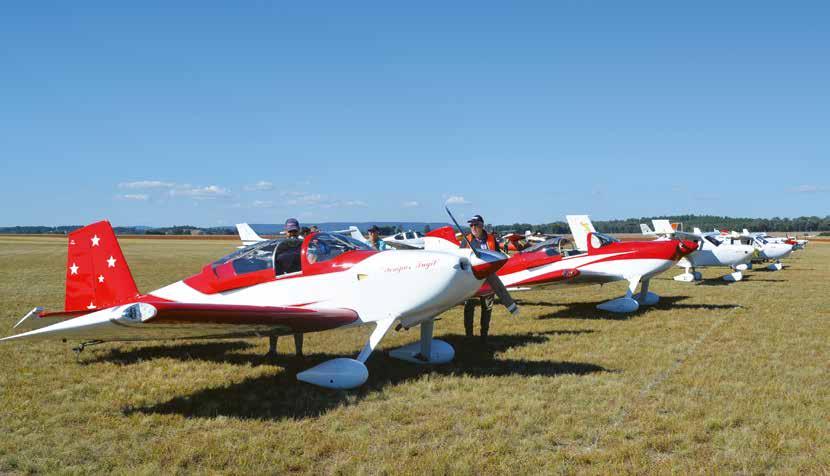
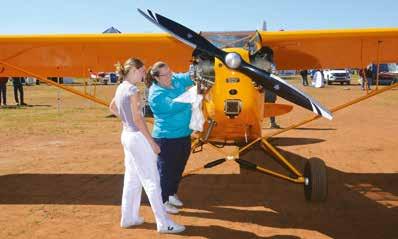
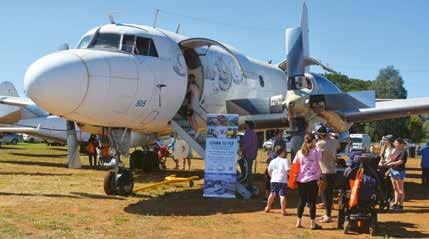
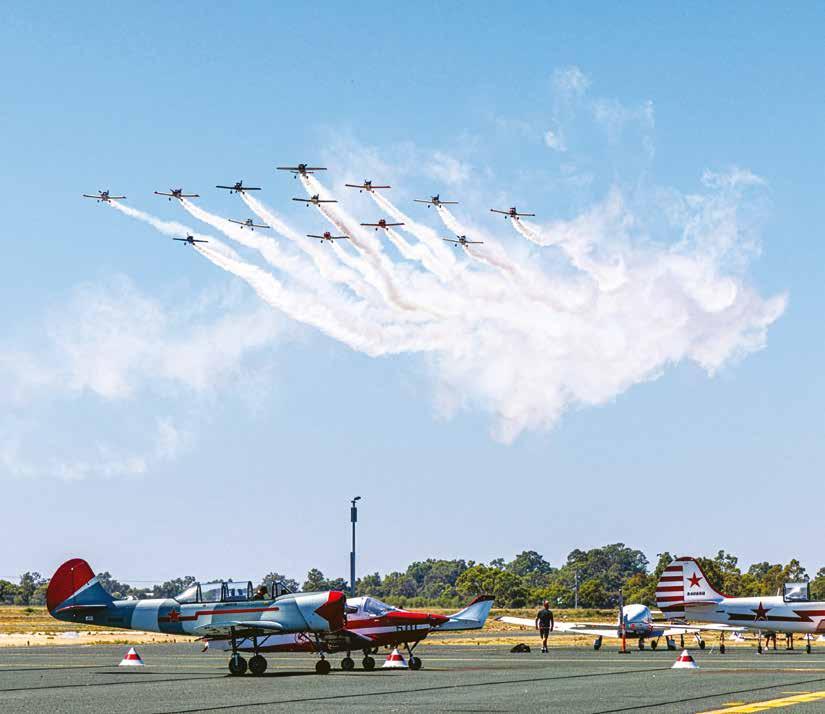
FLY’N FOR FUN 2026
Check out what’s new at next year’s event in Parkes
Changes, getting your endorsement, and your new responsibilities
EDITOR’S WELCOME
A BIG YEAR FOR LIGHT SPORT AVIATION
Looking back over the last year, it’s been a big one for light sport aviation. For me at least, any year with an Avalon Airshow is big, and this year’s event was huge, albeit marred by an airshow incident. Coinciding with the show was the release of several new LSA aircraft in the Australian market. We saw the first Group G aircraft registered and flying. MOSAIC dropped in the US –more elsewhere on that in this issue – and, as I look back over my logbook, there was only a bit over 50 hours of flying, but that included a trip across the top end and controlled airspace endorsements. I felt like I was flying a lot. I spoke to a lot of pilots out there who were getting in the air and using their aircraft. But that was not the case everywhere. The challenging economic conditions have certainly impacted flight schools, with several telling me numbers were down from the post Covid peak. More concerning is that we might lose our instructors and their wealth of knowledge if things don’t improve. That would be a great loss to our community.
This edition is bumper-packed with some great reading. We’ve gone back and reviewed some great aircraft that have been with us for a long time, like the Corby Starlett on the cover. While we all love new, fast and expensive aircraft, it’s great to see that affordable, grass-roots flying is there to be enjoyed.
As a long-range heads up, there are two events coming up next year that you should know about (and we aviators like plenty of notice); On 27–29 March, RAAus will be hosting Fly’n For Fun again at Parkes. I will be there again because it was a great event with a lot of interesting presentations and good people to chat to. The following month I will be helping to deliver the ANZAC Airshow at West Sale, and you are all invited to fly in and attend for free. RAAF, Warbirds, GA and light sport aircraft will be on display and flying. In both cases, check out the websites linked in the events section for details.
I hope to see you out there and wish you all well for the festive season and new year!
EDITORIAL
(03) 5273 4777
editor@sportpilot.net.au
EDITOR
Nicholas Heath
DEPUTY EDITOR
Sophia Blakebrough
STORY
CO-ORDINATOR
Nick Jones
Sam McMillan
Ruby Rawlins
ADVERTISING
(03) 5273 4777
advertising@sportpilot.net.au
ADVERTISING
CO-ORDINATOR
Camille Wagner
FINANCE
Christine Heath
PRODUCTION
SENIOR DESIGNER
Regina Mari
DESIGNERS
James Conte
Steven Hedley
PROOFING
Christine Heath
DIGITAL
Budda Pile
Nic Emanuele
SUBSCRIPTION INFORMATION
SportPilot Magazine is an official publication of Recreational Aviation Australia and is published three times a year by Pace Marketing Pty Ltd. ABN 33 052 999 925. 6 Brougham Street Geelong VIC 3220.
As part of their RAAus financial membership, all members, flight training schools and clubs will receive each issue of SportPilot free of charge. Alternatively, readers are welcome to undertake an Affiliate Membership with RAAus with an annual charge of $39.95*.
To subscribe visit raaus.com.au
DEC 2025
RECREATIONAL AVIATION AUSTRALIA
HEAD OFFICE
PO Box 1265 Fyshwick, ACT, 2609
Unit 3, 1 Pirie Street Fyshwick, ACT, 2609
International: +61 (2) 6280 4700
National: (02) 6280 4700
Email: admin@raaus.com.au
www.raaus.com.au
ACN: 070 931 645
CEO
Maxine Milera ceo@raaus.com.au
CHIEF OF AVIATION
Cody Calder cody.calder@raaus.com.au
ACTING HEAD OF SAFETY
Neil Schaefer neil.schaefer@raaus.com.au
HEAD OF FLIGHT OPERATIONS
Marty Peters marty.peters@raaus.com.au
HEAD OF AIRWORTHINESS AND MAINTENANCE
Jared Smith jared.smith@raaus.com.au
ASSISTANT HEAD OF AIRWORTHINESS AND MAINTENANCE
Darren Barnfield darren.barnfield@raaus.com.au
HEAD OF TRAINING DEVELOPMENT
Neil Schaefer neil.schaefer@raaus.com.au
GENERAL ENQUIRIES admin@raaus.com.au
PILOT AND MEMBERSHIP ENQUIRIES members@raaus.com.au
AIRCRAFT AND MAINTENANCE ENQUIRIES tech@raaus.com.au
SAFETY ENQUIRIES safety@raaus.com.au
DIRECTORS
Michael Monck (Chair) michael.monck@raaus.com.au 0419 244 794
Luke Bayly (Deputy Chair) luke.bayly@raaus.com.au
Jennifer Laird jennifer.laird@raaus.com.au
Simon Ozanne simon.ozanne@raaus.com.au
Paul Reddish paul.reddish@raaus.com.au
Andrew Scheiffers andrew.scheiffers@raaus.com.au
Jim Tatlock jim.tatlock@raaus.com.au
TERMS AND CONDITIONS All content published within this magazine is the property of Pace Marketing Pty Ltd. ABN 33 052 999 925. It is protected by Australian and International Copyright and Intellectual Property legislation. You are unable to interfere or breach any of the legislation or intellectual property rights that protect this publication. All rights not expressly granted under these terms of use are reserved by Pace Marketing Pty Ltd. Unless stated otherwise, you are forbidden to copy or republish any content or property within this magazine without the copyright or trademark owners’ permission. The magazine title, as well as the associated logo of Recreational Aviation Australia Ltd, are the property of Recreational Aviation Australia. Pace Marketing Pty Ltd reserve the right to be acknowledged as the magazine’s designers. While every reasonable effort has been made to ensure the accuracy of content within this magazine, no warrant is given or implied. Content within this magazine is available to you on the condition that you undertake full responsibility for assessing the accuracy of the content and rely on it at your own risk. Opinions expressed are not necessarily those of the individuals named or referenced within this magazine. Recreational Aviation Australia Ltd in conjunction with Pace Marketing Pty Ltd reserve the right to decline any article, letter or comment deemed unacceptable for any given reason. No endorsement or responsibility is implied or accepted for any product advertised within this magazine. Advertisers and buyers within this magazine are responsible for ensuring that all products advertised and/or purchased via this magazine meet all appropriate Australian Certification and Registration requirements, particularly those pertaining to Civil Aviation Safety Authority (CASA) and Recreational Aviation Australia. Please note that all aircraft featured within this publication are registered and legally permitted to fly. Please be advised that photographs of aircraft within this publication may be altered without notice for editorial purposes.
THE 4 AUSSIE AVIATORS
LETTERS
Dear Nic,
I flew to Mt Elizabeth about 10 years ago with two mates, and we all recall that we came up from the Gibb River Rd, over the homestead, and landed on the airstrip, which is long and wide, and about a mile NE of the station. This also happens to be precisely where one of my mates assures me that the OzRunways Aerial Map shows it to be.
However, to assist your confusion, he tells me that OzRunways chart shows the strip to be about a mile south of the homestead, and slightly west. Our preference was to use the one that is there, and on departure, used a major portion of that long strip to get above the tumbling effect of a cross wind coming over the scrub.
Re the Magazine, I agree with Michael Monk’s observations about how to get or keep people interested in flying by letting them get up close to our planes, and where possible, taking them for a ride to share the joy.
The other way of doing this is to keep circulating our high-quality interesting magazine. From my perspective is the best way to receive and access our aviation information in a user-friendly manner, and also in a form that others who come to our houses can read, that we can give to others to read, and which they can pass on to a much wider audience once they are done with it.
I love to keep it by my chair, flick it open to the bookmark during TV adverts or boring programs, and read a little more – eventually cover to cover. I don’t support going electronic as I get more than enough screen time, don’t find screens readily accessible or user friendly, and circulation won’t go much further than to the recipient, and kill off all the “pass on” readership. We need to keep “tickling their aviation itch” and this tends to inspire so many of our new members.
To quote Chairman Michael “When we lament the demise of our beloved pursuit, while simultaneously walking away from the chance to share its magic, we are not just passive observers of a dying dream. We are accomplices in its fading.” Dropping the magazine format to save a few dollars would be taking another conscious decision to move us further towards eventual demise!
Enough from me! Cheers
Rob England 2386
Editor: Thanks Rob, couldn’t have said it better. Getting new people into aviation is a challenge we’re always trying to solve, which is why we always enjoy highlighting stories of emerging aviators and also why we try to get people interested in going to aviation events that can support the community. Thanks so much for your feedback re: physical vs digital as well. It feels great to get the new SportPilot in the mail like a cheeky Christmas gift, doesn’t it?
Dear SportPilot, I’m planning to become a professional pilot! I’m 14 and I know that I want to fly professionally some day. I am hoping you have some advice about how I can do that. When I was little I had a Supermarine Spitfire model and imagined myself flying in the sky doing tricks. When I’m older I want to join the RAAF or fly stunts to show off to big crowds. Or maybe I might become a commercial pilot and fly a big Boeing Superbus. I think the uniforms are really cool as well. Does it make sense to start with a recreational pilot certificate like with RAAus or should I be trying something else? What should I do first?
Rachel
STARAIR 60L Innovation That Soars
Editor: Thanks Rachel, I love to hear so much enthusiasm from the new generation of fledgling pilots. First thing you’ll want to do is try out the Trial Instructional Flights (TIFs), available at most RAAus approved flight schools. In your TIF, you will get to control the aircraft and understand how it works –at least a little bit. Follow that up with lessons and in no time, you will be flying solo! There’s plenty of commercial pilots flying today who started their career with RAAus and it’s a great, affordable way to get into flying.
FROM THE CEO
MAXINE MILERA CEO
For nearly two decades, Maxine has been part of RAAus. As the organisation transitions, she is honoured to have stepped into the role of RAAus’ first female CEO, supported by an exceptional team. Together, Maxine looks forward to continuing RAAus’ legacy of safety, community, and innovation, inspiring aviators for generations to come. ceo@raaus.com.au
It feels like only yesterday we were welcoming in the new year, and yet here we are again, reflecting on twelve months that have flown by in the blink of an eye. Time may have passed quickly, but it has been a year of growth, collaboration, and opportunity as we continue to strengthen our foundation and broaden the horizons of what RAAus can deliver for its members.
Building for the Future
This year we placed a strong focus on diversifying our income streams. Doing so isn’t just about stability; it’s about resilience and ensuring RAAus can continue to support members no matter what challenges lie ahead. By broadening how and where our income is generated, we are building a more sustainable future for the organisation and the community we serve.
While it won’t happen overnight, we’re making consistent progress and laying strong foundations for the future. The work we’re doing now will create lasting benefits for RAAus and its members well into the years ahead.
Strengthening Relationships
We’ve worked hard to grow partnerships with organisations both within aviation and beyond. These relationships bring fresh opportunities, knowledge, and value, allowing us to enhance the services and benefits
available to members. Collaboration remains one of our greatest strengths.
Expanding Member Benefits
Member benefits have remained at the heart of our work this year, with a clear focus on providing value both inside and outside of aviation. Some of the highlights include:
• Partnerships outside of aviation including a finance and investment provider, a wine membership program, and continued access to fuel discounts.
• Partnerships within aviation –such as our ongoing collaboration with OzRunways, giving members access to quality tools and services that enhance flight planning and safety.
• Working with our insurance broker – to expand our range of insurance offerings and bring new policies that meet the broader needs of our members.
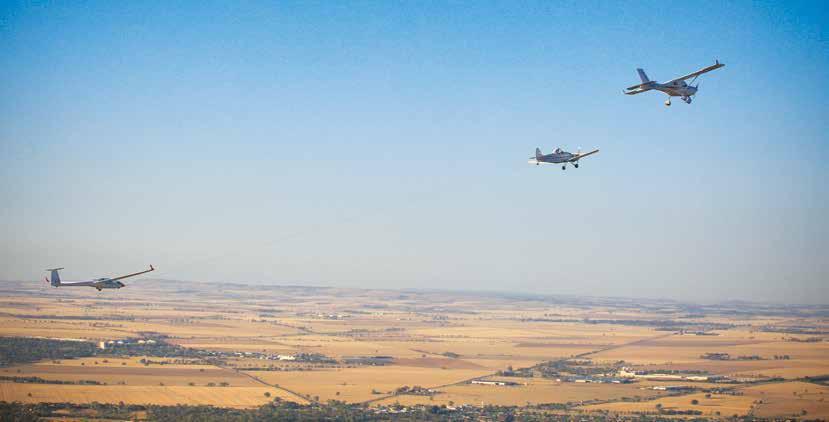
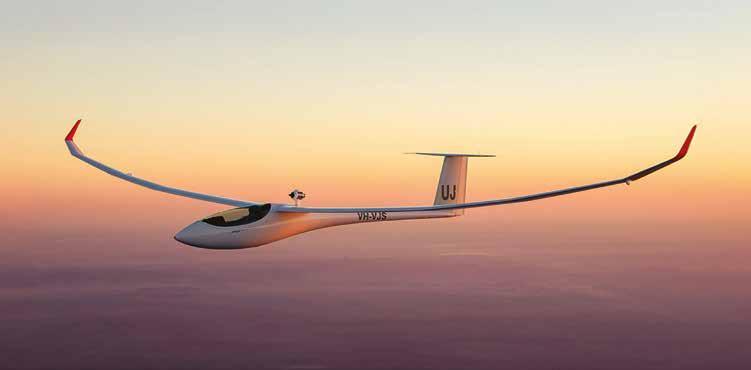
Credit: Adelaide Soaring Club
• Scholarships – supporting the next generation of aviators and ensuring our community continues to grow.
• Aviation advocacy and collaboration – working with the Experimental Aircraft Association (EAA) and CASA on the MOSAIC project, which aims to broaden aircraft categories and expand opportunities for pilots.
By combining everyday lifestyle benefits with initiatives that directly support aviation, we’re ensuring that your membership delivers real value across the board.
Safety First – Especially in Summer
As we head into the warmer months, it’s important to remember that safety is always our priority. Hotter weather brings unique challenges, from density altitude impacts to pilot fatigue and heat stress, so planning, staying hydrated, and paying attention to conditions are
“A little extra care now will go a long way in keeping you and our skies safe for everyone.”
essential. A little extra care now will go a long way in keeping you and our skies safe for everyone.
Closing Thoughts
2025 has been a year of progress and partnership. While it seems to have flown by, it leaves us with plenty to celebrate and even more to look forward to. As we turn the page into the new year, we remain committed to growth, safety, and continuing to deliver tangible value for our members.
From all of us at RAAus, thank you for being part of the journey. Stay safe, enjoy the holiday season, and we look forward to an exciting year ahead.
HARS Aviation Museum
Step back in time and experience the golden age of aviation at our aircraft museum, home to over 50 vintage aircraft, we are just an hour or so south of Sydney NSW.
Café open 7 days 9.30am to 2pm – perfect for an excuse to fly-in.
A: Shellharbour Airport, Albion Park Rail P: 02 4257 4333
E: harsinfo@hars.org.au
W: www.hars.org.au
Brand new Aircraft by Spirit Engineering Inc.
Meet the Spirit SE-1 LSA
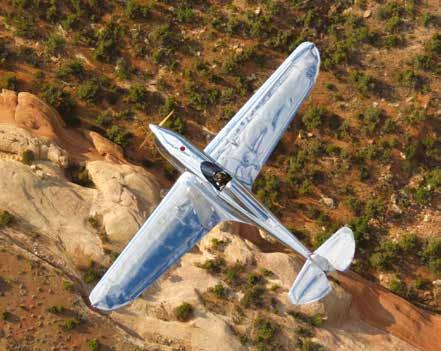
The designers at Spirit Engineering Inc. have released their latest light-sport aircraft – the SE-1 – priced at just under $70,000 USD. This aircraft has a slick, retro-inspired design paired with the latest aviation technology. Spirit Engineering Inc. are claiming it’s small enough to fit into a home garage – with wings stowed, its width sits at just under 7.5 feet (about 230 centimetres). The SE-1 is a single-seat, open-cockpit, with fuel capacity of about 30 litres, good for flight legs of about three hours. The pure aluminium fuselage gives the SE-1 a unique design that stands out in a lineup or in the sky.
More details about the aircraft can be found at spiriteng.com
Outback Air Race 2025 Raises $1 Million
For those following from home, the Outback Air Race came and went in September. The event was able to raise over $1,000,000 to support the Royal Flying Doctor Service (RFDS), setting a new record for donations in a single event – this blew away their goal of $750,000. The race spanned 10 airstrips across 3,800 km of Aussie outback starting from Yulara on August 22nd and finishing in Carnarvon on September 8th.
Team ZIC (Scott Palmer and Adam Dean), a pair of aviators from Western Australia, took the gold ahead of 36 other aircraft teams. Meanwhile Team Tait Auto Group from Queensland raised a whopping $141,037 with their fundraising efforts. The event will return in 2027.
Jabiru Launches First Four Approved Maintainers
Four Jabiru Approved Maintainers (JAMs) were announced by the company in November. These maintainers have been specially trained to service and maintain Jabiru aircraft. The organisation says it will enable these maintainers to provide the best possible service for their aircraft. The four new maintainers are Richard Young at Recreational Aircraft Repairs, Gawler, SA; Peter Clement
Changes to RAAus Membership Terms & Conditions
RAAus has amended their membership terms and conditions. All members, new and old, will need to agree to the new terms to continue their memberships, but it’s nothing to be too worried about. The new terms and conditions aim to better brief new and renewing members on the risks involved in undertaking activities administered by RAAus and offer increased organisational protections by excluding liability for the provision of recreational services in accordance with Australian Consumer Law.
Perhaps most significantly, RAAus will no longer be accepting membership renewals over the phone. The membership terms and conditions now must be
at Clement Aero Maintenance, Grafton, NSW; Bill Nyman at Halo Aviation, Shute Harbour and Emerald, QLD; and Stuart Erskine in Caboolture, QLD.
The Jabiru Approved Maintainers course is planned to run annually at Jabiru’s Bundaberg facility, so interested maintainers should reach out for further information.
conducted online or via paper form. RAAus is encouraging all members to carefully read the terms and conditions prior to signing. It’s recommended that members renew with plenty of time before planning to fly as last minute phone renewals will no longer be available.
FROM THE CHAIR
DEDICATING OUR THANKS TOWARDS RAAUS VOLUNTEERS.
MICHAEL MONCK Chairman
Michael is the Chair of the Board of RAAus and has held this position for 10 years. He holds flying qualifications from RAAus and CASA and advocates for the broader industry in a number of different forums. Michael is an active pilot and owns a CTLS aircraft which he regularly flies throughout Australia. michael.monck@raaus.com.au
Over a decade ago I joined the board and a good many years before that I joined RAAus. The concept of light sport aircraft was a pretty new idea in those times, and it has evolved over the years to what it is today. But now we have a steep change.
As I write this, I have returned from a weeklong series of meetings in the US to further develop the standards which guide the future evolution of this category of aircraft. At the same time, we have just completed our latest annual election and have some changes in the organisation, too. In fact, by the time you read this, our new board members will have already attended their first meeting.
Paul Reddish is already on the board and returns for another term, and I look forward to his ongoing contributions. Those who don’t know Paul probably don’t realise the great work that he has done to help advance our cause. His knowledge and understanding of the industry, the regulations which govern us, and just general flying, is a huge benefit to the board and one that we should all appreciate.
Likewise, Jim Tatlock has also served previously and we welcome him back. He, too, brings with him a wealth of knowledge and experience — something that I had the pleasure of seeing in action firsthand during his earlier terms on the board. I am sure he will bring the same set of skills and enthusiasm with him this time round.
As I reflect on this, I also reflect on other board members. People like Trevor Bange, who is now leaving the board, have dedicated countless hours of their time to make aviation a better place in Australia. None of us are paid for the work we put in. In many cases it costs us money.
By way of example, my recent work in the US was unpaid. Over the years I have self-funded my trips there and back, paid for accommodation, meals, etc. and have given up income to make time for these activities. Even when working on these things remotely it takes a considerable amount of time and effort to make them successful.
I don’t raise this as a “woe is me” type of thing, just an example of how our volunteers (be they board members or other volunteers) keep the wheels turning. I think in light of us welcoming both new and returning board members it deserves a little more attention, so...
From me to all of those people, both past and present, who have devoted precious time from their lives to create, sustain and improve RAAus — thank you.
“We are at the pointy end of shaping the future of aviation and those on your board are pivotal in this.”
Back to the US now. It is an exciting time for aviation right now. Without being overly dramatic, this new round of revisions for light sport aircraft (technically they will be called light sport category aircraft) ushers in a completely new era for general aviation. It is, without a doubt, the single largest step in this part of the aviation industry since the original light sport aircraft standards were brought into play.
For me, I think the sad thing is that it, too, relies on the participation of a few to make big things happen. I have been participating in this process for many years now and not once have I come across anyone else from Australia in the meetings except on an ad hoc basis on a few rare occasions. In contrast to this, my recent meetings included participation from every other continent (except the one with penguins!). I’m
deadly serious when I say this — every corner of the world is in the room, just not ours with the exception of me (and by way of association, RAAus).
We are at the pointy end of shaping the future of aviation and those on your board are pivotal in this. It will be a while (CASA has published Q4 2028 in their GA work plan) before we can begin to take advantage of the new standards, but it is going to be exciting to say the least. This time next year we will have new aircraft flying in a range of operations not previously allowed and over time that will make its way here.
New planes, new operations, new opportunities. It’s an exciting time! So, next time you get the chance to talk to one of our volunteers, take the chance to say thanks, because they’re the ones making this sort of thing a reality. Without them we would not be where we are today.
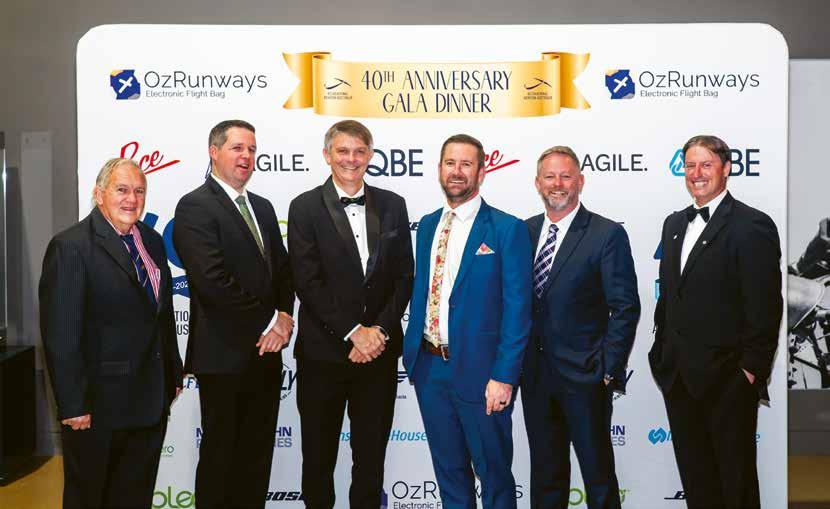
Left to right: Trevor Bange, Luke Bayly, Paul Reddish, Simon Ozanne, Mick Monck and Andrew Scheiffers.
A PLANE THAT CAUGHT OUR EYE
GOOD THINGS COME IN SMALL PACKAGES
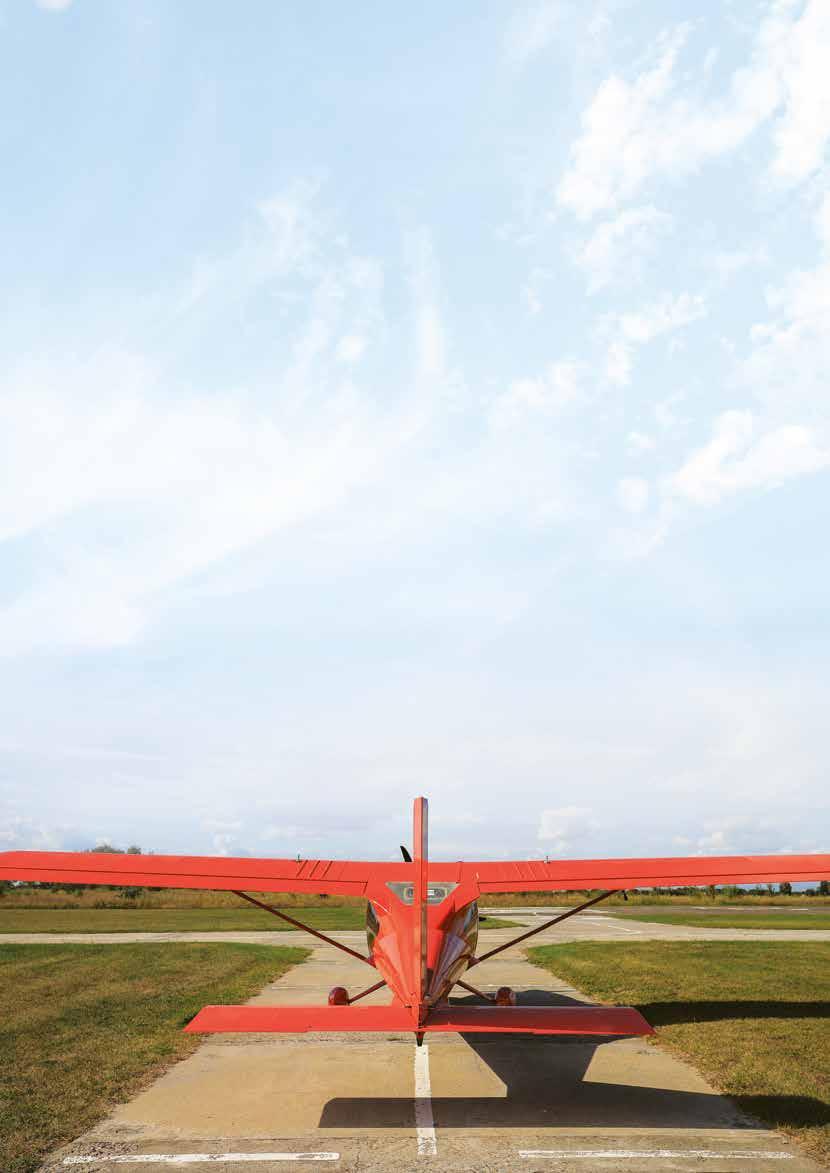
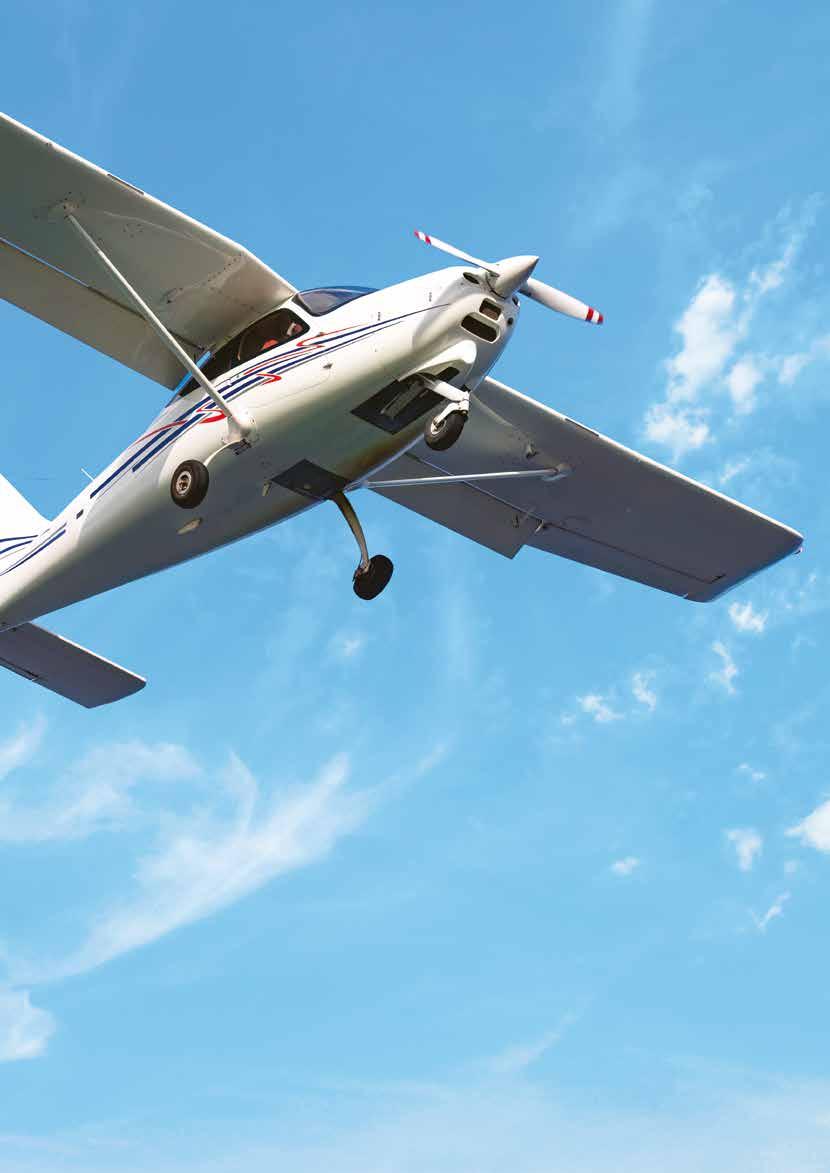
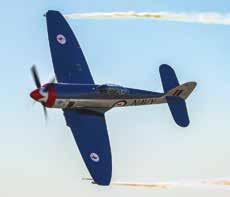
EVERY SO OFTEN A LITTLE AUSSIE HOMEBUILT POPS UP IN THE CLASSIFIEDS THAT REMINDS US WHY WE LOVE GRASSROOTS AVIATION, AND THE CORBY CJ-1 STARLET IS JUST THAT KIND OF MACHINE.
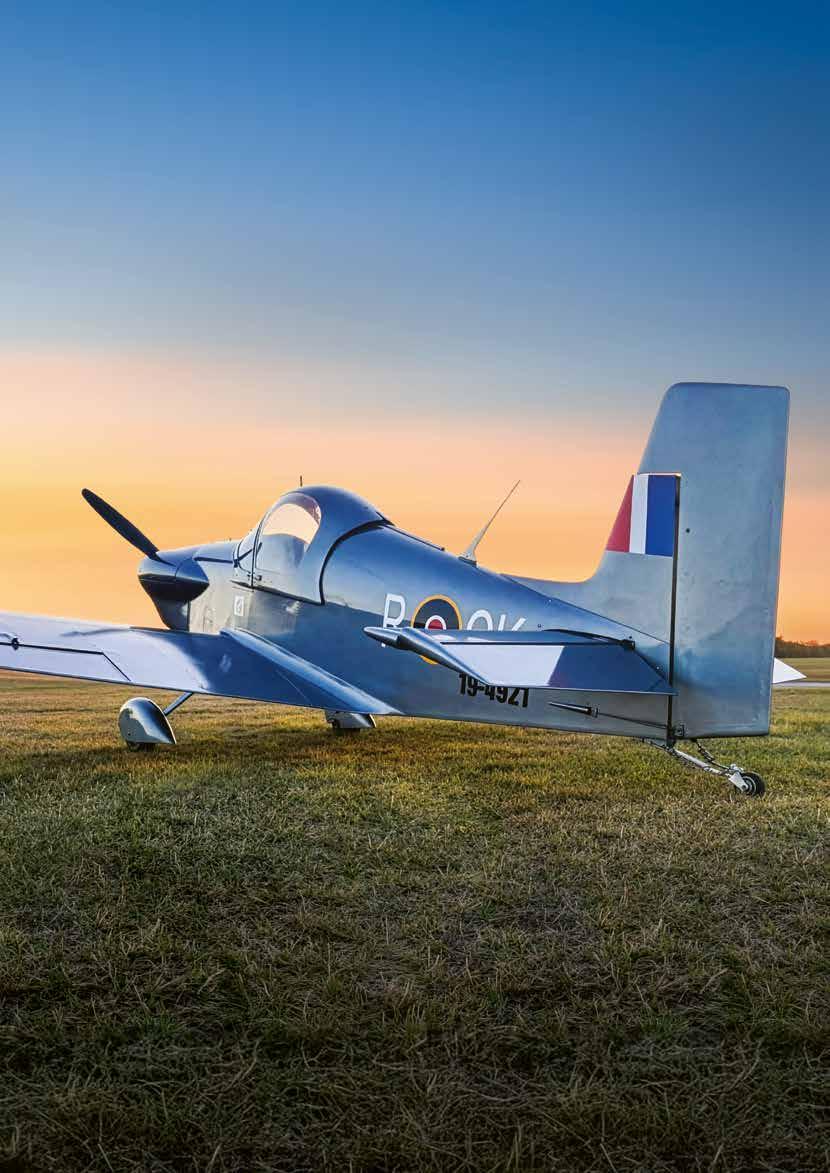
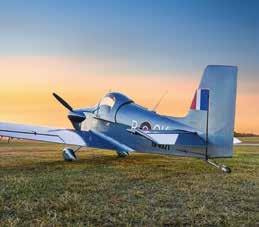
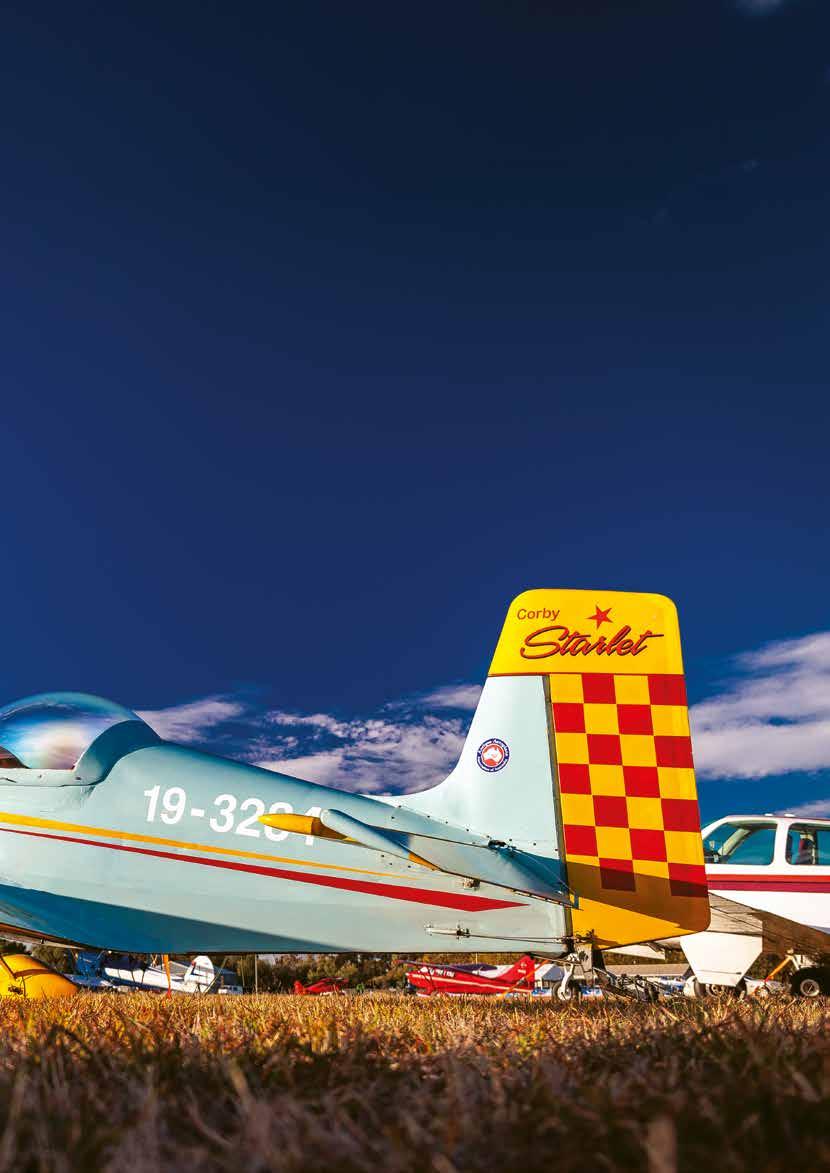
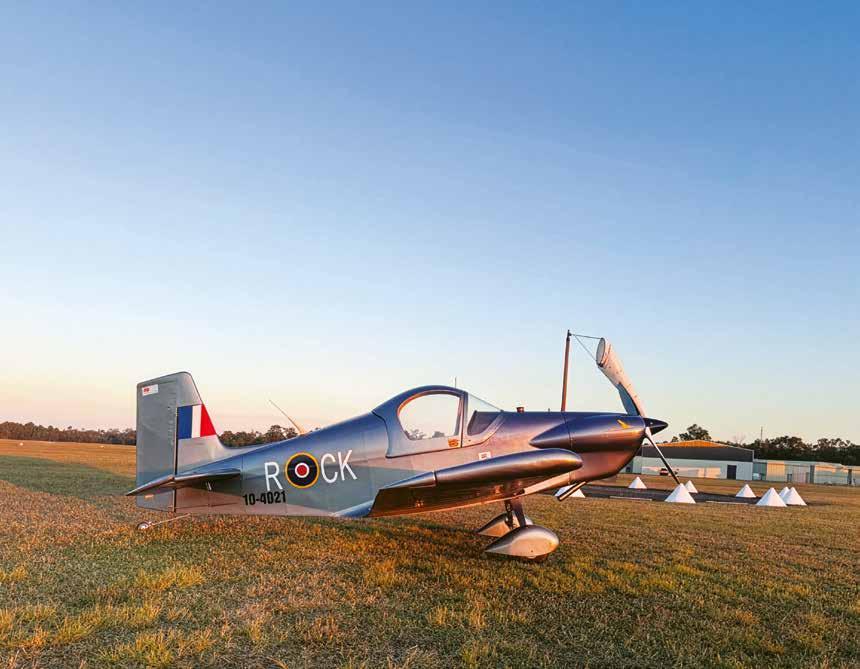
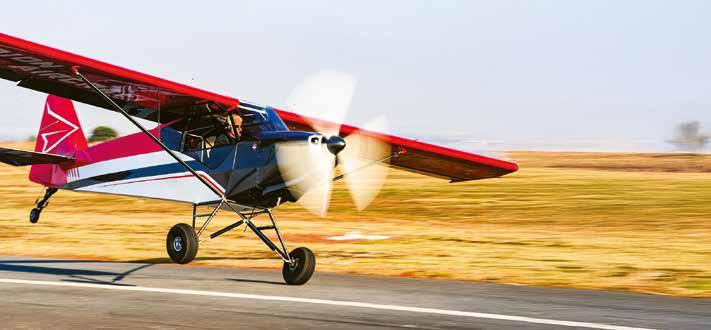
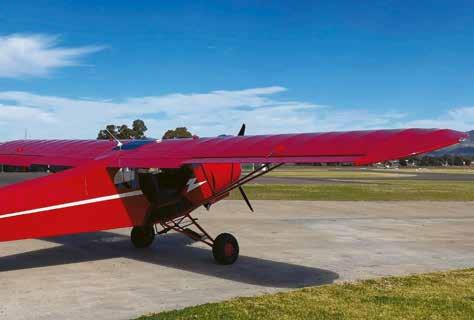
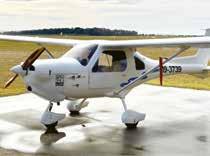
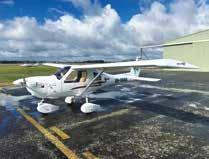
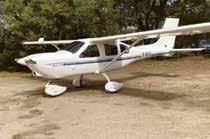
Russell Garraway’s beloved CJ-1
Starlet at the Antiquers’ 50th
Anniversary fly-in at Corowa, NSW.
Credit: Duncan Fenn Photography
Words Sam McMillan
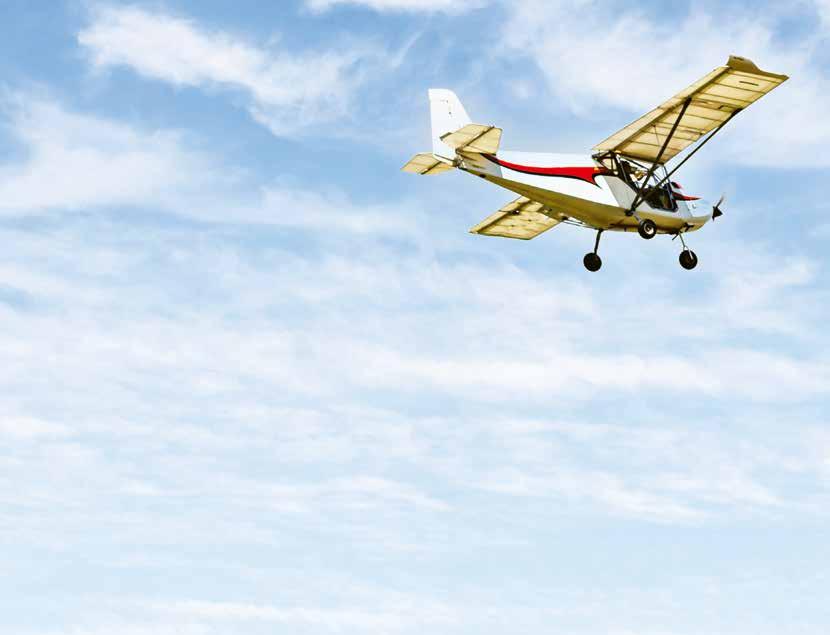
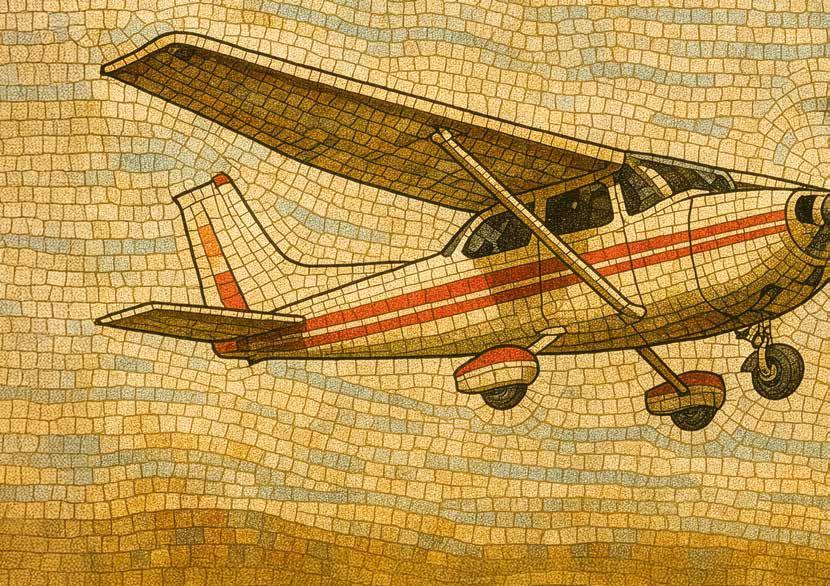
Designed in the 1960s by Sydney engineer John Corby for a UK design competition, the Starlet may not have won (finishing eighth if you’re keeping score), but it earned the distinction of being the first entry completed and flown. More importantly, it represented Australia’s answer to the affordable, fun, “build it yourself” sports aircraft movement that was sweeping the globe at the time.
Corby had tinkered before with designs similar to the Evans VP-1 Volksplane, and another known as the “Star Baby,” a project with Qantas engineers that never quite made it airborne. But the Starlet was the one that stuck. The prototype, VHCBS, first flew out of Camden, NSW, in August 1967 with a modest 42-horsepower MV Agusta motorcycle engine. It didn’t stay that way for long. A British-built VW conversion, the Rollason Ardem 4CO2, soon replaced it and proved to be better suited to the little airframe. But in Australia, one
engine rose to the top: the four-cylinder Jabiru 2200. Light, reliable, and homegrown, it became the natural fit for Starlets across the country.
The design struck a chord far beyond Australia, though. More than 900 plans were sold worldwide across 31 countries. For amateur builders, it was a perfect blend of ambition and attainability, plywood, some basic know-how, and a lot of weekends could get you into the air. At the time of peak popularity, it even competed in the “semiaerobatic” category — with a +4.5G limit load factor — one Starlet even won its class at the Australian National Aerobatic Championship in 1973. Proof that the lightweight wooden airframe had more than novelty going for it. In 2017, John Corby was inducted into the Australian Aviation Hall of Fame, and two years later he was awarded the Medal of the Order of Australia (OAM) in recognition of his service to the industry.
The Corby spirit is still well and truly alive today in pilots like Russell Garraway, who purchased his Starlet back in 2000. His aircraft was originally built in Victoria and registered in the GA category.
After an accident and subsequent rebuild in South Australia, it returned to the skies in late 2000 — and that’s when Russell stepped in. “I didn’t build it myself,” he explains, “but I’ve always enjoyed tinkering with airplanes.” That tinkering streak began young; at 15 years old he began an aircraft engineering course, and by 19 years old he was gliding. Decades later, now 83, he still relishes the hands-on joy of flight.
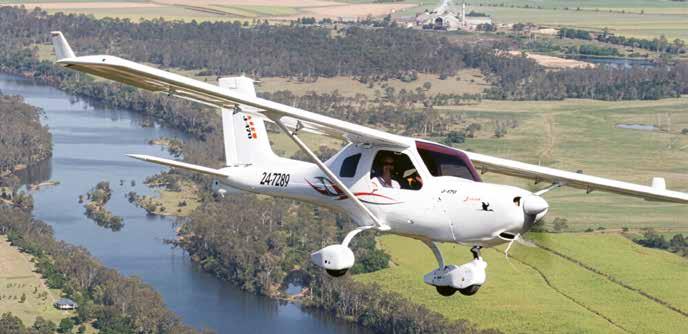
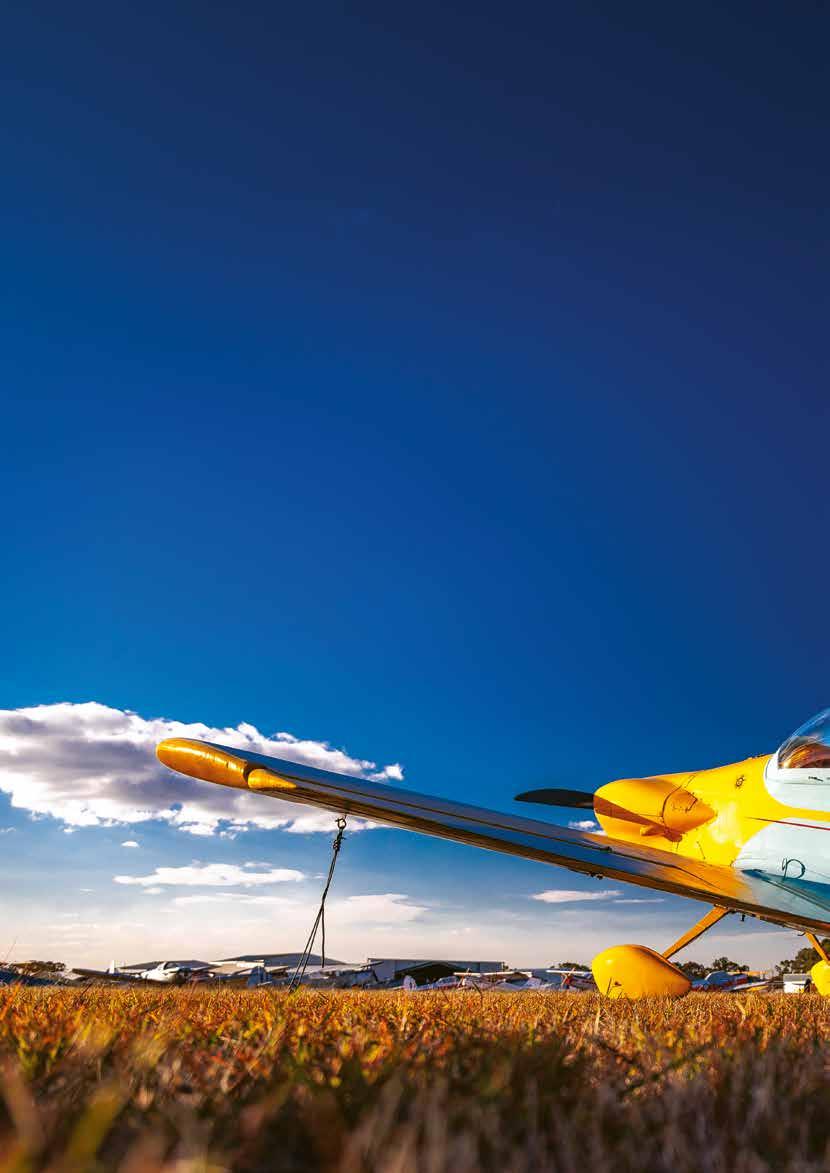
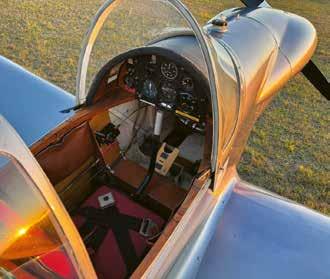
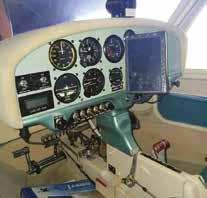
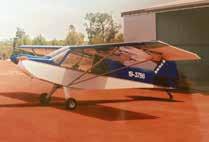
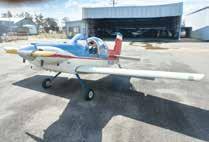
Over the years, Russell has made the Starlet very much his own. Russell’s Starlet runs a Jabiru engine — now on its second, factory-reconditioned unit — a common choice that keeps parts and support close at hand. He’s also fitted a new fuel tank, instruments, canopy, and even a different carburettor system that allows him to run the engine lean. “I play around with lots of things that help with efficiency,” he says. It now sports a turquoise-and-yellow paint scheme, the product of one of his upgrades, and a few clever tweaks for practicality: a fibreglass extension behind the seat for a sleeping bag, and a hatch under the wing just big enough to stow lightweight camping gear. The cabin is tight — as anyone who has sat in a Starlet will attest — but Russell takes it in stride. His background in gliders prepared him for small cockpits, and he makes the most of it. In favourable air, Russell’s Starlet will cruise at 120 knots, more than enough for long hops to fly-ins and gatherings. With his upgrades to carry more fuel, flight times of 4-5 hours are well within reach.
Australia’s answer to the affordable, fun, “build it yourself” sports aircraft movement.
Credit: Doug Field
In smooth air, the Starlet will cruise at 120 knots, more than enough for long hops to fly-ins and gatherings.
“I’ve learnt to make it work,” he says, “battling with room constantly, but finding ways around it.”
The aviation community is a big part of the enjoyment. Russell is an active member of the Antique Aeroplane Association of Australia and regularly attends their events. “Those fly-ins are great because the people who turn up are very experienced — ex-airline pilots, and others who’ve been around the traps,” he explains. He’s also stayed in touch with other Starlet owners; once there were five flying locally in Kyneton, though many have since upgraded to larger RVs. Online, the community still swaps stories and advice. At this year’s Avalon Airshow, you may have even spotted him parked up next to his beloved Starlet sporting a wide brimmed hat and plenty of sunscreen. What keeps him loyal to the Starlet after more than two decades? For Russell, it’s the flying qualities. “You feel part of the machine. Like it’s strapped on your back. It’s so responsive, and just so nice to fly.” He contrasts it with other aircraft he’s flown — some of them sluggish in comparison — and even with the gliders of his youth, which, while light on the controls, couldn’t match the Starlet’s sprightliness. Some pilots might call the handling “sensitive,” but Russell prefers another word: “responsive.”
In the early 1960s, affordable homebuilt designs were mostly coming out of Europe, but John Corby’s
design put Australia firmly on the map. “I certainly feel pride flying the Corby,” Russell says. “Being not only Australian-designed, but well designed, made it a sought-after aircraft.” Even today, Russell reckons the Starlet embodies the best of the homebuilt spirit — affordable for newcomers, straightforward to maintain, and unique enough to make every example a little different. Built from plans rather than kits, each Starlet carries its own quirks and character, a detail that always sparks conversation within the community. It’s this individuality that reflects the broader appeal of aviation itself: not everyone flies for the same reasons, and the hobby has niches as diverse as the people who climb into cockpits. Some chase cross-country speed, others aerobatic adrenaline. For pilots like Russell, and for many who keep the passion for Starlets alive, it’s about the purity of flight: low cost, low complication, high enjoyment. With handling that feels hard-wired to your fingertips, the Starlet proves you don’t need glass cockpits or autopilots to rediscover why humans were drawn to the skies in the first place.
Russell laughs when asked if his Starlet is “finished.” The truth is, it never really will be — and that’s exactly the point. Each adjustment, each small improvement, is part of the dialogue between pilot and machine. It’s
a relationship that has stretched across decades, from John Corby’s workshop sketches to today’s grassroots hangars, where pilots still gather to swap notes, trade parts, and tell stories about their little Aussie taildragger.
The Corby Starlet isn’t just a footnote in homebuilt history. It’s a reminder that aviation passion thrives in many forms. For Russell and countless others around the world, the Starlet is proof that sometimes, the purest flying experiences come in the smallest packages.
Built from plans rather than kits, each Starlet carries its own quirks and character. Credit: Doug Field
LOOKING BACK AND FLYING FORWARD
CODY CALDER
Chief of Aviation
Cody has been with RAAus for seven years, having previously held the position of Head of Safety. He holds a Postgraduate Certificate in Transport Safety Investigation, Diploma in Aviation, Diploma in Business, Commercial Pilot Licence and a Multi-engine instrument rating. Cody is passionate about all aspects of aviation, with experience in skydiving and charter operations (Fiji/NZ), gliding, aerobatics and warbirds. cody.calder@raaus.com.au
As 2025 draws to a close, I reflect on our progress and the achievements of our aviation department over the course of the year. The year has been a mixed bag of highs and lows for RAAus.
In February, findings from an inquest into the death of a former member were handed down. Throughout the course of the year our team has also been involved in assisting with an ATSB investigation and providing support to police in relation to a number of other accidents. These events take an enormous toll on our entire team, but what is most important is how we can learn from the past and improve moving forward, and that is exactly what our team is dedicated to undertaking.
One of the biggest internal projects of 2025 has been the rewrite of our Flight Operations Manual. Whilst this was previously scheduled
for implementation in 2024, it was incredibly important that this document was reviewed to ensure a robust set of criteria for the issue of RAAus authorisations and for standardisation into the future. This will result in a reduction in the administrative burden for both our staff and our Flight Training Schools. We have learnt a lot over the past few years, and it was essential that these outcomes be captured to better protect our organisation, our staff, and our members into the future. With this manual now back with CASA for approval there is still much work to do, but I am confident that this will bring significant improvements in 2026.
“I also look forward to our team getting out from behind our desks and back into our community.”
Another major project in the background has been the approval and commencement of a full IT redevelopment project. Once implemented, our revised systems will bring increased efficiency for members, enhanced online services, and automation of many RAAus application processes seeking reduced processing times and increased compliance. These changes seek to improve our service offering to members, allowing us to spend more time supporting members in other areas.
2025 also saw the registration of our first range of aircraft under our increased MTOW of 760kg. This is a huge milestone for the organisation after many years
of advocating for increased privileges. With respect to this new category, we are only just getting started with application eligibility to open more broadly in 2026.
Looking forward to 2026, we have a number of new and exciting challenges on the horizon, including access to controlled airspace for RAAus members. We have a lot of work to implement and embed our revised manuals to ensure changes are introduced safely and systematically. I also look forward to our team getting out from behind our desks and back into our community. The past few years have largely been spent inwardly focused. Once we have consolidation of our new manuals and revised internal processes, we seek to get back out to our community to further support ongoing education and improve standardisation.
On behalf of our entire team, I would like to thank members for their ongoing support of RAAus and wish you and your family all the very best this holiday season.
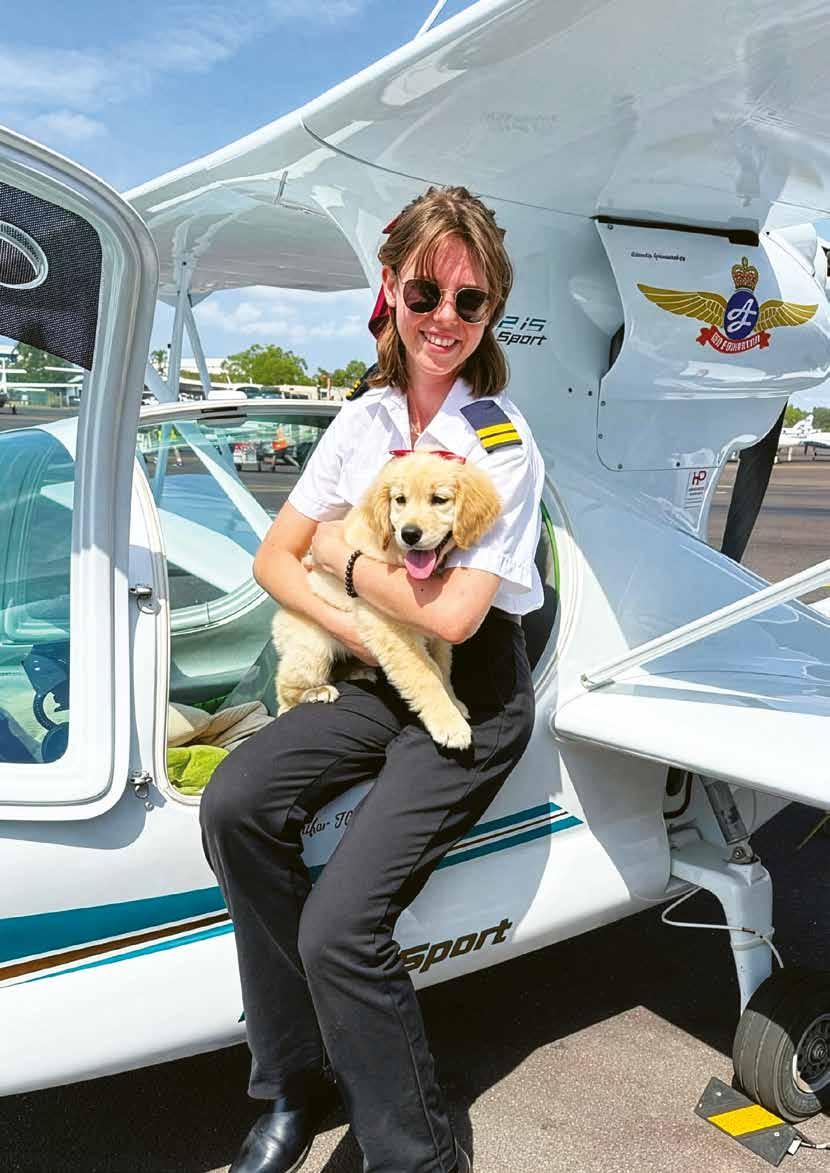
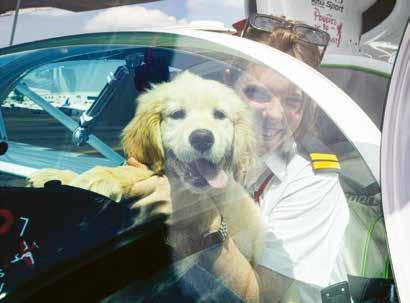
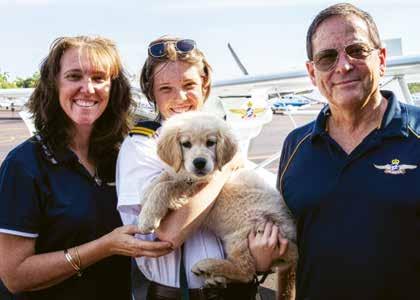
Jennifer and her puppy, Bella, posing with their Super Petrel LS.
A TEENAGE PILOT, A SEAPLANE AND A PUPPY. WE LEARN ABOUT JENNIFER HUNT’S RECORD-BREAKING AUSSIE ADVENTURE.
Words Sophia Blakebrough | Images Jennifer Hunt
When Jennifer first stepped into the cockpit as a student earlier this year, many never imagined she would soon circumnavigate Australia – solo, in a seaplane, and with a Golden Retriever puppy named Bella as her co-pilot. At just 15 years old, Jennifer now holds multiple records: currently the youngest Australian female RAAus pilot, the youngest person ever to solo circumnavigate Australia, the youngest female to do so, the first female to solo circumnavigate Australia in a seaplane, and is the youngest seaplane pilot in Australia.
Aviation runs deep in Jennifer’s family. Her dad and grandfather are both commercial and seaplane pilots, and her siblings are on their own flying journeys, too. Jennifer’s first flying lesson was on the 14th of January this year at Redcliffe in Queensland, and that’s when she became completely “hooked”. From there, her progress was rapid. She flew solo at Caboolture the day after her 15th Birthday, trained in gliders at Tocumwal, flying solo and achieving A & B certificates in April (unfortunately the C certificate was more elusive due to the lack of lift in winter), and by the 1st of June, just four and a half months after starting, earned her full pilot RAAus certificate in Darwin. In July and August, Jennifer achieved her retractable undercarriage and floating hull endorsements, whilst preparing for her circumnavigation flight.
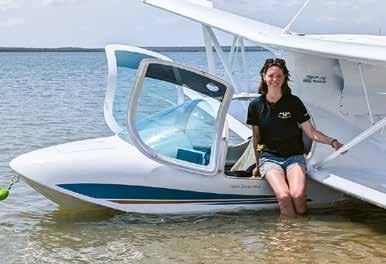
For her circumnavigation challenge, not just any aircraft would do. Jennifer flew a Super Petrel LS, an amphibious biplane capable of landing on both land and water. “It’s like a jet ski that has wings,” she laughed. She especially relishes the thrill of water landings. “Landing on water is way more fun and you get to land in some really beautiful places,” she said. Even before setting off, Jennifer had racked up time in a variety of aircraft including a Foxbat, Savannah, a Puchatek glider, a PW-5 glider, BushCat and the Super Petrel. Her first solo was in a Savannah, and she earned her RAAus certificate in her favourite – the BushCat. “A BushCat tolerates a lot, it’s very forgiving,” she explained when asked which she preferred the most. That broad experience gave her the confidence and skill to handle the varied conditions she’d encounter on her epic solo journey.
“It’s like a jet ski that has wings.”
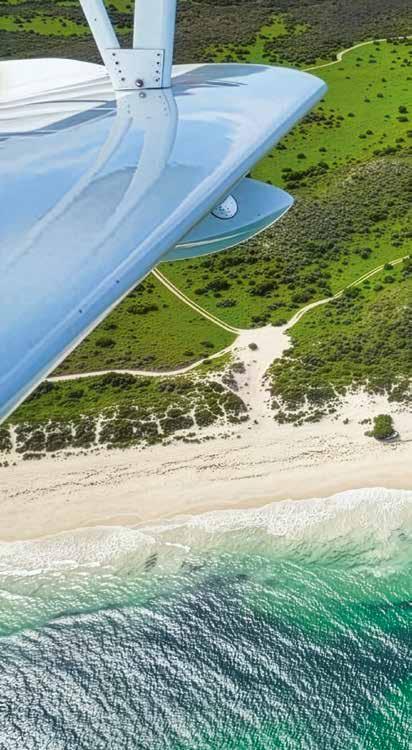
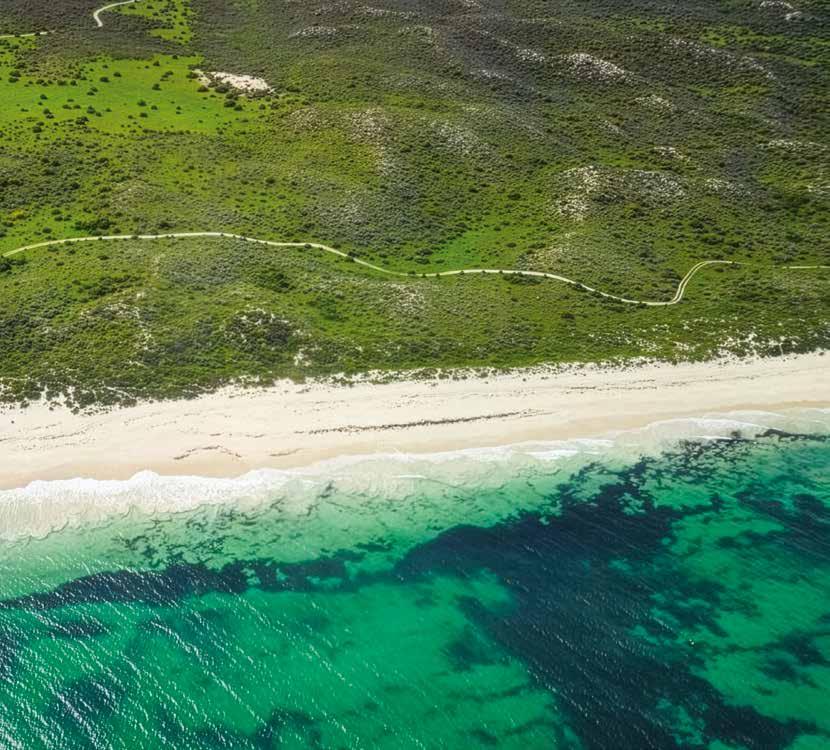
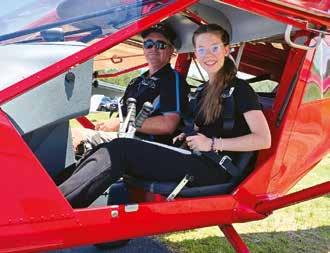
From top, clockwise: Circumnavigating Australia has its perks – like beautiful coastal views. Jennifer, Bella, and her family. Jennifer and Bella ready to take off.
Jennifer’s lap of the country was inspired by a trip she joined last year to commemorate 100 years since the first seaplane circumnavigation of Australia. At first, the idea to do her own solo flight circumnavigation was made in jest, but this became a serious goal in January this year after her first flight in the Foxbat at Redcliffe. With the help of her parents, David Geers, other aviation supporters, and armed with her recent seaplane and cross-country endorsements, she plotted a route taking her around the entire coastline of mainland Australia. Jennifer’s flight had to be planned to avoid controlled airspace as she isn’t old enough to hold the required CTA endorsement. Starting at Emkaytee (MKT), a little airstrip south of Darwin, she travelled anticlockwise with stops including Port Headland, Carnarvon, Busselton, Esperance, Nullarbor, Ceduna, Aldinga, Kangaroo Island, Portland, Merimbula, Moruya, Caboolture, Hervey Bay, Cooktown, Northern Peninsula, Karumba, Gove, and back to MKT. Jennifer’s parents also circumnavigated the country meeting up with her at refuelling and overnight stops.
The adventure spanned just 24 days, which was a bit quicker than expected thanks to favourable weather, clear skies and helpful tailwinds. Jennifer’s flight legs ranged from three to five hours depending on fuel requirements, weather, distance and of course, the allimportant bathroom breaks. “We did stop once or twice during the day to refuel, and everyone gets a bathroom break at that point – especially Bella!” she said.
No story about Jennifer is complete without Bella, her adorable four-month-old Golden Retriever puppy who joined her in the cockpit for her circumnavigation. The inspiration came from Jennifer’s previous dog named Arrow, who used to get excited every time they went near their local airport. “Any time we would get to the airport, Arrow would get so excited because he knew it meant flying!”. Very young but unfazed, Bella slotted into the role of co-pup seamlessly. “I put her in the aeroplane, and she falls asleep.” When Bella wasn’t napping, she was on the lookout for treats from her pilot-in-command. The only real hiccup? A classic puppy moment – an explosive upset stomach mid-flight. Jennifer handled it calmly thanks to some well-planned seat protectors, puppy pads and a patient wait for their next landing!
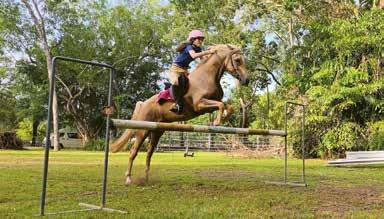
From top: Jennifer figure skating in front of a crowd; Jennifer practising her horse riding – another one of her passions; and The Super Petrel LS is perfect for making the ocean your runway.
“Don’t give up just because it gets hard and remember: an aeroplane takes off into the wind, not with it.”
Still fresh in her mind, Jennifer reminisced on some of the highlights of her trip. She saw spectacular marine life including whales, turtles and even a submarine. One of her favourite memories is when she flew past the Opera House and over the Sydney Harbour Bridge. This is something many people only dream of and here she was flying over the bridge solo, all the while not yet old enough to drive over it! When reflecting on what she might do different if she were to do the same adventure again, her answer was very well-considered; “I’d take a lot more dried mango and beef jerky for snacks,” she concluded.
At the same time as this grand adventure, Jennifer has been busy completing year 12. She explained homeschooling gives her the flexibility and balance she needs to follow her passions of aviation and other hobbies. Outside the cockpit, Jennifer is a keen horse rider, passionate ice figure skater, cook and artist. With any spare time she has left, she’s helping her parents’ aviation business wherever she can.
Beyond her circumnavigation achievements, Jennifer has her eyes set on a few exciting goals. After
graduating, she aims to join the Royal Australian Air Force and is counting down the days until she can get her driving licence “P” plates. She would also love to become a seaplane instructor one day. She even shared that she has a few other ambitious stretch goals, but she’s holding those close to her chest for now. Earlier this year, Jennifer was officially named an RAAus Youth Ambassador. It’s a fitting title and role for someone who is fast becoming a role model, not just for pilots of her generation, but for anyone who dares to chase bold dreams. And for other young and aspiring pilots out there reading this, here’s Jennifer’s parting advice: “Don’t give up just because it gets hard and remember: an aeroplane takes off into the wind, not with it.” If her 24-day journey around Australia is anything to go by, we’ve only scratched the surface of what Jennifer is capable of.
Where will Jennifer be flying next? We’ll be watching closely.
THE BUSH PILOT WHO BUILT AN AIRLINE
THE UNLIKELY STORY OF AUSTRALIAN PILOT MAX HAZELTON AND HIS JOURNEY TO BUILD HAZELTON AIRLINES AND CONNECT RURAL AUSTRALIA
Words Sam McMillan & Ruby Rawlins
The vast bushland west of Sydney holds many tales of intrepid explorers, but amidst the legends of the Blue Mountains, one story stands as an example of Australian ingenuity and grit. Max Hazelton’s death-defying story is just one of many that demonstrate why the airline he founded, Hazelton Airlines, went on to become an Aussie Empire.
On the evening of October 16, 1954, 27-year-old pilot Max Hazelton took off from Bankstown Aerodrome in his Auster J5F Aiglet, bound for Cudal — a small town 50 kilometres west of Orange, New South Wales. It was a routine flight for Max, but as weather rolled in over the Blue Mountains, visibility quickly vanished.
He turned back toward Bankstown, but it was too late. Somewhere near Oberon, his Auster went down, unseen and unheard.
This wasn’t Max’s first brush with adversity. Wind the clock back to 1945; the end of the Second World War. 18-year-old Max, fresh from two years in the Air Training Corps, found himself grounded: The RAAF had too many pilots and no room for another. But Max didn’t quit. Firmly fixed on his goal, he earned his private pilot’s license, and later his commercial pilot’s license. In 1952 he received a £2,500 loan from his mother and bought his first aircraft, an Auster J5F Aiglet, with which he launched a small charter service.
The rugged Blue Mountains.
Max built his business one flight at a time, ferrying sick children to hospital, delivering urgent machinery parts, and even flying graziers to stock sales across deserts. His business was gradually growing without a cloud on the horizon, until that fateful day over those Blue Mountains.
Max survived the crash but found himself lost in dense bushland, miles from any help. His disappearance had sparked the largest Australian search operation up to that point. While officials scoured west from Sydney, Max was busy fending for himself. Surviving strictly off guts, instinct and determination, he gathered wild berries, scavenged leftovers from empty hikers’ huts, and drank water from puddles collected in rocky crevices.
Six days passed, and the search operation had yet to locate either Max or his crash site. Today, Max might have had a PLB (personal locator beacon), which would have meant a swifter recovery. Instead, Max trekked 100 km in rough bushland. The soles of his shoes completely wore through, so he sacrificed his shirt to craft makeshift replacements. Max knew that walking out of this situation was his best hope. So, that’s what he did.
Eventually Max stumbled out of the bush and arrived near Oberon. Gaunt but unbowed, Max staggered into
“These were pilots whose hearts came from the bush. They knew how to make judgement calls, learned their passengers’ names, and diverted around storms when the outback spun up a surprise. They made things work.”
a nearby post office and rang the first person that came to mind – his mum – to let her know where he was.
Max’s unplanned landing and subsequent trek to Oberon was a defining moment that foreshadowed everything to come: resilience, resourcefulness, and an unshakable will to keep moving forward – These are the traits that would come to define this hardy bush pilot from Cudal and the airline he would go on to build.
His trusty Auster had seen its last day in those mountains, but Max replaced it with an equally hardy Cessna 180 as he picked up the pieces and resumed building his career. As he built up prestige and capital, more light aircraft joined his fleet. In an era when country roads were unreliable and distances were
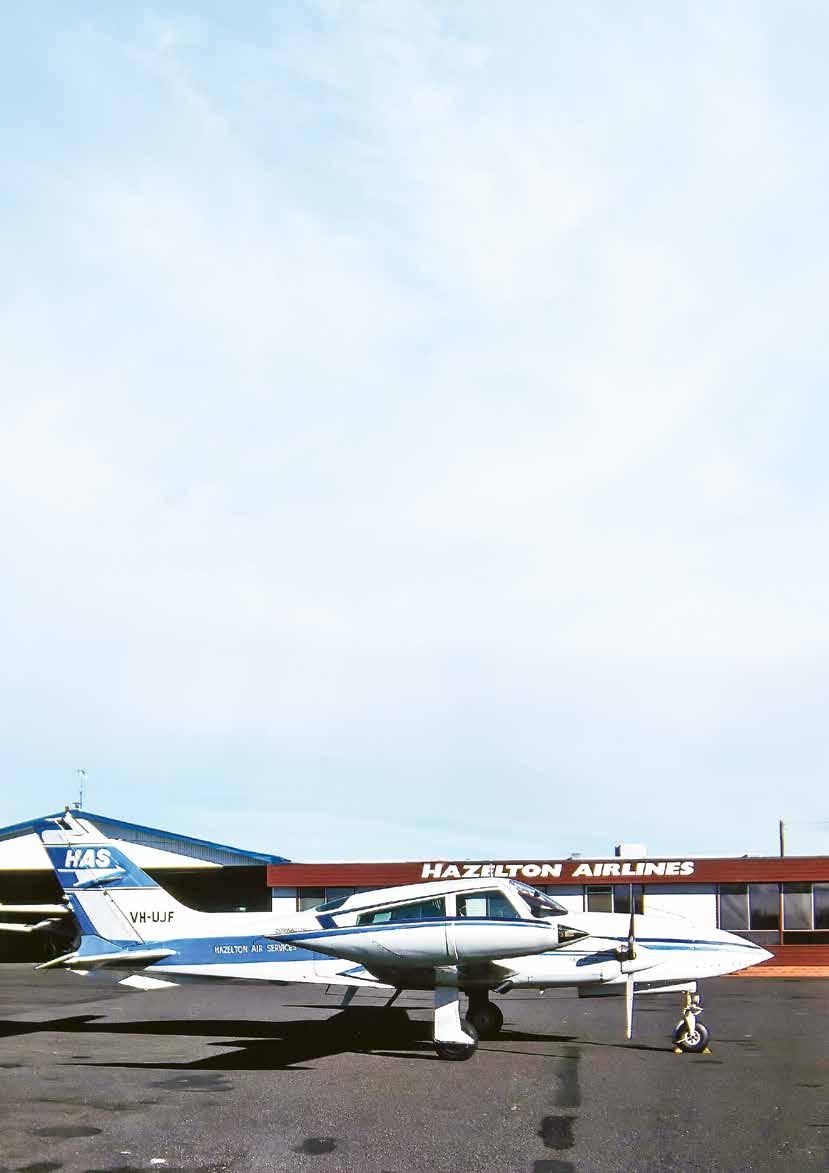
A Hazelton Airline Cessna 310R parked at Cudal (YCUA), taken in 1988. Credit: Daniel Tanner via jetphotos.com
unforgiving, small planes like Max’s brought with them hope, news, and connection.
By the late 1960s, Max Hazelton’s operation had outgrown its humble beginnings and was starting to look a bit closer to what we see today. His business, which started as one man and a dream of the skies, had become a growing regional carrier linking country towns with Sydney. But the spirit of his solo days never faded. He hired pilots who embodied the same rugged spirit that kept his dream aloft. These were pilots whose hearts came from the bush. They knew how to make judgement calls, learned their passengers’ names, and diverted around storms when the outback spun up a surprise. They made things work.
A practical, hands-on approach become part of the airline’s DNA. If something broke, pilots and engineers knew how to fix it. Routes were added not because conditions were ideal, but because communities needed them. Decisions were made on the fly, guided by experience. It was a people-first approach, and it was paying off. You could say that Hazelton’s growth was guided by the principles of light aircraft flying itself – flexible, responsive, and grounded in real-world conditions.
After the turn of the century, Hazelton Airlines – now a cornerstone of regional New South Wales – merged with Kendall Airlines, was employing 270 people and carrying 400,000 passengers per year to 23
destinations. From their partnership emerged Regional Express – or Rex.
Today Rex’s fleet of Saab 340s might seem far removed from Max and his Auster, but the DNA is unmistakable. The routes and people they serve, the communities they connect, and the pilots they train, all trace their lineage back to that same charter spirit.
Light aircraft remain the true training ground. Every Rex pilot begins their journey the same way as Max –wrestling crosswinds in a single-engine trainer, learning the rhythm of weather, and discovering resilience with every take-off and landing.
That six-day trek through the Blue Mountains was more than a survival story – it defined everything Max Hazelton would go on to build. Out of hardship came determination. Out of determination, an airline.
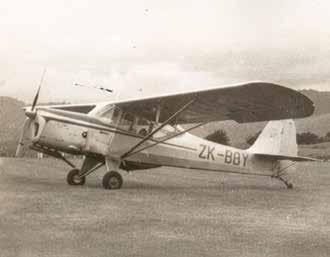
Auster J5F Aiglet similar to one Max may have flown.
RISING TO THE OCCASION
NEIL SCHAEFER Head of Training Development
Neil Schaefer has been involved in General and Sport Aviation for over 45 years. A qualified instructor, examiner, accident investigator, auditor and SAFA Senior Safety Officer, Neil has had a vast range of experience in the aviation world. Currently serving as the Head of Training Development, Neil previously spent 4 years running an RAAus flight school and worked 7 years as Assistant Operations Manager at RAAus. neil.schaefer@raaus.com.au
There is an old saying in aviation that, when confronted with an unexpected situation, you don’t rise to the occasion but sink to the level of your training. In this month’s column, I would like you to join me as we explore this quote attributed to a Navy SEAL team and ask the question — am I truly ready for what I may have to deal with?
Aviation can be a cruel teacher, often giving the test before the lesson. Let’s start the journey where most of us did, a yearning desire to fly and wondering if you could do it. The euphoria of actually starting to fly all too soon was replaced with hard work, study, and more than likely a bit of frustration. Like your younger self on a long car trip, you asked yourself “are we there yet?” Only to realise that not only should you have been paying more attention to the signs — in this case the lessons — but there was always another layer, and then another. But eventually you got there, first with that most-memorable solo and eventually that wonderful certificate, or in the CASA world, a licence that indeed answered that burning question.
Hopefully you arrived at this point with commitment, dedication, hard work, patience, and, of course, high-quality instruction — hopefully also with a healthy dose of enforced discipline
and jewels of wisdom from your teachers that made you more than just a pilot — an aviator now a part of something much bigger than any of us as individuals. A licence to learn, as they say.
So, you are now soaring aloft, going to fly-ins and breakfasts, taking friends for the veritable flying “show and tell” and living the dream.
Then it happens, a coughing motor on climb-out, a wing drop while circling the migrating whales, or another plane that came so close you could have almost touched it. Two immediate things will happen: first, you will be startled, even if only for a fraction of a second, and then you will react. The very next thing you do may well be the biggest decision and action in your life — literally.
In that nanosecond, are you confused or in denial of what is happening; do you fight the aeroplane or freeze in
shock; or do you react with ingrained precision that was drilled and practiced, and somehow a different you takes over, executing those immediate vital actions and resulting in the best emergency action possible?
Fortunately, like some of you, I’ve been confronted by and had to answer these questions quite a few times, from engine failures to electrical fires, system failures, and fuel system issues, just to name a few. The great news is that, in many areas, RAAus pilots shine with successful outcomes from things like engine failure events, but unfortunately the industry continues to struggle with critical skill elements like understanding the stall. So, why is this?
Let’s go back to your training. Ask yourself how many times you were confronted with an engine failure simulation, when the sneaky instructor pulled the power just at that moment you weren’t ready? Right back to my early days including gliding I must have had over fifty simulations, and a couple of real breaks and failures even before I went solo. Now ask the same question regarding stalls. We sink to the lowest level of our training. The other aspect of simulation practice is in its reality. With engine simulations you are trained, assessed, and measured on — not just your immediate actions but also the outcome — from real and likely scenarios, on take-off, in the circuit, and, of course, anywhere in cruise. Was that the same for stalling? Sadly, the 1G decelerated stall is still the standard being taught and one could argue it’s the most unlikely situation in which you may stall an aeroplane.
Other emergencies can be a little more difficult to ingrain the correct behaviours, inflight fires being one
that comes to mind. But recently, we received reports of trim failures. One actually was a burnt-out relay for the trim motor. The other, unintentional trim positioning error prior to take-off. Both resulted in control issues for the pilots. One was identified; the other wasn’t. Were you taught to manage a trim runaway, do you know what design standards are built in to ensure you can overcome the resultant pitch forces, and how to reduce the coupling effects with power or aircraft configuration when the trim fails?
Hopefully you can now see where the degree of immersion in your training can have ongoing implications for your safety in flight. So, what can you do? We all know there are areas we need to brush up on, so perhaps don’t wait for that next BFR, go to your friendly flight school with candid openness and ask for some additional training. The widening smile on the instructor’s face will be the first pleasant surprise. Undertake some advanced training or an additional endorsement or a different type with different design features.
The new syllabus of flight training deliberately addresses some of the very questions raised in this column, to ensure you the pilot gain a better understanding of not just how to apply the skill, but why it’s important in any given phase of flight you may encounter.
So, as we come to the end of another year’s flying, consider one worthwhile New Year’s resolution: some refresher or additional training. Chances are apart from rising to the challenge, you will probably really enjoy it. Season’s Greetings from the training desk.
CREATE YOUR FREE LISTING!
List until sold (no credit card needed)
Upload 20 images & maintenance logs
Australian owned & operated
Let us introduce you to active buyers (we are brokers)
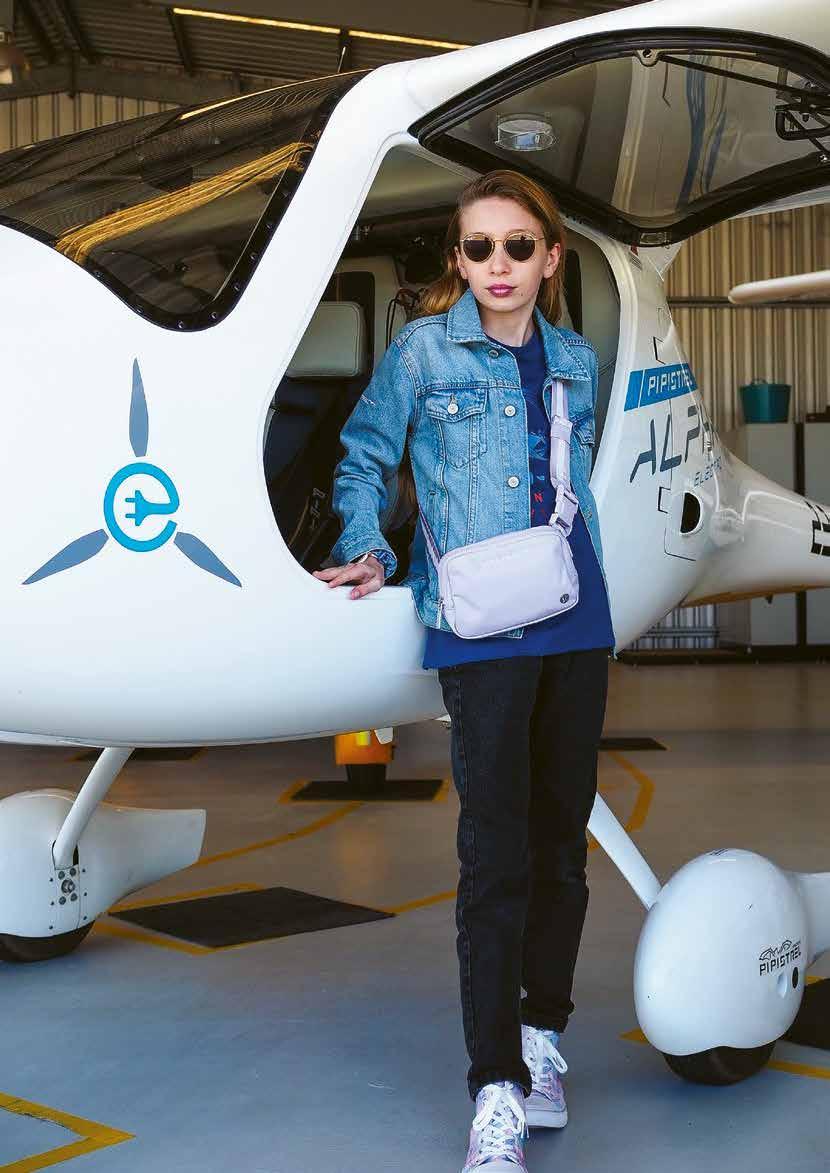
Amy with the new Pipistrel Alpha Electro.
WHETHER YOU’RE FULFILLING A LIFELONG DESIRE, ENJOYING A GIFT FROM A FAMILY MEMBER OR JUST OUT OF CURIOSITY, MOST OF US IN AVIATION STARTED OUR JOURNEY WITH A SIMPLE TIF, TRIAL INSTRUCTIONAL FLIGHT. THEY ARE OFTEN A FUN LITTLE “TASTE” OF
FLYING, BUT YOU HAVE MANY
CHOICES ON HOW YOU DO YOUR TIF. ONE QUESTION IS: WHAT AIRCRAFT DO YOU CHOOSE FOR YOUR TIF?
I was only 7 years old when I had my first TIF, so the aircraft choice was by my parent. I didn’t realise at the time, but the Foxbat was chosen specifically as it had Perspex doors for extra visibility, it was smaller, so I didn’t feel overwhelmed, and it was from a RAAus Flight School. Adding to the appeal, it was in Batemans Bay, so we got to fly the coastline and also inject some cash into the local economy after they’d experienced some bad bushfires at the beginning of 2020.
If someone is experiencing a TIF thinking it’s a onceoff, then we all know they’re going to fall in love with aviation! Flying is awesome! But the question, then, is where to learn? Often the pathway into aviation can seem very confusing. For new enthusiasts without a family background in aviation the choices must seem endless and overwhelming.
RAAus flight schools (157 flight schools and 29 affiliated clubs across Australia) can offer a very sensible, affordable, and easy to understand process. Under the RAAus Syllabus of Flight Training, you will learn how an aircraft flies, how to plan and prepare for flights, as well as master all the flight skills you will need to fly a recreational aircraft, including emergency training, reading the weather, and making the right decisions as a pilot. Qualified instructors will help you along the way with the knowledge, skills, and behaviours that will make you a competent and safe pilot.
If you’ve chosen an RAAus pathway your next question is: What flight school?
Here’s my personal choice... Fly Electric!!!
Words and Images Amy Spicer
Electric aviation isn’t just trendy — it’s fun and great for learning. The Pipistrel Alpha Electro is part of the RAAus fleet, designed for beginner pilots like me. These aircraft produce zero emissions, are cheaper to operate, and are really quiet. That means less noise pollution, lower costs, and a cleaner conscience. It’s aviation for future pilots. I personally enjoy the electric with instructors as you can hear the lesson easier, the plane is very light and responsive, and my lesson time is completely in the air (no sitting in the run-up bay in the heat).
One of the most common questions: Is it safe? That can be dispelled very quickly. The Pipistrel Alpha Electro has built-in safety features like ballistic parachutes, very clear analytics on engine performance including remaining flight time, and an amazing glide ratio too. Plus, FlyOnE’s instructors are excellent — patient, experienced, and passionate about teaching. Thanks to their new Part 141 classification, FlyOnE is now an approved flight training organisation under CASA (Civil Aviation Safety Authority) standards. That means you can start your journey with a recreational pilot certificate in an electric aircraft and progress all the way to a commercial pilot license.
Is it just for kids? The Pipistrel electric is a great choice for me, but it also suits people or pilots of any age. There’s no dragging heavy planes out of hangars or
“There’s a little bit extra to learn with battery usage (energy management), but I like the fact I’m learning for the future.”
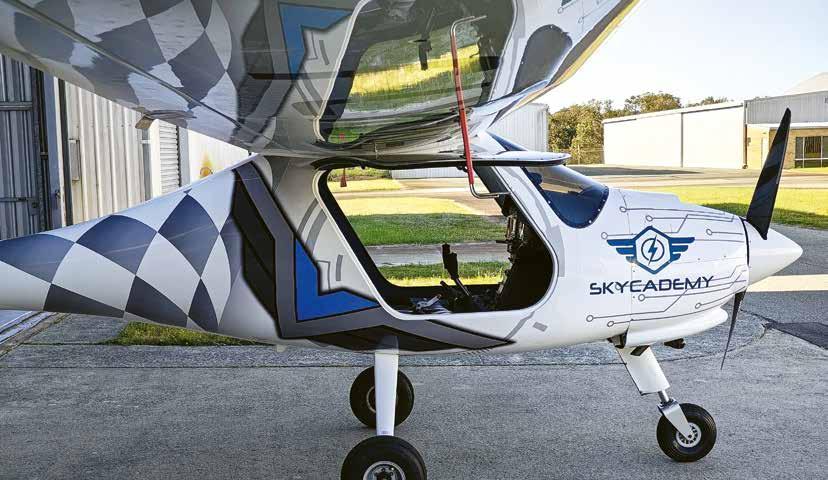
climbing stepladders to check fuel. It’s easy to hop in, and super comfortable. Everything is within reach, and now the Pipistrel even has a striking new wrap to make it look cool!
Flying electric has fully transferrable skills and the principles of flight are still the same. There’s a little bit extra to learn with battery usage (energy management), but I like the fact I’m learning for the future, and the Garmin glass cockpit ensures I’m learning with the most current equipment.
After completing my RAAus training, I’ll transition into FlyOnE’s broader fleet, which includes other aircraft options for Part 141 training. It’s a one-stop shop for aspiring aviators. No need to bounce between schools or juggle different instructors. FlyOnE’s Skycademy program is designed to guide you from your first flight to your final certification. You even get a Digital Logbook and welcome pack.
The Pipistrel Alpha Electro is very light and responsive.
I spoke to FlyOnE’s COO and she’s also the new CEO of Rottnest Air Taxis, Darrone Manning about their flight school Skycademy. They are extremely supportive to any student pilot, but she personally hopes to encourage more female student pilots. “I have learned that passion and perseverance can take you anywhere in Aviation. My hope is that every young girl, remembers that she doesn’t need permission to dream big, she just needs courage to take off.”
I appreciate the support and having a flight school with everyone from the top-level down believing in a Student Pilot’s success is what makes a difference.
I started this journey with zero experience and a lot of curiosity. Now, I’ll start working toward my Recreational Pilot License, with plans to earn my Private and eventually Commercial licenses. FlyOnE makes that possible. Whether you want to fly for fun, for work, or for the sheer thrill of it, they’ve built a pathway that’s accessible, affordable, and sustainable.
And the best part? You don’t have to be a tech whiz or a math genius. You just need passion, commitment, and a willingness to learn.
Electric flight lessons are available at Jandakot, Perth and Lilydale Flight School, Melbourne.
Scan the QR code to learn more about FlyOnE. www.foxbat.com.au
• Cruise 40-108 knots
• Stall 27 knots
• Carry 290kg including fuel
• Fuel capacity of 113L
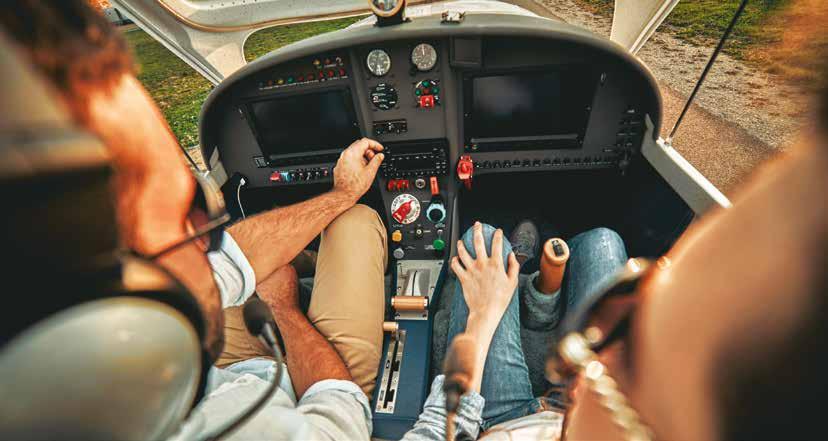
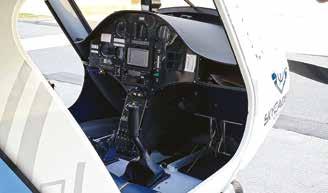
Interior view of the Pipistrel Alpha Electro.
DECISION AS MUCH AS ACTION
SAFETY IS THE OUTCOME
NEIL SCHAEFER
Acting Head of Safety
Neil Schaefer has been involved in General and Sport Aviation for over 45 years. A qualified instructor, examiner, accident investigator, auditor and SAFA Senior Safety Officer, Neil has had a vast range of experience in the aviation world. Currently serving as the Head of Training Development, Neil previously spent 4 years running an RAAus flight school and worked 7 years as Assistant Operations Manager at RAAus. neil.schaefer@raaus.com.au
Aviation is full of buzzwords and well-intentioned platitudes. But all too often, an outcome is really about what we do — not what we say. This edition, I want to look at the important alignment between intention and action, specifically in regard to aviation safety.
Through September and October this year, I was given the privilege to act in the Head of Safety role while Chris enjoyed some well-deserved time off. The role encompasses many moving parts from occurrence management, organisational reporting, engaging with external agencies to liaison with the Executive Team and staff on significant safety matters, and in this case, also managing our National Safety Month program held every October.
I am rightfully proud of the work we all do as a team to bring aviation safety into focus, and I hope you were able to engage and learn from the content and associated resources we compiled
for National Safety Month 2025. This got me thinking about the concept of safety and how it applies to every one of us: members, pilots, maintainers, organisations, and even our personal circles of friends and family.
Let’s start with systems and our framework. We have a robust training system and a practical rule set, both within our operations and those of the wider industry. We have an approved system of requirements which are well documented and trained with regards to piloting, maintaining and operating an aircraft. Organisationally, we have mature recording systems for administration and safety management.
We have accessible environments to operate, plenty of free airspace, and clubs and schools all over the country. We have access to fantastic equipment, from basic flying machines to complex, sophisticated and sleek aeroplanes, and in many cases, these are at the forefront of aviation technology.
Credit: Adelaide Soaring Club
So that brings us back to us, the people. Firstly, we must have the required knowledge, and this doesn’t stop when you get your certificate. The expression “never stop learning” is one that obviously jumps to mind. From reviewing Operating Handbooks, currency of Airworthiness Directives, or Bulletins to changes in airspace procedures or regulations, continuous improvement should be the mindset of every single person in aviation. Next is awareness. From flight planning to parking and everything in between — knowing what you need to do is only part of the solution. Knowing when to say no, when to stop, or when to step back; these are all important elements in a decision process that will ultimately have direct implications for safe outcomes.
Let me illustrate with two examples. A pilot has flown a particular route hundreds of times, a low level beat up to announce their return was always a fun exclamation mark for another enjoyable flight, but this time a temporary single power wire had been moved and raised due to recent earthworks on an adjacent property. That pilot never made it home.
A seasoned aircraft maintainer fully familiar with a vast array of engine types is performing some work on a different aircraft type. Unfamiliar with the different
“Think of safety as the peak at the top of a triangle, it takes a solid base and two converging sides in alignment to realise its strength.”
throttle systems, and proving difficult to start, an accelerant was used to entice the engine into life, and it did, pinning the maintainer in the wreckage as it impacted adjacent buildings. Nearby onlookers came to the trapped and injured maintainers assistance, the unintentional pilot later self-presented at the hospital with substantial injuries.
Decisions? Twenty-twenty hindsight gives us the answers with complete clarity, but we won’t live long enough in aviation to survive by that code.
So, if the framework is right and the education and rules highlight the dangers that were identified, many in blood by people before us, then the two driving forces are decisions and actions. Every moment and every situation is an opportunity to reflect, pause and ask: Is this the safest thing to do? Has this killed someone before?
The honest answers to ourselves and the decisions and resultant actions we take are the two converging sides to the safety triangle. Think of safety as the peak at the top of a triangle. It takes a solid base and two converging sides in alignment to realise its strength. All sides of this triangle are in your control — broadening the base by constant improvement, making informed and conservative decisions and then having the discipline to carry through into effective actions.
Engineers worked out many years ago that triangular forms give incredible strength for material used — build your aviation activities the same way and your likelihood of a long and successful immersion in aviation will be greatly enhanced. Safety is an outcome. It’s the product of skill, knowledge, risk, awareness, decision making, and discipline.
Safety, just like self-regulation, starts with you and I, and ultimately ends with us as well. And that, my fellow aviators, is the best part — we have a choice.
SAFETY SUMMARY
Words RAAus
DESTROYED
AIRSPACE INFRINGEMENTS
There have been 16 reported incidents of pilots inadvertently entering controlled airspace. Pilot recounts of the event often indicate a lapse in situational awareness or distraction, with pilots believing they are clear of controlled airspace boundaries when they are not. This misunderstanding occurs both laterally and vertically, as pilots misjudge their position relative to the airspace limits. It is crucial that all pilots maintain heightened awareness of their exact position and thoroughly verify they are clear of controlled airspace “steps” before proceeding.
OPERATIONAL NON-COMPLIANCE
RAAus has been made aware of 11 operational noncompliance incidents where pilots have not followed ATC instructions as issued. A pattern of confirmation bias has emerged, with pilots reporting hearing typical clearances that were not given or assuming clearances based on their expectations rather than actual ATC
OPERATION OCCURRENCES
communications. This tendency may be compounded by task saturation, particularly in training environments. Clear communication and careful attention to actual ATC instructions, rather than anticipated ones, will help address these occurrences. As RAAus progresses its work with stakeholders to develop controlled airspace endorsements for RPC holders, demonstrating consistent compliance with ATC procedures will support positive industry reception of expanded privileges for the recreational aviation community.
ENGINE FAILURE OR MALFUNCTION
Engine failures and malfunctions are largely attributed to inadequate maintenance practices. These events generally occur due to deferred servicing and poor adherence to maintenance schedules. Common component failures including worn spark plugs, failed fuel pumps, and cracked hoses typically result from lapsed maintenance and infrequent inspection practices. Compliance with the manufacturers’
MOST COMMON OCCURRENCES BY PRIMARY CAUSE
Airspace Infringement
maintenance manuals and service bulletins is imperative for preventing such failures and maintaining an airworthy aircraft. Regular maintenance schedules, including timely part replacement and systematic checks, are critical to avoiding these occurrences. Proper adherence to maintenance programs ensures early detection of wear and prevents the progression to in-flight engine failures.
COMPLIANCE
RAAus would like to remind all pilots, aircraft owners and maintainers to regularly review their compliance requirements prior to operating or maintaining an aircraft.
The following non-compliances are commonly identified within RAAus Operations:
Member Non-compliances
1. Conduct of flight without a current BFR
2. Operation of an aircraft without holding appropriate certificate, rating or endorsement
3. Operation of an unregistered aircraft
4. Flight conducted without holding current RAAus membership
Maintenance no-compliances
1. Maintenance of an aircraft without a current maintenance authority
2. Failure to complete biennial instrument and transponder calibration requirements
3. Unapproved modification carried out on aircraft
All members are reminded to check their certification details from their RAAus member portal to confirm they hold all approvals, ratings and endorsements required prior to operating or maintaining a RAAus aircraft. Alternatively, a copy of your membership certificate can be downloaded from the member portal, or by contacting the RAAus Office.
OCCURRENCE SUMMARIES
Occurrence Classification: Fuel starvation
Operation Type: Private
Injuries: Minor (Pilot and Pax)
Damage: Substantial
The pilot was returning from a long cross-country flight at the end of the day, having completed a flight test with an examiner at a separate Flight Training School when they encountered rough engine running prior to the engine stopping. The pilot had departed
early that morning to travel to another flight training school to complete the flight test and then was to return that evening. On the outbound leg, the pilot noted that the winds aloft were significantly stronger than forecast, which was coupled with forecast turbulence enroute.
The pilot conducted the flight test with an examiner and prior to departure was queried as to whether they had adequate fuel for their return journey. The pilot advised that they had enough fuel for the trip home by their calculations. The pilot was within 5 miles of their home base when they encountered the engine issues. The pilot was able to momentarily restart the engine before it once again stopped. Realising that they were not going to make the runway, they declared a MAYDAY before conducting a forced landing in a field; the field was relatively wet after recent rain and resulted in the aircraft flipping over onto its roof.
The pilot and passenger were assessed by emergency services and received medical attention for lacerations but were able to walk away from the accident.
Review of the occurrence highlights a number of factors that pilots need to consider. The pilot was under time pressure to make sure that they landed before last light or simply get-there-itis. Additionally, the pilot now acknowledges that they were not flying in balance as checks of fuel indicated a fuel imbalance coupled with being at minimum fuel.
Occurrence Classification: Airspace Incursion
Operation Type: Flight Training – Dual Injuries: Nil
Damage: Nil
Shortly after take-off for a trial instructional flight, the PIC noted that the air was turbulent and was keen to climb in search of smoother air. Approximately 15
minutes into the flight, it was advised over the CTAF that there had been an accident at the departure aerodrome, where the flight school was located.
Given this unforeseen situation on the ground, the PIC focused on monitoring the CTAF, expecting to receive advice regarding a possible diversion to an alternate aerodrome. During this process, the PIC decided to climb to a higher altitude to remain in smoother air conditions and better manage the developing situation on ground. This resulted in the aircraft entering controlled airspace without obtaining clearance. Compounding the situation, the PIC remained on CTAF frequency while operating within controlled airspace, and therefore did not receive any communications from the ATC.
A review of the occurrence revealed that the PIC’s pre-flight briefing/preparation was below the expected standards, leaving him exposed to multiple factors, both anticipated (weather) and unanticipated (an accident at the aerodrome). Operations to and from this aerodrome require pilots to adhere strictly to established limitations (including altitude restrictions) as it is situated in close proximity to a controlled aerodrome. Any deviation from these procedures could lead to infringements, including during inclement weather conditions or emergency situations.
In this case, the PIC’s inadequate pre-flight briefing led him to proceed despite marginal weather conditions for a VFR flight. Also the subsequent unexpected event on ground compounded the situation and contributed to pilot error.
This occurrence serves a timely reminder for pilots to allocate sufficient time for thorough pre-flight planning, to ensure they are better prepared to manage both expected and unexpected situations in flight.
LOSS OF CONTROL:
Premium recreational and general aviation at an affordable price. Fast. Comfortable. Efficient.
Choose between the Classic 600 kg fixed gear, retract gear, tail tragger option the B8 High wing or the New Fully Certified, 750 kg B23.
Bristell
THE AUSSIE
AVIATORS
FOUR YOUNG AUSTRALIANS ARE SHARING THEIR ENTHUSIASM FOR AVIATION WITH THE WORLD.
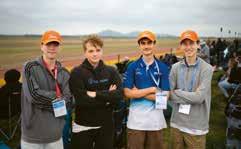
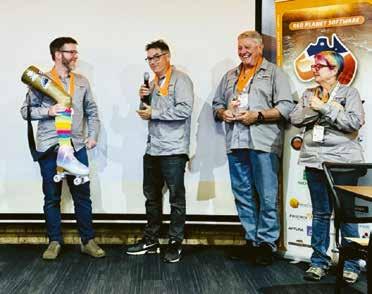
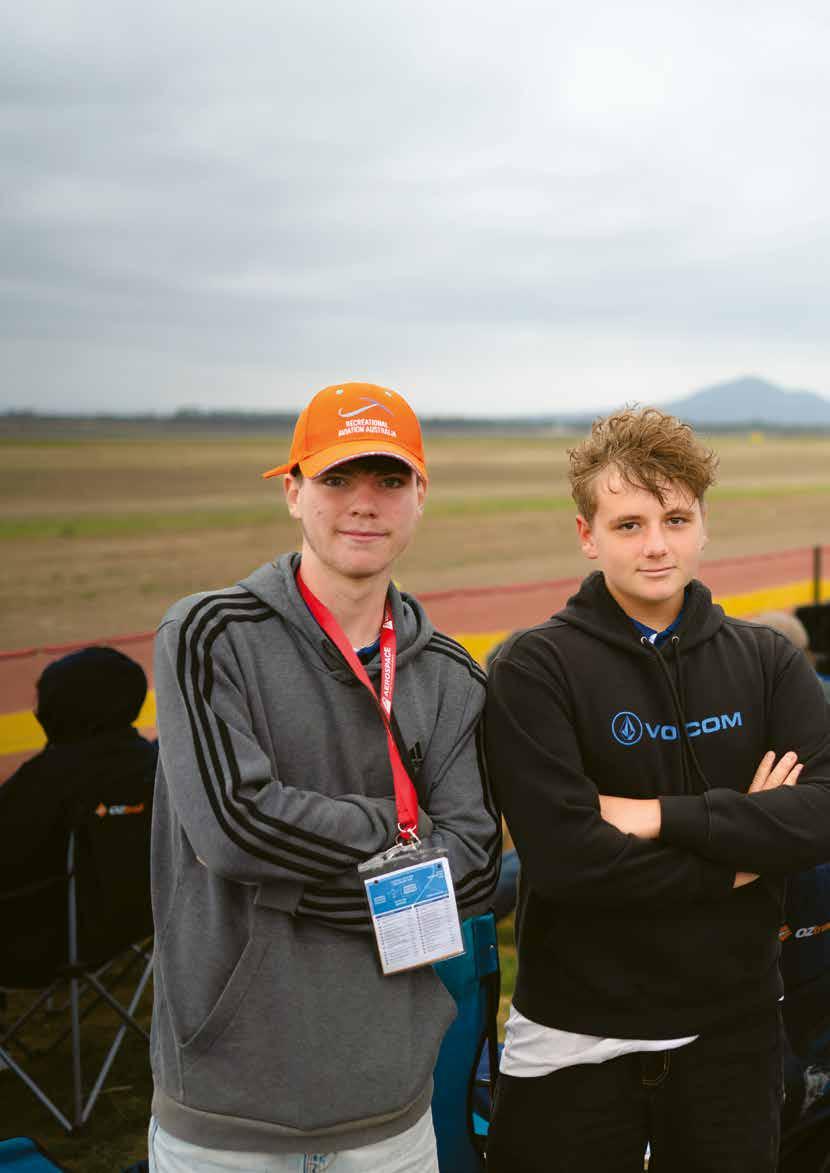
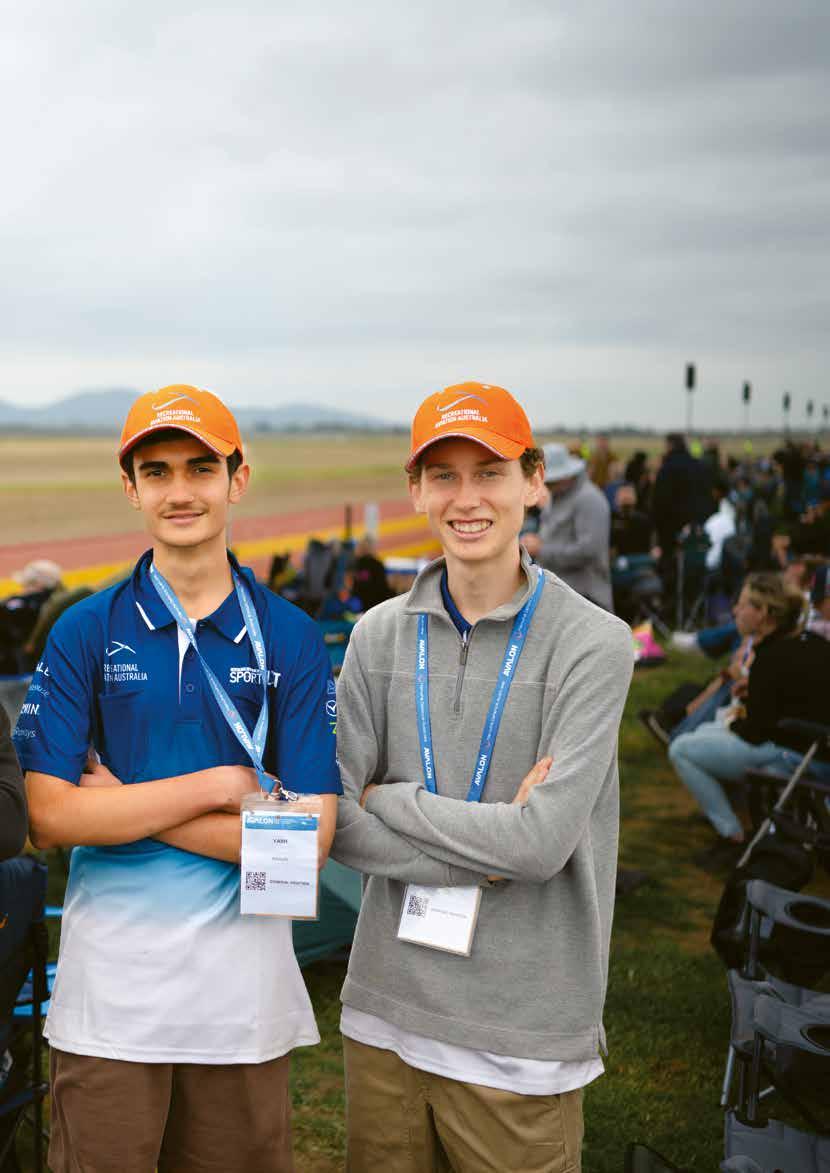
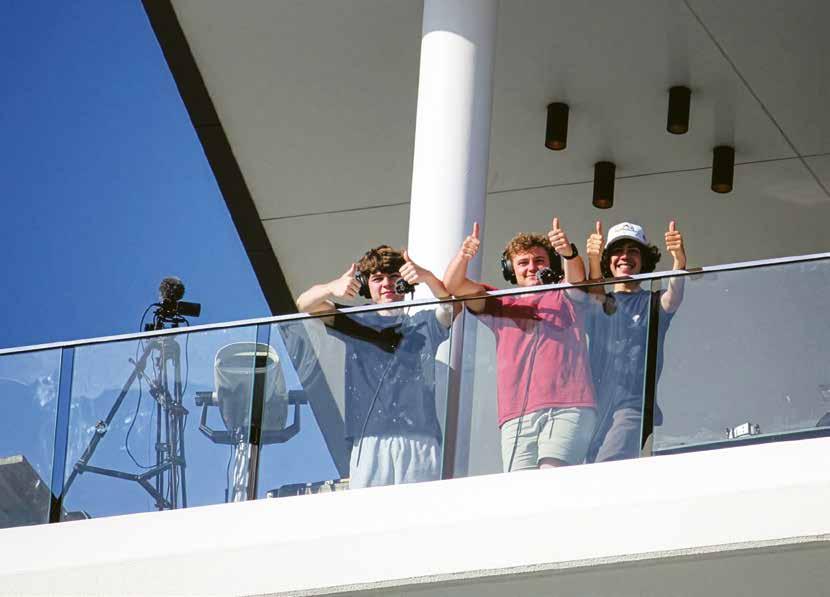
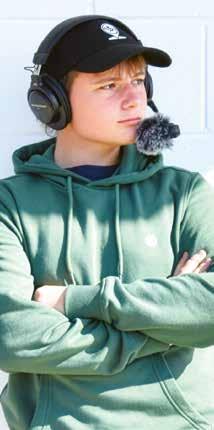
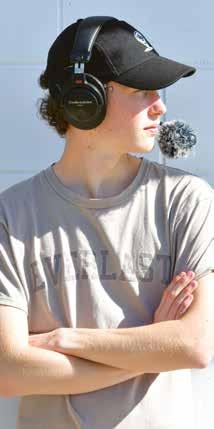
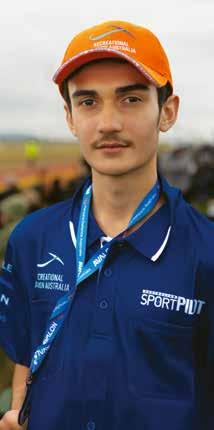
The 4 Aussie Aviators (from the left: Owen, Zac, Yash, and Jack)
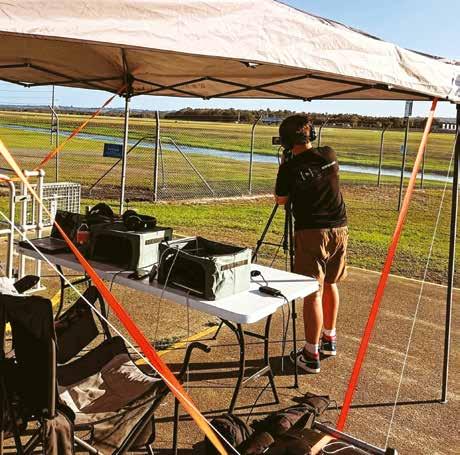
With the roar of jet engines and the stream of incredible planes soaring across the sky, there’s no better place for four young and ambitious aviators than at the Avalon Australian International Airshow. Cameras in hand, energy in abundance and a passion for aviation that would rival any veteran pilot, this team of budding aviators is redefining what it means to be part of this community in the age of digital connectivity and content creation.
Meet Zack, Jack, Owen and Yash. These four teenage enthusiasts have gone from curious hobbyists to upand-coming faces in the Australian aviation community. Living on the sunny Gold Coast, these plane-obsessed mates are enthusiastically sharing their love of flying, all while juggling high school and living out their teenage years.
United as The 4 Aussie Aviators, these guys livestream plane spotting at their home base of Coolangatta Airport (YBCG) and across Australia. Their journey officially began in 2023 when they launched a YouTube channel dedicated to capturing the ins and out of
everyday aviation. What began as a shared curiosity for “those massive, flying metal tubes” quickly evolved into a mission: to build a community of aviation enthusiasts who tune in, chat and share in the joy of flight.
Some aviators start from a pure connection — love at first sight with mechanical wonders of the sky. For some it’s simply a matter of proximity. With new technologies, some passions now start through computer programs and flight simulations. Each teen discovered a love for flight in his own way.
Jack and Owen both described how flight was a “family affair”. Jack’s father held a lifelong interest in aviation, leading to Jack’s first plane spotting sessions. Owen fondly remembered his interest growing while attending air shows as a kid with his grandparents, looking up and thinking, “Yeah, this is it. I love this”. As for Yash, it was pure happenstance — a chance encounter with a flight simulator that kindled his spirit. Zack laughed and told us he had no idea where his passion started. “Ever since I was old enough to know what a plane was, I just knew that’s what I wanted to do,” he said.
“Social media also allowed the group to share their passion, using platforms like YouTube to build an even wider community.”
Age restrictions mean getting straight into the cockpit and taking off towards sunset isn’t immediately possible, but they’re all patiently waiting for the chance to earn their RPLs and get their engines started. With fiery curiosity and a drive to involve themselves in this new and wonderous world, the next best thing was visiting nearby airports to spot planes.
Thankfully, with the assistance of their families, getting to and from the Coolangatta Airport was not an impossible task. Jack told us they were all grateful for their parents’ support. “Our families have been incredibly supportive with the constant trips to the airport and back. They were a cornerstone in helping us get this up into the air,” he said.
The four friends met through online communities and social networks. Social media also allowed the group to share their passion, using platforms like YouTube to build an even wider community. The 4 Aussie Aviators channel now boasts thousands of subscribers, attracting curious spotters, fledgling aviators and seasoned aficionados, from all over the world.
Of course, it’s hard to top the exhilaration and community found at local and international shows like Avalon Australian International Airshow. Jack was ecstatic to have the gang together at Avalon with support from RAAus, who provided tickets and joined the team for the event. “It’s absolutely amazing and unbelievable,” he said.
Yash said he was excited that their channel could grow even more in the future. Meanwhile, Jack had clearly thought about how their pilot careers could develop while keeping the project alive. “When we become pilots, we’re going to be in the air, but after a flight or two when we have a couple hours off, we’ll find a bit of time to livestream,” he said.
When asked about the future of their channel, Zack answered without hesitation. “I plan to do this until I drop dead,” he joked. “We’ve got a really good thing going on here and I don’t see it ending any time soon.” Owen added that he put any free moment into the interest. With ambition like theirs, it’s hard not to feel excited for where they’re going next.
A fitting takeaway from four young aviators who’ve turned curiosity into opportunity, and continue to prove that passion, persistence, and sky-high ambition can take you anywhere.
ZACK
Zack’s passion for aviation began in early childhood when he was fascinated by toys, excavators and most of all, planes. His interest truly took off when a neighbour introduced him to flight simulators like X-Plane 10. Zack eventually got his own flight controls and dove further into the world of aviation. Despite challenges, including an ADHD diagnosis in 2023, he remains determined to pursue his passion for flying.
“Whatever’s holding you back — just shove it aside and go for it.”
To see the awesome work this gang is getting up to and a bit of your own plane spotting check out their YouTube Channel — @The4AussieAviators and join their online community.
JACK
Jack’s aviation dream started over six years ago and has only grown since. Inspired by his dad, who is also an avid plane spotter and former airline employee, Jack proudly continues the family legacy through his shared passion with his mates. His favourite aircraft is the Airbus A320-232.
“Ask questions. If you see the cabin crew or the pilot, go and ask them — how did you do this? How did you get here?”
OWEN
Owen’s love for aviation began at just three years old, when his grandpa took him plane spotting—an experience that sparked a lifelong passion. At 13, he launched his own YouTube plane-spotting channel to share that passion with others, now joining forces with Zack, Jack and Yash.
“Any amount of free time you have, put it into your passion.”
YASH
Yash discovered his passion for aviation in late 2022, when he was introduced to Microsoft Flight Simulator 2020. The experience sparked a deep fascination, perfectly timed with Yash getting his first Xbox. He soon joined the aviation community on TikTok, sharing flight content regularly and building a strong presence.
“There’s no set pathway. You have to build your own.”
Ben Lambon at the Australian War Memorial at the end of his powerful journey.
F LY. R IDE. R EMEMBER.
A JOURNEY OF ENDURANCE, REFLECTION, AND PURPOSE
Words Ruby Rawlins | Images RAAus
On 31 October 2025, Recreational Aviation Australia (RAAus) brought to life an event that blended endurance, community, and remembrance into three powerful words: Fly. Ride. Remember.
Fly. Ride. Remember. is an event and narrative told in three acts — air, road, and reflection — created to support Soldier On, the charity helping brave veterans find purpose, stability, and connection after military life. At its heart was Ben Lambon, RAAus Chief Operating Officer and former British RAF airman, who undertook the entire challenge himself, turning a personal test of endurance into a national conversation about recovery, resilience, and rediscovery.
For Ben, Fly. Ride. Remember. was deeply personal. A medical discharge ended his military career earlier than expected, leaving him without the structure and camaraderie that had defined much of his life.
The day he handed back his uniform, Ben thought he was closing a chapter. He didn’t realise he was stepping into a whole new battle — one he wasn’t prepared for. That battle, the search for identity and purpose beyond the military, became the inspiration for Fly. Ride. Remember. Ben’s personal challenge grew into a nationwide effort to raise awareness for veterans and support Soldier On’s life-changing programs. The course was built around three symbolic stages, each representing a phase of the veteran experience: transition, endurance, and reflection.
“When I left the military, it wasn’t by choice. I was medically discharged. Years of service had taken their toll... Physically, I was broken. Mentally, I was exhausted. Financially, I was in a dark place.” – Ben Lambon
FLY
The journey began bright and early at Canberra Airport at 6:30am, where low cloud cover put a hold on the original VFR flight plan to Goulburn. After a visit to the Air Traffic Control Tower and some patient waiting, it was clear by 9am that the cloud wasn’t going to lift so, Plan B was set into motion to make sure the cheer squad at Mother Teresa School wouldn’t miss their moment!
Thanks to the amazing team at Learn 2 Fly, Ben was flown IFR to Goulburn in VH-UPT, touching down just before 10am. Waiting to greet him were supporters from RAAus, Soldier On, Goulburn Rotary, and the Goulburn Aero Club. After a quick hello (and an even quicker change!), Ben set off on a 100 km cycle to Mitchell, ACT.
RIDE
Four tiresome hours and 100 km later, he was met by the incredible students of Mother Teresa School in Harrison, who lined the school gates with homemade banners and cheers that could be heard for miles! He then changed his bike for runners and was joined by Jared Smith, Head of Airworthiness and Maintenance at RAAus for the final 10 km leg.
REMEMBER
At 4pm, the pair ran beneath a tunnel of colleagues and supporters, finishing their triathlon at the Stone of Remembrance, where Paul Singer, CEO of Soldier On Australia, congratulated Ben with an embrace and a shared moment of reflection.
“Flight gives you freedom, perspective, and purpose. For veterans, that can be life-changing.”– Ben Lambon
Fly. Ride. Remember. was only a one-day challenge, but it marked the beginning of something much bigger. Funds raised during the campaign went directly to Soldier On, supporting programs that help veterans access employment pathways, mental-health services, and peer networks. The event also highlighted the role aviation can play in recovery and growth. RAAus is exploring opportunities to help veterans reconnect with aviation, through flight training, ground operations, or simply rediscovering the freedom of flight.
The event wouldn’t have been possible without the help of generous sponsors: FLYTE provided 6 pairs of sunglasses and the would-be flight from Canberra to Goulburn; Pushys supplied a Cervelo Caledonia 5 road bike; Garmin offered a Forerunner 965 smartwatch; RAAus provided a full-year membership and a $400 flight training gift voucher; Learn 2 Fly supplied a TIF voucher, Aviator supplied a brand pack full of goodies; Halliday Wines contributed a Lovers pack and a one-month subscription to the Halliday Wine Club; BentSpoke Brewing Co. offered two cannery tours and prizes; Capital Brewing Co. hosted the afterparty and provided product discounts;
Above: Flying from Canberra to Goulburn and riding 100 km to Mitchell.
“Every veteran has their own journey. If Fly. Ride. Remember. helped even one person find their way back to purpose, then it was all worth it.”
– Ben Lambon
Seven/Seven+ ran the national TV advertisement over the month; OzRunways contributed the Matt Hall flight experience; Light Studios produced both the TV advertisement and a full documentary capturing Ben’s challenge; and One Sport supplied clothing merchandise. These contributions brought the event to life and amplified its impact for participants and supporters alike.
We couldn’t have asked for a greater showing of support from the community.
The event concluded with a celebration at Capital Brewing Co. in Fyshwick. Ben was joined by our sponsors, co-workers, family and supporters to
share stories, raise a glass, and recognise the effort behind the campaign. It was a moment of camaraderie that perfectly captured the event’s spirit — community in motion.
The entire RAAus team couldn’t be prouder of Ben’s incredible effort. We’ll be sharing more photos and videos soon and we’d like to extend a huge thank you to all our sponsors and supporters who made this event possible.
Fly. Ride. Remember. stands as a testament to the power of endurance, the healing found in flight, and the strength of a community united in remembrance.
Ben Lambon at Mother Teresa School.
DISCOVERING THE POWER OF MODERN AVIONICS THROUGH ONE ACCIDENTAL TAP
Words & Images Nick Jones
Using the Skyview touch controls.
Recently while on a nav, I was in the process of editing a waypoint in OzRunways when I unintentionally pressed a few buttons I shouldn’t have. It had a message saying, ‘Do you wish to send your waypoints to Dynon View?’
In a rush to fix up my flight plan, I cancelled the message, added in my way point and continued on. But it got me thinking, what exactly was that feature? If I can send my way points to the Dynon, maybe I could use these for the waypoints in the autopilot. I had been told by someone that they ‘talk to each other’ but I never knew what that really meant.
Eventually, curiosity got the better of me. So, after a couple of hours of reading the manual, I had my answer. All of it could be done with the tools that I had at my disposal. Well, time to put it to the test.
The steps were as follows (at least in theory):
1. Enter my flight plan into OzRunways
2. Connect my iPad to the Dynon Skyview via Wi-Fi
3. Send my flight plan across with a click of a button
4. Take off and depart for my first leg
5. Get comfortable and then turn on autopilot
6. Victory
My first attempt was filled with mixed results. For earlier models of the Skyview, you will need to order an external Wi-Fi antenna that plugs into the USB port on the front which is important for anyone looking to implement this themselves. After a bit of faffing about, I realised that this was a newer model, and I didn’t actually need it. Great, no harm done and more money to put towards AVGAS. Now that I knew I had built in Wi-Fi, the next part was figuring out what the password actually is. You won’t find this setting anywhere in the main menu. You need to turn it off, hold down the two
With technology like this becoming more accessible, we are not just making flying easier, we are making it smarter and safer.
far-right buttons and go into ‘setup mode’. Hopefully for anyone attempting this themselves this is a nudge in the right direction. This insufferable little detail chewed up a good 45 minutes, but at least it was progress.
Back in the app now that I was connected, at the bottom right hand corner I could see the magical button that I was looking for: ‘Send to Dynon Skyview.’ A second later, the display lit up with an alert: ‘New Flight Plan Added’. We were in action, time for testing.
Or not. Unfortunately, the delay meant that some bad weather rolled in, so in-flight testing would have to wait for another day.
Round two. Back to the airport and into the Tecnam. All buckled up, I punched in my flight plan, completed the normal runup sequence and set off. Thanks to my previous week’s work, the iPad just auto-connected as the avionics booted and it really is just a one button click in OzRunways and you are done, it was shockingly easy.
But I was still sceptical if this would even work. Like many pilots, I learnt to fly with paper maps. But then along came the iPad. It made everything so easy for navigation and changed how we fly. So, when I look at the maps built into the primary flight display, I rarely find myself utilising the maps let alone try to add a flight plan into it.
After take-off, I decided to start the first leg of the journey myself and get everything settled in.
Although the day was picture perfect, it was very turbulent, so I attempted to climb out of the uncomfortable bumps before fiddling around with screens and iPads.
Finally, the moment of truth, I flicked on autopilot, set it to hold altitude and follow the flight plan with the ‘NAV’ button in autopilot setup. Straight away it banked to the right which was a little unexpected. I let it go to see what would happen and then realised that because I was slightly off course it was just getting us back on track. Usually, I just set it to follow a heading bug, making course corrections barely noticeable. But in this case, it was trying to follow a straight line on the map. When you couple this in with a large amount of turbulence, it took a little while for the autopilot to find its rhythm.
The next test that I had was to use ‘VNAV’ which allows you to tell it to follow the altitude setting in the flight plan. Sure enough, it gently climbed up to 4,500 feet when it then levelled out, then gently banked as we reached the first waypoint.
By now it had done everything I asked it to and more which got me thinking about how far affordable aviation has come. Features like this used to be so far out of reach for pilots like me. I have chatted to plenty of other pilots telling me about the bells and whistles in their SR22. But I don’t fly an SR22, in fact, I don’t even own a plane. This is just a Tecnam P92 that is available for wet hire from my local flight school. Yet somehow all of the avionics required to pre-program a whole nav with an iPad are packed into one little screen. It makes me optimistic for what the future holds. The price of aviation might be ever increasing but it isn’t a fair comparison when you consider what’s now included.
The final thing that became glaringly obvious after this little adventure is that it really pays to read the manual. It probably sounds trite, but taking the time to get familiar with the aircraft’s avionics makes a huge difference. For me, I had only ever been taught the basics of autopilot and it was usually presented as a luxury. And while that is true, there is a clear safety benefit as well. For instance, it can make dealing with an unwell passenger easier or allow you to make a
Display showing ‘Send to Dynon’.
simple course correction to avoid bad weather without stress.
In the end, what started as an accidental button press on a touchscreen turned into a really valuable lesson. It reminded me that aviation is not just about the stick and rudder but about constantly learning, adapting, and getting the most out of the tools in front of you. With technology like this becoming more accessible, we are not just making flying easier, we are making it smarter and safer. Seeing the plane handle the route almost on its own left me grinning and wondering what else I had been missing in the cockpit.
For anyone looking for more resources on how this all works I highly recommend taking a look at Dynon’s YouTube channel –www.youtube.com/ @DynonAvionics
Flying over Lake Murdeduke.
THE HANGAR ISN’T A SAFE ZONE
JARED SMITH
Head of Airworthiness and Maintenance
Jared Smith is Head of Airworthiness and Maintenance at RAAus. He holds a Graduate Certificate of Aviation, Bachelor of Technology (Aviation) and Business Management, a CPL, an instructor rating and L2 maintenance authority. Jared has been with RAAus for the past five years, initially working as the Assistant Technical Manager for three years. jared.smith@raaus.com.au
They say most accidents happen close to home and in aviation, that “home” is often the hangar. Over the past few months, we’ve had a number of injury reports come across the desk involving maintenance work being carried out on the ground. No flying involved. No turbulence. No bad weather. Just simple, well-intentioned jobs that went wrong. It’s a timely reminder that the risks don’t end when the prop stops turning.
Most of us are meticulous in the cockpit, checklist in hand, weather briefing done, radio calls crisp. But once we roll the aircraft into the shed, something changes. The hangar feels like a safe space, and the discipline fades. Shoes become thongs, safety glasses vanish, and suddenly we’re balancing on milk crates or stretching under wings like contortionists. That sense of comfort is deceptive; it’s one of the biggest human factors leading to injury. We let our guard down because the engine’s not running, yet the hangar environment has its own hazards: fuel, live props, jacks, power tools, sharp edges, and slippery floors.
Over the years, we’ve seen maintainers fracture wrists after slipping off ladders, burn themselves on hot exhausts, and in the worst cases, make contact with live propellers. These aren’t apprentices or first-timers, they’re experienced people who simply may have got comfortable. The issue isn’t knowledge; it’s mindset. Complacency, distraction, time pressure, and over-confidence all creep in once the aircraft is stationary. When attention slips, even small lapses like leaving the master switch on or forgetting to chock the wheels can end painfully.
Maintenance deserves the same professionalism as flying. If we applied cockpit logic to the hangar, we’d take a moment for a pre-task briefing knowing exactly what’s live and what’s not. We’d lay out the right tools, check they’re in good condition, wear gloves and closed shoes, and tag out or disable ignition sources. And if we were working alone, we’d at least tell someone what we were doing. I once heard a saying that stuck with me: “If you’re rushing, you’re already behind.” It’s as true under a wing as it is on final approach.
Our ultralight and LSA aircraft may be light, but the forces involved aren’t. Props don’t care how much the aircraft weighs, they bite just the same. Even lifting a tailwheel can strain your back as easily as shifting a heavier airframe. Human performance limits apply just as much in the shed as they do in the circuit. If you’re tired after a long day, stop and come back tomorrow. Had a beer or two? Definitely tomorrow. Reaching for an improvised tool? Walk away and find the right one.
“We let our guard down because the engine’s not running, yet the hangar environment has its own hazards.”
Maintenance injuries rarely happen because someone didn’t know better, they happen because someone thought, “It’ll only take a second.” As we head into the warmer months and more members get hands-on with their aircraft, take a few extra minutes to think about human factors before picking up a spanner. Next time you’re tempted to crawl under an aircraft without support, hand-prop alone, or stretch for that bolt that’s just out of reach... stop. Take a breath.
Treat the hangar with the same respect as the sky because safe maintenance doesn’t just keep aircraft flying. It keeps you flying.
GETTING YOUR CONTROLLED AIRSPACE ENDORSEMENT
Words Nicholas Heath
RAAus is in the final stages of applying for access to controlled airspace, but you won’t be able to just storm in without understanding how it works and how you need to interact with airspace and aerodrome controllers. The procedure for RPL or PPL pilots is that you prove your proficiency under the supervision of a qualified instructor who will issue you with an endorsement when they are satisfied that you are competent. The process for recreational pilots will be based on this approach. So, what does that look like in reality? Our editor Nicholas Heath completed his Controlled Airspace and Aerodrome endorsement to find out.
I have always made a point of avoiding controlled airspace as much as possible (because airspace incursions tend to result in rude letters in the mail) or – when I needed to go there – taking a buddy who was suitably endorsed.
“I instantly got a clearance to extend over Bolte Bridge and make one right-hand orbit at 1,500 feet. If you ever get the chance, do this. A superb view of Melbourne as you head over Carlton, back around via the MCG. Worth the endorsement effort and expense just for that.”
But I couldn’t put it off any longer. I finally bit the bullet and started the endorsement process. I say “started”, but from first contact with my instructor, Murray, until actually getting it done took over a year; If it wasn’t weather, it was life getting in the way. But finally, we got some dates lined up.
The homework initially seemed easy. Do the reading and listen to the radio. If you listen in to air-control frequencies – which you can do by flying or on the ground through apps like Live ATC – you’ll immediately be overwhelmed by what’s going on. There are different types of learners. Some people can rote learn, shoving textbooks and manuals into their face for weeks on end. I can’t. I have to understand the subject to make sense of it. It wasn’t until I read Bob Davis’s very helpful PPL guide, and he explained that the underlying principle is the same for every radio call, that I began to get to grips with what was being said. According to Bob, every radio call you make will probably start with:
• Who you’re calling
• Who you are
• Where you are
• What you want to do
Let’s break that into a normal 10 mile from the airfield call:
Who you’re calling: Broken Hill Traffic
Who you are: Tecnam 8626
Where you are: 10 miles south of the field at 2,500 feet
What you want to do: Descending to join overhead at time 26
In the case of an inbound call to a Controlled Aerodrome there’ll be a couple of extra bits, but it is essentially the same:
Who you’re calling: Moorabbin Tower
Who you are: Vans RV6 UFS
Where you are: Over Brighton, 1,500 feet (BTO Brighton being an inbound point)
What you want to do: Inbound, received Tango (Tango being the latest ATIS info)
As you can see, the structure is almost the same. The additional bits Controllers are looking for are a) that you are at a designated point and b) that you have the latest information on conditions. The ATIS (Automated Terminal Information Service) Frequency will be in the ERSA along with all the other relevant frequencies. One of the most important bits of information is your pressure height. It’s critical that you set your altimeter to that pressure height to make sure you and all the other aircraft in the area are on the same height baseline.
Simple? No. Understandable? Yes... Eventually.
Flight Instructor Murray suggested that we would first go to West Sale to practice with the RAAF controllers based there. That would be Tuesday. Friday would be in to Moorabbin Airport and, if successful, a request to orbit the Melbourne CBD. I focused my study on West Sale first. The ERSA is a starting point, but there are
many other great guides available to help you. For that area there is a slightly out-of-date document available on the internet called RAAF Base East Sale Local Airspace Information, prepared by No 453 Squadron. The RAAF base is at East Sale. West Sale is a GA airfield run by Wellington Shire Council whose airspace is managed by RAAF. They use it for training, so it’s not unusual to see PC-21s in the pattern. To make matters more interesting, it has a purple dot route into West Sale – called the Princes Route (because it follows the Princes Highway) which leads you to West Sale at 1,500 feet. But you need permission. Remember the people in charge of the airspace have guns and missiles and stuff, so best to keep it on friendly terms. The whole area has a big fat red series of military airspace zones – called R360. I needed to know when they were active, because they come and go depending on what the RAAF operations are. That information is available in the NOTAMs.
“That particular call is known locally as ‘The hamburger with the lot’. Nasty. Fortunately, I wouldn’t have to endure that today.”
Duly aware of what the requirements were, I arrived at Lilydale on Tuesday at 10 to pick up Murray. He decided to throw an extra curveball – we’d be trying for a clearance out at 4,000 feet for the return just to make it interesting. Thanks, Murray. During the preflight briefing and discussion, we ran through the calls and where they would be made. Murray quickly made me understand that the accuracy of the readbacks was critical to whether or not I was deemed proficient. A controller requires you to read back the pertinent information as I’ll demonstrate in the radio example shortly. The only ace up my sleeve was that I was very familiar with that airport and landmarks, having run an airshow there previously, so I had done the homework.
Departing Lilydale in bright sunshine, Murray showed me some of the local landmarks and routes that can be used when the weather makes operations trickier. Good to know. We quickly approached the edge
of RAAF control and ducked under the first active segment. Just past Latrobe Valley, approaching point FLYNN – the start of the purple dots – we checked the ATIS, then made our calls:
Sale Delivery, Uniform Foxtrot Sierra, a Vans RV6, one zero miles west of Flynn, request clearance to West Sale via Princes Route, not above one thousand five hundred, received Golf, POB 2.
(It’s still: who am I calling, who am I, where am I, and what do I intend. The additional information of ATIS code and people on board being useful to Controllers.)
“UFS, Sale Delivery, squawk 4655, QNH 1013”
“4655, QNH 1013, UFS”
“UFS, identified, cleared to West Sale via Princes Route, not above one thousand five hundred, verify level”
“Cleared West Sale via Princes Route, not above one thousand five hundred, maintaining one thousand five hundred, UFS”
“UFS, contact Sale Approach 123.3”
“123.3, UFS”
Well, that’s how it should have run, but it was a quiet day, and Sale Approach must have been feeling lonely, so they never handed us over to Sale Delivery – we just stayed with them. Other than when my evil instructor Murray got me chatting when I should have been listening to the calls to make a point, so I missed one call and had to ask them to repeat it, the rest of that flight went without blemish. My readbacks had all the right information in them. To further smooth the way, Murray had rung them and let them know that a) a newbie was coming, and b) could we get a 4000 departure clearance maybe? So, when we got back on the radio to request taxi and later a departure height, they were readily agreeable. Nice one, RAAF. We flew back to Lilydale, discussed what Friday’s program would be for my homework, and then I headed home –only to frighten the snot out of myself a bit later with a canopy incident which you can read about elsewhere in this magazine, because it’s a whole side quest and this article is about controlled airspace.
Fast forward to Friday morning. I was now educated to an extent about Moorabbin procedures and had even read up on the City Orbit process. After my Tuesday
experiences, I was confident I could handle a simple airport. I might have been wrong about that. I am not very familiar with Moorabbin. I’ve only flown in and out of there a handful of times and never been responsible for the navigation or clearances. It has left and right runways and two different frequencies – an East and a West for the towers. Full of unfounded confidence, we departed Lilydale for the short hop to ACADEMY, the northwest inbound point for Moorabbin. I only just remembered in time to recheck the ATIS for the latest information, switch transponder to 3000 and radio over to 118.1 (Moorabbin Tower East) which put me in a minor fuss, then the radio went (and this is a technical term) freakin’ nuts. Every student in the world called in. At least, that’s how it seemed. I finally managed to squeeze in a call, and the controller gave me a pretty fast readback calling for me to make an oblique approach to join base Runway 17 Left. That had been expected based on what the active runways were and the fact we had approached from the Northeast. What I hadn’t expected was that the controller would make me first and there were five (I think) other aircraft in the pattern behind me. And I hadn’t even really figured out which part of the blob ahead was the right runway to orient on. Fact is, I was headed too far left and needed to bring myself right onto course to intersect final.
The controller gently reminded me that I was number one. That’s controller speak for “move your arse”, so I did. The landing itself was uneventful. You land, clear the runway, switch to ground and request taxi. Fortunately, I only had to contend with two taxiways to read back. If I had landed on 11 Left, I potentially had the worst call to make at Moorabbin, which is cleared to Taxi Left at E to B, To cross 17 Left, To Cross 22/04, Cross R7 Right, then A3. Or something like that. That particular call is known locally as “The hamburger with the lot”. Nasty. Fortunately, I wouldn’t have to endure that today. Departure was relatively uneventful, and mostly correct, if a bit slow on my readbacks and calls.
The next adventure was to be a request to conduct a City Orbit around Melbourne. That would require clearing Moorabbin space and inbounds by climbing to 2,000 feet, then dropping back to 1,500 quickly to arrive over point Albert Park Lake to request a city circuit. That area was under control of Essendon. First up was to get the ATIS info for Essendon and then join the conversation by changing transponder to 0100 and radio. Essendon has both tower and ground control on one frequency, so I had to wait for the lawn trimmers to finish their taxi calls to get a word in. In the end it was the easiest call of the day.
Essendon Tower, Uniform Foxtrot Sierra, A Vans RV6, Over Albert Park Lake, 1,500 feet, In receipt of Tango, 2 POB request one left hand city orbit.
They were on their game at Essendon. I instantly got a clearance to extend over Bolte Bridge and make one right-hand orbit at 1,500 feet. If you ever get the chance, do this. A superb view of Melbourne as you head over Carlton, back around via the MCG. Worth the endorsement effort and expense just for that. Essendon released us as we headed back to Lilydale. Taxiing back, I asked how we did. Murray said he really thought I need at least one more entry into Moorabbin without slip ups and asked if I wanted to do that now or another day. “Why not now?” I said. We had fuel and time. Besides, it would be much easier now because I had just done an approach from this direction, right? Nope. Murray decided we would use another point of approach this time. Thanks, Murray, you’re an evil man. This time we came in from Brighton and, despite being a whole new direction for me, it was – and I say this
with humility – as magnificent a piece of airmanship as was witnessed anywhere that day. I’m pretty sure that’s right. It was sufficient for Murray to endorse me because – as he said – he knows I will do the homework. And he’s right. I will.
On the way home I snuck in another city orbit – this time a left-hander – all by myself like a grown up. In aviation there are certain moments when you have to just take a deep breath and say, “this is cool”. And yes, it was cool.
So, as soon as you can, I recommend doing your controlled airspace endorsement for several reasons. Firstly, you will be able to access areas you can’t right now, and that can make a huge difference in getting through some of the locked-up airspace we have now which can save you time, money and the need to go low or around. Secondly, it’s a great way to expand your aviation knowledge and experience. Finally, and probably most importantly, it’s cool. It just is.
LOOKING AT THE PIECES
Words Nicholas Heath
As of October 22 this year, the new MOSAIC rules have become active in the USA. The FAA (our CASA equivalent) dropped the final set of rules in July, and there were some raised eyebrows at some of the final features. For those of you out of the loop, MOSAIC (Modernization of Special Airworthiness Certification) is a much needed overhaul of the US LSA rules.
The big news is that MTOW is no longer limited within the standards. It’s all about stall speed, with the magic number for aircraft being 59 knots clean. The US also had a (ridiculous) 120 knot maximum speed previously, which is now gone. And you can have any engine you want (except a rocket). So that kit-built ME163 you’ve been lusting after will still be in the Experimental category!
Seating has increased from 2 to 4 for aircraft and you can now fly a helicopter on a light sport pilot license. Yes, a helicopter.
The light sport aircraft rules in the USA were much more limited in type and performance than the
equivalent rules we fly under here in Australia. Even more so since the introduction of Group G. The US has now leap-frogged Australia in the capabilities and permissions that a light sport license permits you to access.
For obvious reasons, Australian air rules tend to closely resemble the US air rules. You can’t have aircraft flying internationally with different rules and procedures. Light Sport Aircraft rules have more differences in their permissions and capabilities between countries because the international issue is not such a problem within that category. It may also be because these categories were new to everyone, and the rules were effectively first-generation. In many ways we were leaders in aspects of the category.
The MOSAIC rules further underscore the shift in division of aviation from a weight/speed type definition to a flying purpose division of the industry. Many pundits (including me) have suggested that aviation should be divided along private and commercial lines.
After all, the original structure of licensing is PPL/ CPL and PIFR/IFR. So, there was clearly an intention when those rules were formed, such as realigning the rules to reflect the different expectations of each type of flyer and the passengers in commercial operations. You often hear the old mantra of “we all share the same airspace” as a justification for making the bar for private aircraft operations higher. Yes. Sort of. But there aren’t many of us privately flying above 30,000 feet. And we now have things like GPS, ADS-B and linked autopilots that can even land the plane in an emergency.
We got in touch CASA on the matter; a spokesperson had the following to say:
We’ve been closely monitoring the rollout of MOSAIC in the United States, which began this month, and see it as a positive policy direction that can be progressively introduced in Australia. But it will require regulatory changes, and we’re considering our policy approach with a view to phased implementation.
“Australia has a great tradition of watching other countries create rules and technology, waiting for the best ideas to prove themselves, then cherry picking the best. Think colour TV, mobile phones and car design rules for example.”
The existing US system differs from the way we operate in Australia and holders of our recreational pilot licences (RPLs) in some cases already have greater privileges than their US counterparts.
Our first step would be to lay the airworthiness and definitional groundwork to support the safe use of new light sport aircraft (LSA) locally. This would include amendments to redefine light sport aircraft in the Civil Aviation Safety Regulations (CASR) dictionary, adopt suitable airworthiness standards for new LSA, and introduce enhanced airworthiness assurance arrangements within CASR Parts 21 and 22. As part of the MOSAIC changes, the Federal Aviation Administration (FAA) has considered enhanced airworthiness safety assurance arrangements for manufacturers in the United States. An important consideration for Australia will be how we adapt that methodology given the scope of aircraft that will be used. For example, our controls would need to be fit for purpose to accommodate LSA manufactured in any country, not just those considered by the FAA.
Supporting Australian manufacturing is also something we think is important, including how any Australian manufactured aircraft would be accepted in the US and other jurisdictions.
It’s worth noting that while this will take time and regulatory changes are needed, the FAA airworthiness reforms are not scheduled to commence until July 2026.
Importantly, consensus standards (industry-agreed technical rules for aircraft design and certification) must first be finalised and adopted by the FAA before newly manufactured aircraft can be issued with a special certificate of airworthiness and subsequently become available to Australian operators. While a small number of manufacturers may be ready to take advantage of the new scheme earlier, we anticipate most will not be in a position to do so until late 2026 or early 2027.
We’ll continue analysing the FAA’s MOSAIC rules in the context of existing CASA regulations and work
“Australian air rules tend to closely resemble the US air rules. You can’t have aircraft flying internationally with different rules and procedures.”
closely with industry to identify the best outcome for Australia.”
Of course, there’s a substantial workload required to introduce any major changes to how we fly. That will take time and resources. Australia has a great tradition of watching other countries create rules and technology, waiting for the best ideas to prove themselves, then cherry picking the best. Think colour TV, mobile phones and car design rules for example. Hopefully we can closely watch the roll out of MOSAIC in the US, then adopt a version with any omissions or problems rectified.
TAKE A LOOK AT SOME OF THE AMAZING IMAGES CAPTURED BY THE RAAUS COMMUNITY! SOME SHARED WITH US IN THE PAST FEW MONTHS, OTHERS DUG UP FROM THE ARCHIVES.
Submit your photos to editor@sportpilot.net.au or tag us on Instagram @sportpilotmagazine
Flight over the Kimberley. Credit: @jakob.rivers
Long weekend done right. Credit: @wingsoutwest
Weekend escape to Mudgee. Credit: type_1_pilot
Fantastic aviator Alyssa and amazing model Noodle. Credit: @wingsoutwest
Weekend to St George. Credit: @matts.flying.adventures
Congratulations to Charlie Wheeler on his first circuit solo! Credit: aerohunterflighttraining
Foxbat on floats! Credit: @flying.fanboy
WHY EMERGENCY PLANNING MATTERS SINKING YOUR TEETH INTO IT
MARTY PETERS
Head of Flight Operations
From a young age, Marty soared the skies with model aircraft, sparking a lifelong passion for aviation. Over two decades in the industry, he has amassed a wealth of knowledge and expertise. Marty is a qualified RAAus Instructor and Commercial Pilot with several ratings, previously working as a CFI. His journey continues, learning new skills and inspiring fellow aviators. marty.peters@raaus.com.au
It was a typical school holiday afternoon. My youngest son and his brother were bouncing around on the backyard trampoline, despite the repeated parental wisdom: “Only one person jumping at a time.” But let’s be honest — when has common sense ever stood a chance against the thrill of sibling chaos?
The result? A knee-to-face collision mid-bounce, and the majority of one of my son’s front teeth was gone (nope this was not a Bruce Lee movie “Flying Knee” with the bad guy being his older brother). So, broken tooth and hole in his own leg, cue the screaming, the drama, and the unforgettable line from an 11-year-old: “I’m going to die!”
The brothers had been here before, so they collected the broken tooth fragment and safely stored it in a sandwich bag. Next time I will remember to keep it moist. There’s even an app for dental emergencies —
ToothSOS — which I discovered a little too late.
While a broken tooth isn’t usually fatal, complications can arise. And in that moment, I didn’t have the perfect answer. So I did what any smart pilot/ father would do in an emergency — I called someone I trusted. My wife — a seasoned veteran of emergency dental visits — knew exactly who to call, where to go and what to do — Emergency Dentist. Within hours, the tooth was reaffixed, the wallet was lighter, and most importantly, no child died that day.
The Aviation Parallel
This backyard drama is a perfect metaphor for aviation: things can go wrong, even when you think you’ve covered the basics. That’s why having an emergency plan is not optional — it’s essential.
Whether you’re flying circuits or heading off on a cross-country
navigation flight, you must be prepared for the unexpected. Just like I didn’t have the perfect dental solution, you might not have the perfect answer when your flight doesn’t go as planned. But, with preparation, you’ll know who to call (Melbourne/Brisbane Centre), where to go, and what to do.
A Real-World Example
I recently conducted a training flight with one of my students on his third navigation exercise. The flight was under two hours and nowhere near a remote area. Still, I packed a bottle of water, two muesli bars, and some lollies. This simple act triggered the student to pack some items for himself. I must say, he particularly enjoyed the sour party mix lollies — great brain food.
This moment reinforced a key lesson: emergency preparation isn’t just for remote outback flying — it’s for every flight. You never know when you’ll be delayed, diverted, or grounded somewhere unexpected. We were fortunate this flight did go to plan and only the sour party mix were destroyed beyond recognition.
Emergency Planning for Pilots
Here’s what every sport pilot should consider before take-off — especially during the holiday season when travel increases and terrain varies:
1. Know Your Terrain
• Are you flying over remote bushland, desert, or mountainous areas?
• Will you be near towns or isolated strips?
• What’s the weather forecast and how might it affect your route? Don’t just think the day of travel but days either side of the flight plan.
2. Pack Emergency Rations
Even if you don’t crash, you might end up at an unintended location overnight. Your emergency kit should include:
• Spare change of clothes (yes, including underwear! This might be the only thing that will fit into your Weight and Balance)
• Power bank for phone/GPS (be mindful of where to store these)
• Printed copy of emergency contacts and flight plan
3. Communication Is Key
• Carry a PLB (Personal Locator Beacon) or satellite communicator.
• Ensure your mobile phone or EFB device are fully charged before departure.
• Leave a copy of your flight plan with someone reliable.
4. Mental Preparation
• Practise “what if” scenarios.
• Know how to make a precautionary landing.
• Be ready to make decisions under pressure.
CHECKLIST: EMERGENCY KIT ESSENTIALS
Water (2L+)
First aid kit
Torch/headlamp
Space blanket
Hygiene items Non-perishable food
clothes
contacts PLB/Sat communicator
Final Thoughts
Just like my son’s trampoline mishap, emergencies often come when we least expect them. The key isn’t to avoid every possible problem — it’s to be ready when they happen. So this Christmas, as you plan your flights and pack your gear, take a moment to sink your teeth into your emergency planning. It might just save your life — or at least your weekend.
Merry Christmas and safe travels.
HAVING A MOMENT
History almost repeats.
Suddenly there’s a bang. Air rushes through the cockpit. I’m pushed to the top of my straps. My headset flies off. Objects and papers start flying around me. Out the front, all I can see is green paddocks where the sky should be...
Elsewhere in this edition you’ll find the story of the start of my controlled airspace and towered aerodrome endorsement training. Following a biggish day of flying across to Lilydale, then down to West Sale to practice controlled airspace with the RAAF controllers before heading back to Lilydale, I lined up for the short half-hour hop back from Lilydale to home base at Lethbridge. I was feeling pretty
pleased with the day’s progress, and as the aircraft was all in the green, made my call and rolled for home. Downwind, I extended and continued my climb to the southwest, avoiding the Dandenongs ahead, and readying myself to turn west to shoot the gap between Melbourne and Moorabbin airspace.
I enabled the autopilot and set it to cruise climb to 2,000 feet, my intended height to traverse the airspace south of Melbourne. The next task was configuring the radio for listening in as I transit. I grabbed my cheat sheet and started entering the number for Melbourne Centre 135.7. Suddenly there’s a bang. Air rushes through the cockpit. I’m pushed to the top of my straps. My headset flies off. Objects and papers start flying around me. Out the
Words & Images Nicholas Heath
front, all I can see is green paddocks where the sky should be. I realised the canopy has come loose and is now a third open. I reach up to pull it down. I hear the echo of my first instructor’s words: AVIATE. At the same time, I reach for the joystick and pull it back and discover it needs almost all the travel to have an effect. Have I damaged the elevator? Suddenly, as the canopy comes down, the elevator bites and I’m mashed back into my seat. Now the aircraft is climbing fast, and I push the nose over. As I become weightless again the canopy opens up a bit further and we (me and the RV6, because we went through this ordeal together) start the cycle – albeit reduced again. I quickly reach across from the joystick to pull the throttle back and we
repeat the porpoising cycle then start to stabilise. I’d reefed the throttle back to about 1400 rpm and now the aircraft was slowing too much. The pull on the canopy was greatly reduced, and the elevator was now producing a better result. I pulled the canopy down, but it wouldn’t go far enough to lock. I needed three hands. I punched the autopilot to try and get it to hold the plane while I worked the throttle, but it couldn’t manage the loads. A couple of quick throttle nudges got the aircraft more stable at around 70 knots. Now the autopilot took, and I could work the problem. I tried to pull the canopy closed again but it wouldn’t shut. How far was I from the airfield and how the hell do you land with one hand? I decide I’d give it one more go or I’d turn back. I pulled on
the canopy and realised the canopy catch – which was only just open – wouldn’t let me close it because the pin was still protruding. Opening that fully let the canopy close and I was much relieved to snug the lock and return to relative silence. I twisted the secondary canopy lock as best I could and retrieved the headset from the floor at my feet – besides the flight tablet and drink bottle and other detritus. Putting it on, I started to reconfigure the plane for normal cruise. We were pointing at the Dandenongs, so I swung west, and in all that fuss had climbed to 2,200 feet. I reset the autopilot and started to take stock of what had just happened. Looking around, I realised that at some point the wheel chocks, pilot notes folder and pitot cover – all of which were behind the seat – had departed the aircraft somewhere over Lilydale.
What had in fact happened, had its roots in a minor incident two years prior. A Vans RV6 has a primary and secondary canopy lock. The primary, pictured, is a lever that locks the canopy with a pin. The secondary is conveniently above the pilot’s head; it rotates and has a metal tab that rests firmly against the rollover bar to prevent the canopy coming open in case the primary lock fails or is left open. Or rather, it should. Another pilot had an issue with the canopy secondary lock that had resulted in damage to the handle and how it operated. This was repaired, but the tab on the longer side of the handle was preventing the handle from rotating fully, so the shorter tab on the other end of the
handle was being used to lock under the rollover bar. This had been noted as something that needed to be looked at. Not attending to this was the first mistake.
The second mistake was failing to properly secure the canopy with the primary. The procedure is to taxi to the run-up point with the canopy in the cracked position for airflow. The checklist calls for hatches and harnesses to be secure as the final item of the run-up checklist, and anyone who has flown with me will confirm that I give the canopy a good shove and give both me and the passenger’s harness a tug to make sure it’s properly locked. The process for closing the canopy is the secondary handle – which is also the rest for the canopy on the cracked position – rotated 90 degrees to let the canopy drop, then rotated back 90 degrees to secure. Then the yellow, primary lock is pushed forward and snibbed.
The bolt that broke.
DIRECTION OF TRAVEL
On October 14, 2014, an RV-6A registered as VH-JON under the ‘experimental’ category, departed Moorabbin Airport and oriented its flight towards the south. After descending from 2,900 feet to 2,500 feet, an unsecured canopy came loose and caused the aircraft to sharply lose altitude until the aircraft came to a groundcollision in Chelsea, 8 km south of the departing airport, fatally injuring the pilot. The ATSB report suggests that this may have been due to failure to secure the primary and secondary latches that hold the canopy in place.
From top: Diagram of incident from ATSB report on a chillingly similar situation that went south fast. Vic Police footage of incident edited to demonstrate final moments by ATSB. ATSB
We know that the locks were well enough engaged to hold the canopy closed until the airflow over the canopy was in the order of 150 knots (airflow over the fuselage is approximately 112% of airspeed due to the propellor effect). The sequence of events suggests that I failed to push the primary forward far enough to engage the lock and that it worked its way loose, and that the secondary catch was not sufficiently well aligned or long enough to prevent the canopy flying open.
The immediate effect of the canopy opening was that the aircraft suddenly pitched over by more than 30% and began to accelerate towards the ground. The elevator response was affected. It was only when the canopy was pulled back down and that power and airspeed was much reduced that effective control could be established.
“The point is, you have very little time to react before you’re beyond help.”
I have subsequently read reports of six fatalities in nine incidents that have occurred because of canopies opening in the RV6 including a scarily similar incident just south of Moorabbin in the same type which resulted in a fatality here in Australia. You can read about it in this ATSB report: https://www.atsb.gov. au/sites/default/files/media/5771900/ao-2014164-final.pdf, or just search “RV6a Canopy Incident” and you’ll get that story and more.
The ATSB were uncertain what effect the canopy opening would have on the aerodynamics of the aircraft and what role that might have played in an inability to recover. I can now tell you firsthand that the canopy opening at speed causes a dramatic pitch down and a reduction in elevator effectiveness. It wasn’t just ineffective; it was like there was a force pushing down on the elevator which required a lot more muscle than normal to hold. And remember, this is an aerobatic aircraft with more control than a typical cruiser. You normally control it with fingertips. I’ve seen comments on the net by people who say a canopy opening on an
RV6 wouldn’t affect its aerodynamics, and that crashes were the result of pilots being stunned by the noise and wind. Those people are wrong and need to keep their uninformed views to themselves. The noise and wind are certainly there, but so was the uncommanded pitch over. Unless the autopilot got a fright.
I have done some rough maths on how long I had before we would have hit the ground. I was at 2,000 feet over terrain at 400 feet. So, 1,600 feet vertically. I was travelling at approximately 135 knots. If I had grabbed the control, I believe the pitch over would have continued and the airspeed would have climbed, so let’s say 150 knots in the vertical. If we stabilised at a steep dive angle, maybe 15 seconds. The point is, you have very little time to react before you’re beyond help. So, what went right that meant I can be telling you this story instead of the ATSB? I have often mentioned that as pilot’s go, I am on the XXL side. As a former rugby second rower, I’m not little. This might have finally paid dividends. Firstly, my straps are snug. For the simple reason they are at near full extension, and they are snug like that. The effect of the canopy opening was violent. If your straps were at all loose, you would
have a lot of trouble. If my straps were not locked, I suspect I would have departed the aircraft along with my wheel chocks and notebook. Secondly, it took long arms and a lot of muscle to pull the hatch down and reach for the joystick and get it back enough to regain control. Thirdly, I’ve had some very good instructors who drilled into me what to do when things go wrong. I didn’t get it all right. My first action should have been to pull back power. But I only did that when I realised the aircraft was in a steep dive and that I had to release one hand to make it work and figured out that I would need to bring the nose up to let go of the stick. Conventional wisdom would’ve said ignore the canopy and fly the aircraft, but if I had been much steeper into that dive, I’m not sure the elevator effectiveness would have been enough to get me out without closing the canopy most of the way. I’m not sure about that, and I have no intention of ever finding out if it is true. Finally, I was lucky. Nothing else went wrong while I recovered the aircraft.
I’ve had a look at the fatality report that occurred just south of Moorabbin that has chilling similarity to my flight incident other than the outcome. That aircraft
went from almost 3000 feet to impact in maybe 30 seconds. Not a lot of thinking time there, either.
So, what did we learn and action as a consequence? Well, I adjusted that secondary lock before taking the aircraft out Friday and I will have the LAME take a good look at how we can make it even better. Secondly, we are rewriting the checklist to emphasis the canopy checks as a separate line in run-up and line up. The long-term lesson is that minor issues can become major issues if not attended to. Don’t get complacent. Finally, fly the aircraft. If the first thing doesn’t work, try something else. Remember what legendary test pilot Bob Hoover used to say, “Fly the aircraft all the way into the accident.” And, if you’re in the Lilydale area and find a set of pilot notes, a pitot cover and wheel chocks, they’re mine.
Scan the QR code to read about ATSB report.
FLY’N FOR FUN 2026
NAME SAYS IT ALL: FLY AN’ HAVE FUN.
Words Ruby Rawlins | Images RAAus
The aviation community made Fly’n For Fun 2024 a soaring success, so RAAus are back again next year for Fly’n For Fun 2026. The major features of the event will take place on Saturday, March 28, at Parkes Airport, NSW, with fly in and take off available the days before and after.
Touch Down & Show Off
Fly’n For Fun has a bit of everything for everyone, but recreational aviators will feel especially at home. Fly ins are encouraged with underwing camping available for pilots over the weekend. RAAus, ever diligent, will be running a tight ship with fly-in-guest arrivals and departures scheduled on Friday and Sunday respectively. Up to date details about the air space on the day are available on their website: www.flynforfun.aero
Bring some polish and get ready to show off your wings with other aviators or curious visitors asking for a quick aircraft history lesson.
Saturday is where the real fun begins — the sky will be filled by exhilarating demonstrations and the event grounds will be host to several fun activities, excellent aircraft displays, and plenty of great people to meet.
The Freedom Formation will captivate us with aerobatic agility. Credit: Freedom Formation
The Smell of Fuel and Freedom
The Freedom Formation, the largest formation aerobatic display team in the Southern Hemisphere, will be showcasing their aerial prowess in a 12-aircraft display on Saturday. Featuring a highly diverse team of pilots with a range of experiences, Freedom Formation offers world-class choreography lead by veteran aviators. Indulge in a stunning display of expertly executed twists, turns, and tailslides, they’ll also be on the ground for a meet and greet after their display – if you snap a good photo, send it our way!
These pilots are no strangers to tough conditions, but we’ll be hoping for clear skies to play the canvas to their creative routines.
Sisterhood of the BushCat
A 25-woman team will be putting the finishing touches on an All-Female BushCat Aircraft Build. The build will take place in the week leading up to Saturday, when the BushCat will be taken on its maiden flight. It’ll be a heartwarming demonstration of the fortitude of the female spirit, the power of teamwork, and the satisfaction of a job well done. We’ll be cheering them on as they take off with a mighty roar.
Trial Instructional Flight (TIF)
Fly’n For Fun is all about the fun of flying. Local flight training schools will be offering their services to the cockpit-curious to give them a chance to soar with the
From top clockwise: The panel choosing winners for Fly’n For Fun Awards. HARS Aviation Museum Aircraft. Grace from Flying With Grace.
birds and feel like an ace. Invite someone in your family to join in the fun and maybe they’ll be sharing the sky with you on your next adventure.
Youth Aviation Advocate Amy Spicer already wrote a fun feature about the TIF experience in this edition so check that out as well.
All The Fun in the Sky, On the Ground
RAAus has already confirmed over 15 exhibitors for Fly’n For Fun 2026 and we expect at least a handful more will want to join in the fun. Pop-ups offering avionics, products, aircraft, educational seminars, and other services will keep things interesting during the day, and when things settle down after sunset,
a film night around a campfire is also planned (bring some marshmallows and popcorn).
Fly’n For Fun 2026 is already looking to be a mustattend event to kick off the new year. We hope to see you there.
Scan the QR code to learn more.
Freedom Formation performing aerobatics.
1st March 2026
TYABB AIRSHOW
Tyabb has a diverse lineup of aircraft set to fly at this airshow, from classic planes, to helicopters, to Tyabb’s own UFO (useless flying object), as well as an aerial performance by the RAAF Roulettes. The event will also feature various aircraft displays, food, and activities on the ground. Fly-ins are permitted with ticket pre-purchase and prior permission. Check the event web page for current information. Go see what Tyabb has to offer. tyabbairshow.com
27-29th March 2026
FLY’N FOR FUN BY RAAUS
The mission — to inspire, engage, and share the magic of aviation with enthusiasts and the wider community. With fresh plans taking shape, the event is a chance to celebrate flying in a way that brings our aviation community together. Whether you’re an experienced aviator or just beginning your flying journey, Fly’n For Fun is where the thrill of flying meets the joy of community. Come watch the Freedom Formation’s impressive aerobatics performance, see the maiden flight of the allwomen-built BushCat, and enjoy evening activities under the stars with fellow aviation enthusiasts. Fly-ins are encouraged and pilots who fly in won’t have to pay for attendance. There’s more information about Fly’n For Fun in this edition and on the website, and up to date information about fly-in procedures and planning is also available on the website. flynforfun.aero
13-15th March 2026
AIRSHOWS DOWNUNDER SHELLHARBOUR
Airshows Downunder Shellharbour (formerly Wings Over Illawarra) is hosting a two-day carnival of aviation. This airshow has been active since 2007 and has built a reputation as an unmissable demonstration of the Australian aviation industry. You can look forward to performances by aerobatics aircraft, modern defence force aircraft, and historic aircraft in addition to an equally diverse lineup of aircraft on the ground. While you’re there you can also visit the Historical Aircraft Restoration Society Museum. airshowsdownundershellharbour.com.au
28-29th March 2026
WARBIRDS OVER SCONE
This event is one of the largest gatherings of historic warbirds in the Southern Hemisphere. The line-up will include P-40 Kittyhawks, Supermarine Spitfires, T-28 Trojans, and the world’s only flying F4U-1D Corsair. It’s an event made for aviation lovers with an interest in history. The event will also feature all kinds of ground events for families, like amusement park activities, live music, local food, and activities for kids. Fly-ins are available with event ticket pre-purchase, and you’ll need to be in early (7–10am), so stay sharp. Latest info on their website: warbirdsoverscone.com.au
18-19th April 2026 ANZAC WEEK AIRSHOW
Presented by Wellington Shire Council and Pace Events, the ANZAC Week Airshow returns in 2026 with an action-packed lineup of aircraft displays and aerobatic performances. Attendance and overnight stay are free for fly-ins, so read the information on the website to confirm the most current details. See a huge variety of military aircraft from their spiritual home base in East Sale plus commercial, recreational, and stunt aircraft up close. Up in the air, there will be thrilling aerial demonstrations all weekend. Beyond the runway, enjoy vintage car and motorcycle displays, vintage fashion, live music, career expo, plus local food and wine — A fun weekend out for the whole family. saleairshow.com.au
See and be Seen
• Monitors traffic from multiple sources (including portable ADS-B receivers)
• Provides visual and audible traffic alerts
• Works standalone or with your EFB
avtraffic.com
FREE 30-day trial (*extended for RA-Aus members)
Remove Before Flight Driver Head Cover
Cleared for take-off! Give your driver the pre-flight treatment it deserves with this “Remove Before Flight” head cover. Inspired by the classic aircraft safety tag, it’s a playful reminder to run your checks before launch, then watch your ball take to the skies.
$40.00 at raaus.com.au
COMBO DRIVER HEAD COVER AND TOWEL
Remove Before Flight Golf Towel
Keep your clubs in top condition and give your bag a pop of colour! This “Remove Before Flight” towel isn’t just a nod to aviation – it’s your secret weapon for clean grooves, consistent contact, and spin that sends your ball skyward every time. Pre-flight prep has never been so satisfying.
$20.00 at raaus.com.au
ASA IFR Kneeboard Kb-2
You kneed to get your hands on this high quality kneeboard for mid-flight note taking. Space is a premium inside the cockpit, so having the ability to take notes exactly where you need to without the fuss is priceless. Ever been on a call with air traffic, trying to comprehend everything they’re telling you and preparing to repeat it back? Now you know why you need this little treasure.
$41.58 at aircraftspruce.com.au
YETI Hopper 8 Cooler
Built for take-off and tough enough for turbulence, the YETI Hopper 8 keeps your drinks cold long after take-off. With its rugged shell and leak-proof seal, it’s the ultimate co-pilot for any adventure – because every good flight deserves a cool landing.
$335.50 at aircraftspruce.com.au
Insta360 X5 Waterproof 8K 360 Action Camera
Get a look at this beauty! This 360-degree action camera gives you a good look at everything around you. Built to handle tough conditions, it’s the perfect way to record your flights. Throw it on the dashboard and record over 3 hours of high-definition footage in 360 degrees. Finally, there’s a stylish way to show off every part of your flights to your earthbound acquaintances.
$769.95 at store.insta360.com
INMOTION | Electric Scooter | Air Pro
After hours of flying to a remote destination the last thing you want to do is trudge another 2 km from the airfield to the nearest hotel. A lightweight, foldable electric scooter can fit in with your luggage and come out exactly when you need it. Now that hot walk through a 40-degree country town can be a short ride, and you’ll be relaxing in an air-conditioned room in record time. Just don’t forget to get safety gear as well.
$1,299.00 at scooterhut.com.au
correct at time of publication.
TECH TALK
THE SCIENCE OF VELOCITY VERSUS SPEED
PUSH ME PULL YOU
CABLES VERSUS RODS FOR CONTROL SURFACES
Words Nicholas Heath
Some aircraft use control rods. Some use cables. Some use a mix of both. So what’s the deal? And, more importantly, what should you be looking at when deciding whether or not an aircraft is fit to fly or needs maintenance?
Flight control services are arguably the most important system in an aircraft. You can fly a plane after the engine stops. But if you lose your elevator it’s going to be really difficult to have a good outcome. That’s why we check control surfaces not once, but twice during preflight and run-up before committing aviation. First, we do an external inspection. Second, we do the full, free and correct part of the run up. Like I said. Important.
So why do we have this mix of cables and pushrods in aviation – and I note we are leaving out the big
stuff with electric and hydraulic flight systems as that’s not really relevant to light aviation. Like any system, there are good points and bad, so let’s look at the points because it will inform us where they’re applied.
Cable systems are usually comprised of two cables which cause the control surfaces to move up, down, left and right.
Pros:
• Flexible: Cables can be routed easily around corners and through difficult areas using a system of pulleys.
• Lightweight: Cables and their hardware are generally lighter than a comparable pushrod system.
and are very strong for their size.
• Adjustable: They can be adjusted to minimise backlash, which is crucial for precise control and preventing control surface flutter.
Cons:
• Requires regular adjustment: Cables can stretch over time, requiring routine tension adjustments.
• Susceptible to friction: Numerous pulleys and bends can increase friction, leading to a “heavier” feeling on the controls.
• Less direct feel: There is a certain amount of “slop” in cable-and-pulley systems that results in a less firm control feel compared to pushrods.
• Tension varies with temperature: Changes in temperature can cause expansion and contraction, affecting cable tension.
• Only handle tension loads: Cables can only pull, not push, so two cables are needed to control a single surface.
Credit: Colby Osborn
Control rods (pushrods) comprise a rod or tube connecting the control and moving surface.
Pros:
• Firm, direct feel: They provide a very direct and responsive connection to the control surfaces with minimal to no “slop”.
• Handle both tension and compression: A single rod can push and pull, making the system more direct.
• Easier to inspect: In many installations, control rods are visible and easier to inspect for wear than cables routed through complex airframes.
• Less affected by temperature: Changes in temperature have a minimal effect on the length of pushrods.
Cons:
• Rigid: Their inflexibility makes them difficult to route through complex airframes, especially in high-wing aircraft, and often requires more complex bellcranks and brackets.
• Heavier: For longer runs, the system of rods, bellcranks, and guides can be heavier than a cable system.
• Prone to wear: Hinges, rod ends, and bellcrank bushings can still wear over time and become sloppy if not maintained.
“...if you lose your elevator it’s going to be really difficult to have a good outcome.”
• Complex maintenance: Replacing components can involve extensive disassembly, making maintenance more complex in some designs.
• Higher cost: Typically higher cost to purchase and maintain.
Design considerations
Cables can be lighter, simpler and cheaper. Control rods have a more positive feel and require less (though still some) maintenance.
What this means for a pilot
The choice between cables and pushrods is a design decision that depends on factors like the aircraft’s size, layout, and control surface requirements. Rudder pedals, for instance, are almost always cable-operated because it’s the simplest and lightest way to control them. Many large modern aircraft have transitioned to fly-by-wire systems, which use electrical signals rather than mechanical linkages to control flight surfaces.
CLUBS & RUNWAYS
William Creek, SA (YWMC)
William Creek is a tiny town in outback South Australia with a big personality. Surrounded by the world’s largest cattle station and right on the doorstep of Lake Eyre, a stopover in William Creek won’t disappoint.
FACILITIES
William Creek Airstrip (YWMC) has a sealed runway suitable for light aircraft. AVGAS and JetA1 are available (although check ahead with the William Creek Hotel).
Facilities are very basic but there’s plenty of space to park your aircraft. Plan ahead and come prepared for outback flying.
GETTING AROUND
No wheels required! The airstrip is just a short stroll from the centre of town. You’ll want to do most of your exploring further afield by air.
EXPLORE
Once you’re well rested, use William Creek as a base to explore
the South Australian outback, much of which is best seen from the air. Cruise over Lake Eyre and get the chance to see the magnificent 9,500 square km lake while it is still full of water! Don’t miss the colourful Anna Creek Painted Hills, a wonderful natural spectacle to fly over. These hills are a patchwork of vibrant changing colours, making for unforgettable sightseeing and photos from the cockpit.
EAT, DRINK & STAY
For food, hard-earned beverages and a place to rest your head, look no further than the William Creek Hotel. It’s the beating heart of the town and your go-to for a cold beer, hearty outback meals and walls lined with quirky memorabilia. Accommodation here is simple but comfortable, with your choice of motel-style rooms, budget-friendly cabins, glamping and unpowered campsites under the stars.
ELEV: 300ft
RWY: 11/29 1200m, width 18m, sealed
CTAF: 127.8
MELB CENTRE: 120.7
RWY LIGHTING: 11/29 Solar H24
AD OPR:
William Creek Progress Association ARO 08 8670 7962 info@wrightsair.com.au
REMARKS:
Prior permission required.
CTC ARO for strip condition. Beware of birds on runway.
FUEL: AVGAS, Jet A1
24/7 access with credit card.
AD CHARGES:
Single $15 Twin $25
Strahan, TAS (YSRN)
Strahan is Tasmania’s west coast gem set on Macquarie Harbour. Remote and wild, this charming harbour town is the perfect fly-in destination for those seeking rugged wilderness, rich history, and a relaxed coastal atmosphere.
FACILITIES
Strahan Airstrip (YSRN) has a sealed runway suitable for light aircraft operations. There’s no fuel facilities on-site, so plan refuelling at Devonport, Burnie (Wynyard), or Hobart. The strip is unattended and CTAF-only, with basic parking available. Bring what you need and be prepared for Tasmania’s famously changeable weather.
GETTING AROUND
The airstrip is just 3 km from the town centre. Hire cars are limited, so arrange ahead through Drive Car Hire if you plan to explore further afield. Some accommodation providers may offer transfers. Strahan is small enough to explore on foot once you’re in town.
EXPLORE
Strahan is the launching point for some of Tasmania’s most breathtaking experiences. Take a Gordon River cruise through pristine wilderness, with ancient Huon pines lining the banks. Ride the West Coast Wilderness Railway, a historic steam train winding through rainforest and rugged mountains.
EAT & DRINK
For a tiny, remote town, Strahan has a great range of cosy cafés, pubs, and restaurants to choose from. Plenty of the eateries serve fresh seafood straight from Macquarie Harbour. If you fancy a tipple, enjoy local whiskey or gin from the Wilderness Whiskey & Spirits Bar.
STAY
Accommodation ranges from waterfront lodges overlooking the harbour like Strahan Village, to cabins, boutiques and holiday parks, with plenty of options to suit every style of stay.
West Coast Council ARO 0418 527 972
sbutler@westcoast.tas.gov.au
REMARKS:
Wildlife hazards exist. Unsealed areas may be slippery when wet. FUEL: Nil
AD CHARGES: See Westcoast.tas.gov.au for details
AVIATION MARKETPLACE
Calvin Parker Teenie Two
Parker Teenie Two Ultralight aircraft. 70 flight hours and started regularly. 1835CC VW engine. Dual ignition. LAME built. Comes with transportation caravan. Sold as project, last registered 2020, last flown 2017.
Jared Tucker – 0450 233 263
$6,000
Cheetah XLS – Price dropped
The Cheetah XLS (precursor to the BushCat) is a very versatile aircraft. Well built and strong enough to handle almost anything. STOL capabilities. Cruise up to 90kts. Very comfortable to fly. Forgiving enough for the beginner and capable enough for the experienced pilot alike. LAME maintained. Recent engine rebuild. Will be sold with fresh MR. Needs a new home. Call in the evening.
Mustafa Bozkurt – 0408 516 816
$70,000
Jabiru 430 Rotax 914 turbo
288 hrs TTIS, 8/10 inside, 8/10 outside, 10/10 mechanically. Reconditioned Rotax 914 Turbo with overhauled constant speed prop unit and a new 3 blade constant speed prop all with 6.6 hrs.
David Klye – 0419 132 777
$115,000
TL 3000 Ultra Light Sirius
652 Airframe hours. 2 engine hours!! New Rotax 100HP. New Kiev prop. Auto pilot. Dynon Avionics. Steerable nose leg. Fuel capacity 130lt. Fitted with ballistic parachute. RAAus registered.
Neville Humphries – 0428 33 10 11
$140,000
Zenith CH 701 STOL Sky Jeep
Price reduced for quick sale due to hangar space. Fresh annual, TTIS 780 hrs, Rotax 912UL 80hp 780.0 hrs, fun Bush Aircraft for the beginner or experienced Pilots. Presents in excellent condition. Enquire Online.
$42,000
Jabiru J230
Factory built 2009, Engine hours 738, Airframe 990 hours. Always hangered at YBLT fully maintained by L2. A very well cared for aircraft. Hangar also available for lease for this aircraft.
Robert Ling – 0402 127 100
$82,000
CA-25N Skyfox Gazelle Skyfox Gazelle, 24-3569, much loved, in perfect order, good paperwork. Fly away. Motorised regularly. Engine on condition, compression cxs –78/80. Selling reluctantly, due to pending retirement.
James Feuilherade – 0490 170 557
$25,000
Sonerai 2 LS
Sonerai with Rotax 912S (100 hp), 177 hrs total. Eleven-rib wing, full-span flaperons, mildly aerobatic, AUW 540 kg. Recent Rotax 5-yr upgrades, 107 L fuel, MGL instruments & radio. Cruises 125 kts @ 4900 rpm. It is a tail-wheel aircraft, and requires good tail-wheel handling technique. Aircraft is at Holbrook, NSW. Registered till 24 Jan 2026.
John Lindner – 0448 497 989
$35,000
Summit II Powered Parachute
Well looked after and well maintained by qualified mechanical engineer. Complete with fully enclosed trailer with storage shelves and motorized tail gate. Only 125 hrs in total. Ground steering with foot controls in flight. Reliable and great fun to fly, true aviation experience. All manuals and full history, one owner. Enquire online.
$29,990
JMB VL3
2016 JMB Aircraft VL3 100HP Fitted with all the gear. Rotax 912 ULS 100HP. Dual Garmin G3X touch, Garmin Autopilot. Recovery parachute. Retractible undercarriage.
Andrew Maddocks – 0400 809 080
$325,000
Piper PA23-250F Aztec, 1981
This is one of the last Aztecs ever built and is very low time. Immaculate condition. Original paint and interior. Legendary payload capability. Can fly 900 nm + IFR reserves @ 160kts TAS. Fuel consumption: 100L/hr. Can operate off 700m runways. Location: Tauranga, New Zealand. Beverley Power – +64274945758
$295,000
Jabiru 230 D
5 years old, 130 hrs total. 2 Dynon Screens, ADSB, auto pilot, radio and intercom, Noise cancelling head sets, leather seats, adjustable foot pedals, twin landing lights and clearance lights, pumpkin head cover and dust covers, all tie down pegs and ropes and tool kit, well looked after by owner level two always hangared. Enquire online.
$160,000
X-Air Hanuman
Selling my much loved X-Air Hanuman. A beautiful easy plane to fly & land fitted with Bush 21” tyres. Always hangared. Excellent condition & value. Full log books & manuals.80 ltr fuel tank, 15 lph @70 kts Jabiru 2200 engine 2000hr TBO. MTOW 560kg, Aircraft weight 274kg. 24 kts stall, 70 kts cruise. Greg McBeth – 040792654
$28,500
Jabiru SP-470
With Rotec Liquid Cooled Head. Very good condition. This beautifully maintained Jabiru SP-470 is ready to impress. Packed with upgrades and serviced to perfection, this aircraft is built for performance and reliability.
Peter Counsell – 0427 424 018
$45,500
$39,500
Jabiru LSA with gen 4 engine Gen 4 engine, with composite prop.100 kts ISA (105 kts TAS). Fuel burn 15 liters per hour, 65 liter tank. Fresh paint work. Full panel, with old school anlage gauges. Icom radio. Cold start kit. Cabin heater. Well balanced, very nice plane to fly. Only selling because I’ve brought a bigger Jabiru J230. Enquire online.
Jabiru J230C
Jabiru J230 EIFS and EMS. Flies auto pilot, transponder adsb, fuel injection by S.D.S. electronic ignition by ROTEC.
Graham Phillips – 0439 878 186
$75,000
Jabiru SP
Well-maintained 2002 Jabiru SP with folding wings, trailer, and low hours – ready to fly.
Gary Baum – 0429 354 717
$25,000
Jabiru J120C
Jabiru J120C. Only 317hrs. New prop, new Garmin 660, new brakes, wheels, tyres and wheel spats. Steve Curtis – 0432 434 474
$55,000
Jabiru J230 Propellor
Jabiru J230 Propellor, 540hrs. Steve Curtis – 0432 434 474
Skyfox Gazelle CA-25N Skyfox Gazelle in good condition. Currently registered, Rotax 912A engine. Selling as is where is – Reluctant sale due to health reasons.
Ronald Gardiner – 0409 959 032
$22,000
New Engine Cowling + Bolly Prop Aviation 2 Bladed with Hub Brand new engine cowling $3,000, brand new Bolly Prop Aviation 2 bladed and hub $2,000. BOS5-60R-020A-1255/916, BOS5-60-R-019A- 1256/916
BLADE NUMBERS. Andrew Holden – 0438 983 013
$5,000
Fisher Super Koala
S.T.O.L. 4 second takeoff. Perfect paddock farm plane. Climb prop. Smooth sweet running 582 rotax motor. Fabric excellent. Motor and frame in good flying condition. Aircraft is registered. Steven Nimmo – 0484 281 002
$15,000
B22 J
Great project, great machine and flys very well. Been sitting for a while, will need some TLC. Enquire online.
$10,000
Maxair 503 Drifter Good condition, last flown Casino to Clifton Dec 2022. Less than 350 hours frame/engine. Full annual inspection and service completed Nov 2022. Pull start. Full Logbooks. Hangered at Clifton, QLD as is, where is.
Bradley Cook – 0417 959 682
$14,000
IBIS GS-700
2010 IBIS GS-700, 883 TT engine & airframe hours, 100Hp 912 Rotax ULS engine, 2 x 60lt wing tanks, up to date, as seen in Wikipedia.
Factory built. Airframe and Engine 520hrs. Nil accident. Full instrumentation. Dynon EFIS-D100 – Dynon EMS-D10 with full engine monitoring. GPS EKP IV. Dual VHF Radios. Transponder. ETC – AOA/Pitot.
Rob Wicks – 0419 909 340
$82,000
Corby CJ1 Starlet Corby CJ1 Starlet 19-7309 TT 331hrs. Current annual inspection and reports will be provided. Comes with a Great Plains electric start kit that you can fit. Cecil Cain – 0418 680 432
$25,000
2020 EUROFOX 3K Rotax 912ULS Up for immediate sale is our Aeropro Eurofox 3K LSA Aircraft. Dynon Skyview Suite with Trig 96A vhf COMM, Dynon GPS & Dynon Transponder Aircraft is equipped with Folding wings and comes with Complete LAME / L2 Maintenance.
Garry Lee – 0439 526 261
$105,000
SportPilot cannot endorse any aircraft for sale in classified advertisements and recommends that you meet the vendor and are satisfied with the aircraft before parting with any money.
ICP Savannah S Low hours, Bolly prop, upgraded 21 inch tundra tires, new forks etc. Great little plane. $95,000, firm. Steven Hockam – 0448 361 527 $95,000
Bantam
BY NICHOLAS HEATH
FINAL APPROACH INTO THE FUTURE FLYING
I was in China for a conference and trade show earlier this year and I took the time to visit the vehicles section – which had nothing to do with what I was there for – because a colleague suggested I needed to see the drones there. So along I went, expecting to see octocopters and things. What I wasn’t expecting was full size, people-carrying drones that were already operating. I had seen drones that could carry people before, and the internet is alive with various prototypes of electric VTOL vehicles. The big difference here is that a) the vehicle was operational and had been operating for some time and b) it was fully autonomously piloted. That means two people – neither of which is a pilot, could climb in, hit the destination and the vehicle would take them there. And had done so over a thousand times already. The one I looked at had about 40 km range. It’s currently operating under authority to visit certain defined points by specified routes in China. Canada has already issued a limited license to the type for testing purposes. I had seen this aircraft prior to Covid when it was being marketed as an aerial firefighting unit under human control. The point is not that there is a passenger flying drone about – I think we all anticipated that reality. The point is, under what framework could one operate in Australia and should it?
The idea of an aerial short-distance taxi with no human pilot has appeal. It’s not hard to see that the ability to bounce from home to office in five minutes would be great. But there’s a whole bunch of laws that prevent that from happening (and probably for good reason). If two of these things collide over a crowded city, it won’t just be the passengers who suffer – whoever is underneath them will rightly be concerned. The great problem with laws and regulations is that they tend to substantially lag technology and sociological change. Drones were around and flying a long time before we had suitable laws and practices. Autonomous cars are going through the same sort of process. Remember when Uber dropped and the whole taxi industry was thrown into turmoil? The Government ummed and ahhed about the legality before surrendering to the fact it was already in operation and people liked it. That’s not an approach that will cut it with AI airborne taxis. We already have light aircraft like the Cirrus SR22 G7 that can land itself at the push of a button if the pilot is incapacitated. As much as I don’t like the idea that I might be making myself redundant as a trained pilot, while we have time and this is obviously going to be a thing, maybe we could have a look at what we need to do to deal with aircraft that can fly themselves and what is happening outside Australia to make that happen so we will be ready to act when the time comes?
THIS ONE IS ON US
Fly into Anzac Week Airshow, April 18-19 at West Sale Airport (YWSL). Gate entry and stay are free for RAAus and GA Fly-ins.
Calling all pilots. Controlled airspace will be open at West Sale Airport during Anzac Week Airshow. Arrival and Departure times are flexible during the event and a free shuttle will take visitors to town. There’ll be great activities, aviation displays, delicious food and drinks, and camping available. We want you to join us on the flight line! Check out the website for full fly-in and event details, so be sure to plan ahead.