FALL 2026
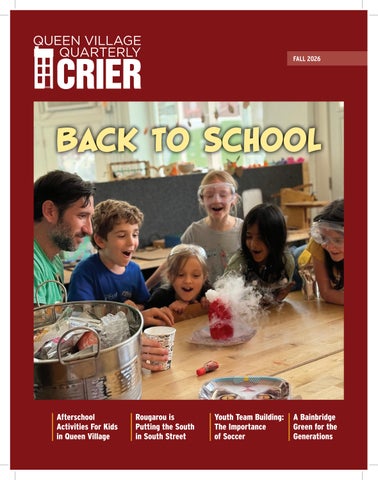
Back To School
Afterschool Activities For Kids in Queen Village
Rougarou is Putting the South in South Street
Youth Team Building: The Importance of Soccer
A Bainbridge Green for the Generations
Do You Own Rental Property? Find out how Skyline Property Management can simplify your life and make you money!
Full Service Real Estate Firm, Specializing in Property Management PhillySkylinePM.com | (215) 800-1762
Kaleidoscope Preschool, Ages 3-5
• Award-winning preschool arts enrichment program • 12 classes a week in music, dance, and art • NAEYC Accredited
Every child is born with creativity. At Kaleidoscope, we give it room to grow �� ��
• Honored by the White House and National Endowment for the Arts • Free for qualifying Head Start families • Limited tuition-paying spots available for Fall ’26 settlementmusic.org/preschool
Kaleidoscope Plus
After-School Arts Program, Ages 3-9 • Music, theater, and visual art every day • Pickup available from McCall, Meredith, and Nebinger • Creative, caring, and highly-qualified artist teachers • Affordable and flexible options, ELRC accepted settlementmusic.org/afterschool
QUEEN VILLAGE QUARTERLY CRIER \\ FALL 2026
Contents 3
Letter from the President
6
Urban Eden: Going Native
4
Afterschool Activities For Kids in Queen Village
7
Casa Nostra
8
Fertility Home Care
VOLUME 8 | ISSUE 2 FALL 2026 PUBLISHER Queen Village Neighbors Association
FALL 2026
EDITOR-IN-CHIEF Sam Thompson sam@qvna.org DESIGNER Alec Meltzer meltzerdesign.net PHOTOGRAPHERS Maxine Mayer PROOFREADERS Katie Mears and Cait Allen AD SALES www.qvna.org/advertise sam@qvna.org QVNA provides community stewardship, advocacy and service to help improve quality of life for Queen Village residents.
BOARD OF DIRECTORS (2025–2026 TERM) OFFICERS Cait Allen – PRESIDENT Chris Mullen – VICE PRESIDENT Philip Holzhauer – TREASURER Andrew Jarrah – SECRETARY DIRECTORS Amanda Maize Ernest Cuni David Suisman Kevin Farrell Mae Johnson Rich Villa Patricia Kucker Kim Vo Dennis Mahoney
10
Rougarou is Putting the South in South Street
EMERITUS DIRECTORS Inez Green Michael Hauptman Marian Buczek
12
Youth Team Building
OFFICE: 709 S. 5th Street EMAIL QVNA: info@QVNA.org
14
Interview
16
Out with the Old, Welcome to The NeighborHub!
PHONE: 215.339.0975 © Copyright 2026. Queen Village Neighbors Association. All rights reserved.
18
Philadelphia and China
20
A Bainbridge Green for the Generations
QUEEN VILLAGE QUARTERLY CRIER // PAGE 1
Meet Your Neighbor Contributors
Q
VNA sincerely appreciates the time and talent of the volunteers who helped create this issue of the QV Crier. Maxine Mayer has been a Queen Villager since 2004. After a career in nursing, Maxine pursued her love of photography volunteering for the southeastern Red Cross & the QV Crier. Check out her instagram @ maxinemayerphotography and her website maxinemayerphotography.merlin-site.com Mariah Reed recently moved to Queen Village from South Florida. She is a playwright and musical writer whose work has been produced professionally, as well as a theatre director and critic for professional theatre. Mariah and her husband relocated to Philly to be near their daughter, a midwife at Penn Hospital, and their cherished grandchildren, Rosie and Kit. Lauren Earline Leonard has more than 20 years of real estate development, strategy, and project management expe-
rience. She has overseen some of Center City’s most iconic developments and served clients, including the Commonwealth of Pennsylvania, the City of Philadelphia (Rebuild Initiative; Office Homeless Services), CHOP, KIPP Philadelphia Schools, the Miquon School, the Wilma Theater, and Scout. Hilary Young is a Queen Village mom and owner of Hilary Young creative, a brand strategy and marketing consultancy. Cindy Temple has been an active community member for over 40 years. She was a founding member of the Friends of Shot Tower, oversaw the QVNA historic preservation committee, and is a member of the Southwark Queen Village Community Garden. She is a trustee of the Historic Gloria Dei Preservation Corporation, supporting the preservation of Gloria Dei (Old Swedes’) Church National Historic Site. Shawn Rybacki was born and raised in Queen Village. Her parents owned a small
Queen Village
Volunteers Sign up @ QVNA.org/Volunteer
QUEEN VILLAGE QUARTERLY CRIER \\ FALL 2026
business on South Street in the 80s, so she considers supporting the QV community a legacy. Shawn is a licensed professional counselor, artist, and wellness nerd. Katie Mears is an editor, an avid reader, and a Queen Village local. When she’s not at Shot Tower, you’ll find her working on story drafts, running around Philadelphia, or playing fetch with her cat, Franklin. Peter Seibert serves as the president & CEO of Independence Seaport Museum and brings an award-winning, three-decade career from notable institutions, including the Colonial Williamsburg Foundation, the Millicent Rogers Museum, the National Council for History Education, and the Buffalo Bill Center of the West. A Pennsylvania native, Seibert grew up in Harrisburg and earned both a Bachelor of Humanities and a Master of Arts in American Studies from Penn State University. Marc Raspanti, Esq. is an active Center City lawyer, resides in Society Hill, fancies himself an amateur historian. Most recently, he became a certified tour guide through the Association of Philadelphia Tour Guides. Mark Atwood is the executive director of The NeighborHub (formerly Old Pine Community Center) and has worked there since 2021. You may see him walking around Queen Village with his threelegged dog, Honeybee, after a long day at barKadelphia. Cait Allen is president of the Queen Village Neighbors Association (QVNA), moving to Queen Village in 2019. Sam Thompson is the executive director of the Queen Village Neighbors Association (QVNA). She received her Bachelors in Science at Lehigh University. In her personal life, Sam is a dog lover, food enthusiast, and Philly sports fan. ■
Letter from the President By Cait Allen, QVNA President
H
appy fall! The season of pumpkin everything, football games, and Gilmore Girls is officially here. It was a busy summer for QVNA, thanks to the dozens and dozens of volunteers, including the QVNA board, and Jake and Sam, our staff who keep the neighborhood running. In case you missed it, here are some of the highlights from the past few months: Co-sponsored the third Queen Village Restaurant week. This initiative is restaurant-led and designed to promote neighborhood places at a time that’s traditionally slower. Kicked off the first Nebinger School summer soccer camp. Goal Getters
was an extension of last year’s fall and spring seasons. Celebrated community policing during National Night Out. QVNA partnered with the Courtyard Resident Council, School of Rock, Rep. Isaacson, and CM Squilla on the annual block party. Gave residents a voice. QVNA sponsored almost a dozen community meetings over this summer on topics ranging from the water main repairs and public safety to Bainbridge Green renovations and the new South Street bridge. Supported Summer at Courtyard. The summer camp provides a free program for more than 30 children each year.
Advocated for quality of life. I testified in City Hall and Harrisburg in support of legislation reining in illegal smoke shops and other nuisance businesses. Beautified the neighborhood. QVNA sponsored new artwork around the neighborhood, most notably, the new Gloria Dei mural crafted by local artist, Jed Williams. We have some exciting projects brewing and are looking forward to sharing more soon. Subscribe to our newsletter for the most up-to-date information at qvna.org. Cheers!
QUEEN VILLAGE QUARTERLY CRIER // PAGE 3
Afterschool Activities For Kids in Queen Village By: Hilary Young
O
ne of the best aspects of living in Queen Village is that there really is something for everyone in this neighborhood. And that doesn’t just apply to adults; kids of all ages have access to an amazing assortment of activities here. As a working parent, this is particularly beneficial, since many of the programs below offer after-school pickups from both Nebinger and Meredith. If you’re looking for ways to keep your kids engaged this fall, here are some of the neighborhood’s best options:
Queen Village Art Center 514 Bainbridge Street A neighborhood staple since 2011, the Queen Village location of the Philly Art Center gives kids a creative outlet through hands-on art experiences that encourage self-expression, imagination, and problem-solving. They have classes for preschool-aged kids and elementaryaged after-school programs, all of which focus on having fun while also developing artistic skills.
Zhang Sah 530 Bainbridge Street Zhang Sah combines martial arts with youth development, helping children build discipline, focus, confidence, and physical coordination. They have structured programs for afterschool, preschool, and camps.
QUEEN VILLAGE QUARTERLY CRIER \\ FALL 2026
InMovement 500 Kenilworth Street InMovement helps kids develop strength, balance, coordination, and body awareness through gymnastics and movement-based play. Classes are designed to make physical activity fun, so gymnasts of all skill levels are welcome to sign up. Open gym for the littles and general classes are relatively easy to get into, but the MOVE Afterschool program usually has a pretty impressive waitlist.
Coco Academy 615 S. 3rd Street We were so happy to see that Coco Academy decided to open a second location in Queen Village, because this STEMforward program offers children opportunities to learn, explore, and develop new (i.e., useful) skills. Programs can help strengthen independence, creativity, and social skills while giving kids a positive place to learn outside of school.
Mister John’s Music 761 S. 8th Street Mister John’s Music has been an integral part of the Queen Village community for over a decade. Mister John and his musical staffers introduce children to music in a fun and engaging way, making music education accessible for kids of all ages.
Queen & Rook Game Cafe 123 South Street Queen & Rook provides a fun setting where kids can play tabletop games that encourage strategy, critical thinking, com-
munication, and problem-solving. Kids who sign up for the afterschool program also get to access the (rad) retro basement arcade once a month to work on their hand-eye coordination.
Butcher’s Sew Shop 800 S. 8th Street Project Runway, but for kids! Butcher’s Sew Shop gives kids the chance to learn practical sewing and design skills through handson projects. Creating something from start to finish can strengthen patience, creativity, fine motor skills, and confidence.
Palumbo Rec Center 725 S. 10th Street Palumbo Recreation Center provides active children the opportunity to engage in sports and recreation in a neighborhood setting. Added bonus: Some optional leagues (including girls-only leagues) also operate out of Palumbo outside of school hours.
The NeighborHub (Formerly Old Pine Community Center) 401 Lombard Street The NeighborHub serves as a neighborhood hub where children can participate in structured activities, sports, and enrichment programs. Its community-focused approach gives kids opportunities to learn new skills, build friendships, and feel connected to their neighborhood.
Skilladelphia 401 Lombard Street Founded by Queen Village’s own Michael Casey, Skilladelphia gives girls and nonbinary players between ages 6–14 the opportunity to develop athletic skills while learning the importance of teamwork, practice, discipline, and perseverance. Current programs include basketball and lacrosse. ■
News You Can Use IN THE VILLAGE
Subscribe to our Weekly Newsletter: https://www.qvna.org/enews-signup
QUEEN VILLAGE QUARTERLY CRIER // PAGE 5
Urban Eden: Going Native By Cindy Temple, Photo by Cindy Temple
W
e have many opportunities to support our local ecosystem right here in Queen Village. I found one way in 2023 that brought me tremendous satisfaction and delight: native gardening at Gloria Dei (Old Swedes’) Church Historic National Site. In this column, I’ll share some of what I’ve learned these past four years that may pique your interest and offer solutions to some of the challenges. A good first step is to identify what you’d like to see in terms of height, flower color, and season of bloom. This will enable you to find specific plants that fit these criteria. You can then purchase and plant them in your window box or backyard space. It’s rewarding to see that the insects are most appreciative. And you’ll enjoy the strength and beau-
QUEEN VILLAGE QUARTERLY CRIER \\ FALL 2026
ty of these plants, especially when they return each spring! Fortunately, native plants are becoming more common in big box stores, albeit slowly. One great resource is Good Host Plants right here in Philly (learn more at
goodhostplants.com). Just order through the owner online, then pick them up in Mt. Airy when your order is ready. Don't delay! They often get snatched up quickly, so put in your order early. There are many spring sales in arboretums and other locations too. See our website for more information at https://preserveoldswedes/ natives. Other websites offer bare root or potted plants for sale, but I suggest you support our local native plant vendors whenever possible. Planning new plants is a great fall/winter project! A favorite plant: One of our first purchases was the Longsepal Beardtongue (Penstemon calycosus), also known as Calico Beardtongue. In May to July you’ll see tubular pink/mauve flowers on stalks 2–3’ tall. It likes full sun and will tolerate partial shade and average moisture, and likes to be divided every two or three years or so. Its green leaves are pretty in the fall as they darken to a deep purple color. We love sharing what we’ve done here in Queen Village. Please contact us at friendsofoldswedes@gmail.com if you are interested in a brief tour or volunteering some gardening time. Last thought: Fall leaves and stalks are a crucial resource for bugs overwintering in and among them. These include various pollinators; butterfly, caterpillar, and moth eggs or cocoons; ladybugs; firefly larvae; and helpful predatory bugs, such as assassin and minute pirate bugs. Poke around on Doug Tallamy’s great site, HomegrownNationalPark.org, and see “Leave the Leaves: Why Less Cleanup Means More Life.” ■
Casa Nostra Welcome to Our Home By Marc S. Raspanti, Esq.
N
estled on historic Front Street, 775 South Front Street to be precise, one of the oldest and storied streets in Philadelphia, is a relatively new dining addition to Queen Village, Casa Nostra. It was opened in April 2025 and serves some traditional and beloved Italian entrees. Of note, it is a BYOB restaurant, which has become beloved in our city. The restaurant is charmingly decorated in a minimalist style. It has 45 seats in the main dining room, which I found to be rustic and cozy. Aged Philadelphia red brick is exposed to provide a warm and inviting dining area. A wonderful addition that has been added to the restaurant is an indoor/outdoor deck equipped with fans and heaters, depending on the weather. The exterior deck space can be rented out for holiday parties and special events and holds 55 seats outside. The outside deck has become extremely popular, because it naturally allows for more frivolity than the main dining room.
While the restaurant is in the hands of committed and creative Albanian restaurateurs, the food exudes skilled Italian American preparation. I have now had the opportunity to enjoy a series of meals here. The kitchen remains inventive and consistent, which is key for any restaurant. I found the portions to be generous but not overwhelming, and the sauces to be delicate but not overpowering. Most importantly, the ambiance is quite comfortable and engaging. While butter is on the table, as opposed to my preferred extra virgin olive oil, a simple request for anything and the staff will do their best to accommodate. The three-story building that Casa Nostra occupies clearly goes back well over 100 years, although I could not find reliable records to confirm when it was built. Although there is no liquor license, a much larger sister restaurant, Capri, about 1,000 yards away, has a well-stocked bar and a daily happy hour where one can enjoy a cocktail before or after dinner. Having been to both restaurants, I personally prefer the quiet ambiance and intimate surroundings of Casa Nostra. It is
getting a solid neighborhood following. The now enclosed former outside deck is a coveted addition for all four seasons. While the menu offerings are not extensive, the choices are all excellent. Daily specials are routinely added. Some of the signature dishes worth trying include the mussels in white sauce, the sauce is a delicate wine-based infusion, with ample herbs and lemon; and the arugula salad is a classic and satisfying addition to every meal with a perfect dressing. We really enjoyed the flounder Francaise. It was fresh, quite delicate in its preparation and a generous portion of fish. The eggplant rollatini is superb and should start off any dinner. The veal and chicken entrees are all worth trying. The meals are fairly priced in the $30$40 range all in. The desert additions are limited but homemade. Delivery is available through Uber Eats and DoorDash. The restaurant is open from Wednesday through Sunday for dinner. Reservations can be booked online at www.casanostraphilly.com or by calling Casa Nostra at 215-975-0055. ■
QUEEN VILLAGE QUARTERLY CRIER // PAGE 7
Fertility Home Care Compassion Paired with Expertise By Mariah Reed, Photos by Maxine Mayer
W
hen licensed pharmacists Gene and Annie Carelli decided to become parents, they expected the process to go the way it does for most people. After a frustrating year of trying on their own, they sought help from a fertility clinic and began IUI (intrauterine insemination), a less invasive, less expensive option that doesn’t require egg retrieval or lab fertilization. Nine months later, still without success, they made the harder decision to move forward with in vitro fertilization (IVF). Nothing prepared them for how emotional that process would be. As pharmacists, Gene and Annie understood medication timing and injections better than most patients ever could. But IVF asks something different: a precise, daily sequence of medications, carefully mixed and administered on a strict schedule to stimulate and mature egg production. Every dose mattered, and given the cost of the medication, there was little room for error. “I love the fertility clinic we were using,” says Annie. “They were amazing. But there is a gap in the medication training aspect for patients. When we went in, they gave us an overview of it, and I jokingly at the end asked, ‘Did you just give us an abbreviated version because we’re pharmacists, and you think we know what we’re doing?” She laughs, “Because we don’t. But they said, no, this is a good typical training, and then we supplement with these videos at home. So, we
QUEEN VILLAGE QUARTERLY CRIER \\ FALL 2026
watched the videos, and as pharmacists, we understood them well. But when I talked to other people that have undergone IVF, they said the stress of the medication was overwhelming… when you’re actually handed a bag of medications from the pharmacy with needles that you really have never handled before, it can seem like a lot.” It’s easy to see why. IVF medications come in wildly different forms: powders, liquid vials, pre-filled syringes, pen devices, each prepared its own way. And even when everything is done correctly, some eggs may not mature enough to retrieve, meaning the whole cycle may need to be
repeated. Every woman’s body responds differently, and it isn’t unusual for it to take one to five years before a patient sees success. Having lived through that toll themselves, Gene and Annie started to notice something: Their community needed support that wasn’t being offered. Annie explains, “Well, we were in Philly, after we had our baby and we were reminiscing about the difficulties that we encountered, and we realized there was such a need for this.” Gene reached out to their fertility clinic and offered to help. When the first call came in, he rode his bike over
and walked the patient through preparing and administering her medications in person. Word spread. Soon he was cycling across Philadelphia, patient to patient, offering the kind of hands-on instruction that a video can’t fully replace. For patients with a fear of needles or real hesitation about self-injecting, his professional credentials meant he could give the injections himself. The relief patients felt was immediate, and grateful calls back to the clinics followed. Demand grew quickly from there. Unfortunately, many patients undergoing IVF don’t succeed on their first cycle and must go through the process again, a hard thing to face twice. Having someone experienced in your corner can ease that considerably. As Annie says, “Patients constantly come back to us. I mean, it can be 8 to 12 days out of their month that they must do these medications. So having those days covered by a nurse brings them a sense of peace.” That peace of mind is what Gene and Annie set out to offer. For a while, they provided this help for free, until the volume of calls outpaced what two people could do on their own. Bringing on certified nurses allowed them to reach more patients, and eventually they introduced a modest fee to support the nurses doing the work. Some of the most meaningful work has come from supporting cancer patients, often young people recently diagnosed. While facing chemotherapy, these individuals need to make decisions about fertility preservation almost immediately, sometimes within a day of diagnosis. Annie states, “For our onco fertility patients, we’ll oftentimes cover their trainings just because they’re already going through enough. I tell them to reach out to us directly and let them know their situation.” She continues, emotionally,
“We’ll often send a nurse pro bono just to help them relieve that stress, because they’re already going through so much. And that’s our way of just giving back to the fertility world.” Now, Gene and Annie are focused on reaching more clinics, nurse practitioners, and doctors, so patients hear about this kind of support before they need it, not after. Gene says, “Some of the biggest feedback we’ve heard is that the patients wish they knew about us sooner before going through IVF.” Doctors, understandably, are focused on lab results after treatment and aren’t always positioned to catch a missed dose or a medication pre-
pared incorrectly. By filling that gap with training and hands-on support, medication errors go down and outcomes improve. “That’s ultimately what we all want,” says Gene. “Better outcomes for the patients.” Former client Allison LaFave agrees. “My nurses did what many do, which is draw Sharpied circles on my body where I should try to aim the needles. Unfortunately, there is so much more to it than aiming the needles: mixing meds, prepping the site, prepping and tending to the injection area, etc. And everything feels SO high stakes! I wish everyone could have a Gene or Annie to help them navigate this aspect of fertility treatment.” LaFave gave birth to a healthy baby girl in August 2021. She and her husband went on to have another daughter, and she is currently expecting her third child, a son. Another client, who prefers to remain anonymous, struggled with a needle phobia. She says, “I knew by utilizing Fertility Home Care that I was getting quality care, the correct dose and didn’t have to worry about the stress of self-injecting. It also gave me an amazing support system! I have recommended this service to other friends who were in a similar boat. I always let them know that Fertility Home Care exists and that they are truly amazing.” Such stories are what fuel the passions of the Carellis. When their daughter proudly tells folks that her parents help others with fertility issues, Annie beams as she affirms, “She’s the face of Fertility Home Care.” Fertility Home Care currently serves patients in Philadelphia, New York, Boston, Dallas, Miami, Washington D.C., and New Orleans, with more locations likely ahead. For more information, visit https://fertilityhc.com/. ■
QUEEN VILLAGE QUARTERLY CRIER // PAGE 9
Rougarou is Putting the South in South Street By Shawn Rybacki Photos by Maxine Mayer
F
or months I peered longingly across the street from my office window at Rougarou’s Coming Soon! sign. Soon couldn’t come soon enough. Anyone who had the fortune of catching their Sunday pop-ups counted down the days until the new bakery launched. When Paige and Zach Wernick finally opened their doors, Queen Village truly gained far more than another place to grab a pastry. Rougarou is built on love, memory, southern hospitality, and a deep appreciation for community. Their bakery is rooted in family traditions, but above all, it’s comfort food. With an exciting range of savory and sweet baked goods, every customer will find something they love. Upon meeting Paige and Zach, their gratitude is unmistakable for the enthusiasm Queen Village has shown them every step of the way. The story behind the bakery actually begins with a love story. The couple met while living in Florida, bringing together
QUEEN VILLAGE QUARTERLY CRIER \\ FALL 2026
different career paths and heritage. Zach cooked Paige dinner on one of their very first dates, and the two continued bonding over beloved family recipes. Despite missing the South, the Wernicks have built a home in Queen Village (lucky for us!). They remarked that Philly is unique in the way we love each other, crediting neighbors and fellow small business owners for helping Rougarou come to fruition. With their pop-ups steadily growing a following through word of mouth and neighborhood support, their vision turned towards ways to expand. The bakery’s name comes from the Rougarou, a legendary Cajun cryptid often described as Louisiana’s version of a werewolf. The folklore traces its roots to the French loup-garou, but has become uniquely woven into Cajun culture. Used as a cautionary tale, the Rougarou might find anyone misbehaving or wandering near the swamp at night. It has also been used as a way to ensure that the rules of Lent are abided by, making sure no one sneaks sweet treats! The selection of the cryptid as their name and design for their logo was inspired by their own beloved black dog, Trout, adding another personal layer to the playful legend. Apart from bringing some fun to their shop, they hope this can serve as a beacon to other homesick southern transplants in need of a little taste of home.
Beyond pastries, they hope to find new ways to celebrate southern traditions and envision a future Mardi Gras parade through the neighborhood one day. Not only are they passionate about creating high-quality, mouth-watering pastries, they hope their bakery can be a place where everyone can expect welcoming and earnest kindness. Serving repeat visitors allows for the chance to see customers’ lives change a little every time they come in. Babies are born, marriages are celebrated, professional goals are achieved. Getting to see neighbors’ lives unfold is a special benefit of running the bakery for Paige and Zach. They hope customers experience something similar to the television show Cheers, where staff not only know your name, but your baby’s name, and your dog’s name. For now, Rougarou is open Friday through Sunday, which is a deliberate choice that allows them to maintain the quality and care that define everything they create. Both Paige and Zach have long histories in the food industry and are intentional about their methods and practices based on everything they have learned. They are passionate about sus-
tainability efforts such as minimizing food waste and continuing to source ingredients from local farms and butchers. Because they are deeply devoted to reducing food scarcity, they have also become a donation courier for South Philly Community Fridge. This community-centered philosophy also shapes how they approach other businesses. They hope to continue cultivating a neighborhood where small businesses support one another, recognizing that a thriving community benefits everyone. They cherish the collaborations and relationships they’ve already built with other businesses in the area. When asked how the community can best support them, their answer was simple: keep showing up. Every weekly visit helps sustain not only their bakery but the network of independent businesses that make neighborhoods like Queen Village feel special. They stress the importance of remembering to support all the local businesses you love in our neighborhood because your continued patronage helps ensure they have a future. If you’re visiting for the first time, they strongly recommend starting with one of their favorites: a hand pie, a ginger cookie, or the babka! ■
QUEEN VILLAGE QUARTERLY CRIER // PAGE 11
Youth Team Building The Importance of Soccer and the Nebinger Goal Getters By Sam Thompson and Cait Allen, Photos by Sam Thompson
T
he benefits of youth sports are endless. Unfortunately, resources are not. So, what happens when a group of students would love a program not available at their school? The community figures it out. At the beginning of the school year of 2024, Nebinger School teacher, Waliere “Wali” Somda, approached QVNA about starting an afterschool soccer program for the kids at George W. “Nebinger” School. Somda grew up playing soccer in West Africa, specifically Burkina Faso. He was scouted by a Division II team and offered an opportunity to play for the National Burkina Faso Team. However, Wali chose education over sports and pursued a nursing degree. When he came to America with his wife, he struggled to find purpose. “I worked seven days a week back in Africa:
QUEEN VILLAGE QUARTERLY CRIER \\ FALL 2026
Monday to Monday. In America, I was like wake up, eat, sleep, repeat,” he said. He eventually found a passion in building up children through his first volunteer job at the Broad Street Ministry, but he still missed playing soccer. He joined a club team and quickly realized that he could combine these dreams by teaching children how to play soccer so one day they could have an opportunity to play professionally. He began teaching at Nebinger, his first paid gig in America. Soon after, he started conversations with the principal, Ayana Townsend, and the athletic director, Zach Hill, on how this dream could be achieved. Hill connected Somda to QVNA, thus kicking off the Nebinger Goal Getters. While having a catchy name is all too important, so is funding and support.
With the help of Councilman Mark Squilla, Rep. Mary Isaacson, Famous 4th Street Deli, and QVNA, the Goal Getters received all the soccer equipment and snazziest team jerseys this side of Philly has ever seen. “There’s nothing more important than kids having a chance to play sports,” said Famous general manager, Lou Novak. “So, when QVNA mentioned this opportunity, we were happy to help make this happen.” “I started to notice everything was becoming soccer to the kids,” reflected Somda. “Kids are playing on the playground, talking about soccer in the halls, and better understanding the World Cup.” Somda also talks about the budding friendships. “There are first graders that are now friends with eighth graders!” None of this would have happened if not for his influence and passion.
That’s the beauty of youth sports: They build skills, boost confidence, and instill the importance of working as a team. Soccer helped Somda out of a lonely spot when he first came to America and his instinct was to show the youth how it can help them too. Somda doesn’t do it for a lucrative coaching career; he does it to teach children vital life skills and values.
The feedback from the after-school program was so positive from kids, parents, and faculty alike, QVNA and Famous helped Somda launch a free soccer summer camp at Shot Tower Rec Center. The kids played three times per week to practice their newfound craft. Now that school is back in session, Somda is hopeful of a winning season. “Even the kindergarteners have skill this
year!” He exclaimed. Now that the kids have a basic understanding of the sport, he aims to focus more on technicality within the different age groups and organize more frequent and friendly competition through weekly games. Learning and perfecting a craft is one thing, but getting to perform, achieve, and even lose is another mental muscle the players will grow this season at Nebinger. ■
QUEEN VILLAGE QUARTERLY CRIER // PAGE 13
A Conversation with Local Author Jennifer Herrera By Katie Meers
J
ennifer Herrera is a local author, literary agent, and Shot Tower regular. Her new book Siren Says, has just hit the shelves, and she was nice enough to sit down with me to discuss her work, her approach to creativity, and her favorite Queen Village spots. Katie Mears: Your new book came out in August — congrats! What’s this story about? Jennifer Herrera: Siren Says is about a woman who must learn to harness her family’s dangerous magic in order to
QUEEN VILLAGE QUARTERLY CRIER \\ FALL 2026
break the curse that’s been plaguing the women in her family for generations. It’s for fans of Practical Magic, A Discovery of Witches, and Outlander. What first sparked the idea for this story? I read an ancient myth about a woman named Mis (pronounced Mish). Her father dies in battle, and in her grief she becomes this enormous black bird who terrorizes a city for over 300 years. Warriors try to defeat her. Whole armies do, too. And then a gentle harpist plays music for her that is so beautiful that it reminds her of her own humanity, allowing her to become a woman again. My book is based on that myth. Without giving anything away, what do you hope readers take away from the book? Siren Says features a lot of plant magic. All of the plants featured in the book are based on real plants that really do possess these properties. They’re just amplified in a magical setting. My hope is that by connecting real-life plants with magic in my book, readers will feel magic in their own lives as well. Which author has had the biggest influence on your writing? I’m really obsessed with Peter S. Beagle. He imbues every element of his fan-
tasy worlds with a deeper meaning so that you feel like you’re reading about something separate from your life but still relevant to it. Where’s your favorite place to write in the neighborhood? Shot Tower Coffee obviously! The vibes are immaculate. What does your ideal writing day look like? I like to go to Shot Tower Coffee first thing in the morning for a couple of hours to write completely uninterrupted. That can be a challenge in a place where I know just about everybody! Then I go on with the rest of my workday and spend time with my kids. If I’m lucky, I’m able to dip back into my novels at night, usually to do research or to plan writing for the next day. Is there a Queen Village spot that inspires your creativity? The cemetery behind Old Swedes is particularly charming and a good place to think. If someone wanted to spend a “perfect day” in our neighborhood, where would you send them? Assuming it’s a Saturday, I’d send them to Shot Tower Coffee for one of their incredible chocolate donuts, which they only have on Saturdays. For lunch,
I’d have them go to Square Pie (it’s Philly’s best pizza!) or Farina di Vita for a meltin-your-mouth cutlet. Dinner would be at Saloon—a classic for a reason. During the day I’d send them exploring the neighborhood, from the little side streets to the cute shops on 4th to the vintage shops on South. Queen Village is filled with hidden gems. There is such a joy in discovering them. What’s the best writing advice you’ve ever received? “Don’t give up” is really it. I truly think that’s the only advice that really matters. It can take people decades to build a career. So long as you never give up, you always have a chance at success, whatever that means to you.
(Old Swedes’ Episcopal Church)
O L Movie D S W E D E S’ Night
The Day the Earth Stood Still
September 18, 7:30pm $10pp, $25 per family. Free popcorn with ticket purchase U2CHARIST
The music of U2 in the context of a worship service
September 29, 6pm
Blessing of the Animals October 4, 12 noon All caged, leashed (and stuffed) animals welcome! Lucia Fest and St. Eric’s Fair
Traditional Swedish Christmas show & market with Scandinavian goods
December 12 & 13 with performances at 2:00, 3:30, and 5:00pm Tickets: Adults — $15, Children under 12 — $10 O Brother, Where Art Thou?
Musical tribute to this joyous show presented by Sexton Sideshow.
December 18 & 19
You can follow Jennifer Herrera at @Jennifer_Herrera_Books or at www. jenniferherrarabooks.com, and you can follow Katie at @ktmeeerkat or at kmears.com. ■
Columbus Blvd. & Christian Street Philadelphia, PA 19147
Doors open at 6:30, show starts at 7:30. Check our website for tickets
215-389-1513 www.old-swedes.org
Inclusive Sunday Services at 10am Every Sunday
QUEEN VILLAGE DOG WALKERS Midday walks, GPS-tracked with photo updates.
BOOK A MEET & GREET
pupsonpassyunk.com (267) 571-9373
QUEEN VILLAGE QUARTERLY CRIER // PAGE 15
Out with the Old, Welcome to The NeighborHub! by Mark Atwood, Photos provided courtesy of the NeighborHub
O
ld Pine Community Center is now The NeighborHub. We’ve changed our name. I want to share with you why we did it and how you can help. As we approach our 50th anniversary in 2027, we knew it was the right time for a name that better aligned with the identity of our organization. The NeighborHub reflects our reputation in the community, the spirit of our programs and partnerships, and the energy you feel when you walk through our doors. We’ve always been a central place of activity, service, and connection. We’ve always been a neighbor hub. Now, our name matches the role we’ve played for nearly half a century. Recently, a parent stopped by to pick their son up from one of our programs. On their way out the door, they smiled and said, “That’s our favorite babysitter!”
QUEEN VILLAGE QUARTERLY CRIER \\ FALL 2026
They were pointing to the person working at our front desk: a recent high school graduate they’ve known for years. Until then, neither of them realized they both had a connection to us. Another parent once fondly shared that they celebrated their daughter’s baby shower in the same space that she was now playing in that afternoon. And one of our volunteers reminisced that she had taken gymnastics classes as a child in the room that she was now, years later, packing grocery bags for her neighbors. Eventually I realized that they were more than coincidences–they were and are our mission. These connections are what make The NeighborHub unique, and why it continues to grow and matter to people after all these years. Twenty-five different community organizations and small businesses call us home. We worked with 123 local families
in our Afterschool program last year, and 137 during this year’s summer camp. More than 200 people actively volunteer in our programs. We prepared over 25,000 meals in 2025 and will surpass that number this year. People vote, play sports, make friends, attend classes, celebrate milestones here. People learn and teach, laugh and cry, get help and help others at The NeighborHub.
I’m fortunate to stay in touch with Reverend Bill Pindar, who was the pastor of Old Pine Church when the 401 Lombard Street building opened in 1977. He and many other community members shared a strong vision about what this could be and worked hard to bring it to life. Reverend Pindar was also the only person outside of our organization who we shared the new name with before it became public. Despite his close connection to our history and previous identity, he immediately understood why this change was necessary. In fact, he was certain that the people who invested so much to make it happen many years ago would feel the same way. Change is inevitable. When it is centered around purpose, it is necessary. What’s next and how can you get involved? You can join us on Saturday, September 26, for our 49th Anniversary Celebration. This event will be a fun, festive outdoor party for all ages.
This fall, we’re launching Third on 4th, a series of original educational and social programs designed to bring people together and build on our model as a “third space.” We’ll also be introducing new and expanded volunteer opportunities to support our growing programs, including ones developed for families to participate in together. While this is an exciting time for The NeighborHub, we are very aware of the real obstacles and significant work ahead in the next few years. Some of these are shared by all nonprofits; others are unique to our situation and future. We will need your help to meet these challenges and successfully move forward. If what we do is important to you and people you care about, we are asking you to join us. You can learn more about all our events, programs, and ways you can get involved on our new website; check out www.theneighborhubphilly.org! ■
Scan to learn more & book an appointment!
info@phillycatvet.com 215-458-2182 (Call or Text) www.phillycatvet.com
QUEEN VILLAGE QUARTERLY CRIER // PAGE 17
Philadelphia and China A Centuries-Old Love Affair By: Peter Seibert, President and CEO, Independence Seaport Museum Photos provided courtesy of the Independence Seaport Museum
I
n the years after the Declaration of Independence, Americans labored to build for themselves a new nation. Since settlement, the colonists had only known English law and trade policy. Imports and exports were regulated and taxed by officials on behalf of the king. British warships protected trading vessels on the seas. British ports provided a safe haven in case of threatening storms. And strict rules governed nearly every aspect of trade. Violators, such as pirates and tax cheats, faced stiff, if not often fatal, penalties. All this was wiped away with the American Revolution. Philadelphia’s merchants needed to develop new trading partners and strategies. Britain, once a friend, was an enemy during the revolution and then again leading up to and during the War of 1812. The French, a friend during the revolution, soon became an enemy during the Quasi-War with France in the 1790s. Pirates off the coast of Africa could easily seize American ships, as our navy was too small to provide suitable protection. What was a merchant or trader to do? The answer was to trade with a distant land: China. While requiring substantial travel (around the Horn of Africa, across the Indian Ocean, and into the Pacific), there were vast fortunes to be made in China trade. Porcelain, silks, lacquerware, and, most importantly, tea were expensive items that were in high demand by Philadelphians.
QUEEN VILLAGE QUARTERLY CRIER \\ FALL 2026
Mind you, the Chinese were no amateurs when it came to global trade. Chinese goods had flowed for centuries across the Pacific from the Philippines to the west coast of Mexico. Dutch and English potters both tried desperately to copy the high-quality porcelains produced in Chinese kilns. Tea was so universally drunk that taxation by the British was one of the root causes of the American Revolution. And so in 1787, a ship named the Empress of China sailed from New York Harbor bound for Canton, China. She was captained by Philadelphian Captain John Green, and much of her cargo was funded by local merchants like Stephen Girard. In his sea chest, Green carried a letter of introduction from the American Congress directed to the Chinese government. The trip was a success, and
within the succeeding decades, American ship captains routinely put out of New York, Boston, and Philadelphia bound for China. In the late 18th and early 19th centuries, a Philadelphia family would visit a local merchant where they would see samples of Chinese silks and porcelains. They might even look them over while drinking a cup of Bohea or black tea. Decisions would be made and an order placed with the merchant. Months would elapse until a ship appeared one day in the Delaware River. In its hold would be the much-anticipated set of porcelain, perhaps a silk shawl, and packed around were boxes of tea—all newly arrived from China. To modern eyes used to placing orders with Amazon, this process seems easy. In reality, it was vastly complex. A Philadelphia merchant would front the
funds needed to outfit the ships and provide the initial trade goods. The trip was a risky proposition for captains and crews, as there was risk from storms, piracy, the Royal Navy, and just plain old bad luck. Most of the trade ships from Philadelphia did not sail directly to China. Rather, they began their trip by carrying American goods, perhaps Lancaster County tobacco or pig iron, to England, where it was sold for silver. The Chinese merchants were particular about what they
wanted from their trading partners. Silver was the easiest and most portable, and thus most highly desired of goods. And so once a captain accumulated sufficient silver, the ship headed around Africa bound for China. Upon arriving off the Chinese coast, it was not a matter of pulling into the closest port and beginning to make deals. Rather, the Chinese government restricted foreign traders to a limited number of closed ports. Canton was the destina-
tion for foreign trading ships. Each country—France, Holland, England, Spain, the United States, and others—had an area in Canton restricted for their use in trading. Captains would place their deals and wait for the delivery of goods. Once the ship was filled, the captain headed for home, hoping to again avoid storms, pirates, and the Royal Navy along the way. While arduous, the profits from the trip when the captain returned to Philadelphia were immense. So much so that many scholars credit the China trade with buoying up the American economy in the late 18th century. The impact of Chinese goods, as well, never diminished. In the 1850s, mass-produced Chinese ceramics known as Canton ware dominated the American dinnerware market. In 1876, at the Centennial Exposition held in Philadelphia, a huge area was devoted to showcasing Chinese goods. In the late 19th century, Philadelphia collectors sought old and new pieces of Chinese porcelain for their china cabinets. Reflecting on the events of July 4th, 1776, it’s important to understand that this marked the birth not only of a new nation but also of a global trading endeavor with China that continues to the present. The Independence Seaport Museum, dedicated to telling the story of Philadelphia and its surrounding communities as seen through the lens of the Delaware River, is currently showcasing its exhibition Seeking Profit and Power: Philadelphia, The China Trade, and the Making of America through January 3, 2028. This is the largest exhibition in the museum’s history and includes objects recently acquired and never before exhibited, as well as pieces loaned from museums throughout the eastern United States. For more information, visit the museum’s website at www.phillyseaport.org/. ■
QUEEN VILLAGE QUARTERLY CRIER // PAGE 19
A Bainbridge Green for the Generations By Lauren Earline Leonard
E
d Rendell first floated the idea of legalizing gaming in Pennsylvania when he was the mayor of Philadelphia. As governor of the Commonwealth in 2002, he made legalized gaming a key part of his economic agenda, though the focus had shifted from riverboat casinos on the Delaware to brick-and-mortar casinos across the state. It was argued that revenue from the so-called “sin tax” could ease the burden of high property taxes and be a community reinvestment tool. The Pennsylvania Race Horse Development and Gaming Act (Act 71) was signed into law in July 2004 by Governor Rendell. It legalized gaming in the state and established, among other agencies, the State Gaming Fund, which would house the community reinvestment funding programs, including the Local Share Account (LSA).1 Supported by a 2% fee on slot machines,2 LSA has funded some $2 billion in projects since its creation. Projects range in scope and scale to include economic development, public safety interventions, rehabilitation and revitalization of parks, trails, recreation centers, and libraries, infrastructure improvements, and preservation of historical and cultural assets.3 In January, Governor Shapiro announced $5 million in LSA funding for Philadelphia, including a $366,000 award to the Queen Village Neighbors Association (QVNA) to reimagine the median strip on Bainbridge between 3rd and 5th
QUEEN VILLAGE QUARTERLY CRIER \\ FALL 2026
Streets known commonly as Bainbridge Green. (Near neighbors, The Friends of Jefferson Square Park, received $159,040 for park improvements.)4 In the 18th and 19th centuries, Bainbridge Green was known as Washington Market, an open-air public market offering Queen Village and Southwark neighbors produce, meat, housewares, and other necessities. In 1911, with changes to retail habits and sanitation regulations, the Washington Market sheds were demolished, opening up the space and making way for a potential park.5 (The “Drink Gentle Friends” fountain, which once served the horses whose labor supported the market, survived the demolition.) What was ultimately built, called Edward Shippen Plaza, was a much less
ambitious public space consisting of a narrow medial strip capped at each intersection by a small pedestrian plaza. Surrounding the medial strip, the two-way (east-west) traffic on Bainbridge Street inadvertently lent itself to the rising trend of automobile ownership of the mid-20th century. A once promising park space became a boulevard with parking. As part of the broader “friends” movement happening nationwide, volunteer stewardship of Bainbridge Green began in earnest in the 1980s. The original Friends of Bainbridge Green, David Auspitz, Rick Milan, Dr. Jeffery Rosenberg, and Joel Spivak, took it upon themselves to address deteriorating conditions and deferred maintenance that was the result of years of insufficient city funding and
fiscal crises. In addition to cleaning up litter, painting, and tending to plantings, the Friends advocated for making the space a vibrant, multi-functional neighborhood asset. In 2013, building on the work of the original Friends, a network of volunteers and supportive businesses, the next generation of the Friends of Bainbridge Green solicited design services from the Community Design Collaborative (CDC)– a nonprofit that pairs communities with low- or no-cost design and technical services–to again imagine the space’s potential.6 The resulting designs maximized the existing footprint of the tree-lined median and plazas to create a safer, more
accessible, and enjoyable pedestrian experience while connecting the commercial corridors of South Street and Fabric Row. The CDC plans informed the most recent conceptual designs created by University City District’s Green City Works to serve as the basis of design for the LSA award. With LSA funding, QVNA can finally pursue the design and construction of a proper neighborhood park. A former president of QVNA and volunteer with FOB (circa 2014), I am newly back in Queen Village, and in a very fullcircle moment, contracted by QVNA to oversee LSA grant administration and the physical construction of the new park. As solidified over years of community input and the Friends who still diligently tend to the space, the priorities for the park continue to be creating a safe, navigable, landscaped pedestrian pathway on Bainbridge stretching from 3rd to 5th Street. To achieve this, heaving sidewalks and the fence that runs along the center of the median will be demolished and replaced with a well-lit, meandering pedestrian pathway. Soil will be amended to support the existing old-growth trees and future (native) plantings and new trees. Benches and planters will be positioned to encourage gathering and create places of respite.
This summer and early fall will be devoted to pre-construction planning and design work. Construction drawings will be submitted to the city for permits in late fall with the intention of breaking ground, weather permitting, in early 2027. We’re eyeing a summer 2027 grand reopening. I’ll work at each stage of the project with stakeholders, regulatory agencies, and the design and construction teams to ensure a transparent, efficient, and collaborative process. Neighbors should expect progress updates, opportunities for input, calls for support, and invitations to celebrate milestones. It’s good to be back in the Village and able to help bring to fruition the shared dream of generations of Villagers. ■ Endnotes 1 Philadelphia Neighborhoods. “Casinos: History of Gambling in Philadelphia.” April 14, 2014. .https://philadelphianeighborhoods. com/2014/04/15/casinos-history-of-gambling-inphiladelphia 2 Jones, Maria Jiacopello. “Pennsylvnaia Gaming Act Amendment Highlights Gaming Alert.” November 14, 2017.
https://www.foxrothschild.com/publications/ pennsylvania-gaming-act-amendmenthighlights 3 PA Department of Community & Economic Development. “2025 Local Share Amounts And Use Annual Report.” April 2026. https://dced.pa.gov/ download/2025-local-share-amounts-and-useannual-report 4 PA Department of Community & Economic Development. “Shapiro Administration Invests $5 Million to Support Community Projects in Philadelphia.” January 20, 2026.
https://dced.pa.gov/newsroom/shapiroadministration-invests-5-million-to-supportcommunity-projects-in-philadelphia 5 Queen Village Neighbors Association. “History of Bainbridge Green.” https://www.qvna.org/ friends-of-bainbridge-green 6 Hahn, Ashley. “New Vision for Bainbridge Green.” WHYY Plan Philly Eyes on the Street. January 30, 2014. https://whyy.org/articles/newvision-for-public-space-at-bainbridge-green
QUEEN VILLAGE QUARTERLY CRIER // PAGE 21