Queen’s engineering exam question tweeted by Jordan Peterson


Students call the question ‘distracting and diminishing’
Sophia Coppolino & Sofia Tosello Journal Staff
Engineering students writing their final exams found themselves pages deep in controversy due to a question on “wokeness.”
A picture of a final exam question, allegedly written by Civil Engineering Professor Colin MacDougall for a first-year engineering mechanics exam was circulated online and re-tweeted by controversial psychologist Jordan Peterson on April 27 with the comment “thank God for engineers.”
The exam questions asked students to design a “woke” light fixture with LED lights which, “are capable of producing a wide range of colors providing an opportunity for centering diverse anti-cis-normative identities.”
The question ends with, “you’re not sure what any of that means but you decide to get to work.”
The exam question concerned many students, including Zoe Irwin, Sci ’25 and Anna Wasylyk, Sci ’24, co-presidents of EngiQueers—a student-run club advocating for
PSAC 901 ‘motivated’ after wage hikes at federal level
McMackon
Editor in Chief
Following the success of federal Public Service Alliance of Canada (PSAC) workers strike last month, PSAC 901 feels excited to enter discussions with the University about wage increases for graduate student workers.
When the current collective agreement between PSAC 901—the union representing graduate and postdoctoral workers at Queen’s—and the University was ratified in March 2022, graduate student workers received a one per cent wage increase due to limits set by Bill 124.

In an interview with The Journal, PSAC 901 President Justyna Szewczyk El Jassem described the national increase in union activity as being “motivating.”
Bill 124 was introduced by Premier Doug Ford in 2019. The law previously capped wage increases for all public sector workers to one per cent each year.
queer students in the Faculty of Engineering.
Irwin and Wasylyk felt the exam question was distracting and inappropriate. Both heard about the exam question from other students and saw the question after Peterson shared it on Twitter.
“I interpreted it as discrediting the queer community kind of saying, ‘well, this is kind of stupid
and pointless, right?’” Irwin said in an interview with The Journal “Regardless of his opinion about queer people, we shouldn’t be finding out his opinion via his exam questions. That’s very inappropriate and is not a valid place for academic discussions on this stuff as students can’t respond,” Wasylyk added.
MacDougall’s class, APSC 182,
is mandatory for all first-year engineering students. The picture of the exam question posted online generated discourse between engineering students and the public. There were varying reactions, with many students finding the question funny, according to Irwin and Wasylyk.
“It really makes you question your place in engineering as queer student,” Irwin said. “It makes you shrink. It makes you feel smaller.”
Being a previous student of MacDougall’s herself, Wasylyk e-mailed him personally to voice her concerns. Wasylyk took the class during COVID-19 but recalled MacDougall made a large effort to keep students engaged.
“I can’t comment on his intent, but overall, he was a really great professor. I emailed him personally and explained how I felt about the question,” Wasylyk said.


According to Wasylyk, MacDougall responded but she did not share the e-mail with The Journal
“We don’t want to feed into any ‘us versus them’ discourse. We’re just trying to build the queer community at Queen’s,” Wasylyk said. “We’re hoping to see change from him on this topic. There’s room for improvement and room for discussion.”
See Exam on page 2
Almost champions: a history of Queen’s and the Stanley Cup
Looking back at Queen’s attempts to clinch the title
hockey clubs from across the country competed for the silver punch bowl in the Stanley Cup Challenge era.
MPP Hsu running for Ontario Liberal leadership
Kingston’s own Ted Hsu has a vision for the Ontario Liberals and he’s ready to share it with the rest of the province.
A large crowd gathered on May 28 to hear Kingston’s Member of Provincial Parliament, Ted Hsu, launch his campaign to become the next leader of Ontario’s Liberal Party.
“The Ontario Liberal Party needs to change,” Hsu said during his speech. “I think the right question to ask is whom are we not serving?”
According to Hsu, Ontarians are having the same problems—they are struggling to afford housing and access healthcare, and they worry about sustainability. Hsu plans to address all these crises.
Hsu disagreed with Premier Doug Ford’s greenbelt development plan, arguing Ontarians need homes close to where they work, and attached to public transportation.
In November 2022, the Ontario Superior Court of Justice ruled Bill 124 unconstitutional, claiming the bill substantially interfered with the Charter rights of unions.

According to El Jassem, PSAC 901 members fell under the constraints of Bill 124 since Queen’s University receives government funding.
Workers involved in caretaking and maintenance at the University, represented by Canadian Union of Public Employees (CUPE) 229, and general support staff represented by the United Steelworkers (USW) 2010 were impacted by this bill.
“We were not allowed to ask for more than 1 per cent salary increase,” she said.

The Ford government has since motioned to have Bill 124 reinstated, with the appeal set to be heard in June 2023. Until this happens, unions can reopen negotiations with their employers to achieve wage increases.
See PSAC on page 2
Rory Stinson Senior Sports Editor
When fans sit down to watch the Stanley Cup Finals each year, few are aware a university team competed for the same title.
When first awarded in 1893 by then-Governor General of Canada Lord Stanley, winning the Stanley Cup title bore little resemblance to the tournament today. Prior to the establishment of the National Hockey League (NHL), amateur

During its first year, the Montreal Amateur Athletic Association (AAA) won the title for simply achieving the best season record within the Amateur Hockey Association of Canada (AHAC).
The following year four teams tied, when the Montreal Victorias, Ottawa Hockey Club, Montreal Hockey Club, and Quebec Hockey Club finished the season with the same number of games won and lost. The tournament then implemented a new tiebreaking protocol was the start of something more like what is seen today.
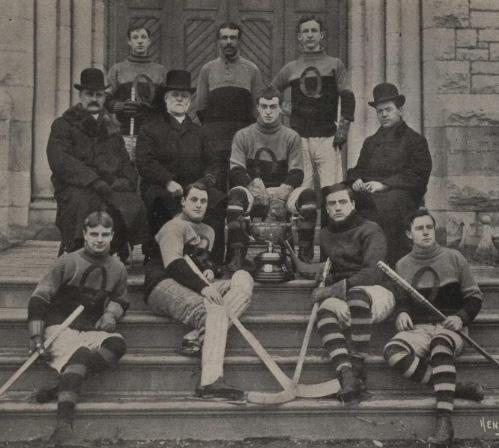
In the Stanley Cup’s history, Queen’s is the only university team to make an appearance. Competing under the name Queen’s University Tricolour, the team made three different appearances, and changed the course of the challenge era by being the first-ever challengers of the Stanley Cup from outside of the AHAC.
See Stanley Cup on page 13
“We will be living closer together with more and different neighbors but we’re in a housing crisis and that is how we’re going to beat the housing crisis, preserve our green spaces, and give people a chance to afford a place to call home,” Hsu said.
Despite his dissent with Ford’s plans, Hsu wants to ground his campaign in trust and hope.
“If you came here to hear jokes and cheap shots at Doug Ford, I’m not your man,” Hu said to the crowd.
In an interview with The Journal, Hsu acknowledged graduate students are underfunded, and are deserving of leaders who will invest in them. The current provincial government’s 2023 budget didn’t increase funding for graduate students.
“There’s a lot of payback later on in having talented people in the economy, if we support them early,” Hsu said. “Having been a graduate student and a postdoc myself, I know the value of supporting the graduate students.”
See Hsu on page 3
THEBUSINESS
Page 12
Peterson is a critic of the “leftist woke ideology.” GRAPHIC BY CURTIS HEINZL
OFHEALTHCARE
queensjournal.ca /queensjournal @queensjournal @thequeensjournal @queensjournal
Tricolour hockey team.
QUEEN’S JOURNAL ARCHIVES
Sophia Coppolino & Meghrig Milkon Journal Staff
‘It’s not impossible to see such an increase’
Cassidy
A PSAC 901 rally in March 2023.
Issue
— Monday,
PHOTO BY ASBAH AHMAD — Since 1873
Queen’s University Situated on the traditional lands of the Anishinaabe and Haudenosaunee peoples.
— Vol. 151,
1
May 29, 2023
the journal
Exam Gate
...Continued from the front page. In an e-mail sent to first year students who sat for the exam, Faculty of Engineering Dean Kevin Deluzio acknowledged the University was aware students were concerned about non-academic content integrated into the exam.
“We have heard and are listening to students who are concerned by this. We take these concerns seriously, and are reviewing the matter,” Deluzio said in the e-mail.
The University provided students with links to support services, including Engineering’s Personal Counselling & Wellness Services.
This is not the first time an exam written by MacDougall raised concerns among students. A March 2021 exam question asked students to critique a design created by their friend who the question made fun of for being a gender studies student. The question called the friend “Dieter,” described the friend’s preferred pronoun as “zhey” and indicated the design was “monstrous looking.”
In response to students’ concerns regarding the 2021 exam, MacDougall sent students an e-mail explaining the question references a Mike Myers sketch from the television show Saturday Night Live. He admitted the reference “did not land well.”
The Journal could not independently verify the e-mail posted to Reddit was indeed sent by MacDougall. The Journal did not obtain a copy of the e-mail, despite past students confirming they received it.
“I firmly believe that education is a two-way street, and instructors can learn from students while also fulfilling the role of teacher,” MacDougall allegedly wrote in the e-mail to students, which was subsequently posted to Reddit.
“This has been reinforced this week. I’m taking away a lesson on the value of not making assumptions about how what’s amusing to me will sit with people who do not share my cultural background.”
In a subsequent exam sat in April 2021, MacDougall assured students all the content was above board.
“By order of the Dean of Engineering of Queen’s University, this exam has been certified as completely woke, unproblematic, and humour free,” MacDougall wrote in the instructions.
Following the incident, The Journal requested an interview with MacDougall. He declined the request for comment citing he “[did] not have any comment at this time.” The Journal reached out to MacDougall to verify the e-mail posted on Reddit, to which no response was received
First international student at the helm of oldest club on campus
‘Breakthrough:’ Yao wins Queen’s Debate Union election
Mikella Schuettler Assistant News Editor
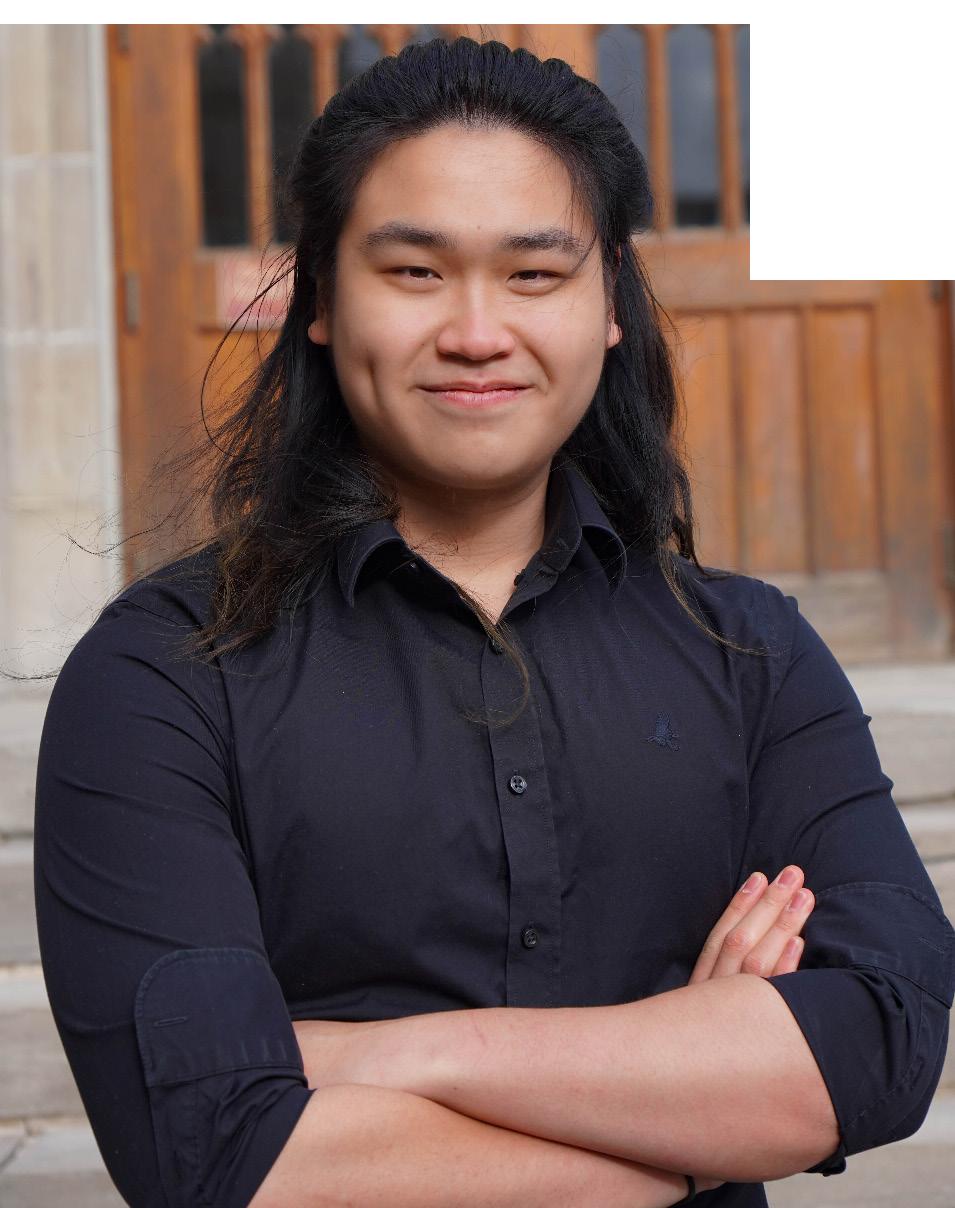
Qixuan (Austin) Yao, Art Sci ’24, joined debate to practice his English. This year, he returns as the first international student President of the oldest club at Queen’s.
Yao, a Queen’s student from Shanghai, was elected as the 180 president of the Queen’s Debating Union (QDU). Now a decorated debater, Yao’s path to becoming the first international student debate president had its obstacles beginning with English being his Second Language (ESL).
“No one expected me to run for president at all,” Yao said in an interview with The Journal. “I feel like it’s a breakthrough.”
QDU was founded in 1843, predating Queen’s student government the AMS. QDU advanced in every tournament in the Canadian circuit last year, maintaining their annual position at the World’s Universities Debating Championships.
Improving his English was Yao’s first challenge.
“I [was] fine using my English to order food from Tim Hortons, but I couldn’t have deep conversations with people. I found the most competitive activity I could do to practice my English,” Yao said.
Yao remembers his first debate for QDU vividly.
“I completely f—ed up,” he said. “After one round of debate, I asked my partner, ‘What is politics?’ My English wasn’t good. I severely doubt anyone understood what I said.”
PSAC update
... Continued from the front page Unions on Queen’s campus have joined together as one group called the “Unity Council.” They’re working to meet with the University to reopen wage negotiations for unionized workers across campus.
“Our argument in organizing this campaign on campus is the legal status quo is as if [Bill 124] never existed,” El Jassem said. “Let’s go back and let’s talk about our wages, because it was kept way below inflation rate.”
“Having seen what PSAC federal workers achieved, it is motivating. Because we can
Today, Yao holds multiple Canadian debate titles, including the 2023 Grand Championship at the prestigious Sutherland IV tournament, held at Queen’s this year.
For Yao, learning English was
debaters would choose to use the machine, Yao explained.
“[In a typical Chinese debate] you don’t necessarily need to choose the machine because infinite resources don’t necessarily equal infinite enjoyment,” Yao said.
isolating, according to Yao, and makes adjusting to Canadian culture—and feeling at home at Queen’s—difficult.
“If you can’t even have a coherent conversation with people, sometimes people would rather not invite you to a party,” Yao said.
“It’s a big challenge. I haven’t figured out how I can solve it other than to grind really hard on English.”
Yao found his community in QDU. His partner from his first debate is now one of his best friends.
There is a bond that forms when traveling across the country to debate tournaments, which Yao likens to “soldiers in a bunker.” Yao remembered one tournament at Western where he stayed in a house with four teammates.
“We couldn’t even sleep, we were laughing the whole night. The next day, no one could focus, but we somehow won,” he added.
Despite the breakthrough Yao’s presidency represents, QDU continues to have very few international student members. For Yao, QDU can bridge the gap between the Queen’s community, international students, and students whose second language is English.
not enough—he had to learn how to communicate effectively in a Canadian context. Canadian debaters argued differently than their Chinese counterparts, something that Yao was shocked to learn. Canadians generally prefer utilitarian arguments over categorical ones; the opposite is true in China.
When presented with a hypothetical situation where you could use a machine to give you infinite resources, most Canadian
say it’s not impossible [to get] such an increase.”
According to a Unity Council town hall presentation El Jassem shared with The Journal, the University claims it has not finalized its view on the Bill 124 issue as it pertains to increasing wages.
In a written statement to The Journal, the University said it continues to actively monitor the situation.
“The impact of the Bill 124 proceedings continues to be actively reviewed by university leadership, including the context of the university budget and the recent deficit announcement,” the University said. “We address Labour Relation matters directly with our unions and respect their leadership roles on behalf of our represented employees.”
The current collective agreement between PSAC 901 and the University was ratified in March 2022, and will be in place until April 30, 2024.
Yao knew the linguistic and cultural differences are an obstacle, but he credited his worldview as a Chinese international student with giving him advantages during some debates.
“It’s a benefit, because I have special knowledge of politics in China,” Yao said.
For students who use English as a second language at Queen’s, the language is just as important socially as it is in debate. The language barrier is
With the collective agreement set to expire in April 2024, the door opens for PSAC 901 to consider what conditions it wants to see addressed in the next agreement.
Last year, PSAC 901 members voted to mandate a strike after negotiations with the University reached its ninth month.
El Jassem said strike mandates occur as a nuclear option when a bargaining team reaches the end of their rope.
PSAC 901’s 2022 strike mandate is one example of several measures taken as union activity increases.
Last month, Canada saw the biggest strike in public facing industries when roughly 155,000 workers across 28 federal departments and agencies under PSAC walked off the job.
After two weeks of picketing, government workers secured a 12.6 per cent wage increase to be given over four years.
In November 2022, Ontario education workers under CUPE
“In this club, people are weird, they’re willing to discuss everything in a friendly manner, and [it has led] me to understand Canadian people,” Yao said.
During his presidency, Yao would like to promote QDU across campus, and specifically to international students.
“It’s really, really hard for international ESL students to just have a conversation with people,” Yao said. “I hope there’s a way I can help with that.”
—With files from Sophia Coppolino
picketed after Premier Doug Ford invoked the notwithstanding clause as part of the Keeping Students in Class Act.
At the university level, graduate student workers at Carleton University represented by CUPE Local 4600 went on strike in March of this year. Teaching and research assistants at Simon Fraser University have been in negotiations with the University for a three year period, while a current bid to unionize research assistants at University of British Columbia is being contested at the province’s labour board.
Looking to future bargaining periods, El Jassem said she doesn’t know if PSAC 901’s efforts will result in a strike like with federal PSAC workers.
“We really don’t know how our bargaining is going to go,” she said. “It is also very difficult to organize [a strike]. There’s a lot of organizational work behind the scenes that has to be put into this. No one takes this decision lightly.”
News 2 • queensjournal ca Monday, May 29, 2023
NEWS
Austin Yao is the 2023-24 QDU President. SUPPLIED BY AUSTIN YAO
MBA students leaving the AMS for SGPS
Sophia Coppolino
Master of Business Administration (MBA) students at Smith are leaving the AMS for the SGPS.
A motion kickstarting the referendum process which would allow MBA students to join the SGPS passed unanimously at its general meeting on May 16.
The SGPS represents graduate, law, consecutive education, and undergraduate medical students at Queen’s, while the AMS represents Queen’s undergraduate students. The SGPS and AMS create programs and engage in advocacy work geared towards their respective student demographics.
Ted Hsu
... Continued from the front page Hsu told The Journal he believes he’s the right man for the job because of his background in science, business, and sustainability. He has political experience, having been the federal Member of Parliament for Kingston and the Islands between 2011 and 2015. He’s been Kingston’s representative at Queen’s Park since 2022.
A Queen’s alumni, Hsu encouraged Queen’s students to embrace change and adopt new skills.
“You should try to learn skills, because skills are transferable,” Hsu said. “Don’t worry what your first job is, it will change.”
At the event, Rob Baker, the guitarist for Kingston-born band The Tragically Hip described Hsu as ethical, principled, intelligent, and as wanting a more equitable society for all Ontarians.
In Hsu’s opinion, Ontario’s fresh start is going to start with finding common ground between different communities.
“I think it’s the role of the Liberal
Party to find common ground; the Liberal Party is at its best when its finding common ground between different communities. We’ve got to find common ground between rural and urban and suburban in northern Ontario,” Hsu said.

A common thread in Hsu’s speech was maple syrup, which was given to him by a local who promised free maple syrup to every politician who knocked on his door—according to Hsu, he’s the owner of the only bottle so far.
“If we go out and find that maple syrup,” Hsu said, “We will together taste sweet success.”
Full-time MBA students must now hold a referendum to accept SGPS membership. If the vote passes, a motion to accept the referendum results must pass at the next SGPS Annual General meeting to finalize the MBA program’s membership.
If passed, the 2024 MBA students will become SGPS constituents and have access to SGPS membership benefits.
Presenting to the SGPS Council, MBA student representatives, Lucas D’Erman and Jessica Deluce, explained their AMS break-up.
“Our needs are aligning more on what graduate students are needing, versus what undergraduate students are needing. That’s why we feel like we belong better with SGPS,” D’Erman said at the meeting.
“[The full-time MBA] was originally a program that you
would go into directly from your undergrad,” Deluce said at the meeting. “We weren’t really classified as your typical graduate program, because the rollover was so frequent and immediate […] so the AMS took us under their wing.”
According to Deluce and D’Erman, the nature of the MBA program has changed dramatically over the past 25 years. Prospective Queen’s MBA students are now required to have work experience.
Smith reported the average age for the 2024 MBA class as 28 years-old with students having an average of four years of previous work experience before entering the program. According to D’Erman, many MBA students have kids and families.
“As Queen’s MBA became more competitive, the firm requirements [have changed]. We need a few years of work experience, the minimum is two,” D’Erman said.
The meeting was not attended by 25 ordinary members, which is required to pass motions. Given there are no by-laws on how to operate without quorum, the SGPS Council agreed to proceed with voting, and provide the membership the option to contest the outcomes of votes.
SGPS President Devin Fowlie supported the MBA program’s budding relationship with the SGPS. At the meeting, he told Council MBA students had been part of the AMS for too long.
“It makes more sense for them to be consolidated as part of the SGPS,” Fowlie said. “This only recently came to our collective attention so that’s why the change is coming now.”
Utilities Kingston to undertake $50 million in capital upgrades
External affairs commission tackling student housing issues
meghrig milkon
Assistant News Editor
Investments in capital upgrades by Utilities Kingston will keep service flowing into student homes.
Utilities Kingston announced an investment of nearly $50 million in capital upgrades to neighbourhoods, including the student district, on May 4. Utilities Kingston said the investments will enhance local utility systems such as water, wastewater, gas, and electricity.
“Aging water, sewer, and road infrastructure is reaching the end of its useful life and needs replacement,” Remi Adedapo, director of utilities engineering said in a statement to The Journal
These changes will be seen in the spring, summer, and fall
of 2023 on Victoria Street, from Johnson to Union; Union Street, from Victoria to Collingwood; and Earl Street, from Toronto to Collingwood. Some areas further from Queen’s campus will have aging water replacement.

According to Adedapo, areas undergoing construction will experience water outages for a one-day duration, several times throughout the day.
Julian Mollot-Hill, AMS commissioner of external affairs, voiced his concern about the current utility infrastructure and its effects on students’ water and electricity services.
Students are concerned about the impact utility upgrades will have on prices, particularly for students living in areas where development is being implemented.
Upcoming construction will not have direct rate impact on specific locations, according to Adedapo, and the cost of upgrading Kingston’s utility infrastructure is built into utility rates.
There hasn’t been a public announcement on whether the upcoming utility changes will impact utility rates long-term.
Kingston,” Mollot-Hill said.
The quality of off-campus student housing plays a significant role in determining the size of their utility bills. Student housing tends to be older and less frequently updated, leading students to pay higher rates for utility services, according to Mollot-Hill.
“Ensuring utilities and other Kingston services remain affordable to students is a priority for discussion this year with the municipal government,” Mollot-Hill said.
The AMS Housing Resource Centre (HRC) will be operational in September. The HRC’s mandate includes ensuring students living off-campus are well equipped when navigating conflicts with landlords and housemates, informing students of tenant rights, and finding good quality affordable housing.
“We are looking forward to helping students with their housing issues and starting new initiatives to improve the accessibility and scope of our services once the fall semester begins,” Mollot-Hill said.
News Monday, May 29, 2023 queensjournal ca • 3
Hsu delivered his speech at Portsmouth Olympic Harbour.
PHOTO BY MEGHRIG MILKON
‘The needs of MBA students has drastically changed’
News Editor
“Certain
areas of the student
district are suffering from poorer infrastructure from Utilities
Utility updates will begin over the summer.
PHOTO BY JOSEPH MARATHASAN
Mud run will be hosted at Bernie Robinson’s Farm
Safety
sofia tosello Assistant News Editor
The Arts and Science
Undergraduate Society (ASUS) is bringing back the orientation Mud Run event for the first time in four years.
The Mud Run is set to take place at Bernie Robison’s Farm in Sept. 2023—pending approval from Queen’s Health and Safety. The Mud Run was a fan favourite event in 2019, but was cancelled due to COVID-19, according to Head Gael Georgia Dean-Savage.
Given the event’s previous success, Dean-Savage and her team have decided to bring the run back in all its muddy glory. The ASUS orientation team hopes the Mud Run will increase student engagement during orientation week.
“Since COVID-19, we haven’t seen the engagement we saw in
2018-19,” Dean-Savage said in an interview with The Journal.
Mud Run participants can choose to run or walk a muddy course around the farm with fun obstacles. For students who want to participate in the festivities, but aren’t looking to get muddy, there will be food, music, and other activities around the farm.
Due to COVID-19, ASUS orientation was forced to operate online, and the Mud Run did not make the cut for 2022’s orientation week—something Dean-Savage’s team was determined to change.
“We were talking amongst our committee and about how ASUS orientation could use a staple event that is ArtSci specific. When you see the Grease Pole, you think about [the Faculty of Engineering] and when you think about camp, you associate it with [the School of Kinesiology and Health Studies]. We really wanted a staple event for ArtSci.”
The ASUS orientation team decided to shorten the length of the Mud Run to make it more accessible to students.

“The race was almost five kilometres [in 2019]. We’re greatly reducing it in size. [It should be] one to two kilometres,” Dean-Savage said. “The big slide at
the end will no longer be a part of [the race].”
The Mud Run finale was a huge slide into a mud pit, but the current orientation organizers chose to omit the slide this year to mitigate injuries. According to 2019 Head Gael Noam Epstein Ross, two students sprained their ankles during the last Mud Run. Past mud runs reduced injuries by stationing orientation coordinators on the side of the course, and by having Gaels running the race alongside their orientation groups, instead of changing the course itself.
To ensure the event becomes part of ASUS’ orientation legacy, Dean-Savage and her team are hoping to give the Mud Run a creative title. They have proposed to call the event “Robinson’s,” after the farm owner, Bernie Robinson. The name change places focus on the event’s hosts and encompasses all the farm’s activities.
“We want to emphasize that this event is not just a mud run. It is an event at a farm which includes a mud run,” Dean-Savage said.
The first Mud Run took place in 2018 in partnership with the Canadian Cancer Society (CCS). This year the CCS is back
ASUS orientation is about to get a whole lot muddier The Well Baby Care Clinic is keeping every baby well
to organize the event which will include multiple fundraising opportunities. The ASUS orientation team is currently hiring Gaels for September. Gaels lead first-year students through all their orientation events and welcome new students to Queen’s. Gael applications close on June 5.
“We are really hoping [the Mud Run] will get people excited about ASUS orientation and get [students] to participate in some of our other amazing events as well,” Dean-Savage said.
Queen’s School of Nursing partnered with KFL&A Public Health
Mikella Schuettler
Assistant News Editor
Queen’s Nursing School is supporting newborns in partnership with Kingston, Frontenac, Lennox, and Addington (KFL&A) Public Health and the Kingston Community Health Center.
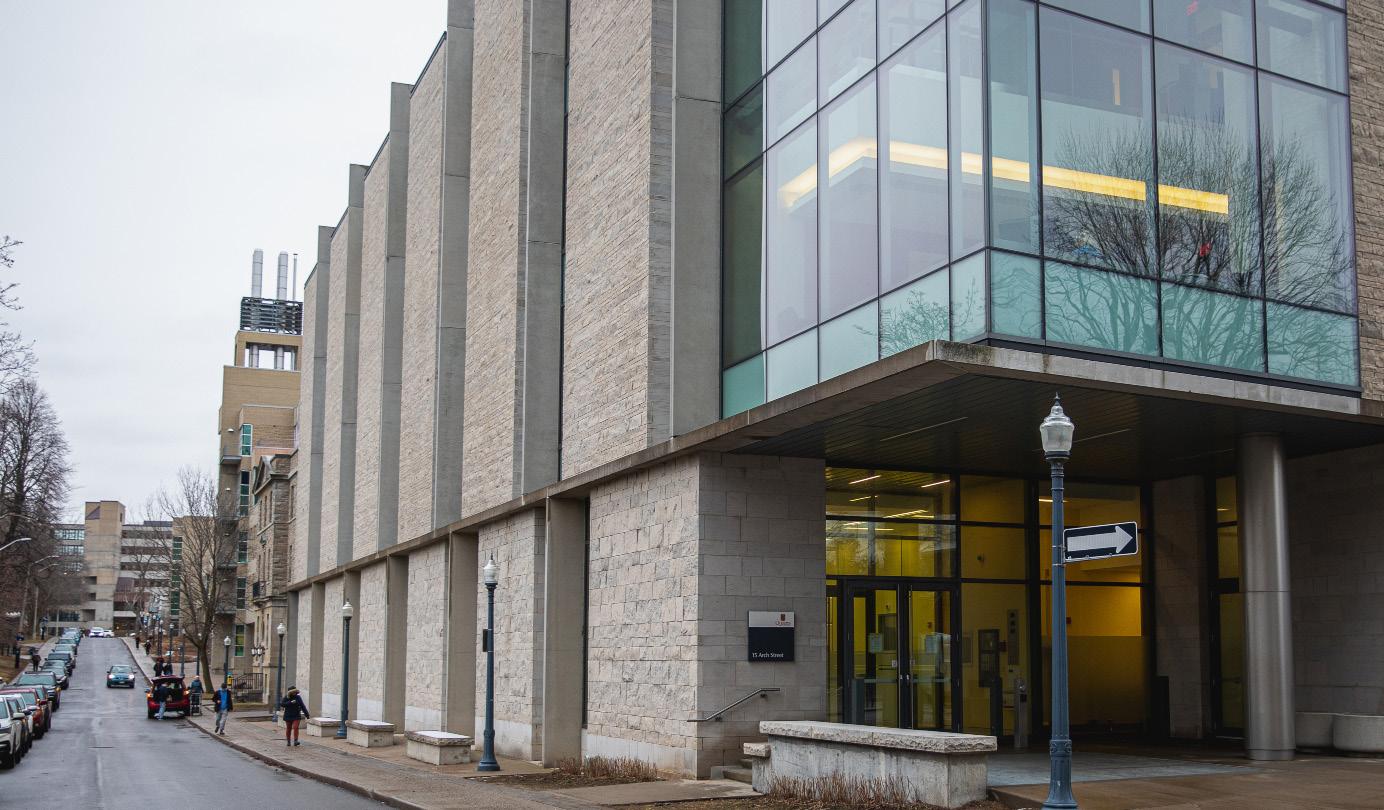
The Well Baby Care Clinic, which opened its doors on Apr. 27, will run for one year out of 221 Portsmouth Avenue. The clinic focuses on identifying health risk factors and intervening early to ensure positive health outcomes for infants in the Kingston area.
“Newborns and young children are extremely vulnerable, and
they really need ongoing health care. It’s essential for good health outcomes,” Roger Pilon, clinic project lead and professor at Queen’s Nursing School, said, in an interview with The Journal
The Well Baby Care Clinic is working to break cycles of negative health outcomes for families in the Kingston area by identifying infants at risk for Adverse Childhood Experiences (ACEs). ACEs include traumatic experiences which occur during a child’s early years, such a violence or a home environment where substance abuse is present, Pilon explained.
“We know that children who are exposed to adverse [events] early on in life, go on also themselves to develop chronic illnesses, substance abuse disorders, mental health problems when they get older. If you can address it early, you can prevent this future,” Pilon said.
Unattached newborns were rostered at the Kingston
Community Health Center, but the center no longer has this capacity, leaving many without care. For Medical Officer of Health at KFL&A Public Health Piotr Oglaza, the underlining problem across Canada is a lack of access to primary healthcare.
“Locally, we found this concern particularly related to newborn babies,” Oglaza said in an interview with The Journal.
According to Oglaza, the lack of primary care for infants means parents run to the emergency room to access care for their newborns, adding additional strain to the health care system. While the Well Baby clinic is not meant to replace family doctors, the clinic can offset the need.
The clinic will see 10-12 infants per week, and provide services such as monitoring developmental targets, educating and advising parents, and connecting families to specialized health services in Kingston. If a newborn is struggling with weight gain, the
clinic will identify the problem, referring the parents to a lactation or nutrition consultant.
“There’s a gap in care, and the clinic isn’t solving the issue of this gap,” Oglaza said. “We can do our part in trying to relieve some of the immediate pressure on the healthcare system.”
With an overstretched healthcare system, KFL&A Public Health’s partnership with Queen’s is important to the clinic’s success. Staffed with Queen’s nurse practitioners, the clinic is providing a hands-on teaching opportunity for nursing students and closing the health care gap.
“None of the agencies would be able to do it alone, but together we can really make it happen,” Oglaza said.
The gap in health care is specifically felt by Kingston’s growing population of immigrants and refugees, who face barriers when accessing health care in Canada. While the Well Baby Care Clinic is not specifically directed towards marginalized populations,
Pilon believes these communities will be impacted organically. “[Newcomers to Canada] may not be familiar with the local services. There may be language barriers, or they may have difficulty accessing food [for their babies],” Pilon said.
The Well Baby nurse practitioners will have access to a dial-in translation service, enabling them to communicate with patients whose primary language is not English. The Portsmouth location was chosen because it is accessible using public transport, and the clinic will have free parking.
The clinic’s goal is to reduce inequity in early childhood care between families in Kingston who have access to primary care, and families who don’t.
“Within about four to six weeks we created this clinic from start to finish,” Pilon said. “It’s amazing what you can create in a short period of time with the right people.”
News 4 • queensjournal ca Monday, May 29, 2023
The clinic is located in Portsmouth Harbour.
JOURNAL FILE PHOTO
if aproved by Queen’s Health and
The last mud run took place prior to COVID-19 in 2019.
SUPPLIED BY GEORGIA DEAN-SAVAGE
Queen’s professor wins Vega Medal for climate change detection research
Dr. John Smol Wins Big
sofia tosello
Assistant News Editor
John Smol is uncovering how lakes and rivers around the world have changed over time because of climate change.
Smol, a distinguished Queen’s professor in the Department of Biology, was the 2023 recipient of the Vega Medal for his research in the field of paleolimnology. The award is considered a geography equivalent to a Nobel Prize. Smol was awarded the medal by the King of Sweden on April 21.

Smol and his team of 35 graduate students and colleagues have been recording the history of lakes and rivers.
According to him, lake and river sediment stores centuries of information on environmental changes in ecosystems,
it is affecting the whole biology,” Smol said. “By knowing how [climate change] affects lakes, you can start predicting how future climate change will affect [ecosystems].”
Scientists worldwide are urging world leaders to take action against climate change. Smol is no stranger to the climate crisis, highlighting climate change as a serious issue throughout his career.
“Going back to when I started my career I [ researched] mainly acid rain. Now, you don’t hear much about acid rain. [...] That was a classic example of how you had to show the environmental problem before people wanted to take action,” Smol said.
Lake and river research by Smol showed how seabird populations changed overtime due to human impact.
He reconstructed the amount of seabird defecation in lakes to show how population changed
Queen’s students filling the oral hygiene cavity
providing researchers insight when looking at human impact on aquatic ecosystems.
“[My research] is like a black box in an airplane. It’s recording what’s happening casually [in lakes and rivers], we have to figure out ways to interpret history that’s meaningful, and interesting,” Smol said in an interview with The Journal.
“It’s like forensics, we’re like detectives.”
His team have reconstructed how the earth’s climate has changed over centuries. His research brought him to the high arctic, where his team was the first to show lake transformation due to climate change.
“We can show how changing ice covers are affecting these lakes [in the High Arctic] how
Queen’s Dental Aid Network supplying Kingston with oral health products
meghrig milkon
Assistant News Editor
Concerned by marginalized group’s limited access to dental care, students started the Queen’s Dental Aid Network (QDAN).
Launched in April 2023, the QDAN is a new student group dedicated to improving oral and dental care across the Kingston, Frontenac, Lennox, and Addington (KFL&A) region, specifically among marginalized groups such as Kingston’s unhoused population.
Founders of QDAN, Kianna Niaki, ArtSci ’24, and Peter Hwang, ArtSci ’24, heard about the negative impacts of poor oral hygiene in their classes and became committed to making oral health care accessible to marginalized communities.
over centuries.
Smol recently returned from Sweden where he received the Vega Medal. Smol shared a celebratory glass of champagne with the King after receiving the award.
“It’s a shared award in many ways,” Smol said. “My work is totally dependent on highly enthusiastic and skilled graduate students and other colleagues—it really is a group effort.”
Paleolimnology research led by Smol continues, he’s coming up with new projects for himself, and his lab team to tackle.
“We need to know what these lakes were like before,” Smol said. “If you’re dealing with the environment, there are a lot of things to do.”
“The general population may not be aware of the negative impact poor oral hygiene may have. This was something that did not sit well with Peter and I,” Niaki said in a statement to The Journal.
The importance of accessing oral health care extended beyond the classroom for Niaki. She learned first-hand how many barriers there are to accessing a dentist.
“It was only until recently my father’s job acquired proper dental insurance; before this, every trip to the dentist would cost hundreds to thousands of dollars, putting a financial strain on my family even though we have two steady incomes flowing in,” Niaki said.
Niaki and Hwang set out to
address the Kingston community’s oral hygiene needs by having QDAN provide individuals— specifically members of lower income families and marginalized communities—with dental supplies. Other initiatives at Queen’s are informative, according to Niaki.
“We decided to build an efficient system where we collect donations for dental care supplies— toothbrushes, toothpaste, and floss—from local dentists and larger retailers to donate to organizations around the KFL&A region,” Niaki said.
QDAN is partnered with Lionhearts Inc. and their community Food Redistribution Warehouse, a Shoppers Drug Mart, and two local dentists. Donations from QDAN’S partners are redistributed to Kingston services such as the Adelaide Emergency Shelter, Kingston Youth Centre, and the Integrated Care Hub.
“During our initial donation event at the Adelaide Emergency Shelter, we provided over 700 toothbrushes, toothpaste tubes, and floss packs, which was well received,” Hwang said.

The network set a goal to secure one community partner each month to donate crucial products that range from essential food items to a single toothbrush. With inflation, and the club’s reliance on donations, QDAN has developed a donation strategy ensuring a steady supply; they’re requesting nearly expired oral hygiene products from donors.
“Research has shown that expired oral hygiene products generally do not pose significant risks or dangers, their effectiveness may simply diminish over time,” Hwang said.
“We are hoping to make partnership with all clinics in town and as many retailers to sustain a monthly donation schedule,” Niaki added.
QDAN is hoping to extend their services by undertaking a new care package initiative. The initiative will bring oral hygiene products straight to the doors of community members in need. The care packages will include pamphlets on oral health and affordable insurance options.
“By providing valuable educational resources and dental hygiene products we want to empower individuals to take care of their oral health” Hwang said. According to Hwang, starting a new club requires establishing a strong foundation from scratch, including building a good reputation and establishing trust with partners. The club is currently awaiting ratification from the AMS, which he said will add to its credibility and improve QDAN’s access to resources.
“We’re now hiring club executives and general members to strengthen our organization and expand our working capabilities. This will help us get ratified with the AMS, to access funding, licensing, and many more school resources,” Hwang said.
Connor Hamlyn, HealthSci ’25, QDAN’s outreach director, is recruiting students by highlighting the impact they can have on their communities.
“The Queen’s community, including students, faculty, and staff, can play a vital role in supplying these essential products to those in need,” Hamlyn said.
“The more members we have, the greater our ability to expand our reach and make a difference,” Hamlyn added.
Niaki, Hwang, and Hamlyn encouraged other students to get involved with QDAN. Prospective members can e-mail QDAN or follow the group on social media.
News Monday, May 29, 2023 queensjournal ca • 5
Smol accepted the award in Sweden on April 21.
SUPPLIED BY JOHN SMOL
Founders of the Queen’s Dental Aid Network: Connor Hamlyn, Kianna Niaki, and Peter Hwang. SUPPLIED BY QDAN
Student experiences with Kingston Transit
“This is just two occasions, but it’s a lot considering I don’t use the bus very often,” Singh said.
“I think it says a lot that as a young woman in Kingston, I feel safer walking home at night than catching the bus.”
Kingston, Pranay Soma, HealthSci ’25, is a self-described Kingstonian. Throughout his education thus far, he has relied on the Kingston transit system.
Features Editors
When Trisha Singh was in second year, she lived near West Campus. Living further away from the main campus compared to most upper-year students, the HealthSci ’25 student walked 20 to 25 minutes each day to get to her classes and meetings.
Despite living near West campus, Singh preferred walking to main campus over busing.
In an interview with The Journal, Singh said she would only use the bus when she was running late or it was cold. In most circumstances, she preferred the walk to main campus.
Singh credited a number of reasons for her preference for walking, ranging from inconvenience due to buses often running late to the low frequency of certain bus routes.
Among Singh’s chief concerns was safety.
In an interview with The Journal, Singh detailed an incident with another passenger that left her feeling shaken when bussing to campus.
“Someone came onto the bus, sat next to me, grabbed my arm, and said ‘what’s your name?’ He was leaning into [my] space and looking down at my phone,” she said. “I didn’t feel comfortable texting my friend about what was going on.”
Singh described a second incident where a man tried to get on the bus without paying. When the bus operator refused to let the man board, a 20-minute stand-off between the driver and passenger began.
Besides the fact the situation significantly delayed the bus, Singh noted concerns with the man’s agitated and aggressive behaviour towards the bus driver. She recalls trying to not frustrate the man further.
Singh was surprised she had these unusual experiences when considering her relatively low bus use in Kingston.
A Vancouver resident prior to attending Queen’s, Singh found she preferred busing over driving in Vancouver.
According to Singh, Vancouver’s Translink system–the public transit system across the Metropolitan Vancouver area–is much more accessible due to the greater number of bus stops. However, Singh attributes these strengths to the greater demand for public transport in Vancouver compared to Kingston.

Every year, Queen’s students—both undergraduate and graduate—are provided universal access to Kingston transit routes through an agreement with the AMS and SGPS.
The agreement, more commonly known as the ‘Bus-It’ program, is a long standing contract with the City of Kingston. The agreement ensures students continue to have universal access to transit at a fraction of the cost—students currently pay $122 annually whereas a regular adult pass is $80 per month.
Each academic year, students pay a slate of ancillary fees with their tuition, which covers several expenses. The mandatory transit fee aims to support Kingston’s transportation services.
On average, approximately 11,000 students have their student cards validated in late August through September, according to University Registrar Tracy Al-Idrissi. Throughout the academic year, around 600 additional students will validate their cards.
To validate their identification card, students either pick up a sticker or they can choose to have it mailed to them.
Validation stickers are specific to the current year and are affixed to the back of the card. To use the bus, students present the backside of their student card to access transportation. ***
Singh is one of three Queen’s students who explained their challenges navigating Kingston Public Transit to The Journal
Having attended high school in
“[The bus] is my main use of transportation to get to classes,” he said. “It takes about 20 minutes to get there and back. So it’s a huge part of my life, especially [my] my university life.”
Based on his experience, Soma finds the Kingston public transit system to be efficient. He appreciates the frequency of buses during busy times, and finds the inside of the buses to be “pretty clean and well-maintained.”
Soma also appreciates the electric buses, which were introduced in July 2021.
Despite a mostly positive experience navigating Kingston’s transit system, Soma identified some shortcomings–most notably when it comes to the lack of alignment between class schedules and bus schedules.
He finds the time in between buses creates awkward gaps in his schedule.
Although he believes that he makes it work, Soma commented on how he usually arrives to classes approximately 20 minutes early because of the way the bus schedule aligns with his class schedule.
Soma expressed frustration with the handling of bus cancellations.
“Sometimes, buses just don’t show up. On Google Maps and Apple Maps, you can see the timing of the bus but you can’t see if a bus is cancelled and just won’t come,’ he said. “If they could at least inform [you of the cancellation] so you can get on an earlier bus, that would be very helpful.”
Soma also indicated mixed views with respect to the ‘Bus-It’ program. While he appreciates that he does not have to purchase his bus pass through the City, he is concerned that the mandatory Student Activity Fee may lead to many students paying for a service that they have no need to use.
Jawahir Al Bayati, HealthSci ’25, expressed similar frustrations with the timing of transit services.
“I don’t find that it works with most students’ schedules. Most of the buses won’t get you to class unless it’s10 minutes late or half an hour early,” she said.
Al Bayati owned and regularly used a car in Kingston up until the beginning of May 2023. When she still drove a vehicle, Al Bayati said she used the buses to get to campus during paid parking hours.
Without her own car, Al Bayati has started walking or biking instead of busing to avoid cramped buses.
“If you ever get on the number two [bus] or any of the other buses that go directly to campus, they’re always overcrowded. You can’t sit anywhere, you can barely breathe,” she said.
Al Bayati, lived in London, ON, prior to attending Queen’s, compared London to Kingston transit. She commented London buses experienced less overcrowding, which she attributed to London buses running more frequently.
Al Bayati expressed frustrations at the number of route transfers required to get to certain locations in Kingston. Getting to Walmart from main campus was easy with a car, the same journey on the bus is unnecessarily prolonged.
Jeremy DaCosta is the Director of Kingston’s Transit Services. As a frequent bus commuter himself, he feels he’s better equipped to understand the student bussing experience.
“The main message is if any passengers, not just students, at any point has any concern about their own safety on the bus, absolutely approach the bus operator,” he said in an interview.
According to DaCosta, 25 to 30 per cent of all transit riders are students.
He said Kingston Transit Services are happy to welcome students as passengers.
He stated there are no current trends of unsafe incidents occuring on Kingston transit.
“One of the biggest challenges we face, which is a nice challenge to have, is when students are here, the buses tend to be very full,” DaCosta said.
Effectively managing the student population during periods of “peak loads” becomes a challenging task as ridership significantly surges both before and after classes.
When asked about specific safety measures in place on Kingston buses, DaCosta pointed to several examples.
Anytime a Kingston bus is
on the road, supervisory staff are at work at Kingston’s transit control centre to assist in the event of an emergency and dispatch emergency providers to a bus’s location.
Buses are equipped with video cameras on both the interior and exterior of the bus. DaCosta explained these cameras record audio so any incidents are seen and heard through the control center to ensure all situations addressed appropriately.
In terms of getting law enforcement involved with bus disturbances, DaCosta said it depends on the circumstances.
“It may be the case that we would simply dispatch a supervisor to that location as well. It will depend on whether we think it requires assistance from other emergency response providers to assist us with that,” he said.
“We are in contact quite regularly, with the AMS in particular, to talk about the needs of students, and what route changes might be requested or required,” DaCosta said.
He specified under the agreement Kingston Transit has with the student associations, there are three routes that are provided during the academic year—a direct routetothetrainstation,arouteruns between Main and West Campus, and a late overnight service runs until 2 a.m.
“Those routes are a direct reflection of the feedback we’ve received from students and the feedback we’ve received from the [AMS] about the types of needs and that students have as it relates to transit.”
As June approaches, DaCosta prepares to step down from his current position, but anticipates Kingston Transit will embark on their next five-year service plan in the upcoming fall, which entails engaging with the student population to discern the needs that must be addressed.
It’s important if students feel unsafe, they’re reporting their concerns to the city, DaCosta explained.
If the city doesn’t receive information on negative transit experiences, they’re aware of any concerns, therefore making it difficult to ignite change.
‘Most of the buses won’t get you to class unless it’s 10 minutes late or half an hour early’
Vineeth Jarabana & Skylar Soroka
Thousands of students use buses each year.
Features 6 • queensjournal ca Monday, May 29, 2023 FEATURES
PHOTO BYJOSEPH MARIATHASAN
This article discusses sexual assault and may be triggering for some readers. The Kingston Sexual Assault Centre’s 24-hour crisis and support phone line can be reached at 613-544-6424 / 1-800-5446424. The Centre’s online chat feature can be reached here. The Journal uses “survivor” to refer to those who have experienced sexual assault. We acknowledge this term is not universal.
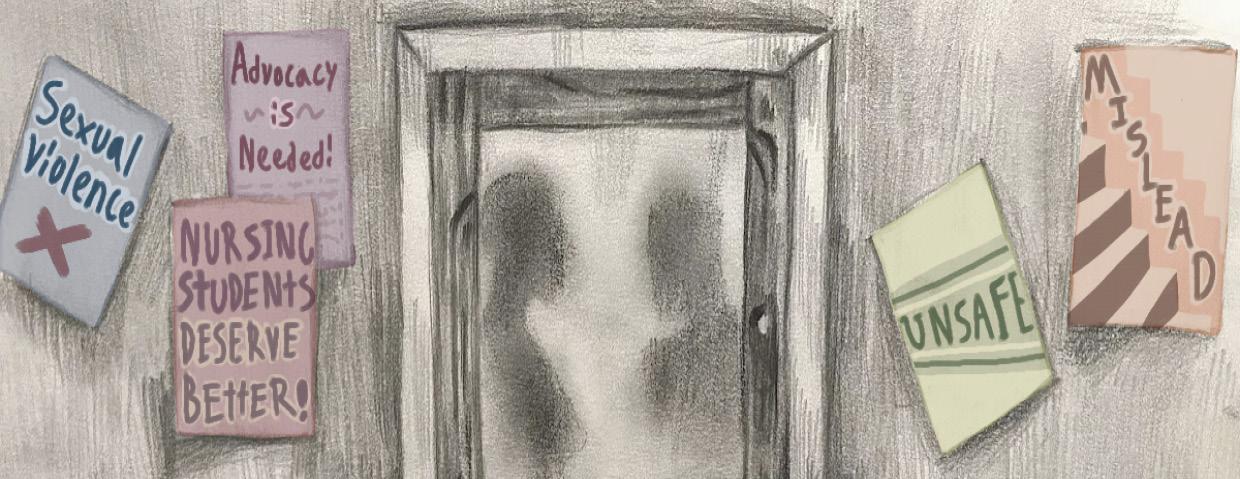
Queen’s must address all concerns about sexual violence thoroughly.
Kate Rocklein, Queen’s University nursing professor, was dismissed as associate director of undergraduate studies in the School of Nursing and suspended from teaching. Rocklein alleges her dismissal and suspension were in response to her warning students about the risk of sexual violence in university communities, particularly for nursing students.
Posters supporting Rocklein’s allegation about her dismissal soon appeared around campus.
The University can’t publicly comment on personnel and human resource matters, but private correspondence between Rocklein and her superiors that Rocklein shared with the Globe and Mail said her skillset didn’t align with the demands of her administrative role and she made students feel unsafe.
Even if Rocklein was making her students uncomfortable, it
seems unlikely that alone would be grounds for suspension—many professors have perpetuated harm in class without facing suspension.
A health studies professor who taught anti-vaccination misinformation and has had student complaints levelled against her since 2011 still has an active profile today on the faculty website.
Queen’s nursing students have recounted negative
nursing students’ mistreatment could make the University eager to respond to students’ discomfort, or sensitive to further negative accusations against the nursing program.
Although the University can’t
vulnerable to sexual assault, the University’s failure to properly comment on just the allegation of violence evinces a level of complacency towards sexual violence, as well as to the endangerment of nursing students.
pervasive gaps in the University’s own engagement with the topic.
Informing students without scaring them keeps them safer, forewarned is forearmed. Open conversations about sexual violence can legitimize the experience of survivors to encourage them to report their assaults or to make them feel less ashamed.
Queen’s has educational programs to support the prevention of sexual violence, including the online learning program “It Takes All of Us,” such programs mean little without active engagement with all concerns of sexual violence.
Conducting a thorough, publicly transparent investigation into Rocklein’s claims would best demonstrate the University’s dedication to the prevention of sexual violence and the protection of its nursing students.
In the absence of tangible policy changes, the Liberal Party of Canada’s most recent pro-choice PR campaign is meaningless.
In April, a video featuring Justin Trudeau debating a young anti-choice Canadian went viral on TikTok.
On May 10, Trudeau uploaded a video on Twitter where he claimed he would continue to advocate for the right of “women across the country” to choose. In the flurry of tweets that followed, other
experiences rooted in their program. The Instagram page @queensunursingalum is dedicated to sharing the traumatic experiences of present-day nursing students and alumni.
This public record of
comment on Professor Rocklein’s employment status, it could address her concerns about sexual violence in the Queen’s community. While there’s no data supporting Rocklein’s claim nursing students are particularly
ILLUSTRATION BY ARDEN MASON-OURIQUE
Though most professors want the best for their students, it isn’t their responsibility to inform their classes about sexual violence.
Professor Rocklein’s feeling she had to supplement existing sexual violence education points to
Treating Professor Rocklein’s concerns merely as a part of a personnel dispute detracts from the very real risks of sexual violence and necessary advocacy against it at Queen’s.
—Journal Editorial Board
Abortion care is more than strategic PR—shame on the Liberals
In 1967, Pierre Trudeau famously proclaimed, “there’s no place for the state in the bedrooms of the nation” when the Canadian government was revising laws that criminalized homosexuality.
in remote locations looking to terminate pregnancies must travel great distances to access care in urban areas.
Court, he made a similar pledge to defend abortion rights.
Liberal MPs published similar messages making their pro-choice sentiments known.
I’m radically pro-choice. I encourage all politicians to affirm the right to abortion care.
As a person familiar with the dismal state of abortion access in Canada, the Liberal’s response is nothing but a cheap attempt to attract voters’ attention without implementing positive change.
The Liberals have long advocated for the privacy and bodily autonomy of Canadian citizens.
The senior Trudeau was among the first politicians who advocated abortion care be accessible to Canadians in the event a pregnancy threatened the life of the pregnant person.
Today, abortion care falls under the scope of the Canada Health Act, which mandates all healthcare services be accessible to people in Canada.
Despite this supposed guarantee, there aren’t sufficient resources that aid pregnant people in accessing abortion care, nor are there adequate supports to allow Canadians to take their reproductive health into their own hands.
Nationally, abortion clinics are sparsely located—people
Crisis pregnancy centres outnumber abortion clinics nationwide. These organizations retain status as charitable organizations from the federal government, despite actively employing fear tactics to prevent people from accessing abortion care.
Provincial healthcare systems across the country are in a state of collapse. In Ontario, patients face months-long waits to meet primary care physicians for contraceptive care.
This isn’t the first time Justin Trudeau has pledged to defend abortion in Canada. During the 2021 federal election, Trudeau promised to improve access to abortion care. The following summer when Roe v. Wade was overturned by the US Supreme
Without previous changes to refer to, this “new promise” seems like it’s nothing more than a part of the party’s regularly scheduled programming. Claiming support for abortion rights is the bare minimum for Liberal MPs.
For the Liberals’ endorsement of good access to abortion care to be meaningful, their efforts need to extend beyond mere affirmations of existing liberal principles which include bodily autonomy and privacy rights.
Extensive policies are needed to ensure access is sufficiently provided to Canadians. Until this happens, the Liberal Party is doing nothing but masquerading behind cheap PR stunts.
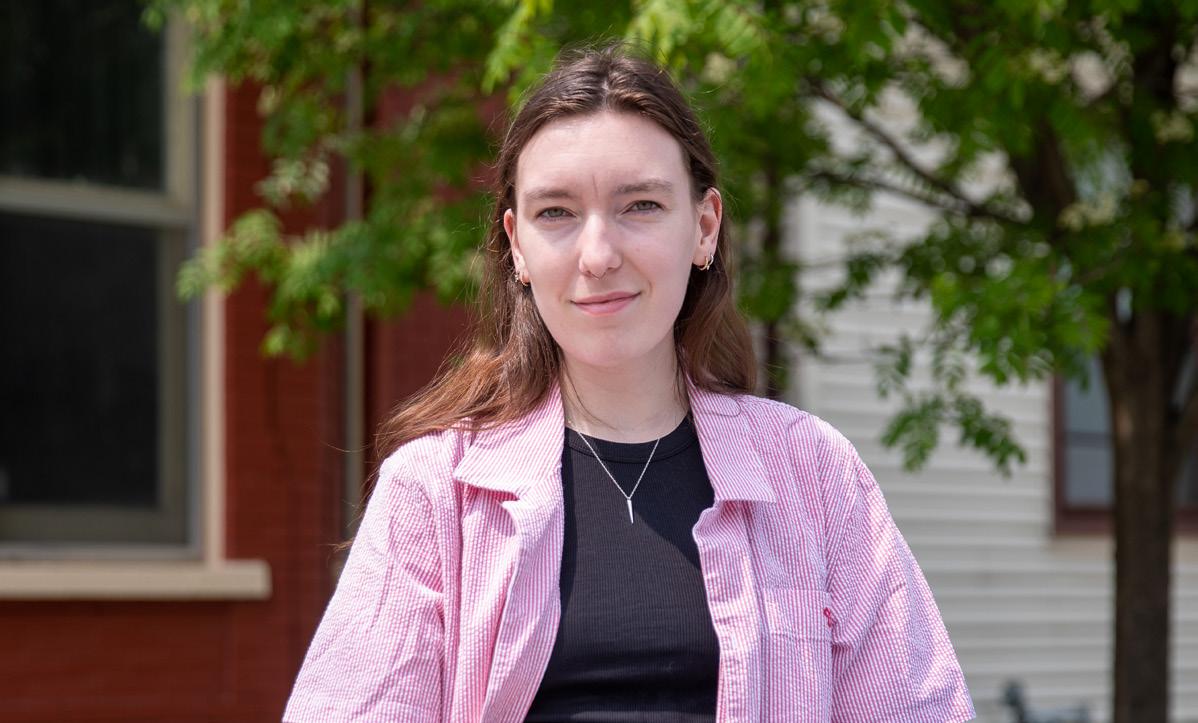
Cassidy is an MA candidate in the Philosophy department and one of The Journal’s Editors in Chief.
Editorials THE QUEEN’S JOURNAL Volume 151 Issue 1 www.queensjournal.ca @queensjournal Publishing since 1873 Editorial Board Editors in Chief Asbah Ahmad Cassidy McMackon Production Manager Curtis Heinzl News Editor Sophia Coppolino Assistant News Editors Meghrig Milkon Mikella Schuettler Sofia Tosello Features Editors Vineeth Jarabana Skylar Soroka Editorials Editor Cassandra Pao Editorial Illustrator Arden Mason-Ourique Opinions Editor Nahira Gerster-Sim Arts Editor Maddie Hunt Assistant Arts Editor Suzy Leinster Sports Editor Rory Stinson Assistant Sports Editor Aidan Michaelov Lifestyle Editor Clanny Mugabe Assistant Lifestyle Editor Sina Sayyad Photo Editor Herbert Wang Assistant Photo Editor Joseph Mariathasan Video Editor Miriam Slessor Assistant Video Editor Claire Chow Copy Editors Norah Kierulf Allie Moustakis Kenzie O’Day BIPOC Advisory Board Members Anne Fu Malaieka Khan Oluwamisimi Oluwole Contributors Aysha Tabassum Tryphena Evborokhai Ruth Osunde Zier Zhou Business Staff Business Manager Manal Shah Sales Representative Irina Tran Fundraising Representative Margaret Cavanagh-Wall Want to contribute? For information visit: www.queensjournal.ca/contribute or email the Editors in Chief at journal_editors@ams.queensu.ca Contributions from all members of the Queen’s and Kingston community are welcome. The Journal reserves the right to edit all submissions. The Queen’s Journal is an editorially autonomous newspaper published by the Alma Mater Society of Queen’s University, Kingston. Situated on the traditional lands of the Anishinaabe and Haudenosaunee peoples. The Journal’s Editorial Board acknowledges the traditional territories our newspaper is situated on have allowed us to pursue our mandate. We recognize our responsibility to understand the truth of our history. Editorial opinions expressed in The Journal are the sole responsibility of The Queen’s Journal Editorial Board, and are not necessarily those of the University, the AMS or their officers. 190 University Ave., Kingston, ON, K7L 3P4 Editorial Office: 613-533-2800 Business Office: 613-533-6711 Fax: 613-533-6728 Email: journal_editors@ams.queensu.ca Please address complaints and grievances to the Editor in Chief and/or Managing Editor. The Queen’s Journal is printed on a Goss Community press by Metroland Media in Toronto, Ontario. Contents © 2023 by The Queen’s Journal; all rights reserved. No part of this publication may be 7 • queensjournal ca Monday, May 29, 2023
Cassidy McMackon
PHOTO BY HERBERT WANG
The
Journal’s Perspective EDITORIALS
Not all claims of sexual violence were created equal
The SLC has yet to become the true heart of student life at Queen’s
The SLC is involved in social projects on campus.
provides
Tryphena Evborokhai
Contributor
The first time I stepped onto campus, I was lost and confused.
COVID-19 had taken away my first-year university experience, and arriving as a second year was daunting. Although I am now an active member of the school community—it took a while to feel I belonged.
As the current Managing Director of the Student Life Centre (SLC), I know how integral the SLC is in shaping student success. Our team of five student staff pull many of the background, organizational strings behind campus events.


Unfortunately, the SLC’s role as a resource on campus is neither well known nor widely used by students.
The SLC is one of the greatest assets Queen’s has available to its students, it would be a shame if its services weren’t utilized to the fullest.
Bearing that in mind, its necessary to clarify what the Student Life Centre offers.
An AMS service that resides in the Queen’s Centre and Rideau building, the SLC provides room bookings, event venues, offices for clubs, lockers for rent, equipment rentals and much more. Staff at the SLC directly oversees various school club activities, such as the thrift store pop-ups, club bake sales, and information booths set up around campus.
What is your favorite summer activity in Kingston?
In 2021, the SLC team launched a month-long campaign in support of intersectional and accessible sustainability. This initiative centered around sustainability, and how it could be more easily and equitably integrated into student lifestyle.
Working in collaboration with Queen’s Backing Action on Climate Change (QBACC), Queens Sustainable Universe Network and local organizations to engage students in environmental activism, the SLC team formed lasting relationships with student groups and local coalitions in Kingston.
The SLC has also held several notable events. In 2022, we hosted the 437 swimwear pop-up business in cooperation with the Queen’s alumni, who founded the business.
In addition, our 2022-23 team ran the Student-Run Business Market, where students could browse and purchase goods from 12 different vendors. These included Jubfrong, as well as Living Garments, an Instagram-based thrift store.
The SLC undoubtedly has extensive reach in the Queen’s community, although many students aren’t even familiar with the name and what it stands for. Until recently when I accepted the position of Managing Director, I had zero idea what their responsibilities were, and the AMS Director of Marketing originally believed SLC meant St. Lawrence College.
It’s unrealistic to ask busy, stressed-out students to do their own research on campus resources—the SLC should be responsible for raising public
awareness and interest for its services.
For the SLC to adequately support the student population, there must be a basic understanding of who we are and what we do.
With this deficiency in mind, we hope to consider a new, more specific slogan for SLC to emphasize the necessity of the SLC’s work in creating the University’s vibrant community.
Lack of clarity in SLC’s directives are partly a result of the loss of home base in the JDUC in April 2022 when the service temporarily suspended its service.
Additionally, in efforts to revise pricing for rentals and equipment meant more there was more time spent on logistical conversations instead of direct work with students.
These changes have minimized SLC’s notoriety and accessibility. Inadvertently, they exacerbated the existing shortcomings in the organization’s communication with the student body.
Moving forward, the SLC is hard at work in the development of the 2023-24 marketing plan. The objective is to place students at the heart of our advertising strategy, and we plan to implement various strategies to promote a personable approach in our services.
This endeavor is particularly important as we engage with the development of the new JDUC. Student needs and experiences are constantly evolving as the university’s demographic becomes increasingly diverse.
The SLC needs to adapt to these changes and ensure that our services uplift and empower our equity-deserving populations. In acknowledging that our future
projects should correspond with the needs of different student groups, I have a goal to create more efficient feedback mechanisms on the SLC website.
My journey at Queen’s has been one of growth and discovery. It’s disheartening to see that members of the community are unaware of the resources and opportunities the SLC offers.
With that in mind, we're determined to clarify our purpose and expand our reach. We recognize the need to enhance our visibility and ensure students understand the value we could bring to their experience.
Through a student-centered marketing approach, we aim to empower our diverse undergraduate and postgraduate patrons. If students are equipped to know what we do and how they can use our services productively, SLC can become the heart and soul of the Queen’s community its meant to be.
My second-year experience would’ve been much more positive if I’d known there was a building of people dedicated to creating a welcoming transition for students onto campus.
As such, I encourage readers—especially incoming firstyear students—to take advantage of all opportunities available.
By raising awareness and engagement with the SLC, we can unlock its full potential in our community and leave a lasting impact for future generations of students at Queen’s.
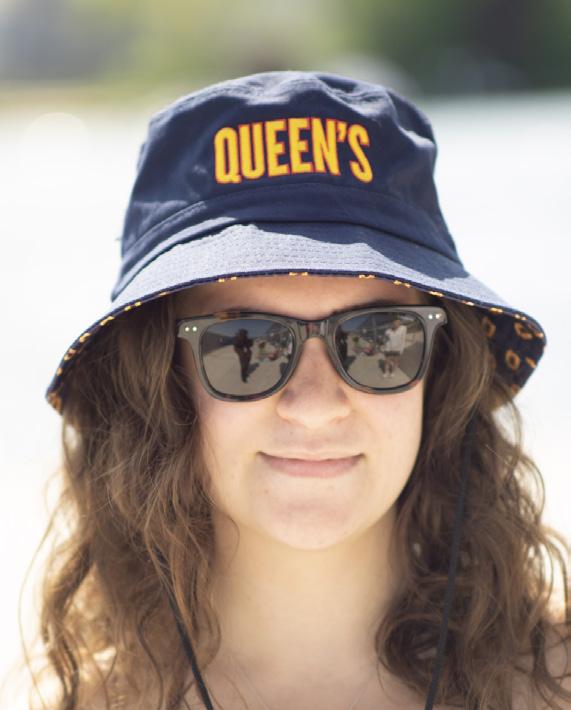
Tryphena is a fourth year Health Sciences student. She is the Managing Director of the Student Life Centre.
OpiniOns 8 • queensjournal ca Monday, May 29, 2023 Your Perspective OPINIONS
Talking Heads...
There needs to be greater awareness about services the SLC
“Hanging out at the pier with my friends.”
Brenna Coonstantinidis, ArtSci'24
“I like to run by the water."
Jacob Beukeboom, MSc '24
“Sitting by the water at the pier."
Mira Wirzba, MSc'24 “Cycling."
Sydney Lopes, MSc'24
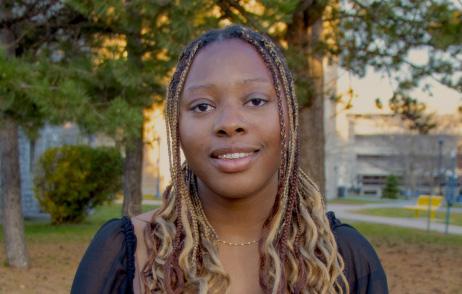
Tryphena wants to bring the Student Life Centre to the focal point in student life.
SUPPLIED BY TRYPHENA EVBOROKHAI
The University poses dire barriers to students
Aysha Tabassum Editor Emerita

This article discusses marginalization and acts of violence and may be triggering for some readers. Wellness Together Canada may be contacted for mental health support by calling 1-866-585-0445 or by texting WELLNESS to 741741
Queen’s was always supposed to be a class gateway for me. There was no other reason why I would willingly enter a business program.
This is why in Grade Twelve when I took a field trip to a nearby private school for their university fair, I made a beeline to the Queen’s booth. Although my high school had its own recruitment fairs, Queen’s never sent representatives.
When I asked for a pamphlet, it was given to me with hesitation.
When I asked specifically about the Commerce program, I was told it was difficult to get into. Without any rationale behind this messaging, Queen’s inherently sold itself to low-income students as an exclusive and prestigious place.
Very few people at my high school applied, and even fewer were accepted.
Notably, many of them seem better off for it.
When I was accepted, I was excited at the prospect of being surrounded by people who faced similar challenges
and worked equally hard to make it to this institution.
It wasn’t quite like that.
I love the people I met at Queen’s. But I was one of very few who had been told it may be out of reach.
Queen’s doesn’t publish any data on where exactly its students are coming from, it was very clear that most in the Commerce program attended private schools where it was a given they would be accepted into Queen’s, Western, and better American universities.
This was confirmed in my fourth year when a group of students released Part I of the Smith Transparency Project, a study that revealed students overwhelmingly come from private and elite public schools in wealthy parts of Vancouver and the Greater Toronto Area.
A lot of my time in first year was spent explaining to classmates I wasn’t in a gang growing up—despite the fact I’m five foot four and did considerably fewer drugs than most of my peers throughout undergrad—and slowly drifting apart from my friends back home who had chosen more diverse spaces to enter into upon high school graduation.
The Queen’s environment was isolating enough for low-income students, with talk of extravagant vacations and tax havens. The most painful part was how the institution contributed to this isolation.
Despite OSAP and draining my savings from four years of summer jobs, there always seemed to be expenses I was struggling to meet. Orientation was
a nominal fee to some, but for me the hundreds meant a lot. Commerce students were expected to have a selection of business formal attire, which I didn’t.
Among these already daunting expenses, the meal plan stung the most.
For thousands of dollars, and usually with no access to a kitchen, students in residence must opt into a meal plan that provides nineteen meals a week—not enough for three meals a day. A sample plan given to me as a first year suggested supplementing the two unaccounted meals by eating out with friends every week.
It was simply expected I’d have disposable income to drop on food in one of the blandest cities in Canada.
This kind of treatment continued throughout undergrad, and it was never discussed. Lowincome students were few and far between.
Since we were told we shouldn’t be talking about money while surrounded by students who have so much of it, we didn’t announce ourselves.
While Queen’s has a few programs meant to ease the financial burden of attending this school, such as Swipe it Forward, they aren’t well advertised. The persistent stigma of being low-income and facing issues like food insecurity is a barrier that hasn’t been properly addressed and continues to prevent students from accessing these programs.
Besides, as someone who broke the bank on this ‘prestigious’ degree, it remains gravely disappointing to me that my residence fees
didn't feed three meals a day.
When I continued to work hard throughout Queen’s for scholarships and other funding sources, it came with emotional labour that continues to impact my mental health to this day.
With every grant I was selected for, there was an expectation—and sometimes a requirement—that I would write a letter thanking this institution and the wealthy alumni that gave this poor little brown girl a chance.
I was grateful for their support, of course, but when you are repeatedly asked to smile and pose for a photo only to be accompanied by a caption that tells the world you’re underprivileged, you start to feel resentful.
Now I’m at an institution that provides similar support without asking me for a sob story, I know my discomfort was valid.
To top off my time at Queen’s, once I finally found an on-campus job that reduced my financial burdens and introduced me to so many incredible people who would form a fundamental part of my support system, I found student employees were treated with even less respect than the students we serve.
When I expressed my solidarity with Muslims abroad who were having their holy sites bombed and raided during the holiest day of Ramadan, I was met with verbal harassment and threats of violence.
That was a hard time.
The worst of it took place when this treatment was implicitly condoned by this institution’s Principal, who distanced himself from providing the right
to safety I should have had in my role as one of Vol. 149’s Editors in Chief. He wasn’t my boss. But worry not, my bosses also didn’t care that I feared for my life.
While I was at Queen’s I was sure I was complaining too much. I was told, constantly, how lucky I was to even be allowed on campus.
Now I’m an alumnus, out of the Queen’s bubble, I know that wasn’t true.
Myself and all other low-income alumni faced insurmountable barriers and worked hard for the opportunities we got. That’s setting aside how complicated our experiences became for those of us who were racialized, queer, or otherwise minoritized.
Collectively, we deserved better, and I know that remains true for those who are still at Queen’s.
That’s why when prospective and current students reach out to me, I’m completely honest about my experience. Queen’s will get you to the place you want to go. But it won’t pay for the therapy you’ll need afterward. And no one will quite understand what these four years did to you.
To this institution: there are so many alumni and students who distance themselves from this place because of the trauma it’s inflicted. Despite this, hopeful public school graduates still move into Victoria Hall each year.
You might want to think about honouring these students the way that they deserve.
Aysha is a Comm’22 graduate and former Editor in Chief of The Queen’s Journal.
OpiniOns Monday, May 29, 2023 queensjournal ca • 9
Whether or not Queen’s likes it, low-income students are here and deserve more
Aysha is disappointed Queen’s continues to sweep aside the needs of some of its most hard-working students.
JOURNAL FILE PHOTO
Suzy Leinster Assistant Arts Editor
The Kingston Handloom Weavers & Spinners Guild (KHWS)—located in the Tett Centre—celebrated its 120 members in the 75 anniversary exhibition from May 7 to May 28
As one descends the stairs to the first floor of the Tett Centre, they pass by a well-lit room filled with cloth—dyed with blues, fuchsias, and mauves. Stepping into the gallery they enter a space of history, with spinning wheels from the 60s and tapestries commemorating Kingston’s tercentenary, and handspun sweaters from loyal members who’ve been in the guild for over 30 years.
In an interview with The Journal Nancy Bowman, former president and current member of the KHWS, spoke about the importance of celebrating the people who have built the guild and their legacy for future weavers and spinners.
When the group started in 1948, it focused on weaving. It later
expanded to spinning and other fiber art mediums such as wool, silk, synthetic threads, and cottons.
Some guild members are brand new this year, other are members for over 50 years.
Weaving part of educational heritage in Kingston ARTS
They hope to foster an interest in weaving, spinning, dying, felting and other fibre development activities in the Eastern Ontario region.
The 75-year anniversary exhibition ran from May 7 to 28, featuring 14 special workshops for the public and KHWS members.
Bowman described feeling emotional when she discussed the meaning art pieces held for creators. For the past three years members were unable to attend in-person events due to COVID-19 and could not share their work with the community.
“It wasn’t as much about sharing with the public, although that’s part of it. We wanted to be able to celebrate together.”
The anniversary event gave members the chance to share their work, with people interested in picking up weaving and spinning, while highlighting the members achievements from past decades.
Bowman said she knew it was time to put together the anniversary because she doesn’t know when—or if—some of the
members would ever be able to come together again.
KHWS specifically reserved one weekend for an invitation-only afternoon tea to bring longtime members together, surrounded by their art.
“They’re not people that typically get out very often,” Bowman said. “They came, and they felt much appreciated. And they loved seeing the exhibit.”
The idea of time is a central theme for the event as the guild hopes to connect their past to an ever-evolving future. An example of one of their projects demonstrating the futurism of art is in their collaboration with Queen’s IT department.
“Perhaps this is the future. It’s [spinning and weaving] is timeless and it connects past generations with future generation. It’s about celebrating those things,” Bowman said.
In this workshop people are taught how to combine
e-textiles with spinning to create individual yarn, drawing on traditional techniques to illustrate technological patterns.
Temporality allows the audience to look at new forms of expression for weaving and spinning.
“I mean [wool] regrows and can last forever, if you look after things they will.”
Each hand-crafted piece involves countless hours of labour, and if taken care of properly can last a lifetime.
“We do notice a shift that people are interested in locally sourced things.”
Bowman said fibres like wool are an important resource because they’re sustainable.
Educating children allows them to understand the value of the clothing and textile industry.
Bowman said while children may not pick up weaving, they can understand how wool is sourced, cleaned, spun, and eventually made into a hat or coat.
Education is a form of heritage and Bowman said the event is meant to pass along basic weaving and spinning skills so students can innovate. She gestured to the spinning wheel at her feet and said though it’s a complex process to weave, every culture does it.
“Different places in the world have developed a technique for spinning and weaving, yet places like China and Egypt were far apart developing some of the same techniques […] having access to different fibers drives the need for weaving.”
Just a few days ago a boy of seven or eight came to Bowman and told her he was learning how to knit at school. He explained lining up all his squares and she showed him how the loom works, so she let him come sit at her wheel. He spun for a bit and left with a long piece.
“For me it’s the interest that will grow. We’ll see him again,” Bowman said.
Creative liberty crucial aspect of Queen’s Theatre Troupe
Theatre club offers creative independence when producing full-length plays
Maddie Hunt
Senior Arts Editor
Queen’s Theatre Troupe (QTT) sets the stage as Queen’s newest theatre club, ready to include all students in production.
The new troupe—puts on performances of already established, historical works—said they stand out from other theatre club options including Queen’s Musical Theatre (QMT), Queen’s Yu Theatre Society, and the Dan Studio Series (DSS).

The DAN School of Drama and Music puts on shows directed by professors, with students under their guidance. QTT wanted to create a club which was entirely student-run—something lost in the Queen’s community after COVID-19, according to the Board.
QTT board members Aiden Robert Bruce, ArtSci ’25, Elsa McKnight, ArtSci ’24, and Victoria Marmulak, ArtSci ’24 talked to The Journal about QTT, its aim, and its benefits for the Queen’s populace.
According to Bruce, QMT only performs musicals, and Queen’s Yu Theatre Society focuses on Mandarin works. Even DSS, which has student-run programming involves faculty advisors and school financing is needed as it’s a DSUS organization.
“I was the drama representative with DSS this year and I had a lot of students telling me ‘I can’t sing, and
I can’t dance [so I can’t do QMT],’”
Bruce said. “I auditioned for the DAN school major, and I didn’t get in and I had nothing left to do.”
According to Marmulak, working independently is a critical skill for students who want to continue working in theatre, since independent work—which can be difficult—is what the professional industry is like anyways.
While the club doesn’t work directly with professors, it aligns its production works with the DAN School’s theatre curriculum.
McKnight, QTT board manager, noted how engaging with texts in a physical way rather than just reading the playwrights can provide more opportunities for students learning and understanding.
This fall, QTT plans to take on Pedro Calderón de la Barca’s
Life is a dream which fits into the DRAM200 course curriculum.
In the winter semester, a passion project gives students the opportunity to direct a play of their choosing.
Board members are eager to see the raw process of theatre creations without facing the pressures of doing so in an academic environment, with curricular objectives tied to production.
“We are just so passionate about making theatre and about having a space where people can take risks and try things and fail because now’s the time to fail while we are students and learn from our creative failures. Because creative failures are creative wins,” Marmulak said.
The board comes equipped with a broad range of experience in theatre—individually having
experience with different production and acting roles. They believe this collective diversity in experience gives them the ability to support anyone who wants to work for QTT—regardless of academic background.
“Anybody who would like to take their hand at this is welcome to apply and we are eager to see everyone,” Bruce said.
Applications for QTT are open, with production roles staying open until September. Auditions begin on a rolling basis starting in September.
All positions are no experience necessary.
“We’re trying really hard to find a place for everyone who applies because we want to work with as many people as possible and have as wonderful a team as we can,” Bruce said.
The Board hopes the production company withstands the test of time and acknowledges the responsibility and effort necessary to make the club sustainable.
When asked about their worries or anxieties about developing QTT, Marmulak said it’s all nervewrecking as they recognize the responsibility they’ve taken on, and work needed to accomplish this to make this club last.
“If we want to make a community that is a fruitful and happy place to learn then that starts with us being the board […] Big responsibility we are giving ourselves and we’re excited to take it on,” Marmulak said.
Students can reach out with questions to the Queens Theatre Troupe Instagram page.
Arts 10 • queensjournal ca Monday, May 29, 2023
journal_ae@ams.queensu.ca
Queen’s Theatre Troupe board members sit down with ‘The Journal.’ SUPPLIED BY QUEEN’S THEATRE TROUPE
New ideas for the Agnes bloom this summer
Suzy
Leinster Assistant Arts Editor
As the Agnes Etherington Art Centre gears up to re-open its doors this summer, it has new ideas in the works.
With re-opening slated for July 1, the new Administration and Operations Coordinator Kate Ducharme said the Agnes offers a rewarding job, with the centre seeking to provide artwork as a source of pleasure and knowledge.
Ducharme grew up in Kingston, travelling to Waterloo and Ottawa for school where she worked in commercial galleries with community art groups. She made her way back to Kingston and worked at St. Lawrence College where she started working with students as program coordinator for the Marianne van Silfhout Gallery.
She applied for the Visitor Services role at the Agnes in 2018. After working as a liaison between the gallery and the public, she recently transitioned into her new role.
“It was always sort of a dream of mine to be able to come back in and work [here],” Ducharme said.
In her new position, she works behind the scenes at the Agnes as a support
for the directors and chief curator.
“It’s connecting our staff, which is an amazing group of people, as well as the community with the Agnes in different ways,” Ducharme said.
The Agnes is a non-profit—and free—art centre which encourages people to come and experience its art as a pedagogical resource.
One program called the “Art Hive at Agnes” brings together young adults aged 18 to 24 to come for art and wellness. The workshop is free of charge and runs for two hours every Thursday.
Guardian Capital donated the never-before-seen collection.
Ducharme is focused on creating awareness for the Agnes and said activities like Art Hive get people to return and spread the word to others. She praised the arrival of the new Indigenous exhibition, Emergence, being presented upon the Agnes’ re-opening.
Ducharme explained when a new collection is presented to the Agnes, the Head Curator will take its staff through the space in a mock tour to finalize the design.
Currently, the gallery space is not finished, but she said it will be layered with different textiles, hangings, and media.
“I think sometimes people
have this idea about Indigenous art as historical. But that’s a really old way of thinking. There are lots of contemporary Indigenous artists that are just fabulous,” Ducharme said.
The exhibit will run from July 1 to Nov. 12. The final exhibition before the official close will feature a series of Kingston artists to demonstrate the community’s journey.
Despite the Agnes closing for a period, Ducharme said they’re not going dark.
“We’re just trying to make sure the community stays engaged with us, and part of that is reimagining
Story Tapestries one step in mental health care
Maddie Hunt
Senior Arts Editor
Many years ago, when storyteller and theatre artist Arianna Ross travelled to India to work with theatre group Rang Vidhushak, she found that arts depicted stories that would bring laughter, joy, and overall change to people’s lives.
When returning, to the United States she independently founded Story Tapestries, the company began working as an art service organization. There, Ross used art as a tool to create spaces where individuals
could explore their mental health needs.
What started as a small organization, a small board, and a friend—Lorien Beals—is now a not-for-profit organization focusing on the U.S. but working to engage Canada. Story Tapestries has been running for 24 years with a milliondollar budget.

When speaking with Ross, she emphasized she wasn’t alone in making this company exist.
“I have an amazing board of individuals and phenomenal staff. I couldn’t do my job if they didn’t exist,” Ross said.
“The idea for me was always that tapestry came from that if you weave multiple art forms together, they create a fabric that holds up the community.”
Story Tapestries partners with schools, libraries, community centers, colleges, and community partners to apply for grants. Grants must be acquired to pay for the art kits and programming services that are used in these spaces as this organization is not-for-profit.
According to Ross, only about five per cent of the time does someone pay for the services provided without going through a
the process so everyone is as excited about reopening as we are.”
Ducharme said the Agnes is in a “limbo spot” where they will close their doors and pack up their 17,000-piece collection. Her job examined how to pack up these collections and what ways they can envision programming once the new space is built.
She explained the move as a long and strategic process which is reliant on the support of their staff to enable different perspectives to come in and foster an inclusive and diverse team.
Even looking at the way
grant. Once the grants are acquired to fund programming, Story Tapestries provides art, literacy, and mindfulness packaging.
“We use the art as a tool to provide programs to individuals to create space, brave, creative space, where individuals can explore their mental health issues and mental health needs,” Ross said.
“We have visual artists. We have storytellers. We have theatre artists, we have musicians. We have muralists, we have beatboxers, we have a rap artists. We partner with anyone and everyone.”
The artist in residence programme is one way Ross said children can build expressive communities, which is when an artist comes into a classroom and works directly with teachers or adults who have regular contact with the youth in need.
“[Artists] complement the curriculum or the social-emotional need of the classroom. They provide strategies, techniques, tools, and opportunities for expression.”
Song-writing helps students express emotions and process trauma Ross said—especially when combined with parent workshops where creativity programs that aid in preventing childhood burnout.
Ross observed a positive change in students’ behaviour through the programming. She provided an example of a clay moulding exercise where a group of students had a reputation for fighting and violence, but when dealing with the clay, exhibited peaceful behaviour, handling the clay with care.

the collection is stored is be re-evaluated to include distinct knowledge systems.
“We’re thinking about our ancestors and cultural belongings that had been stored in very Western colonial vaults. We are in the process of thinking about how these cultural belongings, being guided by an Indigenous Advisory Circle, to think about musuem practices,” Ducharme said.
She said moving the Agnes is not the same as packing up an office. There is a lot more behind the scenes and she’s excited to see how the exhibit and the space will bloom.
“You have to acknowledge that you’re valuable, your voice matters and you’re important. If you don’t feel the people around you see you as valuable and important, and that your voice matters, it immediately makes you feel pushed down,” Ross said.
Providing students, a creative tool to express themselves, in a space where they feel brave and comfortable enough is what can improve self-confidence.
This programming has not only helped children with their mental obstacles but also older age groups such as high school students, university students, and adults.
“Several of the deans said […] the opportunity you gave us to take photographs [and] to paint pictures created an outlet by which I could express myself […] People are just ready to explode, having an arts opportunity allows them to breathe,” Ross said.
While Ross offers creative solutions to mental health struggles, she emphasized her team is trained in how to handle mental health, but they’re not therapists.
Ross said Story Tapestries is the first step towards mental healing, but not the sole solution to mental struggles. She said it is a complementary tool to other methods of mental health solutions.
“My organization is one part of the solution, one piece of the puzzle, but if we work together then we really do support the ability to solve some of the many mental health crises in the nation.”
Arts Monday, May 29, 2023 queensjournal ca • 11
Kate Ducharme stands outside the Agnes.
SUPPLIED BY KATE DUCHARME
Story Tapestries engaging students.
SUPPLIED BY STORY TAPESTRIES
Cassidy McMackon Editor in Chief
As the ongoing healthcare crisis continues in Ontario, hospitals are grappling with backlogged procedures.
Hospitals in Ontario are publicly funded, with roughly 85 to 90 per cent of all funds coming from both the federal and the provincial governments. Funds distributed by the federal government are decentralized to and administered by the provincial government. The provincial government also supplies some funding for health expenses.
The provincial government
Asbah Ahmad Editor in Chief
In an increasingly globalized world, the Kingston Economic Development Corporation (KEDC) is continuing its mandate of job creation and investment.
Established in 1988 as a separately incorporated economic development office, the KEDC is tasked with business retention and expansion in the City of Kingston, while factoring in investment attraction, aftercare, and available workforce.
“We’re proactively going out externally to sell Kingston as a destination for business and then attracting new companies in,” Donna Gillespie, CEO of the KEDC said in an interview with The Journal.
Kingston’s declaration of a climate emergency, combined with the launch of an integrated economic development strategy has given rise to a burgeoning sustainable manufacturing sector.
<BIZ SCI TECH>
New legislation expected to remove burden on public health care system
According to Dr. Renate Ilse, chief operating officer (COO) at Kingston Health Sciences Centre (KHSC), most hospitals have permanent fundraising staff on reserve to raise money for capital equipment and other costs not covered by public funds.
Hospital boards consist of community stakeholders who advocate for community needs to be met in local healthcare centres. The intention of the board is to provide oversight for the hospitals and ensure community needs are met in good faith.
“It’s important to remember that boards are there to advocate in aggregate not to advocate individually,” Ilse said. “Once you sign on as a board member, your fiduciary duty or obligation as a board member is to serve the best interests of the community and the hospital to collectively as opposed to representing any particular interest group or population within the community.”
According to Ilse, hospitals strained by demand for increasingly complex patient care, and an aging population. She noted a lack in human resources at KHSC to be one of the biggest challenges to providing patient care.
“Up until about the middle of the pandemic we had enough staff now we just don’t,” she said. “We’re doing all we can to try to retain the staff, we have to keep employees engaged. To provide them with a positive work experience.”
Ontario hospitals face additional financial strain after Ontario hospital nurses were awarded additional pay after the Bill 124—a bill that prohibited public sector workers from receiving more than a one per cent raise each year—was struck down.
At KHSC, the reopening of past nursing contracts is expected to cost millions. Despite this, the impact of the strain is unclear while KHSC waits on government plans on how to address the bill.
“Every other hospital in the province practically, is in the same boat.”
With the recent implementation of the Ontario Health Reform Bill, some hospitals will look to offload some procedures to private clinics.
Passed earlier this month, the Ontario Health Reform Bill expands private clinics’ ability to perform publicly funded procedures.

While public hospitals receive most of their funding through direct transfers from the federal and provincial governments, while managed by the hospital board, doctors handling their own practices receive similar funds while specializing in their specific practices.
Ilse mentioned this new bill will ease the burden on KHSC.
determines healthcare funding models, organization structures, and spending priorities.
Governments may provide additional funding when it identifies special objective healthcare needs, as it did for the COVID-19 pandemic.
Approximately 68 per cent of funding goes to paying staff salaries, while leftover funds pays for medical supply expenses.
Hospitals are responsible for fundraising when faced with additional expenses—including capital equipment such as MRI machines, which often provide life-saving care.
The KHSC Board consists of business members, stakeholders from Queen’s University, and members of the community.
“We’re not allowed to run a deficit, so we’re going to have to figure out a way to balance [the budget],” she said.
“They would have the opportunity to ramp up activity much faster than we could at Kingston Health Sciences Centre,” she said. “We are full all the time, most of our services run at capacity.”
“They are much more nimble, and flexible than some hospitals can be,” she added.
Gillespie said companies are focusing on chemical material processing, clean technologies, and critical minerals and materials.
“With the Federal Government having a net zero 2030 goal in the EV [electric vehicle] space, and Canada has been very aggressive in looking at attracting businesses within the EV battery sector. Kingston is well positioned,” Gillespie said.
In the summer of 2022, Prime Minister Justin Trudeau announced the building of a $1.5 billion Umicore EV battery facility in Loyalist Township.
Creative industries in Kingston are essential according to Gillespie, who believes the placemaking and people attracting factors make the City more attractive to the tourism industry. She said KEDC is placing a focus in the health sciences sector.
“It’s looking at life sciences, cell, and gene therapies. This is building off really interesting assets we have an expertise because of existing companies like
Octane or Lonza,” Gillespie said.
A self-described proud Queen’s alum, Gillespie said KEDC is always excited by the possibility of engaging students from the University. She highlighted the work done in conjunction with partners at Queen’s.
Understanding the economy and engaging with the local community is something Gillespie didn’t consider; she hopes for students to engage with opportunities in Kingston.
“Often during the Queen’s academic life, we’re a little bubbled,” she said. “It’s how we’re getting students integrated into the community, otherwise, you’re not going to know about cool companies like Octane, Lifecycle, or Empire Life.”
As Gillespie’s team works to make better connections in the community, she said forming relationships between the business community and students will allow exciting careers in Kingston post-graduation.
“We would love for students to consider staying in Kingston for
the summer. I think that’s how I fell in love with Kingston while working, working for the summer. Because really, they’re the four most glorious months in Kingston.”
KEDC works throughout the year to host events specifically geared towards students, with the help of departments and offices at the University.
“We have our own summer company that’s funded by the province [...] We’re able to help 10 students who are returning to school start their business for the summer, and we have great retention rates. By the end of the summer, 90 per cent of students indicate they’re going to keep their business running.”
Young professional networks are another initiative the KEDC is undertaking or supporting to help facilitate community in the City. The Black Entrepreneurship Ecosystem for Southeastern Ontario was created with the specific goal to support potential and existing Black entrepreneurs—KEDC is a supporter of the separately
incorporated entity.
“There’s different access to funding now from the provincial and federal government for Black entrepreneurs or those who are racialized or underrepresented [...] It’s creating a network where people can see themselves and go: ‘I can see how I fit in Kingston and there’s opportunities to engage,’” Gillespie said.
“We need an ecosystem of young people. It’s growing the critical mass and we’re getting better each year; more and more students are staying. And then also being able to connect people.”
Showcasing the entrepreneurs includes showcasing newcomers to Kingston. In April, Gillespie said an award was launched with Kingston Immigration Partnership that highlights the work of those who moved from a different country to invest in Kingston.
Gillespie tells all aspiring entrepreneurs at Queen’s and Kingston their office is always open, and to reach out with their ideas.
Business, science, & Technology 12 • queensjournal ca Monday, May 29, 2023
Entry way into hospital.
PHOTO BY JOSEPH MARIATHASAN
Queen’s talent wanted in Kingston
The KEDC office is located on King St.
PHOTO BY ASBAH AHMAD
Almost champions: a history of Queen’s and the Stanley Cup
Queen’s came closer to the Stanley Cup in 11 years than Canada did in the last 15
Looking back at Queen’s attempt to clinch the title
RORY STINSON
Senior Sports Editor
...Continued from front page.
1895
The Tricolour hockey team not known as the Gaels until 1947—competed for the Stanley Cup for the very first time when they faced off against reigning Cup champions the Montreal AAA.
Though AAA accepted the challenge, there was one major issue—the Montreal Victorias achieved a better season record than their city-sharing team.
This meant if the AAA’s won, the Victorias keep the Cup, although there was still room for Queen’s to steal the title.
Going into the game the Tricolour was without their star forwards J. S. Rayside, who played previous games without injuries. Despite this, players such as R. C. Hiscock and George McKay were able to carry the extra weight.
The Tricolour faced a second challenge when a difference in provincial rink size regulations forced Queen’s to adjust how their gameplay.
After a hard-fought battle, the Tricolour fell 5-1 against the
Montreal Victorias on March 9.
In a Journal article published March 16, 1895, the editor wrote that “as matches go, the score does not indicate a one-sided game.”
The team was missing their top player. They were playing on a larger rink than usual, the Journal article blamed the loss on differing provincial rules in regard to offsides.
“Three of our goals were disallowed by the referee, being taken by our men when off-side according to Quebec rules, but perfectly legitimate according to those of Ontario.”
Past Journal articles believed the Tricolour would have faced a better outcome had the game been played on Ontario soil, making the loss all the more heartbreaking.
Despite the loss, one major rule change was pulled from the game. From that moment until the NHL became the only competing league in 1926, any outside team could challenge the reigning champions for the Stanley Cup.
1899
Four years later, Queen’s
sought the Stanley Cup again when they competed against reigning champions the Montreal Shamrocks.
The Journal reported the Shamrocks felt their dignity was being ripped away when the Tricolour—a team that they thought was below their league—had the nerve to suggest they were a better team.
Though the Tricolour weren’t without any star players this time around, several players faced off with injuries. Guy Curtis played with a broken wrist, while John Harty battled a weak knee.
Once again, the size of the rink also played a role in hindering the team’s ability to win. A common issue before the regulation of rink sizes, the Tricolour had more ice surface for athletes to cover—hindering a team’s ability to play their usual game.
The Tricolour came up short once again and were outscored 6-2 by the Shamrocks.
An excerpt from The Journal suggested “the close proximity of St. Patrick’s Day lent superhuman powers
to the wearers of the green.”
� Under favourable circumstances
Queen’s hockey team is in the same class with the Victorias and the Shamrocks of Montreal,” the same Journal article reported.
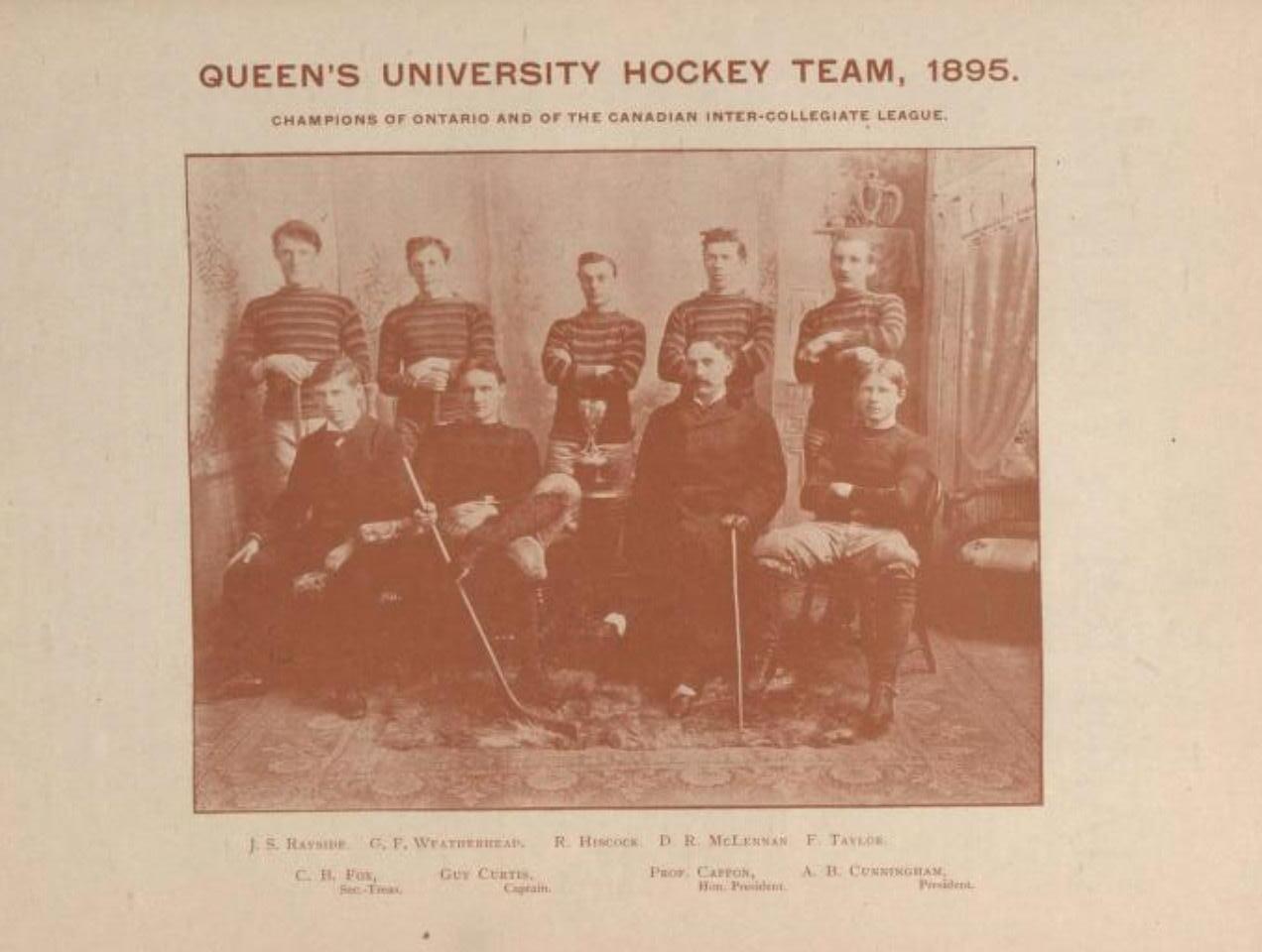
Though Queen’s scored the first goal within the first few minutes of the game, “the Shamrocks found out from the start that they had to play at a terrific rate to win.”
Queen’s just finished the best season they had ever had, so the loss didn’t leave much of a sour taste.
1906
The Tricolour made their last shot at the Stanley Cup in a best-ofthree series against Ottawa on Feb. 27 and 28, 1906.
Queen’s lost the first game 16-7 and the second game 12-7, completing a quick series for Ottawa.
Two of the goals for the Tricolour were scored by dual-sport athlete George Richardson, who’s name survives at Richardsom Stadium.
Both games were aggressive—according to The
Journal “Queen’s [had] nothing to learn from their opponents in speed and snap.”
“Except in shooting the two teams were very even, but Ottawa was more effective near the goal.”
Though Ottawa was said to play a more systematic game than Queen’s, the Tricolour worked hard from start to finish showing no tendency to quit.
The same can be said about their performance during the entire era.
Eleven years later, the NHL was formed with no teams representing Kingston or Queen’s.
In 2022, the Stanley Cup playoffs was watched by 4.6 million viewers and is considered some of the best games in sports entertainment. A university hockey team competing in four Stanley Cup games is a major achievement forever written in sports history,
Given the audience that NHL teams and the Stanley Cup Playoffs have now—as well as the utmost support from their fanbases—Queen’s didn’t know what legacy they would soon be a part of.
SportS Monday, May 29, 2023 queensjournal ca • 13 SPORTS
JOURNAL FILE PHOTO
Gibson speaks about upcoming season with The Journal
AIDAN MICHAELOV
Assistant Sports Editor
Aside from a rare absence from the playoffs last season, Queen’s Men’s hockey has been no stranger to success in recent history.
A constant on the bench has been Head Coach Brett Gibson.
The Journal sat down with Gibson to discuss his philosophy surrounding coaching, the challenges of being a U SPORTS coach, and his aspirations for his team’s future.
With Gibson entering his 18th season at the helm, the Gaels look to return to formas a force to be reckoned within the OUA. Seeing as Gibson has been a beloved figure in Gaels hockey for over a decade, I questioned his philosophy behind coaching, hoping to find out what Gibson’s secret is to leading with consistency.
“It’s a partnership, and if you get ‘em a part of that partnership, you can get them to do great things,” Gibson said in an interview with The Journal
While Gibson’s coaching philosophy has evolved over time, the importance of maintaining a positive connection between player and coach has remained crucial.
His coaching style brings student-athletes to the focal point.
Gibson invests lots of time in establishing connections with potential players. Aimed to set a smooth transition into university academics and athletics, this begins at the recruitment process.
“It’s a relationship about finding out what their goals are. Not just in hockey, but in their academics and in life,” he said.
Gibson attributed much of his development to his mentors.
“My two early mentors were always Jim Hulton, who’s now the GM and head coach of the Charlottetown [Islanders], and obviously Kirk Muller, who’s now [with the Calgary Flames], were my mentors early on and then my kind of track through Hockey Canada for five years.” he said.
He explained one of the biggest challenges new players transitioning into U Sports face is balancing academics with athletics.
One of his responsibilities as a coach entails ensuring players don’t waiver from academic or athletic responsibilities.
He also emphasized a commitment towards personal growth, stating that he has been taking part in various coaching clinics which helped expand his knowledge for coaching and hockey.
Reflecting on the Gaels most recent season, Gibson acknowledged the team struggled in goal-scoring, inconsistent goaltending, and injuries all contributed to a lackluster end of year. Despite this, he made it clear that his disappointment was directed
Ahead of the upcoming season, Gibson shared some of his plans for improvement.
“We needed to get more goal scoring, which I’m gonna be announcing in the next couple weeks,” Gibson said, referring to the next wave of promising recruits.
With promising recruits on the horizon, Gibson is both confident and excited that future announcements will address the gaps left from their previous season and equip Gaels to come back stronger with the hard-working, high-IQ identity the Gaels are known for.
Recruitment is a year-round endeavor for Gibson, and he approaches it with meticulous attention. Having built connections with coaches and general managers cross the Canadian Hockey League (CHL) Gibson strives to make Queen’s an attractive destination for talented student-athletes.
When scouting potential recruits, Gibson places strong emphasis on character, work ethic, and skating ability. He seeks individuals who are driven towards personal growth while still prioritizing team goals, those who battle hard on the ice, and those who demonstrate high hockey IQ as well as skill.
When asked about players to watch out for this season, Gibson highlighted Jacob Paquette, a player he described as “one of the best defencemen in the country.”

Gibson wants people to know that while a large part of playing university hockey is getting a degree, players can further improve at this level. He pointed to Paquette is an excellent example of a player with NHL interest.
When asked how fans and students can contribute to the Gael’s success, Gibson urged them to attend home games.
“It’s physical, it’s fast. if students got out to see us, not just at the Carr-Harris, but just a regular Friday night. I think there’d be high entertainment value.”
Dalton Myers named Director of High-Performance Sport at Queen’s
Myers looking to support students and coaches in new role
AIDAN MICHAELOV Assistant Sports Editor
After spending time cultivating his career at the University of the West Indies, various Olympic associations and most recently at Carleton University, Dalton Myers is ready to step into the spotlight at Queen’s as Director of high-performance sport.
Myers brings a wealth of experience to his role and approaches it in a way that prioritizes each student’s experience. He joins Queen’s as a seasoned professional, equipped to carry the torch of high-performance sport and all its associated pressures for success.

In an interview with The Journal, Myers reflected on how his role in U SPORTS helps him adapt to the current needs of student-athletes.
“The landscape of sport has changed. As I grow, I’ve seen more and more where I can contribute to student-athletes and students in general just having a positive experience as they go through their university life,” he said.
Having witnessed a rapidly changing everything in one because of world of sport while in Jamaica and Ottawa, Myers was drawn to Queen’s due to its well-established sports programs.
His past experiences in sports administrations have encouraged him to use his skills to better support student-athletes within elite programs, which will allow him to foster an environment within Queen’s Athletics to further promote its sports
competing at the elite level.
“I started to hone more of those skills [in] leadership, communication, and just support administration,” he said. “I consider sport administration as both a talent, a skill, career, everything in one because of what it is and because of the different things it can do to create that positive impact on people’s lives.”
When asked about how he would support coaches and administrators at Queen’s, Myers said his primary aim is to help coaches get best out of the student athletes while developing their own leadership skills.
In terms of building and maintaining relationships with staff and students at Queen’s, Myers believes in first assessing the current framework.
“I think the inclusion, the safe sport, and to what extent our student-athletes are giving us great reviews, by and large in all of our programs, are some of what I see as important measures of success,” he said.
When evaluating the success of high-performance sport programs, Myers believes that wins are significant but not the sole indicator. Graduation and retention rates, as well as alumni support, reflect the
overall stability and success of the program
Aware of the challenges he faces in his new role, Myers acknowledges that Queen’s issues are not isolated, but are part of a much larger ecosystem of inconsistencies across post-secondary institutions.
Myers emphasized the importance of being proactive in addressing issues such as gender equity, inclusion, and anti-Black and anti-Indigenous racism. By educating students, athletes, and staff, Myers aims to change the narrative surrounding diversity and safe sport participation at Queen’s.
“We are trying to change a narrative, and not everyone will be at the same level as everybody,” he said. “So it’s continuous education.”
By recruiting talent from diverse backgrounds and fostering an inclusive environment, Queen’s can lead the way in promoting diversity and equity in high-performance sport programs.
Myers remains committed to building a program that embraces diversity and provides both academic and athletic opportunities where student-athletes can excel.
“I have the lived experience, but I also have the academic and work experience in the area to drive this and to help drive it. It’s an amazing team, and it won’t just be me.” Interested
SportS 14 • queensjournal ca Monday, May 29, 2023
PHOTO SUPPLIED BY QUEEN’S ATHLETICS AND RECREATION
Gibson is entering his 18th year with the Gaels.
PHOTO BY HERBERT WANG
‘If you get ‘em a part of that partnership, you can get them to do great things’
in writing for the sports section? Contact journal_sports@ams.queensu.ca
for more information.
Myers held a similar role at Carleton.
What does it mean to celebrate Karl Lagerfeld?
In doing so, it frames his bigotry as acceptable.
It’s time to analyse this year’s Met Gala theme
This year, the Met Gala shouldn’t have tried to separate the art from the artist.
It’s a time-honoured tradition for every publication with a pop culture section to review and analyse stars that attend the Met Gala. Since May 1, the internet has been swarmed with picture after picture—and judgment after judgement—of this year’s red carpet looks.
However, while in years past fashion columns have usually focussed their commentary on who’s best and worst dressed, this year’s event raised deeper questions about the fashion world and its legacy.
Set to coincide with a Metropolitan Costume Institute exhibit of the same name, this year’s Met Gala theme was “Karl Lagerfeld: A Line of Beauty.” The judgment was turned away from the dresses, and towards the controversial figure of Karl Lagerfeld, who was misogynistic, racist, and fatphobic.
Lagerfeld’s influence in the fashion world is undeniable. His
career achievements include collaborating with Fendi early in his career and serving as Chanel’s creative director for several decades. After Coco Chanel’s death, Lagerfeld revitalized the brand and helped transform it to be one of the most well-known fashion brands, which is now synonymous with wealth, luxury, and style.
While it makes sense the Metropolitan Costume Institute sought to honour such a noteworthy figure with an exhibition and the Met Gala theme,
it’s important to acknowledge the harm behind Lagerfeld’s legacy. Lagerfeld’s career wasn’t without controversy. Throughout his career, he expressed countless bigoted beliefs. From wanting to exclude plus-sized people from fashion, to degrading women, mocking the MeToo movement, photographing a model in blackface and yellowface, and openly participating in racist behaviour, Lagerfeld’s work normalized and upheld oppression across the fashion industry.
In excluding plus-sized models
from the fashion world, he sought to make fashion an exclusionary practice. In dressing and photographing a white model in racist caricatures, he catered to an audience that not only tolerated racism, but also contributed to a culture that continues to make the fashion world unsafe for people of colour.
Art cannot be separated from the artist when the artist shaped a whole industry.
The Met Gala’s theme and the Met’s exhibition seeks to honour Lagerfeld’s legacy.
Racism, transphobia, homophobia and fatphobia have always been an inextricable part of the fashion industry. The industry is rife with appropriation and exclusionary practices, where designers often steal from marginalized people while simultaneously discriminating against them.
This theme doesn’t just honour Karl Lagerfeld—it serves as an ultimate reminder to the way bigotry is woven into the fabric of pop-culture. Despite Lagerfeld’s racism and misogyny, he shaped the fashion world and Met Gala to what it was today.

When looking atthis year’s Met Gala outfits, it’s easy to say that the designs were the best they’ve been in a long time. The recreations of iconic Lagerfeld designs, adherence to his love for black and white, and bombastic displays that paid homage to his cat made the event visually stunning.
This Met Gala affirms that the fashion world and its institutions are comfortable celebrating a figure who embodies all the virtues and flaws of its industry. However, behind the spectacle of gorgeous gowns, the fashion industry steps back into its bigoted comfort zone.
What does your music taste says about you?
Using music to get to know each other
Sina Sayyad
Assistant Lifestyle Editor
I think I can safely say that as students, music holds a special place in our heart. Whether tuning into Spotify, Tidal, Apple Music, SoundCloud, or an undisclosed illegal streaming platform, you know you’re in for a good time when you press play.

While our playlists feature artists across multiple genres, we are all likely have one artist who’s discography we turn back to and dominates our “On Repeat” playlists. Here’s a comprehensive list about what those favourite artists say about you.
Drake
Starting with the king of Canadian hip hop, Drake fans are also up to date with the current trends and culture.
They probably know nearly all GTA slang and aren’t afraid to use it. They probably wear his signature line OVO and always tell their friends when its time to cop new products.
They also love using Drake’s lyrics as Instagram captions, and probably have a photo of themselves with their head down, standing next to their car with their favourite velour track suit outfit on above the line “uno, dos, tres, in a race they can’t hold me” on their feed.
Taylor Swift
Swifties show unwavering
support for Swift and emulate her music. They reflect deeply about social issues, and also have a romantic mindset that keeps them longing for their prince charming or perfect princess.
On nights out, they can be spotted in a crop-top and black leather pants—anyone looking for proof just needs to visit to Stages on Taylor Swift night to see the uniform everywhere.
Beyonce
Beyonce fans are fashion forward and unafraid of setting their own trends—just as Beyonce does in her life and music.
Bey’s fans know all of her
songs word for word—anyone that claims to be a part of the Beyhive but doesn’t know her songs, they won’t really be thought of as belonging to the hive. Very similarly to Swifties, the Beyhive is unwaveringly loyal to Beyonce and often rushes to defend her with aggressive Twitter fingers.
BTS
BTS fans are obsessed with Korean skincare and K-beauty—giving them the dewy, clear skin we all long for deep-down.
The BTS ARMY also has “aggressive Twitter fingers”
and are always poised to defend and rave about BTS and their stans online. Comparing and discussing stans is a quintessential pastime among the ARMY, so don’t be surprised if they ask you for yours.
Billie Eilish
Billie Eilish fans are creative and expressive wallflowers. Like Eilish, their creativity isn’t always appreciated at first by all. Ho wever, if given the time and space to shine, they’ll set trends you never thought of, just like how Eilish’s style managed to grow on us (well most of us) after we let it marinate.
Her fans don’t always follow trends, and often opt for unique approaches to creative expression, just like Eilish does in her music and music videos.
Just note they will never stop reminding you that they listened to her before she blew up after “Ocean Eyes.”
Email journal_lifestyle@ams. queensu.ca.
LifestyLe Monday, May 29, 2023 queensjournal ca • 15
Analyzing stereoypes asociated with music’s hottest names.
Lagerfeld shaped the fashion World.
PHOTO BY: HERBERT WANG
Clanny Mugabe Senior Lifestyle editor
PHOTO BY HERBERT WANG
Looking at the way Queen Charlotte takes real history to tell compelling stories
Ruth Osunde
Contributor
Queen Charlotte: A Bridgerton Story came out on Netflix on May 4 as the lastest Bridgerton enstallment Just as Queen Charlotte and King George III intrigued the people of their time, this Bridgerton prequel captivated audiences around the world as it put a spotlight on the influence of Queen Charlotte’s reign.
The series tells the story of Queen Charlotte of MecklenburgStrelitz and King George III’s relationship, and the difficulties
Summers for me and my family have always been a little chaotic. We’ve always travelled a lot, but our travels almost always for moving from one place to the next, not for vacation.
Since we travelled so much, we rarely spent summers in the same place as our friends and extended families. When it started to get warm and the days got longer, my parents, siblings and I only had each other, so we found a variety of family-friendly things to do together while we settled into a new country and community.
Most of the time, that family-friendly activity was an unfriendly game of Uno or Spot It. Growing up, I was the queen of Spot It, a game about matching two items on separate cards and testing your observation skills. To this day, whenever my siblings and I get together, we play a deadly game of Uno.
Queen Charlotte: finding fact in fiction
they faced in their early marriage. The pair navigate turbulent waters as Queen Charlotte seeks to learn more about her husband and her abilities as the new Queen of England.
Like other shows about the Royal Family, the series blurs fact and fiction.
The show points to the succession crisis that carries many of the flashes forward in this season. After the death of George IV’s only daughter, the crown was left without a suite able line of succession. In the show, Queen Charlotte sought to find suitable marriages for the rest of her children. In both the show and reality, this eventually leads to the birth of Queen Victoria—who would become third in line to the throne after her uncle George IV.
Queen Victoria is considered one of the most influential British monarchs, whose reign coincides with the Industrial Revolution and British colonial expansion.
Although we can celebrate the importance of her granddaughter, Charlotte is also credited with huge cultural strides as well.
The show also demonstrates how Queen Charlotte introduced the modern Christmas tree to England and its colonies. A Christmas tree appears as a key set prop in a scene to highlight this part of history.
Another interesting fact is that unlike most kings in his era, George is believed to be one of the only men in his family to have refrained from taking any mistresses. This show takes this fact from history and interprets a great love story between King George and Queen Charlotte. Showrunner and master storyteller Shonda Rhimes doesn’t disappoint with the portrayal of their love.

The show also tackles the topic of mental health. When George suffers from an unknown mental illness in the show, he describes it as the heaven and
earth colliding in his mind.
In episode four, the audience is introduced to Dr. John Monro of the Bethlem Hospital when George seeks help.
The doctor was not merely created for the audience—he was a real figure who managed the hospital.
The scenes between King George and Dr. Monro show the cruel and dehumanizing way people with mental health struggles were treated in the regency era.
The romance between Charlotte and George contrasts with the cruel practices of Dr. Monro.
In the show, Charlotte accepts George for who he is and seeks to support him, instead of trying to cure him. The show recognizes love is not enough to cure his mental illness in the end, but instead worthwhile for its own sake.
This contrast between how
Staff picks: favourite summer activities
It’s fun to do something simple and competitive with your family, and card games are consistent way of having family fun on the move. You can play cards on an airplane, in a hotel, or on the beach. No matter where we went we always had a stack of cards in our packet.
Clanny Mugabe, Senior Lifestyle Editor
As an introvert at heart, I’ve always loved Kingston summers. It provides the perfect opportunity to explore the city without the overstimulation that comes with being around an excess of people. Now entering my fourth summer in Kingston, I’m excited to fall back into my favourite solo summer routines.
I love to start hot mornings
with an iced coffee in the shower, to be followed up by doing some research in a shady spot at BSE’s back patio.
I’ll also be spending my afternoons praying I don’t burn to a crisp while taking a dip at my favourite secret swimming hole.
In the evenings you’ll find me cruising through the streets of the University District on my bike, with Slaughter Beach, Dog and Maggie Rogers filling my headphones while I bask in the soft pink hues of a Kingston summer sunset.
A day in such a life may sound mundane, but after spending eight months surrounded by other stressed-out students nothing seems like a bigger treat.
Cassidy McMackon, Editor in Chief
Every summer, my friend group all drive up to a country house owned by one of my friends. We throw a joint birthday party for all of us, and have a fun little competition where we see whose gifts match the theme the best. We spend time catching up, singing songs and splashing in the lake nearby.
As a group of ten, it’s typically quite difficult to line up our schedules, so this has become one of our favourite things to do together.
Every time we get together, we try to include a group activity that at least six of us haven’t done before. This summer we went ziplining in Quebec. It was an absolutely exhilarating experience—up until I walked through some poison ivy.
Dr. Monro treats King George and how the Queen treats King George highlights the absurd cruelty of mental health treatment at the time. It’s another example of the way historical interpretation shapes this story.
This portrayal of mental health points to a common thread of inadequate mental health support throughout history. But it seems the show attempts to balance real history with romantic fiction, integrating the problematic aspects of the regency era to craft the conflict of this story.
The show’s balance of fact and fiction demonstrates how history can be used as an interesting tool for storytelling.
Though the world of Bridgeton and Queen Charlotte is quite obviously placed in a very fictionalized version of Britain in the regency era, the show nonetheless contextualizes history into a narrative that allows for an interesting story.
Otherwise, this tradition creates enduring memories that we will reminisce about for years to come.
Oluwamisimi D. Oluwole, BIPOC Advisory Board Member
My favourite summer activity in Kingston is going to the pier. Although the water was really cold, I loved swimming over the first few days of exams this year—especially with people you just had an exam with.
Going to see the sunset is also a really great experience, and there are always lots of students around and it gives the space a sense of community. I grew up on the water and the pier gives me a sense of being at home. I’m really looking forward to when the water starts to warm up so that swimming becomes a lot more enjoyable.
Claire Chow, Assistant Videos Editor
LifestyLe 16 • queensjournal ca Monday, May 29, 2023
PHOTO BY: HERBERT WANG
Bridgerton prequel refers to historical events.
The writer’s strike could change entertainment as we know it
jobs. But the lack of mutually beneficial terms resulted in nearly 98 per cent of the WGA to voting to strike.
With the exception of writers in radio and online media, all WGA writers have stopped working until an agreement between the WGA and AMPTP is reached.
the WGA went on strike for 100 days. Using the consequences of the 2007 Writer’s Strike, plus the events of the 2023 strike, two main societal consequences of the strike can be identified: economic, and pop culture.

gap for the international market to fill. International content, like K-dramas, might also soar in popularity.
Sina Sayyad Assistant Lifestyle Editor
Over the past few weeks, entertainment consumers have been forced to watch reruns as our favourite shows and movies gets delayed as members of the Writer’s Guild of America (WGA) union walk off the job.
Writers in Hollywood work tirelessly to generate and adapt ideas into programming for network television and streaming platforms, with many of these writers represented by the Writers Guild of America (WGA) union.
On the opposing end of this strike is the Alliance of Motion Picture and Television Producers (AMPTP), which is the body representing the corporations behind studios.
Despite industry profits rising exponentially from $5 billion in 2000 to $30 billion in 2021, writers have contrarily earned 4 per less over the same period. With the inclusion of inflation, this pay reduction equates to a 23 per cent reduction in wages. Essentially, the WGA workers ar stuck in a system that is consistently devaluing their work.
Over six weeks, The WGA and AMPTP negotiated on this wage discrepancy, in addition to industry gig-economy practices and the potential of AI to threaten writers’
With writers on picket lines, all film production shutters.
Film production can’t continue without scripts. Ongoing productions can’t be shot without writers to address changes during shooting. Shows in the final stages of filming are also at risk of being delayed, as the writing process continues through a show’s creation process.
As such, programs ranging from prime-time dramas to late night talk shows are at risk of having production halted until WGA workers are properly compensated for their work.
This isn’t the first time professionally scripted content has been in short supply, as in 2007,
The strike causes a domino effect that can impact the economy of California. For example, the WGA strike in 2007 resulted in an economic loss of $2.1 billion. With many shows also being filmed in Vancouver and Toronto, the strike will negatively affect the Canadian economy too.
The economic loss can also harm student life.
.Many students are active job seekers, and take jobs in the film industry it be to boost their resume and cover living costs. However, economic loss reduces jobs will inevitably negatively impact student job opportunities— especially students seeking a career in film and media.
If successful, the strike could provide benefits for students who
rely on gig-work. Gig-economy practices overall devalue jobs and can create a harmful employment environment, especially in the context of student jobs that are highly competitive. The WGA’s fight against such practices opens the door for other sectors to push-back against the practice and improve the student job-market.
While it remains to be seen how the entertainment industry will be impacted in the long-term, mainstream entertainment will likely have to pivot to different types of content to satisfy heavy demand for entertainment.
Entertainment seekers might see a boom in reality TV, as production companies seek to fill out airtime with unscripted content.
Without new content to keep us satiated, there could potentially be a renaissance of older cinematic classics, filling our social media feeds with nostalgia.
The absence of material produced in Hollywood leaves a
There’s also the possibility of using AI to generate more content, which will inevitably raise increased controversy and debates. Overall, we will see a huge shift in culture as the traditional entertainment format changes from the status quo. As alternative media replaces scripted content, the demand for various programming will change for generations to come.
The WGA strike highlights the silent power American writers and the WGA have in the context of shaping society and culture. Writers are important because they create personable and unique content that resonates with us for generations to come. If their work is not valued and preserved, then numerous mediums of entertainment leave with them, reducing the richness of society and culture.
Writers add richness to our lives via the scripts they pen, and if that isn’t an ability worthy of appreciation, including fair monetary compensation and overall employer appreciation, I don’t know what is.
Zier Zhou
Contributor
The first Monday of May is like Christmas for every fashion enthusiast when eyes turn towards New York City’s Upper East Side as the Met Gala marks the biggest and most exclusive fashion event of the year.
The selected theme for the 2023 Met Gala is ‘Karl Lagerfeld: A Line of Beauty’ to remember the late designer. Advised to dress “in honour of Karl,” attendees donned a myriad of looks that struck balance between classic and contemporary elements and adhered to Lagerfeld’s love for black and white clothing, tailored shirts, leather gloves, and dark sunglasses.
Best: Doja Cat in Oscar de la Renta
First among the best dressed is Doja Cat in a white hooded Oscar de la Renta gown with a feather
train. Sources say her cat-eye makeup, prosthetic nose, and claw nails took a total of four hours to apply. With this kind of patience, Doja deserves all the attention she got for a full-on feline costume that was a performance in itself.
When Emma Chamberlain asked her to go into detail about her inspiration, Doja Cat replied in character: “Meow, meow... meow.” Rough translation—she was inspired by Karl’s cat Choupette.
The “Planet Her” singer’s unbothered attitude and ability to take herself not so seriously is just what this elitist event needs.
Worst: Kim Kardashian in Schiaparelli
Next is Kim Kardashian dressed in a custom Schiaparelli gown made of a whopping 50,000 freshwater pearls. Though pearls are considered classic for Chanel, they aren’t exempt from the “less is more” rule in fashion, and better kept as decorative elements. Functionality
is understandably not the top priority for Met Gala fashion, yet one would at the very least expect these beads to stay intact. This was unfortunately not the case, as pearls from Kim’s dress fell off throughout the night.
Best: Conan Gray in Balmain
Known for his moody indie pop music and dreamy aesthetic, Conan Gray’s sense of style carries over seamlessly to this custommade Balmain ensemble. It pays particular homage to Karl’s high collars, signature fan, and black boots. Unlike with Karl, Conan’s fan wasn’t used to hit anyone. The pearl embellishments here are also fitting for this outfit, adding to its overall charm and elegance. Kim might want to take notes.
Worst: Anna Wintour in Chanel
As much as I respect Anna’s dedication to fashion publishing
and efforts in spearheading the entire Met Gala since the mid-90s, her look this year was far from my favourite. One must squint to note the sequined cats all over Anna’s Chanel overcoat. The clunky coat also obscures another white dress that only emerges at the bottom, which altogether creates an awkward silhouette .
Best: Dua Lipa in Chanel
Taking a break from her typical bold and edgy aesthetic for the night, pop artist and Met Gala co-host Dua Lipa dressed in a cream-coloured gown borrowed from a Chanel Fall 1992 Haute Couture runway look. The Tiffany diamond necklace contrasts well with the tweed fabric in lieu of the looks original matching hat and jacket.
Worst: Jeremy Strong in Prada
Succession actor Jeremy Strong stood out from in a sea
of black and white by donning a pale green ruffled shirt and shiny brown coat. Despite paying a nice homage to Frank Ocean by repping neon green asterisk necklace from his jewellery line Homer, the eye-catching pendant still doesn’t help with staying on theme.
Best: Janelle Monáe in Thom Browne (pre-transformation)
Last but not least, Janelle Monáe wore an oversized Thom Browne coat dress with a conical silhouette that makes turning one’s head impossible. As a playful accessory, Janelle carries a plump leather bag shaped like Choupette. Her otherworldly facial expression further fits perfectly with her over-the-top costume. Though I’m confused about is her choice of boots, everything else is great. Janelle’s look is unique, on theme, and most of all, memorable.
journal_lifestyle@ams.queensu.ca
LifestyLe Monday, May 29, 2023 queensjournal ca • 17
All about the strike you haven’t heard about and why we need To support hollywood’s writers
WGA workers strike to improve their work prospects.
Judging the Best and Worst Met Gala 2023
PHOTO BY HERBERT WANG
Rewriting my understanding of conflict and confrontation
My conflict avoidance manifested as multiple behaviors.
I refused to engage in disagreements. I detached myself from drama, and steered clear of any situations that hinted of tension or confrontation.
Nahira Gerster-Sim Opinion Editor
From elementary school to university, I’ve evolved from a shy, uncertain girl to a confident and outgoing woman.
I used to dread meeting new people and going to new places—but now, I enjoy making friends and thrive in unfamiliar environments.
I used to shrink in my seat in hopes that teachers wouldn’t call on me to speak. Now, I actively seek out public speaking engagements.
While I could be a good listener—and mediator if needed—I habitually distanced myself from fights amongst friends and family. If a conversation started getting heated, my reaction would be to laugh uncomfortably and excuse myself at the next possible moment, leaving too many issues unsolved.
assignments, I hesitated to stand up for myself. I can think of at least three instances in the past two years where I’ve disagreed with a TA’s marking scheme. Whether looking for clarification on a comment, or wanting to contest a grade, my aversion for confrontation dominated my academic interests, letting assignments fall to the wayside without further discussion.
“I felt comfortable speaking out about social issues because they didn’t have the same immediate, personal consequence as arguing with a friend.
While I can’t pinpoint the moment my thinking shifted, at some point last fall I recognized how counterproductive harmful my actions were. Whether I missed one too many opportunities to challenge a grade or witnessed a fight that strengthened a friendship instead of ruining one, I knew I needed to speak up.
a detail, and professors might appreciate a learning opportunity for themselves.
Furthermore, my own writing improves each time I request clarification and get a greater understanding of where I could grow.
fighting with a friend
I presumed straying away from situations of confrontation would keep friendships. In reality, it hurt them.
We’ve been told at some point that success can’t be achieved without obstacles and failure. While that be a good mantra for being resilient, it also applies to everyday interactions.
Despite gaining this newfound confidence my shyness didn’t vanish. Although on the exterior I maintained a carefully composed display of smiles and poise, mountains of uncertainty remained under the surface.
And this uncertainty manifested in chronic conflict avoidance.
Running from any form of confrontation became a core part of my personality and effected my relationships with others.
Though avoidance was my trademark in high school, I’ve recently taken more control over my actions.
Despite having an opinion, I preferred to abstain in debates. Whether the subject was what to eat, where to hang out, or about people my friends disliked, I volunteered little to the discussion.
One friend jokingly compared me to Switzerland, saying I fit the description of the neutral and anodyne nation.
I felt proud of that label and that I’d somehow succeeded in becoming the model, inoffensive friend.
Conflict avoidance didn’t just appear in my personal relationships; it also invaded my academic work. When I had an opposing opinion from my peers in group work, I conceded to the majority view without protest.
When it came to my own
While it took me years to realize how problematic this was, I wasn’t silent in every situation.
I spent most of high school fighting the BC government to lower the voting age. I had no scruple about going head-tohead with politicians, berating them for their shortcomings and demanding that 16-year-olds be allowed to exercise their constitutional rights.
Somehow, this passion for justice overrode my insecurity of raising my voice.
I felt comfortable speaking out about social issues because they didn’t have the same immediate, personal consequence as arguing with a friend.
In advocating for youth enfranchisement, I had a platform to exert the confidence that I couldn’t in my everyday life.
It can be scary to contradict someone and speak up for yourself. With all the negative connotations around conflict, it’s no wonder that myself and many others avoid it at all costs.
It’s crucial to see conflict from another perspective. Friendships, family, partnerships— they require commitment and tenacity. Overtime, I realized that there is value in disagreement. Embracing conflict shows you respect your bond enough to work through problems. People value those who can stick through the hard times, sometimes fighting for a friendship requires fighting with a friend.
In academics, there are many benefits to asking questions or raising concerns about assignments. TAs may have missed
Relationships might falter because of conflict, but they can also strengthen as a result of confronting and resolving problems. There are moments when it is necessary to voice your beliefs, regardless of the consequences.
Conflict and confrontation shouldn’t be sought after, but they are valid and useful in some contexts. Whether it’s a relationship or an assignment, growing a backbone and disagreeing can be worthwhile.
I have yet to fully break the pattern of avoiding conflict. However, as I continue to navigate university and young adult life, I’m prepared to face any issues that arise head on.
LifestyLe 18 • queensjournal ca Monday, May 29, 2023
Nahira reflects on leaning to embrace conflict in her life. SUPPLIED BY NAHIRA GERSTER-SIM
Running from the fight doesn’t make your life easier in the end
“Running from any form of confrontation became a core part of my personality and effected my relationships with others.
“Conflict avoidance didn’t just appear in my personal relationships; it also invaded my academic work.
“It’s crucial to see conflict from another perspective. Friendships, family, partnerships—they require commitment and tenacity.
“People value those who can stick through the hard times, sometimes fighting for a friendship requires
