A lo CAl
musiCiAn’s introduCtion to Kingston’s lively musiC sCene
The tried-andtrue best live music venues
Sam Shaffer Assistant Arts & Culture Editor
As a new academic year approaches, Queen’s will be treated to a fresh group of students, eager to experience the city of Kingston, and what better way to explore what the city has to offer than its bustling music scene.
It’s no secret that Kingston produces musical talent, from The Tragically Hip, The Glorious Sons, and Kasador, to name a few. Continuing this legacy of musical talent, young bands and artists are booking and performing shows with the intent of being heard.
However, some may wonder the best places to experience the live music scene in Kingston, and to understand how they differ.
At the end of the day, opinions are subjective, but my own experiences playing at some of these venues in a local student band, Dutchbaby, has added to my appreciation and understanding of live music in Kingston.
This article serves as a guide to Kingston’s best live music venues, based on factors such as the genre most often played there, its location, and the overall atmosphere.
To begin, there are a few live music events that don’t occur regularly but are well worth the effort to see. Namely, Alepalooza, occurring in March, brings the top active student bands to the club scene and provides a larger stage than any other venue in Kingston. Student bands participate in a “battle of the bands” to get a spot. Similarly, the club, MUSE, hosts many “tiny desk” concerts throughout the year. These events offer bands a more intimate environment to play in.
See Kingston Music Venue on page 14



Queen’s distriCt CounCillor Conny glenn AnnounCes mAyorAl CAmpAign
and serving on a Legal Aid Area Review Committee.
During her term on council, Glenn said one of her priorities has been improving the City’s relationship with Queen’s students.
Glenn said collaborative leadership would shape her approach your don wAs
Emmet Paradis Senior News
Editor
Housing affordability, community consultation, and strengthening relationships with Queen’s students are at the centre of Conny Glenn’s campaign to become Kingston’s next mayor.
Glenn, who has represented Sydenham District on Kingston City Council for three and a half years, announced her candidacy ahead of the 2026 municipal election.
“I really mean it when I say that I want to open City Hall,” Glenn said in an interview with The Journal. “I want people to feel that they can walk through that door and be heard.”
If elected, Glenn said preparing Kingston’s 2027 budget would become her first responsibility after taking office.
Before entering municipal politics, Glenn owned Work Wellness, an ergonomics and disability management consulting company for three decades. She also served on several public boards and committees, including chairing Turning Point Youth Services,
news
Queen’s CIDP Conference draws protest over paper on Isreal and co-authours history
Page 2
She said she established the City’s Post-Secondary Working Group, which brings together representatives from Queen’s, student governments, Kingston Police, bylaw services, landlords, and other city councillors to discuss issues affecting students and surrounding neighbourhoods.
According to Glenn, those discussions shifted away from enforcement alone after students identified housing and food insecurity as their primary concerns.
Glenn credited the collaboration with helping reduce policing costs associated with student events, saying annual costs declined from approximately $1.2 million to $191,000.
Food insecurity has also been a major focus of Glenn’s term.
She pointed to the City’s Fines for Food initiative, which directs revenue from one month of parking fines toward food security programs. The program initially directed all funding to food banks before the City renewed it and allocated approximately $80,000 toward a vertical farming initiative while continuing to support food banks.
According to Glenn, the City now invests approximately
$80,000 annually in the project while producing roughly $200,000 worth of food for community organizations each year.
Housing would remain her top priority if elected mayor, she said.
“We are not going to get out of the housing crisis until we recognize we have to invest in nonmarket housing,” she said.
She also pointed to transitional housing projects currently under development, saying stable housing combined with mental health and addiction supports gives greater opportunity to successfully return to the community.
Beyond housing, Glenn said rebuilding trust between residents and City Hall would shape her approach as mayor.
“We need people who are coming in, who aren’t seeing [municipal issues] the same way,” she said.
She argued the City often consults residents too late in decision-making and said involving communities earlier would lead to stronger policies and greater public confidence.
“I’m an extreme community consensus builder,” Glenn said. “I really believe in the philosophy of going slow to go fast.”
She said leadership also requires a willingness to pursue ideas, even when success is not guaranteed.
“The failure to make an attempt at something incredible — that’s failure in and of itself,” she said.
— With files from Jonathan Reilly
too The students assigned to welcome firstyears often arrived lonely themselves
Alexandra Gromova Features Editor
On the fifth floor of Victoria Hall, Abhay Katoch, Sci ’25, had not yet put sheets on his bed.
His parents had driven him roughly three hours to Kingston, helped unload two boxes and a suitcase, then left to move his sister into another residence. Katoch carried his belongings upstairs alone, dropped onto the bare mattress and fell asleep.
When he woke, he unpacked for about an hour. Then he sat beside the books he had brought from home, wondering what to do.
He put on his shoes and started walking through the building. On his floor, he passed an L-shaped room with its door open and looked inside without meaning to. He started to apologize. The students invited him in.
Katoch sat down with Will and Remy. Five years later, he said, they are still good friends.
Four storeys below, on the first floor of the same building that week, AJ*, ArtSci ’25, also went looking.
AJ had never spent more than two weeks away from home. University had seemed enormous in his imagination. The room he entered felt ordinary.
“It felt kind of anticlimactic, because in my head it was cut out to be this whole big thing,” AJ said in an interview with The Journal “And then you get there and it’s like, okay, now what?”
He propped open his door. He knocked on every door on the floor. He tried, he said, “to be as social as possible.”
Five years later, he is not in touch with anyone from that floor.
Same building, same September, same advice: leave the room, approach someone, say hello. One accidental glance through an open door became a five-year friendship. One deliberate round of door-knocking produced no connection that lasted beyond the year.
See Your Don on page 6

ports
Queen’s football ready for a season full of excitement and expectations
Page 10
Pillow Talk: Navigating sex in university
Page 13
Queen’s says academic freedom protects discussion of controversial research
Emmet Paradis Senior News Editor
A conference hosted by Queen’s Centre for International and Defence Policy (CIDP) drew criticism from protesters over the presentation of a paper coauthored by an academic accused of rape and delivered by an Israeli military scholar.
The two-day conference, titled Reserves at the Ready: Transforming Total Defence Forces in War and Peace, brought together researchers examining military reserve systems in different countries. The few dozen protesters in attendance gathered outside Goodes Hall on July 15, the conference’s second day, to show their dissent with the decision.
The paper at the center of the protest, “Israel’s Reserve Forces: Military and Civilian Capital in a Neoliberal Militia,” was coauthored by Israeli academics Eitan Shamir and Eyal Ben-Ari. It examines how Israel’s reserve
CIDP ConferenCe Draws Protest over PaPer anD Co-author’s
military system functioned during the war that began after the Oct. 7, 2023, Hamas attacks, and argues the model offers lessons for NATO countries reconsidering their own reserve forces.
In interviews with The Kingston-Whig Standard, protesters objected to the paper’s use of Israel’s military operations in Gaza as a case study and its inclusion in the conference amid the ongoing war.
Shamir presented the paper at the conference, while BenAri didn’t attend, CIDP Director Micheal Murphy confirmed in a statement to the Whig-Standard, which was shared with The Journal
Protesters objected to BenAri’s inclusion as an author because of past allegations of sexual misconduct involving students at the Hebrew University of Jerusalem, according to reporting by The Jerusalem Post
In a statement to The Journal, Heidi Matthews, co-director of the international and transnational law intensive program at York University, said she had not reviewed the paper itself but questioned the broader context in which it was presented.
Matthews said placing a paper on Israel’s reserve forces, alongside presentations examining military systems in countries including Canada, risks treating
fundamentally different military contexts as comparable.
She argued Israel’s reserve forces are closely tied to the country’s military occupation of the Palestinian territories.
“It is deeply concerning that a research centre with the mandate to ‘contribute to public debate […] on issues of international peace and security’ would consider the contributions of Israeli military strategists like Shamir as conducive to productive conversations,” she wrote.
Reid Maltby, ArtSci ’86, learned about the workshop through social media and contacted Queen’s and The Journal with concerns about the paper’s authority.
“How is Queen’s platforming this guy?” Maltby said in an interview with The Journal, referring to Ben-Ari.
Ben-Ari, a former sociology and anthropology professor at the Hebrew University of Jerusalem, was investigated by Israeli police in 2008 after students accused him of sexual misconduct, including rape and using his academic authority to pressure students into sexual relationships.
The criminal investigation was closed without charges in 2009 because the alleged conduct fell outside the applicable statute of limitations. Ben-Ari denied the
criminal allegations.
The Jerusalem Post said Hebrew University pursued separate disciplinary proceedings. In 2011, its disciplinary court initially suspended Ben-Ari for two years without pay after finding he had maintained improper relationships with students.
An appeals panel later expelled him from the university, overturning the suspension. Reporting by Haaretz said the disciplinary process cleared Ben-Ari of most of the alleged acts, including the allegations classified as sexual offences; while finding he had engaged in improper relationships with three students.
Maltby said Murphy had assured him before the workshop that Ben-Ari would not be present. After learning Shamir would deliver the co-authored paper, Maltby said he remained concerned that the research was included in the program.
In its statement, Queen’s said organizers issued an open call for contributions in 2025 and selected draft research intended to receive feedback from international experts.
The event was coordinated by CIDP research fellows with administrative support from the center, according to Murphy.
Murphy said the opinions expressed by conference
participants didn’t necessarily represent those of CIDP.
Maltby also argued Queen’s decision to include the paper should be considered alongside ongoing calls for the University to divest from companies connected to Israel’s military operations.
“This is unacceptable, but considering how much money Queen’s has invested in the apparatus of genocide, unsurprising,” Maltby said.
Queen’s defended the conference’s inclusion of controversial research on academic freedom grounds.
“Academic freedom protects the right of scholars to pursue, develop, and share knowledge without institutional censorship, including subjects that may be controversial,” Murphy wrote. “As a university, Queen’s supports the open examination of diverse perspectives through research and respectful dialogue.”
In her statement to The Journal, Matthews said universities can protect individual scholars’ academic freedom while also considering the ethical implications of partnerships with institutions they believe are complicit in serious human rights violations.
She said institutional collaborations and individual academic freedom should be treated as separate issues.
OUAC revises gender identity collection following concerns raised by Queen’s student
Ontario university applications change following privacy concerns
Lola Hustins Assistant News Editor
The Ontario Universities’ Application Centre (OUAC) has revised how applicants’ gender identity information is collected and shared, just months after a Queen’s student raised concerns about the process.
Queen’s student Emma* had previously raised concerns to Queen’s and The Journal that OUAC’s application process did not allow
transgender students to identify as a woman or man without also disclosing that they were transgender.
According to Emma, university portals, such as SOLUS, would also record applicants’ gender as “X/Other” if an option other than female or male was selected.
“They have separated [gender identity and trans experience] now and I think this is a really important and necessary step,” Emma said in an interview with The Journal
Under the updated application process, applicants still complete a required personal information form that includes a question about gender identity. Applicants choose from the options: woman, man, Two-Spirit, genderqueer/ gender nonbinary, agender, another identity, or prefer not to answer.
However, the following question asks, “Are you someone with trans experience?” and includes
the clarification, “Meaning your current gender identity does not align with your sex assigned at birth.” Applicants can respond “Yes,” “No,” or “Prefer not to answer.” This two-step approach mirrors the solution Emma proposed in March 2026.
“I’m really happy that they changed that,” Emma said. “It’s just a lot of additional burden that is put onto trans people that didn’t need to be there in the first place.”
Before the revisions, Emma was put in contact with Krisha Marshall from the Office of the University Registrar at Queen’s. Emma said that Marshall kept her updated on the changes throughout the process, adding she was “very positively surprised by the Registrar’s efforts.”
“I got updates from the Registrar every couple of weeks,” she said.
Emma said that she, along with other community members and queer groups on campus, were surprised by how quickly the issue was addressed, arguing that university leaders do not always address similar issues promptly.
Moving forward, Emma hopes the revised application process provides greater control over what information transgender applicants choose to disclose while also allowing universities to collect more accurate demographic data.
According to a joint statement from Maria Rivera, chair of the Ontario Universities’ Council on Admissions (OUCA), and Geraldine Jones, chair of the
Ontario University Registrars’ Association (OURA), the revised gender identity questions were developed through the OURA EDI Working Group, with representation from OUCA.
Rivera and Jones said the EDI Working Group considered feedback from applicants, guidance counsellors, and universities before the revisions were brought to OURA for review and approval.
“The intent of the changes is to give applicants greater flexibility in how they choose to self-identify, while taking privacy considerations into account,” the statement said.
When asked if Queen’s anticipates making any further changes to its own admissions processes related to equity and inclusion, the University said it’s “actively engaged in reviewing how applicant gender data received from OUAC is integrated into our student information systems.”
*Names changed for privacy and safety reasons
CORRECTIONS
Finding queer community at Queen’s, then and now
A previous version of this story incorrectly stated that Stacy Kelly was the president of QUAQE. In fact, he is a co-founder
Incorrect information appeared in the June 29 issue of The Queen’s Journal. The Journal regrets the error.
Donna Janiec departs from vice-principal role after more than 30 years at Queen’s
Janiec will remain at the University for 18 months as special advisor for the principal
Emmet Paradis Senior News Editor
After more than three decades at Queen’s, Vice-Principal (Finance and Administration) Donna Janiec is preparing to step away from senior administrative leadership while continuing to support the University through the transition.
Janiec will continue in her current position, overseeing the University’s financial, operational, and administrative services, until Queen’s appoints a successor. She will then serve for 18 months as special advisor to Principal and Vice-Chancellor Patrick Deane, providing continuity on major initiatives during the leadership transition.
“I knew it was time to retire,” Janiec said in an interview with The Journal . It was time to step away when she realized she no longer found solving the University’s challenges as rewarding as she once had.
For Janiec, the decision marks the end of a career at Queen’s that began in internal audit in 1994 and progressed through increasingly senior financial and administrative positions.
Born in Barbados, Janiec moved to Canada as a child. After her father died when she was young, she said her mother raised four children on her own while teaching them the importance of education and making sure her
daughters could support themselves financially.
Janiec said her father, who worked as an accountant, along with her own interest in math inspired her to study accounting at the University of Waterloo. After graduating, she worked in Toronto before moving to eastern Ontario when her husband accepted a position in Belleville and was later transferred to Kingston.
Janiec applied for a position in Queen’s Internal Audit. She said taking on new opportunities every few years allowed her to build a career at the University without ever feeling the need to leave.
Before becoming vice-principal in 2016, Janiec served as associate vice-principal (finance), working closely with the Provost’s Office and the University’s budget team.
As vice-principal, she has overseen a portfolio including finance, procurement, investment
services, human resources, information technology services, risk and safety services, facilities, and internal audit. She said the position gave her the authority to pursue changes she believed would strengthen the portfolio.
Early in her tenure, she created the Risk and Safety Services portfolio by bringing several reporting areas together. She also expanded the associate vice-principal position into associate vice-principal (finance and administration), creating what she described as a stronger second-in-command role that could work alongside the portfolio’s other associate vice-principals.
Janiec said an organization’s long-term success depends on the people who remain.
“The biggest opportunity, and the thing I’m most proud about at Queen’s, is hiring really good people,” she said. “I feel like I’m leaving Queen’s in excellent hands.”
Among the initiatives Janiec highlighted was the Gateway
Program, a three-year pilot that helped newcomers to Canada, refugees, and other equitydeserving groups facing barriers to employment.
Piloted within Facilities’ Custodial Support Services, participants gained paid work experience as casual cleaners while receiving workplace Englishlanguage training through Queen’s School of English during paid release time.
“It’s one of the things I’m really, really proud of,” she said.
Janiec also pointed to the development of Queen’s first long-term capital plan and her sustainability work, including helping establish and co-chair the Queen’s Sustainability Working Group, which oversees initiatives and reviews projects funded through the sustainability reserve.
She said the University remains in a strong financial position despite recent operating deficits and broader financial pressures across Ontario’s postsecondary sector. She added that strong external credit ratings and building reserves have positioned Queen’s to pursue future capital projects.
One project she hopes the University will advance is a new science building, which she said would support efforts to improve Queen’s research standing and expand opportunities for students to participate in research.
She said that working with
students has remained one of the most rewarding parts of her position, adding she has encouraged units within her portfolio to hire students and offer internships that provide practical experience.
“It’s a two-way stream,” she said. “They learn from all of the senior leaders in the unit, but they also teach them things.”
Outside the University, Janiec plans to use her experience by serving on boards where she believes her experience can benefit community organizations. She also hopes to spend more time with friends, her three grandchildren, and her sisters in Barbados.
Transitioning into her new life, though, is a task in itself. She said after years of full schedules, adjusting to retirement will take time.
“I can’t even imagine not having 10 meetings a day,” she said. Looking back on her career, Janiec said the relationships she developed and the smaller accomplishments along the way have mattered as much as major institutional projects.
“Celebrate those successes, even though they’re tiny,” she said. “Those small things add up.” Janiec said she has no regrets about her time at Queen’s but expects leaving the role will still be difficult.
“I will miss it,” she said.
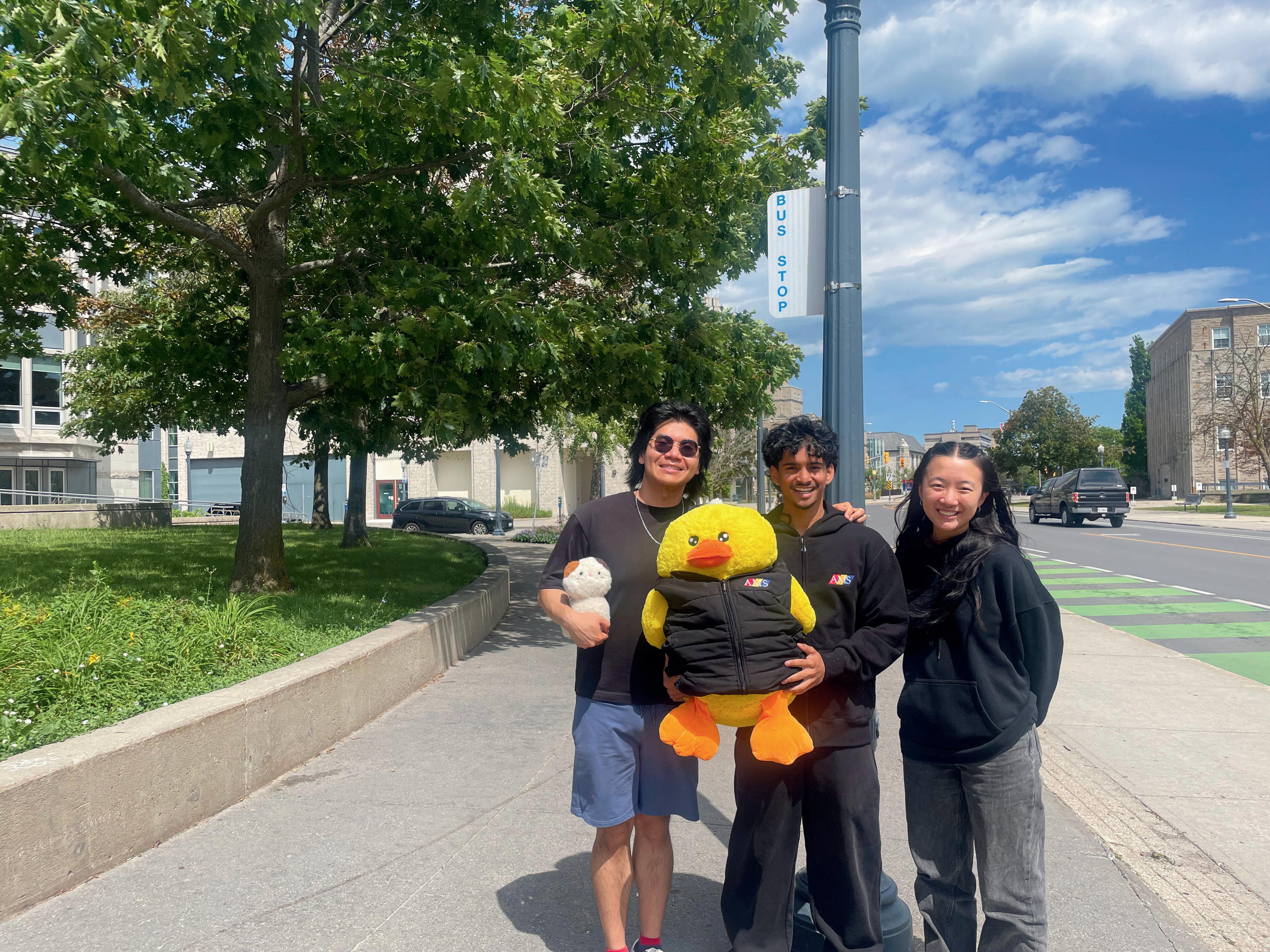

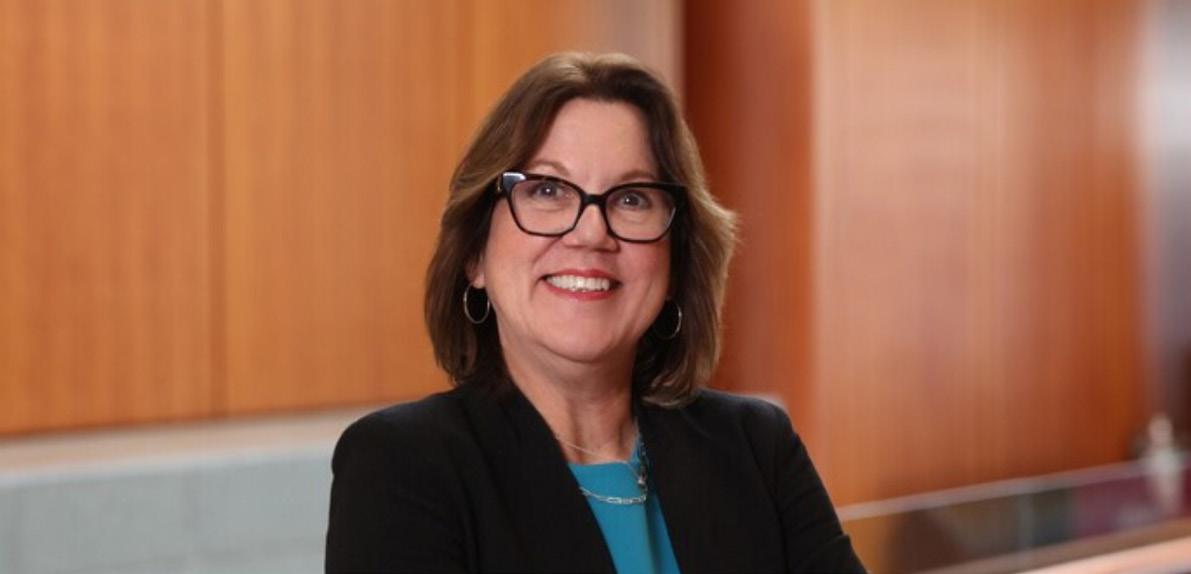
Special Advisor Donna Janiec.
PHOTO SUPPLIED BY QUEEN’S UNIVERSITY
Meet Dreyden George, the first Indigenous AMS president
George brings lessons from his community to local student leadership

from his hometown.
When Dreyden George, ArtSci ’27, arrived at Queen’s from southern Vancouver Island, he became the first person in his family’s direct line to attend university.
Now entering his fifth year in a joint honours degree in economics and environmental studies, George has reached another milestone as the first Indigenous student elected president of the AMS.
“It’s kind of disappointing, but it’s also a huge achievement,” George said in an interview with The Journal
George grew up in a First Nation community near T’Sou-ke, B.C., where approximately 400 people live across two reserve lands.
He said previous generations of his family hadn’t attended university, in part because of historical barriers Indigenous peoples faced when accessing post-secondary education.
Home is still central to his life. Describing himself as a “West Coast person,” George said that whenever he returns to B.C., he spends most of his time hiking, zip-lining, bungee jumping, and camping.
“If I was back at home for the summer, I would be camping pretty much any time I have a day off for more than 24 hours,” he said.
Before Queen’s, George lived independently from age 16. He said managing an apartment, working full-time, and solving problems without much guidance required him to mature early.
Those experiences also taught him to stay realistic about his capacity while believing problems can be worked through.
His family and Elders shaped his approach by teaching him about “perpetual learning.”
“Just being a youth doesn’t mean you’re a learner. It’s a lifelong thing,” he said.
His choice to come to Queen’s over other universities stemmed from the available programs being compatible with his interests, alongside a broader interest to explore a new environment.
“I did feel like I needed to explore the east […] just to kind of see what living over there was like,” he said, arriving in Kingston knowing only one other person
Before coming to campus, he researched student clubs to meet people.
George said his high school didn’t have a student government or comparable club system and, as the first person in his family to attend university, he knew little about what to expect.
Having worked full-time throughout high school, he planned to replace some of that income.
He applied for two AMS positions: indigenous initiatives coordinator and social issues commissioner (internal). After being turned down for the indigenous initiatives position, George said he didn’t expect to land the commissioner role.
Four rounds of interviews later, he was hired, marking his introduction into the AMS.
The narrow portfolio as a commissioner encouraged him to consider the AMS more broadly. After an unsuccessful campaign for vice-president (university affairs) in the 2025-26 election, George stayed involved and was later elected chair of the AMS Board of Directors.
By the time nominations opened for the 2026-27 executive, he had come to view the presidency as more than just managing the AMS offices, but as an opportunity to represent students across the University, working with faculties, senior administrators, and the Board of Trustees.
George said learning he was the first Indigenous AMS president wasn’t surprising.
During his first year in AMS leadership, he said he was typically the only Indigenous person in the room.
“One of the things I think is always tricky is making sure I’m not being the only Indigenous person I’m listening to within my advocacy, because I don’t think it’s a monolithic thing,” he said.
As president, he said his goals reflect his experience as a low-income, first generation, and Indigenous student, while addressing concerns affecting the entire student body.
“The ultimate goal is to improve the organization to improve the student experience,” George said.
How the 2026 Census counts Kingston’s student renters
While students may leave Kingston for the summer, Statistics Canada says they are still accounted for
Lola Hustins Assistant News Editor
As thousands of post-secondary students left Kingston after their April exams, the start of the 2026 Census coincided with many student renters returning to their hometowns for summer.
According to Statistics Canada, invitation letters were sent through Canada Post on May 4, encouraging households to complete the mandatory questionnaire online by Census Day, May 12. While responses continue to be accepted until the end of July, the timing of the Census coincides with the post-exam departure of Kingston’s student population.
According to the “Why Queen’s” page, more than 90 per cent of Queen’s students come from outside of Kingston, and, by early May, many have returned to their hometowns for summer jobs, leaving student neighbourhoods less populated.
Conducted by Statistics Canada every five years, the mandatory Census of Population survey collects demographic data used to allocate funding, draw electoral boundaries, and plan essential infrastructure. Under the Statistics Act, Canadian households that fail to complete the questionnaire can face fines of up to $500.
In an interview with The Journal , Robert Stephenson, Statistics Canada’s regional director for the central region, said the agency prepares for communities like Kingston before questionnaires are delivered.
Ahead of Census collection, field operations managers conduct what Stephenson called “area familiarization,” working with property managers, condominium boards, municipalities, and other community organizations to gather as much information about the area.
Property managers may work with Statistics Canada to help identify vacant dwellings so the agency can code them appropriately, while enumerators follow up on units where occupancy remains unclear.
Stephenson said the process is particularly important in Kingston because of its “big student population.”
Christian Honig, ArtSci ’29, has worked as a census enumerator in Halifax since June 1. His work consists of conducting door-todoor interviews and determining the occupancy of residences, with much of his work concerning student housing surrounding Dalhousie University.
In a statement to The Journal, Honig said when an enumerator encounters a seemingly vacant student rental, they don’t simply assume it is unoccupied.
Instead, enumerators speak with neighbours, landlords, or property managers to determine whether anyone usually resided in the dwelling on Census Day. If they confirm the dwelling was occupied — or that its usual residents were only temporarily absent — enumerators continue attempting to contact the household. If they determine that no one usually resided in the dwelling on May 12, it is coded as a “312” — Statistics Canada’s designation for an unoccupied dwelling.
Honig explained how the job can become frustrating after multiple attempts to determine whether a student rental was
occupied. He said many students are unfamiliar with the Census process, why it needs to be completed, or where they should be counted. Some assume their parents would complete the Census on their behalf, not realizing they must be included at their student address if they ordinarily lived there on Census Day.
While Statistics Canada has procedures for verifying occupancy, Honig believes communication with student renters could be improved.
“One improvement would be to send a notice to residences that are already known to be student housing,” he said.
Continued online at www.queensjournal.ca
Emmet Paradis Senior News Editor
AMS President Dreyden George. PHOTO SUPPLIED BY GEORGE
Kingston one-bedroom asking rents fall 6.3 per cent in June
According to Statistics Canada, Kingston records largest yearover-year decline in listed rental price in Canada
Kavina Sathiyanarayana Assistant News Editor
Kingston’s median asking rent for a one-bedroom apartment fell 6.3 per cent in June, according to Zumper’s Monthly Canadian Rent Report.
This comes as Statistics Canada found Kingston recorded the largest year-over-year decline in listed rental price of any census metropolitan area in Canada.
The Statistics Canada report
also found that the average asking rent for a two-bedroom apartment in Kingston fell by nearly six per cent in the first quarter of 2026 compared with the same period last year.
Both Zumper and Statistics Canada based their findings on rental information posted on major online platforms. This data would not include private landlords who don’t use them or longterm sublets, marketed through Facebook or word of mouth.
The Canada Mortgage and Housing Corporation (CMHC) — who publish rental market statistics summaries based on survey samples — found the average rent in Kingston has been, overall, trending upwards and sits at $1,713 as of October 2025. The average rental prices in 2024 and 2023 were $1,596 and $1,525 respectively.
On July 10 the Ontario government announced Kingston would
receive $3.2 million through the Building Faster Fund, which supports municipalities that meet at least 80 per cent of their provincially assigned housing targets.
Last year, the city broke ground on 1,011 new homes, exceeding its annual target by 26 per cent.
In the provincial announcement, Mayor Bryan Paterson said, “Surpassing our provincial housing target is a reflection of the work happening across our city and the collaboration between all levels of government, builders, partners and our community. The Building Faster Fund recognizes that progress and helps support the infrastructure and initiatives needed to keep housing moving from plans to reality.”
When presenting Kingston with the check, Minister of Municipal Affairs and Housing Rob Flack said this money was
intended to address infrastructure requirements.
“The biggest risk to housing in the province is the need for infrastructure because without water, wastewater, storm sewers, and road transportation, housing can’t be built,” he said.
At this event, Ontario announced the Municipal Housing Infrastructure Program will award nearly $7 million to Kingston. This will fund the support infrastructure needed to build more then 4,000 additional homes.
Over the past month, Kingston fell from sixth to eighth place in Zumper’s ranking of one-bedroom rental markets. Despite the recent decline in asking rents, Kingston remains among the 10 most expensive rental markets in Canada.
Aman Kakar, Comm ’26, shared he found two of his last three housing arrangements through
Facebook.
“Based on my experience, Facebook groups, Marketplace, and personal networks are often more important than major rental websites. Some of the better-located houses are effectively passed from one student group to another,” he said.
“In my experience, the estimates provided before moving in were often much lower than the actual amount we ended up paying,” Kakar said
Speaking to The Globe and Mail, Paterson said, “Whether you like the results or not, supply and demand will drive pricing. We’ve known for a number of years that there’s been a supply issue.”
We’re a student-run security service that’s been around for 90 years (happy birthday QSC!) We’re here to keep Queen’s events and students safe, if you see us around, come say hi!
Find us at Orientation (welcome first years!), Clark Hall Pub (we <3 engineers), the Queen’s Pub (come 2 trivia), and many other events!
Come get a pen and stickers! JDUC RM#125



Christina, HM
Blake, Logs AM
Keira,
FEATURES
Your Don
continued from front page
Of the 23 Queen’s students who responded to a July survey by The Journal, 11 described their first night in residence as overwhelming. Three chose pure euphoria. 13 said nothing had gone wrong — and six of those 13 still described themselves as overwhelmed or numb.
The Journal also interviewed students who later became dons, Gaels, or orientation organizers. Several remembered their own arrival as empty, overwhelming or unlike what they had imagined.
Four students, across four years and three residences, can be traced in a single line. None knew the whole chain existed.
Waiting for someone else to go first
Sydney Welsh, ArtSci ’27, watched the gap between private fear and public confidence from a few feet away.
As a Gael — an upper-year student who volunteers to guide first-years through orientation week — she was assigned seven
chemistry students who had just met.
“They were very excited for it. But I could also tell they were all super nervous about not knowing each other,” Welsh said
She watched them move toward conversation, then pull back.
“I saw them wanting to interact, then also being a little scared to do so,” she said.
Each appeared to be waiting for somebody else to speak first.
“I think we all know we all go through it,” Welsh said, “but no one actually realizes we all go through it.”
Katoch’s 2021 cohort faced an additional problem. Pandemic restrictions had disrupted the final years of high school, leaving students without a clear idea of how university students were supposed to behave.
Their reference point was not an older class. It was movies.
“The college dorm scene kind of felt a lot like 22 Jump Street ,” Katoch said.
“People were kind of living the
stereotype of what you would expect the first week in college to be like, because no one actually remembered what it was supposed to be like.”
New students were not the only people performing confidence.
Before Welsh became a Gael, she arrived knowing nobody and feeling “super-duper scared.” As a leader, she wanted her group to experience a different week.
“I wanted to go and put on a good face, so then they would be inspired to enjoy their time and love it as much as I loved my frosh week,” she said.
Eleven months planning for one week of orientation
The process to put together orientation for 5,000 students is more than what is visible to the average student.
Natasha Andrade, ArtSci ’27, president of the Arts and Science Undergraduate Society, said coordinators are hired in December and begin meeting in January. Registration opens in July, and organizers return to campus early — some waking for buses leaving at 3 a.m., others setting up the sidewalk sale at 5 a.m.
By September, nearly a year of work has been turned into something designed to look spontaneous.
Andrade’s own first night was not. She arrived with one

high-school friend who lived in another residence.
“[The first night] wasn’t super exciting or anything,” Andrade said.
Within days, her friend had made more friends than she had. Orientation became one of the structures through which Andrade found people of her own. She later returned as a leader and eventually helped oversee the week.
The students behind the doors
Bella Rose, Sci ’23, spent the 2020–21 academic year as a don in Victoria Hall — an upper-year student compensated with room and board to live and support its students in residence.
Rose made rounds at roughly 8 p.m., 11 p.m., and 1 a.m., listening for arguments, loud music and signs that someone needed help. The job meant deciding when to knock, when to step in, and when to keep walking.
Ali Bekheet, Sci ’25, a Victoria Hall don in 2021, described the role as closer to a neighbour than an officer.
“I wasn’t much of a rule enforcer,” Bekheet said. “I was just there as a guide.”
He also pointed out that dons were navigating their own transitions.
“Dons are on that journey too,” he said. “While you’re getting to know first year, your don might be getting to know second year.”
Rose remembered asking other dons whether anyone else was struggling to get students to attend floor meetings.
“Everyone’d be like, yeah, me, me, me,” she said. “It’s not just me. My students don’t just hate me.”
The people hired to make firstyears feel less alone were often asking whether anyone wanted them there.
“There were a lot more times when I was a don in Vic where I could have used a shoulder and was the one providing the shoulder anyway,” Rose said.
Who gets noticed
What a don can see is narrower than what the job requires.
Rose said students often needed extra support after the first week, once friendships had begun to settle.
“Everybody is very social and friendly and outgoing in that first week, because everybody’s kind of in the same boat,” she said. “But then, as time progresses, people are reaching out less because they’ve settled into friendships, and then that’s kind of where the dust settles.”
The survey suggests support often reached students whose distress was visible. The two respondents who remembered receiving help from a don on their first night had both cried.
Another respondent wrote that she and her roommate were crying but received no help, though she could have used it.
Rounds covered only a don’s own floor and only while they were on shift. In reality, many issues unfolded elsewhere.
Near midnight outside Location 21, Isaac Sahota, ArtSci ’22, noticed a student sitting alone. Sahota was a Watts Hall don from 2020-2022. That night, he was off duty, in another building, and the
student was not his.
“This is late at night, and this is not how people just sit somewhere alone,” Sahota remembered thinking.
“And things were not okay.”
He declined to explain what happened next. What mattered, he said, was recognizing the situation and acting before anybody asked him to.
Welsh found during her time as a Gael another signal: absence.
When students stopped attending events, she and her co-Gael compared their roster with the people in front of them. They texted whoever was missing and asked whether they were okay.
“[It] is easier to do with a group of seven people,” Welsh said.
But some of what happened next still depended on students making the first move.
Katoch said during his time as a don he noticed first-years left their doors open, wandered the halls, and sat beside strangers in dining halls. He also acknowledged the part nobody controls: “a little bit of luck.”
Bekheet’s advice to other studnets assumed the system might fail someone and told them to keep moving anyway.
“If your Gael doesn’t reach out, show up to orientation anyway,” he said. “Someone will put you in the right place.”
He was also blunt about what the system could promise.
“It’s important to realize that it’s not a foolproof system,” Bekheet said. “There’s so many nets that you can rely on, set in place. But not all of them are proactive.”
A friend first
AJ is the kind of student Bekheet’s warning describes.
He followed the usual advice. He propped open his door and knocked on every door on his floor, but nothing came back. Nobody detected a crisis because there was no visible crisis to detect.
“Maybe I was standoffish accidentally as well,” AJ said.
He was reached anyway — not because the system identified him, but because the don on his floor had made himself someone AJ could text.
Bekheet was the first person AJ met at Queen’s. Over the year, they ate together, watched reality television and talked about nothing in particular.
“We had stupid talks about reality TV or whatever,” AJ said. What AJ noticed was that Bekheet never held the role over him.
“A lot of dons would treat their kids like they were above them,” AJ said. “But our don Ali — he was your friend first and foremost. He was actually your friend.”
The proof was repeatable.
“He didn’t just say that on the first day and give his number and be like, ‘Hey, text me whenever,’ and then not keep his word,” AJ said. “But he genuinely would. Every single time within, like, half an hour.”
Four floors up, Katoch had found his people in an afternoon and also did not want the form of support residence staff typically offered.
Orientation Week should be for orienting, not classes
Jonathan Reilly Editor-in-Chief

Students at Queen’s have all experienced an Orientation Week fragmented across two weekends. However, it has not always been this way, nor does it need to be Orientation Week has changed considerably over the years. In the past, Orientation Week took place entirely before classes, allowing students to meet people, settle in, and adjust to university life before academics began.
That changed in 2018, when Queen’s added classes on the Thursday and Friday of Orientation Week, moving the remaining orientation activities to the weekend. They then used the additional September teaching days to create a two-day fall break — four consecutive days off if you include the weekend.
During the COVID-19 pandemic, Queen’s began classes on the Tuesday after Labour Day, rather than Thursday, and split most
orientation activities between the preceding two days and the following weekend. Senate made that structure permanent starting in 2022, using those two days taken from Orientation Week to implement a week-long fall reading break, which students have now grown accustomed to.
Now, as we begin the 2026-27 fall semester, Orientation “Week” has gone from multiple days of back-to-back events before classes begin to a number of activities dispersed over two weekends. Rather than having a week to meet people and find one’s footing before school starts, incoming first-years now complete only two days of orientation before being thrown directly into classes.
This has turned what was once a cohesive, structured week-long event into what now feels like a string of disconnected activities.
Queen’s justified the initial change partly on mental-health grounds, with a Senate report concluding that implementing a fall reading week was worth the cost of restructuring orientation.
I can sympathize with this
reasoning. Fall reading week provides a much-needed break for many students, and if it really were a choice between having a fall break or an uninterrupted Orientation Week, I would likely choose the break.
However, I don’t accept the premise that a reading break must come at the expense of a cohesive Orientation Week.
Other universities employ different schedules that achieve both a unified Orientation Week and a week-long fall break. At Dalhousie University, Orientation Week runs from Sept. 3 to 12, with classes beginning on Sept. 8. This gives incoming students five days of orientation before classes begin, while programming continues during the first week of the term. Dalhousie also provides students with a five-day fall break in November.
The University of Toronto (U of T), also runs some of their orientation events the week before classes start, giving students plenty of time to adjust to their new environments.
Both of these schools manage
more unified orientation experiences, while still offering students a fall reading week. So why can’t Queen’s?
The Queen’s task force that recommended a fall break in 2017 explore keeping Orientation Week before classes, but raised multiple concerns.
Specifically, it worried that an August move-in would reduce students’ summer employment income, increase accommodation costs for those with September leases, and make it harder to recruit upper-year orientation leaders who would need to return by mid-August. While these challenges are legitimate, Dalhousie and U of T demonstrate that they’re not insurmountable.
The task force also raised concerns about the additional operating costs associated with bringing students to campus a week earlier, should that option be explored. This is despite Queen’s Residences being projected to contribute an additional $9.7 million to the University and Student Affairs in 2025-26, while an eight-month stay in residence can currently cost students upwards of $20,000.
For that price, a few extra days of accommodation seems like a reasonable cost for a more cohesive orientation week and, as a result, better-prepared first-years.
Canada wasn’t ready for its wildfires
Canada is burning, and our inaction is partly to blame.
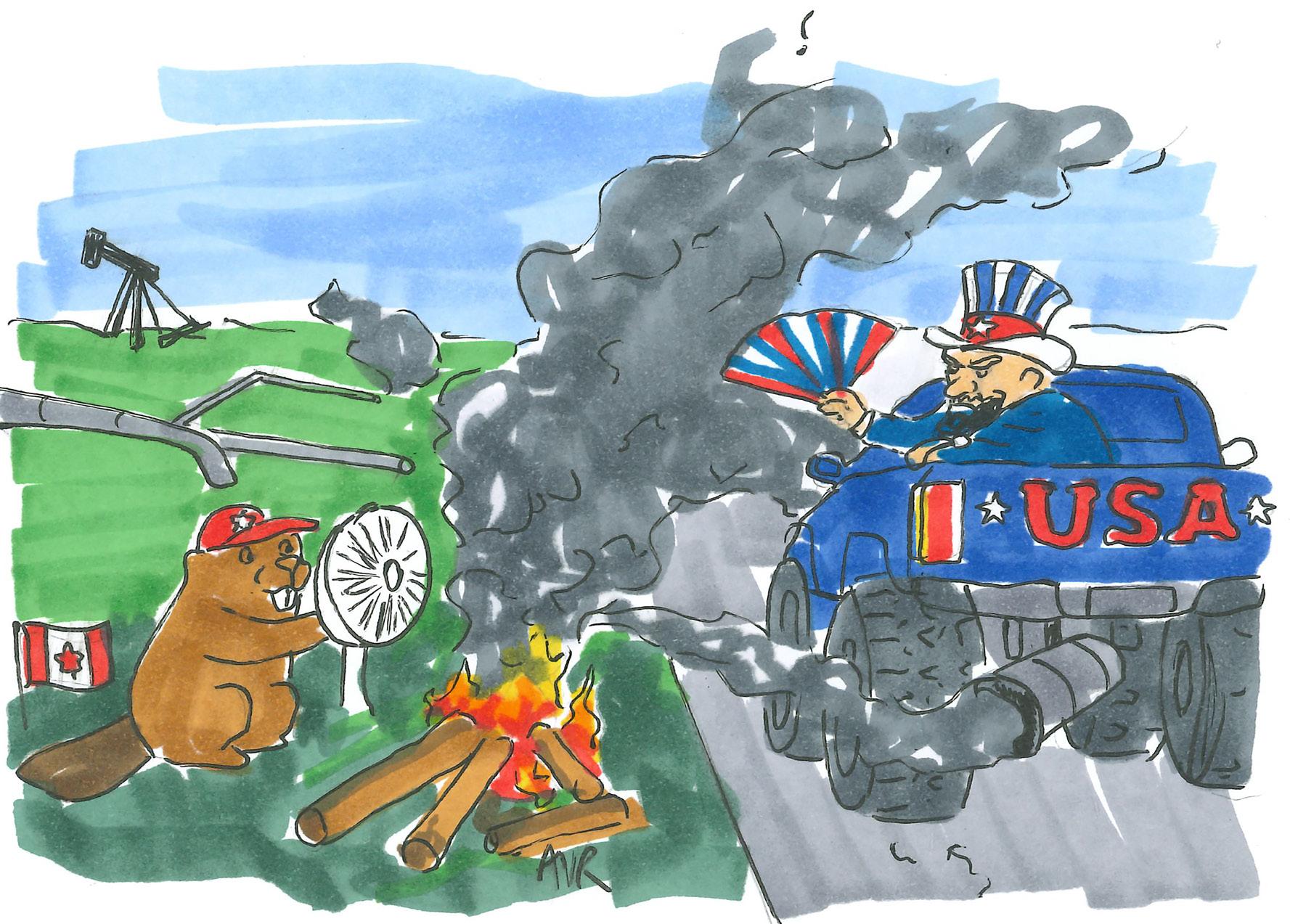
When Canada’s smoke drifted south again, a handful of Michigan Republicans met it with a letter to Mark Carney, accusing Canada of letting its forests burn and threatening that the United States will “act on our own,” a clear aim at Canadian sovereignty.
The bad faith is obvious; the American politicians had weaponized a climate disaster while carefully avoiding any responsibility as one world’s biggest polluters, and cast Canada as the sole culprit of a crisis that belongs to everyone. However, the Republicans aren’t entirely wrong, as Canadian wildfire prevention and preparedness is grossly inadequate.
Canada claims to take wildfires and climate change seriously, but the concern never becomes actual policy. Our politicians grandstand against the United States while our wildfire-fighting capabilities quietly erode.
In British Columbia and Alberta, yearly forest firefighting costs routinely double the allocated yearly budget. In Saskatchewan, the approved budget covered barely a fifth of what the 2025 season actually cost. In the Northwest Territories, 70 per cent of the population was evacuated in 2023 alone. And this year, Ontario’s budget set its wildfire fund at $150 million for 2026-27 after spending $271 million the year prior.
At a time when Canada’s last three fire seasons have been among the 10 worst on record, instead of taking the threat more seriously, we are doing the exact opposite.
And it goes further. We aren’t simply failing to address the
problem; we’re actively making it worse. By our own government’s admission, Canada is the “worst performing” member of the G7 at reaching the emissions goals set in the 2015 Paris Accord.
The reality is bleak: Canada is the only G7 country whose emissions have risen, rather than fallen since 1990. Canadians are among the highest per capita emitters in the world, and we rank among the top 10 carbon emitters globally, despite being a fraction of its population.
In a country actively threatened by wildfires, it’s inconceivable that we are the only G7 nation without a national wildfire agency. As much as we chastise the Americans for treating climate change as somebody else’s problem, we need to admit that provincial infighting, jurisdictional
bureaucracy, and petty squabbles over resources have left us hopelessly ill-prepared every time summer rolls around.
Perhaps we accept the science more readily than the Americans do, but that only makes it worse that we still don’t seem to care enough to act on it. The only time we hold a meaningful conversation about wildfire is once we’ve passed the point of no return.
There is value in seeing our climate crisis in real time, but we need sustained pressure, not periodic spurts of debate.
No doubt, much of what burns is beyond our control, and the opportunistic lawmakers jeering from Washington obviously care nothing for our forests, our air, or us, but rather are trying to push a political message. However, that doesn’t mean Canada has been

adequate in dealing with this crisis, and we shouldn’t allow our frustration with these lawmakers to make us defensive.
Yes, Trump and the Republicans are trying to undermine Canadian sovereignty, and their unconvincing attempts to present a concern for the environment are laughable, but a broken clock is still right twice a day.
Regardless of American intentions, Canada should be criticized for our unpreparedness in fighting wildfires. We underfund our forces, cut our budgets, and still increase our emissions. While wildfire prevention is far from our sole responsibility, readiness is a responsibility we keep declining to meet.
— Journal Editorial Board
Board acknowledges the traditional territories our newspaper is situated on have allowed us to pursue our mandate.
We recognize our responsibility to understand the truth of our history. Editorial opinions expressed in The Journal are the sole responsibility of The Queen’s Journal Editorial Board, and are not necessarily those of the University, the AMS or their officers.
Queen’s Centre, 3rd Floor, Rooms A620/A616 284 Earl St, Kingston, ON, K7L 3P4 Email: eic@queensjournal.ca
Please address complaints and grievances to the Editor in Chief and/or Managing Editor. The Queen’s Journal is printed at KT Web Printing Inc. in Toronto, Ontario.
Contents © 2026 by The Queen’s Journal; all rights reserved. No part of this publication may be reproduced without prior permission of The Queen’s Journal


@queensjournalnow
@queensjournal
@queensjournal




ILLLUSTRATION BY ANNA VAN RAALTE
OPINIONS Your Perspective RECTOR'S DIGEST: NEW TO QUEEN'S? START HERE
First years need to remember that university is about more than grades
The experiences outside the classroom can impact students the most
Ella Smith Contributor
Perhaps the greatest myth told about university is that success is measured by grades alone.
Even before students arrive on campus, they have already been taught that academic achievement is the ultimate goal. They are encouraged to pursue degrees that are seen as practical, warned about studying the humanities, and reminded that every assignment, exam, and their ultimate GPA will determine their future career. In reality, university is about much more than that.
The first year of university already marks a time of pressure and change. For the first time in many students’ lives, they are on their own. Students are considered adults who have to make decisions about all the details in their day-to-day lives, while also needing to make new friends out of the strangers they just happen to be placed in the same orientation group or class with.
There are so many new things to think about, and on top of all of that, school is likely harder than it has ever been before.
Lecture halls are a new style of learning, labs can last upwards of three hours, and
professors, as well as their TAs, can be harder to approach than high school teachers ever were. On top of having to absorb academic content, first-year university students must also learn a new style of education. The system is designed to create stress and pressure and to push students outside of their comfort zones, but all of that makes it hard to succeed academically; sometimes, it feels as though the system is designed for them to fail.
So, instead of looking at your first year and measuring how well you are doing by how many A’s you receive, success should be measured by your willingness to put yourself out there and make yourself uncomfortable. The opportunities you create for yourself and the experiences that come out of them will be the ones you remember, the ones that will shape you — not your grades.
By putting yourself out there and joining a club, getting a job, volunteering, or otherwise making yourself uncomfortable and taking a risk, you will learn so much more than what you can be taught in a classroom. It is already a massive achievement that you chose to come to university in the first place, and being here is a learning experience in itself.
There will be applicable skills that come out of university whether that be time management, writing proficiency, the ability to interview in different settings, and much more. But
you will also meet people who could become some of your closest friends — people you would never have met if you had not put yourself out there. These people will teach you things about yourself that you cannot learn from reading a textbook.
Academic success has been elevated to this pristine ideal that you must strive to achieve, as though it is necessary for any sort of success in the rest of your life. But all of the things I listed — all of the things your friends and the people you interact with can teach you about yourself — are not graded and are more practical and widely applicable to life than an arbitrary number on a piece of paper.
Campus involvement also expands a student’s world in ways that academics alone cannot. Some of the most meaningful friendships are formed not because two people might happen to sit together in class, but because they shared a late-night volunteer shift or worked together on an event. These communities give students a sense of belonging during a period of immense transition. They remind students that university is not something to survive, but an experience to share with others.
That said, taking risks also means accepting the possibility of failure. Not every student will get the position they applied for. Not every election can be won. Not every club will be the right fit. There will be disappointing grades and unsuccessful interviews. Yet these
Talking heads... what's your advice for incoming first-year students?



moments are often the ones that teach the most.
Failure builds resilience and teaches students how to adapt and persevere. Those lessons cannot be measured by a GPA, but they are still among the most valuable lessons university has to offer.
Of course, this is not an argument against academics. Students come to university to learn, and earning a degree should always be a top priority. Good grades do matter, and there are opportunities that depend on your academic performance.
But academics should not become so consuming that they prevent students from experiencing everything else university has to offer. A transcript reflects what happened in the classroom but says very little about the person a student became outside of it.
Years from now, very few graduates will remember the mark they earned on the first-year midterm or the percentage they received on an introductory essay. Rather, they will remember the club they joined, the professor who inspired them, the campus job that gave them experience, the volunteer position that taught them to lead, or the exchange that changed the way they saw the world. Those are the experiences that shape people long after they have forgotten the content they once memorized for an exam.
Ella Smith is a fourth-year History student.
Finding your way through Queen's support systems
Arabella Mew Contributor
Starting university means learning much more than simply where your classes are. It also means learning where to turn when you have questions or need support.
Just about a year ago, I moved into my new home for the year, at Endaayaan–Tkanónsote. At firstyear orientation, I was given a copy of The Queen’s Journal. It was the annual “First-Year in Focus” issue (the one you are reading now) and in it, there was an article by the Rector’s former intern, EJ Kelvin.
Reading about EJ’s positive experience was one of the main reasons I applied for the very same role. Today, I am writing this column from a new vantage point: as your student support projects coordinator in the Office of the Rector, and as a former first-year intern myself.
While it is typically the Rector, Niki Boytchuk-Hale, writing these pieces, it has now become a tradition for her interns to address the incoming class. After all, it has been quite a few years since she was a new student herself!
As I head into my second year, I can still vividly remember arriving at Queen’s and being introduced to what seemed like a huge number of resources at orientation. I recall thinking that surely with this volume of support, I would be able to figure out where to go if I ever needed help.
Well, a few weeks later — when I actually had a question — I realized having so many options was valuable but also made it difficult to know where to start.
It was not until I started to take on some student government and club roles around campus that I began to understand how Queen’s resources connect and came to appreciate what each one has to offer. That experience ultimately showed me the importance of helping students understand when and how to access resources.
At Queen’s, the issue is rarely a lack of support. The challenge is that students can face barriers when trying to access them, and I think this happens for a few reasons.
First, sometimes the hardest part is simply deciding to reach out. You may need to overcome the emotional hurdle of asking for help.
Second, because Queen’s has such an abundance of services to support students, it can be daunting to sort through and figure out what the best path is.
"Avoid the Vic Pit at all costs."
JOURNAL FILE PHOTOS
JONATHAN REILLY Editor in Chief
"Spend the least amount of time in your dorm."
EMMET PARADIS Senior News Editor
"Use the pier as much as you can before it gets cold."
NOAH CYR Senior Sports Editor
"Don't get too attached to your O-Week friends, they'll be gone by November."
TAYLOR FOUNTAIN Editorials Editor
<BIZ-SCI-TECH>
Queen’s researcher explains wildfires crisis and smokerelated health risks
Climate change is a key factor for intensifying wildfires and worsening air quality
Uroosa Imtiaz
Business, Science, and Technology Editor
A thick layer of smoke blocked the sun and turned skies orange across Southern Ontario, including Kingston, on July 15.
Environment Canada issued a yellow air-quality warning for the Kingston region on July 14, forecasting worsening air quality and advising residents to stay indoors to avoid smoke from wildfires in northwestern Ontario.
By the following day, Kingston’s Air Quality Health Index had reached 10+, the highest risk category, prompting the warning to be upgraded to orange.
According to David McLagan, an assistant professor in geological sciences and environmental studies, fire and smoke play a critical role in many ecosystems, while climate change, decades of fire suppression, and land-management practices have intensified
Toron To paid The bill for fifa, KingsTon TooK
The benefiTs
How the FIFA World Cup came to Kingston without costing the city a dime
Murray Halpin
Business, Science, and Technology Editor
For six weeks this summer, the largest sporting event in the world came to Canada, and some of it ended up in Kingston.
Kingston didn’t host a single FIFA world cup match, nor did it build a stadium, upgrade infrastructure, or take on millions in security and operational costs. What it got instead was a stop along the FIFA World Cup 2026 nationwide tour in the heart of downtown, which brought a surge of international tourists spilling out of Toronto, and one of the busiest stretches of the summer
the wildfire crisis.
McLagan, who leads the Fire, Earth, Water, Air (FEWA) Contaminant Biogeochemistry
Lab, spoke with The Journal about the causes and impacts of the fires.
The fires were likely caused by lightning strikes from recent storms rather than human activity, given the low population density in the areas, he said.
“Lightning strikes, you get a little bit of precipitation, but not enough on a dry landscape, and they turn into fires,” McLagan said.
“There are no roads, so getting a response in there is virtually impossible,” McLagan said, adding that the fires that crews are fighting are closer to population centres and infrastructure like highways and railroads.
“Extreme fire weather is driving the rapid increase in the size and spread of these fires,” he said.
Fire weather refers to meteorological conditions that can cause wildland fires to ignite, spread, or change behaviour.
These include low humidity, high temperatures, and strong winds that helped the fires spread rapidly through extremely dry, combustible vegetation, he said.
Precipitation over the past few days and less severe fire weather have helped crews make progress on some fires, although several continue to burn out of control.
A key factor behind
for local restaurants and hotels, all on someone else’s dime.
Tourism Kingston has spent months preparing the city to be a destination for World Cup visitors looking to explore beyond Toronto. Survey data published ahead of the tournament showed nine in ten World Cup visitors planned to explore regions beyond the host cities, with more than half intending to travel outside Toronto after matches ended.
For a city like Kingston, which sits roughly two and a half hours up from Toronto, with a lakefront on Lake Ontario, historic sites, and a downtown that draws in visitors during any ordinary summer, these characteristics made it a natural choice for tourists looking to experience Canada and the FIFA world cup beyond Toronto.
On June 27, Kingston hosted an official FIFA fan festival at Springer Market Square, featuring live game viewings, food vendors, and soccer activities. For restaurants along the downtown core, the energy had been building up long before that weekend arrived.
As one of 24 stops along the nationwide initiative celebrating Canada’s first ever appearance on the world’s largest stage, Kingston drew in soccer fans from across the world alongside locals, to watch Panama vs. England and Columbia vs. Portugal. The very next day, Canada advanced from
increasingly extreme fire weather is climate change, which is also making fires more difficult to put out, he said.
“Climate change creates the potential for more extreme fire weather conditions,” he explained. Although these conditions do not ignite fires on their own, they can lead to “much faster fire propagation” and more severe fires. Higher temperatures can allow fires to ignite with less fuel available and return to recently burned areas, McLagan explained.
“What we’re seeing now are fires starting to return to areas that may have burned four or five years earlier, and normally that would be enough to help prevent that fire from occurring again.” he said.
“If you burn down a forest and then another fire burns all those seeds away, that landscape can turn from a forest to a savannah,” he said. Because savannah stores less carbon than forest, this creates a “net transfer of carbon to the atmosphere.”
Another factor is the “negative culture towards fire in our Western societies,” he said. “Since the turn of the previous century, we started down this pathway that all fires are bad,” he said, leading to decades of aggressive fire suppression.
Greater efficiency in suppressing fires has also left many areas
the round of 32 with a win against South Africa, boosting spirits and energy further.
What makes Kingston’s experience particularly interesting is the contrast with what Toronto absorbed to make it possible.
Canada’s national FIFA World Cup hosting bill is expected to reach around $1 billion in taxpayer dollars, according to the Parliamentary Budget Office, with Toronto alone spending $380 million to host six matches.

with an “overabundance” of vegetation, creating what McLagan called a “fire deficit.”
However, this approach ignores “the critical role that fire plays in the balance of our ecosystem” and in shaping biodiversity, McLagan said.
He added that the wildfire suppression model involves the suppression of Indigenous cultural burning practices, including what he calls “good fire.”
“There are people with the knowledge to kind of put fire back in the land, and they want to practise their culture,” he said.
A third factor is Canada’s forestry management system, McLagan said.
“We turn a lot of our forests into plantation timber,” consisting of dense plantings of fast-growing trees, that tend to be more flammable than slow growing ones, McLagan said. “With all these things coming together, we have this recipe for disaster.”
When it comes to the health impacts of wildfire smoke, McLagan urged a balanced approach to assessing risk.
“Without question, wildfire smoke can cause significant health effects, particularly for vulnerable populations,” he said, including people with respiratory or heart conditions, older adults, young children, and firefighters exposed to extreme smoke.
However, McLagan emphasized the need to avoid the perception that all smoke must be eliminated.
“If all smoke is bad and we need to get rid of all the smoke, the only scenario is that we need to get rid of the fires again,” he said. However, the ecosystem and our landscapes “need good fire.”
“We have to come to this place where we become a bit more resilient to both fires and smoke exposure,” he said. While vulnerable people can be protected through effective indoor air filtration or relocating away from high-risk smoke areas, “there is no scenario where we can have no smoke.”
“We have to invest in new strategies and ways of approaching how we manage our planet,” he said. “This is our planet giving us a lot of warning signs.”

A study prepared for FIFA by Deloitte Canada had projected the tournament to generate up to $940 million in economic output for the Greater Toronto Area. As the tournament has come to an end in the last few days, the incoming data is beginning to paint a different picture.
Restaurants and bars in Toronto saw only a three per cent bump in the first two weeks of the tournament, which is incredibly modest returns for the scale of what was spent. For context, when Taylor Swifts Era’s tour came to Toronto in November 2024, it drove 45 per cent average spending increase across all categories, $242 million in economic gain,
with Toronto investing only a mere $3.6 - $4.2 million on municipal services.
This raises the question, how was such substantial investment unable to come close to the projected returns by Canada’s top professional services firms?
While it’s hard to say before all of the data is released, one reason that’s becoming clearer is that Toronto might’ve unknowingly subsidized millions of dollars of economic gains to surrounding communities from the thousands of foreign tourists who came not only for the World Cup, but to explore everything the country had to offer.
Regardless of dollar figures and what the economic data shows, Toronto’s investment in hosting the World Cup created something that extended well beyond the city. The international recognition and surge of tourists it brought to Ontario came all the way out to Kingston, which saw packed bars, full hotels, and a free fan festival officially organized by FIFA downtown.
For Kingston and Toronto, the final results are still yet to be tallied up, but the World Cup delivered something that didn’t show up in the data, which was a summer that helped Canada feel like the centre of the world.
The sky on July 15 in downtown Kingston.
PHOTO BY LILLY MEECHAN
Downtown Kingston celebrates FIFA this summer
GRAPHIC BY CLAIRE BAK
Queen’s Football ready For a season
Full oF excitement and expectations

Gaels will look to build on a Yates Cup championship this season
Jacksen MacLean
Assistant Sports Editor
The Queen’s Gaels Varsity Football team will look to improve on a very impressive season this year.
This past season saw tremendous success for the Gaels team, highlighted by beating the undefeated Laurier Golden Hawks by a score of 30-27 to win the 117th Yates Cup. While they fell short in the Mitchell Bowl to the Saskatchewan Huskies, playing in the game alone was proof of the team’s talent and accomplishments.
Now that they’ve caught a glimpse of national glory, they’re hungry to go and win it, according to Head Coach Steve Snyder.
In an interview with The Journal, Snyder talked about the big expectations and urgency that this season brings with it.
“We took a major step forward and accomplished one of our goals, but we still have our eyes set on something bigger. There’s still something that we haven’t accomplished, and we have a lot to prove, everybody, including myself,” Snyder said.
While Snyder is proud of his team’s success this past season, he made sure to emphasize that his team won’t rest on last year’s laurels.
“We had a really good year, but the goal was to put it behind us and reset and build a new team and just establish right away that we weren’t going to be defending a Yates Cup,” Synder said on his team’s mentality. “We’re just going to be chasing and attacking another [Yates Cup].”
It’s been a busy offseason for the Gaels in terms of training and gatherings. Snyder has been impressed with his teams near perfect attendance throughout the winter and spring months for both the workouts and team social events. Most players have been choosing to stay in Kingston to train over the summer at the team facilities.
The head coach also understands the additional practice and commitment needed to overcome the extra attention opposing teams are giving them due to their reigning champions status.
“I think a lot of the league has probably been watching us for the last couple of months, trying to learn everything about us,” Snyder said. “We can’t assume that we
Queen’s men’s hockey appoints new head coach
Former Gael Brandon Perry named new bench boss
Noah Cyr Senior Sports Editor
The Queen’s men’s hockey team have chosen their new guy.
excitedly explained the emotions of being officially named head coach.
“It’s a tremendous honour, I’ve obviously enjoyed my time at Queens, but excited to come back and give back to a program that has given so much in my life.”
No stranger to Kingston, before donning the Tricolour from 2008 to 2013, he also played his junior hockey career in Kingston for the now defunct Voyageurs.
appearances.
“I think the biggest thing is just to continue on the success they’ve had,” Perry stated. “You don’t fix something that isn’t broken, right? I just want to build on that.”
A big topic of discussion in recent years revolved around coaching styles and how to handle new age athletes. Perry’s coaching philosophy is what he describes as collaborative and demanding.
can go out and do exactly what we did last year, that would be a big mistake because people have watched that closely.”
Lots of key departures from the team is another factor that won’t make it easy for the team to repeat last year’s success.
On the offensive end, the Gaels will be without running-back Jared Chisari, MSc ’26, linemen Jas Khaira, Comm ’26, and Niklas Henning ArtSci ’26, the latter of which earned a contract with the Los Angeles Raiders.
Snyder is still optimistic about his team’s offense and stated that it will be a team effort to fill the gaps created by the departures. He emphasized quarterback Alex Vreeken, ArtSci ’27, receiver Logan Walton, ArtSci ’28, and runningback Jayden Gurzi-MacDonald, ArtSci ’28, as the individuals he believes will have big impacts on the team next season.
Announced on July 24, former Gaels player of 101 games and Head Coach of the Timmins Rock of the Northern Ontario Junior Hockey League, Brandon Perry, ArtSci ’13, will assume the position of Head Coach for the 2026 season. The team started their search shortly after the announcement that long time Head Coach Brett Gibson would retire from the team in April.
In the announcement uploaded to the Queens Athletics and Recreation (A&R) website, A&R
Executive Director Linda Melnick said that Perry’s “journey from [a] Queen’s student athlete and graduate to his measurable impact on youth hockey provincially and nationally embodies the strategic foundation of our mission at A&R.”
Perry has spent the past five seasons coaching his hometown Rock, where they found tremendous success, including a league championship in 2023.
In an interview with The Journal , Perry humbly but
On the defensive side, the team won’t have the steady linebacker Justin Pace, Kin ’26, and defensive-back Ashton Miller-Melancon, ArtSci ’26, who now play for the Edmonton Elks and Calgary Stampeders of the CFL. Snyder will look towards linebacker Jeremy Hiscox, ArtSci ’27, and defensiveback Iain St. Arnault, ArtSci ’27, to replace the holes on defense, as well as several other players who have been with team for a while.
“We have a number of players that have been in our program for two or three years that have been backups to these great older players, they got a lot to prove now because it’s going to be their opportunity,” Snyder said.
The Gaels will play a preseason game on the Aug. 22 when they host the University of Laval Rouge et Or Football team at Richardson Stadium. They will kick off their regular season on the road on Aug. 30 when they take on the University of Toronto’s Varsity Blues. Their home opener is against Waterloo on Sept. 12 at Richardson Stadium.
“Waterloo is going to be very fired up to play us. If we can all band together, the students, the fans, the players and the coaches, and work together, because fans do make an impact, we can make Richardson a place where opponents have a real difficult time coming,” Snyder said.
Other notable dates include the annual Homecoming game on Oct. 17 against Guelph, as well as their season closer a week later at McMaster Univsersity. The OUA playoffs will begin in November, where the Gaels will get a chance to defend their Yates Cup championship and, perhaps, chase something bigger.
“I grew up here, Timmins is my home, but Kingston is my second home,” said Perry. “It feels more like a homecoming than I probably initially anticipated.”
Perry inherits a program that has seen recent success including back-to-back OUA bronze medals, coupled with two USports National Championship
“I’m very passionate and bring a lot of energy, I like to be detailoriented in how we approach the game and our game plan,” said Perry. “With that being said, I have great relationships with my players, but I want to play extremely fast and add a ton of pressure at a high pace.”
Perry’s first official day as head coach will be Aug. 10.





Brandon Perry will be the 13th head coach in program history.
GRAPHIC BY CLAIRE BAK
Full crowd engergizing Richardson Stadium.
JOURNAL FILE PHOTO
Claire Carter brings national team experience back to Queen’s
The Gael’s outside hitter is training with Volleyball Canada’s NextGen program after a standout season at Queens.
Malek Benameur Assistant Sports Editor
Claire Carter’s national recognition is also a Queen’s volleyball story.
Queen’s own outside hitter has been named to Volleyball Canada’s NextGen roster this summer, adding another national opportunity to a career that has continued to grow in Kingston.
Carter, Comm ’27, is training with the program in Richmond, B.C. The NextGen program gives selected athletes a high-performance environment connected to Canada’s senior national team pathway.
For Carter, the opportunity follows previous experience with Volleyball Canada at the U21 level. Last summer, she represented Canada at the U21 NORCECA Pan American Cup in Costa Rica and the U21 FIVB World Championships in Indonesia. Those experiences have
changed how Carter views the pathway available to athletes competing in the OUA.
“I think sometimes going to an OUA level university, I thought it would maybe close off a bit more doors than I expected,” Carter said in an interview with The Journal “Seeing how much Queen’s has developed me, it’s almost eye opening. [Playing in the] OUA does not mean you can’t go further than that.”
Carter’s rise has happened alongside one of Queen’s strongest recent seasons.
The Gaels finished the regular season 14-6, winning 10 of their final 11 games before entering the OUA playoffs. Queen’s then swept Guelph in the quarterfinals to reach the OUA semifinals, where its season ended in a fourset loss to Brock.
For Carter, the loss did not erase what the group had built.
She said last season stands out because of how close the team

became, especially after dealing with difficult losses and injuries throughout the year. Carter also worked her way back from an injury and still finished as one of Queen’s most productive players.
She was named an OUA First Team All-Star after recording 241 points, 185 kills, a .293 hitting percentage, and the best aces per set rate in the conference.
When the NextGen email came through, Carter said she was at home with her family. She had been waiting for it all day.
“It was very rewarding because I know I came off an injury at Queen’s and I didn’t really know how much of an impact I’d be able to make later in the season,” Carter said. “I worked really hard to get back on the court and I think it paid off.”
That experience is also shaping what Carter wants to bring back to Queen’s.
At the national level, Carter said she learned how important
the toronto blue Jays’ struggles were inevitable
From one win away from a World Series title to fighting for a playoff berth
Noah Cyr Senior Sports Editor
This year has been a big swing and a miss for a Blue Jays team with high hopes.
The Toronto Blue Jays find themselves in an uncomfortable place, sitting 5.5 games out of a wildcard spot and last in the American League East division. A far fall from grace after finishing as American League East champions and going on a Cinderella run that took them all the way to Game seven of the World Series, where they lost to a super team, the Los Angeles Dodgers.
It was an offseason of high expectations for obvious reasons, particularly with the majority of the team contractually still on the books for this season. It came with some exits, including fan favourite and one of the Blue Jays statically best hitters, Bo Bichette, who left for greener pastures in New York along with a $42 million dollar a year salary. On top of that, starting rotation mainstay Chris Bassett signing in Baltimore was another blow that had to be addressed to compete again this season.
The front office responded with a pledge from ownership to spend. They brought in Dylan Cease, Kazuma Okamoto, and Tyler Rogers to fill the holes.
Cease, a solid MLB starting pitcher, who has performed at Cy Young candidate level, has exceeded expectations.

Okamoto, a star infielder in the Nippon Professional Baseball in Japan, has provided some of the only sources of power in the Blue Jays lineup, knocking 22 home runs and 62 RBI. However, he’s also struggled with high strikeout numbers (currently 9th in the MLB, with 121).
Rogers, a high leverage reliever with experience, has performed admirably, with his funky delivery continuing to give hitters fits at the plate.
Despite these additions, it hasn’t translated to wins, and Jays fans who started to follow the team during their run last year are perplexed. There are three distinct reasons this team’s struggles were inevitable.
Four players — George Springer, Alejandro Kirk, Ernie Clement, and Daulton Varsho — had career seasons at the plate in 2025, and that doesn’t include Addison Barger’s impressive rookie campaign that saw him hit 21 home runs and drive in 74 runs. Springer’s 2025 season was as shocking as any of them, as the 36-year-old had only been declining since being signed in 2021.
Over half of the Jays’ offensive lineup hit at an unprecedented rate, and yet were all expected to do the same with even more pressure.
In the current season, the Blue Jays rank 25th in home runs, 26th in slugging, 28th in On Base Percentage (OBP) and 30th in RBI and Runs. In contrast to last year, their lowest offensive stat was home runs, in which they were tied for 11th in the MLB. They also led MLB in hits, OBP, and batting average. These glaring differences in rankings have led the Blue Jays needing to scrape together runs and trail from behind in over half of their games this season.
The clean fundamental baseball that was a team identity for the Blue Jays in 2025 has vanished in 2026. They currently rank the fifth highest in errors for a team in the MLB, which can’t happen when your offence is struggling to score runs. While their 2025 rank was 12th, their next man up mentality and their potent offence allowed them to get away with an average defence.
The inconsistency of the
it is to play with confidence, take risks, and not let mistakes control her game. She said that mindset helped her at Queen’s as well, where the team was able to build momentum through a long winning stretch late in the season.
Now, Carter hopes to bring more of that confidence into a leadership role.
“I’ve been told I’m a silent leader in the past and I kind of want to change that and be a little more vocal within our group,” she said.
The Gaels will enter next season with both motivation and turnover. Carter said Queen’s will need younger players to step into larger roles after the departure of several seniors, but she believes the group is ready.
She said practices have already shown how competitive the
younger players can be, and that many have started to understand the standard expected within the program.
Carter also pointed to the support around Queen’s women’s teams as something she hopes continues. She said a strong crowd can make a difference, especially in bigger games, and remembered last season’s senior night win over McMaster as a moment when support from other Queen’s athletes, such as the women’s rugby and men’s football teams, helped push them.
As the Gaels look to move beyond the OUA semifinals next season, Carter’s national experience gives Queen’s another example of how its athletes can develop within the program and still reach higher levels of the sport.

pitching staff as a whole has been an issue, with the team dealing with a number of injuries, specifically in the starting rotation. Jose Berrios, a workhorse who never missed a start, injured his elbow, requiring Tommy John surgery, which effectively ended his season in May. Cody Ponce, a starting pitcher who was signed from the Korean Baseball Organization (KBO), who was a former big leaguer and had promise to be a depth piece for the team, tore his ACL in his first start in April, which also ended his season.
Regardless of these injuries, the Blue Jays needed to have consistency from their starting pitchers. In particular, those who were instrumental in their success during their playoff run in 2025.
All of these things have not gone the Blue Jays’ way, without even mentioning their highest
player, Vladimir Guerrero Jr., is having his worst statistical offensive season in his eightyear career. He has only hit 6 home runs, none of which were at home, and has only driven in 41 runs.
It’s been an incredibly disappointing season for the Blue Jays organization, who had ambitious goals of continuing their success from just a year ago. Regardless of their struggles, they rank in the top five in the MLB for attendance, and have had a high increase on ticket prices.
All this to say, the Rogers Centre may have to wait another year for an opportunity to host a World Series again.

paid
Claire Carter’s, who was invited to Volleyball Canada’s NextGen program.
GRAPHIC BY CLAIRE BAK
Kevin Gausman, Vladimir Guerrero Junior and Ernie Clement in Blue Jays uniforms.
GRAPHIC BY CLAIRE BAK
DIVERSIONS
As September nears, see how it effects your horoscope.

Capricorn (Dec. 22 – Jan. 19)
Your sign is represented by the horned goat, so never forget that you’re the greatest of all time. These desperate times will make you behave differently as deep emotions are stirred, but listen to that confident-self hiding inside of you — while new academic years bring a lot of change, you don’t need to change anything about yourself. As you get rid of emotional baggage, courageously enter your new phase of assurance.

Scorpio (Oct. 23 – Nov. 21)
Scorpio, you’re used to being bold by jumping into things head first, but don’t be alarmed if you feel uncomfortable during this transition into the school year. Like a diamond forged under pressure, good things come from discomfort when you’re forced out of your comfort zone. The Journal offers these words of affirmation: Your friends from high school will always love you, your hometown neighborhood awaits you on reading weeks, and you’re just making room for even more awesomeness.
Libra (Sept. 23 – Oct. 22)

Pisces (Feb. 19 – March 20)

For any intuitive Pisces out there, you know that Saturn’s retrograde brings responsibility, reflection, and realignment. Although everyone tends to freak out when we hear the word “retrograde,” it really just means progress. Before bunkering up for impending disasters, remember that this is the perfect time for redefining your future path. As you embark on this academic journey, hold our advice close to your heart.
Aries (March 21 – April 19)

This upcoming school year, listen to your heart! As visionaries, focus on your innate passion to pursue interests outside of academia. After all, you’re a fire sign, burn that creative energy to spark new ideas! Write that novel, become a Queen’s microinfluencer, or create that short film you’ve always dreamed of. Well, one passion project our world doesn’t need is another podcast — feel free to skip that fantasy. However, don’t let your impatience impede these creative ventures. If you impulsively act too quickly, you risk setbacks. But maybe mistakes are how you learn best.

As the sign of scales, focus on your work-life balance this academic year. University life is all about give and take — give yourself a break before school takes all of your peaceful energy away. Set boundaries to protect your limited time for chillaxing. Understand your limits. You don’t need to push yourself to succeed. When Libra season begins, everything will fall into place as you get into a healthy grindset.

Taurus (April 20 - May 20)
You’re that hard worker who is never hardly working. Do you remember the last time you relaxed? When you’re cramming for an assignment, or pulling an all nighter for a test, please take a break. Even if you’re skeptical about horoscopes, it’s a fact that rest helps our minds process new information. When “stresstember” hits, skip that energy drink and have a power nap instead. Your grades and future self will thank you.

Virgo (Aug. 23 – Sept. 22)
As a student, you strive for perfection. Your planner is organized by hour, you excel at notetaking, and the Dean’s List is always on the back of your mind. However, stop seeking academic validation before you burn out! Sure, nothing substitutes praise from a prof, but when you inevitably receive a subpar grade, don’t forget who you are. You don’t need anyone’s validation to prove that you’re a smart student. You just need a little confidence to separate your self-worth from school.

Aquarius (Jan. 20 – Feb. 18)
You’re too eccentric to be predicted. All we can foresee is a semester full of joy and whimsy. It’s up to you to decide where that happiness brings you. As THE water sign, you better take advantage of the Pier’s never-ending summer! Be sure to cozy up in CoGro with that book you’ll never finish. However, fly too close to the sun and you’ll get lost in MacCorry, campus’ inescapable labyrinth.

Sagittarius (Nov. 22 – Dec. 21)
Your optimistic approach to life makes September the perfect time for you to begin social networking. Focus on one goal: reaching 500+ connections on LinkedIn. Whether you’re in Commerce or not, these astrological shifts are helping you strategize how to achieve exponential growth. However, beware! Overachievers emailing professors on weekends begging for research opportunities receive negative aura.

Gemini (May 21 – June 20)
As a Gemini, you can adapt to any situation. This school year, you will embrace change with open arms. When you step on campus, the tricolour spirit runs through your veins, guiding you on a Queen’s journey like no other. Maybe you’ll mess with the wrong campus squirrel, wear your tam outside, or find yourself giving your jacket golden party armour. Wherever life takes you, you’re proud to live it at Queen’s. In the future, we see you celebrating FOCO like it’s a national holiday as you try to remember your academic commitments.
Cancer (June 21 – July 22)
The start of the school year is tough for Cancers who crave stability. As you adjust to your schedule and form new routines, ease into change by finding comfort in familiarity. In your Twin XL, try to get cozy and watch a comfort movie. You can always synchronize the playback with your hometown friends. If you long for home in ways that nostalgic movies can’t fix, the best remedy for homesickness is cooking a family recipe. Before you give yourself a hard time, remember that you’re experiencing a normal emotional response to living in a new place — mourn what you miss while you make campus your new home.
Leo (July 23 – Aug. 22)
Lock in, Leo! Your academic advisor can’t save you from yourself. Slacking off is okay from time to time, but not when it’s all of the time. For once, skip Stage Rage and start that paper you’ve been procrastinating. You’re known for your big personality, but try breaking down assignments into smaller steps. Forget your pride and don’t hesitate to reach out to a Virgo for help. Your strong ego leads you to perceive yourself as independent, but even lone wolves need support from their packs.

ARTS & CULTURE
Pillow Talk: Navigating sex in university
A first year’s TLDR for having a sex life at Queen’s
Melody Garas Contributor
Your first year of university is a super exciting time of your life, where you’ll learn to navigate many different things. As you start your semester, one thing that might be on your syllabus is sex.
You’re going to hear about it, learn about it, and probably find yourself thinking about it.
For many people, this may be your first time — that’s a totally normal experience. University can be a time to start or continue your sexual exploration. To figure out what you like, what you don’t like, if sex is something you want, and what having sex means to you.
Figuring out these answers can be stressful, but also fun!
As the director of the Sexual Health Resource Centre (SHRC) on campus, here are some of my first-year tips to guide you along this exciting journey.
Safety First!
Being prepared in advance will not only make things easier and safer, but sex is a lot more fun when you don’t have worries in the back of your mind.
Use protection. There are free condoms available at the SHRC, and you can easily get STI tests at Student Wellness.
Sexual Communication
Don’t be afraid to be direct when it comes to your body and what you want. It is a privilege for someone to engage sexually with you, not a right!
Sexual communication is like a muscle you have to work out. It might be awkward at first, but the more you do it, the easier it will be.
Explore and Experiment
Before you figure out what someone else likes, it’s helpful to first figure out what you like.
Self-exploration can look like whatever you want it to.
Explore and experiment by trying new things! Whether that’s by yourself, or with other people. As long as you’re safe and happy to experiment, getting out of your comfort zone can be very informative.
If you don’t like something you’ve tried, that’s a step closer to understanding what you do like.
Learn
Learning is the main point of university, right? At Queen’s, there’s plenty of opportunities to ask questions and learn about specific topics.
The SHRC is a one stop shop to ask those questions and browse products. But there’s also different courses you can take throughout university if you’re interested.
I would really recommend PSYC 333: Human Sexuality, but I may be biased since it was my favourite course of undergrad.
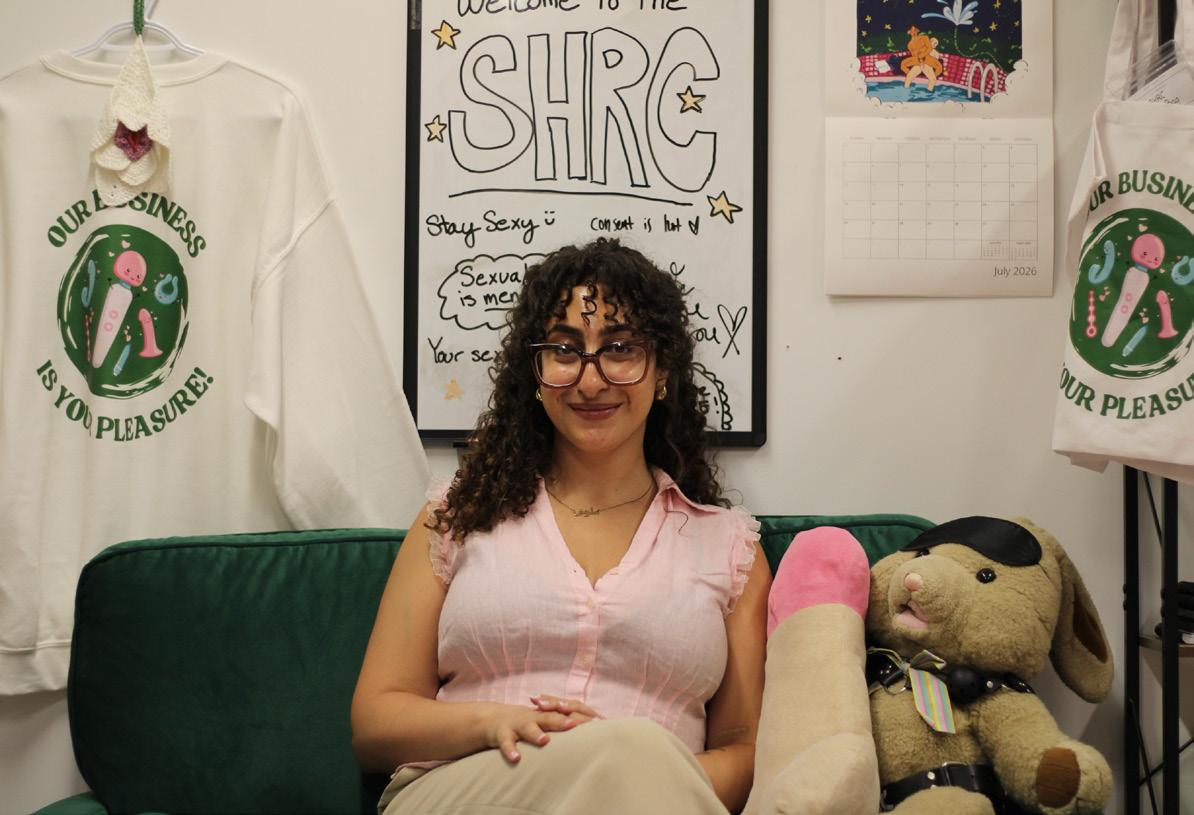
Embrace all experiences
I’m going to be real; sex can be awkward at first — but lean into it! That’s part of what makes your firsts sweet and special.
Don’t compare your experiences to the staged, practiced, and performed media you find online. An awkward head bump or words that come out weird are all part of the moment.
Amidst these learning curves, cherish this time. It won’t be forever that you live minutes away from everyone you know or be surrounded by these oncampus resources. No matter how you decide to spend your first year, you’ll be sure to remember these years long after you graduate — so make the most of it.
As you visit different spots around Kingston, I invite you to visit one of its hidden gems. Stop by the SHRC in the JDUC
to grab free condoms, menstrual products, and pregnancy tests. As well, there’s a variety of sex toys and kink products that are sold at-cost, meaning the SHRC makes no money off your sale. Our trained volunteers are always there to answer any questions you may have about anything sex related.
Unlike your university experience, your sexual journey doesn’t have degree requirements and your experiences won’t be graded — the learning curve is completely up to you. With that, good luck. Class is in session!


PHOTO BY CLAIRE BAK
Melody Garas, SHRC director.
The SHRC is located in the John Deutsch University Centre (Room 342).
How to survive Kingston’s rental market
A guide for first-time renters
Chloe Nunes Senior Arts & Culture Editor
As upcoming first-time renters, first-year students need to know how to survive the ruthless rental market they are about to step into.
Kingston currently holds the eighth-highest average in rent nationwide against a 2.4 percent vacancy rate, creating a competitive market with little affordability and high demand for properties near campus. Beyond these systemic issues, first-time renters are often full of misconceptions about renting, which creates more problems on top of an already stressful situation.
Although students cannot fix the market alone, they can fix their approaches to renting by knowing when to look for housing, where to find affordable accommodation, and who makes a good housemate.
When to look
for housing
When I arrived at Queens, I mistakenly assumed that I would sign a lease before reading week, and I wasn’t alone in thinking this. The misconception works to pressure first years into snatching the first property they find on Facebook Marketplace, trapping them into legal agreements with strangers, for a home that may not be the best fit. However, good off campus housing is available year-round. I have only ever signed leases after the new year, when I have given myself enough time to find
Queen’s Players
go bacK to the future for their suMMer show
Players take the crowd on a comedy journey through time
Mayah Ricketts Assistant Arts & Culture Editor
On July 22, the Queen’s Players opened their summer show, A Tinkle in Time: Smack That (Respectfully) to the Future—a #Resmelling of History, at the Ale Canteen.
The crowd quickly filled up the Canteen by 8 p.m. Each attendee was given a stamp upon entry, allowing them to come and go as they pleased. However, the room was packed for the show’s entire three-hour run.
Co-directors Emily Masson, ArtSci ’25, and Jean-Pierre Ingram, ConEd ’28, opened the night with a land acknowledgment, then got straight to business. They explained to audience members the distinctiveness of the summer show, then gave a rundown of the show to first timers.
a house that feels like home.
“While some properties are listed in the fall, many others become available in the winter term. Ontario tenants are required to give a minimum of 60 days’ notice before vacating a unit, so new listings continue to appear throughout the year, not just in the fall. Most Kingston leases run for one year,” Mary Ann Tierney, the off-campus living advisor for Queen’s, wrote in a statement to The Journal
“The Off-Campus Living Advisor (OCLA) encourages students to take their time to find the right property and housemates, rather than signing the first unit they see out of fear the market will run out.”
Where to find affordable accommodation
After years of rising costs, Kingston’s asking rent prices are declining as the rental market stabilizes. However, affordability remains a concern.
“Affordable housing for students is not confined to a single area of Kingston, and the OCLA encourages students to widen their search beyond the streets immediately surrounding campus. Neighbourhoods farther from campus often have lower rents, and many students already have a Kingston Transit bus pass included in their student fees,” Tierney said.
Although it is convenient to live in the University District, some of its asking rent prices are inaccessible. On the OCLA’s
“The summer show is unique in the fact that we have this implicit rule that we want every scene to have different characters,” Ingram said in an interview with The Journal Soon, the show was in full swing. Before any performances, the audience faced TV screens that displayed a prerecorded introduction sequence to Madonna’s “Hung Up,” which perfectly introduced the time travel theme.
As the cast performed choreographed routines, the Players band, Cage the Infant, started their openers — a mash up of popular songs, starting with a rendition of “God Save the King.”
“It’s way more fun to have a live band than just a speaker and a phone,” Music Director Eddie Moreno, ArtSci ’28, said in an interview with The Journal “There’s a whole new world of communication happening between the cast and the band that doesn’t happen with a phone.”
The Players presented their characters through monologues. Some characters were based on real people, with guest appearances from Bob Ross and MrBeast. Others took more on conceptual roles, like God and the Hobby Horser. Original or otherwise, the performers put their own spin on their characters to make the show their own.
Continued online at www.queensjournal.ca

website, students can access Queen’s Community Housing and Listing Service, alongside links to property management companies and listing platforms.
“Affordability itself extends beyond the rent listed on a property: whether utilities are included, whether a unit is furnished, and the amenities provided all factor into the true cost of a unit. A room with utilities included, for example, may ultimately cost less than a lower-rent room where heat and hydro are billed separately, depending on the location and how many tenants live in the property,” Tierney said.
Affordable housing extends beyond rent and includes evaluating all living expenses, which tend to rack up — and quickly. My roommates and I were once hit with a thousand-dollar utility bill. A jump scare I thought to be
impossible until we discovered that our toilet had been secretly leaking.
“The OCLA encourages students to consider their full monthly budget, including groceries, internet, transit and tenant insurance, rather than evaluating rent in isolation,” Tierney said.
Who makes a good housemate
Unfortunately, securing a rental is only half the battle. Finding good housemates is a task that must be approached cautiously.
Remember, good friends don’t always make good roommates. After having lived with both friends and strangers, I will always prioritize living with people who share similar living habits to me.
Tierney shared this sentiment,

Kingston Music Venues
... continued from the front page
Now, to look at more permanent live music venues.
The Buckle is a country themed bar located on Princess Street. A lively scene with two floors dedicated to performances, The Buckle welcomes music acts of all kinds from rock, to pop, to country. Although the atmosphere is indeed exciting, the venue’s early closing and smaller crowds make it a non-essential location.
The Merchant is one of the most consistent and accessible venues for fans of live music in Kingston. The bar’s open space allows for more socialization and movement than other Kingston venues. However, the size of the
stage is long and narrow, restricting a band’s setup and performance. This also affects the actual viewing experience of the audience, as the concentration around the small stage limits visibility.
Broom Factory, the furthest venue from the downtown area, has the liveliest environment for rock music in Kingston. The large stage and open area allow performers more room for theatrics and mobility, while also providing audiences with an authentic live music experience, more removed from the “bar scene” of many venues. Though, its location really does detract from its accessibility.
Finally, The Toucan, located on Princess Street, is the most reliable and consistent location to see live music. A classic “Irish pub,” the environment of The Toucan is communal, loud, and active, with music until 2 a.m. on Thursdays, Fridays, and Saturdays. Its location in the heart of downtown
adding “Students are encouraged to choose housemates with similar schedules, priorities and expectations rather than defaulting to their closest friends, and to establish house rules and a chore schedule before moving in. Understanding joint and several liability before signing a shared lease is also important,” Tierney said. Overcoming the second-year house curse requires expectations to be set early. Or else, prepare yourself for uninvited guests, unfair chore distribution, and loud late nights.
Continued online at www.queensjournal.ca
makes it a perfect walking distance and they are famous for welcoming bands of many genres.
At The Toucan, expect regulars such as The Chinacat Riders (a Grateful Dead cover band), Sweet Pete and the Heat, and Ghetto Xpress. Whether you are a Queen’s student or a Kingston local, The Toucan never disappoints.
Although it isn’t located in Kingston itself, Hotel Wolfe Island deserves an honourable mention on this list. Only accessible by ferry, the distance to Hotel Wolfe Island allows for a lovely excursion to an area that’s often overlooked. The venue itself is warm and inviting, with local acts performing music of varying genres such as jazz, soul, and classic rock. While the journey time may deter some, it is the only venue that offers a truly unique experience from the rest, making it worth a visit this year.
While all these venues have their own individual pros and cons, they each have something unique to offer for live music. Whether students prefer venues to be personal or busy, isolated or close, or to play country or rock, there is a place in Kingston.
Want to contribute to Arts & Culture?
Contact ac@queensjournal.ca
Myths, mysteries, and misconceptions about renting.
GRAPHIC BY ANGELINA LIU
Soon, a wave of new faces will arrive to the music scene, and here’s what they need to know.
GRAPHIC BY CLAIRE BAK


Starting a year later, starting at the right time
My experience on a gap year, and how it better prepared me for university
Lily Beaulieu Contributor
When applying to universities and colleges in high school, I thought I had the next four years of my life all planned out. I was wrong.
This plan involved moving six hours away from home to study aviation in Sault Ste. Marie. I would become a pilot and follow in the footsteps of my father.
It wasn’t until the last few weeks of high school, graduation inching ever so closer, that I realized I was making a mistake.
It took taking on a leadership role in gym class with students with special abilities at my school and a couple seasons of Abbott Elementary for me to realize that pursuing a career in education was my real dream.
When I made the ultimate decision to change from aviation to teaching, he agreed that this change in future career paths was the right decision for me and stood by my side. My father knew I would’ve done great in piloting, but once I showed a slight bit of hesitation, he understood that teaching was the best fit for me.
This realization unleashed a new fear inside me, that it was too late to change paths. I wondered
if I could still remain alongside my graduating peers by starting school in the fall.
Scrambling to get accepted into an education program in April, months before walking the stage for my diploma, I realized that getting a last minute acceptance into university was hopeless. My worst fear of falling behind became my only choice.
Taking a gap year was never in the books for me.
I hated watching all my friends move on while I felt stuck for a whole year, feeling unable to move forward with my life.
My friends made new friends, new memories without me in them, and I was nothing short of envious. People reminded me my time would come, but they didn’t understand what it felt like to be missing out on such a fundamental part of life.
Looking back on my year however, I don’t think I was standing still at all.
One of the biggest parts of my gap year was volunteering in an elementary school.
I wanted to get a sense of what my future could hold and gain experience in my aspired field of work. I went back to my old elementary school and helped all the familiar faces, like the teachers I grew up with.
I walked in thinking I was there to help the students, but they ended up helping me just as much.
Every day reminded me how important patience is, how much confidence can grow from encouragement, and how learning is more than just getting good grades.
Watching those students celebrate even the smallest victories made me truly appreciate progress instead of perfection.
Every time I stepped into that class, every student ran up to me, begging to read, as I often read French books with the students, helping them when they slipped up.
I vividly remember the looks on the students’ faces while finishing a book, knowing that despite messing up, they’d figured their way through. It helped me discover things that I can apply to my own education.
Returning to the basic joys of learning after going through high school, where everything seemed to rely on grades, reminded me how every day of school should be a new opportunity to simply be ready to make mistakes and learn from them.
As much as my gap year taught me about my new aspirations in life, it was not without its own unique challenges.
The past year I faced difficulties I could have never prepared myself for.
Throughout high school, I had been fighting for answers regarding a health issue I was facing. I spent the year visiting hospital upon hospital, undergoing dozens of rounds of bloodwork, scans, and investigative surgeries.
I could have never predicted a cancer scare being in the cards for me, and when it became my reality, it was the most frightening time in my life. It felt like I had no control over my reality anymore, yet this also changed my perspective.
I spent so much time getting upset with the fact I had no control over my life, that throughout the worrying and stress, I realized the things that I do have control over. I began to appreciate the people I surrounded myself with, like my friends and family, the opportunities I had ahead of me, like choosing which university I would end up at, and the ultimate choice to keep moving forward despite it all.
These experiences didn’t give me all the answers. If anything, they made me more comfortable with not having them.
Now as I prepare to start my first year at Queen’s, I’m arriving with a different mindset that I would have never had a year ago.
I’m less focused on having the “perfect” university experience and more focused on being truly present for it. I want to introduce myself to new people, say yes to
experiences that may scare me, and allow myself to grow in ways I can’t and won’t expect. I know there will be difficult days. Assignments that overwhelm me, moments when I miss home, and times when I wonder if I’m making the right choice. But if this year has taught me anything, it’s that growth rarely happens when everything goes according to plan.
Coming straight from volunteering all year in a classroom and moving into studying ConEd, my overall understanding of what it means to be an educator has evolved. From my experience over this unexpected year, I want to become a teacher that’s not solely focused on the outcome of a student, but knows how to value all the little moments of learning, and to embrace mistakes.
As I begin my first year this September, I don’t feel as though I’m a year behind. If anything, it feels like I’ve been given a year to arrive exactly when I was meant to.
LUDDEN