The Knowledge Forum is available online at: educ.queensu.ca/ knowledge-forum. Paper copies can be requested at educcomm@queensu.ca.
Photo credit: Adrien Olichon
EDITORIAL BOARD
DR PATTY DOUGLAS, Chair in Student Success and Wellness, Director Centre for Community Engagement and Social Change Faculty of Education, Queen’s University
DR TRACY-ANN
JOHNSON MYERS, EDID Coordinator, Faculty of Education, Queen’s University
BECCA CARNEVALE, Executive Director, Academic Operations and Communications, Faculty of Education, Queen’s University
Consulting editors are Queen’s students and alumni who bring their professional experience to The Knowledge Forum.
MICHELE MCGRATH, Superintendent of Education, Algonquin and Lakeshore Catholic District School Board
ASH WARD (BED ’11), VicePrincipal, Sydenham High School, Limstone District School Board
HALEY CLARK, PhD candidate, Queen’s Faculty of Education
Proofreader
ERIN YORK
Design
GRACE MORTON
ISSN (print) 2561-8989
ISSN (digital) 2561-8997
A Note from the Editors
WE ARE DELIGHTED TO INTRODUCE THE 2024-25 Knowledge Forum on Inclusive Education, Disability and Belonging. In Canada and globally, inclusive education has often focused on disability alone, to the exclusion of intersections with other social identity categories like race and gender. In addition, within education, disability has frequently been understood as an individual ‘exception’ or deficit—grounded in the medical model of disability—and has fallen under the purview of special education (K-12) and disability services (post-secondary), which focus on individual accommodations or remediation. Indeed, special education and disability services, while representative of key moments in the movement toward inclusion, were born of the medical model, and instituted separate service delivery systems (e.g., general education versus special education).
Moving beyond these approaches, the authors in this issue of The Knowledge Forum offer a more expansive and intersectional approach to inclusive education, disability and belonging. For the authors here, disability is both a lived experience and a systemic issue worthy of attention, integrally intertwined with other social identities and power. The pieces in the forum, taken together, centre an affirming, strengths-based approach—what is often called the social or social relational model of disability in education (Barton, 2003; Thomas, 2014). This model centres the lived experience of disability and interrogates ableism— the systemic valuing of normativity—and disablism—the devaluing of different ways of being and learning (Goodley, 2025). In a social relational model, dis/ ability is a social phenomenon as much as an embodied one, produced through inaccessible environments, negative
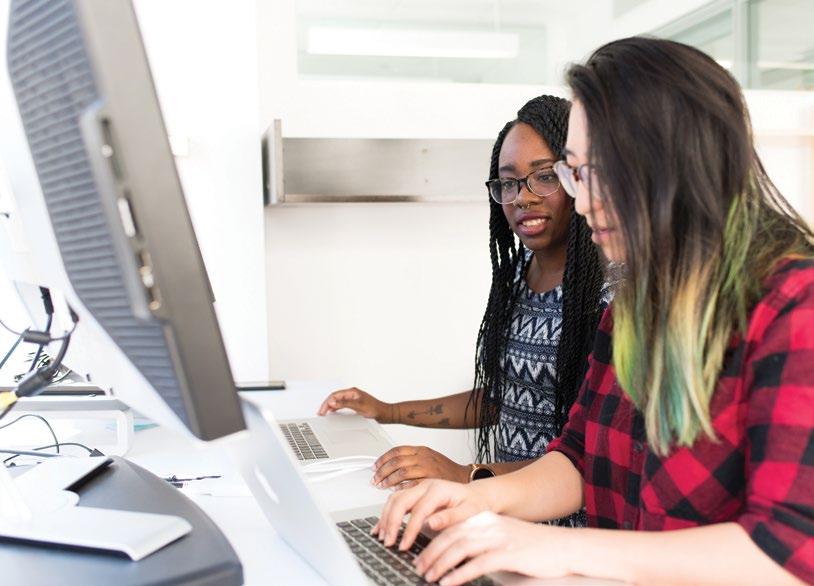
Photo credit: #WOCinTech Chat
stereotypes and exclusionary attitudes. It is deficit-oriented educational research, practice and attitudes that must change, not individual students.
The entries in The Knowledge Forum demonstrate this shift beautifully. Many centre the recognition that disability, race, gender and other social identities intersect and have parallel legacies of segregation within education systems. Labels of intellectual disability and emotional disorder, for example, have more often been applied to Black, Indigenous and working-class students, who are disproportionately overrepresented in special education classrooms, limiting
REFERENCES
access to quality education and postsecondary education (Brantlinger, 1997). Others focus on moments where inclusion is working as well as on disability joy or pride. Contributors to the forum also highlight belonging as vital to the project of inclusion. Belonging means not only inclusion, but also safety, culturally affirming practices, shared power in schools (citizenship) and the authentic acceptance of diversity (Parekh, 2014). We hope that you enjoy the stellar contributions of the 2024-25 Knowledge Forum!
Drs. Patty Douglas and Tracy Johnson-Myers
Barton, L. (2003). Inclusive education and teacher education Institute of Education, University of London. https://disabilitystudies.leeds.ac.uk/wp-content/uploads/sites/40/library/Bartoninclusive-education.pdf
Brantlinger, E. (1997). Using ideology: Cases of nonrecognition of the politics of research and practice in special education. Review of educational research, 67(4), 425-459.
For the authors here, disability is both a lived experience and a systemic issue worthy of attention, integrally intertwined with other social identities and power.
A Brief Note on Language
SOME AUTHORS IN THIS KNOWLEDGE forum use person-first language— person with a disability—and others use identity first language—disabled person. The former recognizes that people with disabilities are people, regardless of disability or other identities. The second, often preferred by disability communities, recognizes both that it is society that dis/ables people through exclusionary contexts and that disability is a legitimate way of being human, one that cannot be separated from identity, akin to being a Black or queer person (not a person with Blackness or a person with queerness). You can read more about disability language here (canada.ca/en/ employment-social-development/programs/disability/arc/words-images. html#h2.7 and here autismalliance.ca/ resource/language-guide/).
Goodly, D. (2025). Disability studies: An interdisciplinary introduction. Sage.
Parekh, G. (2014). Students’ experience of belonging in school (p. 4). Toronto District School Board.
Thomas, C. (2014). Disability and impairment. In J. Swain, S. French, C. Barnes & C. Thomas (Eds.) Disabling barriers— Enabling environments, 9-16.
Photo credit: Disability:IN
That’s a Problem: Spilling On Why Disability Support Offices Are Losing Their S***
By Aleksandra Vojnov
ALEKSANDRA VOJNOV (ALEKS) is a dynamic practitioner-scholar with a decade in post-secondary accommodation and accessibility support. Having just completed the first year of their PhD program, they bring a unique blend of hands-on experience and academic insight to the field of disability services. With career-spanning roles as an assistive technologist, accessibility and accommodation specialist, unit manager, research and teaching assistant, Aleks has empowered both undergraduate and graduate students, ensuring they thrive throughout their university journey— including during critical professional placements. As a passionate advocate for equitable education, Aleks continues to bridge the gap between practical support and scholarly research.
WORKING IN A UNIVERSITY DISABILITY
support office has been an eye-opening experience, but it has also been a deeply frustrating one. Despite my best efforts to advocate for students and provide them with the accommodations they need, I’ve repeatedly found myself up against a system that is not only underresourced but actively resistant to meaningful change. From the constant struggle to get faculty and administration to take disability rights seriously to the overwhelming bureaucratic red tape that makes even the simplest requests feel like monumental tasks, the daily reality of this work has become a battle.
These are just symptoms of a larger problem: the disconnect between the institution’s lack of support for long-term structural issues and the constant pressure put on diversity and disability workers to push through despite limited
resources. These workers are often forced to comply with systems that don’t address the real problems, perpetuating them without meaningful change. As many accessibility professionals will tell you, students with disabilities are particularly vulnerable to this system’s failures. They are left trying to navigate a maze of paperwork and unclear rules, where help is often nonexistent.
While universities have rigid, hierarchical systems where those in power decide what concerns are worth addressing, this often dismisses the voices of those who are impacted. Airing grievances becomes a tool of resistance for those who feel unheard—especially in cases of systemic failure. It can be an act of resistance, helping to bring attention to problems that would otherwise be ignored.
Photo credit: The Gender Spectrum Collection
Moreover, open and honest communication is vital. Staff working in accessibility services are often blamed for issues that stem from more extensive systemic failures. The frustrations of students, faculty, and staff are usually directed at them, even when the root causes lie elsewhere. Collaboration and open communication are needed to truly address these problems. Recognizing patterns and sharing responsibility can help tackle these issues more effectively rather than placing blame on individuals. It’s time for the institution to stop ignoring the real structural problems and start addressing them head-on.
Below is a personal reflection on this systemic ableism—an email sent to university administrators after I decided to move on professionally from a previous employer:
To say that I am tired would be an understatement. This school’s systemic discrimination against students with disabilities is beyond frustrating. How the school has not found itself before a human rights tribunal is beyond me. Except it’s not. My office has worked relentlessly, often weekly, to prevent student complaints from escalating to that point.
I have been told time and time again to stay in my lane, not make waves, and to play nice. As an ally, this reeks of ableism, and that’s a problem. When research (Brown et al., 2020) concludes that the average caseload a disability specialist carries is 133 students; however, the numbers are realistically upwards of 250 students, that’s a problem
When the average annual budget of a Disability Service office is less than onesixth of the average salary of a varsity
football coach (Dolmage, 2017), that’s a problem. When courses are not accessible, and we make it seem like it’s the student’s fault, that’s a problem
When you have instructors who blatantly disregard accommodation letters and don’t bother to open them, much less read them, that’s a problem.
When you work in silos, and you don’t think about how your actions will affect students and other departments, that’s a problem
When you must tell instructors that calling students out based on their disability in front of the whole class is not ok, that’s a problem
When you keep calling disability in higher education “special education”, that’s a problem
When there are rumblings of university executives who don’t believe in the Accessibility for Ontarians with Disabilities Act (AODA), that’s a problem
When you face pushback from instructors and higher-ups who are unwilling to make necessary accommodations or who fail to understand the legal and ethical responsibilities to support students with disabilities because they believe students are faking their accessibility needs, that’s a problem
When students are afraid to disclose their non-apparent disability because faculty are generally more accepting of visible disabilities and tend to question the legitimacy of non-apparent disabilities like mental health or learning challenges because they deem them harder to detect (Carroll et al., 2020), that’s a problem.
When you must remind staff that
REFERENCES
Brown, K. R., Wilke, A. K., & Pena, M. (2020). Persuasive metrics: Caseload benchmarking and data-drive tools for budgetary advocacy. Journal of Postsecondary Education and Disability, 33(3), 291-300.
Carroll, J. M., Pattison, E., Muller, C., & Sutton, A. (2020). Barriers to bachelor’s degree completion among college
conversations around a student’s accessibility needs are confidential, that’s a problem.
When you have instructors chatting secretly behind a student’s back to their peers regarding their disability, again, a problem
When students are too afraid to talk to their instructors because of their hurtful comments about disabilities—such as claiming people with disabilities aren’t employable, that’s a problem
When the director of field training needs to be warned that it is their duty to support students with disabilities and be their ally, that’s a problem.
I bet you’re worn out just reading that. Now, picture dealing with it every day in your work environment.
The biggest issue is that these actions have no consequences—bad behaviour keeps getting rewarded, and no one is held accountable. This creates a toxic, unsafe learning environment. While we work with students with disabilities, this often means that environmental barriers prevent full participation. Disability is as much about the environment as it is about something you’re born with or acquire.
We ask students to sign accommodation letters as contracts, ensuring they understand and agree to the terms. When they breach it, the school is quick to point it out, but when the school is called out, we retaliate or label the student as difficult.
Do you see the problem?
These aren’t just isolated issues— they’re glaring barriers that show precisely how broken your system is and why it needs to change now. Do better.
students with a disability. Sociological Perspectives, 63(5), 809–832. https://www.jstor.org/stable/26968022
Dolmage, T. J. (2017). Academic ableism: Disability and Higher Education.
University of Michigan Press.
A Reflection on Historical Empathy in Museum Educational Programming
By Megan L. Crawford
The Ken Seiling Waterloo Region Museum
“The primary and central relationship of museology is between the museums and its visitors and other clients – not between the museum and its collection.”
KEN SEILING WATERLOO REGION MUSEUM
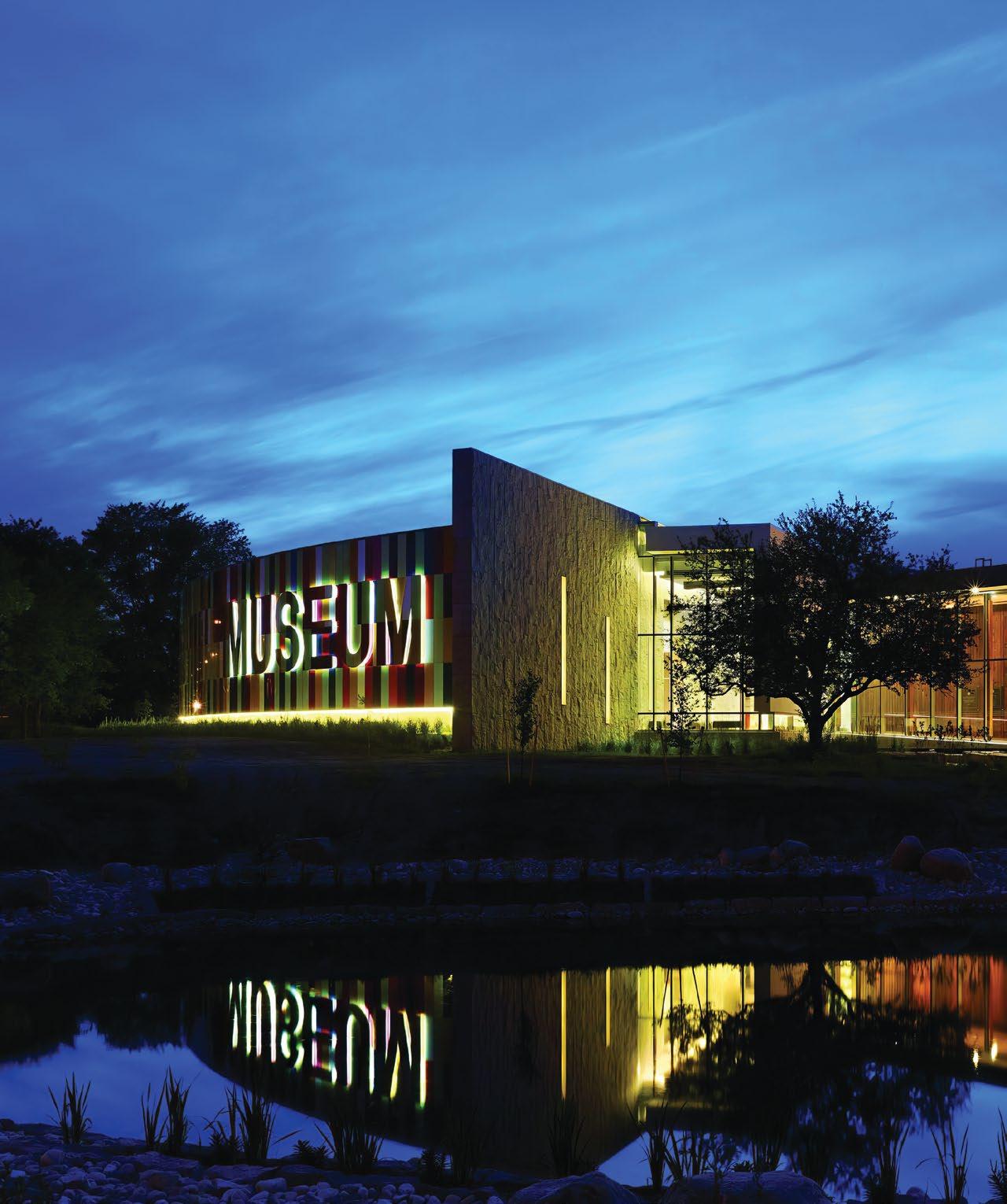
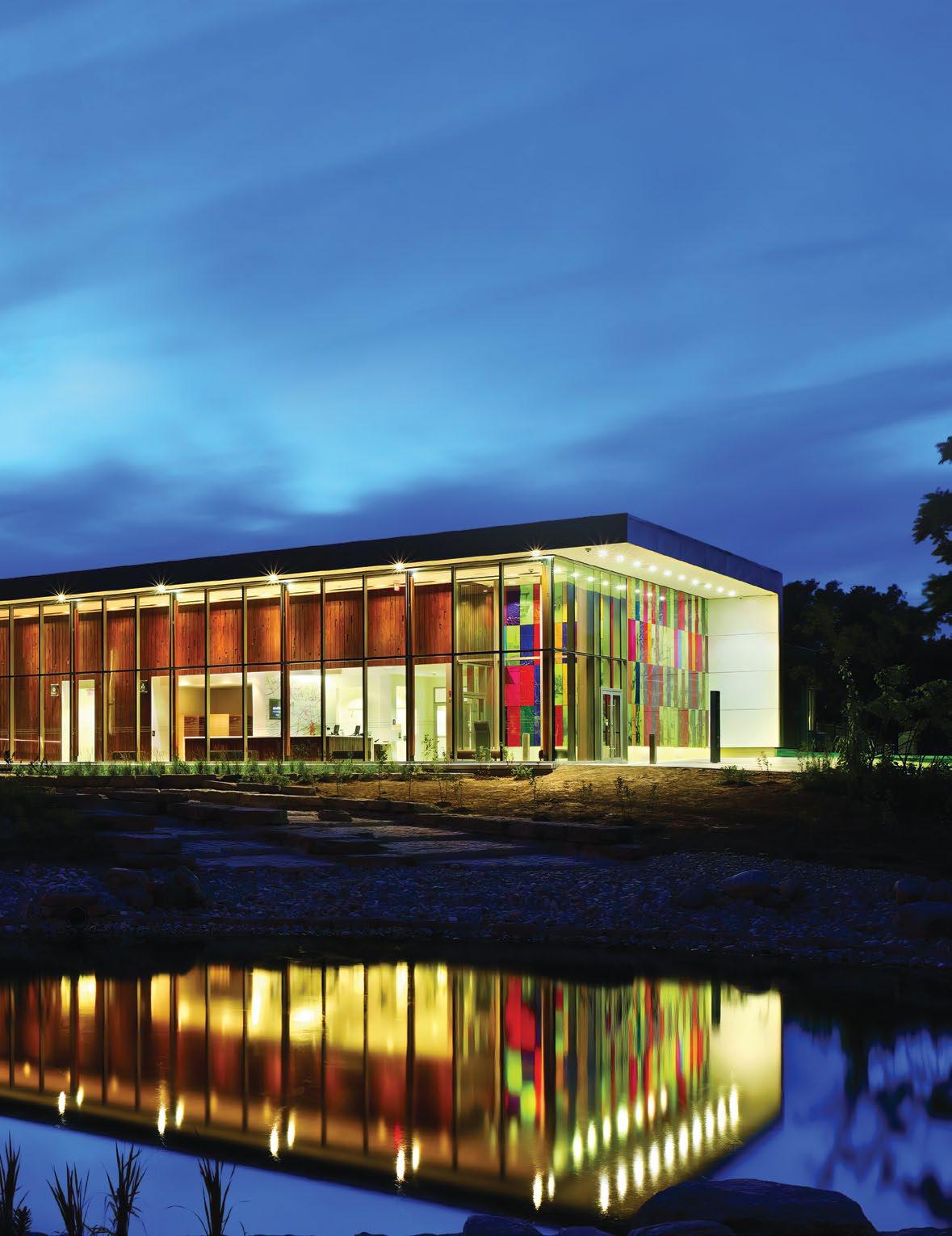
(KSWRM) is the largest community museum in Ontario (Region of Waterloo Museums, 2025). Located on the traditional and current lands of the Haudenosaunee, Anishnaabe, and Neutral Peoples, in a place now called Kitchener, Ontario, KSWRM has a duty to share stories of cultural significance and build a cohesive community in Waterloo Region through mutual learning, discovery and exchange (Region of Waterloo Museums, 2025). To build a cohesive community, museum employees recognize that “the primary and central relationship of museology is between the museums and its visitors and other clients – not between the museum and its collection” (Weil, 1990, p. 56). KSWRM strives to share the collection with the public in inclusive and engaging ways
that represent the diversity of Waterloo Region’s past, present, and future.
One of the ways KSWRM shares the history of Waterloo Region is by offering Ontario curriculum-based education programs for students. Previously, the museum focused heavily on the Grade 3 curriculum. Two of its five school programs were dedicated to this grade level, covering interactions amongst Indigenous peoples, Black settlers, and Mennonite immigrants in Waterloo Region from 1780 to 1850. The activities in these school programs involved museum educators asking students to imagine themselves in various situations – as Indigenous peoples resisting colonization; as Black people fleeing slavery; as Mennonites travelling from Pennsylvania to Waterloo Region. Working as a museum educator at this time, I used this instructional
strategy myself, believing I was helping students to develop historical empathy. Time, distance, self-reflection, and reading helped me realize this strategy prevented students from developing historical empathy (Marcus et al., 2012).
While this focus on imagination was done with good intentions, it trivialized the experience of the individual who lived through it. This is what Hartman refers to as “the difficulty and slipperiness of empathy” (1997, p. 18). By asking students to imagine themselves in a situation to instill empathy, the student is being taught to “feel for [themselves] rather than for those whom this exercise in imagination presumably is designed to reach” (Hartman, 1997, p. 19).
Historical empathy is not synonymous with sympathy or forgiveness. Instead, historical empathy encompasses two key concepts; perspective recognition and caring (Marcus et al., 2012, p. 25). Perspective recognition encourages students to consider how and why people
in the past made decisions, by identifying contributing factors and influences. These could be societal, political, economic, religious, or military pressures. Caring instills in students that they can recognize emotional, physical, and mental experiences without having – or imagining - said lived experiences themselves. Indeed, it is “impossible for students to truly understand what [past] experiences would have been like” (Marcus et al., 2012, p. 25).
To help students develop historical empathy led me to not only rewrite the Grade 3 program, but to also create a new education program for Grade 6 students called Communities in Canada. Designed as a two-hour program, Communities in Canada explores the immigration stories of four people: Samuel Goings, Tom Lee, Ausma Lēvalds, and Ly Vang. These four people were chosen through consultation with my colleagues and community members. Our criteria was two-fold: a significant push or pull
factor that brought them to the area; and their story connected to a larger issue within Canadian history.
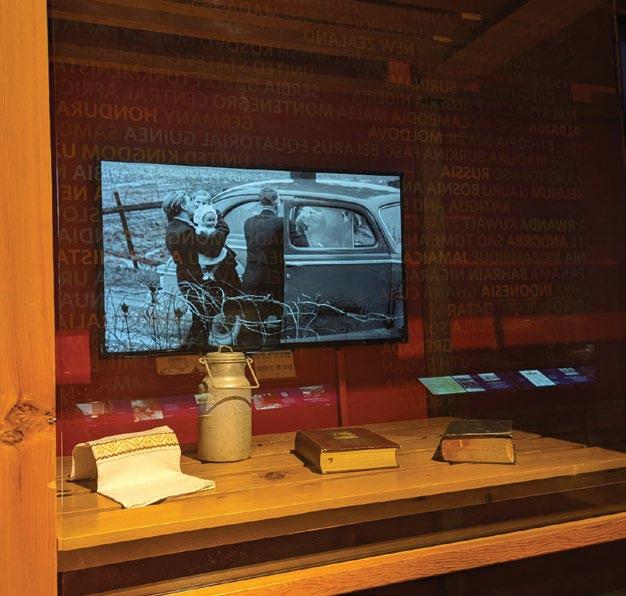
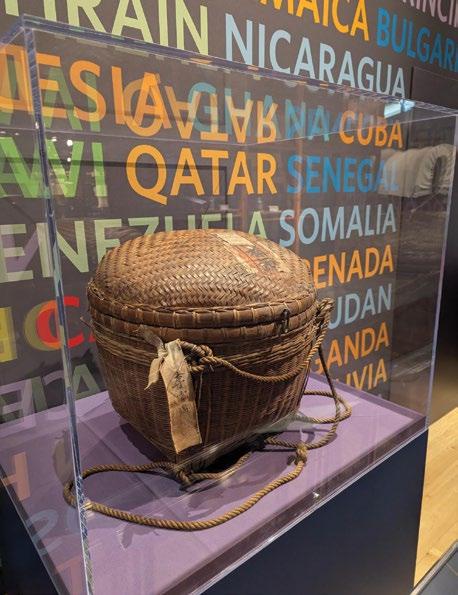
Students learn about nineteenthcentury racism in Canadian schools, by hearing about Samuel’s limited schooling options in Galt, Ontario, circa 1865. Tom Lee immigrated to Canada in 1897. By looking at his suitcase and a local advertisement, students understand the Chinese Exclusion Act and its harmful racial policies. The challenges of post-Second World War immigration are shown through Ausma Lēvalds’ filmed reunion with her father and brother after a year apart. Ly Vang came to Canada sponsored by a local Mennonite church during the Hmong refugee crisis of the 1970s. Each story is carefully shared, recognizing the individual’s experiences, challenges, and triumphs, while avoiding framing them as a victim or a success. They are what we all are: people who deserve to have their story told.
The program launched in September 2024, and feedback has been constructive. Teachers appreciate the diverse stories shared during the program and find they can easily draw connections to the classroom. Museum educators share previously untold stories, expanding their knowledge of local history. Both teachers and museum staff have identified the need for an Indigenous story to be included in the program, which is what I am working towards next. This will require robust external consultation, to ensure the story is shared with respect.
One of the most valuable lessons taught to me at the Faculty of Education was the importance of self-reflection. Self-reflection is not something you can accomplish; it is a life-long practice, an essential frame of mind to approach teaching and learning. I hope to continue being self-reflective as this program grows, to ensure we are building historical empathy in authentic and meaningful ways.
MEGAN L. CRAWFORD (BAH ‘12, MA ‘13, BEd ‘14, OCT) is of settler ancestry and gratefully lives on land granted to the Six Nations of the Grand River. She is a three-time graduate of Queen’s University, including from their Faculty of Education. Megan has worked as a classroom teacher and museum educator for over 10 years. She is the Education Coordinator at Ken Seiling Waterloo Region Museum & Doon Heritage Village, where Megan works with a team of dedicated colleagues. Megan comes from a long line of strong and capable women, who she tries to honour in her words, actions, and deeds.
REFERENCES
Hartman, S.V. (1997). Scenes of subjection: Terror, slavery, and selfmaking in nineteenth-century America. Oxford University Press. Marcus, A. S., Stoddard, J. D., & Woodward, W. W. (2012). Teaching history with museums: Strategies for K-12 social studies. Routledge. Region of Waterloo Museums. (2025). Vision and mission. https://regionofwaterloomuseums.ca/en/about-us/mission-statement.aspx Weil, Stephen A. (1990). Rethinking the museum and other meditations. Smithsonian Institution Press.
Excluded from the Academy: Systemic Inequities and Intersectional Barriers for Black Students in Canada
By Dr. Tracy-Ann Johnson-Myers
Introduction
BLACK STUDENTS REMAIN UNDERrepresented in Canadian higher education, reflecting enduring systemic inequities. Historical legacies of anti-Black racism, from segregation to ongoing biases, have created an unequal playing field that persists today (Aladejebi, 2021; Maynard, 2017; Walker, 1985; Winks, 1969). Although Black Canadians comprise roughly four percent of the national population, they account for only about three percent of bachelor’s degree holders (Statistics Canada, 2022). Despite strong aspirations, they are also less likely to believe they can attend university (Statistics Canada, 2022). This gap points to structural barriers that hinder access and success.
Historical and Structural Inequities
CANADA’S HISTORY OF ENSLAVEMENT and segregated schooling continues to shape Black communities’ educational opportunities. In Nova Scotia and Ontario, Black learners attended separate, poorly resourced schools well into the late 20th century (Black Learners Advisory Committee, 1994; Aladejebi, 2021; McLaren, 2003). Many children had no access to publicly funded education and relied on schools built by Black churches. Ontario’s last segregated school closed in 1965; Nova Scotia’s in 1983 (Henry-Dixon, 2021). In the aftermath of formal school segregation in Canada, particularly in provinces like Ontario and Nova Scotia, Black students
continued to face systemic barriers through new, more covert forms of educational segregation. Black students, especially those with disabilities, are more likely to be disproportionately placed in special education programs (Adjei, 2016; Artiles & Trent, 1994). These placements were often based on culturally biased IQ tests and narrow behavioural expectations rooted in middle-class White norms, which failed to recognize the cultural, linguistic, and experiential diversity of Black students. In many cases, these programs functioned as “educational dead ends,” reinforcing social stratification rather than promoting inclusion.
Upon reaching university, Black students encounter “privileged, predominantly white spaces” that reinforce exclusion… They report microaggressions, isolation, and a lack of institutional support.
Systemic Racism from
K–12
to University Access
SYSTEMIC RACISM IN K–12 SCHOOLING hinders Black students’ pathways to university. Stereotypes frequently cast Black students as threats or discipline problems, leading to disproportionate suspensions and expulsions (Codjoe, 2006; Toronto District School Board, 2017). Parekh and Brown (2014) found that Black students are overrepresented among students labeled with behavioral issues, intellectual disability, and developmental disability. Only 53% of Black high school students are enrolled in academic programs, compared to over 80% of White and other racialized peers (James & Turner, 2017). Streaming and biased disciplinary practices contribute
to “second-generation segregation” (Maynard, 2017). Upon reaching university, Black students encounter “privileged, predominantly white spaces” that reinforce exclusion (Henry et al., 2017; Codjoe, 2006). They report microaggressions, isolation, and a lack of institutional support (Raza, 2022; Tomlinson et al., 2021; Caxaj et al., 2021). Black international students also face linguistic and cultural challenges. Faculty diversity remains low; fewer than one percent of McGill’s professors are Black (McGill University, 2020), and nationally, Black professors make up only two percent of faculty, facing the highest unemployment rates (CAUT, 2018). Black women academics experience even greater barriers (Newton, 2022).
Intersectional Barriers: Race, Class, and Gender and Disability
THE INTERSECTION OF RACE, CLASS, gender, and disability amplifies the systemic barriers faced by Black students in educational settings. These overlapping identities expose Black learners, particularly those with disabilities and from lower socioeconomic backgrounds, to compounded forms of discrimination, marginalization, and exclusion. As a result, they are more likely to be over-surveilled, misidentified, and streamed into lower academic tracks or special education programs, where access to inclusive, high-quality learning opportunities is often limited. Black Canadians are twice as likely to live
Photo credit: Matthew Henry
Analysis and Conclusion
At the postsecondary level, Black students continue to face exclusion through microaggressions, institutional neglect, and a severe lack of Black faculty, particularly Black women. Intersecting factors such as race, class, gender, and disability intensify these barriers.
in low-income households, complicating access to higher education due to high tuition, limited scholarships, and the necessity of part-time work (Statistics Canada, 2020). Black male students face harsh disciplinary practices that push them into the school-to-prison pipeline. Black women students, although more likely to enroll in university, contend with racism, sexism, and caregiving responsibilities that impact academic achievement (Statistics Canada, 2022; Newton, 2022). Disability significantly impacts Black students in Canada, often compounding existing systemic inequities and leading to disproportionate placement in special education programs. Race and disability intersect to create unique challenges for Black students. educational systems often pathologize Black students’ behaviors and abilities, leading to their marginalization within special education settings (Erevelles, 2015).
THE UNDERREPRESENTATION OF BLACK students in Canadian higher education is not coincidental but the result of systemic inequities that begin in early childhood and persist throughout the education system. Although Black Canadians make up 4% of the population, they hold only 3% of bachelor’s degrees—a gap shaped by historical and ongoing anti-Black racism (Statistics Canada, 2022). Canada’s legacy of Black enslavement and segregated schooling laid the groundwork for educational exclusion. Today, covert forms of segregation persist through biased streaming, disciplinary practices, and special education placements rooted in White, middle-class norms. These practices marginalize Black students and limit their access to academic tracks and university pathways. At the postsecondary level, Black students continue to face exclusion through microaggressions, institutional neglect, and a severe lack of Black faculty, particularly Black women. Intersecting factors such as race, class, gender, and disability intensify these barriers. Black students with disabilities are often pathologized and placed in low-expectation tracks, while financial hardship and caregiving responsibilities further constrain access and success. These overlapping challenges reflect how structural oppression continues to disadvantage Black students at every stage of their educational journey.
Photo credit: #WOCinTech Chat
REFERENCES
Adjei, P. B. (2016). The (em)bodiment of blackness in a visceral anti-black racism and ableism context. Race Ethnicity and Education, 21(3), 275–287. https://doi.org/10.1080/13613324.2 016.1248821
Artiles, A. J., & Trent, S. C. (1994). Overrepresentation of minority students in special education: A continuing debate. The Journal of Special Education, 27(4), 410-437.
Aladejebi, F (2021). “Black History: How racism in Ontario schools today is connected to a history of segregation.” The Conversation, retrieved from https://theconversation.com/ black-history-how-racism-in-ontario-schools-today-is-connected-to-a-history-of-segregation-147633 (accessed April 10, 2025).
Black Learners Advisory Committee (BLAC). (1994). BLAC Report on Education: Redressing Inequity – Empowering Black Learners. Halifax, NS: Nova Scotia Education. Retrieved from https://www.ednet.ns.ca/docs/blac-report-education-redressing-inequity.pdf
Canadian Association of University Teachers. (2018, April). Underrepresented & underpaid: Diversity & equity among Canada’s post-secondary education teachers. https://www. caut.ca/sites/default/files/caut_equity_report_2018-04final.pdf
Caxaj, C. S., Chau, S., & Parkins, J. R. (2021). How racialized students navigate campus life in a mid-sized Canadian city: “Thrown against a White background” but “comfortable enough to laugh.” Journal of Youth Studies, 24(5), 616–631. https://doi.org/ 10.1080/13676261.2020.1727424
Codjoe, H. (2006). “The Role of an Affirmed Black Cultural Identity and Heritage in the Academic Achievement of African-Canadian Students.” Intercultural Education 17 (1): 33–54. doi:10.1080/14675980500502271
Erevelles, (2015). “Race” in Adams, R., Reiss, B., & Serlin, D. (Eds.)., Keywords for disability studies. New York University Press. https://doi.org/10.18574/nyu/9781479812141.001.0001
Henry-Dixon, N (2021). Racial Segregation of Black People in Canada. The Canadian Encyclopedia. https://www.thecanadianencyclopedia.ca/en/article/racial-segregation-of-black-people-in-canada (accessed April 10, 2025).
Henry, F., Dua, E., Kobayashi, A., James, C. E., Li, P., Ramos, H., & Smith, M. S. (2017). Race, racialization and Indigeneity in Canadian universities. Race, Ethnicity and Education, 20(3), 300–314. DOI: 10.1080/13613324.2015.1023787
James, C. E., & Turner, T. (2017). Towards race equity in education: The schooling of Black students in the Greater Toronto Area. York University, Faculty of Education. https://edu.yorku.ca/ files/2017/04/Towards-Race-Equity-in-Education-April-2017.pdf
Maynard, R. (2017). Policing Black Lives: State Violence in Canada from Slavery to the Present. Halifax: Fernwood Publishing.
McGill University, Office of the Provost and Vice-Principal (Academic). (2020). Action plan to address anti-Black racism, 2020–2025. https://www.mcgill.ca/provost/files/provost/action_ plan_to_address_anti-black_racism.pdf
McLaren, K. (2003). British-Canadian Myths of Purity and Segregated Schools in Mid-Nineteenth Century Canada West. Historical Papers. https://doi.org/10.25071/08481563.39288.
Newton, V. A. (2022). Hypervisibility and Invisibility: Black Women’s Experiences with Gendered Racial Microaggressions on a White Campus. Sociology of Race and Ethnicity, 9(2), 164-178. https://doi.org/10.1177/23326492221138222
Parekh, G., & Brown, R. S. (2018). Changing Lanes: The Relationship Between Special Education Placement and Students’ Academic Futures. Educational Policy, 33(1), 111-135. https:// doi-org.proxy.queensu.ca/10.1177/0895904818812772 (Original work published 2019).
Raza, A. (2022, April 13). Being Black in school: Peel students open up about the racism they face in the classroom. CBC News. https://www.cbc.ca/news/canada/toronto/ peel-students-racism-panel-1.6408851
Statistics Canada. (2023). Portrait of racialized populations in Canada, 2021 Census (Catalogue No. 98-200-X2021011). Government of Canada. https://www12.statcan.gc.ca/census-recensement/2021/as-sa/98-200-x/2021011/98-200-x2021011eng.pdf
Statistics Canada. (2022). Profile of Canadian graduates at the bachelor level belonging to a group designated as a visible minority, 2014 to 2017 cohorts (Catalogue no. 81-595-M No. 2022003). Retrieved from https://www150.statcan.gc.ca/n1/ pub/81-595-m/81-595-m2022003-eng.htm
Statistics Canada (2020, September 8). Social determinants and inequities in health for Black Canadians: A snapshot. Government of Canada. https://www.canada.ca/en/public-health/ services/health-promotion/population-health/what-determines-health/social-determinants-inequities-black-canadians-snapshot.html (accessed April 28, 2025).
Tomlinson, A., Mayor, L., & Baksh, N. (2021, February 24). Being Black on campus: Why students, staff and faculty say universities are failing them. CBC News. https://www.cbc.ca/news/ canada/anti-black-racism-campus-university-1.5924548
Toronto District School Board. (2017, April). Expulsion decision-making process and expelled students’ transition experience in the Toronto District School Board’s caring and safe schools programs and their graduation outcomes. Toronto: Toronto District School Board, Research and Information Services.
Walker, J (1985). Racial Discrimination in Canada: The Black Experience. The Canadian Historical Association.
Winks, R.W. (1969). Negro school segregation in Ontario and Nova Scotia. The Canadian Historical Review, 50(2): 164-191.
Preparing Future Educators for Inclusive Classrooms: FASD in the Ontario Classroom
By Tanya Joseph
TANYA A. JOSEPH (BEd, MEd ’22) is a PhD student at Queen’s University whose research focuses on supporting students with Fetal Alcohol Spectrum Disorder (FASD) in the Canadian context. She holds a BHSc (Honours) in Biology and Pharmacology Co-op from McMaster University, a BEd ‘22 from Queen’s University and an MEd from Queen’s University. She is a member of the Ontario College of Teachers and is certified to teach 7-12 science, biology, and mathematics. Tanya is an occasional teacher for Algonquin and Lakeshore Catholic District School Board (ALCDSB) and has taught as an instructor within the BEd program and the International Teacher Training (ITT) program at Queen’s University.
AS I WALK INTO THE CLASSROOM, I SEE children – each with unique abilities, interests and an eagerness to learn. This Ontario classroom was designed to be inclusive; a space where all students, regardless of their needs, can thrive. Yet, as an educator, I find myself asking: Am I truly prepared to support every child? Have I received the training I need to guide each student on their learning journey? This is the reality for many teachers entering the classroom after graduating from teacher education programs in Ontario.
In the past, schooling for students with disabilities was accomplished through segregated schooling; however, in the last twenty years, Ontario has reformed its educational structure to include all
students within the general education classroom (Mann et al., 2024). Shifts were made in teaching practices to include all types of learners and schools have adapted inclusion frameworks such as Universal Design for Learning (UDL) and Differentiated Instruction (DI) to meet the needs of different learners within the classroom (Jovanovich, 2024). Although Ontario had created inclusive classrooms, a dual system still exists to date, which involves children with disabilities such as Fetal Alcohol Spectrum Disorder (FASD) being segregated or excluded from the rest of the class (Mann et al., 2024). As per Ontario education policies, programming of classroom education must be designed for all students, and inclusive approaches must
Photo credit: Kenny Eliason
be used to mitigate discrimination and exclusion (Government of Ontario, 2024).
FASD may be the most prevalent disability in Canadian classrooms, and one of the most challenging for teachers to support (Popova et al., 2019). FASD is a condition that occurs due to maternal alcohol consumption during pregnancy. It is irreversible, and as a consequence, children are born with brain damage and delays in neurodevelopment (Delatour & Yeh, 2017). The prevalence of FASD in Canada is between 1.4% and 4.4%, which is similar to current autism spectrum disorder (ASD) diagnostic rates (Flannigan et al., 2018). These children exhibit a range of symptoms and varying degrees of impairment such as difficulty with physical motor skills, sensory processing skills, communication, academic achievement, memory, executive functioning, abstract reasoning, hyperactivity, and adaptive behaviour (Millar et al., 2017; Watts & Brown, 2016). As children with FASD experience academic difficulties and behavioural challenges, they require multi-faceted supports including instruction designed according to their unique learning profile, individualized academic interventions, and modified
As per Ontario education policies, programming of classroom education must be designed for all students, and inclusive approaches must be used to mitigate discrimination and exclusion (Government of Ontario, 2024).
curriculum according to the child’s developmental and ability levels (Millians, 2015). Teachers must be responsive to the needs of students with FASD and be proactive towards providing supports to promote success of the student (Pei et al., 2018).
In teacher education programs, teachers candidates receive training through a combination of coursework and placements (Queen’s University, 2022; Ontario Tech University, 2022). Although courses offered to teacher candidates reflecting special education may be compulsory, explicit instruction on specific disabilities such as FASD may be limited. As studies have been completed in the past on teacher knowledge to support students with disabilities, there is a lack of
research completed in Ontario reflecting how teachers are prepared to support students with FASD. If teachers are not prepared to teach students with FASD within the classroom, children with FASD may not receive the support they require.
To gain deeper insight into the nature of teacher candidates’ knowledge and understanding of FASD and their preparedness to teach these students, I collected data through a questionnaire distributed to teacher candidates at a teacher education program in Ontario accredited by the Ontario College of Teachers (OCT). In this questionnaire, I examined teacher candidates’ extent of knowledge, confidence in the knowledge they possessed, their sense of
Photo credit: Samantha Hurley
…if education is truly for all and meant to be inclusive, then educators should be ready to support all students. However, many teachers entering the profession graduate with limited training, knowledge, and practical experience to support students with FASD.
self-efficacy, and their overall sense of preparedness and readiness to support students with FASD as they enter the profession.
It was observed that teacher candidates felt that they were not adequately trained to support students with FASD, and most reported that they did not discuss FASD within their teacher education programs. Experiences with disabilities was variable, and specific knowledge of needs of students with FASD was
limited. It was determined that a teacher candidate’s low confidence of knowledge was attributed to their lack of awareness of the condition and lack of experiences supporting students with the condition. While teacher candidates possessed knowledge of strategies to support students with disabilities such as ASD and attention deficit hyperactivity disorder (ADHD), they were largely unaware of challenges faced by children with FASD. Although teacher candidates were
familiar with UDL and DI, there is a need for teachers to be flexible, be ready to advocate for their student, and adapt these frameworks towards the individual needs of the student with FASD.
This presents a significant issue: if education is truly for all and meant to be inclusive, then educators should be ready to support all students. However, many teachers entering the profession graduate with limited training, knowledge, and practical experience to support students with FASD. These teachers may even face the challenge of supporting a child with FASD in their first year of teaching. The assumption that teachers are ready as they enter the classroom with the training they receive must be changed, and additional curriculum and/ or learning opportunities should be provided to further develop the knowledge and preparation of teachers entering the classroom.
Photo credit: Healthy Community Living
As teacher candidates continue to prepare to support students with FASD in the classroom, there is a need to review curriculum taught in teacher education programs to ensure FASD is discussed with an emphasis on the nature of the condition and best practices to support the child. There is also a need to enhance professional development opportunities for teachers in Ontario to guarantee that they are provided the knowledge and strategies that will help them support a child with FASD. A great resource for both teacher candidates and current teachers in the classroom is the Canada FASD Research Network, as it provides evidence-based information on FASD. This resource includes past and current research completed in Canada on FASD, and provides tools and resources for parents/caregivers, educators, and professionals who may support individuals with FASD.
Delatour, L. C., & Yeh, H. H. (2017). FASD and Brain Development: Perspectives on Where We are and Where We Need to Go. OBM Neurobiology, 01(01), 1. doi.org/10.21926/obm. neurobiol.1701002
Flannigan, K., Unsworth, K., and Harding, K. (2018). The Prevalence of Fetal Alcohol Spectrum Disorder. Can FASD, 1(1), 1-4. Government of Ontario. (2024). Considerations for program planning. Curriculum and Resources. https://www.dcp.edu.gov. on.ca/en/program-planning/considerations-for-program-planning/human-rights-equity-and-inclusive-education
Jovanovich, S. (2024). Development of special education policy in Ontario: a policy analysis. Queen’s University. Mann, G., Carrington, S., Lassing, C., Mavropoulou, S., Saggers, B., Pied, S., & Killingly, C. (2024). Closing special schools: lessons from Canada. The Australian Educational Researcher, 51(1), 1729-1747. https://doi.org/10.1007/s13384-023-00661-5
Millar, J. A., Thompson, J., Schwab, D., Hanlon-Dearman, A., Goodman, D., Koren, G., & Masotti, P. (2017). Educating students with FASD: linking policy, research and practice. Journal of Research in Special Educational Needs, 17(1), 3–17. https:// doi.org/10.1111/1471-3802.12090
Millians, M. N. (2015). Educational Needs and Care of Children with FASD. Current Developmental Disorders Report, 1(2), 210-218.
Pei, J., Tremblay, M., Poth, C., El Hassar, B., & Ricioppo, S. (2018). Best Practices for Serving Individuals with Complex Needs: Guide and Evaluation Toolkit. PolicyWise for Children & Families in collaboration with the University of Alberta. https:// canfasd.ca/wp-content/uploads/2018/09/Best-Practices_ June12018.pdf
Popova, S., Lange, S., Poznyak, V., Chudley, A. E., Shield, K. D., Reynolds, J. N., Murray, M., & Rehm, J. (2019). Population-based prevalence of fetal alcohol spectrum disorder in Canada. BMC Public Health, 19(1), 845. https://doi.org/10.1186/s12889-0197213-3.
Watts, E. J., & Brown, J. (2016). Interrogative suggestibility in people with Fetal Alcohol Spectrum Disorder (FASD): Neurocognitive and Behavioral Challenges. Forensic Scholars Today, 1(4).
Photo credit: Healthy Community Living
Inclusion Stories
Parent, teacher, and artist
By Andrea Cameron
I STOOD AT THE FRONT OF MY SENIOR English class, leading a discussion on chapter ten of The Handmaid’s Tale. I had always known this day would come, that I would be teaching my own son about this powerful book. Hands flew up from students eager to comment on the politics of women’s clothing when I saw the familiar sight of my son’s arm rising in the air. The only thing was, this time, he wasn’t raising his hand to contribute to the discussion, he was raising it because he was having a seizure.
What’s a teacher to do when her son has a seizure in the middle of her class?
Keep teaching, of course.
Well, also hold onto my son to keep him in his chair while allowing the class to continue.
And why didn’t a tonic-clonic seizure disrupt a high school class?
The reason is simple. It’s because at least half my students had attended school with my son since they were in early elementary. They had seen his seizures countless times and were confident they could be managed in the classroom. Over the years, they themselves had helped my son. They had also enjoyed many ordinary childhood experiences with him. They had been to his birthday parties and he to theirs. They had laughed through water balloon battles together and played King of the Hill at recess.
Our mutual comfort came from one simple thing: inclusion. My son had been included with his peers from the start. Frequent seizures did not distress them. When they worked in groups, many students also knew how to accommodate Kieran’s visual disability and sensory accommodations. In my classroom, when they prepared for formal debates, they knew Kieran would possibly require a classmate to read his arguments, and so prepared accordingly.
This is the power of inclusion. If we had removed our son from his same-age peers, his seizures would seem scary to his friends and they would likely feel powerless to help. Instead, my son often told me the two places he felt most comfortable was school and home. This doesn’t mean his inclusive experience came easily. There were times he felt left out and there were times he chose to remove himself. There were field trips that needed accessibility consideration and there were still teachers who would not make accommodations. To us, these advocacy demands were worth it.
The benefits of inclusion for my son are obvious. First, he received a high-quality education that prepared him for first year university. Second, he learned how to accept support for his seizures and disability from educational assistants and even familiar classmates. Finally, he is confident in himself.
But there are broader benefits. I think about his teachers, most of whom were amazing at accommodating Kieran’s disability while challenging his intellect. They learned from him. I think about his classmates and their comfort-level with epilepsy, visual disabilities, and neuro-divergence. When they become parents, professionals, employers, or caregivers, this experience will have deepened their compassion and their understanding of meaningful support.
Yes, my students read, discussed, and wrote about literature and that is essential work. But more importantly, they built a community. Every classroom is a community, a place where people learn and work together, where things function best with mutual support. This gives us hundreds of thousands of classroom communities across Canada and each one is an opportunity for inclusion.
Student and Artist
By Kieran Shea
INCLUSIVE EDUCATION MEANS PEOPLE LIKE ME ARE NOT LEFT out. That means students with disabilities belong in classrooms with everybody else. When students with disabilities are removed from regular classes, they miss the chance to make friends and learn with a wide variety of people. For example, I took everything from Hospitality to Grade 12 Philosophy. And yes, I required accommodations to be successful. For example, I have always used a scribe because I find voice-to-text frustrating. I also use audiobooks for literature. Because of my frequent seizures, I had an educational assistant with me at all times. It’s my right to have an education. In order to reach my goal of attending university, I needed one-to-one support so I could attend the classes I required.
My grade 12 year was tough. Dylan was my new educational assistant. He was actually the son of my old EA. I’d been with my old EA for five years and it was hard to have that change in my last year of high school. Dylan was great (and he’s a great friend to me still), but it was a real adjustment for me. I didn’t take too kindly to the change. As a person with a disability, saying “change is good”, does not apply to me. It takes me a long time to settle into new situations. When life gets stressful. I have a hard time explaining my emotions. During these times, I focus in on my interests, especially Lego.
While I really liked my new EA and my teachers, I went from loving school to not wanting to go. It might have something to do with my dad’s medical issues. Last year, my dad had a challenging year with his health, causing him to miss my eighteenth birthday and prom. It was pretty tough.
One of my classmates recognized I was having a hard time. This mystery person also knew I love Lego. One day, after a resistant start, I arrived in my philosophy class to discover a Star Wars Yoda minifigure on my desk. I looked around but no one acknowledged it. I wondered if it was my teacher, Mr. Deeves. He’s a funny guy who liked to make me laugh so I thought it could be him.
The next day, there was a Ninjago minifigure. It went on like this for weeks. Every day, there was a new figure on my desk. Everyone was curious who was doing this. Dylan tried to watch closely and figure it out. Mr. Deeves insisted it was not him and he didn’t know who it was. Like a ghost, whoever was doing
this, was determined to not reveal themselves. I knew I would have to be quite the detective.
One day, near the end of the semester, Dylan learned the identity of the minifigure- giver. It was my new classmate who arrived at my school that fall. This student told me he was passing along his favourite minifigures to me. He said knowing how much I was looking forward to the little treat at a difficult time in my life, ensured he got to class also. He confessed he had some significant attendance issues in the past. Knowing I was eager to get to class to see the minifigure encouraged him to get to school as well. Lego united us at a difficult time. And maybe that’s the power of inclusion. My classmate and I quietly supported each other. His minifigure surprises helped me survive a difficult time, and knowing I was counting on him helped my classmate attend class and get the credit. We are all better together.
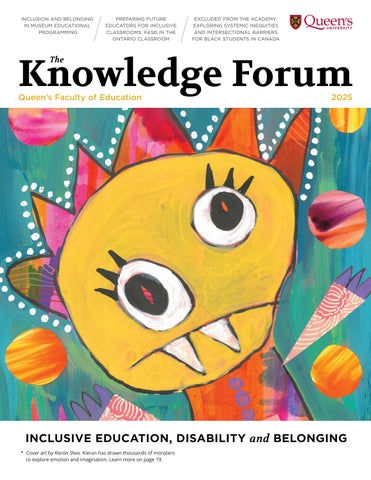
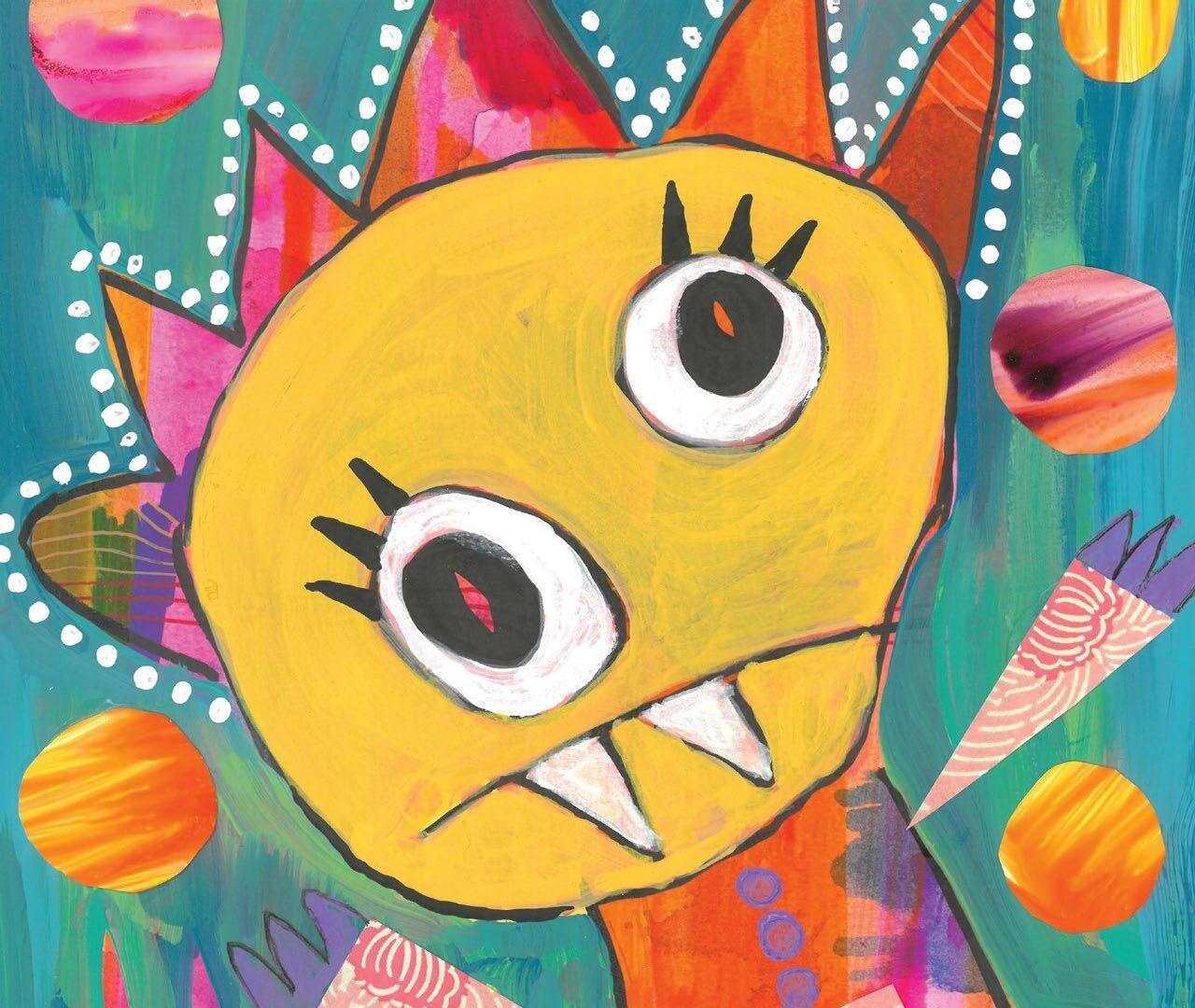
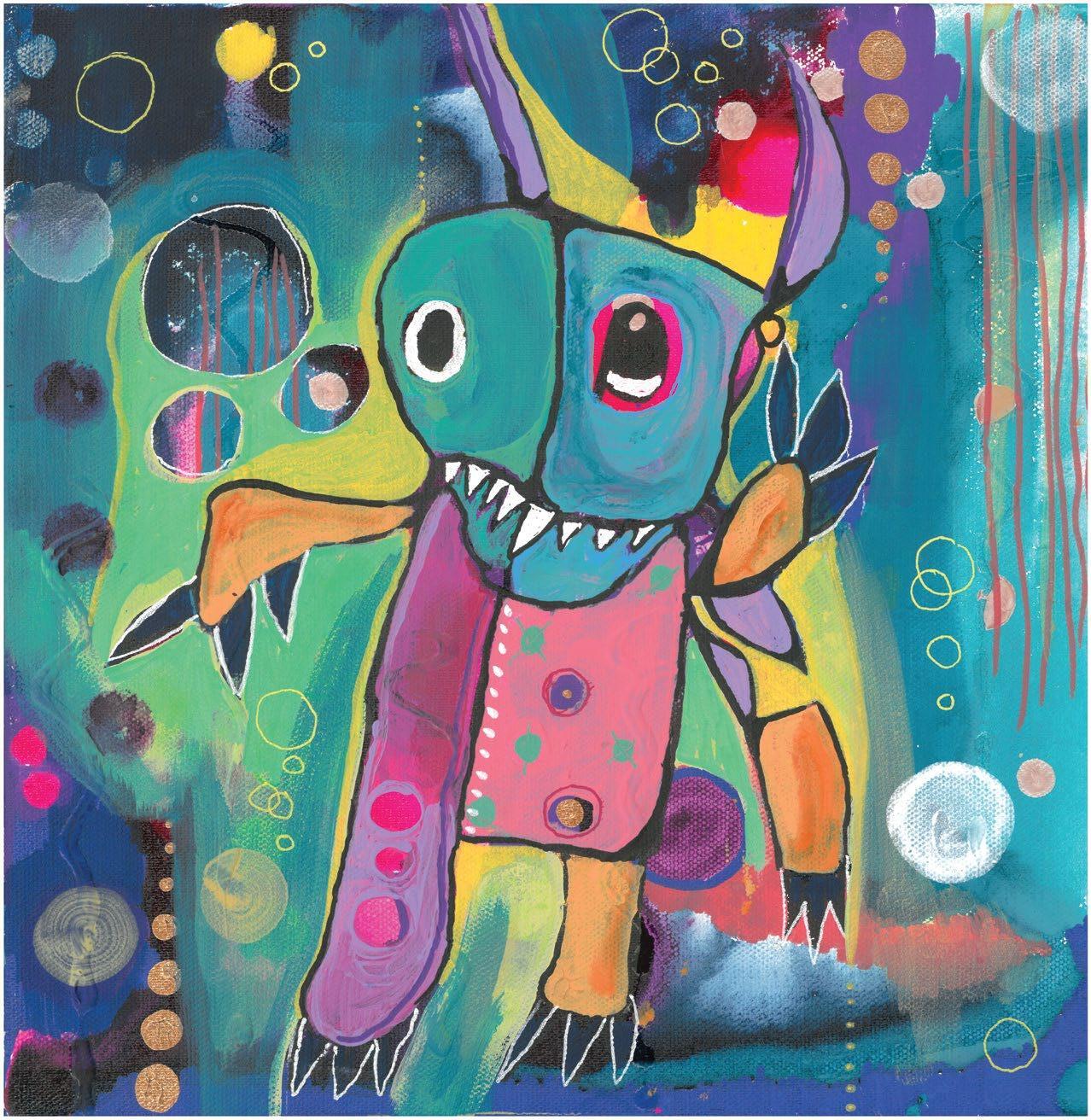
KIERAN SHEA has been drawing monsters since he was three years old. Over the years, he has accumulated thousands of monster drawings exploring every possibility of emotion, imagination, and characteristic. Andrea Cameron is a painter who creates colourful backßgrounds onto which the monsters are projected and traced. Andrea then adds colour to the monsters to create vibrant paintings. This collaborative team merged their talents in 2019 and have been making monster paintings ever since.
Disability and Belonging, Youth Experiences with Social Inclusion in School: A Scoping Review Discussion on Adapting the Classroom
By Emilee E. Fackelmann
EMILEE FACKELMANN (PME ’22) is a PhD student in the Faculty of Health at Dalhousie University. Her research interests lie at the intersection of disability and health equity, with a focus on the health disparities, discrimination, and stigma experienced by individuals who experience disability. Drawing on critical disability theory, critical ethnography and comparative analysis, she aims to understand how social, cultural, political and legislative conditions shape the experiences of Canadians who experience disability. Emilee is a disability rights advocate living with Epilepsy and hearing impairments leading to double hearing aid use. Her passion for equity studies stems from her personal experiences and struggles with disability. Prior to arriving at Dalhousie, Emilee completed her Professional Master of Education Degree at Queen’s University (Summa Cum Laude).
SOCIAL INCLUSION AND BELONGING ARE fundamental to the well-being and academic success of all students, particularly people with disabilities This discussion draws upon the findings of the 2024 scoping review, “Disability and Belonging, Youth Experiences with Social Inclusion in School,” which explores these critical concepts among middle and high school students who experience disability from their own perspectives. This review, guided by Arksey and O’Malley’s framework, examined how these students navigate social connections, focusing on the challenges and opportunities related to friendships, social activities, and peer acceptance. Synthesizing 14 studies that met rigorous inclusion criteria, the review identified three prominent themes: exclusion, friendship, and support. These themes, along with the review’s key findings and identified research gaps, provide a foundation for recommendations aimed at empowering
educators to create truly inclusive classrooms where all students thrive.
Scoping Review & Results
The following discussion draws upon the findings of that review exploring the concepts of social inclusion and belonging among middle and high school students who experience disability from the perspective of students. A systematic search of peer-reviewed journals (20042024) across multiple databases yielded 14 studies that met inclusion criteria (i.e. focus on student perspectives, ages 12-21, relevance to inclusion). Three key themes emerged: exclusion (including feelings of isolation, lack of valued involvement, and rejection), friendship (specifically lack of reciprocation), and support (particularly the absence of peer-provided safety). The review found a significant gap in research exploring the causes of social exclusion, with
existing studies often focusing on consequences or peer perspectives rather than the lived experiences of students with disabilities themselves. Future research should investigate the discrepancy between student and peer perceptions of exclusion, utilize longitudinal studies and qualitative methods to capture diverse experiences, and prioritize inclusive language. The review concludes that a deeper understanding of the root causes of exclusion, including the impact of digital platforms, is crucial for developing effective interventions and fostering truly inclusive environments.
Implications for Educators
This scoping review’s findings on social inclusion for students with disabilities have critical implications for educators. The pervasive theme of exclusion necessitates that educators move beyond simply including students with disabilities to actively fostering genuine inclusion by creating a classroom where all students feel valued and respected. Educators must challenge the misconception of mere physical presence as inclusion and instead facilitate meaningful participation, ensuring students with disabilities can contribute, build relationships, and belong. The theme of friendship highlights the need for educators to address the disparity in reciprocal interactions, promoting balanced collaborations and teaching social skills to peers
and students with disabilities alike to foster genuine friendships. Finally, the theme of support underscores the importance of peer support and safety, requiring educators to actively address bullying, cultivate respect for diversity, and create a classroom culture where all students feel safe and supported. Ultimately, educators must be proactive in creating truly inclusive classrooms, implementing tangible strategies to address the complex social dynamics impacting students with disabilities.
Recommendations for Educators
To truly create inclusive classrooms, educators must move beyond simply including students with disabilities and actively foster genuine belonging. This involves creating a classroom where all students feel valued and respected, which means 1) facilitating meaningful participation, 2) promoting reciprocal friendships by explicitly teaching social skills to all students, 3) fostering balanced collaborations, and 4) cultivating peer support and safety by actively addressing bullying and cultivating respect. Educators should challenge misconceptions about disability and inclusion, recognizing that mere physical presence is insufficient, and prioritize understanding the root causes of social exclusion in their classrooms (i.e. discrimination, insufficient inclusive
curriculum design, lack of additional educational support, etc.), utilizing student perspectives to inform strategies. Given the impact of digital platforms, addressing cyberbullying is crucial. Finally, ongoing professional development focused on inclusive language and best practices is essential for creating truly inclusive classrooms and advocating for systemic change within the school environment.
Conclusion
In conclusion, the 2024 scoping review reveals a critical need for educators to shift their approach to inclusion for students who experience disability. The findings underscore that genuine inclusion transcends mere physical presence and requires proactive efforts to foster belonging; by addressing the core themes of exclusion, friendship, and support, educators can create classroom environments where all students feel valued, respected, and safe. This involves facilitating meaningful participation, promoting reciprocal friendships through explicit social skills instruction and collaborative activities, and cultivating peer support by actively combating bullying and fostering respect. Challenging misconceptions about inclusion and prioritizing the lived experiences of students with disabilities are crucial steps. Furthermore, recognizing the influence of digital platforms necessitates addressing cyberbullying and promoting responsible online behavior. Ultimately, ongoing professional development focused on inclusive language and best practices is essential for educators to effectively implement these recommendations, create truly inclusive classrooms, and advocate for systemic change that ensures all students have the opportunity to thrive.
Talking Futures (with a Bot): Reimagining the University Through Disability Justice
By Toni Thornton
TONI THORNTON (MA, M.Ed) is a disabled, queer, and nonbinary settler woman who grew up on the traditional territories of the Williams Treaties First Nations and other Indigenous Peoples. With over 25 years of experience in equity-focused education, Toni has been deeply committed to building inclusive communities in Katarokwi/Kingston, where they are a single parent and community organizer. Currently serving as an Accessibility Advisor at Queen’s University, Toni finds immense joy in meeting with disabled students and collaborating on accessibility plans that reflect their unique needs and aspirations. Prior to their current role, Toni gained invaluable experience as an Instructional Designer and Curriculum Developer in the Faculty of Arts and Science at Queen’s University for eight years. They also worked for seven years at a local non-profit arts-based school and center for adults with developmental disabilities, as well as several years in the Limestone District School Board in special education classrooms. Their work is driven by a passion for collaboration, anti-oppressive education, and decolonizing practices, with a healthy side of state-smashing and contagious belly laughter. When not juggling essential requirements or advocating for accessibility, Toni enjoys coffee-fueled idea exchanges and the collective envisioning of liberatory spaces.
I WROTE THE PIECE BELOW FOLLOWING a discussion with an AI bot. Together, we unpacked disability justice at the university, critically examining structural barriers while dreaming up futures rooted in collective care, accessibility, and inclusion. Along the way, we wandered into moments of humour and existential musings, blending lightness and depth into what became an exploration of challenges and liberatory possibilities.
The traditional university model is designed based on, and continues to cling to, outdated meritocratic principles that perpetuate exclusion and systemic ableism (Dolmage, 2017). It operates as though a one-size-fits-all approach to learning - rigid lectures, inflexible assessments, and deadlines driven by institutional pressures - can somehow address students’ diverse needs. Disabled students, especially those with episodic functional impacts, are left scrambling to conform to systems that actively shut them out.
Retrofit accommodations, meanwhile, treat accessibility as an afterthought. Disabled students must navigate a labyrinth of stigmatizing medical documentation and endless meetings, emails, and petitions simply to access the same education as their peers (Piepzna-Samarasinha, 2018). This system exhausts more than it empowers - and its failures cannot be patched over with surface fixes.
Accessibility advisors are positioned as gatekeepers to accommodations. Too much time is spent on meetings and emails, advocating with/for students, while structural barriers remain. Faculty often feel uncertain about their responsibilities, and the rigidity of academia grinds up against the lived realities of disabled students.
Universal Design for Learning (UDL) provides a framework for rethinking accessibility, not as a concession but as a foundation. UDL calls for constant reflection and adaptation of the means of representation, expression, and engagement (Dolmage, 2017). Inflexible teaching approaches are major barriers for disabled students that UDL can help solve. However, the goal isn’t just pedagogical change; it’s dismantling structures that prioritize productivity over people. Meritocracy fetishizes competition without considering how privilege shapes both (Piepzna-Samarasinha, 2018). Meaningful change requires cutting deeper into the roots of ableism, which are tangled with capitalism, neoliberalism, and colonialism. This three-headed beast thrives on rigid hierarchies and punishes those who operate outside them (Sins Invalid, 2019). A system built to exclude cannot be amended without confronting its fundamental injustices. How do we reimagine the university through disability justice?
Let’s start with students setting their own pace without penalties, where semesters are flexible, and learning prioritizes mastery of essential requirements over deadlines. It’s not enough to tweak syllabi or offer grace periods - accessibility must be baked in. Faculty, staff, and students would co-create inclusive environments based on trust and understanding, rather than resistance to change (Dolmage, 2017; Frias, 2023).
Accessibility offices would evolve into advocacy hubs led by disabled voices who steer policy, shape practices, and drive institutional equity. Co-created with disabled student leaders, these spaces would be accessible by design and rooted in collective care, with physical
and digital spaces for activism, empowerment, and connection. Peer-led initiatives could provide mentorship and solidarity, challenging tokenism (Dolmage, 2017; Sins Invalid, 2019). Campus-wide events, learning opportunities, social programming, and celebrations, alongside student-driven advocacy, could shift perceptions and create lasting cultural change (Piepzna-Samarasinha, 2018).
Institutions would recognize disability not just as a medical diagnosis but as an identity, a community, and a source of strength (Clare, 2017; Baldwin, 2023). Affinity spaces, like Yellow House and the Ban Righ Centre, could lead such efforts, offering resources and programming that challenge the marginalization of disability within the academic fabric (Frias, 2023), making room for power and creativity. Such spaces would prioritize mental, emotional, and sensory well-being and would resist ableist productivity norms (Piepzna-Samarasinha, 2018). And they would provide restorative infrastructure that would allow neurodivergent students to ‘unmask’ at school, “While these might seem so automatic and thoughtless to you, I’m here actively smiling, actively keeping pleasant tone of voice, actively wording phrases and letters into comprehensible language, actively holding onto my id for dear life and trying not to let it loose” (Gee23, 2023).
Decolonizing academia pushes us to consider ableism as a tool of colonialism and to explore our collective liberation
REFERENCES
through decolonizing perspectives on disability, developing interdependence and community-building, practicing restorative justice, returning land to Indigenous Peoples, and cross-pollination between Indigenization efforts and accessibility initiatives (Sins Invalid, 2019; Quirici, 2019).
While dreaming of liberatory futures, we must hold immediate realities alongside long-term goals. Harm reduction offers pragmatic pathways forward, balancing survival and justice (brown, 2020). Acts of care plants seeds for justice while acknowledging systemic limits. Harm reduction might streamline bureaucratic accommodation processes, encourage flexible pedagogies, and build relationships between accessibility services and disabled students. Educating faculty in harm-reducing practices could be a significant step, not a systemic
Baldwin, J. (2023, January 27). Disability justice: What does it mean and what does it look like in practice? DJNO. https://www.djno.ca/blog
brown, a. m. (2022). Saving our own lives: A liberatory practice of harm reduction. Haymarket Books. Clare, E. (2017). Brilliant imperfection: Grappling with cure. Duke University Press.
Connor, D. J. (2019). Rethinking disability: A disability studies guide to inclusive practices. Routledge. Dolmage, J. T. (2017). Academic ableism: Disability and higher education. University of Michigan Press.
overhaul, but undeniable progress (Dolmage, 2017).
Even amid oppressive systems, resilience and resistance remain paths to hope. Justice demands futures rooted in collective care, spaces that prioritize humanity over productivity, and systems that uplift rather than exclude. Liberatory futures are radical acts of imagination. By dismantling meritocracy, challenging ableism, and embedding care into every layer of our institutions, we celebrate diversity as central to the academic system.
Frias, D. (2023, October 1). Disability & climate justice: A Q&A with Daphne Frias. Good Good Good. www.goodgoodgood.co/ articles/daphne-frias
Gee23 (2023). Some words for NTs. Neurodivergent Pride (2), 37-42. [zine]. Microcosm.Pub.
Piepzna-Samarasinha, L. L. (2018). Care work: Dreaming disability justice. Arsenal Pulp Press.
Quirici, M. (2019). Disability studies. The Year’s Work in Critical and Cultural Theory (27), 1-21.
Sins Invalid. (2019). Skin, tooth, and bone: The basis of movement is our people (2nd ed). Sins Invalid.
Photo credit: Mohamed Nohassi
Ghana’s Inclusive Education Dilemma: Challenges and What Canada Can Teach Us
By Laadi Ayisheatu Salifu
IN JUNE 1994, AT A CONFERENCE organised by UNESCO in Salamanca, Spain, access to inclusive education for persons with disability was reaffirmed as a fundamental right, in line with the 1948 Universal Declaration of Human Rights provisions. The conference report called upon all governments to prioritize inclusive education in developing school curricula (UNESCO, 1994). This call aligns with the provisions of the UN Convention on the Rights of the Child (1989) and, subsequently, the UN Convention on the Rights of Persons with Disabilities (United Nations Treaty Series, 2006). In accordance with the objectives of the Salamanca conference, governments as well as national and international stakeholders, particularly in Westernized Societies, have developed policies and strategies for enhancing inclusion and access to education (Mantey, 2014). Given the critical role of education in
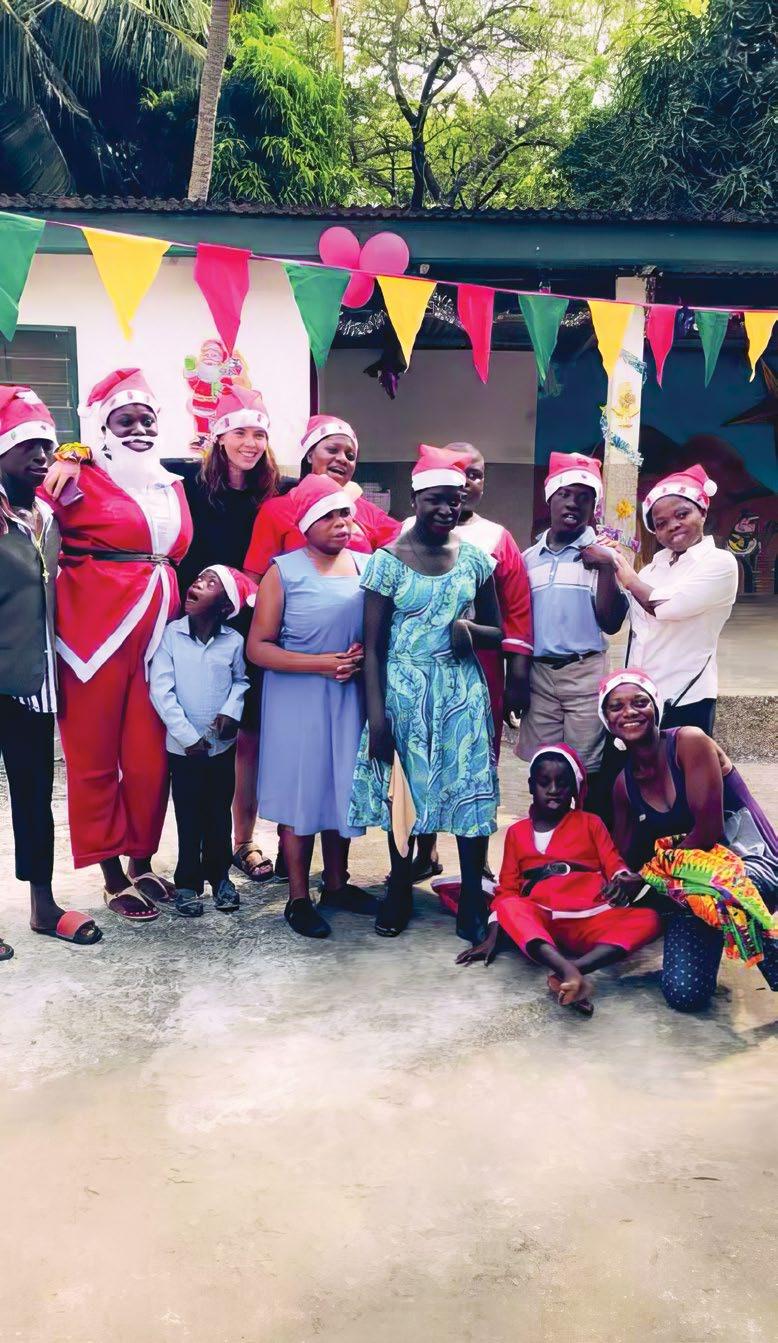
Laadi Salifu with her students at the Pedro Pio Rehabilitation Centre in Central Ghana
global development, the Salamanca Statement, signed by ninety-two countries, called on signatories to adopt the Inclusion Education (IE) principle to ensure that every child has access to quality education, irrespective of physical and mental challenges (UNESCO, 1994).
Additionally, the UN Convention on the Rights of Persons with Disabilities advocates for all persons to have equal opportunity to quality education and calls for the elimination of barriers that bar people from participating in schools (United Nations Treaty Series, 2006). The Convention on the Rights of Children also recognizes education as a right of all children and advocates for equal education for all (United Nations Treaty Series, 2006).
Inclusive Education recognizes and responds to the varying needs of students, including the learning and teaching approaches suitable for these learners, as well as ensuring the provision of
…inclusive
education encourages children to develop a firm belief and self-confidence in themselves and reduces discrimination, which helps them participate effectively in society.
appropriate curricula, resources, and support essential for quality education (Petrescu, 2013). According to Gadagbui (2010), inclusive education encourages children to develop a firm belief and self-confidence in themselves and reduces discrimination, which helps them participate effectively in society.
Despite the treaties and international calls for inclusive education (IE), Ofori (2018) indicated that not all countries have been able to implement it effectively.
Abubakar (2019) contends that, “disability is a condition in which a person is unable to perform essential everyday tasks mobility, spatial orientation, or control of the body because of injury or deformity to one or more vital organs, such as the skeleton, muscles, hands, toes, fingers, or spinal cord. A disabling condition creates an impairing situation by putting an obstacle in the way of
tasks that should be completed easily or independently”. According to WHO & World Bank (2013) the outcome of disability is the interactions between health issues and personal, environmental, and societal variables rather than being only a biological or social construct. Disability can manifest in three ways: a physical or functional impairment; an activity constraint, like not being able to read or move; or a restriction in participation, such as being driven out of school or workplace. In addition to this perspective, UNICEF (2014) argues that the concept of disability is a complicated issue than its traditional meaning of body defects on individuals. Disability has been placed in the context of diversity, poverty, and discrimination, as well as being denied access to human rights
Despite formulating policies and constitutional instruments to promote inclusive
education in Ghana, Obeng-Asamoah (2016) argues that the implementation and practice of inclusive education in Ghana is yet to be effective due to several factors. According to Ofori (2018), implementing and practising inclusive education requires systemic changes to the country’s educational system. Hence, considerable changes to the norms and culture of education must be considered before inclusive education can thrive.
As part of the accounting factors for the ineffectiveness of inclusive education in Ghana, Slee (2011) revealed that most people in the country have negative attitudes towards implementing and practising inclusive education. The study further opined that the negative public attitude to inclusivity in schools often deters families of persons with disabilities from enrolling them in school. Given this, Obeng-Asamoah (2016) stated that adopting a positive mindset and attitude toward disabilities is necessary for promoting inclusive education in Ghanaian society. In understanding the factors that account for this behaviour, Tchintcharauli and Javakhishvili (2017) revealed that most parents of disabled children are primarily ashamed of their children’s disability. Hence, they cannot afford to face public ridicule for taking their wards to school. Nonetheless, promoting inclusive education in society is particularly important in mitigating people’s negative perceptions/attitudes about people with disabilities.
Additionally, Hodkinson (2010) also pointed out that some teachers within the Ghanaian educational system have negative attitudes towards children with challenging behaviours or disabilities, which collectively thwart the country’s
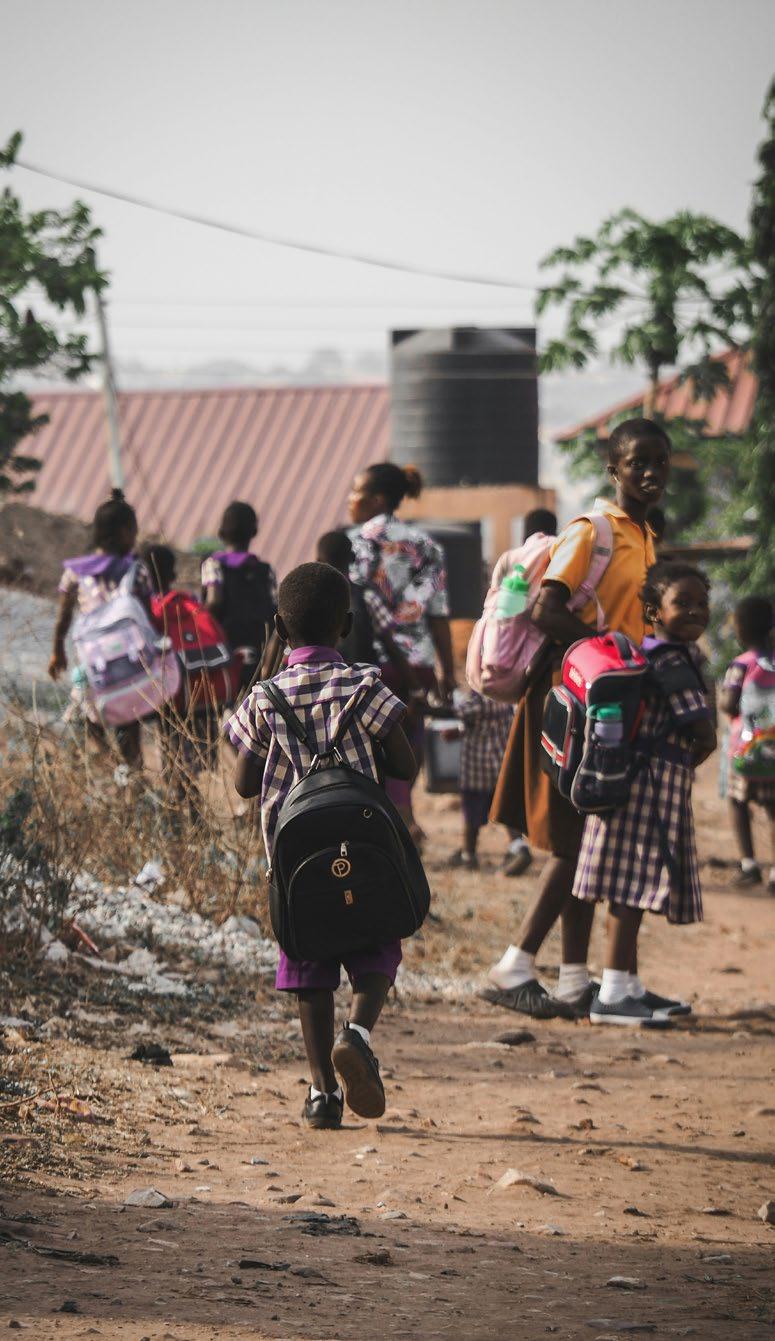
Ghanaian children going to school.
efforts to enhance inclusive education. The study further noted that some of these teachers even, to some extent, consider the exclusion of such students from mainstream education. According to Kuyini and Boitumelo (2011), teachers are central to the implementation of inclusive education, and hence, it is essential to enhance their capacity to support children with disabilities. Apart from the negative attitude of teachers, Kuyini (2010) stated that most of the schools lack disability-friendly infrastructure and facilities conducive for disabled students to access educational facilities. Providing proper facilities and infrastructure in these schools will encourage more disabled students to attend, promoting inclusive education.
Comparatively, the implementation and practice of inclusive education in Ghana differs from that of the Westernized world. In Ontario, for example, theMinistry of Education (2021) explained that the province has invested a lot in inclusive education. As a result of that, students with disabilities are more easily integrated into the educational system, albeit unevenly across school boards and geographic regions. Kopfer and Oskarsdottir (2019) noted that, despite segregated placements within Canada, the country is considered a model for inclusive education on the global stage. At the same time, the lack of a unified national policy emphasizes the need to investigate the potential impact of decentralized education governance on inclusive education outcomes.
As a researcher looking into the challenges of implementing inclusive education policies in Ontario, the identified barriers provide valuable insights with
…most of the schools lack disability-friendly infrastructure and facilities conducive for disabled students to access educational facilities. Providing proper facilities and infrastructure in these schools will encourage more disabled students to attend. promoting inclusive education.
important implications for future research and practical considerations. Investigating how policy and implementation variations across provinces affect student experiences and outcomes can help us gain a more nuanced understanding of the relationship between policy decisions and inclusive practices. The lack of a unified national policy results in ongoing disparities in inclusive education practices across provinces, perpetuating fragmented approaches and limiting the potential for a cohesive and equitable national system. This could result in uneven educational experiences and outcomes for students with varying strengths and needs. Grynova and Kalinichenko (2018) conducted a comparative study of inclusive studies in Canada and the United States that revealed Canada lacks a single legislative act that governs the practice of inclusive education. The persistence of societal and systemic barriers globally emphasize the importance of studying the interactions between broader societal attitudes, policy formulation, and on-the-ground implementation.
Financial constraints are another barrier that may stymie progress in inclusive education and prevent the development of sustainable funding models. Without adequate funding, schools may struggle to implement necessary changes, potentially perpetuating resource disparities and limiting access to inclusive education for all students. According to Volker et al. (2022), increased staff capacity and funding are required to consider inclusive education. To address these concerns, their study proposed combining aspects of Universal Design for Learning and Differentiated Instruction to maintain the least restrictive environment while tailoring to individual student needs. The incorporation of Universal Design for Learning principles into classrooms and learning environments promotes inclusion by providing support for all students, including those with special needs.
The research findings highlighted significant disparities between the two countries’ inclusive education landscapes. Canada is a trailblazer, guiding inclusive practices through legislative advancements such as the Charter of Rights and
Freedoms and province-specific acts. Proactive approaches in provinces such as Ontario, which prioritize an inclusive base curriculum, teacher training, capacity building, and the creation of a supportive social environment, demonstrate a comprehensive commitment to inclusion.
Ghana, on the other hand, faced historical challenges in its transition to inclusive education, including the establishment of separate special education schools. Despite the implementation of an integrated system in the 1980s and subsequent policies such as the Educational Strategic Plan (ESP), Ghana continues to face challenges such as geographical disparities, prohibitive costs, and a need for improved teacher understanding and skills. The National Inclusive Education Policy of 2016, while a step forward, has been criticized for falling short of expectations.
The comparative analysis emphasizes the need for Ghana to strategize and
improve its inclusive education efforts. Ghana stands to draw lessons from Canada’s model. By delving into the policies, community structures, and challenges in both countries, this study provides a nuanced understanding of the complexities of implementing inclusive education. It emphasizes opportunities for Ghana to take inspiration from Canada’s successes, particularly in terms of legislative support, diverse provincial strategies, and comprehensive teacher training initiatives.
This research project makes an important contribution to the field of inclusive education. By synthesizing existing literature and conducting a comparative analysis, it provides policymakers, educators, and stakeholders in Ghana with actionable information. The importance of strategic planning, policy refinement, and community engagement in promoting inclusive education is highlighted. As Ghana embarks on its inclusive
education journey, the experiences and successes of Canada provide a blueprint for transformative progress, ensuring that all students, regardless of their abilities, can access quality education.
LAADI SALIFU graduated from Brock University in 2024 with a master’s degree in social justice and Equity Studies, earning the Distinguished Student Award. Her research centers on inclusive education for persons with disabilities, an area she plans to explore further in her future PhD studies. Laadi is currently dedicated to identifying and creating opportunities that will bring meaningful changes to Ghana’s Inclusive Education System.
Photo credit: Emmanuel Ikwuegbu
REFERENCES
Abubakar, H. S. (2019). Challenges of inclusive education policy implementation for the physically challenged students. International Journal of Advanced Education and Research, 4(4), p 31-35/
Grynova, M., & Kalinichenko, I. (2018). Trends in inclusive education in the USA and Canada. Comparative Professional Pedagogy. Journal of Education Policy, 17(1), 71-86. DOI: 10.2478/rpp-2018-0016
Hodkinson, A. (2010). Inclusive and special education: Inclusive and special education in the English educational system: historical perspectives, recent developments, and future challenges. British journal of special education, 37(2), 61-67. Retrieved from www.ghanaweb.com/GhanaHomePage/features/Ghana-s-Policy-onInclusive-Education-A-tool-for-nationaldevelopment-444807
Köpfer, A., & Óskarsdóttir, E. (2019). Analyzing support in inclusive education systems – a comparison of inclusive school development in Iceland and Canada since the 1980s focusing on policy and in-school support, International Journal of Inclusive Education, 23:7-8, 876-890, DOI: 10.1080/13603116.2019. 1624844
Kuyini, A. B. & Boitumelo, M. (2011). Student teachers’ attitudes and concerns about inclusive education in Ghana and Botswana. International Journal of Whole Schooling, 7(1). Retrieved from https://files.eric.ed.gov/fulltext/EJ939056.pdf.
Kuyini, A., B. (2010). Inclusive education in Ghana: Are we achieving the vision? GhanaWeb. Retrieved from https:// www.ghanaweb.com/GhanaHomePage/NewsArchive/InclusiveEdcuationIn-Ghana-Are-We-Achieving-The-Vision-179726
Mantey, E. E. (2014). Accessibility to inclusive education for children with disabilities: a case of two selected areas in Ghana (University of Siegen; Vol. 2). Retrieved August 27, 2024, from dspace.ub.uni-siegen.de.
Obeng-Asamoa, P. K. (2016). Ghana’s policy on inclusive education: A tool for national development. GhanaWeb. Ofori, E. A. (2018). Challenges and opportunities for inclusive education in Ghana. Unpublished thesis submitted to the University of Iceland.
Ontario Ministry of Education. (2021). 2021-22 education funding: A guide to the special education grant. http://www. edu.gov.on.ca/eng/funding/2122/special-education-guide2021-22.pdf
Petrescu, C. (2013). Inclusive education. Euromentor JournalStudies about education, (02), 149-152.
Slee, R. (2011). The irregular school: Exclusion, schooling, and inclusive education. London: Routledge.
Tchintcharauli, T., & Javakhishvili, N. (2017). Inclusive education in Georgia: current trends and challenges. British Journal of Special Education, 44(4), 465-483.
UNESCO (1994). The Salamanca Statement and Framework for Action on Special Needs Education. Adopted by the World Conference on Special Needs Education: Access and Quality. Salamanca, Spain, 7-10 June. Retrieved August 27, 2024, from https://unesdoc.unesco.org/ark:/48223/pf0000098427
United Nations Children’s Fund. (2014). Definition and classification of disability: Webinar 2 - Companion technical booklet. United Nations Treaty Series (2006). The convention on the rights of persons with disabilities. Retrieved fromwww.un.org/ development/desa/disabilities/convention-on-therights-of-personswith-disabilities.html
Volker, E., Gupta, S., & Brown, B. (2022). Inclusive education: advantages and overcoming barriers. MacEwan University Student Journal, 6(1).
World Health Organization, & World Bank (2013). World report on disability. Geneva, Switzerland:WorldHealthOrganization.Retrievedfromhttps://apps.who.int/gb/ebwha/pdf_files/ WHA66/A66_12-en.pdf
Photo credit: David Geneugelijk
Black Students in Special Education: Contradiction or conundrum?
By Jacqui Getfield
JACQUI GETFIELD, PhD is founder of a grassroots organization, Mothers United in Mediating Mutual Alliances (MUMMA). Her research focuses on race and disability within family engagement, home-school partnerships. Her PhD dissertation is titled, “Prescriptive Partnerships: Black Mothers of Disabled Children and Educators in Ontario’s Public School System.” Dr. Jacqui Getfield theorizes and analyzes through the lens of critical race theory. She has delivered online public lectures at universities in Canada and the USA. A diversity, equity, inclusion, accessibility, and belonging (DEIAB) consultant, Dr. Getfield has facilitated DEIAB workshops at non-profit organizations, churches, etc. She has over 25 years of professional experience in education, health, research, and corporate communications. Currently, she is project manager of the Caribbean African Regenerative Medicine (CARM) project.
PARENTS’ AND FAMILIES’ VIEWS AND values vary. They often differ from school expectations. Is it realistic for families to believe their own lived experiences and cultural identities will be valued in partnerships with educators, with whom they must work, in the best interests of Ontario’s students?
I would like to submit that Ontario’s Education Act thwarts individual decision-making as it legislates and regulates professionals and in so doing protects the public. But, who exactly is being protected, and whose efforts are disregarded and devalued in the spirit of professionalism?
These are just a few of the questions that emerged in discussions for my research with mothers about students who are enrolled in special education environments (Getfield, 2022). Special education students in Ontario usually possess an Individual Education Plan (IEP). The IEP outlines how each student’s education needs will be addressed by schools, with consultation from home. On the surface, IEPs appear to be quite straightforward and targeted. However, the implementation of the plan reveals that for some students, the IEP misses its target. When good-intentioned special education teachers and school administrators focus on the deficits and weaknesses of students and do not foreground the students’ strengths, they will not be able to respond equitably to the needs of students who are both Black and disabled (Getfield, 2022). This finding has been supported in conversations with mothers engaged with [grassroots]
organizations like Mothers United in Mediating Mutual Alliances (MUMMA) and a charitable organization, Parents of Black Children.
In discussions about Black disabled students, concepts of race and disability are intrinsically intertwined. Colonial, capitalist discourse combined with eugenics have impacted the history of education in Ontario in that, over centuries, myths and stereotypes regenerate notions that African-descended Black people are intellectually inferior, incapable of learning, naturally incompetent, and lazy. Though now debunked, such eugenic notions claimed that the white race was superior compared to all other races. Generations, across races, believed the eugenic claims of the more dominant, learned community of white academics and scientists. Laws and policies were predicated upon philosophies of white supremacy and eugenics. To be clear, the evolution and design of Ontario’s system of education could not have escaped the dual cultural and economic influence of eugenics, capitalism and colonialism.
Blackness is better understood when juxtaposed with whiteness. “Whiteness,” gestures to the laws, regulations, and the negotiated cultural understandings and economic interests shared by the dominant, powerful and more affluent groups in North America. Whiteness can be understood as the ways of being of Europeans, who held sway as colonizers. Whiteness is about economics, culture and power. Whiteness is property owned and distributed by European-descended
peoples who are at the centre of our society. Blackness gestures to the relative power of those who exist on the periphery of our society. Blackness gestures to the lived realities of African descendants: primarily those whose lands and indigenous cultures were appropriated during the colonized encounter with settler Europeans. So, Blackness is the property owned by people who are indigenous to the African continent and therefore it is the property owned by diasporic Africans.
How do these two concepts—Blackness and whiteness—apply to [special] education? When there is a singular medical/clinical lens through which schools view—and predict— students’ current and future/potential abilities, whiteness encourages us to look at students from a deficit perspective. As a result, some professionals advocate for disabled students and adults to be excluded from spaces (and therefore they are denied opportunities) that are readily accessible by those whose abilities do not deviate from the norm/standard. Relatedly, whiteness encourages some good-intentioned educators to advise some students to settle for, and
aspire to, mediocrity: they claim that lowered expectations will eliminate stressors and reduce students’ stress levels. Whiteness evaluates the cost and concludes that it would be way too much effort for some students to work hard according to their capacity, to stretch themselves and therefore reach towards the best of who they can be, in keeping with their abilities. Good-intentioned educators who claim to be “blind to race” cannot work as allies to dismantle structures that undergird anti-Black racism. The situation is compounded when race-ignorant educators are expected to understand how disability and disablement emerge in their classrooms and schools. Disablement (re)produces disabling conditions. These problematic
REFERENCES
conditions emerge when educators and health professionals do not consider and remove barriers for Black and disabled students. Black students and their impairments are not the problem in schools. Since students cannot scale or navigate systemic barriers, we must look to the more powerful educator for creative solutions.
Schooling transports education. Reimagined concepts of schooling and education urge consideration of students’ and educators’ social class. School context and school climate are both imperatives so administrators, among educators, must create opportunities in schools and identify resources in the wider communities. Educators are challenged to ensure that all students have equitable access to education and related opportunities. Intentional and responsive educators must pay attention to students’ intersecting identity categories in order to plan for all students’ success and optimal school environments.
Black mothers, among all mothers, want to partner with schools in the education of their children (Getfield, 2022). Since student success is the goal for both home and school, educators must not only focus on optimal conditions in classrooms and schools, but they must also ensure there is intentional and collaborative engagement between home and school. Therefore, school climate, school contexts and home-school-community partnerships are critically important as the school team (of educators and the family) works towards Black student success.
Getfield, J. (2022). Family Engagement in a Pandemic: Seeing Through a Dark Glass. In K. Fox & L. Szech (Eds.), Handbook of Research on Family Literacy Practices and Home-School Connections (pp. 176-195). IGI Global. https://doi.org/10.4018/978-16684-4569-3.ch011
Henry, N. (2021). Racial Segregation of Black Students in Canadian Schools. In The Canadian Encyclopedia. Retrieved from https://www.thecanadianencyclopedia.ca/en/ article/racial-segregation-of-black-students-in-canadian-schools
Question
By Laura Mozhu Li
As a 1.5 generation Chinese immigrant, I came to Canada with my parents at the age of 8. I am often faced with questions from others, and the reflective perplexity in which I contemplate these questions while engaging in self-questioning of my own belonging are expressed in this narrative poem.
Who am I, I ask.
Am I Chinese or Canadian?
Do I feel Chinese?
Sometimes…
More so with Canadian friends, and less so with Chinese friends.
Do I feel Canadian?
I’m not sure…
What is Canadian?
“It’s your overly liberal thoughts,” my parents say.
“It’s the way you dress,” my Chinese friends remark. I don’t feel Canadian, I am Canadian. I feel Chinese, Am I Chinese?
“Yes, yes you are! That’s where you’re from!
You’re not Canadian, you are Chinese.”
But I’m from Toronto too,
Can’t I be both?
What does it mean to be both?
Have I become more Canadian over the years?
What about you, fellow newcomer?
Do you feel more Chinese now?
Will you become more Canadian?
Are you met with rejections?
Overlooked; Invisible, like you don’t exist. Excluded from conversations; Never addressed first.
No, not rejections; Silences, looks, giggles, and Questions-
“Where are you really from?”
Is that a rejection?
Seen as the perpetual foreigner; A high achieving, hardworking foreigner, A soon to be successful middle-class candidate. What is there to complain about?
Perpetual foreigner, Do you belong?
Do I belong?
Where do I belong? I constantly question.
Silence is Golden
By Laura Mozhu Li
After mastering daily conversations as a newcomer, I kept up with classes, but often did not understand difficult words and academic vocabulary. I struggled silently, unable to vocalize my needs. Newcomer students require support and differentiation, and they would benefit from check-ins and help from teachers and peers.
Continued on Next Page...
Fostering Inclusive Education: Strengths-Based Approaches to Disability and Belonging
By Akomaye Undie and Dr. Oluseyi Dada
Introduction
Inclusive education emphasizes equitable access to education, ensuring that all students feel valued and supported in their learning (Pradhan & Naik, 2024). Despite global commitments such as the World Declaration on Education for All, systemic inequities persist (Vindigni, 2024). Marginalized students, particularly those with disabilities, continually experience exclusion, stigma, and limited access to resources (UNESCO, 2019). This article explores how strengths-based approaches can enhance inclusive education, guided by critical disability studies, intersectionality, and evidence-based teaching practices.
Theoretical Foundations: Disability, Inclusion, and Belonging
Conventional deficit-based models see disability as a limitation, while strengthsbased approaches stress students’ capabilities and contributions (Cartagena & Pike, 2022). Critical disability studies challenge deficit narratives by viewing disability as a component of human diversity (Goodley, 2014). Neurodiversity frameworks further emphasize natural cognitive and neurological differences as strengths rather than impairments (Armstrong, 2012). Many Indigenous viewpoints also see disability through the lens of interconnectedness and relationality, worldviews that perceive disability
as a unique gift, emphasizing relationality and encouraging holistic inclusion (Smith, 1999; Velarde, 2018).
Barriers to Inclusion
Despite the support for inclusive education, many barriers persist, which include limited funding, inaccessible school infrastructure, and insufficient teacher training. (Walton, 2018; UNESCO, 2015). Additionally, ableist biases and negative societal attitudes strengthen exclusion (Liasidou, 2012). Intersectionality worsens these challenges, as students from multiple marginalized identities (e.g., racialized students with disabilities) face several disadvantages (Erevelles & Minear, 2010; OHRC, 2024). Addressing these barriers will require a systematically changed policy and educator training.
Strategies for Fostering Inclusion and Belonging
Strengths-Based
Approaches
Educators who utilize strengths-based approaches assist students in building their confidence by focusing on their abilities and not their perceived deficits (Galloway et al., 2020). Meyer et al., 2024 assert that an effective approach that provides multiple means of engagement, representation, and expression is the Universal Design for Learning (UDL). An example is when there is an integration of visual aids, interactive technology, and
hands-on learning, which increases accessibility for diverse learners (Shabiralyani et al., 2015).
Creating Safe and Supportive Environments
Belonging is foundational to inclusive education (Long & Guo, 2023). Research shows that encouraging emotionally safe classrooms leads to an increase in student participation, and also reduces segregation (Brown & Leigh, 2020; Shurr & Minuk, 2021). Peer mentorship programs and culturally responsive teaching have been seen as effective ways of creating inclusive learning spaces (Ashrafova, 2024). For example, in a 2021 case study at Toronto Elementary School, some neurotypical students were paired with neurodivergent students in a mentorship program. The results showed increased academic engagement and social confidence among neurodivergent students (Canadian Education Association, 2021).
Inclusive Pedagogies and Affirming Practices
Co-creative teaching practices encourage students to take active roles in shaping their learning experiences (Guðjónsdóttir & Óskarsdóttir, 2016). Inquirydriven and project-based learning permit students to explore subjects that best align with their identities and interests (Freire, 1970; Gholam, 2019). Neurodiversity-affirming practices such as making available sensory-friendly learning
tools have also revealed positive outcomes in supporting students facing challenges with sensory processing. (Baron et al. 2009; Connolly et al 2024).
Conclusion
Inclusive education does not only represent the accommodation of differences but also encourages celebrating them as important to diverse learning communities (Jardinez & Natividad, 2024). By adopting strengths-based pedagogies, encouraging emotionally supportive environments, and implementing inclusive policies, educators can dismantle systematic barriers and create equitable opportunities for all students (Galloway et al., 2020). To advance this cause, continuous research and advocacy are necessary to guarantee that inclusive education remains a priority in educational policies and practices (Queen’s Faculty of Education, 2019; Eden et al., 2024).
AKOMAYE UNDIE is a dedicated researcher and educator committed to advancing inclusive education and the integration of assistive technology to support learners with diverse needs, including those with developmental disabilities. He is currently pursuing a Ph.D. in Special Education at Queen’s University, where his research centers on the availability and use of assistive technologies in resource-constrained settings, particularly in Nigeria. His work tackles crucial challenges, including improving accessibility, promoting equity, and leveraging technology to create inclusive learning environments. Before pursuing his doctoral studies at Queen’s, Akomaye served as a lecturer and career counselor at the University of Calabar, Nigeria, where he taught courses in counseling, education psychology and special education. His extensive teaching experience spans diverse topics, including vocational development, assessment in special needs education, and working with families of children with disabilities. He has also contributed to research on work motivation, job satisfaction, and the efficacy of digital learning technologies, with several publications in peer-reviewed journals. Currently a doctoral student at Queen’s University, Akomaye is a member of the Autism and Developmental Disabilities Research Group (ADD*Ed) and also works as a research assistant for the STEAM+ research group in the Faculty of Education at Queen’s. His passion for creating equitable and inclusive educational opportunities is reflected in his teaching, research, and community engagement efforts, making him a valuable advocate for learners and educators worldwide.
DR. OLUSEYI AKINTUNDE DADA is a distinguished researcher and educator dedicated to advancing inclusive education and the use of technology to support learners with diverse needs, including those with disabilities. He holds dual Ph.D.s in Special Education from the University of Ibadan and in Educational Research, Measurement, and Evaluation from the University of Calabar, Nigeria. His research focuses on curriculum adaptation, assistive technology, and equity in education, particularly in resource-constrained environments. An Associate Professor at the University of Calabar, Dr. Dada has extensive experience teaching and mentoring students in special education, psychology, and inclusive education. His expertise spans psycho-educational assessment, intervention strategies, and the development of individualized education programs. He has published over 60 scholarly articles and contributed to multiple book chapters, solidifying his impact on educational policy and practice. Dr. Dada has received several research grants, including awards from the Tertiary Education Trust Fund (TETFund) and the Ford Foundation, supporting his work in identifying gifted and talented students and assessing policies for persons with disabilities. He is also the first Director of Diversity, Equity, and Inclusivity at the University of Calabar, where he plays a critical role in shaping inclusive policies. A passionate advocate for equitable education, Dr. Dada actively engages in international academic collaborations, research, and community initiatives to ensure that all learners, regardless of ability, have access to quality education and support.
REFERENCES
Armstrong, T. (2012). Neurodiversity in the classroom: Strengthbased strategies to help students with special needs succeed in school and life. ASCD.
Ashrafova, I. (2024). Culturally responsive teaching: Strategies for promoting inclusivity in the classroom. Nakhchivan State University https://doi.org/0009-0000-2127-3487
Baron-Cohen, S., Scott, F. J., Allison, C., Williams, J., Bolton, P., Matthews, F. E., & Brayne, C. (2009). Prevalence of autism-spectrum conditions: UK school-based population study. The British Journal of Psychiatry, 194(6), 500-509.
Brown, C., & Leigh, J. (2020). Ableism in Academia: Theorising Experiences of Disabilities and Chronic Illnesses in Higher Education. UCL Press. Retrieved from www.uclpress.co.uk
Canadian Education Association. (2021). Fostering inclusion through mentorship: A case study
Cartagena, S. & Pike, L. (2022). Defying deficit thinking: Clearing the path to inclusion for students of all abilities. In R. Williams (Ed.), Handbook of Research on Challenging Deficit Thinking for Exceptional Education Improvement (pp. 101-126). IGI Global Scientific Publishing. https://doi.org/10.4018/978-1-79988860-4.ch005
Connolly, T., Rahimi, S., Vukovic, B., & Brown, H. M. (2024). A neurodivergent lens: Recommended practices for neuroinclusivity (Final Research Report). Accessibility Institute, Carleton University.
Erevelles, N., & Minear, A. (2010). Unspeakable offenses: Untangling race and disability in discourses of intersectionality. Journal of Literary & Cultural Disability Studies, 4(2), 127–145. https://doi.org/10.3828/jlcds.2010.11
Freire, P. (1970). Pedagogy of the oppressed. New York: Continuum Books.
Galloway, R., Reynolds, B., & Williamson, J. (2020). Strengthsbased teaching and learning approaches for children: Perceptions and practices. Journal of Pedagogical Research, 4(1), 31-45. https://doi.org/10.33902/JPR.2020058178
Gholam, A. (2019). Inquiry-based learning: Student teachers’ challenges and perceptions. Journal of Inquiry & Action in Education, 10(2), 16–33. Retrieved from https://files.eric.ed.gov/fulltext/ EJ1241559.pdf
Goodley, D. (2014). Dis/ability Studies: Theorising Disablism and Ableism. Guðjónsdóttir, H., & Óskarsdóttir, E. (2016). Inclusive education, pedagogy and practice. In Inclusive education: Perspectives and practices. University of Iceland. Retrieved from ResearchGate Jardinez, M. J., & Natividad, L. R. (2024). The advantages and challenges of inclusive education: Striving for equity in the classroom. Shanlax International Journal of Education, 12(2), 57–65. https://doi.org/10.34293/ education.v12i2.7182
Liasidou, A. (2012). Inclusive education, politics and policymaking: Contemporary issues in education studies (1st ed.). Continuum. https://doi.org/10.5040/9781350934252
Long, T., & Guo, J. (2023). Moving beyond Inclusion to Belonging. International Journal of Environmental Research and Public Health, 20(20), 6907. https://doi.org/10.3390/ijerph20206907
Meyer, A., Rose, D. H., & Gordon, D. (2014). Universal Design for Learning: Theory and Practice. CAST.
Ontario Human Rights Commission. (2024). Ableism, negative attitudes, stereotypes and stigma (fact sheet). Retrieved from https://www.ohrc.on.ca
Pradhan, D., & Naik, M. (2024). Inclusive education: A foundation for equality and empowerment at the elementary stage. International Journal of Multidisciplinary Research in Arts, Science and Technology, 2(2), 1–8. https://doi.org/10.61778/ijmrast.v2i2.36 Queen’s Faculty of Education. (2019). The Knowledge Forum: Equity, diversity, and inclusion. The Knowledge Forum. https:// educ.queensu.ca/knowledge-forum
Shabiralyani, G., Hasan, K. S., Hamad, N., & Iqbal, N. (2015). Impact of visual aids in enhancing the learning process: Case research, District Dera Ghazi Khan. Journal of Education and Practice, 6(19), 226–235. Retrieved from http://www.iiste.org
Shurr, J., & Minuk, A. (2021). Ed guide: Accommodations for inclusive teaching. Add*Ed Research Group. Licensed under a Creative Commons Attribution-NonCommercial 4.0 International License. Retrieved from https://www.addedrg.ca UNESCO. (2015). Inclusion in Education: Guidelines for Inclusion. United Nations Educational, Scientific and Cultural Organization (UNESCO). (2019). The right to education for persons with disabilities: Overview of the measures supporting the right to education for persons with disabilities reported by Member States in the context of the Ninth Consultation on the 1960 Convention and Recommendation against Discrimination in Education. UNESCO. https://unesdoc.unesco.org/ark:/48223/pf0000232592 Velarde, M. R. (2018). Indigenous perspectives of disability. Disability Studies Quarterly, 38(4). Retrieved from https://dsqsds.org/index.php/dsq/article/view/6114/5134
Vindigni, G. (2024). Strategies for overcoming barriers to inclusive and equitable education: A global analysis towards achieving Sustainable Development Goal 4. European Journal of Arts, Humanities and Social Sciences, 1(5), 3–47. https://doi. org/10.59324/ejahss.2024.1(5).01
Walton, E. (2018). Decolonizing through inclusive education? Educational Research for Social Change, 7 31-45. https://doi. org/10.17159/2221-4070/2018/ v7i0a3
DAN HENDRY is a social innovator, facilitator, mentor, and communicator. Dan has focused his energy and efforts on making Kingston a sustainable, livable & smart city. He also works to educate young people, and to give them the skills necessary to make informed choices about living sustainably in a changing world. Dan’s work includes the internationally recognized Kingston Transit High School Bus Pass Program, the Commuter Challenge, and the Kingston Climate Action Kingston Climate Action PlanKingston Climate Action Plan.
The Transformational Impact of Free Transit for Youth: A Personal and Community Perspective
By Dan Hendry
IN 2012, THE CITY OF KINGSTON, IN collaboration with the Limestone District School Board and Algonquin Lakeshore Catholic District School Board, launched what would become a pioneering program in youth mobility and public transit integration: the Kingston High School Bus Pass Program. This initiative, designed to provide free transit access and structured training for all grade nine students, has since evolved into a normalized service within our community. Today, students from grades nine through twelve benefit from the program, which has transformed public transit usage and youth engagement in Kingston. As someone who helped create and run this program in my role with the Limestone District School Board, I have always championed its societal benefits—enhancing student autonomy, improving attendance, facilitating class trips, and fostering lifelong transit users. However, as a parent, the impact of this initiative took on a deeply personal significance.
A Parent’s Perspective: The Unforeseen Impact
When I first helped develop this program, I had no idea how personal its significance would become. Years later, my daughter was diagnosed with autism, and the barriers she faced in navigating public spaces—including transit— became painfully clear. Anxiety in social situations, sensory sensitivities, and the unpredictability of travel made riding the
bus daunting for her. Initially, she resisted using public transit, finding countless reasons to avoid it—some deeply rooted in the way she experienced the world. But something remarkable happened. Over time, through structured training, peer support, and the normalization of transit use among her classmates, my daughter gained the confidence to navigate the system. Now in grade eleven, she uses transit regularly to get to school, meet friends, and engage in the community. She even completed a co-op placement. Her newfound freedom and independence have been transformative. Watching her grow into a confident and capable young person, I recognize the program’s significant role in her journey. It’s a deeply emotional realization for me—knowing that an initiative I helped build has not only benefited thousands of students but has profoundly changed my own daughter’s life.
A Broader Impact: Transit and the School-to-Community Classroom
The benefits of structured, free transit go beyond mainstream classrooms. Scott Stinson, a teacher at La Salle Secondary School, works in the school-to-community program and has seen firsthand the unique ways in which transit access empowers students with disabilities. These students rely on transit to access employment opportunities, integrate into community spaces, and take part
in educational trips that would otherwise be logistically and financially challenging.
“Because of this program, we can take more class trips, engage in community-based learning, and provide real-world experiences to students who need them most,” Scott explains. He recalls a former student who secured a co-op placement at a coffee shop in Kingston. Initially reliant on school or family transport, this student gained the confidence to navigate the transit system independently. That newfound autonomy soon led to him getting an interview at Costco—a life-changing milestone made possible by accessible and reliable public transit.
For many students in the school-to-community program, transit is not just about getting from point A to B; it’s about building life skills, fostering independence, and ensuring equitable access to community resources. The structured training offered in grade nine is particularly vital for these students, as it provides a supportive and educational environment to learn transit navigation alongside their peers.
Practical Structure: How the Program Works
The success of Kingston’s youth transit program is rooted in its structured approach. Every fall, transit representatives visit high schools, bringing buses on-site for hands-on training. Grade nine students receive a guided orientation session aboard a moving bus, where they learn how to plan routes, use transit apps, understand schedules, and develop confidence in independent travel. That same day, students receive their transit pass, granting them unlimited access to Kingston Transit for the school year. The program operates through a strong partnership between Kingston Transit and the Limestone District School Board. The key components include:
J On-bus Training: Grade nine students receive practical, hands-on instruction in transit navigation.
J Peer Support: As students progress through high school, they pass on their knowledge to younger peers, fostering a culture of shared learning and mutual assistance.
J Community Connectivity: Rural students attending city schools gain access to Kingston’s broader transit network, bridging geographic barriers.
J Class Trip Integration: Teachers and students can leverage transit for off-site learning experiences, expanding educational opportunities beyond the classroom.
Encouraging Other School Boards to Adopt Similar Programs
Kingston’s success story has inspired communities across Canada to explore similar youth transit initiatives. Programs in cities like Barrie and Toronto have begun following suit, recognizing the long-term benefits of instilling transit literacy from an early age. The Federation of Canadian Municipalities (FCM) has highlighted Kingston’s model as a best practice, emphasizing its role in increasing transit ridership, reducing greenhouse gas emissions, and fostering social equity.
For school boards and municipalities considering similar programs, the key takeaways from Kingston’s experience are:
1. Start with Grade Nine: Early exposure ensures students develop transit habits that last a lifetime.
2. Integrate Training: Hands-on learning eliminates barriers and builds confidence.
3. Leverage School-Transit Partnerships: Collaboration between municipalities and education systems is essential for success.
4. Recognize the Equity Benefits: Free transit is particularly transformative for many students with disabilities, newcomers, and those facing financial hardship.
Conclusion: A Movement Beyond Kingston
Reflecting on the past thirteen years, I am both proud and humbled by the impact this program has had—not only as an educator and advocate but as a parent. Watching my daughter’s journey from fear to confidence in using public transit reinforces why I continue to champion this initiative. Her story is one of many, illustrating how transit access can change lives, open doors, and foster a sense of belonging in the community.
The Kingston model proves that structured, free transit for youth is more than a policy—it’s a movement. It’s a commitment to creating more connected, inclusive, and empowered communities. My hope is that more school boards and municipalities recognize the transformative potential of such programs and take the leap toward a future where mobility is a right, not a privilege, for every student.