Queens’ Conversations: Impactful Women
David Johnson
From the Lodge
Greetings from the President’s Lodge. It’s a pleasure to write, for the first time, the introduction for this edition of The Bridge, which—as ever—is full of news from across the College and stories from our alumni in the UK and around the world.
As I write, the grey slate skies of winter in Cambridge have lifted, revealing a beautiful blue-sky day on the Cam. From my window I can see the gardeners hard at work, keeping a wary eye on a persistent fox that has decided to take up residence. The bluebells are out, the deckchairs are filling on Erasmus Lawn, and spring is unmistakably in the air.
I am already feeling a strong sense of belonging to this community, thanks to everyone—staff, students, alumni and Fellows—who has made my family and me feel so welcome.
My first two terms have been a deep dive into College life: listening to colleagues, learning our systems and governance, and understanding how and where I can best add value. I have big Presidential shoes to fill following Mohamed El‑Erian’s departure, but I am starting to turn my attention to the future and how we can build on his legacy.
I am grateful for the guiding principles that help shape our direction in a turbulent world. Our five strategic pillars—academic excellence, infrastructure, widening participation, governance and financial resilience—give us clarity and purpose. We are in a strong position on all of these, thanks to the dedicated work of so many across recent years. But the world beyond the College is not standing still, and current events in the Middle East and beyond sit in stark contrast to the peace and beauty here at Queens’. So there is no room for complacency: we must keep strengthening our finances, our infrastructure and our academic excellence, as we prepare our students for an uncertain and turbulent world.
That is why we are planning to launch a new fundraising campaign around Giving Day this year, supported by a new Campaign Advisory
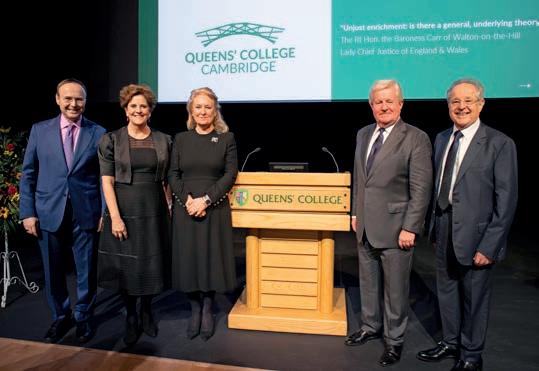
L-R: Marius Nasta (1990), Dame Menna Rawlings, Baroness Carr, Professor Richard Fentiman KC, and Michael Zuckerman at QDLL (credit Phil MacCarthy)
Phil MacCarthy
David Johnson
Board (see pages 10-11). I am hugely grateful to the alumni and donors who have already stepped forward as Board members or as Ambassadors for Queens’. Watch this space for more information!
Meanwhile, Mark and I are enjoying getting properly stuck into life here. This term we welcomed numerous students to the Lodge for belated freshers’ drinks, an Iftar supper, and dinner with the outgoing JCR committee. We also hosted our Post-Doc Research Assistants (PDRAs) for drinks in the Long Gallery. We’ve cheered on sports teams, enjoyed MagSoc events—including the Tyro Music Prize at the Lodge—and joined the staff social at the Cambridge Bowling Alley, where Mark’s bowling skills were, annoyingly, far superior to mine! And of course there have been some wonderful Feasts and suppers, including the People of Colour Formal, and an outstanding Distinguished Law Lecture by the Lady Chief Justice, Baroness Carr.
As the College’s first female President, hosting our International Women’s Day panel—featuring Professor Hannah Fry and distinguished alumni such as actor Joanna Scanlan—was a highlight. It was a joyful celebration of the talent and diversity that make Queens’ special. I also hosted a 1980 Women’s Dinner in January, which was a wonderful opportunity to connect with some of the first women to attend Queens’ 45 years ago.
I am struck by the sheer range of events and the sense of community that runs through them all. Many alumni tell me that Queens’ “transformed their lives”; today’s students feel much the same, supported academically and pastorally by our brilliant team in challenging times.
It is an honour and a joy to be here. Thank you for your support. Queens’ is all of us, and I could not be happier to be your President.
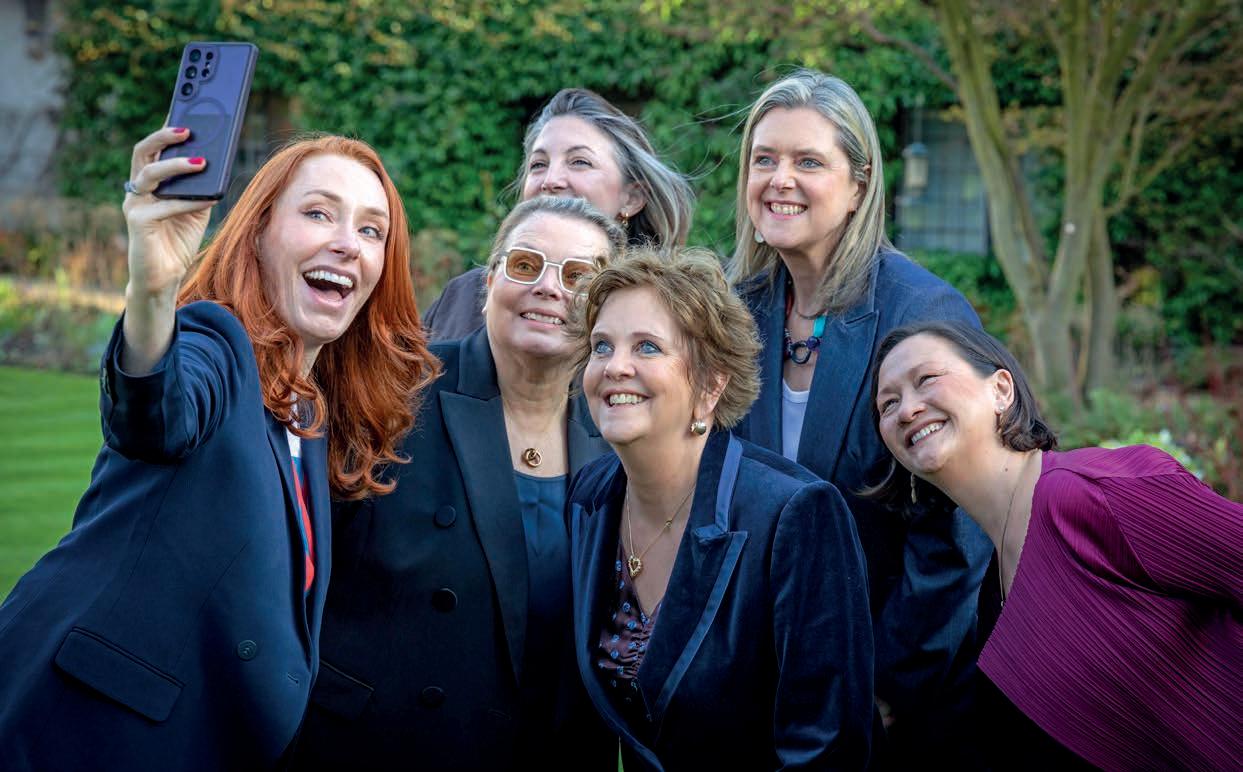
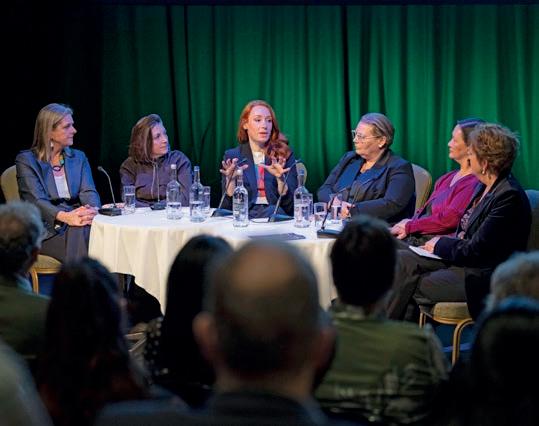
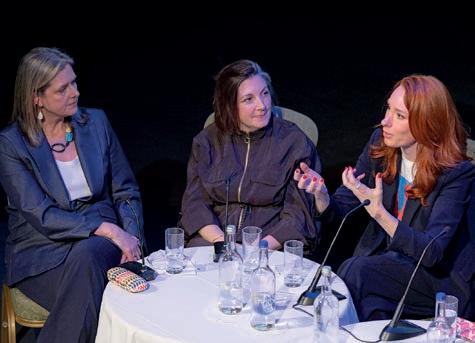
Above: International Women’s Day panel in Fitzpatrick Hall
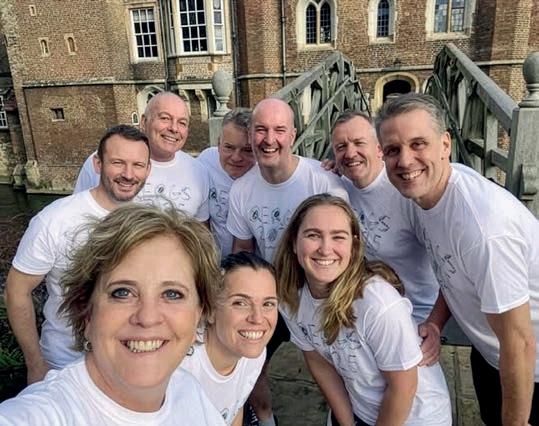
Above right: Dame Menna with the staff team at QErgs in Michaelmas term
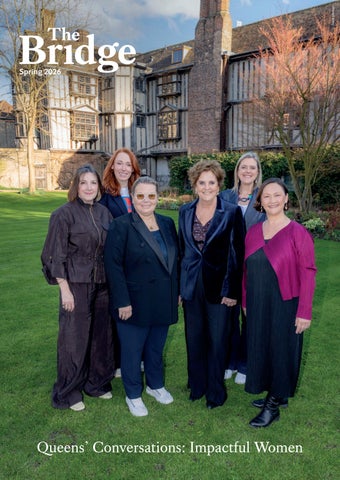
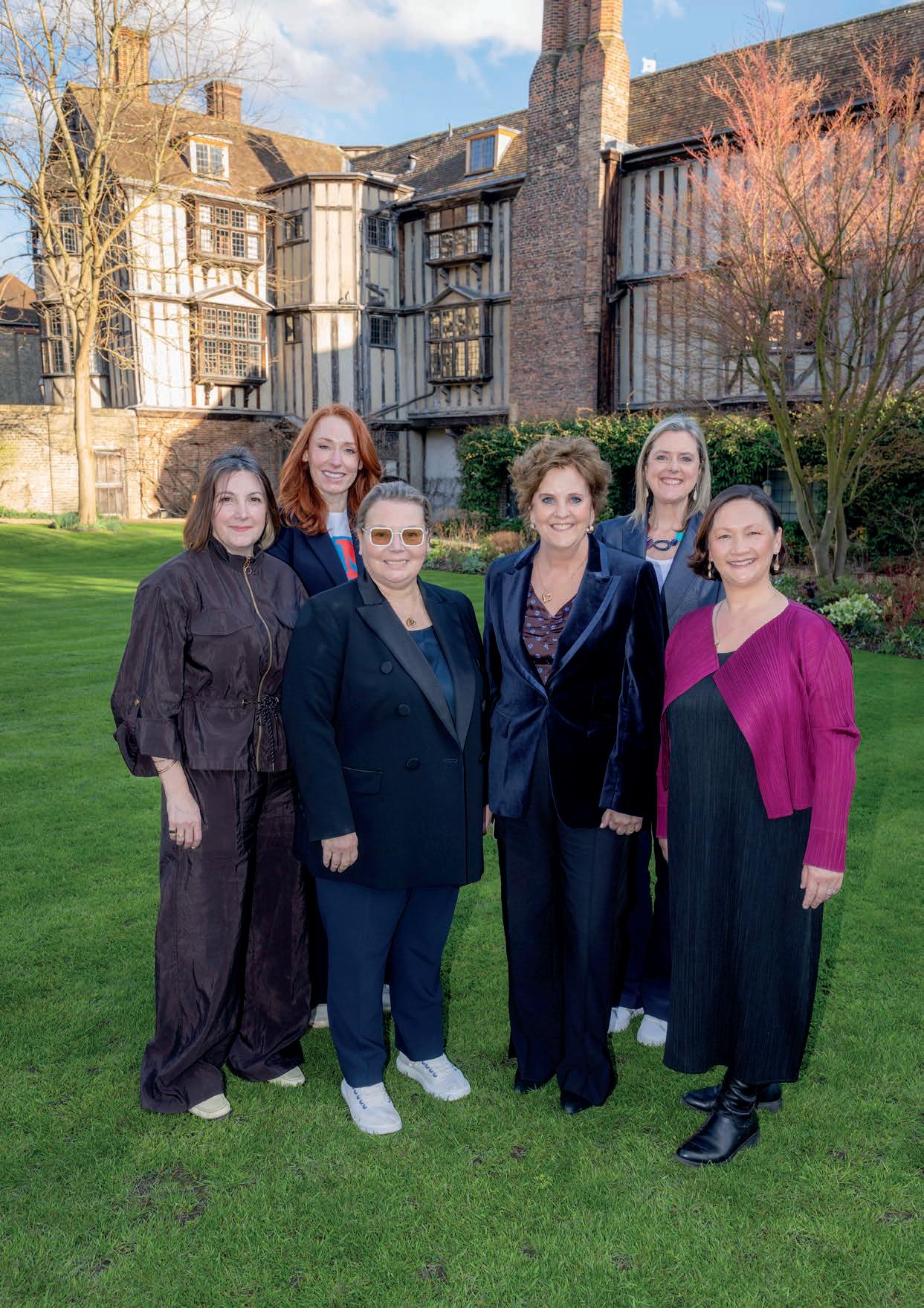
(Front cover, L-R: Helen MacNamara CB, Professor Hannah Fry, Joanna Scanlan, Dame Menna Rawlings, Corin Robertson CMG, Angela Chen)
Left: From L-R: Professor Hannah Fry, Joanna Scanlan (1980), Helen MacNamara CB, Dame Menna Rawlings, Corin Robertson CMG (1990), and Angela Chan (1992)
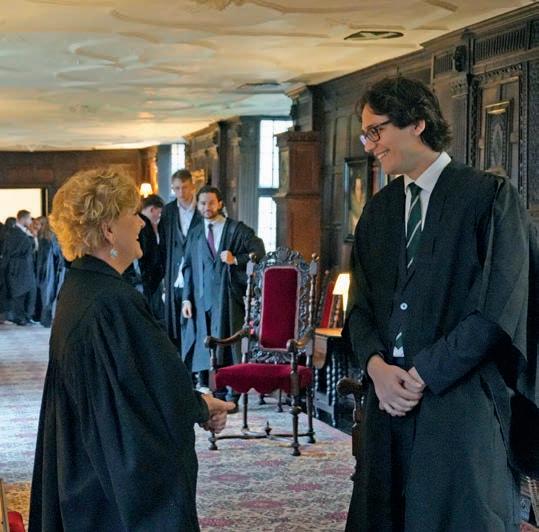
Dame Menna meeting students at Postgraduate Matriculation
David Johnson
Please send your news & photos to
From our Alumni
Head for Change
Dominic Jephcott (1988) took on the challenge of scaling Himlung Himal, a 7,127m mountain in Nepal, this winter. His expedition was to raise money for the charity Head for Change, which supports people who are affected by brain injuries and neurodegenerative illnesses as a result of playing football or rugby. Unfortunately, due to potentially dangerous snow conditions and 60 kph winds, roughly 200m vertical from the peak of the mountain, the team of Dom and his Sherpas made the difficult but sensible decision to abort and to get down safely.
Thanking people for their support, Dominic said: “It was a testing 4 weeks with the extreme cold, the altitude and the physical and mental challenge, but the trip raised £8k for the charity Head for Change which is terrific.”
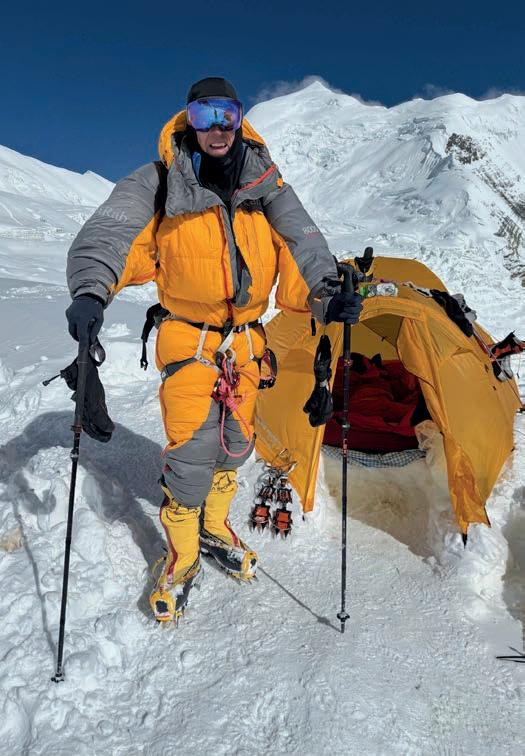
Dominic at his High Camp (6,050m)
To keep up to date with alumni news and events, and what the Alumni and Development Office is currently up to, follow our account on Instagram @queens.alumni
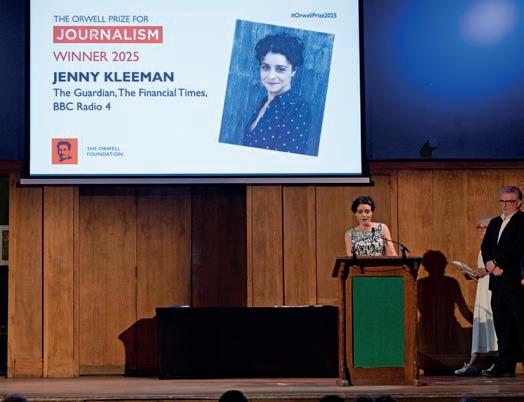
Jenny Kleeman awarded Orwell Prize
Journalist, author, and broadcaster Jenny Kleeman (1998) was awarded the Orwell Prize for Journalism 2025. A familiar voice for those who listen to BBC Radio 4, Jenny is a regular writer for the Guardian, the Financial Times, and the Sunday Times. The Orwell Prizes, established in 1993, award prizes for books and journalism which “come closest to George Orwell’s ambition ‘to make political writing into an art’.”
King’s New Year Honours
In January, six Queens’ alumni received recognition in the King’s New Year Honours
Dr Joe Adu OBE (1963) for services to treating Kidney Disease in the UK and Overseas.
Sarah Cliffe CMG (1985) for services to Conflict Prevention, Peacebuilding and International Development.
Gary Hoffman CBE (1979) for services to the Economy and to Sport.
Dr Lewis Owens MBE (1996) for Charitable Service.
Helen Undy OBE (2005) for Voluntary Service.
Dr Graham Watson OBE (1969) for services to the development of Endo-Urological Science and to the training of Endo-Urology Overseas.
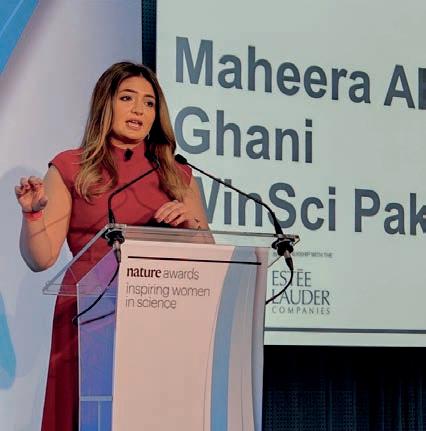
Maheera delivering her acceptance speech at the awards.
Inspiring Women in Science Award
Dr Maheera Ghani (2021) was awarded the Nature Portfolio Inspiring Women in Science Award 2025 (Scientific Outreach Category). This international award recognises her work as co-founder of WinSci Pakistan, an initiative that mentors, connects, and empowers young women to pursue careers in STEM.
Celebrating the news, Maheera wrote: “When women of colour thrive in science, they don’t just break barriers, they build bridges for those who follow.”
Royal Society of Chemistry
The Royal Society of Chemistry has announced seven new Honorary Fellows for this year, including two distinguished Queens’ alumni. Sir Demis Hassabis (1994, Fellow Benefactor) and Professor Kelly Chibale (1989), both Honorary Fellows of Queens’, feature among the seven world-leading scientists recognised for transforming the discovery of medicines, energy storage, understanding of living systems, and efforts to address global health and sustainability challenges.
Ambassador to Japan designate
In February it was announced that Corin Robertson CMG (1990) has been appointed as the next Ambassador to Japan. She will take up the position in August 2026. Corin was Director General, Finance and Corporate at the Foreign, Commonwealth & Development Office (FCDO) from July 2023 to September 2025.
Open letter to Matt Cain
Following our interview with Matt Cain (1994) in the previous edition of The Bridge, we received an open letter response from Simon Tatton Brown (1967)
Dear Matt,
I was Rector of Westhoughton for many years, just down the road from where you grew up in Bolton, and I loved your Madonna of Bolton; and though from a very different south-of-England background could identify so much with Albert Entwistle and his struggles with self-acceptance.
We’ve also got Queens’ in common. I went up in 1967, just after the Sexual Offences Act had been passed. Not that it made any difference to me, as we still had three years to go before we were 21. Our tutors were in loco parentis, and unless you were good at climbing, you had to be in College by ten. I was in lodgings my first year, and I can remember my landlady, if she hadn’t heard me going up the stairs, opening my bedroom door at 10.05 to check that I was in.
So I was interested, and a little envious I have to admit, when I read of your time in Queens’. There’s no way I would have confided to my tutor that I was gay, and you only went to the College nurse if you had a temperature and wanted an aspirin or something. My queerness was so well repressed that even my roommate in Fisher (a good friend of mine who now coincidentally lives only a couple of miles from me in Bath) didn’t know. We never mentioned it until we met up again when I moved south in the 2000s.
I went on to work in the probation service, and then as a priest in the Church of England. In the 1980s and 90s I was able to share my vicarages with a partner, very much under the radar (‘just good friends’), dissimulating to bishops and colleagues, terrified of exposure. What would the Bolton Evening News have made of it when I was very publicly raising funds to re-build Westhoughton church after it had been burned to the ground by arsonists? It was only when I retired and found a welcoming and inclusive church in Christ Church Bath that I felt able, as it were, to creep out.
You are a lot more courageous than me Matt, as your visit to Russia showed. And you also share a lot of who you are in your books. It’s a real encouragement to so many people. So keep it up, and keep your links with Queens’ up, so that generations to come may continue to laugh with you and feel better about themselves. There is only one Love, and it is there for everyone to share.

Alumni Honoured with King’s Counsel Appointment
We’re pleased to share that Christopher Knight (2003) and Gemma Morgan (2001) have been appointed King’s Counsel (KC).
This prestigious appointment recognises excellence in advocacy and outstanding contributions to the legal profession.
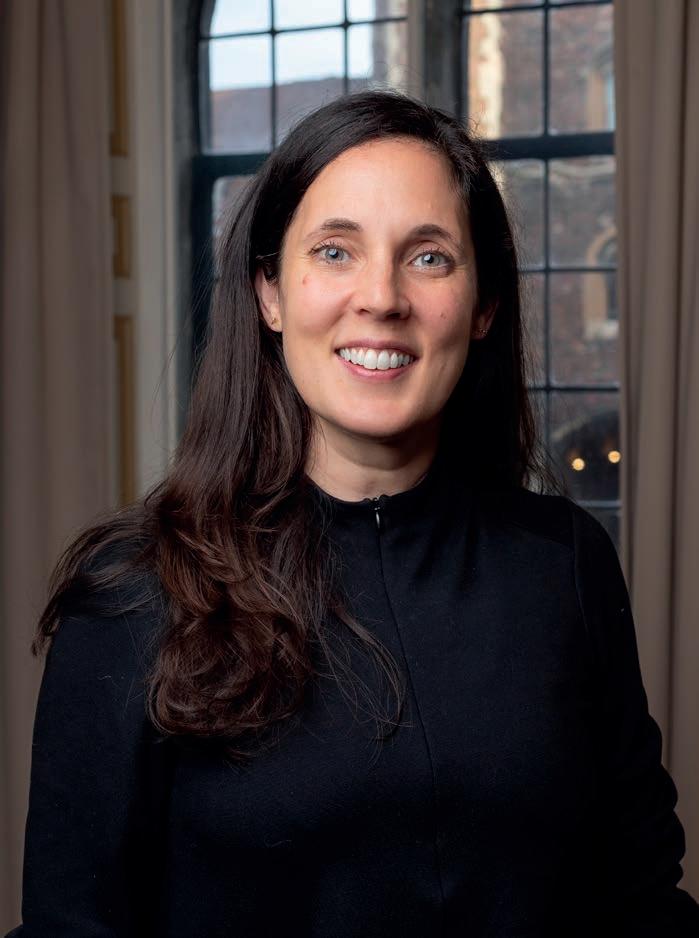
Professor Ella McPherson
Anthony L. Lyster Fellow in Sociology
Professor of the Sociology of Media and Technology
Deputy Head and Director of Education, School of the Humanities and Social Sciences
Co-Director, Centre of Governance and Human Rights
When Professor Ella McPherson joined Queens’ in 2015, she already had a long relationship with Cambridge. Having completed both her MPhil and PhD at the University before spending time at LSE, she returned to Cambridge to continue a career shaped largely within the institution. She was drawn to Queens’ not only because of its people, but also because she was intrigued by its name.
“In making reference to our two founding queens of the 1400s, our College’s name highlights the importance of women to learning and knowledge throughout time,” she says.
One of the things she values most is the sense of community that the collegiate environment creates. Conversations across disciplines, sometimes simply over lunch in Cripps Hall, have become an important part of how she thinks about scholarship.
Beyond intellectual exchange, the College provides something equally valuable: a supportive environment that allows scholars to pursue their work. For Professor McPherson, Queens’ can feel like a refuge amid the tumultuousness of researching human rights and technology.
“Sometimes my research involves grappling with really big or intractable problems, and being here gives a sense of comfort and care.”
Serving on Queens’ Bursarial Committee has also given her insight into the infrastructure that makes academic work possible.
“It’s not just all of us walking around and doing things with our brains,” she says. “It’s about how buildings support conversation, how bursaries support students, and how events and networks connect us to the wider world.”
Researching society in a digital age
Professor McPherson’s research sits at the intersection of sociology, technology, and human rights. At its core is a fascination with what happens when new technologies disrupt established ways of understanding knowledge, truth, and social life.
“What really interests me is the struggles that happen when technologies come into societies in different ways,” she explains. “Those moments open everything up. You see what’s at stake, what’s valued, and what actors are involved.”
Nick Saffell
One of her long-running research projects examines how human rights investigators establish evidence of violations in a digital age that is increasingly shaped by misinformation and technological manipulation.
“These human rights factfinders are like the canaries in the coal mine of the information ecosystem,” she says. “They were talking about fake news long before the post-truth era. They were at the forefront, because the stakes of their information are so high.”
The rise of digital fakery and generative AI makes the challenge of verifying evidence even more complex, which raises broader questions about how societies determine what counts as truth.
A second strand of her research explores what she calls “neo-Luddites” in the UK. The project draws inspiration from the original Luddites, nineteenth-century textile workers who protested the introduction of industrial machinery.
“They weren’t against the technology itself,” she explains. “They were against what technology was doing to their communities and expertise.”
She argues that similar spirits persist today, visible in everyday forms of resistance to technological change.
“When bingo halls are closed down in favour of a bingo app, it hollows out the whole thing,” she says. “For many people, the point of bingo is going to see friends. An app takes away the social aspect completely.”
The third area of her research focuses on the impact of generative AI on scholarship itself. Professor McPherson is particularly concerned about how AI might reshape teaching, research, and academic freedom.
“If we think learning is about dialogue and relationships, then generative AI can take the human element out of teaching and scholarship,” she explains. “And that’s something we need to think very carefully about.”
She warns that the rapid spread of AI can create a sense of inevitability that discourages critical reflection.
“There’s this fatalism. People say, ‘Well it’s here so we just have to adapt.’ But actually, we should be asking: what if this wasn’t inevitable? How do we want these technologies to enter our lives?”
“ Sociology is about imagining a better future, assessing why the present isn’t there yet, and asking what we can do to move towards it.”
Making the invisible visible
As a sociologist of technology, Professor McPherson believes one of the discipline’s most valuable contributions is helping people see what usually remains hidden.
“One of sociology’s main mechanisms is making the invisible visible,” she explains. “A lot of what happens in the tech sector is deliberately invisible.”
She offers the example of the “cloud”, a term that intentionally obscures the reality of vast energy-intensive data centres, like those in Brazil documented by her former PhD student at Queens’, Iago Bojczuk.
By revealing these hidden dynamics, sociology creates space for critique. For Professor McPherson, critique is not simply criticism but an imaginative exercise.
“It’s about imagining a better future, assessing why the present isn’t there yet, and asking what we can do to move towards it.”
Her work is also shaped by a commitment to human rights as a framework for holding power to account.
“The human rights framework is flawed, of course,” she says, “but it’s one of the most widespread and best frameworks we have for challenging power and enabling change.”
This perspective has taken her to forums such as the United Nations, where she contributed to discussions about how human rights frameworks can positively shape the development of digital technologies
Teaching and learning together
Alongside her research, teaching plays a central role in Professor McPherson’s work.
“For me, teaching and research are inseparable,” she says, simply.
One exercise she particularly enjoys is what she calls “live sociology”.
Students apply theoretical concepts to current events that have not yet been analysed academically, then use their findings to push those theories further.
“We’re analysing things that are happening right now,” she explains. “I learn so much from my students. I’m often blown away by their analysis.”
These exchanges, especially in small-group supervisions, continue to shape her own thinking.
“My research is really indebted to my teaching,” she says.
Protecting critical thinking
Professor McPherson holds the Anthony L. Lyster Fellowship in Sociology, an endowed position that she believes plays an important role in safeguarding political scholarship.
“Sociology as a discipline is under pressure in many parts of the world,” she explains. “Because of its critical nature, it can be seen as threatening.”
In that context, the Fellowship represents something significant.
“For there to be an endowed Fellowship in sociology here, which I am benefiting from now and others will in the future, provides a tremendous sense of sustenance.”
For Professor McPherson, the value of that support extends beyond her own career. It helps ensure that critical thinking about technology, power, and society continues to flourish.
“This Fellowship at Queens’ protects a space for the kind of thinking that sociology brings to the world.”
Bridge to the Future This Giving Day and the next decade at Queens’
Queens’ has always shaped minds that go on to shape the world.
From scholars and scientists to writers, musicians and leaders, generations of students have found here the confidence, support and intellectual freedom to pursue their passions and shape the world around them.
Academic excellence is part of our identity, but excellence does not sustain itself.
It’s reliant on granting opportunities to brilliant people, and on providing accessible and inspiring spaces for them to develop.
This Giving Day marks the beginning of something bigger: Bridge to the Future, a ten-year campaign to strengthen intellectual opportunity and infrastructure at Queens’.
It is an invitation to the entire College community to invest not only in the year ahead, but in the next decade of Queens’.
This Giving Day you can direct your support in three different directions…
• You can expand opportunity.
• You can shape the spaces where students live and learn.
• You can sustain the foundation that makes everything else possible.
13–14 May
Talent Deserves Opportunity
We believe talent, not background, should determine opportunity.
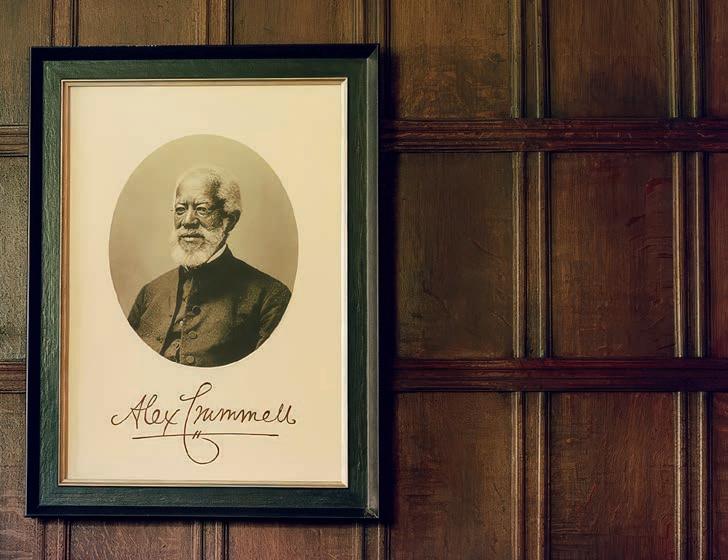
Named after Alexander Crummell, the first black graduate of the University of Cambridge and a former member of Queens’, these fully funded postgraduate scholarships cover both tuition fees and living costs. They are designed to remove financial barriers that might otherwise prevent exceptional students from pursuing postgraduate degrees.
We have already endowed one Alexander Crummell Scholarship in perpetuity for students pursuing STEM subjects. Now, we are seeking to endow a further scholarship in the Arts and Humanities.
“ Receiving the Alexander Crummell Scholarship meant that a large part of the financial burden of pursuing further studies was lifted.”
Tomi Akingbade (2021) – the inaugural Crummell PhD scholar
A fully funded scholarship can change the direction of a student’s life, opening the door to postgraduate study and to research that might otherwise have remained out of reach.
Where You Live Shapes How You Learn
Intellectual opportunity depends not only on funding but on the environment.
Student Accommodation is more than a place to sleep. It’s where friends for life are found, and where some of the most meaningful learning happens, not in lectures or libraries, but in shared kitchens, informal conversations and collaborative spaces.
Your gift will support the completion of the renovation at Owlstone Croft. Creating a fully accessible and sustainable home for second year and postgraduate students.
Providing high-quality accommodation will give all students the stability and sense of belonging that allows them to thrive academically, creatively and socially.
What Makes Everything Else Possible
Much of what makes a world-class education possible is not always visible.
The Unrestricted Education Fund provides the flexibility to respond where the need is greatest, supporting core costs, maintaining high standards, subsidising essential services and helping students navigate financial pressures, including the ongoing cost-of-living challenges.
With only a proportion of the College’s costs covered by fees, support from alumni and friends remains essential. The Unrestricted Education Fund strengthens the foundation that everything else depends on.
Looking to the Future
This year’s Giving Day is more than a moment of generosity. It’s the start of something much bigger, a ten-year commitment to ensuring that Queens’ continues to lead in a changing world.
Thanks to the generosity of a group of alumni and friends, many gifts made on Giving Day will be matched, doubling their impact.
This Giving Day, invest in the people and places that will define the next decade at Queens’.
How can I get involved?
You can support Giving Day with a gift on the day, or give early through our online platform: https://queenscam. givingday.co.uk
There you'll find information on the matched funding and challenges available throughout Giving Day.
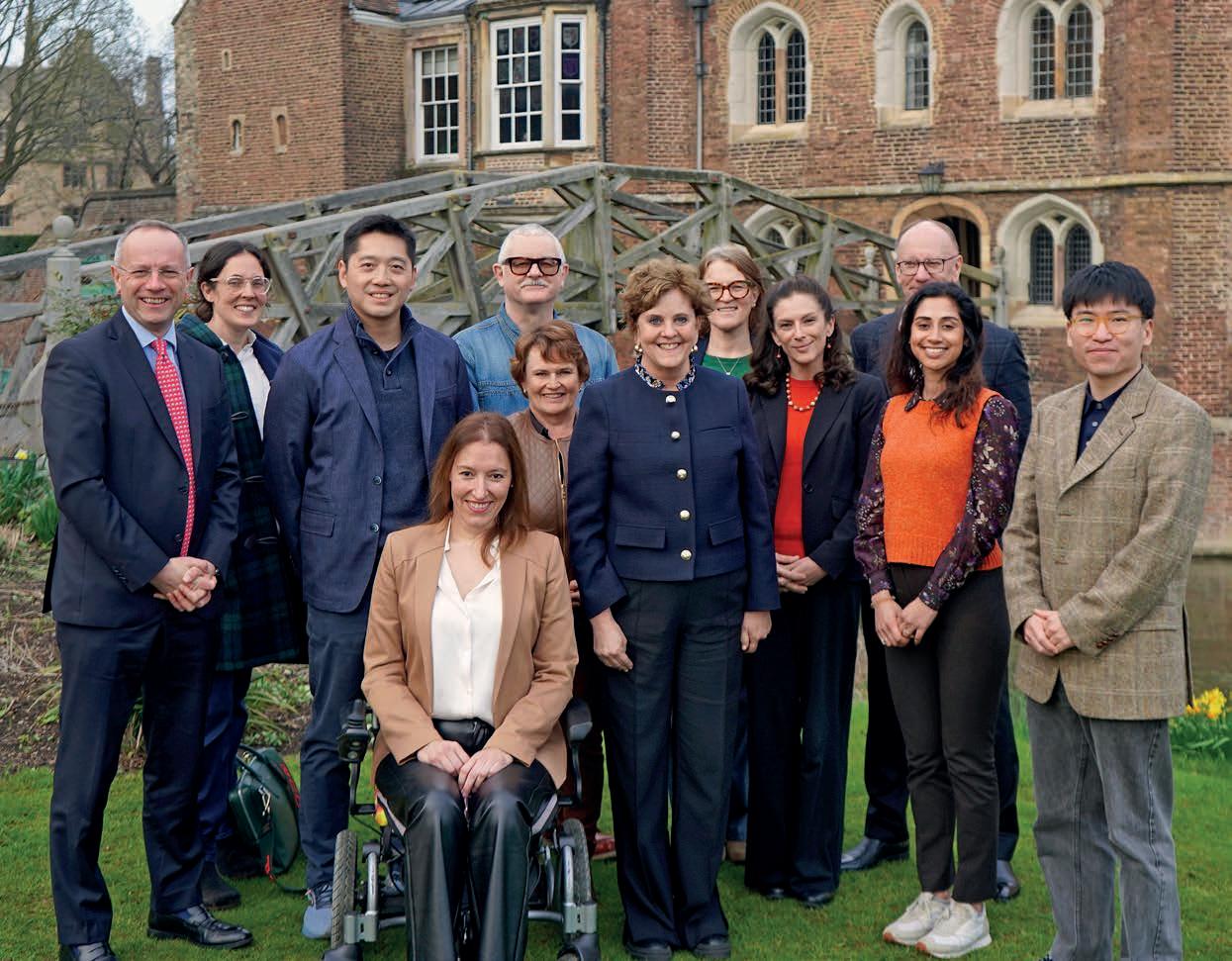
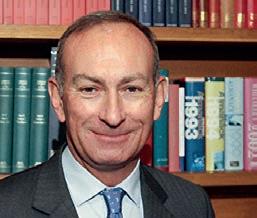
Campaign Board Members
Behind every meaningful step forward is a group of people who care deeply about where we are going.
As we prepare to embark on an exciting new phase, we’re delighted to introduce our Board, Chaired by President Dame Menna Rawlings. Each member brings a unique perspective and a deep commitment to our mission, helping ensure that whatever comes next is guided with care, integrity, and purpose.
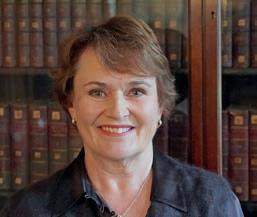
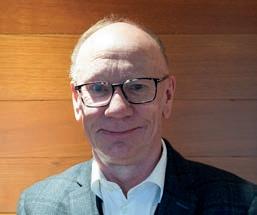
Ex-Officio Members
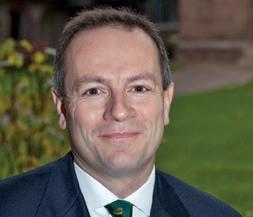
Vice Chairs
Sally Boyle (Law, 1980)
Malcolm Fallen (Econ, 1979)
Rowan Kitt (Development Director)
Professor Marie Edmonds (Vice President)
Members
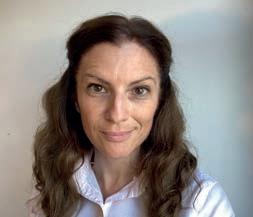
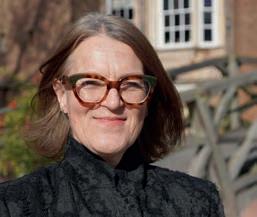
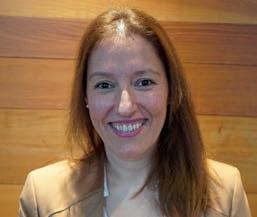
“I was inspired to join the board because I believe deeply in the value of higher education and in what institutions like Queens’ uniquely contribute to it. At a time when academic freedom is declining globally, and new technologies like generative AI are reshaping how we teach and learn, the core elements of scholarship—intellectual freedom, human dialogue, and the relationships that underpin discovery—are increasingly under pressure.
Queens’ plays a vital role in protecting these values through its commitment to academic independence, interdisciplinary community, and the human-centred learning environment that defines the collegiate system. Supporting the campaign felt like a way to actively defend and sustain the conditions that allow scholarship, curiosity, and intellectual exchange to flourish.”
Prof Ella McPherson
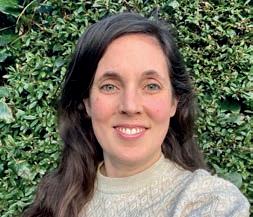
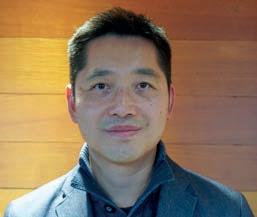
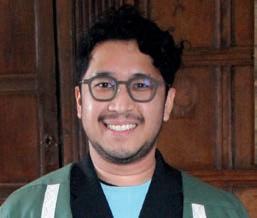
“Having enjoyed a first-rate education and so many wonderful memories at Queens’, I believe it is our responsibility as alumni to give back to a community that gave us so much in the first place!
The Campaign Board’s vision, to raise long-term funding for Queens’ “Intellectual Infrastructure” and “Intellectual Opportunity”, represents a critical mission that will strengthen the College’s foundations and directly benefit our future generations of students.
I am honoured to join and lend my support to the Campaign Board as we “Bridge to the Future”. Floreat Domus!”
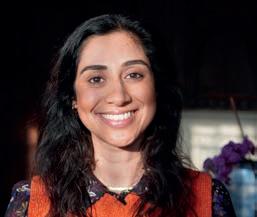
Roy Pang
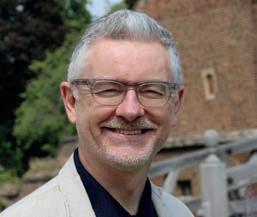
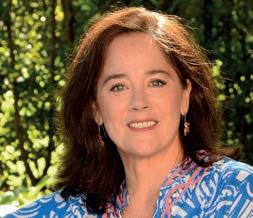
“Queens’ is a magical place. Arriving in 2008, I could never have predicted that the friends I made there would still be the people I turn to for advice, laughter, and perspective all these years later. We laughed over feasts in Old Hall, talked late into the night in our wonky gabled rooms, and occasionally studied furiously in the library.
I began the journey toward my professional life—not only through lectures and supervisions but through the confidence the community instilled in me. Queens’ taught me that achievement is rarely a solo effort; it’s built on collaboration, teamwork and support. Even now, I carry that sense of belonging with me, and it’s why I feel such a strong desire to give back—to help create the same opportunities and lifelong foundations for the generations of students who will follow.”
Anum Shahab
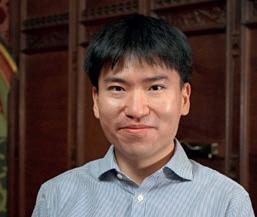
Professor Ella McPherson (Fellow)
Professor Martin Crowley (Fellow)
Dr Jerry Chen (Bye-Fellow, 2019)
Louisa Trivett (Deputy Development Director)
Sofia Vollmer de Maduro (MML, 1982)
Trevor Bradley (NatSci, 1989)
Roy Pang (Econ, 1999)
Anum Shahab (Land Econ, 2008)
Dr Jenny Leivadarou (Maths, 2013)
Amir Bin Daim (Law, 2014)
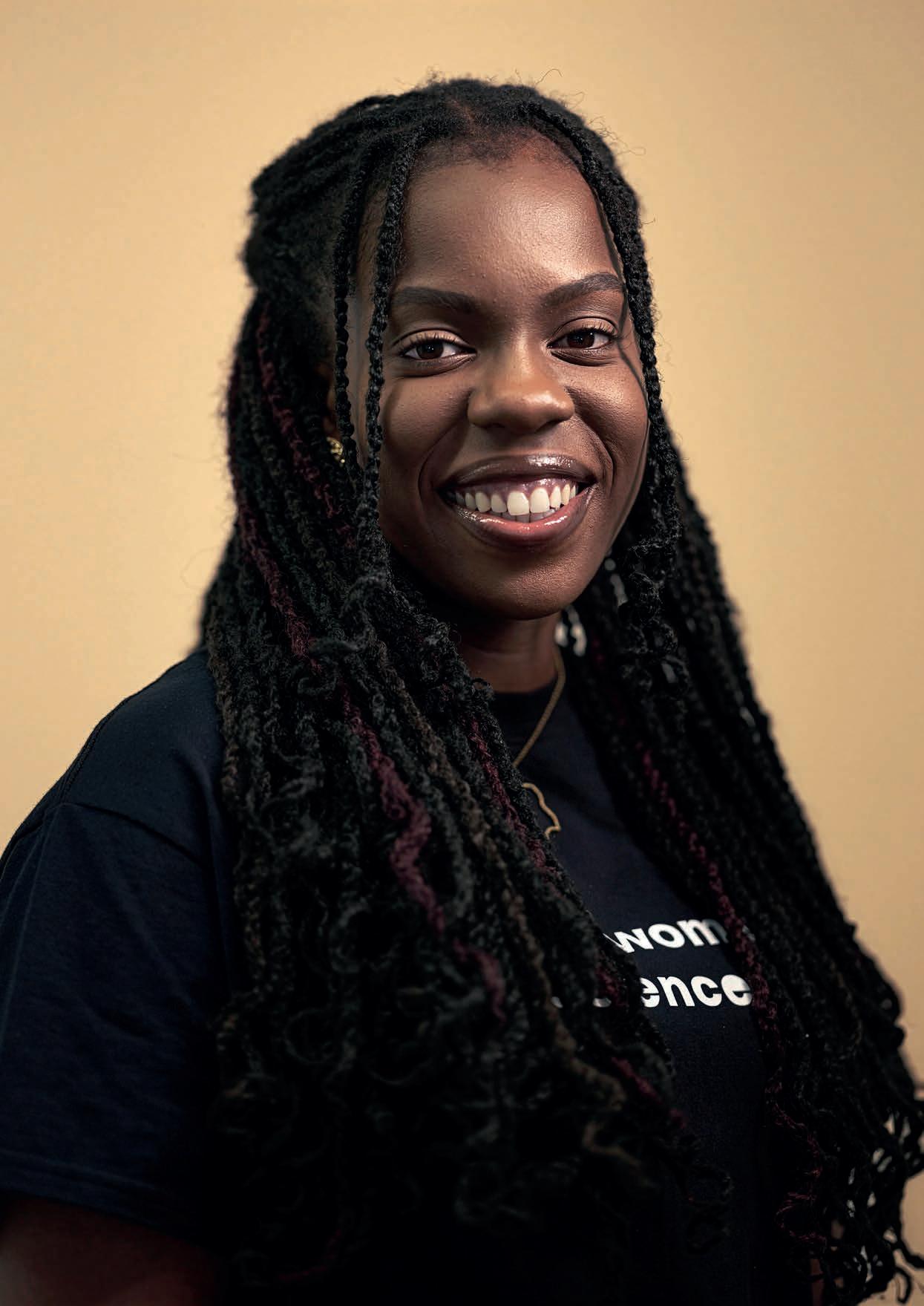
Tomi Akingbade (2021)
Alexander Crummell Scholarship recipient
When Tomi Akingbade began applying for PhDs after graduating in 2019, she was certain of one thing: she wanted to build a career in science that made a tangible difference in people’s lives. What she wasn’t certain of was whether the academic world would make room for her.
Now, in 2026, she is completing her PhD, after researching how the immune system behaves in neurodegenerative diseases such as Alzheimer’s and Parkinson’s. But this outcome was far from guaranteed. In fact, Tomi is clear that without a timely scholarship opportunity, she would not be where she is today.
“It was a lifeline,” she says simply. “I was at a crossroads, and it made this option a lot more possible for me.”
“ If the Crummell Scholarships hadn’t come out that year, I definitely wouldn’t have applied to Cambridge. It just felt too far out of my remit.”
Tomi’s science journey started with her undergraduate degree in neuroscience, during which she took a year-long research placement. While lectures and exams were part of the experience, the hands-on lab work truly captured her attention.
“I realised that a career in science could be something I’d be really interested in pursuing,” she recalls. During the placement, she worked on identifying biomarkers in patients with Alzheimer’s and Parkinson’s disease, collaborating closely with a clinician who then used the work to inform how she treated her patients. “Little 18- or 19-year-old me thought, this is cool,” she says. “I could get paid to do this?”
That realisation led her to the conclusion that a PhD would likely be necessary to pursue the kind of applied, impactful research she wanted to do. After graduating, the path forward proved difficult. Tomi found herself navigating a system that often assumes access to unpaid internships, placements, and financial support.
“I didn’t have the opportunity or the resources to do unpaid internships,” she explains. “I worked during my summers. I found myself having to have that conversation quite a few times.”
By 2021, after years of applications, she was close to giving up. She identified a project at Cambridge that genuinely excited her, working with Professor David Klenerman on imaging Alzheimer’s disease aggregates and their interaction with the immune system. He was keen to have her in the lab, but there was no funding available.
The importance of timing
“I was quite determined, but also quite sure in my mind that I wasn’t going to be able to pursue it,” she says. “It had been three years. I thought, if it’s not working after this, I might just stop here.”
Then, unexpectedly, an email changed everything. Klenerman forwarded Tomi information about the Alexander Crummell Scholarships at Queens’. He encouraged her to apply, and let her know that if she could get the funding, she would have a place in the lab.
Tomi applied, was awarded the scholarship, and began her PhD that September. Looking back, the timing still astonishes her. “If the Crummell Scholarships hadn’t come out that year, I definitely wouldn’t have applied to Cambridge,” she says. “It just felt too far out of my remit.”
Today, Tomi’s research focuses on how the immune system changes when illness becomes chronic rather than temporary—a key question in neurodegenerative diseases, where patients progressively worsen rather than recover.
“I’m looking at what changes in your immune system, and why it doesn’t protect you in those kinds of diseases,” she explains. While the dayto-day reality of lab work can seem mundane, the bigger picture keeps her motivated. “The long hours and weekends are only worth it if there are actual humans being impacted by it.”
That focus on people, rather than prestige or titles, has guided her throughout her PhD. It has also shaped how she views the impact of the scholarship itself; beyond financial security, it provided access, belonging, and stability.
“It meant I could focus on the research and not think about where the money was going to come from,” she says. “It also gave me a link to the College that I wouldn’t otherwise have had.” Practical support, from funding consumables to replacing a failing laptop, made a tangible difference. “I could just be in Cambridge and do my research.”
Removing barriers
Perhaps most importantly, the scholarship expanded her sense of what was possible. “I have more access to opportunities now,” she reflects. “Before, I wouldn’t even try to apply for certain things. Now I know I could do that tomorrow if I wanted to.”
“I’m very aware that it could have gone a very different way,” she continues, “If someone hadn’t taken five seconds to forward an email, I wouldn’t be at Cambridge.”
It’s that awareness that has fuelled her work beyond the lab. Back in 2018, Tomi founded the Black Women in Science Network, after struggling to find role models who looked like her. What began as a simple twitter account, searching for community, has grown into a globally recognised platform connecting Black women in science and highlighting opportunities.
“Black women don’t need additional help being good scientists,” Tomi explains. “We just need the removal of barriers.”
It is a philosophy that mirrors her experience with the Alexander Crummell Scholarship: one timely intervention removed a barrier that could have ended her academic journey altogether. To future applicants, her advice is unequivocal: apply.
“The worst you can hear is no,” she says, simply. “If I hadn’t applied, nobody would have known I existed to forward that email to.”
For donors and supporters of the scholarships, she hopes one message is clear. “They’ve given a lifeline,” she insists. “It wasn’t just funding, it was life-changing.”
As Tomi looks ahead to the next stages of her career, she carries that knowledge with her. The chance opportunities that once shaped her path are now something she hopes to make less necessary for others, by building systems where talent, rather than luck, determines who gets to stay.
We are thrilled that, thanks to the generosity of one of our donors, we have endowed our first PhD Alexander Crummell Scholarship at £1.25 million. Ultimately, we aim to endow several MPhil and PhD scholarships so that they may exist in perpetuity. If you would like to find out more about giving towards the Crummell Scholarships, contact development@queens.cam.ac.uk
Sporting Headlines
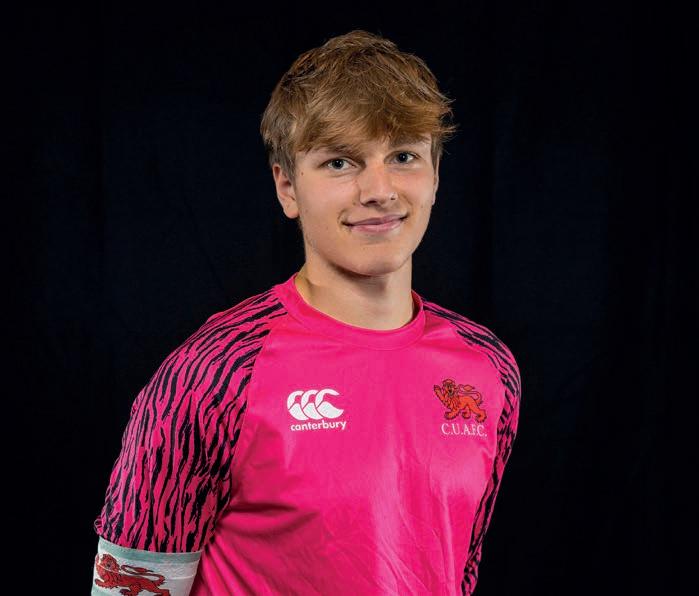
Alex Durrani (2024)
Alex Durrani played for the Falcons and the Blues squad for a second successive year, both matches resulting in victory over Oxford.
“It has been a demanding and rewarding second year for me, captaining the CUAFC Men’s 2nd XI through a full BUCS campaign and to a 3–0 Varsity victory over the Oxford 2nd XI in Oxford.
I was subsequently selected for the Blues Varsity squad, for the second consecutive year, contributing to another Varsity win!
I would like to thank the College for the continued support of my sporting efforts, notably through the Queen’s 550 Sports Bursary and the John Spencer Sports Bursary award I received last year.”
Josh Moore (2021)
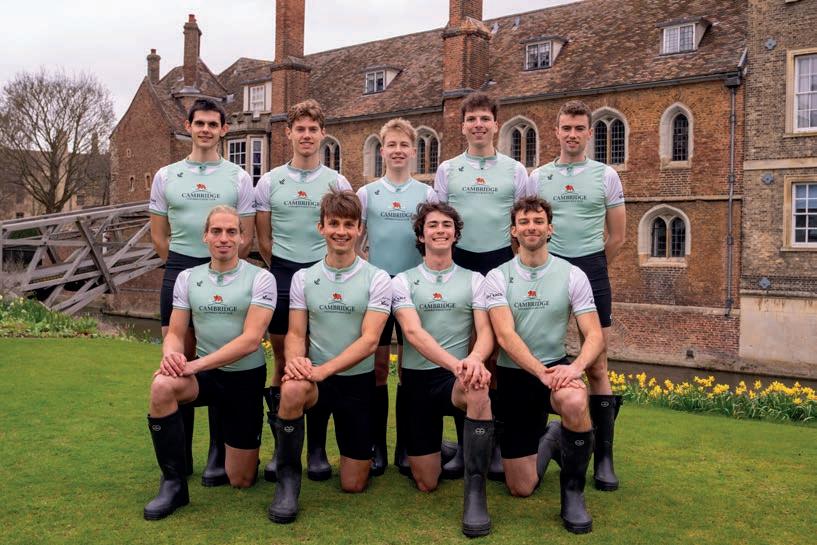
Josh Moore (back right) was the President of the Cambridge Men’s Lightweight crew in the Boat Race this year .
Speaking to us ahead of the race in April, Josh said, “The CUBC Lightweight Men have developed into a really strong squad this year. After successful results at Head of the Charles in Boston and Fours’ Head in London, we are looking forward to the Boat Race, where we hope to extend our winning streak against Oxford to five.” Their plan proved successful, securing a seven-length victory over the Oxford crew.

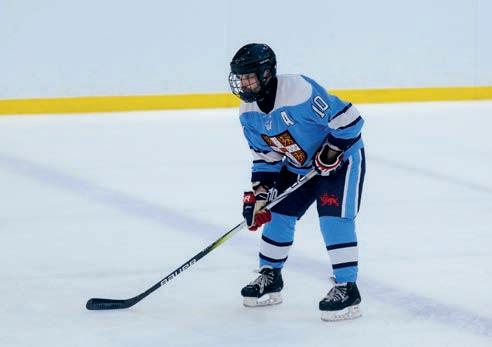
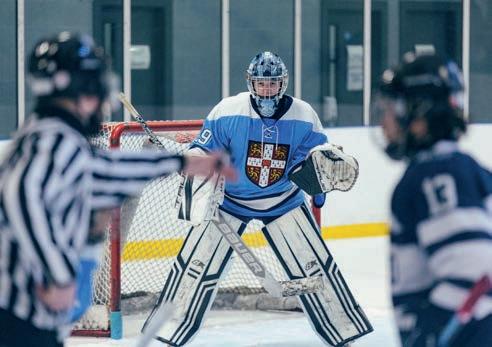
Cameron Rapoza (2025), Max Millstine (2025), & Scott Partington (2022)
Three Queens’ members combined with the rest of the Mens’ Blues Ice Hockey team to defeat Oxford in the 108th Ice Hockey Varsity Match, 5-1. Cameron Rapoza (top) had three points, including a goal and two assists. Assistant Captain Scott Partington (centre) hoisted the King Edward VII Cup after achieving his fifth Varsity win. Max Millstine (bottom) made 16 critical saves in the victory.
Notably, Cameron participated in three different Varsity matches, aiding in victory in the Clay Pigeon Shooting and the Men’s Lacrosse.
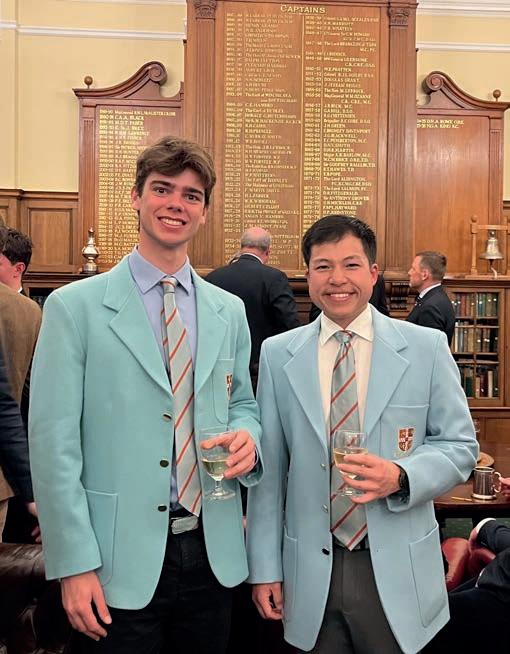
Max Krefting (2022) & Issorn Gadavanij (2025)
Max Krefting (left) and Issorn Gadavanij (right) represented the Cambridge Men’s Blues Golf Club at the 137th Varsity Match, hosted at Royal St George’s.
“Over the two days, we experienced all four seasons including wind, sun, and hail on the Kent coast. The match consists of 36 holes of Foursomes on the Friday and 36 holes of Singles on the Saturday.”
Issorn had an impressive win in the Saturday Singles, and Max brought both of his matches to the 35th hole. Oxford came out top with 9.5 points against 5.5.
Other Queens’ students representing the University:
Isum Nanomi Arachichige (2024, Badminton)
Elizabeth Neri (2020, Basketball)
Millie Dunne (2021, Lacrosse)
Ciara Boaden (2023, Hockey)
Lil Bingham (2023, Hockey)
Ellie White (2020, Squash)
Aidan Beaumont (2023, Rugby)
College News
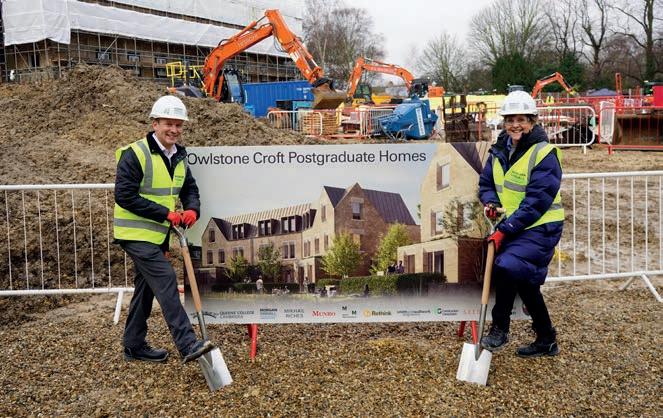
1980 Women’s Dinner
In January, Queens’ welcomed back some of its most significant alumnae: women from the College’s first cohort of female students, who arrived at Silver Street in 1980. They returned this week for a drinks reception and dinner in the President’s Lodge, hosted by Queens’ first female President, Dame Menna Rawlings
Around half of the forty-five women who made up the original cohort were able to attend and gathered in the Long Gallery for drinks before dinner in the Audit Room, joined by the President and Professor Marie Edmonds (Vice President)
The evening offered a moment to reconnect and reflect on just how far Queens’ has come over the last forty-six years.
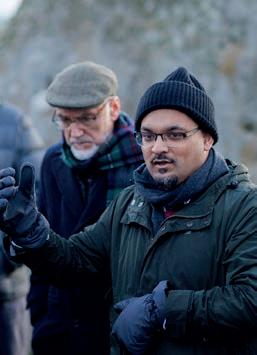
Progress at Owlstone Croft
In January, we marked the Ceremonial Groundbreaking at Owlstone Croft, attended by President Dame Menna Rawlings, Development Director Rowan Kitt, Domestic Bursar Andrew Bainbridge, and Co-Vice Chair Sally Boyle (1980) The new development has been designed to be fully wheelchair accessible, and work is underway to improve the environmental performance of the existing buildings.
If you would like to keep up to date with the developments at Owlstone Croft, follow the Alumni & Development Office on Instagram: @queens.alumni
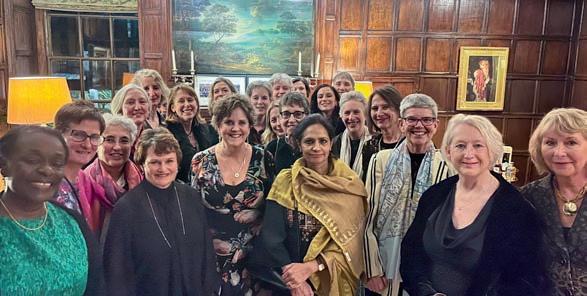
Early career research award
The Vice Chancellor’s Awards for Research Impact and Engagement aim to celebrate work that breaks boundaries, engages communities, and shines a light on research that fights for a cause. Current PhD student Imad Ahmed (2022) won the Early Career Research Award for his Bring the Moon Back Home project.
Ahmed’s research focuses on the topic of the Islamic lunar calendar, and he is the project coordinator of the Moonsighters Academy – a joint initiative of the University of Cambridge and the University of Leeds that trains Muslim Community leaders to conduct moonsightings for the Islamic calendar.
When asked about how it felt to win this award, Ahmed said: “I am humbled and honoured to receive this award, and wish to thank my supervisors, department and all those at Cambridge for their continued support. I want to make a special note of thanks to my college, Queens’ College, Cambridge University. I am a disabled student, suffering from a long-term illness called ‘long covid’, and began my PhD with very limited mobility, in a wheelchair. From my first day, everybody at Queens’ has been so incredibly supportive, that I can say that this award, in no small part, has been facilitated by inclusive culture here at Queens’. Thank you so much!”
Queens’ Entrepreneurship Society
This year has marked another exciting chapter in the continued success of the Queens’ Entrepreneurship Society (QES). At the start of Michaelmas, Firas Abdul Jabbar (2024) was awarded the QES Studentship, a scholarship kindly funded by Anna El-Erian, and has worked incredibly hard to propel QES forward.
What is a business and how to start one?
Dr Ramsey Faragher (Bye Fellow in Computer Science)
Dr Faragher is a British physicist and navigation expert, renowned for pioneering technologies that enable accurate positioning in GPS-denied environments. In his talk, Dr Faragher provided an overview of the key stages of building a business, explained essential terminology, and discussed the pros and cons of various company structures and funding options.
IP, patents, and protecting your ideas
Dr Ross Breckenridge (1998)
Dr Ross Breckenridge is the Founder and CEO of ARJUNA Therapeutics, an oncology biotech start-up. Prior to this, Dr Breckenridge was the CEO of a regenerative medicine start up in San Francisco, Silver Creek Pharmaceuticals, after spending many years as a Senior Lecturer and Consultant Physician at UCL/UCLH where he also ran a research group at NIMR Mill Hill (eventually The Crick Institute). Dr Breckenridge spoke to students about IP and patents for startups, explaining the importance of (and ways in which) you can protect your ideas.
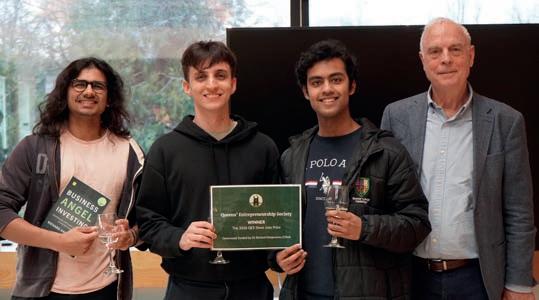
QES also ran its annual prize competition. The pitch day took place on 20th March in the Fitzpatrick Hall and was kicked off by a keynote speech from Dr John Cassidy (2014). Seven entrants, narrowed down from a pool of 32 applicants, pitched their start-up ideas to a panel comprised of Fellows, alumni, and local entrepreneurs. This year, there were two prizes up for grabs: The QES Steve Jobs Prize and the QES Prof J.H. Barber Prize.
The QES Steve Jobs Prize, generously funded by Dr Richard Hargreaves (1964), was awarded to Tejas Gharat (2024), Shanil Shah (2024), and Ben Kashouris for their start-up Amphora – version control for
Firas, along with the QES Committee which is spearheaded by Professor Clare Bryant (Fellow), organised several insightful talks and workshops (outlined below) that took place across the Michaelmas and Lent Terms. This series was intended to provide a holistic introduction to founding and scaling a start-up, targeted specifically at budding (or existing) entrepreneurs within the Queens’ ecosystem.
Pitching your company
Dr Simon Goldman (Fellow Commoner in Economics)
Dr Simon Goldman is a neuroscientist and venture investor who bridges cutting-edge academic research with commercial innovation. Dr Goldman shared insights on how to effectively pitch your business. The interactive session explored what makes a compelling pitch, how to communicate value, and the strategies needed to drive sustainable growth.
Fundraising for start‑ups
Anna Winter (2024)
Anna Winter is the Co-Founder of Auralytica, a deep-tech startup tackling food security, safety, and waste through nextgeneration sensing technologies. Anna recently completed her MBA at Queens’. Drawing on her own experience, Anna provided an introduction to fundraising for those at the start of their entrepreneurial journeys.
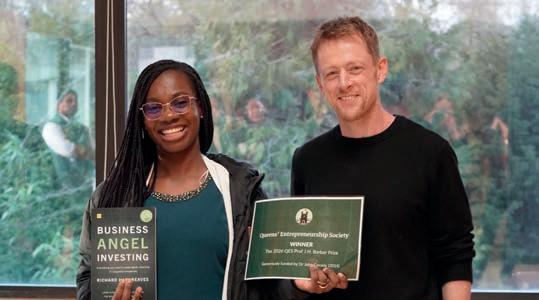
documents that matter most. The QES Prof J.H. Barber Prize, named for the late grandfather of Dr John Cassidy, was awarded to Zhonghe Lan (2025), Felipe De La Torre Wejebe, Melissa Akita (pictured), and Emmanuel Abalo for their start-up Circulet – the operating system for circular waste.
We are indebted to both donors for their generosity. Without the support of our alumni, including Dax Grant (1993), Qun Yang (2019), and this year’s speakers, QES could not serve as a launchpad for our students’ incredible business ideas.
Intellectual Society
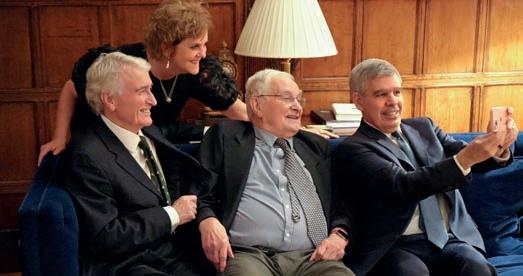
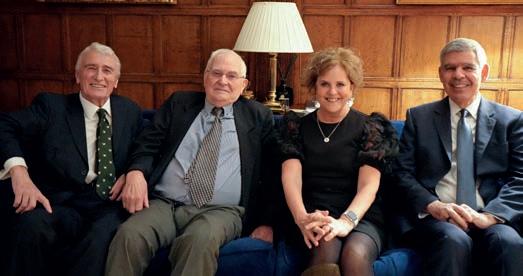
L-R: Lord Eatwell, Lord Oxburgh, Dame Menna Rawlings, Dr Mohamed El-Erian
A Meeting of Four Presidents
Earlier this year, we welcomed back three former Queens’ Presidents to the President’s Lodge. Current President, Dame Menna Rawlings hosted Dr Mohamed El-Erian (1977, 2020-2025), Lord Eatwell (1964, 1997-2020), and Lord Oxburgh (1982 1988) for drinks to celebrate the rare occasion.
British Academy Global Innovation Fellowship
Dr Mona Jebril (2012, Bye Fellow) has been awarded a British Academy Global Innovation Fellowship to work at the Carnegie Endowment for International Peace. Dr Jebril, who last year received the Gates Cambridge Impact Prize, will be working with the think tank’s Middle East and North Africa Programme.
Dr Jebril’s work focuses on Gaza and conflict-affected zones in the Middle East.
The objective of the Fellowship programme is to ‘provide opportunities to UK-based early- and mid-career researchers from across the humanities and social sciences to develop their skills, networks and careers […] to address challenges that require innovative approaches and solutions.’
Queens’ Conversations
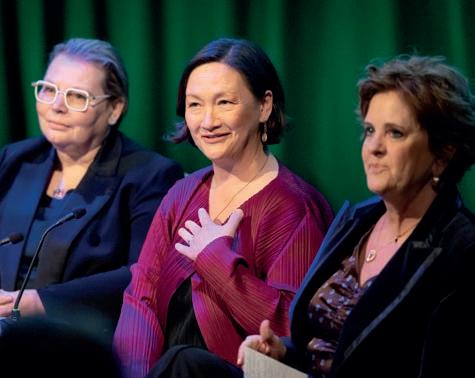
In March, President Dame Menna Rawlings chaired a distinguished panel in celebration of International Women’s Day, exploring the theme of Impactful Women.
The panel featured Professor Hannah Fry (Professorial Fellow), Joanna Scanlan (1980), Angela Chan (1992), Corin Robertson CMG (1990), and Helen MacNamara CB (Clare, 1995)
The inspiring conversation ranged from the realities of being a woman in government to how mathematics can help tackle some of the world’s biggest challenges today.
The evening concluded with a dinner in the President’s Lodge, with guests being invited from all areas of the College, including Fellows, staff and students, which was a wonderful opportunity to continue the conversation and celebrate the achievements and contributions of women within the Queens’ community.
David Johnson
David Johnson
Fellows’ Publications
Professor James Diggle
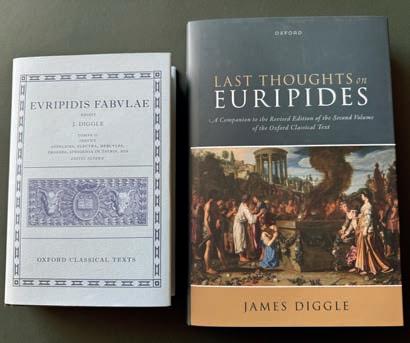
Earlier this year, Professor James Diggle (Life Fellow) published a revised edition of the second of three volumes of his Oxford Classical Text of Euripides, forty-four years after the publication of the first edition.
Alongside this, he has released a companion volume, entitled Last Thoughts on Euripides
This brings to a close his lifetime’s work on Euripides.
Dr Lorren Elridge
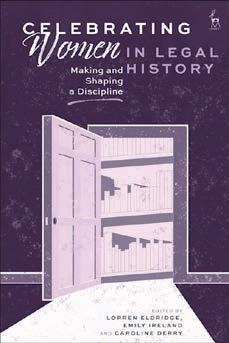
After founding Selden’s Sister research network to improve the visibility of women in legal historical research and support women in the industry today, Dr Lorren Elridge (Fellow) and the team at Selden’s Sister have published a book. Celebrating Women in Legal History: Making and Shaping a Discipline champions the work of women in legal history, and their contributions to both the discipline and feminist activism over nearly two centuries.
Dr Krisztina Ilko
Dr Krisztina Ilko (Junior Research Fellow) won the Medieval Academy of America's Article Prize in Critical Race Studies for her article, Chess and Race in the Global Middle Ages
Her article shows how medieval chess offered a rare space where people of different cultures and skin colours could meet as intellectual equals, challenging the rigid hierarchies often associated with the period. Drawing on art, literature and surviving game pieces, it argues that the chessboard functioned as a kind of “imaginary arena” where status mattered less than skill, revealing a more complex and interconnected medieval world than we tend to assume.
A report on her article, entitled 'Check mates: analysis of medieval chess sets reveals vision of equality and mutual respect', was published in The Guardian in March.
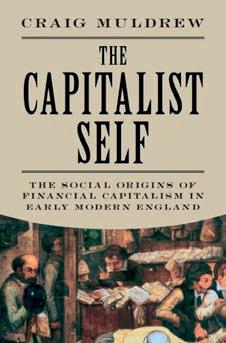
Professor Craig Muldrew
In December, Professor Craig Muldrew (Fellow) published The Capitalist Self: the Social Origins of Financial Capitalism in Early Modern Britain, a book which aims to redefine our understanding of capitalism as a socially constructed set of institutions and beliefs.
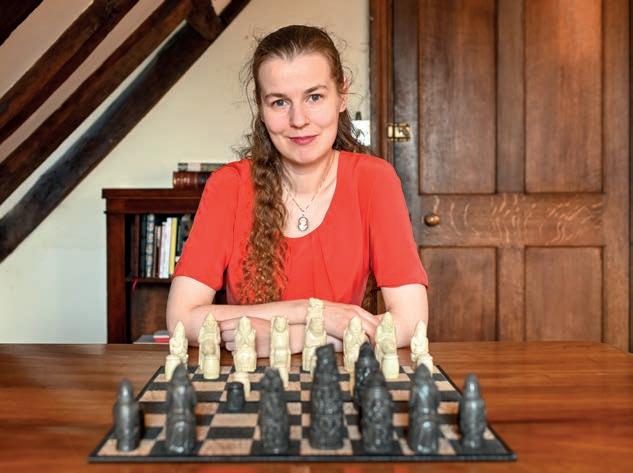
Krisztina
Ilko
Time Capsule
1886: 140 years ago
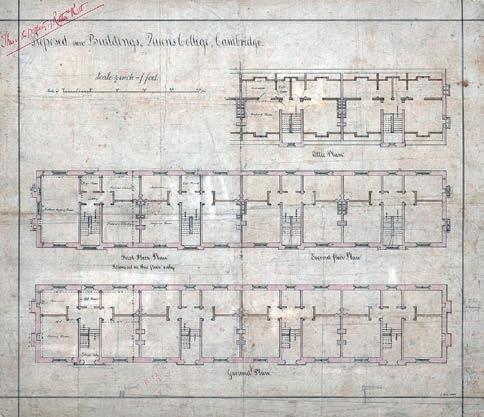
Whilst construction started in 1885, the Friars’ Building opened its doors to students in 1886.
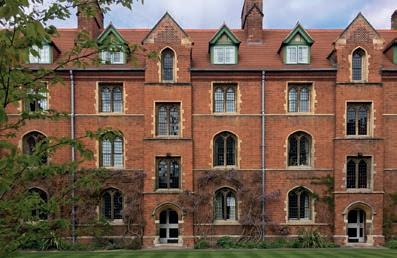
The Friars’ building
1936: 90 years ago
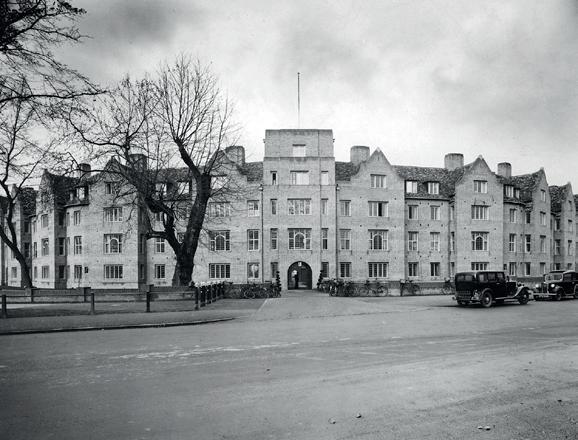
The Fisher Building was finished in 1936, and was the first Queens’ building to include bathrooms on staircases close to residential rooms.
The Fisher Building photographed in the 1930s when it was newly built.

Original floor plan for the Friars’ Building

1966: 60 years ago
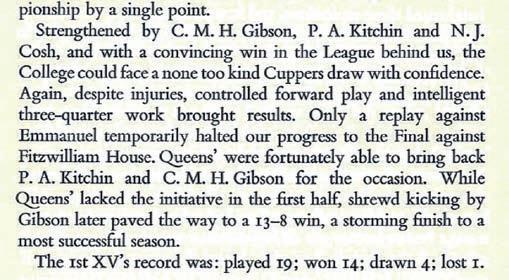
Queens’ College Rugby Football Club (QCRFC) won both the League Championship and the University Cuppers in 1966, as told in the 1965-1966 edition of The Record.
Excerpts from The Record 1965-1966, pages 10-11
Events & Reunions
To stay up to date with our events and reunions as they happen, follow us on Instagram: @queens.alumni and LinkedIn: Queens’ College Alumni Office
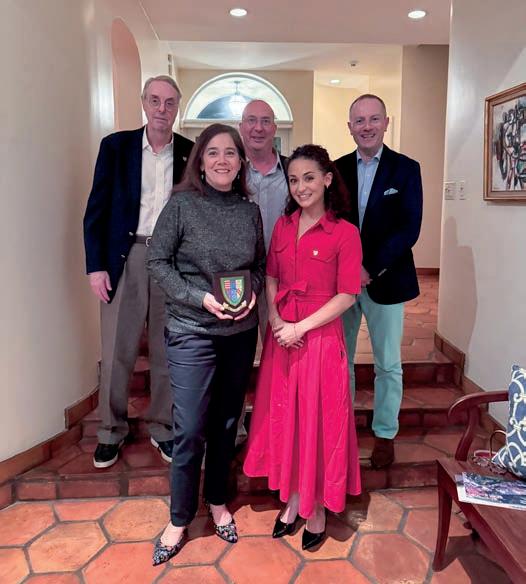
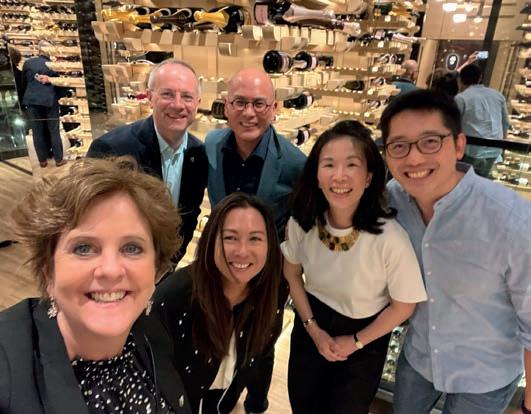
Above: The President and Development Director with Tjun Tang (1991), Sylvia Tang, Patricia Toh, and Roy Pang (1999)
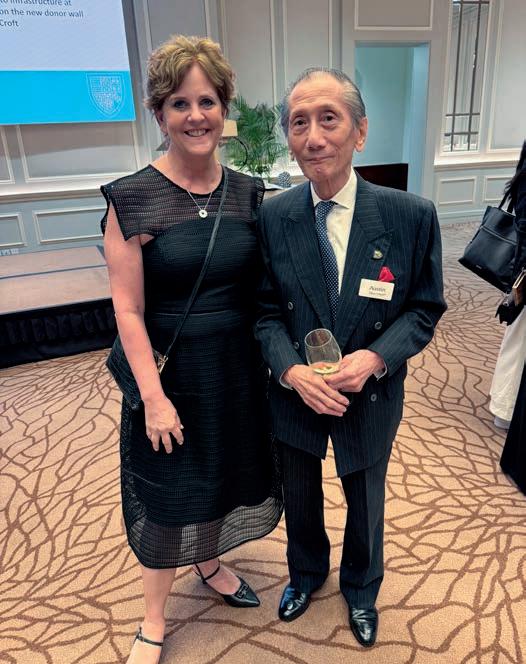
Left: Dame Menna Rawlings with Austin Htoo (1963) at a drinks event in Singapore.
Right: Sofia Vollmer de Maduro (1982) kindly hosted a dinner party for alumni in the Palm Beach area. From L to R: John Finnerty (1971), Sofia Vollmer de Maduro, Pat Madden (1984), Mary Costanza (2023), and Development Director Rowan Kitt
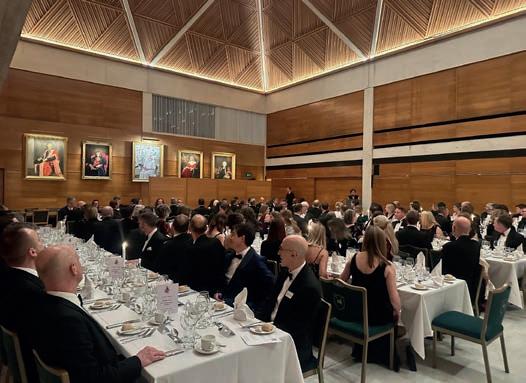
Below: The 30th Anniversary Reunion Dinner for those who matriculated in 1996 &1997, held in Cripps Hall.
From the Lodge Team
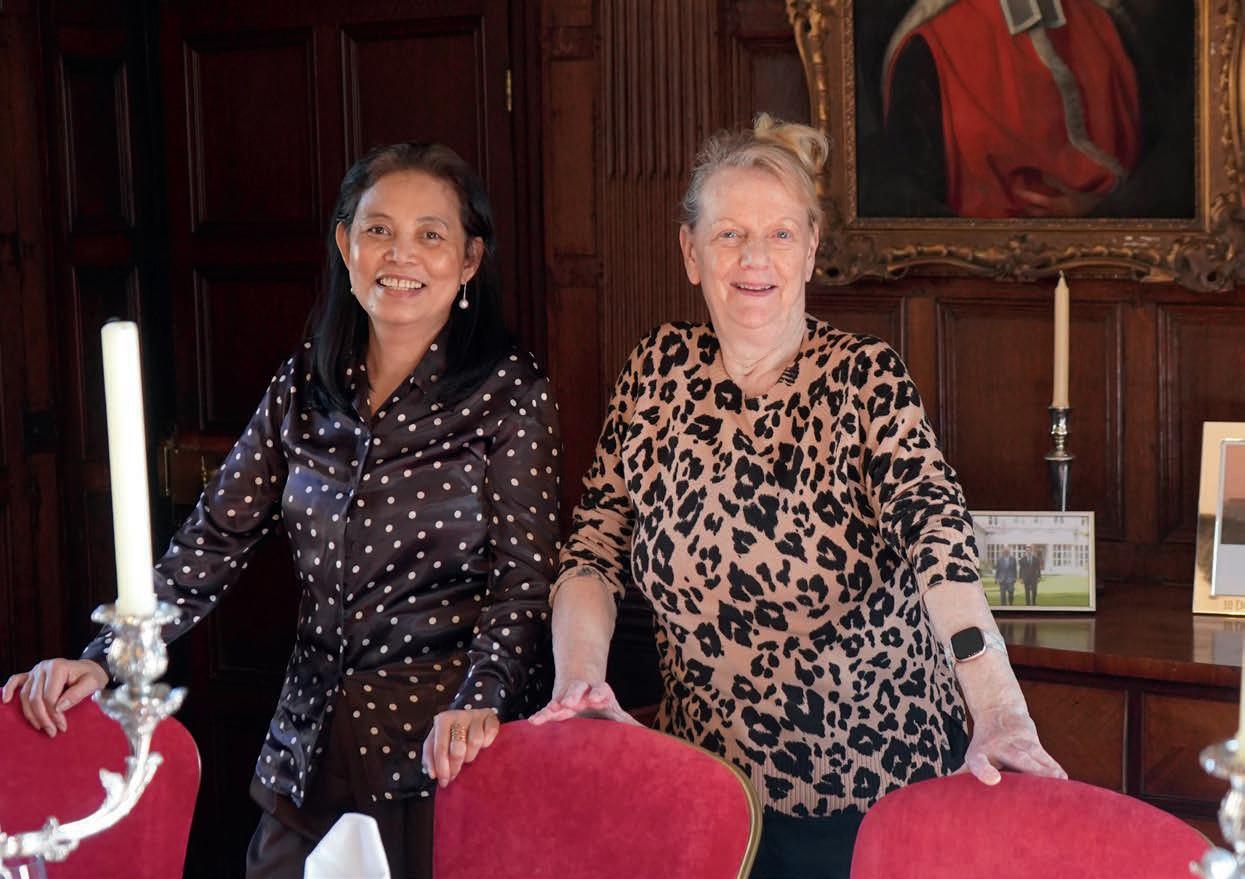
Sylvia Clements (Housekeeper, Chef)
Julie Barrett (Housekeeper)
The President’s Lodge at Queens’ is one of the most beautiful parts of the College. Throughout the year it hosts events ranging from meeting the President at matriculation and graduation to elaborate dinners and afternoon teas. We sat down with the people who make all of this possible to find out more about their time at Queens’.
Sylvia Clements has been the Lodge Housekeeper and Chef for the past thirty years, working with several Presidents during her time here. While the logistics of the role remain largely the same, Sylvia notes that some things have changed over the years.
“We used to have a uniform,” she recalls. “A maroon skirt and a shirt. But now we can wear what we like, as long as we look smart, of course.”
The layout of the housekeeping quarters has also improved in recent years. As we speak, new Rational cookers are being serviced next door.
“Wash-up used to be in the same room where we prepared food,” she explains. “Now it’s separate, and around the corner we have a drinks preparation area – teas, coffees, everything you need. It’s a much better design now; much more functional.”
Alongside keeping the Lodge clean and ready for guests, Julie Barrett is also known for her green fingers.
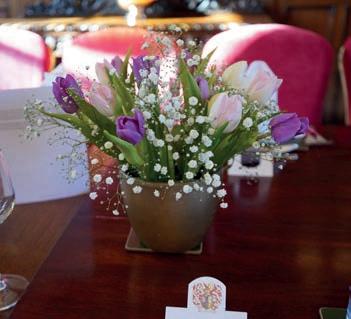
“Julie is the flower lady – it’s her official job role,” Sylvia jokes. “She gets green fingers and suddenly there are flowers here, houseplants there. It keeps the place looking lovely.”
Curious to learn more about the people behind these roles, we ask what they enjoy most about the job.
“I enjoy it when things get busy, because you get to meet lots of people,” Julie explains. “Even if it’s just walking someone up the stairs, I get to break the ice and chat with them. I once had a conversation with someone and only later found out he was the ambassador to Egypt. We meet a lot of interesting people.”
“I like it when I cook something and everyone enjoys it,” Sylvia adds. “When the plates come back empty, I know I’ve done something right.”
“Sometimes people ask who’s done the cooking,” Julie says. “I think they assume there’s a whole team, but it’s just Sylvia.”
Sylvia smiles. “I also really love doing Christmas. Decorating the Lodge when everything is happy and jolly. I’ve built it up over the years, collecting decorations that I think will look lovely.”
Sitting with Sylvia and Julie, it’s clear they hold each other’s work in high regard. Their teamwork feels effortless, with each stepping in to support the other whenever needed.
“We obviously have our own areas of expertise,” Sylvia explains, “but Julie helps with the cooking when we have bigger events. She assists with preparation, especially now with all the allergens and dietary requirements.”
We ask whether there are aspects of the job that people might not realise they are responsible for.
“I’m sure people don’t realise that we set the tables,” Sylvia replies. “Many assume catering
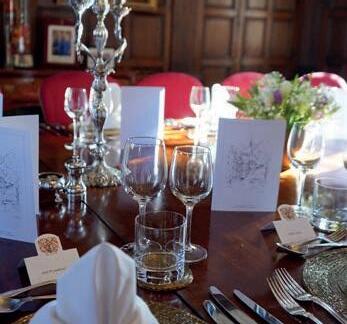
does that. Julie arranges all the flowers. We also help with students coming through for graduation or matriculation. There’s probably quite a lot we do that people don’t realise.”
Reflecting on the different Presidents she has worked with, Sylvia recalls Lord Eatwell (1964)’s retirement before Dr Mohamed El Erian (1977) became President in 2020.
“Everything was changing, and with COVID as well, it was very strange,” she says. “An unusual time, as everyone knows. I’m at the age where people were asking if I was going to retire, but I said I’d wait and see who we got. Then we had Mohamed, and it was a total change, but it was nice.”
She speaks warmly about the time Mohamed and Anna spent living in the Lodge, smiling as
she remembers Bosa, the El-Erians’ beloved golden retriever, who sadly passed away last year.
“It was sad when they left, but we got to meet the candidates, and we were very happy when Menna was selected,” she continues. “She and Mark are so down to earth.”
Asked about their favourite memories from their time at Queens’, Sylvia answers immediately.
“Doing the parade for the Queen Mother’s birthday,” she says. “I have a photo of myself and Lord Eatwell with her. It was an incredible experience.”
Julie’s favourite memory is a little different. She tells us about a student who once asked for advice when he was trying to decide on a career path. He followed her suggestion and spent time teaching English in Budapest.
“He thanked me for listening to him and for giving him advice he never forgot,” she recalls. “Whenever he’s back in Cambridge, he still leaves flowers for me in housekeeping.”
Together, Sylvia and Julie are a reminder that behind the formal events and traditions of the President’s Lodge are the people who quietly bring it all to life. Through their care, warmth, and dedication, they help make the Lodge not just a place for occasions, but a welcoming home at the heart of Queens’.
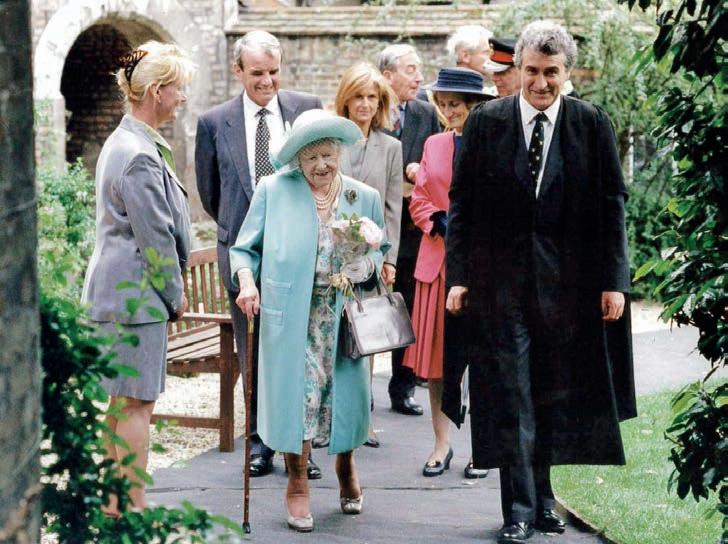
Sylvia (left) and Lord Eatwell (right) with HRH the Queen Mother
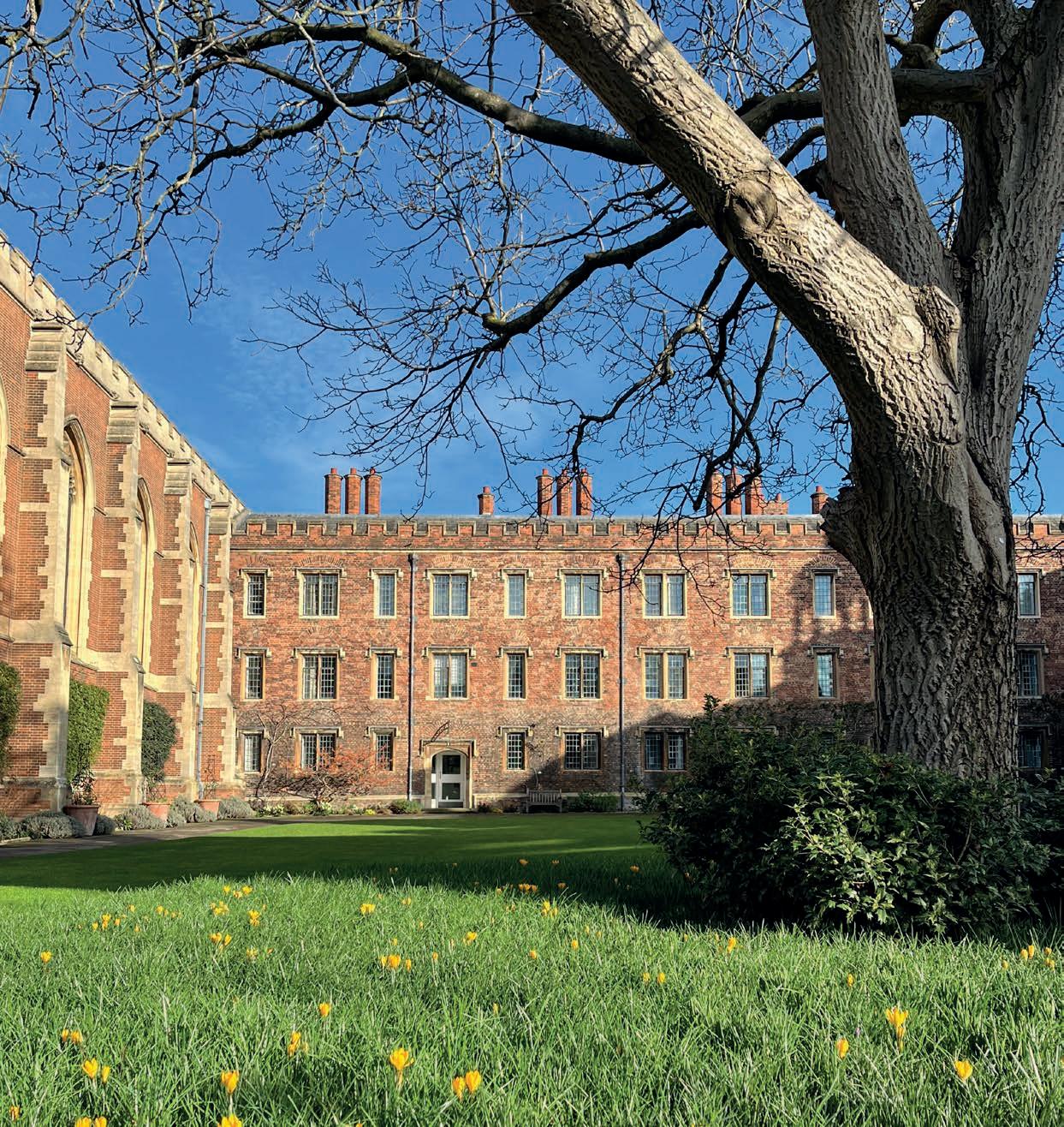
Walnut Tree Court in