














































22

18 European energy hub
As one of Europe’s key energy and logistics hubs, the Netherlands is also one of the bloc’s leading biofuels producers
Bleaching Earths
Good handling and transport
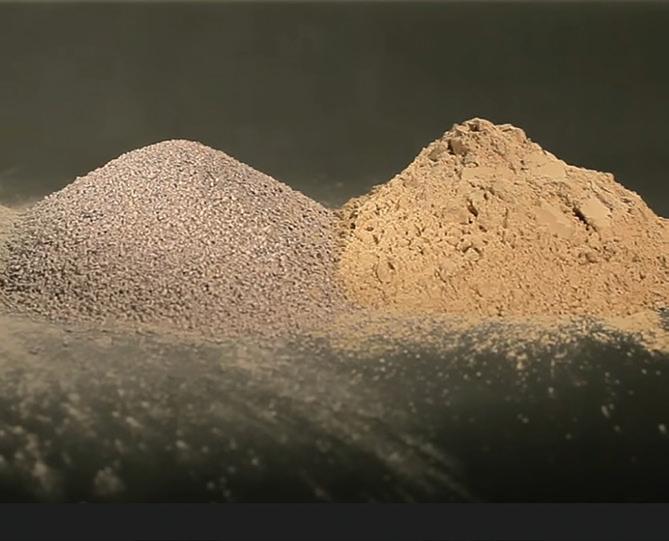
The handling and transport of bleaching earths require a careful balance between efficiency, safety and product integrity. Logistics must be adapted to refinery requirements, local infrastructure and regulatory standards
Bleaching Earths
26 Treatment of hybrid palm oil
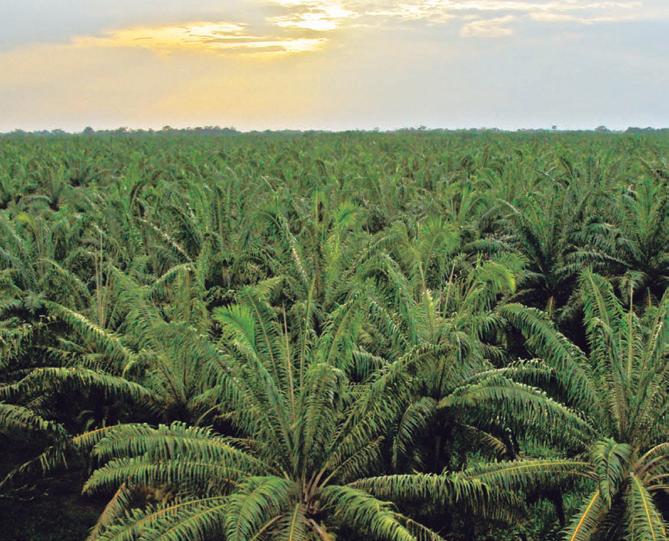
Hybrid oil palms are growing in popularity in some regions due to their disease resistance, slower height growth and drought tolerance. Processors need to take into account the oil’s lower acidity, higher oleic acid and carotene content, and greater susceptibility to oxidation when bleaching is carried out


EUDR retains force
4 Simplification review of EUDR published by EC Biofuel News
10 US House approves changes to small refinery exemptions
News 12 Trelleborg launches UCO-derived rubber
14 Chane to expand bulk liquid capacity at Port of Rotterdam
16 Non-tariff barrier ends for Canadian flaxseed exports Diary of Events
17 International events listing
32 World statistical data
EDITORIAL:
Editor: Serena Lim serenalim@quartzltd.com +44 1737 855066
Assistant Editor: Gill Langham gilllangham@quartzltd.com +44 1737 855157
ADVERTISING: Mark Winthrop-Wallace markww@quartzltd.com +44 1737 855114
PRODUCTION:
Production Editor: Carol Baird carolbaird@quartzltd.com
CORPORATE:
Managing Director: Tony Crinion tonycrinion@quartzltd.com +44 1737 855164
SUBSCRIPTIONS: Jack Homewood subscriptions@quartzltd.com +44 1737 855028
Subscriptions, Quartz House, 20 Clarendon Road, Redhill, Surrey RH1 1QX, UK
SUBSCRIPTION RATES:
Print & digital: Single issue – £45
1 year – £182 (UK), £210 (overseas)
2 years – £328 (UK), £377 (overseas)
3 years – £383 (UK), £440 (overseas)
Digital only: Single issue – £29
1 year – £170
2 years – £272
3 years – £357

© 2026, Quartz Business Media ISSN 0267-8853
WWW.OFIMAGAZINE.COM

A member of FOSFA
Oils & Fats International (USPS No: 020747) is published eight times/year by Quartz Business Media Ltd and distributed in the USA by DSW, 75 Aberdeen Road, Emigsville PA 17318-0437. Periodicals postage paid at Emigsville, PA. POSTMASTER: Send address changes to Oils & Fats c/o PO Box 437, Emigsville, PA 17318-0437
Published by Quartz Business Media Ltd Quartz House, 20 Clarendon Road, Redhill, Surrey RH1 1QX, UK oilsandfats@quartzltd.com +44 1737 855000
Printed by Stephens & George Print Group, Merthyr Tydfil, Wales

The European Commission (EC) has now published its long-awaited report on simplifying its EU Deforestation Regulation (EUDR), which applies to seven commodities linked to deforestation, including palm oil and soyabeans (see p4).
Originally due to take effect on 30 December 2024, the regulation has been delayed twice, most recently in December last year, when it was amended to allow for its simplification and to give operators, traders and authorities more time to prepare for its implementation.
For businesses placing palm oil, soya, cocoa, coffee, cattle, rubber or timber goods on the EU market, there is now certainty that there is no more delay on the table. The date is fixed and the EUDR will apply from 30 December 2026 for large and medium-sized enterprises, and from 30 June 2027 for micro and small operators.
Companies will need a functioning due diligence system in place to prove these seven commodities and their derivatives are deforestation-free, legally produced and traceable to their source.
The most significant part of the EC report, published on 4 May, is the inclusion of more palm oil derivatives to be covered by the EUDR. These include hydrogenated and chemically modified palm oil, crude glycerol, fatty alcohols, acetic esters, undecenoic acids, amines and amides and soap products. Their inclusion has been proposed under a draft delegate act amending Annex 1 of the EUDR, which lists the products covered by the regulation.
The EC report also lists all the new and previous simplification measures carried out so far, which is expected to reduce annual compliance costs for companies subject to the EUDR by around 75%. Simplification measures include annual due diligence statements (DDSs), rather than shipment-by-shipment filings. There will also be strengthened reliance on existing DDSs so that the first operator placing the commodity on the EU market carries out the full due diligence process, and downstream operators can increasingly rely on the DDS reference number, rather than repeating the entire due diligence exercise.
Also of significance is what wasn’t include in the simplification package. Under the EUDR, countries are classified as ‘low’, ‘standard’ and ‘high’ risk, with low risk countries enjoying simplified due diligence and lower inspection rates.
Certain EU states and countries, including the USA, have pushed for a ‘negligible risk’ category, which would significantly reduce the regulatory burden and open a loophole for imports from high risk countries.
The EC, however, did not introduce this category, suggesting that its fundamental goal of reducing deforestation remains intact.
The broader challenge remains one of implementation. Large multinationals – as well as exporters like Malaysia, Indonesia and Brazil – have invested heavily in traceability systems. However, producing countries with smallholder sectors still face hurdles including limited digital land records, incomplete geolocation data, unclear land tenure and limited capacity for monitoring and reporting.
One thing is clear – after two delays, one amendment, and now a four-part clarification – the most ambitious and far-reaching anti-deforestation import regulation ever enacted should come into force by 30 December.
Serena Lim, OFI Editor, serenalim@quartzltd.com





Better refining yields. Lower refining costs1. The lowest carbon footprint2 . That’s the advantage of soybean oil from U.S. soybeans, whether crushed in-market or imported from the U.S. What’s Nourishing Your Business?


SCAN TO SEE THE SOURCE OF YOUR ADVANTAGE.











1






SAUDI ARABIA: Global agrifood investor Saudi Agriculture & Livestock Investment Company (SALIC) has completed the purchase of a 44.58% share in Olam Agri, part of food and agribusiness company Olam Group.
The deal was based on an implied 100% equity value for Olam Agri of US$4bn.
With completion of the US$1.88bn Tranche 1 sale, SALIC owned 80.01% of Olam Agri, with Singapore-based Olam Group retaining 19.99%.
Following completion of Tranche 2 expected to be finalised within three years, Olam Agri said on 27 April that it would become a 100% subsidiary of SALIC.
Olam Agri specialises in the sourcing, processing, trading and shipping of grains, oilseeds and other products. In 2024, it handled 41.5M tonnes of commodities.
Its oil portfolio includes palm, rapeseed, soyabean and sunflower oils and it serves sectors from food manufacturing to personal care.

On 4 May, the European Commission (EC) published a report on the simplification of the revised EU Deforestation Regulation (EUDR) and a set of further measures to ease its implementation.
The EUDR will require companies placing palm oil, soya, cocoa, coffee, cattle, rubber or timber products and their derivatives on the EU market to prove that they are deforestation-free, legally produced and traceable to their source by submitting due diligence statements (DDSs) on an IT system. It will apply from 30 December for large and medium-sized enterprises, and from 30 June 2027 for micro and small operators.
The EC report includes:
• A simplification review, assessing the EUDR's administrative burden.
• An updated guidance and revised frequently asked questions clarifying due diligence obligations for downstream operators.
• A draft Delegated Act amending Annex I, which lists which products fall under the EUDR.
• An updated draft Implementing Act on the IT system, including a simplified declaration form for micro and small operators.
The draft Delegate Act amending Annex 1 excludes leather, includes instant coffee and includes more palm oil derivatives, specifically hydrogenated and chemically modified palm oil; crude glycerol; fatty alcohols; acetic esters; undecenoic acids; amines; amides; and soap products.
The updated guidance clarified obligations for micro or small primary operators, the US Department of Agriculture wrote on 7 May. In place of submitting DDSs, they would need to submit one-time simplified declarations and could use postal addresses instead of geolocation coordinates. They would not be required to conduct risk assessment and mitigation.
Operators sourcing exclusively from 'low risk' countries would still need to establish a due diligence system but would not need to conduct risk assessments or risk mitigations unless they obtained information indicating potential non-compliance. However, they would still need to provide geolocation coordinates for plots of land where commodities were produced.
Malaysian palm oil producers are scaling back on replanting due to rising fertiliser and fuel costs, The Edge Malaysia writes.
Fertiliser price had risen by up to 60%, while diesel costs had more than doubled since the start of the US-Iraq Iran war in February, the 19 May report quoted farmers, officials and analysts as saying.
Ageing oil palm plantations in Malaysia and top global producer Indonesia were a key concern for supply but Indonesia – unlike Malaysia – had ample domestic supplies of fertiliser, the report said, adding that fertiliser comprised around half of palm oil production costs.
Replanting was critical to maintaining yields at a time when supplies were pressured by stagnating output and Indonesia diverted more of its production to biodies-
el, The Edge Malaysia wrote.
Smallholder farmers, who comprised 40% of Malaysian output, were also scaling back replanting for lack of financial support, industry officials said.
Malaysia’s agri-commodity sector was facing a severe cost squeeze on other fronts, with shipping costs to the Middle East surging between 50%-80% and war risk insurance premiums rising to as much as 3%, Economy Minister Akmal Nasrullah Mohd Nasir was quoted as saying in a 25 May New Straits Times report.
Upstream plantation and machinery costs had also risen by 10%-30%.
Meanwhile, Malaysian palm oil exports fell in the first half of April due to lower shipments to the Middle East, Fastmarkets reported, citing data from cargo surveyor
Intertek Testing Services (ITS).
Malaysia’s palm oil exports totalled 580,018 tonnes from 1-15 April, down by 324,724 tonnes – or 35.89% – from 904,742 tonnes in the same period the previous month. The figure included exports of crude palm oil, processed palm oil, palm kernel oil, oleochemicals and palm oil waste but excluded shipments of used cooking oil, the 20 April report said. Exports fell to most regions, with the largest drop to the Middle East at 11,550 tonnes, a fall of 114,650 tonnes from 126,200 tonnes shipped in March. No shipments were made to Egypt and Iran in the 1-15 April period against 25,200 tonnes and 61,0000 tonnes respectively the previous month, while exports to the UAE fell by 37,000 tonnes to 3,000 tonnes.





Develop, scale and commercialize with CPM|Crown – the proven, single-source partner for product and process optimization.
Bring new products to market faster and more sustainably with Crown. As a leader in oilseed extraction for 70+ years, Crown’s technical expertise, guidance, proven technologies and Global Innovation Center transform your ideas for protein concentrates, food/beverage, botanicals and other new product segments into profitable realities. With Crown’s full-scale, state-of-the art pilot plant, analytical lab and training facilities, you can test product and process feasibility, run benchtop scale to custom processing and commercialize with efficient, continuous operations backed by Crown’s Lifecycle360™ single-source support services. Partner with Crown to accelerate your market opportunity.
Start up, scale up and expand with CPM|Crown’s expertise.
Feeding, Fueling and Building a Better World.



Indonesia president Prabowo Subianto announced on 20 May that the government would require exports of palm oil, coal and ferro alloys to go through a state agency, as part of its bid to tighten control over natural resources and boost state revenue.
The move by the world’s leading palm oil producer and exporter could concentrate pricing power and disrupt supplies of the world’s most traded edible oil, Reuters wrote on 20 May. Indonesia accounts for more than half of global palm oil shipments.
The country’s previous export-restricting moves to prioritise local sales and boost supplies for biodiesel had lifted prices of palm oil as well as rival edible oils like soyabean and sunflower oil, the report added.
INDONESIA: On 13 May, the government’s forestry task force handed over a further 2.37M ha of seized oil palm plantations to state palm oil firm Agrinas Palma Nusantara, The Edge Malaysia reported on the same day.
The latest handover brought the total land managed by Agrinas to around 4.12M ha, making it the biggest palm oil grower by land bank size, the report said.
The task force had seized land from companies it claimed had violated forest utilisation rules as part of President Prabowo Subianto’s crackdown on the illegal extraction of Indonesia’s natural resources, The Edge Malaysia wrote.
“The palm oil market is trying to adjust to rising energy prices driven by the Middle East conflict,” said Aashish Acharya, vice president at Indian edible oil importer Patanjali Foods. “Indonesia's move is likely to add another layer of uncertainty and increase volatility in the market.”
According to industry sources, the move could reshape Indonesia’s palm oil trading structure by concentrating pricing power and altering existing market mechanisms.
“A centralised export mechanism could undermine the current market-based trading ecosystem by concentrating pricing power within a state-linked entity,” MR Chandran, the former head of the Malaysian Palm Oil Association, said. “This
may increase market uncertainty, reduce transparency and introduce greater political influence into commercial trade flow.”
Chandran said Malaysia – the world's second largest palm oil producer – could benefit from Indonesia’s move as buyers looked for more stable policies.
Eddy Martono, chairman of the Indonesian Palm Oil Association (GAPKI), said established trade relationships with overseas buyers could be at risk if export flows were centralised without careful management.
According to Mansuetus Darto of POPSI, a group representing small palm oil growers, Indonesian smallholder planters could suffer under the new structure as their bargaining power would fall.
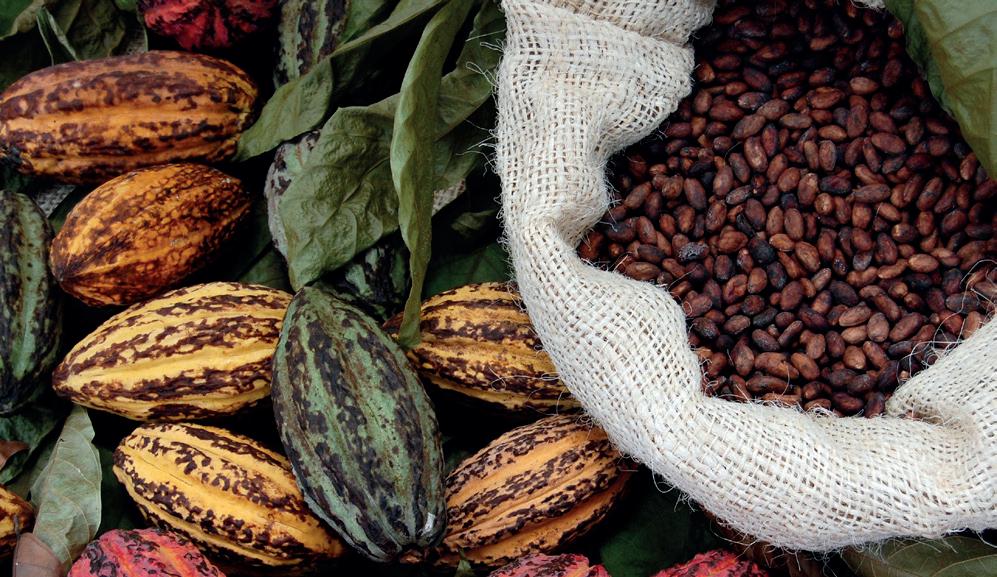
Cocoa futures fell sharply in mid-May as the Ivory Coast raised its 2025/26 crop forecast and rainfall in West Africa improved the outlook there, Cocoa Intel writes.
In New York and London, cocoa futures prices dropped on 14 May by approximately
4%-5% as traders liquidated long positions, the report said.
Meanwhile, the Ivory Coast raised its 2025/26 cocoa production forecast to 2.2M tonnes, up from 1.8M-1.9M tonnes a year ago.
The West Africa cocoa belt was forecast to receive
80-150mm of rain over two weeks, supporting crop development, the 15 May report said. The heaviest rainfall was expected in key cocoa-growing regions around Daloa, Gagnoa, Man, Divo and Duékoué.
Ghana was also expected to receive regular and well-distributed rain, while southern Nigeria and Cameroon were forecast to remain seasonally wet, extending the favourable pattern across the West African cocoa belt.
▪ On 12 May, Cargill and Voyage Foods announced bringing their NextCoa confectionery alternative to chocolate, to North America, starting in the USA.
Soyabean oil exports from Brazil increased by 47% in the year up to April, the second highest volume for the period in the past two decades, Bloomberg reports.
The rise was driven by a record harvest, high crush levels, low prices and lower-than-expected domestic consumption, due to a delay in increasing the domestic biodiesel mandate, the 19 May report said.
Soyabean oil was the main feedstock for biodiesel production in Brazil but the country's blending mandate had not
increased by March this year as expected, and remained at 15%, with a rise to 16% pending technical tests, the report said.
While Chicago Board of Trade (CBOT) soyabean oil futures had risen by almost 56% this year, prices at Brazilian ports had moved much slower, with the soyabean oil discount at the country’s main Paranaguá port at its largest since 2023, according to Commodity3 data.
As in neighbouring Argentina, which had also seen steep discounts on soyabean oil,
soya supplies in Brazil were plentiful as the country was harvesting a record crop, Bloomberg wrote.
Brazil's National Supply Company (Conab) had forecast 2025/26 domestic soyabean production at 180.1M tonnes, 8.6M tonnes or 5% higher than the previous year, World Grain wrote on 14 May. With 98.3% of the soyabean area harvested, soyabean exports were projected to reach 116M tonnes, a 7.25% increase compared to the previous season.
www.ofimagazine.com















THE PHILIPPINES:
Coconut oil exports could reach 1.19M tonnes in the 2026/2027 marketing year beginning in October, compared to shipments of around 1.13M tonnes in the current year, according to US Department of Agriculture (USDA) 'Philippines - Oilseeds and Products Annual'.
“This is in line with higher coconut oil production from increased copra crush and improved extraction,” the 16 April report said.
However, export volumes still remained below 2024/25 levels as a larger share of output continued to supply domestic industrial and food use, including biodiesel blending under the B3 biodiesel mandate.
The USDA expected coconut oil production to rise 3.5% to 1.76M tonnes in 2026/27 compared to 1.7M tonnes in the current year due to improved copra crushing, expected to reach 2.7M tonnes 2026/27.
However, this increase was due to increased copra availability rather than any expansion in milling capacity.
As of July 2024, the Philippines had 61 coconut oil mills with a combined capacity of about 4.14M tonnes/year, according to the United Coconut Association of the Philippines’ Coconut Industry Kit from August 2025.
The US Court of International Trade (CIT) has ruled that a 10% global tariff introduced by US President Donald Trump after his 2025 tariffs were struck down by the US Supreme Court was unlawful, The Guardian reported on 7 May.
In its 7 May ruling, the CIT ruled in favour of small businesses that had challenged the 10% tariff, which came into effect on 24 February.
The small businesses claimed that the new tariff was an
attempt to sidestep a landmark 20 February US Supreme Court decision that struck down the president’s 2025 tariffs imposed under the International Emergency Economic Powers Act, The Guardian wrote.
After the Supreme Court decision, the Trump administration imposed new temporary 10% trade penalties on US trading partners under section 122 of the 1974 Trade Act, which allows for duties for up to 150 days to correct serious
“balance of payments deficits” or to prevent an imminent depreciation of the dollar.
The US government was already preparing to refund more than US$166bn tied to earlier tariff collections invalidated by the Supreme Court, NPR reported on 7 May. On the same date, Trump also said he would give the EU until 4 July to implement trade deal commitments before he raised tariffs on EU goods to “much higher levels”, The Guardian wrote.
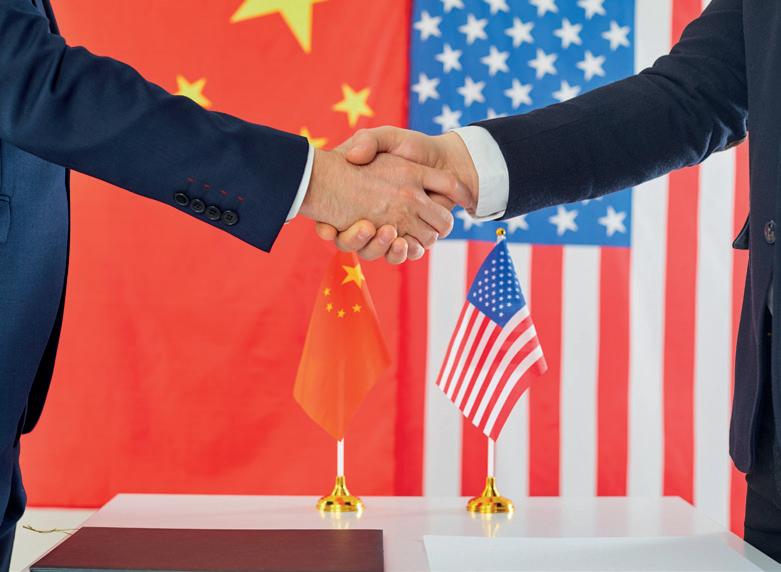
In an expansion of the US-China trade deal, Beijing has agreed to purchase an additional US$17bn of US agricultural products, World Grain reports, citing a 17 May fact sheet published by the White House after the US-China summit held in Beijing in mid-May.
“China will purchase at least US$17bn/year of US agricultural products in 2026 (pro-rated), 2027 and 2028, in addition to the soyabean
purchase commitments that it made in October 2025,” the White House said. The 30 October trade agreement between the US and Chinese governments stipulated China would purchase 12M tonnes of US soyabeans in the 2025/26 marketing year, as well as 25M tonnes/year for the next three years.
Although details of specific grain commodities were not outlined in the latest trade agreement, nearly all grain Chicago Mercantile Exchange (CME) commodity futures rose on the day after the White House's statement, with July soyabean prices and July soyabean oil futures rising by 3.1% and 2.4% respectively, the 19 May World Grain report said.
“The most recent trade war with China over tariffs has had an enormous impact on US exports, particularly soyabeans,” said Joseph Glauber, senior research fellow emeritus at the International Food Policy Research Institute.
“US soya exports to China were down 75% in 2025 compared to 2024 [calendar year]."
European animal fat prices rebounded in early March and continued to rise in April, supported by higher demand and competitiveness against vegetable oil prices, pushed up by the Middle East war and crude oil rallies, Fastmarkets wrote on 7 May.
The upturn in animal fat prices followed a six-month period of stagnation.
Orders for animal fats in Europe for use in pet food, animal feed production and the oleochemical industry increased, with
buyers substituting vegetable oil volumes, according to sources quoted in the report.
The European fats sector’s export potential improved after US-based biofuel producers returned to the import market for feedstocks amid a financial advantage.
After the US Environmental Protection Agency announced record-high 2026/2027 Renewable Volume Obligations under the Renewable Fuel Standard on 27 March, prices for US-origin animal
fat jumped, increasing the demand for imported material further, Fastmarkets wrote. Overall, 5-15% free fatty acid animal fat prices in the FOB Amsterdam, Rotterdam, Antwerp (ARA) market increased by more than US$116/tonne month-on-month – a rise of 10% – based on deals reported for April-June loading in the range of US$1,066-US$1,230/tonne FOB. Further selling interest for July was reported at US$1,275-US$1,287)/tonne FOB ARA.

Global petroleum giant Shell has put assets at its partially-built biofuels and hydrogen facilities in Rotterdam up for sale after the company confirmed in 2025 that it would not resume construction, Gas World reported on 27 April.
Construction of the biofuels facility at the Shell Energy and Chemicals Park began in 2021, where initial plans involved the production of around 16,000 barrels/day (bpd) of sustainable aviation fuel (SAF) and renewable diesel, and 65,000Nm3/hour of blue hydrogen, the report said.
However, Shell had scrapped the project in 2025 after pausing construction in 2024, claiming it would be “insufficiently competitive,” with total spend reaching US$1.4bn, Gas World wrote on 3 September at the time of the announcement.
Process plant buyer International Process Plants (IPP) said assets at the complex were now available for acquisition and completion.
The complex included a 16,000bpd HEFA conversion unit, 3,000 tonne/ day pre-treatment equipment from Alfa Laval, and 65,000Nm3/hour steam methane reformer equipped with carbon capture from Linde.
On 13 May, the US House of Representatives approved changes to the small refinery exemption (SRE) programme, which allows some small oil refineries to avoid part of their obligation to blend renewable fuels or buy renewable fuel credits (RINs), Ethanol Producer wrote on 14 May.
The Nationwide Consumer and Fuel Retailers Choice Act would eliminate the current SRE programme, where small refineries must petition the Environmental Protection Agency (EPA) for a waiver of Renewable Fuel Standard (RFS) renewable volume obligations (RVOs) due to disproportionate economic harm.
Instead, starting in 2028, small refineries would automatically be granted a 75% exemption from the RVO, and specific at-risk refineries would be eligible for a complete RVO waiver, according to a 12 May report by the Congressional Budget
Office (CBO). The EPA would be prevented from reallocating any waived RVOs.
The bill also redefined what constituted a small refinery, which the CBO said was expected to reduce the number of qualifying small refineries.
Exempted gallons were likely to be met disproportionately with biomass-based diesel (rather than ethanol) as the EPA set record 2026 and 2027 RVOs in March, with growth concentrated in biomass-based diesel and advanced fuels, Ethanol Producer wrote.
SREs had been a key point of debate within the RFS as these exemptions had reduced overall biofuel demand by lowering blending volumes, creating uncertainty for farmers and biofuel producers, Farm Bureau wrote on 5 May.
The bill needs to be approved by the Senate before becoming law.

The Malaysian government announced that 19 licensed plants were set to produce a palm oilbased biodiesel blend of 15% (B15) from 1 June, The Star reported on 5 May.
Deputy Prime Minister Dr Ahmad Zahid Hamidi said the move, which would be imple-
mented in stages, was crucial to help stabilise fuel prices in the country.
“It will start with B15 and gradually progress to B20 … within the next two to three years, it may go up to B50,” Hamidi said.
“There are 19 biodiesel production plants ranging from B15 to B50. We will utilise sludge or by-products from crude palm oil production, where about 35% of the sludge will be used to produce biofuel and Jet A1 fuel.”
According to CIMB Securities analyst Ivy Ng Lee Fang, the current B10 programme consumed about 750,000 tonnes/year of palm oil year at full implementation.
A B12 rollout would lift usage by a further 150,000-900,000 tonnes/year, or approximately 0.7% of Malaysia’s projected 2025 palm oil output, a 16 April New Straits Times report quoted her as saying.
German lawmakers have agreed to ease the cap on crop-based biofuels from 4.4% to 5.8% in the medium term, Biofuels International wrote on 6 May.
The move followed earlier legislative changes, including the end of double counting for advanced biofuels, stricter supply chain controls and a narrower feedstock list.
The ‘Second Law on the Further Development of the Greenhouse Gas (GHG)
Reduction Quota’ bill – adopted by the Bundestag on 23 April – aims to further align Germany’s transport decarbonisation framework with EU renewable energy and climate targets.
Germany’s Union for the Promotion of Oil and Protein Crops (UFOP) noted that the broader policy environment for cropbased biofuels had improved at EU level, while Germany’s Agriculture Ministry had proposed a tax exemption for agricultural
biofuels. However, UFOP told S&P Global Energy that GHG quota levels and the proposed tax exemption would not prompt a sharp increase in crops like rapeseed, but help stabilise the market.
Biofuels International wrote that Germany’s FAME biodiesel capacity totals around 4M tonnes, with 3.6M tonnes produced and 2025 demand at 2.2M tonnes.
The bill will now need approval at the Bundesrat, which represents German states.




Swedish polymer solutions company Trelleborg Sealing Solutions has launched two ethylene propylene diene monomer (EPDM) rubber grades derived from used cooking oil (UCO), forestry residue and tall oil.
Developed in partnership with raw materials supplier Arlanxeo, both new grades – the 70 Shore A E7T11 and the 80 Shore A E8T12 – offered a 61% reduction in carbon footprint in compound form, enabling a potential 55% reduction in product carbon footprint for a manufactured gasket,
CANADA: Biosurfactant company Dispersa has launched a sophorolipid biosurfactant produced from agri-food waste and non-consumer oil side streams at commercial scale.
The firm’s BioEterna process combines fermentation and synthetic biology to transform food waste streams into biodegradable surfactants, with 100 tonnes/ year of capacity at its North American facility.
Although PuraSurf was suitable for use in a range of sectors, the initial focus was on household, industrial, and institutional cleaning applications following regulatory clearances in the USA and Canada, Dispersa said on 5 May.
the company said on 21 April.
“Our new reduced carbon footprint EPDMs are created from raw polymers based on non-fossil sources derived from renewable ingredients such as cooking oil, straw, forestry residue and tall oil,” said project manager Dr Jekaterina Miller.
“Although they achieve up to a 61% reduction in carbon footprint in compound form, the final formulations are comparable to traditional EPDM elastomers made from fossil-sourced inputs, ensuring equivalent
application performance.”
Available as O-Rings, gaskets and custom engineered components, the products are suitable for applications such as sealing engines, doors, pumps, valves, household appliances, air cylinders, solar panels, marine hatches and doors in the automotive, processing, manufacturing, automation, energy, construction and mining sectors.
Trelleborg is a developer, manufacturer and supplier of precision seals, bearings and custom-moulded polymer components.
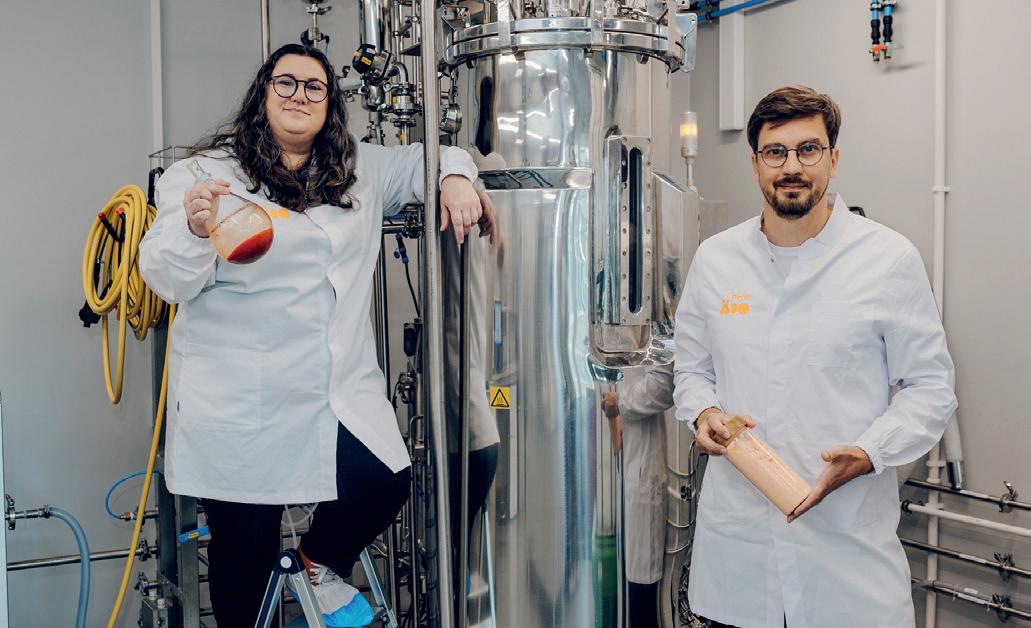
Estonian biotechnology company ÄIO has teamed up with natural cosmetic brand tilk! to launch their first commercial skincare product using ÄIO’s bio-fermented RedOil.
The new serum was produced from upcycled organic side-streams and combined
RedOil with marine and plantbased actives, said on 7 April.
According to ÄIO, RedOil is rich in antioxidants, carotenoids and essential fatty acids, and offers retinol-like skin renewal benefits without irritation, supporting skin barrier function, hydration and
resilience against environmental stressors.
Founded in 2022 as a spinoff from Tallinn University of Technology, ÄIO processes agricultural and wood industrial waste into ingredients for the food, cosmetics and oleochemical industries.
Using specialised yeast fermentation, ÄIO’s technology converts sugars extracted from sawdust and other agricultural residues into oils rich in omega-3 fatty acids, antioxidants and pigments.
The company said its yeast-derived ingredients were suitable for use in a range of cosmetics applications, from soap to facial moisturisers and serums, and makeup formulations with specialised pigments.
A research team has studied the use of fatty acids in groundwater decontamination, the non-profit American Institute of Physics (AIP) reported on 6 March.
Although compounds derived from ammonia – called amines – are used in industrial processes like carbon capture and desalination, these compounds often ended up as groundwater pollutants and could affect nearby ecology and plant growth.
The research team found that fatty acids could help separate and trap pollutants from the water, and that short chain fatty acids could make specific pollutants more soluble. In their tests on the toxic amine pyridine,
the group found that fatty acids competed with the pollutant for hydrogen bond interactions with the water.
“Hydrogen bonds are weak attractions that help water molecules ‘stick’ to each other and also let water interact with many dissolved chemicals,” study author Erica Pensini said. “In our mixtures, pyridine and fatty acids both try to interact with water this way, but fatty acids also have an oily tail that water does not like.”
The length of this tail affected an acid’s interaction with pyridine. While short tails prevented pyridine from gathering into large clusters, long tails disrupted how it mixed
with the water, potentially forming a thin film at the water’s surface that could trap the pyridine.
By tuning these molecular interactions, the researchers were able to address one of the key challenges in groundwater treatment – the dissolved phase of the pollutants.
“Just changing the fatty acid tail length moved the system away from ‘everything stays mixed’ to ‘pyridine separates into droplets,’ and then to a self-assembled surface film that can physically trap those droplets – essentially turning a basic interfacial phase transition into a practical, low-energy separation mechanism,” Pensini said.





STATE-OF-THE ART OILSEEDS AND OIL PROCESSING TECHNOLOGIES
■ Horizontal agriculture
■ Local mechanical processing
■ Patented system of energy recovery
■ Complex approach including Physical Oil Refining
■ Unique combination of extruders and screw presses
WORLD: The International Maritime Organization wrote on 1 May that its Marine Environment Protection Committee had adopted a new Emission Control Area (ECA) in North-East Atlantic, introducing stricter emission limits on nitrogen and sulphur oxides and particulate matter.
The ECA would enter into force on 1 September 2027, and take effect 12 months later in 2028.
The new ECA covers the exclusive economic zones and territorial seas, extending up to 200 nautical miles from their baselines of Greenland, Iceland, the Faroes, Ireland, the mainlands of the UK, France, Spain and Portugal. Within ECAs, ships must use fuel with a sulphur content of no more than 0.10%.
MALAYSIA: Orkim Bhd has taken delivery of its latest vessel, Orkim Garnet, as part of its fleet expansion and rejuvenation strategy, The Star wrote on 11 May.
The acquisition expanded Orkim’s fleet to 19 vessels with a total load capacity of 253,036 deadweight tonnes (dwt), the report said.
Formerly known as Rich Sunda, Orkim Garnet was a 2026-built IMO Type II tanker with a capacity of 13,850 dwt, designed to transport clean petroleum (CPP) and chemical products.
Orkim CEO Cheah Sin Bi said the acquisition would allow the group to expand into chemical and palm oil transportation, enabling it to capture broader regional trade opportunities.
Orkim also expected to acquire another IMO Type II tanker in the second half of the year, alongside the delivery of two newly built CPP tankers in 2027.
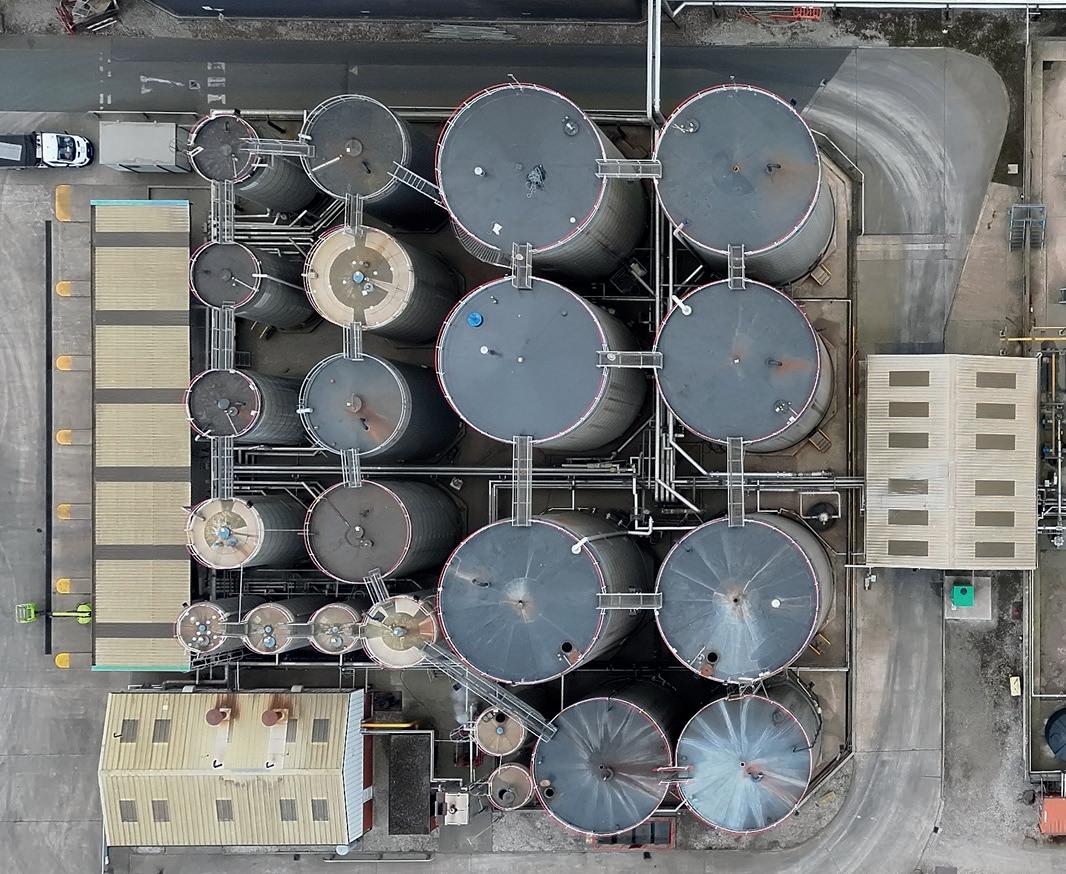
Leading independent oils and fats storage and logistics company Chane has partnered with Peel Ports Group (PPG) to expand bulk liquid capacity at the Port of Liverpool, UK (pictured).
Chane had plans for significant expansion at the port – its main UK terminal – by adding capacity
to increase the range and types of bulk liquid products handled amid sustained demand growth in liquid bulk commodities, the group said on 14 May. This was driven by changing energy requirements, increased biofuel adoption and continued reliance on specialist chemical and food-grade logistics solutions,
“Liquid bulk is becoming an increasingly important aspect of our cargo offering at the Port of Liverpool,” said Phil Hall, Liverpool port director.
Chane handles a broad range of liquid bulk products at its terminals across the Netherlands, France, the UK, Spain, Portugal and Poland, with a total capacity of over 5.6M m³.
The company is active in vegetable oils and animal fats; used cooking oil (UCO) and derivatives; glycerine; base oils; non-hazardous chemicals; pharmaceutical liquids; renewable and biofuel feedstocks; clean fuels and sustainable aviation fuel (SAF) related products; and food and feed liquids.
Japanese biofuel and carbon removal firm comNippon Biofuel Co (NBF) has been selected for a large-scale project in Africa to establish biofuel supply infrastructure for international shipping.
The US$44M project aimed to establish a marine biofuel supply chain in Nampula Province, Mozambique, and the Bono East Region of Ghana, in collaboration with major Japanese maritime companies and certification bodies, the company said in a 19 April blog.
NBF, which focuses on jatropha, said the project aimed to achieve a supply capacity of 400,000 tonnes/year of biofuel by 2032.
“Jatropha, as a perennial crop, enables smallholder farmers to build long-term productive assets,” said NBF CEO Makoto Goda.
According to the blog, the company’s genetic resources and breeding technologies include high-yield varieties with up to 50 times higher productivity compared to wild types. Key aspects of the initiative included the establishment of a jatropha cultivation model; production of jatropha-based biofuel; the development of bunkering systems in Mozambique, Ghana, Singapore and Japan; fuel supply demonstration for ocean-going and domestic vessels; carbon removal through afforestation and biochar production; and the development of rural income and community models.
Project partners include Mitsui OSK Lines, Kuribayashi Steamship Co, Nippon Kaiji Kyokai, Fujii Oil Co and Tottori University.
Global supply chain and logistics company DP World and its partners reduced diesel use at Canada’s Port of Prince Rupert by 24% last year, replacing it with more than 2M litres of renewable diesel, Globe Newswire reported on 28 April.
As part of their initiative – which involved collaboration between terminal operators, logistics providers and marine service companies – renewable diesel had been used across a range of equipment and services, including cargo handling equipment, drayage trucks, trains and marine vessels. A renewable fuel usage of 2.7M litres was the aim for this year, Globe Newswire wrote.
In 2024, DP World helped introduce Petro-Canada EcoDiesel renewable fuel at the port – making it the first port in North America to integrate hydrotreated renewable diesel into regular operations – and the initiative had since expanded, the report said. DP World had also introduced renewable diesel at other Canadian operations, including its Fraser Surrey, Vancouver and Nanaimo terminals, although adoption levels varied from site to site, reflecting operational requirements and fuel availability, the report said.
21-23 September 2026, Amsterdam, the Netherlands www.ofimagazine.com/ofi-international-2026
























USA: Seed and crop protection company Corteva Agriscience has renamed its new seed and genetics unit – previously known as SpinCo – as Vylor, the company said on 4 May.
In October, the company announced it was splitting into two businesses to sharpen its strategic focus.
Corteva’s crop protection business was renamed New Corteva in June, and the company said separation plans remained on track for the fourth quarter of 2026.
Corteva sells a large portion of its seeds under the Pioneer Hi-Bred International brand. With more than 4,000 germplasm patents and more than 2,000 biotechnology patents, Vylor’s range includes hybrid wheat, gene editing, multi-disease resistant corn and next-generation biofuels.
Corteva said it would use its scientific expertise to further strengthen its core business while exploring opportunities to expand to new row crops.
In a separate statement on 12 May, Corteva also announced that New Corteva would be headquartered in Indianapolis, Indiana; and Vylor would be headquartered in Johnston, Iowa.
New Corteva would also maintain a Global Corporate Business Center in Wilmington, Delaware.

The longstanding sampling and testing protocol for Canadian flaxseed exports to the EU – in place since 2009 – officially ended on 1 May, the Agriculture and Agri-Food Canada (AAFC) announced on 24 April.
The protocol was put in place after the detection of trace amounts of an unauthorised genetically modified (GM) flaxseed called CDC Triffid in a Europe-bound shipment in July 2009, leading to the immediate and temporary cessation of flaxseed exports.
The AAFC noted that when CDC Triffid was found in Canadian flaxseed shipments to the EU in July 2009, it was a case of regulatory compli-
ance, not of food, feed or environmental safety.
Following the detection, the AAFC worked with the Canadian Grain Commission (CGC), industry partners and the EU to develop the protocol, allowing trade to continue.
“While the protocol enabled trade to resume, it has been imposing additional costs and administrative burdens on Canadian industry and has put them at a disadvantage relative to competitors,” the AAFC said.
After years of testing with no detections of CDC Triffid, Canada and the EU worked together to review the protocol.
Since June 2013, the CGC had maintained a dataset of all bin tests associated with flaxseed shipments to the EU and had not received a FP967-positive laboratory result for a bin sample in 13 years, the AAFC said.
Following the acceptance of Canada’s formal request for the discontinuation of the protocol, submitted in 2024, it would not be required as of 1 May.
As one of the world’s largest producers and global exporters of flaxseed, Canada produced 454,461 tonnes of the oilseed in 2025 from a planted area of approximately 251,000ha, and exported US$229.7M of flaxseed, US$73.6M worth of it to the EU.
The European Commission (EC) has approved four genetically engineered (GE) crops – two cotton, one maize and one soyabean – for food and animal feed, the US Department of Agriculture (USDA) reported on 27 April.
Published in the EU’s Official Journal on 12 March and valid for 10 years, the authorisations applied to food and feed for import and processing but did not cover cultivation, the report said.
Israeli food biotech company Celleste Bio has partnered with US confectionery and snacks giant Mondelēz International to produce milk chocolate bars made with cell-cultured cocoa butter, Food Processing reported on 15 April.
After launching its cell-cultured cocoa butter in October, Celleste worked with investment partner Mondelēz to produce chocolate bars using the ingredient.
According to its website, Celleste uses a combination of biotechnology, agricultural technology and artificial intelligence (AI) to produce cocoa ingredients. It establishes cell
All products would be subject to the EU’s strict labelling and traceability rules. Submitted by Belgium-based Perseus BV, on behalf of Beijing DaBeiNong Biotechnology Co, the GE soyabean DBN-09004-6 variant was approved for the first time, while the authorisations for the T25 (ACS-ZMØØ3-2) maize and GHB614 × LLCotton25 cotton variants were renewals, the USDA said.
cultures from cocoa beans, then grows and harvests cocoa cells in a cultivator before processing and extracting the cocoa butter and powder.
Celleste was “on track to produce one tonne of cocoa butter annually in a 1,000-litre bioreactor from a single bean,” the company’s chief technical and scientific officer Hanne Volpin was quoted as saying.
Mondelēz produced about a dozen of the milk chocolate bars using the cell-cultured cocoa butter and found that they met integrity and consumption standards for its products, Food Processing wrote.
The milestone of making chocolate bars with the product using real-world production standards demonstrated that Celleste’s cell-cultured butter functioned identically to traditional cocoa butter, delivering the same texture, melt profile and sensory experience, the company said.
Celleste said it planned to scale up production to reach market-ready quantities of the product within the next two years. It was also using AI computational modelling to customise melting points and taste experiences of its cocoa butter to meet specific customer demands.
2-3 July 2026
Food Lipids and Lipidomics for Health, Nutrition and Sustainability Aveiro, Portugal
https://veranstaltungen.gdch.de/ microsite/index.cfm?l=11918&modus=
5-10 July 2026
27th International Symposium on Plant Lipids - ISPL Málaga 2026 Málaga, Spain
https://www.neo.emma.events/ISPL2026
27-30 July 2026
Annual Edible Oil/Products Processing Course (VOP-2026)
College Station, Texas, USA
https://fatsandoilsrnd.com/annualcourses/
11 August 2026
National Seminar on Palm Oil Milling, Refining, Environment and Quality 2026
Pullman Kuching Hotel, Sarawak, Malaysia
https://mpob.gov.my/2026/03/nationalseminar-on-palm-oil-milling-refiningenvironment-and-quality/
15-17 September 2026
Argus North American Biofuels, LCFS & Carbon Markets Summit Monterey, California, USA
www.argusmedia.com/en/events/ conferences/north-american-biofuelslcfs-carbon-markets-summit
21-23 September 2026
OFI International 2026
Amsterdam Congress Centre @ Park Inn by Radisson, the Netherlands www.ofimagazine.com/ ofi-international-2026
28-30 September 2026
3rd Berlin Symposium on Structured Lipid Phases
Berlin, Germany
https://eurofedlipid.org/3rd-berlinsymposium-on-structured-lipid-phases/
29-30 September 2026
Oleochemical Technology
Louvain-la-Neuve, Belgium
https://drive.google.com/file/d/1rRvH7QJ 15XU1QdvyIi8amfph6Iq137xH/view
Following on from the success of OFI International 2024 in Rotterdam, OFI International 2026 is returning to the Netherlands this year to the capital, Amsterdam.
OFI International 2026 will be held on 21-23 September at the Amsterdam Congress Centre @ Park Inn by Radisson. The event will feature four key conferences:
• OFI Commercial/Technical conference - ‘Responding to Market Demands’ covering the EU Deforestation Regulation (EUDR), sustainability, traceability, biofuels/HVO/SAF, the global vegetable oil market and prices, trade agreements, food safety and innovations, and solutions in processing and refining.
• DGF ‘Emerging and Persistent Contaminants in Oils and Fats –Challenges and Innovations’ focusing on contaminant management and mitigation including emerging contaminants such as persistent organic pollutants, process-related compounds, mineral oil hydrocarbons, 3-MCPD and glycidyl esters.
• TRIACT Oleochemicals Technical and Market Approach training session, which will give a global overview of vegetable oils and animal fats derivatives and oleochemical products and their markets.
1-2 October 2026
5th ICIS Pan American Oleochemicals Conference
Ritz Carlton, Coconut Grove, Miami, USA https://events.icis.com/website/13907/
12-14 October 2026
6th International Symposium on Lipid Oxidation and Antioxidants
Wageningen, the Netherlands https://eurofedlipid.org/6th-internationalsymposium-on-lipid-oxidation-andantioxidants/
13-14 October 2026
OFIC 2026
Kuala Lumpur Convention Centre, Malaysia https://mosta.org.my/events/ofic-2026/
20-22 October 2026
Argus Biofuels Europe Conference London, UK
For a full events list, visit: www.ofimagazine.com Information subject to change
• Euro Fed Lipid Oleochemistry Conference – From Oils and Fats to Polymeric Materials: Innovations and Applications. This symposium will present recent advances in the design, synthesis and functionalisation of renewable building blocks, with a particular emphasis on lipids and biobased amphiphiles as platforms for high-performance materials.
Bringing together major players across the Dutch, European and global oils and fats community under one roof, OFI International 2026 will also feature many networking opportunities including a site visit to the working Bonte Hen linseed oil windmill and an evening welcome reception on Monday 21 September.
To secure the early bird and association discount of €500 to the OFI, DGF and Euro Fed Lipid conferences, go to: https://eventdata.uk/Forms/Form.aspx?FormRef=OFI96Delegate

Scan the QR code to get your delegate pass!
www.argusmedia.com/en/events/ conferences/biofuels-europe-conferenceand-exhibition
20-23 October 2026
2026 North American Renderers Association (NARA) Annual Convention Tucson, Arizona, USA https://nara.org/about-us/events/
27-28 October 2026
12th ICIS Asian Surfactants Conference DoubleTree by Hilton, Kuala Lumpur, Malaysia
https://events.icis.com/website/14105/ agenda/
4-6 November 2026
Sustainable Aviation Futures North America Marriott Marquis, Houston, USA https://www.safcongressna.com
5-6 November 2026
European Commodities Exchange Rotterdam, the Netherlands www.ece-rotterdam2026.eu

As one of Europe’s key energy and logistics hubs, the Netherlands is also one of the bloc’s leading biofuels producers Gill Langham
As a relatively small country and with two large ports in Rotterdam and Amsterdam, the Netherlands operates as a biofuel gateway to the rest of Europe.
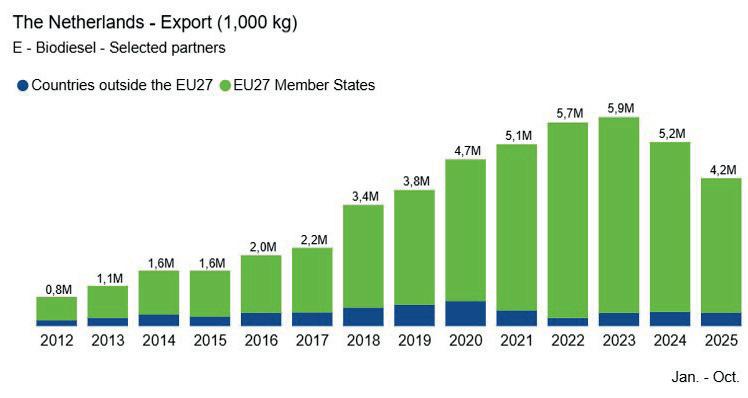
The country’s domestic consumption of biofuel is much lower than production and exports volumes.
In 2025, the Netherlands exported 4.2M tonnes of biodiesel, the majority to EU states (see Figure 1, p20). Its top export destination was Belgium, which accounted for 37.3% of Dutch biodiesel exports in 2025; followed by Germany (29.5%); France (12.8%); the UK (5.4%); Spain (4.9%); Sweden (2.6%); and the USA (1.3%).
Major companies active in the Dutch biofuels sector include Finnish renewable fuels producer Neste, Bunge Rotterdam, Greenergy and Argent Energy, while other companies, such as SkyNRG, are planning to set up operations in the country.
“We have seen huge investments in the biofuel market – by Neste but also by Shell and bp … although these latest investments have been put on
hold due to market circumstances and changed economic challenges (energy prices and – infrastructure),” says Frans Claassen, managing director MVO - The Netherlands Oils and Fats Industry.
In September 2025, oil companies Shell and bp both announced plans to halt biofuel investments in Rotterdam due to lack of competitiveness in the sector.
Finnish group UPM also announced in May that it was pulling out of plans to develop a biofuels refinery in Rotterdam.
According to MVO, uncertainty about long-term policy climate goals for the transport sector were holding companies back from investing in new facilities, particularly those requiring new and innovative technologies requiring major investment and greater risk.
Hanna van Luijk, Neste’s vice president of Renewable Refining Netherlands, says: “Global supply of SAF is outpacing demand, hampering investment in new production capacity.”
Despite the cancellations of some projects, Van Luijk says some companies have indicated they want to invest in sustainable aviation fuel (SAF)/biofuel production in the Netherlands.
“These investments are needed to ramp up the use of renewable fuels as a key lever to help reduce greenhouse gas (GHG) emissions in hard-to-abate sectors such as aviation and (heavy) road transportation,” she adds.
The Netherlands is home to several major biodiesel manufacturers, including Bunge/ Viterra, Argent Energy, Greenergy, Sunoil, Advance Biofuels and Ecofuels, which is part of the Bio Oil Group.
Argent Energy is currently nearing completion of a significant expansion project at its Amsterdam facility, which will increase production capacity from 100,000 tonnes/year to 300,000 tonnes/ year of waste-based biodiesel.
“Amsterdam provides a strategically important location for Argent Energy, giving us access to major logistics networks and the growing European demand for waste-based biofuels,” says Dickon Posnett, corporate affairs director at Argent Energy.
The company, which also has operations in the UK, says its Port of Amsterdam facility supports both domestic and international renewable fuel supply chains.
Bunge/Viterra produces biodiesel from European rapeseed oil at its production facility in Botlek.
It says its biodiesel has 60-70% less CO2 emissions than fossil diesel, due to its low water content and minimal contamination. Its biodiesel also has strong cold-weather properties compared to the European Norm (EN-14214).
Sunoil Group produces FAME biodiesel from waste oils and fats, such as used cooking oil (UCO), at facilities in the Dutch
cities of Emmen and Kampen. The Kampen site has direct access to the Port of Kampen.
The company supplies biodiesel to customers across the Netherlands; Scandinavia, the United Kingdom and other European markets.
Eco Fuels Netherlands, part of the Bio Oil Group, produces up to 160,000 tonnes/year of FAME from UCO and other waste feedstocks at its plant in Eemshaven in the north of the country, which has direct harbour and sea access.
Neste operates Europe’s largest renewable fuels refinery in the Port of Rotterdam, which is currently being expanded.
In addition, the company also operates a terminal in the Port of Rotterdam and a pre-treatment facility in Sluiskil, near the DutchBelgian border.
Neste’s Rotterdam refinery currently has a production capacity of 1.4M tonnes/year, which includes the capability to produce up to 500,000 tonnes/year of SAF. Renewable diesel (HVO) is the main product produced, with renewable naphta and renewable propane as additional by-products.
The company’s next generation biomass -to-liquid (NEXBTL) technology enables Neste to produce renewable fuels from a wide range of oils and fats feedstocks, of which around 90% are waste and residues such as used cooking oil (UCO) sourced from over 60 countries.
Neste is also exploring new renewable raw materials and production technologies such as novel vegetable oils from regenerative agricultural concepts and ligno cellulosics (forestry and agricultural waste), Van Luijk says.
The ongoing expansion of the refinery will increase total production capacity to 2.7M tonnes/year, including 1.2M tonnes/ year of SAF, making it the world’s largest renewable fuels and SAF production facility.
Neste’s current total global production capacity is 5.5M tonnes/ year, which is expected to increase to 6.8M tonnes/year following the completion of the Rotterdam facility’s €2.5bn (US$3.3bn) expansion, scheduled for 2027.
Renewable fuels produced by Neste at its refineries in Rotterdam, Singapore and Finland are shipped worldwide, with a large part of the volume produced in Rotterdam destined for the European market.
According to the company’s 2025 annual report, 72% of the renewable diesel and SAF sales volumes was sold in Europe, with the remaining 28% sold in North America.
Although Neste is currently the only SAF producer in the Netherlands, other companies are planning to start production in the future, MVO says.
For example, SkyNRG is constructing a large-scale renewable fuels facility in the north of the Netherlands.
Located at the Delfzijl chemical park, the DSL-01 project will convert waste-based feedstocks – such as UCO and other residual fats and greases – into SAF using the hydro-processed esters and fatty acids (HEFA) pathway.
Scheduled to become operational by 2028, the facility is designed to produce approximately 100,000 tonnes/year of SAF, alongside around 35,000 tonnes/year of co-products including renewable propane, butane and naphtha.
Following a lengthy development phase, the project reached a major milestone with financial close earlier this year, marking the transition into construction. Key partners and stakeholders include airlines such as KLM (the primary SAF offtaker).
Another project in the works is the development of a u

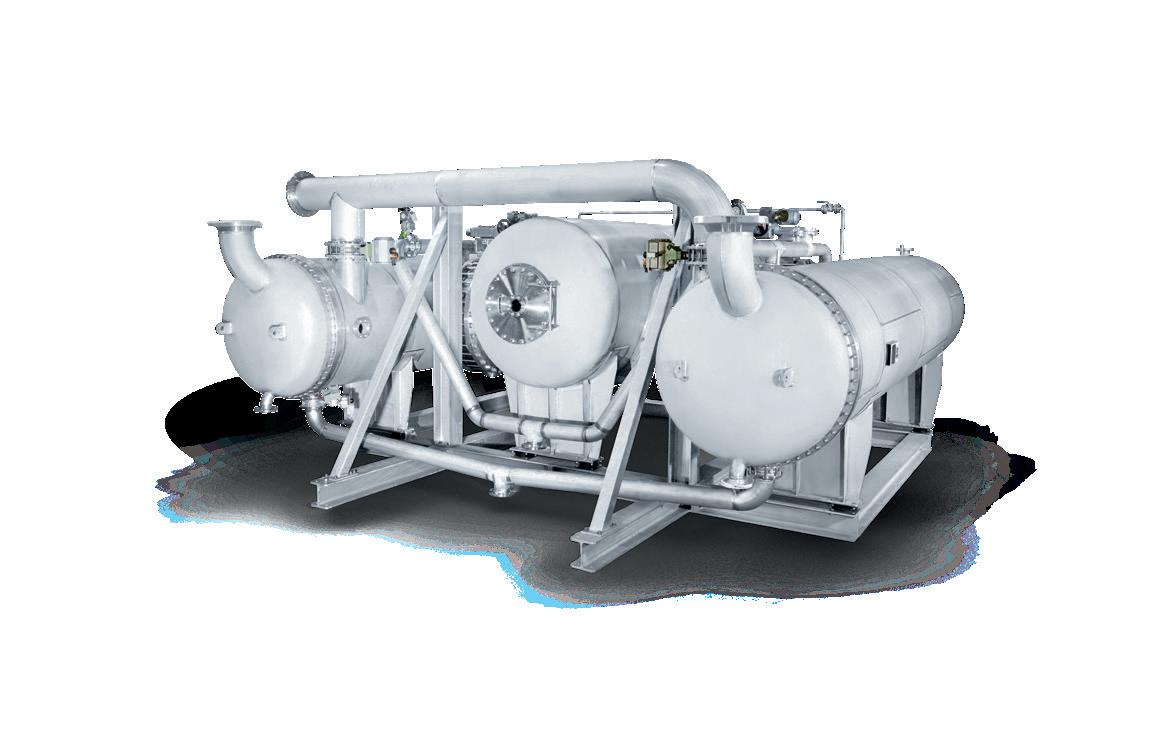
ICE GENERATION
• Enhanced flow design
• Steam savings of up to 60 %
• Mechanical venting
• A consistent vacuum 24 / 7
• A turnkey system from one source
Greenstock Pretreatment Facility (GPF) at VTTI’s terminal in Amsterdam. VTTI and its partner, Connex, announced in December that the project had entered the front-end engineering design (FEED) phase.
Scheduled to become operational in 2029, the facility would have the capacity to process over 400,000 tonnes/year of renewable feedstocks to produce sustainable fuels, including renewable diesel (HVO) and SAF.
According to a report by the Dutch Emissions Authority (NEa) published on 15 April 2026, biofuels were by far the most important contributor to emission reduction of transport fuels in the Netherlands in 2025.
HVO as a share of renewable energy in transport fell sharply from 36.4% in 2024 to 23.6% in 2025, attributed to increased use of bio-kerosene, while the share of FAME also continued to decline, from 19.6% in 2024 to 16.5% in 2025.
The main feedstocks currently used in biofuel production in the Netherlands are UCO, palm oil mill effluent (POME), animal fats (category 1, 2 and 3), brown grease and rapeseed oil, according to MVO data.
The NEa report ‘Summary of First Results of Renewable Energy for Transport 2025’ notes a shift in raw materials used as biofuel feedstocks in the sector, with the bulk of biofuels in 2025 made from raw materials from waste streams: 98% in 2025, compared to 91% in 2024.
In 2025, UCO was expected to account for 31% of raw materials, up from 26% the previous year, wastewater from palm oil mills 20% (2024: 31%) and food waste 15% (2024: 12%).
According to the NEa report, raw
materials used in the Dutch fuels sector in 2025 were sourced from 98 countries, with the top 15 countries accounting for 86% of feedstocks.
These were mainly Asian and European countries (66% and 23% of the total, respectively).
The largest volume of raw materials came from China, with the highest amount of used frying oil (58%) and food waste (65%) also coming from that country.
With 16% of shipments, Indonesia was the second leading feedstock supplier in 2025 and was also the main supplier of waste streams from the palm oil industry:
POME and empty palm oil bunches, 57% and 61% respectively.
Malaysia was in third place with 13%, as in the previous two years, supplying about 37% of POME to the Netherlands.
Approximately 3% of the raw materials used in biofuel production were produced within the Netherlands, a decreasing percentage compared to previous years. These raw materials comprised entirely of waste materials; Dutch crops were not used, the report said.
Despite challenges facing the biofuels sector, including lack of demand –particularly for SAF – and regulations holding back the use of available waste and residues, renewable fuels will continue to play a significant role in reducing transport-related GHG emissions and the industry will continue to find new raw materials to produce these fuels, Neste’s Van Luijk says.
According to Van Luijk, the Dutch biofuels industry needs; sufficient demand for renewable fuels, increasing over time to enable investment; all available waste and residues should be used optimally; and all pre-conditions for production should be met.
“Energy security and strategic autonomy will become increasingly important in a volatile and challenging global environment,” she adds. ● Gill Langham is the assistant editor of OFI
Bram van Santen, CEO of Connex Trading will be chairing the biofuels session at the OFI International 2026 Commercial/Technical conference on 21-23 September in Amsterdam, the Netherlands. Session topics and speakers include:
European Commission and Dutch policy – implementation of EU Renewable Energy Directive (RED)III
Compliance and enforcement of the RED in Europe
Mark Bressers, Managing Director, Dutch Emission Authority (NEa)
New veterinary legislation and used cooking oil (UCO) imports
Steven Danneel, Coordinating Senior Inspector, Animal By-products, The Netherlands Food and Consumer Product Safety Authority (NVWA)
Biofuel policies across the EU and tools for fraud prevention
Domenico Mininni, Policy Director,
European Biodiesel Board (EBB)
Biodiesel production in the Netherlands and beyond Dickon Posnett, Director of Corporate Affairs, Argent Energy
Biofuel markets perspective of an oil major
Global biofuel market developments and availability of waste and advanced feedstocks
Rohaise Low, Strategic Industry Expert, Fastmarkets
Advanced Process technologies for waste and edible oil residuals in HVO and SAF Production
Raül Sanchis i Gonzàlez, Technoilogy
To book your delegate pass, go to: www.ofimagazine.com/ ofi-international-2026













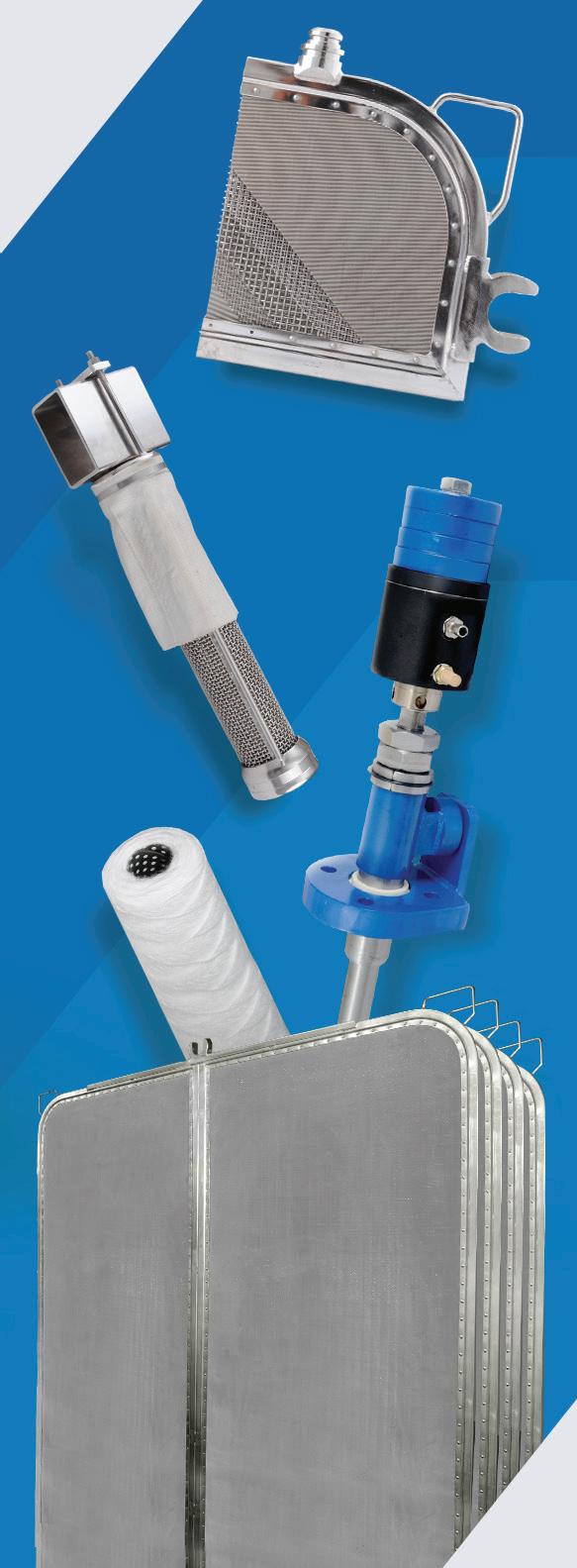

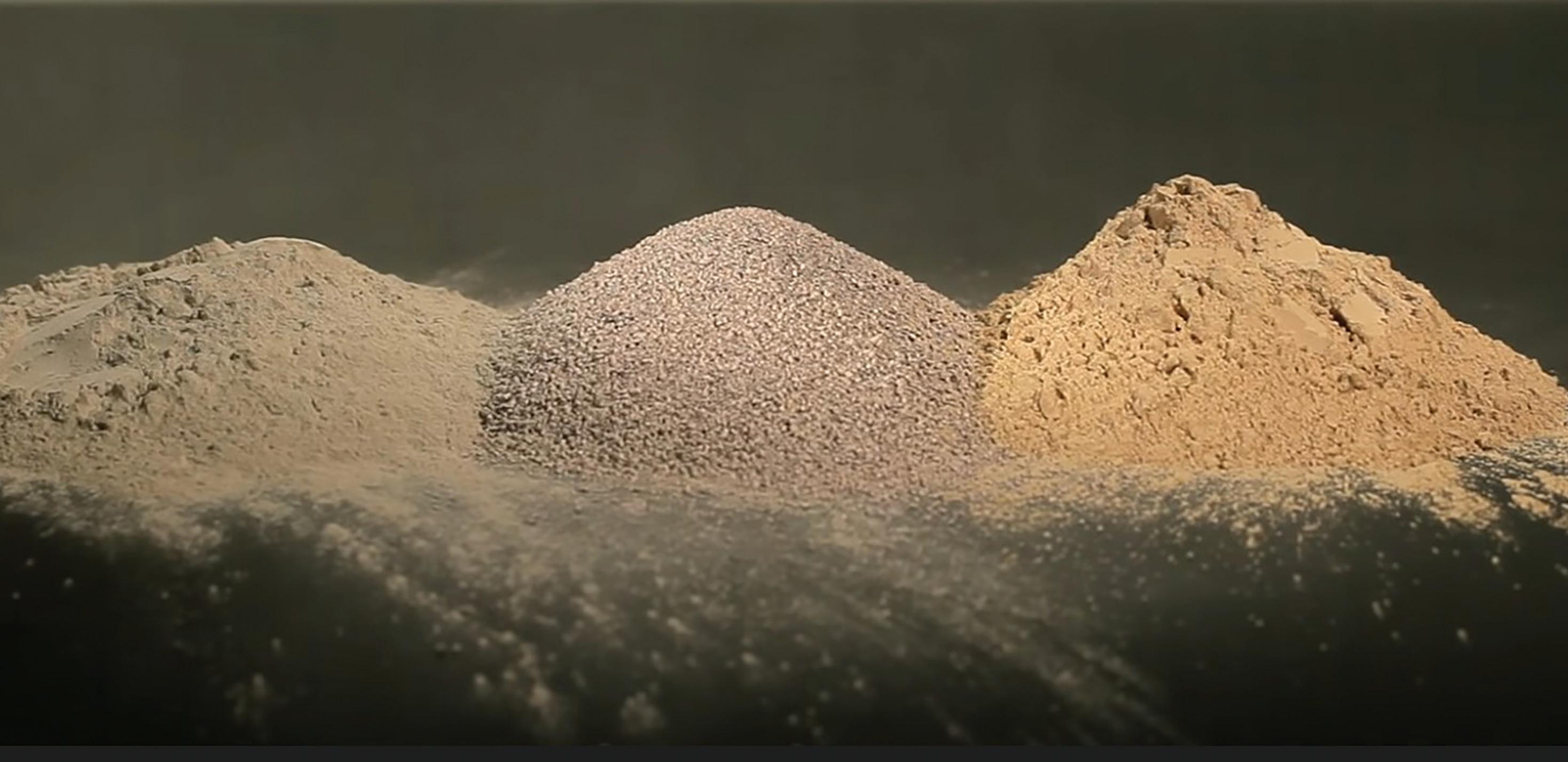
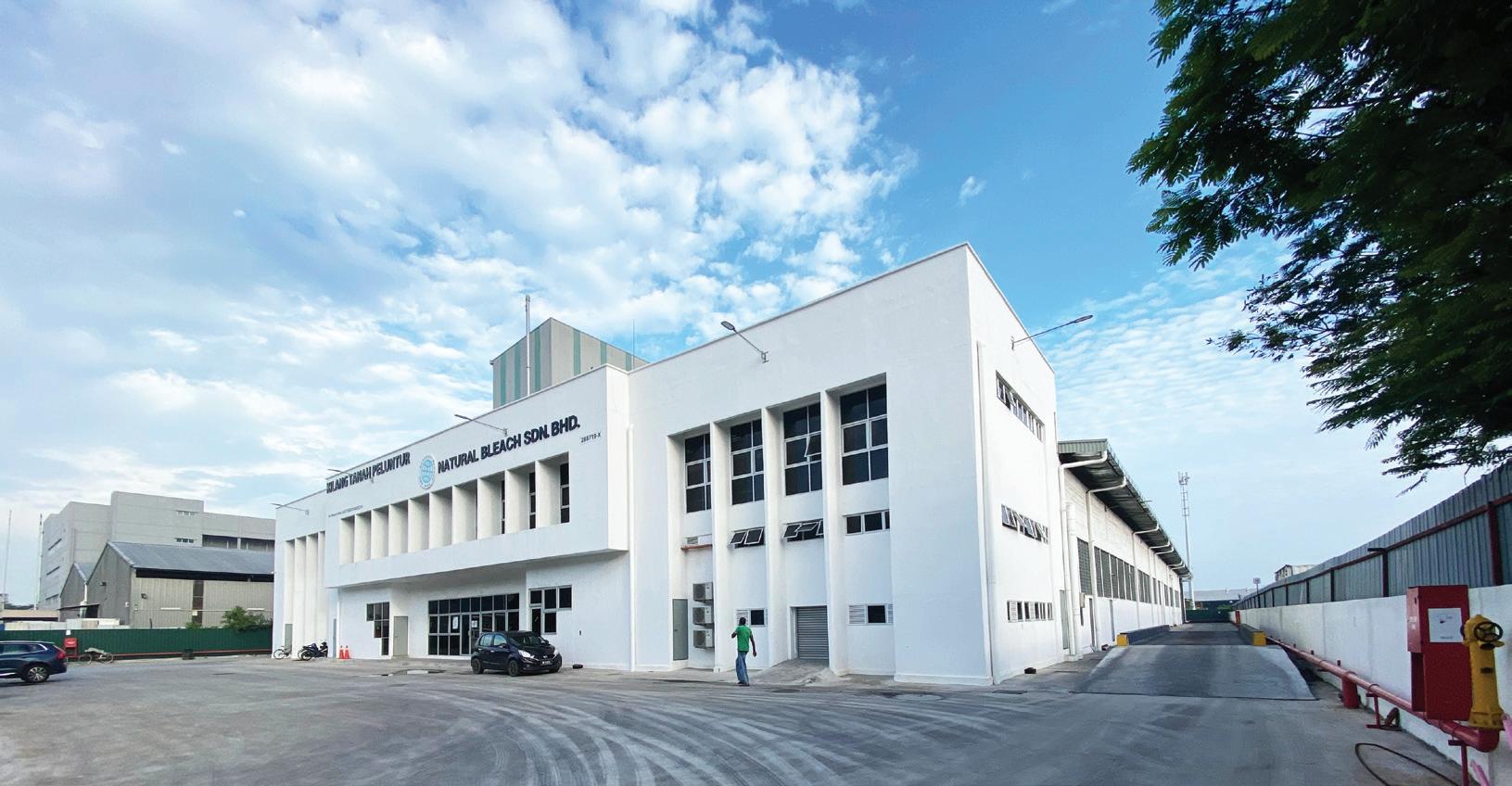
The handling and transport of bleaching earths require a careful balance between efficiency, safety and product integrity. Logistics must be adapted to refinery requirements, local infrastructure and regulatory standards Pat Howes
Bleaching earths are fine, highly adsorbent powders widely employed in the oil refining industry.
Although their movement from factory to refinery may appear straightforward, in practice it requires meticulous attention to packing, dust control and moisture protection to preserve product quality, minimise hazards and ensure efficient logistics.
Over time, three principal transport formats have become established: small bags, jumbo bags and bulk powder tanker loads.
Small bags most commonly weigh 25kg, although formats of 18kg, 20kg and 50kg are also used. The lighter 18kg option reflects workplace safety regulations on manual lifting, while the heavier 50kg bags are still used in developing countries where hundredweight bags have long been customary.
In the USA, a hundredweight equals 100 pounds or 45.326kg, while in the United Kingdom and former British colonies, it equals 112 pounds or 50.8kg.
These bags may be open-top, filled and sealed by sewing, or valve-type, filled via a spout using screw-feed or pneumatic systems and sealed by inversion or tucking in the spout.
They are typically manufactured from woven polypropylene (PP) or polyethylene (PE), or multi-ply paper, with pasted seams, often three to five layers thick, with optional plastic liners to further protect against moisture adsorption.
Woven PP/PE bags that are open top and stitched are common in developing countries where hooks are still used in handling.
In developed countries, PP/PE bags are not desired as they can introduce plastic fibres and threads from the stitching into the oil being processed.
For safety, the printing on both the PP/PE & paper bags should be of edible ink. The paper and glue should also be non-toxic.
Valve-type paper bags may incorporate vented plastic liners sandwiched between paper layers to allow air to
escape during filling, preventing bag rupture, while airtight liners are more common in open-top bags.
The paper itself combines long and short fibres to balance strength and permeability, essential for valve-type designs.
Valve bags are preferred in developed countries due to reduced dust generation during packing, and dust extraction systems are standard around packing machines to minimise hazards.
Vacuum cleaning ensures bags are dust free before palletisation, with forty 25kg bags typically stacked on each pallet, batch-coded, quality-checked and dispatched by shipping container or lorry.
Palletised materials may be strapped, stretch-wrapped or shrink-wrapped, depending on customer requirements.
Bag dimensions are often designed so that the bags fit closely when loosestacked, allowing up to 23 tonnes to be shipped in a 20-foot container.
Palletisation aids handling where fork-lift trucks are available but reduces container loading capacity, which increases freight cost. Loose stacking remains preferred in regions with lower labour costs.
Jumbo bags, which generally hold between 800kg and 1,200kg of bleaching earth, are typically manufactured from PP/PE fabric with bonded liners, although some suppliers use loose liners that can obstruct discharge. Jumbo bags are normally equipped with a top filling spout and a bottom discharge spout, each approximately 300mm in diameter and length.
Some designs omit discharge spouts and are emptied by cutting open the bottom, rendering them single-use, while spouted bags may be reused.
Jumbo bags usually have a square base, often reinforced with internal baffles to prevent bulging and thus optimise container loading.
seam jumbo bags are much more resistant to moisture pickup and may be the better choice if the jumbo bags are to be stored in open or partially open places. The downside is that bondedseam jumbo bags are more expensive to manufacture than conventional stitchedseam jumbo bags.
Typically, 20 jumbo bags can be loaded into a 20-foot container, often stacked two per pallet. Palletised jumbo bags may be strapped and wrapped according to customer requirements, and forklifts with side-shift capability are particularly useful for manoeuvring pallets without damage. Although jumbo bags can be loaded
directly into containers without pallets, unloading them later is difficult and often results in damage.
It is easier to load and unload palletised jumbo bags from containers when utilising fork-lift trucks with side-shift capability.
At the refinery, the discharge of bleaching earth from baffle-type jumbo bags is slower than for bags without baffles.
The bleaching earth is discharged from the jumbo bag into a small hopper, from which it is transferred to the silo or plant

Handling is facilitated by straps attached to the four corners, enabling lifting by forklift or crane. Strap length is critical: straps that are too short are difficult to attach, while those that are too long may prevent adequate lifting height for discharge into hoppers. For safety, all four straps must be used during lifting.
Most jumbo bags have stitched seams that are a potential route for moisture to get through to the bleaching earth. A more recent development is the use of bonded-seam bags that are essentially water-tight.
Bleaching earths packed in bonded-



hopper by either blowing or suction.
u of the tanker. It is essential that tipping tankers are returned to the horizontal position before departure, as failure to do so risks collisions with overhead structures such as pipes, buildings or bridges.
Blowing is more effective than suction, especially if the height between the jumbo bag discharge hopper and the silo/ plant hopper is great.
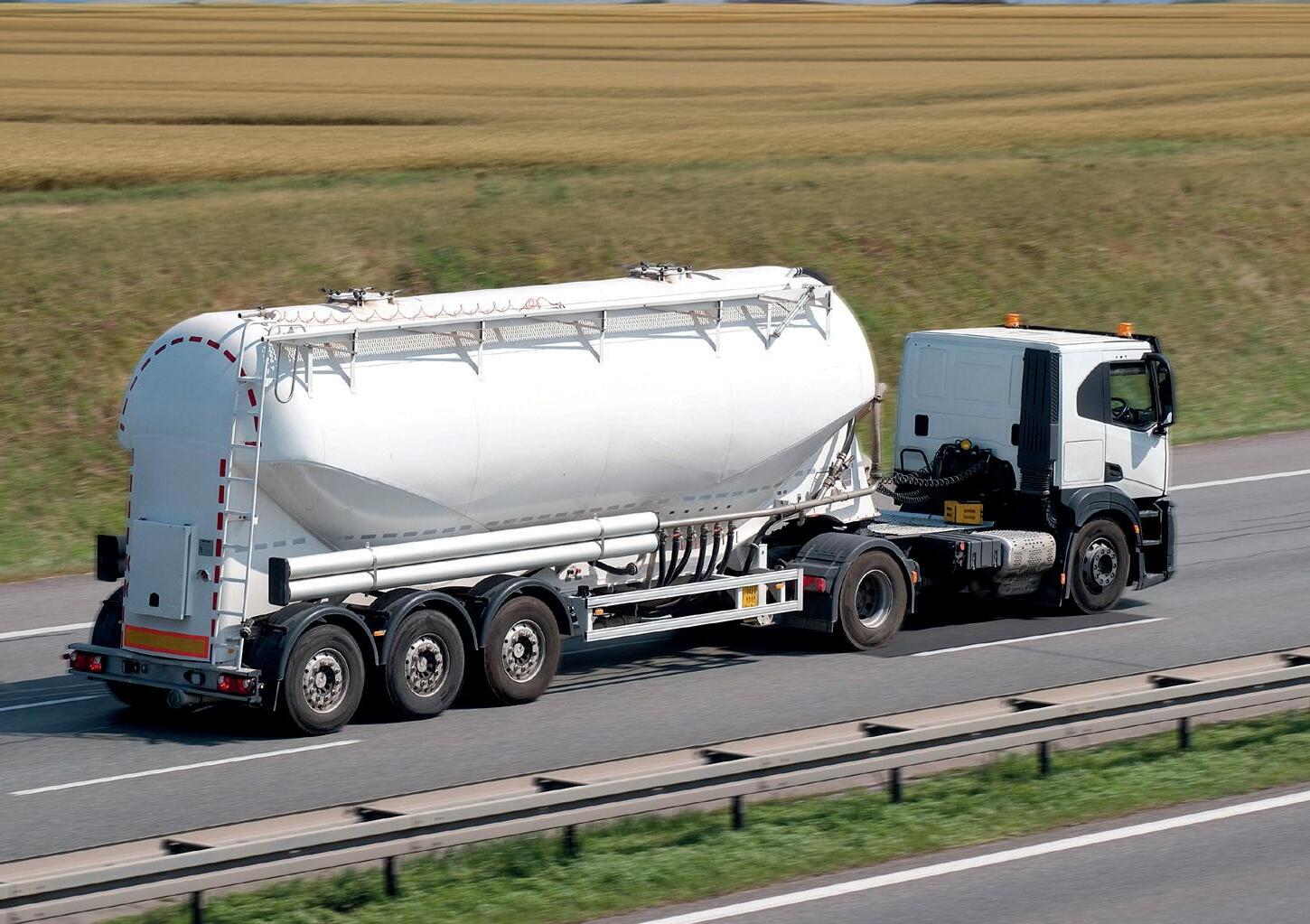
Bulk powder tankers are the preferred mode of delivery for large refineries, particularly when located in the same country as the bleaching earth manufacturer.
Tankers are loaded directly from silos or via jumbo bag discharge, with dustextraction systems ensuring safe handling.
Prior to loading, tankers must be clean, dry and inspected to confirm that the previous cargo was bleaching earth or another compatible food-grade material.
Visual inspections and photographs are typically taken as proof of cleanliness.
The tanker is weighed before and after filling to confirm the correct quantity is loaded, and customers repeat the weighing process upon arrival and after discharge to verify delivered weight.
Discharge is achieved by pressurising the tanker with a Roots blower, which fluidises the bleaching earth and conveys it through a four-inch flexible hose into the refinery’s silo.
Excess air is vented from the silo through dust collectors to prevent emissions.
Tankers are generally of two types: belly tankers, which have multiple outlets at the base, and tipping tankers, which elevate to about 45 degrees to discharge through a single outlet at the lower end
More recently, containerised shipments with flexibags fitted inside containers have emerged as an alternative method. The bleaching earth is discharged from the flexibag into the customer’s silo, usually with the aid of a tipping trailer. While efficient, this system is constrained by the limited availability of tipping trailers and local compressors in many regions.
Bleaching earths must always be stored in clean, dry conditions away from strong odours, which they readily absorb. During pneumatic conveying, such as when discharging from tanker to silo, sharp bends in pipework should be avoided, as these can cause certain bleaching earths to break down into finer particles, potentially leading to problematic filtration during use.
After use in the refinery, spent bleaching earth contains impurities that have been removed from the oil, and some residual oil will also be present.
The spent bleaching earth may be utilised in applications such as an additive for animal feed; for salt lick for cattle; as a plasticiser for tarmac; or as a component in cement manufacture. Alternatively, the residual oil may be
extracted from the spent bleaching earth and utilised for biodiesel production. The de-oiled spent bleaching earth may also be utilised as a component in brick manufacture.
Transport of spent bleaching earth is normally in the skips that are used for its collection at the filtration stage.
The transport of the spent bleaching earth is important as residual polyunsaturated components are prone to oxidation and can lead to auto-ignition of the spent bleaching earth. This tendency for auto-ignition is greatest for acid-activated bleaching earths, where acid-catalysed oxidation can occur.
To prevent auto-ignition the spent bleaching earth may be sprayed with water prior to transportation. The downside of water addition is that the weight of the spent bleaching earth increases significantly, leading to an increase in transportation costs.
As mentioned earlier, bleaching earths are highly absorbent finely-divided powders.
Bleaching earths may be primarily bentonite – which has a layered structure – or attapulgite or sepiolite, which have a fibrous structure.
Appropriate personal protective equipment must be worn wherever there is a likelihood of exposure to bleaching earth to prevent damage to the respiratory system, particularly to protect from the fibrous attapulgite- and sepiolite based bleaching earths.
In summary, the handling and transport of bleaching earth require a careful balance between efficiency, safety and product integrity.
Moisture protection is critical due to the material’s high adsorptive capacity, dust control is essential during packing and discharge and container optimisation directly influences freight efficiency.
Safety protocols, including tanker cleanliness, jumbo bag strap usage, and tipping precautions, must be rigorously observed to prevent accidents and contamination.
Whether supplied in small bags, jumbo bags, bulk tankers, or flexibags, logistics strategies must be adapted to refinery requirements, local infrastructure and regulatory standards.
With increasing demand for sustainable and dust-free operations, innovations in packaging and transport are expected to continue shaping the future. ● Dr Pat Howes is the technical and marketing director of Natural Bleach Sdn Bhd, Malaysia


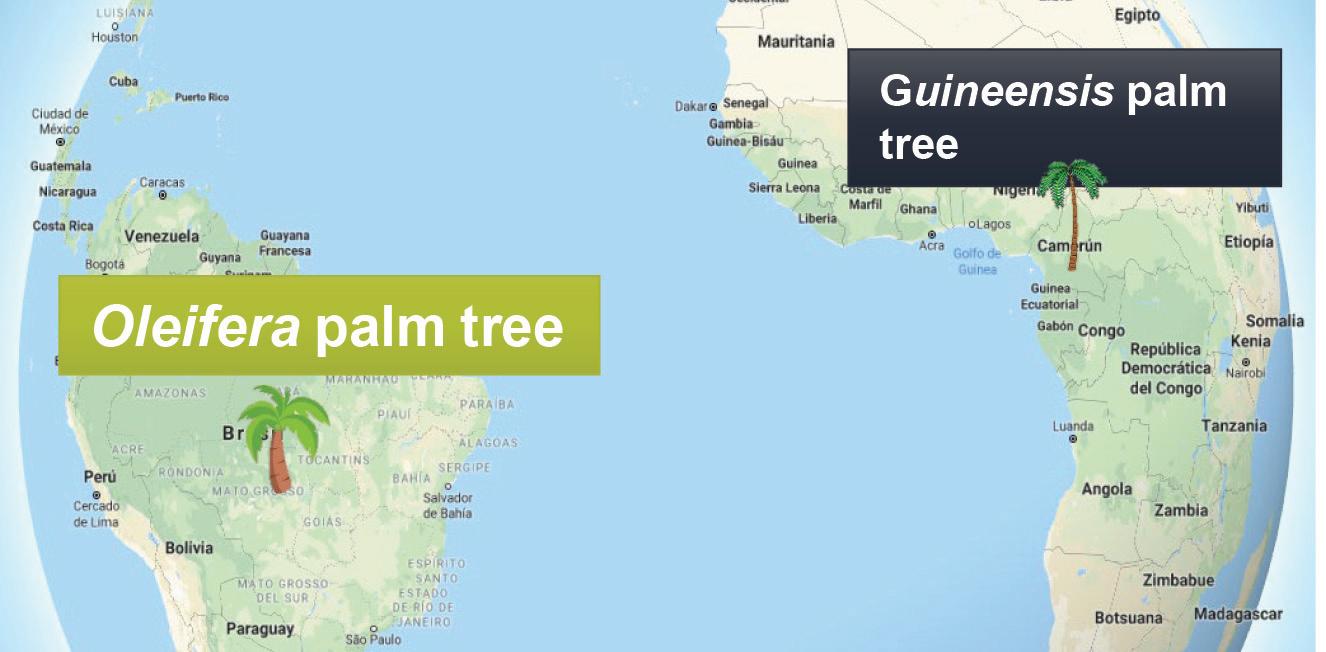
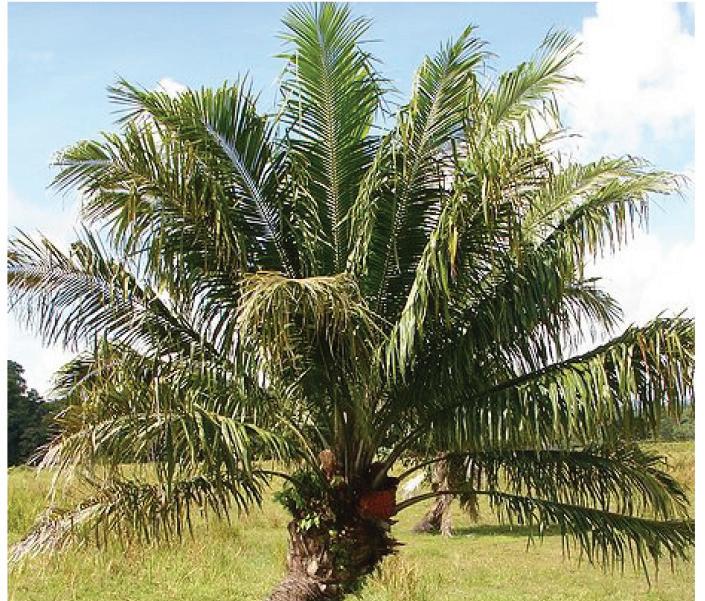
E oleifera (American oil
High genetic variability
Low oil yield
Good tolerance to disease
Slower height growth
Oil with high content of oleic acid
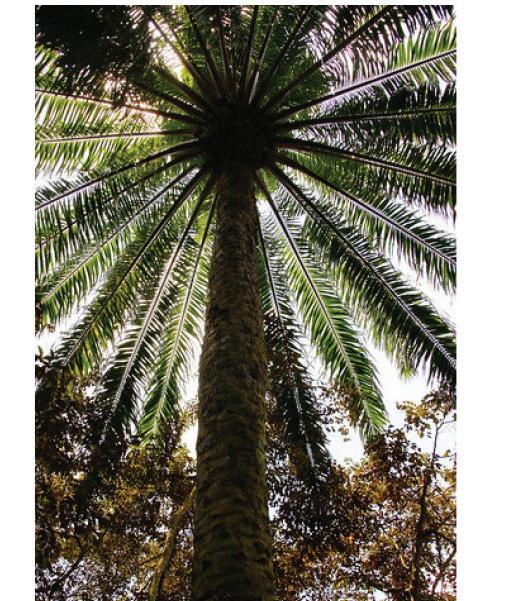
E guineensis (African oil palml)
Low genetic variability
High yield
Susceptible to diseases (bud rot)
Higher height growth
Oil with high content of saturated fat
Source: Jorge Bello, Performance Material Group, EP Engineered Clays Corporation/EP Minerals, 33rd Technical Short Course: Advanced Oil Processing, Colombia
Hybrid oil palms are growing in popularity in some regions due to their disease resistance, slower height growth and drought tolerance. Processors need to take into account the oil’s lower acidity, higher oleic acid and carotene content, and greater susceptibility to oxidation when bleaching is carried out Jorge Bello
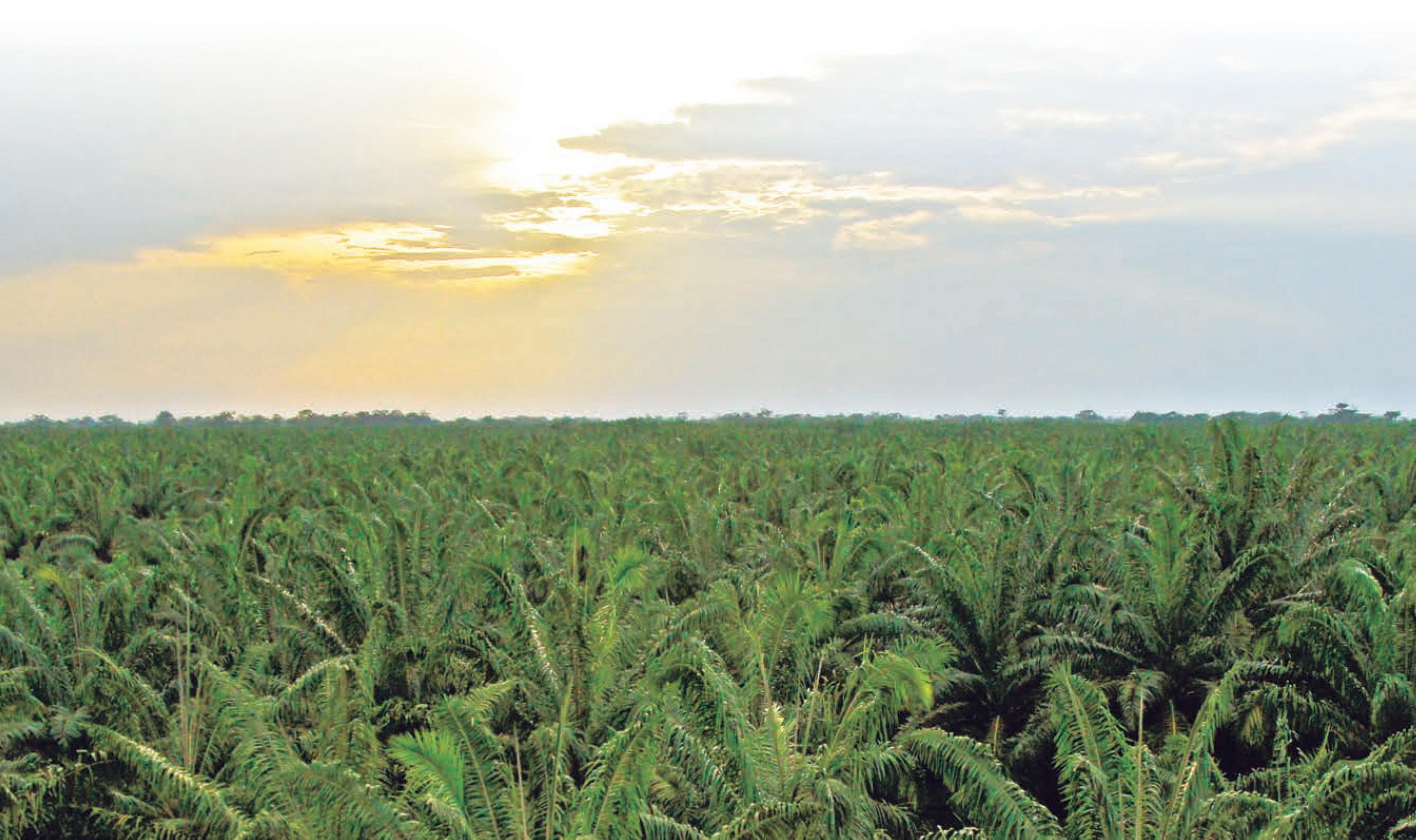
Hybrid oil palm trees are crossbreeds between Elaeis guineensis (African oil palm) and Elaeis oleifera (American oil palm).
Conventional African oil palm – a cross between the dura and pisifera oil palm varieties – has been in commercial production for more than 100 years and accounts for the majority of oil palms grown today.
However, hybrid oil palms are gaining popularity in specific regions due to their disease resistance, slower height growth, drought-tolerance and ability to meet sustainability goals.
The slower height growth of hybrids means the trees remain productive for longer periods, reducing the need to













Be the first to know.
e. taikoclaymkt@taikogroup.net
t. +603 7660 7716
w. taikoclaygroup.com
e office@taikogroup.eu
t +31 10 800 5479







Source: Jorge Bello, Performance Material Group, EP Engineered Clays Corporation/EP Minerals, 33rd Technical Short Course: Advanced Oil Processing, Colombia
Source: Jorge Bello, Performance Material Group, EP Engineered Clays Corporation/EP Minerals, 33rd Technical Short Course: Advanced Oil Processing, Colombia
Source: Jorge Bello, Performance Material Group, EP Engineered Clays Corporation/EP Minerals, 33rd Technical Short Course: Advanced Oil Processing, Colombia
clear forests for replanting and making harvesting more efficient. They are more drought-tolerant, making them suitable for areas where conventional palms struggle, reducing the pressure to expand plantations into rainforests or peatlands.
Hybrids show improved resistance to bud rot (a major issue in Latin America) and other fungal infections, reducing the need for chemical pesticides. They can grow in less fertile soils, lowering the need for fertilisers and minimising nutrient runoff into waterways.
Hybrids also produce a palm oil with a
high oleic acid content, which is viewed as healthier and fetches a higher market price.
In Latin America, hybrids are grown in Colombia, Brazil and Ecuador. In Southeast Asia and Africa, some countries are experimenting with hybrids for easier harvesting and sustainability factors outlined earlier.
There are no exact statistics on the cultivation of oil palm hybrids around the world but the figure is still relatively small compared with conventional African oil palm.
The global harvested area devoted to
oil palms was some 25.1M ha in 2023/24, chiefly in Indonesia and Malaysia, which account for more than 80% of global palm oil production, according to Oil World figures. Colombia ranked fourth in global 2024 palm oil production at some 1.72M tonnes.
In 2023, hybrid oil palms (known as OxG) covered 110,430ha in Colombia, representing 18.5% of the country’s total oil palm area, according to the National Federation of Oil Palm Growers of Colombia (Fedepalma).
Challenges, however, remain in the large-scale adoption of hybrid oil palms due to factors including their lower yield, slower maturity to reach full productivity and the higher initial costs of seedlings.
When comparing hybrid palm oil to conventional E guineensis, OxG has:
• Lower acidity and a lower free fatty acid (FFA) content due to less activity of lipolytic enzymes (which break down fats into FFAs) in the palm fruit mesocarp.
• An iodine value 8-14 points above E guineensis.
• A lower solid fat content.
• Double the amount of carotenes.
• An iron content 1.5-2 times higher than E guineensis.
• Lower oxidative stability and a higher tendency to go rancid due to its higher polyunsaturated fatty acid (PUFA) content.
When comparing the main quality parameters of the two breeds during storage, hybrid palm oil is more susceptible to oxidation despite showing the same Deterioration of Bleachability Index (DOB) value (see Figure 2, above left).
In fact, hybrid palm oil has an anisidine value (AV) almost five times that of conventional palm oil, AV being a better indicator of secondary oxidation.
For this reason, producers and refiners of hybrid palm oil should focus on avoiding oxidation.
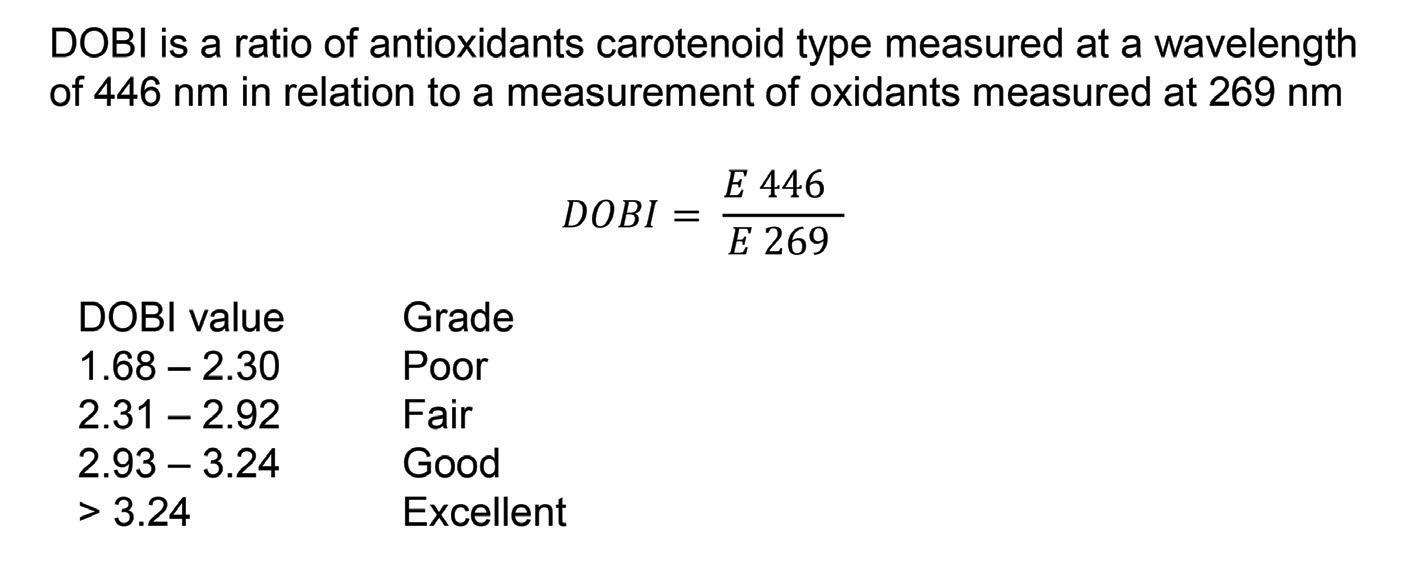
The very high carotene content (8002,500 ppm) of hybrid palm oil skews its DOBI. This is because DOBI evaluates the ratio between beneficial carotene pigments and secondary oxidation products (mainly aldehydes), inflating the DOBI value even if the oil has undergone significant oxidation.
DOBI is calculated as the ratio of antioxidants carotenoid type measured at a wavelength of 446nm in relation to a measurement of oxidants shown at 269nm (see Figure 3, above left).
It was developed on African palm oil with a steady range of β-carotene content
































Source: Jorge Bello, Performance Material Group, EP Engineered Clays Corporation/EP Minerals, 33rd Technical Short Course: Advanced Oil Processing, Colombia
Jorge Bello, Performance Material Group, EP Engineered Clays Corporation/EP Minerals, 33rd Technical Short Course: Advanced Oil Processing, Colombia
and a fairly uniform fatty acid composition, especially in terms of oleic acid (C18:1). For hybrid palm oil, the DOBI ratio is skewed due to its high β-carotene and 18:1 content, and the many varieties of hybrids.
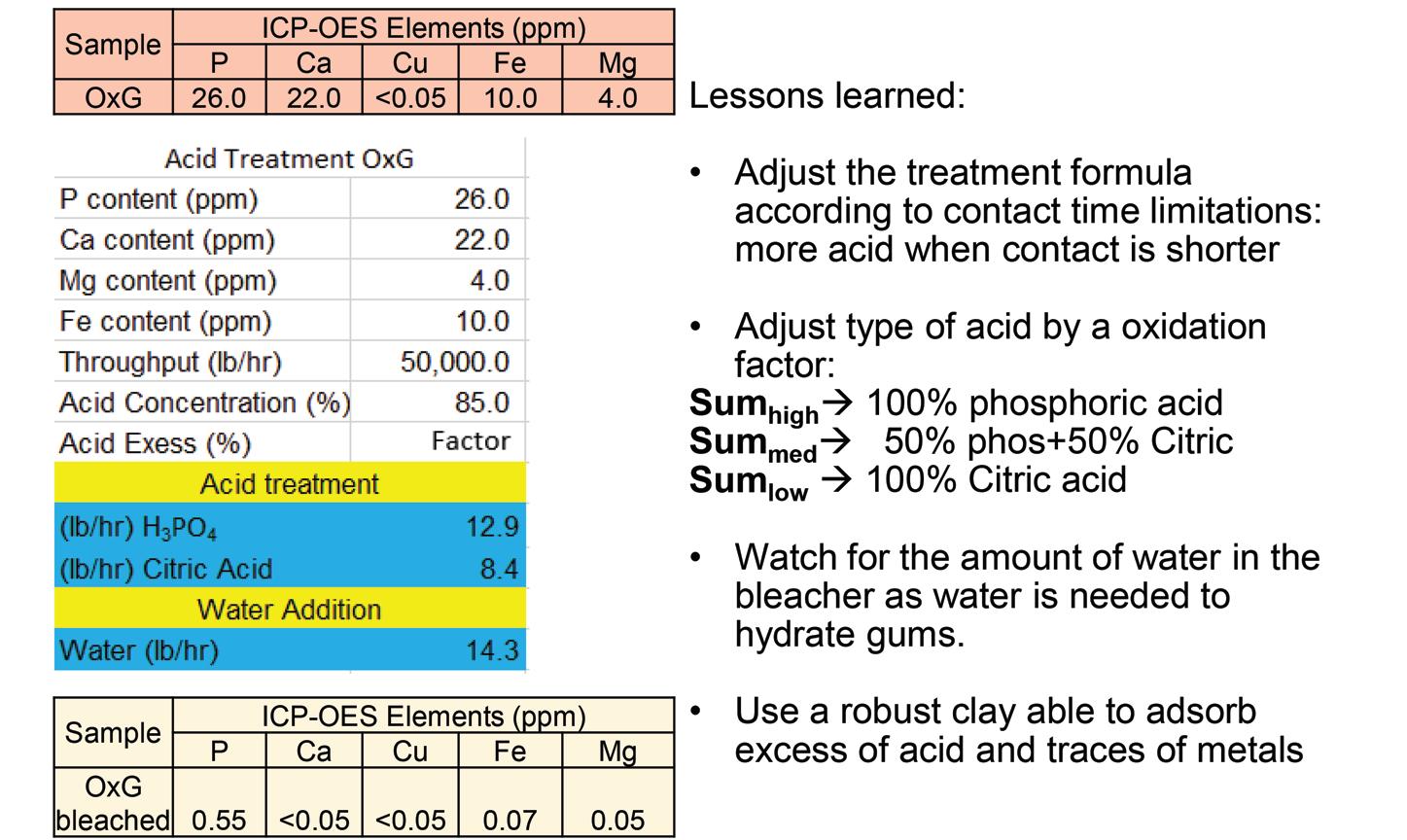
In relation to proper acid treatment for iron (Fe) and non-hydratable phospholipids (NHP), the treatment formula needs to be adjusted according to contact time limitations – more acid treatment is needed when the contact time is shorter (see Figure 4, previous page).
The type of acid should also be adjusted by an oxidation factor. The amount of water in the bleacher needs to be monitored as water is needed to hydrate
gums. A robust bleaching clay should also be used to adsorb excess acids and traces of metals.
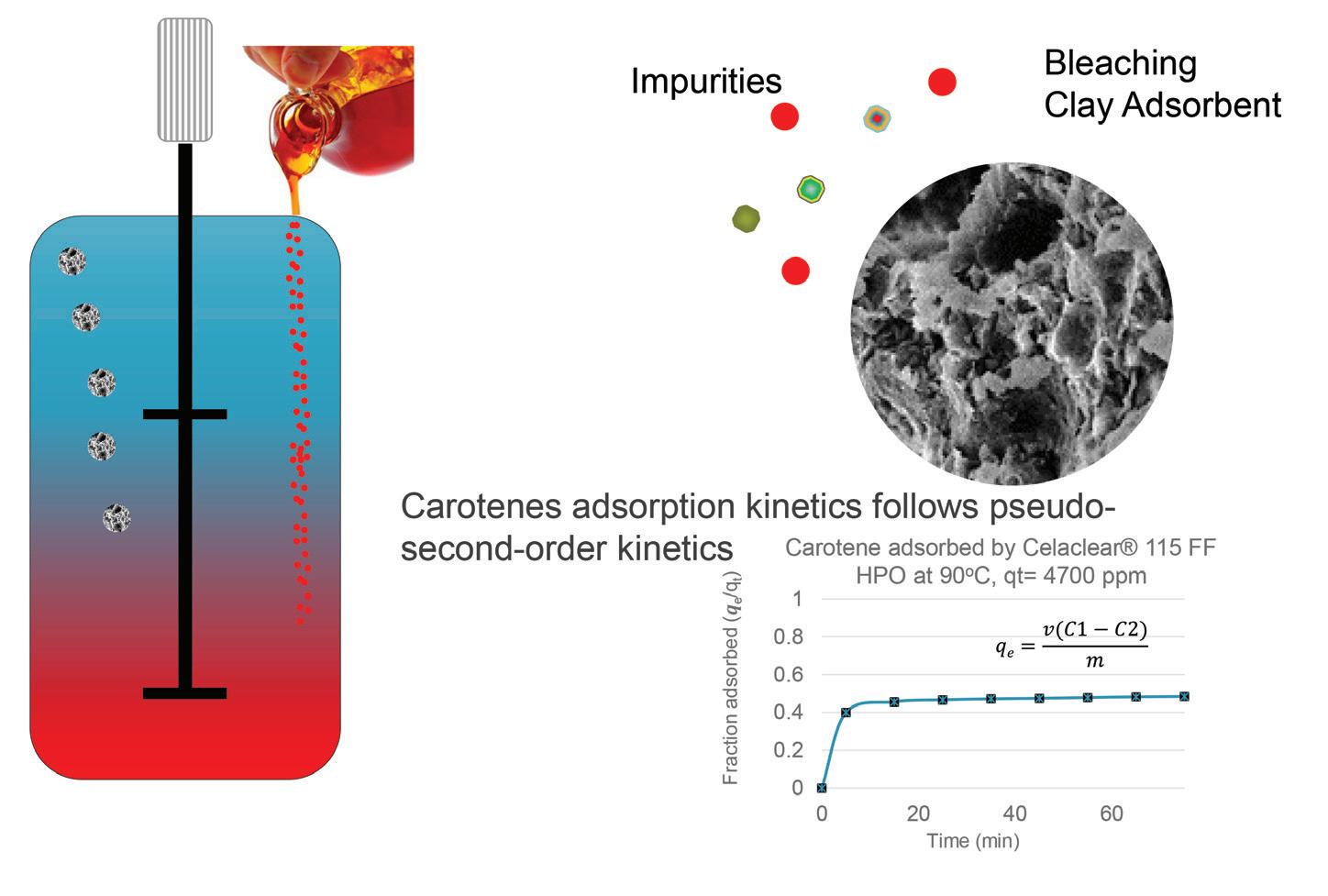
The general bleaching process can be described as the use of bleaching earths or clays to enhance the quality of the oil. During bleaching, oil is placed in contact with the clay. Contact between the two is promoted so that impurities are adsorbed on the clay’s surface, and clay with contaminants is removed by filters. Effective adsorption is impacted by:
• The type and activity of clay
• Temperature
• Contact time
• Liquid viscosity
• Concentration of clay
• Effectiveness of agitation
• Moisture in the oil
• Speed with which the clay surface is saturated
• Selectivity of the clay surface
• Presence of competing species, such as phospholipids (NHP), soaps, metals and oxidised compounds which compete for adsorption sites on the clay.
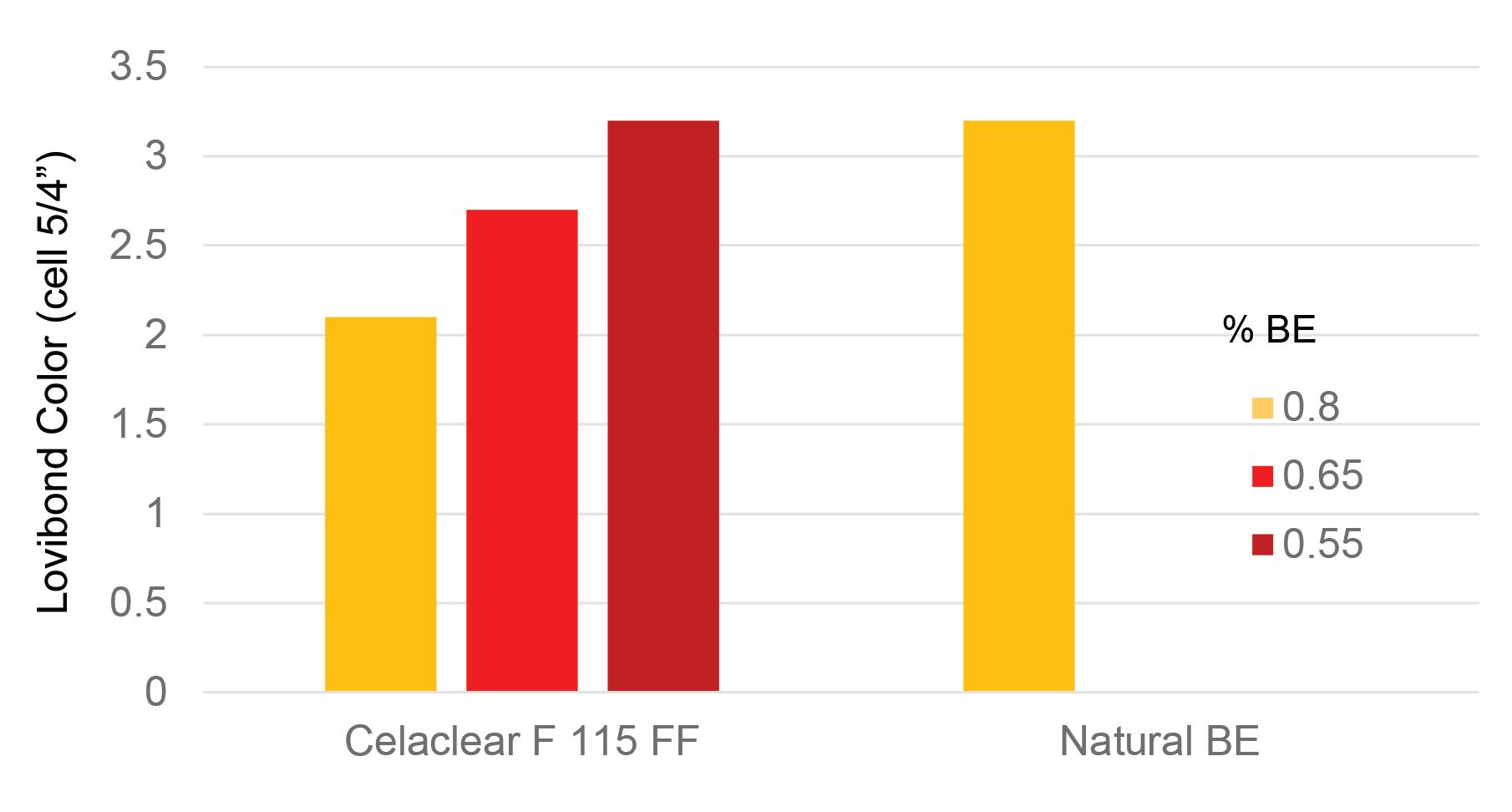
Colour is a major factor in consumer opinion and choice of edible oils, and processors aim for a light colour and clear appearance.
The colour of an oil or fat depends on the quality of the source material, with hues ranging from orange (palm oil) to browns (rendered fats).
The high carotene content in hybrid palm oil is what gives the oil its reddish colour but acid-activated bleaching earth can remove the red colour in one step (see Figure 5, left).
In an industrial test on crude palm oil (CPO ), a highly activated clay also showed a 45% reduction in red colour compared with a natural bleaching earth (see Figure 6, left).
Because hybrid palm oil is more susceptible to oxidation than conventional palm oil, the efforts of producers and refiners should focus on avoiding oxidation.
A new DOBI scale is needed as DOBI value does not represent a true bleachability index, due to hybrid palm palm oil’s high β-carotene content.
The quality classification of the crude oil should be based on key impurity and degradation markers such as:
• Phosphorous indicating phospholipid and NHP content
• Metal ions like iron, copper, calcium and magnesium, which catalyse oxidation, affecting colour and stability.
• Carotene and FFA content
Proper acid conditioning should be selected according to the quality classification. Bleaching should be carried out with an active bleaching earth adsorbent to reduce the total cost of bleaching (TOC)*. Deodorisation should be carried out to reduce FFAs and RBD colour to an acceptable value. ● Jorge Bello is the global technical service manager for adsorbents and catalysts at Performance Material Group, EP Engineered Clays Corporation, a US Silica company
* TOC is the cost of the bleaching earth + cost of oil lost into clay + disposal cost of spent bleaching earth





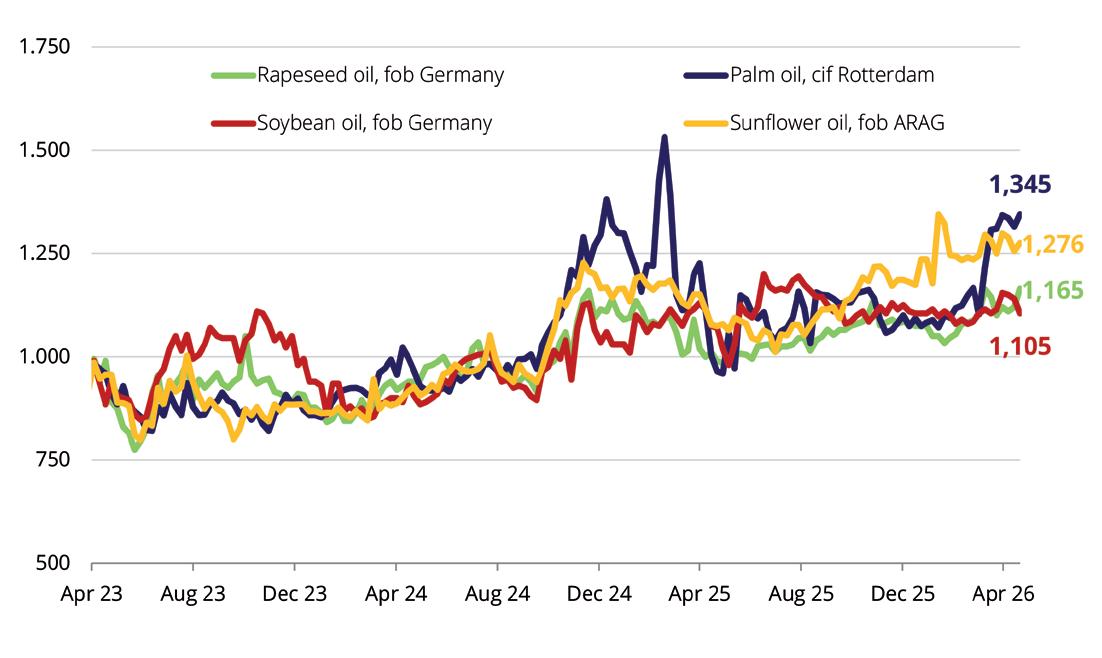
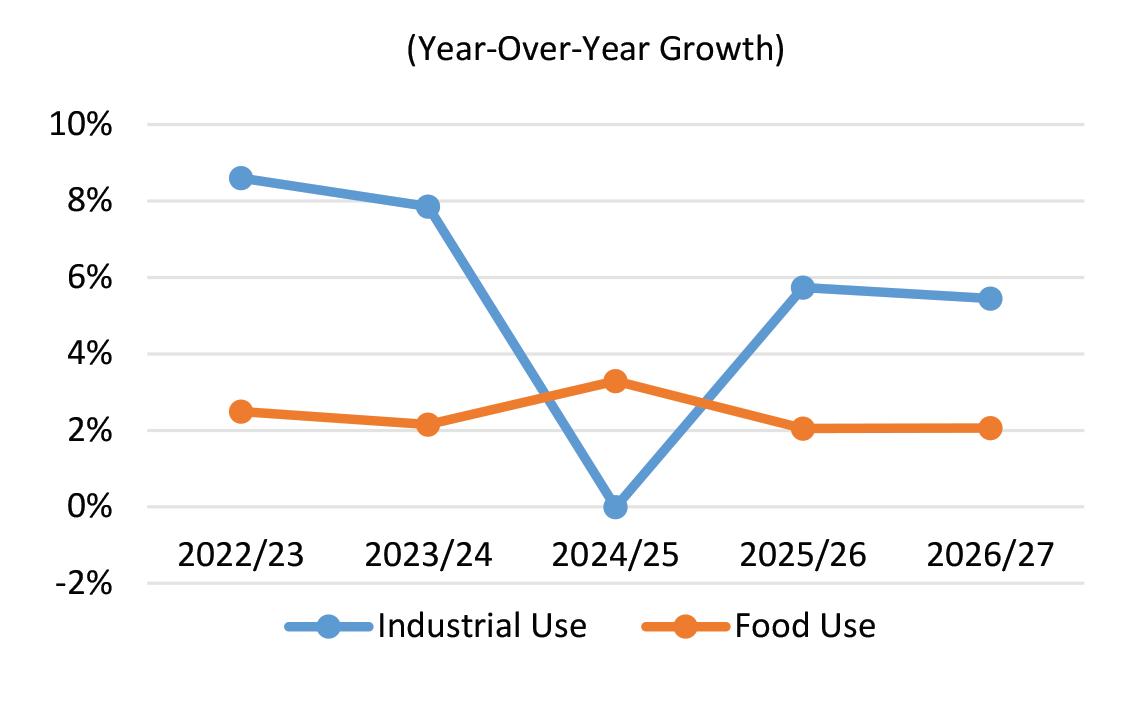
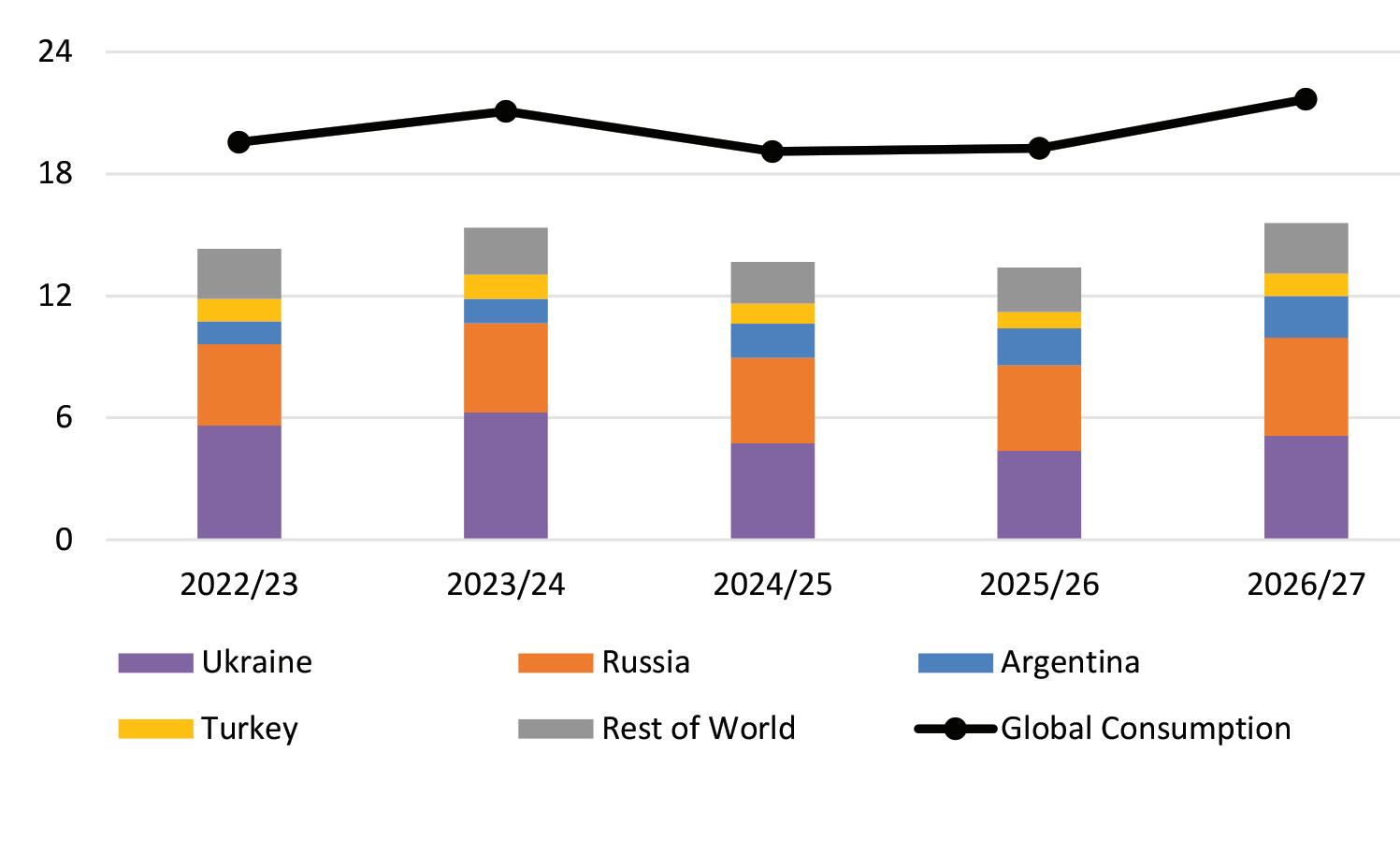
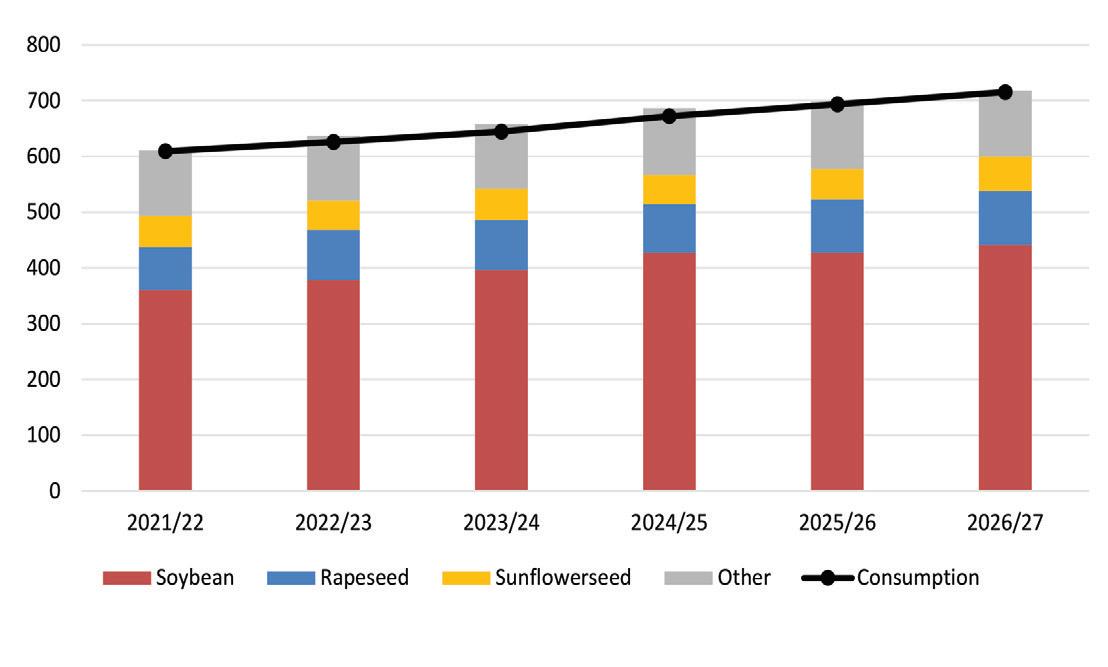
Vegetable oil markets are being supported by geopolitical risks and higher crude oil prices, according to a 30 April report by Germany’s Union for the Promotion of Plants and Protein (UFOP). Vegetable oil prices surged after the escalation of conflict in the Middle East as higher crude oil prices improved the competitive advantage of biodiesel and, consequently, the demand outlook for soyabean and rapeseed oils.
With US biofuels policy providing additional support, soyabean oil prices were €1,155/tonne fob German mill at the end of March, up approximately 6% from the end of February, before falling at the end of April to around €1,105/tonne, the report said. On 21 April, rapeseed oil prices were around €1,165/tonne, an increase of almost 18% compared with the same period the previous year.
Since the beginning of March, palm oil prices had also increased, reaching the equivalent of €1,345/tonne.
Global vegetable oil consumption is forecast up 3% to a record 238M tonnes in 2026/27, according to the US Department of Agriculture (USDA) May 2026 ‘Oilseeds: World Markets and Trade’ report. Growth would be driven by industrial use, up 5% to 68M tonnes, primarily due to a 32% rise in US industrial consumption of soyabean and rapeseed oils driven by biofuel production. Food use was expected to rise by 2% to 168M tonnes, the report said.
Sunflowerseed oil food use was forecast up by 13% to 21M tonnes due to a recovery in supplies, while palm oil (51M tonnes) and rapeseed oil (26M tonnes) were expected to grow by 1% each. Food use for soyabean oil was forecast unchanged at 54M tonnes.
Global sunflowerseed production is expected to reach new heights in 2026/27 on improved Black Sea yields and area growth in all major producing countries (Ukraine, Russia, Argentina and the EU), according to the USDA May ‘Oilseeds: World Markets and Trade’ report.
Global sunflowerseed crushing was forecast to expand in line with growing production, enabling unprecedented exports of both sunflower oil and meal. Export growth for both products was driven by Ukraine and Russia, while EU exports were more limited due to higher domestic demand for oil and meal.
The USDA May ‘Oilseeds: World Markets and Trade’ report has forecast global oilseed production in 2026/27 at a record 718M tonnes, up 3% compared with 2025/26 as strong demand for vegetable oil incentivises greater planting. Global soyabean production was forecast to rise by 14M tonnes to 442M tonnes in 2026/27. Global sunflowerseed production was forecast at an all-time high of 62M tonnes, up 7M tonnes, on improved yields in the Black Sea region and area growth in all major producing countries. Global rapeseed production was forecast to reach a record 97M tonnes, up 1M tonnes, on increased area in many major producing countries.