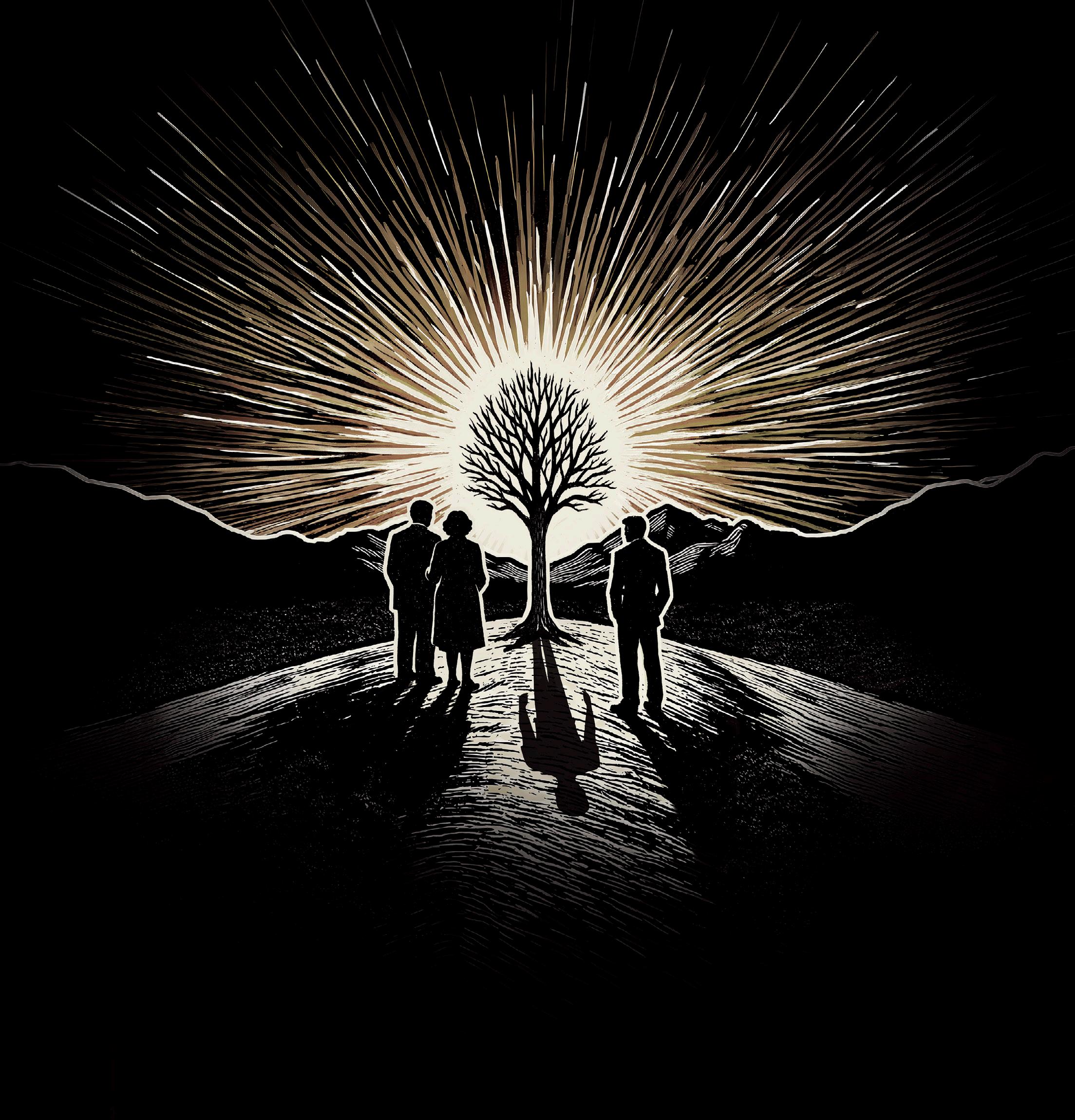
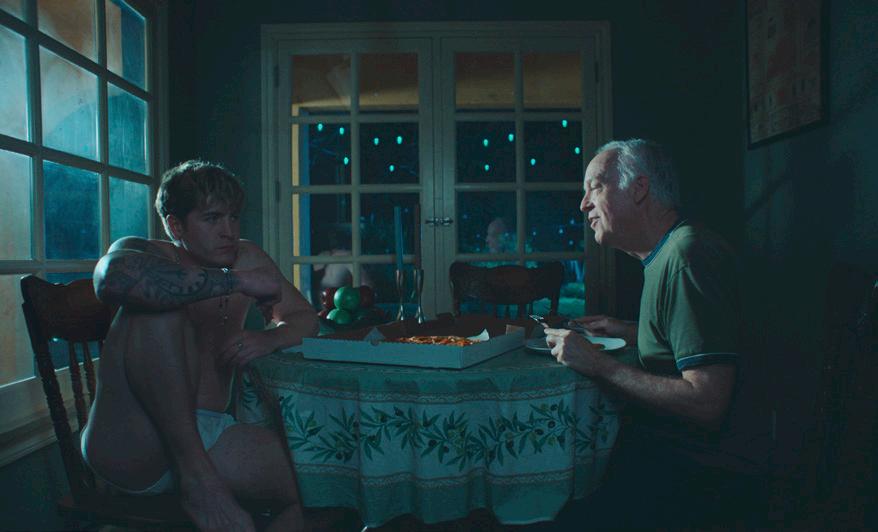
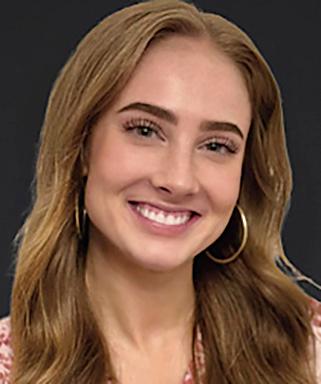
“returning to the stage where it first premiered in 2006...the production revisits the story of a Mormon couple grappling with the suicide of their gay son and their unexpected meeting with his partner.
The play, long considered a cornerstone of queer Utah theater, explores faith, grief, and acceptance — topics that remain as poignant today as they were two decades ago.” - QSaltLake
An unforgettable journey of faith and family.
20th Anniversary Revival
October 22 – November 8 in the Studio Theatre @ The Rose
Presented via special arrangement with Premiére Theatricals, on behalf of Leicester Bay Theatricals.
Why we still show up: Reflections of another Q Lagoon Day
BY MICHAEL AARON
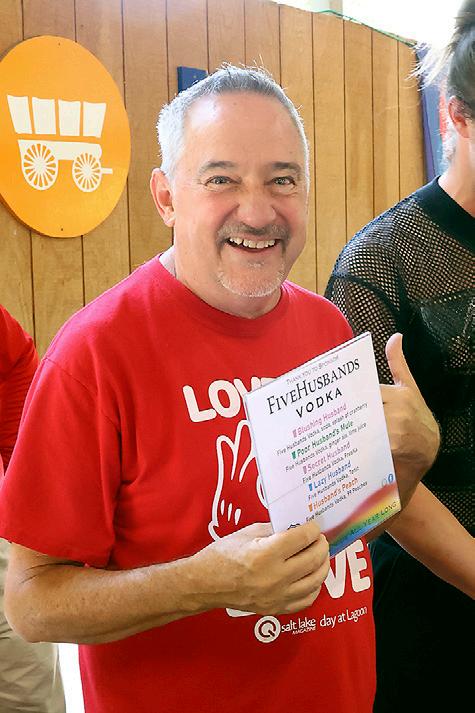
Last weekend,
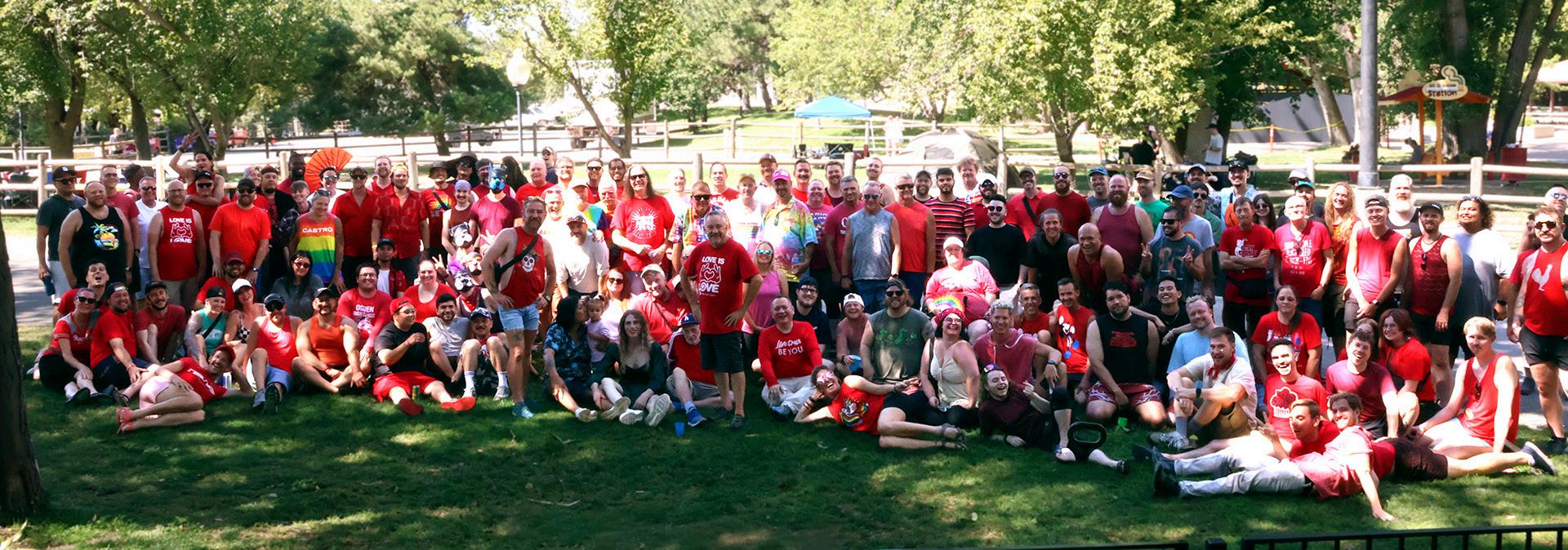
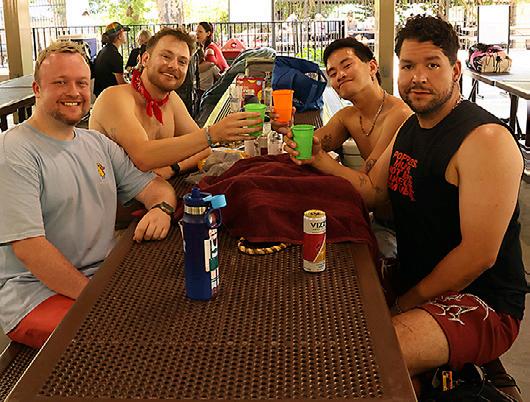
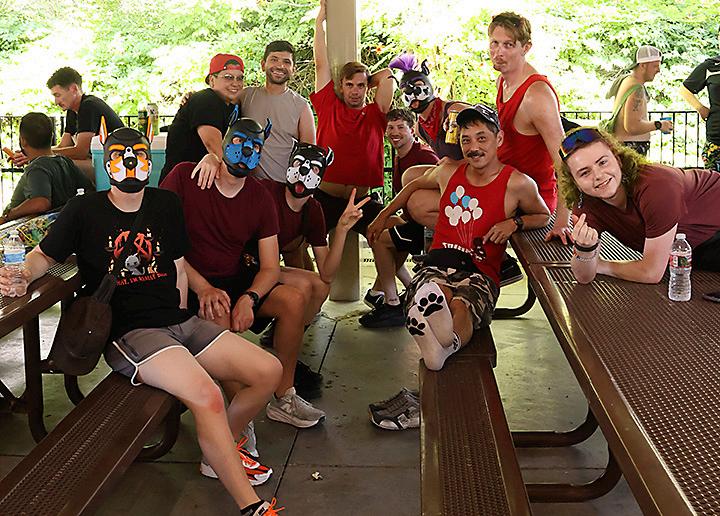
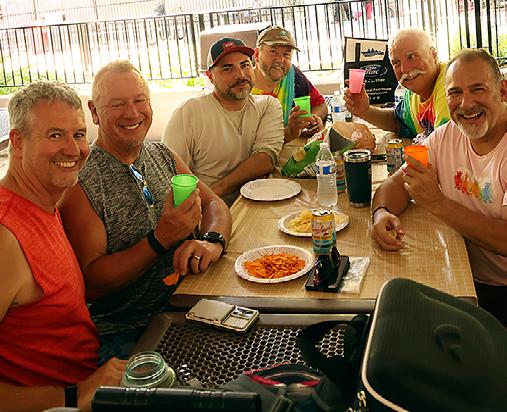
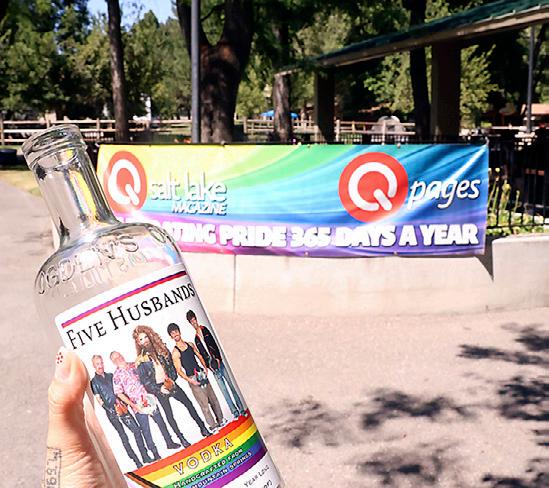
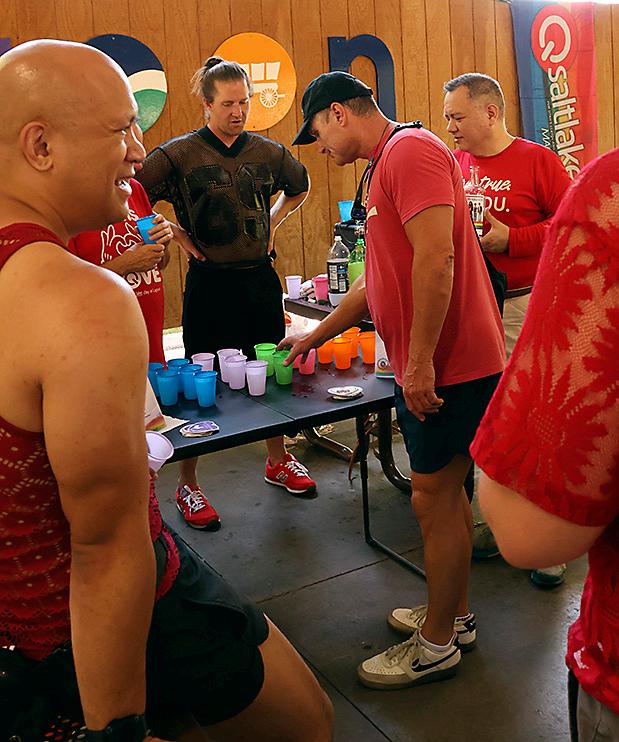
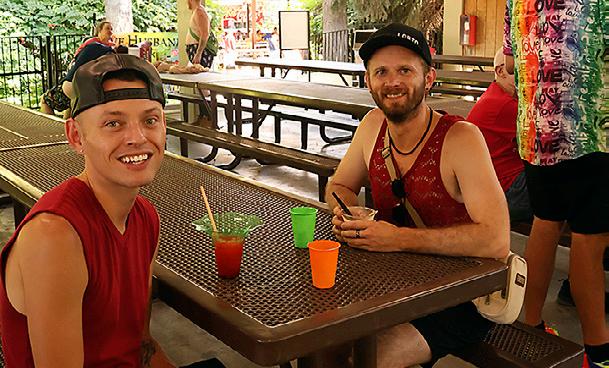
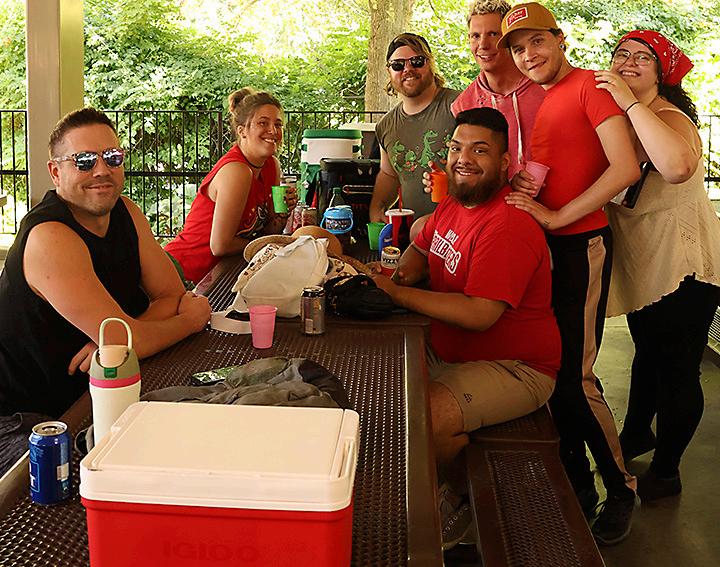
several hundred of us spent a July afternoon at Lagoon doing nothing more complicated than riding roller coasters together. I’ve run this gathering since the 1990s, and I still find myself a little moved every year by how simple it is and how much it matters. No speeches. No agenda. Just a community occupying space together, in the sun, on purpose.
I’ve been part of Utah’s LGBTQ community since the early 1980s, when I helped restart the then-Gay Student Union at the University of Utah after it had died when no one kept it going. It’s later incarnation would be officially shut down again years later — not by dramatic confrontation, but by the quiet mechanism state legislatures are so good at: a law barring officially recognized student organizations built around what gets labeled “DEI” at publicly funded schools. One bill signing, and years of meetings, banner-making afternoons, and nervous freshmen working up the courage to walk through a door for the first time were wiped from a campus directory.
I carry that lesson into everything I’ve built since, including QSaltLake, which I’ve run since 2004, and Lagoon Day long before that. They can take the charter, the official recognition, the line of funding, the office with our name on the door. What they cannot take away is us physically gathering in a place, on purpose, for no reason other than that we like being around each other. That’s why I’ve never treated the “just for fun” gatherings as lesser than the serious ones. I’ve come to believe they might be the most important thing we do. Lagoon Day looks, from the outside, like a bunch of us riding Cannibal and eating overpriced food in the July heat. But having organized it for three decades now, I know what it actually is: it’s a headcount. It’s proof, in ticket stubs and group photos, that when this community calls, this community answers. It’s also recruitment for joy — a way to reach the people who are LGBTQ and quietly isolated, who would never walk into a rally or a support meeting, but who will absolutely walk onto a midway surrounded by a few hundred of their own kind. Fun is a front door that seriousness can’t always open. The same is true of the local sports leagues — the kickball games at the park, the
volleyball nights, the bowling leagues that have run in this valley for years. Nobody’s fighting for civil rights on lane six. But I’ve watched people find their first sense of belonging on those teams. I’ve watched those who couldn’t say the word “gay” out loud in the 1980s learn to say it laughing, surrounded by teammates who already knew and didn’t care. A league is a community that meets on a schedule, week after week, regardless of what the legislature thinks of it. That regularity is its own quiet form of resistance. And I want to say something about the importance of a senior group. The senior socials, the coffee hours, the potlucks for those of us who buried more friends to AIDS than most people will ever understand — those rooms hold institutional memory that this state keeps legislating around, if not against. Sitting with those folks isn’t a favor to them. It’s how the rest learn the map of what worked, what didn’t, and how this community kept finding each other even in years when organizing wasn’t safe or permitted.
That’s really the whole point of an event like Lagoon Day, or a bowling night, or a senior lunch, and it’s worth saying plainly: showing up to the fun stuff is not a lesser form of community involvement. It is the foundation the rest is built on. The lesson of that dead Queer Student Union is that a law can defund an organization, un-recognize it, or force it to rename itself into something bureaucratically safe. What it cannot do is legislate away a friendship, a bowling team, a group of us meeting up for a roller coaster once a year, a Sunday potluck for men working through things nobody should have to work through alone. Every time we show up for something as simple as a ride at Lagoon, we’re reinforcing something that has been rebuilt in this state more than once and will need rebuilding again.
So keep buying the Lagoon Day ticket each summer. Keep joining the league. Keep showing up to the senior lunch even if you think you’re too young for it. I’ve spent over forty years watching this community’s institutions get knocked down and rebuilt by nothing more than people who kept showing up for each other, for good reasons and for no reason at all. Showing up is the whole strategy. It remains the only one that has ever actually worked. Q
staffbox
publisher/editor Michael Aaron
designer Christian Allred
sales Michael Aaron, 801-997-9763 x1 sales@qsaltlake.com
contributors Joshua Adamson Pickett, Diane Anderson-Minshall, Chris Azzopardi, Paul Berge, Jeff Berry, Paul Campbell, Laurie BennettCook, Roger Cox, Stephen Dark, Jennifer Dobner, Jack Fertig, Greg Fox, Ian Giles, Oriol Gutierrez Jr., Tony Hobday, Blake Howell, Ashley Hoyle, Joshua Jones, Christopher Katis, Alpha Mercury, Sam Kelly-Mills, Craig Ogan, Peter Reynolds, Mikey Rox, Terri Schlichenmeyer, Mark Segal, Gregg Shapiro, Petunia Pap Smear, Steven Petrow, Ed Sikov, Justin Utley, JoSelle Vanderhooft, Ed Walsh, Ben Williams, D’Anne Witkowski
distribution Roger Cox publisher
Q Media Group
222 S Main St, Ste 500 (by appt. only) Salt Lake City, Utah 84101 tel: 801-997-9763
U.S. Rep. Becca Balint critiqued Defense Secretary Pete Hegseth’s new testosterone initiative, comparing the “rugged macho man” persona he enthuses about to the hypermasculine figures drawn by gay erotic artist Tom of Finland. Balint, a Vermont Democrat and lesbian, spoke a day after Hegseth announced mandatory annual testosterone-deficiency screening for service members aged 30 and older. She argued the administration’s fixation on masculinity reflects “weird, intense, homoerotic feelings toward men” paired with aggressive homophobia. Hegseth, a favorite of the online “manosphere,” frequently appears in tight jackets, lifting weights or running with troops. He recently told senior officers to “hit the gym,” saying he didn’t want “fatties” in leadership. Balint stressed she wasn’t criticizing homoeroticism itself, but the denial of it. Hegseth has promoted the screening program as part of a “High-T Department of War,” saying it will keep troops “strong, resilient and capable.” The High T announcement followed the announcement that the Defense Department dispensed 108,332 ED prescriptions to active-duty troops in 2025, the highest number ever recorded. Coincidence?
Just in time for hot summer viewing
Call it “straight-washing” or not, it’s still made for hot viewing. Jake Gyllenhaal (Brokeback Mountain) and Henry Cavill (Superman) have released In the Grey, an action film in which they play gay soldiers. The pair star as mercenaries hired to recover a massive debt from a dictator, racing through glamorous international locations to pull off an “impossible” heist. Directed and written by Guy Ritchie, the movie was shot in 2023 and finally received a theatrical release before moving quickly to streaming after a weak box-office run. Out gay critic Benjamin Lee of The Guardian praised Cavill and Gyllenhaal’s performances as Sid and Bronco, noting the film’s “homoerotic motions” and the duo’s chemistry, which he said Ritchie treats without gay-panic humor. Lee wrote that the characters function “for all intents and purposes” as a gay couple, complete with emotional beats and jokes about lube. The film also stars Eiza González, reuniting her with Rosamund Pike. In the Grey is now available on Amazon Prime Video, Apple TV, and Fandango.
All quiet on the African gay laws front
The United States government is quietly shifting U.S. policy on antigay laws spreading across Africa. Previous administrations, including the first iteration of this administration led by the GOP’s go-togay Ric Grennell, announced opposition to anti-gay laws, imposed visa bans, and moved to cut trade benefits. But the U. S. State Department remained silent when Ghana’s Parliament passed legislation in May criminalizing gay and
lesbian identity with up to three years in prison. Several African governments have advanced similar measures. Senegal doubled prison terms for same-sex acts to 10 years and criminalized “promotion” of homosexuality, while Niger’s junta introduced a penal code punishing gay acts with up to a decade behind bars. Analysts have conjectured that the change in tone is due to the search for “rare earth minerals” that the U.S. government is conducting in Africa. More than half of Africa’s 54 nations outlaw same-sex relationships. Always follow the money.
Wiener’s out at Trans March
Yes, the headline is punctuated correctly. California state Sen. Scott Wiener, a prominent gay Democrat and congressional candidate known for championing transgender rights, was surrounded by protesters at San Francisco’s Trans March, accused of supporting genocide in Gaza. A video shows Wiener walking through Dolores Park as protesters follow him, calling him “genocidal” and claiming he has “Zionist handlers.”
One marcher lamented that someone who had “written good legislation for queers” was “so terrible on Gaza.” An observant Jew, Wiener said he was on his way to a trans-led Pride Shabbat service and left after protesters repeatedly touched him, saying he feared for his safety. He noted it was the first time he had missed the march since its launch in 2004. The confrontation followed a similar incident two days earlier when he was harassed over the same issue at a San Francisco bar. Wiener told CNN he believed he was singled out because he is Jewish. He has supported Israel’s
right to exist while criticizing Prime Minister Benjamin Netanyahu and backing a ceasefire. Earlier this year, he said Israel’s military campaign in Gaza amounted to genocide, rejecting claims that his shift was politically motivated.
Pride flagged in Seattle FIFA match
The Egyptian and Iranian Football Associations reportedly warned FIFA that their teams would walk off the pitch if players or staff were exposed to unauthorized LGBTQ-related symbols. Neither team left the field, and the match ended in a draw. Egypt advanced under FIFA’s tournament rules before being eliminated; Iran did not progress, went back home, and probably booked a Virgin Cruise to Turkey and Egypt. Fans were permitted to bring rainbow flags to the Seattle “Pride Match,” though FIFA stressed the celebration was organized locally, not by the global body. “There will be no ‘Pride Match’ at the World Cup,” FIFA President Gianni Infantino said. Egypt and Iran objected after the draw, citing cultural and religious values; both countries impose harsh penalties on LGBTQ people. Seattle organizers remained committed, noting Pride has been celebrated that weekend for more than 50 years.
Gay man wants to replace disgraced Maine candidate
Jordan Wood wants to replace Graham Platner, the controversial Maine Democrat who won the Democratic Primary in a landslide to challenge longtime GOP senator Susan Collins. Wood survived as chief of staff for the toxic California legislator and gubernatorial candidate, Katie Porter. Platner exited the race after
accusations of Nazi Prison Camp Guard fetish, posting that he would rape burglars “but not in a gay way,” and a former girlfriend accused him of sexual assault. Wood announced his candidacy shortly afterward, declaring he would run to stop unlawful ICE activity and pass “Medicare for All”. Wood said critics have dismissed him as “too progressive,” “too young,” or a gay man who “can’t win.” In an October interview with The Advocate, Wood said Platner’s antigay Reddit posts and Nazi-era tattoos were not youthful mistakes but disqualifying choices made in adulthood. Wood joins a crowded field that includes former Maine Senate President Troy Jackson, state health director Dr. Nirvan Shah, former secretary of state Shenna Bellows, social worker Paige Loud, Maine Beer Company co-founder
Dan Kleban, and environmental consultant David Costellao.
Big Award for Gay Super
A former Manchester Township superintendent, John Berenato, received a $265,000 settlement after alleging he was fired in 2023 for being gay. Manchester Township is in Ocean County, New Jersey, in the south-central part of the state. Board members seemed to have caved to “local political pressure,” expressed religious objections to homosexuality, and feared he was “pushing a gay agenda.” His successor, Diane Pedroza, was quoted as saying she didn’t want the curriculum to become “too gay” under his leadership. In what looks like a pattern of gay and lesbian discrimination by the board, two additional lawsuits followed. Former special services director Bridget
Antonucci said her support for Berenato led to her being labeled part of “the rainbow community,” creating a hostile environment that ended in her termination. Another complaint came from Lori Burns, the former early-education director, who alleged anti-lesbian bias contributed to her resignation. All three suits accuse the district of violating New Jersey anti-discrimination laws; only Berenato’s has been settled. A separate 2023 harassment suit against him was dismissed in 2024.
Hard Knock in Knoxville
A city of roughly 200,000, with a metro population of almost a million, situated in a pretty religious state is seeing the closure of another “gay bar” this year. Not Salt Lake City but Knoxville, Tennessee. For 22 years, “Club XYZ” has been a gathering
place for the gay and lesbian community. Club ownership announced closure on social media, citing rent increases and a dispute with a landlord. The post said they only had a week’s notice on the increase, and the landlord has refused to pay for the bar’s “self-funded” repairs to the building. It also accused the landlord of making threats and using unspecified “homophobic slurs.” The club’s owners are not fundraising to “save” the bar but are liquidating the club’s physical assets to prevent the landlord from taking possession of anything related to the bar. The closure of Club XYZ leaves just one dedicated gay bar in town, “CORE Knoxville.” Other gay and lesbian oriented businesses are closing too, the most recent a coffee shop called “South Pass”. Times are changing. Q
Turkey and Egypt both turn away LGBTQ+ cruise charter
First time in over 20 years
BY MICHAEL AARON
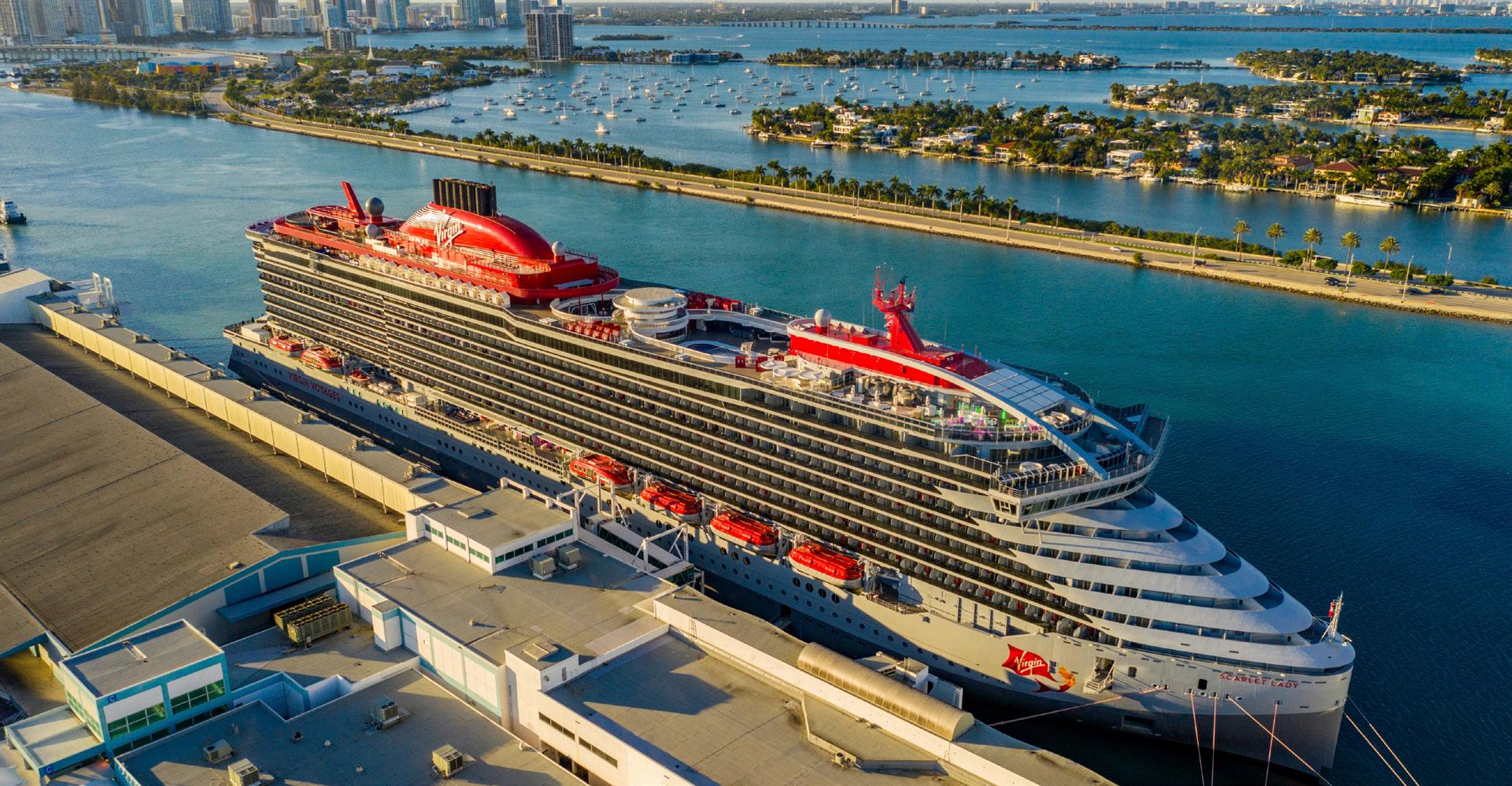
July of 2026 saw something that hasn’t happened in over 20 years. Twice in the same week, an Atlantis charter of a Virgin Voyages ship of over 1,900 mostly LGBTQ+ passengers was barred from entry. Egypt has just barred the Scarlet Lady from docking in Alexandria, days after Turkey refused the same voyage entry to Kuşadası and Istanbul. Atlantis CEO Rich Campbell says bans on this scale have never happened in the company’s history; the ship has now rerouted a second time, adding stops in Greece, Montenegro, and Italy. Broadway star Patti LuPone, a passenger, has publicly condemned both refusals.
While recently rare, these backto-back denials this month aren’t an aberration; they’re the latest chapter in a pattern stretching back 35 years, through the Caribbean, Russia, Bermuda, and now the eastern Mediterranean, in which ports have refused chartered LGBTQ cruises even as outright legislation banning them has remained rare. Here is that history.
1987: The first flashpoint — Grand Cayman
The pattern began in 1987, when hundreds of gay men chartered by Minneapolis-based RSVP Vacations disembarked in George Town, Grand Cayman.
Passengers walked the streets holding hands, unsettling some residents. Local church groups objected, and some merchants reportedly closed their shops for the day. There was no formal ban, but the incident became the reference point Cayman officials cited a decade later.
1998: Cayman Islands formally bars the M/S Leeward
In December 1997, Cayman Islands Tourism Minister Thomas Jefferson sent Norwegian Cruise Line a letter denying docking rights to the M/S Leeward, chartered by Atlantis Events for about 900 mostly gay male passengers. His letter read: “Careful research and prior experience has led us to conclude that we cannot count on this group to uphold the standards of appropriate behavior expected of visitors to the Cayman Islands.” Jefferson later told Condé Nast Traveler the “research” was an informal survey of Cayman ministers, members of parliament, and residents — and he cited the 1987 RSVP incident directly. The ship diverted to Belize. The fallout was significant: the Human Rights Campaign called the decision “morally wrong,” gay-travel publication Out & About organized a boycott of the Caymans, and the International Gay & Lesbian Travel Association condemned the refusal at a London meeting. No
legislation was ever introduced to codify the ban. It remained an administrative refusal by the tourism ministry, one that the government never publicly rescinded, even after the boycott pressure.
2004: Rosie O’Donnell’s Family Cruise, Nassau, Bahamas
In July 2004, passengers aboard the inaugural R Family Vacations cruise — a same-sex-family charter aboard Norwegian Dawn, co-founded by Rosie O’Donnell and her then-wife Kelli Carpenter-O’Donnell — were met by more than 100 protesters as they arrived in Nassau, Bahamas. Led by local Christian pastors, demonstrators gathered in a square facing the cruise terminal, chanting “Gay ways are not God’s ways!” The ship docked as scheduled, but the confrontation proved tense enough that O’Donnell chose not to disembark; family friend Atallah Shabazz addressed the crowd instead. HBO later documented the cruise and the protest in the film All Aboard: Rosie’s Family Cruise.
The fallout outlasted the stop itself. R Family Vacations had arranged a subsequent call in Bermuda, but after word of the Nassau protest spread, local church opposition mounted there too, and the company dropped Bermuda from the itinerary rather than risk a repeat. Travel press at the time framed it as the com-
pany “caving” to pressure. Bermuda’s government pushed back on the optics. Premier Ewart Brown later stressed the island’s welcoming credentials and said officials had done everything to accommodate the visit. Unlike Cayman in 1998, Nassau involved no government docking denial — it was a street-level religious protest that achieved a similar chilling effect on future routing, showing that official port bans were only one way gay cruises got discouraged.
2013: Russia’s “Gay Propaganda” Law
Russia’s parliament passed the federal “gay propaganda” law by a 436–0 vote, signed by Vladimir Putin, formally titled a measure “Protecting Children from Information Advocating a Denial of Traditional Family Values” in 2013. Not a cruise-specific statute, it nonetheless carried fines, including deportation risk, for foreign tourists, chilling gay-tourism and gay-cruise marketing to Russian ports in the run-up to the 2014 Sochi Olympics. It was expanded in December 2022 to cover all ages, further discouraging LGBTQ-marketed group travel to Russian waters.
2018: Bermuda’s Marriage Repeal
Bermuda’s legislature passed the Domestic Partnership Act in 2018, reversing a 2017 court ruling that had legalized same-sex marriage. It was the first jurisdiction in the world to repeal marriage equality after enacting it. Because Bermuda is a major cruise-ship flag-of-registry and port, the law directly affected shipboard weddings and onboard recognition of same-sex couples. Carnival Corporation publicly backed a legal challenge by LGBTQ charity OUTBermuda, and the Bermuda Tourism Authority itself warned lawmakers of economic blowback. Bermuda’s Supreme Court struck down the marriage ban later that year, restoring equality before it produced an outright cruise ban.
July 2026: Turkey and Egypt Both Turn Away the Scarlet Lady
Turkish authorities blocked Virgin Voyages’ Scarlet Lady — chartered by Atlantis Events, sailing from Athens toward Venice — from docking at
Kuşadası and Istanbul, citing “moral standards” and “family values,” and insisting there was “no possibility” for the ship to dock. Roughly 1,100 of the 1,900 passengers aboard were American. The ship rerouted toward Cairo and Crete — only for Egypt to then deny the ship entry to Alexandria as well, without publicly stating a reason. It marked the first time in Atlantis’s history that a single voyage was blocked from two countries in the same week. The itinerary was revised a second time to add stops in Greece, Montenegro and Italy. Passengers who had booked Egypt shore excursions lost those plans; some vowed to redirect their tourism spending elsewhere. Travel commentators, including Frommer’s, explicitly compared the incident to the 1998 Cayman ban, noting Turkey’s move follows a broader pattern since 2015 of banning Istanbul Pride marches — though, as in Cayman and Nassau before it, neither Turkey nor Egypt passed dedicated legislation; both were administrative port decisions.
Bans over the years and today
Looking back over 35 years, one thing stands out: there have been very few laws passed that specifically ban gay cruises. Most of the time, like in the Cayman Islands in 1998, or Turkey and Egypt in 2026, these ships are turned away by tourism officials or port authorities, not lawmakers. In places like Nassau in 2004, local protests managed to block cruises without any government ban. When countries have passed actual laws, like Russia’s “gay propaganda” law or Bermuda’s repeal of marriage equality, they were aimed at LGBTQ rights more broadly, and cruises were just caught in the crossfire. Atlantis’ Rich Campbell has now experienced this twice, nearly three decades apart, making nearly the same statement of disappointment each time. As the conservative populist movement has spread in recent years, we are returning to the problems faced by the LGBTQ community in the late 90s and early 2000s. Q
Michael Aaron is the editor and publisher of QSaltLake. He has been active in Utah’s gay and lesbian community since the early 80s and published two publications then and in the 90s.
Utah Auditor clears Centerville council member’s Pride flag display
BY MICHAEL AARON
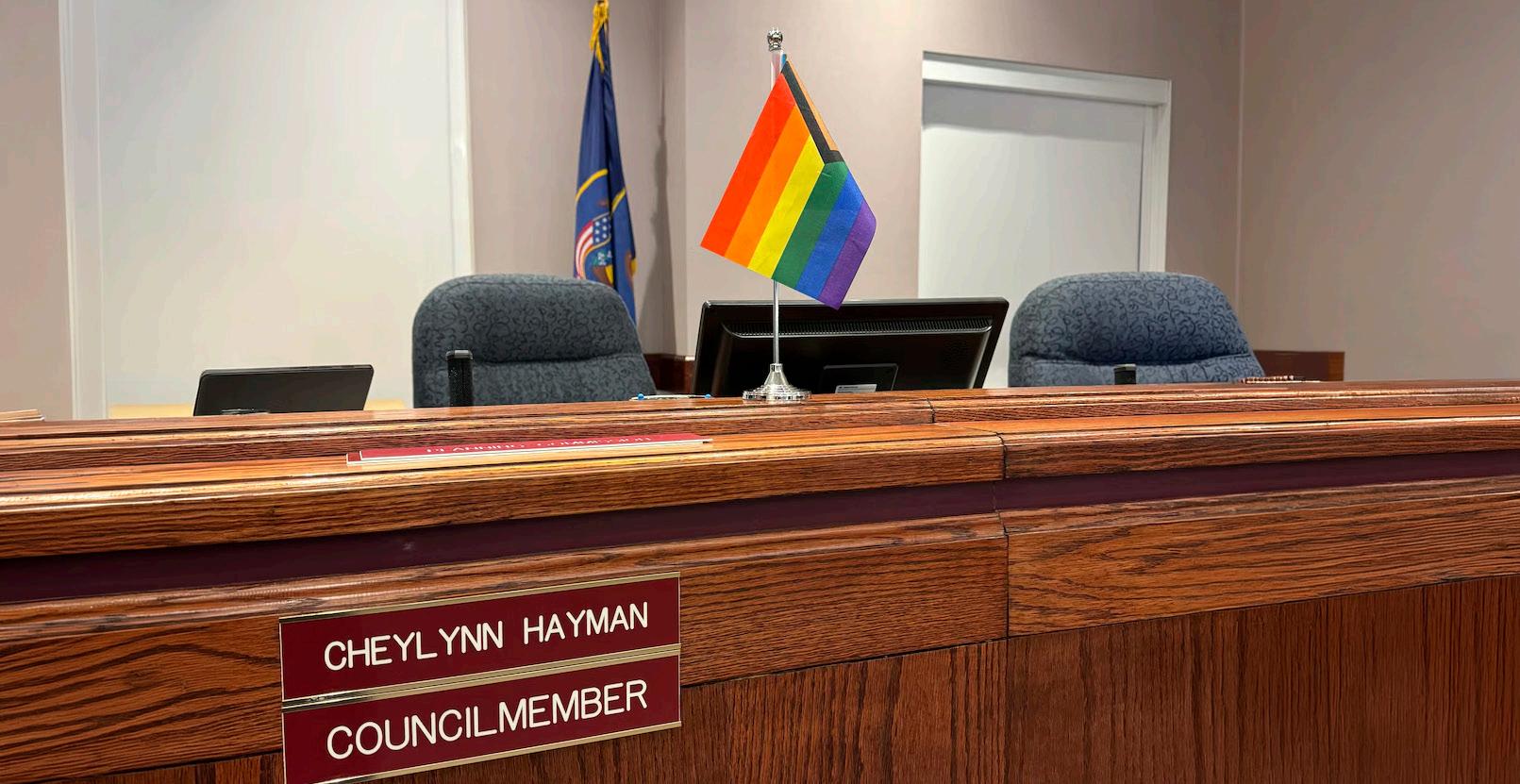
Utah’s state auditor has concluded that a small pride flag displayed by Centerville City Council member Cheylynn Hayman does not violate the state’s controversial flag-ban law, closing an inquiry that began after residents filed complaints against her.
Hayman, an employment attorney who has served on the council since 2024, has kept a small rainbow flag near her nameplate at council meetings for more than a year — a quiet but sustained protest against HB 77, the 2025 law that made Utah the first state in the nation to bar unsanctioned flags, including pride flags, from government buildings and schools.
In a letter sent late last month to Centerville Mayor Clark Wilkinson and the city manager, the auditor’s office wrote: “Based on Centerville City’s response, and other factors, the Office noted no violation of Statute.” The letter continued, “Therefore, the Office has concluded our inquiry into this matter. We appreciate your timely and cooperative response during this investigation.”
The finding validated the legal argument Hayman had been making since the state auditor first notified her in a May 22 letter that “multiple” complaints had been lodged. Hayman pointed to the specific language of Utah Code 63G-1-704, which restricts flag displays
by “a government entity, or an employee of a school district or school within the public education system acting within the employee’s official duties.”
“The law only applies to government entities and school employees,” Hayman told the Standard-Examiner. “I am neither. This is something that I have done in my individual capacity. The city of Centerville as a government entity, has not engaged in any conduct. There has been no conduct by Centerville City that would violate this statute.”
She elaborated in her four-page written response to the auditor’s office, dated June 4: “In short, nothing in Section 704 prohibits publicly elected officials, separate and apart from the government entities they represent, from exercising their individual constitutionally protected First Amendment rights on government property, including by displaying pride flags on the city council dais in support of their constituents who are members or supporters of the LGBTQ community.”
Hayman also cited the Utah Supreme Court’s ruling in Richards v. Cox to argue that as an elected official, she does not qualify as a government employee under the statute. “Elected representatives may ‘receive compensation and benefits for their services, [but] they have no masters within [the municipal
city system],’” she wrote, quoting the decision. “‘[a]lthough constituents elect [city council] members, they can’t then hire, fire, or supervise [council] members after election. In the end, [council] members are representatives of, rather than employees of, their constituents.’”
Mayor Wilkinson backed that reading in his response to the auditor, characterizing the flag as being displayed “by an individual City Council member in the exercise of her First Amendment right to free speech.” The city did not respond to a request for comment on the auditor’s final decision.
Hayman has been careful to frame the flag as personal expression rather than a city position — a distinction she said matters legally and practically.
“I do not think individual expression becomes official city speech merely because it occurs on government property, even if that speech comes from a councilmember,” she said. “Councilmembers speak from the dais all the time. They ask questions, state views, disagree with one another, and explain votes. Those statements are not official positions of the city unless the council adopts
them through its ordinary processes.”
She continued: “The same is true here. A small flag in front of one councilmember does not become a statement by Centerville City any more than my saying ‘I support Pride flags’ from the dais would become an official city statement. Nor would my wearing a pride pin or clothing with a pride flag become official city speech simply because I wore it while sitting at the dais. The principle is the same.”
Asked directly why residents shouldn’t view an item placed on government property as reflecting what the government itself supports, Hayman didn’t budge: “I have been very clear that I display the flag in my individual capacity, not on behalf of Centerville City.”
She acknowledged the obvious tension in her position — that the dais is, in fact, government property — but maintained the statute simply doesn’t reach that far. “Because the law doesn’t prevent flags from being displayed in government property,” she said. “It only prevents government entities from displaying non-sanctioned flags on government property. … I am still just one individual acting in my own individual capacity.”
Before the auditor’s office issued its finding, Hayman made clear she was prepared to escalate the fight into the courts if the office had ruled against her. In her June 4 letter, she warned regulators bluntly: “Should the state auditor’s office notify Centerville City that my individual display of a pride flag somehow
constitutes a violation of the Statute by the Centerville City Council, please be advised that I intend to promptly initiate appropriate legal action to enjoin the enforcement of any such Statute in such manner, as doing so would violate my constitutionally protected rights to engage in free speech as an elected representative of Centerville City.”
She repeated that pledge to Newsweek: “If the state auditor concludes that my city violates the flag-banning law due to my individual display of a pride flag, yes, I will personally initiate a lawsuit against the state of Utah to protect my right to free speech.”
With the inquiry now closed in her favor, that lawsuit appears unnecessary. Hayman said she has no plans to stop displaying the flag, regardless of the outcome. “I would if I were there and I do intend to continue to display it at every city council meeting I attend until the law is revoked,” she said.
Lee pushes back
Not everyone accepts the auditor’s conclusion as the final word. Rep. Trevor Lee, the Republican sponsor of HB 77, who has described his bill as intended “to ban any flag that had any political leaning or ability to say you’re aligning with something that’s not either the American flag or the state flag” from government property, argued Hayman’s position misreads the law’s intent.
“Placing a Pride flag on the dais during
city council meetings in Centerville is a clear use of government property and authority for a political/symbolic statement — exactly the kind of activity the bill was designed to prevent,” Lee told Newsweek. “Council members do not check their individual rights at the door, but when they act in their official capacity sitting at the dais, during a publicly funded meeting, in a government building, they represent the city, not just themselves.”
Lee added: “This isn’t about stifling personal speech; it’s about preventing elected officials from using taxpayer-funded platforms and facilities to promote personal or partisan causes. For over a year, one council member has used her official position to turn city meetings into a platform for a specific political and cultural agenda. When government officials push ideological symbols on the public’s dime, it undermines trust, divides communities, and signals that only certain viewpoints are officially endorsed.”
He suggested Hayman take her advocacy elsewhere: “If the council member believes her actions are protected individual speech, she is free to fly the flag at her home, in her yard, or on private property. But she cannot commandeer the people’s council chambers for it. … government should remain neutral and not play favorites with symbols.”
Lee was defeated in his bid for reelection. His final day as a Utah legislator is Jan. 20, 2027.
Representing the minority
Hayman’s stance comes despite polling that shows most Utahns support the flag restrictions — a Deseret News poll found 81 percent of conservatives and 62 percent of Utahns overall favored the law. Hayman, who took her council seat after the 2023 Centerville election was canceled for lack of competition, said popularity was never her test for representation.
“I don’t think that a representative, in order to support their community, has to always support the majority of the community,” she told the Standard-Examiner. “Of course, the people who are in the minority are deserving of representation, too, and certainly, that
would include members and supporters of the LGBTQ community. So as an elected representative, my job is not just to go along with what the majority says. Otherwise, why do we need elected leaders who undertake to investigate and make considered decisions? So all of my community is entitled to representation, not just the majority.”
She rejected the notion that her advocacy breaks any promise of collegiality she made as a candidate.
“I don’t think that my advocating against a statewide ban that applies to all municipalities, including mine – I don’t view that as being antagonistic or contrary to my constituents in any way, nor do I believe that it would under-
mine my collaborative approach. Just because I feel strongly about one issue, that certainly doesn’t color the way in which I approach all of my decisions with regard to my community. … but that doesn’t mean that I am going to back down on something that I feel strongly about, that I feel like that all of my community deserves representation just because I have some in my community who may not agree with that.”
Nor, she said, should her persistence be read as contempt for constituents who back the law. “One of the beauties of freedom of speech is that we all have the ability to say what we think and we have different viewpoints,” she said. “It’s one of the things that make our country and our communities strong. So I welcome people to disagree with me. I’ve been publicly on record of saying, I invite people to disagree with me. I respect the right of people to disagree with me. I will protect the right of people to disagree with me, because that is what the freedom of speech is.”
‘Even a single pebble thrown into a pond will generate ripples’
Following the auditor’s decision, Hayman posted a lengthy statement reflecting on the more than a year since she first set the flag on the dais in April 2025.
“Who knew such a tiny flag could make such big waves?” she wrote.
“More than a year ago, I started quietly displaying my pride flag on the council dais in protest of a mean-spirited and unnecessary law motivated by misplaced and misguided animus toward members of our LGBTQ community.”
She acknowledged the criticism she’s faced along the way.
“Not everyone understood or agreed with my decision,” she wrote. “Some took me to task. How could I be so divisive? So controversial? Couldn’t I just go along to get along? Some questioned why I continued to display my flag meeting after meeting. A time or two, fine. But hadn’t I made my point? Wouldn’t I stop? The law is still in effect so …”
But she also described what has kept her going — messages from the community she says the flag was always meant for.
“Members of our LGBTQ community, who told me how much they appreciated my pride flag. Parents of gay teens who reached out to thank me for standing up for their children. For showing that our elected representatives care enough to publicly advocate for them.”
She said she had wrestled with whether the gesture mattered at all.
“But still I wondered … was I making a difference? Was displaying a pride flag in a small, conservative city in Davis County meaningful at all? Fast forward to now. I’m proud to say the answer is yes. I may be only one person. But even a single pebble thrown into a pond will generate ripples. Important ripples. Wide ripples. The types of ripples that, over time, may generate meaningful change.”
Hayman is now urging other officials across the state to follow her lead.
“Until the Legislature revokes its offensive flag law, I will continue to display my pride flag at every city council meeting,” she wrote. “And I invite other elected representatives to do the same. To use our voices, platforms, and
protected freedoms of speech to fill city halls around the state with rainbows flags. To show the members of our LGBTQ communities that we support them and will stand up for them when it matters. To show the Legislature that it got it wrong and should fix its mistake.”
She told The Salt Lake Tribune she hopes the auditor’s finding will do more than protect her own display.
“The flag-ban law doesn’t prohibit me from individually displaying any flag I want. Including a pride flag,” she wrote in a LinkedIn post. “And most importantly — every elected representative across the state now knows they can do the same.”
Ultimately, Hayman said, she wants lawmakers to reconsider the statute altogether, something she has openly called “stupid, unnecessary and offensive.”
“I hope that what it makes is the legislature rethink whether the law is needed and whether it’s having the intended effect,” she said. “I hope it incentivizes the legislature to revisit the wisdom of their legislation, which I think is misguided. I would hope that this effectu-
ates some type of a meaningful change, a positive change. Sometimes small actions make big changes, and I hope that this is one of those circumstances.”
She closed her statement with a direct invitation to Utahns statewide:
“Until it does, I encourage you to contact and invite your representatives to display pride flags in your own city halls. And you are always welcome to come see my pride flag at every Centerville City council meeting.”
As for whether the added attention might complicate future races for like-minded candidates in conservative cities, Hayman said she isn’t worried.
“I always encourage robust competition,” she said, adding that she hopes more people are inspired to run for office because of it. “I think that it’s an important public service, and … if this encourages more people to consider running for office and expressing their viewpoint, I think that benefits our whole community.”
Hayman said it remains too early to say whether she’ll seek reelection next year. Q
Provo, Utah community rallies to restore LGBTQ+ mural vandalized on Stonewall anniversary
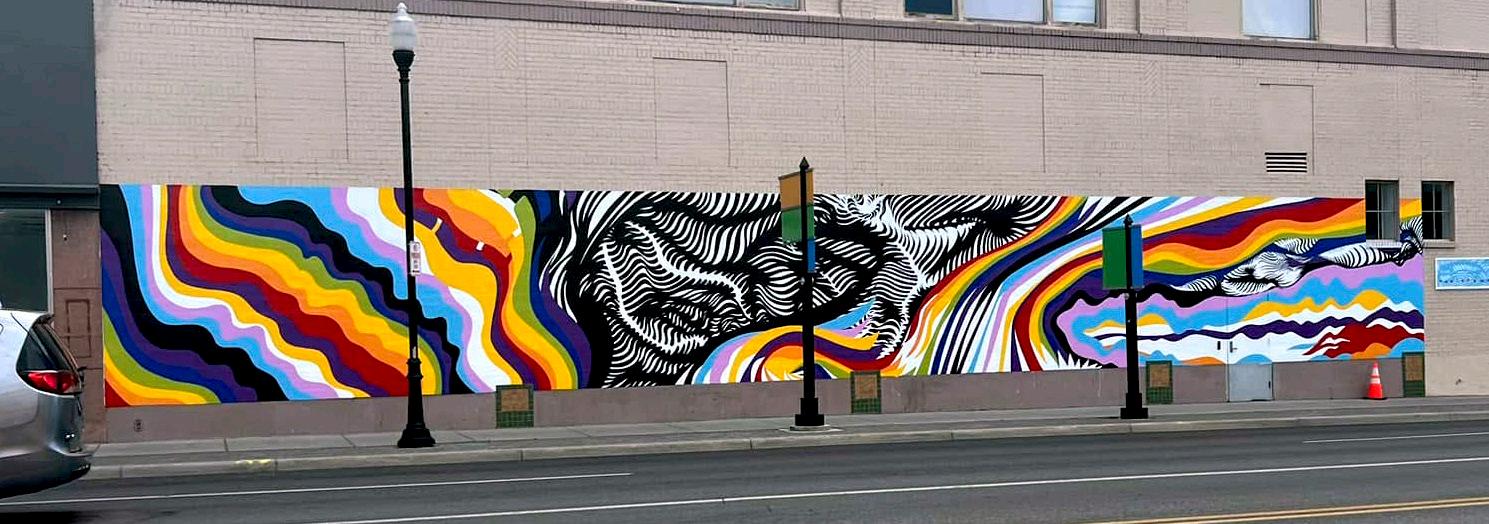
On Friday, July 3, people in Provo, Utah, came together to restore a 75-foot Pride mural on Center Street, which had been defaced with gray paint on June 28 — the anniversary of the 1969 Stonewall uprising.
Owners of theFINDlab’s Analog Community Center, a creative hub at 187 W. Center St. in Provo, announced on social media that the mural “was vandalized with what appears to be a bug sprayer full of paint.” The post noted the significance of the date: on June 28, 1969, police raided the Stonewall Inn, a Greenwich Village gay bar, at a time when New York law barred serving alcohol to gay patrons and allowed bars to be shut down for serving or employing LGBTQ+ people. That night, patrons resisted arrest rather than dispersing, touching off a six-day uprising that ended July 3 — an event widely credited with launching the modern Pride movement.
In a video posted by theFINDlab, owner Jonathan Canlas described the vandalism and what the mural means to his family.
“On Sunday, the anniversary of the
beginning of Stonewall, a gentleman decided to drive past our mural and add to it,” Canlas said. “This is an LGBTQ-friendly mural. I have six kids, of which five are along that wonderful spectrum, and we put this here as a very clear masthead to explain who we are, what we believe in, and what we stand for, which is inclusivity and a safe space for everyone.”
Footage shared by the lab shows a man wearing a hoodie spraying the mural indiscriminately with gray paint.
TheFINDlab urged restraint rather than retaliation and invited the community to help restore the artwork on Friday, July 3 — coincidentally, the same date the 1969 uprising ended.
“Please don’t take it upon
yourself to harass the alleged vandal,” the lab wrote. “We have a case open with the Provo police and expect them to respond appropriately. This space is about bringing community together, not spreading more hate. Please comment, share your love, encouragement, and support for those affected. We hope to see you on Friday for the cleaning effort. Join us in showing that everyone is valid and welcome.”
Canlas commissioned Ruel Brown to paint the mural in 2024, when it was finished right before Pride month.
“It represents a lot of our clients, team members, family, and friends,” the FINDlab general manager, Noelle Reynolds, told FOX 13 News. “We just want a place where
everyone feels welcome.”
Reynolds said she discovered the damage when she arrived at work Sunday to find the mural defaced end to end. “It was a little shocking, a little disappointing,” she said.
The vandalism struck a nerve in a county where many LGBTQ+ residents say visibility is already a struggle. Amber Jay, executive director of We Are Here Utah, an organization that partners with theFINDlab on community events, said that many people often dismiss the fact that Provo has an LGBTQ+ community.
“There definitely is a lot of expectation that we don’t have a vibrant queer community,” Jay said. “I felt a little bit like someone had come to my house and
spray-painted on my mural.”
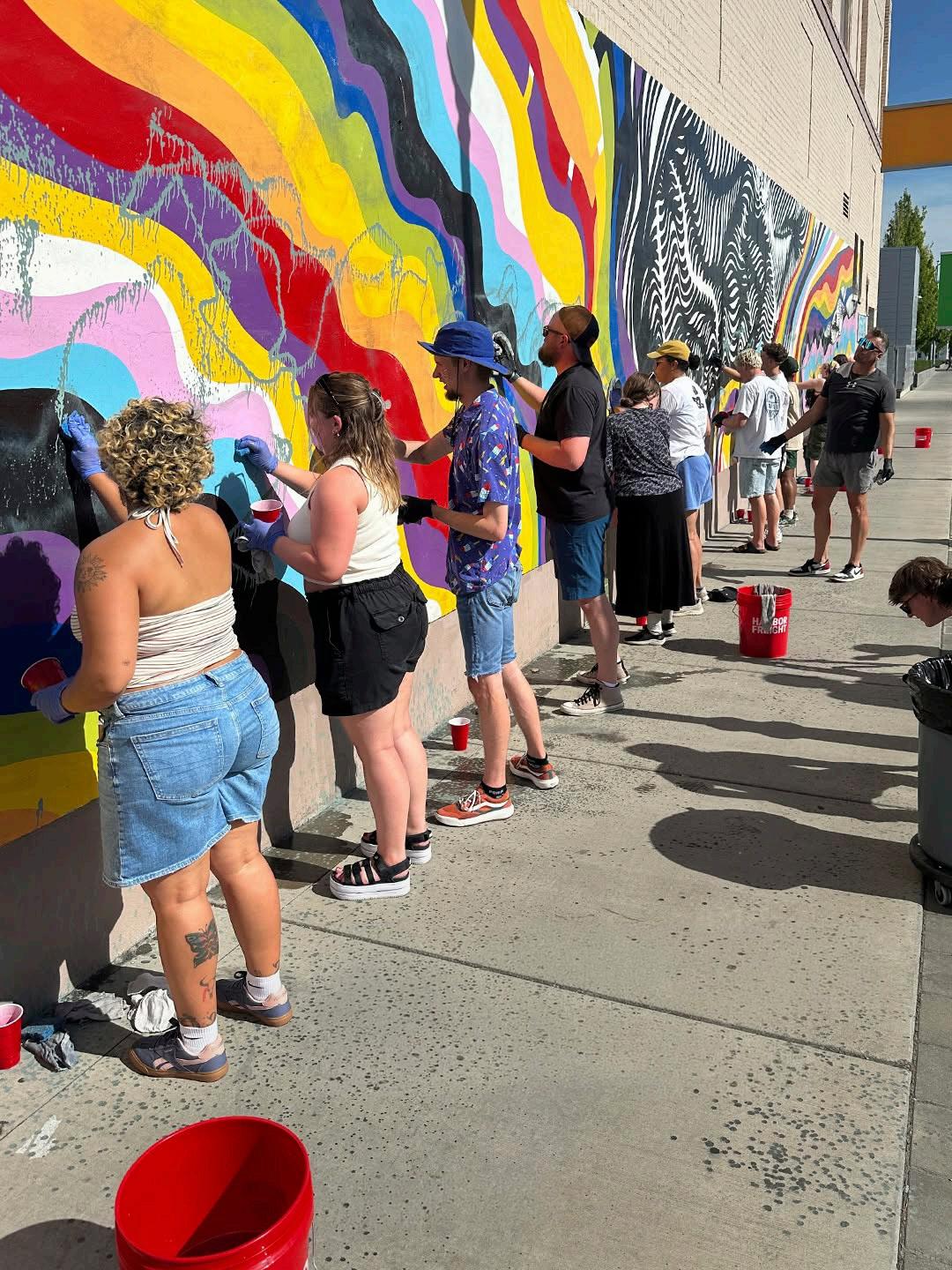
Despite the summer heat and a holiday weekend, volunteers gathered to scrub and repaint the mural to remove graffiti. Several passersby joined in on the spot, including Oliver Harris of Orem, who called the vandalism “super disrespectful.”
For Reynolds, the cleanup became its own statement.
“Their resilience is better shown than told, and I think that’s what we’re doing today,” Reynolds said. “That’s what we wanted to do with this mural, to show up for our community, and now we’re getting them to show up for us. So it means a lot.”
The Provo Police Department’s investigation remains open. Q
Dance
Rural Utah Prides push visibility beyond the Wasatch Front
BY MICHAEL AARON
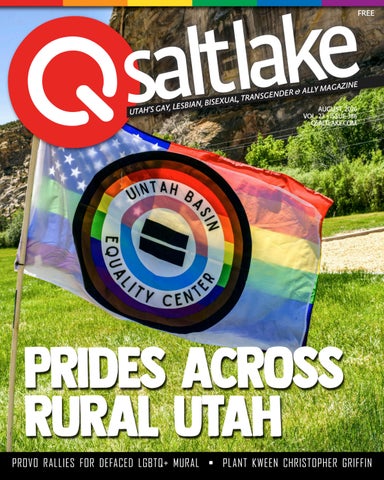
While Pride festivals across the Wasatch Front bring the largest crowds every summer, a quieter but no less determined wave of Pride celebrations has been unfolding across rural Utah, from the coal-country streets of Carbon County to the oil fields of the Uintah Basin, the high desert of Tooele County and the Utah-Arizona border town of Fredonia, just south of Kanab.
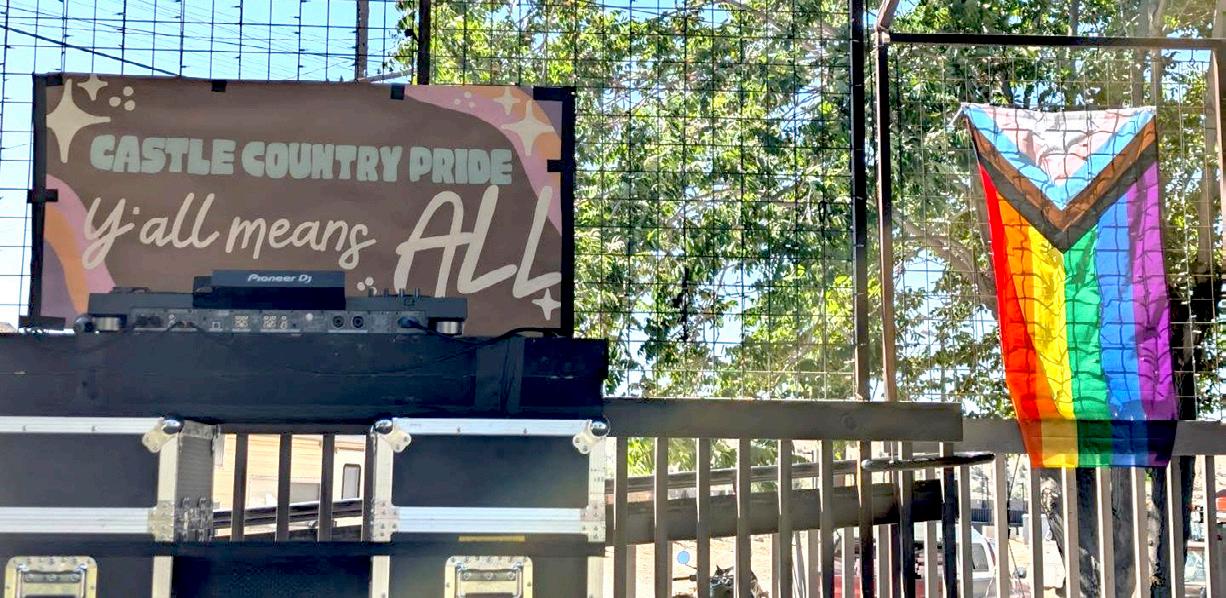
Castle Country Pride debuts in Helper
The most notable newcomer is Castle Country Pride, which held its inaugural event June 20-21 in Helper, a historic railroad and mining town of roughly 2,100 people in Carbon
County. The event picked up where the town’s popular “Helper Saturday Vibes Pride” left off in past years, giving the region’s LGBTQ+ community and allies a dedicated, standalone celebration for the first time.
The weekend opened Saturday night with a free screening at the Rio Theater of “To Wong Foo, Thanks for Everything! Julie Newmar,” preceded by a showing of the short film “Be Where You Are.”
Festivities continued Sunday from 11 a.m. to 3 p.m. at Helper Main Street Park, where organizers set up community resource tables, arts and crafts, and free face painting for families.
Kylee Howell, founder of the Lavender Lighthouse Foundation and one of
the event’s lead organizers, emceed a stage program that began at 12:30 p.m.
The lineup included readings from Helper Poet Laureate Olivia Dudding Rodriguez and local author and educator Cami Carlson, whose poem addressed diversity and inclusion in Castle Country. Local drag entertainer Willard Cron performed throughout the afternoon.
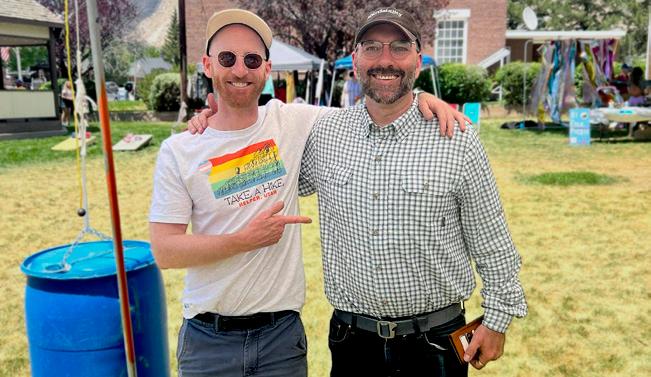
The day’s featured speaker was Derek Kitchen, a former Utah state senator and co-founder of Salt Lake City’s Laziz Kitchen. Kitchen was the lead plaintiff in Kitchen v. Herbert, the federal case that struck down Utah’s ban on same-sex marriage and helped clear the way for marriage equality
nationwide. His appearance in Helper — a town far removed from the urban advocacy circles where his case was argued — underscored organizers’ “Y’all Means All” theme for the weekend.
The event closed with a Castle Country Pride dance party in the park.
Castle Country Pride was organized by Howell, Cron, Nick Kiahtipes, Carlson and Eva Grimaldo, with support from Helper Beer, Bug & Bird Mercantile, Market Express, Sofia K Photo, Pebble the Clown, West Coast Show Support and Beg, Borrow & Steele. Angel’s Cravings provided food for attendees, and Howell singled out the Helper Engine for its role collecting donations, along with the event’s volunteer corps.
A tavern outside Kanab goes all in
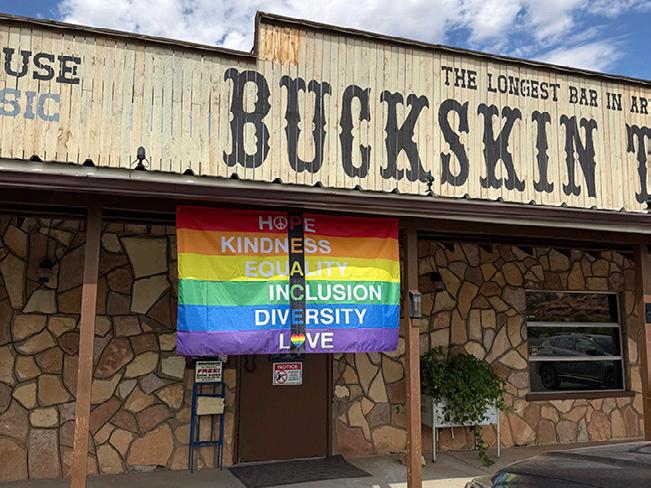
Roughly 250 miles south, on the Arizona side of the Utah-Arizona line just outside Kanab, the Buckskin Tavern hosted its first-ever Pride festival July 12-13, followed by its first drag brunch on July 14.
Billed as “Free to Be Me,” the twoday festival ran 3 to 11 p.m. both days
Derek Kitchen and Utah House candidtae Carl Ingwell
at the tavern’s location on North Main Street in Fredonia, a town of fewer than 1,300 residents that sits directly across the state line from Kanab. Each day featured DJs, vendors, food trucks, raffles, games, a pool table and a full bar.
Friday’s lineup was headlined by the band Runaway Fire at 8 p.m. Saturday’s program opened with a speech from drag performer and activist Lady Shug shortly before 6 p.m., followed by a set from Mended Hearts Club and an outdoor drag show at 8 p.m. Weekend passes were $20, with single-day tickets available for $15 at the door.
The event marked new territory for a region better known for its conservative politics and proximity to Zion and Grand Canyon-area tourism than for LGBTQ+ nightlife. Organizers acknowledged as much in their own promotion, describing the festival as “enough chaos to make Fredonia nervous.” Hundreds attended the shows.
Tooele County holds its own Pride day
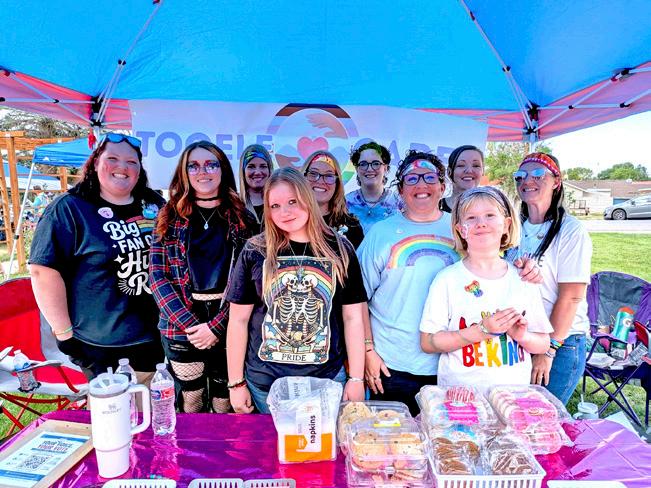
In Tooele County, west of Salt Lake City, Tooele Pride brought a family-oriented celebration to the Tooele Marketplace at 140 E. 200 S. The daylong event ran
from 11 a.m. to 5 p.m. and included food trucks, vendor and resource booths, an open mic, live entertainment, face painting and a raffle — programming aimed at giving the county’s LGBTQ+ residents and allies a visible community gathering point outside the Wasatch Front.
A statewide spread in smaller communities
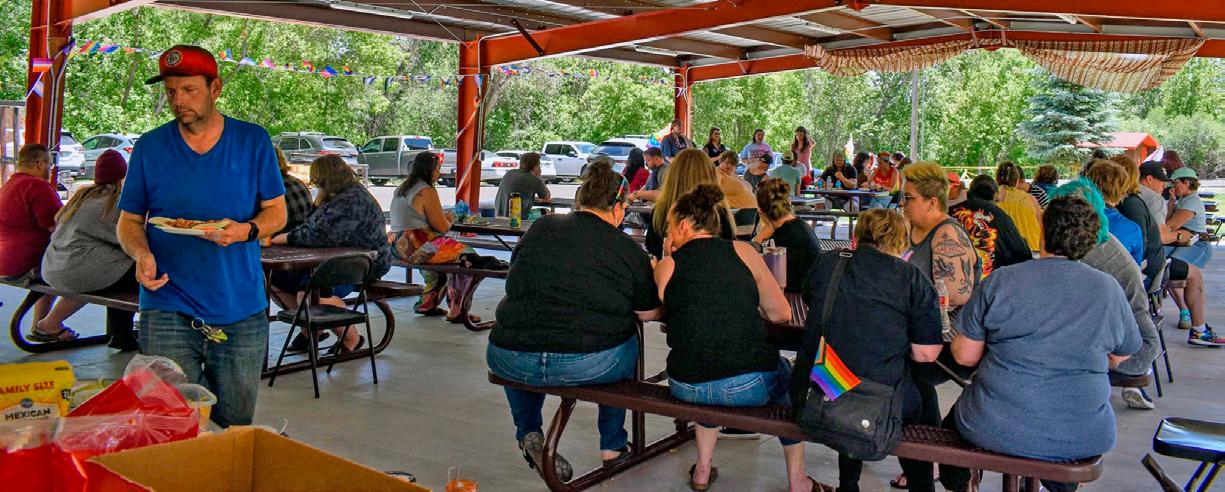
Together, these events form part of a broader pattern this Pride season, as organizers in several of Utah’s smaller and more conservative communities have built out standalone programming rather than depending solely on the Utah Pride Festival to represent
giving” gathering based out of Lakewood Social House in Saratoga Springs.
In Washington County, Pride of Southern Utah held its Pride Prom, themed “MasQUEERade,” on June 27 at the Dixie Convention Center in St. George, part of an organization that says its events have drawn a cumulative 3,400-plus attendees. The group also runs recurring “Queer Coffee” meetups at cafes around the St. George area. It’s full-on Pride will be held Sept. 24 in St. George.
And in Grand County, Moab Pride held a community gathering June 10, continuing a small but ongoing presence in the tourist town.
the state’s LGBTQ+ population.
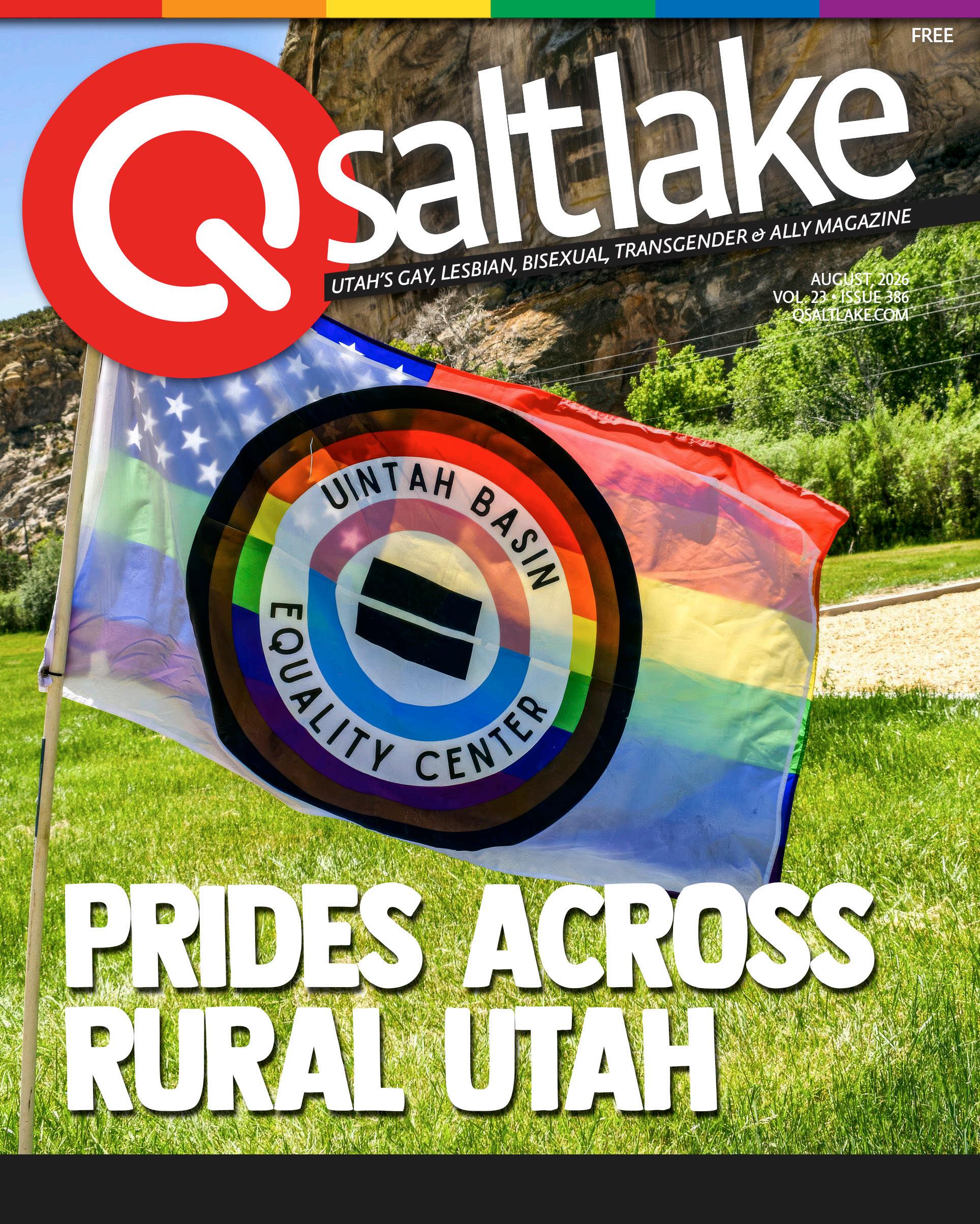
In the Uintah Basin, the Uintah Basin Equality Center hosted a “Pride Month Paint Night” June 13 at Little B’s in Vernal, followed by its annual Pride picnic in early July. Utah State University’s Uintah Basin campus has separately built out “LGBT 101” and “Trans 101” ally-training programs under staff director Latrisha Fall as part of its ongoing Project Rainbow initiative.
In Cache Valley, Logan Pride, a nonprofit founded in 2016, held smaller gatherings this spring ahead of its flagship festival, set for September. The Cache Pride Center, run through Cache Valley Unitarian Universalists, held a youth-focused meeting July 14 as part of its ongoing mentoring and suicide-prevention programming for LGBTQ+ teens across Cache, Box Elder and Rich counties.
In Utah County’s Cedar Valley area, a slate of events culminating around June 20 included a youth prom and a “Queers-
Project Rainbow
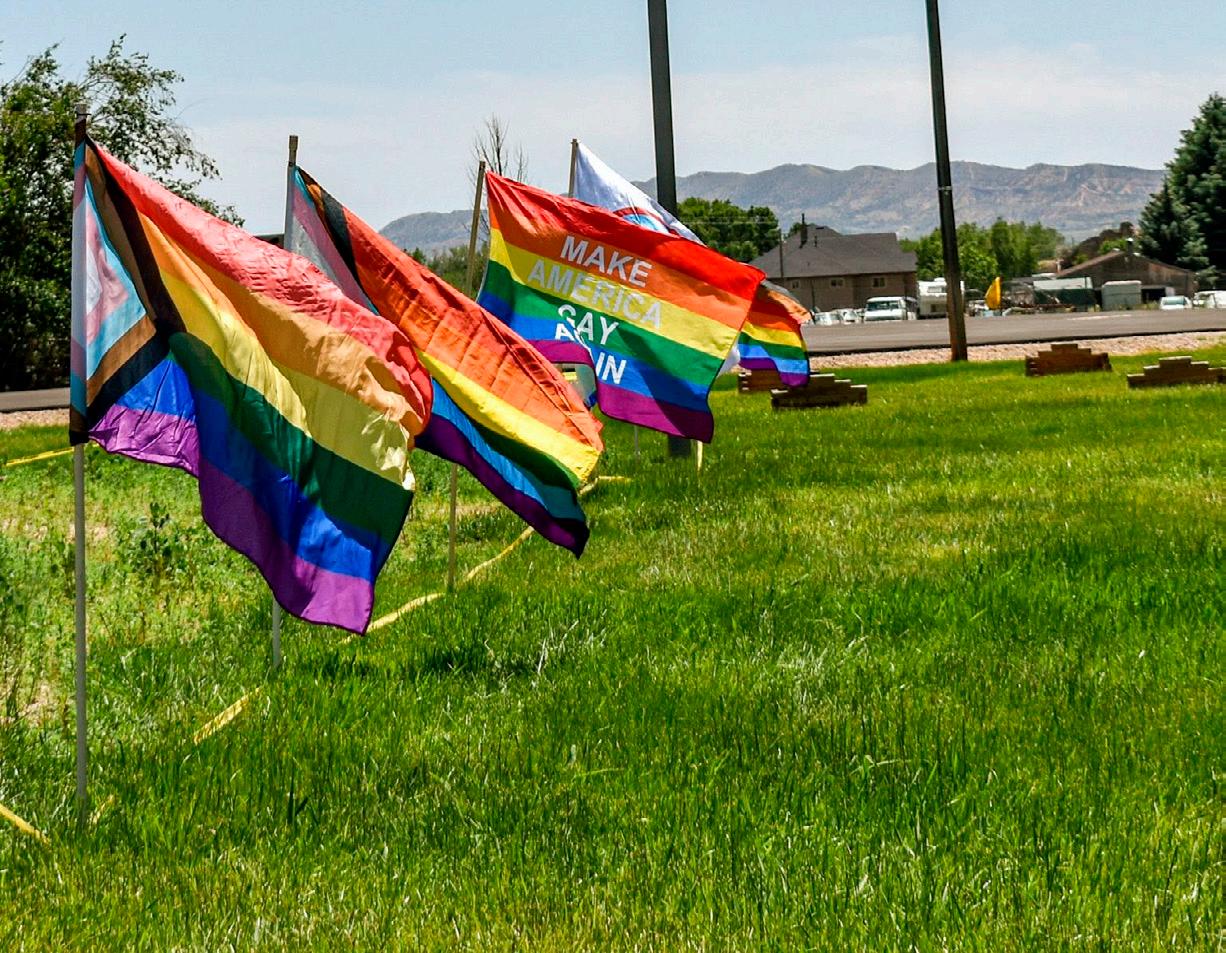
Project Rainbow stakes flags across the state as fundaisers for LGBTQ+ charities. Rural counties they have staked this year include Box Elder, Cache, Carbon, Duchesne, Summit, Wasatch, Tooele, and Uintah, with Washington, Kane, and possibly Iron to be done later this year, according to Jacey Thornton, the group’s executive director.
“We invest more money in rural areas than we receive from those spaces. Over 2/3 of our reinvestment went to rural Utah, with most of our revenue coming from Salt Lake City,” Thornton said. “This is one of the things I love most about our work.”
Taken together, the events reflect a continued expansion of Pride programming beyond the Ogden to Provo Valley where organizers say visibility carries particular weight given the communities’ size and political makeup. Q
Uintah Basin Pride
Upcoming Regional Prides
Utah’s 2025 Pride season is brimming with vibrant celebrations across the state. Here’s a chronological guide to the regional Pride events, each offering unique experiences and opportunities to support the LGBTQ+ community.
AUGUST 28–30, PALOUSE PRIDE, MOSCOW
A 3-day celebration embracing LGBTQ+ culture, arts, and community. INLANDOASIS.ORG
SEPT. 19, LOGAN PRIDE FESTIVAL
Logan Pride is scheduled for September 19, on Federal Avenue in Logan, Utah. Since 2016, Logan Pride has served the Cache Valley community as a non-profit organization dedicated to celebrating diversity while promoting LGBTQIA+ visibility, acceptance, and support in the region. “While we host many projects and activities throughout the year, our hallmark event is our annual Pride Festival that occurs each September,” organizers said. “This single-day event has notably generated the largest reach and impact in and for our community, and it is only made possible by supporters like you.” LOGANPRIDE.
ORG
SEPT. 9–12, DURANGO PRIDE
The Four Corners area Prides up in the Fall. Last year’s festivities included a downtown Pride Parade, Drag Trivia at the Starlight Lounge, a Pride Dance, and a full-day Buckley Park Festival.
THEALLIANCE.GAY/PRIDE
SEPTEMBER
18–20,
BOISE PRIDE
The 37th year of Idaho’s largest LGBTQ+ festival, in the capital city. BOISEPRIDEFEST.ORG
SEPT.
26,
PRIDE OF SOUTHERN UTAH, ST. GEORGE
Pride in the Park is Southern Utah’s biggest LGBTQ+ pride festival and is held at JC Snow Park in St. George from 11am to 5pm. It is a free all-ages community event with live performances, food trucks, and local vendors. No ticket is required to attend. Bag check and metal de-
tectors will be used to help keep this event safe for everyone.
PRIDEOFSOUTHERNUTAH.ORG
OCT. 2-4, OGDEN PRIDE FESTIVAL
Celebrating its 12th year, the Ogden Pride Festival has moved! The new schedule is the first weekend of October. “Our community resoundingly said the first weekend in October was the move, so starting in 2026, Ogden, dust off your glitter and pull out those cozy pride sweaters, because the festival is making the jump to October!” Organizers call it the fiercest way to kick off LGBTQ+ History Month and keep the pride alive.
Mildred Berryman Institute to present The World War II Home Front and LGBTQ Community Formation
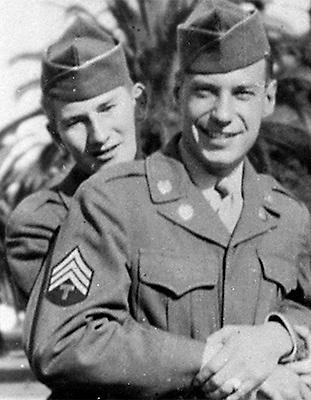
Stonewall gets the headlines, but World War II may be the more pivotal chapter in LGBTQ community formation — a claim University of Utah historian Matt Basso will unpack in a free public lecture Thursday, August 20, 2026, at 6 p.m. at Signature Books, 508 W. 400 South.
Basso, an associate professor jointly appointed in History and Gender Studies, argues that the war pulled queer Americans out of isolated hometowns and into
shared spaces — military bases, defense plants, bars — forging networks that hadn’t existed at that scale before.
His research shows gay men serving in active combat despite official exclusions, and drag performances thriving in officially sanctioned spaces like USO shows and base theater productions. The result is a far more complicated, human portrait of the “Greatest Generation” than popular memory allows. Basso translates this schol-
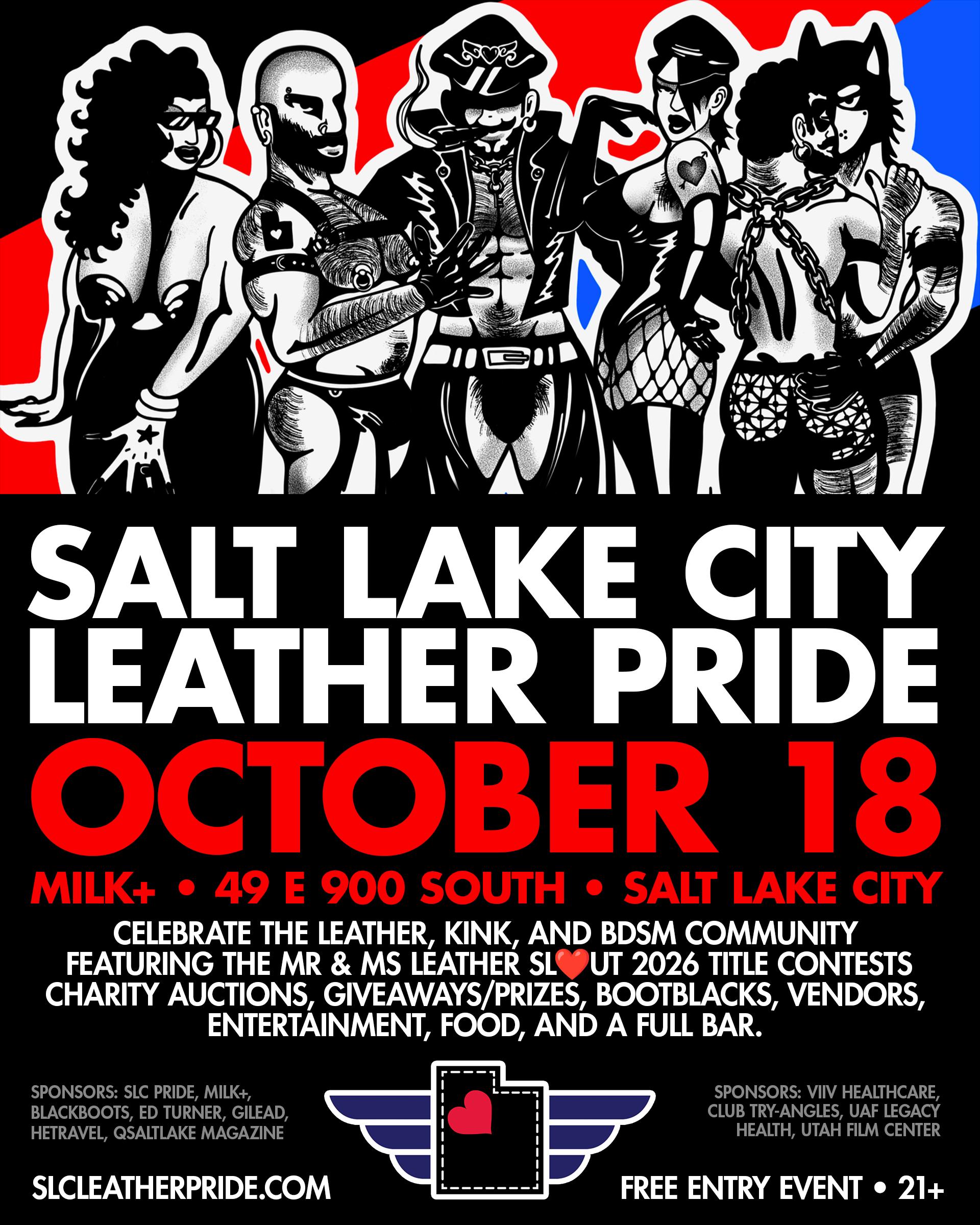
OCT. 18, SLC LEATHER PRIDE
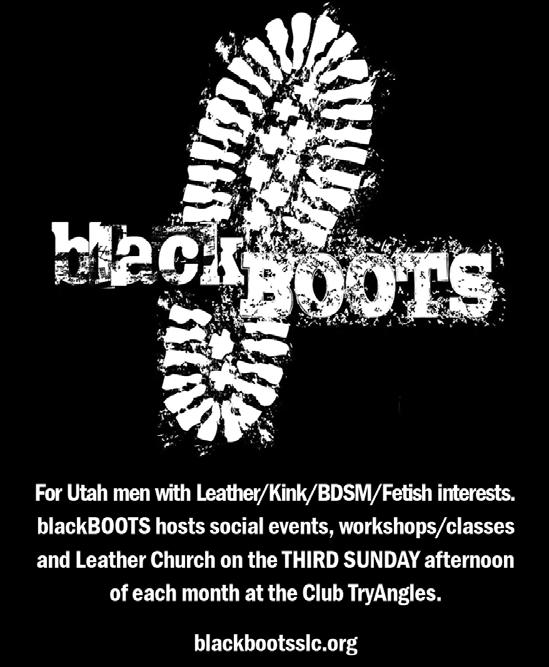
SLC Leather Pride is a two-day celebration of Salt Lake City’s Leather, Kink & BDSM community! Kick off Friday, Oct. 17 with the Contest Meet & Greet at Tryangles (7–9 p.m.), then join the indoor/outdoor festival Saturday, Oct. 18 at Milk+ (noon–8 p.m.) — featuring vendors, entertainment, bootblacks, auctions, food, a full bar, and title contests of MR. LEATHER SL♥UT 2026 and, new this year, MS. Leather SL♥UT 2026. Free entry, 21+. SLCLEATHERPRIDE.
COM Q
arship into public-facing work, too, building digital archives, oral history projects, and K-12 curricula that bring these overlooked histories into classrooms and community spaces.
The talk continues the Institute’s mission of surfacing Utah’s — and the nation’s — hidden queer history, honoring namesake Mildred Berryman, whose early-1900s study of a Salt Lake City lesbian social circle remains one of the first documented queer communities in the state. Free and open to the public.
Utah Summer Dance Festival celebrates global traditions
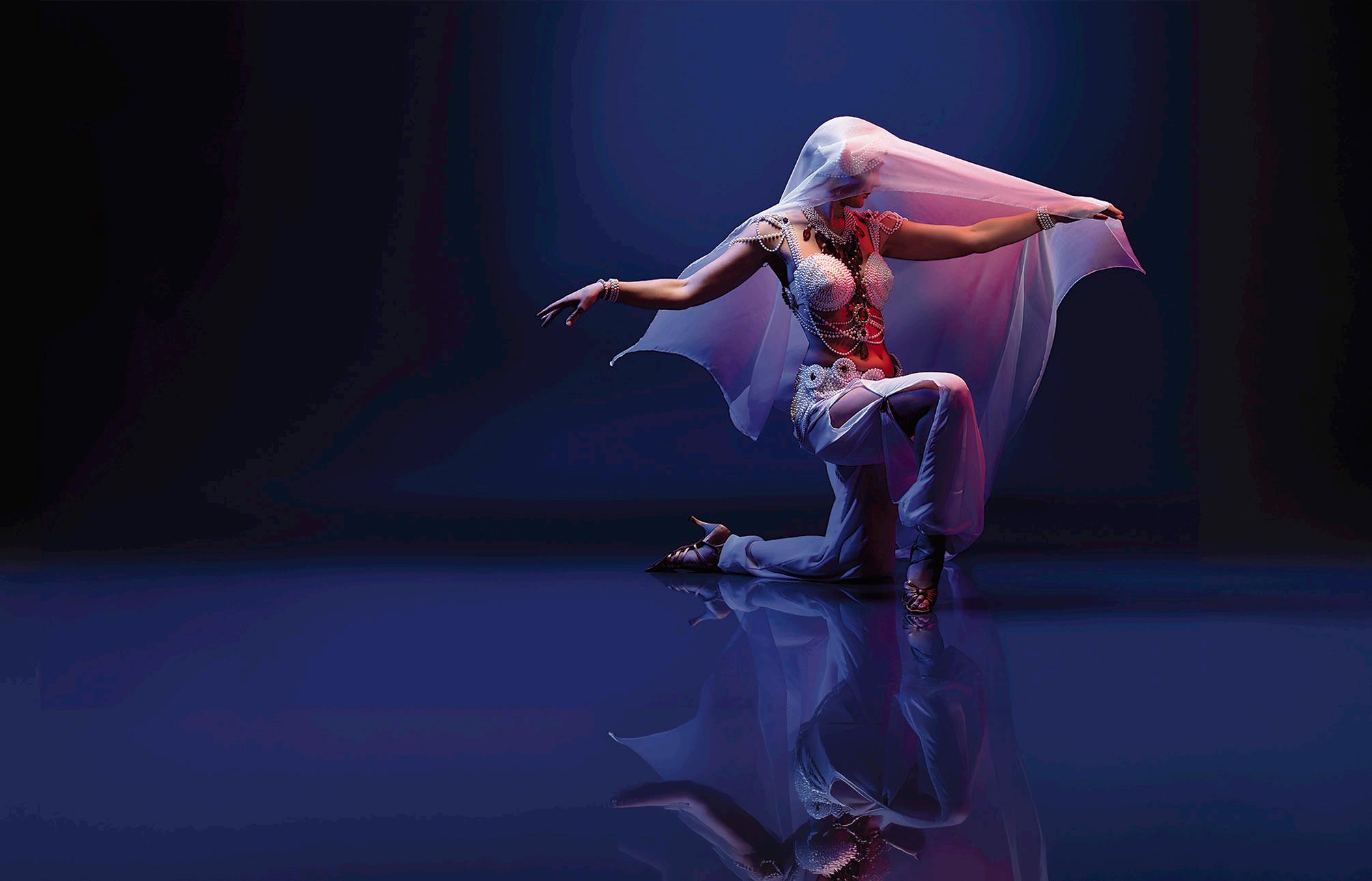
The Utah Summer Dance Festival returns Saturday, August 15, bringing a full day of live music and dance performance to the South Salt Lake Community Center, with doors opening at 10:30 a.m. and programming running from 11 a.m. to 8 p.m.
The event, held at 2531 S.400 East, has built a reputation over the years for showcasing an unusually broad range of dance styles. While the festival’s roots lie in traditional and fusion forms of Middle Eastern dance and Eastern European folk dance, organizers keep an open call each year for professional and student troupes performing all genres. Past festivals have featured performers representing more than 20 nations, organizers said, making the event one of the more culturally diverse dance showcases in the region.
“We showcase dances from all over the world in order to create a diverse, multicultural event, bringing communities and cultures together,” organizers said in event materials.
WORKSHOPS BOOKEND THE FESTIVAL
In addition to the Saturday performances, the festival is expanding its workshop offerings this year with an intensive, pick-your-own-adventure format spread across two days — Friday, August 14, and Sunday, August 16 — at Desert Journey School of Dance, 1367 S. Major Street in Salt Lake City.
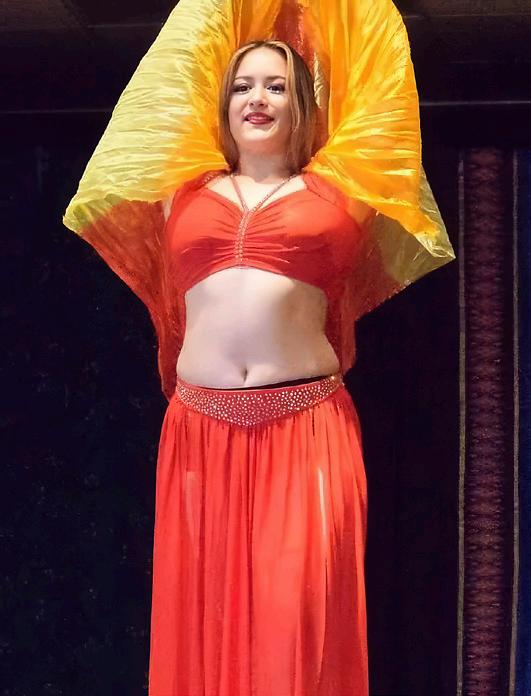
The Friday session is a three-hour Drum Dance workshop led by Angelia, an instructor with Desert Journey who has performed Egyptian Cabaret-style belly dance since 1998. Participants will learn a drum choreography incorporating isolations, traveling steps and contemporary-jazz influences, with the option to perform the piece on stage at Saturday’s festival.
Sunday offers three 90-minute sessions: Contemporary/Modern Dance, taught by Ricci Phillips Galvan, owner and director of The Movement Dance Center, focusing on technique that crosses over between dance styles.
The Neuroscience of Dance in Storytelling, led by Jenny C. Cohen, who
performs under the name Aaliyah Jenny. Cohen holds a master’s degree in occupational therapy from Boston University and is board-certified in integrative neurosomatic practice; the session examines how understanding neuroscience can sharpen both teaching and performance. Guinea West African Dance, taught by Rosie Banchero of WOFA Dance SLC, danced to live drumming. Banchero holds a B.F.A. in modern dance from the University of Utah and has studied African movement and music abroad.
Workshop pricing runs $70 for the Friday session and $40 per Sunday session, with discounts for multiple sessions. Organizers are encouraging feefree payment through Venmo, PayPal (direct) or Zelle, in addition to standard credit card processing and cash options.
PERFORMERS, VENDORS, VOLUNTEERS
Saturday’s festival will also feature a vendor marketplace alongside the performances, with goods ranging from performance accessories to self-care products. Those interested in performing or selling as vendors can register through the festival’s website at UTAHSUMMERDANCEFESTIVAL.ORG
Organizers are also recruiting volunteers to help run the event and are accepting sponsorship and advertising inquiries, along with tax-deductible donations to support the performing arts programming. Sponsorship and advertising inquiries can be directed to utsummerfestival@gmail.com.
Dancer registration, vendor registration, and workshop sign-ups are available now through UTAHSUMMERDANCEFESTIVAL.ORG
views quotes
“While the results did not go as we had hoped, I am deeply grateful to the voters, volunteers, donors, and supporters who stood with our conservative vision for a stronger Utah.”
—Rep. Trevor Lee on his electoral loss
“It was a good night for Utah and for Utah’s LGBTQ community... Pride means fight back!”
—Equality Utah statement on Lee’s loss
“These past few months, I told my brother repeatedly, he was the bravest and strongest man I’ve ever known. He lived his life with authenticity, with grace, and strength and joy. The courage he showed and the way he moved in this world truly made him a trailblazer...”
— NBA’s Jarron Collins, accepting the Arthur Ashe Award for Courage at the 2026 ESPYs on behalf of his late twin brother Jason Collins, the first openly gay active NBA player
“People feel a certain way about [being gay] in a masculine sport. I give no fucks.”
— Chicago Bears QB Caleb Williams
“Celebrate our diversity... embrace our LGBTQ youth... to ‘accept’ does not simply mean to ‘love’ — it means you give true validity and fully embrace and support [them]
— Imagine Dragons frontman Dan Reynolds
WhoEncourage your leaders to display a Pride flag
BY CHEYLYNN HAYMAN
knew such a tiny flag could make such big waves?
More than a year ago, I started quietly displaying my pride flag on the council dais in protest of a mean-spirited and unnecessary law motivated by misplaced and misguided animus toward members of our LGBTQ community. Not everyone understood or agreed with my decision. Some took me to task. How could I be so divisive? So controversial? Couldn’t I just go along to get along?
Some questioned why I continued to display my
flag meeting after meeting. A time or two, fine. But hadn’t I made my point? Wouldn’t I stop?
(The law is still in effect so …)
Others supported my decision.
Members of our LGBTQ community, who told me how much they appreciated my pride flag.
Parents of gay teens who reached out to thank me for standing up for their children. For showing that our elected representatives care enough to publicly advocate for them.
But still I wondered … was
Letter: Owning my actions at SLC Pride
BY SPENCER WRIGHT
Dear SLC Pride Community,
I’m writing to sincerely apologize for my actions on Festival Sunday evening during the tear-down of SLC Pride. While serving as a Festival lead volunteer, I yelled aggressively, in anger, at members of Sappho SLC. That behavior was wrong, it was not okay, and it does not reflect the standard I hold myself to — or the standard this community deserves from someone in a leadership role. I take full responsibility for my actions. I understand the harm this caused, both to the individuals directly involved and to the trust placed in volunteer leadership within our community. There is no context that excuses raising my voice in anger at fellow community
I making a difference? Was displaying a pride flag in a small, conservative city in Davis County meaningful at all?
Fast forward to now.
I’m proud to say the answer is yes.
I may be only one person. But even a single pebble thrown into a pond will generate ripples.
Important ripples.
Wide ripples.
The types of ripples that, over time, may generate meaningful change.
Until the Legislature revokes its offensive flag law, I will continue to display my pride flag at every city council meeting. And I invite other elected representatives to do the same.
To use our voices, platforms, and protected freedoms of speech to fill city halls around the state
with rainbows flags.
To show the members of our LGBTQ communities that we support them and will stand up for them when it matters.
To show the Legislature that it got it wrong and should fix its mistake.
I hope the Legislature listens.
Until it does, I encourage you to contact and invite your representatives to display pride flags in your own city halls. And you are always welcome to come see my pride flag at every Centerville City council meeting. Q
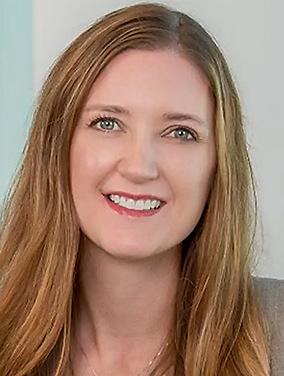
Cheylynn Hayman is a Centerville, Utah city councilmember and labor/employment attorney at Parr Brown Gee & Loveless. A former Planning Commission member and Judicial Conduct Commission chair, she made headlines this year for defending her right to display a pride flag on her council desk. This editorial is from her Facebook post.
members, especially in a space meant to be safe and welcoming for everyone.
I would welcome the opportunity to speak directly with anyone affected, to apologize in person and listen to how my actions impacted them. I also understand that trust is rebuilt through action, not just words, and I’m committed to doing that work — including reflecting on how I handle stress and conflict in high-pressure volunteer environments going forward.
If anyone would like to reach out, please contact me through editor@qsaltlake.com. I’m also open to any conditions the Pride board feels are appropriate as part of that process. In community, SPENCER WRIGHT
Lindsey Graham
BY DANNE WITKOWSKI
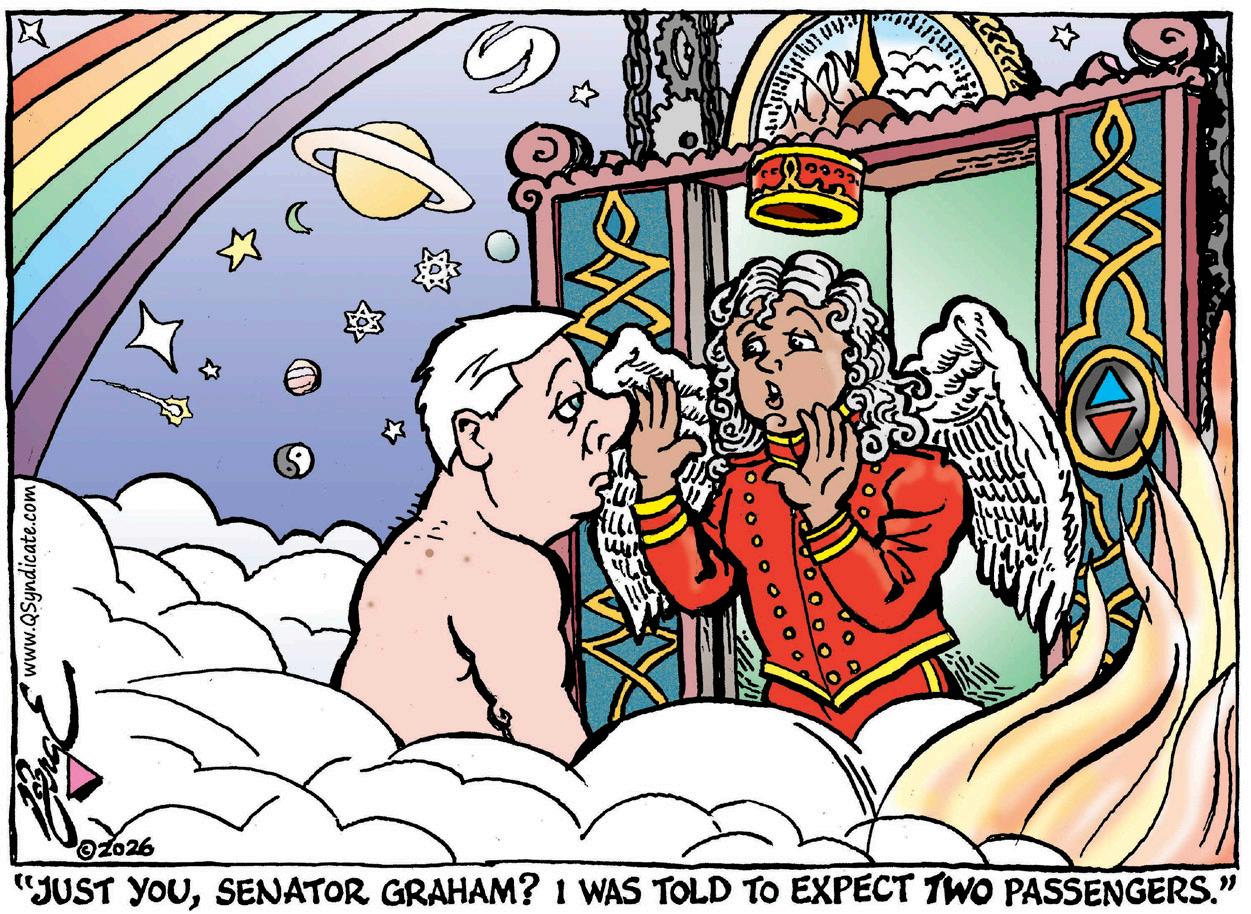
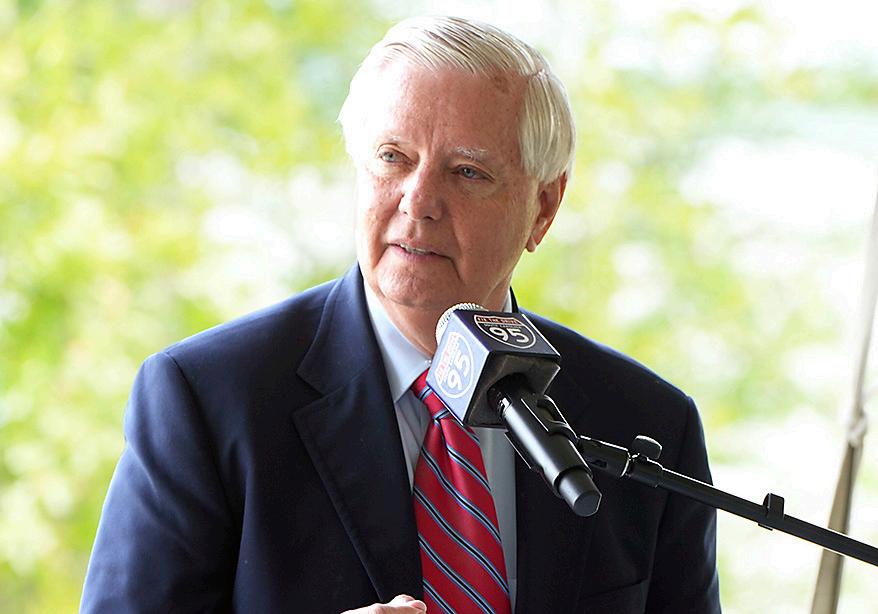
U.S. Senator Lindsey Graham (R-South Carolina) died of a hardened heart (no, seriously) on July 11 at age 71. He’d been in office since 1992, first as a state representative, then as a U.S. House member, and then, beginning in 2003, as senator.
And look, I know very well that it’s frowned upon to speak ill of the dead. But here’s why I’m going to do it anyway. Graham spent his political life attacking people like me. He opposed LGBTQ+ rights, voting against marriage equality and discrimination protections every chance he got. I don’t owe this man, or anyone else who harms me or my family, a goddamn thing. I graduated from high school in 1996. That same year, Graham voted for the Defense of Marriage Act, which defined marriage as an institution solely for one man and one woman. It also would’ve made it A-OK for states to refuse to recognize marriages between gay and lesbian couples if they so chose.
And a lot of them chose to! Anti-equality ballot measures exploded across the country. According to Ballotpedia, “Since 1994, there were 45 statewide ballot measures related to same-sex marriage on the ballot. Out of these measures, there were 36 measures in 32 states to prohibit same-sex marriage or define marriage as between one man and one woman. Of these measures, 33 were approved.”
In other words, the majority of the country made it loud and clear that I did not deserve the legal right to marry. Kind of a bummer!
It wasn’t until 2015 that this nationwide discrimination fest was rectified by the Supreme Court in the Obergefell v. Hodges case.
Big surprise, Graham did not agree with the Obergefell ruling. He called himself “a proud defender of tradi-
tional marriage” in 2015 a statement.
In that same statement, he lamented that amending the Constitution to ban marriage equality outright, something he very much supported, was probably a no-go and instead committed himself to “ensuring the protection of religious liberties of all Americans.”
Of course, protecting “religious liberties” meant protecting people who use Christianity as an excuse to discriminate against people they don’t like. And it still does!
Back when he ran for president in 2016, Graham did not speak highly of Donald Trump, saying that if the Republican Party nominated Trump, “We will get destroyed…and we will deserve it.” He also called Trump “a race-baiting, xenophobic religious bigot.”
But once Trump ascended to power, Graham was quick to cozy up to him. So much so that Trump called Graham “one of the greatest people and senators I have ever known” after his death.
Praise for Graham also came from Democrats.
“What I’ll remember most about Senator Graham was his sense of humor and how he deployed it to move his policy positions forward,” Sen. Adam Schiff (D-California) posted on Bluesky. “Though we did not often agree, Senator Graham was never disagreeable.”
Sen. Elizabeth Warren (D-Massachusetts) posted on Bluesky, “Even though we disagreed on much, he was always willing to negotiate, with humor and wit.”
So glad to hear that Graham was a cutup. And I don’t know, maybe I just take things too personally, but I can’t help but find Graham’s staunch opposition to LGBTQ+ rights, love of war,
and his fawning support for the fascist Trump regime “disagreeable.” At best. Do I expect senators to post stuff like, “Fuck Lindsey Graham” after his death? No, that’s my job. And that’s my job because I have no real power here. Senators, on the other hand, do.
And when Democrats use that power to fawn over someone like Graham, they are making it very clear where they stand. They don’t stand with the people. They stand with the power. And for what? Civility? So many people in the United States, not to mention worldwide, have been grievously harmed or killed by this administration. And guys like Graham had a big hand in that. ICE is still murdering people in the streets, we’re still at war with Iran, and Republicans are working fast and furious to dismantle democracy.
The only people who can afford civility are the people who don’t feel the pain that is inflicted on the rest of us. Senators aren’t going bankrupt because they can’t pay hospital bills, they aren’t going to be sent to die in a completely unnecessary war, they aren’t struggling to pay for groceries, and they aren’t being snatched up by masked paramilitary thugs and disappearing. Those are things that happen to the powerless. To people like you and me.
These same Democrats are going to tell you that voting for them in the 2026 midterms is a matter of life and death. Are they better than the Republicans? Yes. But there should be a much higher bar. Q
D’Anne Witkowski is a poet, writer and comedian living with her wife and son. She has been writing about LGBT politics for over a decade. Follow her on X @MamaDWitkowski
WeJust be nice
BY CHRISTOPHER KATIS
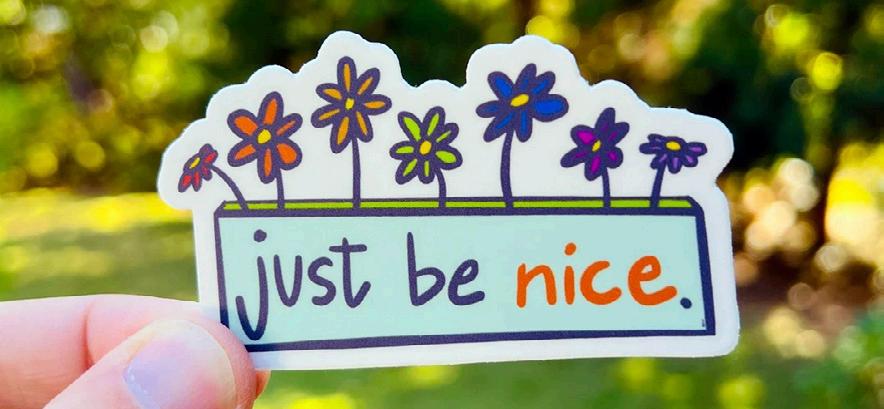
spent a lot of time when the boys were growing up reminding them that words matter, actions matter more, and that there can be unexpected consequences for both. We also strived to instill in our sons that in our family, every person is shown respect and dignity, even those with whom we disagree. It’s simple: just be nice to everyone.
Not saying we’re ideal parents, but I wish that the moms and dads of a lot of Republicans had taught their kids similar ideals, especially when it comes to transgender folks. The vilification of a group who, per the Williams Institute at the UCLA School of Law, represents just one percent of Americans over 13 is having serious repercussions on people’s lives.
According to the Institute’s analysis of the 2022 U.S. Trans Survey data, five percent of trans and non-binary people reported experiencing a physical attack during 2021, compared to 1.5 percent for the rest of us.
The survey showed being perceived as transgender caused a 72 percent higher chance of being attacked. About two-thirds of victims pointed to their transgender identity and one-third to their sexual identity as the source of the attack.
“Research consistently shows that transgender people face significantly
higher rates of violence than their cisgender peers,” according to the Williams Institute’s Jordan Grasso, the lead author of the analysis.
The election of President Donald Trump in 2024 has only made the situation worse. Another Williams Institute survey from April 2026 revealed that two-thirds of kids with transgender parents were more “anxious or fearful under the Trump administration”. A full 56 percent of them “expressed new worries, including concerns about parental safety, discrimination, relocation, or family separation.”
One of the most important jobs of any parent is to protect their kids. Nearly nine in ten of the transgender moms and dads in the Institute’s survey are taking steps to keep their children safe. Some of their actions are pretty drastic. A full 40 percent have decided to “limit the visibility of their own gender identity”. Even more, 45 percent skip spaces or events that are intended specifically for families.
Nearly one in five of these parents are actually heading to states or countries that are far more accepting. While another 15 percent are opting to either switch schools or homeschool their kids.
The report’s lead author, Abbie E. Goldberg, affiliated scholar at the Williams Institute and Professor of Psychology at Clark Univer-
sity, said, “The heightened fears transgender parents and their children are experiencing in the current sociopolitical and legislative climate strike at the heart of their security and stability.”
To combat this lack of security and stability, transgender parents are taking action to ensure their relationship with their children and significant other is legally recognized. Others are taking self-defense classes. Still, some are grabbing pepper spray and “personal alarms.” Many others are immersing themselves in the LGBTQ+ community, where they’re finding support, information about their rights, and positive and reaffirming resources for their kids.
Another of the study’s
authors, Brad Sears, distinguished senior scholar of law and policy at the Williams Institute, notes that “While some are engaging more in the LGBTQ community, others are having to re-closet themselves and their families and explain why that is necessary to their children after trying to instill in them pride in who they are and the power of being visible.”
The climate of fear and intimidation perpetrated by the Trump Administration in concert with those who support him and share his views has led to dire consequences for transgender people and their kids. What’s really crazy about all of this is that there’s a simple solution to it all: just be nice. Q
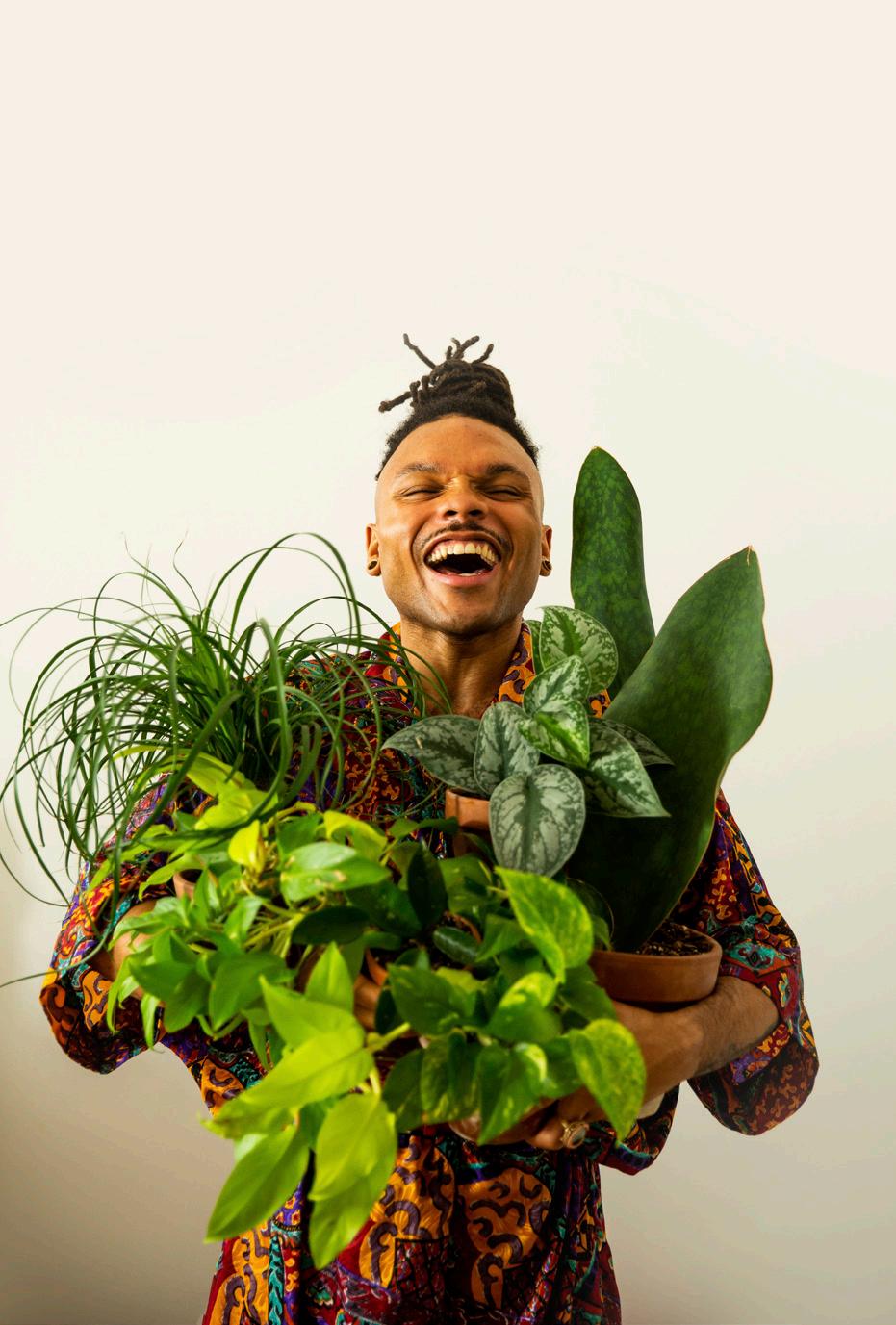
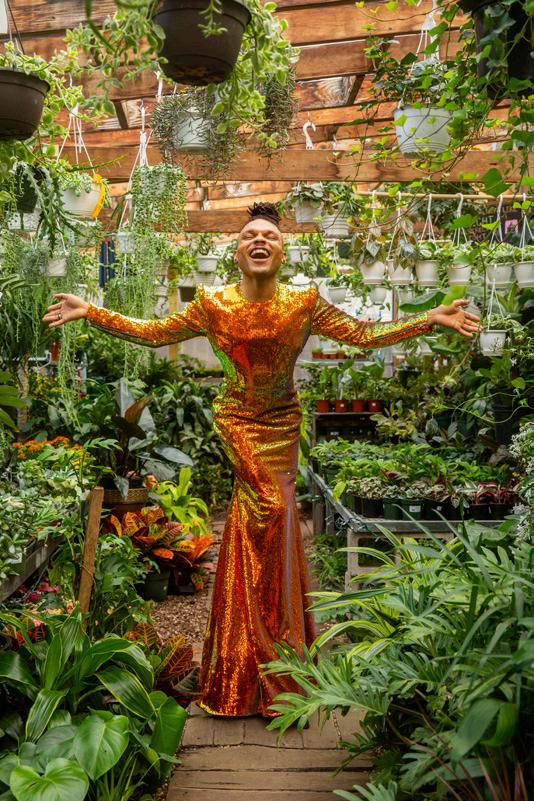
Plant Kween Christopher Griffin is here to remind you to water yourself
BY CHRIS AZZOPARDI
Ifyour social feed has ever stopped you mid-scroll because a monstera looked like it’s been better-tended than you have, you’ve probably already found Christopher Griffin — known to their 800,000-strong plant-loving community as Plant Kween. Griffin — @plantkween on Instagram and author of “You Grow, Gurl!” — has turned houseplant care into something much bigger than watering schedules and sunlight charts. For the Brooklyn-based creator, tending to greenery is about tending to ourselves: nurturing softness in a world that demands hardness, especially from Black, queer and nonbinary folks. What began as a love
passed down from a grandmother Griffin describes as a goddess has grown into a platform rooted in care, curiosity and radical community-building — one that now extends from practical plant advice and work with New York institutions like Prospect Park and the Brooklyn Botanic Garden to their newest video series, “Experimenting With…,” in which Griffin turns the camera inward to explore everything from bilateral hearing loss to roller skating to makeup. I caught up with Griffin to talk plants, Black queer joy, the politics of green spaces and why a humble houseplant might just make us better at holding the line for each other.
How did you become Plant Kween? It started when I was younger. I was obsessed with my grandmother — this Black woman in the church scene. I felt like she was a goddess in my family. She introduced me to plants, and then later in life, I bought my first one and I still have it. It’s [at least] 14 years old. So I started testing different ways of showing up online and finding people, community-building and using it as an opportunity to build bridges. Now it’s turned into this amazing multidisciplinary space where I get to explore myself and my interests and float into spaces that I wouldn’t have access to if I was still working as an educator.
What does it feel like to do what you’re doing now and how did you make that shift from academia? It feels like a dream. Ten years ago, if I knew this is how I’d be making money, I would have been like, “Girl, shut up. There’s no way.” The shift was very gradual. After working at Harvey Milk High School as a college counselor, I went and worked for NYU for nearly a decade in student activities. I was working my nine-to-five and casually posting, and then I got my first brand deal just on my own. It was like, “We want to pay you $4,000 for a video,” and I was like, “All I gotta do is be on camera? I do this every day at my job at NYU.” The perception of the value of my time changed completely. Then the pandemic hit. I was home, bored as hell. That’s when it really skyrocketed. Do you see plant care as part of nurturing spaces that
sustain us when the world doesn’t? It’s one method. There’s different pathways to caring for ourselves, or nurturing the nurturer within us. Plants can teach us to sit still. With how technology has us wrapped around its finger, I think it’s important for us to just sit with something real. It’s a very low threshold: a living being that you can practice on in terms of care. Like, what kind of nurturer are you? What are the various different ways that you can care for yourself? Are you drinking water? Are you giving yourself room to grow? Are you pruning those dead, yellowing leaves that you need to let go of so you can refocus your energy on other things? Are you getting yourself in sunlight? Caring for a plant is basically an empathy-building tool. It really is. And that’s something that we can all be better at practicing because we need more of it.
As a Black queer creator, what does activism look like for you right now? I think when it comes to activism, as it relates to any marginalized community, we often pay attention to the most visible forms of activism: protesting, literally being on the front lines. But I think of us functioning as a clock. There’s multiple pieces that have to happen, there’s different jobs that we all have to do in order to make this clock work and to help our community continue to move forward. And some of it is not super visible, some of it is just maybe donating money, maybe it’s reallocating resources, maybe it’s watering people that can’t water themselves. For Black, queer, trans,
nonbinary folks, none of this is new. I grew up with an understanding of how I was perceived in the world, and that was concentrated around my Blackness. My parents really were like, “You are a Black, flamboyant boy in America.” That really prepared me with a level of confidence and a foundational love that has allowed me to be strong in these times and to stand on my own two feet, and to understand my self-worth, to know that the hate and the negativity that folks put onto me has nothing to do with me. It has everything to do with them. So holding the line for me lately has been existing unapologetically in my truth. It has been holding space for family and friends who are going through times and just need a listening ear. I have been told that I give good hugs, and that I have rejuvenating energy.
Your joyfulness can be seen as a kind of defiance. Do you see it that way? For me, I think joy is that fuel that keeps us going. Joy is us saying, “Despite everything you’re trying to throw at us, I still know who I am.” It’s understanding that these systems were really never for us, and that we have to manifest that joy for ourselves. My grandmother would always say, “I’m the author of my own joy.”
Growing up in a country where we were marginalized communities, we’re never really thought of. When they were creating all this, they didn’t have us in mind. So we do have to be the authors of our own joy. We do have to create those systems. We do have to create systems of community care. And so, for me, my community care is a part of the work that I do. I’ve always been in service of other people, whether I’m educating them, whether I’m empowering them, whether I’m giving them some food for thought for them to figure out. Was it intentional to disrupt the idea that plant expertise belongs only to certain groups of people? Black folks have always been a staple in horticulture. If you want to go back, you can talk about slavery. We were the ones tending the land. Then prior to that, our ancestors on the motherland, they were tending the land, and they were learning from
us. And then also, if you think about Indigenous folks, they were tending the land in ways that Europeans had no knowledge of. So we’ve always been stewards of the land. So it started off, quite selfishly, as just a passion that I was just interested in. Then I was like, well, where are the other Black, queer, non-binary folks? That’s when I was like, let me turn this into an opportunity to invite other people, through my own visibility. I’ve built relationships with a lot of the community gardens here and it’s important for us to take up spaces in these white-ass institutions. We have to take up space. We have to show up. So that has been a lot of my work. But when we talk about houseplants in particular, what I hope is not only when it comes to Black and brown, queer, trans, non-binary bodies in horticulture, because nature is inherently queer, that if I can get you to care about the plant in your living room, maybe you’ll care about the tree on your block. If you care about that tree, maybe you’ll care about the park in your neighborhood. Maybe that’ll get you curious about community gardens in your area. You’ve worked with institutions like Prospect Park and Brooklyn Botanic Garden. What changes would you like to see to make those places feel more inclusive for queer and BIPOC communities? Brooklyn Botanic Garden has Pride Nights, which is amazing. They offer community tickets — tickets that are free. Central Park and Prospect Park have been providing resources
for folks in the area, and providing opportunities for education outreach. So they’re doing the work. It’s just, let’s do more of it. Unfortunately, when it comes to funding, when it comes to care, when it comes to green spaces, less than 1 percent of New York City’s budget goes toward green spaces.
Your TikTok series, “Experimenting With,” touches on everything from roller skating to makeup to hearing loss. What have those explorations taught you about curiosity and self-discovery? I just love being curious. I’ve always been just a nosy person, and that series was born out of some vulnerability. Nowadays, as an educator and working with these institutions, I’ll write out my scripts. And this was a challenge for me not to script anything. Everything I’m saying is me kind of just winging it. Just real moments. What I’ve been enjoying is the dialogue, the community that I’m co-creating with my audience and seeing that there are folks from all different walks of life and ages, like “I’m playing with makeup for the first time at 60,” or “I’m a grown, older man that has been trapped by masculinity’s expectations, and now I actually want to try makeup and see what that looks like for me.” Or my laser hair removal. There were a lot of folks with melanin in their skin being like, “I was terrified,” but that is so helpful to know. I feel like that vulnerability has created this two-way street. That has been the most fulfilling thing about it.
What is the biggest lesson plant care can teach us? We’re basically houseplants with complex emotions. So everything that we do for plants, we can do for each other. Water each other, feed each other nutrients, check in on each other occasionally, but not too much. You don’t want to be a helicopter plant parent. No overwatering. Every plant needs space to grow and do their own thing. Every plant and person needs to be checked up on. Q
Chris Azzopardi is the executive editor and brand director of Pride Source Media Group and Q Syndicate. He has interviewed a multitude of superstars, including Cher, Meryl Streep, Mariah Carey, and Beyoncé. His work has also appeared in The New York Times, Vanity Fair, GQ and Billboard.
2026 QSaltLake Lagoon Day
The Honey Locust Terrace was where the action was at this year’s QSaltLake Lagon Day. We estimate over 1,000 people participated this year. Thank you to all those who joined us at the terrace as Five Husbands Vodka offered libations and we did the annual group photo. Thank you to Alex Patmor of Ogden’s Own Distillery for these photos.
LDS Church spotlights NYC designer Pono Skousen, whose own LGBTQ+ brand tells a different kind of story
The official Instagram and Facebook accounts of The Church of Jesus Christ of Latter-day Saints shared a feature on Pono Skousen, a Hawaiʻi-born, Parsons-trained fashion designer who served a mission in Salt Lake City and Brazil, and is now working in New York City. The post is part of the Church’s ongoing series highlighting members’ creative lives, and Skousen’s story — of leaving ballet behind, learning to sew from Relief Society sisters, and landing at New York Fashion Week — is a warm one, told in his own words.
The Church’s post ran Skousen’s story as a first-person reflection:
“I am Pono. I am from Hawaiʻi, grew up military, and moved a lot. I came to New York about five years ago to study fashion at Parsons and just graduated. Now I design womenswear for a brand that we show at New York Fashion Week, which still feels unreal in the best way.
“I actually started as a ballet dancer,
but when my family moved to a small town, I chose to go with them instead of pursuing ballet somewhere else. I missed creating, so I learned to sew with Relief Society sisters at church. That turned into a portfolio, then fashion school, and now a career.
“A lot of my inspiration comes from the women in my life. My mom held our family together through deployments. Relief Society sisters taught me to sew. My sister is here in New York now, too, chasing her own dreams. I love designing for women and helping them feel strong, confident, and true to who they are. There is a real spiritual power in femininity.
identity, spirituality, and purpose through clothing. Clothes can tell stories. They can carry light.
“There were times in fashion school when I felt different from everyone around me, but I learned I do not have to choose between being creative and being a disciple of Jesus Christ. Both shape me. Both matter.
“I just want to create things that honor where I come from and help people feel seen and powerful.” — Pono
It’s a story about a devout upbringing translating into a fashion career, the kind of profile the Church has increasingly used to show that Latter-day Saints can be found in creative, urban, unexpected spaces.
What the post doesn’t get into is that Skousen, who is openly gay, has spent the past couple of years building something else alongside his day-job design work: Church of Martin, a fashion label and online community he co-founded with fellow designer and stylist Charles Robertson. The name comes from Robertson’s middle name and childhood nickname. The two started the project, by their own account, “super unseriously,” as a joke between friends that grew
into a real brand with a real following.
“Faith has always been part of my life, and it shows up in my work in quiet ways. I love exploring
Church of Martin speaks directly to LGBTQ+ people who grew up, or are still growing up, inside Latter-day Saint culture, including current members,
questioning members, and those who’ve since left the Church. Rather than rejecting that upbringing outright, the brand plays with its language: bestsellers include a shirt reading “Currently Struggling With Same-Sex Attraction,” reclaiming a phrase many gay Latter-day Saints have heard used to describe themselves; a “Love One Another” design featuring two women embraced in a heart; an “I Love My Mormon Boy” tee; and pieces styled after historical Mormon pioneer dress, reworked through a queer lens. A June capsule collection leaned into Boy Scouts of America imagery, including a “Gay Scouts of America” hoodie and a branded handkerchief. The brand describes itself, tongue firmly in cheek, as “the brand that struggles with same-sex attraction.”
For a lot of queer people who grew up LDS, that kind of humor lands as something closer to relief than rebellion. It’s a way of holding on to a childhood vocabulary that once felt loaded and handing it back with warmth instead of shame. Robertson and Skousen have built a small but devoted community around exactly that feeling, one Instagram reel and Primary-song needle-drop at a time.
None of this contradicts what Skousen said in the Church’s post — his account of learning to sew, of faith shaping his creative life, of feeling different in fashion school but refusing to choose between “being creative and being a disciple of Jesus Christ,” reads as entirely sincere. It’s simply not the whole picture. Skousen is, at once, a designer the Church is proud to claim, and a gay man building a brand explicitly for people who’ve had a complicated relationship with that same institution.
Both truths belong to him. Whether the Church’s communications team knew the fuller context and chose to leave it out, or simply featured a talented member without digging further, isn’t publicly known. The Church hasn’t commented on the overlap. But for LGBTQ+ Latter-day Saints and former members who’ve spent years navigating exactly that dual identity — devout and queer, both at once, without a tidy resolution — Skousen’s story, in full, may be the more resonant one. Q
The LDS Church post on Pono Skousen is at INSTAGRAM.COM/P/CVIXMFZPMGN/ Skousen’s Instagram page is at INSTAGRAM.COM/PONOTHEONO The Church of Martin page is at INSTAGRAM.COM/CHURCH.OFMARTIN
Sundance rejected it. Kieron Moore on why ‘Blue Film’ Is
finding its own way.
Moore delivers a raw, complicated performance as a gay cam performer — and he has a lot to say about how he earned it
BY CHRIS AZZOPARDI
Inthe
film, now available to stream on VOD, Moore stars as Aaron Eagle, a charismatic gay cam performer whose carefully controlled online persona begins to unravel when an unexpected connection from his past (played by Reed Birney) forces him to confront desire, intimacy, and the emotional distance he has cultivated from the people around him.
The provocative new drama, written and directed by Elliot Tuttle, has courted controversy for its explicit content, taboo subject matter, and difficulties securing acceptance at major film festivals despite strong audience reactions. And Moore’s role demands vulnerability and a willingness to sit inside uncomfortable questions rather than provide easy answers. So much rides on his performance that, if the audience doesn’t believe that Aaron (whose real name is Alex) is a fully realized person, the whole movie falls apart. It’s a different kind of challenge for Moore, who portrayed Nicholas Slovacek, a violent, deeply homophobic criminal, in Netflix’s acclaimed series “Boots.”
Recently, Moore spoke about stepping into a queer story as a straight actor, the conversation and controversy surround-
ing “Blue Film,” and the surprising parallels he sees between Aaron and Nicholas — two seemingly opposite characters who, in Moore’s view, reveal different facets of performative masculinity.
How much pressure did you feel carrying a character who has to hold so many contradictions at once? It’s a luxury, really. It’s definitely made it harder now for me when I’m navigating the next job. I think Elliot’s writing is so strong that so much of it was already there, but it had so much room for me to paint my own picture and bring my ideas to it.
A lot of writers feel quite protective of their characters that they write. Elliot obviously was with Aaron and Alex, but he just handed them over. That’s a real relief as an artist. You go, “OK, I’m trusted.” It’s so relieving now to hear that people are having this interpretation of my performance. Of course, there’s conflicting opinions from different audience members, but that just makes it, for me, all the more fruitful.
Did you have any idea how controversial this film would be when you got the script? Honestly, naively, I didn’t. Looking back now, that was idiotic. I just immediately was like, “This is such a strong piece of writing.” I’m
very lucky to play the characters I’ve played, but I know that none of them had the opportunity to be exploited in this way, for the camera to sit with me as much as it was going to sit with me as Aaron. So, I think I was just so magnetized to that opportunity of like, can I do this? It wasn’t until we started to submit to film festivals where I was kind of like, “Oh yeah, we’ve done this thing that is terrifying to people.”
When Sundance rejected the film — I’m assuming because of the content itself — what did that feel like? I’ve always said that the process has always been the point for me. It made me feel like, “Well, maybe this is just the journey.” I just had a feeling it would all work out, and it seems to have been carving its own way now. Audiences are going “Who are these people to tell me that this movie wasn’t OK for me to watch?” That’s quite exciting. It’s its own success story now.
As a straight actor working with a queer director, what was the most valuable insight that Elliot gave you about Aaron and the world that he inhabits? There were different stages. When they first offered me to do it, I really challenged Elliot: “Are you sure?”
A good question that every straight actor should ask at the beginning of a production like this. Absolutely. Obviously, I’m very lucky that I’ve got a lot of friends in the gay community, and I’ve been so welcomed by the gay community, but to step into these experiences and to try and live through it is no small task. It’s a big honor. I pleaded, “You’re going to have to defend this choice, that’s something you’re going to have to be OK with.”
And [Elliot] never ever shied away from that. He would give me certain pieces of music to listen to, to understand where he thought Aaron sat, and then it was all about my interpretation. We bonded a lot on books and our own tastes, and a very specific book, which means so much to me: “Nausea” by Sartre. Elliot loves that book too, and it was kind of like, “OK, I know this person, I know where his brain sits.”
When I met Elliot, I knew that there was a lot of Aaron in him. There’s an extension of himself in that character. So, once I met Elliot, I was like, “I think I’ve got my final colors to add to this painting now.” So, it just morphed into this thing. Where I tried to crack [into] Alex, Elliot just sort of held my hand the whole time. It was really intimate, in a beautiful way. Elliot wouldn’t watch from the monitor; he’d be in the room. And I’ve always said this: I know a lot of actors talk about the audience, and the audience is the reason
why we make films, and the reason I get to do this. But as far as filming goes, my audience is the director. The director can worry about the audience at that moment. If I worry too much about the audience when I’m doing it, I’m going to be so in my head.
In this film, there is unexpected tenderness that caught me off guard. When did the emotional parts of the story hit you? The script is special, and my imagination is strong enough from the amount of reading that I do that I saw this movie whilst I was reading it. But then when you do it, it becomes this whole other beast. It’s fascinating because as Kieron, the story impacts me way more, and I was really struggling with my sympathy as Kieron. Because Reed is so phenomenal as an actor and such a kind human being, when he was performing, I found myself struggling to cling to Aaron’s stubbornness and dismissiveness of this man in ways. Kieron wanted to embrace him and be like, “I wish I could hug you.”
I think if you truly listen to this piece on what’s being said, or you truly sit with it and try to be as unjudgmental as possible, which is a real challenge, it’s quite hard to deny that it moves you. It’s interesting because it highlights our own sort of moral limitation, but in a
way we can also strengthen our own understanding of it.
That first scene really grabs you. How much research did you have to do to really understand gay camboy culture and sex work? Thank you, because that first scene was my most challenging scene, for different reasons. So, I’m glad it sells. You do know what you’re getting, and you’re kind of dared, which I think is exciting. Every time I watch it, I’m like, “Is this
getting longer?” [Laughs.] But I’ve got so many wonderful [queer] friends around me and my acting coach is a gay man that grew up in a different time and faced different challenges. But you come to realize that attraction is attraction and something that is primal in us.
Once I felt brave enough, and that was massively because of Elliot, I just let loose. There is a real weird metaphor when it comes to the first scene in the sense that there’s a screen between Aaron and his audience. It’s like he’s being watched, but in a way that he controls. He doesn’t feel
he’s being perceived, which I think is interesting. He’s telling you what you see. It’s like this Zoom right now. I’m just looking at you, and it’s like as much as we’re having this conversation, it drops this veil of myself. Whereas, if that was open and you’re conscious of it, I think it’s quite unsettling and you become very self-aware. That’s not who Aaron is. He’s masked himself. It’s all a lie, I guess. A lot of people have this idea about me and it couldn’t be further from the truth. I’m actually quite an insecure person, other than when I’m acting. I feel so powerful stepping away from Kieron. But there’s a line in the film where Aaron says, “If you look like me, you’d want to be naked all the time too.” That is so untrue. I love having my clothes on. [Laughs.]
Some true acting happening there, then. It’s true acting. That opening sequence, it was like, “Can I convince myself that I’m doing this thing?” But then after one or two takes, it really was quite intoxicating. Both “Blue Film” and “Boots” explore performative masculinity. Is that something that you’ve consciously been drawn to explore in the projects that you take on? Look, I’m very happy to get the opportunity
to explore these characters, and hopefully explore myself in that way. But I would also really love it if we could get more examples of positive masculinity. I think the link between “Boots” and “Blue Film” is really interesting. I’ve always liked to think that my characters are quite different. I went from playing this super homophobic, straight criminal to Aaron Eagle, right? And both of them have the same weaknesses: love, capacity and incapacity. But they both use the same tools. I think it’s really fascinating because I think out of all of them, they’re probably the most similar, which is wild because I think Slovacek (from “Boots”) would probably look at Aaron and be fascinated, and be like, “Hey, you abuse these men online for money, and I do it for free. What’s going on here?” It’s two sides of the same coin. I say this sentence a lot: The similarities make all of the difference when it comes to people. If you really look at us under a magnifying glass, we’re all living the same life in different colors. Q
Chris Azzopardi is the editorial director of Pride Source Media Group and Q Syndicate. He has interviewed a multitude of superstars, including Cher, Meryl Streep, Mariah Carey, and Beyoncé. His work has also appeared in The New York Times, Vanity Fair, GQ, and Billboard. Reach him via X @chrisazzopardi.
YAEGER
Like a big bear hug
A good mix of western medicine and the forgotten healing modalities of old
pain
What to read this summer
If you are looking for something to do while coyly avoiding local Pride Celebrations in June, Graham Gremore, the editor-in-chief at Queerty, in the May 11, 2026, online edition has provided a review of 15 new books of interest. All books are just at the publisher and will be available by the Summer Solstice, so none will have had time to be banned by the Davis County School District. Here’s a shortened version of his reviews:
BELOVED DISCIPLES — MARIO ELIAS.
A grieving Simón clings to memories of his lost love, Albi, until those memories feel more real than life itself. He must choose between holding on and rebuilding a future without him.
MIGHTY REAL: A HISTORY OF LGBTQ MUSIC, 1969–2000 — BARRY WALTERS
Walters traces queer music’s evolution from underground scenes to global influence, showing how artists like Bowie, Grace Jones, and Prince challenged norms and reshaped culture through sound, style, and resistance.
THE HOUSE OF NOW AND THEN — EDWARD UNDERHILL
A trans man retreats to a Cape Cod cottage, where magical visitations from his past force him to confront old wounds and open himself to unexpected new love.
THE
TUXEDO
SOCIETY — PAUL RUDNICK
A struggling actor joins a glamorous queer spy organization, teaming with a Navy SEAL for globe-trotting missions, outrageous gadgets, and a conspiracy stretching from the White House to the Vatican.
THE LESBIAN BAR CHRONICLES — RACHEL KARP
Karp travels the country documenting vibrant lesbian bars, replacing the “extinction” myth
with lively, heartfelt stories from the communities keeping sapphic nightlife and chosen-family culture alive.
THE OPEN ERA — EDWARD SCHMIT
A rising tennis star becomes the first out gay Grand Slam contender, only to fall for his rival, forcing him to choose between history and unexpected romance.
THERE’S
ONLY ONE SIN IN HOLLYWOOD — RASHEED NEWSOM
A queer noir about a 1950s Black movie star’s mysterious death and the studio fixer who, decades later, risks everything to expose the truth.
ADVICE NO ONE ASKED FOR — JENNY HAGEL
Hagel delivers sharp, hilarious essays on life, work, love, travel, and questionable choices, blending personal stories with delightfully unsolicited wisdom.
25
DAYS IN ATHENS — JACK STRANGE
Will travels to Greece for his ex’s wedding and confronts old feelings, new temptations, and the question of whether he’s chasing closure or a second chance.
SLASHER SUMMER — E.L. CHEN
A reunion at a cult-horror filming site turns deadly when a masked killer appears, forcing old friends to survive by rewriting the genre’s tropes.
HEARTSTOPPER #6 — ALICE OSEMAN
Nick and Charlie face adulthood, college decisions, and the bittersweet challenge of growing together while growing up in the series’ heartfelt final volume.
FABULOUS BODIES — CHUCK TINGLE
A fashion influencer who moonlights as a corpse thief botches a celebrity body heist, plunging her into a neon-soaked, camp-horror chase across the desert.
REVIEW BY TERRI SCHLICHENMEYER
“Poking
the Squid: What We Can Learn from Animal Sex”
by Perrin Roosevelt Ireland
C.2026, W.W. NORTON, $29.99, 241 PAGES
Birds do it. According to Cole Porter, bees do, too, but it’s not exactly what he imagined. Wild and tame, avians, insects, and mammals all have sex – although not always as you’ve been told or for reasons you might think. Even educated fleas do it and, as in the new book, “Poking the Squid” by Perrin Roosevelt Ireland, humans can learn from them all. If you read through scientific papers on animal reproduction, you might notice something unusual: for scientists, the word “sex” means a lot of different things. Says Ireland, “It’s used to describe behaviors, biology, life histories, and more.”
That might be because animals are not simply binary.
AUGUST
BY SAM KELLEY-MILLS
ARIES March 20–April 19
Summer encourages you to slow down just enough to notice the opportunities racing alongside you. Confidence can open doors. Patience helps you choose the right one. Someone new may challenge your assumptions in the best possible way. Keep an open heart and let curiosity take the lead.
TAURUS Apr 20–May 20
Your steady nature becomes a safe harbor for someone who needs it. While you’re often the dependable one, remember that accepting support is just as important as offering it. A small indulgence, whether it’s good food, a weekend getaway, or finally buying that outfit you’ve been eyeing, will lift your spirits.
GEMINI May 21–June 20
Your words could carry extra weight this month. Conversations begin casually and could turn into meaningful connections or
the bookworm
Take, for instance, hyenas. It’s easy for the casual observer to mistake a male hyena for a female and vice versa because of stereotypes of anatomy. Mating, for hyenas, requires subordination for the male and a nifty trick on the part of the female’s body to get things done.
Our feathered friends are no birdbrains, either: black-browed albatrosses were once thought to be monogamous but global warming seems to have changed their nesting habits sometimes. Male flamingos have sex with one another, as a territorial thing; other birds and animals form same-sex pairs for other reasons.
The Chinese mantis eats her mate after fertilization. Female snakes, alpacas, guinea pigs, and monkeys are anatomically able to enjoy sex. Genitalia between species varies quite a bit; in fact, the vaginas of ducks “are highly complex.” Lionesses will mate up to a hundred times when in heat. Female damselflies will change into a “third sex” to avoid overly-aggressive mating males. Bearded dragons can change their sex, if needed, as can yellow clown goby fish. And seahorse pregnancy and birth sparked a book-banning in Tennessee.
So, asks Ireland, if animals, including us, vary so much in biology and life, “…
unexpected opportunities. Be yourself without overthinking every impression. Authenticity is more attractive than perfection, and someone is paying closer attention than you realize.
CANCER June 21–July 22
Home isn’t always a place. Sometimes it’s the people who let you be completely yourself. August reminds you to invest in the relationships that feel safe, affirming, and genuine. Chosen family deserves celebrating every bit as much as the one you were born into.
LEO July 23–August 22
It’s your season, and the universe seems happy to hand you the microphone. Celebrate your accomplishments without apologizing for them. Just remember that true confidence also makes room for others to shine. The applause sounds even better when shared.
VIRGO August 23–Sep 2
You find yourself reorganizing more than your schedule this month. Old habits, outdated expectations, and unnecessary worries are ready to be filed away. Progress
why are we using the word sex like it means something, anything, consistent?!”
Pick up “Poking the Squid,” page through it a few seconds, and you’ll see that the information here is largely told through cartoon-like drawings mixed with captions. It seems to be something on the lighter side, but don’t let that artwork fool you.
Author Perrin Roosevelt Ireland offers readers solid information that cozies up to the scholarly, with hard science, philosophy, feminism, and quotations from researchers to support it, thus furthering the narrative and hitting the points squarely. If you see the art and expect something lighthearted, comic, and smalltalk-worthy, you could be disappointed.
On the other hand, if you want solid, wryly-serious facts, you’re in for a treat. There’s lots of learning to be gleaned here, and some slight nudge-wink whimsy to emphasize the absurdity of wrong-headed thinking. This can make readers feel like they’re in-the-know on the jokes, and the playfulness balances the seriousness of the information well.
So, serious, scholarly, or slightly silly, none of these are negative but you’re going to know what you want from a book like this. For the right reader, someone in the mood, “Poking the Squid” is wild. Q
comes from letting go of what no longer fits the person you’re becoming.
LIBRA Sept 23–October 22
Love, friendship, and partnership all benefit from honesty this month. If something has been left unsaid, now is the time to speak with kindness and confidence. Your ability to bring people together is one of your greatest gifts. Trust that your voice belongs in every room you enter.
SCORPIO Oct 23–Nov 21
Your intuition is sharper than ever, but don’t mistake mystery for certainty. Ask questions instead of assuming you already know the answers. Someone may surprise you by revealing a side of themselves you’ve never seen before. Give authenticity a chance to replace speculation.
SAGITTARIUS
Nov 22–December 20
Adventure doesn’t always require a passport. August encourages you to explore new communities, creative passions, or experiences that broaden your perspective. Say yes to the invitation that feels slightly outside your comfort zone. That’s often where the best memories begin.
CAPRICORN
Dec 21–Jan 19
Your determination continues to impress everyone around you, but don’t let responsibility crowd out joy. Schedule time for fun with the same commitment you give your work. Life isn’t only about reaching milestones. It’s also about dancing at the celebration once you get there.
AQUARIUS Jan 20–Feb 18
Uniqueness in you attracts the people meant to find you. This month favors bold self-expression, whether that’s through your style, your creativity, or simply refusing to shrink yourself to fit someone else’s expectations. Pride isn’t just for one season. It’s a way of living authentically every day.
PISCES Feb 19–Mar 19
Your Imagination is especially vibrant in this month, making for an ideal time for creativity, romance, and meaningful conversations. Trust your instincts when meeting new people. Kindness has a way of finding its way back to you, often wearing a smile you didn’t expect. Q
Kyle’s Bed & Breakfast by
Greg Fox
Decrees of Edward II
Channel control
Appendages
of
portrayer
“Guilty” for Leopold and Loeb
Currency on the Continent
“Move your butt!”
More of the quote that starts in the
Ward of “Once and Again”
Up to this point
Biweekly tide
Wilde land
End of the quote
Russian river to the Caspian
Something to think about
Socrates’ market
Fence part
Etta of old comics
Snooty animal
Cousin of Jethro and Jethrine
Kind of replay
Verlaine or Rimbaud
Stand next to O’Keeffe
Justin Suarez of “Ugly Betty,” for one
Like beverages from the wine cellar
11 Interstate rumbler
12 Part of, as a plot
13 Emulated Rufus Wainwright
21 Profits
22 Submissive
25 Nash of funny verses
26 Where many El Grecos hang
27 Barbary Coast city
29 Use a rubber
31 Southpaw
32 He wrote about Friday
33 H gar’s dog
35 Polite gay guy?
36 Starter’s words
37 It may cream your face when you bite it
39 Parcel out work
43 “Kiss of the ___ Woman”
46 What you tell annoying people to take
48 Rope at a gay rodeo
49 Samantha not of “Bewitched”
Invite from bottoms to tops? 8 Currency substitutes
50 “You bet!”
catching my breath
Queen Acres
BY SEBASTIAN FORTINO
Afew summers ago, sitting poolside with my husband Jewell and my cousin Joy, we started singing the theme song to campy, classic sitcom Green Acres. If you grew up with the reruns, you know the tune is quite catchy. Perhaps, it’s the best part of the show.
While writing this, it occurred to me why the character of Lisa Douglas, the chic, Hungarian-born Park Avenue socialite wife of Oliver Douglas, resonates so much with gay men. During the famous opening number, we see her snatched from a fabulous, luxurious penthouse world by her husband, Oliver. To wit: How many gay boys who grow into their own sense of fabulous feel it was robbed from them before they even touch it? We mourned for Lisa, we mourned unknowingly for La Côte Basque!
But now in the rural Four Corners, we have ample space to garden. Enough that when I sing the Green Acres song, I restyle it Queen Acres. Not enough room for a goat,* no space for chickens, and certainly not the “free ram” I saw on Facebook.
(*Golden Girls reference.)
“You know my college mascot is a ram! It’s a sign!”
But no, husband and sister-in-law vetoed. Some nonsense about free online
almost always being bad. Some folderol about a free ram being dangerous.
Our first garden here was thwarted by bad soil, sprayed by others with weed killer. We thought a year later the soil would have healed. Nope. Dead. So, last year, my enterprising husband found a farmer advertising free manure.
I was amused and skeptical of the whole situation. Two city gays, both in designer sunglasses, going to pick up a load of horseshit. But when we pulled up to a gated farm with beautiful horses, it felt ideal. Then, the farmer! A dead ringer for Nick Offerman. The mustache, the serious, steadfast, indirect gaze, and his nuanced, yet monotone diction felt honest.
Using an actual front hoe tractor, he loaded us up with a literal halfton of … horseshit. This was not my first experience with the material. I was born in, and subsequently spent the first few years of my life in, New Jersey. This is where Mom and Dad had a rather large vegetable garden.
When I was six, we were awaiting delivery of the annual … horseshit.
“When’s the horshit coming, Dad?” I was excited as I was to “help” him with the rows of tomatoes soon to cover half the property.
“Don’t say that,” my father chastised. “Bucky,” Mom said, standing by pale yellow honeysuckle, “you call it horseshit all the time! Where do’ya think he gets it from?”
After a few beers on the porch,
looking at our beautiful horsehit, it was time to haul it in. Shovel by shovel, as we had no wheelbarrow.
“It doesn’t look ready,” said Jewell, who spent enough time gardening with his mother in New Mexico. “But, if we till it, that should make up for the weed killer.”
“He has to be honest,” I countered. “He’s a dead ringer for Nick Offerman!”
We rotated the soil, then planted some $300 worth of plants. Tomatoes, of course, string beans, endless zucchini, and squash — enough to supply the baby food industry. We planted carrots, onions, garlic, chili, bell peppers, and tomatillos. Even a screen of corn at the front of the garden to forbid the jealous gaze of any vegetarian thief! We waited. We watered. We waited again. We watered repeatedly. Everything died.
“I think we got some bad shit,” was Jewell’s assumption.
Thinking about my lost ram, “If it’s free and online it’s bad.” But, forever the loyal husband, I didn’t say anything.
The horsehit had not matured. It was months old. Not a full twelve months old. Like the remnants of weed killer, raw or green manure burns roots.
“I wanna say something to that farmer,” we agreed while later passing his land. We wouldn’t head over to his house unannounced. People here have guns. Yet, I’d get my chance.
Later that summer, a woman and her husband approached my register. It was the local Nick Offerman!
While exchanging pleasantries, I heard my mother from her heavenly rest, in a whisper particular to her sense of urgency dealing with the petulance of my childhood, “Don’t say anything, don’t cause any…”
“Say, you didn’t happen to sell, err,” on purpose, “gift my fiance and me a pile of…oh, what do you call it? Manure, I mean. Well, it was bad horseshit. It burned $300 worth of plants.”
“I told you not to say anything,” I could hear Mom scream.
Mr. Farmer looked down. Mrs. Farmer looked up. Her face said, “I told you this would happen.”
“I don’t think I remember…”
“Oh, it was you. Anybody ever tell you you look just like Nick Offerman…”
“All the time,” interjected his wife.
Well, our flowers did tremendously well the past two years – Monsanto and bad horseshit be damned –and are about to burst again. As for our veggies, we will have enough, but maybe the soil still needs another year.
Martha Stewart, who probably quotes another great gardener here, said: “It can take five years to build a garden, and one year to destroy it.” That’s a chance we’re willing to take.
Now, to install the free bathtub we get to use as a fishpond! Q
Sebastian Fortino is a writer & editor based in the Four Corners of New Mexico. He’s originally from Philadelphia and is a graduate of Fordham University, Lincoln Center. His work has appeared in multiple LGBTQ+ publications such as the South Florida Gay News, Metrosource, Philadelphia Gay News, and others in the Portland, Ore. area. He is still navigating life in the desert. Thankfully, he has yet to see a snake. Sadly, he has not seen a prairie dog.
bricks & rainbows of marmalade
Ep. 7: Receipts, Rainbows, and Retaliation
BY CHRISTOPHER SNOW
Grant
didn’t come over that week.
Which was how they knew something was coming.
Denise, the Fair Housing investigator, returned twice. Once unannounced. Once with a measuring tape and a polite but relentless calm that made Paige a little in love.
Denise asked questions Grant didn’t like.
Why were only this house’s decorations cited?
Why were inspections so frequent?
Why had comments about “discretion” and “conduct” been made at all?
Grant answered carefully. Too carefully.
Meanwhile, the house leaned into Pride like it was armor. Mateo came home sunburned and euphoric every night. Alex hosted a “queer ancestors” tarot circle that somehow ended with three people sobbing and one proposal that
everyone agreed to forget. Nora and Paige marched holding hands, kissed for every camera, and dared someone to say something.
Nothing bad happened.
Until Wednesday.
The email arrived at 6:03 a.m.
NOTICE OF NONRENEWAL INTENT
Eli read it aloud, voice shaking. “He’s not renewing the lease. All occupants to vacate at term end.”
“FOR CLARITY: INDIVIDUAL LEASE TERMINATIONS MAY BE NEGOTIATED. FLEXIBILITY BENEFITS EVERYONE.” —G
The room went silent.
“He’s offering deals,” Eli said. “Separate ones.”
Mateo swore. “I knew it.”
Jonah stared at the floor. “If two people leave…”
“No,” Nora said. “We are not doing this.”
But fear is persuasive.
That night, a rare July rain poured over Marmalade like the city itself was crying.
Eli found Jonah sitting on the back steps, hood up.
“I can’t afford a legal fight,” Jonah said quietly. “If
When buying or selling real estate, you don’t want a part-time agent working a side hustle, but a professional who’s versed in winning multiple offer battles, marketing strategies to get the best price, knowing LGBTQ vendors and allies for mortgages, inspections, attorneys, etc. With four decades as a full-time agent/broker and the first ‘out’ REALTOR® in Utah, I’d love to help you with this huge financial decision. I sell downtown condos in Salt Lake, homes with casitas in St. George, homes of those who have passed, and 1031 exchanges on income or commercial properties. Text or call anytime. Babs De Lay, Urban Utah Homes and Estates
I leave, Mateo can stay.”
Eli sat beside him. “Or Grant wins.”
Across the yard, lights flicked on in Grant’s house.
A banner unfurled from his upstairs window.
FOR LEASE — COMING SOON
Mateo stormed outside. “You can’t do this!”
Grant opened the window. “I already have.”
Thunder cracked.
Alex’s phone buzzed with an unknown number.
“I have documents you’ll want to see. Meet me. Tonight.”
Alex looked up, rain soaking their hair.
“Guys,” they said. “Someone inside Grant’s operation wants to talk.”
And somewhere nearby, a door slammed shut. Q
Click for more “THE BRICKS AND RAINBOWS OF MARMALADE”
the perils of petunia pap smear
The tale of a Vegas journey somewhere over the rainbow
BY PETUNIA PAP SMEAR
Lions and tigers and bears, oh my! The road to Over the Rainbow is fraught with danger and excitement.
Part three of my trip to Oz in Vegas
After navigating the monorail and a torturous maze of elevators to get there, we entered the Sphere. Navigating the entrance with Queerteeny, my trusty mobility scooter, was its own adventure as I searched for the right door and, yes, encountered yet another elevator to reach the soaring upper levels of the venue. Once inside, I had to park Queerteeny and continue on foot, relying on a cane for support. Thank goodness for sensible shoes! Of course, when I arrived at my seat, my usual lack of luck prevailed: the cane slipped from my grip and tumbled under the row in front of me, setting the tone for the rest of the evening.
The “Wizard of Oz” show was nothing short of spectacular.
During the tornado scene, powerful fans blasted wind around us, nearly toppling my beehive wig. It felt as though I was truly in the middle of the twister, right alongside Dorothy. A few of the leaves released from the ceiling became trapped in the copious amount of hairspray that maintained the structural integrity of my wig, so naturally, they became instant souvenirs. Later, when the trees hurled apples at Dorothy and the Scarecrow, foam apples tumbled from above and landed among the audience, making us feel as though we had wandered straight into the Haunted Forest. They even sent flying animatronic monkeys swooping overhead, flapping their wings and making the illusion feel all the more real.
The scenery was breathtaking, and the immersive technology opened up Oz in ways the classic film never could. Munchkin Land surrounded us in vibrant color and whimsical detail, as if we had stepped directly into the story. Tiny Munchkins waved from the rooftops of cheerful storefronts lining the yellow brick road, and rolling hills stretched beyond the town
square. It felt as though we had arrived in Munchkin Land right along with Dorothy. Lights swirled, music soared, and the Emerald City glowed like a disco ball on steroids. Toto barked in surround sound, and at one point, we were certain the flying monkeys were coming for our wigs. It was a magical, Technicolor spectacle that left our jaws dropped, our spirits lifted, and our shoes ready to click three times for a return trip. When the show ended, we left breathless with excitement. As I rode Queerteeny through the foyer, I passed a large crystal ball where Elmira Gulch appeared, pedaling her bicycle through Kansas. For reasons I can’t fully explain, I felt oddly drawn to her and began to wonder whether some latent witchy DNA might be buried deep in my soul.
On the way back to the hotel, Queerteeny’s battery died right in the middle of an intersection. Honey, talk about a dramatic exit. There I was, stranded like the last queen in a RuPaul’s Drag Race lip-sync, waiting for my pit crew to swoop in and rescue me. My friend and travel companion Scott became my own flying monkey, pushing Queerteeny the remaining blocks back to the hotel. Our impromptu parade featured me waving to imaginary fans, clutching my purse for dear life, and praying my lashes would not slide off from stress. The whole journey felt like a slow-motion march through a haunted forest, with every pothole threatening to snatch my wig. The moment we made it back, I plugged Queerteeny into the charger faster than a drag queen grabbing glitter on sale, because darling, you never know when you may need to scoot away from drama or race for the last slice of pizza at the after-party.
My companions headed out to enjoy the Vegas nightlife, but I was exhausted and chose to stay at the hotel. Later, hunger got the better of me, so I took the partially recharged Queerteeny down the block to the local 7-Eleven in search of snacks. This little trip was not without drama. A group
of “gentlemen” had stationed themselves on the sidewalk with a boombox blasting some threatening gangsta rap music, blocking my path. I gave Queerteeny’s horn a firm honk, which prompted them to shift just enough for me to squeeze by. Even so, I thought it wise to keep moving as fast as Queerteeny could go. I could not help thinking that if I lingered too long, they might try to stop me, and who knows what mischief might follow? Perhaps they would go for my wig or, worse, my purse. Still, I did receive a few catcalls, which admittedly lifted my spirits. With snacks in hand and my “virtue” still technically “intact,” clinging to life like a discount wig in a wind tunnel, barely hanging on by a single bobby pin, I made it back to the hotel and fell asleep to reruns of “The Golden Girls,” dreaming of witches, wigs, and dead batteries. Oh my!
Of course, this story leaves us with several essential questions:
1. Might it be prudent for me to start using a large candy cane as a walking aid, so that in a snack emergency I could simply eat the cane?
2. If the flying monkeys had stolen my wig, would I still have been allowed back on the monorail?
3. Does the Sphere count as a Petunia-approved tornado, or is it just a very expensive snow globe?
4. If Queerteeny earned frequent-scooter miles, would stalling in an intersection count as a layover?
5. If Toto had seen my snack run to 7-Eleven, would he have followed me home for emotional support chips?
6. Since my wig survived the tornado, the flying monkeys, and the intersection, should it get its own star on the Vegas Walk of Fame?
These, and other fabulous mysteries of the cosmos, will be explored in the next installment of The Perils of Petunia Pap-Smear —assuming Queerteeny is fully charged and I survive whatever fresh Vegas witchcraft awaits. Q